A Daily History of Holes, Dots, Lines, Science, History, Math, Physics, Art, the Unintentional Absurd, Architecture, Maps, Data Visualization, Blank and Missing Things, and so on. |1.6 million words, 7500 images, 4.9 million hits| Press & appearances in The Times, Le Figaro, Mensa, The Economist, The Guardian, Discovery News, Slate, Le Monde, Sci American Blogs, Le Pont, and many other places… 5000+ total posts since 2008.

Category: Prints–looking HARD/deeply at

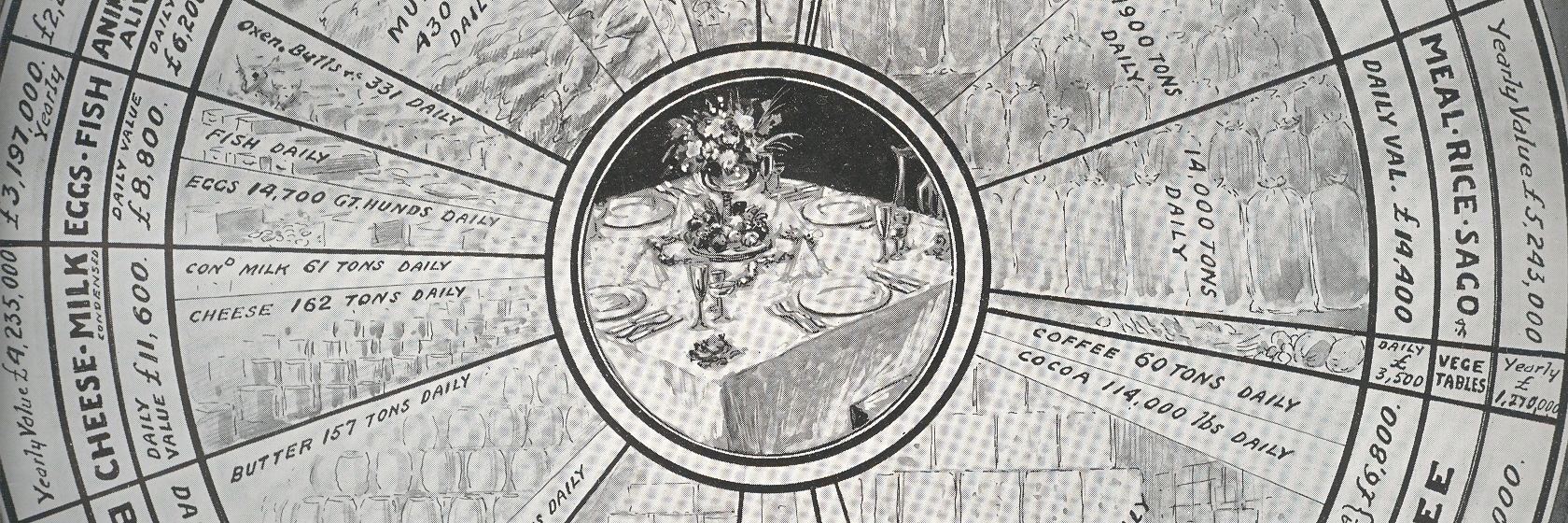
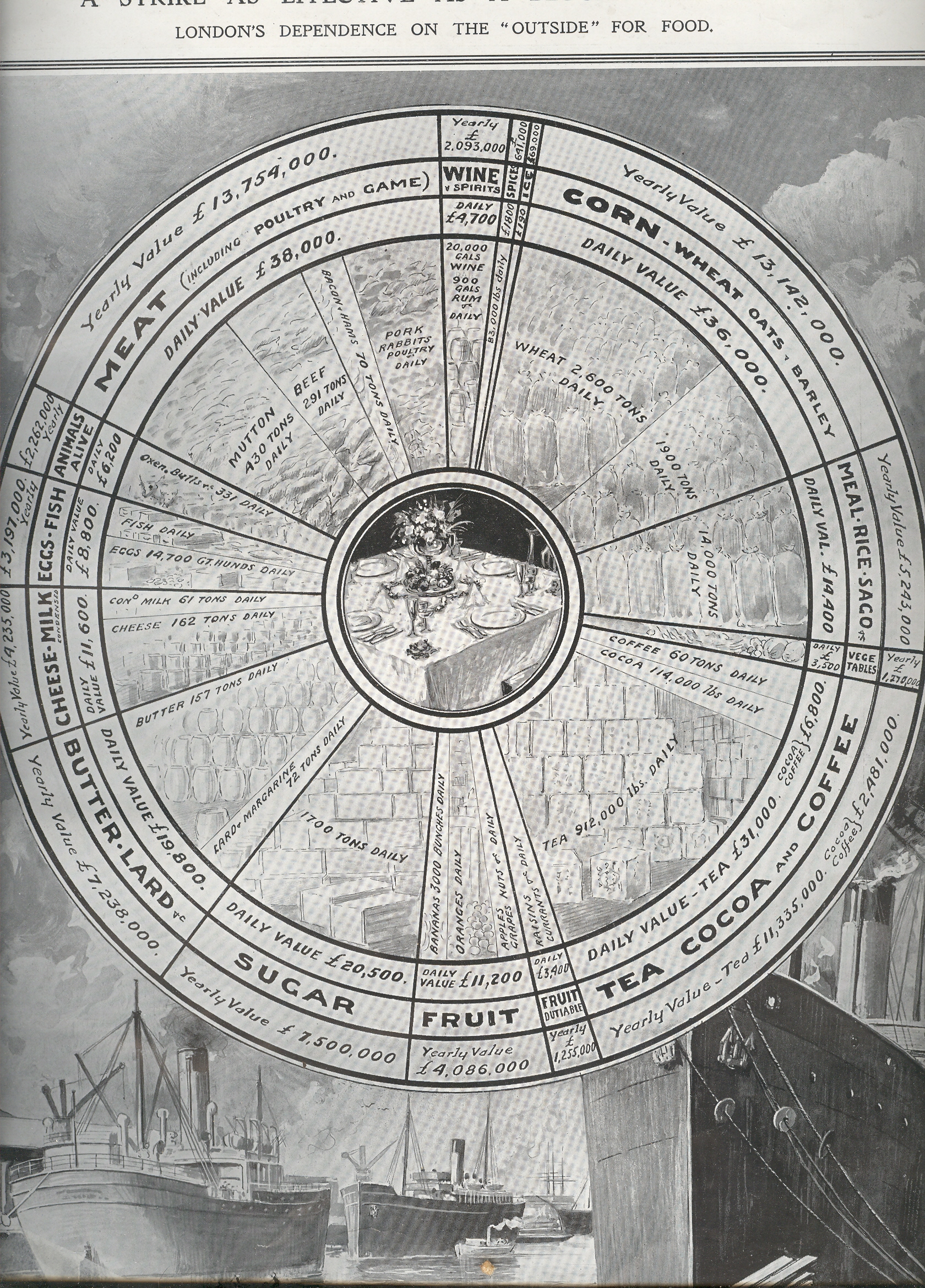
  • Propaganda and the Dinner Table: Strike-Breaking and Graphical Display of Data, 1911

    JF Ptak Science Books LLC  Post 987
    Mar 25 dinner plate det

    This graphic display of the effects of a  transport workers’ strike is a pretty,
    well-designed piece of propaganda designed to draw in the general, middle-class
    (such as it was) and working population into league against the strikers.  At least that’s what it looks like to me: the
    strangulating effects of food not coming into the port of Liverpool
    and its attack on the family dining table. Literally, and figuratively: a
    table, by the way, that appears at the direct center of attention, the bull’s-eye
    of what is a target, made to look like the transport workers were taking direct
    aim at the symbol of the family. 

    All of what was going on of course was that some hard working people were
    trying to get a little more money to put food on their own  tables—the facilitators of food distribution
    for the nation’s people wanting nothing more than a little more food for
    themselves and their families.  And these
    were the people, by the way, who did not set a five-utensil place settings with
    linen table covers and a large fresh bouquet as is oddly the case in the illustration.

    By the time this illustration appeared in the Illustrated London News in August 1911 the movement had already
    been active for a year—there had also been a call to action the month before
    involving over 100,000 workers.  The National
    Sailors and Firemen’s Union, and the National Union of Ships’ Stewards, Cooks,
    Butchers and Bakers, dockhands, lorry rivers,  general laborers, and on and on, were involved
    in the strike, which was a bitter and confrontational battle between them,
    scabs, police, the army, and of course the owners of the means of production
    and shipping means.
    Mar 25 dinner plate


    After the battle of greed and need, need won.

  • The Hidden Death Hammer: Display of Quantitative Data for the Battle of Jutland, 1915.

    JF Ptak Science Books LLC  Post 986

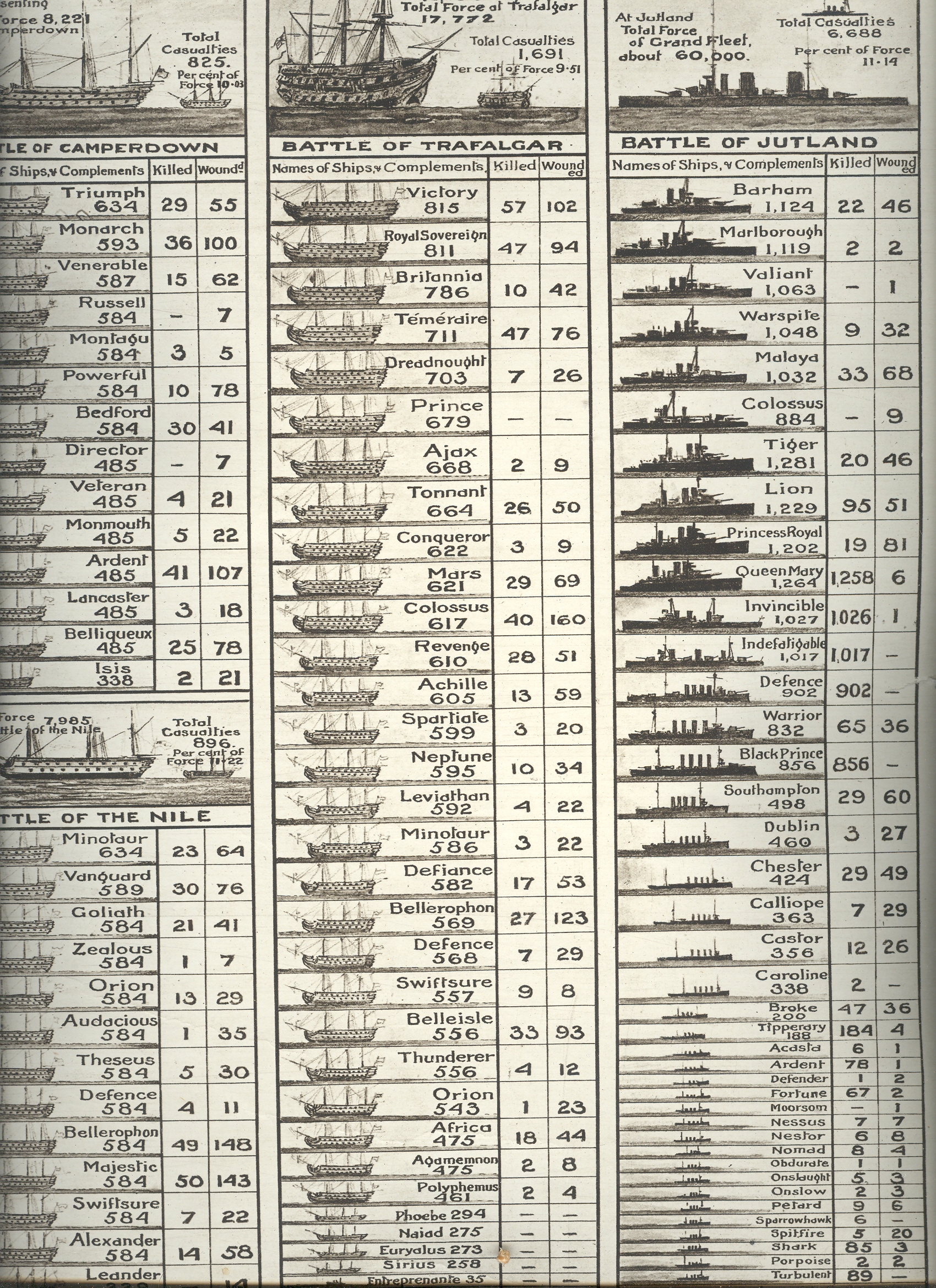
    A year and two weeks after the end of WWI, the Illustrated London News  published this compelling graphical display comparing
    the British naval losses at Jutland to three other great sea battles (Camperdown, the Nile and  Trafalgar). 
    The battle near Jutland (Denmark)
    was the largest naval engagement of WWI, involving the German Navy’s High Seas
    Fleet and the Royal Navy Grand Fleet, and took place May 31-June 1, 1915 (“The
    Day”).  It was an absolutely enormous
    engagement, with 250 vessels involved (151 for the Royal Navy, 99 for the
    German).1

    Mar 24 jutland

    The end result of the battle was mixed and still debated
    today; neither side could convincingly claim a conclusive victory from the
    affair.

    The Royal Navy losses at Jutland
    were staggering: 6,094 killed and 570 wounded, with German losses at 2,551
    killed and 507 wounded. 

    And while this graphical display places Jutland in a weak
    context with these other battles, and as pleasing as the thing is visually, the
    larger mark, the great lurking statistical and human beast lurking there in the
    mix of silhouettes and data, occurs about halfway down the far right column.

    Mar 24 jutland det

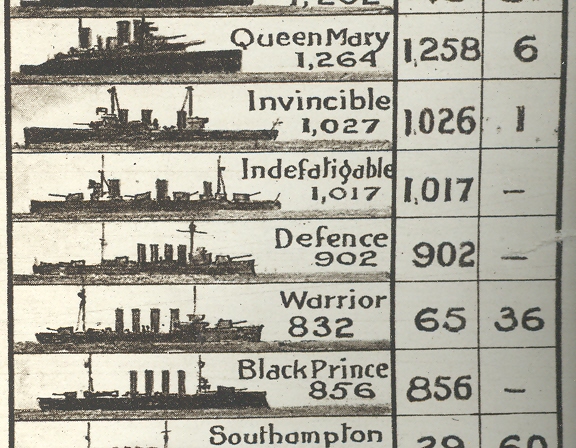
    Here we see the losses for five ships: the Queen Mary, the Invincible, the
    Indefatigable,
    the Defence, and
    the Black Prince.  Together, some 5066 men served aboard these
    vessels; at the end June 1, 1915, 5,059 of them would be dead.  Everyone aboard the Indefatigable, Defence
    and Black Prince would be killed; 1
    would survive on the Invincible, and
    6 would survive the killing of the Queen
    Mary
    . Astonishing, really.  And there
    are no other numbers like this on this chart.

    As certain and as clear as this representation seems, and as
    straightforward and seemingly elementary as it looks, I was shocked to see the
    numbers for those five Royal Navy ships, a “hidden” history within a broad
    comparative analysis. 

    Notes:

    1. England: 28 battleships,
    9 battlecruisers,
    8 armoured cruisers, 26 light cruisers,
    78 destroyers,
    1 minelayer,1
    seaplane carrier.
    Germany:
    16 battleships,
    5 battlecruisers,
    6 pre-dreadnoughts,
    11 light cruisers,
    61 torpedo
    boats.

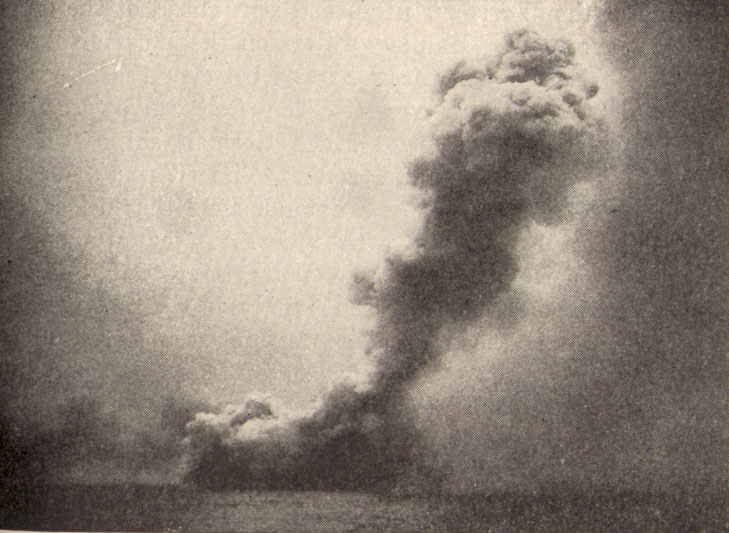
    [The Queen Mary going down.]

    Mar 24 queen mary


  • Image Archaeology–Images within Images Department, 1934

    JF Ptak Science Books LLC  Post 978


    Ebay mar 15 LIBERYbig eye

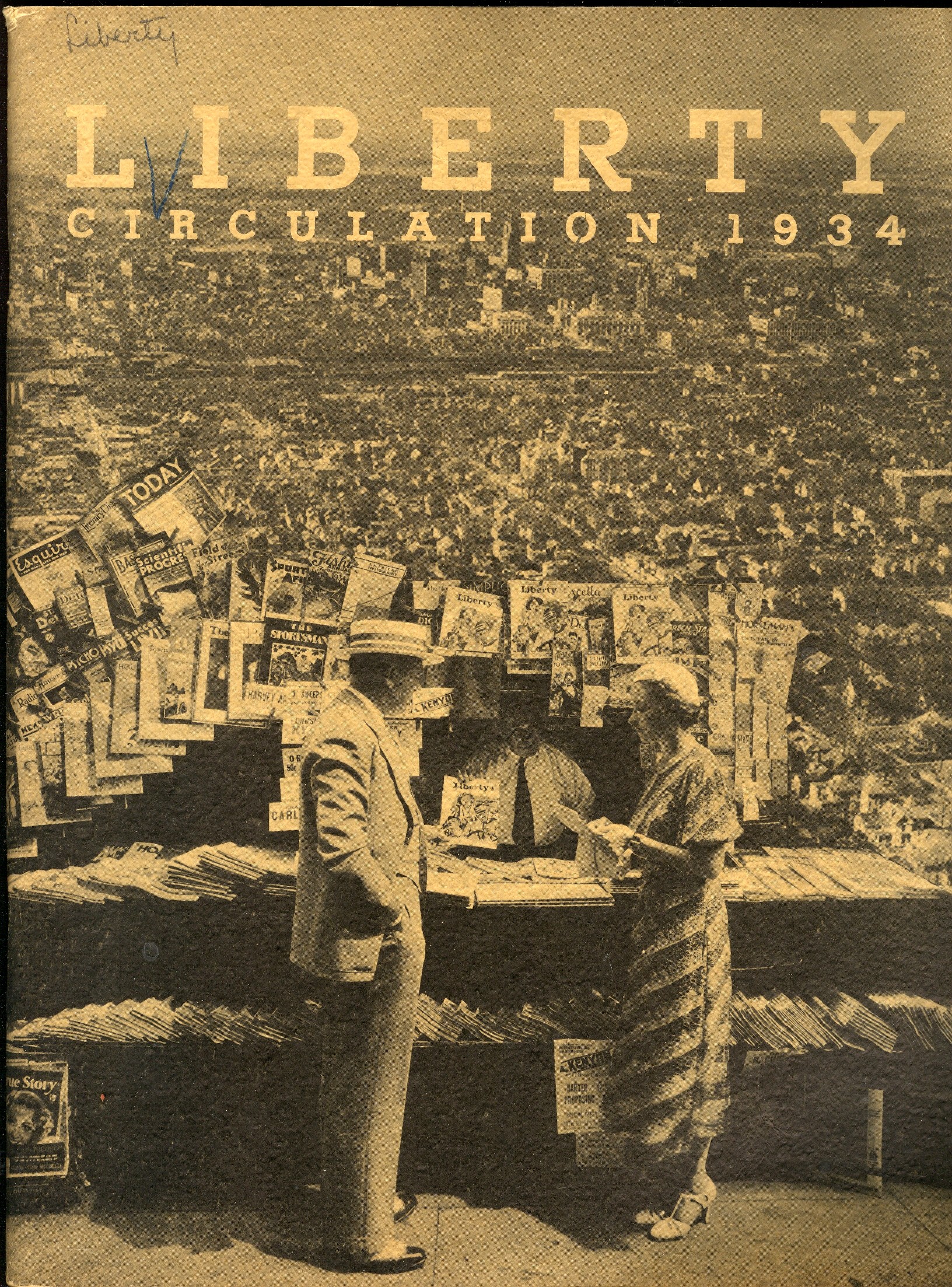
    This
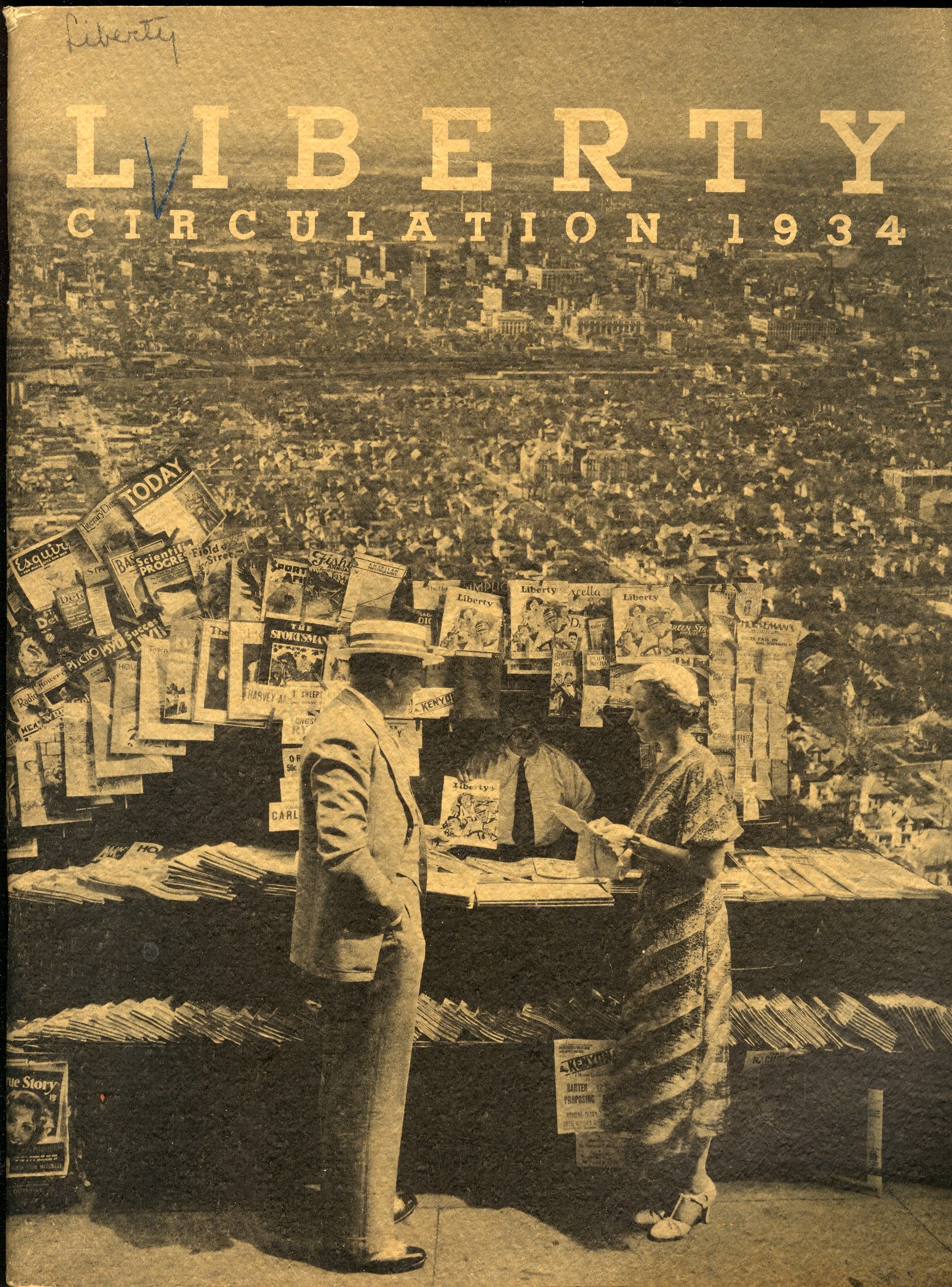
    short post comes in the can’t-judge-a-book-by-its-cover category, as the cover
    is absolutely the  most interesting component of this publication.  Unless of course you’re interested in knowing

    how many paid subscribers Liberty had in Asheville, North
    Carolina
    in 1934. 
    Or Salida, Colorado.

    Ebay mar 15 LIBERY

    Ebay mar 15 LIBERYman2

    That’s all there is to the innards of this pamphlet: circulation numbers
    for a prancing, popular magazine.  This
    would’ve been of great concern to the folks trying to sell and distribute Liberty, showing
    potential customers how far and wide the magazine was read. (And evidently it
    was very popular:  with a circulation per
    issue of about 2.2 million, it was the sixth most popularly-read magazine in
    the country, following Collier’s, McCall’s,
    Ladies Home Journal
    and The Saturday
    Evening Post
    , all of which had circulations between 2.3 and 2.9 million, so
    Liberty was not far off from being
    one of the most widely-circulated magazines in the country. It actually rose to
    the number two spot for a little while during the war.) 

    Ebay mar 15 LIBERYman
     
    This
    is not to say that the magazine itself was a bore, what with writers like P. G.
    Wodehouse,  Robert Benchley,  Edgar Rice Burroughs, Robert W. Chambers, F.
    Scott Fitzgerald, Murray Leinster,  Sax
    Rohmer and others making contributions here and there. 

    An
    odd bit about Liberty—they “timed” their articles.  The reader was told about how long, on average,
    it would take to read each piece, taking about three hours to read the entire
    issue.  That’s something I’ve never seen
    before. 

    So
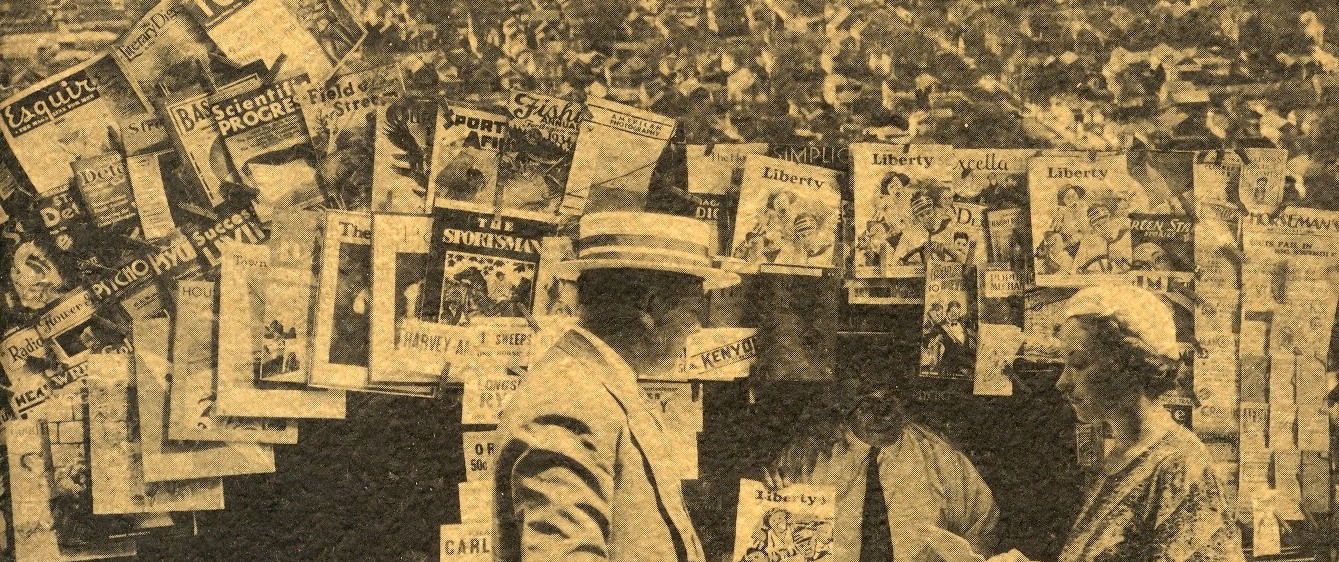
    the contents turned out to be a bit of a bore—the cover, on the other hand, is just
    lovely, a beautiful and seamless piece of photo montage with some interesting
    semi-hidden images. I quite like the image of the white-shirt-tie magazine stand purveyor that emerges from the shadows (above). And also the face that emerges from underneath the rear brim of the boater on the fellow standing in front of the stand.

    Ebay mar 15 LIBERYface hat 

    This is just a lovely example of what ephemeral play one can draw from an unexpected source.

    Ebay mar 15 LIBERYbig eye


  • Layers of Influence: Dante’s Inferno and Pozzo’s Perspective

    JF Ptak Science Books LLC  Post 934

    I’ve
    written several times in this blog about unusual perspectives in antiquarian
    images—namely, views looking straight up and straight down.  They really don’t exist, much, in the
    post-Daedalus pre-flight days, what with given the difficulty of fabricating non-cartographic
    images from the ground.  
    Next
    on what might seem to be a very obvious list of non-obvious interests are images
    with layers, levels, sections, plans, projections…sideways columnar views, locating objects
    in space and time. But mostly looking at things straight-on, ad then showing
    their relational layers.  As it turns
    out, these sorts of creations aren’t very much seen in the pre-modern
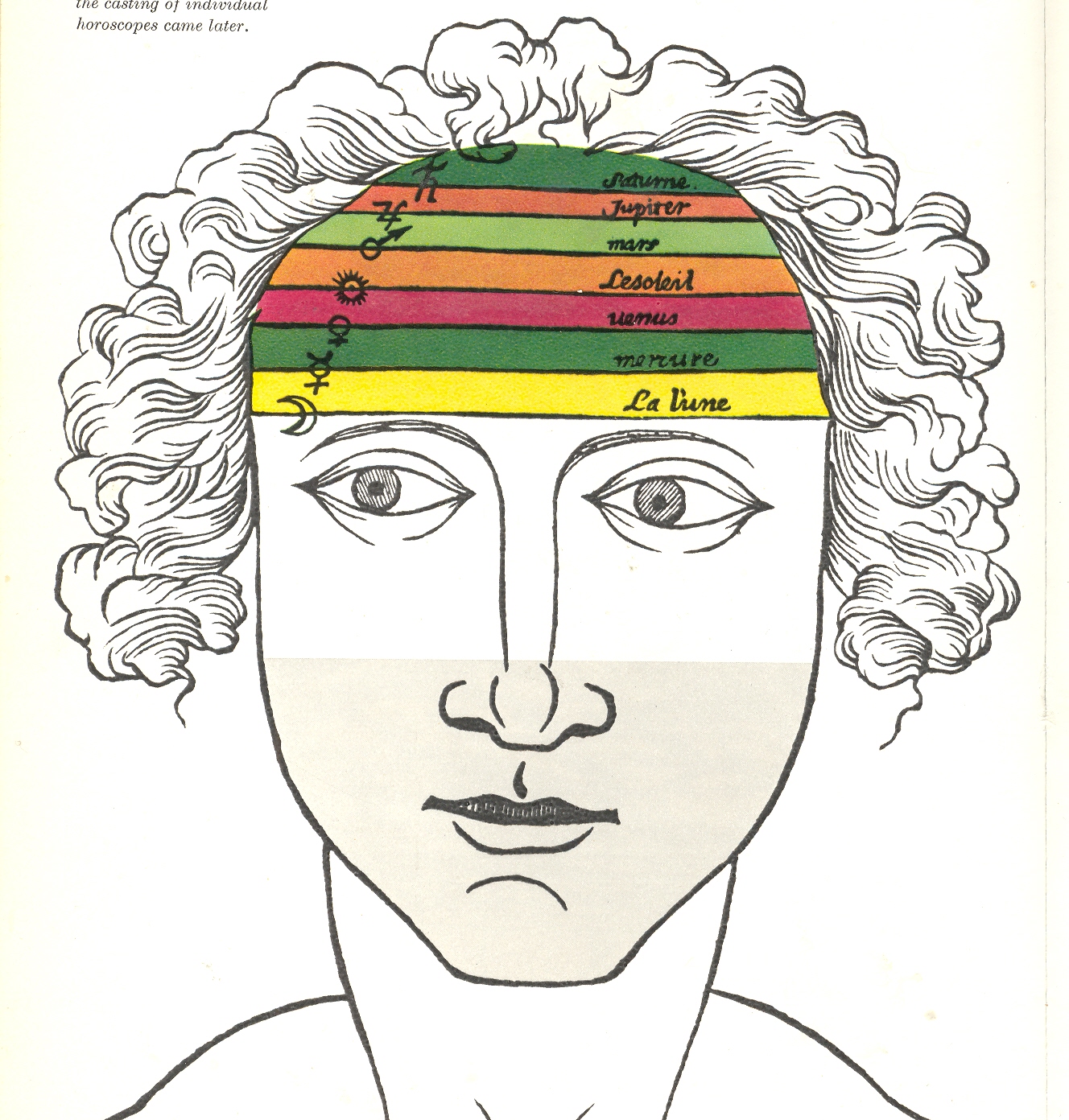
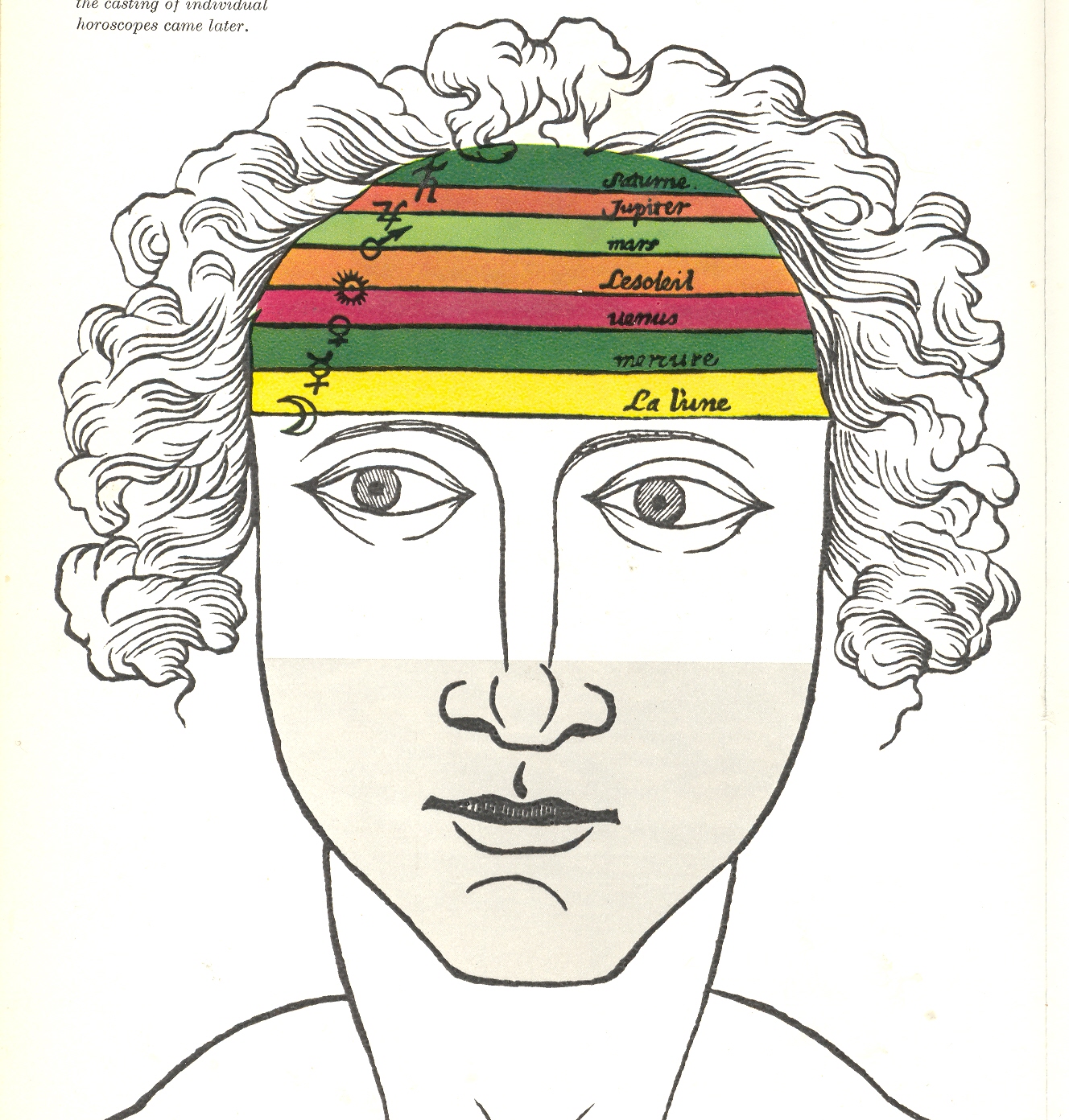
    geological era (say, prior to the 1790’s).This is a good example, an astrological man, showing the influence of the planets (and sun and moon) on the different layers of the brain:

    Blog--feb 9--arstro man Blog--fe 9--mole map


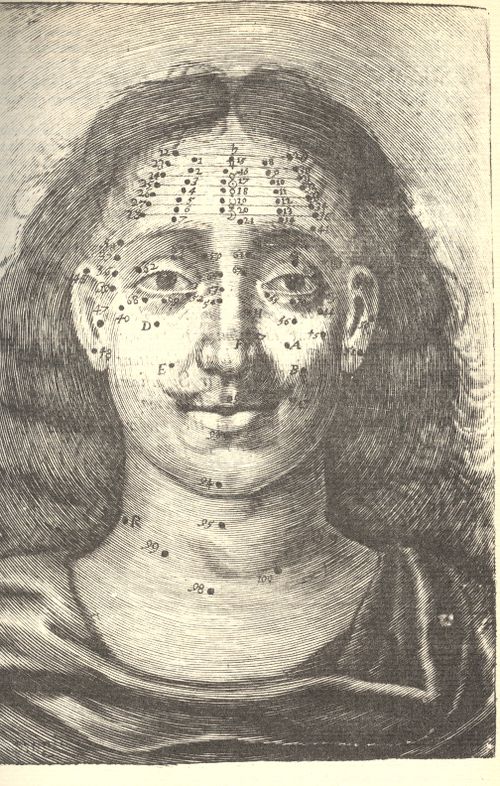
    Differentiated, say, from Richard Saunders’  Mole-map man,  (right) where facial (and etc.) moles were used as maps to determine some sort of specific actions on the organs underneath (and also by a tea-leaf divination, where the mole lines were connected and disconnected, and interpreted, according to the needs/whims of the observer):

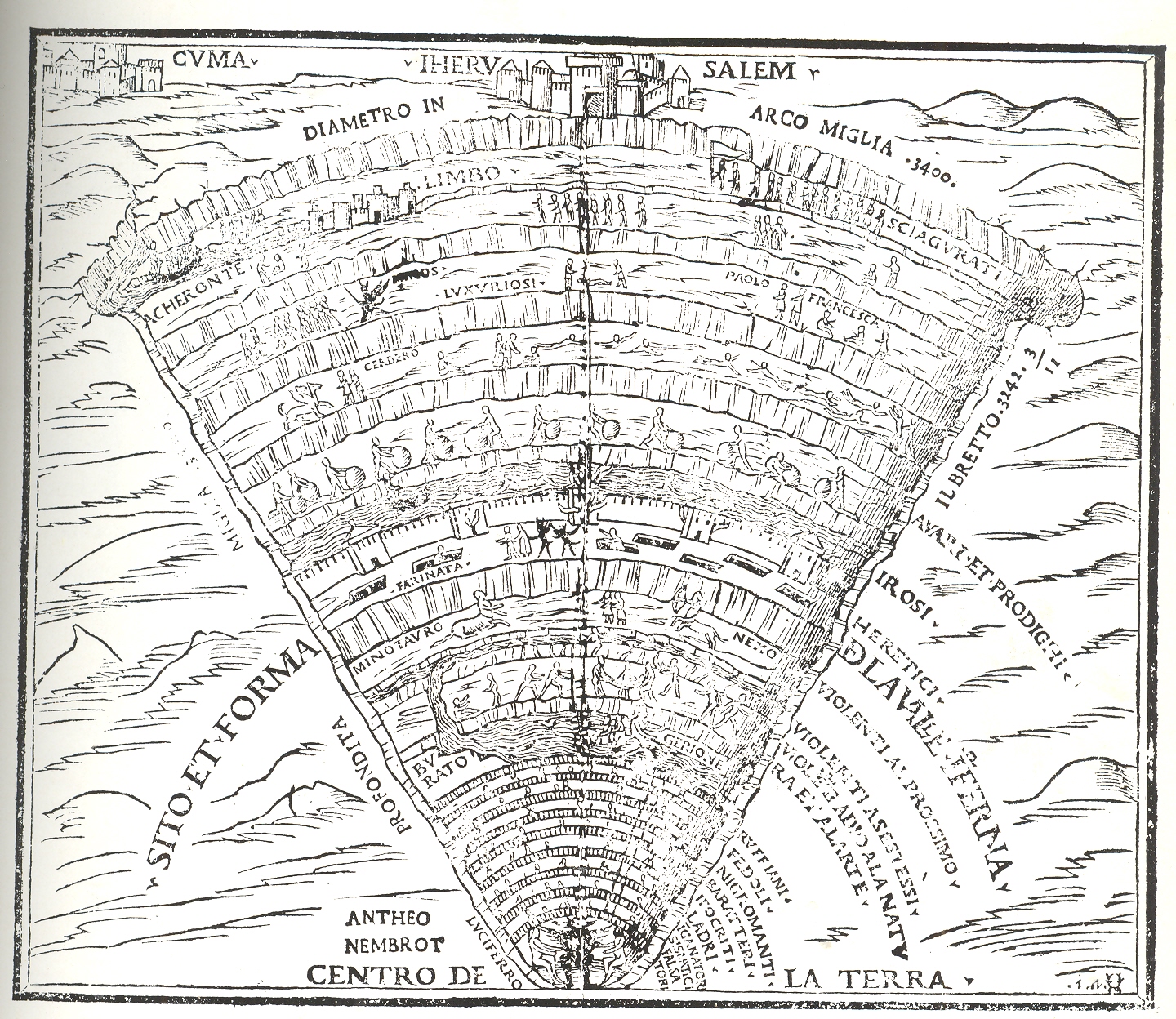
    The classic sort of image may be something like this fantastic depiction of the Inferno of Dante (shown here in the Comedia published in Venice by Gregorio de Gregoriis in 1515:

    Blog--feb 9--dante

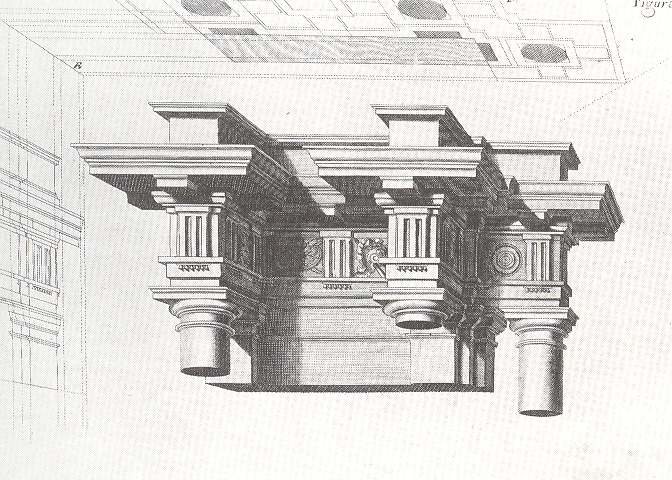
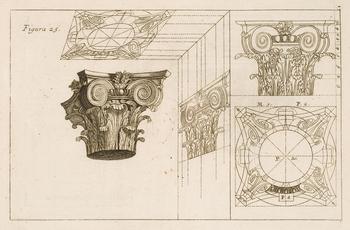
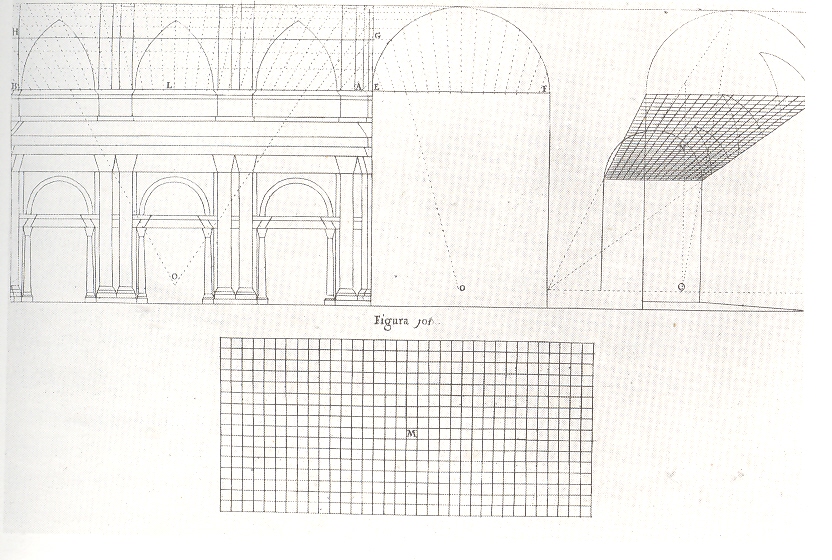
    The fantastic Jesuit Andrea Pozzo published results of his researches on perspective in his Perspectiva pictorum et architectoru (1693), explaining how he was able to compellingly, unbelievably  represent three-dimensional images on two-dimensional spaces, this image showing plan and projection and profile, effectively giving you a three-dimensional cross section of the architectural element:

    Blog--feb 9--pozzo column 

    And again:

    Blog--levels--pozzi column 

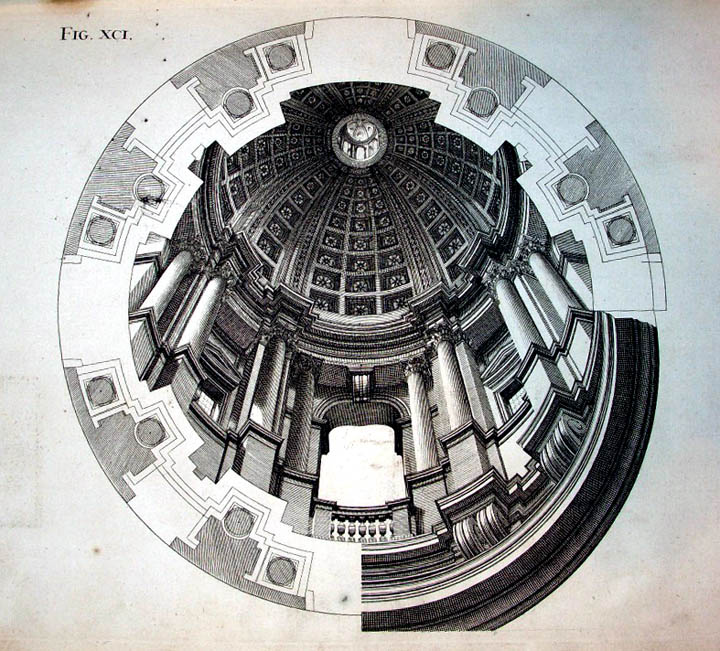
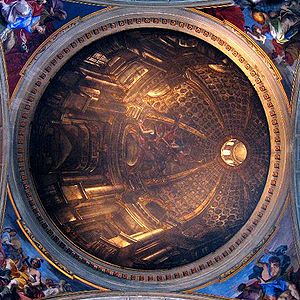
    And of course his masterpiece displayed, which is an engraving showing the plan of a flat ceiling of St. Ingacio in which he painted his magnificent trompe l’oeil masterpiece:

    Blog--levels--pozzi dome 

    Pozzo color

    Also in a way appropriate to this ramble is the explanation diagram by  Pozzo’s found in Martin Kemp’s The Science of Art, Optical; Themes in Western Art from Brunelleschi to Seurat, showing the imaginary depth of a deeply illusory painting on a (basically) flat ceiling surface:

    Blog--feb 9--pozzo ceiling

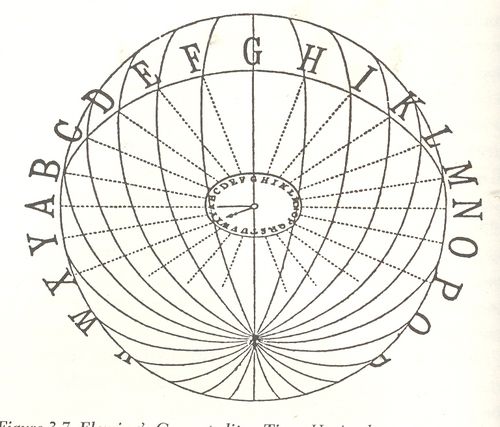
    Also in consideration for this area is Sir Sandford –the inventor of Standard Time–Fleming’s wonderful idea for a G-o’clock world, a same-time-everywhere planet, with his 1879 diagram illustrating the earth-penetrating time principles so:

    Blog--feb 9--fleing clock(Image source: “Time-reckoning and the selection of a prime
    meridian to be common to all nations” in the Proceedings of the Canadian Institute, Toronto, 1879 published by Copp, Clark)

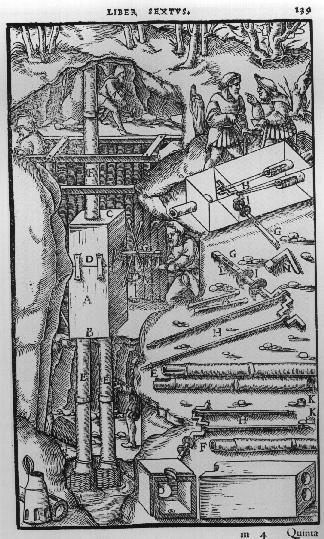
    Agricola’s De Re Metallica (from the first Latin edition f 1556) displays many interesting cross sections of Renaissance mines:

    Agricola 

    There’s much more to come in this area, of course–this is just what I had time to deal with this afternoon, though the this task is much more complicated in the 18th century world than in the 19th, when we find cross sections of the earth and  the oceans. But I’ll close here, with all faults.


  • Flying Wing Aircraft, 1930

    JF Ptak Science Books LLC  Post 919

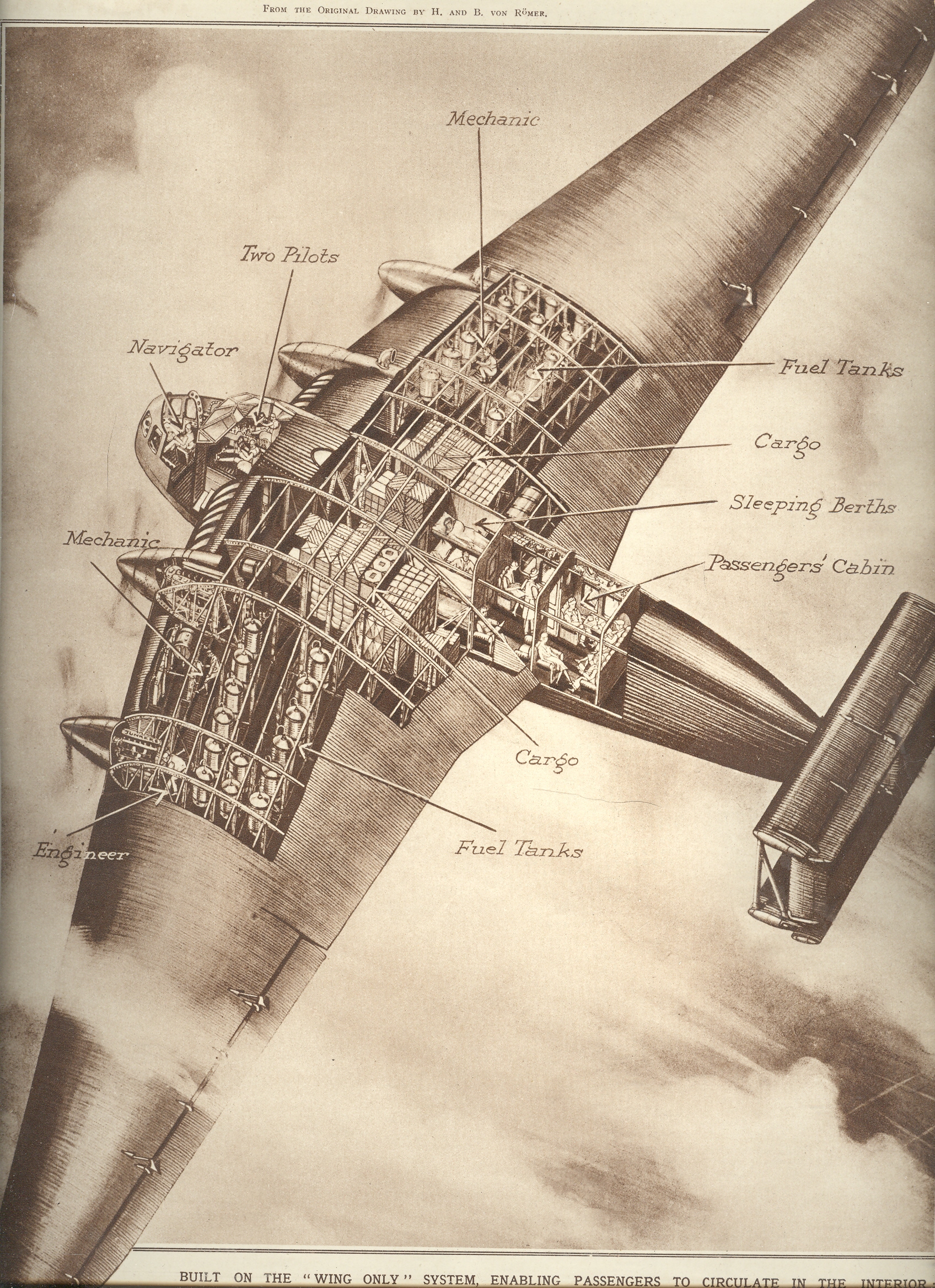
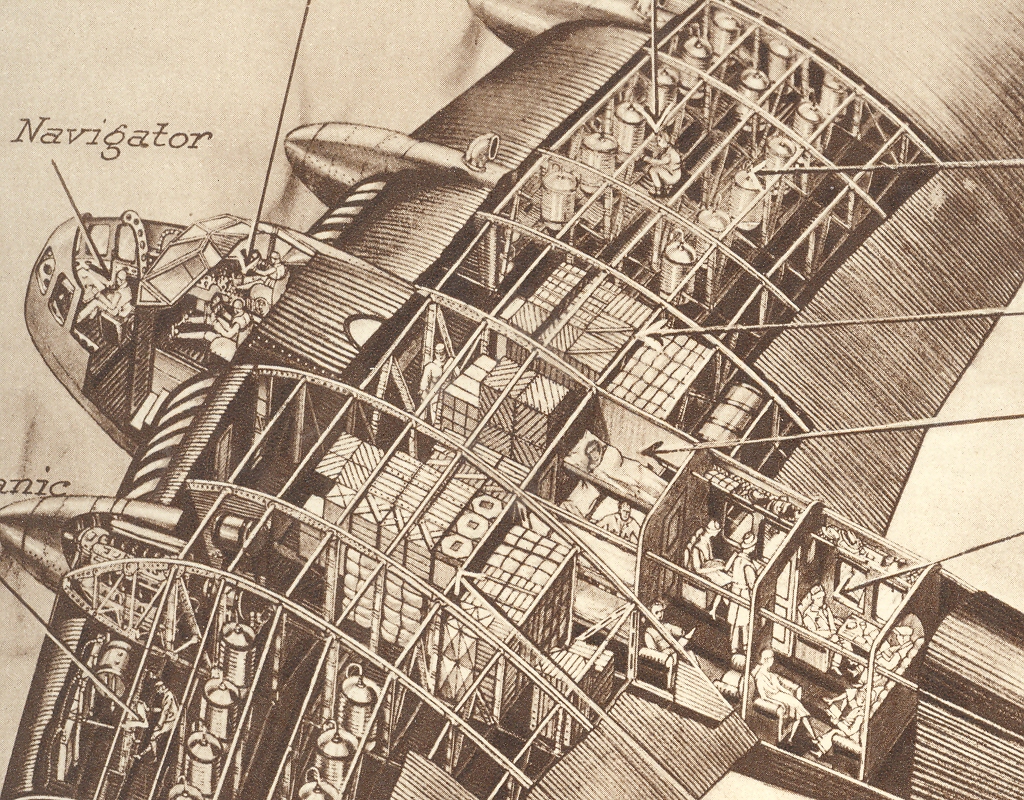
    Blog jan 24 flying wing det title What can I say?  I just like the flying wing. Also I should point out that the Illustrated London News is an excellent resource for schematic cut-aways like this–I think that I have 125 or so of them here for the 1910-1945 period.

    Junkers built this fabulous flying (“inhabited”) “wing only”
    aircraft, sending it up for commercial service in 1929 as the largest airplane
    in the world. Only two were built (though a Japanese military knock-off ran to a production quantity of six), and I imagine that it was quite expensive making the Berlin-London flight, cruising in around at 109 mph.

    Blog jan 24 flying wing

    I would like to know what the artist was thinking about when he decided to draw a standing man in the sleeping compartments. Not only that, the fellow is looking straight at the artist…perhaps it is a sly, tiny self-portrait?

    Blog jan 24 flying wing man

    Blog jan 24 flying wing det


    Notes


    1.  Plane specifications:

    Crew: Seven (including a full-time engineer who could
    service the plane’s four engines from inside the plane).

    Capacity: between 30 and 34 passengers, depending upon
    variation of the aircraft.

    Length:  75 ft

    Wingspan:
    144 ft

    Height: 23 ft

    Wing area: 3,122 sq ft

    Empty weight: 32,893 lbs

    Loaded weight: 52,900 lb

    Max takeoff weight: 46,826 lb

    Maximum speed: 140 mph

    Cruising speed: 109 mp

    Range: 2,150 miles

    Service ceiling: 12,100 ft


  • What 1.5 Billion Pounds Bought the Military in 1938: Finding a Gem Inside a Great Graphic

    JF Ptak Science Books LLC  Post 916Blog jan 22 Brit Mil overview

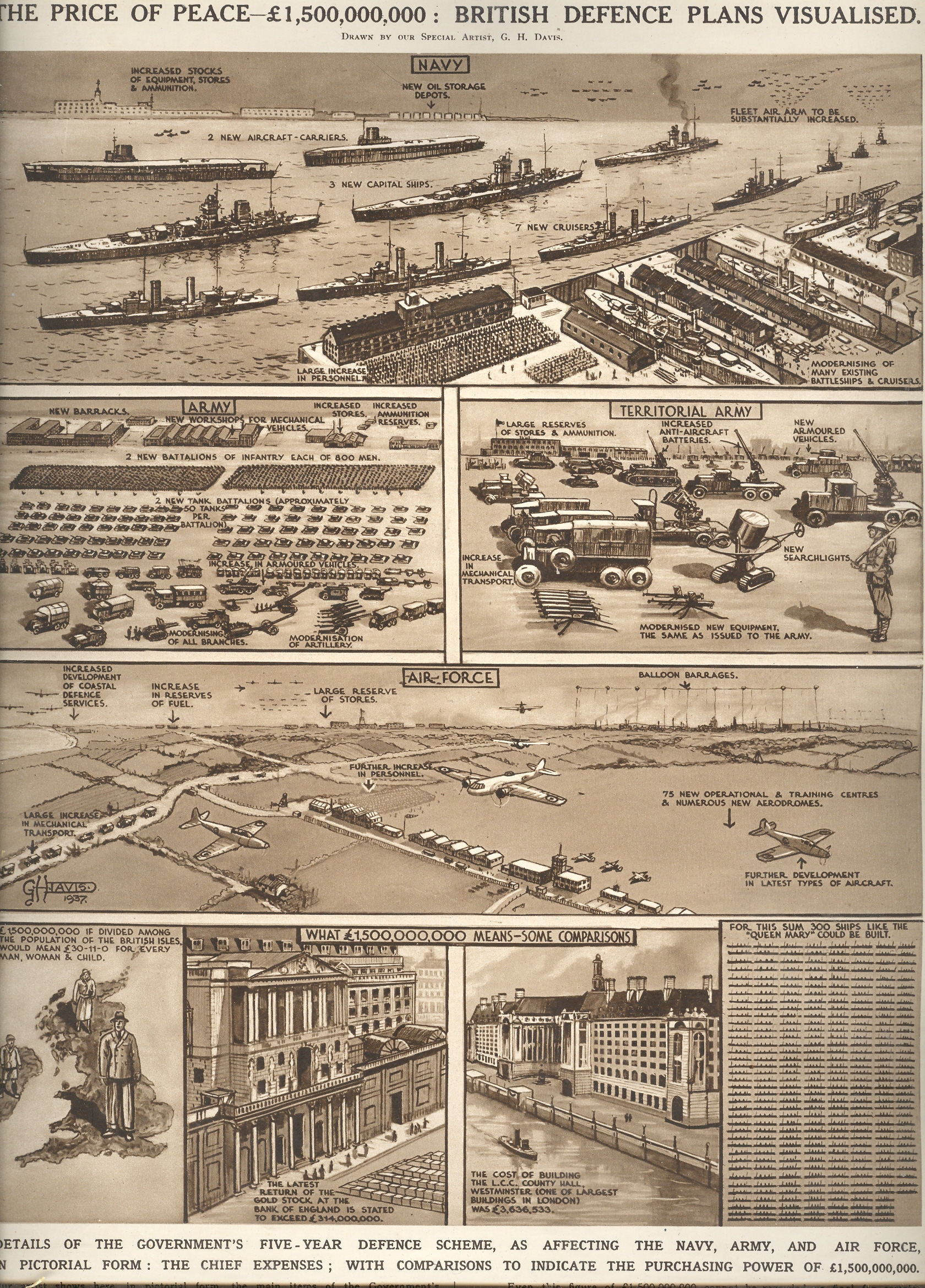
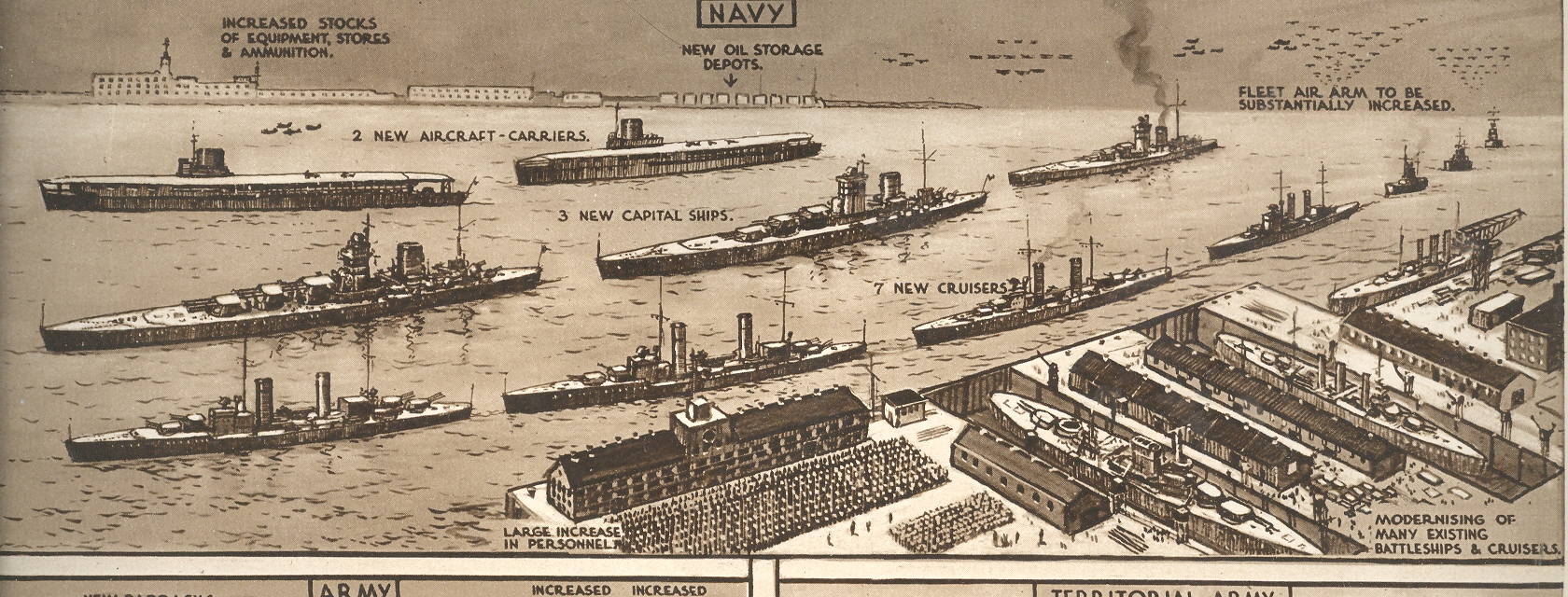
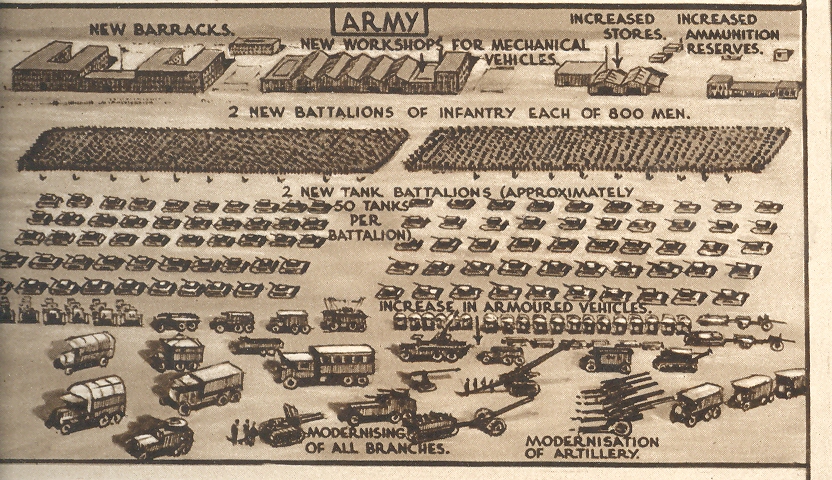
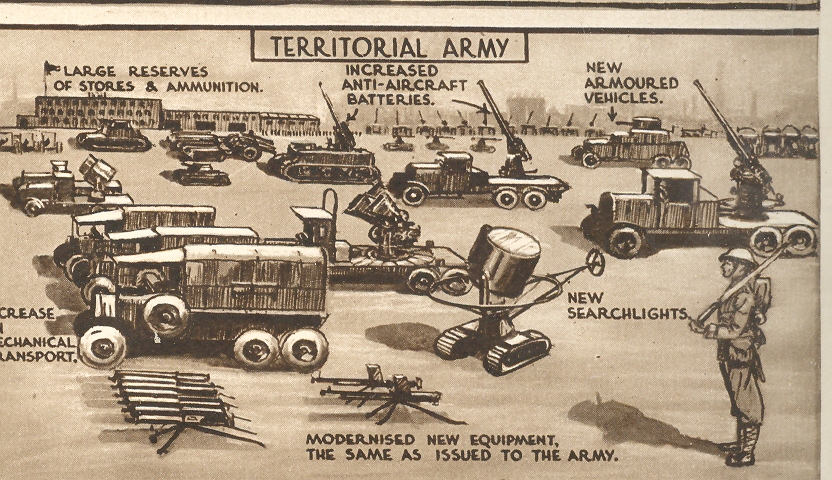
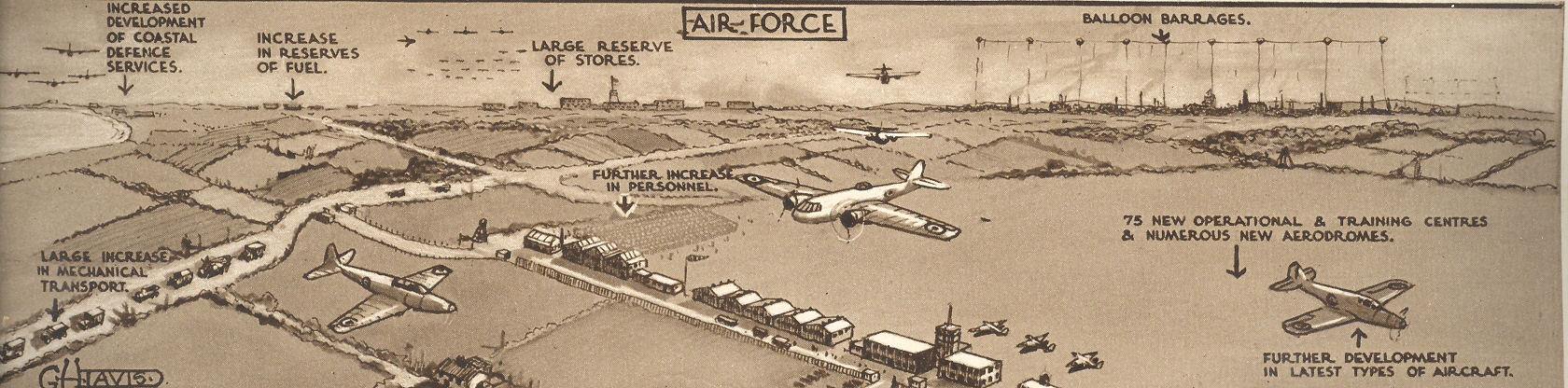
    The Illustrated London News for 27 February 1937 hosted a brilliantly designed graphic illustrating the ways in  which the British War department could/should spend 1.5 billion pounds (or about $100 billion in 2009 dollars, sort of) over a five-year period as the price of keeping the peace.  Of course they wouldn’t make it but a quarter of that distance as Austria fell to Czechoslovakia which fell to Poland and the end.  The full-page pictorial effort is to the right:

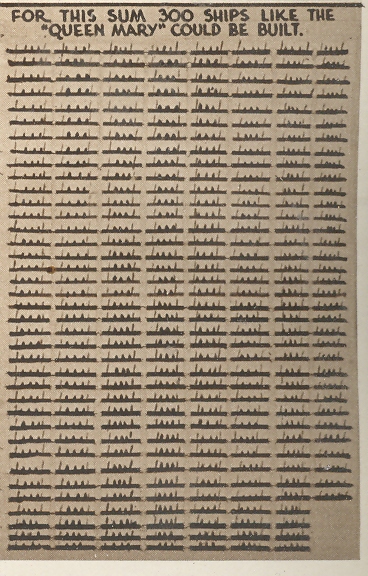
    Nestled in the corner of this page–at about 2×1 inches–is this lovely little graphic, showing that 1.5 bil could purchase 300 Queen Marys, which this delightful little design showed to great effect, and a hidden gem inside of a gem. First is a detail of this detail,

    Blog jan 22 Brit Mil bot right det 

    Followed by the full smidgen of the overall page of comparisons and analogies:

    Blog jan 22 Brit Mil bot right

    Then there’s the semi-standard presentation of what the Navy could purchase:

    Blog jan 22 Brit Mil top

    And then the Army:

    Blog jan 22 Brit Mil middle l

    And of course the Territorial Army:

    Blog jan 22 Brit Mil middle r

    And the Air Force (which if you look closely includes a balloon barrage  facility at upper right):

    Blog jan 22 Brit Mil middle bot

    By far the most interesting to me is the hidden gemoid of Queen Marys, all produced by the fabulous G.H. Davies, who did many hundreds of such images and sectional cutaways and plans and technical drawings for the ILN over a 25-year period.  M.r Davies may well be my favorite technical artist of this period.


  • A Mile-High Pile of Wood–Graphical Display of Quantitative Data.

    JF Ptak Science Books LLC  Post 913

    Continuing
    a long, developing thread on the graphical display of quantitative data–and
    especially that which uses man-made objects for comparison—is this interesting
    bit from a Romanian mining publication from 1933.

    The
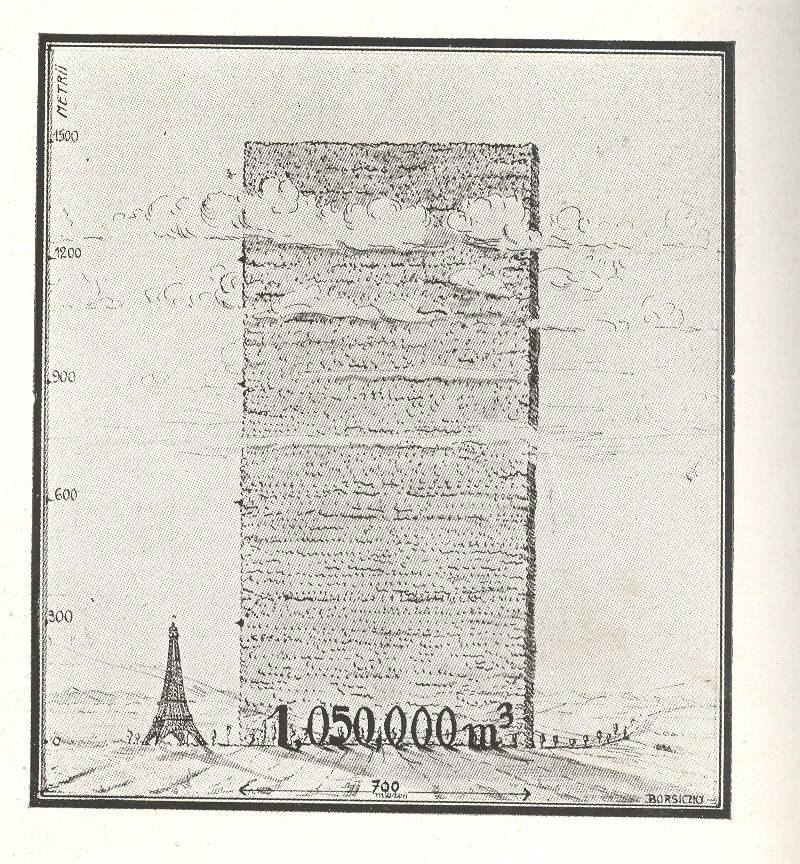
    huge mound next to the Eiffel Tower shows the consumption of wood in Romania over a
    ten year period, a stack of wood 700  metres long and 1500 metres high.  Evidently this wall has only the most rudimentary depth of a metre, as the legend reads that the volume of the woodpile is 1,050,000 metres cubed, which is the same as its square area.  So somebody missed something, here, though the artist did supply some nice shadowing.

    Blog jan 17 wood

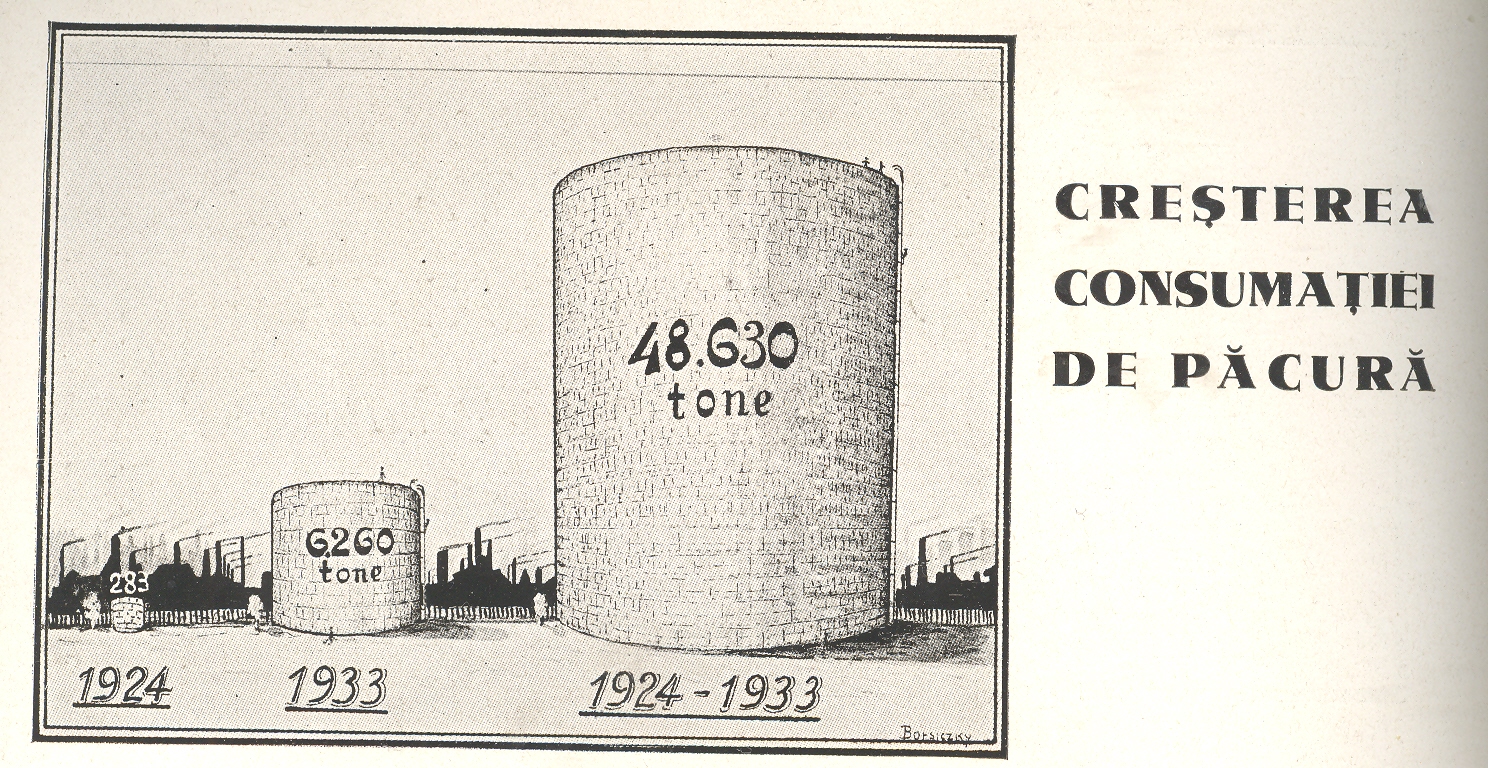
    Just
    above it appeared this comparison for the amount of oil consumed over the same
    ten year period

    Blog jan 17 oil

    I’m
    not sure why this comparison was being made. 
    This does come in the interwar period which saw a great expansion in
    Romanian territory and a vast modernization effort following the country’s devastating
    experience in WWI. Maybe it was illustrating modernization from wood-burning power/heating sources to oil-based. I really don’t know–I just liked the Eiffel Tower being dwarfed by a massively tall and impossibly skinny woodpile.


  • Unintentional Absurdist Art: Flying Boats with Bucket Feet, 1745

    JF Ptak Science Books LLC  Post 901

    This
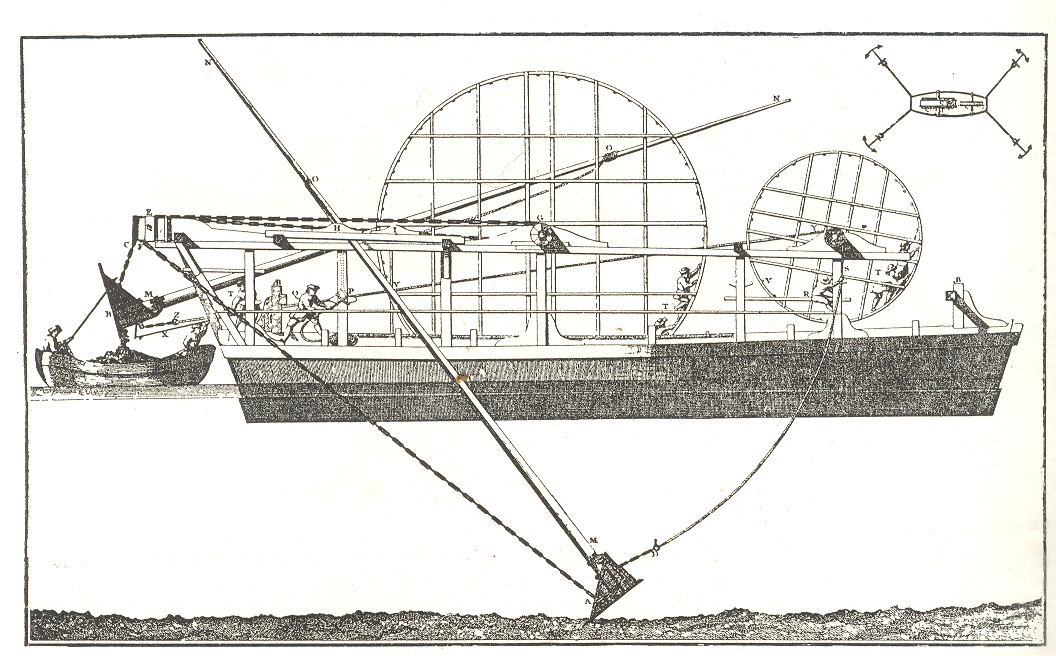
    treadmill-powered French pontoon dredge, printed around 1745, looks for all the
    world as though it is floating in mid-air, propelling itself along with two
    bucket-ended legs, elegantly and impossibly moving its miracle-y-balanced self
    forward against all forms of reason and logic, a clunky 18th century
    non-transforming Transformer.  The
    profile actually and simply shows a dredge at work and just  fails to show the water in which it
    floats. 

    Blog jan 6 absurd

    The
    boat’s dredge is powered by four humans in two treadmills which would move the buckets
    back and forth, scraping up the river silt and then emptying it into the shuttle
    launch aft.  Simple and ingenious—except when
    taken out of context, where it begins to look like some advanced Age of Reason floating
    boat which, although awkward-looking, is not without its charm.  

    Source:  Charles Singer, History of Tecnology, volume IV,
    pg. 634.  Singer loftily notes that this machine
    “is reminiscent of Goethe’s poem Der Zauberlehring
    which inspired Paul Dukas’s well known symphonic poem L’apparenti sorcier” and which would be better known to most folks as
    Mickey’s Sorcerer’s Apprentice gig in Fantasia.


  • Nazi Propaganda: the British Threat to Germany, pre-War 1939

    JF Ptak Science Books LLC  Post 897                                                          

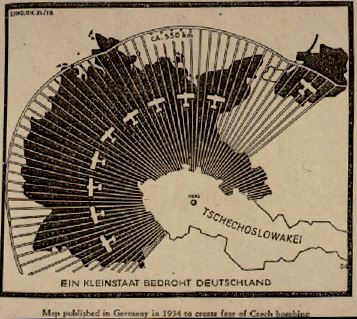
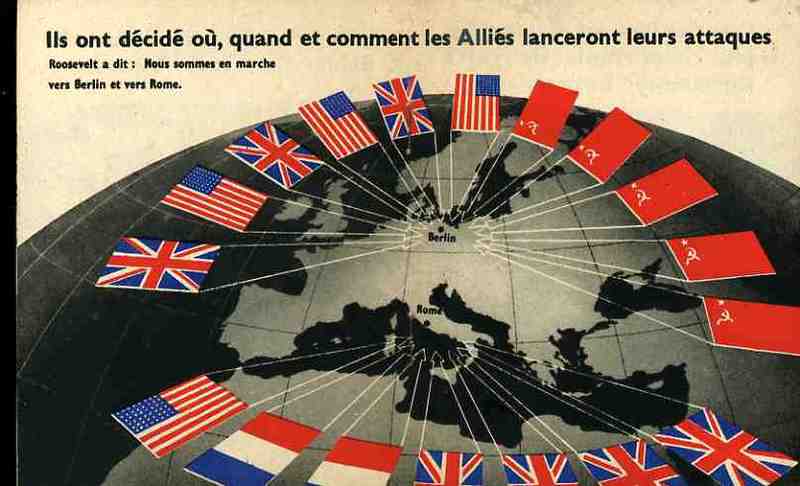
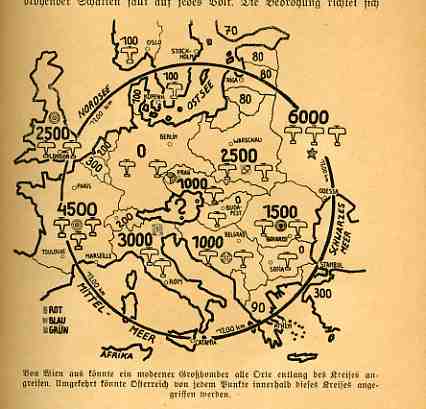
    I’ve written twenty or so posBlog jan 3 czech airts here about (mostly) graphical propaganda of World War II, and most of that coming from the Axis (and mainly Nazi) end.  A popular theme among this limited exposure seems to be the Germany-surrounded meme:  Germany under attack from all sides: massive attacks being directed by the British from air and sea,

     Blog jan 3 german surround

    airstrikes coming in from thousands of planes in Czechoslovakia, Poland moving on the ground and in the air to invade south-eastern Germany, retaliation mounting from the French, and on and on.  And somehow when all of this is presented in cartographical form to the average reader, and when it is presented over and over again, the propaganda must take its toll.  

    Blog jan 3 germany surrounded Tonight’s installments come from the Illustriete Zeitung (Leipzig), and were printed just before and just after the start of the general hostilities of WWII (meaning the invasion of Poland, and not the actions against Austria or Czechoslovakia, and not the war in the east beng waged against China by Japan).The first comes in the 27 July 1939 issue–featuring a remembrance of WWI on the cover, showing a devastated field of battle with a spanking-new heavy dagger thrust into the heart of the field–and shows John Bull pulling strings of an advancing/attacking navy in the one hand while the other controls a firing network for cannons facing Germany based in its contiguous-bordered countries.  (The image was created by the prodigious Richard Lipus and titled “Englishe Kriegspolitik”.)

    Blog jan 3 john bull

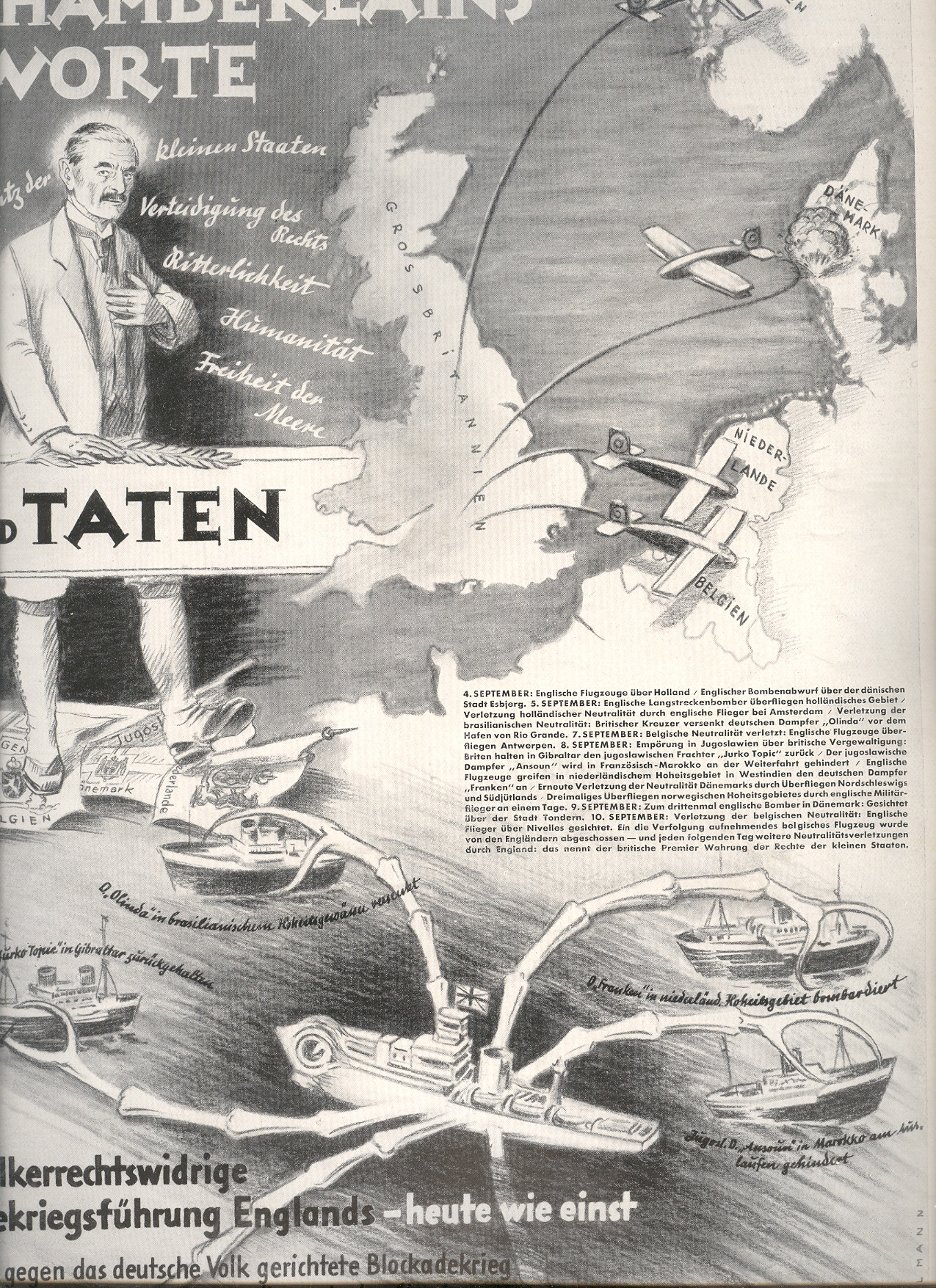
    The second piece was published just after the start of the war (21 September 1939) and attacks Neville Chamberlain (contrasting words and deeds) and his “treacherous” involvement with neutral countries.

    Not particularly virulent, these maptoons undoubtedly helped to form a Nast-ian image in the commonplace psyche of the German people about the treacherousness of the Brits and of their dire situation of being surrounded by potent and threatening enemies.

    Blog jan 3 chamberlain  

    Some of the other posts on this blog relating to WWII propaganda:

    Maps
    as Propaganda https://historyofideasblog.com/thesciencebookstore/2008/08/maps-as-propaga.html

    Maps
    of the Polish “Corridor” https://historyofideasblog.com/thesciencebookstore/2009/09/propaganda-in-maps-the-polish-corridor-1939.html

    Maps
    of Naval Disaster https://historyofideasblog.com/thesciencebookstore/2009/05/jf-ptak-science-books-llc-post-624-the-admiralty-regrets-to-announce–was-for-years-the-standard-beginning-to-an-offici.html

    Anti-Nazi
    Propaganda https://historyofideasblog.com/thesciencebookstore/2009/08/antinazi-propaganda.html

    Nazi
    Propaganda and the Threat From Czechoslovakia
    https://historyofideasblog.com/thesciencebookstore/2008/08/propaganda-maps.html

    Humanitarian
    propaganda for Allied families with family members who were POWs https://historyofideasblog.com/thesciencebookstore/2008/09/humanitarian-pr.html

    Nazi
    Germany and Scaring the Will to War (Germany surrounded, again) https://historyofideasblog.com/thesciencebookstore/2008/10/nazi-propaganda.html

    Nazi-directed
    scare tactics published in English https://historyofideasblog.com/thesciencebookstore/2008/08/nazi-propagan-1.html

    The
    Luftwaffe and RAF present their (graphical) popular cases https://historyofideasblog.com/thesciencebookstore/2008/09/graphical-and-a.html


  • Examination Photos, 1895-1943

    JF Ptak Science Books LLC  Post 891

    I suddenly found myself with a short virtual stack of interesting early-century photos featuring examinations of one sort or another.  There’s nothing here for exams at school (which makes me think about when the first graded school test was invented), but there are some other interesting images of exams.

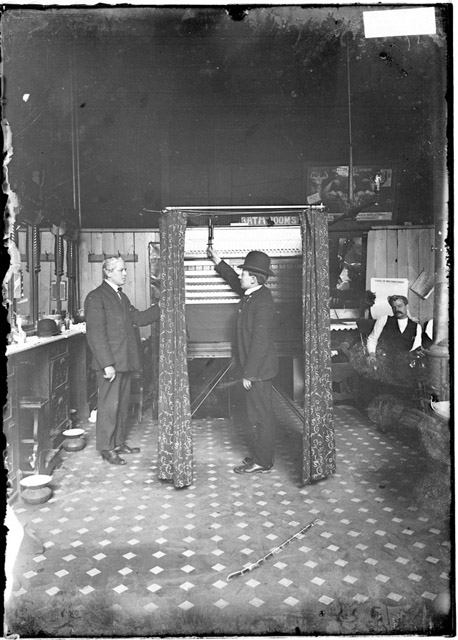
    For example, there’s this odd picture of two guys inspecting the installation of a voting booth in Chicago in 1905.  There’s nothing wrong with this, no sir, not since we’re in Chicago, which never has had any sort of voting irregularity–perhaps that’s why I get such a creepy feeling from this image.

    Blog dec 29 exam voting barber

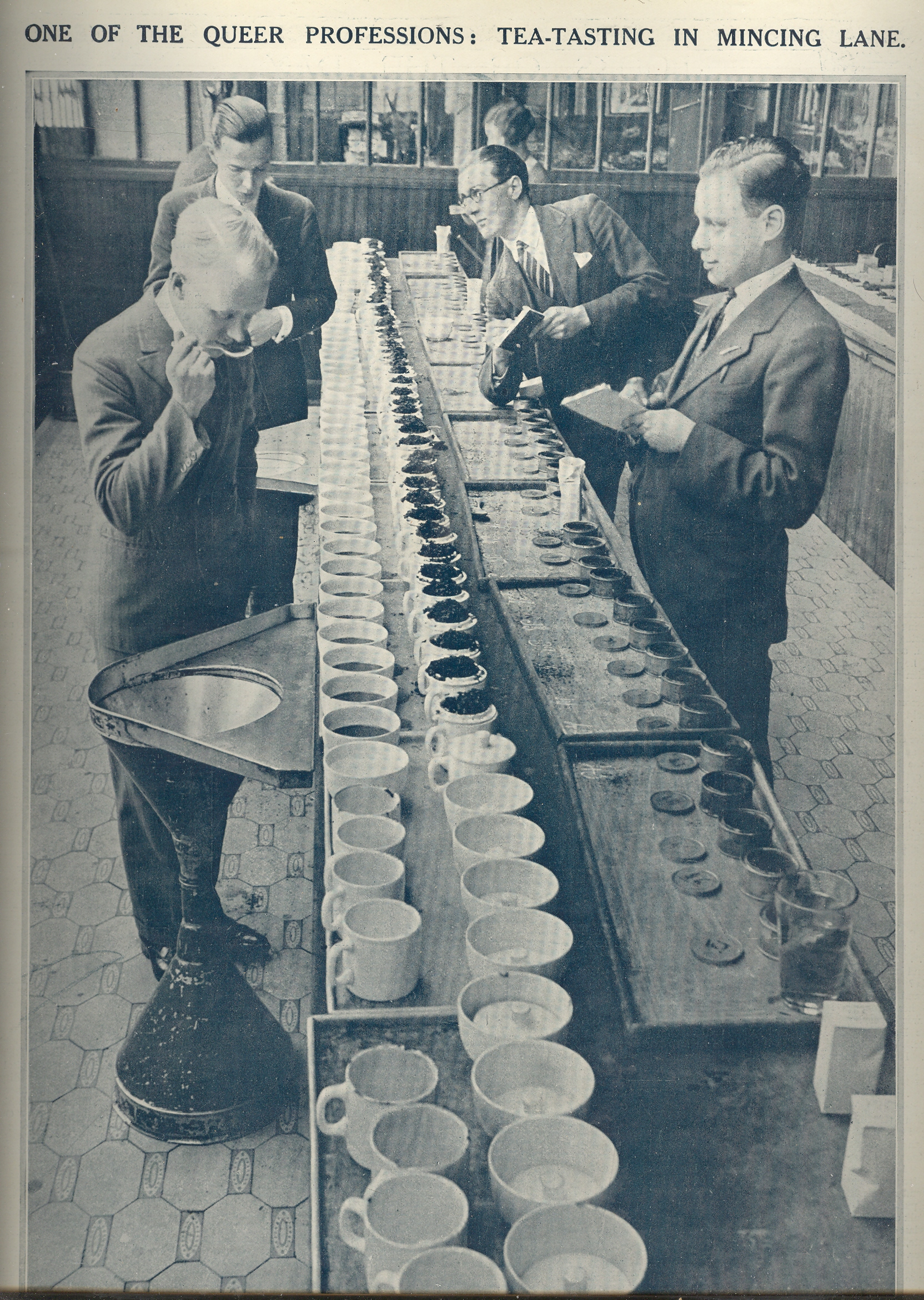
    This picture has everything going for it in a fabulous way, from the poses of the tester and the examiner (who is standing in a Hitchcockian manner, a thin man in a fat man pose) to the row of cups, to the size of the spittoon, to the slightly dirty and occasionally chipped cups, to the title of the whole thing.  Mincing Lane.  I understand and commend the need for quality control, but the picture does have its odd elements.  (I’d like to know the name of the interpids pictured here; or, rather, their nicknames.)

    Blog dec 29 tea

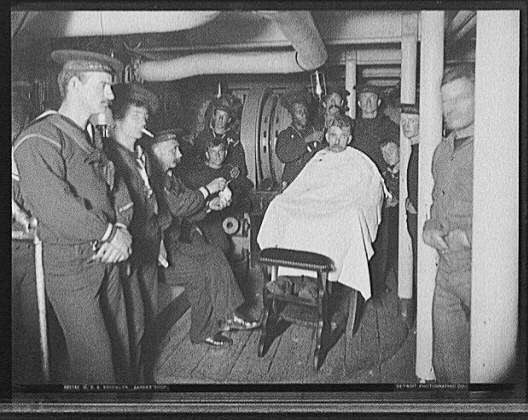
    Evidently the men aboard the USS Brooklyn  had little to do during unspecified doldrums than to watch and critique the ship’s barber.

    Blog dec 29 barber exam ship 

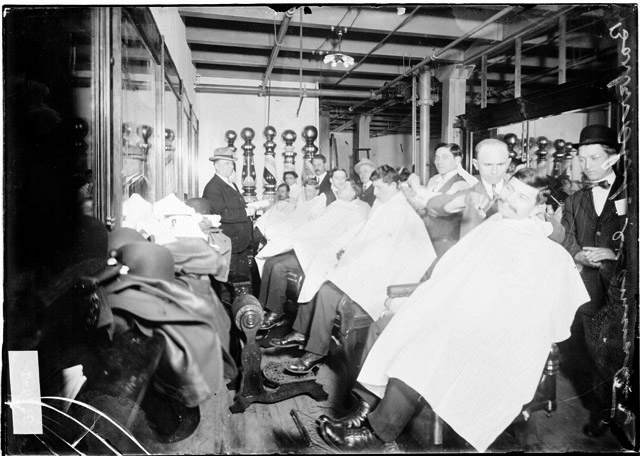
    Then there are the professional barber-and-haircut-watchers, shown here at a barbering school examination in 1903:  five crowded chairs and a few men in hats.

    Blog dec 29 exam barber 

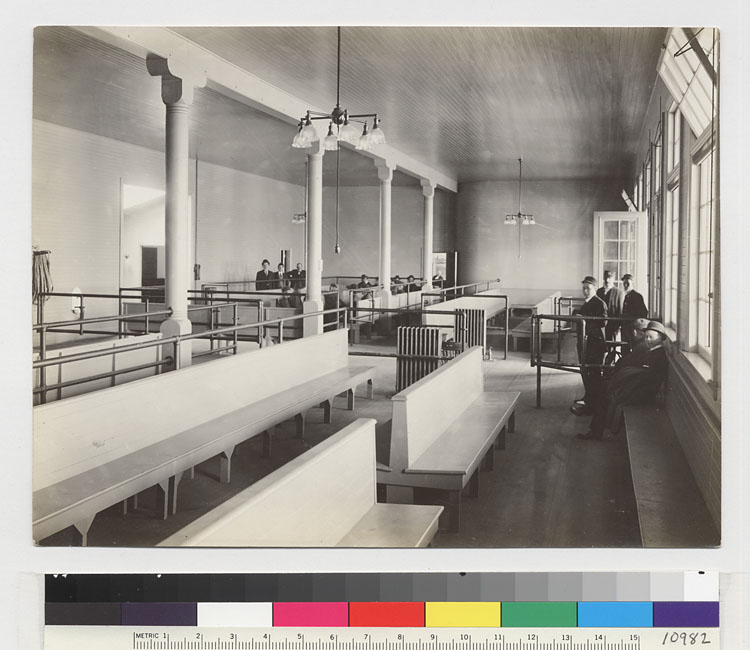
    The big, white, filled-but-lonely room at Ellis Island, where you either got in, got quarantined, or got sent back home.

    Blog dec 29 exam room ellis island

    I’m not sure what this nurse is doing.

    Blog dec 29 nurse exam

    This nurse is administering an exam to a newcomer at one of the American Japanese internment/prison camps sometime around 1943.

    Blog dece 29 japanese exam 

    There are undoubtedly many more of course, but that’s the lot available on the desktop right now.