A Daily History of Holes, Dots, Lines, Science, History, Math, Physics, Art, the Unintentional Absurd, Architecture, Maps, Data Visualization, Blank and Missing Things, and so on. |1.6 million words, 7500 images, 4.9 million hits| Press & appearances in The Times, Le Figaro, Mensa, The Economist, The Guardian, Discovery News, Slate, Le Monde, Sci American Blogs, Le Pont, and many other places… 5000+ total posts since 2008.

  • Indicting Documents on Conditions in the Soviet Union, 1933/4

    Rosja Sowieka. 3 documents, September 1933, February 1934, March 1934. The three documents uniformly bound. SOLD

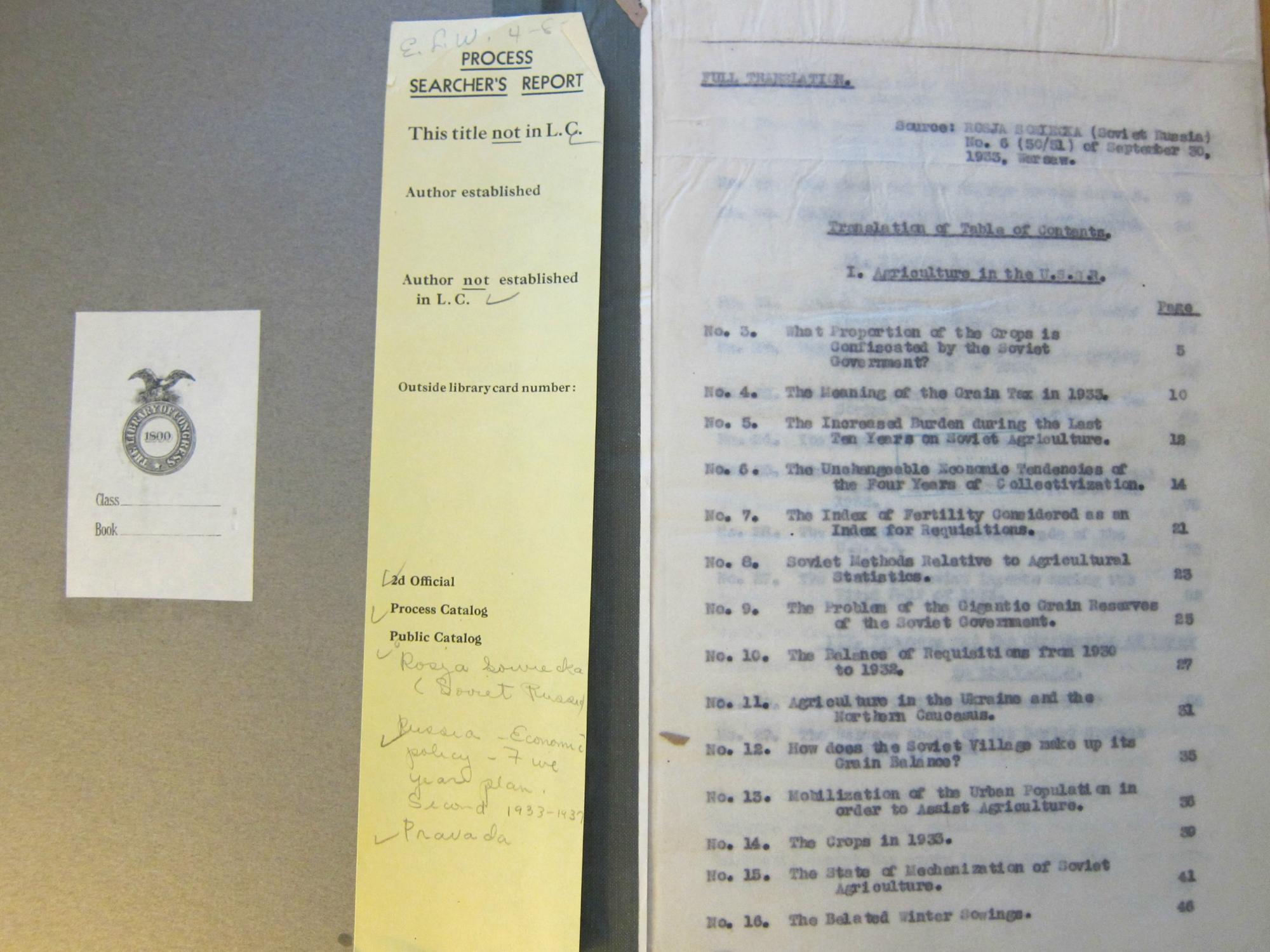
     (1) Rosja Sowieka (“Soviet Russia”, printed originally in Warsaw) No. 6 (50/51) of September 30, 1933.

    The publication was produced at the U.S. Embassy in Warsaw, a translation from the Polish journal, as referenced by Kris Dietrich in his Taboo Genocide: Holodomor 1933 & the Extermination of Ukraine. There are definite and numerous statements in this journal that—even for the limited amount that I have read in it—are very critical of the Soviet leadership, particularly in regard to the grain tax and the effect of collectivization in Ukraine and the Northern Caucasus. This comes at the time of massive political and social repression, manipulating the criminal code, establishing a new constitution, and the beginning of the next wave of extermination by starvation in Ukraine (the Holodomor). For example, in the chapter on agriculture in the Ukraine (on page 7 of that section) we read the summary of the extent of the “participation of the Soviet State in the grain balance” by the kolkozi was at least 70% in Ukraine and about 100% in the Norther Caucasus, meaning that there there would be no food left for those farming it, with this particular paragraph ending “what is left for the peasants?
    Rosja

    This seems to be a some-generation carbon copy of typed sheets, made on very thin or onion paper. 12.25×7.5”, 126 leaves (printed on one side only). Bound in a work-a-day cardboard binding. Provenance: the Library of Congress, w/their surplus duplicate stamp rear cover. Condition: the binding (with cloth spine) a bit brittle, as it is made of 80-year-old cardboard; the text, however, is clean and bright. The typed imprint is a little clear on some page than others, meaning that there may be more than one particular generation of carbon that makes up the publication. Overall, a solid Good, and probably Very Good. Rare
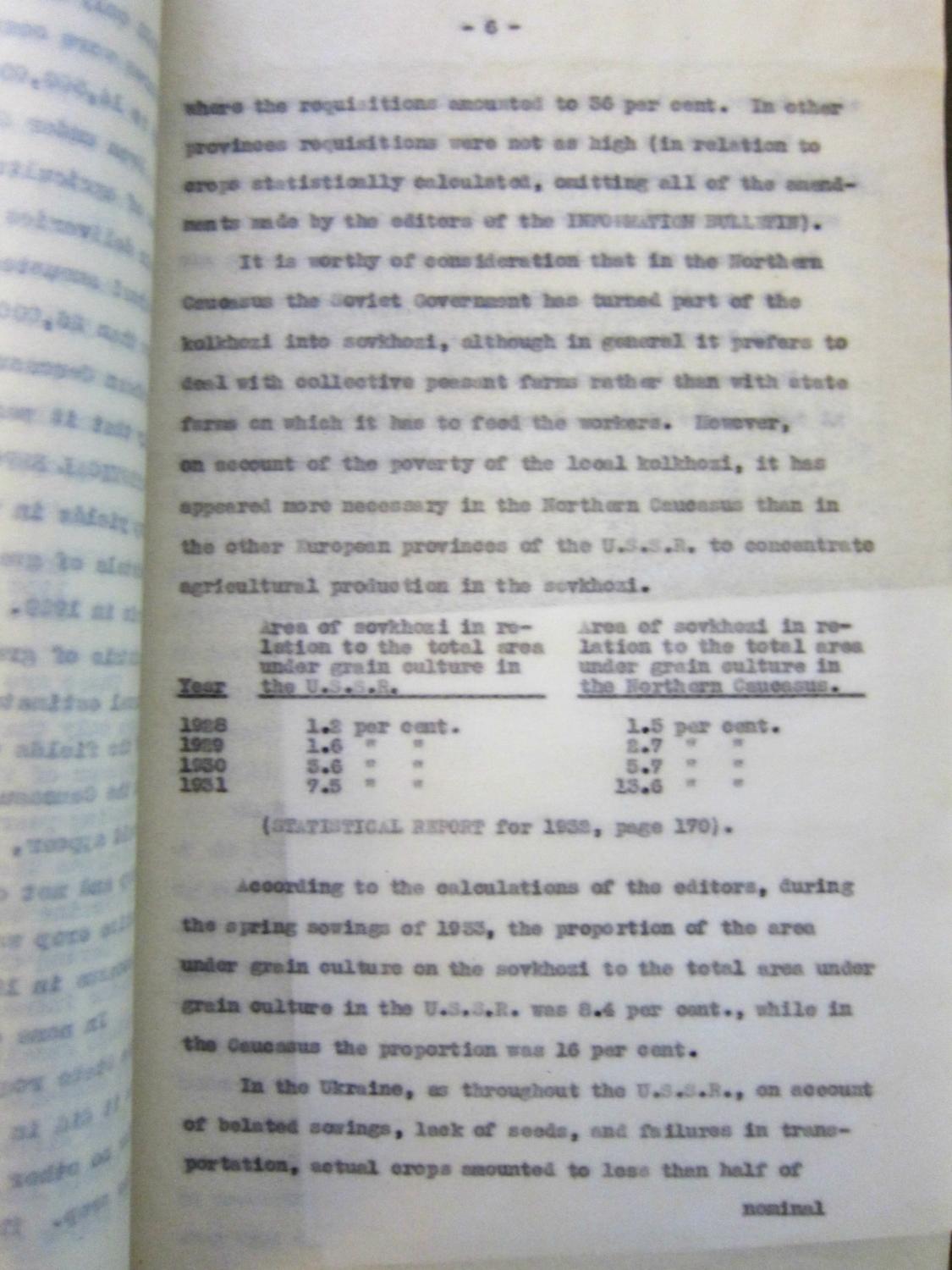
    Rosja _2_

    • I. “Agriculture in the U.S.S.R.” Includes the following sections: “What proportion of the crops is confiscated by the Soviet Government?”, 9pp;“The Meaning of the Grain Tax in 1933”, 3pp;“The Increased Burden during the Last Ten Years on Soviet Agriculture”, 4pp; “The Unchangeable Economic Tendencies of the Four Years of Collectivization”, 12pp; “Soviet Methods Relative to Agricultural Statistics”, 2pp; “The Problem of the Gigantic Grain Reserves of the Soviet Government”, 4pp; “Agriculture in the Ukraine and the Northern Caucasus”, 7pp; “How Does the Soviet Village Make Up Its Grain Balance?”, 3pp; “Mobilization of the Urban Population to Assist Agriculture”, 4pp; “The State of Mechanization of Soviet Agriculture”, 8pp; “The State and the Village in the U.S.S.R.”, 11pp; “Signs of the Weakness of Soviet Agriculture”, 8pp; “Soviet Economic Diplomacy in the United States”, 9pp, “Concealed Inflation, or Deflation”, 5pp Plus 42. leaves. ”

    (2) Rosja Sowiecka (Soviet Russia) No. 11 (60/61), February 28, 1934, Warsaw. 12.5×8.5” (onion skin-like sheets), the text seeming to be some-generation of carbon copy.
    Three sections, 93 leaves, ca. 18,000 words.

    • I. Political-Social Record of the USSR (10 sections, 43pp). Including: “Remarks on the 15th and 17th Congresses of the Communist Party”, 4pp “Stalin and Lenin”, 2pp; “Changes in the Communist Party”, 5pp; “The Solidarity of Stalin’s new Staff”, 2pp; “Historical Sources of the Worship of Stalin”, 7pp; “Decisive Effects of the 1927 depression Upon the Evolution of the Communist Party”, 7pp; “The struggle for power and the fight for a program for 1927-1935”, 4pp; “The theory of the leader as a result of internal Bolshevik conflicts”, 3pp; “The problems of collectivization…” 5pp; “The progress of ‘socialism in only one country’ at the 17th Congress”, 5pp.
    • II. The Treaty Policy of the U.S.S.R. (5 sections, 27pp)

    • “Imperial debts and the Franco-Soviet Commercial treaty”, 5pp, plus four other sections on trade, for a total of 27pp.
    • III. Soviet Railways (6 sections 23pp.)

    Leafing through this volume I came upon a rusty paper clip secured at the bottom of a single page. I’m a fan of found book art, so I read a bit of what it was that it was possibly marking for attention. There was a word that jumped right out at me just above the metal dog ear–“liquidation”. This one was volume and published February 28, 1934, which would place it in the thick of a particularly brutal period of Soviet history: there was the Soviet famine of 1932-33 (just ten years after the last great famine there), the Holomodor of 1932-3 (in which 10 million Ukrainians were murdered via famine), a completely oppressive police state of massive suspicion that would lead to the deportation and death of millions, the Great Purge, and much more that would nearly cause a collapse of the Soviet Union come 1941. The “liquidation” here though was being used in reference to dismantling the farm collectivization scheme that lead to the destruction of so many millions of people, and was coming at the suggestion of ‘rightist” (meaning more liberal) leadership in the Soviet government. In this particular case, the suggestion was that of Martemyan Nikitich Ryutin, a high-level political functionary who was pro-peasant and definitely anti-Stalin, a stance that would lead in 1937 to his arrest and execution (all in a 24-hour period, like so many of them). Even though I really only know the highlights of Soviet history in the 1930’s, reading this section of the document definitely left me with a sad admiration for this man and his allies, because nobody was allowed to survive under Stalin who was not a believer in his removed self. 

    This was the path of following a simple paper clip. 

    (3) Rosja Sowiecka (Soviet Russia) No. 12, (62/63), March 30, 1934, Warsaw. 13×8”, 99pp altogether. Provenance: the Library of Congress. Sturdy if not somewhat worn. Contents:

    • I: Social-Economic Record of the U.S.S.R. 1. Reform of the Central Soviet Offices 4pp 2. Contributions in the Organization of Soviet Economy (Laws of September 9, 1929, and March 15, 1934).__+__”(3) Rosja Sowiecka (Soviet Russia)” No. 11 (60/61), February 28, 1934, Warsaw. 12.5×8.5” Three sections, 93 leaves, ca. 18,000 words. Including: Political-Social Record of the USSR (10 sections, 43pp); “Remarks on the 15th and 17th Congresses of the Communist Party”, 4pp “Stalin and Lenin”, 2pp; “Changes in the Communist Party”, 5pp; “The Solidarity of Stalin’s new Staff”, 2pp; “Historical Sources of the Worship of Stalin”, 7pp; “Decisive Effects of the 1927 Depression Upon the Evolution of the Communist Party”, 7pp; “The struggle for power and the fight for a program for 1927-1935”, 4pp; “The theory of the leader as a result of internal Bolshevik conflicts.


    ·Posted by :

    ·in:

  • Early German Translations of Classics in Optics (1811)

    YOUNG, Thomas and DAVY, Humphrey. Several translations of his work  appearing in Annalen der Physk, Leipzig, Ambrosius Barth, 1811, series I, vol 39; (vi), 485pp, 4 plates.  Cloth-backed marbled boards; the boards I suspect are older than the cloth, which dates from the 1930s.  Ex-libris Deutsche Akademie der Luftfahrtforschung, then Wright Patterson Field Library (USAF), then Library of Congress.  Library markings:  small gilt-stamped “Akademie der Luftfahrtforschung”, page edges stamped “Wright Field Library/Dayton, Ohio” on top and bottom. The text is crisp and bright.  $250

    [Young, Thomas]  Ludicke,  (translator).  According to the general index these are the first appearances of the Young papers in the Annalen, and also represent nearly the majority of all papers on Young that appeared in the entire first series of the AdP.

    • “Ueber die Theorie des Lichts von Thomas Young…”, pp 156-206, “Theory of Light and Colours”, the great paper that appeared in  Philosophical Transactions of the Royal Society of London, Volume 92, Part I, 1802, pp. 12-48, Dibner 152; PMM 259.
    • and”Nachricht von einigen Faellen einer bisher noch nicht beschriebenen Entstehung der Farben von Thomas Young…” from Philosophical transactions, ibid.   pp 206-223;
    • and “Beschreibung einer Vorrichtung, um mittelst des Sonnen-Mikroskops die Farben dunner Flachen darzustellen”, pp 255-261;
    • and “Versuche und Berechungen zur physikalischen Optik von Thomas Young…”, Philosophical Transactions.…, 1804. pp 262-291.

    [Davy, Humphrey] Gilbert, (editor and translator) “Die drei neuesten Abhandlungen Humphry Davy”, pp 1-90.

    and

    Henry Hyde Wollaston, “Ueber gewisse chemische Wirkungen des Lichts”, pp 291-299.

    ·Posted by :

    ·in:

  • An Attempt at Organizing Fingerprint Collections (1937)

    I wanted to load and launch this yes-this-exists (YTE!) notice of this probably not-found-elsewhere work into the internet spheres for the slight chance of someone finding it existence interesting. 

    William W. Hill and Alfred Coe, “Finger Print Classification. International Laboratories of Forensic Research (Budd Lake, NJ, PO Box 302). 11×8.5”,  (i), 32pp, 9 plates (of close-up fingerprint drawings). Bound in a three-ring binder. The binder is in fair condition, with the spine backstrip broken at the hinge, though it still works as a binder. The text is dusted but crisp.  Good condition, though probably a little better.   $250

    This work states that it is based upon the Henry System1 of fingerprint classification, which buy this point had been around for more than 50 years. It seems that the addition to the field that this work attempts to make is reordering the way in which fingerprint data is stored. The Henry System evidently used a cabinet drawer divided into 32×32 sections–here the sections are 12×12, though there are subdivisions of type patterns that seem to make the organization more extensive along with an additional numerical system (with arithmetical rules and functions) that I haven’t devoted any time to understanding. 

    This work is unknown to WorldCat/OCLC, and is not  findable via standard means online. For one reason or another, this work received little or no circulation.  

    Notes:

    1. The Henry Classification System is a long-standing method (begun ca. 1877) by which fingerprints are sorted by physiological characteristics for one-to-many searching. Developed by Hem Chandra Bose, Azizul Haque and Sir Edward Henry in the late 19th century for criminal investigations in British India, it was the basis of modern-day AFIS (Automated Fingerprint Identification System) classification methods up until the 1990s. 

  • Two Papers by Leibniz (Political and Philosophical) 1693

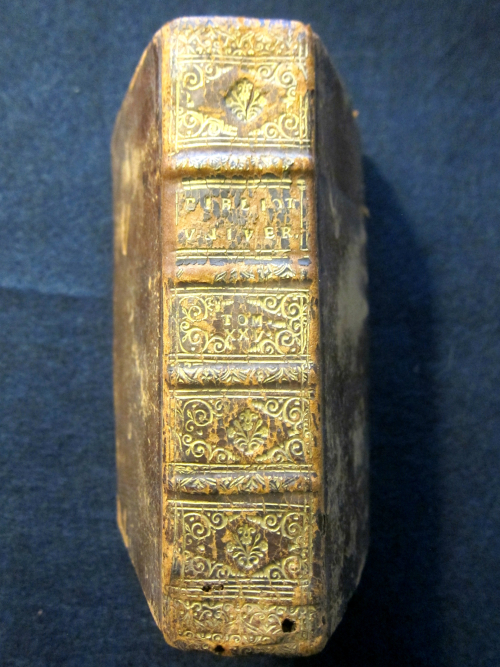
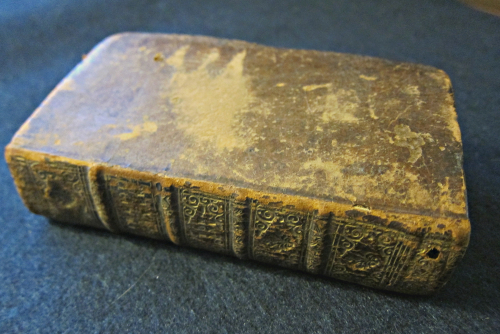
    Gottfried Leibniz, “Codex Juris gentium Diplomaticus, in quo tabulae Authentica Actorum Publicorum Tratatuum…”, appearing in Jean Le Clerc and Jean Cornande de al Crose,  Bibliotheque Universelle et Historique de l’annee M.D.C. XCIII Amsterdam, Abraham Wolfgang, 1693, volume 25, occupying pp 1-21.  First edition. The volume printed in two parts, vi,279,(2),281-539,(25)pp. 130x75mm, the article occupying pp 1-21, this issue with the Leibniz published in July of that year.  Condition: Bound in leather, with raised bands and decorated spine panels. The book is fairly rubbed, and has two worm holes at spine bottom; there is also some marginalia and annotation on the front pastedown and free fly. That said the book is sturdy and the text is generally clean and crisp throughout. A solid GOOD copy.  $350

    Bibliotheque Uni 1693 _2_

    • Also bound with:

    Leibniz,  “De La Tolerance Des Religions: Lettres de M. de Leibniz, Et Reponses de M. Pellisson”, pp 21-34. 

    First paper: “In 1693 Leibniz published a large collection of medieval documents supporting the position of the Empire against the claims of the French. To this collection he attached a preface, about half of which is translated below. In it Leibniz showed that he was moving a little away from his earlier view that the Republic of Christendom could be restored, and toward a more modern position which accepted the existence of independent national states. But the most important part of the preface is that containing an excellent statement of his general theory of justice as the charity of the wise, which he attempts to relate to international principles. There are also a great many observations about the psychology of rulers which show that Leibniz could, when he liked, be fairly ‘realistic’.–from the work of editor Patrick Riley, Gottfried Wilhelm Leibniz, (Cambridge UP) the section on the preface of the ”Codex Iuris Gentium, (1693).

    “Justice is the charity of the wise, or what is congruent with the judgment of the good and prudent person; or it is the virtue of the affection of one person toward another, that is, the benevlolence as well as the aversion, moderated and directed for the right reason.” –(quote from Christopher Johns, The Science of Right in Leibniz’s Moral and Political Philosophy, p. 71)

    There are numerous other papers in the volume, including book notices, book “reviews” (such as a presentation on Guillaume Sherlock’s book on death and the final judgment), philosophy, history, ethics, and others that don’t fit neatly into a category. (A good example of the last entry is a review of Pierre le Lorain Abble de Vallemont’s odd book on diving rods and etc. which translates roughly to “Occult Physics, or the Treatise of the Divine Wand and its Use in Discovering Water Springs, Mining, Hidden Treasures, Robbers and Fugitive Murders. With principles that explain the darkest phenomena of Nature….” which appears on pp 269-279.)

    Bibliotheque Uni 1693 _2_

    On the Bibliotheque: “Like its great rival, Pierre Bayle’s Nouvelles de la re´publique des lettres, it [the Bibliotheque…] was a source of information and means of communication for members of the nascent Republic of Letters. It was also one of the remote ancestors of the modern academic journal, though much less specialised than most of its successors.”J.R. Milton, “Locke’s Publications in the Bibliothèque Universelle et Historique”, British Journal for the History of Philosophy, 05/2011, Volume 19, Issue 3

    Note: editors and contributors of the Bibliotheque from start to finish included: Jean Le Clerc et Jean Cornande de al Crose, vols 1-9; Jean Le Clerc, 10, 12, 14-19; Jean Cornand de La Crose, vol 11; Charles le Cene and Jean Le Clerc, vol 13; Jacques Bernard and Jean Le Clerc, vol 20; Jacques Bernard, vols 24-5. The journal was published every 4 months in vols 1-3; every 3 in 4-19, and then twice a year for 20-25.


    ·Posted by :

    ·in:

  • A Dictionary of Love, 1788

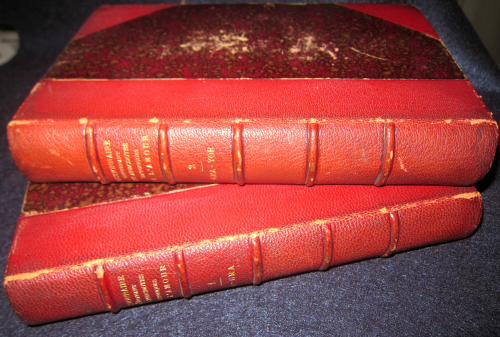
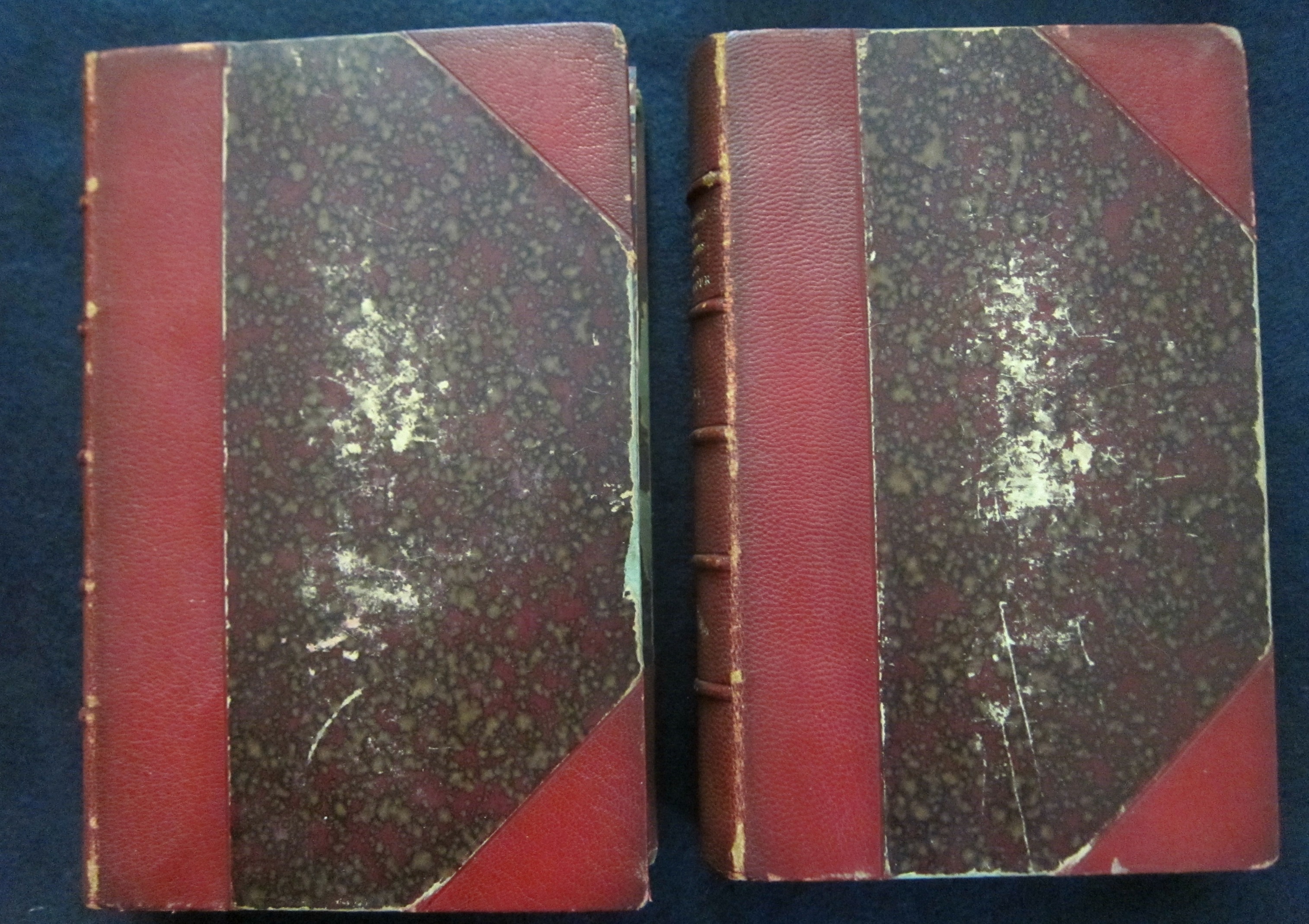
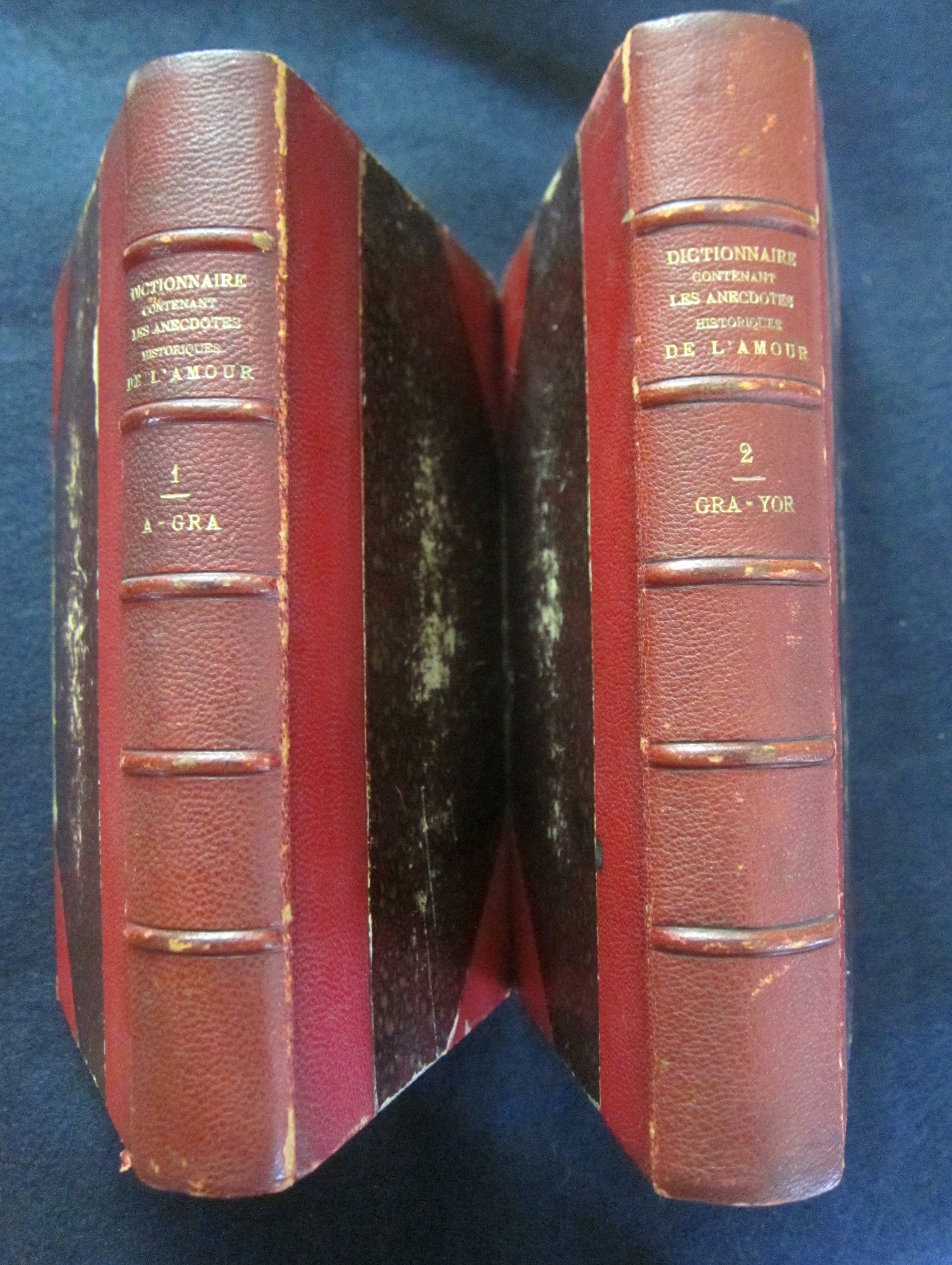
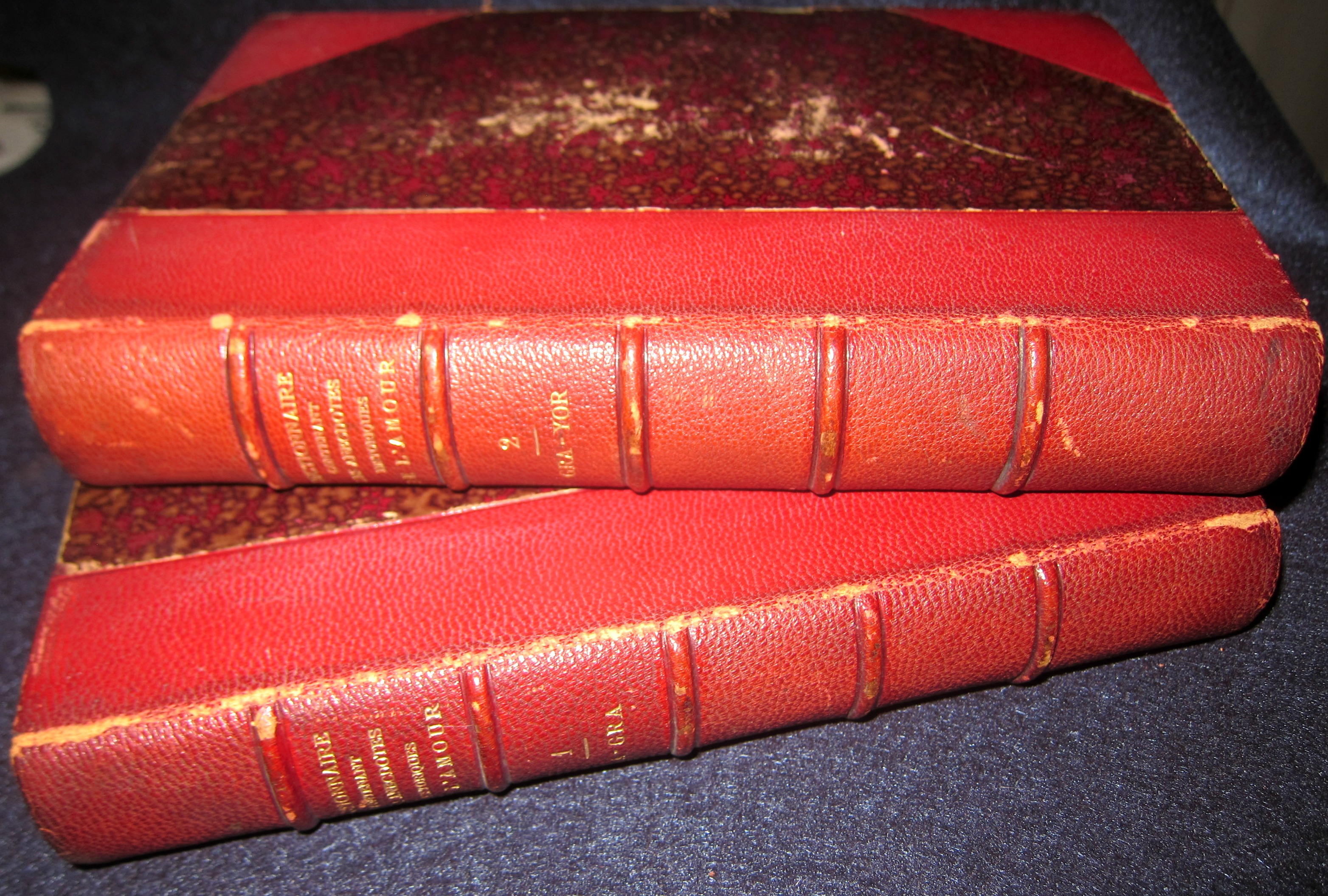
    (Mouchet) Dictionnaire Portatif, Contenant Les Anecdotes Historiques De L’Amour, Depuis Le Commencement Du Monde Jusqu’ À Ce Jour.  Chez Buisson, Paris, 1788. Two volumes, iv, 564; 600, (ii)pp. Rebound in the mid-19th century in half calf and marbled boards, with raised bands, marbled endpapers and paste downs, and mostly untrimmed. Faults: the marbled boards are a little scuffed in the middle, and there are a few small scuffs to the spine and board edges. Also, a few of the en
    ding leaves and beginning leaves have some very good and old repairs where the leaves were unevenly worn and replaced with appropriate paper edging–really a very good repair job, none of which affects the text on the few pages of repair.  $300  Brunet 17891; Barbier 1, 3849. There was a third volume added in 1811, and by 1832 there were five volumes, all together.  

    L'armour _1_

    Altogether there are somewhere in the vicinity of 400 entries in the two volumes, covering l’amour in its many varieties, flavors, and avenues.  

    • “Oui Amour Amour quand tu nous tiens, on peut bieu dire; adieu prudence.” La Fontaine (from the title page)

    The American Bibliopolist, Volume 3, 1871, calls it “very scarce” and is offered for sale at $15, which is about $400 in 2017 according to the BLS CPI calculator.


    L'armour_3_

    L'armour_3_                                                        


    ·Posted by :

    ·in:

  • Two Documents on the Apollo Lunar Descent Engine (1966)

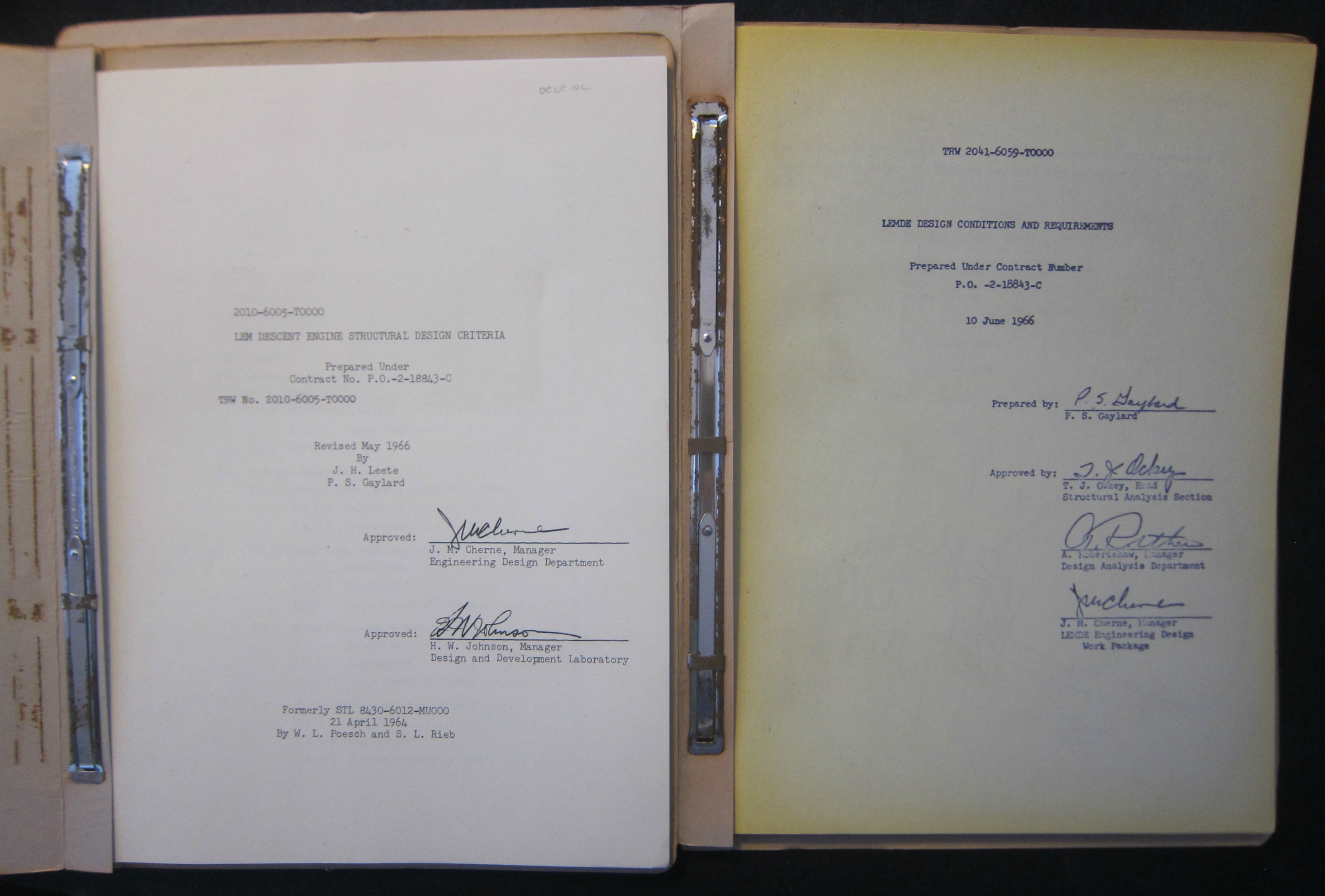
    Two Documents on the Apollo Lunar Descent Engine (1966), both of which are scarce, and not located in WorldCat.

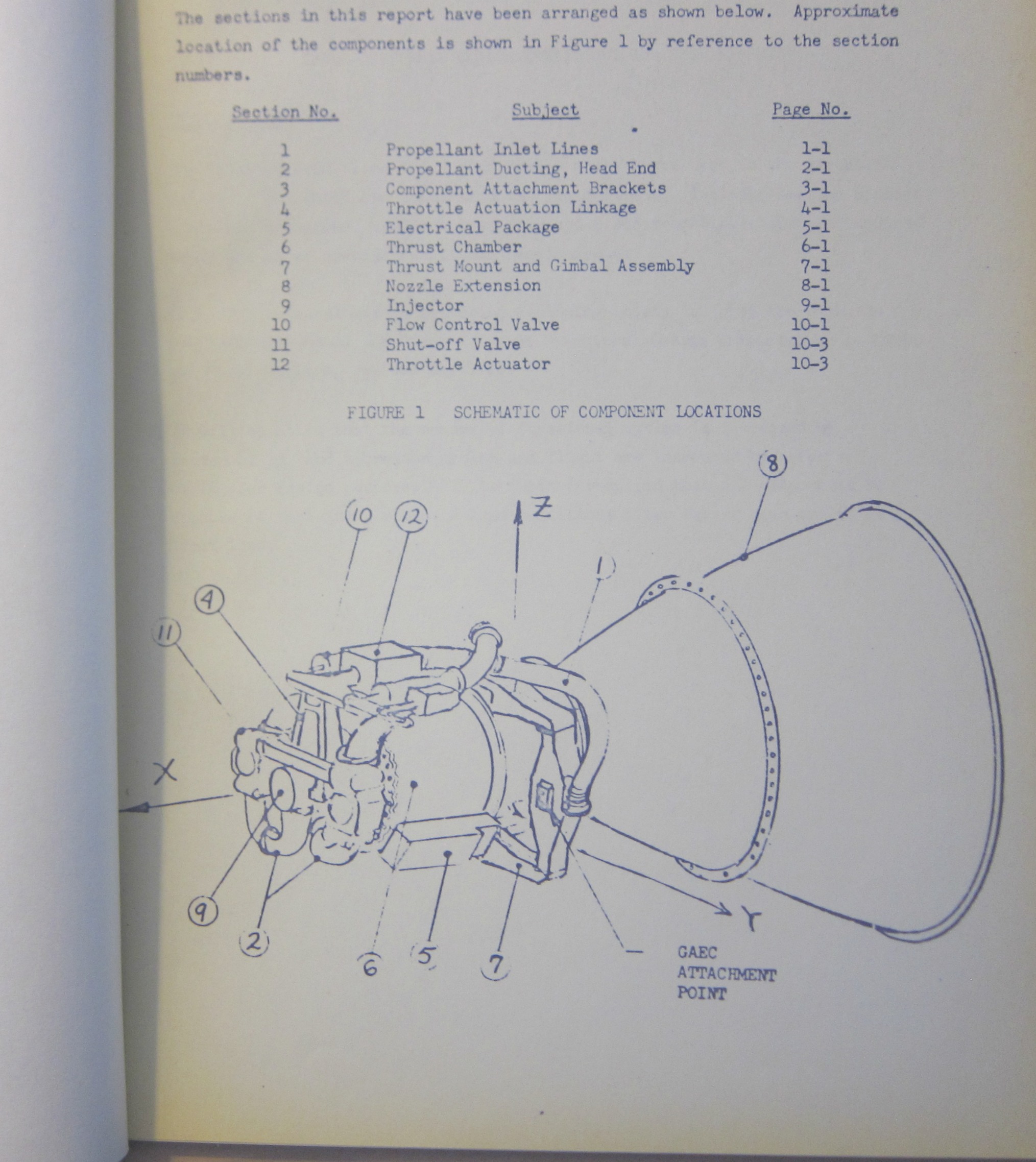
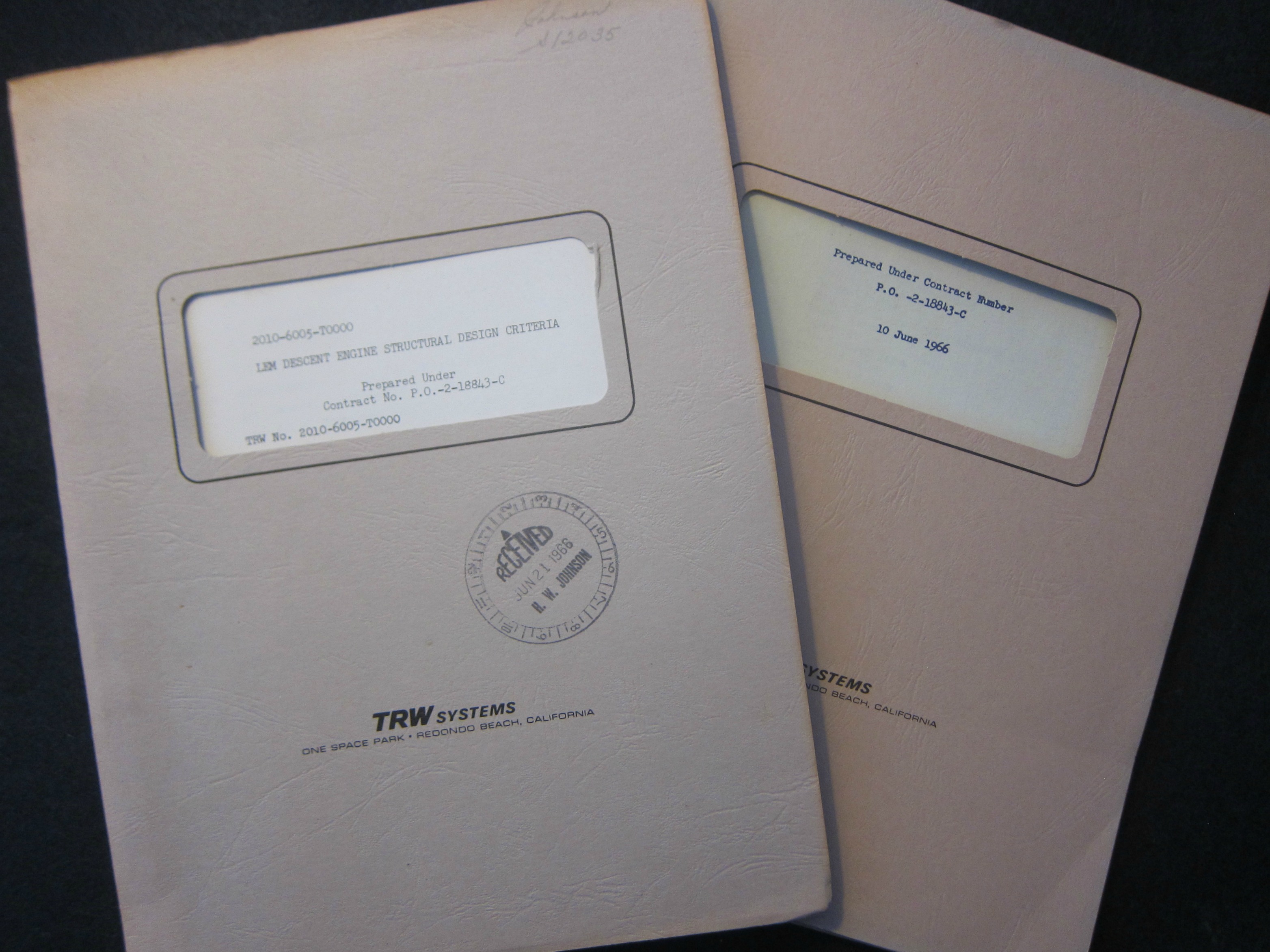
    (P.S. Gaylard)  LEMDE Design Conditions and Requirements. Prepared under contract number P.O. -2-18843-C, 10 June 1966.  11×8.5″, 42 leaves. Mimeograph product, punch bound in TRW Systems binder. Metal binder clasps are rusty, and the mimeo sheets are yellowing around edges, otherwise very crisp.  

    (J.H. Leete, P.S. Gaylard) LEM Descent Engine Structural Design Criteria, prepared under contract P.O. -2-18843-C, revised May 1966.  11×8.5″, offset printing, iv,30 leaves.  Punch bound in TRW Systems binder. Metal binder clasps are rusty, otherwise very crisp. 

    • “The Descent Propulsion System (DPS) or LMDE (Lunar Module Descent Engine) is a variable throttle hyperbolic rocket engine developed by Space Technology Laboratories (TRW) for use in the Apollo Module Descent Stage.”–Wikipedia

    SOLD


    Lemde _2_
    Lemde _2_
    Lemde _2_

    ·Posted by :

    ·in:

  • H.L. Mencken’s Copy of a Stone Catalog for the Big Sleep

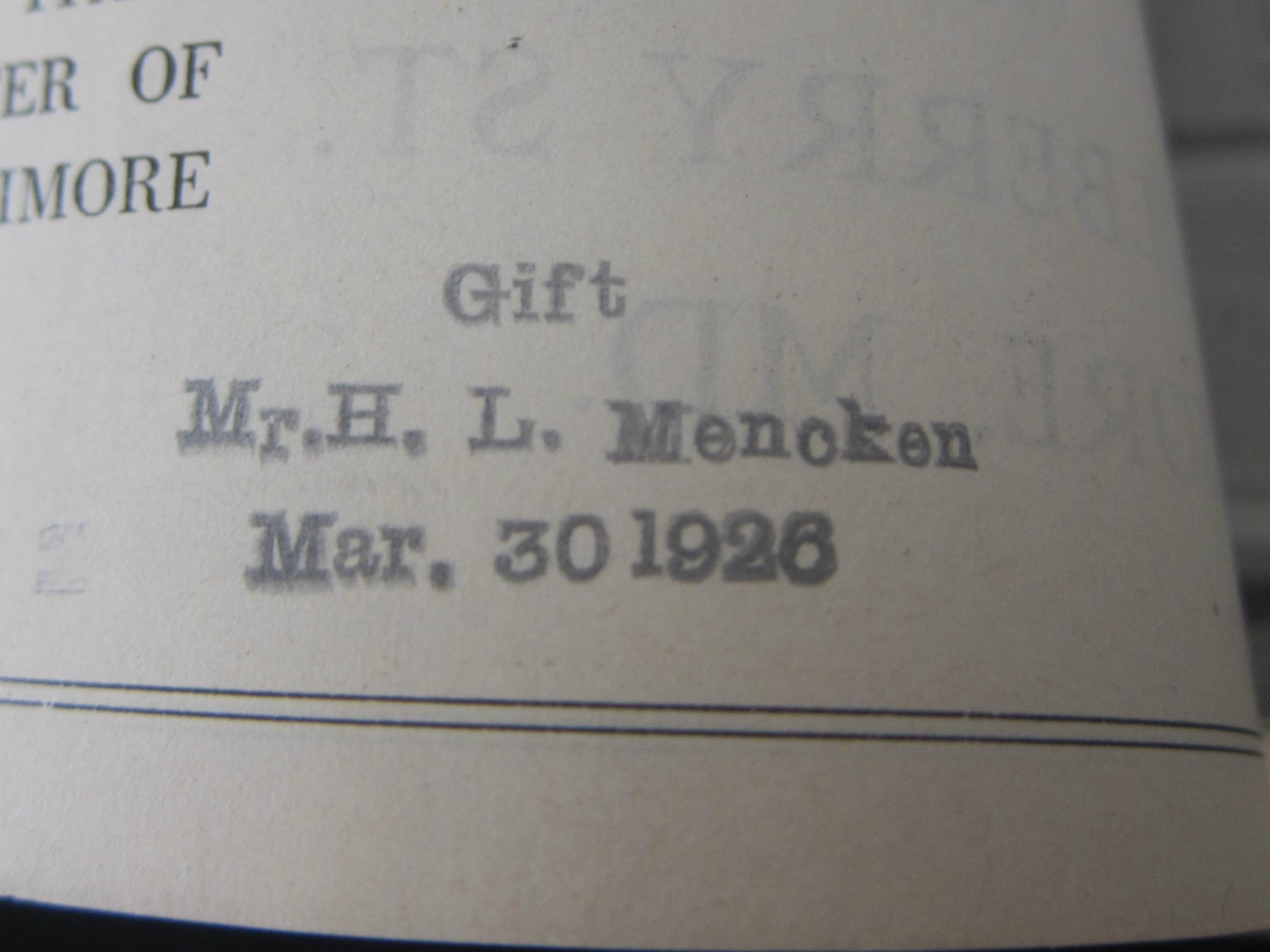
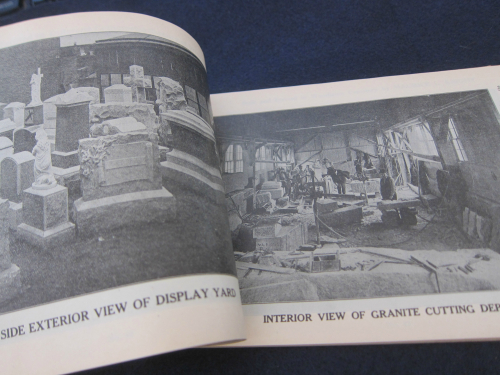
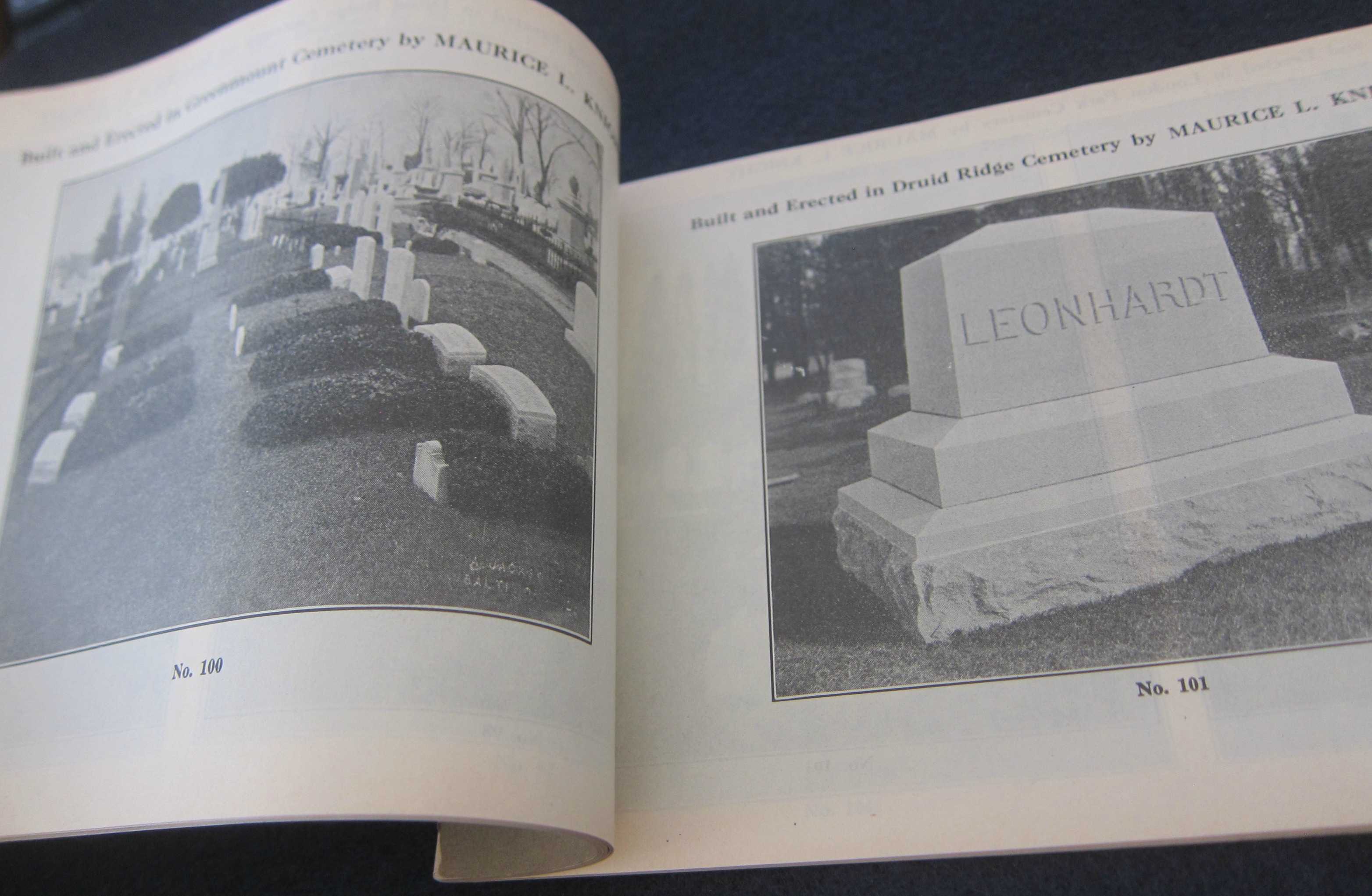
    Mencken tomb _5_ I came upon this curious pamphlet1 by Maurice Knight, curious in itself, being a manufacturer’s catalog for gravestones/markers/monuments, which was something I knew must have existed in dozens of different incantations through the years, though I had never actually seen one. Opening the catalog I saw at the bottom the small and distinctive rubber stamp stating that this was once the property of H.L. Mencken, who had given it to the Library of Congress in 1926, and which later was sold to me in the library’s Exchange Program for surplus and duplicate material. 

    Knight was a Baltimore man and firm, and as it turns out there are numerous examples of  Knight’s work pictured (“in use”) in a number of Baltimore cemeteries, but most interestingly in Loudon Park Cemetery, where the Mencken family plot is located. I cannot tell if the Mencken stones have any connection to Knight, or if Mencken was planning something else. (There are no annotations by Mencken in the text nor I guess should there be–I just state this because if I don’t I imagine that someone will ask.). Mencken’s family plot was already well-established, so I’m really not sure why he would have this prospectus.  

    Anyway, here it is. The title of the catalog tells the reader to “Consult the Master”–with Mecnken, I wonder who that master might have been? 

    Notes:

    1. Consult the Master, Maurice L. Knight, for your Monument-Tomb-Vault. Office and Works, 1025 West Mulberry St., Baltimore, MD. 9×6″, ca. 75pp, with 150+ illustrations of the work of the stone master. Title printed vertically though the book opens horizontally. Original wrappers. The wrappers are scuffed and bumped a bit around the edges, though the text is bright and clean.  Provenance: stamped on the reverse of the title page “Gift/Mr. H.L. Mencken/March 30, 1926”, being a gift to the Library of Congress, with their surplus stamp on the rear cover. 

    Mencken tomb _2

    Mencken tomb _2

    ·Posted by :

    ·in:

  • The Electric Candle, 1878

    Wm. Lucien Scaife, “The Electric Candle”, in Scientific American Supplement, January 26, 1878, pp 1720-1, a dense 1.5 column article of about 1200 words. In the issue of pp 1709-1724, with numerous illustrations throughout the issue. 15×11″. In the original blue wrappers, removed from a larger bound volume. Very Good condition.  $45

    “Jablochoff [born 1847] in 1876 introduced his well known electric candle a form of arc lamp in which cylindrical carbons are employed placed in a vertical position and held separated by a thin filling of refractory insulating material…” –(National Light Convention, Proceedings, 1892) This one one of several major improvements on the arc lamp introduced by Humphrey Davy as early as 1806, though none of these electric lights received much public use until the 1870’s. By 1881, Jablochoff’s electric candle had nearly 4000 emplacements, though his invention would soon be overcome by the incandescent bulb.

    • This article is preceded by Wm. F. Chaening, “Curious Facts about the Telephone”, about two columns of 2250 words on p 1720. The telephone had been patented by Bell only about two years earlier.  

    ·Posted by :

    ·in:

  • Rare Broadside Calling for Support, Food, and Clothing for Striking Miners, 1922

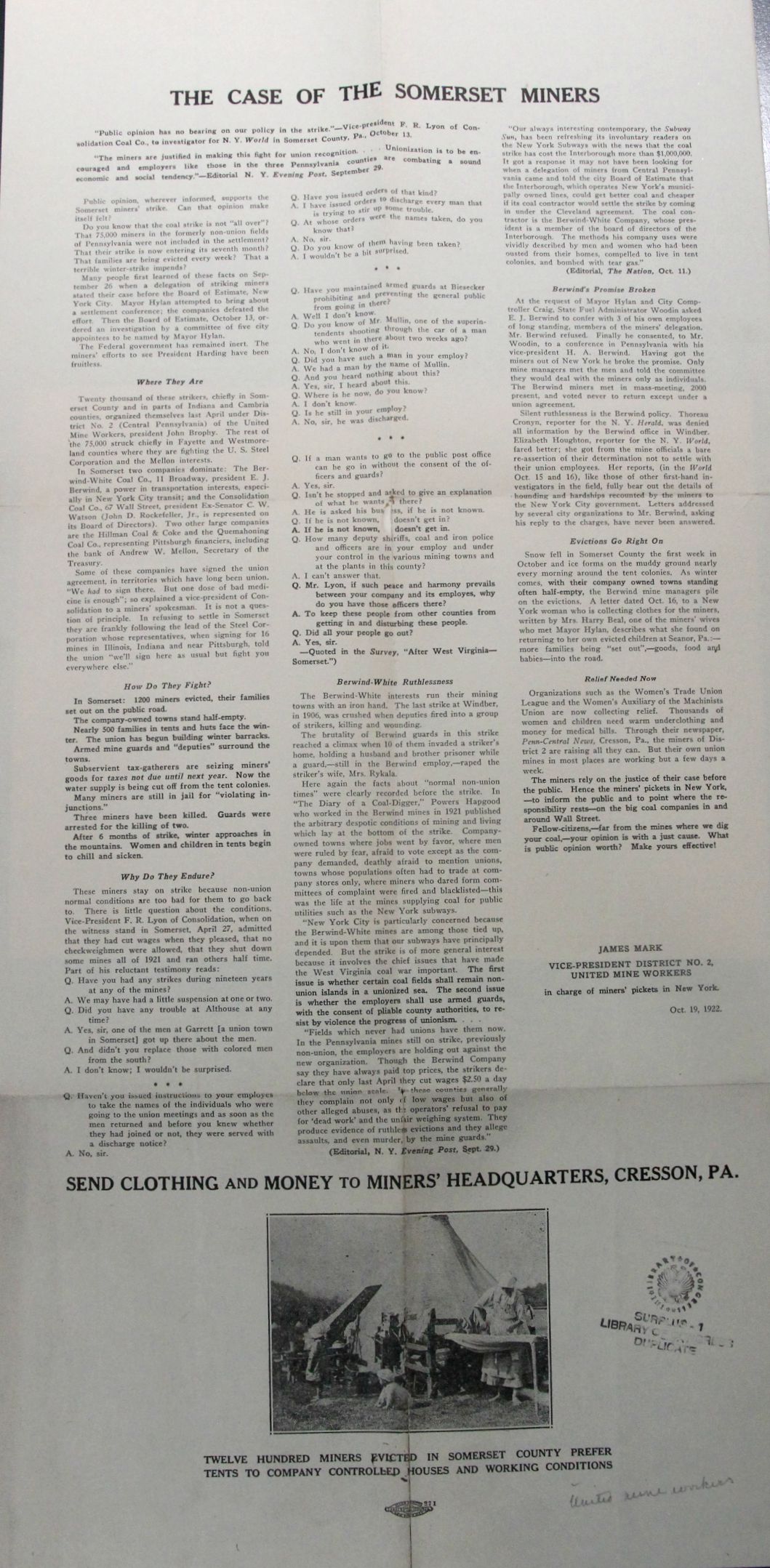
    The Case of the Somerset Miners / Send Clothing and Money to Miners’ Headquarters, “Cresson, PA. James Mark (VP District No. 2., United Mine Workers…in charge if miners’ pickets in New York, October 19, 1922”.  24×12″ Several old folds; 5 inch tear in the middle fold at bottom; two inch-long tears in the margins of the top horizontal fold; one chip in he top middle fold, missing a 1/20inch x 1/8 inch piece, affecting four words. Provenance: Library of Congress, with their surplus rubber stamp at bottom right. Good/Very Good condition. $500

    This is a rare broadside seeking household items and money for the relief of the striking miners of the hard/tough/brutal Somerset Mine strike of 1922-3.  The miners struck for union representation from the United Mine Workers against the Berwind-White Company, which ran a very tight ship, evidently. The miners for Somerset lived in a classical company-town existence, with their pay being mostly entirely absorbed by the company via rent for company-owned houses, stores, food, water, and so on, all aspects of life controlled by the employer who/which retrieved the salary of its underpaid workers by controlling all aspects of the workers’ lives. So the miners struck for representation from the union for more money and management resisted, especially since it would cost them profit during a year that saw coal production falling by a third.  So the strike began and lasted from 1922 to 1923, during which Berwind-White employed scabs and security and thugs to intimidate and control their workers, evicting 1200, sending hundreds of families into a Pennsylvania tent life for the winter, stopping the flow of water, and general thuggery.  The strike ended unsuccessfully in 1923, though the union came in by 1933. It was reported by union officials that “all was not in vein”, as wages paid were now union scale, conditions weren’t nearly as bleak, and the company towns/stores were not as ruthless-https://www.iup.edu/archives/coal/unions-and-mining/that-magnificent-fight-for-unionism/

    Reading this summation and plea is a heartbreaker, and will no doubt make a person appreciate the idea of unions, especially in the U.S.A. of the 1920’s/1930’s.  


    Coal strike somerset

    I did find a copy of the broadside at the University of Pittsburgh https://www.library.pitt.edu/labor_legacy/SomersetCoalStrike.htm

    ·Posted by :

    ·in:

  • “The Beginning of Cosmic Ray Astronomy”

    HESS, Vicktor. “Uber Beobachtungen der durchdringenden Strahlung bei sieben Freiballonfahrten”, in Physikalische Zeitschrift, volume 13, 1912, pp 1084-1091, offered in the full volume. This is the work for which Hess would (much) later receive his shared Nobel in physics in 1936. Cloth-backed marbled boards with cloth-tipped corners. Institutional copy with a bookplate and a few rubber stamps on title page, otherwise a fine copy. $450

    • “Hess took up the problem stated by Wulf in 1911. He first verified the rate of absorption of gamma rays and then, with the help of the Austrian Academy of Sciences and the Austrian Aeroclub, made ten difficult and daring balloon ascensions, collecting data with improved instrumentation. He reached a height of 5,350 meters, with striking results. He was able to establish that to a height of approximately 150 meters above sea level, radiation decreased according to known laws, while at greater heights radiation increased steadily, following approximately the same laws. He found radiation at 5,000 meters to be several times greater than that at sea level, and also that radiation at all levels was the same night or day, and therefore not the result of the direct rays of the sun. He was thus able to conclude that the radiation he recorded at high altitudes entered the atmosphere from above and was, in fact, of cosmic origin. His results were verified in an extension of his experiments made by W. Kohlhörster in1913—Kohlhörster reached a height of 9,300 meters, and recorded radiation of twelve times that at sea level—but were not acknowledged by other physicists for a number of years. (“Cosmic rays” were so named by R. A. Millikan in 1925.) In 1913 Hess himself equipped the meteorological station on Hoch Obir (2,141 meters) in Carinthia to accommodate further studies of cosmic radiation; these experiments, however, were brought to a halt by World War I. “–“Hess, Victor Franz (Francis).” Complete Dictionary of Scientific Biography. Vol. 6. Detroit: Charles Scribner’s Sons, 2008. 354-356.

    The last of the ascensions was made on August 7, 1912, with the results published in this issue of the PZ. 

    • “The results of these observations seem best explained by a radiation of great penetrating power entering the atmosphere from above..’ This was the beginning of cosmic-ray astronomy”– Harwitt, Cosmic Discovery, pg 14.

    Also contained in this volume:

    • Laue, Max. “Einande gegen die Relativitatstheorie und ihre Widerlegung”;
    • Meitner, Lisa. “Uber das Zerfallsschema des aktiven Niederschlags des Thoriums”;
    • and numerous others.


    ·Posted by :

    ·in:

  • Early Contribution to Brownian Motion 1863 (by Not-Norbert) Wiener


    WIENER, Christian (1826-1896) . “Erkldrwig des atomistischen Wesens des Jiussigen Korperzustandes und Bestatiguny desselben durch die sogennanten Molekularbetvegungen”, in the Annalen der Physik, 1863, volume 118, part 1, pg 79-94, offered in the entire volume of 644pp with 8 folding plates (1 plate split at the fold and detached). Ex-libris Deutsche Akademie der Luftfahrtforschung, then Wright Patterson Field Library (USAF), then Library of Congress.  Library markings:  small gilt-stamped “Akademie der Luftfahrtforschung”, page edges stamped “Wright Field Library/Dayton, Ohio” on top and bottom.. Contents quite nice.  $350

    “The first name which calls for reference in this respect [regarding Brownian motion] is, perhaps, that of Wiener, who declared at the conclusion of his observations, that the movement could not be due to convection currents, that it was necessary to seek for the cause of it in the liquid itself, and who, finally, almost at the commencement of the development of the kinetic theory of heat, divined that molecular movements were able to give the explanation of the phenomenon” – Perrin, Jean. Brownian Movement and Molecular Reality, 1910, pg 3.

    “…molecular -kinetic explanation of Brownian Motion (first qualitatively proposed by Christian Wiener in 1863)…”–“Error and the Growth of Experimental Knowledge”, Deborah G. Mayo, p 218.

    “In his studies on molecular physics, Wiener demonstrated by extremely careful observations that Brownian movement is an “internal motion peculiar to the liquid state…”–“Wiener, Ludwig Christian.” Complete Dictionary of Scientific Biography. Vol. 14. Detroit: Charles Scribner’s Sons, 2008. 342-344.

    “(Wiener was a) German mathematician who specialized in descriptive geometry. Wiener was also a physicist and philosopher. In 1863, he was the first person to identify qualitatively the internal molecular cause of Brownian motion.”–Wiki 

    Also bound with: KIRCHHOFF, Gustav.  “Zur Geschichte der Spectral-Analyse under der Analyse der Sonnenatmosphaere”, same volume, pp 94-111.  Kirchhoff (1824-1887) was part of the Bunsen-Kirchhoff teams that developed the spectroscope in 1859 and then detected the first chemical elements in the spectrum of a star (1859 and 1860, respectively).  This article (“On the history of spectral analysis and the analysis of the solar atmosphere”) is interesting  given that it is relatively lengthy for such a short history, though it does reach back into the early 19th century for related developments.


    ·Posted by :

    ·in:

    —

Recent Posts

Archives

Categories