A Daily History of Holes, Dots, Lines, Science, History, Math, Physics, Art, the Unintentional Absurd, Architecture, Maps, Data Visualization, Blank and Missing Things, and so on. |1.6 million words, 7500 images, 4.9 million hits| Press & appearances in The Times, Le Figaro, Mensa, The Economist, The Guardian, Discovery News, Slate, Le Monde, Sci American Blogs, Le Pont, and many other places… 5000+ total posts since 2008.

  • e is Transcendental (1873)

    Hermite, Charles. “Sur la fonction exponentielle,” WITH “Sur la fonction exponentielle (Suite), ” AND WITH “Sur la fonction exponentielle (Suite)”,  AND FINALLY “Sur la fonction exponentielle”. A four-part paper, complete, being in weekly issues of Comptes Rendus…, all found in volume 77 (#s 1,2,4 and 5) on pages 18-24, 74-79, 226-233, and 285-293. All are disbound but complete weekly issues from this journal. GOOD condition. $500

    • Stated simply and elegantly in Wolfram’s MathWorld, “Hermite’s theorem: e is transcendental”, 
    • “Theorem. (Hermite 1873). The number e, the base of natural logarithms, is transcendental.”
    • See: Scharlau and Opolka, From Fermat to Minkowski, Lectures on the Theory of Numbers and Its Historical Development, Springer, 1984; the chapter “From Hermite to Minkowski”.
    • “[1873] Charles Hermite…proves that the base of the natural logarithms, e = 2.718… is transcendental.”–Parkinson, Breakthroughs, p. 383. 

    ·Posted by :

    ·in:

  • What Bogey Walked On, Part V–Turning B&W into Color

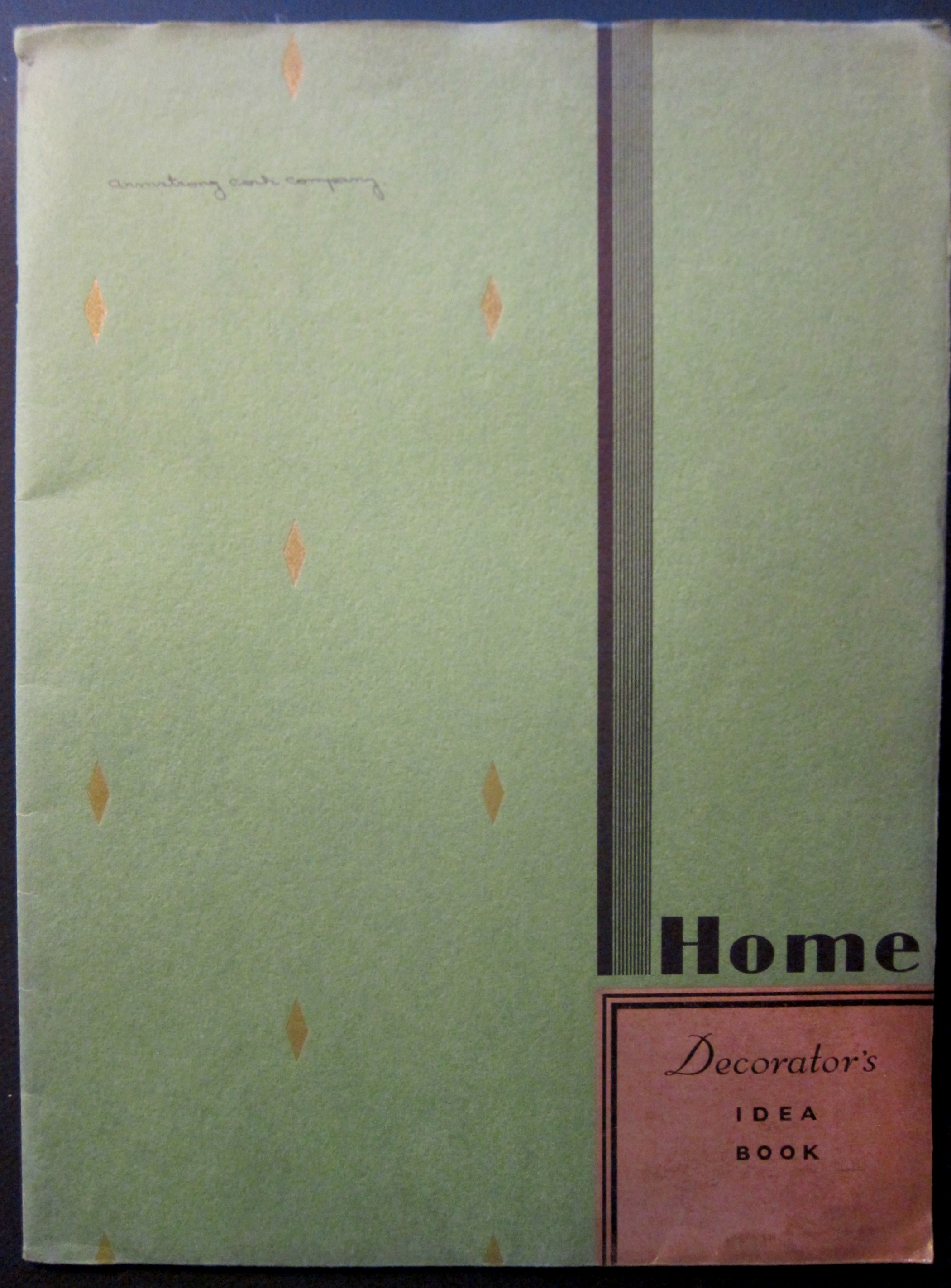
    Home Decorator’s Idea Book, Portfolio No. One, See Your Room Before You Start.

    Armstrong Cork Company, Floor Division, Lancaster, PA., 1931. 11.75×9″, 36pp, illustrated throughout with color and bw images, and printed on a heavier, semi-glossy paper. Bound in nicely decorated Art Deco wrappers. Provenance: Library of Congress, though the only evidence of that is the LC surplus/duplicate stamp on the rear of the front cover.  Very Good copy.  $100

    • This is one of seven portfolios published by Armstrong to help folks decorate their homes, hopefully using some sort of Armstrong product (floor, ceiling tiles, walls). Evidently the series is uncommon.  

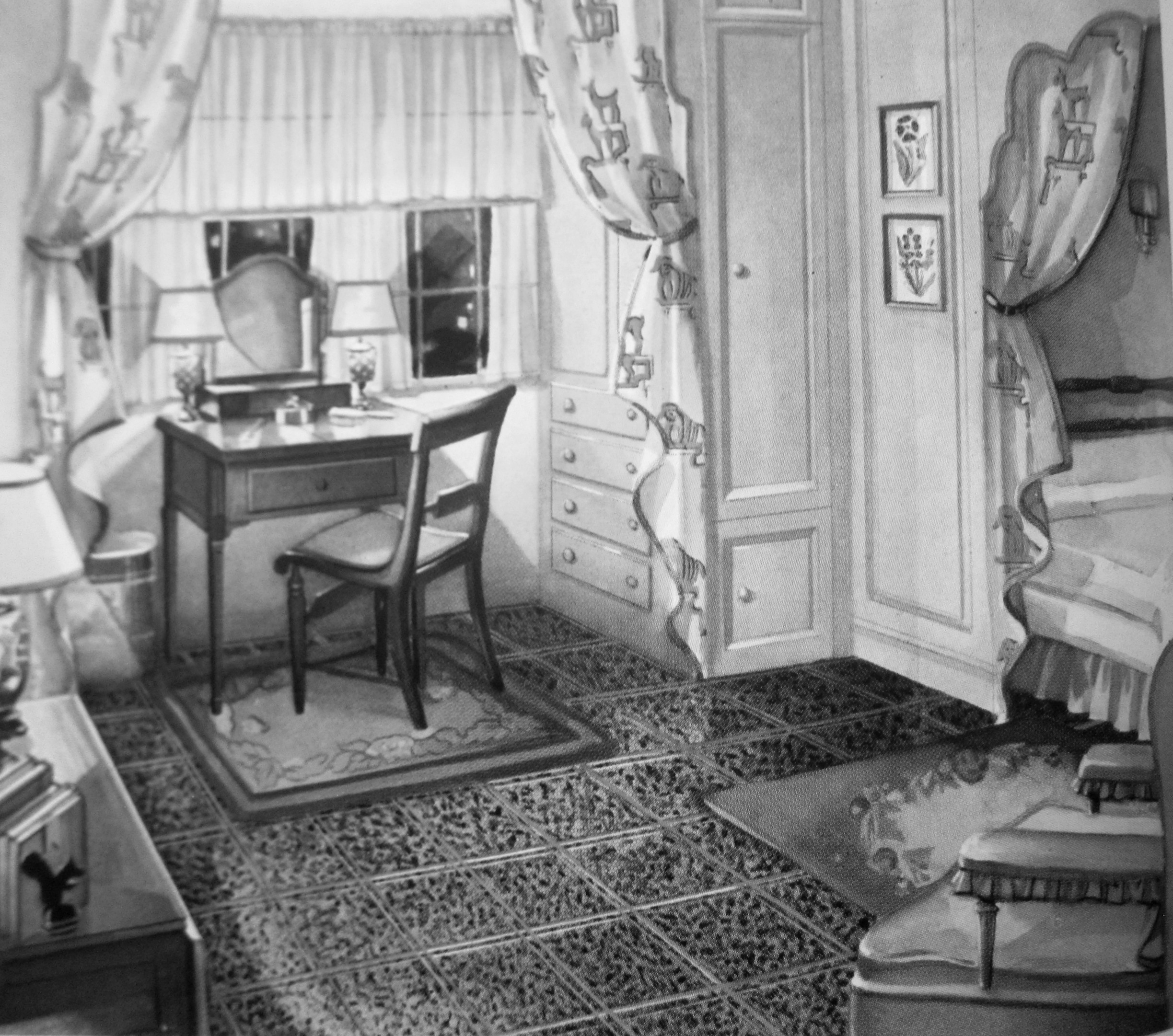
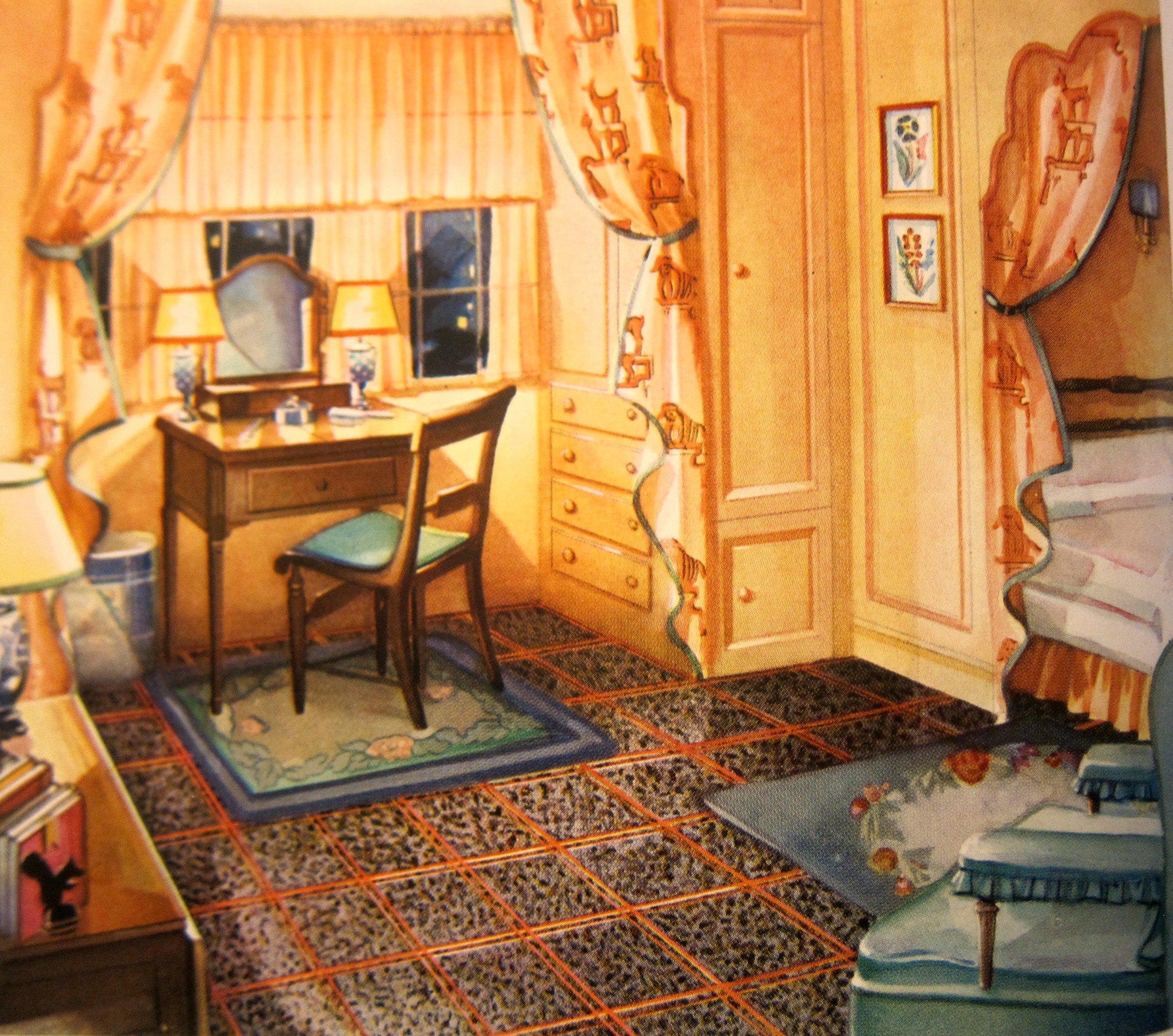
    I’ve referred a number of times in quick posts to this about the rooms that Bogart would’ve walked through in some of his movies, and how they might change quite a bit if they weren’t filmed in fabulous black & white. This Armstrong catalog gives a little bit of an idea of what those rooms may have looked liked–here for example if a color image of a decorating idea in color and with most of the color sucked out of it:

      Architecture armstrong decorator idea book _color room_ Architecture armstrong decorator idea book _bw room-

    Anyway, Bogart would still be Bogart whether he was in a room on the left or on the right–the man made his own color, or lack of it.  

    Architecture armstrong decorator idea book _cvr_

    And some very highly colorful flooring:

    ·Posted by :

    ·in:

  • New California Homes Designs, 1925

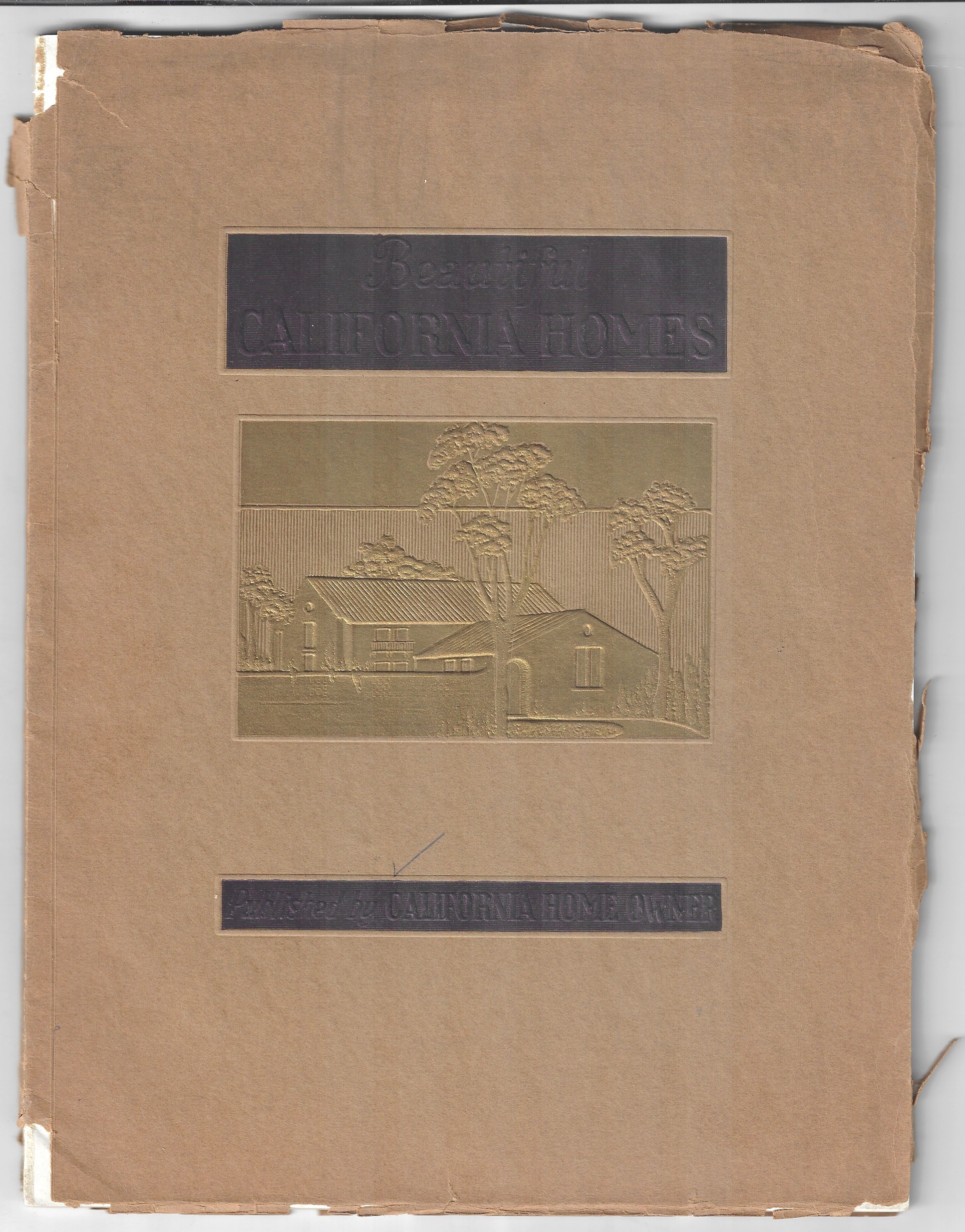
    Beautiful California Homes, Annual Edition.

    “A Manual of Practical Information for the Home Builder, with 55 Selected House Designs and Floor Plans by Prominent California Architects.” Published by California Home Owner, 1925, Los Angeles. 11.75×9″, 78pp, illustrated with photos, drawings, plans, and ads.  Printed on heavier stock paper. Bound in wrappers. The covers are cut slightly larger than the text, meaning their edges were subject to bumping and such, as you can see in the pic.

    Provenance: Library of Congress, with the only marks being their surplus/duplicate stamp on the copyright page. VG copy.  $125

    Architecture california homes

    ·Posted by :

    ·in:

  • The New NSDAP Element in German Town Design (1934)

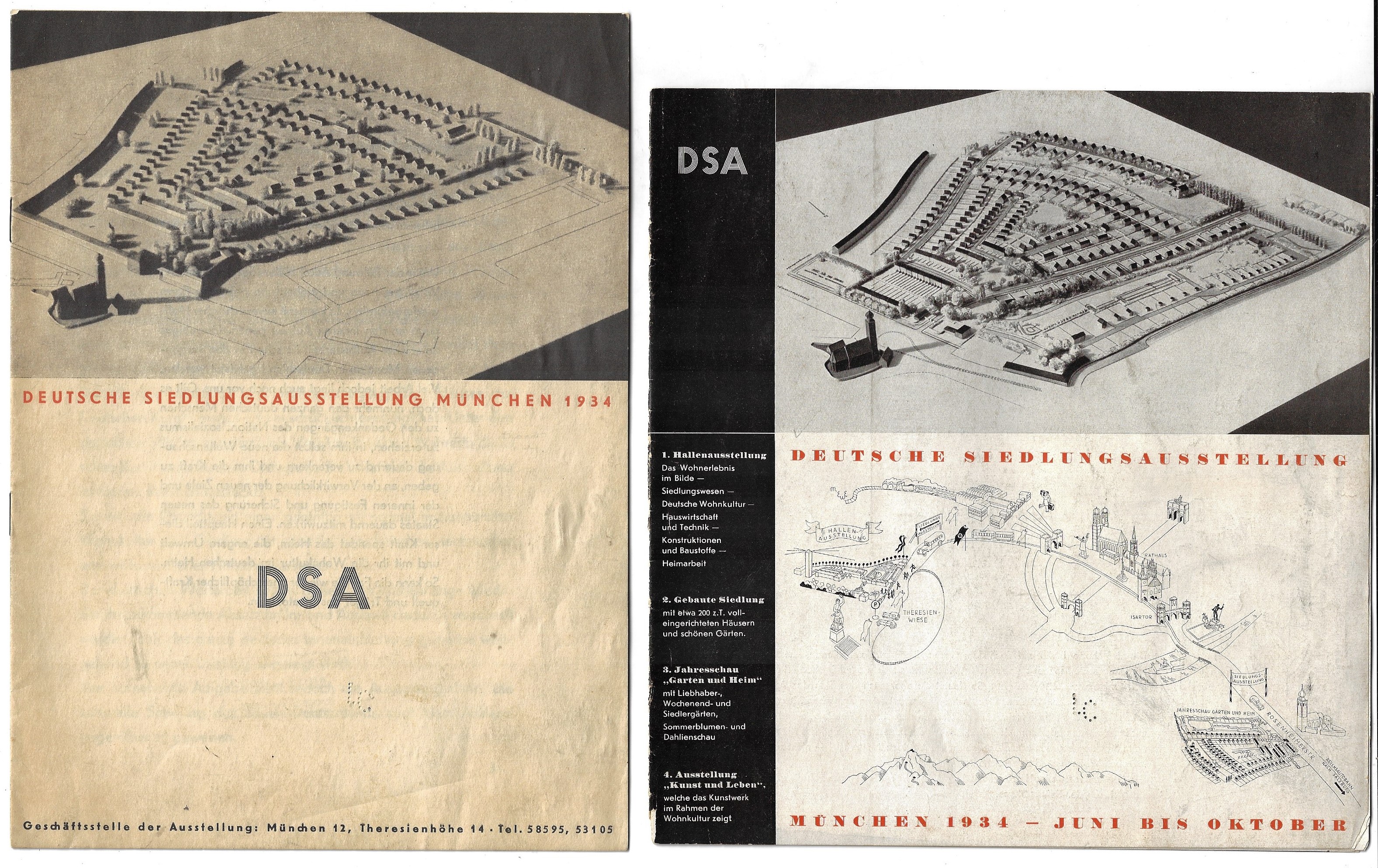
    Deutsch Siedlungsausstellung, Munchen, 1934. Published: Geschaftsstelle der Ausstelllung, Munchen. Printed 1934. 9.5×7″, 8pp.  Printed wrappers, with a decorative front wrapper.

    • Offered with:

    Deutsch Siedlungsausstellung, Munchen, 1934, Juni bis Oktober. 8.5×8″, 14pp, with photos nearly every page.  

    Provenance: Library of Congress, with their surplus stamp on the rear wrapper; also, there’s a 6mm “LC” perforated stamp at the bottom of the front wrapper.

    Architectural and town planning according to NSDAP demands. The two: $95  

    Neither pamphlet is located in WorldCat/OCLC

    DocFile (6)

    ·Posted by :

    ·in:

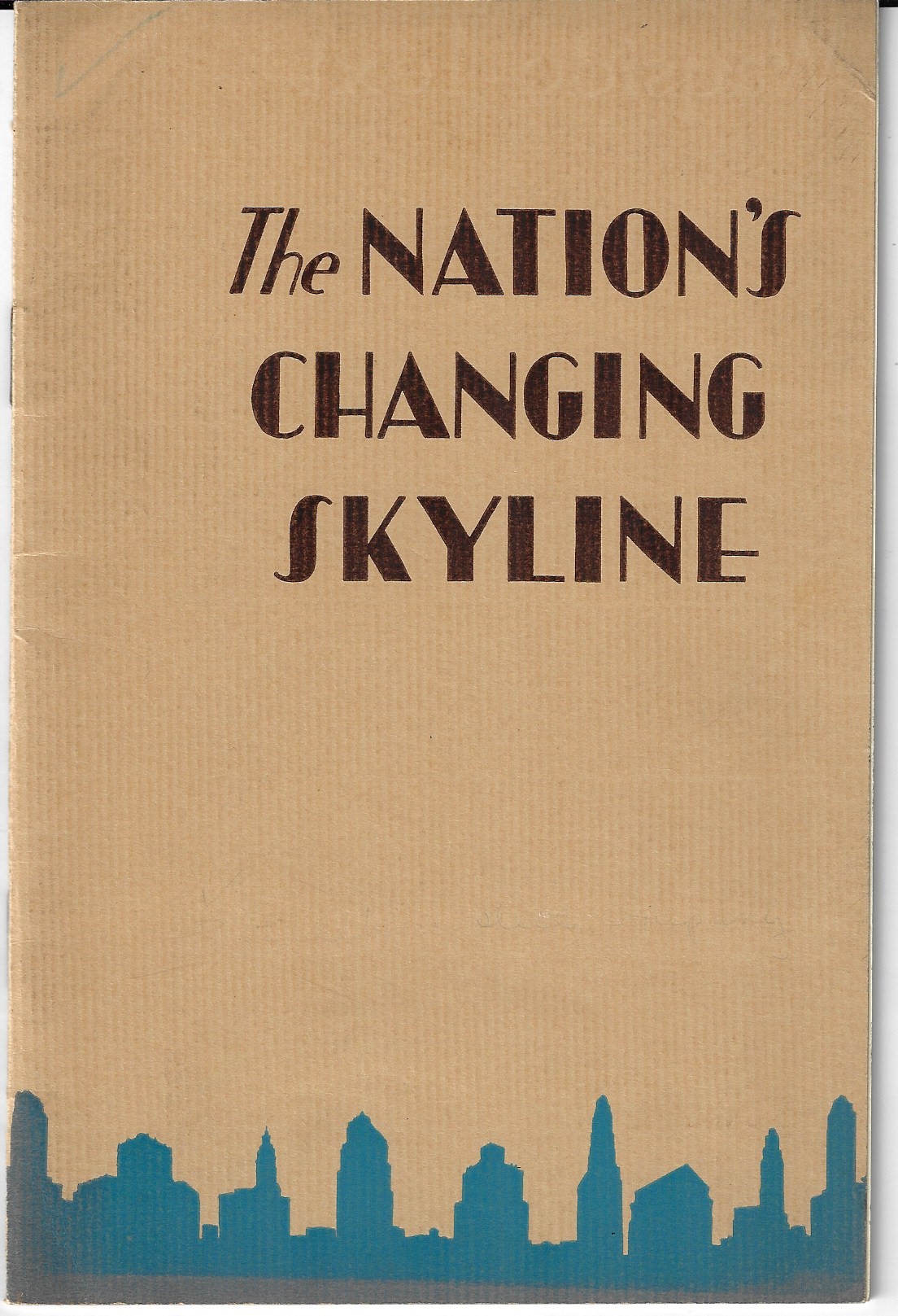
  • Our Nation’s Changing Skyline (1929)

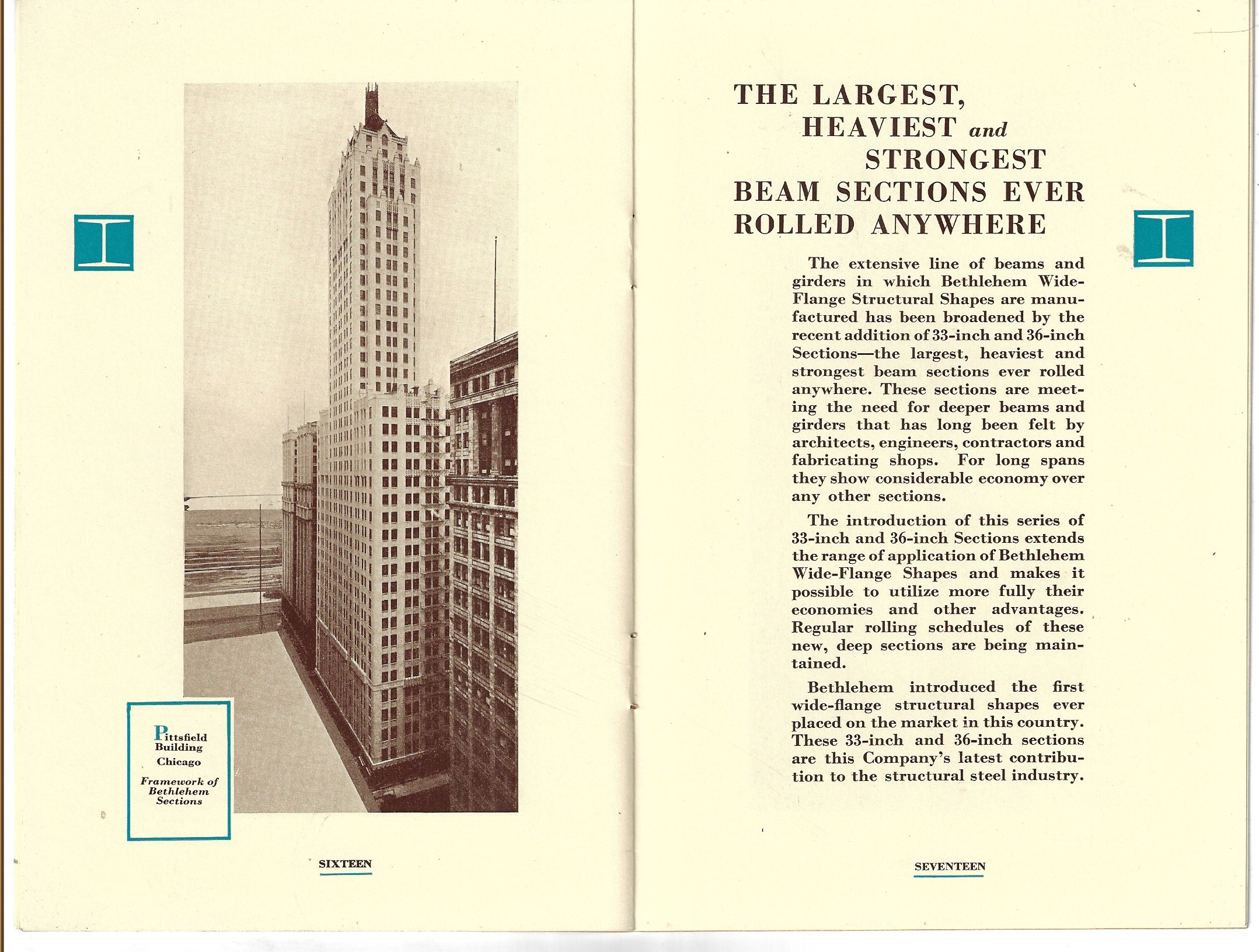
    The Nation’s Changing Skyline, prepared for the Architectural and Allied Arts Exposition, New York, April 15 to 27, 1929. Published by Bethlehem Steel Company, 1929. 8×5″, 22pp, including 15 full page illustrations (see sample, below).  Original thick wrappers, nicely decorated cover. Provenance: Library of Congress, with their surplus/duplicate rubber stamp on the rear cover.  Fine copy.  

    WorldCat/OCLC locates only one copy (Hagley).  $125

    DocFile (4)


    DocFile (5)

    ·Posted by :

    ·in:

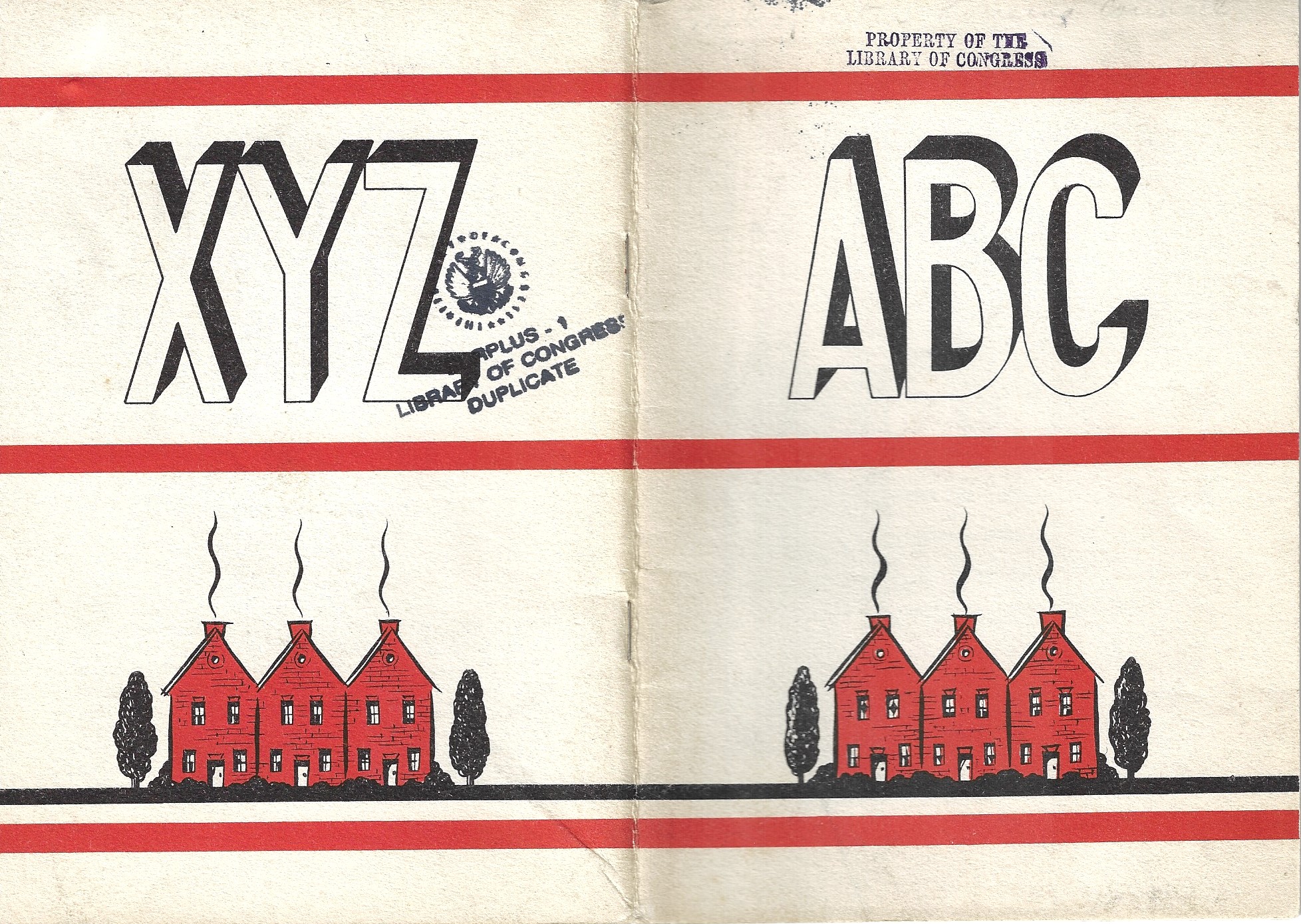
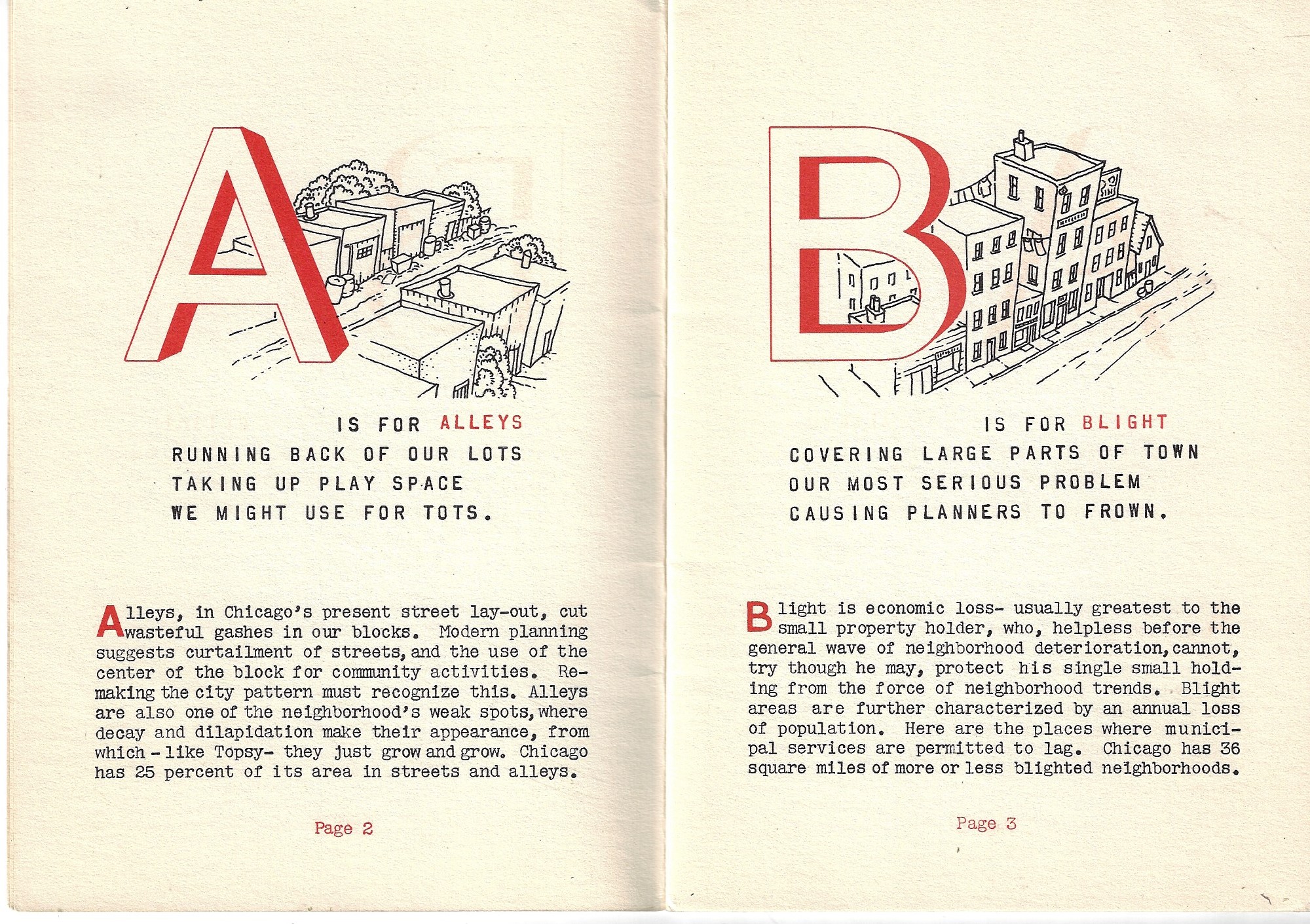
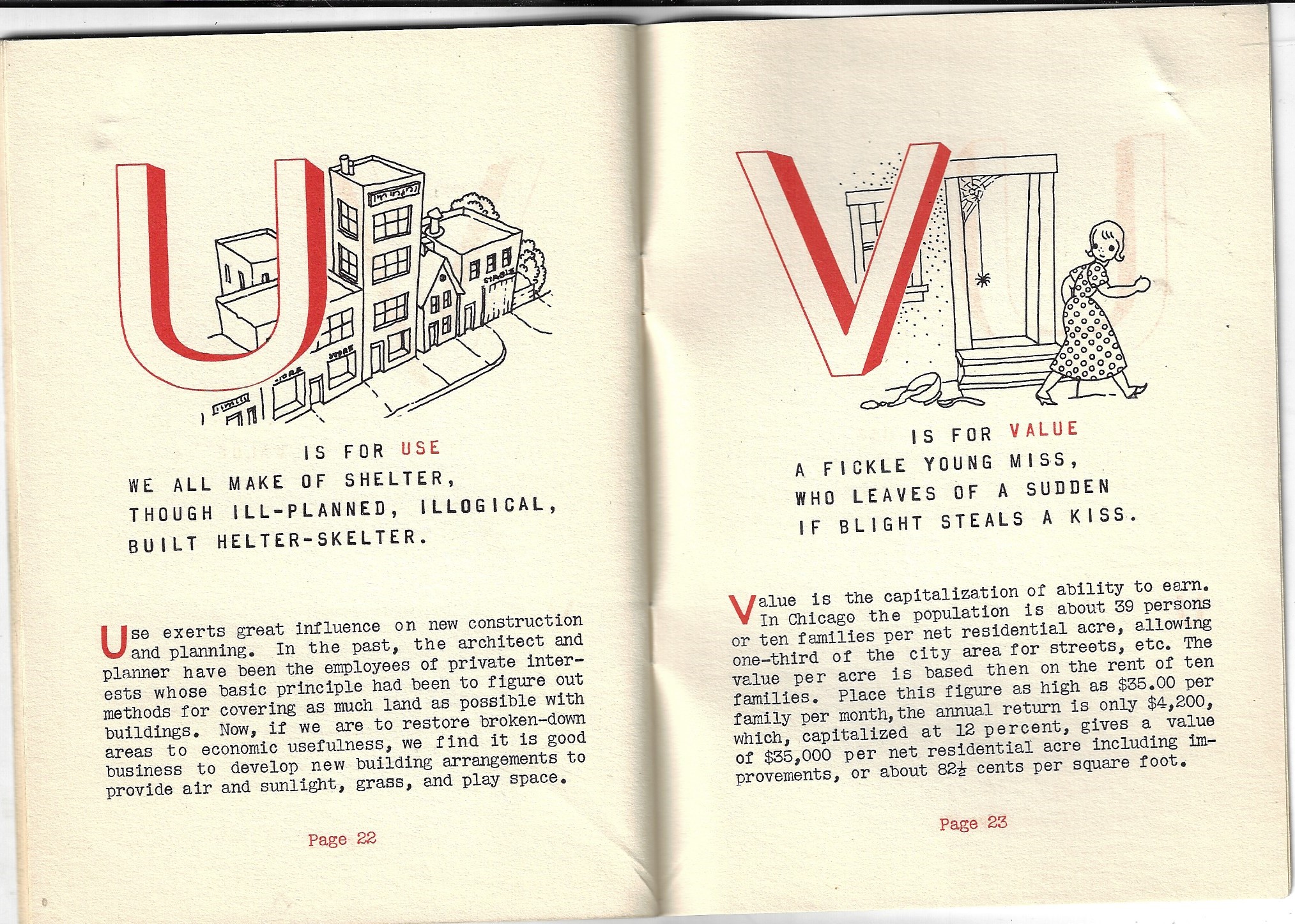
  • An ABC of Chicago Urban Development (1936)

    ABC. “Words and design by Arthur Bohnen, assistance of Elizabeth Blair, illustrations by Ethel Schacherer.”  7×5″, 26pp.

    “This publication is distributed to its members by the National Association of Housing Officials.” 1936–WorldCat   Only four copies located in WorldCat OCLC: Chicago PL, NYPL, Canadian Centre for Architecture, Columbia University.  Scarce. $100

    “May [this book] help you to look for and to see in this city of ours more than you have ever seen before. May it assist you in making this  a better place in which to live, to the end that Chicagoans will not fear the memories of home they give their children.”–preface.

    DocFile (2)
    DocFile (2)

    DocFile (3)

    ·Posted by :

    ·in:

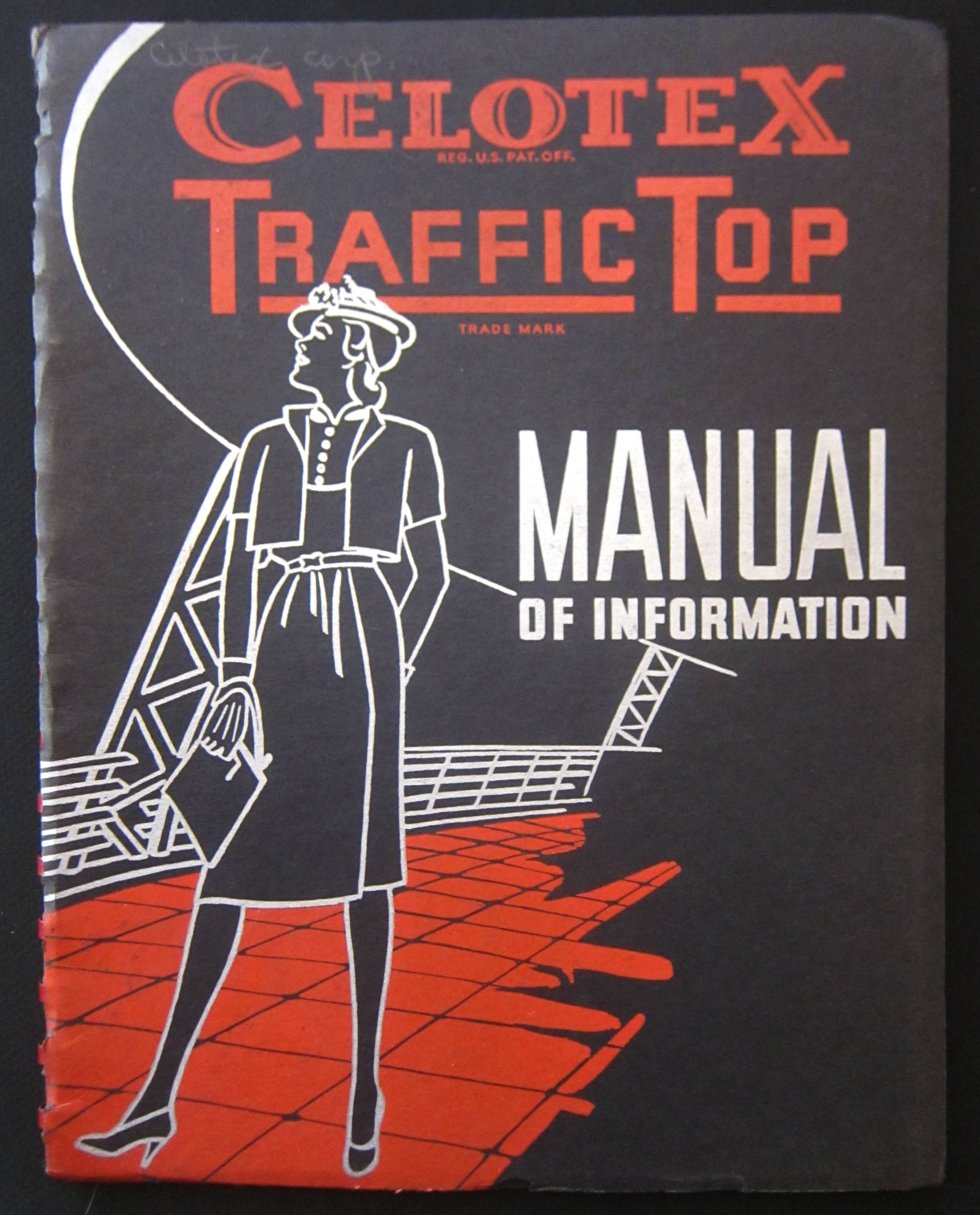
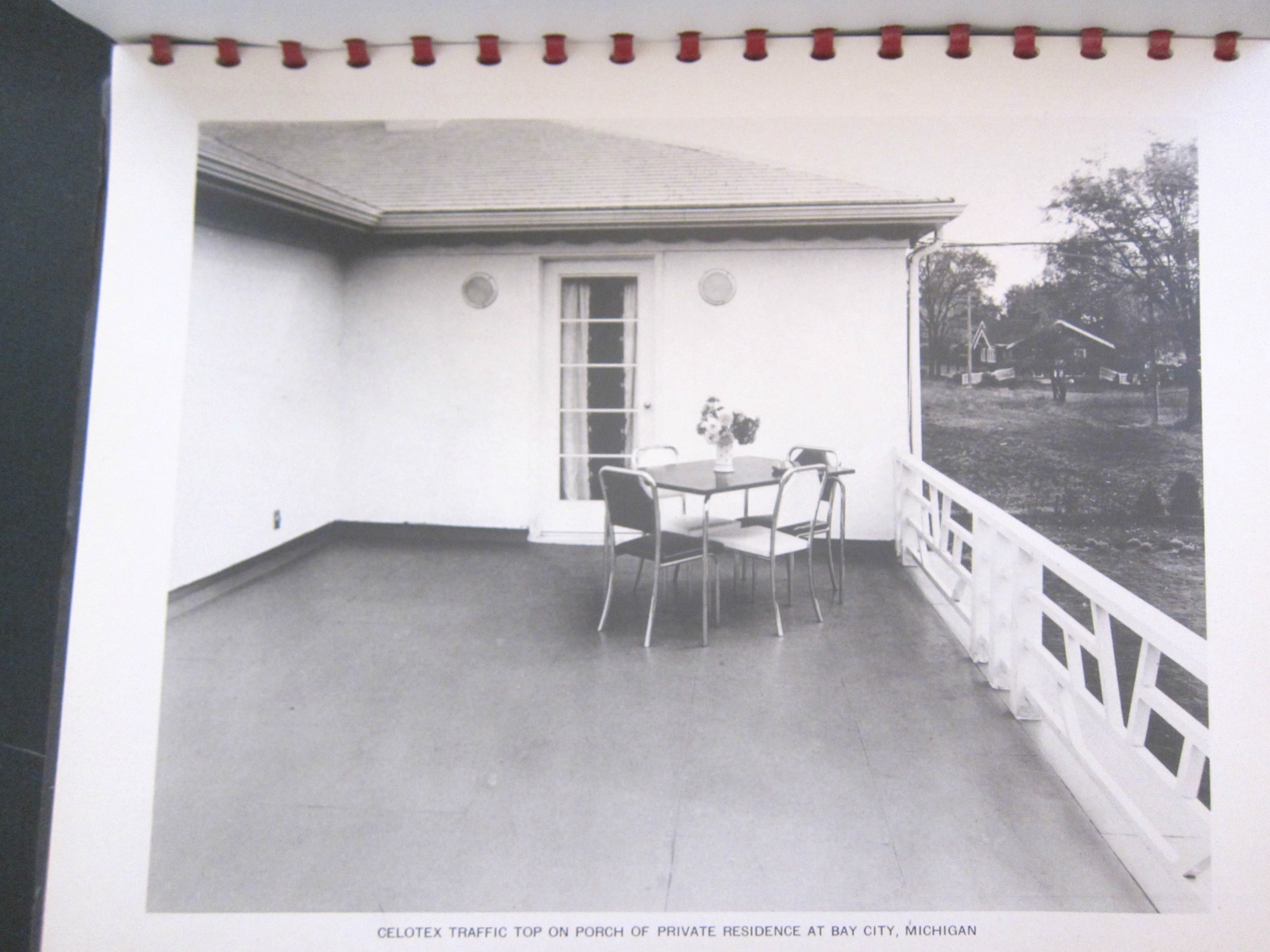
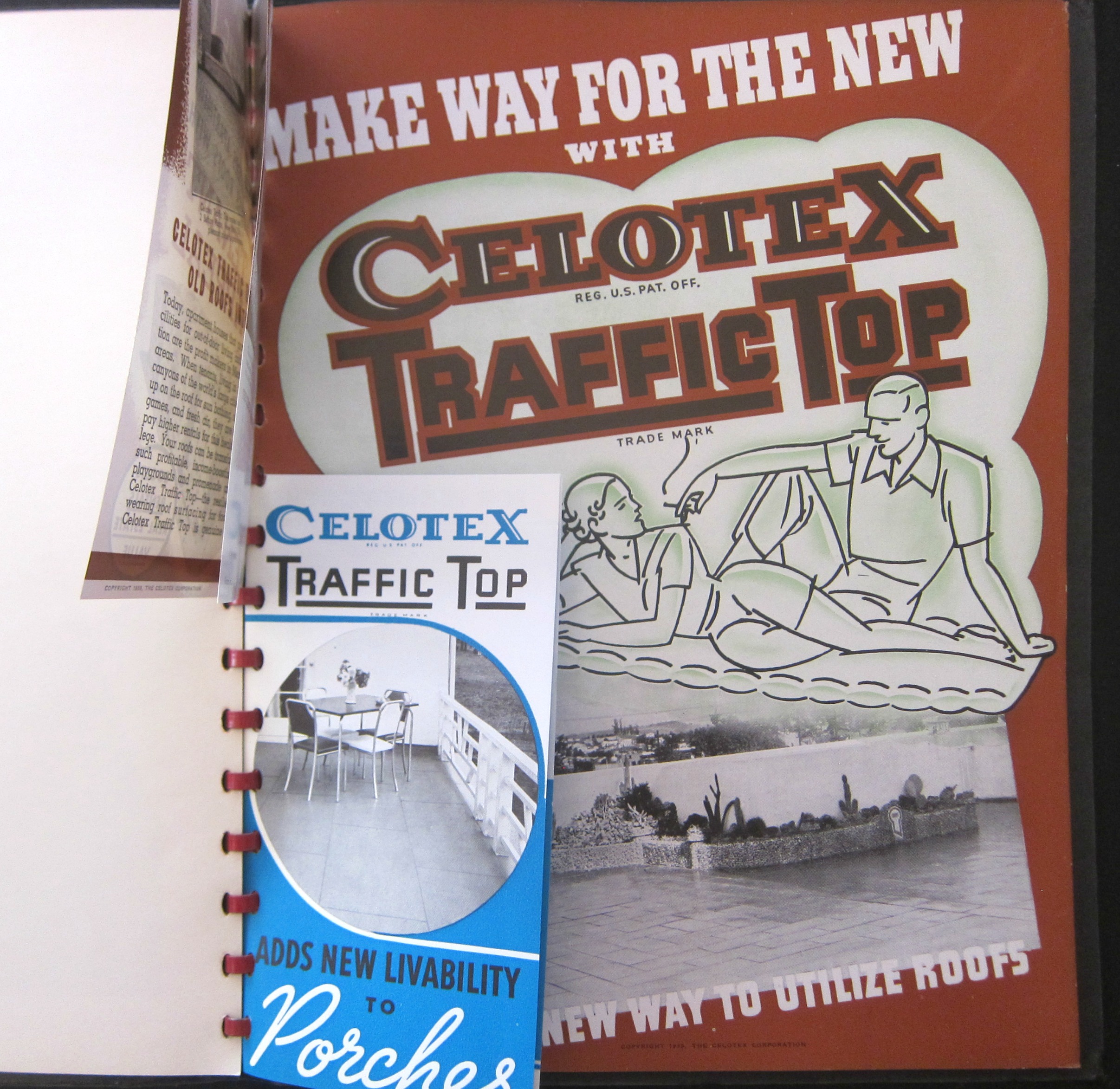
  • Recreational Floor Coverings, 1938

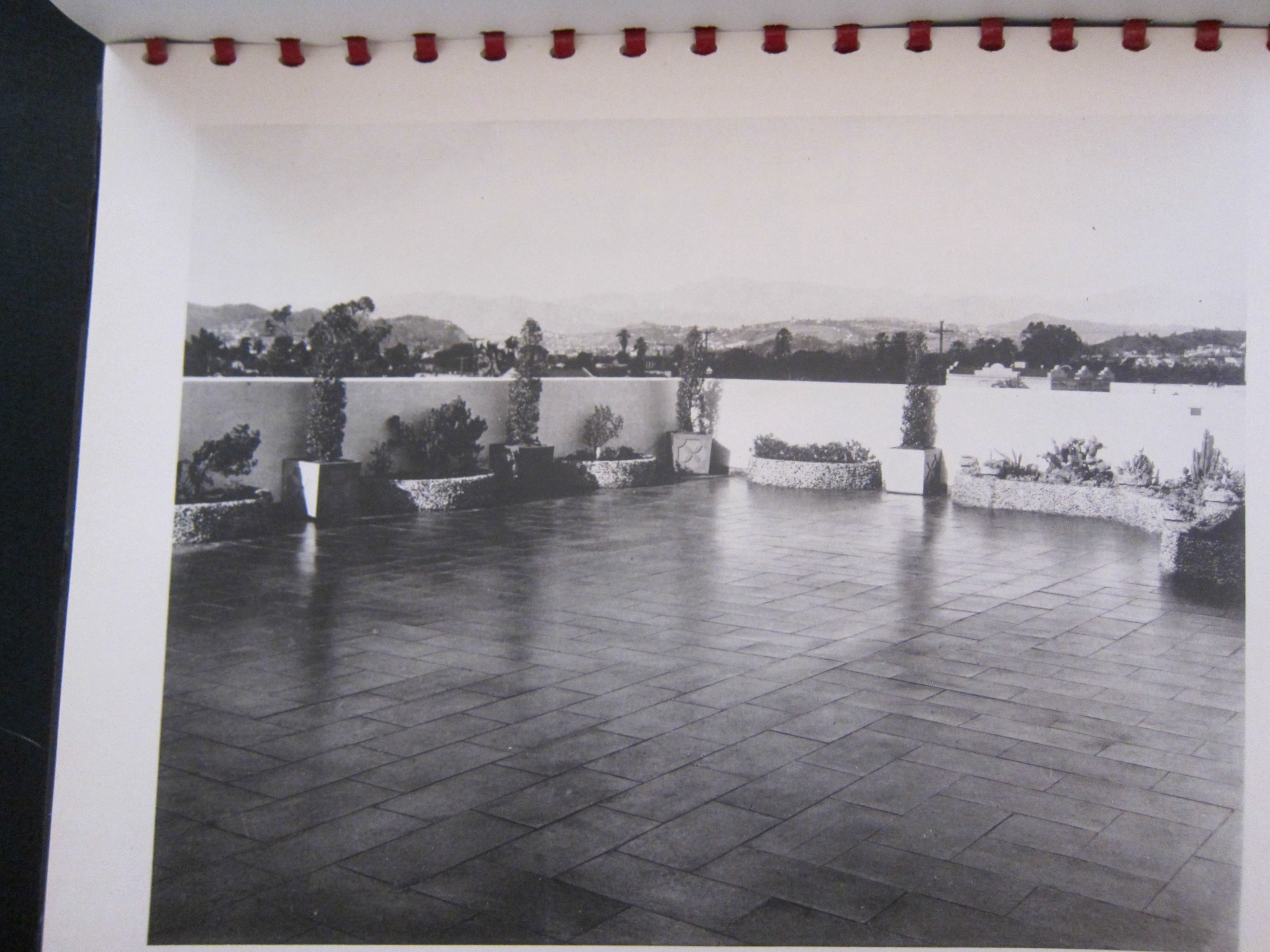
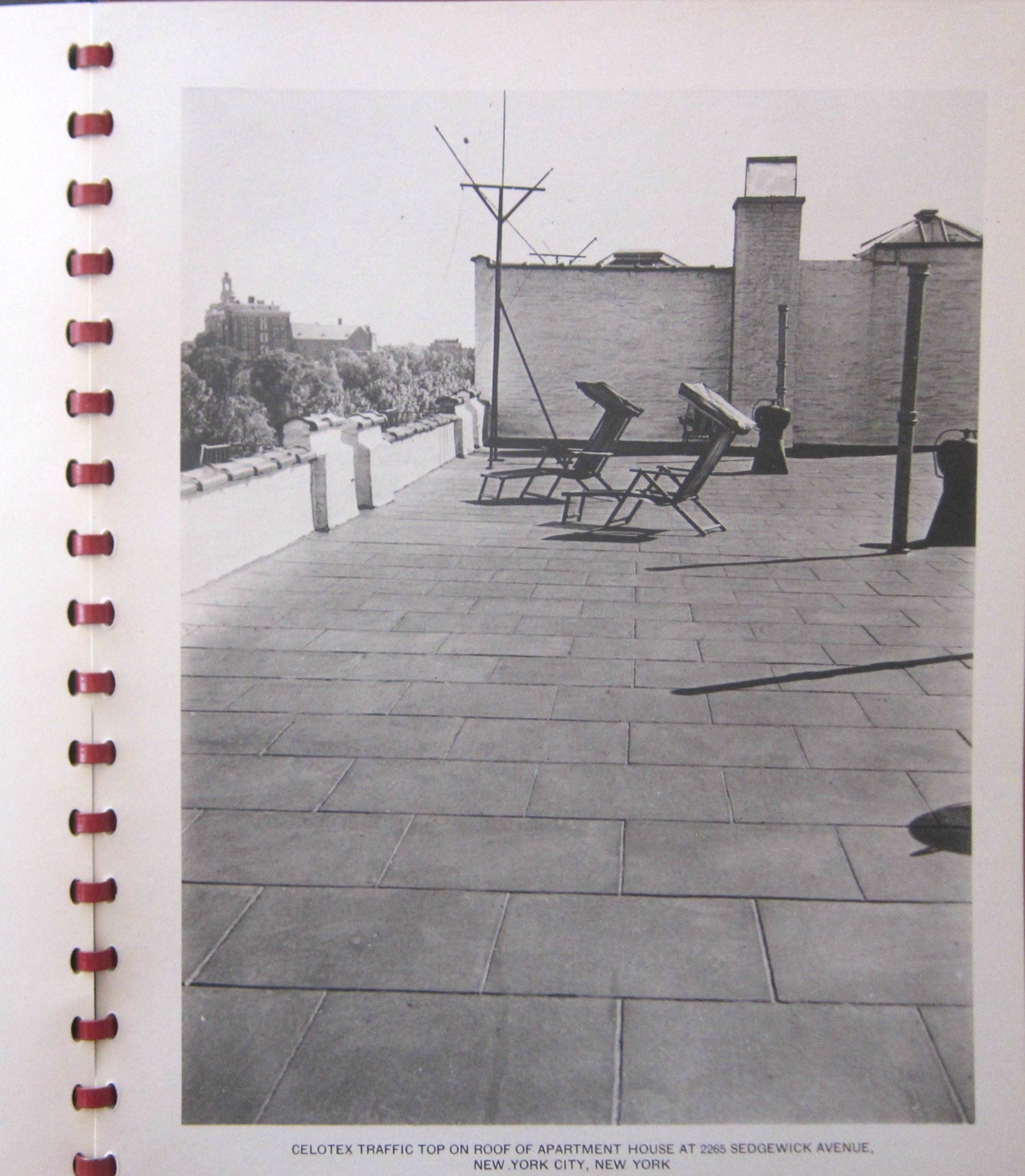
    Architecture celotex _5_ coverCelotex Traffic Top, Manual of Information. “The Resilient Roof Surfacing Material that Transforms Flat Roofs into Playgrounds, Roof Terraces, Recreational Areas, Game Courts.” The Celotex Corporation, Chicago, 1938.  11×8.5″, 6pp, 7 plates, 6,6pp.  Bound in a heavy gvc binding with heavy decorated wrappers, and printed on heavy paper.  

    Very nice production.  No copies located in WorldCat/OCLC. $75


    Architecture celotex _2_
    Architecture celotex _2_
    Architecture celotex _2_
    Architecture celotex _2_


    ·Posted by :

    ·in:

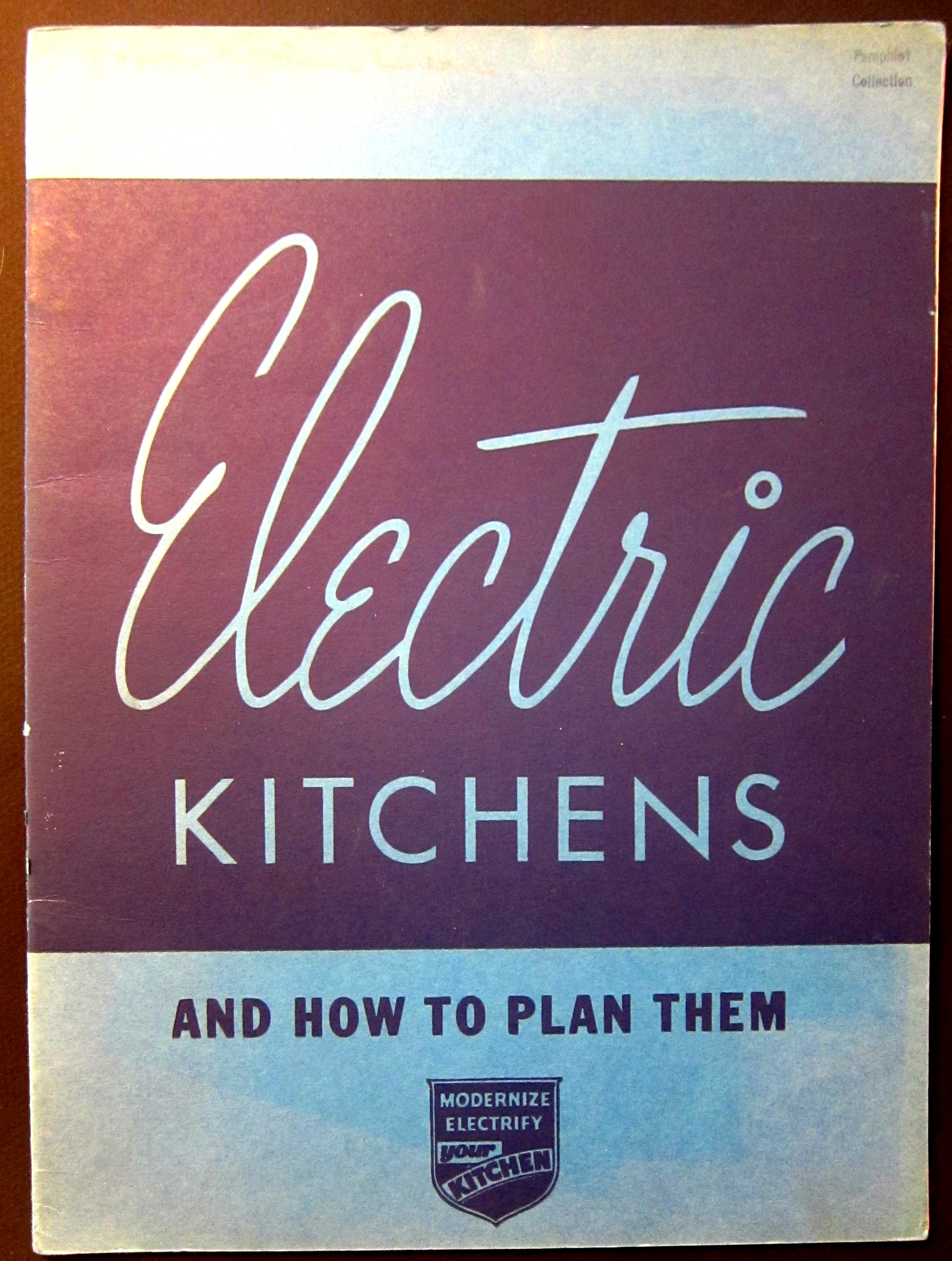
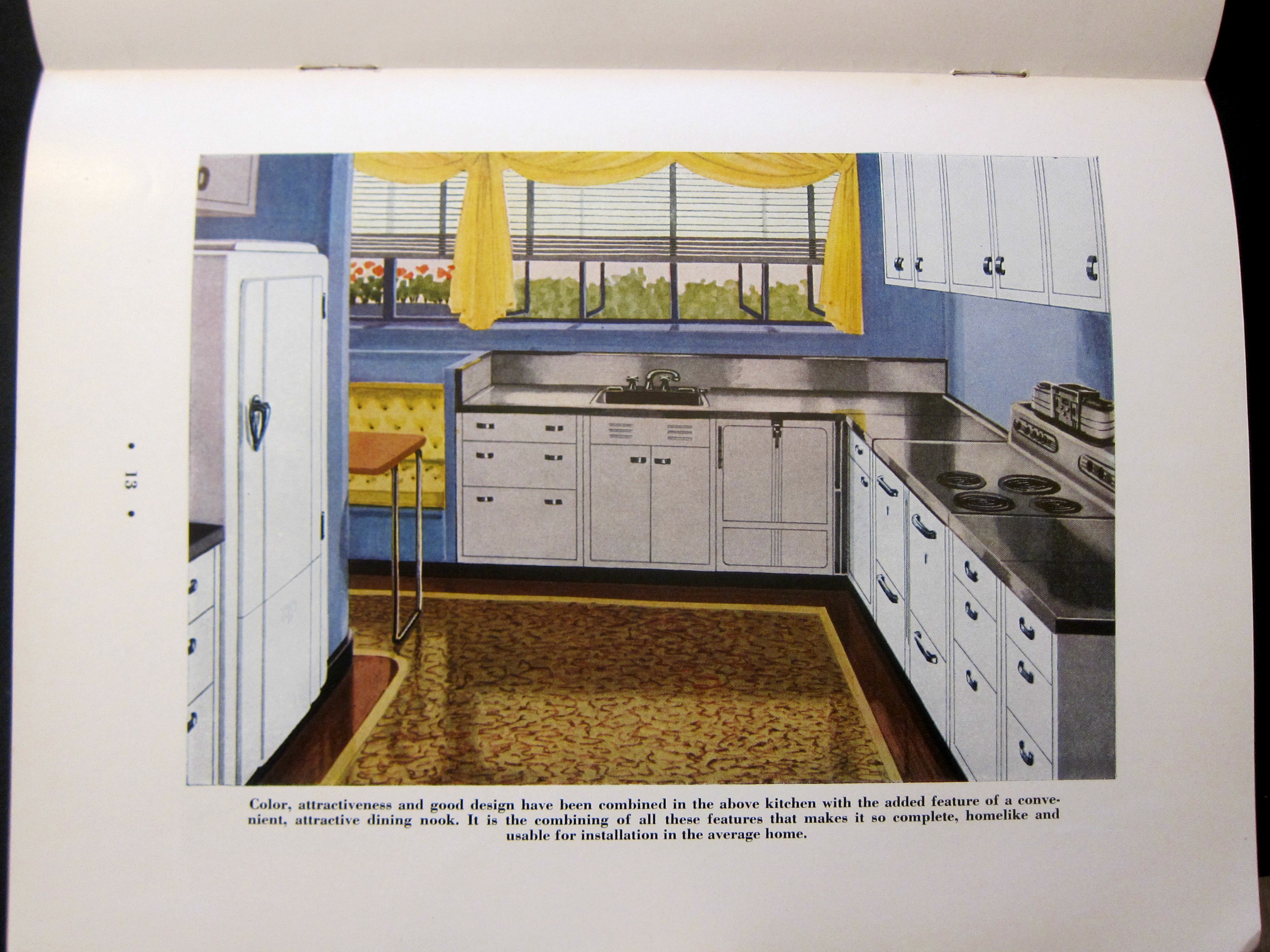
  • The ELECTRIC Kitchen, in all of its Modern Color Fabulosity, 1938

    Architecture electric kitchens coverElectric Kitchens, and How to Plan Them. An Aid to Architects, Builders and others Concerned with Kitchen Planning.

    Published by the Modern Kitchen Bureau, NYC, 1938. 12×9″, 24pp. Illustrations (including plans, diagrams, and color plates) throughout the publication. Printed on heavier matte paper, and bound with thick, stiff paper wrappers (quite an arresting cover!)

    Provenance: Library of Congress, with their surplus/duplicate stamp on the rear cover and a small “Pamphlet Collection” rubber stamp in the upper right corner of the front wrapper.  $100

    Only one copy of this book is located in WorldCat/OCLC (University New South Wales, 9632 miles away from where I am sitting).

    Architecture electric kitchen color _2_

    ·Posted by :

    ·in:

  • What Bogey Walked On, Part IV

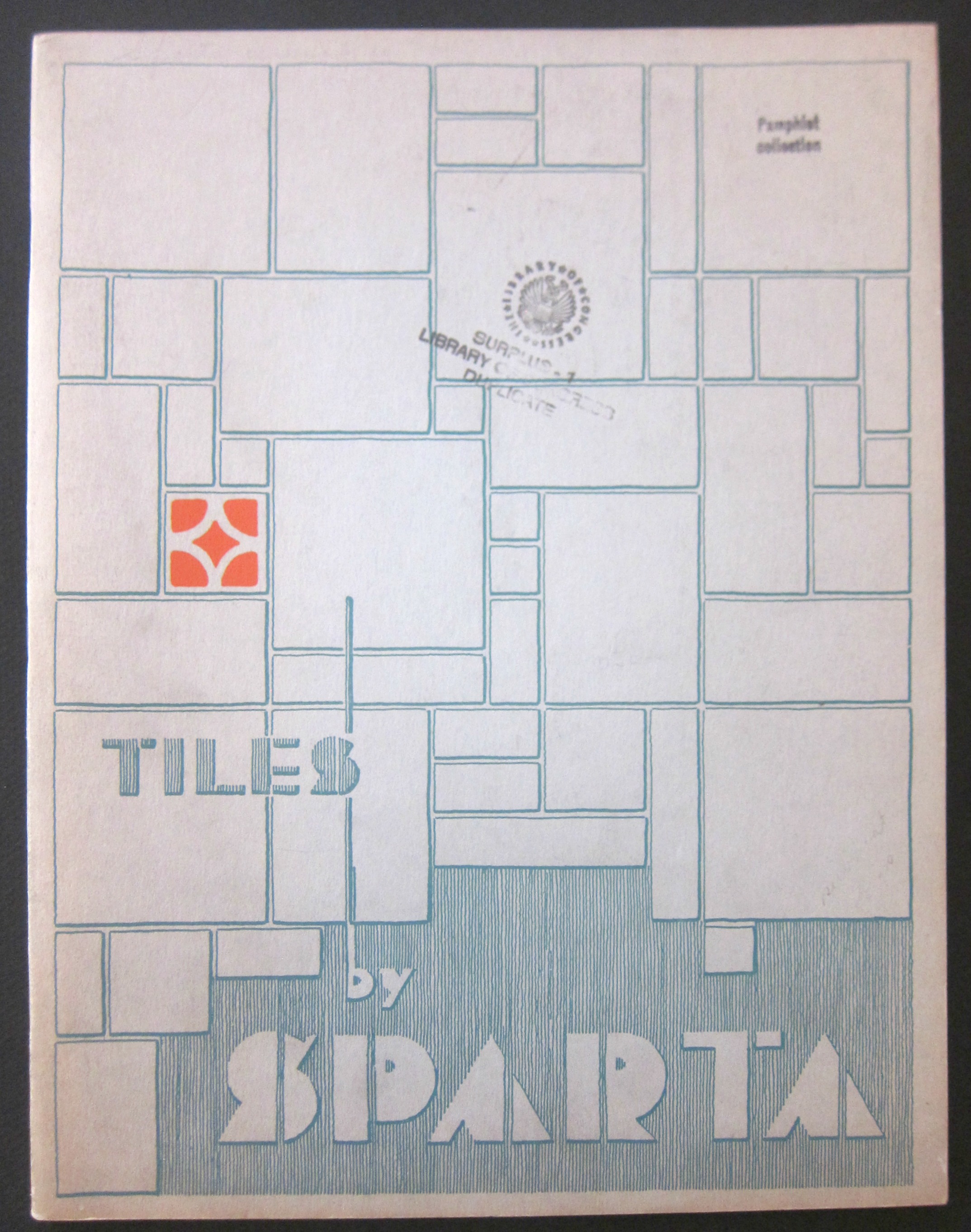
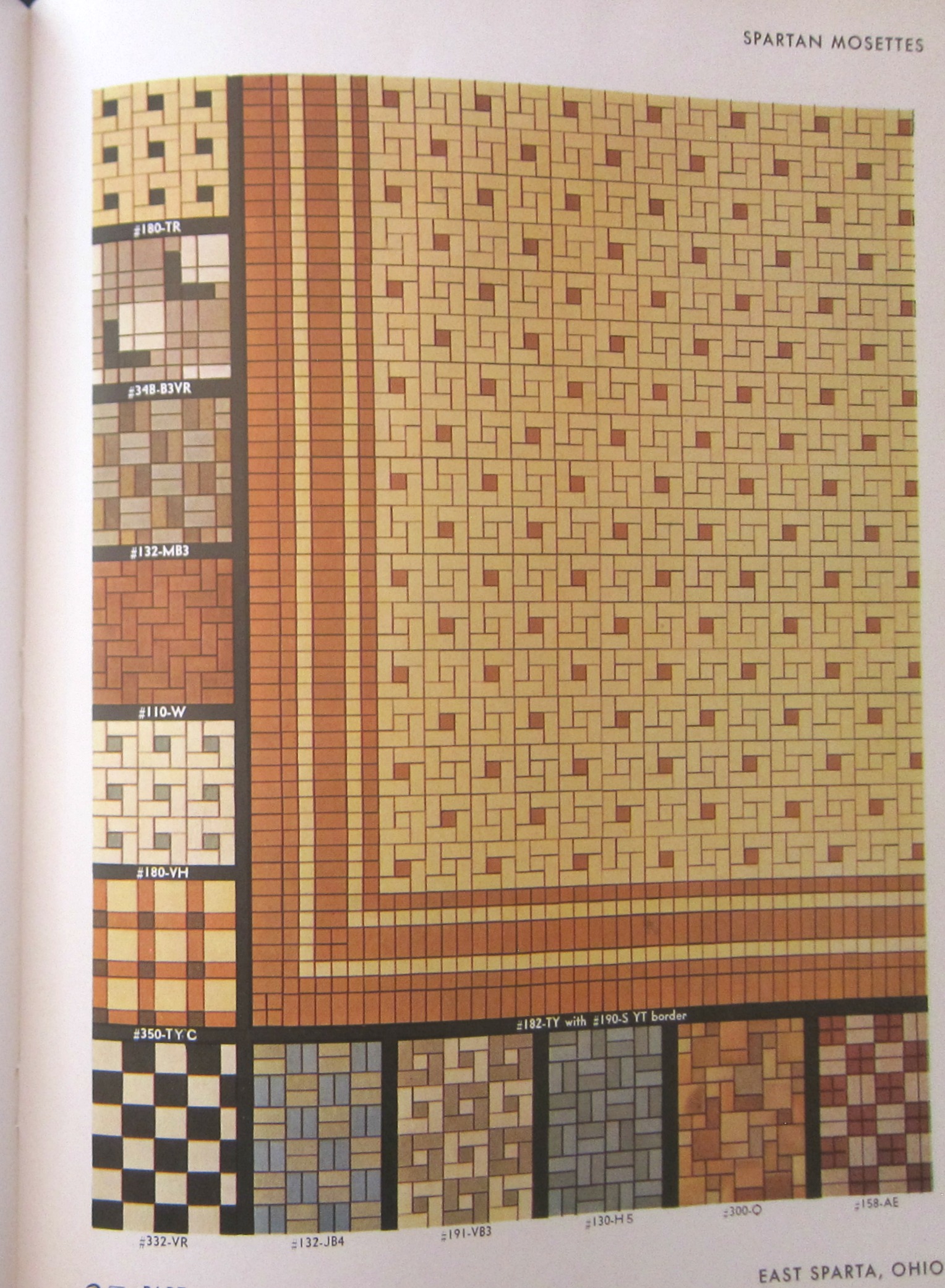
    Architecture sparta tiles color _cover_Tiles by Sparta, published by the Sparta Ceramic Co., East Sparta, Ohio, 1940. (Can I say “Sparta just one more time?) 11×8.5”, 64pp, illustrations throughout the publication, several in full and gloriously fabulous color.  Printed on heavier matte stock, with stiff wrapper binding. Provenance: Library of Congress Pamphlet Collection, with the LC surplus/duplicate rubber stamp on the cover. (Also comes with two duplicates of the LC card catalog cards.  Very Good copy.  Lovely copy. Everything that you need to know, plus planning suggestions.  There are no copies of this title located in WorldCat OCLC. Very Good copy. $100

    No doubt that in just about every b+w movie ever made some of the floors that folks walked on were very colorful. The studio floors of course wouldn’t necessarily be so pretty, but the rooms in which the characters were supposed to occupy would’ve been–its just that we rarely see the floors in those movies in the pre-color days, and many of them could’ve looked like the floors in this catalog.  


    Architecture sparta tiles color _2_

    ·Posted by :

    ·in:

  • Rescuing the Fallen Women of London, 1851

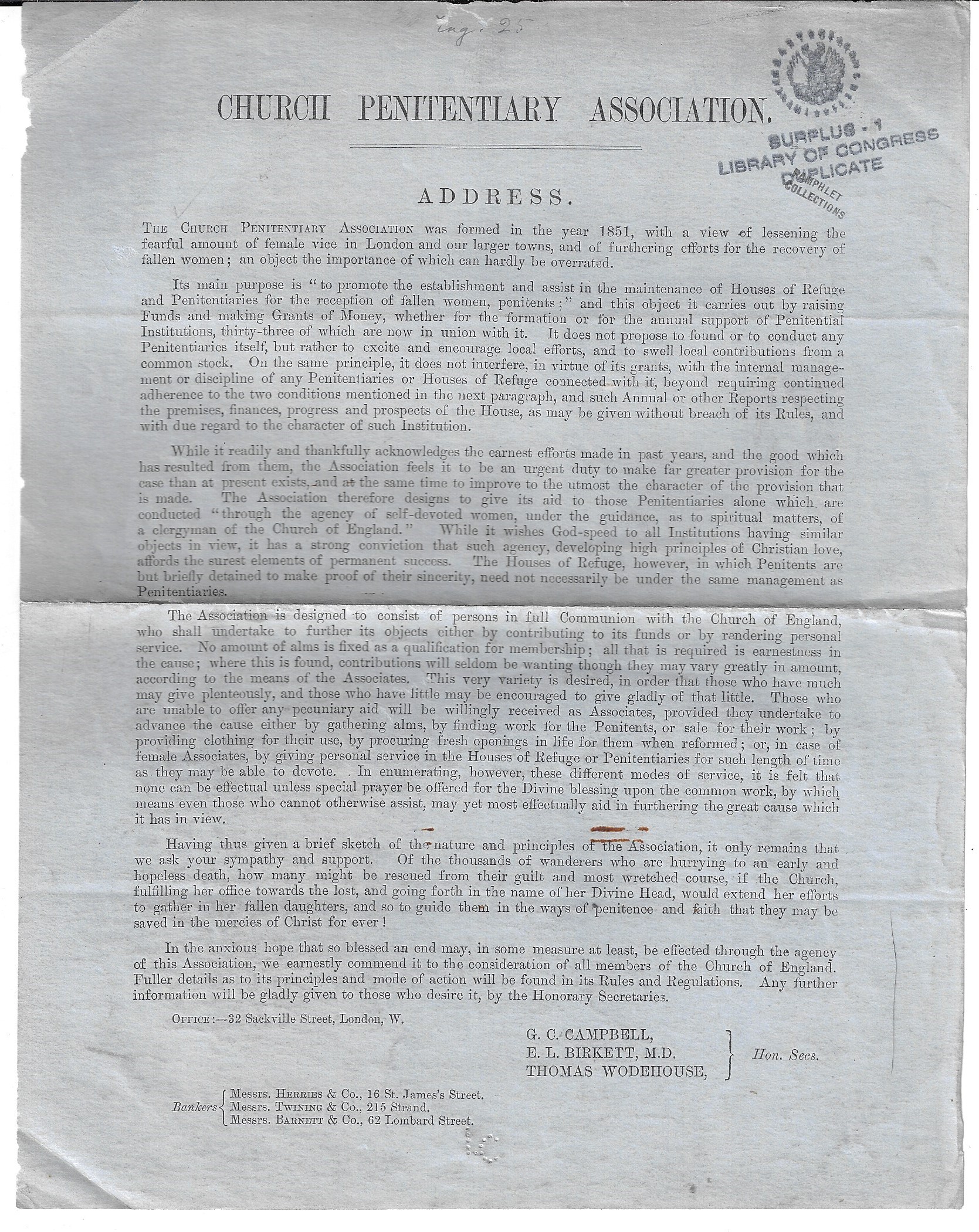
    Church Penitentiary Association, Address.  10×8″ leaflet, printed on one side only, folded. London, ca. 1851.

    Nice copy. Provenance: Library of Congress, with their tiny 6mm “LC” perforated stamp at bottom and the LC surplus/duplicate stamp on upper right corner.  (Given the library from the Philadelphia Free Library in 1943. $125

    This is a circular to introduce the association and solicit money for support. The Church Penitentiary Association was “…formed with a view of lessening the fearful amount of female vice in London and our larger towns…”

    • “…House of Refuge and Penitentiaries for the reception of fallen women, penitents…designed to consist of persons in full Communion with the Church of England”.
    • “Of the thousands of wanderers who are hurrying to an early and hopeless death, how many might be rescued from their guilt and most wretched course, if the Church, fulfilling her offices towards the lost…would extend her efforts to gather in her fallen daughters, and so guide them in the ways of penitence and faith that they may be saved…”

    Scarce.

    Church penitentiary

    “The original Church penitentiary for the reclamation of fallen women was founded in 1806 in London, the most well known centre was set up by former British prime minister William Ewart Gladstone in 1848. Its aim was the convent-based rehabilitation of women, including prostitutes, thieves, the homeless, alcoholics etc. They were charitable organisations and not in place for the punishment of crimes. The Church Penitentiary Association existed from 1852 until 1951. There are records on the association in the Library at Lambeth Palace, the seat of the Archbishop of Canterbury in London, and in the National Archives.”–Wikipedia

    “ The Church Penitentiary Association was founded in 1852 and affiliated with the Church of England.  The association was part of a movement to provide places of rehabilitation and shelter for destitute citizens such as prostitutes or homeless people. The penitentiaries were similar to Catholic convents in that the penitents were to remain celibate while they were in the penitentiary. As was evidenced by Rossetti’s “Goblin Market” there was a strong sense of sisterhood amongst the women and a mutual encouragement to keep from the temptation of the outside world. Often times the leadership of the penitentiaries would not allow women to leave the grounds of the institutions. The penitentiaries were met with some hostility from the English public. Most of the time their criticisms were informed by their anti-Catholic views, comparing the penitentiaries to Catholic convents. The movement helped extinguish the epidemic of prostitution in England and played a part in the larger reform efforts of the Victorian period.”–”Christina Rossetti and the Church Penitentiary Movement, November 22, 2013 by Chris Kennedy

    ·Posted by :

    ·in:

  • An Early Paper by Sophie Kovalevsky (1884)

    KOVALEVSKY, Sophie (Kowalewski) “Sur la propagation de la lumiere dans un milieu cristallise”, in Comptes Rendus, volume 98, 11 February 1884, #6, pp 356-7 in the weekly issue of pp 321-391. This issue is removed/disbound from larger bound volume, and offered with its original wrappers.  Good condition.  $150

    “Sofia Vasilyevna Kovalevskaya, (1850 – 1891), was a Russian mathematician who made noteworthy contributions to analysis, partial differential equations and mechanics. She was a pioneer for women in mathematics around the world — the first woman to obtain a doctorate (in the modern sense) in mathematics, the first woman appointed to a full professorship in Northern Europe and one of the first women to work for a scientific journal as an editor. According to historian of science Ann Hibner Koblitz, Kovalevskaia was “the greatest known woman scientist before the twentieth century. Historian of mathematics Roger Cooke writes:…the more I reflect on her life and consider the magnitude of her achievements, set against the weight of the obstacles she had to overcome, the more I admire her. For me she has taken on a heroic stature achieved by very few other people in history. To venture, as she did, into academia, a world almost no woman had yet explored, and to be consequently the object of curious scrutiny, while a doubting society looked on, half-expecting her to fail, took tremendous courage and determination. To achieve, as she did, at least two major results of lasting value to scholarship, is evidence of a considerable talent, developed through iron discipline.”–Wikipedia

    “ ‘Sur la propagation de la lumière dans un milieu cristallisé’ Note de Mm Sophie Kowalevski. Dans ses Leçons sur l’élasticité lamé ramène la question de la propagation de la lumière dans un milieu cristallisé à l intégration d un système de trois équatious aux différences partielles Il a trouvé trois expressions analytiques qui satisfont à ces équations ces expressions trouvées par Lamé offrent certaines particularités qui font que le mouvement qu elles représentent est physiquement impossible sans l hypothèse de l existence d un éther impondérable qui entoure chaque molécule de la matière vibrante et joue pour ainsi dire le rôle d un coussin élastique Au contraire les formules obtenues par la savante émule de Sophie Germain représentent un certain mouvement possible physiquement sans avoir recours à l hypothèse de l éther.”–abstract from Le Cosmos, vol 33, January-April 1884. 
    ·Posted by :

    ·in:

Recent Posts

Archives

Categories