A Daily History of Holes, Dots, Lines, Science, History, Math, Physics, Art, the Unintentional Absurd, Architecture, Maps, Data Visualization, Blank and Missing Things, and so on. |1.6 million words, 7500 images, 4.9 million hits| Press & appearances in The Times, Le Figaro, Mensa, The Economist, The Guardian, Discovery News, Slate, Le Monde, Sci American Blogs, Le Pont, and many other places… 5000+ total posts since 2008.

  • The Devil(s) of Loudon (1693)

     Bibliotheque Universelle et Historique, 1692-3

    Jean Le Clerc and Jean Cornande de al Crose,  Bibliotheque Universelle et Historique de l’annee M.D.C. XCII, Amsterdam, Abraham Wolfgang, 1692. 5.5”x3”, Volume 23. BOUND WITH:   Bibliotheque Universelle et Historique de l’annee M.D.C. XCIII, Amsterdam, Abraham Wolfgang, 1693, volume 24 of the journal series, bound together. (xii), 535, (xviii); (iii), 537, (xvi); (II), 518, (39)pp. (Each volume has two parts with their own title pages, though there is continuous pagination from the first to second parts.)

    Bound in full vellum. Condition: a lovely copy, with a very fresh text block. There is a centuries-old paper label on the spine bottom (“F”) with 5mm penciling of “23” and “24” just above that. VERY GOOD condition.  $150

    This interesting volume contains numerous papers, including book notices, book “reviews”, including a saucy four-page review of a work on the devils of Loudon, made famous in the 20th century by several movies and a well-received book by Aldous Huxley. Evidently it was popular in the wayback as well, as I see another book on the subject was published this same year. Long story short, a wealthy and connected parish priest, Urban Grandier was supposed to have seduced or introduced devils who seduced the nuns of an Ursuline convent. Exorcisms were introduced without success, and on the first go-round Grandier was found not guilty. Unfortunately he was the target of interest of several, including a Fr. Laubardemont (and yes he has “demon” as part of his name) who persuaded a second trial, this particularly after he introduced a vicious satire written by Grandier on Richelieu to Richelieu, who settled into a deep mojo, giving Grandier a second go-round, and who in that turn wound up tortured in extremis. Grandier was eventually found guilty and was burned alive at the stake for his demon-possession (of which there was a “signed contract”) in 1634. Though only four pages long, the review does a good job in the review of the history of this witch hunting plague.

    On the Bibliotheque: “Like its great rival, Pierre Bayle’s Nouvelles de la re´publique des lettres, it [the Bibliotheque...] was a source of information and means of communication for members of the nascent Republic of Letters. It was also one of the remote ancestors of the modern academic journal, though much less specialised than most of its successors.”J.R. Milton, “Locke’s Publications in the Bibliothèque Universelle et Historique”, British Journal for the History of Philosophy, 05/2011, Volume 19, Issue 3

    Editors and contributors included: Jean Le Clerc et Jean Cornande de al Crose, vols 1-9; Jean Le Clerc, 10, 12, 14-19; Jean Cornand de La Crose, vol 11; Charles le Cene and Jean Le Clerc, vol 13; Jacques Bernard and Jean Le Clerc, vol 20; Jacques Bernard, vols 24-5. The journal was published every 4 months in vols 1-3; every 3 in 4-19, and then twice a year for 20-25.
     

    ·Posted by :

    ·in:

  • An Early and Very Fast Cinematograph

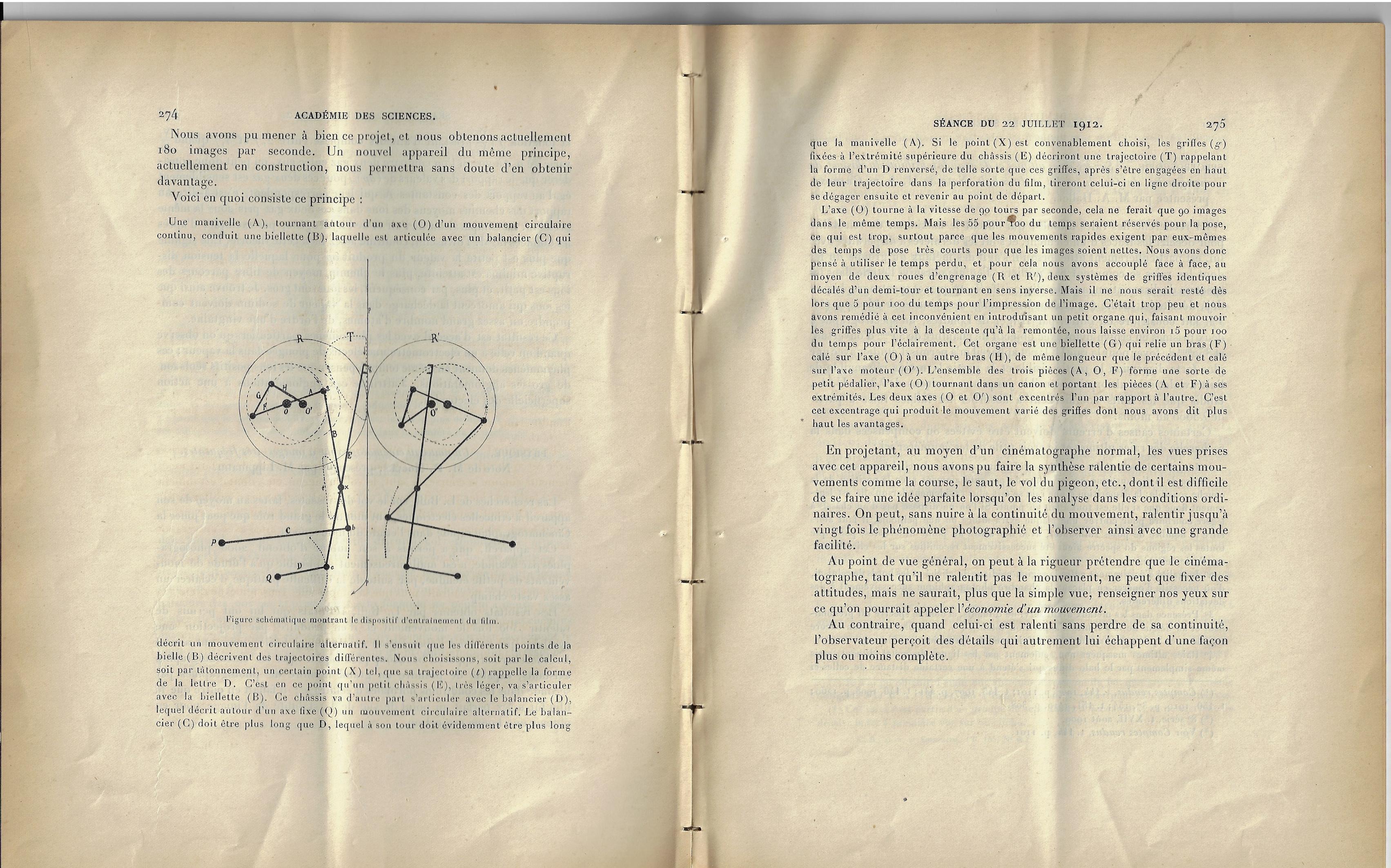
    P(ierre) Nogues (1878-1971), “Un nouveau cinematographe a images tres frequentes”, in Comptes Rendus de l’Academie des Sciences, Paris, 22 July 1912, pp 273-275 in the weekly issue of pp 253-336.  Offered with the original front wrapper. The issue is removed from a larger bound volume. Also, there is an old vertical fold running through and through. Provenance: Library, U.S. Weather Bureau, with their rubber stamp on the front page.  Good condition.  $200

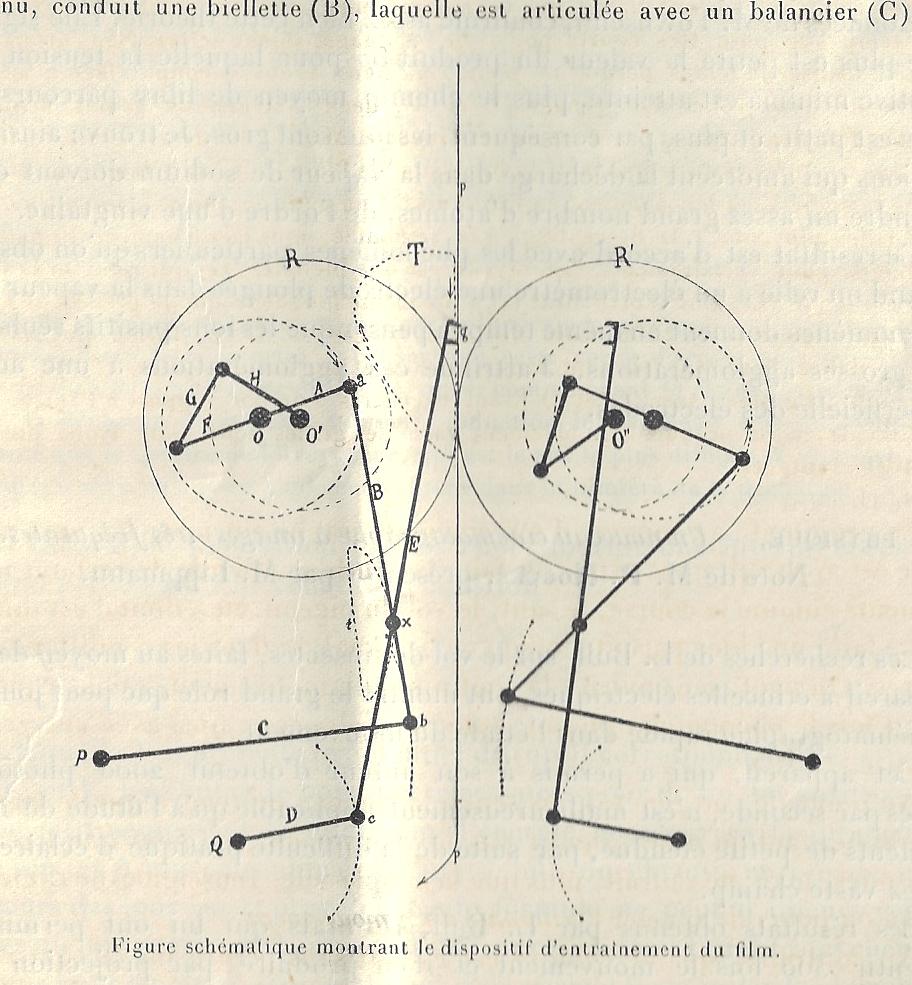
    CR 1912 Nogues kinematographThis is one of those posts where I was looking for something in the Comptes Rendus and then found something completely different. The what-it-was was something about Poincare1, at this point dead for just a week, the second titanic to disappear this year–it is really impossible to understand how he was able to do what he did in a lifespan of 58 years…of course he was a master of nearly every field, and was able to work his math problems out in his head first before writing them out, so it helped to be a multi-genius–and while not finding a notice on his death in the weekly issue I did “discover” an intriguing (and unrelated to Poincare) illustration. 

    At first I thought it would be related to an article on the depiction of motion as the drawing seemed to represent the anatomy of two dancers, and have some sort of fourth dimension/art/science relation, or whathaveyou, but then I saw it was a schematic for a part of motion picture camera–a kinematograph/cinematograph–that made 180 images per second, and would be just the sort of instrument used to study fast-moving objects in minute detail. So the schematic really did portray the essence of what the machine did, exploring the designs of motion.  

    CR 1912 Nogues _detail_

    ____________

    Notes:

    1. Poincare knew basically everything…here’s a toss-off from him that has stuck with me: “To doubt everything, or, to believe everything, are two equally convenient solutions; both dispense with the necessity of reflection.
    2. P. Nogues, “Un nouveau cinematographe a images tres frequentes”, in Comptes Rendus de l’Academie des Sciences, 22 July 1912, pp 273-275.  

    ·Posted by :

    ·in:

  • Lange’s “Migrant Mother”, 1936

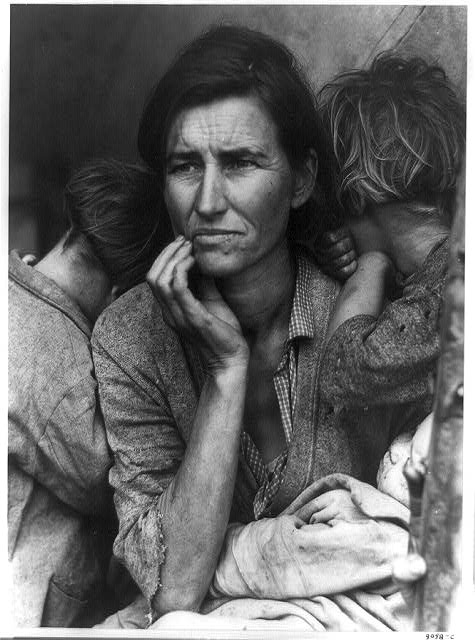
    Dorothea Lange. The Migrant Mother. Photo for Farm Security Administration, originally printed in 1936. Modern print from a large file, 47×38″, printed on archival photo rag paper. New. Beautiful image and production. $395 [FSA images are not copyrighted.] 

    On of the great innovations in a sea of great things accomplished during the Franklin Roosevelt administrations was the formation of the Farm Security Administration, a division of the government established to help farmers through the devastating Dust Bowl and Great Depression.  A subset of the FSA was a photographic unit which was set up to document the progress made by the FSA (and provide, I am sure, for some much-needed good news, a hearts-and-minds campaign).  This division was headed by Roy Emerson Stryker, who wound up hiring a collection of dream-team photographers unlike any ever assembled for a single purpose.  Esther Bubley, Marjory Collins, Mary Post Wolcott, Arthur Rothstein, Walker Evans, Russell Lee, Jack Delano, Gordon Parks, Charlotte Brooks, John Vachon, Carl Mydans, Dorothea Lange and Ben Shahn were sent out all across the country and wound up with the greatest and most beautiful photographic history ever assembled.  There were about 77,000 images made, and I recall reading (somewhere) that the total budget for the Stryker group for the years 1936-19421 was about $100,000, meaning that each completed image cost just over a dollar apiece.  

    Lange migrant mother _1_

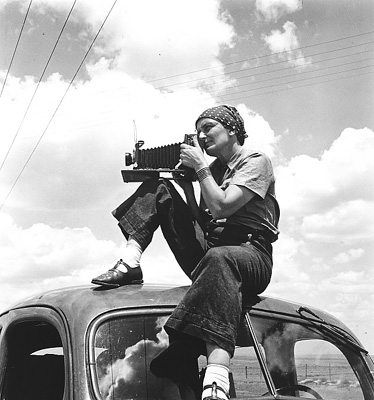
    One of the most compelling of all of these images was from a series made by the new-hire Dorothea Lange (1895-1965)  in 1936.  On the tail end of a month-long road trip she was nearing the end of her day when she spotted a hand-lettered sign reading “Pea-Pickers Camp” by the side of the road near Nipomo, California.  She briefly considered stopping but went ahead, and for the next 20 miles of hard road continuously questioned her decision.  Unable to shake her better judgment, she turned around and drove back to the turn-off for the camp.  Lange drove down the dirt road and found a ramshackle assembly of tents, one of which contained an exhausted mother sitting forlornly with her children, sheltered in a tent fashioned to the rear of the woman’s tireless car.  Lange spent only 10 minutes with the woman, making five exposures.  She learned that “the crops had frozen, and the woman and children were living on vegetables scavenged from the fields, and the few birds that the children managed to catch.  The mother could not leave; she had sold the tires from her car”. 

    Lange Migrant Mother series

    Her photograph created an American Madonna in her Migrant Mother.

    George P. Elliott, writing in the introduction for the Lange retrospective at the Museum of Modern Art (New York), grasped the essence of the image:

    “For an artist like Dorothea Lange who does not primarily aim to make photographs that are ends in themselves, the making of a great, perfect, anonymous photograph is a trick of grace, about which she can do little beyond making herself available for that gift of grace”.

    Lange migrant mother portrait of artist

    Lange describes her encounter as follows:

    “I saw and approached the hungry and desperate mother, as if drawn by a magnet. I do not remember how I explained my presence or my camera to her, but I do remember she asked me no questions. I made five exposures, working closer and closer from the same direction. I did not ask her name or her history. She told me her age, that she was thirty-two. She said that they had been living on frozen vegetables from the surrounding fields, and birds that the children killed. She had just sold the tires from her car to buy food. There she sat in that lean- to tent with her children huddled around her, and seemed to know that my pictures might help her, and so she helped me. There was a sort of equality about it”. (From: Popular Photography, Feb. 1960).  Lange’s field notes of the images read: “Seven hungry children. Father is native Californian. Destitute in pea pickers’ camp … because of failure of the early pea crop. These people had just sold their tires to buy food.”

    Roy Emerson Stryker, who was in charge of the photography project (History Section) for the FSA said of this image:

    “When Dorothea took that picture, that was the ultimate. She never surpassed it.  To me it was the picture of Farm Security. She has all the suffering of mankind in her, but all the perseverance too.  A restraint and a strange courage”.

     NOTES

    1. The photographic history unit of the FSA morphed into a propaganda arm for the Office of War Information (OWI) in late 1942.
    2. Florence OwensThompson(1903-1983)  is the real name of the Migrant Mother.
    3. The Library of Congress files for the series of photos

    ·Posted by :

    ·in:

  • Seeing a Criminal’s Face Before the Crime (1878)

     Francis Galton, “Composite Portraits” (Nature, May 23, 1878) with several text illustrations. Detached from a larger bound volume, but accompanied by its original wrappers (totaling 11pp of ads).  Very Good condition. $300

    DocFile (3)

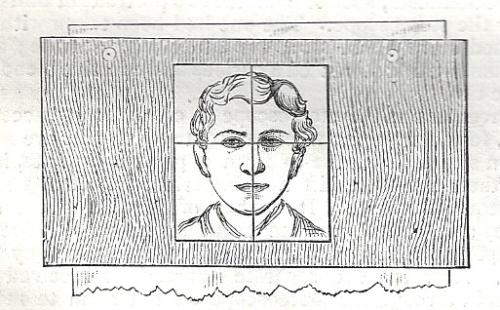
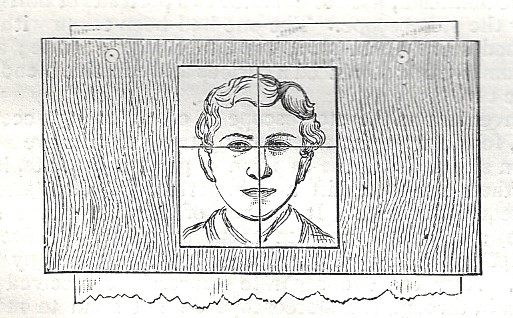
    Francis Galton’s work came early on in the prehistory of cognitive and computational aspects of face recognition, though more like an analog development in a later digital environment. In this paper he discusses his attempts to see the face of criminality before crime was committed. Galton uses a collection of photographs of criminals convicted of murder, manslaughter, and crimes of violence, creating amalgams of portraits, and stating that the “special irregularities” of each individual criminal face “disappeared and the common humanity that underlies them prevailed”, and so the images represent not the criminal “but the man who is likely to fall into crime”.  

    Galton (1822-1911), who was similar to Alphonse Bertillon who came somewhat after him, was working on a predictive manner of crime detection, with Bertillon (1853-1914) using body measurements and Galton facial characteristics. Both made significant contributions to police and forensic science, Galton doing groundbreaking work in fingerprints (1869) which proved a definitive means for identifying criminals once they had entered a justice system, and Bertillon in numerous other areas (including galvaniplastic molds for footprints and such, ballistics, and a number of different aspects of crime detection.

    See for long background:  George Pavlich, “The Subject of Criminal Identification”, in Punishment and Society, Vol 11 (2), 171-190. There are many articles referencing this early work by Galton.

    ·Posted by :

    ·in:

  • The First Microscopical Images of Captured-and-Reproducible Sound? (1878)

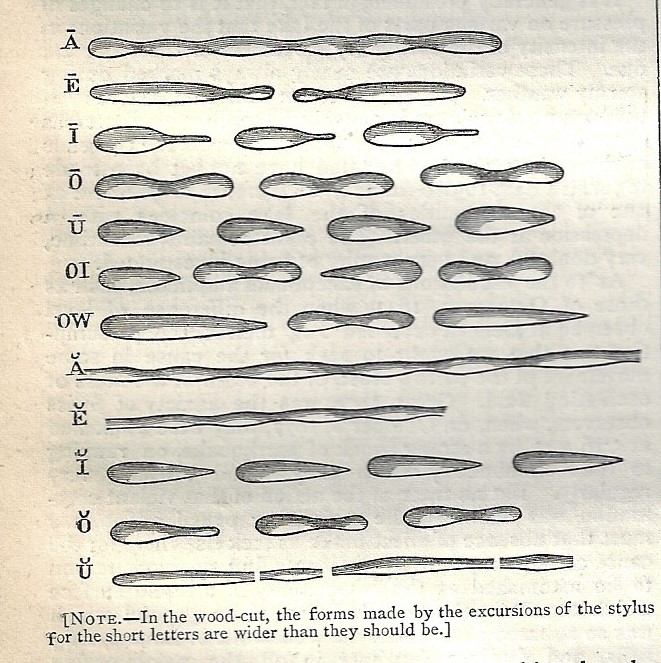
    Persifer Frazer,   “Examination of the Phonograph record under the Microscope”,  an abstract of a paper presented at the Franklin Institute April 17, 1878, by Persifor Frazer, Nature, May 23, 1878, p. 102, in the weekly issue.  (Persifor Frazer was of the Philadelphia Frazers, of long and interesting lineage. A Gettysburg vet, he was in professional life mainly a geologist; he did become expert in handwriting and the detection of forgeries using photographic means.)  Detached from a larger bound volume, but accompanied by its original wrappers (totaling 11pp of ads).  Very Good condition. $300

    Only months into the invention of the phonograph by Thomas Edison (at Menlo Park in December of 1877 and patented in January 1878) Alexander J. Ellis reviewed a version of it constructed in London by Mr. Stroh, and found it, well, wanting.  Ellis (1814-1890) was a product of Eton, Cambridge, Trinity, and was a gifted mathematician, philologist, and a groundbreaking ethnomusicologist, and did see some limited utility of the machine to restricted areas of his research. In the short note he wrote for Nature in their April 18, 1878 issue1, he mostly found that the phonograph was generally flawed in its reproductive capacity, and did not venture far from this interpretation so far as the possible applications of the machine was concerned, which seems iconically short-sighted from my perch here in the future. Even though Ellis recognized that “the effects produced are sometimes startling (as in cries, coughs, laughter, music), the philosophy of the process (making a permanent impression of a very complex compound vibration, and using it as a mould to reproduce that vibration is exceedingly attractive, but at present the instrument–at least the one that I saw…” he concludes that the status of the invention “…has not risen beyond a lecture illustration or a philosophical toy”.  

    Nature 1878 Perifser Frazer

    Five weeks after this article and about four months following the patenting a visually-arresting article appeared in Nature2 which contains what I am assuming to be the first microscopic images of recorded and reproducible sound. I know that is a pretty deep qualification, but I think that’s its accurate. The article appeared as “Examination of the Phonograph Record under the Microscope” by Persifor Frazer3, who investigated what the impression of the stylus looked like as known sounds are recorded on tin foil. And so this remarkable image, showing what vowel and some dipthongs “look like”.  

    ALSO in this issue:

    Francis Galton, “Composite Portraits”, same issue, pp 97-101, with several text illustrations. Galton”s work came early on in the prehistory of cognitive and computational aspects of face recognition, though more like an analog development in a later digital environment. In this paper he discusses his attempts to see the face of criminality before crimes. Galton uses a collection of criminals convicted of murder, manslaughter, and crimes of violence, creating amalgams of portraits, and stating that the “special irregularities” of each individual criminal face “disappeared and the common humanity that underlies them prevailed”, and so the images represent not the criminal “but the man who is likely to fall into crime”.  See for long background:  George Pavlich, “The Subject of Criminal Identification”, in Punishment and Society, Vol 11 (2), 171-190. There are many articles referencing this early work by Galton.

    DocFile (3)

    ·Posted by :

    ·in:

  • “Hand it Over to the Machine” (1878)


    SPOTTISWOODE, William. (William Spottiswoode, 1825-1883, an English mathematician and physicist, president of the Royal Society from 1878 to 1883, and of the British (Science) Association in 1878 as well.) “British Association”, address on the state of the British Association by the president, in Nature, vol 18, no. 459, occupying most of the weekly issue, pp 403-425 in the issue of pp 401-428. Detached from larger bound volume, but offered with the original wrappers (including 11 pages of advertising, some of which is fantastic). Good/VG condition. $300.00

    There’s a lot of interest in this review and state of affairs of the sciences and technology, including sections on Mathematics, Literature and Art, Physics Measurements, Manifold Space, Imaginaries, a full page on Non-Euclidean Geometry, and more.

    Of particular interest to me is the half-column entry for “Mechanical Methods” (on page 413), which turns out to be “mechanical appliances”, or calculating machines/engines. It starts with an unusual assertion:

    “Mr Babbage, when speaking of the difficulty of insuring accuracy in the long numerical calculations of theoretical astronomy, remarked that that “most accurate science” had become “inaccurate and uncertain in some of its results”.

    Spottiswoode continues with an explanation and a dig: “It is doubtless, some such consideration as this, coupled with his dislike of employing skilled labour when unskilled labour would suffice, which led him to his invention o the calculating machine”.

    The author then makes another—again, to my experience—unusual observation, referring to the replacement of human thinking capacity by a machine:

    “The idea of substituting mechanized for intellectual power has not lain dormant…”

    It is a very short comment, but I think makes a strong if understated point.

    The author then moves onto the “recent” machine of James Thomson (“by its aid it seems an unskilled laborer may, in a given time, perform the work of ten skilled arithmeticians…reduced to the simple process of turning a handle”.

    Spottiswoode finishes with a flourish, though it is easy to read through. In telling the story of Michael Faraday, who after muscling through some concept and determining that the next step wopuld be to hammer it all out mathematically, would “irreverently “ say “hand it over to the calculators”, which at that point was a team of human calculators, arithmeticians.

    And the finish:

    “But truth is stranger than fiction; and if he had lived until our day, he might with perfect propriety have said, ‘Hand it over to the machine’ ”.

    It is a small statement with a lot of possibility. Even though this comes seven years after Babbage gave up the ghost in Marleybone, it still seems remarkably early to be talking about this sort of major impact in the conduct of the sciences, lending part of the process over to machines. The Industrial Revolution is well into it second century by this point, and human effort in all manner of manufacturing has been replaced by machines—except here the active part of the human experience in the creation of ideas is the thing that is becoming “machinized”.

    ·Posted by :

    ·in:

  • Maxwell and the Human Calculating Machine (1870)

    MAXWELL,  James Clerk.  Mathematical and Physical Sciences–address to Section A of the British Association.  London:  1870.  1st edition.  Nature, vol 2, Sept 22, 1870  8vo.  Original printed wrappers.  Very good condition.  Maxwell addresses the British Science Association meeting in a long (for Nature) entry of about 4,000 words, over 4 pages. We offer the entire issue of 20pp, with their very scarce original wrappers, detached from a larger bound volume.      $225

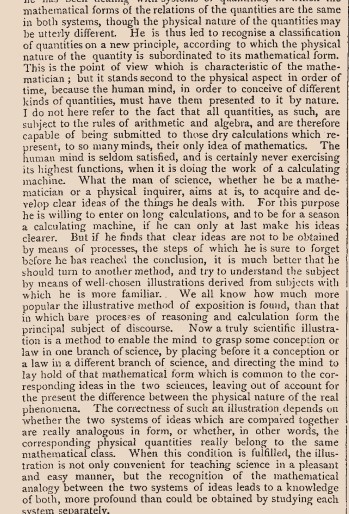
    What I find to be most interesting here is Maxwell pulling back the reins and directing the idea of clear scientific discourse by means of analogy. He does speak of “calculating” and “calculating machine”, which is referring to human calculators and not mechanical ones–the issue being that “spending a season” doing this stubborn and consuming work could turn the person occupied with in into a “machine”. He writes: 

    “What the man of science, whether he be a mathematician or a physical inquirer, aims to do, to acquire and develop clear ideas of the things he deals with. For this purpose he is willing to enter on long calculations, and to be for a season a calculating machine., if he can only at last make his ideas clearer.”

    “But if he finds that clear ideas are not obtained by the means of processes,  the steps of which he is sure to forget before he has reached the conclusion, it is much better that he should turn to another method, and try to understand the subject by well chosen illustrations derived from subjects with which he is more familiar.”

    “We all know how much more popular the illustrative method of exposition is found, than that in which bare processes of reasoning and calculation form the principal subject of discourse…”

    Calculators Maxwell NAture 1870


    ·Posted by :

    ·in:

  • Georges Meslin Calculating Machine, 1900

    Georges Meslin (1862-1918), “Sur une machine a resoudre les equations”, in Comptes Rendus des Seances de l’Academie des Sciences, 2 April 1900, the weekly issue comprising pp 865-960, with the Meslin article on pp 888-891.

    This issue is removed from a larger bound volume. VERY GOOD condition. $145

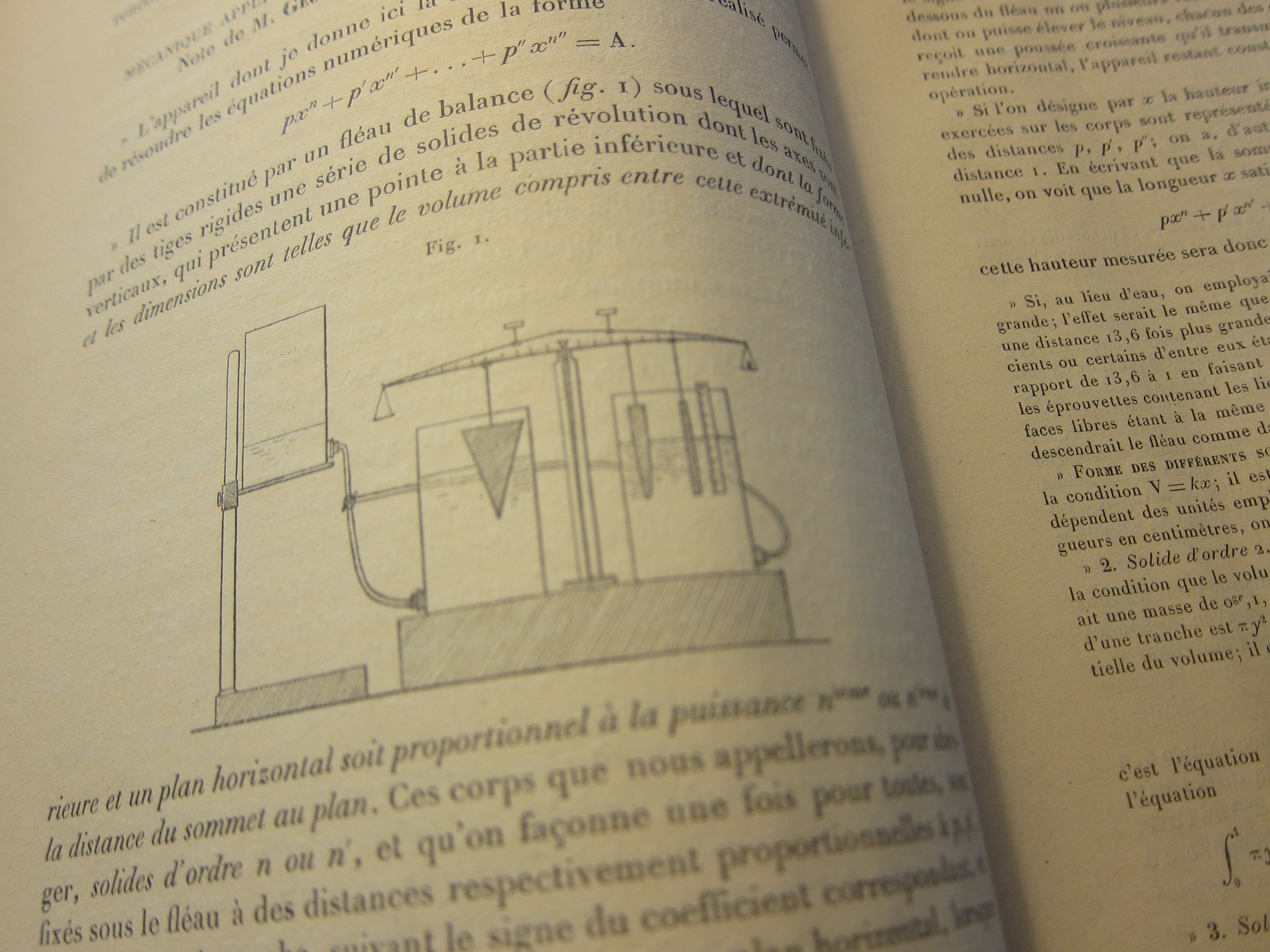
    ” ‘On a machine for solving equations’, by M. Georges Meslin. The machine consists of a balance carrying upon its beams at  varying distances from the point of support a series of solids of revolution, partially immersed in a liquid….”–Nature, June 14, 1900, p 579. (Interesting to note here that two thermo papers by Meslin are reviewed by Einstein in his big year of 1905.)

    CR 1900 Meslin computer

  • The Discovery of Blood Platelets (1842)

    DONNE, Alfred. “De l’origine des globules du Sang, de leur mode de formation et de leur fin”, in Comptes Rendus,
    volume 14, #10, pp 349-378, with Donne’s paper on pp 366-368. This is the complete weekly issue, removed/detached
    from a larger bound volume. Nice copy, in GOOD condition. Garrison & Morton #864. $175.00

    • The first announcement of the discovery of blood platelets.

    Alfred Donne (1801-1878), physician, experimenter, microscopist and photographer, is best known for things other than what he should probably be best known for:  his discovery of the third element of the blood, platelets.  Donne had a wonderful vision, and was among the very first on the scene to write about and employ the spectacular invention of the daguerreotype in chemistry and microscopy.  As a matter of fact Donne, along with his collaborator Leon Foucault,  produced the very first engraved images of photomicrographs for his cytology paper of 1840. (He was also the first to use electricity in producing a medical illustration, and was among the first modern physicians to write on the great efficacy of mothers using their own milk in breast feeding their children.)  The discovery of platelets paper of 1842–preceding two other works published in the same year–does indeed identify the new object, but actually fails to make a methodological examination of the new body, calling the new units “globulins du chyle” (or small globules derived from plasma).  He also fails to make a drawing of what he saw; so, the combination of these two important elements asked the reader to accept his findings on faith, the tools of reproduction of his observations not being present.  And so we remember Donne for some other significant things, and less so for his lightly-interpreted and un-illustrated “dots”.

    (Overall the history of the discovery of platelets is convoluted:  Leewenhoek (1675) and Henson (1782)  were the first to fully describe the “undefined” particles of the blood; Donne’s work was then more fully described by Beale in 1850, and then again (identified as “small corpuscles” by Zimmerman in 1860 and then again by Schultze in 1874 and Laptschinski (also in 1874). William Osler then enters the scene in 1880, followed by Giulio Bizzozzero who was the first, in the years 1881 -1882, to establish central role of platelets not only in physiological haemostasis, but also in thrombosis.  Anyway it is a longish and not-clear history.)

    ·Posted by :

    ·in:

  • A Hand Held Slide Calculator, 1903

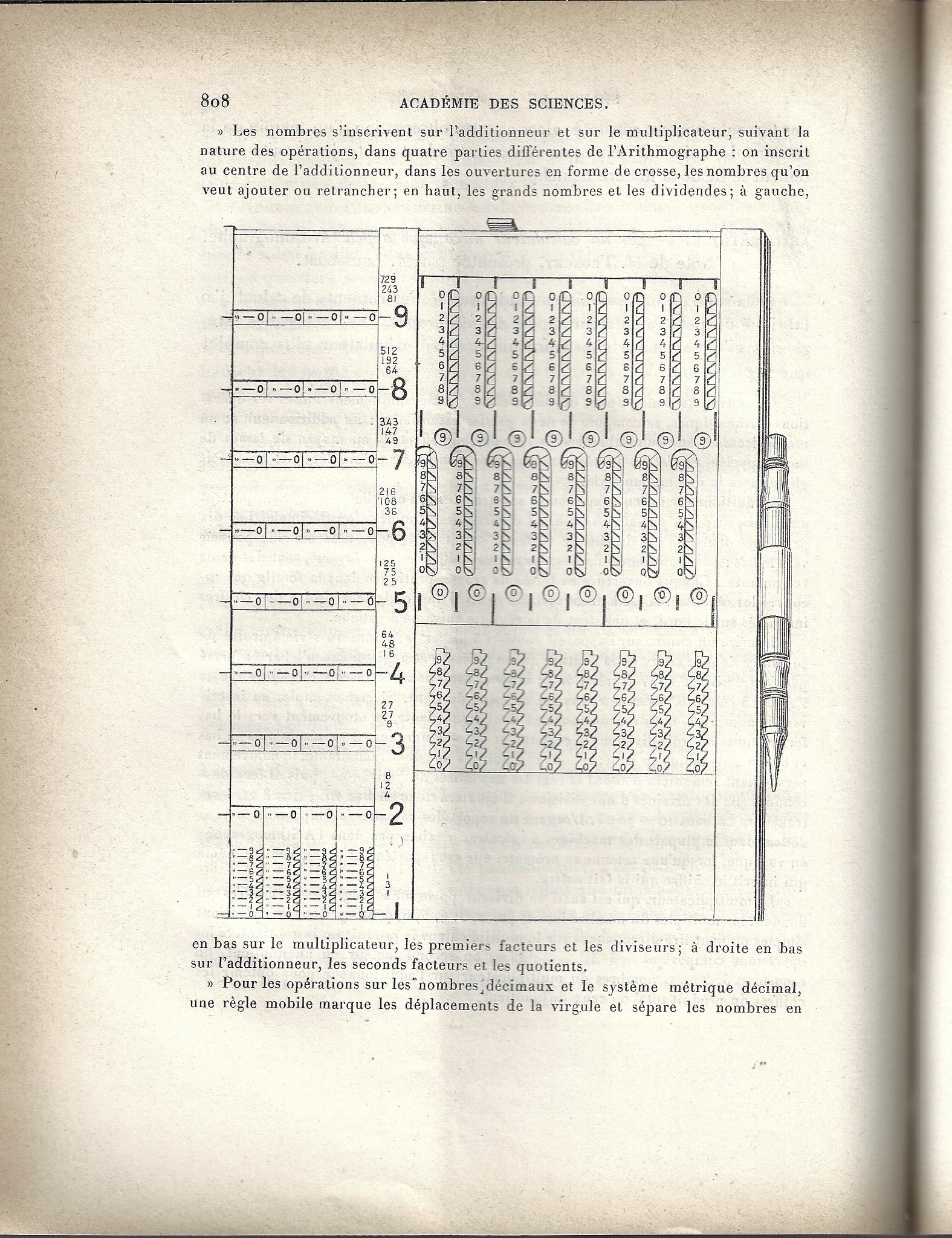
    Calculator Troncet 1903Louis-J. Troncet (b. 1850), “Sur un Calculateur mecanique appele Arithmographe“, an article in Comptes rendus, March 30, 1903, volume 136 #13, pp 785-840, the paper occupying pp 807-809, with a nearly full-page image of the calculating machine. This is the entire weekly issue, offered without the outer wrappers, and removed/detached from a larger bound volume. VG copy. $145

    It is hard to tell the dimensions of this instrument, but I’m guessing it was perhaps 8″ tall, judging by the stylus attached to the eight of the calculator.  Troncet developed a very popular instrument in his “Arithmographe”, which evidently first appeared in the late 1870’s, with versions of the machine manufactured for decades, with millions sold. This device comes relatively late in the series, though it also seems to be the first offering multiplication and division.  

    [Note: the scan of the device makes it seem as though there is vertical discoloration or an old fold–neither is there. This is just a shadow from not pressing down hard enough on the paper.]


    ·Posted by :

    ·in:

  • The Pauper Children of Randall’s Island, NYC (1876)

    William P. Letchworth. Extract from the Ninth Annual Report of the State Board of Charities of New York, relating to PAUPER CHILDREN, New York County.

    Albany, Weeds, Parsons, and Company, 1876. 9×6”, 25pp. Original wrappers. Nice copy. Provenance: Library of Congress, with their surplus/duplicate rubber stamp on front and rear wrapper. Old vertical fold through-and-through. $85

    Includes a folding plan: “Diagram of Nursery and Nursery Hospital Buildings belonging to the Children’s department of the Almshouse of New York on Randall’s Island.”

    • Of Dickensian interest, some of the details I found in this report:
    • There were 91 girls, aged 8-14, housed in the “Large Girls’ Department” ; they were tended by one paid assistant and up to eight women from the alms-house and work house.
    • Large Boys’ Department: no mention of number, but drill master lives with them, plus 3 boys designated as monitors, and six females from the work house.
    • Small Boys’ Department: 136 children, tended by 5-6 women, one of whom received wages with five others being paupers or criminals sent from Blackwell’s Island.
    • Infants’ Department—72 aged 2.5-5, tended by 6 females, 5 from Blackwells.
    • The children on reception were dressed in blue gingham, white linen aprons and slept on straw beds and pillows, with food cooked by steam in six large cauldrons, mostly by inmates from Blackwells.
    • Nursery Hospital held 769 between 2 and 16, most between 5-10
    • There were 1115 children on Randall’s, the near-majority placed there by their parents who promised to pay for care (half did), mostly Irish or “unascertained” ancestry;
    • Occupations of fathers “Unascertained”, mechanics, laborers, and 1 professional
    • Most had other family members in the same institution or Blackwells
    • Female (employed) helpers were mostly 30—40, widowed, and Irish

    ·Posted by :

    ·in:

Recent Posts

Archives

Categories