A Daily History of Holes, Dots, Lines, Science, History, Math, Physics, Art, the Unintentional Absurd, Architecture, Maps, Data Visualization, Blank and Missing Things, and so on. |1.6 million words, 7500 images, 4.9 million hits| Press & appearances in The Times, Le Figaro, Mensa, The Economist, The Guardian, Discovery News, Slate, Le Monde, Sci American Blogs, Le Pont, and many other places… 5000+ total posts since 2008.

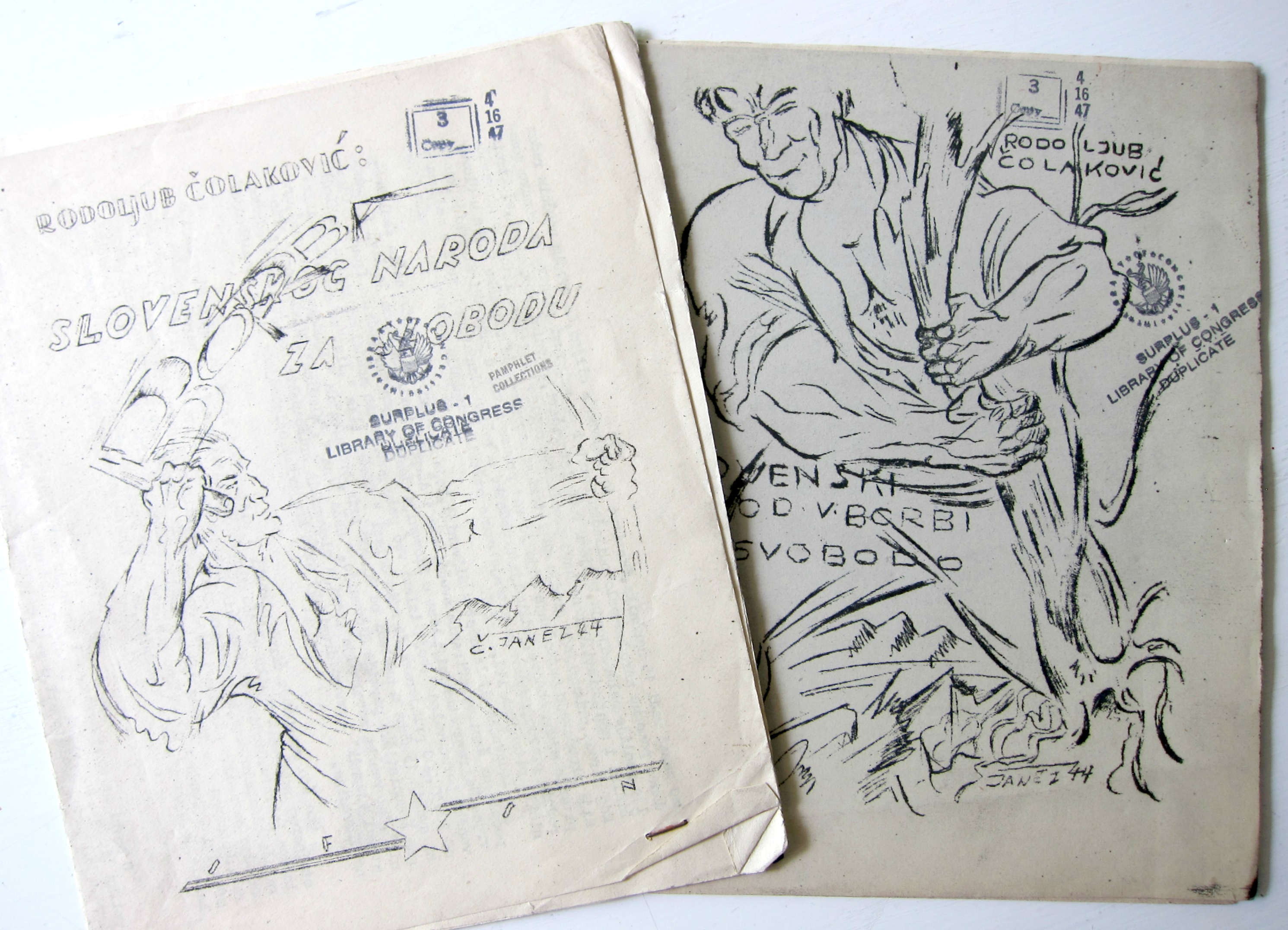
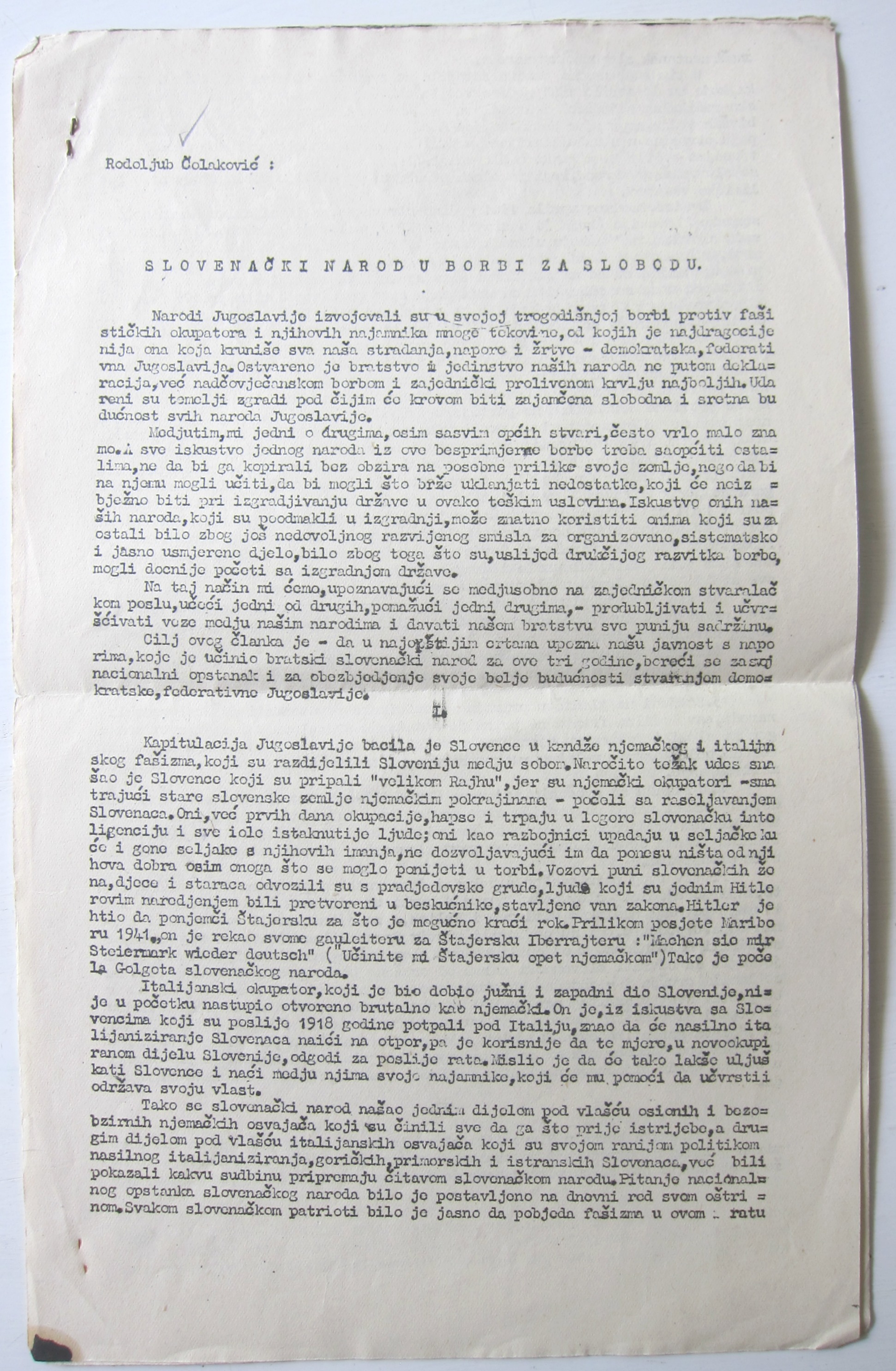
  • Two Unlocated (?)  Yugoslavian  Pamphlets on Underground Movements, 1944


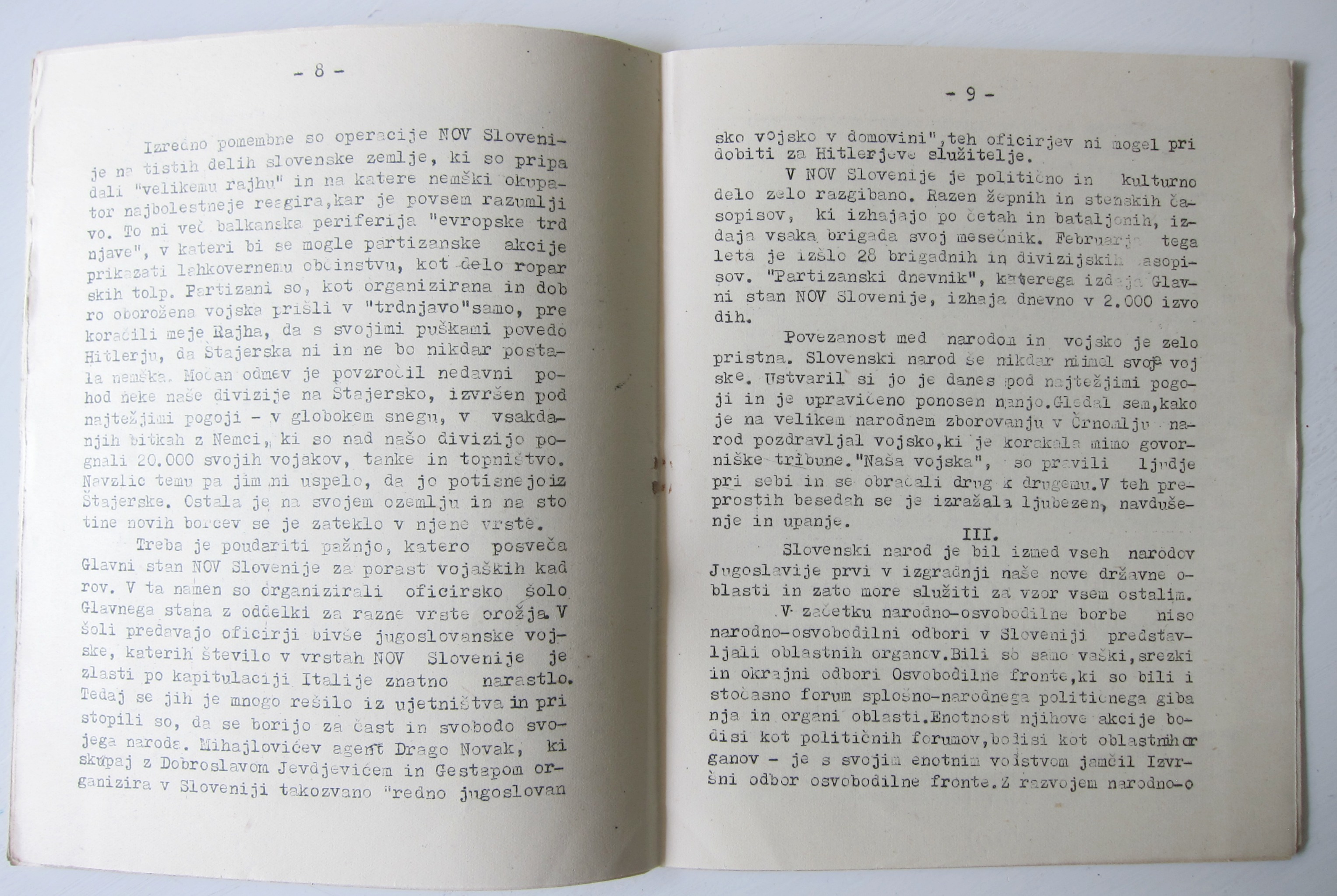
    COLAKOVIC, Rodoljub.  Slovenski Narod V Borbi za Svobodo  (“The Slovenian People in the Fight for Freedom”) (From the “Neve Jugoslaije”, St. 4-, 20 aprila 1944. 8×6″, 16pp, wrappers.  

    • offered with:

    ______, another version of the above, this with a different introduction (so far as I can determine) with the rest of the contents looking the same as the above, except in a different format. This version: folded 11×8″ sheets, and printed vertically on three sheets of paper.  

    Provenance: Library of Congress.  Neither is located in the WorldCat/OCLC.  I did find a couple of references to this title being published as part of a larger, edited work, but for 1945. Both of these pamphlets feature artwork on the cover dated 1944.  $300

    Czech freedom fighter IV

    Czech freedom fighter II


    Czech freedom fighter

    “Rodoljub “Roćko” Čolaković[1900 – 1983) was a Bosnian Serb and Yugoslav politician. A native of Bijeljina, Rodoljub Čolaković joined the Socialist Party of Bosnia-Herzegovina in March 1919 as a student. Later he joined Crvena Pravda (“Red Justice”), a left-wing terrorist organisation which assassinated Yugoslav interior minister Milorad Drašković. For his role in this event Čolaković was sentenced to 12 years in prison. While serving his sentence he made friends with many notable Yugoslav communists, including Moše Pijade with whom he translated Das Kapital and other seminal Marxist texts into Serbo-Croatian. After his release, Rodoljub Čolaković emigrated to the Soviet Union and later took part in the Spanish Civil War on the Republican side.”–Wikipedia

     Also this slightly different minute appraisal:   “… a revolutionary and writer, a participant in the Spanish Civil War and the People’s Liberation Struggle , a socio-political worker of theSFRY and SR of Bosnia and Herzegovina , the hero of socialist work and a national hero Yugoslavia .”–Wikipedia, slobodna enciklopedija


    ·Posted by :

    ·in:

  • War Production Board Home Front Propaganda Leaflets (1942)

    JF Ptak Science Books  

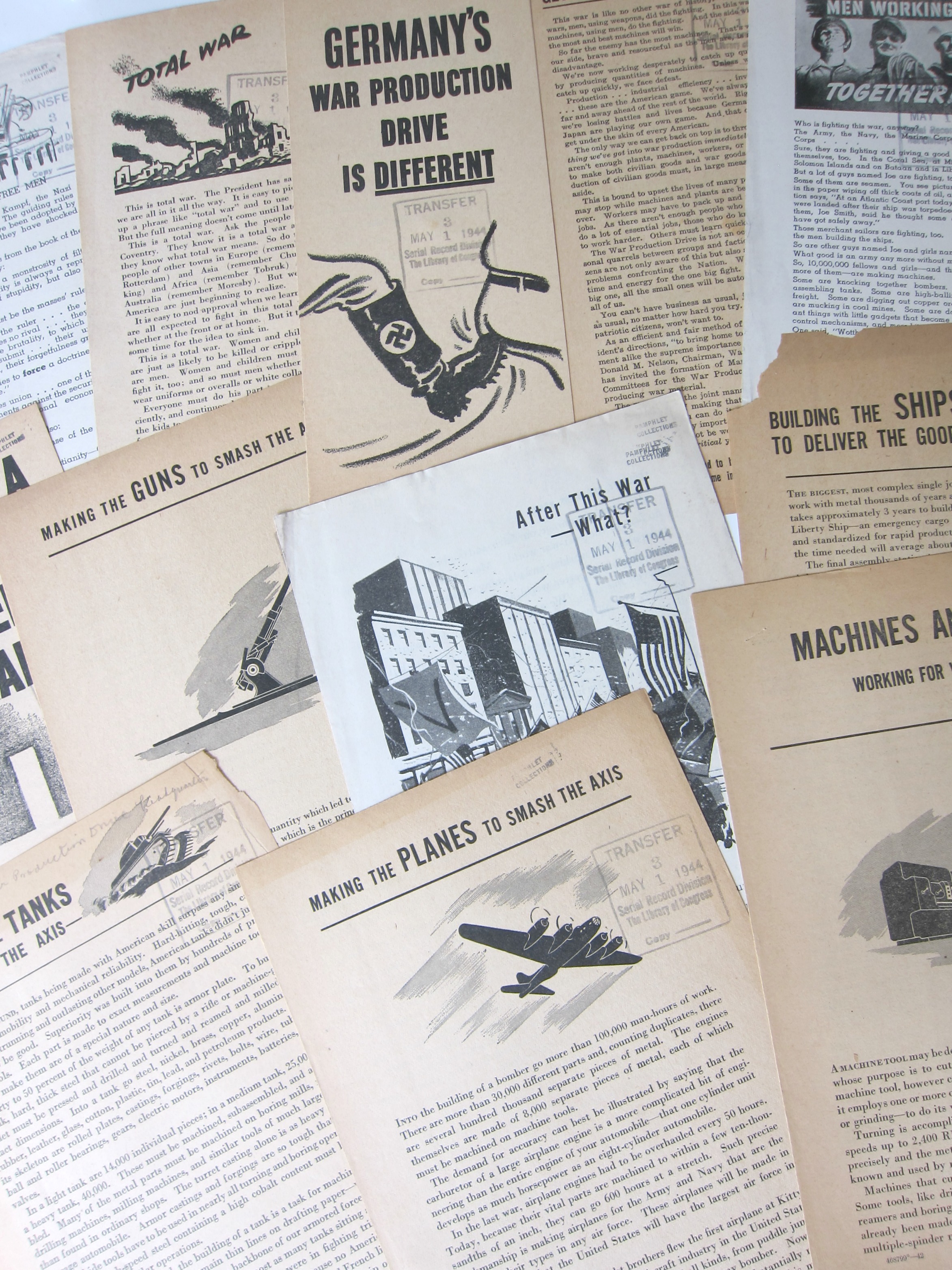
    Pamphlets and Leaflets Issued by the War Production Board Headquarters, War Production Board, U.S. Government Printing Office. 11 pieces, $200

    War Dept Production Board leaflet

    • He Was a Good Guy When He Had It. 8×3″, unfolds for a central message, which was to make sure that the guy (“Joe”) had “it”, being bullets and grenades.  16-27955-1 (Received May 3, 1944)
    • After This War–What?   1942.  9×6″, 4pp. (Received May, 1944)
    • Building the Ships to Deliver the Goods. 1942. 8×5″, single sheet. 
    • Building the Tanks to Smash the Axis. 8×5″.(undated, though received by the L.C. May 1944), single sheet. 4pp. 1942
    • Making the Guns to Smash the Axis. 8×5″,  4pp. 1942. 
    • Machines and Men, Working for Victory. 4pp. 1942
    • Men Working Together. 8×3″. Single sheet. 
    • Get Straight on this War. 8×3″. Single sheet. Undated by stamped “received” by the L.C. in May 1944.
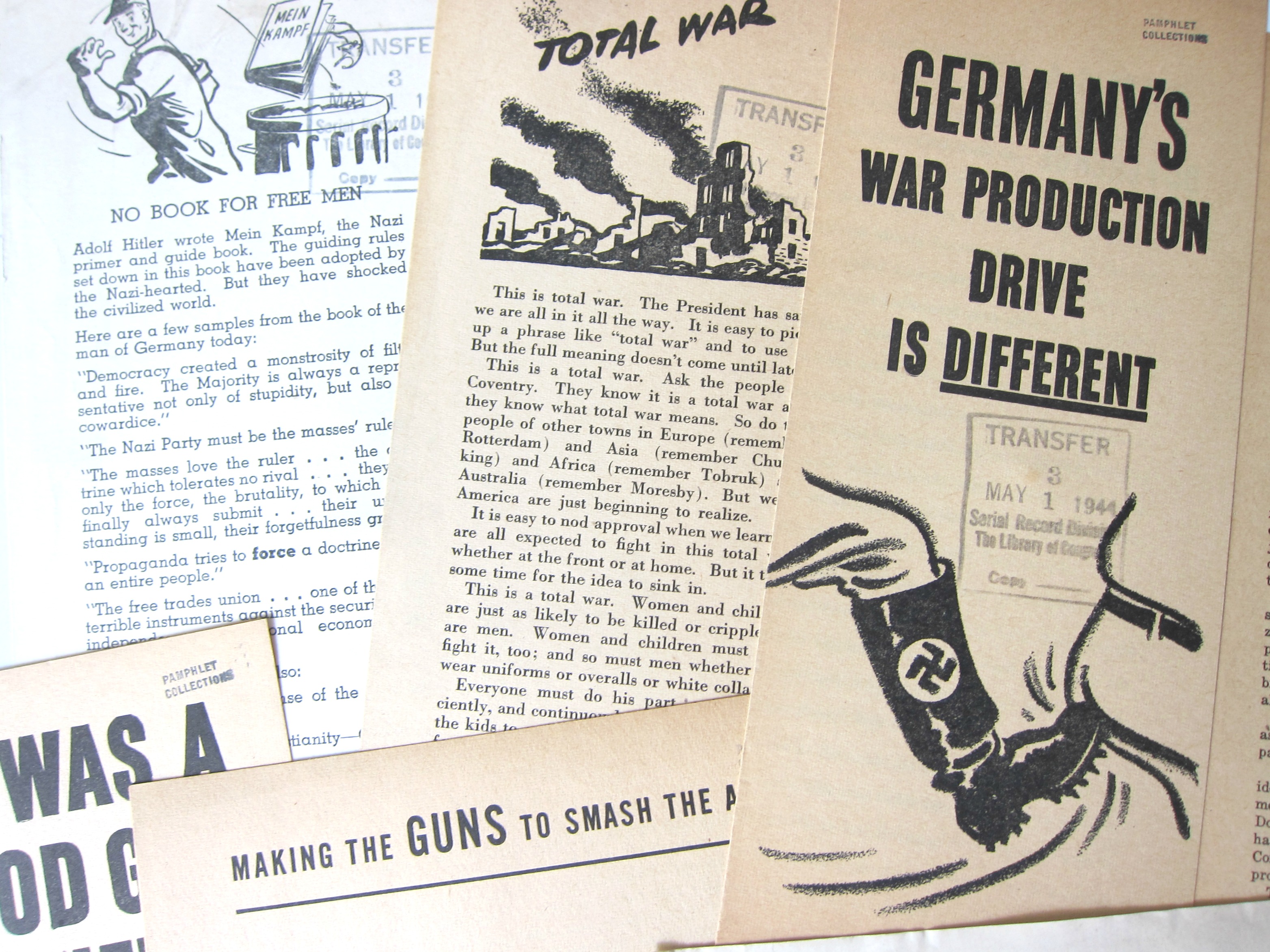
    • Germany’s War Production Drive is Different. 8×3″. Single sheet, folded. Undated by stamped “received” by the L.C. in May 1944
    • Total War. 8×3″. Single sheet. Undated by stamped “received” by the L.C. in May 1944
    • No Book for Free Men. 8×3″. Single sheet. Undated by stamped “received” by the L.C. in May 1944

    War Dept Production Board leaflet detail


    ·Posted by :

    ·in:

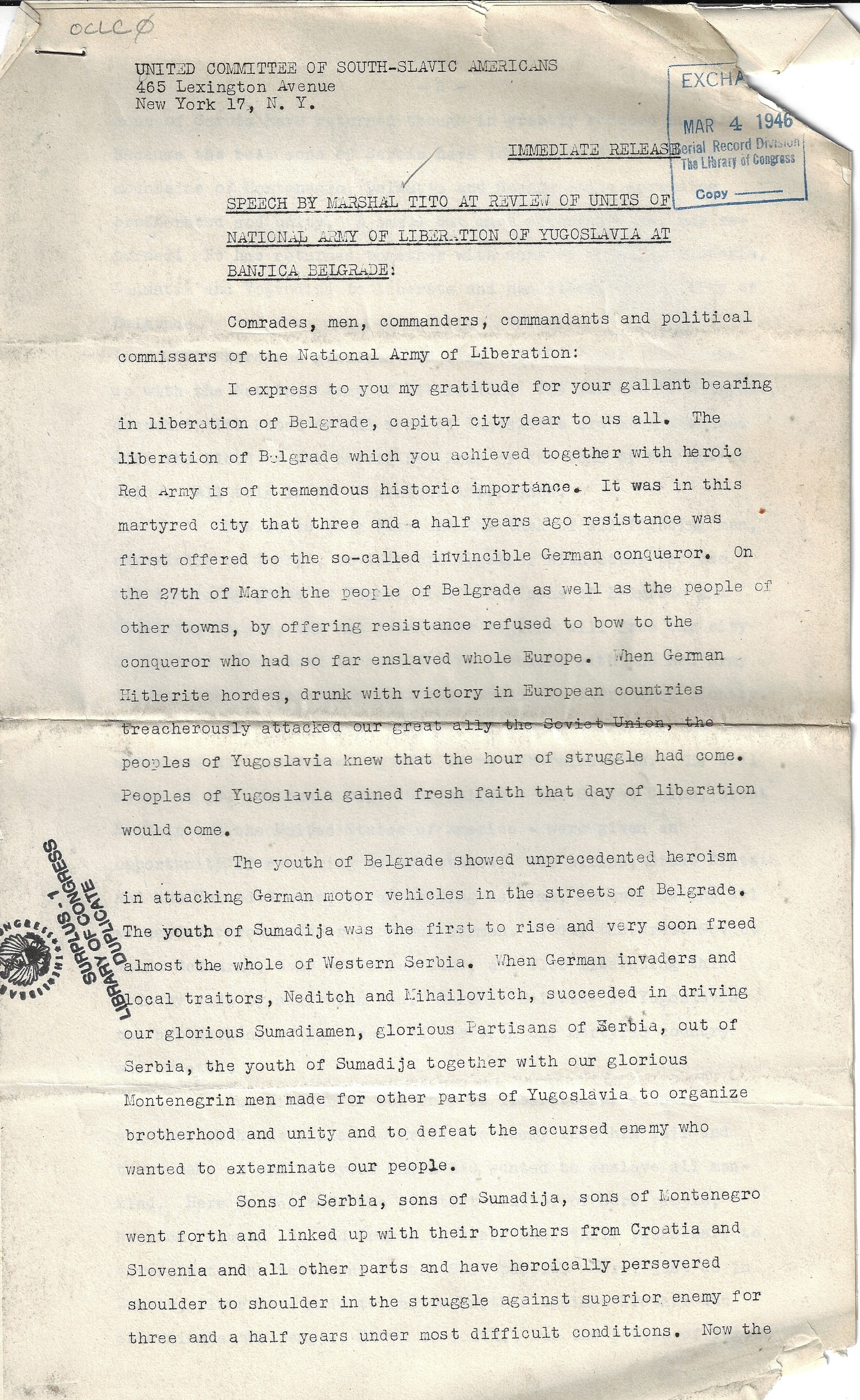
  • On the Liberation of Yugoslavia (1945)

    [Marshal Tito (Josip Broz)]

    Speech by Marshall Tito at Review of Units of National Army of Liberation of Yugoslavia at Banjica Yugoslavia.

    United committee of South-Slavic Americans, (465 Lexington Ave, NYC).  Mimeo/offset production, printed on 13″x8.5″, 5 sheets, (1945). Good condition. NO copies are located in WorldCat/OCLC.  $145

    • IMMEDIATE RELEASE

    “The liberation of Belgrade which you achieved together with heroic Red Army is of tremendous historic importance. It was in this martyred city that three and a half years ago resistance was first offered to the so-called invincible German conqueror.”

    WWII Yugoslavia mimeo


    ·Posted by :

    ·in:

  • Circassia and Daghestan, 1919

    [Bammate, Haidar}  Circassia and Daghestan. Printed at Lausanne, Imprimeries Reunies, (1919). 9×6″, 15pp. Original wrappers. Good condition.  Scarce: it looks like there are only 3 print copies located by WorldCat. $125

    • Provenance: “Bureau de Presse Nord-Caucasien, Paris”, and then the Library of Congress (with the LC surplus/duplicate stamp on front wrapper upper right corner

    “Translated in part from the “Probleme de Caucase” in la Revue Politique Internationale, vol 10, Nov-Dec. 1918.”–Hoover institution on war, revolution and peace (Stanford, Calif.), A Catalogue of Paris Peace Conference Delegation Propaganda in the Hoover …”, p 30

    ·Posted by :

    ·in:

    —
  • Taking Aim at Japanese Relocation (Fortune Magazine, April 1944)

    [Anon.] “Fortune Magazine reviews the program of the War Relocation Authority and the problems created by the evacuation from the West Coast of 110,000 people of Japanese descent.” Reprint from Fortune Magazine, April 1944. 8 3/8 in x 5 3/8 in; 21.2725 cm x 13.6525 cm, 20pp.
    Provenance: Library of Congress, with their tiny “pamphlet collections” stamp on the front upper cover and a 6mm perforated “LC” on the front cover bottom. Very nice copy, with one short half-inch tear in the front wrapper (repaired with Japanese paper tape). Scarce.  $200
    From the opening of the pamphlet:
    “When the facts about Japanese brutality to the soldier prisoners from Bataan were made known, Americans were more outraged than they had been since December 7, 1941.  Instinctively they contrasted that frightfulness with our treatment of Japanese held in this country; and, without being told, Americans knew that prisoners in the U.S. were fed three meals a day and had not been clubbed or kicked or otherwise brutalized.  Too few, however, realize what persistent and effective use Japan has been able to make, throughout the entire Far East, of U.S. imprisonment of persons of Japanese descent.  This propaganda concerns itself less with how the U.S. treats the people imprisoned than who was imprisoned.  By pointing out again and again, that the U.S. put behind fences well over 100,000 people of Japanese blood, the majority of them citizens of the U.S., Japan describes to her Far Eastern radio audiences one more instance of American racial discrimination.  To convince all Orientals that the war in the Pacific is a Crusade against the white man’s racial oppression, the enemy shrewdly notes every occurrence in the U.S. that suggests injustice to racial minorities, form the Negroes to the Mexicans and Japanese.”
    And the closing paragraph, which takes a very direct stab at the “relocation program”:
    “The longer the Army permits California and the rest of Pacific Coast to be closed to everyone of Japanese descent the more time is given the Hearst papers and their allies to convince Californians that they will indeed yield to lawlessness if the unwanted minority is permitted to return.  By continuing to keep American citizens in “protective custody,” the U.S. is holding to a policy as ominous as it is new.  The American custom in the past has been to lock up the citizens who commits violence, not the victim of his threats and blows.  The doctrine of “protective custody” could prove altogether too convenient a weapon in many other situations.  In California, a state with a long history of race hatred and vigilantism, antagonism is already building against the Negroes, who have come in for war jobs.  What is to prevent their removal to jails, to “protect them” from riots? Or Negroes in Detroit, Jews in Boston, Mexicans in Texas? The possibilities of “protective custody” are endless, as the Nazis have amply proved.”
    “The reprint of Fortune Magazine’s “Issei, Nisei, Kibei”, which reviewed the war relocation program, reached a wide swathe of the United States and confronted Americans with the severe social issues taking place on the home front. Awareness of the prejudicial treatment of these specific citizens was widespread, yet, it took years until the internment system was dismantled and Japanese Americans were left to reassemble their lives.”–National Museum of American History
    “(The) article provides a contemporary description of the panic and ensuing incarceration of Japanese including the suggestions of “coddling,” politics, “registration and segregation,” “relocation,” “military necessity,” and “protective custody,” and discusses what future generations may think of the incarceration and U.S. policies.”–Calisphere, Japanese Relocation Collection, University of California

    ·Posted by :

    ·in:

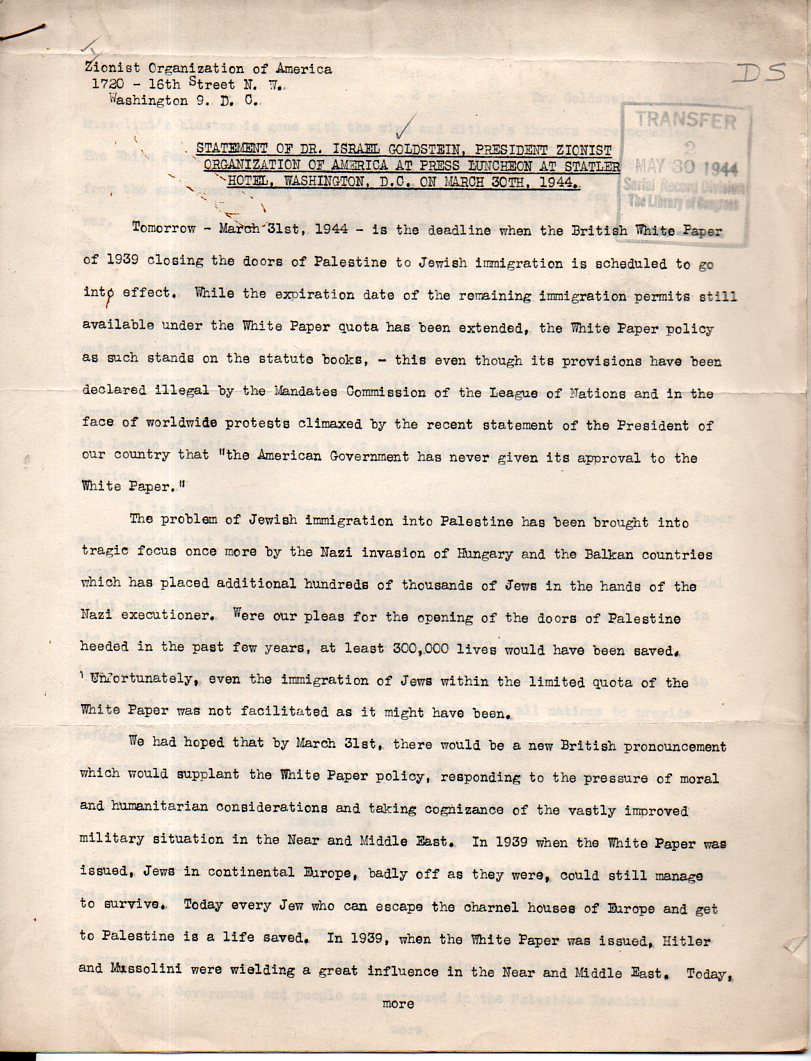
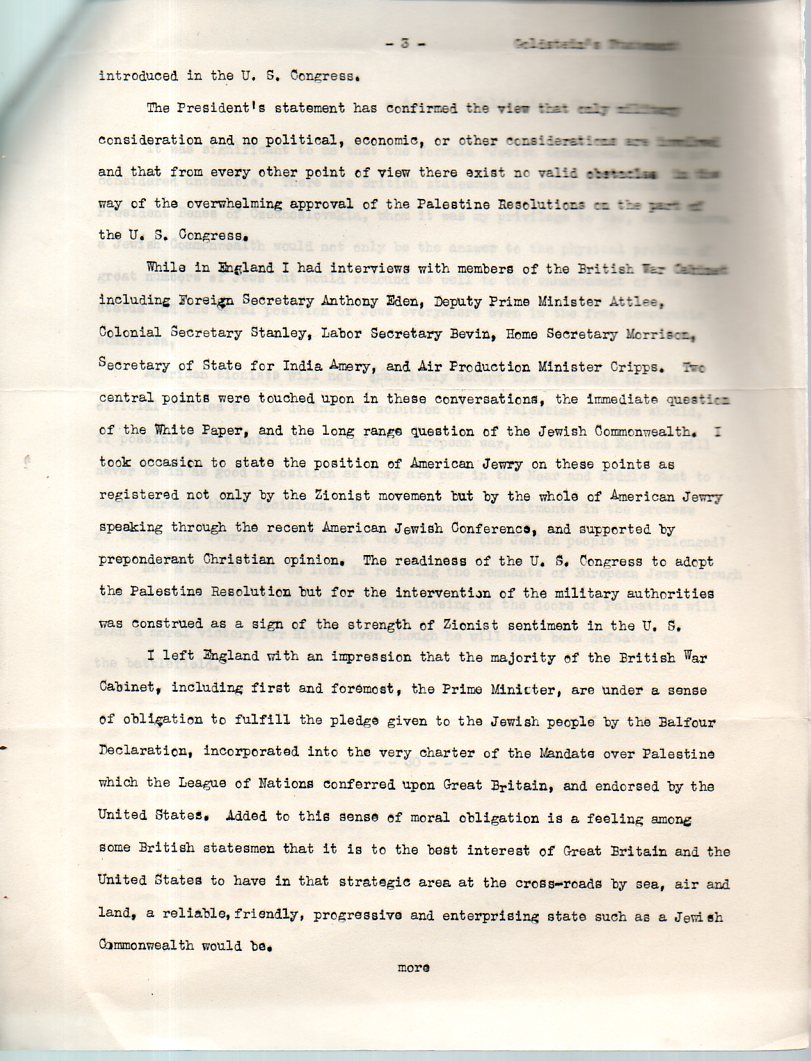
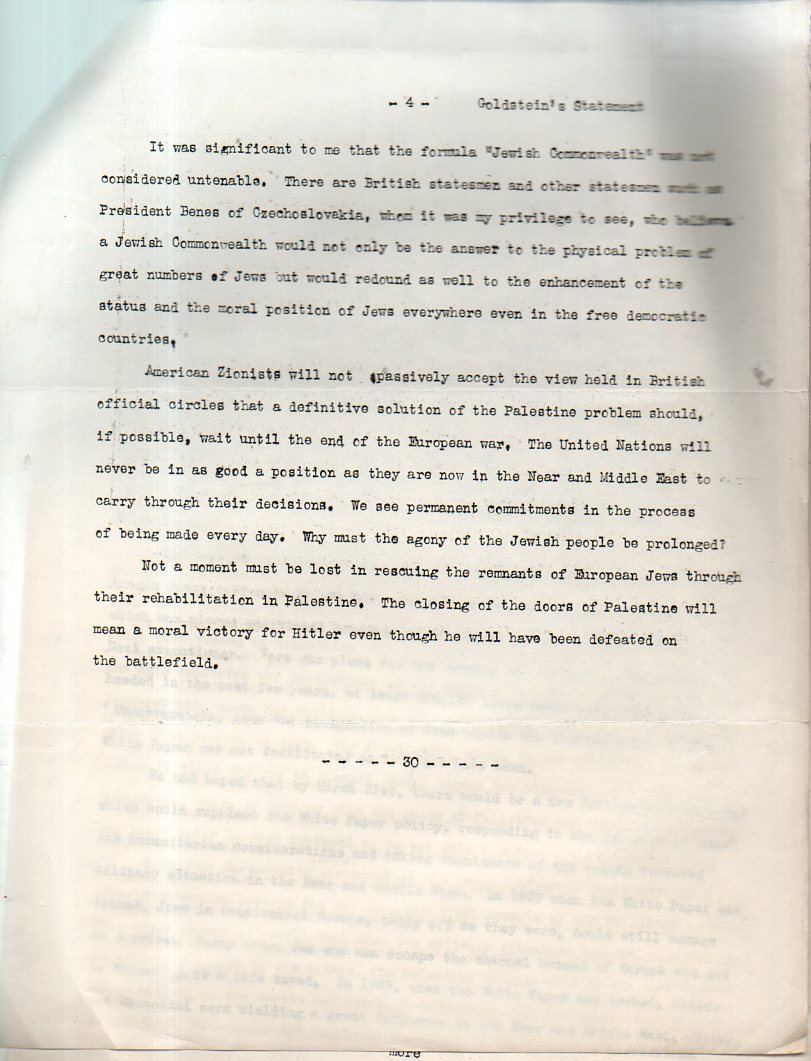
  • “Why Must the Agony of the Jewish People be Prolonged?” (1944) Another Episode in the Abandonment of the Jews in WWII

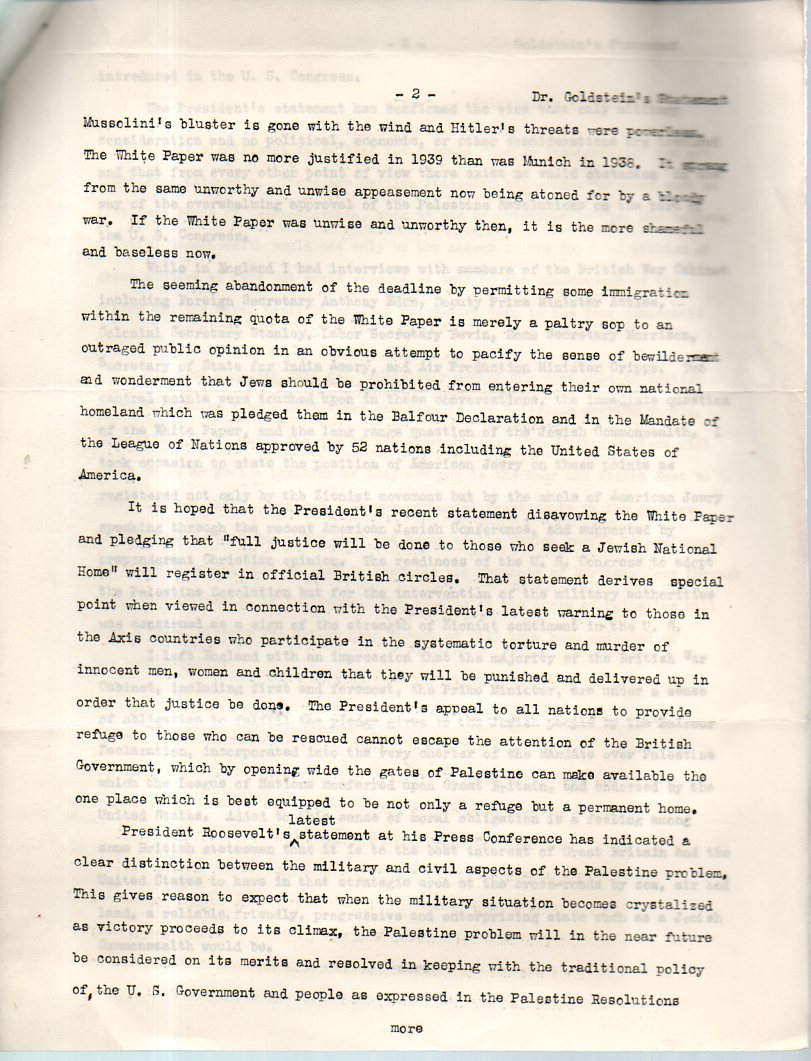
    Israel Goldstein. Statement of Dr. Israel Goldstein, President Zionist Organization of America, at Press Luncheon at Statler Hotel, Washington, D.C., on March the 30th, 1944.  Offset printed by the Zionist Organization of America, 1720 16th St, NW, Washington DC. 11″x8.5″, 4 leaves.  Provenance: Library of Congress. Two old horizontal folds. Rare.  $750

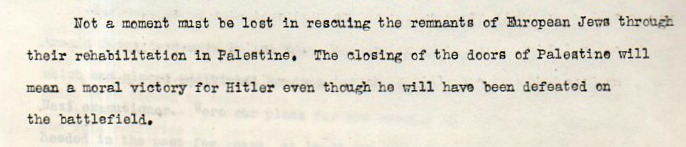
    Goldstein _1_543 detail

    This quote is from (Rabi) Israel Goldstein as head of the Zionist Organization of America appeal and addresses the British White Paper of 1939 on Palestine and allowing Jews to immigrate to escape “the hands of the Nazi executioner” in Europe, which amongst many other things  limited Jewish immigration to 75,000 for 5 years (1939-1944) with limits of further immigration to be determined by the Arab majority. “Were our pleas for the opening of the doors of Palestine headed in the past few years, at least 300,000 lives would have been saved. Unfortunately, even the immigration of Jews within the limited quota of the White Paper was not facilitated as it might have been” wrote Goldstein in this address.  

    There is a long and complicated history to the White Paper but suffice to say that while millions of Jews were being slaughtered in Europe the restrictive White Paper remained in place, which meant that the haven for escape to Palestine was largely closed relative to the numbers of people needing to be saved, and that at the end of the war there were still 3000+ visas that hadn’t yet been granted. Goldstein makes the case for the extreme peripheral usefulness of the Paper in 1939, but in 1944 when the Axis influence in the Middle East was  extremely minor adhering to the white Paper was a tragedy: “if the White Paper was unwise and unworthy then, it is more shameful and baseless now” he wrote.1 (“The Provisional Council of Israel’s first constitutional act [in 1948] was a Proclamation that “All legislation resulting from the British Government’s White Paper of May, 1939, will at midnight tonight become null and void.”–Wiki on the White Paper of 1939.) 

    Goldstein hoped for a change in the policy–there would be none.

    • Israel Goldstein (June 18, 1896 – 1986) was an influential Jewish leader in the U.S. and worldwide as a Rabi (and head of the New York Board of Rabis), head of the Jewish National Fund (elected in 1933), head of the Zionist Organization of America (elected 1943), and one of the founders of Brandeis University.  The full text of the publication–which was printed sometime between March 30, 1944 and May 30, 1944–is included below.  I can find no mention of the communication online.  

    Notes

    1. Goldstein wrote in his memoirs that the rules and restrictions of the White Paper on Jewish immigration were being “rigidly and brutally enforced”. —My World as a Jew: The Memoirs of Israel Goldstein, Volume 2, pg 47.

    [“Like another black curtain about to be rolled down upon the last hope of escape, the White Paper of 1939 ominously threatens to close all further migration to Palestine,”–Judge Morris Rothenburg, Jewish Telegraphic Agency, http://www.jta.org/1943/09/13/archive/dr-israel-goldstein-elected-president-of-zionist-organization-of-america]

    Goldstein _1_540

    Goldstein _1_541

    Goldstein _1_542

    Goldstein _1_543

    ·Posted by :

    ·in:

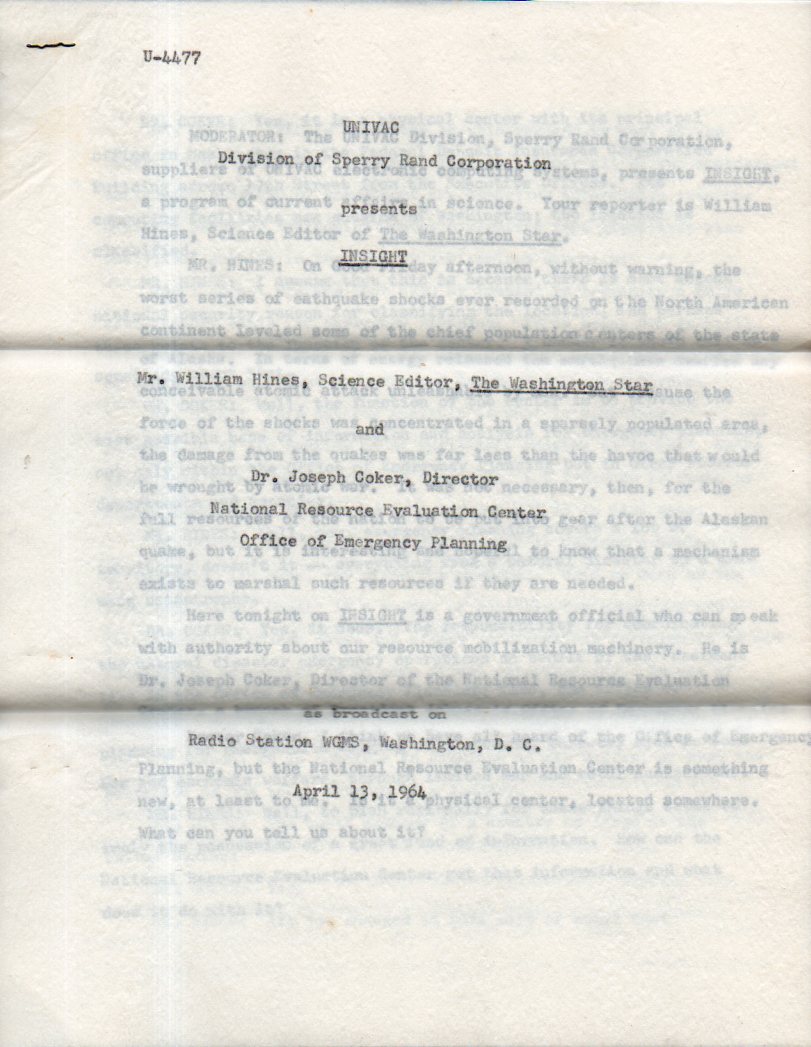
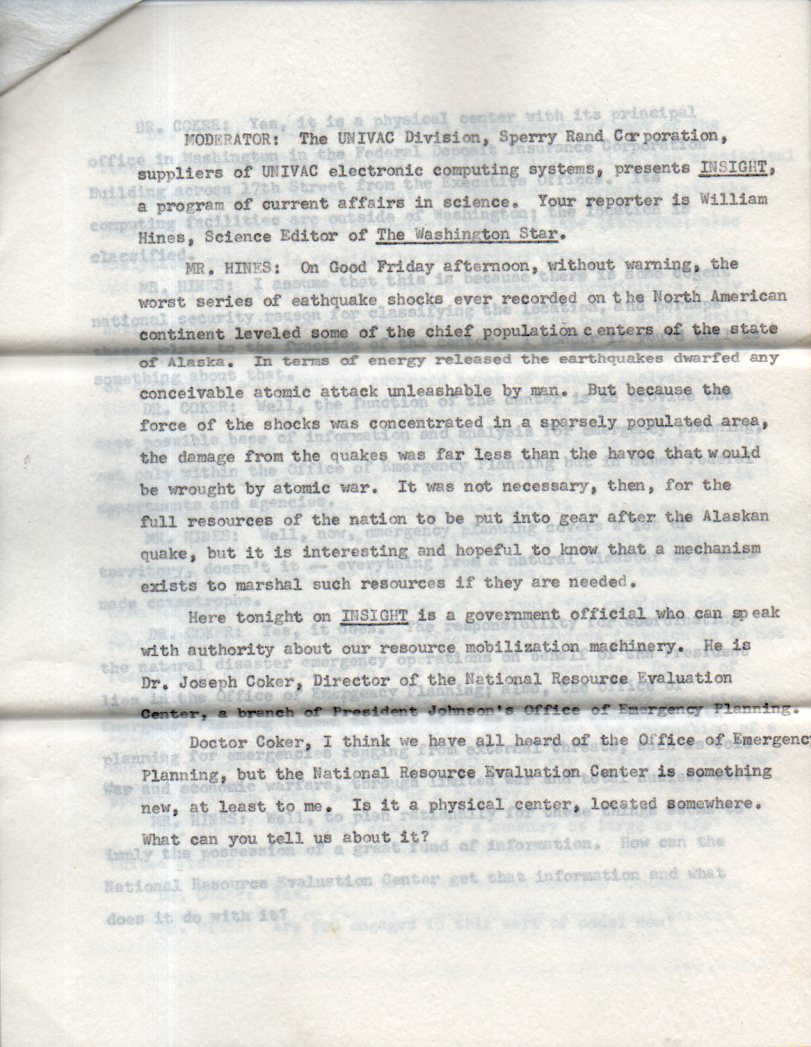
  • Computers Nuclear Warfare And Afterwards 1964

    UNIVAC, Division of Sperry Rand Corporation, presents INSIGHT.  Carbon copy transcript of a broadcast on Radio Station WGMS, Washington D.C., April 13, 1964.  8 leaves on onionskin paper. Fine copy. Two horizontal folds. SOLD

    This title may sound overly dramatic, but it really isn’t. As part of the Mutually Assured Destruction game plan there was an absolute necessity for calculating the leftovers from a nuclear exchange in order to convince the aggressor nation (which of course in 1964 would be the Soviet Union) that in spite of massive destruction the U.S. would be situated to carry out acting as a government/society/military in the post-war world. Part of figuring all of that out would entail a massive amount of bean counting for personnel, materiel, natural resources, and so on in a nearly endless list of stuff that runs the U.S., and then figuring out where it all was, and how it would/could be affected by a nuclear strike at XX locations, and that with different yields, and weather patterns, and so on, on into the night, of how a nuclear attack of x-capacity would affect the tactical and strategic and social base of the U.S.  So you’d have to gather all of that data, and then lay it all on in XX scenarios that would all be played out in computer simulations.  

    And that is what this interview is all about–explained on the radio to a general listening audience by Joseph Coker, who was at the time chief of the NREC (the National Resource Evaluation Center). All of this made its own crazy sense, and all of it had to be done, running both towards and away from the black hole that did and didn’t exist.  

    UNIVAC Coker544

    UNIVAC Coker545


    ·Posted by :

    ·in:

  • On the History of Kindness to Children (1687)

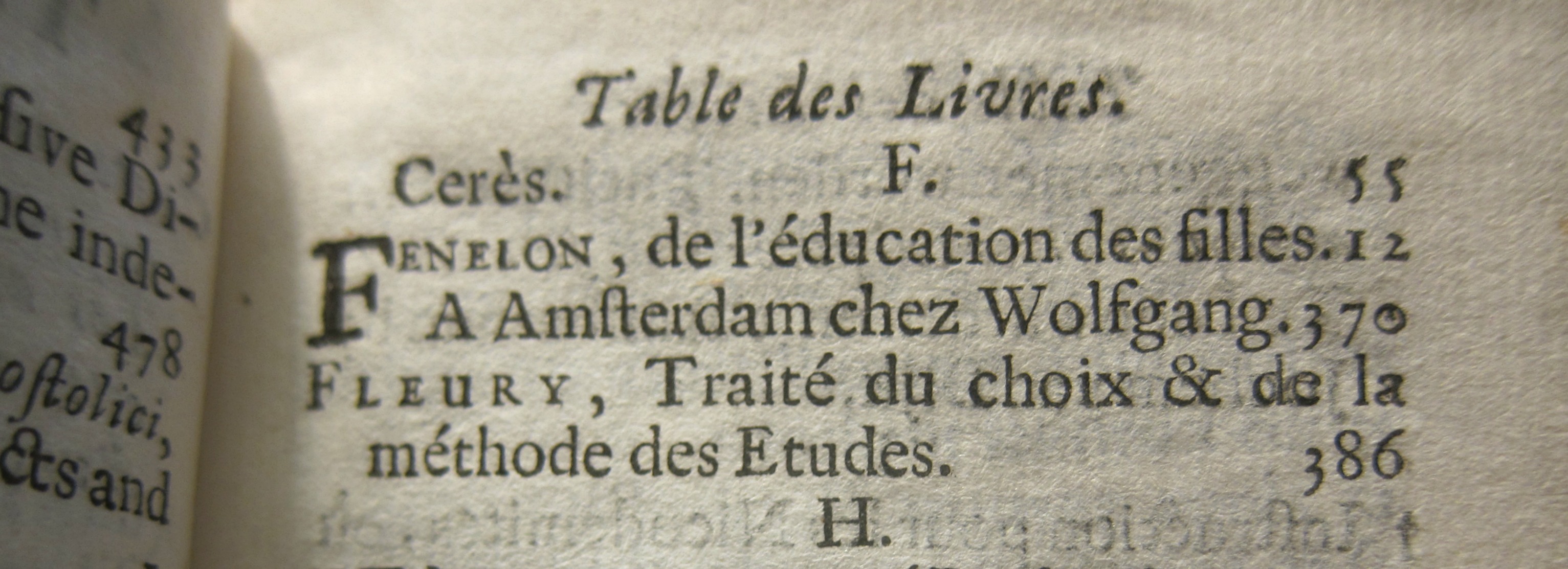
    Fenelon (François de Salignac de La Mothe- Fénelon) Education de filles, pp 37-378. In: Jean Le Clerc and Jean Cornande de al Crose, Bibliotheque Universelle et Historique de l’annee M.D.C. LXXXVII, volume 6. Published in Amsterdam; Wolfgang, Waesberge, Boom, & van Someren. 1687. 5.5”x3” (viii), 561, (28)pp, with one small folding plates. Nicely bound in full vellum Very good copy, with just a small chip in the vellum at spine bottom. SOLD
    Bibliotheque Universelle 1687

    Another piece of great serendipity fell from the sky, again this week, this time on the idea of the history of childhood–more accurately, it is on the history of kindness extended to children. The idea of looking at childhood in that way lies in the work, for example, of Phillipe Aires (Centuries of Childhood, first French edition 1960) and Lloyd deMause (The History of Childhood, 1974), among others, who maintain that kindness towards children is a modern invention. (This is kind of wildly brief statement of this idea–suffice to say though that the treatment of children through long history has not been necessarily “kind”. For example, the word “childhood” appears only twice in the Bible (KJV), and really only once in reference to what childhood might have been rather than a simple statement regarding a period of human life. That occurs in Ecclesiastes 11:10: “Therefore remove sorrow from thy heart, and put away evil from thy flesh: for childhood and youth are vanity.” This is in line with an older variety of that book, the Cloverdale Bible, in Ecclesiastes xii. “A   Childehode and youth is but vanite” which again makes the point of childhood being something to get away from rather than a chance to improve the life of the new person. The Oxford English Dictionary takes the word back to Middle English times, but even into the 19th century I can’t really point to an applicable use of the word in connection to this discussion.)

    The issue came up while listening to a public reading by my wife’s favorite living author, Richard Powers. He was taking questions after a lovely read from his newest, called “The Overstory”, when a question came to him regarding human-like senses in animals. Powers responded saying that all was possible, seeing as how people question those human qualities in other human beings. He used the term “Anthropomorphism of Man”, which I found fantastic, as he was correct. For centuries certain people simply weren’t regarded on the same human level as other people (those people doing the judging). For example, in the U.S., women, African Americans, the poor, Asians, and so on from a long list, have only recently been elevated to the prospect of “sameness” with those in power in this country. Before this, they were something “lesser”. And it was here that Powers offered “children” as not being children, not even a full human, for most of the history of humans, and so only recently come into their own as full humans.

    Then came the serendipity.

    I was browsing through one of the 30 volumes or so of an Amsterdam-published 17th century magazine/journal called Bibliotheque Universelle looking for articles of scientific interest. There’s a lot in these little bricks of books, and they do have some occasionally good (and great) scientific efforts in them, the one I was working on, one of several volumes for the Principia year of 1687 (July 5), yielded nothing of any great sci-interest in its 500+ pages. Then, I spotted it, just a simple four lines of 6-point type in the 5”-tall book: “Fenelon, de l’Education de filles…” That’s François de Salignac de La Mothe- Fénelon, of Telemachus (son of Ulysses, etc.) fame, and his book was on the education of daughters. It was published the year before, in 1686, and the editors of the Bibliotheque gave it eight pages or so of review and explanation.

    It seems to me from this reading that in this account—really on education of children in general–M. Fenelon was an advanced thinker, a human human-rights person, treating children and their education as individuals, with understanding, and kindness.

    Evidently the man speaks to curiosity and rational amusement in the book—that curiosity must precede the rational, and that one must be careful in doing that, because there is a danger of “imitation”–curiosity is the thing that banishes ennui.

    At the same time instruction must be realistic, so that once mature and grown that the real world is not a total shock, and that once subjected to the daily routine of “housewifery” there will be no denouement from the dreams of childhood—all of that seems like a pretty sticky wicket. Fenelon did seem to insist on the beginning of education from infancy, but not to overdo the instruction as that would “oppress the facilities”.

    Perhaps the most surprising positive thing of them all to me was Fenelon’s insistence on being careful with your words with the mature child, and to never be guilty of a falsehood with children, which is pretty good and sane advice.

    There’s other stuff that doesn’t translate any longer into where we are today, but there seems to be a lot of material that is timeless.

    On the Bibliotheque: “Like its great rival, Pierre Bayle’s Nouvelles de la re´publique des lettres, it [the Bibliotheque…] was a source of information and means of communication for members of the nascent Republic of Letters. It was also one of the remote ancestors of the modern academic journal, though much less specialised than most of its successors.”J.R. Milton, “Locke’s Publications in the Bibliothèque Universelle et Historique”, British Journal for the History of Philosophy, 05/2011, Volume 19, Issue 3

    Editors and contributors included: Jean Le Clerc et Jean Cornande de al Crose, vols 1-9; Jean Le Clerc, 10, 12, 14-19; Jean Cornand de La Crose, vol 11; Charles le Cene and Jean Le Clerc, vol 13; Jacques Bernard and Jean Le Clerc, vol 20; Jacques Bernard, vols 24-5. The journal was published every 4 months in vols 1-3; every 3 in 4-19, and then twice a year for 20-25.
    ·Posted by :

    ·in:

    —
  • Leeuwenhoek Letters, 1687 (continued)

    [LEEUWENHOEK, Antoine van.] “Ontledingen en Ontdekkingen van de Cinnaber, &c. Anatomie & description nouvelle du Cinnabre Naturel…ou Lettres a la Societe Royale de Londres…” (4to, published in 110pp.), pp 372-383.

    Also with:

    [Regarding Leeuwenhoek] “Anatomia, seu interota rerum cum Animatarum, tum inanimatarum, ope & beneficio exquisitissimorum MICEOSCOPIORUM…(published in 1687, in 508pp), pp 383-388.

    Both articles bound in:

    Jean Le Clerc and Jean Cornande de al Crose,  Bibliotheque Universelle et Historique de l’annee M.D.C. LXXXVII, volume 5. Amsterdam; Wolfgang, Waesberge, Boom, & van Someren. 1687. 5.5”x3”, Volume 5. (8),(14),522,(18)pp. Bound in full vellum. Condition: a very nice copy, with a very fresh text block. There is a centuries-old paper label on the spine bottom, and a penciled “5” at spine top. $250

    “Leeuwenhoek made his most important discovery early in his scientific career, in 1674, when he recognized the true nature of microorganisms…conclud(ing) that the moving objects that he saw through his microscope were little animals. He recorded these observations in his diary, and two years later, in a letter of 9 October 1676, communicated them to the Royal Society, where they caused a sensation…Leeuwenhoek subsequently described, in about thirty letters to the Royal Society, many specific forms of microorganisms, including bacteria, protozoa, and rotifers, as his incidental discovery of ciliate reproduction.”

    “It was through letters—more than 300 of them, written to private scientists and amateurs in both Holland and other countries—that Leeuwenhoek made his work known… he was indebted to the Royal Society of London for the publication of his views, and 190 of his letters are addressed to that body.”

    “This initial communication [28 April 1673] convinced the fellows of the great significance of his microscopic findings, and the Society prepared English translations or summaries of his letters for their Philosophical Transactions (1673—1724)…Beginning in 1679, the French journal Recueil d’expériences et observation sur le combat qui procéde du mége des corps published Leeuwenhoek’s letters, translating them from the Philosophical Transactions, and French summaries of them…appeared in the Journal des Scavans, Latin extracts were made and published in the Acta eruditorum,beginning in 1682.”

    “Leeuwenhoek himself did not publish his work until 1684, when he brought out some of his letters in Dutch; from 1684 onward he also published Latin translations. He initially edited, reprinted, and reissued some of his letters separately or in groups of two or three, a practice that has resulted in some bibliographical confusion.”–Complete Dictionary of Scientific Biography, online, Leeuwenhoek section.

    On the Bibliotheque: “Like its great rival, Pierre Bayle’s Nouvelles de la re´publique des lettres, it [the Bibliotheque...] was a source of information and means of communication for members of the nascent Republic of Letters. It was also one of the remote ancestors of the modern academic journal, though much less specialised than most of its successors.”J.R. Milton, “Locke’s Publications in the Bibliothèque Universelle et Historique”, British Journal for the History of Philosophy, 05/2011, Volume 19, Issue 3

    Editors and contributors included: Jean Le Clerc et Jean Cornande de al Crose, vols 1-9; Jean Le Clerc, 10, 12, 14-19; Jean Cornand de La Crose, vol 11; Charles le Cene and Jean Le Clerc, vol 13; Jacques Bernard and Jean Le Clerc, vol 20; Jacques Bernard, vols 24-5. The journal was published every 4 months in vols 1-3; every 3 in 4-19, and then twice a year for 20-25.
    ·Posted by :

    ·in:

  • Leeuwenhoek’s “Little Animals” (1687)

    [Leeuwenhoek, Antoine van.] “Ondekts onzichtbaarheden &c. Anatomie et decouverte de petitanimaux vivant…” (In the table of contents: “Ondekts onzichtbaarheden &c….Decouvertes de choses imperceptibles, &c.” ), pp 469-481, with  two folding microscopical plates.”  This article/abstract found in: Jean Le Clerc and Jean Cornande de al Crose,  Bibliotheque Universelle et Historique de l’annee M.D.C. LXXXVI. Amsterdam; Wolfgang, Waesberge, Boom, & van Someren. 1687 5.5”x3”. This is volumes 1 of the publication, which was bound with volume 2 (below). (Second edition.) (20),(24),481,(22)pp; and (24),505,(23)pp. Three small, folding engraved plates, plus an elaborate frontispiece.

    This article describes in some detail two of Leeuwenhoek’s letters to the Royal Society–the letters in this review/abstract are left undated in this publication but certainly were so in the original. (The letters include those dated 25 April 1679 and 12 January 1680.) Leeuwenhoek’s system of communicating his discoveries and work was done via correspondence (until he began publishing in 1682), the letters sent to individuals as well as to the Royal Society, where they were published in the Philosophical Transactions.  This article is a review/abstract of one of Leeuwenhoek’s publications which appeared in 1686. In all, 16 Leeuwenhoek letters are discussed in four volumes of the Bibliotheque Universelle, found in vols 1 (2 letters), 2 (4), 5 (1), and 9 (9).

    • Also bound with:

    [Leeuwenhoek] Another suite of of four letters,  in volume 2, pp 459-469. This includes a review of letters from 5 April 1680, 4 November 1681, 3 March 1682, and 4 April 1682.

    Bound in full vellum. Condition: a very nice copy, with a very fresh text block. There is a centuries-old paper label on the spine bottom that is 1/3 removed, as well as a penciled “1&2” in very old hand at spine middle.  VERY GOOD condition. $850

    “Leeuwenhoek made his most important discovery early in his scientific career, in 1674, when he recognized the true nature of microorganisms…conclud(ing) that the moving objects that he saw through his microscope were little animals. He recorded these observations in his diary, and two years later, in a letter of 9 October 1676, communicated them to the Royal Society, where they caused a sensation…Leeuwenhoek subsequently described, in about thirty letters to the Royal Society, many specific forms of microorganisms, including bacteria, protozoa, and rotifers, as his incidental discovery of ciliate reproduction.”

    “It was through letters—more than 300 of them, written to private scientists and amateurs in both Holland and other countries—that Leeuwenhoek made his work known… he was indebted to the Royal Society of London for the publication of his views, and 190 of his letters are addressed to that body.”

    “This initial communication [28 April 1673] convinced the fellows of the great significance of his microscopic findings, and the Society prepared English translations or summaries of his letters for their Philosophical Transactions (1673—1724)…Beginning in 1679, the French journal Recueil d’expériences et observation sur le combat qui procéde du mége des corps published Leeuwenhoek’s letters, translating them from the Philosophical Transactions, and French summaries of them…appeared in the Journal des Scavans, Latin extracts were made and published in the Acta eruditorum,beginning in 1682.”

    “Leeuwenhoek himself did not publish his work until 1684, when he brought out some of his letters in Dutch; from 1684 onward he also published Latin translations. He initially edited, reprinted, and reissued some of his letters separately or in groups of two or three, a practice that has resulted in some bibliographical confusion.”–Complete Dictionary of Scientific Biography, online, for Leeuwenhoek. 

    On the Bibliotheque: “Like its great rival, Pierre Bayle’s Nouvelles de la re´publique des lettres, it [the Bibliotheque...] was a source of information and means of communication for members of the nascent Republic of Letters. It was also one of the remote ancestors of the modern academic journal, though much less specialised than most of its successors.”J.R. Milton, “Locke’s Publications in the Bibliothèque Universelle et Historique”, British Journal for the History of Philosophy, 05/2011, Volume 19, Issue 3

    Editors and contributors included: Jean Le Clerc et Jean Cornande de al Crose, vols 1-9; Jean Le Clerc, 10, 12, 14-19; Jean Cornand de La Crose, vol 11; Charles le Cene and Jean Le Clerc, vol 13; Jacques Bernard and Jean Le Clerc, vol 20; Jacques Bernard, vols 24-5. The journal was published every 4 months in vols 1-3; every 3 in 4-19, and then twice a year for 20-25.
    ·Posted by :

    ·in:

  • Leeuwenhoek Correspondence Abstracts (1688)

    [Leeuwenhoek, Antoine van.] “Vervolg der brieven, geschreven aan de wytvermaarde Koninglijke societeit in London” a review in French of an installment of the published letters to the Royal Society (in Dutch, at Amsterdam, by Boutesteyn in 1688) of Antoine van Leeuwenhoek. This review, or abstract, describes 9 published letters (4 April 1687, 9 May, 13 June (which I think is incorrectly described as “3 June” in the Bibliotheque), 11 July, 6 August, 9 September, 17 October, 28 November, and 7 September 1688 overall). The Vervolg of 1688 continues with another five letters. There is one engraved plate in the Bibliotheque with two figures—this corresponds to the plate on page 19, the two figures here being figures 6+7 in the very well illustrated book.

    These articles bound in: Jean Le Clerc and Jean Cornande de al Crose, Bibliotheque Universelle et Historique de l’annee M.D.C. LXXXVIII, Amsterdam; Wolfgang, Waesberge, Boom, & van Someren. 1688. 5.5”x3”, Volume 9. (first edition), (vi), 561, (28)pp, with two small folding plates. 

    Bound in full vellum. Condition: a very nice copy, with a very fresh text block. There is a centuries-old paper label on the spine bottom (“Ephem.gen. 96”), as well as a title in ink in a very old hand at spine top. Engraved bookplate “Friedr. August H.z.B.O”.., with what seems to be a royal coat of arms, and seems to be Friedrich August, Braunschweig-Lüneburg-Oels, Herzog, otherwise Frederick Augustus, Prince of Brunswick-Oels.

    VERY GOOD condition. There is some damage and a bit of a torn out right-corner on the front free flyleaf, otherwise a nice, tight copy. Pretty book.  $500

    “Leeuwenhoek made his most important discovery early in his scientific career, in 1674, when he recognized the true nature of microorganisms…conclud(ing) that the moving objects that he saw through his microscope were little animals. He recorded these observations in his diary, and two years later, in a letter of 9 October 1676, communicated them to the Royal Society, where they caused a sensation…Leeuwenhoek subsequently described, in about thirty letters to the Royal Society, many specific forms of microorganisms, including bacteria, protozoa, and rotifers, as his incidental discovery of ciliate reproduction.”

    “It was through letters—more than 300 of them, written to private scientists and amateurs in both Holland and other countries—that Leeuwenhoek made his work known… he was indebted to the Royal Society of London for the publication of his views, and 190 of his letters are addressed to that body.”

    “This initial communication [28 April 1673] convinced the fellows of the great significance of his microscopic findings, and the Society prepared English translations or summaries of his letters for their Philosophical Transactions (1673—1724)…Beginning in 1679, the French journal Recueil d’expériences et observation sur le combat qui procéde du mége des corps published Leeuwenhoek’s letters, translating them from the Philosophical Transactions, and French summaries of them…appeared in the Journal des Scavans, Latin extracts were made and published in the Acta eruditorum,beginning in 1682.”–Complete Dictionary of Scientific Biography, online, section on Leeuwenhoek. 

    “Leeuwenhoek himself did not publish his work until 1684, when he brought out some of his letters in Dutch; from 1684 onward he also published Latin translations. He initially edited, reprinted, and reissued some of his letters separately or in groups of two or three, a practice that has resulted in some bibliographical confusion.”

    On the Bibliotheque: “Like its great rival, Pierre Bayle’s Nouvelles de la re´publique des lettres, it [the Bibliotheque...] was a source of information and means of communication for members of the nascent Republic of Letters. It was also one of the remote ancestors of the modern academic journal, though much less specialised than most of its successors.”J.R. Milton, “Locke’s Publications in the Bibliothèque Universelle et Historique”, British Journal for the History of Philosophy, 05/2011, Volume 19, Issue 3

    Editors and contributors included: Jean Le Clerc et Jean Cornande de al Crose, vols 1-9; Jean Le Clerc, 10, 12, 14-19; Jean Cornand de La Crose, vol 11; Charles le Cene and Jean Le Clerc, vol 13; Jacques Bernard and Jean Le Clerc, vol 20; Jacques Bernard, vols 24-5. The journal was published every 4 months in vols 1-3; every 3 in 4-19, and then twice a year for 20-25.
    ·Posted by :

    ·in:

Recent Posts

Archives

Categories