A Daily History of Holes, Dots, Lines, Science, History, Math, Physics, Art, the Unintentional Absurd, Architecture, Maps, Data Visualization, Blank and Missing Things, and so on. |1.6 million words, 7500 images, 4.9 million hits| Press & appearances in The Times, Le Figaro, Mensa, The Economist, The Guardian, Discovery News, Slate, Le Monde, Sci American Blogs, Le Pont, and many othr places… 5000+ total posts since 2008. Contact johnfptak at gmail dot com

  • Babbage Difference Engine, 1823

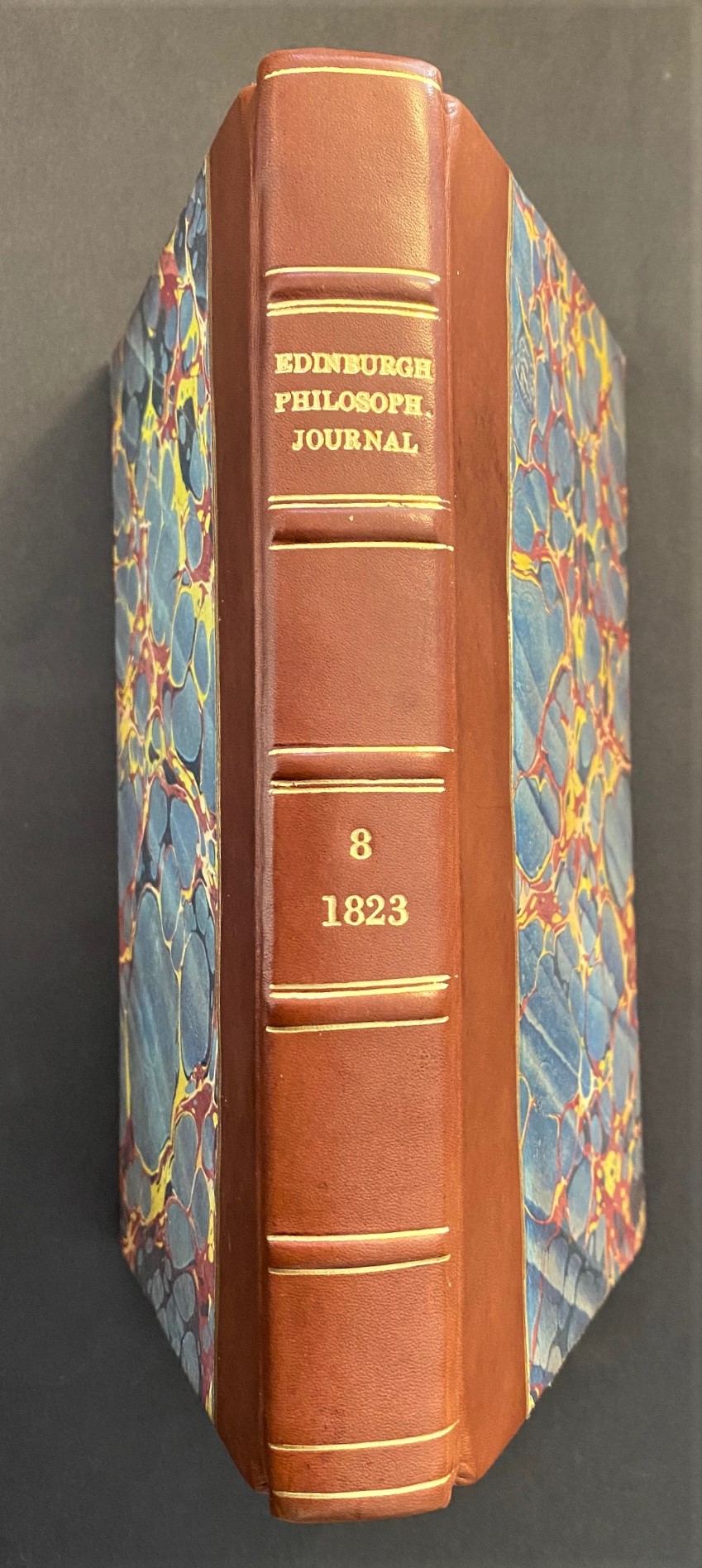
    IMG_4118BABBAGE, Charles. “On the Theoretical Principles of the Machinery for Calculating Tables. In a letter from Charles Babbage. Esq. F.R.S. Lond. & Edin. To Dr. Brewster”. In the Edinburgh Philosophical Journal, October 1, 1822 to April 1, 1823, volume VIII. Edinburgh, printed for Archibald Constable and Co. 1823. The Babbage occupies pp 122-128 in the volume of iv,iv,428pp, with 7 plates (one folding). Newly rebound in half-calf and marbled boards, with gilt decorated raised bands, new (heavy) endpapers—a lovely job by the binder. The text is clean and fresh, and the binding is new. FINE copy.  $750

    “As a founding member of the Royal Astronomical Society, Babbage had seen a clear need to design and build a mechanical device that could automate long, tedious astronomical calculations. He began by writing a letter in 1822 to Sir Humphry Davy, president of the Royal Society, about the possibility of automating the construction of mathematical tables—specifically, logarithm tables for use in navigation. He then wrote a paper, “On the Theoretical Principles of the Machinery for Calculating Tables,” which he read to the society later that year. (It won the Royal Society’s first Gold Medal in 1823.) Tables then in use often contained errors, which could be a life-and-death matter for sailors at sea, and Babbage argued that, by automating the production of the tables, he could assure their accuracy. Having gained support in the society for his Difference Engine, as he called it, Babbage next turned to the British government to fund development, obtaining one of the world’s first government grants for research and technological development.”–Encyclopedia Britannica entry for CB
     

    ·Posted by :

    ·in:

  • Flatland, a Romance of Many Directions, by a Square. First Edition, 1884.

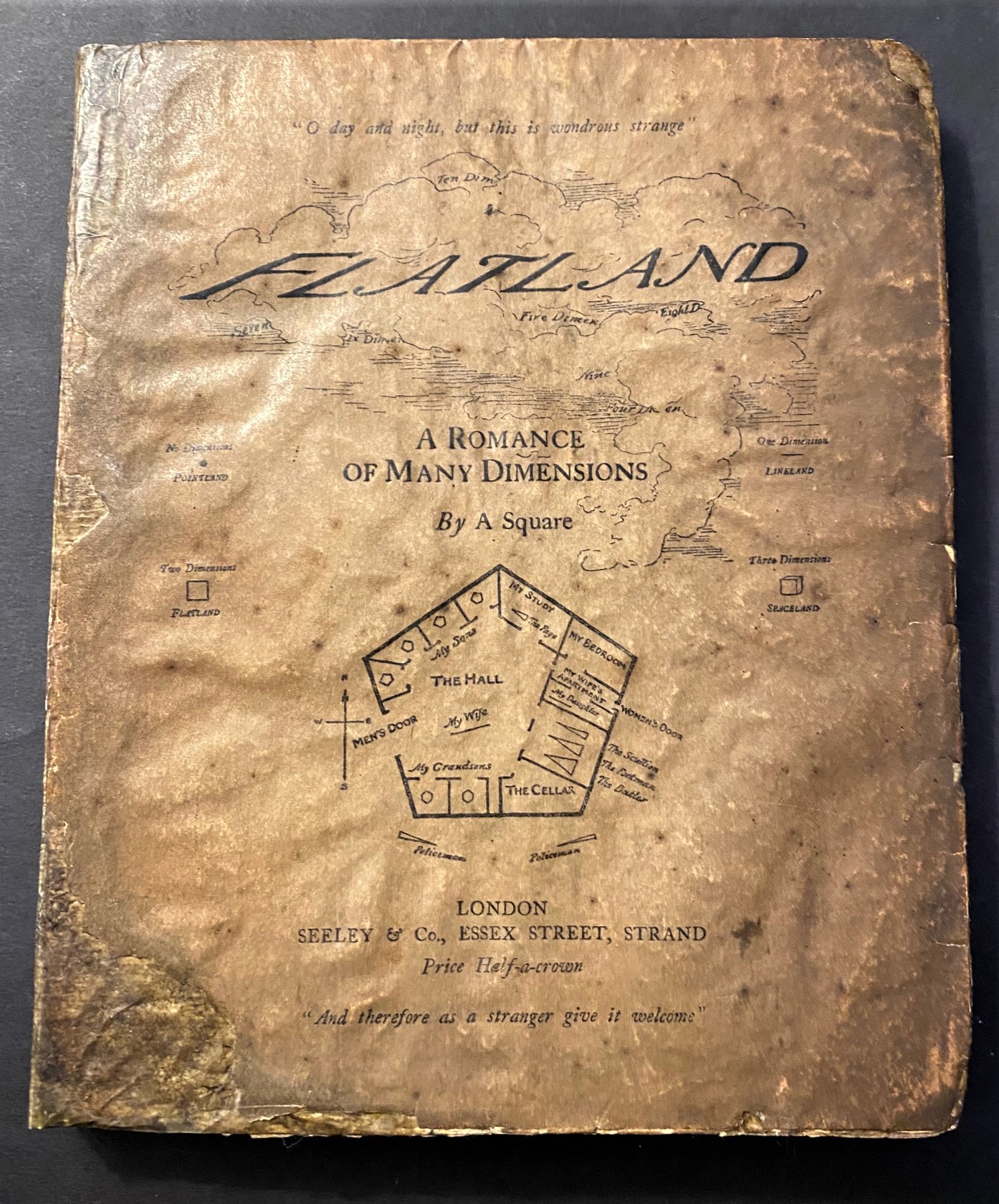
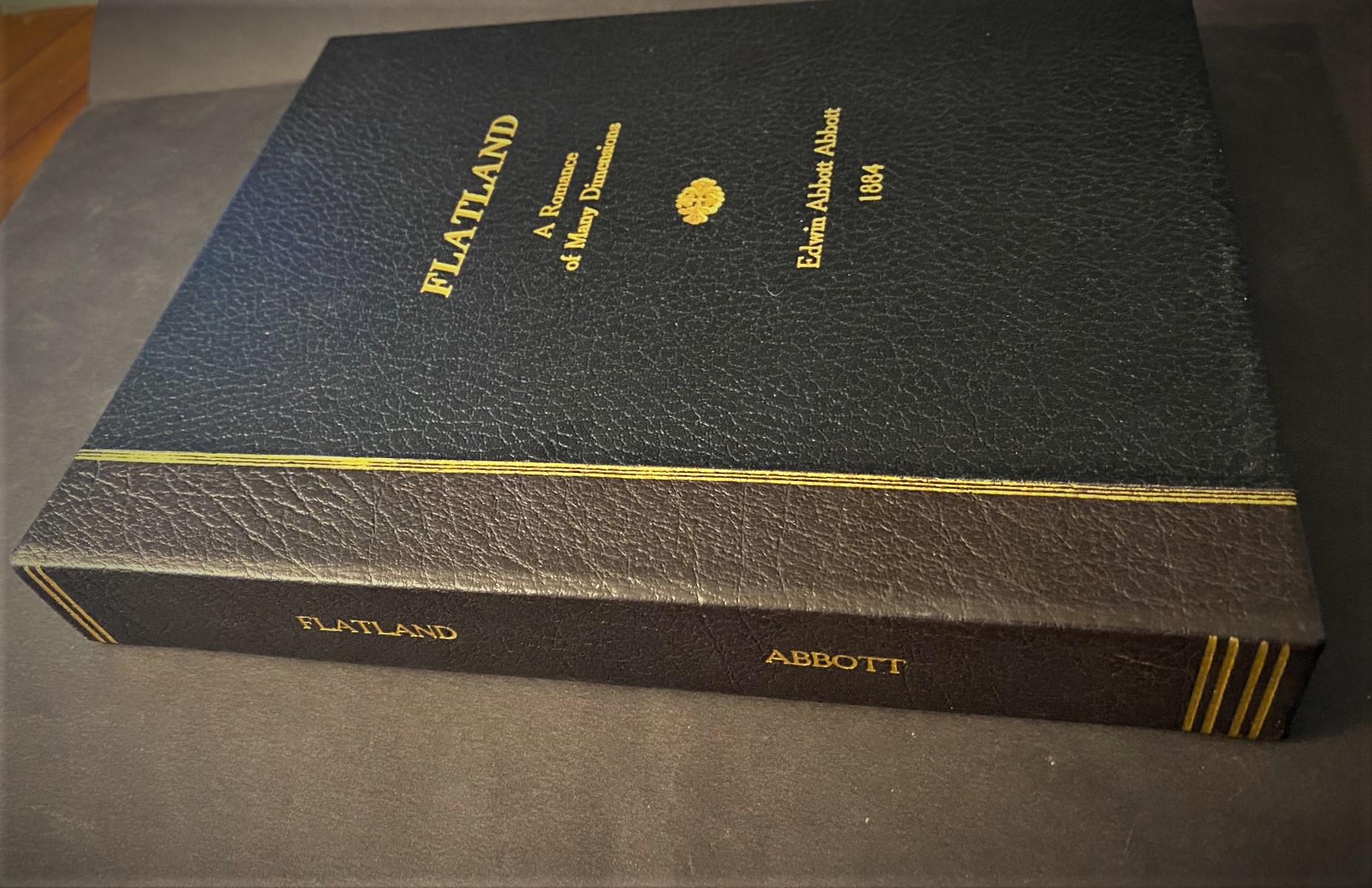
    (ABBOTT, Edwin Abbott). Flatland, a Romance of Many Directions, by a Square. London, Seeley & Co., 1884. First edition. 8.5″x 7″ (22x18cm), viii, 100pp, with very occasional diagrams in text. Bound in stiff vellum-like wrappers. The wrappers are browned and have had some chips expertly repaired; the joints have also been strengthened an expertly repaired. The book is housed in a lovely (and new) leather solander case. The book is in VERY GOOD condition; the solander case is new. $1750

    IMG_4134I’ve read in a number of places how Abbott’s work was ostensibly an intentional social satire, but I have a hard time imaging that it this was the book’s main intention, which I see as a challenge to perception and an expanding explanation of very difficult ideas that escaped common analogs, the biggest chunk of which is Abbott’s understanding of n-dimensional geometries. Of course there are easy visible social targets all throughout the work, though I think that the book’s major contribution to the global mind is in representing the possibilities and explanation of imagination.

    I think Flatland is perhaps one of the best books ever written on perception and dimensions, a beautifully insightful book that was quick and sharp, and in spite of all it was an instant best-seller—with a second edition printed in the same year plus nine reprints to 1915–and is still in-print today. Written in 1884 when Abbott was 46 (Abbott would live another 46 years and enjoy the book’s popular reception), it introduces the reader to a two dimensional world with a social structure in which the more sides of your object equals power and esteem.  Thus the lowest class would be a triangle (three sides) while the highest (priestly) class would be mega-polygons whose shape would approach a circle.  Abbott’s magistry comes in explaining to the three-dimensional reader what it was like to be in a two-dimensional world—the very idea of this sort of thinking in Flatland was strictly forbidden.

    IMG_4136

    It is a glorious introduction to wonder when a sphere lifts the hero of the adventure (a “Square”) into the three-dimensional world for the first time. The fourth dimension of course was another thing entirely—ad as it turns out the mention of 4-D in the 3-D world is as strictly verbotten as 3-D was in 2-D. The Square is ultimately imprisoned for speaking of his experiences in 3-D.

    ·Posted by :

    ·in:

    —
  • German WWI U-boote SONAR, November 1942. RARE work with schematics. NO Copies in WorldCat.

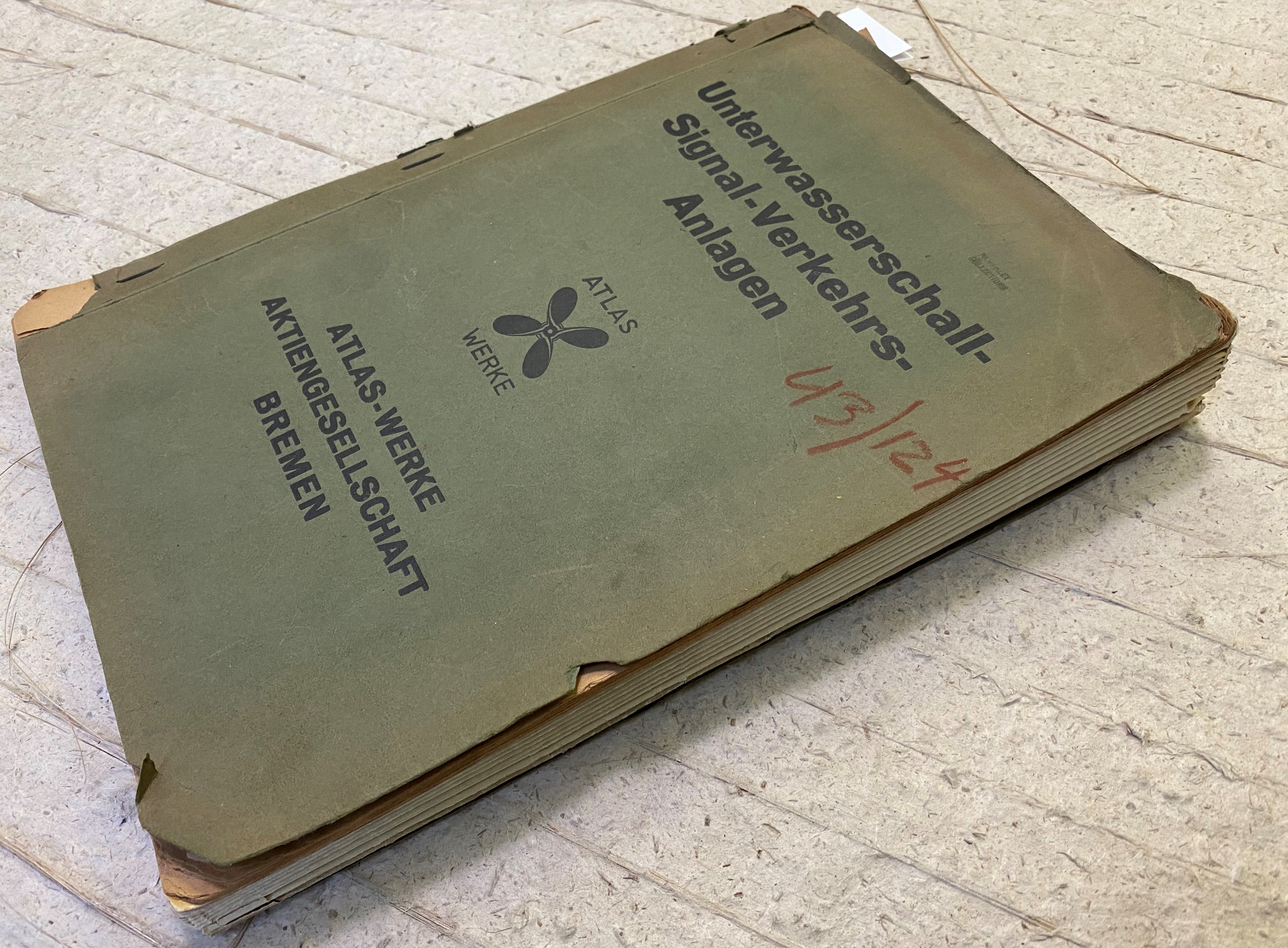
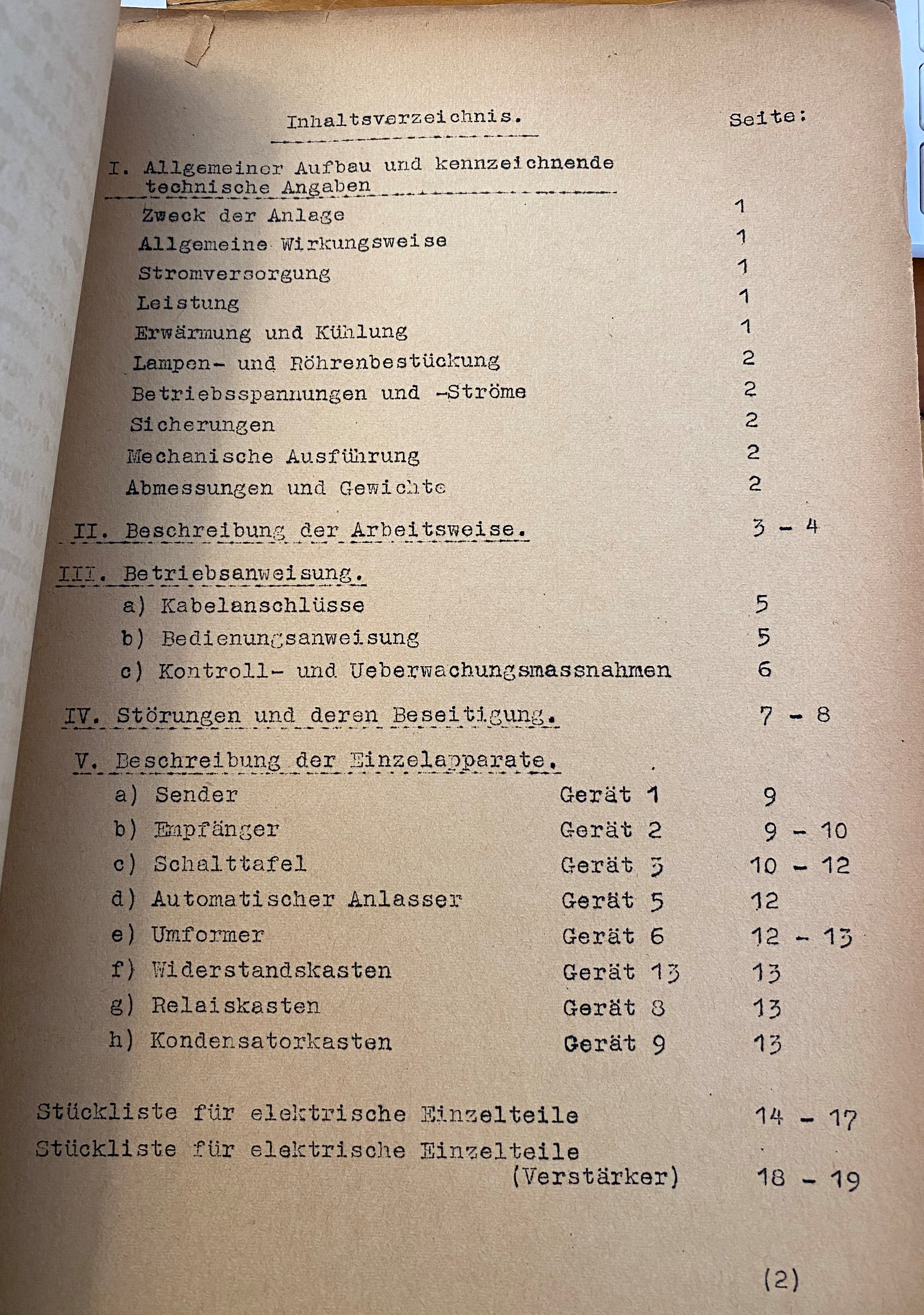
    Sonore UT-Anlgae fur U-Boote: An 501. Beschreibung durch die Prufstelle der KMW Kiel gepruft Kiel, im November 1942. (“Description checked by the test center of KMW Kiel “,)  Unterwassersdchall-Signal-Verkehrs-Anlagen. Atlas Werke. Aktiengesellschaft, Bremen. 295X208mm.  $3500

    Image-4Staple-bound in stiff boards. 35 lvs+3 unpaginated large folding schematics, including 19 plates, 17 of which are folding. The first 13 lvs (all text) were printed on an inferior stock and are browned. The plates are all printed on a better and much thinker paper and are FINE; the photos are also FINE. The covers are somewhat worn around the edges but a solid VG. The binding itself is very sturdy and the plates (which are fresh) are easily opened and closed and well-hinged to the binding. Overall: VG

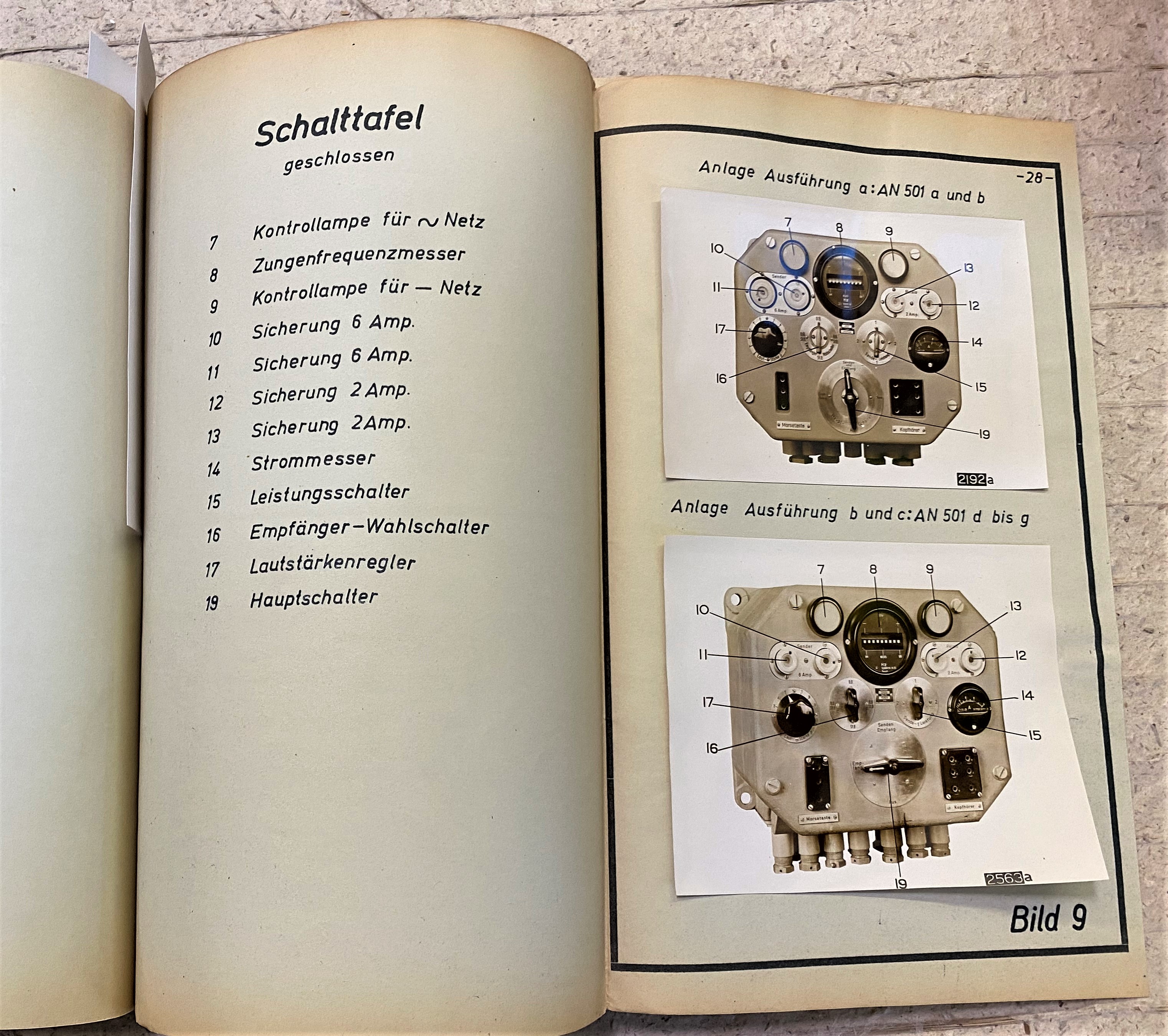
    Pagination (slightly complicated): overall, 35 lvs+3 unpaginated large folding schematics, including 19 plates, 17 of which are folding. Lvs 1-13 are text/review/summary/outline; lvs 14-21 are charts and lists printed on a heavier stock. The folding plates begin at lv 20 (though lv 20 and 21 are designated Bild 1+2 are of the same style as lvs 14-21, confusingly). Folding plates begin at Bild 3-8 and Bild 16-35, which is followed by 3 further large folding plates that are not paginated. Bild 9-15 are one-fold plates (29x35cm) illustrated with original photographs of the equipment.

    Image-3 (1)

    • WorldCat describes this work (and according to their description the book seems to be complete) though it locate NO copies worldwide.

    I take it that the SONAR system described in great detail here (for boats VII c, IX c, and IX d) may related to that equipment aboard the U-boote 501 (which was a IX c, departed Kiel, and which sank 10 Sept 1941), though it may reference a particular class of U-boote…I’m not sure. I thought the cover page for the work would clarify that but it doesn, at least to me—it does point out some minutiae, for example, that the AN 501 a is used for the VII c and the AN 501 b for the IX c. That sort.


    Image (1)

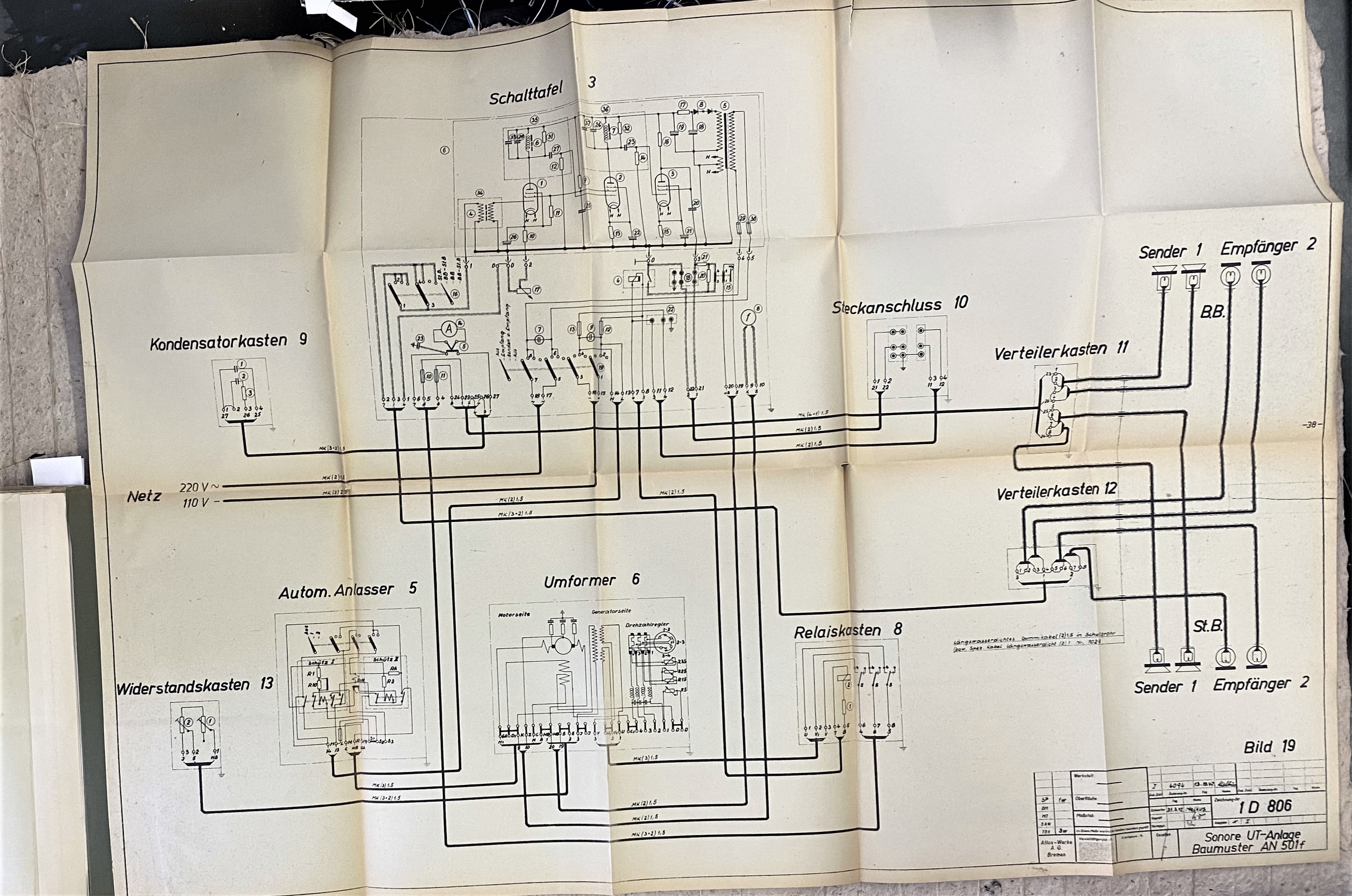
    Description of the plates: (remember Bild 1 and 2 are lists of illustrations and associated and not plates in themselves, though paginated so); Bild 3, Sonore UT-Anlage, 29x53cm; Bild 4 Sonore UT-Anlage (type VIIc), 29x53cm; Bild 5 “Prinzip-Schaltbild” (Principle circuit design) 29x35cm; Bild 6 “Apparte Masskizzen 29x35cm; Bild 7 Tonsender 29x35cm; Bild 8 Tonenpfanger 29x35cm. Bild 9, Schalttafel geschlossen, w/2 photos on 29x35cm folding sheet. Bild 10-16 each are 29x35cm foldinbg sheets with one photo each (the photos all around 12x12cm to 16x12cm). Bild 17, an overall schematic, and quite large, 93x44cm. Bild 18, “Stromlaufplan”, 75x44cm. Bild 19 is another overall, 93x44cm.

    The photos are titled “automatischeranlasser”, “zumformer”, “Widersandskast”, Relaikasten”, and “Kondensatopkasten”.

    Provenance: Library of Congress, with a few of their small stamps, plus their rubberstamp “surplus”.  

    ·Posted by :

    ·in:

    —
  • Rare Work on California Oil and Gas Fields–Carbon Copy

    No Copies in WorldCat

    HUDSON, George H. Geological Summary and Report of California Oil and Gas Fields, with Addenda.

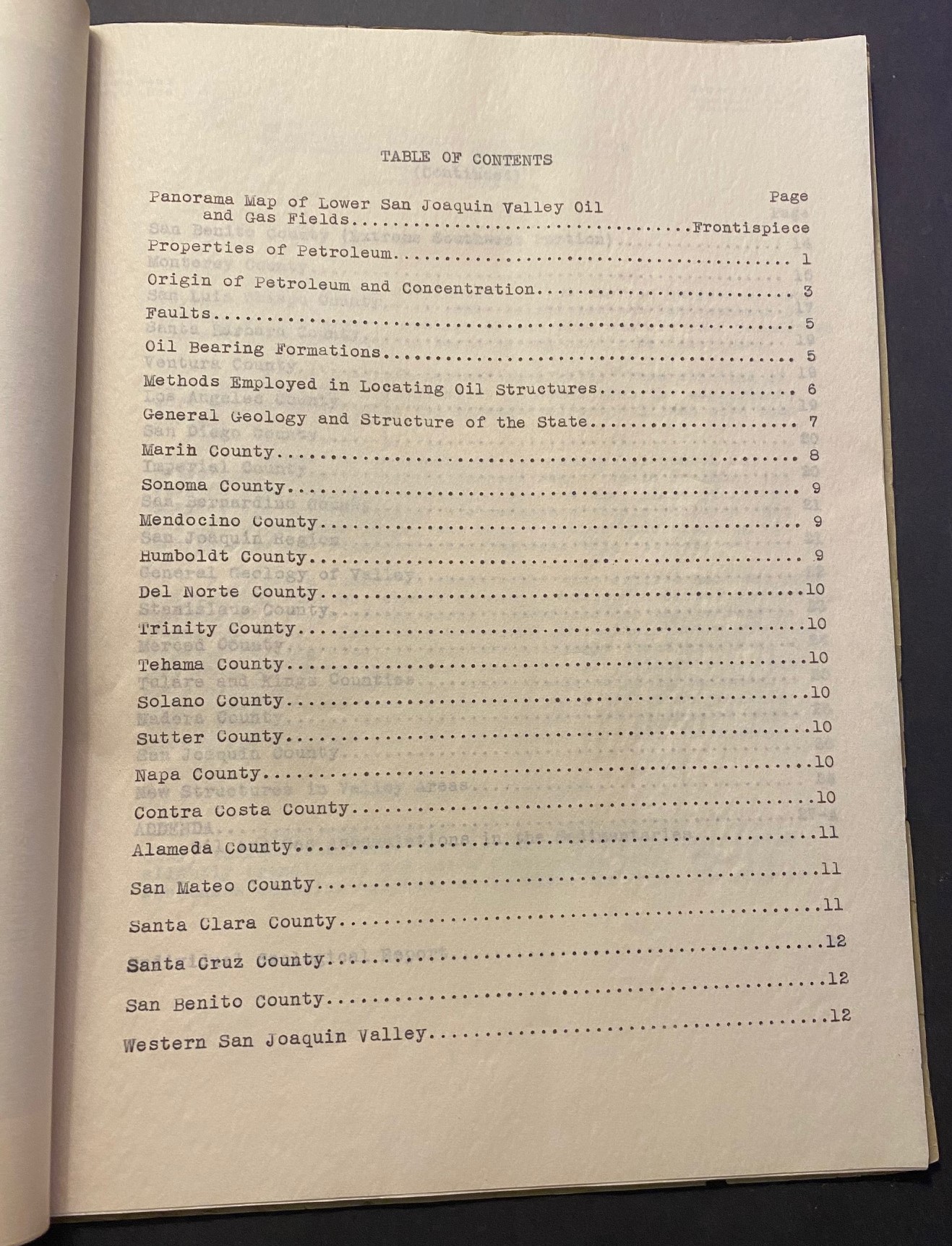
    Compiled by Bureau of Geological Statistics (San Francisco). Copyrighted by J. Miller and George H. Hudson (Geologist and Petroleum Engineer). Carbon copy, with homemade paper wrappers. 11”x 8.5”, 2 (unusual) birds-eye views, ii, 27pp, 4pp appendix. Bound with brass brad fasteners. $1500.00

    Carbon copy on onion-skin-like paper—I don’t think this is the first impression (I mean the original) but an early, Provenance: Library of Congress, with their 10mm “LC” perforated stamp on the title page and rubber stamp surplus on the front wrapper. perhaps first generation, copy, as you can still feel the indentations from the typewriter-struck paper. Laid in are the LC card catalog cards.

    IMG_2789

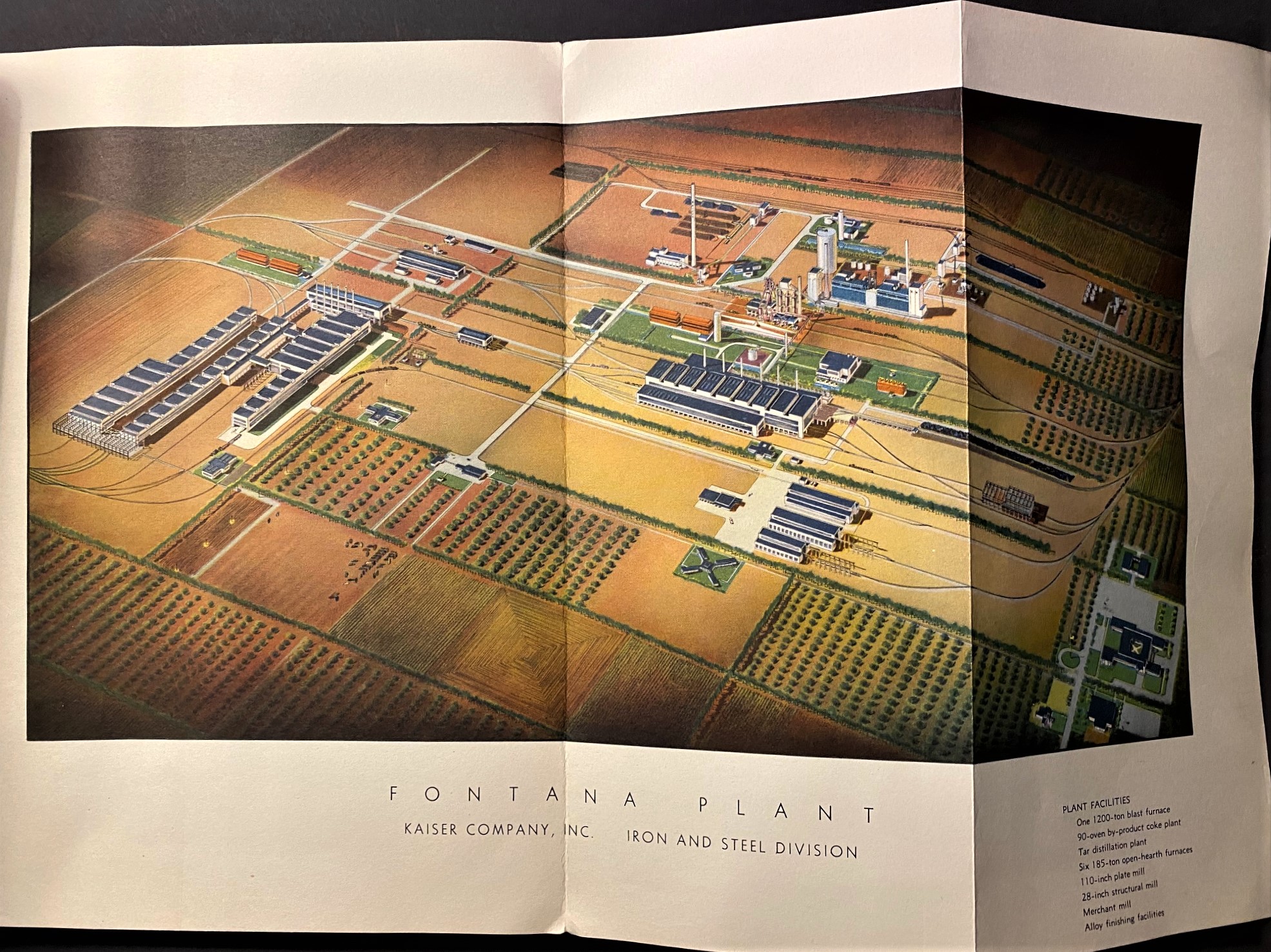
  • Outstanding Description of a Significant Industrial/Production Push in the U.S. War Effort, 1943

    Kaiser Fontana Steelworks In-House History and Overview (1943).

    (Kaiser Fontana Steelworks) Description of Iron and Steel Plant, Fontana California. (On the front cover of the work, “General Description/Iron and Steel Plant/Fontana, California”.) 11”x 8.5”. 42 leaves (printed on Kaiser paper), plus 4 glossy photographs, plus 18 folding plates (some wonderfully in color). Mimeographed. Rare.  $1500

    This seems to be a fabulous illustrated overview produced in-house showing the strengths of the just-opened Kaiser Tontana plant, printed in January 1943.

    “Kaiser Steel (later Kaiser Ventures and CIL&D), headquartered in Fontana, California, was founded by Henry J. Kaiser to provide steel plate for the Pacific Coast shipbuilding industry, which expanded during World War II, then shrank, then expanded again during the Korean War. California Shipbuilding Corporation on Terminal Island, California, was one of these shipyards which built hundreds of Liberty ships and Victory ships in World War II, and was also a project of Henry Kaiser. Kaiser Steel was noted for making the most of its costly steelmaking inputs, and it captured, along with the U.S. Steel plant in Utah, much of the Pacific Coast steel market by the late 1950s. Its assets included steelmaking plants in Napa, California (that it acquired from Basalt Rock Company in 1955)  and Fontana, California (now operated by California Steel Industries), and a former open-pit iron ore mine at Eagle Mountain, California. Steel manufactured was also used in Kaiser Motors.”

    IMG_2786

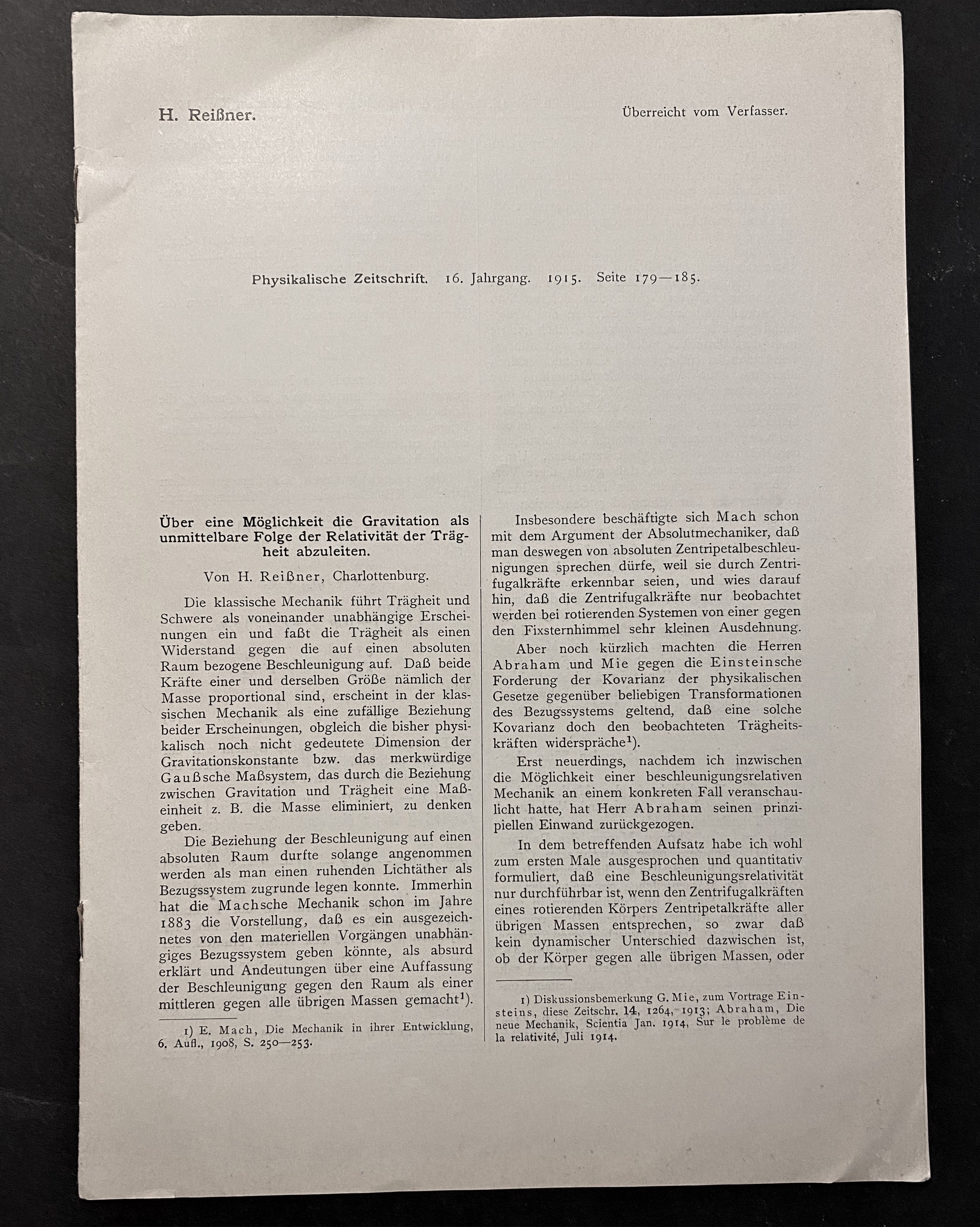
  • Resisner Hans J Uber Eine Moglichkeit Die Gravitation Als Unmittlebare Folge Der Relativitat Der Tragheit Abzuleiten

    IMG_2529RESISNER, Hans J. “Uber eine Moglichkeit die Gravitation als unmittlebare Folge der Relativitat der Tragheit abzuleiten”, in Physikalishe Zeitschrift, volume 16, 1915, pp 179-185. Original wrappers. Offprint. Fine copy. $250.

    Hans J. Reissner [1874-1967] was a leading German pioneer in aeronautics and aeronautical engineering. He was appointed to the chair vacated by Arnold Sommerfeld at the Technische Hochschul at Aachen, where he established the aerodynamics laboratory. He also designed the great experimental wind tunnel at Aachen and was its second director (after T. von Karman). He went on to the University of Berlin where he remained until 1938, when he left Germany for the United States. Reissner held a chair at the Illinois Institute of Technology and in 1944 joined the faculty at Brooklyn Polytechnic Institute… Von Karman spoke very highly of Reissner and attributed his work in aerodynamics to be as important as those advances made by Prandtl (see von Karman’s Wind and Beyond). Reissner was also celebrated with two anniversary volumes of Applied Mathematiics for his 60th and 75th birthdays (in 1934 and 1949).

    “In physics and astronomy, the Reissner–Nordström metric is a static solution to the Einstein–Maxwell field equations, which corresponds to the gravitational field of a charged, non-rotating, spherically symmetric body of mass M. The analogous solution for a charged, rotating body is given by the Kerr–Newman metric. The metric was discovered between 1916 and 1921 by Hans Reissner, Hermann Weyl, Gunnar Nordström  and George Barker Jeffery.”–Wikipedia

    ·Posted by :

    ·in:

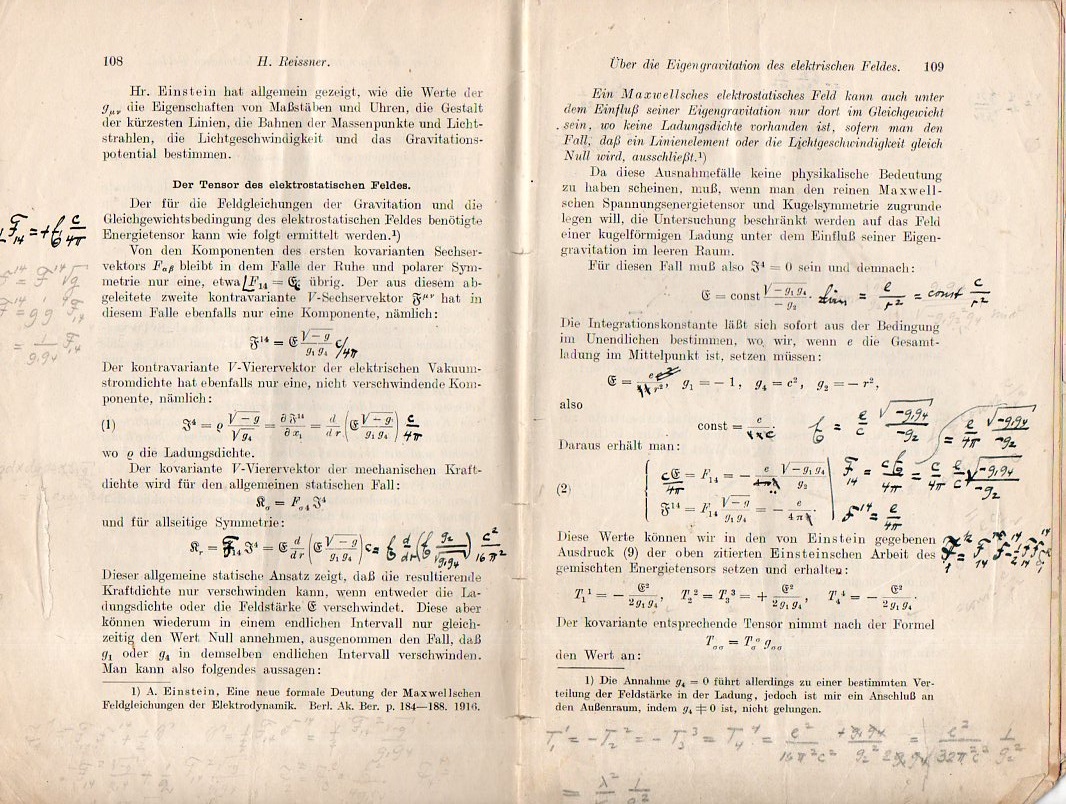
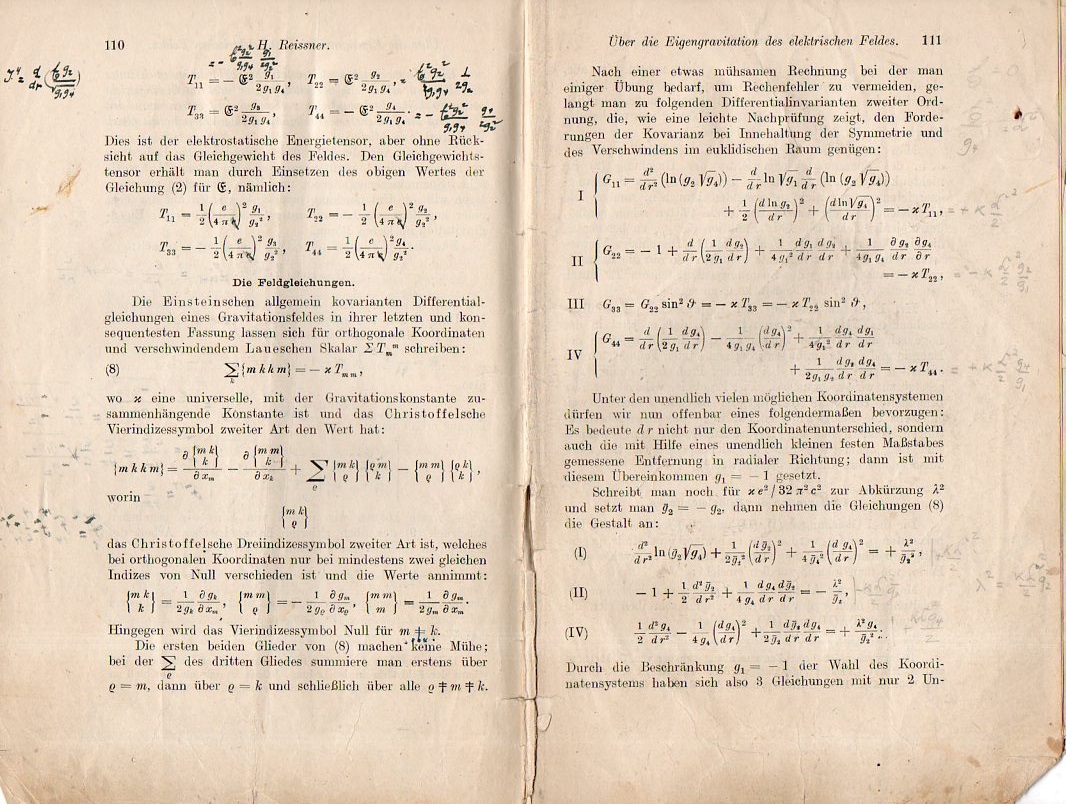
  • Reissner’s Working Copy of his Great Paper

    Reissner, Hans J.  

    • Offering two copies of the famous paper–the offprint is certainly very scarce, and Reissner’s own copy of course is probably a unique. Provenance: Hans J. Reissner pamphlet collection.  

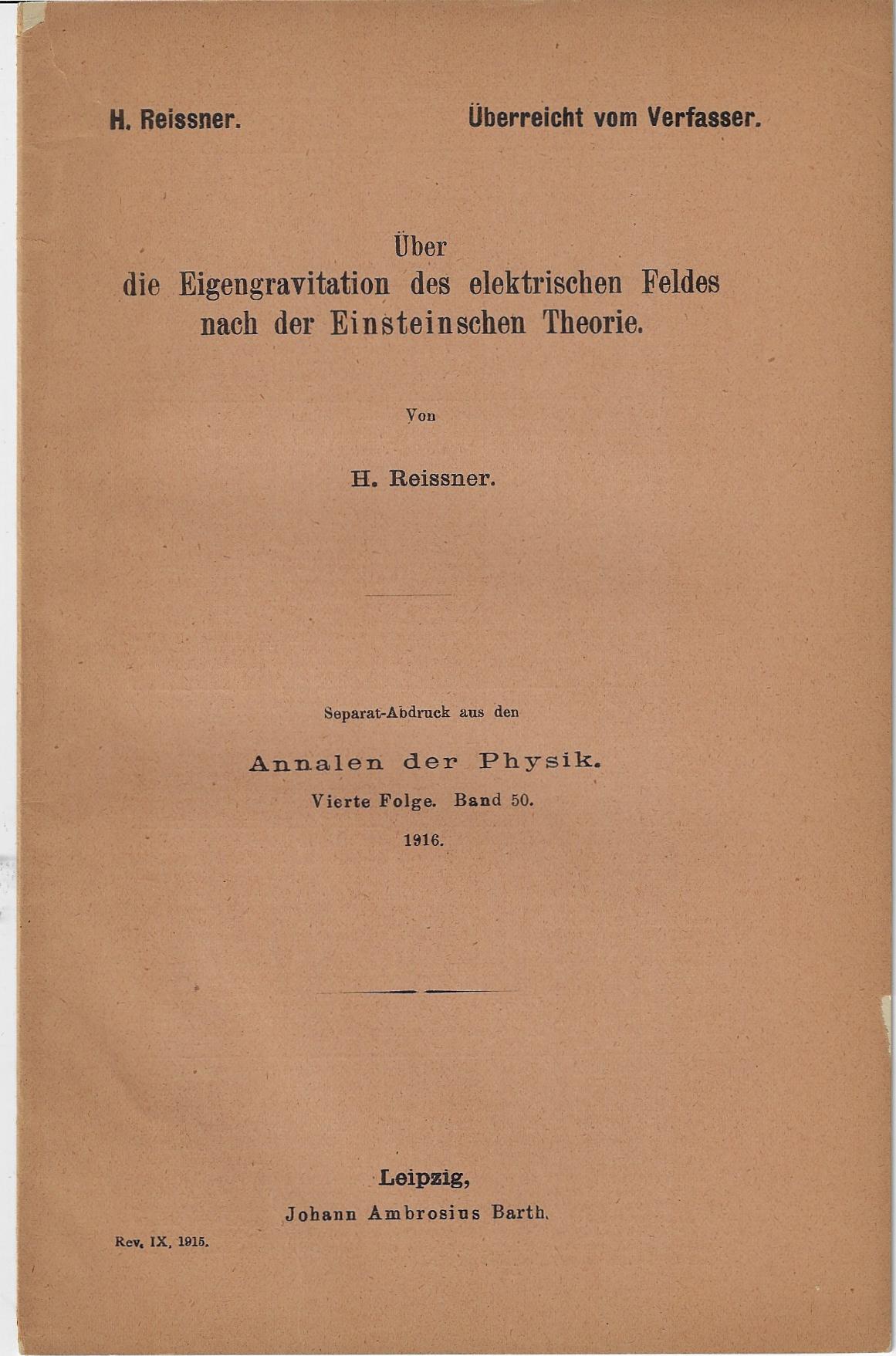
    “Ueber die Eigengravitation des elektrischen Feldes nach der Einsteinschen Theorie” Offprint: Annalen der Physik, 4/50, 1916. Pp 106-120. Without the original outer wrappers. Numerous annotations and calculations on pp 108—111-113, 117, 118, 119. A Good copy, only, of a working issue of the paper. From what I can see none of the annotations were incorporated in the final version of the paper.

    Offered with:  another offprint copy of the same paper (“Ueber die Eigengravitation des elektrischen Feldes nach der Einsteinschen Theorie”) from Annalen der Physik, 4/50, 1916. Pp 106-120, in the original wrappers, which is the standard (and uncommon) offprint format. 

    The pair: $On hold.

    Reissner098


    “1916 : Hans Reissner (1874-1923) extends the Schwarzschild solution to the case of a charged mass in “Uber die Eigengravitation des elektrischen Feldes nach Einsteinschen Theorie.” Ann. Phys. 59, 106-120,1916. 191”–(See: Nathalie Deruelle, “Black Hole Chronology”  “Six Lectures on Black Holes in General Relativity”, IPhT-CEA, Saclay, January-February 2009.) See Eric Reissner’s appreciation of his father, and  see also Shapiro, S. L. and Teukolsky, S. A. Black Holes, White Dwarfs, and Neutron Stars: The Physics of Compact Objects. New York: Wiley, p. 357, 1983

    Reissner099


    Reissner 1916 _1_


    See also: “Journey into and through a Reissner-Nordstrom black hole”, Andrew Hamilton’s contribution on the University of Colorado site, here: 

    http://jila.colorado.edu/~ajsh/insidebh/rn.html#ref2

    ·Posted by :

    ·in:

    —
  • On Naming Clouds: Luke Howard, 1815

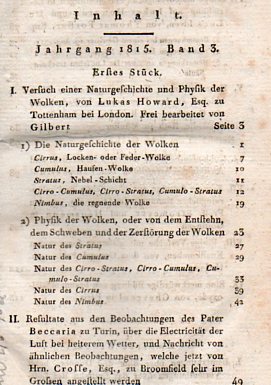
    HowardHOWARD, Luke. Versuch einer Naturegeschichte und Physik der Wolken, von Lukas Howard…in Annalen der Physik, series I/51, band 3- (vi), 442pp, 6 plates. The Howard article appears on pp 1-42. Also included in the volume: Eine Probe von Lukas Howard’s meteorologischen Monatsberichten”, pp 66-72

    And with:Thomas Forster, pp 73-78 “Einigemrteorlogische Beobachtungen in Beziehung auf Lukas Howard’s und De Luc’s ideen.

    Provenance: (a) Provinzial Gewebbschele zu Aachen, then (b) Deutsche Akademie der Luftfahrtforschung, and then (c) Wright Field Library (Dayton, Ohio), and finally (d) the Library of Congress. There are ownership rubber stamps on text block page edge at top and bottom, a stamped gilt title on the bottom of the spine, and two scant stamps on the contents page, and that’s it. Very nice, tight, fresh copy.  $350

    It is interesting to note that this very important work wasn’t really discussed in the German language for another dozen years, appearing in the Annalen der Physik (series I volume 51) in 1815.  It is also interesting to see that–unlike the English original–there are no illustrations, which in some sense provide a scent of defeat in trying to display these groundbreaking classification ideas. The paper does present the names and descriptions of clouds (as you can see in the attached pic of the table of contents).

    Also contains works by H. Davy (Ueber die Ursaxhe der Farben) and another dozen or so contributors.

    ·Posted by :

    ·in:

    —
  • First Edition in German of Daguerre’s Invention of Photography (1839)

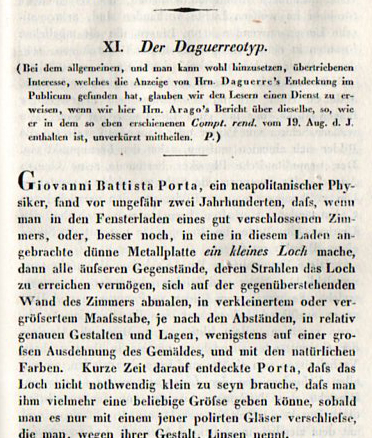
    Dag[DAGUERRE] “Der Daguerreotyp. (Bei allgeinen und man kann wohl himzusetzen, uebertriebenen Interesse, welches die Anzeige von Hrn. Daguerre’s Entdeckung im Publicum gefunden hat, glauben wir den Lesern einen Dienst zu erweisen, wenn wir hier Hrn. Arago’s Bericht uber dieselbe.. ”  Pp 193-216. 

    Bound with:

    “Daguerre’s Vorschrift zur Bereitung eines gegen Lichtairkungen empfindlichen Papiers. (Nach einer Note von Biot in den Compt. ren. T VIII p.246…)” Pp 217-221. Offered in volume 49, No. 9, 1839, Annalen der Physik, 619pp.  Bound in half cloth, marbled covers. Nice copy.  Scarce  

    An extremely early set of  publications in a German scientific journal on the newly announced discovery of photography by Louis Daguerre made in the Comptes Rendus in 15 January 1839 and the technical report made by him 13 August, 1839.

     Provenance exlibris (a) Provinzial Gewebbschele zu Aachen, then (b) Deutsche Akademie der Luftfahrtforschung, and then (c) Wright Field Library (Dayton, Ohio), and finally (d) the Library of Congress. There are ownership rubber stamps on text block page edge at top and bottom, a stamped gilt title on the bottom of the spine, and two scant stamps on the contents page, and that’s it. Very nice, tight, fresh copy. 

    Includes a significant paper in the establishment of Agricultural Chemistry by Justus von Liebig. “Ueber die Erscheinung der Gährung, Fäulniss und Verwesung, und ihre Ursachen”,  45pp.


    ·Posted by :

    ·in:

    —
  • Dalton John Four Papers 1 Versuche ÜBer WäRme KäLte Die Bei Mechanischer Verdichtung Und VerdüNnung Der Luft Entste

    DALTON, John. Four papers: (1) Versuche über Wärme Kälte, die bei mechanischer Verdichtung und Verdünnung der Luft entstehen. (2) Ueber die Kraft der Flüssigkeiten, Wärme zu leiten, in Beziehung auf des Grafen von Rumford siebenten Essay. (3) Ueber den absoluten Nullpunkt der Wärme und verwandte Betrachtungen. (4) Versuche über die Ausdehnung des Wasser’s durch Wärme. All in Annalen der Physik, Series I, vol 14, (viii), 512pp, 5 plates (the last of which is provided in facsimile). Halle, Rengerschen Buchhandlung, 1803. The volume is bound in black half-cloth and very dark green/black marbled boards.

    Provenance exlibris (a) Provinzial Gewebbschele zu Aachen, then (b) Deutsche Akademie der Luftfahrtforschung, and then (c) Wright Field Library (Dayton, Ohio), and finally (d) the Library of Congress. There are ownership rubber stamps on text block page edge at top and bottom, a stamped gilt title on the bottom of the spine, and two scant stamps on the contents page, and that’s it. Very nice, tight, fresh copy. 

    Each section (stuck 5-8) is offered with their original wrappers bound in (save section 8 which lacks the rear wrapper). The original wrappers for the AdP are uncommon. $750

    Four early and significant papers by Dalton (their first appearance in German) occupying pp 101-11, then pp 184-198, then pp 287-292, an then lastly pp 293-96.

    “Three papers that Dalton read to the Manchester Literary and Philosophical Society in 1799 and 1800 (in which year he became the Society’s secretary) show how much the question of water vapor continued to exercise him. In the first paper he discusses the balance in nature between rain, dew, river-water runoff, and evaporation. In the course of this discussion, he provided the earliest definition of the dew point. Then followed two competent, but more pedestrian, papers on heat, in which his firm belief in a fluid of heat is well-displayed and his complete acceptance of the particular caloric theory of William Irvine an Adair Crawford is apparent.  The really dramatic development came in the summer of 1801. By 14 September, Dalton was confident enough in his ideas to write to William Nicholson’s recently established monthly Journal of Natural Philosophy, Chemistry and the Arts. It showed no hesitation in publishing his “New Theory of the Constitution of Mixed Aeriform Fluids, and Particularly of the Atmosphere.”–Dictionary of Scientific Biography online.

    ·Posted by :

    ·in:

    —
  • Ohm’s Law (1826)

    OHM, Simon. 3 papers: (1) “Versuch über einer Theorie der durch galvanische Kräfte hervorgebrachten elektroskopischen Erscheinungen” , plus (2) “Versuch über einer Theorie der durch galvanische Kräfte hervorgebrachten elektroskopischen Erscheinungen (Beschluss)”, plus (3) “Ein Nachtrag zu dem vorsthenden Aufsatz des Hrn. Dr. Ohm”. Paper (1) in Annalen der Physik und Chemie, volume 6, section 4, pp. 369-514, with 1 engraved plate, with the Ohm in section 4, pp 459-469. Paper (2), in Annalen der Physik und Chemie, volume 7, section 45, pp 45-55 in the issue of pp 1-136. Paper (3) same issue as paper 2, pp 117-118. Each section removed from a larger bound volume, though complete in itself. VG copies.  $1750

    “In February an April 1826, Ohm published two important papers that dealt separately with the two major aspects of his ultimately unified theory of galvanic electricity…the second paper, “Versuch einer Theorie der durch galvanische Kräfte hervorgebrachten elektroskopischen Erscheinungen,” broke new ground in associating an electric tension with both open and closed galvanic circuits.” –Dictionary of Scientific Biography (online)

    “Ohm’s second major paper of 1826 [this paper] announced the beginnings of a comprehensive theory of galvanic electricity based, he said, on the fact that the contact of heterogeneous bodies produced and maintained a constant electric tension (Spannung). He deferred the systematic exposition of this theory to a later work, however, and limited himself to stating without derivation the two equations that constituted its heart: X = kw(a/l) and u − c = ±(x/l)a, where X is the strength of the electric current in a conductor of length l, cross section w, and conductibility (Leitungs-vermögen) k produced by a difference in electric tension a at its end points; where u is the electroscopic force at a variable point x of the conductor; and where c is a constant independent of x. By means of the first equation one can, with respect to overall conducting power (or resistance), reduce the actual length of a wire of whatever cross section and conductibility to the equivalent length of one wire chosen arbitrarily as a standard. Letting l now be this equivalent length—called the reduced length (reducirte Länge) of the conductor—Ohm wrote his first law in the simpler form X = a/l, the expression which has become known as Ohm’s law. After pointing out briefly how this law, which corresponded to the one he had developed in his previous paper, embraced his and others’ findings on the conductibility of different wires, Ohm devoted the rest of the paper to developing the implications of the second, electroscopic law and to comparing these implications with previously known facts. In this work he showed that his formula successfully explained those experiments which measured the electroscopic force at different points (especially the poles) of open and closed, and grounded and ungrounded, circuits. Here again the explanatory power of his law was impressive. The fully developed presentation of his theory of electricity appeared in Ohm’s great work, Die galvanische kette, mathematisch bearbeitet (Berlin, 1827). –DSB online

    ·Posted by :

    ·in:

Recent Posts

Archives

Categories