A Daily History of Holes, Dots, Lines, Science, History, Math, Physics, Art, the Unintentional Absurd, Architecture, Maps, Data Visualization, Blank and Missing Things, and so on. |1.6 million words, 7500 images, 4.9 million hits| Press & appearances in The Times, Le Figaro, Mensa, The Economist, The Guardian, Discovery News, Slate, Le Monde, Sci American Blogs, Le Pont, and many other places… 5000+ total posts since 2008.

Category: Militaria

  • Ghost March–Doughboys in London and Four Years of Mist, 1918

    JF Ptak Science Books   Post 1328

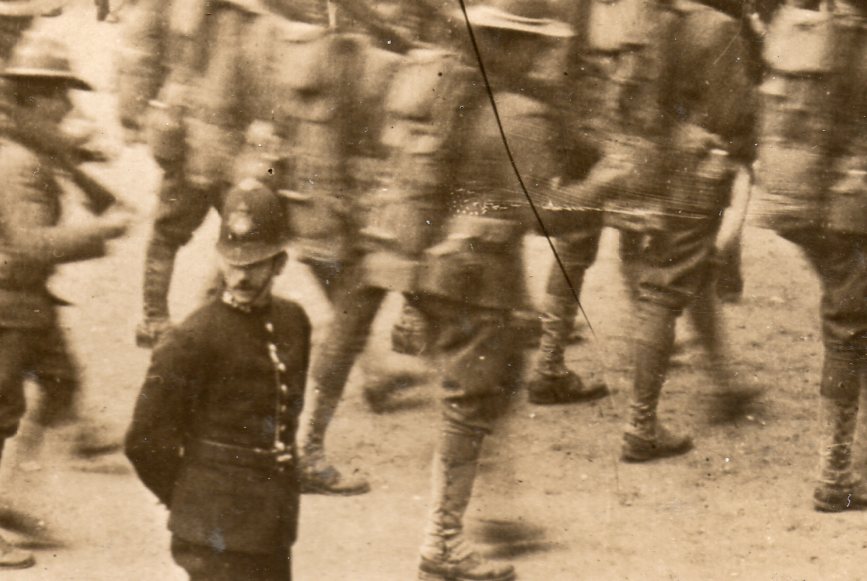
    .003%  That’s what I reckon this column of soldiers would represent of the total casualties of WWI.

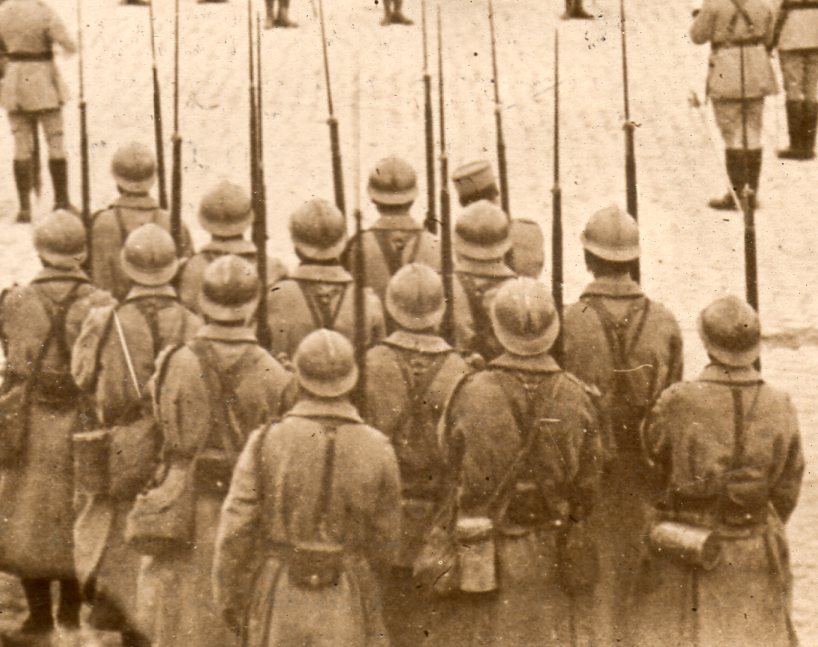
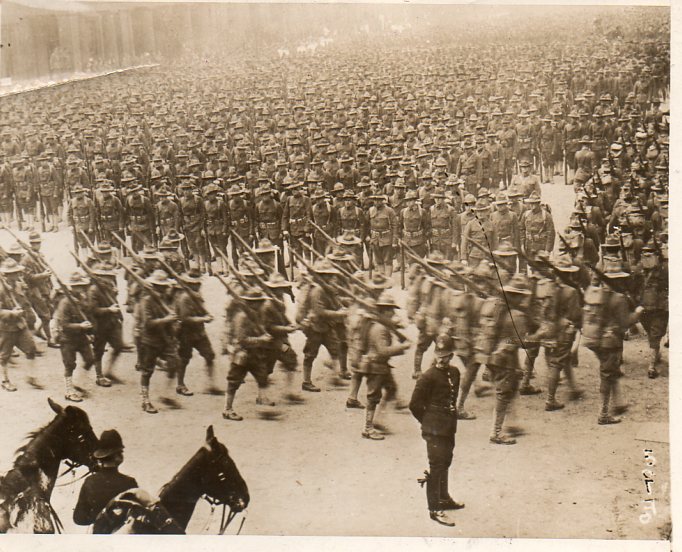
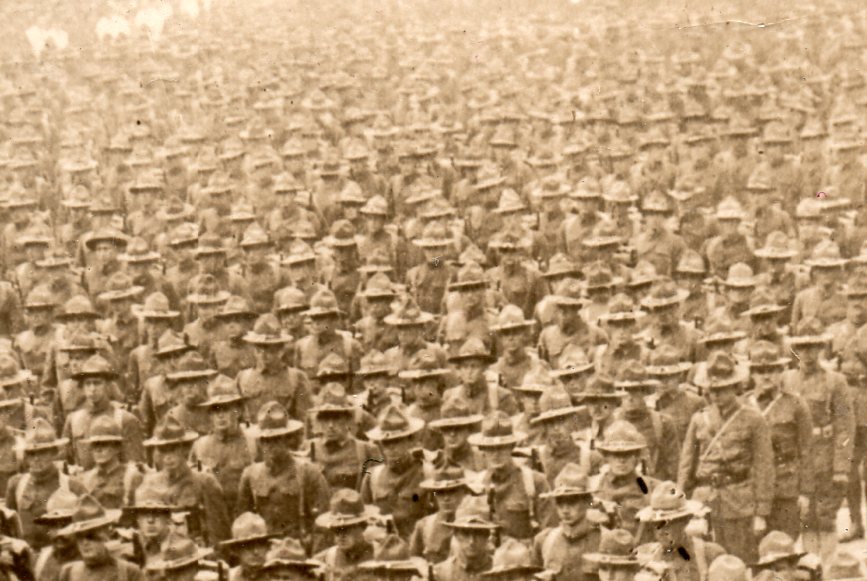
    Generally images like this are a virtual image-host for me, a bucket of ice cold water thrown onto a sizzling summer sidewalk, all sorts of ideas steaming from it.  But for photographs of Doughboys1 marching, especially assembling for parade, this one struck me a little more oddly than most, giving instant pause, making me concentrate on the haze, or dust, that allowed the columns of soldiers to blend into one another and fade, losing their boundaries with their mass receding into a dull blur. 
    Marching london 350

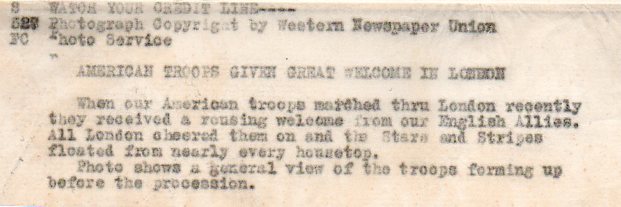
    The Western Newspaper Union was selling this image for insertion in newspaper or journal stories about the war, for a small use fee.  There were a few American organizations like Western Newspaper that were created to photographically cover the war, using pools of photographers who would distribute their work anonymously and which was available for common, general use for a small charge.  The photographs allowed out were certainly restricted and censored, though in my stash of these of objects (numbering about a thousand) I’d say that 10% of them look pretty edgy to my eyes.  Most of the action of war was not covered, but then again this aspect was still fairly technically difficult in 1918.  Images of pain were almost never allowed, and certainly not pain of Allied troops.  Aid stations were almost never covered as well, as were dead bodies, or at least those again of Americans or Brits or French or Canadian.  The imaging of the war was certainly under a fair amount of supervision and control. (The original is available for purchase through our blog bookstore. here.)
    Marching london det352

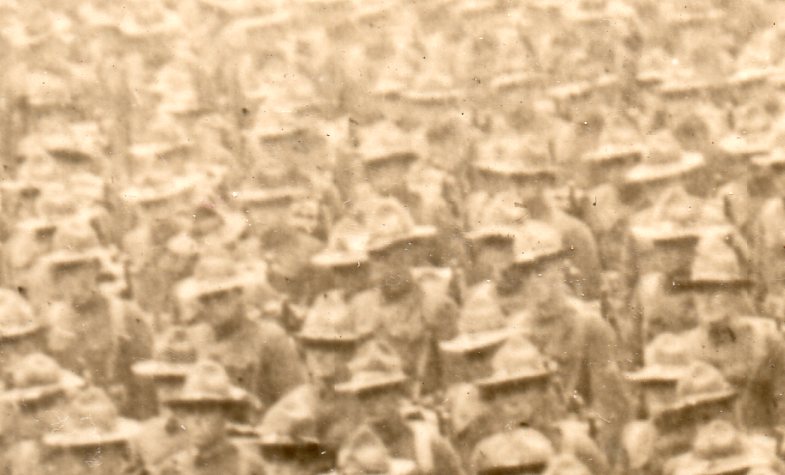
    The image shows American troops assembling for a parade through the streets of London before being deployed.  The mistiness of the composition looks like a statistic to me, these men standing for those who had come before and fallen.
    Marching london det353

     The U.S. lost .13%  of its population to casualties (125,000 killed and 205,000 wounded) during the war–a war which by the time America got here had already been visciously fought for three years, costing dozens of millions of lives.  The figures for everyone else weren’t nearly so “fortunate” as the U.S.:  New Zealand’s 18,000/41,312 killed/wounded amounted to 1.6% of its population.  The U.K. lost 2.19% (964,000/1,663,000), Italy was 3.48% (650,000/953,000 plus 650,000 civilian casualties), while France suffered a 4.29% (1.4 million/4.27 mil) blow of its total population to war.  Things were worse on the other side:  Germany 3.82% (2 mil/2.4 mil plus 426,000 civilian deaths, and the Ottoman Empire 12% (400,000/771,000 plus 2.1 million civilian deaths.   Worst of all was the Ally  Serbia, suffering a catastrophic 16% loss of its population to war, including 275,000/725,000 plus 426,000 civilian casualties.  As gruesome as the numbers were, the Americans felt only a small percentage of the total sting of war–by 11 November, more than 21 million soldiers would have been wounded, with 9.7 million soldiers and 6.8 million civilians killed.  It was an enormous price.

    And that’s what I see in the mist of what may be something like 10,000 soldiers on display n this photograph.  .003%  That’s two of these columns every day, twice a day, for the entire 1550 or so days of the war.   
    Marching london cop351

    Marching london txt354

    Notes

    1.  The origin of the term “Doughboy” is unclear, or varied, or rich, but it is at least pretty oldm beginning around the time of the Mexican American War in 1846-1848–evidently when the soldiers marched through dry, tough terrain they wound up being covered by earth with the color of dough.  Doughboy.

  • The First American Government Publication on Gassing at Auschwitz and Its High-Ranked Google Deniers

    JF Ptak Science Books   Post 1314

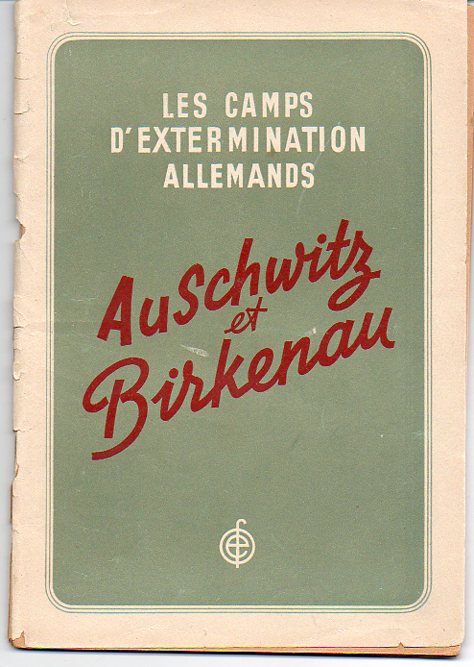
    In November 1944 under the direction and auspices of the War Refugee Board the first official U.S. government acknowledgment of the gassing of Jews at Auschwitz and Birkenau was published.  German Extermination Camps-Auschwitz and Birkenau1,  received scant distribution, and despite its rather splashy appearance in the New York Times2 of 26 November 1944, it seems to have been directly, immediately relegated to various archives, a scarce thing when it was new3.  Dusty On Arrival, DOA–a disappearance that looks like a censorship.

    Auschwitz Birkenau317 Reports of mass killings were not new in 1944; indeed in Roosevelt’s only meeting of the war with Jewish leaders in late 1942 he was told in no uncertain terms that millions of Jews were being rounded up and killed. There were no other meetings.  In spite of other evidence and hundreds of newspaper articles, November ‘44 was the best that we could do in saying something about the gassing.

    When I was researching a French edition (which I have available for sale at my blog bookstore) of this publication, which was published in Paris in mid-1945, I did a quick Google search under its title, “Les Camps d’Extermination Allemands Auschwitz et Birkenau” .   I was surprised to see that about half of the hits were for references to crackpot Holocaust deniers who fancied themselves as “revisionist historians”–the sites looked “normal”, and had sort-of academic-y names with “truth” and “accuracy” in their titles.  They looked like any other web/blogsite, even calling up references from other web/blogsites, though those sites were just more of the same.  And there’s one of the major problems of info-gathering on the internet–vetting accuracy. 

    This search result is not achieved if you remove the quotation marks and search in general under the title’s words as single entities–but for the title as a  phrase in itself, the results of the search were crackpot-heavy. 

    Searching Google for “Holocaust” and “Auschwitz” and similar words buries the denier-people, though not deep enough for my taste.  Still it is very disturbing to search the title of the publication and find all of these looney people–what does that mean, exactly?  Is this result due to these sites writing more about this particular title than respectable sites?  Or–since these people regard this pamphlet as the key publication in beginning what they call the ‘myth” of the Holocaust–they have somehow constructed their use of the phrase to better appease the Google algorithm?  My guess is that the denier people have simply written more on this one title than on any other, and have written on it more than bona fide historical sites, and thus come up higher in Google findings.  But whatever they’ve done these sites have managed to occupy a hefty percentage of Google hits when searching for the title of perhaps the first prime indictment against the Nazis as extraordinarily vicious murderers with that counter claims that the publication is nothing but a fraud.  And that’s nothing but disgusting.

    ____________

    1. The original, government publication was reviewed thus at the Simon Wiesenthal site:  “THE FIRST REPORT ABOUT AUSCHWITZ by JOHN S. CONWAY. At the Nuremberg trials, one of the principal documents used was a fifty-nine-page mimeographed report published in November 1944 by the War Refugee Board in Washington, D.C.1 It consisted of two eyewitness accounts, “both received from a representative close to the scene,” the first based on the experiences of two young Slovakian Jews who escaped from Auschwitz in April 1944 (Part 1, pp. 1-33), and the second by a non- Jewish Polish major (Part II, pp. 1-19). “

    2. U.S. BOARD BARES ATROCITY DETAILS TOLD BY WITNESSES AT POLISH CAMPS, New York Times, 26 November 1944.

    3. “Copies of the English edition are to be found in Yad Vashem, Jerusalem (in Hungarian), in the files of the World Jewish Congress, Geneva (in German), and in the Roosevelt Library, Hyde Park, New York: War Refugee Board report, Box 61: General Correspondence of R. McClelland: F: Miscellaneous Documents and Reports re Extermination Camps for Jews in Poland (in German).” And not many more other places. 

    Only four copies of the French version are located on WorldCat OCLC: WAKE FOREST UNIV; France AIX-MARSEILLE1-BU LETTRES; France    BIBLIOTHEQUE NAT & UNIV STRASBOURG; France    BIBLIOTHEQUE NATIONALE DE FRANCE     
    France;  BNU STRASBOURG, RCON PROJ


  • Fantastic Contrivances of Massive and Unneeded Difficulty–Bikes in War, 1897

    JF Ptak Science Books   Post 1345

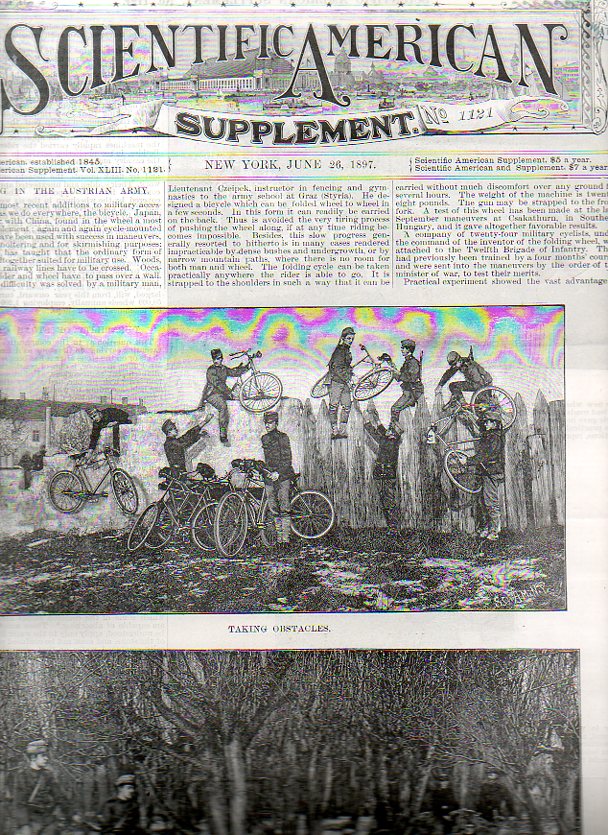
       Bike army 439

    When I see images like this, I can feel a symphony of bad ideas rattling  my bones.

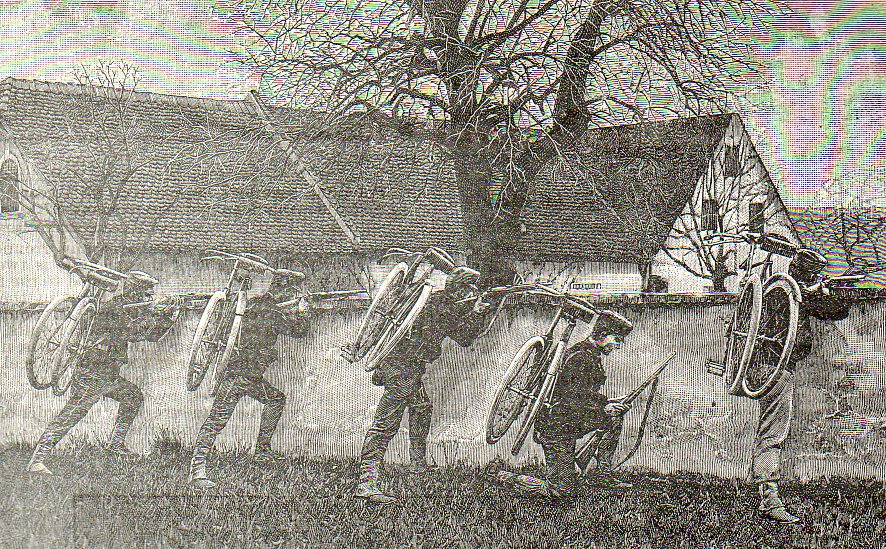
    Of contrivances great and unnecessary,  that of bringing the bicycle into the field of war–banking on a fabulous interest in the machine and riding a wave of enthusiasms enjoyed by millions–is among the loftiest of lofty unnecessaries of the past 150 years or so. When these pictures were published in 1897 interest in the bicycle was shattering; it was a popular conveyance, and then in just two or three years, an explosion:  millions of people suddenly needed one.  Bikes seemed to be everywhere,  which forced people to imagine new and different uses for the machine.  And so the Austrian army came up with a plan to include the bike in its plans of war, and it proved to be as about as useful as a double-decker horse.  And just like that–poof–the fragility of the bike’s expansive uses fell right off the table, along with the popular interest in it, which by the turn of the century saw the millions who had turned towards the bike turn away. 

    Bike army 440
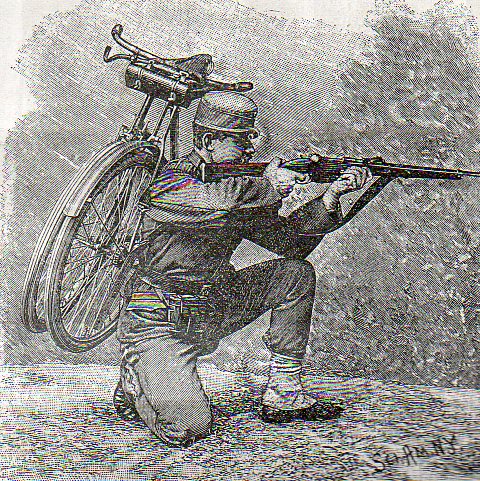
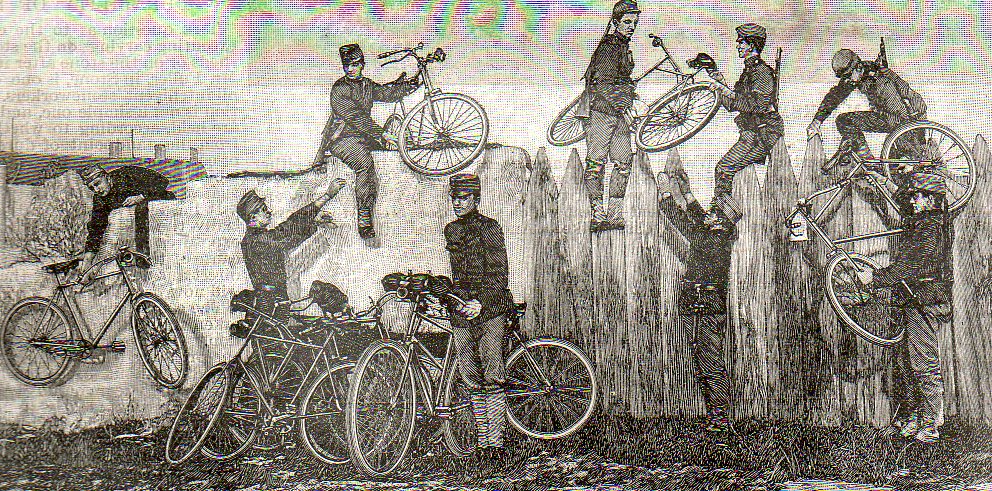
    It is difficult to image a more unpleasant (real) use for the bike than this.  The pictures seem as though they are part of a Monty Python montage, but they were indeed deadly serious–though I do need to credit someone, anyone, who came up with the idea of a folding bike to make it slightly more transportable.  (Overall though it seems almost as useful as a folding tuba.  Or sousaphone.)  If employed I think the idea would’ve proved to be more deadly to the biker than whomever the biker was attacking.  Or, more likely, fleeing.

    Bike army 436
    One can only shudder and what it must’ve been like, sitting on top of that fence, handing bikes (with lights and horns) from one side to the other, bullets flying, attempting an attack with 75 pounds of cumbersome trouble slapped to your side.  It must have felt insane.

    Bike army 441

    (The original print is available from our blog bookstore, by the way.)

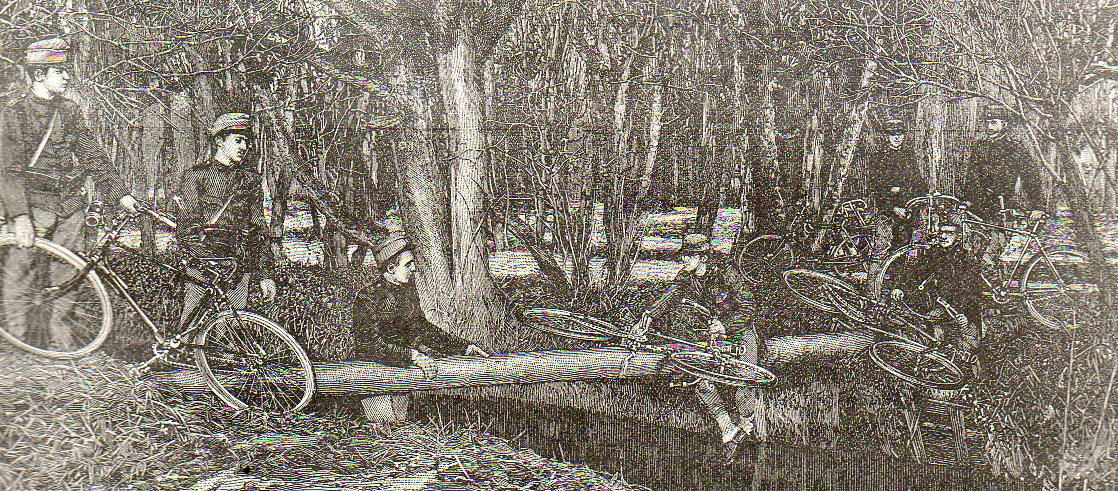
        Bike army 435

    Bike army 437

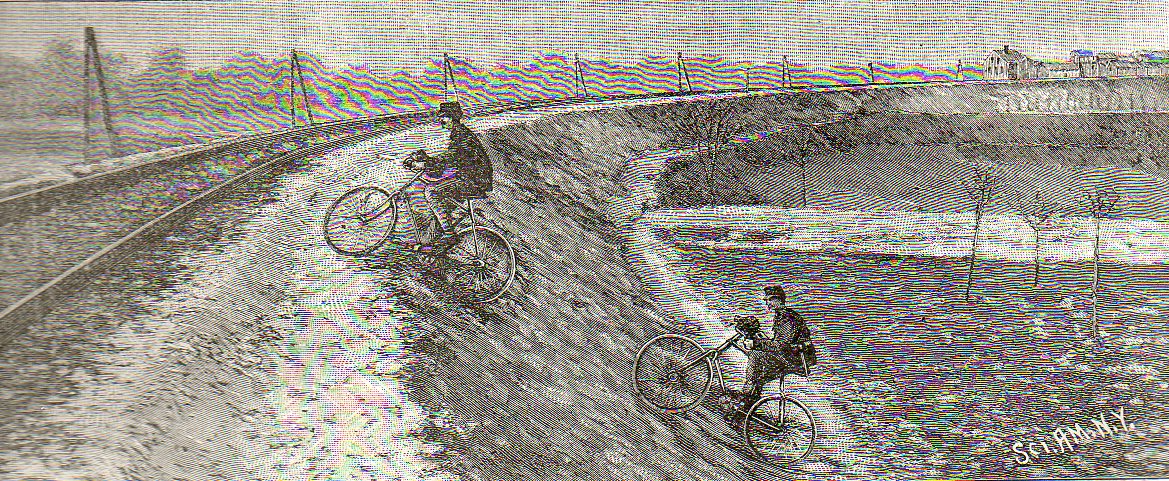
    I think these men would have heard the music too as they slogged their ways through brush and trees and muck and the like, sliding their bikes along that log to keep them dry while the men stood in the wet. They would’ve heard the music too, a short little symphony played on folded instruments, which sounded as bad as it looked.


  • The History of Children, 5/7–Morals and Philosophy

     JF Ptak Science Books  Post 1289    Continuing the post 1285

    “Taking the Scarecrows out of Wisdoms Gardens”

    This is Part 5/7 of John Comenius’ great work, the first illustrated instructional to children, first written in 1676 and then translated into English in 1726–it is from this translation that all of the images (below) are taken.  This is the second of seven installments on introducing 17th and 18th century children to wide ideas, the other sections including: Part 1, Occupations; Part 2, Anatomy; Part 3, Books and Book Arts; Part 4, the Sciences; Part 5, Morals and Philosophy; Part 6, Games and the Arts; and Part 7, the Military.  

    The work itself: John Amos Comenius’ Orbis Senfualium Piélus: Omnium Principalium in Mundo Rerun/ &f m Vita АШопит,  translated as Pictura et Nomenclatur, the Visible World, or A Nomenclature, and Pictures of all Chief Things that are int he World, translated into English by Charles Hoof…1726.

    The purpose of the book, writes the translator in the introduction of the 1726 12th edition, is:  

    To entice witty children to it, that they may not conceit a torment to be in the school, but dainty/are., For it is apparent, that children (even from their infancy almost) are delighted with Pictures, and willingly please their eyes with these fights: And it will be very well worth the pains to have once brought it to pafs, that fcare-crows may be taken away out of Wifdom’s Gardens…”

    Even at this early stage of publishing books for children it was easily recognized that children learn better when eased into their subject with pictures.  This is not so far off the mark with the moderns, and in its own way a precursor to the Dick and Jane and Dr. Seuss books–not so much for subject matter, but for the very act of putting a book into the hands of a child and getting them comfortable wit the idea of reading.  It seems to me that this is by far the most important lesson-the actual content at tis point is secondary to the act of holding a book.  

    [ocr errors][ocr errors][graphic]

    This Life is a way, or a place divided into two ways, iike

    Pythagoras’/ Letter Y. i road, i. on the left-hand track; narrcw, 2. on the right; that helongs to Vice, 3. this to Virtue, 4. Mind, young Man, J. imitate Hercules; leave the lift hand чыaу, turn from Fice i the Entrance, 6. is fair, hut the End, f. it ugly andßetp down. Go on the right hand, though it he thorny, 8. no ‘way is unpaffahleto virtue; follow -whither Vitha Itadeth


    [ocr errors]

    ,

    [ocr errors]
    [merged small][ocr errors][merged small][graphic][merged small][merged small][ocr errors][merged small]

    and doeth, fptaketh, Or thinketh nothing in vain.

    She looks backwards, j. as into a Looking-glafs, 4. to things pad; and feeth before her, 5. as with a Perfpe&ive-glafs,7. things to come, or theEnd, 6. andfo fie perceiveth ivhat foe hath done, and -what remaineth to he dene.

    She propofeth an Honeft, Profitable, and -withal, if it may he done, a Pleafant End to her Ail ions.

    Haxing forefeen the End, fie looketh out Means, as a Way, 8. ,which leadeth to the End; hut fach as are certain and eajy, and fewer rather than more, lefl any t^ing Jhould hinder.She ivatchethOpponaahy,g. (ivhich having a buihy Forehead, 10. and heing bald-pated, il, and moreover, having wings, 12. doth quickly ßip aviay,) and catchet h it. .i„ ti jS ht goeth on her ivay ivarily, for fear fie fiould flumhle er go am¡/s

    [ocr errors]
    [ocr errors]

    [merged small][ocr errors][ocr errors][merged small][graphic][ocr errors][ocr errors]

    A

    [ocr errors][ocr errors][merged small][ocr errors][merged small][graphic][ocr errors][ocr errors][merged small]


    and fo moderateth all thing!,leß any thing too much ее done. ftevellersare made drunk, 4.they flumhle, 5.they fpue, 6.and hrahhle, 7.From Drunken nefs froceedeth Lafciviouinefs; from this, a lewd Life amongfl Whoremafters, 8. and Whores, 9.. in killing, touching, emhracing, and dancing, 10.


    [merged small][ocr errors][merged small][graphic]

    Fortitude, 1. i Fortitude, t/’/ undaunted in Adwrßty, I impavida eft in Adverlis,and a u J hold as a Lion, 2.¿e/ ns/ haughty in Profperity,leaning en her oivn Pillar, 3.c/”Conftancy; and being the fame in all things, ready to undergo both eftates иith an even mind.

    She reeeiveth theßrokes e/.Misfortune •with the SHield, 4. of Sufferance: and keepeth off the Paffions, the enemies ofquietnefs, 4vith theSword, 5. a/”Valour,


    [ocr errors][ocr errors][ocr errors][merged small][graphic]

    Patience, 1. I Patient la, 1endvrtth Calamities г. !tokrat Cal»mitatts, 2.and Wrongs, 3. meekly like a Lamh, 4. as the fatherly chaftifement of God, 5.

    In the mean while fie hattet h upon the Anchor of Hope, 6. {as a Ship, 7. tiffed hy •waves In the Sea) /he prayeth to God, 8. •weeping,and expeBeth the Sun, ГО. after cloudy weather, 9. fuffering evils, and hoping hetter things.

    On the contrary, the impatient Perfon, 11. Koaileth, lamtnteth, rageth again ft himfelf, 11. grumhl»th like a Dog, 13. and yet doth no good i at the laß he defpaireth, and hecome!h his own murtherer, 14. Being full of ragt it äeßrtth to revenge wrings.

    [merged small][merged small][graphic]

    Men are made for one another’s good; therefore let them he kind. Be thou/iveet ana’ lovely in thy Countenance, i. gentle and civil in thy Behaviour and Manners, 2.affahle and truc-t’poken ivith thy Mouth, 3. ajfeBionate and candid in thy Heart, 4. So live, and Jo ßialt thou heloved; a r d there ivili he * »i/WFriendihip, {. as that of Turtle-doves, 6. hearty, gentle, andivijhing nuellrn hoth p arts, Frcivard Men are if auf id, t/ly, unplea/ant,


    [ocr errors]

    [merged small][merged small][merged small][merged small][ocr errors][graphic][ocr errors][ocr errors][merged small]


    to he referred J”or the other party; Holding in her right Hand a Sword, ç. und a Bridie, ó. еo punißu und reßrain evil men;Beßdes, a pair of.Balances, 7. in the right fcale, 8. whereof, Deferís,and in the left, ci. Rewards heing put, are made even one vjith another, andfo good Men are in- cited to virtue, as it ivereivith Spurs, 10. In Bargains, 11.let Men deal candidly:let themf tand to their Covenants яWPromifes;let that which is given oneto keep,and that which is lent,he reßored:let no man he pillaged, 12.er hurt, 13.let every one have his очиn:thefe are the precepts efjußice. Such things as thefe are forhidden in God’s 5th and7th Commandment,and difervedly puni/h’don the

    [ocr errors]
    [ocr errors][merged small]

    [merged small][merged small][graphic]

    Liberality, r. keepeth a mean abcut “Riches, •which fie honeßly fecket h, that fie may have fomeivhat to hejfaw c?:thi.i.i that want, 2.

    She clothetii, 3., nourimeth, 4. and enricheth, 5. thefe •with a chearful Countenance, 6. and a winged Hand, 7.

    She/ubmittethhersvealih,2. to herfelf, not herfelf to it, as the covetous man, 9. doth, •who hath, that he may have, and is not the Owner, hut the Keeper of his goods, and heing unjatiable, ahvays icrapeth together, ib. •with his Natis.

    [ocr errors][merged small]
    [graphic]
    [ocr errors]

    [merged small][ocr errors][ocr errors][ocr errors][merged small][merged small][merged small][graphic][merged small][merged small]

    either •with Wealth, er a Trade and Science, ivhich mayjerive for getting a living; »hai he may he ahle to maintain a Family.

    Then he chcofeth him/el/ a Maid that is Marriageahle, (or a Widow) •whom he loveth; neverthelrfs a greater Regard is to he had of Virtue,and Honefty, than ^/”Beauty or Portion.

    Afterwards, he doth not hetroth her to himfelf clofelj, tut entreatethfor her, as a Woer, firß to the Father, i. and then the Mother, 2. er theGuardians, tr Kinsfolks, byfuch as help to make the match, 3.

    When fie is effous’dto him, he hecometh /¿¿Bridegroom,,.).. end fie the Bride, 5. and the Con traft is made, aid an Instrument of Dowry, 6. is •written.

    At the laß  the Wedding is made,  inhere they are joined together  ly the Prieft, 7» gi-ving their Hands, 8. one to
    another,and Wedding-rings, 9. ihm they.ftaß •with the ivitneffes that are invited. After this they are called  Hulhand tWWife; ivhen fie is dtad\ he hecmeth * Widower.

    [merged small][merged small][graphic]

    In Confanguinity there touch a Man, i in Lineal Afcent, the Father {the Father-in-taw) 2. and the Mother (the Mother-in-law) 3-.; the Grand-father, 4.. ana the Grand-mother, 5. the Great Qrand-father, 6. ßW/^eGreatGrandmütliersj.. the great great Grandfather; 8. the great great Grandmother, 9. the great great Grandfather’s Father, 1 o.thegreatgreatGrandmotheris Mother, grandfather’s Grandfather, i2. thegreatgreatGrandmother’s Grandmother, 13.4″hofe heyond thefe are called Anceftors, 14. In a Lineal defcent, the Son (the Son-in-law) 15. and the Daughter (the Daughter-in-law) 16. the Nephew, 17. und the Niece, 18. the Nephewis Son, 19. «»i•//¿eNephewsD aught еrs о. the Nephewis Nephew, 21. and the Nieceis Niece, 22. the Nephewis Nephewis Son, 23.the Niece’s Nieceis Daughter, 24. the Nephewis Nephew’s  Nephew, 25./w-NïeçeisNieceisNiece, 26. Thife heyond thefe are called Pollerity, 27. . . 27. In a Collateral Line are the Uncle hy the Father’s fide, 28. and the Aunt hy the Fatheris fide, 29. the Uncle hy the Motheris fide, 30. endúit Aunt hy the Motheris fide, 31. the Brother, 32. and the Sifter, 33. the BrotherisSon, 34. the Sifteris Son, 35, and the Coufin hy the Brother and Sifter, 36.


    [graphic]
    [ocr errors][ocr errors]

    CXXII.

    The Society betwixt Pa- Societas Parentalis.

    rents and Children.

    [ocr errors][ocr errors][graphic]

    Married Perfoni, (hy the hlcjßng of God J haie Ifiue, and hecome Parents.

    The Father, i. hegetteth, and the Mother, 2. heareth Sons, 3. ar.d Daughters, 4. (fometimes Twins.) The Infant, 5. is •wrapped in Svvaddling-clothei, 6. it-laid in a Cradle, 7, is fuckled by the Mother ivithher Brenfts, 8. and fedtuUth Pap, 9.-.iftcrit:rrds it learneth to go by a Standing-flo&l, io.

    [merged small][ocr errors][ocr errors]

    [merged small][merged small][merged small][merged small][graphic][merged small][merged small]

    the Miftrefs, (the good wife of the Houfe) 3 Maidens, 4* They appoint thefe their . Work, 6. end divide them their talks, 5. ‘which are faithfully to he done hy them without murmuring У lofs ; for iv h ich their Wages, and Meat and Drinkis allowed them. A Seivant ‘was heretofore a Slave, euer ivhom the Maßer had Jioiver of life and death. At this day the poorer fort ferve in a free, manner, heing hired for Wages,


    Set vus olim er&tMancipiumy in quem Domino poteftas fuit vit


    ·Posted by :

    ·in:

    — —

  • Protection from Aircraft, Part 3: the 1930’s and Anti-Aircraft Philosophy

    JF Ptak Science Books   Post 1281

    Bloglondonballoon

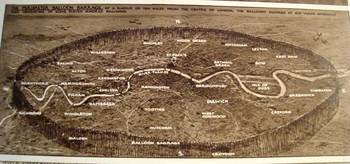
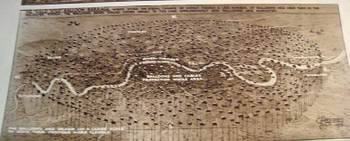
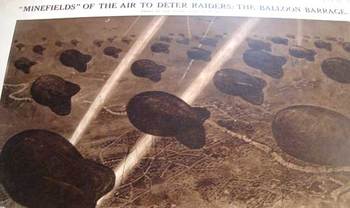
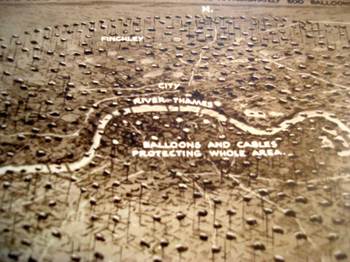
    This series of drawings, published in the Illustrated London News 16 July 1938,  by the incredibly prolific and detail-oriented G.H. Davies depicts one segment of the city defense program being formulated by the British government in the last year  or two leading up to the beginning of the European end of World War Two. (I own 150 or so of these images by Davies–he never fails to provide the detail where you need it.)   The overall plan for defending major British cities consisted of anti-aircraft guns, searchlights, R.A.F. fighter squadrons and interceptors, and the “Balloon Barrage”.  London and suburbs are featured here, all to be protected by a series of ten squadrons of fifty balloons each, handled by a crew of ten.  The thinking was that it would make low-level bombing by fighter aircraft (?!) impossible, and force any aircraft attempting such an approach to a higher altitude where they would be theoretically susceptible to the interceptor squadrons. 

    Bloglondonballoonbottom

    I’m not terribly sure why the thinking was against low altitude attack, but my best guess is that the planners were thinking about the He-111Bs and Ju52s or other such aircraft that the Nazis checked and tested out against the Spanish Republicans during the Civil War. Perhaps freshest of all memories of the German operation Feuerzauber (Magic Fire) was the Guernica raid, just a year or so before the publication of these images, where that militarily insignificant town was attacked from the air in twenty minute intervals over three hours, destroying it in a terror blitz.  If I was sitting around a big table at 10 Downing, I’d have that picture in my head.  .

    Bloglondonballoondetail

    Be that as it may, the “air mine field” looks terribly inefficient and vulnerable to me, sort of like an exposed Maginot Defense Line, but without the very deep misunderstandings that went along with the horrible French effort. 

    Explanation of the Images:

    a)    The first image shows the incredible perimeter defense network, which extended ten miles around St. Paul’s; the balloons were moored at 100 yard intervals, making for 1100 or so balloons to “fence” the perimeter.
    b) The second image shows  London center and immediate suburbs, with another 500 balloons in a smaller circle inscribed in the larger.
    c)  The third image Bloglondonballoonsbotto is a close-up of the balloons, looking down;  seems as though they were tethered at about 2000 feet or so
    d)  The last image is a close-up of London center.  .


  • Maps of Invasions of Great Britain and the United States

    JF Ptak Science Books  Post 1274–Real and Imagined

    America has almost never been invaded. I should clean that statement up a bit: the United States has almost never been invaded.  America–which included North/Central/South once upon a time long in the dim past–was constantly invaded until the invasions no longer counted themselves as such, which I guess means that the “invasion” forces became  “resupply”. (Perhaps an invasion is over once you surpass a certain ratio of houses : forts.)

    “Invasion” does not include “attacks”.  A few guys getting off a Nazi sub and wandering around until they got picked up (with some (all?) being executed) does not an invasion make.  9/11 was not an invasion, though the subsequent invention of impending and pervading fear was–that’s why we have “storm centers” rather than “weather reports” on broadcast news–but even that fear business was more home-grown than anything else.

    The Japanese Army were on two small islands in the Aleutian chain (which may have been closer to Tokyo than NYC) for a bit in WWII–also does not make for an invasion, even if they were there for a long time.  Or even if they were still there.  Nor does sending hundreds or thousands of paper incendiary balloons across the Pacific an invasion make. 

    UFOs don’t count, either.  (I still find it remarkable that such a large percentage of the hundreds of thousands of “sightings” has the UFO with landing or whatever lights on it. I figured out at one point that there has been a report on one of these critters every ____ minutes since Roswell. And in all of those hundreds of thousands or reports, if you took them all and stacked them one on top of the other, they would reach perhaps the height of a grain of sand.)  The Beatles don’t count, either.   

    What also doesn’t count (but probably should) but which is not military–not really, though it may have the impact of a military force at some time in the future–are Chinese-made imports of, well, everything.   At Thanksgiving I wondered how much of a dinner could be composed of foods that were shipped from China and to no great amazement an almost-complete table of food could be set, plus napkins, flatware, plates, candles, tablecloths, tables, chairs, paper turkey decorations, carpet, flooring, wallpaper, paint for the walls and ceiling, screws for the Chinese-made door hinges, lighbulbs, tubes for the McIntosh preamps, all of the clothing worn by the guests, and so on.  The electricity is still American-made. The fact that Mott’s Apple Juice is coming from Chinese apples is a bad sniff of the future. The country of origin is usually on juice bottle necks-check it out.)  

    Certainly something that does count is the invasion by Great Britain of the United States in the War of 1812–they invaded long and deep enough to burn the White House and cause general havoc.  We won that one.  But of course the Brits were otherwise involved on the Continent.

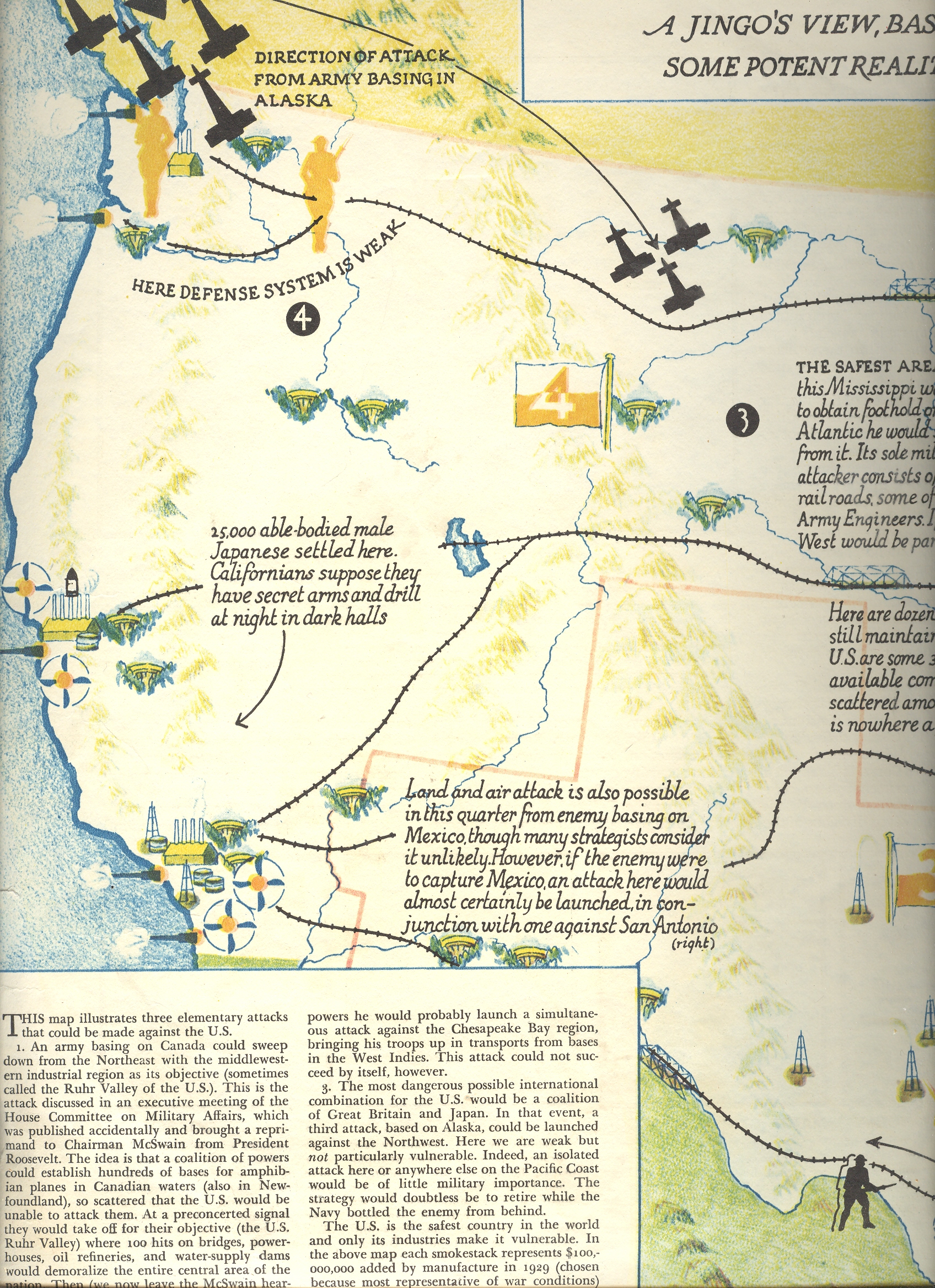
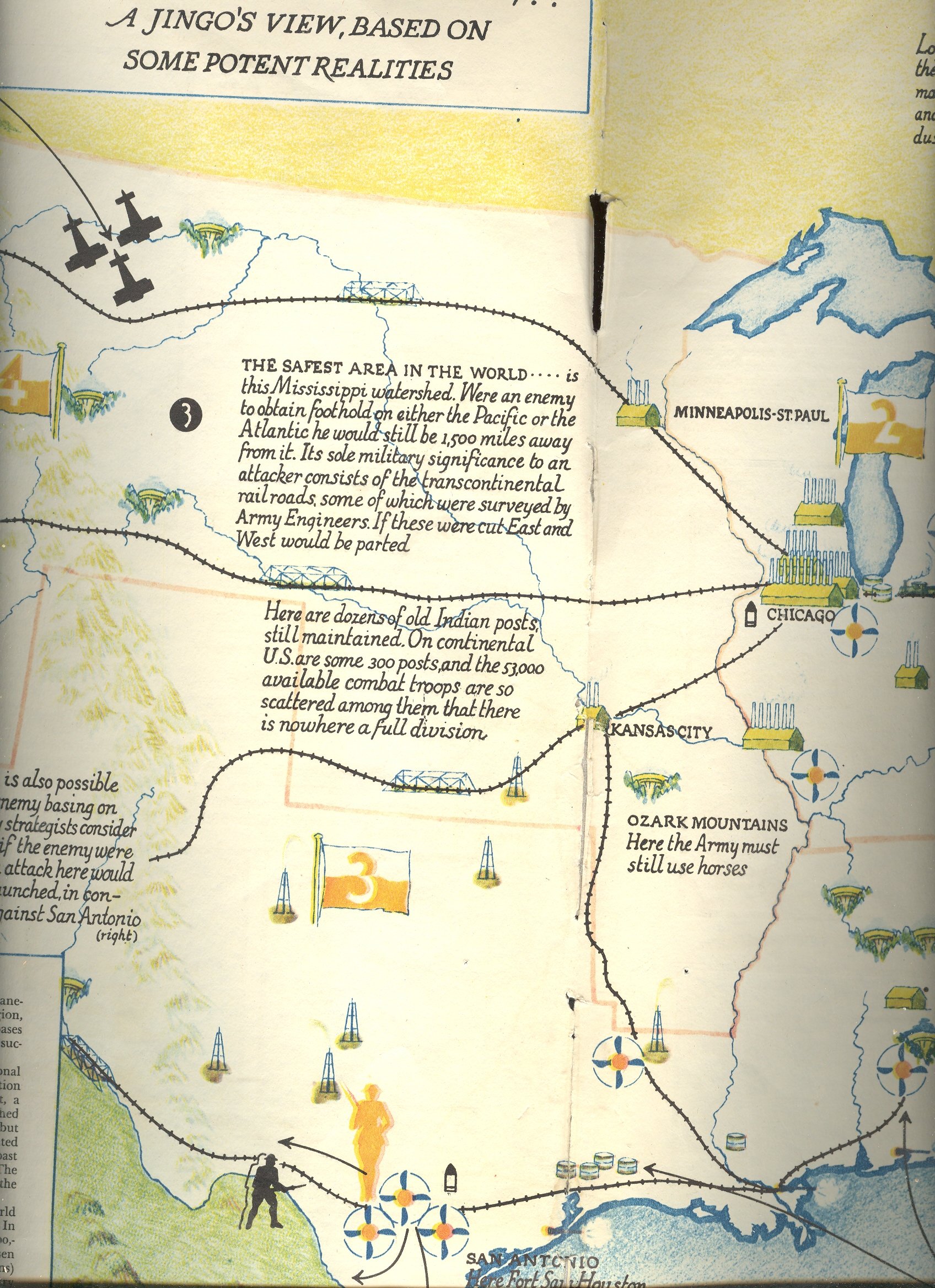
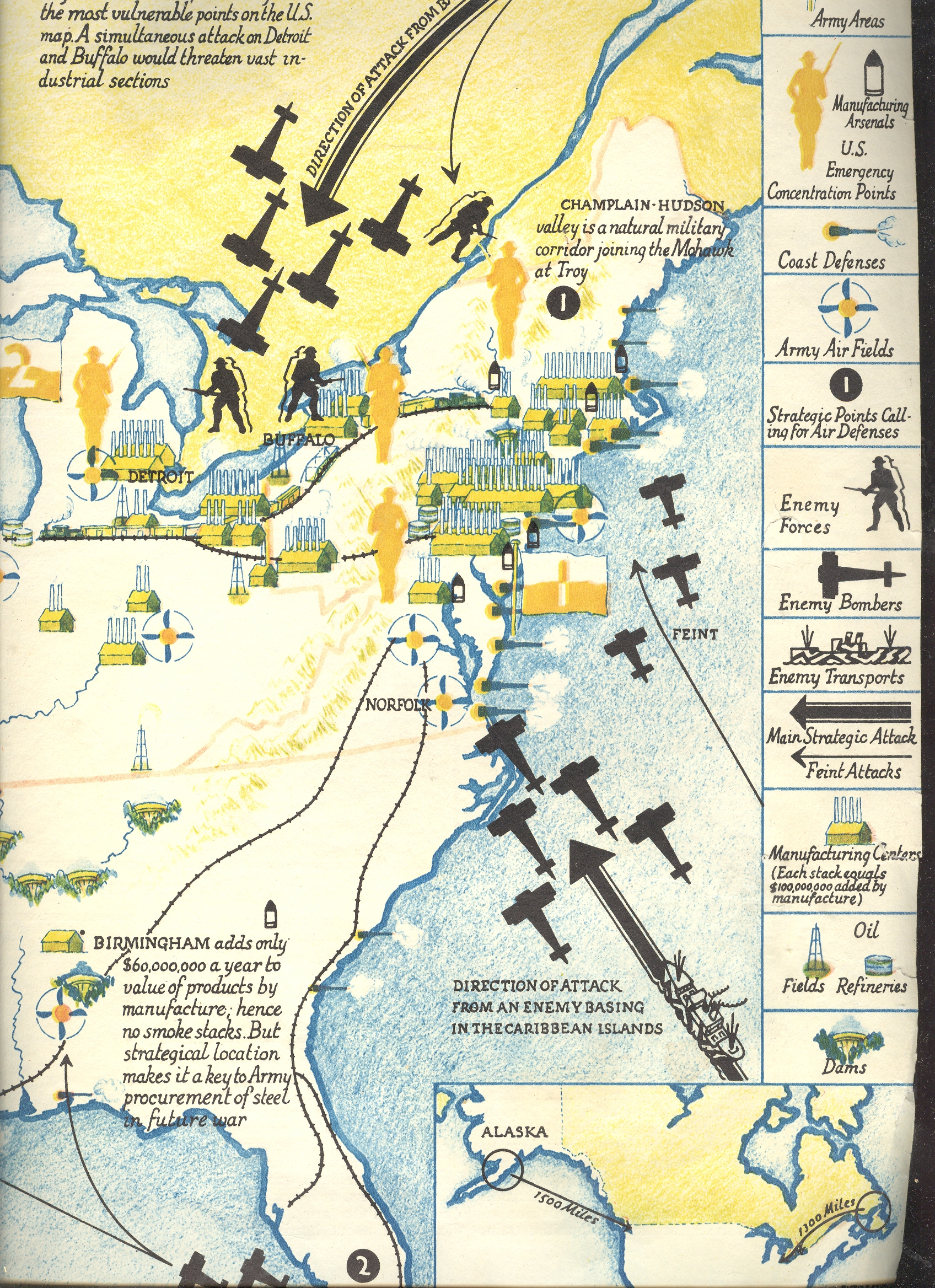
    Perhaps this non-invaded bit explains why the most-viewed post on this blog (with at last count was 400,000 views) was a LIFE magazine article from 1942 on the possible invasion routes to the U.S.  Maybe the volume was driven by war-gamers, though I suspect it was made up largely of the curious who weren’t used to seeing “Invasion of” and “America” together in a military sense.

    https://historyofideasblog.com/a/6a00d83542d51e69e20120a7a3225e970b-pi

    https://historyofideasblog.com/a/6a00d83542d51e69e2012876a5a4b4970c-pi

    https://historyofideasblog.com/a/6a00d83542d51e69e2012876a5a5e4970c-pi

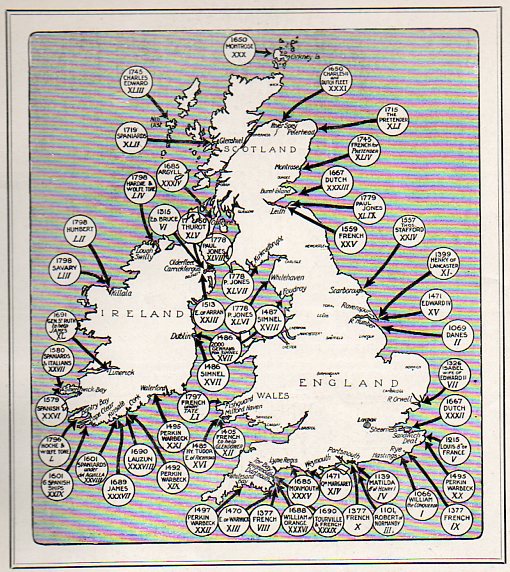
    But now for the  real stuff:  a map of the 54 invasions of Great Britain (and “the places at which foreign troops have landed on British soil since 1066 (and all that), seen in the Illustrated London News for 27 March 1909):

    Invasion--Us and England120

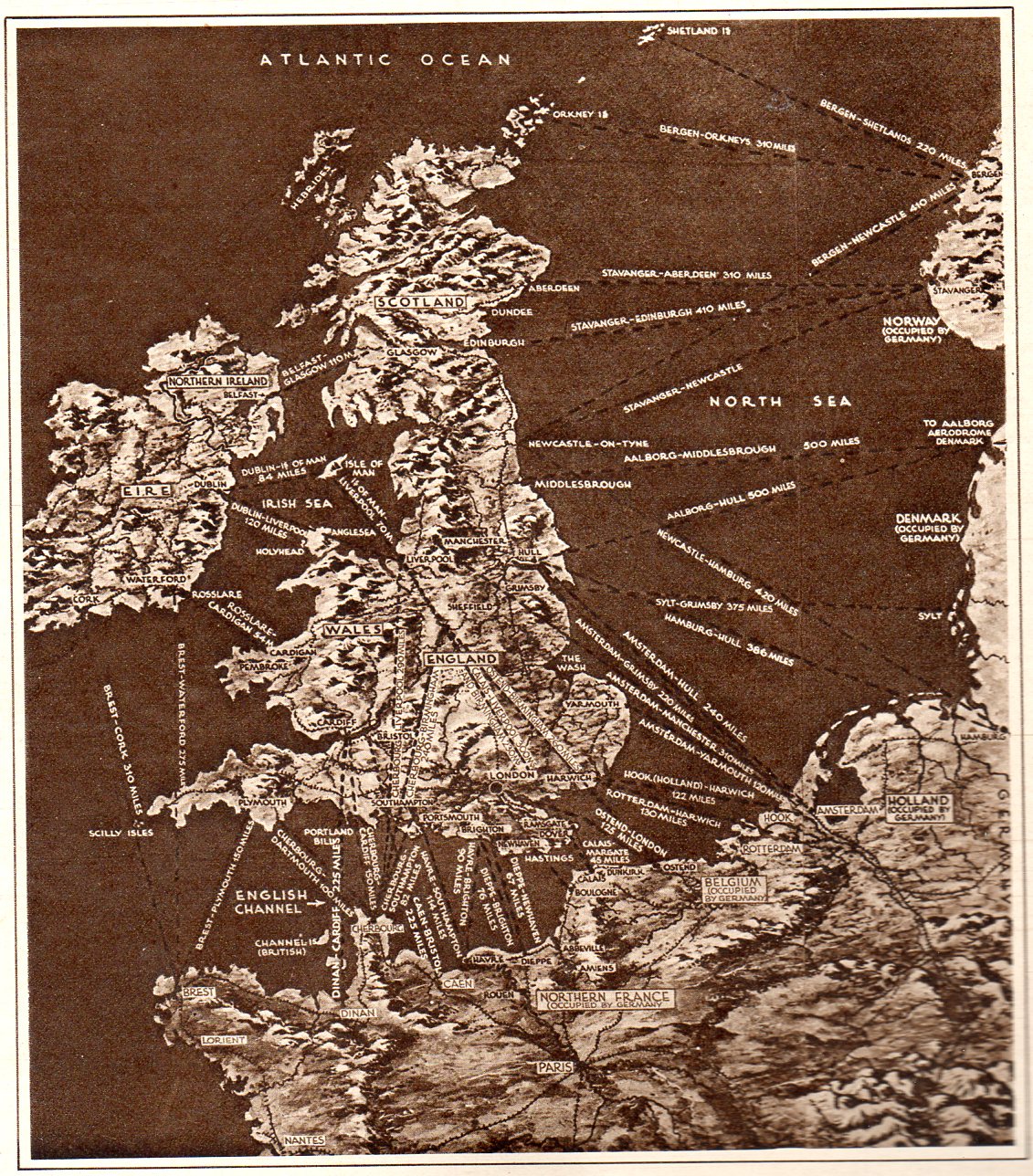
    And then this, where the WWII invasion routes were turned around: 

    Dunkerque124

    This map pretty well tells the story of the perilous situation of Europe and England at the beginning of June, 1940.  It appeared in the Illustrated London News on the heals of Churchill’s “Blood, Soil, Sweat and Tears” speech, and was a very frank presentation of the wearing of the war.  By this point in the war Nazi Germany had successfully invaded Belgium, France, Luxembourg and the Netherlands, sweeping across Europe in a broad westward movement, backing up British and French troops all the way to the sea at Dunkerque, where a monumental rescue operation (“Operation Dynamo”) saved them.  (There was an enormous amount of materiel left there on the beach, a devastating loss for the British Expeditionary Force, nearly crippling it.) This was a bad time for the Allies, this part of the war coined by Winston Churchill in 18 June 1940 in the House of Commons by:  “The Battle of France is over. I expect the Battle of Britain is about to begin”. There was very little good that came of these few months for the U.K and the Allies, though four things do stand out: (1) as I just mentioned, the saving of 300,000+ troops at Dunkerque; (2) the resignation of Neville Chamberlain, (3) the coming of Winston Churchill  as Prime Minister of the U.K., and (4) the first deciphering of the Enigma at Bletchley.  Other than that, the situation was dim, and these invasion routes (published at t he very time that Germany was studying such a feat in its “Operation Sea Lion“, or “Unternehmen Seelöwe”). The endgame at Dunkerque took place almost four years to the day of the invasion of Europe, when the intent (though not placement) all of these arrows were turned around for the Allied operation at the Normandy beaches on 6 June 1944..

    And so, there it is–a presentation of several maps showing invasions, real and imagined 


  • Verticals and Lead-Spewing Gargoyles: Spires, Rifles, Bayonettes. Reims, November 27, 1918.

    JF Ptak Science Books  Post 1267

    Verticals and Anticipation after Four Grueling Years

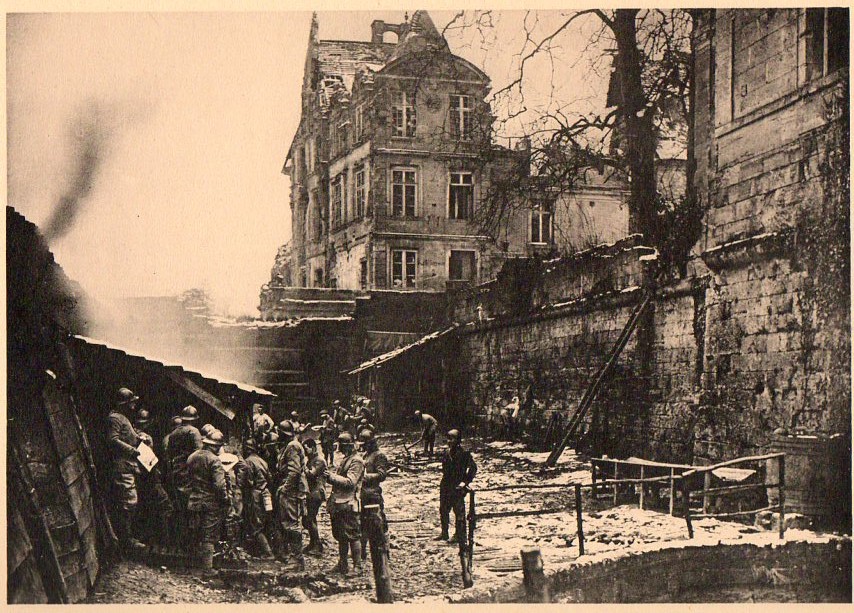
    In developing a history of vertical lines I thought that I would look at single vertical lines, but having just stumbled across this in our WWI News Photo Service archive, I just could not resist.  There is of course plenty of vertical arrangement here–just orders of magnitude more than what I was setting out to find.  So it goes.

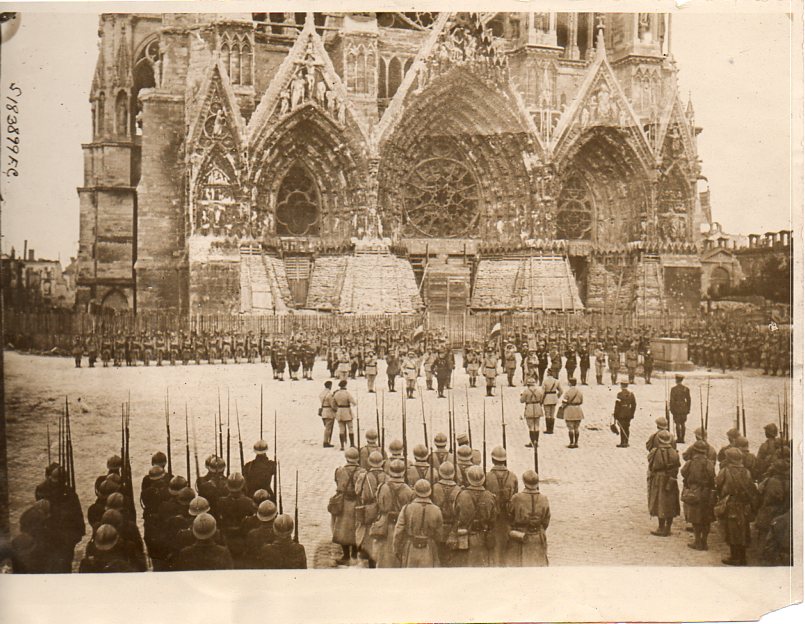
    WWI photograph--spires071

    (The image is available from our blog bookstore, here.) And the detail:

    WWI photograph--spires det072
     And another:

    WWI photograph--spires det073

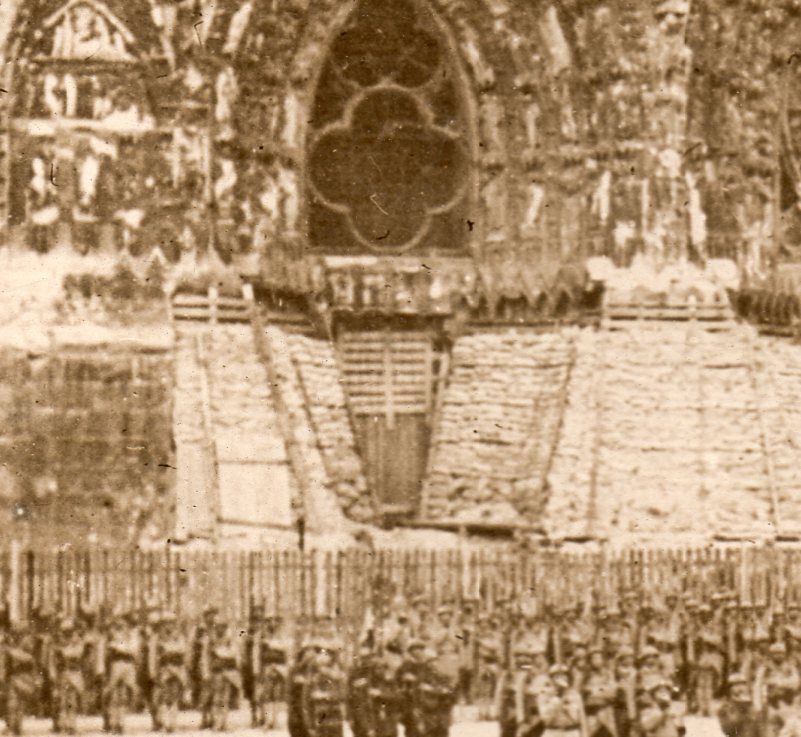
    I find this a soaring image, in its own odd way–this is a celebration scene, after,all, a decoration exercise, a military display of French forces that liberated the town of Reims, all taking place in front of the battered cathedral. Notre-Dame de Reims was the place of the coronation of French kings, and was a spectacular 13th century structure built on top of other buildings stretching back the site’s inhabitation to at least the 5th century.  

    But German artillery shelling caught the cathedral right at the beginning of the war and very nearly wrecked it.  The building was badly damaged by fire, a fire caused by the Germans, which spread along the scaffolding on the building which fed the wooden supports and superstructures, the flames finding its way throughout the building.  The fire was hot enough to melt the lead in the roof, which poured down as molten rain and out of the mouth-spouts of the building’s gargoyles. 

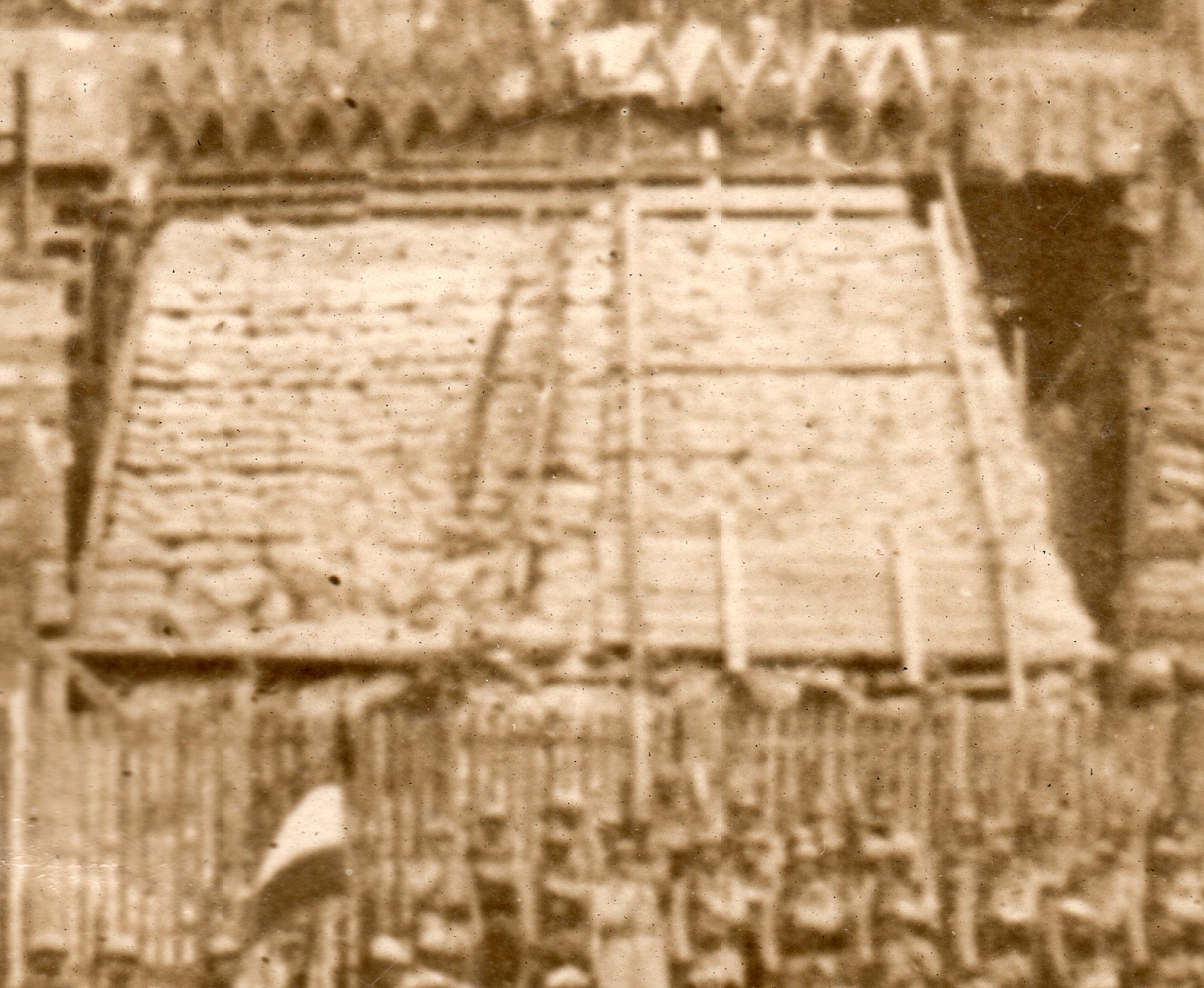
    As I brought out the further figures against the base of the cathedral one can clearly see the enormous stands of sandbags, the piles stacked up twenty feet or so behind the makeshift wooden fence.  IT was some sort of protection for the building, but not muc. 

    WWI photograph--spires det074

    This was yet another battle for the city, this one taking place 1550 years or so after the first, the Alemanni defending against the Romans; and then 104 years after the next major encounter, this between Napoleon and a Russian/Prussian force.  The liberating battle (the Battle of Reims, or the Second Battle of the Marne) took place 15 July 1918 to 6 August 1918, and it was a major failure for the German army, and spelled the collapse of the Spring Offensive, opening the door to the end of the war.  There were more than 135,000 Allies killed or wounded in this campaign (including 95,000 french troops), plus another 130,000 German troops.

    The process of victory in front of the wounded church seems exhausting and exhilarating, bu tnot without a good sense of anticipation.


  • WWI Photographs: German POWs, 1918

    JF Ptak Science Books LLC   Post 1266

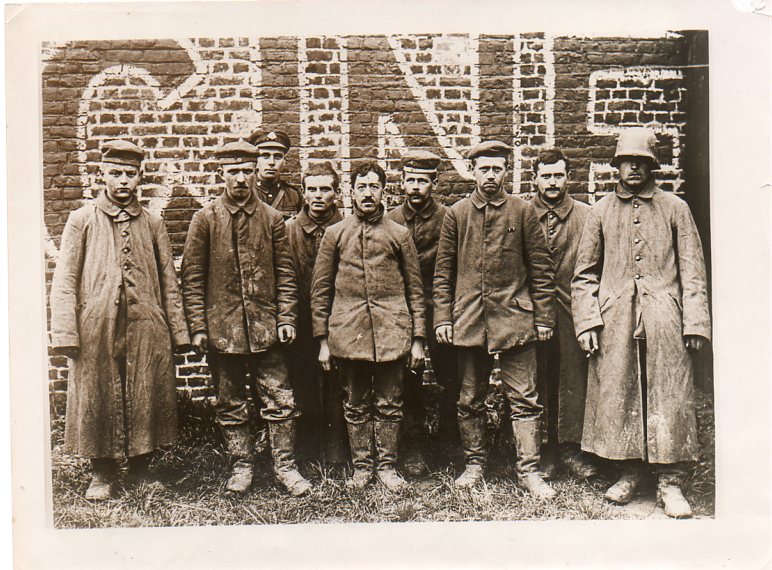
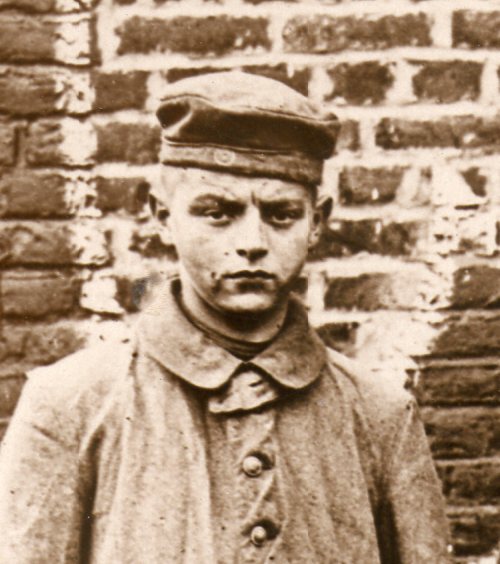
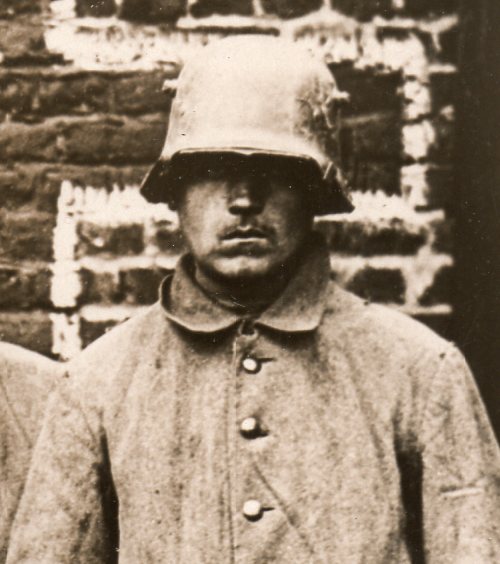
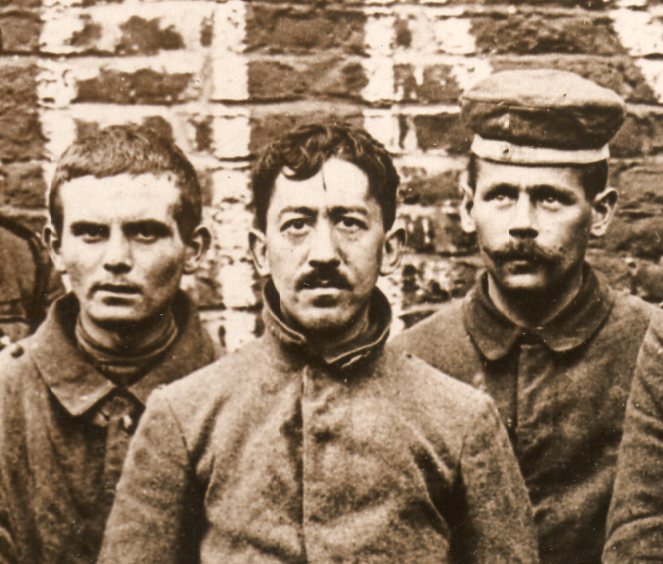
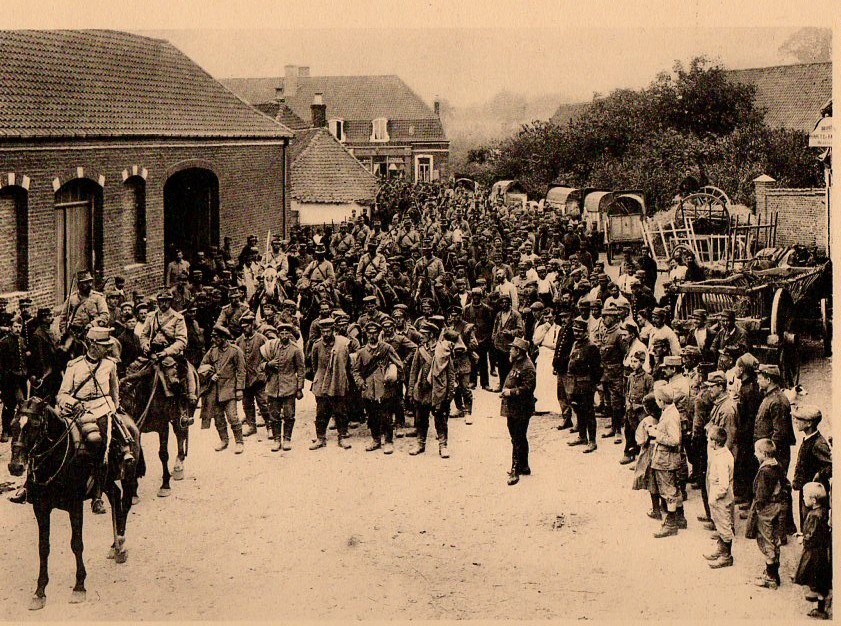
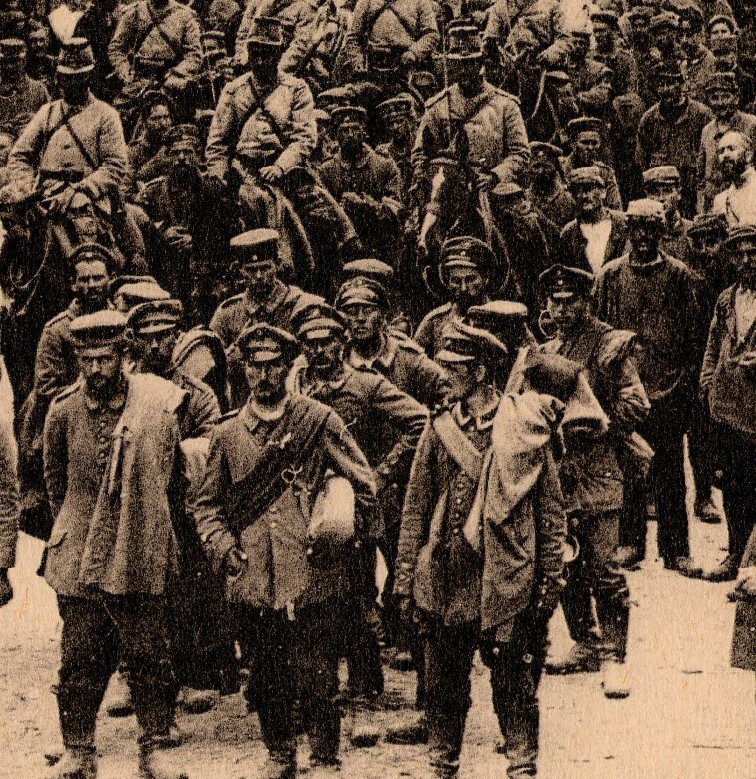
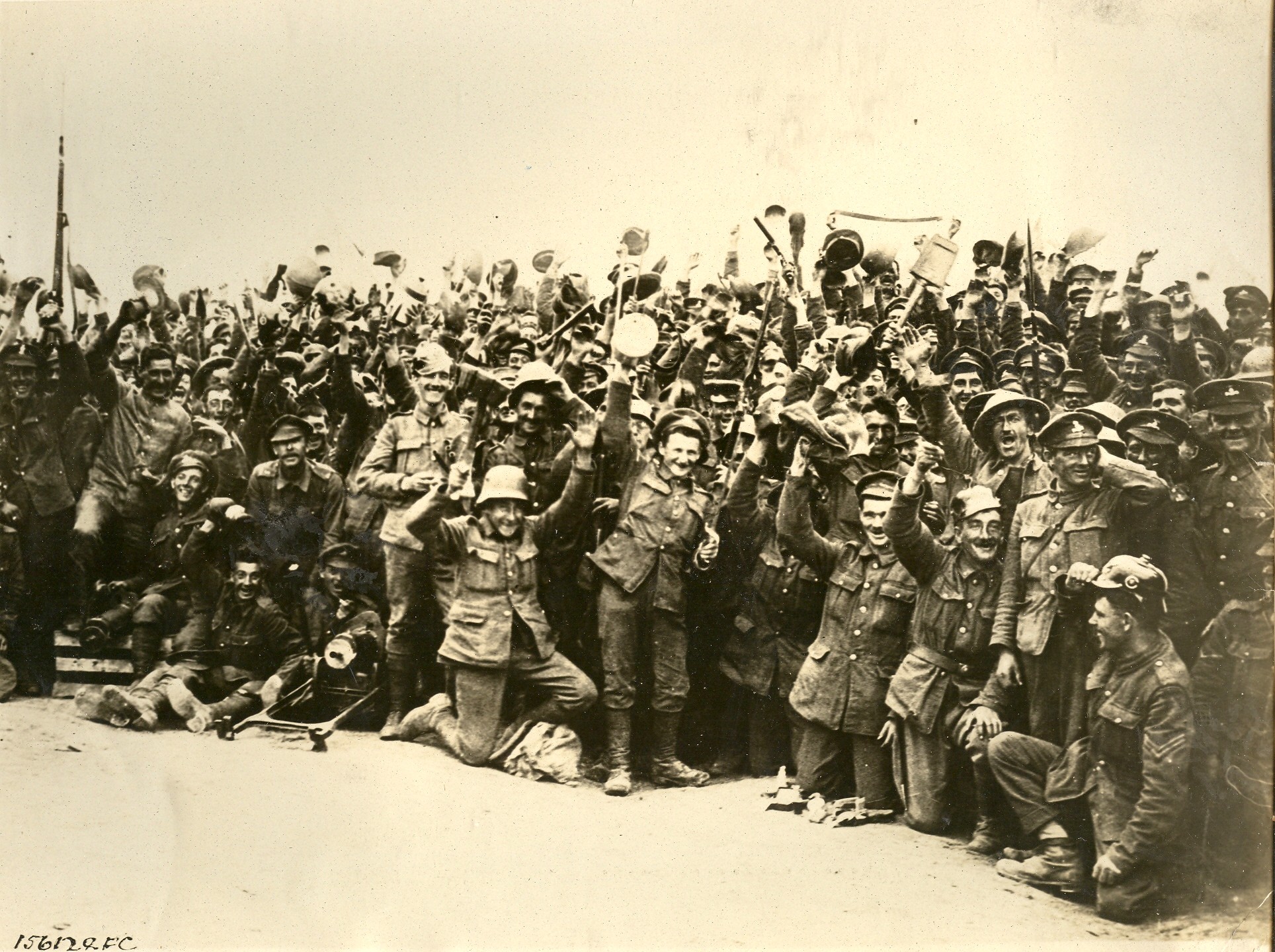
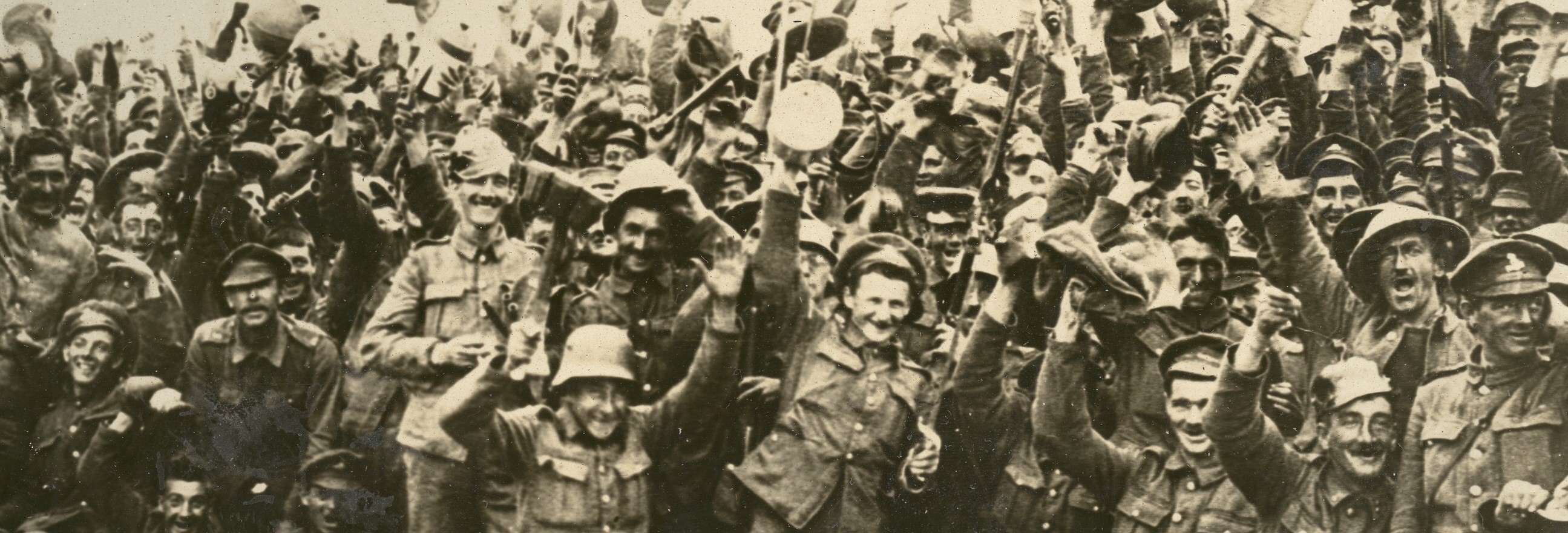
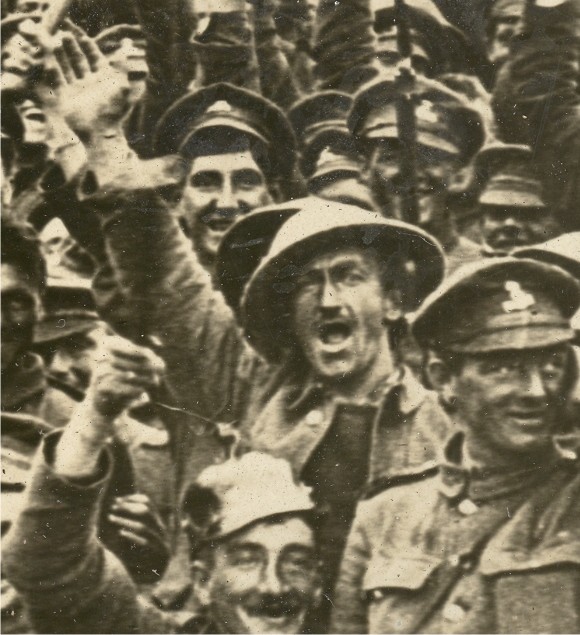
    In the first image here  we are introduced to a small group of captured German soldiers displaying a wide range of emotions over a wide range of faces. In the second image we see German prisoners though not with any helmets,.while lastly is a group of Irish/U.K. soldiers with German soldiers’ helmets with no Germans.

    There were over 8 million soldiers taken prisoner during WWI, that in addition to the 21 million who were wounded and the 9.7 million killed:  38 million.  Plus 6.8 million civilians who were killed: 45 million.  And the numbers for civilians wounded are just, well, not reliable, as they were not really collected, or collectible.  At the end of it all, there were probably between 50 to 75 million soldiers and civilians killed or wounded or taken captive during the war…not including civilians who were killed by the hardships or starvation caused by the conflict.  Big, big numbers. (My post from yesterday looked at the population/percentages of these losses, here)

    Image 1.(Original photograph available at our blog bookstore here.)

    WWI photograph--german prisoners066
    Detail:
    this shows struggle and age in a face that I reckon to be a mid-teen’s, a child’s face, hardened baby fat.

    WWI photograph--german prisoners boy067

    Detail:the older man isn’t much more so, just beaten, exhaustion.

    WWI photograph--german prisoners old068
    Detail:
    they look defeated and concerned, though the middle guy (who doesn’t seem to quite fit in with the rest) looks as though he may be relieved. Maybe not.

    In any event this is a grim photo–even the captor (Canadian?) looks non-committal.

    WWI photograph--german prisoners middle069

    In contrast is this photograph of uneven emotional display, showing American POWs in Germany in 1917:

    http://upload.wikimedia.org/wikipedia/en/3/37/US_pow.jpg

    Secondly is a photogravure showing a processional of captured German, taken circa. August 1918, and printed in 1919:

      WWI photogravure-prisoners064

    And the detail:

    WWI photogravure-prisoners det065

    There were of course far greater collections of POWs, as seen in this picture:

    http://www.corbisimages.com/images/67/14344DDD-6DE4-4458-BFAA-FAAC556F4AA1/PG3241.jpg

    The the last photo tells a different story (related more fully in an earlier post on this blog, here), a celebration of victory and survival:

    Blog dec 26 irsh tommies 


     Blog dec 26 irsh tommies det


    Blog dec 26 irsh tommies det2


    ·Posted by :

    ·in:

    —

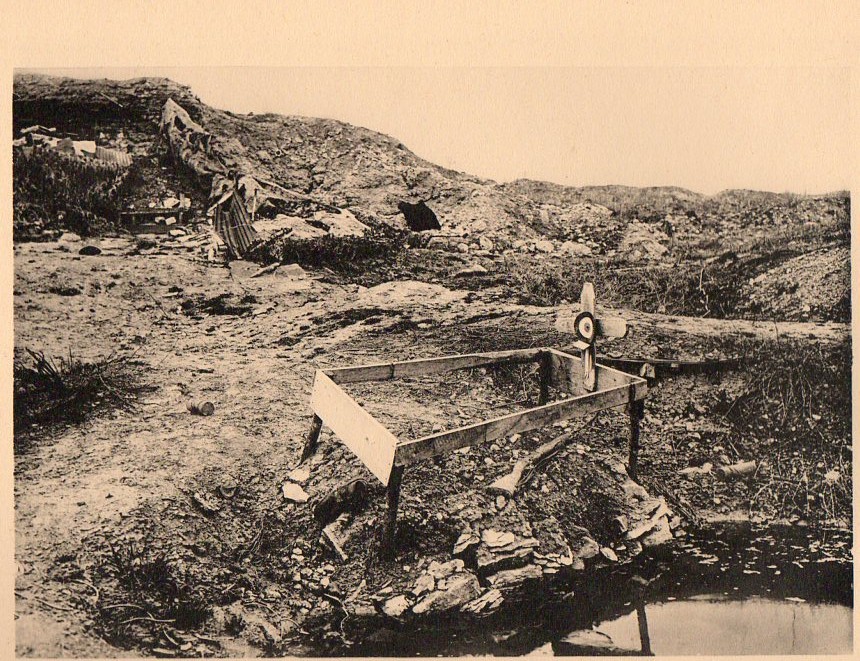
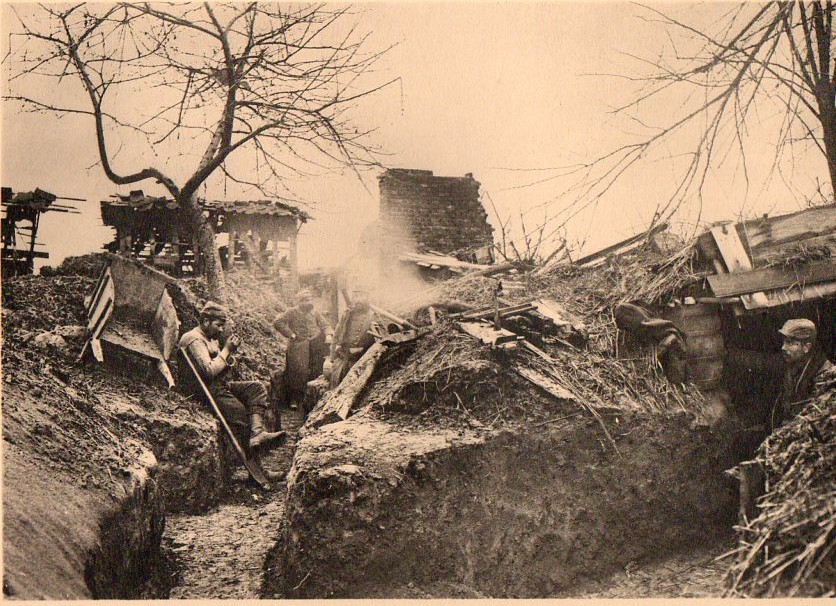
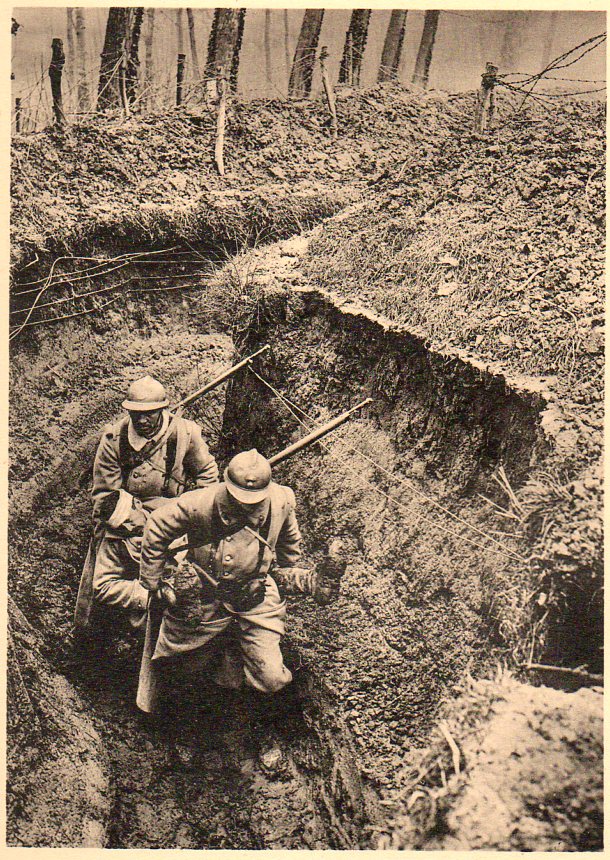
  • WWI Photographs–the Trenches, 1916-1918

    JF Ptak Science Books  Post 1265

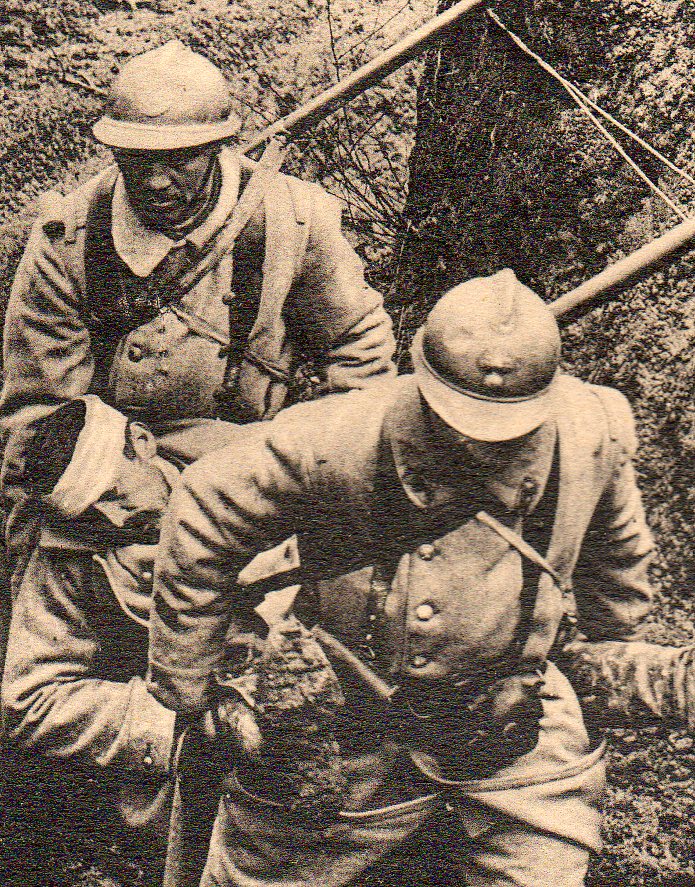
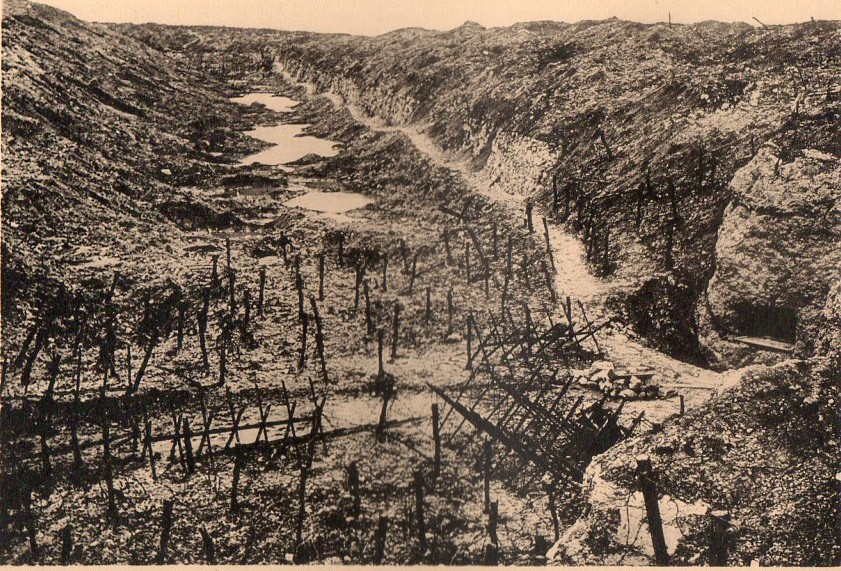
    Perhaps one of the worst inventions in the history of warfare was The Trench. Millions of men were wounded or met their ends while defending one, or attacking one, or being in-between two of them.  Hundreds of thousands of troops spent months charging back and forth between opposing lines, the ground over which they fought made uninhabitable for almost any form of life. 

    Earlier in this blog I wrote about sub-trench warfare--the story of the sappers who would mine underground, underneath the opposing force’s lines,  digging a horizontal hole the end of which would be filled with explosives and detonated, exploding up, destroying the enemy’s trenches. Bad business.  The trenches were bad enough without having to be vigilant against someone tunneling beneath, trying to make you into little pieces. Trenches were mostly cold, dark, miserable, wet, potential disease carriers, poison gas accumulators–and that’s of course before the shooting began.  There were thousands of men–tens of thousands of men, hundreds of thousands–waiting in their trenches, waiting for the other side to try and advance, attack over the well-named no-man’s land, running across open ground in a hail of millions of bullets.

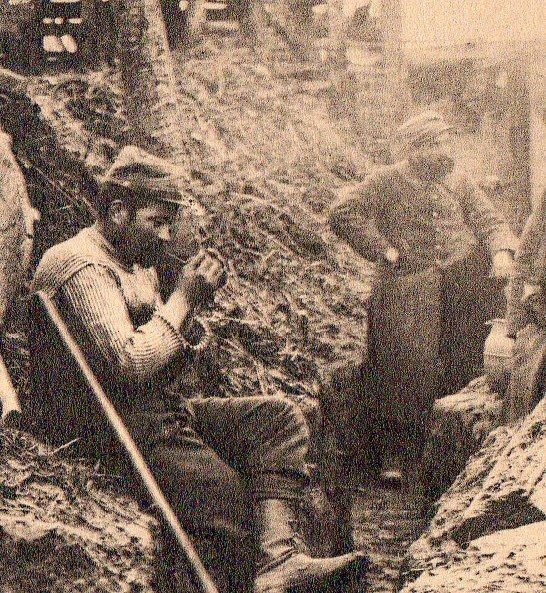
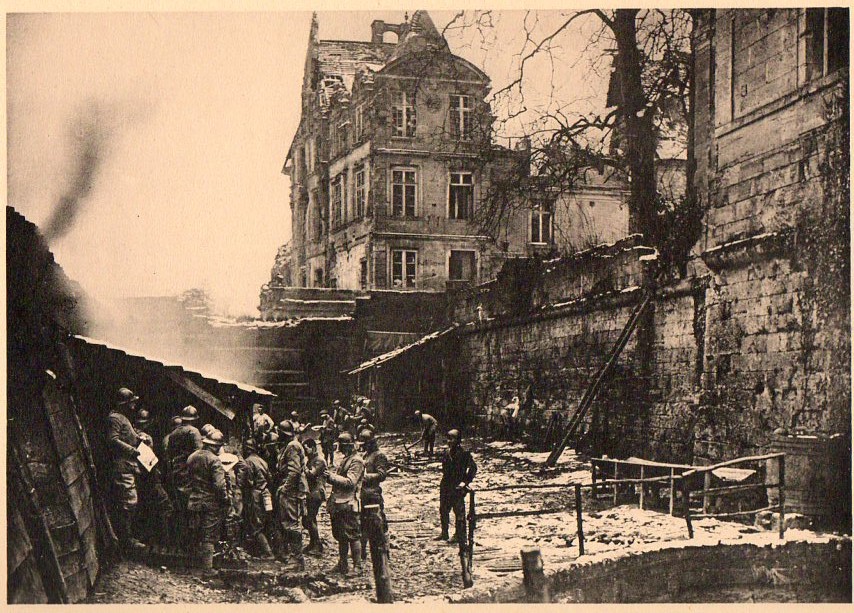
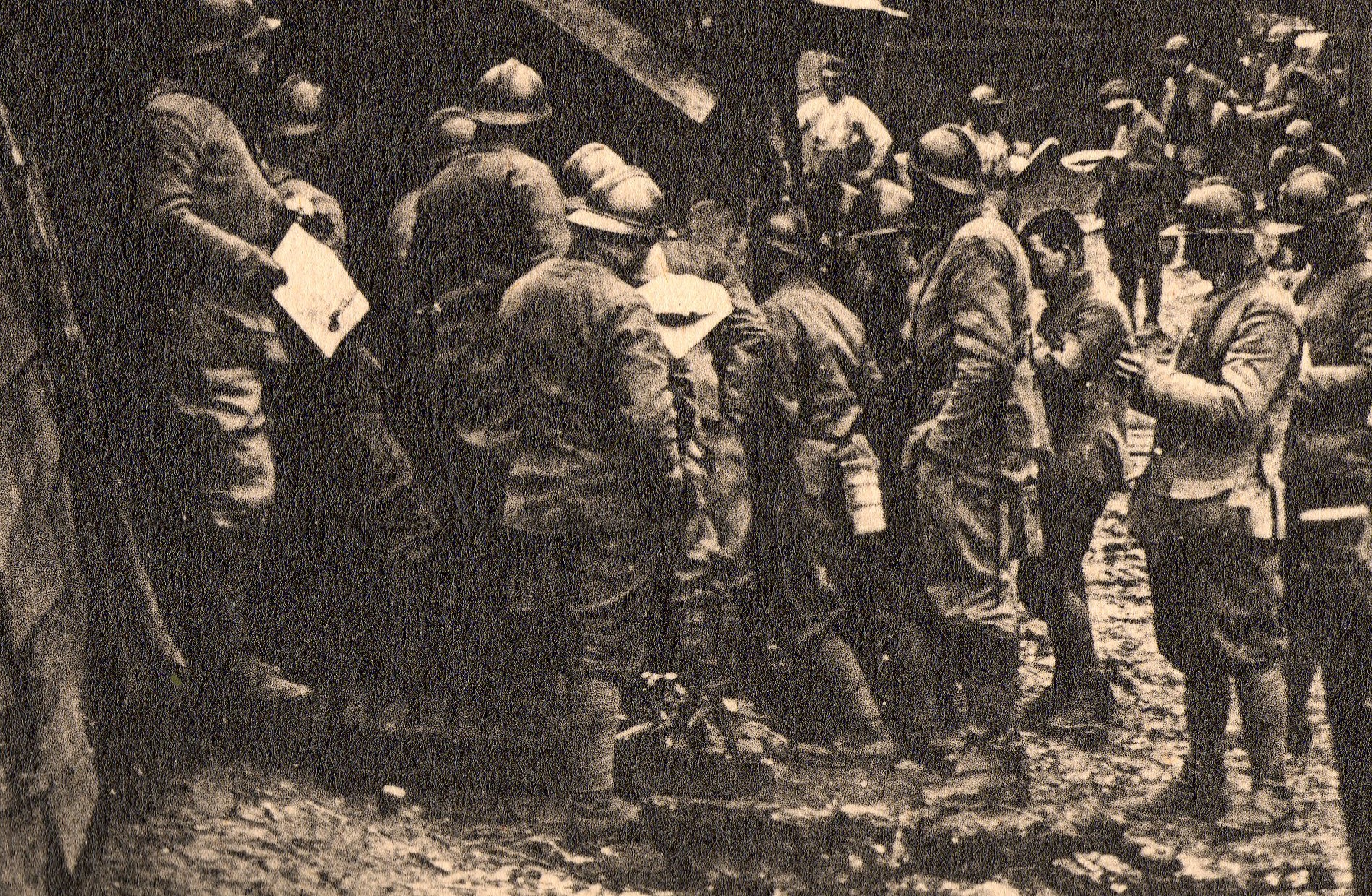
    I’ve collected a few images that are here (and available at our blog bookstore) that give a little flavor of the trenches, and the men in the trenches–though without the scent of the stale water, or the bite of the chill, or the perpetually wet feet, or the cold, or the dysentery, or death’s constant pull and struggle.

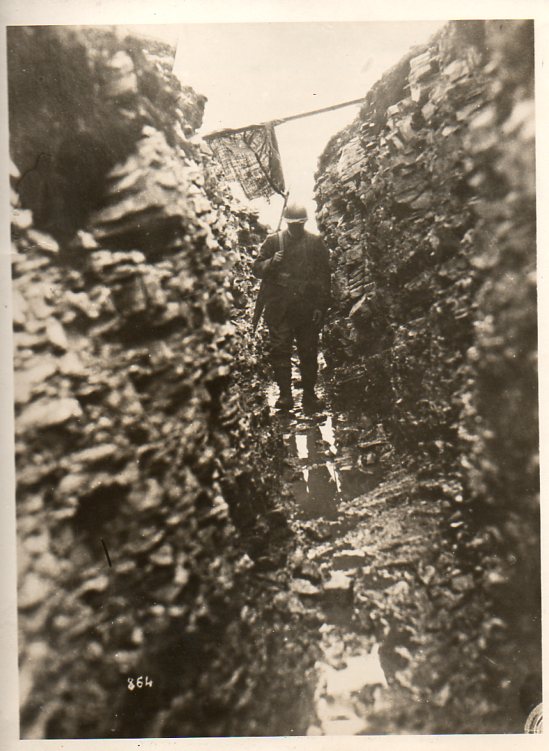
    WWI photo--trench045
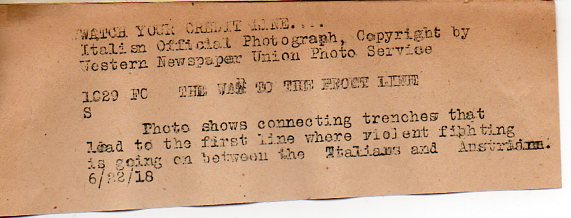
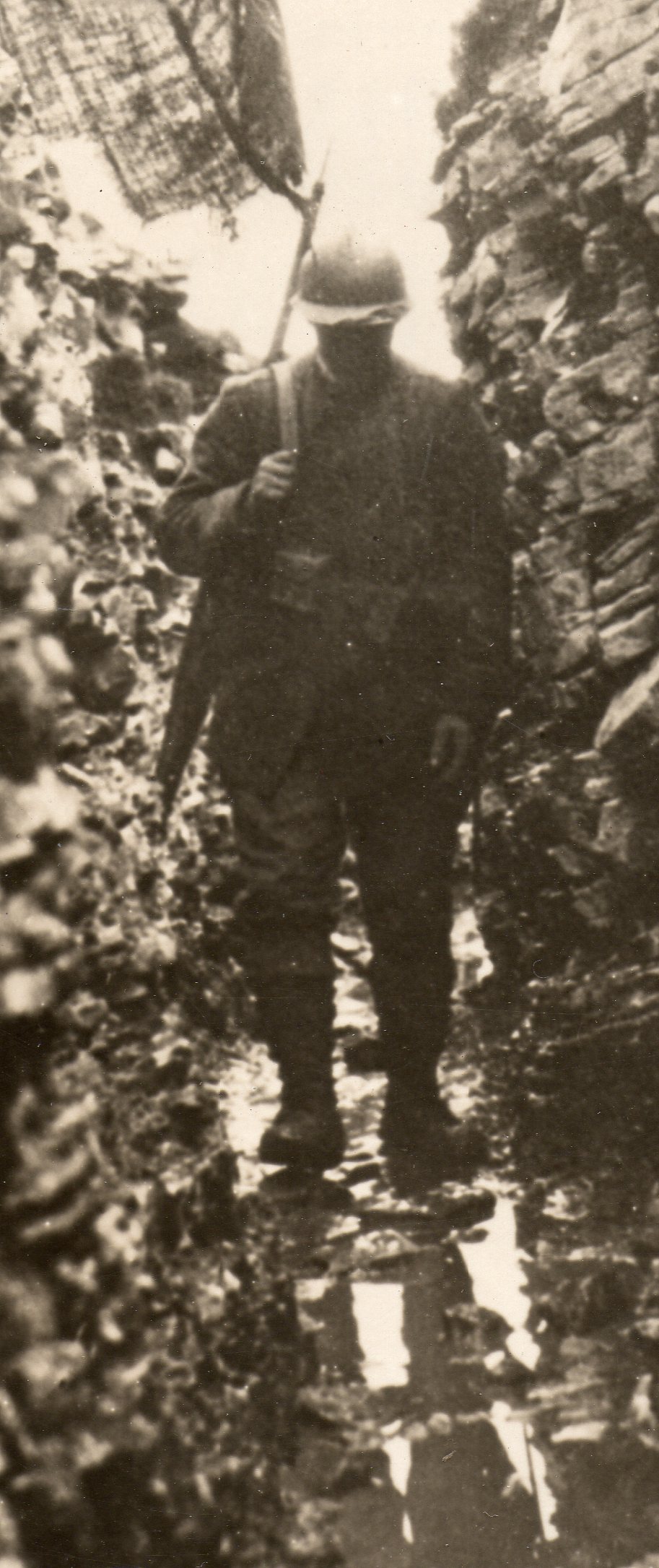
    This is an original photograph made by the Western Newspaper Union Photo Service, as a “British Official Photograph”  (with the “British” part penciled out and replaced by an unknown hand, “Italian”),  The photo agency supplied a caption for the image (that was supposed to have been used by the newspaper or magazine that published the picuture) as follows:

    WWI photo--trench note046

    And the detail:

    WWI photo--trench note detail047

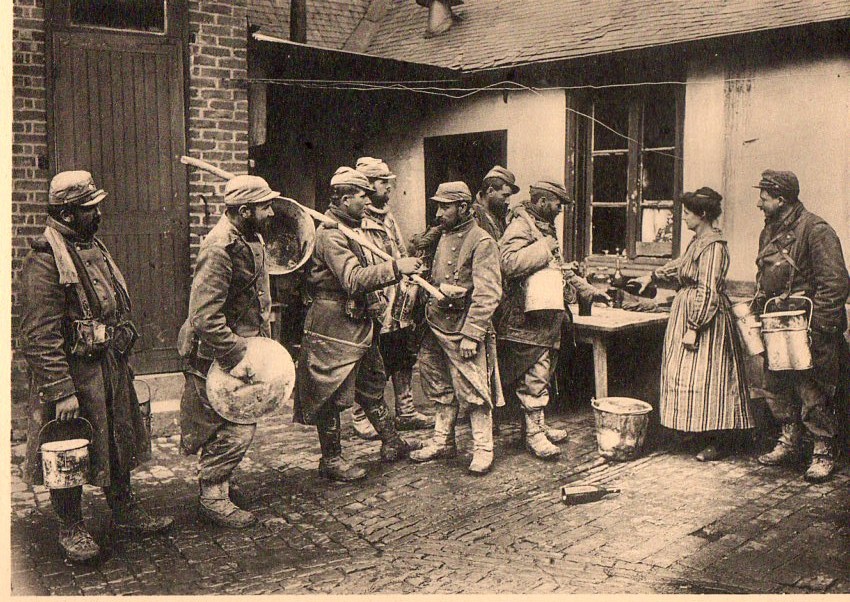
    I’ve also put together a few examples from a collection of exceptional photogravures printed in 1919:

    WWI photogravure--group gettg drnk055

    And the detail:

    WWI photogravure--group gettg drnk det056

    WWI photogravure--soldiers waiting059

    And a detail:

    WWI photogravure--soldiers waiting det060

    And another detail:

    WWI photogravure--soldiers waiting det061

    WWI photogravure--grave054

    WWI photogravure--trench life 058

    And a detail:

    WWI photogravure--trench life det057

    WWI photogravure--trench wounded050

    WWI photogravure--trench wounded det051

      WWI photogravure--trench empty062

      WWI photogravure--bunched group street048

    And the detail:

      WWI photogravure--bunched group street det049


  • WWI Photographs, July 4, 1918–Americans in London

    JF Ptak Science Books   Post 1263

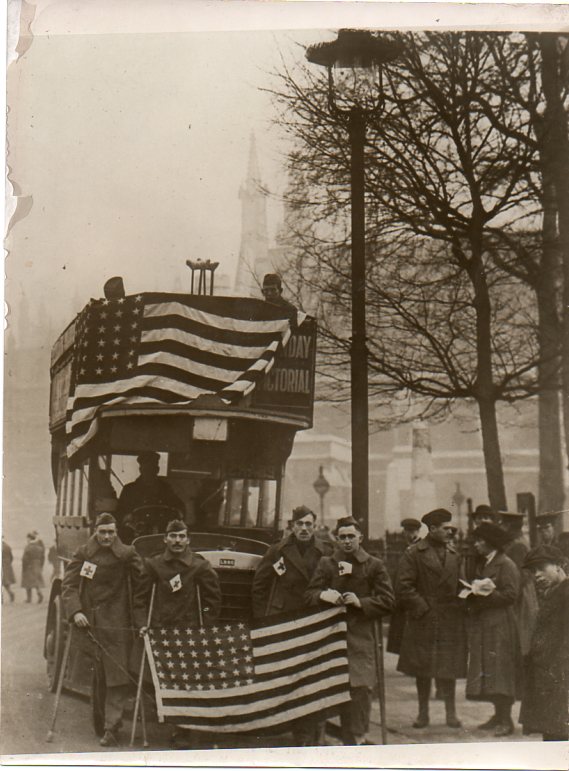
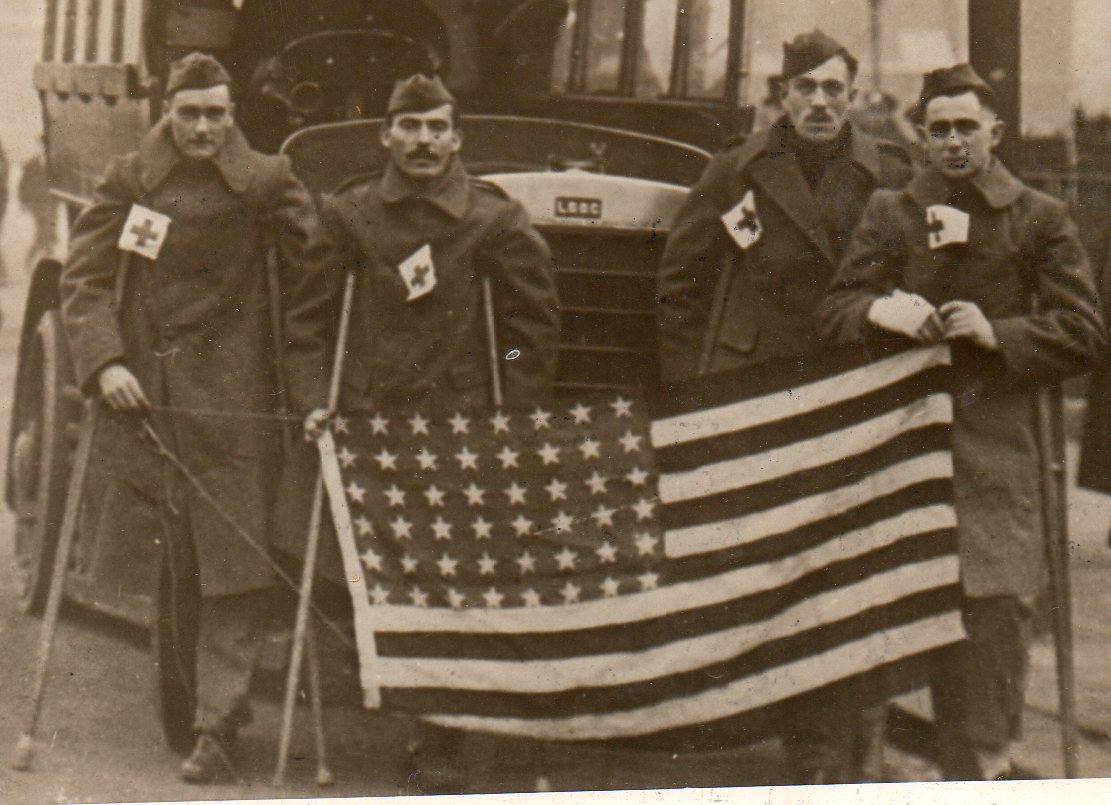
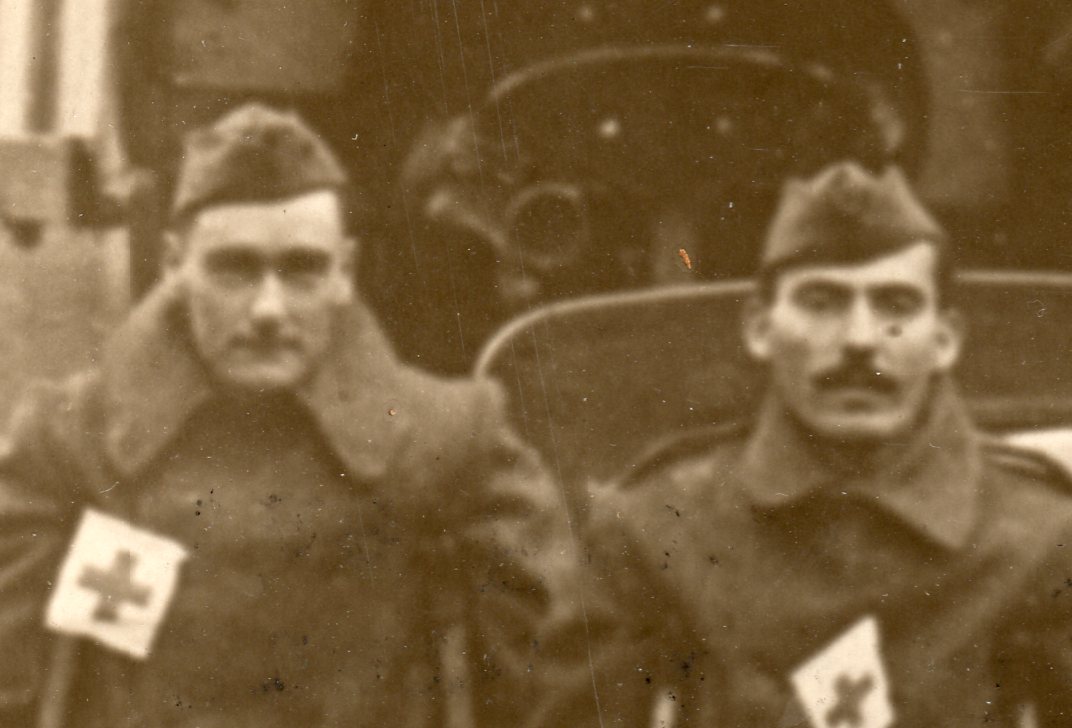
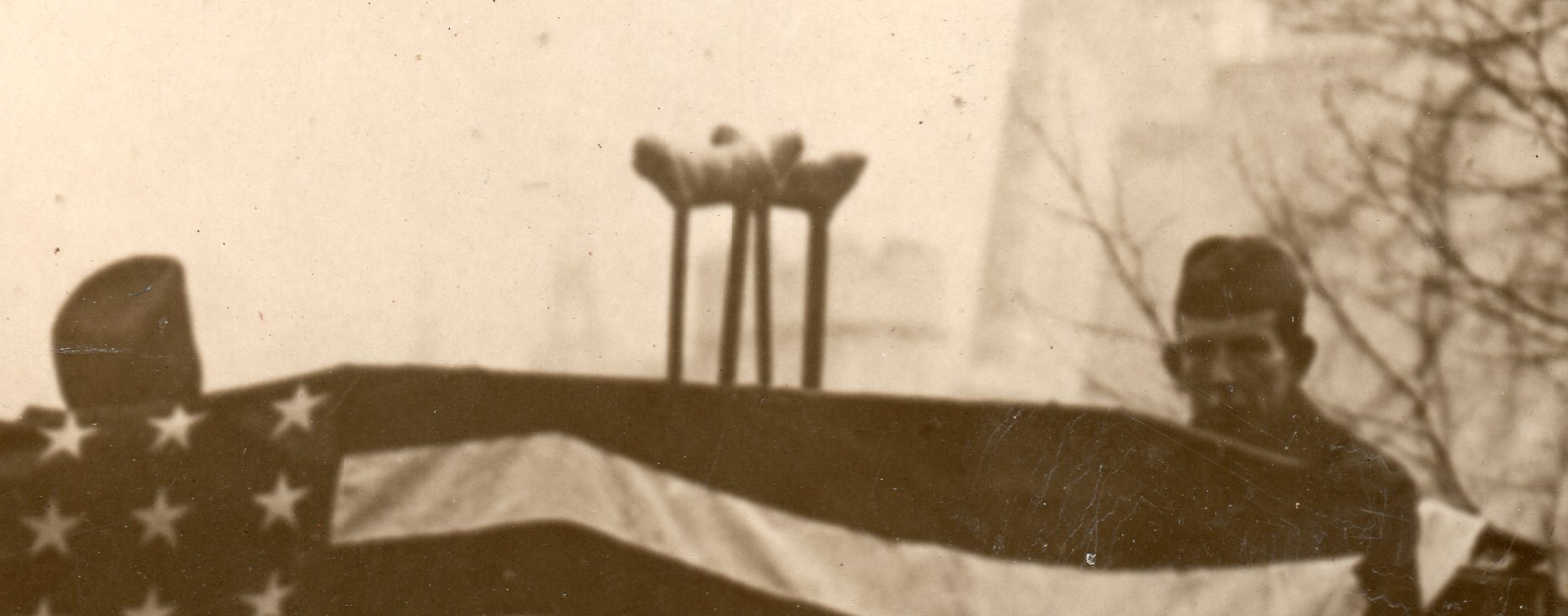
    This image–from a collection that I’ve mentioned previously on this blog–shows a group of wounded-in-action American Doughboys1 recuperating in London on 4 July 1918.  There were at least six of these soldiers aboard this bus, touring, being invited to celebrate their independence day in London, their flag–and a big one at that–draped across the bow of the upper deck of the bus. 

    There were be about 204,000 American soldiers wounded and 116,500 killed during WWI, the end of which was in sight at this point, just five months away.  These were some of the survivors of the American share of war casualties.  Almost all other nations fared far worse (see below)

    WwI--photos--flags london030

    (THe original photograph is available at our here.)

    WwI--photos--flags london b031
    WwI--photos--flags london c032
    WwI--photos--flags london e033

     The U.S. lost .13%  of its population to casualties (killed and wounded) during the war.  New Zealand 18,000/41,312 killed/wounded amounted to 1.6% of its population.  The U.K. lost 2.19% (964,000/1,663,000), Italy was 3.48% (650,000/953,000 plus 650,000 civilian casualties), while France suffered a 4.29% (1.4 million/4.27 mil) blow of its total population to war.  Things were worse on the other side:  Germany 3.82% (2 mil/2.4 mil plus 426,000 civilian deaths, and the Ottoman Empire 12% (400,000/771,000 plus 2.1 million civilian deaths.   Worst of all was the Ally  Serbia, suffering a catastrophic 16% loss of its population to war, including 275,000/725,000 plus 426,000 civilian casualties.  As gruesome as the numbers were, the Americans felt only a small percentage of the total sting of war–by 11 November, more than 21 million soldiers would have been wounded, with 9.7 million soldiers and 6.8 million civilians killed (for a total of 16.4 million).  It was an enormous price

    Notes

    1.  The origin of the term “Doughboy” is unclear, or varied, or rich, but it is at least pretty oldm beginning around the time of the Mexican American War in 1846-1848–evidently when the soldiers marched through dry, tough terrain they wound up being covered by earth with the color of dough.  Doughboy.
    ·Posted by :

    ·in:

    — —