A Daily History of Holes, Dots, Lines, Science, History, Math, Physics, Art, the Unintentional Absurd, Architecture, Maps, Data Visualization, Blank and Missing Things, and so on. |1.6 million words, 7500 images, 4.9 million hits| Press & appearances in The Times, Le Figaro, Mensa, The Economist, The Guardian, Discovery News, Slate, Le Monde, Sci American Blogs, Le Pont, and many other places… 5000+ total posts since 2008.

Category: Militaria

  • Little Pieces and Superb Design: Rockets, Canons, and other Boom Boom

    JF Ptak Science Books  Post 1420
    Artillery285

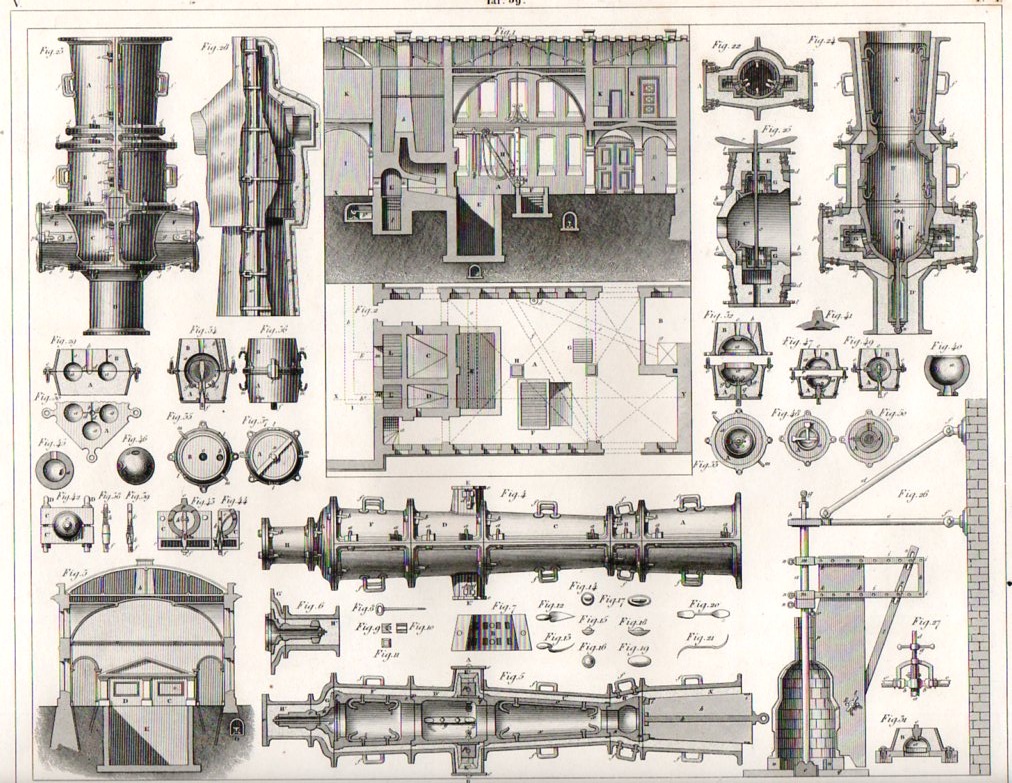
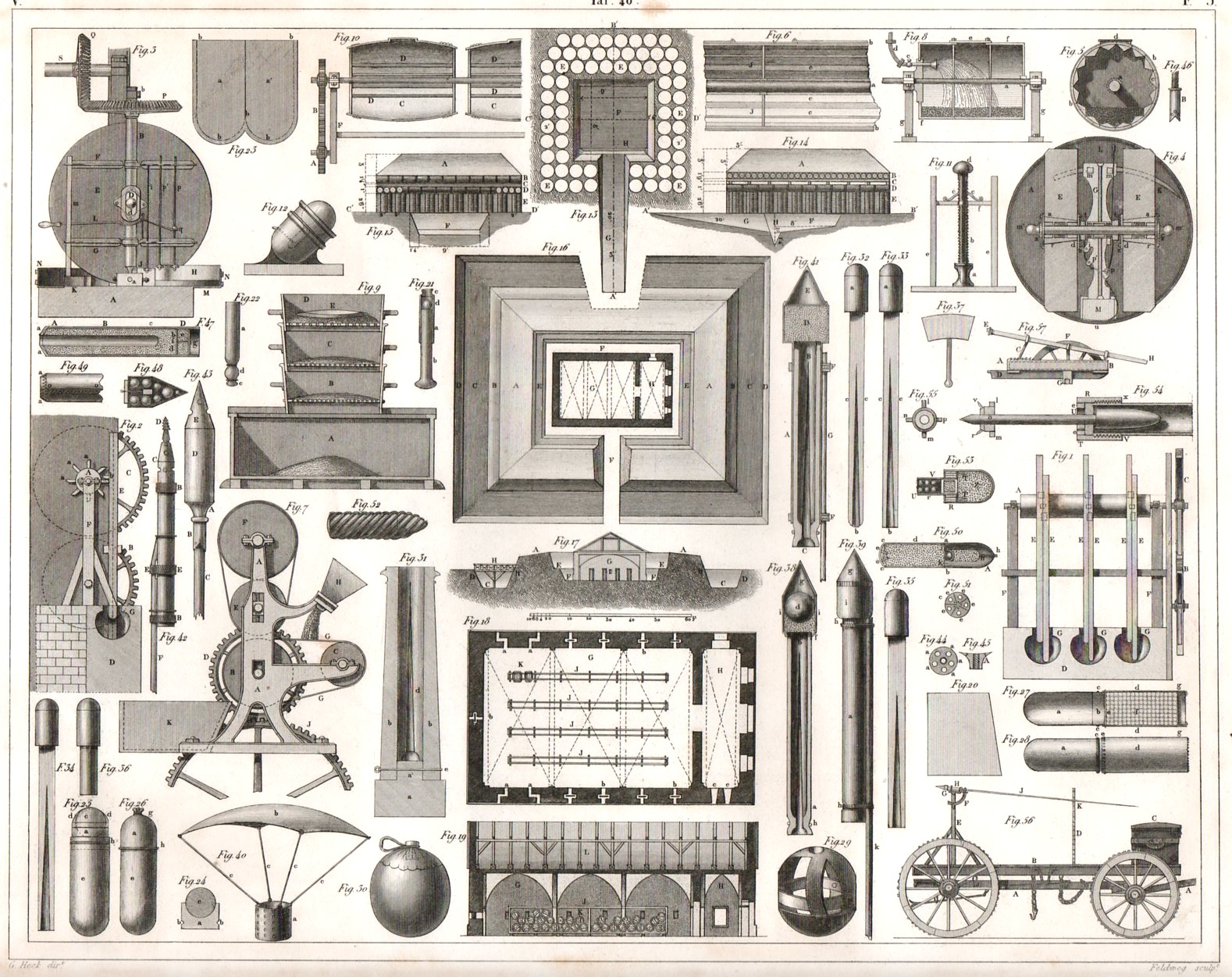
    The Iconographic Encyclopedia of Johan Georg Heck (printed 1851)  turns out to be perhaps one of the best designed books of its type in the nineteenth century.  Seemingly no  matter how much diverse information is hosted per page, whether the items number in the dozens or over a hundred,  the artist managed to distribute them with such grace and apparent ease that it is an absolute pleasure to see it all arranged before you. 

    Take for example the following two engravings of artillery fabrication of the early/mid 19th century.  There are 49 complex images on this first  piece of 11×8-inch paper (above), and yet there seems to be also a lot of white space.  It is a full but not crowded display of superb craftsmanship–it is also all very interesting. (Both are available for purchase from our blog bookstore.)

    To start, the main figures at top-center shop the plan and elevation of a workshop for casting canons, and we can clearly see the main furnace (“A”) for the big guns, surrounded by smaller auxiliary furnaces for smaller pieces.  Off to the side we see “K”, which is the drawing room and also the place where the director of the plant would live. Underneath it all in section we see various pipes and drains used to take away water and ash.  The structure on the lower right is for forming the business end and the purpose of the canon or mortar–namely, the ammo, and in particular, the pattern mold of a 50-lb mortar.  The long vertical pole at left used to place he liquid metal under pressure in the hearth, the ball being at the very bottom center.

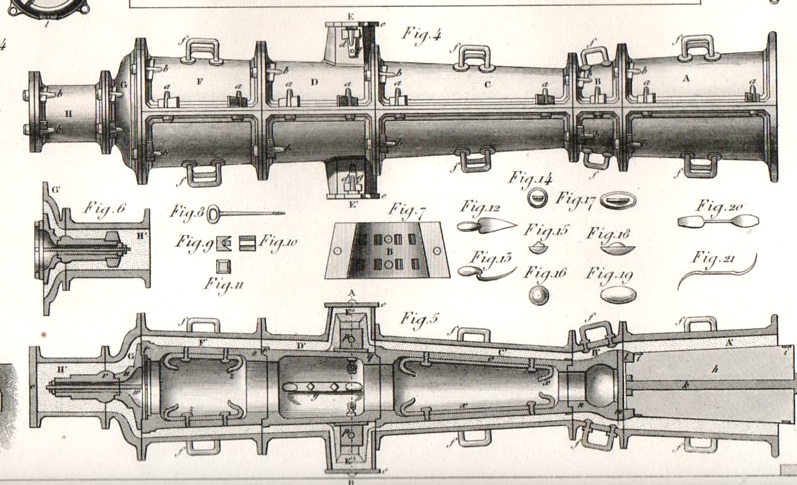
    I’ve enlarged figures 4 and 5 to show the particulars of a canon (dry sand) mold, #4 being the exterior of the mold and #5 showing a cutaway so that one could see the six-ponder canon that was being formed inside.
    Artillery286

    There is just so much in this image that a more knowledgeable person could easily go on for pages describing each and every bit. 

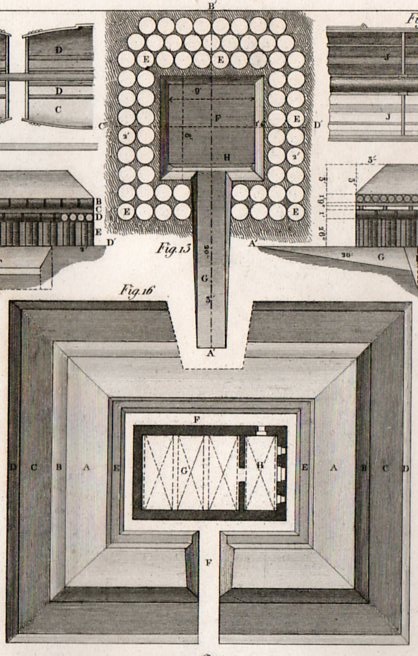
    The second image displays cartridges and (in general) fireworks–military pyrotechny.  What strikes me right away in this image are the five architecturals in the running vertically down the middle of the sheet.  They show what to do with gunpowder once it has been manufactured, which is an important consideration on handling and safety prior to it being used in battle–the first plan shows a field magazine, while the other four show the disposition of the construction of a permanent magazine, which show plenty of ventilation as well as massive walls which are in turn sunk into the earth and surrounded by ramparts.  It also seems that the roofing is huge, built no doubt to accommodate an earth filler.  Each of the barrels carried a hundred pounds of powder, so there was considerable interest not to allow the magazine to blow up, and if it did, to have the blast go mainly skyward. 
    Artillery287

    Some other items of interest in the second engraving include the incendiary devices (at bottom, #s 29+30),  signal rockets (#s 32,33,34,35), and the Congreve rocket, (#40 and #52,  which is much bigger and meant to be fired on the enemy, it being an incendiary); #53 is another Congreve, but this one scatters grenades as it is in flight. 
    Artillery288

    There’s a lot that can be described here but it goes a little beyond what I wanted to do with this post–it is also a lot beyond what I know about the subject.
  • U.S. Wartime Production, Control, and Patriotic Propaganda, 1942

    JF Ptak Science Books  Post 1416

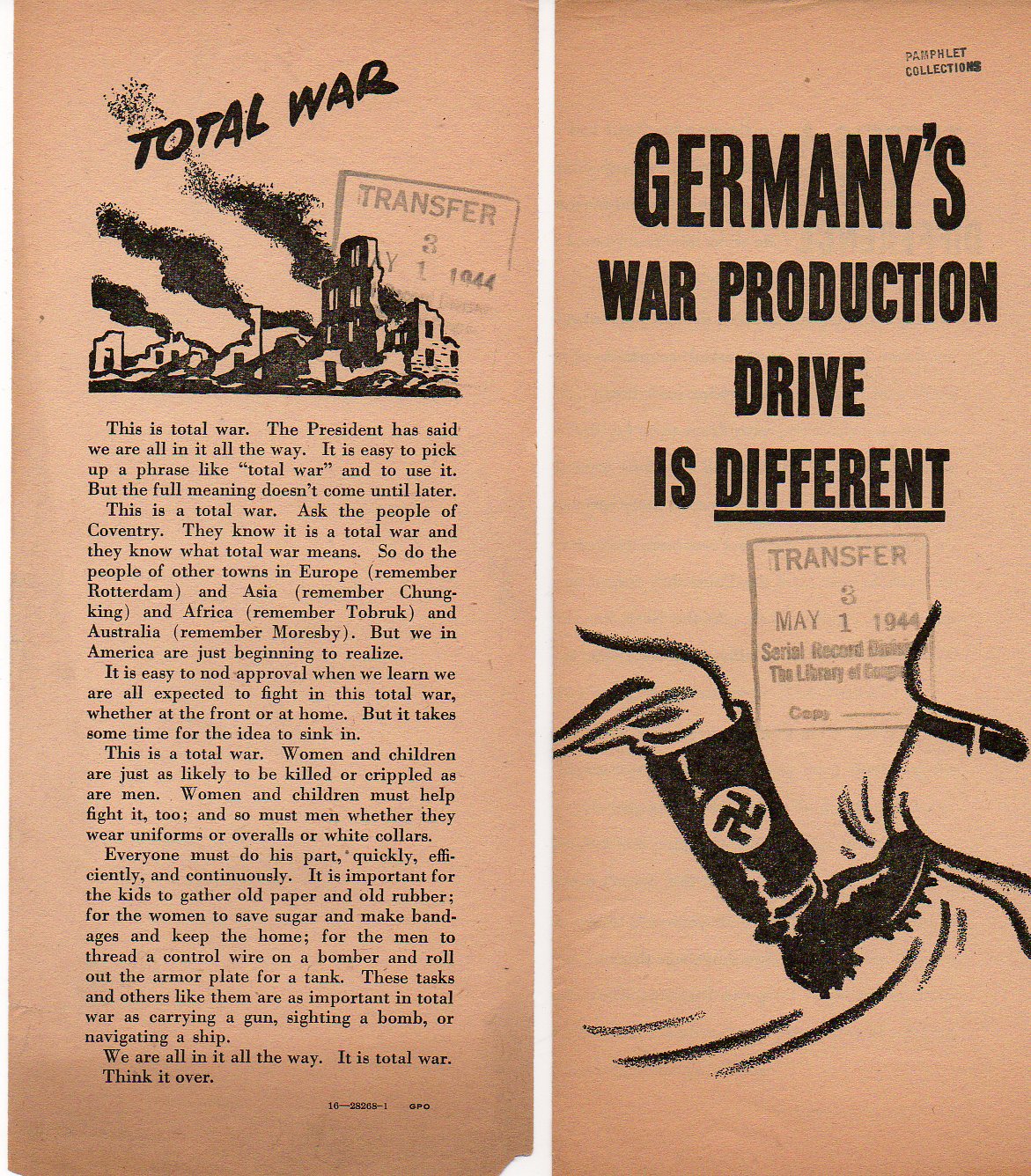
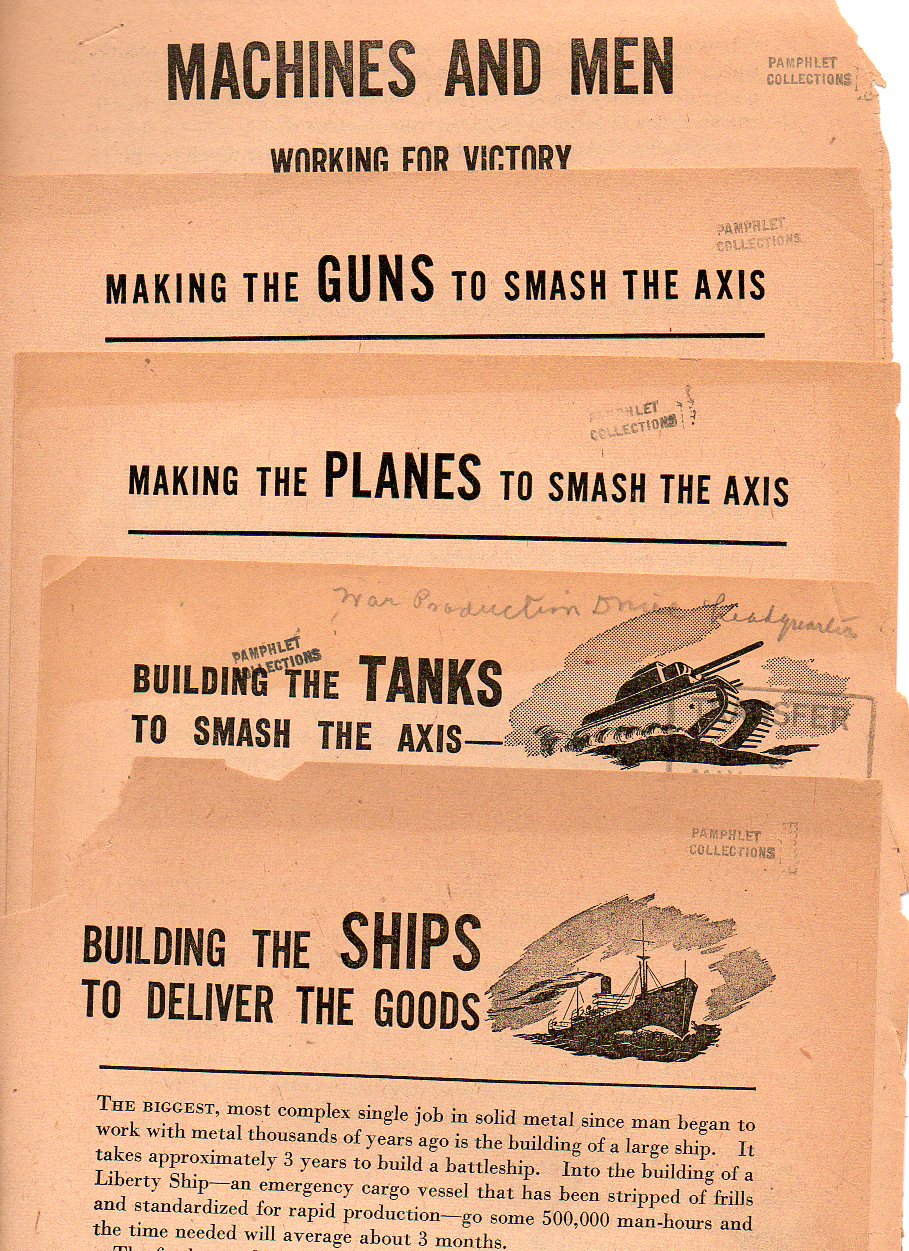
    The War Production Board (WPB)–the entity responsible for printing the leaflets below–was instituted 16 January 1942 as a federal effort to direct U.S. wartime production and allocation of essential commodities.  And time. The WPB centralized the effort to convert some peacetime industry to wartime production, as well as direct the production of existing wartime industries in the manufacture of critical goods, and rationed or prohibited the manufacture of other material that could possibly hinder the war effort.  Thus the WPB rationed things like sugar, heating oil, plastic, gasoline, paper, rubber, nylon and metals of all descriptions; it also controlled large swaths of the workforce, restricting wages and benefits as well as prices.   It was an essential element of fighting the war, and brought necessary control to an economy and industrial base that needed organization for what would become a total war.        (We offer a small collection of 16 of these items at our blog bookstore.)

    War Production Board265
    Instituting a war-production base for American industry allowed production to ratchet way up, producing (for example) multiples more aircraft more in 1943 than in 1941:   1940, 6k aircraft; 1941, 19k; 1942, 47k; 1943 85k; 1944, 56k; 1945, 46k.  Also there were enormous production advancements for total shipping tonnage (reaching a wartime production total of 33 million tons), across-the-board huge increases in coal and iron ore (and especially in crude oil), and on and on.  The U.S. was able to mobilize itself and take advantage of its enormous natural resources, industrial base and civilian workforce in what was essentially an unreachable island economy, forming what was actually an unbeatable combination of war goods production. (Plus of course there was the atomic bomb, which is another story, but which also only could have been produced in the U.S., given the enormous quantities of energy and material needed to begin its production.)     

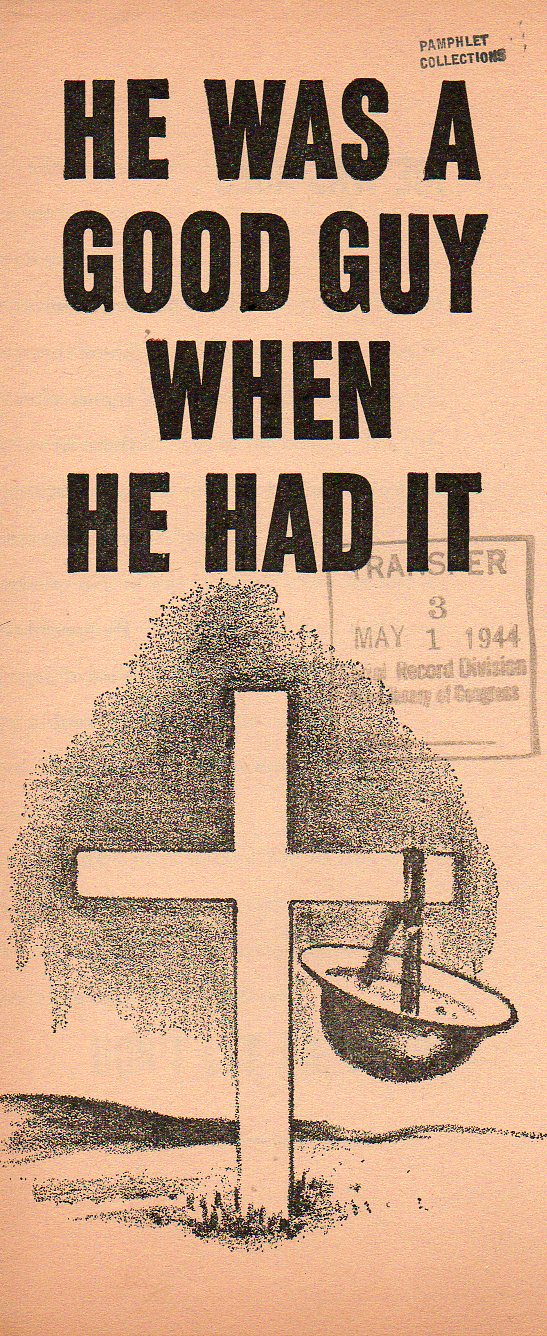
    War Production Board264 The WPB also was responsible for hearts-and-minds campaigns at home, too, because so many people, such a huge proportion of the population, needed to be involved in the war effort, not only from the production standpoint but also for strategic conservation.  For example, in one massive effort to collect the very necessary scrap metal (that would be collected and reformed into war materiel) the WPB organized a nation-wide drive that in one day collected 82 pounds for every person in the country.  Singular efforts like this, or seemingly singular, needed to happen at regular and short intervals for the war economy to be successful.  And so pamphlets like the story of Joe, below, needed to be told:

    The “it” that Joe needed to have was ammunition, and grenades, and anything else that would kill the enemy.  With it, Joe was successful; without it, and thereby without the “it” being produced by the folks at home to whom this flyer was being distributed, was helping to kill Joe by not giving him enough of the deadly stuff.

    “Don’t let Joe down” says the flyer, “its our job to give him everything he needs and wants”.  It turns out that Joe had 26 notches in the comb of his rifle, “from the Japs (who would never) get back to report after they met Joe”.   Joe “spread the lead around with a free and easy hand and alot of Japs wished he hadn’t been so generous.  Trouble was, he never had quite enough of it…”

    And so went the rest of it, and them–resonant pleas, demands, for people at home to be vigilant in whatever it was they were doing to push the war effort forward.  Slacking meant death and possible destruction, and the hosts of these flyers that I have here gave very little pre-text for this not to be the case. 

    War Production Board266


  • Films from U.K. National Archives, 1940. Winning the War for Hearts and Minds at Home.

    JF Ptak Science Books   Post 1412

    Interesting films produced by the Office of Information, mostly 1940 and 1941, and found at the (U.K) National Archives. 

    London Can Take It!  (Battle of Britain, 1941)

    “This film, in which the American journalist, Quentin Reynolds pays tribute to London and its people under fire, conveys the spirit and atmosphere of the 1940 blitz on the capital. Its impact at the time, especially in U.S.A., makes it historically one of the most important of the war films.”

    “The production file in the National Archives – TNA: INF6/328 states that the film was to be ‘distributed throughout U.S.A, Canada and Latin-America by Warner Bros’ and was to be shown in ‘at least 15,000 American cinemas’.”  Relseased 1941.

    Hitler Takes Command

    “Cleverly edited montage footage taken from German propaganda films, including Leni Riefenstahl’s Triumph Des Willens, which shows Hitler and his marching Soldiers of the Reich, synchronised to the tune of ‘The Lambeth Walk’.”  Relseased 1941.

    Dig for Victory

    “An appeal to everyone during wartime to ‘Dig for victory’ by cultivating vegetables for the good of the country and their own better health.

    Words for Battle.

    “The production file held at the National Archives – TNA: INF 6 / 507 states that ‘a re-edited version was made by Spectator for inclusion in the fortnightly reels for Russia’ and that material was used from other Ministry of Information Films including ‘How to dig’, ‘Sowing and planting’ and ‘Cultivation’.”

    “Words for Battle evocatively sets to film passages of quotation from poetry and prose including works by: Milton, Blake, Browning and Kipling. The famous “we shall never surrender” speech by Winston Churchill and Abraham Lincoln’s Gettysburg Address are also quoted in the Film. It powerfully associates these passages and music by Handel and Beethoven with images of everyday life in Britain at war.

    The Crown Film Unit file held in the National Archives: TNA: INF 6/338 synopsis reads: ….“A call to arms through images and words of Britain’s countryside, people and poets”.

    Released 1941, and read by Lawrence Olivier.

    Workers’ Weekend (A Tribute to the Workers of the British Aircraft Industry)

    ‘A tribute to the workers of the British Aircraft Industry’. Men and women in a factory in the North-West of England set themselves the task of building a Wellington bomber in the record time of 30 hours. Constructing in their own time, the workers donate the bonus they got to the Red Cross ‘Aid to Russia Fund’.

    The cameras capture the whole process of the construction in record time through to the test pilot taking off in the plane, ahead of schedule.”

    ·Posted by :

    ·in:

    —

  • Making Things Disappear–German POWs, 1918

    JF Ptak Science Books    Post 1410

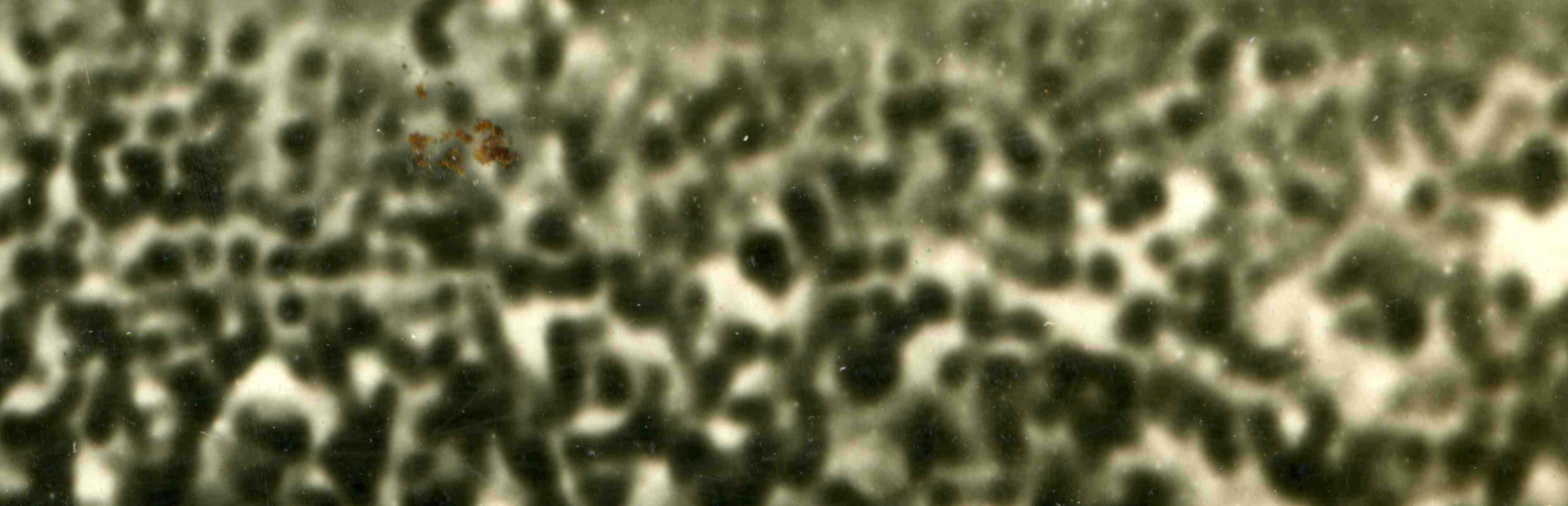
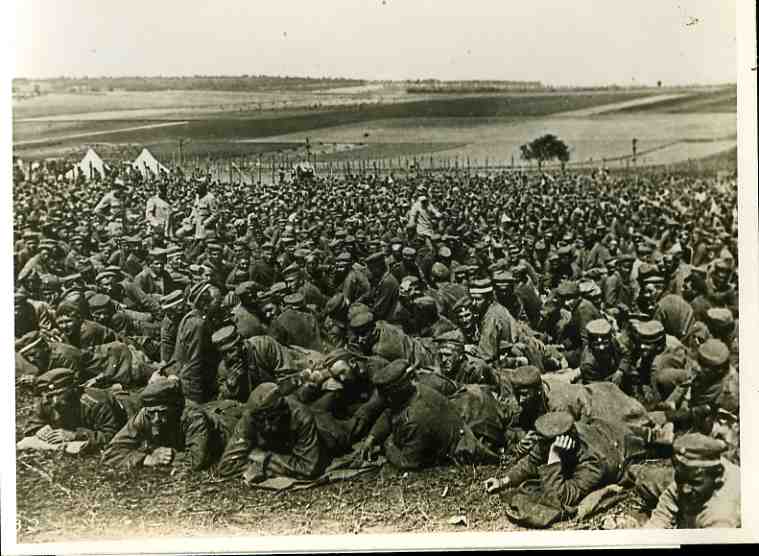
    In continuing series of posts on Blank and Empty Things is this image on fading, disappearing German prisoners of war.  The French had been pounding them in western France in the summer of 1918, and Germans were surrendering and being captured by the thousands.  This news service photograph shows one of the assembly camps with about 10,000 POWs–I made a heavy scan of the group of soldiers in the distance and was  a little taken aback to see that the men had lost their human forms,  looking like bacteria, fading into their future.  (The original photo is available for purchase through our blog bookstore.)

    000-ebay--Nov 8 pows018

    000-ebay--Nov 8 pows017

    The full image is impressive, and shows just a small fraction of the men taken prisoner during 1918; and it shows even a lesser percentage of those killed.

    000-ebay--Nov 8 pows019

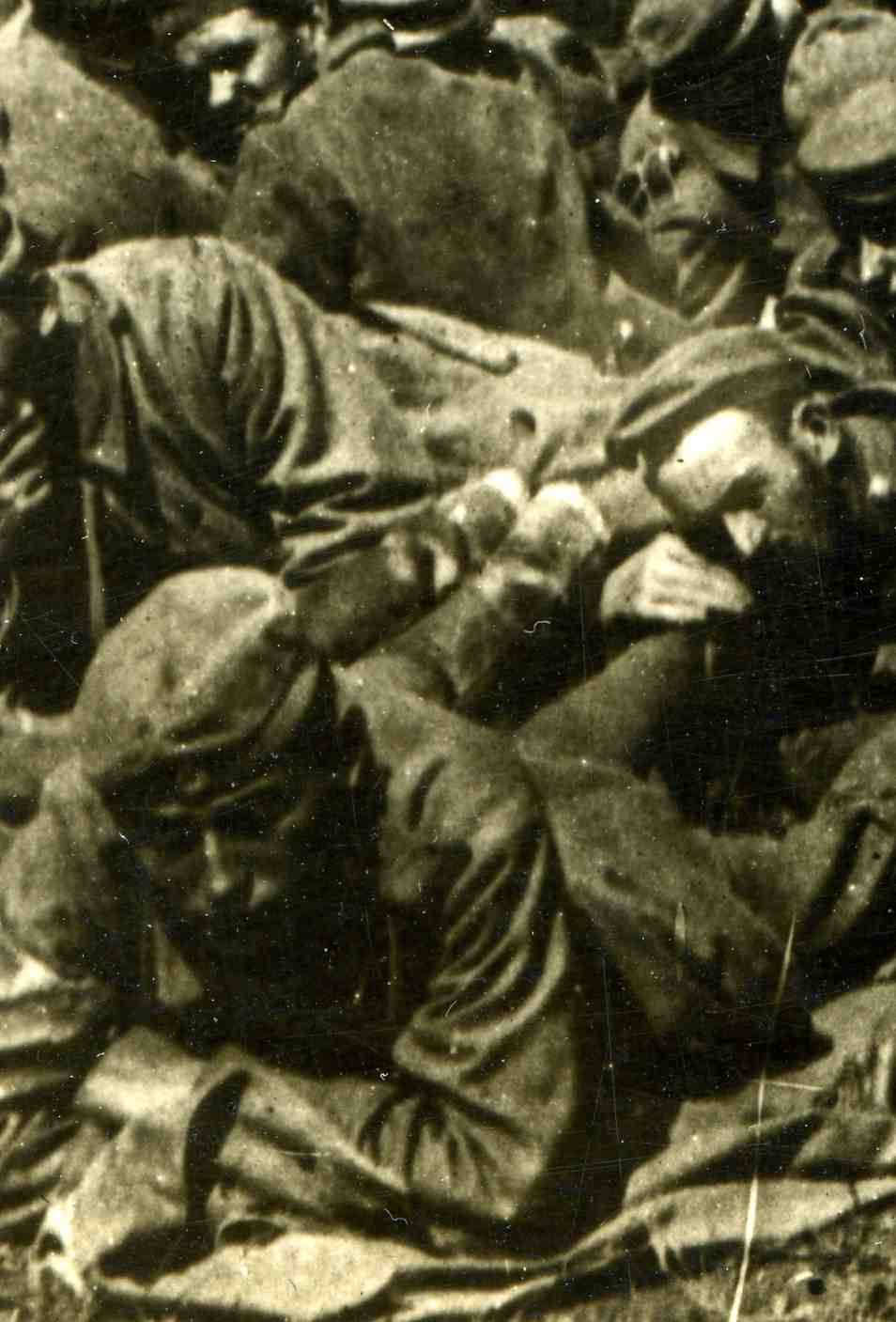
    This detail of the foreground shows the familiarity necessitated by the men being pressed so closely together–there was little free ground.

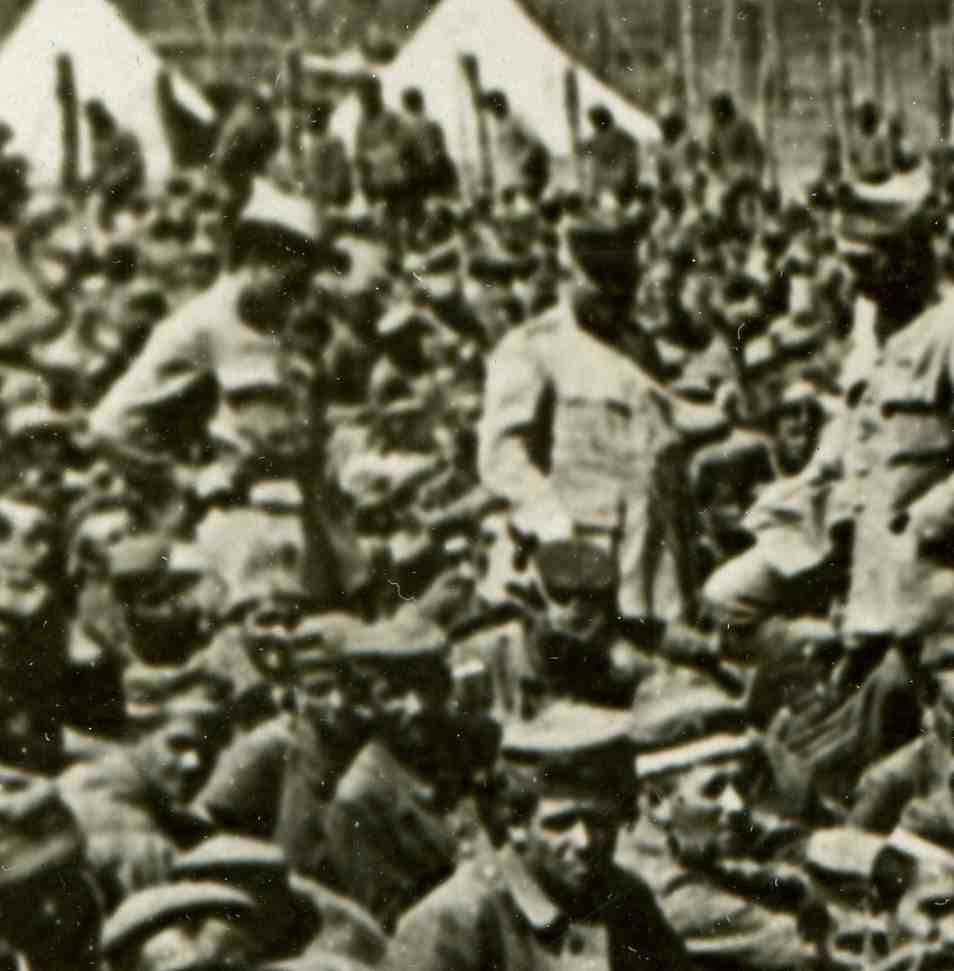
    Also, I thought that the French soldiers in the midst of the prisoner might’ve been feeding them, but it seems as though they were just walking in their midst.

    000-ebay--Nov 8 pows022


  • World War I in Ivory–Pianos and Recovery

    JF Ptak Science Books   Post 1409

    WWI  piano246

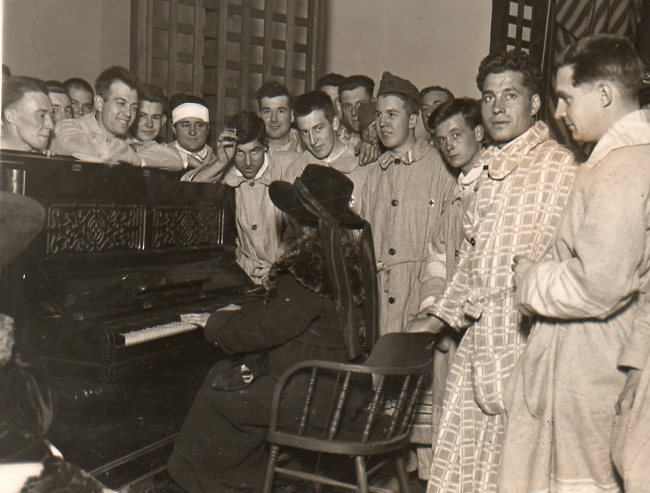
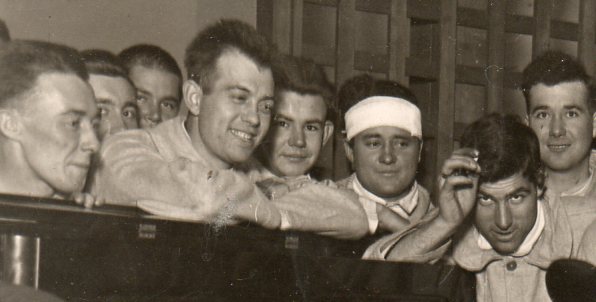
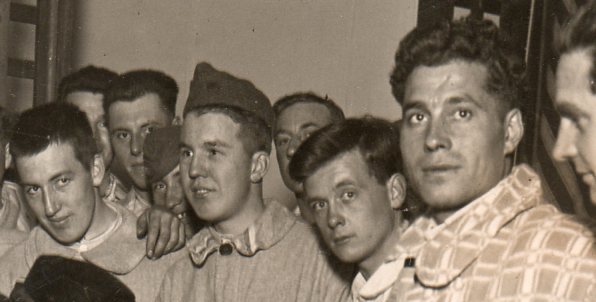
    These images come from my collection of World War I news photo service photographs, and are among the minority that show even momentary happiness.  In both of these cases, the emotion resolves itself in song and in the piano.  The first image takes place in a U.S. overseas hospitals for wounded soldiers, and they seem genuinely relieved to have the attention and the entertainment. (Both images are available at our blog bookstore.)

    WWI  piano247
    WWI  piano248

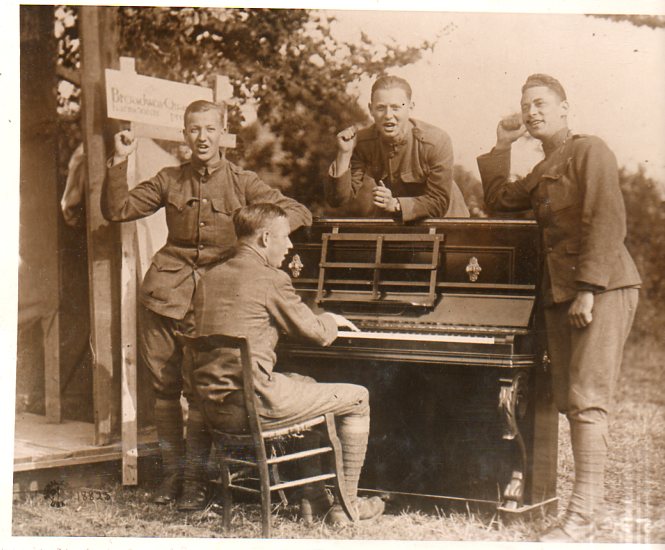
    The second image is dated 2 November 1918–just nine days before the armistice–and shows the “Broadway Quartet” as they rehearse “I’m Only a Buck Private” for a behind-the-lines show for U.S. servicemen, somewhere in France.  The note with the image (from the Western Newspaper Union) says that the staging used for their shows came from found wood, bits of flooring, and camouflage netting torn into pieces.  

    WWI  piano250
    WWI  piano251

    ·Posted by :

    ·in:

    —

  • Underground & Resistance Fighting, 1943–Sharp Hearts-and-Minds Reading for the Allies

    JF Ptak Science Books    Post 1399

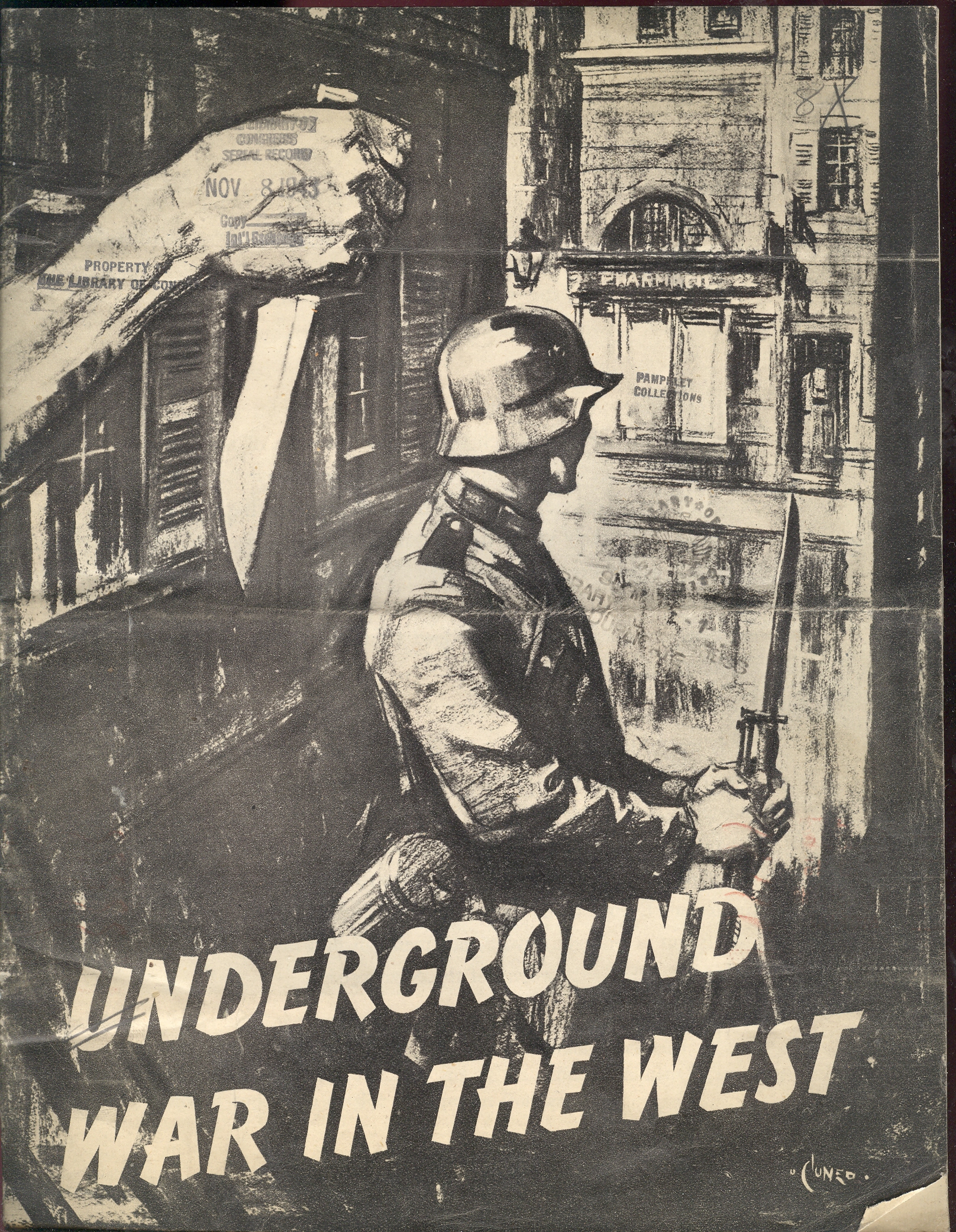
    This pamphlet really seemed like a tiger in a cage—looking through some of the collection here relating to WWII literature on activities in occupied countries, the startling cover graphic of Underground War in the West (printed at some time in 1943, and not before or after) really rattled its cage.  Its contents were non-too tame, either—while being reasonably polite (as was the fashion) it still invoked some very difficult ideas and images.  (The original pamphlet is available at our blog bookstore, here.)

    Blog jan 7 undergrd cvrThis was a terrific, mass appeal pamphlet on the underground actions of occupied Europe illustrated with pencil and charcoal drawings by Cuneo, with each page depicting a  resistance activity—including the underground press, medical aid, sabotage, and general murderous nuisance-making and in general pamphlet praises and celebrates the heroism in occupied countries such as Czechoslovakia (with a drawing showing the assassination of Heydrich), Holland (showing the Dutch caring for a wounded RAF pilot), Belgium, France, Greece. Norway, Poland, Yugoslavia and Luxembourg.

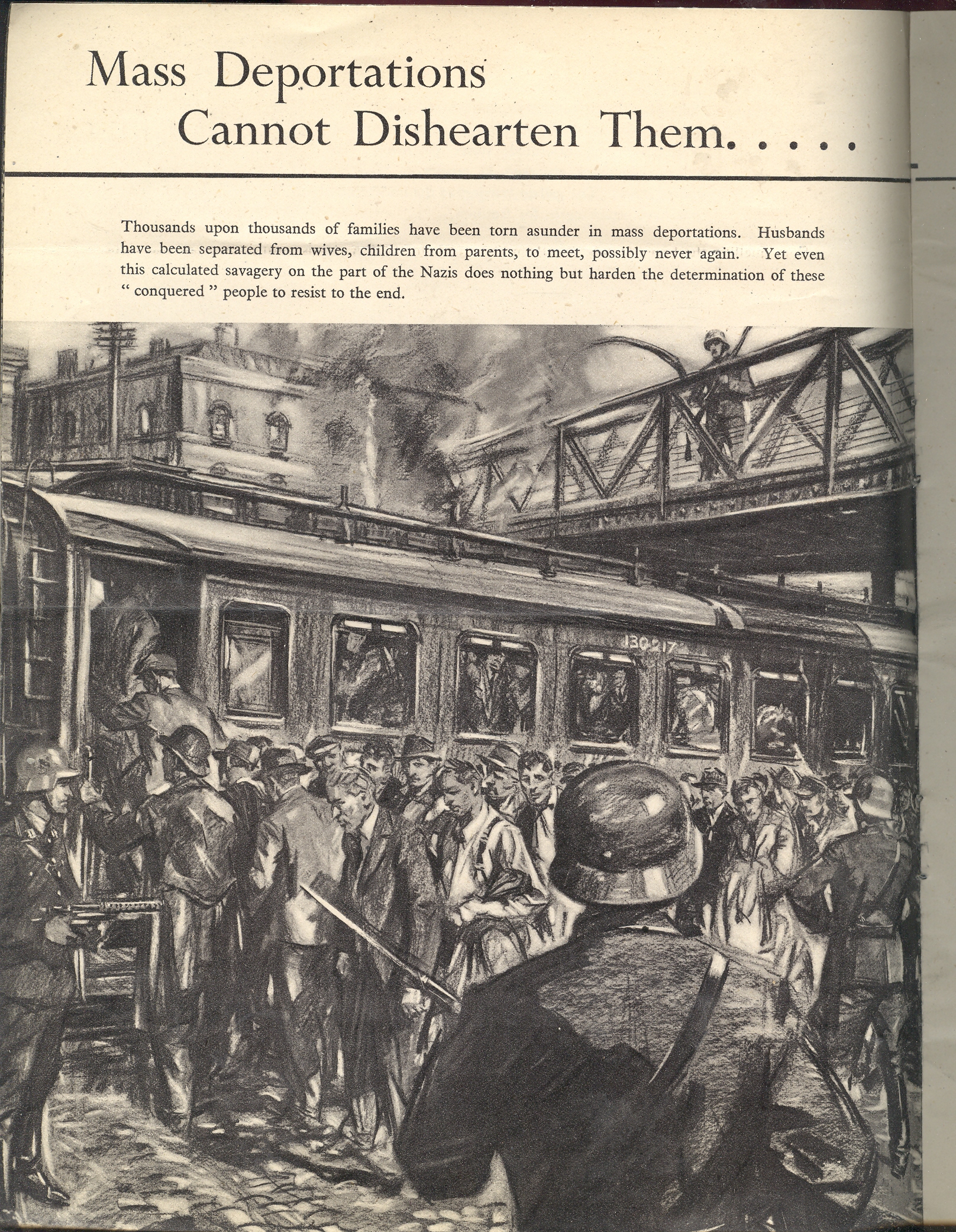
    There are full-page drawings relating to the strength of occupied people in the face of “Mass Deportation (cannot dishearten them, thousands and thousands of families have been torn asunder in mass deportations…”) and “Firing Squads…thin the patriot ranks yet ever more step into their places” . The section on “Facts from the Occupied Countries” list activities in 9 occupied countries;  under “Poland”, we read that “Germany has drawn a veil of silence around Poland…it is estimated that 2,500,000 Poles have died in concentration camps or by execution up to December 31, 1942. There are 54 concentration camps in Poland…and the average life span in the camps is nine months…”  Nowhere in the pamphlet however is there any singular mention of

    Blog jan 7 undergrd deport

    deportation or murder of the Jewish people—there were hundreds of articles printed in American newspapers up  until this time on the beginning of the (yet named) Holocaust, though acknowledgment of a fact doesn’t necessarily make it widely known in spite of its incredible and massive significance.  This pamphlet, while extraordinary in mentioning the millions of deaths in the concentration camps and “deportations”, was rather ordinary in its coverage of who it was that was being murdered in the camps.  


    There is also a two-page spread exhibiting examples of underground newspapers:


    ·Posted by :

    ·in:

    —

  • The Face of Defeat, the Philippines, 1907

    JF Ptak Science Books     Post 1398

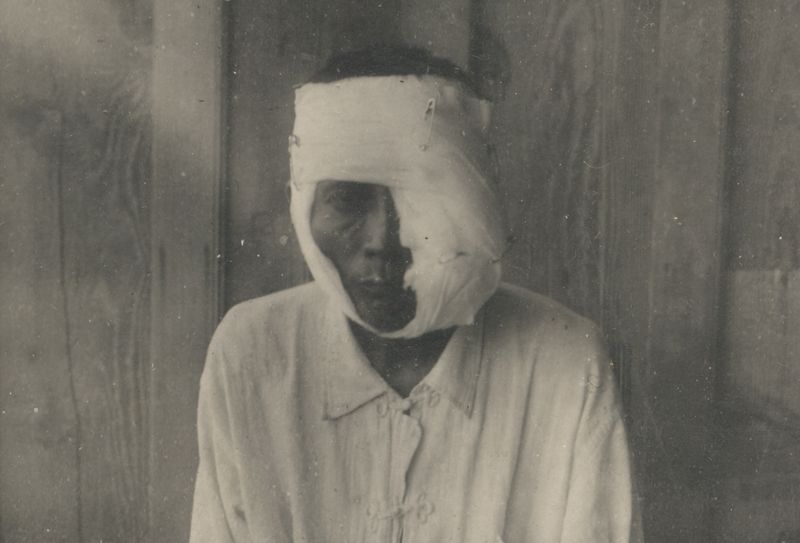
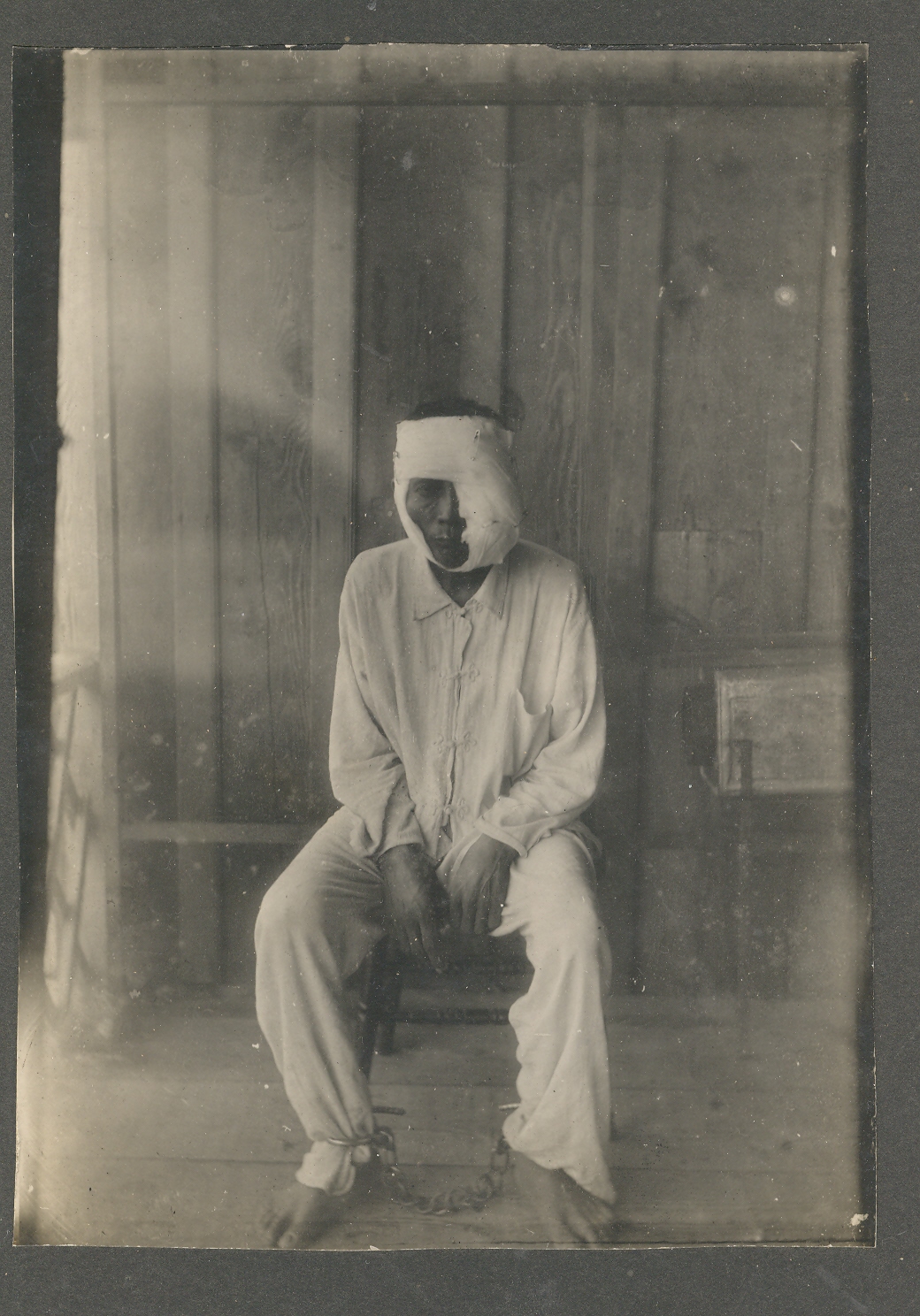
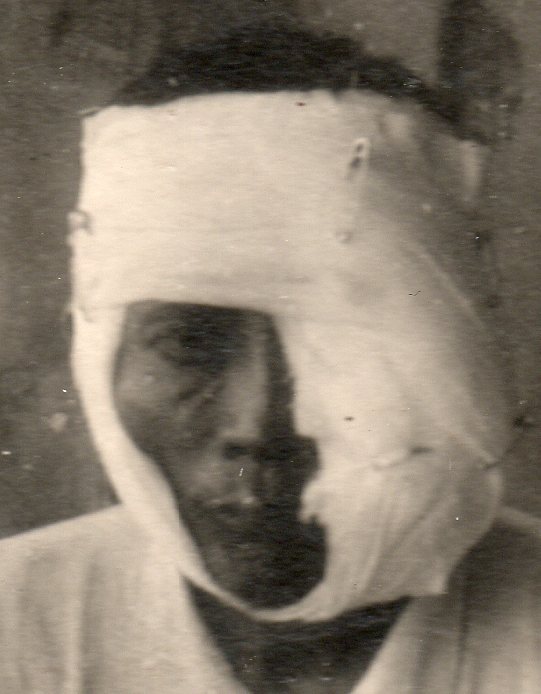
    This is what defeat looks like, or at least so it did in the Philippines in 1907, when the revolt against the Spanish and the Americans was finally at end, for the insurgents. 

    ===blog==aug 24=big faustino face

     Ablen Faustino (fl. 1880-1907), Philippine religious and resistance leader, was still fighting against the  American government seven years after the U.S. had claimed victory over the Spanish in the Philippines, and represented the last bit of Philippine resistance to American occupation and sovereignty.  There are many stories regarding his final disposition—some of which having the man escape into the woods to die an old man—but from the look of Faustino in this picture it seems as though he was going nowhere, except for a short walk into the heart of darkness that would swallow him just after the photo was taken. (The original photo is available on our blog bookstore site, here.)

    ===blog==aug 24=big faustino smaller

    On the one Faustino was a terrorist; on the other he was a patriot and holyman fighting for his country.  He had fought the Spanish occupiers in the 1880’s until he was captured and imprisoned.  After his release and following the American victory, he founded a religious/insurgent group—the Pulahans–whose ultimate religious experience was to defeat the invaders or die trying.  (From where I sit it seems as the requisite belief was death in battle for this struggle rather than the actual victory which was the benefit to the followers.) The Pulahans for the most part eschewed firearms and other “modern” weapons, launching themselves into battle with bolos, knives, and little else, hoping for hand-to-hand fighting.  It is reported that there were 10,000-15,000 of these troops, making them a formidable army,  frightening if you were one of the soldiers that they were going to attack.


    Faustino208

    These post-war Pulahan Wars lasted from 1902 to 1907, ending with their leader’s capture by Philippine Constabulary and the 8th U.S. Infantry.One of the few official reports on Faustino’s capture was recorded in a legal document regarding jurisprudence in the arrest of the others who were with him that day.  In U.S. v. Espiridion Rota et al (found in the Supreme Court Reports of the Philippine Islands, volume IX, published in Manila in 1908), the unfortunate story of the application of law to the other five men is told, as is the mention of Faustino’s capture.  It turns out that when the others were taken into custody and the wheels of justice began to turn, they all pleaded guilty, and charged with the crime of brigandage.  Rota was sentenced to hanging and the others to imprisonment for 35 (+) years.  Plus court costs.  Their case was appealed because it was said the men had no idea what the guilty plea would get for them in the punishment phase; the Supreme Court upheld the conviction as well as the discipline, which was a little moot for Rota as he had already been hanged.

    Faustino209

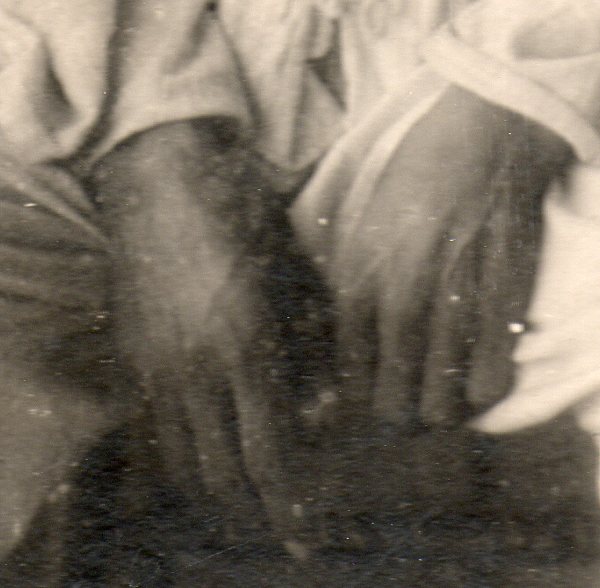
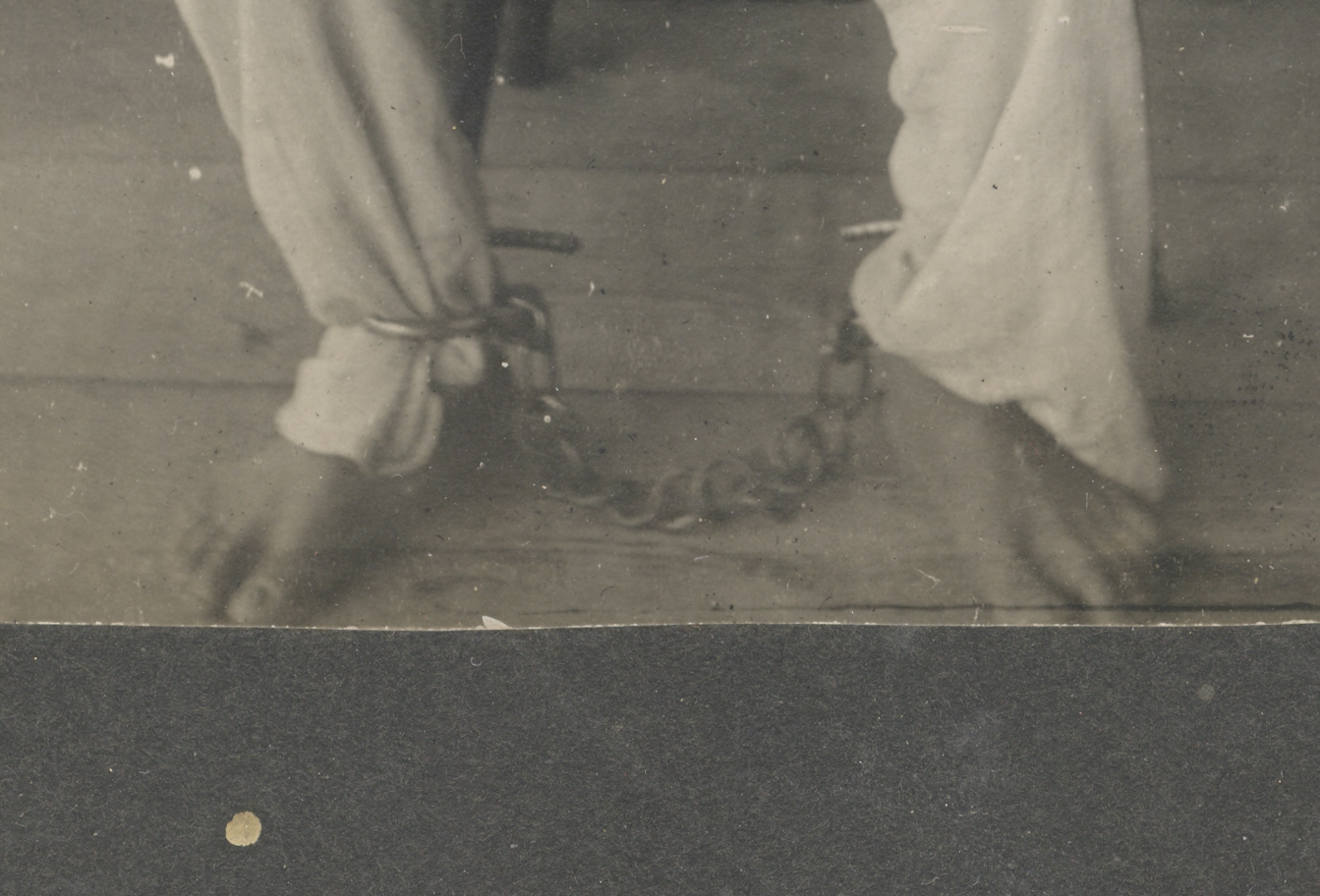
    ===blog==aug 24=big faustino feet What one might infer from this, I think, is that Faustino’s date with his punishment was probably met right there by the hut in which this photo was taken; that his destiny was sealed; and that rather than martyr a religious leader, the troops merely took the severely wounded  (and beaten?) man into the woods and disappeared him. 

    According to the historical sites which have used the other two photos of mine of this event (all done freely and without attribution, unfortunately), these are the only known photos of Faustino’s last times. 

    Another version of the capture of Faustino is less shining:


    ·Posted by :

    ·in:

    —

  • Barbed Wire Cutting Device on the Mall, 1918.

    JF Ptak Science Books  Post 1394

    WWI barf wire cutter179
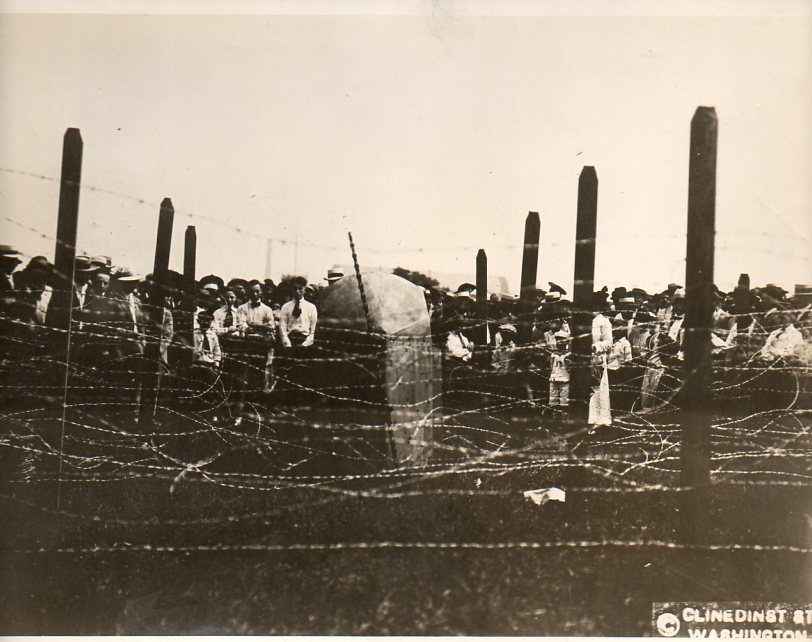
    “Will Cut its Way Through Hun Entanglements” reads the header to the caption for this new photo service war photo from the Central News Photo Service, published nearly at the end of 1918, just a few months before the end of the war. The inventor, John E. Logan, was demonstrating his invention “before senators and representatives of Congress” on a “miniature tank wire entanglement”.  The “entanglement” wire was much nastier than what you’d think of as the “barbed wire” of today–not concertina wire, but something small and nasty that was meant to catch soldiers, to pin them more deeply in the wire like a sharp metallic quicksand, stopping their advance and making them meat bait for machine gunners and everyone else. 

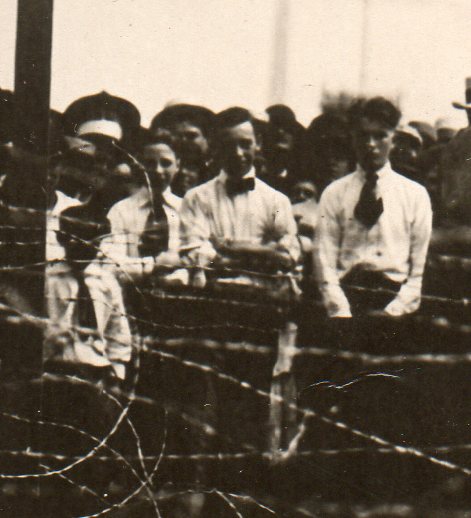
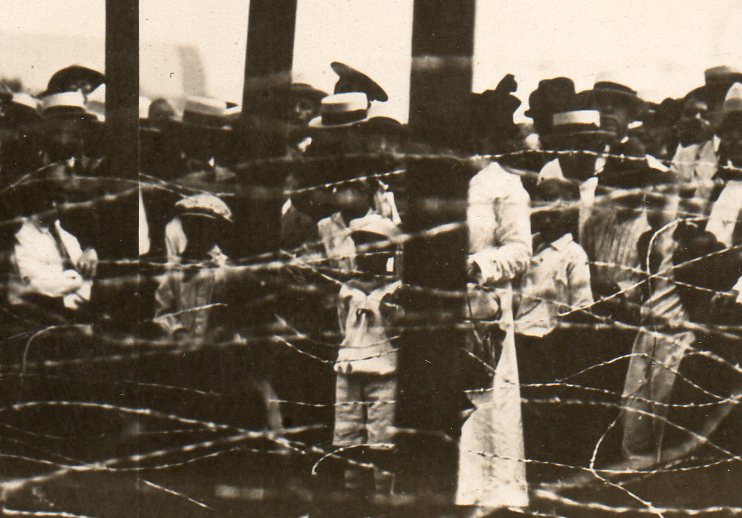
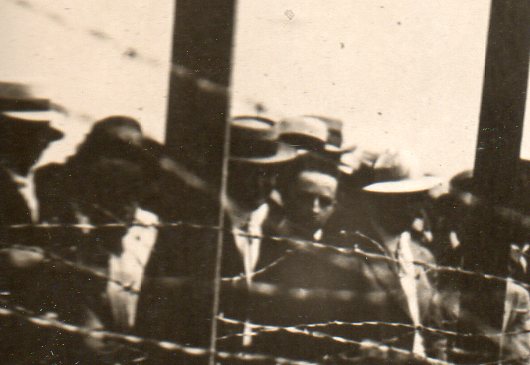
    Logan attracted a fair size crowd for his demonstration in the vicinity of the Capitol.  His machine seemed to work well, too, cutting through 72 strands of wire in about a half minute.  I’m not sure how many of these machines were produced (can’t find anything on them offhand)  but there would’ve been a need for a great number of them, given that since there was something like 12-25,000 miles of trenches dug during the war that there must’ve been millions of miles of barbed wire produced.  (That’s an off-hand guess, but it probably isn’t horribly wrong.)

    (The original photo is available for purchase from our blog bookstore, here.)

    WWI barf wire cutter180

    WWI barf wire cutter181
    WWI barf wire cutter182

    ·Posted by :

    ·in:

    — —

  • The Children’s Parade: Liberation of Ostende, 1918

    JF Ptak Science Books   Post 1393

    WWI children's parade175

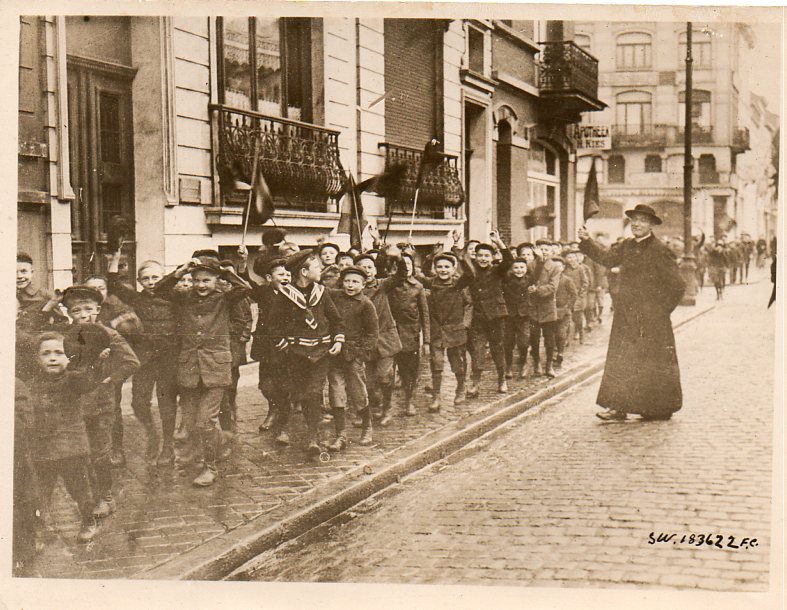
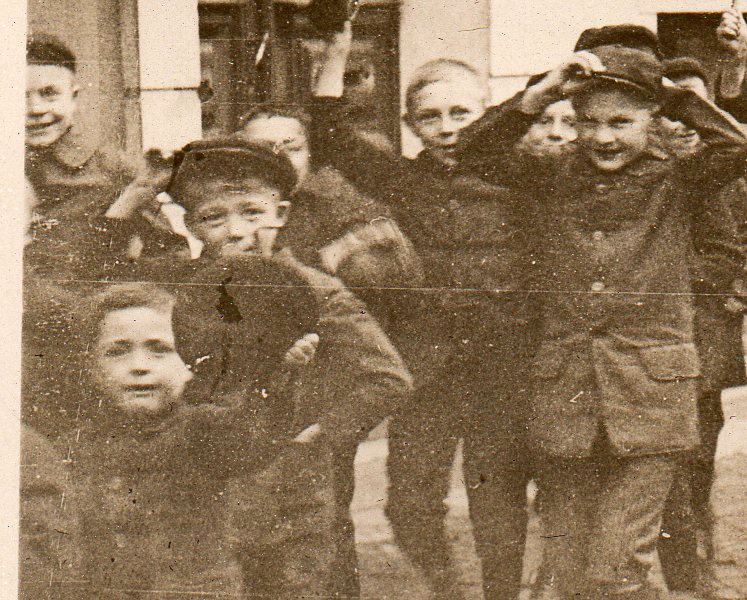
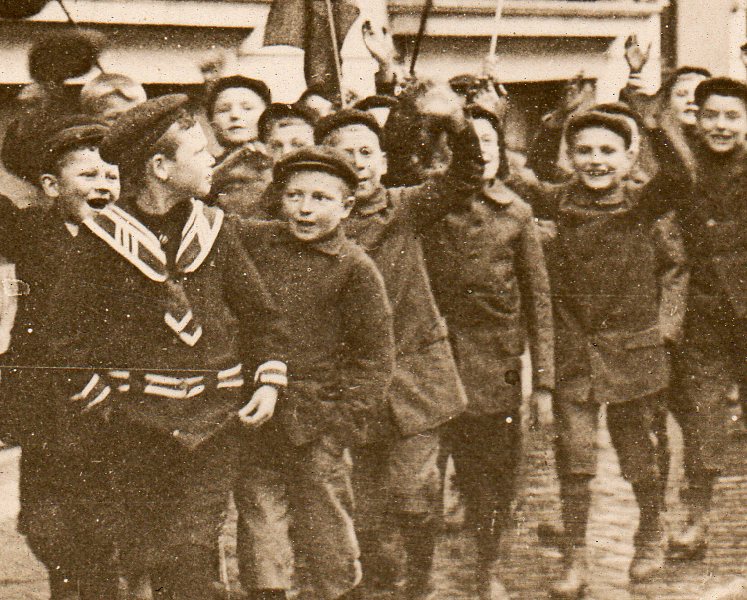
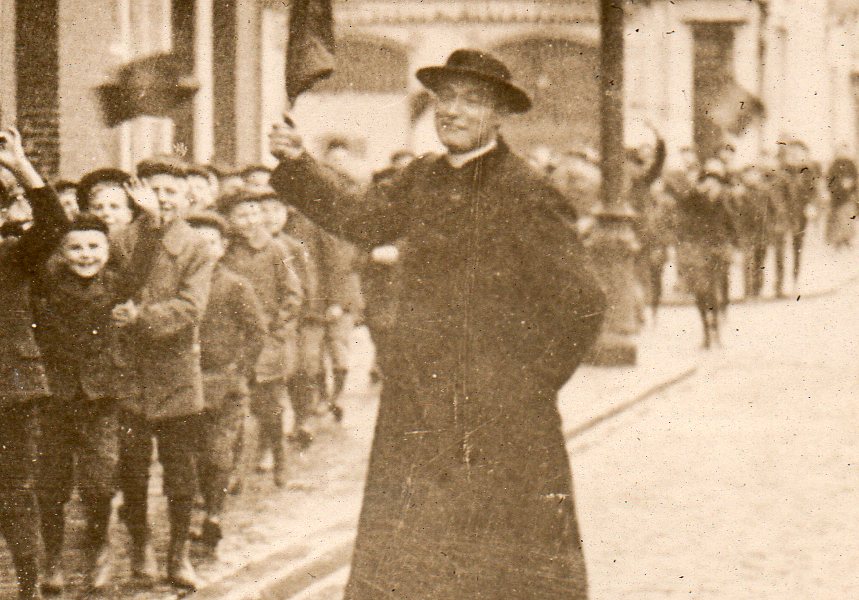
    Ostende, a port city of West Flanders on the North Sea in  northwestern  Belgium, was an important stronghold and also a  key to holding the inland port of Bruges, which is something that the Germany Army was able to do until the very end of World War I.  Under constant occupation by an invading force, the city was only liberated by the armistice signed two days before this photo was made, on the eleventh hour of the eleventh day of the eleventh month of 1918. (The original photo is available for purchase via our blog bookstore, here.)

    Some of these children might still be alive, though all but two of the soldiers of this war are all dead.  I remember talking to my grandmother ten years or so ago, asking her about what she did to celebrate the end of the war.  She laughed, and then told me that she and her sisters and brothers went out to the street (in their small town of Housatonic, Massachusetts) and danced and danced.  She then said that a few other children went to their kitchens to come out with pots to bang with wooden spoons–and then it struck me, taking away my breath, that what she was talking about was celebrating the end of WWI, not WWII, which is what I thought she was going to talk about. 

    WWI children's parade176
    WWI children's parade177
    WWI children's parade178

    ·Posted by :

    ·in:

    — —

  • Cold and Understatement on the Western Front, 1916

    JF Ptak Science Books   Post 1392

    WWI cold173

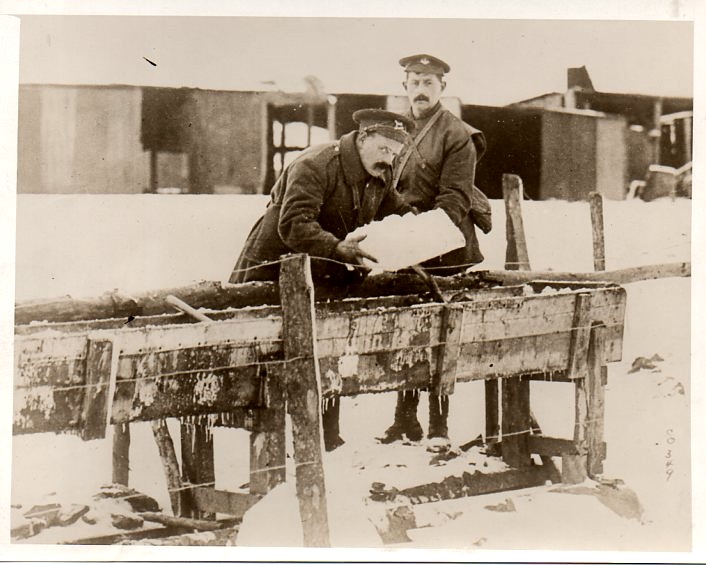
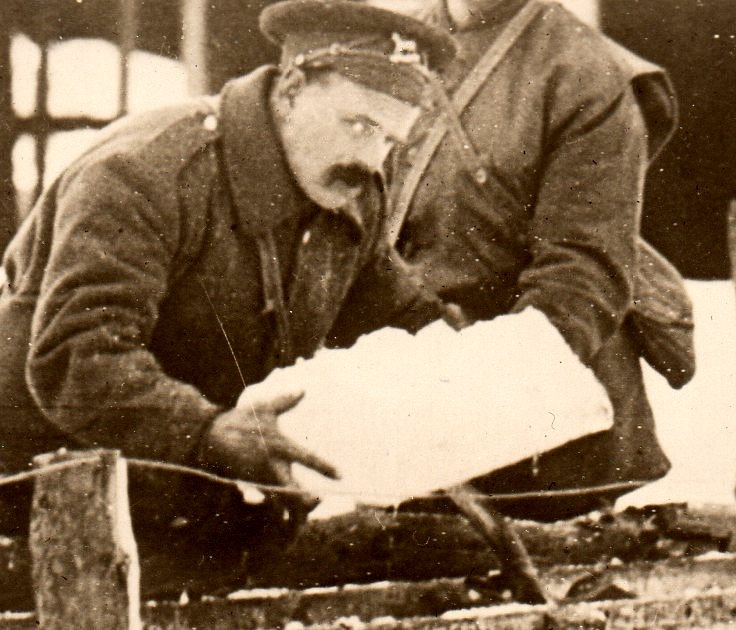
    The caption stamped on the back of the news photo service agency photograph (from the Western Newspaper Union) said that the bitter cold encountered by these Canadian soldiers on the Western Front in the winter of 1916 “was one of many difficulties encountered by the soldiers”.  “Great hardships have been caused by the frigid weather in this region” continues the caption.  Indeed.  Even for Canadians this was a cold winter, though not so cold that the Canadian trooper in the foreground stopped to put on his gloves to remove the ice from the water trough. These soldiers may have been cavalry, as there is a horse-like medallion on the front of their lids. (This photo is available for purchase from our blog bookstore, here.)

    Evidently the role of the cavalry in the BEF along the Western Front is an under-appreciated thing, or misunderstood, at least.  I’m not sure how they influenced the outcome of this stagnant section of the war, where the line of battle remained essentially unchanged throughout the duration of the war.  Millions of troops were deeply entrenched over hundreds of miles of battlefront, wailing away at one another with massive artillery barrages, countless machine gun nests, and then eventually tanks, planes and poison gas.  Back in February 1916 there weather was so tough and frigid that the battle of Verdun was postponed a bit, waiting for less intense weather conditions.  Dozens of millions of artillery shells and  billions of bullets later, in 1918, there was little change in the positions of the armies, except of course for the millions of casualties. 

    WWI cold174


    ·Posted by :

    ·in:

    — —