A Daily History of Holes, Dots, Lines, Science, History, Math, Physics, Art, the Unintentional Absurd, Architecture, Maps, Data Visualization, Blank and Missing Things, and so on. |1.6 million words, 7500 images, 4.9 million hits| Press & appearances in The Times, Le Figaro, Mensa, The Economist, The Guardian, Discovery News, Slate, Le Monde, Sci American Blogs, Le Pont, and many other places… 5000+ total posts since 2008.

Category: Militaria

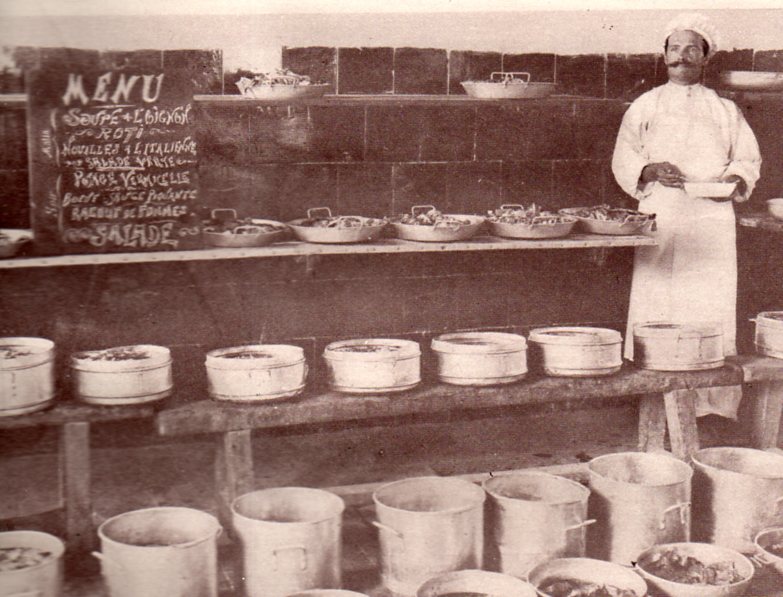
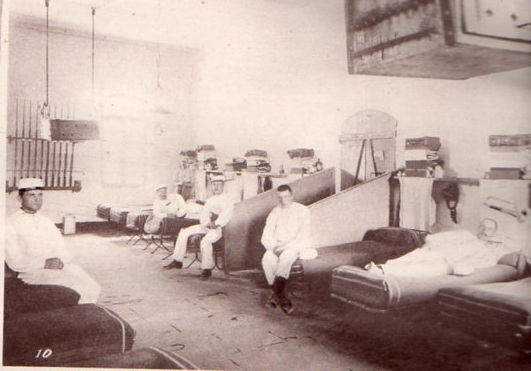
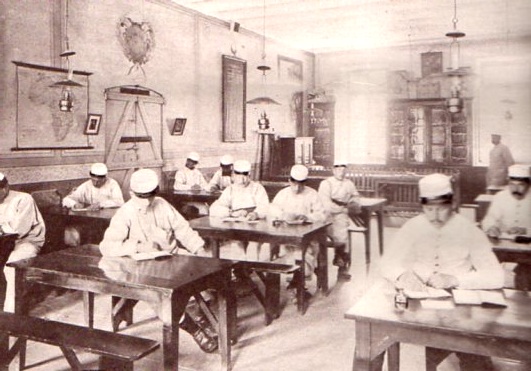
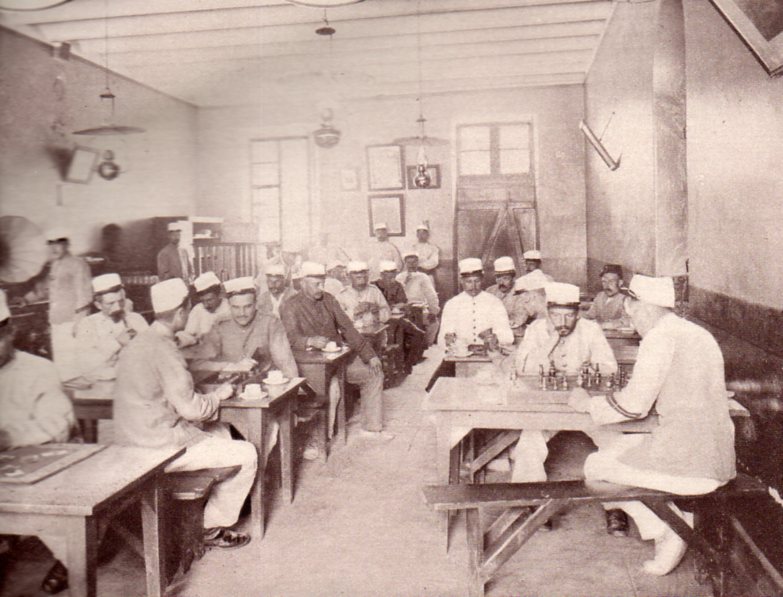
  • Breakfast, Bunks and Books in the French Foreign Legion, 1913

    JF Ptak Science Books   Post 1467

    Parachute bomb456 b
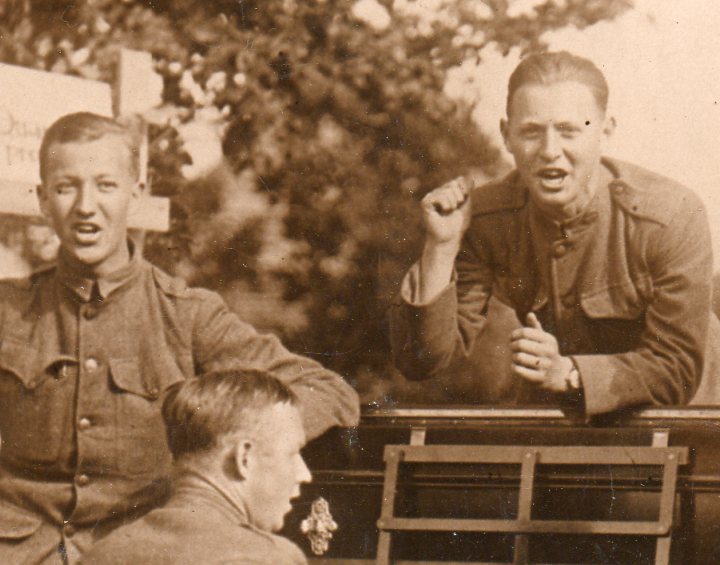
    The French Foreign Legion is legionary, or legendary, something that is famous in and of itself.  It was formed 180 years ago to help keep the peace in Algeria (which the French massively mess-up) and the rest of the now-disappeared French empire.  That corps of soldier had been composed of an ask-no-questions, never surrender, blood-in-the-sand, hardened and escaping individual. 

    If a photograph is worth ten thousand words, I’m not sure what story these pictures tell of the Legion.  No doubt these are the best faces in the best spots at the best angles in the best light kind of photographs, and don’t really seem to tell any bit of the story of the French Foreign Legion that one would expect.  But this was evidently not a real documentarian’s divulge that took place here in a double-page spread of the jam-packed issue of The Illustrated London News for 6 September 1913. But perhaps it was–perhaps there was a reading and writing room, and perhaps the barracks were kept clean and light and airy–certainly that would be good for the morale of the fighting man, but just not for our expectations.  

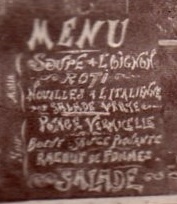
    And truth be told the menu for breakfast looks pretty good.  Whether or not this was a standard fare is impossible for me to say.   The cook (who looks proud enough to be a chef) could make a person want to pull up a chair to the table.

    Parachute bomb456

    These are the sleeping quarters, which look bright and clean, though the racks look pretty narrow, like not that much more wide than a good set of shoulders:

    Parachute bomb459
    And of course the read and writing room, complete with a small library–the tables look very shiny…

    Parachute bomb458
    And the game and recreation room, where I see some tea and chess–I’d be very interested to know what the framed documents on the rear wall were all about.

    Parachute bomb455
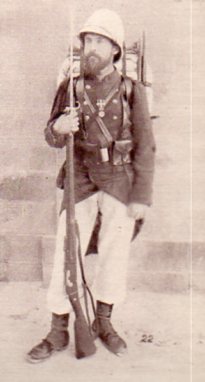
    And one of the men, someone with 15 years’ service:

    Parachute bomb457


  • Sticks as Gravestones? Fredericksburg, December 1862.

    JF Ptak Science Books     Post 1451

    “It is well that war is so terrible. We should grow too fond of it.”
            – General Robert E Lee, at the Battle of Fredericksburg

    I’ve been thinking a bit on the Civil War, the American Civil War, coming fast now on its 150th anniversary.  I’ve been looking at these stereocard photographs in the Library of Congress collection, and have been finding some interesting, troubling images.
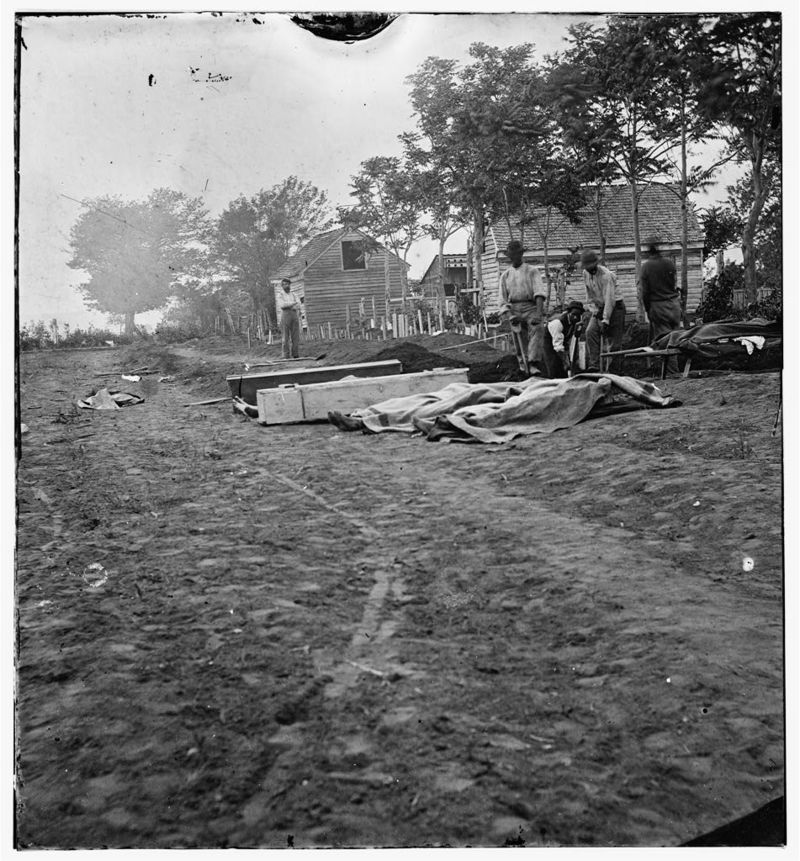
    Fredericksburg

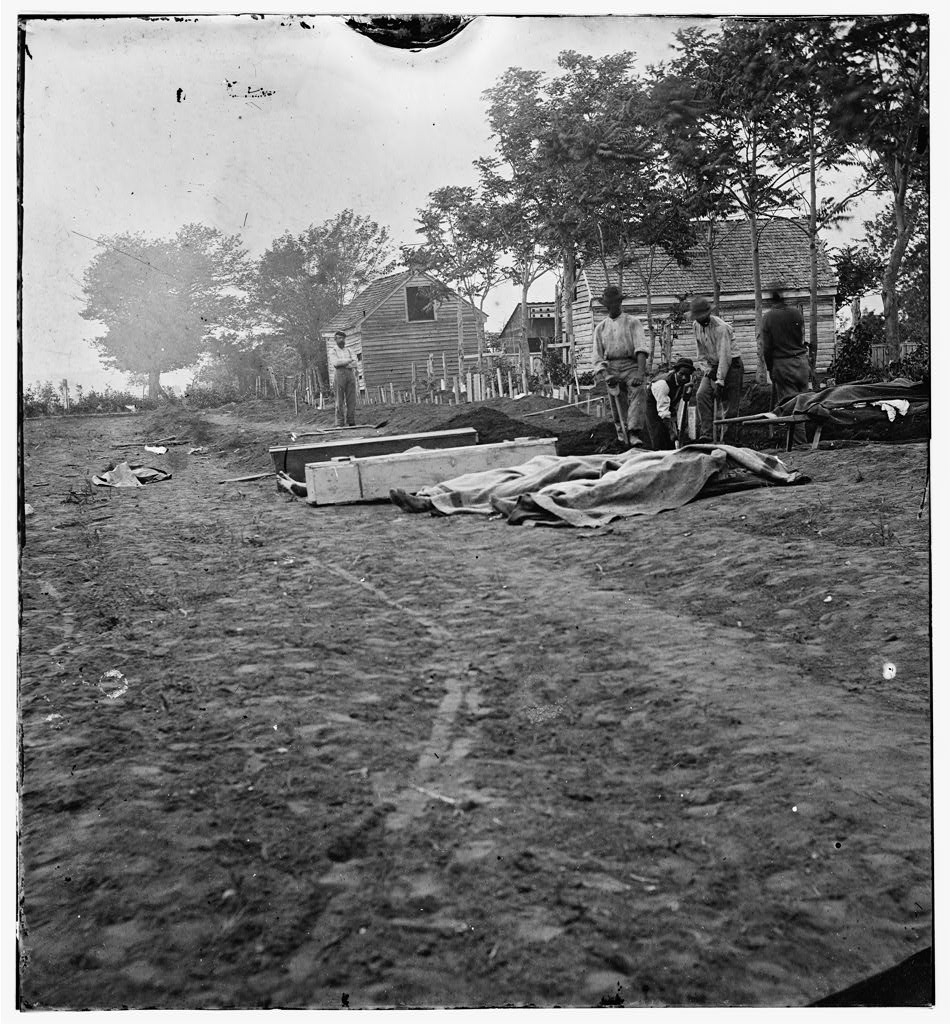
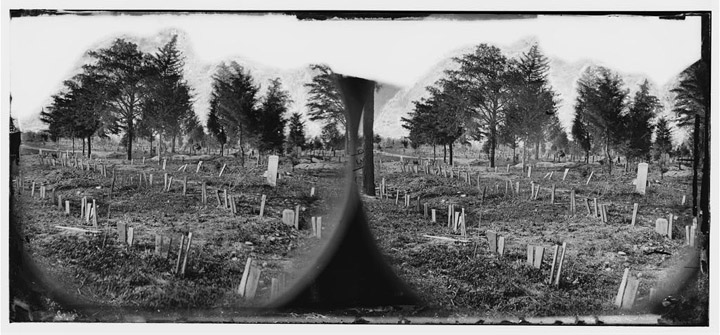
    This shows a burying detail at Fredericksburg
    Fredericksburg b
    This was a bad one for the Union.  IT was Lee against Burnside, Lee commanding the heights at Fredericksburg and making Burnside’s men pay dearly and forever for a bad plan–there were more than 13,000 Union casualties that day compared to about 5,000 for the Confederates, and was about the worst defeat suffered by the Union for the entire war, the outcome of two of the largest armies ever to meet for the entire conflict.  It is a famous battle and there is much about it all over the web.

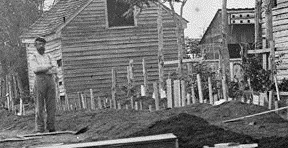
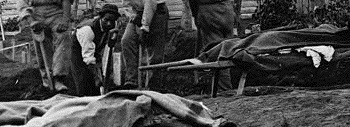
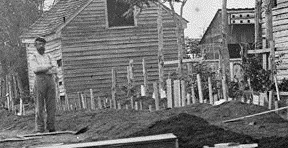
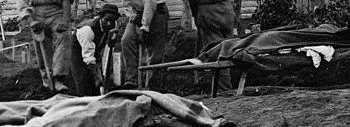
    I’m just looking at the sticks in the background of this photograph, over the shoulders of the African American gravediggers, just to the left of the man with the crossed arms.  Who was this?  He has no uniform, and is a bit older–but there is a shovel at his feet.  Maybe he is from the town, maybe he’s just watching.  But just to his left,  is a little rise of what looks like fresh dirt.  At the head are those narrow sticks, of all different sizes, and place at differing intervals. 
    Fredericksburg c

    But these sticks are in a straight line.   Are they temporary grave markers?  But they’re so close together–perhaps this is a mass grave.  Perhaps these markers at placed at where the heads of these soldiers are, laid shoulder to shoulder in a big pit, covered up.

    The grave detail seems to me to be standing in a pit, a shallow one.  I don’t know what else this could be.

    There are too many short, stubby sticks for this to be a simple fence of found wood.  I think that they are temporary headstones.  I realize these people were dealing with an horrific situation with very, very limited means, and that even getting stakes of wood for thousands of graves would’ve been a deep chore–but still, those stubby little bits of wood bother me.

    Mr. Shelby Foote in volume two  (“from Fredericksburg to Meridian”) of his spectacular The Civil War, A Narrative described a bit of the battle below.  My memory of reading this in Foote about this battle (my reading now more than 20 yeqars old) is mostly gone, but the overall impression of Foote’s painting was Lee looking out over the battlefield as the fog–which had enshrouded it all all morning long–had lifted.  That was the end of it for the Union army, the sun heating things up a bit, burning off the protective layer of fog, heating it up enough there in the middle of December to cause terrific havoc.  How would the parting fog and what it revealed underneath be seen in the mind of R.E. Lee?  He must have felt instantly that the day would be his. 

    “Defensively speaking, indeed, the record of Confederate arms could scarcely have been improved. Of the three objectives the Federals had set for themselves, announcing them plainly to all the world by moving simultaneously against them as 1862 drew to a close, Vicksburg had been disenthralled and Chattanooga remained as secure as Richmond. Davis himself had done as much as any man, and a good deal more than most, to bring about the result that not a single armed enemy soldier now stood within 50 airline miles of any one of these three vital cities. “
    “Of all these various battles and engagements, fought in all these various places, Fredericksburg, the nearest to the national capital, was the largest — in number engaged, if not in bloodshed — as well as the grandest as a spectacle, in which respect it equaled, if indeed it did not outdo, any other major conflict of the war. Staged as it was, with a curtain of fog that lifted, under the influence of a genial sun, upon a sort of natural amphitheater referred to by one of the 200,000 participants, a native of the site, as “a champaign tract inclosed by hills,” it quite fulfilled the volunteers’ early-abandoned notion of combat as a picture-book affair.”–Shelby Foote, The Civil War, a Narrative. Volume 2.

    My thanks to Rich Lewis for finding another temporary burial site:
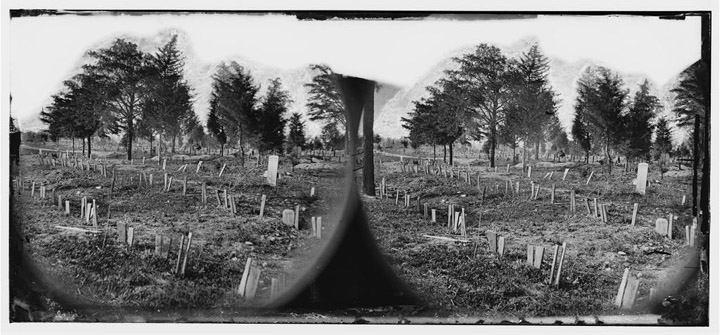
    Confederate graves
    “
    Graves of Confederate Soldiers with Wooden Markers, Richmond 1865″


  • Microworlds in Prints: sub-millimeter Action Figures, ca. 1660

    JF Ptak Science Books   Post 1435

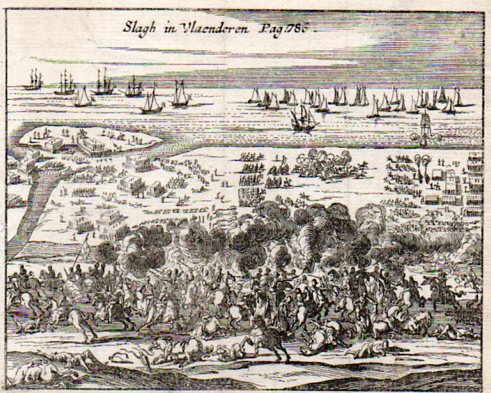
    This small engraving, Slagh in Vlaenderen (Battle in Flanders or thereabouts), is about 3×4 inches, a tiny engraving (on copper, I believe) depicting a large action between what I would guess to be the Dutch, or the army at Flanders, and the Spanish, sometime in the late 15th century to the early/mid 17th century.  There were a number of different years in which this action could have taken place, so I’m not sure what this image actually depicts.  The print was made sometime in the mid 17th century, possibly earlier.  (The original is available for purchase at our blog bookstore.) 

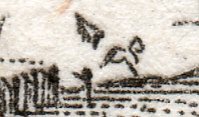
    What attracted me to this print was the minuteness of the figures in the background–the horse depicted here is not a millimeter long in the original, but we can see that the artist took enough care and had the imagination to make the horse run. (There is a long thread on this blog, “Prints–Looking Hard/Deeeply at” that takes a micro cruise along teh surface of large and complex prints into their perhaps seldom-scene embedded small worlds.)

    Flanders battle373
    Ditto for the soldier just to the left of the horse and out of formation–even when you hold the print close, you really can’t see that there’s a figure there unless you use a magnifying glass.  This sample was scanned at 1000 dpi and represents a section of the print that is maybe 8 mm across. 

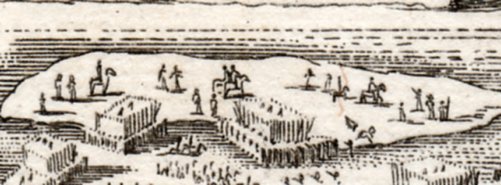
    The next sample shows an island that in the original is about an inch across, and as you can well see the sub-detail from the image above is just a fragment of this detail.

    Flanders battle372

    And the print in all of its glory, appearing on your monitor at about full scale. 

    Flanders battle371

    I am constantly amazed at the precision and care and artistry of these early engravers, and how much they cared to include interesting details that were all but invisible to the majority of its viewers.  But that’s not the point. 


  • Making Things Disappear–German POWs, 1918

    JF Ptak Science Books    Post 1410

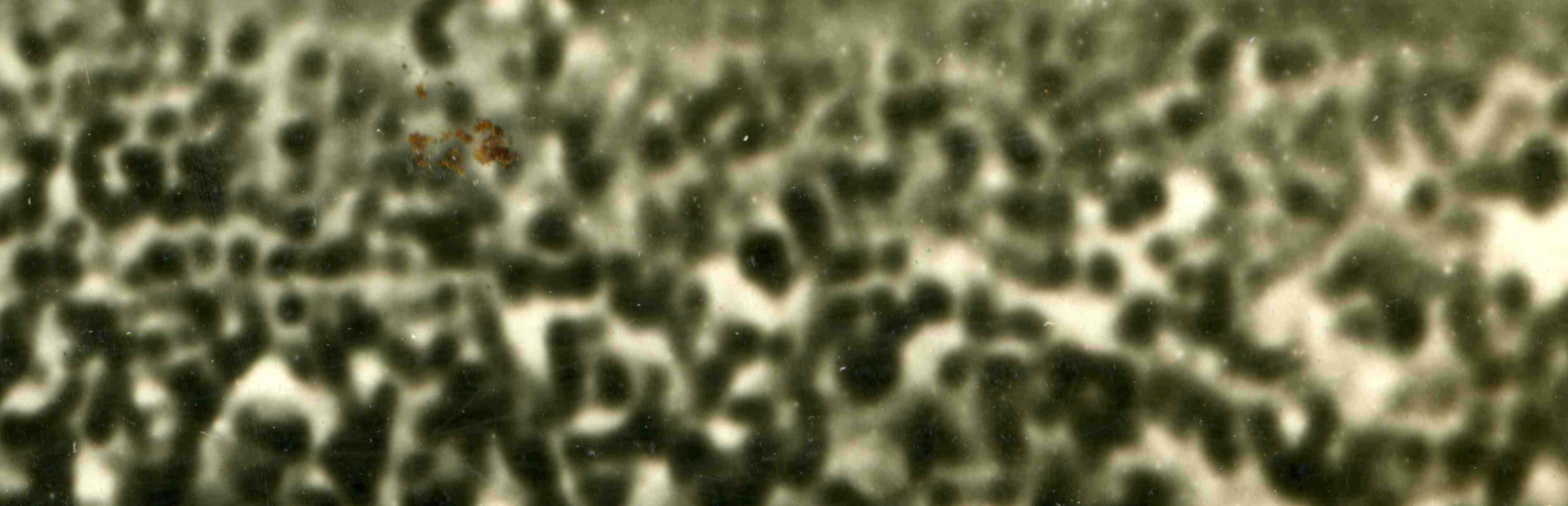
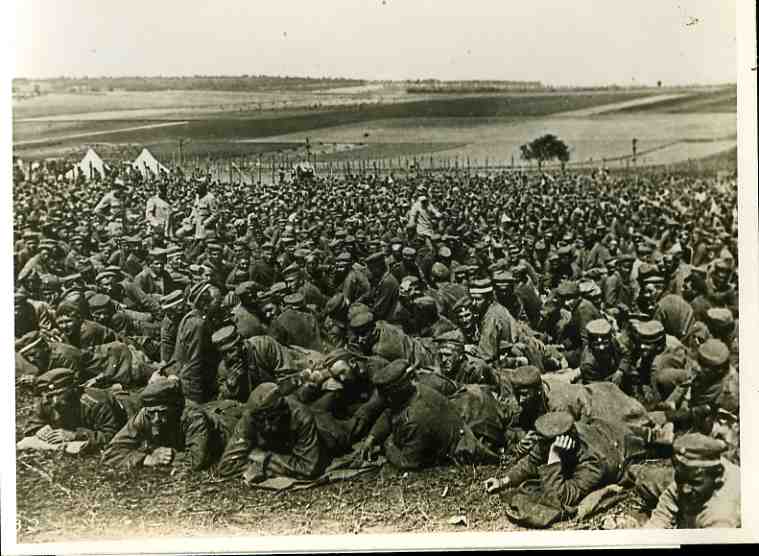
    In continuing series of posts on Blank and Empty Things is this image on fading, disappearing German prisoners of war.  The French had been pounding them in western France in the summer of 1918, and Germans were surrendering and being captured by the thousands.  This news service photograph shows one of the assembly camps with about 10,000 POWs–I made a heavy scan of the group of soldiers in the distance and was  a little taken aback to see that the men had lost their human forms,  looking like bacteria, fading into their future.  (The original photo is available for purchase through our blog bookstore.)

    000-ebay--Nov 8 pows018

    000-ebay--Nov 8 pows017

    The full image is impressive, and shows just a small fraction of the men taken prisoner during 1918; and it shows even a lesser percentage of those killed.

    000-ebay--Nov 8 pows019

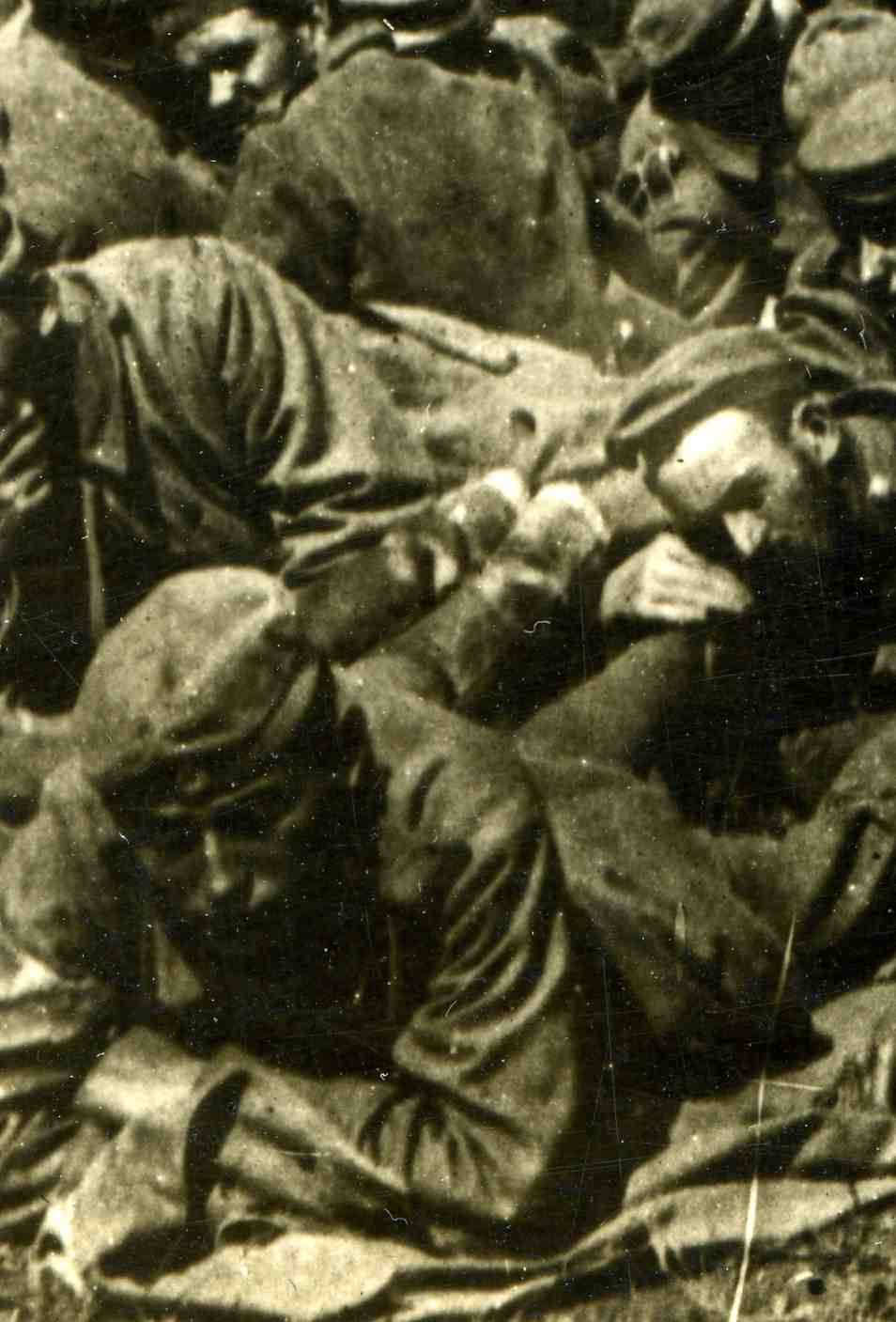
    This detail of the foreground shows the familiarity necessitated by the men being pressed so closely together–there was little free ground.

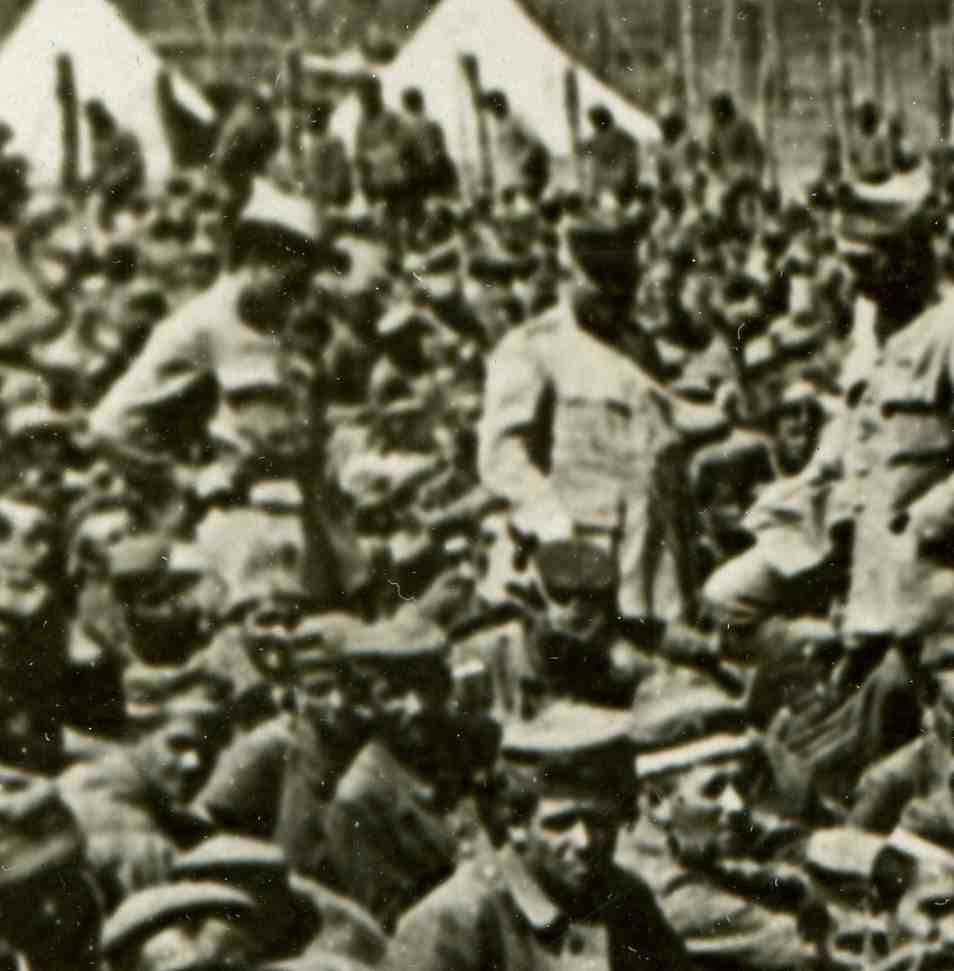
    Also, I thought that the French soldiers in the midst of the prisoner might’ve been feeding them, but it seems as though they were just walking in their midst.

    000-ebay--Nov 8 pows022


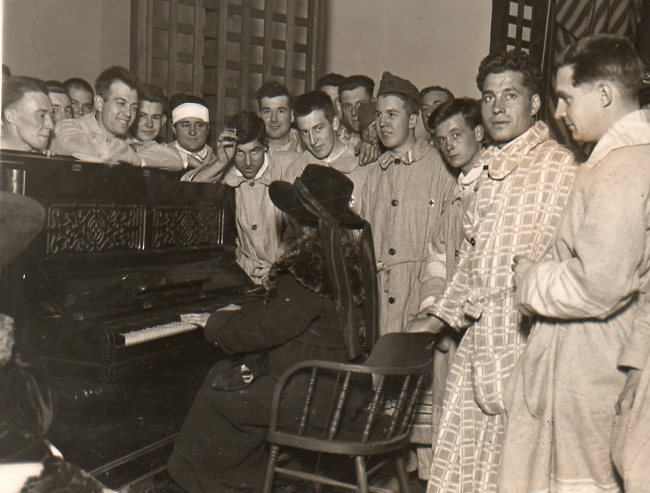
  • World War I in Ivory–Pianos and Recovery

    JF Ptak Science Books   Post 1409

    WWI  piano246

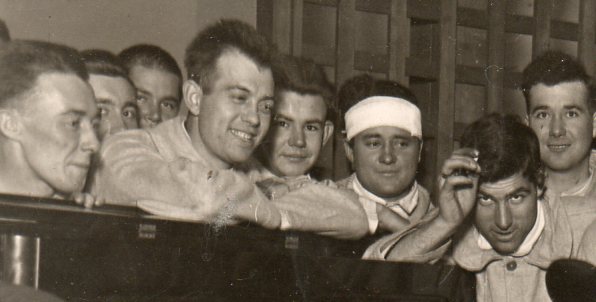
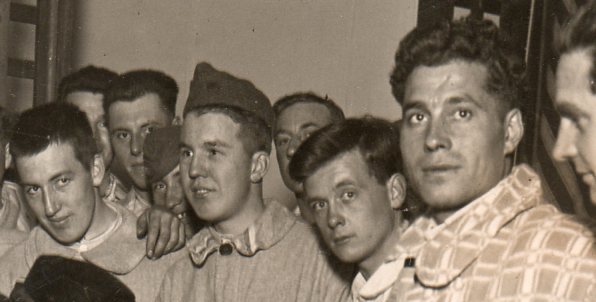
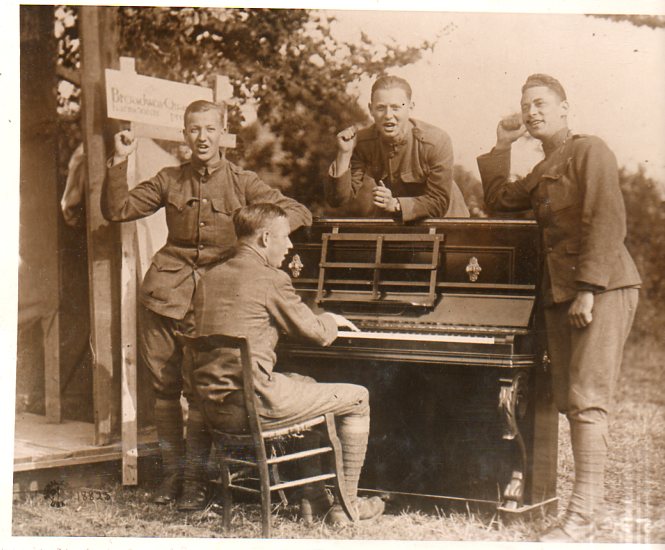
    These images come from my collection of World War I news photo service photographs, and are among the minority that show even momentary happiness.  In both of these cases, the emotion resolves itself in song and in the piano.  The first image takes place in a U.S. overseas hospitals for wounded soldiers, and they seem genuinely relieved to have the attention and the entertainment. (Both images are available at our blog bookstore.)

    WWI  piano247
    WWI  piano248

    The second image is dated 2 November 1918–just nine days before the armistice–and shows the “Broadway Quartet” as they rehearse “I’m Only a Buck Private” for a behind-the-lines show for U.S. servicemen, somewhere in France.  The note with the image (from the Western Newspaper Union) says that the staging used for their shows came from found wood, bits of flooring, and camouflage netting torn into pieces.  

    WWI  piano250
    WWI  piano251

    ·Posted by :

    ·in:

    —

  • Underground & Resistance Fighting, 1943–Sharp Hearts-and-Minds Reading for the Allies

    JF Ptak Science Books    Post 1399

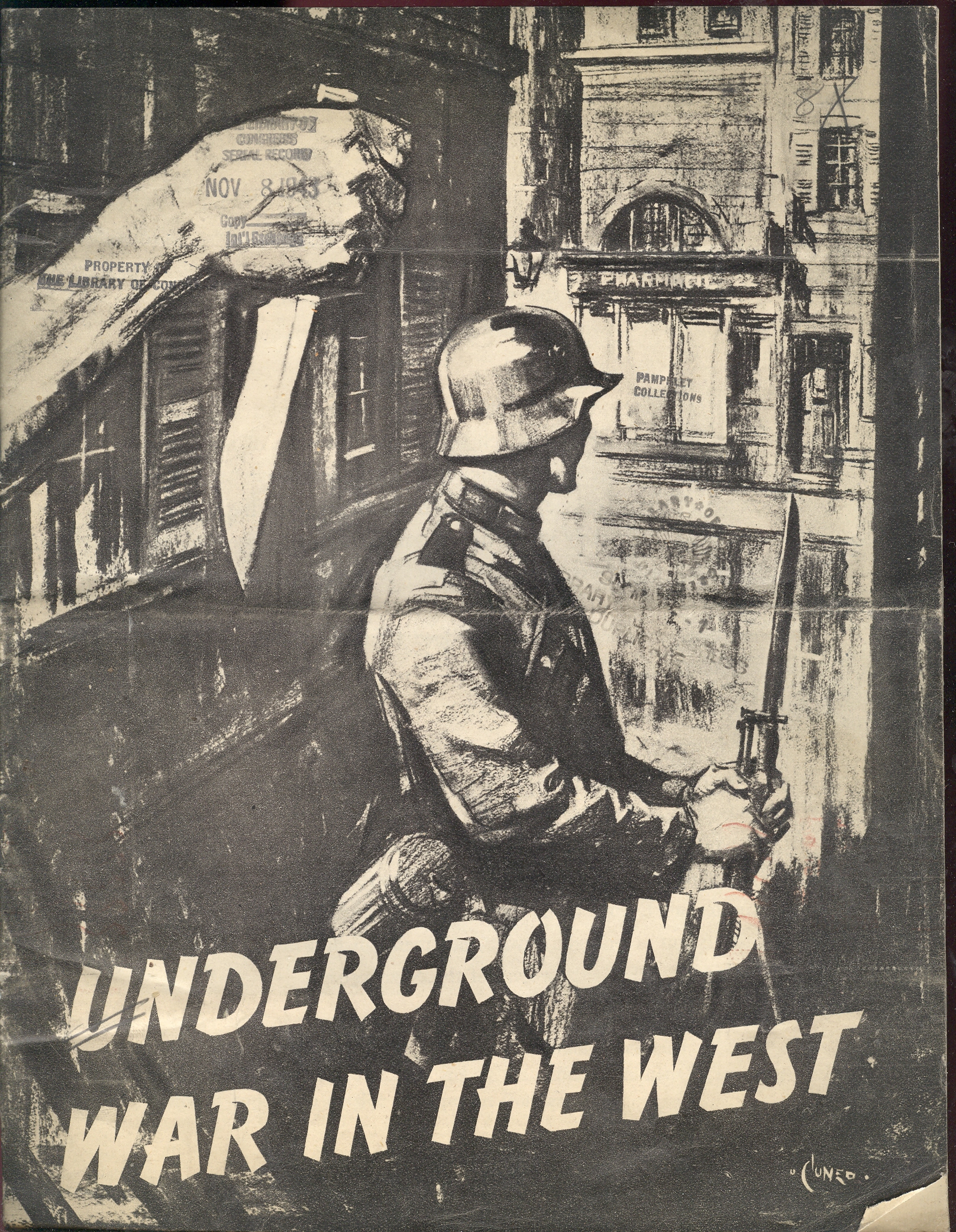
    This pamphlet really seemed like a tiger in a cage—looking through some of the collection here relating to WWII literature on activities in occupied countries, the startling cover graphic of Underground War in the West (printed at some time in 1943, and not before or after) really rattled its cage.  Its contents were non-too tame, either—while being reasonably polite (as was the fashion) it still invoked some very difficult ideas and images.  (The original pamphlet is available at our blog bookstore, here.)

    Blog jan 7 undergrd cvrThis was a terrific, mass appeal pamphlet on the underground actions of occupied Europe illustrated with pencil and charcoal drawings by Cuneo, with each page depicting a  resistance activity—including the underground press, medical aid, sabotage, and general murderous nuisance-making and in general pamphlet praises and celebrates the heroism in occupied countries such as Czechoslovakia (with a drawing showing the assassination of Heydrich), Holland (showing the Dutch caring for a wounded RAF pilot), Belgium, France, Greece. Norway, Poland, Yugoslavia and Luxembourg.

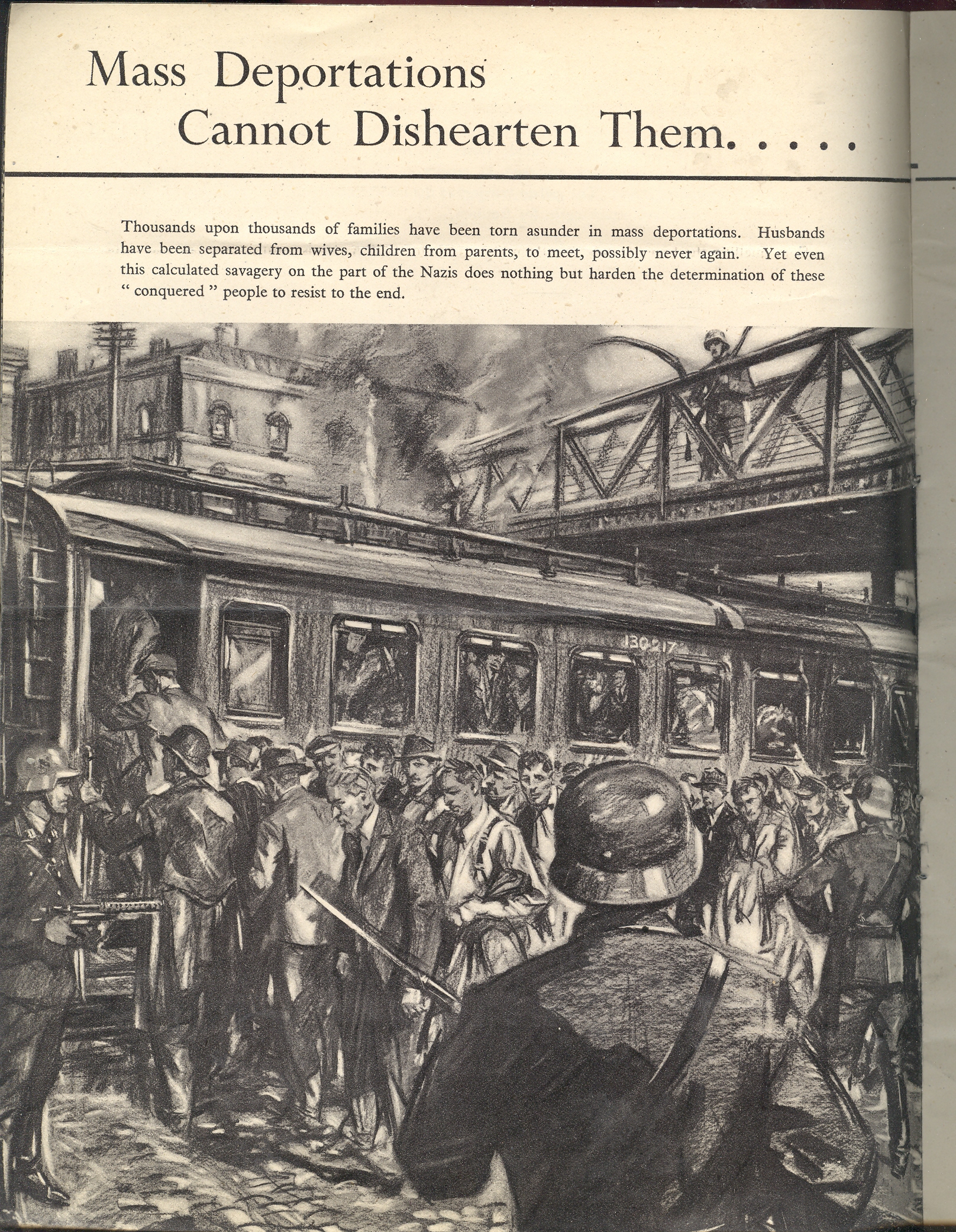
    There are full-page drawings relating to the strength of occupied people in the face of “Mass Deportation (cannot dishearten them, thousands and thousands of families have been torn asunder in mass deportations…”) and “Firing Squads…thin the patriot ranks yet ever more step into their places” . The section on “Facts from the Occupied Countries” list activities in 9 occupied countries;  under “Poland”, we read that “Germany has drawn a veil of silence around Poland…it is estimated that 2,500,000 Poles have died in concentration camps or by execution up to December 31, 1942. There are 54 concentration camps in Poland…and the average life span in the camps is nine months…”  Nowhere in the pamphlet however is there any singular mention of

    Blog jan 7 undergrd deport

    deportation or murder of the Jewish people—there were hundreds of articles printed in American newspapers up  until this time on the beginning of the (yet named) Holocaust, though acknowledgment of a fact doesn’t necessarily make it widely known in spite of its incredible and massive significance.  This pamphlet, while extraordinary in mentioning the millions of deaths in the concentration camps and “deportations”, was rather ordinary in its coverage of who it was that was being murdered in the camps.  


    There is also a two-page spread exhibiting examples of underground newspapers:


    ·Posted by :

    ·in:

    —

  • The Face of Defeat, the Philippines, 1907

    JF Ptak Science Books     Post 1398

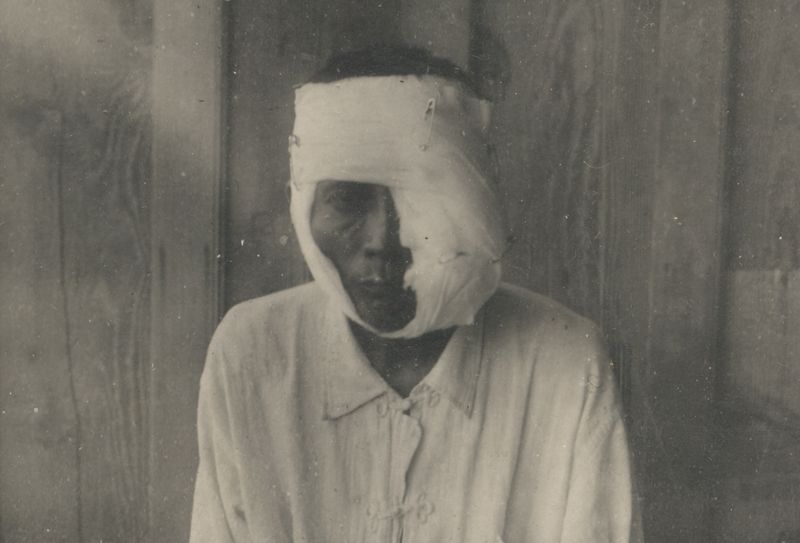
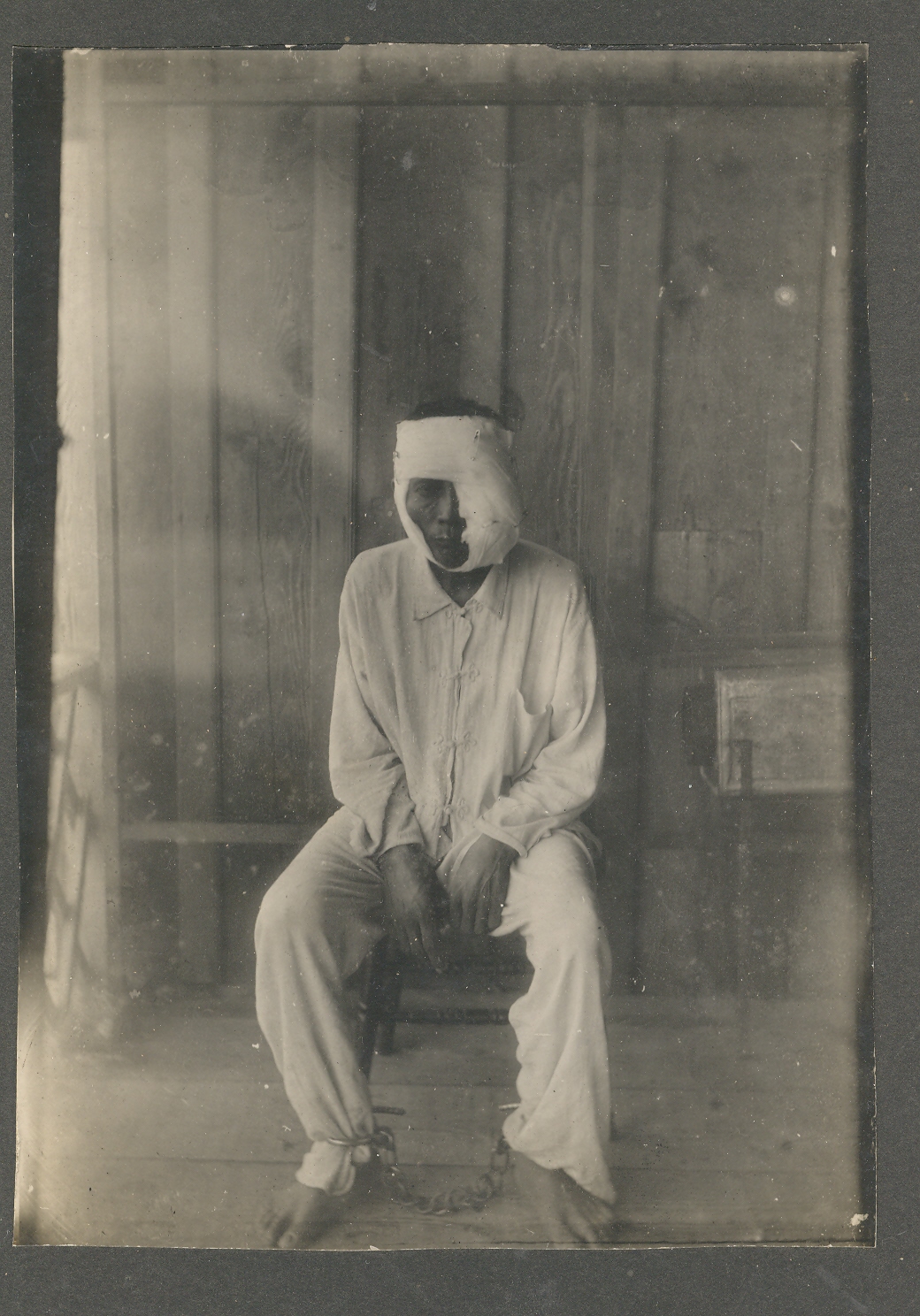
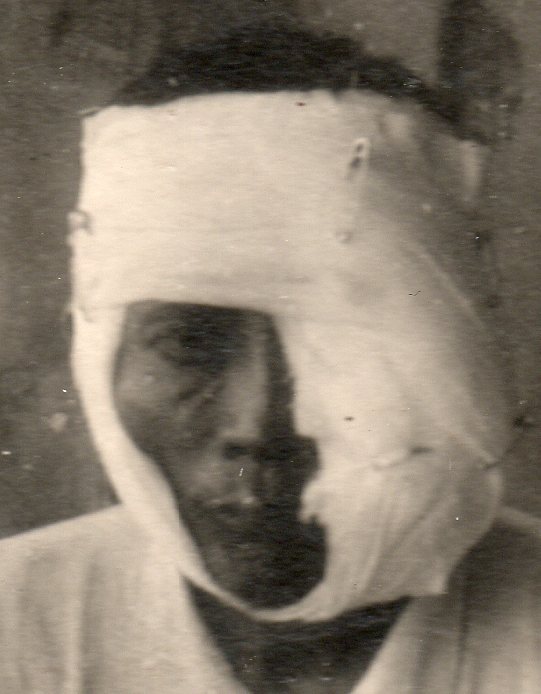
    This is what defeat looks like, or at least so it did in the Philippines in 1907, when the revolt against the Spanish and the Americans was finally at end, for the insurgents. 

    ===blog==aug 24=big faustino face

     Ablen Faustino (fl. 1880-1907), Philippine religious and resistance leader, was still fighting against the  American government seven years after the U.S. had claimed victory over the Spanish in the Philippines, and represented the last bit of Philippine resistance to American occupation and sovereignty.  There are many stories regarding his final disposition—some of which having the man escape into the woods to die an old man—but from the look of Faustino in this picture it seems as though he was going nowhere, except for a short walk into the heart of darkness that would swallow him just after the photo was taken. (The original photo is available on our blog bookstore site, here.)

    ===blog==aug 24=big faustino smaller

    On the one Faustino was a terrorist; on the other he was a patriot and holyman fighting for his country.  He had fought the Spanish occupiers in the 1880’s until he was captured and imprisoned.  After his release and following the American victory, he founded a religious/insurgent group—the Pulahans–whose ultimate religious experience was to defeat the invaders or die trying.  (From where I sit it seems as the requisite belief was death in battle for this struggle rather than the actual victory which was the benefit to the followers.) The Pulahans for the most part eschewed firearms and other “modern” weapons, launching themselves into battle with bolos, knives, and little else, hoping for hand-to-hand fighting.  It is reported that there were 10,000-15,000 of these troops, making them a formidable army,  frightening if you were one of the soldiers that they were going to attack.


    Faustino208

    These post-war Pulahan Wars lasted from 1902 to 1907, ending with their leader’s capture by Philippine Constabulary and the 8th U.S. Infantry.One of the few official reports on Faustino’s capture was recorded in a legal document regarding jurisprudence in the arrest of the others who were with him that day.  In U.S. v. Espiridion Rota et al (found in the Supreme Court Reports of the Philippine Islands, volume IX, published in Manila in 1908), the unfortunate story of the application of law to the other five men is told, as is the mention of Faustino’s capture.  It turns out that when the others were taken into custody and the wheels of justice began to turn, they all pleaded guilty, and charged with the crime of brigandage.  Rota was sentenced to hanging and the others to imprisonment for 35 (+) years.  Plus court costs.  Their case was appealed because it was said the men had no idea what the guilty plea would get for them in the punishment phase; the Supreme Court upheld the conviction as well as the discipline, which was a little moot for Rota as he had already been hanged.

    Faustino209

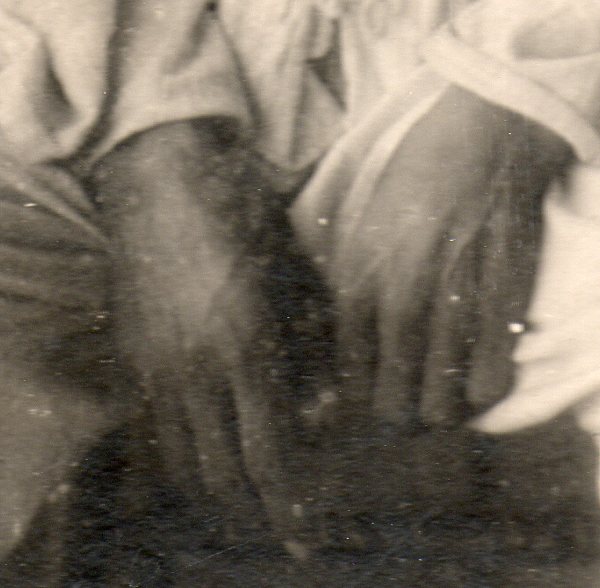
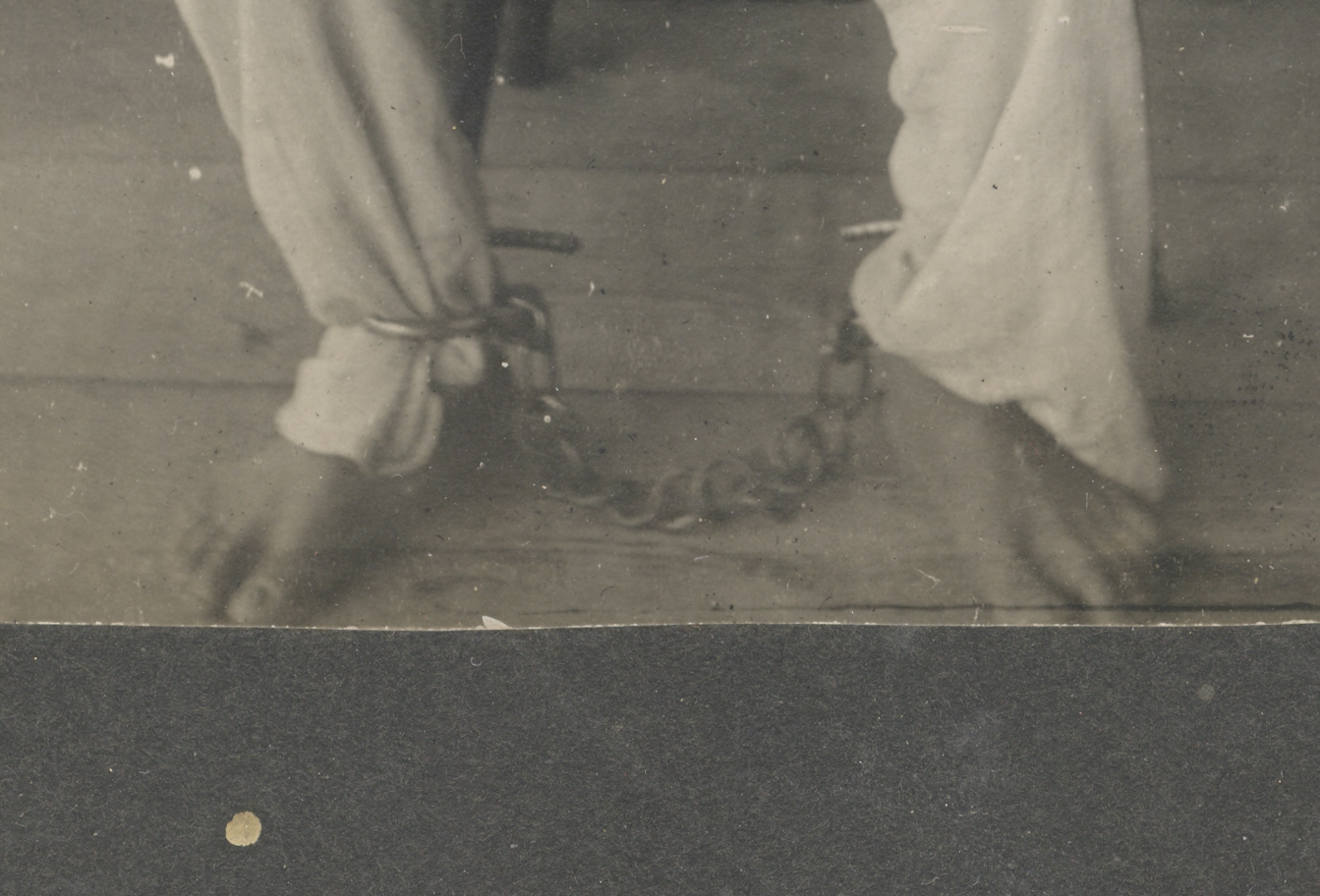
    ===blog==aug 24=big faustino feet What one might infer from this, I think, is that Faustino’s date with his punishment was probably met right there by the hut in which this photo was taken; that his destiny was sealed; and that rather than martyr a religious leader, the troops merely took the severely wounded  (and beaten?) man into the woods and disappeared him. 

    According to the historical sites which have used the other two photos of mine of this event (all done freely and without attribution, unfortunately), these are the only known photos of Faustino’s last times. 

    Another version of the capture of Faustino is less shining:


    ·Posted by :

    ·in:

    —

  • Barbed Wire Cutting Device on the Mall, 1918.

    JF Ptak Science Books  Post 1394

    WWI barf wire cutter179
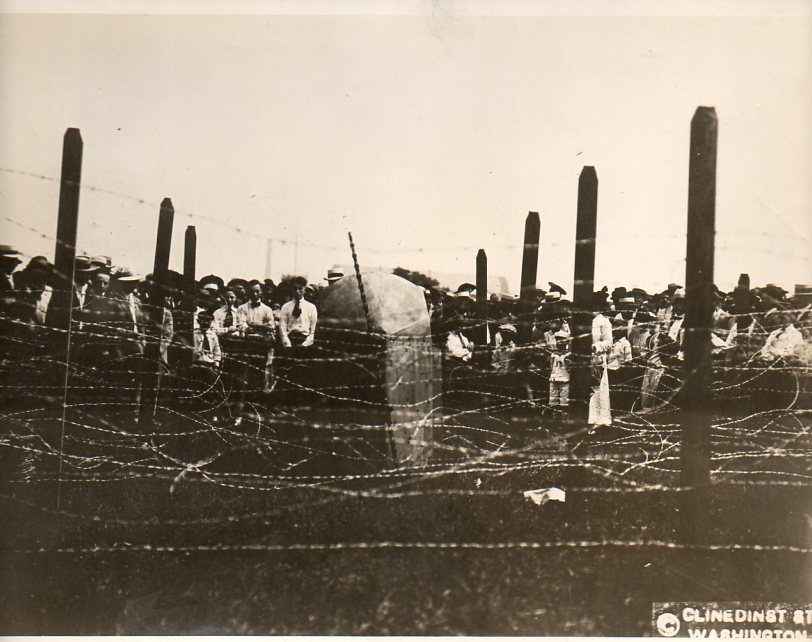
    “Will Cut its Way Through Hun Entanglements” reads the header to the caption for this new photo service war photo from the Central News Photo Service, published nearly at the end of 1918, just a few months before the end of the war. The inventor, John E. Logan, was demonstrating his invention “before senators and representatives of Congress” on a “miniature tank wire entanglement”.  The “entanglement” wire was much nastier than what you’d think of as the “barbed wire” of today–not concertina wire, but something small and nasty that was meant to catch soldiers, to pin them more deeply in the wire like a sharp metallic quicksand, stopping their advance and making them meat bait for machine gunners and everyone else. 

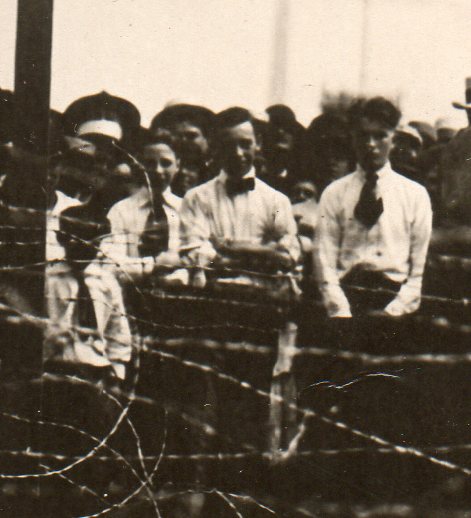
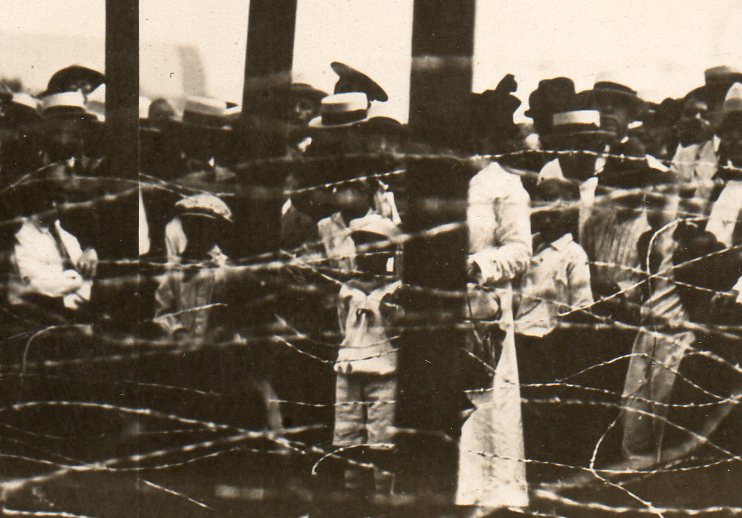
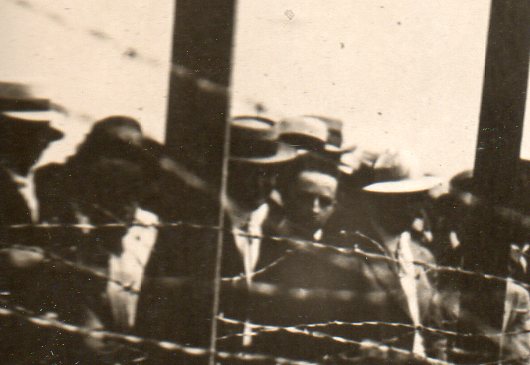
    Logan attracted a fair size crowd for his demonstration in the vicinity of the Capitol.  His machine seemed to work well, too, cutting through 72 strands of wire in about a half minute.  I’m not sure how many of these machines were produced (can’t find anything on them offhand)  but there would’ve been a need for a great number of them, given that since there was something like 12-25,000 miles of trenches dug during the war that there must’ve been millions of miles of barbed wire produced.  (That’s an off-hand guess, but it probably isn’t horribly wrong.)

    (The original photo is available for purchase from our blog bookstore, here.)

    WWI barf wire cutter180

    WWI barf wire cutter181
    WWI barf wire cutter182

    ·Posted by :

    ·in:

    — —

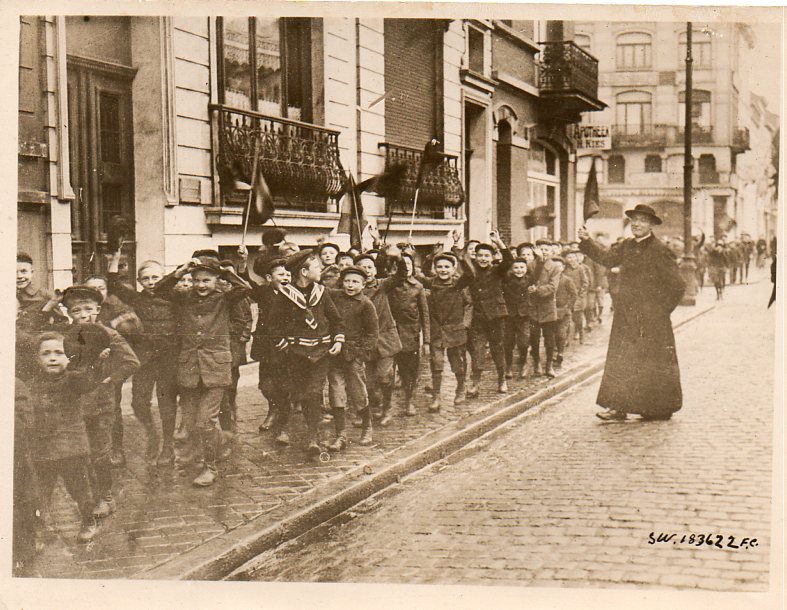
  • The Children’s Parade: Liberation of Ostende, 1918

    JF Ptak Science Books   Post 1393

    WWI children's parade175

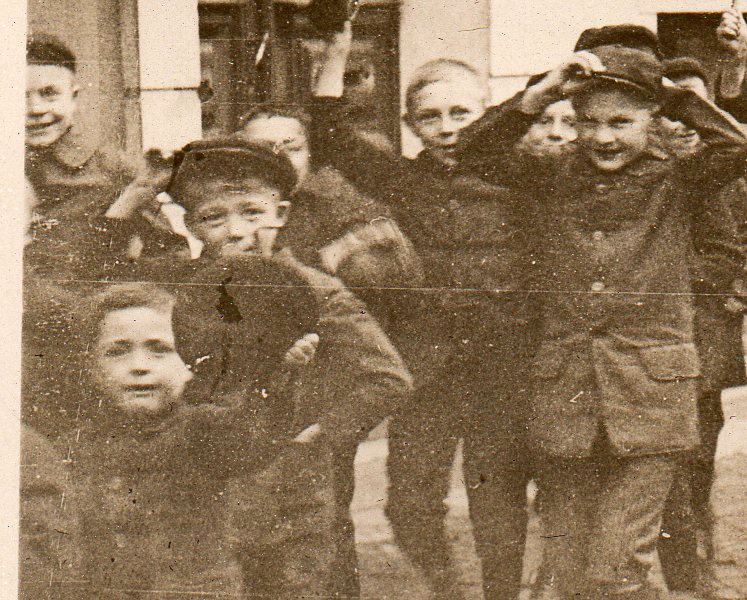
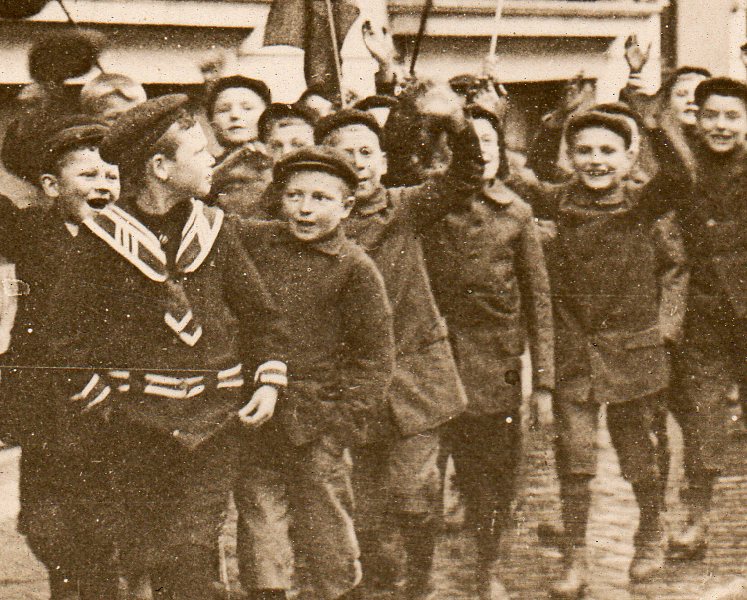
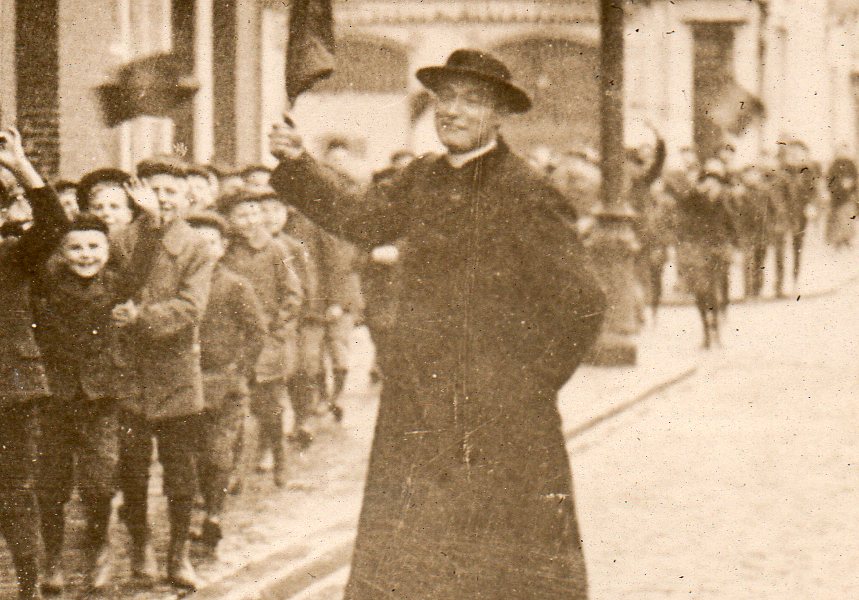
    Ostende, a port city of West Flanders on the North Sea in  northwestern  Belgium, was an important stronghold and also a  key to holding the inland port of Bruges, which is something that the Germany Army was able to do until the very end of World War I.  Under constant occupation by an invading force, the city was only liberated by the armistice signed two days before this photo was made, on the eleventh hour of the eleventh day of the eleventh month of 1918. (The original photo is available for purchase via our blog bookstore, here.)

    Some of these children might still be alive, though all but two of the soldiers of this war are all dead.  I remember talking to my grandmother ten years or so ago, asking her about what she did to celebrate the end of the war.  She laughed, and then told me that she and her sisters and brothers went out to the street (in their small town of Housatonic, Massachusetts) and danced and danced.  She then said that a few other children went to their kitchens to come out with pots to bang with wooden spoons–and then it struck me, taking away my breath, that what she was talking about was celebrating the end of WWI, not WWII, which is what I thought she was going to talk about. 

    WWI children's parade176
    WWI children's parade177
    WWI children's parade178

    ·Posted by :

    ·in:

    — —

  • Cold and Understatement on the Western Front, 1916

    JF Ptak Science Books   Post 1392

    WWI cold173

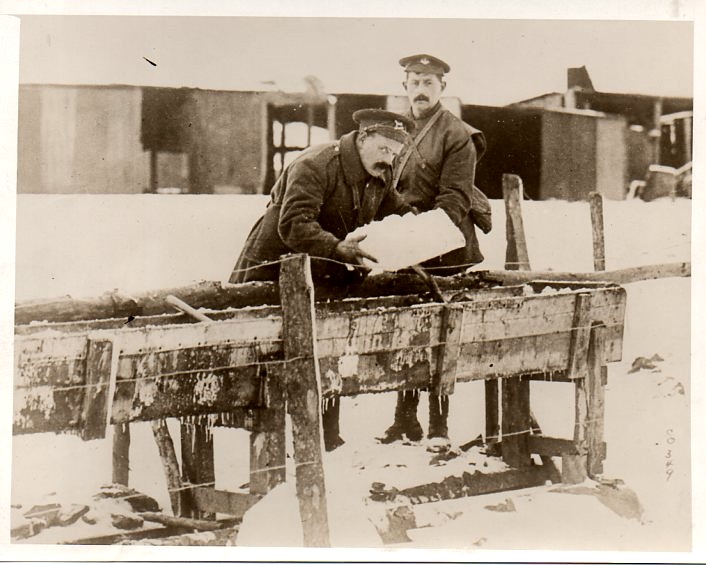
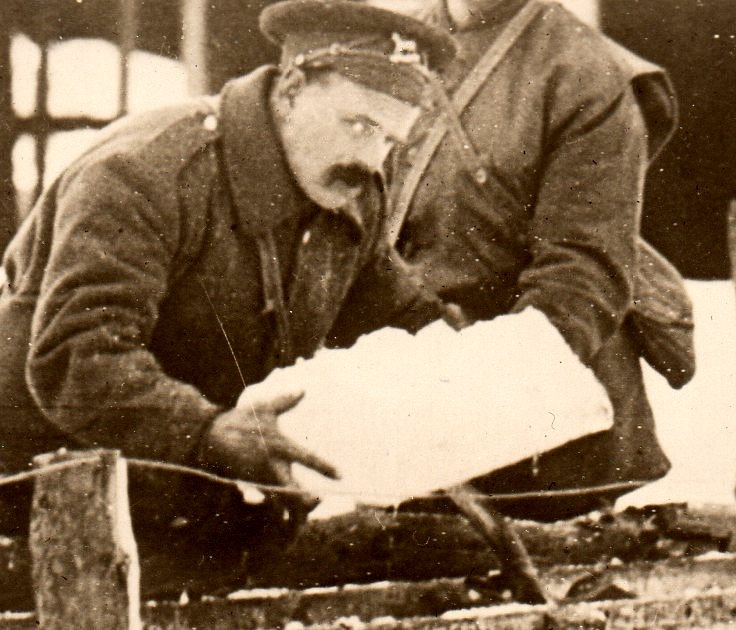
    The caption stamped on the back of the news photo service agency photograph (from the Western Newspaper Union) said that the bitter cold encountered by these Canadian soldiers on the Western Front in the winter of 1916 “was one of many difficulties encountered by the soldiers”.  “Great hardships have been caused by the frigid weather in this region” continues the caption.  Indeed.  Even for Canadians this was a cold winter, though not so cold that the Canadian trooper in the foreground stopped to put on his gloves to remove the ice from the water trough. These soldiers may have been cavalry, as there is a horse-like medallion on the front of their lids. (This photo is available for purchase from our blog bookstore, here.)

    Evidently the role of the cavalry in the BEF along the Western Front is an under-appreciated thing, or misunderstood, at least.  I’m not sure how they influenced the outcome of this stagnant section of the war, where the line of battle remained essentially unchanged throughout the duration of the war.  Millions of troops were deeply entrenched over hundreds of miles of battlefront, wailing away at one another with massive artillery barrages, countless machine gun nests, and then eventually tanks, planes and poison gas.  Back in February 1916 there weather was so tough and frigid that the battle of Verdun was postponed a bit, waiting for less intense weather conditions.  Dozens of millions of artillery shells and  billions of bullets later, in 1918, there was little change in the positions of the armies, except of course for the millions of casualties. 

    WWI cold174


    ·Posted by :

    ·in:

    — —