A Daily History of Holes, Dots, Lines, Science, History, Math, Physics, Art, the Unintentional Absurd, Architecture, Maps, Data Visualization, Blank and Missing Things, and so on. |1.6 million words, 7500 images, 4.9 million hits| Press & appearances in The Times, Le Figaro, Mensa, The Economist, The Guardian, Discovery News, Slate, Le Monde, Sci American Blogs, Le Pont, and many other places… 5000+ total posts since 2008.

Category: Militaria

  • Polling for Opinions on the Japanese, 1944

    JF Ptak Science Books   Post 1627

    I uncovered a few interesting documents this morning from The American Council, Institute of Pacific Relations (in 1944 at the address 744 Jackson Place, N.W., D.C.) relating to collecting opinions on Japan and the Japanese, right at the height of the war.   And this is what the American Council was doing–prep work to assess the extent of public opinion on the treatment of Japan post-war, which entailed reviewing existing polling data (from Gallup) was well as conducting their own original research. [These documents are available from our blog bookstore, here.]
    Japan Public Opinion treatment after891
    The “first” issue (so far as I can determine)  was perhaps the most aggressive:

    Is Japan incurably warlike?

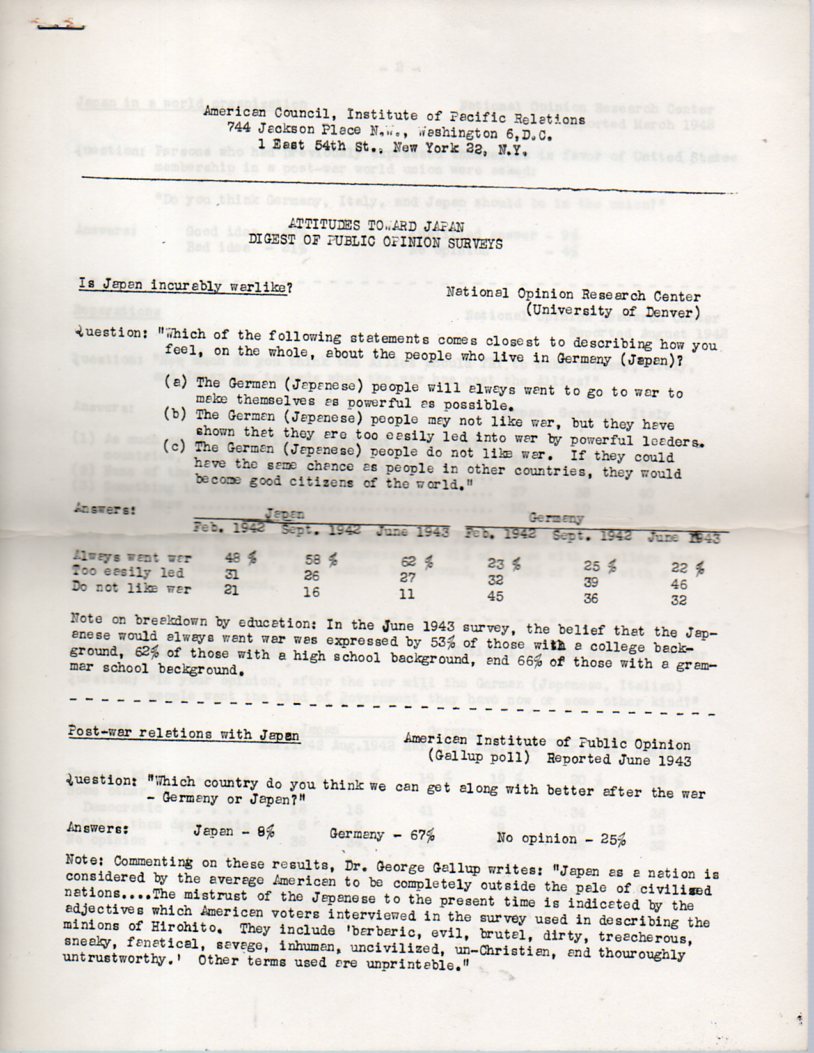
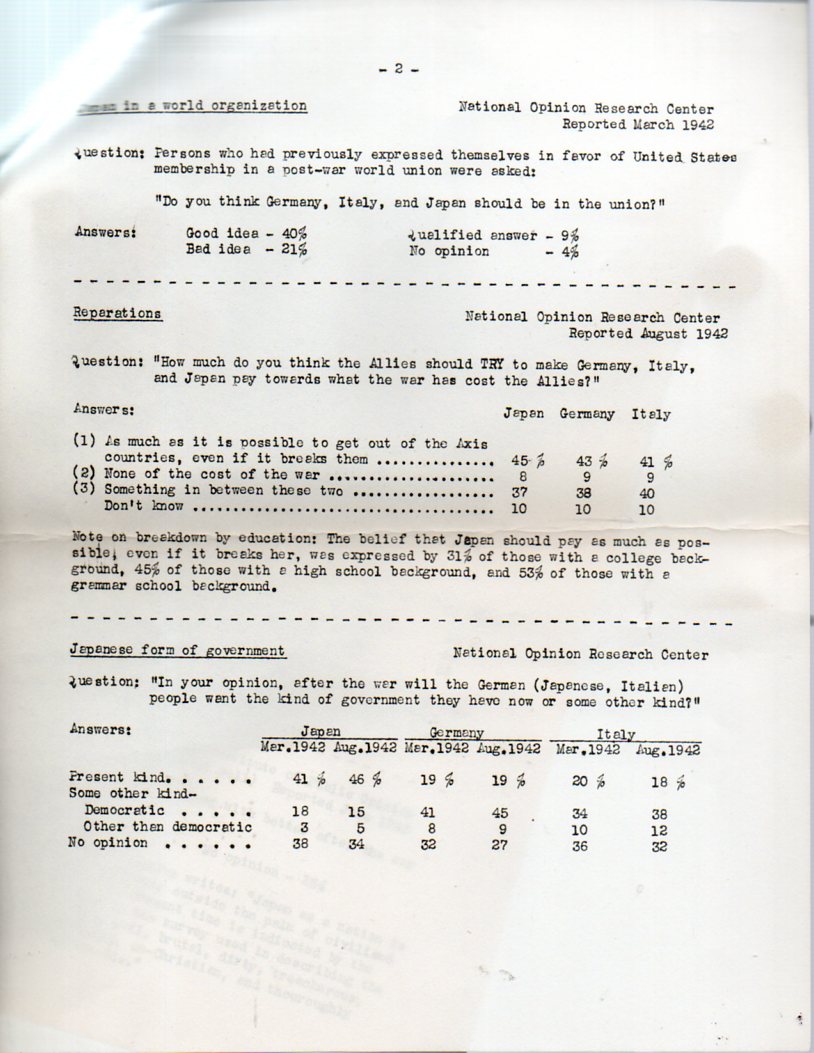
    The question was asked of an undefined group over three periods of time  (February 1942 to June 1943) for both Japan and Germany, the statements the respondents having to choose from being: “always want war”, “too easily led” and “do not like war” at three different times, from February 1942 to June 1943.  From Feb ’42 to June ’43, people’s opinions that the Japanese “always want war” went up from 48% to 62%, while for the same time the same question regarding the Germans stayed about the same, 22%.  The Gallup Poll for June 1943 reported that for 75% of the respondents only 8% of the folks thought that “we can get along” with the Japanese, while 67% favored our chances with the Germans. 

    Get along with them or not, or feeling that they are war-like or not, had little to do with the opinions of people (reported by the National Opinion research Center, August 1942) who thought that reparations should be paid, and paid hard, by the Axis powers across the board, “as much as it is possible to get out of the Axis countries, even if it breaks them”.
    Japan Public Opinion treatment after892

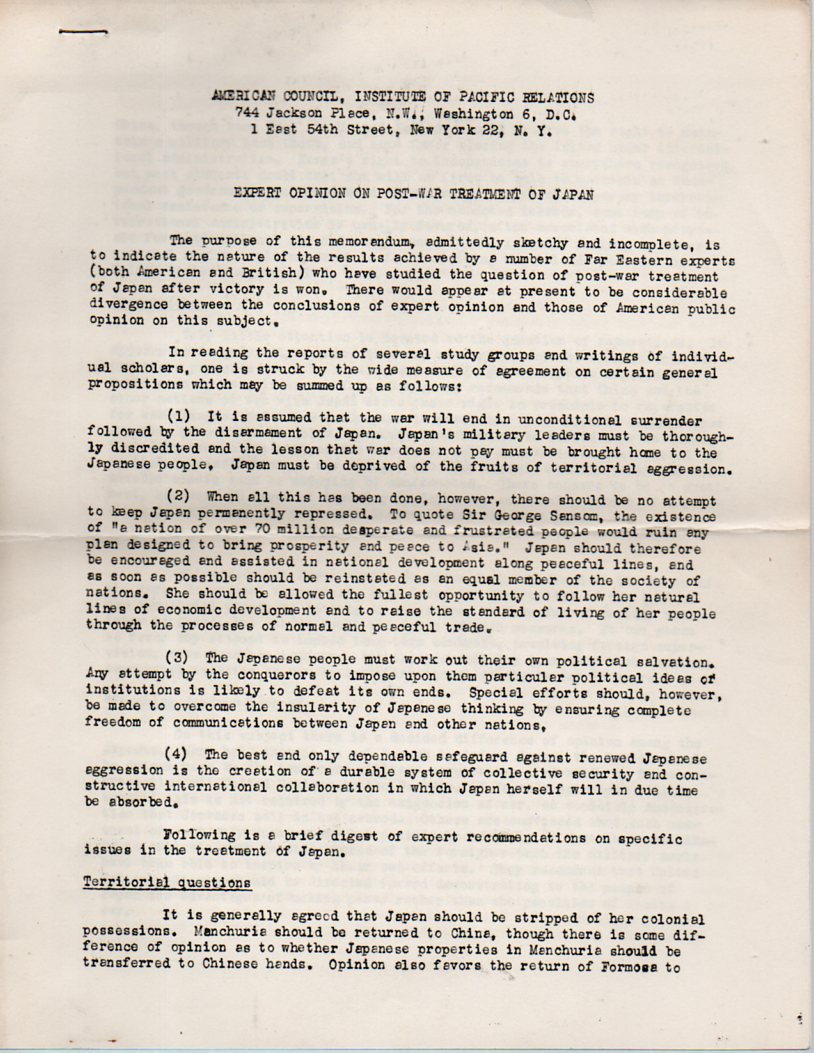
    The following two papers came a little later, closer to the realization that victory was coming, that the war would be over, that victory would be taken–probably at the end of 1944 or the beginning of 1945, when position statements were more circumspect than the earlier public opinions.  “Expert Opinion on Post-War Treatment of Japan”  was more understanding when speaking to the post-war existence of Japan, stating in a number of different ways that “there should be no attempt to keep Japan permanently repressed” and “the Japanese people must work out their own political salvation”.  Also that there would be no “continuing burden of reparations payments…as done with Germany after the last war”. 
    Japan Public Opinion889
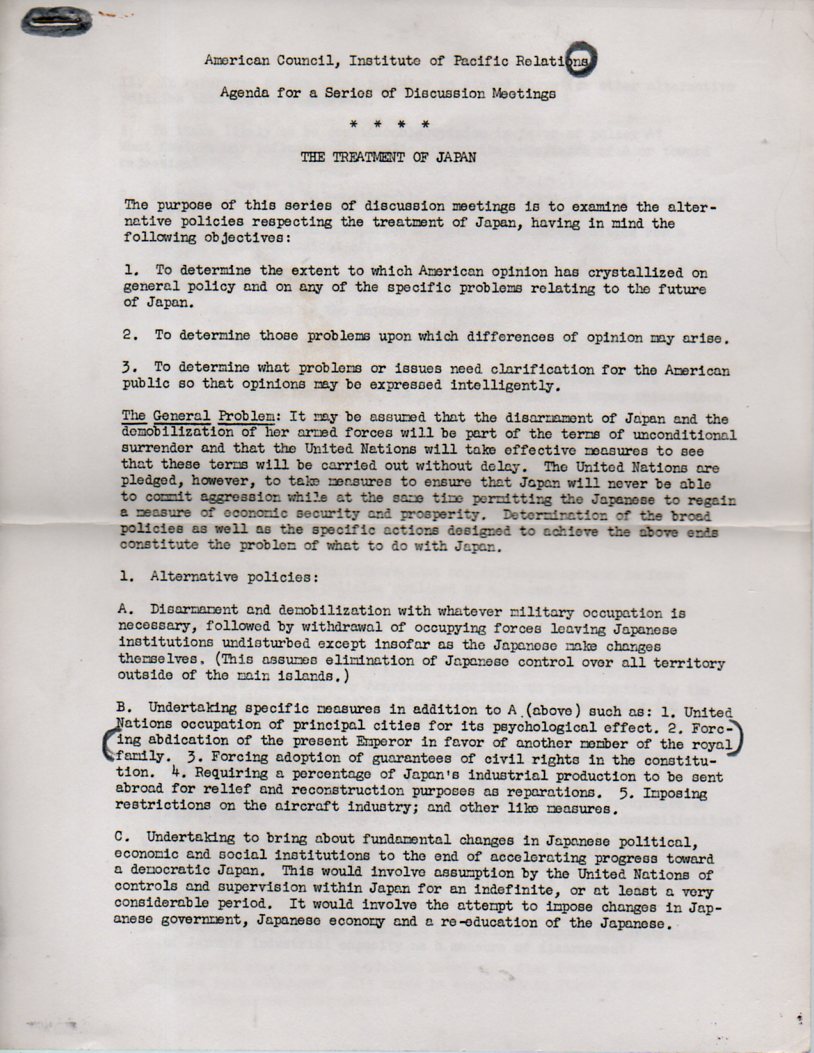
    The overall feeling of this and the following document (“The Treatment of Japan”) can be found in the section “Teaching Japan a Lesson”:  “United Nations effort should be directed toward demonstrating to the people of Japan the advantages of making peace rather than the penalties of losing a war”.  The issue regarding the Emperor and whether or not he should or could stay–an issue that would stay with high command right through the second week of August 1945. 
    Japan Public Opinion890

    ·Posted by :

    ·in:

    — —

  • A Paris Made to be Destroyed–Sham Paris, 1917/18

    JF Ptak Science Books   Post 1613  (Post 656–expanded) 
    Follow Me on Pinterest


    Now this was a case in which you were given the result and had to find everything else for yourself.  — Sherlock Holmes in A Study in Scarlet

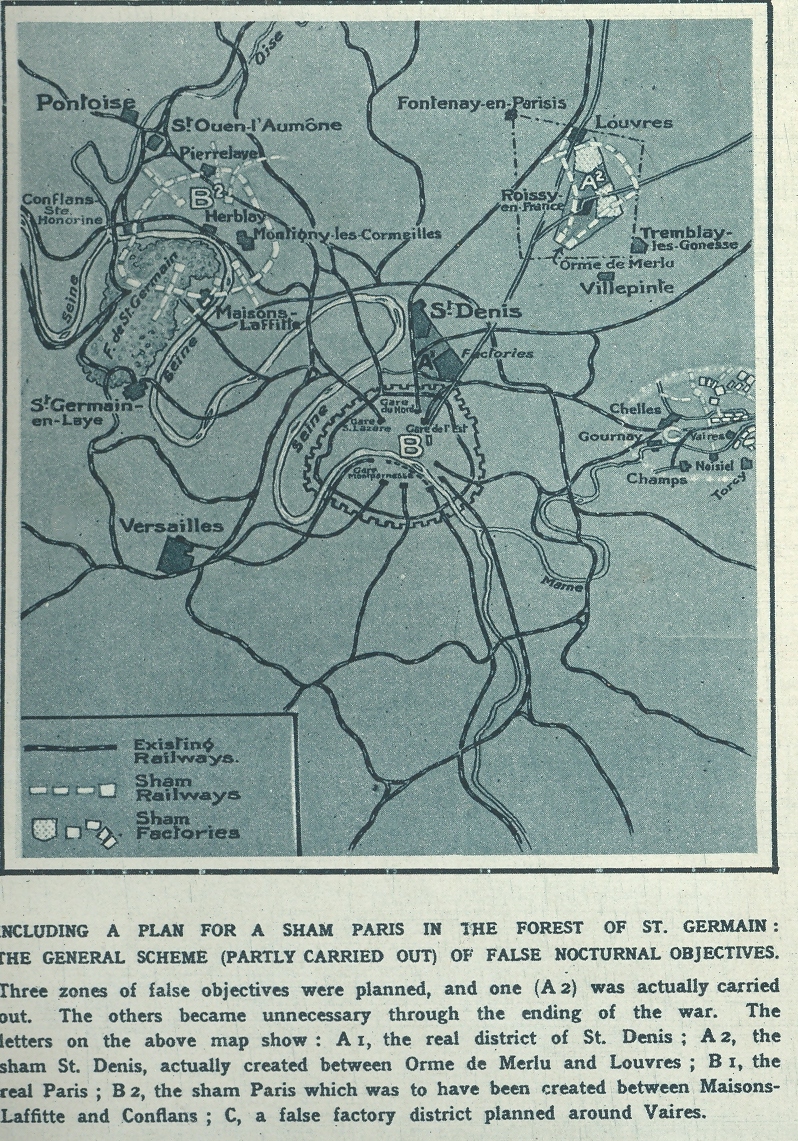
    There is no doubt a history that could be written on shadow cities, cities that were built to resemble other cities, cities constructed to serve as a deterrent or double, cities set to deceive, cities constructed to be experimented upon. Some were built ot be destroyed.  Like Paris–or “Sham Paris”. 

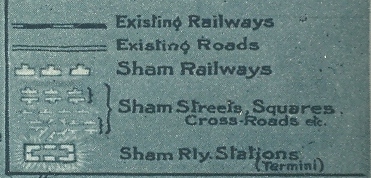
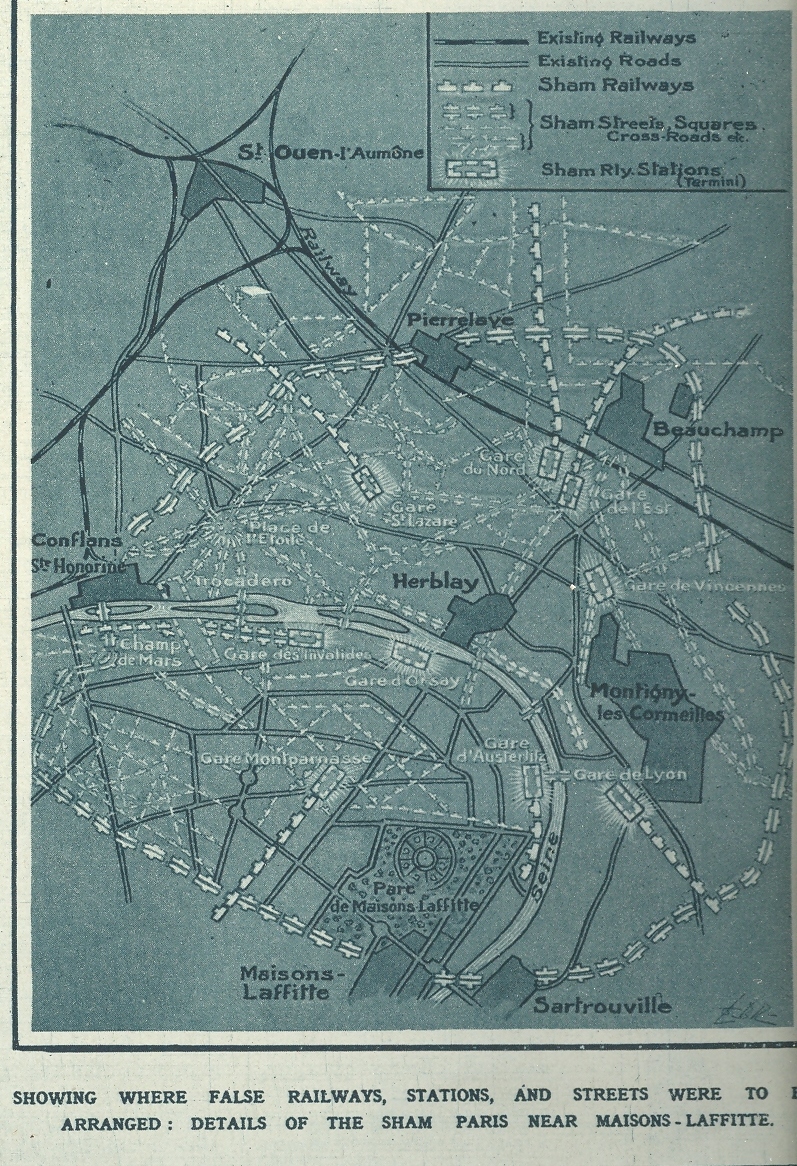
    Paris sham detail sham

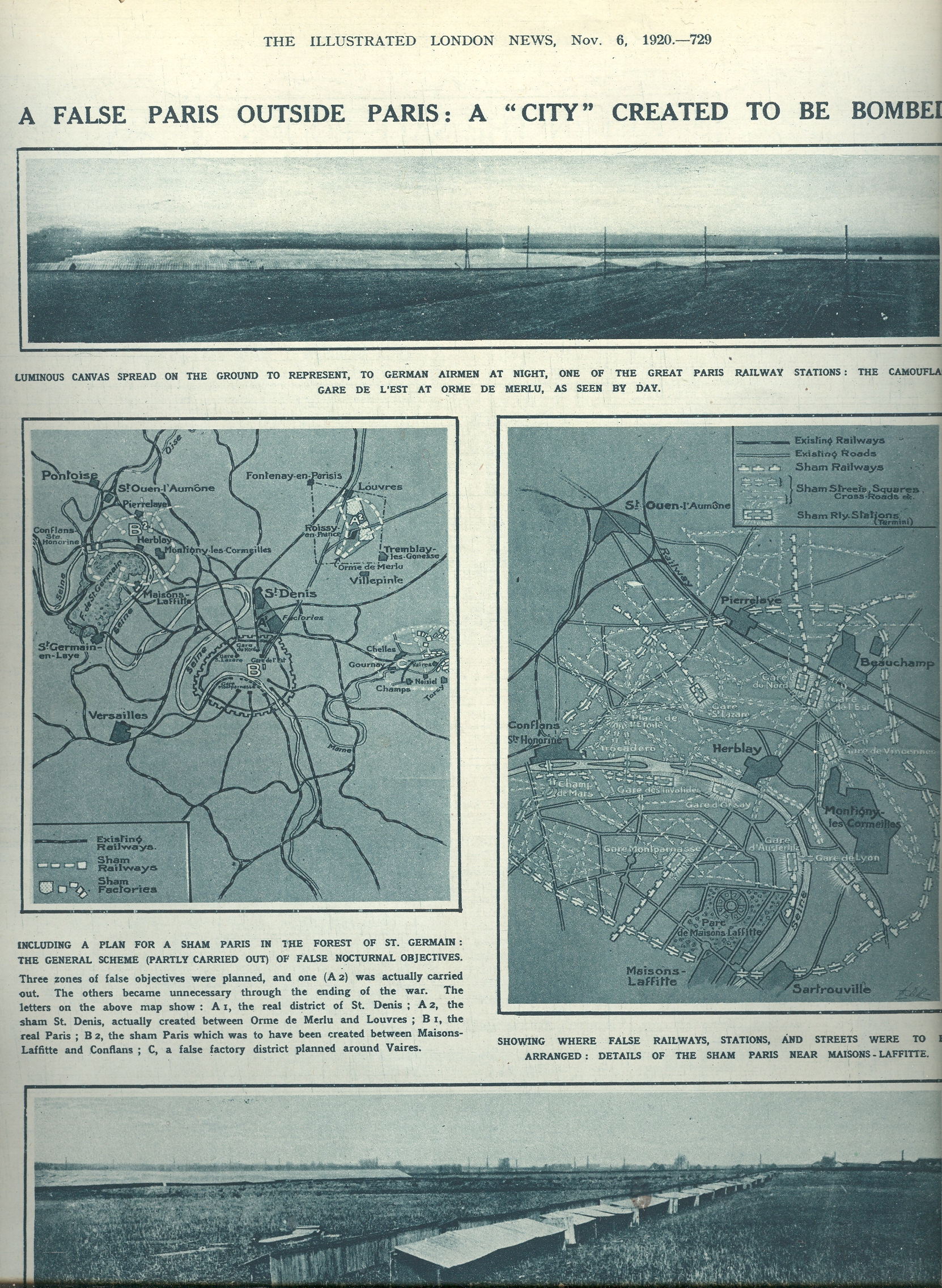
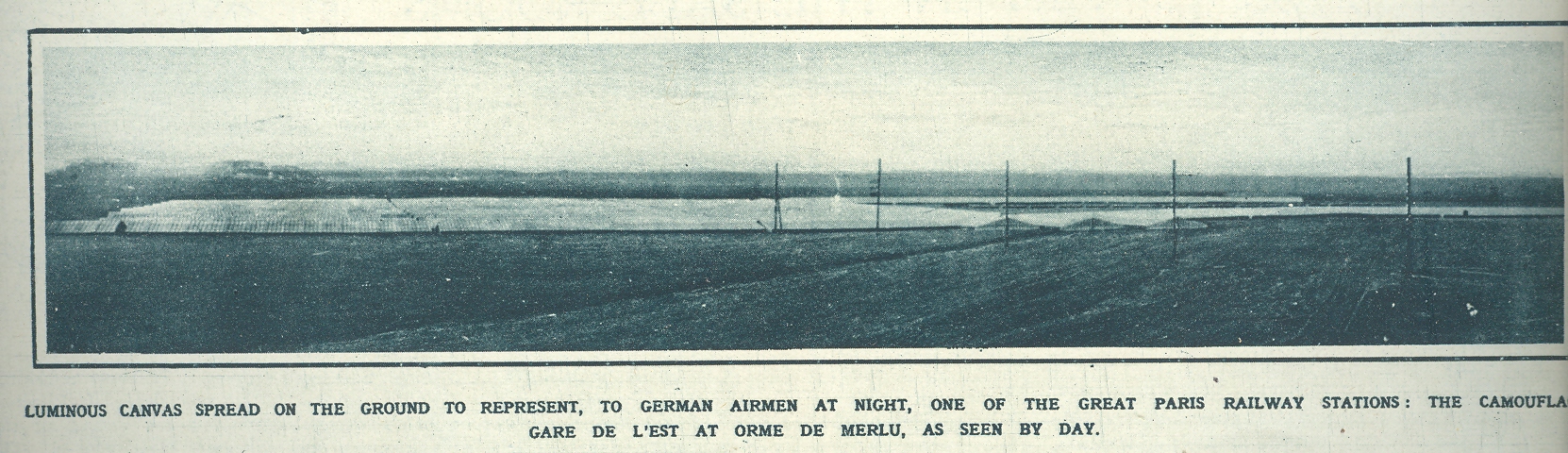
    Augustine cleaved two cities from one, the good and the doomed, in The City of God.   The powers that were in Paris at the end of World War I tried to do exactly that—to create a Sham Paris located on the outskirts of the real city—it was to be doomed, offered with confusing lights and displays that would disorient German aviators into bombing and destroying it rather than the real city. 

     Blo--june 18--paris overview

    Of course these were also the days of pre-RADAR, and of aviators simply holding a bomb by its fins and letting go once a target was in sight, so the possibility of causing this sort of dissonance was at least palpable. The planes held the pilot and a lot of fuel, and not much flight weight was devoted to bombs, so the bombing runs were necessarily quick and comparatively light (by standards of just a decade later).  So the idea of a Sham Paris might’ve, could’ve sort’ve worked, maybe; but not really.  It had a very strong, fatal, feculent (thank you for this word, Mr. Depp) air about it, like that misty doomsday smell that lifted the Maginot Line out of the earth and dumped it in the dim and stinking past. 


    Blo--june 18--paris long2

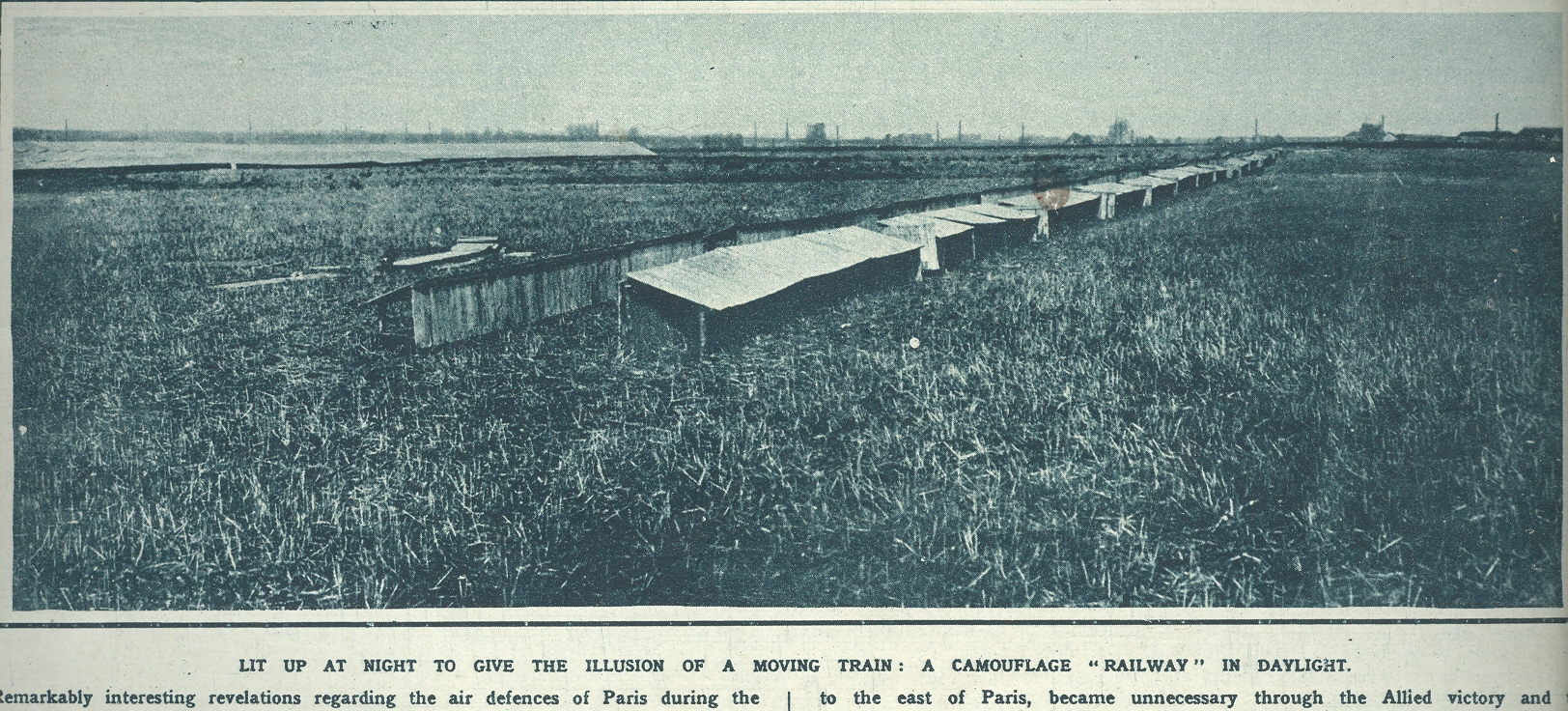
    The story of Sham Paris may have been “broken” in The Illustrated London News of 6 November 1920 in a remarkably titled photo essay, “A False Paris Outside Paris—a ‘City’ Created to be Bombed”.  There were to be sham streets lined with electric lights, sham rail stations, sham industry, open to a sham population waiting to be bombed by real Germans.  It is a perverse city, filled with the waiting-to-be-murdered in a civilian target.  Sham Paris seems to me like a reverse city.  And a reverse city in the manner of the cities created by the guilty Cain and Romulus—these two were murders who created cities; Sham Paris is a city of created murders to save the innocent.

    Paris sham detail
    Sham Paris was only partially constructed before war’s end in November 1918.  

    Paris sham 3

    (All images here are clickable and can be enlarged.)

    Blo--june 18--paris long


    Its important to distinguish Sham Cities from hidden cities, like Project Iceworm (the underground city built in Greenland) or Mt. Weather (the not-so-very-secret secure and safe bunker for the governing class in Bluemont, Virginia) and so on.  Sham Cities were definitely constructed for deception and/or destruction.  The next city we’ll take a look at:  Survival Town, Nevada.


  • On the Failures and Triumphs of Confederate Digestion: Diarrhea and Urine

    JF Ptak Science Books   Post 1611

    Let’s just say it:  the history of diarrhea is not pretty,  It has been a major killer throughout history (coupled with the sometimes historically-indistinguishable dysentery), wiping out perhaps hundreds of millions of people over human history.  Infectious diarrhea and dysentery is especially suited for crowded, cramped conditions with poor sanitary facilities and bad food, which makes armies a perfect place for those diseases to easily succeed.

    In the American Civil War diarrhea was a leading incapacitor and killing disease, perhaps chief among the diseases that killed more people than did the actual fighting.1  And perhaps no where else did it commit such great tragedy than in the ranks of the Confederate soldiers, who by and large had considerably less than the Union soldiers.  Poor sanitary facilities, bad food badly prepared, close living conditions, weeks/months of stationary encampment during the winter, would all add up to a disaster.  Since the Confederate records of medical treatment are far from complete, we have to look at those of the Union Army to get an idea of what happened with diarrhea–and there, more than 250,000 men were discharged for chronic diarrhea, or roughly 10% of the entire fighting force over the course of the war.  I think it is safe to assume that the Confederate numbers would be at least comparable and probably worse for a fighting force of approximately half that size, though I am unsure of how many of these actually were discharged.  The figures for soldiers suffering from diarrhea who were not killed by it or discharged for it probably ran over a million for both sides.  It would not be easy to overstate the vast impact that diarrhea had on these armies, and particularly for the Confederacy.

    On the side of success we have the story of gunpowder.  Or, rather, the failure in the production of industrial nitrates necessary for the production of gunpowder which was addressed by the Southern citizenry, and particularly the women of the South.  Absent the essential component of potassium nitrate, the Confederate states resolved to produce the stuff locally, in the old fashion. Urine (and water from cesspools, privvies, and so on) would be collected, and then (via one of many methods) would be sprinkled on straw or some other similar organic material (to keep the material moist but not wet); the stew would be covered and sunned and allowed to cook for some months at the end of which time the straw would be washed of the material formed on its top, and then dried.  The resulting salts produced by evaporation would be a form of saltpeter, or potassium nitrate, which provides the necessary O2 for combustion. 

    I know that it was at least considered customary and a rule of engagement for the Union and the Confederate soldiers to not shoot each other while attending nature’s call; I’m not so sure that this would be the case for the guys in the night waste wagons collecting privvy drawers and urine. 

    Just another small, necessarily savage bit in the history of killing. 

    Notes:

    1. The Union armies had from 2,500,000 to 2,750,000 men. Their losses, by the best estimates:

    Battle deaths: 110,070
    Disease, etc.: 250,152
    Total 360,222

            The Confederate strength, known less accurately because of missing records, was from 750,000 to 1,250,000. Its estimated losses:

    Battle deaths: 94,000
    Disease, etc.: 164,000
    Total

    258,000

    ·Posted by :

    ·in:

    —

  • Fabulously Beautiful Non-Fascist Spaghetti

    JF Ptak Science Books    Post 1604

    {Images sources via 50Watts and Bibliodyssey]

    I wonder if there is a dominant semiology for the created cultures of advertising under the Fascist regime of Mussolini (which ruled the Kingdom of Italy from 1922-1943, and then followed by the Republican Fascist Party which ruled the Italian Social Republic from 1943 to 1945)  or as much so as there was for Adolf Hitler’s Nazi Germany?  A sweeping and broad generalization at which I’m just guessing at here is that the German model for creating a particular, wide-spread iconology of regime-controlled national images far outweigh their contemporaries in Italy. 

    One of the most inspired and perhaps one of the leading iconoclasts in Italy during this time was Federico Seneca, who seemed to stray far from any mainstream representations in the many ads and designs he produced from 1922-1945.  Seneca (1891-1976) really had the chops–he had a remarkable insight for placement and design and produced some beautiful and futuro-odd posters for some of Italy’s iconic companies. (The Futurism bit is a little “odd” because Marinetti’s attempt to make the/his movement the official art of the Fascist regime was rejected by the pwoers-that-be.)  I pray ask:  who would have thought of such a provocative, spare, impacting design top sell Buitoni pasta?   These creations were masterpieces of advertising poster art, and seemed to have little or nothing to do with Italian politics.

    1919 to 1935 or so, Seneca served as artistic director for ad campaigns for Perugina and Buitoni, while from the middle ‘thirties to WWII and from his own Milan-based studio he also produced graphics and posters for Italrajon, Fiat and Cinzano.  Then–for me, at least–there is a vast blank spot occupied by WWII, out of which Seneca emerges around 1950, doing more work for Cinzano, as well as Agipgas, Pibigas, Energol and  Lane BBB.


    Seneca wasn’t alone of course in his alone-place–there were plenty of artists in Italy sharing their own nodes of individuality.  For example, this fantastic poster for Amaro Gambarotta tuxedo sales in 1928 by  Saxida

    Ad for Amaro Gambarotta tuxedo, 1928, Saxida
    Though certainly this quasi-futurist style could be lovely, highly stylized, and political, as we see in this cover for a book on the young Fascist handbook, Il Capo Squadra Balilla, created in 1935 by Zedda. 

    Zedda, Il Capo Squadra Balilla, cover for Fascist youth handbook, 1935 Italy

    And of course there was plenty of work done solely for propaganda reasons:

    But for molding the cultural mind via advertising art, the Italians seemed to stay far-afield of their Germanic brethren. 

    ·Posted by :

    ·in:

    —

  • White Guard Fascist Terrorists in the USA, 1946

    JF Ptak Science Books   Quick Post

    White guard terrorist688

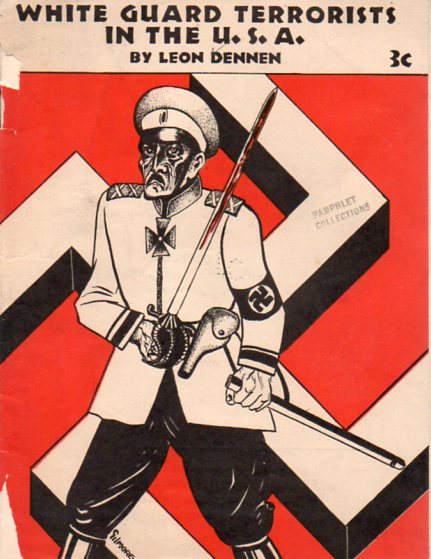
    Leon Dennen was a dedicated man with a broad experience in the affairs of the Soviet Union, the Eastern Bloc, and a capacity to see into the future.  And what this widely published man saw was this–that the countries in Eastern Europe that were presently (in 1945) under control of the Soviet Union were going to stay there1. He did see this correctly and at a time when seeing things like that correctly was pretty tough. 

    White guard terrorist687
    Earlier in his career he did see Fascists under American beds and published his view in this publication (above), published by The Friends of teh Soviet Union Society in New York City in 1935.  On the other hand he couldn’t see the Great Purge and the millions of Russians being eaten alive by the monstrous Joseph Stalin.  But his vision was pretty good for seeing the Soviet plans in Europe at the end of World War II–there weren’t that many people who save that, and those same people really didn’t see the Great Purge either. 

      White guard terrorist tito691

      White guard terrorist tito690

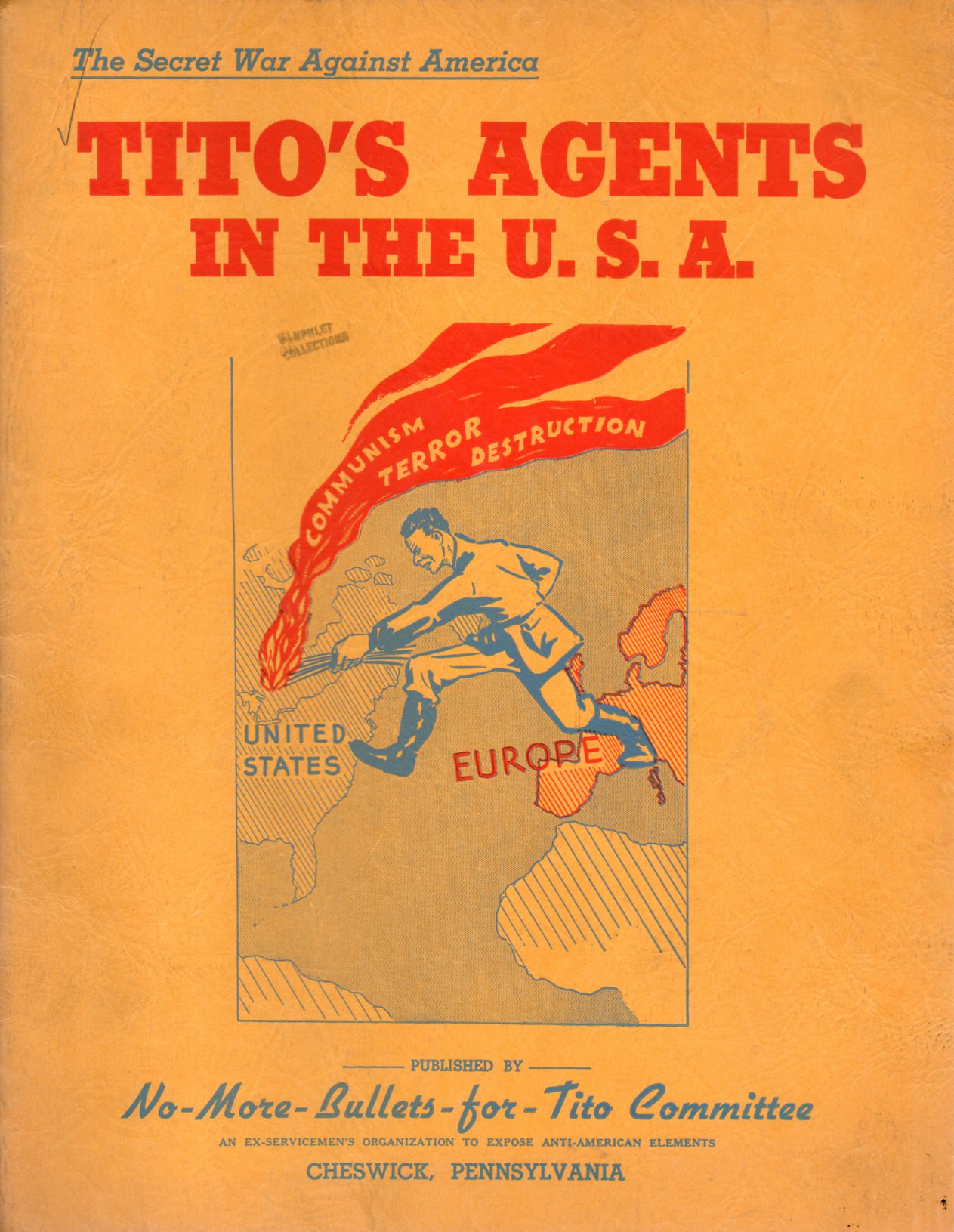
    White guard terrorist tito689
    Notes:

    1. Some biographical information from Commentary, January 1946:

    “Leon Dennen spent nine months in 1944 in the Near East as a representative of an American relief agency. Upon his return he announced that Soviet Russia was building a zone of influence in the Balkans that was “being nailed down with bayonets and terror by regimes deriving their authority not from the local nationalities but from the Soviet liberators.”

    “Mr. Dennen cites chapter and verse to support his contention. He shows that the peoples of the Balkans and the Near East, unable to order their own destinies, have become mere pawns in a gigantic battle for power between Britain and Russia—with Russia, propelled by the dynamism and ruthlessness of the newcomer and in a better geographical position, distinctly having the upper hand.”

    ·Posted by :

    ·in:

    —

  • Writers with Guns

    JF Ptak Science Books   Quick Post

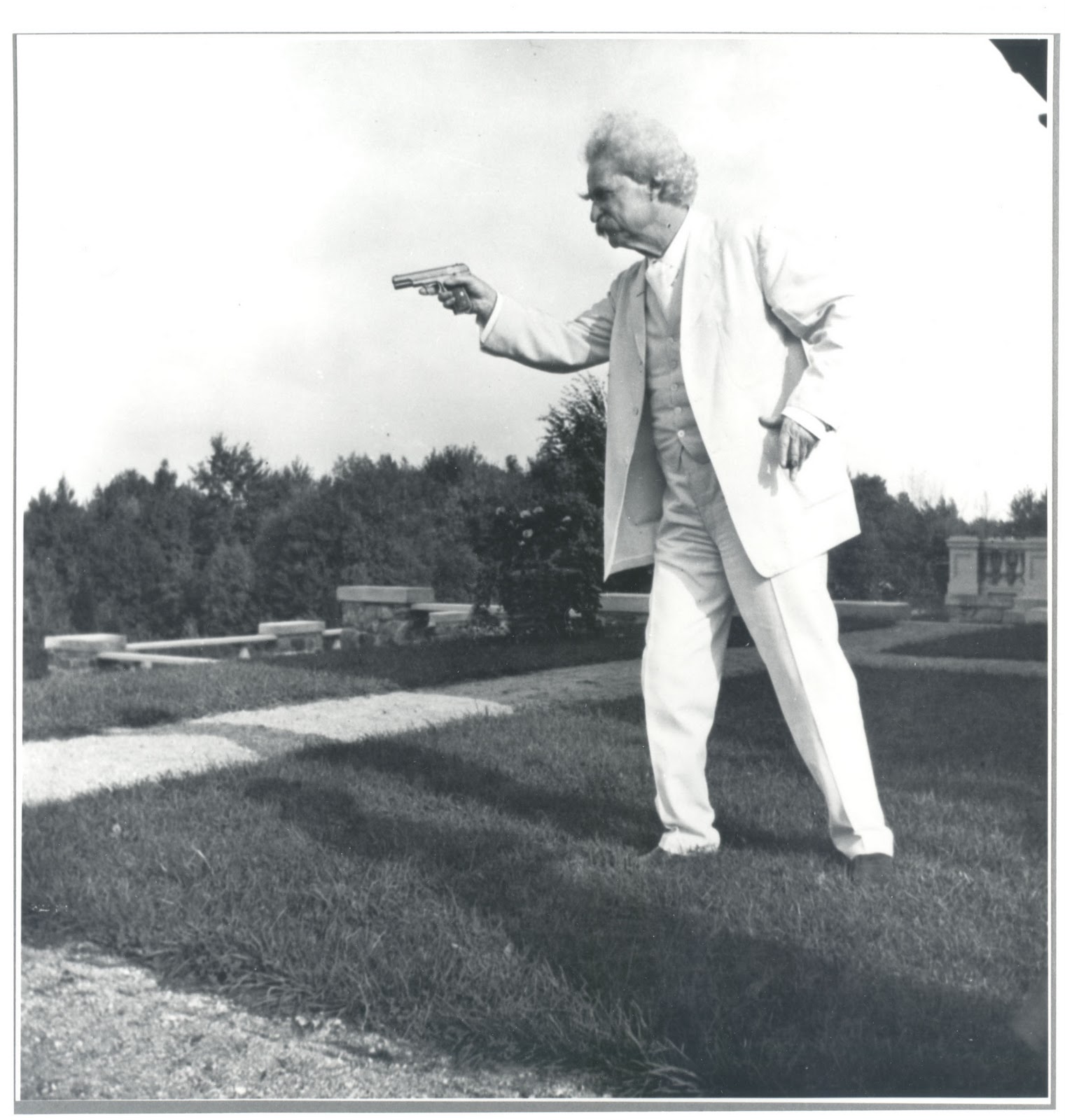
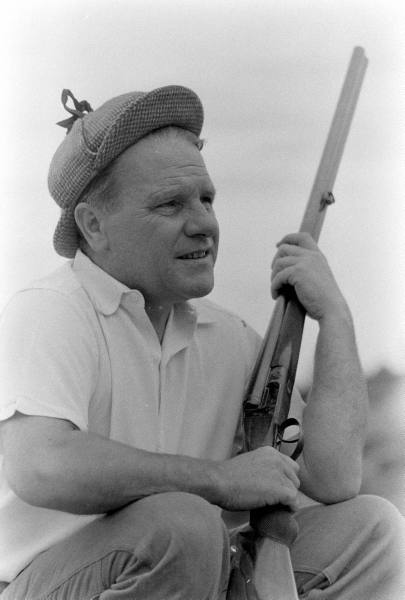
    Well, just a very quick post here for some found images of our leading lit figures posing with guns.  Real guns.  The Samuel Clemens image looks photoshopped to me but so far as I can tell it is real–its a long shadow produced by a rising/setting sun, the other shadow belonging to someone just out of the picture. I like his safe handling of the weapon. 

    http://4.bp.blogspot.com/_wmn8WjrdQfM/TOPSMEhhIzI/AAAAAAAAGVw/ZFcQ_C3-KG8/s1600/Twain+2.jpg

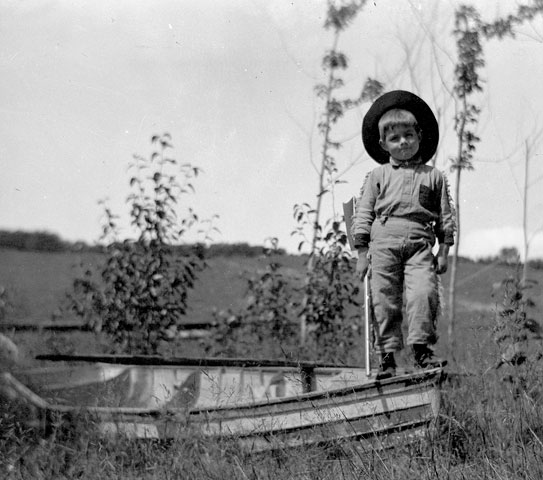
    Ernest Hemingway,  ca. 1905, with air rifle–evidently his connection with guns went way back, but so did it too for just about every other American boy. 

    http://4.bp.blogspot.com/_wmn8WjrdQfM/TOPSiD4kJqI/AAAAAAAAGV0/oa4HFWtYPLs/s1600/Hemingway.jpg

     [Source: Philosophisches & Literarisches Sehloft blog.]

    And of course there’s Mr. Burroughs.  He didn’t meet his end with a gun but he was on the oppsoite end of one that ended his wife’s life back in the old, dim days.  Now, Dr. Benway is dead with the rest of them, but his gun lives on. Ah Pook is here.

    burroughs

     Hunter S. Thompson.  He and Burroughs shared a middle initial and a taste for some wild things, as well as a very good sense of very dark humor.  Thompson was funny and a great political pundit ’till about, oh, perhaps 1974.  Maybe 1976.  But that’s about it–until then, he could call the state primaries like no one else and evidently made a fair amount of money doing it.  He respected Nixon’s ability to see into the future of primaries, even though he saw that man as a pig on fire. 

    huntersthompson1

    Burroughs and Thompson courtesy of ABove the Aether

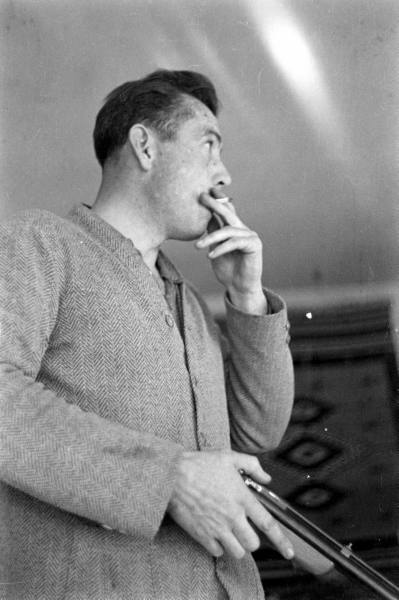
    Lawrence Durrell, author of the Alexandria Quartet–I’m not sure about his gun connection, though we had to read his quartet in high school.  

    WRITERS WITH GUNS! Lawrence Durrell, Indian-born, Colonial - or rather Cosmopolitan, writer: Feb. 27, 1912 - 1990. Famous for The Alexandria Quartet from the late 50s - good friend of Henry Miller… Photo by Loomis Dean, 1960, probably at Durrell’s Cyprus residence…

    John Steinbeck, 1937.  I just like him. 

    WRITERS WITH GUNS! John Steinbeck (Feb. 27, 1902 - 1968), the American author who many say did not deserve getting the Nobel Prize in 1962 (when he was clearly way past his prime). Steinbeck himself stated bluntly that he did not deserve it. I think he deserved getting the Award, for a number of reasons: The Grapes of Wrath, Of Mice and Men, East of Eden… Photo of Steinbeck, 1937 in Pacific Grove near Monterey - by Peter Stackpole, LIFE

    ·Posted by :

    ·in:

    —

  • Apocalypse Then–World War III, The 36-Hour War of 1948

    JF Ptak Science Books   Post 1585  [Part of a long series on atomic and nuclear weapons]

    This is also part of a sub-series on the invasion of attack on America; examples of other posts include: Mapping the Invasion of America, 1942 (which is the most-viewed post from this blog, with over 500k readers), The Invasion of America, 1935,  Bombing Manhattan and the Amerika Bomber, 1943, and The Invasion of America, 1942, Part II .

    In the very near wake of the bombing of Hiroshima and Nagasaki, the editors of Life magazine published a prescient bit of propaganda on the coming of the Cold War.  I guess though that the Cold War had already begun by Yalta1, when the sick and basically-terminal FDR seems to have been corralled by Bloody Joe Stalin, leaving the new President Truman on alert for the possible coming aggressiveness of the Soviet Union.  The article appeared in the 19 November 1945 issue (pp 28-39), and it was a longish one, with nine illustrations (by A. Leydenfrost), and as articles go in Life from this time, this one was heavy. 

    It built itself up on a report generated from the offices of General Hap Arnold, and reckoned a new war, a New War, World War III, to occur in 1948–except that this time there were no natural difficulties that the U.S. could hide behind. (Arnold said: “…with present equipment an enemy air power can without warning, pass over all formerly visualized barriers and can deliver devastating blows at our population centers”.) The threat would come from above, and there would be little accurate defenses against them. 

    There would be survivors but massive destruction and death–and remember that this was at the point of the simple atomic weapon, before the development of the big stuff.  In the opening images of the article, a chilling two-pager showing eight major American cities being struck by atomic weapons, resulting in at least 10,000,000 casualties.

    But as grisly as all of this was, the American reader was told the the United States would prevail, and that our rockets “would lay waste” to the enemy’s cities; “the U.S. wins the atomic war”.

    [Image sources:  I’ve used the image from the Drexel University site as my copy of this issue of Life is in a massive half-yearly bound volume, impossible to scan.]

    This is what New York City was supposed to look like, afterwards, with inspectors sizing up the radiological waste of what was left of the NYPL at 412nd Street:

     Notes:

    1. The Yalta Conference was the third meeting between the leaders of the U.S., the United Kingdom and the Soviet Union, held 4-11 February 1945.  It came after the Tehran and Cairo Conferences, and preceded the final Potsdam Conference on 17 July- 2August 1945.
    More illustrations:


  • A Lesson in Civil Rights taken from a 1944 Piece of Cardboard–Philly Motormen, Jackie Robinson and War

    JF Ptak Science Books   Post 1569

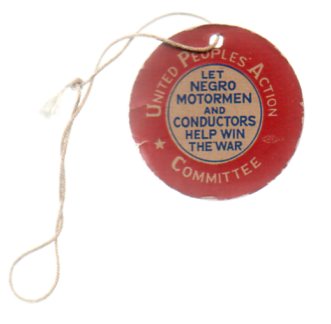
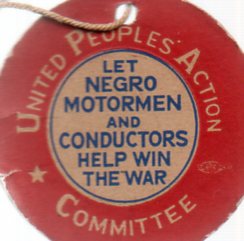
    Negro motormen633
    This political “button” has been in my house –along with a a dozen or two others–for quite some time, small signifiers for large events.  This one, though, is more suggestive than assertive; a measured, tenuous  political statement that seems today as though there should have been no disagreement in its message. 

    The button was issued in 1944, at what might have been the very most crucial time for America in fighting World War II.  The message wasn’t to support the idea of sending Black Americans to fight in the war–it was rather a call to White America to acknowledge the need for employing Black Americans as motormen and conductors on Philadelphia street cars as replacements of the men who went off to fight the war. 

    There was very strong resistance to having Black people interact with White people on a public convenience.

    In the same year, in July 1944,  Jackie Robinson (then of UCLA)  was a newly-commissioned 2nd lieutenant in the United States Army, stationed in Fort Hood, Texas, with the legendary 761st “Black Panthers” Tank Battalion.  On 6 July he boarded a U.S. Army desegregated bus, where he was told by the driver to move to the back, into the Negro section; Robinson refused; the driver backed down, and continued on his way, though not without his revenge.  At the end of the run, he alerted Military Police, who would arrest Robinson on a variety of phoney charges.  It was recommended that Robinson be court-martialed. The commander of the 761st, a White colonel named Paul Bates, refused to do so–which led Robinson to be transferred to the 758th Battalion where there was no problem in undertaking the legal action.  By August, with charges reduced, Robinson went to court and his charges were dismissed.  But by that time, the damage was done, and he would not be sent overseas to fight.  He was sent to Camp Breckinridge in Kentucky where he served as an athletics coach for the few months he had in the Army, and he was honorably discharged in November, 1944.  It was while he was at Breckinridge that a former Negro Leagues player for the Kansas City Monarchs suggested that Robinson write to the ballclub for a tryout.  He did, they did, and the rest is history.

    Negro motormen632 In 1944 in Philadelphia–though it could have been in many other cities in the northern part of the United States, though  this would not have been attempted almost anywhere in the South outside of the Pullman car–the question was whether society would tolerate a Black person interacting with White customers on streetcars.

    It was almost at this same time, in November 1944, that General Eisenhower decided to send Black troops to fight with Whites in battle.  There was strong resistance to this behavior in the military, not the least of which came from Ike’s own chief of staff, Lt. Gen. Walter Bedell Smith.  It would take an Executive Order (#9981) from the next president, Harry Truman, to end the de facto segregation of the U.S. Army; it would take another war, and another three years (to the day)  for the U.S. Army to announce its plans to desegregate, on 26 July 1951.

    In spite of there being motormen and conductors working in other northern cities like Cleveland, Detroit and Indianapolis, wrapping the string for the United People’s Action Committee around a button on your shirt or jacket would have been a controversial step to take–a step that looks alarmingly small to us here in the future, but it was a societally big one back in 1944. 


  • The “Other” Hiroshima: Hamburg, Operation Gomorrah, Summer 1943

    JF Ptak Science Books   Post  1543

    It was during the spring and summer of 1943 that the Allies came to the conclusion that the idea of strategic bombing needed to be expanded–the expansion part grown to include the total destruction of the target city. 

    The “most secret” letter1 (dated 27 May 1943)  that outlined the coming approach to aerial bombing was sent by Air Chief Marshal Arthur “Bomber” Harris  to his six group commanders and detailed the more-new strategic approach to bombing cities–the city itself would be a strategic target, with the goal in this case of destroying the entire city.

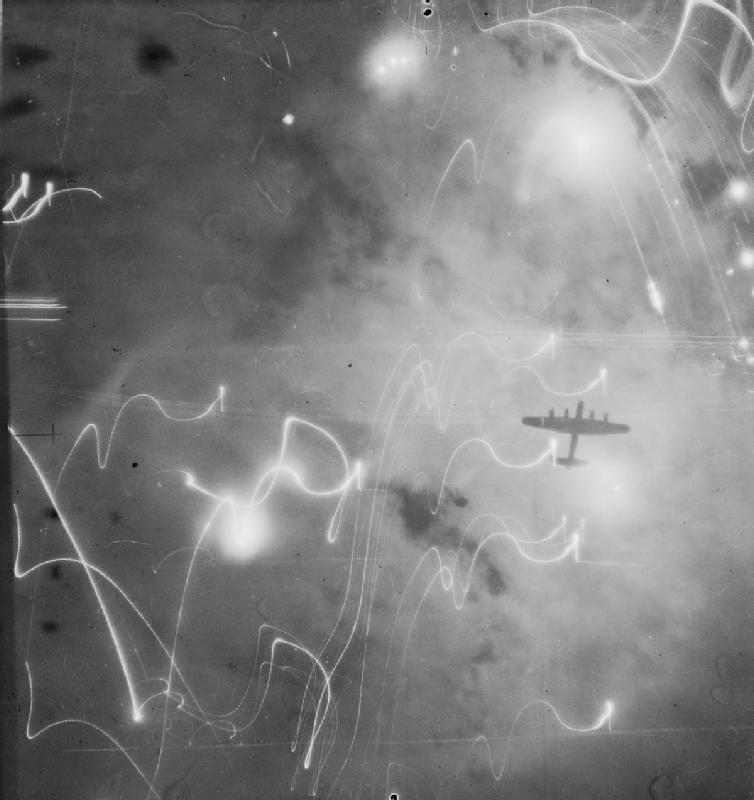
    File:Attack on Hamburg.jpg

    Operation Gomorrah occupied four nights from 24-30 July, involving 791 aircraft on the 24/25th, 90-110 B-17s on the 25th, 131 B-17s on the 26th, 787 aircraft on the 27/28th,  777 on the evening of the 29/30th., and finally with 740 aircraft on the night of the last raid on 2/3 August.3,000+ aircraft were employed in the action dropping 9,000 tons of bombs.   At the end of the Gomorrah campaign, 42,600 people had been killed as well as almost 40,000 wounded, destroying about half the homes int the city and causing another million people to flee the city.  The greatest amount of damage and death occurred on the night of the 27th, when 787 British aircraft caused an enormous firestorm to be formed, at one point fueled by a 1500′-foot tall tornado of fire, which caused 150 mph fire winds, temperatures reaching so high (1800 degrees and more) that it  set the asphalt streets on fire.  Most of the dead were killed by asphyxiation, the oxygen pulled out of bomb shelters and hiding places to be used in the fires.  The infrastructure of the city had been largely destroyed before this day’s bombing, so getting firefighting crews to any of the new scenes would be impossible.  As a matter of fact, there was so much smoke generated from the previous day’s bombings that the USAAF B-17 attacks were suspended because targets could not be identified. 


    And from this point to the end of the war there were another 60+ campaigns flown at Hamburg, attacking and re-attacking oil storage facilities, shipbuilding industries, U-Boat factories, and the like.  53 missions involving several thousand aircraft, flying against the re-supplking and ruined city right to the end of the war, including 5 major actions in the last week of the war. 

    File:Hamburg after the 1943 bombing.jpg

    I don’t think that this was its own “Hiroshima” as British command thought, because, well, Hiroshima and Nagasaki have their own categories for destruction.  As does Tokyo. And Dresden.  It does though share a newness of bombing with Hiroshima in establishing the mission against Hamburg as a mission against an entire city rather than specific targets–certainly there were specific targets in mind for the hour or more worth of aircraft, but the overall effect was to support a carpet bombing plan and to initiate a fire so massive and destructive that the entire city would succumb.

    Newsreel of the bombing of Hamburg.

    Notes

    1.   The Harris ltter:

    MOST SECRET


    BOMBER COMMAND
    OPERATION ORDER NO. 173
    Copy No: 23 Date: 27th May, 1943


    INFORMATION

    The importance of H A M B U R G. the second largest city in Germany with a population of one and a half millions, is well known and needs no further emphasis. The total destruction of this city would achieve immeasurable results in reducing the industrial capacity of the enemy’s war machine. This, together with the effect on German morale, which would be felt throughout the country, would play a very important part in shortening and in winning the war.

    2. The ‘Battle of Hamburg’ cannot be won in a single night. It is estimated that at least 10,000 tons of bombs will have to be dropped to complete the process of elimination. To achieve the maximum effect of air bombardment, this city should be subjected to sustained attack.

    Forces to be Employed

    3. Bomber Command forces will consist of all available heavies in operational squadrons until sufficient hours of darkness enable the medium bombers to take part. It is hoped that the night attacks will be preceded and/or followed by heavy daylight attacks by the United States VIIlth Bomber Command.

    INTENTION

    4. To destroy HAMBURG.

    [Source]

    ·Posted by :

    ·in:

    —

  • “China, Glass, Auction & Negro Sales”: Photography of the Sherman Atlanta Campaign, 1864.

    JF Ptak Science Books     Post 1535

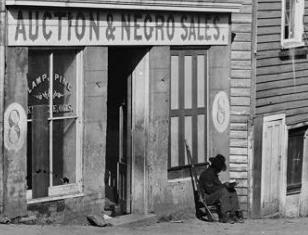
    Atlanta, Georgia.  Whitehall Street:  ” China, Glass, Auction & Negro Sales.” 1864. Photo by George N. Gardner.

    The first name people associate with photography and the American Civil War is Matthew Brady.  Brady did of course come up with the idea for photographically documenting the conflict and made images of his own, but the truth of the matter is that he had a lot of help making his record–other great names from the early period of American photography were employed by him, sent out into the field to record what they saw.  Alexander Gardner, Timothy Sullivan, James Gardner, William Pywell and eighteen others recorded the great events in addition to Brady, though for the most part it was Brady’s name on the finished work.

    One of these men was George Gardner (1819-1902), who at one point owned his own studio in Oswego, New York in 1847, working for himself until he joined the Brady force in 1861.  He left Brady in 1863, but he didn’t leave the war, becoming an official photographer for the United States Army, Chief Engineer’s Office and joining General William T. Sherman and the  Military Department of the Mississippi in 1864, at which point he documented Sherman’s Atlanta Campaign.  (One of the results of this effort was his 61-photograph work, Photographic Views of Sherman’s Campaign (1), published in a sumptuous leather bind in 1866, a big, heavy work with original albumen photographs.)  The images below, however, were not published in this work–all 61 images can be view here, at the collections of the Hargrett Library at the University of Georgia.

    Detail of the first image, above–the three other businesses that I can identify are tobacconists of one form or another.  It looks like a Union private is sitting quietly (reading?)  in front of the auction house, his rifle leaning against the wall.  There were a lot of people going into this place, if grime on the doorway is a testament to a legacy of busy-ness. 

    I wonder if you were coming here as a slave, without the ability to read or distinguish any sort of written character, I wonder what you would think of those two enormous “8” characters painted on the side of the building.  That symbol is an old one for infinity, continuing–I wonder how many cultures would have used that line as its own?

    Barnard negro sales detail

    Atlanta, Georgia, 1864.

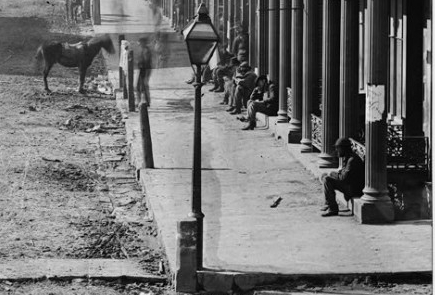
    The only reason that the private in the photograph above is captured so clearly is that he was probably reading, which means he was sitting still for the minute or so that it would take to make the exposure.  That’s what gives this image above its qualities of clarity and ghostliness–there are as many suggestions of people as there are imaged folks in this photo.  What we see plainly are the men sitting on the business stoops–look more closely and you’ll see many more moving along the sidewalk, the briefest bits of them being captured by the long exposure. (There is just a hint of someone leaning against the gas light fixture in the foreground.)

    Barnard atlanta street ghosts--detail

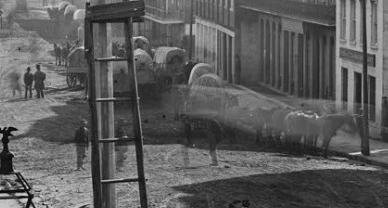
    Nashville, Tennessee.  1864


    Atlanta, Georgia.  View on Marietta Street, 1864.

     Detail:

    Barnard atlanta ladder detail

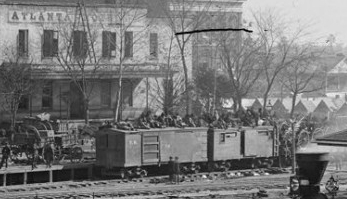
    Atlanta, Georgia.  1864. “Soldiers on boxcars at the depot.”  There was no date that I could find offhand on this image, so I don’t know if the soldiers were coming, or going, or already there and just trying to catch a breeze on top of the cars. It had to be after the end of the campaign, after Atlanta’s mayor James Calhoun surrendered the city following  the entry of Henry Slocum’s XX Corps on 2 September 1864, and sufficiently after that for the men to climb on top of the boxcar and not get fried by a scorching Georgia late summer sun.  They certainly weren’t busy pulling up the rails like they did in so many other locations in the city and vicinity, ensuring a de-mobilization of what had to this point been a primary center for Confederate munitions supply and manufacture. 

     Detail:

    Barnard atlanta boxcars detail
     

    Notes:

    1.  The full title of the book is Photographic Views of Sherman’s Campaign, Embracing Scenes of the Occupation of Nashville, the Great Battles around Chattanooga and Lookout Mountain, the Campaign of Atlanta, March to the Sea, and the Great Raid through the Carolinas.