A Daily History of Holes, Dots, Lines, Science, History, Math, Physics, Art, the Unintentional Absurd, Architecture, Maps, Data Visualization, Blank and Missing Things, and so on. |1.6 million words, 7500 images, 4.9 million hits| Press & appearances in The Times, Le Figaro, Mensa, The Economist, The Guardian, Discovery News, Slate, Le Monde, Sci American Blogs, Le Pont, and many other places… 5000+ total posts since 2008.

Category: Militaria

  • Kolberg and Sachsenhausen, 1945–Visions of Fantasy and Reality

    JF Ptak Science Books Post 1661

    At the end of WWII there was a tale of two battles, both by the name of Kolberg.  One was a propaganda tool filmed in Agfacolor at the request of Josef Goebbels, a movie begun in 1944 about the mythically-endowed victory of Germany over Napoleon at Kolberg.  It was an epic, costly movie made at a time when the 180,000 “extras” composed of Wehrmacht troops could not be spared, but it was seen by Hitler and whoever was around to agree with him that a movie selling selflessness and sacrifice (blood sacrifice) was more valuable than a military victory1. When it was finally put to bed, the movie “opened” virtually nowhere in Berlin in January 1945, as  the city was becoming a bombed-away shambles–much more so in the next three month.  The visions of resistance-to-the-last-breath played in few places outside of Hitler’s bunker, where the dictator professed the qualities of sacrifice and the fight-to-the-death messages in the movie, though not applying those necessaries to himself.  

    The other Kolberg battle was the Battle of Kolberg (a Baltic seaport city in Pomeria located about halfway between Berlin and Koenigsberg), which took place in real life from 4-18 March 1945.  It was a fight between the Germans and combined forces of the Soviet and Polish armies–it ended in Polish hands on the 18th following the retreat of the Germans and he destruction of most of the city.

    It is ironic that the defeat of the Nazi forces in the real city of Kolberg occurred at nearly the same time as the wasteful film of the 1807 battle extolling the virtues of heroism and sacrifice was released.

    It is interesting too that the  actor depicting the leading German hero in the movie Kolberg (directed Veit Harlan and Wolfgang Liebeneiner)  Heinrich George–who acted in a number of Nazi propaganda films after finding ways to get back into favor following his pre-Nazi pro-Communist politics—found himself arrested and imprisoned in Sachsenhausen concentration camp, where he died of “complications” in 1946.

    Sachsenhausen was one of the longest-lived concentration camps, being in operation from 1936 to 1950.  From its beginning to May 1945 it was of course a Nazi concentration camp (Konzentrationslager Sachsenhausen), where from 1943 until the fall of Nazi Germany it was also an extermination camp.  As many as 200,000 people were seized and sent through Sachsenhausen and its satellite/tributary camps. From the end of 1945 to 1950 it was operated by the Soviet Union, where another 15,000-30,000 people were imprisoned, Heinrich George being one of them. 

    In addition to the many horrors of Sachsenhausen, there was also this–it was the center of a plot to destroy the British economy with the production and distribution of a hundred million pounds worth of counterfeit British currency.  The lead counterfeiter at Sachsenhausen, Salomon Smolianoff (a gifted artist who once said “why make art when you can make money?”) was an inmate with exceptional skills and who basically headed the team of workers responsible for this effort,  For good work in his part of pulling down the economy of Great Britain, Smolianoff was rewarded with an occasional go at a ping pong table, as well as less-rancid pieces of meat. 

    File:Forgednote.jpg[One of the forged Sachsenhausen notes.]

    This was operation Bernhard, named for its director, SS Major Bernhard Kruger (the leader of the VI F 4a Unit in the Reichssicherheitshauptamt (Reich Main Security Office) or RSHA), who was responsible for the operation from 1942, and which eventually extended from Sachsenhausen to other camps, most notably a major operation at Auschwitz.  More than 134,000,000 pounds of what the Brits considered to be the most perfect counterfeits ever were produced, but for various reasons–not the least of which was sabotage instigated by extraordinarily brave concentration camp internees–the vast part of the plan was never implemented. 

    As it turns out, Smolianoff survived Sachsenhausen, survived the war, and then became a puff of smoke. He was a wanted-but-not-found fugitive, and spent his last days in Brazil, painting.  And creating toys.  He died in 1976.

    Bernhard Kruger (born in 1904), also survived the war.  When the pound-forging plan was scuttled in 1944, he moved the idea over to American currency, which he worked on until the end of the wat.  Although he was kept by the British for two years, and then by teh French for one year, he was eventually released, and faced no charges until a Denazification court ordered him to trial, where he was somehow acquitted.  He died an old man, aged 85, in 1989, in his bed. 

    Notes:

    1.  At least this is so as reported by Sir Ian Kershaw in his biography, Hitler, 1936-1945.

  • 11 11 11: Veterans Day

    Veterans Day repost:
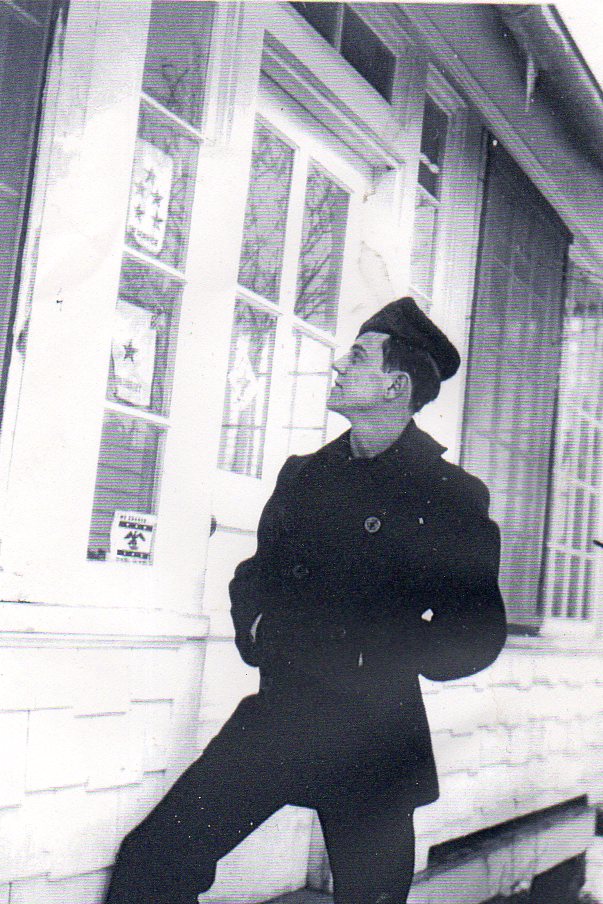
    I want to thank all Veterans today, all of our Veterans everywhere, for all of your sacrifices. I particularly want to say to say how much I appreciate the members of our family who have served: Uncle Pete (USMC, WWII), Uncle Ray (RCAF, RAF+USAAF, WWII), Uncle Stan (Navy, WWII), Uncle Alex (Army, WWII), Uncle Joe (Army, Korea), Uncle Jerry (Army, WWII), Uncle Frank (USAAF WWII), Uncle Walter (Navy WWII) and my other Uncle Stanley (Army, WWII), Uncle Francis (Army, WWII), Uncle Vincent (Army, WWII), cousin Billy (USMC, Vietnam) and Grandpa (Army, WWI); Patti’s father Melvin Lonnie (Navy, WWII) and stepfather Boyce (Army, 2nd US Cav WWII), Uncle Guy (USMC WWII), Uncle Max (Army WWII) and her four relatives in the CSA. Nearly everyone was in battle, and nearly everyone came home. [Image: Uncle Walter looking at the 5-star Blue Star flag, Housatonic, Mass, 1943.]

    Brothers 2990

    ·Posted by :

    ·in:

    —

  • Big Numbers and WWII Aircraft–Artistic Displays of Quantitative Data

    JF Ptak Science Bools  Quick Post

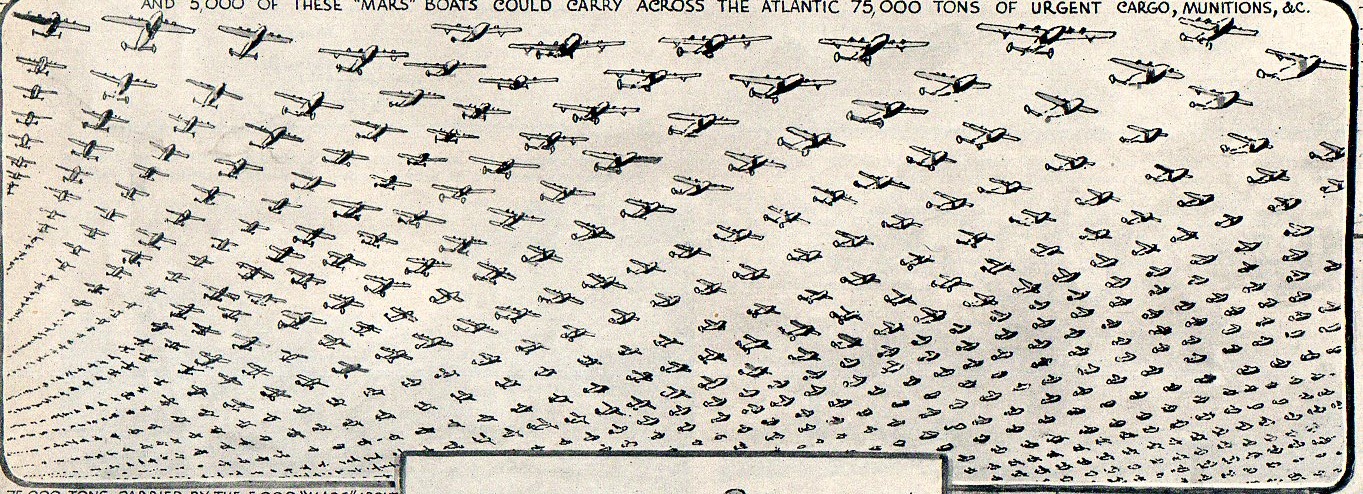
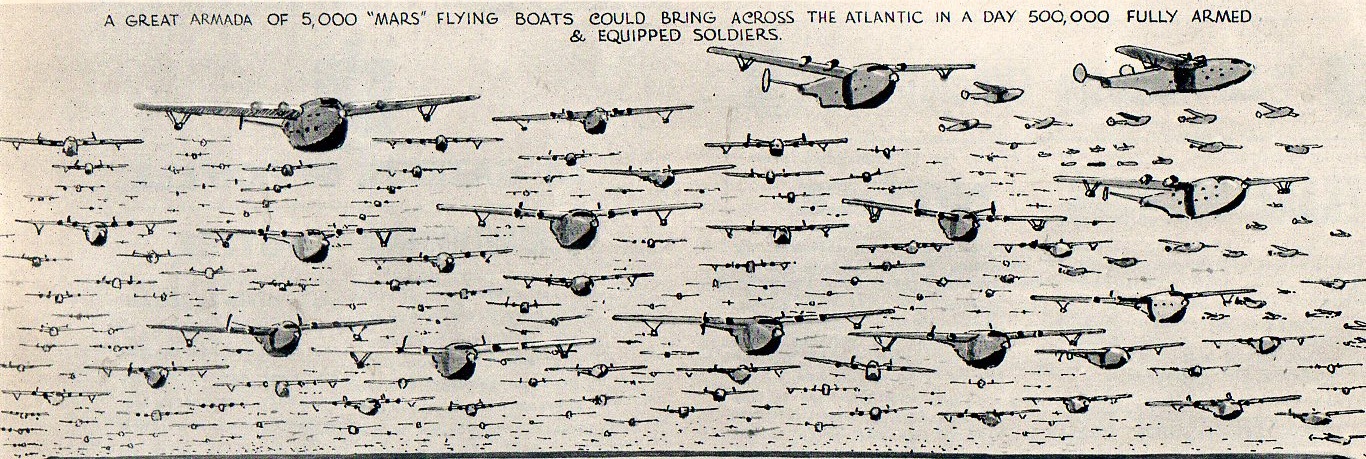
    This post continues an earlier series on the artistic display of quantitative data–putting a face on big numbers. In particular it extends a collection of images of Second World War airplanes, “A Big Sea of Planes:  Quantitative Display of World War II  Bombers. The images below appear in the 17 October 1942 issue of the Illustrated London News in an article about the possibility of replacing seaborne troop and materiel transport across the Atlantic from America with the big Martin JRM Mars aircraft, getting the troops there faster and safer and releasing at least part of the naval force for wartime activities.  The images are pretty compelling:

    Airport987

     The caption states that 5000 Mars planes could get 500,000 soldiers to Europe.

    Airport988

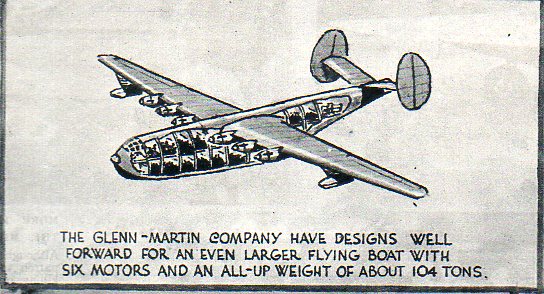
     These were big planes1 (200′ wingspan, 117′ long, 38′ high, more below) and could haul 130+ troops.  By the time though that the powers-that-be were figuring out who the main contractor would be for production (and those production numbers in early 1942 were about 500 per year, at that point, anyway) the Battle of the Atlantic was already–in 1943–fairly well decided.  The U-Boot problem was solved enough for a continuous flow of soldiers and supplies, though not without a high cost in the first half of the Atlantic campaign.  (Overall, from 1939 to 1945, some 3,500 Allied merchant ships  and 175 Allied warships were sunk, costing the lives of 72,200 Allied sailors and merchant seamen.  The Germans lost more than 780 submarines along with fully three-quarters of all sailors in the U-Boot fleet, making some 30,000 men.)

     Below, a cutaway for the Mars:

    Airport989

    Stats and Technical data on the Glenn-Martin(from Jane’s Fighting Aircraft of World War II, (1945):


  • WWII German Comic Book Propaganda

    JF Ptak Science Books   Quick Post

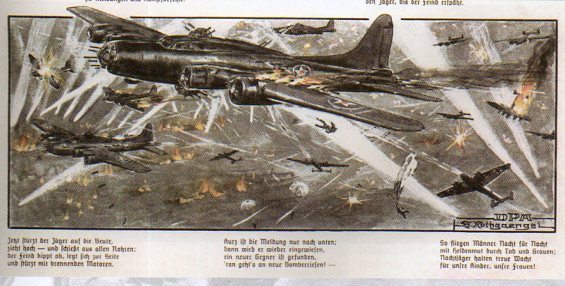
    The Bilderbogen vom Krieg–some examples of propaganda aimed at German children, efforts to convince them of the winning of the war, evidently a universal attempt….

    Source:  Deutschsprachige Comics und Romanhefte vor 1945 here.

    Nazi prop732

    ·Posted by :

    ·in:


  • On the History of Blank, Missing and Empty Things: the Heart of Some Sort West

    JF Ptak Science Books  Quick Post   (Part of the series on the History of Blank, Empty and Missing Things.)

    Plains photo969

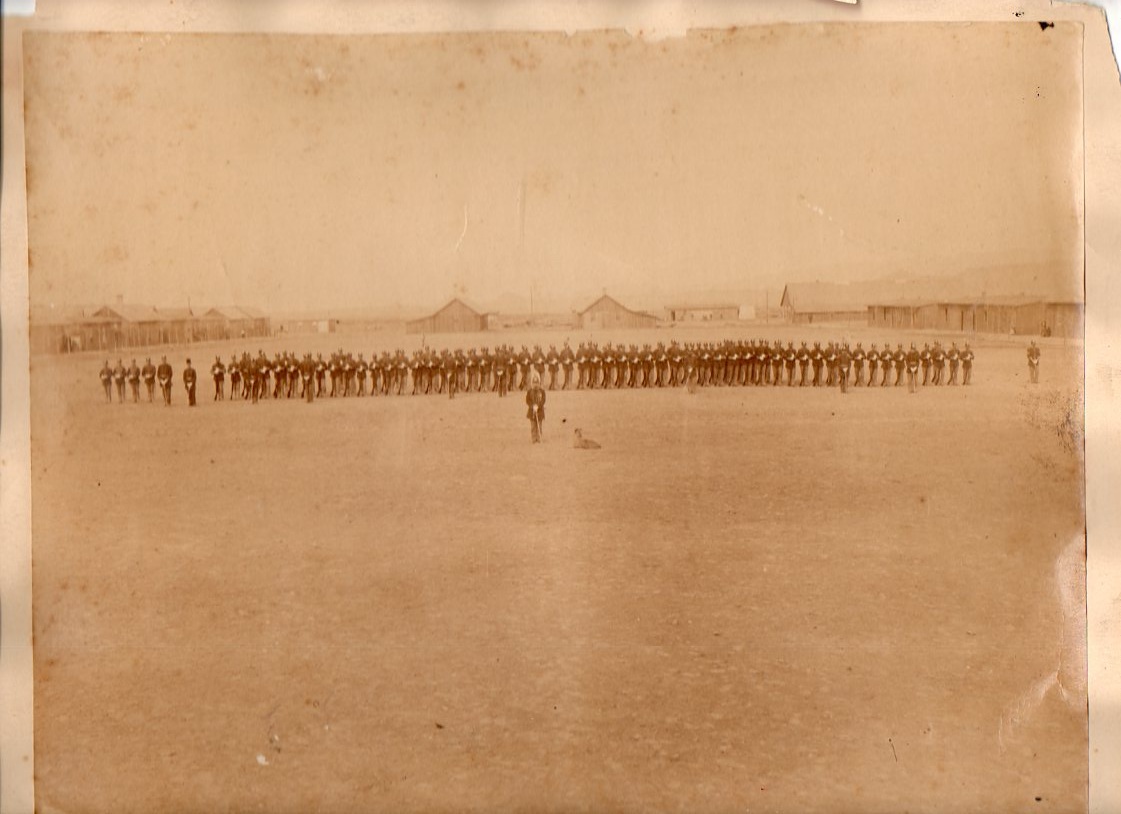
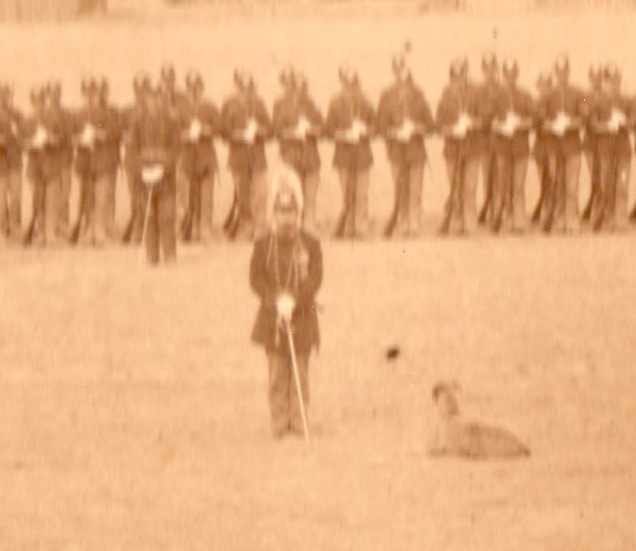
    I’ve owned this photograph for a long time.  It has been in the files for many years, waiting for something to happen to it, waiting for it to be a little understood in some slight way of identification.  I’ve still not gotten around to it.  To me, it has always seemed like a photograph of a small post out in the American Far West, 90 men in dress uniform inside their “fort”, or outpost, the commander and the camp dog addressed in front and the sergeants out on the flanks.  The enlisted men stand at ease. 

    Plains photo971

    I’m really not sure though who or where they are.  The camp is very spread out, for one thing.  And for the age (I reckon this to be made around 1885, perhaps a little earlier) I would’ve thought that boots would’ve been visible under trousers.  And their hats/helmets–they really don’t look to be made for the sun, and also seem too much of a bull’s eye/target.  That’s on first glance–nothing about their uniform seems fitted to the place:  no protection from the sun, trousers caught on low burrs and scrub, and so on.  But the uniforms–and helmets–seem to be in line with the Prussian-influenced dress of the time (or at least around 1882), including the ribbon-y materials draped around the commander’s neck.  (I really don’t know enough about U.S. Army uniforms to make a good qualified guess about who these men are.)

    But the photo as art has always intrigued me, capturing the heart of a lonely place.  I know, though, that having spent  a little time hiking in the desert that the place is hardly empty, or blank.  But it can still be lonely if you want it to be, a state which isn’t dependent on any of the conditions mentioned in the title of this post–its a created space, the loneliness.

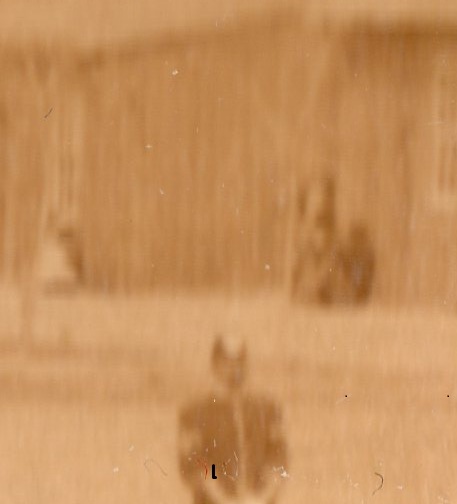
    I’ve wondered too about who those people are,  sitting together, (huddled?) at the far end of the soldiers’ barracks, a speck visible over the shoulder of the sergeant (the last figure on the right in the top photo)? I suspect they must be Native Americans, or at least indigenous people.  They’ve faded into history too with the rest of the people in the photograph, a chance at a piece of tangible memory missed because, well, no one made any notes (that survived, at least) about the image. 

    Plains photo972
    The photograph looks hot and cold to me at the same time…

    (This image is available for purchase via our blog bookstore, here.)


  • A History of Changing Sides, Part 1: a Half-Fascinating, Wholly-Horrible Biography of a Forgotten Man

    JF Ptak Science Books  Post 1642

    This is the first post in a new series on this blog on “changing sides”–that is, having a new allegiance, Adopting/acting on an something completely out of the mainstream of the personal experience, believing in the opposite of an established belief; to leave something, falling away or rejecting one thing for its opposite or something different, done with integrity or with the abandonment of honesty. 

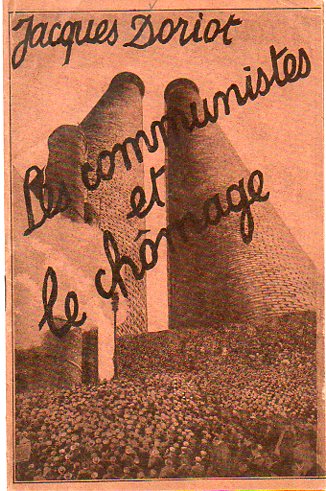
    Doriot953Jacques Doriot.That was the name on the pamphlet that I pulled out of a stack of pamphlets segregated for their cover art.  Les Communistes et le chomage was written by Doriot in the year after he became mayor of St. Denis, an ancient commune just north of Paris, in 1932.  That was years, of course, after Doriot returned home from being a POW of the Germans in WWI and found himself joining the French Communist Party (PCF), a group in which he rapidly succeeded.  HE went to jail for the violent protest of teh French occupation of the Ruhr, emerging into the political arena as mayor of St. Denis.

    At one point he was taken by the Communists, but a bitter debate erupted after which he was expelled from the Party (in 1934).  He abandoned thoughts of the communists and established a new ultra-nationalist Parti Populaire Français (PPF) in 1936.  From there things went downhill, but not yet downhill and on fire. 

    File:Bundesarchiv Bild 101I-141-1258-15, Russland-Mitte, Soldaten der französischen Legion, Fahne.jpg

    Doriot supported the idea of France becoming more like its Facsist neighbors Germany and Italy, and when the war rolled into existence in 1939, Doriot jumped on the foreign Fascist bandwagon.  In France.  He supported the occupation of the Nazi’s French occupation of the north, but when that proved to not be fascist enough for him, he toddled off to Paris where he found a better reception for his pro-Nazi sentiments among the Nazis themselves, what with the Vichy government providing too-soft a version of governance.  His transformation was in full blossom by that time, when in 1941–after having an Ezra Pound-like experience in espousing pro-Nazi beliefs on Radio Paris–he and Marcel Deat went almost all the way into the heart of the Fuhrer, creating the Legion des Volontaires Francais (LVF), which was a French force organized to fight with the Wehrmacht. (The French were hardly alone in this, with something like 350,000 soldiers in the Wehrmacht coming from places outside of Germany.  See the note below for troop strength numbers. 1 )

    Doriot954
    Not surprisngly the LVF was thrown into the Barbarossa meatgrinder, and was decimated, along with millions of German soldiers as well as more millions of Russian citizens and soldiers. (According to a wiki page, the LVF started out at regiment strength of about 2,400 when they went into battle in October 1941; by the spring of 1942, there were only two batallions left, comprising about 600-800 soldiers in total.2.) Doriot survived, and in what must have been the high point of his life, was awarded the Iron Cross in 1943. In coming back west he pursued other pro-Nazi activities, including what looks the support of German agents inside liberated France in 1944, which I think would leave an ordinary person completely vacant and a deranged one full of pride and fortitude.

    Somehow he made it almost to the end of the war, though had he survived it I am sure that he would have been visited with vengeance and retribution.  (It seems that most of the officers were tried and executed while the soldiers were either sent to jail or offered to work off their debt to the nation via service in the Foreign Legion.) Doriot was killed when the car he was driving in was strafed by a fighter plane on Washington’s birthday, 1945. 

    It is quite a remarkable, and horrible, little life that Doriot led, a life that actually has me feeling a little hollow as I write about it–very off-putting and upsetting in a dark, struggling way. 

    ·Posted by :

    ·in:

    — — —

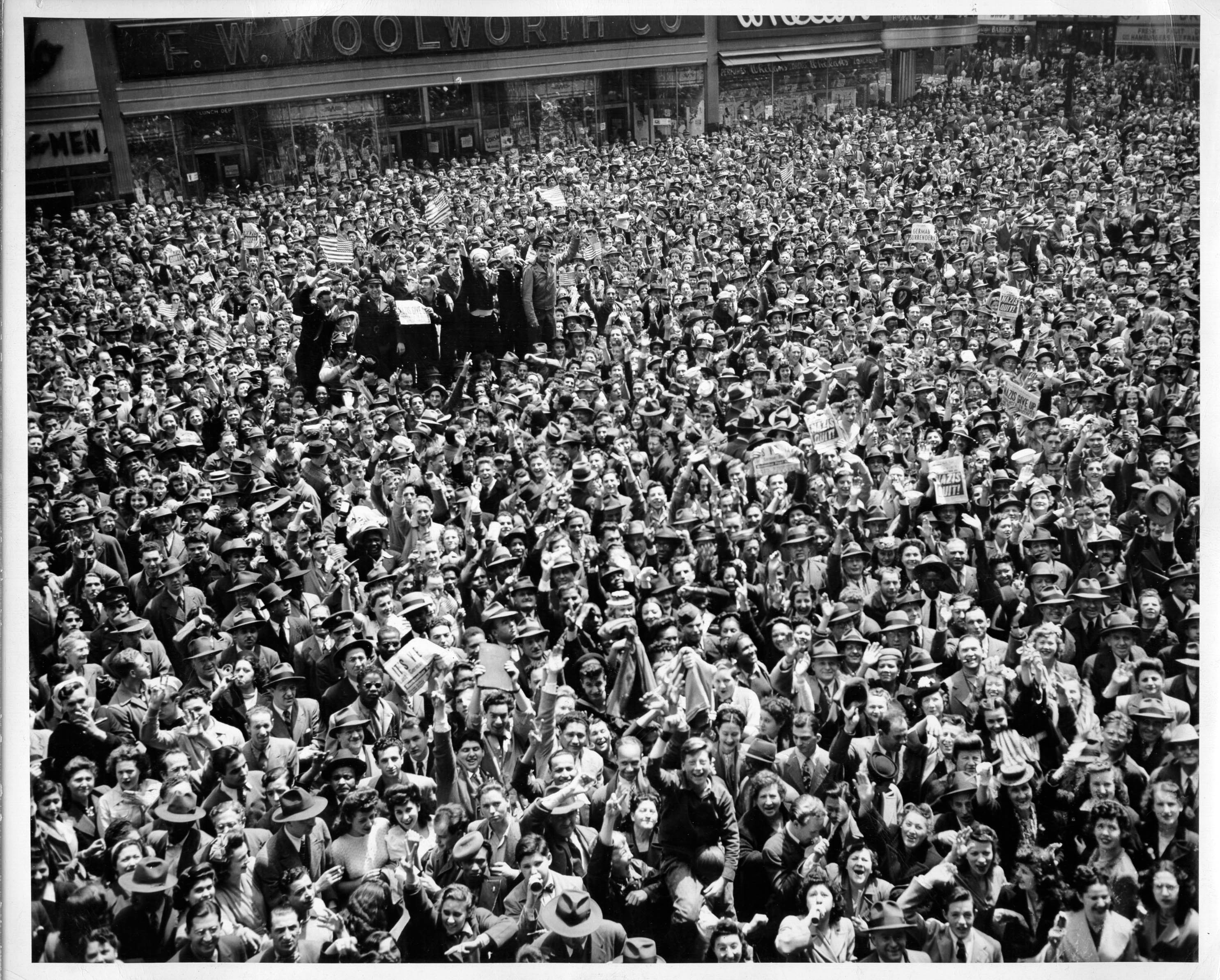
  • Crowd Series–VE Day, May 1945

    • Ephemeral Uniqueness in Large Crowds, here.
    • Crowds and the Press of Humanity:  WWI German POWs, here.
    • The Chaos of Hats, here.
    • Crowd Series and Berlin Expectations, here
    • Clarity and Confusion in the Display of Human Masses, here
    • Large Crowds and Singular Persons Series–3 Images.  Here.
    • Servicemen and B-17s at the End of WWII, here.
    • Imaging Mass Casualties in WWI, here.
    • Relief in Capture: Churchill in Carthage and what 230,000 POWs Looks Like, here.
    • The Detail is in the Detail: What 20,000 Soldiers and 1 Mule Look Like, 1918, here.

    ·Posted by :

    ·in:

    —

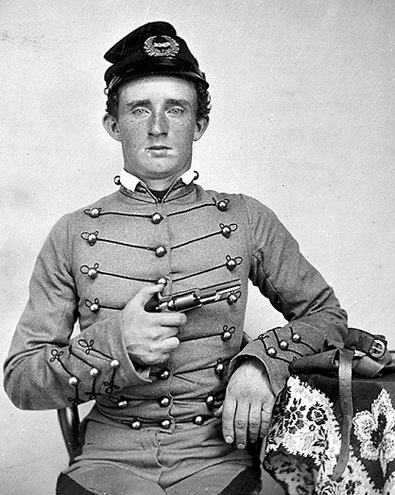
  • Custer–the Limited Man of No Limits–and Exterminating Southerners

    JF Ptak Science Books  Post 1630

    “…I would offer no compromise except that which is offered at the point of a bayonet. I…favor a war of extermination. I would hang every human being who had a drop of rebel blood in their veins whether they be men, women or children…”–G.A. Custer in Richard Slotkin Fatal Environment…, Harper, 1985, pg. 384.

    Here’s a bit of Custer legend that is true and seldom heard—if left to his own devices in a Custer-filled world,  the general would have “exterminated” everyone in the South, every one (“men, women or children”) , “with an ounce of rebel blood” flowing in their veins, hanged dead.  At that point the South would be free, and would be repopulated with the “loyal and patriotic” people,l presumably from either up north or Southerners loyal to the Union.a

    Custer This was part of  a long letter (transcript below) to U.S. Senator Jacob Howard, written on 19th January 1864, in the field.  Custer was feeling on the ropes at the time, needing to defend his loyalty to Lincoln and his policies, and needing to distance himself from Lincoln’s election contender and inferior general, George McClellan. (Richard Slotkin, in his fabulous The Fatal Environment, the Myth of the Frontier in the Age of Industrialization, 1800-1890 notes that Custer needed “to justify himself…(and) disabled his previous affiliations and the nature of his relationship with McClellan…’)

    Custer’s relationship–real and imagined–with McClellan was putting him in a stench void, creating the possibility of distance between himself and the powers that be–particularly with Senators like Howard and Zachariah Chandler, “who controlled army promotions” (Slotkin, page 384), which meant distancing himself from the higher rank he thought he was destined for. Custer had been on McClellan’s staff, and had aligned himself with his war policies, though not necessarily so his presidential ambitions.  Howard, a Republican from Michigan and member of the Military Affairs Committee, believed that Custer was a “McClellan Man” and set against Lincoln, and for that was set to block his promotion to brigadier general.  Custer’s  salvaging letter1 to Howard left no doubt about his supposed non-political feelings and where he stood on Lincoln, the Emancipation, and the treatment of the Confederates:


    ·Posted by :

    ·in:

    —

  • History of Lines: Zig and Zag, 1918

    JF Ptak Science Books   Post 1628   History of Lines Series

    SUb 1896 In the long history of lines seldom do we see such an indirect way to get safely from point A to point B than by zig-zagging through points A1 to A201. But this was definitely the case for ships in the North Atlantic in the 1914-1918 period.

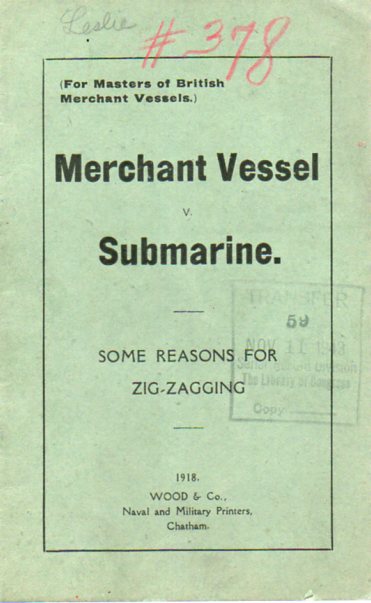
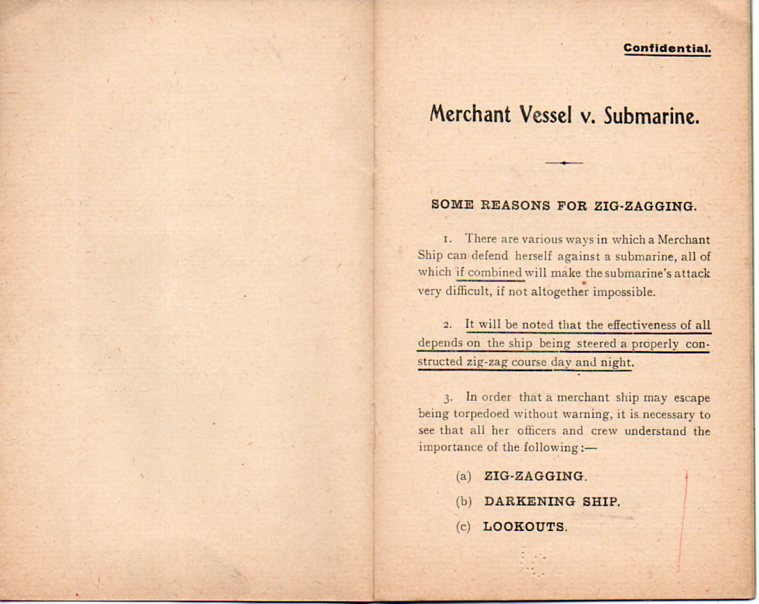
    Merhcant Vessel v. Submarine, Some Reasons for Zig-Zagging (a “Confidential” report written by Lt. Commander A.G. Leslie and published by Wood & Co. in Chatham in 1918) presents logical, simple, workable solutions to the problem of the submarine, fallible solutions to what must have seemed to be infallible treachery.  It is a pocket-sized, 5×3 inch talisman and survival guide for those (“For Masters of British Merchant Vessels”) responsible for hundreds of lives and thousands of tons of ship, all of the good information boiled down to eight pages of loose type, a way to get around the subs, and weighing in at about an ounce. 

    What it really boiled sown to was zig-zagging–plus darkening the ship, posting lookouts, painting the ship the proper color, camouflaging it, and keeping the lights and smoke down.  But over th eight pages Leslie knocks down the idea of zig-zagging over and over again.  And he was right of course, right on all of it, given the conditions of conflict and the state of development of the submarine and the torpedo.  At this point, the torpedo was a point-and-shoot affair, which means the sub commander needed to get accurate info on the speed and the course of the ship (and other stuff of course)–and the one thing that would make this very difficult for the sub was for the ship to change its course unpredictably.  That would mean longer follow time for the sub, longer time above the water line, probable multiple dives using up battery power, and so on, all very problematic for submariners.

    Once unrestricted warfare was declared on 1 February 1917 the German subs attacked any and all shipping, including American ships, which led the way for American involvement in April.  The U-boot sunk substantial part of British shipping, but, ultimately, it could not do enough against the escorted convey, and the German moment would be lost.  In the end of it all, of the 360 submarines built by Germany, 178 were lost, after having waged a campaign for four years which saw the sinking of more than 11 million tons of shipping. 

    SUb 1898

    A straight line coursed by the ship would allow the sub to gather its information, site the ship, and sink it.

    [The full text is below.  I can’t find another copy of this work in any of the likely places, including OCLC.]

    ·Posted by :

    ·in:

    —

  • Religion-in-the-Foxhole Division: God in Shelters, London 1940

    JF Ptak Science Books   Quick Post

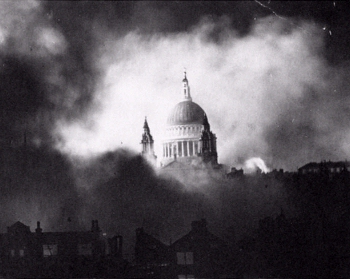
    File:Stpaulsblitz.jpg

    On looking at the bombing of Britain from the German side–an article in the popular Illustrirte Zeitung for 5 September 1940 with maps and illustrations, found here.

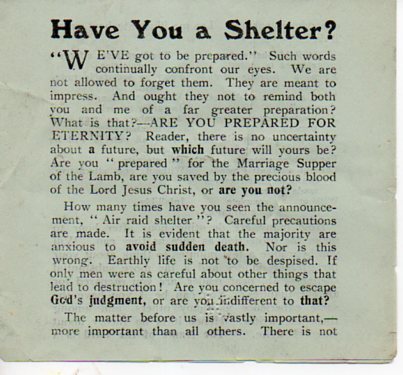
    AS people took cover from bombs and fire in the subway system or in bomb shelters, proselytizers were on their way to work, too, as seen in this slip of a handout, Have You s Shelter?, published around February 1940.  It seems that the maker and distributor of this tiny pamphlet didn’t identify themselves save for an address from which more copies of the flyer could be obtained (61 Upton Lane, Forest Gate, London)

    London BlitzShelter893

    People weren’t quite yet getting into the shelters for real–this was still the pre-Blitz period, back there in February 1940, and the real attack against England (but particularly against London) didn’t begin until September and last through May 1941, which in its course would kill 40,000 civilians (half of whom were in London) and destroy a million homes.  In February it was still speculation, and the church folk who distributed this flyer were out to make the best of it–trying to save souls, trying to ease the nervous burden through belief, trying to do something, anything. Though mostly it seems trying to convince people that it wasn’t just German dive bombers that they needed to fear. 

    ·Posted by :

    ·in:

    —