A Daily History of Holes, Dots, Lines, Science, History, Math, Physics, Art, the Unintentional Absurd, Architecture, Maps, Data Visualization, Blank and Missing Things, and so on. |1.6 million words, 7500 images, 4.9 million hits| Press & appearances in The Times, Le Figaro, Mensa, The Economist, The Guardian, Discovery News, Slate, Le Monde, Sci American Blogs, Le Pont, and many other places… 5000+ total posts since 2008.

Category: Militaria

  • Appeasement, Hitler’s Promise, and Peace in our Time, 1938.

    JF Ptak Science Books    Post 1802

    Here’s a slathering piece of propaganda published by the Militant Christian Patriots (of London) on how the British government was dealing with the Nazi/Seudeten problem in September 1938.  In their gunsights was Anthony Eden, who was seen by this group as a Bolshevist supporter, and who as the Foreign Minister of the United Kingdom under Prime Minister Neville Chamberlain was against the appeasement policy of the government towards Nazi territorial acquisitions, particularly in this case with Czechoslovakia.  Eden. identified here as “backed by the Zionists, Fabian_Scoailists and “pacifist” League of Nations enthusiasts” was a multiple threat, and seen to be capable of directing national policy towards a confrontation with Germany over the looming Czech problem.
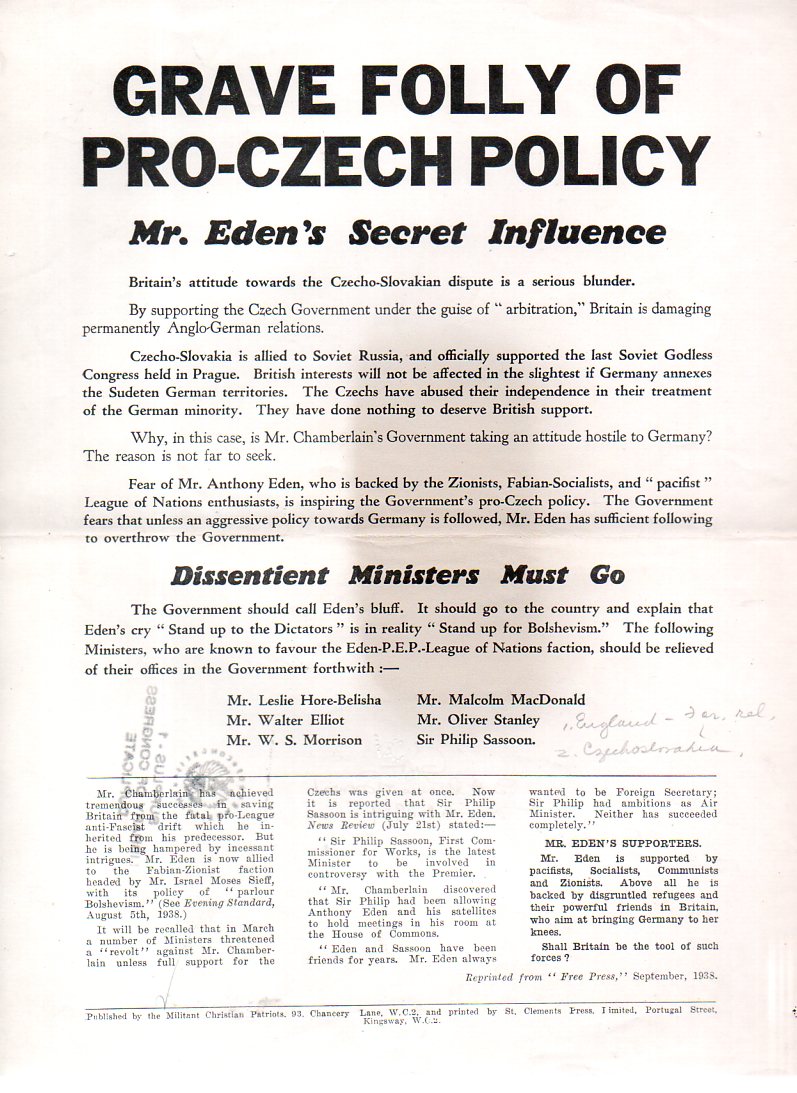
    Propaganda anti-czech491[The original is available from our blog bookstore.]
    On the other hand, Neville Chamberlain, who was the Prime Minister of the United Kingdom at this time (and from May 1938-May 1940), was seen as a better ideological fit with his issues and policies of appeasement of the German nationalist needs and territorial rape. Chamberlain certainly gave what Christian Militants wanted–a free hand to Hitler in Czechoslovakia (and more), and perhaps an acknowledgement of defeat to the Nazi nation.  Winston Churchill certainly thought so:

    “We have suffered a total and unmitigated defeat… you will find that in a period of time which may be measured by years, but may be measured by months, Czechoslovakia will be engulfed in the Nazi régime. We are in the presence of a disaster of the first magnitude…we have sustained a defeat without a war, the consequences of which will travel far with us along our road…we have passed an awful milestone in our history, when the whole equilibrium of Europe has been deranged…”  Winston Churchill, MP, 1938

    The Christian Militants saw it all differently, tending to agree with Hitler on the Czech matter, and seeking to keep the U.K. out of confrontation and thus away from war by giving Hitler (and then Mussolini) what they demanded to satisfy their growing national needs. 

    “I am asking neither that Germany be allowed to oppress three and a half million Frenchmen, nor am I asking that three and a half million Englishmen be placed at our mercy. Rather I am simply demanding that the oppression of three and a half million Germans in Czechoslovakia cease and that the inalienable right to self-determination take its place.” -Adolf Hitler’s speech at the NSDAP Congress 1938

    Eden resigned his position earlier in the year, in March 1938, but stayed in the fray.  As everyone knows things went badly at the end of the month of September, 1938, with Chamberlain letting everything go and appeasing Hitler in the Munich Conference (known to the Czechs as the “Munich Dictates” and worse) in which bits of Czechoslovakia were given to Germany in a series of meetings in which that country was not invited.

    A large crowd on an airfield; British Prime Minister Neville Chamberlain presents an assurance from German Chancellor Adolf Hitler.

    And so the P.M. returned to the home country having done nothing in Germany but give away a part of someone else’s country, all in a feeble attempt at maintaining peace for Europe’s key players.  He landed at Heston Aerodrome and held a piece of flimsy paper in his hand, which was battered by a tiny wind, and declared that there would be “peace in our time” because Hitler’s signature said it would be so, all of which was a “prelude to peace” in Europe as a whole:

    “My good friends, this is the second time there has come back from Germany to Downing Street peace with honour. I believe it is peace for our time. We thank you from the bottom of our hearts. Now I recommend you go home, and sleep quietly in your beds.”

    Less than a year later it would all come crashing down, the appeasement policy (such as it was) a shambles, and the world plunged into war.  Chamberlain would last as P.M. for a little longer, until May 1940, when he was at last replaced–by Winston Churchill. 
    ·Posted by :

    ·in:

    — — —

  • “The Enemy is Less than Ten Minutes from San Francisco”, 1942

    JF Ptak Science Books  Quick Post

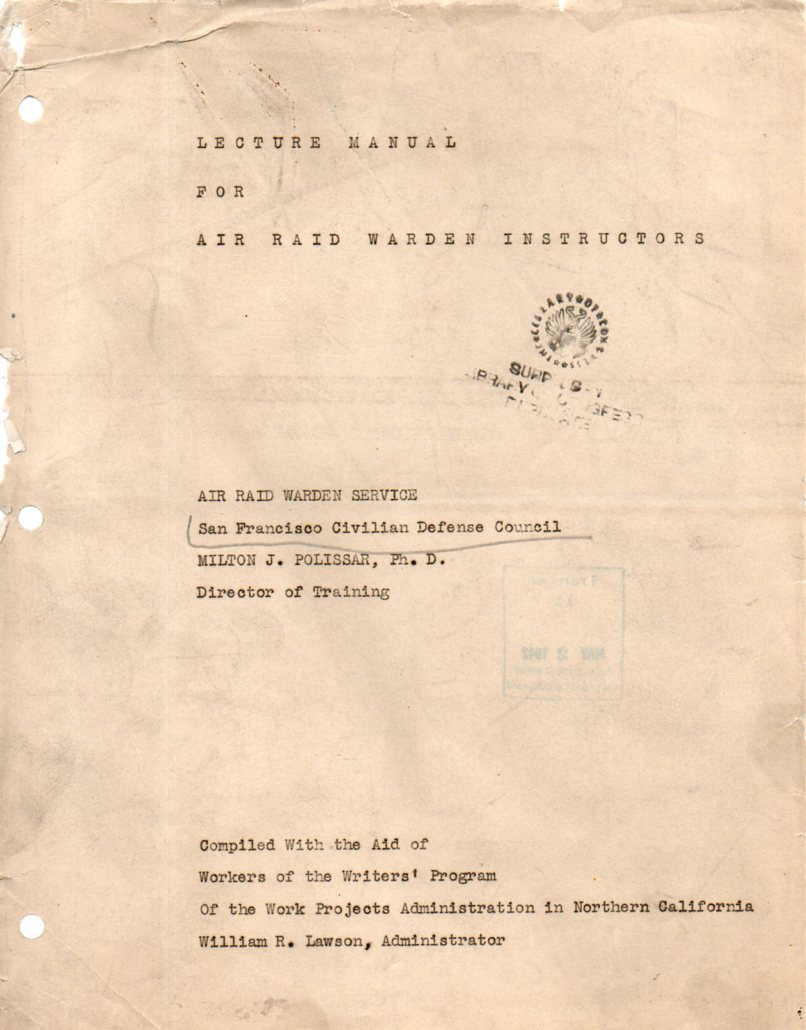
    Air warden478Lecture Manual for Air Raid Warden Instructors is in its way a remarkable document revealing some of the thinking and interpretation on the chances for the invasion of the American west coast just a few months (March 9, 1941) following Pearl Harbor.   Undertaken and published by the Workers of the Writers’ Program (‘of the Works Projects Administration in Northern California”) it was a product of one of the number of the Roosevelt administration’s social engineering programs that had a long lasting effect. 

    The first chapter, “It Can Happen Here” is more about the mechanics of responding to an enemy aerial attack than qu8estioning whether the attack might occur–the writer assumes that such an event was possible, and so precautions and preparations must be made–there is no question mark at the end of the chapter’s heading. 

    Overall I think that this was an excellent organizational effort for at least dealing with controlling the situation on the ground–providing a grid in which actions could be interpreted and responded to.  [The original is available at our blog bookstore.]


  • A Note on Overcoming Hindsight: on Sending Japanese “evacuees” Home, 1945/6

    JF Ptak Science Books   Post 1779

    On Evacuees, Excludees, and “Segregees”: Closing an Ugly Chapter in U.S. History–the Japanese Internment Camps, 1942-1945

    As of April 30, 1945, the U.S. government allocated a total of $39 million to relocate 120,000 or so Japanese “evacuees” from “evacuation centers” back to their “normal homes”.  That comes to about $275.00 per person:  but that is mostly allocated to payment for personnel, because, really, all that was happening was that these people were being sent back home somewhere, or if their homes/farms had been undersold from under them, to somewhere not-their-home.  Of course the figure is slightly inflated, because of all of those Japanese interred during this time nearly 10% of them volunteered to fight in the U.S. Armed Forces, so for those who survived after serving in some of America’s most highly-decorated units of all time, Uncle Sam was paying the bill to send those young men home.  But offsetting the Americans of Japanese decent who fought in the war were about another 10,000 babies born in the “segregation centers”, so the numbers stay fairly-well the same.  (I cannot offhand find any numbers on the numbers of people who died in the camps, or for that matter what happened to their remains after the camps (and camp cemeteries) were closed.  I do not know if that was a government expense–to move the coffin and pay for reburial–or if that expense became a private affair.)

    Dillon Myer, who was the director of the War Relocation Authority,  testified in Congress on 30 April 1945 that it was time for the “relocation centers” to be closed, and for the “evacuees” to go home.  And to go home on schedule. 

    “Not later than 15 months, after revocation of the general exclusion orders, all evacuee property services to persons other than excludees (including segregees) will terminate, and all evacuee property warehouses not utilized for the property of such persons will be emptied…”

    I expect that few of the American Japanese wanted to linger. 

    ·Posted by :

    ·in:

    — —

  • “Seven People to Make a Shadow”: Andersonville Prison, 1865

    JF Ptak Science Books    Post 1760

    While reading about the story of Andersonville Prison I was much taken with a passage from the diary of Sgt. David Kennedy (of the 9th Ohio Cavalry), held at that prison, writing on 9 July 1864:

    ‘ Wuld that I was an artist & had the material to paint this camp & all its horrors or the tounge of some eloquent Statesman and had the privilege of expresing my mind to our hon. rulers at Washington, I should gloery to describe this hell on earth where it takes 7 of its occupants to make a shadow.’

    Seven men to make one shadow.  That does pretty much tell the story of Andersonville.  It was known also as Camp Sumter, in Sumter County (Georgia), constructed and then opened in February 1864–quite late in the war–to hold 13,000 Union prisoners.  That was a hoepful sentiment and held little planning, as the site held nearly 32,000 prisoners at one time, filled twice beyoind a capacity that even in the best conditions was too high. The prison was ill-conceived, not well made (except for the stockade fence constructed by slave laborers, which was pieced together so well that a person inside the stockade could not see anything whatsoever of the outside world through an imperfect join in the fence). So the view left to the prisoner was of other prisoners in fetid and deplorable states, lumber of the stockade, the poor Earth and disgusting mud of the central section of the stockade fed by a stream and turned into a disease-breeding swamp, and the sky. 

    The actual photograph (above) and the artist’s rendition, clarification, amplification, below:

    [Source:  Library of Congress. Andersonville prison, Georgia. Group of prisoners.   ca. 1864-1865  “Drawing of prisoners among tents, showing starvation, crowding, poor clothing among prisoners.” 
    From “U. S. Navy. Edisto Island. Morris and Folly Islands. Fort Warren, Mass. Andersonville Prison, Miscellaneous.” photographic album, p 74 ([Andersonville Prison]).

    Of the 45,000 Union soldiers held at the prison in its short life (February 1864-May 1865) nearly one-third of them died, most killed by ill-treatment, malnutrition, exposure, poor sanitary conditions, and starvation. 

    The map below gives a good view of the size of the swamp (“Whole Content of Stockade 25 1/2 acres, including swamp…”)

    [Source: Robert Knox Sneden scrapbook (Mss5:7 Sn237:1), Virginia Historical Society.  In the Robert Knox Sneden diary, 1861-1865 (v. 5, p. 606). 1 map : pen-and-ink and watercolor ; 18 x 14 cm.]


  • The Reverse of the Origin of Species and the American Civil War, 1862

    JF Ptak Science Books  Post 1759

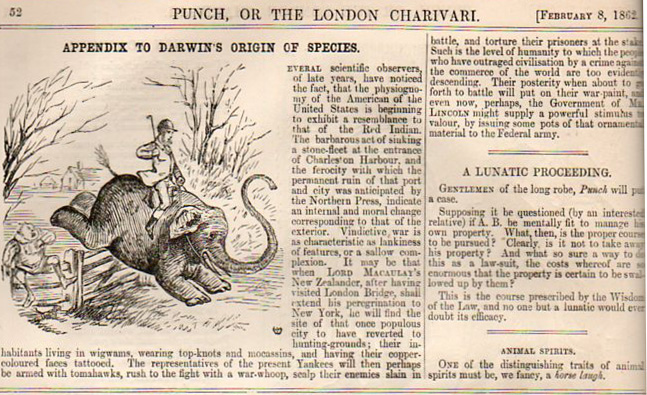
    Darwin elephant392

    This pungent bit appeared in Punch magazine 8 February 1862, and was a vicious attack against the Americans (almost entirely directed at the Union North)  in the second year of the U.S. Civil War.  What Mr. Punch saw in “his” editor’s mind was a “sinking” of the American race to the level of the “Red Indian”, the whole of the nation reverting to some previous developmental state, far removed by their actions to a more primitive people, a different sort of “evolution”–in fact, what the spoofing (?) and chiding editors saw in the Americans’ actions was a reverse of Darwin’s theory.  These same people were already uncomfortable with Darwin (at this point three years past the publication of the Origin1) but so long as using the book to a comfortable goal was concerned it seemed a perfect fit, a proof for the reverse of the Origin.  As we see in the second short article:

    “If there is any truth in the theory of the Origin of Species there may be an inversion of the originating process…”

    Chief (and first) among the complaints was the blockade action against the Confederate port of Charleston (South Carolina).  The “stone fleet” is incorrectly described in the wonderful “Science in 19th Century Periodicals” website as being of Confederate origin.  The Stone Fleet was actually part of  a Northern action, being a large contingent of ships brought south and sunk in the waters off Charleston Harbor in the hopes of preventing Confederate blockade runners from escaping the ring of Federal ships already present there.  There were also a number of ships sunk off the coast of beautiful Tybee Island, there to be used as breakwaters and landings for Union ships operating just south of Savannah. 

    The behavior of the United States, so far as Mr. Punch was concerned, just wouldn’t “do”.

    “SEVERAL scientific observers of late years have noticed the fact that the physiognomy of the American of the United States is beginning to exhibit a resemblance to that of the Red Indian.The barbarous act of sinking a stone fleet at the entrance of Charleston Harbour and the ferocity with which the permanent ruin of that port and city was anticipated by the Northern Press indicate an internal and moral change corresponding to that of the exterior Vindictive war is as characteristic as lankiness of features or a sallow complexion. It may be that when LORD MACAULAY’S New Zealander alter having visited London Bridge shall extend his peregrination to New York he will find the site of that once populous city to have reverted to hunting grounds their inhabitants hunting grounds their living in wigwams wearing top knots and mocassins and having their coloured faces tattooed. The representatives of the present Yankees will then be armed with tomahawks, rush to the tight with war whoop, scalp their enemies slain in battle, and torture their prisoners at the stake. Such is the level of humanity to which the people who have outraged civilisation by a crime against the commerce of the world are too evidently descending. Their posterity when about to go forth to battle will put on their war paint and even now perhaps the Government of MR. LINCOLN might supply a powerful stimulus to valour by issuing some pots of that ornamental material to the Federal army.”

    Later in the year Mr. Punch again addressed “Brother Jonathan”, (a reference from Revoutinary War days to Americans in general, but more so during the Civil War, when “Brother Jonathan” and “Johnny” were both used…its also intersting to note the use of “Johnny Red” and also the appearance in “When Johnny Comes Marching Home”) and again invoked Mr Darwin and the Origin, and again using the “Indian type” as the state to which the “model Republic” was sending itself towards, with Americans “descending to the very lowest place”, an “inversion of the originating process”. 

    “Thus Jonathan you see you are sinking from bad to worse from savage to lower savage and your manifest destiny at that rate of decadence is the zero of humanity.”

    It is a rather bad letter, brother-to-brother, so to speak., Mr. Punch claiming that Americans will descend to gorillas, “Apes with foreheads villainous low”.  Surprisingly (to me, anyway)   Mr. Punch slips easily into very vile characterizations of other types of human beings in use by metaphor–these don’t need to be singled out here but can be found in the original, below.  And so the Manifest Destiny of American–“declared” or at least the phrase originated just 17 years earlier by John O’Sullivan in the Democratic Review in an article “Annexation” regarding Texas–so far as England was concerned was to be excruciatingly, intolerably, low; so low inn fact that it is the very proof of the stuff that the Origin of Species theory runs in reverse.

    I’m not sure why the editorial cartoonist used the elephant in the hunt scene and how it relates to Mr. Darwin, though I guess it sends the overall message of The Ridiculous regarding the American affair, at least in the eyes of Punch–England still smarting from the Trent Affair, still newly developed.

    Notes:

    1. The title in full by C.R. Darwin, On the origin of species by means of natural selection, or the preservation of favoured races in the struggle for life, would stay so until it was shortened to The Origin of Species in its sixth edition of 1872. By the time these two articles in Punch appeared, the Origin already in its third edition (published in April 1861).  In all of this, the enormously popular book was printed in not-large quantities.  The first edition of November, 1859 sold out on the first day, and was printed in an edition of 1250 copies, of which about 1170 were for sale.  Darwin was immediately put to work on a second edition (rather than simply reprint the first edition), and the work appeared two months later, in January 1860, in an edition of 3000 copies.  The third edition appeared in April 1861 in an edition of 2000. The fourth edition appeared in 1866 (2000 copies); the fifth, in 1869 (2000 copies0, and the sixth and last in Darwin’s lifetime came out in 1872, in 3000 copies, the largest print run during CD’s lifetime.  So, the most important book in the history of biology (?) sold a total of 13,170 copies or so as published in England by John Murray. 

    ·Posted by :

    ·in:

    — —

  • Humanitarian Propaganda II–POWs and the Hope for Those at Home, 1943/1944

    JF Ptak Science Books  Post 281 (from 2009) Extended [Part of the History of Nothing series.]

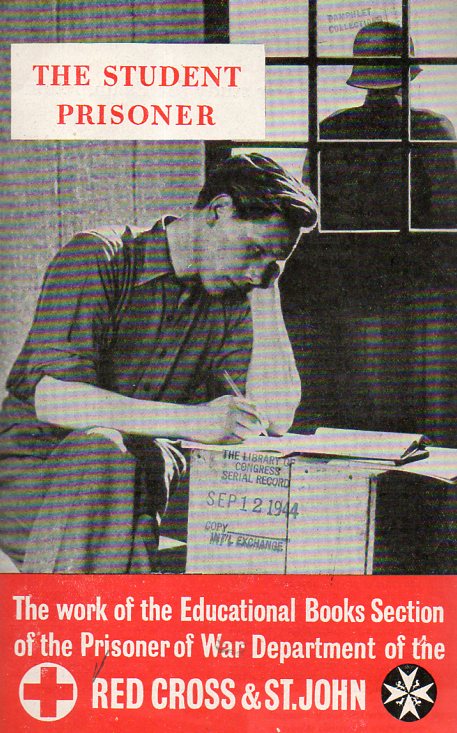
    Propaganda Red Cross383War propaganda is distributed across all levels of society during a time of conflict.  I’ve made a number of posts concerning Nazi and Japanese propaganda but no so much on the Allies’ side.  These pamphlets come from a small stash of mine relating to Red Cross activities and prisoners of war (POWs), and they fall chiefly I think in The History of Nothing series, mainly because of the chances that all of these packages wouldn’t stop and be used by German troops rather than going all the way through to POWs.  The expectations of the Home Front concerning the disposition of their loved ones as prisoners of the Nazis were clearly illusory, what with steamed and pressed trousers and clean sharp shirts.

    ·Posted by :

    ·in:

    —

  • The Atomic Crossbow of Leonardo da Vinci

    JF Ptak Science Books   Post 1753

    Leonardo understood “big”, especially when it came to weapons, and he understood what the concept of ‘big” meant to adversaries and enemies of the folks with the “big” weapon—a bit of psych-ops in the mid-Renaissance by the High Renaissance man. 

    Giant crossbow

    Leonardo’s crossbow (drawn around 1486) should have worked. He certainly understood the idea of stored power in his many drawings–bent and twisted and torqued wooden arms and such–and the concepts of enormous potential is certainly reeking through-and-through this fantastic weapon.  The bow itself seems certainly like a laminated object, adding to its strength via flexibility, the giant bow-string drawn back by a very considerable worm and gear, the whole of which is set to give flight to a large stone more so than an arrow. And that stone was supposed to be able to be delivered to its target over and over again, with minor adjustments, which would have placed it head-and shoulders above cannons, whose recoil made it really quit impossible to re-aim the instrument with any accuracy at the same target over and over again.  The main compliment of the crossbow, then, was reproducible accuracies. (In this vein it is interesting to recall “Operation Crossbow”, a Combined Bombing Operations during WWII that took place in 1943 and 1944 against the Nazi installations for the V-2 and V-3 weapons–a directed effort to remove a threat which was even more “precise” (if by “precision” we mean marginally guided weapons loaded with high explosives).)

    The “atomic” part of the title of this post is I know far from the mark of being metaphorically correct–the scale isn’t anywhere near being accurate.  Offhand to have an “atomic” crossbow in relation to a nominally normal crossbow in similar scale of the Fat Man weapon in scale with an “average” 500-pound bomb (40 million pounds in relation to 500 pounds) the atomic crossbow would need to be miles wide. 


  • The Death Ray and Cloud Writing–Battlefield to Breakfast in a Few Short Years.

    JF Ptak Science Books  Post 1749  [Part of the Strange Things in the Sky department.]

    The Death Ray is a long-discussed idea, extending back as far to Archimedes at least–discussed, attempted, abandoned and dismissed.  But as a matter of fact, the thing was actually invented, and deployed, though not int he sense of an EM weapon, or LRAD/ultrasonic, or Teller x-ray laser, or even a Wellsian heat ray (below).

    File:Alvim-correa12.jpg

    The “Death Ray” made its appearance in the 1880’s, but not in the normal sense of what we would today think of as a “weapon”–this death ray could locate the enemy hidden miles from the front, or pick out ships at sea far from shore, and so on, removing stealth capacity, making it possible for these elements to be identified as targets, and then possibly removed, though not by the ray itself. 

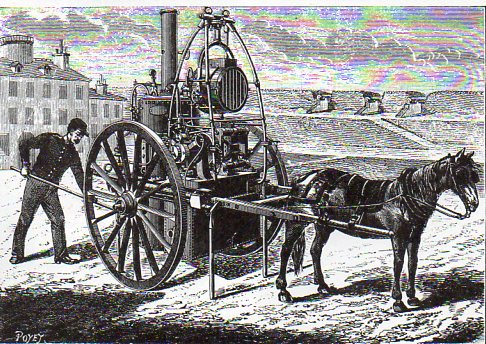
    This “death ray” was the search light.  In the 1880’s when the technology of electric lighting was still in its first practicable decade, the idea of being able to focus a beam of light from a lantern source hauled on a single-mule carriage and powered by an on-board battery, small steam engine  and Gramme dynamo was a spectacular. achievement. 

    Searchlight359
    [This image appeared in the Scientific American in 1886 and features what is probably a one-foot diameter mirror, making it capable of illuminating an object up to about a mile away.  Something with a three-foot diameter could work its magic on object up to four miles away.]

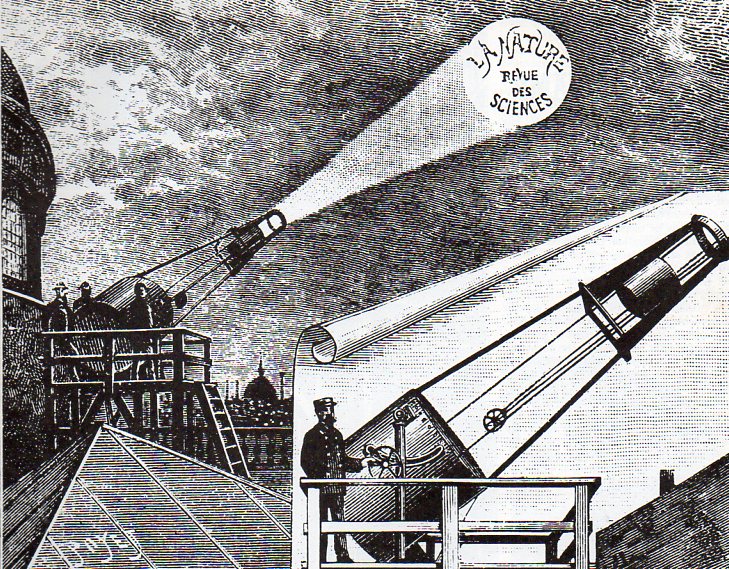
    This defensive/offensive weapon/device was very soon afterwards made into a trickle-down appliance that was placed into commercial use almost immediately.  The standard use of course would be upgrading lighthouses, but one special use was using a large mirror in a device to project an advertisement on the clouds in a city–ads in the sky.

    Searchlight360[Source, La Nature, 1894; also reprinted in Scientific American in the same year.]

    Such a device was used experimentally at the Columbian Exposition in Chicago for the World’s Fair of 1893, flashing the daily attendance on the clouds.  I’m not sure why the greater revenue-generating employment of this technology took another year to develop.  And so “The Death Ray”, from Battlefield to Breakfast Cereal in a few short years. 


  • Philippine Announcement of one of the Last Japanese Surrenders, 15 September 1945

    JF Ptak Science Books   Post 1714

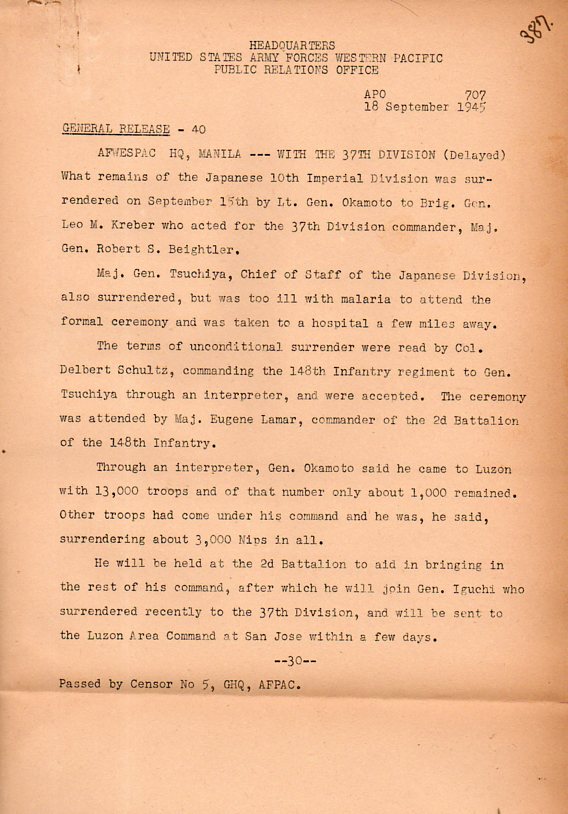
    This announcement comes from the U.S. Army public relations office in Manila (“General Relsease  – 40”) and dated 18 September 1945.  It states that “what remains of the Japanese 10th Imperial Division was surrendered September 15th by Lt. Gen. Okamoto to Brig. Gen. Leo M. Kreber”, this coming weeks after the formal signing of the Instrument of Surrender aboard the U.S.S. Missouri on 2 September 1945.

    WWII  Japanese surrender160
    The 10th Division of the Imperial Japanese Army (formed 1898) was transferred to the Japanese 14th Area Army in the Philippines from China. There it was involved in the Battle of Luzon (9 January to 15 August 1945), where the “what remains” of it statement comes from.  In that battle, more than 250,000 Japanese troops were engaged, with more than 205,000 killed (with only 9,000 captured). On the Allied side, 175,000 troops were engaged, with 8,000 killed and 29,000 wounded. 

    The surrender of the Japanese forces in Manila was one of the last of the major surrenders of armies and army groups would surrender: the Japanese army would surrender at Singapore on 12 September, Saigon on 13th September, and Hong Kong on 14th September. There were pockets of resistance that would hold out for years afterwards, but so far as large organized forces were concerned, this was pretty much the end of the fighting. 

    {The original is for sale in our blog bookstore, here.]

    ·Posted by :

    ·in:


  • The Post-War Lives of the Nazis: Topf, Designer/Maker of the Auschwitz (and etc.) Crematoria

    JF Ptak Science Books  Post 1745

    The firm that produced crematroia for numerous Nazi death camps managed to stay in business in Wiesbaden  until 1963.

    What happened to the firm J.A. Topf & Sohn (of Erfurt), the company that supplied the mass incineration devices,  the crematoria, used by the Nazis at concentration and extermination camps (from 1939-1945) including Auschwitz-Birkenau, Buchenwald, Belzec, Dachau, Mauthausen and Gusen ?

    Well, in general, most of it dissolved, and the company’s CEO, Ludwig Topf, committed suicide in May 1945.

    Ludwig’s brother–Ernst-Wolfgang, 1905-1979–however, escaped prosecution and re-started the company in the late 1940’s, operating a crematorium business in Germany until the new Topf business went into bankruptcy in 1962. It sold mostly refuse/garbage grade incinerators, but, still, there it was.

    Topf liste

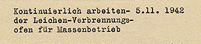
    [Circular for Topf describing the crematoria they constructed for the Nazis; of particular interest in this page is the entry for May 11, 1942, for a crematorium for ““continuousoperation corpse cremation oven for mass use”. Source: here.]

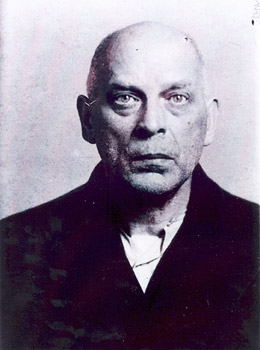
    Topf pruferThe leaders of Topf firm would argue after the end of the war that they did not know what the crematoria were really being used for, despite numerous visits for site inspection and repair to Auschqitz and Dachau. Karl Pruefer, the original designer of teh ovens, revealed on interrogation by Soviet officials just after the war that “I have known since spring 1943 that innocent human beings were being liquidated in Auschwitz gas chambers and that their corpses were subsequently incinerated…”  There can be little doubt that Topf knew exactly what was going on with their crematoria–in fact, at one point, Kurt Pruefer (pictured at left, in Soviet custody, undated, from Der Spiegel, Archiv) suggested that the use of his crematoria at the extermination camps actually saved lives by disposing of diseased corpses and preventing the spread of fatal diseases and epidemics.(The exact early reference was to preventing the spread of typhus in Buchenwald in 1939.  The Nazis adopted a practice in some of the mostly-Russian camps in the East of introducing typhus-laden prisoners into general population so that the disease would spread and aid in the extermination of the camp inhabitants.)

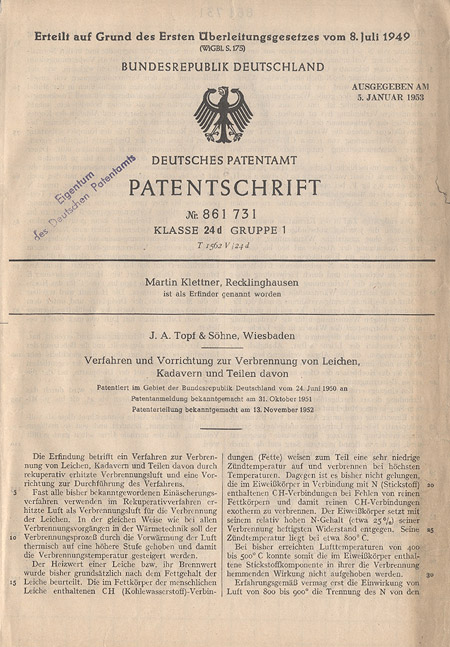
    Topf[Topf, still in business, 1953]

    The two Topf brothers claimed innocence for themselves and for their company; Ludwig committed suicide because he and his firm had done nothing wrong, and had felt beaten by lawless countries and did not intend to be taken captive by them; feeling that justifying his actions would be impossible, he killed himself  on 30 May 1945. The text from his suicide note is below.1

    The evidence against the firm was exceptional and substantial, an example of which (from the Nuremberg Trials, is seen below2), and their culpability overwhelming.  I’m not sure how Ernst -Wolfgang was able to survive the various net that he managed to wiggle through (unlike a number of other of the firm’s officials who wound up being captured by the Soviets and whisked away to cold justice far from Moscow), but he did; and not only that, but was able to start over in the business that he knew best, keeping it running until 1963, well into a time when it was recognized that the shell of buildings from his old business be kept intact as a memory to horror. 

    Notes

    1)  Farewell letter by Ludwig Topf, May 30, 1945 (excerpt, underlining in original) (from Topf und Sohne website)

       “If I have made the decision to evade arrest it is for the following reason: I have lost all belief in any law in this world now that my family has also done me so much wrong and harm. If I am arrested, the greatest of all wrongs will be done to me. I never consciously or intentionally did anything bad; instead it has been done to me.
    I was never cowardly – but I was proud. Handing myself over to the mercy or mercilessness of a foreign country is something I cannot do, because I have learnt the bitter lesson that there is no law and no decency left in this world. That is why I, as a decent person, today have one remaining opportunity to determine my fate as I see fit. And that means immediate departure from a world that in general has become unbearable, and in particular has persecuted and wronged me.”
    “If I ever believed that my innocence as far as the crematoria are concerned (and my brother is just as innocent) would be recognized and honoured, I would continue to fight for justification, as I always have until now – but I think people need a sacrifice. In which case the least I can do is provide it myself. I was always decent – the opposite of a Nazi – the whole world knows that. If I were still able to feel at peace in the heart of a family, the struggle would be worthwhile – but the Topf family that showed composure, integrity and self-confidence has ceased to exist. I was its sole representative as far as that was concerned. Indeed I am so alone that I have no need to ask anyone’s forgiveness, not even for a suicide.”

    2) From the Nuremberg Trials, Day 193, 2 August 1946 [Source, Yale University, Project Avalon]:

    “In the office records of the Auschwitz Camp there was discovered a voluminous correspondence between the administration of the camp and the firm of Topf and Sons. Among them the following letters:

    ” ‘I. A. Topf and Sons, Erfurt; 12 February 1943.

    ” ‘To Central Construction Of lice of SS and Police, Auschwitz.

    ” ‘Subject: Crematoria 2 and 3 for the camp for prisoners of war.

    ” ‘We acknowledge receipt of your wire of 10 February, as follows:

    ” ‘We again acknowledge receipt of your order for five triple furnaces, including two electric lifts for raising the corpses and one emergency lift. A practical installation for stoking coal WAS also ordered and one for transporting the ashes. You are to deliver the complete installation for Crematorium Number 3. You are expected to take steps to ensure the immediate dispatch of all the machines complete with parts.’ “

    “I omit the next document which deals with “bath-houses for special purposes” (gas chambers), and present to the Tribunal as Exhibit Number USSR-64 (Document Number USSR-64), a document which is appended to the report of the Yugoslav Government. This is a certified photostat of a document externally having all the official character of a business document from a “sound business firm.” The name of the firm is Didier-Werke. The subject of the correspondence-the construction of crematoria “designed for a large camp in Belgrade.” The document presented by me characterized the firm Didier as a firm with considerable experience in construction of crematoria for concentration camps and which advertised itself as a firm that understood the demands of its clients. For placing the bodies. into the furnace, the firm designed a special conveyer with a two-wheeled shaft. The firm claimed that it could fill this order much better than any other firms, and asked for a small advance, to draw up draft plans for the construction of a crematorium in the camp.