A Daily History of Holes, Dots, Lines, Science, History, Math, Physics, Art, the Unintentional Absurd, Architecture, Maps, Data Visualization, Blank and Missing Things, and so on. |1.6 million words, 7500 images, 4.9 million hits| Press & appearances in The Times, Le Figaro, Mensa, The Economist, The Guardian, Discovery News, Slate, Le Monde, Sci American Blogs, Le Pont, and many other places… 5000+ total posts since 2008.

Category: Militaria

  • “Very Young to be Dead”: a Week of Americans Killed in Vietnam, 1969.

    JF Ptak Science Books   Quick Post

    This stark issue of LIFE magazine listed the names, photographs and ages of 242 American soldiers killed in Vietnam in one week in June, 1969.  There were no statistics; this was a picture story of tragedy, an out-of-the-ordinary event for the popular image magaine. I did go through the numbers to get a sense of the ages of those very young-looking faces: of the 242 killed, 23% were teenagers; 73% were 21 and under, and 81% were 22 and under.  As our 9 year old said when she asked me and then got her answer about what I was working with on the calculator, “that’s very young to be dead”.

    http://timelifeblog.files.wordpress.com/2012/03/11815101.jpg

    I went through the issue and tabulated all of the ages of the dead young men. The average age of the soldiers killed during this week was 21.06. 

    Age 18: 17 killed.  Age 19: 40   Age 20: 79  Age 21: 41.  Age 22: 20.  Age 23: 11. Age 24: 7. Age 25: 8. Age 26: 6.  Age 27: 2. After that, from age 28 onwards, there is one dead per each age (28, 30, 31, 33, 35, 36, 37, 40, 45).  These 242 deaths were .004% of all American soldiers killed during the war. 

    I was 13 in 1969 and wanted the war to end in a hurry.

    There was no telling the average age of Vietnamese soldiers North or South, just that there were more of them dead than American soldiers. At one point in time this was the way in which the winning side in Vietnam could be judged by political types in the U.S.–the smaller piles of dead bodies indicated the winning side.  58,800 American soldiers were killed there. According to American sources, between 1 and 2 million Vietnamese soldiers and civilians were killed, North and South; Vietnamese sources say that the figure is closer to 3 million (for a country with a total population of about 38 million, or about 10%).

    By August 1969, the Gallup Poll showed that 68% of Americans thought it was a mistake for the U.S. to be fighting in Vietnam (source here, though some other polls show the figure at 58%). In the year 2000, about 70% thought it was a mistake to send in the troops. I don’t know about that other 30%.

    Read more: http://life.time.com/history/faces-of-the-american-dead-in-vietnam-one-weeks-toll/#ixzz28wjbdOn0


  • Light as a Weapon, Above and Below (1917)

    JF Ptak Science Books   Quick Post

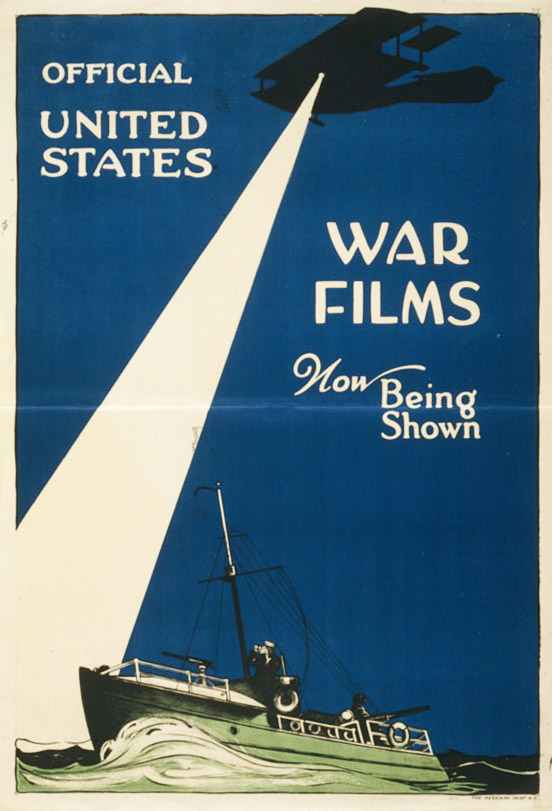
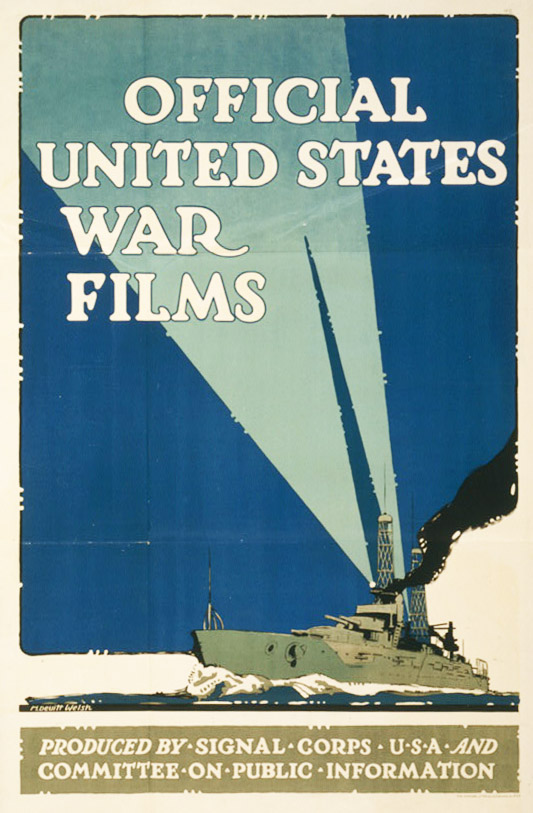
    Although electric lamps/searchlights have been militarily used on land and sea since the 1880’s (at least), it  is still unusual to see light itself displayed as a weapon in a poster.  This is especially true when the light is airborne and in real, in-potential-use applications. An earlier image appears in the Illustrated London News of a giant airship illuminating a battlefield, but it is a rather futuristic view of the employment of light as a weapon, and didn’t quite come about as an effective tool. (As much as the airship would illuminate of the opponent’s night-time position, it also made itself extraordinarily vulnerable–lighting up your enemy’s position just didn’t make for a practical idea, especially when the notions of bombing and night bombing came into being.) 

    In this first image below, there is a strong beam emanating from an aircraft in 1917–how it is generating such light, and whether it was conceivable to have it light enough to be on the aircraft, I don’t know. 

    MAssive american posters 1910-1920

    Conversely, the searchlight coming from the military (battle-)ship could certainly have supported the machinery to produce any number of effort, though it seems again to be counter-productive, establishing itself as a not particularly fast-moving target to anything on the sea or above (or below) it.

    MAssive american posrts seacchlight ship
    On the other hand, this Swedish movie poster seems to have put the idea to good use (source, here):


  • Electricity as an Added Lethal Measure to Barbed Wire: World War I

    JF Ptak Science Books  Quick Post

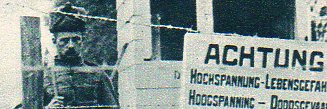
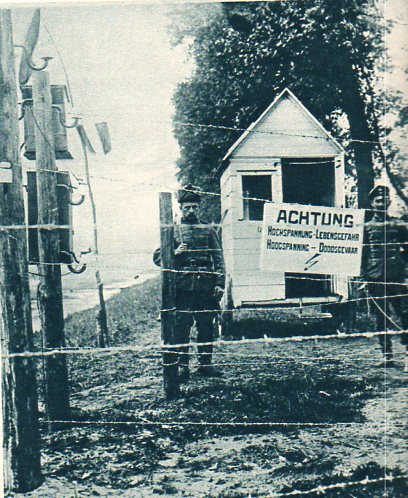
    Barbed wire was one of the most successful and horrifying defensive weapons of World War I.  In 1915 it was made more effective yet by adding high-voltage electricity to the emplacements.  In general the electrical barbed wire fence was employed as only a tiny fraction of all wire fences during the war–as the non-electrified fence was already extremely effective, very cheap to produce and very easily installed–but the possibility of finding an electrified wire somewhere along the lengthy rat’s nests of miles and miles of this thing must’ve had some sort of very major weight in most soldiers’ minds. 

    The following image (and details) from The Illustrated London News for 9 October 1915:

    WWI--e---electric fenc dete extra647

    WWI--e---electric fenc dete646

    WWI--e---electric fence645

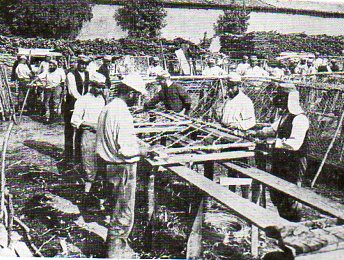
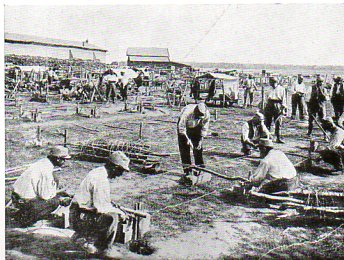
    And the places where the barbed wire was made and packaged, again from The Illustrated London News for 16 October 1915.

    WWI--e--barbed wire making648

    It looks as though the wire was stretched across 3.5 foot poles, with the barbed wire added diagonally, and then rolled up in long sections for easy transport and deployment.

    WWI--e--barbed wire making649


  • The Awful Problem–the Bomb, August, 1945

    JF Ptak Science Books    Post 1868 [Part of a long series on the History of Atomic and Nuclear Weapons, here.]

    The fate of failed Japan was being decided in the hands of the United States in the middle of July, 1945.  The Imperial Navy and Air Force was basically finished, leaving the sea and sky open for complete domination, and the Imperial Army was still fit to fight, if not well supplied.  That said, there was still the issue of possible invasion, and of fighting on a mountainous battlefield against a dedicated indigenous population  that could still field millions of more fighters if not soldiers.

    As Secretary of War Henry Stimson outlined in his Top Secret memo to President Truman on 2 July 1945, “Proposed Program for Japan”, there was little left to fight:

    Japan has no allies.

    Her navy is nearly destroyed and she is vulnerable to a surface and underwater blockade which can deprive her of sufficient food and supplies for her population.

    She is terribly vulnerable to our concentrated air attack upon her crowded cities, industrial and food resources

    She has against her not only the Anglo-American forces but the rising forces of China and the ominous threat of Russia.

    We have inexhaustible and untouched industrial resources to bring to bear against her diminishing potential. 

    We have great moral superiority through being the victim of her first sneak attack.

    —Source: The Nuclear Files, here.

    Little left, of course, save for the millions of defenders fighting on their own soil for their own soil. Which, in the end, turns out to be almost everything insofar as the use of the atomic bomb is concerned.

    This is of course a very complex and long story on the decision to use the bomb, and I don’t pretend to even begin such a thing here. But what I would like to just point out, that in the middle of all of the discussion, the supreme commander of the allied forces in Europe, General Dwight Eisenhower, was not in favor of using the bomb. Eisenhower was with Stimson when the Secretary of War received the coded telegram giving him the positive results of the atomic test in the Jornada del Muerto, the Trinity test, at Alamogordo, New Mexico. Eisenhower wrote of the experience:

    “The cable was in code, you know the way they do it. “The lamb is born”: or some damn thing like that. So then he (meaning Stimson) told me they were going to drop it on the Japanese. Well, I listened, and I didn’t volunteer anything because, after all, my war was over in Europe and it wasn’t up to me. But I was getting more and more depressed just thinking about it. Then he asked for my opinion, so I told him I was against it on two counts. First, the Japanese were ready to surrender and it wasn’t necessary to hit them with that awful thing. Second, I hated to see our country be the first to use such a weapon. Well … the old gentleman got furious. And I can see how he would. After all, it had been his responsibility to push for all the huge expenditure to develop the bomb, which of course he had a right to do, and was right to do. Still, it was an awful problem1.”–Richard Rhodes, The Making Of The Atomic Bomb (Touchstone Books, 1986), page 688 (though not an expert in this collection of areas when he started, and not an historian of science, Rhodes has written perhaps the definitive history of the Project).  

    It wasn’t entirely clear that the Japanese were ready to surrender at this point as Eisenhower said, not really.  And it also wasn’t necessarily the case that the entrance of the Soviet Union into the war in the Pacific would have resulted in an easier time in fighting on the ground.  And General LeMay–who strategized that he could destroy the Japanese capacity for war from the air by bombing 30-60 cities over the June-August period–had actually carried out his plan, striking 58 cities and nearly destroying half of Tokyo, but still the Japanese fought on.

    But it is interesting that after all of this time, and dozens of millions dead, that Eisenhower would be so circumspect in using the atomic bomb to finally force the hand of the Japanese in resignation. 

    The fact remains though that it still took several days after the dropping of the second atomic bomb on Nagasaki for the Japanese to accept what were essentially the same pre-bomb terms of surrender.

    Notes

    1. I should point out that Stimson’s liability in the decision to build the bomb (if such a thing existed) was relieved when the bomb was tested successfully–its actual employment was beyond the judgment of his actions. (Stimson himself said that he was relieved of the responsibility of having spent “two billions of dollars” on the bomb and that he no longer would have to fear spending years in prison for a failed effort.

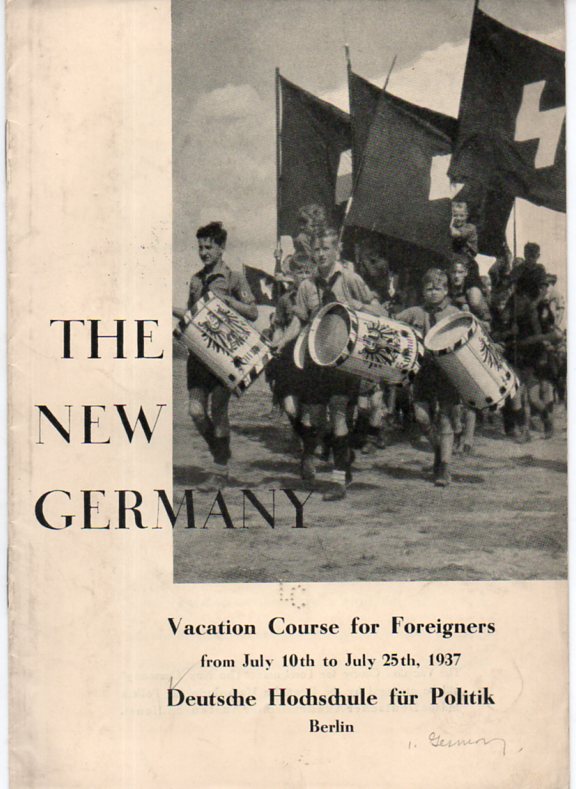
  • Cliff’s Notes for Nazi School, 1937

    JF Ptak Science Books    Post 1849

    Oh happy day for this handy Cliff’s Notes pamphlet for the visiting visitor, for the foreign foreign, to the “new” Germany of 1937.  It is difficult to imagine but not horribly so the subtitle here, “Vacation Course for Foreigners”–it was, after all, so far as the rest of Europe and England and the rest of the world was concerned, still only a conceit that the Germans were harboring for themselves, the sabre-rattling Lebenstraum was still in the theoretical stage, though the loathing and discrimination of the Jews and other sorts of humans was not. 

    Nazi school621

    The pamphlet promises to “give our foreign guests an opportunity o f seeing young National-Socialist Germany as it really is” and to “show them that the German people do not want anything but to attend to their work in discipline and peace”. Which was not the case.

    I was interested to see the “programme” of instruction, and to check out the near-futures of the people who were the lecturers for each section.  Before I began, I wondered how much their fates would be changed eight years hence and if they would resemble the fates of other high ranking Nazis. (I looked at the lives of Nazi medical personnel and experimenters in an earlier post here called  “Kristallnacht: The Long post-WWII Lives and Forgotten Pasts of Criminal Nazis: Doctors”, here.)

    Mostly, they went on to live long lives.

    In the program, Dr. Reinhard Hoehn delivered a talk on “National-Socialist Law”. Hoehn was a Nazi academic lawyer with a criminally morose view of jurisprudence; he went rather high-ranking and was successful in laying the “legal” groundwork for Nazi ambitions, including being a representative at the Wannsee Conference.  Born in 1904, Hoehn went on to live until 2000.


  • Daily Dose of Dr. Odd: On What Silent Massive Bells Sound Like

    JF Ptak Science Books   Quick Post  

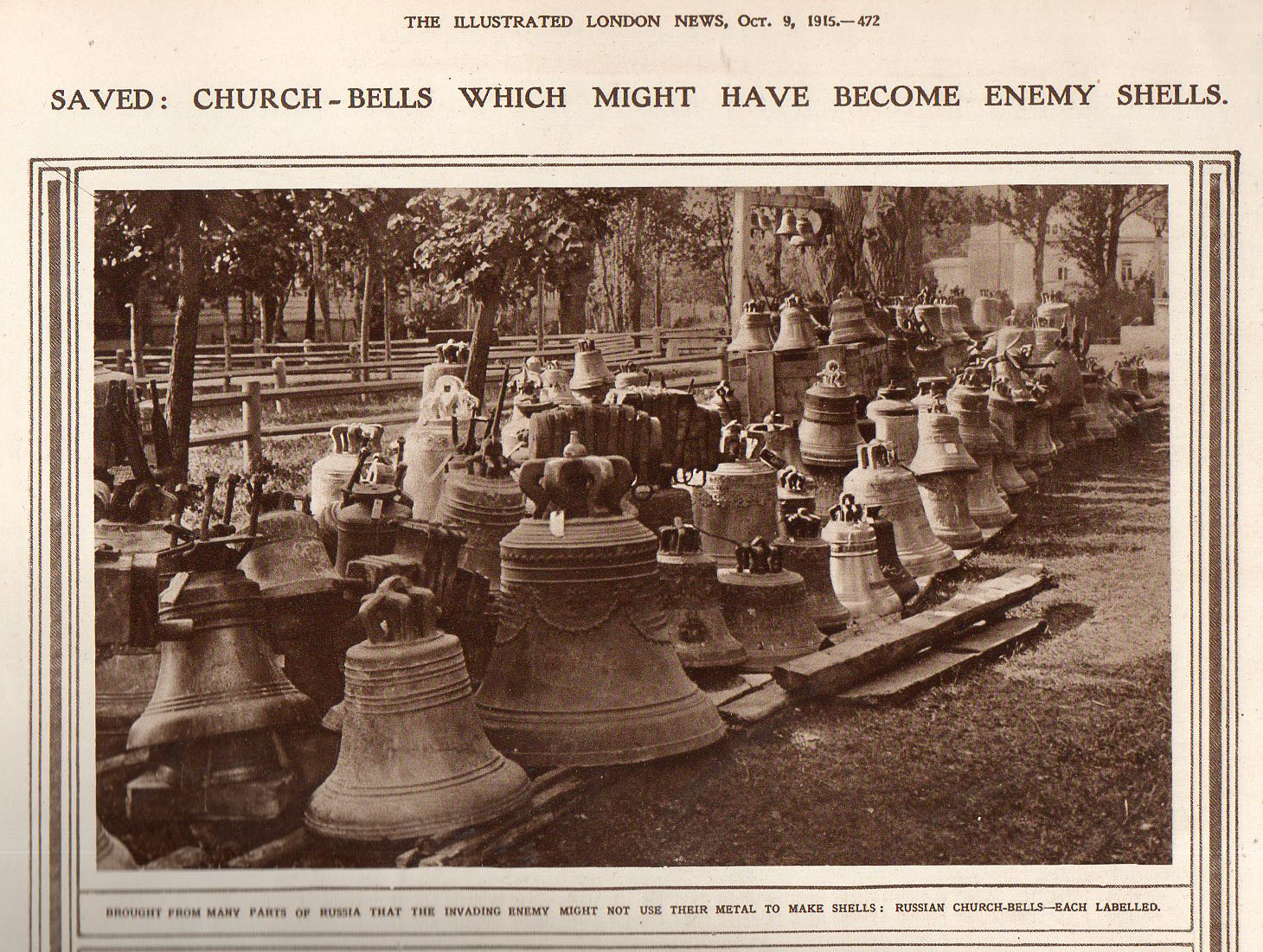
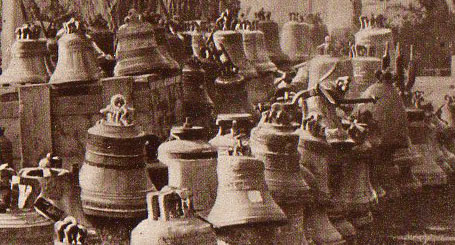
    Looking at these pictures, the first thought about what silent bells sound like is pathetic nothingness, and that apart from any secular importance or significance.  But when the Russians pulled out of Poland they took the bells of the churches with them, keeping them from the advancing German army, keeping them so that the Germans didn’t melt them down to use in munitions.  The bells disappeared too from many Russian cities, pulled back deeper inside Mother Russia, far from the advancing army.

    Bells 578[Source, above and next three images, from the Illustrated London News, 4 October 1915.]

    Bells 578_edited-1


  • Fitzcarraldo Deux: on France’s Monumental Overland Ship Railway, at the Break of Doom

    JF Ptak Science Books    Post 1808 

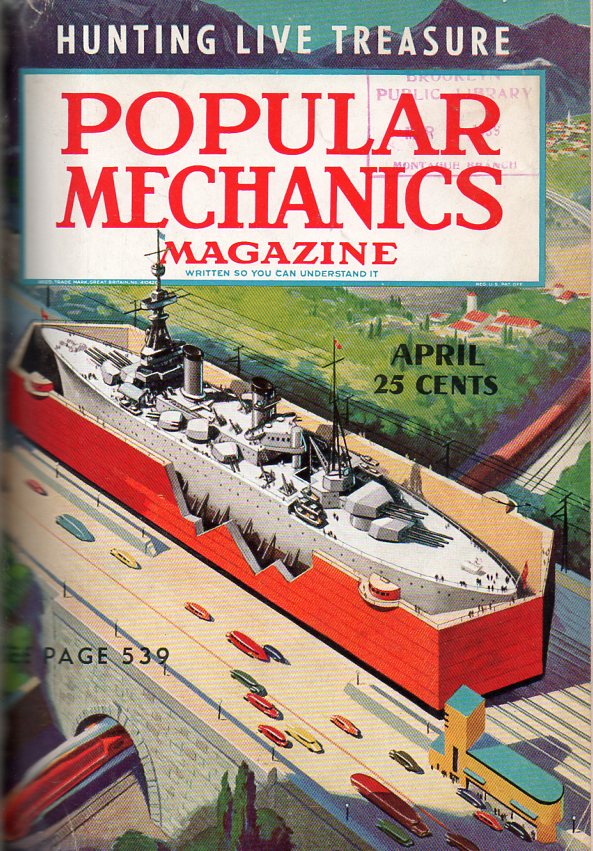
    Ship overland537
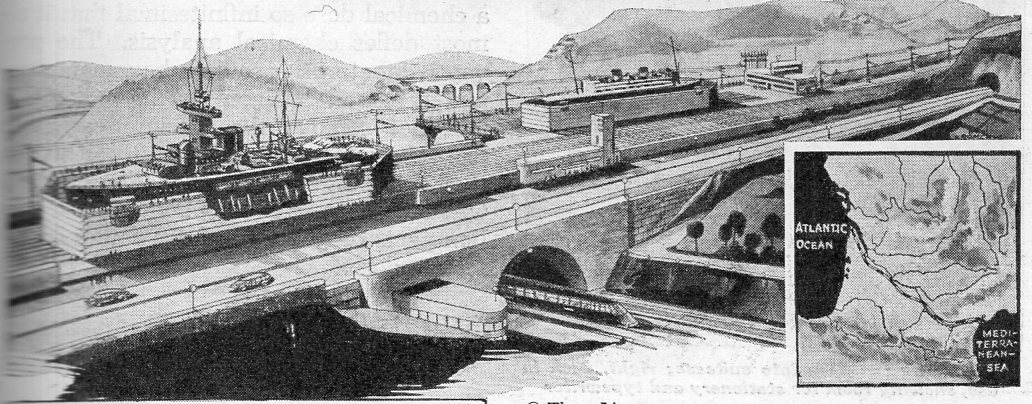
    This fantastic cover appeared in Popular Mechanics, volume 71, and showed a devotion to a monumental idea of dragging enormous ships by rail from the Atlantic Ocean to the Mediterranean Sea.  It was to be 300 miles long, and what looks like 125′ wide, connecting Port le Verdon and Beziers, putting down the 1,200-mile Bay of Biscaye/Gibraltar/Mediterranean route.

    It puts me in the mind of ponderable (and not impossible) colossi, some of which I wrote about in a short post on Werner Herzog’s film Fitzcarraldo. (It is a spill-over big, magnificent film about a would-be ice-making rubber baron bringing an opera house into the trans-Andes, trying to make his way into the dense forest in a huge rear-paddle steamboat on the Amazon to stake a claim in exploiting leased lands filled with rubber trees. See here.)

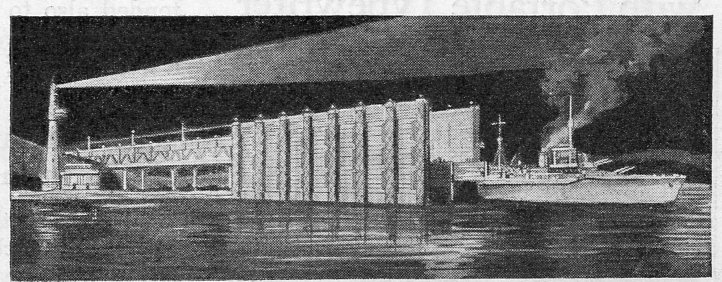
    The spirit of peace was nearly gone in Europe at this time, and the railroad line was to be guarded at 1000′-foot or so intervals by balloons which would suspend a steel net, protecting it from aerial attack.

    Ship overland540

    In one year’s time this would all be shrinkingly academic, a microbe in the plans for a greater France.  This issue was printed in June, 1939, three months away from the official start of the Second World War.  France would be attacked by Germany on 10 May, 1940, and an armistice would be signed with the aggressor five weeks later. 

    Ship overland538
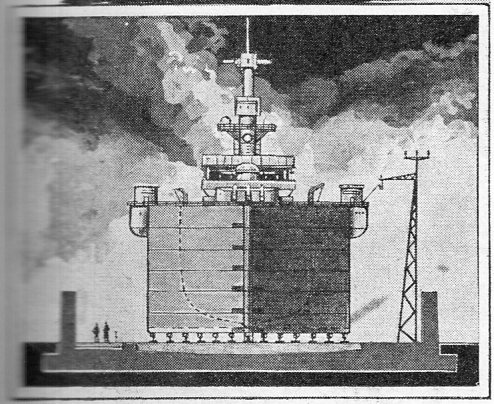
    It is a little painful to look at the color image from the cover, with an enormous battleship hosted within a turreted mobile structure perhaps 100′ wide, lumbering along on eight sets of railroad lines.  Not only that, but this absolutely enormous mobile situation was crossing over another railroad, atop a very, very substantial stone bridge. 

    Ship overland539

    And as I said, a year later, France was conquered, and another Maginot Line was never built.


  • WWI Photographs: Pigeon Trucks and Medical Dogs

    JF Ptak Science Books   Post 1822

    WWI  pigeon572
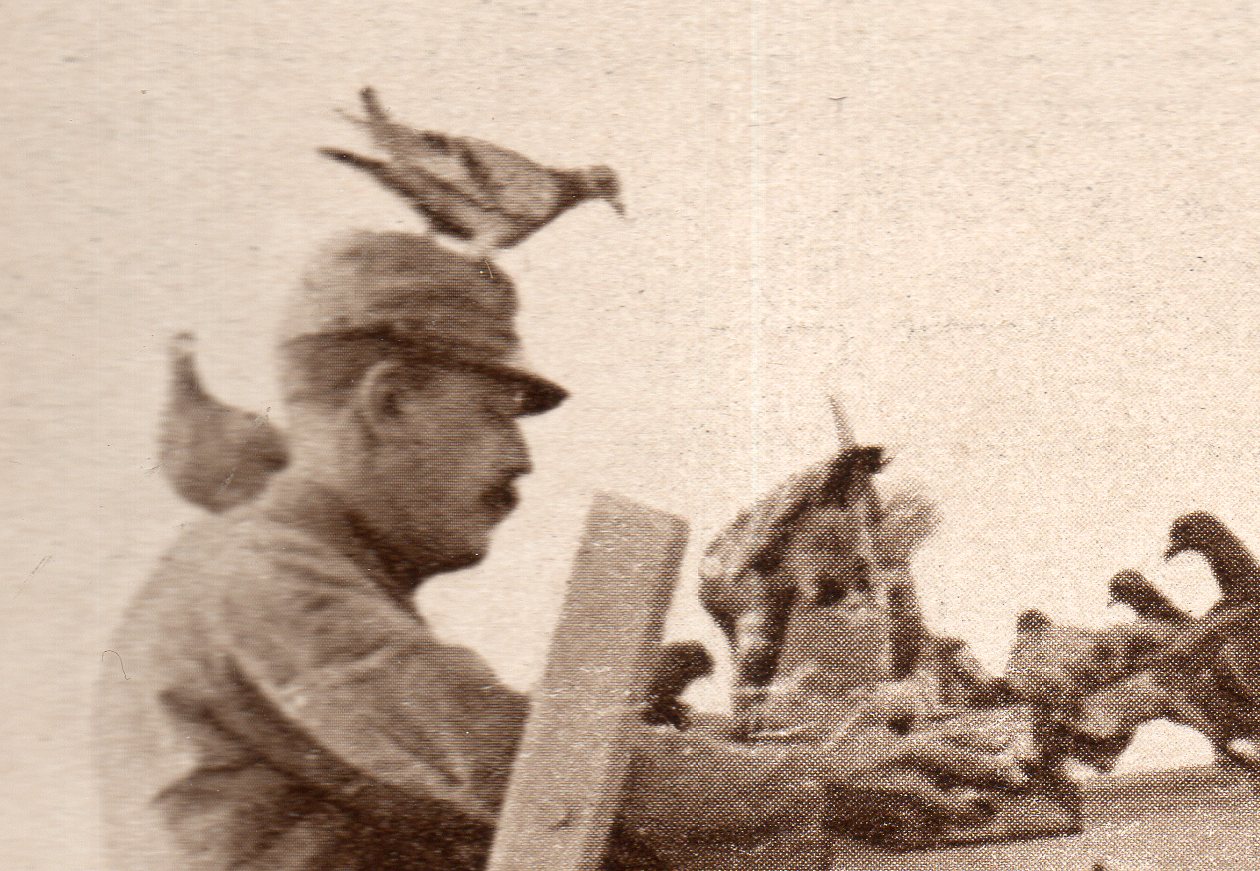
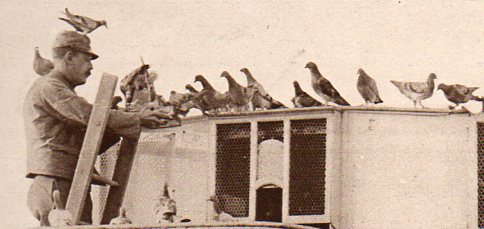
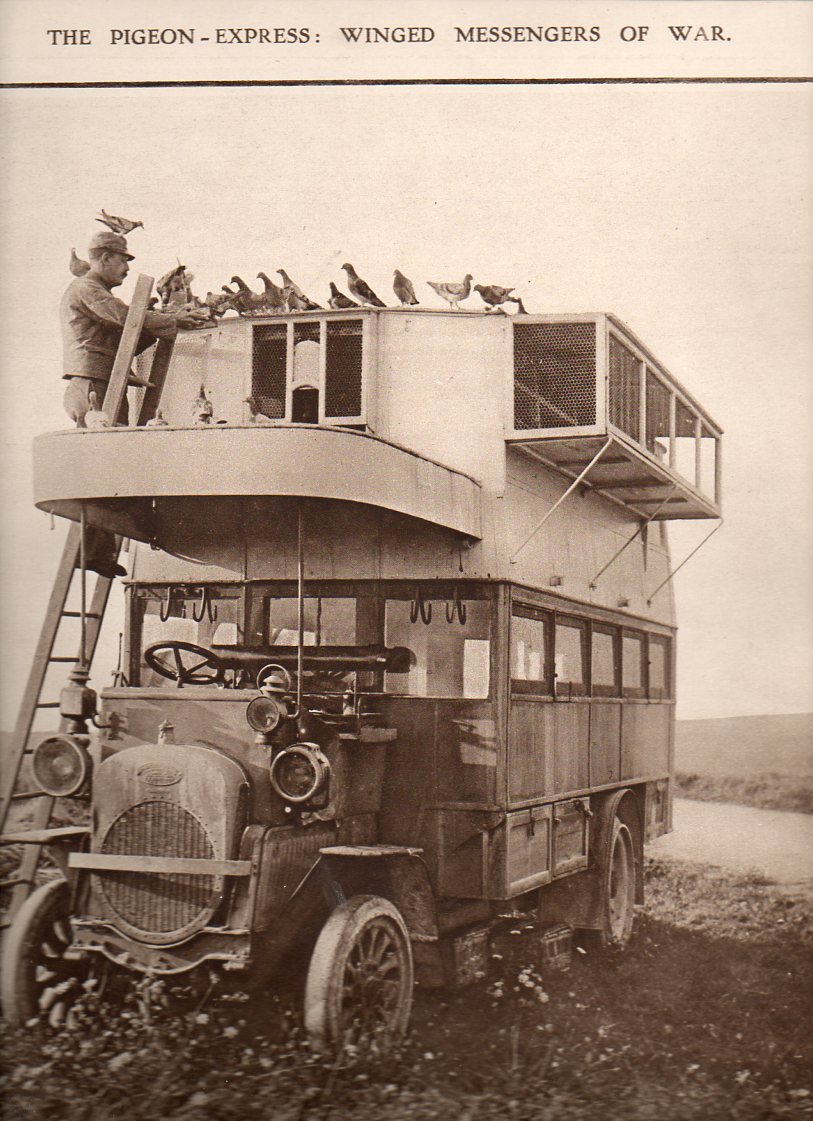
    A fascinating aspect in modern technology and warfare is the reliance upon pigeons and dogs–and their achievements–for war services.  Evidently several hundred thousand pigeons were used to relay messages between divisional headquarters and battlefield positions and such during WWI, with something like 90% of the messages being delivered successfully–a remarkable achievement, since it was not uncommon for the pigeons to fly dozens of miles to perform their task. The services worked so well in fact that the American carrier pigeon service training facility for the army was not closed until 1957.

    Dogs were used as guards and ambulance litter carriers, but it seems they were mostly used for communication purposes, taking messages back and forth through the masses and intricacies of trenches. 

    The image below comes from The Illustrated London News for 2 October 1915:

    WWI--e---pigeon truck det644

    Osman, Lt. Col. A.H., Pigeons in the Great War: A Complete History of the Carrier Pigeon Service during the Great War, 1914 to 1918 (London, 1928)  Read more at Suite101.  [All images below are available for purchase from our blog bookstore, here.]

    WWI--e---pigeon truck643

    ·Posted by :

    ·in:

    — —

  • Atomic Aircraft, 1946-1961

    JF Ptak Science Books    Post 1810

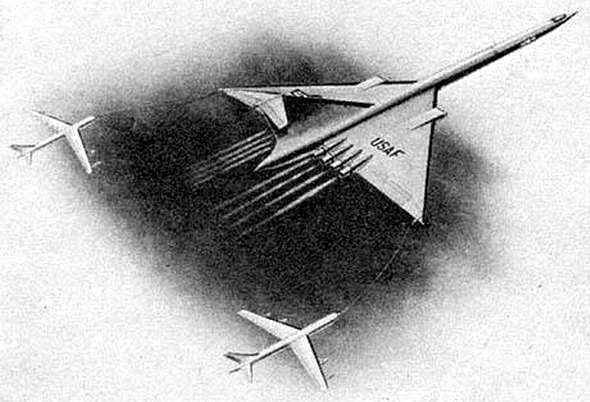
    Shooting Down the Nuclear Plane,  by W. Henry Lambright, (Inter-University Case Program #104, Bobbs-Merrill Co., 1964), is an interesting and nicely-documented history of an idea whose firm grasp on reality night not be terribly firm.  Of course it would be possible to prodce such a thing (at about this same time in 1961 appeared a cover for Popular Mechanics for an atomic-powered car from which two cowboys went a-hunting) if there was the collective will to do so, and there almost was.  Let’s just say then that the atomic-poweredness of our domestic defense was limited to aircraft carriers and submarines, and the atomic-powererd aircraft were left to science fiction .

    In general though it was at this time, from  about 1946 thorugh the late 1950s’, that people were thinking of refitting standard power systems with atomic energy. 

    Here are a few ideas for alternative approaches to flight, provided by the happy folks known as Atomic Energy:

    Another possibility for a nculear powered aircraft, by Northrup:

    [Source]  Another interesting design–a nuclear-powered prop plane, X-6, “derived from the Corvair B-36”:


  • The Face of the Finished Foe: German POWs, 1918

    JF Ptak Science Books      Post 1809

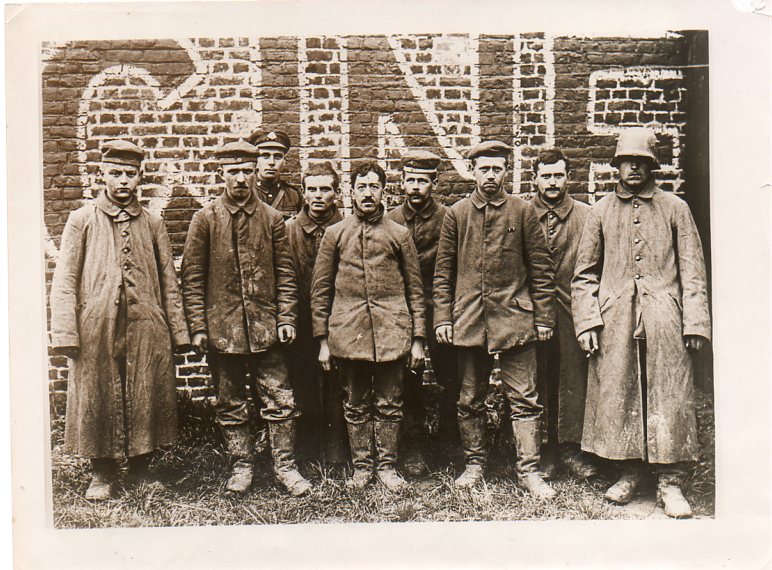
    I’ve written a number of times on this blog about WWI images, many of which are in my own collection of News Service Photo Group images, like the one just below, which can be found here. Many of them are remarkable, astonishing even–especially those relating to soldiers whose war has ended, finding them as prisoners of war.  At least they weren’t dead, like the dozens of millions of other soldiers.


    WWI photograph--german prisoners066

    (Original photograph available at our blog bookstore here.)

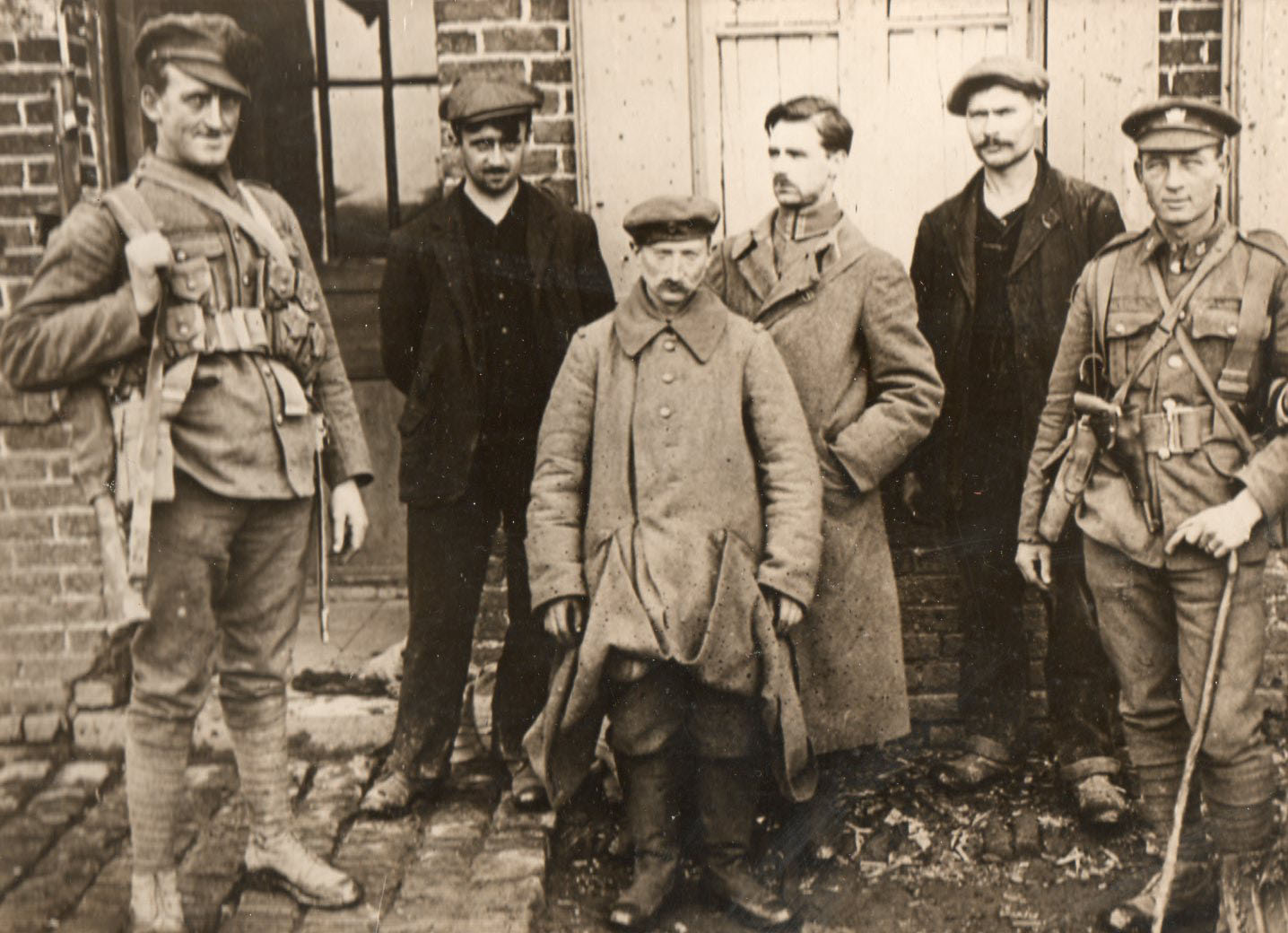
    I uncovered another of these images, tonight, long misplaced.

    WOrld War I Prisoners547[Image available from our blog bookstore, here.]

    There were over 8 million soldiers taken prisoner during WWI, that in addition to the 21 million who were wounded and the 9.7 million killed:  38 million.  Plus 6.8 million civilians who were killed: 45 million.  And the numbers for civilians wounded are just, well, not reliable, as they were not really collected, or collectible.  At the end of it all, there were probably between 50 to 75 million soldiers and civilians killed or wounded or taken captive during the war…not including civilians who were killed by the hardships or starvation caused by the conflict.  Big, big numbers.

    Some of these soldiers were taken in entire armies, surrenders of hundreds of thousands; and some came in pairs, or singles, as in the photo above.  There are two captured Germans here, the two men in the middle, who are flanked by a British soldier and (I think) a Canadian officer, with two locals in the background.  The short man front-and-center was paraded no doubt for his propaganda value–certainly not five feet tall, slender, with a tiny, not-average face.  The Tommy is certainly enjoying the situation, while the officer maintains composure. 

    I’m sure the photo could’ve been made by any photographer for any army at any time.

    The photograph was made in 1918, a few months before the end of the war, but there was still fighting to be done, and the value of showing the the British and Allied publics the “face” of a now-wilting enemy must have been considerable.  There was considerable control and tightness over the sort of images allowed to be produced and published coming from the front line, photographs being made by a “pool” of news photographers the contents of which were closely evaluated by military censors before being allowed to circulate to newspapers and magazines.

    ·Posted by :

    ·in:

    — —