A Daily History of Holes, Dots, Lines, Science, History, Math, Physics, Art, the Unintentional Absurd, Architecture, Maps, Data Visualization, Blank and Missing Things, and so on. |1.6 million words, 7500 images, 4.9 million hits| Press & appearances in The Times, Le Figaro, Mensa, The Economist, The Guardian, Discovery News, Slate, Le Monde, Sci American Blogs, Le Pont, and many other places… 5000+ total posts since 2008.

Category: Militaria

  • A Remarkable Confederate POW Newspaper, 1865

    JF Ptak Science Books   Post 2060    
    Follow Me on Pinterest

    Prison times 5
    [My thanks to Rebecca Onion at Slate Vault for finding and surfacing this incredible document]

    “One of the most remarkable productions of Fort Delaware was the
    Prison Times, a newspaper published in April, 1865, by Capt. Geo. S.
    Thomas, 64th Georgia Regiment, and Lieut. A. Harris, 32d Florida. It was
    written in a small but very clear handwriting by Capt. J. W. Hibbs, of the
    13th Virginia Cavalry [sic], who proved himself a most expert
    penman.” –from Edward R. Rich, Comrades! page 120, a small but dense 167-page book printed in Easton, Maryland, and published by S.E. Whitman, in1898, containing his recollections of his experiences in the Union prison.

    Prison times 1
    [Source: the Library of Congress, here.]

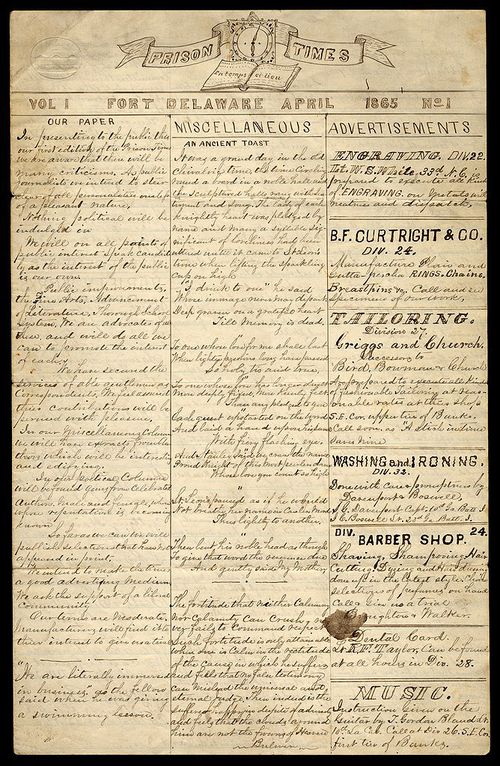
    The Prison Times was a hand-written, four-page newspaper produced by Confederate prisoners in April 1865 in the Union prison at Fort Delaware on Pea Patch Island in the Delaware River.  It was a short lived effort, the war ending just weeks after the paper appeared1. As a matter of fact the editors hoped that the newspaper effort would not have to last very much longer, longing for the end of the war and to return home:

    “Trusting that the difficulties of conducting an enterprise of
    this kind under the circumstances are duly appreciated by an intelligent
    public, we send forth this our first number hoping that ere we can have
    time to issue many numbers our prison times will be discontinued forever
    and our patrons and ourselves be far away in our
    loved Sunny South.”
    Prison times 6
    It is a remarkable document, enlisting the hope for normalcy of the 33,000 (or so) prisoners2.  The newspaper made a statement of intent (and to avoid political
    discussion), and displayed useful information like barracks directors
    and a short piece on “our prison world”.  There were also interesting
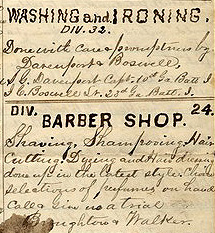
    short advertisements which were apparently real:  folks placed their
    services into play in the newspaper for engraving, jewelry (rings,
    chains, gutta percha), tailoring, washing & ironing, barbers,
    dental, music instructions, and shoe-making.  There were also a few
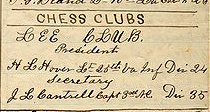
    short notices for debating and chess clubs, as well as a few pieces of
    poetry.  Overall, there was a lot of information packed into four 12×8″ pages, an effort that showed that in this town-sized prison that there were definitely some forms of society and commerce taking place.   


    ·Posted by :

    ·in:

    —

  • Constellations of Bomb Craters and Trench Defense, 1917

    JF Ptak Science Books   Post 2028   Follow Me on Pinterest Series on the History of Holes  

    Also see: The Exploding Dots of Falling Dominoes: Dien Bien Phu, 1954


    Holes bomb313
    In the efficacies of categories for this blog I wonder about the placement of holes in the history of digging.  Most acts of digging results in making a hole, and some digging results in holes that are far longer or wider than they are deep, as in the case of trenches, and especially in the case of trenches dug during WWI, when many thousands of miles of them were dug and filled with millions and millions of men, perhaps as many as a million of them dying right there in the trench.

    Digging though is not a necessary condition for making a hole, or supporting a trench for that matter.  There were many millions of shells fired during WWI, and many of the craters produced by their explosions were converted  for use in conjunctions with trenches. 

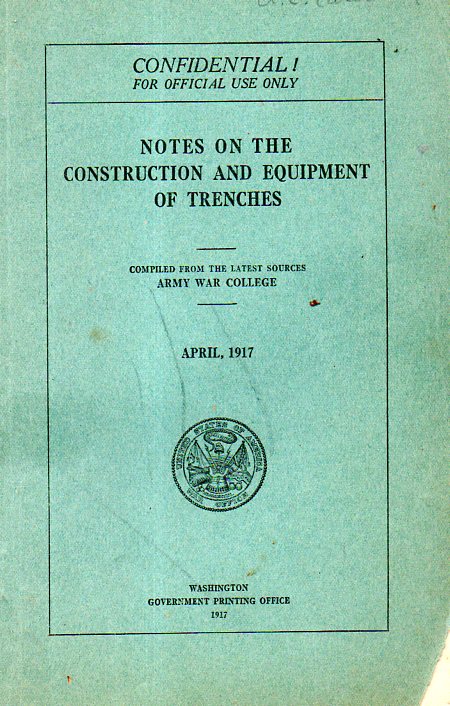
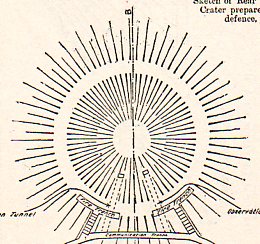
    Holes bomb314There is a lengthy section of the relatively short (104pp) book Notes on the Construction and Equipment of Trenches–published by the Army War College in April 1917– dedicated to the employment of bomb craters in trench warfare. (This was 2.5 years into a war that Woodrow Wilson and most Americans south to avoid–not only to not fight, but to not necessarily take sides, to stay neutral, and it lasted about 900 very bloody days.) And as it turns out, of course, there are many ways to use a big area of scooped-out/blown-away earth in a complex geometry of narrow and interconnected diggings.  The hole could be used as a hole filled with barbed wire as a front line of defense–and here we are told (reminded?) about the scope of the so-called “wiring entanglements”, which should be 20 yards out from the lip of a  crater which should also be 30′ deep (!), the bowl of the hole lined with 3′ high runs of barbed wire that should be irregularly posted . At the rear for anyone who thought of trying to make it through such a hellhole would be a machine or Lewis gun.  (The wooden posts should be strong–“light posts are useless”.) Great numbers of these craters would be used like star points in a complicated astrological sign of want and destruction, and this book would aid in the education of how to bring these changes about.  (Of particular interest is the advisory that entanglement construction should be undertaken in 40/50-yeard chunks, and that the installation of these defensive measures at the very front of a line “should take place at night”.  Ineed. 


  • Model of Utah Beach, Normandy, France, 1944

    JF Ptak Science Books    Quick Post    Follow Me on Pinterest

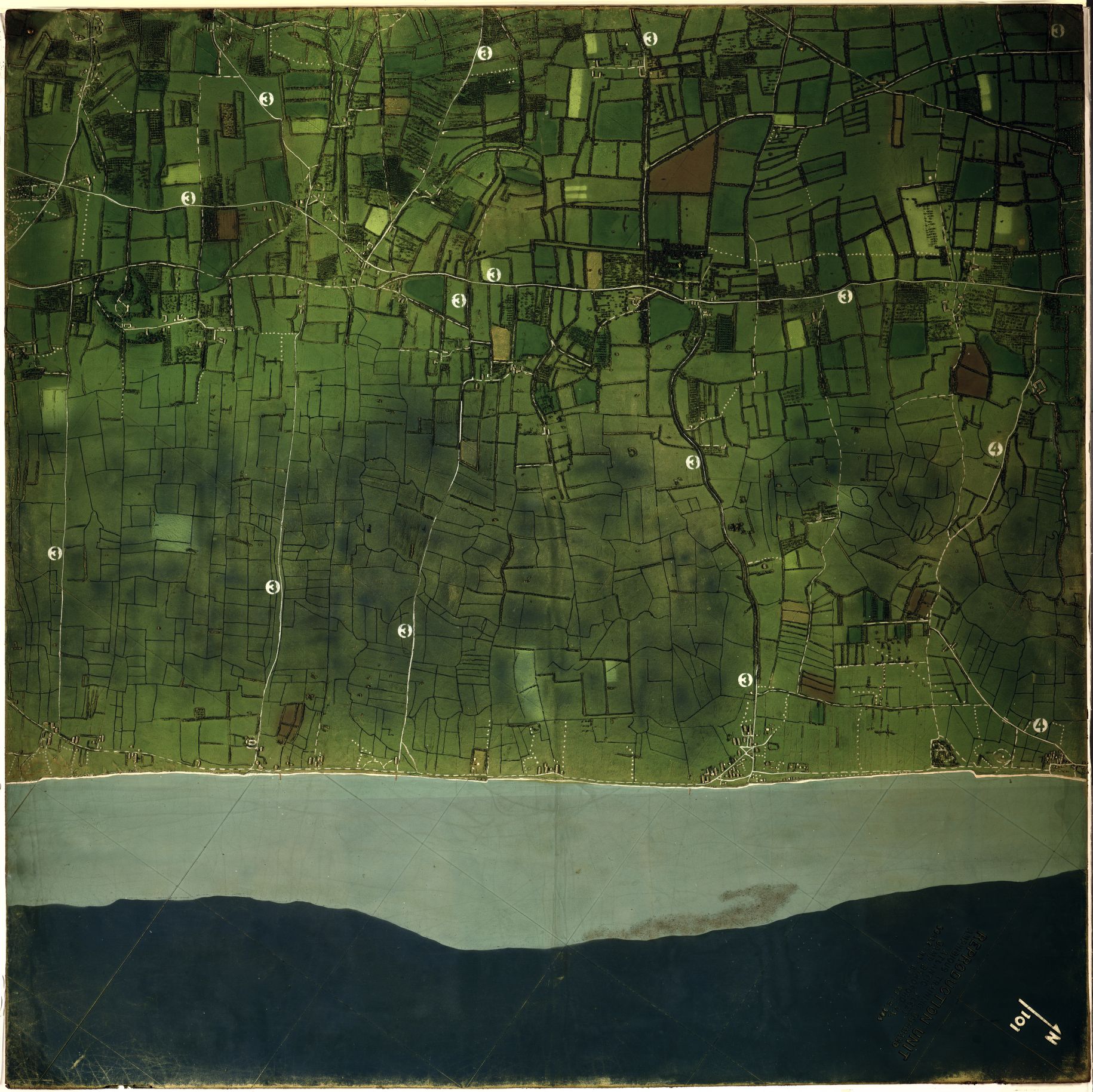
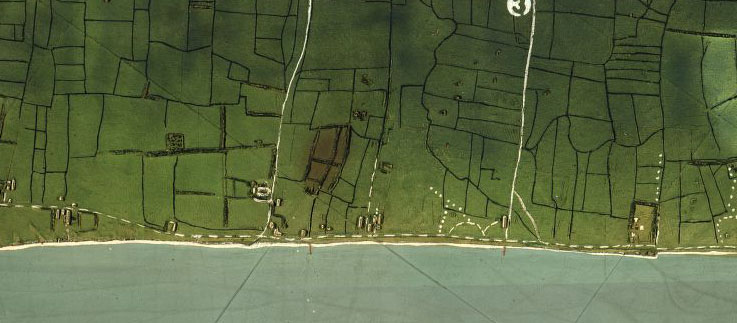
    In all that I have seen relating to the mammoth planning and logistical operations concerning teh invasion of Europe by the Allied Forces on 6 June 1944 I don’t think I’ev ever seen such incredibly detailed relief map models such as the one below.  The original image resides at the Library of Congress and its catalog information describes it on a scale of  1:5,000  and a vertical scale of 1:2,500, with the model being two sections of  120cm squared (so 120x240cm (or about 3×6 feet). THE map “shows the tide lines, slope of the beach, buildings beyond the beach, and the location of hedgehogs” and the placement of anti-aircreaft weapons.  The image is very expandable.

    Utah Beach Model Part 1

    And a detail:

    Utah Beach Model Part 1 det


  • The Testimony of Figures: an Infographic of WWI Loss, 1919

    JF Ptak Science Books  Quick Post     Follow Me on Pinterest


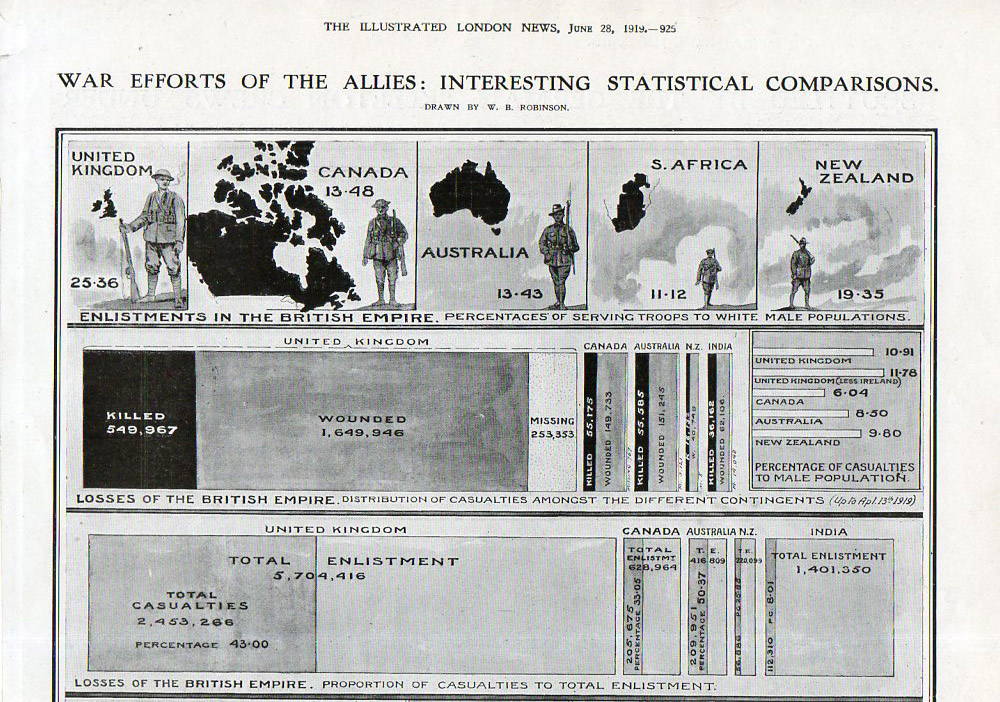
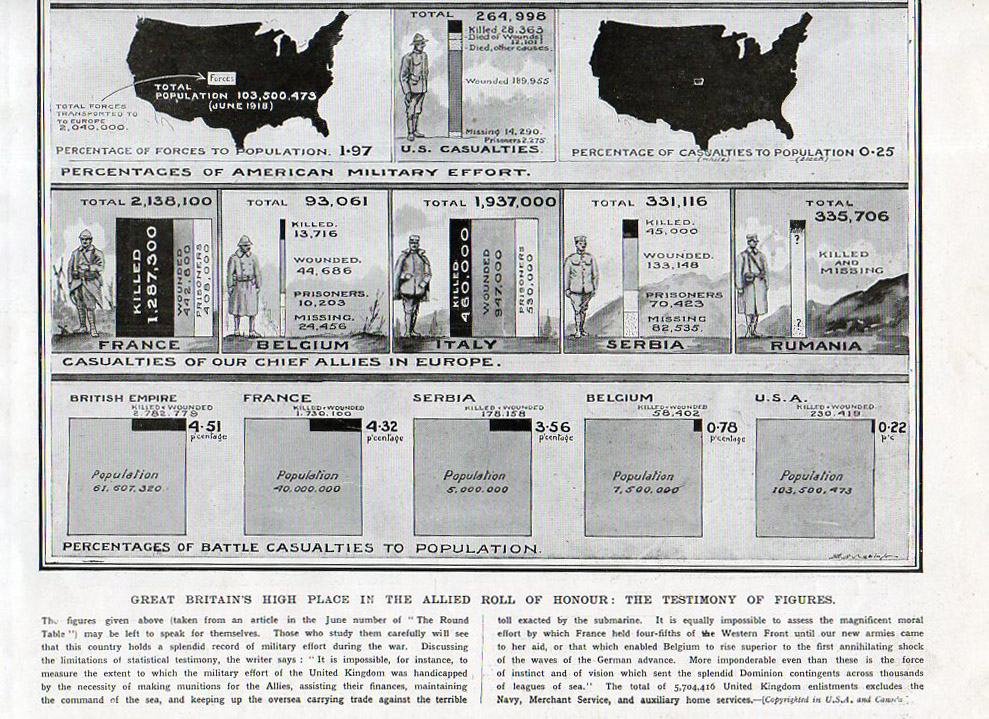
    This single-sheet infographic sheet was published seven months after the end of the war, in June 1919, in the Illustrated London  News.  “Great Britain’s High Place in the Allied Roll of Honor: the Testimony of Figures” is exactly that, a very significant, visual testimony.  The images speak for themselves.

    Infographic WWI--casualties109

    Infographic WWI--casualties two110


  • Missing the Obvious: WWI and Kriegsoptik

    JF Ptak Science Books   Quick Post    Follow Me on Pinterest

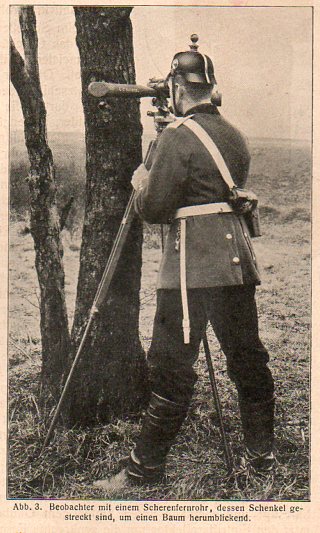
    For some reason this particular defensive utility of the binocular/rangefinder/”scherenfernohr” hadn’t occurred to me before seeing this photograph (in the September 1915 issue of Himmel und Erde).  Of course with the many billions of rounds of ammo that flew across open fields during the war, if it was your job to sight for artillery or what have you it would be better to do that from a trench (as this instrument was also known as a “trench periscope”, as varieties of the binoculars could have vertical tubes) and behind cover, or if in the field to be able to find a defensive position for your work. I hadn’t thought about standing behind a tree with the scope’s optics wide enough to operate beyond the diameter of the trunk–seeing the picture made me think, “of course”. On the other hand, this posture assumes that there’s very little flank to that field…

    Kriegsoptik097

    ·Posted by :

    ·in:

    —

  • Speaking for an Oppressed Minority, 1944: the Japanese in America, WWII

    JF Ptak Science Books   Post 1970

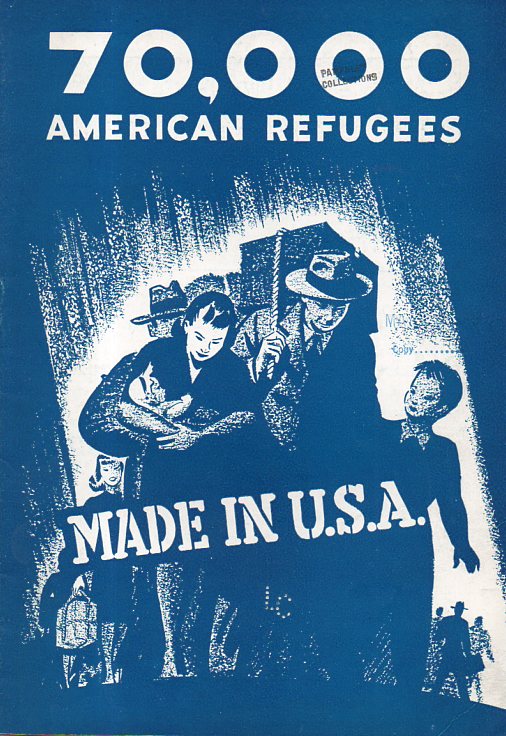
    This pamphlet, 70,000 American Refugees, Made in U.S.A., by Truman  B. Douglass1, was a sympathetic appeal to the deeply grave situation legislated to 140,000 Americans. They were Americans of Japanese descent, many of them U.S. citizen, who by Executive Order 9066  were ordered to stand down from their lives for the sake of national security and be removed to distant and remote internment camps beginning in May 1942, mostly for the duration of the war.  There weren’t that many appeals for the primacy of the rights of these people at this time–the war for the United States was newly begun via the Japanese attack on Pearl Harbor some months before–and the understanding was to protect the security of the country via the segregation and housing of what were seen to be the potential enemies in the existing Japanese-American population.

    Japanese relocation058

    [This pamphlet is available for sale at our blog bookstore, here.]

     Franklin Roosevelt’s  February 1942 Executive Order 9066 (issued 19 February 1942) to imprison more than 100,000 American (70,000 of whom were U.S. citizens, including children) for the duration of the war–it was the legal bombshell that gave the War Department the authority to authorize the removal of the Japanese  to theoretically prevent those people from engaging in sub rosa and fifth column activities asd wartime terrorists fighting for Imperial Japan.

    Given that this pamphlet was in it third edition just a few months past its first appearance in October 1944 says that there was at least some interest in this political/moral anti-Executive Order 90662 position, though how much of that is from a popular groundswell of support it is not possible to say. I imagine that the print runs of this pamphlet were rather small given that there are only ten copies of all three editions in the collections of libraries worldwide.  And since there are many collections that should have this pamphlet but don’t–copies are found in California State University Northridge, California State Irvine, Yale, Wisconsin Historical, Cornell, Berkeley, Davis, Huntington, according to WorldCat–and no copies seem to pop into the rare book market very often at all, I suspect that not many copies were printed per edition, which means that there was a repetitive demand for the pamphlet that exhausted small print runs, which means maybe there were 2000 copies printed…not exactly “groundswell” support for what was an unpopular position).  Third edition, October 1944 (following the first edition of August 1944).Full text available via the California Digital Library, here. (The Library of Congress evidently doesn’t have any copies any more–my copy had been in their collection, and it seems as though the back-up copy is no longer there).

    The story of the removal and control of the American Japanese population is complex and deep and has been addressed in many places in print and online (and even on this blog several times), and it is not my intent to address that issue in this post.  I want to highlight what must have been a largely high-minority and mostly lonely voice of consideration and caution. 

    Notes:

    1.  The printing and publication information for the pamphlet:  “The Citizens Committee for Resettlement, 6501 Wydown Blvd., St. Louis 5, Missouri, 25 cents. May also be ordered separately at cost indicated. Reduced price in quantities. Community Preparation for Resettlement of Japanese Americans, published by The Committee on Resettlement of Japanese Americans, The Federal Council of Churches”.  Truman B. Douglass Grinnell, Iowa, 1901-1969, was instrumental in the forming of the United Church of Christ in 1957.

    2. Transcription courtesy of the History Matters  project:

    Transcript of Executive Order 9066: Resulting in the Relocation of Japanese
    (1942)

    Executive Order No. 9066

    The President

    Executive Order

    Authorizing the Secretary of War to Prescribe Military Areas

    Whereas the successful prosecution of the war requires every possible
    protection against espionage and against sabotage to national-defense material,
    national-defense premises, and national-defense utilities as defined in Section
    4, Act of April 20, 1918, 40 Stat. 533, as amended by the Act of November 30,
    1940, 54 Stat. 1220, and the Act of August 21, 1941, 55 Stat. 655 (U.S.C., Title
    50, Sec. 104);

    Now, therefore, by virtue of the authority vested in me as President of the
    United States, and Commander in Chief of the Army and Navy, I hereby authorize
    and direct the Secretary of War, and the Military Commanders whom he may from
    time to time designate, whenever he or any designated Commander deems such
    action necessary or desirable, to prescribe military areas in such places and of
    such extent as he or the appropriate Military Commander may determine, from
    which any or all persons may be excluded, and with respect to which, the right
    of any person to enter, remain in, or leave shall be subject to whatever
    restrictions the Secretary of War or the appropriate Military Commander may
    impose in his discretion. The Secretary of War is hereby authorized to provide
    for residents of any such area who are excluded therefrom, such transportation,
    food, shelter, and other accommodations as may be necessary, in the judgment of
    the Secretary of War or the said Military Commander, and until other
    arrangements are made, to accomplish the purpose of this order. The designation
    of military areas in any region or locality shall supersede designations of
    prohibited and restricted areas by the Attorney General under the Proclamations
    of December 7 and 8, 1941, and shall supersede the responsibility and authority
    of the Attorney General under the said Proclamations in respect of such
    prohibited and restricted areas.

    I hereby further authorize and direct the Secretary of War and the said
    Military Commanders to take such other steps as he or the appropriate Military
    Commander may deem advisable to enforce compliance with the restrictions
    applicable to each Military area hereinabove authorized to be designated,
    including the use of Federal troops and other Federal Agencies, with authority
    to accept assistance of state and local agencies.

    I hereby further authorize and direct all Executive Departments, independent
    establishments and other Federal Agencies, to assist the Secretary of War or the
    said Military Commanders in carrying out this Executive Order, including the
    furnishing of medical aid, hospitalization, food, clothing, transportation, use
    of land, shelter, and other supplies, equipment, utilities, facilities, and
    services.

    This order shall not be construed as modifying or limiting in any way the
    authority heretofore granted under Executive Order No. 8972, dated December 12,
    1941, nor shall it be construed as limiting or modifying the duty and
    responsibility of the Federal Bureau of Investigation, with respect to the
    investigation of alleged acts of sabotage or the duty and responsibility of the
    Attorney General and the Department of Justice under the Proclamations of
    December 7 and 8, 1941, prescribing regulations for the conduct and control of
    alien enemies, except as such duty and responsibility is superseded by the
    designation of military areas hereunder.

    Franklin D. Roosevelt

    The White House,

    February 19, 1942.


    Photo

    ·Posted by :

    ·in:


  • Japanese American Citizens Respond to Internment and Removal, April, 1942.

    JF Ptak Science Books   Post  1964

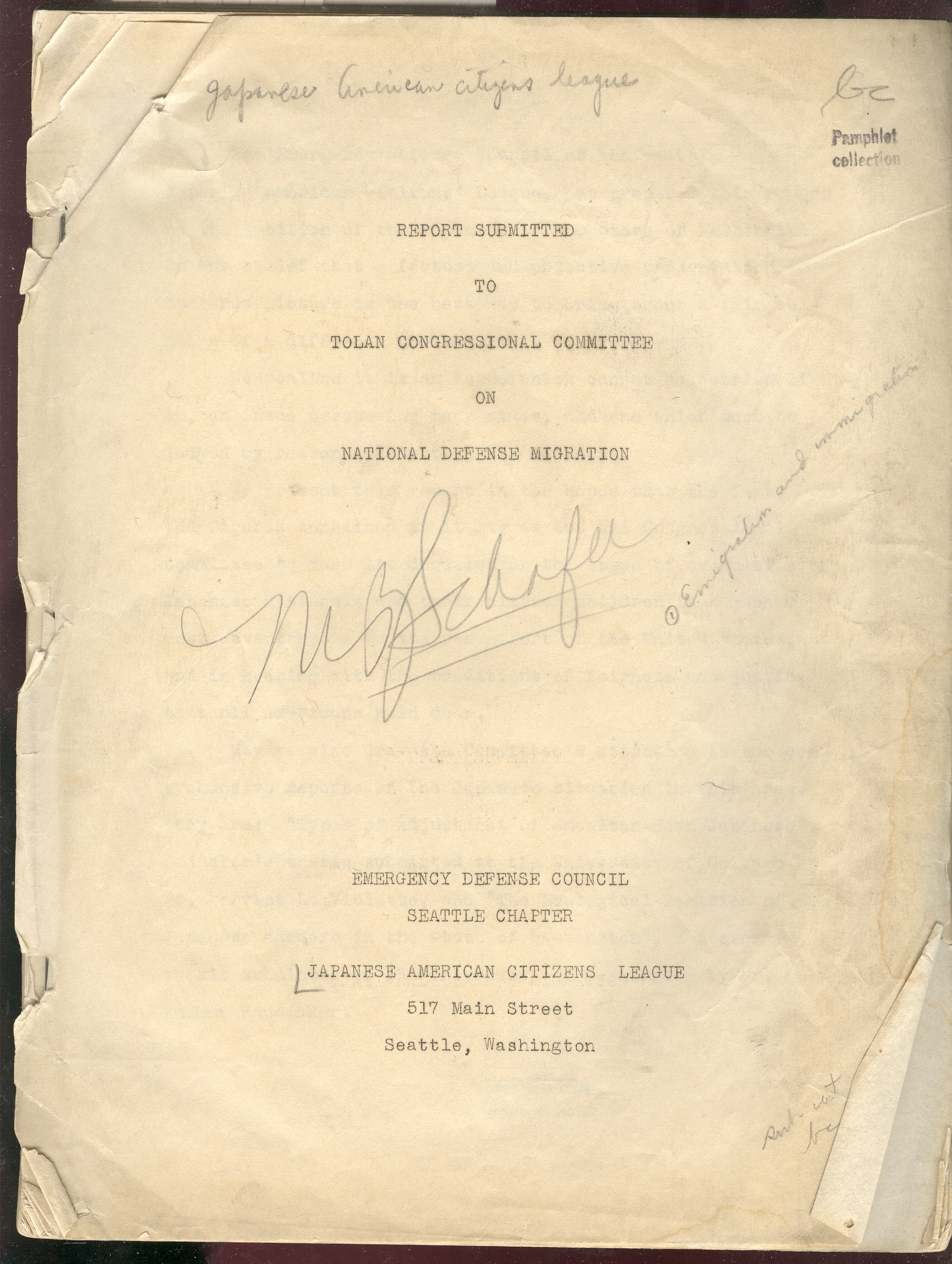
    I’ve unearthed another rare and exceptional document from the “collection” (read “heap”) here, a 38-page mimeographed document that is a logical and reasonable response of the Japanese-American community in Seattle to their impending removal and impundment of via Executive Order 9066 (1942):

    Report submitted to Tolan Congressional Committee on National Defense Migration Emergency Defense Council Seattle Chapter Japanese American Citizens League.

    000--tolan

    “….there must be a point beyond which there may be no abridgement of civil liberties and we feel that whatever the emergency, that persons must be judged, so long as we have a Bill of Rights, because of what they do as persons We feel that treating persons, because they are members of a race, constitutes illegal discrimination, which is forbidden by the fourteenth amendment whether we are at war or peace.”– A. L. Wirin, Counsel for the Southern California Branch of the American Civil Liberties Union, speaking on the internment of Japanese-Americans, 1942

    “We make these statements, not because we fear evacuation, but because we believe, to the bottom of our hearts, that the best interests of the United States, our nation are to be served by being permitted to stay, work, fight, and die for our country if necessary here where we belong.“–Response by the Japanese American Citizens League to Internment Camps, 1942

    This excruciating, heart-rending 1942 document was submitted by the Japanese American Citizens League (of Seattle, Washington) to the Tolan Congressional Committee with recommendations, proposals and requests in the event of the removal of Japanese citizens from “sensitive” areas in western America.  It is an exceptional report, a well-reasoned response to the developing and calamitous American fear of Japanese fellow-citizens; a fear which was swiftly leading itself to xenophobic actions the result of which was the internment of 120,000 American citizens in non-lethal concentration camps. 

    ·Posted by :

    ·in:

    —

  • Perhaps the Earliest Psychological Report on Adolf Hitler, 1941/2

    JF Ptak Science Books   Quick Post

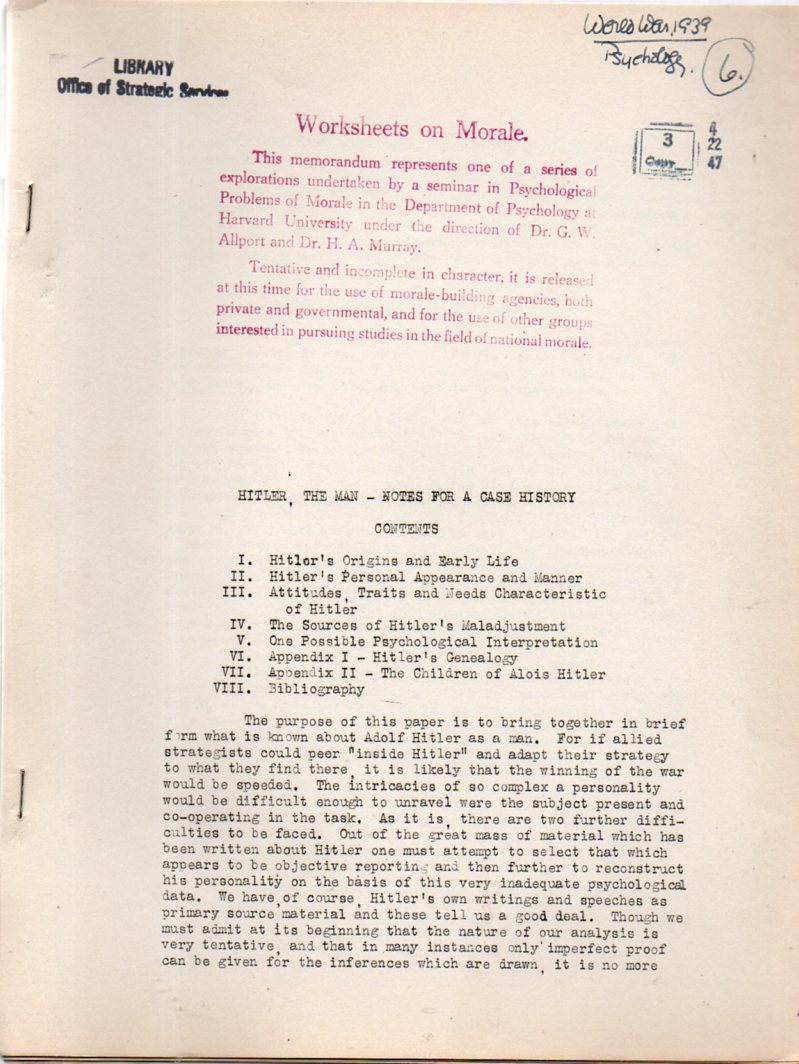
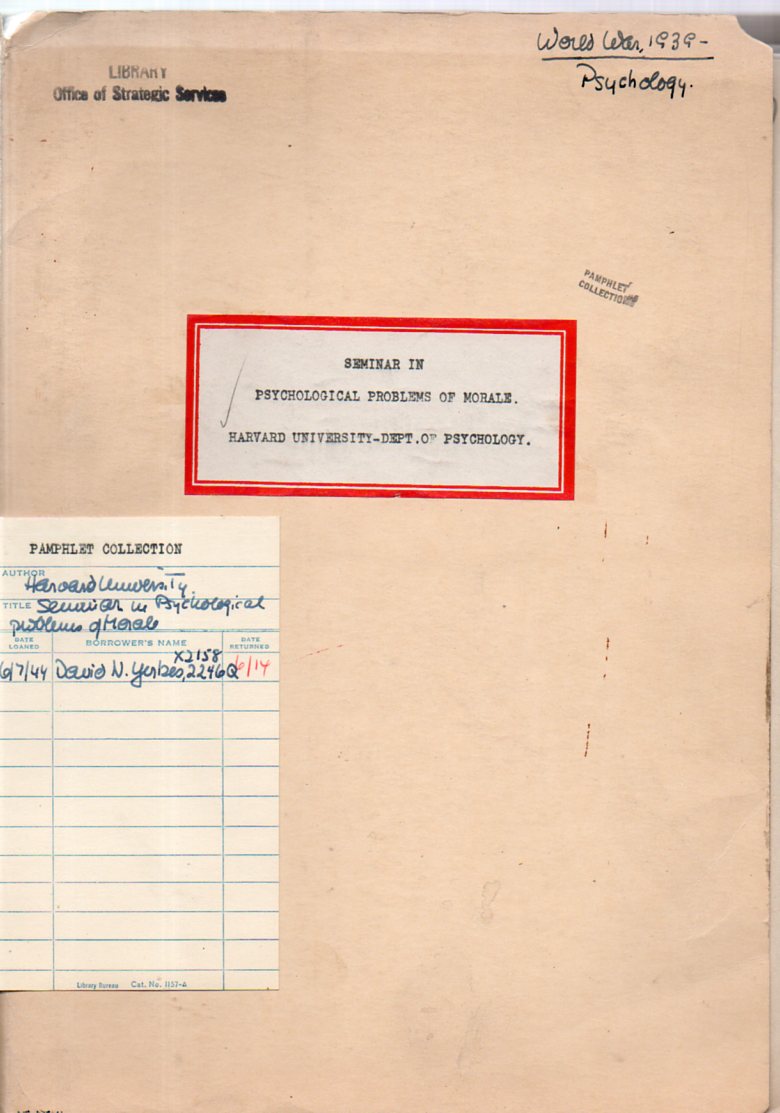
    I wanted to take a moment and post something from the bookselling section of this blog, something that’s pretty interesting and scarce in its own right.  It is a work produced at the Harvard University Department of Psychology by Henry A. Murray (1893-1988), the Worksheets on Morale. Seminar in Psychological Problems of Morale which was published in 1942 and contains a section which turns out to be the first psychological profile of Adolf Hitler–this copy was formerly in the library of the Office of Strategic Services, the precursor and incubator of the CIA.

    Allport696

    Allport697

    See more below:

    • This item may be purchased from the blog’s bookstore, here.

    ·Posted by :

    ·in:

    —

  • Civil War Sheet Music: Confederate Flag Covers

    JF Ptak Science Books   Quick Post

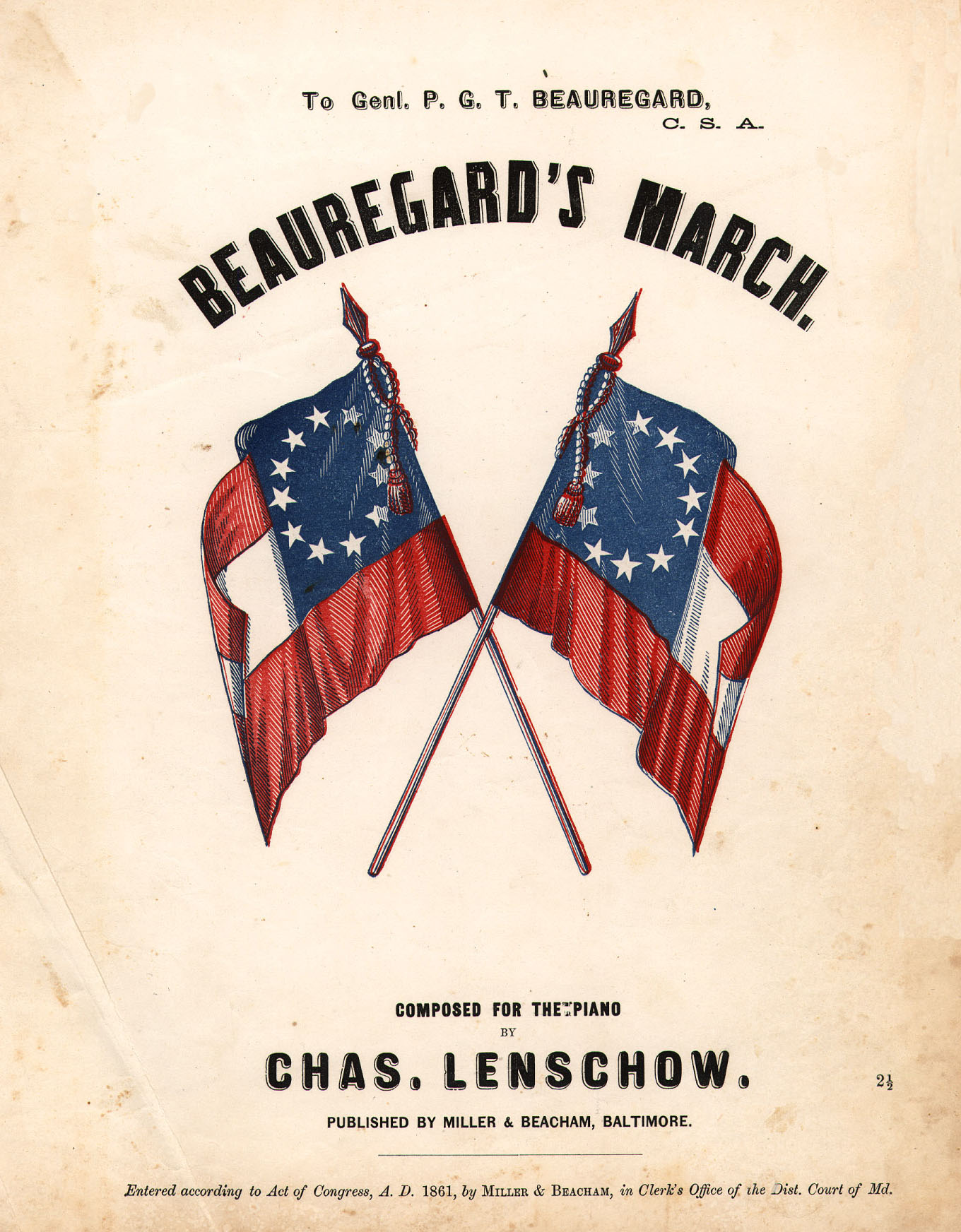
    A selection of Civil War sheet music featuring Confederate flags on the covers, all from the Library of Congress sheet music collection:

    Beauregard

    ·Posted by :

    ·in:


  • Acoustic Weapon “Performance Degrader”, 1933

    JF Ptak Science Books  Post 1926

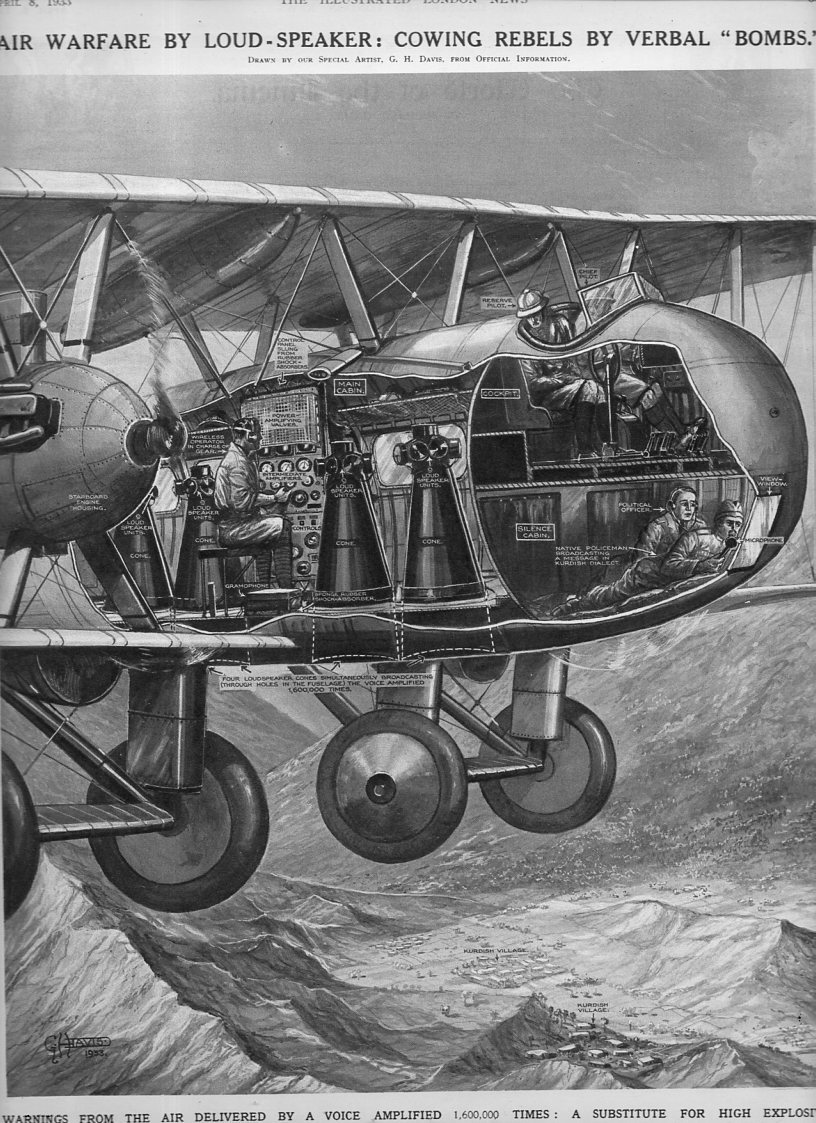
    From the looks of it, this image from an 8 April 1933 issue of the Illustrated London News is not quite a “verbal bomb” as we might think of such a thing today.  The cutaway drawing (by the sensational G.H. Davies, who produced hundreds of these images for the magazine over four decades)shows an acoustic device housed in a Vickers Victoria aircraft. As described in the descriptive text to the image, Sir Philip Sassoon (“speaking in the House of Commons on the Air Estimates last month”) mentioned in May 1933 an attempt to induce forces hostile to the U.K. in Northern Kurdistan by flying over rebel strongholds and threatening an air attack if no surrender was forthcoming.

    Verbal bombs877

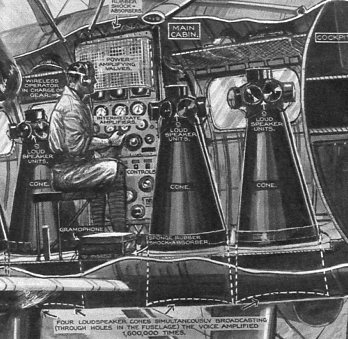
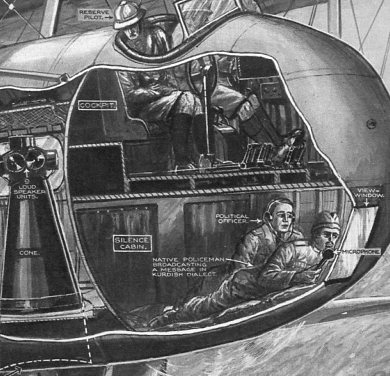
    Evidently a translator would address the town at 2-4,000′ elevation through an audio system that amplified the voice”1,600,000 times”. An address was made to the leaders of the tribesmnen to surrender their position, else an air attack would occur after three days. Even though described in the title of the image as a “verbal bomb”, it isn’t anything like the directed energy/sonic/acoustic/infrasonics/pulse weapon performance degraders that are currently available.  What was happening here was simply (or not so) an attempt to get an enemy to relieve their position via tangible threat, sort of an acoustic leaflet bombing prior to the real thing. Of course this was backed up by actual bombing, which was still a relatively new weapon for armies–several nations which possessed this newish facility of war practiced bombing civilian/military targets alike in extra-territorial possessions. (There was a hot debate over what constituted fair use of aerial bombs beginning in earnest in the 1920’s, but much of that soon devolved into debates on what constituted “civilian populations”, and there the definitions were wide and sloppy.)  In any event, the loudspeakers did not emit high-powered sound that would disturb/puncture eardrums or cause dizziness or problems with eyesight by making the eyeballs vibrate–they were just loud conveyers of Bad Things to Come.

    Verbal bombs det 2879
    Verbal bombs det878