A Daily History of Holes, Dots, Lines, Science, History, Math, Physics, Art, the Unintentional Absurd, Architecture, Maps, Data Visualization, Blank and Missing Things, and so on. |1.6 million words, 7500 images, 4.9 million hits| Press & appearances in The Times, Le Figaro, Mensa, The Economist, The Guardian, Discovery News, Slate, Le Monde, Sci American Blogs, Le Pont, and many other places… 5000+ total posts since 2008.

Category: Militaria

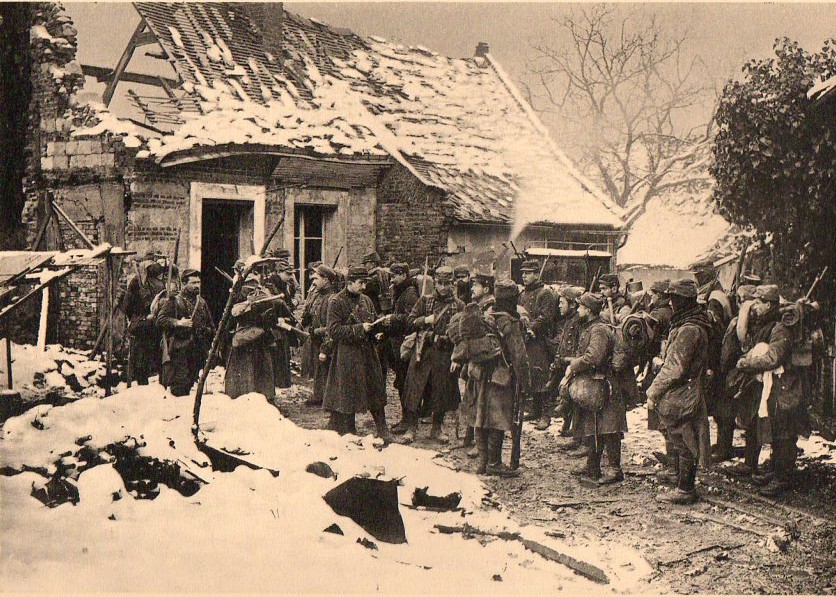
  • Verticals and Lead-Spewing Gargoyles: Spires, Rifles, Bayonettes. Reims, November 27, 1918.

    JF Ptak Science Books  Post 1267

    Verticals and Anticipation after Four Grueling Years

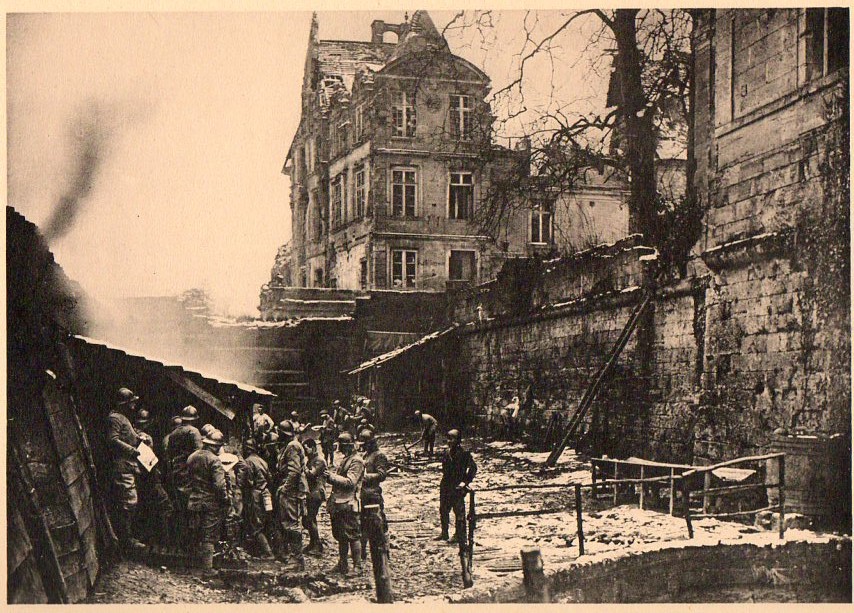
    In developing a history of vertical lines I thought that I would look at single vertical lines, but having just stumbled across this in our WWI News Photo Service archive, I just could not resist.  There is of course plenty of vertical arrangement here–just orders of magnitude more than what I was setting out to find.  So it goes.
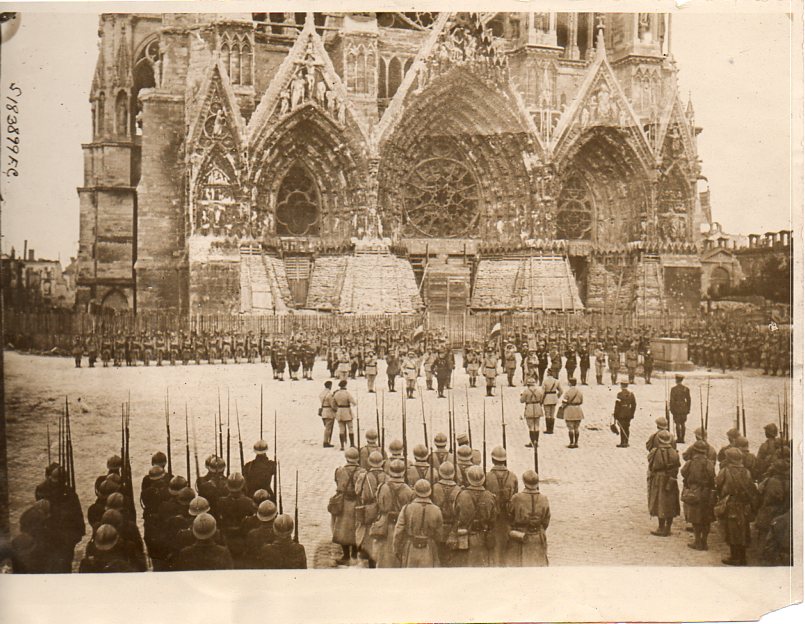
    WWI photograph--spires071

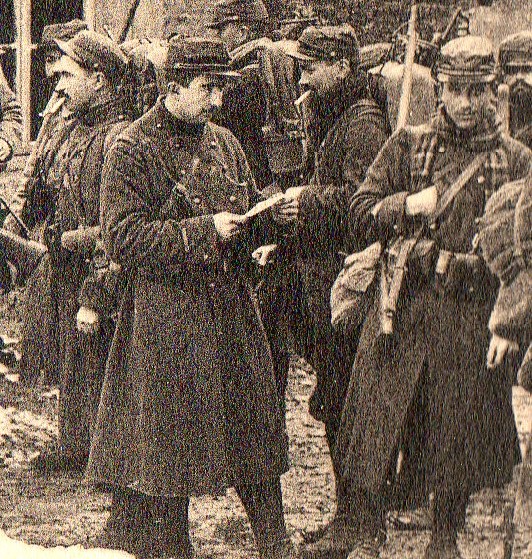
    (The image is available from our blog bookstore, here.) And the detail:
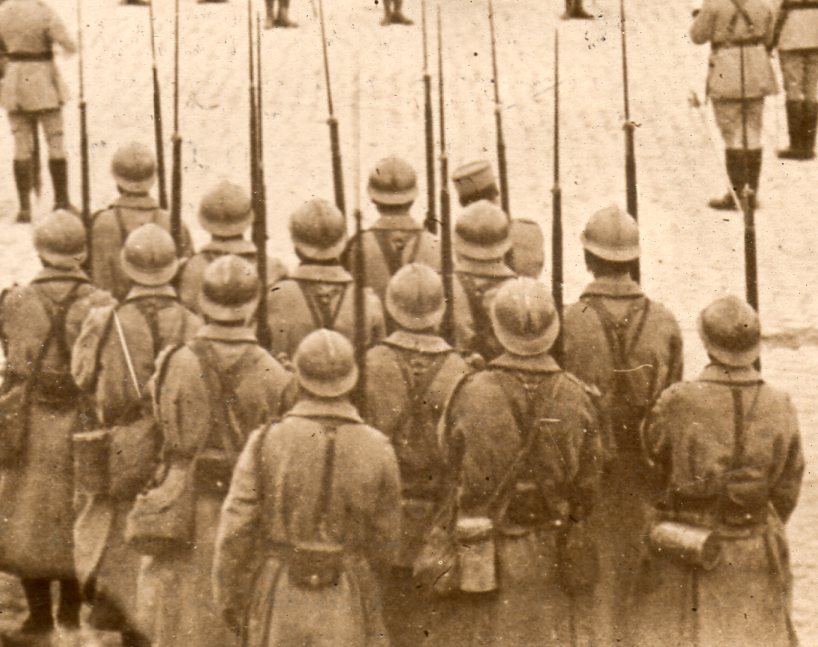
    WWI photograph--spires det072
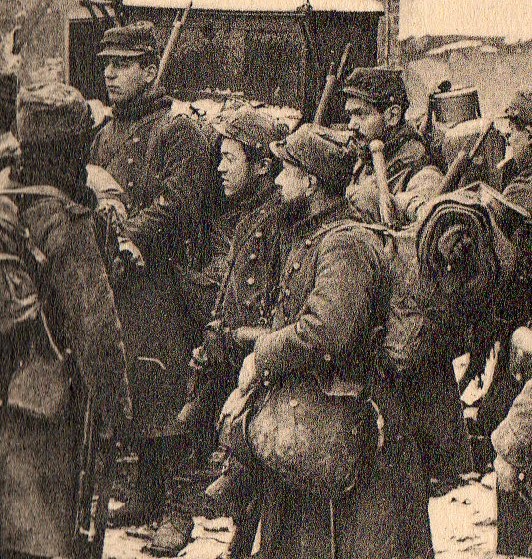
     And another:

    WWI photograph--spires det073

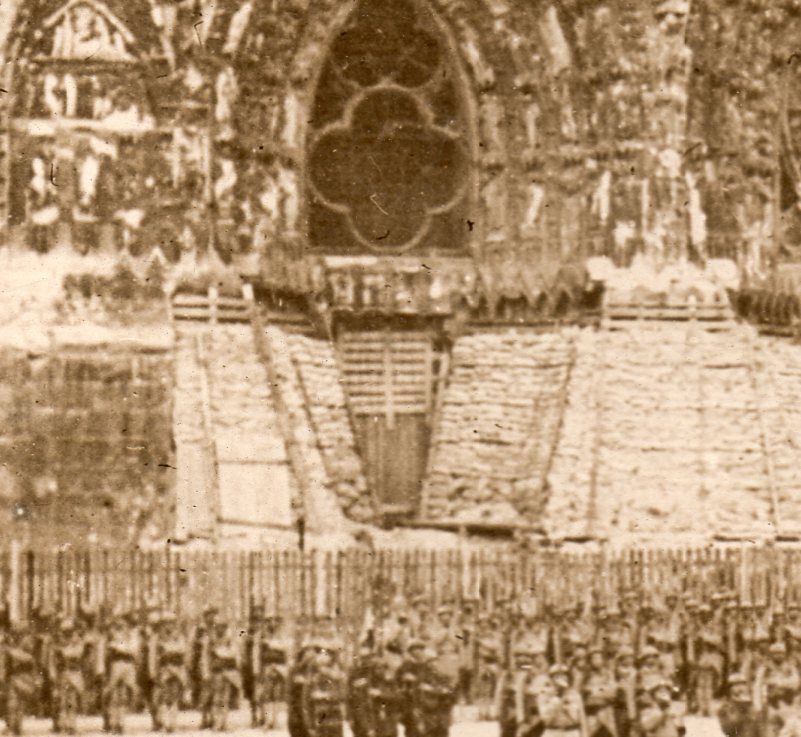
    I find this a soaring image, in its own odd way–this is a celebration scene, after,all, a decoration exercise, a military display of French forces that liberated the town of Reims, all taking place in front of the battered cathedral. Notre-Dame de Reims was the place of the coronation of French kings, and was a spectacular 13th century structure built on top of other buildings stretching back the site’s inhabitation to at least the 5th century.  

    But German artillery shelling caught the cathedral right at the beginning of the war and very nearly wrecked it.  The building was badly damaged by fire, a fire caused by the Germans, which spread along the scaffolding on the building which fed the wooden supports and superstructures, the flames finding its way throughout the building.  The fire was hot enough to melt the lead in the roof, which poured down as molten rain and out of the mouth-spouts of the building’s gargoyles. 

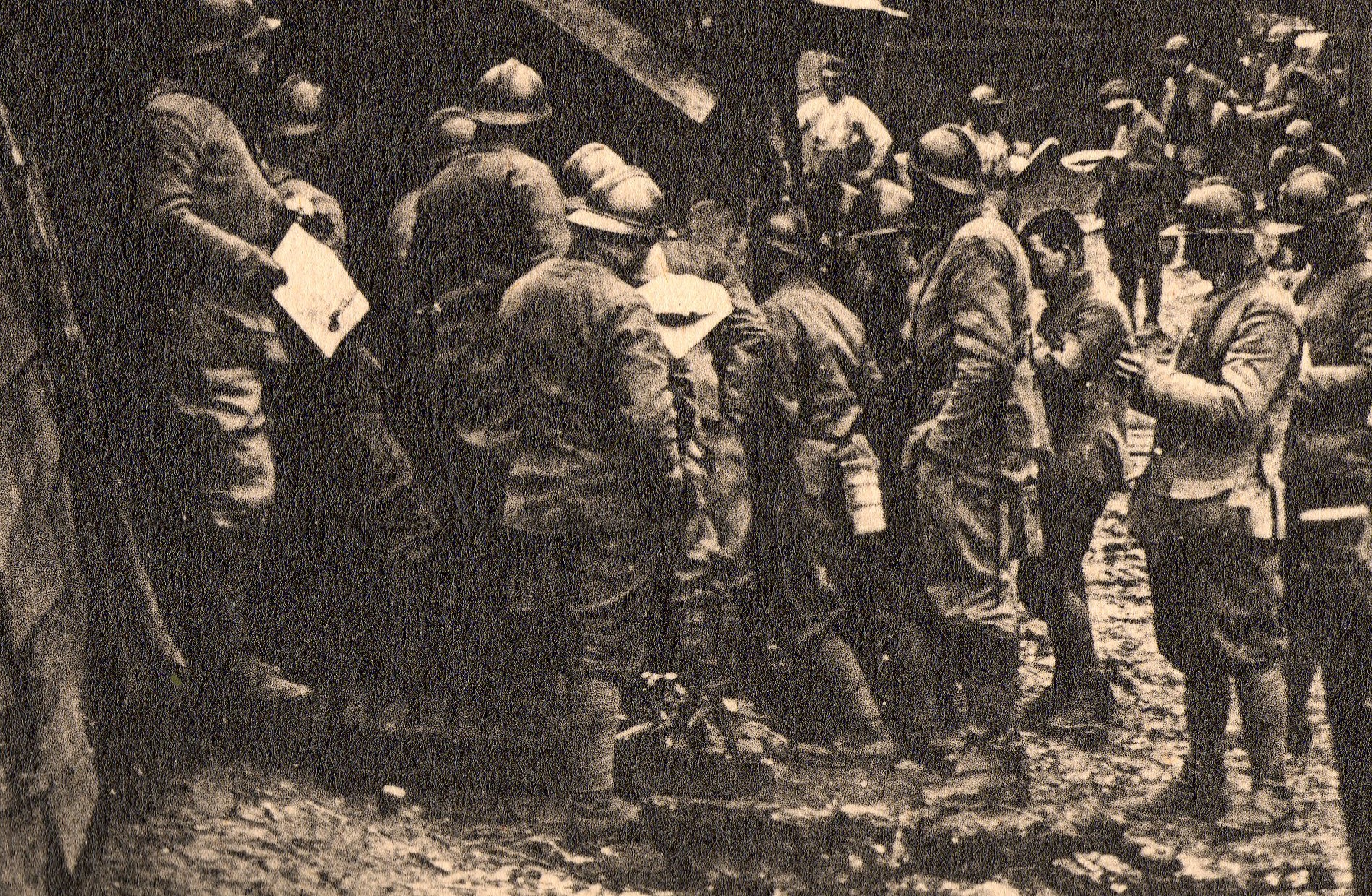
    As I brought out the further figures against the base of the cathedral one can clearly see the enormous stands of sandbags, the piles stacked up twenty feet or so behind the makeshift wooden fence.  IT was some sort of protection for the building, but not muc. 
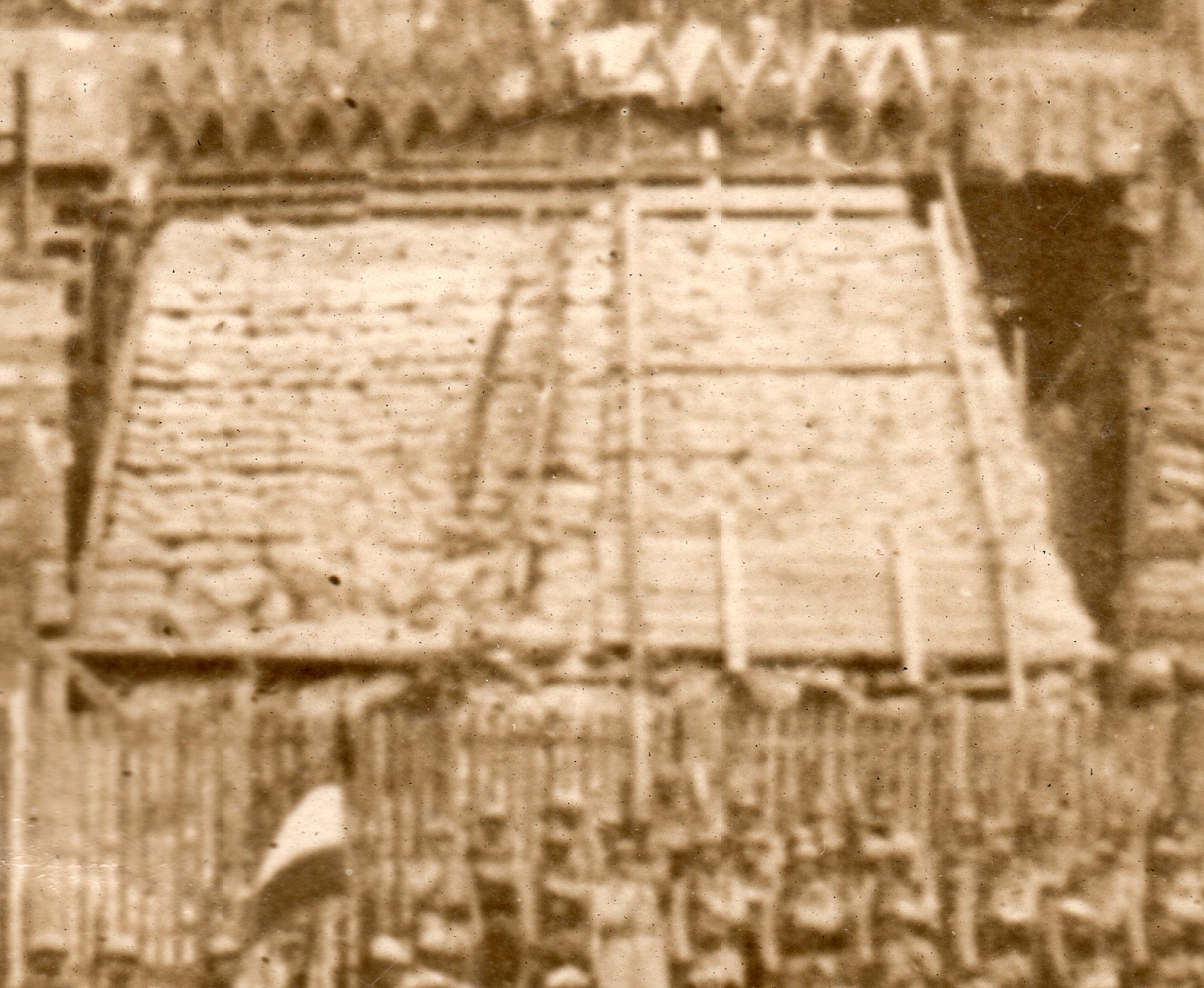
    WWI photograph--spires det074

    This was yet another battle for the city, this one taking place 1550 years or so after the first, the Alemanni defending against the Romans; and then 104 years after the next major encounter, this between Napoleon and a Russian/Prussian force.  The liberating battle (the Battle of Reims, or the Second Battle of the Marne) took place 15 July 1918 to 6 August 1918, and it was a major failure for the German army, and spelled the collapse of the Spring Offensive, opening the door to the end of the war.  There were more than 135,000 Allies killed or wounded in this campaign (including 95,000 french troops), plus another 130,000 German troops.

    The process of victory in front of the wounded church seems exhausting and exhilarating, bu tnot without a good sense of anticipation.
  • WWI Photographs: German POWs, 1918

    JF Ptak Science Books LLC   Post 1266

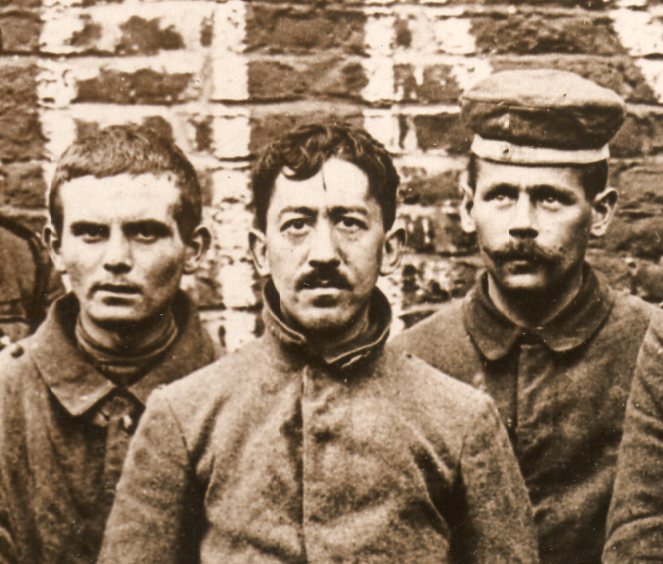
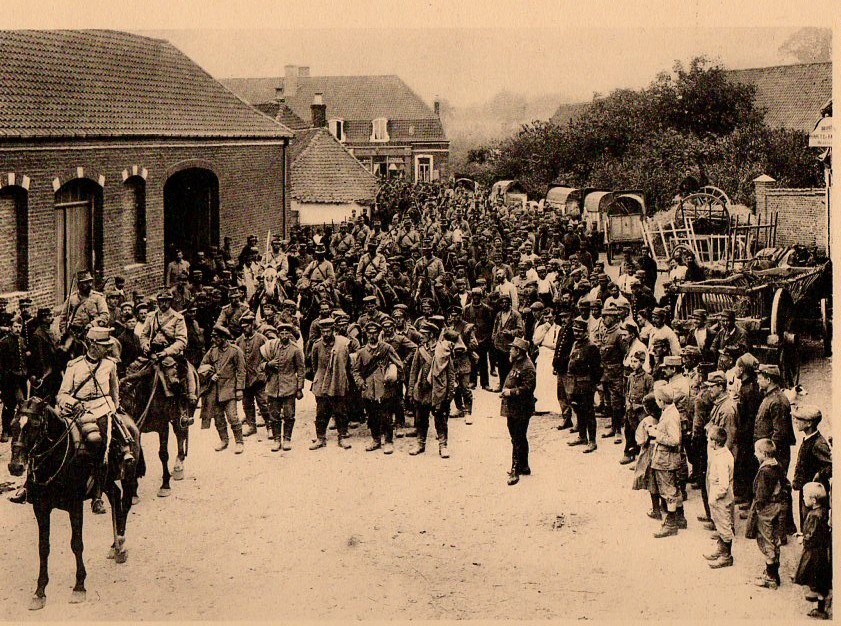
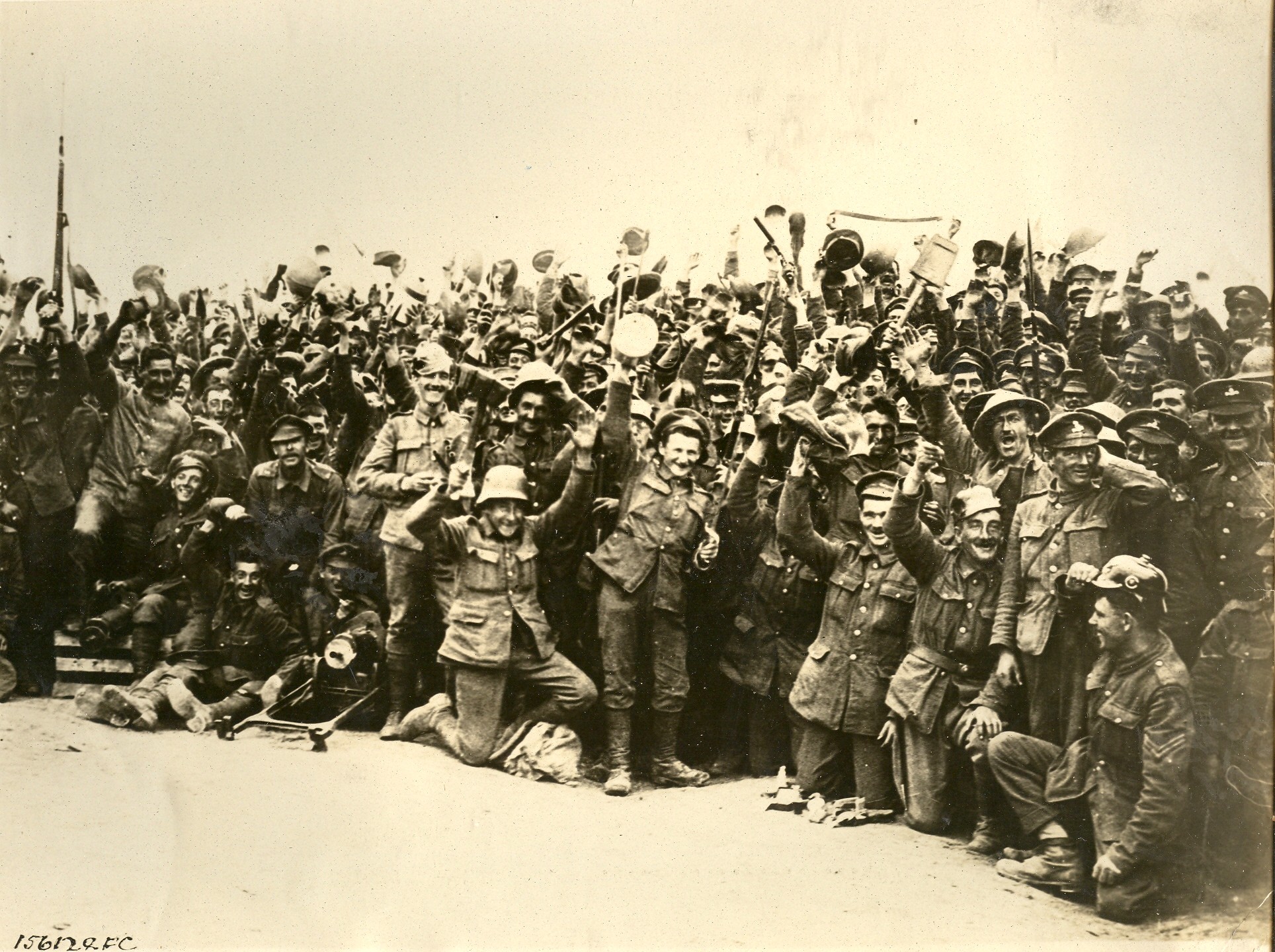
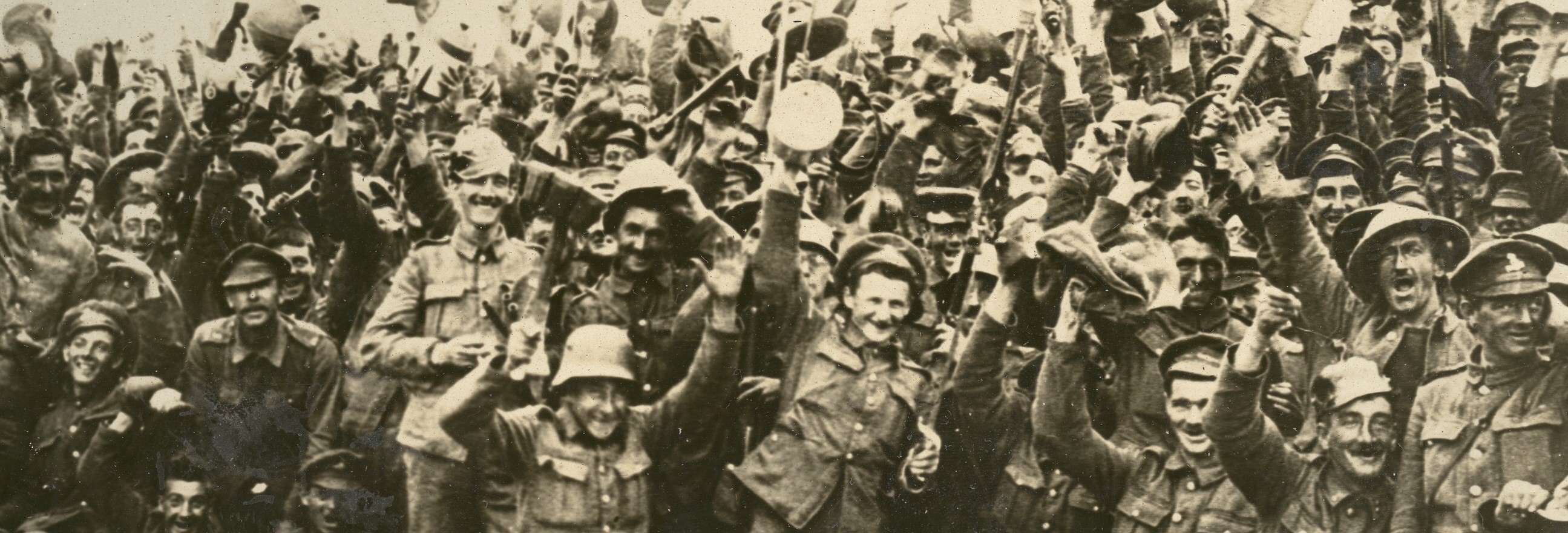
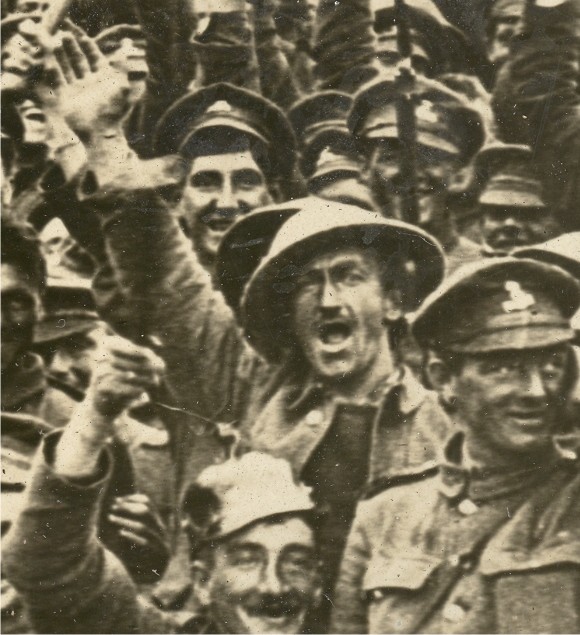
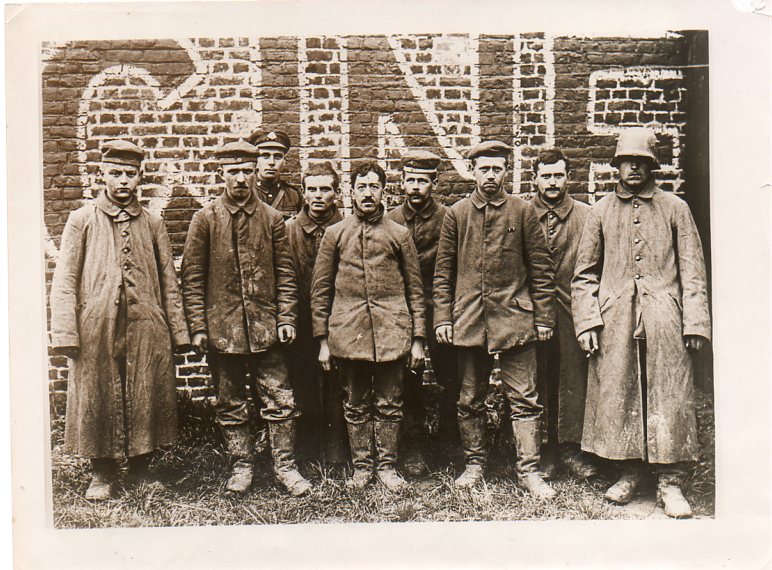
    In the first image here  we are introduced to a small group of captured German soldiers displaying a wide range of emotions over a wide range of faces. In the second image we see German prisoners though not with any helmets,.while lastly is a group of Irish/U.K. soldiers with German soldiers’ helmets with no Germans.

    There were over 8 million soldiers taken prisoner during WWI, that in addition to the 21 million who were wounded and the 9.7 million killed:  38 million.  Plus 6.8 million civilians who were killed: 45 million.  And the numbers for civilians wounded are just, well, not reliable, as they were not really collected, or collectible.  At the end of it all, there were probably between 50 to 75 million soldiers and civilians killed or wounded or taken captive during the war…not including civilians who were killed by the hardships or starvation caused by the conflict.  Big, big numbers. (My post from yesterday looked at the population/percentages of these losses, here)

    Image 1.(Original photograph available at our blog bookstore here.)

    WWI photograph--german prisoners066
    Detail:
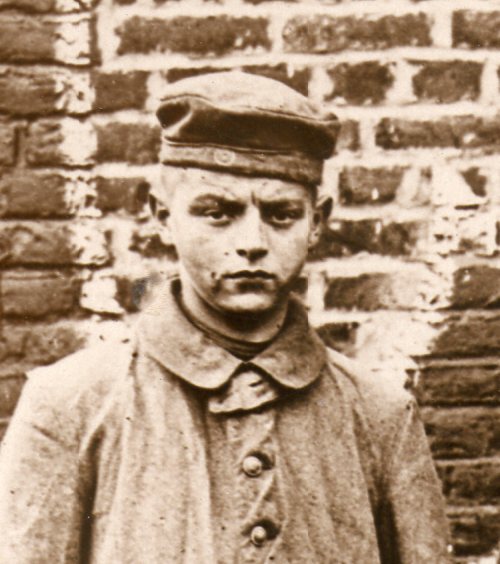
    this shows struggle and age in a face that I reckon to be a mid-teen’s, a child’s face, hardened baby fat.

    WWI photograph--german prisoners boy067

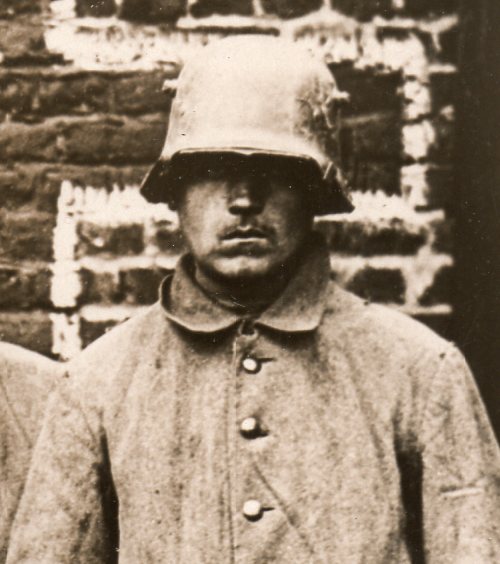
    Detail:the older man isn’t much more so, just beaten, exhaustion.

    WWI photograph--german prisoners old068
    Detail:
    they look defeated and concerned, though the middle guy (who doesn’t seem to quite fit in with the rest) looks as though he may be relieved. Maybe not.

    In any event this is a grim photo–even the captor (Canadian?) looks non-committal.

    WWI photograph--german prisoners middle069

    In contrast is this photograph of uneven emotional display, showing American POWs in Germany in 1917:

    http://upload.wikimedia.org/wikipedia/en/3/37/US_pow.jpg

    Secondly is a photogravure showing a processional of captured German, taken circa. August 1918, and printed in 1919:

      WWI photogravure-prisoners064

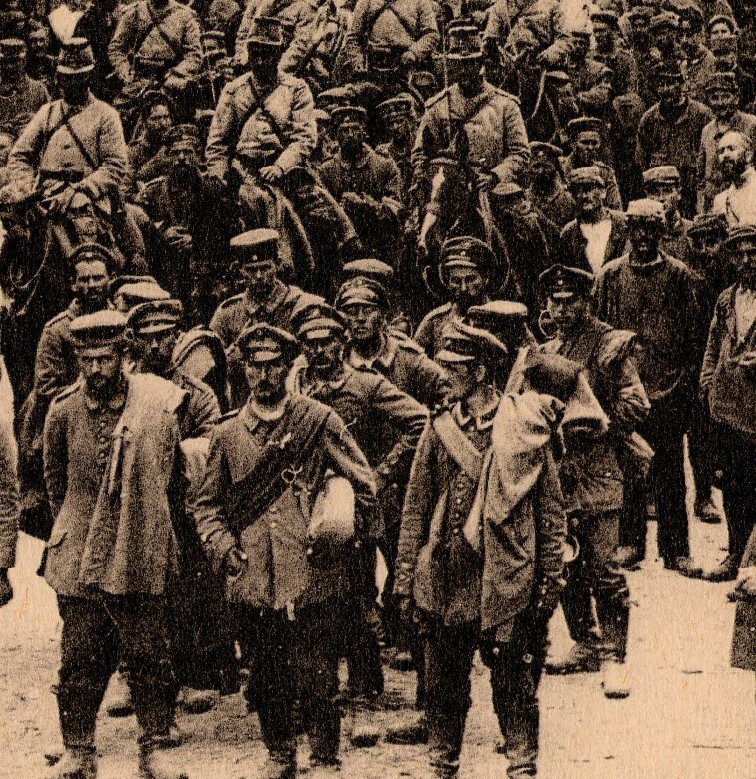
    And the detail:

    WWI photogravure-prisoners det065

    There were of course far greater collections of POWs, as seen in this picture:

    http://www.corbisimages.com/images/67/14344DDD-6DE4-4458-BFAA-FAAC556F4AA1/PG3241.jpg

    The the last photo tells a different story (related more fully in an earlier post on this blog, here), a celebration of victory and survival:

    Blog dec 26 irsh tommies 


     Blog dec 26 irsh tommies det


    Blog dec 26 irsh tommies det2


    ·Posted by :

    ·in:

    —

  • WWI Photographs–the Trenches, 1916-1918

    JF Ptak Science Books  Post 1265

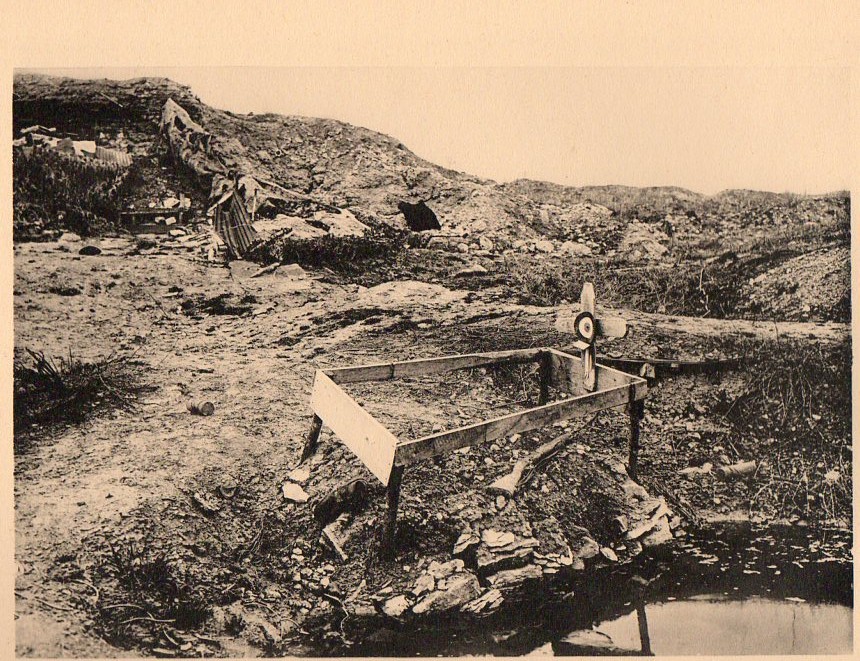
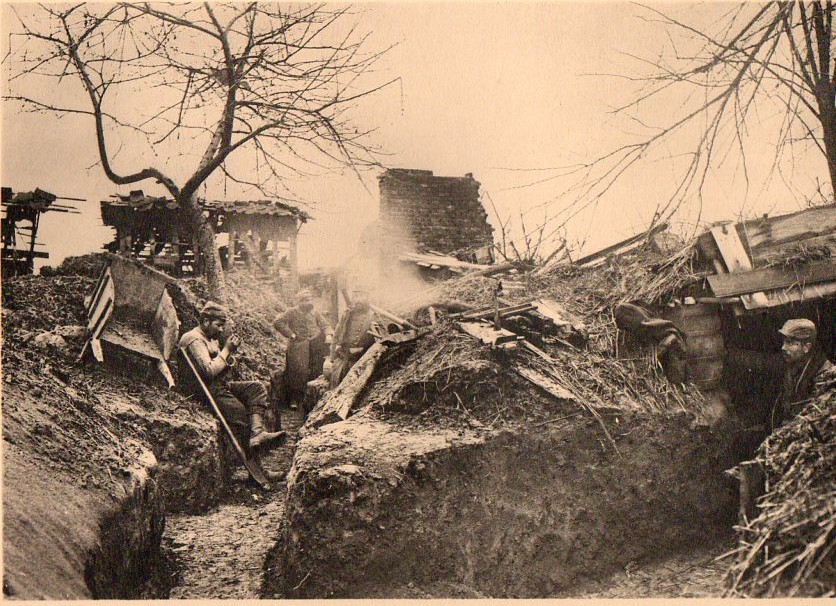
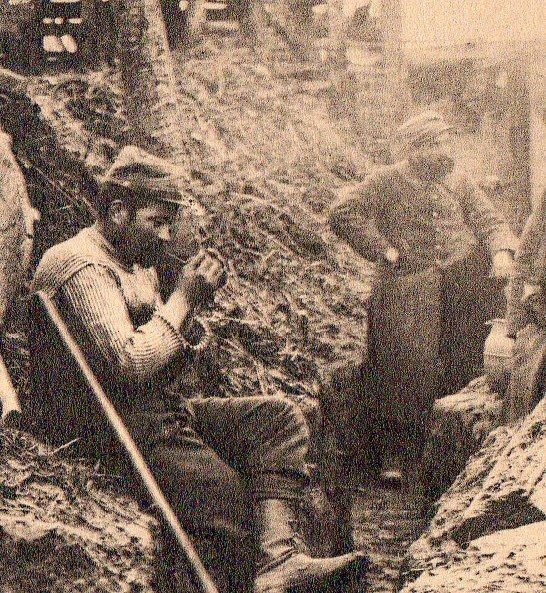
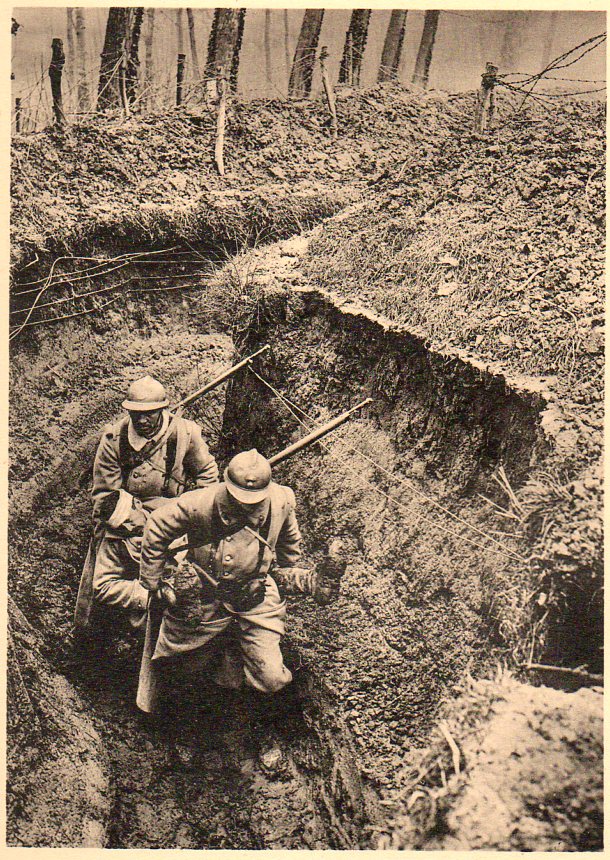
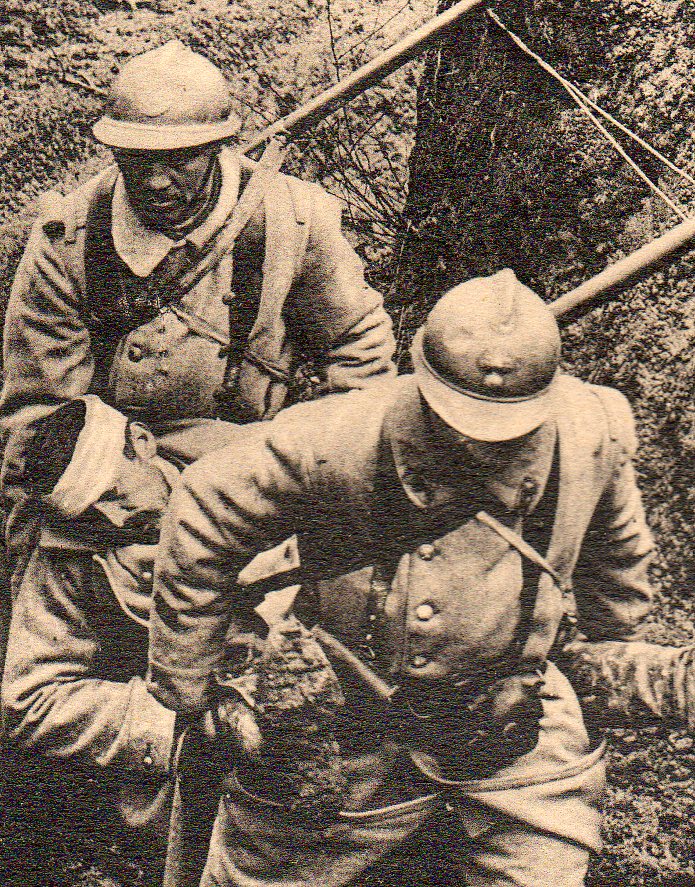
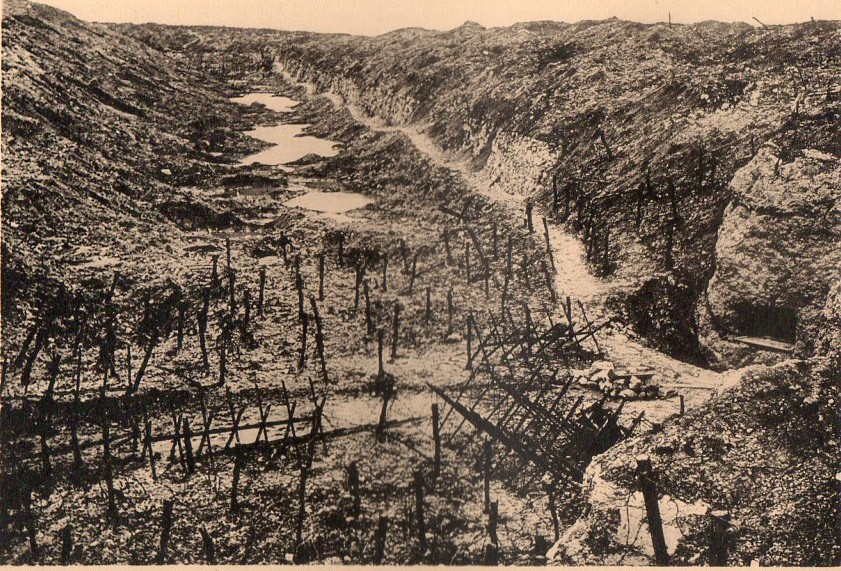
    Perhaps one of the worst inventions in the history of warfare was The Trench. Millions of men were wounded or met their ends while defending one, or attacking one, or being in-between two of them.  Hundreds of thousands of troops spent months charging back and forth between opposing lines, the ground over which they fought made uninhabitable for almost any form of life. 

    Earlier in this blog I wrote about sub-trench warfare--the story of the sappers who would mine underground, underneath the opposing force’s lines,  digging a horizontal hole the end of which would be filled with explosives and detonated, exploding up, destroying the enemy’s trenches. Bad business.  The trenches were bad enough without having to be vigilant against someone tunneling beneath, trying to make you into little pieces. Trenches were mostly cold, dark, miserable, wet, potential disease carriers, poison gas accumulators–and that’s of course before the shooting began.  There were thousands of men–tens of thousands of men, hundreds of thousands–waiting in their trenches, waiting for the other side to try and advance, attack over the well-named no-man’s land, running across open ground in a hail of millions of bullets.

    I’ve collected a few images that are here (and available at our blog bookstore) that give a little flavor of the trenches, and the men in the trenches–though without the scent of the stale water, or the bite of the chill, or the perpetually wet feet, or the cold, or the dysentery, or death’s constant pull and struggle.

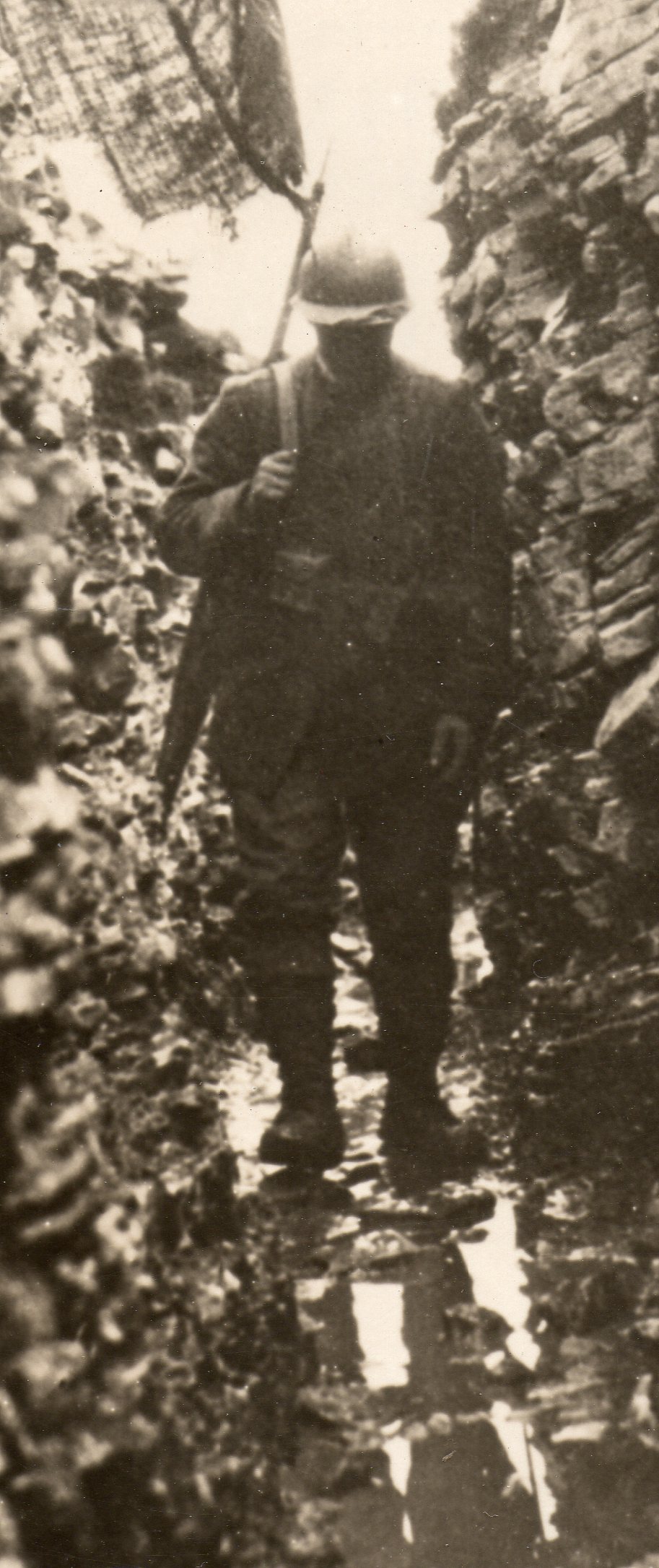
    WWI photo--trench045
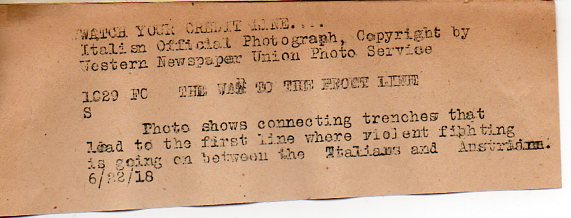
    This is an original photograph made by the Western Newspaper Union Photo Service, as a “British Official Photograph”  (with the “British” part penciled out and replaced by an unknown hand, “Italian”),  The photo agency supplied a caption for the image (that was supposed to have been used by the newspaper or magazine that published the picuture) as follows:

    WWI photo--trench note046

    And the detail:

    WWI photo--trench note detail047

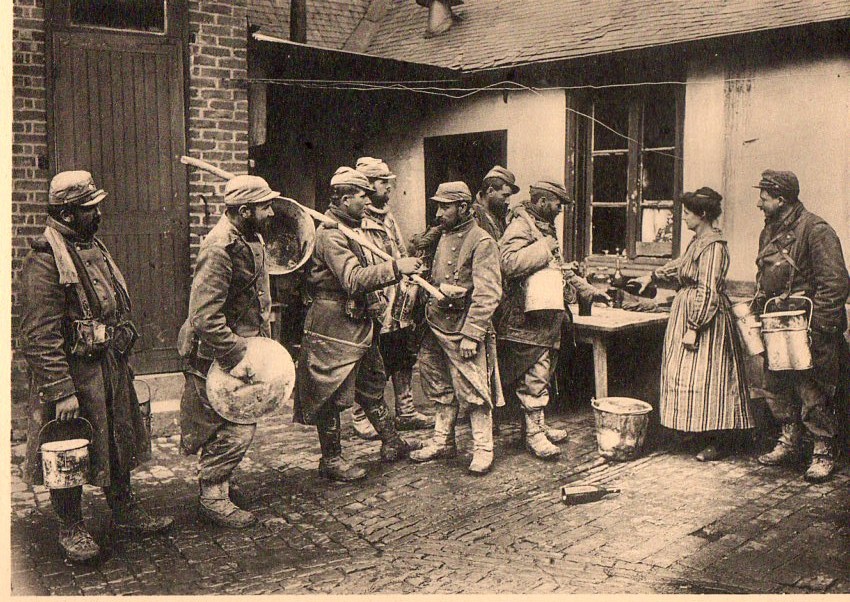
    I’ve also put together a few examples from a collection of exceptional photogravures printed in 1919:

    WWI photogravure--group gettg drnk055

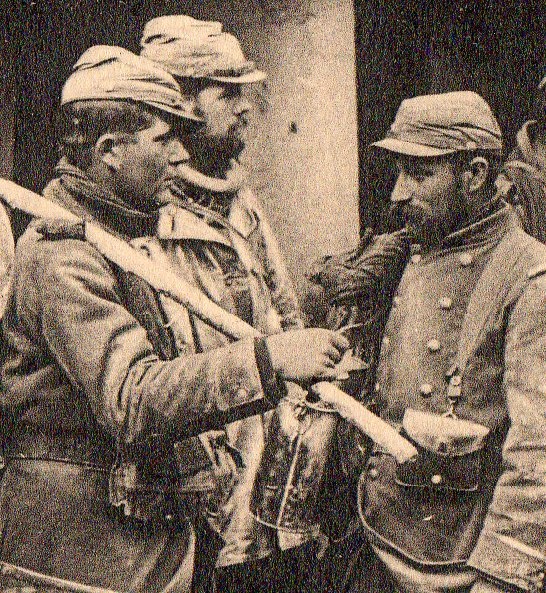
    And the detail:

    WWI photogravure--group gettg drnk det056

    WWI photogravure--soldiers waiting059

    And a detail:

    WWI photogravure--soldiers waiting det060

    And another detail:

    WWI photogravure--soldiers waiting det061

    WWI photogravure--grave054

    WWI photogravure--trench life 058

    And a detail:

    WWI photogravure--trench life det057

    WWI photogravure--trench wounded050

    WWI photogravure--trench wounded det051

      WWI photogravure--trench empty062

      WWI photogravure--bunched group street048

    And the detail:

      WWI photogravure--bunched group street det049


  • WWI Photographs, July 4, 1918–Americans in London

    JF Ptak Science Books   Post 1263

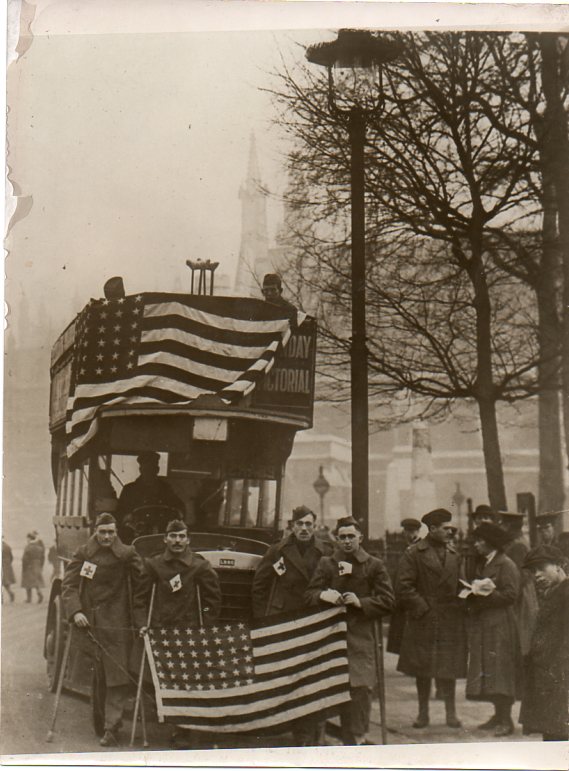
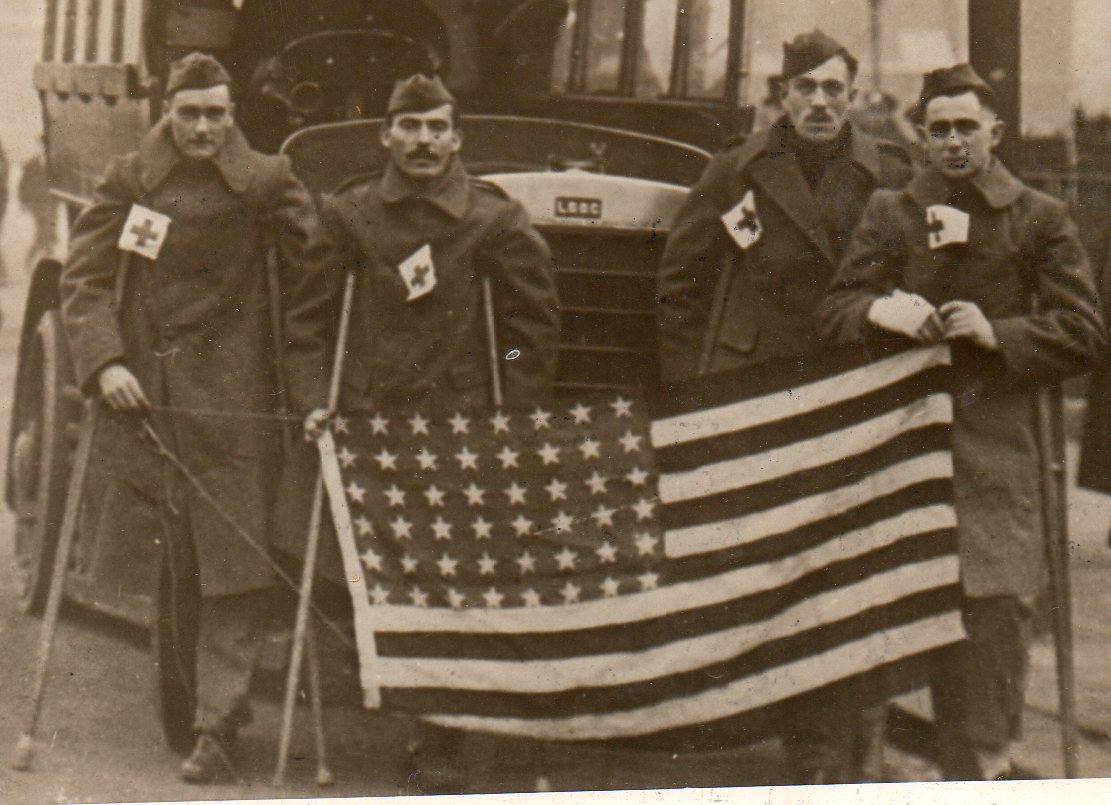
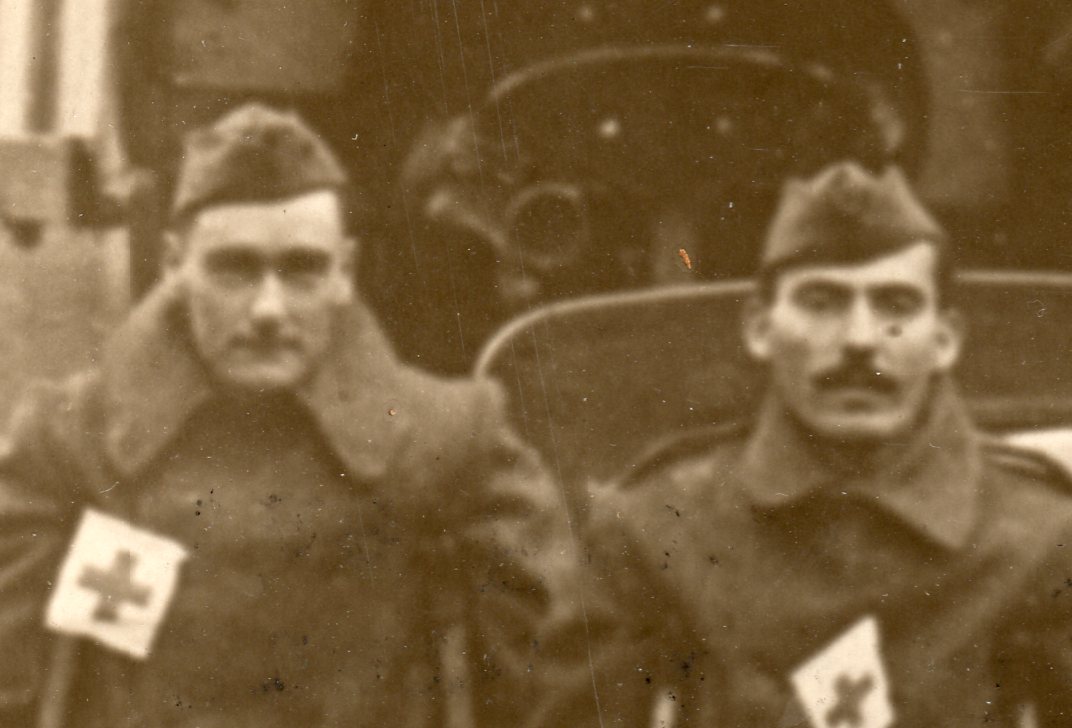
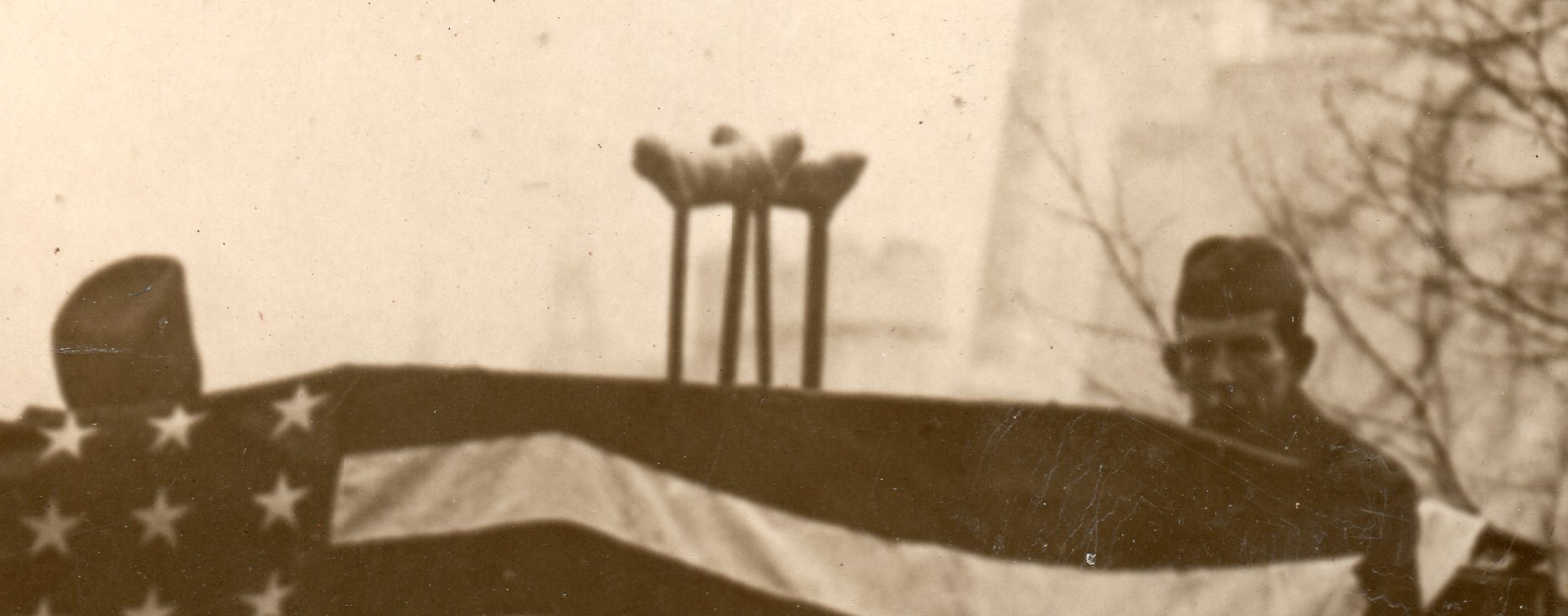
    This image–from a collection that I’ve mentioned previously on this blog–shows a group of wounded-in-action American Doughboys1 recuperating in London on 4 July 1918.  There were at least six of these soldiers aboard this bus, touring, being invited to celebrate their independence day in London, their flag–and a big one at that–draped across the bow of the upper deck of the bus. 

    There were be about 204,000 American soldiers wounded and 116,500 killed during WWI, the end of which was in sight at this point, just five months away.  These were some of the survivors of the American share of war casualties.  Almost all other nations fared far worse (see below)

    WwI--photos--flags london030

    (THe original photograph is available at our here.)

    WwI--photos--flags london b031
    WwI--photos--flags london c032
    WwI--photos--flags london e033

     The U.S. lost .13%  of its population to casualties (killed and wounded) during the war.  New Zealand 18,000/41,312 killed/wounded amounted to 1.6% of its population.  The U.K. lost 2.19% (964,000/1,663,000), Italy was 3.48% (650,000/953,000 plus 650,000 civilian casualties), while France suffered a 4.29% (1.4 million/4.27 mil) blow of its total population to war.  Things were worse on the other side:  Germany 3.82% (2 mil/2.4 mil plus 426,000 civilian deaths, and the Ottoman Empire 12% (400,000/771,000 plus 2.1 million civilian deaths.   Worst of all was the Ally  Serbia, suffering a catastrophic 16% loss of its population to war, including 275,000/725,000 plus 426,000 civilian casualties.  As gruesome as the numbers were, the Americans felt only a small percentage of the total sting of war–by 11 November, more than 21 million soldiers would have been wounded, with 9.7 million soldiers and 6.8 million civilians killed (for a total of 16.4 million).  It was an enormous price
    Notes

    1.  The origin of the term “Doughboy” is unclear, or varied, or rich, but it is at least pretty oldm beginning around the time of the Mexican American War in 1846-1848–evidently when the soldiers marched through dry, tough terrain they wound up being covered by earth with the color of dough.  Doughboy.

    ·Posted by :

    ·in:

    — —

  • Cold, Cramped, in a Ditch and Under Fire: France, 1918

    JF Ptak Science Books   An earlier post (#1308) expanded

    WWI photo--trench note detail047

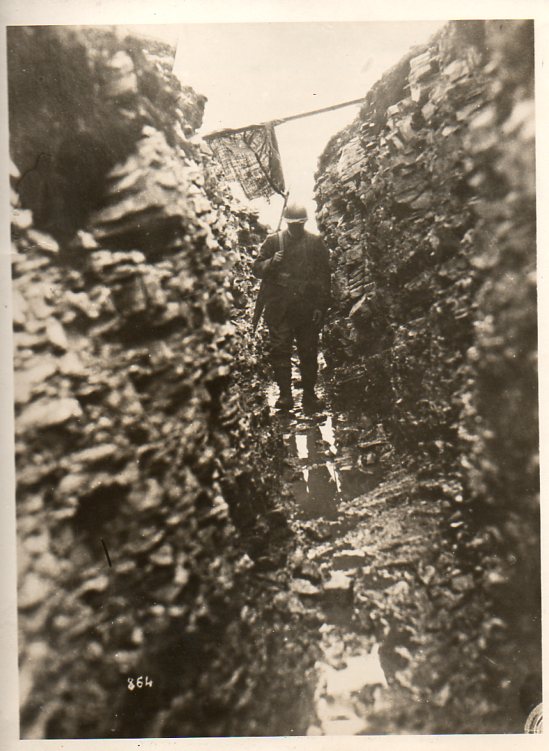
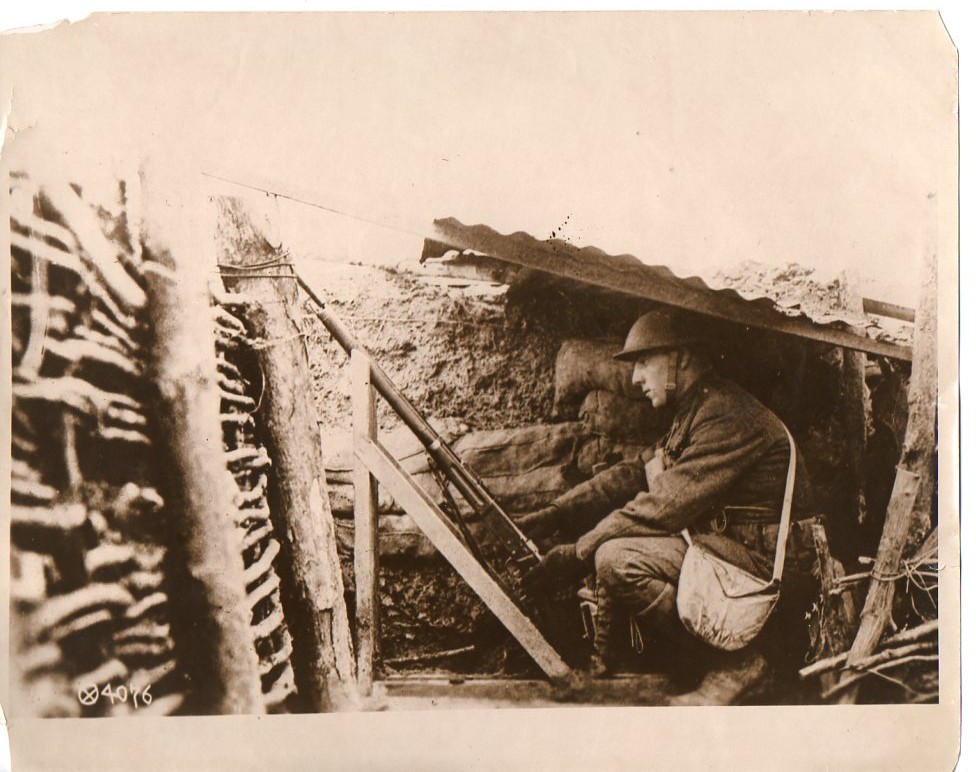
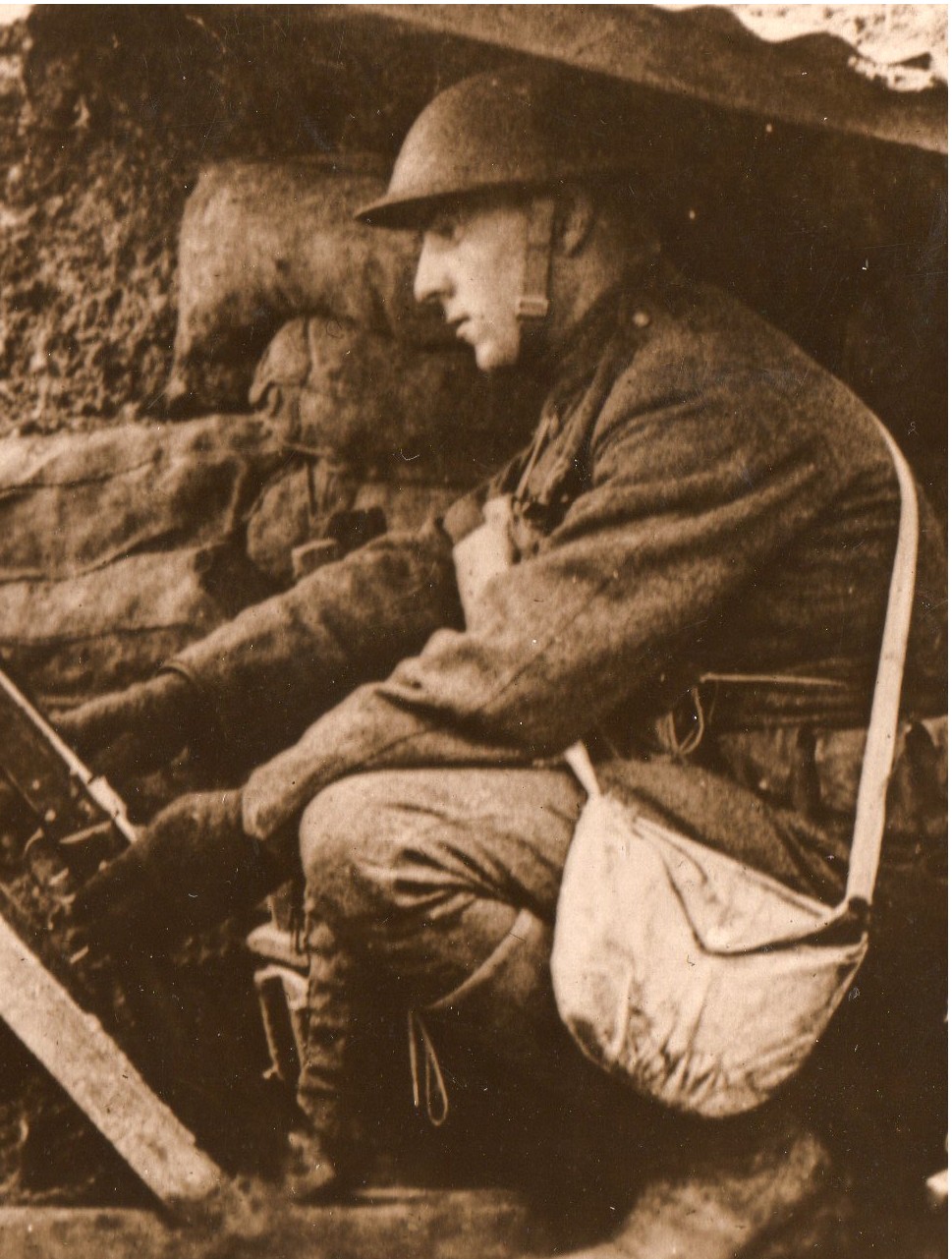
    If I was in a time machine, stepping back through a wormhole and into another segment of another reality, one of the places I’d least want to step into would be a cramped, cold, wet, dirty and dangerous place.  Like this American soldier, waiting for a German attack to begin so that he could launch a warning flare to the rest of the soldiers, hunkered down in a cold wet place in the front line along the Lorraine section in France, mid-way through 1918 and almost all-the-way-through WWI.  

    And even though this soldier looks far too clean, and his uniform far too spotless and pressed-ish, and his calf-skin gloves too calf-skinny, and his duffle too unmarred, and his helmet chinstrap too perfect for this man to actually have been fighting, the sensation of cold/bad/dangerous still gets through the whitewash.

    World War I photos--Cold in trench306

    There are of course much worse places to be, but I think if I limited my time travel to include what I would be on the other end–a U.S. soldier–one of the places at te top of te list would be a generic trench in the front line of a battle late in the fighting in WWI.  Sitting there, watchful, waiting for the advance of thousands of German troops, charging over a ruined and sulfurous landscape, waiting for the ruination to begin as it churned its way through  No Man’s Land.  Of course it could be worse–one could be going “over the top”, charging across the Desolate Place towards a line of thousands of entrenched soldiers all of whom were trying to kill. you. 

    World War I photos--Cold in trench307

    Or of course you could be in a blue coat marching in a straight line towards a series of long lines of men in red coats, everyone getting ready to get close enough to discharge an 69-calibre (or thereabouts) ball across an open plane of hundreds of feet into the ranks of the opponent.  Or being in a Marine uniform in Tarawa, in the Gilberts, in November 1943. Or being in Butternut, crossing the Emmitsburg Road on the way up Cemetery Ridge on 3 July, or being in any uniform whatsoever at Antietam.

    The places and times get worse I think once you allow yourself to be any other solider in any other uniform.  A French soldier, for example, sitting in a similar spot in the same battle along a front line as our American Doughboy, above, would’ve been worse.  A Belgian soldier virtually anywhere also would have fared worse, statistically, than just about anyone else in WWI.  Being a newly-minted soldier wearing the uniform of the Soviet Socialist Republics in the Summer of 1941 would probably have been half-a-death-sentence.  Of course the list goes on, and on. 
    Perhaps one of the worst inventions in the history of warfare was The Trench. Millions of men were wounded or met their ends while defending one, or attacking one, or being in-between two of them.  Hundreds of thousands of troops spent months charging back and forth between opposing lines, the ground over which they fought made uninhabitable for almost any form of life. Cold, wet, bad.

    WWI photo--trench045
    Here’s another original photograph made by the Western Newspaper Union Photo Service, as a “British Official Photograph”  (with the “British” part penciled out and replaced by an unknown hand, “Italian”),  The photo agency supplied a caption for the image (that was supposed to have been used by the newspaper or magazine that published the picture) as follows:

    WWI photo--trench note046

    And the detail:

    WWI photo--trench note detail047


    ·Posted by :

    ·in:

    — —

  • What a Fascist Really, Really Is: Defining Things, June 1945

    JF Ptak Science Books   Post

    In the history of words and the history of writing them, the history of writing down what words mean came relatively late in the word game.  The first dictionary for the English language is difficult to establish–it wasn’t Dr. Johnson’s 1746 effort, as fabulous as it was.  There were more than a hundred earlier efforts, the earliest of which may be Robert Cowdry’s A Table Alphabeticall… as the first English dictionary, which was written in 1604. (Its more easy to determine the first American dictionary, Dr. Webster’s, 1828 .) It may be that dictionaries and assemblies of rogue/thieves language appeared well before Johnson, by perhaps as much as 175 years, providing the good readers and listeners in England with a ready tool for understanding “non-standard” (slang) words of the English language (with A New Dictionary of the Terms Ancient and Modern of the Canting Crew, by “B.E.”, being the best known of these early works, published in 1698.)

     It is interesting to me that in addition to Johnson et al another  writer–or rather set of writers–were responsible for the first Johnsonian-first dictionary in German, the  Deutsches Wörterbuch by the Brothers Grimm.  These are good examples of modernity, though there are earlier examples for other languages–Petrus de Alingio’s manuscript of 1286 and the Catholicon as the first printed alphabetical listing of Latin words appeared very shortly after Gutenberg’s Bible did on the same press.  But then these were both many centuries into the use of the language.

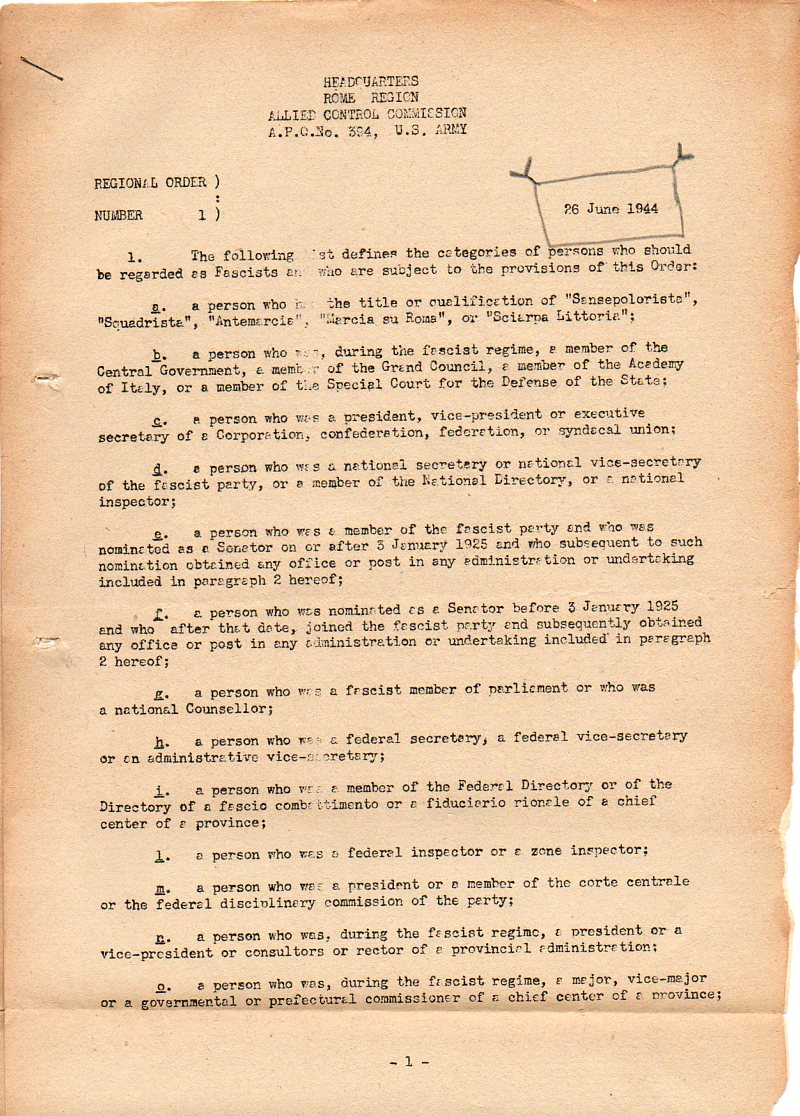
    WWII--Italy Fascist a042

    And this just to say how much I like the road to words–especially when they come from unexpected places. One fine example of this is the directive below, issued by the headquarters of th Allied Control Commission (“APO No 394″) in Rome in the summer of 1944.  (This would actually be the American arm of the ACC, which was commission set up by the Allied Powers to deal with the administration of defeated countries at the end of the war.  Three weeks after D-Day the end of the war was in sight (Bastogne and Co. not withstanding), though far more so in Italy than just about anywhere else, and so the implementation of governing and occupying plans needed to be established.  One of the primary features here was to ensure that the old Fascists not be included in the new Italian governments (along the lines of denazification in Germany, which had a more laissez-faire approach to defining Nazis, especially wealthy and useful ones), and the primary issue in finding and excluding Fascists was to define what was meant by “fascist”1.  These are those working guidelines, at least on 25 June 1944. 

    Notes

    1. The first use of “fascism” in English reported by the Oxford English Dictionaries occurs in 1921:
    1921    19th Cent. July 148   The Fascismo was born in the provinces, where the extremistic menace was stronger.      

    Other interesting reports of the usage of the word continue in the OED:

    1922    Q. Rev. Jan. 148   A section of the Press..now veered completely round to the cause of Fascism. The Fascist terror increased in intensity.
    1923    Contemp. Rev. Jan. 44   We do not want Fascismo in this country.
    1923    Contemp. Rev. Nov. 557   Fascism in Germany will never be more than one of several factors.
    1925    Weekly Westm. Gaz. 10 Jan. 320/2   The outrages which have been associated with Fascism have gradually alienated much of the support which it won two years ago.
    1934    tr. K. Heiden’s National Socialism xvii. 354   The electoral victories all over Europe with which the Labour Parties have replied to German Fascism.
    1936    Discovery Dec. 378/1,   I have strongly criticised modern education and the methods of handling youth generally as inculcating excessive respect for authority and thereby conducing to the growth of Fascism.
    1939    A. Cobban Dictatorship v. 124   In March 1919..Fascism was still..a revolutionary and socialist movement, hostile to the monarchy, to finance, and to parliamentary government, demanding social reform and workers’ control, but separated from the other branches of the socialist movement by its intense nationalism.
       
    And the definition of the word “fascist” from the same year, 1921:
     “One of a body of Italian nationalists, which was organized in 1919 to oppose communism in Italy, and, as the partito nazionale fascista, under the leadership of Benito Mussolini (1883–1945), controlled that country from 1922 to 1943; also transf. applied to the members of similar organizations in other countries. Also, a person having Fascist sympathies or convictions; (loosely) a person of right-wing authoritarian views. Hence as adj., of, pertaining to, or characteristic of Fascism or Fascists…”


  • Who Invented Walking? The Indoor Air Show, Empire Air Day, 1938

    JF Ptak Science Books  Post 1307

    I wonder who invented walking? 

    It was certainly one of the first inventions made by our deepest, oldest human cousins, walking,.  And it was probably invented in Africa. 

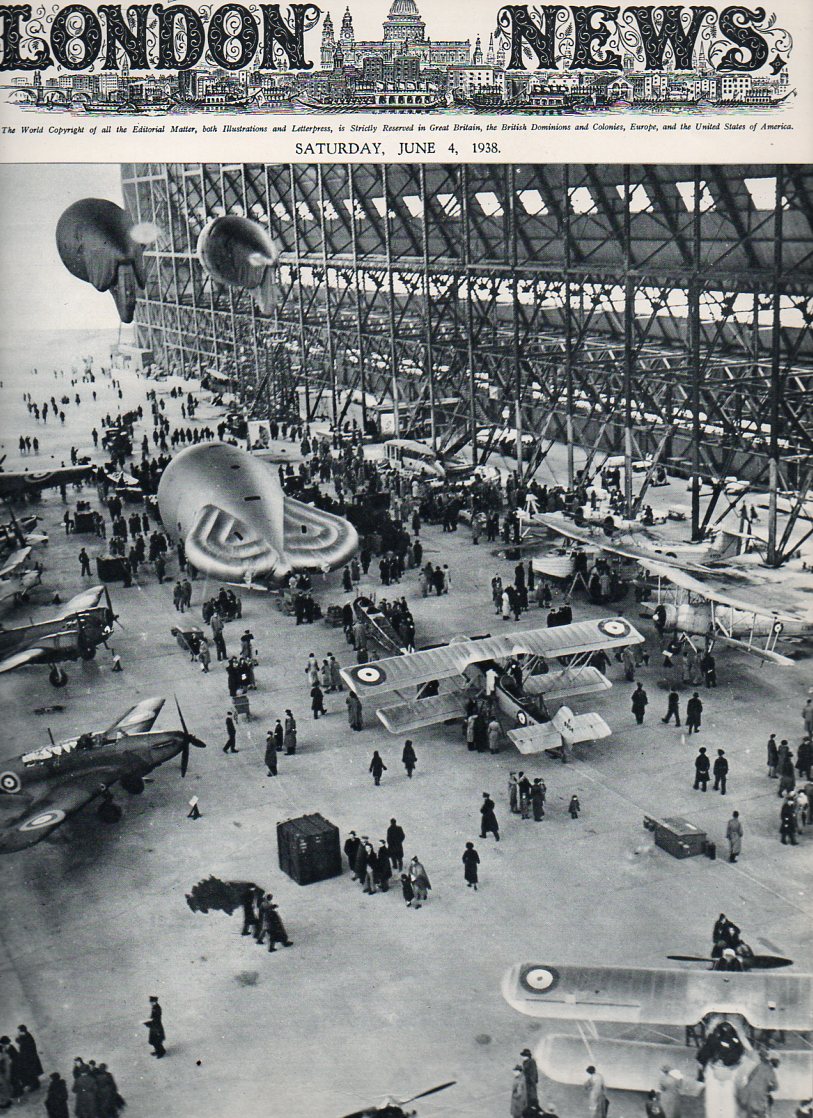
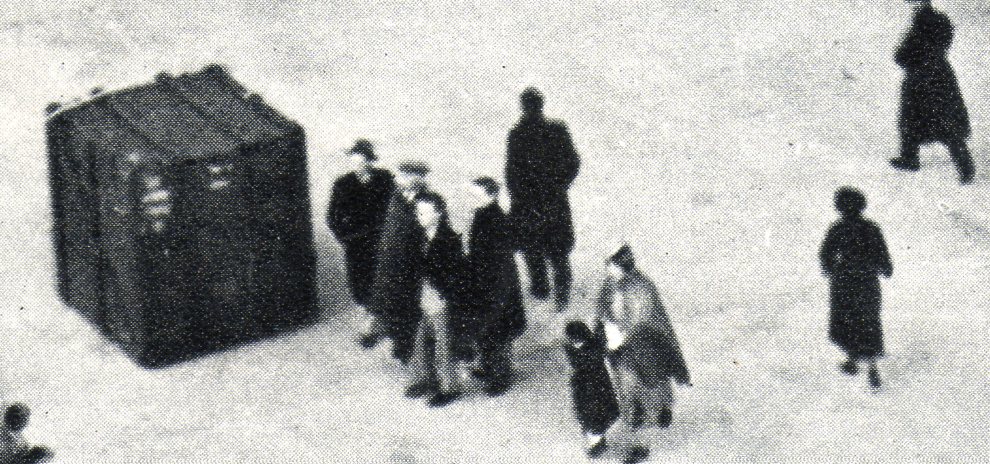
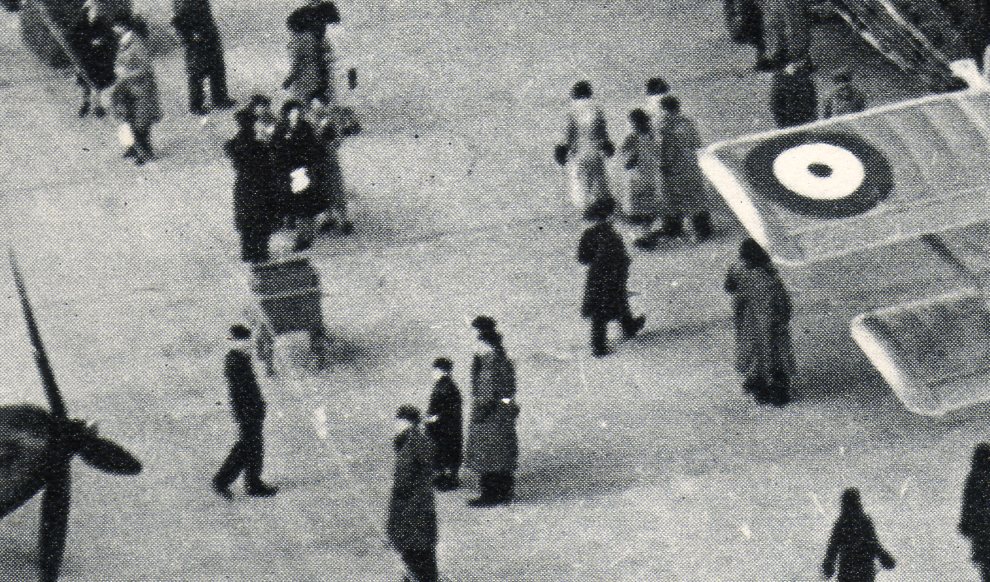
    This thought comes to mind looking at this great photo of the Empire Air Day, being celebrated in England in May 1938.  All of these folks walking around this enormous dirigible hangar (a form of flight that had left the RAF field of interest just a few years before, mostly forever) looking at the best of what was in the air.  The crowd actually looks a little thin to me–were people already getting a little used to having such magnificent things flying overhead, even just 30 years or so into the history of heavier-than-air flight?  It makes me wonder what will be remembered of the earliest days of flying 10,000 years from now.  The answer to that question may be as meaningless as the question I just asked above. 


    Air show-- cvr301

    (This image is available for purchase via our blog bookstore, here.)

    Air show-- cvr b302

    Air show-- cvr b303

    It is interesting to note the barrage balloons (three of which are shown here). The Nazis had only recently admitted that they had an air force, and of course by the middle of 1938 it was a considerable thing.  Hitler had shown his fangs of course and there was war in the air.  Wr doesn’t smell like a desert bloom.  But the Balloons were there, as were the rest of the aircraft, to show the hearts and minds at home that the RAF was a strong arm of the military establishment, and that the balloons were ready to be sent aloft to help protect London (at least) from the possibility of German/Nazi attack. 

    Here are some of the aircraft that were supposed to have been displayed: Armstrong Whitworth Whitley; Armsrong Whitworth Ensign -transport; Bristol Blenheim –  medium bomber; De Havilland Albatross; Fairey Battle – medium bombe; Gloster Gladiator – torpedo bomber; Handley Page Harrow –  bomber; Hawker Hurricane -; Shorts Empire Flying Boat; Vickers Wellesley – bomber; Vickers Wellesley – bomber; Vickers Supermarine Spitfire –  fighter Westland Lysander.


  • After Liberation–Rare Interviews Relating to the Jewish People In Germany, November 1945

    JF Ptak Science Books  Post 1260

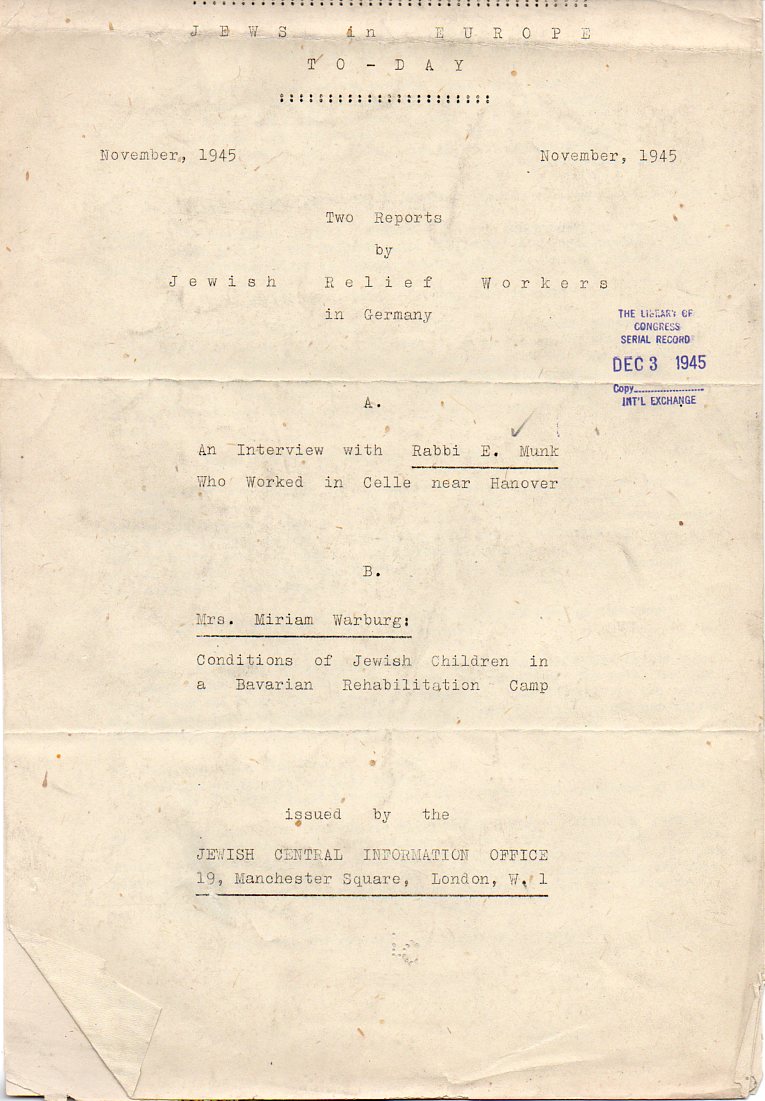
    Jews in Europe Today. Two reports by Jewish Relief Workers in Germany, published in  London by the Jewish Central Information Center at war’s end,1945, is a difficult document on the condition of Jewish Holocaust survivors in Germany right at the end of the war, October and November 1945.  The two reports comprising the whole: (1.) Interview with Rabbi E. Munk Who Worked in Celle Near Hanover, and  (2.) Mrs. Miriam Warburg, Conditions of Jewish Children in a Bavarian Rehabilitation Camp.

    Jews in europe today a015 This rare document–I can find no copies in libraries worldwide, (according to RLIN, BMC, CARL, Marchive, the NUC and the massive WorldCat)– presents interviews with people who were on hand doing relief work right after the concentration camps were liberated and right at the beginnings of helping (or simply housing in many cases) the many displaced, newly-liberated people.  (There were some 6 million displaced persons at the beginning of the peace, including a (very) estimated 200,000 Jews.)     

    This document is a small insight into the conditions of the Jews in October/November 1945, and which is also I think unpublished.  It was still an enormously difficult tome for the Jews–even though liberated, many thousands were still dying due to their treatment at the hands of the Nazis. For example, when Bergen-Belsen was liberated, there were some 60,000 Jewish survivors, but by the end of the first two weeks more than 9,000 of that number had died. In addition to continuing medical problems there were also high tides of anti-Semitism that ran through many of the DP camps–many of which received people by nationalities and not by religion, so there were continuing problems for Polish Jews who were placed in general Polish camps and who suffered from anti-Semitism there. 

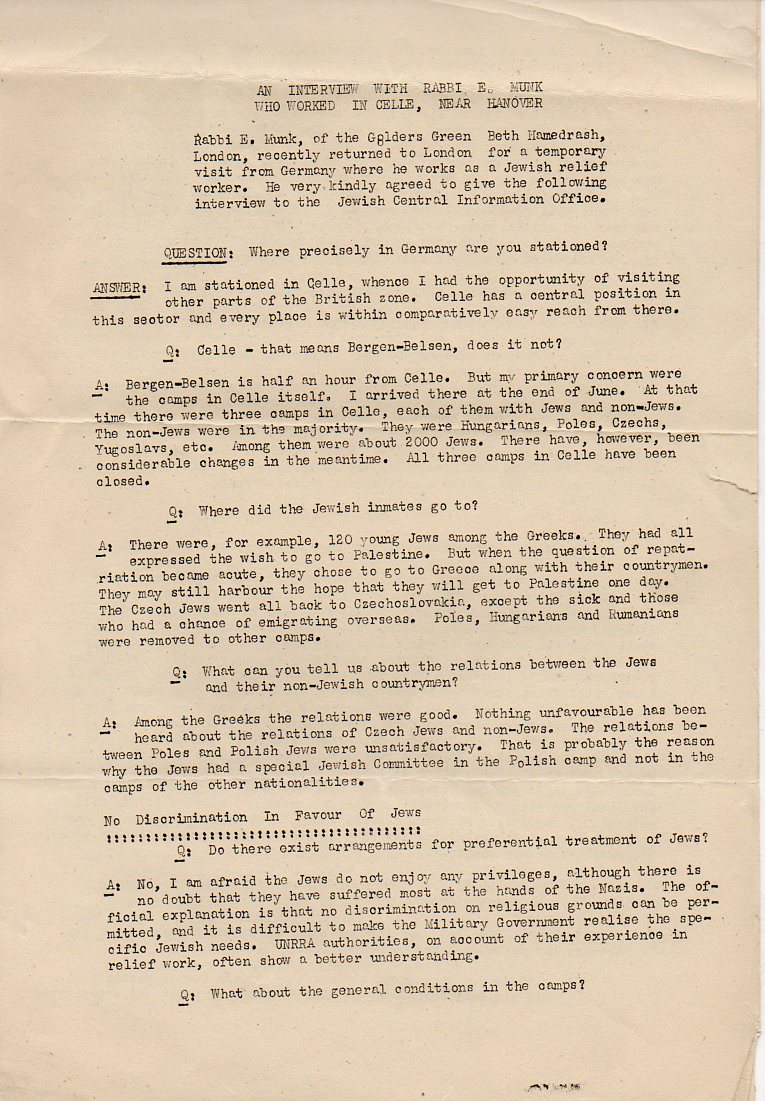
    Rabbi E(lie) Munk of Golders Green Beth Hamedrash, London, contributed his report from a relief trip to Germany and was interviewed by the Jewish Central Information Office. Munk was in Celle, near Hanover, and attended three displaced person camps in the vicinity of the Bergen Belsen concentration camp (with his remarks occupying pages one through three of the document). He reported on the numbers of people in the camps as well as the relations between nationalities and Jews within the camps. For example, he says that the relations were good between Jews and Greeks, but “the relations between Poles and Polish Jews were unsatisfactory”. Regarding the question of discrimination in favor of the Jews, Munk stated that “the Jews do not enjoy any privileges, although there is no doubt that they have suffered the most at the hands of the Nazis”. He found the general conditions within the camps “to be generally appalling…many of the inmates have lost their will power …all they want to do is go to Palestine…”

    On the question of German Jews, Munk reports that “there were no German Jews in the camps of the British zone which I visited…but that there were some Jewish communities, although most consisted of ‘mixed marriages and half-Jews’”. He continues: “on the whole, I am afraid, we have to accept the fact that the overwhelming majority of the German Jews have ceased to exist. The rest are a broken people”.

    Munk was questioned on  the German people’s attitude towards the Jews, stating that “I don’t think that there is any wide-spread feeling of guilt with regard to what had been done to the Jews…anti-Semitism is forbidden, but expressions of sympathy are also wanting…”. He also went on to say that the feelings of the refugees to go to Palestine was strong and genuine.

    The remarks of (the Englishwoman) Mrs. M(iriam) Warburg occupy page four through twelve, and gathered  under the title “Conditions of Jewish Children in a Bavarian Rehabilitation camp”, at  Froehrewald, and dated September, 1945. It is ironic that this camp was located on a “housing estate” of I.G. Farben, producer of integral chemicals to the Nazi war effort and also o fcourse manufacturers of Zyklon-B.  She too refers to the refugees in the rehabilitation camps as “inmates”, and states that the Jews are still treated like prisoners, even when being “closely guarded” by American soldiers, which “the Jews resent very much…they are still prisoners, are not allowed to move about freely, and are punished daily for trespassing….”   

    These are difficult documents to read but should and must be witnessed.

    (See the blog’s bookstore for purchasing the original.)

    Jews in europe today b016

    ·Posted by :

    ·in:

    —

  • Needles and Threads; Sewing in Battle, 1918.

    JF Ptak Science Books   Post 1307

    World War I photos--sewing in field297

    World War I photos--sewing in field298
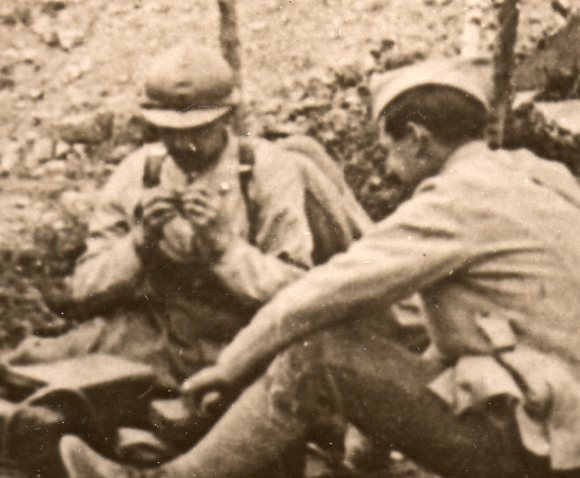
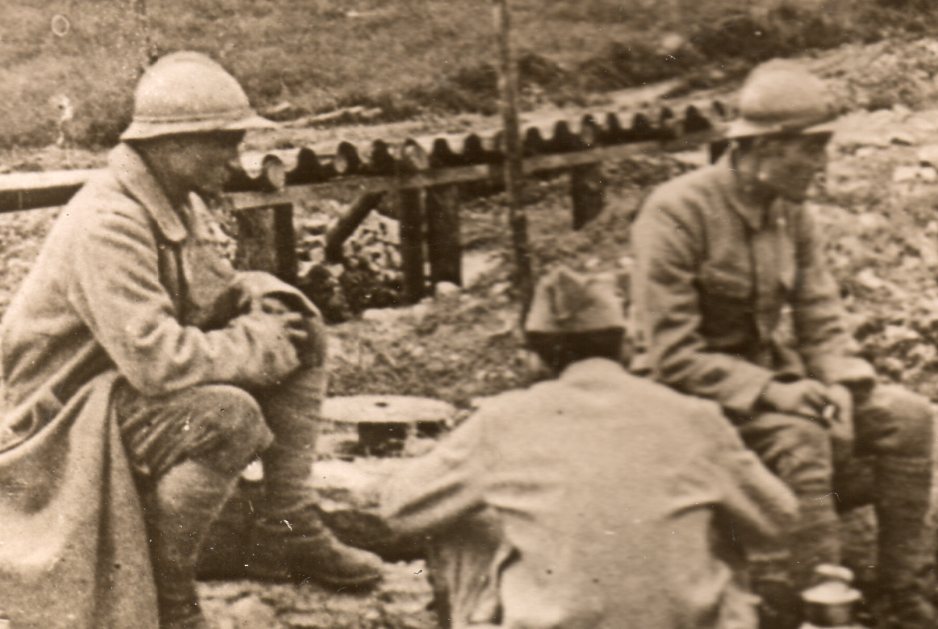
    This fantastic photograph (available for purchase from our blog blookstore) calls to mind the importance of the little things of battle–dry socks, headgear, water, food, scissors.  And of course a good coat in the winter–a good coat that can be kept closed to allow the body to stay warm, or dry.  I mentioned in a post here just yesterday that it was a small thing that may have led to the demise of Napoleon’s army in Russia in 1812–the buttons on the overcoats of the soldiers were made of tin, and as tin becomes brittle in severe cold, it is conceivable that the buttons failed and therefore allowed the jackets to blow open much more easily than normal.  Little change that has an enormous impact.  

    World War I photos--sewing in field299

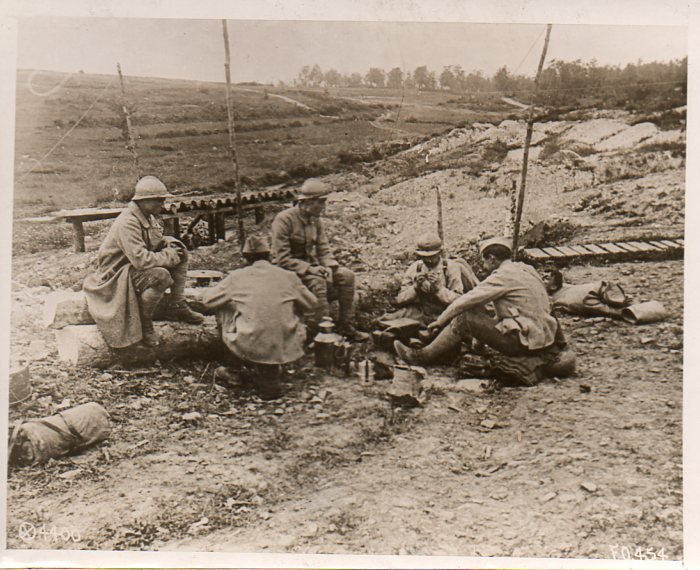
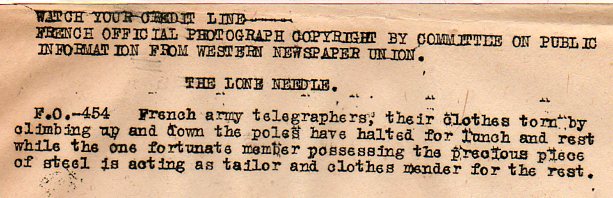
    This photograph–an official French photo published by the Western Newspaper Union in November 1918–shows a group of French telegraphic soldiers, taking a break, and mending their clothes.  The original text for the photograph (below) points out that their uniforms were torn and made shabby by continuously running themselves up an down telegraph poles.  It is important to keep yourself fit and fed and your uniform in good order, so they calmly awaited the repair of their uniforms y the one man with a needle and thread. 

    World War I photos--sewing in field txt300


    ·Posted by :

    ·in:

    —

  • Polish Concentration Camps for Russians, 1920

    JF Ptak Science Books  Post 1255

    The name of the concentration camp comes to us from the (Second) Boer War, when the British imprisoned the Boers in what had first been described as refugees camps, and then in 1900/01 termed “concentration camps”.  They were hardly anything more than prisons, for men, women and children, entire families, communities.  These were the people who had escaped the systematic and revolting scorched earth policy initiated by Field Marshall Kitchener (who was in command of events after 29 November 1900), where the Boers were simply hunted and killed, or if not killed, then imprisoned; farms were destroyed, towns torched, livestock killed.  In general, the country of the Boers (all of whom were seen as guerrillas) was being taken and killed.  The survivors of this onslaught were sent to the concentrations camps. 

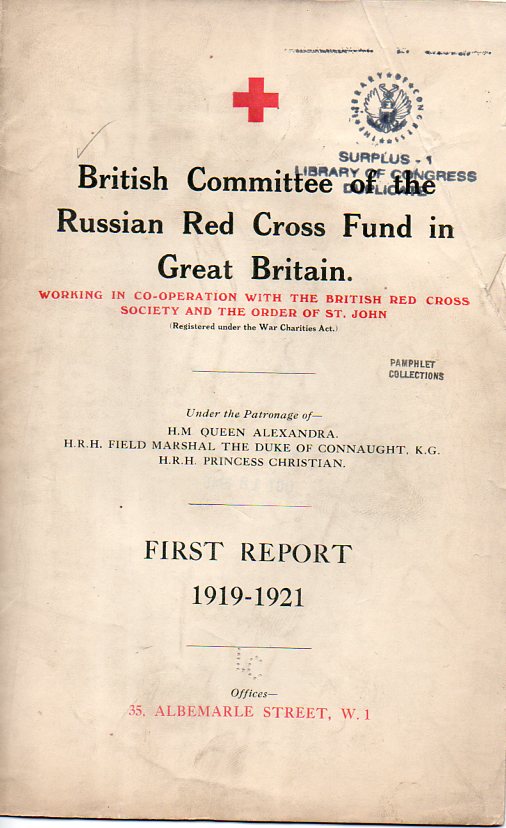
    Concentration camp009 This more modern 1921 reference to a concentration camp comes to us from British Committee of the Russian red Cross Fund in Great Britain, First report, 1919-1921.  This was a tough time for the people of Russia–the Soviet Union–who were on the beginning of a mostly long-arc downward.  Just seven years past the beginning of World War I they were experiencing enormous “hardships” brought about by fighting the war, complicated by the 1917 Bolshevik revolution and the resulting civil wars.  Then of course there was the end of the war, and the beginning fo the war with Poland in 1919/1920.  And then another in a series of natural/mostly-unnatural famines in 1921.  This particular famine–killing about 5 million people in this year–was brought about mostly by the Revolution and prodrazvyorstka–the practice of forcing peasant farmers into selling whatever “surplus” food they produced to the state at the state’s prices, and also by being forced to supply food to the Red Army and to urban areas.  Add a drought to this mix, and it lead to absolute disaster for the peasantry

    Russian Red Cross Fund wasn’t yet concerned with the Povolzhye Famine, not yet, addressing the plight of the country’s response to six long hard years of war, civil war and war again–a poor country made poorer and more miserable, this fund made some attempt at relieving at least a small burden of this impossible situation within the country. 

    What caught my eye was in the discussion of providing relief to the camps of Russian refugee expatriates, the report detailing some of those in Cyprus, Estonia, Latvia and Finland.  And Poland.  The Polish camp, however, was different, and described the attempt to send relief to the 140,000 in “the Concentration Camps”, and then describing another of 110,000 “Russians who have been interned according to the Riga Peace Terms, and that the Poles are quite unable to do anything for them”.    (This pamphlet is available for purchase through our lbog bookstore.)                     

    The reference took me by surprise–I knew a tiny bit about the Russia/Poland War at this time but hadn’t realized the extent of it, nor the extent of the Russian refugees in the country nor the amount of soldiers (and their families) within the concentration camps.  These are not the extermination camps that would appear in Poland two decades later, but the conditions of the people in the camps led to the deaths of thousands. 

    Notes:

    Kitchener (who full title without his bloody shoes on was Field Marshal The Rt. Hon. Sir Horatio Herbert Kitchener, 1st Earl Kitchener, KG, KP, GCB, OM, GCSI, GCMG, GCIE, ADC, PC) described his vision for ending the Second Boer War in the Parkenham’s history: his aim was to  “flush out guerrillas in a series of systematic drives, organized like a sporting shoot, with success defined in a weekly ‘bag’ of killed, captured and wounded, and to sweep the country bare of everything that could give sustenance to the guerrillas, including women and children…. It was the clearance of civilians—uprooting a whole nation—that would come to dominate the last phase of the war.”