A Daily History of Holes, Dots, Lines, Science, History, Math, Physics, Art, the Unintentional Absurd, Architecture, Maps, Data Visualization, Blank and Missing Things, and so on. |1.6 million words, 7500 images, 4.9 million hits| Press & appearances in The Times, Le Figaro, Mensa, The Economist, The Guardian, Discovery News, Slate, Le Monde, Sci American Blogs, Le Pont, and many other places… 5000+ total posts since 2008.

Category: Militaria

  • Bombing Britain, 1940–a View from the German Side

    Dsc04742_2 JF Ptak Science Books  Post 1241

    It is essential to look at objects from alternative angles, especially in science, in order to determine the correctness, or fitness, of a finding, or opinion.  Even when consolidating data or evidence regarding the confirmation of an established bit,  you may very well find other strands of loose data that could help illuminate even a well established or iconic societal “given”.

    That the war was not going well for the Allies in September 1940 is an understatement—and the chief allies at this point excluded the United States, happily now recovering from the Depression, and still a full 14 months away from entering the war. 
    Dsc04739 What is very weird to me is that after having looked at every issue of LIFE magazine at least three times  from the start to the end of World War II, that there are more advertisements using war images than there are images of the war itself.  This actually continues into the spring of 1942, when LIFE got really busy, the war got really messy, and people started really dying.  And frankly even the coverage of Pearl Harbor in no way lived up to what I thought the coverage of a photo-magazine like LIFE would be. This is not a scientific study.  It just strikes me as odd, or propagandizing, that there should be such relatively scant, or undervalued, coverage of the fighting when sanitized images of that same fighting were being used to sell socks and shaving cream and cigarettes and such.  I understand the power of hearts-and-minds campaigns, but this seemed so amateurish, boorish even, that it just didn’t approach the level of a psychological ploy to pacify an American public that had virtually no interest in attending the European Theatre. 

    This was not the case with the British equivalent of LIFE—the Illustrated London News.  Actually, I should say that LIFE is a dumbed-down version of the ILN, which was the world’s first illustrated magazine, and which began almost 100 years before LIFE was born.  The ILN covered the war like it was a war being fought in their front yards—and it was.  Dsc04741
    This was also not true of one of the principle German equivalents of these two weekly photo-imags, the Illustriete Zeitung (Leipzig).  There was a  lot of war coverage, though much more sanitized than even the very sanitary (pre-1943) versions of reality issued by LIFE and the ILN.  The Germans by and large did not use war or military images to sell common-sue, every-day consumables; it rather concentrated on the glories of battle, real and imagined, as well as using a very grandly flatulent palette to paint the image of Adolf Hitler.

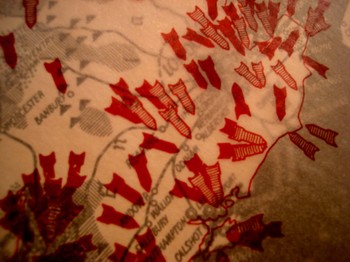
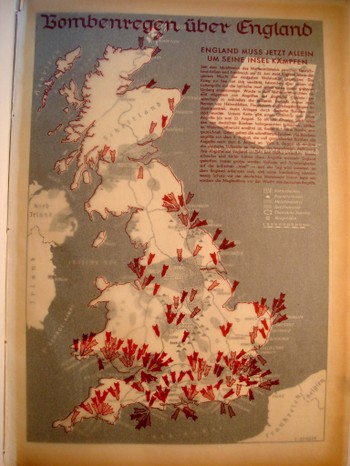
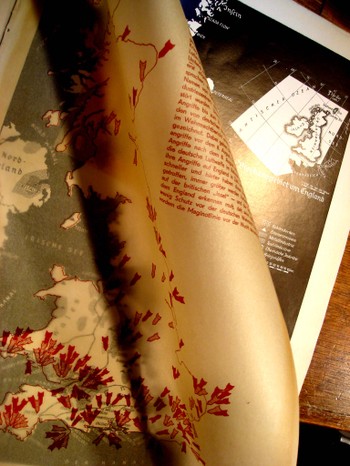
    What caught my eye was a map in the 5 September 1940 issue of the Zeitung.  (The cover woodcut illustration, by the way, is a sharpened point of the Roman standard bearer being used by the Fascist Mussolini government about to impale a running cat-thing that represented Somalia.  The Italians attrociously bombed innocent civilians in Somalia and Ethiopia with abandon and disdain.) On page 165 is a two part map, the upper part being a velum-like overlay, showing the German bombardment of England.  (“Bombenregen ueber England.  England muss jetzt allein um seine insel Kaempfen…” )  The template map is in stark black and white, showing locations of “war” industries, chemical plants, rubber works, textile plants, metal industries and gas works . The overlay shows the outline of the island with 150 or so bombs, imprinted with a color code to show what sort of industry it was intended for.  As you can see there was quite a cluster around London—I looked closely, and no one bomb was actually placed directly upon the outlined city of London. Suffice to say that no fool editor at the Zeitung was going to show their readers that German bombs were falling on a city. 
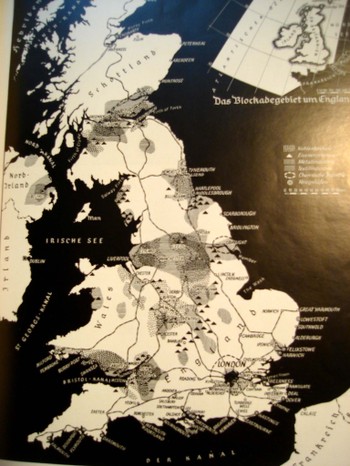
    Dsc04740 What this map shows me, outside of the propaganda aspect for its intended readers, is that the basic bits of the bombing campaign was actually true—that there was a whole crap-load of bombing going on, and going on quite well country-wide.  Certainly people in England knew this but knew it in chunks.  The Battle of England was being fought at this point, and the outcome was still undetermined—even though the Brits had the “ultra” and basically knew when the attacks were coming, and where.  But looking at this image of the bombing from a completely different, contemporary, and ENEMYsource hammered home the fact that England was being bombed, and bombed heavily, and that its future was in real doubt. 

    [This issue of the Illustriete Zeitung is is available for purchase from our blog bookstore.]

  • Gas Masks and Poison Gas, World War I, 1915

    JF Ptak Science Books   Post 1191

    In the long line of potent and horrible weapons, few are as so superbly bad as chemical and poison gas.

    WWI--gas mask full pg696

    [This image is available for purchase at our blog bookstore, here.]

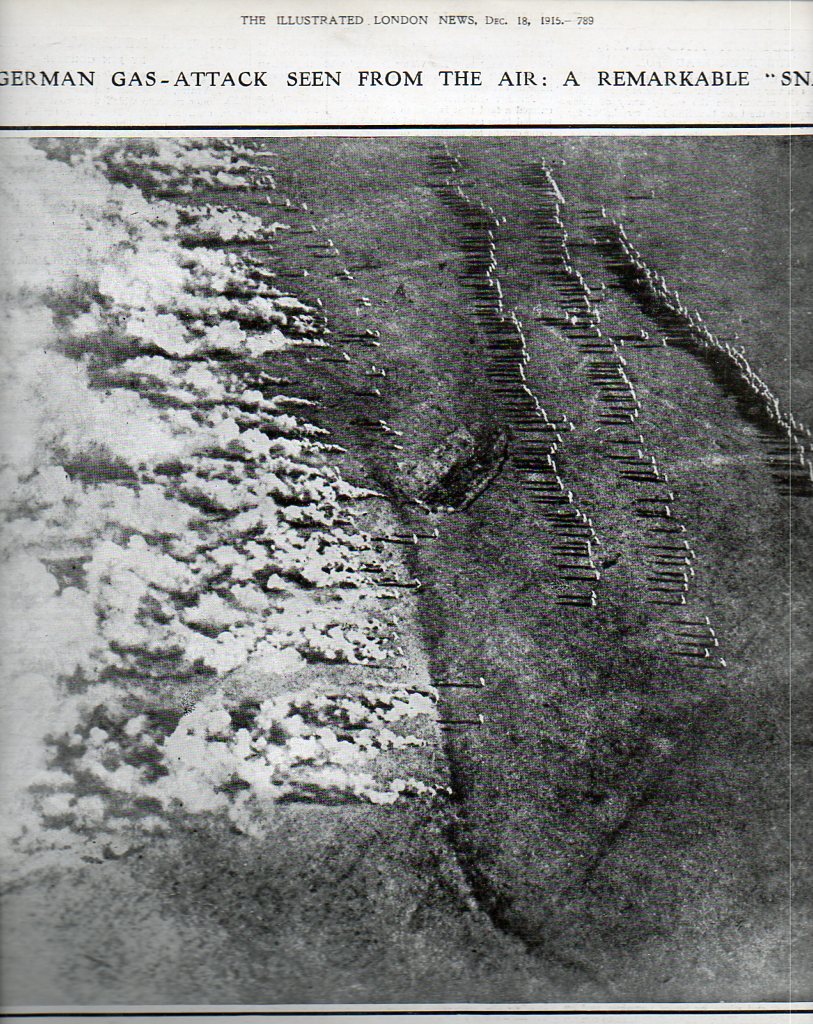
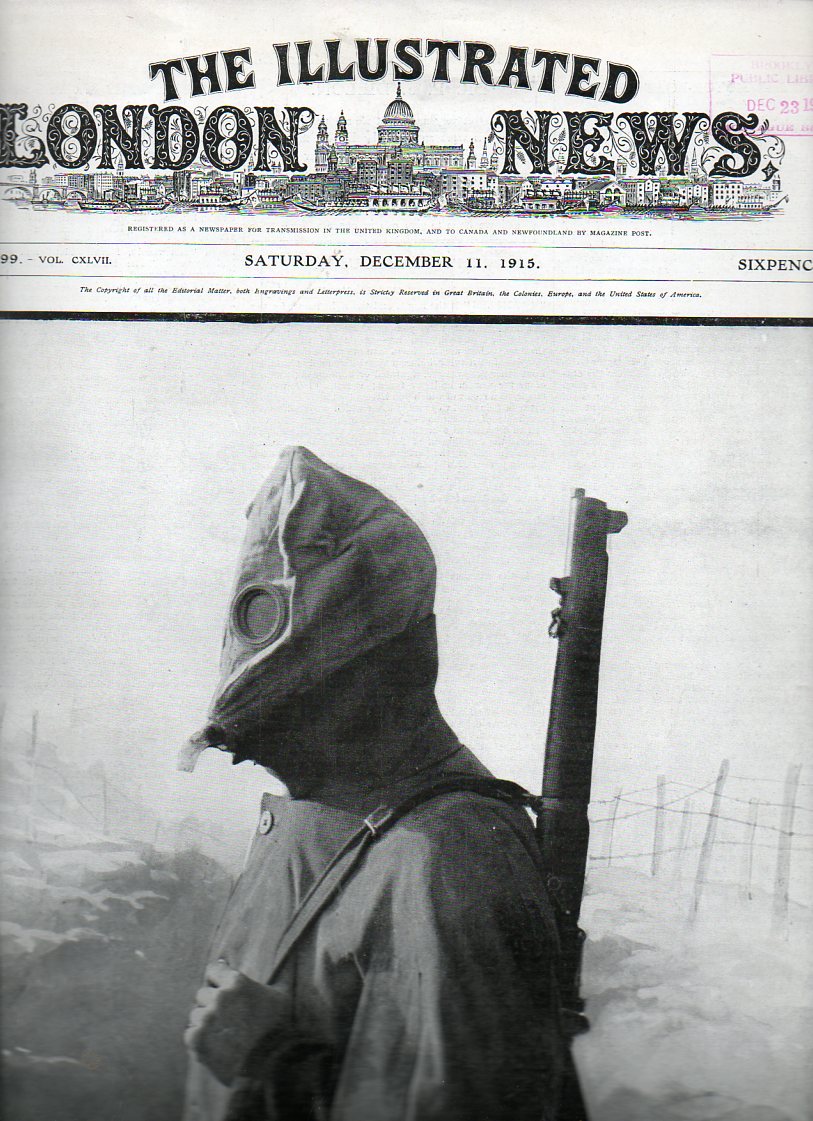
    The heading of this full-page photo from The Illustrated London News for 18 December 1915 really is quite understated—“remarkable” really doesn’t quite cover it.  First of all, photographs from moving airplanes were not common; secondly, this is one of the earliest images ever made of a poison gas attack in progress, just eight months after the initial use of German poison gas at Ypres (a first-hand account of which can be seen here http://www.firstworldwar.com/diaries/firstgasattack.htm  The experience of poison gas in warfare was still “new”–newer still for the Russians, who were at the receiving end of this unnamed  Eastern Front attack.

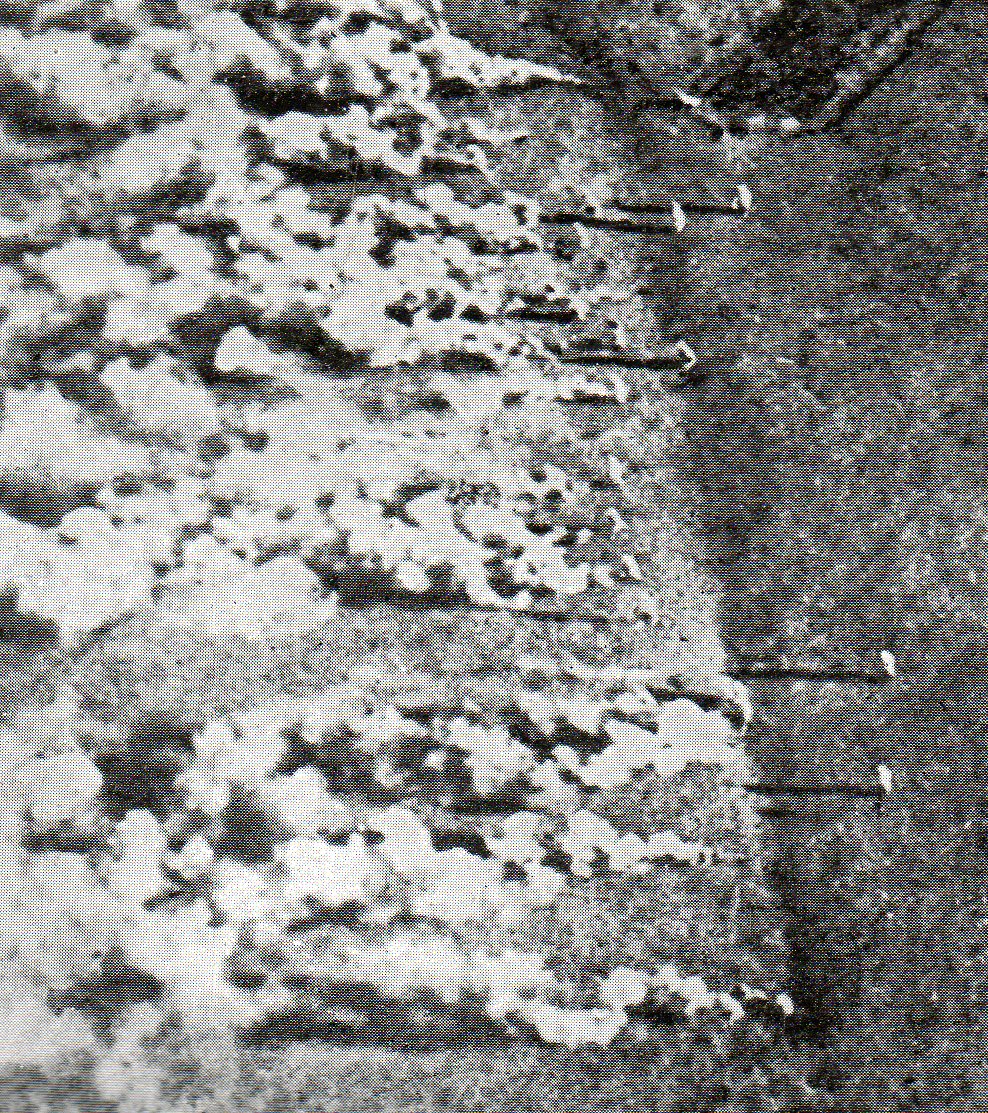
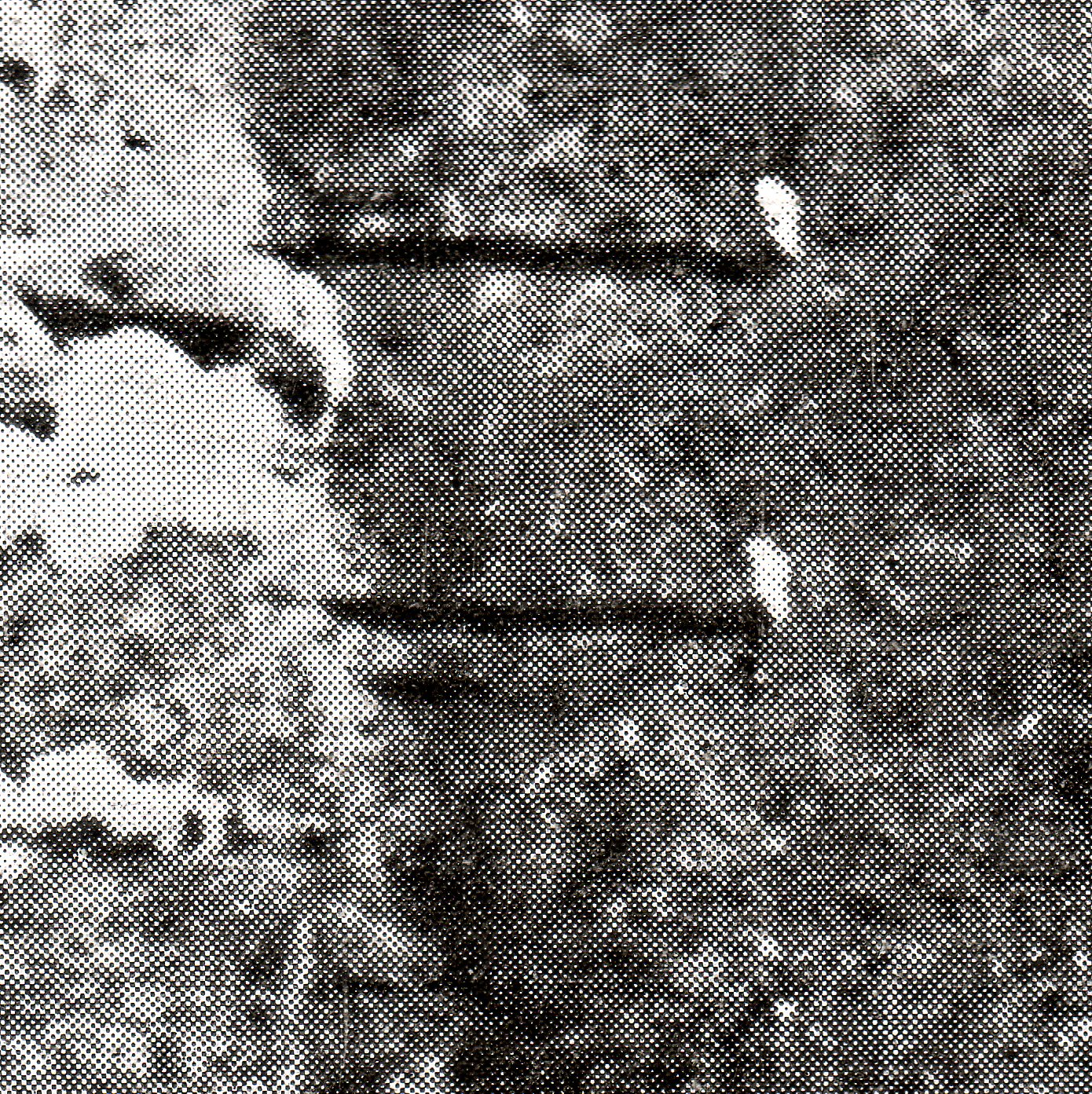
    The story on this goes as follows: during the night the German enemy forces crawled with metal and glass canisters of the poison gas to the very front of the Russian lines, or at least to the outer edges of the barbed wire perimeter.  The crawler would retreat, and then the whole of the attacking force would wait until daylight and a favorable wind condition at which time rifelmen would discharge at the canister, a direct hit mixing the contents fo the vials, producing the desired gas.  The wind would then pick up the gas and disperse it, the Germans waiting for the first leg of their attack to take effect on the poor soldiers in the trenches, and then attack once the gas had mostly cleared.

    WWI--gas attack697

    And the associated

    WWI--gas attack det b699

    And this solitary figure:

    WWI--gas attack detc700

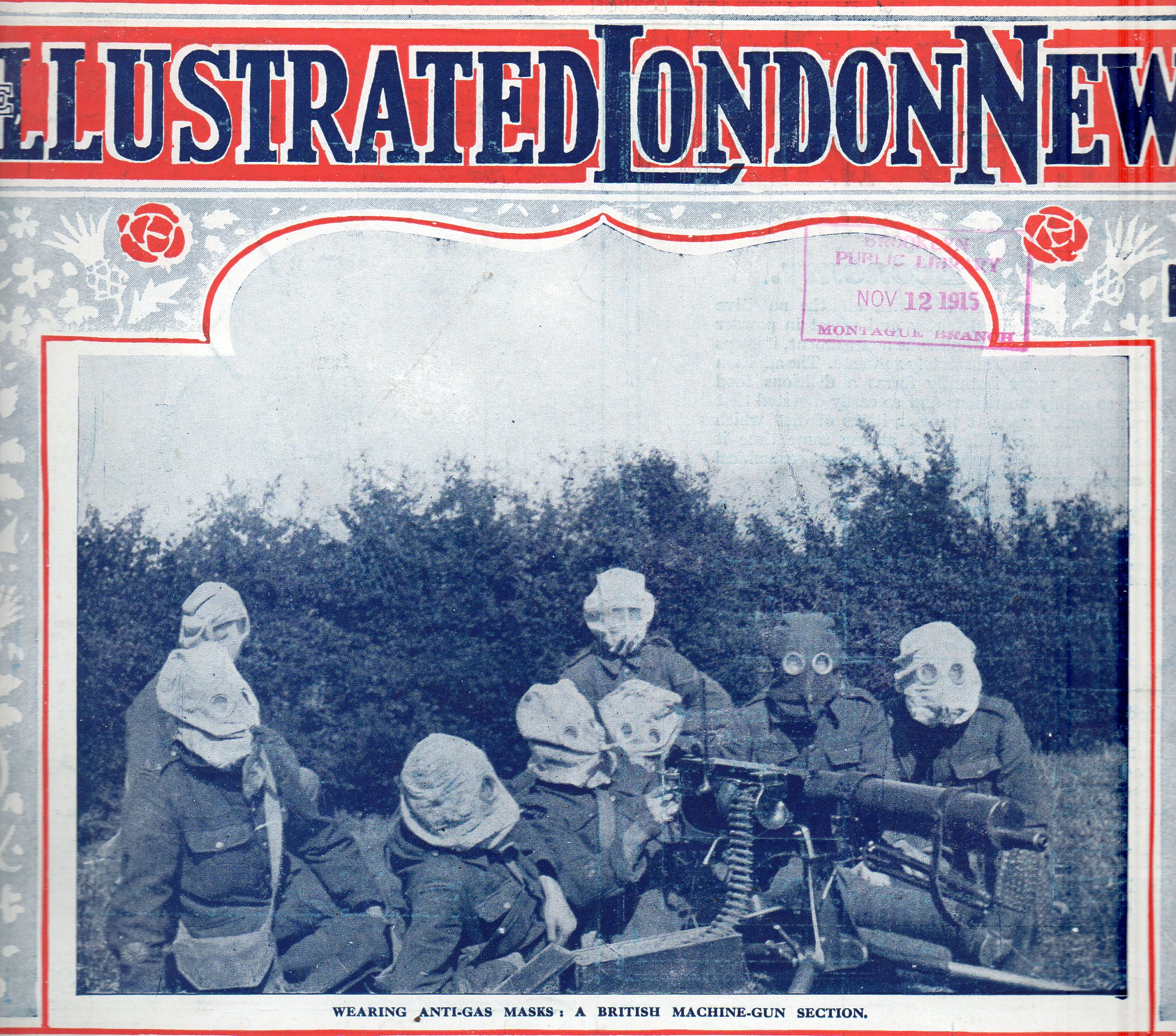
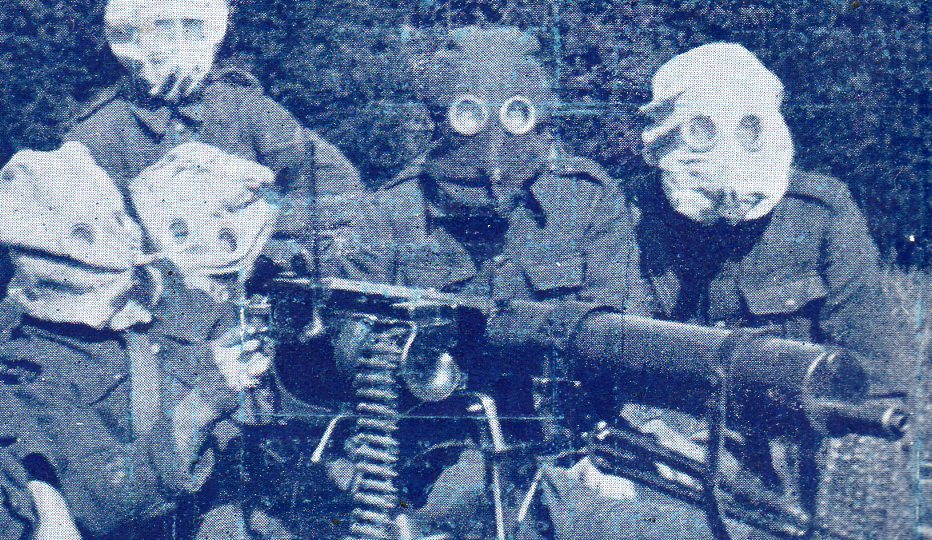
    The masks devised to deal with the attacks were soemtimes effective, sometimes not–actually, they were occasionally enhancers.  The earliest masks were creepy, unworldly, Coraline-like burlap-and-button-faced affairs–I’d hardly wnt to imagine seeing thousnads of these guys come running up to me with rifles and grenades in their hands attacking my position. 

    WWI--gas machine gun711
    WWI--gas machine gunb712


  • Evil Replaced by Evil: The Baltics, the USSR and the Nazis. An Anniversary, 25 November 1940

    JF Ptak Science Books   Post 1234

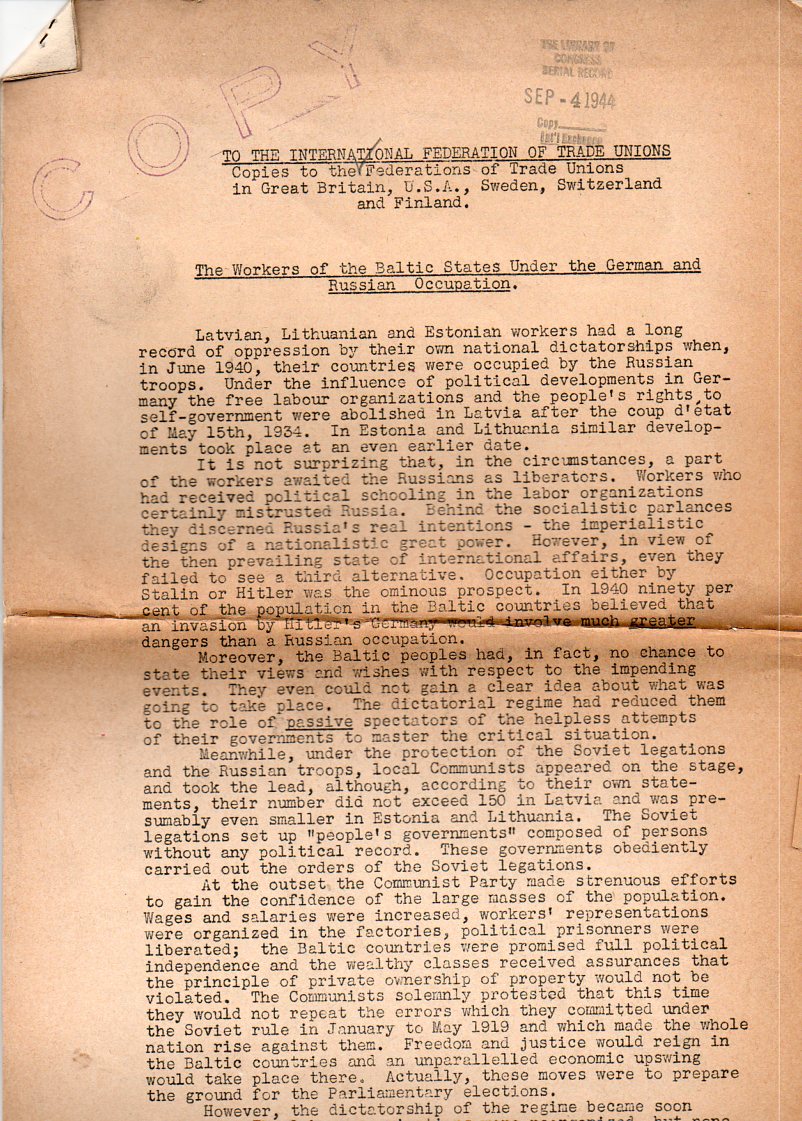
    This rare, offset-printed publication comes from the representatives of the Free Trade Unions of the Baltic States–a part of the International Federation of trade Unions (IFTU)–and is dated December, 1943, and is a witness to the brutal regimes that illegally and maliciously subverted the countries of Estonia, Latvia and Lithuania.
    (The IFTU was a social democrat-like organization that existed from 1919 to 1945, and which was a largely European body after 1925 when its main American counterpart, the AFL, chose to disengage.)

    Balticsb874
    [This document is available for purchase from our blog bookstore, here.  I would gladly reproduce the entire document except that given the nature of its reporduction the pages are brittle, meaning that the document could no tbe scanned unless taken apart, which I do not want to do, presently.]

    The six-page pamphlet is interesting to me because it provides some details on the rape of the Baltics–the theft of their legal status as nations, the murder and deportation of those who disagreed with the ruling Soviet and then Nazi occupiers, and then, lastly, the murder of the Baltic Jews–which, in December of 1943, was not common reading material.

    As a result of the Molotov-Ribbentrop pact, the Soviet Union moved into the Baltic states in June, 1940, after having compelled the thre nations to allow the establishment of Soviet bases on their soil.  In June of 1940 the life of the Baltics changed dramatically, when the U.S.S.R. overtly took control in the three countries. At the beginning of the Soviet brutalities, elections were stolen, military forces were moved, and murder and deportations and arrests began in earnest. In beginning to kill the soul of these countries, the Soviet union established a “Commissariat of the Interior…was a powerful apparatus for carrying out persecutions and taking reprisals”, a euphemism of the early part of the pamphlet which would be replaced by mor direct language just paragraphs later.

    But 25 November 1940 marked the final destruction of the independence of these countries when their national currencies were replaced by the ruble, allowing complete control by the Soviet Union, and plunging the countries into a malicious chaos, with the citizens now faced with an almost-order of magnitude change in their buying power.

    The report continues on the disappearances of workers and intellectuals, which came quite early in the Soviet occupation.  According to the document, tens of thousands of workers who were opposed to the new changes by the Commissariat of the Interior were arrested and deported to “enjoy a happy life” in prison.  More shocking details would come, highlighting the deportations, arrest and executions of thousands of people–tens of thousands who would be sent to “labor camps” in northern Russia, selected from”secretly drawn-up lists by the Communist Party”.

    There is in particular the mention of 14 June 1941–a bitter day in the history of the first Soviet occupation, though it seems that the author of the present paper did not yet have a full appreciation of the event, yet. Here the author mentions specially “equipped” railway cattle cars brought in from Latvia and used to deport 21,000 people from Lithuania, 11,000 from Estonia and 15,000 from Latvia.  In point of fact the period of 14-17 June 1941 was when the Soviets imprisoned/deported/murdered 100,000 Balts.

    After the Nazis trashed their non-aggression pact with the USSR and began their invasion (known as “Operation Barbarosa”) of the Soviet Union on 22 June 1941the Russians began to run, replaced very quickly by the advancing German armies. The author writes that “we have no exact data” on the deportation and execution in the earliest days of the Nazi occupation, but the conservative guess was that 50,000 had been deported and 10,000 executed.

    And then on to the Jewish question, where this paper reports that almost all of the Baltic Jews–by December 1943–were gone.  “Gone”in being  deported to   work camps, or collected in slums, or murdered.

    In the only underlining done in the printing of this pamphlet, we read that ‘All these murders are on the German conscience”, and then goes on to name the German officials responsible for the crimes. 

    In December 1943, when it was becoming apparent that the Germans were being turned in Russia, and that the Russians might return, there is this final plea from the pamphlet’s author:

    “Do not allow the red Army to occupy our countries.  Save our people from physical and legal annihilation.” OF course the Soviets who were replaced by the Nazis were again occupied by the Soviet Union in 1944–the Baltics would not see the Soviet Army leaves until 1995.

    This was a fast summation of a complex and complicated situation I the Baltic states for these years, but I just wanted to give the flavor for the background of this December 1943 pamphlet.  There were hundreds of references to mass killings and deportations (and vast rages of murders) that appeared in the press during this time period, but there was certainly not a collected resource for them all.  This pamphlet–quite rare in itself, as I’ve found no copy in any world-wide library holdings referenced in WorldCat–is another example of disparate reporting on what would be seen just 20 months later as a monumental climax of injustices.

    ·Posted by :

    ·in:

    —

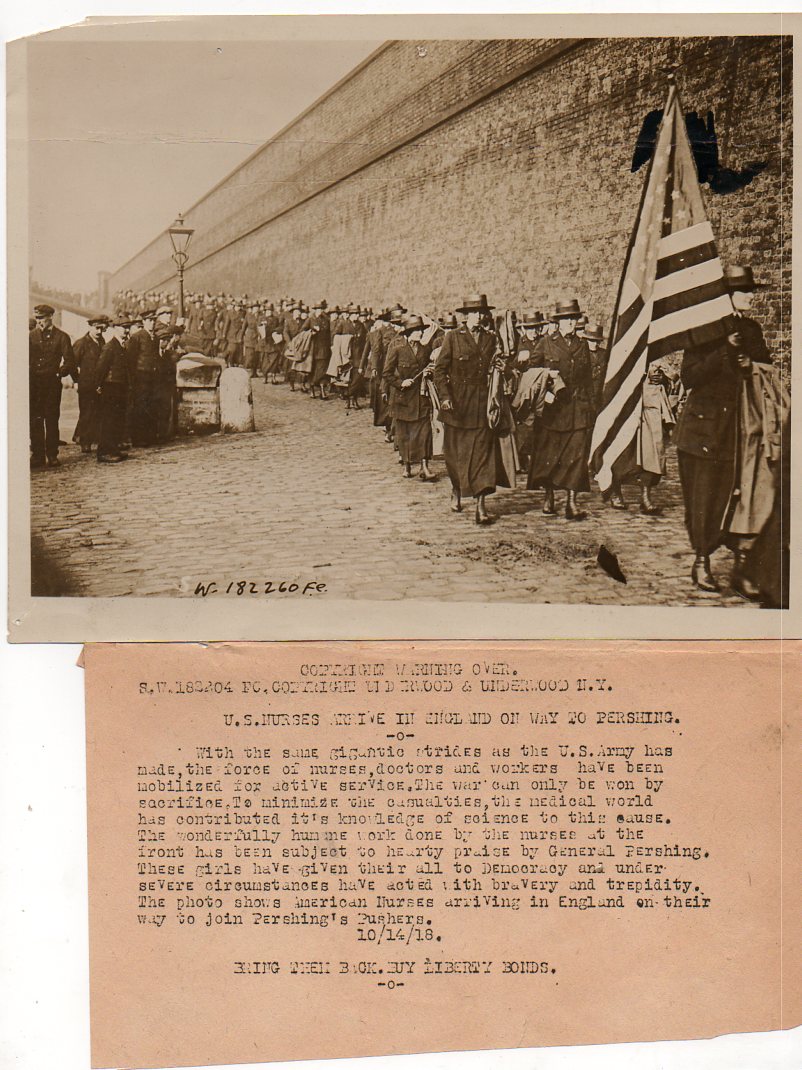
  • Women in World War I–Rare Photographs, 1918

    JF Ptak Science Books  Post 1190

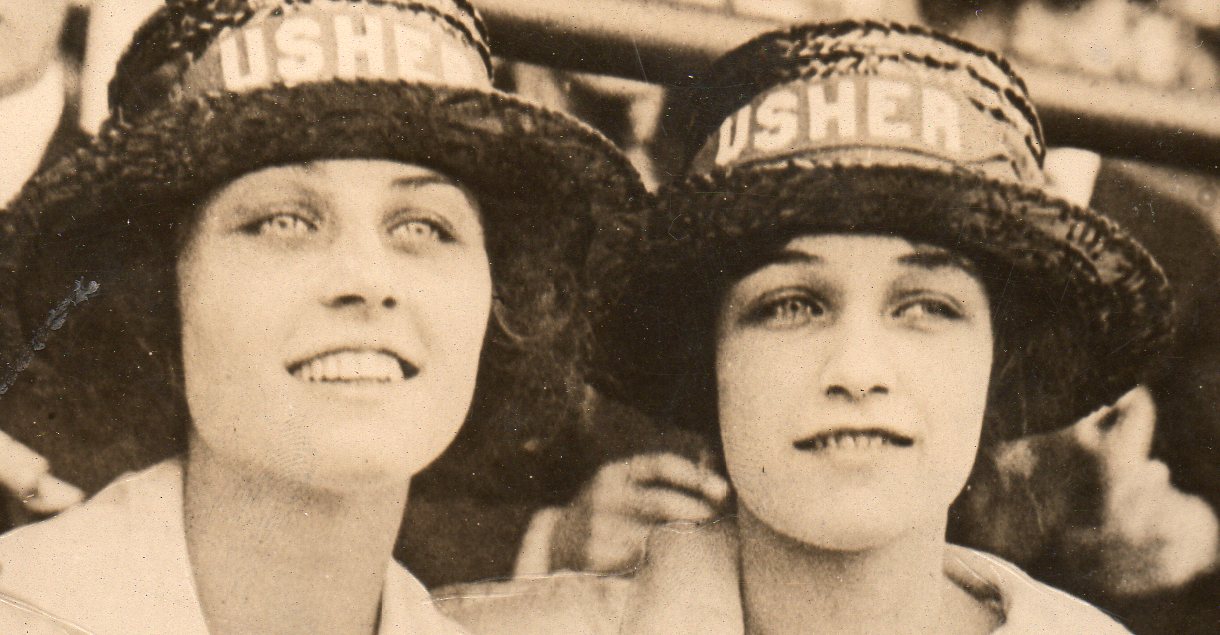
    WWI--e--women ushers684

    [All of the images below are available for purchase; see our blog bookstore for details.]

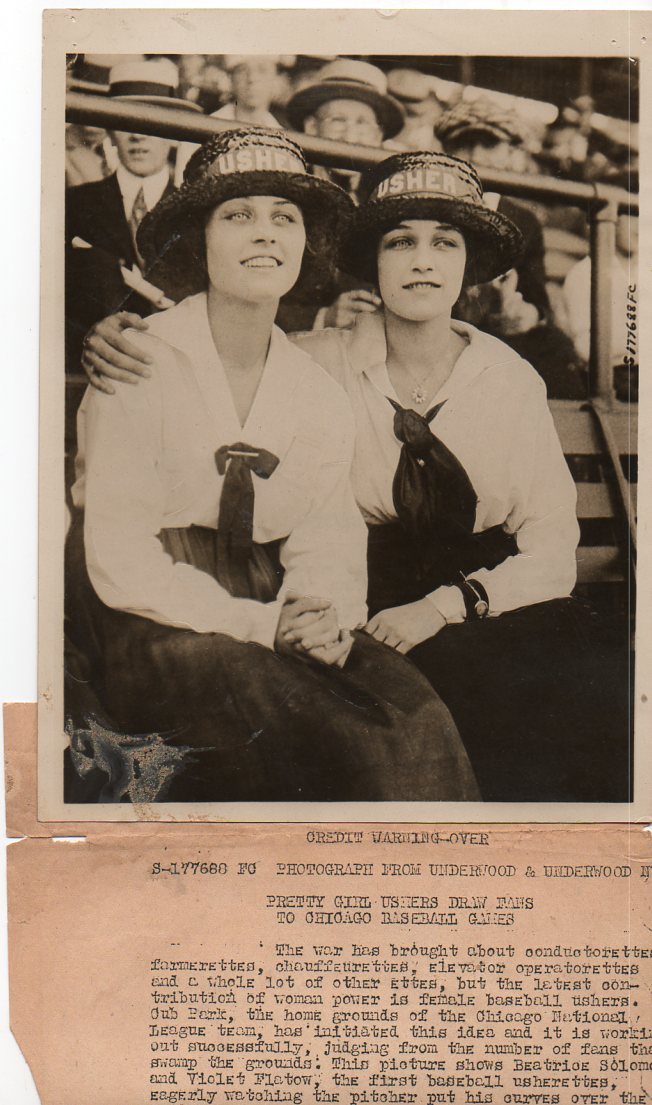
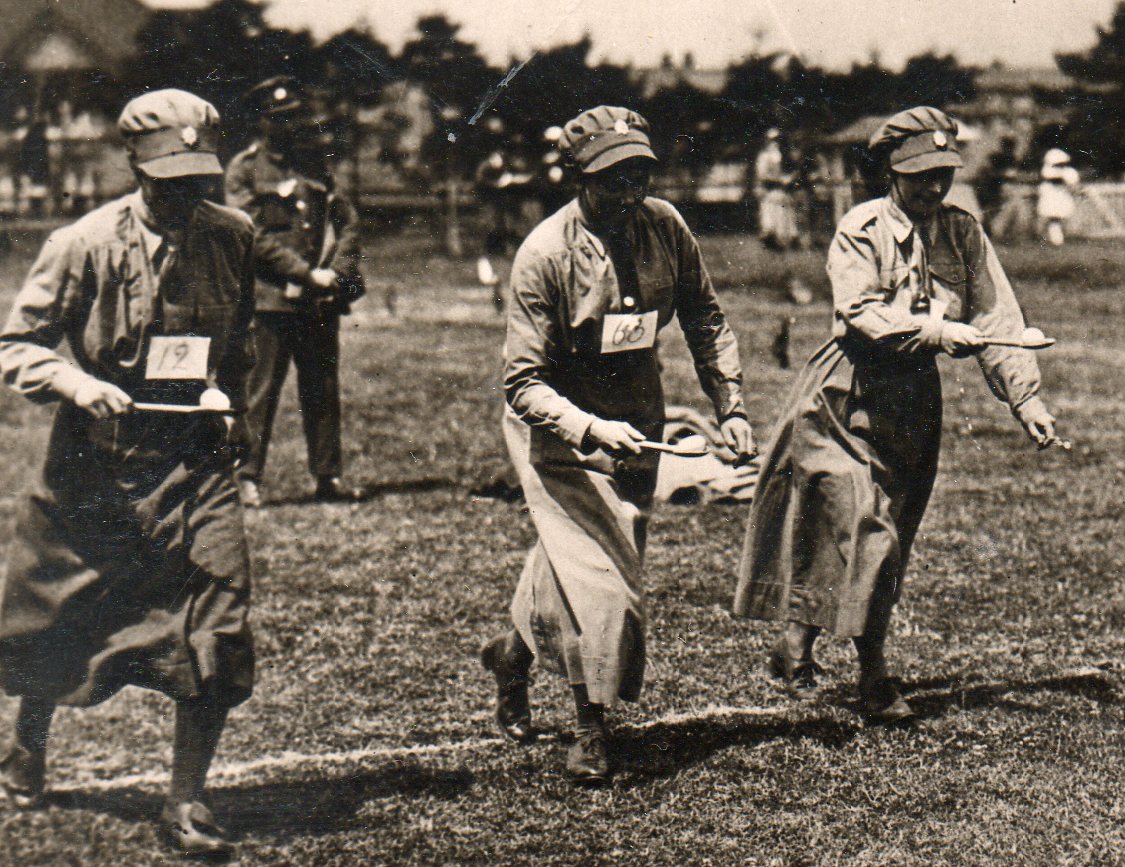
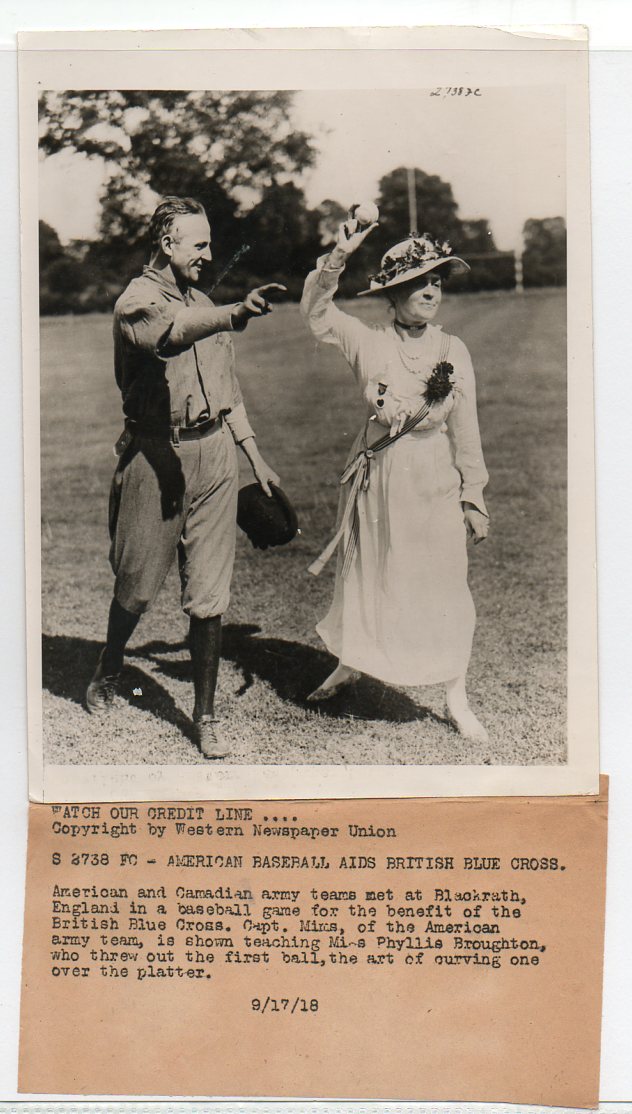
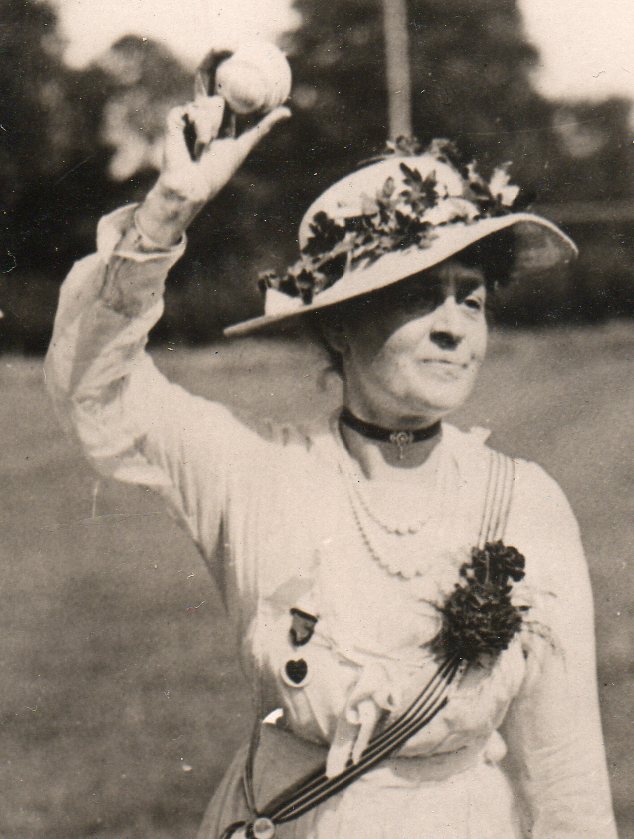
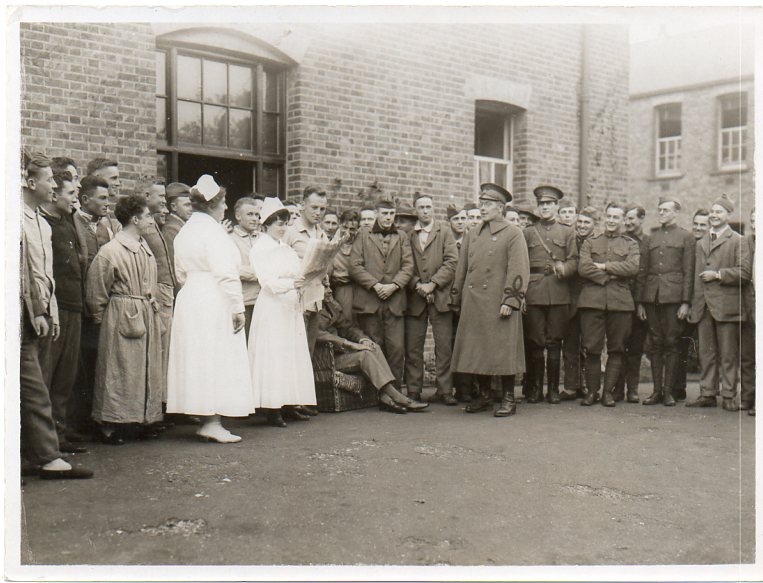
    This is another in a series of posts on images from my News Service Photographs of WWI collection.  All thousand or so of them were made in the last half of 1918 (save for a very few made in 1919) , in the last months of the grueling conflict, and were intended to be used by newspaper and magazines to illustrate stories about the war. An editor would send off a request to one of these agencies for, say, a photograph of marching American nurses, and the agency would send one back (for a fee) along with a caption.   There’s really no way for me to determine if these photos were ever published, and there is never an attribution for the photographer. 

    Most of the images have an accompanying descriptive text–this was to be used by whomever published the photograph, along with the attribution for the source of the photo. 

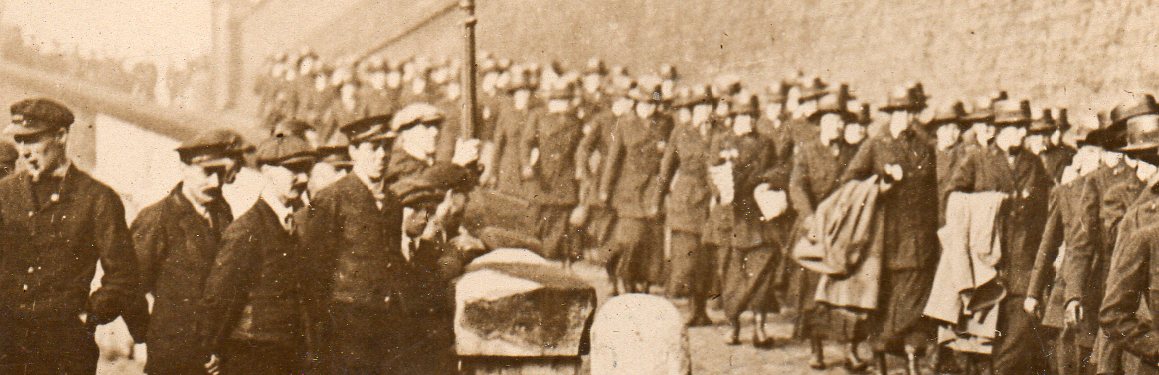
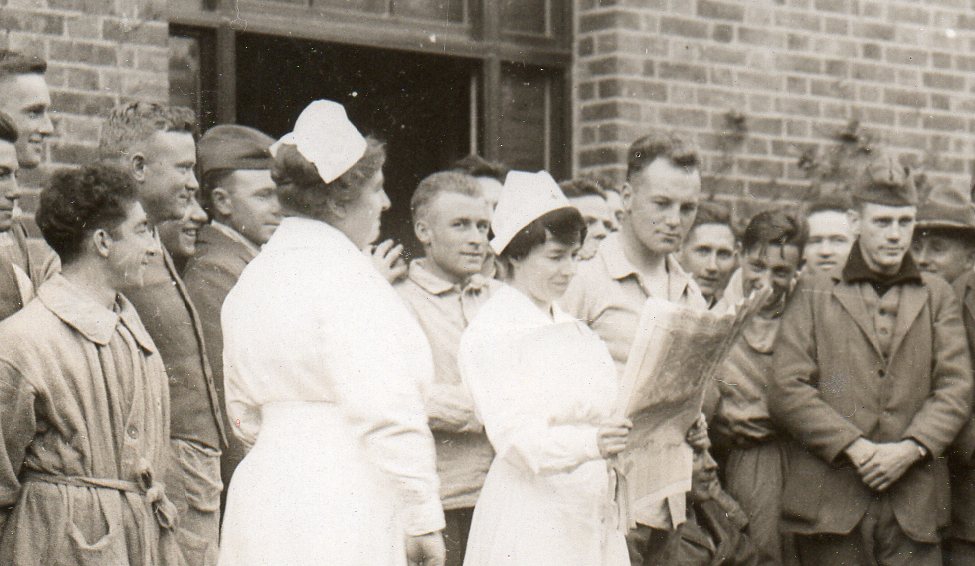
    In almost every case I supplied a detail of the image, hopefully of something that you’d want to see a detail of. 

    WWI--e--women ushers684
    WWI--e--women usher dets685

    ORIGINAL Photograph, 1918.  8×6 inches.  Very good condition.  $150

    WWI--e--women--egg race det664
      WWI--e--women-baseball672

      WWI--e--women-baseball det673

    WWI--e--women--nurse pershing653

    WWI--e--women--nurse pershing det654

    WWI--e--women--nurse reading paper659

      WWI--e--women--nurse reading paper det660


  • Finding Unseen Things In and From the Air

    JF Ptak Science Books  Post 1131

    Seeing more deeply--air weather det853

    Finding the hard-to-find, the invisible, the “hidden”, is an essential aspect of, well, mostly everything.  Whether it is Newton separating light with a prism to find its constituents, or Hooke investigating the formerly quasi-real microscopical world to reveal worlds within worlds, or Galileo using his telescope to quash the ideas of the unaided-eye-visible night sky as an unaltering perfection of creation, or Roentgen seeing through his wife’s skin, or Fraunhoefer finding the complex spectrum, or Henry Draper determining a chemical constituent of the sun, or the invention of the zero or negative numbers or subtraction, of finding Black Holes or other planets or the remnants of the Big Bang, or (Kandinsky) finding the nonrepresentational aspect of art, or Duchamp finding in an upturned urinal that art had no boundaries…the list goes on and on.

    One aspect of this “finding something in nothing” business that is interesting to look at because it is so local and discernible–and recent–is in air navigation and detection.  And I’ll do this using a series of excellent illustrations from The Illustrated London News, all of which are from the 1927-1938 period. 

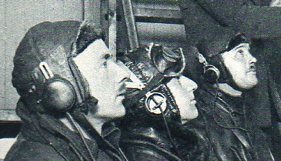
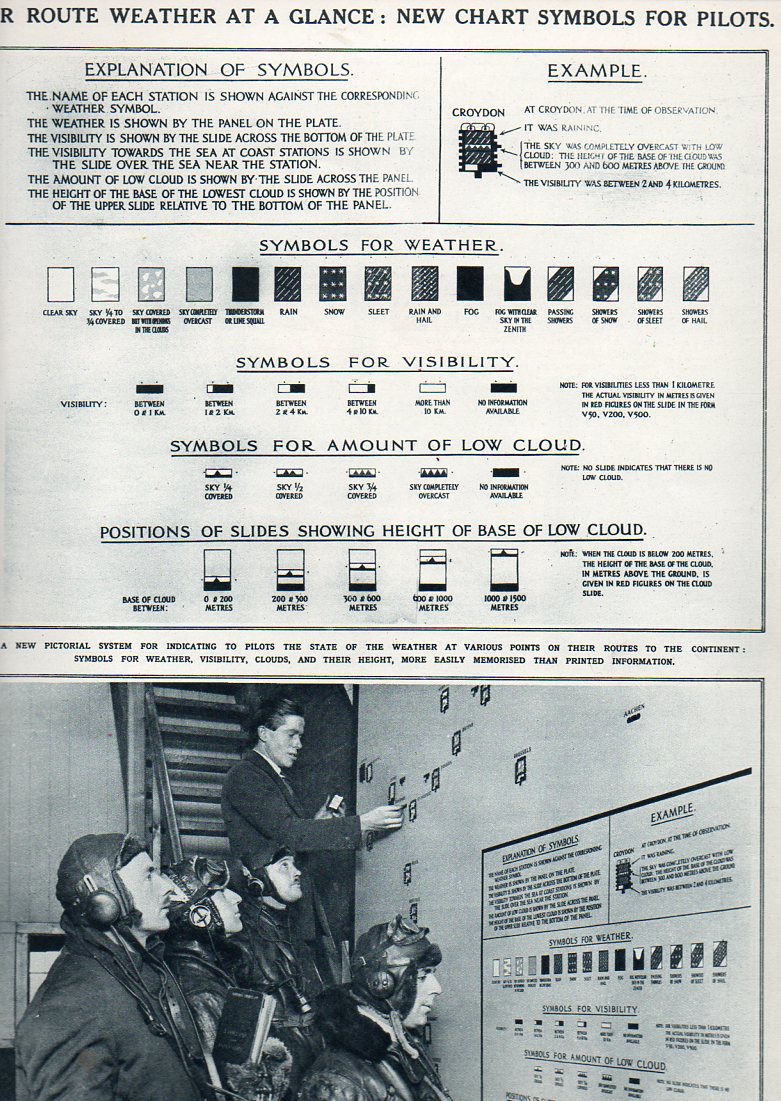
    The first is relatively simple, at least simple from here in the year 2014, which shows four pilots being briefed on weather conditions with a aerial chart for conditions along intercontinental routes.  The placement of these symbols represented a vast improvement over the earlier systems of readying pilots for what weather lay ahead, if indeed there were any communications at all.  This represents an early look at a codification of conditions and expectations for air travelers–a display of new and important data in 1927. 

    Seeing more deeply--air weather852
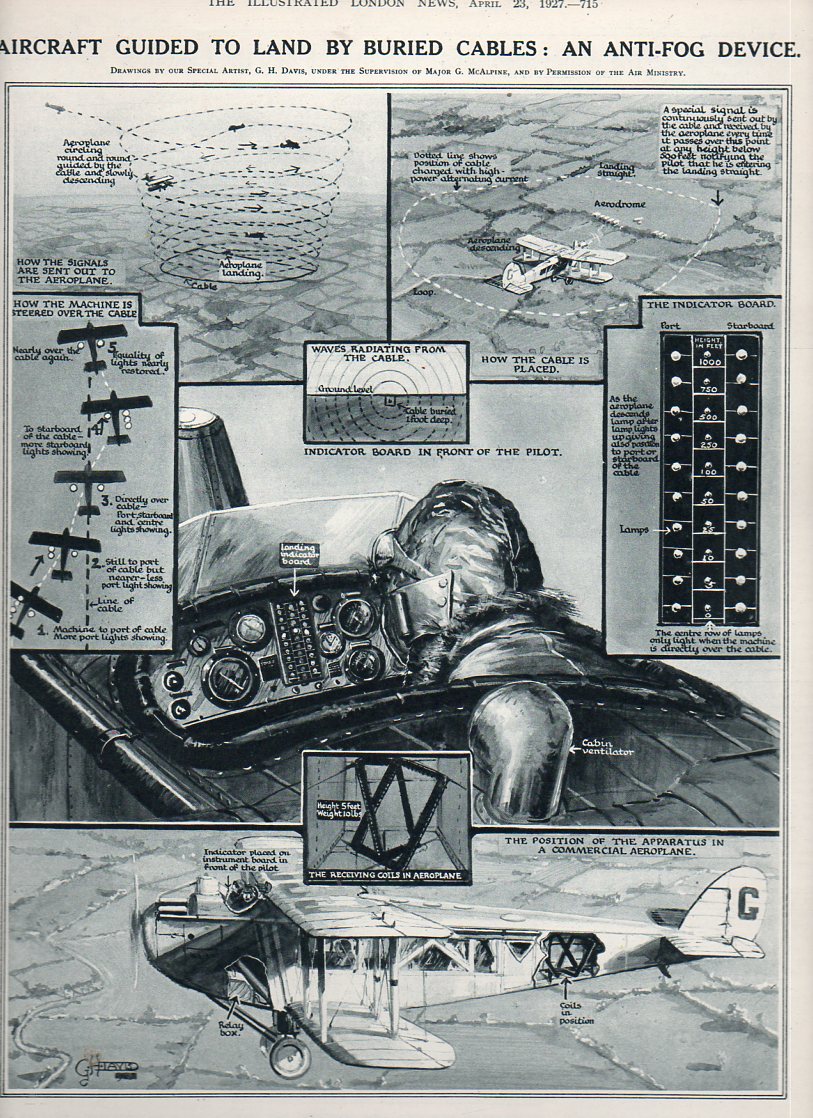
    Next is a brilliant device for assisting pilots to land in foggy and dark conditions–actually on how to find the ground safely.  In 1927 (again) a RADAR-like system was put into place on aircraft that involved receiving the signals of an ac-pulsed buried electrical cable that surrounded an airport.  The receiver (seen here on the flight panel of the pilot in an open-air cockpit) would be read to reveal proximity of the airport, the pilot making wider and then closer spirals in descent until his was basically within the buried airport cables and thus able to land.

    Seeing more deeply-anti-fog855
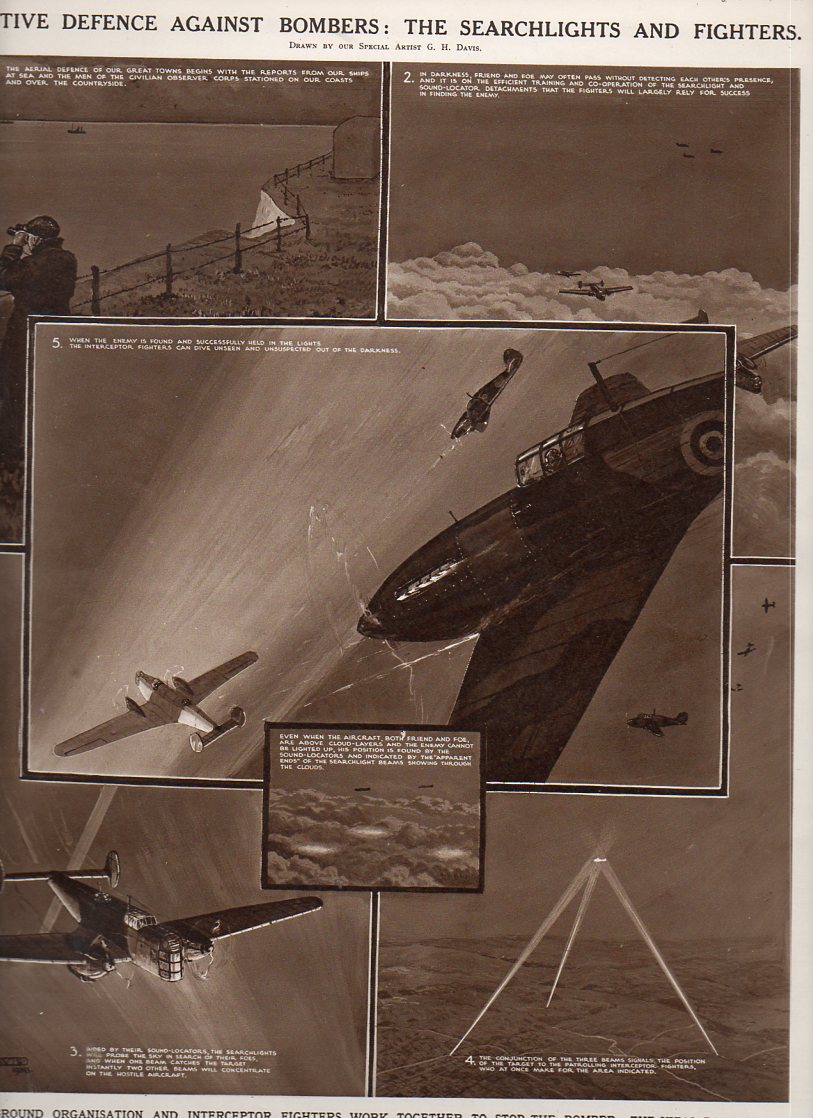
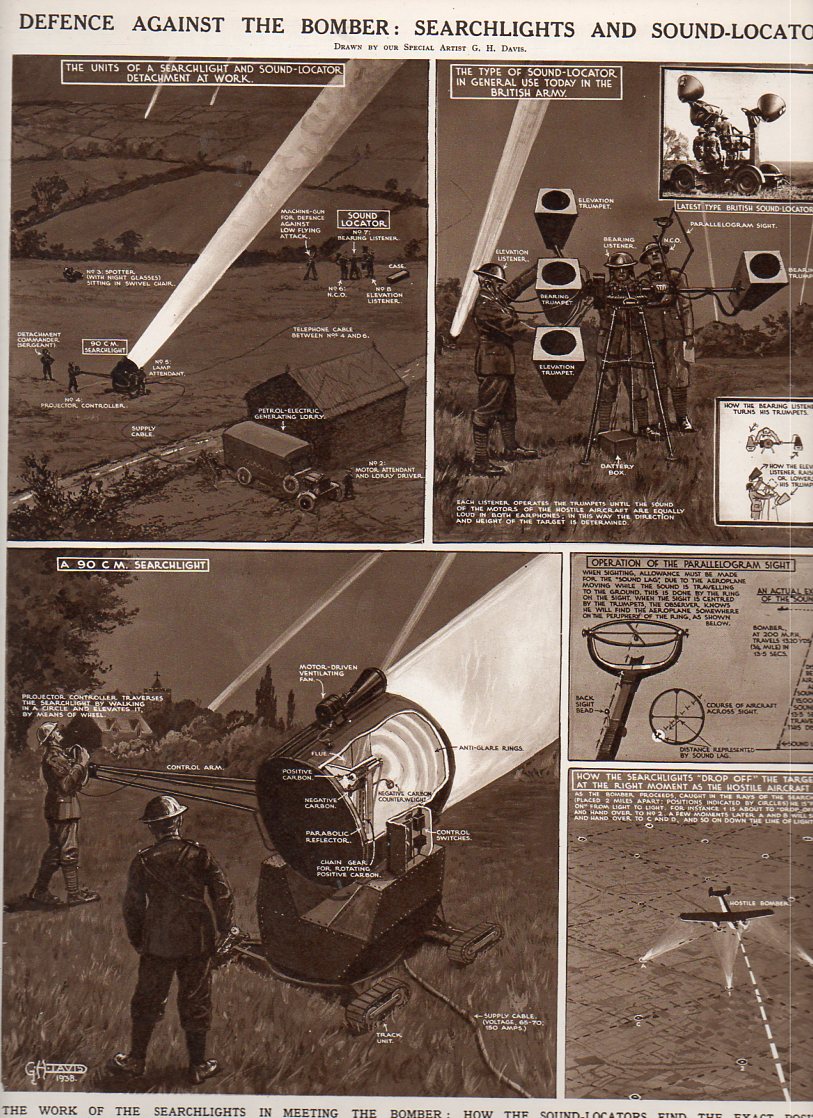
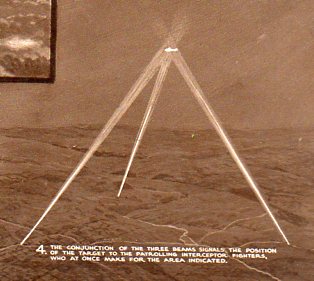
    Prior to WWII RADAR1 was somewhat functional but still in development, and as we see in this set of 16 July 1938 illustrations, the key methods for finding enemy aircraft at night (in order to shoot it down of course) was an audio-visual method, using “sound-locators” to find the approaching bombers and then spotlights to illuminate and track them to their destruction.  

    Seeing more deeply-searchlight856

    Seeing more deeply-defence against bomber854

    These images represent some idea of the state of the art of being able to find things–like the ground at night or approaching enemy aircraft–in the 1927-1938 period, all of which would be drastically changed in just the next two years.

    Seeing more deeply-searchligh detail857

    NOTES

    1. RADAR was coming very close to being developed in the early 1930’s–and in 1935 the process of experimentation and implementation was at a peak.  The development of this new technology was an international property, though perhaps no one owned it more in this period than the British, with Watson Watt giving his experimental ideas on RADAR to the Air Ministry on 12 February 1935 in a secret report titled “The Detection of Aircraft by Radio Methods”. Int his years alone there was feverish work being done by  Rudolf Kühnhold (Scientific Director at the ‘Kriegsmarine  Nachrichtenmittel-Versuchsanstalt) who in 1933-1935 established a RADAR-hunting company called Gesellschaft für Elektroakustische und Mechanische Apparate, or “GEMA”; there was also elements of the Royal Navy, Telefunken, Standard Elektrik Lorenz, Philips Company’s  (of Eindhoven, Netherlands) Natuurkundig Laboratorium, the Research Office of Nippon Electric Company, and even in the Soviet Union (until the key figures involved were murdered in Stalin’s purges–this one distinguished from others and referred to now as The Great Purge– of 1937), the French Compagnie Générale de Télégraphie Sans Fil (CSF), and  the Italian Regio Instituto Electrotecnico e delle Comunicazioni (RIEC, Royal Institute for Electro-technics and Communications) to name a few.  The United States of course had been long working on the project, at least since 1922 at the NRL, with considerable private (and federally funded) work done by RCA

    .
    Whipping ahead into WWII a very significant “battle of the beams” began between the U.K. and Germany, especially during the Battle of Britain, involving countermeasures, espionage, propaganda and false-positives in regards to the use and development of radio-based tracking and detection–the U.K. particularly making use of this technology in a wide-spread air defense system.  But it was in the United States in 1940 (and really by the U.S. Navy) that RADAR got its name (for RAdio Detection And Ranging) as well as its great impetus for development and deployment.


  • World War I Photographs–German Prisoners, Mass Crowd Scene, 1918

    JF Ptak Science Books


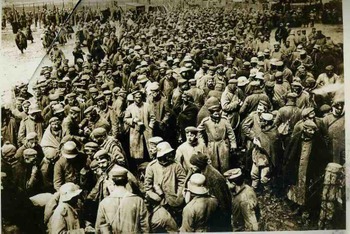
    Blogcrowdsphoto_ww1249_2 This image comes from a collection here of First World War news service photographs,  showing German prisoners being readied for transport home, and dated 20 November 1918.  This group had evidently surrendered just before the armistice was signed, and was sent directly and instantly  to a staging area for transport back to the Fatherland.  The way that many newspapers obtained the war images that they published in their papers was via a semi-centralized pool of war images.  The newspaper would request, say, a photo of German prisoners, and would contact one of these photographic agencies—in this particular case, it was the Central News Photo Service of 26-28 Beaver Street, NYC—and purchase the rights for republication, and then print it in the newspaper along with the story.  In almost every case the photo would be accompanied by a caption mimeographed onto an attached piece of cheap paper, and in this case it reads:  “Waiting to Return Home/a photo just received showing a batch of enemy troops who surrendered just before the signing of the armistice, joyously discussing the coming of peace and the opportunity of returning home to their families.”
    Blogcrowdsphoto_ww1_detail_long251I seriously doubt that the copy editor could read the minds of either the photographer or the troops in the photo.  I would imagine that they were definitely joyous about going home ALIVE to their families, but when looking really closely at the picture the thing that seems to dominate the actions of the people is food.  Or cigarettes.  But mostly when looking hard at the faces in the photo, the men just look tired.
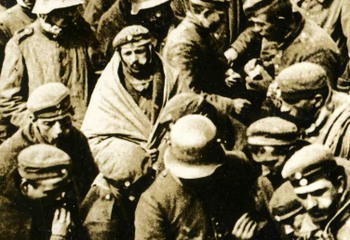
    Blogcrowdsphoto_ww1_detail_super253
    Looking very closely at these types of images has always been fascinating; look close enough, under high magnification, and the large photo becomes composed of dozens of smaller photos.  The whole is an assemblage of vignettes, each in themselves a work of art.

    Continuing in a more odd tone, I’m also reasonably convinced that after looking at hundreds of faces in a photo like this that you’ll find a picture of yourself.

    Blogww1_crowd258_2

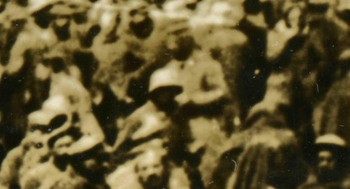
    I did.  This section is a 3200 dpi scan of a 15×10 mm section, and I am undoubtedly and unquestionably the bald bearded man (one of the few people in the image without a hat) at center-bottom.

    ·Posted by :

    ·in:

    — —

  • WWII Aircraft Cross Sections–the Schematics Work of G.H. Davis

    JF Ptak Science Books  Post 1130

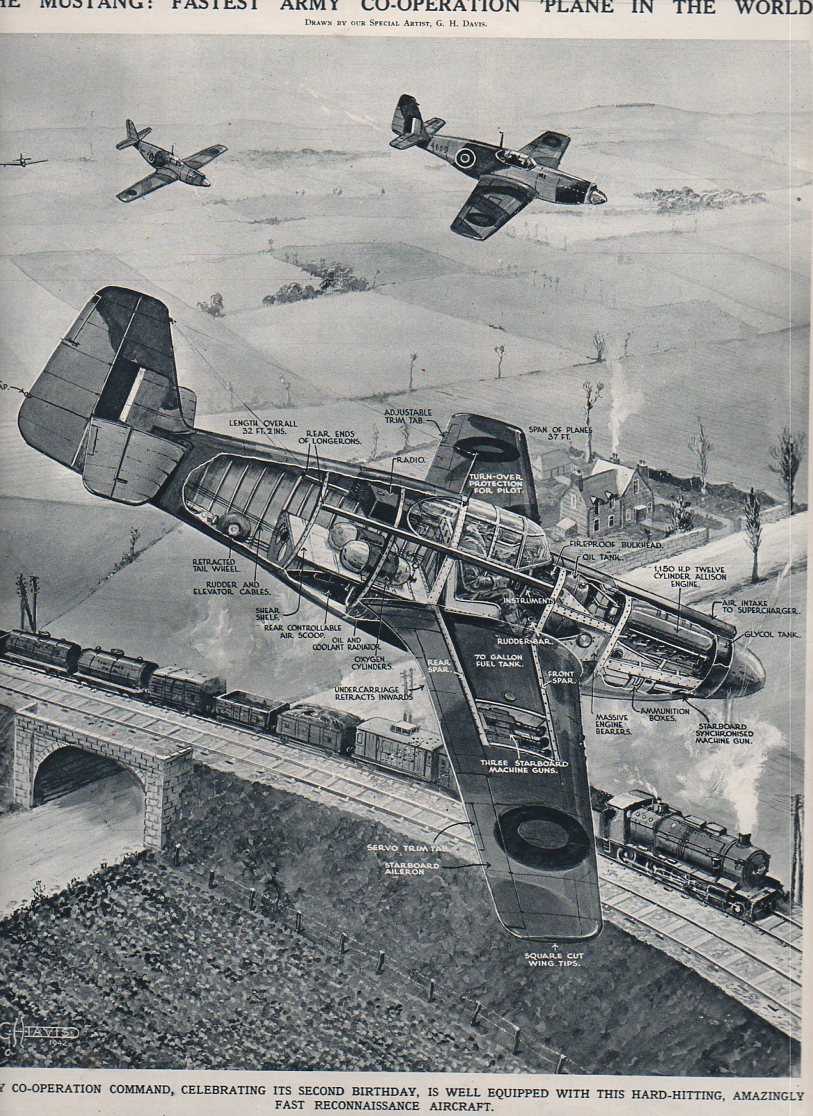
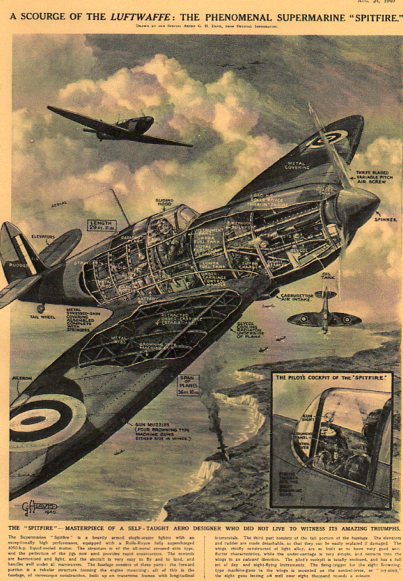
    sI’m sharing some of the collectrion here of the published work of George.H. Davis (1881-1963), the prolific and vastly accomplished artist for The Illustrated London News. His work with that magazine for the forty or so years that I am familiar with is superb, and his great strengths can be found in rendering technical cross sections and infographics.  He had a great sense of design and a very fine hand, and so far as I can tell he displayed an excellent control of his subject, thousands and thousands of times (2,500 times, according to Mr. Davis).

    Here are some fabulous examples of technological cross sections of WWII aircraft by Davis–the drawings are just superb, and you can easily get lost in them, following the geogrpahy of engineering detail from one logical place to the next.

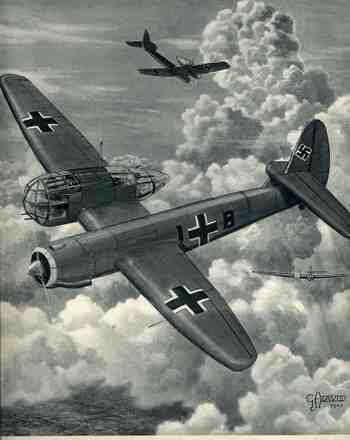
    Blohm u. Voss BV141

    1ebay_sept_24_blohm_voss_141667

    This is the Blohm u. Voss “BV 141″a very unusual-looking aircraft, and it appeared in The Illustrated London News for 23 May 1942, and it gives an excellent view of what the editors called “a lop-sided freak”.  Perhaps the editors of the ILN wanted to educate its readers on the plane since it was supposed to be widely employed on the Russian Front, though it looks like only 38 were ever built (and none survive today). Actually, the plane, designed by Dr. Richard Vogt (1894-1979),  was a high-flying three-seater  surveillance aircraft capable of 220 mph at 17,000 feet, powered by a single 1000 hp Bramo Fafnir 9-cylinder radial engine.  The idea for the design was to give the pilot and co-pilot a very wide field of view–and by this, I’m guessing that the field of view most affected and aided by this would be straight down. The rear gunner also had an enormous field of view. 

    As it turns out Vogt survived the war and spent his Golden Years in the U.S., seven of them (1960-1966) with Boeing to evaluate hydrofoils and vertical liftoff systems:  he had built other odd planes during his career, and carried them with them into near-retirement, making this sort of design his metier.

    “The Mustang–Fastest Army Co-operation in the World“, appearing in The Illustrated London News for 12 December 1942. 

    Aircraft x section-mustang849

     The Spitfire:

    X-Sect  SPitfire507


  • Airwar over Gallipoli–New, Massive Aeroplane-delivered Bombs, 1915

    JF Ptak Science Books

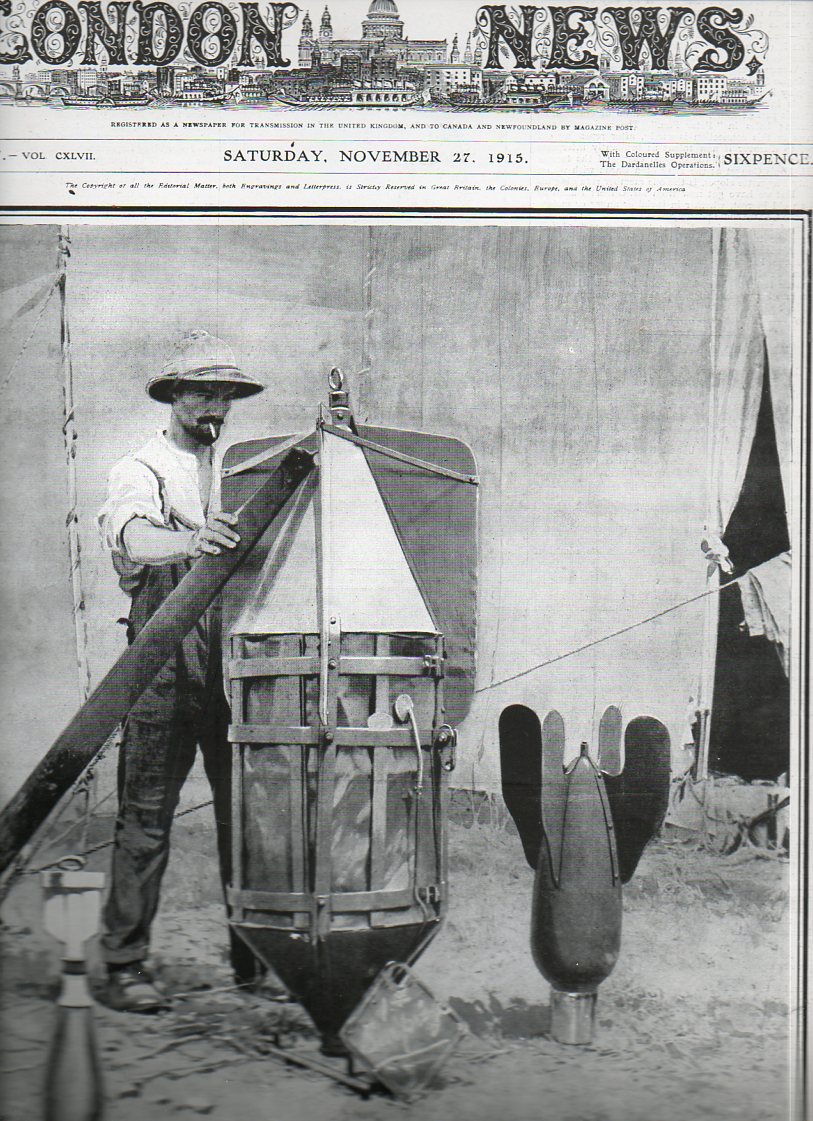
    War Images “Almost as Tall as a Man!  Great Bomb Used by the Allies Airmen at Gallipoli”, as seen on the front cover of The Illustrated London News for 27 November 1915. The campaign at Gallipoli was more than half done, more than half-way closer to the finish, which found the Allies retreating in the midst of high misery, gallant action, and broad death and destruction, with more than 390,000 soldiers from both sides being killed or wounded during the 10 months of the campaign. It was a miserable experience–hot in the summer, cold in the winter, with frostbite, rotting corpses, dysentery, bad food, poor sanitation, supply difficulty, and ultimately a costly stalemate which was supposed to have ended up in an Allied route to Russia. 
    WWI--e---aerial bomb642

    The use of bombs by airborne craft was still in its infancy at this point, the idea coming into use just a few years before the beginning of the war in 1914–the practice was quickly adapted after 1915.  (The first use of bombs dropped from airplanes is widely seen as having taken place by the Italians in 1911 and then in Mexico during the revoultion in 1912.) This image shows the development of an enormous bomb, though its details and destruction force “are left to the imagination of the reader”; I’m pretty sure that the bomb (if it was real and if it wasn’t just a piece of propaganda) would’ev been hauled aloft and dropped from a dirigible rather than an airplane. 
    See: Airwar over Gallipoli/Dardenelles   and here for a general look at aviation udring the early part of WWI.

    [We offer the weekly issue of the Illustrated London News for sale here.]

    ·Posted by :

    ·in:

    — —

  • Simple Alphabetical List of Major Civil War Battles

    I just wanted to introduce the first of a series of new pages on this blog devoted to the U.S. Civil War. The 150th anniversary of the war begins soon, and I plan to do a Civil War day-by-day newspaper article for contemporary coveragre of thhe war, beginning in December.

    Alphabetical Listing of Major Civil War Campaigns, by Battle

    Allatoona Georgia October 5, 1864
    Amelia Springs Virginia April 5, 1865
    Antietam / Sharpsburg Maryland September 16-18, 1862
    Appomattox Station Virginia April 8, 1865
    Appomattox Court House Virginia April 9, 1865
    Aquia Creek Virginia May 29-June 1, 1861
    Arkansas Post / Fort Hindman Arkansas January 9-11, 1863
    Atlanta Georgia July 22, 1864
    Athens Alabama January 26, 1864
    Averasborough / Smiths Ferry / Black River North Carolina March 16, 1865
    Auburn / Catlett’s Station / St. Stephen’s Church Virginia October 13, 1863
    Auburn / Coffee Hill Virginia October 14, 1863

    ·Posted by :

    ·in:


  • War Ads, 1915–Gallipoli and Soap, Tires and Zeppelins, 1915

    JF Ptak Science Books

    [These items are available for purchase on our Blog Bookstore, here.]

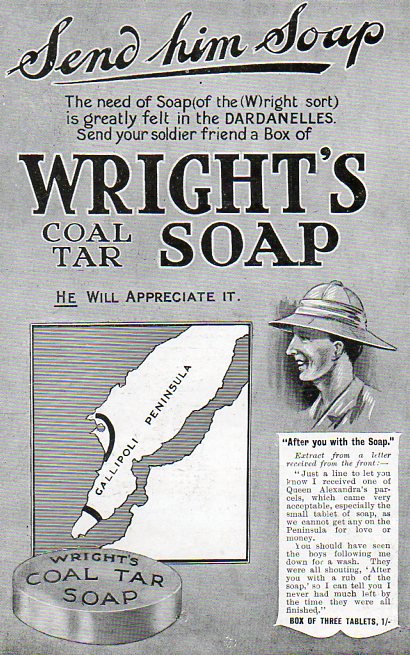
    These ads are interesting and take a bite, both ways.  For example, the first–for Wright’s Coal Tar Soap–uses the background of the enormous struggle in Gallipoli to sell itself.  The ad appears in the 9 October 1915 issue of The Illustrated London News, and stresses the fact that the troops were badly in need of, well, soap, among other things,

    WWI--e---galipolli640

    not the least of which was forward motion, or victory.  But the fact of the matter is that this relatively cheery image of the actions at Gallipoli looks entirely misplaced, especially at this point in the campaign when things were going badly.  The battle took place at Gallipoli peninsula in Turkey from 25 April 1915 to 9 January 1916, and the conditions were deplorable: massive heat, rotting corpses, poor sanitation, dysentery, flooding and then frostbite and bitter cold in the winter–that, plus the killing part, with 392,338 killed and wounded on both sides of this one campaign.  There’s much more to this campaign, of course–especially for my New Zealand and Australian friends– but this is not the place for it.   I was just taken by the spectacularly mundaneness of this ad for selling soap on the back of a terrible campaign.
    WWI--e- german dirigible639

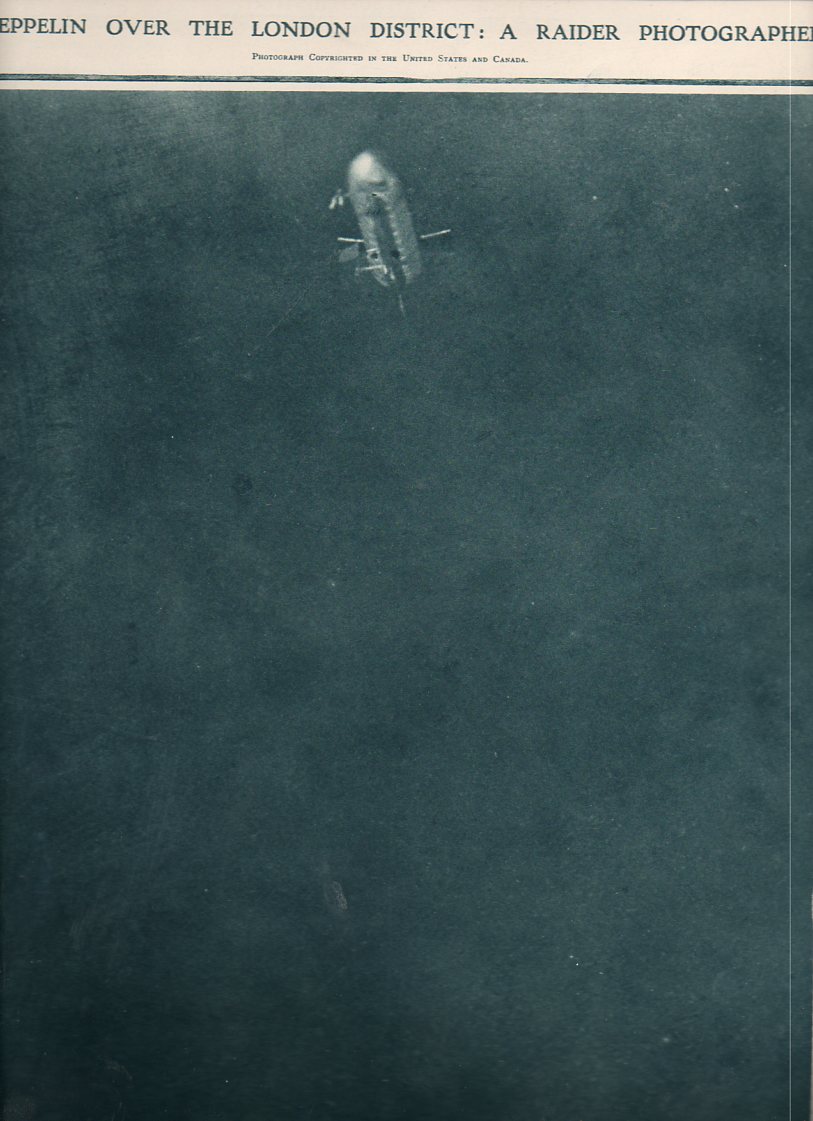
    The second ad sells British nationalism, of course, screaming to its readers to avoid purchasing German rubber tires, “made in the same factory as the fabric for Zeppelins”.   This appeared in The Illustrated London News for 23 October 1915.  The Zeps had definitely appeared over London by this point, and the ad drives the point home by showing an exploding shell over Westminster Clock Tower (from 9 October 1915 issue).

    WWI--e---zeppelin london641