A Daily History of Holes, Dots, Lines, Science, History, Math, Physics, Art, the Unintentional Absurd, Architecture, Maps, Data Visualization, Blank and Missing Things, and so on. |1.6 million words, 7500 images, 4.9 million hits| Press & appearances in The Times, Le Figaro, Mensa, The Economist, The Guardian, Discovery News, Slate, Le Monde, Sci American Blogs, Le Pont, and many other places… 5000+ total posts since 2008.

Category: Militaria

  • WWII Aircraft Cross Sections–the Schematics Work of G.H. Davis

    JF Ptak Science Books  Post 1130

    sI’m sharing some of the collectrion here of the published work of George.H. Davis (1881-1963), the prolific and vastly accomplished artist for The Illustrated London News. His work with that magazine for the forty or so years that I am familiar with is superb, and his great strengths can be found in rendering technical cross sections and infographics.  He had a great sense of design and a very fine hand, and so far as I can tell he displayed an excellent control of his subject, thousands and thousands of times (2,500 times, according to Mr. Davis).

    Here are some fabulous examples of technological cross sections of WWII aircraft by Davis–the drawings are just superb, and you can easily get lost in them, following the geogrpahy of engineering detail from one logical place to the next.

    Blohm u. Voss BV141

    1ebay_sept_24_blohm_voss_141667

    This is the Blohm u. Voss “BV 141″a very unusual-looking aircraft, and it appeared in The Illustrated London News for 23 May 1942, and it gives an excellent view of what the editors called “a lop-sided freak”.  Perhaps the editors of the ILN wanted to educate its readers on the plane since it was supposed to be widely employed on the Russian Front, though it looks like only 38 were ever built (and none survive today). Actually, the plane, designed by Dr. Richard Vogt (1894-1979),  was a high-flying three-seater  surveillance aircraft capable of 220 mph at 17,000 feet, powered by a single 1000 hp Bramo Fafnir 9-cylinder radial engine.  The idea for the design was to give the pilot and co-pilot a very wide field of view–and by this, I’m guessing that the field of view most affected and aided by this would be straight down. The rear gunner also had an enormous field of view. 

    As it turns out Vogt survived the war and spent his Golden Years in the U.S., seven of them (1960-1966) with Boeing to evaluate hydrofoils and vertical liftoff systems:  he had built other odd planes during his career, and carried them with them into near-retirement, making this sort of design his metier.

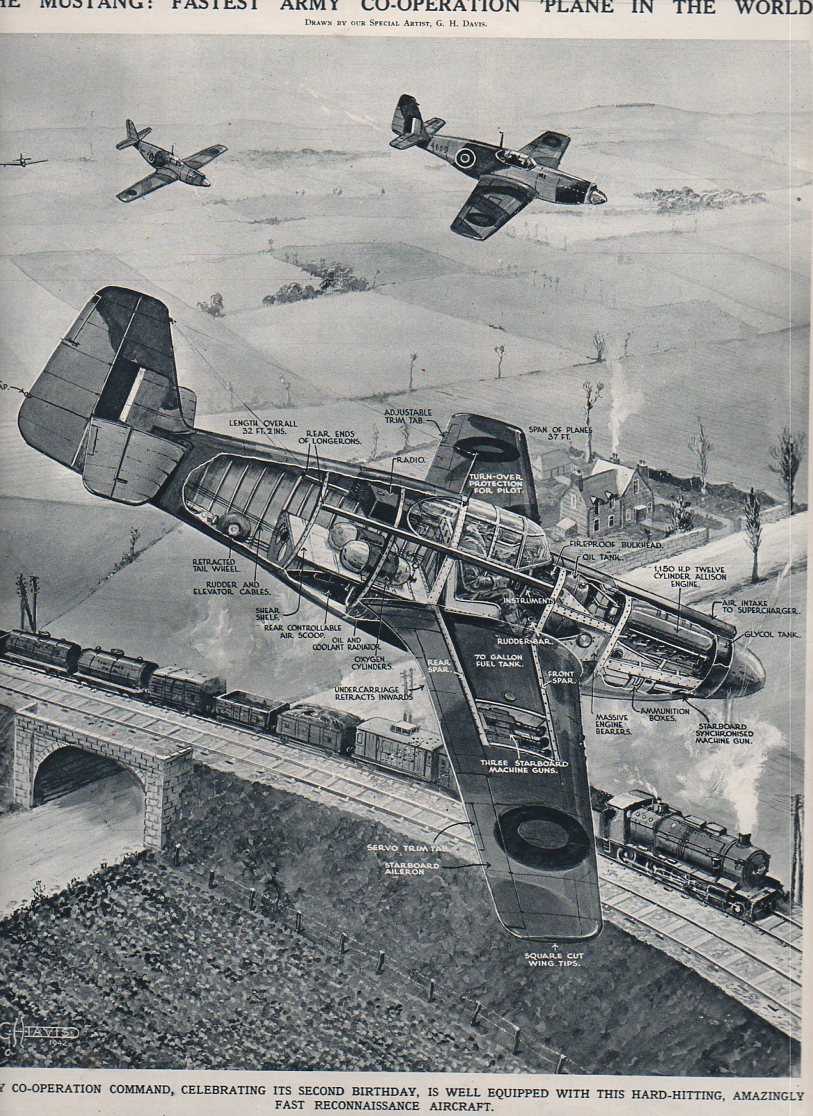
    “The Mustang–Fastest Army Co-operation in the World“, appearing in The Illustrated London News for 12 December 1942. 

    Aircraft x section-mustang849

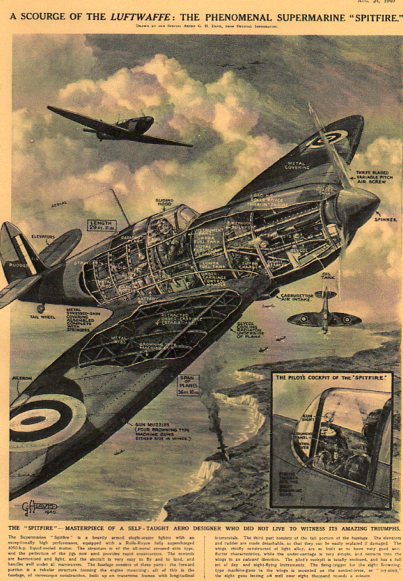
     The Spitfire:

    X-Sect  SPitfire507


  • Airwar over Gallipoli–New, Massive Aeroplane-delivered Bombs, 1915

    JF Ptak Science Books

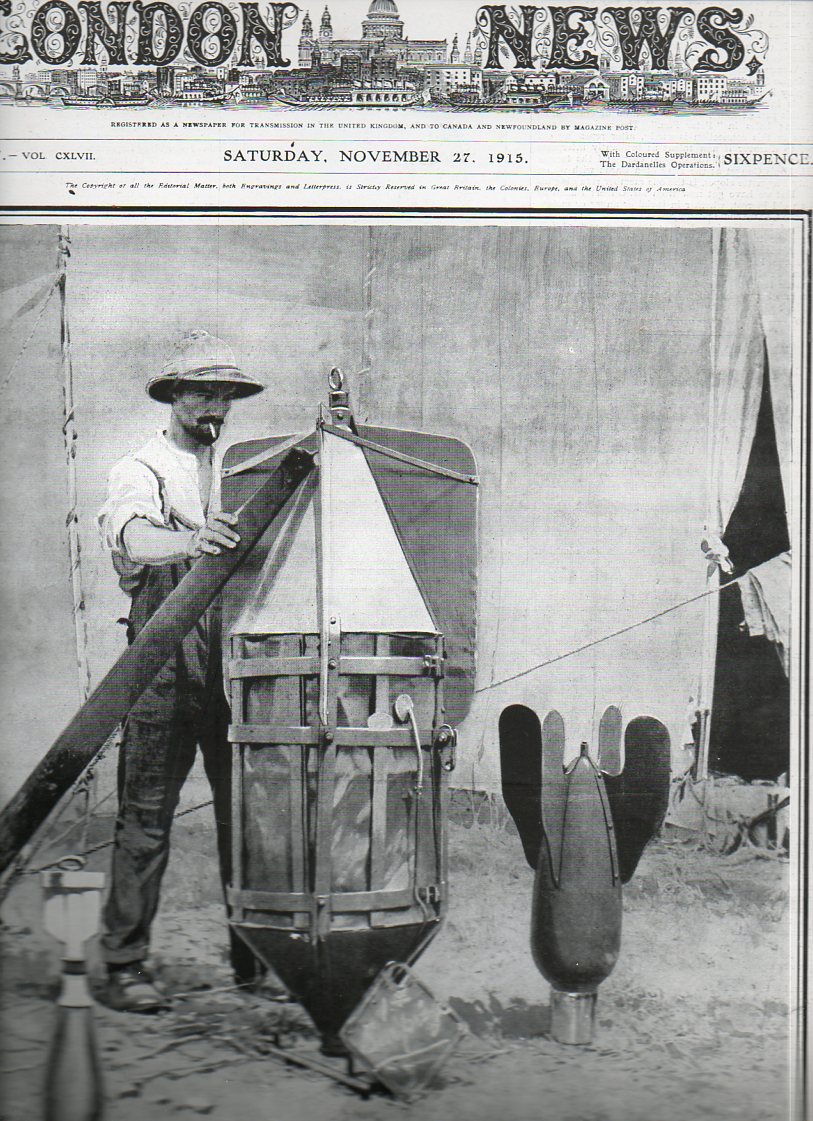
    War Images “Almost as Tall as a Man!  Great Bomb Used by the Allies Airmen at Gallipoli”, as seen on the front cover of The Illustrated London News for 27 November 1915. The campaign at Gallipoli was more than half done, more than half-way closer to the finish, which found the Allies retreating in the midst of high misery, gallant action, and broad death and destruction, with more than 390,000 soldiers from both sides being killed or wounded during the 10 months of the campaign. It was a miserable experience–hot in the summer, cold in the winter, with frostbite, rotting corpses, dysentery, bad food, poor sanitation, supply difficulty, and ultimately a costly stalemate which was supposed to have ended up in an Allied route to Russia. 
    WWI--e---aerial bomb642

    The use of bombs by airborne craft was still in its infancy at this point, the idea coming into use just a few years before the beginning of the war in 1914–the practice was quickly adapted after 1915.  (The first use of bombs dropped from airplanes is widely seen as having taken place by the Italians in 1911 and then in Mexico during the revoultion in 1912.) This image shows the development of an enormous bomb, though its details and destruction force “are left to the imagination of the reader”; I’m pretty sure that the bomb (if it was real and if it wasn’t just a piece of propaganda) would’ev been hauled aloft and dropped from a dirigible rather than an airplane. 
    See: Airwar over Gallipoli/Dardenelles   and here for a general look at aviation udring the early part of WWI.

    [We offer the weekly issue of the Illustrated London News for sale here.]

    ·Posted by :

    ·in:

    — —

  • Simple Alphabetical List of Major Civil War Battles

    I just wanted to introduce the first of a series of new pages on this blog devoted to the U.S. Civil War. The 150th anniversary of the war begins soon, and I plan to do a Civil War day-by-day newspaper article for contemporary coveragre of thhe war, beginning in December.

    Alphabetical Listing of Major Civil War Campaigns, by Battle

    Allatoona Georgia October 5, 1864
    Amelia Springs Virginia April 5, 1865
    Antietam / Sharpsburg Maryland September 16-18, 1862
    Appomattox Station Virginia April 8, 1865
    Appomattox Court House Virginia April 9, 1865
    Aquia Creek Virginia May 29-June 1, 1861
    Arkansas Post / Fort Hindman Arkansas January 9-11, 1863
    Atlanta Georgia July 22, 1864
    Athens Alabama January 26, 1864
    Averasborough / Smiths Ferry / Black River North Carolina March 16, 1865
    Auburn / Catlett’s Station / St. Stephen’s Church Virginia October 13, 1863
    Auburn / Coffee Hill Virginia October 14, 1863

    ·Posted by :

    ·in:


  • War Ads, 1915–Gallipoli and Soap, Tires and Zeppelins, 1915

    JF Ptak Science Books

    [These items are available for purchase on our Blog Bookstore, here.]

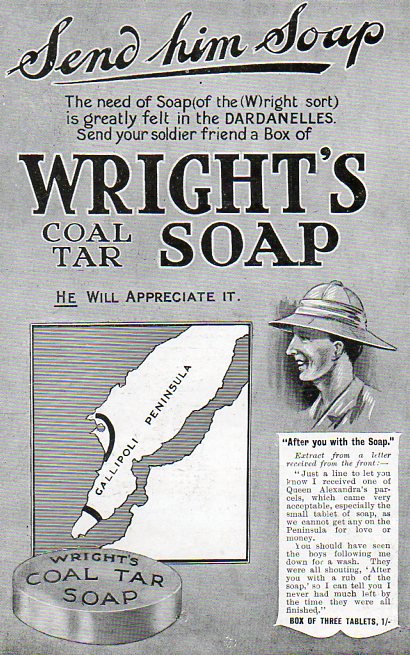
    These ads are interesting and take a bite, both ways.  For example, the first–for Wright’s Coal Tar Soap–uses the background of the enormous struggle in Gallipoli to sell itself.  The ad appears in the 9 October 1915 issue of The Illustrated London News, and stresses the fact that the troops were badly in need of, well, soap, among other things,

    WWI--e---galipolli640

    not the least of which was forward motion, or victory.  But the fact of the matter is that this relatively cheery image of the actions at Gallipoli looks entirely misplaced, especially at this point in the campaign when things were going badly.  The battle took place at Gallipoli peninsula in Turkey from 25 April 1915 to 9 January 1916, and the conditions were deplorable: massive heat, rotting corpses, poor sanitation, dysentery, flooding and then frostbite and bitter cold in the winter–that, plus the killing part, with 392,338 killed and wounded on both sides of this one campaign.  There’s much more to this campaign, of course–especially for my New Zealand and Australian friends– but this is not the place for it.   I was just taken by the spectacularly mundaneness of this ad for selling soap on the back of a terrible campaign.
    WWI--e- german dirigible639

    The second ad sells British nationalism, of course, screaming to its readers to avoid purchasing German rubber tires, “made in the same factory as the fabric for Zeppelins”.   This appeared in The Illustrated London News for 23 October 1915.  The Zeps had definitely appeared over London by this point, and the ad drives the point home by showing an exploding shell over Westminster Clock Tower (from 9 October 1915 issue).

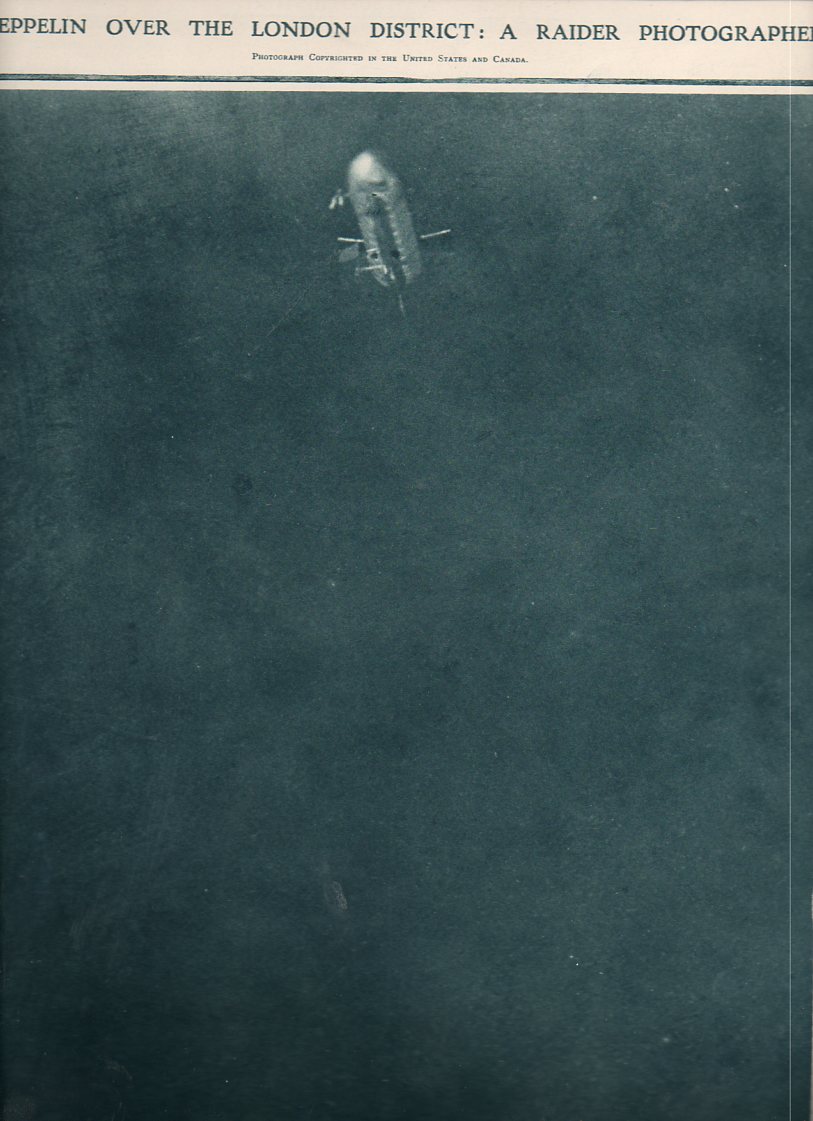
    WWI--e---zeppelin london641


  • Buckle-Up for the Nuclear Holocaust–The Fat Man’s Big and Terrifically Bad Idea

    JF Ptak Science Books LLC  Post 1221
    ==Blog July 27=wiener title

    Atomic and Nuclear Weapons   and The History of Bad Ideas series

    This is one of those ideas that just went viciously bad on contact, turning into an enabler of  the very thing that it was supposed to help prevent:  turning the Easter Bunny into Dr. Strangelove.  In the History of Bad Ideas, this one is top-tier. 

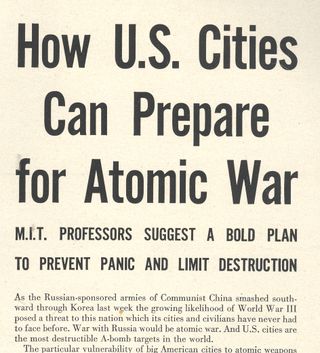
    LIFE magazine published “How U.S. Cities Can Prepare of Atomic War:  How M.I.T. Professors Suggest a Bold Plan to Prevent Panic and Limit Destruction” in their 18 December 1950 weekly issue, just in time for Christmas.  The plan was a partial response to the dire situation faced by the U.S. in Korea and the growing threat of China and of course the Soviet Union’s nuclear arsenal.  The government recognized that there was little planning in place to deal with the outcome of possible nuclear attack, and established the Federal Civil Defense Administration to help deal with the “problem”.  The problem  was how to make U.S. cities somewhat prepared to deal with being bombed with nuclear weapons—given that cities had a hard enough time dealing with 5:30 pm commuter gridlock, throwing a hundred megatons of explosive power into the equation made things more difficult. 
    ==Blog July 27=wiener left

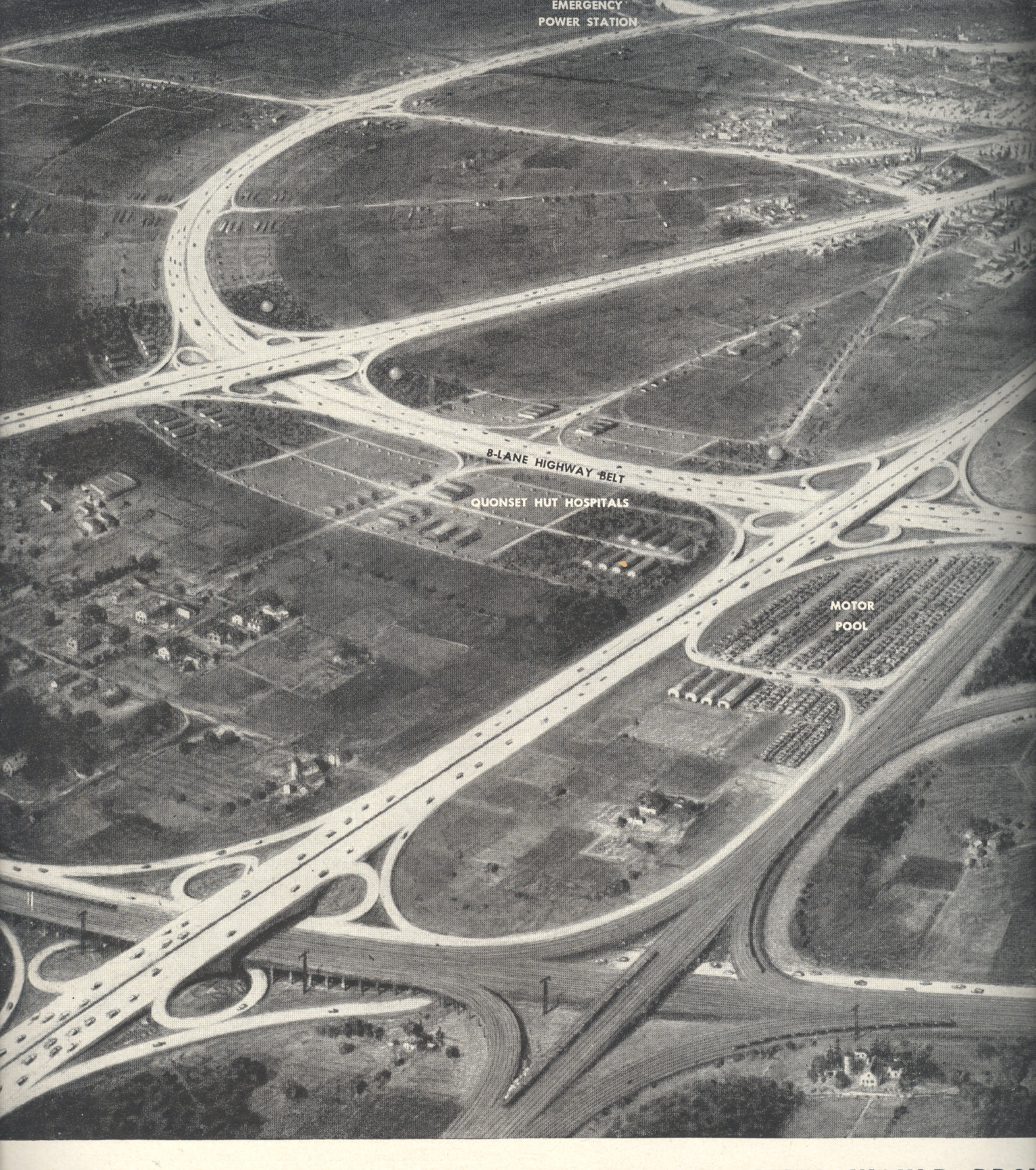
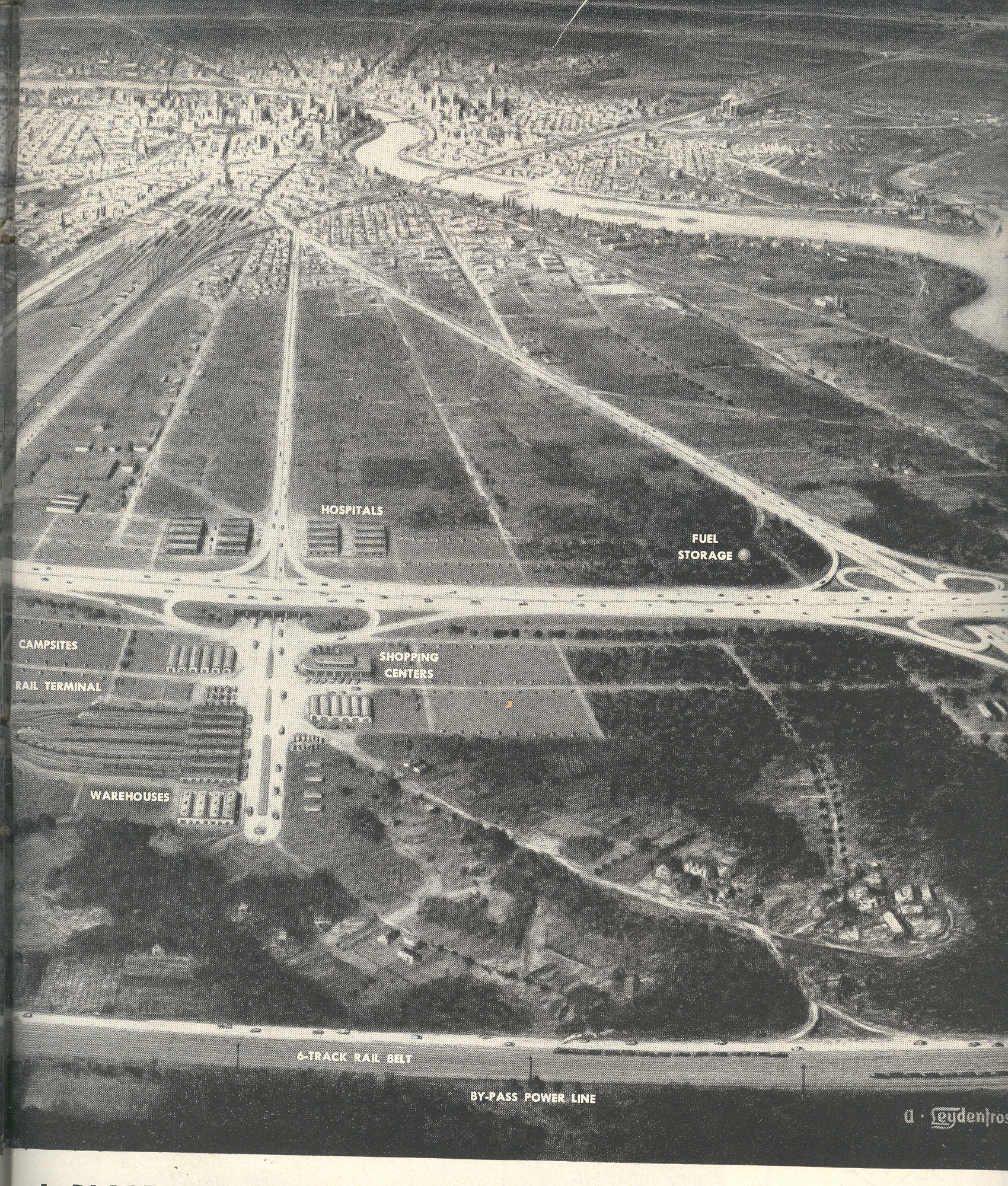
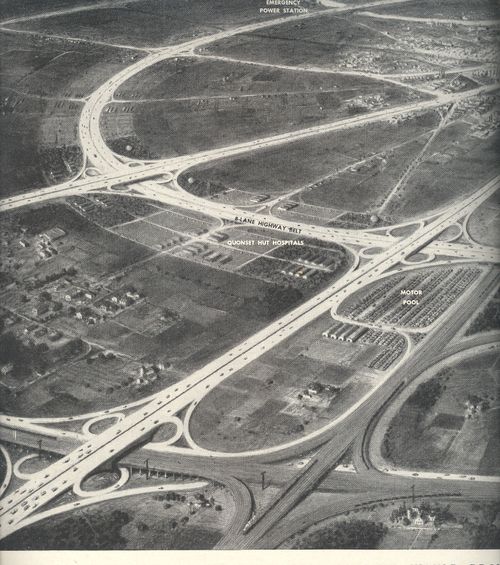
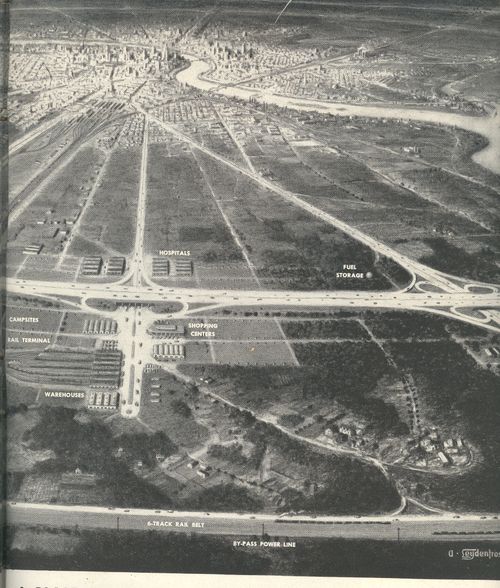
    One reaction was to construct concentric outer highways around metropolitan areas, “life belts around cities (which) would provide a place for bombed-out refugees to go”. In the birds eye view provided here, we see the plan in action, the main parts of which are an 8-lane “express” highway belt 10 miles away “from the built up edges of the city” , and a 6-track railway belt five miles further out, these accompanied by various feeder arms stretching straight-away from downtown.  In between the two outer rings would be land that would be kept free of development, so that farms and tent cities could be constructed after the attack. There would also be major collections of hospital and fuel depots in the greenbelt area.  Infrastructure would already be in place (gas and electricity, supplied with power from who-knows-where).   Shopping centers and a giant “motor pool:” would also already be in place, waiting for the Doomsday clock to strike midnight. 
    ==Blog July 27=wiener right

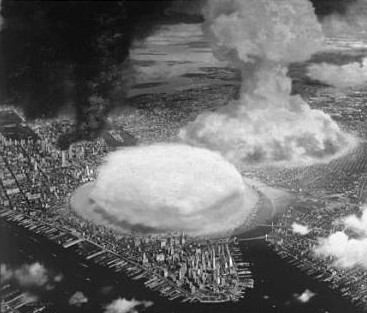
    One of the overwhelming presumptions here is that the interspersed green life living within the concentric rings of escape and transport routes would survive the attack. As would the highways.  Why on earth wouldn’t that infrastructure be attacked as well? Given the proliferation of weapons, it would seem highly unlikely that The Aggressor would target just downtown areas of major cities—they would of course have to include the safespots as well. Not that there would be that much of a change in targeting parameters:  exploding a series of 1 or 5 or 10 megaton warheads over a city like the one pictured here would pretty much decimate anything within the 15-mile life zone set out for survival.  With weapons in this megatonnage range, we’re talking about an explosive force that would be inconceivable, even using the Hiroshima explosion as a currency.  It is hard to imagine what happens when you deliver 3 or 4 5-megaton weapons to a city like this; when each of them would have the explosive force of 5,000 or so Hiroshimas, it is pretty clear that nothing will be left.

    This planning gap reminds me of the question dealing with UFO running/landing lights:  why are they there?  Even assuming a modest strike in the kiloton range (which simply would not be the case) why would these defensive structures not be a target, particularly, oh dear sweet creator, since they would actually be forming an enormous target, and one that even a half-blind flying pig could find from altitude? Ultimately, it wasn’t a good question to ask because the answer would reveal the helpless, soulless situation for what it was.  It was precisely an adult version of the ‘duck-and-cover” cartoons that showed the good students who got under their (wooden) desks being shielded from the atomic nastiness that just knocked down their school.  And of course these concentric evacuation and mobilization rings, even if they had miraculously survived a purposely modest attack, and even if they actually worked to handle the flow of millions of people in their eight lanes, and even if all of those millions driving these highways didn’t have any accidents that would choke the flow of traffic (and on and on), we still haven’t approached the radiation question.  For it was in the greenspace between the two concentric rings in which tent cities for the evacuees and homeless would come to life, some ten miles from ground zero (if, again, they weren’t themselves directly bombed with weapons in the megaton range). 

    So, in short, the way that these efforts would work is if (a) there was a lot of lead time to the attack, (b) everyone left the city in an orderly fashion, (c) nobody had any traffic choking accidents, (d) there was no radiation, and (e) one and only one “antique” nuclear weapons was used in the attack.  Given these parameters, the plan just might work. 

    One of the authors of this not-particularly well-thought or original idea was in fact a great and original thinker; this enormous and costly and not effective plan was certainly not one of his best moments.  Norbert Wiener (1894-1964), one of the co-conspirators of this idea, was a boy genius who grew into an adult genius, and that growing part didn’t take long at all.  He graduated with a Harvard Ph.D. in 1912 at age 18 and went on to a distinguished early career as a logician, studying under Russell and Hardy and Landau and Hilbert.  He left that part of his life mostly behind by the end of WWI, dedicating  himself to mathematics.  One of Wiener’s great accomplishments was (during the early stages of WWII) designing the capacity for anti-aircraft guns to be self-aiming, improving their accuracy (and effect) immensely.  This was the foundation of his communication theory which became the basis for his creation of cybernetics, a superior creation with vast applications over many fields. 

    By the beginning of the Cold War, Wiener became a pacifist, leading him down a dark and murky road to this “life belt” idea.  Perhaps this approach had precisely the wrong effect:  by lending the idea of sustainable and orderly survivability to nuclear war might have led people top believe that nuclear was survivable; and if there is a game played in which its two players are not necessarily both losers, then the specter of “winning” a nuclear confrontation with the Soviet Union becomes a possibility, making the whole idea of fighting with nuclear weapons feasible. 

    Doomsday

    I’ve not a clue as to what the great Norbert Wiener was thinking when he worked this out; even as a (and perhaps “the”) math guy,  the numbers just don’t add up. 

    When I put on my Jorge Borges x-ray specs the plan looks prettier, and of course involves libraries.  The outer concentric circles are still there, as are the green spaces, and the express/democratic ways of getting there; but what you would find there, on the highway ring, would be a series of libraries and dataports, and endless stream of books, and words, and numbers. 

    Addendum:

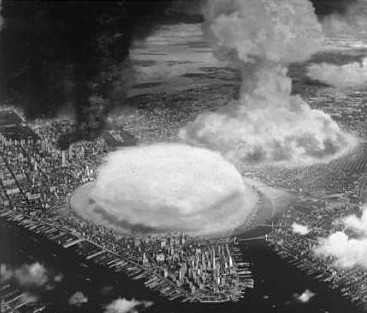
    One of among many things that I didn’t discuss above was the placement of such a greenbelt/lifebelt system for cities like New York, or San Francisco, or Los Angeles.  As we can see in the depiction of a nuclear attack on NYC from Collier’s Magazine (1948) there’s sorry little area for that highway ten miles out from 42nd Street…
    Atomic nyc


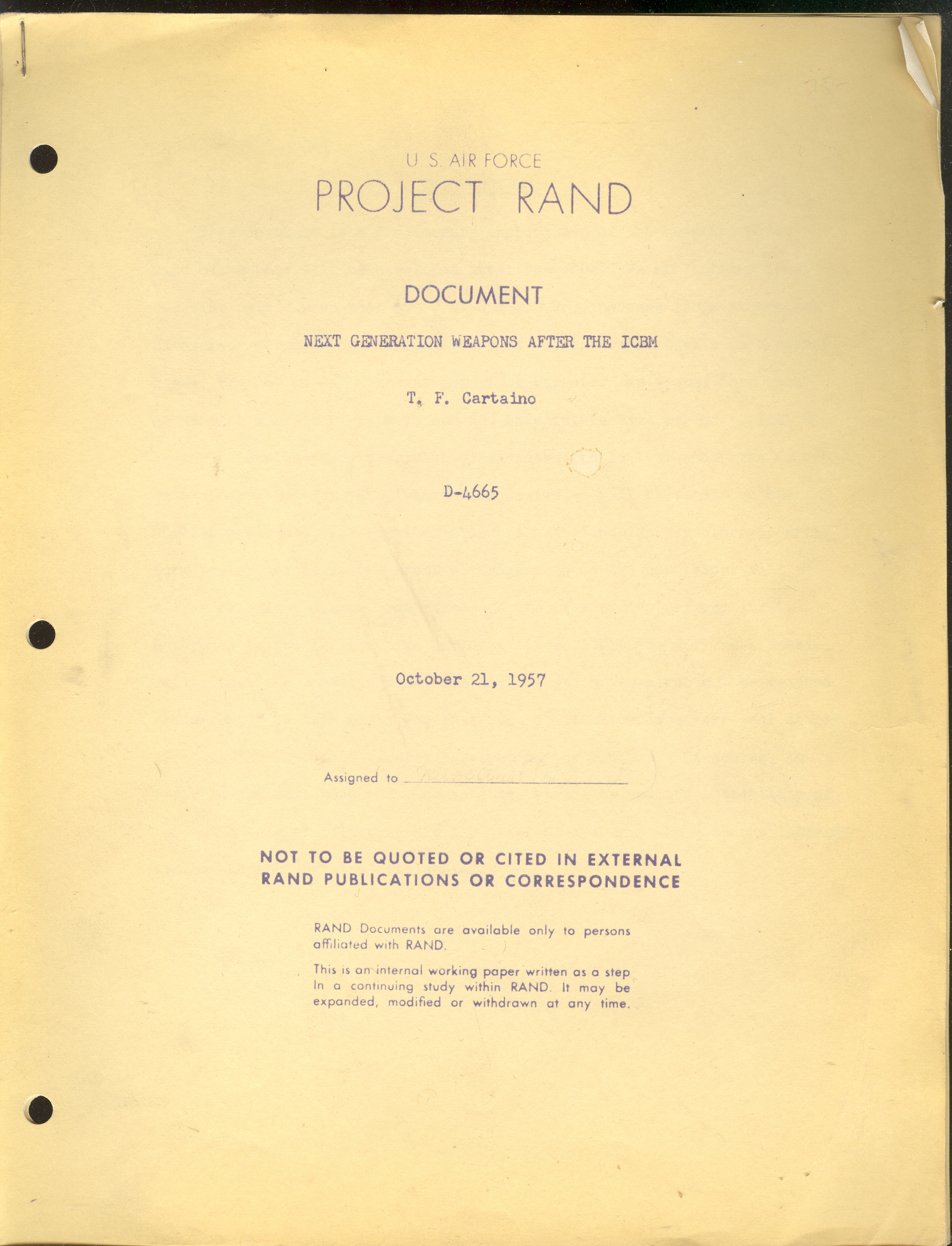
  • The “Non-Violent” Ultimate Weapon Successor to the IBM? RAND Report, 1957

    JF Ptak Science Books LLC  Post 1218

    +()+ebay icbm The RAND Corporation (Research And Development) is a think tank originally formed in 1946 by the US Army Air Force as part of a contract to the Douglas Aircraft Company.  After 1948 RAND Corp was funded by a number of different sources, private and governmental, and left the sphere of being a direct arm of the  U.S. military. (Maybe.)  It still did enormous amounts of work on behalf of the military, and seems to have been their chief  theoreticians during this period.  It was also the time that the policy of Mutually Assured Destruction (MAD) was formulated at , partially under the direction of we’ll-see-him-again-down-the-road Robert McNamara.  And of course much else.  [This pamphlet is available for purchase from our blog bookstore.]

    This publication is an internal RAND document, not meant for the eyes of the outside world, at least in 1957.  I own a number of these reports, and I must say that this one is odd—it is rather flippant, sometimes oddly and darkly (dare I say it?) funny.  It is also short (four pages) and gets to the very meaty part of the issue immediately.  The author(s) assume that the US and the USSR will have achieved a point of stasis such that it would make absolutely no sense for either actor to actually employ their arsenal (and excluding “the possibility of the button pusher ‘flipping his lid’ “.  The paper attempts then (“let’s jump right in and assume we find ourselves in this stalemated period”) to envision the next kind of war in which the ICBM would not be an active factor. “We therefore postulate here that the kind of war we will be engaged in…in the period of nuclear stalemate of the non-violent war, the opening phase of which has been called the cold war.”


  • German Propaganda, 1929–a Call to Militarization

    JF Ptka Science Books  Post 1168

    [One of a long series of posts on propaganda–enter this term in the search box at left to see the listing.]

    Germany  1928 tanks det526

    Germany  1928 tanks525
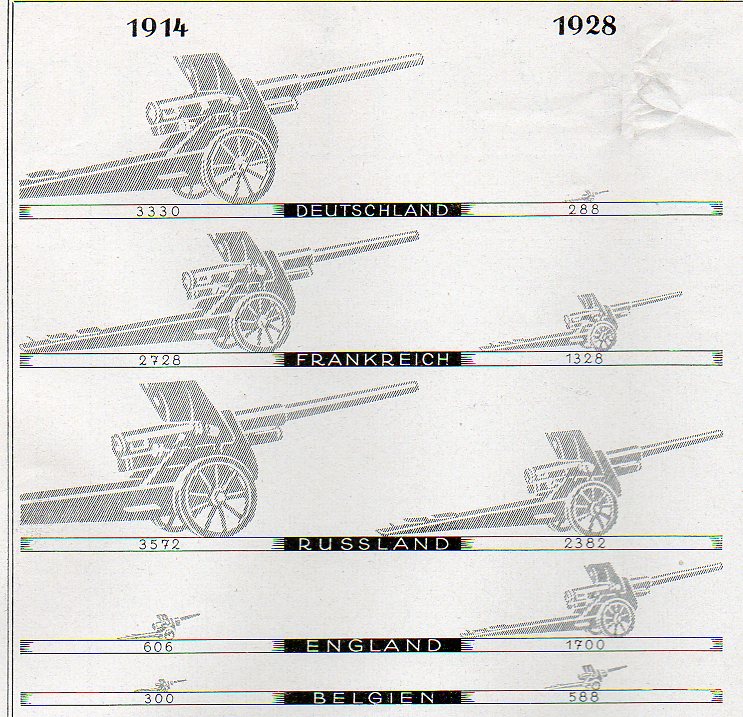
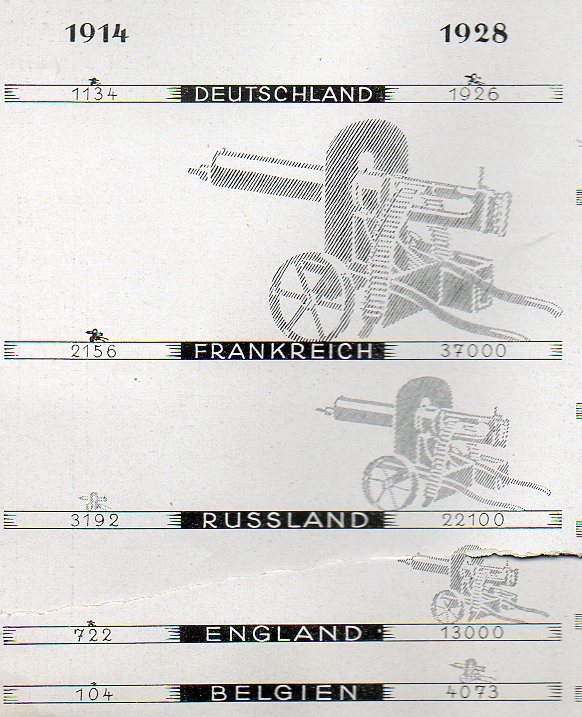
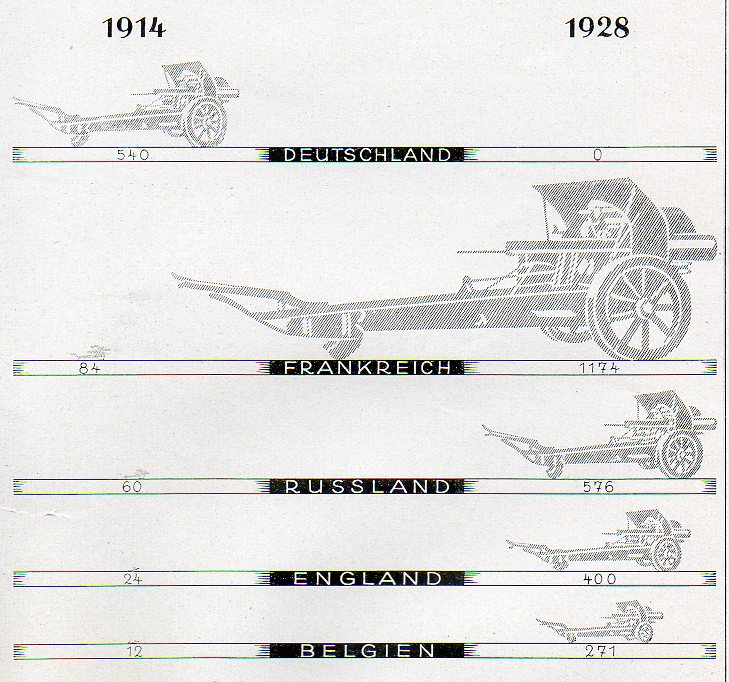
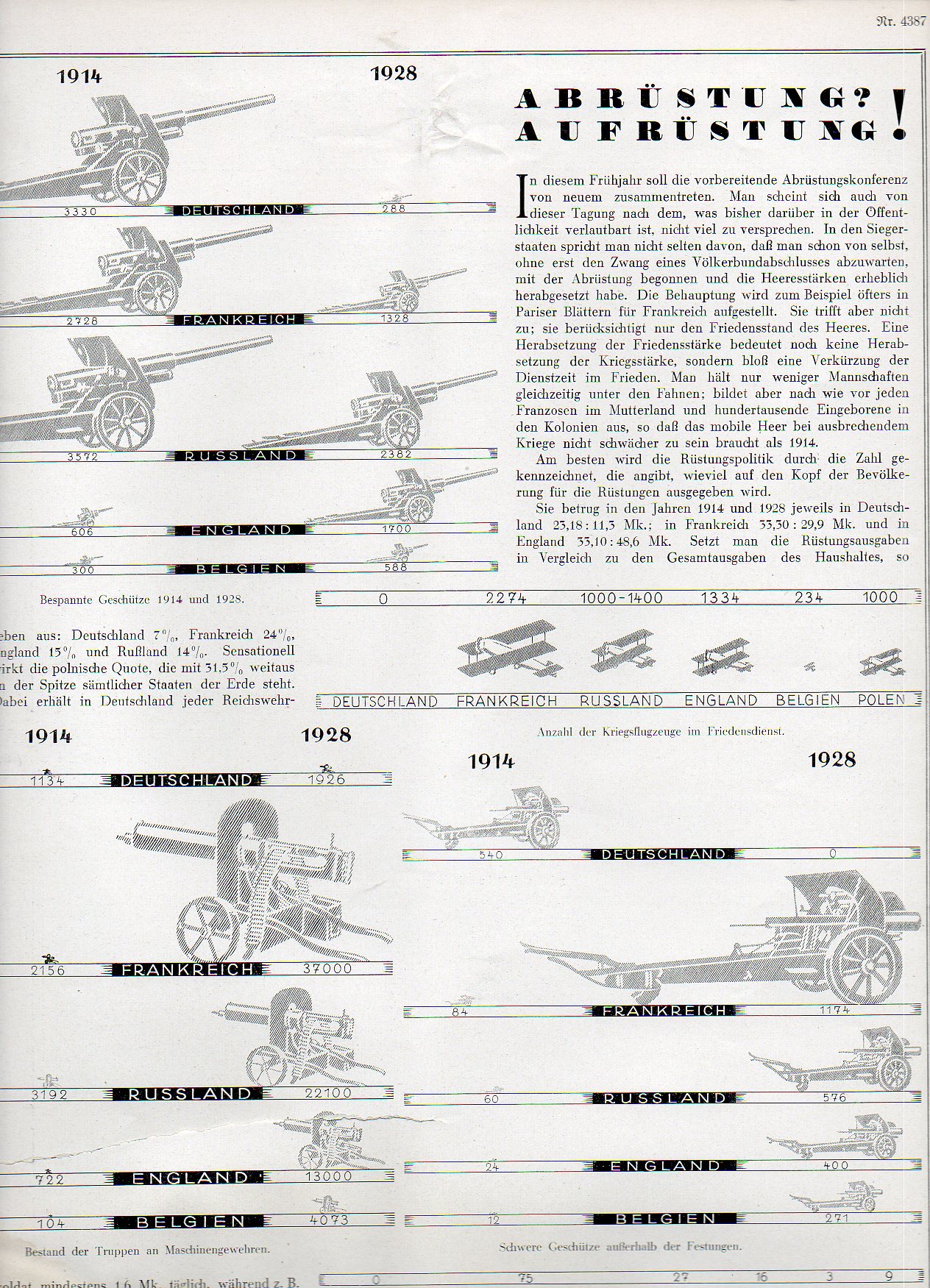
    In my “reading” of the Illustrirte Zeitung (Leipzig) I found this full-page illustrative representation of data (11 April 1929), one of the earliest propoagandist pieces (to my mind) in that magazine, showing the state–and great height–of militaristic weakeness in Germany, one of the lowest points that it reached in the breathing space between the two wars. It was really a picture of nothingness, a mention of the lost possibilities, and also what needed to be done–it was an early call to attention, to arms, to the reconsider of the Paris agreement, of doing “something”. Four years later the rearming business would be kicking into action, six years and five months later, the Second World War would start in earnest.

    Germany  1928  airforce523
    “Abruestung? Aufruestung!” is the name of the article-ette (roughly shouting Disarmament? ARMAMENT!, or Disarm? ARM!), basically stating that enough was enough, and that now was the time to start the process of having a military again.

    Every Germany (basically) would’ve known these facts, but seeing the representations of their zero-strength force of planes and tanks would’ve been an enormous blow.  And it was intended to be so.

    Germany  1928  cannons521
    Germany  1928  machine guns522
    Germany  1928 canon 2524
    Germany  1928520


  • A Shadow for a Mask–the Pivot Person in the Execuiton of the Lincoln Conspirators

    JF Ptak Science Books   Post 1166

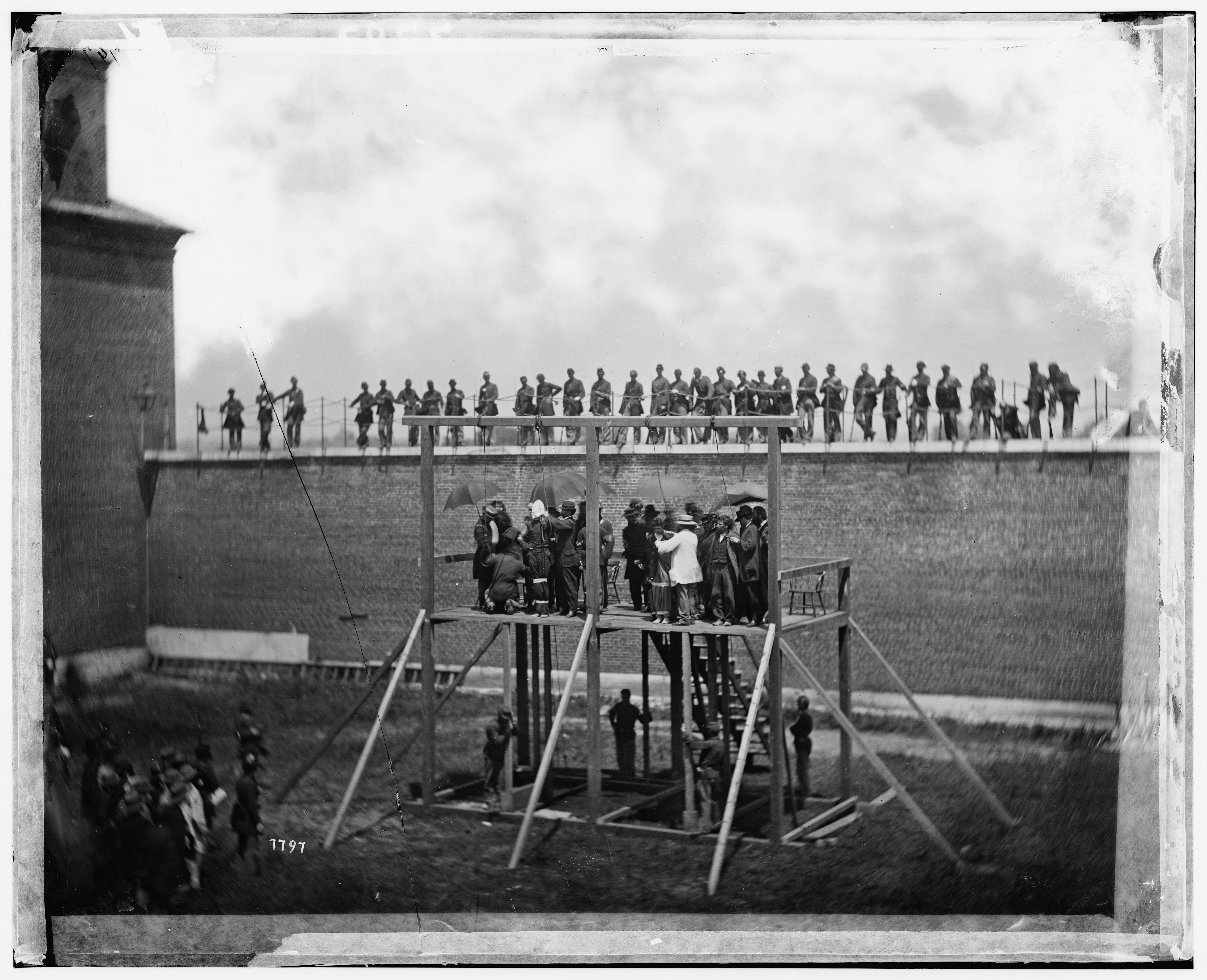
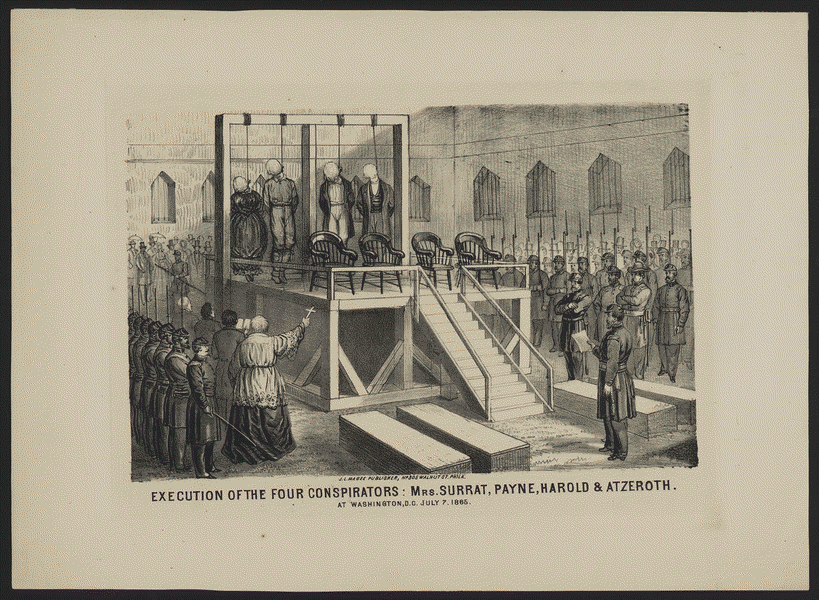
    On a hot 7 July, 1865, photographer Matthew Brady was the only photographer present at the old Washington Penitentiary to make images of the execution of the Lincoln assassination conspirators  Mary Surratt, Lewis Powell, George Atzerodt and  David Herold.  All of these stories of the assassination are best told elsewhere–in many other elsewheres, a story that is legion–but I can’t seem to find anything about one special, particular  person captured in two of the series of these photos.

    Lincoln conspirators

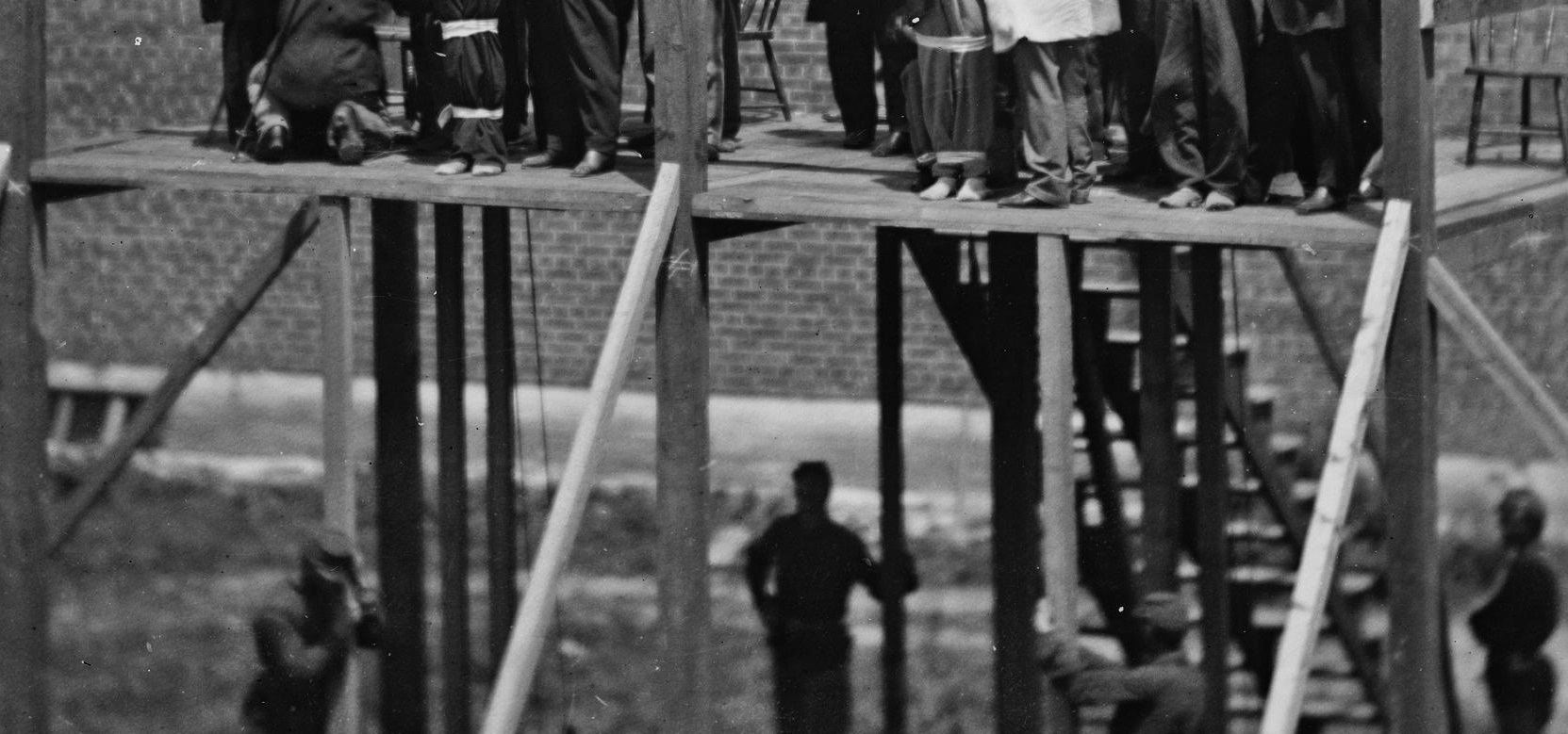
    If you look closely at the first photograph, there is a man leaning against a pole that is directly under the first condemned conspirator, Mary Surratt.  That pole, a substantial 6x6x10′ or something like that, is the only thing that is holding the trapdoor closed on which Surratt stands.  Actually, I think that two conspirators occupy one trapdoor–there is a second pole just to the right, another man standing nearby.

    Lincoln conspirators detail

    I guess the execution was at high noon.  The shadows seem to be falling straight down, our man–standing just out of the reach of the shadow of the gallows–has his face obscured by the shadow of the brim of his cap. Like a mask.

    Gardner execution detail man pole jpg 

    What was that first man doing, exactly?  He seems to be in a  nonchalant attitude, given his position and circumstance, as well as the crowds and significance of the event. Why was he leaning on the pole?  Was this just the last part of a long morning?  Was the pole not terribly secure? Was he bored?  Was he overcome?

     He was surrounded on all sides, and he was hearing the boots-on-wood above him, the conversations in the preparations of the nooses, the shuffling of the shackled feet of the condemned, and perhaps the last words of the people waiting now for the last noose to be fitted over the last man.  At that point, an order would be given, and our man–who was now positioned behind the gibbet–would simply push another long pole against the bottom of the supporting pole, dislodging it, and allowing the trapdoor to open, the conspirators dropping to their deaths with broken necks. Or I hope for their sake that their necks were broken–by the looks of the position of one of the nooses, its in a bad spot so far as assuring a quick death is concerned.  Maybe the noose’s position was changed after this picture was made  Maybe not.  What did our man do after pushing the beam out of position?  He would’ve been very close to the action, within a few feet.

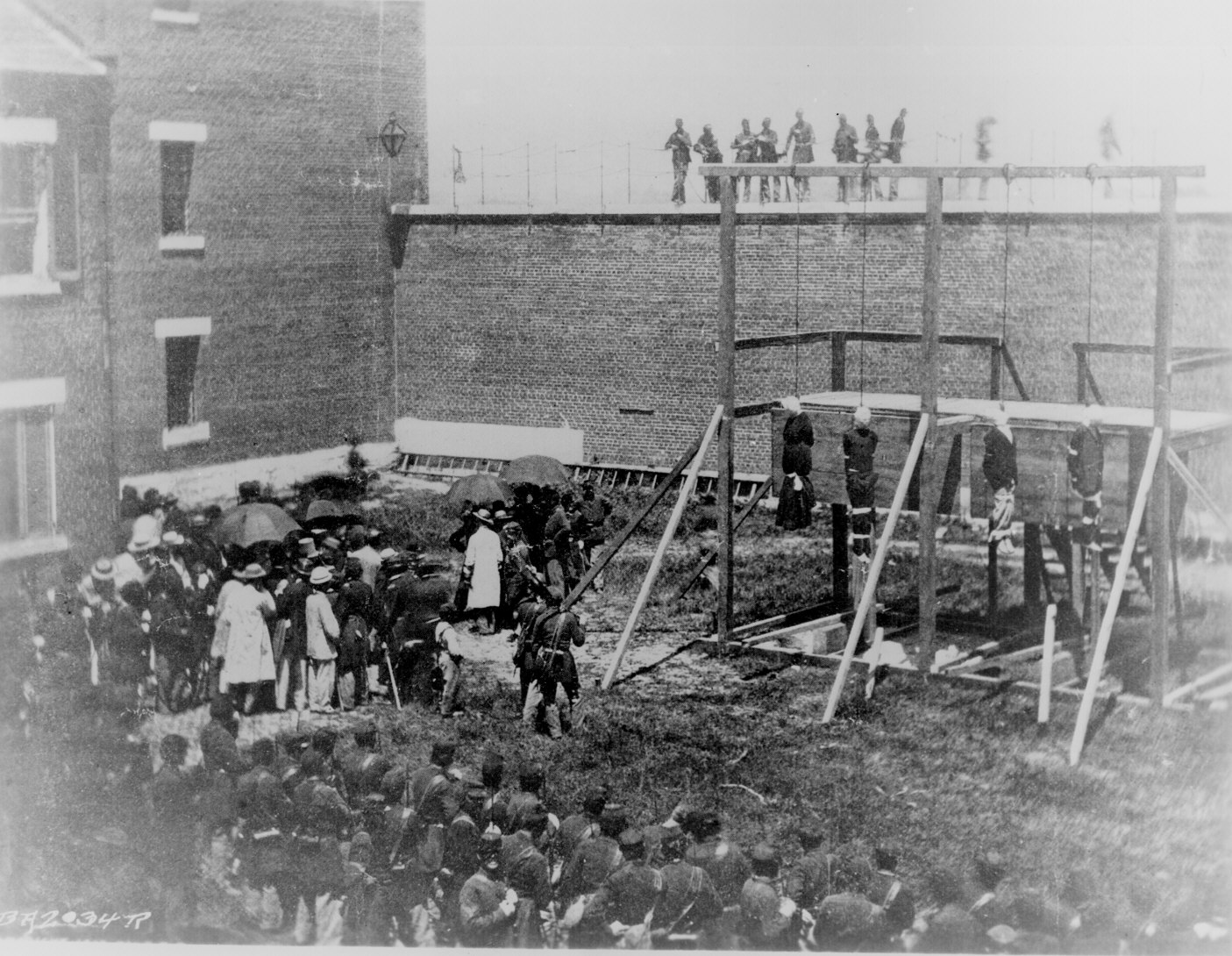
    I wonder what the trapdoor pole pushers do afterwards?  What were their jobs?  From the looks of the last picture, someone put the beams in order, placing them alongside the execution structured, tidied up. 

    Where did the man go?  Since they were the few folks right at the base of the scaffold, right there where the mandrake were supposed to grow, did these men wind up with th job of cutting the bodies free from their ropes and burying them?  Someone did it. I wonder what that someone thought as they returned home, or to the barracks, and st down to dinner.  What did they see in their dinner plate?

    Civil-war-201

     This contemporary print of the scene gets little correct, though the chairs for the conspirators are about right.  The scaffolding is much nicer than in the original, and the place looks certainly far less austere than the penitentiary. The awful thing here is the actual, physical manner of the hanging–the attitudes depicted here  would have been even more bestial,  the lack of a trapdoor suggesting that the were all dropped or raised a few inches and basically strangled to death.  Also in the real scene of the execution there were four coffins for the condemned nearby–except that three of them were piled one on top of the other.  I’m not sure why they were stacked. It seems to me that they were within the visual range of the conspirators.

    Lincoln conspirators

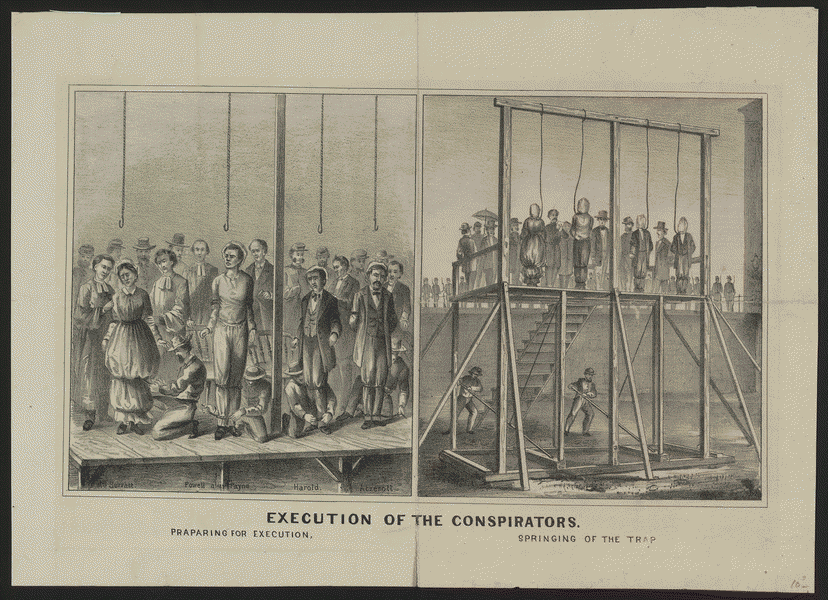
    The next contemporary print gets a little more of the reality of the scene correct, both mechanically and emotionally, and shows how our own character of interest did his job. The actual hanging part–the ropes and the nooses–is again wrong, suggesting strangling more than hanging.

    Lincoln execution 2

    The pictures raise far more questions to me than anything else, as witnessed by my personal record use of the question mark in this post. . 

    [Sources: photographs courtesy of the U.S. National Archives; prints, courtesy of the Stern Collection, U.S. Library of Congress.]


    ·Posted by :

    ·in:

    —

  • WWII Aircraft Cross Sections–Spitfire, Hurricane, Beaufighter, Lancaster (!) and Stirling.

    JF Ptak Science Books    Post 1165

    Here are some fabulous examples of technological cross sections from the collection here–this part concenrtrating on some of the British WWII aricraft.  The drawings are just superb, and you can easily get lost in them, following the geogrpahy of engineering detail from one logical place to the next. All of these images were published in The Illustrated London News and appeared 1940-1943.

    X-Sect  SPitfire507

    And the detail (sorry for that–the originals are much larger than the scanning bed would allow…)


  • Food and Not Having It: Visual Displays of Data, Britain and Germany, 1918

    JF Ptak Science Books    Post 1157

    00-blog--Oct 29 starvation germany953
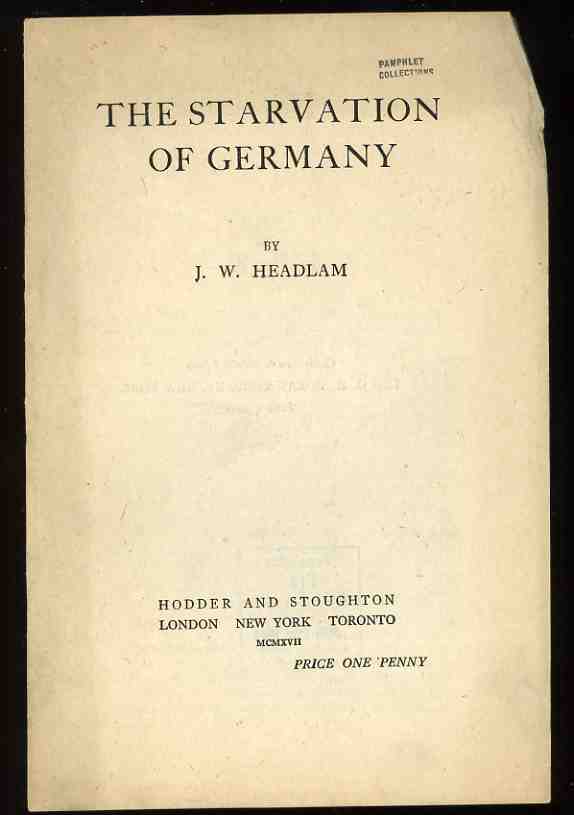
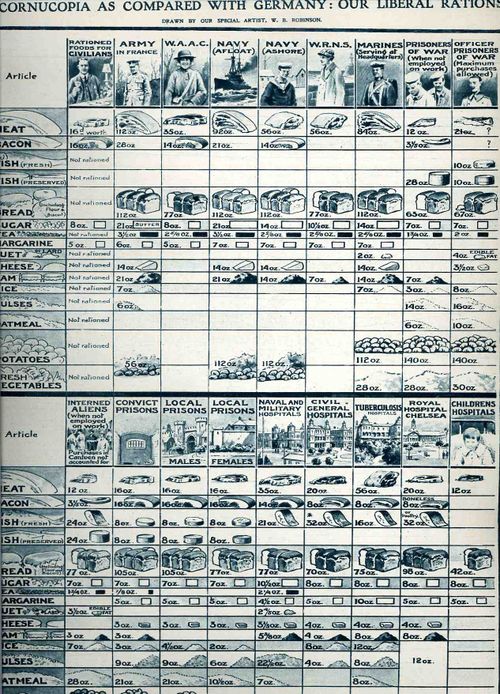
    The idea behind these three images was part of a hearts-and-minds home-front propaganda campaign by the British government to instill fortitude and a feeling of general good in the population, trying to get the message across that British citizens were far better off (in regards to food and staples at least) than their German counterparts.  Even though the situation wasn’t exactly standard in Great Britain in the last year of the First World War, the situation was far more dire in Germany–there was after all an embargo against ships going into Germany or its allies, making it a very difficult to receive food, whereas that problem did not exist in Britain, which pretty much controlled the seas at that point, and could therefore receive food and other material from the Colonies and allies.

    The first graphical display, appearing in The Illustrated London News on June 12, 1918 (and just four months from the end of the War), showed the “ample weekly rations for various classes of the population”.  18 classes, actually, that were enjoying more food than the Germans, the “U-Boat having failed to starve” them. In all of this what comes to my attention first are the allowances for male/female prisoners in England; each getting similar amounts of meat, bacon fish, margarine and fresh vegetables, though for some reason the women are given lesser shares of bread, rice and oatmeal.  The other bit is that the food allotted to the “childrens hospital” is less by far in all categories than everything else.  I’m hoping that this is due to size and consumption differences more than anything else.  I also notice that the officer prisoners of war are given more rations than the enlisted POWs.  Interned aliens are also given short rations, except for fish (Fresh and preserved)  and potatoes, when they get substantially more than anyone else. 

    Unfortunately we do not see what the Germans had to eat, though in the next graphic (same source, though 23 March 1918) we see the “ingenious” ways in which the German people got around not having certain foodstuffs.  The means look more desperate than anything else: meat/sausage for example is replaced by “War Sausage”, which was coagulated ox blood bleached with peroxide, and also by a “vegetable” meat, which was dyed glucose.                                                                                                                          

    00-blog-Oct 27 foes food part II937

    00-blog-Oct 27 ill fed foes 1918935