A Daily History of Holes, Dots, Lines, Science, History, Math, Physics, Art, the Unintentional Absurd, Architecture, Maps, Data Visualization, Blank and Missing Things, and so on. |1.6 million words, 7500 images, 4.9 million hits| Press & appearances in The Times, Le Figaro, Mensa, The Economist, The Guardian, Discovery News, Slate, Le Monde, Sci American Blogs, Le Pont, and many other places… 5000+ total posts since 2008.

Category: Militaria

  • History of Dots 27: Killing Bacteria–Human Experimentation with Conscientious Objectors, 1955

    JF Ptak Science Books  1073

    Medical and scientific experimentation on humans has a long and painful history.  In the early days it seemed much more acceptable to perform tests on people while they were alive more so than to cut up and autopsy their bodies when they were dead. 
    Human experimentation174

    William Beaumont–the “father of gastric physiology” –was also perhaps a very early leader in the field of bioethics.  Beaumont’s most famous series of experiments1 were performed on a living subject, but only with the patient’s full knowledge of the procedure and consent (and also with te ability to terminate the procedures).  (Part of the defense of the Nazi concentration camp doctor-monsters brought Beaumont into their courtroom as an example of early American compliance to their bestialities, but purposely failed to mention the pertinent rights of Beaumont’s patients, whereas their thousands and thousands of human subjects were in concentration camps and were treated without regard to any moral, ethical or humanitarian consequences.)  Claude Bernard–one of the 19th century’s leading experimental medical researchers and physiologists–reported in his monumental 1865  Study of Experimental Medicine… that a physician must  “… perform an experiment on man whenever it can save his life, cure him or gain him some personal benefit.”  Hopkins’ great William Osler (in 1907)  was entirely on board with the Bernard appraisal of the duties of the physician, saying that any new procedure or pharmaceutical must be used on humans before general release.         

    Then of course three’s the other side of the coin: the STD experimentation in the infamous Tuskegee case (1932), the widespread studies of the U.S. Army’s Chemical Warfare Service, the Cornell Medical School’s wincingly bad study that gave the name to the placebo effect, th e1942 Chicago malaria studies on inmates, the long series of atomic and nuclear weapons tests with passive involvement of sailors and soldiers, and on and on, back into dim history. (The experiments by the Nazi doctors and their Japanese Unit 731 counterparts  deserve their own categories.)

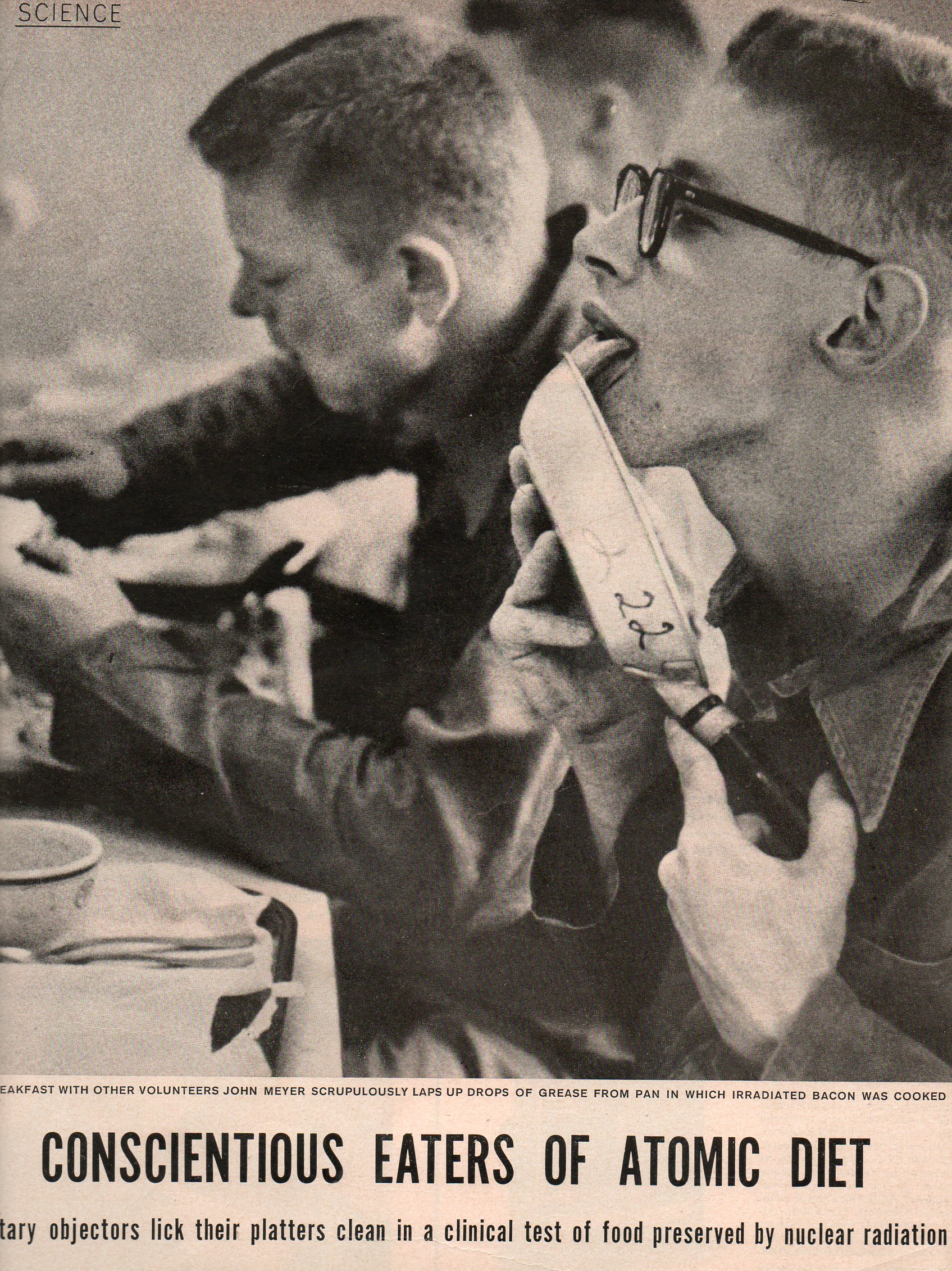
    This photo from Life magazine on the story (“Conscientious Eaters of an Atomic Diet”) of 1955 must be among the most wholesome general cover stories in the history of the idea of human experimentation.  These young conscientious objectors2 declared (for whatever reason, ethic, moral or religious) their inability to serve in the armed forces, and were sent to a different task to replace military service.  Their exchange would be to test the effects of nuclear radiation on food products. (This was the process of using radiation to kill bacteria and insects and whatever other living badie in food that might cause disease or illness of cause the food to spoil.  The long-term result for the military could be enormous, allowing for more inexpensive and less difficult ways to keep food for longer periods of time for troops, and could also keep troops healthier by eliminating certain food-borne illness that could spread from one person to another.)

    Still, what was being asked of these young men was far beyond the “debt” implied by their CO status. The effects of this sort of exposure were still not well known, and these men were absolutely being place in harm’s way, and for the cameras of Life.  The ideas of “Radiation sickness” and “Acute Radiation Syndrome”–created by the two atomic bombs detonated in Japan in August 1945–were only about ten years old at the point where these young men were licking the irradiated grease form their plates. (As a matter of fact there was no immediate medical research team in place to study the biological effects of the bombs in those two cities; after a few weeks and by the end of August there was a organization in place, headed by Colonel Ashly Oughterson.) These men weren’t going to suffer any radiation poisoning from the process (the ionizing radiation used by irradiators “was not strong enough to
    disintegrate the nucleus of even one atom of a food molecule”) , but the effects of irradiating food at this point were still not known.

    Notes:

    1. Published in his 1838 Experiments and Observations on the Gastric Juice, and the Physiology of Digestion.

    2. The business of conscientious objection to military service is milennia old; in the United States it goes back easily to the Revolutionary War.  It becomes a little less defined in the Civil War, where a CO or anyone else faced with military service could purchase a stay of service for $300 or provide someone in his place.   (In the CSA the same could be done but for a little more–$500.)    The whole business got considerably tightened up by WWI, and in WWII–when there was a spike in declarations by Cos–the code for declaration of objection to military service was considerably clarified, though not making it any less painful experience for the CO to endure.      In 1948 the worldwide  issue of the right to “conscience” was addressed by the United Nations General Assembly  in Article 18 of the Universal Declaration of Human Rights, part of which reads:  “Everyone has the right to freedom of thought, conscience and religion; this right includes freedom to change his religion or belief, and freedom…”
         
    During WWII the CO declaration form/questionnaire DSS 47 asked these ten questions:

    1. Describe the nature of your belief which is the basis of your claim.
    2. Explain how, when, and from whom or from what source you received the training and acquired the belief which is the basis of your claim.
    3. Give the name and present address of the individual upon whom you rely most for religious guidance.
    4. Under what circumstances, if any, do you believe in the use of force?
    5. Describe the actions and behavior in your life which in your opinion most conspicuously demonstrate the consistency and depth of your religious convictions.
    6. Have you ever given public expression, written or oral, to the views herein expressed as the basis for your claim made above? If so, specify when and where.
    7. Have you ever been a member of any military organization or establishment? If so, state the name and address of same and give reasons why you became a member.
    8. Are you a member of a religious sect or organization?
    9. Describe carefully the creed or official statements of said religious sect or organization as it relates to participation in war.
    10. Describe your relationships with and activities in all organizations with which you are or have been affiliated other than religious or military.

    For human experimentation, see also:

    Hoerni B. [Medical ethics. Evolution century after century] Hist Sci Med. 2003 Jul-Sep;37(3):331-8.

    Lyon J. Experimenting with humans. Part I: History and context. Second Opin. 1987;6:63-89

    Numbers RL. William Beaumont and the ethics of human experimentation.  J Hist Biol. 1979 Spring;12(1):113-35.

    For more on radiation studies at Hiroshima and Nagasaki:

    Archives: Atomic Bomb Casualty Commission. Issues in Science
    and Technology. Spring 1997. FindArticles.com. 21 Apr. 2008. http://findarticles.com/p/articles/mi_qa3622/is_199704/ai_n8759128.

    Atomic bombings of Hiroshima and Nagasaki. (2008, Apr 19). In Wikipedia,
    The Free Encyclopedia
    . 21 Apr. 2008.

    ABCC Collection at John P.
    McGovern Historical Collections and Research Center (Houston
    Academy of Medicine-Texas Medical Center Library
    ).

    Radiation
    Effects Research Foundation
    Home website in English and Japanese

  • Dunkerque to D-Day, from the Invasion of England to the Invasion of Europe

    JF Ptak Science Books  Post 1055

    (Including a short tale of when Winston Churchill’s nephew, John Spencer Churchill, wound up passed out on the back seat of my 1979 Chrysler New Yorker.)

    Dunkerque124

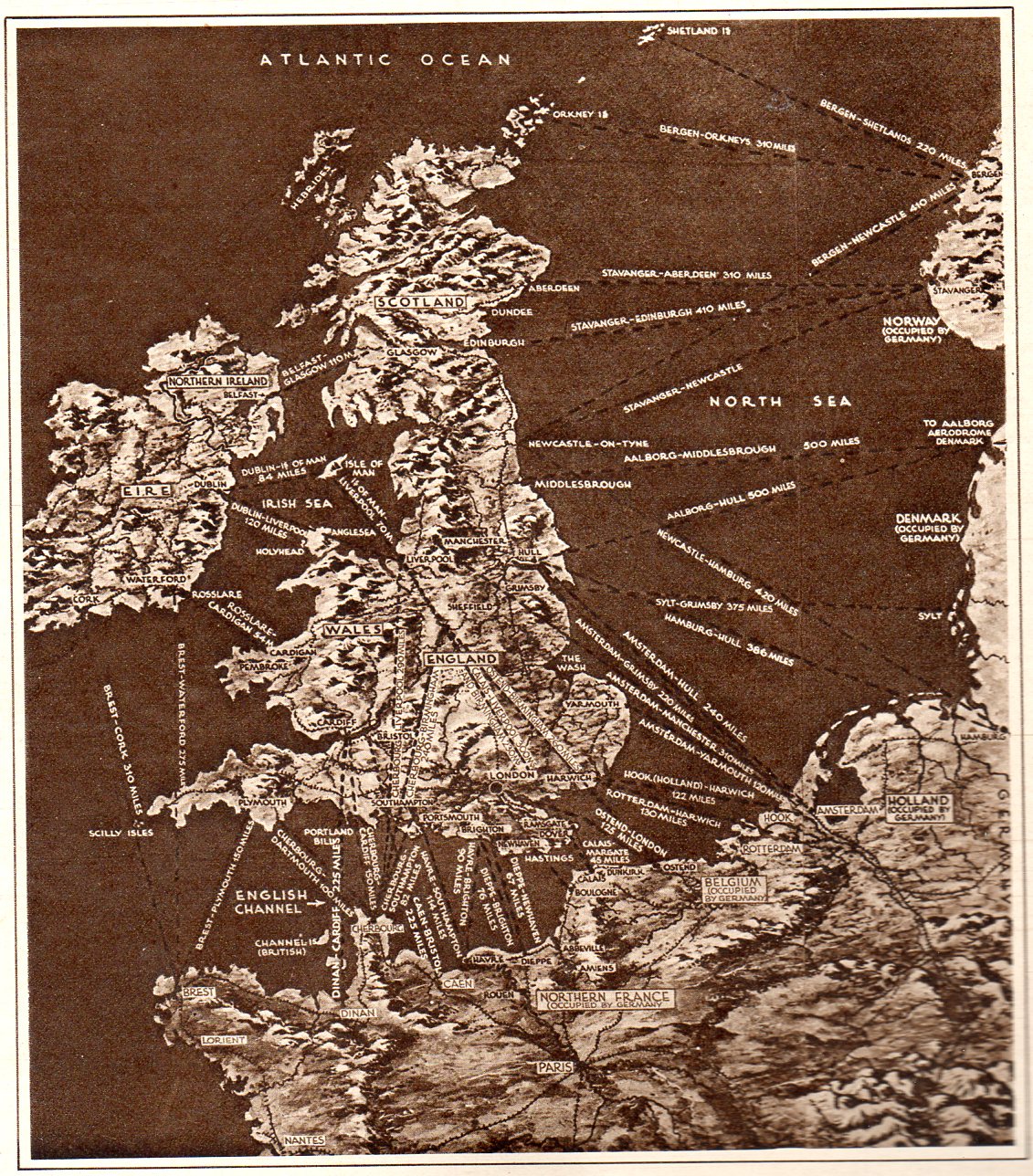
    This map pretty well tells the story of the perilous situation of Europe and England at the beginning of June, 1940.  It appeared in the Illustrated London News on the heals of Churchill’s “Blood, Soil, Sweat and Tears” speech, and was a very frank presentation of the wearing of the war.  By this point in the war Nazi Germany had successfully invaded Belgium, France, Luxembourg and the Netherlands, sweeping across Europe in a broad westward movement, backing up British and French troops all the way to the sea at Dunkerque, where a monumental rescue operation (“Operation Dynamo”) saved them.  (There was an enormous amount of materiel left there on the beach, a devastating loss for the British Expeditionary Force, nearly crippling it.) This was a bad time for the Allies, this part of the war coined by
    Winston Churchill in 18 June 1940 in the House of Commons by:  “The
    Battle of France is over. I expect the Battle of Britain is about to
    begin”. There was very little good that came of these few months for the U.K and the Allies, though four things do stand out: (1) as I just mentioned, the saving of 300,000+ troops at Dunkerque; (2) the resignation of Neville Chamberlain, (3) the coming of Winston Churchill  as Prime Minister of the U.K., and (4) the first deciphering of the Enigma at Bletchley.  Other than that, the situation was dim, and these invasion routes (published at t he very time that Germany was studying such a feat in its “Operation Sea Lion“, or “Unternehmen Seelöwe”).

    The endgame at Dunkerque took place almost four years to the day of the invasion of Europe, when the intent (though not placement) all of these arrows were turned around for the Allied operation at the Normandy beaches on 6 June 1944.. 

    It came to pass in 1985 that some friends and I had drinks with John Spencer Churchill, a man who was at Dunkerque and who reported on it to his uncle Winston.  (A slightly longer story on this meeting with Mr. Churchill appears below.)  After much else I finally asked Mr. Churchill if there was any particular sound that he remembered from being at Dunkerque.  I do not recall his phrasing, but what he said was that the beach at Dunkerque was rocky, pebbly, and that the sound made by tens of thousands of boots on that shore was “disgusting”.  He also said that the mixture of petrol, wind and grit burned the eyes and tasted bad.  It was of course fascinating to hear a first hand description, especially a memory of something so uncommon and visceral. It was unexpected to me, though now when i read about Dunkirque I can imagine its smell thanks to this encounter. 

    First Address by Winston Churchill as Prime Minister.


  • Visualizing Data: 4890 B-17s, 1944

    JF Ptak Science Books 

    At point point in 1944, there were 4,890 American B-17s in service (as part of an overall artime production of 350,000 aircraft).  This is what 4,890 B-17s might look like:


  • World War II Propaganda–What We are Fighting For: Czechoslovakia, 1943

    JF Ptak Science Books   Post 1069

    “In this war, we know, books are weapons”–Franklin Roosevelt, 1943. 

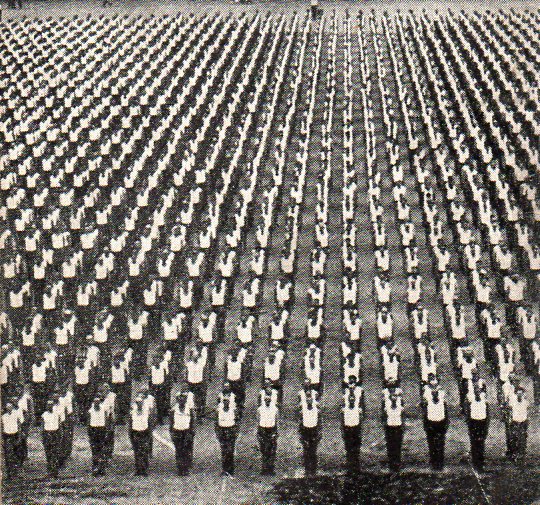
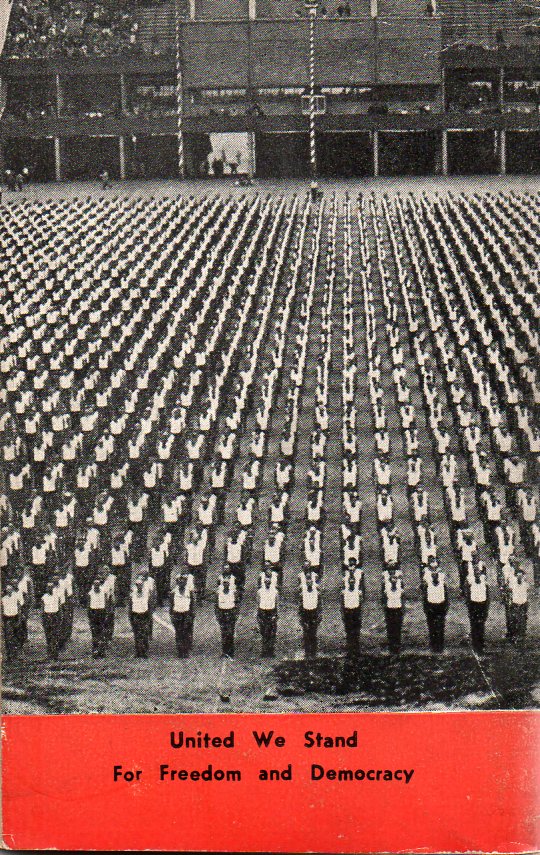
    This image composes the back cover of a very small (3 inches tall)
    pamphlet, Unknown Country, published by the Inter-Allied
    Publications in New York City in 1943.  Its intention was to give a
    background and some sort of name, a little understanding, to what was
    Czechoslovakia, for the general reading public of the United States. By
    1943 the pamphlet may have been a long time in coming, the Nazis
    bullying the Western powers with threat of war if it didn’t get its way
    in stealing most of the country back in 1938–an enormous debacle, the
    only decent thing of it being the necessary disgrace of Neville
    Chamberlain and the coming to the Prime Ministership of Winston
    Churchill. The business of the division of Czechoslovakia and the
    killing of the country through the later months of 1938 is a dark and
    sorry tale, too long to tell here properly.

    Crowd 2165
    The Unknown Country was heavy with
    democracy, the extremely limited successes of interwar
    Czechoslovakia,and the resistance movement–plus of course lots of
    pre-war history–all to provide some sort of recognition for this place
    in the news, an attempt to create a sense of “ownership” about what was
    happening there, a familiarity that would perhaps make Americans
    responsive to war news from far away in places that they had never herd
    of before.

    Crowd 3166

    Crowd164

    One thing largely missing from this 94-page pocket pamphlet
    deals with
    another sort of crowd–the dead crowds of Lidice.  This was the
    town that was used as part of the 1942 reprisals against the Czech
    people as their punishment for the murder of Reinhard Heydrich: 
    and what happened there is that the town and all of its people were
    killed.  Even dead people were killed, dug up, exploded, dynamited.  The
    town was set on fire, exploded and then bulldozed.  The people there
    were murdered on the spot or sent to concentration camps to be murdered
    there.  Lidice was world-famous by 1943, but for some reason it was
    missing (save for a brief mention) from this pamphlet.  I wonder why.

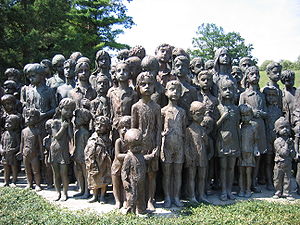
    Here’s a sculpture dedicated to some of the murdered children of
    Lidice:

    Lidice

    ·Posted by :

    ·in:


  • The Honor of the British Marine, 1943

    JF Ptak Science Books

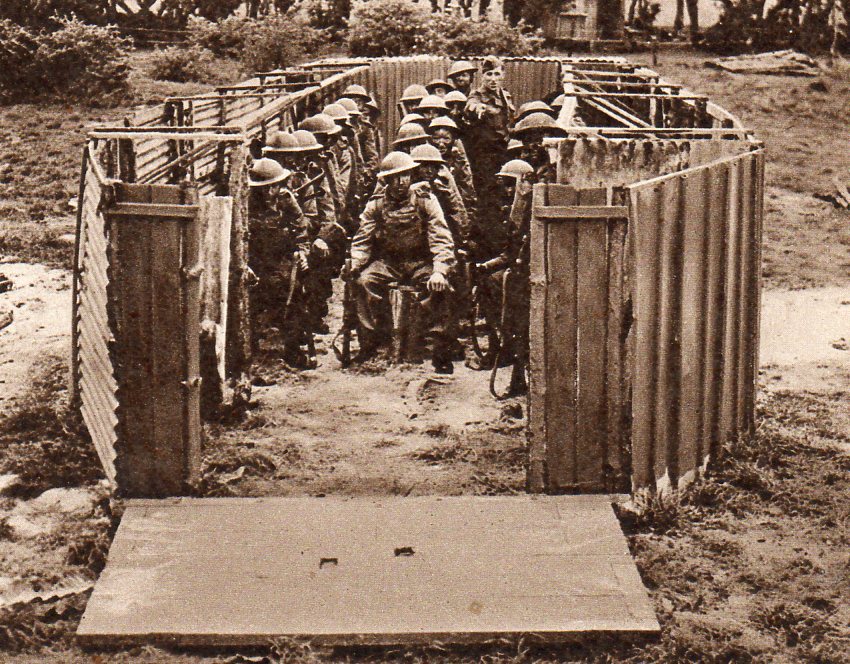
    I came across this image in the Illustrated London News for 8 Mar 1943–it is an extraordinary thing, both wrenching in the fantastic simplicity of the material used for training, and magnificent for these men behaving like the soldiers they were for training in a flimsy imitation landing craft for the invasion of Europe.  I think it an amazing thing that so much could have been produced with so little material assistance.

    The caption reads: “the Royal Marines are ready for anything; an invasion craft has been built on land so as to give them invasion practice”.  I think of these men with nothing but the highest respect and admiration–they certainly know that these bits of wood on dry land won’t approximate anything, and yet they train.  There was no alternative.

    Brit soldiers141
      Patti Digh just said–while looking at this picture–“history makes me weep”. 

    ·Posted by :

    ·in:


  • Churchill’s Bunker and the Baker Street Irregulars, June 1940

    JF Ptak Science Books  (Image Post)

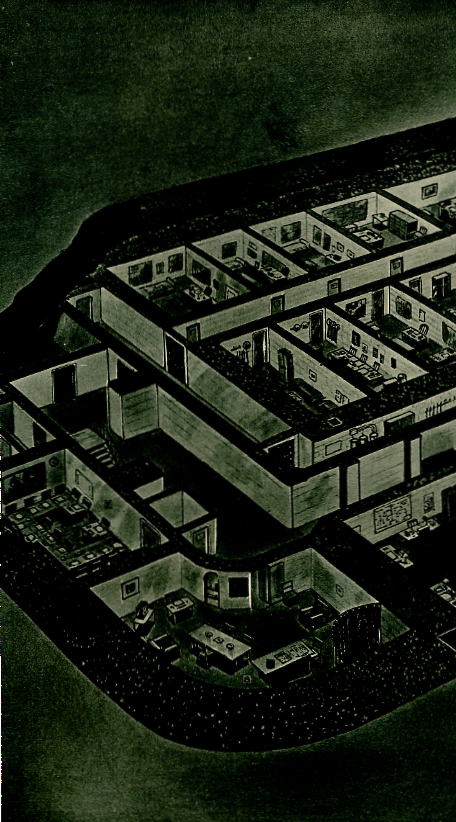
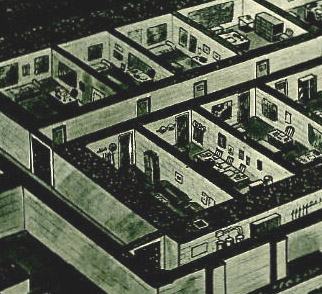
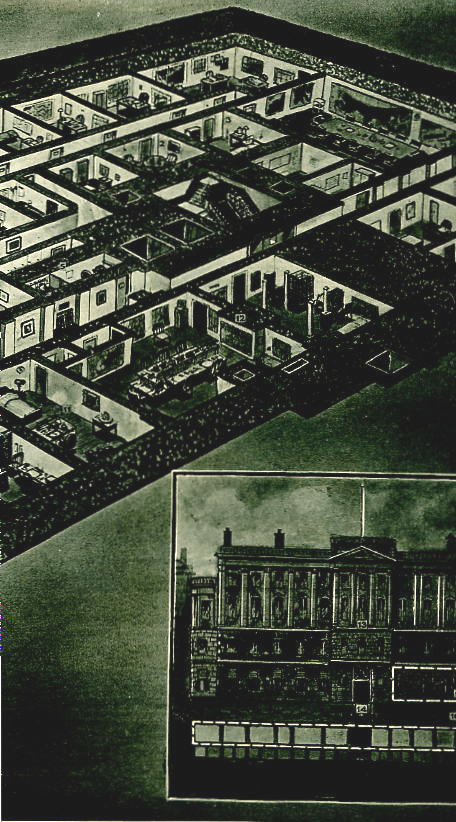
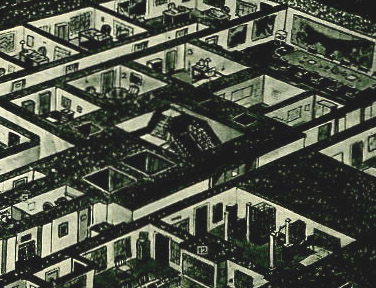
    I had intended to write a full post on this schematic of Churchill’s war-time bunker–about a possible future that never came to be–but it has escaped me, though, the I just couldn’t let go of the date–(June 14) now late–for the formation of the second part of the title of this short post.  (I guess it will become an entry later on in a life-in-the-ground series.) But I thought at least to publish the images of where–the war was fought–and especially, where the Battle of Britain was waged in the middle and later months of 1940–rather than about the other underground war (or warriors) were getting ready to fight an entirely different sort of war.  I’m referring to the Auxilliers, the “Scallywags”, fighters in the league of “ungentlemanly warfare”, the 6,000 or so guerrilla fighters who were being readied to fight the Nazis for the Battle of Britain on British soil by a means other than direct military engagement.  Major Colin McVean Gubbins was in charge of this operation (the Special Operations Executive), and he sought people “who knew the forests, the woods, the mines, the
    old dosed shafts, the hills, the moors, the glens–people who know their
    local stuff”, people who wouldn’t be found, in order to produce a devastating and terminal underground fighting force. Interestingly the headquarters for the SOE was moved by September 1940 to 64 Baker Street, thus giving the folks there the nickname of the “Baker Street Irregulars”.

    I should point out that the SOE was very active in different theatres for  the vast part of the war–I’m just concentrating now on what could’ve been their operations in the U.K.

    These were the fighters who led calm lives during the day who would hen turn into fighters by night who would do absolutely anything to fight the Nazi invading force.  But that’s another story (and ably told by John Warwicker in Churchill’s Underground Army). I’ve bumped into other stories of what the British were planning to do in the face of Nazi invasion and occupation–there was of course stockpiling of materiel and intelligence in removed locations, digging bunkers, readying boobytraps, and so on,  but also aggressive scorched earth plans that involved flooding, sinking part of the Navy, destroying munitions, and so forth: desperate things, heroic measures, to fight to the last. And I absolutely believe that Brits would’ve done every bit of that, fought to the very last possible end and effort, every person doing what was expected of them. 

    File1109 

    File1109 det 2

    File1110 

    File1110 det

     File1112


  • Relief in Capture: Churchill in Carthage and what 230,000 POWs Looks Like

    JF Ptak Science Books   Post 1046

    [Continuing my series on Crowds–see here for example of WWI German prisoners in crowds; also search “crowds” in the google site search at left.]

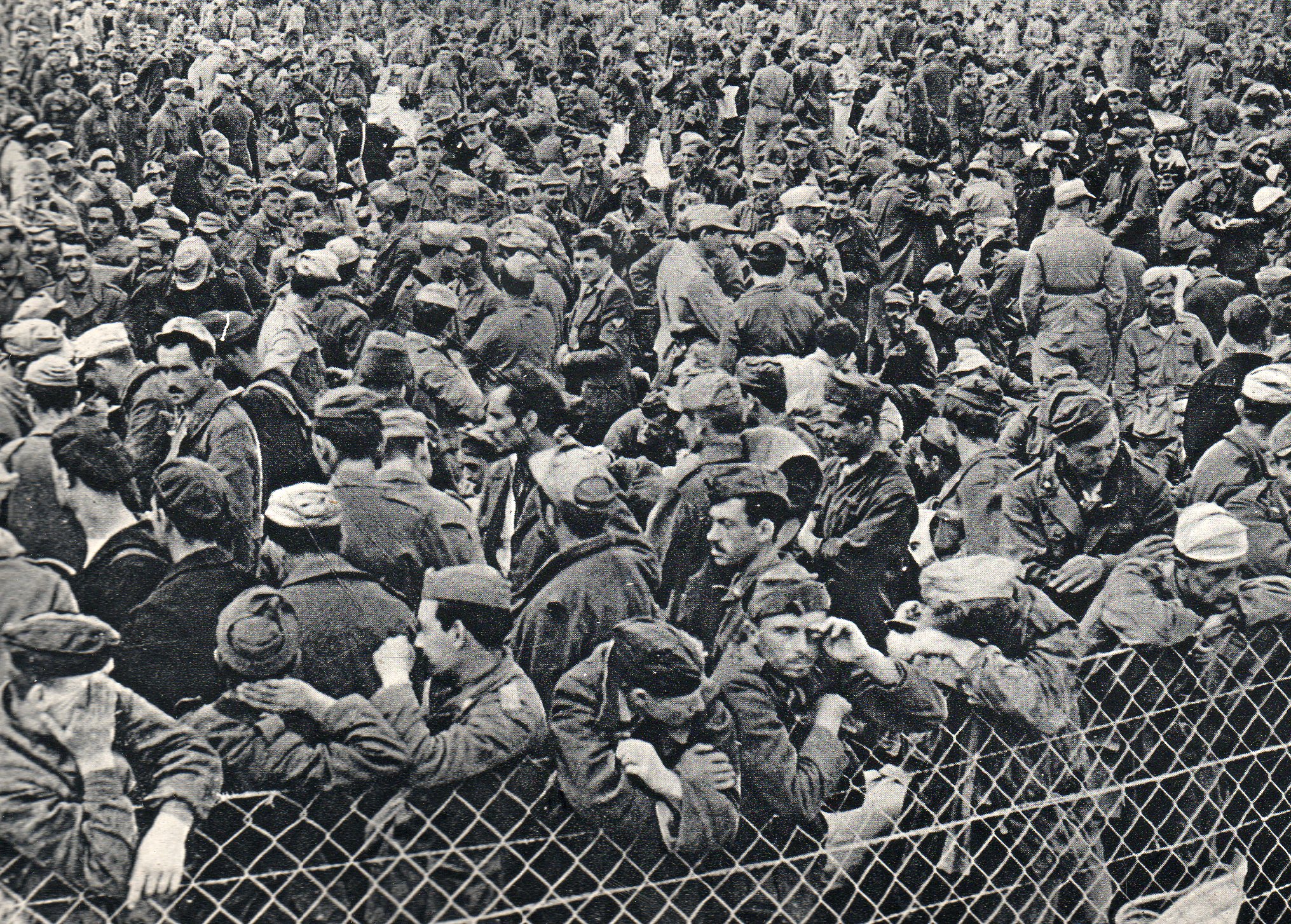
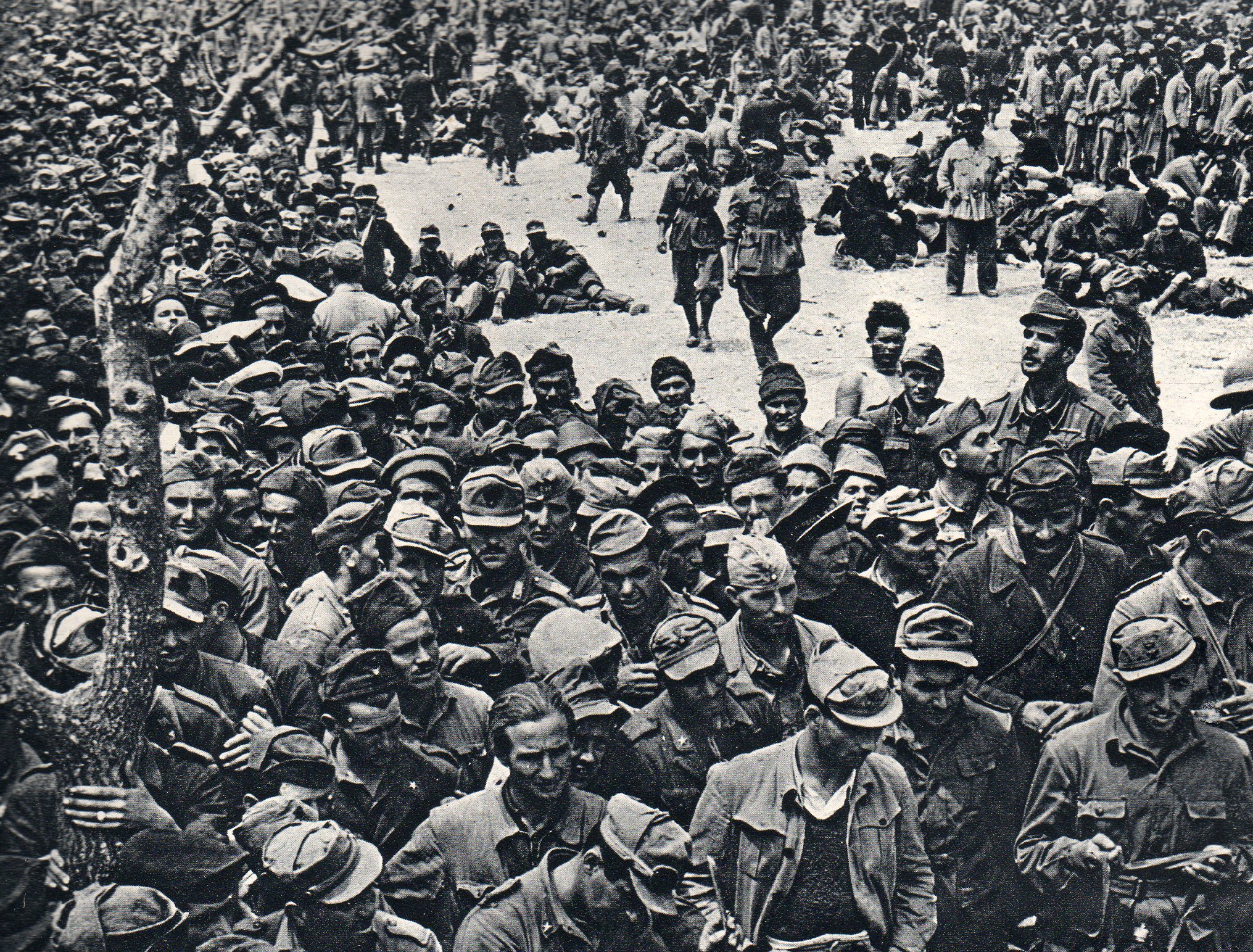
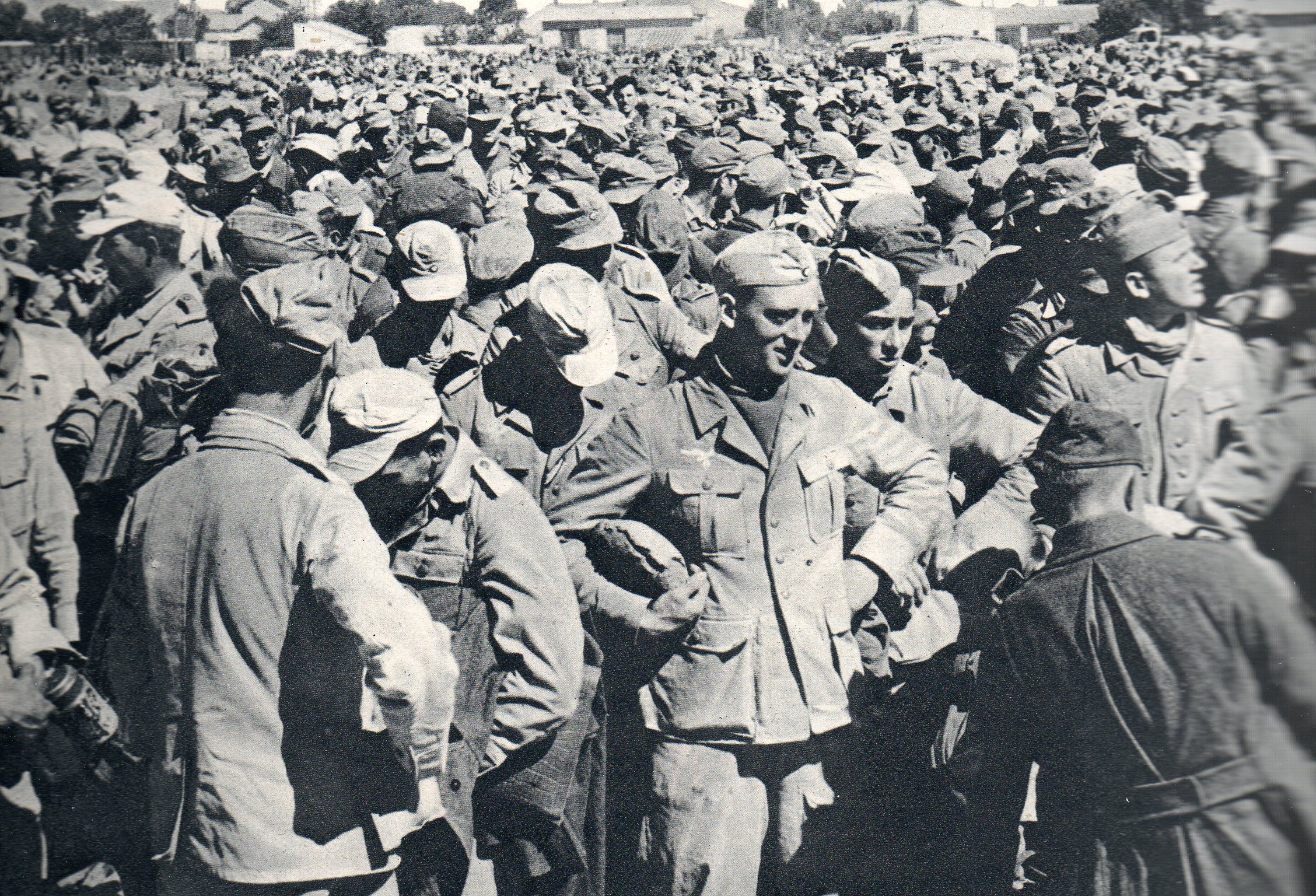
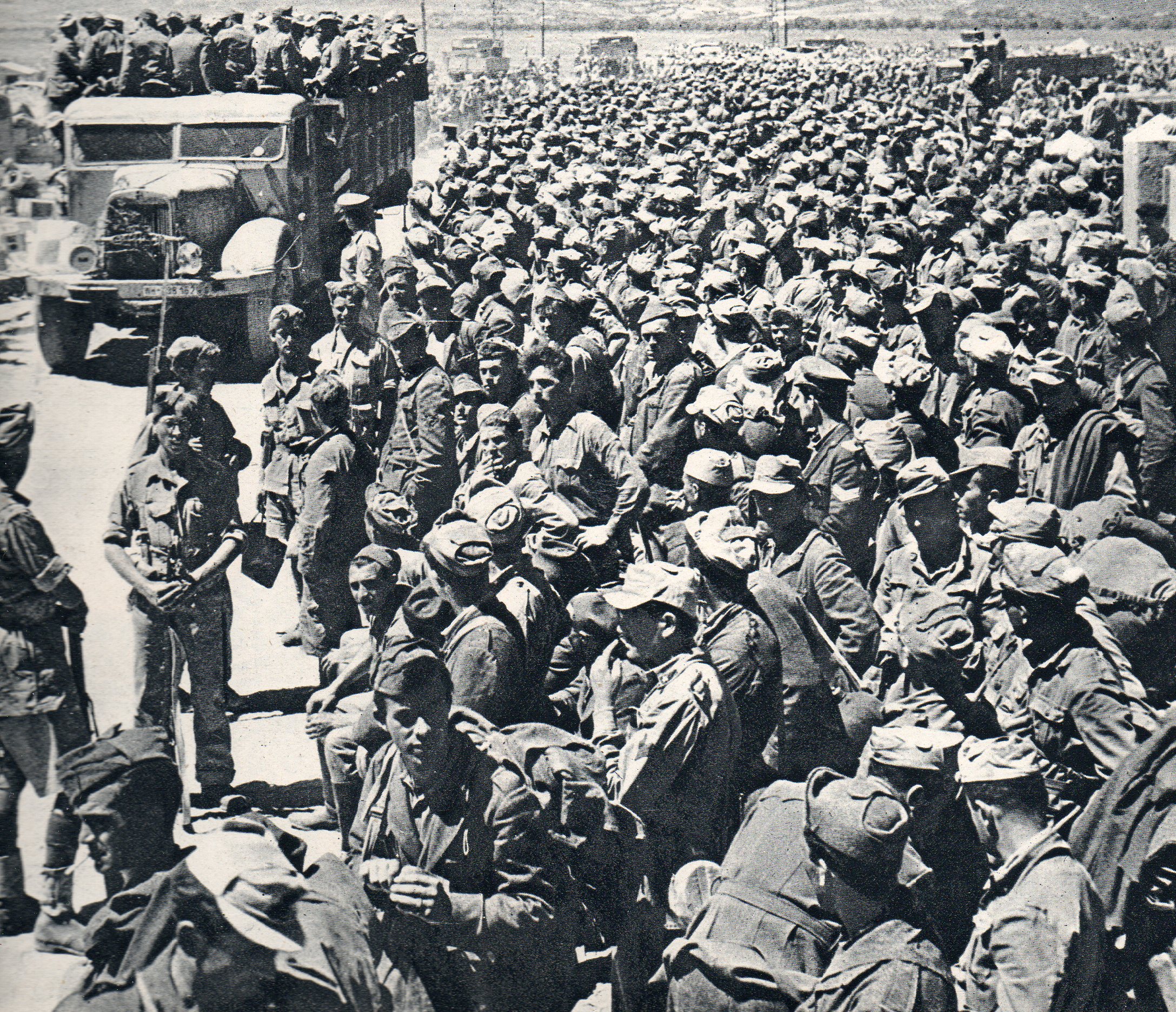
    Part of the campaign in North Africa during WWII was decided by a series of battles known as the Battle of Tunisia, or the Tunisia Campaign, fought from November 1942 to May 1943.  It was a long endgame for the Axis forces in Africa, Hitler losing hundreds of thousands of men, vast amounts of materiel, crapped out the Luftwaffe, spent tons 000 crowds tunisia 1018

    of oil, all in an effort that seemed to be a foregone conclusion save for the fighting.  It was not possible for the Germans (and Italians) to survive there, let alone win, given the great superiority of numbers and resources controlled by the Allies. Plus of course there was the whole Ultra Secret thing, which–though necessarily unknown to the Germans-–in great measure helped to deliver the North African victory.  The Allies were destined to win.

    000 crowds tunisia 2019
    000 crowds tunisia 3020

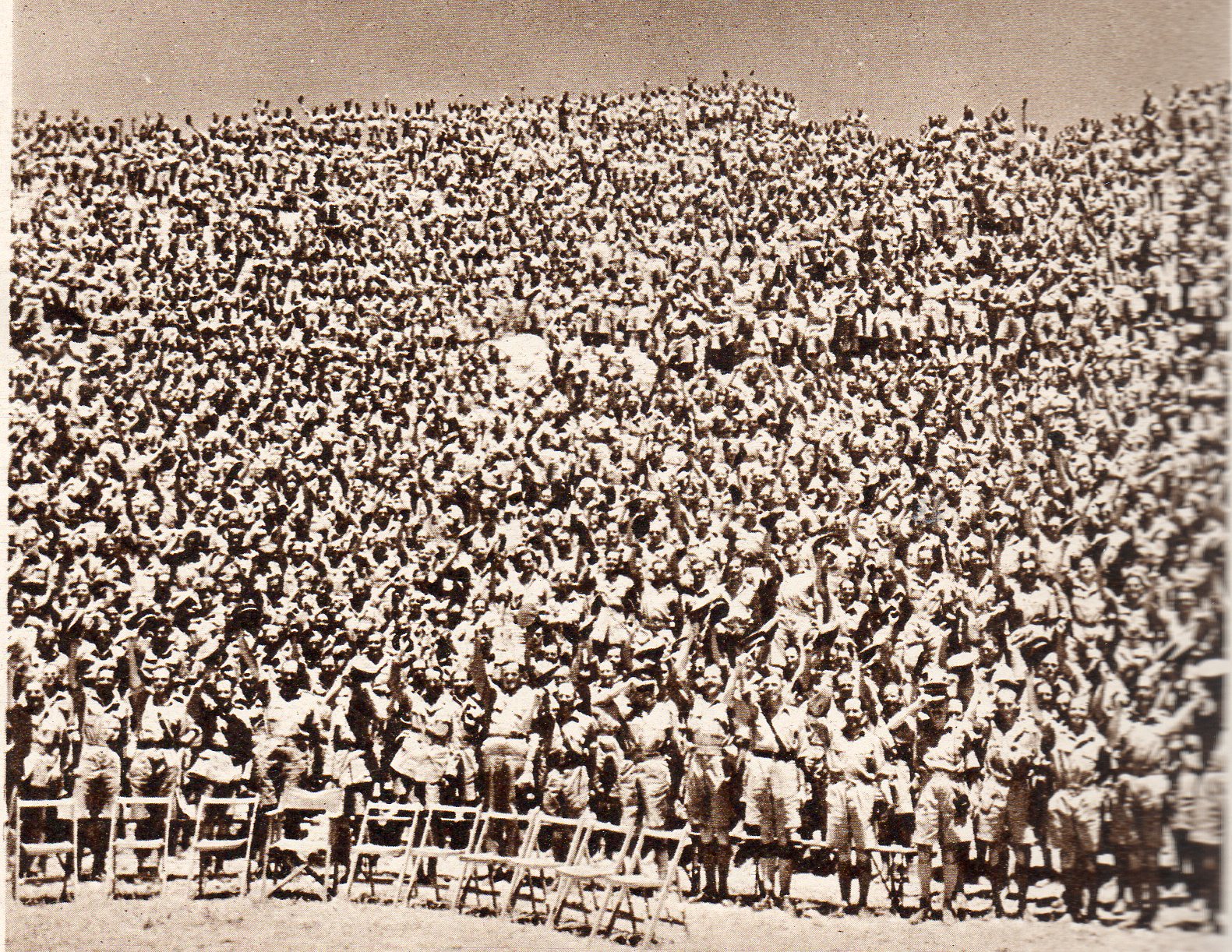
    And in the last picture we see a far different crowd–the victorious Allies waiting on Winston Churchill to speak to them in an amphitheater in the ancient city of Carthage, just down the road a piece from Tunis.  Carthage has seen it fair share of winners and losers of the centuries (or the millenia), what with the Phoenicians and Hannibal and the Punic Wars and Roman conquest and rebuilding and on and on.  The amphitheaters of Carthage were renowned–great structures for what was perhaps the greatest metropolis of North Africa–bu they suffered from defeat as well, their fine fittings and metal and ornate sculpture looted with successive control. When Churchill rolled in there in 1943, there was little left to the structure save for the stone.

    The stone, and all of those victorious soldiers.
    And Mr. Churchill, of course.
    000 crowds tunisia 4021

    The result of this series of battles ended up in May, these pictures showing what defeat looked like to 230,000 German and Italian prisoners, though the vast majority were German.  Its really a curious display of facial expressions in the  many dozens of details that can be lifted from these mass portraits. I’ll make an semi-reasonable statement–nobody really likes/wants to be taken prisoner in war, though I guess time and place and circumstance are factors that can loosen up that observation.  (Germans were much more interested in being captured by the Allies as they fled westward in Berlin and the rest of the country as the Soviets began making their own way towards the heart of Germany, for example.) Perhaps what looks like an element of relief in the close-ups of these prisoners really was that; that their time in the desert was simply expended, and that the prospect of their surviving the war had just been decided, positively.

    [Brits raising their helmets at Carthage, waiting for Mr. Churchill.)

    000 crowds tunisia brits022

    ·Posted by :

    ·in:

    —

  • The Message is the Medium–Children and Bombs, London, 1943

    JF Ptak Science Books  Post 1035

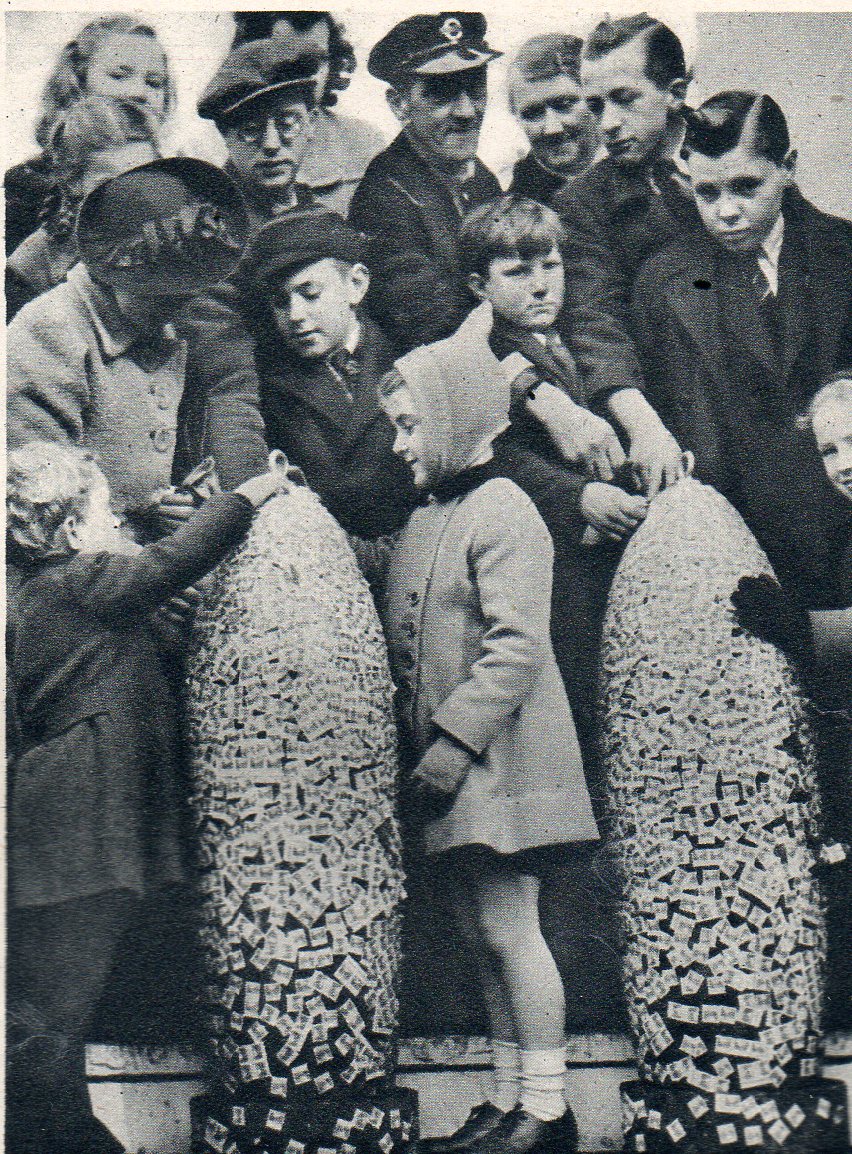
    I have no doubt that the history of decorating “bombs” reaches far back into dim history–decorating launched explosives I guess must be as old as the medium itself, though I’ve gotta say that the earliest photographs of decorated bombs goes back only to WWI.  In “reading” the Illustrated London News for the WWII years I found this image of children in Trafalgar Square fixing savings stamps to 500-pound bomb shells, part of a significant mile-long parade and will-to-win display–the “Wings for Victory” campaign– illustrating the Empire’s aeronautical might hat took place in London on 8 March 1943 and published a week later in the ILN.

    Children bomb003
    The “Wings for Victory” campaign targeted raising 150 million pounds; by this point more than 50 millions had been raised via monies being placed in War Bonds, Savings Bonds, Saving Certificates and Defense Bonds. My guess is that you’d get a sticker saying that you had invested x-pounds–these were the stickers placed on the bombs by the kids, I think. 

    It was pointed out in the accompanying text that the bombs would “at the end of the week…be dropped on Germany”.


  • The End of World War II in Europe, May 8, 1945

    JF Ptak Science Books  Post 1023

    May 8, 1945 is the day that Germany surrendered to the Allied Powers, ending World War II in Europe.  The war had been fought for 69 months–or perhaps it had been longer, perhaps the war started in 1918 with the treatment of the defeated Germany sealing European fate for decades to come. That would  instead make the date 1914, since that war never really did come to an end. Or perhaps it started in 1929, or 1933, or 1935, or 1938, following economic collapse, the election of Hitler, the installation of anti-Jewish laws, the failure of Chamberlain, the annexation of Austria, or the taking of Czechoslovakia. It seems not quite right to set the start of the war in September 1939 with the invasion of Poland–that seems to minimize the maximum pre-history of the conflict.

    The war in the Pacific ended later, Emperor Hirohito announcing his country’s intentions of quitting the war on 15 August, 1945.  That came 9 days after the atom bomb was dropped on Hiroshima.  And 6 days after the second atomic bomb was dropped on Nagasaki.  A third was on its way.

    In any event, the war in Europe was ended today, 65 years ago.

    “Here is Germany” by Frank Capra, intended to be released after the surrender on 8 May 1945.

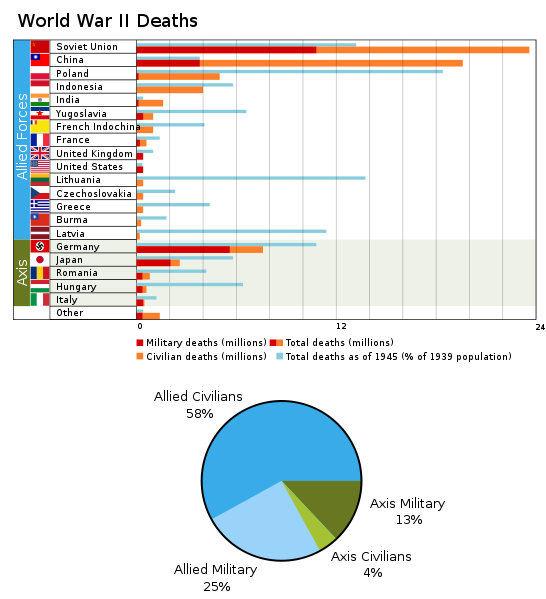
    A good chart on WWI casualties:

    WWII casualties

    ·Posted by :

    ·in:


  • Windsor McKay’s Animated Sinking of the Lusitania (May 7, 1915)

    JF Ptak Science Books

    Windsor McKay–who for all intents and purposes invented the animated cartoon with his “Gertie the Dinosaur” in 1914 –produced this piece of homeland propaganda on the sinking of the Lusitania, which occurred on this day in 1915. 

    The film was released in 1918 with McKay producing the 25,000 drawings necessary for production.  It caused great emotions and bitterness, considering of course that there was no footage or photographs of the sinking–McKay provided the moving impetus and the viewers’ minds filled in the rest. The RMS Lusitania, which was a Cunard Line ocean liner, was sunk by torpedoes from the German U-Boat SM U-20 eight miles off the coast of Ireland,  killing 1,1989 of the 1959 people on board. 

    Notes:

    McKay (1867-1934) is also remembered for his remarkable cartoon strips Little Nemo and The Dreams of a Rarebit Fiend. 

    ·Posted by :

    ·in:

    —