A Daily History of Holes, Dots, Lines, Science, History, Math, Physics, Art, the Unintentional Absurd, Architecture, Maps, Data Visualization, Blank and Missing Things, and so on. |1.6 million words, 7500 images, 4.9 million hits| Press & appearances in The Times, Le Figaro, Mensa, The Economist, The Guardian, Discovery News, Slate, Le Monde, Sci American Blogs, Le Pont, and many other places… 5000+ total posts since 2008.

Category: Militaria

  • Nazi Capes and Collaborators, 1944

    JF Ptak Science Books LLC  Post 1019

    For the next little bit I am going to try to have one word or phrase per post be unique to a  Google search–today’s is “Nazi Capes”. (Yesterday was “Atomurbia”, created over coffee.)  Frankly I’m a little surprised that it doesn’t come up–thank goodness for small favors of not having stores selling Nazi capes or some porn site featuring nazi-caped “dancers”,  and so on. 

    The Allied  advanced towards Berlin in 1944/45 liberated Nazi-occupied towns and cities and countries.  The populations of course reacted immediately to those among them who facilitated the Nazi control of their communities.  The collaborators were traitors, and were treated accordingly.
    1--May 4 nazi cape
    Fernand de Brinon, Marshall Petain, Karl Linnas, William Joyce (Lord
    Haw=Haw), Ezra Pound, 
    the Ustaise (a Croatian fascist anti-Yugoslavian movement doubly doomed
    post-war) are a sample of some of the major names in the history of Nazi sympathizers/collaborators who would be judged and adjudicated.  There were many
    others who survived this legal (and extra-legal) process–like Charles
    Lindbergh and Henry Ford and Errol Flynn and (the IOC’s) Avery
    Brundage–without much damage to themselves. (To be a little more
    accurate, Charles Lindbergh was an America Firster with fascist
    sympathies and unquiet anti-Semitic opinions–he did renounce his
    admirations for Nazi Germany once America had been attacked on 7
    December 1941. Country first in times of war for Lindbergh, though his
    sympathies remained relatively intact for the 750 days of WWII being
    fought in Europe without the United States.)    There is also a large
    population of Nazis (like Wernher von Braun, whose rockets killed
    thousands on the ground in England and thousands more of the slaves who
    worked for him at “home”) whose expertise was deemed necessary to
    national security and who were settled in the U.S. to help form the new
    fight against the Soviet Union.  But that’s another story entirely.  

    There were many thousands of collaborators at society’s entry-level who
    were dealt with locally–some were brought into the justice system,
    though many didn’t make it quite that far.  In many cases, people well
    known to have added and assisted the Nazis in their occupation were
    immediately found and dealt with upon liberation.

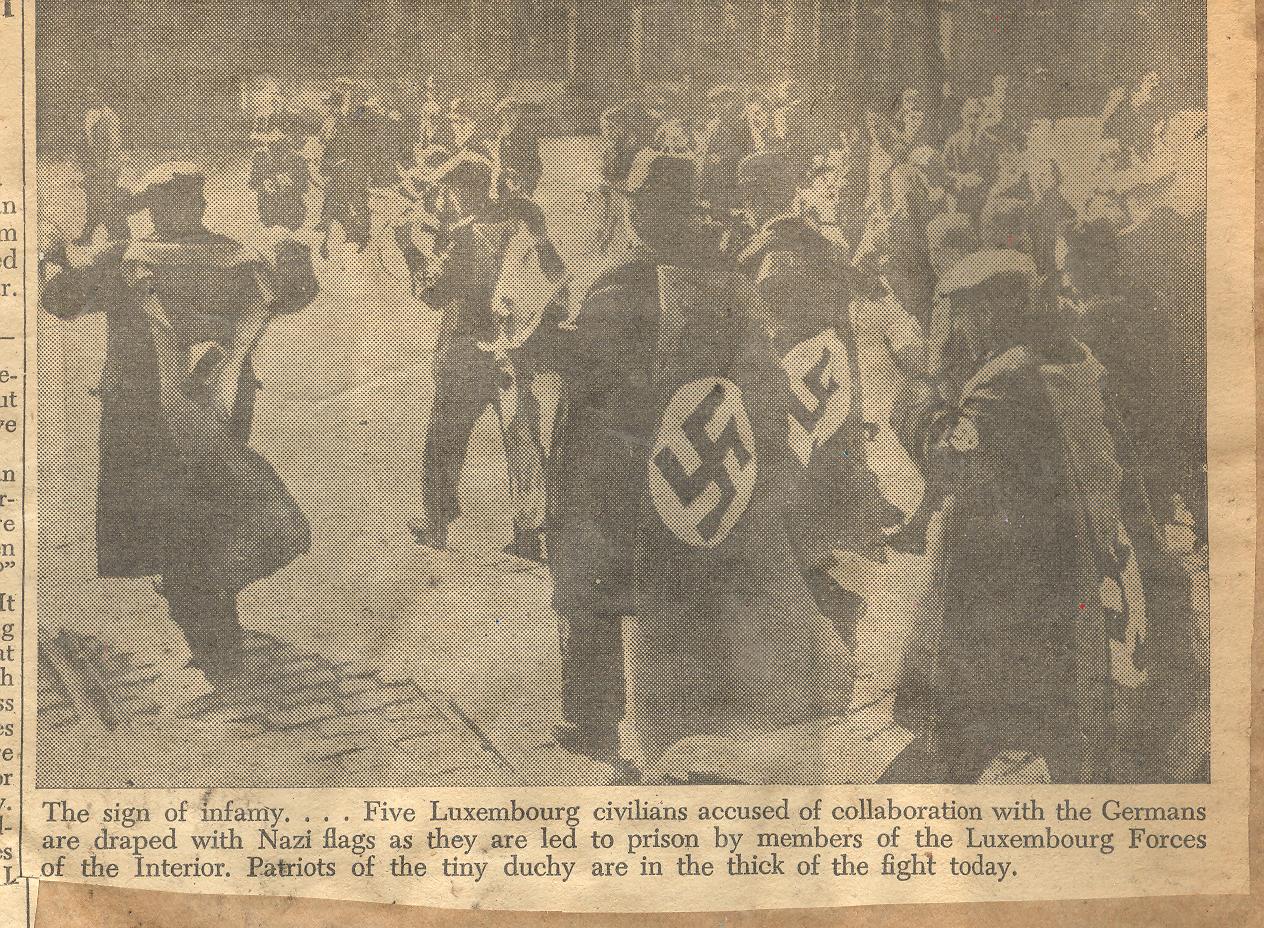
    This photo-from the archives of the PM Magazine reporter and European
    bureau chief Alexander Uhl, shows the arrest of Luxembourgian
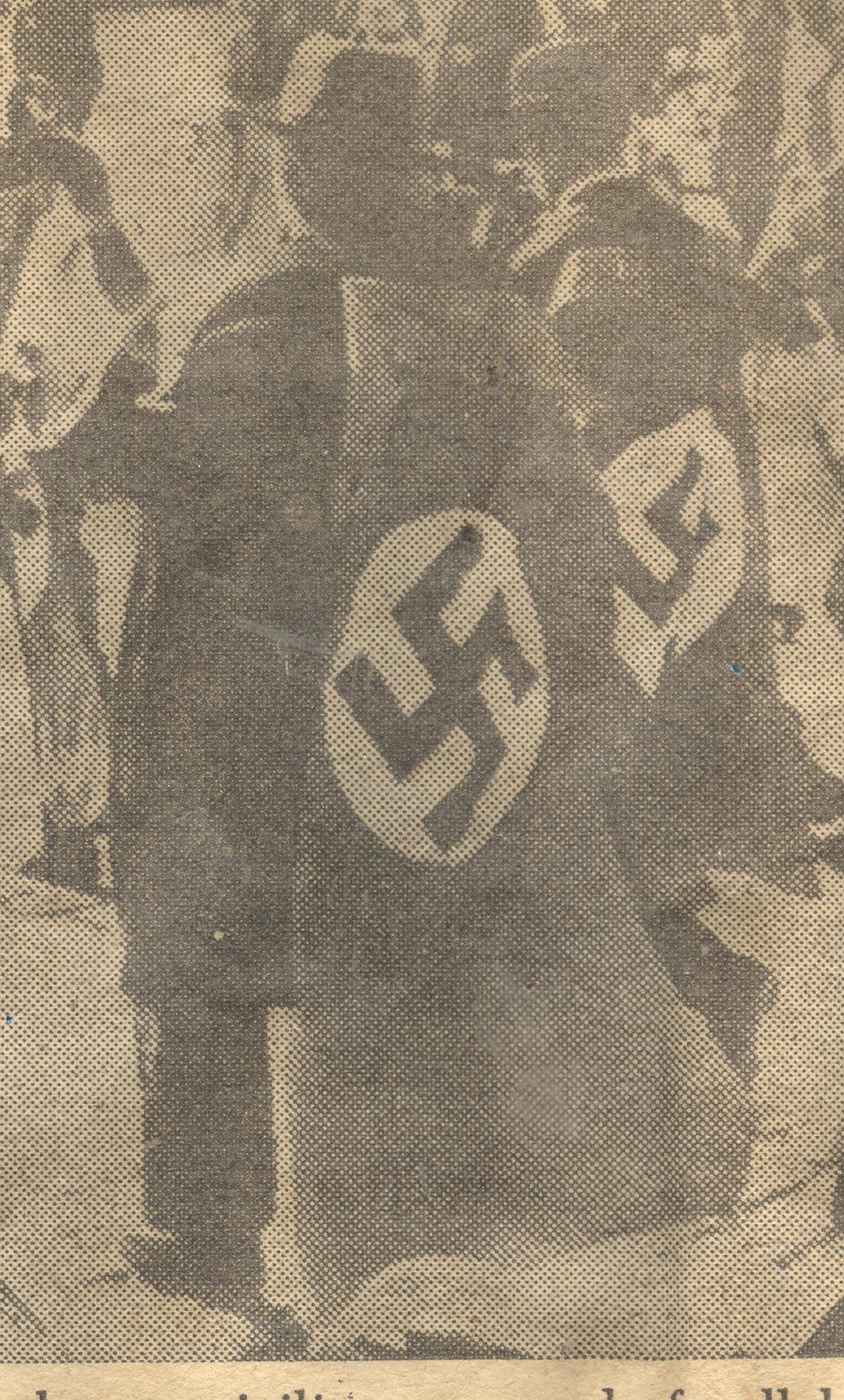
    collaborators, each made to wear a Nazi flag like a cape, the swastika
    no doubt searing its way into the backs of each of these people.  I
    don’t know where they were being marched to or whether that march lasted
    very long. Perhaps it ended in a field at the end of the street;
    perhaps not.  In any event, they were on their way to justice, whether
    or not justice found them in a courtroom or a ditch is lost to history.
    (The vast majority of collaborators arrested and brought into the
    justice system in Luxembourg were sentenced to prison terms–of the 2000
    arrested, nine were executed.) In any event I’ve never seen a picture
    like this before, and am passing it along.
    1--May 4 nazi cape det

    ·Posted by :

    ·in:

    —

  • Relief in Capture: Churchill in Carthage and what 230,000 POWs Looks Like

    JF Ptak Science Books   Post 1046

    [Continuing my series on Crowds–see here for example of WWI German prisoners in crowds; also search “crowds” in the google site search at left.]

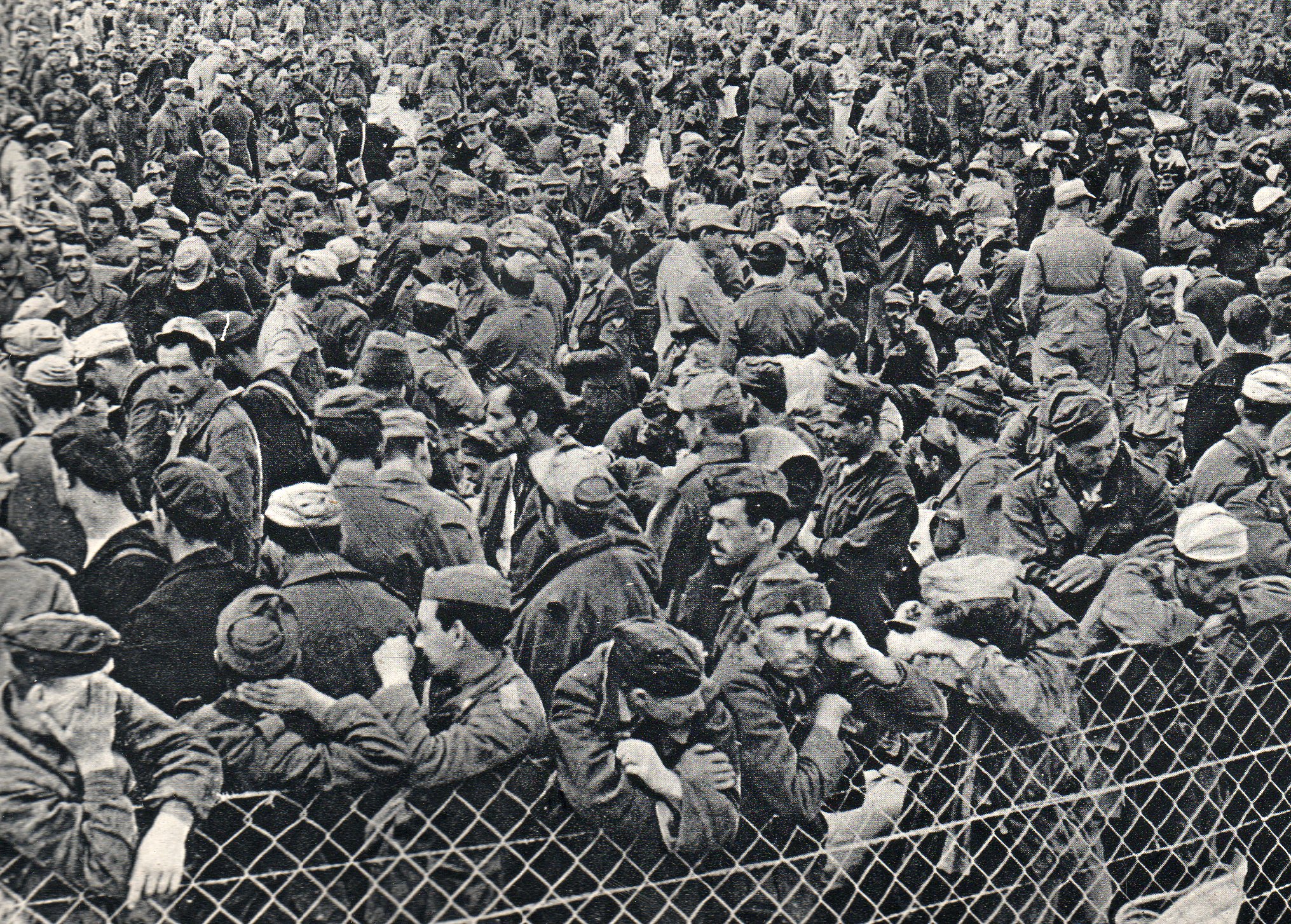
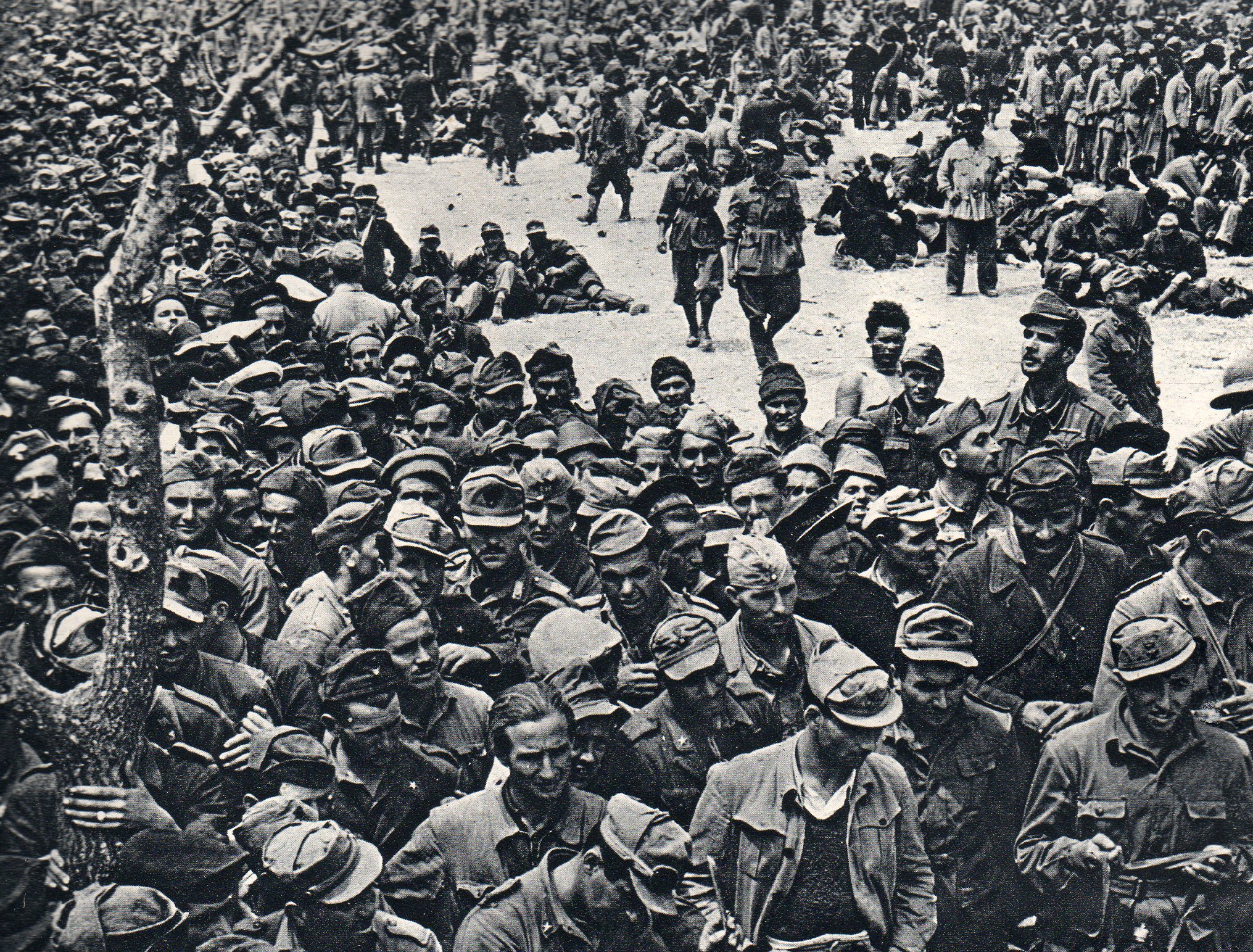
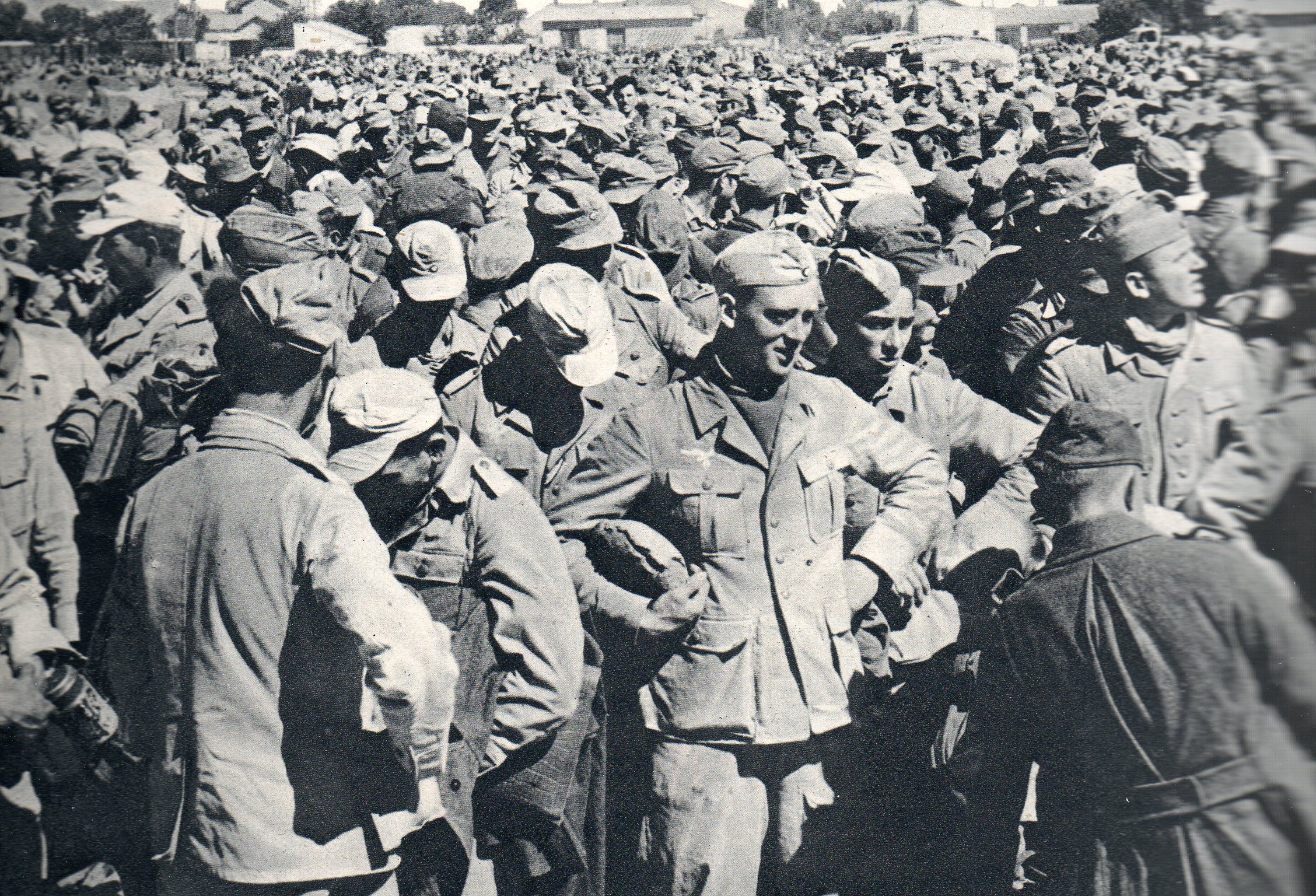
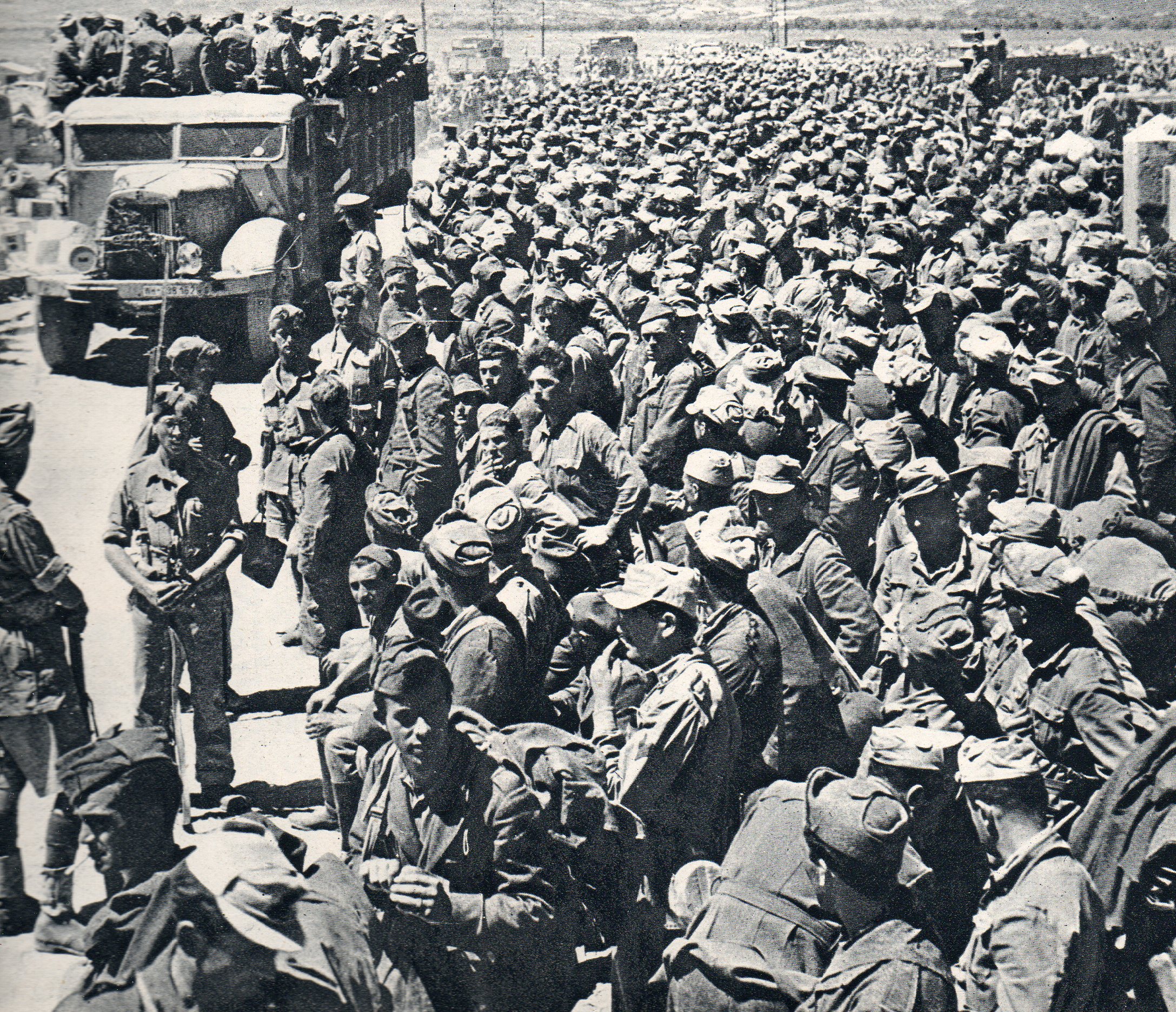
    Part of the campaign in North Africa during WWII was decided by a series of battles known as the Battle of Tunisia, or the Tunisia Campaign, fought from November 1942 to May 1943.  It was a long endgame for the Axis forces in Africa, Hitler losing hundreds of thousands of men, vast amounts of materiel, crapped out the Luftwaffe, spent tons 000 crowds tunisia 1018

    of oil, all in an effort that seemed to be a foregone conclusion save for the fighting.  It was not possible for the Germans (and Italians) to survive there, let alone win, given the great superiority of numbers and resources controlled by the Allies. Plus of course there was the whole Ultra Secret thing, which–though necessarily unknown to the Germans-–in great measure helped to deliver the North African victory.  The Allies were destined to win.
    000 crowds tunisia 2019
    000 crowds tunisia 3020

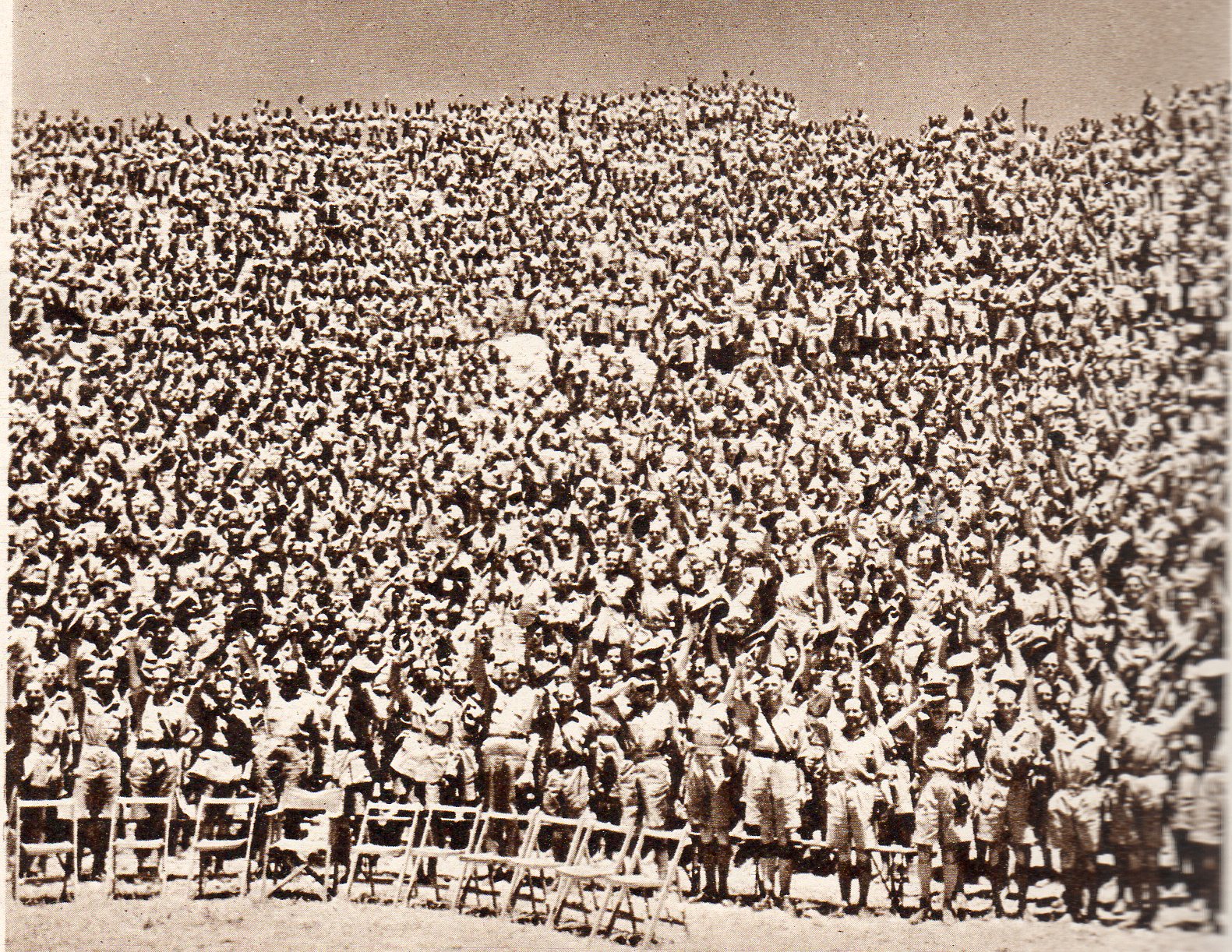
    And in the last picture we see a far different crowd–the victorious Allies waiting on Winston Churchill to speak to them in an amphitheater in the ancient city of Carthage, just down the road a piece from Tunis.  Carthage has seen it fair share of winners and losers of the centuries (or the millenia), what with the Phoenicians and Hannibal and the Punic Wars and Roman conquest and rebuilding and on and on.  The amphitheaters of Carthage were renowned–great structures for what was perhaps the greatest metropolis of North Africa–bu they suffered from defeat as well, their fine fittings and metal and ornate sculpture looted with successive control. When Churchill rolled in there in 1943, there was little left to the structure save for the stone.

    The stone, and all of those victorious soldiers.
    And Mr. Churchill, of course.
    000 crowds tunisia 4021

    The result of this series of battles ended up in May, these pictures showing what defeat looked like to 230,000 German and Italian prisoners, though the vast majority were German.  Its really a curious display of facial expressions in the  many dozens of details that can be lifted from these mass portraits. I’ll make an semi-reasonable statement–nobody really likes/wants to be taken prisoner in war, though I guess time and place and circumstance are factors that can loosen up that observation.  (Germans were much more interested in being captured by the Allies as they fled westward in Berlin and the rest of the country as the Soviets began making their own way towards the heart of Germany, for example.) Perhaps what looks like an element of relief in the close-ups of these prisoners really was that; that their time in the desert was simply expended, and that the prospect of their surviving the war had just been decided, positively.

    [Brits raising their helmets at Carthage, waiting for Mr. Churchill.)

    000 crowds tunisia brits022

    ·Posted by :

    ·in:

    —

  • The Message is the Medium–Children and Bombs, London, 1943

    JF Ptak Science Books  Post 1035

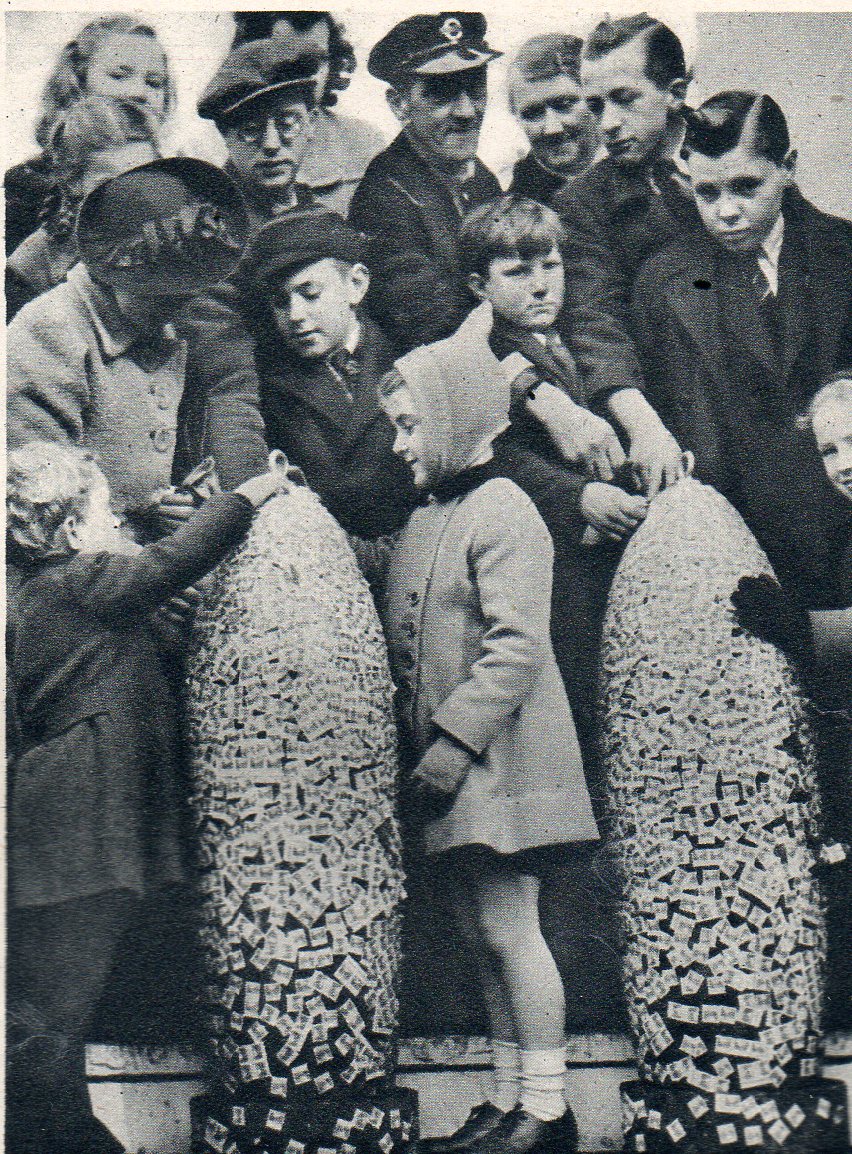
    I have no doubt that the history of decorating “bombs” reaches far back into dim history–decorating launched explosives I guess must be as old as the medium itself, though I’ve gotta say that the earliest photographs of decorated bombs goes back only to WWI.  In “reading” the Illustrated London News for the WWII years I found this image of children in Trafalgar Square fixing savings stamps to 500-pound bomb shells, part of a significant mile-long parade and will-to-win display–the “Wings for Victory” campaign– illustrating the Empire’s aeronautical might hat took place in London on 8 March 1943 and published a week later in the ILN.

    Children bomb003
    The “Wings for Victory” campaign targeted raising 150 million pounds; by this point more than 50 millions had been raised via monies being placed in War Bonds, Savings Bonds, Saving Certificates and Defense Bonds. My guess is that you’d get a sticker saying that you had invested x-pounds–these were the stickers placed on the bombs by the kids, I think. 

    It was pointed out in the accompanying text that the bombs would “at the end of the week…be dropped on Germany”.


  • Women at War: England, 1918 (Part 1)

    JF Ptak Science Books LLC  Post 1015

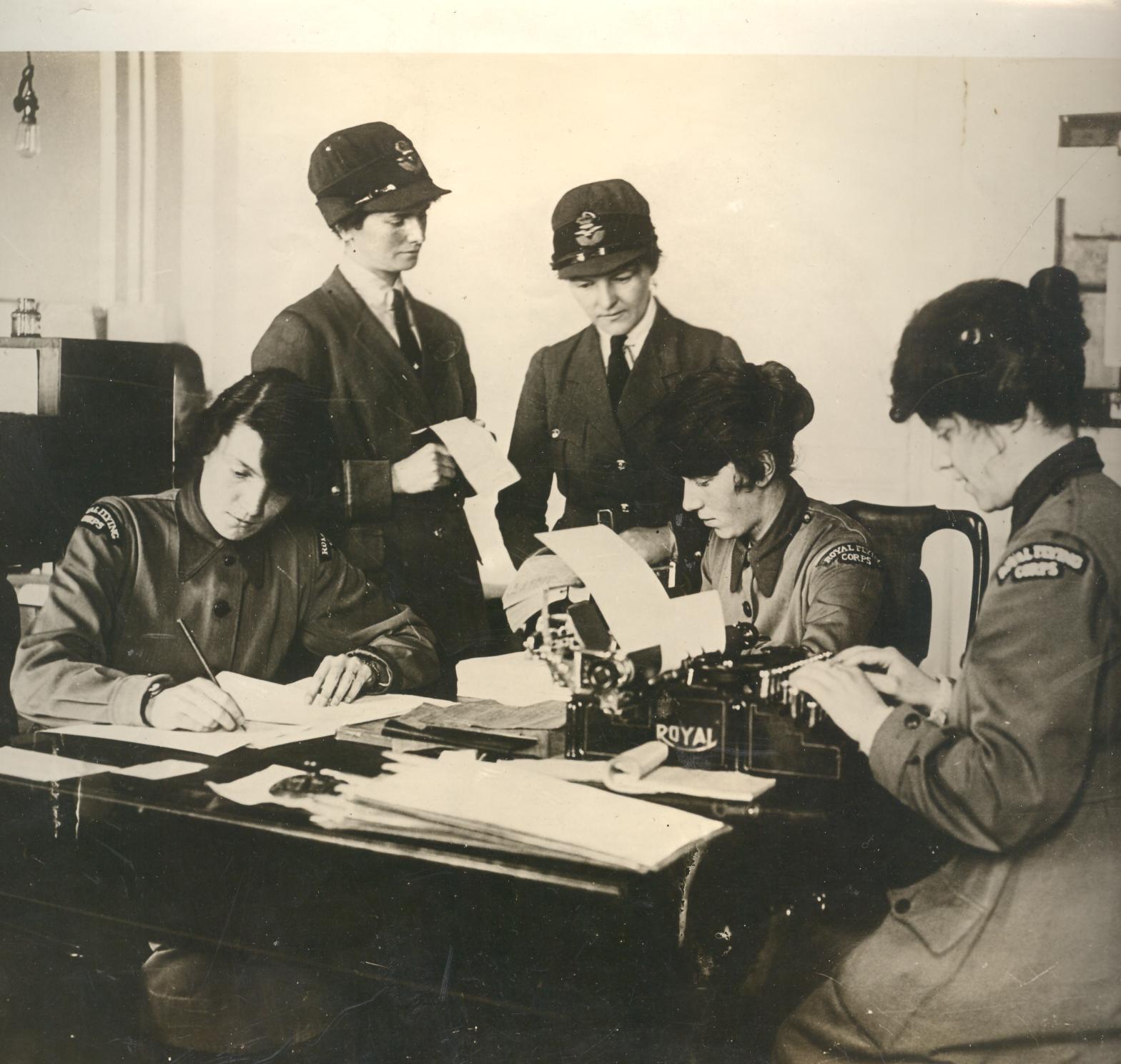
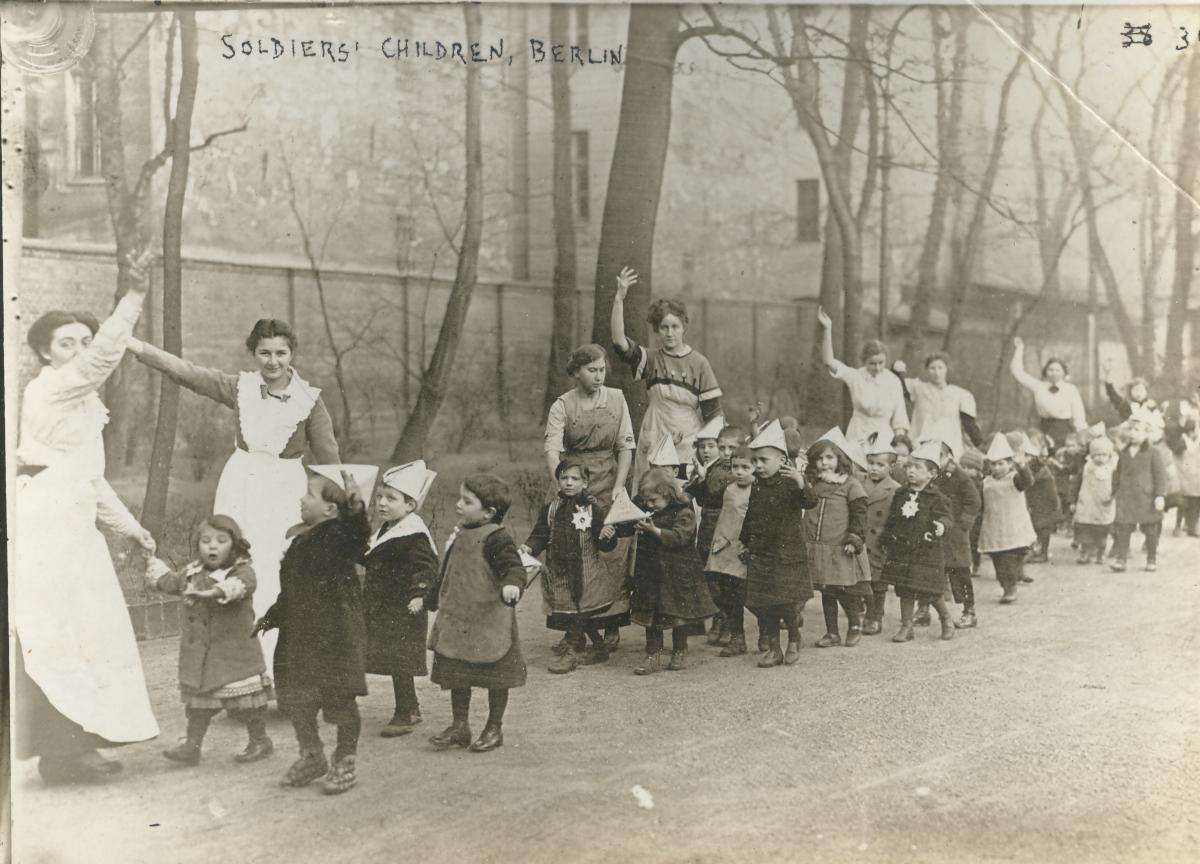
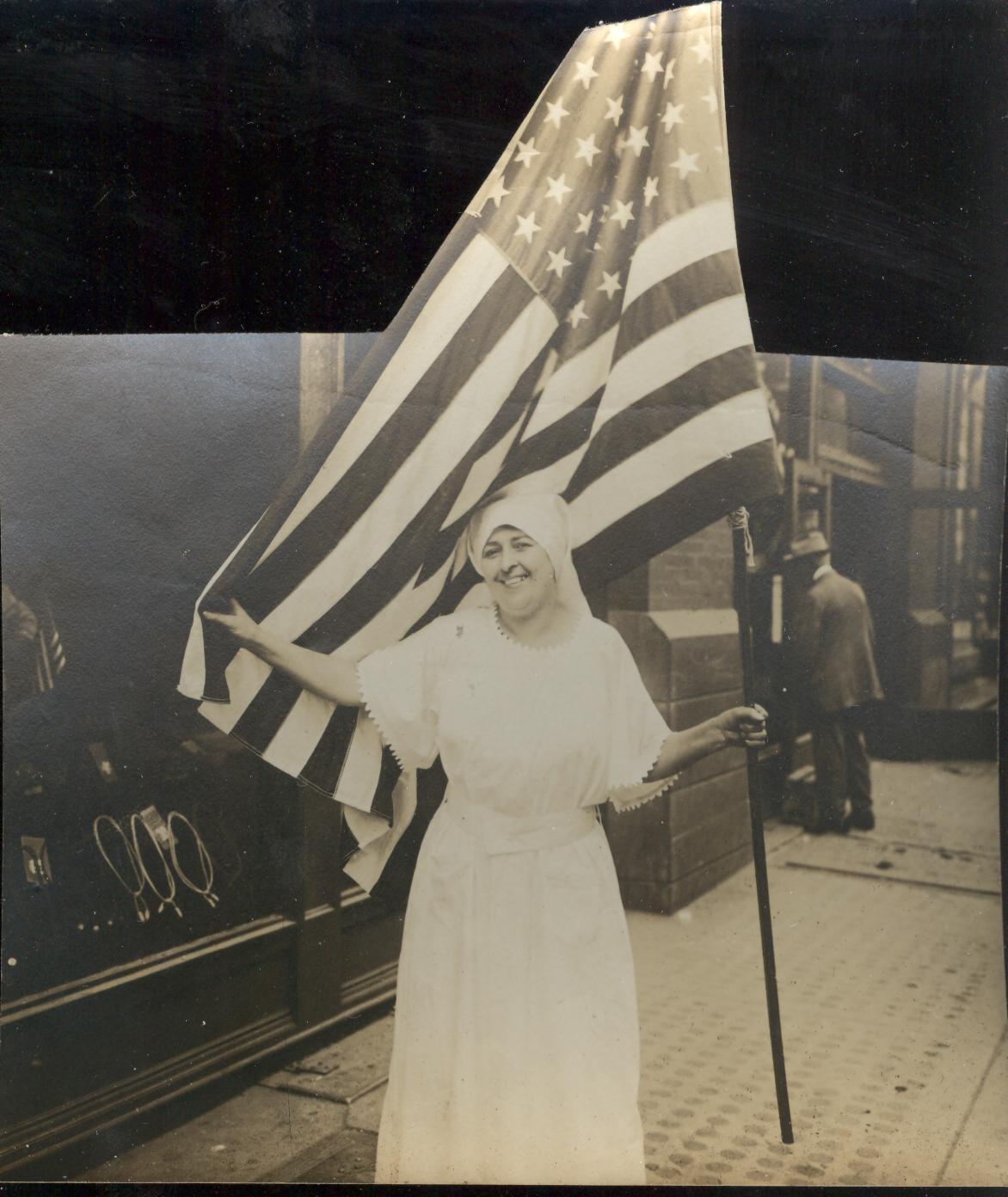
    This is another (number 15 or so) in a series of posts on images from my News Service Photographs of WWI collection.  All thousand or so of them were made in the last half of 1918, in the last months of the grueling conflict, and were intended to be used by newspaper and magazines to illustrate stories about the war. An editor would send off a request to one of these agencies for, say, a photograph of marching American nurses, and the agency would send one back (for a fee) along with a caption.   There’s really no way for me to determine if these photos were ever published, and there is never an attribution for the photographer. 
    [Another example in this series can be found here. Also if you enter the search term for news service photo in the google site search box you’ll get 55 or so returns.]

    This is the first installment of women at war–there should be another 35 or so coming soon.

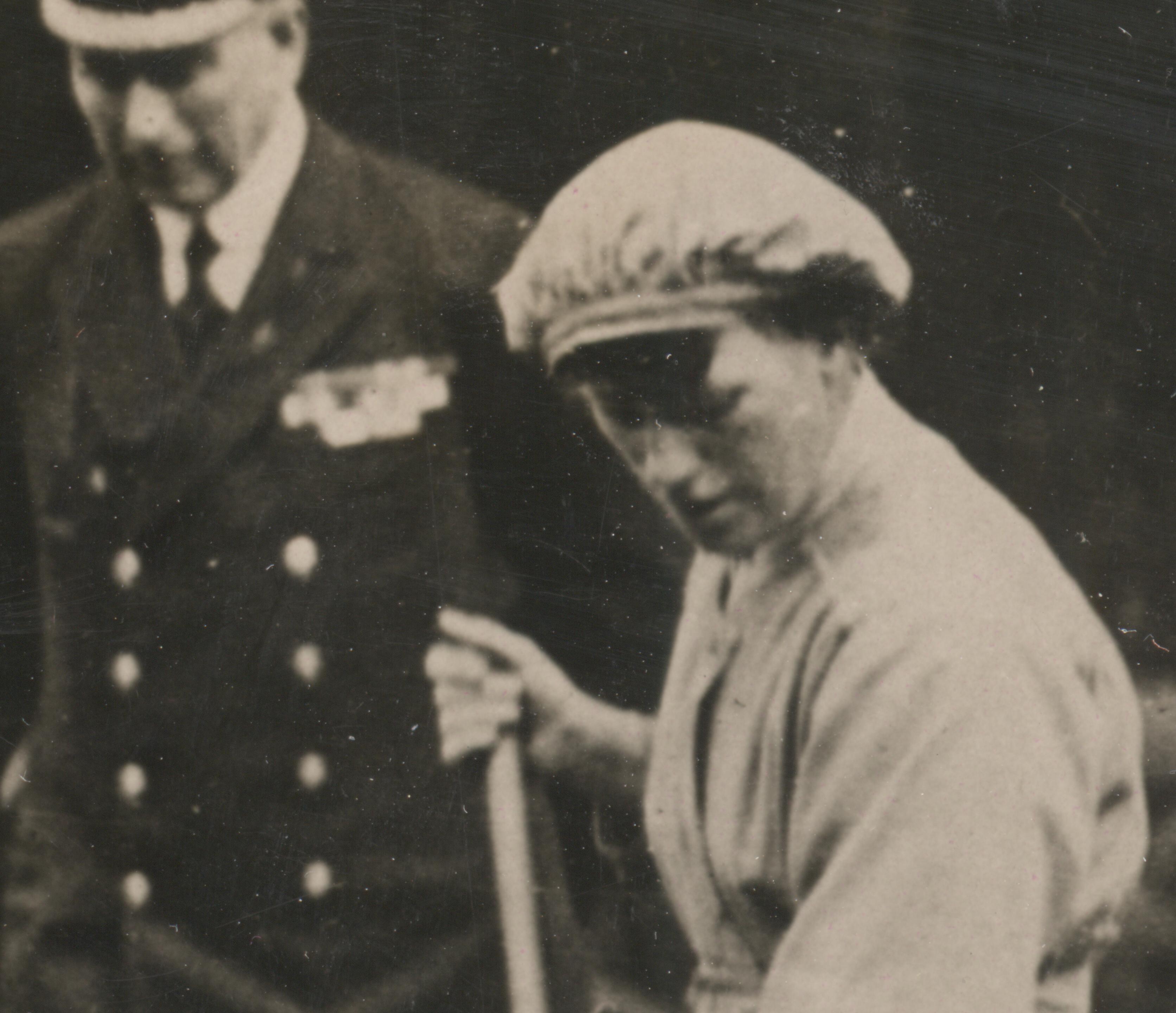
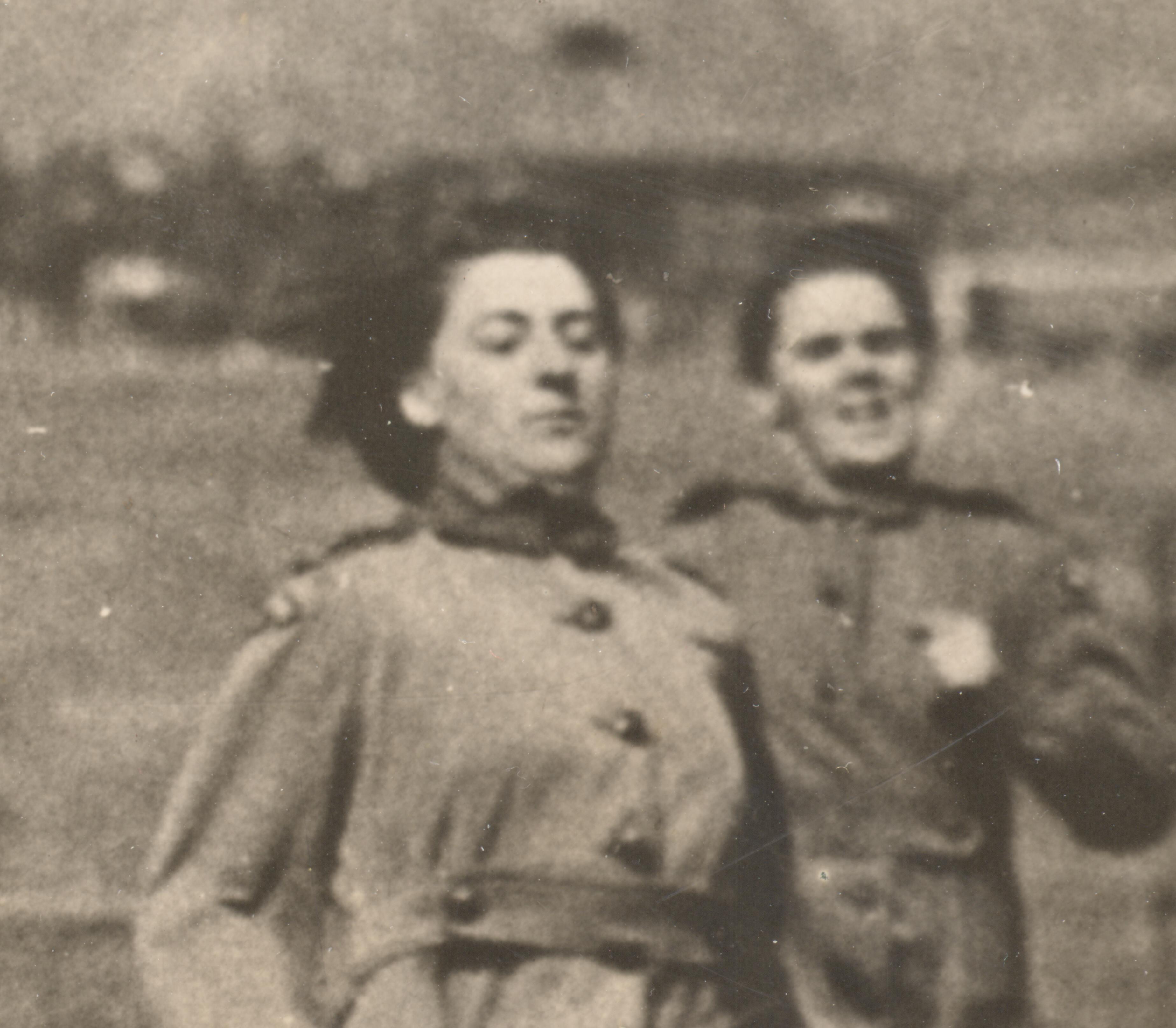
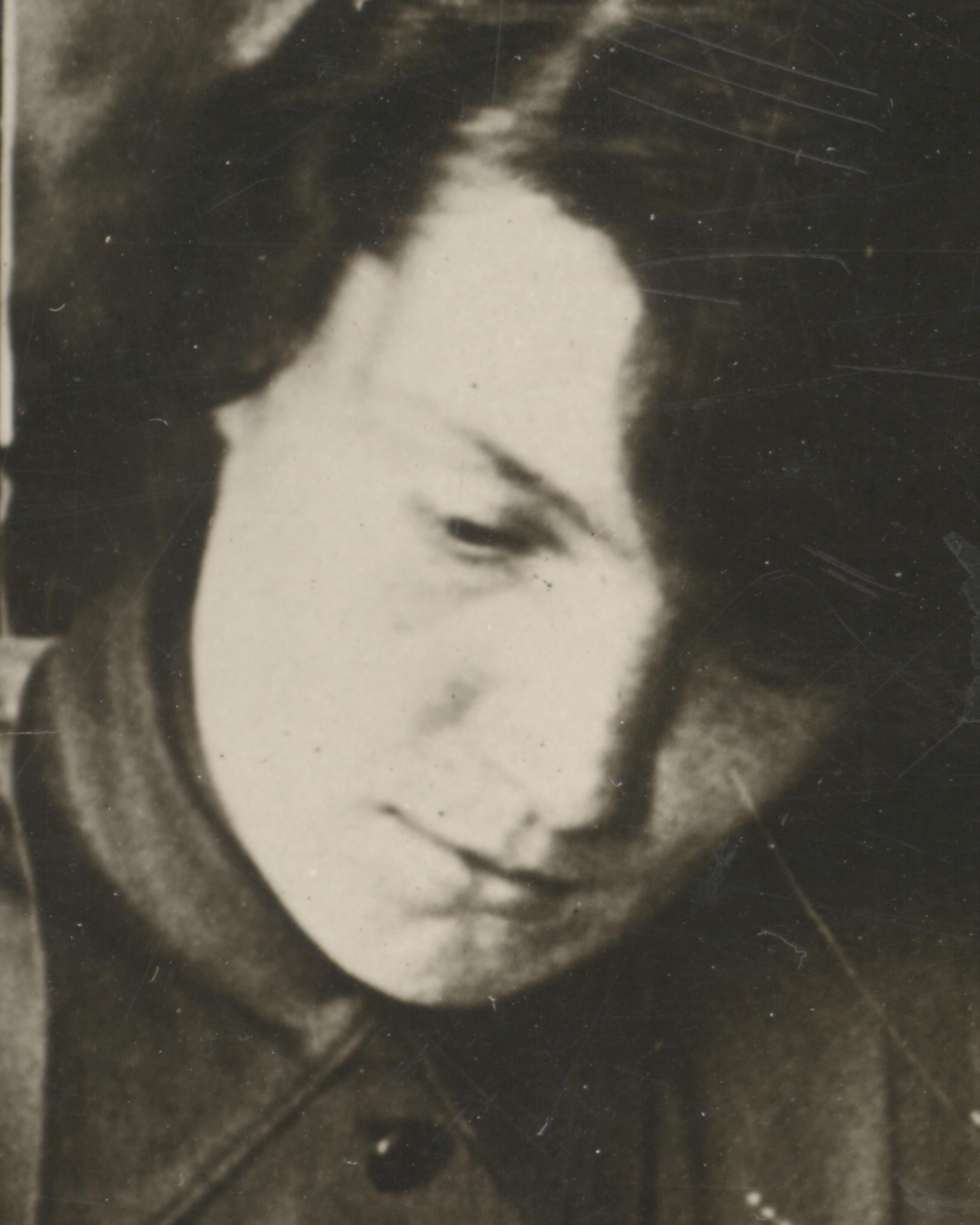
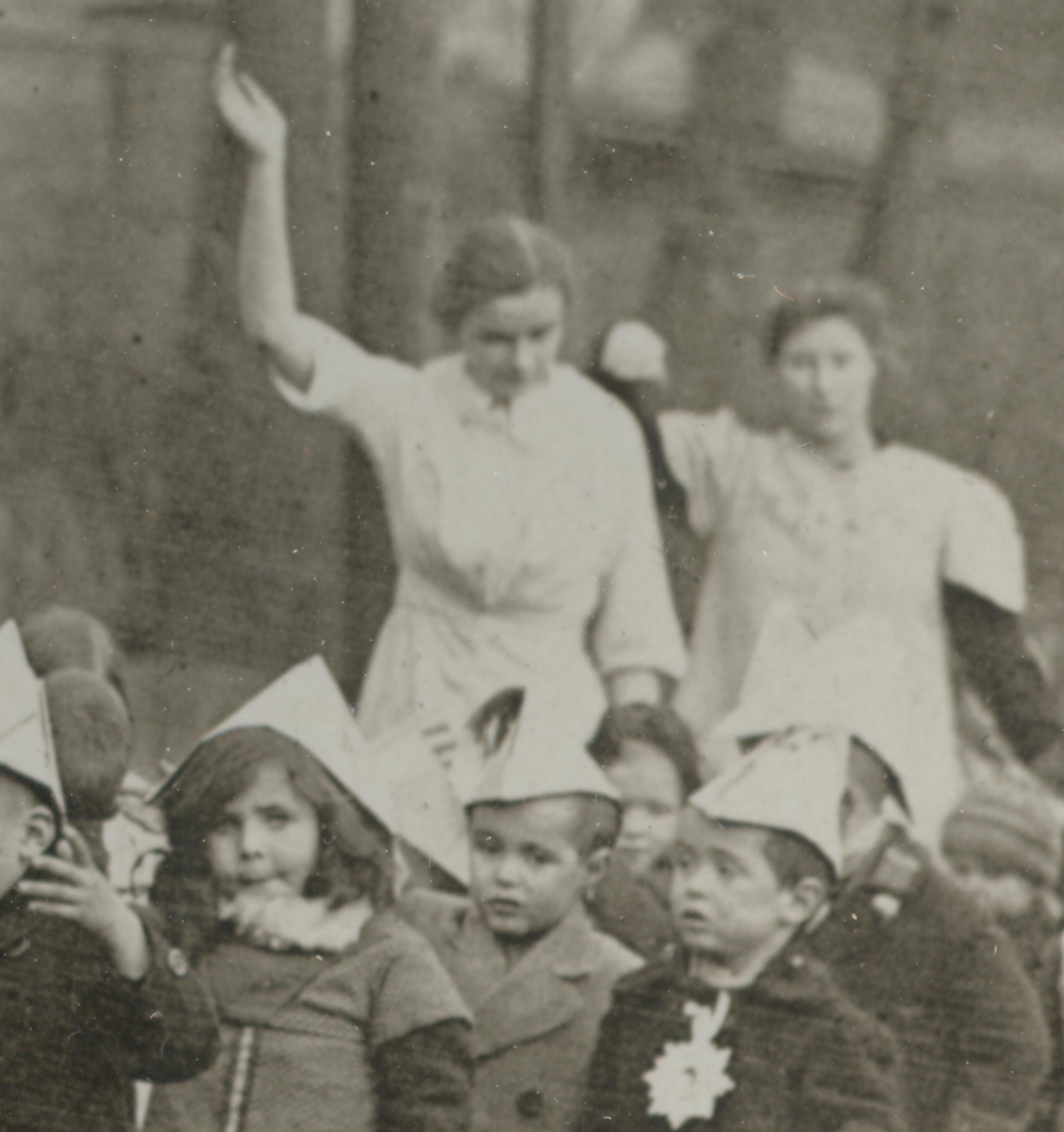
    Also I’ve micromanaged the prints, pulling out a detail from each one of them, a detail of an appealing portrait perhaps difficult to see int he overall original.

    For example:

    1 april 26 women king+queen det 2

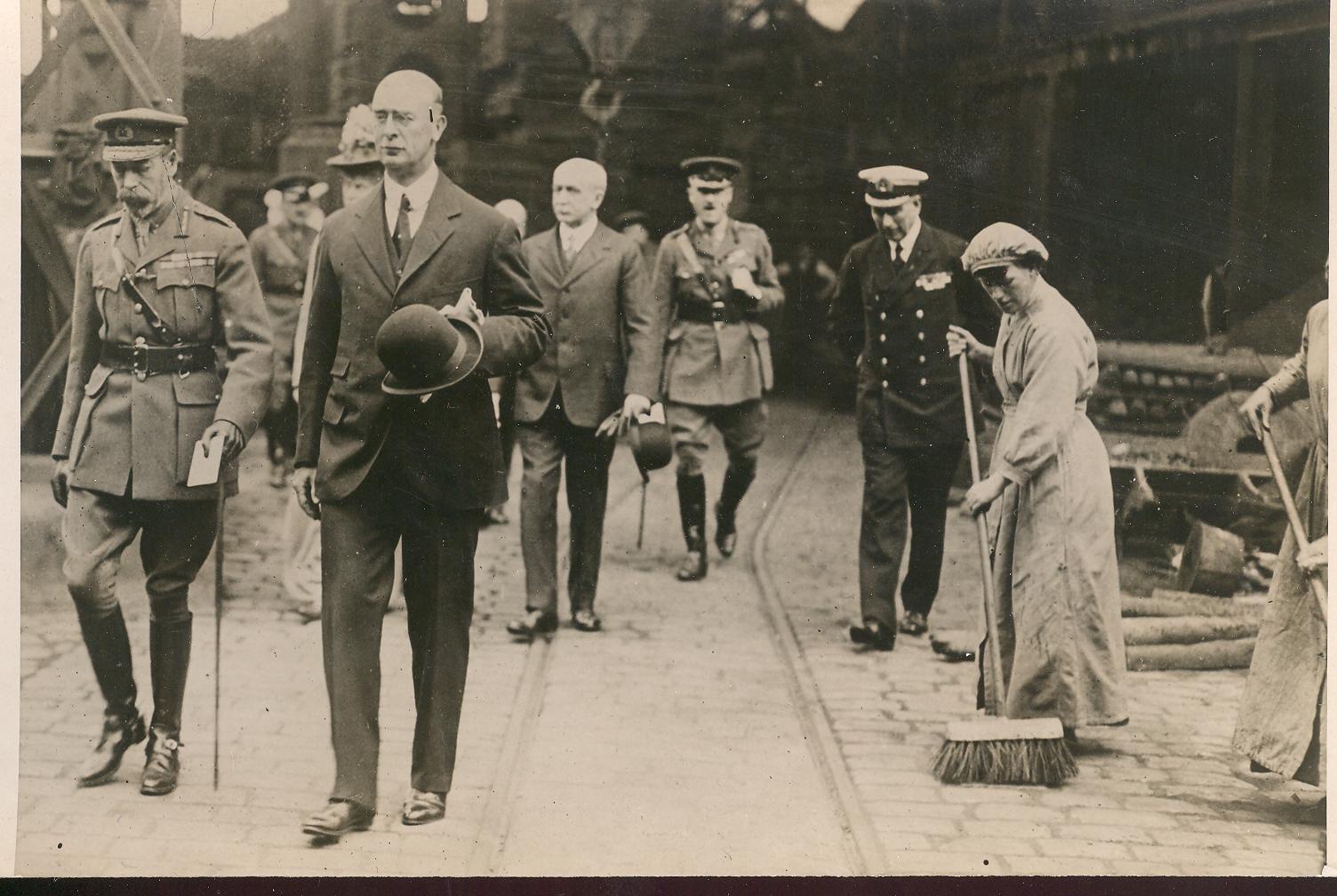
    comes from the sweeping woman at right, taking care of some debris in a munitions factory in October 1918, sweeping as the King and Queen of England stroll by on a visit/inspection.  I suspect she was instructed to say nothing and to not look up from her work.  She doesn’t look nervous to me, though–her hands aren’t tightly gripped around the broom handle, and her face looks relaxed…

    1 april 26 women king+queen

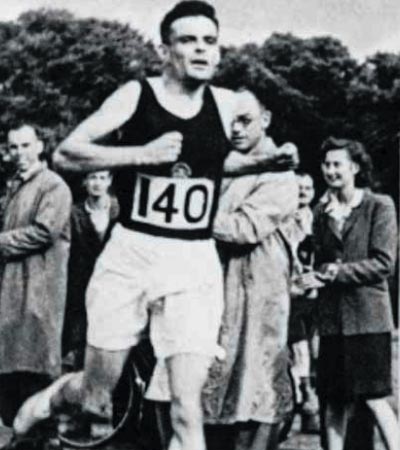
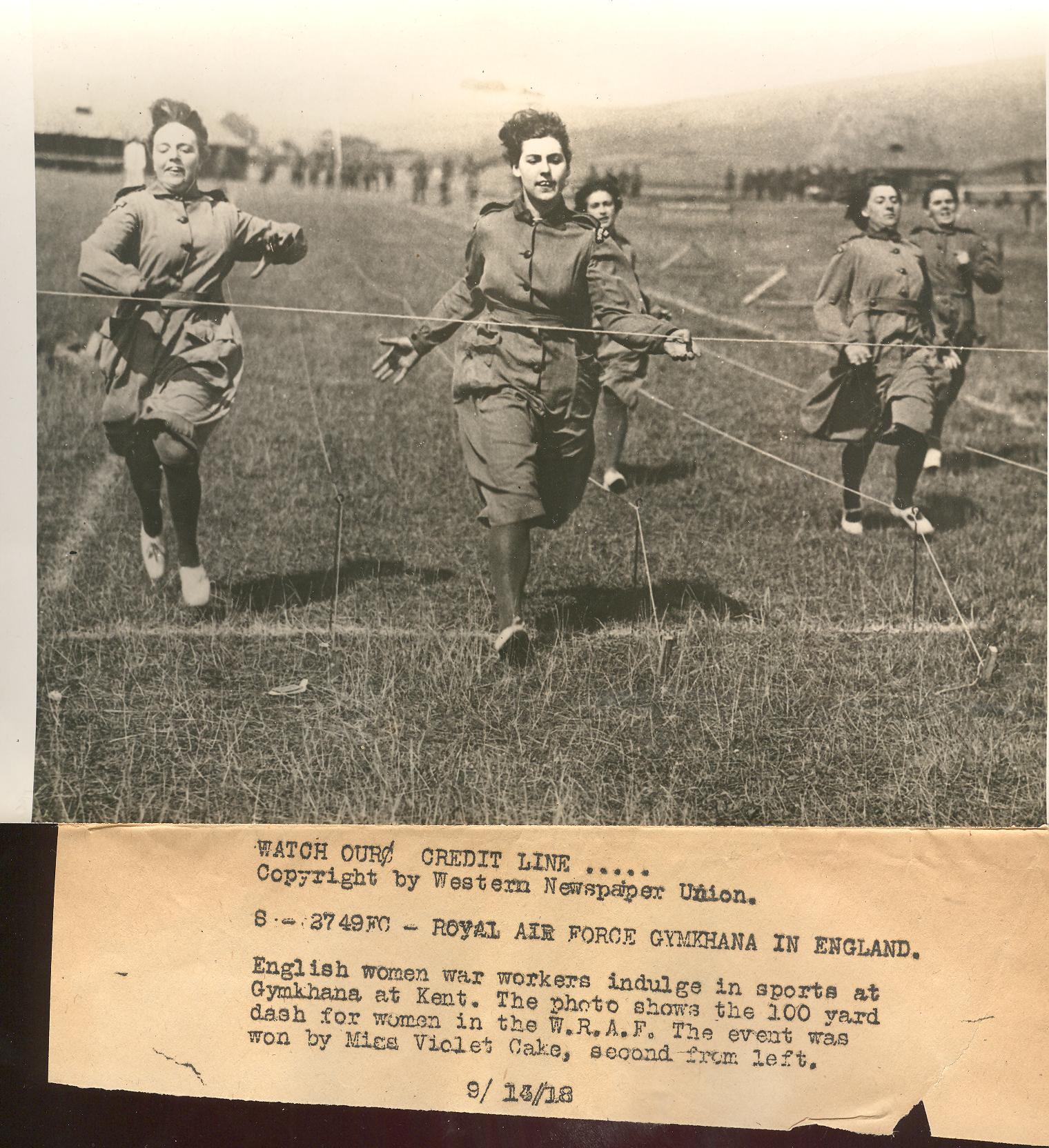
    WRAF in track and field exercises, Kent.  This is the third-place finisher, running while leaning back, trying to keep everything in place, mouth closed, arms down–pretty good results from such an awkward and highly-mannered style of running.  Also, the woman to her right is a dead-ringer for Alan Turing (if you’ve ever seen the Enigma Man running at track, I think you’d have to agree.)

    1 april 26 women race det

    The great Alan Turing

    Turing
    The full image of the race:

    1 april 26 women race
    I just liked this woman from the typing/steno pool.

    1 april 27 women adding det
    1 april 27 women adding 

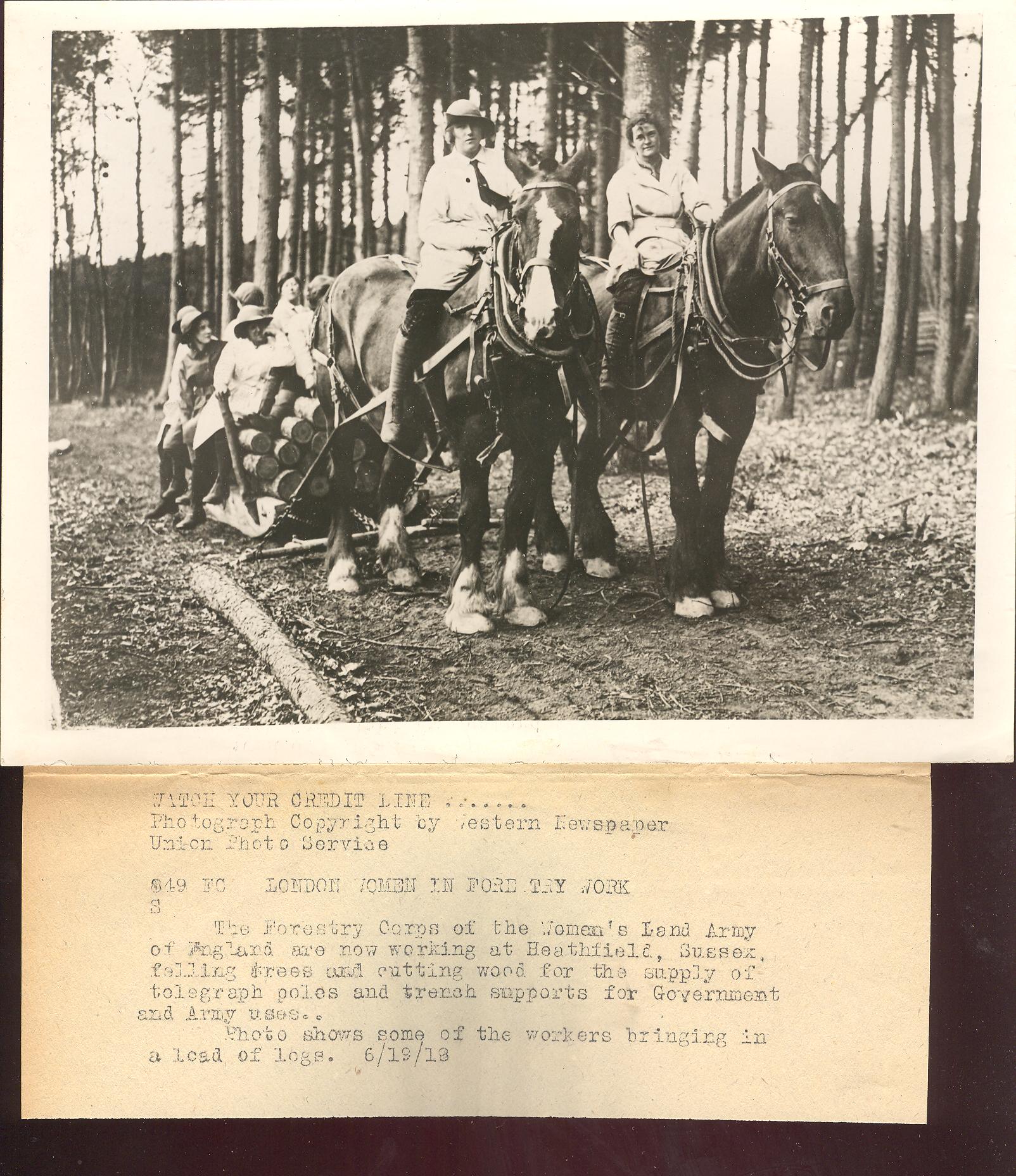
    Detail of the image of the Forestry Corps of the Women’s Land Army of England, working at cutting telegraph poles on some great-looking draught horses.  (The horse on the right–ears back–looks big and unhappy.)  I love that this woman is wearing a tie.

    1 april 27 women horses det
    1 april 27 women horses

    1 april 27 women nurses det

    1 april 27 women nurses
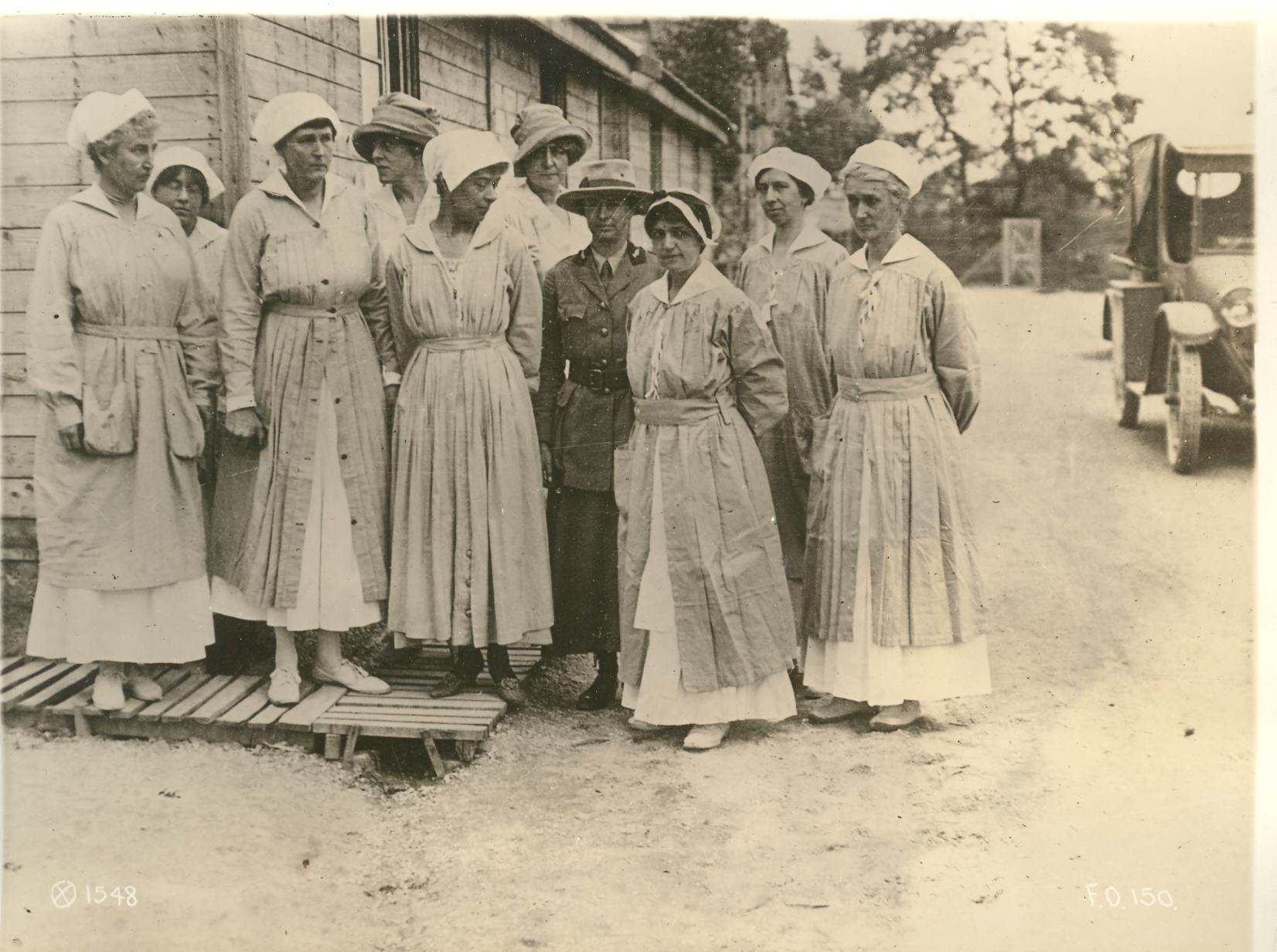
    Detail from “Soldiers’ children being care for by volunteer nurses, Berlin, June 19, 1919”.

    1 april 27 women berlin kids det2
     

    xcxc1 april 27 women berlin kids


    1 april 27 women flag
     

    ·Posted by :

    ·in:

    —

  • The Exploding Dots of Falling Dominoes: Vietnam, 1954

    JF Ptak Science Books LLC  Post 996

    This story is more about Ho Chi Minh’s capture of French silk than about anything else–it is a peep into the future following the end of the French endgame in Vietnam, which came abruptly with their defeat at the Battle of Dien Bien Phu in 1954.

    Blog--april 1 detail

    [Detail/larger image below.]

    The siege there started on the 13th of March, and lasted 57
    days, until May 7th, 1954. The
    commanding general of the Viet Minh forces, Vo Nguy Giap, achieved an enormous
    victory over the French—the first time a guerrilla force readjusted itself into
    a conventional force to defeat a Western army. It was the end of the line for the French military involvement there and it just so happened to be
    the beginning of Vietnam as an object on the American foreign policy event horizon.

     Just a week after this notice appeared, Dwight Eisenhower made his domino
    speech:

    “Finally, you have broader considerations that might follow what you would
    call the “falling domino” principle. You have a row of dominoes set
    up, you knock over the first one, and what will happen to the last one is the
    certainty that it will go over very quickly. So you could have a beginning of a
    disintegration that would have the most profound influences.conference…”

    Vietnam was supposed to be one of those dominoes.  Evidently all of the dominoes were the same size regardless of the size or international presence of the country.  It was also the same sort of domino even if had appealed for American recognition of its democracy-laced post-WWII government. And it was a domino still even if the United States had helped fashion the events that necessitated the movement of that country toward domino-hood.  No matter.  The U.S. decided to back the French in reclaiming their war-lost possession, in spite of the fact that the French were still doing business during the war with the Japanese occupying force in Vietnam, and in spite of the fact that the French re-armed Japanese troops to help fight against the “insurgent” forces of Ho Chi Minh.  It was an ugly decision, and I suspect FDR was just too sick to deal with it properly. 

    Nine years later, the French had finally been soundly defeated and Vietnam thought that it had finally gained independence.  Not so. 

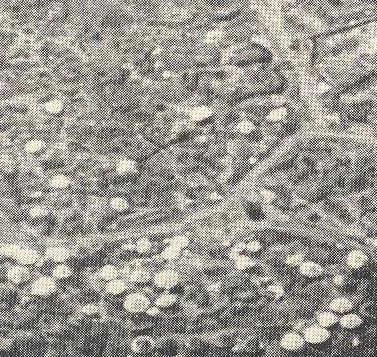
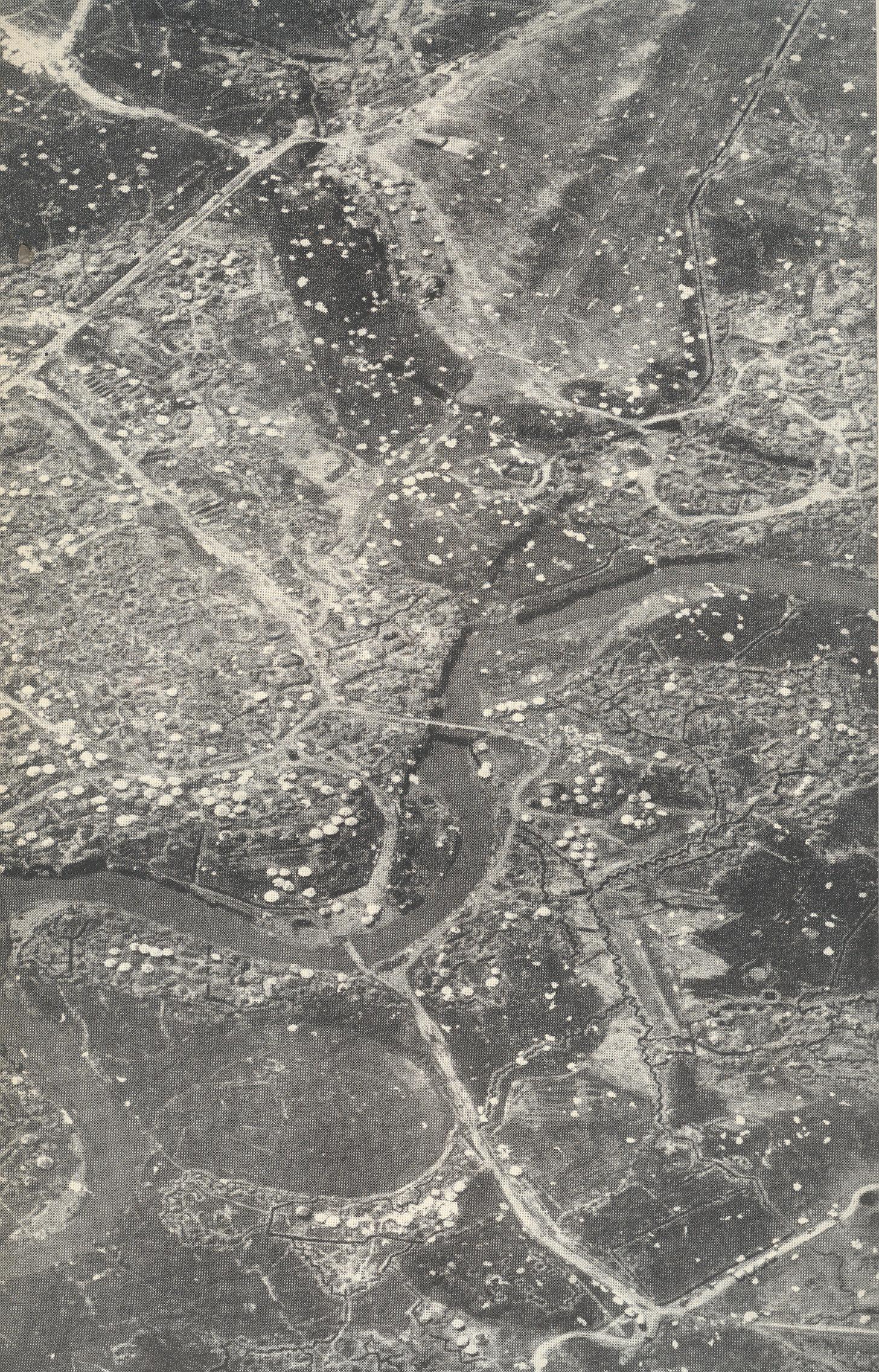
    The picture here is of dots–the field of battle at Dien Bien Phu, littered with silk parachutes–cargo dropped by the French air force to the defenders of the garrison….most of which, evidently, fell well outside the French-controlled perimeter and into the hands of the attacking Vietnamese army.  These were the exploding dots of the falling domino.

    Blog--april 1 

    If these dots stood for something, they could stand for the coming wave of death and misery, a graphical representation of what was to come over the next 25 or so years.

    I reckon there to be about 500 parachutes/dots in this picture.
    Each of these dots could be assigned a number, each representing a gross statistic for the war, from  1950 to 1975:

    U.S. forces killed in action:  100/dot (58,000 killed)

    U.S. forces wounded in action: 300/dot  (313,000)

    Army of the Republic of Vietnam, killed in action:  500/dot (263,000)

    Army of North Vietnam, killed in action:  2,000/dot (1.1 million killed)

    Civilian deaths, North & South Vietnam: 4000/dot (2 million killed)

    Civilian deaths caused by North Vietnam during the war: 300/dot

    Civilian deaths caused by “North” Vietnam, postwar consolidation and reeducation: 1,000/dot

    Civilian deaths caused by the U.S.: 175/dot

    All deaths for the war, 1950-1975: 8,000/dot (using a figure of 4 million).


  • Primer for Londoners on being Bomber by Nazis, July 27, 1940.

    JF Ptak Science Books LLC  Post 990

    [Also see my The Bombing of Britain in the Illustreite Zeitung, July 1940 post; also here.]

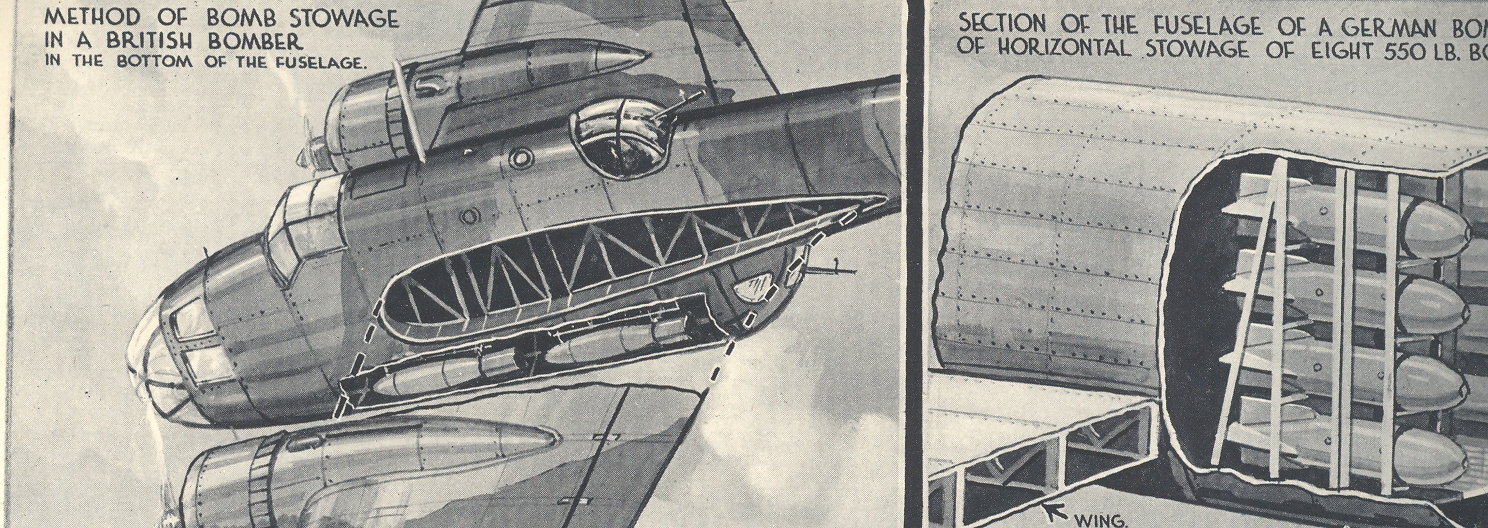
    Mar 28 bo,bing london 4 cratewr

    The
    Battle of Britain was an air battle begun weeks after the surrender of France (22 June 1940) in preparation for the Nazi
    invasion of England.  Hitler and the High Command believed Britain to be
    vulnerable2, and surrenderable, or at the least could be convinced not to interfere
    in the rest of the war.  But plans were
    made for the invasion—an invasion which could only be successful (it was reasoned)
    if there was complete naval or aerial superiority. The naval part was out of
    the question, especially since the Nazis had suffered such losses in the
    Norwegian campaign. The Luftwaffe was another story, and so the operation began. 

    Mar 28 bo,bing london 1

    The Illustrated London News published
    this pictorial introduction to Nazi bombing on 27 July 1940, just weeks after
    the campaign began.  At this point in the
    war the Luftwaffe operations were delegated to coastal installations and
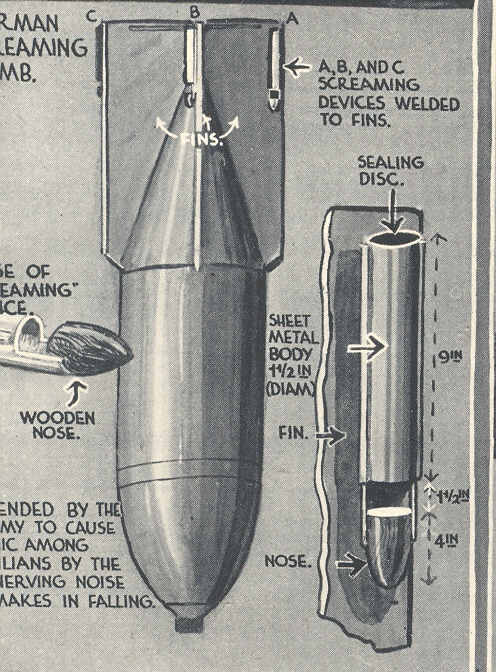
    aircraft industries.  Mar 28 bo,bing london 2

    The terror bombing
    against citizens in cities—which was an idea not born here but rather 20 odd
    years before—wouldn’t begin for some months. 
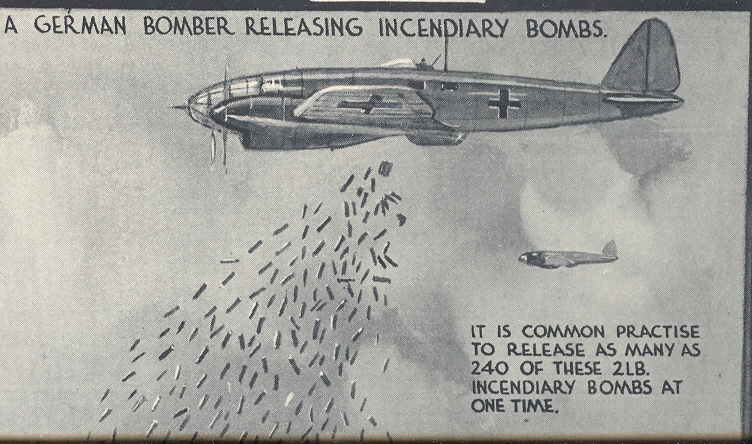
    In the meantime, and at this early part of the campaign against England, the
    British citizenry was introduced in a very proper way how the bombing was being
    carried out.  IT really does seem to be
    to be a very constructive, non-alarmist, cogent distribution of information to
    the general public about the potential for massive devastation.  

    Mar 28 bo,bing london 5  

    Notes:

    1.
    By the summer of 1941 the campaign was largely over, the Nazi effort doomed. England:
    1,023 fighters: 376 bombers, 148 coastal command aircraft for a total of
    1,547 aircraft and  544 pilots and aircrew killed.  There were also
    27,450 civilians killed and 32,138 wounded.  The Germans
    lost 873 fighters and 1,014 bombers for a total of 1,887 aircraft and 
    2,500 pilots

    2. The plan ‘Directive No. 16; On the Preparation of a Landing Operation
    against England’
    read, in part, as follows:

    Mar 28 bo,bing london 6

    “Since England, despite
    its militarily hopeless situation, still has not shown any signs of being
    prepared to negotiate, I have decided to prepare a landing operation against England and, if
    necessary, carry it out. The objective of this operation is to eliminate the
    English home country as a base for the continuation of the war against Germany…”

    “Included in these preparations is the bringing about of those preconditions
    which make a landing in England
    possible;”

    Mar 28 bo,bing london 7

    “a) The English air force must have been beaten down to such an extent
    morally and in fact that it can no longer muster any power of attack worth
    mentioning against the German crossing…”


  • The Hidden Death Hammer: Display of Quantitative Data for the Battle of Jutland, 1915.

    JF Ptak Science Books LLC  Post 986

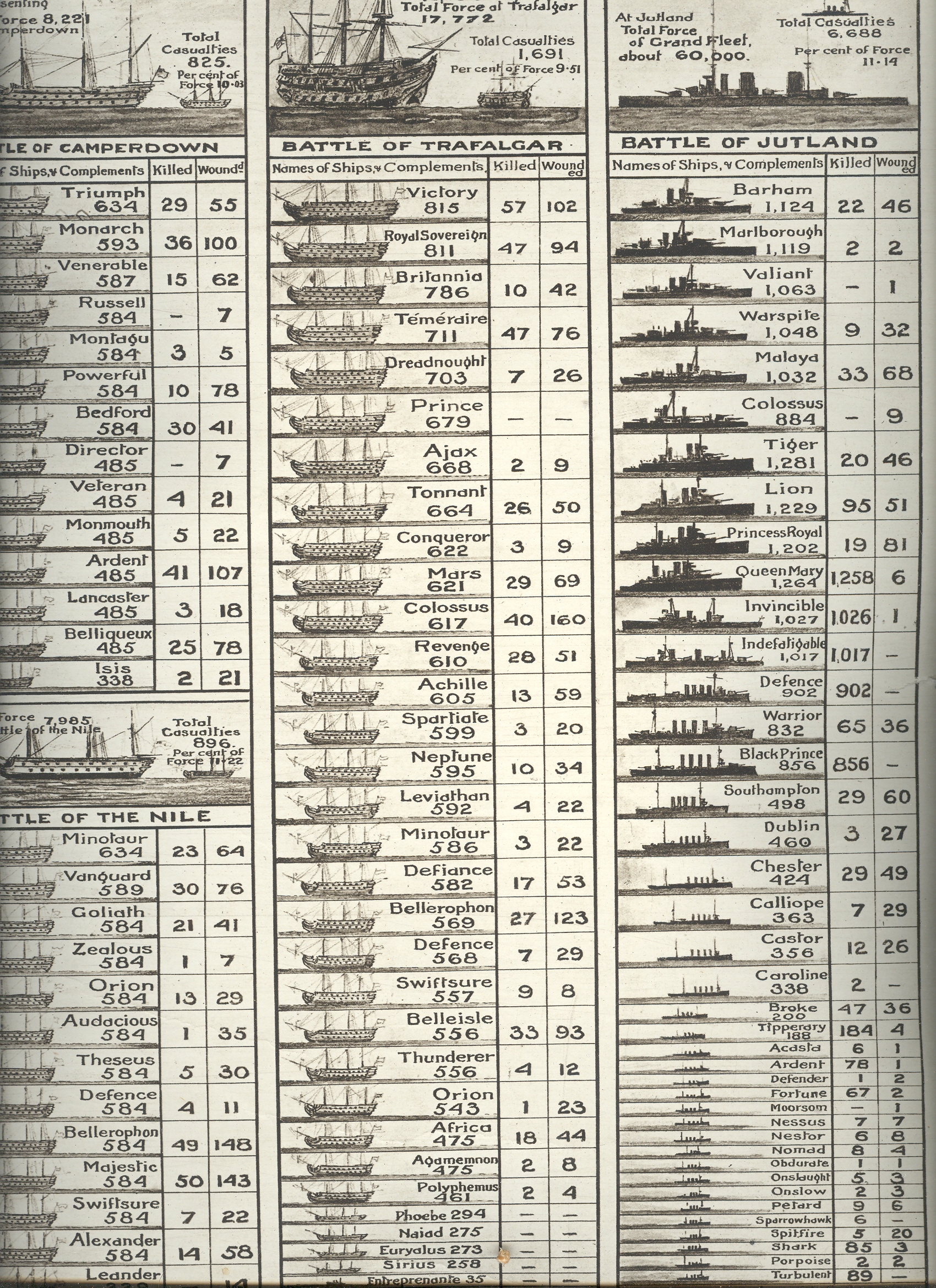
    A year and two weeks after the end of WWI, the Illustrated London News  published this compelling graphical display comparing
    the British naval losses at Jutland to three other great sea battles (Camperdown, the Nile and  Trafalgar). 
    The battle near Jutland (Denmark)
    was the largest naval engagement of WWI, involving the German Navy’s High Seas
    Fleet and the Royal Navy Grand Fleet, and took place May 31-June 1, 1915 (“The
    Day”).  It was an absolutely enormous
    engagement, with 250 vessels involved (151 for the Royal Navy, 99 for the
    German).1

    Mar 24 jutland

    The end result of the battle was mixed and still debated
    today; neither side could convincingly claim a conclusive victory from the
    affair.

    The Royal Navy losses at Jutland
    were staggering: 6,094 killed and 570 wounded, with German losses at 2,551
    killed and 507 wounded. 

    And while this graphical display places Jutland in a weak
    context with these other battles, and as pleasing as the thing is visually, the
    larger mark, the great lurking statistical and human beast lurking there in the
    mix of silhouettes and data, occurs about halfway down the far right column.

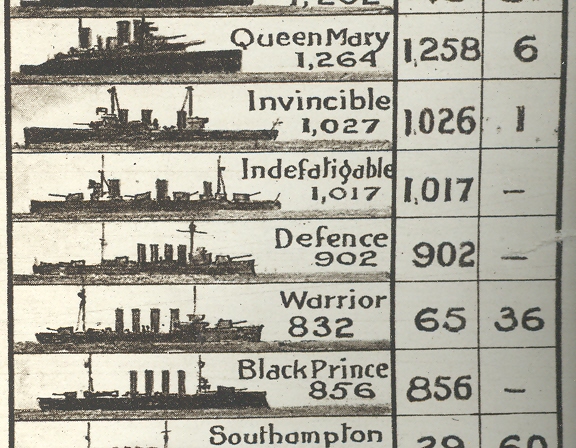
    Mar 24 jutland det

    Here we see the losses for five ships: the Queen Mary, the Invincible, the
    Indefatigable,
    the Defence, and
    the Black Prince.  Together, some 5066 men served aboard these
    vessels; at the end June 1, 1915, 5,059 of them would be dead.  Everyone aboard the Indefatigable, Defence
    and Black Prince would be killed; 1
    would survive on the Invincible, and
    6 would survive the killing of the Queen
    Mary
    . Astonishing, really.  And there
    are no other numbers like this on this chart.

    As certain and as clear as this representation seems, and as
    straightforward and seemingly elementary as it looks, I was shocked to see the
    numbers for those five Royal Navy ships, a “hidden” history within a broad
    comparative analysis. 

    Notes:

    1. England: 28 battleships,
    9 battlecruisers,
    8 armoured cruisers, 26 light cruisers,
    78 destroyers,
    1 minelayer,1
    seaplane carrier.
    Germany:
    16 battleships,
    5 battlecruisers,
    6 pre-dreadnoughts,
    11 light cruisers,
    61 torpedo
    boats.

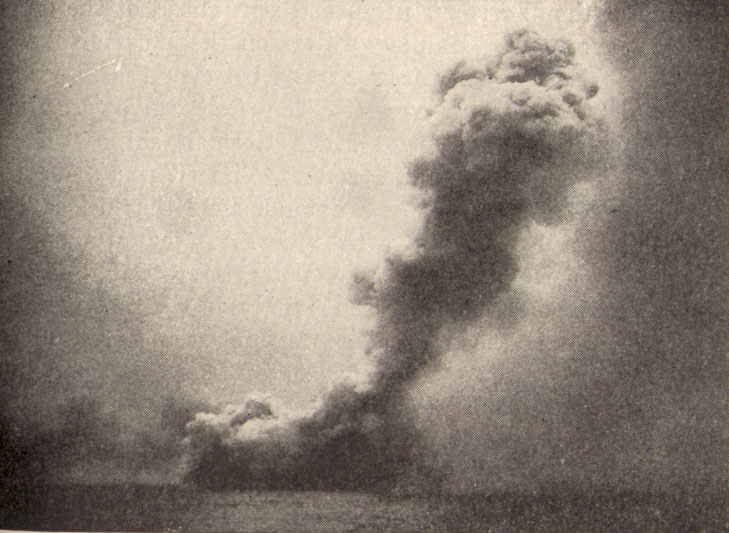
    [The Queen Mary going down.]

    Mar 24 queen mary


  • One-Page Letter Establishing the U.S. Chemical Weapons Stance, 1917

    JF Ptak Science Books LLC    Post 981


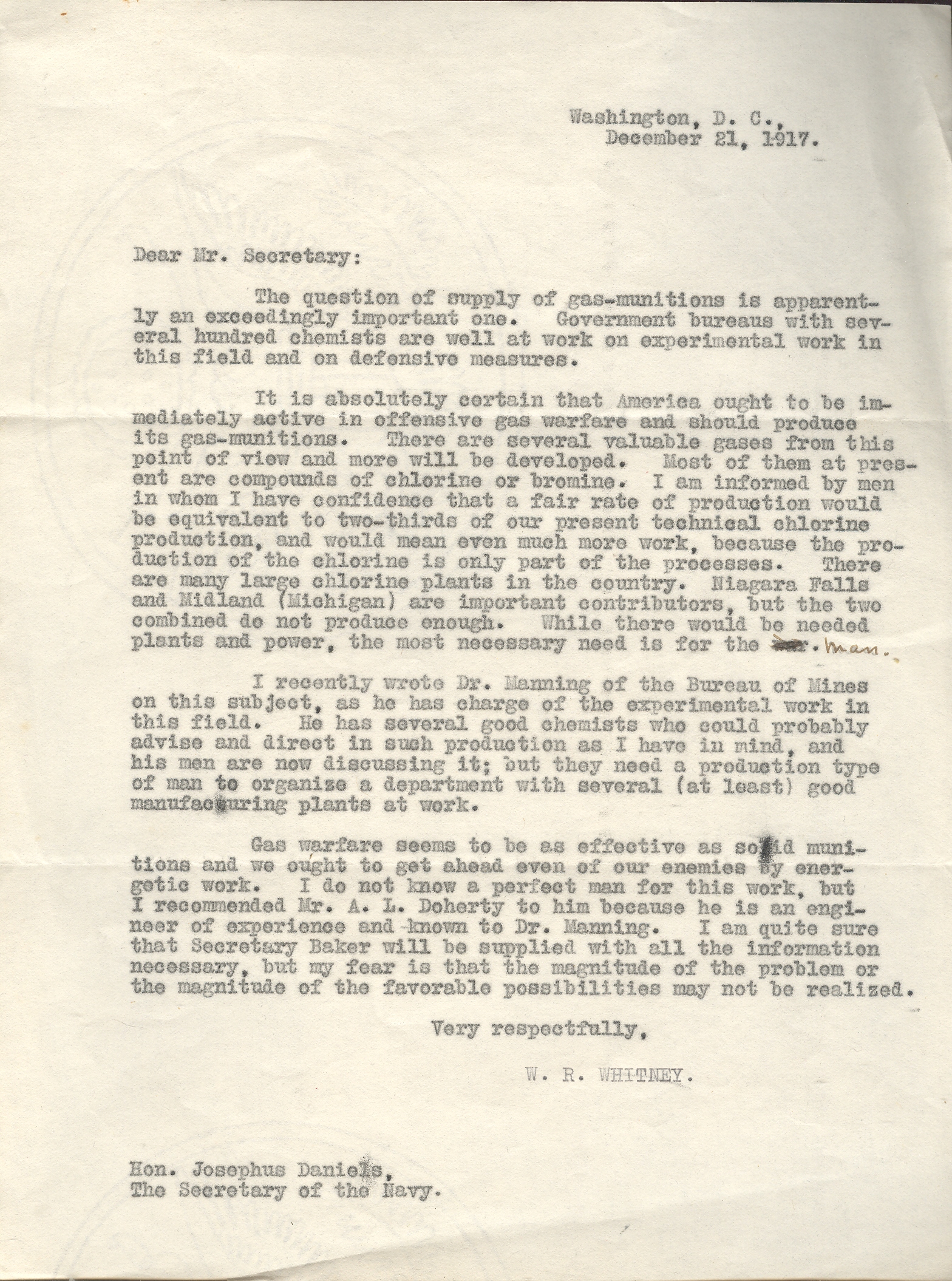
    On 21 December 1917, thee years into the beginning of World War I and eight months after America entered the war, Willis R. Whitney composed this one-page letter composing the American response to the use of poison gas in warfare.  Whitney was head of one the great research laboratories in America—run by General Electric, the GE Lab—and was one of the leaders of the U.S. Navy‘s Naval Review Board (along with Thomas Edison and Hudson Maxim, among others), and wrote to Josephus Daniels, who was at the time the U.S. Secretary of the Navy.  [Image below clickable. The item is also available for purchase via our blog bookstore.]

    Mar 21 gas warfare

    Whitney was a chemist, a former instructor at MIT, and a Ph.D. under Ostwald, a brilliant, “bearish” intellect in many fields, an innovator, and a leader, a tactician.  He summarized the state of affairs, and communicated quickly and with clarity and without hesitation what he thought must be done, and how America should respond to the German chemical threat. 

    The Germans had first used chemical weapons (shells containing xylyl bromide) against Russian troops in Bolimow, Poland.  It was the first foray into a section of the war that caused more than one million casualties and 85,000 deaths.  It would be another three months for the first full-scale use of a chemical weapon—in the form of chlorine gas—in the Second Battle of Ypres.  But the time Whitney sent his letter, chemical warfare had been a deeply-established weapon.

    Whitney recommends that the U.S. begin production; that several plants be established to produce the chemicals, and to get on the matter immediately, suggesting a man to head the work.  As it turns out the work didn’t begin in earnest for a number of months later, the first large quantities becoming available just after the signing of the Armistice.

    {I should note that I purchased this letter–rather, Whitney’s carbon copy of the letter–many years ago from the estate of  a Navy historian.  I am pretty sure that it has never been published before.]


  • Mobile Maginot: Movable Land and Floating Forts, 1940

    JF Ptak Science Books  Post 959

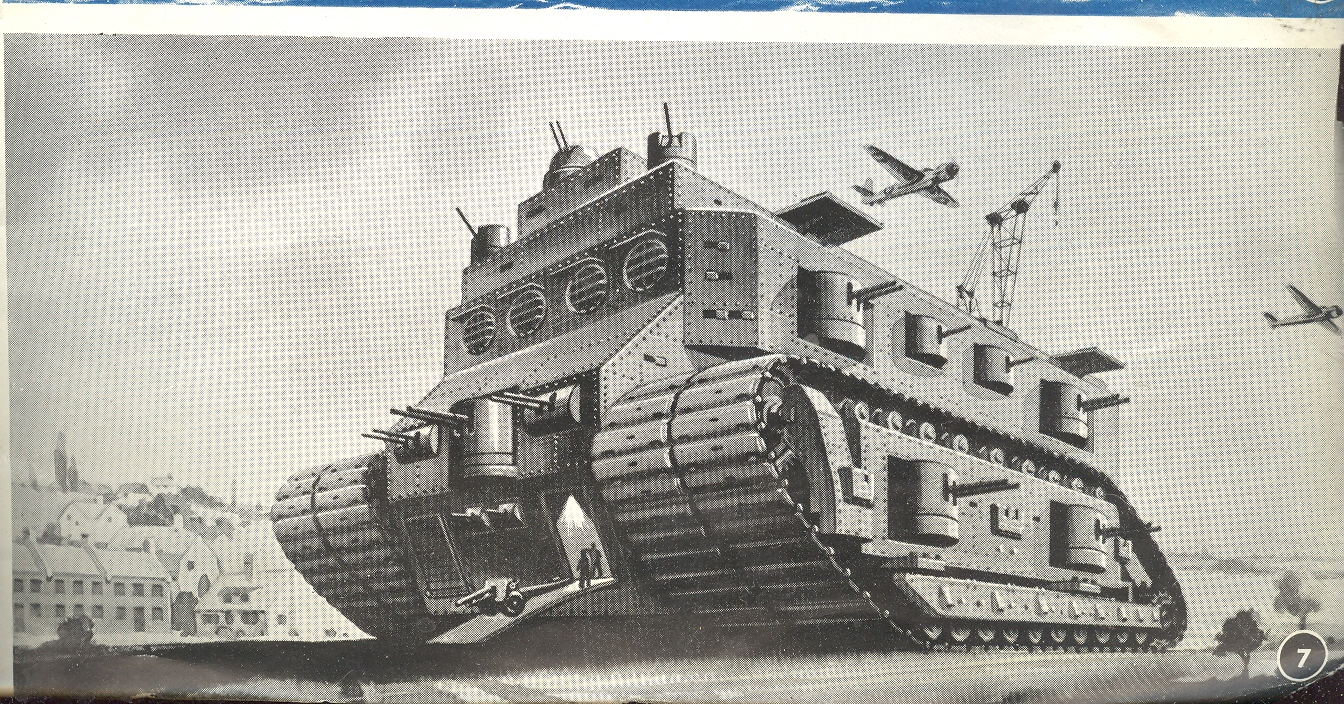
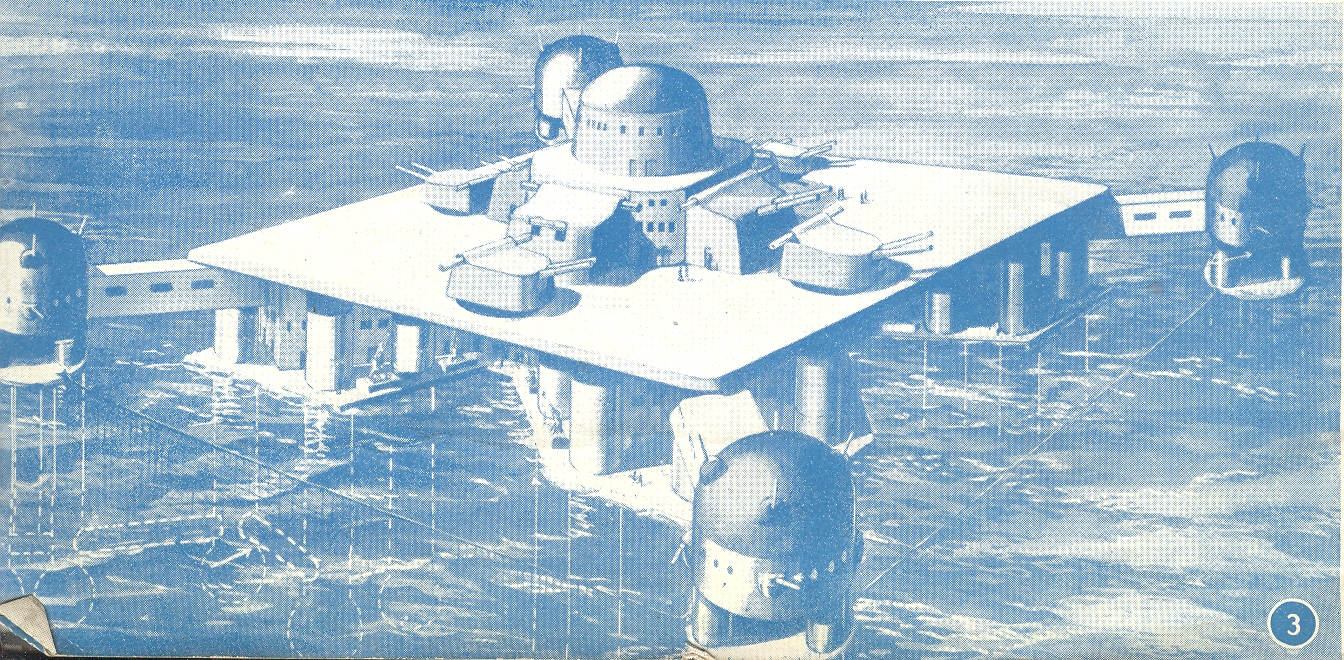
    Nothing quite exceeds like excess said Mr. Wilde (and others) , and he/they could be no more correct when looking at this picture of a Movable Maginot Line—it is a mobile fort, complete with plane launching capacity, two dozen long canons, a crane, and a host of other stuff.  

    000--win--land tank

    It looks as though it has ample room for all sorts of materiel though leaving little room for, perhaps, an engine.  I just can’t see where it might be…perhaps it is near the not-room-enough-for-it-either ammunition compartment.  Maybe they were in a smaller armed cart being pulled by the mothership?  I reckon that this beast was 66 feet high, 100 feet long and 60 feet wide, which is a very big, heavy near-cube. Good luck with driving the thing in anything that was less than perfect conditions.  A big profile like this, filled with guns and canons or not, also makes for a big target profile—a tall, broad target with flat/non-inclined sides. ( I should also point out that there are two 10’ loudspeakers mounted on the front of the fort to instill fear in the people that the thing was approaching with loud noise.  The author points out that the Nazis used noise against the French with their “screaming dive bombers”, and so the fort would use the same tactics against the Nazis in the movable fort—not that the sound of the engines and the attendant noise wouldn’t’ve been enough of a fear factor in themselves…)

    000--win--tubular ship

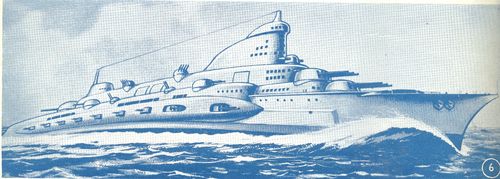
    But the image of such a monster, sensical or not, was enough for the purposes of the pamphlet in which it appeared.  The Brains to Win was a piece of British spirit/hope propaganda issued at about the time of the Battle of Britain in 1940, and it listed the sorts of technological breakthroughs that were going to push the nation over the top to victory.  Some of the stuff was real, some not—like the moving fort/Howl’s Castle above, and the floating fort, below.

    000--win--floating airport

    I’m not sure where a floating fort would make sense, especially one of that size. (Iterating the figures on deck into distance, it looks as though the deck on the floating platform was 150 or 200’ square.  It would’ve looked like a big target from above.) Given the time and expense and material  needed for such a thing, it seems that it would’ve been cheaper to make a moveable fortress not quite so big, with less of a profile, and more mobile—I think that this was called a “destroyer” or “battleship”.  

    But no matter, I’m just poking fun at some of the future vision that became archaic the moment it was drawn, punk retro-future.  All the pamphlet was trying to point out in its 32 pages was that overall the Brits were smarter than the Germans and that would be the balance for victory in the war.  “Hitler will get some very unpleasant surprises before this is over” the author very politely pointed out, no doubt with one eyebrow raised.  The scientists agreed.

    And they were right, which is all that matters.


  • Small Wars: Flowers vs. Coffins in the American Occupation of Haiti, 1915-1934

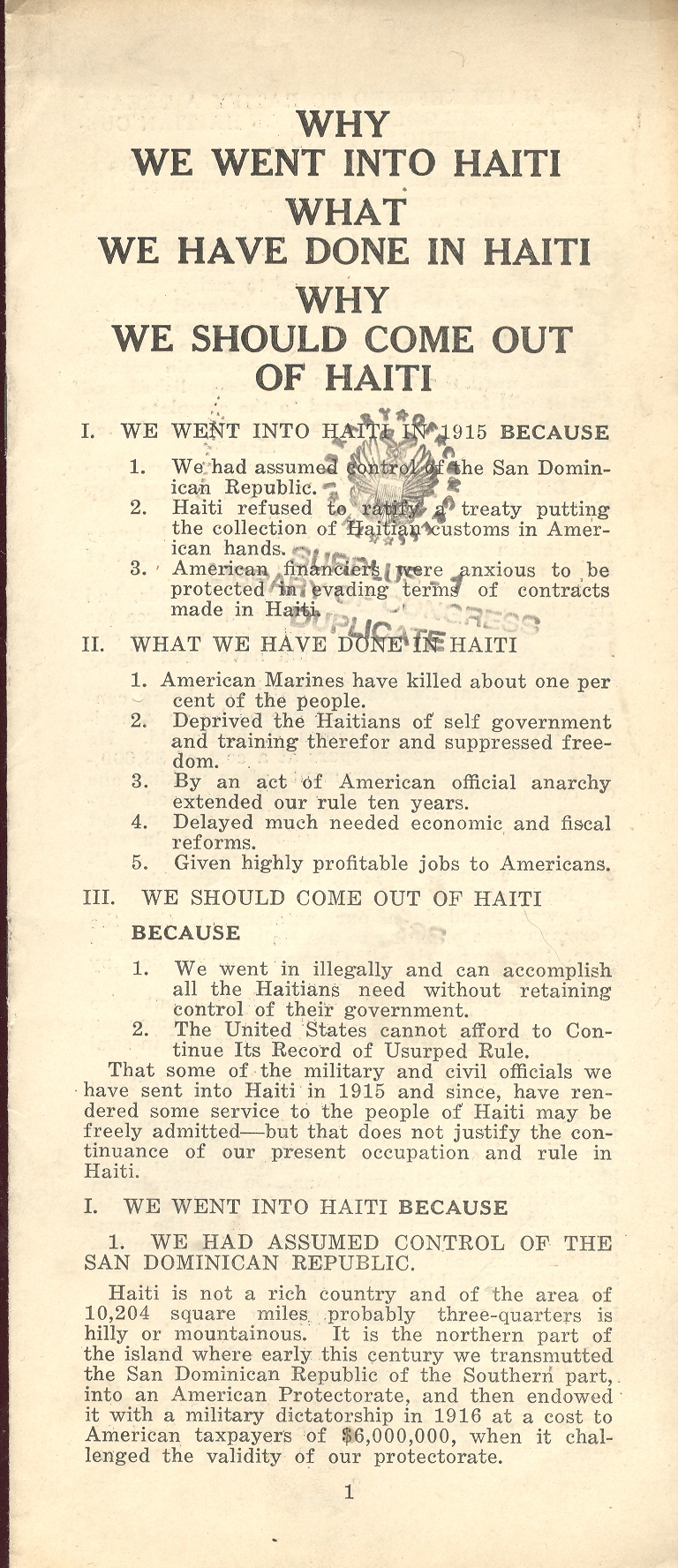
    JF Ptak Science Books LLC  Post 929Ebay Feb 4 haiti 1

    I spent 33 years and four months in active military service and
    during that period I spent most of my time as a  high class muscle man
    for Big Business, for Wall Street and the bankers. In short, I was a
    racketeer, a gangster for capitalism.–
    Marine Corps Major General and two-time Medal of Honor recipient Smedley Butler, from his 1935 book War is a Racket.1

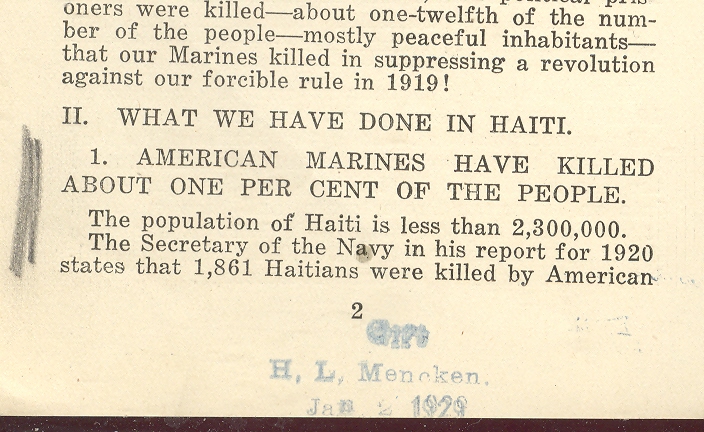
    This small pamphlet (reprinted below in continued reading)–printed in 1929 and once owned by H.L. Mencken, and with his annotations–is a gonzo screed against  American imperialism in Haiti produced by “The People’s Lobby” and headed by Prof. John Dewey.2

    This “intervention”, an extension
    of American hegemony in the Americas
    known as “The Banana Wars” and a direct relation to Theodore Roosevelt’s corollary
    to the Monroe Doctrine (1904), was a movement taken to protect business
    interests, infrastructure and investment. And the Haitian debt repayment
    structure.

    After a series of six failed Haitian
    governments in five years, President Woodrow Wilson felt the stinging itch of
    capital protection and ordered the occupation of Haiti by the Navy and the
    Marines, all in the guise of preserving peace and order and stability (of the Haitian state. 
    “The urge to
    save humanity is always a false front for the urge to rule it.” as Mr.Mencken wrote). But this itch had been felt by
    a number of presidents over time, what with the many imperialist interventions
    and occasional occupations of Panama,
    Nicaragua, Cuba, Dominican
    Republic
    , Honduras
    and Mexico.

    Ebay Feb 4 haiti 2 det

    The pamphlet is effective as an
    anti-Imperialist proto-gonzo work, though it does leave some gaping holes in
    fact and some narrow ones in fiction.  Be
    that as it may the anonymous author incites indignation with the outrages of
    the American occupation, not the least of which is the usurpation of Haitian sovereignty. 

    The only annotations of the former owner–Baltimore’s
    other great writer, H.L. Mencken– are his characteristic hashmarks in the
    margins highlighting the death rate of Haitians killed during the
    occupation.  According to the pamphlet,
    which quotes the report of the Secretary of the Navy (Joseph Daniels) , there
    were 1,861 Haitians “killed by American forces in 1919 alone”.  The writer makes the acidic point that this
    figure represented o
    ne percent of the total population of the nation.  And that is, perhaps, all that Mr. Mencken3
    needed to see. 

    The occupation of Haiti left broad scars along with the new and vastly improved infrastructure, which was probably just a colonial remnant of the necessities of governance by the occupying force. After all, we needed roads and bridges and such to secure the possession, and it isn’t as though we could role them all up and take them home at the end of the day.  They were more cenotaphs to an unwanted and shameful legacy than the betterment of Haiti’s social structure. To close with Mr. Mencken, the flowers that came with the American occupation make us look more for the coffins than anything else.4

    Notes:

    1. In 1935, Butler wrote in his famous book War Is a Racket: “I spent 33 years and four months in active military service and
    during that period I spent most of my time as a high class muscle man
    for Big Business, for Wall Street and the bankers. In short, I was a
    racketeer, a gangster for capitalism. I helped make Mexico and
    especially Tampico safe for American oil interests in 1914. I helped
    make Haiti and Cuba a decent place for the National City Bank boys to
    collect revenues in. I helped in the raping of half a dozen Central
    American republics for the benefit of Wall Street. I helped purify
    Nicaragua for the International Banking House of Brown Brothers in
    1902-1912. I brought light to the Dominican Republic for the American
    sugar interests in 1916. I helped make Honduras right for the American
    fruit companies in 1903. In China in 1927 I helped see to it that
    Standard Oil went on its way unmolested. Looking back on it, I might
    have given Al Capone a few hints. The best he could do was to operate
    his racket in three districts. I operated on three continents.

    2. Just to note that this was
    the John Dewey, one of founders—along with the great Charles Sanders Peirce and William James—
    of the philosophy of pragmatism. 

    3. Mr. Mencken also made the following Modest Proposal: “It seems to me that the United States would be a great deal better off
    today if it had a war on its hands, somewhere or other, all the time.
    I do not mean, of course, such puerile buffoonery as now goes on from
    time to time in Nicaragua and Haiti, but real war, occupying say a
    quarter of a million or half a million men.” “Editorials” in the The American Mercury, Nov 30, p.284

    4.  As in his Bierce-like dictum “A cynic is a man who, smelling a flower, looks for the coffin”.

    ·Posted by :

    ·in:

    —