A Daily History of Holes, Dots, Lines, Science, History, Math, Physics, Art, the Unintentional Absurd, Architecture, Maps, Data Visualization, Blank and Missing Things, and so on. |1.6 million words, 7500 images, 4.9 million hits| Press & appearances in The Times, Le Figaro, Mensa, The Economist, The Guardian, Discovery News, Slate, Le Monde, Sci American Blogs, Le Pont, and many other places… 5000+ total posts since 2008.

Category: Information, Quantitative Display of

  • Graphical Display of Information: Identifying Ships from the Air, 1942

    JF Ptak Science Books  Quick Post

    Aircraft regonition494

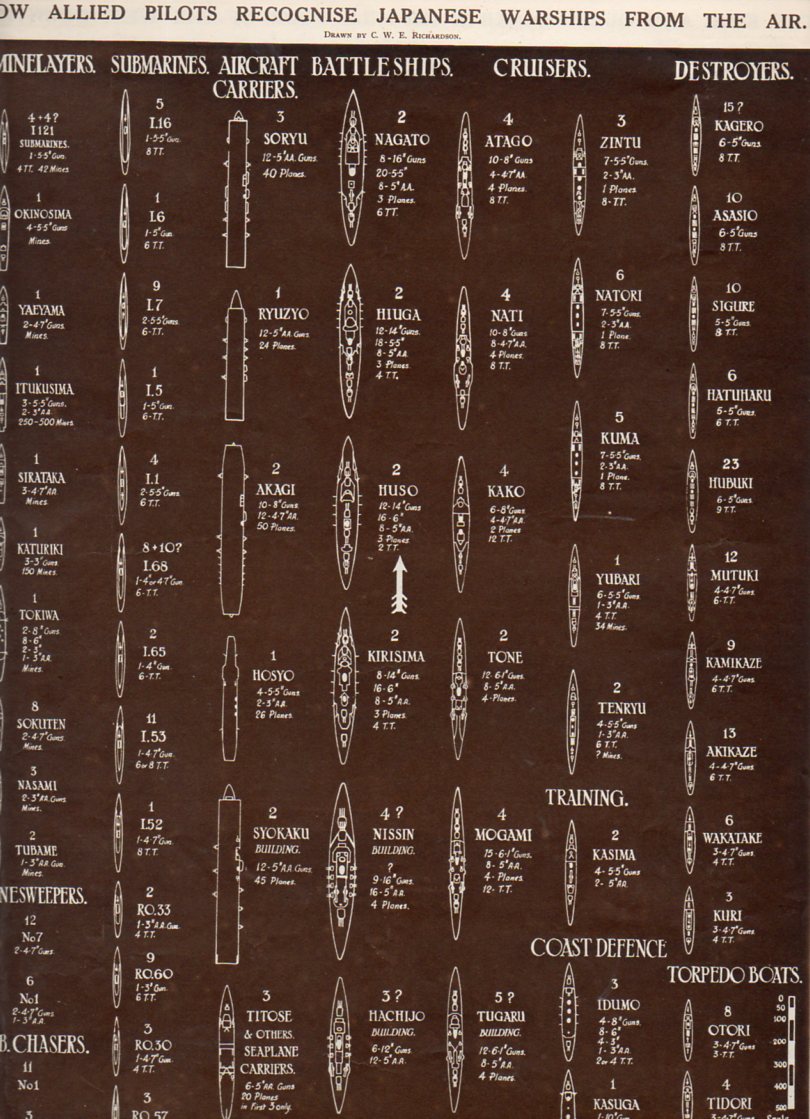
    “How Allied Pilots Recognize Japanese Warships from the Air”, a graphic that appeared in The Illustrated London News on 16 May 1942, displayed in silhouette the different sorts of Japanese warships that might be targets of allied planes.  There’s a lot of data on this one long sheet of paper, showing minelayers, submarines, aircraft carriers, battleships, cruisers, destroyers, subchasers, torpedo boats, training vessels and coastal defense ships–65 in all.  It is a great display, presenting a great amount of data in limited space, clearly and concisely, and very easy to distinguish and read. 


  • An Alphabet of Anatomical Emotions and Feelings–Installment 1

    JF Ptak Science Books   Post 1488

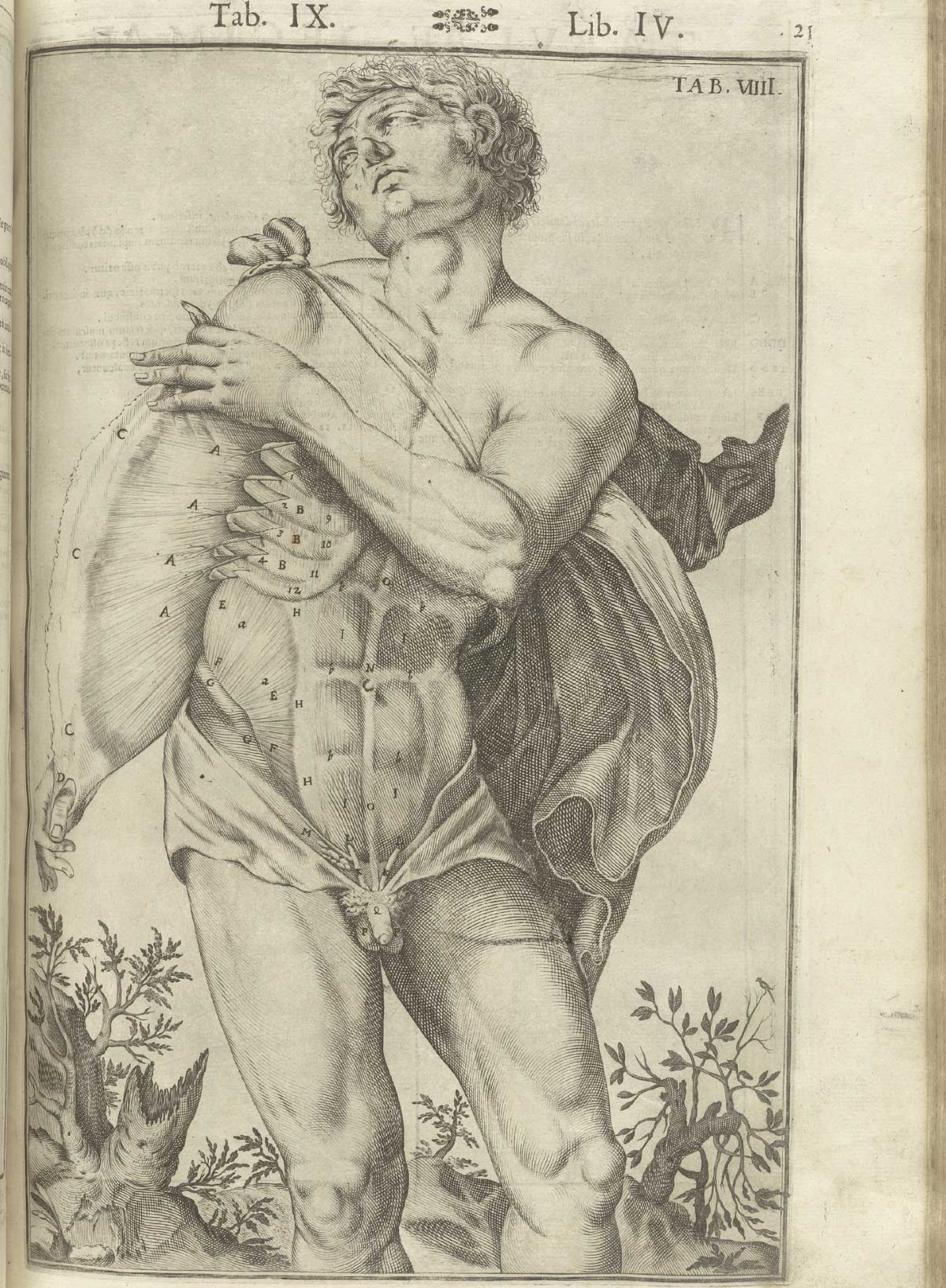
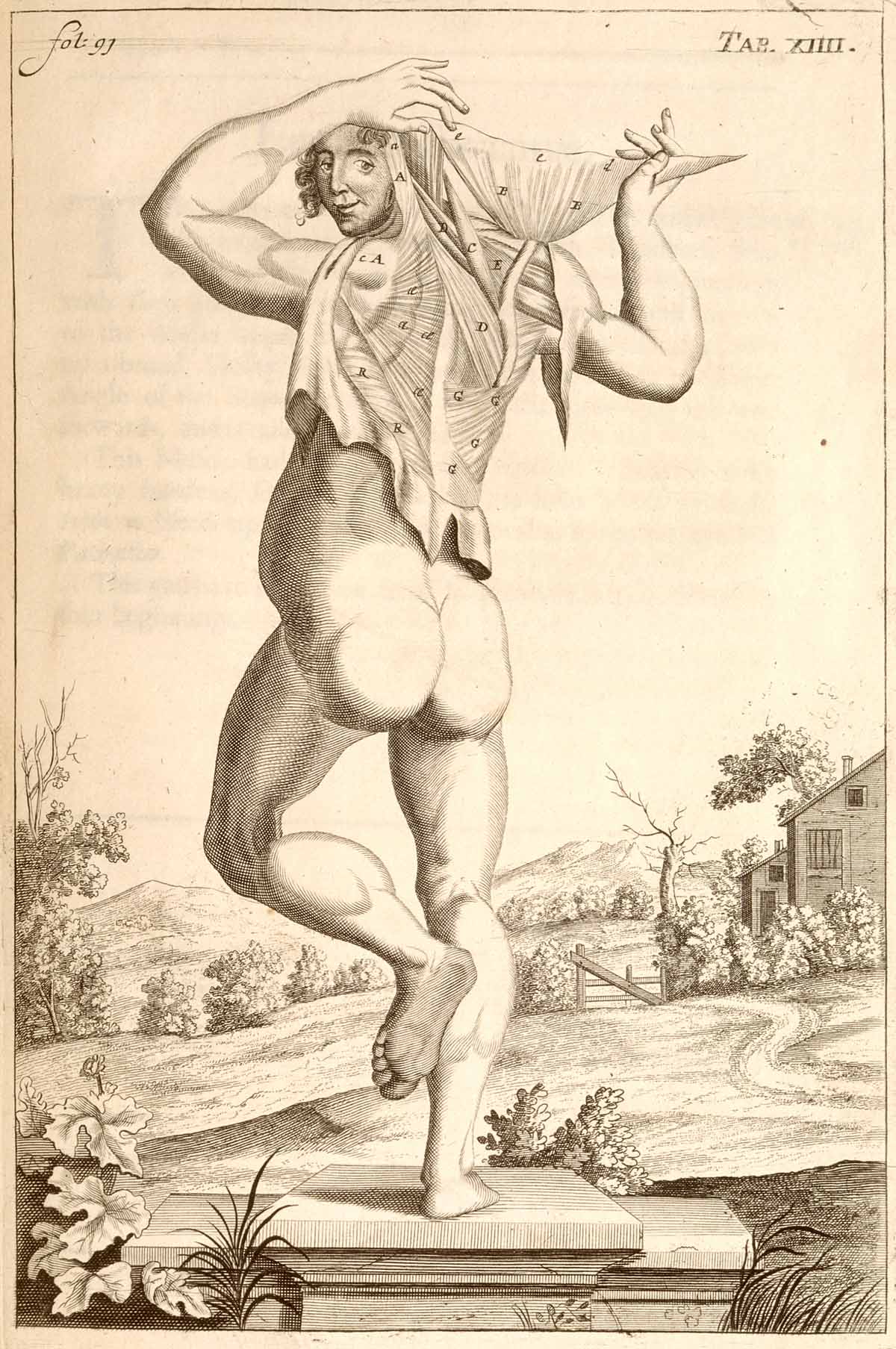
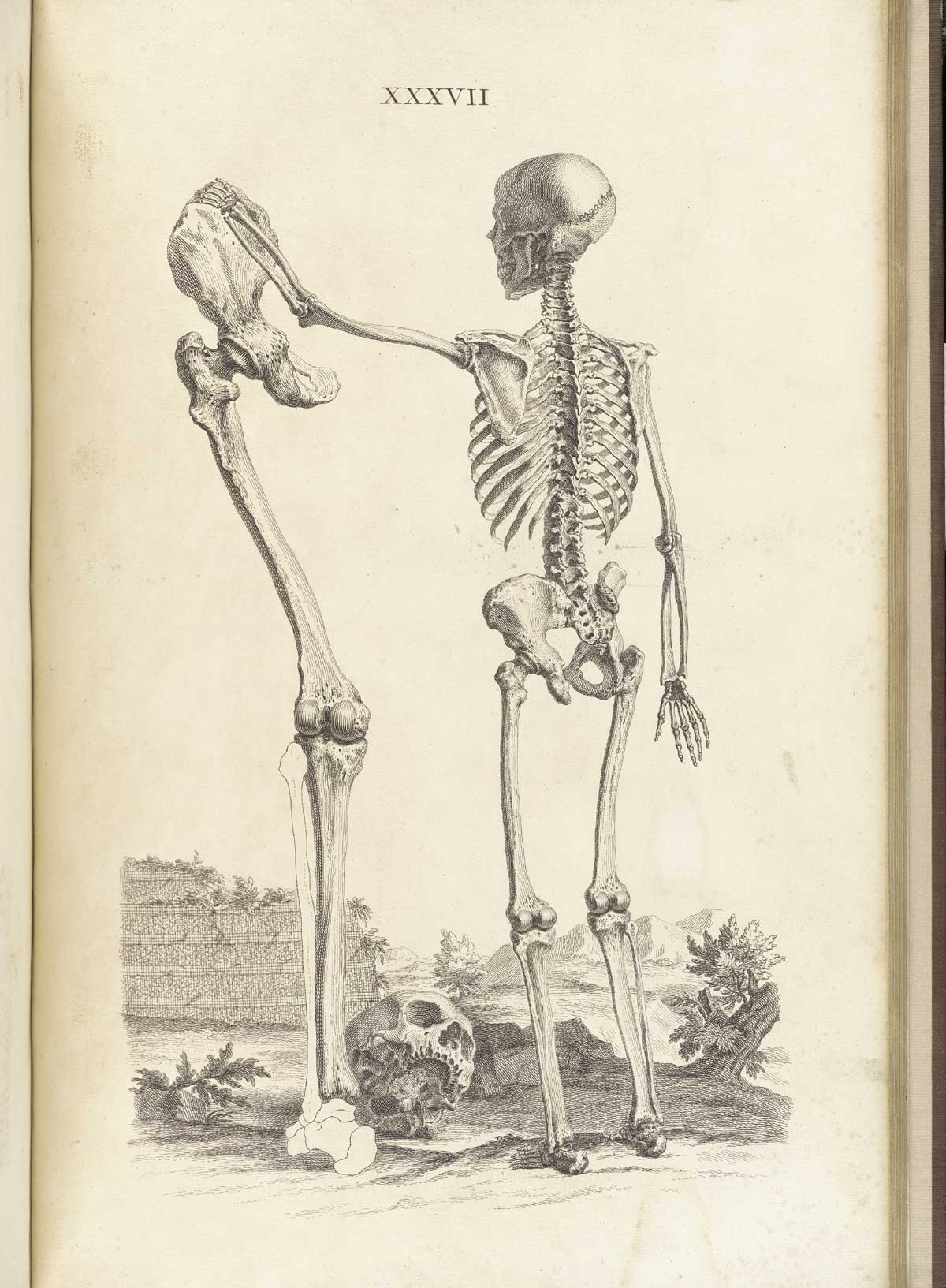
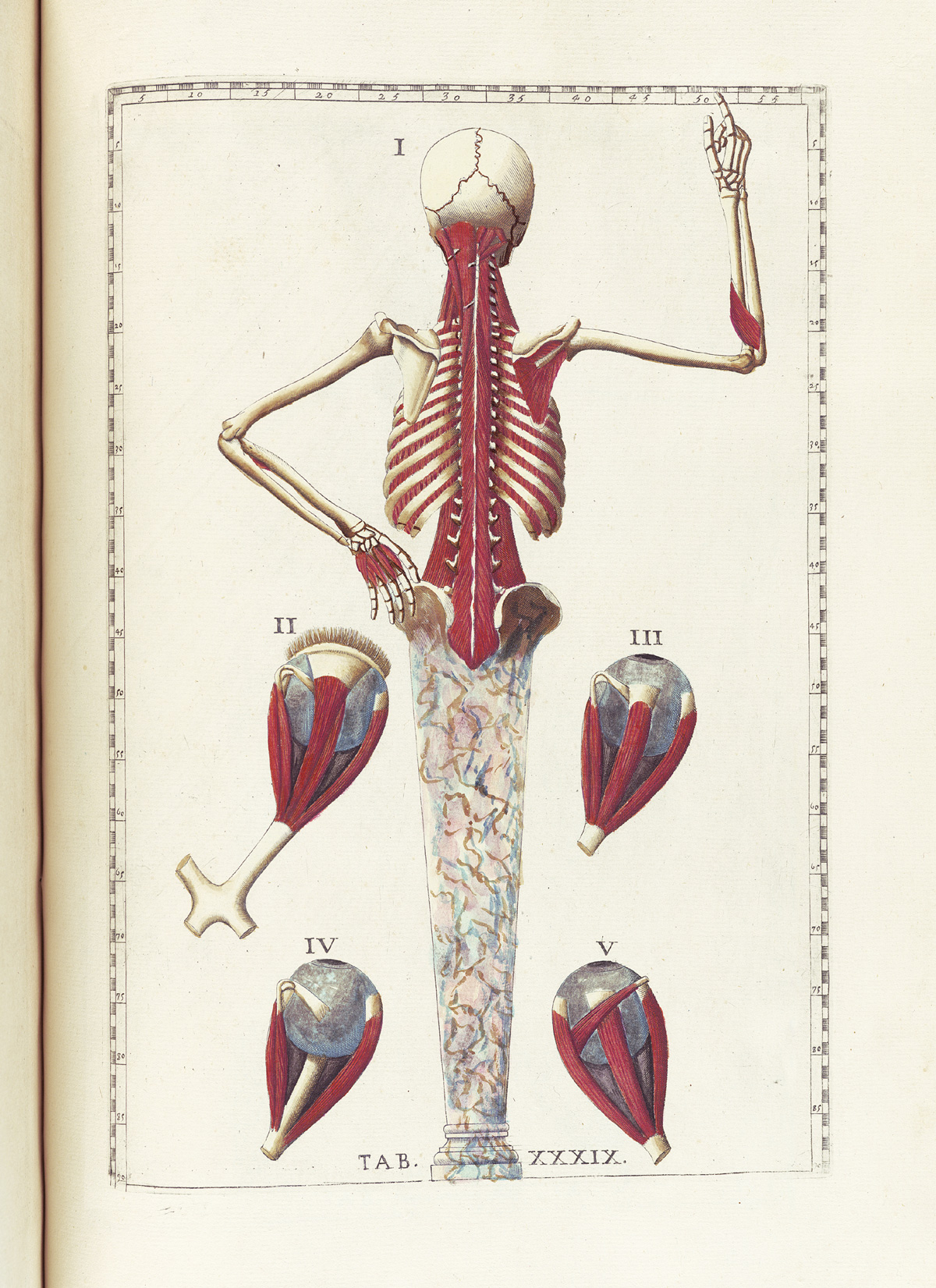
    In a developing thread on oddly-represented alphabets on this blog, this one is a little harder to fill than it seems.  The rules are that all images must be some level of dissection (with the exception of the anatomical Durer), and not a simple artistic study of emotion, and that the images be at least 200 years old.  Part I of this alphabet of emotion and feelings includes awe, burdensome, contempt, disappointment, empathetic, fear, guilt, hope, intrigue, joy, lonesome, majesty, pride, resentment, surprise, trust, vulnerability and wonder.

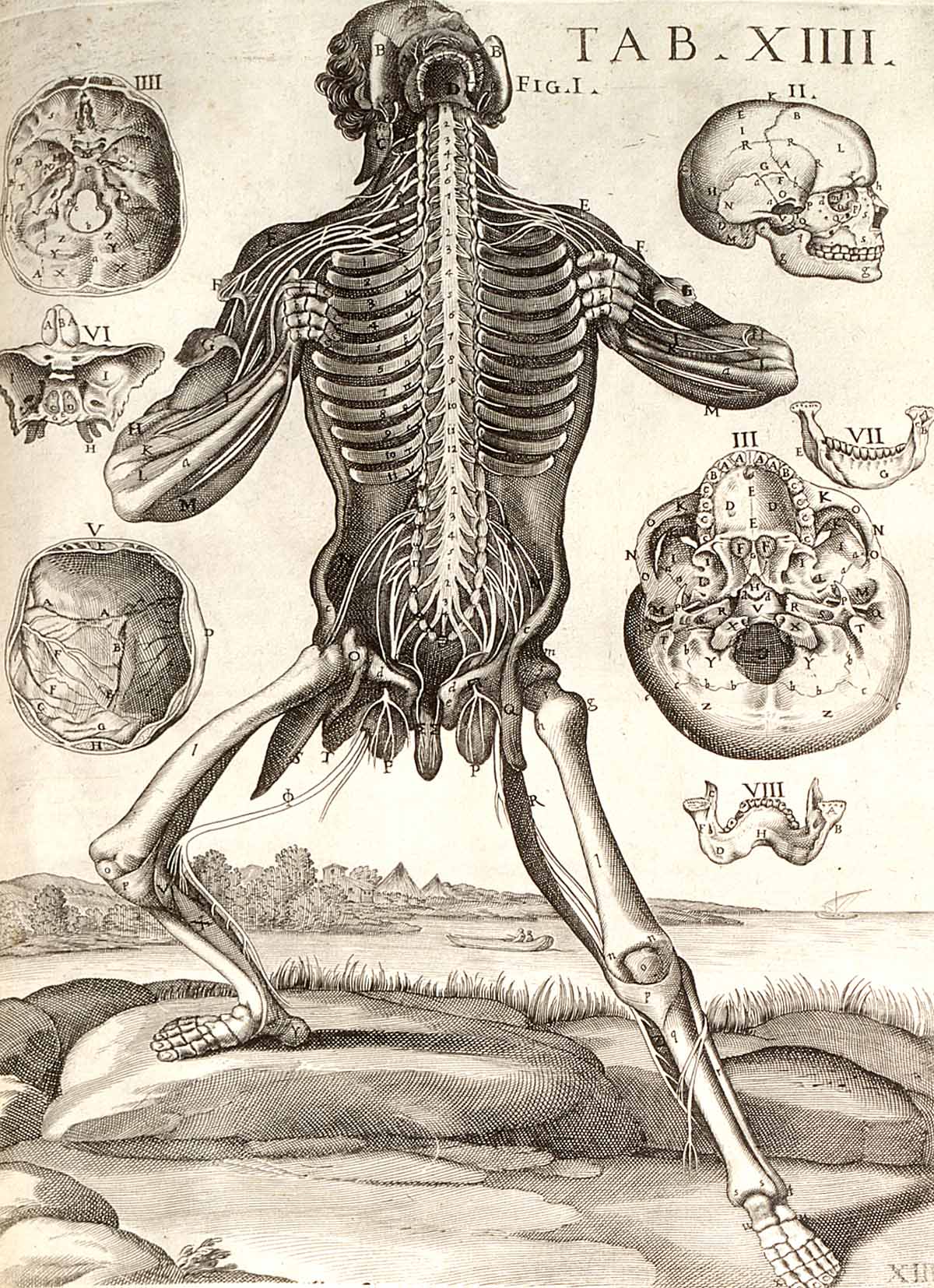
    Awe

    Tabulae Anatomicae... by Giulio Casserio and Odoardo Fialetti

    Giulio Casserio (ca. 1552-1616, anatomist) and Odoardo Fialetti (artist), Tabulae Anatomicae, published in Venice in 1627.

    Burdensome

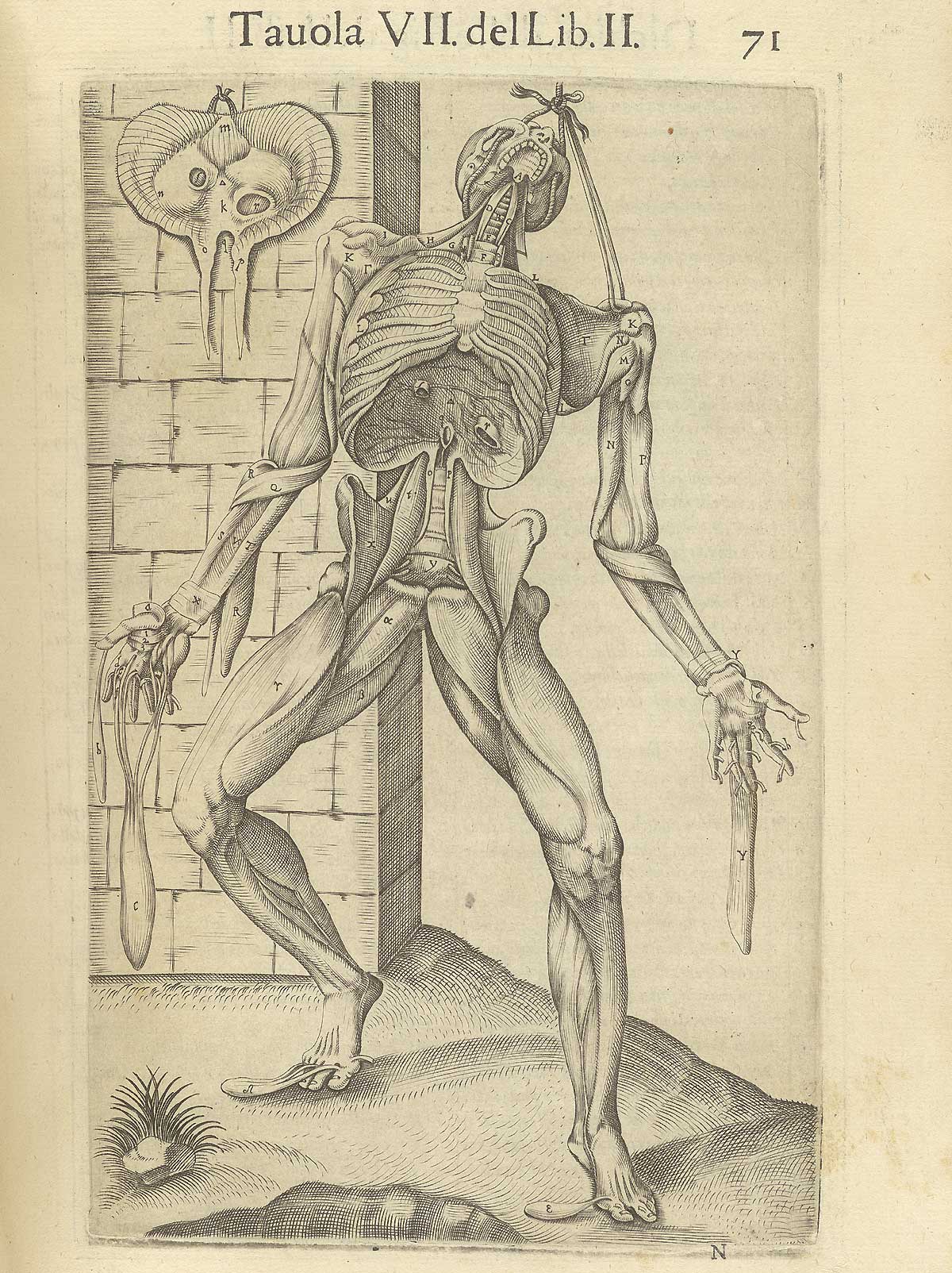
    http://www.nlm.nih.gov/exhibition/historicalanatomies/Images/1200_pixels/valverde_p71.jpg

    Juan Valverde de Amusci (ca. 1525-ca. 1588), Anatomia del corpo humano, printed in Rome in 1560. 


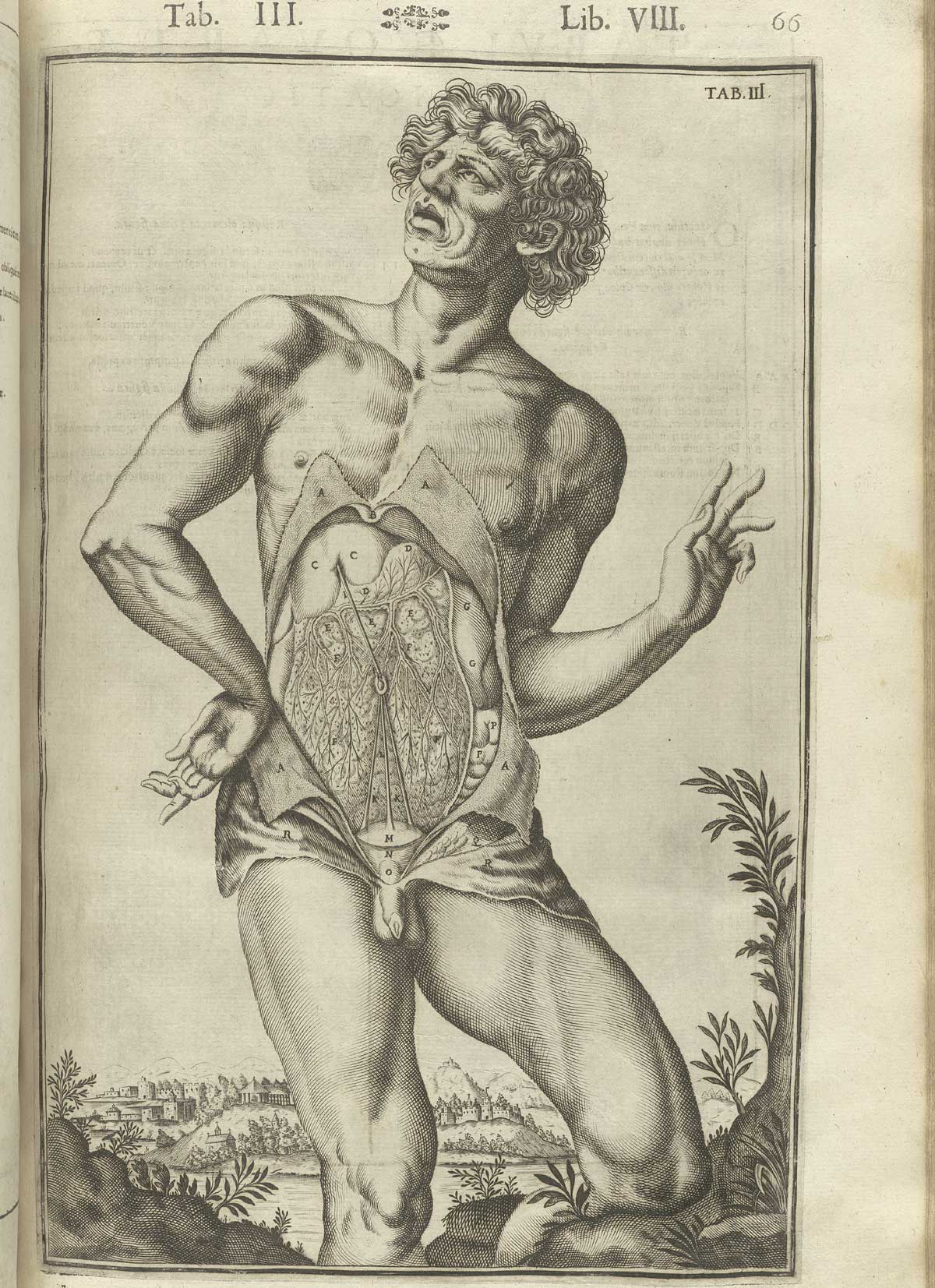
    Contempt

    Casseri_p66  dandy

     Giulio Casserio (ca. 1552-1616, anatomist) and Odoardo Fialetti (artist), Tabulae Anatomicae, published in Venice in 1627

    Disappointment 

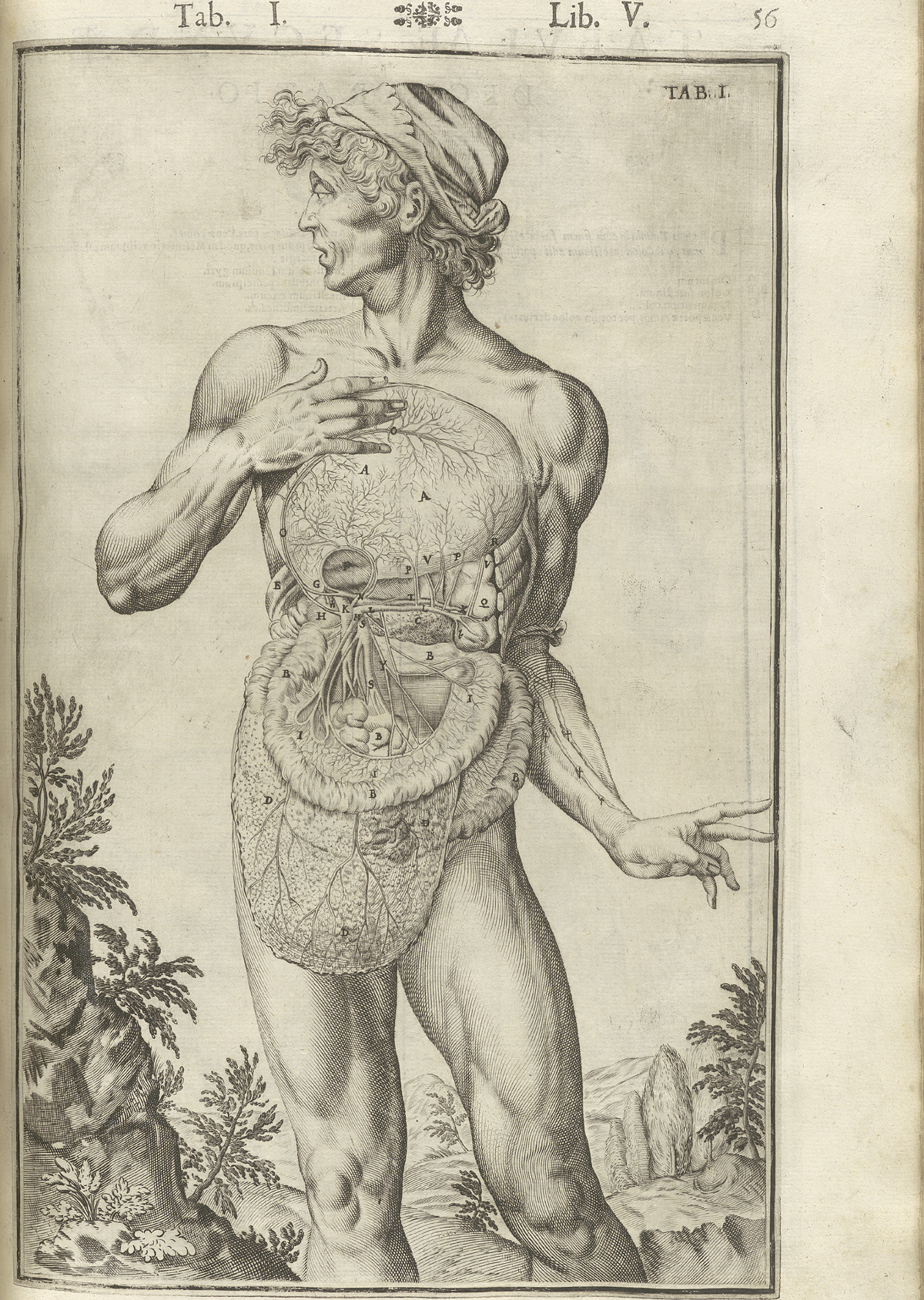
    Casseri_p56 surprise

    Giulio Casserio (ca. 1552-1616, anatomist) and Odoardo Fialetti (artist), Tabulae Anatomicae, published in Venice in 1627.

    Empathetic

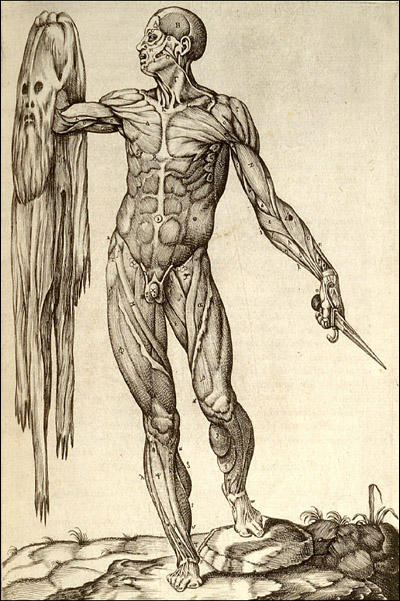
    Missing skin c
    Juan Valverde de Amusci (ca. 1525-ca. 1588), Anatomia del corpo humano, printed in Rome in 1560.

    Fear

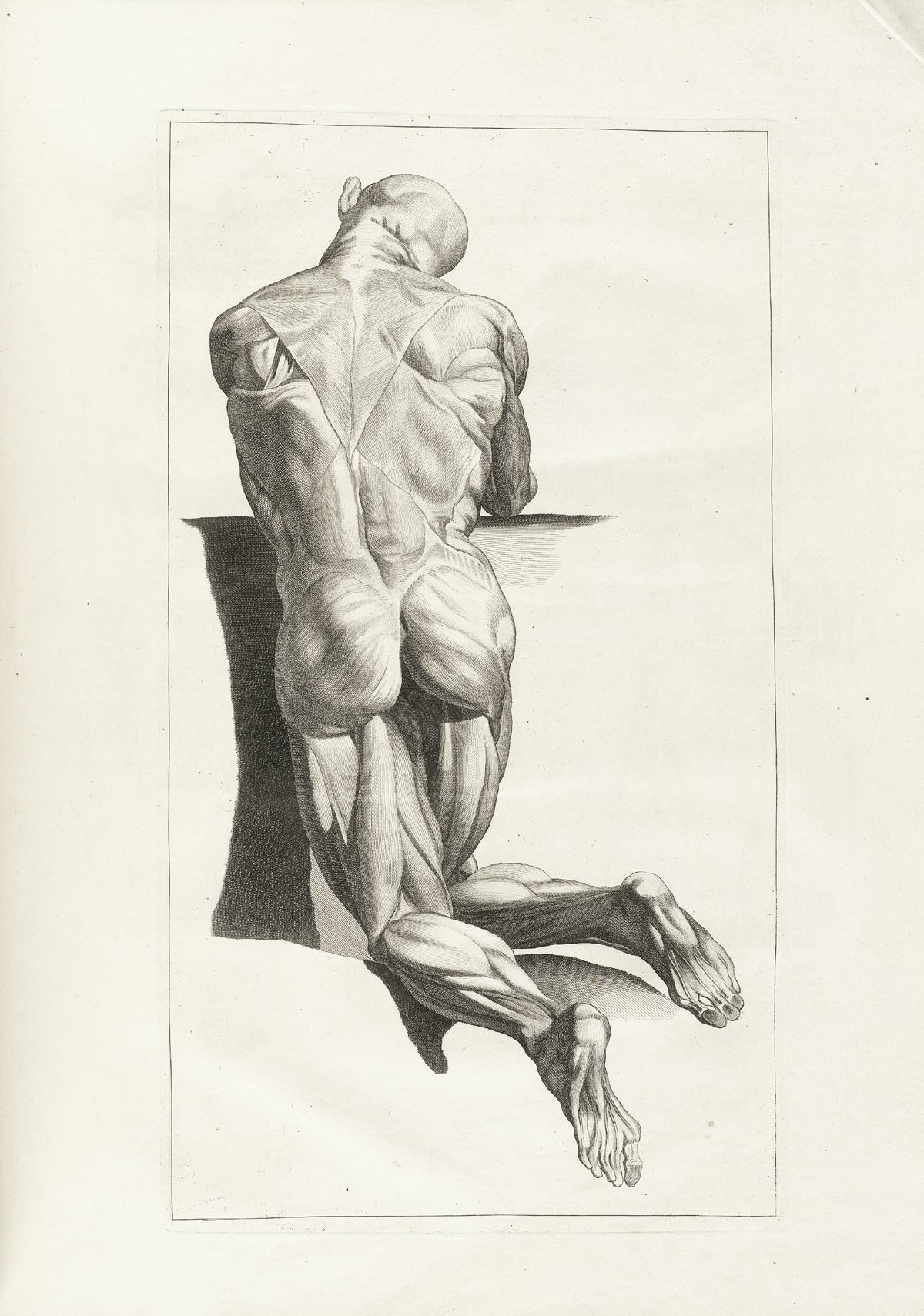
    Gamelin1_t02 Jacques Gamelin (1736-1803), Nouveau receuil d’ostéologie et de myologie, published in Toulouse in 1779.

    Guilt

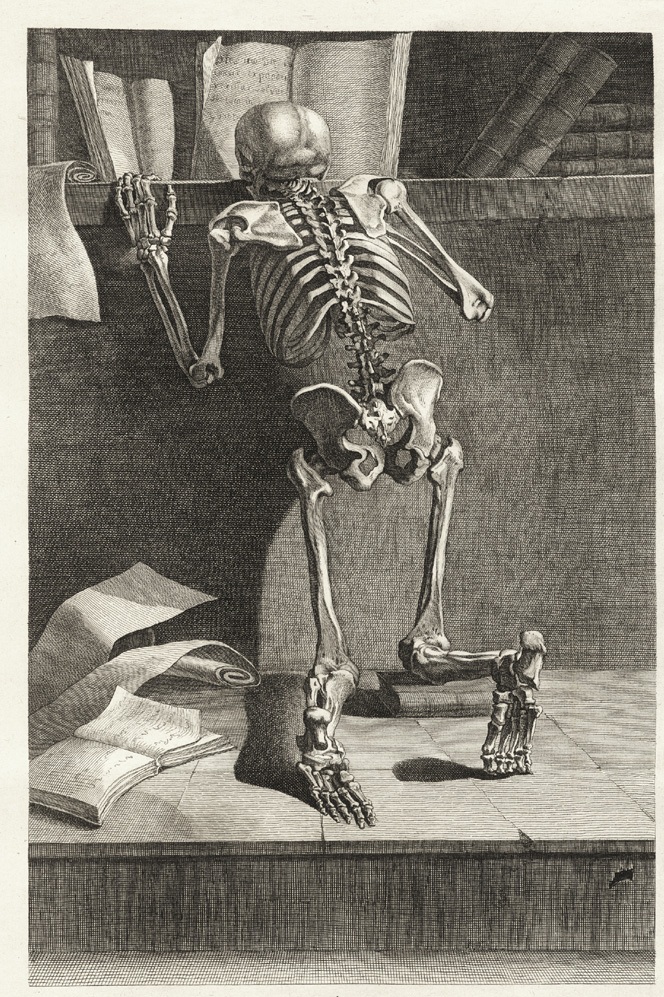
    Gamelin1_t11
    Jacques Gamelin (1736-1803), Nouveau receuil d’ostéologie et de myologie, published in Toulouse in 1779.

    Hope

    http://www.nlm.nih.gov/exhibition/historicalanatomies/Images/1200_pixels/gersdorff_p21v.jpg

    Hans von Gersdorff (d. 1529),  Feldtbůch der Wundartzney : newlich getruckt und gebesser, published in Strassburg in 1528.  

    Intrigue

    Casseri_p21 bored

    Giulio Casserio (ca. 1552-1616, anatomist) and Odoardo Fialetti (artist), Tabulae Anatomicae, published in Venice in 1627

    Joy

      Anatomy john brown dancing

    Lonesome

    http://www.nlm.nih.gov/exhibition/historicalanatomies/Images/1200_pixels/cheselden_t37.jpg

    William Cheselden (1688-1752), Osteographia, or the Anatomy of Bones, published in London in 1733.

    Majesterial

    http://www.nlm.nih.gov/exhibition/historicalanatomies/Images/1200_pixels/Eustachi_t39.jpg

    Bartholomeo Eustachi (d. 1574), from Tabulae anatomicae, printed in Rome in 1783.

    Pride


    Anatomy performers

    In the category of “Holy Crap!” anatomical illustration surely Pietro Berrettini da Cortona (1596-1669) must be among its patron saints.  His images are incredible, yelling and screaming for attention as they demand their space onthe printed page.  Further, the man actually accomplished all o fthis in the early 17th century, his work no tbeing published for another 130 years or so. [Source:  Tabulae anatomicae..., Rome 1741.]

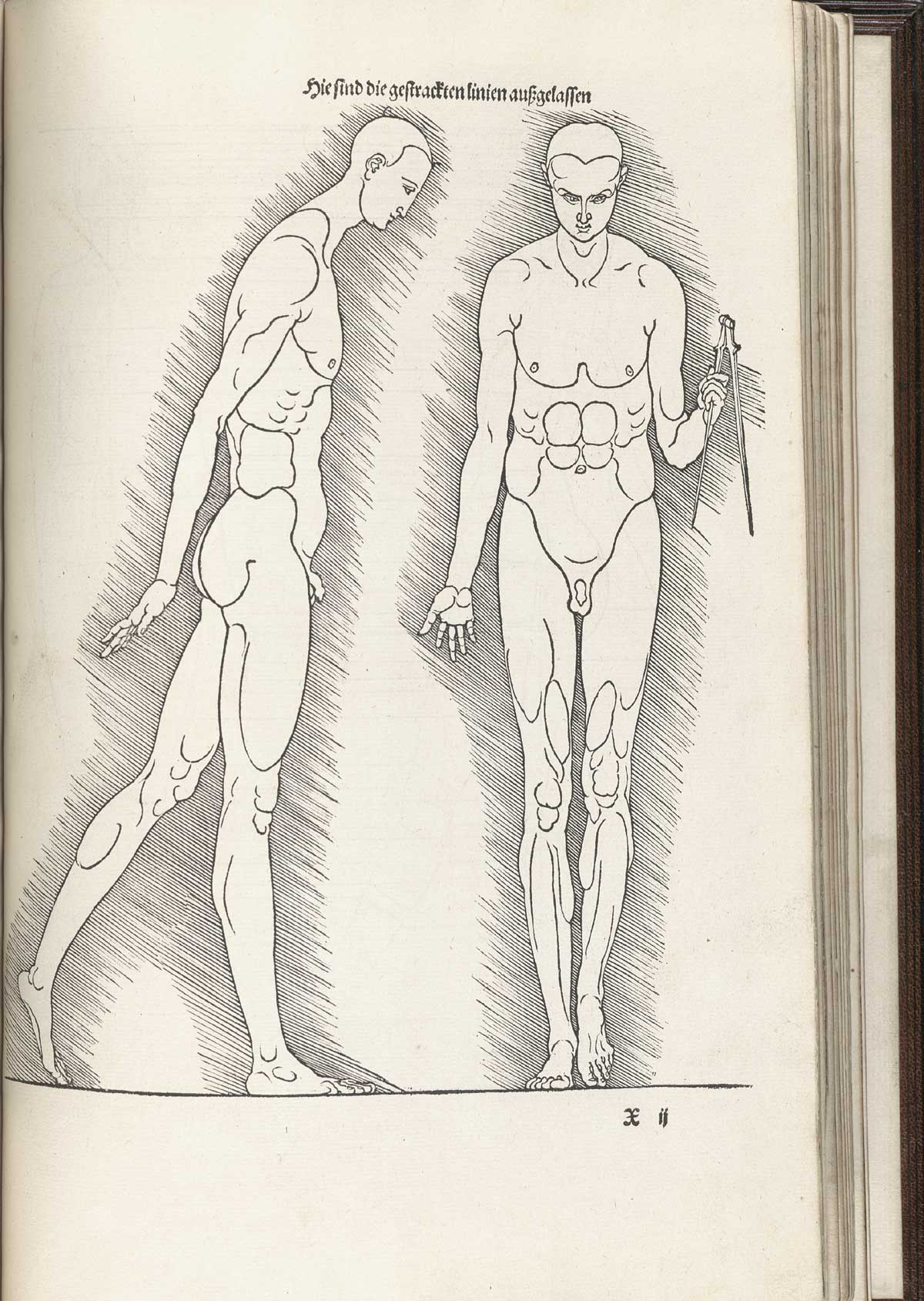
    Resentment

    http://www.nlm.nih.gov/exhibition/historicalanatomies/Images/1200_pixels/durer_pg-233.jpg

    Albrecht Durer (1471-1528), Vier Bücher von menschlicher Proportion, published in Nuremberg in 1528.


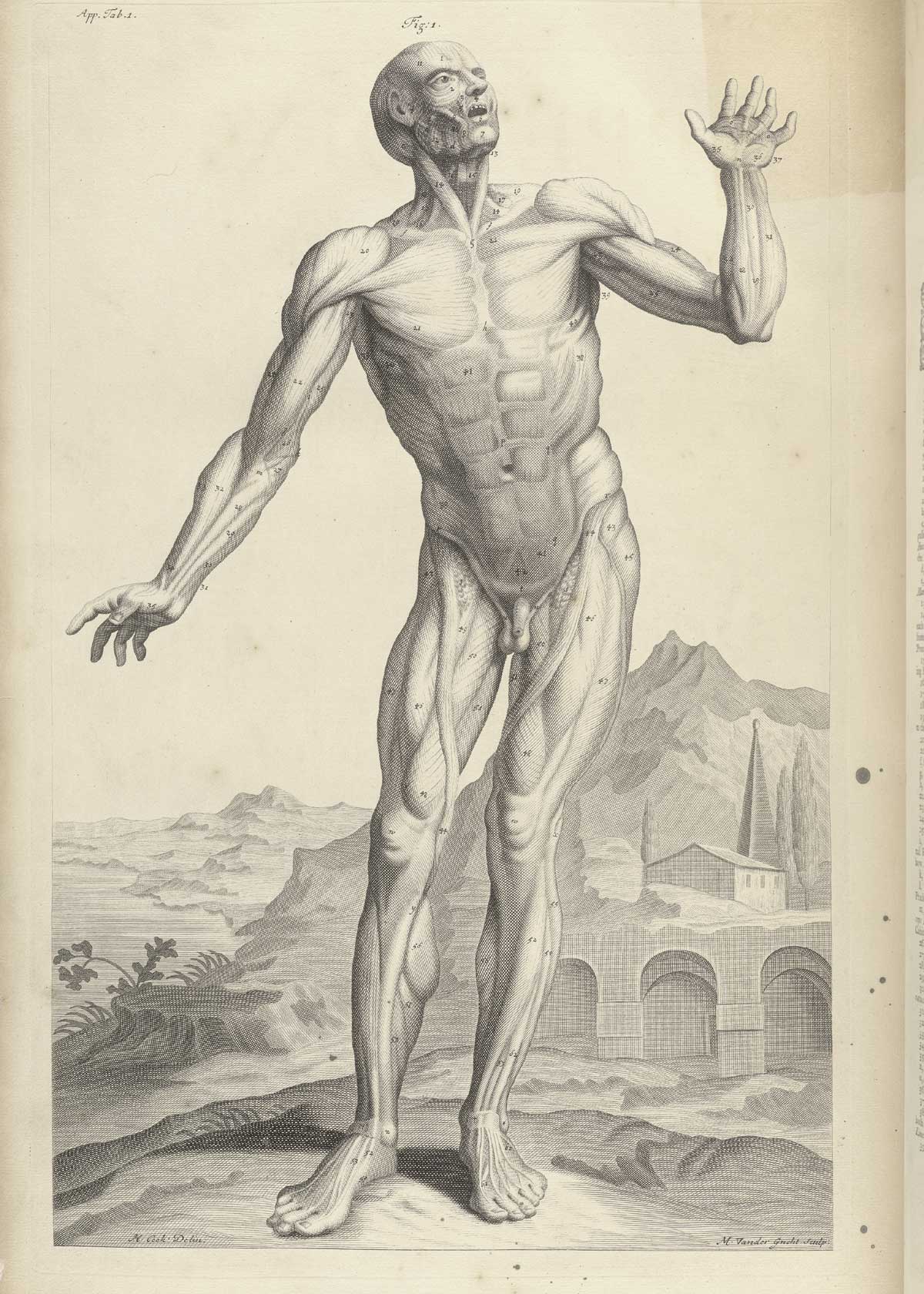
    Surprise
    http://www.nlm.nih.gov/exhibition/historicalanatomies/Images/1200_pixels/cowper_t01.jpg

    William Cowper, The anatomy of humane bodies, printed in Oxford in 1698.


    Trust


    http://www.nlm.nih.gov/exhibition/historicalanatomies/Images/1200_pixels/cheselden_t36.jpg

    William Cheselden (1688-1752), Osteographia, or the Anatomy of Bones, published in London in 1733.

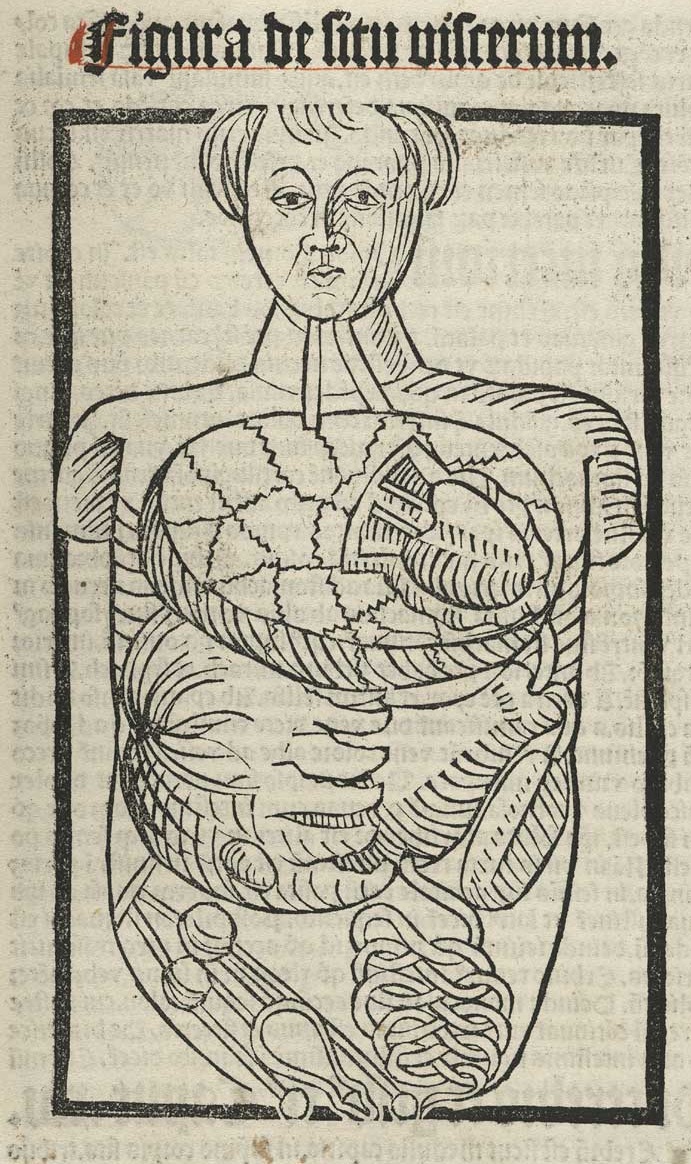
    Vulnerable

    Hundt_p119

    Magnus Hundt (1449-1519),  Antropologium de hominis dignitate…, printed in Leipzig in 1501 by Wolfgang Stoeckel. 

    Wonder

    http://www.nlm.nih.gov/exhibition/historicalanatomies/Images/1200_pixels/Estienne_p043.jpg

    Charles Estienne (ca. 1504-1564), De dissectione partium corporis humani libri tres, published in Paris and printed by Simon Colinaeus in 1545.


  • Breakfast, Bunks and Books in the French Foreign Legion, 1913

    JF Ptak Science Books   Post 1467

    Parachute bomb456 b
    The French Foreign Legion is legionary, or legendary, something that is famous in and of itself.  It was formed 180 years ago to help keep the peace in Algeria (which the French massively mess-up) and the rest of the now-disappeared French empire.  That corps of soldier had been composed of an ask-no-questions, never surrender, blood-in-the-sand, hardened and escaping individual. 

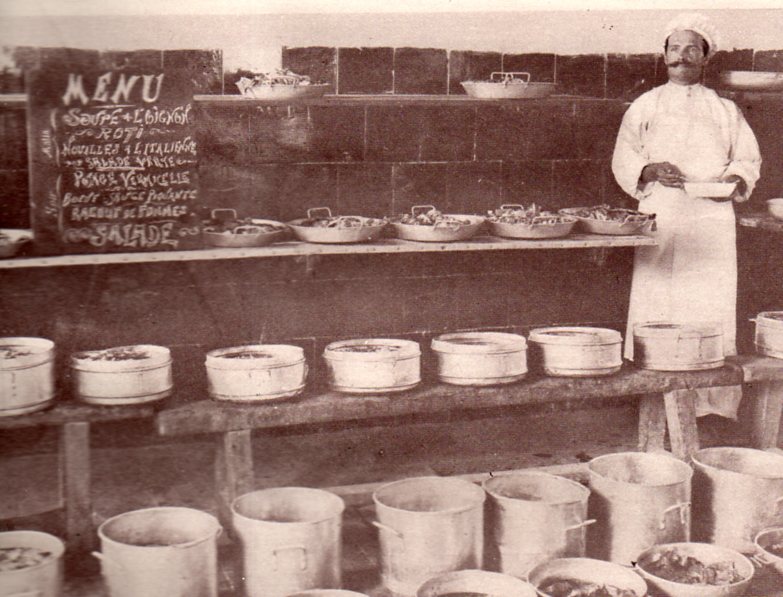
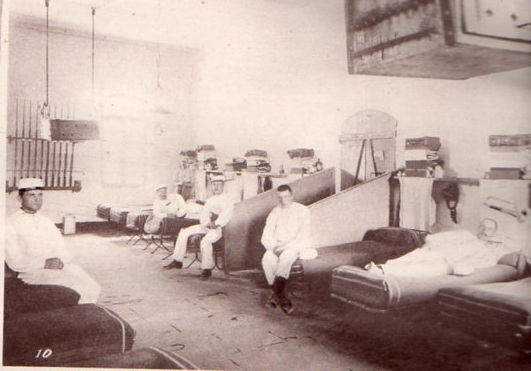
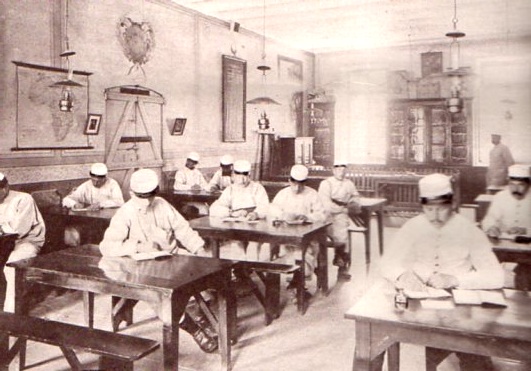
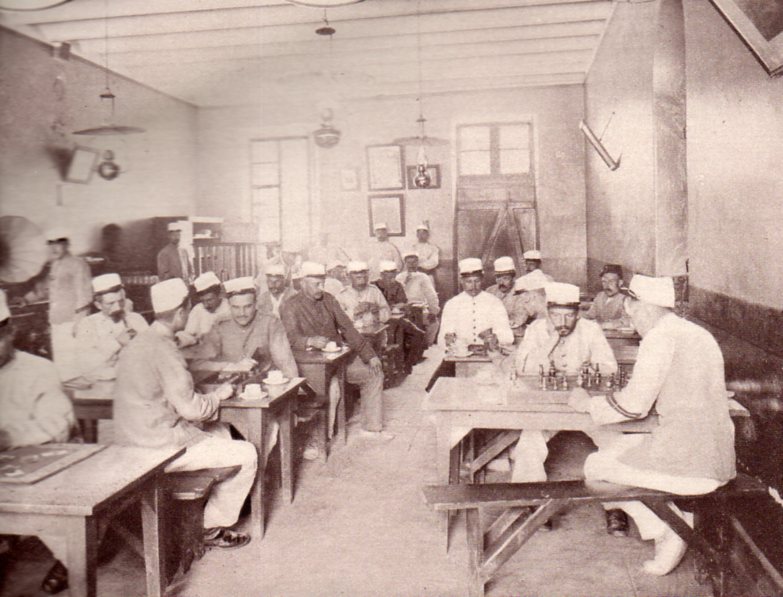
    If a photograph is worth ten thousand words, I’m not sure what story these pictures tell of the Legion.  No doubt these are the best faces in the best spots at the best angles in the best light kind of photographs, and don’t really seem to tell any bit of the story of the French Foreign Legion that one would expect.  But this was evidently not a real documentarian’s divulge that took place here in a double-page spread of the jam-packed issue of The Illustrated London News for 6 September 1913. But perhaps it was–perhaps there was a reading and writing room, and perhaps the barracks were kept clean and light and airy–certainly that would be good for the morale of the fighting man, but just not for our expectations.  

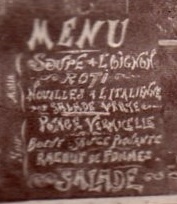
    And truth be told the menu for breakfast looks pretty good.  Whether or not this was a standard fare is impossible for me to say.   The cook (who looks proud enough to be a chef) could make a person want to pull up a chair to the table.

    Parachute bomb456

    These are the sleeping quarters, which look bright and clean, though the racks look pretty narrow, like not that much more wide than a good set of shoulders:

    Parachute bomb459
    And of course the read and writing room, complete with a small library–the tables look very shiny…

    Parachute bomb458
    And the game and recreation room, where I see some tea and chess–I’d be very interested to know what the framed documents on the rear wall were all about.

    Parachute bomb455
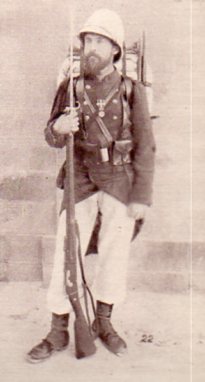
    And one of the men, someone with 15 years’ service:

    Parachute bomb457


  • Standardizing Precision and Beautiful Technical Prints: Ramsden’s Dividing Engines

    JF Ptak Science Books   Post 1452.223221 and a quarter

      Ramsden386

    I like the idea of having something called a Dividing Engine–perhaps it would divide seeds, or complex problems, or simple problems, or perhaps it would divide division. 

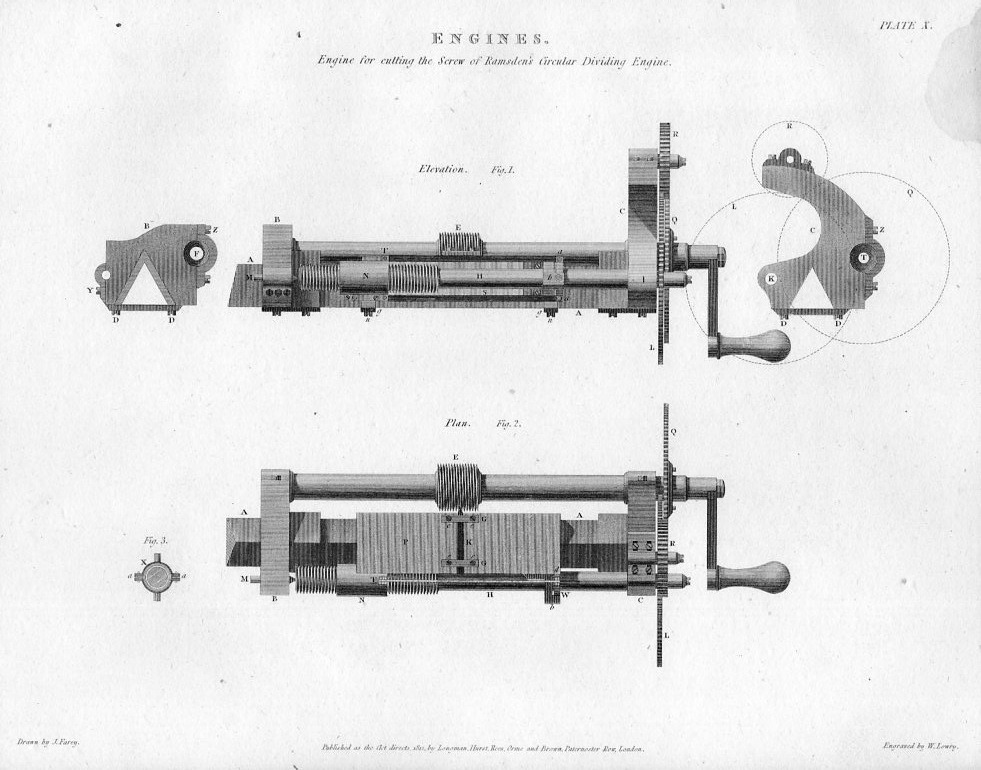
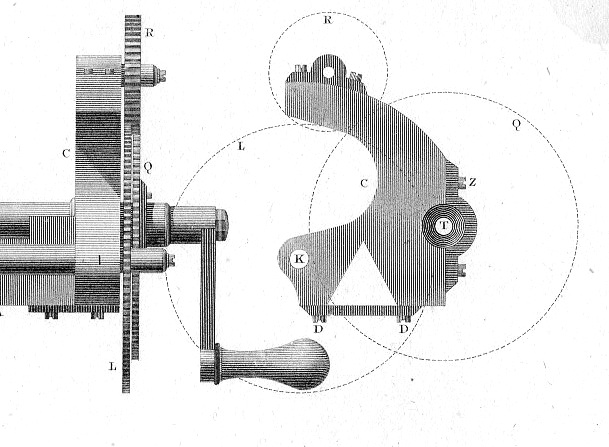
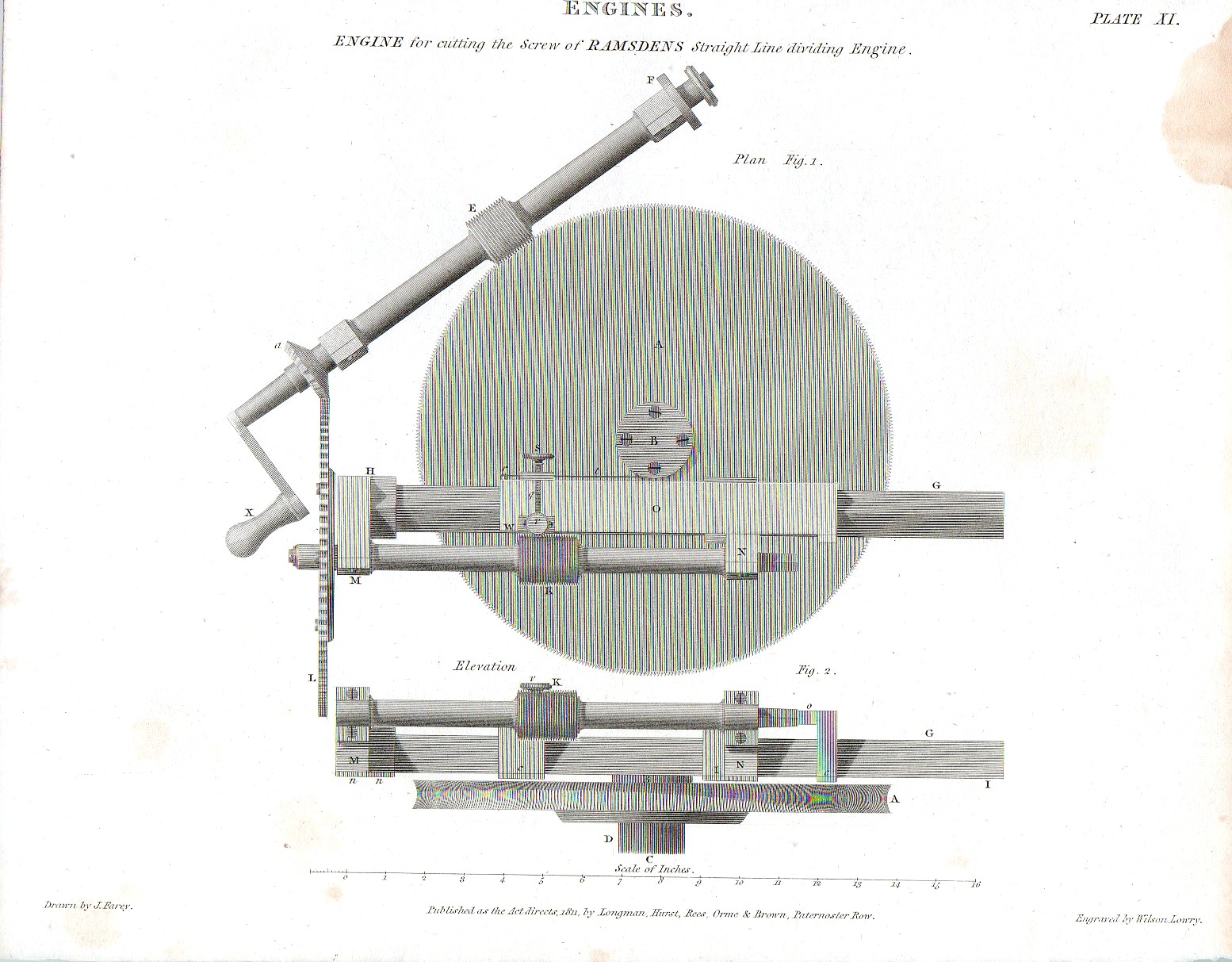
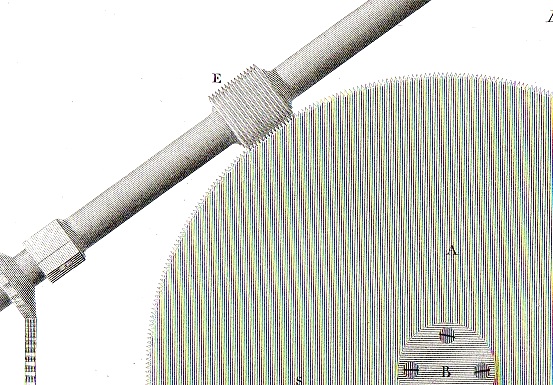
    What it really refers to here is a precision tool that whose effects were extremely wide felt but about which we don’t really hear about today.  This is the dividing engine of Jesse Ramsden,and Englishman who invented a circular instrument that would incise precise values on precision instruments like surveying compasses, delineate the linear and circular scales of measuring instruments used in astronomy and navigation,   Before Ramsden, the engraved marks on instruments would have been made by each individual manufacturer, each of those depending on marks that they made in the past, generations of such things in a line, over and over, a quite individualized effort, necessarily dependent upon the precision of each manufacturer. In 1777 Ramsden produced an instrument1 of exception precision that was correct and fine and dependable2. [The image above was found in Abraham Rees’ monumental Encyclopedic Dictionary…, and is entitled “Engine for cutting the screw of Ramsden’s Circular Dividing Engine” and was published in 1814.  Below is a detail of the plan for the winding of the gear works. In order for his machine to work at such a high degree of accuracy the component parts must also have been of a very high calibre–to that end Ramsden developed what is essentially the modern screw cutting lathe from which he manufactured the gear works for his Straight and Circular Dividing Engines.3]

    Ramsden387
    And then there was the “Engine for cutting the Screw of Ramsden’s Straight Line Dividing Engine”, which is an absolutely gorgeous piece of drawing.  A person could crawl all over this image in varying degrees of microscopic inspection and find all sorts of beautiful internal images, a large example appears here:

    Ramsden388

    And its fantastic detail:

    Ramsden389

    Basically though Ramsden’s inventions were key additions to the developing scientific technologies of the Industrial Revolution, integral improvements necessary for integral improvements. 

    Notes:

    1.  He published a Description of an Engine for dividing Mathematical Instruments in 1777.

    2. “The dividing engine was simple to operate. The instrument being divided was fixed to a large wheel on top of the engine. When the treadle was pressed, the wheel and the instrument were turned through a fixed angle. Then with the right hand, a cutting tool guided by a system of swinging links was used to mark the instrument scale. The process was repeated until the complete scale had been divided. Although this was many times faster than hand-dividing, it was backbreaking work having to lean over the engine to work on a small instrument.”-“Dividing Engine.” Smithsonian National Museum of American History. americanhistory.si.edu/collections/navigation/object.cfm?recordnumber=694508

    3. From WIki–“The first truly modern screw-cutting lathe was likely constructed by Jesse Ramsden in 1775. He appears to have been the first person to put a leadscrew into actual use (although, as Leonardo’s drawings show, he was not the first person ever to think of the idea), and he was the first to use diamond-tipped cutting tools.[2] His device also included a slide rest and change gear mechanism. These form the elements of a modern (non-CNC) lathe and are in use to this day. Ramsden was able to use his first screw-cutting lathe to make even more accurate lathes. With these, he was able to make an exceptionally accurate dividing engine and in turn, some of the finest astronomical, surveying, and navigational instruments of the 18th century.


  • The Display of Data–an Archaeological Dig in Fossilized Information

    JF Ptak Science Books  Post 1437

    There is a recurring thread in this blog on resurrecting displays of information–data that was presented in an interesting way, but which has been passed over by time and forgotten interests. 

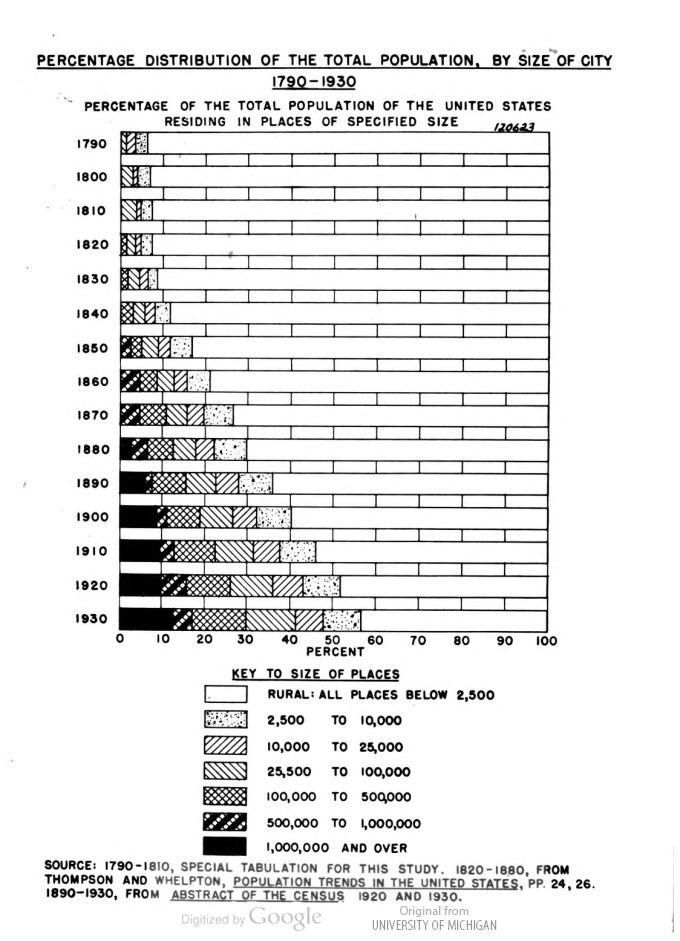
    That’s how I came to the Interim Report to the National Resource Committee by the Research Committee on Urbanism, by C(larence) A. Dykstra (1883-1950), published by the NRC in 1936.  There were some interesting and odd bits of info in this report, not the least of which was this graph, which shows the steady growth of urbanism–of people living in cities, and progressively larger ones at that–and how quickly it occurred.

    Urbanism, NRC
    [This image as you can see was taken from Google digitized books–I used this rather than spread this book out beyond how it wanted to be spread on the scanner.] 

    For example, in 1880, fifty years before this study began, 18% or so of the U.S. population lived in a city with a population of 25,000 or more.  By 1900, that number had increased nearly double, to 32%; 30 years later, the number was up to 40%.  It was an interesting graphic, especially considering it was done for background information for people working for the NRC who were going to go out and collect census-like material with the goal of establishing the condition of American cities in the height of the Depression.  It was an unexpected find, this graphical semi-precious stone, and I’m happy to have seen it.  Although I’ve seen this data displayed elsewhere–mainly I think in the Statistical Atlas for the census of 1920–I do not remember it being presented in this manner, or with this clarity.  And of course it was deeply buried.


  • A Square of Horse–Naming Groups of Animals (“A Murder of Crows”, continued)

    Horses

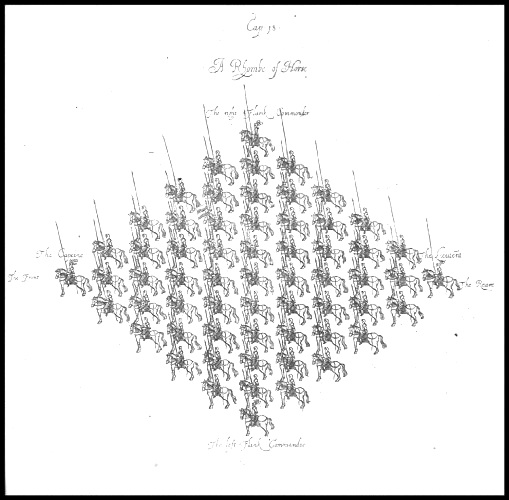
    Aelianus (Tacitus) The Tactiks of Aelian Or the art of embattailing an army after ye Grecian manner. Englished & illustrated with figures throughout & notes upon ye chapters of ye ordinary motions of ye Plalange by J.B…  

    The “J.B.” here is the author John Bingham, whose book was published in 1616. The “Square of Horses” seems to me to be a fine addition to a named bestiary, in addition to a “murder” of crows and an “unkindness” of ravens (and a “crush” of rhinos, and on and on, as we can see below). 

    Names given the collectives or gatherings or units of animals are useful and informative, and occasionally fabulous and bizarre.  It seems to me that such characterizations could be made with people as well,  Why should humans have such a uniform label for collective employment members (a “group” of lawyers, a “gathering” of architects, and so on) when animals have such a rich vocabulary to draw from?  Admitedly, animals don’t go out and get lawyers when they feel maligned by a broadly advanced descriptor, so there’s little chance that more appropriate upfittings could be applied to different job classifications.  Unless of course you consider the “managed corporate associate monetary inventorialist” (cashier) as an example—but that is not what I’m talking about. 

    In the animal world, for example, a group of gorillas is a simple “band”, chicks a “clutch”, and quail a “covey”, which is simple enough.  The names get more adventurous as things progress in the food chain:  hippos are a “bloat”, a word which seems to identify a characteristic of the animal, especially when they’re half-submerged, watching the sun move across the sky with their eyes just above the waterline..  Ferrets are a “business”, semi-inscrutable in their nervous activity. Hyenas are a “cackle”, hawks are a “boil” and finches are a “charm”.

    A group of rhinos are beautifully referred to as a “crash”, and squirrels are poetically announced as a “scurry”

    Perhaps the second greatest of all of these names is that for a gathering of crows, called a “murder”.  It is probably the crow which, among all animals, may be the only one “smart” enough to commit the crime—it is an undoubtedly intelligent animal, with a brain-to-body mass ratio third to that of humans (behind apes) and have been shown to work in concert with one another toward a common end, and have also used tools in the pursuit of food.  They have also been depicted for thousands of years in mythology and story as intelligent, crafty creatures.  My choice for the most fabulously-named:  an “unkindness” of ravens.   These birds enjoy a similar heritage to the crow, but have a greater literary heritage.  Unkindness and Poe seem to go together quite nicely. 

    A leap of leopards, a gulp of cormorants, a romp of otters, a parliament of owls.  An ostentation of peacocks, a prickle of porcupines, a stand of flamingoes, a pride of lions, a wake of buzzards, a tower of giraffes: all seem to fit quite nicely. 

    What would the human equivalent be?   A “grotesque” or a “provident” of attorneys,  a “shushing” or “shepherding” of librarians, a “scribble” or “release” of writers, an “envy” or “relief” of actors?  I think it needs to be Latin and deep for the politicians.  Very deep. 

    (A directory of names follows in the continued reading section)


    A band

    Gorillas

    A bevy, covey

    Quail

    A bevy, wedge (in flight)

    Swans

    A bloat

    Hippopotamuses

    A brace, flock (in flight), raft (on water) team, paddling (on water), badling

    Ducks

    A brood; clutch

    Chicks (of many species)

    A building

    Rooks

    A business

    Ferrets

    A cackle

    Hyenas

    A cast, kettle (flying in large numbers), boil (two or more spiraling in flight)

    Hawks

    A cete

    Badgers

    A chain

    Bobolinks

    A charm

    Finches

    A clowder, a pounce; for kittens…A kindle, litter, an intrigue

    Cats

    A colony

    Bats

    A colony

    Gulls

    A colony

    Penguins

    A colony, warren, nest, herd (domestic only), litter (young); specific to hares…A down, husk

    Rabbits

    A company

    Parrots

    A company

    Widgeons

    A congregation, wing (in flight)

    Plovers

    A convocation

    Eagles

    A cover

    Coots

    A covey

    Partridge

    A covey

    Ptarmigans

    A crash

    Rhinoceroses

    A deceit

    Lapwings

    A descent

    Woodpeckers

    A dray, scurry

    Squirrels

    A drift, drove, litter (young), sounder (of swine), team, passel (of hogs), singular (refers to a group of boars)

    Pigs

    A drove, flock, herd

    Sheep

    A drove, herd

    Cattle

    A dule, pitying (specific to turtle doves)

    Doves

    A fall

    Woodcocks

    A flight

    Swallows

    A flock, gaggle (on the ground), skein (in flight)

    Geese

    A gang

    Elk

    A gang, an obstinacy (I suspect these refer to old world buffalo; use “herd” for American bison)

    Buffalo

    A gulp

    Cormorants

    A herd

    Elephants

    A herd, bevy (refers only to roe deer)

    Deer

    A host

    Sparrows

    A labor

    Moles

    A leap

    Leopards

    A leash, skulk, earth

    Fox

    A litter (young), pack (wild), cowardice (of curs); specific to hounds…A cry, mute, pack, kennel

    Dogs

     A murder, horde

    Crows

    A murmuration

    Starlings

    A muster, an ostentation

    Peacocks

    A mustering

    Storks

    A nest, nide (a brood), nye, bouquet

    Pheasant

    A pace

    Asses

    A pack (in late season)

    Grouse

    A pack, rout or route (when in movement)

    Wolves

    A pack, span, barren

    Mules

    A parliament

    Owls

    A party, scold

    Jays

    A pod, gam, herd

    Whales

    A pod, herd

    Seals

    A prickle

    Porcupines

    A pride

    Lions

    A rafter, gang

    Turkeys

    A richness

    Martens

    A romp

    Otters

    A sedge

    Bitterns

    A sedge

    Cranes

    A sedge, a siege

    Herons

    A Shrewdness

    Apes

    A sloth, sleuth

    Bears

    A sord (in flight), brace

    Mallards

    A spring

    Teal

    A stand

    Flamingos

    A streak

    Tigers

    A team, harras, rag (for colts), stud (a group of horses belonging to a single owner, string (ponies)

    Horses

    A team, yoke

    Oxen

    A tiding, gulp, murder, charm

    Magpies

    A tower

    Giraffes

    A tribe, trip

    Goats

    A trip

    Dotterel

    A troop

    Kangaroos

    A troop, barrel

    Monkeys

    A wake

    Buzzards

    A walk, a wisp

    Snipe

    A watch

    Nightingales

    An exaltation

    Larks

    An unkindness

    Ravens


  • A Note on Teaching Math, Unexpected Art, and Picturing Things Differently

    JF Ptak Science Books   Post  1427
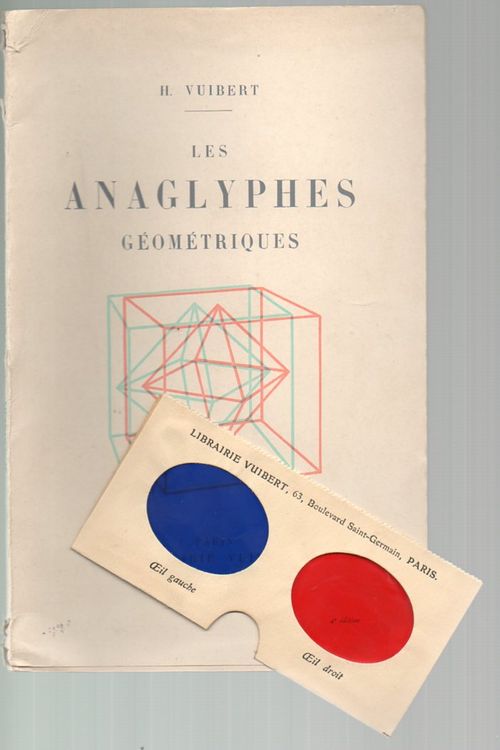
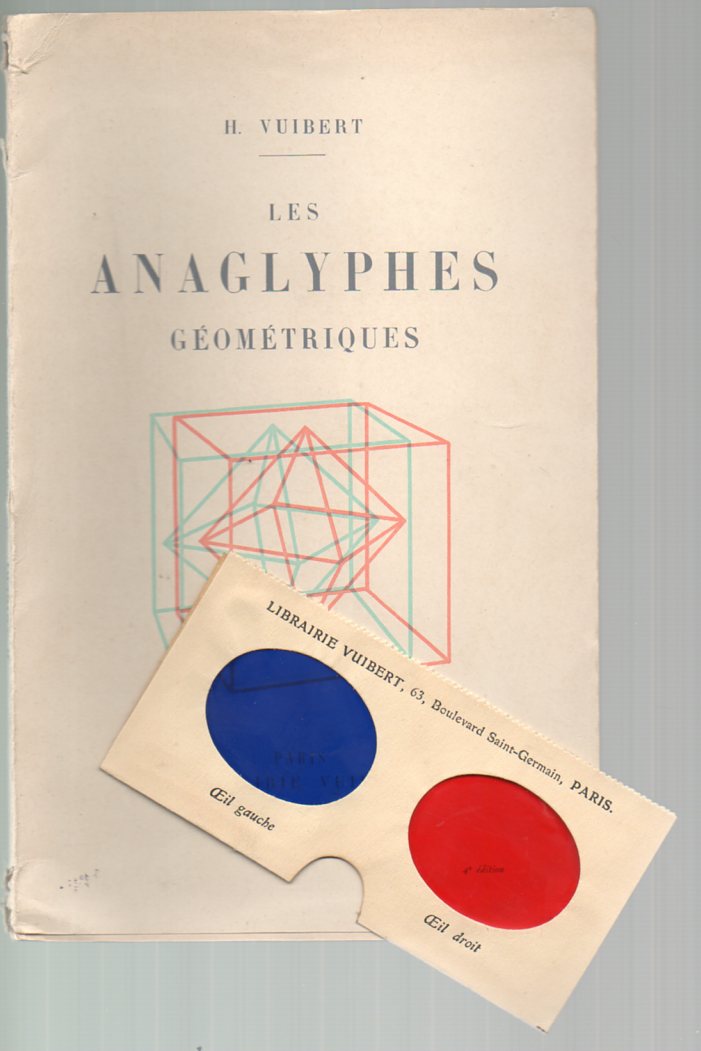
    Vuibert308 Stereo viewing geometrical figures may or may not be useful–I find it a little off-putting, creating a slight dizzying effect, though I’m sure it helps others (particularly children?) see complex geometrical figures a little more easily., especially when it comes to crystalography images. Education was certainly what Henry Vuibert , the author of Les Anaglyphes Geometriques had in mind when he published the work in 1912.  He had a long history in mathematics education, having founded the firm that bears his name back in 1877, a publishing house specializing in school texts in the maths, physics and general sciences.  (We offer the book for purchase at out blog bookstore.)

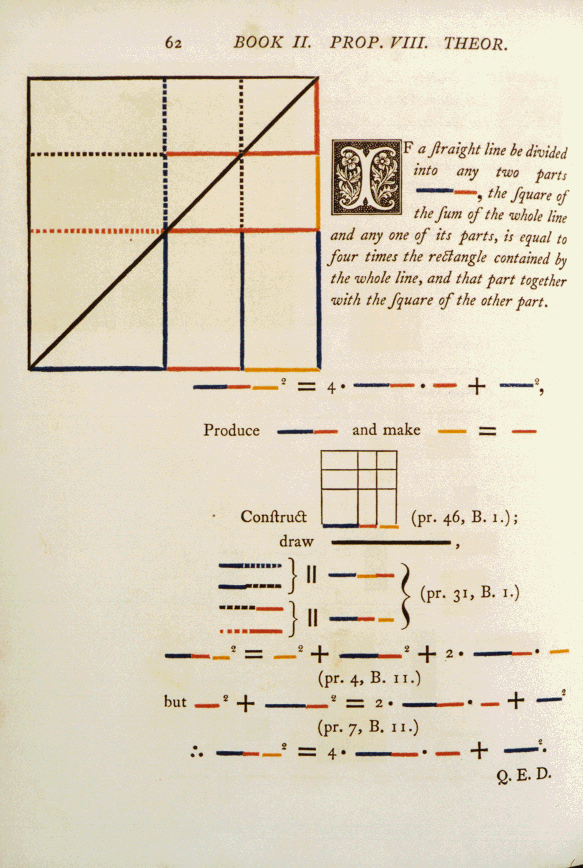
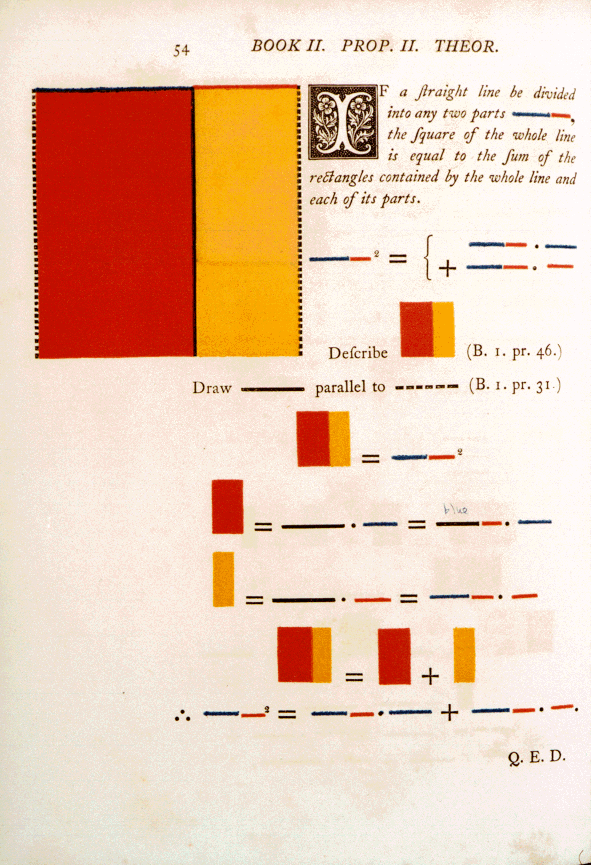
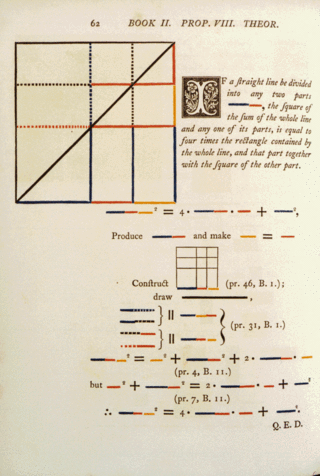
    Vuibert’s book is a very early example of the use of the anaglyphe–examples of the use of the method go back to the 1850’s, when d’Almeida used a version of the idea to punctuate lectures using a magic lantern; the (printing) process of the anaglyphe wasn’t patented until the 1890’s by L.D. DuHaron.  It does confuse me or remind me quite a bit of Oliver Byrne’s beautiful monster The First Six Books of Euclid in which coloured diagrams and symbols are used instead of letters for the greater ease of readers… printed at the Chiswick Press by C. Whittingham for William Pickering in 1847.  The book is, well, unusual and probably not at all usefu11.  Bryne replaced all of the algebraic notation, identifying letters and almost all of the descriptive text with color and color codes, leaving Euclid mysterious, hidden, awkward, impervious, and, yes, beautiful2. As a matter of opinion this work presages the cubists (and especially Piet Mondrian) by 60 years, and all by accident artwork. 
    Byrnes 11.8


    There are certainly much earlier works that tried to get at a fuller representation of geometrical objects, not the least of which was a 16th century Elements of Euclid in which the figures were cut-out paper, pasted into the book and attached to a string so that the reader could pull out the illustration and see it displayed in three dimensions. The elements of geometrie of the most auncient philosopher Euclide of Megara. Faithfully (now first translated into the Englishe toung…3, printed in London in 1570, was no doubt a great and exasperating labor of love, a complex “pop-up” book accomplished with sixteenth century technology.  (The photo below shows the Smithsonian Institution’s copy.)

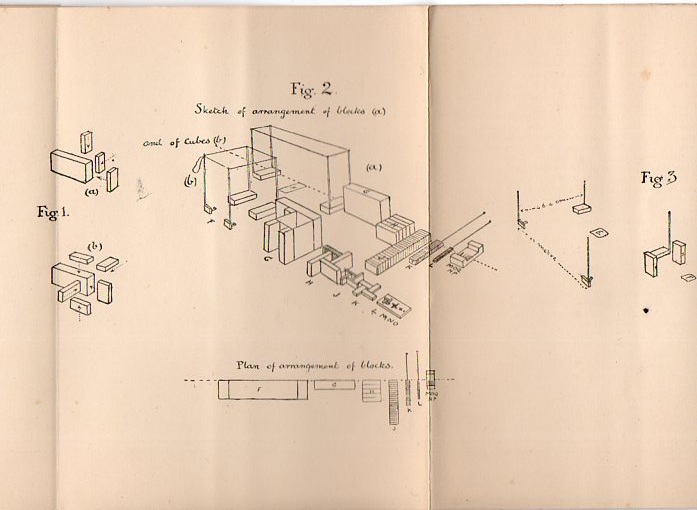
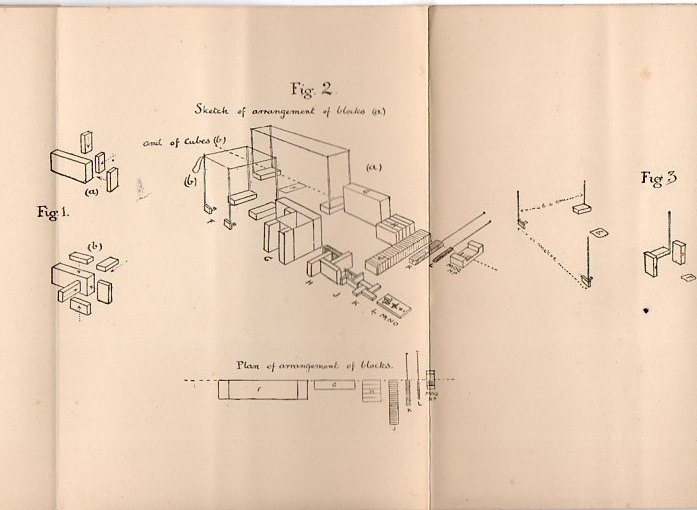
    Of course there’s the very old fashioned way of representing mathematical concepts, and that’s with sticks and stones and blocks and such.  For visceral memory and practical applications, the idea is hard to beat, unless of course, you really beat it , which is difficult to do.  But to me that’s just what Major G. Mackinlay did in his Realistic Arithmetic,  for Teaching Children the Elements of Arithmetic by Means of Special Blocks4, published in London in 1900–his ideas for the use of blocks was very sound and stable; his instructions (and in particular his illustrations) for what to do with the blocks was not.  I am reminded of inscrutable, badly translated and designed instructional manuals for tech stuff that need a manual for the manual. 

    Here’s one of the folding plates describing how to assemble the blocks:
    Math blockis309

    Then there are other sorts of wooden (and etc.) three-dimensional models, such as the (600+) gorgeous geometric designs housed in the Institute Henri Poincare, transferred there from the laboratory of geometry of the Faculty of Sciences of the University of Paris in 19285.  Most of these models were constructed around the time of vast change in mathematics and art (1900-1920), which means that many of them predate the revolutionary ascensions of  Cubism and non-representational art.

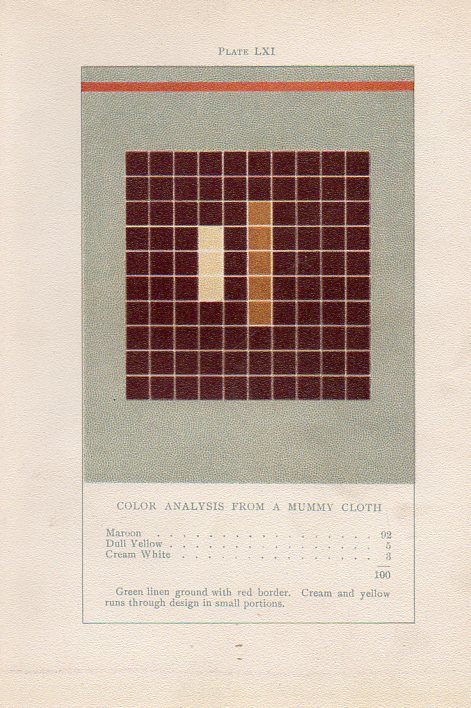
    And as long as were at the point of unintentional and under-recogniozed epochal works, I think that there is a broad book that could be done on exactly this topic, calling into play such examples as Georgina Houghton, Victor Higo, Emily Vanderpoel, and many others. 

    Georgina Houghton, for example, produced this non-representational painting in 1870 (or thereabouts):

    Georgiana

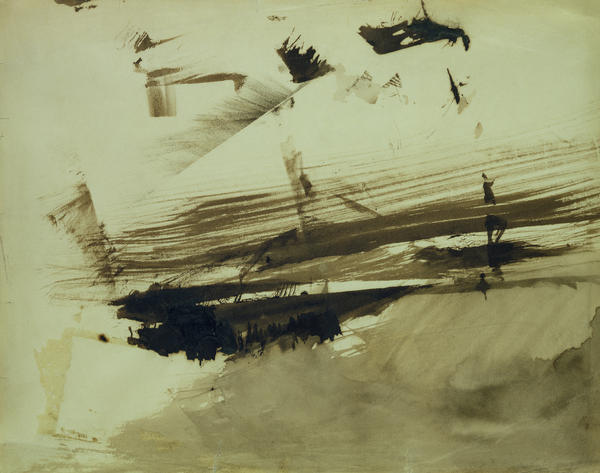
     And Victor Hugo, from the 1860’s

    Evocation of an island Painting  - Evocation of an island Fine Art Print

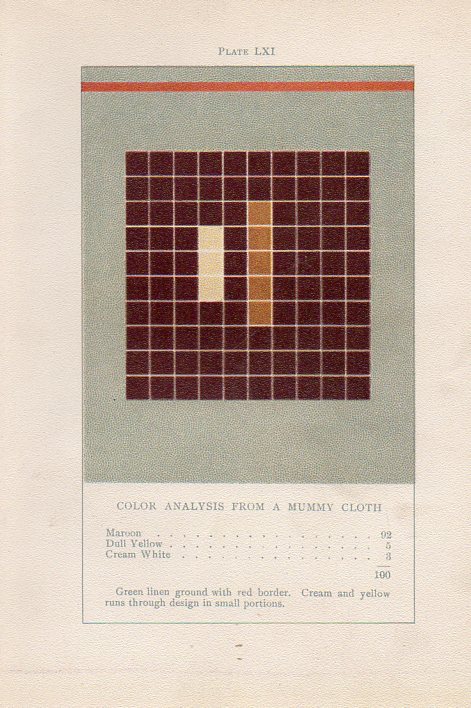
    And Emily Vanderpoel (1900 or so):

    Art-vanderpoel186
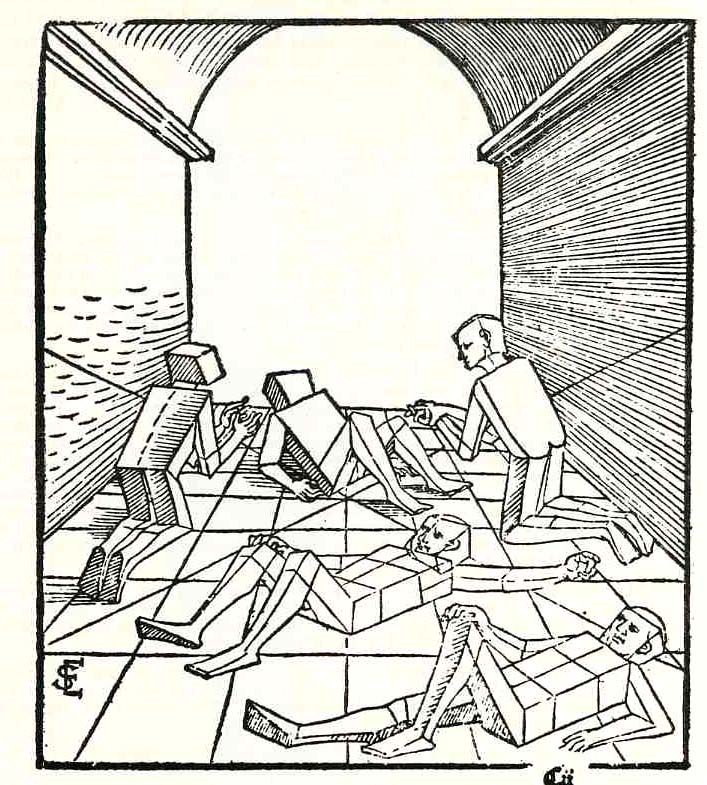
    In another, much earlier case of removing detail and adding abstraction for the sake of simplicity in representing an idea,  Erhard Schoen, in his Unnderweissung der proportzion und stellung der posssen liegent und dtehent, printed in Nurenberg  in 1538, presented these cubed figures (below).  He used simplified geometric form to stand in for the curvy humans, replacing them with proportional stacks of boxes which would more easily explain to the younger reader how to represent the human body in space and in proportion to other things. 
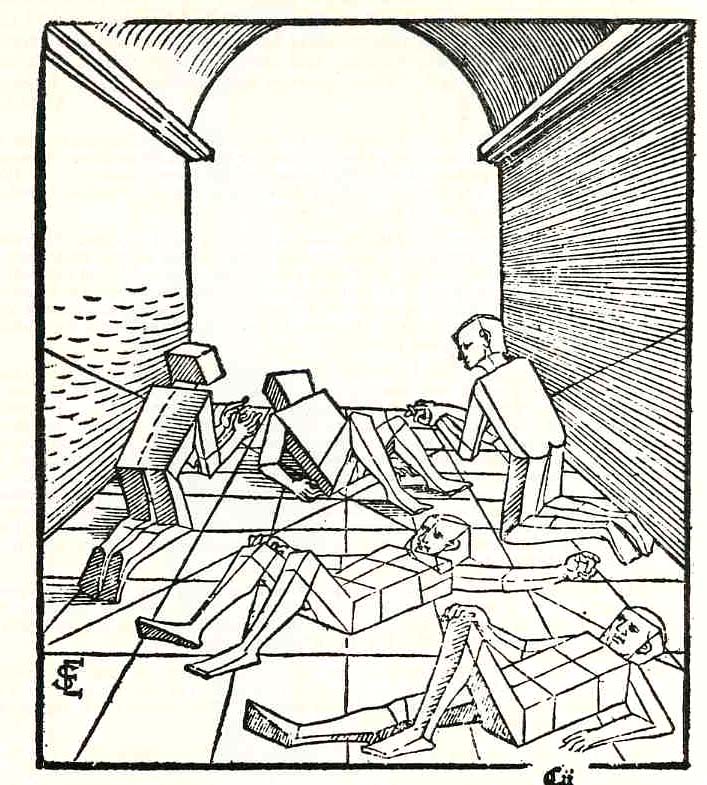
    Schoen

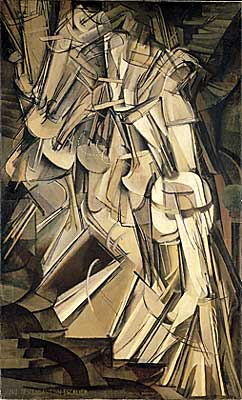
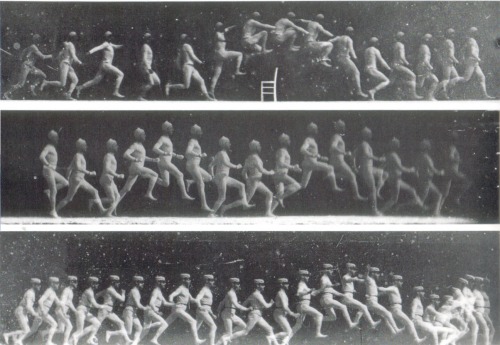
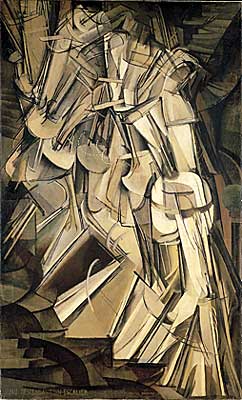
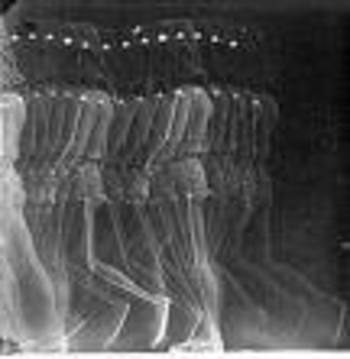
    I think that these were monumentally combative images showing humans in a radical, previously unknown way, much like the moving-through-space-and-time photographs of the somewhat forgotten Etienne Marey, who in the 1870’s created what was essentially the world’s first “slow motion” device. One iteration of Marey’s apparatus was basically a long series of ganged cameras recording a motion for a Marey12 simple task at a given time frame and presented on a continuous strip of photographic paper, sort of like a motion picture with the camera speed set at three frames per second. The resulting images were phenomenal and showed people for the first time the exactness of all manners of simple motions–motions that no longer looked so “simple” once all of its aspects could be studied from captured photographic evidence.  Even the act of hopping over a small stool or bending to pick up a bucket of water were enormously revealing in a way like Robert Hooke’s Micrographia displayed the great detail and complexity of the seemingly simple fly.  Perhaps the most famous of Marey’s series of images was that of a galloping horse, which also for the first time revealed what exactly the horse’s legs were doing and proving that almost every painter in the history of art represented the galloping horse incorrectly.  His series of photographs (as in this sample below) show a fairly close fit to the work of the futurists (like for example Duchamp) who would come into being after another four decades. 
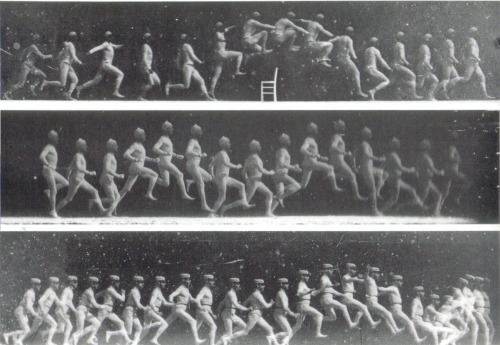
    Marey  And Duchamp’s Nude Descending (1912):

    Duchamp


    I do want to make it clear that this is just a simple note, a thinking-out-loud piece on how attempts to visualize things differently for the sake of explanation or education can come “unintentionally” close to what would become epochal works.  More later.

    Notes

    1. Augustus De Morgan, mathematician and logician, wrote a very highly critical book A Budget of Paradoxes in which he describes hubbub, fakirs, frauds, perpetual motion machines, squaring the circle efforts, millstones and other useless books in the maths, and in here he sniffily dismisses Byrne’s work. At best, to De Morgan, the Byrne book is “curious”. But useless and curious, as I have seen many thousands of times, does not mean that it can’t be attractive and beautiful, and the Byrne book is probably the leading candidate in the Bad & Beautiful category.

    2. In his Victorian Book Design McLean calls the Byrne book “…one of the oddest and most beautiful books of the whole century…a decided complication of Euclid, but a triumph for Charles Whittingham [the printer]”.

    3.  This is also the first appearance of Euclid in English.  The full title: The Elements of geometrie of the most auncient philosopher Euclide of Megara faithfully (now first) translated into the Englishe toung by H. Billingsley, citizen of London; whereunto are annexed certaine scholies, annotations, and inventions, of the best mathematiciens, both of time past and in this our age; with a very fruitfull praeface made by M.I. Dee, specifying the chief mathematicall scieces, what they are, and whereunto commodious; where, also are disclosed certaine new secrets mathematicall and mechanicall, untill these our daies, greatly missed. London, Imprinted by I. Daye, 1570.

    4.  From the Report of the Annual Meeting of the British Association for the Advancement of Science, 1906:


    5.  From the IHP website:  “Most of the models  were created by Martin Schilling in Leipzig between 1900 and 1920 and  a few of them  (in wood)  were made between 1912 and 1915 by J. Caron, Professor of Descriptive Geometry in charge of  the “graphic work” course at the ENS at the beginning of the century (between 1912 and 1915).”

    Also this:   “In the thirties, the surrealists, led by Max Ernst, were interested in these geometric objects. André Breton alludes to them in  “Crise de l’objet” , an article  in the magazine  Cahiers d’Art (May 1936, No. 1-2, p. 21-26.). Man Ray took photographs of the models, which where published in same issue. He would later use them to compose what he called  “Shakespearean Equations”. Many artists, painters, architects and sculptors drew inspiration from them.”

  • Little Pieces and Superb Design: Rockets, Canons, and other Boom Boom

    JF Ptak Science Books  Post 1420

    Artillery285

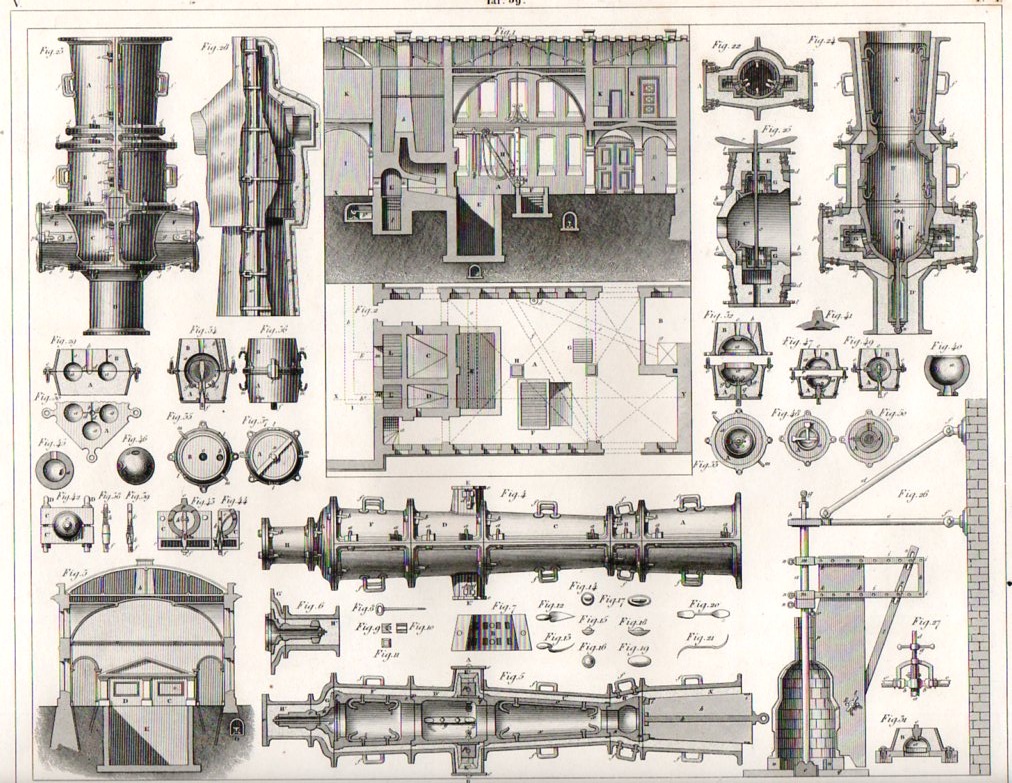
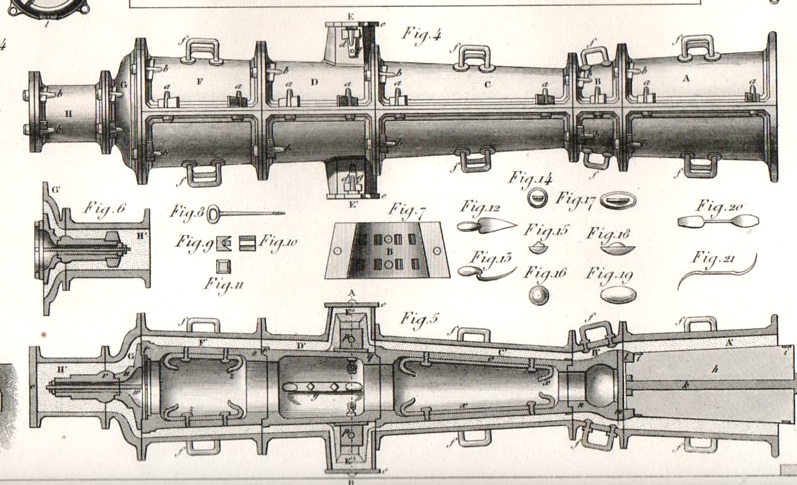
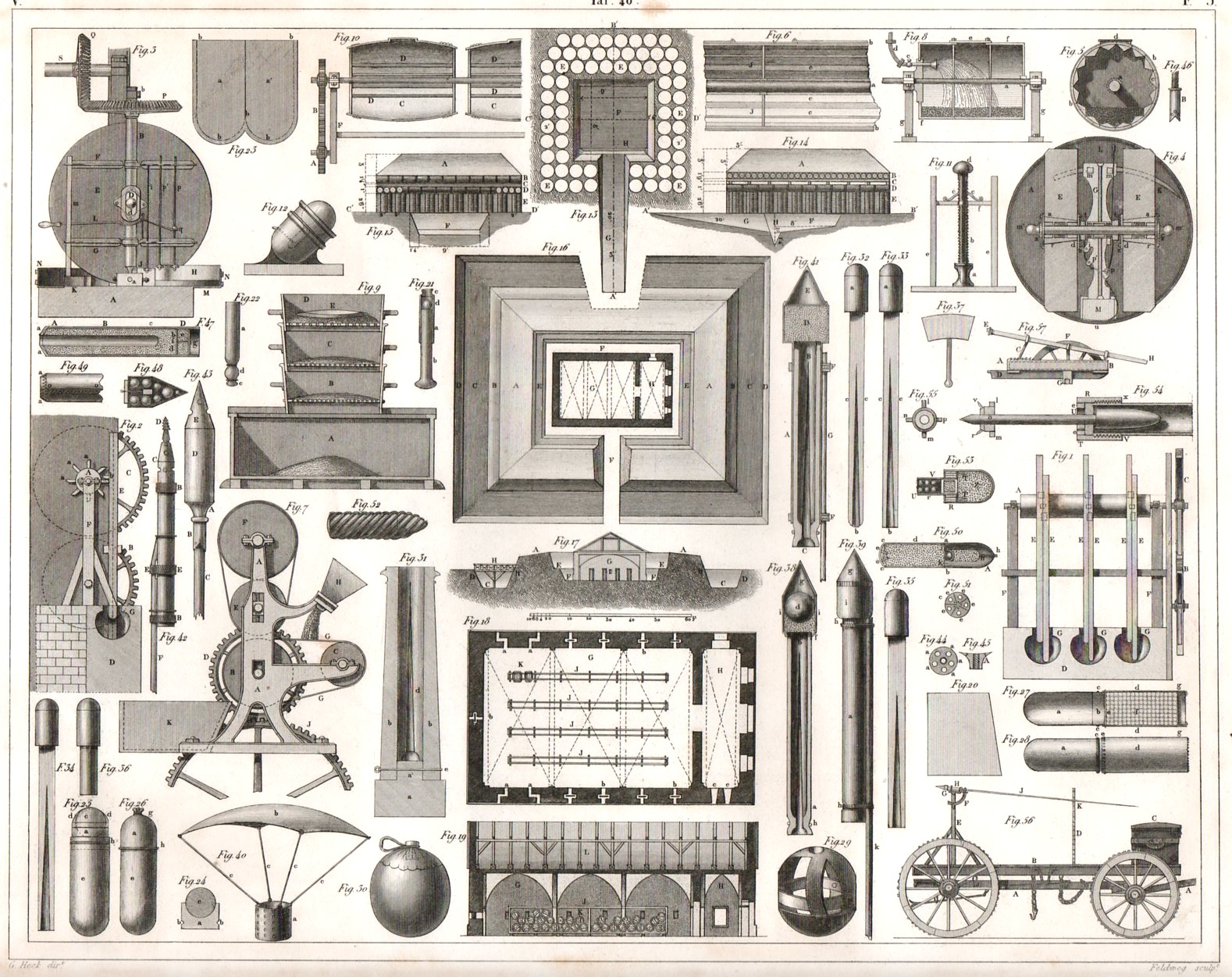
    The Iconographic Encyclopedia of Johan Georg Heck (printed 1851)  turns out to be perhaps one of the best designed books of its type in the nineteenth century.  Seemingly no  matter how much diverse information is hosted per page, whether the items number in the dozens or over a hundred,  the artist managed to distribute them with such grace and apparent ease that it is an absolute pleasure to see it all arranged before you. 

    Take for example the following two engravings of artillery fabrication of the early/mid 19th century.  There are 49 complex images on this first  piece of 11×8-inch paper (above), and yet there seems to be also a lot of white space.  It is a full but not crowded display of superb craftsmanship–it is also all very interesting. (Both are available for purchase from our blog bookstore.)

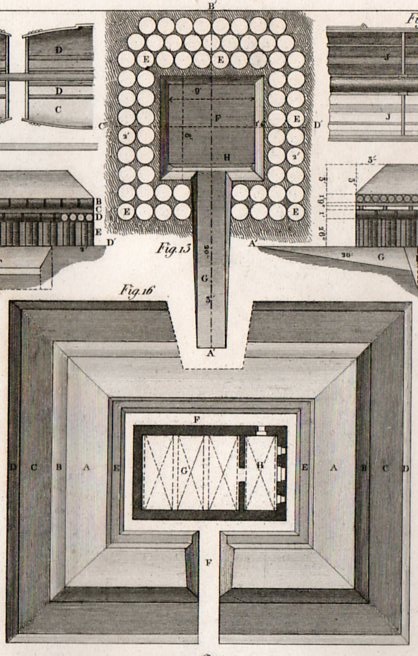
    To start, the main figures at top-center shop the plan and elevation of a workshop for casting canons, and we can clearly see the main furnace (“A”) for the big guns, surrounded by smaller auxiliary furnaces for smaller pieces.  Off to the side we see “K”, which is the drawing room and also the place where the director of the plant would live. Underneath it all in section we see various pipes and drains used to take away water and ash.  The structure on the lower right is for forming the business end and the purpose of the canon or mortar–namely, the ammo, and in particular, the pattern mold of a 50-lb mortar.  The long vertical pole at left used to place he liquid metal under pressure in the hearth, the ball being at the very bottom center.

    I’ve enlarged figures 4 and 5 to show the particulars of a canon (dry sand) mold, #4 being the exterior of the mold and #5 showing a cutaway so that one could see the six-ponder canon that was being formed inside.

    Artillery286

    There is just so much in this image that a more knowledgeable person could easily go on for pages describing each and every bit. 

    The second image displays cartridges and (in general) fireworks–military pyrotechny.  What strikes me right away in this image are the five architecturals in the running vertically down the middle of the sheet.  They show what to do with gunpowder once it has been manufactured, which is an important consideration on handling and safety prior to it being used in battle–the first plan shows a field magazine, while the other four show the disposition of the construction of a permanent magazine, which show plenty of ventilation as well as massive walls which are in turn sunk into the earth and surrounded by ramparts.  It also seems that the roofing is huge, built no doubt to accommodate an earth filler.  Each of the barrels carried a hundred pounds of powder, so there was considerable interest not to allow the magazine to blow up, and if it did, to have the blast go mainly skyward. 

    Artillery287

    Some other items of interest in the second engraving include the incendiary devices (at bottom, #s 29+30),  signal rockets (#s 32,33,34,35), and the Congreve rocket, (#40 and #52,  which is much bigger and meant to be fired on the enemy, it being an incendiary); #53 is another Congreve, but this one scatters grenades as it is in flight. 

    Artillery288

    There’s a lot that can be described here but it goes a little beyond what I wanted to do with this post–it is also a lot beyond what I know about the subject.


  • U.S. Wartime Production, Control, and Patriotic Propaganda, 1942

    JF Ptak Science Books  Post 1416

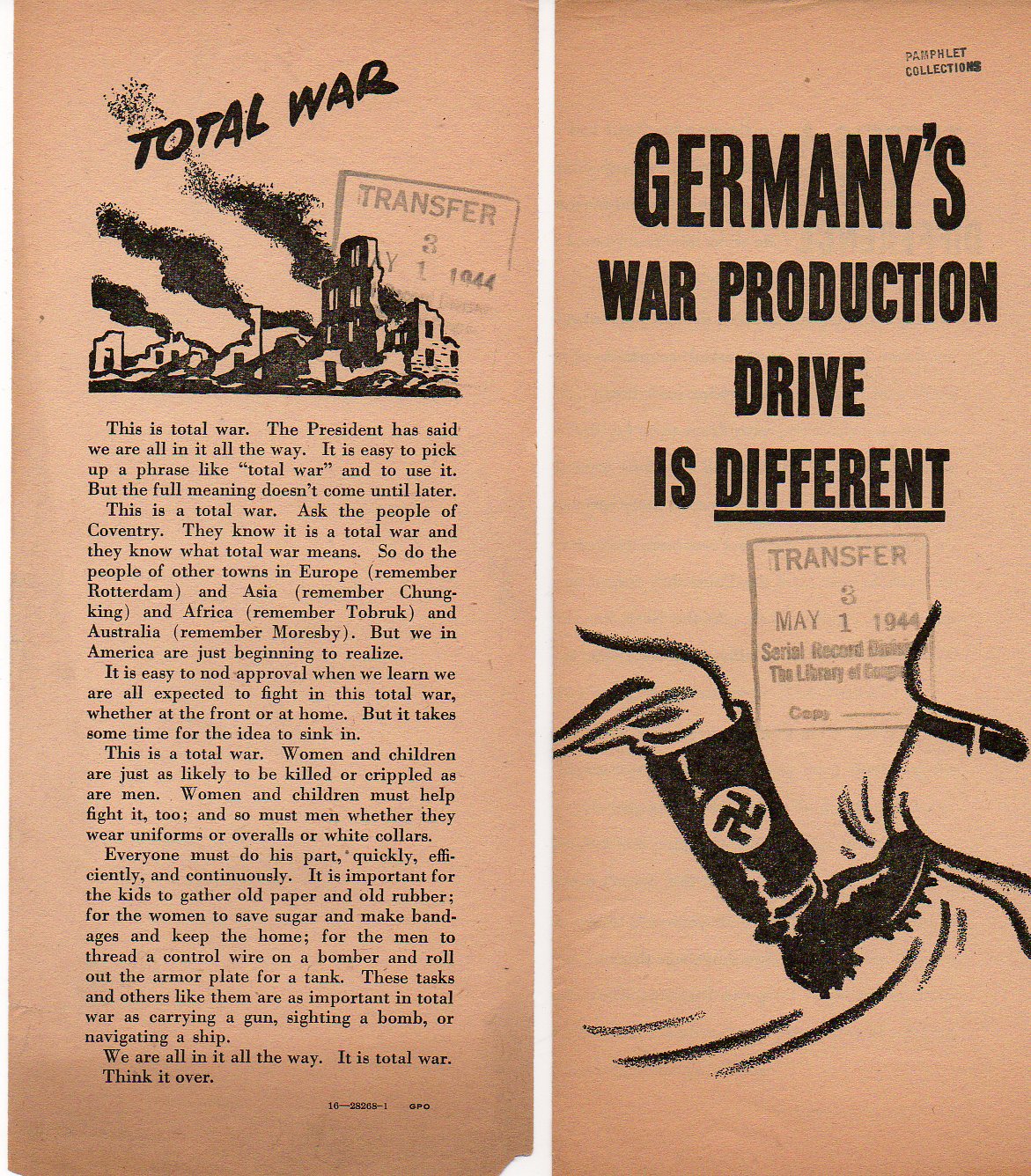
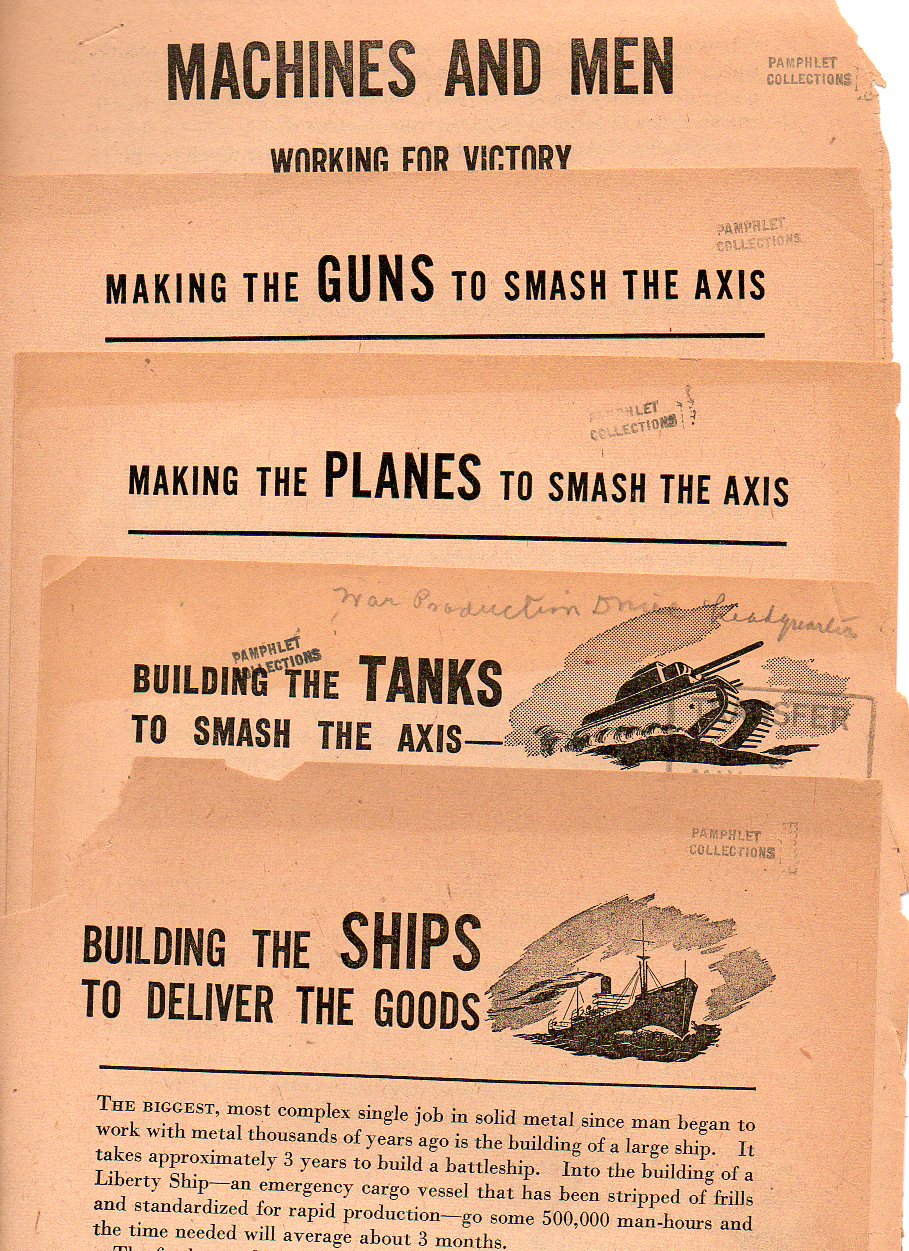
    The War Production Board (WPB)–the entity responsible for printing the leaflets below–was instituted 16 January 1942 as a federal effort to direct U.S. wartime production and allocation of essential commodities.  And time. The WPB centralized the effort to convert some peacetime industry to wartime production, as well as direct the production of existing wartime industries in the manufacture of critical goods, and rationed or prohibited the manufacture of other material that could possibly hinder the war effort.  Thus the WPB rationed things like sugar, heating oil, plastic, gasoline, paper, rubber, nylon and metals of all descriptions; it also controlled large swaths of the workforce, restricting wages and benefits as well as prices.   It was an essential element of fighting the war, and brought necessary control to an economy and industrial base that needed organization for what would become a total war.        (We offer a small collection of 16 of these items at our blog bookstore.)

    War Production Board265
    Instituting a war-production base for American industry allowed production to ratchet way up, producing (for example) multiples more aircraft more in 1943 than in 1941:   1940, 6k aircraft; 1941, 19k; 1942, 47k; 1943 85k; 1944, 56k; 1945, 46k.  Also there were enormous production advancements for total shipping tonnage (reaching a wartime production total of 33 million tons), across-the-board huge increases in coal and iron ore (and especially in crude oil), and on and on.  The U.S. was able to mobilize itself and take advantage of its enormous natural resources, industrial base and civilian workforce in what was essentially an unreachable island economy, forming what was actually an unbeatable combination of war goods production. (Plus of course there was the atomic bomb, which is another story, but which also only could have been produced in the U.S., given the enormous quantities of energy and material needed to begin its production.)     

    War Production Board264 The WPB also was responsible for hearts-and-minds campaigns at home, too, because so many people, such a huge proportion of the population, needed to be involved in the war effort, not only from the production standpoint but also for strategic conservation.  For example, in one massive effort to collect the very necessary scrap metal (that would be collected and reformed into war materiel) the WPB organized a nation-wide drive that in one day collected 82 pounds for every person in the country.  Singular efforts like this, or seemingly singular, needed to happen at regular and short intervals for the war economy to be successful.  And so pamphlets like the story of Joe, below, needed to be told:

    The “it” that Joe needed to have was ammunition, and grenades, and anything else that would kill the enemy.  With it, Joe was successful; without it, and thereby without the “it” being produced by the folks at home to whom this flyer was being distributed, was helping to kill Joe by not giving him enough of the deadly stuff.
    “Don’t let Joe down” says the flyer, “its our job to give him everything he needs and wants”.  It turns out that Joe had 26 notches in the comb of his rifle, “from the Japs (who would never) get back to report after they met Joe”.   Joe “spread the lead around with a free and easy hand and alot of Japs wished he hadn’t been so generous.  Trouble was, he never had quite enough of it…”

    And so went the rest of it, and them–resonant pleas, demands, for people at home to be vigilant in whatever it was they were doing to push the war effort forward.  Slacking meant death and possible destruction, and the hosts of these flyers that I have here gave very little pre-text for this not to be the case. 

    War Production Board266


  • Display of Information: What a Dreadnougth was Worth in Airplanes, 1911

    JF Ptak Science Books  Post 1408   [Display of Quantitative Information series]

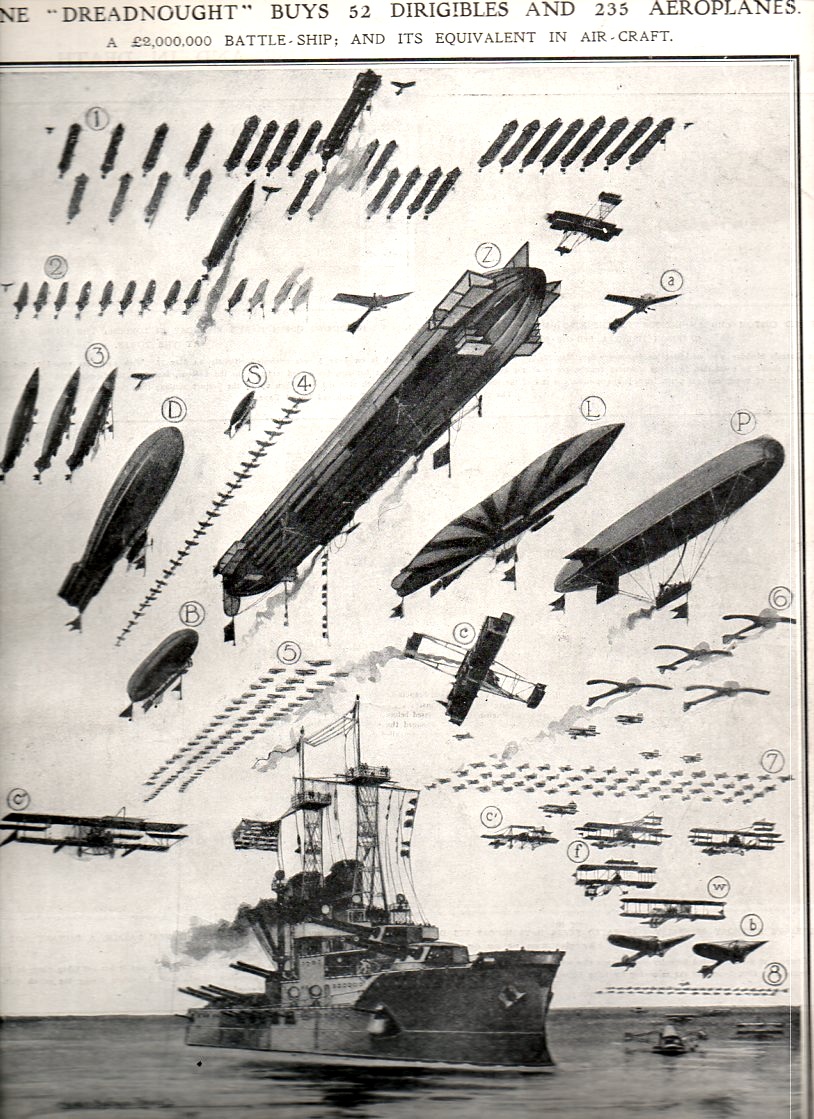
    Info display dreadnought237

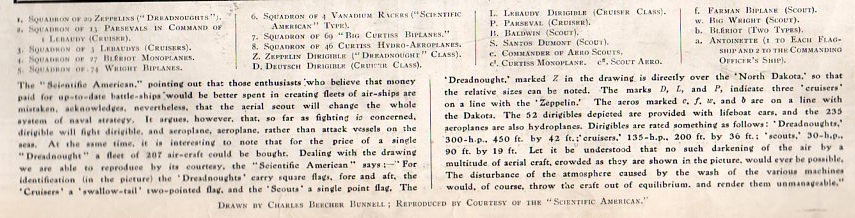
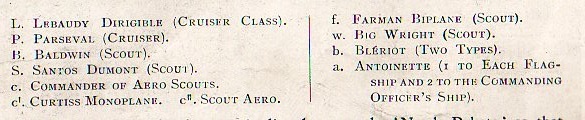
    There’s nothing quite so satisfying as seeing a representation of quantitative data like this where the graphical displays are flying.  “One Dreadnought Buys 52 Dirigibles and 235 Aeroplanes” is a full-page diagram appearing in the 3 June 1911 , making a very strong point that in the new air-age 2 million pounds for one battleship buys a lot of aircraft.  Of course this is a British journal and the ship is flying an American flag–the image originally appeared in the Scientific American just a short while before this publication, and so it also enumerates American and international aircraft, making for a lovely representation of a broad range of airplanes filling up the same sky.  (This image is available for purchase from our blog bookstore, here.)

    Info display dreadnought238
    Info display dreadnought239
    Info display dreadnought240