A Daily History of Holes, Dots, Lines, Science, History, Math, Physics, Art, the Unintentional Absurd, Architecture, Maps, Data Visualization, Blank and Missing Things, and so on. |1.6 million words, 7500 images, 4.9 million hits| Press & appearances in The Times, Le Figaro, Mensa, The Economist, The Guardian, Discovery News, Slate, Le Monde, Sci American Blogs, Le Pont, and many other places… 5000+ total posts since 2008.

Category: Industrial & Technological art

  • Things They Took To War, 1915

    JF Ptak Science Books Post 923

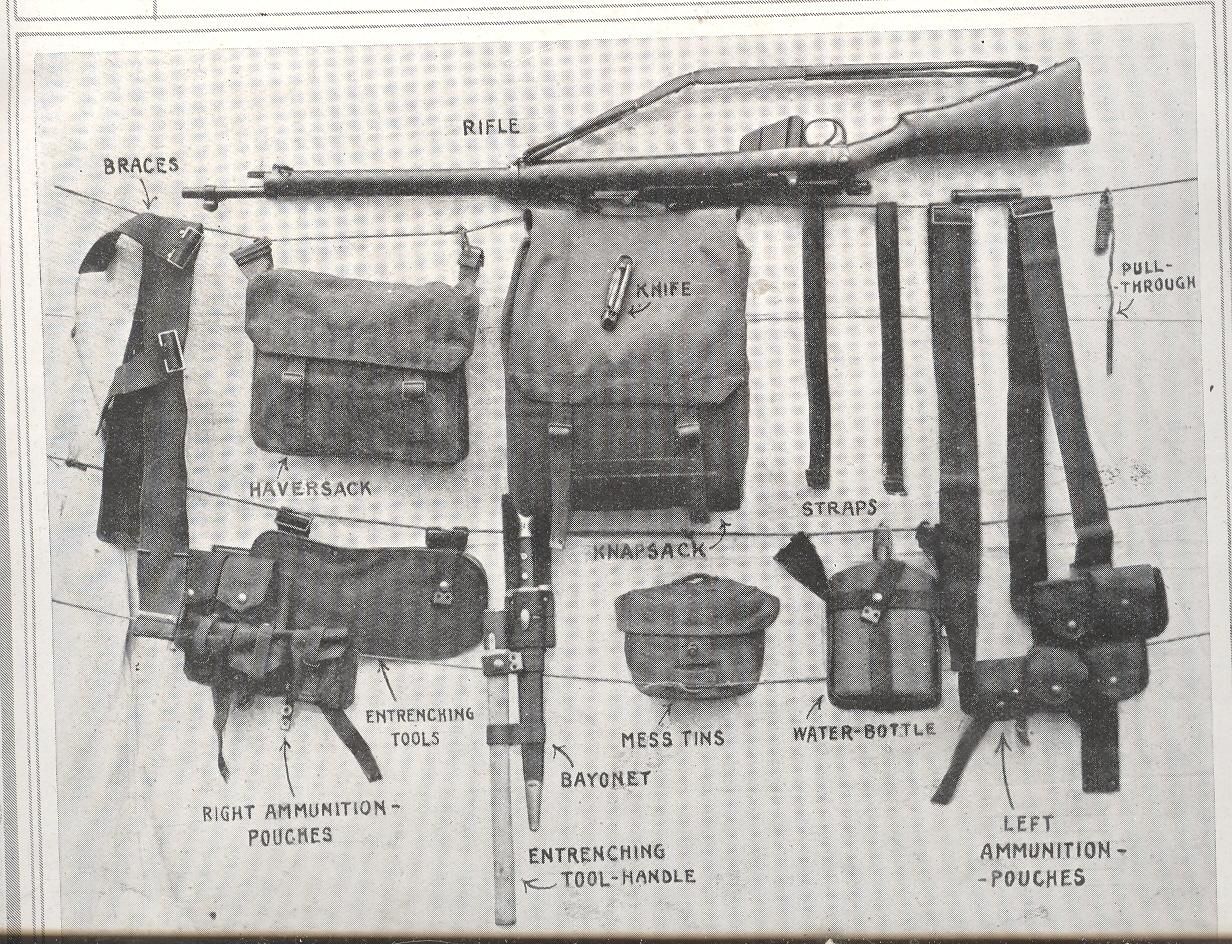
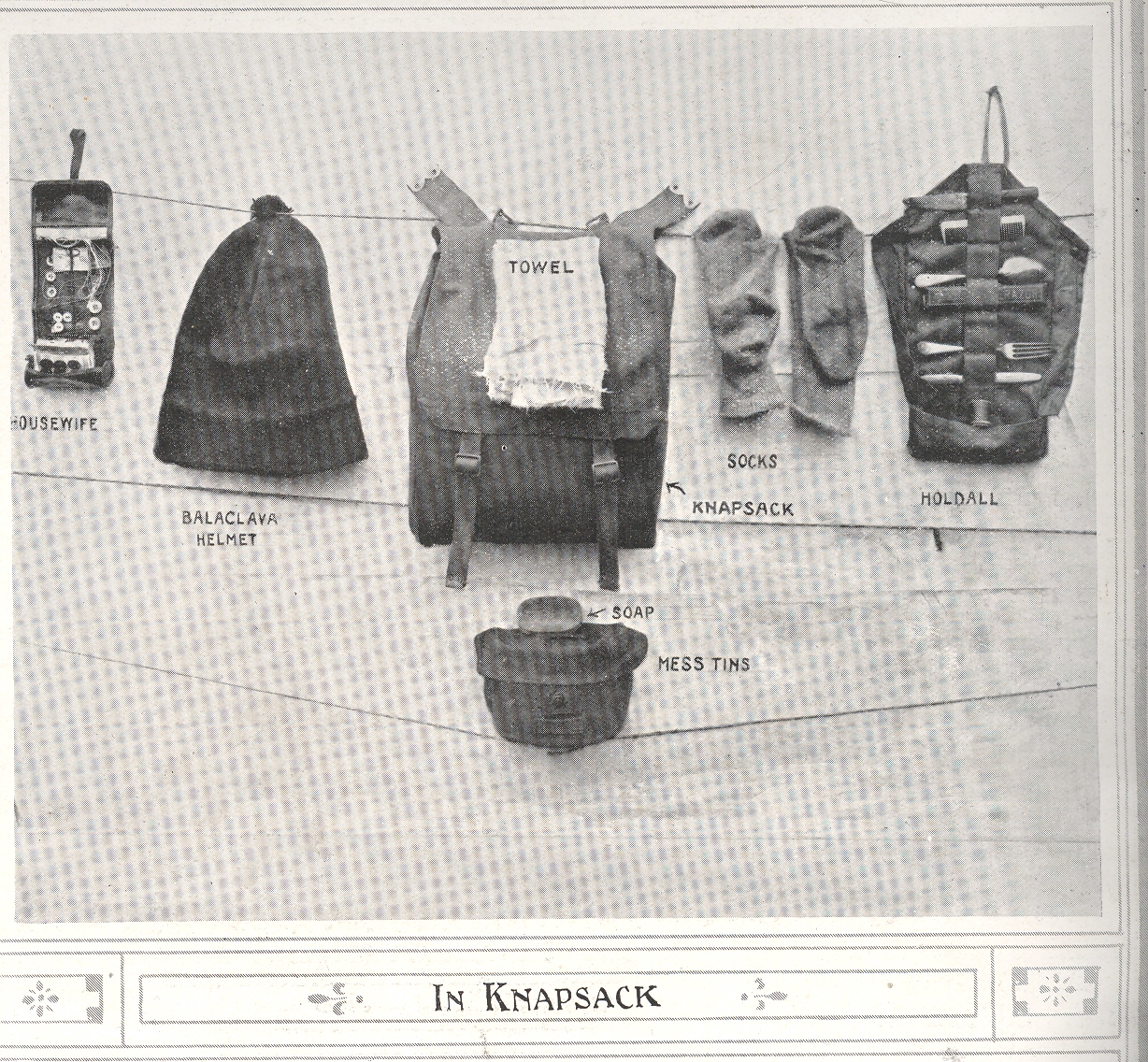
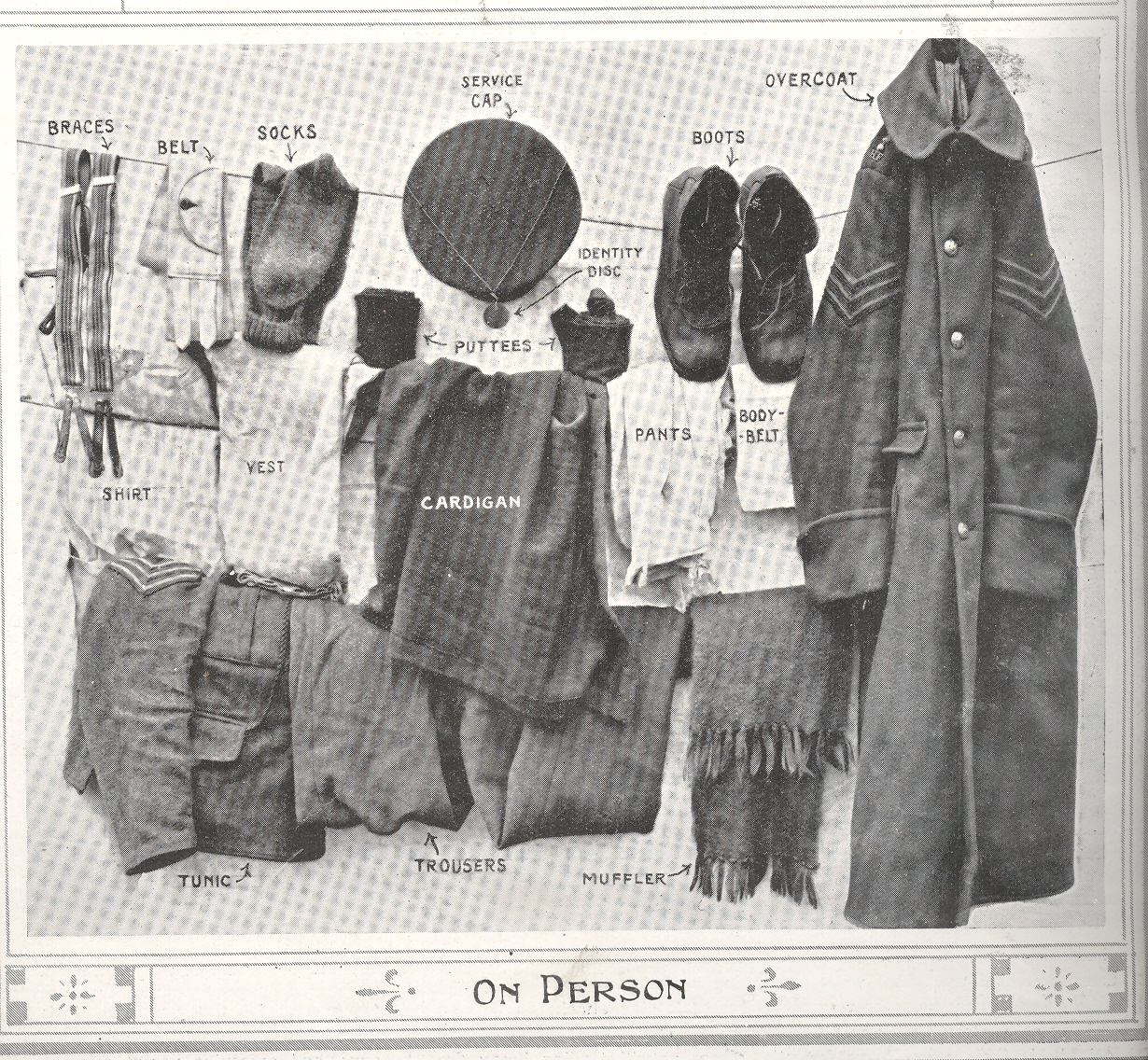
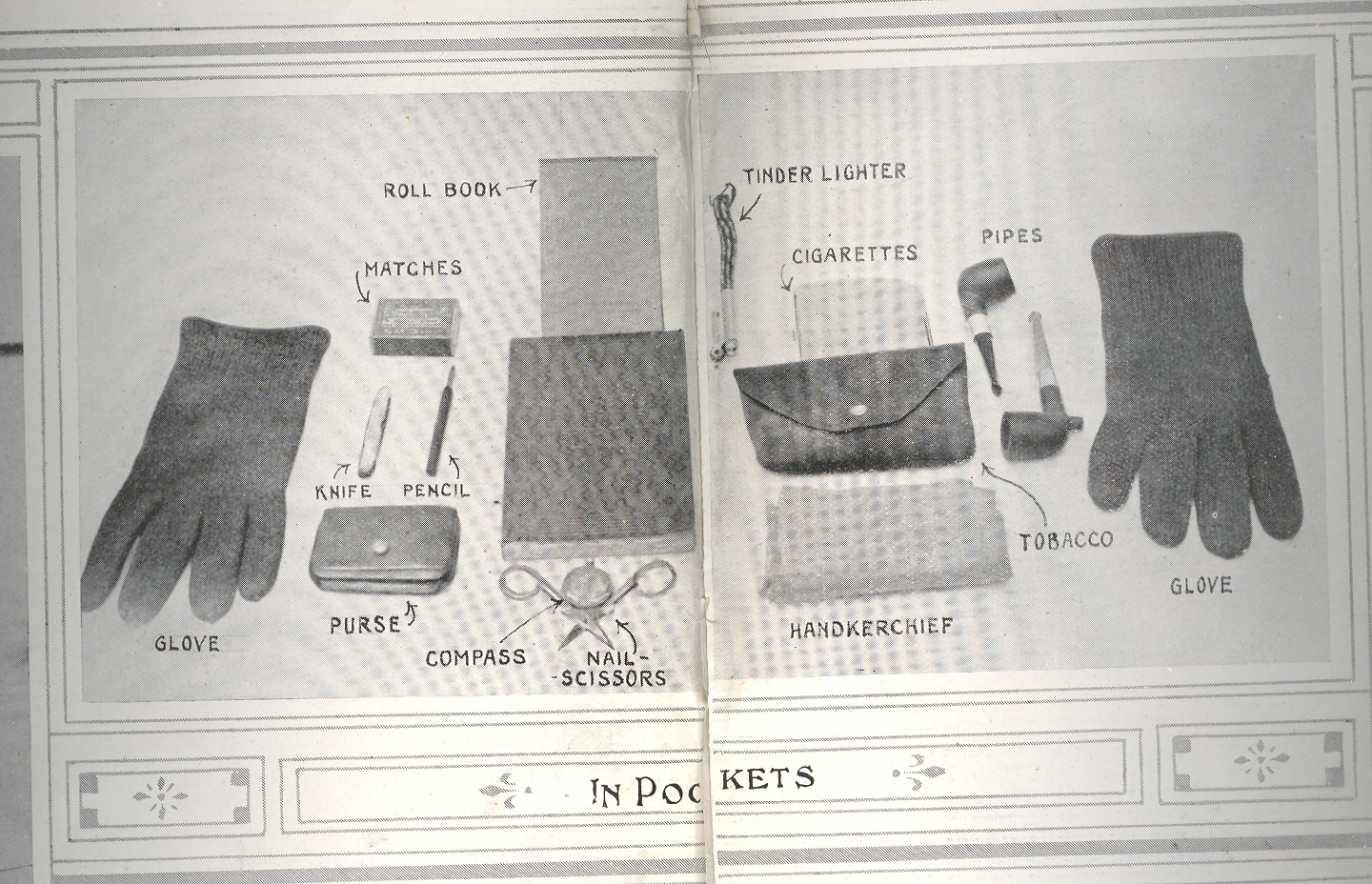
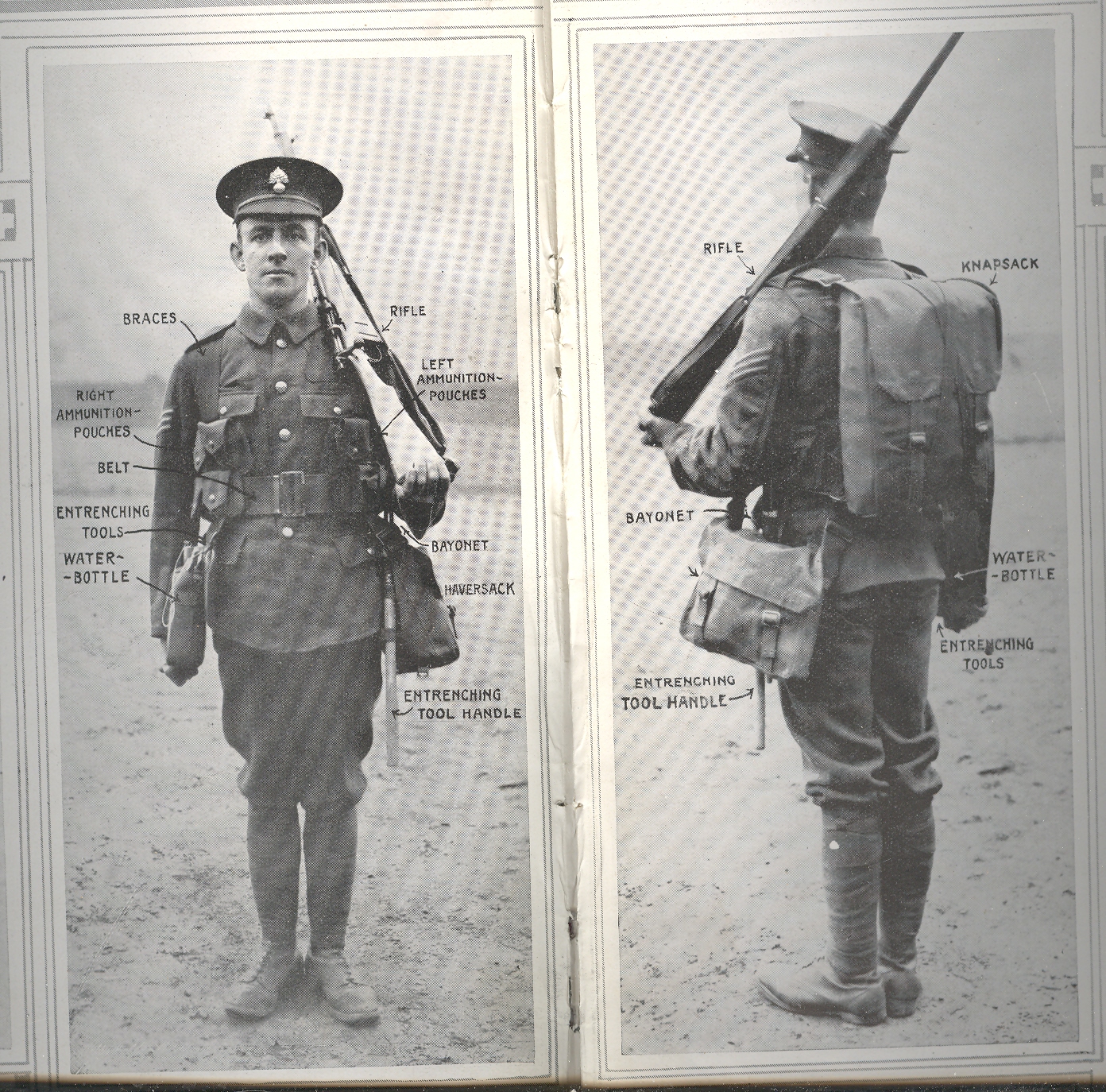
    The 27 Feb 1915 issue of The Illustrated London News is remarkable.  Yesterday’s post was generated by an image appearing in it of sappers mining under a battlefield to create an underground attack on the enemy’s trench lines.  A few pages into the issue shows a series of pictures describing the regulation issue for an enlisted man headed into combat—simple, scary, and heartrending. And of course a true measure of the courage and fortitude of these millions of men who marched to the Front with all what today looks to be  not-adequate material.  It is hard for me to imagine going off to conquer your enemy and your own fear with these sorts of supplies, marching along with all of these slight bits jangling and clanging to each of my steps.

    [All of the images are expandable.]

    Blog jan 30 infantry top left

    The images themselves are, I think, unintentionally spectacular for their design and arrangement, not the least of which is the fact that all of the materiel is suspended from rope or wire. 

    Blog jan 30 infantry btm left

    There is no way for me to know what of this material was instantly discarded (if any), or what was thrown into ditches because they didn’t make sense or were too heavy or cumbersome or got in the way.  Or what of these supplies were actually carried into battle.  Given the nature of the fighting, perhaps all of it was carried in and out. 

    Blog jan 30 infantry right top

    Basically though the pictures just make me uneasy, nervous; so many things look so slight and needy.  The canteen looks tiny; there’s only two pair of socks (!?) but two pipes; the “grocery ration” looks inadequate; the ammunition pouches look stingy. But the “housewife” looks useful, and its always good to have scissors, and a handkerchief.  I’m not so sure about the purse.

    Blog jan 30 infantry right btm

    It just seems to me an amazing display of the stuff that the British soldier was given to haul into the future with him. 

    Blog jan 30 infantry center top 

    Blog jan 30 infantry center btm


  • Bad Places to Be Dept., #1:Fighting Underground in Sub-Trench Warfare, 1915

    JF Ptak Science Books  Post 922

    “Johnny, get your gun, get your gun, get your gun.

    Take it on the run, on the run, on the run.
    Hear them calling you and me,
    Every Son of Liberty.
    Hurry right away, no delay, go today.
    Make your Daddy glad to have had such a lad.
    Tell your sweetheart not to pine,
    To be proud her boy’s in line.”
    –Opening of George M. Cohan’s “Over There”

    Blog jan 29 trench bot right det

    It is difficult to think of soldiers fighting one another across hedgerows or trenches, hiding behind earth, creating a death-vacuum on the land in between–but worse yet would be fighting in these scenarios underground. 

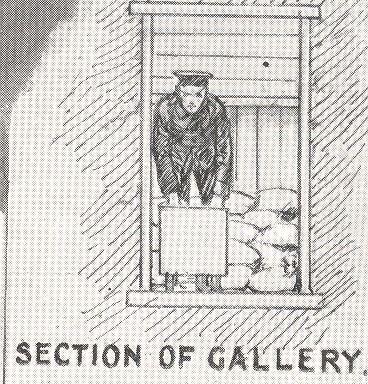
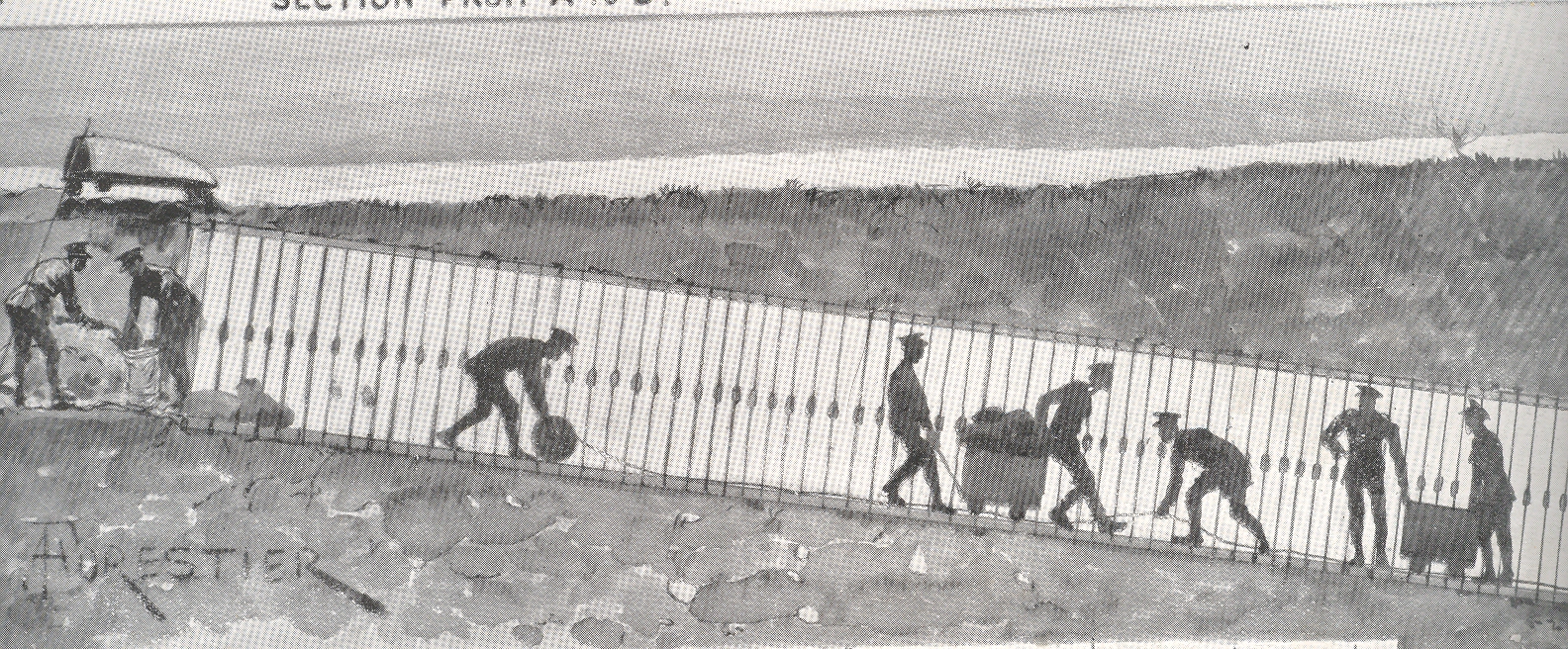
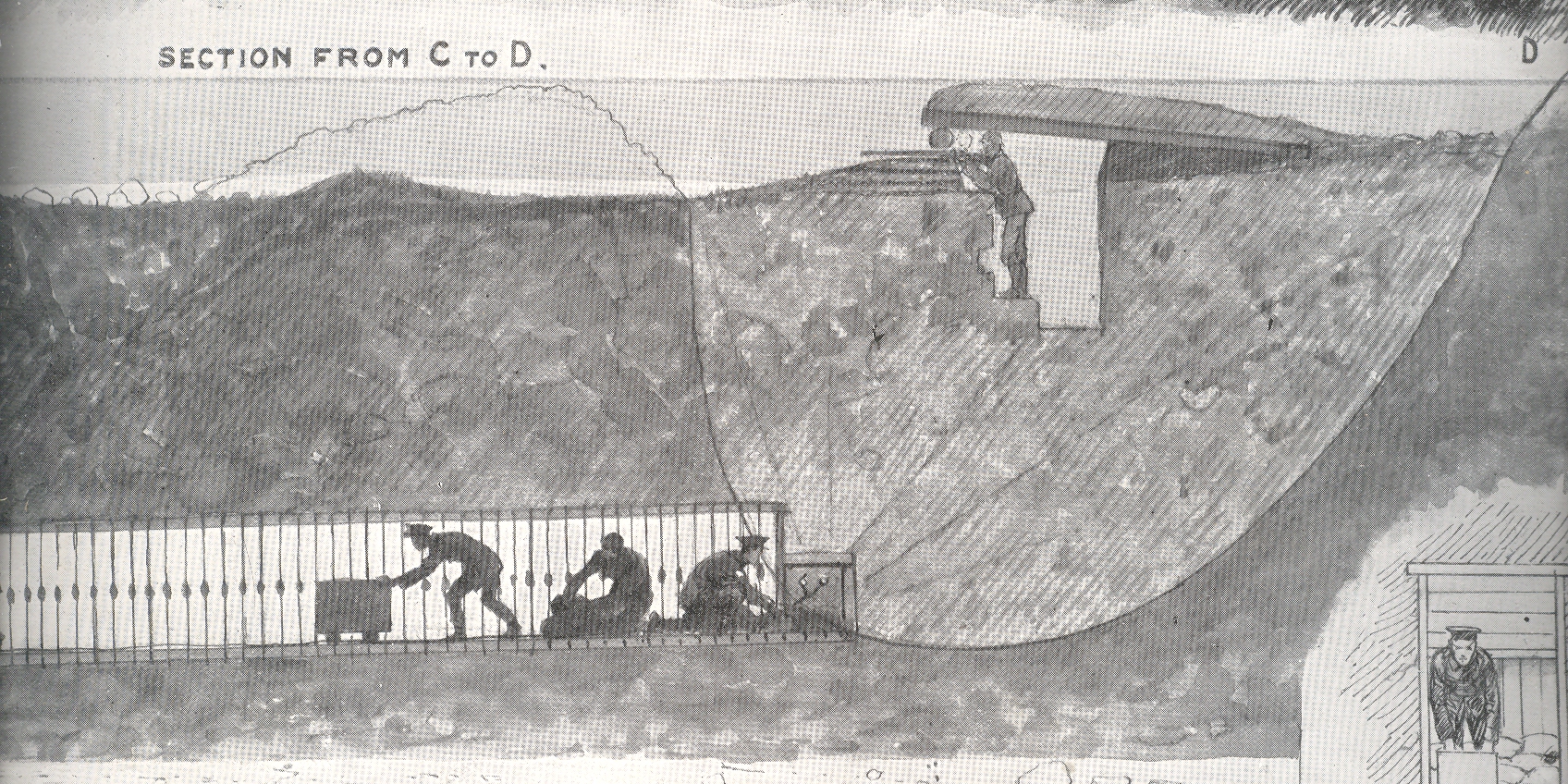
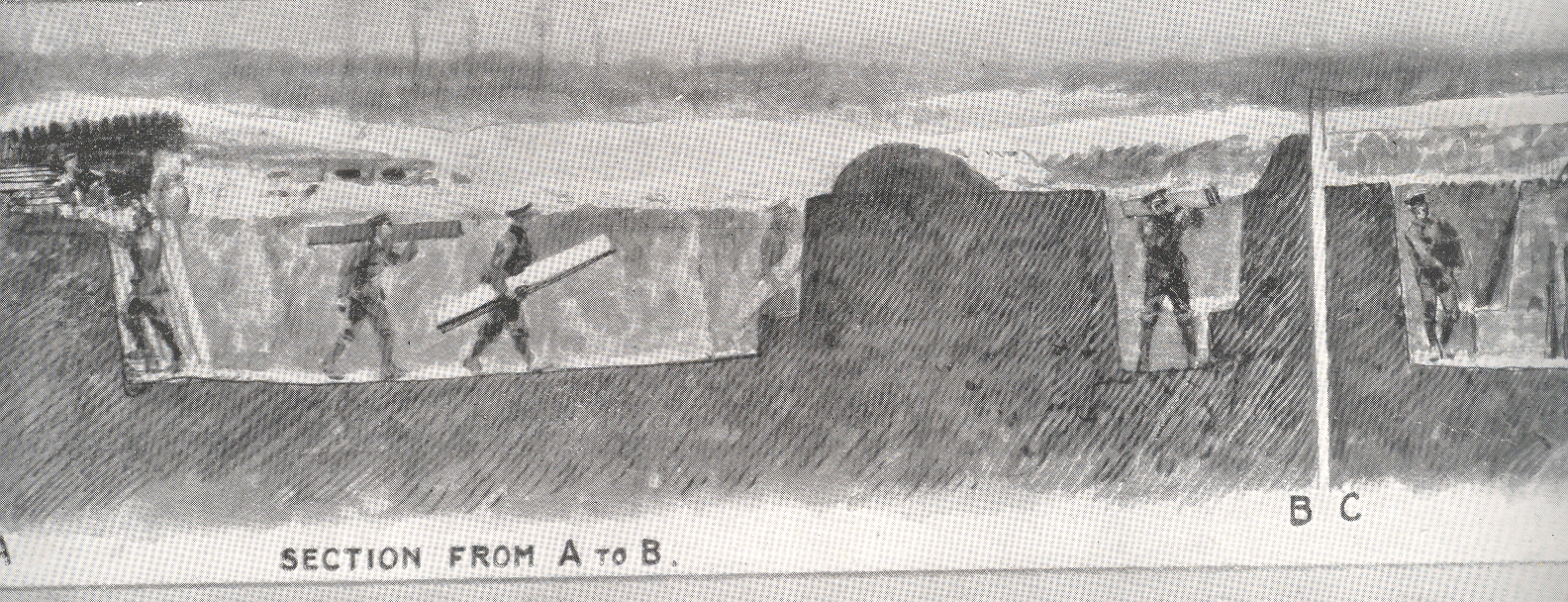
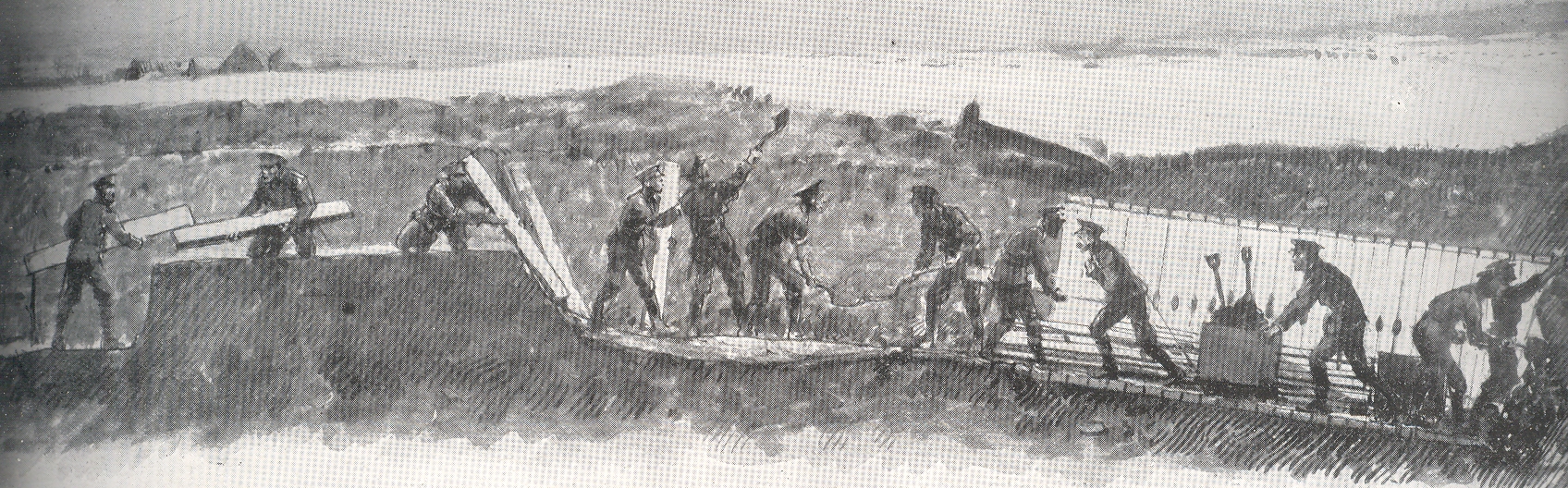
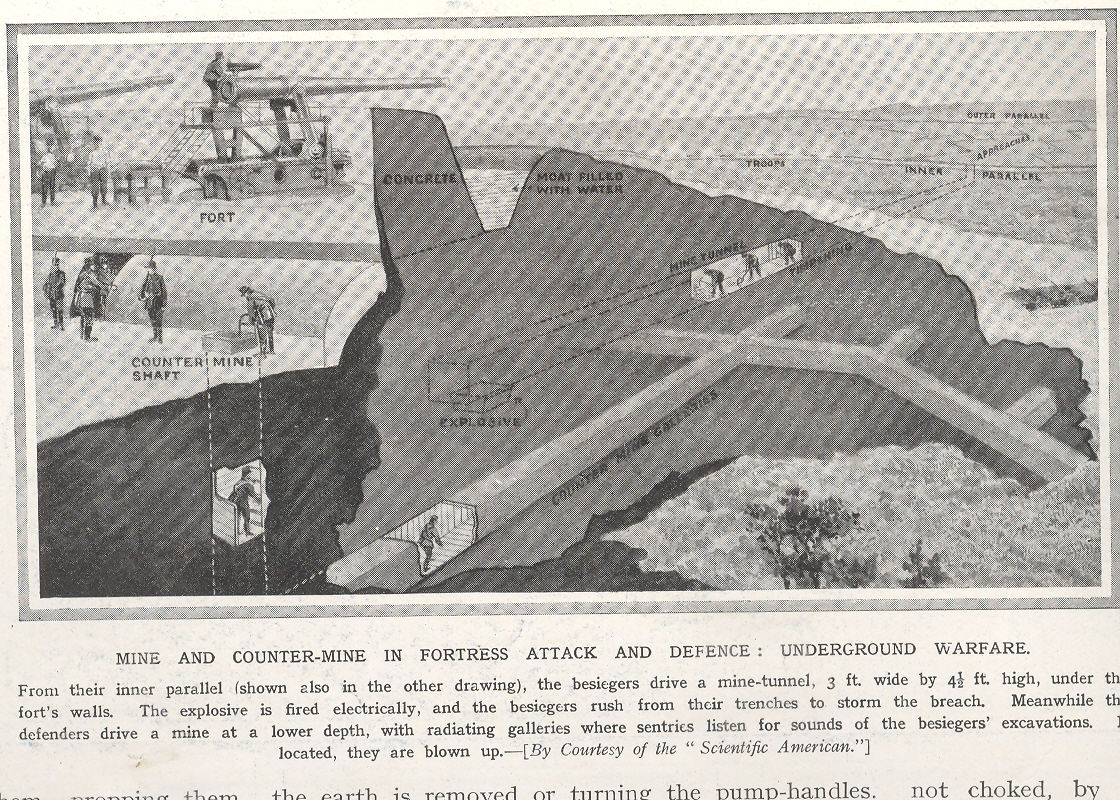
    Finding this large double-page illustration in The Illustrated London News1gave me a physical reaction like the one I get when thinking about the discarded  Dalton Trumbo’s2  anti-war novel, Johnny Got His Gun.  The novel’s main character (Joe Bonham) is virtually encased in his own mind, having lost his arms, legs and face in an explosion on a WWI battlefield—the story is told from his bedridden perspective; dark, bandaged, alone, his mind and brain functioning, and with little means of communication or control over his body. .Among other obvious things, it makes me feel a peculiar stuffy coldness.  [The two sets of four images following should be viewed as two-parts of one long image, the bottom part being on the right.]

    Blog jan 29 trench botm left


    Blog jan 29 trench bot right

    And so too when I look at these soldiers tunneling under a dead battlefield, working their way slowly—a foot an hour—towards the enemy trenches, desperately trying to blow a hole in an immovable object resistant to infantry and artillery.  The soldiers—sappers—were sent in to do a job that could no longer be accomplished above the ground.

    This sort of warfare is extremely old, though the name is not, being about 150 years old. These soldiers were forward combat engineers, and had training across a number of different areas—they were responsible for many technical chores, like building (and blowing up) bridges, laying/clearing minefields, general demolition, defense construction, and, of course, fighting.  It could be a tremendously difficult job, unimaginable.

    Blog jan 29 trench mid left 1


    Blog jan 29 trench mid right


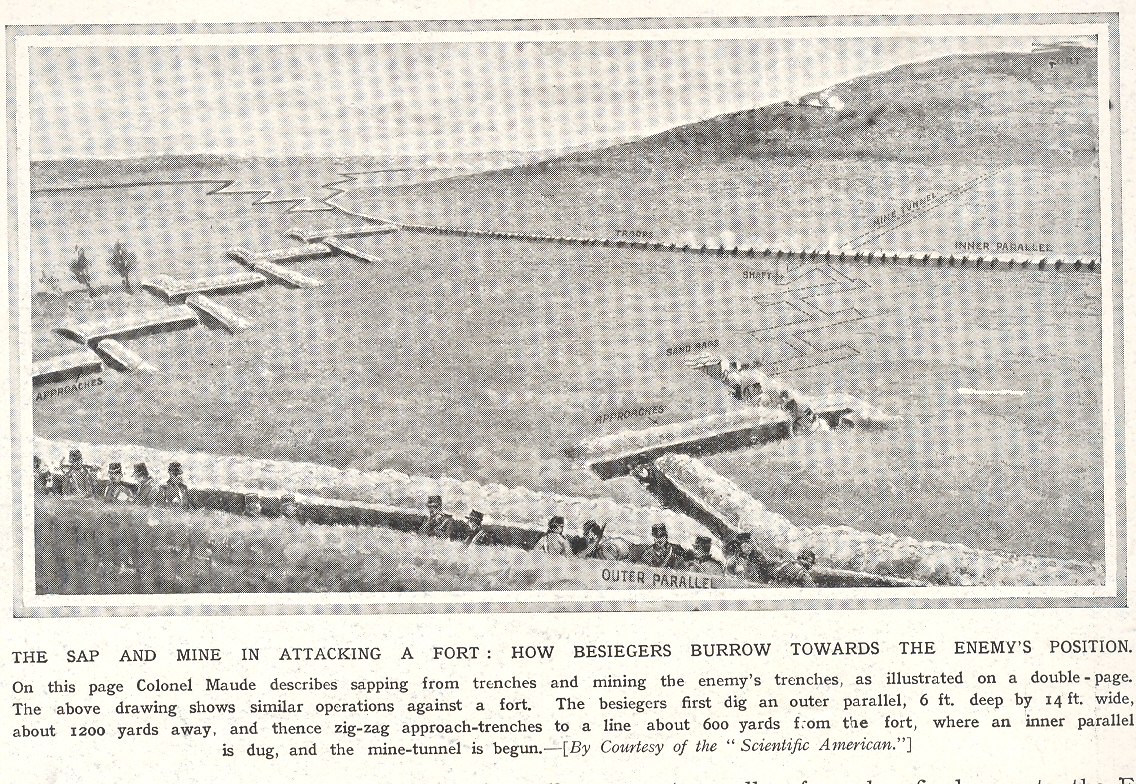
    The “sapp” part of “sapper” comes from the French “sappe”, which refers to the other main part of their job during WWI, which was digging advancing trenches, a zigzag construction of a long horizontal half-hole which allowed an infantry force to slowly advance towards an enemy’s entrenched position. Another part was to tunnel under the enemy’s lines, and then blow them to smithereeens so that a successful attack could be launched into the weakened position.


    Here’s what I think about when I think about these men doing this job:  that two teams, British and German, start to tunnel towards each other’s lines, and somehow, in the middle of the battlefield, somehow manage to dig directly towards one another, their tunnels literally colliding.  Hand-to-hand combat through the opening connecting the two sapper tunnels, then gunfire.  Alerted, the artillery from each side zero-in on what is suspected to be the opening end of the tunnels, pummel them, destroying the access.  So now, both sets in what is now virtually one tunnel, are fighting in the dark.  Even though the topside is only two feet away, any hole would open into the killing zone, making it impossible to escape that way.  It would be a bad place to be.

    Blog jan 29 trench overview sap top Blog jan 29 trench overview sap bot

    Notes

    1. The issue is 27 Feb 1915.  The illustration is entitled “They Sent us in front with a Fuse an’ a Mine’, Sapping and Mining Under the Enemy’s Trenches”. The first half of the title is from Kipling’s “Sappers”: They send us in front with a fuse an’ a mine , To blow up the gates that are rushed by the Line…

    2. Trumbo has an interesting history, to put it mildly. An old Communist, he once gave up his old associates to the FBI at the start of WWII–an act he later thought of as being stupid and wrong.  It also had the opposite effect for him–he thought he was being patriotic, but the FBI was more interested in him than his information.  He would get eaten up by McCarthyist operatives and denied HUAC any information on any of the famous “Hollywood Ten”.  He got a year in jail and was blacklisted, booted out of LA. He came back–mostly under someone else’s name (see the link above for his screenwriting credits, which are substantial)–and acknowledged shortly before he died.


  • Flying Wing Aircraft, 1930

    JF Ptak Science Books LLC  Post 919

    Blog jan 24 flying wing det title What can I say?  I just like the flying wing. Also I should point out that the Illustrated London News is an excellent resource for schematic cut-aways like this–I think that I have 125 or so of them here for the 1910-1945 period.

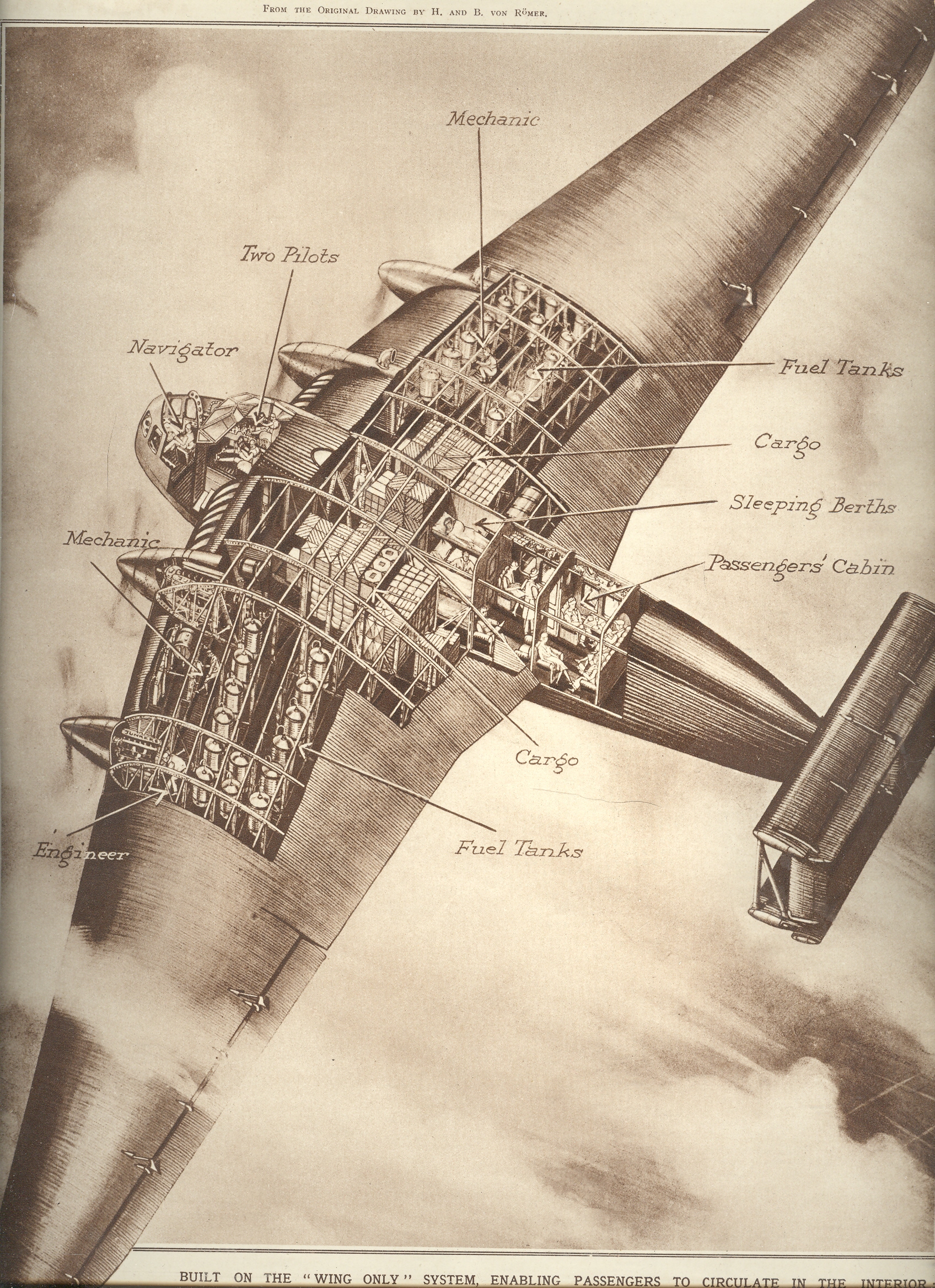
    Junkers built this fabulous flying (“inhabited”) “wing only”
    aircraft, sending it up for commercial service in 1929 as the largest airplane
    in the world. Only two were built (though a Japanese military knock-off ran to a production quantity of six), and I imagine that it was quite expensive making the Berlin-London flight, cruising in around at 109 mph.

    Blog jan 24 flying wing

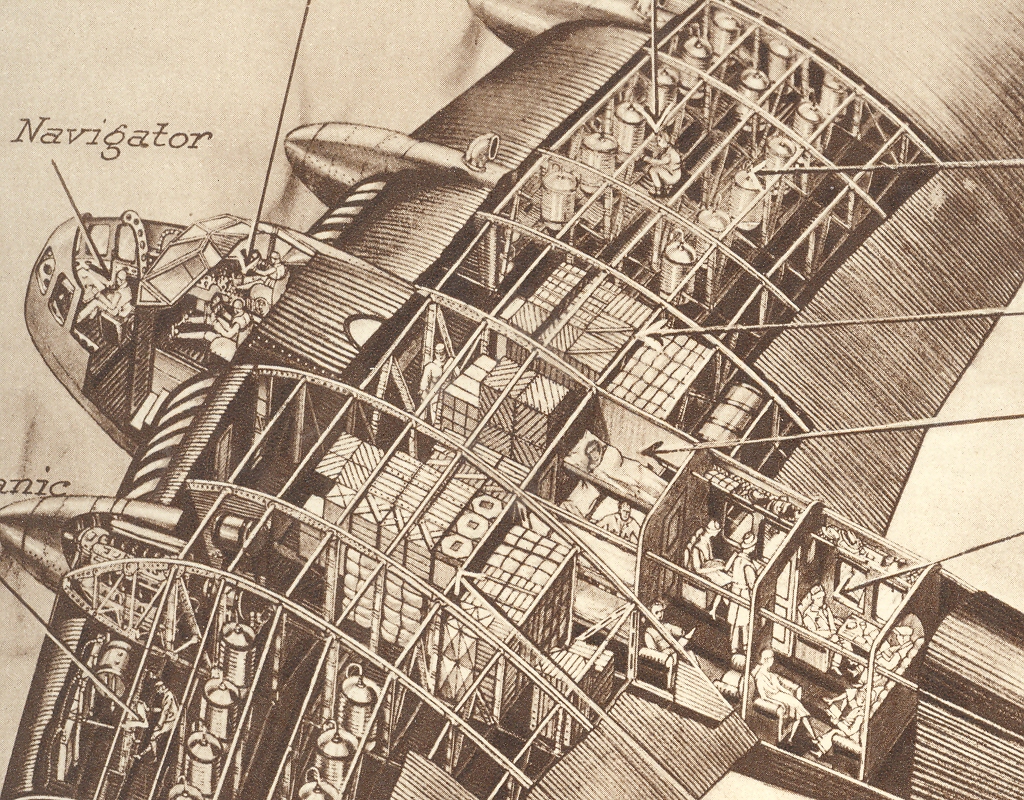
    I would like to know what the artist was thinking about when he decided to draw a standing man in the sleeping compartments. Not only that, the fellow is looking straight at the artist…perhaps it is a sly, tiny self-portrait?

    Blog jan 24 flying wing man

    Blog jan 24 flying wing det


    Notes


    1.  Plane specifications:

    Crew: Seven (including a full-time engineer who could
    service the plane’s four engines from inside the plane).

    Capacity: between 30 and 34 passengers, depending upon
    variation of the aircraft.

    Length:  75 ft

    Wingspan:
    144 ft

    Height: 23 ft

    Wing area: 3,122 sq ft

    Empty weight: 32,893 lbs

    Loaded weight: 52,900 lb

    Max takeoff weight: 46,826 lb

    Maximum speed: 140 mph

    Cruising speed: 109 mp

    Range: 2,150 miles

    Service ceiling: 12,100 ft


  • A Mile-High Pile of Wood–Graphical Display of Quantitative Data.

    JF Ptak Science Books LLC  Post 913

    Continuing
    a long, developing thread on the graphical display of quantitative data–and
    especially that which uses man-made objects for comparison—is this interesting
    bit from a Romanian mining publication from 1933.

    The
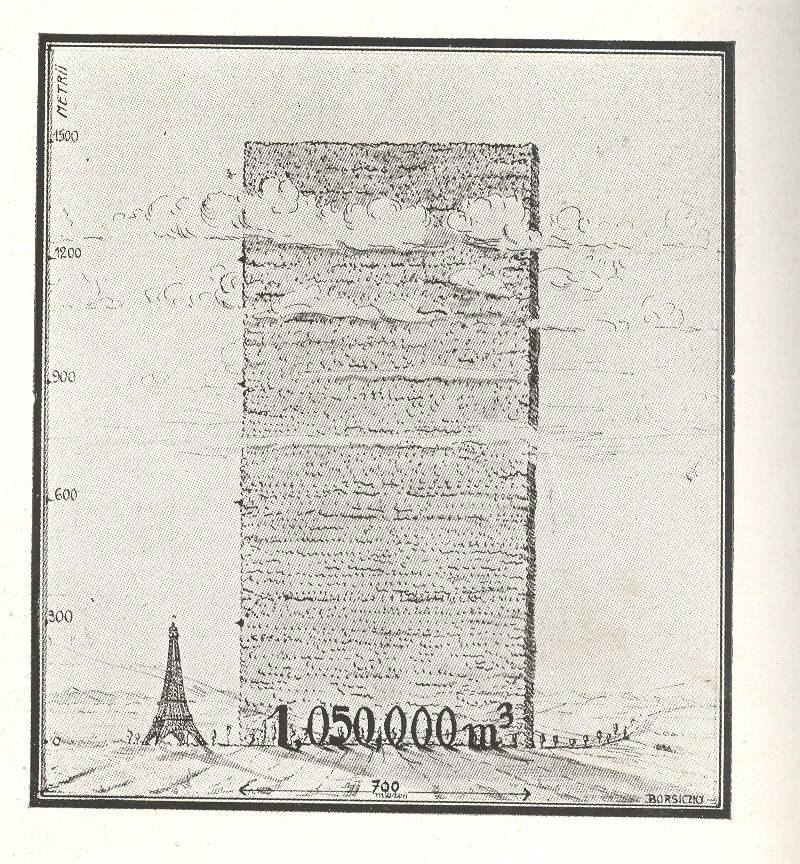
    huge mound next to the Eiffel Tower shows the consumption of wood in Romania over a
    ten year period, a stack of wood 700  metres long and 1500 metres high.  Evidently this wall has only the most rudimentary depth of a metre, as the legend reads that the volume of the woodpile is 1,050,000 metres cubed, which is the same as its square area.  So somebody missed something, here, though the artist did supply some nice shadowing.

    Blog jan 17 wood

    Just
    above it appeared this comparison for the amount of oil consumed over the same
    ten year period

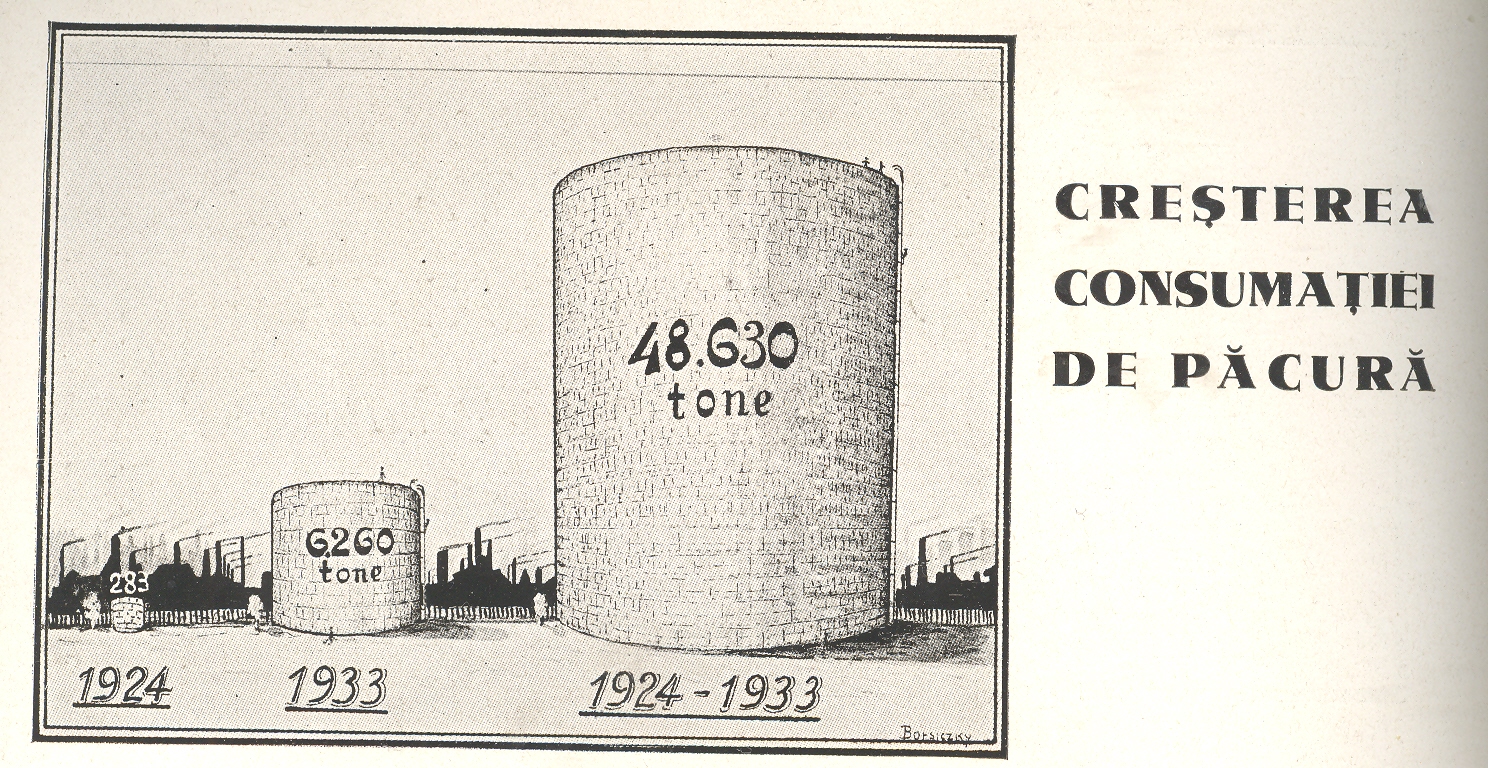
    Blog jan 17 oil

    I’m
    not sure why this comparison was being made. 
    This does come in the interwar period which saw a great expansion in
    Romanian territory and a vast modernization effort following the country’s devastating
    experience in WWI. Maybe it was illustrating modernization from wood-burning power/heating sources to oil-based. I really don’t know–I just liked the Eiffel Tower being dwarfed by a massively tall and impossibly skinny woodpile.


  • Advanced Utopian Martian Communities, 1911

    JF Ptak Science Books LLC  Post 904

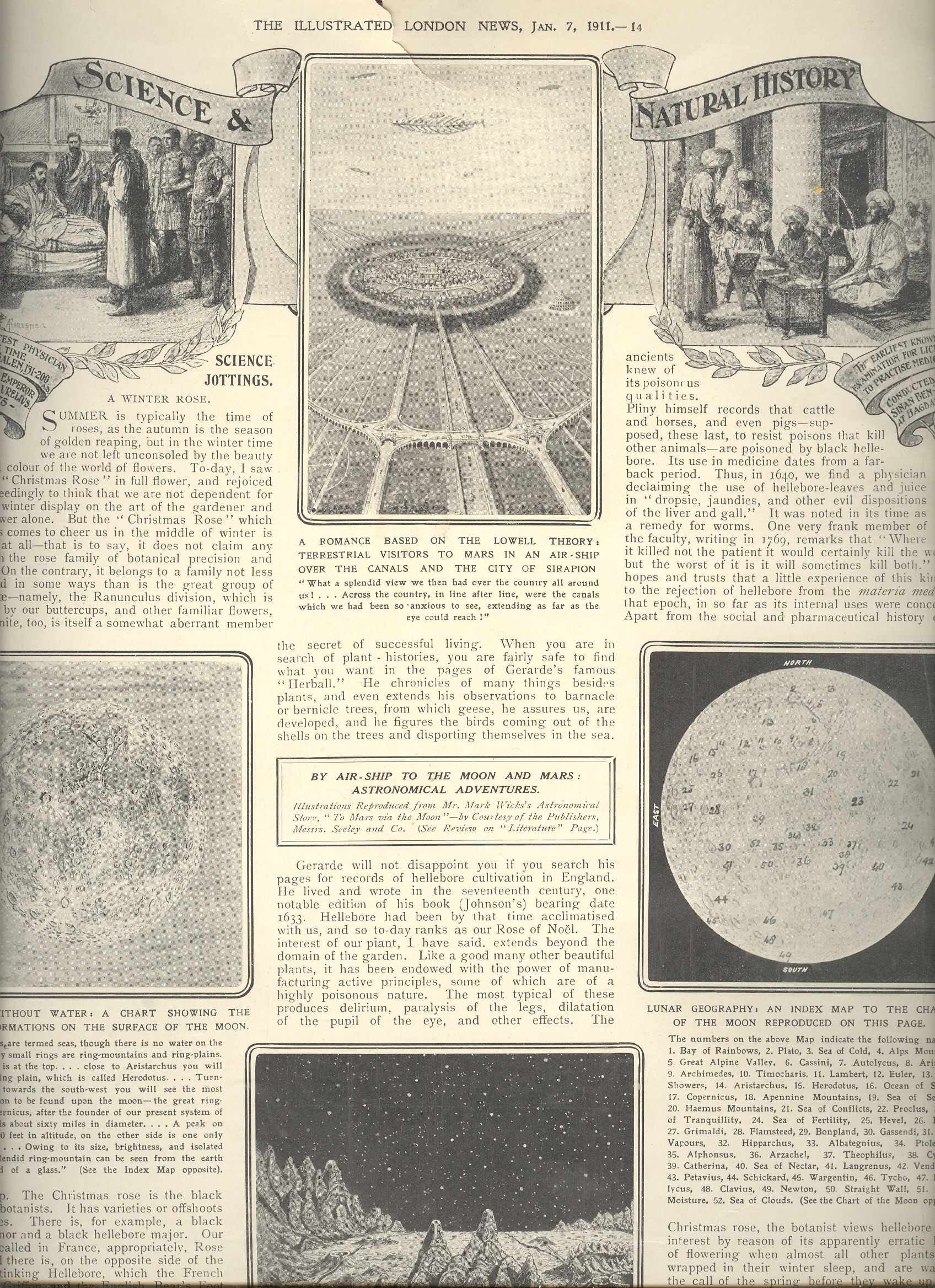
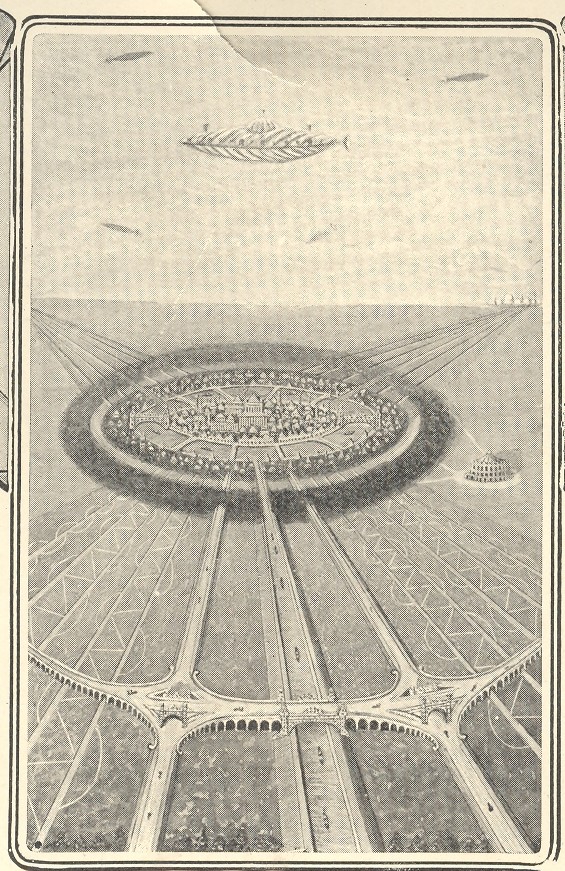
    Blog jan 9 mars This futuro-Utopian homage to
    ET-civilizations and space travel was written just too early to have been
    sucked up by period-appropriate Hollywood
    script raptors.  Reading it is a little
    out of the question and left to the domain of sci-fi archaeologists; the book
    is stuffy and dry  and very stiff
    (brittle !) without being terribly interesting and doesn’t stop for the right
    word when four will do. (See below for an example of the writing.)   The ideas though lurking beneath the surface
    though are pretty good for its time, though they are hardly the great undertow
    that rips you away and out of the clutches of the stuff that make this a pretty
    object rather than a book.
     

    Blog jan 10 mars

    To Mars via the Moon, an
    Astronomical Story
    . written by Mark Wicks
    and published in 1911, left the Moon quite behind in its literary assault on a
    super-advanced civilization that the space travelers find on the red
    planet.  Wicks owes a big nod (and gives
    it) to the astronomer and faded theorist Percival Lowell and his
    Mars as
    an Abode of Life
    (1908)1.  Wicks’ Mars is enormously advanced
    techno-superpower filled with telepaths and mega intelligence, as well as a
    reincarnated version of his own dead son. 


    Okay, enough.  I’m really just stopping here because of the noble
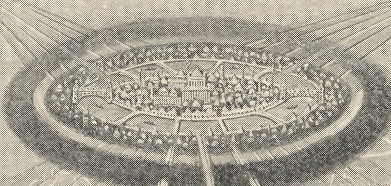
    outsider-like Martian city/landscape, a circular city with canal2-like
    connectors. It’s a busy environment, with the perspective-challenged city
    looking vaguely bathed in a holy halo, car-like objects skimming along the
    canal-roads, and “pre-flying saucers” in the air.  It is lovely in its own way—certainly the
    publishers thought so, as they incorporated the design right on the spine of
    the book. 


    Blog jan 10 mars extra detal

    Notes

     
    1.Lowell’s
    hypothesis was rounding criticized by many, including Alfred Russell Wallace
    ’s 
    Is
    Mars Habitable?.
     Blog jan 9 mars spine
    2. Giovanni Schiaparelli reported these features
    first, in 1877, referring to them as
    canali in his native Italian, which means something more
    like naturally-occurring grooves or channel; English-speakers like Lowell
    stopped just short with the word, lopping of the final “I” and going with
    “canals”,  with its overt implications of
    intelligent design.  And thus are
    religions born
    .
     
    The entire book can be found on the
    Gutenberg site:
    http://www.gutenberg.org/files/2763/27633-8.txt

    The sample of the writer’s ware is below, the final two paragraphs of the book: the penultimate paragraph being one long run-on sentence including four embedded exclamation points, and the final two sentences of the final graph ending in an exclamation point and a dot dot dot question mark:
     
    “Yes, we are doing well–there is no doubt about that; but,
    notwithstanding my present very satisfactory circumstances and the certainty of a brilliant future if I stay here, ideas have long and persistently been running in my mind that it would be far better for me to go back to Mars, and–by Jove! strange indeed that I never thought of it before!–perhaps those very persistent ideas are actually the outcome of Martian influences!!”

    “The wonderful music I heard upon Mars still rings in my ears; and, at times, so thrilling and peculiar is its effect upon me, that I feel as though I were being almost irresistibly impelled to return to that planet. Well, I should very much like to see the dear old Professor and Merna again, and also my many Martian friends. Then there’s Siloni, whom I can never forget, for mentally her image is ever before me. What a nice girl she was! If I were to return to Mars, I wonder whether…?”

    First edition spine source: http://www.sumnerandstillman.com/Catalog/sumner.cgi/9691


  • Unintentional Absurdist Art: Flying Boats with Bucket Feet, 1745

    JF Ptak Science Books LLC  Post 901

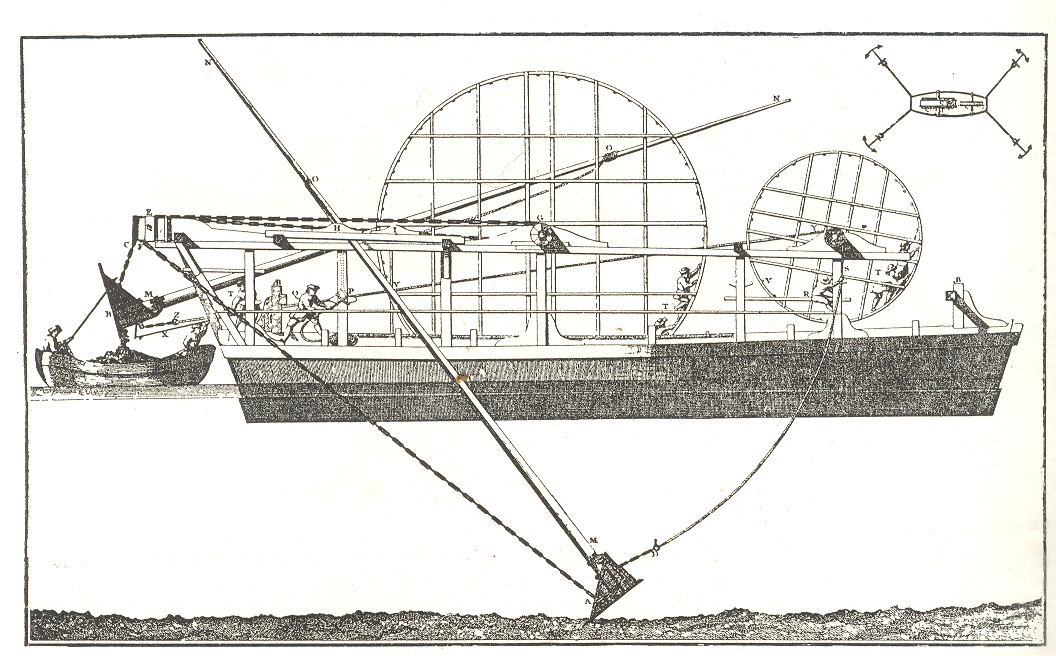
    This
    treadmill-powered French pontoon dredge, printed around 1745, looks for all the
    world as though it is floating in mid-air, propelling itself along with two
    bucket-ended legs, elegantly and impossibly moving its miracle-y-balanced self
    forward against all forms of reason and logic, a clunky 18th century
    non-transforming Transformer.  The
    profile actually and simply shows a dredge at work and just  fails to show the water in which it
    floats. 

    Blog jan 6 absurd

    The
    boat’s dredge is powered by four humans in two treadmills which would move the buckets
    back and forth, scraping up the river silt and then emptying it into the shuttle
    launch aft.  Simple and ingenious—except when
    taken out of context, where it begins to look like some advanced Age of Reason floating
    boat which, although awkward-looking, is not without its charm.  

    Source:  Charles Singer, History of Tecnology, volume IV,
    pg. 634.  Singer loftily notes that this machine
    “is reminiscent of Goethe’s poem Der Zauberlehring
    which inspired Paul Dukas’s well known symphonic poem L’apparenti sorcier” and which would be better known to most folks as
    Mickey’s Sorcerer’s Apprentice gig in Fantasia.


  • Representation of Quantitative Data: Tree Diagrams

    JF Ptak Science Books LLC  Post 563
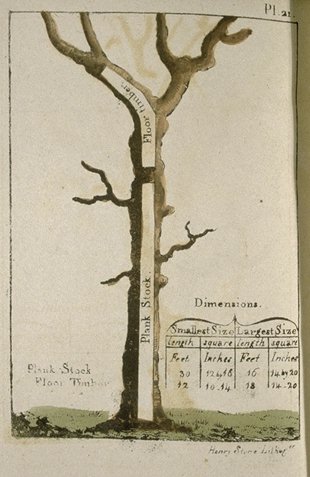
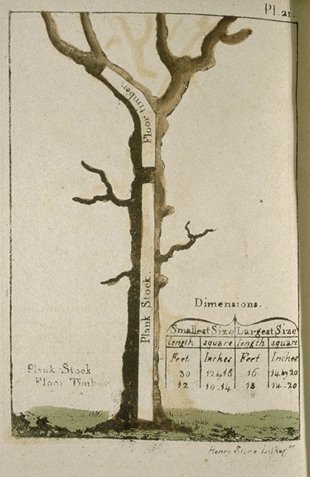
    Tree--timber guillet I’m fond of images of trees, but
    mostly if they are forensic or employed to display relationships between ideas
    or data.  One of my favorites for the
    former is this great image from Peter Guillet’s 
    Timber Merchant’s Guide. Also, a Table, Whereby, at One View, May Be
    Seen the Solid and Superficial Measure of Any Square or Unequal Hewed Logs or
    Plank…1
    (printed
    in Baltimore by
    J. Longrove in 1823).  Guillet was basically
    a tree dissector, a harvester of wood for the construction of naval ships.  His book shows how to make the best—the most
    efficient—use of various varieties of trees, displaying how to employ different
    sections of trees for different parts of a ship. The book must’ve been an
    indispensable handbook down at the mill.  
    At the every least, it certainly introduced a novel way of looking at
    trees.  
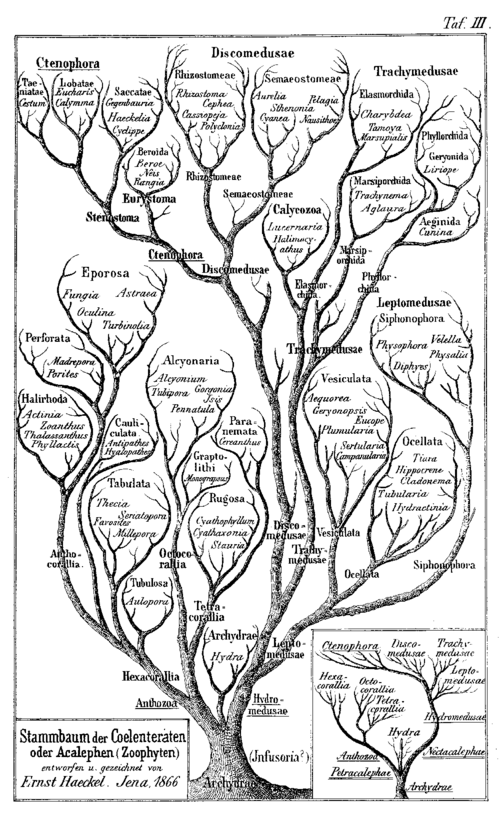
    Tree-haeckel  

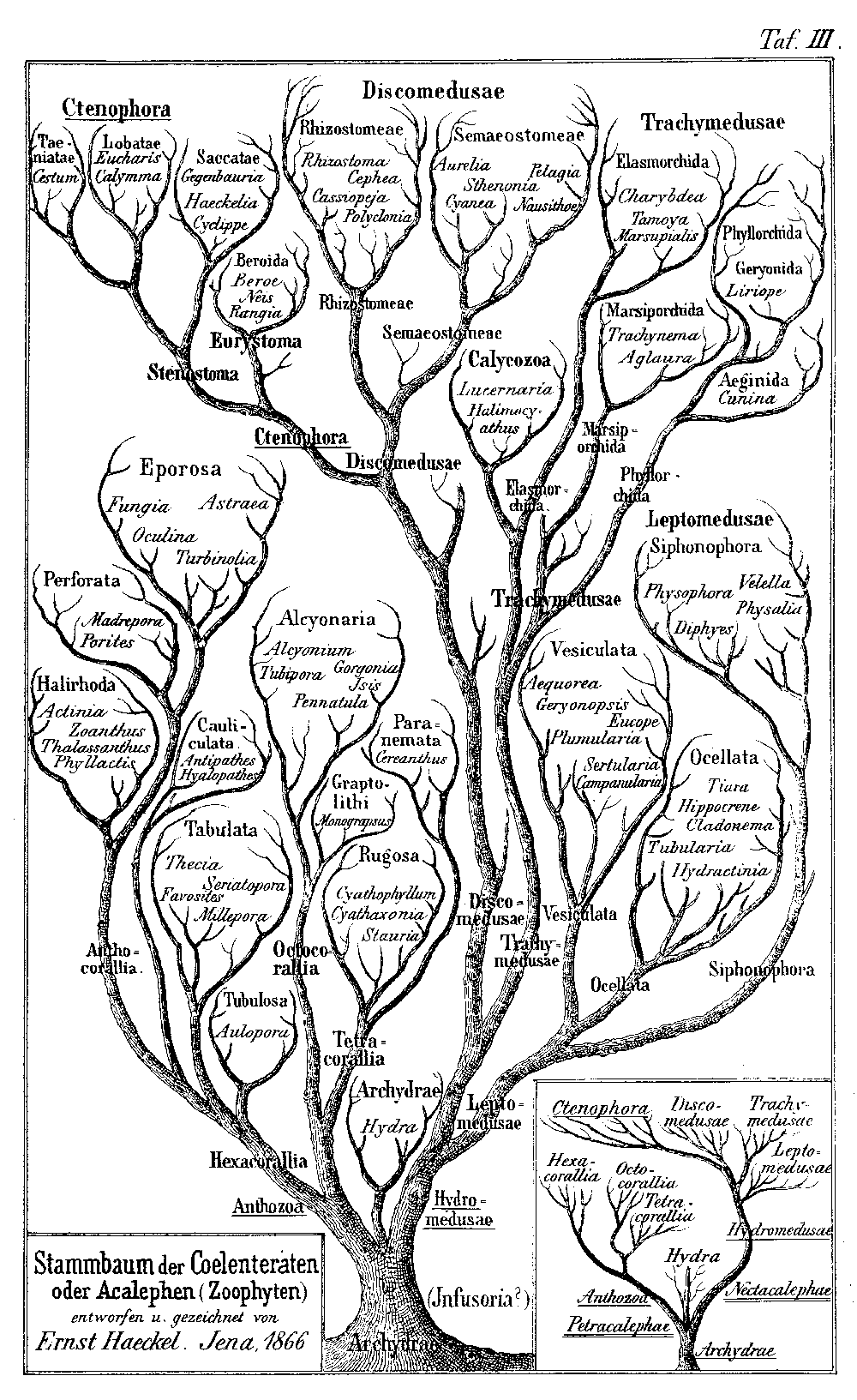
    This tree2 was a figure drawn by biologist and eminent
    Darwinian Ernst Haeckel3 (1834-1919), the branch spaces relating to intervals
    which were unrepresented in the fossil record. The image was perhaps the most
    popularly successful part of his two-volume double-wristbender—it was a
    difficult book, not well written or presented, with Charles Darwin himself finding
    it “impossible to read”.
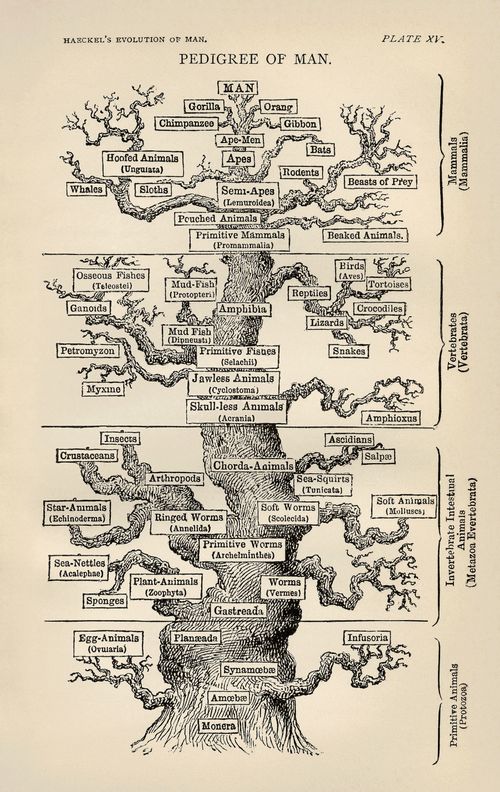
    Tree_of_life_by_Haeckel  

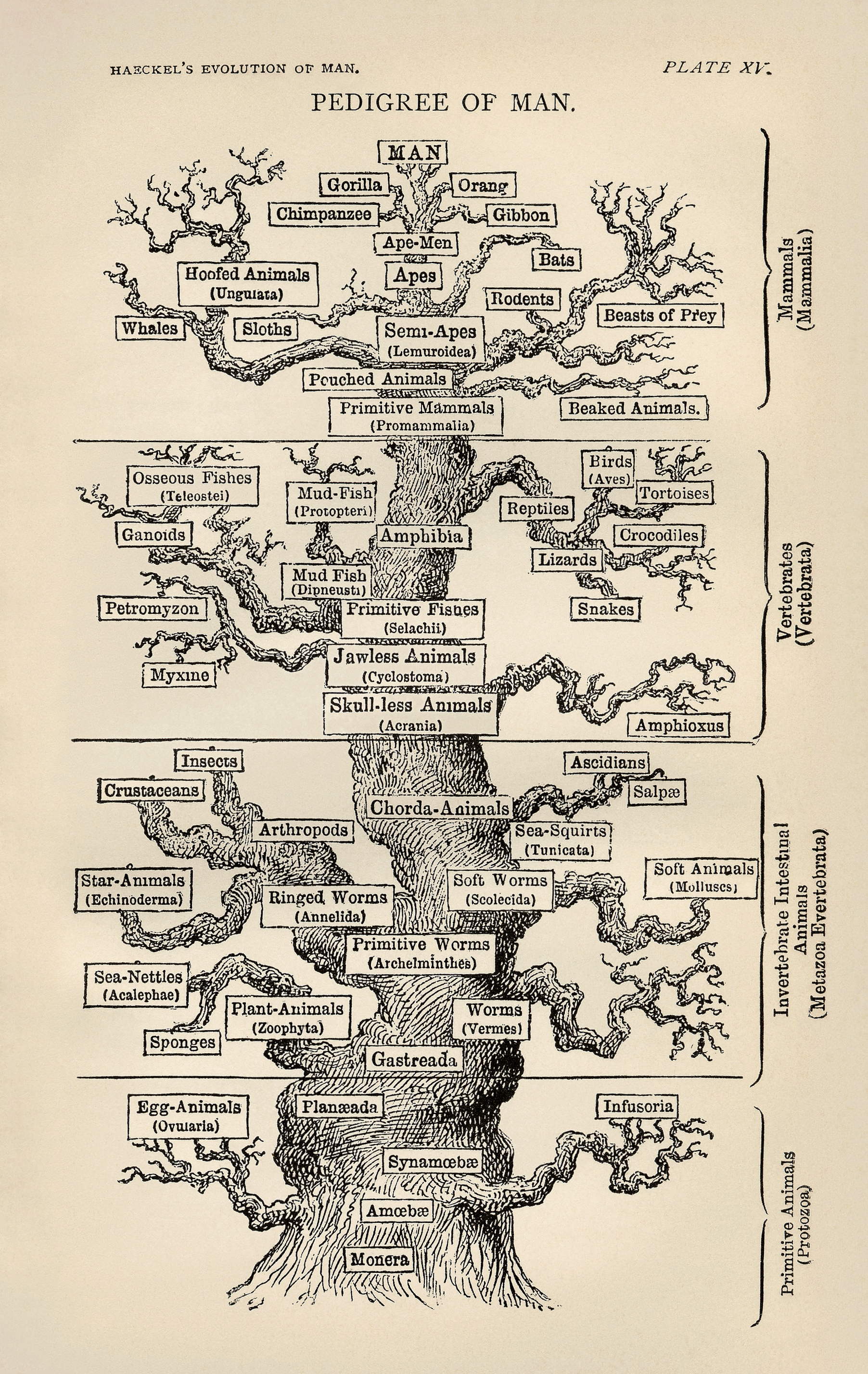
    The second tree, offered by Haeckel in his The
    Evolution of Man
    (1879): shows the general evolutionary progress of
    living things culminating in man, the hopeful and suspected end (or height, or
    crowning achievement) of the process of evolution.  Which is a little odd, come to think of it,
    to have there be nothing above man, not even a space for unimaginable improvement,
    not even a single unused branch to express the possibility of supra-human
    development. 

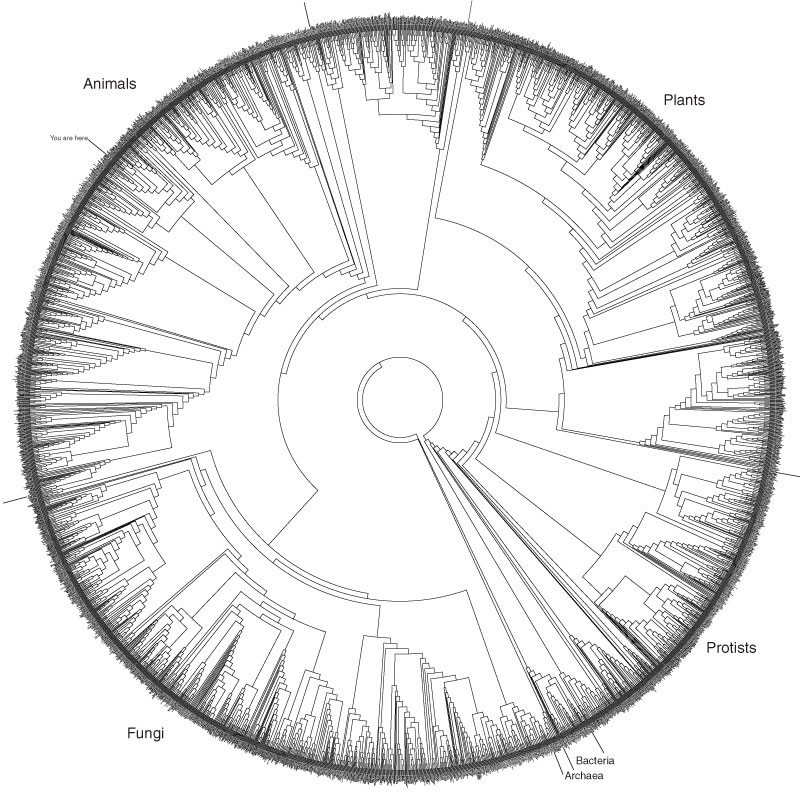
    By far the most complex of the tree of life series is the
    tree ring of life, an exploding and explodably adaptable image generated by the
    Life Website which begins at the beginning, with “life” itself.4
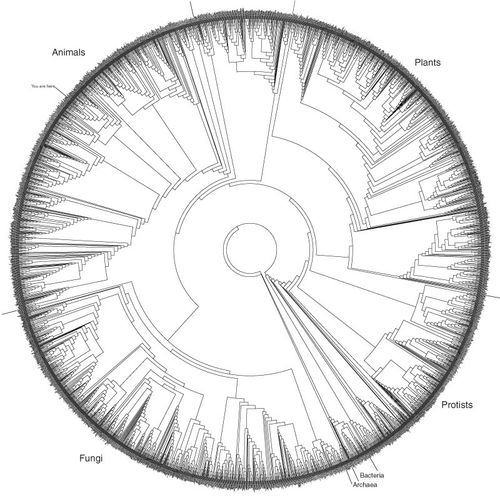
    Tree ring of life

    The coal tree of life is a particularly confusing image. Even though this is a simple classification scheme, and a
    very-well designed graphic at that, the use of the tree describing the genealogy
    of coal by-products just seems, well, wrong. The use of the tree in defining a visual phylogenic interrelatedness of
    living things appears pretty much for the first time in the first edition of the
    Origin of Species in 1859, and it is the only diagram that
    appears in the
    book. (And by this I mean the use of the tree-scheme for scientific
    purposes:  the tree of life of course has been used for many, many
    centuries, the philosophical design woven into the fabrics and incised
    into the stone of many cultures.  It sort of appears in print in
    classification usage at least by the wily and polymathic Athansius
    Kircher, who used it to display the elements in a Kabbalistic Tree of
    Life some 350 years ago.)

    Tree coal
    The Verkaufsvereinigung fuer
    Teererzeugnisse (of Essen) used this idea in
    1922, publishing the ad for their company in the Illusrtriete Zeitung (Leipzig). The great tree spring from a bed of coal (“kohle”)
    exhibiting the “stammbaum der nebenerzeugnisse” (roughly the “pedigree of our
    product”), with the trunk being gas, branching out into tar, coke and cyan and
    so on.  Even though it’s the lifeblood of
    the continuing industrial revolution, and even though we’re hundreds of years into
    a deep need with the products, the use of the tree just seems antithetical to it
    all on all levels of recognition, especially now.

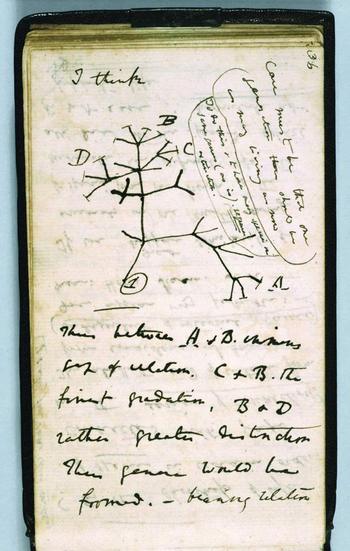
    Then of course there’s the Darwin tree, an incredible diagram from his notebooks, prefaced with the extraordinary understatement, “I think”. 

    There will be more of these tree to come, shortly, including a tree of dermatological disease and some Kabbalisitc trees of life, but they’ll have to wait for right now.
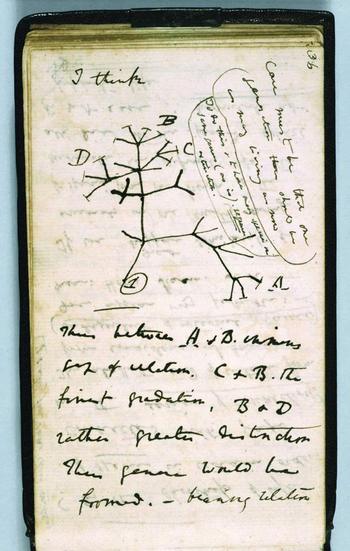
    Darwin_first_tree_2

    Notes:

    1. The full title, as follows: Timber Merchants’ Guide. Also, a table,
    whereby, at one view, may be seen the solid and superficial measure of any
    square or unequal hewed logs or plank, from one to forty-seven inches. Also,
    plates representing the figures of the principal pieces of timber, used in
    building a seventy-four gun ship of the line, in standing trees
    .

    Tree ring oflife explana

    Also, Guillet had some interesting ideas on the conservative use of forest
    lands (from Franklin Hough’s Report upon Forestry, a government document
    printed in 1876):

    Individuals wishing to make
    the most of their woodlands will find it very profitable to cut their timber by
    sections, sparing to t very acre ten or twelve of the most promising size white
    oaks or pines, whichsoever the soil will produce best; range the order of their
    lands so as to cut a section every year. For example, say a man has 200 acres of
    woodland divided into sections of 10 acres each, then, by cutting one section
    every year, he would have young timber twenty years old, which makes excellent
    firewood, and I should say that in common lands wood of twenty years’ growth
    would yield 15 or 20 cords of firewood per acre, besides fencing-timbor
    sufficient to always keep in good repair an inclosure of 200 acres. Then the 10
    or 12 trees growing in reserve will, at the end of 80 or 100 years, furnish
    timber fit to make shipping or staves. Where land has become useless from long
    cultivation, a little trouble only is necessary to make it productive and
    profitable to the owner. By inclosing it for a few years and encouraging the
    growth of the most promising younj* trees, which will generally spring np
    spontaneously, all the advantages above described will be derived from it,
    which is certainly the best way that worn-out or sterile land can be disposed
    of. Such a course recommended to and adopted by individuals wonld not only be
    to their own private gain, but also of great public utility.1

    2. “Monophyletischer
    Stambaum der Organismen” from ‘Generelle Morphologie der Organismen’ (1866).

    3. Wiki biography
    of Haeckel
    http://en.wikipedia.org/wiki/Ernst_Haeckel

    4. Explanation of the second diagram, as follows from Discover Life: “Phylogeny
    is the organizing principle of modern biological taxonomy, and a guiding
    principle of modern phylogeny is monophyly: a monophyletic group is considered
    to be one that contains an ancestral lineage and all of its descendants. Any
    such a group can be extracted from a phylogenetic tree with a single cut. The
    tree shown here provides a guide to the relationships among the major groups of
    the extant (living) organisms in the Tree of Life as we have presented them
    throughout this book. We do include three groups that are not believed to be
    monophyletic; these are designated with quotation marks.”   See also HERE for a different view of this diagram.

  • The Importance of Bridges in the Invisible Evolution of Meat

    JF Ptak Science Books LLC  Post 794  Blog Bookstore

    I wonder when it was that humans developed the extra senses that were able to “intuitively” determine (1) when
    something is missing, and (1.5) when something is just wrong?  I’m sure that these blood-bumpers were developed
    soon after the recognition that the face in the primordial goo staring back at
    its owner wasn’t something drowning. 

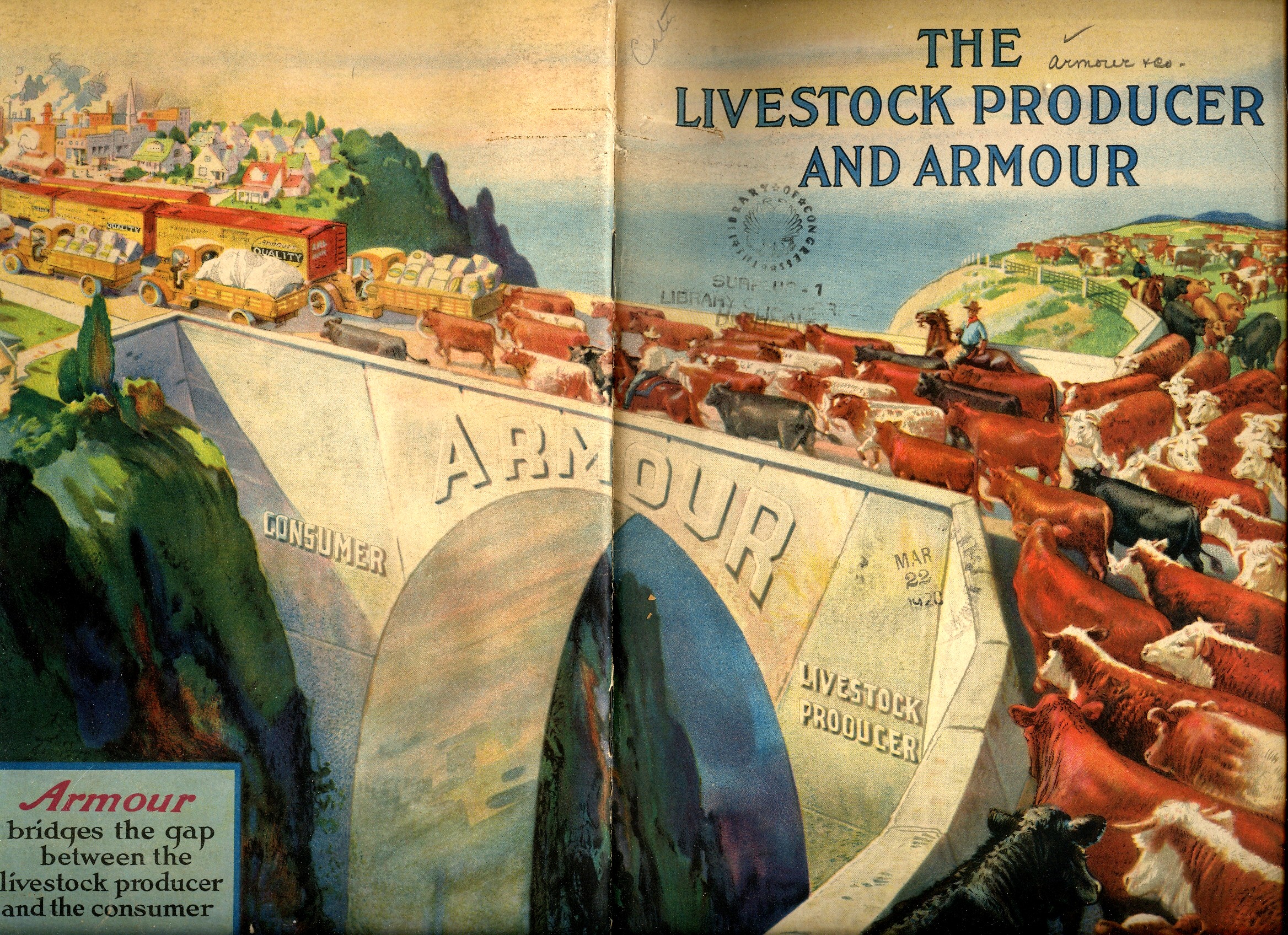
    + The Kodacolor Bridge of Evolving Meat

    This fast-forwards us through Wilberforces ultradense 6,000 years to the
    near-present: when looking at the explosively chromaticized picture of the progress
    of meat, brought to you by the invisible packing empire of Armour & Co. (of
    Chicago, of course), one gets the ancient immediacy of something being missing
    and just plain wrong.

    The cows being herded from their pastures are being led to the Armour bridge
    of Meat Evolution, where by some miracle the process of turning cows into
    packaged goods—like Leda and the swan—takes place over the “A” in Armour, three-quarters
    of the way over the bridge.  This process
    is wholesome in its invisibility, the walking product on the one side of the
    bridge getting ready for transubstantiation for the nested hu+ The Kodacolor Bridge of Evolving Meat 2manity on the
    other side.

    The picture of the packer weighing the elements of the mysterious
    gold-plated market rams this invisibility home as well:  the “producer” and “consumer” columns behind
    him are prettily illustrated with referential scenes, while the “packer” column
    just gets a single slab of color.  A
    singularity of nothingness in regards to what goes on behind the packer’s head
    is all the consumer would want, then and now, ‘cause certainly nobody wanted to
    know what the hell was going on in the packer’s den to hasten the evolution of
    cows from muddy hooves to the dinner table–especially in 1926, when this
    pamphlet was printed.  The vast
    conspiracy of people not-wanting-to-know-what-happens-at-the-packing-house continues.

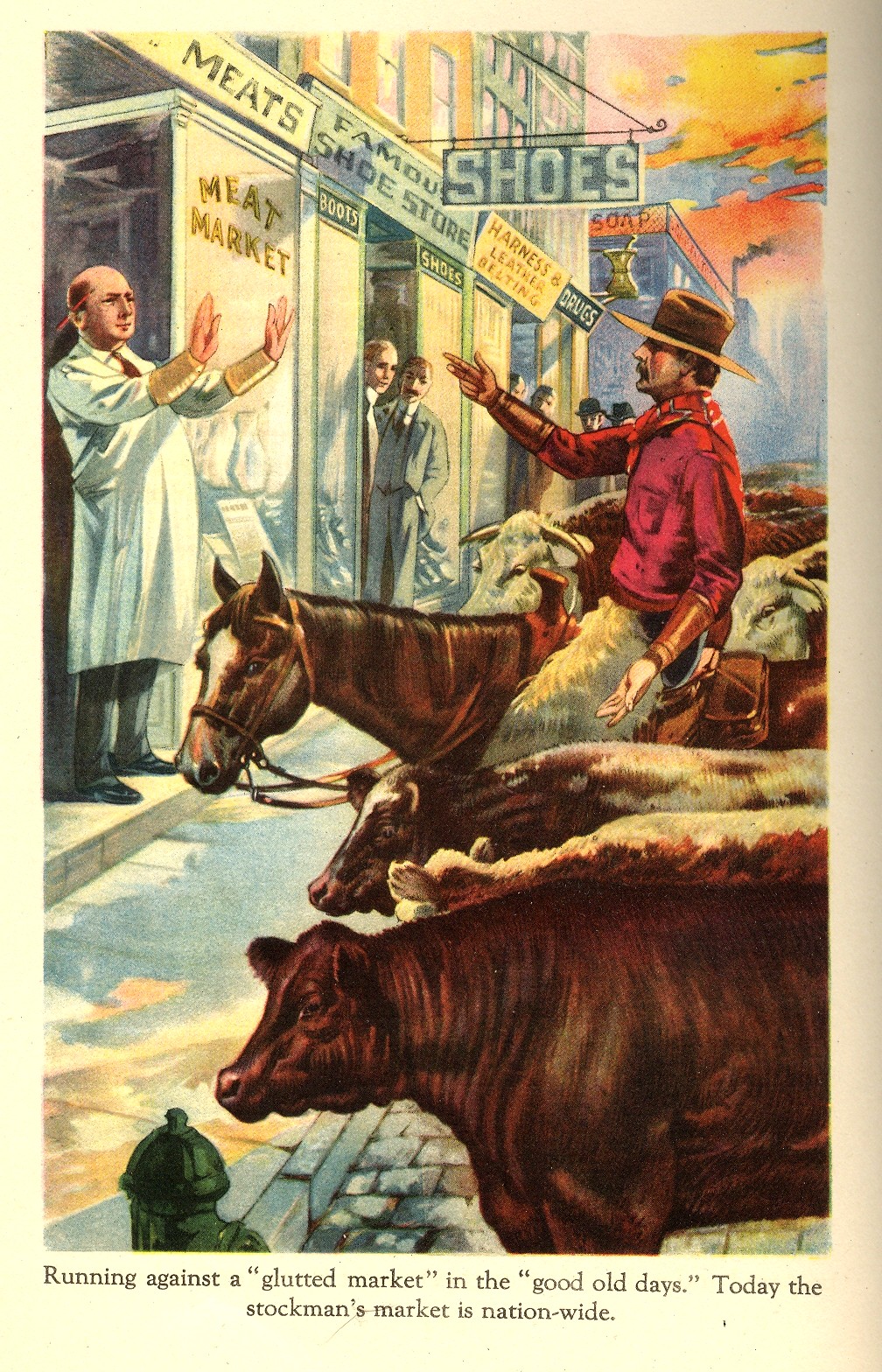
     + The Kodacolor Bridge of Evolving Meat 3 I can’t leave this short post without a nod to another extraordinary image
    from the Armour pamphlet:  the butcher
    waving off the drover and his herd because of a glutted market.  The “good old days” here doesn’t look very
    much like the 1870’s to me:  I can’t
    recall a single drover/cowboy image in my  very long experience that showed a cow
    sniffing a fire hydrant.  Plus everything
    else in the picture is pure 1920’s, except for the drover, who—although wearing
    skins in the city for some unknown reason—at least looks mostly like he should
    and isn’t packing an endlessly bouncing-on-your-thigh revolver.  Sorta. 

    The horse looks embarrassed and surprised at the same time. Is there an English word for that?  


  • Pig Iron vs. Eiffel Tower: Visualizing Difficult Numbers and Concepts

    JF Ptak Science Books   Quick Post  

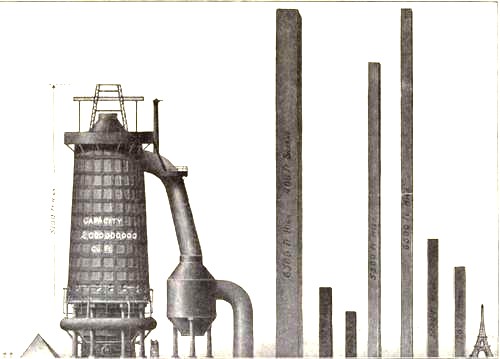
    Several years ago I wrote about some triumphantly unusual images (plus one on the 1891 10-ton Eiffel Tower bullet) of the Eiffel Tower–today I’d like to add another, a queer image which manages to loose the Eiffel Tower (and the Great Pyramid) in representations of pig iron production.

    Diagram steel eiffel 

    I love comparison like this (which appeared in the Illustrated London News for 1910), representing big, hard-to-associate  numbers of something against another quantity that can be instantly understood–the relationship between the two might be tenuous and complex, but at least it can give you some sort of handle on what would normally be an inaccessible, stand-alone number. Plus, any time that you can show what an ungraspable concept might “look like” and be explainable to a 10-year-old, well, you’ve got something. 


  • Big Mathematics 1816: Manuscript Notes and Found Math Art

    JF Ptak Science Books LLC  Post 757  Blog Bookstore

    In my science bookstore business one of my principle interests is antique manuscript notebooks in the sciences.  It is a pleasure to see someone working through a problem, or finding what the writer thought to be the most interesting point in a lecture on a particular subject, and to read the occasional doodles and see the timely gloss every now and then.  I’ve had notebooks from an advanced and very careful student for a course given by the great Robert Bunsen that was filled with hundreds of pages of what the master was trying to communicate to his pupils.

    ++00++ 9.16 math

    There’s also a  series of notebooks from the spectacular period of Cornell physics history (1948-1949), including 6 notebooks of classes with Richard Feynman, including several hundred pages from his 1948/9 course in advanced quantum mechanics, which included (a very early) use of the Feynman diagrams.  The thing that makes these observant, advanced notes taken during Feynman’s classes have more than a pedagogical interest (which is substantial and enough on its own)—they have a capacity to show the logic behind the man’s thinking and how he presented his ideas over a period of some months.  Also, and curiously, notebooks like these seem to have not survived. 

    Then there’s the notebooks taken by the team of Charlotte and Fritz John when they were pursing doctoral degrees at Goettingen (1929-1933), until forced to leave with the enforcement of the Nazi laws against non-Aryans.  Goettingen happened (and happens) to be the seat of a long, great mathematical heritage, home of Felix Klein, Emmy Noether, David Hilbert and Bernhard Riemann (among many others).  The notebooks—some two linear feet of them—represented four years of advanced interactions with some of the finest mathematical minds in Germany.  I was told by Mrs. John that they were required to take such full notes—but let me tell you, these notebooks were typed transcriptions of the daily handwritten notes, compiled over the course of a class, and then bound.  They are beautiful, and go far beyond my concept of “required”.  Mrs. John told me the story of the class notes that she and Dr. John took while taking a course with the great Hermann Weyl (who had taken his doctorate under the iconic David Hilbert, and who was also forced to flee Goettingen because his wife was Jewish):  everyone of course was required to take extensive notes during the day and work on them during the night, turning them in the following day for appraisal.  She told me that she still vividly remember placing their notes on a long wooden table at the front of the class, and then picking that set of note up the next day.  After a month of this, she, said, they became convinced that Weyl was not looking at the notes at all, as everything seemed always to be in the spot that they left it in.  One week they decided to see if the notes were being moved, and placed a hair carefully on the interior page, reasoning that if the notes were reviewed, the hair would be gone.  For a week, the hairs stayed in place.  “And so, what did that mean to you?” 

    ++00++ 9.16 math block

    Mrs. John replied that it really didn’t mean anything, and that they continued to do the notes as they would, and leave them on the long wooden table.  They never slacked off (which I can fully imagine).  She said that they did it for themselves, of course, but also they did it for Dr. Weyl, fully expecting that the day that they missed handing in their notes would be the day that they were looked for by Dr. Weyl.  Plus they were studying with a famous and fabulous thinker, and did not want to disappoint themselves or their instructor. 

    I do enjoy the historic or significant material like this, but I also quite the naïve, homegrown, elementary manuscript attempts by children at doing math or understanding physics.  Cipher books have always been a little hard to find in my field, wit many of them (I think) winding up in the genealogy area), and they just don’t seem to be very much on the findable side of things anymore. 

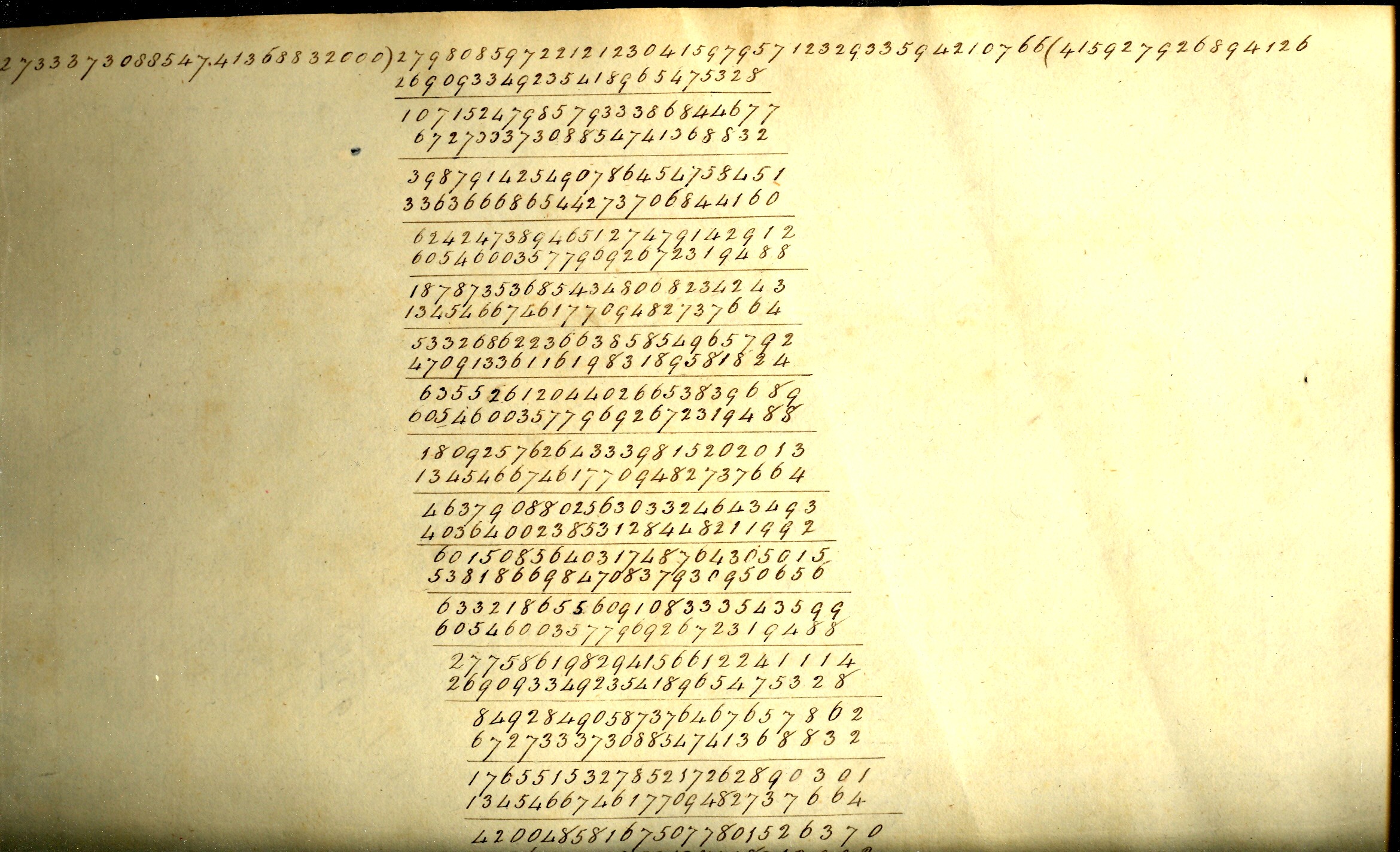
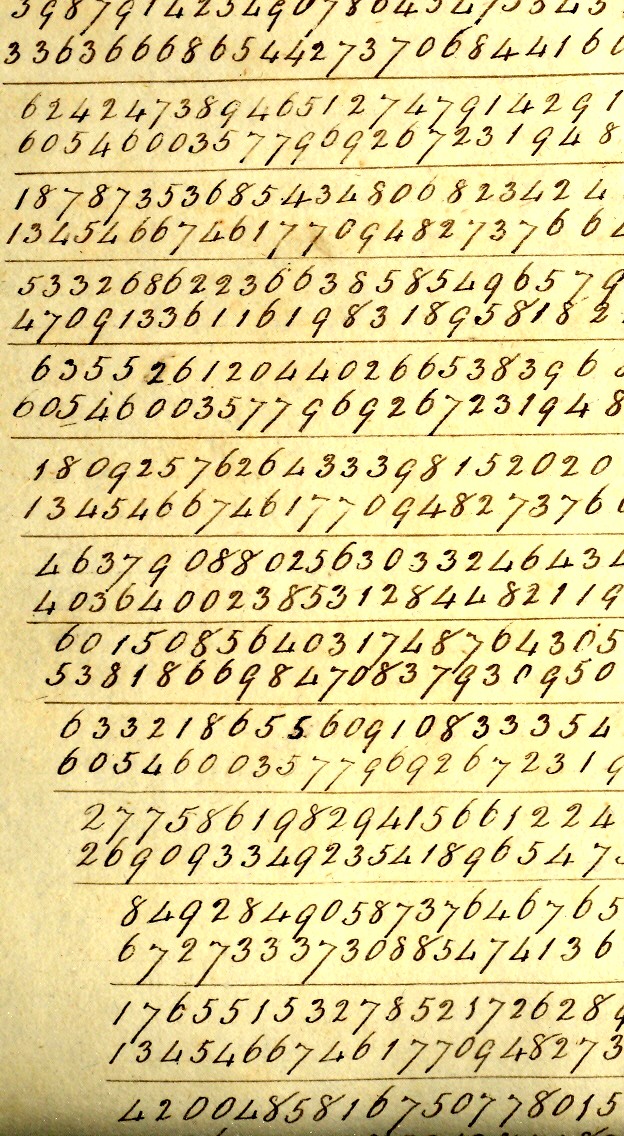
    The example I’ve reproduced here are from an anonymous (but dated 1818) work on different elementary areas of mathematics.  What makes this special to me is the precision of the penmanship and the extreme effort that is being used for a simple display of division.  It would certainly convey the message if the author had used two five-figure numbers to display division rather than these enormous, never-to-be-encountered numbers. 

    ++00++ 9.16 math string

    Surely there were pages and pages of scrap used to get to this point as the operator machined his numbers down, showing us the result rather than the real process.  But what is left to us in this effort is a thing of considerable beauty—the found art of practicing elementary math.