A Daily History of Holes, Dots, Lines, Science, History, Math, Physics, Art, the Unintentional Absurd, Architecture, Maps, Data Visualization, Blank and Missing Things, and so on. |1.6 million words, 7500 images, 4.9 million hits| Press & appearances in The Times, Le Figaro, Mensa, The Economist, The Guardian, Discovery News, Slate, Le Monde, Sci American Blogs, Le Pont, and many other places… 5000+ total posts since 2008.

Category: Industrial & Technological art

  • Shadowlands in the History of Technology–the Sewing Machine, ca. 1838

    JF Ptak Science Books  Post 1088

    The anniversaries of two famous legal cases bumped me into thinking about the shadows of what things might be.  Aticus Finch (from To Kill a Mockingbird) and Thomas Scopes (of the “Scopes Trial”, the famous or infamous “Monkey Trial”) celebrated their 50th and 85th anniversaries (respectively) this past week.  Finch the lawyer lost his case, and Scopes, the defendant, lost his as well. 

    This reminded me of the shadowland stories of roads not taken, or illustrious events whose outcomes didn’t quite coincide with the fame and interest of the way  things started out.One example from Shadowlands that springs to mind is that of the sewing machine, and the case of William Hunt.  Hunt was a remarkable person, an inventor of ingenious and remarkable things, some ubiquitous–and of these, one good example is the safety pin.  The “could’ve been” part was the sewing machine.  Eight years or so before the battle for precedence and patent began between Isaac Singer and Elias Howe began, Hunt had arrived at the principle solutions for an automatic sewing machine.  
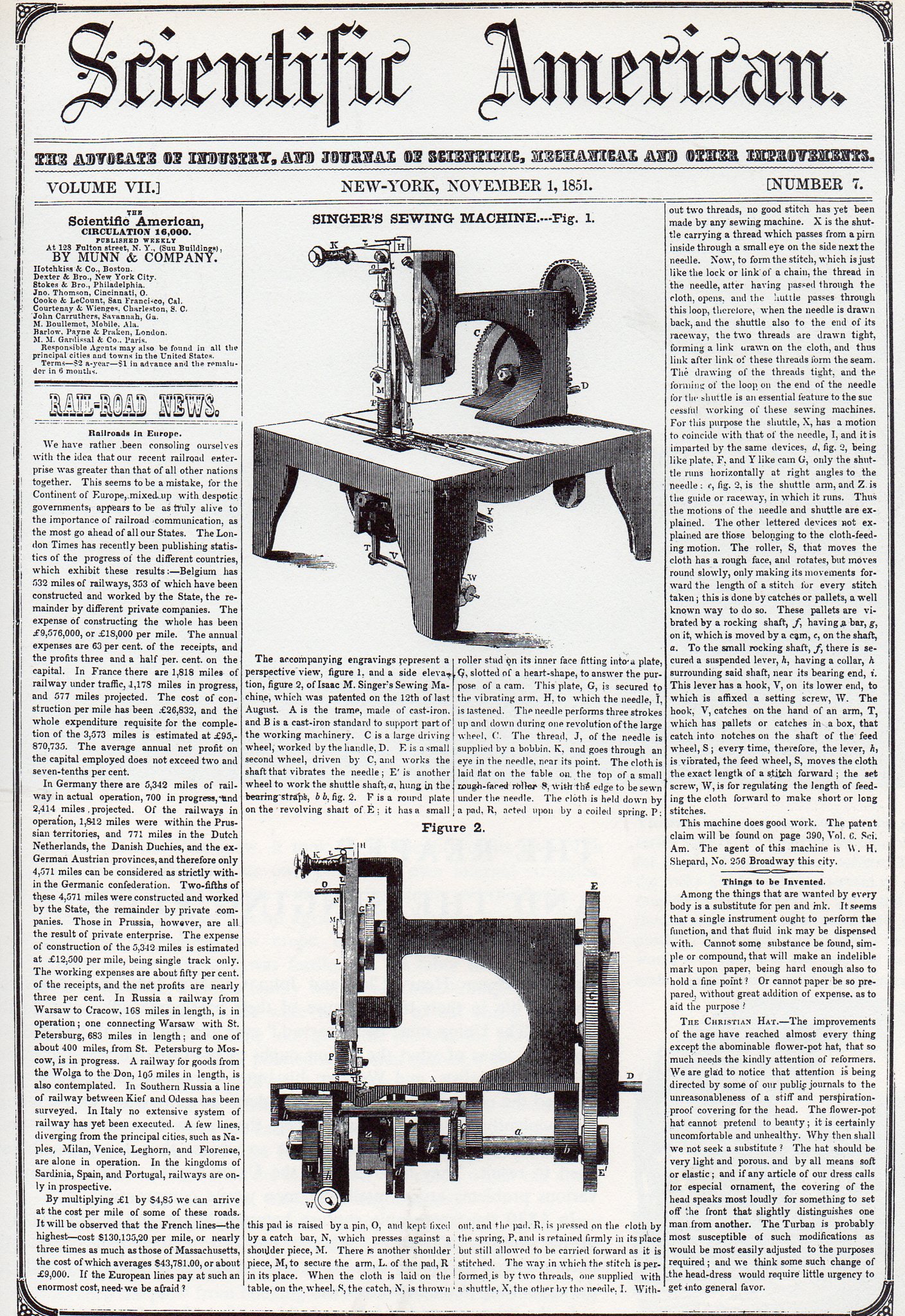
    Sewing machine211 He decided not to seek a patent for the machine. Now, in and of itself, this is not terrifically uncommon in the history of invention.  As a matter of fact Thomas Jefferson, the inventor of the standard American moldboard plow (tinkering with it from the 1780s to the 18-teens), did not seek a patent for his invention. By 1814 he came closer to the iconic and revolutionary plow by producing his in iron.  The steel, self scouring plow would take another two decades to be introduced by John Deere. (Decades latter Abraham Lincoln would apply for and receive a patent for a boat/buoy lifting device, making him the only president to ever receive a patent.)

    The reason that Hunt didn’t pursue his sewing machine was based in deep morality–he chose not to patent the thing so that this new advancement in technology would not make seamstresses obsolete, pushing them out of work and costing them their jobs.  Of course the machine was introduced a few years later by Singer and Howe, and then the rest is history–just about every invention is going to annoy somebody.

    But the irony here is that even though Mr. Hunt chose the high road out of the sewing machine quagmire, saving the jobs of seamstresses for another few years, he didn’t have any moral hesitations about his next invention–an improvement to a steel-cased cartridge for rifles.  Evidently he was more comfortable with killing machines than he was with protecting the jobs of the working/suffering classes. 


  • Quantitative Display of Information: What was Left of the Japanese Navy, 1945

    JF Ptak Science Books  Post 1082

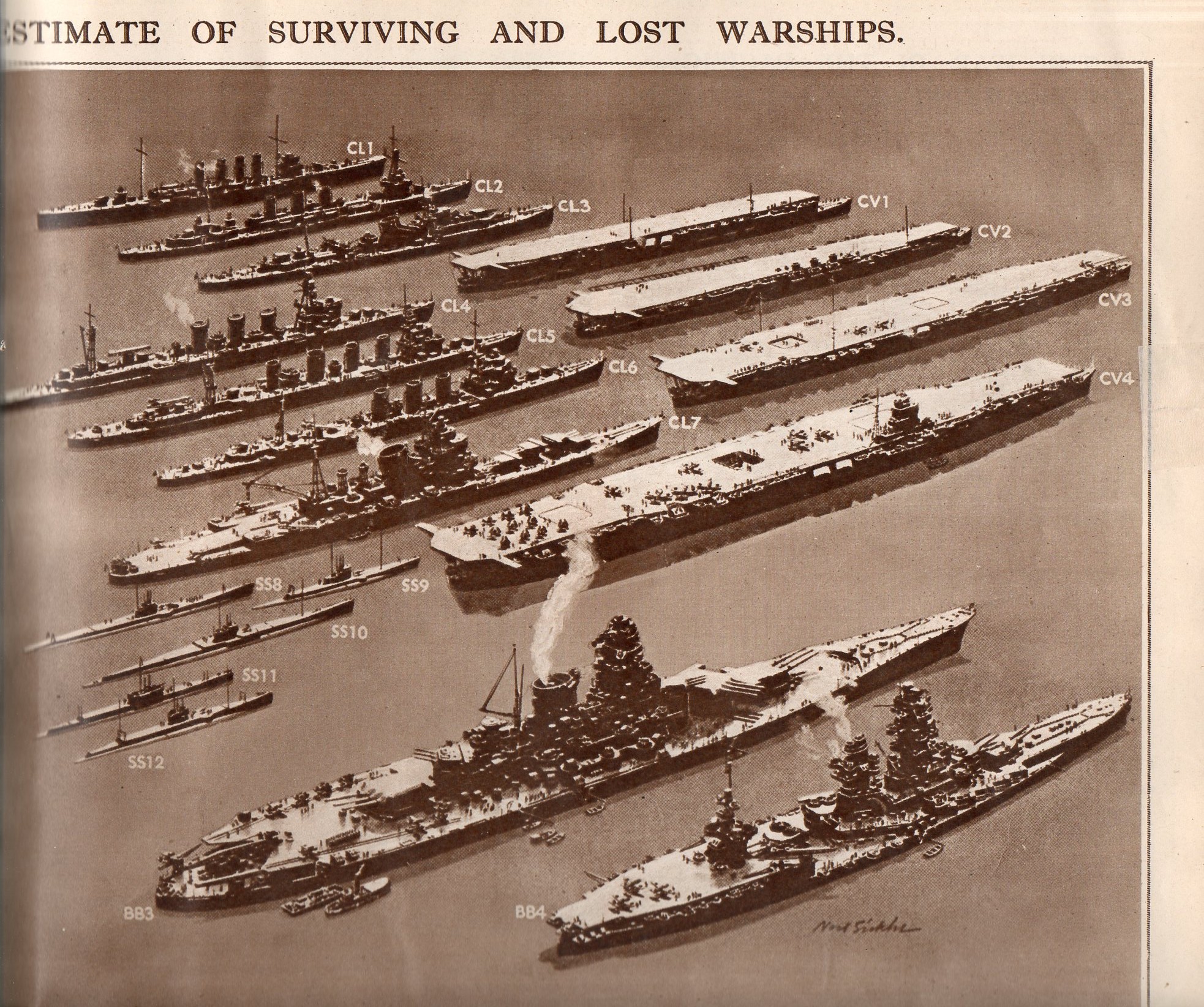
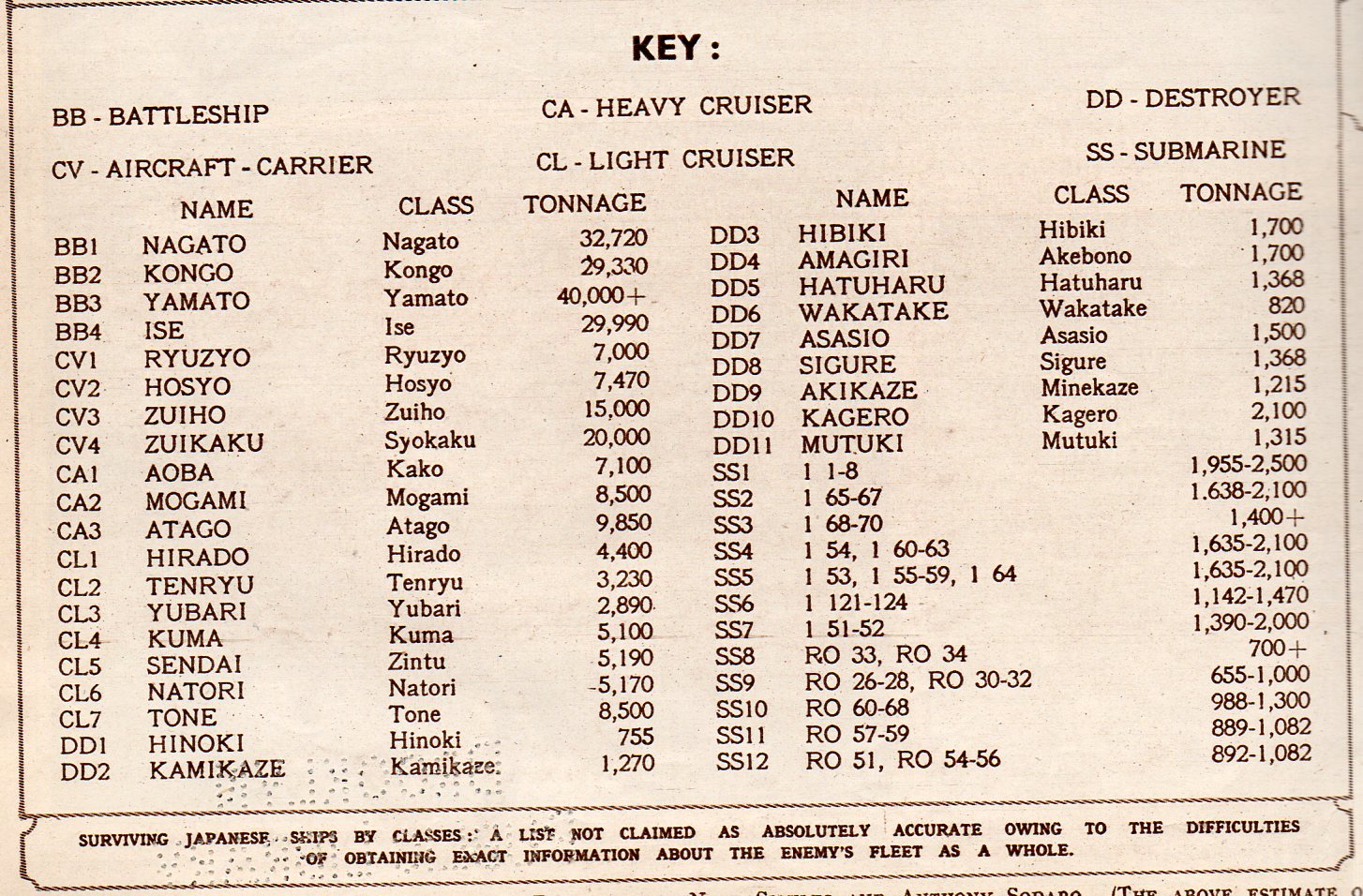
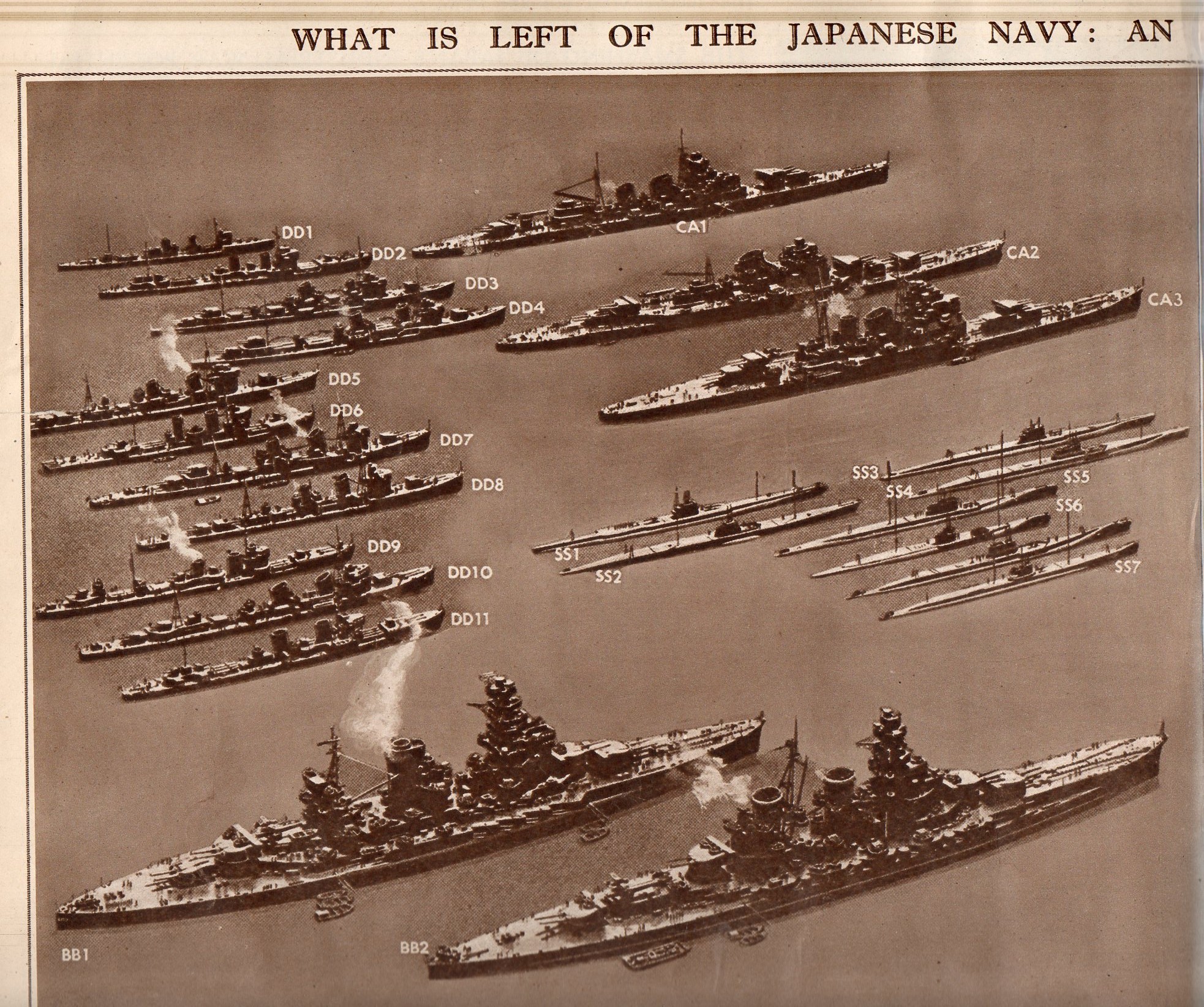
    This double-page spread in the Illustrated London News for 28 July 1945 displays what was left of the Japanese Navy.  Originally appearing in LIFE magazine a few weeks earlier, the image represents classes of Japanese naval ship, multiplied by the estimated number of ships in that class.  Even after all of the great  losses of 1942/3, the Japanese Navy was still the third largest afloat. 

    The navy consisted of an estimated 10 battleships, 6 carriers, 15-30 cruisers, 60-80 destroyers,and an not-estimated number of subs (though there were at this point use din patrol and to accompany the fleet.  

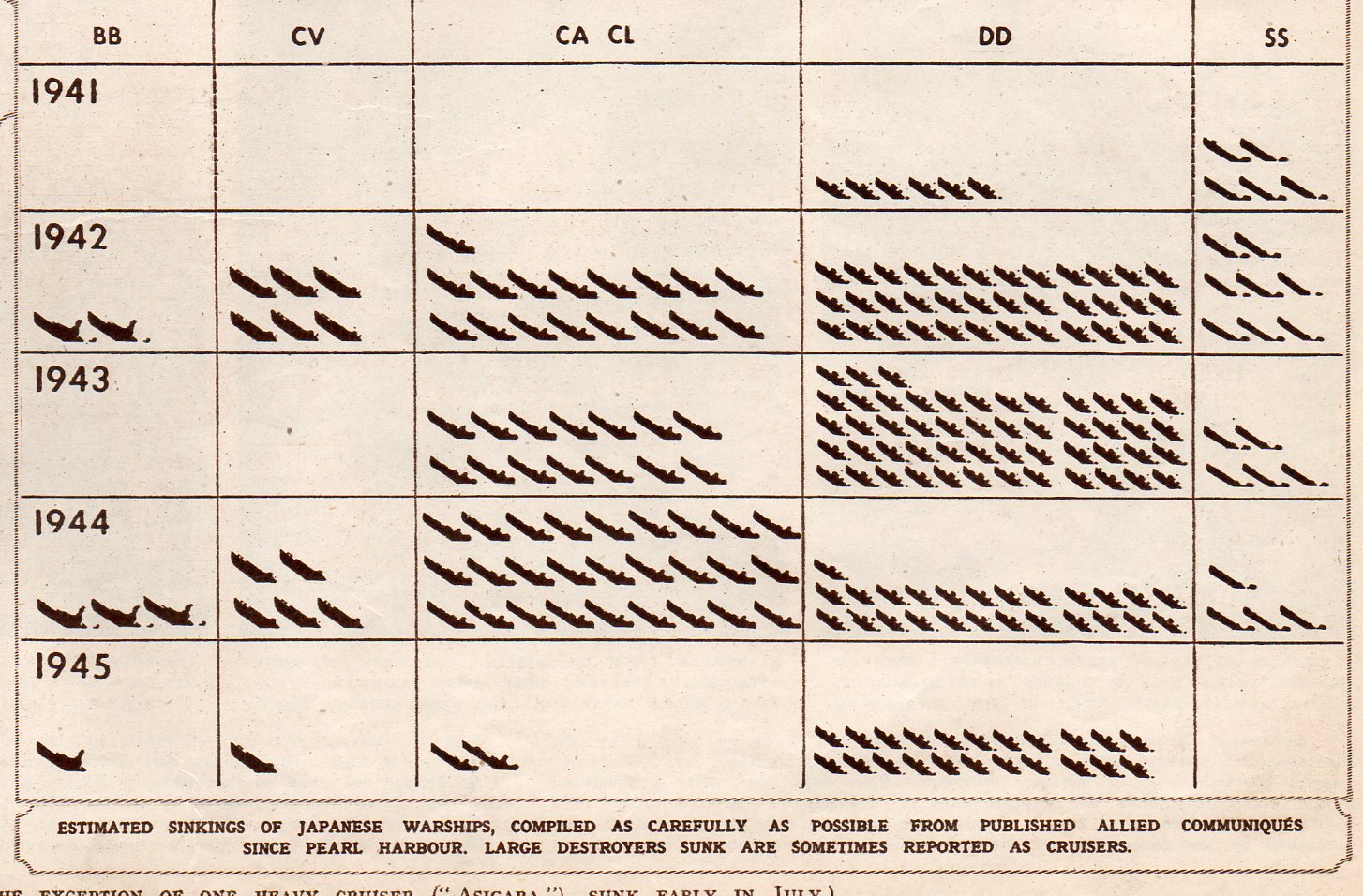
    This is an excellent display of a significant amount of historical data, made quickly understandable to even a quick reader, or even to a non-reader.  Two weeks from this date would find this information moot.

     Japanese Navy 1205 

    Japanese Navy 2206

    Japanese Navy 3207

    This chart shows the numbers of each class of vessel sunk by year:

    Japanese Navy 4208


  • The History of Lines: Nijinsky’s Secret Shoes (The Most Magnificent Shoe Illustration in the History of Shoe Illustration.)

    JF Ptak Science Books

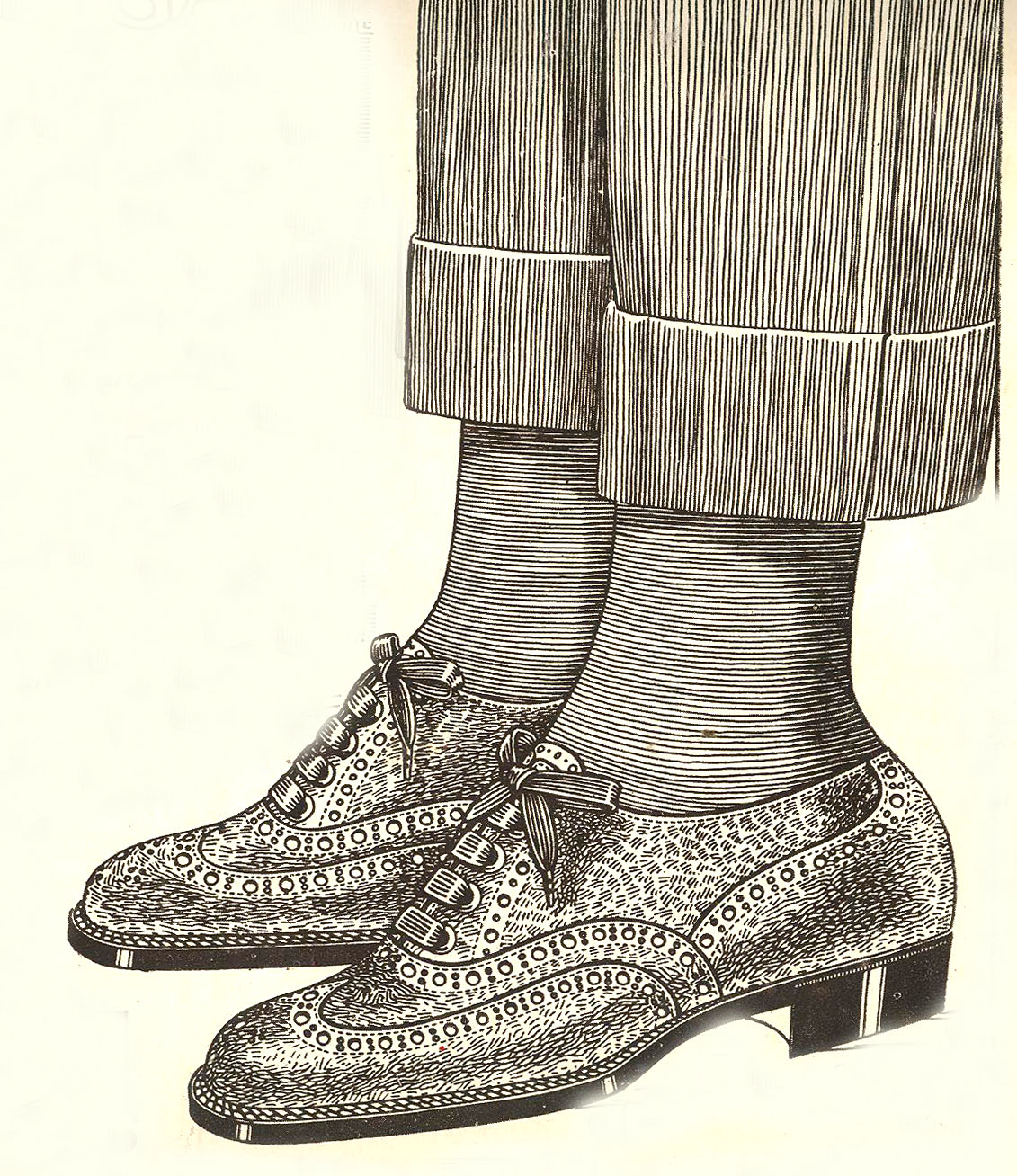
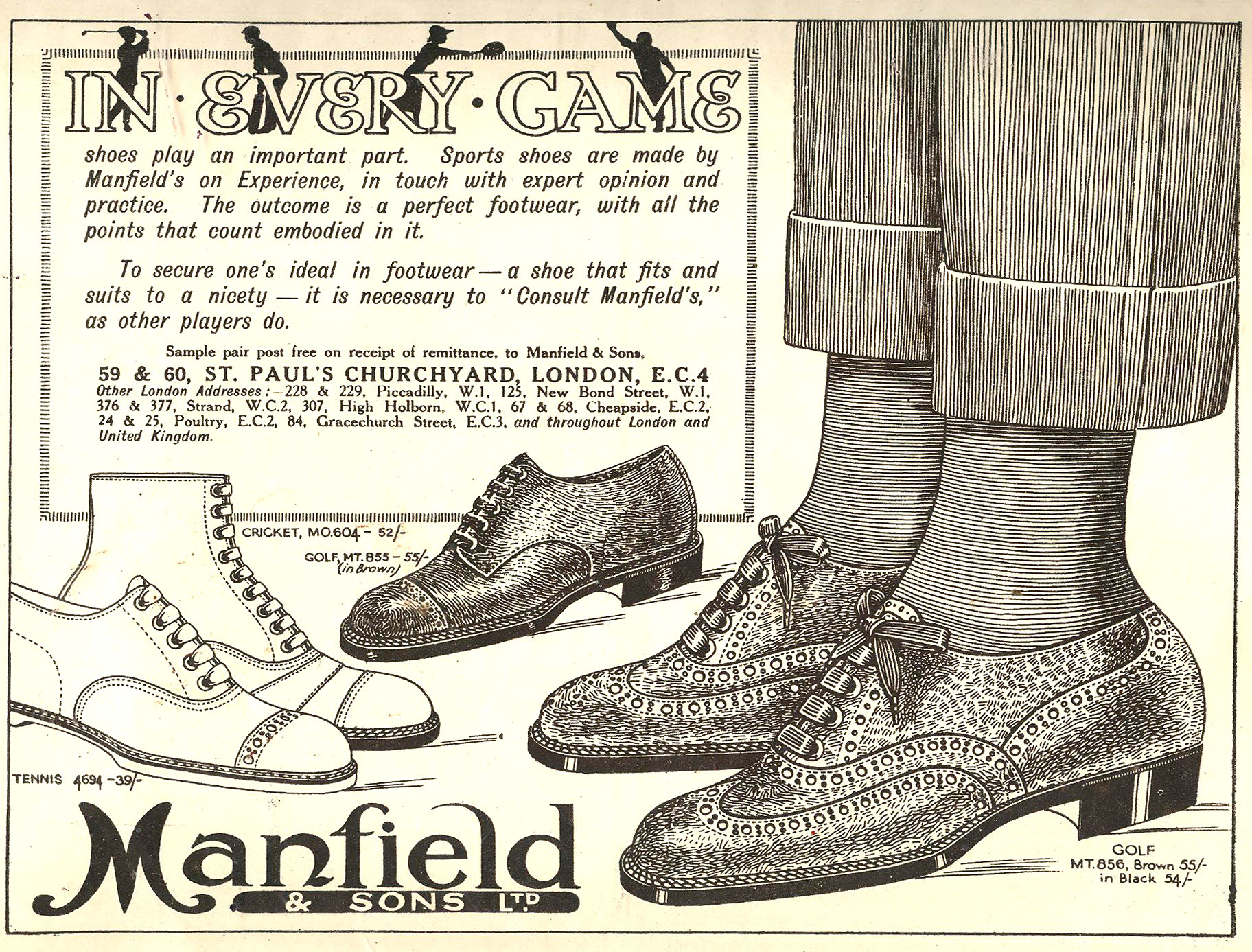
    There are two possible origins of this
    beautiful and quixotic image.

    1--may 11 shoe det

    1)  It is simply an unusual and perhaps hypnotic (?) sales
    illustration for a maker (improbably named Manfield & Sons) of sports shoes–in this case, for golf. There
    is no explanation for its exalted and mysterious overuse of lines or its
    art brut approach. 

    2) It is the sympathetic artwork of shoe adoration by the great dancer, Vaslav Nijinsky (1890-1950), used by his wife and sold to manufacturers to help pay for his decades-long “hospitalization” for schizophrenia. Nijinsky was perhaps the greatest dancer of the first half of the 20th century, a shocking talent who danced for only a dozen years or so before the rest of his not-so-dormant mind caught up to him around 1919.  At that point he was in and out of facilities to care for his metal disease until his death in 1946. 

    (Sigmund Freud was presented with the opportunity to help the mega-star; he declined, because he didn’t “do” schizophrenics.  Freud I think only “did ” people whose illness, treatment and eventual curing could fit snugly within the confines of his own stretchy/made-up vocabulary and diagnostic language.)

    Nijinsky would dance only one time after the beginning of his series of internments that began in 1919–he wound up living in Hungary during WWII, and when the country was “liberated”* by the Soviet Army in 1945, he and the troops did folk dances in the street for celebration. 
    And that was it, so far as any knows.

    1--may 11 shoe

    Truth be told:  the answer of course in #1, though it is difficult to imagine a guy preening his way through this 1920 edition of the Illustrated London New, coming upon this ad, and being overcome by the staggering beauty of the image, deciding in his head (and perhaps even out loud), “I need those shoes”.  

    The stuff I wrote about Nijinsky is all true, unfortunately–all except the shoe illustration part.

    Mark Twain once said that golf “was a good walk spoiled”–and that was without the benefit of having seen these shoes.

    *”Liberated” is the word I see used in regard to the Soviets removing the Nazis from Hungary.  The German dictatorship was simply replaced by a Soviet dictatorship.  The Soviets stayed longer.


  • 200,000,000 Pounds of Buttocks–Or–Putting the Color Back in the Black-and-White

    JF Ptak Science Books   Post 977

    Well, this is a confusing title, with two seemingly unrelated affairs, no?  It is  probably sexier (?) too than the actual contents, but, we’ll let the cheeks fall where they may.  The origin of this post is found in the title to this large, over-sized 1937 pamphlet, Sat on by Millions:

    Mar 14 sat on

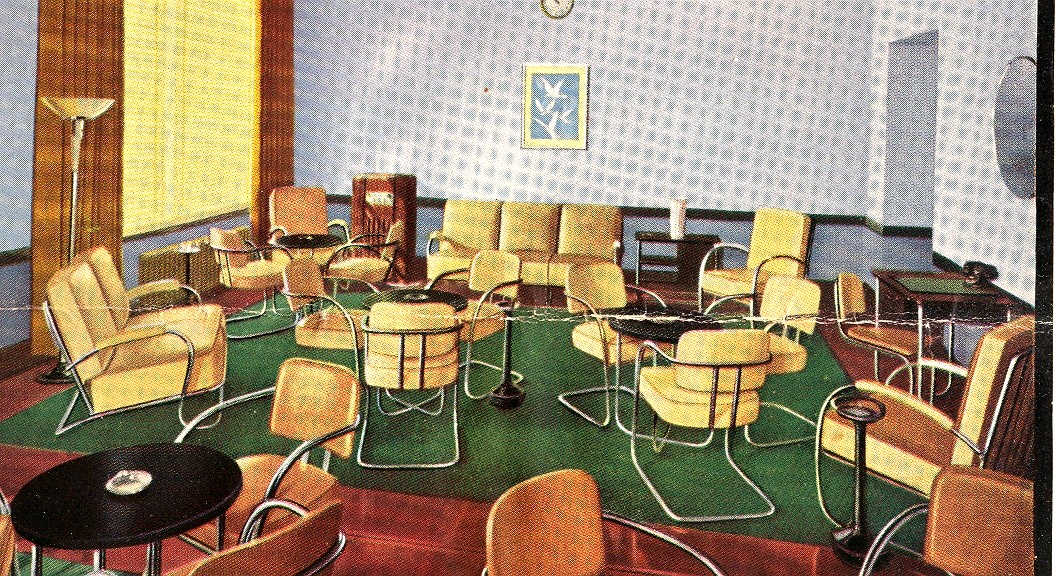
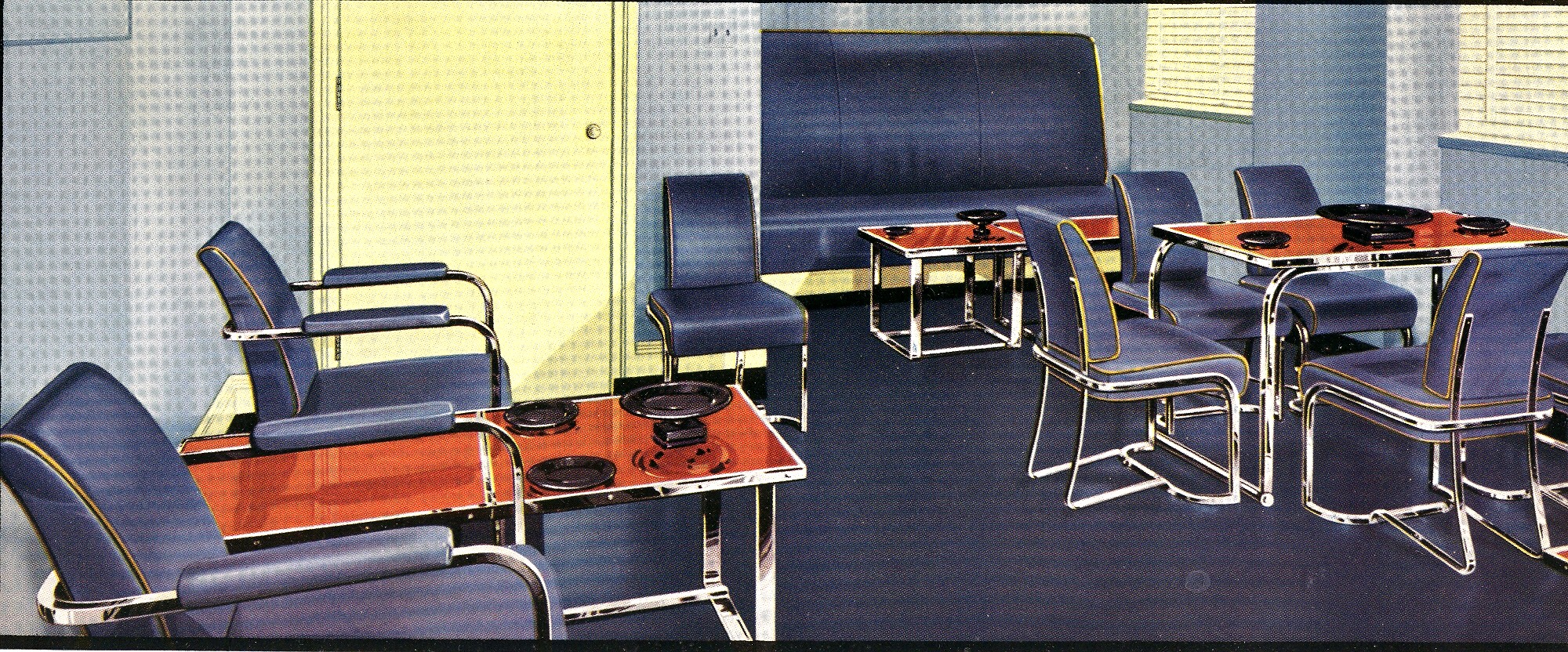
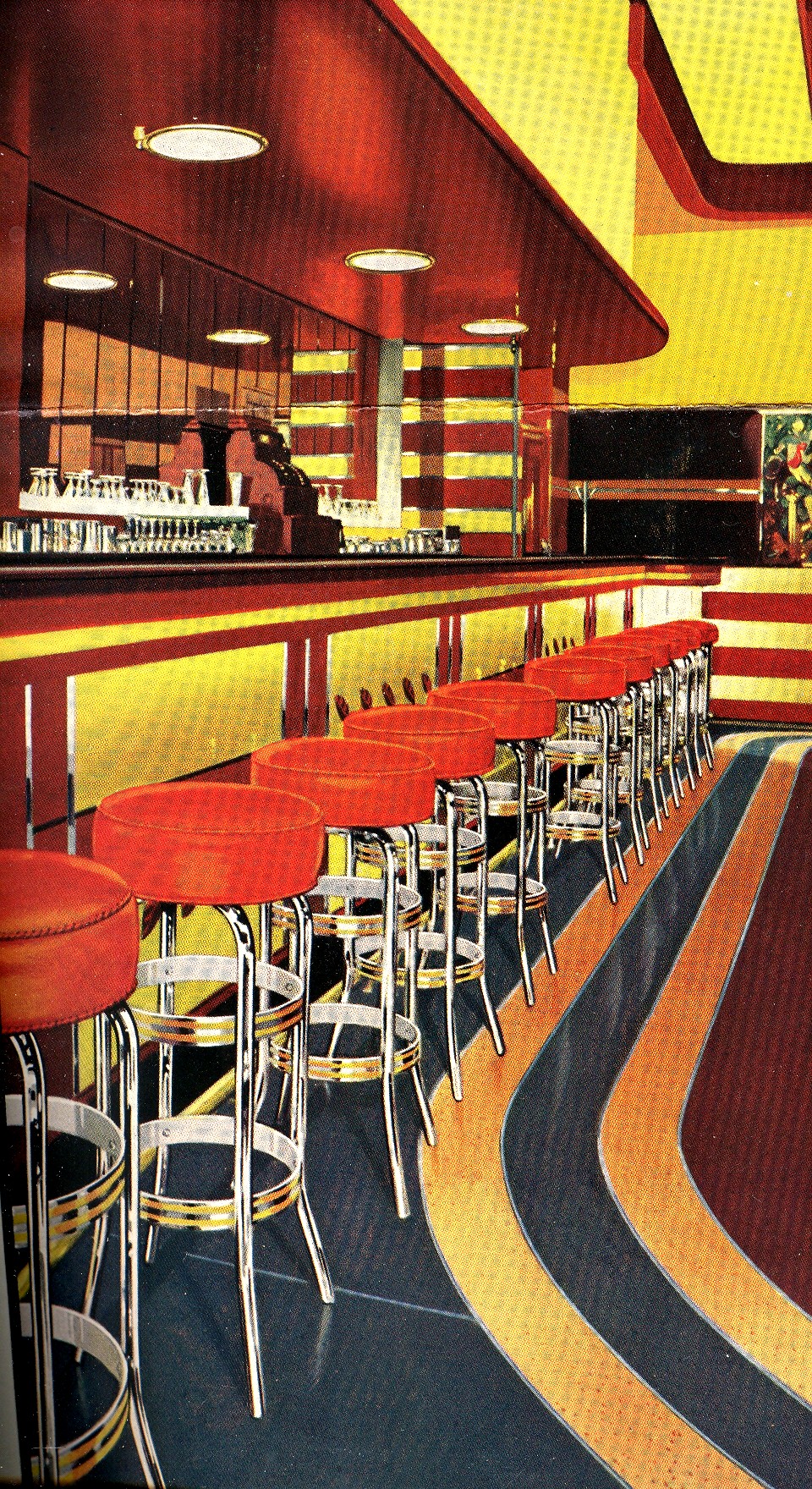
    This really is the “story of FABRIKOID”, a plastic-y bit of seating innovation brought to America by the good chemical engineers in service of du Pont.  It was the stuff used to make artificial artificial flowers and truck upholstery, book covers and bus tops.  But something happened somewhere along the line to make it more

    Mar 14 1st photo
    attractive to look at and feel, and thus was born the cushioned and upholstered restaurant/movie house chair that you could simply spray off with water from a hose.  (My friend Andy is much enamored with his new Honda “Element”, the interior outfitted in such a way that he could, he related excitedly, “wash out with the garden hose”.)

     Mar 14 2nd photo

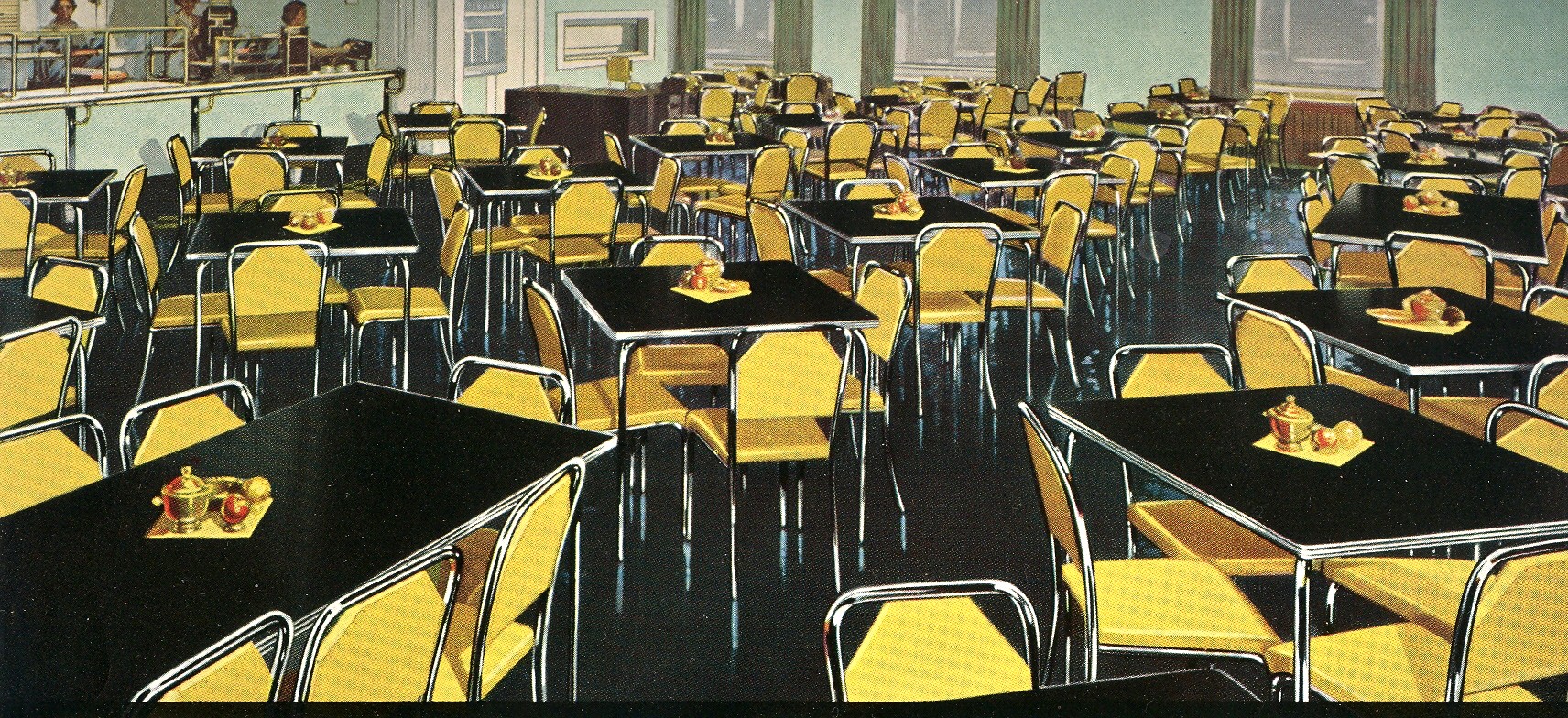
    [Cafeteria  at Hobart Manufacturing, Troy, Ohio.]
     

    Du Pont did test it out with 200 million pounds of buttocks–a mechanical test of the equivalent of a 200-pound man sitting on a FABRIKOID-covered seat one million times.  The flexing was evidently perfect, the company recalling another great success story of another FABRIKOID chair being sat on by thousands at the Chicago World’s Fair

    Mar 14 3rd photo

    [Cocktail lounge at Pittsburgh’s Seventh Avenue Hotel.]

    and then sent out on a tour around the country.  (I’m not sure that I’d stand in a line to sit in the most-sat-in chair in the world, as appealing as that might be…)

    Mar 14 4th photo

    [Federal Reserve Club of Los Angeles.]

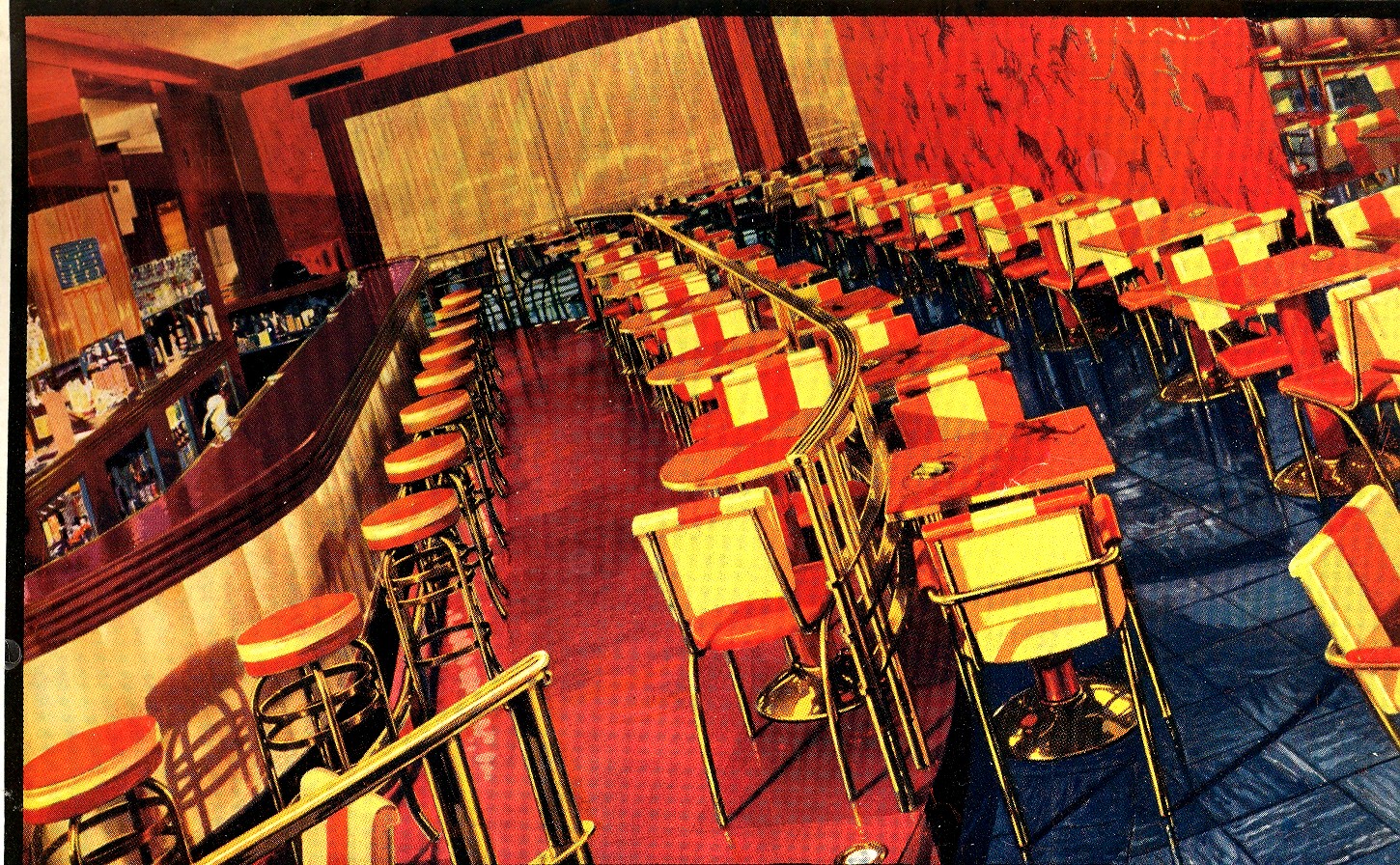
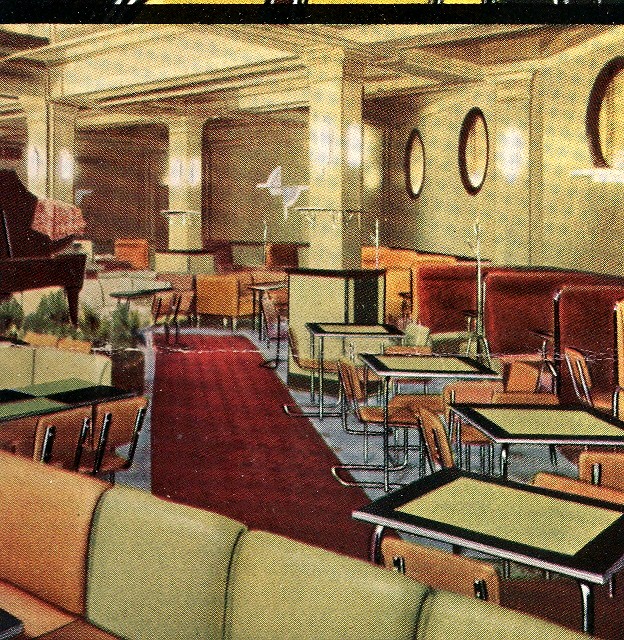
    But the more appealing aspect of this pamphlet–aside from the great chemical achievement–are the luxurious (and early) color photographs of the FABRIKOID-covered furniture.  There are colors to remind everyone that color did exist in the 1930’s, and that when Bogart was cruising a bar for raw whiskey and a cig it could’ve had blue floors and red and yellow chairs, and not just the simpler gray stuff that we’re used to seeing.

    Mar 14 5th photo

    [Cocktail lounge, University Club, Troy, Ohio.]

    Perhaps it is better seeing Bogey in a haze of smoke snuggled into a blackish chair rather than what it might’ve (blue and yellow) been.

    Mar 14 7th red bar


  • Circle Factories. A Small Chain of Being Between Guns, Sewing Machines, Bikes and Cars

    JF Ptak Science Books LLC  Post 962

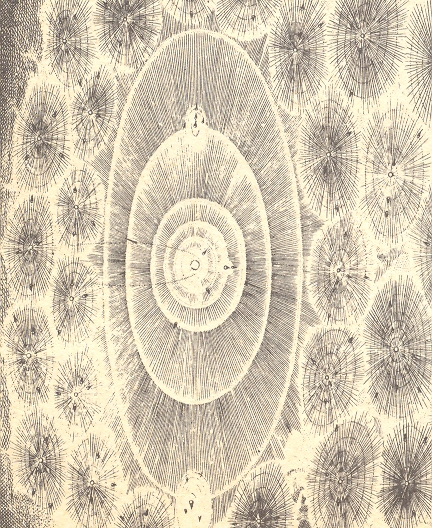
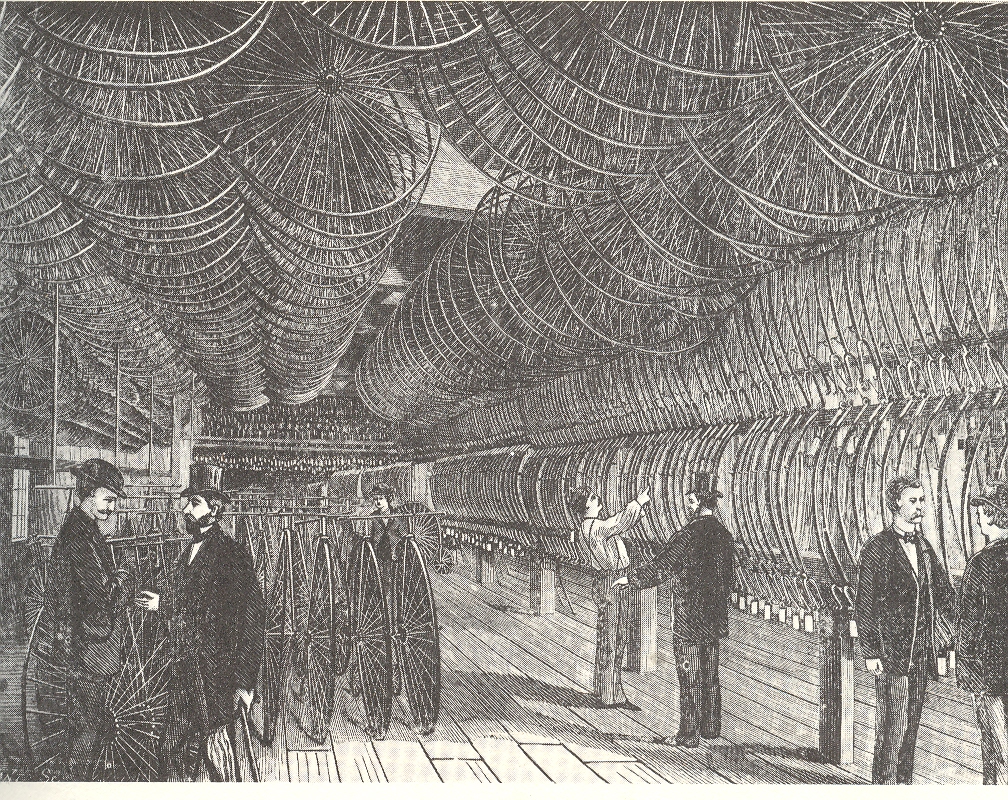
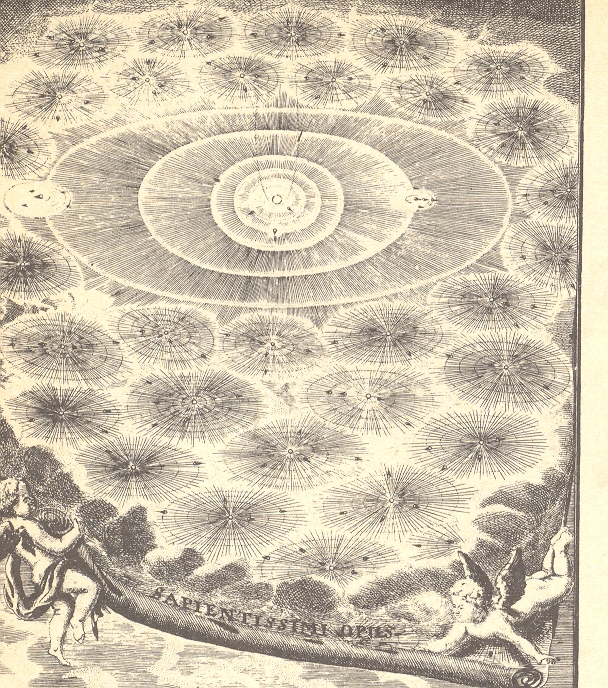
    Circle 1 Circle 4

    “The
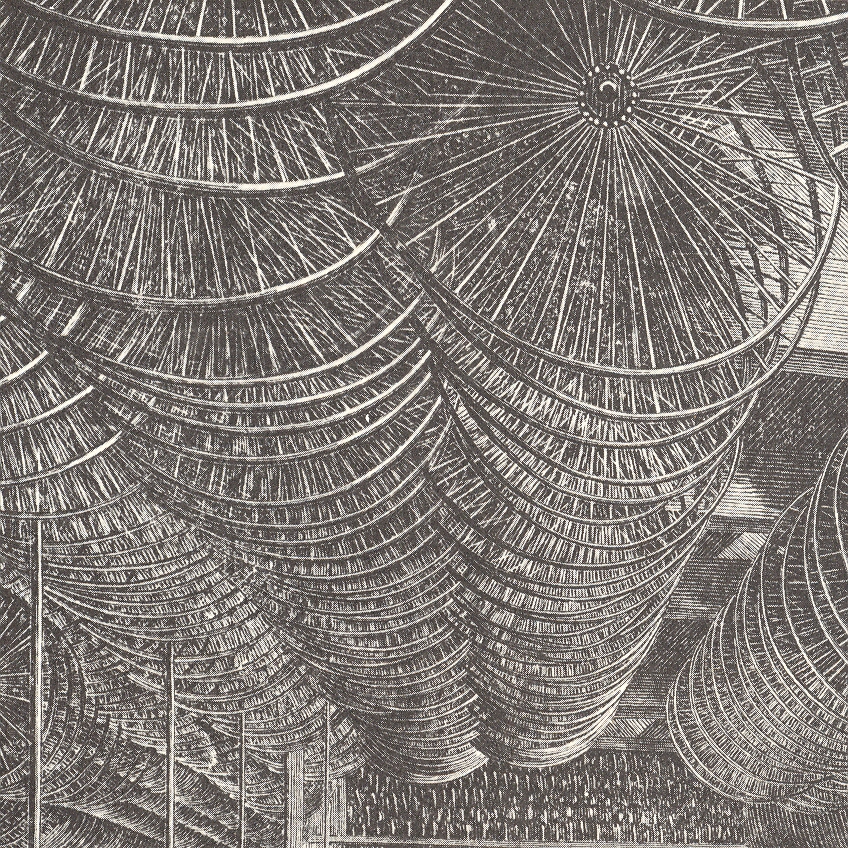
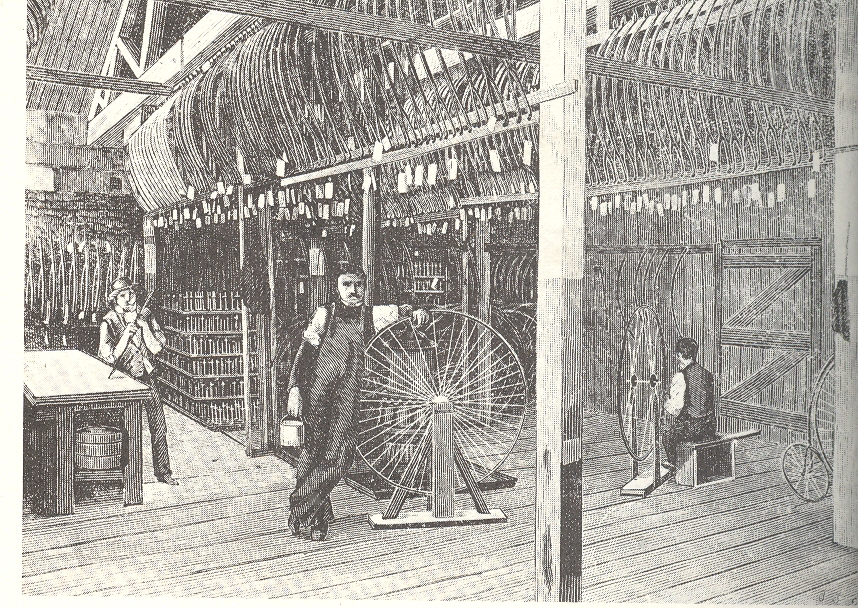
    Circle Factory.” Well, not quite.  Actually, not at all.  The first image is just a detail from the
    warehouse of the ubiquitous Columbia
    bicycle works in 1881.  The second aren’t
    even circles, but cosmological ovals, and is a detail of a wood engraving
    depicting planetary and  cometary  orbits in Leonhard Euler’s Theoria Motuum Planetarum et Cometarum (1631-1635). 

    The
    bicycle wheels appeared in Bicycling World (for April 1881, “A Great
    American Manufacture”), illustrating a story about the growing interest in
    bicycles in America but more specifically the success of the partnership
    between the Weed Sewing Machine factory and Albert A. Pope in the mass
    production of the bike.  It was a newish
    idea, partially borrowed from the Sharps Manufacturing

    Circle 2

    Company’s mass
    production of weapons with standardized parts, which was employed in the production
    of sewing machines by Weed, and then on to bikes by Pope.  Actually Weed took the step further than
    Sharps by producing almost all of their machines in-house, having a foundry and
    forge right there at the factory.  It was
    this step and then other innovations by Pope that produced an enormously successful
    bicycle production company, with something like a quarter million bikes made in
    the first few years of operation. 

    Circle 3

    The
    Weed-Pope domination didn’t last long though, what with the introduction of the
    remarkable safety bicycle from England
    in 1887—this is instantly recognizable as a “modern” bike, with a chain power train
    and two same-size wheels. In two years there were hundreds of companies building
    those bikes, producing a million a year.  

    By
    1895 this balloon busted, and for some reason Americans stopped buying bikes, with
    demand falling off to nearly nil, causing the vast majority of these companies to
    whither and fold, causing the whole of the bicycle interest to come first
    circle. Or cycle.

    But
    there was a huge lesson learned for future manufacturers of transportation
    devices—namely cars, and more specifically, Ford(s), drawing critical lessons
    in production from forging methods and sustainable assembly lines. 

    Circle 5 Euler
    has nothing to do with bikes or Fords, but he did have a whole heck of a lot to do with circles. (Actually, I just liked the image set against the
    big bike wheels.)


  • Propaganda and the Dinner Table: Strike-Breaking and Graphical Display of Data, 1911

    JF Ptak Science Books LLC  Post 987

    Mar 25 dinner plate det

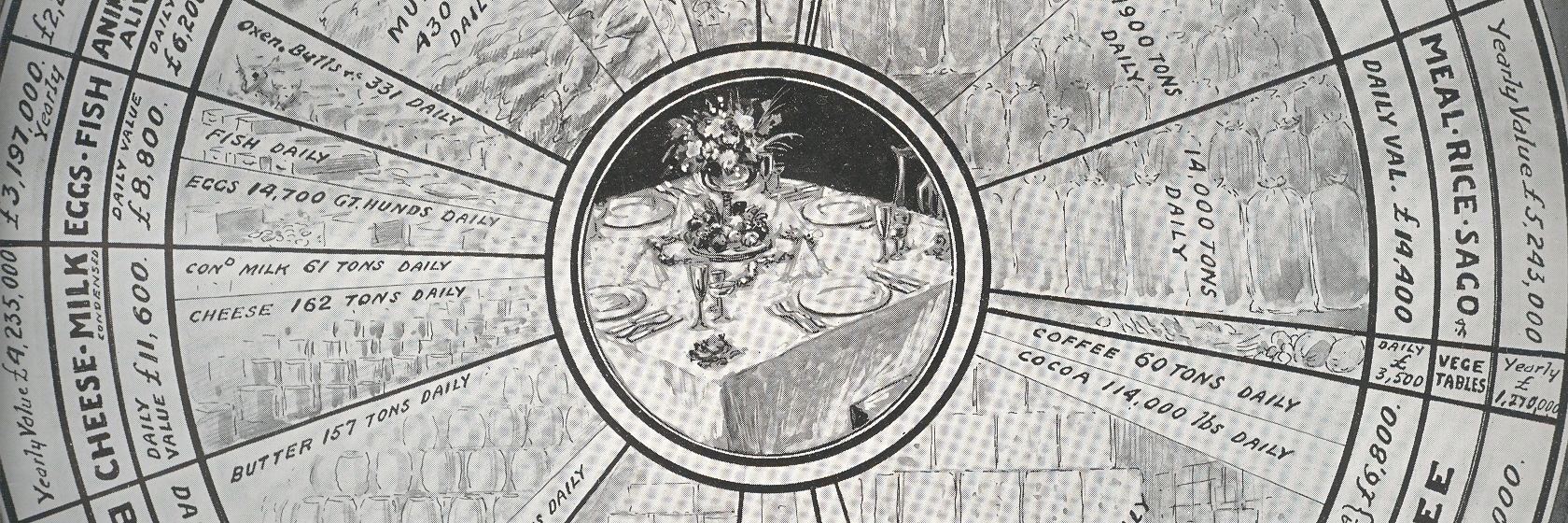
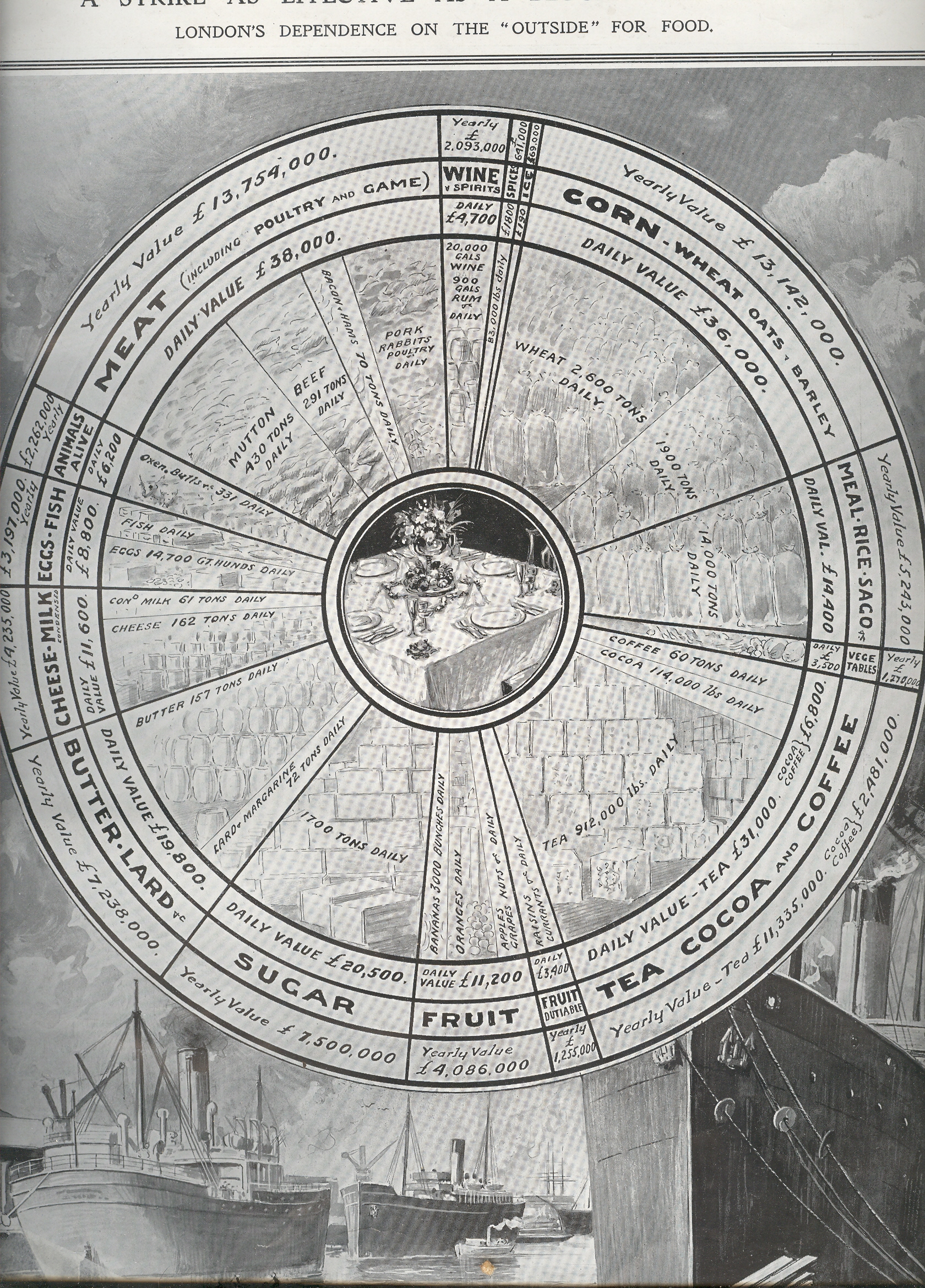
    This graphic display of the effects of a  transport workers’ strike is a pretty,
    well-designed piece of propaganda designed to draw in the general, middle-class
    (such as it was) and working population into league against the strikers.  At least that’s what it looks like to me: the
    strangulating effects of food not coming into the port of Liverpool
    and its attack on the family dining table. Literally, and figuratively: a
    table, by the way, that appears at the direct center of attention, the bull’s-eye
    of what is a target, made to look like the transport workers were taking direct
    aim at the symbol of the family. 

    All of what was going on of course was that some hard working people were
    trying to get a little more money to put food on their own  tables—the facilitators of food distribution
    for the nation’s people wanting nothing more than a little more food for
    themselves and their families.  And these
    were the people, by the way, who did not set a five-utensil place settings with
    linen table covers and a large fresh bouquet as is oddly the case in the illustration.

    By the time this illustration appeared in the Illustrated London News in August 1911 the movement had already
    been active for a year—there had also been a call to action the month before
    involving over 100,000 workers.  The National
    Sailors and Firemen’s Union, and the National Union of Ships’ Stewards, Cooks,
    Butchers and Bakers, dockhands, lorry rivers,  general laborers, and on and on, were involved
    in the strike, which was a bitter and confrontational battle between them,
    scabs, police, the army, and of course the owners of the means of production
    and shipping means.

    Mar 25 dinner plate


    After the battle of greed and need, need won.


  • Mathematical Art: “The End of Simple Multiplication”, 1814

    JF Ptak Science Books  Post 982

    Mar 22 end of multipiplication det

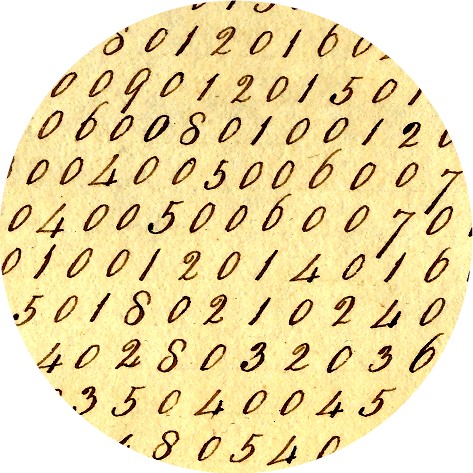
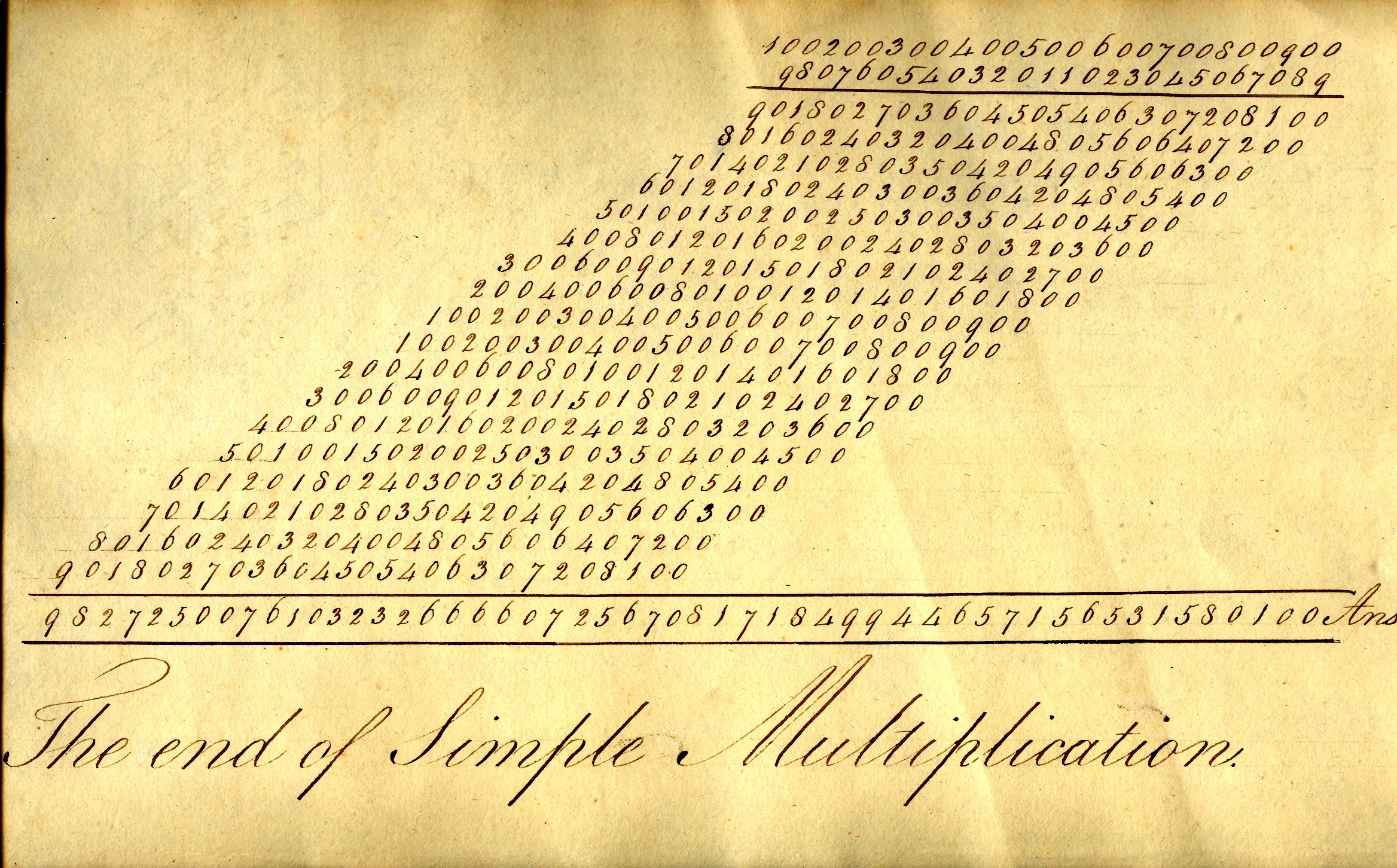
    I found this fabulous example of multiplication in a student’s workbook, written out in 1814.  Undoubtedly the sub-title, “the end of Simple Multiplication” was not intended to imply the literal end of multiplication (though the thought does invoke some interesting bits of fiction), just the result. It is simply a gorgeous object.

    Mar 22 end of multipiplication


  • Bulbous & Bubbly Design: Bloated Efforts on Land and in the Sky

    JF Ptak Science Books  Post 951

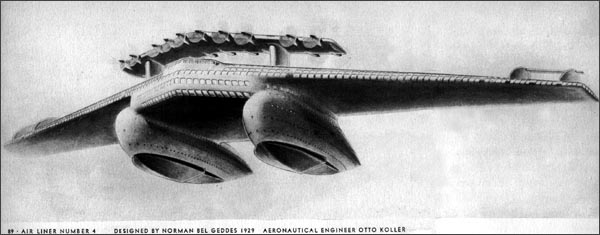
    Airliner 4

    Sometimes things are designed that are so bulbous and so inflated and so terribly hyper-packed that they are just destined never to be built beyond the imagination.  Among the largest of these things meant for the air was designed by a particularly  streamlined designer, Norman Bel Geddes, who basically owned the concept of aerodynamic function at all levels of design in the 1930’s.

    But Bel Geddes’ apoetically-named aircraft, Airliner 4, is an entirely different issue.  It may possibly be the largest, slowest, lowest, fattest and most lumbering plane ever designed. (And by this I mean that it stood a chance of some sort of actually being built and flown, as opposed to the monsters with wing-topped tennis courts and such.)

    This  530′-long 1.2 million pound beast took an hour to climb to its max ceiling of 10,000 feet where it would cruise along at an astonishing 100 mph.  It would wind its way lovingly across the country, slicing off its travel hours like frozen bologna, 30 hours from coast-to-coast, slowly, methodically, so as not to disturb its 600 passengers in their sleeping rooms.  But I’m not sure how much sleep would get slept, what with 20 (!) 1900 hp engines screaming overhead. 

    2--bulbous building 2


    The passengers who didn’t sleep could do a lot besides sit and be serviced by the aircraft’s crew of 155–they might actually need guides to get them through the oddness of the plane’s 9 decks, 3 kitchens, 2 dining rooms, solarium, 100-couple dance floor, gym, barbershop and medical offices (with waiting room).  Plus much, much more.  (I like a plane with a doctor’s office waiting room; perhaps the real genius would’ve been to come up with the smaller, more interior, extra waiting room to which one graduates before seeing The Doctor.) 

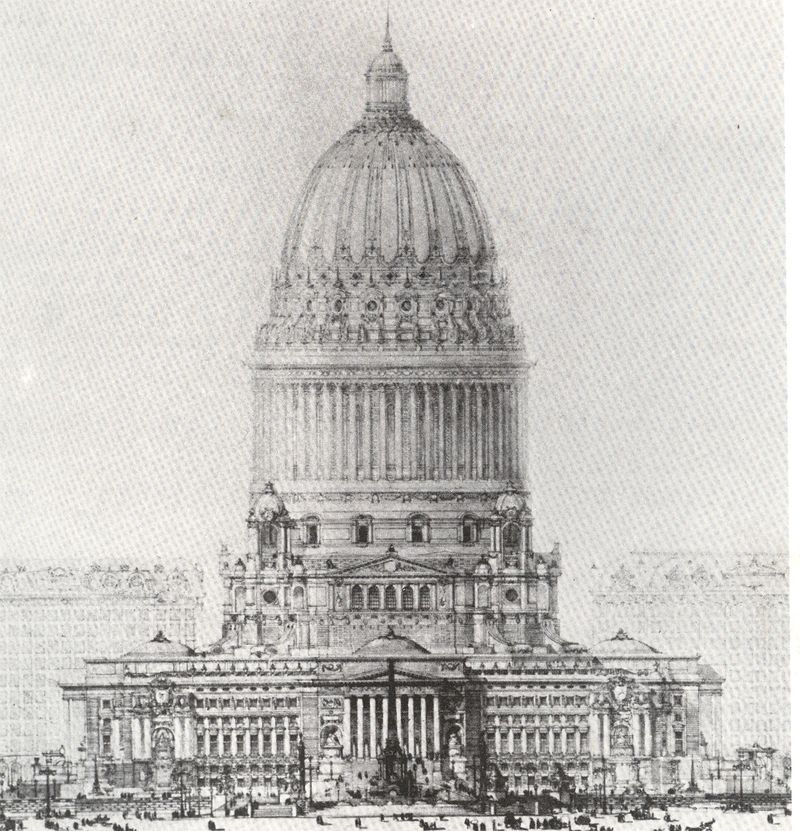
    Getting closer to the ground is the plan for the Chicago Civic Center (1909) by the usually accomplished Daniel H. Burnham. This beast looks more like a stubby nuclear- pulse intergalactic Mothership than anything that anyone would have wanted to build on the ground—at least in space it would be out of sight. 

    2--bulbous building


    In a struggling prose reminiscent of Lewis Sullivan Burnham writes1: “The Civic Center will be dependent for its effectiveness in the character if the architecture displayed in the buildings themselves…” which I think is self-referential, stating that the architecture’s effectiveness is dependent upon the architecture. If this is the case, the enormity of the Civic Center doesn’t save it from itself. 

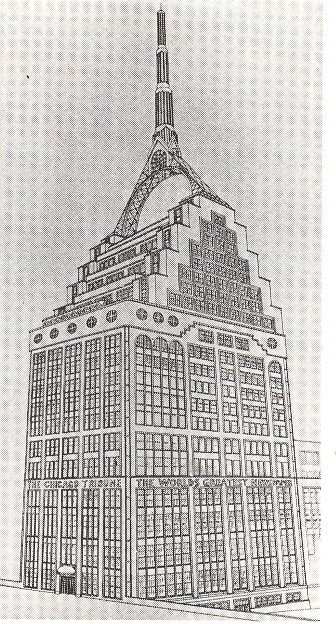
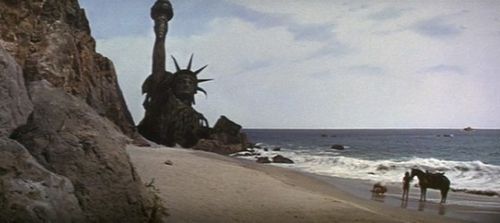
    Staying in Chicago we find another proposal, this for the ChicagoTribuneTower competition of 1922—many of the works submitted seem to my eye big and wide and ugly, but perhaps none more so than that offered by Ludwig Koloch.  This may well have been a nice design for the top third or so of a building, but not for three thirds–and actually, this may be four-thirds.  It reminds me of something rising from the sands at a beach in the future, the remnants of destroyed civilizations.  Without the apes.

     Notes:

    1. Daniel Burnham and Edward Bennett, Plan of Chicago, 1909. 
    2. Planet-of-the-apes-statue-of-liberty

  • Jobs of the Archaeo-Future: Airport Steerer (Bel Geddes’ Floating Airport)

    JF Ptak Science Books LLC  Post 950 

    1--bel geddes airport 2 

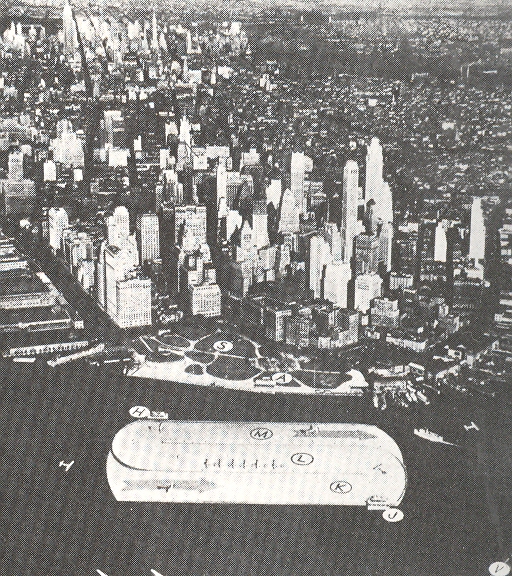
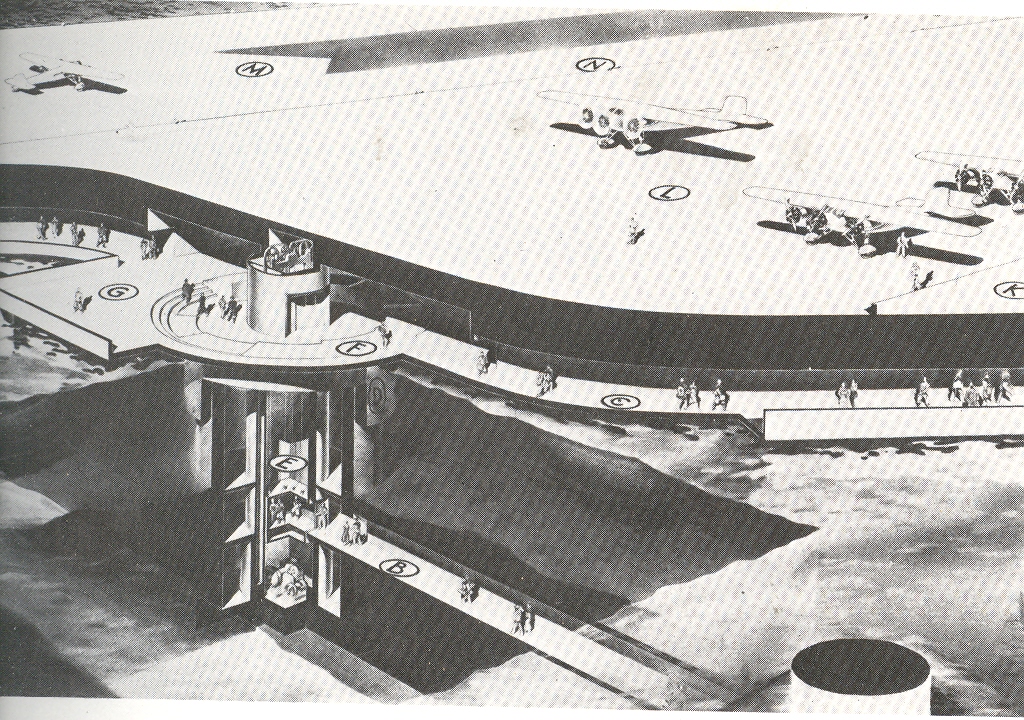
    Norman Bel Geddes (1893-1958) made fast, bulbously sleek and varyingly aerodynamic objects and ideas, and was a  vastly successful designer of things ranging from sets for the NY Metropolitan Opera House to telephones to cars to locomotives to the housing for the Mark I computer.  Ideas were his metier, and there seemed no lack of them–good, mostly; bad, sometimes. 

    Bud bad ideas can be beautiful, and elegant, if only for a very short period of time in which they might have actually functioned for the good.  One of these blisterers was his floating airport for the NYC harbor.  Passengers would access the airport via a 800-foot automatic walkway tunnel, and then up to various shuttles and such on the levels below the flight deck. This beast floated on columns floating on mobile caissons just above the harbor bottom, enabling the whole to be turned into or away from the wind, making for easy approaches and departures for the planes. But it is the pilot of the airport that seems most interesting to me, steering the giant propellers that lay under the corners of the structure, pushing the airport into/away from the wind. 

    This may well be the largest mobile steerable structure moving along the shortest courseway conceived as a possibly-buildable project of the twentieth century. 

    Associated posts on great and unbuildable architecture:

    Gigantic
    and Unbuildable Architecture: Philip Johnson and the Walled “Third City“

    Gigantic
    and Unbuildable Buildings: Leroy Buffington, 1889

    Fantastic
    and Unbuildable Architecture #6: the Pyramids of Gizeh in
    Detroit
    (
    Michigan),
    1908

    Gigantic
    and Unbuildable Architecture: Bucky Fuller’s Midtown Manhattan Dome, 1968

    1--bel geddes airport


  • The Care and Feeding of Missile Systems–1950’s Ads

    JF Ptak Science Books LLC  Post 948

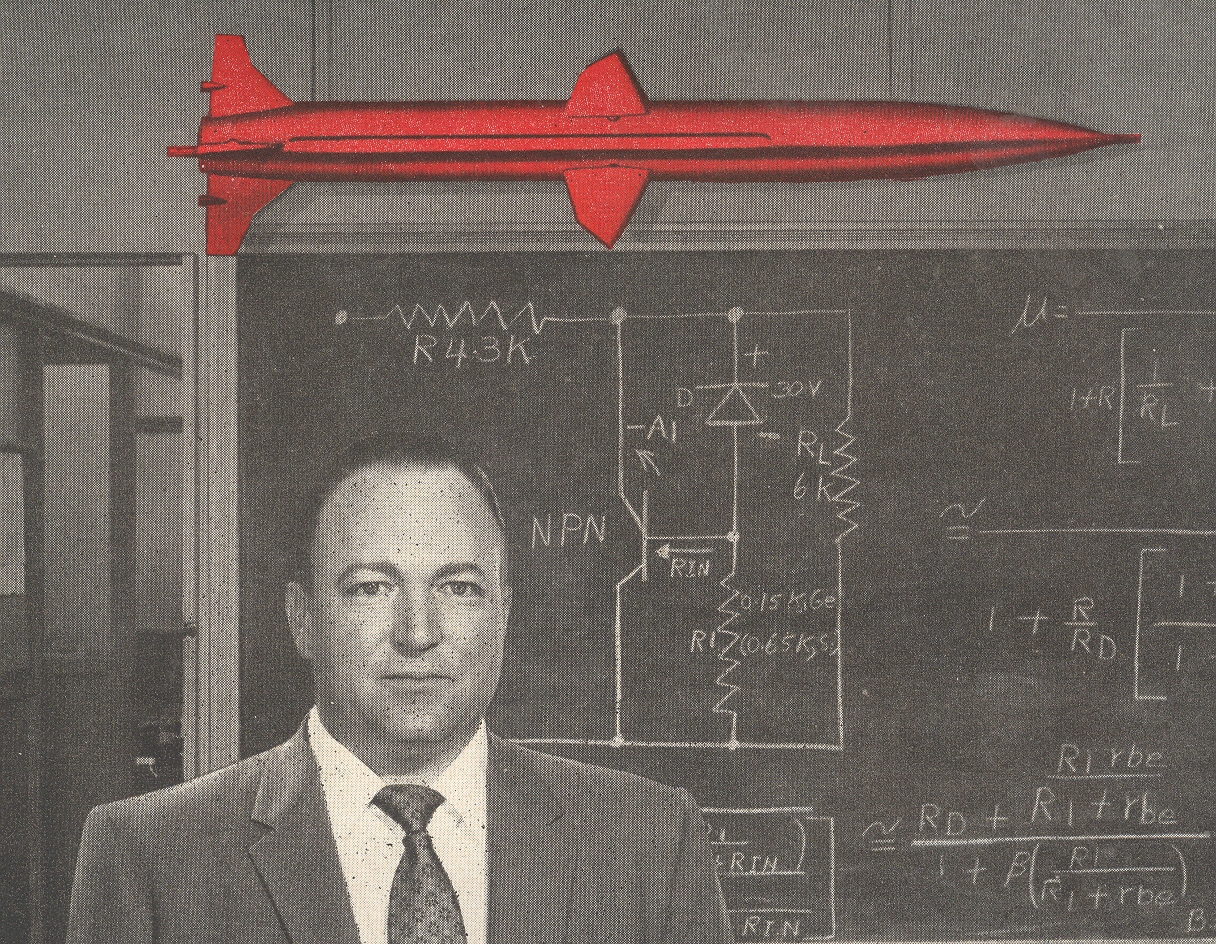
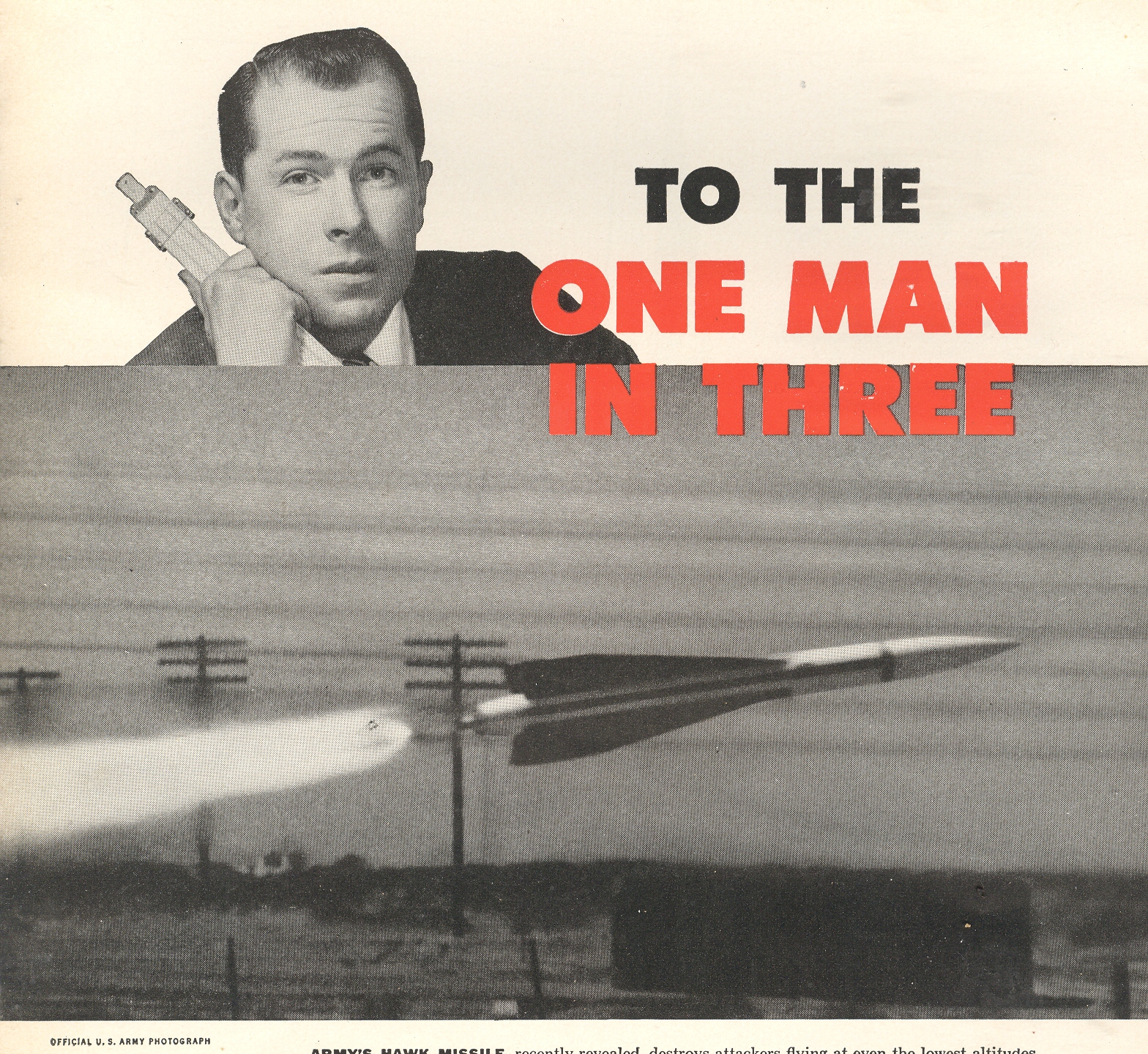
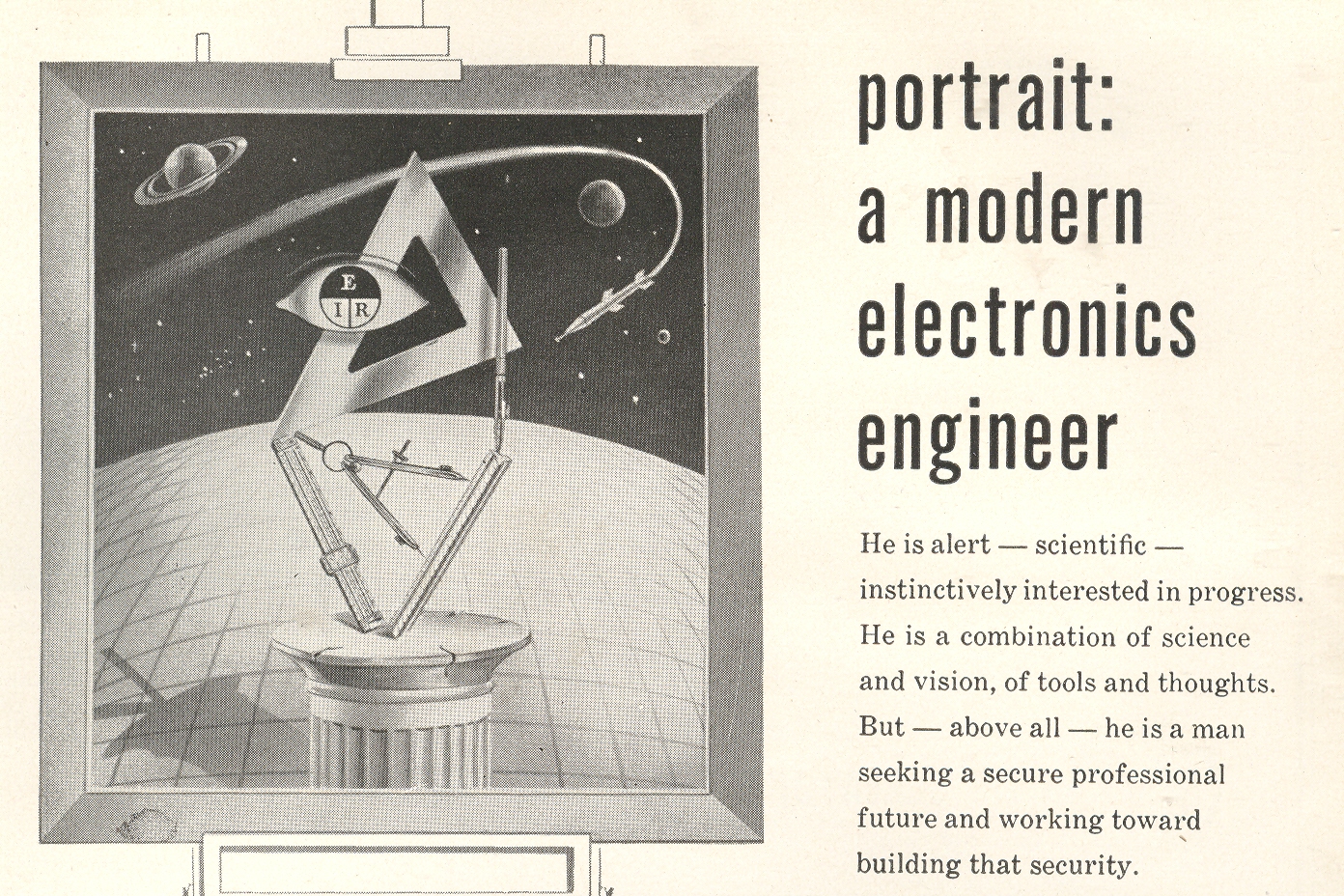
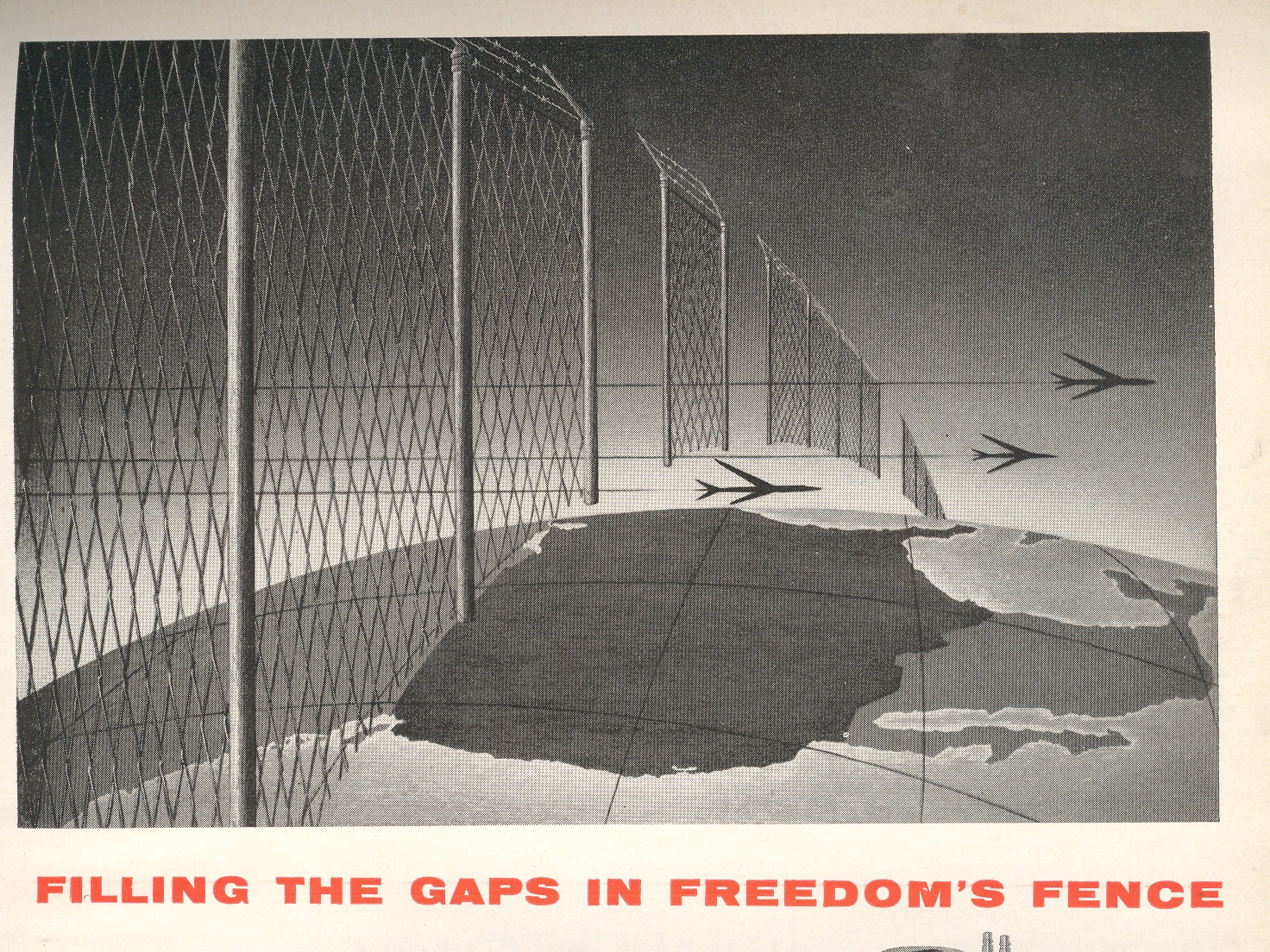
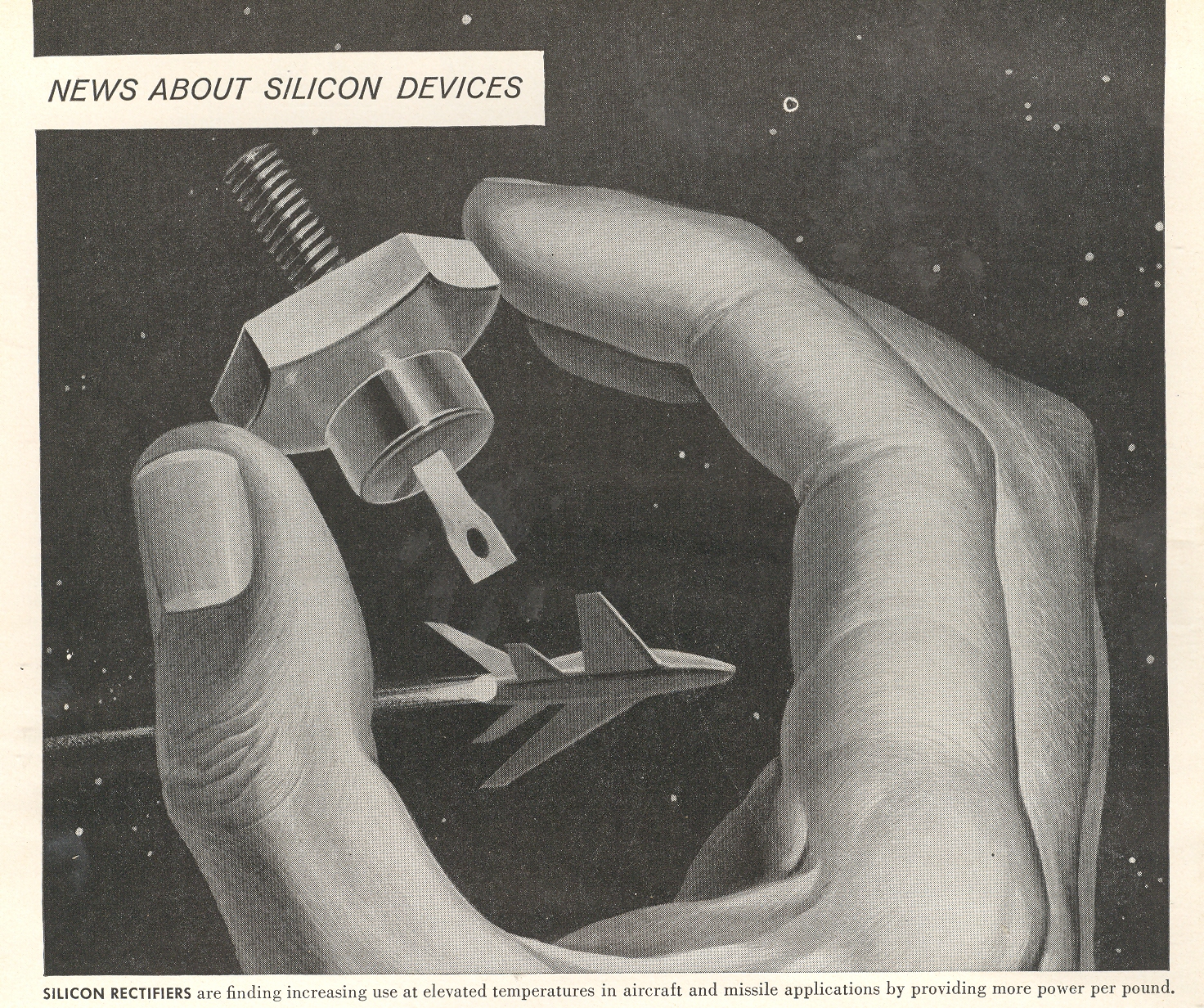
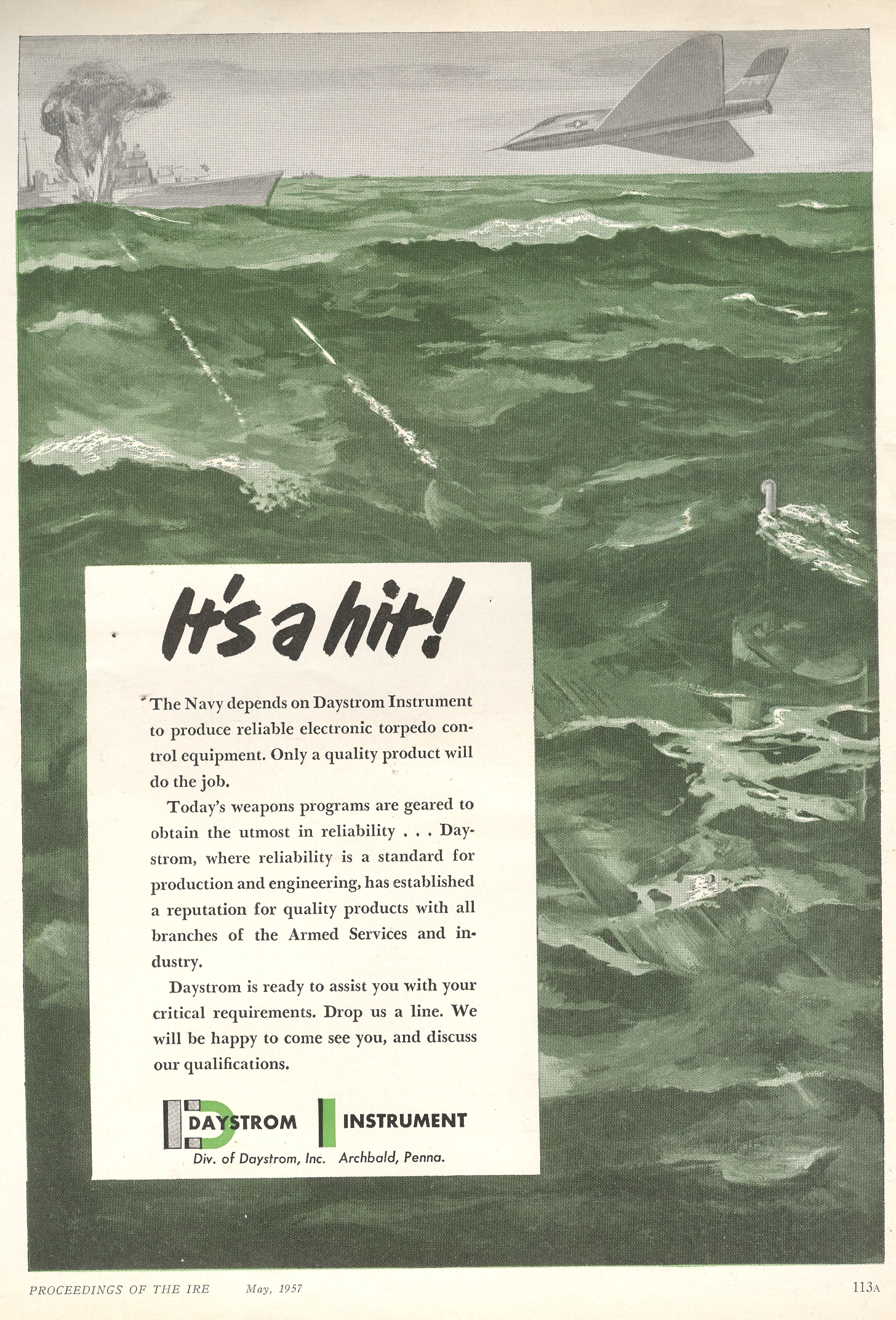
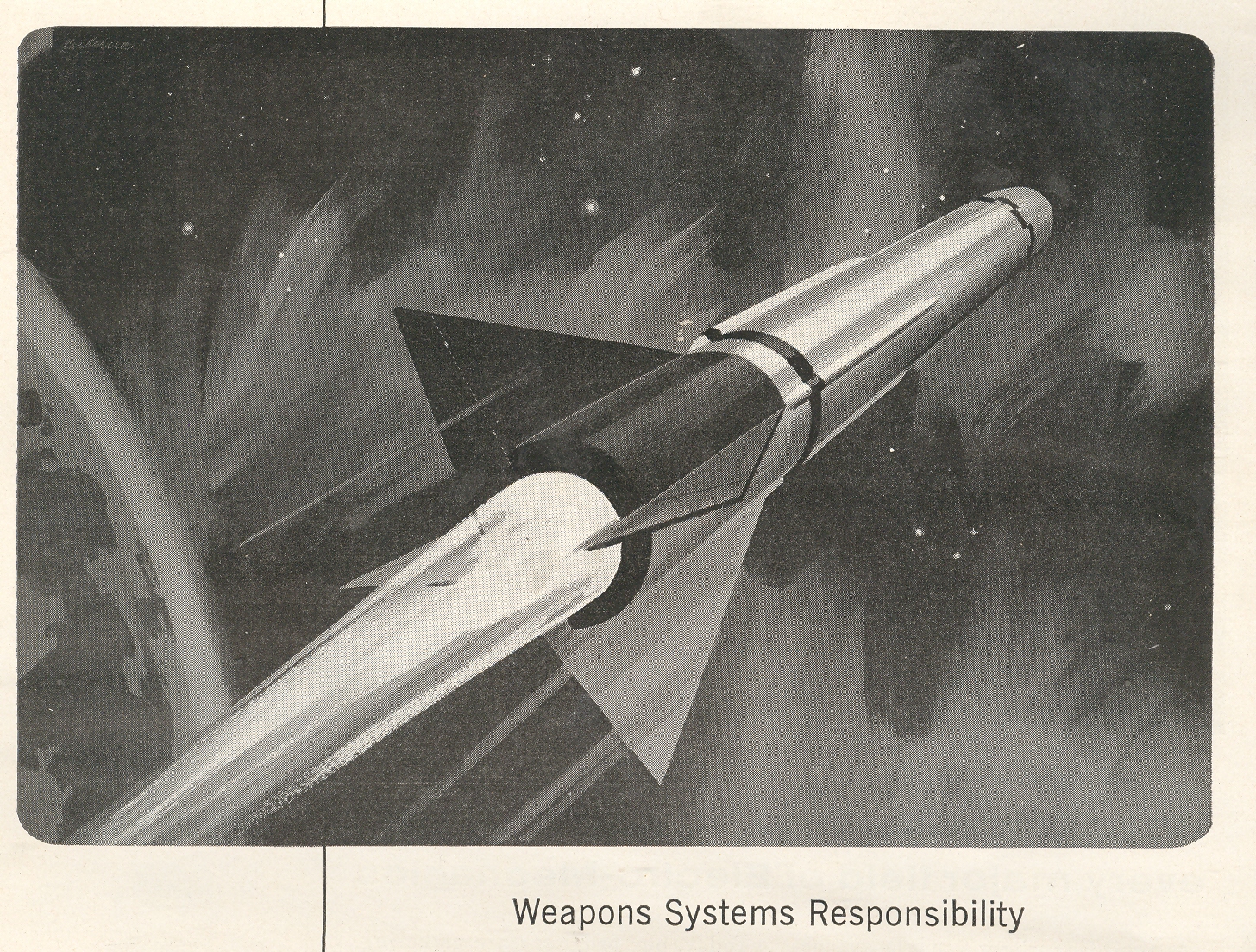
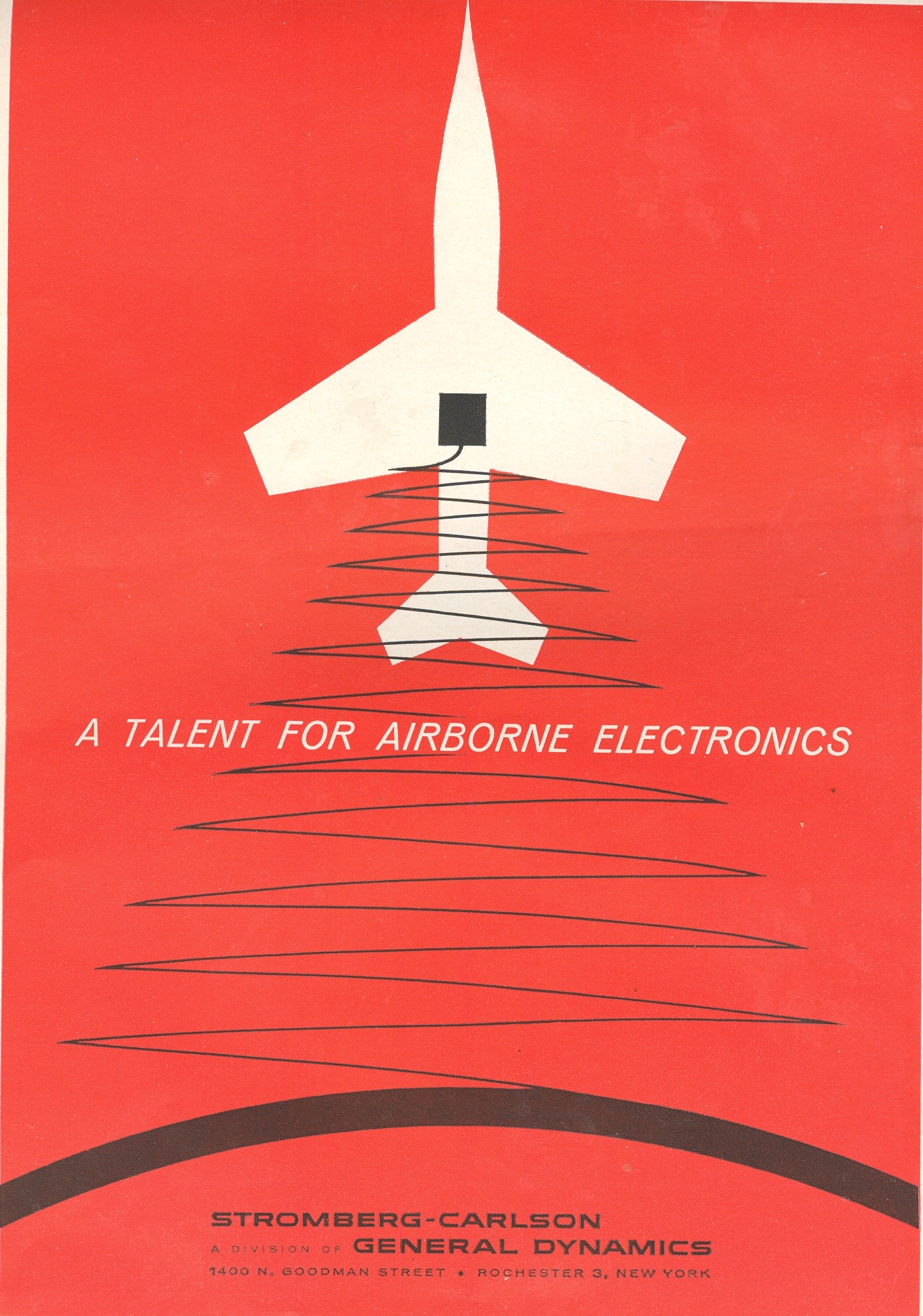
    The following illustrations are all taken gloriously out of context from ads appearing in the Proceedings of the Institute of Radio Engineers, published in 1957-1958. 

    1--feeding missile

    1--red missile
    1--one man in three

    1--portrait
     

    1--fence

    1--fbig hand

    1--missile its a hit

    1--weapon system respons 

    1--big red