A Daily History of Holes, Dots, Lines, Science, History, Math, Physics, Art, the Unintentional Absurd, Architecture, Maps, Data Visualization, Blank and Missing Things, and so on. |1.6 million words, 7500 images, 4.9 million hits| Press & appearances in The Times, Le Figaro, Mensa, The Economist, The Guardian, Discovery News, Slate, Le Monde, Sci American Blogs, Le Pont, and many other places… 5000+ total posts since 2008.

Category: History of Dots

  • History of Dots Series: How Much Does the Earth Weigh? (1798)

    JF Ptak Science Books     Post 1690 [Part of the History of Dots series: Weighing Earth’s Biggest Dot–Itself.]

    Archimedes said that given certain conditions and equipment that he could lift the Earth with a lever; he did not, however, have the necessaries to actually determine how much the whole thing “weighed”, and would have to wait for  20 centuries  in the work of Henry Cavendish to have an answer. (Archimedes was a very busy man with an enormous list of contributions, and was perhaps the greatest physicist and mathematician of his age in the third century BCE, but he did not invent the lever–he did however  provide the mathematical understanding and formalization of how the thing worked in his “On the Equilibrium of Plane Figures”.)


    In this experiment,  “Experiments to determine the Density of the Earth”, the results of which appeared in the Philosophical Transactions in 17981, the great and somewhat mysterious (and odd) Henry Cavendish determined to, of all things, weigh the Earth. (Well, really it was measuring the force of gravity and finding the gravitation constant G, which Cavendish referred to as the specific weight of the Earth.)  Now there are certain remarkable things to be achieved in the 18th century (like for example the discovery of oxygen by Scheele/Priestly), and of course the idea of measuring the weight of the Earth was a high intellectual achievement.  Cavendish set off to measure the force of attraction between large and small lead balls using as a basis for research parts of his dead friend John Michell’s designs for a torsion balance (which he had created in 1783), and using of course Newton’s laws showing that the force of gravity between two objects depends on their masses as well as the distance between them.  Michell had thought of the experiment years before but died before he could present; Cavendish carried on and up, and out. Mind he wasn’t the first on the spot (Coloumb was there too slightly before Michell), or the first with the idea–he was the first to complete it, though, taking the difference in the measures on the very sensitive balance from a distance using a telescope so as to not disturb the readings. As a matter of fact this was the only method employed to conduct this experiment for nearly another hundred years, the results being confirmed by a number of scientists2 over the coming decades.   It was a lovely idea, and  a fantastic piece of work. 

    In his paper in the Philosophical Transactions, Cavendish described Michell and the instrumentation int he opening two paragraphs:

    The instrument:
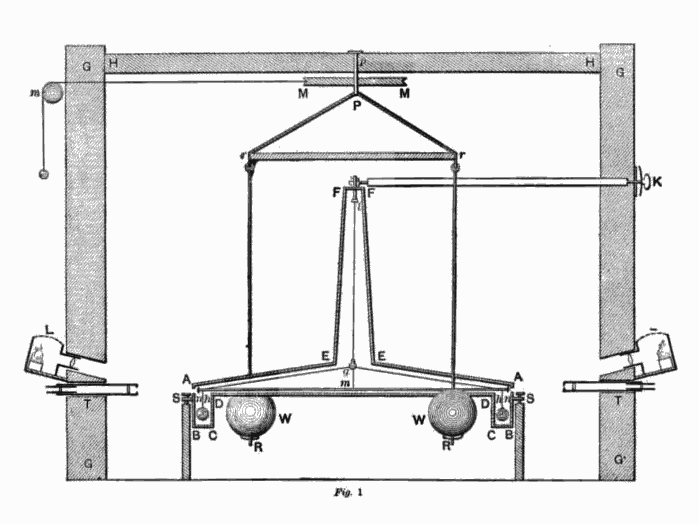
    File:Cavendish Experiment.png

    This is the test apparatus that Cavendish constructed following the original Michell plans–it was a big, solid instrument, as that horizontal piece suspended fro the rod (K) is six feet long, and those two spheres (W) attached to its ends are 350-pounds apiece.  The smaller sphere is located in the box to the side of the large sphere, as so:
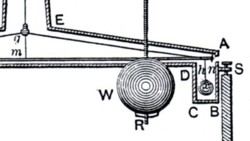
    File:CavendishSchematic111.jpg


    “Henry Cavendish had fitful habits of publication that did not at all reveal the universal scope of his natural philosophy. He wrote no books and fewer than twenty articles in a career of nearly fifty years. Only one major paper was theoretical, a study of electricity in 1771; the remainder of his major papers were carefully delimited experimental inquiries, the most important of which were those on pneumatic chemistry in 1766 and 1783–1788, on freezing temperatures in 1783–1788, and on the density of the earth in 1798.” (D.S.B. III:155).


    ________

    Notes:

    1.  A copy of the first German edition of this work is available at our blog’s bookstore:  “Versuche über die Dichtigkeit der Erde zu Bestimmen.” Halle, Rengerschen Buchhandlung, 1799, and published  in Annalen der Physik, herausgegeben von Ludwig Wilhelm Gilbert, band. 2, erstes stück.  120pp in this section, 488pp overall in in the entire volume, with 9 plates.  Cavendish’s paper occupies pp 1-62, with two plates  (the torsion balance of Michell shown on the plates).

    The entire Cavendish paper can be found here:  Cavendish, Henry (1798). “Experiments to Determine the Density of the Earth”. In MacKenzie, A. S.. Scientific Memoirs Vol.9: The Laws of Gravitation. American Book Co.. 1900. pp. 59–105 Online copy of Cavendish’s 1798 paper, and other early measurements of gravitational constant.

    2.  The experiment was in fact repeated numerous times, including that by Reich (1838), Baily (1843), Cornu & Baille (1878), among others, and it wasn’t until 1895–the year of Roentgen’s epochal discovery–that Cavenidsh’s accuracy was exceeded by the work of C.V. Boys. 
    ·Posted by :

    ·in:

    —

  • The Weight of Humanity in Images on Book Covers

    JF Ptak Science Books  Post 1651

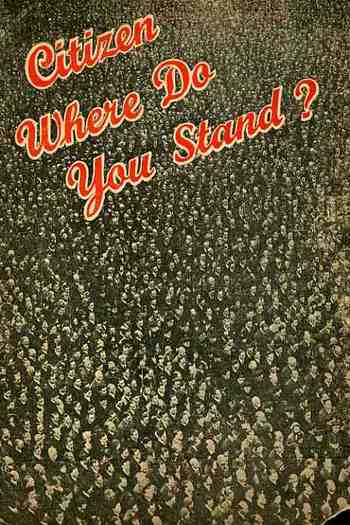
    Blogaugust_27_crowds_stand456

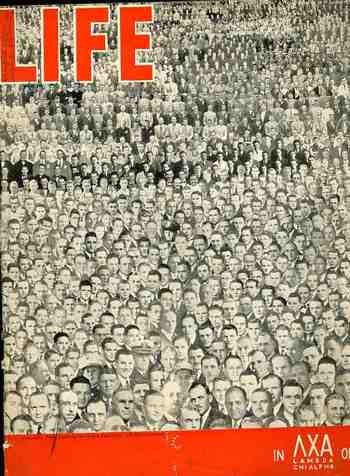
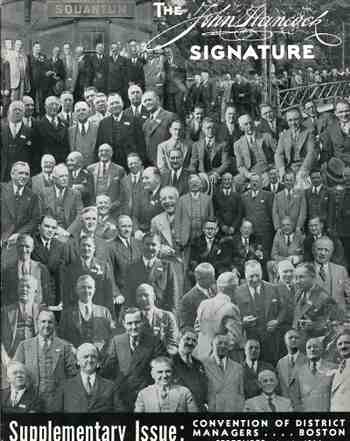
    I don’t often see covers of pamphlets featuring hundreds–or thousands–of people as a part of the design.  In my continuing role as finder and re-finder of things found I have re-surfaced four of these designs, and I feel I should post them before they’re captured in the un-finding process.  Again. Back to the design:  these are very striking, persuasive images, unavoidable in many ways, completely intriguing, beguiling.  People just have to look at these things.  Look:  I made a little experiment today placing ten  very interestingly-designed pamphlets on display, all with compelling and distinct merits, and including one with a big spread of humanity on the cover (the “Life” pamphlet. The very unscientific results is that people were generally first drawn to the complex people image, and stayed longer looking at it–by far–than any other image.  Perhaps its the same sort of reaction going on when you watch people walking in front of a mirror or reflective surface, with the vast majority of folks checking themselves out in it.  Maybe its just people looking for something familiar.  Maybe the faces are simply, strictly more interesting than just points o the page.  I’m not sure. 

    The first image is a one penny Labour Party publication coming from the National Executive Committee of the Labour Party, published in London in 1937; second is Life, the story of the fraternity lamda chi alpha, published around 1935; third, a program for the Liberal Party, published in London in c. 1938; lastly, fourth, a program for some course of semi-statistical study with the John Hancock life insurance company.  These beautiful designs were much more interesting than the very casual contents they covered, at least to me.

    Blogaugust_27_crowds_life459

    Blogaugust_27_crowds_socialist_mil4

    Blogaugust_27_crowds_hancock460


  • History of Dots in the First Pictorial Image Printed in America, 1670

    JF Ptak Science Books     Post 1463

    Ots mather414
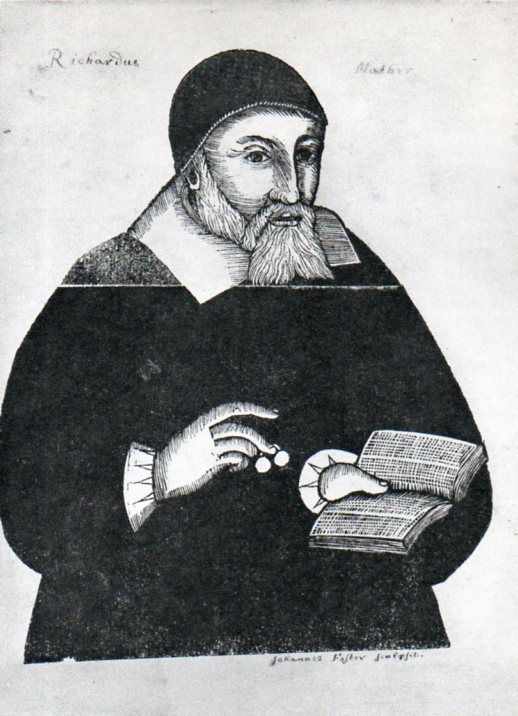
    This installment to the thread on the History of Dots takes us to the very first print made in America–John Foster’s portrait of Richard Mather. Mather was ordained in England in 1620 but his Puritanism came to be a point of departure for him, and he sailed to America for his taste of religious freedom, arriving in 1635.  He was a pastor in Dorchester, Massachusetts, for the next 34 years until his death in 1669 at the age of 73. 

    As it turns out this portrait was made of him by John Foster just prior to his death and was not published until 1670, when Mather–who as it turns out who be the founding member of what would become a long-established and important family of clerics, including Cotton Mather–was already dead for a year. 

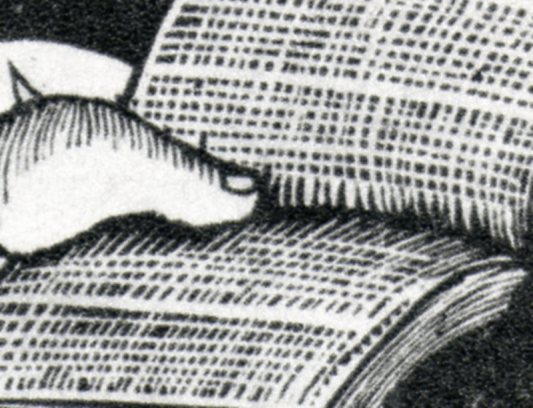
    He is shown holding a book, which—since this is the first print made in America–is also the first image of a book.  The book is held open by Mather’s enormous thumb–and what do we see in this book for words but dots.  Perhaps there are some dots, and perhaps there are some dashes, but its close enough for me.

    Ots mather414

    I do wonder about that horizontal line running across the image, appearing just under Mather’s whiskers. It seems like the woodblock was broken and pieced back together.  Perhaps it was just an accident.  Perhaps it was broken on purpose so that Foster could use an interchangeable body and replace the head, so that the next series of portraits would be easier for the artist, which he may not have been. He did take the care to render Mather’s spectacles, even if they are but little mites of specs. 

    In any event, Foster did a great job with very limited ability, and I think that the great blackness of Mather’s  body, which formulates the print’s large power, may have been done by mistake.  It really doesn’t matter, as the overall effect works beautifully well.

    Ots mather413


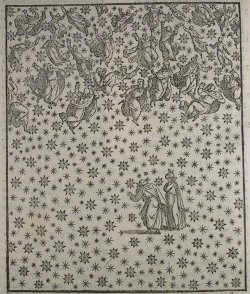
  • Strange Things in the Sky Dept.–Dante and Beatrice and the Vault of Stars

    JF Ptak Science Books    Post 1457

    There is a developing thread on this blog relating to strange things in the sky. Sometimes the images are extraordinary, impossible, beyond fiction:  multiple/duplicate Earths, flying buildings, horses in balloons, extra-human missing souls downloaded to the Earth from extra-Moons, and so on.  And at other times, the images are more subtle, questioning, ambiguous, as in the example of some 16th century prints that show the sky opening to reveal the Creator, who is in turn pictured against, say, a completely blank background, suggesting an enveloping nothingnesss of Heaven; or a field of beautiful stars filling a Renaissance sky of deepest red, at night.  A gigantic foot shown floating in the sky in a 17th century image might be ambiguous, and it also wildly so;  both it and the more subtle ambiguities–for example early representations of caves-over-mountains that give them an inside-out appearance–are welcomed sights.

    Perhaps some of the most beautiful of the Strange Things in the Sky department might belong to the skies of  Dante–they can be extraordinary, straightforwardly unusual and–when the narrative is presented pictorially–beautifully strange and with little ambiguity.  They are presentations of ideas of time and space, fantastic adventures in imaginary environments, as much an internal journey as Milton’s Paradise Lost is an external one1.

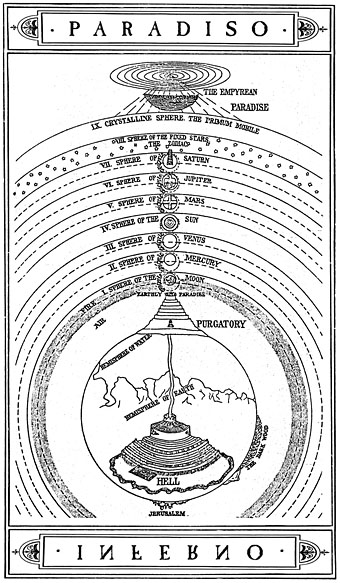
    Dante’s celestial exploration and the foundation that he provides have led to the possibility of an entire atlas of maps of paradise, hell and purgatory.  Here’s an interesting map2 constructed by Michelangelo Caetani (1804-1882) showing the structure of the Comnedia:

    Dante comedia
    I’ve presented this map just to give a context for the placement of the following images, though I do like the Caetani because it presents a good overview of the entire placement of Dante’s work, though necessarily having to leave out almost all of the detail of what is actually going on in each level. 

    Nearly all of the images below are from La comedia di Dante Aligieri con la nova espostione di Alessandro Vettlutello, published in Venice in 1544 by Francesco Marcolini (or Marcolino)3.  For the present collecting/browsing purposes I’m just going to go over the images lightly rather than try to launch into an ill-advised exegesis on a subject that I don’t know very well at all.

      Dante sun big
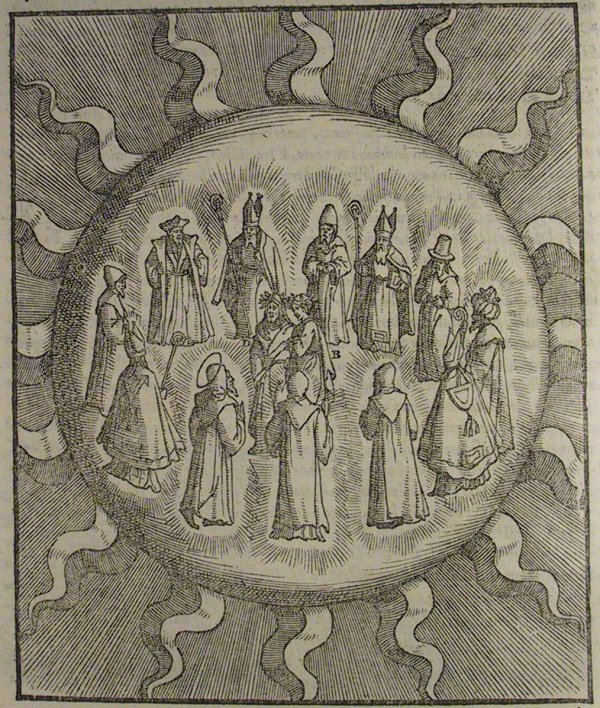
    In the Sphere of the Sun Dante and Beatrice among the wise and the learned, hearing them all (eleven) named so by Thomas Aquinas.  They include Albertus Magnus, Gratian, Peter Lombard, Solomon, Dionysius the Areopagite, Orosius, Boethius, Isidore of Seville, Bede, Richard of St. Victor, Siger of Brabant. Paradiso X

       Dante fixed stars
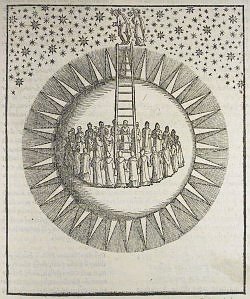
    Dante and Beatrice entering the sphere of the fixed stars, using a ladder of contemplation, mythically suggesting stairs and in this case a stairway to god. 

    Ante--empyrean

    The souls ascent to the Empyrean, with Dante looking down to see the Earth (“the little patch that makes us so vicious”), and to trace the (“mad”) voyage of Ulysses, and to see perhaps how far he has traveled (Paradiso XXVII).  Dante listens to St. Peter, and Beatrice, who describe the place, which is basically the mind of god and which is the envelope surrounding the final sphere:

             “The nature of the universe which holds
              The center still and whirls the spheres around it
              Takes from this region here its starting-point.
     
              “And here this heaven has no other where
              Than in God’s mind, where there flames up the love
              That spins it, and the power it pours down.
     
              “Light and love enclose it in one circle
              As it does all the rest, and this enclosing
              He alone who circles it can comprehend.

    Beatrice and Dante


    Beatrice and Dante together with Saint John and Saint James,  Paradiso XXV.

              “My body is still earth within the earth
              And will remain there with the rest until
              Our number equals the eternal tally.
     
              “Only those two lights who have ascended
              Wear their two robes here in the blessed cloister,
              And this word you shall bring back to your world.”
     

    Woodcut illustrating Paradiso II
    I couldn’t resist straying a bit to show this fantastic 1491 woodcut (published in Venice by Petrus de Plasiis) illustrating Dante and Beatrice surveying and then entering the Moon.  The scene is described in  Paradiso II:

              “Turned toward me, as glad as she was lovely,
              And said, “Direct your mind with thanks to God
             Who here has made us one with the first star.” –-[the Moon is described and identified as a star.]
     
              I thought we were enveloped in a cloud,
              Shining, solid, dense, and highly polished
              As a diamond struck by the sun would be.
     
              The timeless pearl took us inside itself
                In the same way that water can receive
              A ray of light while it remains intact”
    Again, my apologies to those among you who know Dante–I really was just trying to get at the luxuriant strangeness of these images and display them–much more so than talk about them. 

    Notes

    1. “The difference is that the visual phantasy bequeathed by Dante was mainly a congeries of intense and intricate symbolisms of his own personality,” Masson explains, “whereas that offered by Milton was mainly a sublime version of an independent objective tradition.” 12. David Masson, The Life ofJohn Milton: Narrated in Connexion with the Political, Ecclesiastical, and Literary History of His Time, vol. 6, 1660-1674 (1880; reprint, New York,
    1946), p. 522.

    2.  Michelangelo Caetani, La Materia della Divina Commedia di Dante Aligherie (1855).

    3..   Francesco Marcolini (or Marcolino), a typographer born in Forlì, also published the first book of cartomancy, or telling the telling of the future and fortune through the use of a deck of cards, in his 1540 Le sorti intitolate giardino d’i pensieri (“The oracle called garden of thoughts”).


  • The History of Dots: anti-Dots, Bubbles and Circles

    JF Ptak Science Books   Post 1433

    This blog’s series on the History of Dots needs to be folded into the History of Circles section–it seems that whenever I see interesting circles that I am seeing dots, and vice versa; and after all, aren’t circles just unfilled dots?  An anti-dot (or at least so in two dimensions)?  I like the idea, especially since one of the great and revolutionary ways in which particles were found was with the device pioneered by D.A. Glaser (Nobel physics, 1960), the bubble chamber, which through the use of superheated hydrogen (usually) it was possible to track electrically charged particles, often producing dots in their signatures.

    Which leads me to bubbles and anti-bubbles.  We all know what a bubble is–at least a physical one–but what about its opposite?  Its not quite that, really, though there are bubbles that are liquids surrounded by gas rather than the much more conservative and popular way.  And so it is this way that I came to the anti-dot, the circle, and then of course one of its three dimensional relatives, the bubble (and the sphere).

    Earlier in this blog I’ve written a few times about the speech and though bubble/balloon, which was a fantastic invention, enabling to make literal the thinking of the subjects in a painting (and seen probably for the first time in a printed book in 1523, in this work about Bruno Carthasisienna):

    0 blog feb 18 balloon599


    I’m sure that there must’ve been some number of people who regarded it as base and retrograde, that the view of a print or painting should by the art’s elements know what the characters might be thinking, and that by showing the specifics of thought, by boldly stating the thought or speech itself, that the experience is removed from the viewer’s imaginations.  Perhaps these thoughts were common to the people who considered the telephone as an affront to communication as an attempt to replace the written letter, and so on to fax to email to tweet and so on. 

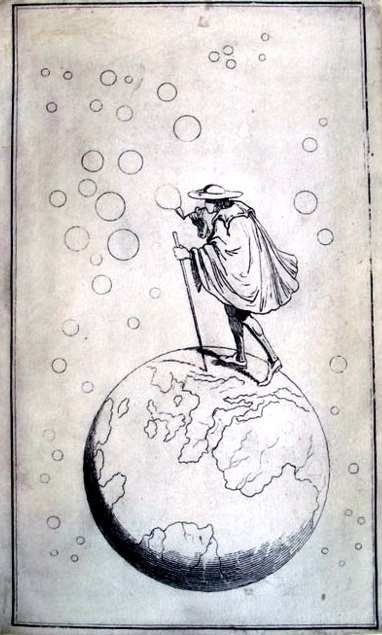
    I have no idea when the first bubble as a bubble appeared in print, though a gorgeous version of a bubble-maker is seen on the cover of another “first”:  the first full-cover illustration on the front cloth cover of a published book1, Sir Francis Bond Heads (1793-1875) Bubbles from the Brunnens of Nassau, which was published by in 1834 by John Murray of London, who 25 years later would publish Darwin’s Origin (where the word “bubble” by the way does not appear).

    Dots  bubbles princeton
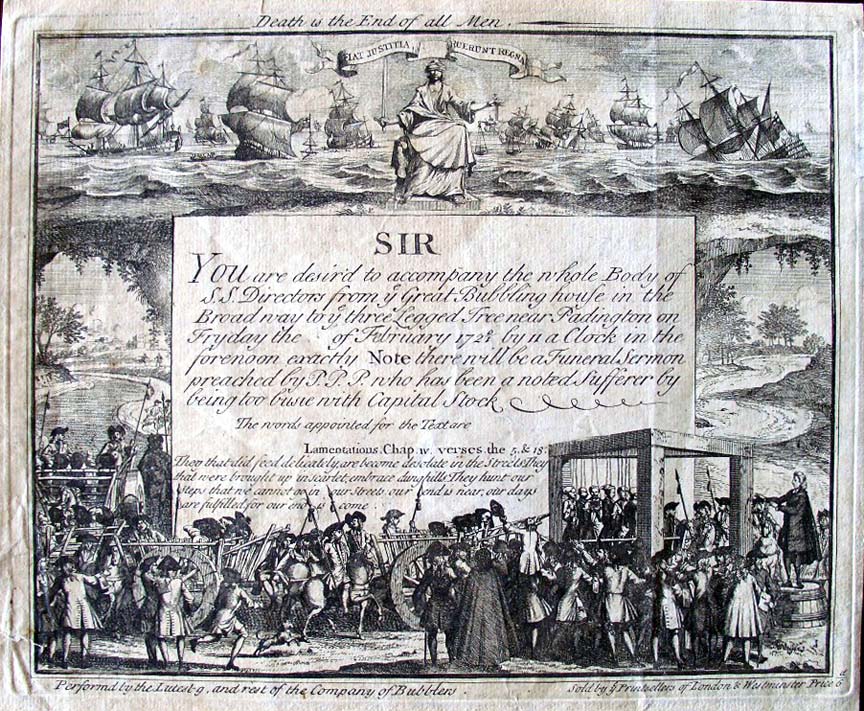
    There are many illustrations and paintings of people blowing bubbles–I’m not sure which one is the most famous but Gerit Dou (1613-1675) certainly comes to mind (with his Still Life with a Boy Blowing Bubbles).  Perhaps a ittle more unusual and also involving a great scientist is the economic bubble, which is the subject of this great print called “A Bubbler’s Funeral”.  An economic bubble is one in which the value of a share of stock in a company or interest becomes hyper-inflated, expanding outward until the price bubble found its pin, and once contact is made, the whole thing goes to shamble, and anyone left holding the enormously inflated stock finds themselves with a stock worth next to nothing. 

    Dots bubbler funeral
    This image was a satire on the Ages of Man, professing to be a ticket for a Bubblers funeral, and was in 1720 aimed at the directors of the South Sea Company, a notorious early 18th century bubble, which had just burst.  Many people lost fortunes in this, including the aged Sir Isaac Newton.   The invitation was for a funeral profession to  “accompany the whole Body of S.S. Directors from ye Bubbling house in the Broad way… to ye three Legged Tree near Padington on Fryday the of February 1720/1″.

    And so ends this first bot on folding the story of circles and bubbles  into this blog’s History of Dots.  I should point out that one of the great bubbles of the last hundred years or so imploded only a dozen yers or so ago–the dot coms. 

    I wonder if the History of Holes thread should also be folded in?

    Notes:

    1. From Princeton University:  “Ellen Morris puts it in anything way, “This period also produced the first full-cover designs: John Murray’s 1834 issue of Bubbles from the Brunnens of Nassau is reputedly the earliest publisher’s cloth binding with a full pictorial design on its cover.” (The Art of Publishers’ Bookbindings 1815-1915).


  • Wheels of Fortune and Destiny–Beautiful Circles of Robert Fludd, Lorenzo Spirito and Sigismondi Fanti (continued)

    JF Ptak Science Books   Post 1429

    Fludd
    (1)  Destiny
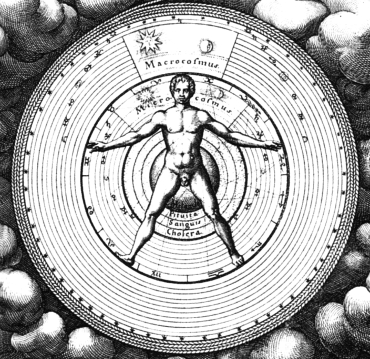
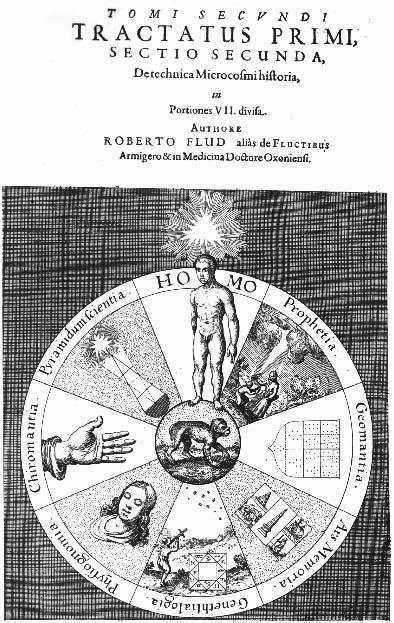
    Robert Fludd’s (1574-1637), title page for his  Utriusque Cosmi . . . Historia (1617) features this complicated astrological wheel with a Vitruvian-man-like image at the vortex of the imaged pulls and pushes of the cosmos.  In addition to everything else, real and imagined, Rosicrucianism and astrology and puffy-birds, Fludd, who was  an English physician, delved deeply into the real stuff of the world in this book in addition to all of the other make-believe–optics, the musical intervals, perspective drawing, hydraulic engineering, construction of lifting machines, military engineering and many other interesting, physical science topics.  But this drawing, right there on the title page, reveals Fludd’s real interests and shows what governs what he does.  Everything else, the math and and the physics, services this need.  Of course the image is beautiful, which is why it is here, but it is also a deeply personal, exploitative, cover-all for the things that Fludd *wanted* to find. 

    Fludd 3

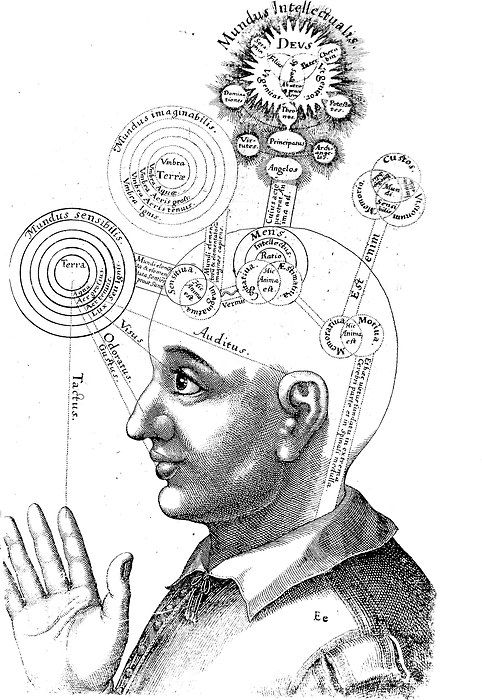
    I can’t resist adding the following Fludd image, which appears in the same book and may be one of the most iconic images of the Fludd opus, these beautiful circles showing the areas of thought and consciousness of the human being:

    Fludd 4

    (2)  Wheels of Forture
    Circlespirito
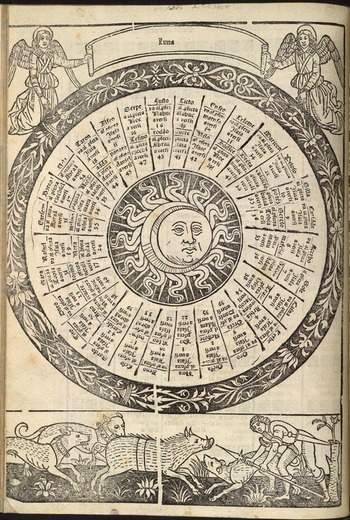
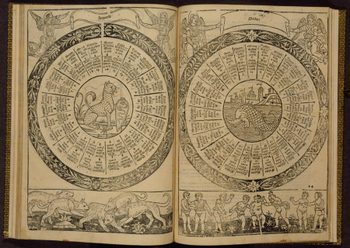
    In Le Passetemps de la Fortune des dez, written by Lorenzo Spirito in the late 15th century1 and published in this pictured format in 1559–a delightful little book with many2 zodical illustrations and the first printed illustrated book on fortune-telling—appears this gorgeous wheel of fortune wood engraving.

    “There are 20 questions, grouped around a wheel of fortune on which are represented four men; to each man a reference is added to a list of kings… These 20 kings in their turn guide the enquired to 20 planets; the table of dice casts attached to these planet contain 56 references to the 20 spheres of the planets. After one has found their way through these stages, they finally reach 20 prophets who each have 56 three-line answers to give….”

    The wheel sends the reader to a king; the king to a sign; the sign, with a throw of dice, to a wheel; the wheel to a prophet, and then to the peek into the future.

    Artikelbild: Losbuch des Lorenzo Spirito von 1482 bot Antworten auf Fragen nach dem Schicksal szmtag

    Spirito 2

    Referring to the image below: “In this opening, the leopard (left) is cut in a thick outline and modeled with precise curved lines. The leopard’s formal pose is particularly appealing because it projects a dignity commensurate with the animal’s position in the hierarchy of the animal kingdom. The dolphin (right) is similarly cut and set within a sea of curved lines against a well-defined architectural background. The dolphin’s design reflects classical

    Spirito_2_2
    origins. The animal projects an aggressive attitude, suggesting the dolphin’s importance as protector of the city of Venice. The well-designed woodcut borders of the hunt (left) and the putti at play (right) are symbols of the vagaries of life, in which good fortune and calamity are equally possible.

    (3) Wheels of Destiny 2

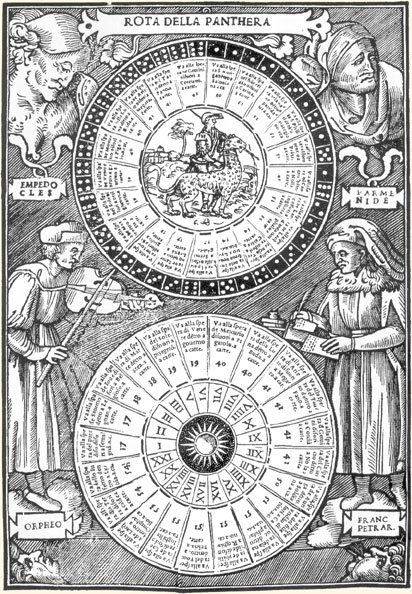
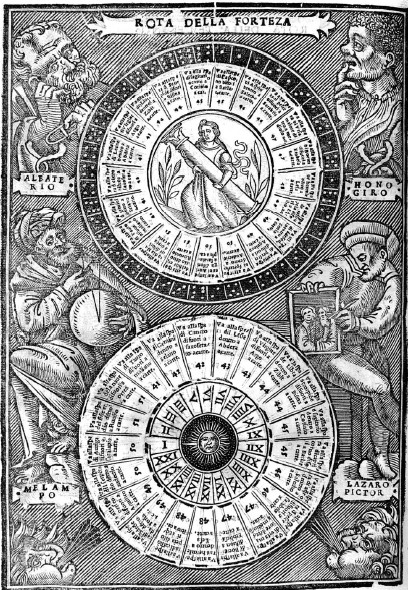
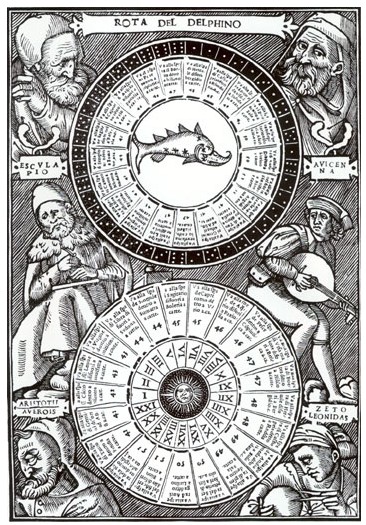
    In Sigismondo Fanti’s Triompho di Fortuna (Triumph of Fortune), printed in Venice in 1526, the second illustrated fortune-telling book to appear in print.  Fanti’s book, like Spirito’s, functions as a game in which the seeker follows cues that lead from figures of Fortune to houses and then to wheels, spheres, and astrologers, the path determined by either a throw of the dice or the time of day at which the book is consulted.

    Fanti 2As this is not really an area I know very much about I’ll just quote the commentary on this illustration from the Metropolitan Museum of Art:

    “When the reader reaches the indicated page, a choice must be made between two wheels. The upper one represents all the possible combinations (twenty-one) to result from a throw of the dice, while the lower is bordered by the first twenty-one hours of the day. If no dice are handy\—and it’s not too late at night\—the seeker can turn to the lower wheel and choose the segment that corresponds to the current hour.”

    Fanti “The pages representing wheels are bordered by eight alternating frames containing a series of musicians, astronomers, artists, writers, popes, rulers, and other distinguished figures of the past and present, labeled differently at each appearance. Among the artists named are Andrea Mantegna, Raphael of Urbino, and Baldassare Peruzzi, the designer of the frontispiece. On the page shown here, at right, the astronomer and artist are identified respectively as the book’s author, Sigismondo Fanti, and the painter Dosso Dossi (died 1542), who was also from Ferrara and who has been plausibly credited with the design of the figural borders.”

    Fanti3
    NOTES

    1.  Lorenzoi Spirito’s book was very popular, going into at least five printings in the 15th century alone following the first printed edition of 1482.  Fortune-telling works such as this were extremely popular and well-used–so much so that it has led experts in this area to conclude that the books were basically worn out of existence, which might explain why so few of them have survived to the present day.

    2.Description of the Spirito book from Christie’s auction house:  38 leaves. Roman type. 56 lines and headline. 2 woodcut full borders (one incorporating Da Ponte device) repeated to 6 impressions, full-page woodcut wheel of fortune, 20 woodcut portraits of kings from 15 blocks printed 4 to a page, 20 pages of dice throws with 20 woodblocks of signs, 20 circular woodcuts of signs within wheel of text set within one of two borders, 20 portraits of prophets and other Biblical figures.”


  • A Great Anniversary: Identifying the Telescope as a True and Not-Deviating Instrument, 24 March 1611

    JF Ptak Science Books   Post 1385

    Celebrating the 400th anniversary of recognizing that sense enhancers–like the telescope–do detect “real” things: Galileo and the Collegio Romano, March 24, 1611. 

    Is it possible that there are private realities for things, seeable by only one observer? Can the instrument that allowed such observations possible also provides them, the stuff existing purely for the instrument and nothing else?  To some degree this is what was thought of Galileo and his revolutionary discoveries with the telescope, at least in the early days of verifying his work.  Galileo’s work was problematic for the Church because it provided yet more evidence for  ancient and incorrect assertions of Ptolemaic astronomy, separating the distance between what was written in the scriptures about nature and the knowledge of the world and its physical and biological systems, and what actually existed int he world.  It was an especially hard blow for Galileo to have revealed far more stars than anyone had thought possible, in the West at least–the stars int he Heavens had been a perfect assembly for many generations, and for their to be nearly an order of magnitude more  observable stars through the telescope ran directly in the face of church doctrine.  There was also the unwholesome bit about the Copernican system and our’s being  a heliocentric system, which was an old debate being lashed at still by the church even after many decades of superior evidence that could in no way support an Earth-centric system.  Evidence and logic united to banish the Church’s cosmology into a belief system.

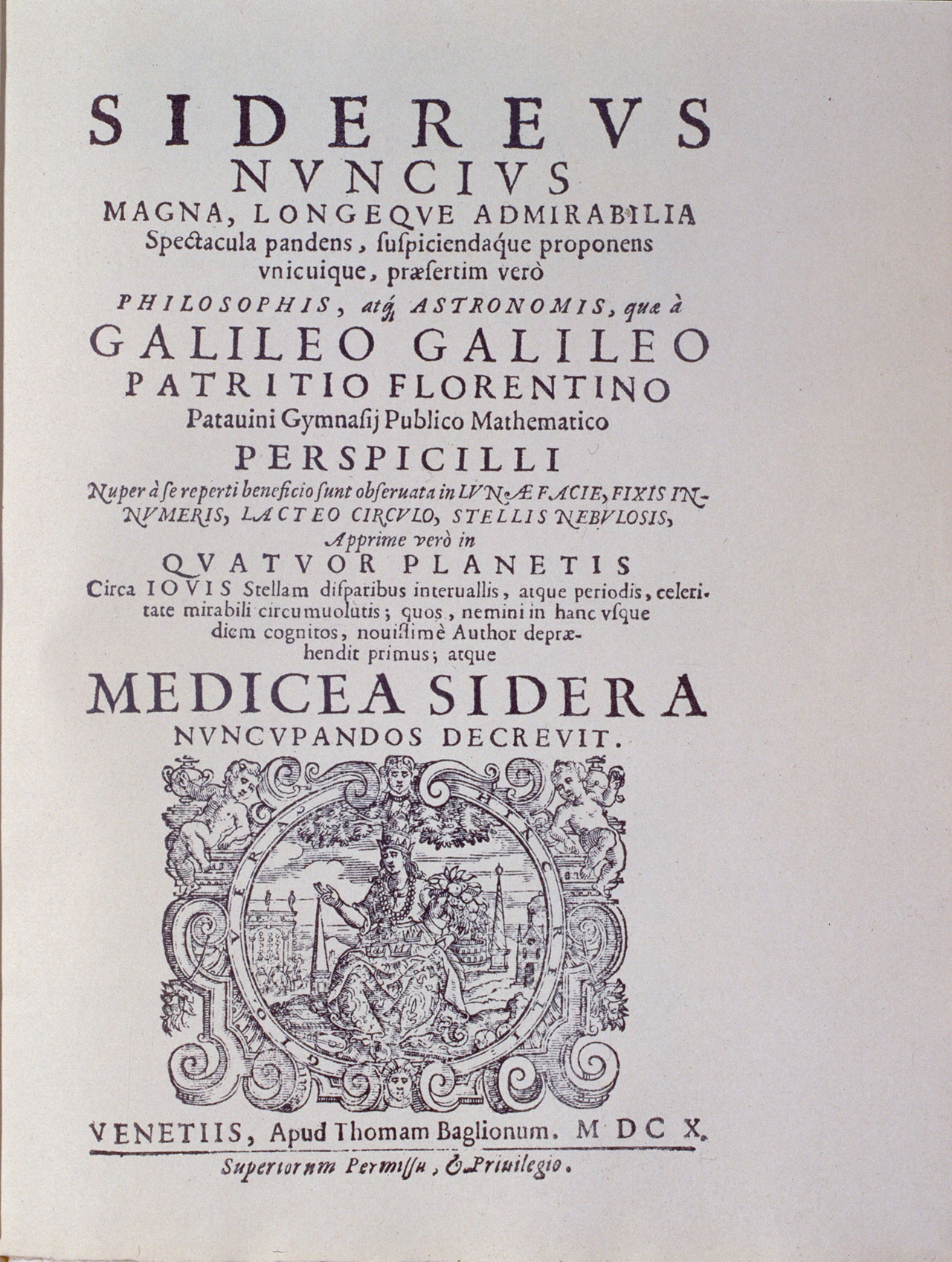
    Frontispiece of Galileo's Sidereus Nuncius

    It seemed to some as though the new stars that for the first true time expanded the celestial vault existed only within the slim optical tube with which their observer–Galileo–saw them.  Ditto the moon of Jupiter.  It came to pass within the confining walls of Vatican-recognized astronomy that the only verifiable and comprehensible observations of the heavens could be made with the naked eye.  Galileo’s instrument was difficult to use1 but it seemed also that when his contemporaries could see his discoveries that they simply wouldn’t.  Early in 1611 Galileo wrote to Kepler about the fantastic reluctance of his colleagues to be able to see what he saw:  “What do you think of the chief philosophers of our gymnasium who, with the stubbornness of a viper, did not want to see the planets, the moon, or the telescope, even though I offered them the opportunity a thousand times?”  Galileo was convinced that they needed not to see nature, but rather tried to reconcile the idea of what was being said was being seen with existing ideas and ideologies,  saying that their “…truth is to be sought not in the world and in, nature, but in comparison of texts (as they call it)”.  (“Stress in the book of nature: The supplemental logic of Galileo’s realism”. MLN 118(3), 557-585, by Mario Biagioli.)

    Galileo’s 1610 discoveries were published later that same year in his Sidereus Nuncius (The Starry Messenger)2, but there was no real independent verification of his work for nearly another twelve months.  The business end of the question, the lens that focused the entire issue so to speak, wasn’t necessarily the issue of more stars or a craggy moon or Jupiter having moons or the Copernican system–it had to do with whether the telescope, but the very virtue of its placing a piece of glass between the human observer and nature, was altering the very perception of nature itself.  Was the tube an imaginarium?  Did it create the images seen by the observer?  Did it materially change the things that the observer saw?  Was the nature of the observing unit the thing that was changing nature rather than by showing it closer? 

    These questions really didn’t receive an official answer until 24 March 1611, when four Jesuit mathematicians at the Collegio Romano reported to Cardinal Robert Bellarmine (1542-1621, and the church’s chief defender of orthodoxy) that, yes indeed, Galileo’s discoveries were real, that he had reported them accurately.  The collision of the scholastic and humanist world views represented by the Catholic Church and Galileo wasn’t a  happy one, and  this didn’t mean that the Church necessarily accepted what Galileo had to say–far from it, as they wound up pursuing the old man, taking him to trial finally in 1633 (when he was 69 years old, following by 17 years the admonition and false injunction of 1616), convicting him of violating an injunction on teaching, discussing and writing about the Copernican system, and placing him under house arrest for the stuff he thought and wrote about.  He died blind and still under house arrest  at his villa in Arcetri, just north of Florence, in 1642.

    But it is this business of the optics found to be not physically or theologically objectionable by the Collegio in 1611 that seems so incredibly important to me right now–that the telescope was found to be an instrument, that the human eye could be aided, and that this tube was not a place in which imaginary things happened or in which reality was bent, that was so very important.

    The Inquisition’s ban on most of Galileo’s writings was lifted by the Church in in 1718, though his Dialago remained untouchable and condemned, a prohibition which remained mostly in place in 1758, when a lightly censored version of the book appeared and the general prohibition of works on heliocentrism was mostly dropped.3 It really wasn’t until 1835, more than 225 years after the first publication of the Sidereus, that all traces of prohibition vanished from the registry of the Catholic Church.

    It is a little odd to think about the Collegio and the telescope in the light of the invention of the microscope.  There seemed to be no vestigial growth from the Church into the microscopic world or with the microscope itself, though most of these developments did come much later…except for the work of Hans and Zacharias Janssen, who did manage to make the first microscope in 1590, twenty years before Galileo’s observations were published.  But the monumental year for the microscope came twenty-five years after Galileo’s death, with the publication of the spectacular Micrographia of Robert Hooke in 1667.  And then in 1675 came Anton van Leeuwenhoek, who made close, micrographic investigations of blood, and who saw more deeply into the small world of humanity (being the first to describe cells and bacteria) than anyone ever before.  But the Church seemed little interested in this or the instrument, hardly seen Hooke/Leeuwenhoek as a new, threatening Galileo or the microscope as the invasive telescope.  But I do see where a similarity could exist.

    NOTES

    1. The telescope was a tough one to operate, though Galileo himself was a skillful practioner.  The ‘scope was big (more than three feet long), its field of view very narrow, and its aperture dropped down to a few centimeters. And of course there was the steadiness question.  All in all, not an easy instrument to bring to bhear on your subject. 

    2. This was also of course the first scientific treatise on astronomy using the obervations obtained with a telescope.  In it were also reported the very rough appearance of the surface of the Moon, the differences in the appearanes of the stars and the planets, the moons of Jupiter and the large number of never-before-seen stars. 

    3. Uncensored versions of the Dialogo and De Revolutionibus were still prohibited. 


  • The Tipping Point of Degeneracy: a Look Back at Robert Oppenheimer’s Black Hole that Wasn’t his Post War Existence

    JF Ptak Science Books   Post 1354

    Its easy to forget about the pre-Los Alamos Oppenheimer, especially for those who aren’t necessarily interested in the history of 20th century physics. I was preparing to write something about a very brief window that seemed to have been opened in the 72 hours or so after the second atomic bomb was dropped….or perhaps from the time of he Hiroshima bomb.  In any event, it was a short period, measurable in terms of dozens of hours, where people–even Robert Oppenheimer–had a sense of a sea-change regarding the bomb and peace, and that perhaps the thing was so terrible and so controllable that it might bring about the end of war.  But the gloom of the reality of the future of the weapon–and the future weapon systems–settled in, and that illusory window was closed, if indeed it was ever actually open, which it really wasn’t.  

    Not long after this, Oppenheimer was shuttled into the Oval Office to meet for the first time with President Truman–it must’ve been a worlds-in-collision moment, though it seems Oppenheimer was no quite himself, not quite as filled up as he should’ve been.  Depressed, I’m sure, after having just gone through a bit of rough business as to who would be controlling the future of the bomb.  Anyway, he met with Truman on 25 October 1945, in there with Truman for a 10:30 appointment, and things did not go well.  Truman “asked” (apparently rhetorically) Oppenheimer his opinion on when the Soviets would develop the bomb.  Oppenheimer simply said that he didn’t know.  Truman shot back “never”, that the Soviets would never develop the bomb.  I have no idea if Truman believed this or just was pissed with what he thought of his meeting with a “cry baby” Oppenheimer.  Truman evidently told a number of different versions of this story, but one thing was for certain:  he did say that he “never wanted to see that son of a bitch again”.

    If Oppenheimer wasn’t depressed when he went into the Oval Office at 10:30, he was when he was promptly shuttled out for Truman’s 11:00 meeting, which was with the postmaster of Joplin Missouri, Mr. Leslie Travis.  My feeling (completely unsubstantiated) was that equal weight was given by Truman to both the 10:30 and the 11:00.But the man was a definite force in the relatively short time he spent in the high community, from the late 1920’s to about 1942. 

    But just four years before, and the decade or so preceding it, Oppenheimer was a brilliant new force in the American physics community, a  remarkable, brilliant talent with a big insight.  And this is what brought m back to Oppenheimer on the first day of WWII.

    People tend to think of black holes as a Stephen Hawking-era phenomenon while the facts of the matter are that they began perhaps hundreds of year earlier, probably with Cambridge John Michell (1724-1793), back in the year of the end of the American Revolution, 1783 (and perhaps before).  His famous experiment (known as the “Cavendish Experiment”) was really only rediscovered in the 1970’s in Michell’s correspondence with Henry Cavendish.  In those pages he hypothesized that there may evolve a star so massive (which he referred to as a “dark star’ in Newtonian theory) that light itself might not be able to escape fro it, that the escape velocity for the light could never be reached, and that its phenomenal gravity would make the star impossibly dense.  This was very similar to the dark star hypothesis of Simon Pierre de Laplace in his epic Exposition du Systeme du Monde which was published in 1796. Karl Schwarzchild’s 1916 paper using Einstein’s relativity paper of the same year discussed the possibilities of singularity (the Schwazchild limit of the diameter of black holes), as did (the beautiful) Subrahmany Chandrasekhar (one of the last men able to know everything) in 1928. 

    In hunting for a number of Richard Feynman papers here at the warehouse I happened to find this extraordinary effort by J. Robert Oppenheimer and G.M. Volkhoff in the 15 February 1939 issue of America’s greatest journal contribution to physics, The Physical Review.  Here (along with a preceding paper by Richard C. Tolman, issued in the same issue just above Oppenheimer, which were the analytic analysis used by O+V to base their estimates of nuclear forces) was established the Tolman-Oppenheimer-Volkhoff limit, which stated that if the state of evolution of  neutrons forming a degenerate Fermi gas of extremely dense masses in neutron stars was more  massive than .07 solar masses that it would collapse into a black hole or exotic/quark star; if the mass was below that limit, the star would not collapse due to the degeneracy pressure of neutrons and the strong force.  The black hole part was left really to a second paper of 1 September 1939 (the day that the Nazis attacked Poland and the fighting began in World War II in Europe) when Oppenheimer teamed up with Hartland Snyder to write “On Continued Gravitational Contraction”, when the two wrote about the singularity of the event.  the paper met with little appreciation at the time, though the two papers today have lead to some of the most progressive ideas in 21st century astrophysics. (This paper is available at our blog bookstore, here.)


  • Picturing the Unseen World #`1–the Discovery of the Complex World of Splashes, 1877.

    JF Ptak Science Books   Post 1350

      Drops 456
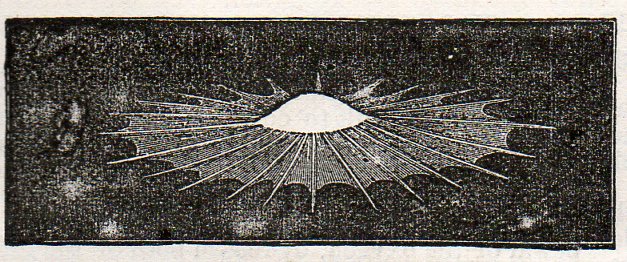
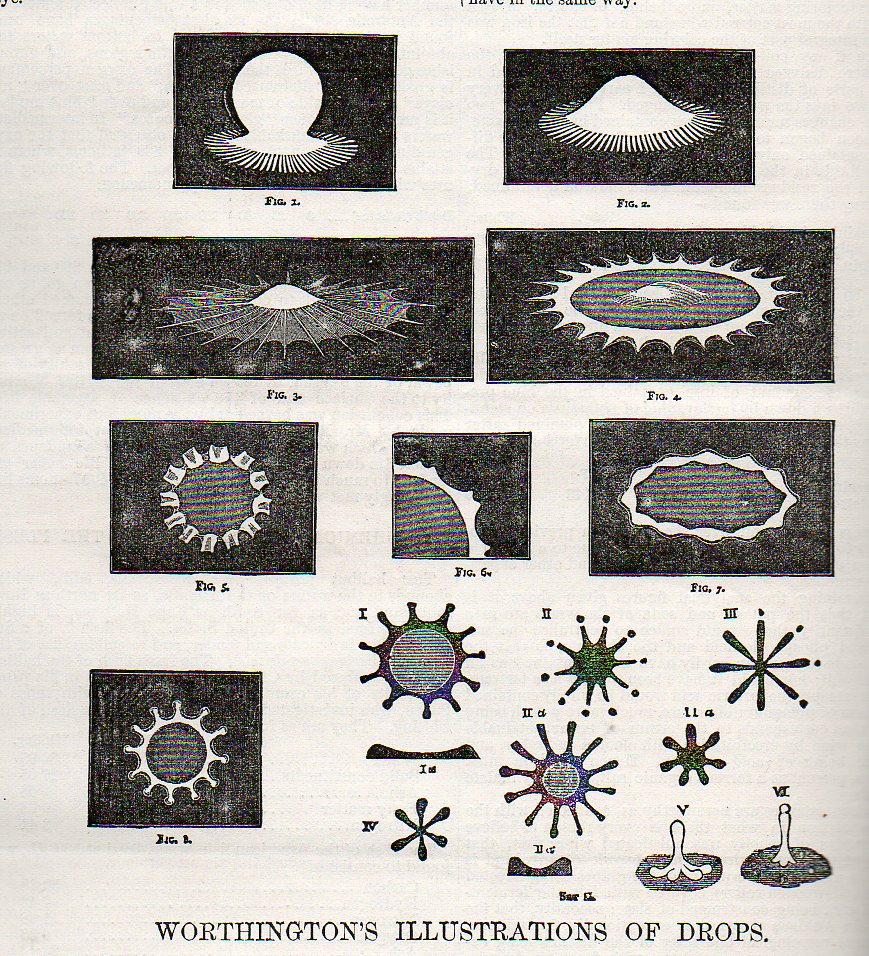
    A.M. Worthington published his extraordinary researches in capturing drops and splashes  just a year after the invention of the telephone–seeing his very quietly magnificent work would’ve been worth the phone call, even at those heady rates at the beginning of the new medium. Worthington was the first in his field, and for a short while, before he told anyone, he was the only person on the planet who had ever seen the fantastic complexity of this very common and previously-simple event.   In its own way these photographs showing the deformation of a drop of milk (and mercury) were as much a revolution as the images shown by Robert Hooke in his epochal Micrographia in which he (just about the next-best-thing to Newton) introduced the fabulous complexities of the previously microscopical world(s). 

    Worthington and Hooke are two in a long line of people who brought  unseen worlds into the visible sphere.  Isaac Newton’s (1642-1727) reflecting telescope (1672) gave a brighter vision to the observable universe; Galileo Galilei created an observable universe an order of magnitude larger than ahead ever been seen before in just one action, in one evening.  Christoph Scheiner put a face on the sun in 1611, Henry Mosely gave geometrical growth patterns to the nautilus shell in 1838, James Fraunhoefer found out the chemical constituents of the sun in 1814, Watson/Crick (and Rosalind Franklin, really) emerged the helix of DNA in 1953, Wilhelm Roentgen presented pictures of the internal structure of living humans without a single drop of blood in 1895,  and on and on, all providing us with spectacular images of what these people saw.

    Chladni’s images of the vibrations made from a bow on a violin string caught on sand-topped metal plates:

    ernst chladni cimatica onde modali
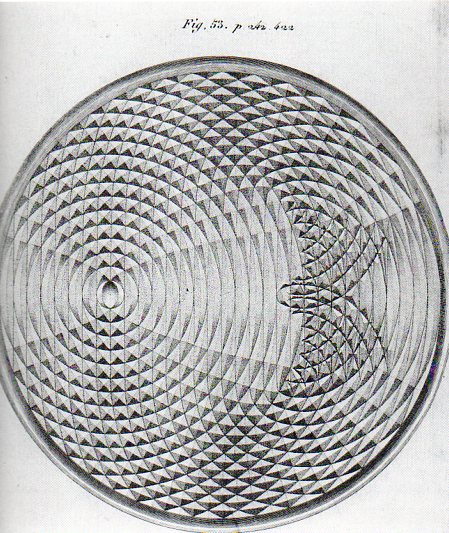
    Adding mercury to mercury: the sensational drawings by the Weber brothers as they observed the changing wave frontsmade by a drop of mercury into a pool of mercury:
     
    Weber acoustics461

    Worthington’s visions into the small, oblique world of ephemeral occurrences gave these things a wider world to themselves; seeing their structure, their complexities, and getting the viewer into their tiny worlds made everyone who could think about such things a better person for doing so.

    The series of semi-photographic images that Worthington was able to make of the drops and splashes could not be readily reproduced in his short article (“On Drops”) published in the Scientific American  (25 August 1877, and available for purchase at our blog bookstore) at this time–the half-tone was still a few years away, and the only way outside of making a drawing after the photograph in 1877 would’ve been a process (like, say, the Woodburytype) that would have been much too expensive to use in a mass-market publication like SciAm. Also, the photographic plates in 1876/7 weren’t quite up to the task of fixing an image exposed so quickly.  Even when Worthington’s book is published on this subject–a popular effort in 1895–it reproduces the photographs as halftones but there are still many interpretative drawings of those images. (The belief in the Civil War images reproduced as woodcuts in places like Harper’s Weekly and Frank Leslie’s was very high–it was enough to know the woodcut was being executed after a photograph and not from drawings made on the spot by the magazines’ field artists.)

    This was some pretty sophisticated stuff, being able to freeze the action of a drop of milk as it exploded in slow stages on a flat surface–especially, again, when you consider that photography wasn’t yet 40 years old and was really only a half-decade or so into its first major revolution since the early 1850’s. 

    Perhaps though the most spectacular thing of all about seeing this dedicated series of images of an exploding drop of milk was that you could look at the series and imagine it all taking place in reverse . 

    The drawings and photos below are taken from his 1895 work, The Splash of a Drop:

    Drops 455


  • Selling and Costing-Out Digital Computers, 1959–When “Computers Didn’t Sell Themselves”

    JF Ptak Science Books   Post 1296

    “Computers do not as yet sell themselves.”–Lehman, 1959

    Computer--lehman223 Question:  what had 1000 transistors, 5000 diodes, 2000 resistors and 1000 capacitors, a team of ten and took 18 months to build?  

    Answer: an inexpensive, $12,000 digital computer in 1959.  

    Mind you this is legions better than what was happening in the mid-1940’s, with teams of hundreds and costs in the many millions, and much better than in the early 1950’s, when these numbers were of an order of magnitude greater.

    It seems to me that this short 1959 paper is at the upper end of a beginning concern–costing -out the price of a digital computer for second-tier interests.  “The Specification Development of a Cost-Limited Digital Computer” (by M. Lehman of the Israeli Ministry of Defense, and available here for purchase) was written for those businesses and schools with a definite low-end budget, the upper range of which was set by Lehman at $12,000 for “peripherals, hardware and programming  (or about $125,000 in 2010 dollars, sort of1). This figure was also exclusive of maintenance outside of the cost (at 15-20% of the construction costs overall) of designing and building the machine.

    This was some new thinking on providing lower-cost digital computers to a new market:  “in just ten years there has emerged a multimillion dollar industry largely dominated….by the giants of the electronics and data-processing industries…”.  Lehman was saying that there was a new opportunity for business to supply computers to “smaller research groups” who were “finding it increasingly difficult to obtain the backing which would enable them…to build an actual machine”.  There were other ways of doing it, and Lehman laid out the basic understanding of that procedure.  

    Lehman’s leading quote for this post was accurate–computers needed to be “sold”, as in salesmen and businesses actively engaged in contacting clients who would (“might”) benefit from having computeriaed part of their business. The computer manufacturer’s “staff will often spend many months investigating customer’s problems, possibly reorganizing his techniques and generally preparing teh ground for the installation of a Digital System…”

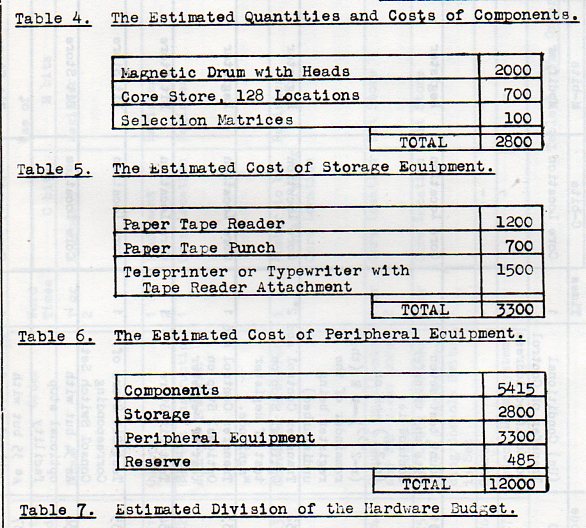
      Computer--lehman224

    (The figures in the right column are indeed dollars.)

    Lehman was doing some groundbreaking work here at the end of the ’50’s, still far ahead of the time–and probably a full generation–where computers didn’t necessarily have to be shown as being ‘needed” let alone
    “necessary”.  The computer would be “selling itself” on the low-end of the market soon enough, but really not until the Reagan years when it was beyond question that the computer could be used by virtually any person or business–at affordable rates.  

    Notes

    1.  Sort of, indeed.  Straight CPI translation would put this figure at about $125,000, but the other cost of things in 1959 compared to 2010 is a different structure.  Sure, it might cost out to 125k, but that $12k in  1959 could’ve been traded for a decent working-class house in a big city; you couldn’t trade that $125k for the same thing today, no way, no how.