A Daily History of Holes, Dots, Lines, Science, History, Math, Physics, Art, the Unintentional Absurd, Architecture, Maps, Data Visualization, Blank and Missing Things, and so on. |1.6 million words, 7500 images, 4.9 million hits| Press & appearances in The Times, Le Figaro, Mensa, The Economist, The Guardian, Discovery News, Slate, Le Monde, Sci American Blogs, Le Pont, and many other places… 5000+ total posts since 2008.

Category: History of Dots

  • History of Dots Series–International Dot Day, September 15, 2010

    Dots In celebration of the children’s book author Peter H. Reynolds (the storyteller responsible for the great The Dot and Ish books, among others) I offer up here a link to my own series of posts on The History of Dots. There’s three or more dozen of them by now, forming a background to the story of dots, periods and points in mathematics, physics, chemistry, art and social history:  there are posts on the the ends of a geometrical line,  the homunucleus, bacterial and cellular dot events, mole maps, a dot as the picture of the speed of light, pointilism, half-tones, televisions, stars, the great confrontation of dots and spheres in the multi-dimensional fights of Edwin Abbott’s Flatland, and a bunch more.

    There of course there is the History of Holes series, but that is another matter…

    ·Posted by :

    ·in:


  • Ovaries and Ovens–a Chance Encounter in the History of the Subjugation of Women

    JF Ptak Science Books   Post 1109

    A friend of mine started her facebook post writing “Ovary shipped out…”, a great piece of found story-beginnings, a great opening line, especially when ovariotomically removed from the rest of the sentence.  Alex is an artist and medical/anatomical illustrator by trade, so I knew what she meant–but forgetting that made the segment even more lovely. 
    Ovary homunuclus 1
    Aside from the fiction that the three words created and the half-word that I created/butchered, I wondered about when ovaries were first surgically removed, and then about how the ovary was seen (almost forever) as the home and birthing place of the fully-formed human delivered to it by men in the act of ya’ know.  Ovarian surgery really didn’t exist until the early 19th century, when it was practiced with great success (especially for its time1) by Ephraim McDowell (1771-1830), in 1809 in Virginia–and it was also about the first great American contribution to gynaecology as well  His first patient (“Mrs. Crawford”) sang her way through an anaesthesia-less procedure, surviving her illness and the surgery at a time when non-amputational surgery was half-fatal.2 There were other, limited reports of this procedure, but for reasons not clear to me it didn’t really start appearing as a general procedural possibility until mid-century.  Anyway, before the 19th century, women with ovarian cysts were pretty much out of luck.       

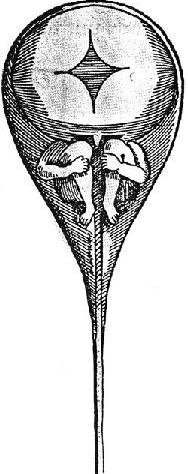
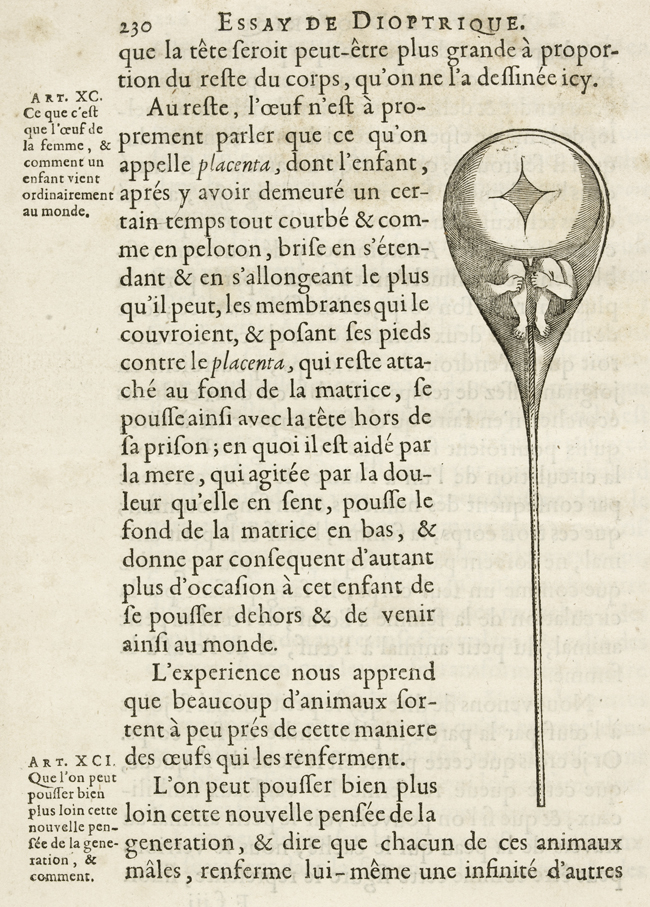
    But the issue of the ovaries as ovens–of homunuclus and palingenesis and epigenesis, the imaginary male-dominant anatomy of reproduction–was pretty much somewhat solved by the end of the 18th century.  Or at least the homunculus, the tiny but perfectly formed miniature human traveling along in sperm, was.  This character is pictured here, riding in the squinty-eyed imagination of researcher  Nicholas Hartsoeker3, who desperately wanted to see the thing, and which found itself published in his book Essai Dioptrique  in 1695. 

    The woman as a simple baker of a gift of preformed life was a medical belief that helped perpetuate the supposed inferiority of women, and that the woman’s part in the procreative process was a simple oven.  It was a difficult image/belief to resist, persisting well into the 19th century.  Anyway, this is where my thinking took me–to the anatomically-inspired subjugation of women–from Alex’s comment.
    Ovary Hartsoeker
    ____
    Notes

    1. This was still in the deep, dark time for hospitals and surgery, in general.  Remember that Joseph Lister was still a half-century in the future with his revolutionary surgical practices that were invaluable to the cause of successful surgery.  And hospitals in general were bad throughout Europe, though their story in England at this point was entirely different.  The Brits really took steps forward in the treatment of the sick, and especially in the treatment of the poor sick, thanks to being a little awash, splashing around in waves of money provided by their contributions to the industrial Revolution.  Funny how it takes major mounds of money-making to initiate good works like that, but, never mind the details–it was done, and hospitals in England during this period were comparative oases in regards to European/Continental hospitals. 

    ** McDowell’s first three cases were all successful , finally published in the Eclectic Repository for 1816.  This was the first real foray into this field by the pioneering American medical institutions; obstetrics and gynaecology before this, and particularly in the 18th century, was pretty much in the hands of the French (especially obstetrics) and the English, and to some degree the Italians (particularly with Mascagni, Santorini and Spallanzani).

    **This is probably unkind and not particularly true of Hartsoeker, who never said that he actually saw the little men of sperm, and had simply postulated them.  Maybe the squinty-eyed part was imbued in the minds of others, though it was Hartsoeker who drew the images of the homunucli to begin with.  I think that he should’ve rested in his better cups–he was a gifted mathematician and a particularly good microscopist and optical person, and probably should’ve restricted his published biological theories to his notes. 


  • Unfathomable Dots–324,198 Stars and Knowing the Structure of the Milky Way, 1873

    JF Ptak Science Books  Post 1107 (Appended April 27, 2015)
    [A continuation of our History of Dots  series.]
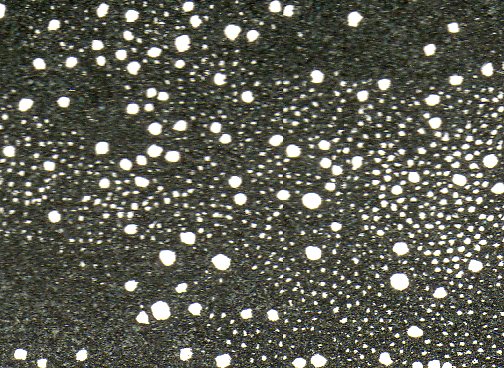
    Stars--vivible stars 2 det304


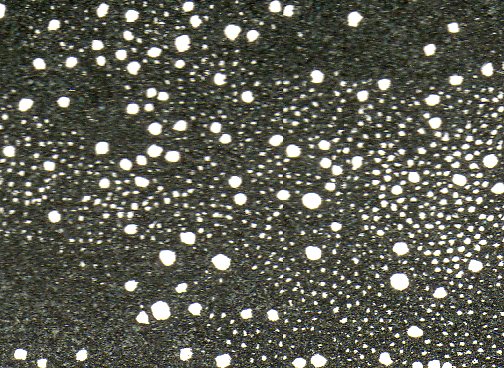
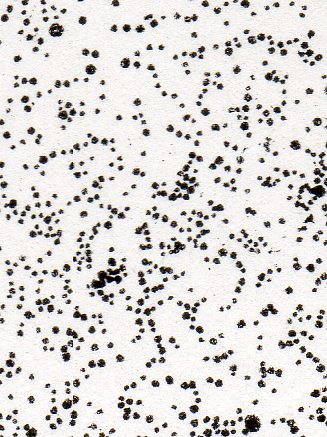
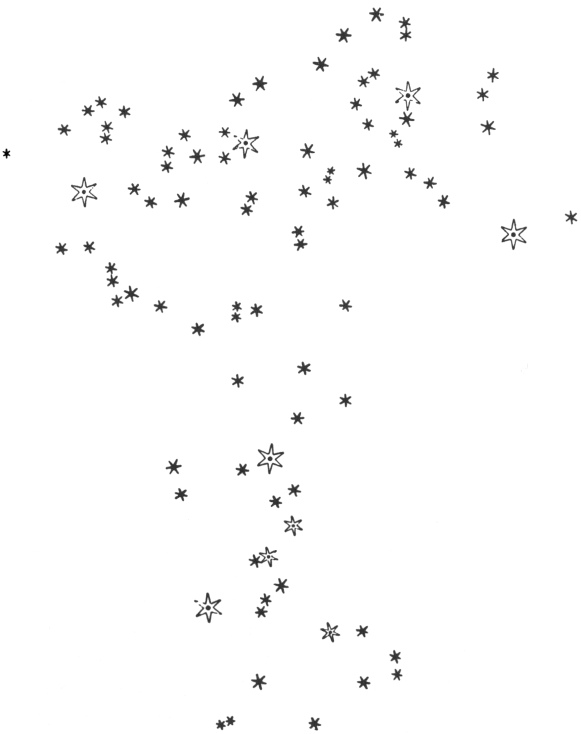
    The history of dots must have some fair share of its content filled with a very varied history of astronomy, which just goes to show that even within the seeming-sameness of microscopic investigations of dots that its subcategories could be so vast and differentiated. (The image above is a small detail from the following image, below.)

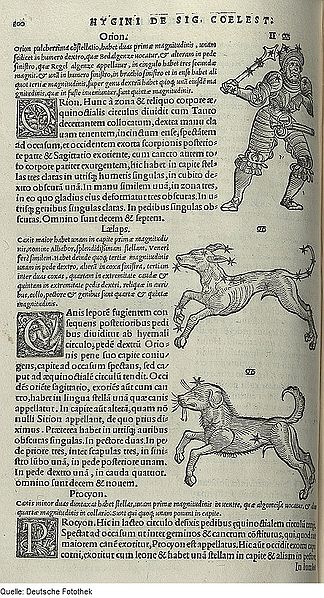
    Dots aren’t necessarily just dots–even in representing the stars, dots have a rich history. The first star-dots published in the West appear in 1482, taken from the work of the first century astronomer and philosopher Hyginius1, and is a book that contains maps of the constellations composed of such beautiful light-encrusted bits.  There wouldn’t be another work like this one, strangely, for another 75  years. Alessandro Piccolomini’s2 work of 1559 (which would be the first true star atlas), and again we see the familiar representation. 

    Galileo’s dots were very aggressive.  By 1610 he had produced his fifth and most powerful telescope, allowing things to be seen one thousand times closer, using it to make enormous discoveries–discoveries so big in fact that their towering significance is a but hard to understand today in the context of early 17th century knowledge. It was all published in his fantastic Sidereus Nuncius on March 4, 1610—the extraordinary  very title page3 of the book proclaiming some of the great discoveries of Galileo’s adventure.

    One monumental outcome of Galileo’s work was expanding the number of stars in the sky, which was basically mucking around with the perfect plan of the creator–formerly a cornerstone for the existence of a divine being.  With the exception of comets and eclipses the sky had remained immutable, a perfect score of the creator’s creation, until 1572, when Tycho Brahe noticed something new in Cassiopeia, something that was not a comet—a “something” that was a star. This was momentous because the night sky had been seen for centuries as being complete—a new star, the Nova of Brahe, contradicted this high belief, offering the possibilities of newness where there had not been one previously.  And so too with Kepler’s new star of 1602.

    One of the things that Galileo brought to the world was an entirely new sky, revealed to him through his telescope—so many stars that he could only guess (though he reckoned that there was an order of magnitude more stars than previously known “stars in myriads, which had never been seen before….and which surpasses the old, previously known, stars by ten times”).
       
    Which brings me to the images that I stumbled on today from “Statement of Views respecting the Sidereal Universe”4which was  the work of the astronomer and great popularizer,  Richard A. Proctor (“B.A. (Cambridge), Honorary Fellow of King’s College, London”).

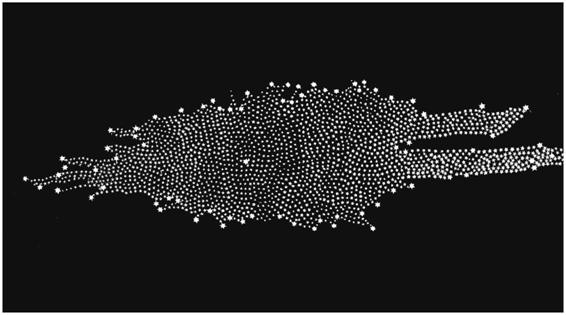
    Proctor’s dots challenge all dots that have come before so far as theorizing on the structure (and extent) of the Milky Way is concerned.  Proctor refers to William Herschel’s5–the man who first gave the Milky Way its shape and who fixed our own sun in an inferior and not-particualrly-special place inside that map–statement that the extent and constitution of the Milky Way is “unfathomable”. 
     
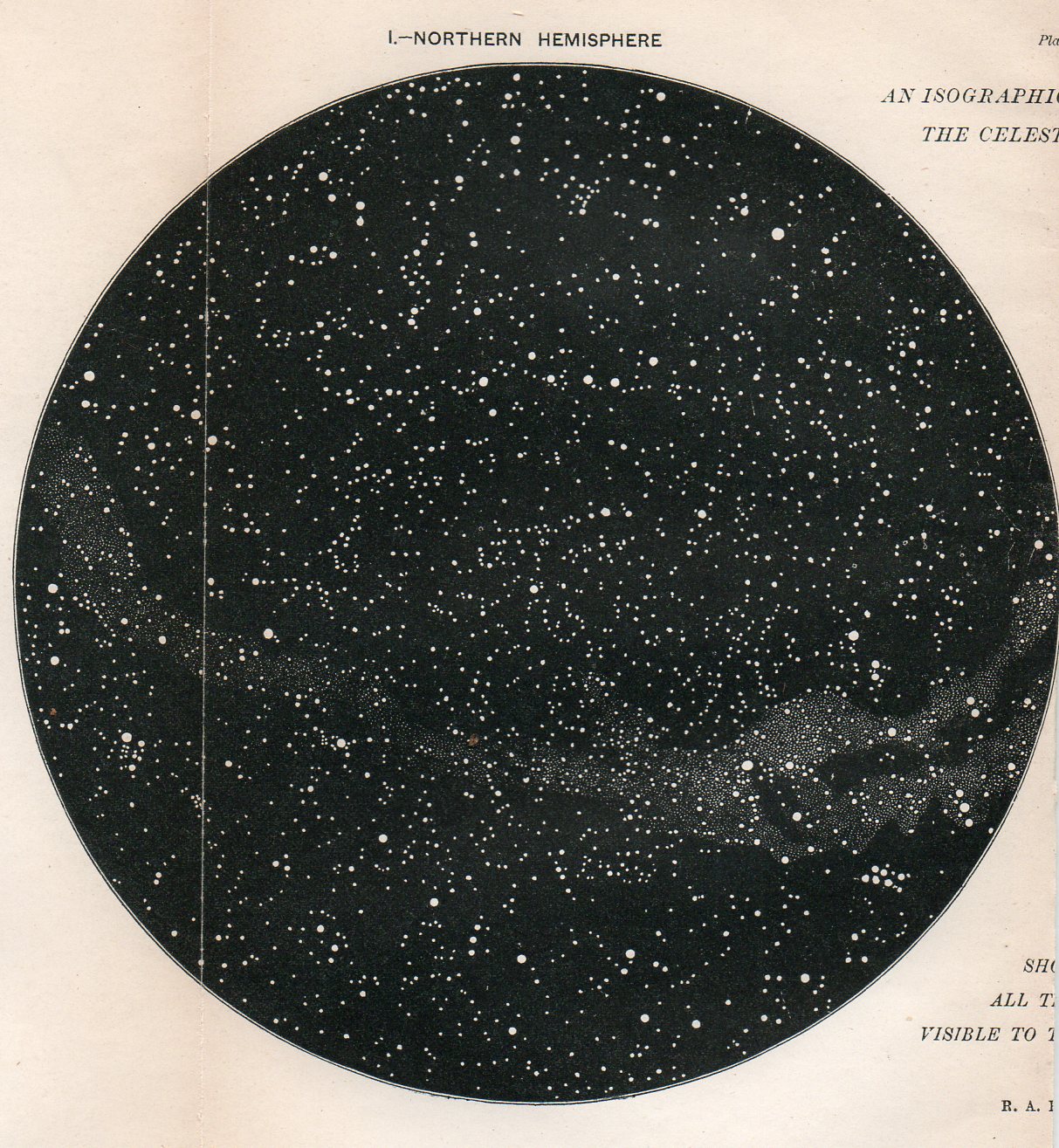
    Proctor gets there by presenting a map of the night sky with stars visible to the naked eye:
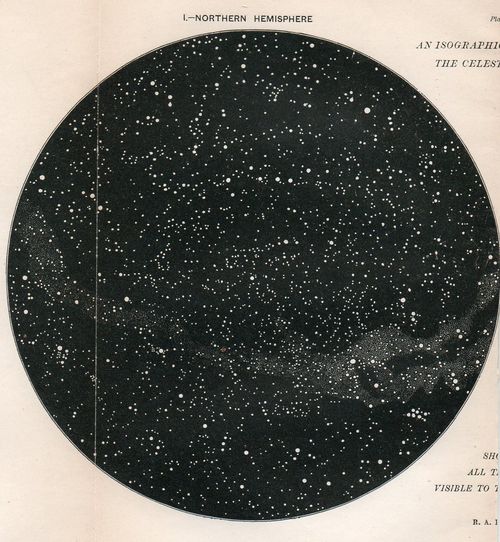
      Stars--vivible stars 2303
    And then the double hemisphere map of the northern and southern skies “We have here the first step towards just views of the constitution of the Milky Way, or rather the next step beyond the great, but little noticed, discovery of Sir W. Herschel’s, that the bright clouds of the Milky Way are for the most part spherical clusters of stars.”(Page 546.)

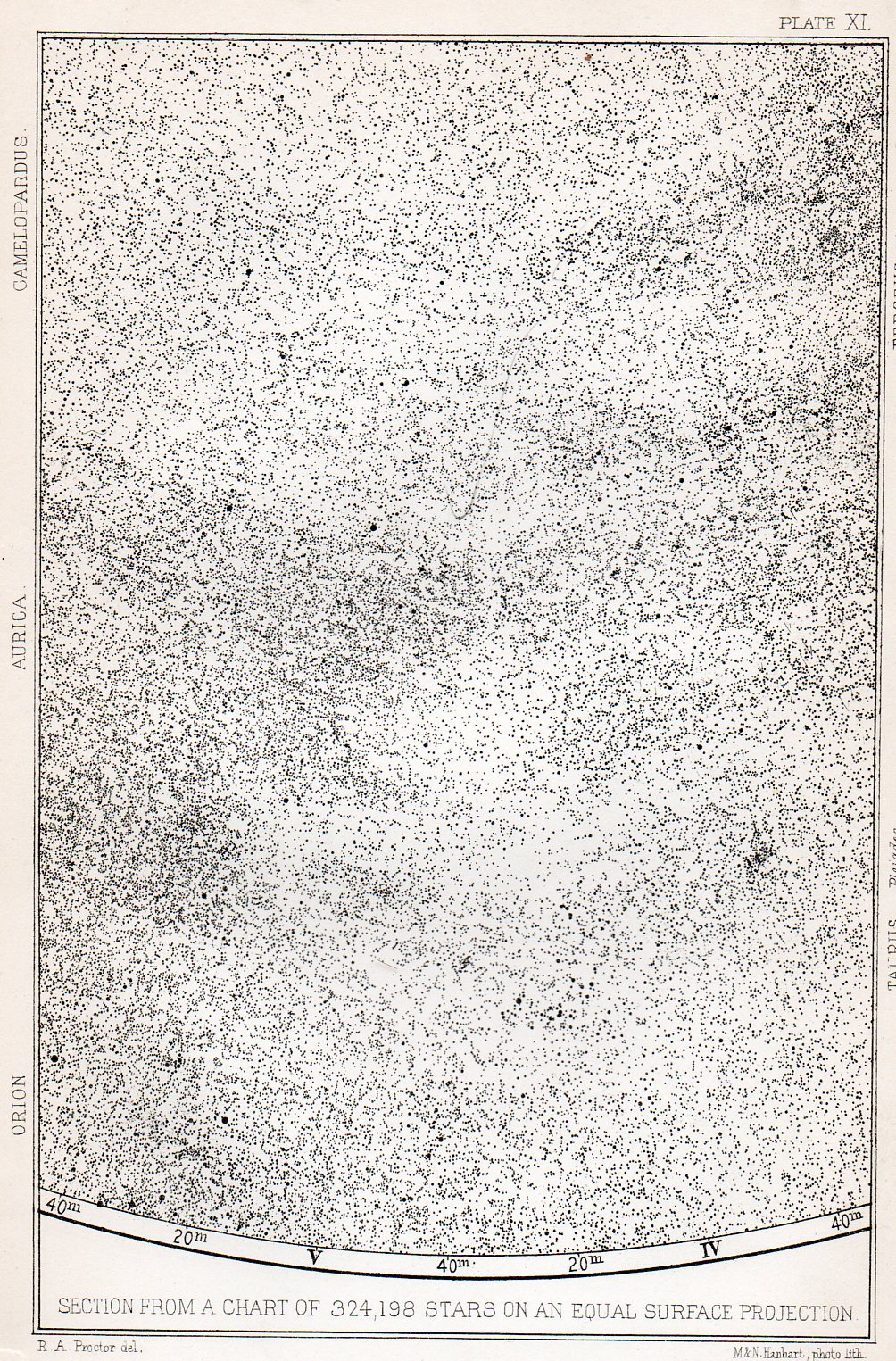
    Finally is the crux of the matter: two sections of an fantastic map displaying 324,198 stars visible via a 2.5 inch aperture telescope.
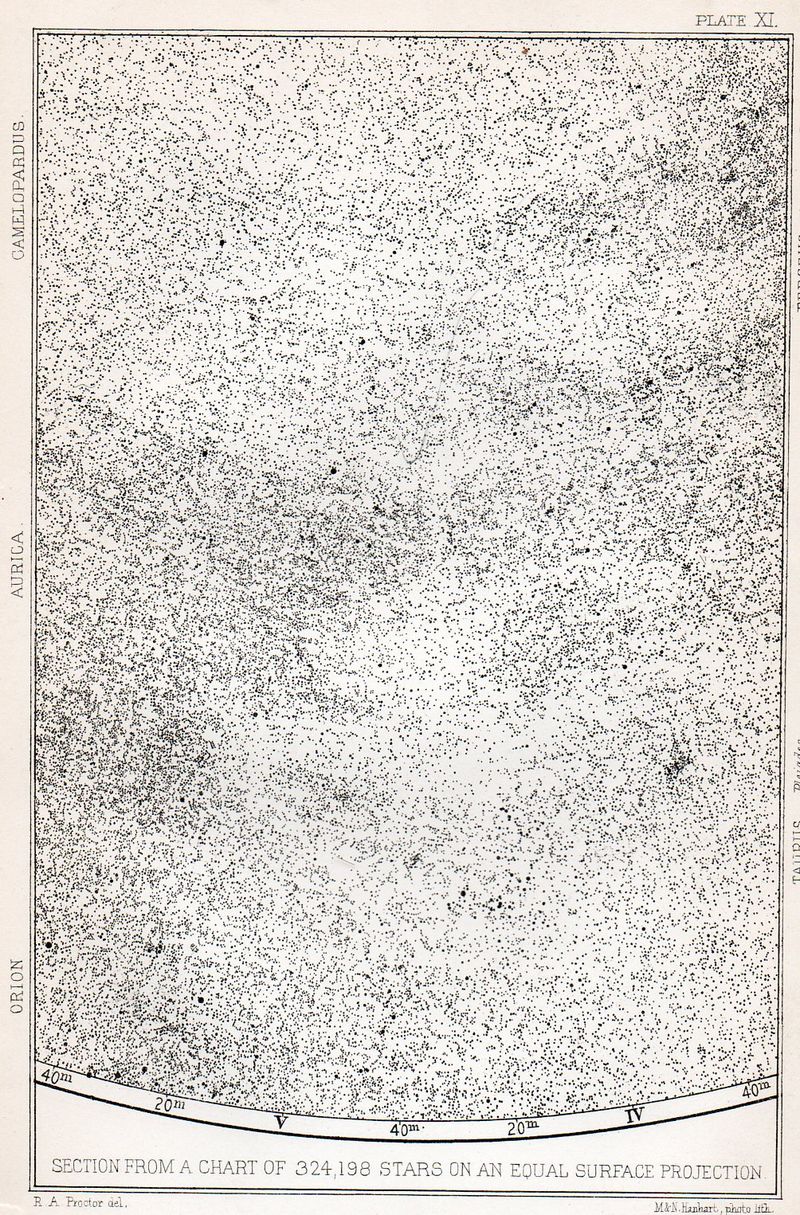
    Stars--324k300
    (The following being a small detail in the above section:)
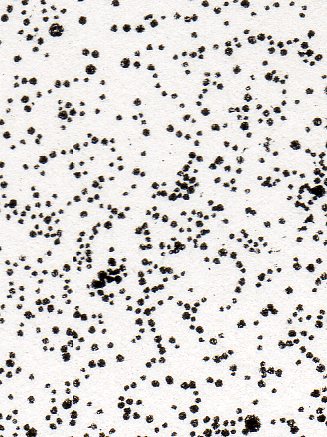
    Stars--324k deyt301
    He comments:“I assert, without the slightest fear of contradiction by any possessing such knowledge, that the broad teaching of the equal-surface chart. 0/3 24,000 stars disposes finally of all theories of the constitution of the sidereal universe which had previously been enunciated. The chart does not definitively indicate a new theory—rather it suggests the idea that the constitution of the sidereal universe is too complex to be at present ascertained. But it completely negatives (i), the stratum theory (even in the modified form apparently retained by Sir W. Herschel) ; (ii), the flat-ring theory of Sir John Herschel ; and (iii) the infinitely extended stratum theory, with condensation towards the mean plane, which Struve adopted.” (Page 547)

    I think that for 1873 the verbose Mr. Proctor got his point across.     

    Notes

    1. Hyginius Mythographus (fl. 1st century A.D.). Poeticon astronomicon. Edited by Jacobus Sentinus and Johannes Lucilius Santritter. Venice: Erhard Ratdolt, 14th October 1482. The first star atlas per se, standing alone in its field for a century.

    2. Piccolomini, Alessandro.  De la Sfera del Mondo.  1559                              

    3.  Galilei, Galilei  Sidereus Nuncius (known in English as Starry Messenger), published 1610
    The title page reads: Great and very wonderful spectacles, and offering them to the consideration of every one, but especially of philosophers and astronomers; which have been observed by Galileo Galilei … by the assistance of a perspective glass lately invented by him; namely, in the face of the moon, in innumerable fixed stars in the milky-way, in nebulous stars, but especially in four planets which revolve round Jupiter at different intervals and periods with a wonderful celerity.

    4. Journal of the Royal Astronomical Society, Paper, Abstracts and Reports of the Proceedings of the Society from Niovember 1872 to June 1873, vol XXXIII, London, printed by John Strangeways, 1873.                    

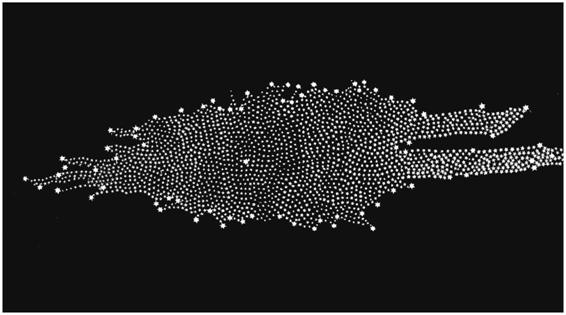
    5. It seems that few people now remember Frederick William Herschel as a great discoverer of alternative existences, but, well, that’s pretty much what he did–and he did it during a time that must’ve made his astronomical discoveries seem like science fiction .For example, in 1785 Herschel published a revolutionary image of the “Stellar System” (the Milky Way), showing its irregular pattern and the off-center placement of our sun amidst a panoply of other stars.
    (His image was remarkably and substantially correct, with the most grievous error being the placement of the sun too close to the center of the galaxy.) It was an image which bought the concept of a not so humano-centric idea into popular philosophy, and that our sun was a star among stars in a sea of stars.
    Herschel


  • Horse Poop and the Stars: Robert Hooke, 1673 (No, it Wasn’t Pegasus)

    JF Ptak Science Books   Post 1097

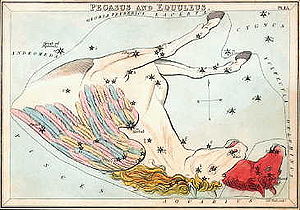
    Horse constellation Had there been no Newton every school child would know the
    name of Robert Hooke (1635-1703) in its place—he was polymathic, totally
    energized, big-thinking non-sleeping experimentalist and theoretician who
    worked across numerous disciplines (physics and astronomy, to chemistry,
    biology, and geology, to naval technology), not the least of which was
    architecture (having helped Christopher Wren in the design of the new St.
    Paul’s).  Hooke was a superb instrumentalist and inventor who also (for the most part) introduced humanity to the previously-unseen microscopic world (in his gorgeous and revolutionary Micrographia1..) .He was
    an enormous figure who was also never below a fight or argument, and whose
    grasp of his own very considerable accomplishments never seemed to be limited
    by what he had actually done in spite of his own tremendous and prodigious output.  Some people lay the blame for Hooke’s obscurity upon Newton’s great and tireless
    vindictiveness against Hooke, but that’s by far from the whole story of Hooke’s
    troublesome personal legacy.  Not only is
    his portrait not on the coin of the realm (like Newton’s) nor hanging everywhere in the halls
    of academia, but there is no known lifetime surviving portrait of the man, and the exact location of his burying place is not known. He came a little close to Newton’s
    enormity, and in the absence of  Jupiter and Saturn even the Earth starts to
    look a little bit big.among the rest of the planets.

    In addition to high genius and a man largely responsible for keeping together (and moving forward) the Royal Society, Hooke was also a hypochondriacal, meanish, semi-miser prone to receiving insults real or imagined, always very well aware of his place in history of of history’s possible sleights against him, and also prone to vindictive attack if the mood moved him. Newton too could be as sharp as sand in the eye, but he survived as a person, and Hooke sorta didn’t.  I’m not sure why, really, he seems so mostly-forgotten nowadays, priggishly envious idea-appropriating vindictive Despicable Me character or not–his swath of accomplishments was wide and deep as almost anyone else coming out of Britain for 200 years, which should be enough to send a lot of the historical personal detritus into the lost memory bin…but it doesn’t, or something else, but popular history just doesn’t work for the man.
    13_Portrait_of_Robert_Hooke

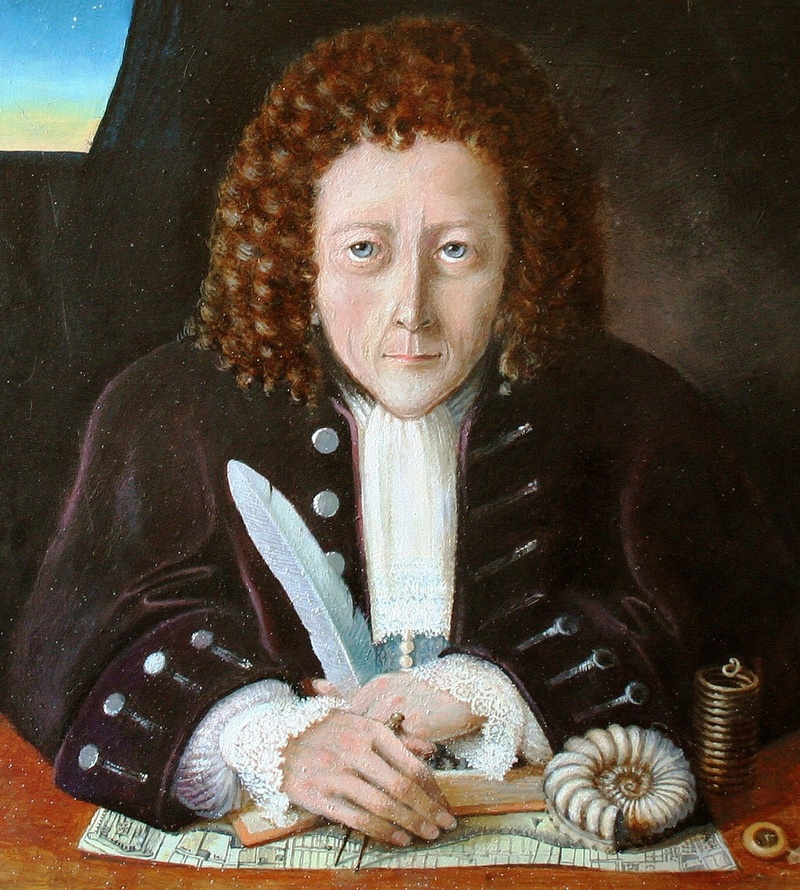
    Stephen Inwood’s The Forgotten Genius recalls the 1673 letter that Robert Hooke wrote to the Council of the Royal Society, complaining of a new wrinkle in his ever-wrinkling private life:  the garden that had been just outside his rooms had been converted into a “coaching inn and stables”, meaning that there were mounds of festering summertime horse poop within nostrils’ reach.  He wrote to the Council that he needed a new accommodation, to “free himselfe from sitting as he now doth in the suffocating stink of the stables hors dung and Jakes [privy], which hath bin a great cause of his late illness”. [The portrait is supposed to be that of Hooke, which is fine by me–I like this one.  It shows a very thin man under the wig and bulky clothing, clear blue eyes, tight mouth, translucent skins, surrounded by the implements and directions of his thought, not the least of which is the night sky over the sitter’s shoulder.]

    The changes were agreed to, but not quickly, and it was still December 1673 or so that Hooke got his hands on Johannes Hevelius‘ new Machina Coelestis, a book which contained what Hooke saw to be germinal flaws, fatal flaws to the advancement of astronomy–and of course varied affronts to his own innovations in astronomical instrumentation–but which were preventable. By him. Hooke had it within himself to attack anything or anyone, and so it came to be Hevelius’ turn, monumental stature or not. (Newton’s turn would come soon after.)

    Now there is only contrived evidence that the horse dung and suffocating stink threw Hooke over the edge–but I do like the idea of this being the case, and though probably no real historian would go this way, I like to think that it was this High Stink that helped Hooke in his large attack upon Hevelius.  Of course Hooke needed no pushing or prodding from outside sources, even if those outside  sources were already sort of within him.  But I do like the image of his pen and razor-sharp mind fueled by the poop mounds and privies.  

    I can imagine his knuckles turning an easy white as he read the book that charged against his superior optical method of sighting instrumentation for astronomical work, Hevelius clinging to some methods of the 16th century.  They fought, of course, and for the most part it was a lonely (if correct) fight by Hooke, his possible benefactors and allies at the Royal Society  turning out not to be so given personality clashes and such.  But I can imagine the Hevelius, and the knuckles, and the wrongness of it all, all brewing in the stank of late summer swelter of horse dung mounds, filling Hooke’s nostrils and wigs and everything else with a rage for a rage that already existed.

    And here’s a line I won’t very often get to use to close anything out:  the poop couldn’t’ve hurt..

    Notes:

    1. The 28-year old Hooke published the results in a gorgeous
    and revolutionary book, Micrographia (a lovely e-text edition appears at Gutenberg, here) in 1665, which became an instant
    best seller and highly praised and valued. (Samuel Pepys, perhaps among the
    shiniest stars whose imprimatur was like a royal blessing, said the book (was)
    “the most ingenious book that I ever read in my life.”) There is no
    telling what the people of the mid-17th century thought of seeing
    such incredible discoveries in the little semi-invisible stuff that made up
    their normal, daily lives.  The only thing that somewhat equates to this
    would be if the first images of the Hubble were those of Earth-bound objects
    whose detail had previously been unknown.  Hooke’s observations and
    drawings of things like the common flea were just an astonishment—that such a
    creature of “low order” could have such intricate detail and design was a
    complete revelation.  The drawings of the fly’s eye, too, was an
    inescapable wonder, an incredible object to consider as having any
    detail pre-microscope, and then revealed to have unimaginable design and elegance.


  • History of Dots #29: Making Things Abstract and Concrete at the Same Time

    JF Ptak Science Books   Post 1078

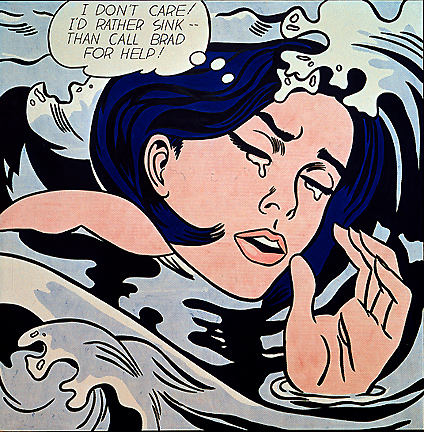
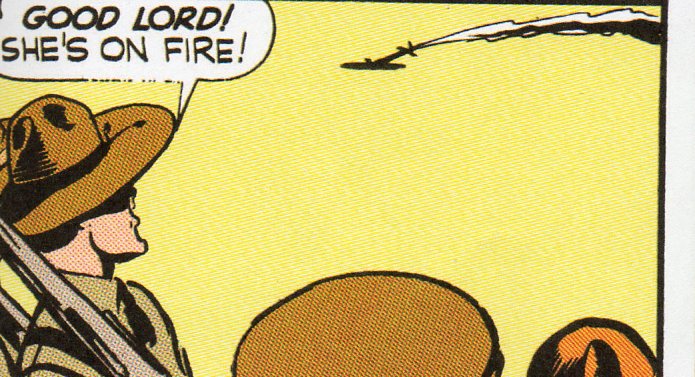
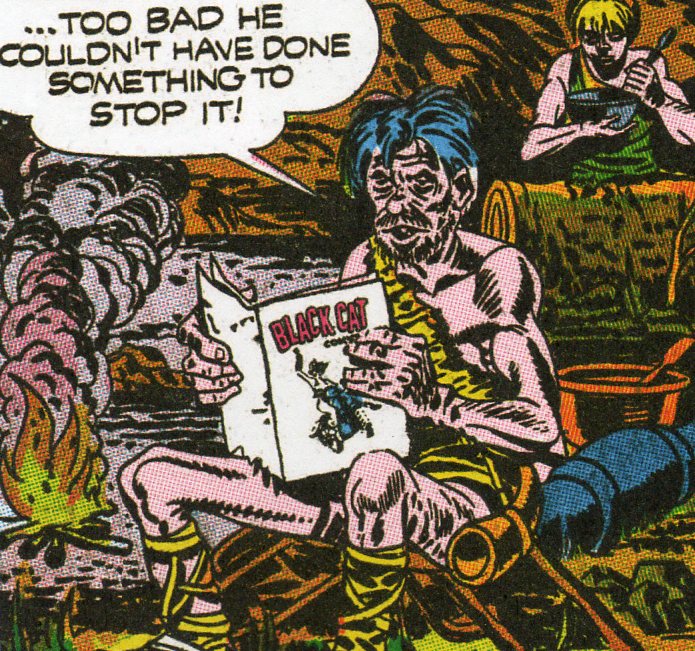
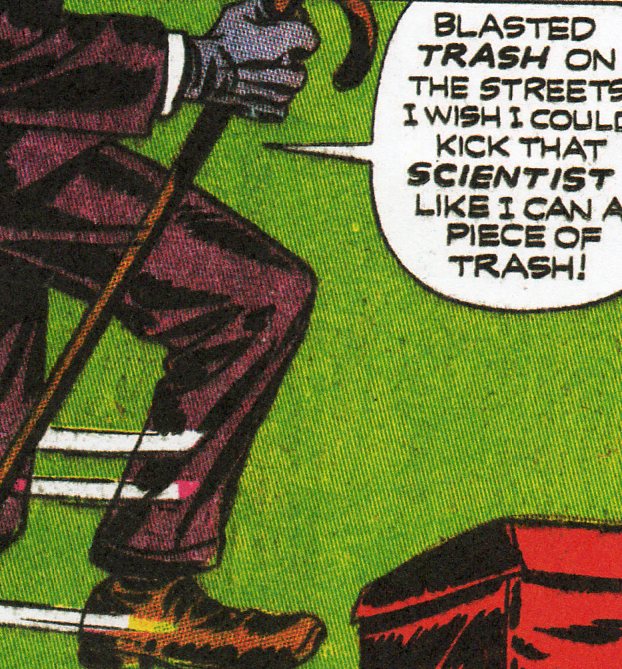
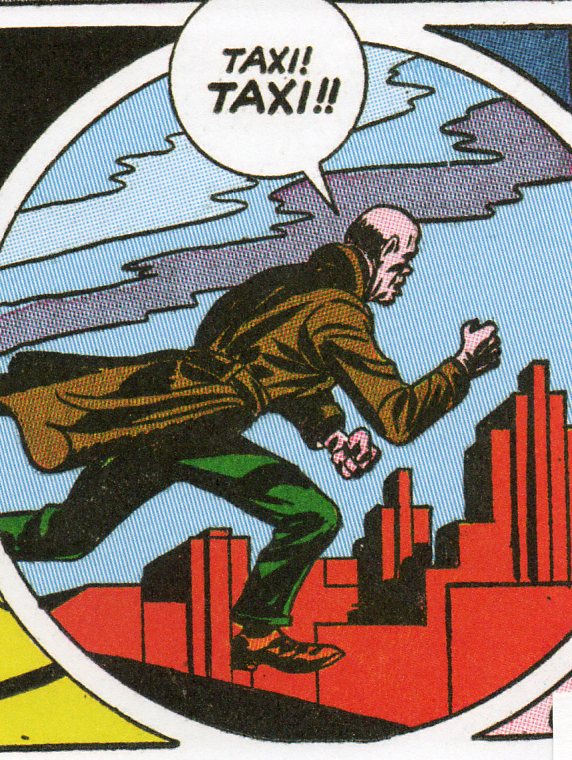
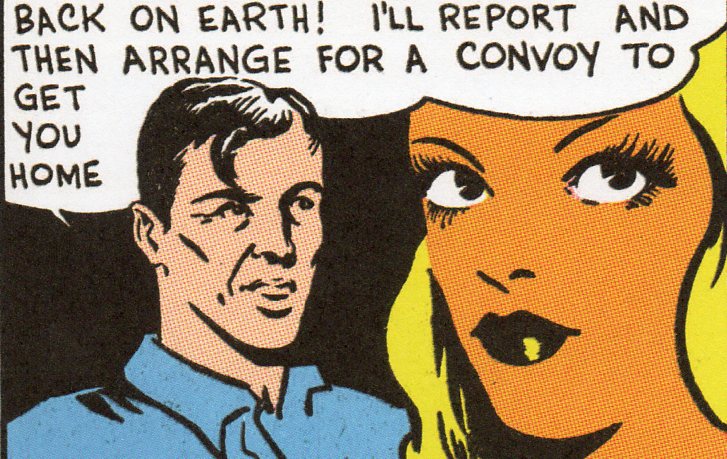
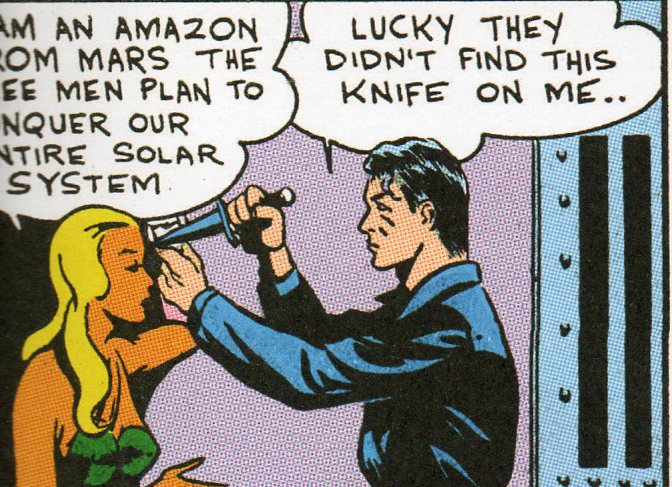
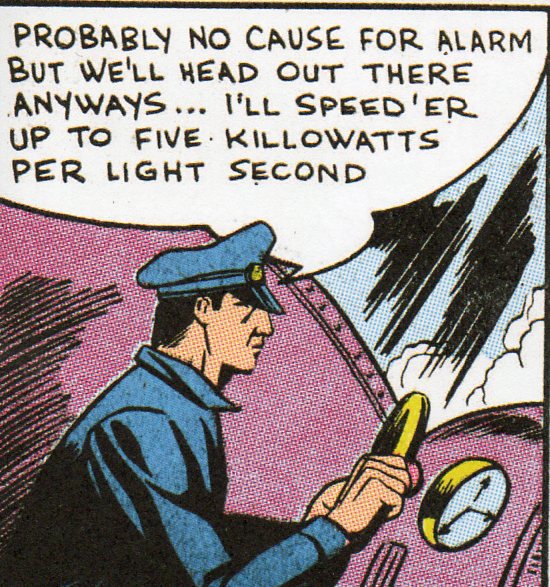
    [History of Dots series #29//Note: all images below except for Lichtenstein’s “Drowning Girl” are from Simon & Kirby comic books.]

    How are deep abstractions visualized?  Science and art were becoming
    more densely abstract at about the same time, the new modern age for
    both beginning 1905-19301 or thereabouts, when so many of the
    revolutionary advancements were made.

    Non sequitor193

     The representational world of art was slipping and disappearing (with the beginning of Cubism(s), Dadaism, De Stijl, Abstract and so on), replaced by forms and shades and colors, the subject of the art becoming less and less recognizable  as “things” until, finally, the recognition of the general stuff of nature (except for color) was gone.  Light, the interaction of molecules, the motion of atoms, were all becoming less comfortable as visual images and were being represented in terms of mathematics 

    How do we get to Roy Lichtenstein from here? I think that it is via abstraction and his connection to  the found non sequitor2 of the speech balloons in comic book images.  Lichtenstein’s style is very heavily derived from comic books and strips, except that he painted his images based on Ben-Day dots, strong lines and ultra-vibrant primary

    Lichtenstein_drowning_girl colors of Golden Age era comics.  And I must say that his work–in images and in captions–seem much less non sequitor than the enormous amount of these things that you can pull out at random from the history of comic books–that is, one can still see where the frames that he was painting came from in the sequence of the comic book story.  It seems more interesting to me if the one frame being depicted could mean absolutely anything, and that the story line was completely obliterated, sop that this one frame out of context really had no context at all.

    Lichtenstein’s style came about around the time that he started teaching at Rutgers, and in short order–in less than five years–he had a solo show at Leo Castelli Gallery (1962). His work was instantly recognizable, a true Popular Art, almost everyone having some sense of recognition for the origin of his artwork.  Beyond that, and whether his art was seen as art, is another story3.

    Non sequitor191

    But what I’m trying to get at here is this: did  Roy Lichtenstein create a template of  an abstract dialogic equivalent in a concrete, non-abstract way of the non-representational creation of Kandinsky and Braque and Mondrian?  Are the Ben-day dots that are the foundations of Lichtenstein’s style–and the images that can be simply found in comics from the Golden Age–the very concrete bits that compose a very concrete, non-abstract image-with-text that is totally recognizable but without any apparent meaning?  Just decades after dots–the compositions that were normally used to visually introduce ideas in physics and astronomy and chemistry and biology–were abandoned as the visual signifiers of enigmatic and increasingly-abstract domains, they were adopted as the foundation stones for an art that moved in the opposite direction from abstraction, except that its message was anything if not abstract.    

    I think that it is in this way that images of Schroedinger’s cat should’ve been illustrated using the Ben-day dot method, plucked from the pages of a Golden Era comic, all basic red, yellow and black, the uncertain image never at rest, always with the possibility of being the same and not the same, its great and simple representation having not necessarily anything at all to do with its message, a concrete thing that is totally abstract.
    ____________

    Notes

    1. You could break this period out a bit, expanding it from, say the pre-Impressionists (1860 or so) to the period just after Abstract art and the introduction of the new quantum theory (again, say 1930). Epochal changes took place across the sciences, medicine, the arts, literature….virtually everything. I cannot think of any period in intellectual history that approaches this 70-year period. Actually, the gargantuan changes can be shaved down to the period of Einstein’s living memory beginning with the stunning discovery of Roentgen’s x-rays in 1895 to the invention of non-representational painting in 1911. But for the larger piece, the longer time reference, we have Roentgen, Poincare, Boltzmann, Planck,  Strindberg,  Schoenberg, Cezanne, Seurat, Picasso, Braque, Leger, Joyce, Woolf, Malevich, Duchamp,  Kandinsky, Klee, Bohr, Heisenberg, and. Einstein–to name just a few–of the folks making monumental changes in their field. 

    2. By “non sequitor” I simply mean to say that the image, or text, or both, when pulled out of context, when removed from the story line, are almost entirely without reference to what happened before the panel or what would happen next.

    3.  Maybe Lichtenstein is art, maybe not.  Another art, Art Spiegelman,  commented that “Lichtenstein did no more or less for comics than Andy Warhol did for soup”.  Maybe so. :ichtenstein did say this about his own art:”I think my work is different from comic strips- but I wouldn’t call it transformation; I don’t think that whatever is meant by it is important to art”.http://en.wikipedia.org/wiki/Roy_Lichtenstein#cite_note-rlf-Coplans-1

    This might all seem terribly wrong, and maybe–worse yet–it might seem like nothing at all.  Perhaps if it were nothing it would be more appropriate, in keeping with what Lichtenstein said about his own work, what seems to me to be an inscrutable nothingness: “”The closer my work is to the original, the more threatening and critical the content. However, my work is entirely transformed in that my purpose and perception are entirely different. I think my paintings are critically transformed, but it would be difficult to prove it by any rational line of argument”.

    Non sequitor192 


    Non sequitor194
    Non sequitor195

    Non sequitor196

    Non sequitor197 Non sequitor198


  • History of Dots #28: Cellular, Topical and Astronomical (1512-1888)

    JF Ptak Science Books  Post 1074


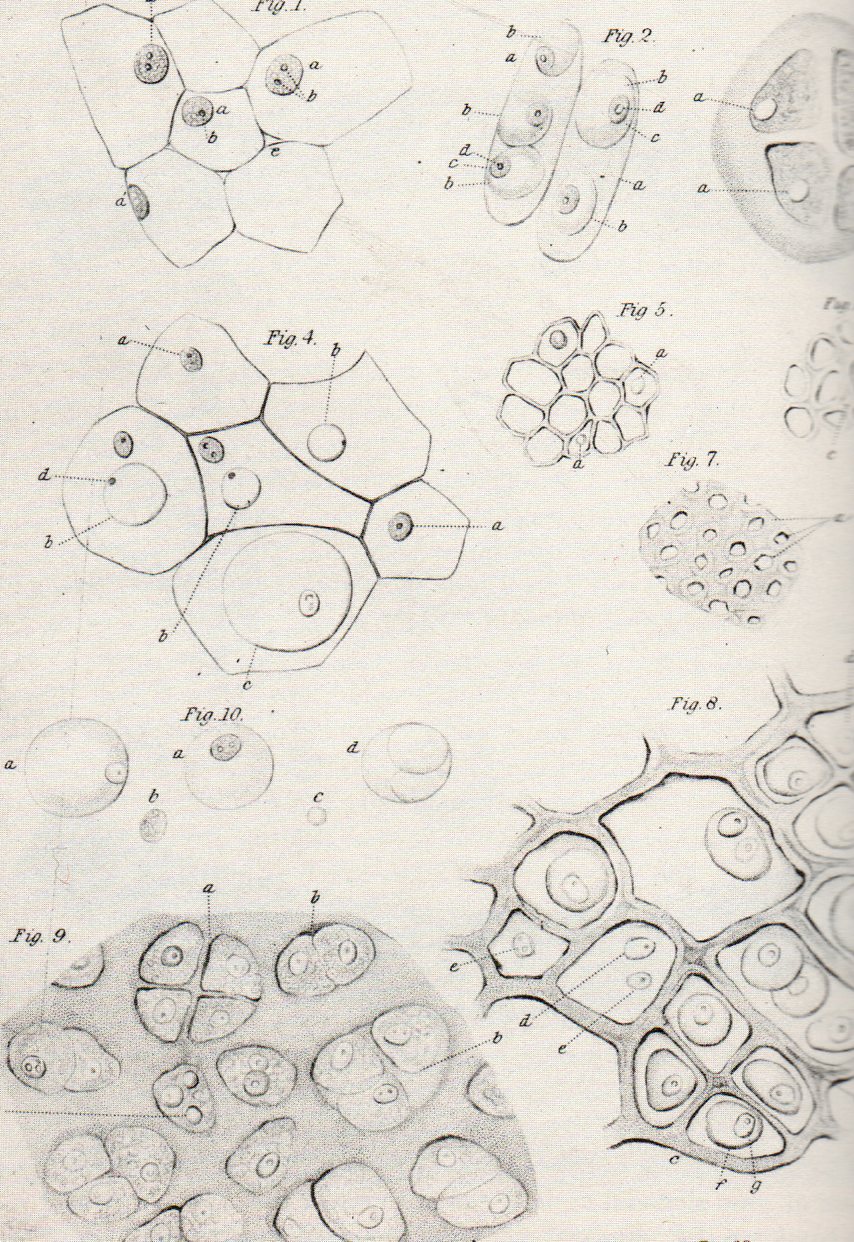
    Dots--koch175 This is  the 28th installment in the history of dots series, looking at dots big and small, existent and non-existent, cute and level, individuals and groups.  This selection looks at some dots on the micro/cellular level, the tactile visible level and the astronomical level. 

    Theodor Schwann (1810-1882) entered his contribution to the history of dots with his Mikroskopische Untersuchungen ueber die Uebereisnstimmung in der Struktur und dem Wachstum der Thiere und Pflanzen1 published in 1839, the same year as the announcement of the invention of photography by Daguerre.  Schwann–a young experimenter and theorist and former pupil of the great physiologist Joahannes Peter Mueller– generalized Matthias Schleiden’s general and evolutionary-necessary idea of cell-formation2 and developed it into an overall theory for the basis of life. 

    Dots--schleiden178

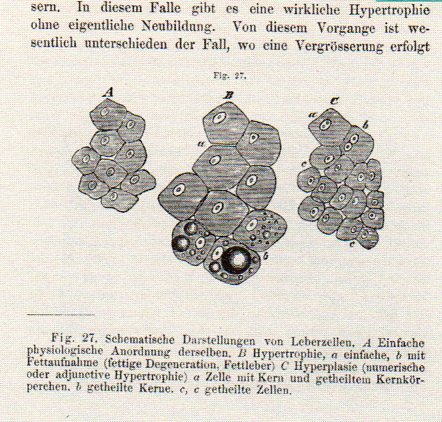
    Rudolf Virchow (1821-1902) looked at cellular dots and determined (with enormous interest) that they were very significantly altered with the introduction of disease.  These images from his Die Cellularpathologie (published in 1858)–a major work which basically founded the field of cellular pathology and introduced a rigorous new approach to scientific medicine–show the differences between normal and abnormal liver cells after having been subjected to disease. 

    Dots--kelendar176

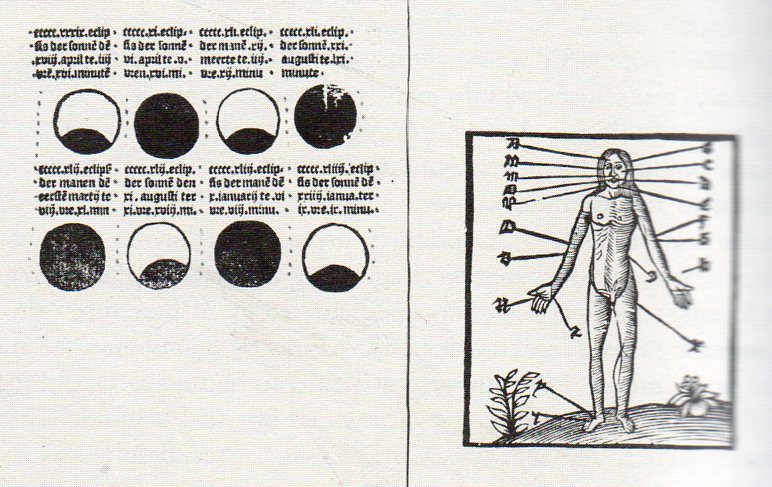
    A less-necessary but much larger dot that filled in the spaces of medical service to humanity is found in Der scaepherder Kalengier (“The Shepherd’s Calendar”), a beautifully-designed book printed in 1512.  The book was an encyclopedic compendium of contemporary medicine, but it also contained s little less than that, having a section of zodiacal dots and semi-dots in relations to principal points on the body that could be used for bloodletting. 
    Dots--jenner177
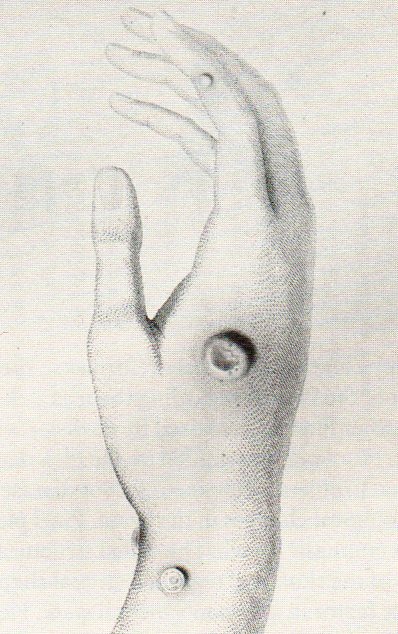
    Between the images of the sun/moon and the cell fit the dots of cowpox blisters on the hand and fingers of Sarah Nelmes, famously and inspirationally observed and understood by the Edward Jenner (1749-1823)3.  He extracted fluid from the blistered hand of Sarah the milkmaid and injected them into a very young “assistant” named James Phipps–essentially it was human experimentation carried out by a country doctor far removed from the culture of London, but who had a brilliant idea.  He continued extracting the injecting the pus from the blister until it came one day that Jenner tried the efficacy of his anti-small-pox innoculations with the real thing, exposing the boy to the dreaded disease.  Phipps did get sick but recovered in a few days4, documenting the revolutionary idea of Jenner and taking a great step forward in the treatment of disease. (It took years, by the way, for Jenner’s discovery to be recognized by the medical elite, whose opinion of Jenner was low given his simple medical life as a country doctor.)

    Notes

    1.  An English edition was published in London in 1847 under the title Microscopical Researches into the Accordance in the Structure and Growth of Animals and Plants
    2. For example, a plant is a community of cells and the cell is the essential unit of the individual plant.

    3. Famously reported in his 1798 publication An inquiry into the causes and effects of the Variolae Vaccinae, a disease discovered in some of the western counties of England, particularly Gloucestershire, and known by the name of the cow-pox.
    4. Described by Jenner so: “On the seventh day he complained of uneasiness in the axilla, and on the ninth he became a little chilly, lost his appetite, and had a slight head-ache…..” but on the 10th day he was perfectly well….    In order to ascertain whether the boy, after feeling so slight an affection of the system from Cow-pox virus, was secure from the contagion of the Small-pox, he was inoculated the 1st of July following with variolous matter (Small-pox matter, ed.) immediately taken from a pustule……No disease followed…. Several months afterwards, he was again inoculated with variolous matter, but no sensible effect was produced on the constitution.”


  • History of Dots 27: Killing Bacteria–Human Experimentation with Conscientious Objectors, 1955

    JF Ptak Science Books  1073

    Medical and scientific experimentation on humans has a long and painful history.  In the early days it seemed much more acceptable to perform tests on people while they were alive more so than to cut up and autopsy their bodies when they were dead. 

    Human experimentation174

    William Beaumont–the “father of gastric physiology” –was also perhaps a very early leader in the field of bioethics.  Beaumont’s most famous series of experiments1 were performed on a living subject, but only with the patient’s full knowledge of the procedure and consent (and also with te ability to terminate the procedures).  (Part of the defense of the Nazi concentration camp doctor-monsters brought Beaumont into their courtroom as an example of early American compliance to their bestialities, but purposely failed to mention the pertinent rights of Beaumont’s patients, whereas their thousands and thousands of human subjects were in concentration camps and were treated without regard to any moral, ethical or humanitarian consequences.)  Claude Bernard–one of the 19th century’s leading experimental medical researchers and physiologists–reported in his monumental 1865  Study of Experimental Medicine… that a physician must  “… perform an experiment on man whenever it can save his life, cure him or gain him some personal benefit.”  Hopkins’ great William Osler (in 1907)  was entirely on board with the Bernard appraisal of the duties of the physician, saying that any new procedure or pharmaceutical must be used on humans before general release.         

    Then of course three’s the other side of the coin: the STD experimentation in the infamous Tuskegee case (1932), the widespread studies of the U.S. Army’s Chemical Warfare Service, the Cornell Medical School’s wincingly bad study that gave the name to the placebo effect, th e1942 Chicago malaria studies on inmates, the long series of atomic and nuclear weapons tests with passive involvement of sailors and soldiers, and on and on, back into dim history. (The experiments by the Nazi doctors and their Japanese Unit 731 counterparts  deserve their own categories.)

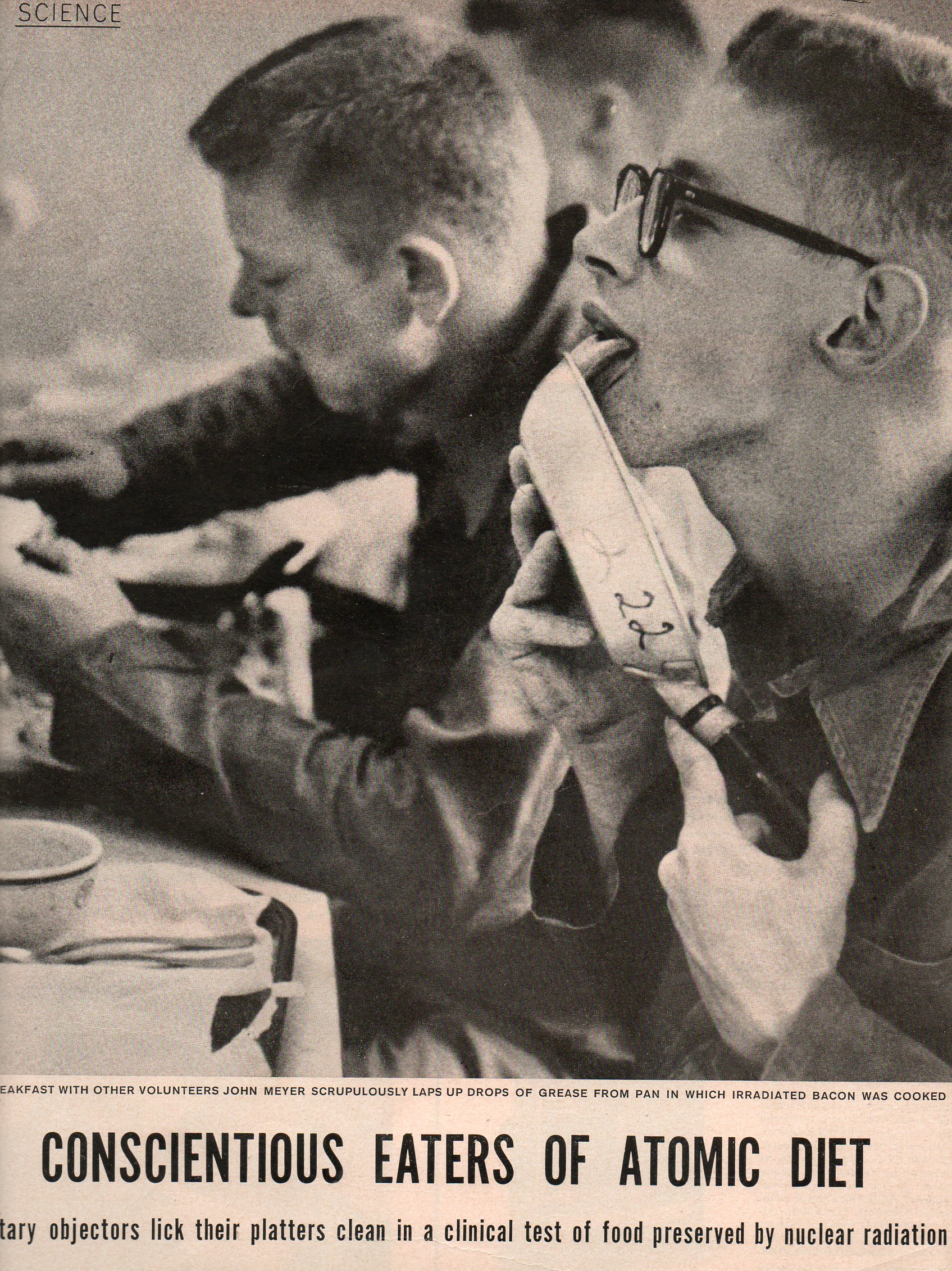
    This photo from Life magazine on the story (“Conscientious Eaters of an Atomic Diet”) of 1955 must be among the most wholesome general cover stories in the history of the idea of human experimentation.  These young conscientious objectors2 declared (for whatever reason, ethic, moral or religious) their inability to serve in the armed forces, and were sent to a different task to replace military service.  Their exchange would be to test the effects of nuclear radiation on food products. (This was the process of using radiation to kill bacteria and insects and whatever other living badie in food that might cause disease or illness of cause the food to spoil.  The long-term result for the military could be enormous, allowing for more inexpensive and less difficult ways to keep food for longer periods of time for troops, and could also keep troops healthier by eliminating certain food-borne illness that could spread from one person to another.)

    Still, what was being asked of these young men was far beyond the “debt” implied by their CO status. The effects of this sort of exposure were still not well known, and these men were absolutely being place in harm’s way, and for the cameras of Life.  The ideas of “Radiation sickness” and “Acute Radiation Syndrome”–created by the two atomic bombs detonated in Japan in August 1945–were only about ten years old at the point where these young men were licking the irradiated grease form their plates. (As a matter of fact there was no immediate medical research team in place to study the biological effects of the bombs in those two cities; after a few weeks and by the end of August there was a organization in place, headed by Colonel Ashly Oughterson.) These men weren’t going to suffer any radiation poisoning from the process (the ionizing radiation used by irradiators “was not strong enough to
    disintegrate the nucleus of even one atom of a food molecule”) , but the effects of irradiating food at this point were still not known.

    Notes:

    1. Published in his 1838 Experiments and Observations on the Gastric Juice, and the Physiology of Digestion.

    2. The business of conscientious objection to military service is milennia old; in the United States it goes back easily to the Revolutionary War.  It becomes a little less defined in the Civil War, where a CO or anyone else faced with military service could purchase a stay of service for $300 or provide someone in his place.   (In the CSA the same could be done but for a little more–$500.)    The whole business got considerably tightened up by WWI, and in WWII–when there was a spike in declarations by Cos–the code for declaration of objection to military service was considerably clarified, though not making it any less painful experience for the CO to endure.      In 1948 the worldwide  issue of the right to “conscience” was addressed by the United Nations General Assembly  in Article 18 of the Universal Declaration of Human Rights, part of which reads:  “Everyone has the right to freedom of thought, conscience and religion; this right includes freedom to change his religion or belief, and freedom…”
         
    During WWII the CO declaration form/questionnaire DSS 47 asked these ten questions:

    1. Describe the nature of your belief which is the basis of your claim.
    2. Explain how, when, and from whom or from what source you received the training and acquired the belief which is the basis of your claim.
    3. Give the name and present address of the individual upon whom you rely most for religious guidance.
    4. Under what circumstances, if any, do you believe in the use of force?
    5. Describe the actions and behavior in your life which in your opinion most conspicuously demonstrate the consistency and depth of your religious convictions.
    6. Have you ever given public expression, written or oral, to the views herein expressed as the basis for your claim made above? If so, specify when and where.
    7. Have you ever been a member of any military organization or establishment? If so, state the name and address of same and give reasons why you became a member.
    8. Are you a member of a religious sect or organization?
    9. Describe carefully the creed or official statements of said religious sect or organization as it relates to participation in war.
    10. Describe your relationships with and activities in all organizations with which you are or have been affiliated other than religious or military.

    For human experimentation, see also:

    Hoerni B. [Medical ethics. Evolution century after century] Hist Sci Med. 2003 Jul-Sep;37(3):331-8.

    Lyon J. Experimenting with humans. Part I: History and context. Second Opin. 1987;6:63-89

    Numbers RL. William Beaumont and the ethics of human experimentation.  J Hist Biol. 1979 Spring;12(1):113-35.

    For more on radiation studies at Hiroshima and Nagasaki:

    Archives: Atomic Bomb Casualty Commission. Issues in Science
    and Technology. Spring 1997. FindArticles.com. 21 Apr. 2008. http://findarticles.com/p/articles/mi_qa3622/is_199704/ai_n8759128.

    Atomic bombings of Hiroshima and Nagasaki. (2008, Apr 19). In Wikipedia,
    The Free Encyclopedia
    . 21 Apr. 2008.

    ABCC Collection at John P.
    McGovern Historical Collections and Research Center (Houston
    Academy of Medicine-Texas Medical Center Library
    ).

    Radiation
    Effects Research Foundation
    Home website in English and Japanese


  • Resolving Dots into New Worlds & Discovering Multiple Shadows

    JF Ptak Science Books   Post 1054    The  History of Dots series

    [Thanks to Randall Rosenfeld of the University of Toronto for sparking this post!]

    It seems that few people now remember Frederick William Herschel as a great discoverer of alternative existences, but, well, that’s pretty much what he did–and he did it during a time that must’ve made his astronomical discoveries seem like science fiction .For example, in 1785 Herschel published
    a revolutionary image of the “Stellar System” (the Milky Way), showing
    its irregular pattern
    and the off-center placement of our sun amidst a panoply of other stars.


    Herschel

    (His
    image was remarkably and substantially correct, with the most grievous
    error being the placement of the sun too close to the center of the
    galaxy.) It was an image which bought the concept of a
    not so humano-centric idea into popular philosophy, and that our sun was a star among stars in a sea of stars1.

    Not only that, but Herschel also made observations on double stars that showed that Newton’s laws of gravitation extended throughout the universe, and that it was possible for the stars themselves to submit to these laws and react to each other.  After constructing his mammoth four-foot telescope, Herschel expanded the observable sky multifold, showing that there was a possible 75 million stars now available for study.  And if the stars were behaving like planets then the actions of our own solar system seem perhaps to be not so unique; and with all of these new stars the possibilities for new planets and new solar system (and with that the possibilities for other life forms) seems a greater possibility.  

    And on these new worlds in these new solar systems there was therefore the possibility of two or more suns, meaning that there could be sets of shadows cast by anyone/thing on the surfaces of any of these new worlds.  

    In fact Herschel was able to show that our own Sun was following a prescribed path through the Milky Way, making Sol much less of spectacular enigma of mythical importance and more of just another starry dot in a sea of dots.  And while he was making the Sun into a starry dot he was also resolving those other starry dots into something of greater understanding and significance, bringing them into a systemic mechanism of the universe.

    Herschel also made an alpha/omega kind of discovery, as well–he marveled at  nebulous “holes”2 that he was finding in the Milky Way, thinking that, perhaps, he was looking into the very soul of the universe, at the place where stars were born. 

    This is extraordinary stuff coming to use from 200 years ago.  Few people have made such enormous and concrete contributions with such far reaching intellectual and philosophical implications.  So hats-off tonight to Frederick William Herschel, a man with big eyes.

    Notes:

    1. This
    galacto-centric view remained until the work of Harlow Shapley’s
    globular clusters in 1918.

    2. Specifically his famous and luscious “Coalsack” nebula.

    ·Posted by :

    ·in:

    —

  • History of Dots Series: Missing the Beginning of the Stars as Dots

    JF Ptak Science Books     Post 1029

    Dots--hyginus

    [History of Dots series]

    I was wondering when it was that stars began to appear as dots in celestial atlases or astronomical works–dots rather than starry stars, decorated spheres with crusty circular fire rings about them.
    I felt that at some near point in the history of astronomy that t he conventional antiquarian way of representing a star would fall away with magnification, or clarity, just as has been the opposite case with the magnification of simple dots to reveal complex structures, say with the amplification of the flea eye…even a graphite pencil’s period at the end of a sentence on a piece of paper will turn itself from a dot into something as complex as the coastline of England (given enough magnification).
    Dots--siderus The first star atlas published in 1482 after the work of the first century astronomer and philosopher Hyginius1 contains maps of the constellations composed of such beautiful light-encrusted bits.  There wouldn’t be another work like this one, strangely, for another 75  years. Alessandro Piccolomini’s2 work of 1559 (which would be the first true star atlas), and again we see the familiar representation.  I thought that this would change with the invention of the telescope, so I checked out Galileo’s3 beautiful account (pictured at left) of his discoveries in the Sidereus–again the same complicated, sawblade stars. 
    Dots--hevelius
    This has not been a very scientific search thus far, only checking handy notes and images that I’ve made.  But the same result has been true for the star images in Bayer4, Cellarius5, Hevelius6(at right), Coronelli7, Flamseed8,  Doppelmayr9 and Bode10. Even William Herschel’s fabulous map of the galaxy is a collection of these pointed stars.  I think that I’ve just missed what is normally seen by regular folks as a conventional reassignment of star images to something more “modern”–and if that’s the case it has simply passed me by. (It seems though that among all of these that Hevelius comes closest–he inverts the familiar star pattern to the interior of a sphere.)  And I continue to miss it.  I’ve worked my incomplete survey now pretty close to the end of the 18th century, and I simply do not have a close answer..If anyone out there does have it, please let me know.  
    Notes:
    1. Hyginius Mythographus (fl. 1st century A.D.). Poeticon astronomicon. Edited by Jacobus Sentinus and Johannes Lucilius Santritter. Venice: Erhard Ratdolt, 14th October 1482. The first star atlas per se, standing alone in its field for a century.
    2. Piccolomini, Alessandro.  De la Sfera del Mondo.  1559                               
    3.  Galilei, Galilei  Sidereus Nuncius (known in English as Starry Messenger), published 1610
    4.  Bayer, Johann.  (1572 – March 7, 1625) Uranometria 1603, which was the first atlas to cover the entire celestial sphere.
    5. Cellarius, Andreas  (c. 1596 – 1665): Harmonia Macrocosmica (1660, 1661, 1708).
    6. Hevelius, Johannes (1611 – 1687): Firmamentum Sobiescianum, sive Uranographia (1690).
    7. Coronelli, Vincenzo (1650 – 1718):
    8. Flamsteed, John (1646 – 1719): Atlas Coelestis (1729, 1753).
    9. Doppelmayr, John Gabriel (1677 – 1750): Atlas Coelestis (1742).
    10. Bode, Johann Elert (1747 – 1826): Vorstellung der Gestirne auf XXXIV Tafeln (1782).


  • History of Dots: Television, 1947

    JF Ptak Science Books    Post 1028

    Television is composed of dots–or at least for the greatest part of its history it was. I wonder if we measured the amount of televised images entering the eye/eyes of everyone around the world this year if that total numbers of hours is multiples of all television watched by everyone everywhere for the 1928-1995 period?  My gut wonders if it is orders (?) of magnitude more as there are more people, more television, more programming, more everything, everywhere, at any time.  And when you throw in hulu and tvshack and so on, doubt grows that the history of television to 1995 could hold its own against whatever it is people are seeing today. 

    1--may 13 tie dots tv schedule

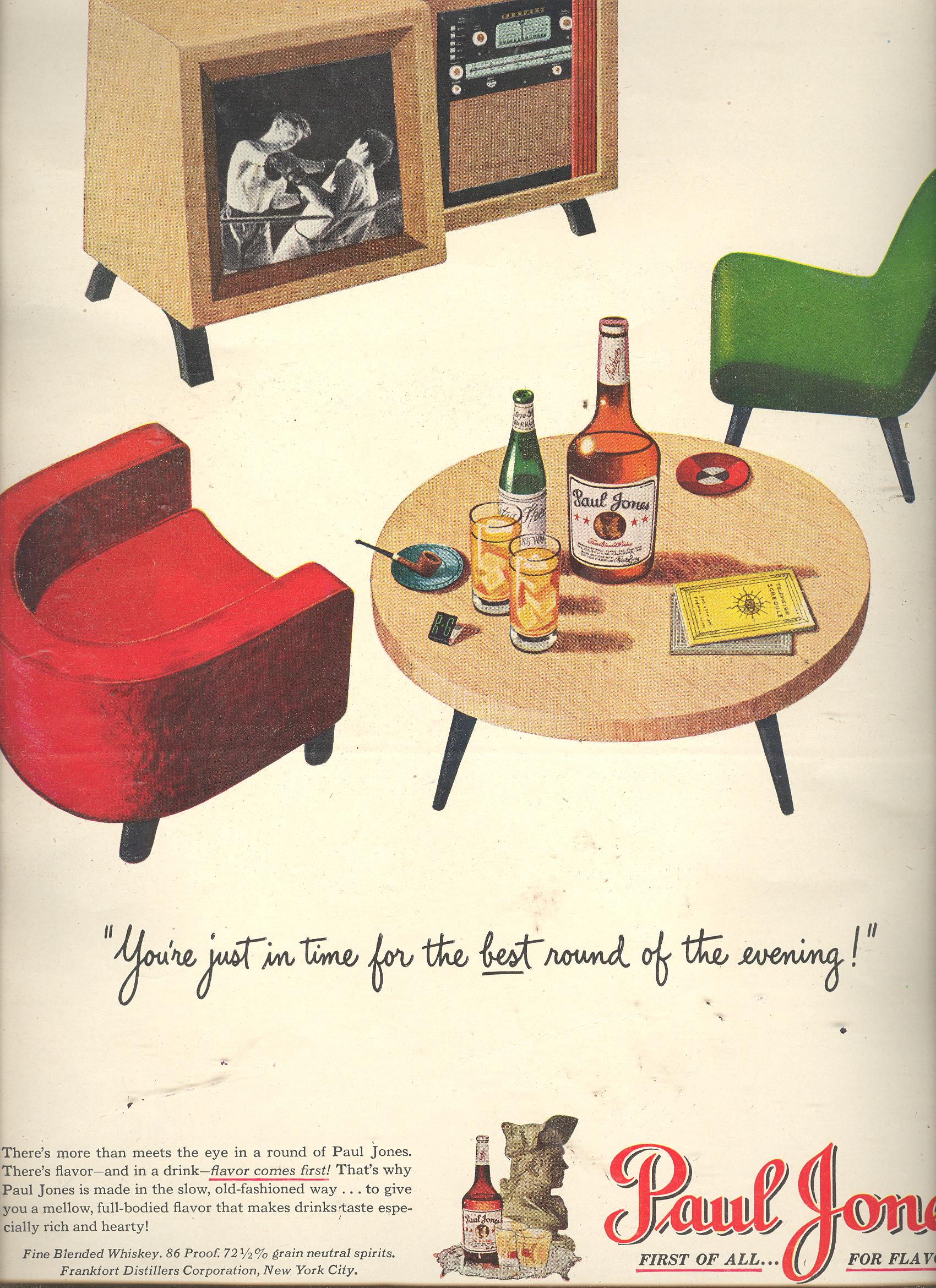
    This comes from seeing this ad (below, from which these details are pulled) for Paul Jones whiskey in a 1947 issue of LIFE magazine.  Big, 15″ screen for the fights on a Friday night, the built-in radio with its 12″ speaker ready to go, a pipe and matches (and no tobacco) at hand, and of course a very over-sized bottle of Paul Jones whiskey:  if we kept a constant perspective that bottle I reckon would’ve been about two feet tall, accompanied by foot-tall glasses.  

    1--may 13 tie dots tv det good

    Television was still in its formative period so far as mass acceptance and affordability goes–there were still only 14,000 sets in the U.S. in 1947. Today there are something like 250,000,000 sets in this country, or about 8 for every 10 people.  Worldwide the figures are pretty different:  on a  list of 209 countries for televisions per capita (where the U.S. is third) only the top 24 have tvs for every other person (the U.K. with 504/1000 is number 24) while countries with tvs for every third person comes in at #53 (Czech republic).  Jamaica, listed at #100, has 168/1000 per capita, which means tv distribution for the rest of the 109 countries on this list gets pretty scratchy–no doubt because a television would represent a sizable chunk of a family’s gross income for the year. Actually,  about 50 countries on that list have a population that survives on One Dollar a day–which doesn’t leave much for Sony and whoever might advertise on the set that these people can’t buy.  (Fox I understand is even now figuring a plan for a programming-over-food venue as a means to domination in a new post-Colonial world–Cuba won over, finally, with reruns of “Dallas”, making the population revolutionary over the stuff that J.R. Ewing has that they don’t but want..)

    The televised world is the thin veneer of the existing world that isn’t.  Anyway, here’s the start of it, all in beautiful black and white dots, selling a bad whiskey.

    1--may 13 tie dots tv

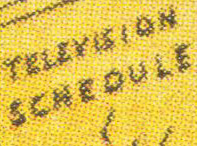
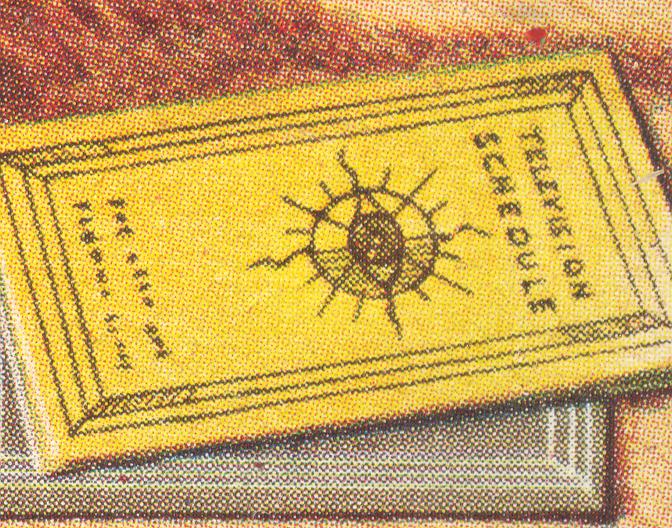
    The “Television Schedule”  is there, with an odd eye-on-compass logo that is barely visible before magnification. 

    ·Posted by :

    ·in: