A Daily History of Holes, Dots, Lines, Science, History, Math, Physics, Art, the Unintentional Absurd, Architecture, Maps, Data Visualization, Blank and Missing Things, and so on. |1.6 million words, 7500 images, 4.9 million hits| Press & appearances in The Times, Le Figaro, Mensa, The Economist, The Guardian, Discovery News, Slate, Le Monde, Sci American Blogs, Le Pont, and many other places… 5000+ total posts since 2008.

Category: History of Dots

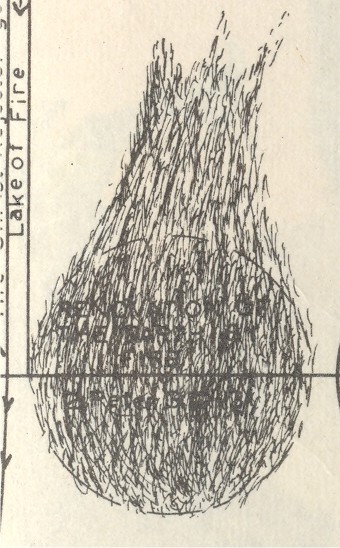
  • Pale Horses and the Lake of Fire: a Map to the End of the World

    JF Ptak Science Books LLC  Post 649  Blog Bookstore

    There are, in my experience, very few antiquarian images
    depicting the end of the world in which we see the entire globe exploding or in
    pieces or in flames. This sort of image gets more play in the 20th
    century, especially after 8 August 1945, but prior to that it is really very
    scarce.  I own a few images that appear
    in the 17th and 19th centuries, and another from 1929 (Das Weltbild which show a “giant ice
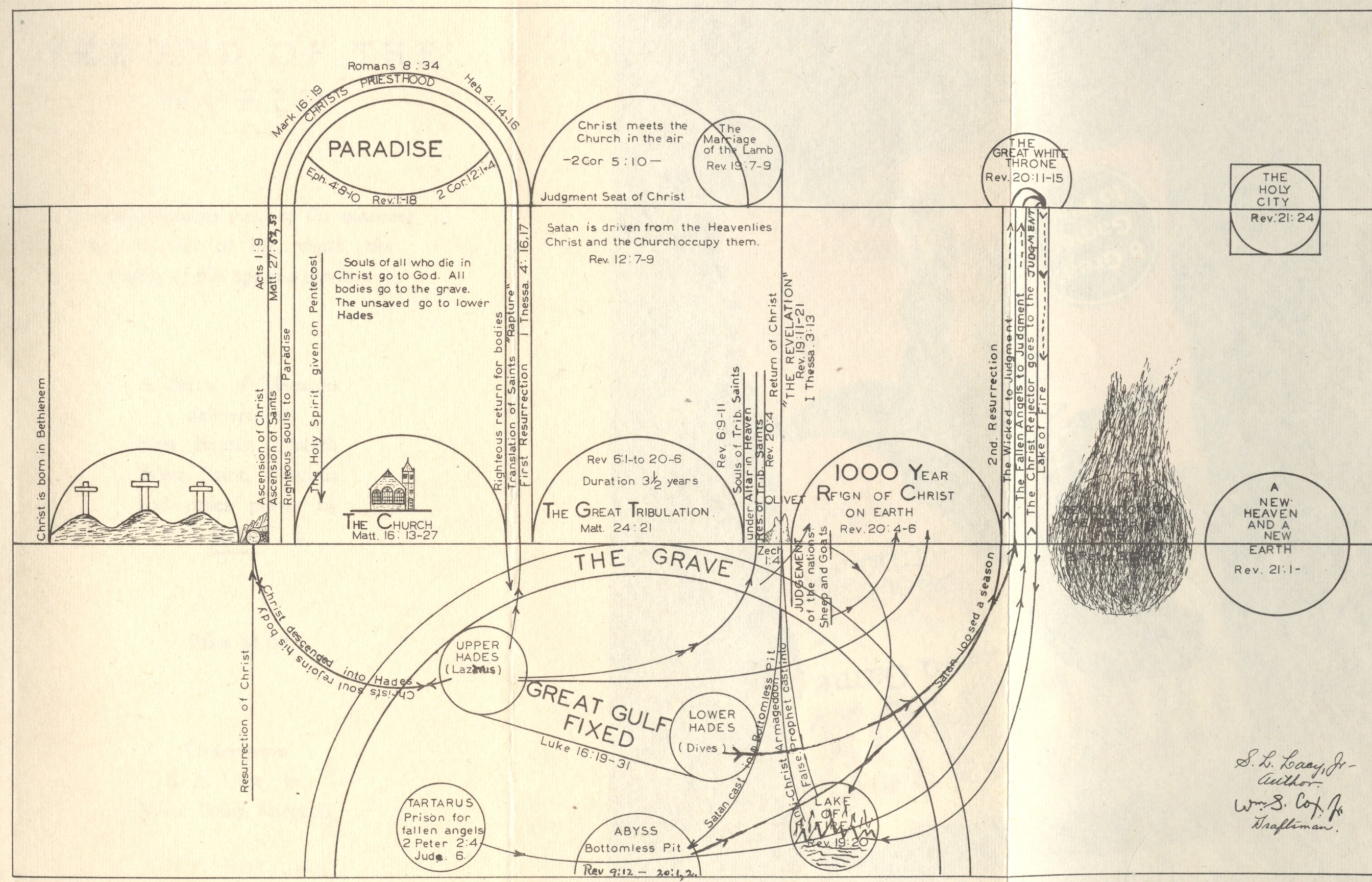
    ball” colliding into and completely destroying the earth). .  Then there is this new find, S.L. Lacy’s The End of the World, (necessarily) self-published
    in West Point, Virginia, in 1941.  It is a short and stocky, and bound in orange
    wrappers—its spine title (The End of the
    World
    ) begs the casual reader to pull it from the shelf. It’s a simple
    book—studying the Bible prophecies and revelations on the end of all things—and
    it annoys and is insulting but doesn’t disappoint.

    Blog--jun 13 end of the world

    I
    started to breeze through the book (back-to-front as always) and opened the
    book to Chapter XIII, finding this delicious chapter heading:  “The Chronological Order of Final Things”,
    this being a full page pre-PowerPoint summation of the time-shrinking fireball
    that is rolling inexorably towards us all. 
    To say that one is able to put a period at the end of the world’s flow
    of time, that someone is able to identify the point in the future where the
    future is no more, is “presumptive”–this in the most understated
    fashion as to offend even the highest of high-Victorians’ sense of restrained
    propriety.  Wrapped in a comfortable
    Christian chrysalis of pre- and post-apocalyptic religious certitude, Mr. Lacy
    delivers his interpretation of biblical prophecy for the coming of the end,
    hustling it to the front of the religious line of things to come.

    It seems that in 1941 the end was beginning, and Lacy saw
    all of the images implied by prophecy that were necessary to announce the
    glorious final days of broad retribution. This includes the list if the ten
    things indicating “the sign of The Times”, one of which (Number 5)
    was “The Automobile” and another (Number 7) was “Increased
    Knowledge and Travel” (announced by Nathum 2: 3,4 and old dependable
    Daniel. 12:4, respectively.  There’s
    nothing that doesn’t fit into Daniel’s visions or revelations, though Mr. Cash
    has certainly made a lovely song of them.) 
    When everything fits perfectly into a predictive model with no possibility
    of falsification (or of proof or disproof), then the model has no validity
    outside of a belief system in itself. Very tidy.

    Blog--jun 13 end of the world det

    It is an annoying, cloying minor treatise, promising little
    more than The Lake of Fire awaiting almost all of us, even the sleeping dead,
    who would be scraped from their graves to be spit into this burning
    tragedy. 

    Lacy does a lot of inspired interpretation and
    philosophizing, much of which he doesn’t seem to bother separating from
    biblical quotations—I don’t think it is intentional, just bad writing.  A random
    find in Lacy’s thinking dislodges the following  nugget:

    “Satan is in the atmosphere above the earth, with access to
    heaven and earth with a circumscribed power over the atmospheric elements and
    the earth including the inhabitants”. 

     Oh dear.

    But enough of this nonsense. What brought me to this work is
    the folding schematic map at the front of the book.  It is a slightly complex jumble of
    semi-circles and circular reasoning, and I have no interest in straightening
    out this jumbled linguine. What has my interest is the dissolving Earth part of
    the diagram, a part of the dead earth that comes between Calvary 
    and Heaven-on-Earth.  What makes this
    image different from the others though is that the Earth reappears—different from
    its former self having been vanquished and cleansed by all consuming fire, but
    the Earth nevertheless.  Or something
    like it.  Or nothing like it. 


  • Maps of the Cosmos of Moles, 1671: Astrology, Pseudoscience & Furious Belief

    JF Ptak Science Books LLC  Post 646  Blog Bookstore

    “The first principle [in science] is to not fool yourself.”  R.P. Feynman

    “The Woo-woo
    is all the same, everywhere, anytime, everytime.”
    —James Randi on the
    history of   the pseudosciences .

    Self-deception and belief in Woo-woo (spurious pseudo-scientific beliefs) is some of the stuff that separates humans from animals.  And not in a good way, unless it was all chalked up to an expression of creativity and imagination.  I started this post as an entry in the History of Dots category, then in the Blank and Missing Things department, and then simply to the Bad Ideas category.  But the more I thought about mole mapping and how extraordinary it was, the less extraordinary it became, especially once the veil of age has been removed. As it turns out, mole mapping is neither more nor less extraordinary than any other system of belief.

    Here’s
    a sentence one doesn’t get to write very often: 
    Richard Saunders (1613-1692) was perhaps the foremost historian, astrologer and seer
    of human moles and their predictive forces who ever lived.  He was far from being the solitary member of
    a one-unit class:  the use of moles as
    predictive and interpretive agents stretches back dozens of
    Blog--jun 11 circ mole

    centuries, so the
    claim of Saunder’s being its most famous practitioner is not empty,
    mega-pseudo-scientific or not.  The
    mystical commentary on the Torah, the Zohar (a part of the Kabbalah), gets
    right to the point of the significance of moles (“the stars of the body”),
    transferring the structure of the cosmos and the constellations to the
    skin.  The seer and soothsayer Melampus
    from Greek mythology, in one of his necessarily pseudographic works, writes on
    the importance of moles of the face and their zodiacal relations—an idea that
    was picked up 2000 years later by the extremely significant mathematician
    Jerome Cardano.  There was a decent
    amount of argument regarding the location of zodiac symbols on the face, as it
    turned out.

    But
    the leading exponent of moles is Saunders, who was also one of the leading
    figures in a wide and very powdery period of European non-scientific
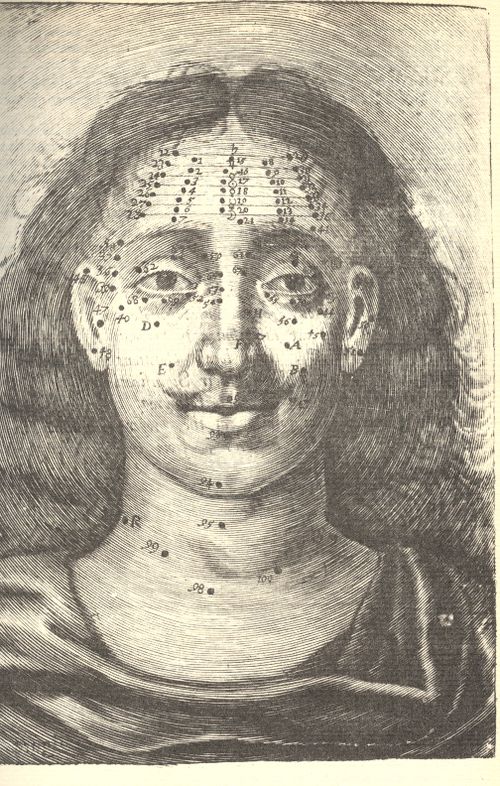
    sciences.  These wonderful images come
    from the second (!) edition of his cumbersome but accurately-titled work Saunders Physiognomie and Chiromancie,
    Metroscopie, the Symmetrical Proportions and Signal Moles of the Body, Fully
    and Accurately Explained; With Their Natural Predictive Significations Both to
    Men and Women
    (published in London, 1671, by Nathaniel Brook), in which he
    divines the psyche and the future with peoples’ moles. 

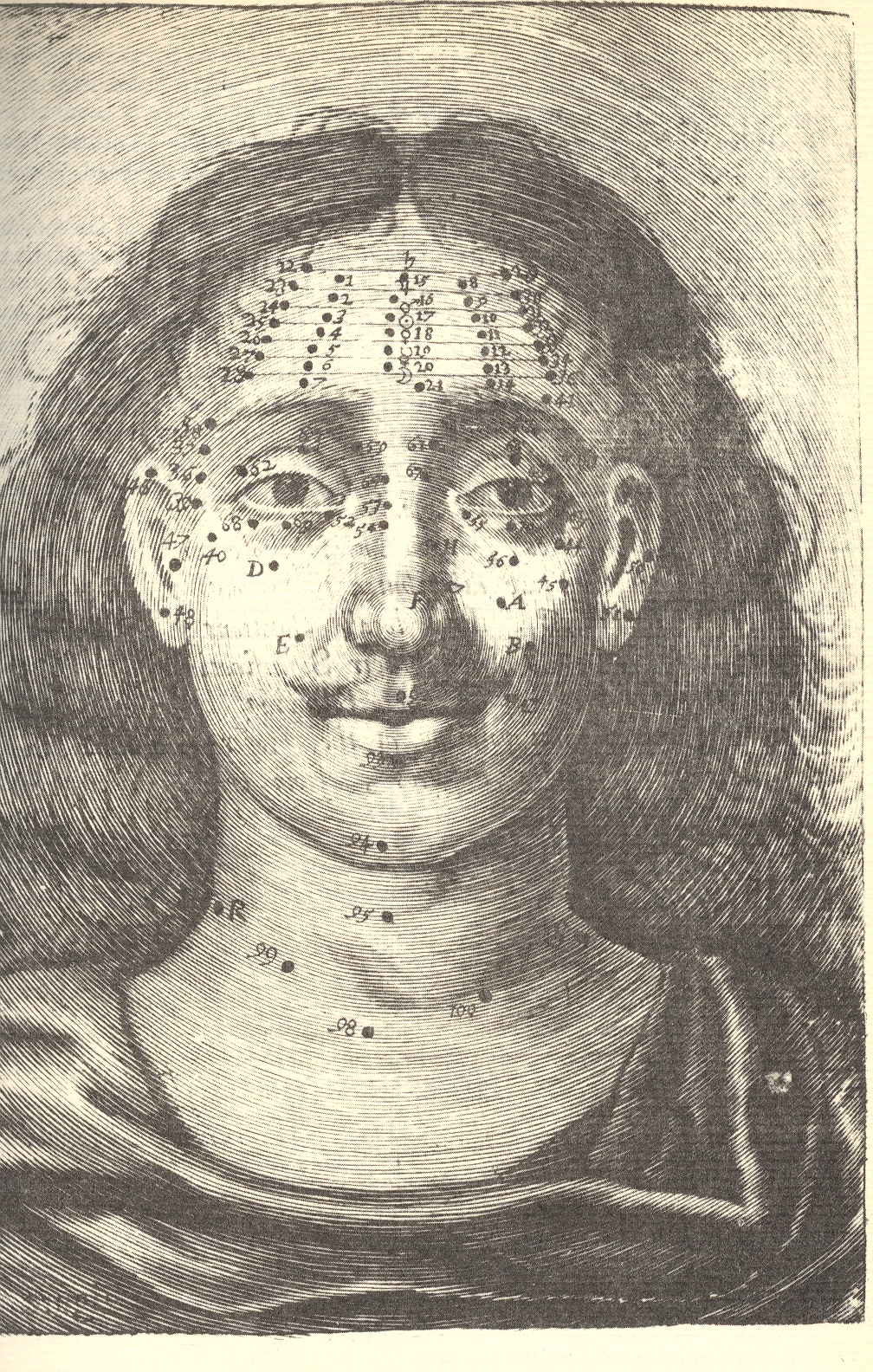
    The
    first figure, detailing the mole locations of a man’s face, is a remarkable,
    weird accomplishment, not only because of the exhaustive treatment that is
    given to every location of every mole (g_d help us), but also because of the
    manner of the engraving.  If you look
    closely, you can see that it is Fresnel lens-like—it is an engraving composed
    of (almost) concentric circles.  I cannot
    recall seeing such a thing before—needless to say the practice of engraving
    would be laborious, and not much practiced. 
    I’m not even sure what great good it causes, though it does give a
    little different idea of depth and dimensionality to the image.  The effect that it achieves here though is to
    give a solar-system-like background to the moles—something that is much more
    spectacularly achieved in the next image.
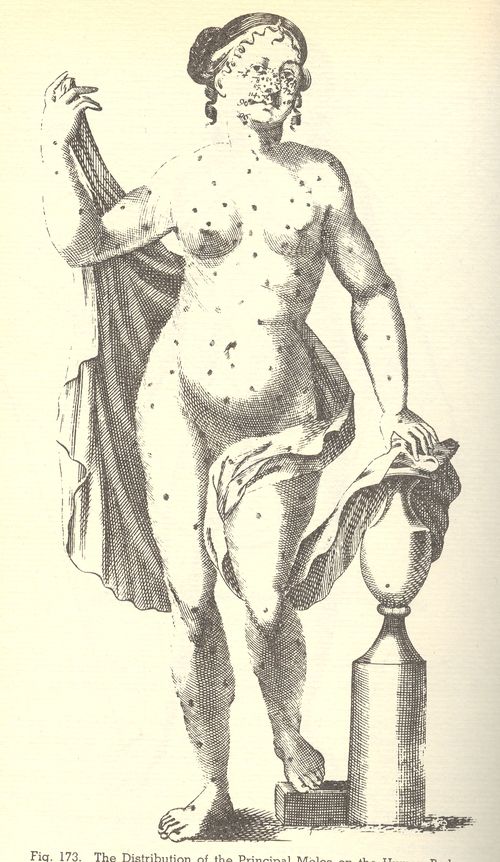
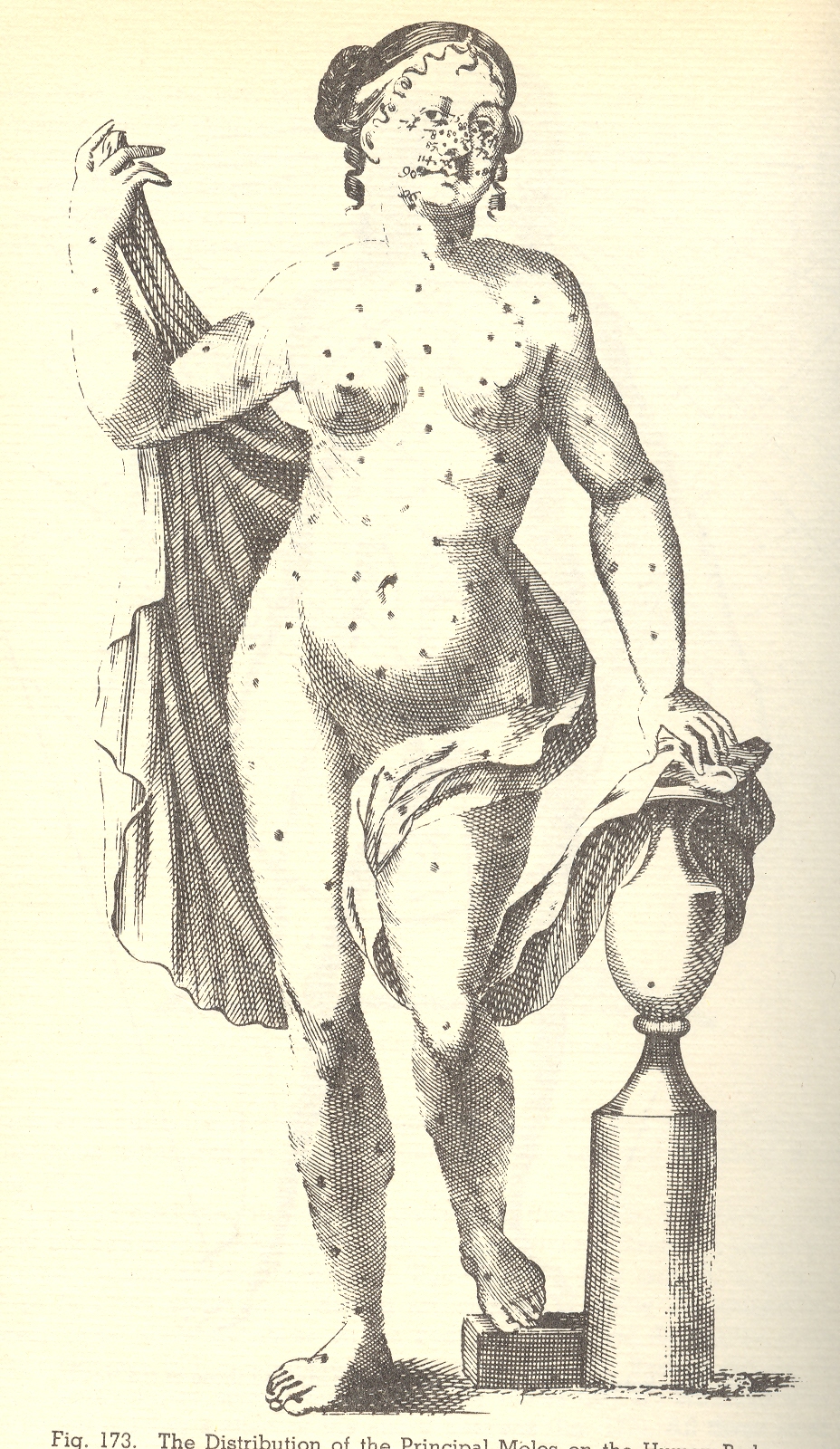
    Blog--jun 11 mole lcosmos The
    map of the moles of this woman’s body looks to me just like a constellation—and
    a constellation is just what they were for Saunders, who viewed the arrangement
    of moles on the body like an astronomer searching the night sky for a new
    comet.   But an astronomer would not be
    trying to force governing connections in the starry realms to occurrences on
    earth (or heaven, or whatever)—that would be the job of an astrologer, whose
    job would be enormously simplified since everything it conjures is
    fictional.  Had Robert Hooke been Richard
    Saunders-like when he made virtually the first microscopic investigations in
    human history, he would have been correlating the hairs and pores of the flea
    rather than making his minute and beautiful observations.

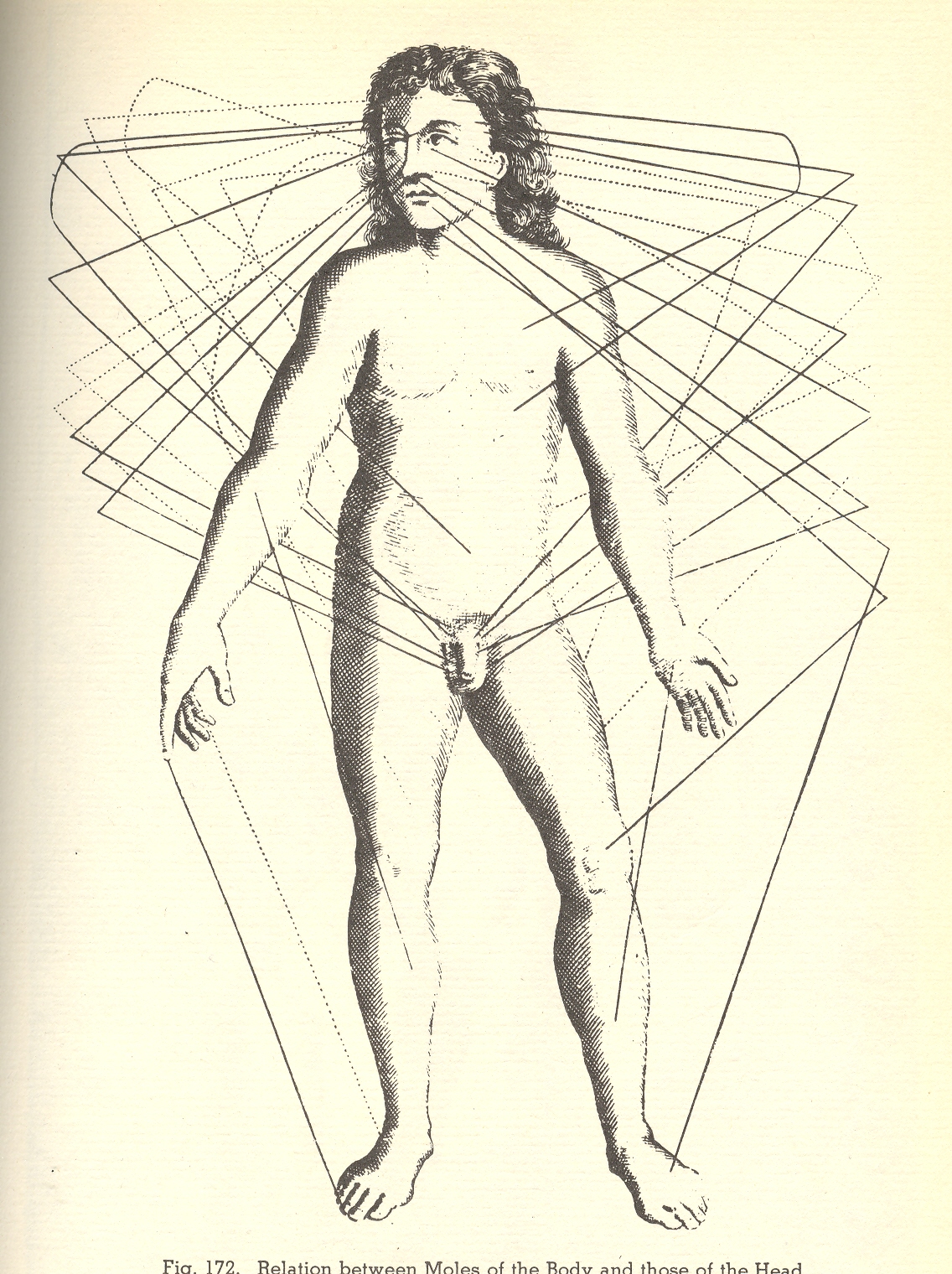
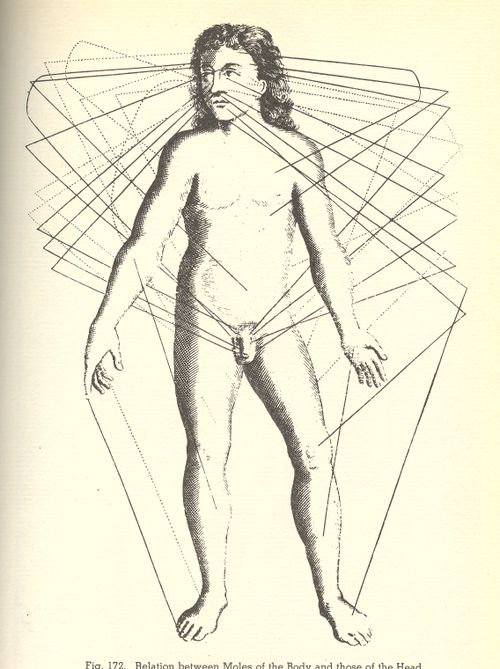
    Saunders
    sees mole connections everywhere, even developing sub-classifications to
    sub-classes: this is seen in the lovely relational map of face moles to moles
    on other parts of the body. (I like the spare curved lines most.)Blog--jun 11 mole lines
    This
    all looks perfectly phenomenal, unbelievable even,  from out here in 2009.  The fact remains though that the vast
    majority of newspapers in his country still carry horoscopes, and most Americans
    believe in UFOs, and a not-small percentage of those folks say that they’ve
    actually been abducted by Outer Space Aliens. (I calculate that from the
    “first” UFO sighting near Roswell 50 years ago that a sighting has been made about every ten seconds since
    then.  Why all of this interest?  And here’s a question among the many that I
    have about this stuff–outside the astronomical chances of actually
    encountering the other life forms in the universe that do undoubtedly
    exist:  why do these crafts, which have
    spectacular, beyond-physics capacities, have little dotty lights on them?)

    And
    so as bizarre as images like this might look, many (most?) folks in the present
    really haven’t left these ideas behind—they just get changed a little,
    upfitted, retro-ripped, and outfitted with flashing lights.

    In a
    very long career of getting people to think  in spite of themselves, James Randi (scientific
    investigator, keeper of the scientific method, head of the James Randi
    Educational Foundation
    , and formerly “The Amazing Randi” from years ago) has
    one particular mythbust-lecture that I find phenomenal, with a very large “oh
    my good god!” capacity for the students at the end of it–if they would but allow it.  Listen: 
    Mr. Randi would explore the possibilities of astrology, asking the group
    or class who there believed in it, taking a census of belief.  He would then make a very strong, convincing
    case for the application of this hope in astrology (he is a very determined and
    logical speaker), and then give astrological “readings” to each member of the
    group.  The readings would turn out to be exact and persuasive—a second tally would be taken of  believers, with
    the usual results being that (unless they knew who Mr. Randi was or was already
    a skeptic or logically un-needy thinker) the class would now consist of an
    overwhelming percentage of astrology-believers.

    Then
    Mr. Randi lets the high-wind boom swing free: 
    everyone received the same reading. (You can see a short snippet for one of these experience HERE–Mr. Randi has conducted this lecture many times for many different audiences.)  The shock of realization is palpable.

    On
    the telephone this morning Mr. Randi graciously explained this lovely lesson—he
    also explained that even after the key ingredient of the lesson was revealed,
    and even after he lectured on thought and belief and superstition and logic and
    so on, that the people who had already believed in astrology would almost in every circumstance still
    maintain that belief.  Even in the face
    of overwhelming evidence, the idea of belief was no match for fact.  Truth, fact, explanation, method, logic—none
    of these could put a chink in the armor of belief, and is no match for self-deception.

    “The
    Woo-woo is always the same, everywhere, all the time.  If its not astrology its something else, the basis for all of it is the same” (my
    paraphrase) says Mr. Randi. After approaching belief
    systems like UFOs and astrology and mentally bending spoons and mind-reading
    and on and on, Mr. Randi says that at their base, the stories have a common heritage of need.
    And they’re unbendable, and certainly unbreakable, for all of those who need
    the belief.  There’s no room for
    constructive debate and exchange in such belief systems, whether it is
    astrology or creationism (I just can’t call it by its other, cleaned-up
    name), as they cannot satisfy the basic tenets of knowledge growth and scientific inquiry which, according to RP Feynman, is the willingness to test your beliefs against falsity and to investigate all possibilities that might make them invalid.*  Mole mapping predictions and the
    fate of a life is no different from any of these other derivations in wishful/hopeful pseudosciences, either—just a different name
    for the same underlying system of beliefs, though the moles are a little long in the tooth. 

    Anyway, creationism or astrology or life-after death–they might as well all be mapping moles.

    As Feynman said:

    The first principle [in science] is that you must not fool yourself — and you are
    the easiest person to fool. So you have to be very careful about that.
    After you’ve not fooled yourself, it’s easy not to fool other
    scientists. You just have to be honest in a conventional way after that.

    * Feynman on the scientific method:  “It’s a kind of scientific integrity, a principle of scientific thought
    that corresponds to a kind of utter honesty–a kind of leaning over
    backwards. For example, if you’re doing an experiment, you should
    report everything that you think might make it invalid–not only what
    you think is right about it: other causes that could possibly explain
    your results; and things you thought of that you’ve eliminated by some
    other experiment, and how they worked–to make sure the other fellow
    can tell they have been eliminated “
    RP Feynman quoted by Ralph Leighton,  1985, p. 341
    ).

  • The Invention of Small Things and the Coming of the Internet–Back to the Flea

    JF Ptak Science Books LLC  Post 615  Blog Bookstore

    “A network of such [computers],
    connected to one another by wide-band communication lines [which provided] the
    functions of present-day libraries together with anticipated advances in
    informationstorage and retrieval and [other] symbiotic functions.” —J.C.R. Licklider, 
    his epochal “Man-Computer Symbiosis”, 1960

    There is a famous
    and most likely apocryphal story made famous in Stephen Hawking’s A Brief History of Time where a famous
    “scientist” (I‘ve heard him described as James Jeans, for one and the nicest
    fit, others say Bertrand Russell though it matters not) is confronted by a
    member of his audience during a lecture on astronomy/cosmology.  A woman rises and confronts the speaker,
    determining that what has come to pass as fact regarding the universe is all
    rubbish, and that the Earth was in fact a flat object resting on the back of a
    turtle.  The speaker then asks her what
    the turtle is standing on; she replies immediately of course that it is another
    turtle, and that it is “turtles all the way down”.  It’s a nice story, and bears some resemblance
    to Native American stories of the Earth born on the back of a turtle, of the
    Hindu legend of the Earth being borne by an elephant standing on the back of a
    tortoise, and so on, all the way down. 
    Even Dr. Seuss’ Yertle the Turtle
    can make an appearance in this one.

    1875large

    This came to mind
    thinking about the contribution of (the not-entirely forgotten) John Benjamin
    Dancer (1812-1887) to photography and its relation to the history of the
    Internet.  Dancer was in the immediate
    second wave of the greats of photography following the short first wave of
    Niepce and Talbot and Daguerre, and did come up with a number of very good
    ideas at the birth of photography—one of them in theory is an early foundation
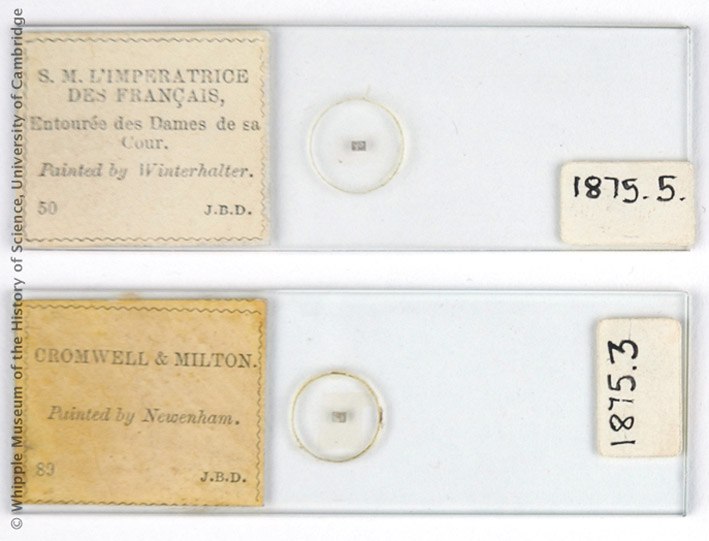
    stone for the technical distribution of data and information.(These two slides are  examples of Dancer’s work and are reproduced from the Whipple Museum of the History of Science, Cambridge.)

    Dancer evidently
    went to work immediately after reading of Daguerre’s 1839 process.  The technical aspects of the Daguerre effort
    were les daunting than they were messy—he found the descriptions “crude and obscure”,
    and proceeded with his own series of experiments, producing a camera some six
    weeks later.  It is interesting too that
    he seemed to have based the camera on a camera obscura:  “being a practical optician the camera was
    one of my own construction, such as I had frequently supplied to artists for
    tracing the outline of views in the camera….”

    He lectured later
    in that same year (1839), showing lantern slides of his accomplishments to
    crowds of up to 1500 people.  His great
    accomplishment was in the field of microphotography—I should say rather that he
    invented the field.  And it is of great
    interest that the first images that he made using the brand new invention of
    the camera coupled with a microscope was that of a flea.  In yesterday’s post I wrote about Robert
    Hooke’s Micrographia and his spectacular discovery of the fineness and detail
    of biological specks like the flea, showing audiences—the world—for the first
    time that these insignificant creatures represented an entirely new,
    just-discovered world, and that they were as tremendously well-developed as any
    other large living thing.  Back to the
    flea, as it were, went Dancer—I have no idea whether he knew he was calling on
    Hooke’s iconic image or not.  But it is
    at least a lovely coincidence.

    Dancer also
    displayed images of documents that he reduced by a scale of 1/160, printing a
    fully-legible copy of a printed document that was only 3mm tall.  The significance of this invention seems to
    have been lost until it was picked up again in 1853 by the great John Herschel,
    who recognized the process as a way to archive significant documents.

     I like it more for its possible impact,
    perhaps, on some of the thinking on the construction of a world-wide
    distribution of knowledge, as a necessary step to get to the stage where
    Vannevar Bush—who was widely acknowledged as being the grandfather of the
    internet at a MIT Conference about a 20 years ago—could theorize about his own
    precursor to the internet–the Memex,
    describing it for the popular audience in the Atlantic Monthly in June*, 1945. 
      Among many other things,
    Bush—who was also, probably, one of the great figures of WWII for his heroic
    role in leading the U.S. scientific and technical war effort and seeming to
    make the correct decisions all of the time—foresaw a means of distributing
    data, more or less instantly, calling on the delivery of microfilmed
    information. Bush, who was also a great engineer and father of one of the
    countries best analog computers (in 1931/33), had the notion for a world wide
    technical distribution of knowledge, but, as he wrote this in 1945 (!), could
    not see far enough into the future development of the digital computer (the
    ENIAC just being born at that time, though it must be pointed out that Bush was
    open to the idea of magnetic storage). 
    His ideas were very far reaching, touching on microminiaturization and
    artificial intelligence, and his ideas even now aren’t so much coyly science
    fiction as they are, well, implemented. 
    There’s a lot of Bush’s memex that are in place today

    So, the turtles and
    wondering about Dancer’s influence in the string of inventions and discoveries
    that gave birth to the www: how far down do these influences go?  The touchstone for the creation of the internet
    is usually seen as being with JCR Licklider (see quote above) in 1960, or with
    Paul Baran or Leonard Kleinrock a year later; but perhaps it is earlier still with
    the implementation of ARPA (set into place immediately after the launch of Sputnik).  Of course none of this is possible without
    computers, so you could work your way back through time to the transistor, to
    Bush, to the Stibitz (Bell)Relay Computer, to Johnny von Neumann, to the thermionic tube (Bush), and then
    all of the support discoveries and inventions that rolled into these, and so
    on.  Back to photography, back to Babbage’s
    plans for his analytical engine, back to the invention of moveable type, to the
    invention of paper, to the creation of libraries, to the general idea of the
    popular distribution of knowledge.  All the
    way down.  But I do think it worthwhile
    to think of Dancer’s contribution in so far as it allowed people to think of
    easier, quicker ways of moving around vast amounts of data and
    information.  And that I think is worth
    remembering. 

    *I’ve also got to
    say that at the same time Bush was writing about the future of intelligence he
    was also at work developing the U.S.  response to the upcoming race in atomic weapons.  He and his team were busy crafting responses
    and policies and the reaction of the Soviets and the sharing of the atomic bomb
    data and all of that, and all before the test at
    Alamogordo. Really, the guy was spectacular.


  • The Dot and the Sphere—the Depiction of Multiple Dimensions

    JF Ptak Scinece Books LLC  Post 591       Blog Bookstore

    The
    History of Dots, Part 10
    .

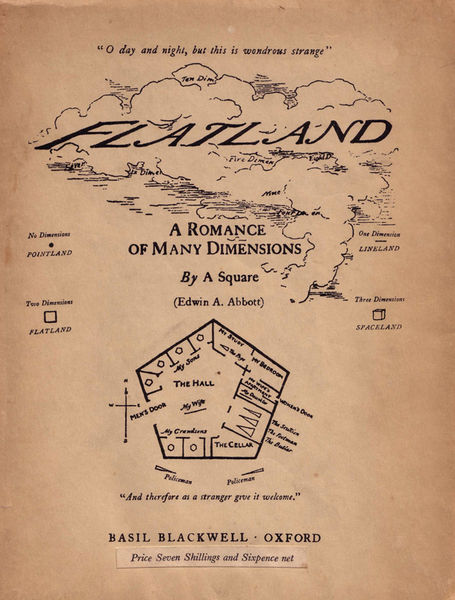
    Edwin
    Abbott’s slender Flatland is perhaps one of the best books ever written on
    perception and dimensions, a beautifully insightful book that was quick and
    sharp, and in spite of all that was also a best-seller.  Written in 1884 when Abbott was 46 (Abbott
    would live another 46 years and enjoy the book’s popular reception), it introduces
    the reader to a two dimensional world with a social structure in which the more
    sides of your object equals power and esteem. 
    Thus the lowest class would be a triangle (three sides) while the
    highest (priestly) class would be mega-polygons whose shape would approach a
    circle.  Abbott’s magistry comes in
    explaining to the three-dimensional reader what it was like to be in a
    two-dimensional world.Flatland_cover

    And
    to this world one day came an epochal event.

    It
    was a dot.  The dot was a magnificent new
    thing to the 2-D world, and what happened was this—it grew concentrically and
    outwardly, expanding and then contracting in a series of circles, morphing
    until it appeared as an entirely new and revolutionary form rising from the
    plane of Flatland.   It became a sphere.

    The
    sphere was from Spaceland and amazed the population of Flatland (Lineland,
    actually); the story was (and the book’s title page saying it was written by) a
    Square, whose deep interest was immediately enhanced by its great imagination.  It turns out that once every millennium the
    good folks of Spaceland visit Flatland to return one its  inhabitants home to try and introduce them,
    educate them, to the idea of added dimensions. 
    Safely in Spaceland,   the Square was presented with the radical
    newness of the third dimension, it engaged the Sphere about the possibilities
    of yet higher (fourth, fifth and sixth) dimensions.  The Sphere was not altogether please—talk of
    higher dimensions in the3-D world was outlawed just as the discussion of the
    3-D world was in Flatland.  Pissed, the
    Sphere returns the Square home to its land of lines. 

    The
    Square finds it very difficult to be home again. (Did I ever mention here that
    my house is about a thousand feet away from Thomas Wolfe’s grave?) It finds it
    a very tough go to convince anyone of its journey and the existence of another
    dimension.  To complicate things further,
    Abbott has the Square dream a remarkable thing—a visit to Pointland, a totally
    self-involved dimension consisting of one ruler, a Point, which exists across
    all area and things.  Even Square’s
    introduction of an idea or question comes to the Ruler of Pointland as an idea
    from its own head, because nothing and no one else exists.  Fantastic!

    Eventually,
    things go badly for the Square—the edict is described making it illegal for any
    further discussion of the third dimension, with dire consequences on a sliding
    scale according to class./caste/sides, with death the penalty for the
    Triangle.  The Square itself winds up in
    prison, an unhappy being locked “in” a cell and prohibited in its mind. 

    Jouffret

    But
    Abbott is certainly successful in relating the possibilities of
    higher-dimension thought by introducing the view from a higher- to a
    lower-dimension.  Still, it’s a tough
    go. 

    19
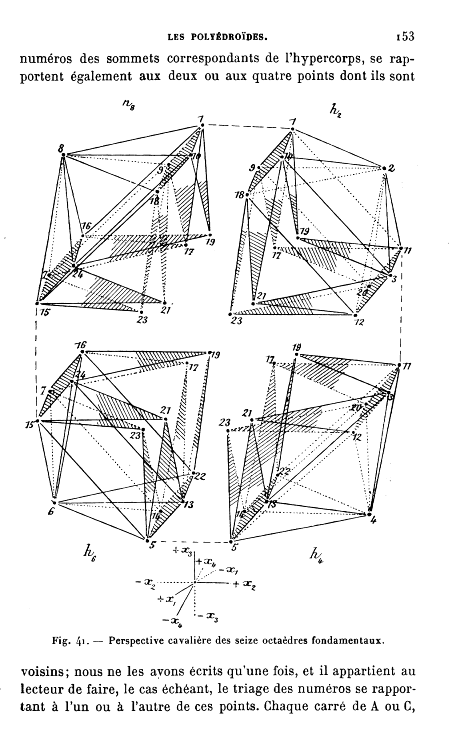
    years later dots came to further assistance to a mathematician and military man
    named Esprit Pascal Jouffret*, who wrote a remarkable and beautiful geometry
    book on picturing the fourth

    dimension. 
    Actually, the book was more an example of how to discus the representation
    of the fourth dimension on a piece of paper, and didn’t’ offer a comprehensive  treatise on the matter.  But the images of depicting space and time
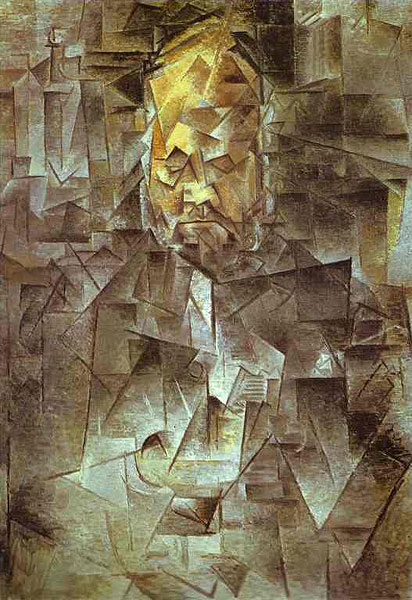
    would look extraordinarily familiar in just a decade in the paintings of the
    Cubists.  For example, the morally-lonely
    Picasso’s 1910 portrait of the movement-molding art dealer Ambroise Vollard looks
    very much like many of the images in the Jouffret book.  Marcel Duchamp—for me the true

    Picasso_vollard1910


    hero of early
    modernism—also drew on the work of Jouffret, and made no secrets about the path
    of his intellectual foundation (unlike the squirrely Picasso). 

    And
    so from the lowly dot comes a beauty unsuspected in soliphismy Pointland. 


  • The History of Dots and the Isotropic Universe: the Iconic Image of the Irregular, Dot-Filled Milky Way Galaxy of William Herschel

    JF Ptak Science Books LLC  Post 560

    Lucretius (95-55 BCE), in his Nature of the Universe, stated that  since there is nothing outside the universe, it must be infinite: “the universe stretches away…just the same in all directions without limit”;  it stretches far and wide into immeasurable depths.  All that is in it, he reasons, is distributed equally and in the same way.  But this is not the case, even in light of Edward Milne’s cosmological principle (1933),  stating that all  places in the universe is alike—which is true, except that there are vast disturbances in very large local areas that distinguish themselves from other places.  The work of Gamow/Alpher/Herman  (1939) and Penzias/Wilson in establishing the cosmic microwave radiation  (CMB)  shows that the observable universe to be very close to homogeneous and isotropic, and of course accelerating. (Suffice to say for this short post that there are models– Friedmann-Lemaître-Robertson-Walker (FLRW) model for example– which show the observable universe to be  “weakly” inhomogeneous and anisotropic; but generally and on average the isotropic models stand.) 

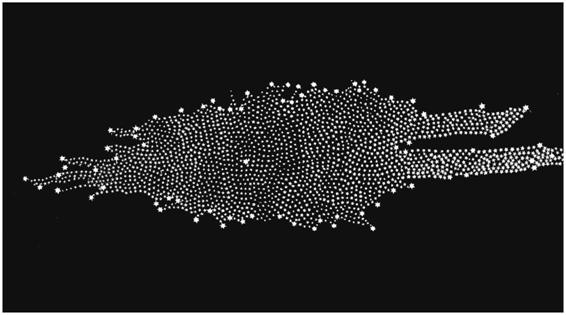
    Blog--herschel Perhaps the earliest published “bump” in the calm waters of the equal-distribution universe occurs with William Herschel (1738-1822), who in 1785 published a revolutionary image of the “Stellar System” (the Milky Way), showing its irregular pattern and the off-center placement of our sun amidst a panoply of other stars.(His image was remarkably and substantially correct, with the most grievous error being the placement of the sun too close to the center of the galaxy.) It was an image which bought the idea of a not-so-humano-centric idea into popular philosophy. This galacto-centric view remained until the work of Harlow Shapley’s globular clusters in 1918.

    Blog--wright, thomas

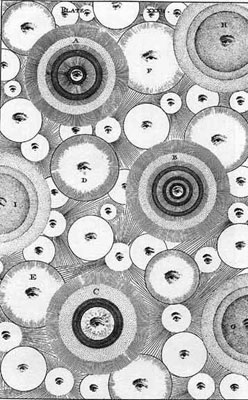
    This varied quite widely from the images of other astronomical observers and theorists such as Thomas Wright (1711-1786), who in his book An Original Theory of the Universe (1750) gives the Milky Way a friendlier, homogenous manner, overruling his earlier theory that the stars were “promiscuously distributed through mundane space” and delivering a theory of the stars organized in a regular pattern based upon a hierarchical center of some sort around which everything else was positioned.  He also provided this fabulous image of the centers of galaxies as an immutable, transcendent force, the eye of the creator, rather than the simple, positive dot.

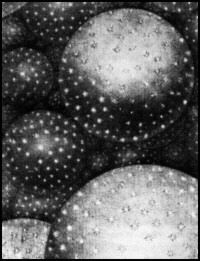
    This idea was picked up by Immanuel  Kant (1724-1804) who in his own work, The Theory of the Heavens (1755), expanded on the multiple centers of creation(s) (an “endless immensity in an unlimited plenum of creations”) of cascading and separate galaxies, and detailed a vast system of disk-shaped galaxies which revolved around centers which in turn revolved around other centers, becoming far vaster, though all were centered on a dominant, universal center.

    Blog--kant But it was Herschel’s images of the dots that came closest, longest, to the most accurate and appealing depiction of the universe, especially with the location of our solar system’s principal dot seen as a dot among dots in a universe of dots. 


    ·Posted by :

    ·in:

    —

  • History of Dots 7: Dots versus Lines, Engravings versus Half-tones

    JF Ptak Science Books LLC  Post 558

    Engraving_example
    The history of illustration has some distinct phases:  from woodcut to wood engraving to engravings on metal to lithography to printing in colors to chromolithography…and then on to a process that would begin to do away with all of those processes, the half-tone.  This was a process whose foundation was laid in the 1850’s by William Fox Talbot and brought to life in 1873 by Stephen Henry Horgan, though  it really wasn’t commercially viable until  Frederick Ives  further deepened the process in 1881, finally becoming a staple in the printing industry in the mid 1890’s.  The half-tone process would basically due away with the line-centric engraving process, as it was much quicker and easier to use, making images much more readily available to daily-printed media like newspapers.  Images that were drawn could be rendered without being engraved; also, one of its greatest advantages was being able to reproduce photographs, which was an enormous breakthrough, as a photograph automatically increased the veracity of the image. (During the U.S. Civil War, reader’s of the illustrated

    Stieglitz-gossip-1905

    weekly journal Harper’s Weekly trusted battlefield images more if the wood engraving appearing in the magazine was copied from a photograph rather than being from the sketchbook of the

    correspondent on the scene.  The photograph would capture a particular point in time (nearly) instantaneously, whereas the war correspondent artist captured bits and pieces of an instant flavored with memory and subsequent action.  The phrase in the credit line. “Drawn from a photograph”, had real value.)

    MorseCodeForever
    And so it came to pass that the happy lives of dots and lines–so important and intertwined in such things as the Morse Code–made a particular and dramatic break with the triumph of the half-tone over the engraving in illustrating popular publications (from the 1890’s to the 1980’s). 

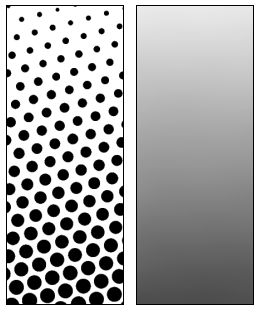
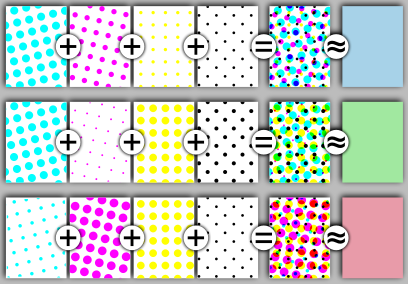
    The image above at left is a magnification of an engraving from 1760;above right is a half-tone image of a 1905 Alfred Stieglitz photo; below left is a magnified sample of what the Stieglitz was composed of; and bottom right finds an illustration of the different combinations in size and color that would effect the composed final image in the final column. 

    Halftoning_introduction

    408px-Halftoningcolor.svg


  • The History of Dots 6: the Kingly Dot of Copernicus, 1543

    JF Ptak Science Books LLC  Post 556

    “Diligent
    reader, in this new work you have the motions of the fixed stars and planets,
    reconstituted from ancient as well as recent observations, and embellished by
    new and marvelous hypotheses.

    Therefore buy, read, and enjoy this work.”  –Title
    page of
    The Revolutions of the Celestial
    Orbs
    ,by Nicolaus
    (Koppernigk) Copernicus,1566 (second edition)

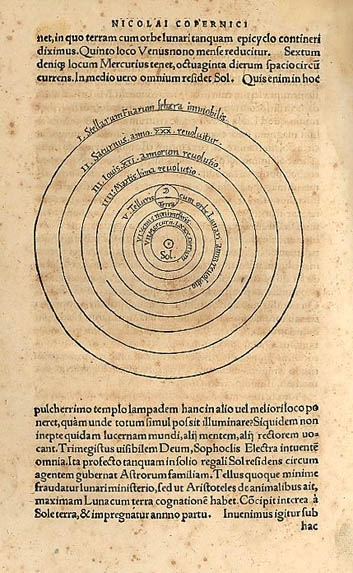
    Slim is the history of published books where authors directly beseech people–right on the title page–to buy their book.  But such is the case with the De revolutionibus orbium coelestium, which, when published, finally, in 1543, ushered in a new era of scientific explanation–it was perhaps the very beginning of what could be called “modern” science.  And the centerpiece of it all was a fine little dot that was the symbol of our sun.  It is also a little unusual that the standard symbol of the sun was presented so, even at this relatively early date for printing scientific treatises, as the sun was more often than not presented with the standard flaming circumference and human face.  (Earlier in this blog I made a word map of the first ten chapters of De revolutionibus.)

    Copernicus2
    Copernicus
    But the simplicity of the representation of the sun falls quite clearly within the author’s tendency of directness an plain speech.  He presented his theory with ease and a calm matter-of-factness (which included 100 pages of tables, and 20,000 tabulated numbers) which, considering it was overturning an entire world view and threatening a basic tenant of the church, was pretty astonishing.  It was actually quietly shocking at the time, both in how the theory was presented and how it was received.

    Copernicus states very simply that “the author of this work has done nothing to cause blame” in his revolutionary work.  He also states in the preface that he is not the first to work on the sun as the center of the solar system (and universe),  citing for example Philolaus the Pythagorean, Lysis and others. And he also widely recognizes that there was much more to come in the future, much in the line of the way of one of the very last lines of Kepler’s Harmonia:  “there is still much more beyond”.  

    Copernicus certainly did not stand for disagreement with his work, as he thought that anyone invested with a certain amount of mathematical knowledge could in no way disagree with him simple as that.  I quote a rather lengthy bit from the  early stages of the book:

    “Perhaps there will be babblers who claim to be judges of astronomy
    although completely ignorant of the subject and, badly distorting some
    passage of Scripture to their purpose, will dare to find fault with my
    undertaking and censure it. I disregard them even to the extent of
    despising their criticism as unfounded. For it is not unknown that
    Lactantius, otherwise an illustrious writer but hardly an astronomer,
    speaks quite childishly about the Earth’s shape, when he mocks those
    who declared that the Earth has the form of a globe. Hence scholars
    need not be surprised if any such persons will likewise ridicule me.
    Astronomy is written for astronomers.”

    But so much has been written about this fantastic book that I’ll not go
    into it here.  All I want to point out here in my tiny way is the
    urgency and importance of the solar dot–a simple representation of the
    sun, replacing the place of the earth in the primordial soup of the
    solar system, the very fabric of the  construction of the universe.

    ·Posted by :

    ·in:

    —

  • A History of Missing Dots: Donne’s (Missing) Discovery of Platelets, 1842

    JF Ptak Science Books LLC  Post 547Blog 13 donne detail

     blog 13 donne703 

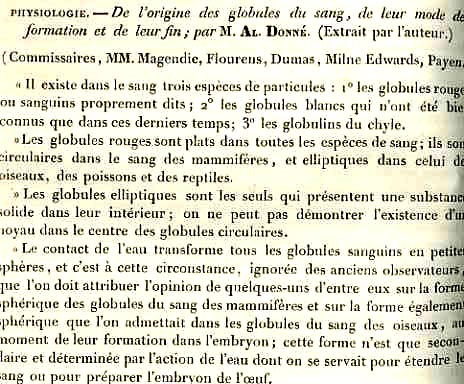
    Alfred Donne (1801-1878), physician, experimenter, microscopist and photographer, is best known for things other than what he should probably be best known for:  his discovery of the third element of the blood, platelets.  Donne had a wonderful vision, and was among the very first on the scene to write about and employ the spectacular invention of the daguerreotype in chemistry and microscopy.  As a matter of fact Donne, along with his collaborator Leon Foucault,  produced the very first engraved images of photomicrographs for his cytology paper of 1840. (He was also the first to use electricity in producing a medical illustration, and was among the first modern physicians to write on the great efficacy of mothers using their own milk in breast feeding their children.)  The discovery of platelets paper of 1842*–preceding two other works published in the same year–does indeed identify the new object, but actually fails to make a methodological examination of the new body, calling the new units “globulins du chyle” (or small globules
    derived from plasma).  He also fails to make a drawing of what he saw; so, the combination of these two important elements asked the reader to accept his findings on faith, the tools of reproduction of his observations not being present.  And so we remember Donne for some other significant things, na dless so for his lightly-interpreted and un-illustrated “dots”.

    *Donne, Alfred. De l’origine des globules du sang, de leur mode de formation et de leur fin. Comptes rendus de l’Académie des Sciences, Paris, 1842, 14: 366-168. 

    (Overall the history of the
    discovery of platelets is convoluted: 
    Leewenhoek (1675) and Henson (1782)  were the first to fully describe the “undefined”
    particles of the blood; Donne’s work was then more fully described by Beale in
    1850, and then again (identified as “small corpuscles” by Zimmerman in 1860 and
    then again by Schultze in 1874 and Laptschinski (also in 1874). William Osler
    then enters the scene in 1880, followed by Giulio Bizzozzero who was the
    first, in the years 1881 -1882, to establish central role of platelets
    not only in physiological haemostasis, but also in thrombosis.  Anyway it is a longish and not-clear
    history.)

    .


  • Emerging Oddness in Durer: the first bookbag (?) and a lonely dot (for the History of Dots)

    JF Ptak Science Books LLC Post 542

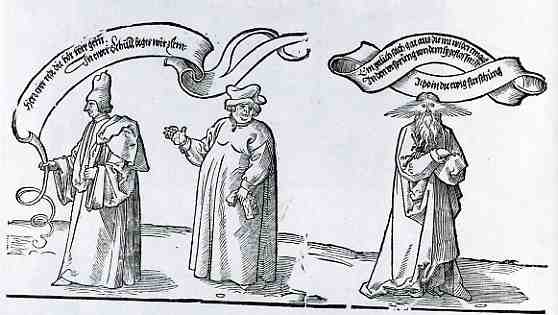
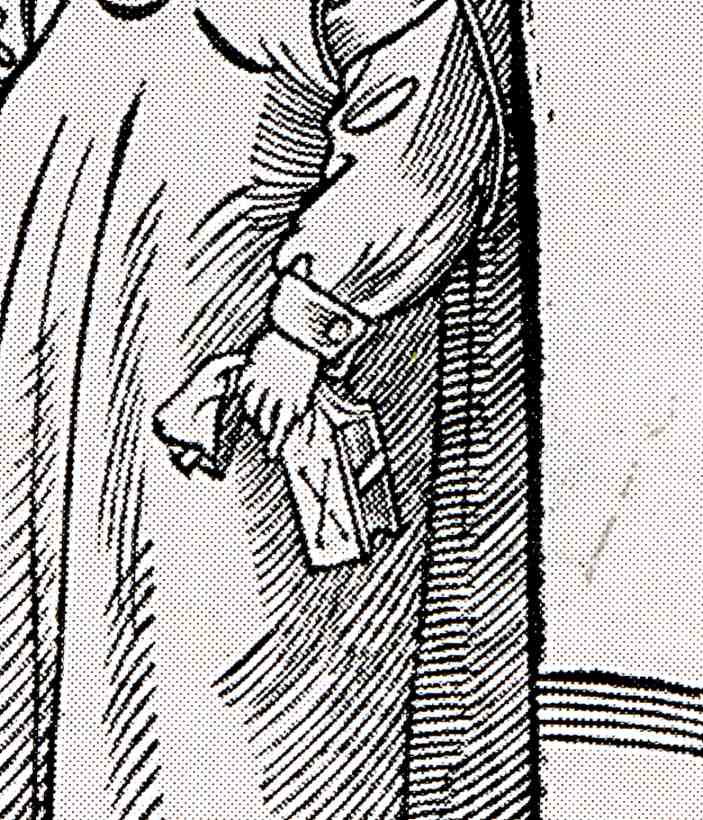
    It seems a little sinful to be looking so closely at the great Albrecht Durer for such trifles, but, well, my eye fell on these micro-notes, and won’t let them go.  Using “emerging” as a verb, what comes floating up to me from the minor realm in the Michelfeldt Tapestry, a woodblock illustration completed across three sheets, is the middle figure in sheet three.  He stands, a plumpy measure of a man, between two figures with balloon legends floating above them. The first figure is a priest or scholar whose ballooned sentiment translates to something like “Lord, we are listening to your oration, we crave to attend your school”; the second figure with balloon thoughts is much more interesting to me, this one reading “Everything that goes out now re-enters the source from which it flowed”, a good circular bit coming from the head of a man with starshine eyes. These two people deliver some pretty weighty observations, but I’m distracted more by the middle-man, who happens to be carrying a book in a sack.  What’s the book doing in a silken purse?  I must say I’ve never noticed a book in a bag in the renaissance before this–maybe they’re all over the place, but I’m guessing not, otherwise this guy wouldn’t’ve made such a strong impression on me. 

     blog 11 durer book bag682
     blog 11 durer book bag683

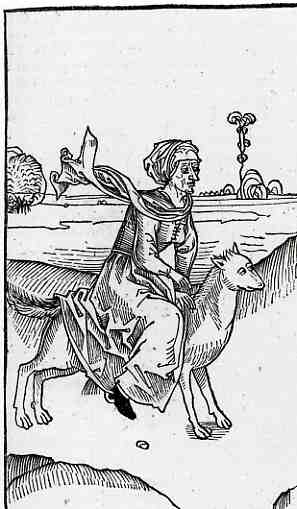
    Second is this woodcut of a witch riding a wolf (appearing in Ultricus Molitor’s Von den Unholden oder Hexen, printed in 1491)–it catches my attention not for the wonderfully flowing robe, or the fact that women riding anything at this point in the Renaissance* was not common, but the small dot right under the wolf.  What is the dot doing there? Why not just leave the foreground a blank, like the sky?  I don’t know why I’m so distracted by this thing, but I am.  And while I’m at it, that landscape in the background is pretty unusual, too:  what is that squiggly bit to the right of the witch? 

     blog 11 durer dot681

    *Witches riding animals, even in the further work of Durer, comes much more into play int he first quarter of the 16th century. See also the work of Aldorfer, Schauffelein, Grien and others. 


  • History of Dots AND Blank & Missing Things: Particles, Galaxies and Missing Middles

    JF Ptak Science Books LLC Post 533

    0 blog march 4 cuyama 2647
    (Forcibly!) joining a continuing series of posts on Blank and Missing Things and a History of Dots, we’ll look today at intellectual hermorphiditism, alpha omegas, nuclear particle tracks, negative galaxies and the wanderings of a centenarian vegetarian pro-lefty Vermont commie’s middle-missing thoughts. 

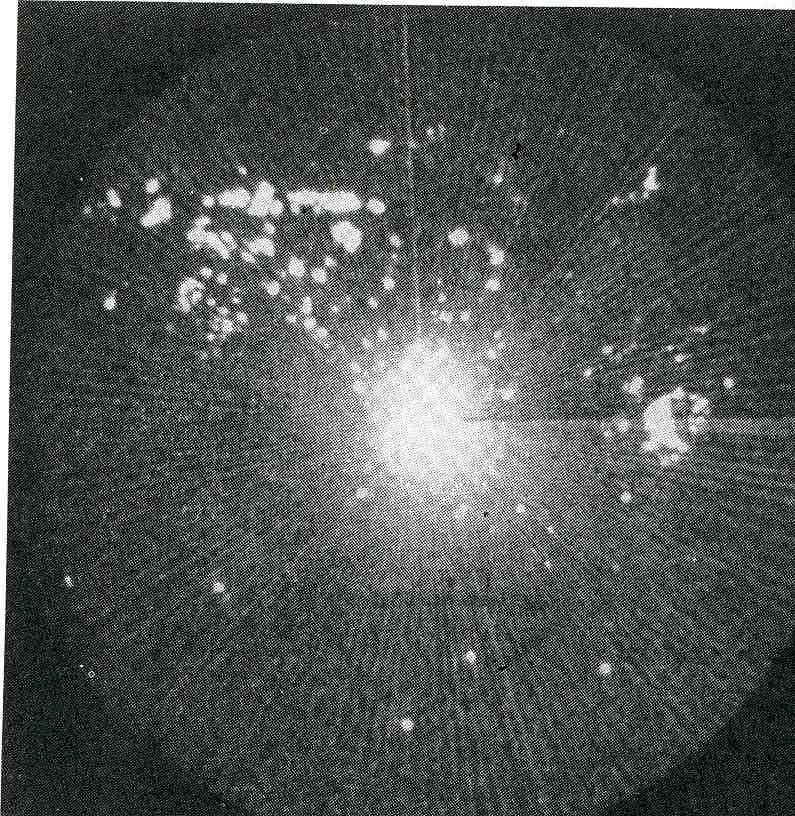
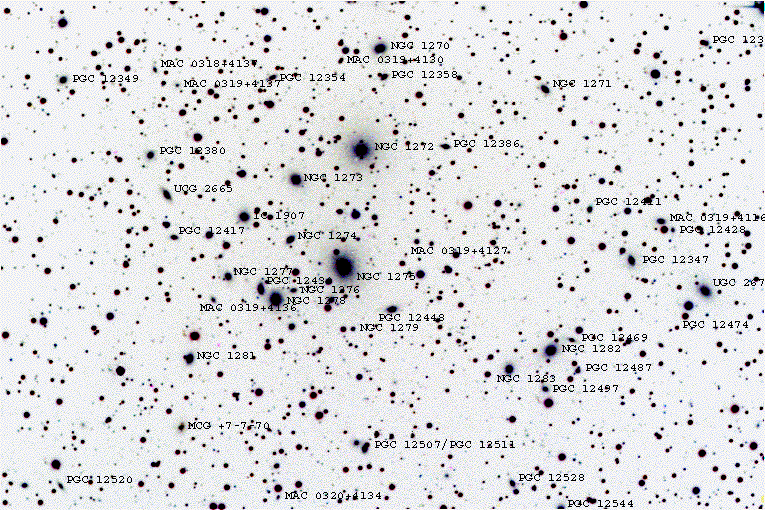
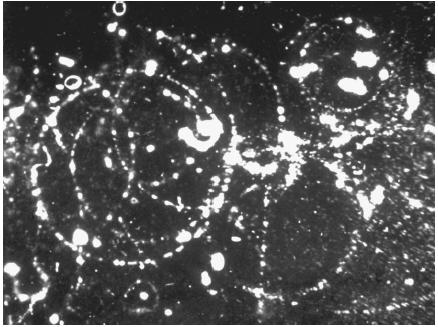
    I know that you can find dots everywhere if you look hard enough, or magnify things enough, or get far away from them enough….it seems that once you start on either route in the powers of ten game that getting to 10 (7th) things start to look very dotty indeed.  What was on my mind was the similarity between particle tracks (and particularly the photographs of the very earliest ones) and negatives of images of galaxy clusters.  The image to the left, to encumber things a little further, is another look-alike from 1947:  a moving target indicatorPerseus_GC_Neg_8_bit_14_Oct_2001 (showing the cluttered field of a Japanese freighter convoy at sea).  A negative photo of a section of a galaxy cluster in Perseus is directly below, while just below that is a cloud chamber of what is probably the first photo showing the track of a cosmic ray (1927 by Dmitry Skobeltzyn).

    Uesc_03_img0160

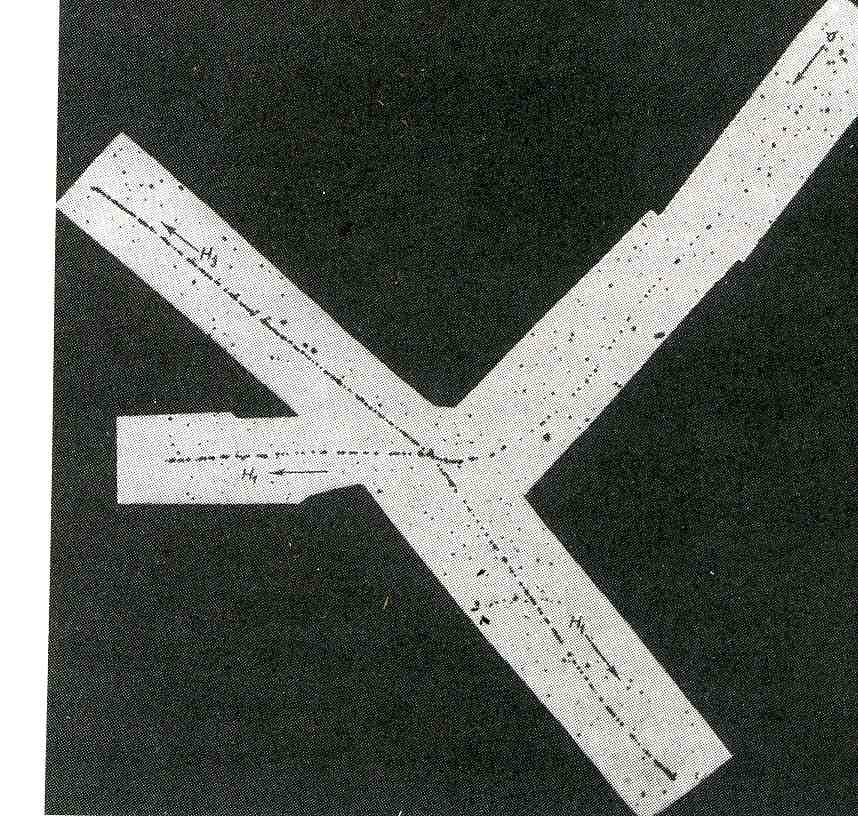
     The next image,  also from 1947, is the first observation of the disintegration by a negative meson (appearing in Nature Magazine #126 for 1947). 

    0 blog march 4 cuyama646

    The galaxy and particle images, at nearly-opposite ends of the existence spectrum:  from 10 (-10) meters (or .0000000001) to 10 (+14) meters (and actually 10 +14 through 10+25 meters, looking pretty much the same), the story is all pretty much dots, from the deepest buzzy  recesses of a proton to the outer reaches of the outermost bits of the outer universe.  The middle part is where all of the “stuff” is,  the (near) alpha and omega of whatever there *is*. 

    0 blog march 4 cuyama 3 nearing648

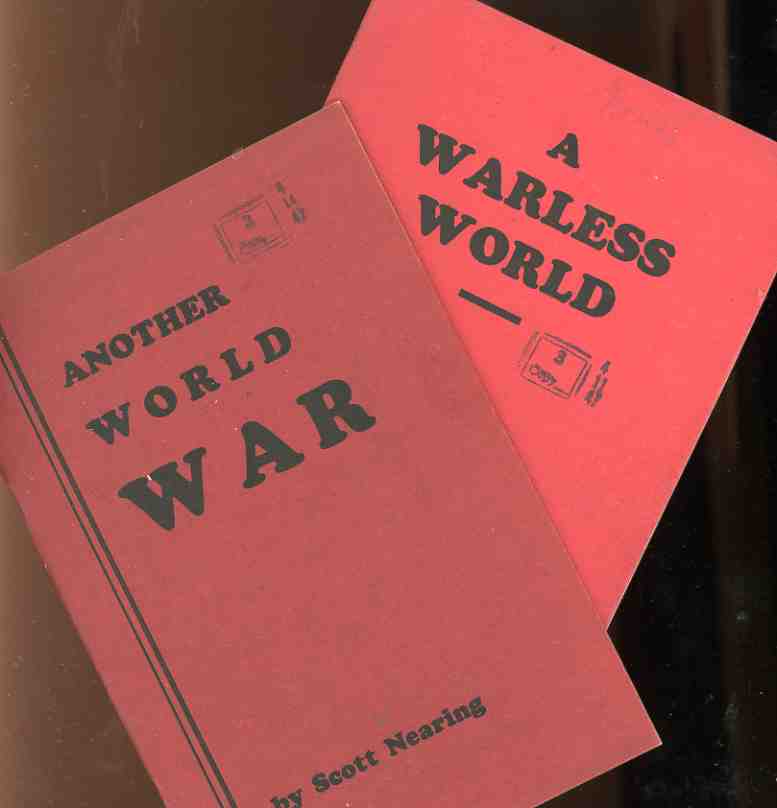
    And somehow this gets me to the two works here, both issued in 1947, by Scott Nearing, our centenarian Vermonter communist, who manages his very own alpha and omega, who covers the very ends of the spectrum without getting bogged down with the slumpy middle part….which of course is just about everything.