A Daily History of Holes, Dots, Lines, Science, History, Math, Physics, Art, the Unintentional Absurd, Architecture, Maps, Data Visualization, Blank and Missing Things, and so on. |1.6 million words, 7500 images, 4.9 million hits| Press & appearances in The Times, Le Figaro, Mensa, The Economist, The Guardian, Discovery News, Slate, Le Monde, Sci American Blogs, Le Pont, and many other places… 5000+ total posts since 2008.

Author: JF Ptak

  • The Great Battle of Sitting and Spitting: Whitney, Texas, 1949.

    JF Ptak Science Books, LLC   Post 953 

    “Why,
    they must spit two or three gallons a day! 
    They ain’t died fast enough, these old men!”—Mrs. T.E. Bagley, Whitney, Texas,
    1949

    0--whitney 01

    This
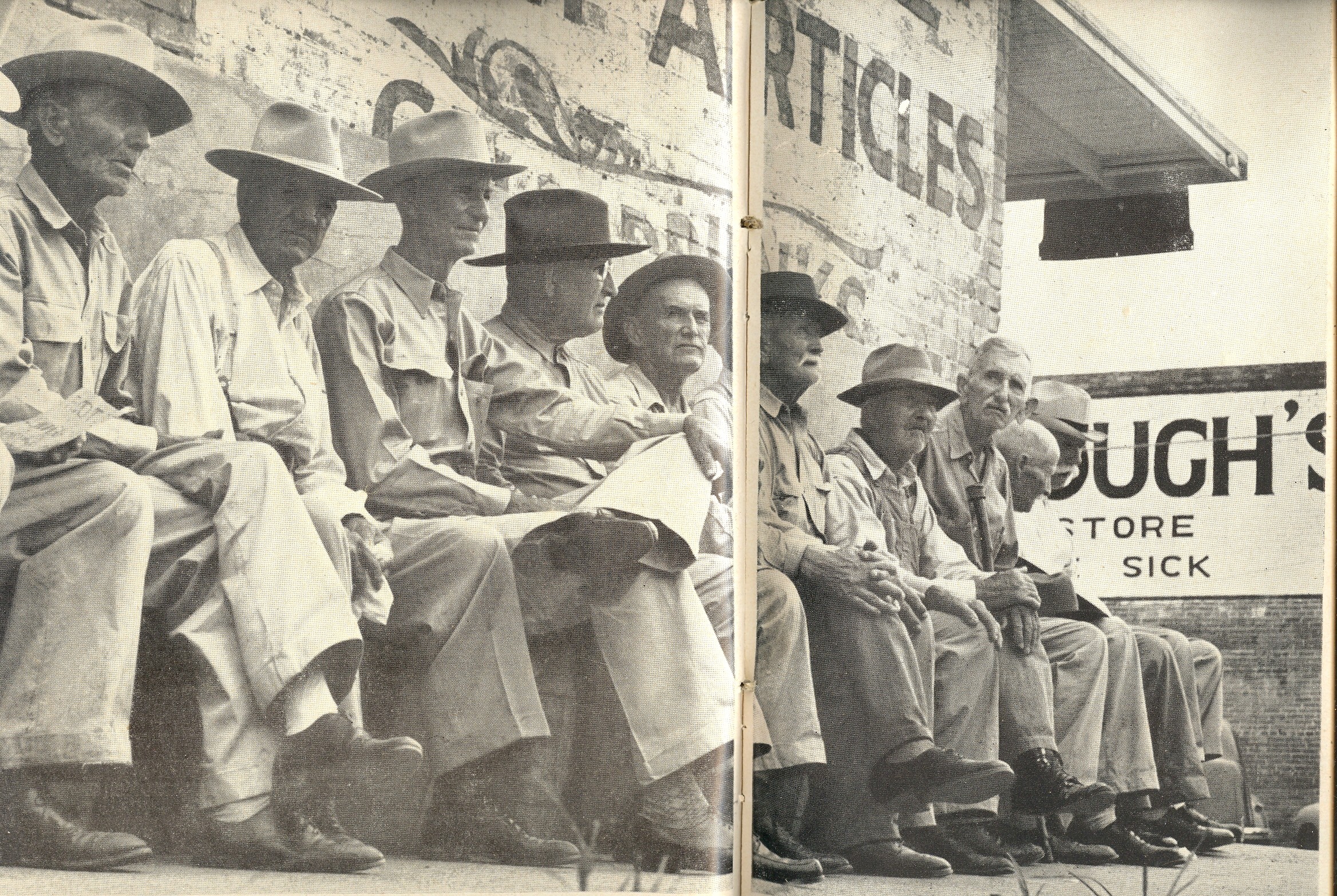
    is a great small America story about sitting. Or old men sitting, and spitting.  Sitting and spitting on a long piece of thick
    timber outside a drug store, bricks and advertisements as back support, in
    Whitney, Texas (population ca. 1,500), in 1949. 
    I can just about hear them on a hot summer evening, right now, only
    probably I couldn’t—they’d probably’ve shut up until the stranger walked by,
    giving me their silence and keeping their confidences.  Or not. 
    Maybe I would’ve been invisible, and the whittled bits would’ve fallen to the street along with the tobacco juice, cusses and gossip, unabated.
    Maybe they surrounded themselves with a stained-moat of spittin’s across
    or close to which no one would stray. 

    It
    isn’t, I guess, so much a story about their sitting as it is a story about
    their not sitting, about how it came to be that their lumber was removed and
    the men forced to find another place to take in the sights and construct their
    great edifices of commentary and asides.0--whitneydetail 3 men 01
    The
    story appears in LIFE Magazine of 15 August 1949, and lays the whole drama out
    in two splash pages, with bare editorializing and some great photos.

    The
    story goes like this: “In 1922 D. (Doctor Dee) Scarborough,
    the druggist in Whitney,
    Texas
    , put
    up a bench outside his store, and immediately it became a loafing headquarters
    for the gaffers of .the Brazos
    River Valley
    .
    ‘Year after year they sat there looking like a jury of irritable terrapins,
    whittling, spitting and passing judgment on everything that passed. But finally
    reform caught up with them.” It caught up to them, even if everyone was wearing a collared shirt.
    0--whitney 02 sherrif

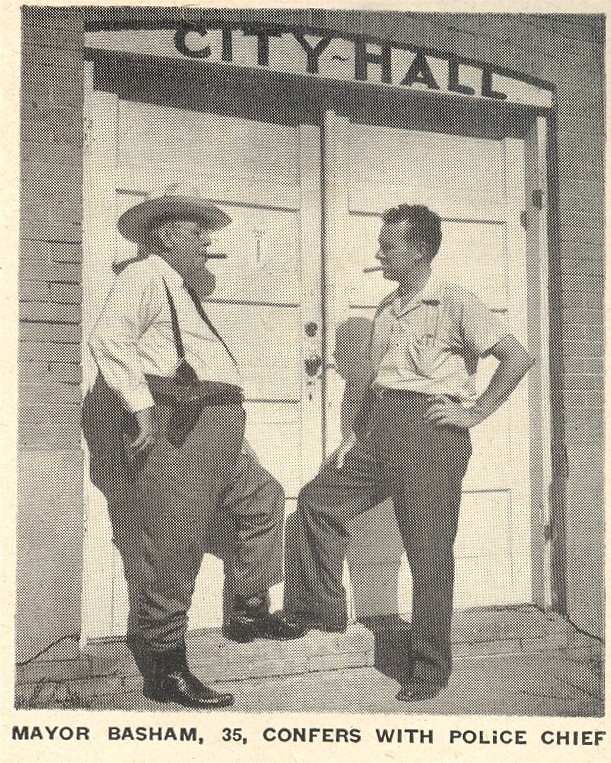
    It came to the mayor of Whitney, Frank Basham, to appease “a
    delegation of local housewives” who were fed up with the old men, and wanted
    the “unsightly bench” gone.  It was
    probably a lot more than the bench, as the quote above by Mrs. T.E. Bagley contends:

    “Why, they must spit two or three gallons a day!  They ain’t died fast enough, these old men!”.
     Perhaps a dozen old
    farmers/ranchers/cowboys sitting on a bench all day long spitting and watching
    the world go by wasn’t the most attractive thing for downtown Whitney.0--whitney 02 sherrif fat close up
    And
    so it came to pass that the lumber was removed, but not the men—they returned
    with nail barrels and took up residence, unabated, “sitting wrathfully” on the
    kegs.  The police then threatened to
    confiscate the kegs, and then the men: tensions flared, and a special election
    was held, a referendum on whether or not to restore the bench.

    0--whitney 03 old lady

    “I’ve
    never heard of such foolishness”, ‘cried 97-year-old Tom Rose, dean of the
    bench sitters’. “Come here in ’77 from Tennessee.
    Been married 76 years, and my wife ain’t whipped me yet.”

    The
    vote was held and the forces of bench-removal-evil were “horribly” beaten, the
    vote for favoring restoration coming in at a convincing 124 to 67.

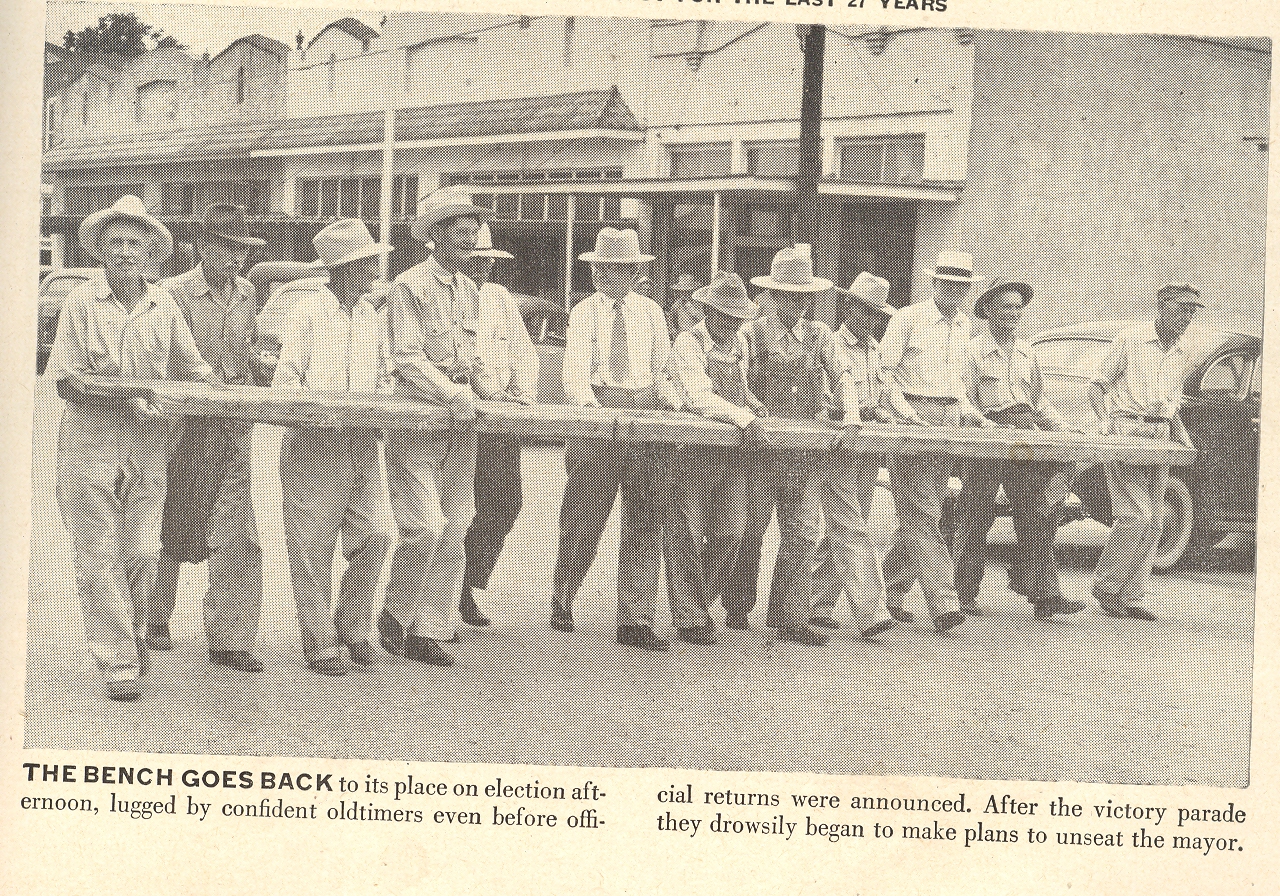
    The
    picture below shows the men “triumphantly” hauling the bench back into
    position, sitting back down once more, “loafing, whittling, spitting and
    passing judgment on everything that passed”.

    As I said, this is a beautiful drama of high emotion, way-of-life small consequence played big, a heaping slice of American life witnessed in a small East Texas town just after World War II.  I would love to hear the voice of Mrs. Lizzy Smith (pictured here) as she was thinking-out-loud, casting her vote in this debate with a pencil no longer than a finger joint. (Where did that hat/shawl come from? Is it her mother’s? Mrs. Stewart’s  mother would’ve been born around 1840, which means that the sensibility for that head cover was at the very least of pioneer vintage, and possibly older. It looks like living history to me, a snapshot into something from the deep past, right there in the present. This doesn’t happen very often; but when it does, it is a celebration.)

    “We’re all living on borrowed time” she is quoted as saying, and I imagine that she voted for the men to be able to return to their bench to use what time they had left to holding up the walls of that pharmacy.  [I made a call to Whitney, this morning, and spoke with a gentleman about the Battle of the Bench.  He eloquently relayed the story, and the place that it holds in the town’s history, its small action carried into the future as a very large sensibility– I’m thankful for his insight.  I couldn’t resist asking what it was that was directly opposite the bench; what were these men looking at when they weren’t looking down.  “Not very much” he said. But the story isn’t in the looking, its in the talking; and as my wife Patti Digh finely points out, stories seem to be best told side-by-side.

    And
    in here is a great little play. Maybe not so little.
    0--whitney 03 carrying bench


  • Fabulous/Fractured Friday: Three-Channel TV, 1951

    JF Ptak Science Books

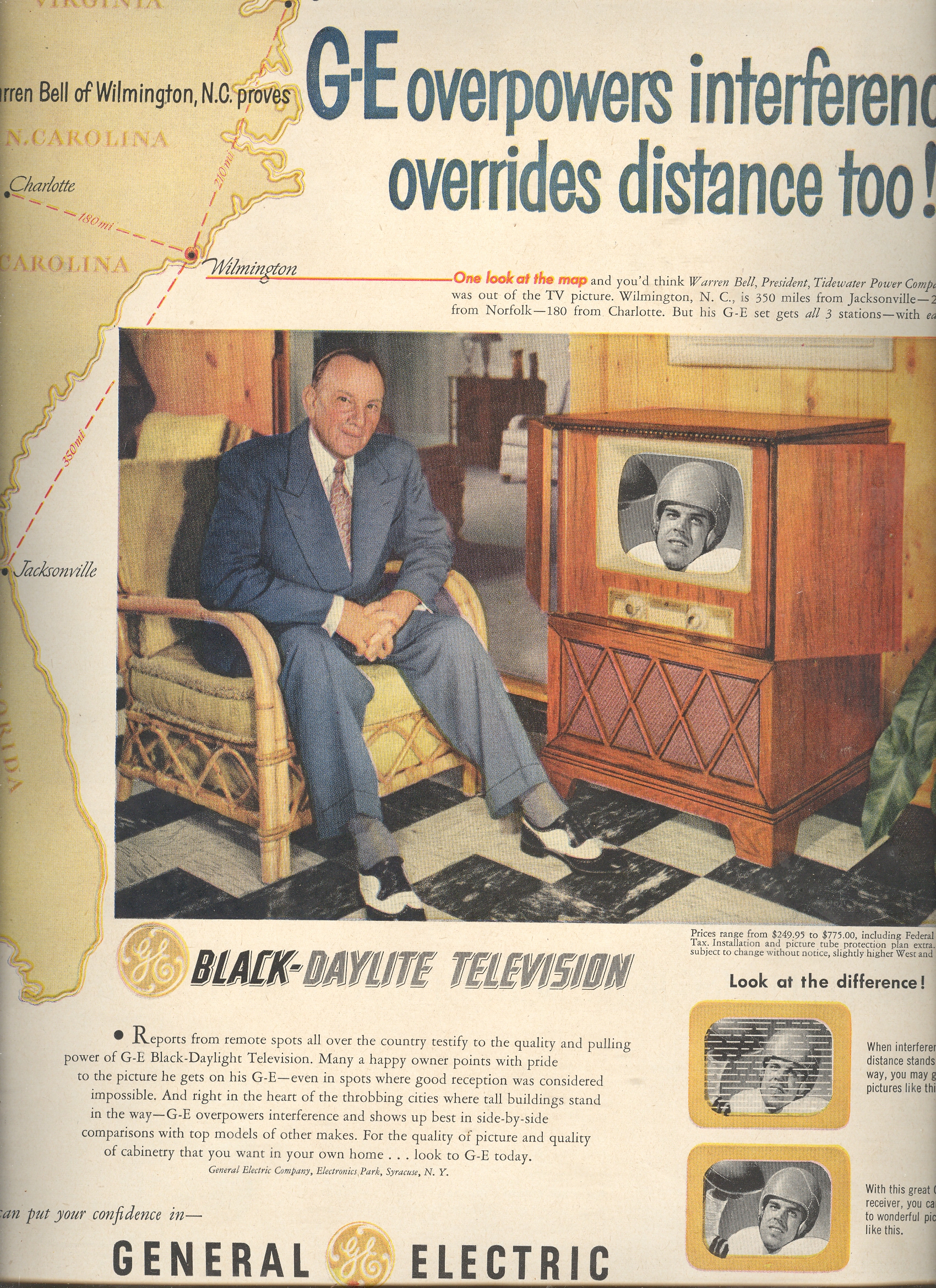
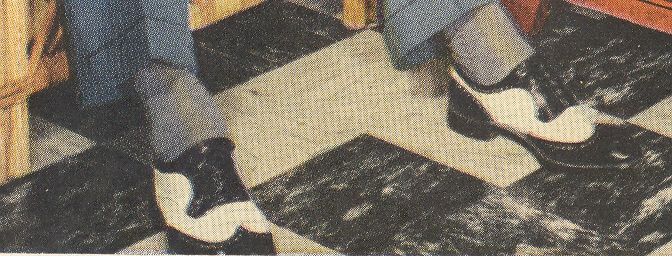
    The fabulous Black-Daylite Television, brought to the well-heeled by General Electric, boasted superior reception qualities in a 250-pound wooden cabinet with electronic tube-y warmth.  For example, the gentleman in the photo was sitting there in his living room in Wilmington, North Carolina,  confident with his fine camouflaged shoes (blending in perfectly with his floor), with the ability to choose between the programs coming from Jacksonville, Charlotte and Norfolk…getting “all 3 stations”.0--tv

    The photo is pretty deceptive:  judging by the tiles on the floor, the television set is almost as long as the lounging chair, and if Mr. Bell’s shoes are a foot long, then the picture he’s receiving is just a wee bit bigger.  The set retailed for about $700, which in today’s dollars comes out to about $9500–it was expensive, and cost as much as some modest cars. 

    0--tv det

    ·Posted by :

    ·in:


  • Medical and Liturgical Cardiac Pathology, 18th Century: Scarpa & Senac vs. the Throne of Satan

    JF Ptak Science Books LLC  Post 952

    0--heart of man 1 It is a bit odd to compare these three relatively contemporary
    works on the human heart and to see their points of correlation and (vast)
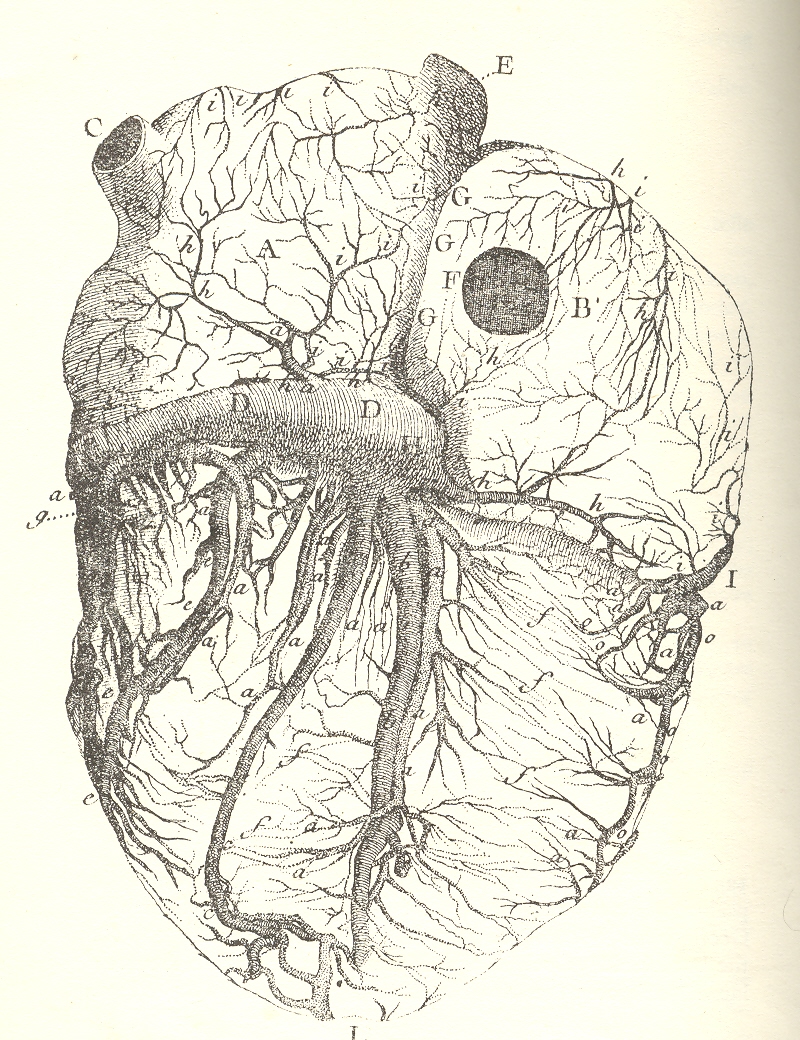
    departure. The first belongs to Jean Senac, whose Traite de la Structure de Coeur…(published in 1749) was one of the
    most valuable works on the 18th century on the heart, laying a firm
    foundation for the study of its pathology. 
    Senac

    Senac  

    (1693-1773, born in Gascony
    and later physician to Louis XV) was the first visitor to many aspects of the
    heart’s physiology, describing delation (as the most common evidence of cardiac
    pathology), correlated hydrothorax with cardiac failure, pericarditis, and much
    more—he also published exquisite illustrations by Jacques Poitier to accompany
    his text.

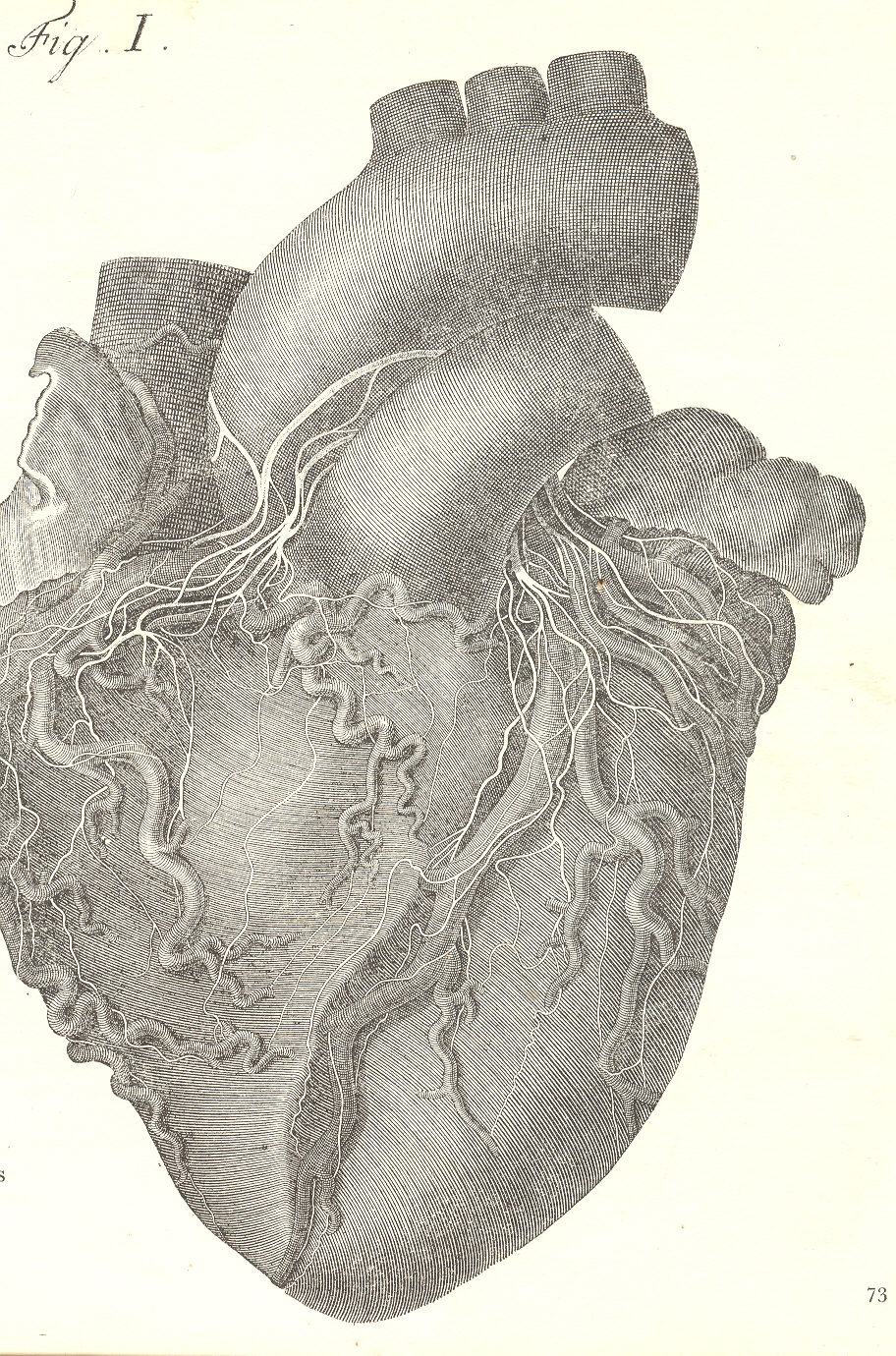
    The next image is the first to properly describe the nerves
    of the heart, and was published in the magnificent Antonio Scarpa’s Tabulae neurologicae ad illustrandam
    historiam anatomicam cardiacorum…
    in 1794. 
    Scarpa was a monumentally

    Scarpa

    accomplished anatomist who was also a gifted
    artist, and it is his own work that illustrates this masterpiece.  The original edition of this work is huge,
    atlas-sized, and the images of the heart are life-size and float in plenty of
    free, very wide and perfect margins.


    On the other end of the spectrum we have this liturgical
    philosophical anatomy of the stages of the heart in grace and disgrace.  Mostly I’m interested in the foul part, which
    shows the advanced mortification of the organ in seating the throne of Satan. The
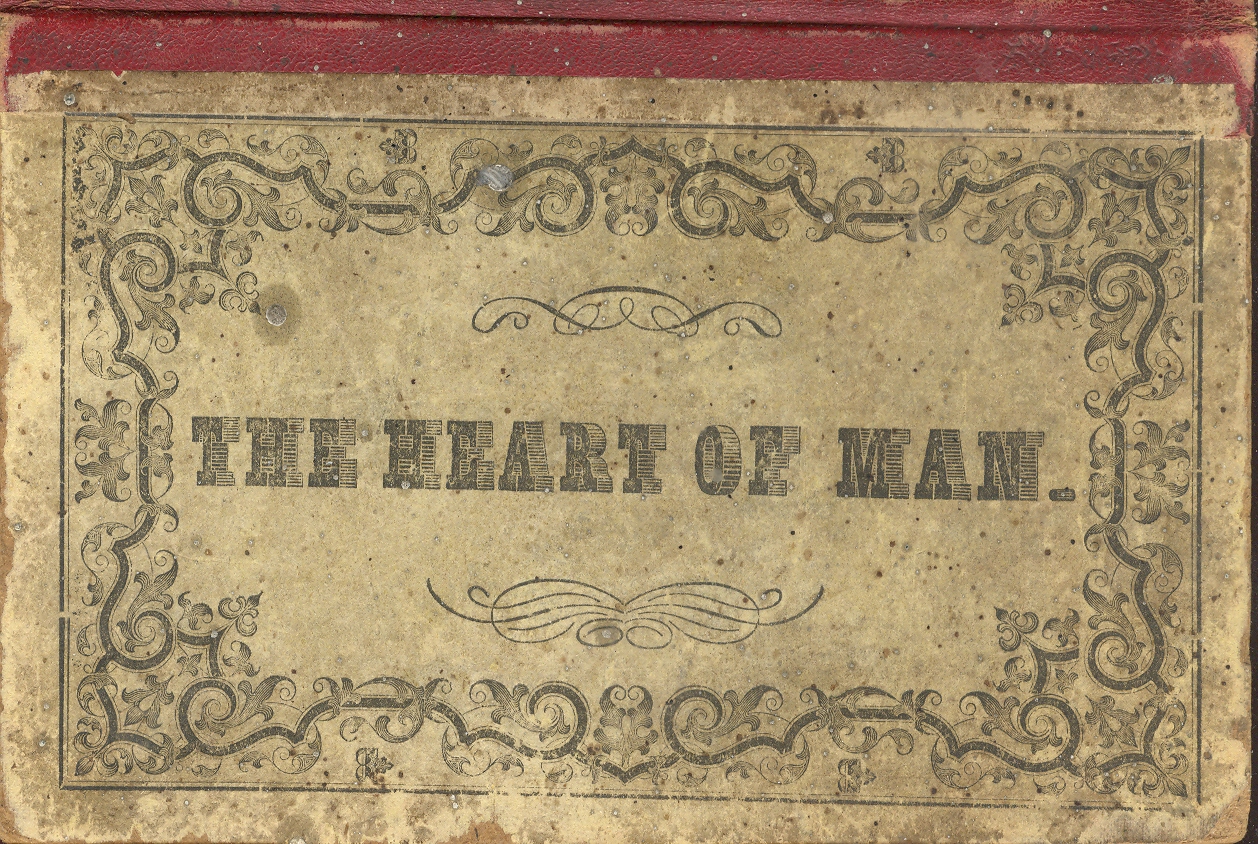
    edition here is The Heart of Man, either
    a Temple of God or the Habitation of Satan1,
    and
    is a very heavy-handed 1842 illustrated edition from Harrisburg (PA) version of
    a French text of 1732.  It is illustrated
    with ten versions of the state of the heart, ranging from perfect grace to the installation
    of the Beast, and several points in between, the degrees of gaining and losing
    each station. 

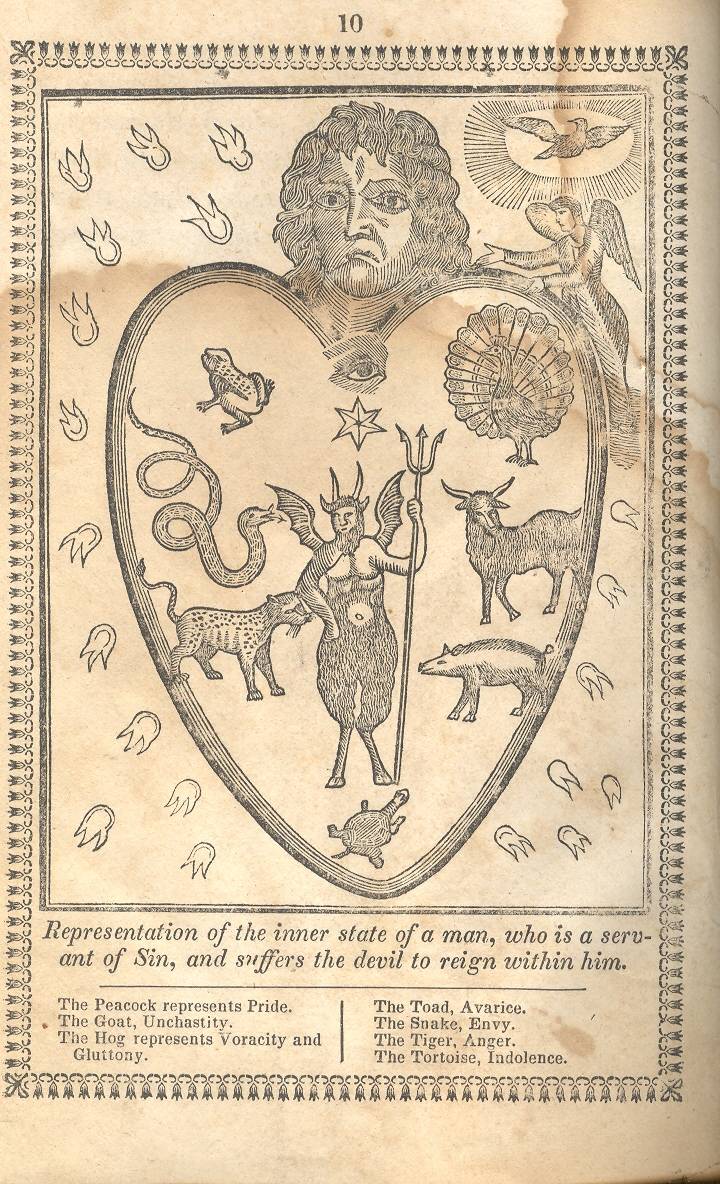
    0--heart of man satan 1

    The first image shows the heart of man completely dominated
    by Satan, with Man the sinner’s troubled face (along with the mark of Cain (dominating
    his wayward organ.  The emblematic
    animals infesting his heart include the peacock (with its misleading
    haughtiness), goat (“a lascivicious, stinking animal” representing “unchastity”
    and impurity), hog (gluttony and intemperance), snake (seducer), tiger (cruelty
    and ferocity) and tortoise (indolence). They chase from the hear the holy ghost
    and an angel, and allow the presence of Satan (front and center). 

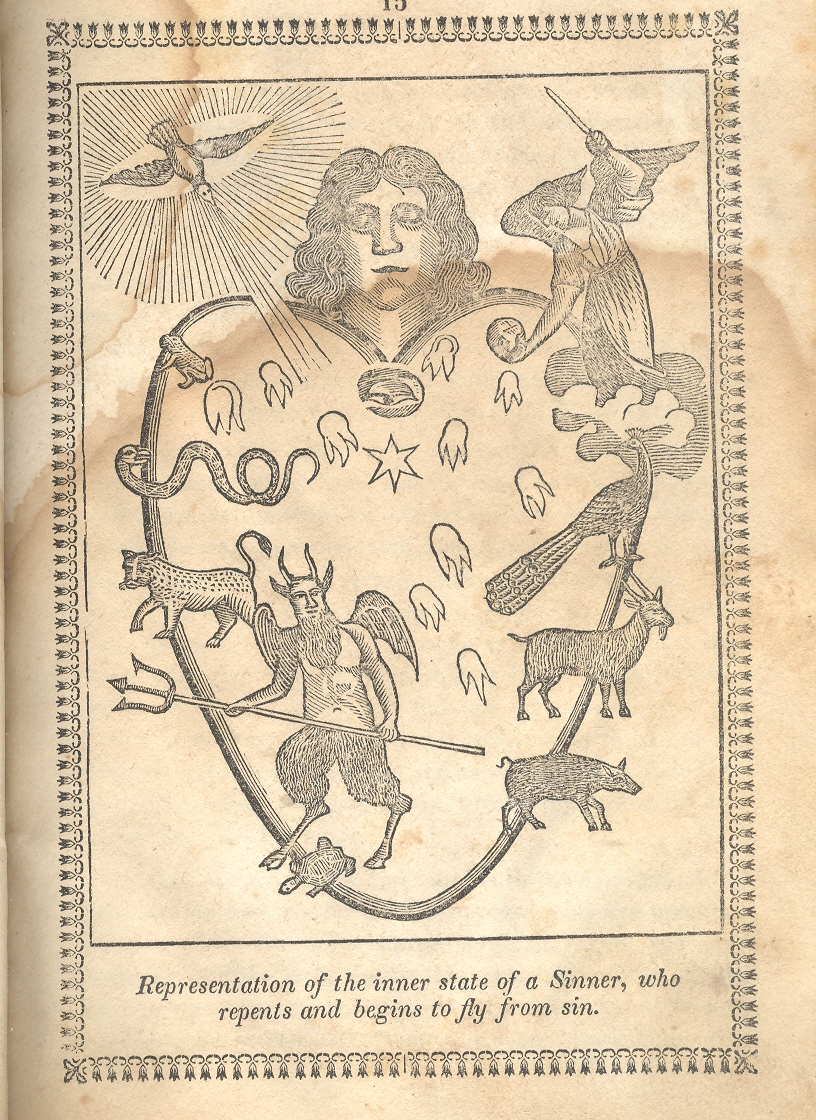
    The second image is interesting in that it shows the
    movement of a bad/evil/wicked heart to a more pious one, though it is just in
    the transition stages.  In my experience
    it is uncommon to see an emblematic illustration of a half-way point of, well,
    anything; this woodcut seems to capture, to be a snapshot so to speak, of the
    human heart undergoing transformation. 


    Notes:0--heart of man satan 2

    1. The original title was something along the lines of Spiritual Mirror of Morality, in which every
    Christian, who desires his salvation, may view himself, know the state of his
    soul, and profitably learn to regulate his life according to it
    . Hardly gender-neutral,
    the title makes four specific gender references to men. 

    ·Posted by :

    ·in:

    — —

  • Bulbous & Bubbly Design: Bloated Efforts on Land and in the Sky

    JF Ptak Science Books  Post 951

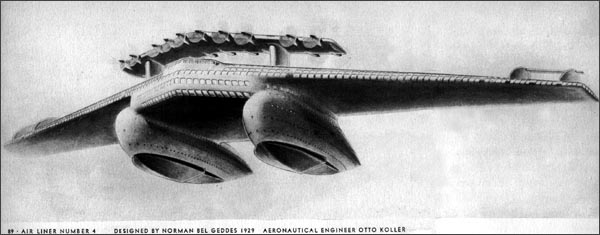
    Airliner 4

    Sometimes things are designed that are so bulbous and so inflated and so terribly hyper-packed that they are just destined never to be built beyond the imagination.  Among the largest of these things meant for the air was designed by a particularly  streamlined designer, Norman Bel Geddes, who basically owned the concept of aerodynamic function at all levels of design in the 1930’s.

    But Bel Geddes’ apoetically-named aircraft, Airliner 4, is an entirely different issue.  It may possibly be the largest, slowest, lowest, fattest and most lumbering plane ever designed. (And by this I mean that it stood a chance of some sort of actually being built and flown, as opposed to the monsters with wing-topped tennis courts and such.)

    This  530′-long 1.2 million pound beast took an hour to climb to its max ceiling of 10,000 feet where it would cruise along at an astonishing 100 mph.  It would wind its way lovingly across the country, slicing off its travel hours like frozen bologna, 30 hours from coast-to-coast, slowly, methodically, so as not to disturb its 600 passengers in their sleeping rooms.  But I’m not sure how much sleep would get slept, what with 20 (!) 1900 hp engines screaming overhead. 

    2--bulbous building 2


    The passengers who didn’t sleep could do a lot besides sit and be serviced by the aircraft’s crew of 155–they might actually need guides to get them through the oddness of the plane’s 9 decks, 3 kitchens, 2 dining rooms, solarium, 100-couple dance floor, gym, barbershop and medical offices (with waiting room).  Plus much, much more.  (I like a plane with a doctor’s office waiting room; perhaps the real genius would’ve been to come up with the smaller, more interior, extra waiting room to which one graduates before seeing The Doctor.) 

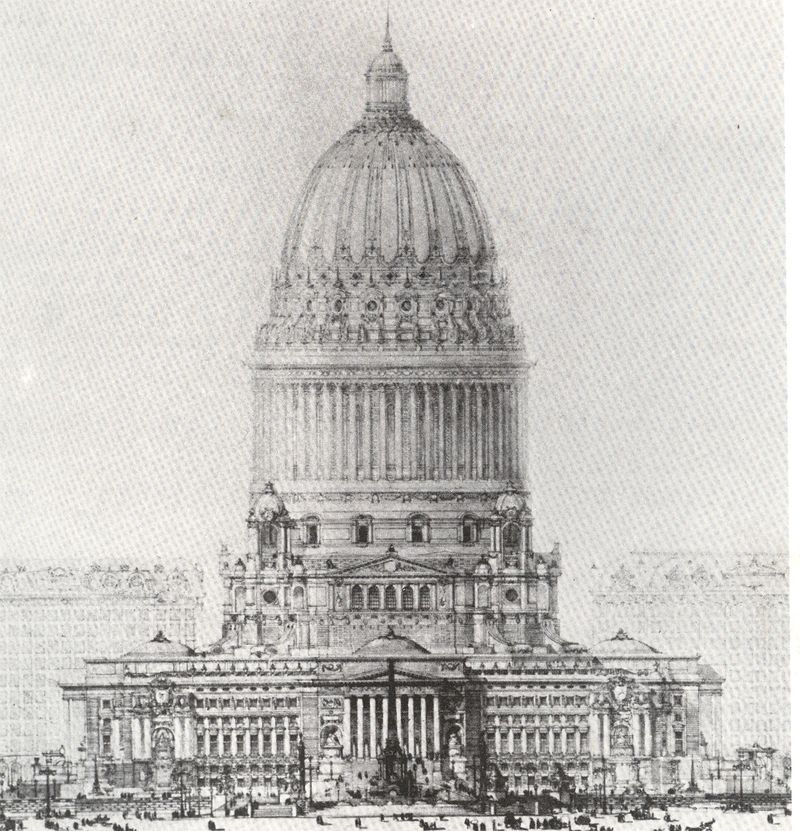
    Getting closer to the ground is the plan for the Chicago Civic Center (1909) by the usually accomplished Daniel H. Burnham. This beast looks more like a stubby nuclear- pulse intergalactic Mothership than anything that anyone would have wanted to build on the ground—at least in space it would be out of sight. 

    2--bulbous building


    In a struggling prose reminiscent of Lewis Sullivan Burnham writes1: “The Civic Center will be dependent for its effectiveness in the character if the architecture displayed in the buildings themselves…” which I think is self-referential, stating that the architecture’s effectiveness is dependent upon the architecture. If this is the case, the enormity of the Civic Center doesn’t save it from itself. 

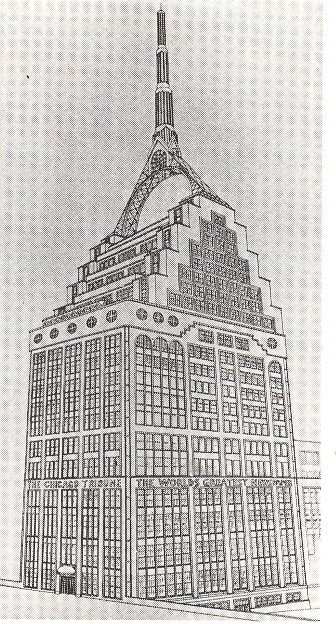
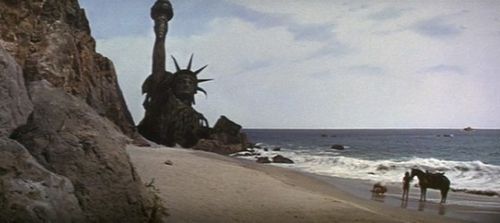
    Staying in Chicago we find another proposal, this for the ChicagoTribuneTower competition of 1922—many of the works submitted seem to my eye big and wide and ugly, but perhaps none more so than that offered by Ludwig Koloch.  This may well have been a nice design for the top third or so of a building, but not for three thirds–and actually, this may be four-thirds.  It reminds me of something rising from the sands at a beach in the future, the remnants of destroyed civilizations.  Without the apes.

     Notes:

    1. Daniel Burnham and Edward Bennett, Plan of Chicago, 1909. 
    2. Planet-of-the-apes-statue-of-liberty

  • Jobs of the Archaeo-Future: Airport Steerer (Bel Geddes’ Floating Airport)

    JF Ptak Science Books LLC  Post 950 

    1--bel geddes airport 2 

    Norman Bel Geddes (1893-1958) made fast, bulbously sleek and varyingly aerodynamic objects and ideas, and was a  vastly successful designer of things ranging from sets for the NY Metropolitan Opera House to telephones to cars to locomotives to the housing for the Mark I computer.  Ideas were his metier, and there seemed no lack of them–good, mostly; bad, sometimes. 

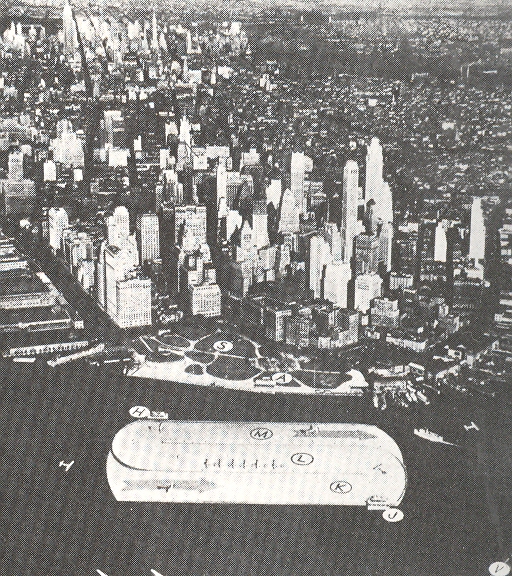
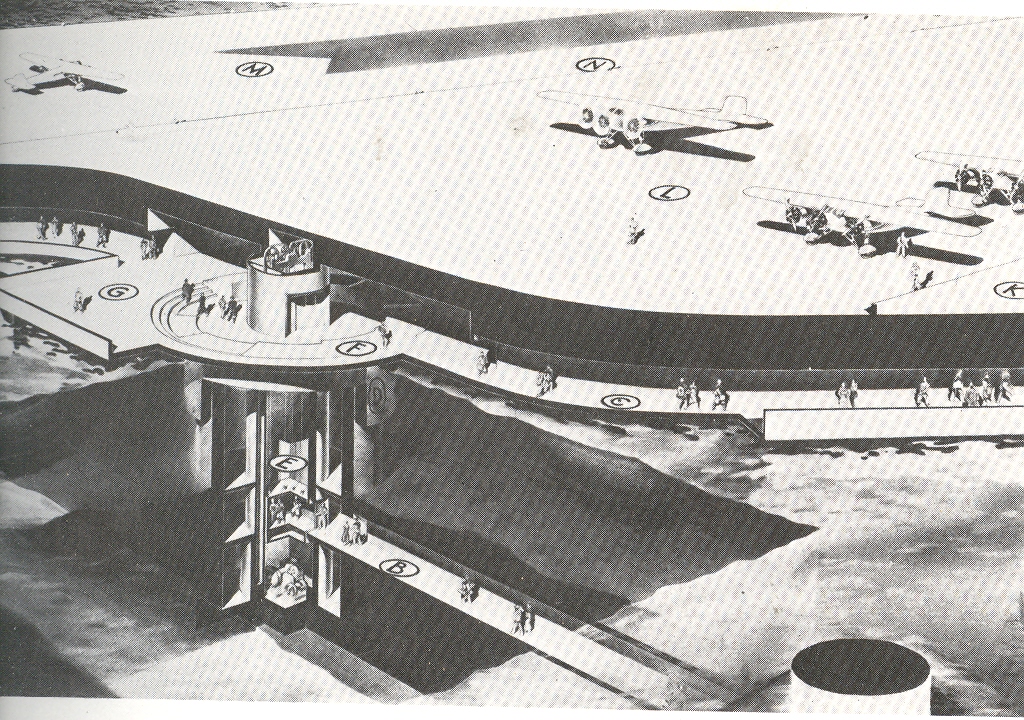
    Bud bad ideas can be beautiful, and elegant, if only for a very short period of time in which they might have actually functioned for the good.  One of these blisterers was his floating airport for the NYC harbor.  Passengers would access the airport via a 800-foot automatic walkway tunnel, and then up to various shuttles and such on the levels below the flight deck. This beast floated on columns floating on mobile caissons just above the harbor bottom, enabling the whole to be turned into or away from the wind, making for easy approaches and departures for the planes. But it is the pilot of the airport that seems most interesting to me, steering the giant propellers that lay under the corners of the structure, pushing the airport into/away from the wind. 

    This may well be the largest mobile steerable structure moving along the shortest courseway conceived as a possibly-buildable project of the twentieth century. 

    Associated posts on great and unbuildable architecture:

    Gigantic
    and Unbuildable Architecture: Philip Johnson and the Walled “Third City“

    Gigantic
    and Unbuildable Buildings: Leroy Buffington, 1889

    Fantastic
    and Unbuildable Architecture #6: the Pyramids of Gizeh in
    Detroit
    (
    Michigan),
    1908

    Gigantic
    and Unbuildable Architecture: Bucky Fuller’s Midtown Manhattan Dome, 1968

    1--bel geddes airport


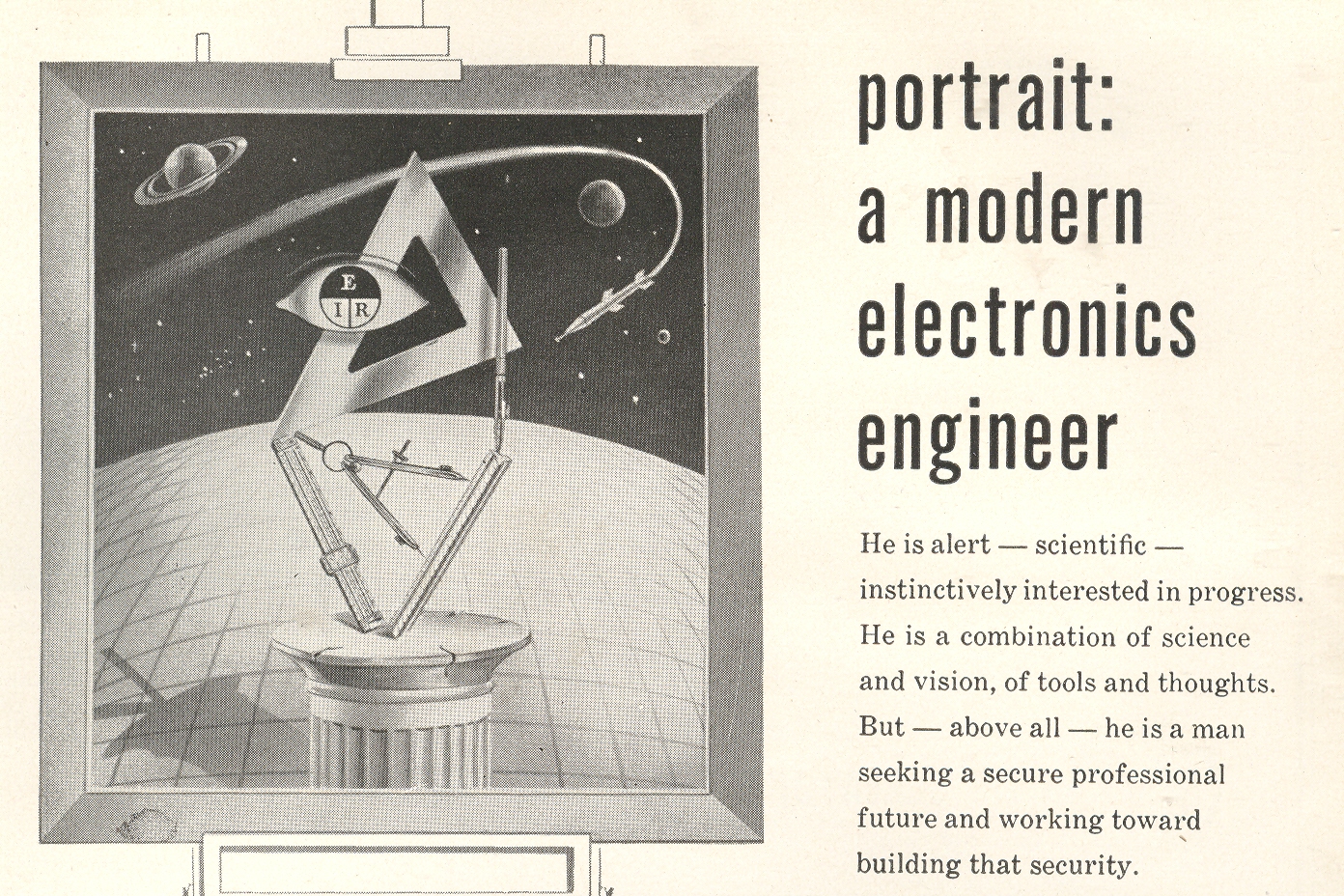
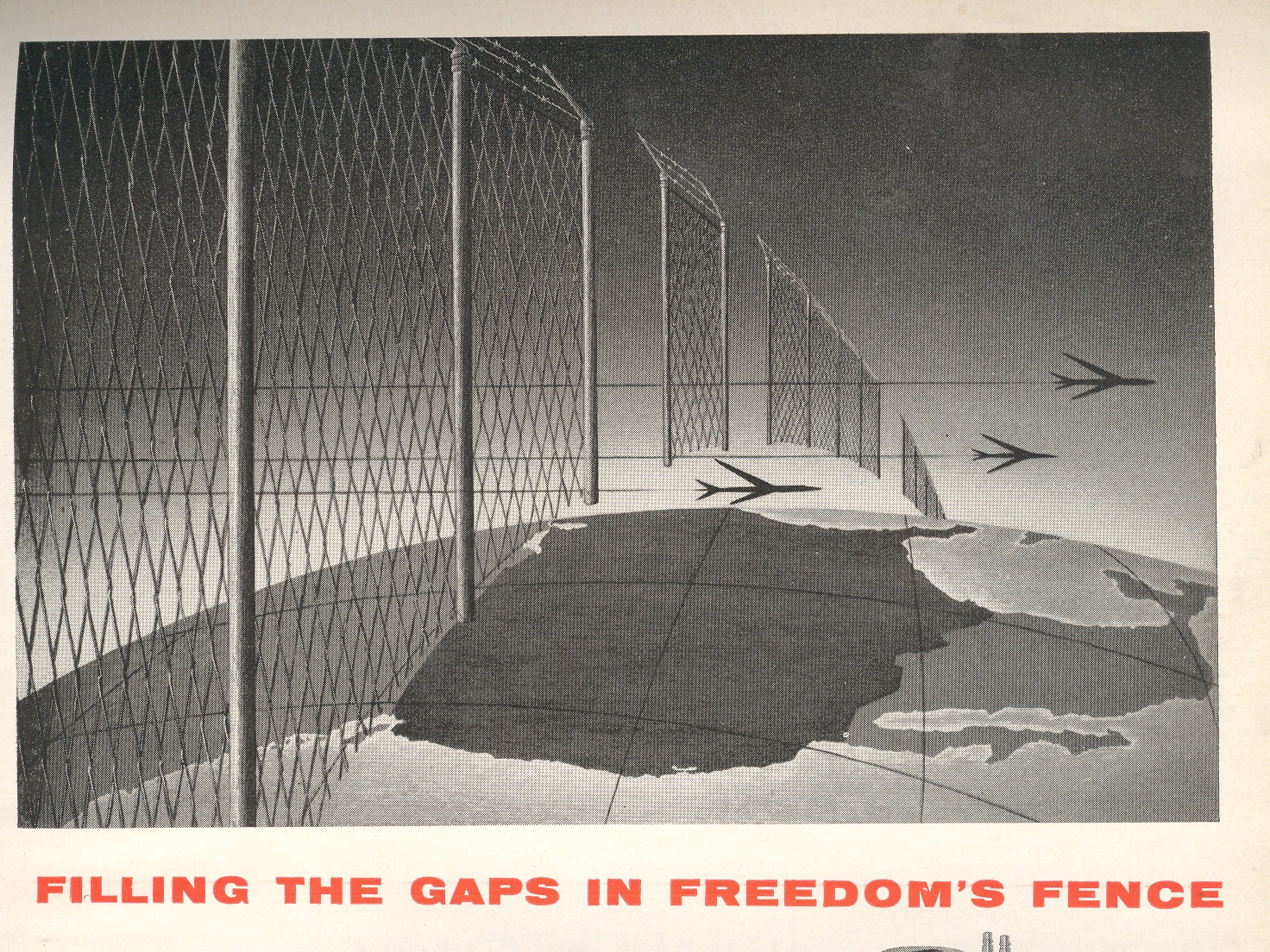
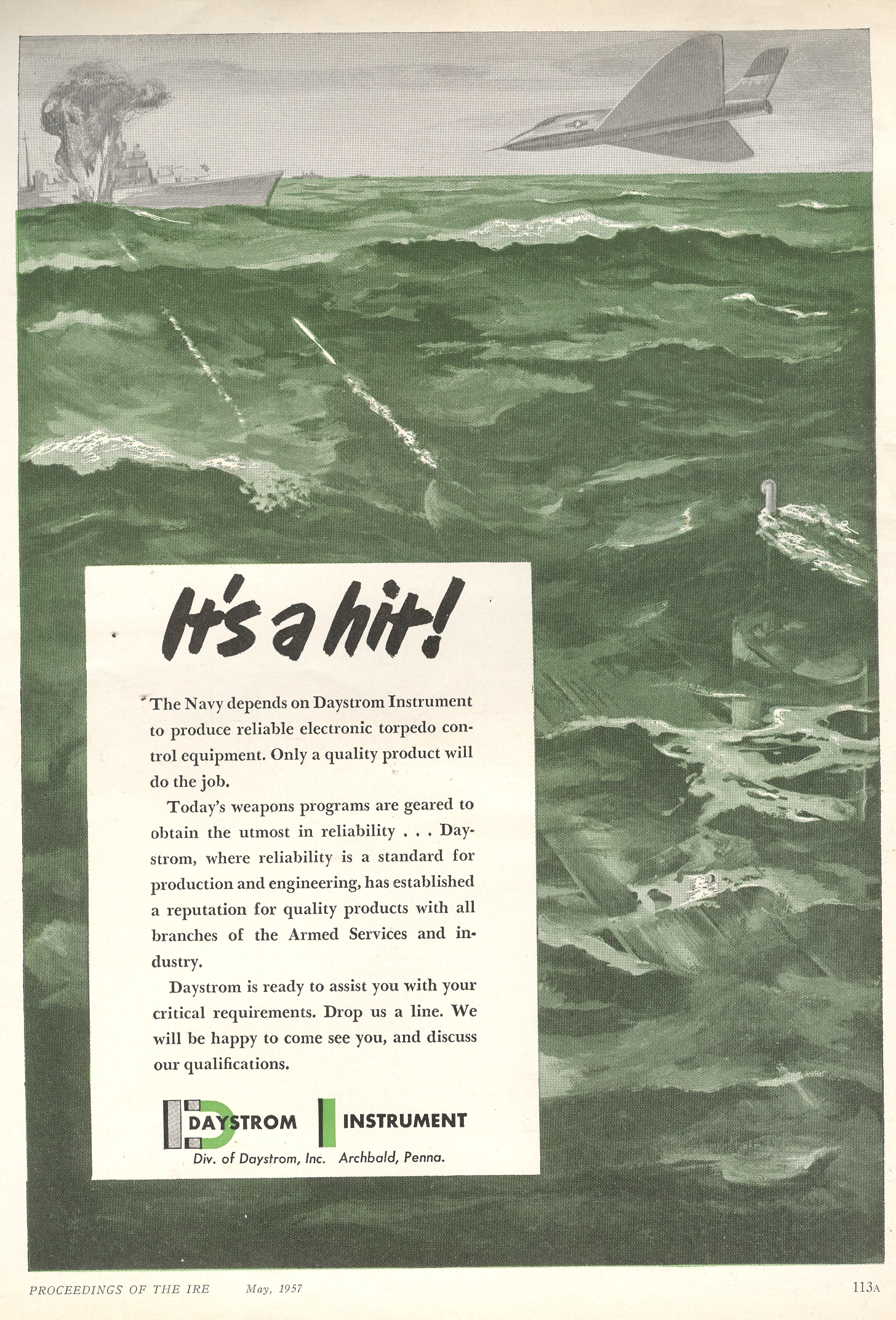
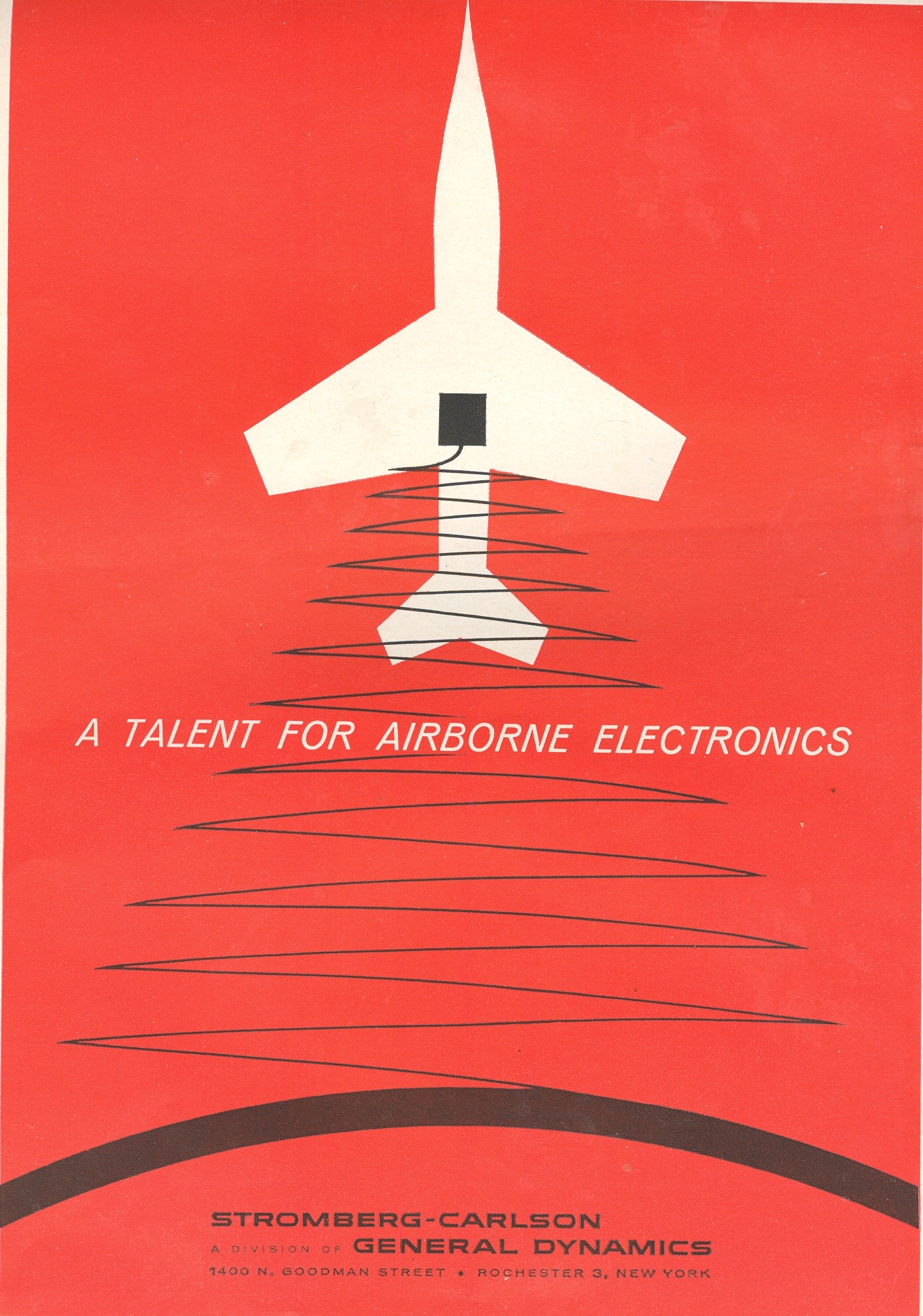
  • The Care and Feeding of Missile Systems–1950’s Ads

    JF Ptak Science Books LLC  Post 948

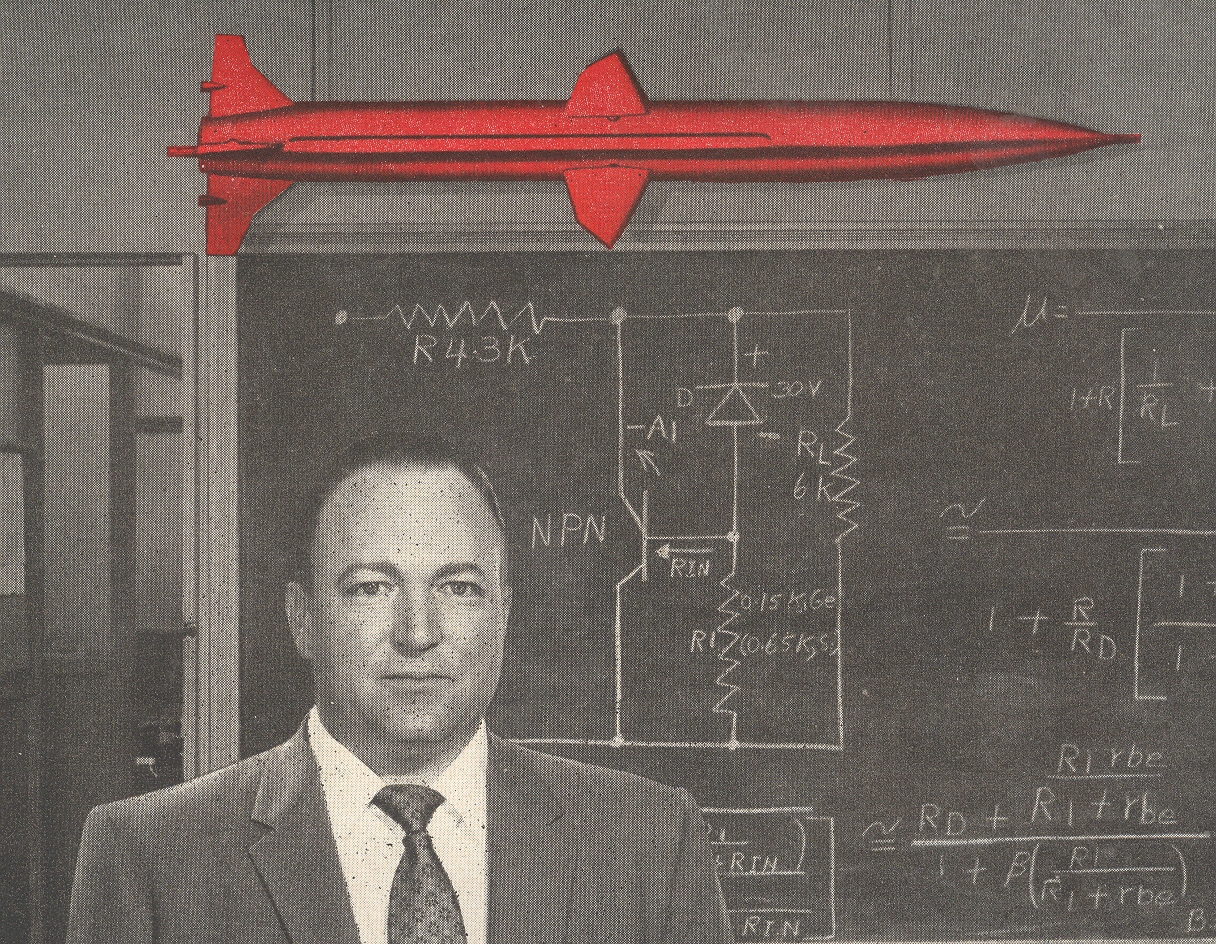
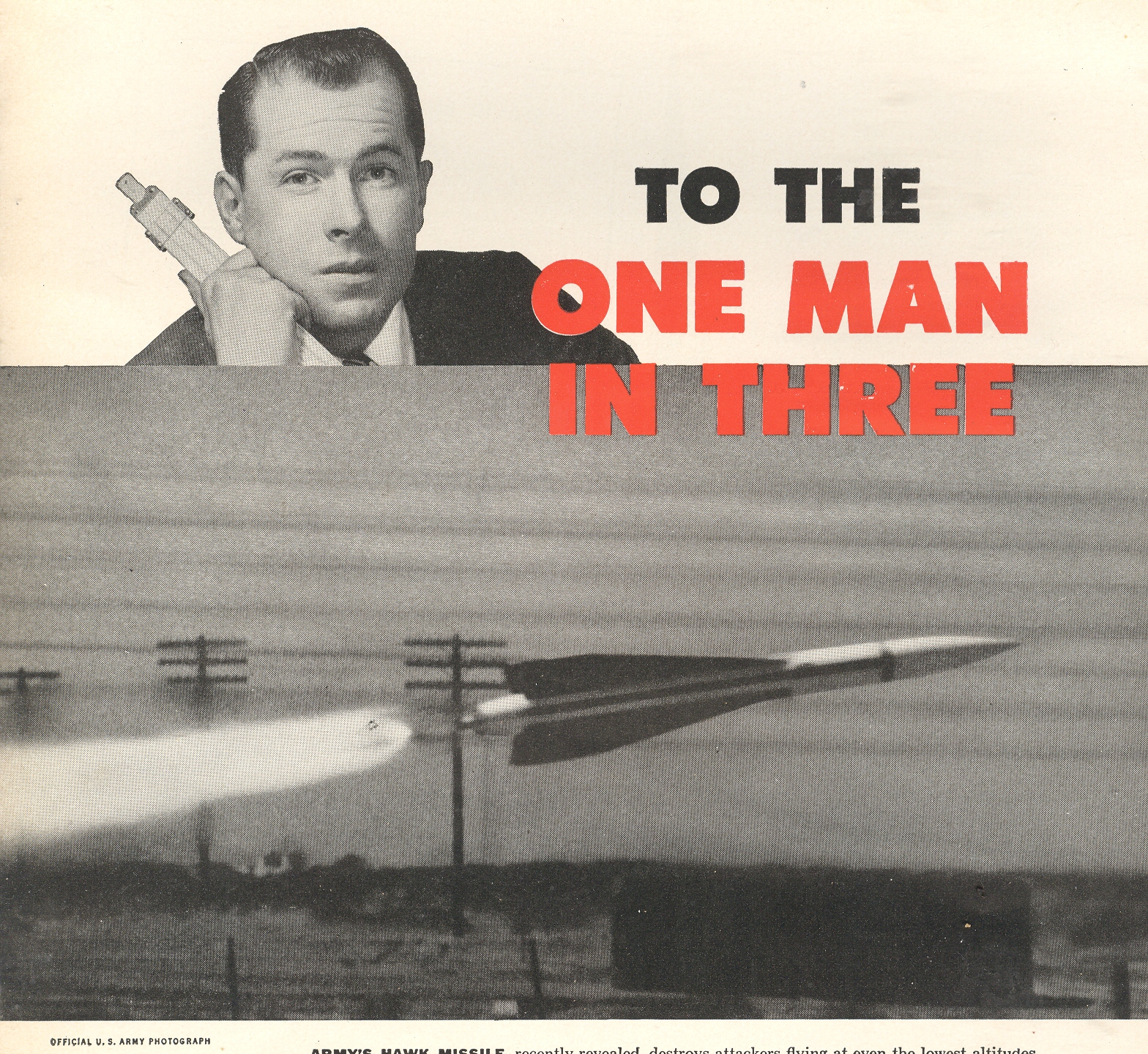
    The following illustrations are all taken gloriously out of context from ads appearing in the Proceedings of the Institute of Radio Engineers, published in 1957-1958. 

    1--feeding missile

    1--red missile
    1--one man in three

    1--portrait
     

    1--fence

    1--fbig hand

    1--missile its a hit

    1--weapon system respons 

    1--big red


  • Bad Sounds Department: the V-1, 1944

    I remember seeing a film (with sound) many years ago, when I was little, back in the mid 1960’s, of a V-1 in flight.  The flying bomb issued a terrifically awful sound, punctuated by the silence when its engine  turned off and it fell to its target in silence. It sounds like death.

    [The V-1, or Vergeltungswaffe 1, (“retaliation”, or “vengeance” weapon), or Fieseler
    Fi 103, or Buzz Bomb, or Doodlebug, was a flying bomb (on the order of a very primitive
    cruise missile guided by a gyroscope autopilot) launched against population centers
    in England by the Nazis during the June 1944-January 1945 period.  The bomb was about 27’ long and 17’ wide,
    weighed 4,700 pounds, and reached 400 mph with an 1,800 pound warhead.  Its 8,000+ sorties killed more than 6,000
    people.]

    http://www.youtube.com/watch?v=Q1qsBGTkVSk&feature=related

    And again:

    And again, here:


  • Magnificent Titles, Ranters and Hell Breaking Loose (England, 1650)

    JF Ptak Science Books LLC  Post 946

    Ranters,
    Diggers, Manifestarians, Puritans, Muggletonians, Shakers, Quakers, Levellers, Seekers…terrific names all for religious or religioesque movements, most now
    gone, though it seems that of the most-gone the Ranters are probably the
    most-goned gone–which must’ve been a function of their unstated aims of not
    having a particular course of action.  As
    an anti-movement their movement was tautologically doomed, as they flourished
    for only a decade or so, sandwiched into the very full mid-17th
    century. 

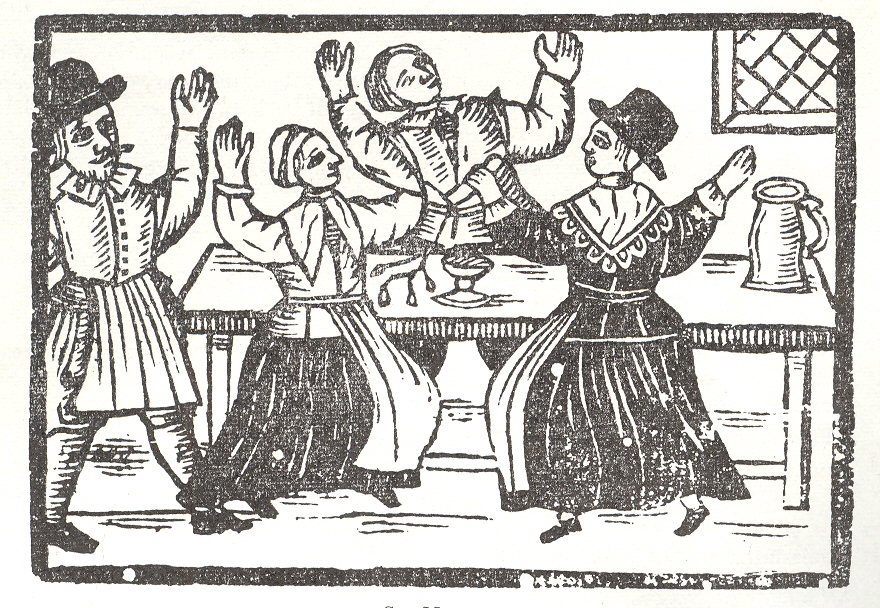
    1--ranter
    {The image above is an illustration from the book, Hell Broke Loose... below. It also is a pretty tame version of other images that show more nudity/drinking/sexual activities.]

    Ranters
    were an English Free Spirited heretical group of wide interpretation of social
    and moral value. Their questioning of the potency of the man’s fall doctrine
    steamed together with a quasi-semi-millenialism evidently led to an
    alehouse-based loosening of socially governed restraints. According to the many People magazine-like pamphlets and soft
    porn reporting, their activities made for sugary eating by the bawdy-eyed ha’penny
    people buying gossip in cheaply printed formats.   Free of Sin and Law, the Ranter celebrations
    were soaked in alcohol and nudity, which are ripe pluckings for any non-serious journalist, then or now.

    Judging from the list of publications (listed below in the “Continued Reading” section) there must’ve been a very immediate lusty interest in the Ranters’ lustily interesting ways.  I’ve written this post for the simple interest in one particular, extraordinary title: [with apologies for the underlining, but I cannot convince the Typepad gods to remove it.]

    Hell broke loose: or, the notorious design of the wicked Ranters, discovered on Sunday last at Black-Fryers Being a true relation of the strange proceedings of Mr. Vaughan, and his wicked proselytes; and their entring of Black-Fryers church in sermon time, like so many spirits from hell, with four damnable papers in the hands, containing such horrible, audacious, and abominable songs, the like not to be parallel’d in former ages. With the manner how this onsolent Ranter traced the streets from Black-Fryers to Saint Paul’s Church-yard, in his Holland shirt, without doublet or breeches, a treble cap, like the Pope’s miter, with silk fring, and white shooes, and stockings. With their damnable plots, and conspiracies against the ministers of the gospel: their examination before the right honourable the Lord Mayor of London; the sad and woful speeched, made by the ringleader of the Ranters, concerning the city magistrates, and golden chains: and the committing of them to Bridewell till the next sessions. 1650

    See?  That’s just fabulous, and represents a Title Page Extravaganza that seems to be a 17th century feature–including as much as humanly possible on a title-page.  As does this book, with all manner of detail in the title, not the least of which is the description of a man running around with no pants but with a Pope’s mitre and white shoes and socks.

    The 17th century “Hell Broke Loose” extended-title (but non-Ranter) category has a number of other entries in it, too, for published books, including the following lovilies:

    Hell broke-loose; upon Doctor
    S–ch–ve–l’s sermons
    or, Don Quevedo’s vision, of an infernal cabal of Whiggish papists and
    popish Whigs in Utopia; upon a mock-tryal of the doctor. Translated from the
    original; by Jack the Spaniard.
      1713

    Hell broke loose, or, An answer to the late bloody
    and rebellious declaration of the phanatiques, entituled A door of hope,
    &c.
    wherein their horrible conspiracy against our gracious soveraign, and the
    city of London, in their late rebellion is discovered : together with a brief
    view of our lives, manners and malice of those desperate and unparallel’d
    traytors
    . 1661

     Hell broke loose : or an history of the Quakers both old and
    new. Setting forth many of their opinions and practices, published to antidote
    Christians against formality in religion and apostasie
    1660

    Some of the other big-title Ranter titles from this time include the following:

    The Ranters creed being a true copie of the examinations of a blasphemous
    sort of people, commonly called ranters, whose names are herein particularised,
    together with the name of their pretended God almighty, and their false prophet
    : taken before Thomas Hubbert Esquire … with a declaration of their fantastic
    gestures and deportments as they were coming before him, and in his presence :
    and now committed to the New Prison at Clarkenwell.
    ,
    1651

    The great mistery of the great whore unfolded, and antichrists kingdom
    revealed unto destruction in answer to many false doctrines and principles
    which Babylons merchants have traded with, being held forth by the professed
    ministers, and teachers, and professors in England, Ireland, and Scotland,
    taken under their owne hands, and from their owne mouths, sent forth by them
    from time to time, against the despised people of the Lord called Quakers, who
    are of the seed of that woman, who hath been long fled into wildernes … in
    this answer to the multitude of doctrines held forth by the many false sects,
    which have lost the key of knowledge, and been on foot since the apostles
    dayes, called Anabaptists, Independents, Presbyters, Ranters, and many others,
    who out of their own mouths have manifested themselves not to be of a true
    descent from the true Christian Churches : but it’s discovered that they have
    been all made drunk with the wine of fornication received from the whore which
    hath sitten upon the beast, after whom the world hath wondred /
     
    1661

    The Ranters reasons resolved to nothing. Or, the fustification instead of
    the justification of
    the Mad Crew Being, a serious answer returned to one who in his letter desired
    an unlawfull and wicked book to be sent unto him, call’d the Justification of
    the Mad Crew. Instead of vvhich, the author of this letter sent him the Act of
    Parliament made against the Ranters; and did also both justifie their way, and
    ingratefully asperse some, who in Christian love would have reduced them to the
    life and truth of Christianity. Wherein the people called by themselves god and
    by some others, the Gods of Godmanchester, may, as in a glasse, behold, that
    they are a deluded and defiled people, if not incarnate Devils.
     

    1651


  • Architectural Palindromes (or Semordnilap), Reversible Structures and Fractally Bad Ideas

    JF Ptak Science Books LLC  Post 9447--car park top

    “The Edge… there is no honest way to
    explain it because the only people who really know where it is are the ones who
    have gone over.
    “–(Dr.)Hunter S.Thompson

    Oddities
    and Curiosities and the Tryphiodorus Award

    Sometimes
    things that were just done because they could be done aren’t necessarily an
    accomplishment—they may use letters in the alphabet and make words, but the
    words really don’t seem to take us anywhere. 
    Literally.  There is a literary practice (and I mean this in a medical
    or forensic sense) in which the writer chooses to not use a particular letter
    of the alphabet, abandoning it for very private reasons into the dustbin of
    abandoned alphabet letters. (That dustbin is generally empty until one of these
    people show up with the idea of filling it, unless of course we expand the
    dustbin to include punctuation, and then it gets filled rat her quickly (though
    not in the Steinian sense).)

    The
    work which most filled the alphabet dustbin more than any in history is probably the
    Odyssey of Tryphiodorus (a Greek grammarian who flourished in Egypt ca. 4th century ACE) effort
    written in 26 parts, each segment abandoning one letter of the alphabet until
    each letter had been completely omitted from one section.. The author could
    have a lot of time by writing this 26-part cycle in all at once, in one part,
    abandoning all 26 letters at the same time—this may have produced a more
    elegant result (with the Bellman’s map coming to mind).

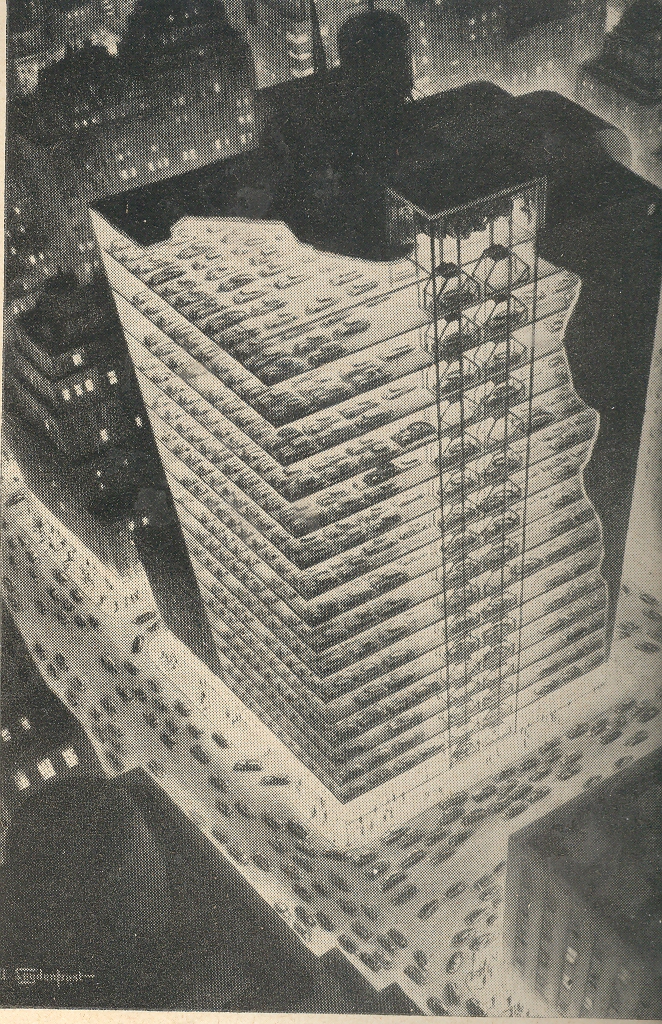
    7--car park mid This
    Odyssey may have produced a sort of a
    lipogramic palindrome, in a  squinty-eyed
    way. 

    Which
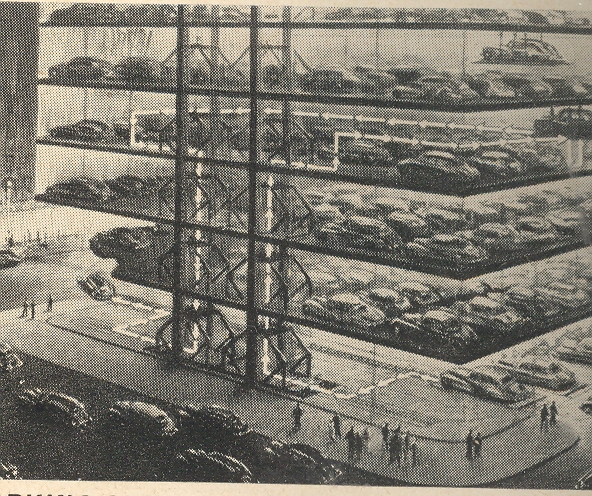
    brings me to this odd structure proposed by real estate mogul and hyper-builder  William Zeckendorf, whose vision brought to
    the pages of LIFE magazine in 1942 (?)  a 
    very tall completely automated structure designed for nothing but car
    parking. People would drive to NYC in their own cars (!) and park them in this
    car hotel; the car functions would be given over completely to the building, moved
    into their spots and juggled and finessed into position by conveyors and forklifts
    and such.  7--car park bot

    Cars
    in a building, moved about free of humans, rested; humans on the street making
    their own human traffic.  The whole idea,
    the entire structure, seems backwards to me, the meaning of a building turned
    inside out, wanting the essential idea, forwards and backwards being simply a
    bad notion.

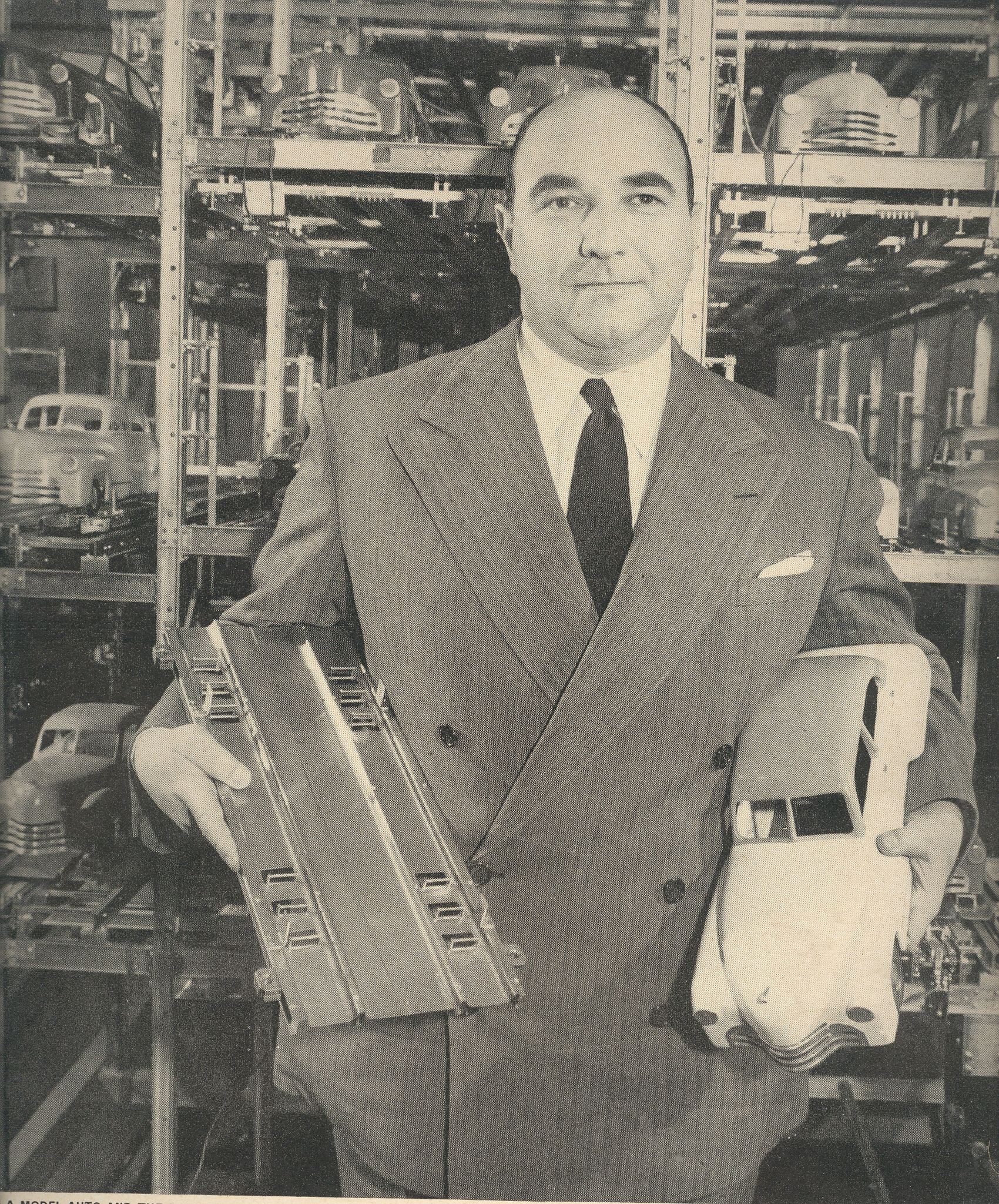
    The
    picture of Mr. Zeckendorf—who was tremendously energetic and who had very many good ideas along with these heavily
    popularized odd plans—standing in front of a lovely (scale?) model of his
    parking structure makes me want to see another, smaller version of Mr.
    Zeckendorf  and his model standing just
    behind it, and smaller one after that, and so on…a fractally bad idea deserving of the Tryphiodorus award for missing the most sense. I bow deeply to Mr. Zeckendorf for trying and for constructing this beautiful (I want it) model.

    7--car portrait


  • TomorrowVision: U-235, Project Orion, and City-Sized Space Ships, 1941-1968 (+)

    JF Ptak Science Books Post 943

    “One conversation centered on the ever accelerating progress of technology and changes in the mode of human life, which gives the appearance of approaching some essential singularity in the history of the race beyond which human affairs, as we know them, could not continue.”— Stanislaw Ulam, May 1958, referring to a conversation with John von Neumann  [Ulam, S., “Tribute to John von Neumann”, Bulletin of the American Mathematical Society, vol 64, number 3, part 2, May 1958, pp 1−49.]  This is also said to be the first use of the term “singularity”, referring to the sometime-in-the-future point where artificial intelligence reaches such a level as to create a race of super-intelligent artificially-enhanced human beings.

    In the history of perfect tomorrows, what happens to people when we no longer die, or live to enormous ages, or replicate necessary organs to such a degree that cell death is no longer an issue, or are just able to get rid our biological corpus and live in something else?

    6--crowded earth


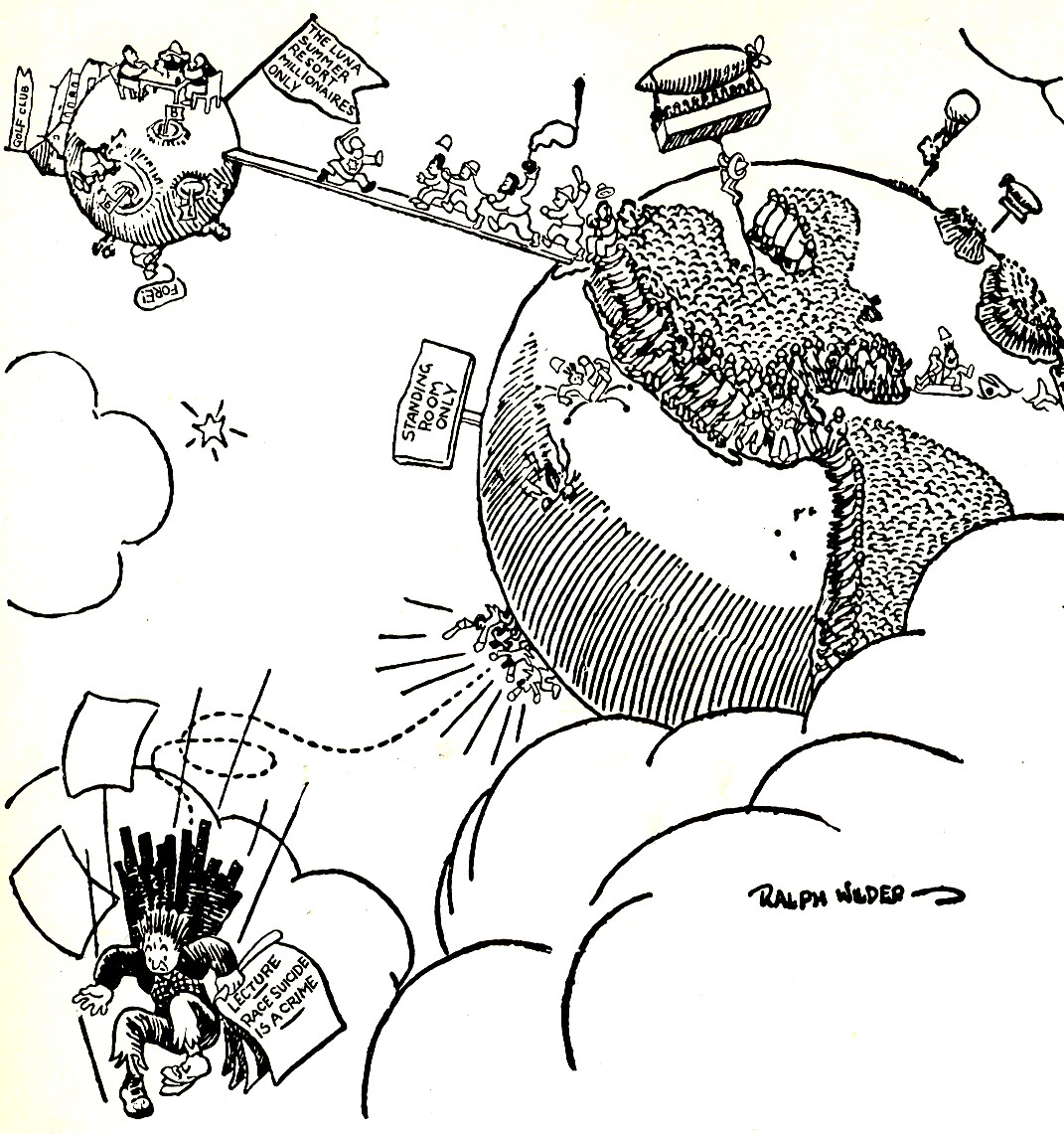
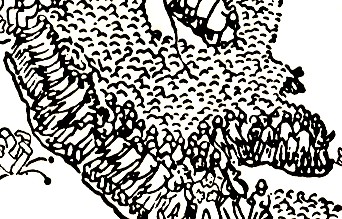
    I can’t tell when the first references start to appear in literature, scientific or otherwise, regarding the sustainability of the population of the Earth, or of simply filling up the Earth, for that matter. This cartoon (above) by Ralph Wilder, published ca. 1915 (source unknown, unfortunately), may well be in the first wave of what must have seemed at the time to be absurd speculation.

    It is impossible for me to imagine what the future of medicine and medical technology may hold for all/some of us in the next 150 years.  I chose this number as it gets us back to one of the greatest advancements in the history of surgery—sterilizing instruments and keeping the surgical room clean. 


    This is the work of Dr. Joseph Lister (remember badly via a popular consumable) who in one fell swoop (and over the course of several years) brought the survivability rate for all surgeries up by half or so, an extraordinary feat, and only four generations old.  It is less than 400 years ago that William Harvey figured out pulmonary circulation and paid hell for it for many years.  To imagine the obverse, the medical advances that will occur in 2400 may be as foreign to educated us here in 2010 as 2010 looked to William Harvey in 1628 or Joseph Lister in 1863.  DNA is only a few years older than me (discovered in 1953), and even though its discovery may seem antiqued at this point, the technologies and understanding initiated by that discovery may look as quaintly fundamental to those in 2150 as the necessity of having a clean surgical environment looks to us. 

    6--crowded earthdet

    And who knows how advancements may spiral ahead of themselves once intelligent machines start producing machines that are more intelligent than themselves leading to god-knows-what.

    But back to the cartoon, and the mathematician Stan Ulam, who is really at the base of this post.  The image depicts the Moon as an escape pod for those who could afford it, the signs suggesting that money would determine who had space to lie and who didn’t.  Of course, there was the problem of actually getting there, which in 1915 or thereabouts was still science fantasy (being twelve years after the Wrights and four years before Goddard).6--u-235 space ship

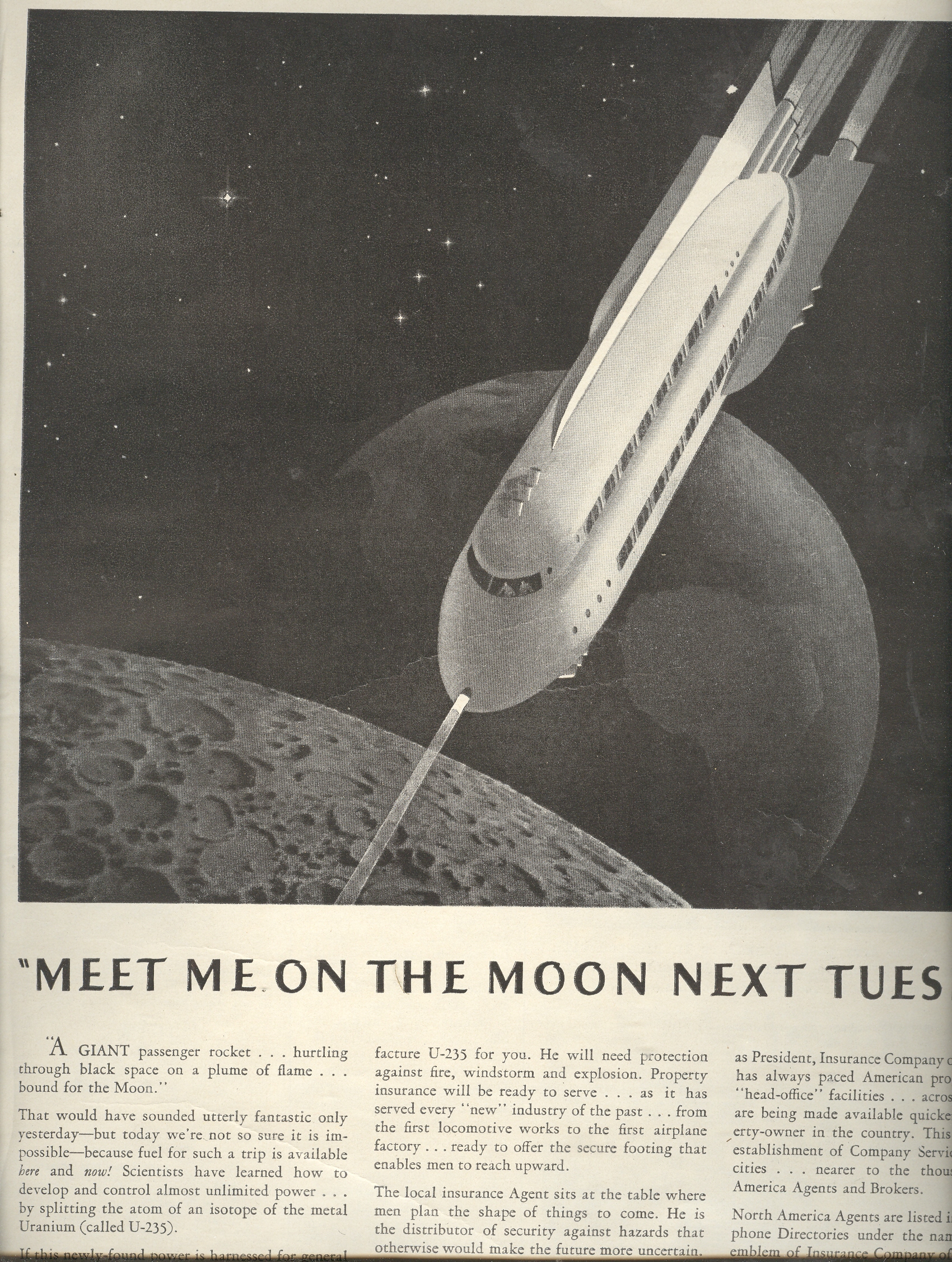
    The second image, from LIFE magazine in 1941, shows a rather massive space vehicle powered by U-235. Discovered by Arthur Jeffrey Dempster in 1935, U-235 was a fissile material capable of sustaining a fission chain reaction. (Dempster, 1886-1950, was a Chicago Ph.D. who during the war would be the Chief Physicist of the great Metallurgical Lab at Chicago, from 1943 to 1946.) The ad (for an insurance firm) shows the ship being powered by what would be a series of nuclear explosions—quite a remarkable thing to be printing in a mass market periodical in the second year of WWII. As it turns out the Physical Review was still publishing sensitive articles on these topics ‘till right about this point, after which their appearances were suspended for the duration of the war. 

    And as it turns out the thinking here was prescient.  It was Stan Ulam who first suggested this use of atomic energy in 1947; and it was Freeman Dyson and others who (beginning in 1958)  took this many steps further with Project Orion.  In short, this project was a think-sink for a pulsed nuclear propulsion system for a class of space vehicle that would range in (three) sizes from 8,000 tons to an incredible, space-insatiable 8 million tons. 

    Yes, that’s 8 million tons.  That was for a city-sized space ship with a diameter of 400 metres and which could travel at 20,000-30,000 m/s with meganewton thrust, being pushed along by series of nuclear explosions, carrying fantastic payloads and enabling the construction of vast structures on, well, other places. 

    I don’t know how the thing would get off the ground.  Evidently this was not an issue, for even in the late 1980’s drawings and plans for this monstrous ark were still being published. But even as I write this I wonder if my own incredulity with the possibility of such travel will be seen incredulous to folks just a few generations down the road.  I suppose this is just another small stop in the history of the time it takes for absurd ideas to look not so.