A Daily History of Holes, Dots, Lines, Science, History, Math, Physics, Art, the Unintentional Absurd, Architecture, Maps, Data Visualization, Blank and Missing Things, and so on. |1.6 million words, 7500 images, 4.9 million hits| Press & appearances in The Times, Le Figaro, Mensa, The Economist, The Guardian, Discovery News, Slate, Le Monde, Sci American Blogs, Le Pont, and many other places… 5000+ total posts since 2008.

Author: JF Ptak

  • Audioclasm in the Soundosphere: on the Storage of All of the Sound that Has Ever Been Made on Earth

    JF Ptak Science Books  Post 1883

    • Where in the Density Map of all Noise Ever Made on Earth would human sounds be located?

    I’ve written often (but not recently) about unusual images and ideas that are sky-borne–a Strange Things in the Sky Department.  Today’s late-ish addition started out being about Halley’s Comet (and Halley’s comets“, though that’s for a different post) and the images artists and pundits produced showing the possible devastation that the comet would rend on the Earth in its wake.  These are interesting images and there are many of them, the ideas of comet impacting he Earth in negative ways being ancient and plentiful. 

    But in pursuing a loose-end in this I stumbled onto another very interesting strange-thing-in-the-sky thing, and this time it is a piece of the “sky” itself.

    It happens in a short work of scientifiction by Gardner Hunting (1872-1958), called The Vicarion  (Kansas City, Mo, Unity School of Christianity, 1926)–a book that started out life I think as a missionary work to non-believers as a profession and support of some sort of faith.  I don’t know about that part–but the idea that most appealed to me was that in some way, the sounds of Earth were being recieved and embedded in “the aether”, and that a machine called the “vicarion” was invented to interpret these sounds writ large and small in the sky.

    Its an intriguing idea. For science fiction.  This is the place where ideas such as these may flourish, where you can stack up the If if if if if (etc.) Then statements to the sky and back, where you can identify the front of the sky and touch it and come back–this is where these ideas can work. Sort of.

    What is intriguing here is not so much that human voices had been preserved in the no-longer-existence “aether” and that this vicarion could reproduce these long-lost sounds.  It is, rather, the idea of what this collosally large and deeply impregnated aether must hold besides human voices. I mean, why limit the ability of either the vicarion or the aether to deal with just human sounds?  

    All things being equal, or at least equalizing location  and pitch and timbre and so on, why isn’t then all noise a local ambient color, and why isn’t all of it being recorded?

    And given ths, where in the Density Map of all Noise Ever Made on Earth would human sound be located?

    And why if this aetther was recording something in the vast ocean of air–the stuff in which the exchange in the average density of air molecules would bump into one another and indicate “sound” as a pressure fluctuation–as insipid and relatively exceptionally minor in the vast cacophony of earthly noises as sounds produced by human, why wouldn’t the aether be recording everything else?

    I’m not just talking about, say, the sound of insect antennae (which I guess would be a furious sound/information points for any one second of all of the insects with antenae moving on Earth), but also the sound of the water cycle (evaporation) or the collision of pollen molecules and so on?  I imagine that to the aether there might not be that great a distinction in these noises, especially from thousnads of miles away.  If you can detect a human voice from 20k miles, then hearing evaporation or photosynthesis or stuff on molecular levels doesn’t seem far-fetched.

    These speculation were certainly not the objective of The Vicarion–a religious message was meant to be observed and delivered in the page, a call hither-to thee was to be the outcome.  But it does make for an interesting series of usually-impossible-to-answer questions, like:  what would produce the most noise (audible to human hearing) for any given moment in time at any distribution of equal points on the planet?

    Without thinking too deeply, I’d have to give the quick anwer as “ocean waves”.  This is highly debatable, obviously.  And if this sound could have been recorded,  I wonder how much storage capacity it would take to have archived every moment of sound produced by water waves since the beginning of water? 

    And then add into that all of the sound ever produced by ants, and then spiders, and so on. Every sound, ever.

    Its a real eyebrow-raiser, and a fun exercise provided by an unusual source. 

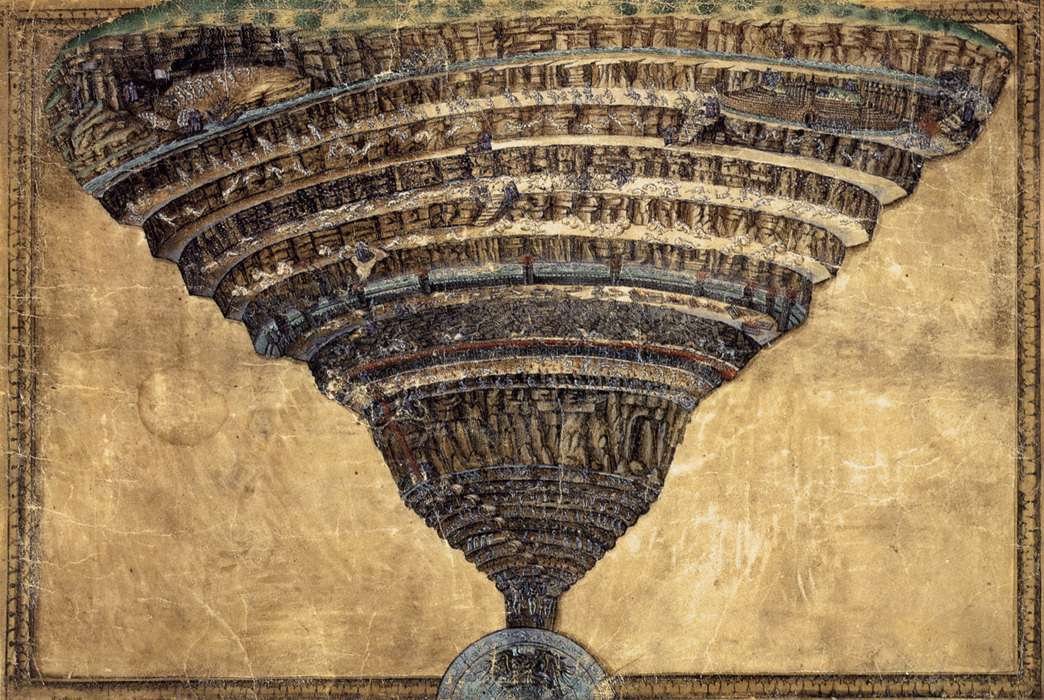
    I’m working on a Density Map of the Audioclasm–I think it may look something like this effort by Botticelli trying to map out the effectiveness of Dante’s Divine Comedy (a scary accomplishment, frightening and heavy–you can almost feel the very burden of Hell coming down upon you. Here’s a good link for a zoomifying version of this map so that you can see its elements in detail):
    Hell_its_representation_through_the_ages


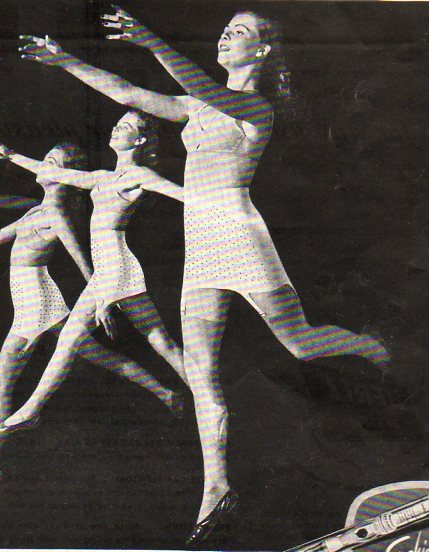
  • Girdle vs. Goedel: the Pink Ice Girdle Ballet of 1951 vs. Logic. Part I of the History of Holding Things In

    JF Ptak Science Books  

    Girdle--a det428[My thanks to Patti Digh for providing the idea for the Goedel part of this adventure into Playtex and Logic–she did so because (a) they fit together and (b) girdle/Goedel sounded almost identical to a woman who once lived in Munich!]   

    In the long history of Holding Things In, perhaps the newest of its
    members was upon us only recently. In the long, deep past we have held
    our breath, hidden our anger, stowed our emotions, and so on, but it was
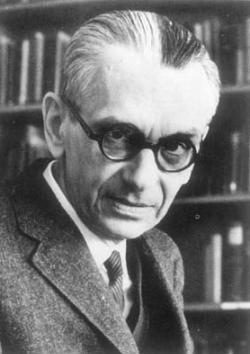
    only recently that we began to hold our bellies in.  One of the masters of Holding Things In for this period turns out to be the sublime logician and re-inventor of modern mathematics (by putting one piece of the great Hilbert to sleep), Kurt Goedel, who towards the mistakenly-self-engineered end of his life, Goedelheld on to everything, virtually–he organized and filed almost very piece of paper that he came into contact with at any level, became ever more reclusive, and at the end (due to his theories of people/institutions wanting to kill him) refused food and, of all things, water.  Surrounded by the smartest people on the planet (including his friends Einstein and von Neumann) up there at the Institute for Advanced Study at Princeton, Goedel withered away until he had almost no shadow. It is a bad irony that he could be so inconceivably unmovable and restrained while at the same time, and in the same life, offered such incredible newness to the maths–both ends of the mountain at the same time.

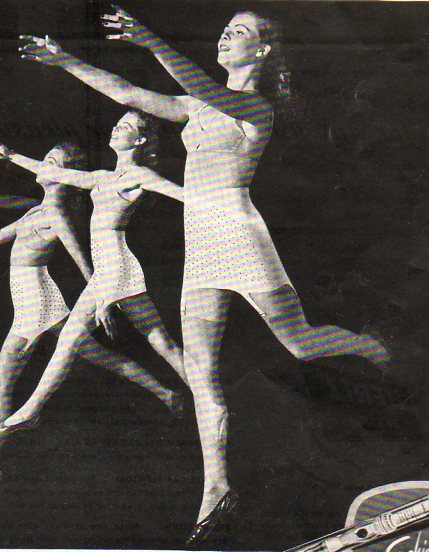
    1951, the year in which these girdle advertisements appeared in Life magazine, was also the year that Goedel present us with the Goedel  metric, and also in which he received (with Julian Schwinger) the first Albert Einstein award (and of course delivered his famous Gibbs lecture  “Some basic theorems on the foundations of mathematics and their implications”).

    The popular introduction of the girdle I think that
    this happened at about the same time for the sexes, only these
    conveniences were much more often advertised for women than they were
    for men.  Slender and non-existent waistlines for women were more of a cultural identifier
    than a slim-hipped man, and the ads for his cheaters appeared far less
    frequently than those for women.

    The first widespread appearance of the girdle for the sake of vanity must have occurred during the 19th century, or perhaps a little later is my best guess–but the first time the device began to appear for the common woman must’ve come around the time when there was time for leisure, or shopping, or of being seen in public in short intervals.  And that I believe is a Victorian-age invention.

    But the binder doesn’t come into fabulous presence until the distribution of mass population illustrated magazines, or I should say the advertisements that made these magazines possible:  production like LIFE (from which these 1951 images come) reached far more women than the popular older periodicals like Harper’s Weekly or other polite mid-19th century journals for women.  The advertisements were certainly more enticing, the possibilities more rewarding, and the girdle comfort levels far higher than their predecessors, and the availability of disposable income for women far greater–and so incidentals like the girdle became more greatly commodified, and moved into the “essentials” category. 

    The idea of these ads seem horribly revolutionary: on the one hand, the badly-named and hyphenated  Playtex product “Pink-Ice” squeezed women into new tight but  malleable molds, while at the same time promised some sort of ballet-like freedom because of it. Like the creeping (“two steps forward and one step back”) communism of the time, Playtex promised the possibilities of enhanced freedom through restrictive clothing (in a “peace through strength” vision).  In any event, and in spite all of what I just wrote, the pictures are kind of amazing.  

    [I’m well aware that this may be one of the worst things ever written about Kurt Goedel–the Renault Dauphine of Goedeliana.  But it doesn’t matter, because in all of his powers, Goedel could absolutely prove that g_d existed, and that  I don’t.]


  • A Partial Alphabet of Thai Onomatopoeia–Words for Usually-Unusual Noises

    JF Ptak Science Books   Post 1882 

     [‘Joom’]–Sound of a pebble being thrown in a pond

    [“Seet’]–Sound of someone eating something very spicy

    I’m not sure that the idea of phonoaesthetics comes into play with the concept of onomotopeia–perhaps they’re mutually exclusive. Or inclusive?  Does cacophony fight euphony in lists of words that are composed to sound like the thing they represent? Or perhaps it is a given quality of this state that some of these words must sound cacophonus–“zok”, “thak”, or even “ptak” (which I saw in an issue of Sgt. Rock in the mid ’60’s as the sound bullets make when they strike a wooden dock)–simply because of what they represent, and must be so. 

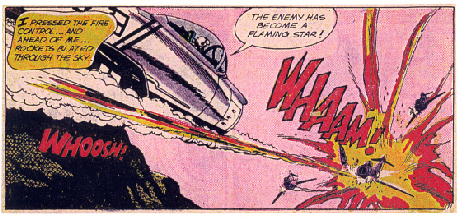
    Then of course there’s the issue of onomatopoeia that look like or presented like the sound they are describing. For example, the word “Whaam” that appeared in comic book and which was famously derived as art by Roy Lichtenstein.  File:Roy Lichtenstein Whamm Original and Lichtenstein Derivative.gif

    When researching this I came upon cross-cultural examples of onomatopoeia–big an diwde and beautiufl and very far-ranging. It is a rich literature, and the examples are varied and deep. TO display an example I chose a list of  of Thai onomatopoeia, all of which have been collected by the author of  Weird Vibrations, who collected  these many fine examples one-by-one and for whose work in this and other areas I deeply enjoy and appreciate. I include them below in an odd alphabet of oddness–all that I’ve done here is separate them into a handy assembly, but let’s make sure that all of the credit of collection and transliteration belongs entirely to Weird Vibrations.

    For example:  “[Seet]  Sound of someone eating something very spicy” is a curious word, mainly because I’m not sure what this might  like unless “seet” is a quick ontake of breath.  “Joom” is a lovely word, and it really does sound like a pebble striking a pond surface.  Here are the others:

    Thai Onomatopoeia (alphabetized to the English-language action rather than the Thai transliteration).  Try sounding them out–many sound like their sounds, which might give a little credence to Mr. John Locke’s theory of knowledge (or not).

    A

    [Gra It Gra Eeuan]  To delay action through words

    B

     [Guy] Sound of someone bragging

    [Krok Kraak]  Sound of fluid bubbling in the stomach

    C

    [Gra Jaawng Angaae]  Sound of children crying annoyingly

    [Khaak]  Sound of coughing something up


  • A History of Nothing: Creating a Creation Myth. On Hoaxes.

    JF Ptak Science Books  Post 1881  [Part of the series on The History of Blank, Empty and Missing Things.]

    The history of hoaxes is a long one–especially the history of the intentional host.  There have been creations like the farcical report on the Nacirem Tribe of North America (in 1956, by H. Miner, who simply spelled “America” backwards and loaded his tribe up with all sorts of geegaws), the Piltdown Man, the chess-playing “The Turk” automaton (by Wolfgang v. Kempelen in 1770), the fabulous Moon Hoax of 1836, the Cardiff Giant, Piltdown Man, and so on. Some were done for fun and amusement (like the Moon Hoax), some were perpetuated to prove a point (like Alan Sokol’s quantum gravity nonsense paper published as a rub against Jacques-Derridon’t and triblings), and some were scientifically vicious (like Piltdown). There are others that are larger than themselves, started perhaps as a hoax but then turned mysitcally into a belief system like, say Scientology (though its possible to make a case for this with most any other such thought-organization system). Some of course weren’t intended to be hoaxes when they began but remain intact even after their great shortcomings and displayed ill-logic have survived in the face of scientific refutation and common sense–like astrology. 

    Then there are complications, like Constantine Samuel Rafinesque (1783-1840) and the Lenape Indian creation myth. 

    It is uncertain whether this autodidact genius intended to fabricate his description of the creation myth, or whether he pieced bits and pieces together in a busy schedule that semed as though they were correct, or whether he was just getting stuff wrong.  It seems that, at the least, the drawings he conveyed as part of the story were all entirely his, and they may or may not have been derived from something that was ancient and real-enough.  In any event, all of what Rafinesque wrote was his fiction that may have been pulled together from other pieces of mythology (or not) rather than a scientific treatise.

    It is interesting to think of perpetuating a hoax whose result is a fabrication of an entire people’s belief system–basically constructing a religion from the ground-up. 

    Mark Hofmann, a convicted multiple cold-blooded killer psychopath serving a life sentence in Utah for bombing people to bits while trying to camouflage his deteriorating forgery empire, very nearly went the last mile to write the missing section of the Book of Mormon.  His great specialty was Mormon history, and he had been successful for several years in convincing the leaders of the Church of Latter Day Saints that his forged documents were the real thing, many of which put the church in an unpleasant light, and so he managed to create a ready market for his uncomfortable creations. In the meantime for the documents that did surface in public he actually managed to change the debate in the church community about its basis in belief–which is an extraordinary and foul commission. 

    It is not possible to say what was in Rafinesque’s head when he committed his own story of creation to paper. 

    I’m including it below as an interesting story, because, well, it reads well.

    The Walam Olum (or “Red Score”, also spelled Walum Olum, Wallum Olam, and several other ways.) of the Lenape.

    (“This Creation and Deluge story of the Lenape or Delaware Indians is taken from Dr. Daniel G. Brinton’s The Lenape and Their Legends (The Library of Aboriginal American Literature, Vol. V, 1885). Since  “walam” means “painted,” particularly “painted red,” and “olum” signifies the scores or marks or notches or figures used on tally-sticks or record-boards, the sense of Walam Olum is variously rendered by “Red Score” (Dr. Brinton’s choice), “Painted-engraved Tradition” (the translation left by Constantine Rafinesque, original copyist of these  Algonkin pictographs), or “Painted Bark-Record.” The pictographs or glyphs or signs were “notches” designed to keep the long chant in  memory.”

    The very beautiful translation is Dr. Brinton’s”–quote and text from the Sacred Texts of the World site, here.) 


    1. At first,   in that place, at all times, above the earth,


    2. On the   earth, [was] an extended fog, and there the great Manito was.


  • A Half-Alphabet of Color by Isaac Newton, and What the Colors “Naked” and “Dead” Are (1659)

    JF Science Books   Post 1880 


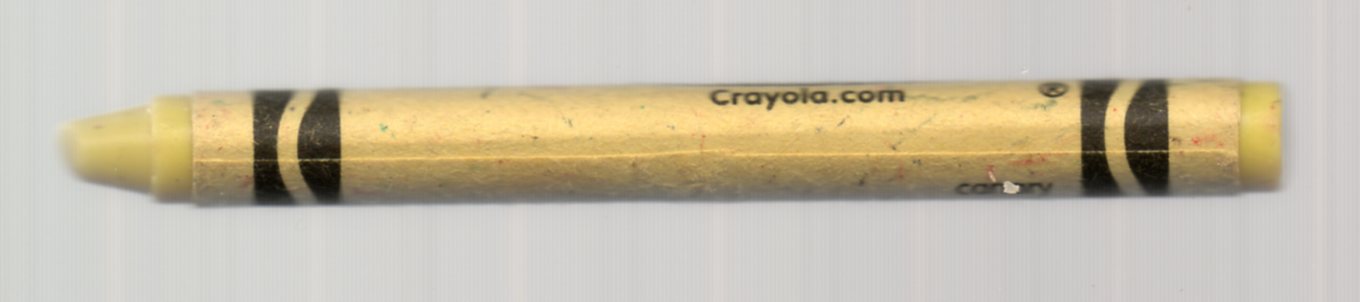
    Crsyon dead

    All material quoted below is from the magnificent The Newton Project website, which contains transcriptions of Newton’s writing in science, alchemy and religion, and also contains much correspondence. 

    There isn’t quite a complete alphabet here, but I think it is close enough, and it does organize (for my mind) some early thinking on color-making by Isaac Newton (1642-1727) when he as 17 years old.  There’s much of interest on the construction of color here, not the least of which is some prosaic methods for coloring dead people and a general color for clouds.  Things would get more involved, of course, as Sir Isaac would later write perhaps the most important books ever written on optics (in 1704).

    After the half-alphabet there is an installment of Newton’s mechanisms of art, containing instructions on the instruments of drawing, and how to do emblem work, prepare bases, how to shadow, how to enlarge and copy work, how to draw a landscape, and more.

    But first, here’s his list of how to make color.

    How to prepare your colours
    Such colours as have need of grinding you must grind them with faire water, then put them on a smoth chalk stone, & let them dry. then grind them againe with Gum water & reserve them in muscle shels for your use.

    B is for Blood

    A blood red colour.
    Sinaper, lake, & vermillion make a good red.

    Another
    Take blew Inde & steepe it in water & put to it a little Verditer.

    Another
    Take some of the clearest blood of a sheepe & put it into a bladder & with a needle prick holes in thebottom of it then  <6r>  hang it up to dry in the sunne; & disolve it {i}n allum water according as you have need.

    Charecole black & seacole black
    Grind charcole very small with water, let it dry then grind it with oyle. thus make seacole black.

    ·Posted by :

    ·in:

    — —

  • Letters of Warning: Einstein and Szilard on the Atomic Bomb, 1939-1945

    Einstein’s Letters of 1939 and 1945 and Szilard’s Petition of 1945

    There were certainly a number of cautionary flags waved at the Executive Branch in the period just before the atomic bomb was first used against a Japanese target.  As I wrote in an earlier post here, Dwight Eisenhower was adamantly opposed to the use of the bomb on a city, preferring an example to be made of the thing on an unpopulated area; in his memoirs, General Spaatz (who had received the only written communication authorizing the use of the bomb) was privately against using the weapon on a city. As early as 1939 Albert Einstein famously communicated with Franklin Roosevelt his concerns on the possibility of the terrifying nature of a bomb produced by his early efforts and those of Fermi and Szilard and many others.  In all Einstein wrote four letters to the President, the first part of the first letter is shown below:


  • Post-Renaissance People in Bed on Title Pages

    JF Ptak Science Books   Post 1879  (Following an earlier post on the appearance of the first (?) suicide on a title page, here.)

    Edical bed747

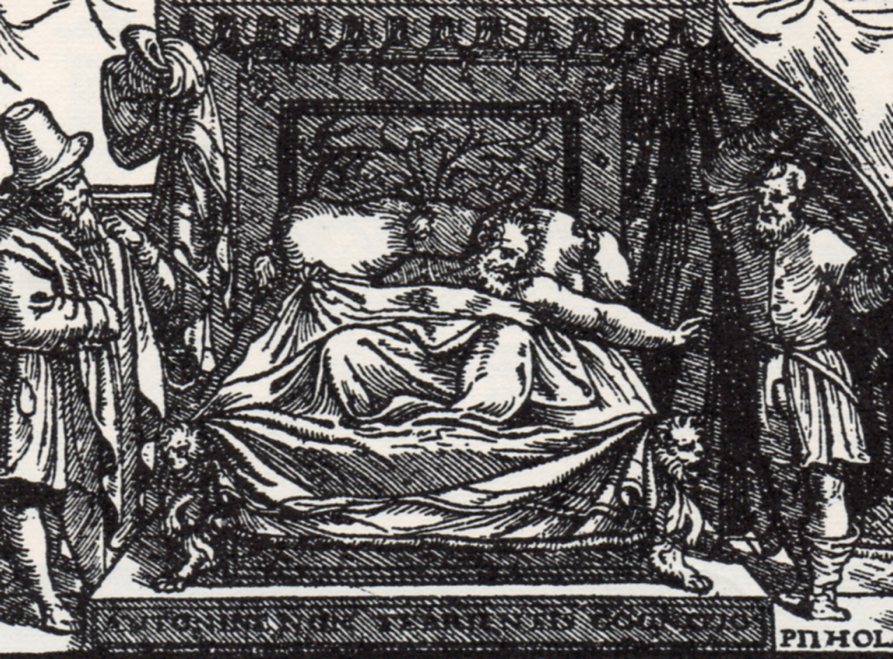
    No doubt there are many examples of finding people in bed on title pages of books printed in the high Renaissance and Baroque–I found two pretty quickly.  Of course it would make sense to look at medical titles, as in the case of many examples where the borderland images of decorated title pages surrounding the text describing the book were often filled with allegrocial tales, which means that at some point in the allegroy involving  medicine that sooner or later someone is going to wind up in bed, overseen by their physician. 

    This is definitely the case with the following image (found at the National Library of Medicine, here):


    The book is by Maritn Pansa (b. 1580), and the title to the  Appendix consilii antipodagrici specialis darinnen X consilia specialissima (printed in 1615) shows lives that were led basically in pursuit of pleasures and vice and crime that would eventually lead to the big bad straight bed at the end of their perceived crooked road.  The title page tells of lives lived in pursuit of hunting, and wine, and women and song, as well as the abuse of children–creature comforts and vices which would eventually lead the practionner  to a sick-bed for their pursuit of foul ends.  The baseline here is a warning for those living a High Life in perhaps-exalted states would more than likely pay for their lifestyles with sickness in the end.

    Another good example is fond in Galen’s Tertia Classis uarias morborum differnetias, obseruationes, tempora, successius, causasqe & signficatio nes amplectitur…, which was published in Venice in 1541 with a beautfiul woodcut title page illustrated by a follower of Titian.  First and foremost, the capstone of the border images shows a sick patient being attended by doctors of classical greatness including Galen himself (at the extreme right of the first image, above). 

    Edical bed746

    Galen (Aelius Galenus or Claudius Galenus (AD 129– c. 200)), was an ancient too, and taking this little trip through time he must’ve seen some surprising things, not the least of which would have included this bed. It should be noted that until the publication of the revolutionary work of Vesalius, Galen was the largely-unimpeachable source of medical knowledge for some 1300 years.

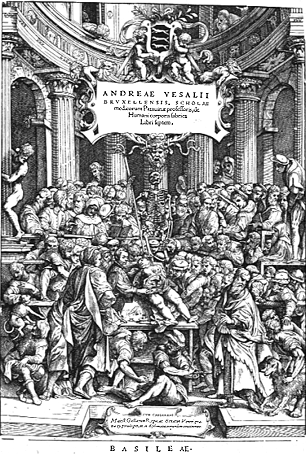
    And of course there is another sort of bed in the Vesalius book’s (De humani corporis fabrica libri septum…) title page, though this is the most uncomfortable of all:

    Medical--vesalius title page


  • Dorothea Lange, Imperial Valley, California, 1937. FSA Photographs

    JF Ptak Science Books  Post 1878

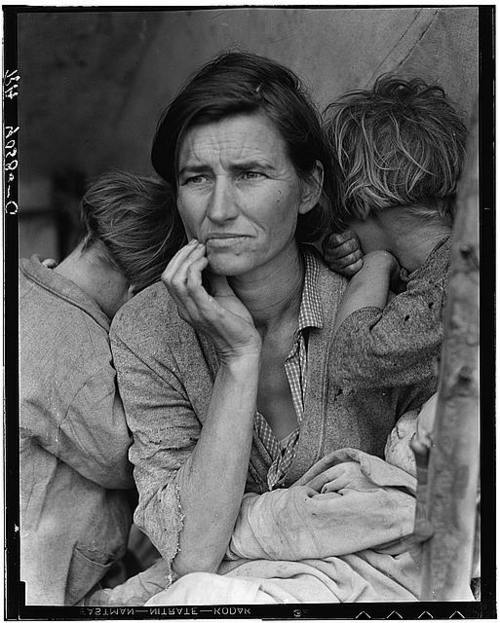
    Migrant Mother


    Dorothea Lange, a standard portrait photographer-turned-superb-documentarian, had a six-year-run of photographic success and inspiration and energy as few people have ever experienced in the history of photography From her 1936 Migrant Mother, which is perhaps the great photograph of the American Great Depression (which I wrote about in The Best Dollar the U.S. Government Ever Spent) to the wicked sharpness of her documenting the terrible business of relocating Japanese American citizens to concentration camps in 1942. Lange traveled the country recording the state of Americans in what may have been one of the great journeys of th 1930’s. 

    The period in which this was all happening was one of the most chaotic in modern history–at least in the West.  The Depression was full-bore-on, of course; as Germany strained its way into confrontation with the rest of the world, taking its calculated and inexorable steps towards world hemispheric chaos. The other images of these six years are almost a dada-kaleidoscopic  assembly of the believable and the not believable:  Sudetendland, Kristallnacht, Neville Chamerbalin, Austria, Poland, Nanking, Canton, War of the Worlds, Munich Agreement, WWII in Europe, Spanish Revolution, lynching, Jewish explusion, concentration camps, Pearl Harbor. In the United States, there was a certain right-wing element that ran deep into the national consciousness, the worst embodied in Father Coughlin’s filthy radio diatribes on keeping America out of war wrapped in Jew-hating monologues, the ridiculous semi-levitating philosopher-fake and home-town-boy-gone-bad Charles Pelley and his Silver Shirts being part of his support; Henry Ford and his assault on Judaism and insistence on The Protocols of the Elders of Zion, Charles Lindbergh and America First, and so on., and for a divisive time until the crystalizing of Pearl Harbor.

    The literature of this time, of this 1936-1942 period, expressing the soul of the country seems pretty full, with these few works standing as good examples of the work of the period:   John Steinbeck’s beginning in “the Harvest Gypsies”/Their Blood is Strong, The Grapes of Wrath,  Faulkner’s Absolom! Absolom! (1936), Pare Lorentz The Plow that Broke the Plains, Carey McWIlliams Factories in the Field (1939), Taylor/Lange’s An American Exodus (1939), For Whom the Bell Tolls (1940), the New Masses,   Abel Meeropol’s anti-lynching poem “Strange Fruit”, and so on, deeply on.

    But perhaps in all of it, perhaps nothing else quite expresses the emotion of the period than Lange’s Migrant Mother.  It seems to have everything, in one photograph.  In the vast result of Lange’s work during this period it is interesting to have a look at her in Imperial Valley, California, in 1937–it seems less-often mentioned, though the work is very strong.  So I decided to post a few of the images with a link to the rest of the collection (below).

    Lange worte:

    “I was forced to switch from Nipomo to the Imperial Valley because of the conditions there. They have always been notoriously bad as you know and what goes on in the Imperial is beyond belief. The Imperial Valley has a social structure all its own and partly because of its isolation in the state those in control get away with it. But this year’s freeze practically wiped out the crop and what it didn’t kill is delayed–in the meanwhile, because of the warm, no rain climate and possibilities for work the region is swamped with homeless moving families. The relief association offices are open day and night 24 hours. The people continue to pour in and there is no way to stop them and no work when they get there.”

    http://memory.loc.gov/pnp/fsa/8b31000/8b31800/8b31812r.jpg
    Former tenant farmers on relief. LC-USF34T01

    Other samples below but a fuller listing of images is available here.

    Imperial Valley, California, February and March 1937
    Resettlement Administration

    Notes:

    1. Lange was still very new to the FSA project when she made this photograph in the spring of 1936.  On the tail end of a month-long road trip she was nearing the end of her day when she spotted a hand-lettered sign “Pea-Pickers Camp” by the side of the road.  Lange briefly considered stopping but went ahead, questioning her judgment continuously for the next 20 miles, when she finally turned around to find the turn-off for the camp.  She drove down the dirt road and found a ramshackle assembly of tents, one of which contained “an exhausted mother sitting forlornly with her children”.  Lange spent only 10 minutes with the woman, making five exposures.  She learned that “the crops had frozen, and the woman and children were living on vegetables scavenged from the fields, and the few birds that the children managed to catch.  The mother could not leave; she had sold the tires from her car”.

    The images were made using a Graflex camera. The original negatives are 4×5″ film.

    ·Posted by :

    ·in:

    —

  • The Discovery of Salad–Massonio, 1627

    JF Ptak Science Books   Continuing Post 718

    “Salad, a term derived from the Latin sal (salt), which yielded the form salata, ‘salted things’ such as the raw vegetables eaen in classical times with a dressing of oil, vinegar or salt. The word turns up in Old French as salade and  then in late 14th century English as salad or sallet.”  —Oxford  Companion to Food, Alan Davidson [Oxford Univeristy Press:Oxford] 2nd  edition, 2006  (Quote found at Food Timeline, here.)

    ===blog==aug 19==salad  I was looking for an antique recipe for pesto and came
    across this remarkable book by Salvatore Massonio, Archidipno overo dell’insalata
    e dell’vso di essa
    , published in Venice by Marc’Antonio Brogiollo in 1627. It
    is in short a philosophical cookbook for salads—and the first of its kind
    dedicated solely, devoted entirely, to the salad.  IT must have been a revolutionary
    publication, and probably intended for the very wealthy.  The book is no slim effort: 68 chapter and
    425 pages long, it describes the stuff of the salad and its dressing.  Actually salad wasn’t limited to just greens
    in this book, and his quasi-vegetarian sentiment was tested by including cold
    salted meats, cold salted tongue, livers and such in the mix.  But Massonio was definitely far ahead of
    anyone else at the time dealing with the benefits of the salad for both health
    reasons, as well as for making the salad not a meal in itself but an appetizer
    for something larger to come.  In another
    great possible “first”, the wonderful Massonio seems to be the first to
    describe the use of garlic in a sauce. 

    Now. About that pesto recipe…all I need is some stuff from Italy
    and a special-marble mortar and I’ll be somewhat on my way, at least as the
    purists are concerned. The birthplace of pesto, Liguria,
    takes its poition as the originator of the great green delicacy very seriously,
    legislating exactly how and with what peso should be made.  And that is as it should be.

    “They say the divine Augustus was preserved in a  time of ill health by the use of lettuce, and no wonder, because it aids  digestion and generates better blood than other vegetables. It is eaten cooked  or raw. You season raw lettuce this way if it does not need washing…put it in  a dish, sprinkle with ground salt, pour in a little oil and more vinegar and eat  at once. Some add a little mint and parsley to it for seasoning so that it does  not seem entirely bland…” —Platina: On Right Pleasure and Good Health, [Italian:1475, original text in Latin], translated by Mary Ellen  Milham [Medieval & Renaissance Texts & Studies:Tempe] 1998.

    ·Posted by :

    ·in:


  • On the History of Title Pages: the First Image of a Suicide on a Title Page?

    JF Ptak Science Books  Post 1877

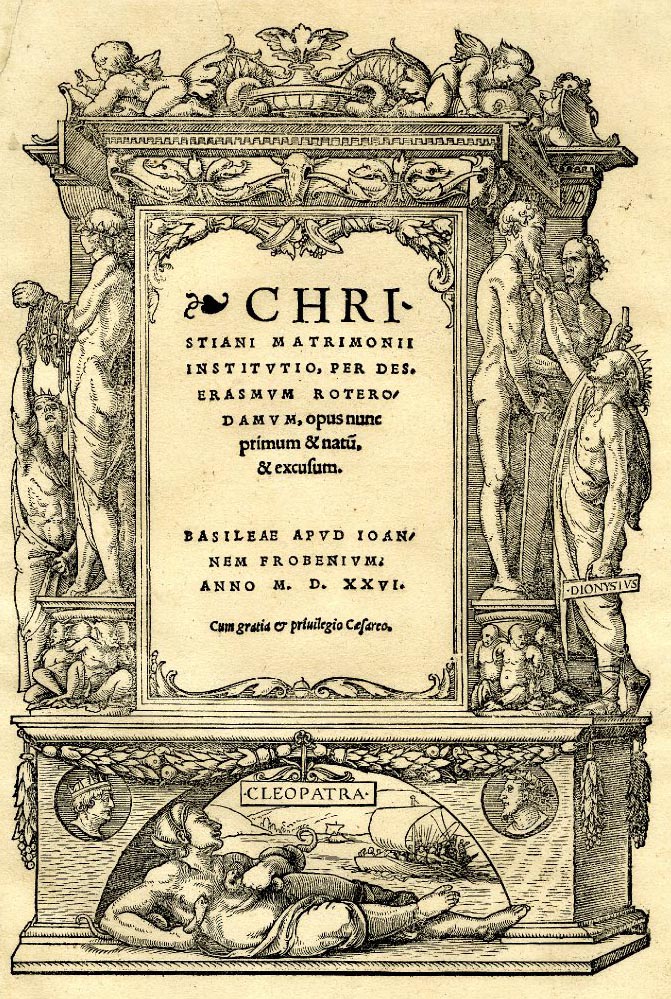
    Books  suicide on a title page_edited-1For a number of years following the invention of the movable type press, title pages were very simple affairs, generally starting with a simple statement of the title (the incipit) and then right off to the beginning of the book, right there on the same page, with the information about who printed the book where and when saved for the final page of text, the colophon.  Ornamentation came a little slowly (or perhaps slowly), with the first recognizable-to -modern-eyes title page appearing in the Calendarium of Regiomonatnus, printed in woodcut and metal-type in Venice in 1476, with the date unusually displayed in Arabic numerals. The issue of more appealing display in book presentation–the approachable title page, illustrations and covers–became a true issue after the printers in Augsburg in the 1470’s revolutionized book production by introducing a more industrialized method of production. 

    The issue of illustration really didn’t start to ramp up until after 1500 when the expensive and time-consuming standard of using woodblocks in the production of images was replaced by the copperplate engraving.  And it was during this time, in the very early 16th century, that ornate and illustrated images began to appear on the title page itself.

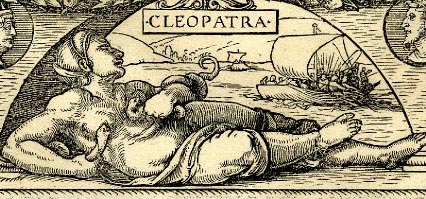
    One example of a curious approach to illustration belongs to Hans Holbein, who created a somewhat  three-dimensional ornamental and cascading title page that also happened to contain an image of Cleopatra in a suicide-by-snake.  The snake may have been an Egyptian asp, and perhaps not, if she committed suicide by this manner at all.  Cleopatra finally was led to this end on 30 August 30 BCE after a long string of affairs and consorts with Rome and its Emperors, failing finally after the death of Marc Antony and the rejection by OCtavian (who later would become Augustus, perhaps the greatest of Roman Emperors).  In any event, we see Cleopatra here committing the deed, with what may be some of Antony’s Alexandria-based fleet in the background.

    The design was copied many times, and used for a number of different title pages–the first time being in a work by Erasmus in 1523, and in the example below, later, in 1526.  Offhand it is difficult for me to say if there are earlier suicides on thte title pages of books, but this would certainly be among the earliest, if not the earliest yet. 

    (Also appearing on either side of the columns in the middle of the page is Dionysius of Syracuse, an autocrat of the highest order, here shown plucking bits of treasure from the statues of gods. There were two rules named Dionysius, father and son, I and II; the elder may have been killed by the younger via physician-assisted poisoning; the younger (of Damocles and the sword fame among other things usually not so pretty) was equally tyrannical and also came to a bad end.)


    Books  suicide on a title page