A Daily History of Holes, Dots, Lines, Science, History, Math, Physics, Art, the Unintentional Absurd, Architecture, Maps, Data Visualization, Blank and Missing Things, and so on. |1.6 million words, 7500 images, 4.9 million hits| Press & appearances in The Times, Le Figaro, Mensa, The Economist, The Guardian, Discovery News, Slate, Le Monde, Sci American Blogs, Le Pont, and many other places… 5000+ total posts since 2008.

Author: JF Ptak

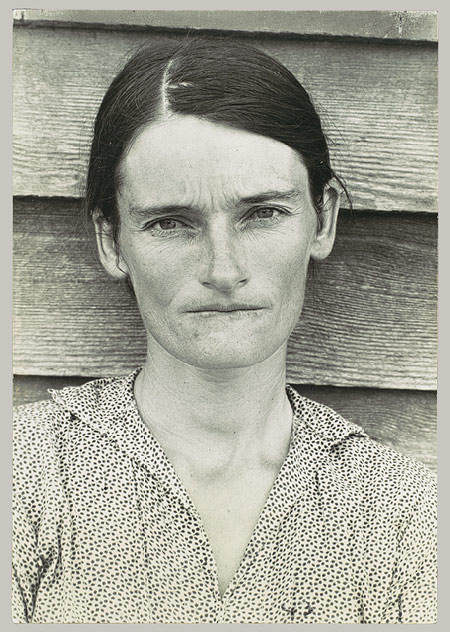
  • Walker Evans’ Indelible Images of The Great Depression

    JF Ptak Science Books   Post 1892

    Evans, walker  farmer tenemnt wife det


    Evans--alabamna tenant farmer wife The photographer Walker Evans (1903-1975) was an ultra-light and lyrical traveler, who didn’t leave a footprint in the country he moved through, though the impact of his work–the result of the travel–fastened a famously indelible image on American history–indelible, and fast, being recognized for his work with a commanding exhibition at the new Museum of Modern Art in 1938.  

    Evans possessed a crystaline lens which yielded both spectacular detail and subtle quietnesses. He could turn a tenement farmer’s rough-hewn wooden kitchen drawer filled with roustabout cutlery into a photographic masterpiece, and then photograph the face of that farmer or that farmer’s family and have it stand as an absolute testimonal to the expereince of the Great Depression in the American life. Evans made some of the core memories of that visual experience. He (along with some of the greatest photographers America has produced) worked for the government for a time during the Depression, answering to Roy Stryker at the Resettlement Administration and the Farm Security Administration, with the mission of taking photographs of America–which he did, establishing himself as one of the early and preeminent masters of documentary photography. 

    I was thinking of him earlier today, adn thought that I’m make a selection Walker’s photographs from the magnificent collection of Farm Security Administration images at the Library of Congress. (Also, see the Museum of Modern Art for a nice appraisal, here).

    Shoeshine stand detail, Southeastern U.S.  1936

    [Shoeshine stand detail, Southeastern U.S.]


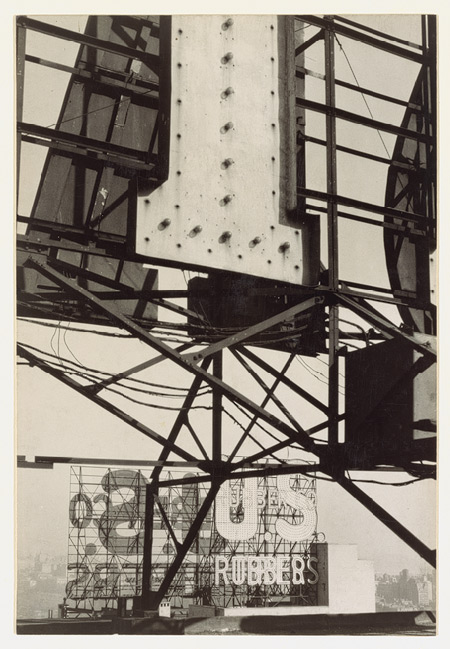
  • Vernacular Found-Polygonism 2: Walker Evans on the Roof

    JF Ptak Science Books  Quick Post

    Evans polygons

    How many polygons can you find? 

    “Walker Evans climbed to the roof of the Fisk Building on Central Park South to  photograph the web of steel struts and electric signs that were rapidly filling the skies over Manhattan. The electric signs in this photograph alternately  flashed the company’s name and the names of its two principal products. As there  were approximately a hundred million wheels rolling over America’s roads in  1928, the sale of tires quickly overtook that of rubber galoshes. The image  expresses Evans’ conviction that modern art could be timeless yet topical when  perfectly wrought of vernacular materials.”–Metropolitan Museum of Art

    This is one in a series of posts made on found geometries–here are a few others:

    Found Alphabets and Geometry in Stone.(here)

    Magritte-Like Disorienting Geometry in Found-Art Urban Design, 1925 (here)

    Sierpinski Triangles & the Empire State Building (here)


  • Trademarks, Memory, Nazis, and Death Camps

    JF Ptak  Science Books  Post 1891

    In the world of identifying symbols–which I’ve been writing about a little over the past few days, but mainly on Renaissance and Baroque and Mannerist iconography–few are as distinctive and recognizable as modern trademarks.  There’s a lot of high-voltage connecting wires between modern advertising and memory devices and Renaissance emblemata, and as I was sorting out some of the nice compatables I was stopped in my tracks by one of the modern images, mainly because I had a recollection for an older and unmentioned iteration of the symbol.

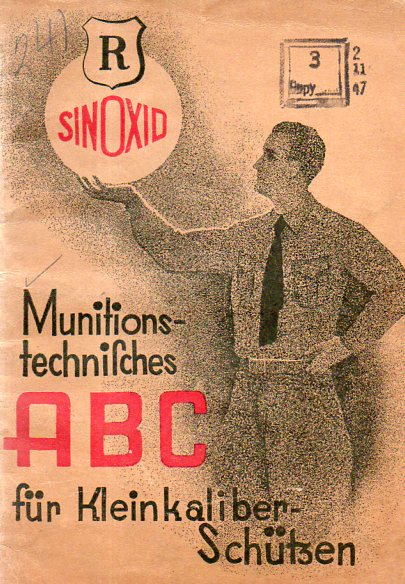
    Sinoxid.  It was recorded in the registry of German trademarks for 16 November 1968 as being owned by Dynamit Nobel AG. 

    This is what the trademark looked like in 1968:

    http://img03.mar.cx/_images/CA317024

    The same trademark, a little earlier in its career, as it was being admired by a Nazi Brown Shirt S.A. member in 1933:

    Trademark758Dynamit Nobel A.G. is an old company. It is the German arm of the Swedish Nobel munitions firm (begun in 1864) by Emil and much-more famous (and longer-lived) brother Alfred.The German company was established in 1865 in Toursiburg so that the dangerous products produced by the firm wouldn’t have to travel as many miles if it was produced closer to the consumer.  The Nobel firm manufactured munitions–famously so with a nitrogylcerin compound known as “blasting oil” that was notoriously unstable, and which in a fit of instability  actually killed Alfred’s brother Emil in 1864. It also blew up parts of the German factory (on two occasions before 1870).  The stuff was beyond lethal.  But it didn’t stop Nobel from shipping their explosive goods worldwide in unmarked crates so as to not attract attention to a dangerous product. Three such cases were once sent to the Union Pacific company in San Francisco in 1866–two became unstable and blew up in the company’s headquarters, killing dozens. But no one was scared beforehand.

    Alfred Nobel left no heirs and so donated some percentage of his firm’s monies to the foundation we know today by his name. The company grew into the largest munitions producer in Europe. Beginning in the mid-1920’s it began a relationship of fusions and mergers and so on with the giant cartel I.G. Farben, among many others.

    I.G. Faben company produced Zyklon B. It operated its business with slave labor in concnetration camps. It sent tens of tens of thousands to their deaths working on Farben products. Zyklon B itself killed millions of human beings.
    This is what used canisters of Zklon B looked like after they had been used to murder Jews and other prisoners in the death camps:


    They have a design much like the tossed-away bodies of their victims.

    ·Posted by :

    ·in:

    —

  • Cathedral of Dust of the “Wrong Arrested”–Vernacular Redemption, 1939.

    JF Ptak Science Books  Post 1890

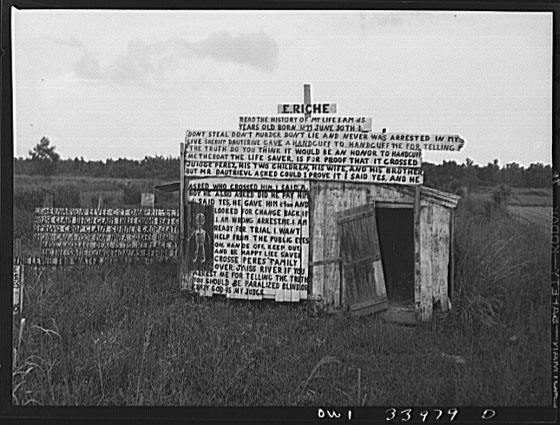
    This is an image of an engineered redemption, found in the mist of Placquemines Parish, Louisiana, in 1939.  There is no doubt in my mind that the author, Mr. E. Riche, was done with running from whatever it was that was chasing him–printing his truth would no doubt cut it down. “I am wrong arrested” Mr. Riche says, and wants “help from the public eye”. 

    Oh my g_d. If this isn’t a Mr. Cash song, I don’t know what is.

    FSA--signs--redemption_edited-1
    This is a photograph of fantastic humanity, of a person witnessing for themselves, stating their beleift, defending their honor, exploring the present, and staking a very visual land claim in reality.  And then–with all that said, all of this person’s dignity and belief displayed for everyone to see–the author lives in the sign he or she created. It is as though someone has engineered a three-dimensional public-philosophical house in which to live, and then actually lives there. 

    As a testament to a simple call to fairness and justice, this image is an extraordinary and powerful reminder to the power of spirit. For some reason I can feel this person’s letter down to the cellular level. 


  • On the Visual History of Silence, Chapter 17: Mapping the Silence of Housework in 1925

    JF Ptak Science Books  Post 1888 [An entry in the Museum of Impossible and Imaginary Things series.]

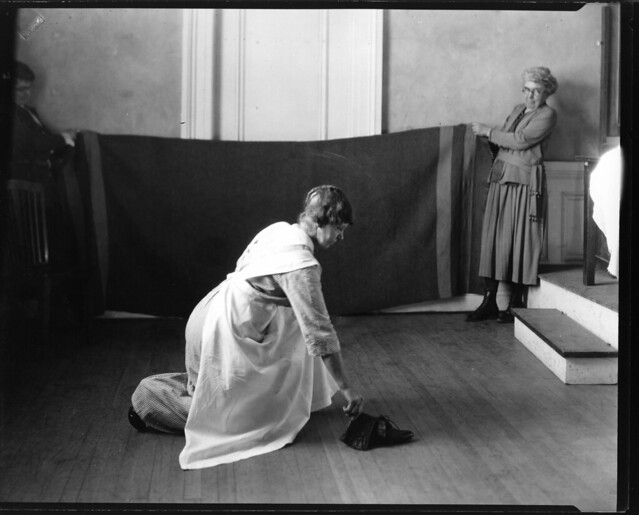
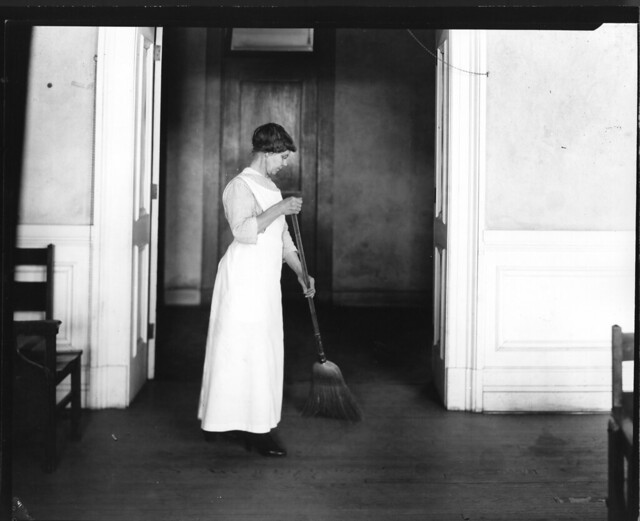
    I found this lovely series of images at the fantastic Public Domain Review blog–I was very and instantly taken by them, as they immediately suggested themselves to repurposing. (They were truly meant to illustrate the proper posture of the domestic worker; but now of course they are open to vast interpretation, creative speculation, and mild fantasy.)  To this observer their original insistence is gone, even at an historical micro-level (except for a history of housework):  they aren’t so much an illustration of housework and the postures by which a person would conduct them, but as a map of the silences encountered in the daily cleaning of a house.  It is all fiction of course, but the photographs do have an overwhelming sense of beckoning silence to them, even in their depiction of motion–even though they are a series on dealing with proper movement, they all seem strangely static, like marble.

    And so they become a geography of house-bound silence, made by silent geographers, capturing moments of silence in moments of near-silent work.  And if I was the one compiling these geographic interests (and I might as well be), I would want to position the five greatest house-silences so that they could be found once again.  And so:


    Location 60: back stairs, beyond kitchen.

    Sounds and silence: olympic kneeling done in pursuit of dusting invisible pollens from floor. A very quiet Shaker step waits in the background. It is mostly the silence of the whitewashed stair that commands this image, and not the diligence of the dust.


    Location 32: kitchen entry/semi-hall.

    Sounds and silence: Old uncovered wooden floor and oak-handled broom, well-polished leather boots with new heals.  The silence is that which comes after the light sweeping is finished is the elusive “great grandmother sound” of satisfied work being completed.


  • Ancient Myths Modern: the Other Statue of Liberty, ca. 1911.

    JF Ptak Science Books     Post 1887

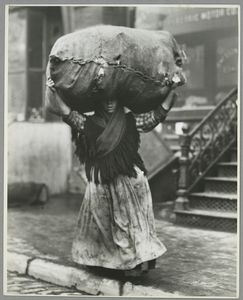
    In working on an alphabet of the occupations of children in 1910/1920 America based on the photographs of the immortal Lewis Hine (and found via looking at other materials on the excellent Retronaut website), I came across this extraordinary image:

    A tenement gleaner, New York C... Digital ID: 416509. New York Public Library

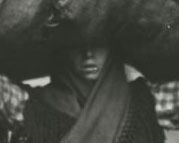
    The detail seems to show lip rings on what I think is a very young woman.  She is very slender (you can see very thin wrists), and is wearing a number of layers of clothes, not the least of which is a long white apron on top of which sit Civil-War-like shawls,  She is stepping into the street, caught mid-stride. It looks as though it is frosty, the sidewalk and steps seem to have a thin veneer of ice  It is cold. And she is carrying an ungainly, heavy burden, which might weigh half of her own weight. And she is young.  And she has no gloves.

    Where did she go?

    Hine--tenement gleaner detail

    It also that Hine–in his notes onthe back of the photograph– identifies her with kindness and grace as a “tenement gleaner”.  (In my notes I was less kind and called her a “ragpicker” I’m a little ashamed to say. Mr. Hine taught me a lesson.) Gleaner.

    Hine documented things that were part of everyday life that made cities like New York what they were, much of which went unnoticed, or scuttled by intentional indifference. People like this made the city run–then as now–and Hine was one of the early photographers in the United States who “discovered” these people and made their standing a cause of his life. 

    Like many other pioneers/artists/social observers, Hine (1874-1940) didn’t fare so well in his later life. After four decades of huge service in photography, people became disinterested in his past/present/future work, and Hine lost his resources. And his house. And then, in a few years, his life.  His personal collection of negatives and prints were given by a relative to the New York Photo League, but they were displaced when the League was dismantled in 1951.  Unsettled, they were offered out to places like the Museum of Modern Art, which rejected the collection. Ultiamtely, fortunately,  the George Eastman House in Rochester, New York, accepted the collection and saved it from the unknown.

    This image easily could have been Atlas, but Libertas seemed better.

    Source:  New York Public Library Digital Collection. “Photographs concerning labor, housing and social conditions in the United States. / L. W. Hine. ” 


  • A Charming “First” Traveller’s Guide to Rome in Full Text, 1600

    JF Ptak Science Books  Quick Post

    Franzini 1
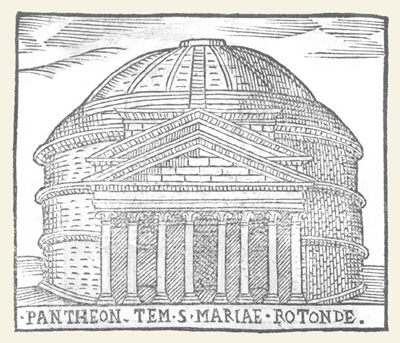
    I was very happy to find a full-text and nicely-navigable copy of this classic work online. Giorlamo Francini’s Le
    Cose maravigliose dell’alma citta di Roma, anfiteatro del mondo : con  le chiese, et antichita rapresentate in disegno / da Girolamo Francino ; con l’aggiunta del dottor Prospero Parisio (In Roma : Ad instanza di Gio. Antonio Franzini, & herede di Girolamo Franzini) was printed in 1600 and is considered an iconic work on travel writing, as well as one of the first sophisticated/modern “guide books” to the city of Rome. It was pocket-sized, and contained all manner of information about buildings and artists–useful info, if you had never been to the city before. It was also a distinct difference from books intended to the pilgrim; this book was definitely looking for a popular, general readership, looking to benefit in their stay in Rome by having a literary, artistic, and architectural key to the city. 

    The illustrations are charming and lovely–even though small (less than two inches square),  they provide just enough detail for you to unmistakeably identify the principle structures.   The full text (with illustrations) is located here.

    ·Posted by :

    ·in:

    — —

  • Black Sky and Morning Arrows

    JF Ptak Science Books  Quick Post

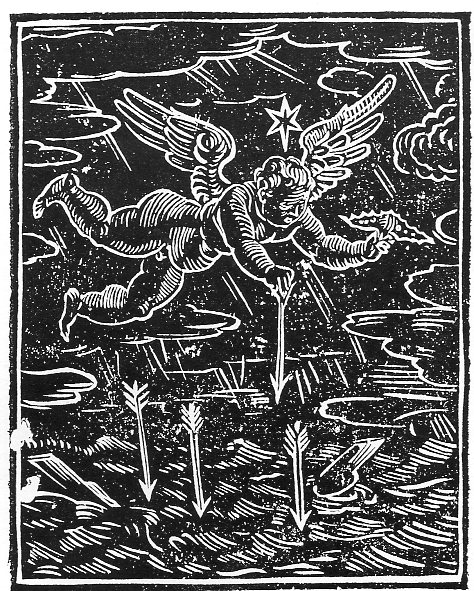
    Ripa757

    I’ve just written a short post on the beautiful key to iconography by Cesare Ripa, Iconologia overa descrittione d’imagini delle virtu, viti, sffetti, passioni humane, corpi celesti, Mondo e sue parti…, which was published in Padua in 1611.  The version I used was an 18th-century English translation with new illustrations–now though the translation was very appreciated, the images were not so.  As I pointed out, they do serve the purpose of illustrating the specifics in iconography, the images were not that pleasing.  I wanted to include here an example from the original, and in particular the imagery of “Dawn”.

    It is a gorgeous thing, a very striking, very strong woodcut showing the messenger of the new day coming, attacking the night with arrows of dawn. 

    I enjoy he earlier, more robust images for this iconology, even though there are many variants to choose from–there were more than 40 editions of this work since its first non-illustrated edition in 1593–but given it all I much prefer the early 17th century flavor. 


  • A Few Examples of Renaissance Icons in Science Emblemata

    JF Ptak Science Books   Post 1885


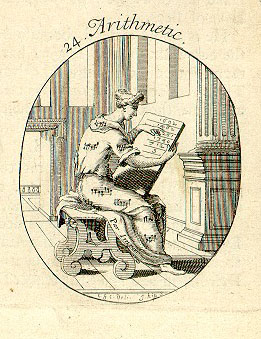
    Iconographia arithmetica image

    These images come from a later (and English edition) of Cesare Ripa’s essential keybook to Renaissance iconogrpahy, the Iconologica overa descittione d’imagini delle virtu, viti, affetti, passioni humane…first published in the early 1590’s with Ripa’s artwork.  I don’t much like the English version of his work, nor do I care that much for the artwork (inferior in most ways to the great craftsman-like feel of the Renaissance images), though it does serve the purpose of place-holding the symbolism and explaining the elements of the icons.

    I’ve chosen a few emblems for the sciences to illustrate this important work of deduction and explanation, as it would be an aid to anyone interested in the art of the Renaissance–and that would be an interest at virtually any level.

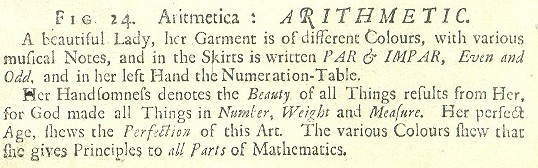
    I chose “Arithmetic” as my first example because of the lovely parallels found in the folds of Arithmetic’s dress–musical notation, underneath which we see the faint “Pars Impars” (even and odd) to help settle the old scores of symmetry.  The connection between music and mathematics is thousnads of years old, and though I might’ve used “mathematics” rather than its oldest branch (of “arithmetic”) to show the ancinet connection between music and numbers, it should be remembered that not every aspect of arithmeic is standard, and that there is a good and strong relation between music and “higher arithmetic” (number theory).  In general I just like the emblzoned connection here between the two, showing a temporal sequencing representation, a placing of music in relation to number right out there in time-and-space,an adept of the mental image of music. There is no doubt that when a viewer was finsihed with this image that there is a lasting property of the mathematical properties of sound and teh harmony of number.  Its not exactly “music of the spheres”, but it does work. 

    • Iconographia arithmetic

      Good transliterated description are to be found on the Alchemy Website, here; the English-language version cane be found here.


  • The Life of Enormous Baroque Curves in Womens’ Fashions

    JF Ptak Science Books   Quick Post

    Theodore Andrea Cook wrote a lovely book called The Curves of Life, published by the admirable firm of Constable and Company in London in 1914, a book which is filled with all manner of marvels of insight in finding curves in natural and created situation. (I wrote a little about the book in an earlier post about stairs, here.) The beauty of spirals found in fero-concrete, geometries of Minoan clay seals, the beauty of the human laminae of cochlea of interval, the colon of the Dogfish, Maori war canoes, and so on, were all subject matter ripe for the discriminant picking of Mr. Cook as he explored the depths of curves.


    Curves756

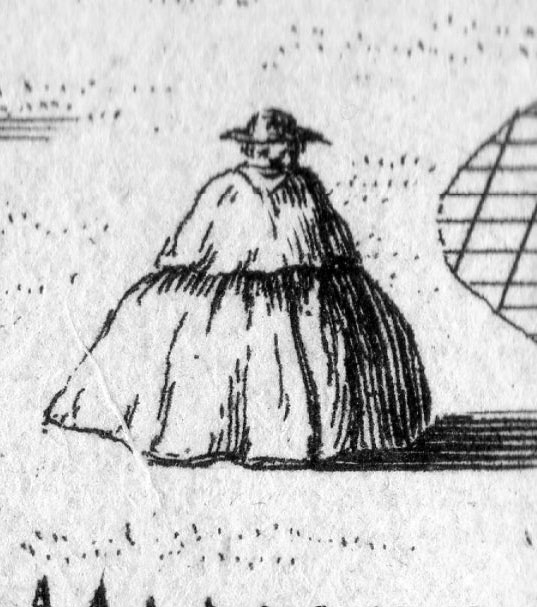
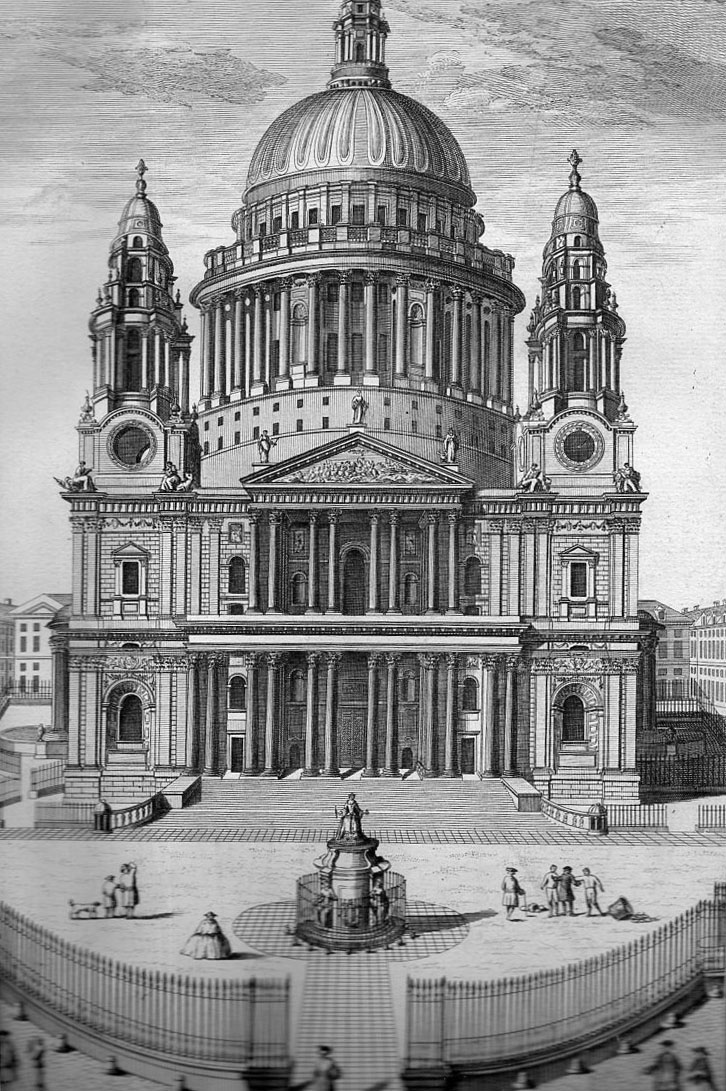
    One thing that perhaps escaped his grasp–at least in this book–was the curve in the costume of Baroque women oif semi-high (or at least non-ordinary) standing. As I’ve seen a number of times in some illustrated books, the trend towards the curvilinear is absoutely outstanding. The example that I came across tonight is an excellent example. Of course there was no great need to supply interesting bits of social life in these engravings of famous architectural achievenents outside of supplying a human scale to the structures, but as if often the case the artist (or engraver) went a little further than was really demanded by the artistic “needs” of the image and provided some interesting and at times very unexpected glimpes into somewhat-common street life

    This image comes from Regles des cinq ordres d’architecture de Jacques Barozzio de Vignolle, which was originally written by Vignolla (1507-1573) in 1560. and published in 1680 or so.  The engraving of our interest here is “Elevation du Portail de la Cathedrale de St. Paul de Londres”, and the main part of that is the 1% in the bottom quarter, showing a very roundish dress. 

    Curves754

    An outstanding curve of high fashion, not seen in the Cook book.

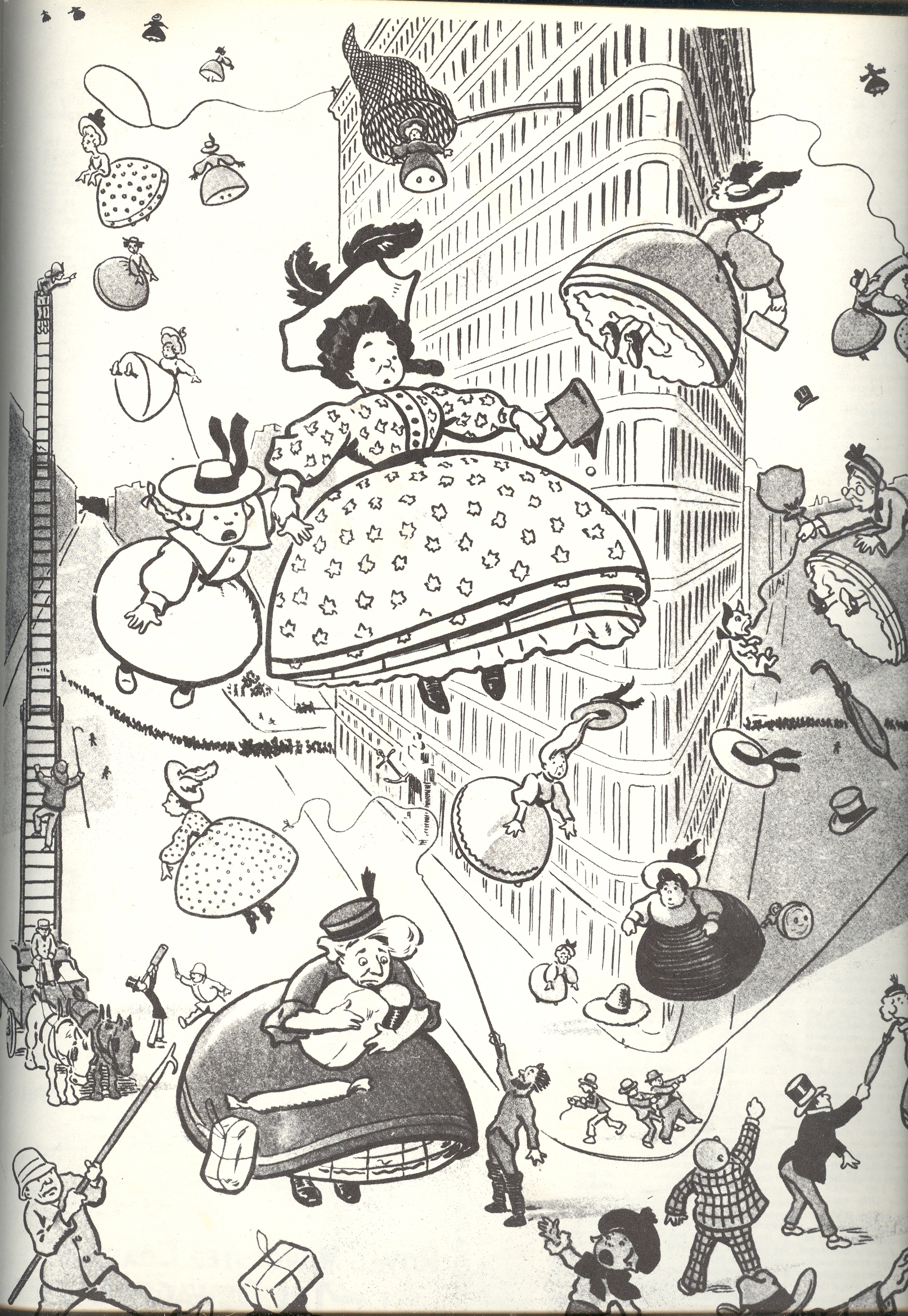
    This also reminds me a little of bombing fashinistas in an earlier post I wrote (here), showing parachuting (though they look a little like bombs) on this 1904 image. 

    5-women