A Daily History of Holes, Dots, Lines, Science, History, Math, Physics, Art, the Unintentional Absurd, Architecture, Maps, Data Visualization, Blank and Missing Things, and so on. |1.6 million words, 7500 images, 4.9 million hits| Press & appearances in The Times, Le Figaro, Mensa, The Economist, The Guardian, Discovery News, Slate, Le Monde, Sci American Blogs, Le Pont, and many other places… 5000+ total posts since 2008.

Author: JF Ptak

  • Inventing (1) Old Tone in New Violins & (2) New Tone in Old Violins. Patent Models.

    JF Ptak Science Books  Quick Post

    Finding old tone in the 19th was attempted in the following way, an interesting if not myopic attempt to put some play-time in a brand-new violin:

    First page clipping of GB 190303723 (A)

    Abstract of  GB 190303723  (A)

      Payne, R. H., and Broadbent, T. Feb. 17, 1903.

    In an instrument for reproducing sound, a resonating-chamber is used instead of a diaphragm and a trumpet. In the construction shown, the resonating-chamber consists of a violin body C mounted on an arm D extending from the instrument A. Fig. 2 shows means which may be employed for the mounting. The pin E passes through a hole in the neck C’, which is clamped by the nut E’. The pin E is mounted in the wooden block F journalled in the fork H on the swivelling-pin. Washers G, G<1> prevent the communication of vibrations to the arm D. The hole in the neck may be dispensed with, a screw or spring clamp being employed in place of the pin E. The reproducer K, Fig. 3, is cemented to the violin belly. The style K<1> is clamped in it by the screw K<2>. The violin has the usual sound post and f-holes in the belly and also holes C<2> in the back. Strings may be stretched across the resonator. When a violin body is used, the strings are stretched by the usual pegs in the neck. 

    This is not the most elegant invention for producing a more-interesting music from a stationary, non-human-played violin. 

    On the other hand, this is:

    The work is by Henry Konrad Sandell, and the patent was for a magnificent machine that produced 64 notes on the violin, and was accompanied by a 44-note piano, both played at the same time. It is a very impressive accomplishment, with several thousand of them produced over two dozen years by the Mills Novelty Company.

    Source, here. Mills Novelty, here  Henry Konrad Sandell,  and a photo of a restored and lovely Violinola, here with a sample of the music it produced (!)

    ·Posted by :

    ·in:

    —

  • Dosing out the Cures from “The Beast that no Existence Hath”–the Unicorn.

    JF Ptak Science Books   Post 1898

    Unicorn'770
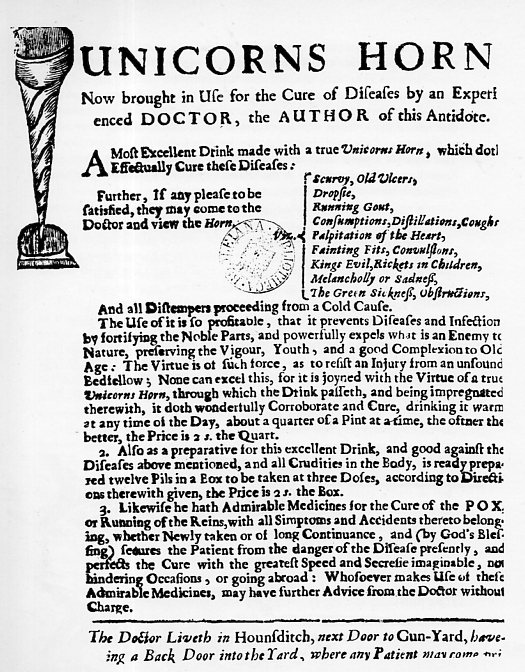
    Who could refuse to see a medical person advertising themselves as:

    “the Doctor Liveth in Houndsditch, next Door to Gun-Yard, having a Back Door into the Yard, where any Patient may come…”

    and especially one selling Unicorn horn curative extract?  The cure promises of  “the beast that no existence hath” (Rilke, Sonnets to Orpheus) sounded attractive, having the ability to dispense “scurvy, old Ulcers, Dropsie, Running Gout, Consumptions, Coughs, palpitations of the heart, Fainting Fits, Convulsions, King’s Evil, rickets in children, melancholy or sadness, the green sickness, and all distempers proceeding from a Cold Cause”  as well as “all crudities in the Body”.  But promises like this are almost always loyal only to that pretended self.

    Unicorn'769
    [Source for both images:  Rudiger Robert Beer, Unicron, Myth and Reality, Mason Oress, 1977.]

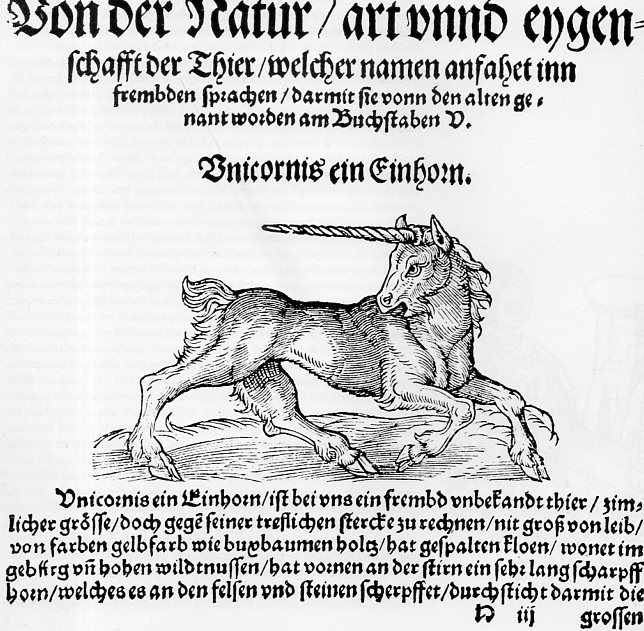
    In spite having a very long sales history over the milennia, pretty much the only place where unicorn horns have actually been seen were in apothecary shops selling narwal horns and in the constellation Monocaros (named so for the unicorn by Jacob Bartsch around 1624).  This great ground-up thing, one of the great mythic myths of all time, was a highly-inclined multi-purpose curative purgative suggestative ill-spoiler, capable of defeating nasty bodily nasties and enhancing things like our Noble Parts. For years it was worth more by weight than gold, though (depending on what it was that was being sold as unicron horn) ingested gold might have had about the same medicinal effect as a dose of unicron horn. 

    This fabulous image of a unicorn, draped in Renaissance-y literary moudlings appears in The secrets of Albertus Magnus: of the vertues of herbs, stones, and certain beasts : whereunto is newly added, a short discourse of the seven planets, governing the nativities of children : also a book of the same author, of the marvellous things of the world and of certain things, caused of certain beasts   being a translation of  De virtutibus herbarum, lapidum, & animalium quorandam libellus, and his De mirabilibus mundi, ac de quibusdam effectibus causatis à quibusdam animalibus (1543). 

    Hope faded in the greatest degree for the unicorn only in the 18th century, replaced immediately by any other number of empassioned impossibles, like magnetisma and curative electricity.

    A few handy resources:

    http://www.storehousesoflearning.com/links.htm  Useful links for Medieval images and manuscripts

    http://bestiary.ca/beasts/beastalphashort.htm  Great Bestiary, with searchable index of creatures; once inside, there are references to the animal from some of the leading Medieval bestiaries (and their ancinet sources), including Herodotus, Strabo, Guilaaume le Clerc, Pliny, Isidore, John Mandeville, and others. 

    Medieval book of birds http://archive.org/stream/medievalbookofbi00hughuoft#page/n7/mode/2up


  • Opening the Doors to Trigonometric Heaven

    JF Ptak Science Books   Quick Post  

    Cavalieri767
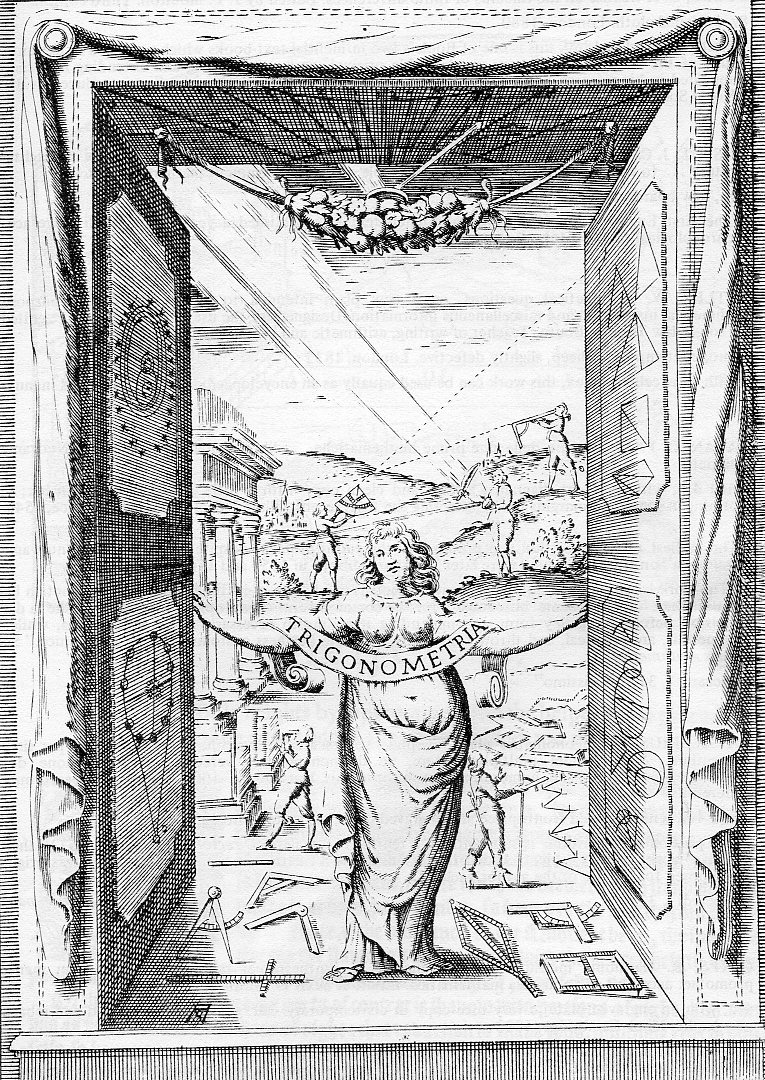
    There aren’t many other title pages in the history of mathematics that swing the doors of beauty and heaven and opportunity and logic and thought than the (appropriately-named) Bonaventura Francesco Cavalieri/Cavalerius.  A Milanese (1598-1647) who taught at Pisa and who published eleven books and worked in wide fields in mathematics as well as astronomy and physics, published his Trigonometria… in Bologna in 1643, and sent a fabulous image to his new readers right there on his very illustrated and augmented title page. 

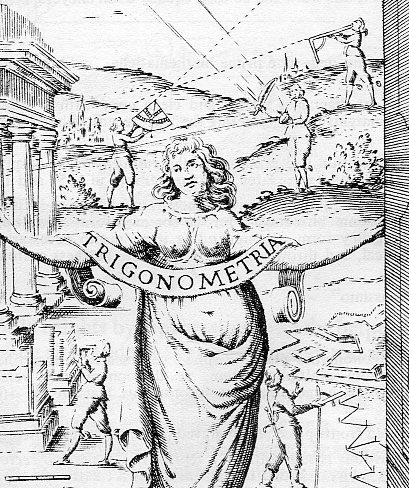
    Seldom have the doors of knwoledge been thrown open so wide and invitingly as this, with Trigonometria lightly awarding the reader with a new portal to fantastic opportunities–who wouldn’t want to walk on in?  The tools of trig are displayed on the ground at Trionometria’s feet (arranged and not by happenstance), while five figures employ these same tools in the background hills, which are being bathed in a pure holy light of some sort, an inspiration from the sky.  The doors are decorated with astronomical figures and light calculation, as well as polyons and geometrical drawings.  And just to make sure that the author meant what he intended, we can see above the full/thick wind-blown hair of Trigonometria (which in itself seems very unusual to me, such a carefree adn tossled attitude) a fruit-garland, a horn of plenty in its way.  Make no mistake–Cavalieri was making a king-sized offer to his reader to open their brains. 

    Cavalieri768

    I did leave out a major part of the title–the section dealing with logarithms, which is basically a reprint of Cavalieri’s early work (done in 1632), and which was the first work in Italian on that subject. 


  • The Invisible Man, 1785

    JF Ptak Science Books   Quick Post   [Part of the Series on Blank, Empty and Missing Things]

    Bandages767

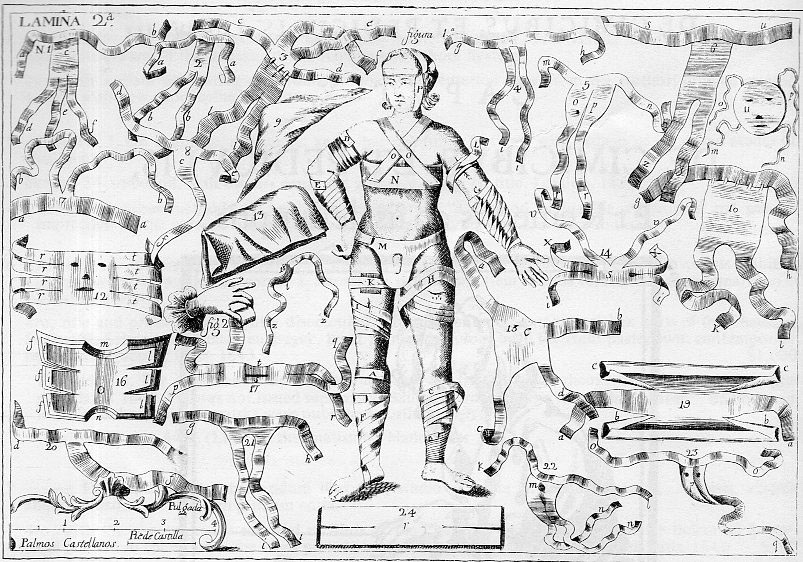
    What is mostly missing in this fantastic illustration from Tratado de vendages…. (Madrid, 1785) are people.  These multi-image plates of various dressings usually did not address people directly, and so looking at them out of context gives them a very heavy taste of the found-absurd. 

    For the time, of course, the book was an essential text on treating wounds, especially military ones. The author, Francisco Vila Canivell was born in 1721 in Barcelona.  By 1749 at only 28 years old, he had been educated in  France and received his medical education back in Spain at the Universtiy of Cervera, had fought in the Italian campaign (as a surgeon), became Surgeon Major of the regiment of Astiurias, and then on to keep charge of the Library of the Royal College of Surgeons in Cadiz. He was professor of osteology (and bandages!), as well as an obstetrician, ophthalmologist and midwife, until 1769 when he became Sugeon Major of the Army, and then proceeded on to other more esteemed positons, dying in 1797.


  • Mark Rothko, 1870: Unidentified Pre-Modern Found-Modernist Art

    JF Ptak Science Books   Post 1895

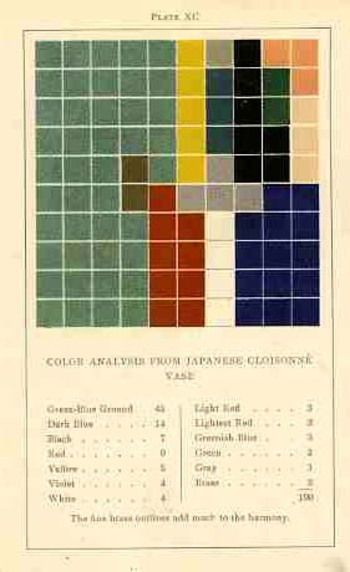
    This blog has long hosted a series of posts on “accidental” or “unintended” works of pre-modern modernist art found in displays of information and statistics in the sciences and mathematics, and even occasionally in art and design.  One such work–a 1904 triumph of accidental art issuing from an usunal work on color theory–belongs to an aesthetician named Emily Vanderpoel.  It is extraordinary in a narrower sense, and that extraordinary might not actually be positive for its original intent–the extra-intent of the book, what has come out of it for me, was something that was unintentionally accomplished by the author.  The images that she used to illustrate her color theory ideas–the basis of which are not really omprehensible to me–turn out to be artwork in themselves, a found art, the artistry of the images taking over the original intention for the arrangement of their color. She had introduced (though to no one, not really) a concept of beautifully arranged spatial color, artwork without a subject that could be recognized as any sort of natural object–non-representational art, finding publication several years before what is seen as the first inentional attempt at that genre, by Vassily Kandinsky in 1911. (Images below.) And when one strolls through the history of scientific illustration it becomes easier and easier to find such things, fabulous precursors to non-represnetational art, and Dadism, and Cubism and Surrealism. 

    Blogcolorvander_2poel_063These elements seem to be most populous in the illustrated sections of early encyclopediae, and dictionaries, and even encyclopedic dictionaries, where a number of different elements are displayed on the same page, different and generally unrelated images on the same engraved sheet, references for articles found in different parts of the book. 

    Here is a good example of that, with unintentional Surrealist images found in the image refernce pages of Horace Benedict de Saussure’s Voyages dans les Alpes….(published in Neuchatel in 1803):
    Unintentional surreal766
    [There are a number of other examples that I’ve written about on this blog:  here, for example, in “On the Paper Sculpting of Nothing”.]

    And then there are examples like Vanderpoel, where the entire image from one sheet is the pre-modernist image in question–to my experience this is the more uncommon occurrence. 

    Which brings us to today’s installment:  the infographic displays found in  Francis Walker’s  Statistical atlas of the United States based on the results of the ninth census 1870 with contributions from many eminent men of science and several departments of the government, which is the atlas of data to accompany the 9th Census of the United States, published in 1874.  This is a beautiful work, and a pioneering challenge.  Walker was one of the earliest to produce a statistical atlas, and was perhaps the earliest to display this huge and broad amount of data in so many different ways–it must have seemed a semi-miracle to see the information displayed so, like going froma  black & white television to color, or color to infared, and so on.  It may well have represented anentirely new way of looking at data.

     The first image (above) in this post is from the illustration showing proportions of the white/non-white population, and the following image shows a detail of that, offset against Mark Rothko’s 1959 Black on Maroon.

    Francis Walker’s statistical mapping, above, 1873; Mark Rotko,

    1959, below:  


     mark-rothko-black-on-maroon-1959

    [Black on Maroon (1959) by Mark Rothko, part of the Seagram mural series, via Tate Modern.]

    The first and third images are details from this full-page illustration:

    It is easy to see the similarities between the data display and the Rothko, though it would really not be within anyone’s power to identify the Walker diagrams as “art” in the modern sense for another five decades.  But it certainly seemed there, ready to be of influence and service, though I’m not aware offhand of artists being influence by these images as they were with, say etienne Marey’s photographs. I’m not sure that these statistics images ever came into the service of art in the beginning of the modern era.  And maybe that’s the biggest question here. 

    Sources:

    1. Guide to National Atlases: here.
    2. The Walker atlas for the 1870 census from the LC site: here.
    3. And an improvement on the Library of Congress presentation, by HandsomeAtlas (Brooklyn Brainery): here.


  • Vernacular Landscape–Found-Religious Signs, 1936

    JF Ptak Science Books   Quick Post

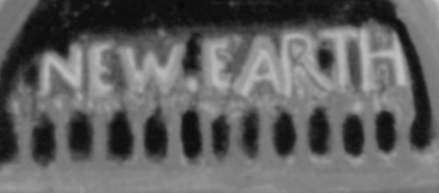
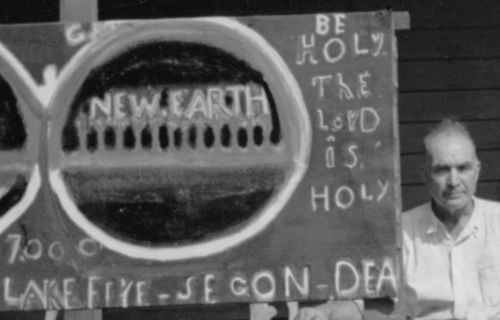
    New earth
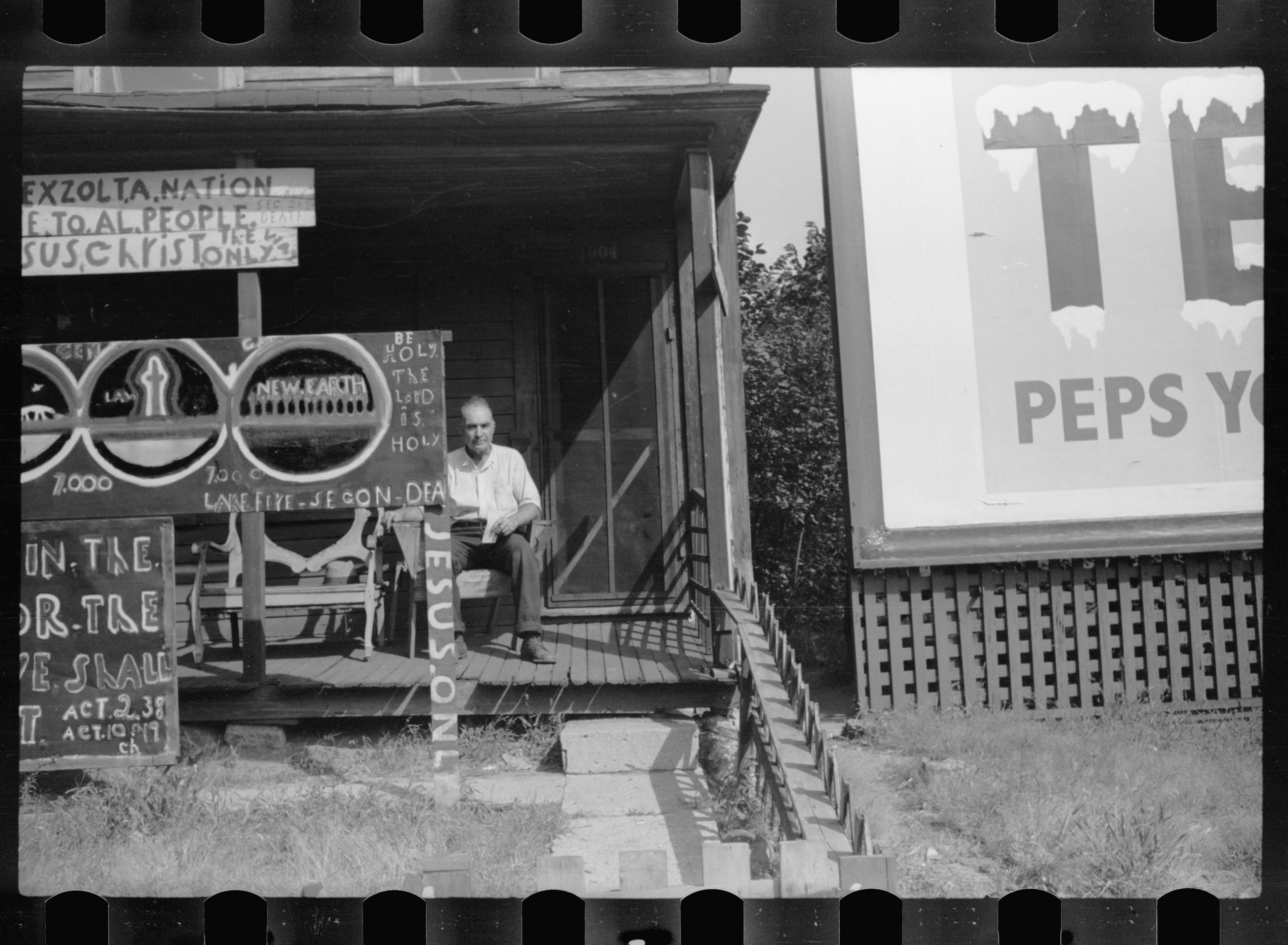
    Which is a detail from:

    FSA--signs--religious detail

     Which itself is a detail from:

    FSA--signs--religious
    John Vachon; Religious Signs, Minnesota. 1936.

    Image, Source: digital file from intermediary roll film

     Vachon (1914-1975) was part (beginning in 1936) of one of the great groups of photographers in the history of American images: he worked for Roy Stryker in the FSA as part of the U.S. government’s attempt to record the good and ill of American poor.  That group included Esther Bubley, Marjory Collins, Mary Post Wolcott, Jack Delano, Arthur Rothstein, Walker Evans, Russell Lee, Gordon Parks, Charlotte Brooks, Carl Mydans, Dorothea Lange and Ben Shahn.  OF the many images recorded by Vachon, I liked the words in this one.


    ·Posted by :

    ·in:

    — — —

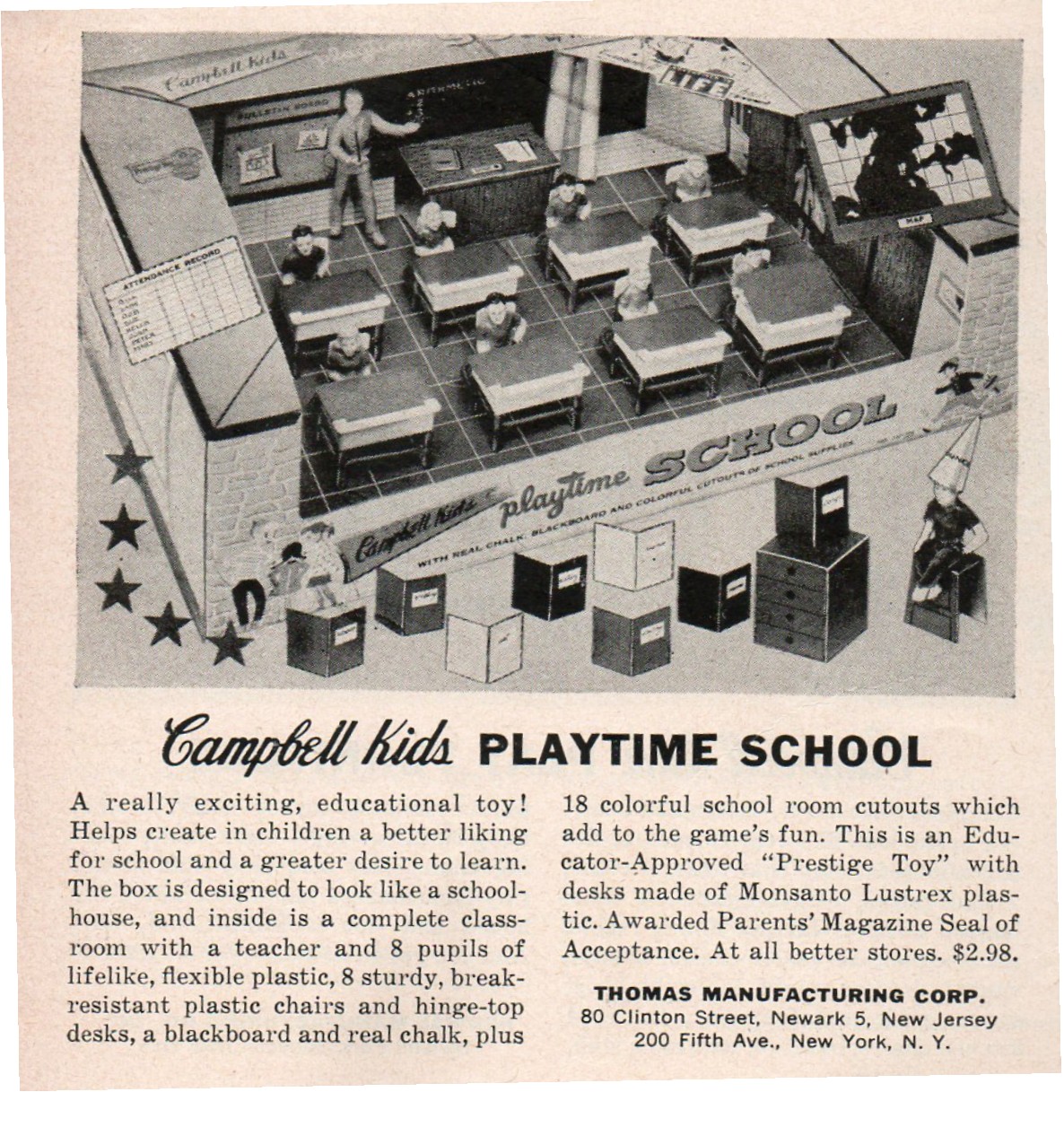
  • Henry Darger and Campbell Soups Kids Playtime Schoolroom, 1955

    JF Ptak Science Books  Continuing Post 1081 from 2010

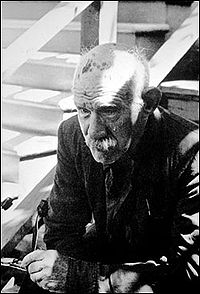
    Somewhere in the past I got the idea that the defining icon and supremely outsider-y artist, Henry Darger1, lived  his life twice.  One life he
    spent with the other people in his job as a quiet janitor; the other life he spent re-enacting his day in  miniature, a
    diorama of his workplace and his own
    apartment, reviewing his conversations real and supposed, revisiting shared-or-not visual clues, altering the day as it progressed with the possibilities of the actions-not-taken.

    Campbell det
    Maybe it is just this unshakable self-created image that colors the association of the Campbell Kids’ Miniature Play School Room that makes it  seem so dark and dangerous, especially since we now what is going to happen to the little girls in Darger’s red-tinged lexi-necessary art world. Here’s a molecular-level example of Darger’s fantastic output, featuring his Vivian Girls:

    Darger elsie(The picture at the lef is Miss Elsie Paroubek, a  5-year-old girl murdered in Chicago in 1911 and who may have been the sympathetic  impetus for Darger’s life work.)

    And this is really just a child’s toy–a delightful one, too, filled with details of the school day:  movable desks, toy books, bouncey pony tails, and a teacher speaking at the back of the heads of the kids.  (He’s also carrying a stick by the way; maybe its just a pointer.)

    I suspect that the disturbed nature of this toy lives just in my head with its created Darger visions or repetitive living. Or maybe not–it does looked inescapably creepy, complete with a child in dunce’s hat.

    Campbell school169

    Notes:

    Darger 1. Henry Darger, 1892-1973, living form the Chicago World’s Fair to Watergate,  posthumously became perhaps the recognized standard model for outsider art, his magnum opus a 15,000 page and hyper-illustrated  work The Story of the Vivian Girls, in What is known as the Realms of the
    Unreal, of the Glandeco-Angelinnian War Storm, Caused by the Child
    Slave Rebellion
    being the base of the interest.  It has its own magnificence to be sure, and I can instantly recognize the enormous effort and creativity, but I always come back to the redded-up girl’s sexual organ additions, which are naturally upsetting, making the whole of the affair feel like a  monstrous mental health porn. And for as long as I’ve known about him, and which is also wholly
    unsupported by fact or reasonable supposition, I pictured Darger returning to his rooms at
    night after a day of cleaning, mopping, scrubbing, taking abuse for
    spills not cleaned, and then reliving the entire day at night in
    miniature.  In my own story, Darger created small figurines and puppets
    through which he re-enacted his day, complete with sets of the rooms in
    which he worked.  Perhaps he lost himself in these moments, finding a
    vindication in miniature stages in his second-story walk-up that he
    couldn’t in his daily life, allowing his creative, 20-million-word
    nighttime imagination to open up. Anyway, I’m pretty sure I made this imaginary life up.


  • “This Enquiry Not Overcurious”: Huygens on the Laws of Extraterrestrials, 1698

    JF Ptak Science Books   Post 1894

    “…stars…Numerous, and every star perhaps a world Of destined habitations”–Milton, Paradise Lost (1668)

    In spite of a fairly long (if not light) and ancient history, it seems as though Christian Huygens might have thought more to the shaping of extraterrestrial life than any writer to his time.  [The idea of extraterrestrial life is very old, stretching far back into Hindu cosmology, and even deep into the (eighteen worlds) of the Talmud.  Thales, Anaximander, Democritus, Aristole, Ptolemy all thought about and agreed on the possibilities of life being lived on places other than the Earth–infintely more life, in the case of Epicurus. Bruno, Copernicus, Fontenelle, Henry More, and Cyrano de Bergerac.] In a way, in a Asimovian way of rules, Huygens may have laid out the first real template for describing what life-not-on-Earth might look like.  And in the long run, he finds that the possibilities for life Elsewhere are enormously high (and not in doubt in any way), and that it should in no way be any lesser life-formed than what we know here on Earth–and that includes “life” in all of its great complexities.

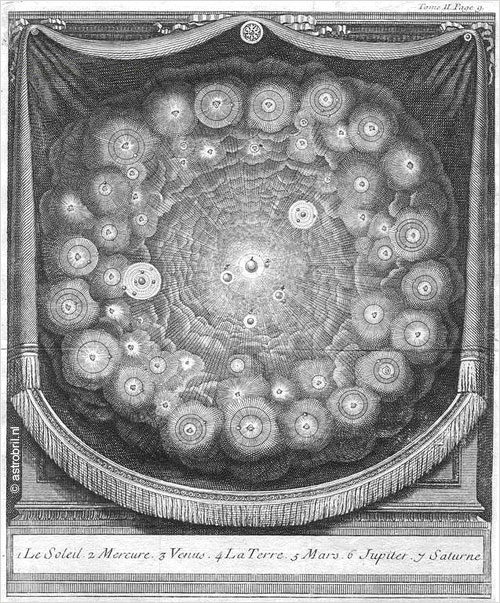
    [One of the few images made during this time or earlier on the possibilities of world systems outside our own appeared in Bernard le Bovier de Fontenelle–who almost but not quite gets there in his 1682 book Entretriens sur la pluralite des mondes, as follows, though it really has not much at all to do directly with Huygens:]

    Blog--plurality of world fontenelle

    Huygens (1629-1695) worked across many fields, including astronomy, biology, math and physics, and was extraordinarily productive, making numerous contributions in the physical and theoretical areas, as well as being a prolific author and correspondant.  But towards the end of his relatively short life (he died at age 56) Huygens embarked down the science fiction road in pre-science fiction days, writing a wonderful and provocative book entitled Cosmotheoros, The Celestial World Discover’d: or, Conjectures Concerning the Inhabitants, Plants and Productions of the Worlds in the Planets (available online in English here) where he establishes the groundwork of this extraterretrial life. (The book was nearly published during Huygens’ lifetime, but it didn’t quit ework out; left to his brother to published, he, too died before the book was finally in print in 1698. Shortly after the Latin edition of the Cosmotheoro was published by the The Hague publisher Adriaan Moetjens, translations appeared in English (1698) and in Dutch (1699). In the following years, translations also appeared in French (1702), German (1703), Russian (1717) and in Swedish (1774).)

    Hugens set out his description by arguing that extraterrestrial existence of life is perfectly in keeping with the Bible, and that his”conjectures are not useless” or “overcurious”, and that are justified in and of themselves as a useful pursuit because of the display of logic in his arguments.  He states that the inherent sinfulness and “villany” of man on Earth does not perclude life elsewhere, and these lifeforms coul dbe everywhere else, and no different from our own, with no differences in ability to reason and explore.  Lifeforms exist much like us, with at least five senses (and here Huygens makes an interesting play for more-than-give senses, though he doesn’t understand what they might be), and are capable of all of the supporting capacities for enjoying astronomy, and logic, mathematics, physik, arithmatic, and all of the rest, including all possible skills that could be called upon in the production of instruments of science necessary to pursue any endeavor, and all enjoyed in a society as expectently rich as any on Earth, enjoying all of their plants and animal lifeforms, all of their own creations and the rest of the creations of Nature, all while listening to a universe-wide application of music (“everywhere immutably the same”, which Huygens states beautifully here:)

    “It’s the same with Musick as with Geometry, it’s every where immutably the same, and always will be so. For all Harmony consists in Concord, and Concord is all the World over fixt according to the same invariable measure and proportion. So that in all Nations the difference and distance of Notes is the same, whether they be in a continued gradual progression, or the voice makes skips over one to the next. Nay very credible Authors report, that there’s a sort of Bird in America, that can plainly sing in order six musical Notes: whence it follows that the Laws of Musick are unchangeably fix’d by Nature, and therefore the same Reason holds valid for their Musick, as we even now proposed for their Geometry”–(page 86)

    Cosmotheoros’ pages are filled with such reasoned arguments–remarkably so for the end of the 17th century, barely 90 years after the great publication of Galileo and 40 aftre the work of Hooke (in exploring infinities at the other end of the optic scale).

    I’ve included some interesting parts from Book One of the Cosmotheoros; the subject/section headings are in red, and the page number (which usually appears mid-sentence) is related as [23]. Huygens occasionally referes to the other non-Earth life forms as “Planetarians”.  Here’s a sample:


  • Einstein at 10: School Photograph

    JF Ptak Science Books   Quick Post
    Follow Me on Pinterest


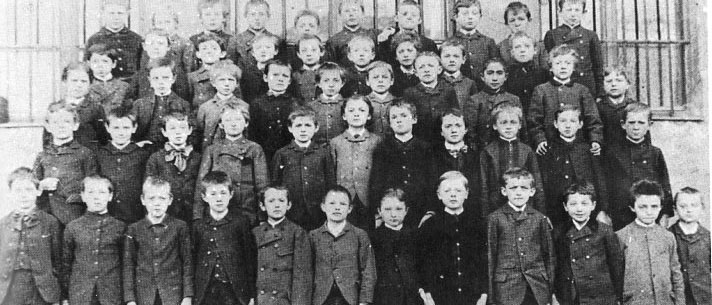
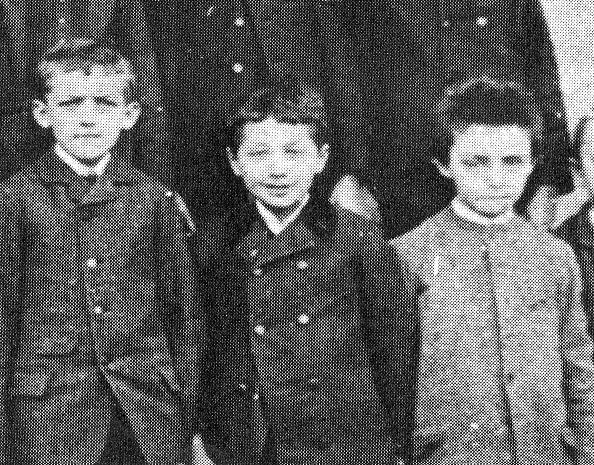
    There is a reminder on our refrigerator for class pictures being made for our younger daughter’s elementary school this Friday.  It never fails to remind me of simpler times for not-so-simple people, time that would soon be overtaken by the complex time of the rest-of-their-lives.  One of my favorite images of this impending wave of life is this:

    Instein class photo763
    This shows Albert Einstein in Munich at the Luitpold Gymnasium in 1889, when he was 10. (The source for his image, Ronald Clark’s illustrated biography of Einstein, says that it is from the 1890’s, which is just wrong. Einstein is third from right, front row. In many reproductions of this photographs the boy on the far right of the front row is usually lopped off–I’ve imagiend a rich life for him from time to time, excised as he was from one of the most famous schoolboy photographs of the last 125 years.)

    It was a fiction or fairy tale that Einstein was an average student when he was young–he was in fact a prodigy, and tested out so long as he was somewhat interested, tested out in all areas save one:  French.  Latin and Greek were good.  French, not so.  It was a main stumbling block for him throughout his young academic career.  And that’s a pity.  More so, really, when you consider the amount of interest French scientific publications gave to Einstein in the early years, 1905-1908; and conversely, how much time and effort Einstein gave to the French, which was very little, and almost no attention at all when the greatest mathematician of the day, Henri Poincare, especially whe the great man died (in 1911). It has little to do with the actual language part–but that’s another story.)

    Instein class photo764

     It was a time of big discovery for the little man, though not so much of that discovery took place in school, and the school itself was a trial. But at least right at this point, when this photo was made, he looked happy.

    ·Posted by :

    ·in:

    —

  • History of Holes and Covering Them Up: Windows

    JF Ptak Science Books   Post 1893

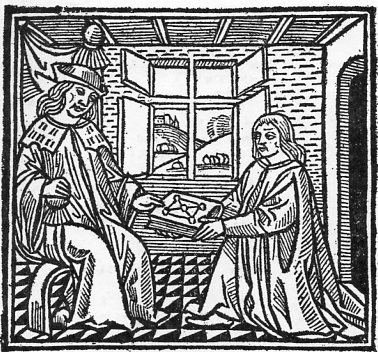
    Holes  windows762
    The series of posts on this blog, The History of Holes, has generated several sub-series, including the History of Filling Holes Up, and of course The Great Efficacy of Deciding the Differences Between Hole and Circles.

    And now: Filling Holes Up.

    This post really started as an exerecise in noticing invisible differences in old prints.  Unfortunately I’ve lost the reference for the woodcut I’m working with tonight (a terrible thing losing it to nothingness), though I’m sure it is a book illustration and early 16th century, and I suspect that it is German, and I believe it would have appeared on the title page or very soon thereafter, possibly in the dedication of the work.

    In the image we see the presentation of a book (the book, the book in which the image appears), a large volume, bound probably in tooled pigskin with brass or wooden tacks on the covers, there to protect the volume over long usage.  The scene itself probably depcits the book’s author presenting his work to his patron, or to the decicatee of the work, the person who made the printing and publication possible–hence the author kneeling, presenting the work with two hands; the receiver is seated, and with a hat and wide collar, accepting the book in a noble posture, nobly, with one hand.  (I wonder if the action is taking place in the bedroom, as would not be uncommon at the time–there is a tapestry pulled back and away from an enclosure to the left-rear of the patron.  It could be a bed. But it is definitely a private room, what with the ceiling not much higher than headroom of the doorframe.)

    What attracted my attention though were the windows and their double shutters.  The word “window” goes back a long, deep way, mainly in Scandanavian languages, and there coming to mean, mostly, “hole” or “opening” in the ceiling (for fireplace smoke and ventilation).  Noah Webster gives “window” a nice turn in the 1828 edition of his dictionary, defining the word as a “wind-door”, which is poetic but not very much in keeping with the word’s etymoloigcal history so far as I can tell.

    The coverings for windows are natually as old as the window, though sometimes it received some very fancy covering–in Rome, for instance, there are examples of glass windows, though there the glass is largely opaque. But here, in this image, in the high Renaissance, the window coverings were wooden, which is a long way home from hide or cloth or other such material. It is a little curious to see the shutters opening inwards–I’m no window/fenestration/architectural expert, but it seems now in cozy memory that these sort of shutters are not usual to my experience of Renaissance interiors.  (One quick source for looking at a number of these scenes is Jost Amman and Hans Sachs’ Standebuch (“The Book of Trades”), published in 1568. It shows people at work at their craft, mostly inside; and of these dozens of woodcuts, when the windows are shown with coverings they are depicted with glass. When not, there is simply nothing to see–but being merchants, and these places being “stores” of a sort, there were probably exterior shutters fixed either at the top to provide an awning when open, or at the sides. )

    In any event, it is always interesting to go back and look at familiar objects and images, and see what your brain comes up with with the newest iteration of recognition.  I’ve known this print on-and-off for a long time, but I don’t think I ‘ve ever thought of it in terms of holes. Until today. And then it became a new image. 

    ·Posted by :

    ·in: