A Daily History of Holes, Dots, Lines, Science, History, Math, Physics, Art, the Unintentional Absurd, Architecture, Maps, Data Visualization, Blank and Missing Things, and so on. |1.6 million words, 7500 images, 4.9 million hits| Press & appearances in The Times, Le Figaro, Mensa, The Economist, The Guardian, Discovery News, Slate, Le Monde, Sci American Blogs, Le Pont, and many other places… 5000+ total posts since 2008.

Author: JF Ptak

  • Medicine–Listing of Nobel Prizes

    Nobel Prize in Physiology or Medicine: Chronology

    toi1901 “EMIL ADOLF VON BEHRING for his work on serum therapy, especially
    its application against diphtheria, by which he has opened a new road in the
    domain of medical science and thereby placed in the hands of the physician a
    victorious weapon against illness and deaths.”

    See the full listing (with summary text from the Nobel foundation) located in the “pages” section of this blog, here.

    ·Posted by :

    ·in:


  • Aristotle’s PHYSICS

    PHYSICS  by Aristotle translated by R. P. Hardie and R.K. Gaye, appearing as a part of The Works of Aristotle, volume I; printed at Oxford by the  Clarendon Press in 1930.

    “The Physics is a lecture in which he seeks to determine beings that arise on their own, τὰ φύσει ὄντα, with regard to their being. Aristotelian “physics” is different from what we mean today by this word, not only to the extent that it belongs to antiquity whereas the modern physical sciences belong to modernity, rather above all it is different by virtue of the fact that Aristotle’s “physics” is philosophy, whereas modern physics is a positive science that presupposes a philosophy…. This book determines the warp and woof of the whole of Western thinking, even at that place where it, as modern thinking, appears to think at odds with ancient thinking. But opposition is invariably comprised of a decisive, and often even perilous, dependence. Without Aristotle’s Physics there would have been no Galileo.”–Martin Heidegger, The Principle of Reason, trans. Reginald Lilly, (Indiana University Press, 1991), pp 62-63.

    The Physics of Aristotle is one of the great foundation stones of Western scientific thought.  This version of the work was on my website for many years and was the most-downloaded item on the menu there, with more than 20,000 downloads over a decade.  It was shcoking to me that there was that much interest in the work, but, well, there it was.  For some reason I’ve neglected to place it on this blog, and so I’ve done so today–it is posted in the “pages” section of this blog.  Enjoy. 

    ·Posted by :

    ·in:


  • Scientists on Stamps

    JF Ptak Science Books   Quick Post

    Stamp_brahe

    ·Posted by :

    ·in:


  • Out-of-Place Department: the Moon as Debris Ring Around the Earth

    JF Ptak Science Books   Quick Post

    Moon gone earth belt
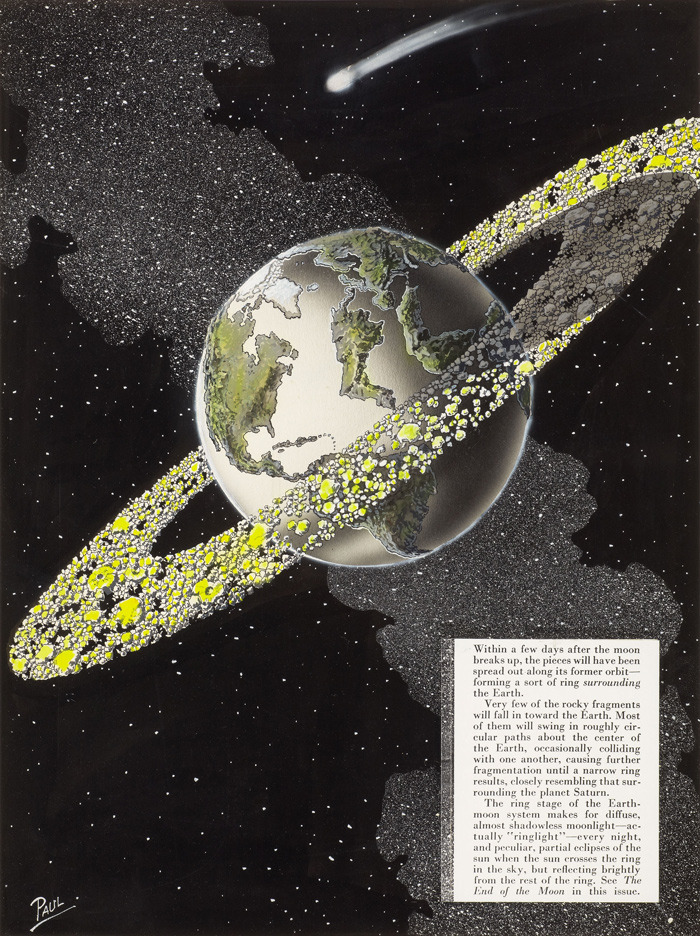
    [Source: 50watts.com, “Tetrahedra in Space”, Frank R. Paul series, here.]

    See also an earlier post, “Things out of Place Department: the Moon”, here.

    This is certainly the work of a delightful and bouncing imagination, more so with the illustration by the great Frank R. Paul.  The image is found on the back cover of  the August 1953 issue of Science Fiction Plus for the short story “The End of the Moon”.   And what we see–at least from the artwork as I cannot find an online version of the text–is a not-convincing result of the Moon going away.  I’m not an historian of the idea of the vanishing Moon and how early writers have imagined it ailing/disappearing/exploding/imploding, though I’m fairly well sure that the scifi wasn’t keeping up with the 1953 science of it all, at least with what I can see and understand.

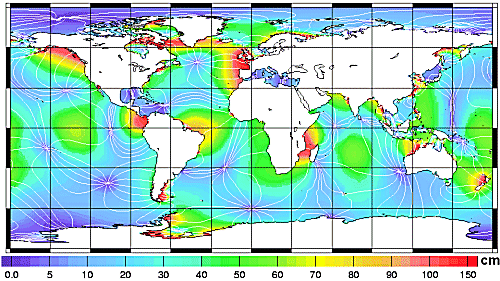
    If there was no Moon.  What if the Moon never existed? What if the Moon existed but vanished?  I guess it would all depend on what exactly happened to the Moon to figure out the disposition of its remaining assets.  The Moon removed certainly would effect changes in the tides, though I think not in the way depicted above. There would substantial changes  though I think not enough to cause a new continent to rise out of the middle of the Atlantic, or to flood all of northeastern Africa.  “If  We Had No Moon”, an essay by Bernard Foing in Astrobiology Magazine, here, provides an interesting tidal change map (below) which shows a projection of the main hotbeds of tidal change. 

    Since I have no access to the text of the scifi article I don’t know if the story addressed changes to the weather and migratory patterns of animals in response to tidal changes, or what happens to large coastal cities, or the influence of a more volatile seasonal change, or changes to the Earth’s orbital parameters, and so on.

    Its the “and so on” part that is the most interesting left-out bit.

    Bottom line here is that I just like the great cover art for the story

    
    Moon gone map of tidal changes

    Another interesting article from ScienceNordic, here.


  • New York City Under Attack–Additional Images

    JF Ptak Science Books   Quick Post

    New york city attacked
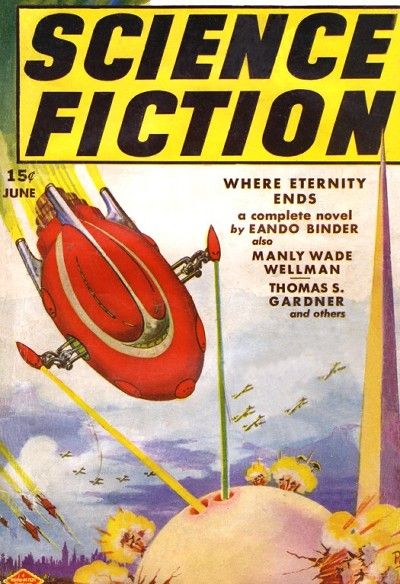
    The Binder brothers (Earl Andrew [1904-1965] and Otto Oscar [1911-1975] under the pseudonym Eando Binder (E and O Binder) wrote “Where Eternity Ends”, a story which appeared in the June 1939 issue of Science Fiction magazine. The cover illustration was by the great Frank R. Paul, and it depicted a savage attack upon the iconic New York City World’s Fair building, the perisphere (the trylon is in the background), and what looks like the rest of NYC as well. 

    It is also part of a continuing subseries on this blog relating
    images of antique images showing NYC destroyed, and include the
    following posts:


  • Dead, Extinct and Dying Jobs, 1880

    JF Ptak Science Books  Quick Post

    Having a quick look at the jobs of Americans in 1880 (according to the Compendium of the U.S. Census, 1884)  reveals a number of interesting things, not the least of which are the jobs lost to dust, replaced jobs of no-longer-applicable mass labor.  Some of the jobs have obviously
    moved into niche/specialist markets (like the 45,000 harness and saddle makers kept busy in 1880 now moved into the luxury field), some changed their names (like carriage makers to automobile assembly) while the others have just moved
    on, entirely (like bleachers and bone workers).  It would take decades for many of these occupations to finally succumb to change–slower in many ways than some jobs have disappeared from today’s employment market.

    The number/signifier following each position states the number of
    thousands of people employed in 1880
    .

    See also earlier posts here An Alphabet of Occupations, 1850  and An Alphabet of Occupations 2, 1844]

    ·Posted by :

    ·in:


  • Hidden Stories in Prints–Renaissance Ladders in the Brooklyn Bridge, 1876

    JF Ptak Science Books   Post 1904
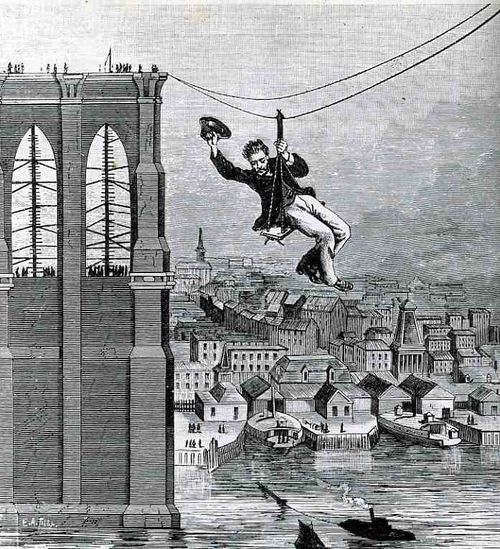
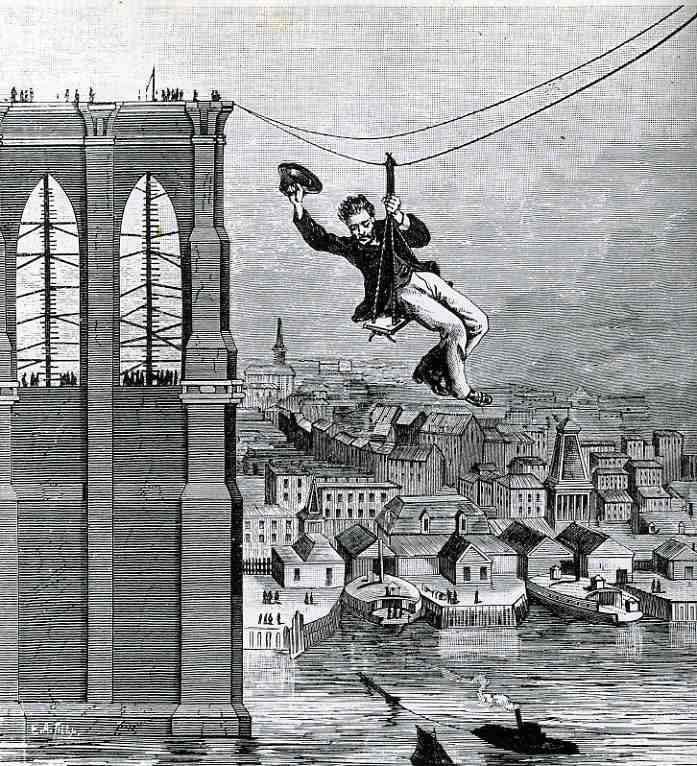
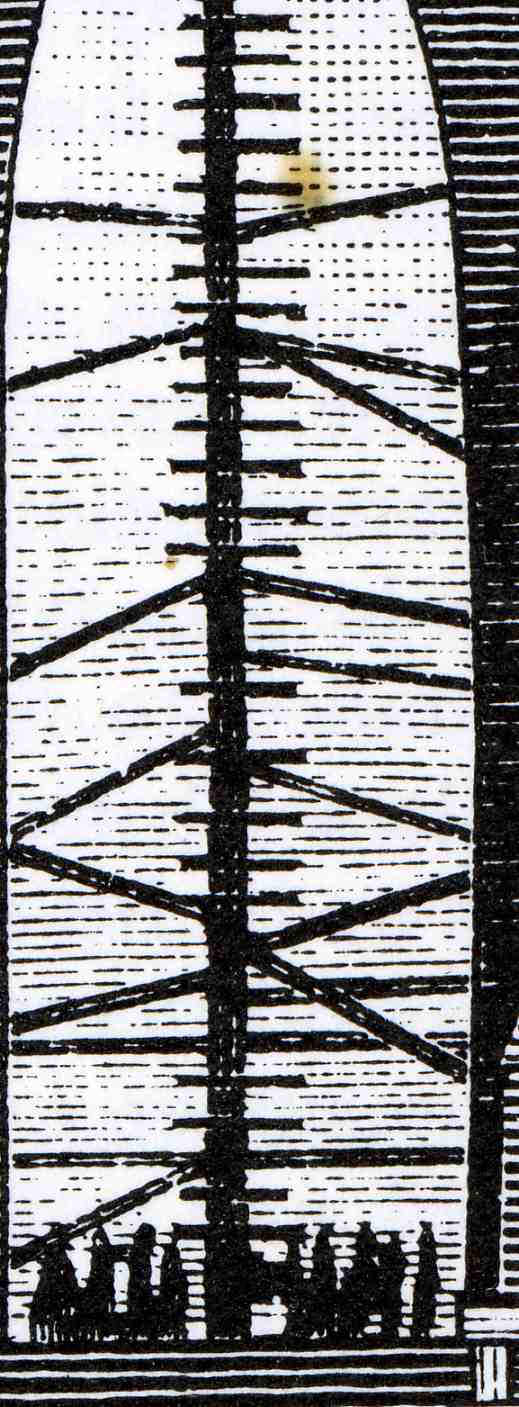
     blog 18 brooklyn bridge big707I’ve long been interested in the hidden, or the obscure, or the secondary, or the non-essential backgrounds and foreground in prints–more so at times than the subject of the print itself.  This thinking certainly applies for me nowadays when looking at another engraving of Winchester or another view of Rome or another prosaic cityscape–the main focus of the images are of course beautiful, but since I’ve seen this stuff so much my eye started wandering around to the small and inconsequential bits in the scene, and found that this is where odd richness might be.  blog 18 brooklyn bridge ladder708
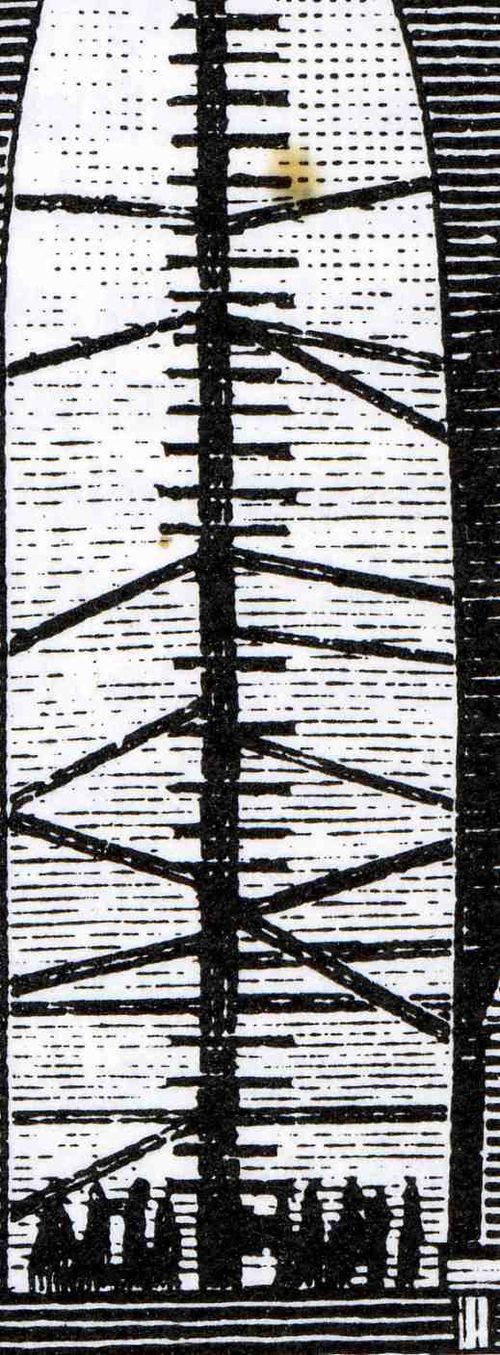
    And so on to what is in my mind, at least, an iconic wood engraving
    of the half-completed* Brooklyn Bridge, showing master mechanic and chief engineer of the project E.F. (Frank) Farrington making his slidy way as the first person to cross between the two spans (on 26 August 1876). 

    What we see in the background of this print, on the Brooklyn-side tower, is a group of people watching Farrington, and in their midst, two gigantic, ramshackle ladders, straight out of the Renaissance.  Farrington was supposed to be showing how safe everything thing was for the workers–27 men died in the construction of the bridge, which given the times and difficulties is tragic but actually not too  bad–but I think he simply couldn’t resist the impulse of making the dangerous, wind-swept way across the river to the Manhattan side.  The ladders don’t seem to speak much to security and safety, but I guess that they worked

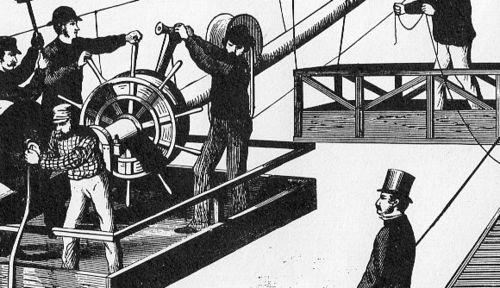
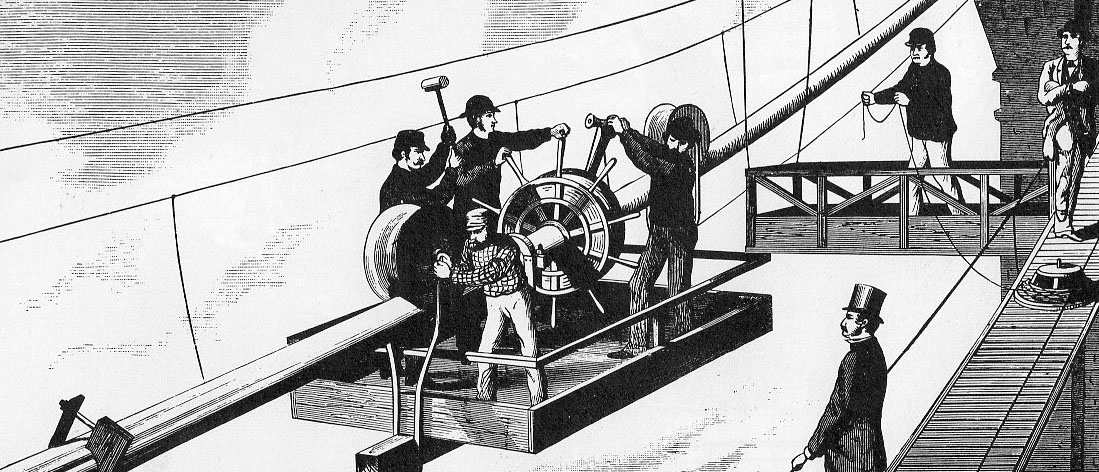
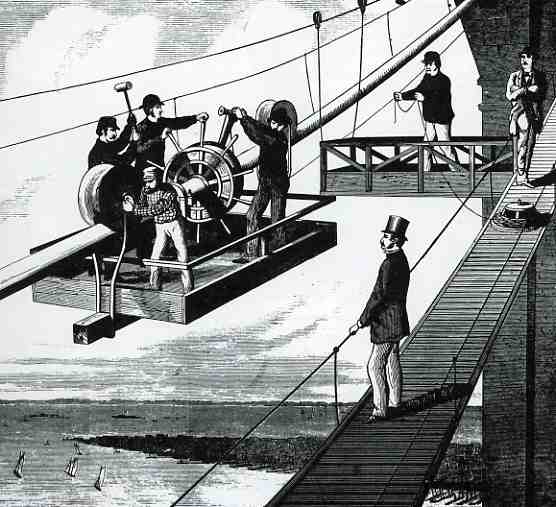
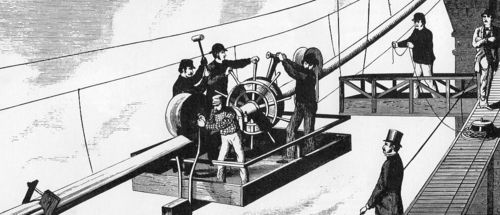
     Another interesting peep into the times is seen in this wood engraving from 1877, showing a crew working on the cables.  As much as eyewitnesses claimed that Farrington performed his stunt to exhibit the safety of the cables, looking closely at this print shows the relative danger faced by the workers.  The railing around the support car here looks more like a hindrance than a help, seemingly making it easier for a worker to trip on it, and fall into the water 300+ feet below.  

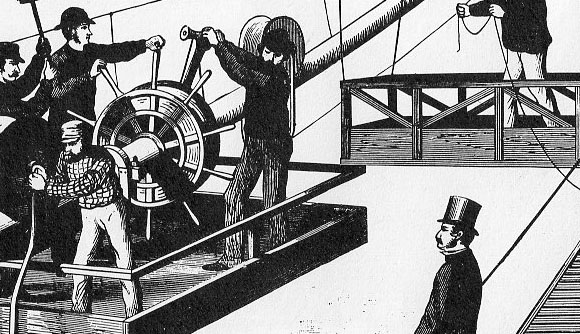
    Below-knee-level barricades surely does not make for a safety fence–it is very probably anti-safety.  That said, if you look closely at the man on the extreme right, he seems to be sitting on the safety cable, leg up, nonchalant, watching the application of the cable. Tempting fate.


    Banner brooklyn const805

    And the detail:

    Banner brooklyn cons editedt805_edited-1

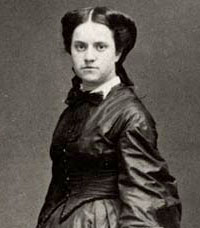
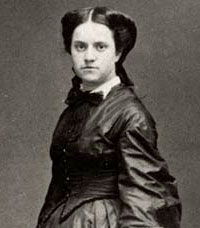
    I guess though that the most hidden aspect of the building of the Brooklyn Bridge was the identity of the chief and overriding builder:  Mrs. Emily Roebling.

    It turns out that the original designer for the bridge, John Roebling, was killed early on in an explosion and was replaced by his son, Washington, who in turn (in 1871) was terrifically incapacitated; Washington was ‘aided” by his wife Emily (1843-1903), who became the most recognizable spokesperson and sub rosa engineer of record.  She was supposed to be assisting Washington, but it was far more so than that.  Probably it was an inappropriate time for society in general to believe that a woman was capable of supervising the construction of the world’s longest suspension bridge.

    “The work which is most likely to become our most durable monument, and
    to convey some knowledge of us to the most remote posterity, is a work
    of bare utility; not a shrine, not a fortress, not a palace, but a
    bridge.” Emily_roebling– Harper’s Weekly (1883) 
    *The bridge was about half-way done, following the construction beginning in 1870 and its opening in 1883.


  • Exercise in Irony: the Usually-Invisible Chinese Rail Worker and the Highly Visible Photographer, 1869

    JF Ptak Science Books   Post 1903   Part of the series on the History of Blank, Empty and Missing Things:  Chinese Rail Workers, 1869. 

    Chinese promontory

    One thing that you seldom see so juxtaposed in the photographic history of the American West are the people who were so important to it placed in proximity to those who were no well disposed to recording their existence. 

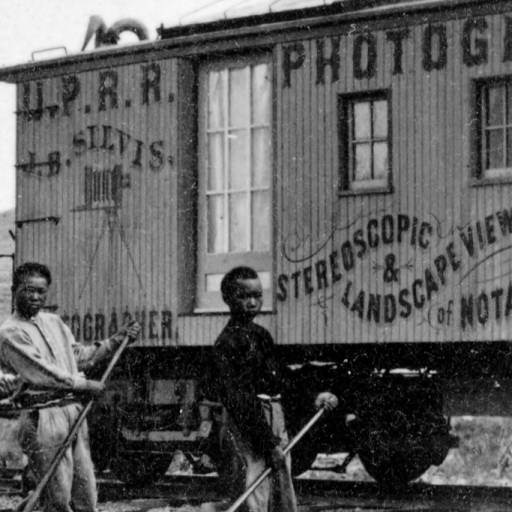
    For example:  this image by J.B. Silvis, “China Section Gang Promontory”, a photograph published as a stereocard between  1869 and 1870, shows a small group of Chinese workers setting two rails in Utah–they are the ubiquitously missing elements in historical images of transcontinental railroad construction. There were many thousands of these workers who were set to notoriously difficult tasks in bad situations and under time constraints with little liberty or pay (and not well-afforded much protection under the law), and in the history of documenting the expansion of the railroad across the West these workers are very seldom seen.

    They are set incongruously in front of a photography car that so often saw through or around them.   The  car was labeled  “U.P.R.R. Photograph J.B. Silvis Stereoscopic & Landscape Views of Notable Points on line of Pacific R.R. Always on Hand”, and I found it tempting to try to see in the photograph that it was made solely for the photographer’s advertisement, but the central placement of the workers makes a good argument against this.  On the other hand, when you look at some of the other work of Silvis documenting his railway car (see here), there are a number of group images where he gathers cowboys or Indians  or makes a photo with his car in an unusual place, he is definitely using those people and locales to establish the idea of remoteness and wildness of the places in which he was working. It seems to me that in the end, he was using the Chinese laborers as a piece of his advertising ensemble more than documenting them. Again, this is very speculative.

    It is a very unusual image which I think is knee-deep in irony. 

    I should also like to point out that most of the workers have taken care to sew  large leather patches on their breeches–that to help their thighs when pulling that heavy metal lever across their bodies while setting and moving track. 

    [All images via Denver Public Library, here.]


  • Children in the Workforce, 1880

    JF Ptak Science Books  Quick Post

    (On discovering and photographically documenting children at work in the 1920’s and ’30’s, see here.)

    Here’s an interesting bit I just slipped into while looking for something else.

    Children at work.

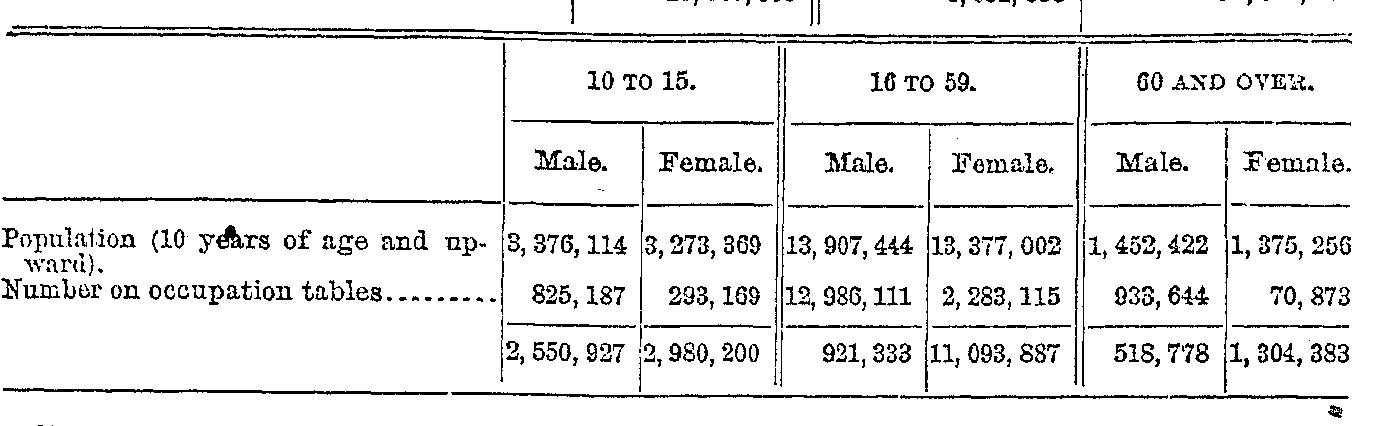
    10-15 years of age. 

    In 1880, half of the population was 10+ years old. There were 17 million people at work, and of these 1.1 million were children, making about 6% of the entire workforce.  And that’s about as truthful as we’ll ever know about that statistic–given the relatively primitive way in which these numbers were corralled, my guess is that there were considerably more children at work than this.        


    And it looks like of the total population of male children aged 10-15 (3.37 million) that 1.1 million of them–about 29%–were working, mostly it seems in the fields. 


  • The History of Lines #35: Complicated Text Design, 1474

    JF Ptak Science Books   Post 1902    Part of  the History of Lines series

    Rolevinck  canon
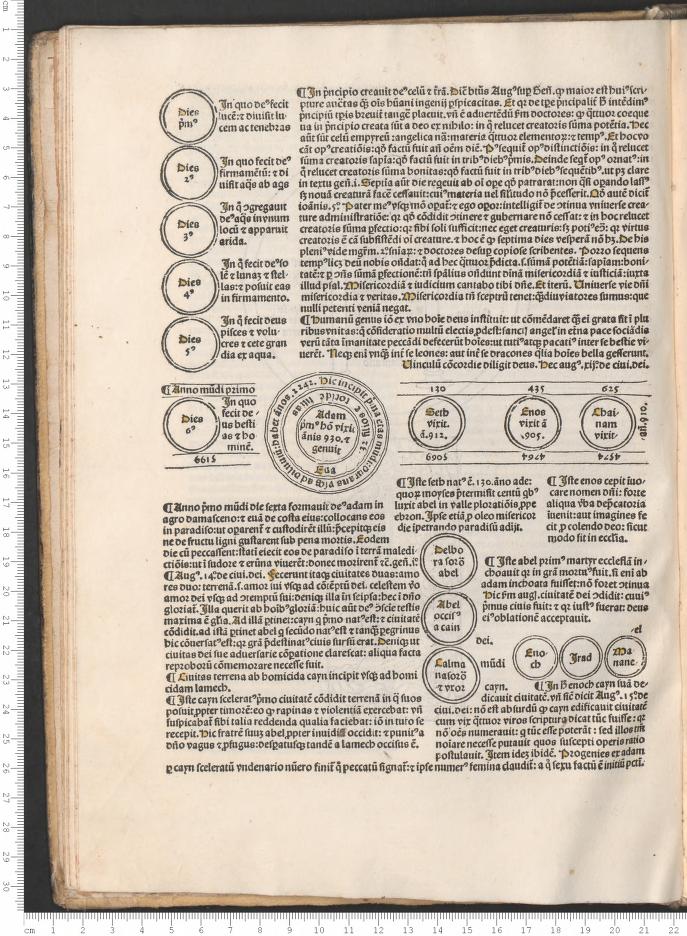
    This work was one of the early best-sellers from the time of the Incunabula, a book that went into 33 editions between 1475 and 1500, and into five different languages, and a number of different authors/annotators and publishers–a book with a very full publishing history.  The Fasiculus temporum, by Werner Rolevinck (a Monk and renowned historian at Cologne, 1425-1502), and printed originally in 1474, is an early history reaching back to the Roman times, and perhaps one of the very earliest chronological histories. It was a compendium of reaches into dim dust, histories including plagues, epidemics, diseases, monsters and other interesting bits.

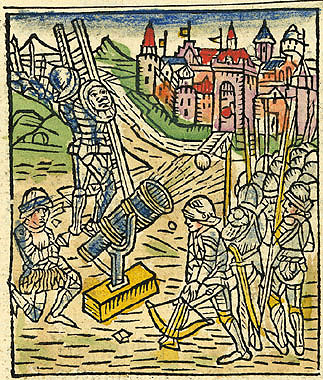
    It was also illustrated; some of the woodcuts were used several times in the course of the book; many were quite interesting. For example, the image above, showing the storming and siege of a town, features the normal allotment of soldiers, plus–extraordinarily–a cannon. 

    What brings us to the History of Lines series is that the structure of the book is very impressive–and complex.  It must have been quite a chore to set into type, as the text lines vary impressively–that, and the chronological nature of the work has text running normally, and then top-to-bottom, occasionally upside down, and then quite frequently in circles.  Anyone with any experience in letterpress printing could quickly appreciate the effort it took to put this book into print. 

    Rolevinck  text

    ·Posted by :

    ·in:

    —