A Daily History of Holes, Dots, Lines, Science, History, Math, Physics, Art, the Unintentional Absurd, Architecture, Maps, Data Visualization, Blank and Missing Things, and so on. |1.6 million words, 7500 images, 4.9 million hits| Press & appearances in The Times, Le Figaro, Mensa, The Economist, The Guardian, Discovery News, Slate, Le Monde, Sci American Blogs, Le Pont, and many other places… 5000+ total posts since 2008.

Author: JF Ptak

  • The Distance-to-Hospital Usage Law (1866)

    JF Ptak Science Books  Quick Post


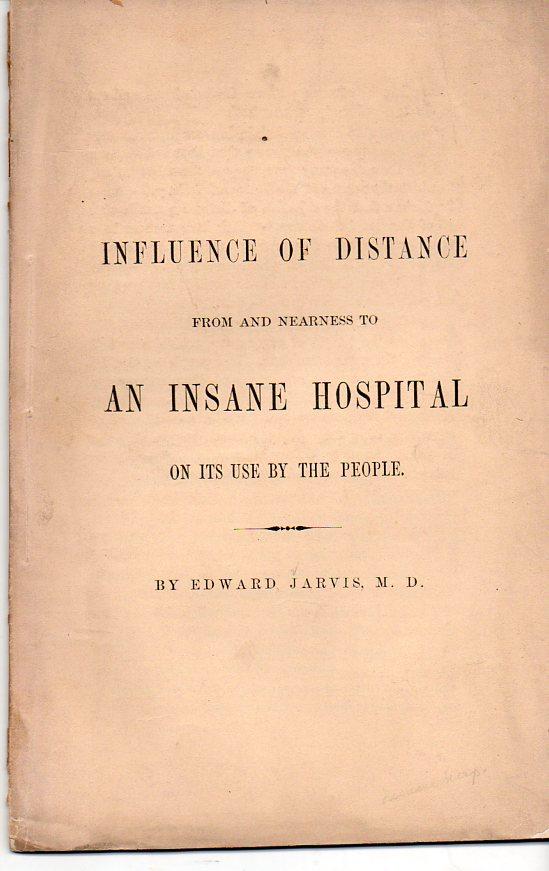
     Dr. Edward Jarvis (1803-1884) conducted a study1 in 1866 to determine how much a factor distance from an “insane hospital” was in regards to people using the facility. It sounds like an obvious-enough question with a probably-obvious answer, but these things are really never so until someone actually looks at the data and extracts an answer. And so Dr. Jarvis performed this function, answering the question once and for all that yes, indeed, the further away you are from a facility the less likely you are going to be to use it, and thus we have Jarvis’ Law.

    “Mental health researchers have long considered the importance of distance on psychiatric service use. Systemic analyses regarding the relationship between distance and the use of mental health care can be traced back to the mid nineteenth century, when Edward Jarvis identified inverse associations between home-to-hospital distance and the rates of admission to Oneida County Hospital of New York and the Kentucky Lunatic Asylum in Fayette County. He claimed that people living near psychiatric hospitals send more patients there for admission than do those living far away (Jarvis’s law).The study also revealed urban–rural differences in the prevalence of insanity, and high admission rates to psychiatric hospitals among people residing near the city center. Jarvis’s law has been identified in numerous studies since the mid-twentieth century.”–Kuon-Chiao Tseng, et al, “Travel Distance and the Use of Inpatient Care among Patients with Schizophrenia”, Adm Policy Ment Health. 2008 Sep; 35(5): 346–356, published online 2008 May 30

    Notes:

    1. Edward Jarvis, M.D.  “Influence of Distance from and Nearness to an Insane Hospital on its Use by the People.”  Published by Separately printed from the American Journal of Insanity, XXII, January 1866, pp 361-406. This publication paginated 1-46. (1866).  


  • “A Most Delicate Monster”–the “Alpha” Robot of 1932

    JF Ptak Science Books  Quick Post

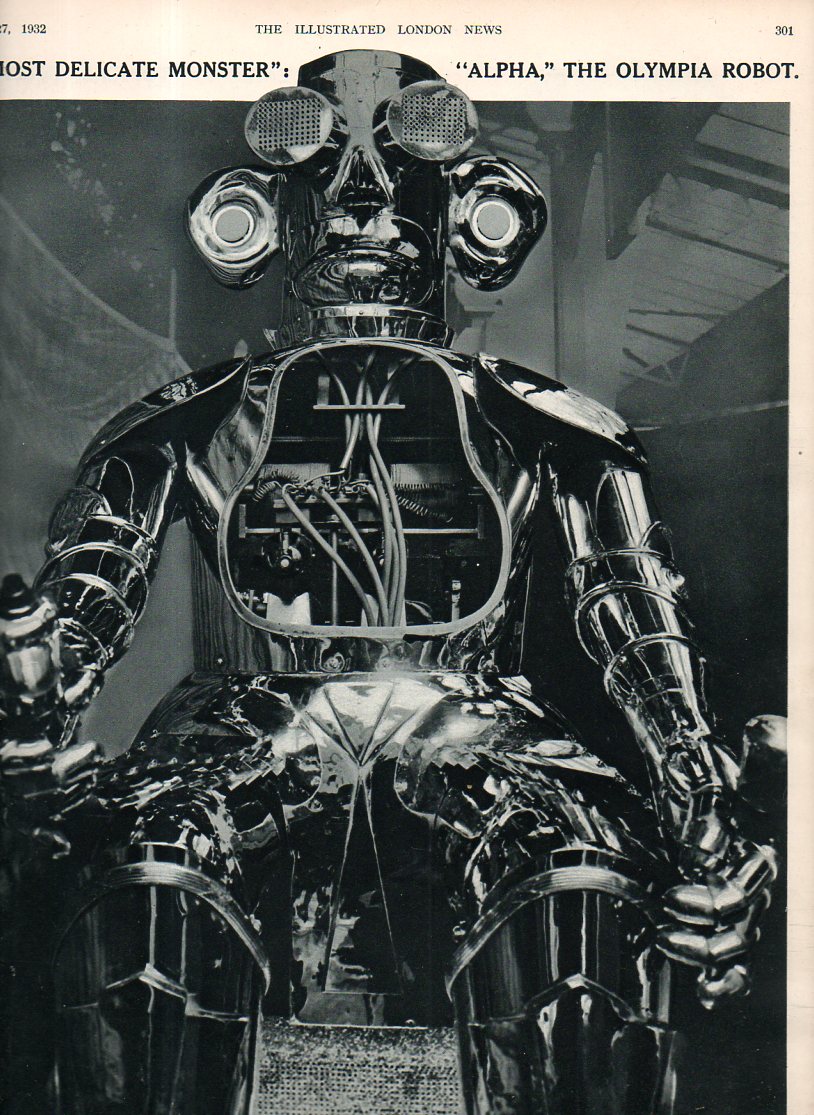
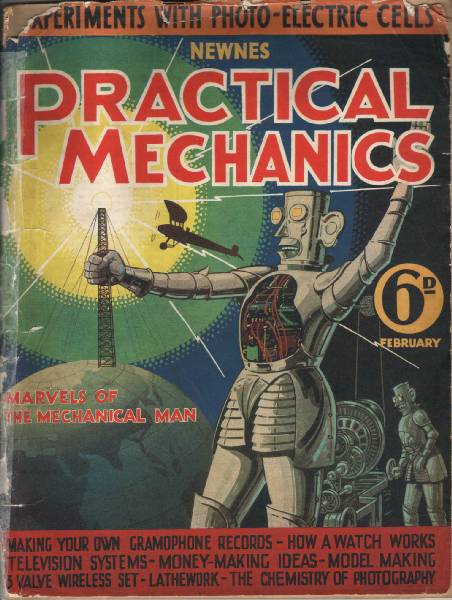
    I bumped into this robot in the pages of Illustrated London News for August 27, 1932. The idea of mechanical people had been around at least since the early 19th century, and by the time this one appeared i its gleaming glory in 1932, the word “robot” was around for a dozen years, invented in 1920 by Karel Capek for his book on the future called R.U.R.  Actually the human-like forms created by Capek in this early scifi work were biotech, and not fully mechanized.) The form of the robot stretches back hundreds of years, in a way–if not the exactly the idea of a robot, but at least with the appearance of one. “Alpha” was anthropomorphic, but hardly what you’d call bio-mechanical, or even pretending to be so. It was created by Harry May of London, and was evidently 6’4″ tall and weighed a ton (or two, perhaps), and was supposed to entertain and answer questions from the crowd when unveiled at the London Radio Exhibition of 1932.  Mr. May kept the details of his creation secret, though no doubt the robot was operated offstage by confederates, the voice supplied by wireless. Still, Alpha was a major attraction, and kept people entertained, if not confused.  In any event, it looked frightening as a vision of a possible 1930’s future-vision.  


    Alpha robot494


    Alpha robot practical mechanics

    [Source: http://davidbuckley.net/DB/HistoryMakers/Alpha1932.htm  This is a very interesting blog by David Buckley, including a long chronological section on the developments of robots–Alpha appears on this list, which includes six or so good links for contemporary stories about the robot’s appearance.]


  • The Dome of Creation, San Marco, Venice

    JF Ptak Science Books   Post 2625

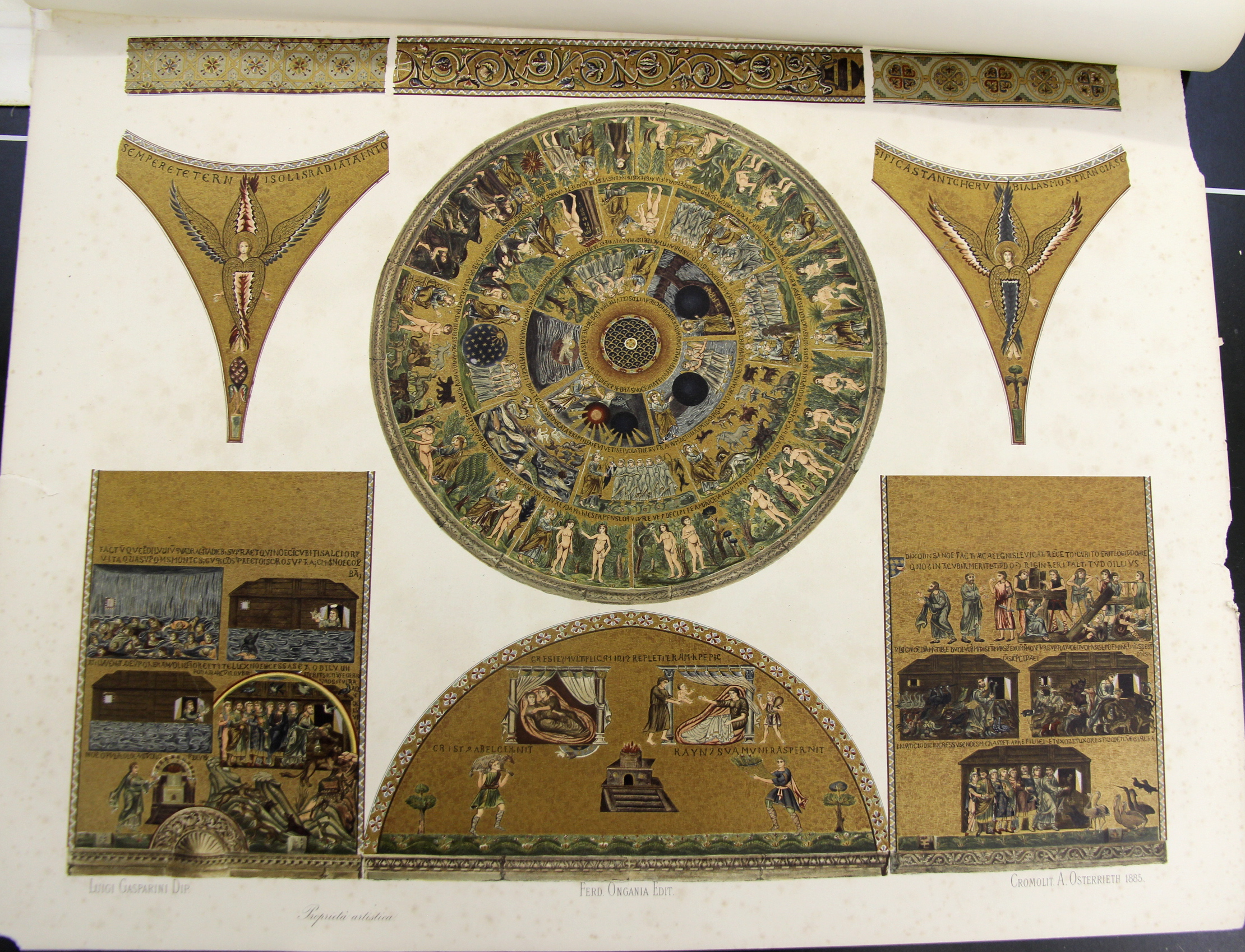
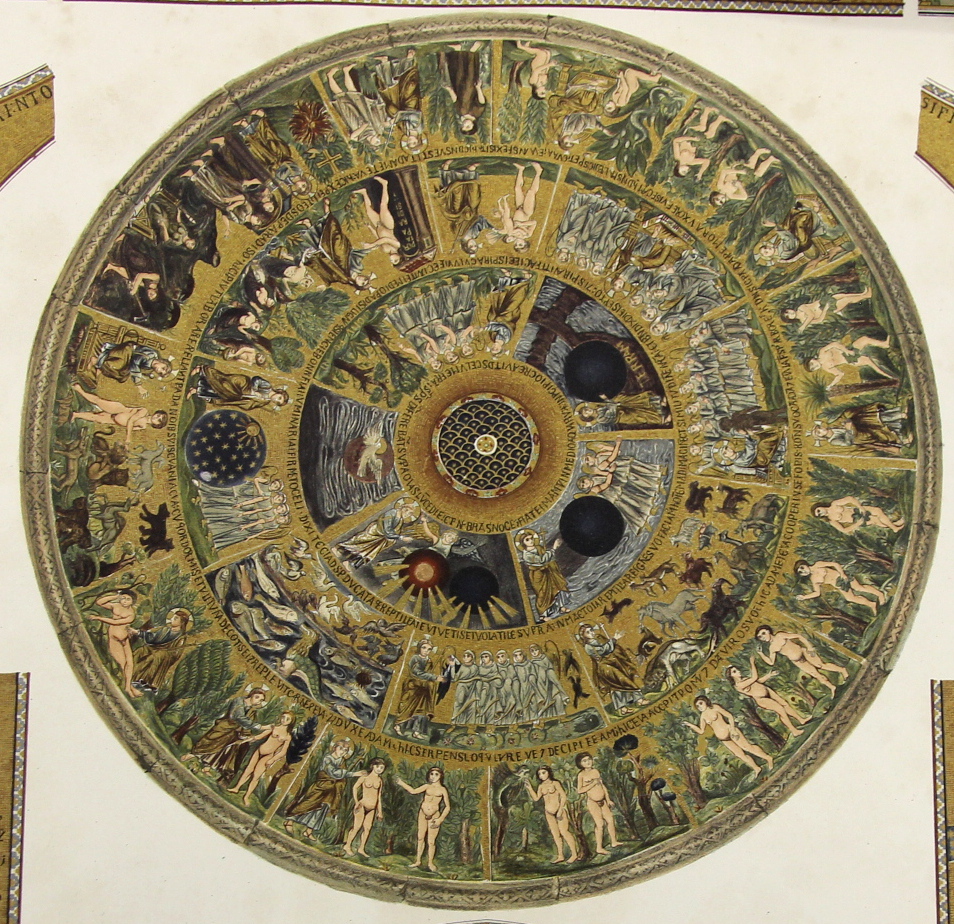
    I’m in the midst of making several posts relating to a group of large (27×21″) chromolithographs of the mosaics in San Marco (sumptuously published by Ferdinand Ongania in Venice in 1886.  The main part of this image is the story of creation, starting in the innermost circle of images, where we find the creation of light (and darkness),  and the rest, followed by the larger concentric circle showing the starry realms, the creation of the birds and fishes, then the land-based animals, and then (around “12 o’clock” on the second circle) comes the creation of life in Adam, where it all seems to go downhill.  In the outer ring we see the creation and presentation of Eve, the various temptations, the nakedness realizations and then the banishment–not all together a happy ending.  But the artwork is lovely, highlighted in gold. 

    Ongania 16 creation

    • [Creation Myth] Chromolithographic image from  Basilica di San Marino du Venezia, published by the prolific Ferdinand Ongania in 1886, 27×21″, 68x53cm. Very good condition. Ongania’s work is an exhaustive study of the iconic building, the publication being known chiefly I think for its very large and sumptuous chromolithographs of the building’s architecture, art, and endless detail. It forms two volumes of an overall monumental 12-volume epic, though these were complete in themselves.


    Ongania 16 creation detail


  • Punctuation and its Elimination: Spongebobian Sentence-Enhancers and a Pickle for the Knowing Ones (1847)

    JF Ptak Science Books 

    (This is an expanded version of an earlier post from 2008, more than 4000 posts ago. I’m reposting it here on the top of the heap today because no doubt the only person who would see the revised version left under the burden of a million other words would be me, so here it is, new-ish and fresh.)

    I’ve made several posts about Blank and Missing People which seem to me—having had long exposure to images over the last 30 years—to be quite unusual in the history of popular-published prints.  This may actually be a simple corollary to a wider category of Blank Things, or Missing Things.  Like Dark Matter.  Or white, open, blank spaces on early, honest, maps. (And this may be part of another larger story on The  Spaces in Between, (a concept in German known as Zwischenraum), but that’s another story, identifying where the missing stuff might actually “be”. 

    Right now though I’d like to address blank spaces in literature.  It is surprising to me that in Google searches that “blank books” and “blank literature” and “books without words” (once you remove all of the hits for new diaries and new artists’ notepads and such) direct you to graphic novels.  This category hardly strikes me as being “blank” as the art and action more than accommodate the absence of written words.  (And by the way the graphic novel seems to be a fairly new invention—perhaps the work of Frans Masereel and Rockwell Kent in producing sequential, worldess books were among the first of their genre when they were published in the mid-1920’s?)

    Blank literature doesn’t mean hollow literature.  In one skinny example James Fenimore Cooper’s writings may be a little translucent and a little empty, but they aren’t blank. (Twain ripped Cooper on this point, cursing Cooper for using a bagful of woodsy woodsmen tricks to drive his story when he should’ve been writing, and not waiting for them to fill up the spaces of his missing narrative: “in his little box of stage properties he kept six or eight cunning devices, tricks, artifices for his savages and woodsmen to deceive and circumvent each other with, and he was never so happy as when he was working these innocent things and seeing them go…(another) favorite stage property that he pulled out of his box pretty frequently was his broken twig.  He prized his broken twig above all the rest of hi effects, and worked it hardest…”

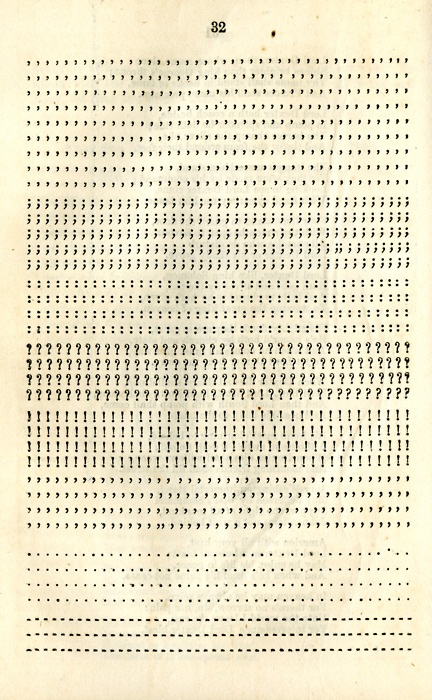
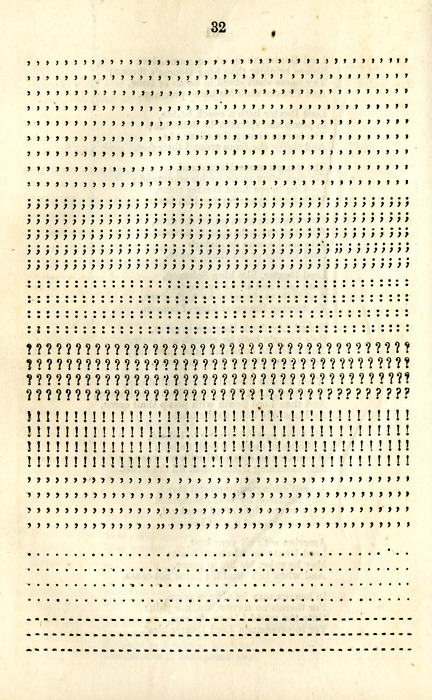
    An excruciatingly direct example of the worldess book  is a remarkable, hoaxing or perhaps just simply demented set (!) of books by Timothy Dexter (Newburyport, Massachusetts).   Dexter wrote a semi-incompressible work called A Pickle for the Knowing Ones, which followed his own logic, sentence structure, vocabulary and spelling. It was also printed and published without punctuation.  In one sentence. (A sample is found below in the continued reading section.)  I think that it is interesting in that someone did it and that it exists and that it was printed in 1802, but aside from that I find little comfort or twisty inspiration from it.  His second edition of that work though is much more interesting, not so much in that it continued ((?), I use that word loosely) the shredded intellectual threads laid out in the first edition; it also contains one page of what I think of as a blank book:  the missing punctuation marks from the first edition.   

    Well, not ALL of the missing punctuation, but enough, in the mind of Dexter, to silence some of the complaints of the more faint-hearted readers of his one-sentence, non-punctuated, made-up vocabulary of the first edition.  He at least provides the punctuation–separately–in case a weak reader needed some: 
    Pickle for knowing ones

    [Image from a good treatment of Dexter at http://northofboston.org/north-of-boston-historical-figures-a-pickle-for-your-thoughts/]

    He writes “Fourder mister printer the Nowing ones complane of my book the fust edition had no stops I put A nuf here and that may peper and solt as they please.”

    That’s much in the spirit of Spongebob Squarepants and Patrick Star when they “discovered” the use of swear words and curses, which they figured had no meaning except as a sort of comfrot food to be sprinkled in conversation for flavoring–“sentence enhancers” they called them, without knowing (of course!) that their sounds were more than simple garnishes and intellectual punctuation.  

    As follows (please consult http://www.lordtimothydexter.com/the_holl_pickle.htm for a full transcription of the Dexter work–the author of the site also transcribes the Dexterian-speak into plain English, which was no doubt a labor of love): 


    ,,,,,,,,,,,,,,,, ,,,,,,,,,,,,,,,,, ,,,,,,,,,,,,,,,,, ,,,,,,,,,,,,,,,,,,, ,,,,,,,,,,,,,,,,,

    ,,,,,,,,,,,,,,,, ,,,,,,,,,,,,,,,,, ,,,,,,,,,,,,,,,,, ,,,,,,,,,,,,,,,,,,, ,,,,,,,,,,,,,,,,,

    ……………. ……………. …………….. ………………. ……………..

    ,,,,,,,,,,,,,,,, ,,,,,,,,,,,,,,,,, ,,,,,,,,,,,,,,,,, ,,,,,,,,,,,,,,,,,,, ,,,,,,,,,,,,,,,,,

    . . . . . . . . . . . . . . . . . . . . . . . . . . . . . . . . . . . . . . . . . . . . . . . . . . . . . . . . . . . .

    . . . . . . . . . . . . . . . . . . . . . . . . . . . . . . . . . . . . . . . . . . . . . . . . . . . . . . . . . . . .

    …………………………! ! ! ! ! ! ! ! ! ! ! ! ! ! ! !………………………..

    …………………………….. ! ! ! ! ! ! ! ! ! ! ! …………………………..

    …………………………………. ! ! ! ! ! ! ……………………………….

    ………………………………………!……………………………………..

    . . . . . . . . . . . . . . . . . . . . . . . . . . . . . . . . . . . . . . . . . . . . . . . . . . . . . . . . . . . .

    , , , , , , , , , , , , , , , , , , , , , , , , , , , , , , , , , , , , , , , , , , , , , , , , , , , , , , , , , , , ,

    ……………????????????????????????……………

    And on page 32 more of the “missing” punctuation is provided:

    ,,,,,,,,,,,,,,,,,,,,,,,,,,,,,,,,,,,,,, ,,,,,,,,,,,,,,,,,,,,,,,,,,,,,,,,,,,,,, ,,,,,,,,,,,,,,,,,,,,,,,,,,,,,,,,,,,,,, ,,,,,,,,,,,,,,,,,,,,,,,,,,,,,,,,,,,,,, ,,,,,,,,,,,,,,,,,,,,,,,,,,,,,,,,,,,,,, ,,,,,,,,,,,,,,,,,,,,,,,,,,,,,,,,,,,,,, ,,,,,,,,,,,,,,,,,,,,,,,,,,,,,,,,,,,,,, ,,,,,,,,,,,,,,,,,,,,,,,,,,,,,,,,,,,,,, ,,,,,,,,,,,,,,,,,,,,,,,,,,,,,,,,,,,,,, ;;;;;;;;;;;;;;;;;;;;;;;;;;;;;;;;;;;;;; ;;;;;;;;;;;;;;;;;;;;;;;;;;;;;;;;;;;;;; ;;;;;;;;;;;;;;;;;;;;;;;;;;;;;;;;;;;;;; ;;;;;;;;;;;;;;;;;;;;;;;;;;;;;;;;;;;;;; ;;;;;;;;;;;;;;;;;;;;;;;;;;;;;;;;;;;;;; :::::::::::::::::::::::::::::::::::::: :::::::::::::::::::::::::::::::::::::: :::::::::::::::::::::::::::::::::::::: :::::::::::::::::::::::::::::::::::::: ?????????????????????????????????????? ?????????????????????????????????????? ?????????????????????????????????????? ??????????????????????!??????????????? !!!!!!!!!!!!!!!!!!!!!!!!!!!!!!!!!!!!!! !!!!!!!!!!!!!!!!!!!!!!!!!!!!!!!!!!!!!! !!!!!!!!!!!!!!!!!!!!!!!!!!!!!!!!!!!!!! !!!!!!!!!!!!!!!!!!!!!!!!!!!!!!!!!!!!!! ””””””””””””””””””” ””””””””””””””””””” ””””””””””””””””””” ””””””””””””””””””” ……………………………….. ……………………………….. ……………………………….. ……………………………….. ————————————– ————————————– ————————————–


    It is a brilliantly empty book, all of the characterization present and waiting for the last bit that would make this a book:  the words.

    The depths or shallownesses of Dexter’s private insight is a mystery to me, if that mystery extended beyond an elaborate and peculiar (and deep) sense of humor.  The man was a successful if not very odd businessman, after all, so he did have some sort of regulating principle in his life–its just that this sort of dark, removed humor is so incredibly pre-modern that I’ve gotten stuck thinking about Dexter being a little deranged rather than be prescient. 

  • Details in Electricity, 1814

    JF Ptak Science Books   Quick Post

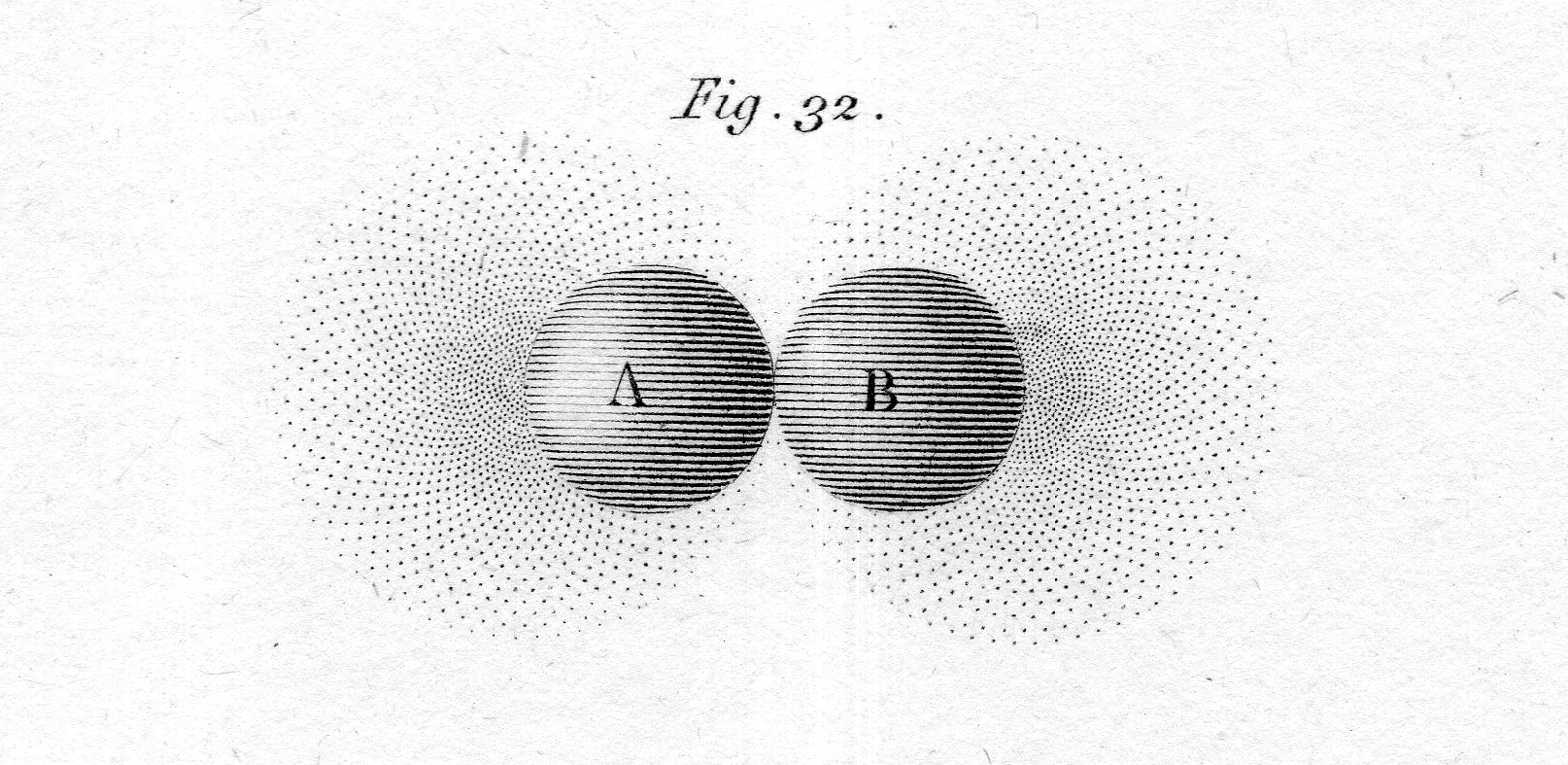
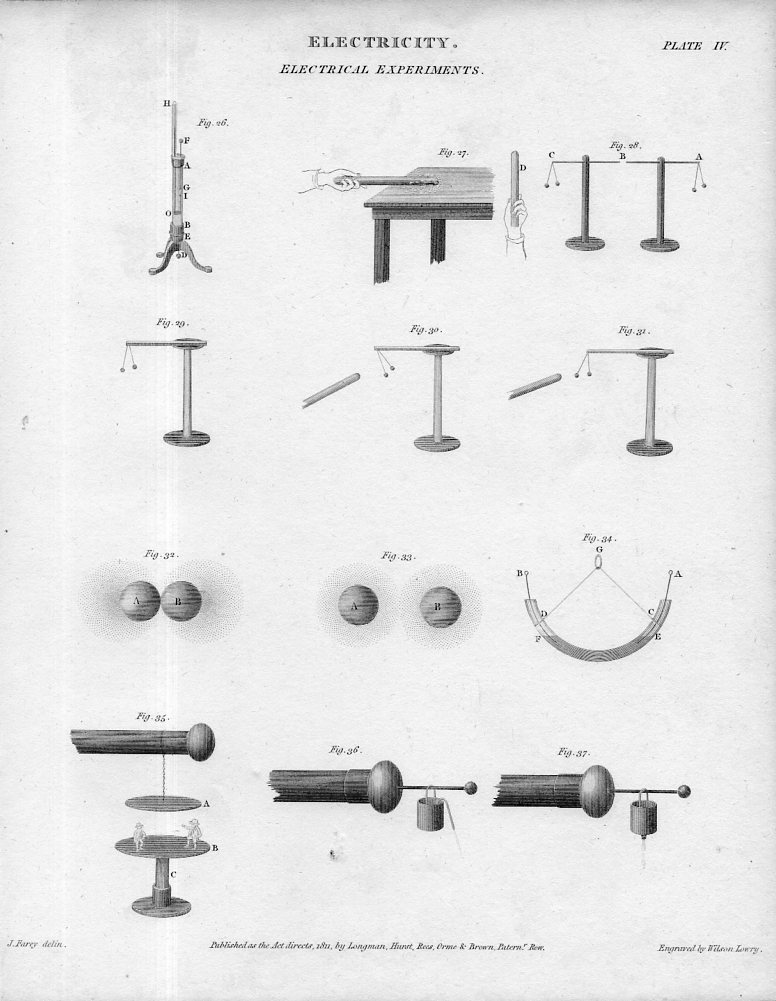
    The following images relating to chemistry were found in the illustration volumes of Abraham Rees’ (1743-1825) great work, Cyclopædia; or, Universal Dictionary of Arts, Sciences, and Literature. This was a massive undertaking for Rees, but his leadership and editorial skills were up to the task–in the end, 39 volumes were published containing nearly 40 million words, plus another six thick volumes contained the engraved illustrations to the monograph-length articles.  They are marvelous images, full of detail, and beautifully designed. This fine example on electricity contains several gorgeous tiny details, including the following:

    Electricity attraction489

    Which is a detail from:

    Electricity attraction488


  • Mysteries of Science: Atomic Power and Scotch Tape (1946)

    JF Ptak Science Books  Quick Post   Outsider Logic series

    Tomic power adhesive tape _1_485

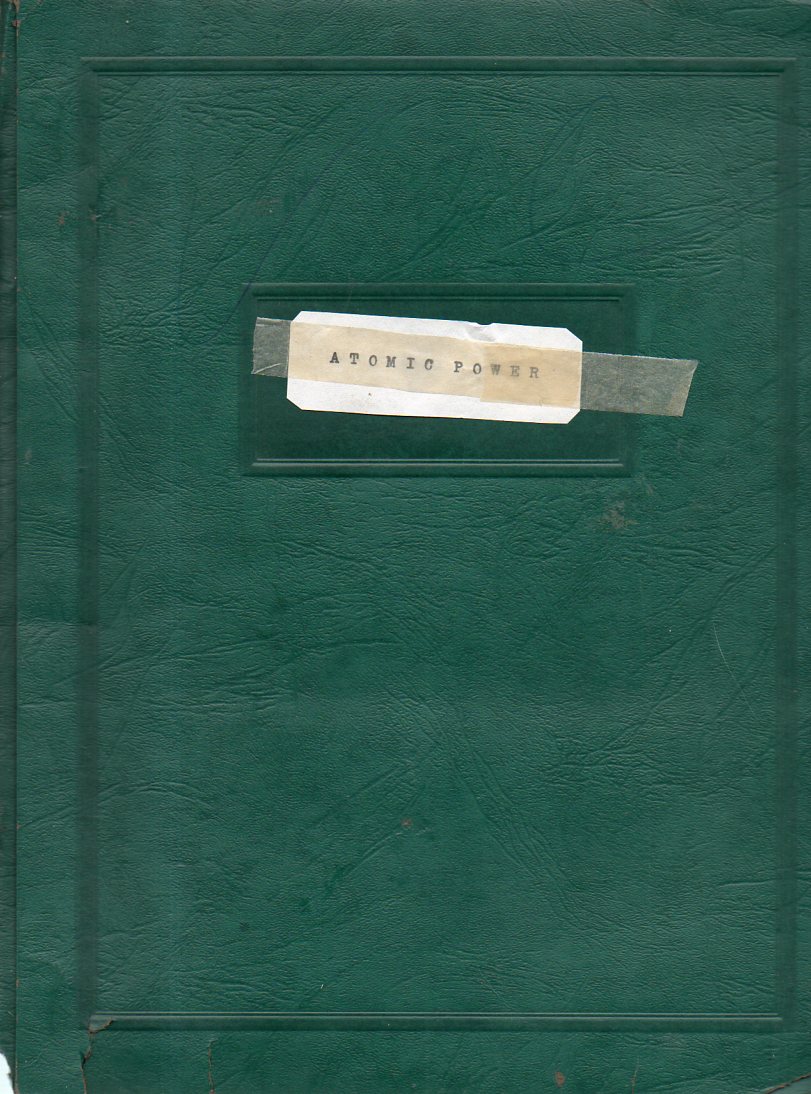
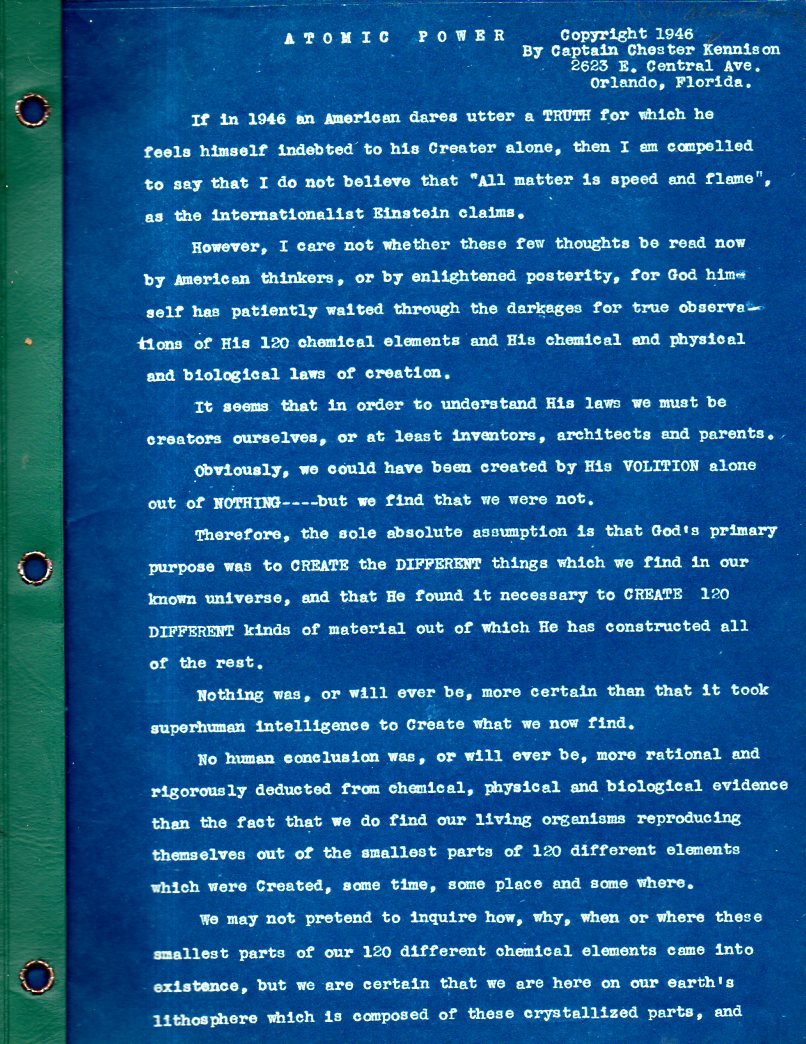
    About two miles from my house stands a sign for a housing development called “Solar-Vista”, and right next to it is the street sign, which is “Shadow Valley Drive”–somewhat ironic, I’d say. That’s what came to mind when I saw the cover of this self-published screed atomic power called Atomic Power–it just struck me as as little M. Hulot-ish to have the typed piece of paper attached with band adhesive tape to the cover of the missive. That, and the title strip has fallen off.  It seems perfect, in its own, odd, way.


    Tomic power adhesive tape _1_484


    Here’s the first page of the work–I have one of the copies that were submitted to the Copyright Office and then sent over to the Library of Congress, and after decades was deaccessioned, and then came to me.  The author tried tro make some sort of point, but it is lost on me, though I didn’t make it but only two pages into the 24-page blueprinted work.  (And yes, “Scotch Tape” is a couple of decades older than atomic power.)


    Tomic power adhesive tape _1_487


  • The Dawn of the Robots

    JF Ptak Science Books   Quick Post 

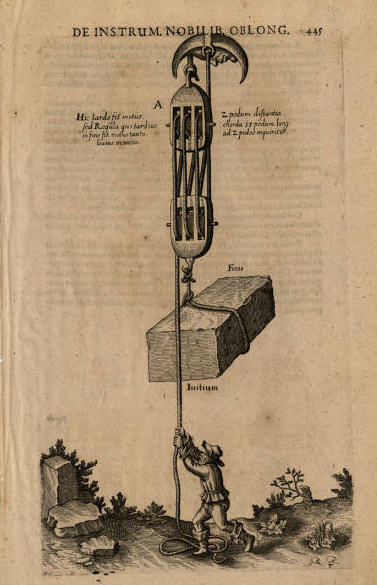
    Well, this is not anywhere near the first image of a pulley, not anywhere close–I don’t even know when that might have appeared in a manuscript in the 9th century or whatever–but it is certainly a very attractive gang of pulleys.  It occurs in Robert Fludd’s (1574-1637), Utriusque Cosmi . . . Historia (1617), and in it I see Hero/Heron of Alexandria (10-70 ACE), who I always associate with the pulley, and of course with his famous inventions, which in some respect are early forms of ‘robots”. In this image, the pulley-robot of some complex means is operating the “drive element” and producing (still) the necessary energy to produce change. And–this is a fine image.

    Fludd pulley

    [Source:  University of Utah,http://content.lib.utah.edu/cdm/compoundobject/collection/naturae/id/1587/show/1265/rec/1]


  • A High-Renaissance “Tank”, 1623

    JF Ptak Science Books   Post 2623

    A Possible-reality from the visionary Robert Fludd

    Fludd tank e

    [Source:  University of Utah, http://content.lib.utah.edu/cdm/compoundobject/collection/naturae/id/1587/show/1265/rec/1]


    Fludd
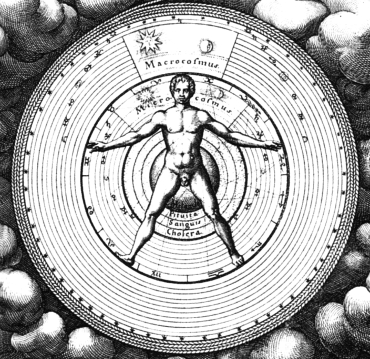
    Robert Fludd’s (1574-1637), title page for his  Utriusque Cosmi . . . Historia (1617) features this complicated astrological wheel with a Vitruvian-man-like image at the vortex of the imaged pulls and pushes of the cosmos.  In addition to everything else, real and imagined, Rosicrucianism and astrology and puffy-birds, Fludd, who was  an English physician, delved deeply into the real stuff of the world in this book in addition to all of the other make-believe–optics, the musical intervals, perspective drawing, hydraulic engineering, construction of lifting machines, military engineering and many other interesting, physical science topics.  But this drawing, right there on the title page, reveals Fludd’s real interests and shows what governs what he does.  Everything else, the math and and the physics, services this need.  Of course the image is beautiful, which is why it is here, but it is also a deeply personal, exploitative, cover-all for the things that Fludd wanted to find. 

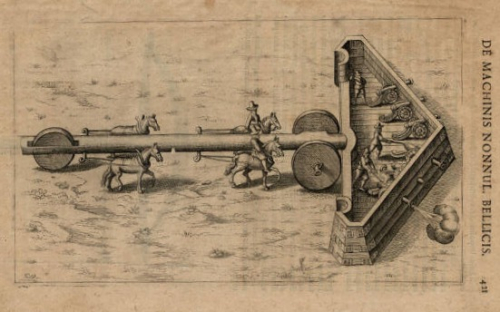
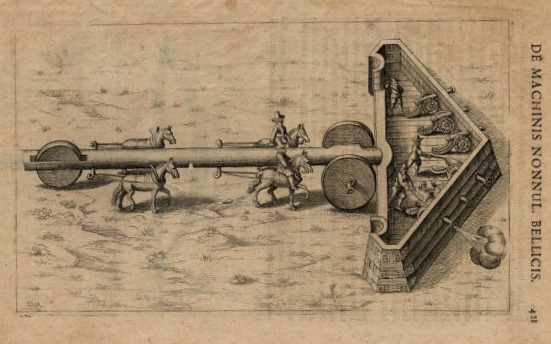
    But there is a lot of other interesting, and potentially-applicable, real-world stuff and proposals in the book as we can see in the exotic and wonder-full image of the high-Renaissance “tank” that leads this short post.  I’m not so sure that this thing would actually move–I assume that it has wheels or something in the front part to help it move along, otherwise that weapon would go nowhere.  Even if it was assumed to be mobile, I wonder about whether four horses is enough to move along something that size plus six canon and at least three men.  Even with 5’/6′ wheels, it seems not so likely that this would roll across a battlefield.  All that said, this did exist in the realm of possibility, and Fludd had much else.  Since I’ve been doing research on the first battlefield appearances of tanks, this one particular image caught my attention.  


  • Understating an Understatement: One Week Over Germany, March/April, 1945

    JF Ptak Science Books   Post 2622 Leafletone week of bombing469

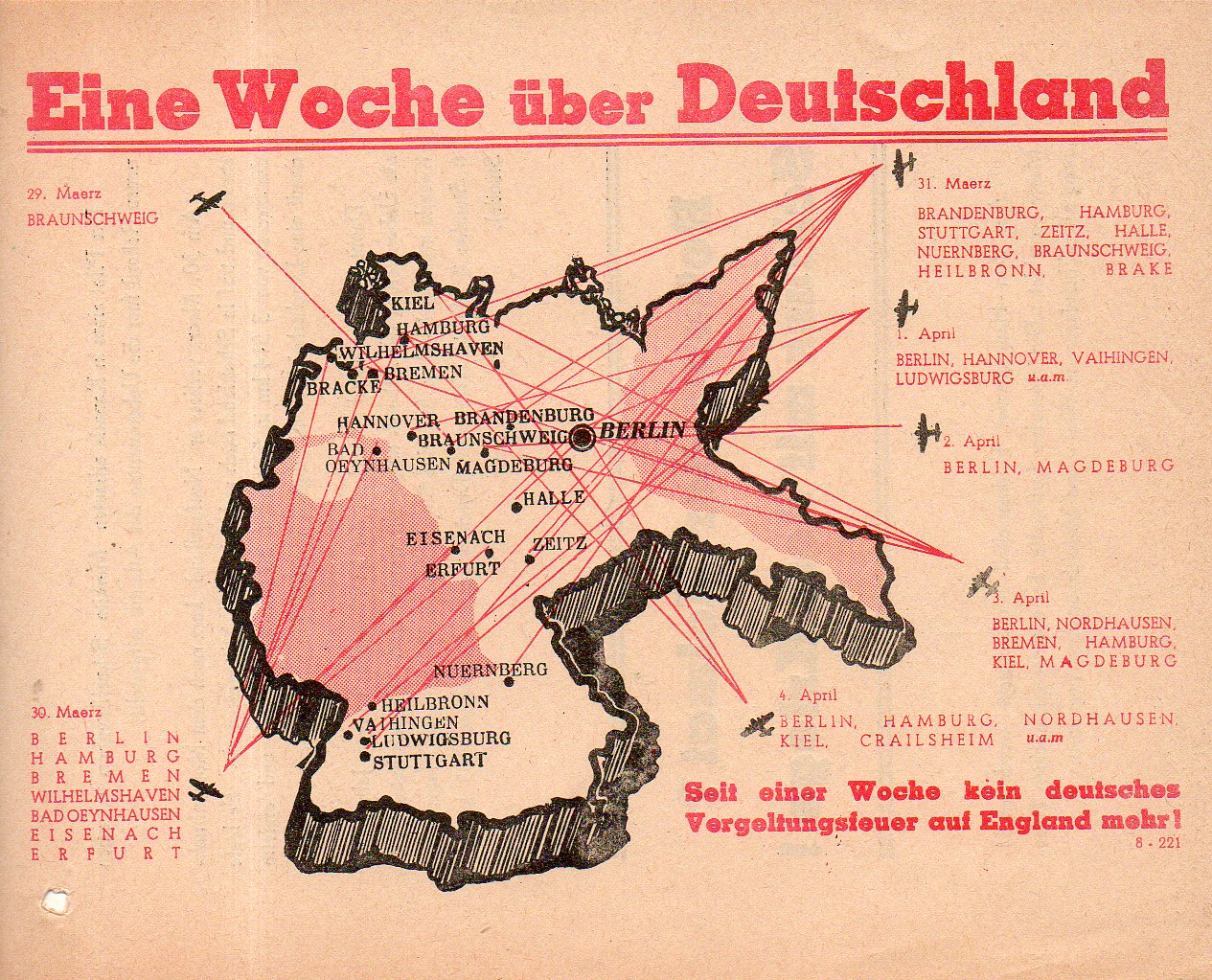
    Here’s a map the meaning of which was destined to be understood by even the most casual observer. It appeared on a propaganda leaflet distributed by the U.S. 8th Army and shows the Allied bombing campaign against Germany from 29 March to 4 April, 1945.  (Most of the action depicted here looks to be the U.S.A.A.F., though I haven’t gone through each and every bombing location.  I do know that in the last two weeks of the war that the Soviets used about as much bomb tonnage on Germany as was used by the Allies over the preceding two years.) The red lines show the destination of bombing raids, of which there are many for a seven day period, and for my reckoning this is not a complete listing.

    Perhaps this leaflet would have been even more provocative if it represented the number of planes on average that would participate in one of these missions, which would of course would be in general hundreds of aircraft. For example, for the raid on Hamburg on March 30 there were over 530 aircraft involved; and for the same location on the next day, another 469. Also there were another five raids on Hamburg over the week following this one depicted, including one on April 8/9 with 440 aircraft.  Also this week of raids takes place right after and before other series of massive raids, including a mission over Berlin on February 3 1945 involving 1000 B-17s and 575 Mustangs, followed 11 days later by the bombing of Dresden, which was followed three weeks later by incredible bombing of Tokyo. And later, on April 14, more than 2200 aircraft would take to the air.  As impressive and scary as this leaflet looks, it doesn’t really begin to approximate the amount of damage inflicted on Germany from the air. (One last example–the large raid on Crailsheim, where I happen to have been born, destroyed about 80% of the small city.)

    The title Eine Woch ueber Deutschland (“One Week Over Germany”) must have been disturbing for a soldier to read–particularly with the corollary at bottom, which stated that there was no German response so far as bombing England in retaliation was concerned.  By this point, the German soldier knew the situation was FUBAR, though I do not know if there is a good German translation for that.  


  • “Two Disastrous Failures” for the German Army, January 1945

    JF Ptak Science Books   Quick Post

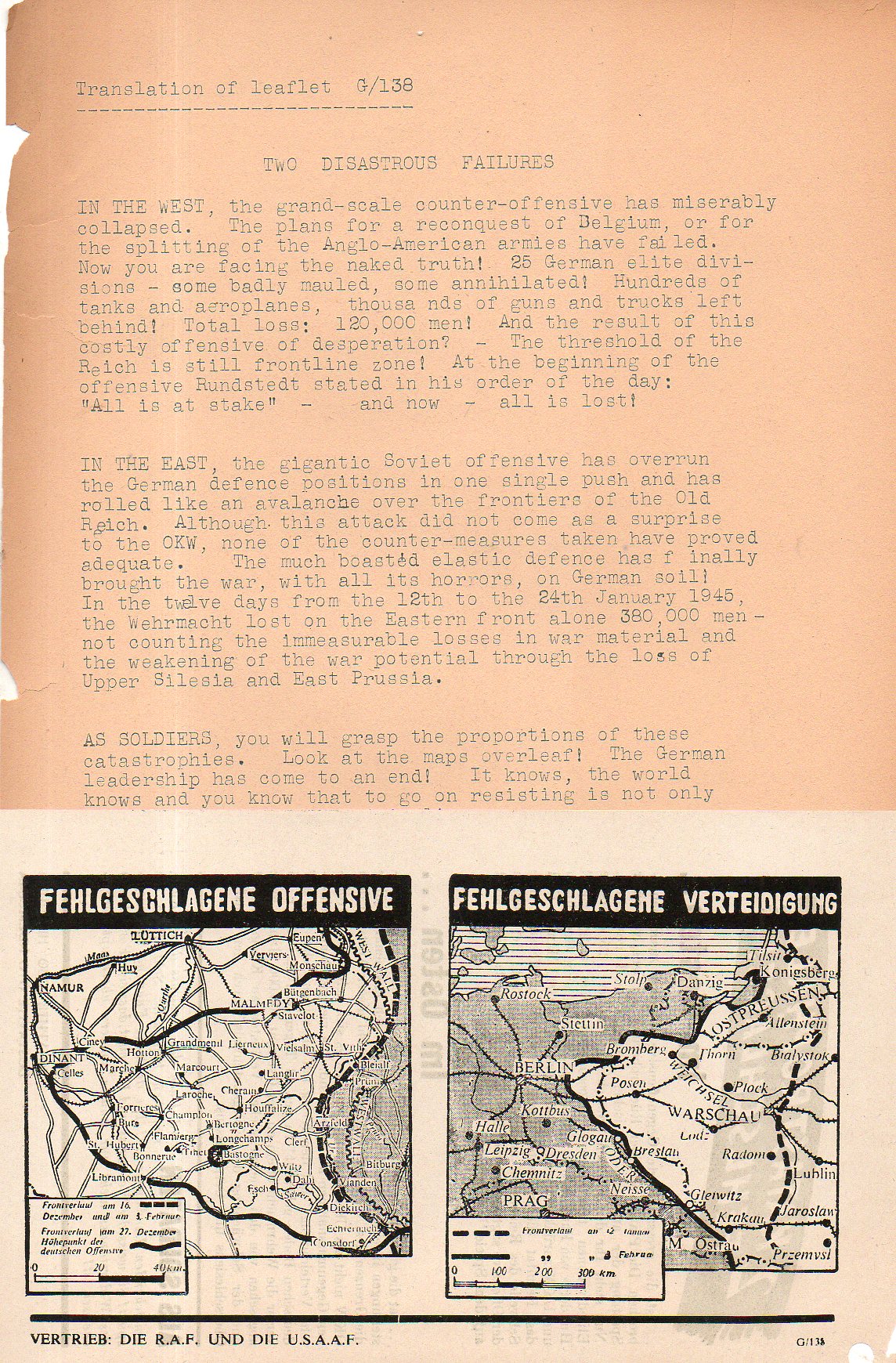
    This leaflet was dropped on German forces by the R.A.F. and the U.S.A.A.F. soon after the breakout of the Battle of the Bulge/Ardennes in the end of January 1945, which is one of the two failures that this propaganda sheet screamed about. It is a little odd though that in the map it would show the German offensive at its worst for the U.S. troops, with the bulge extending far west and Bastogne being surrounded. Yet the leaflet told of the German losses of its failed offensive (“Operation Watch on the Rhine”) though it did not show the progress of the month-long battle on the map, which should have shown the battle line back to its more-or-less original position by 25 January.  In describing the catastrophe of the German position in the east (leading with the loss of “380,000 soldiers”) the date of 24 January is mentioned, which supports the late January estimate for a printing date. This was of course the Vistula-Oder Offensive. which saw the Soviet Army advance more than 300 miles in a month, right to the Oder, only 40-odd miles from Berlin.  In that campaign the German Army Group A was just about killed–of the 450,000 soldiers in retreat along this long and disastrous front during the month of January, the overwhelming majority were casualties, including nearly 300,000 killed. The wounded and other survivors became POWs.  The bottom line of course was that the winter of 1945 for the German soldier was bitter and deadly, and was leading nowhere except defeat–there was no doubt what lay ahead after seeing that map of the Eastern Front. 

    Leaflet two disasterous failures468