A Daily History of Holes, Dots, Lines, Science, History, Math, Physics, Art, the Unintentional Absurd, Architecture, Maps, Data Visualization, Blank and Missing Things, and so on. |1.6 million words, 7500 images, 4.9 million hits| Press & appearances in The Times, Le Figaro, Mensa, The Economist, The Guardian, Discovery News, Slate, Le Monde, Sci American Blogs, Le Pont, and many other places… 5000+ total posts since 2008.

Author: JF Ptak

  • A High-Renaissance “Tank”, 1623

    JF Ptak Science Books   Post 2623

    A Possible-reality from the visionary Robert Fludd

    Fludd tank e

    [Source:  University of Utah, http://content.lib.utah.edu/cdm/compoundobject/collection/naturae/id/1587/show/1265/rec/1]


    Fludd
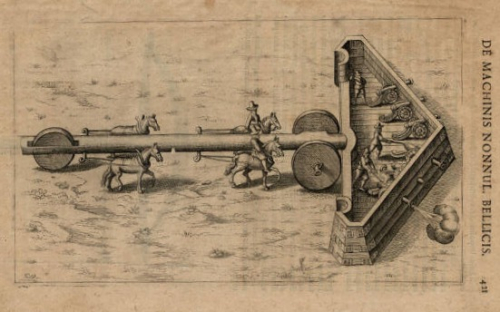
    Robert Fludd’s (1574-1637), title page for his  Utriusque Cosmi . . . Historia (1617) features this complicated astrological wheel with a Vitruvian-man-like image at the vortex of the imaged pulls and pushes of the cosmos.  In addition to everything else, real and imagined, Rosicrucianism and astrology and puffy-birds, Fludd, who was  an English physician, delved deeply into the real stuff of the world in this book in addition to all of the other make-believe–optics, the musical intervals, perspective drawing, hydraulic engineering, construction of lifting machines, military engineering and many other interesting, physical science topics.  But this drawing, right there on the title page, reveals Fludd’s real interests and shows what governs what he does.  Everything else, the math and and the physics, services this need.  Of course the image is beautiful, which is why it is here, but it is also a deeply personal, exploitative, cover-all for the things that Fludd wanted to find. 

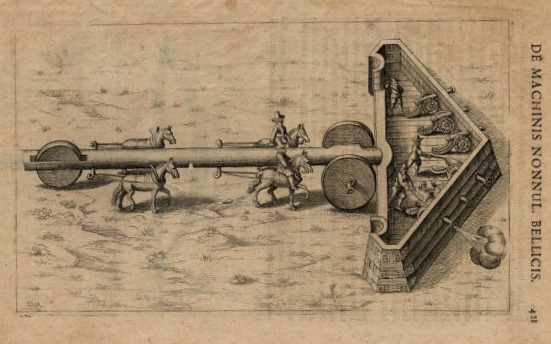
    But there is a lot of other interesting, and potentially-applicable, real-world stuff and proposals in the book as we can see in the exotic and wonder-full image of the high-Renaissance “tank” that leads this short post.  I’m not so sure that this thing would actually move–I assume that it has wheels or something in the front part to help it move along, otherwise that weapon would go nowhere.  Even if it was assumed to be mobile, I wonder about whether four horses is enough to move along something that size plus six canon and at least three men.  Even with 5’/6′ wheels, it seems not so likely that this would roll across a battlefield.  All that said, this did exist in the realm of possibility, and Fludd had much else.  Since I’ve been doing research on the first battlefield appearances of tanks, this one particular image caught my attention.  


  • Understating an Understatement: One Week Over Germany, March/April, 1945

    JF Ptak Science Books   Post 2622 Leafletone week of bombing469

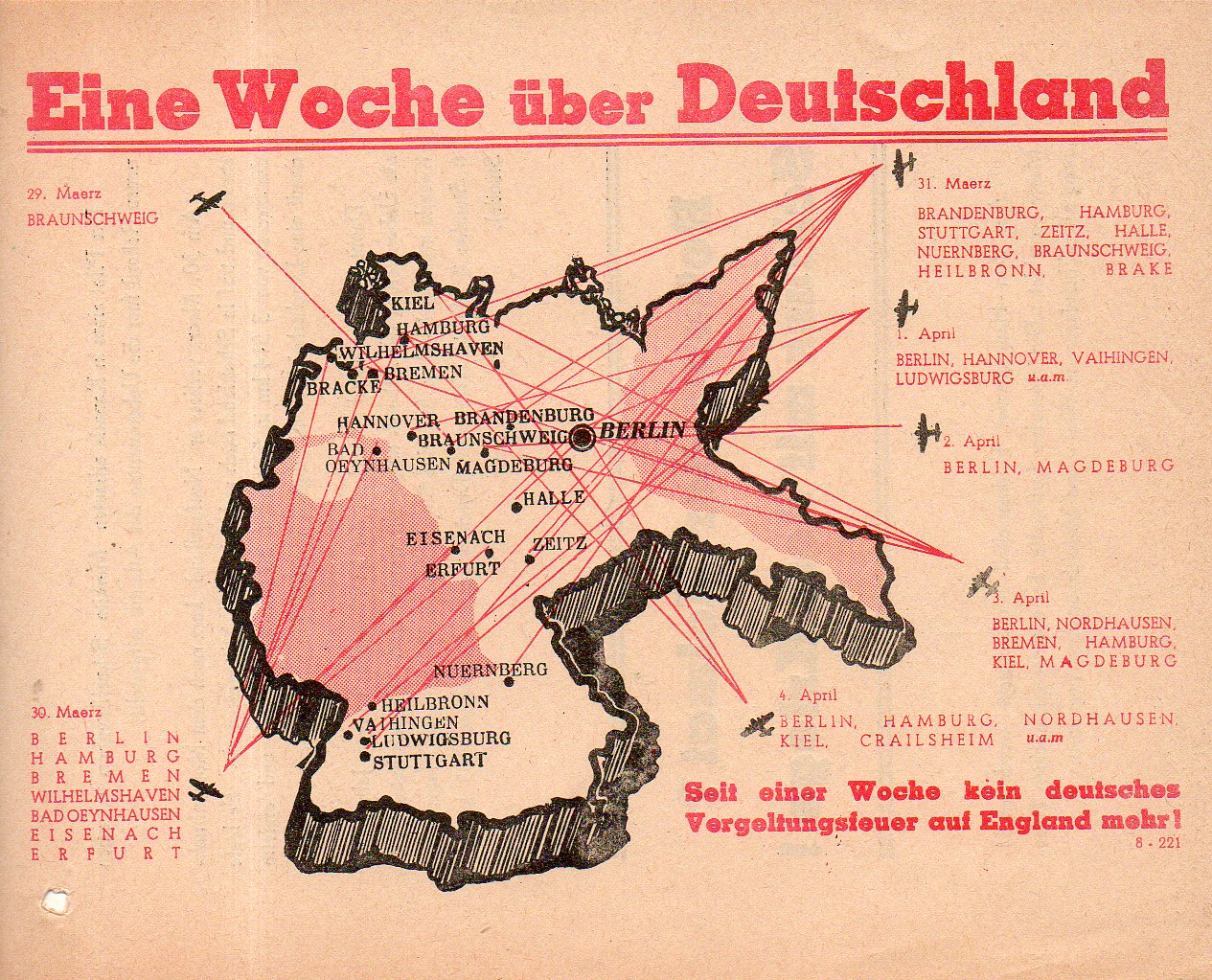
    Here’s a map the meaning of which was destined to be understood by even the most casual observer. It appeared on a propaganda leaflet distributed by the U.S. 8th Army and shows the Allied bombing campaign against Germany from 29 March to 4 April, 1945.  (Most of the action depicted here looks to be the U.S.A.A.F., though I haven’t gone through each and every bombing location.  I do know that in the last two weeks of the war that the Soviets used about as much bomb tonnage on Germany as was used by the Allies over the preceding two years.) The red lines show the destination of bombing raids, of which there are many for a seven day period, and for my reckoning this is not a complete listing.

    Perhaps this leaflet would have been even more provocative if it represented the number of planes on average that would participate in one of these missions, which would of course would be in general hundreds of aircraft. For example, for the raid on Hamburg on March 30 there were over 530 aircraft involved; and for the same location on the next day, another 469. Also there were another five raids on Hamburg over the week following this one depicted, including one on April 8/9 with 440 aircraft.  Also this week of raids takes place right after and before other series of massive raids, including a mission over Berlin on February 3 1945 involving 1000 B-17s and 575 Mustangs, followed 11 days later by the bombing of Dresden, which was followed three weeks later by incredible bombing of Tokyo. And later, on April 14, more than 2200 aircraft would take to the air.  As impressive and scary as this leaflet looks, it doesn’t really begin to approximate the amount of damage inflicted on Germany from the air. (One last example–the large raid on Crailsheim, where I happen to have been born, destroyed about 80% of the small city.)

    The title Eine Woch ueber Deutschland (“One Week Over Germany”) must have been disturbing for a soldier to read–particularly with the corollary at bottom, which stated that there was no German response so far as bombing England in retaliation was concerned.  By this point, the German soldier knew the situation was FUBAR, though I do not know if there is a good German translation for that.  


  • “Two Disastrous Failures” for the German Army, January 1945

    JF Ptak Science Books   Quick Post

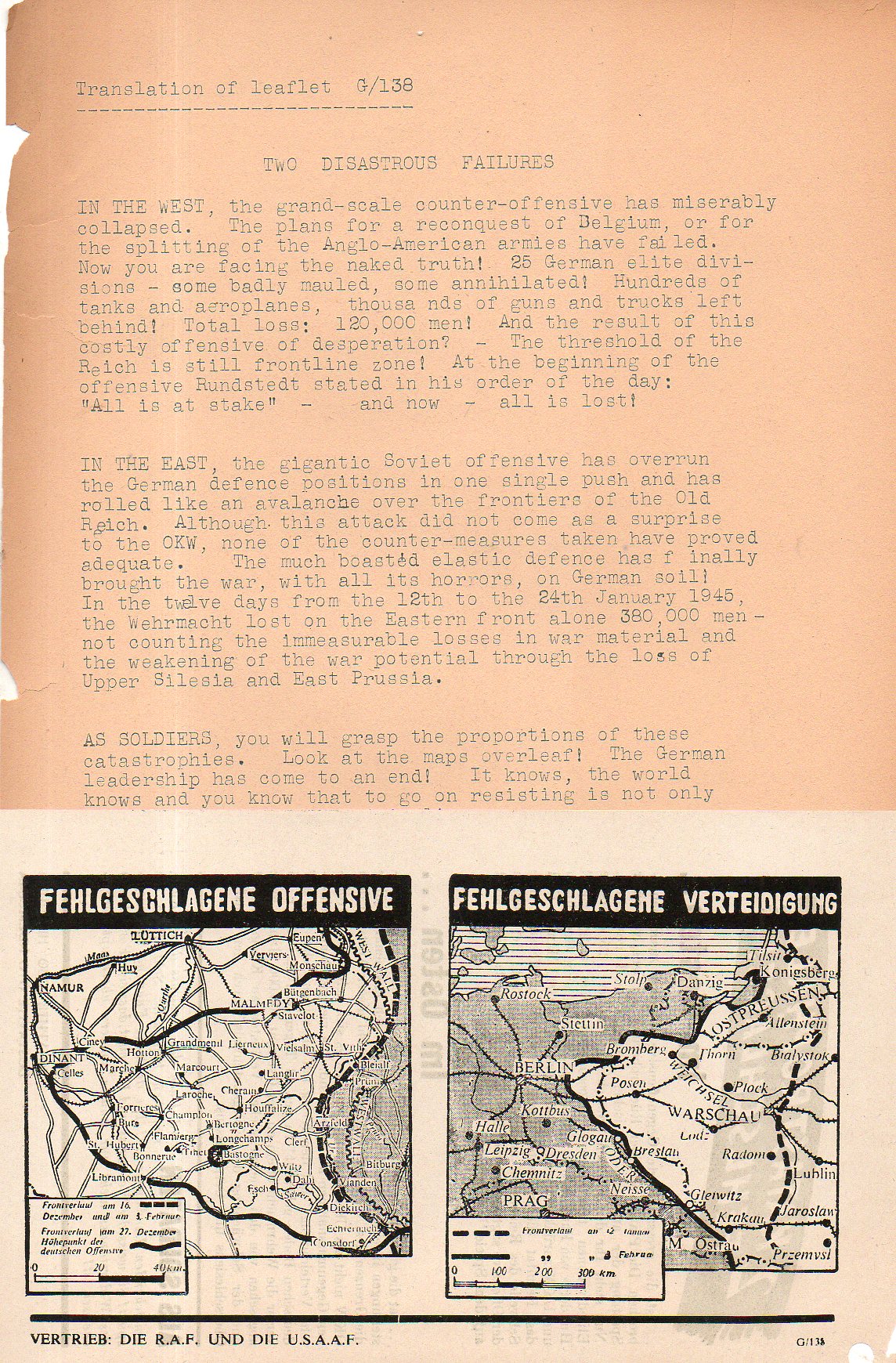
    This leaflet was dropped on German forces by the R.A.F. and the U.S.A.A.F. soon after the breakout of the Battle of the Bulge/Ardennes in the end of January 1945, which is one of the two failures that this propaganda sheet screamed about. It is a little odd though that in the map it would show the German offensive at its worst for the U.S. troops, with the bulge extending far west and Bastogne being surrounded. Yet the leaflet told of the German losses of its failed offensive (“Operation Watch on the Rhine”) though it did not show the progress of the month-long battle on the map, which should have shown the battle line back to its more-or-less original position by 25 January.  In describing the catastrophe of the German position in the east (leading with the loss of “380,000 soldiers”) the date of 24 January is mentioned, which supports the late January estimate for a printing date. This was of course the Vistula-Oder Offensive. which saw the Soviet Army advance more than 300 miles in a month, right to the Oder, only 40-odd miles from Berlin.  In that campaign the German Army Group A was just about killed–of the 450,000 soldiers in retreat along this long and disastrous front during the month of January, the overwhelming majority were casualties, including nearly 300,000 killed. The wounded and other survivors became POWs.  The bottom line of course was that the winter of 1945 for the German soldier was bitter and deadly, and was leading nowhere except defeat–there was no doubt what lay ahead after seeing that map of the Eastern Front. 

    Leaflet two disasterous failures468


  • The Modern Rancher: Bombing Sheep from Planes (1917)

    JF Ptak Science Books  Quick Post

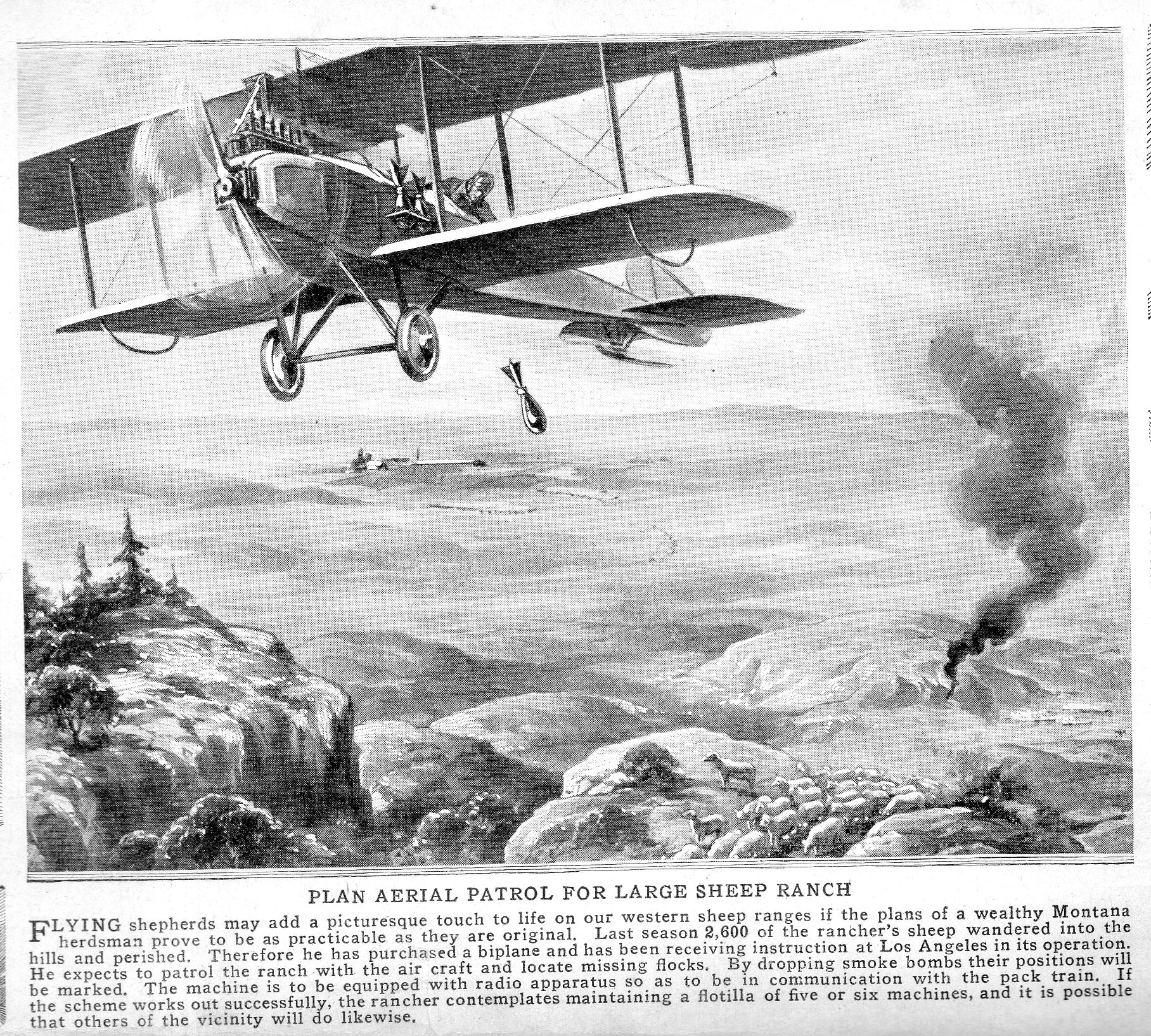
    I’ve made a number of posts to this blog on the history of aerial bombing, and throughout most of the early history of bombing (say up to the end of WWI) the vast majority of the uses of dropping bombs from airships and airplanes has been for killing people and destroying property and infrastructure. There has been an occasional stray article that I’ve found about delivering mail by non-exploding bombs–this to save time and fuel in landing/taking off (there have been other plans to deliver mail by rocket, but that is another story)–but the other uses of dropping b on things from the sky have been, shall we say, “limited”.  And then today I’ve stumbled upon this one–shepherding by dropping bombs near sheep.  This story, found in the pages of the June, 1917 issue of Popular Mechanics, details the plans of a wealthy Montana rancher to patrol his flock using aeroplanes and bombs. It is said in the caption that if the initial tests with the practice are successful that he may use six such planes at his ranch.  I’m looking for metaphors for this story, but the only thing I’m coming up with is adding a lot of exclamation points and underlinings to words like “leads” and “makes” in Psalm 23.

    Bombing sheep458

    ·Posted by :

    ·in:

    —

  • Not-Usual WWI Photos: Saved Sailors, Crossbows, Bike Corps, and a Long Line in the Snow

    JF Ptak Science Books   Quick Post

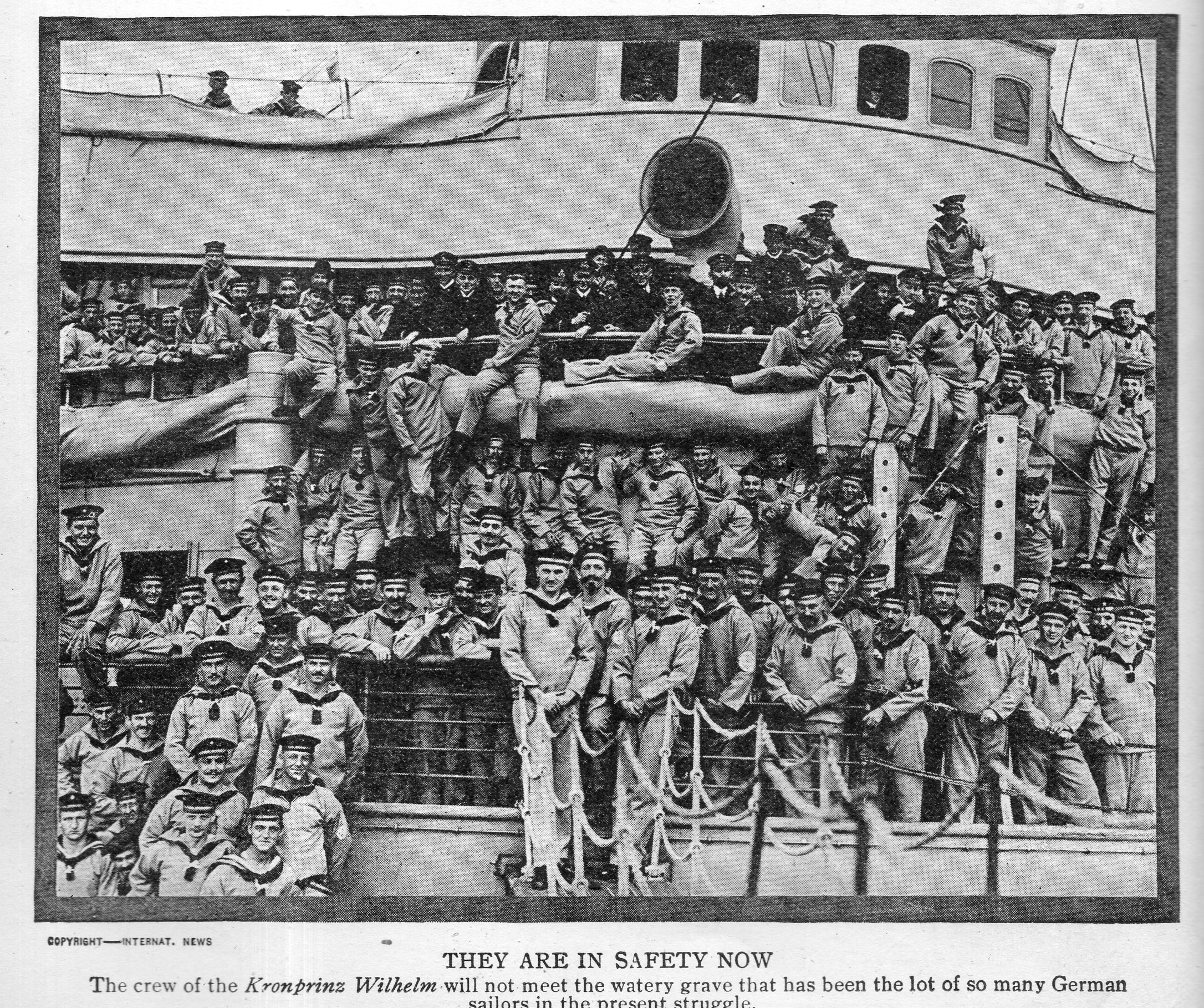
     These four photos originate in one short article in the June, 1915 issue of Technical World Magazine, each a big story in themselves, and in each, in every face, another long subset of big stories.  For example, the photo of the crew of the commerce raider Kronprinz Wilhelm, looking very relieved not to be sick or dead, internees in Virginia (and later POWs in Georgia) after a series of setbacks following a devastating campaign against the Allies at sea. 

    Wwi sailors german rescued453


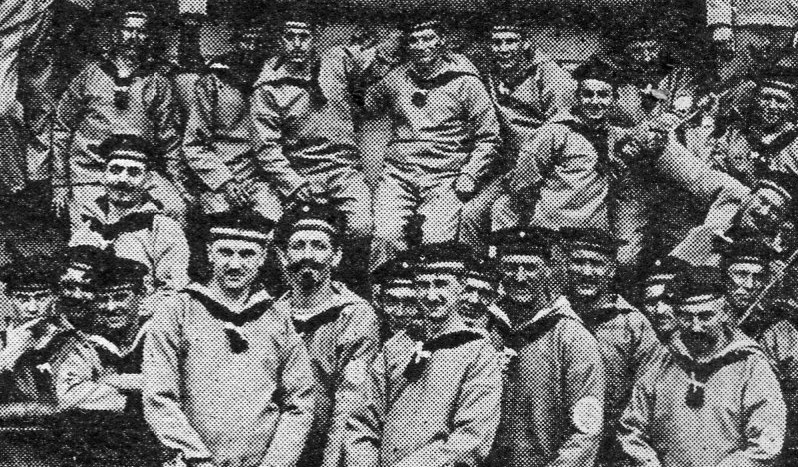
    And a detail from the image: 

    Wwi sailors german rescued detail 453


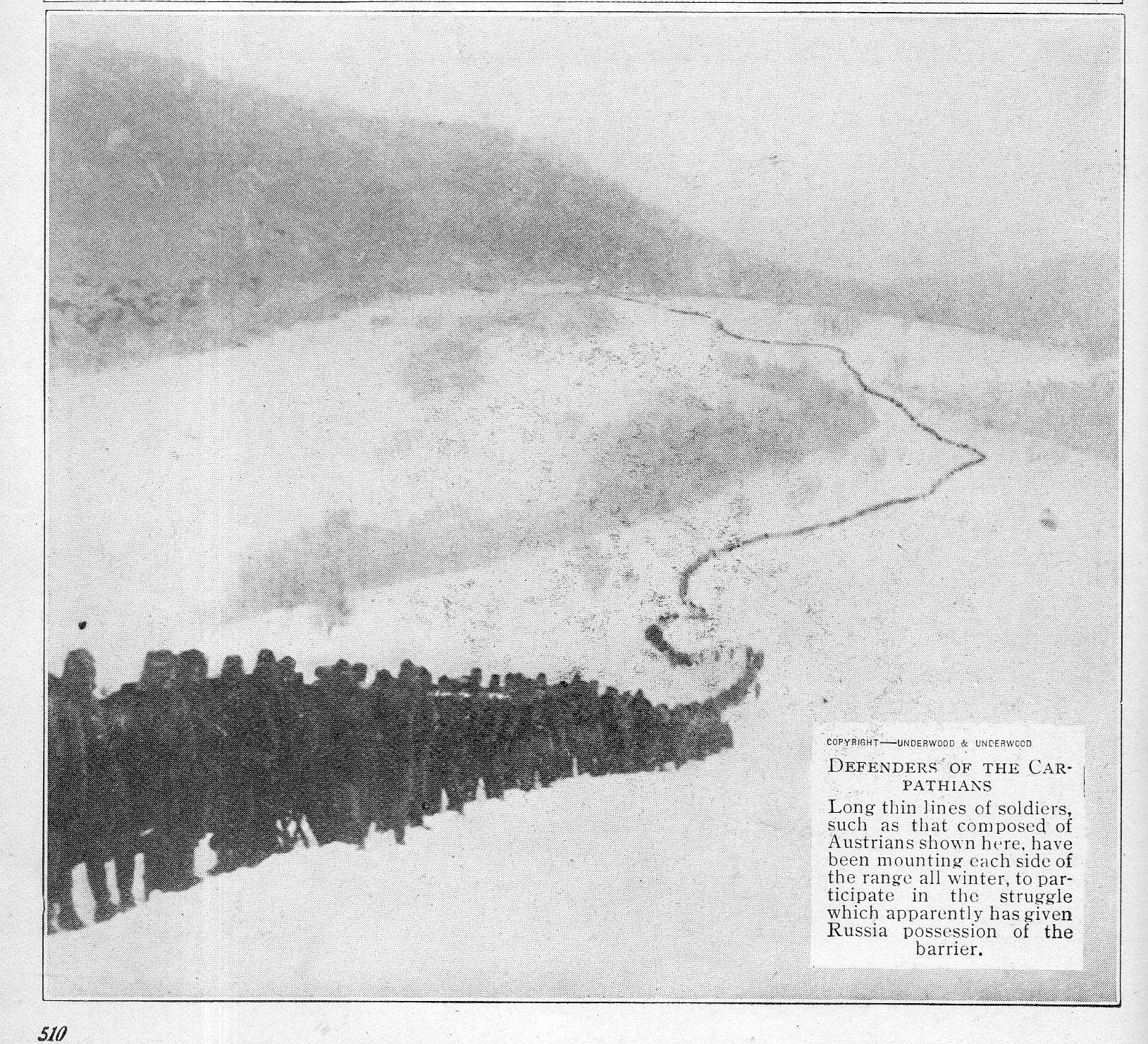
    And this one, this one looks like nothing but cold, a long narrow ribbon of black winding its way through a few miles of valley, from one mountain to the next, pushing through the snow to meet some sort of fate.  Fighting in the cold, in the snow, in the wind, in the dark, without proper clothing, and sometimes without food, is unimaginable to me. The campaign in the Carpathians between Austria-Hungary and Russia in the winter of 1915 was the beginning of the idea of Total War in WWI, and the first major campaign in the Far Eastern Front that would eventually lead to massive chaos and some 10 million casualties. And this is what part of that looked like–a long line of soldiers, on the move, not well-equipped, to fight in massively hostile wintry conditions.  


    Wwi long line in snow456


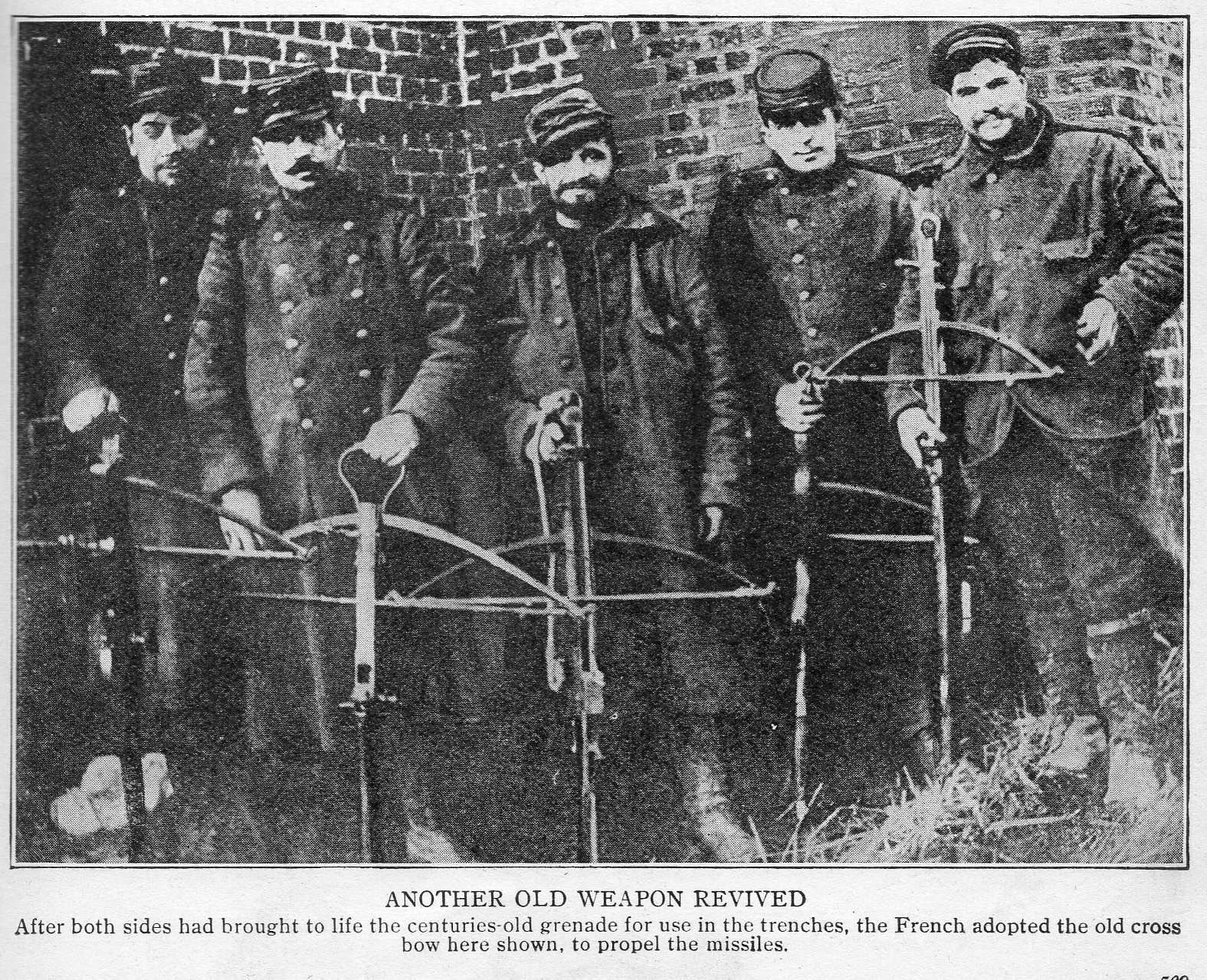
     And these soldiers, with their crossbows, using them evidently to launch grenades (two antiquarian tools of war, both still very effective): 

    Wwi crossbow454


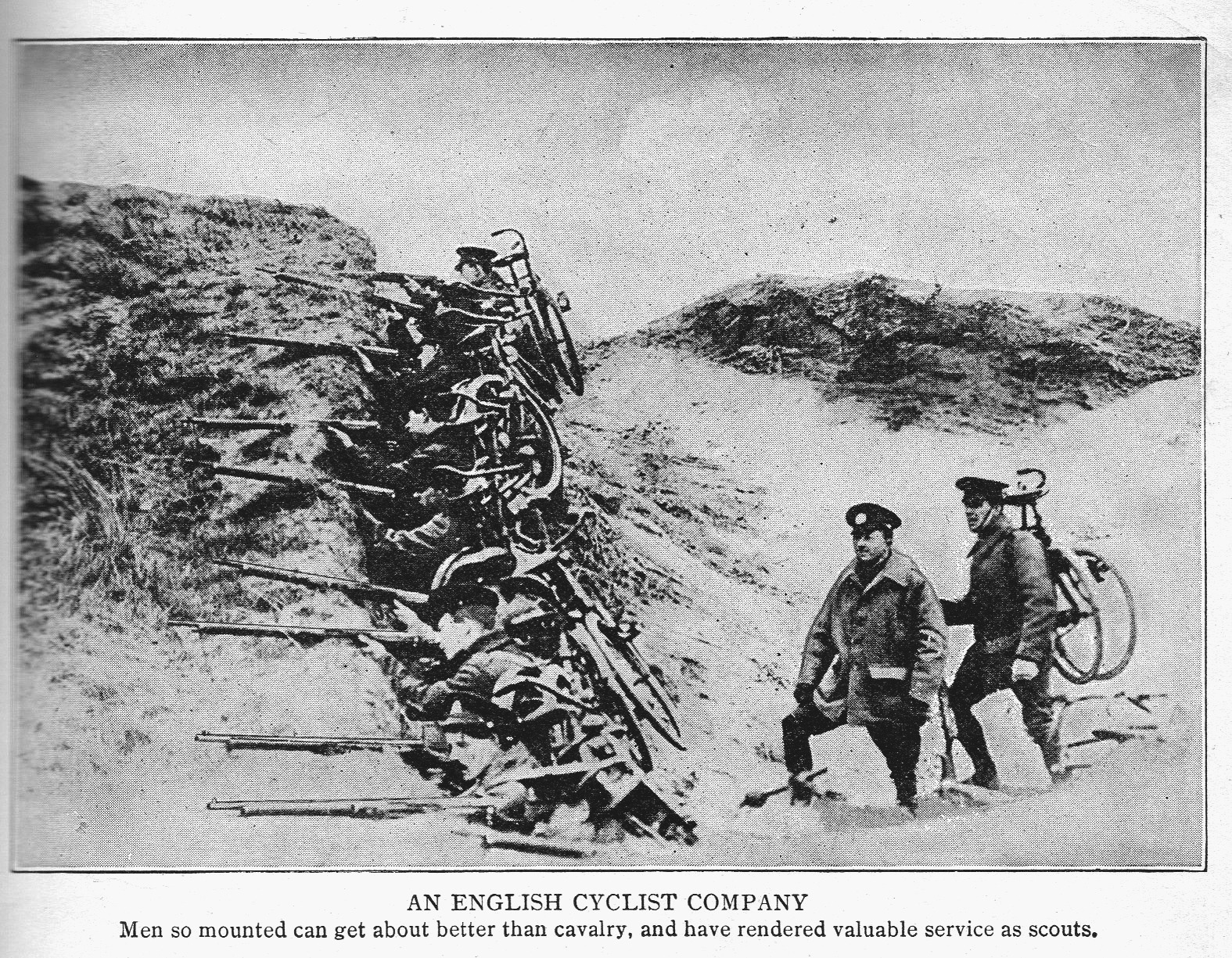
     And of course, the bike corps–I’ve never really understood this idea. Elsewhere on the blog I’ve written two posts relating to soldiers and bikes (one of whom was a bike corps airborne!) and it all just seems too heavy and cumbersome to be worth the effort of struggling with the potentially life-threatening bike.  And let’s face it–these bikes are not specialty light-weight bikes…

    Wwi bike corps455


    ·Posted by :

    ·in:


  • WWI Aircraft Identification Poster, 1915

    JF Ptak Science Books   Quick Post

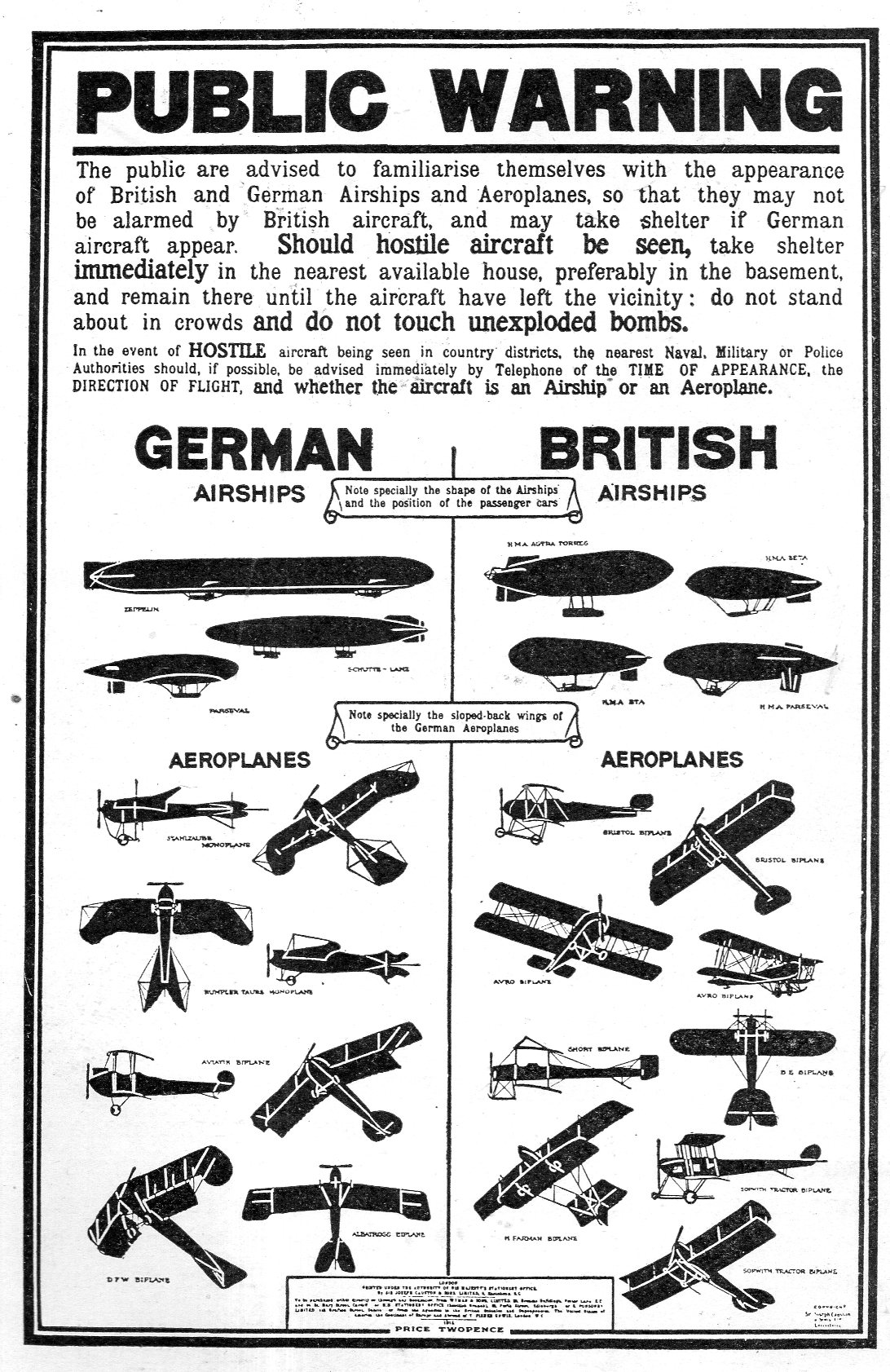
    “Public Warning” was a large, billboard-sized poster that appeared throughout England, posted in the first year of the war, appeared in Technical World Magazine in May 1915. Outside of delivering some good, solid information on behavior and bombing it supplied German/British aircraft silhouettes to help people distinguish between friendly/enemy aircraft, meaning that they could take cover and report the actions of enemy aircraft (valuable information in pre-RADAR days) and also not fret with British aircraft sightings. 

    Wwi poster public warning457

     The National Archives (U.K., http://www.nationalarchives.gov.uk/pathways/firstworldwar/transcripts/spotlights/public_warning.htm) transcribes the poster, identifying the aircraft (just in case you can’t read the text on the poster):

    ·Posted by :

    ·in:

    —

  • The Italian “Flying Cucumber”, 1915

    JF Ptak Science Books   Quick Post

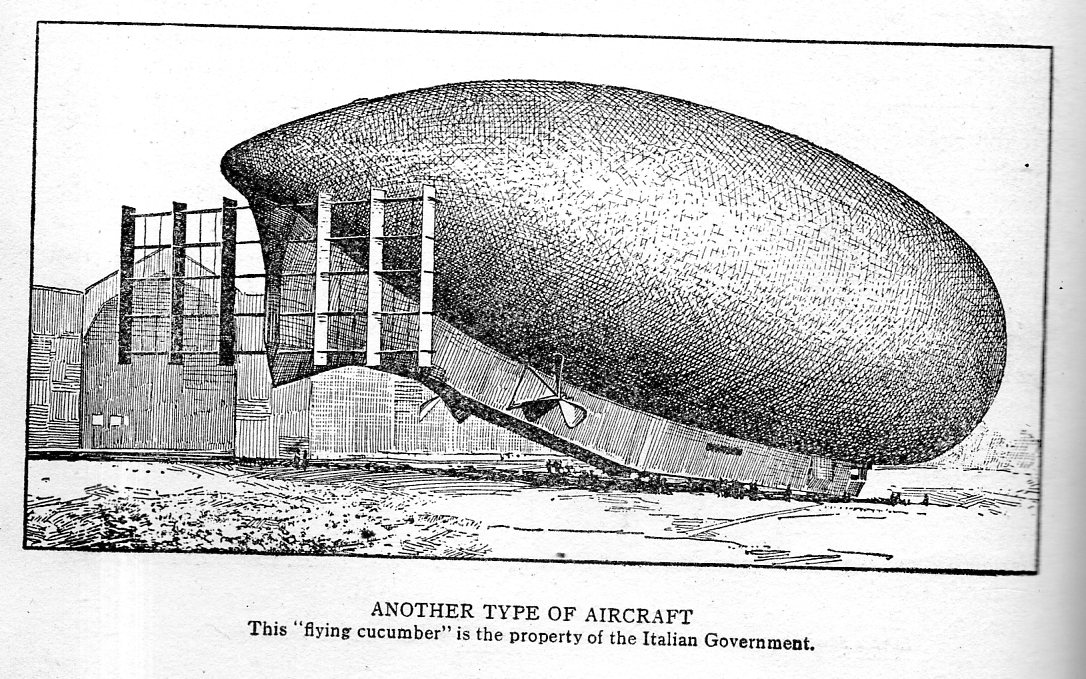
    Here’s an unusual (semi-rigid) airship designed by Enrico Forlanini (13 December 1848 – 9 October 1930, an Italian engineer, inventor and aeronautical pioneer), appearing in Technical World Magazine for May, 1915, and bearing the fetching caption “Another Type of Aircraft”.  It certainly was different, referred to here as the “flying cucumber”, though I doubt the Italians thought that.  In any even the airship went down in 1914 and was not a factor in the war.  

    Wwi aviati cucumber452


  • Finding Sameness, 1919

    JF Ptak Science Books   Quick Post

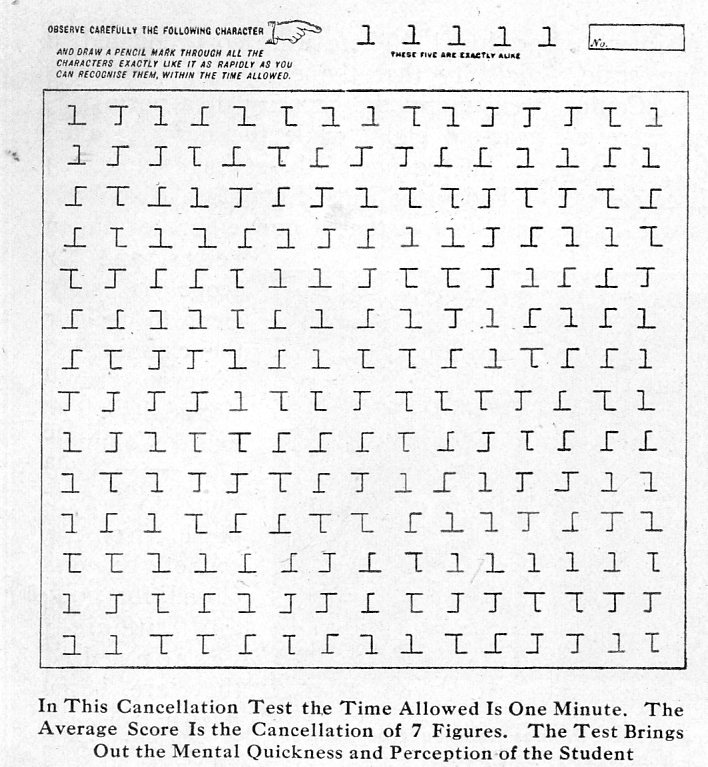
    I just found this unusual image in the page of the scarce journal Illustrated World for June 1919.  At first glance it attracted my attention for the design, and then I thought it was utilizing a Sumerian bill of sale–it turns out to be part of an intelligence test.  The subject is asked to see how many of the figures pointed out in the top line (and repeated five times) are repeated in the diagram. This is a lot easier than what I thought the test was, which was looking for five-times-in-a-row repeating symbols–after finding a few symbols repeated four times in a row and not five, I read the directions, and the test was much simpler, esp since someone had already gone through and marked out a bunch.

    IQ test451

    The cover story for this month was “electrocuting Whales”–and we don’t need to go there. 


    ·Posted by :

    ·in:

    —

  • Missing the Sounds of War for the Din of Traffic (1917)

    JF Ptak Science Books  Quick Post

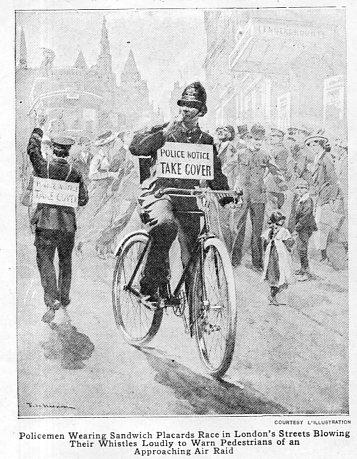
    The idea of bombing people from the sky was less than a decade old at the start of WWI, though the  idea of aerial strategic bombing took off quickly beginning in 1914. When this image was published in Popular Mechanics in October 1917 (page 662), the bombing of London by aircraft and Zeppelin had been well established. In order to effect more efficient evacuation and coverage, and in order to be heard over the considerable amount of traffic noise in London, the warning signals for a possible attack were sounded in addition to three explosives shot into the air in 15-second intervals, after which the police were dispersed into the streets with whistles and placards, trying to warn people above the sounds of the city.  It is an interesting peep into a small piece of time in a moment of possible terror. 

    Bombing london wwi443

    ·Posted by :

    ·in:


  • Visualizing Data: the Texas Newspaper Frontier in 1880

    JF Ptak Science Books 

    Dataviz texas newspaper  detail


    Dataviz texas newspaper  tail

    [This expandable image is from the blog’s copy of the publication–full text can be found at the Internet Archive, here: https://archive.org/details/cu31924083814453]

    The idea of the frontier in American history has been around for quite some time, made famous and mostly-invented (and closed) by Frederick Jackson Turner in 1893, and expanded, imagined, enticed, magnified, micro-analyzed, and  generally messed with ever since.  There have been all sorts of frontiers introduced into the study of the birth, expansion and filling-up of this country, from the very earliest colonial periods of Indian frontiers, “far-western” river frontiers of the Connecticut, Delaware, Hudson (!) and Susquehanna, to the Appalachian frontier of the early western reaches of the colonies, to the transportation frontier, the slavery frontier, the gold and mining frontier, the gun frontier, and so on.  

    Here’s another bit to add:  the newspaper frontier.  

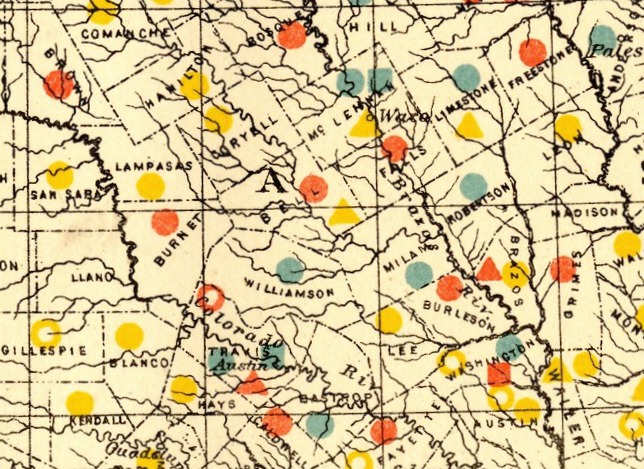
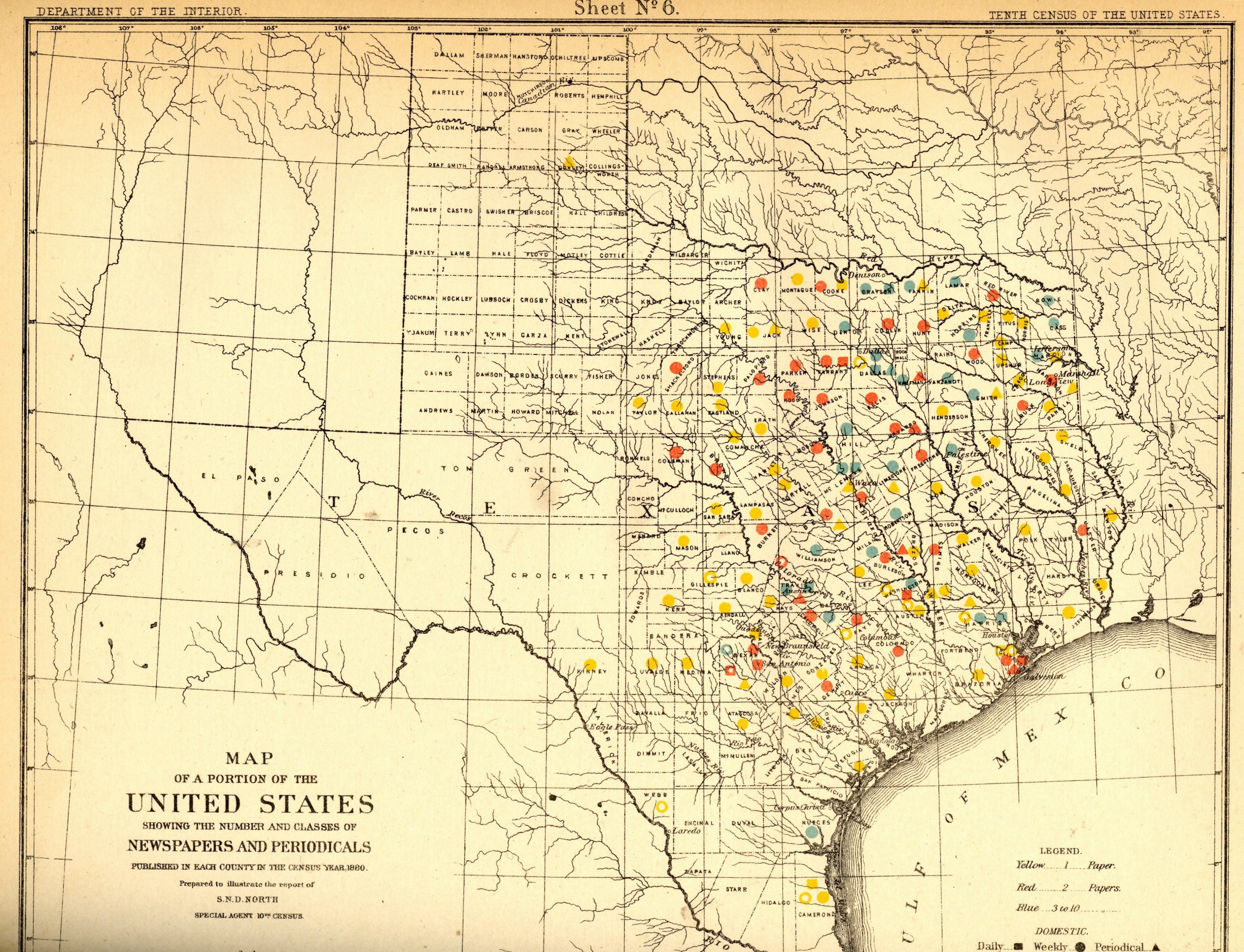
    I just happened upon a volume of the US Census of 1880, with a special report by S.N.D. North entitled History and Present Condition of the Newspaper and Periodical Press of the United States…and published in 1882.  What provoked me was the map of Texas newspapers for 1880.  It very clearly, and like no other map of its kind, delineates a fantastic line/frontier between the Texas with newspapers and the Texas without newspapers. We see very clearly that the frontier of the newspaper stops fairly abruptly (and wonderfully) at the 100th meridian, with only two newspapers in all of the rest of Texas found beyond that point (and those just barely beyond the 100th.  And it’s the 100th meridian that mostly marks the vertical middle of the country, running through North and South Dakota, Kansas, Nebraska, the Texas/Oklahoma borders, and so into Texas—if you folded this map vertically in half it folds virtually on the 100th meridian.  An odd bit, it is, half of the country and then approaching half of Texas. 

    I should report that the newspapers west of the 100th meridian were in Kinney County (population 4,440) with the Fort Clark News (established in 1880, at exactly the year of census) and Donley County (population 160, with the monthlyClarendon News and a 50-cent annual subscription rate).  The newspaper development also sort of followed the frontier fort development, almos tall of which (but four) were east of the 100th. 

    Of course the population and easier-natural-resources are located east of this point, I know, but it is still quite a jolt to see the line of newspapers get drawn in the sand so vividly.  There isn’t anything else quite like this so far as the newspapers go, except, a little, for Florida, where the line gets drawn north and south, splitting the peninsula roughly in half, the southern part holding only five counties at this point..  But it is a much more robust image for Texas given the number of newspapers that were being published—280 periodicals and newspapers for Texas versus 45 for Florida, with 11,374 in the entire country*—so that the difference between the have-newspapers and haven’t-newspapers in Texas is that much more vivid. 

    Texas needed more papers:  there were 1.5 million people living in the massive state in 1880, almost twice as many as there were in 1870, and almost half of what there would be there in 1900. That was another story, entirely—even in 1880, which is only 130 years ago, there were only 270,000 people living in the entire state, not even close to half of the county population of Pinelas today.I’m just enjoying the surprise of the straight-edge frontier in Texas. 

    The deal too was that Texas wasn’t at the top of the lisst for average area for each publication per square mile, with each periodical providing coverage for 936 miles. But that again is for Texas east of the 100th meridian–throw in the rest of the state, and that number skyrockets. (There were 13 states with a higher mileage distribution than Texas, topped by Indian Territory,m with basically nothing, with each paper servicing an area of 21,000 square miles.  

    Also, Texas’ 225 counties had 119 counties publishing newspapers and/or peridoicals, compared to the national figures, which were 2,605 counties and 2,073 publishing papers.  

     *Just for the sake of comparison, the number of newspapers and periodicals per state for 1880 was as follows: Illinois, 1017; New York, 1411; Pennsylvania, 973; Ohio,  774; New Jersey 215.  Also, oddly, the average circulation of the Florida and Texaspapers was roughly the same: 1,282 for Texas and 1306 for Florida (with an average for the country at 4137).