A Daily History of Holes, Dots, Lines, Science, History, Math, Physics, Art, the Unintentional Absurd, Architecture, Maps, Data Visualization, Blank and Missing Things, and so on. |1.6 million words, 7500 images, 4.9 million hits| Press & appearances in The Times, Le Figaro, Mensa, The Economist, The Guardian, Discovery News, Slate, Le Monde, Sci American Blogs, Le Pont, and many other places… 5000+ total posts since 2008.

Category: Inventions

  • Finding Unseen Things In and From the Air

    JF Ptak Science Books  Post 1131
    Seeing more deeply--air weather det853

    Finding the hard-to-find, the invisible, the “hidden”, is an essential aspect of, well, mostly everything.  Whether it is Newton separating light with a prism to find its constituents, or Hooke investigating the formerly quasi-real microscopical world to reveal worlds within worlds, or Galileo using his telescope to quash the ideas of the unaided-eye-visible night sky as an unaltering perfection of creation, or Roentgen seeing through his wife’s skin, or Fraunhoefer finding the complex spectrum, or Henry Draper determining a chemical constituent of the sun, or the invention of the zero or negative numbers or subtraction, of finding Black Holes or other planets or the remnants of the Big Bang, or (Kandinsky) finding the nonrepresentational aspect of art, or Duchamp finding in an upturned urinal that art had no boundaries…the list goes on and on.

    One aspect of this “finding something in nothing” business that is interesting to look at because it is so local and discernible–and recent–is in air navigation and detection.  And I’ll do this using a series of excellent illustrations from The Illustrated London News, all of which are from the 1927-1938 period. 

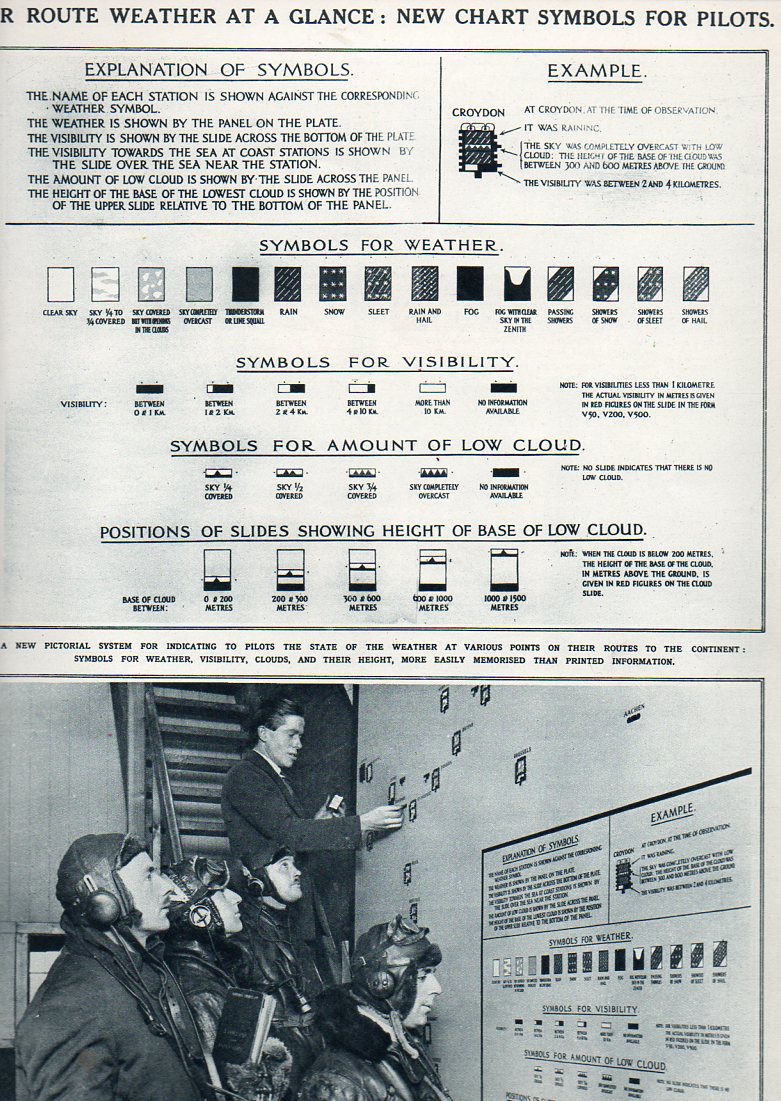
    The first is relatively simple, at least simple from here in the year 2014, which shows four pilots being briefed on weather conditions with a aerial chart for conditions along intercontinental routes.  The placement of these symbols represented a vast improvement over the earlier systems of readying pilots for what weather lay ahead, if indeed there were any communications at all.  This represents an early look at a codification of conditions and expectations for air travelers–a display of new and important data in 1927. 
    Seeing more deeply--air weather852
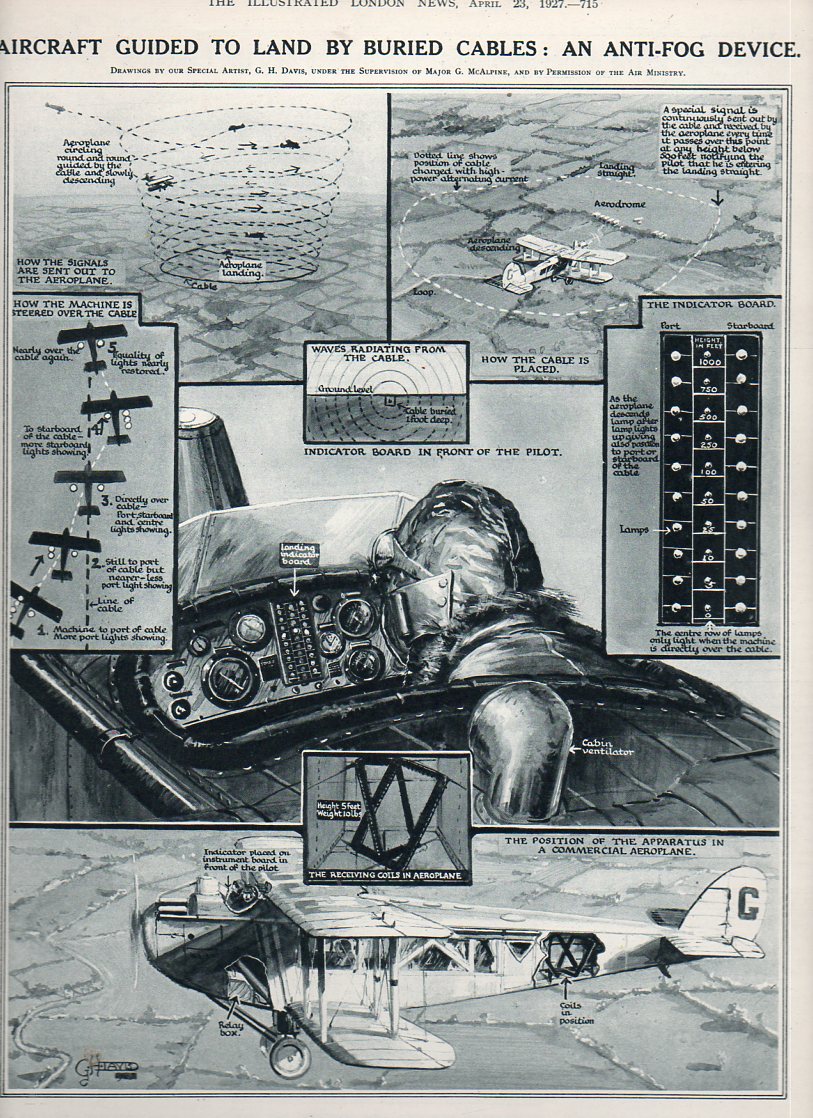
    Next is a brilliant device for assisting pilots to land in foggy and dark conditions–actually on how to find the ground safely.  In 1927 (again) a RADAR-like system was put into place on aircraft that involved receiving the signals of an ac-pulsed buried electrical cable that surrounded an airport.  The receiver (seen here on the flight panel of the pilot in an open-air cockpit) would be read to reveal proximity of the airport, the pilot making wider and then closer spirals in descent until his was basically within the buried airport cables and thus able to land.
    Seeing more deeply-anti-fog855
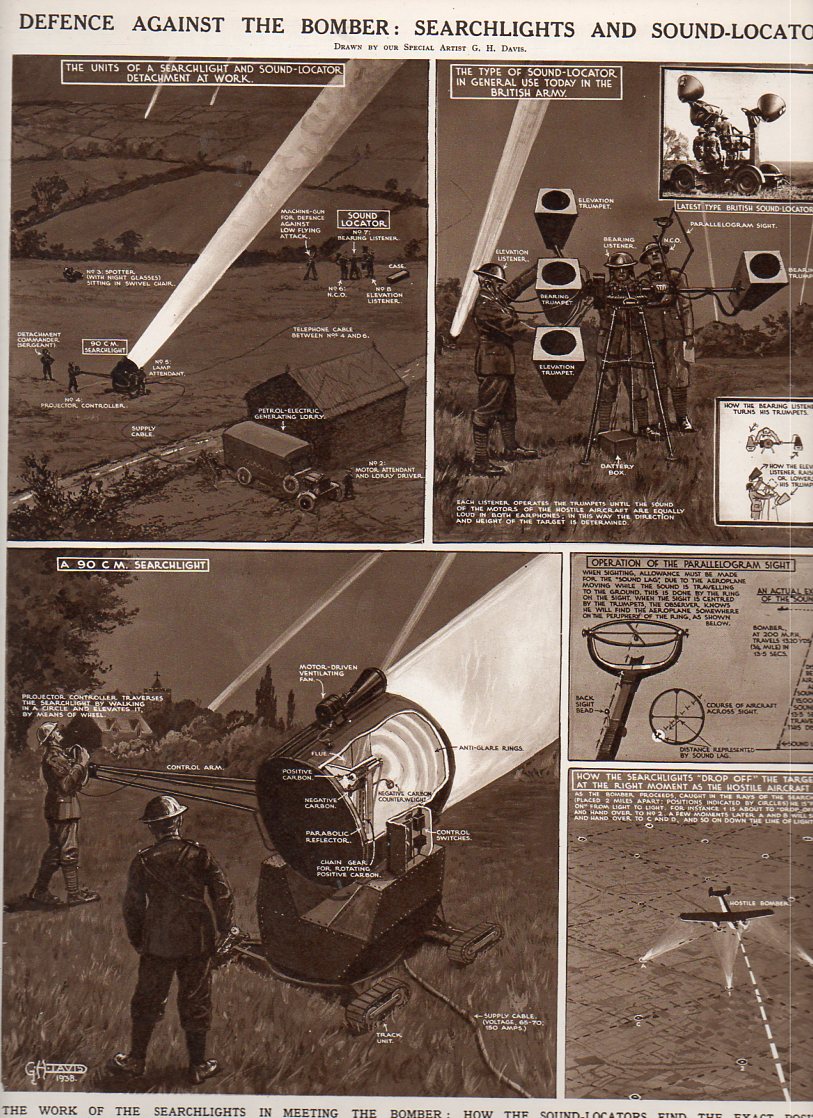
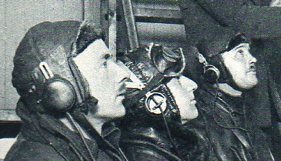
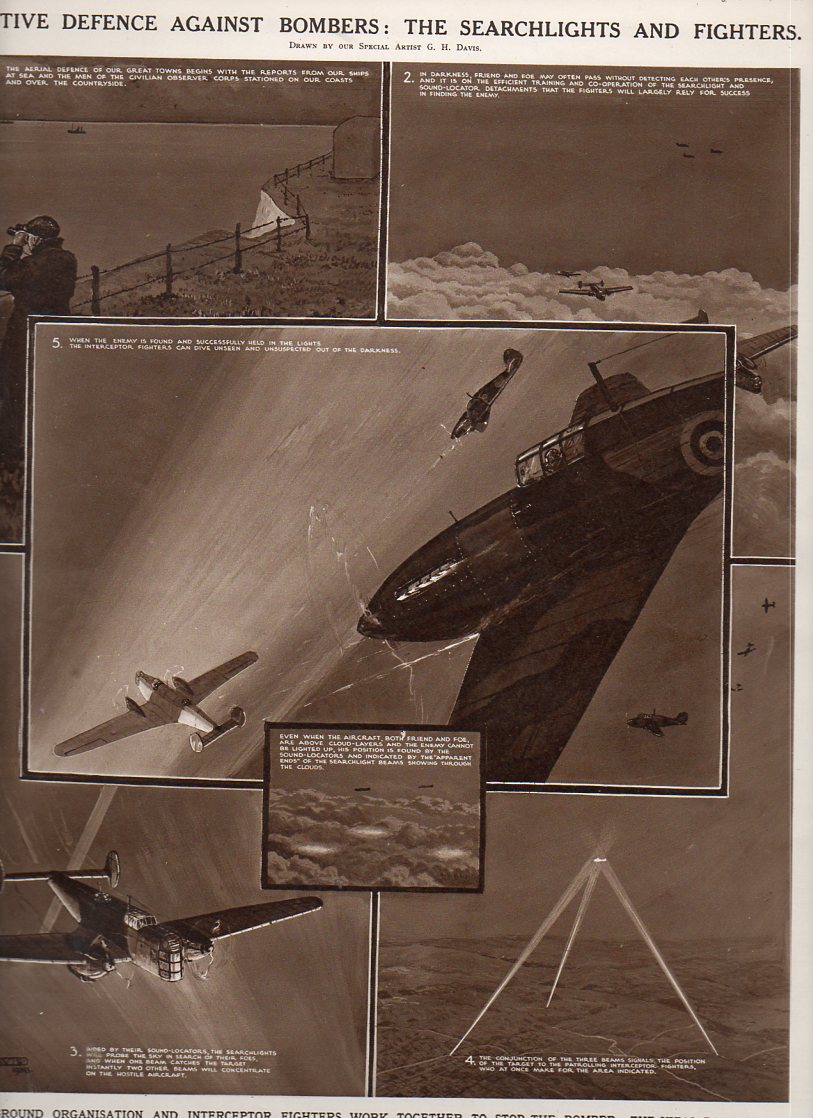
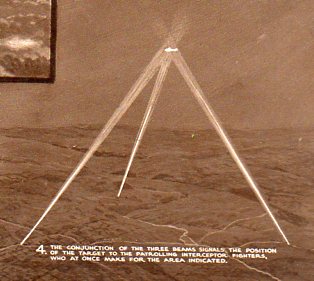
    Prior to WWII RADAR1 was somewhat functional but still in development, and as we see in this set of 16 July 1938 illustrations, the key methods for finding enemy aircraft at night (in order to shoot it down of course) was an audio-visual method, using “sound-locators” to find the approaching bombers and then spotlights to illuminate and track them to their destruction.  
    Seeing more deeply-searchlight856

    Seeing more deeply-defence against bomber854

    These images represent some idea of the state of the art of being able to find things–like the ground at night or approaching enemy aircraft–in the 1927-1938 period, all of which would be drastically changed in just the next two years.
    Seeing more deeply-searchligh detail857

    NOTES

    1. RADAR was coming very close to being developed in the early 1930’s–and in 1935 the process of experimentation and implementation was at a peak.  The development of this new technology was an international property, though perhaps no one owned it more in this period than the British, with Watson Watt giving his experimental ideas on RADAR to the Air Ministry on 12 February 1935 in a secret report titled “The Detection of Aircraft by Radio Methods”. Int his years alone there was feverish work being done by  Rudolf Kühnhold (Scientific Director at the ‘Kriegsmarine  Nachrichtenmittel-Versuchsanstalt) who in 1933-1935 established a RADAR-hunting company called Gesellschaft für Elektroakustische und Mechanische Apparate, or “GEMA”; there was also elements of the Royal Navy, Telefunken, Standard Elektrik Lorenz, Philips Company’s  (of Eindhoven, Netherlands) Natuurkundig Laboratorium, the Research Office of Nippon Electric Company, and even in the Soviet Union (until the key figures involved were murdered in Stalin’s purges–this one distinguished from others and referred to now as The Great Purge– of 1937), the French Compagnie Générale de Télégraphie Sans Fil (CSF), and  the Italian Regio Instituto Electrotecnico e delle Comunicazioni (RIEC, Royal Institute for Electro-technics and Communications) to name a few.  The United States of course had been long working on the project, at least since 1922 at the NRL, with considerable private (and federally funded) work done by RCA

    .
    Whipping ahead into WWII a very significant “battle of the beams” began between the U.K. and Germany, especially during the Battle of Britain, involving countermeasures, espionage, propaganda and false-positives in regards to the use and development of radio-based tracking and detection–the U.K. particularly making use of this technology in a wide-spread air defense system.  But it was in the United States in 1940 (and really by the U.S. Navy) that RADAR got its name (for RAdio Detection And Ranging) as well as its great impetus for development and deployment.

  • Making Tubes of out Holes–the History of Holes, Extended

    JF Ptak Science Books  Post 1184  [Part of this blog’s History of Holes series.]

    Taking inspiration from Edwin Abbott’s Flatland1 (a superb book  excursion into perception and difficult envisioning in which a two-dimensional world tries to comprehend three-dimensional objects) I’ve decided to extend my History of Holes section with their extruded, cylinderized extension cousin–the tube.  After all, If you take a hole by its edges, shack it out, rough it up, reposition and throw some sides on it you wind up pretty much with a tube, which could be seen as elongated holes with (generally) defined beginings and endings. Sometimes.  This is a natural continuation of my series on dots, which can be regarded as holes, or points, and thus into tubes.  “Spots” on the other hand really doesn’t work into the dot/hole thing, as spots can be irregularly-shaped, and I like the dots/holes to be more rounded than the potentially jagged spot, or blotch.

    When you start thinking of tubes, though, they turn up everyhwere: from gigantic cannon, to impossible flying machines, to telescopes, pneumatic railways and delivery systems, test tubes, subways, pressurized health restorers, television screens, and so on.

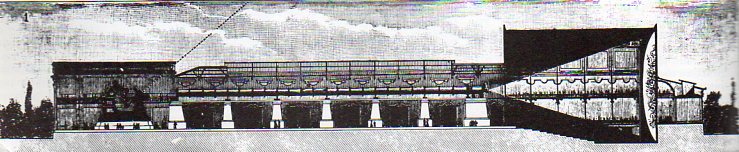
    I’m not sure where this idea came from–perhaps in the post on massive tubeless telescopes (here), reminding me of the most massive tubed telescope, the longest telescope with a tube, belonging to James Bradley, who produced a monster over 200′ long. Connecting the tubeless and tubed telescopes was the image that I had in mind; the hole following naturally from that. Anyway the Bradley  tubed construction–antithetical to the DNA/carbon/membrane nanotubes–were enormous for their time, and as moveable tubes are still very impressive.  Another massive telescope was constructed on speculation for the Paris Exposition of 1900 {the cross section of which is depicted below)–it was 187′ long, spectacularly made and exhiited, and could find not a single buyer.  Positioning the scope of course would’ve been very problemtaic. 

    Tube 1500 ft telescope621
    There are other, more massive and mobile tubes, like, say the smokestacks of the Titanic (which were 24×19 feet, with a fall of 150′ from the top of the smokestack’s sweep to the boilers)–these weren’t mobile in and of themselves, but they did move, if only for a short time (laterally), and then for a very short and cold time (vertically).

    http://www.titanic-titanic.com/pic/funnel_bogie.gif

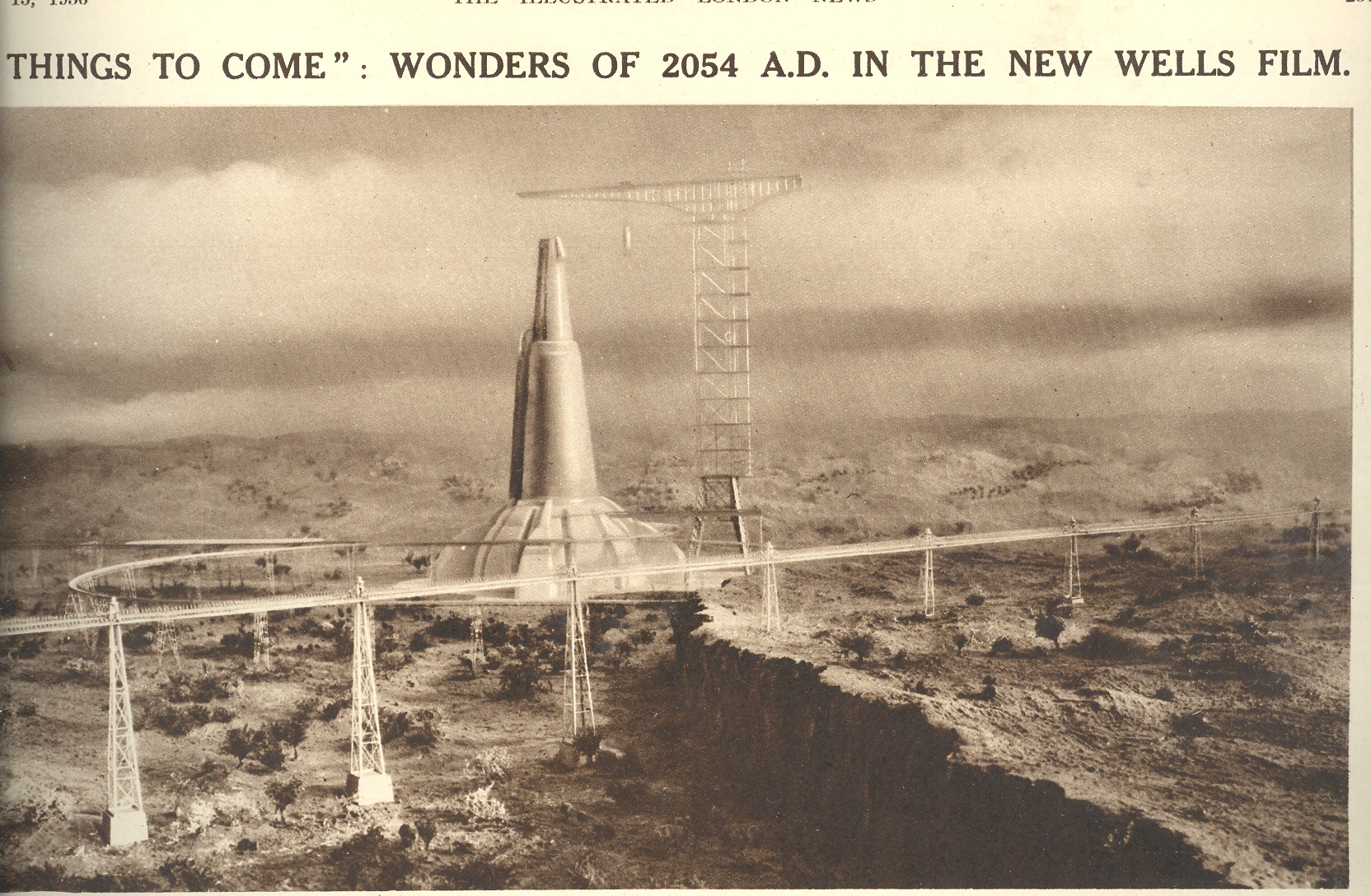
    Massive, monster canons have existed for many years in idealized and theoretical, speculative worlds, like Tom Swift and his Monster Canon.  In the history of early imaginary big gun tubes H.G. Wells’ Babel-like cannon (pictured below in a still from the movie Things to Come (1936), an adaptation his The Shape of Tings to Come (1931)) is fabulous–1500 feet tall, with I figure a  750′ base, it launched a 75′ tall capsule beyond the Earth’s

    Blog jan 6 wells

    gravitational pull with a spectacular explosiveness that would’ve made its occupants into instant jelly.  (Paul Drye points out that one of the biggest sci-fi guns comes to us via Arthur C. Clarke, who had his Lunar inhabitants fashion a gun by drilling into the Moon’s surface until they reached a depth where it would tap and “shoot” molten rock at attacking space ships.  This is more of a hole than a tube, and as such probably ranks it as the biggest hole gun ever constructed, even in science fiction. In the same veinish vein is Robert Heinlein’s railguns, seen in The Moon is a Harsh Mistress.  It has been suggested that E.E. Smith may have concocted gravitational weapons enabling planets and entire galaxies as wepaons, but I’m not sure about this, and they’re definitely not tubes.)

    Just to round out the Solar System cannonry a bit, here’s an example of a gigantic tube coming from the fabulous Frank R. Paul for Stanley D. Bell’s “Martian Guns” found in the January 1932 issue of Wonder Stories.  There’s really no way to determine how big the gun is except to say that it is probably “big”–there’s just nothing to place the thing in perspective, as the figures in the foreground, being Martian, don’t have a specific height.  They could be 6′ tall, or 60′–perhaps they’re only 1/10 of an inch tale, and the projectile they’re firing to the earth is so devastatingly powerful that size doesn’t matter.

    Strange things in sky--martian guns

       Back here on Earth and in the real world,  the Kaiser Wilhelm gun (or “Paris Gun”, the Kaiser Wilhelm Geshutz) was

    http://farm4.static.flickr.com/3169/2951816593_c2d2e5c875_o.jpg


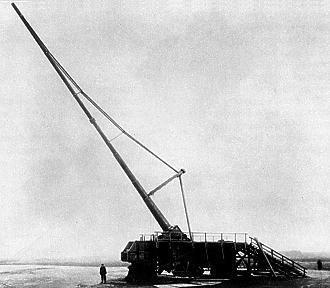
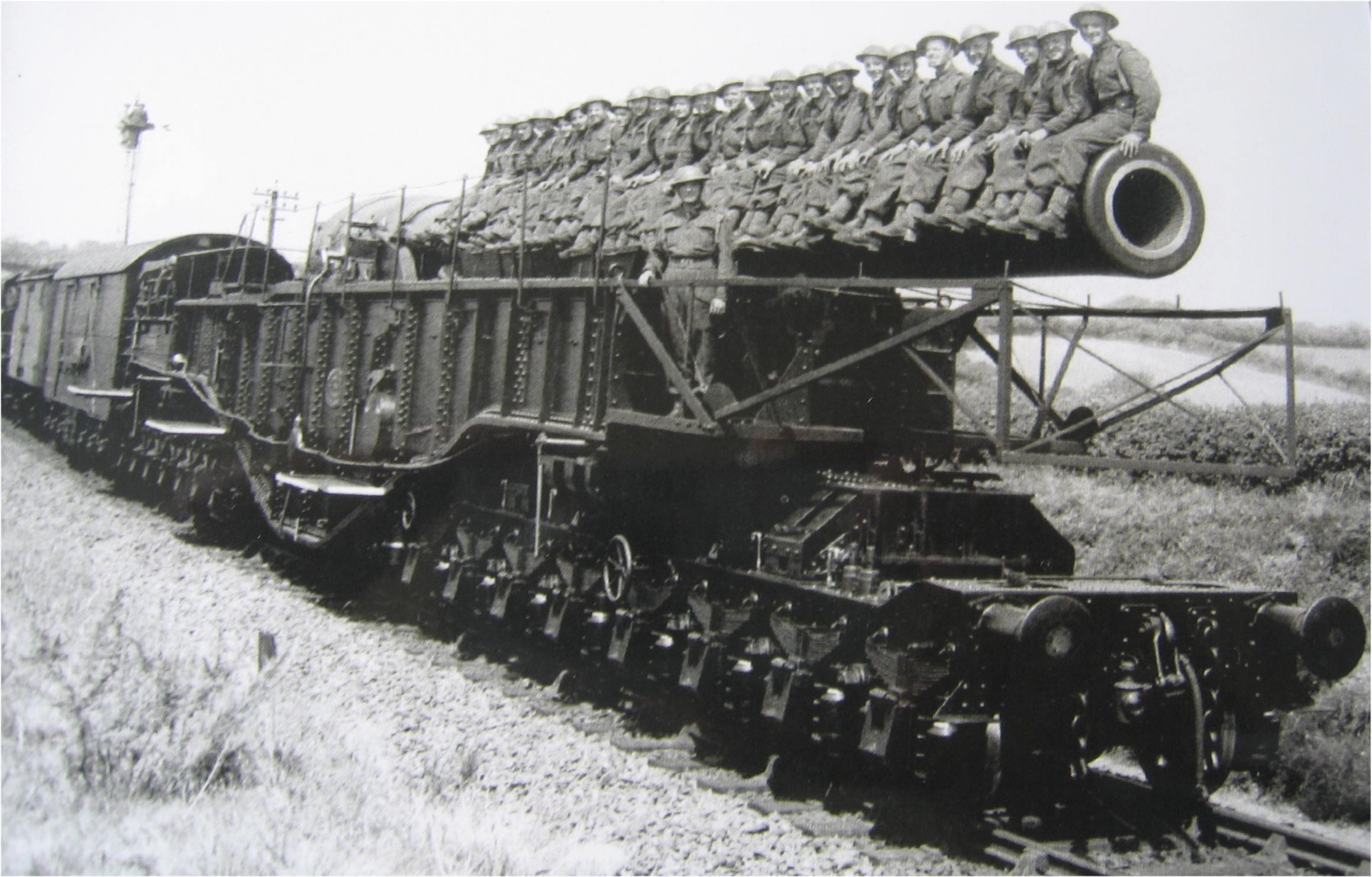
    a long-barreled, light shelled monster: its 92′ long barrel (plus a 20′ extension) launched a 94kg shell about 130 km, reaching a maximum height of 40km (about 25 miles) high. For all of its mass (the gun weighed 256 tons without the railway cars) the shell that it fired didn’t weight much at all….though the shell did reach an extreme height. (Ironically, the gun was built for attacking the deepest of the deep bunkers of the fortresses along the Maginot Line; it was never needed for that, as the Maginot Line was simply left behind in the Nazi assault on France.)  The British Ordnance BL 18 inch howitzer (below) was developedjust as WWI was enidng, but did not enter service until nearly two years after the war ended.

    File:BL 18 inch Howitzer Ashbury Station WWII.jpg

    The Schwerer Gustav was a 1350 ton beast which fired a 14,000 pound shell (!) about 20 miles. A  little later came the Nazi V-3 (the lesser known of the V-weapons), the Vergeltungsewaffe 3, a 130 metre (!) long, 150mm gun built alongthe side of a hill, launching a 140 kg shell. The Iraqi Big Babylon gun was sort of like this one, though never built–it was to have a 500′ barrel and would be supported by a hillside. Then there was the Nuclear Tube: the Atomic Annie (M65) cannon, which was another bruiser, being an enormous 85′ cannon that delivered the worst punch of all cannons, a nuclear warhead.  The weapon was test-fired in 1953 at Frenchman Flat at the Nevada Test Site and delivered a 15kt explosive device to a target seven miles away. There were 20 of these made, but given their diffiult-to-deploy-and-keep-secret status, and the nature of the shells, and the development of more sophisticated weapons, the M65 was obsolete almost as qickly as it was introduced, but was removed from the frontline only in 1963. 

    VWM240mmAtomicAnnie01.jpg

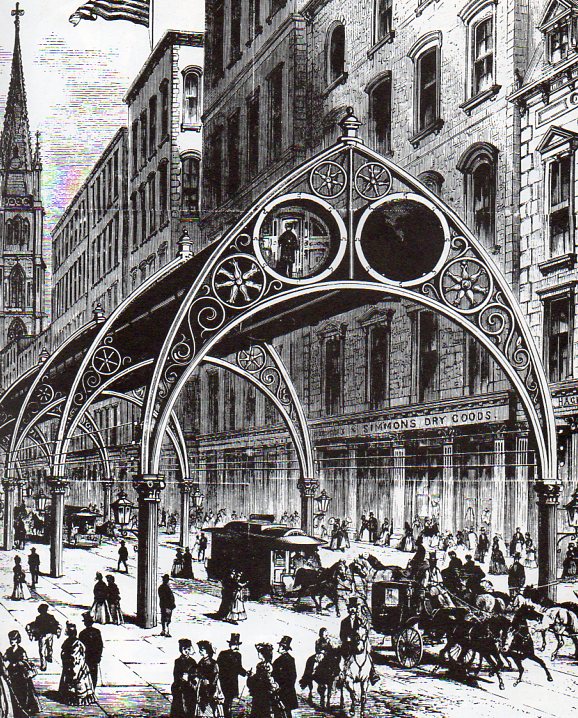
    I guess what people think of first though in regard to tubes in “The Tube” in London, though a more tubey tube was presented here in the pages of the Scientific American for the NewYork City subway:

    Tube nyc623

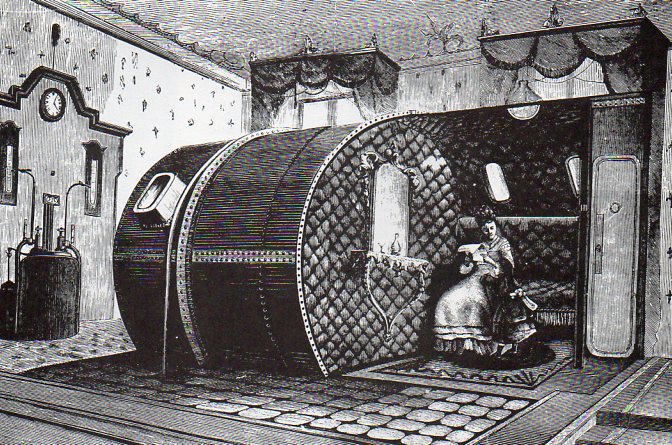
    Here’s yet another strange tube, this a tube-within-a-rectangle, an aerotheraphy device that was supposed to cure people of whatever they needed curing for, just like any other good quack device, though this may well have been the heaviest of them all.  Cushioned, well-appointed, and with a hint of luxury, this burst of fresh air was inteneded to render diseases and other complaints harmless–only for a lot more money than electro-shock or beer cures or massive purgatives or bleedings or copper amulets or whatever else you can come up with.  It does make a nice image, though:

    Tube aerotherapy625

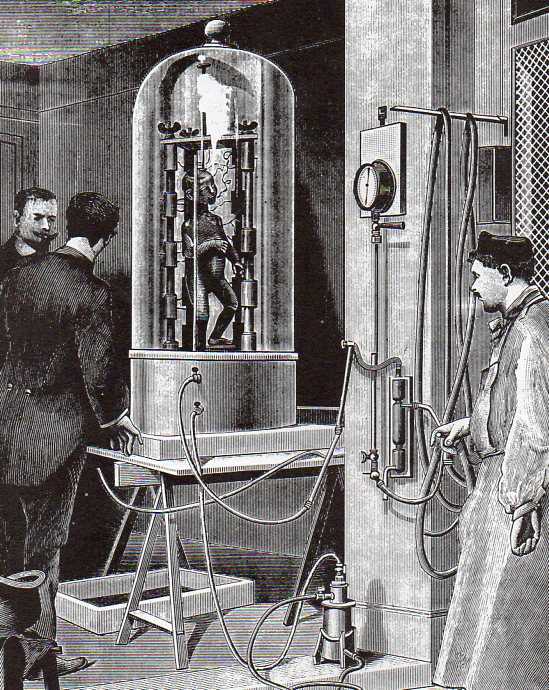
    The tube below may well have been the largest glass tube to hold the body of a dead person–and in this case, a dead child.  It was design for a practice that was evidently not practiced–electroplating the dead.  Someone thought it might make a good practice to deposit a one millimeter coating of copper on the skin of a cadaver, and published their success (and image) in the Scientific American for November, 1891.  The practice didn’t catch on.

    Tube test tube dead622

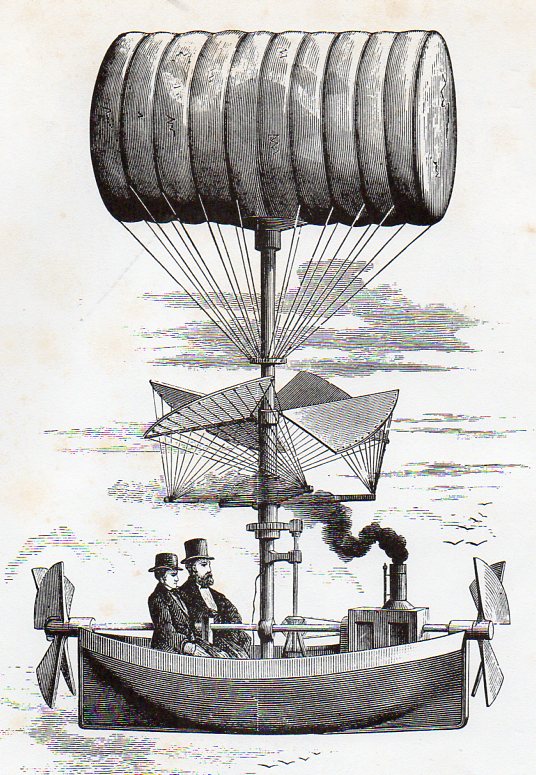
    Then of course there are submerged and flying tubes; submarines have certainly become a long-established part of the technological landscape, and the flying tubes, not. 

    Tube  flying620
    Still, the steam-driven helium-filled flying tube boat looks dignified and lovely, if impracticable.

    There were proposals in the late 19th and early 20th centuries for pneumatic railroads and pneumatic people movers (in one case in the 1930’s, for a plan to move individuals from New York to Philadelphia in chair-like objects in one of these tubes), but for all intents and purposes the closest that these plans came to fulfillment were pneumatic operations like thoe found in R.H. Macy in New York.  It was in the massive department store where you could find miles of pneumatic vacuum tubing that connected department tellers to a main counting office, where little cylinders were filled with cash and receipts and sent along for accounting.  The logical outocme of Macy’s tubular world for Terry Gilliam was seen in the director’s masterpiece dystopic flic, Brazil, where we see a world crowded with gargantuan and suffocating nothinness, filled with bazillions of miles of ductwork whose purpose is a mystery, making for a cold and disturbed world. 

    Brazil screen capture

    End part I of Making Tubes of out Holes–the History of Holes, Extended.

    Notes
    l. Edwin Abbott’s slender Flatland is perhaps one of the best books ever written on perception and dimensions, a beautifully insightful book that was quick and sharp, and in spite of all that was also a best-seller.  Written in 1884 when Abbott was 46 (Abbott would live another 46 years and enjoy the book’s popular reception), it introduces the reader to a two dimensional world with a social structure in which the more sides of your object equals power and esteem.  Thus the lowest class would be a triangle (three sides) while the highest (priestly) class would be mega-polygons whose shape would approach a circle.  Abbott’s magistry comes in explaining to the three-dimensional reader what it was like to be in a two-dimensional world.


  • Footnotes in the Future–Swift, Lull, Borges and the End of Writing

    JF Ptak Science Books   Post 1155

    “The most ignorant person at a reasonable charge, and with little bodily labor, may write books in philosophy, poetry, law, mathematics, and theology, without the least assistance from genius or study.”   Jonathan Swift, in Gulliver’s Travels

    “Hell is the kingdom of the animal that swallows up the memory of all things… Between life and death there is no destiny except memory. Memory weaves the destiny of the world..”  Carlos Fuentes, Terra Nostra

    “A people without history/ is not redeemed from time, for history is a pattern of timeless moments” — T.S. Eliot, Four Quartets.

    The future history of writing–it will tell us–was already written before it was written.   In the future, when everything that can be written has been written and everything spoken has already been spoken, perhaps the first footnote in the history of already-done things will be to Jonathan Swift.  The experience belongs to us through Lemuel Gulliver1, who after surviving two trips (one to Lilliput in which Gulliver is twelve times the size of

    Written468

    everything else, and the second to Brobdingnag where he is one-twelfth the size of everything) comes to a third (of four2) in the land of Laputa.  It is here where he encounters a conversation machine that, when cranked, produces anything and everything, the known and unknown, the original and the copied, and have the thought and spoken
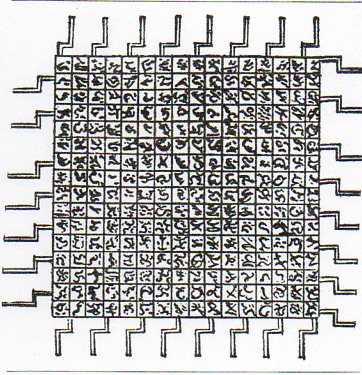
    word belong to the manipulator of the machine.  Everything that can be said is in that box, waiting to come.  The 20′ square was occupied by cubes with words on their sides, with 40 cranks and 40 handles and 40 operators to manipulate the mechanical vocabulary and associated scribes to record anything that made sense, and would be the springboard of “knowledge”operating without a manual or an intelligent primum mobile. (The image of the machine–which bears some resemblance to an integrated chip–appears in the third edition of Swift’s book, and as you can see is not a well-drawn thing, missing a row and a column and a crank here and there. A fuller description is found below.)

    Writtenc machine470

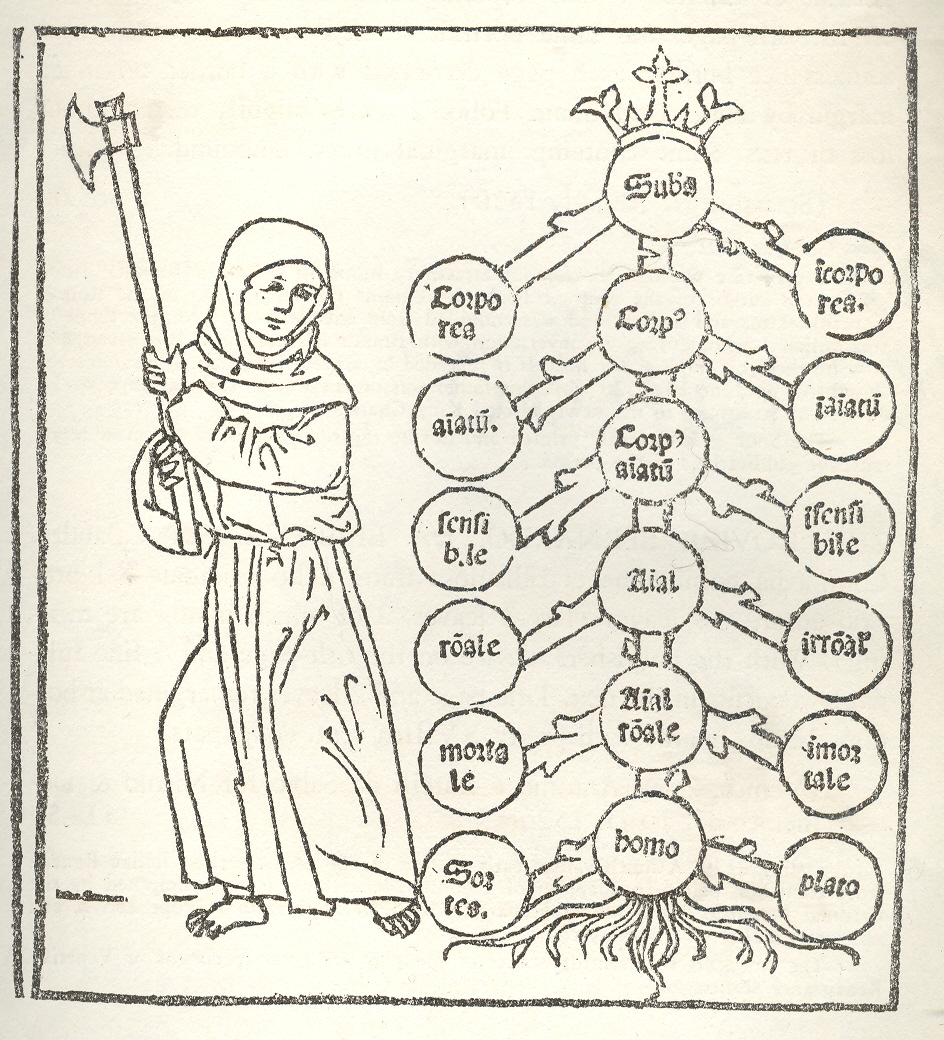
    The idea of a universal knowledge or an expanding, forever-library is very old, particularly if you expand the concept a bit to include Aristotle and the Tree of Porphyry3.  While not exactly a generator in the sense of Jorge Borges’ Library of Babel or the Swiftian machine, the ancients did 1--logic treeproduce very interesting, elegant, beautiful ways of story information and ordering information.  The Tree of Porphyry is far more concise–an abbreviation-compared to the infinitely expanding hexagonal rooms filed with books and attendant librarians in the Borges’ universe.  Or the Ars Magna/Thinking Machine of the 13th century Ramon Lull (also known as Ramon, Raimundo and Raymond, Raimundus and Raymundus Lull, Lully and Lullus and Lulio), the ultimate organizer of how sentences can be made and knowledge produced/uncovered (particularly if you want to please the logic of the church and the Creator), and which was almost certainly known to Swift (and which was also written about, described and worried-over by Borges4).  There are many other early figures in this category to be sure (Lewis Carroll, William Jevons, and even in a way Mr. Venn, not to mention Leibniz and his calculator,  and the changes in scientific method and (English/Dutch) mathematical concentration on applied mathematics of the 17th century that made thinking about the industrial revolution possible)), but that would be left to (at least) a longer post.  (The Lull wheel, below.)
                               

    How long will it take to digitize everything that has ever been written, or recorded, or composed? Several generations? Ten?  It may well come to pass in shorter time than we think; and when you compare this control of recorded human history to the centuries that will follow in developing “computers”, how can we possibly know what will become of all of it?  In the coming centuries and their attack on intelligence, when in the future the brain is a harvest of the computer, perhaps intelligence finally submits, and everything that can be done has been done, the progress of humanity snubbed to a stub. Or expanded exponentially.  It is such a tough call to make…

    Notes:

    1.  Jonathan Swift, Travels into Several Remote Nations of the World, in Four Parts. By Lemuel Gulliver, First a Surgeon, and then a Captain of several Ships.  1726.

    2. The third voyage was Part III. A Voyage to Laputa, Balnibarbi, Luggnagg, Glubbdubdrib, and Japan. The fourth finds humans as pets/inferiors in the island of the Houyhnhnms, a land of intelligent horses.

    3. The “tree” was a diagrammatic creation of a 3rd century Syrian mathematician/logician/philosopher named Porphyry who– much taken with Aristotle (and with the Categories in particular)– developed a systematic approach to the organization of thought in diagrammatic form.

    4. Borges J. L. (1999) ‘Ramon Lull’s thinking Machine’ in The total library: non-fiction 1922-1986 (Edited by) Weinberger, E., trans. Allen, E. Levine, S. J., and Weinberger, E. London, Penguin, on pp 155-160.

    It is interesting to note that Lull, who gave up everything to follow his calling into the church (and who was antagonized by the belief that his very act of missing his left-behind life to be a sin against god’s choice of him to follow his “career path”) was demonized by the church soon after his death, his works prohibited reading for hundreds of years.  He was resurrected in 1958 though on a path towards sainthood, a doctor of the church.  

    A description of the Swift machine:


  • Ennui and Renaissance Surgical Tools

    JF Ptak Science Books   Post 1147

            “Jeopardy is jejune now: naïve knight
            finds ogres out-of-date and dragons unheard
            of, while blasé princesses indict
            tilts at terror as downright absurd.”    –“Ennui”, by Sylvia Plath

           “Ennui is the poetic state that occurs just before depression.” made-up Twain quote, seconded by a  made-up  Bierce definition, “Ennui.  Depression without the imagination.”
    Ennui-doctor420
    Ennui seems to have always been in the possession of those who could afford possessions–the laboring classes could only be affected with derangements and sloppiness and laziness, but the wealthy among the people of the earth could have ennui. They could afford to.  And it seems to me that in my own walk-through in the history of illustration–especially relating to the sciences–that those most often depicted with ennui were saints and doctors, two generally mutually-excluding classes.  I’m not so sure why this is the case for the doctor, or surgeon, or barber,  or sawbones–it was not a pretty jog in the centuries leading up to our own.  [Pictured here is a physician with things on/not on his mind, from Andrew Borde’s The Breuiary of Healthe, for all maner of syknesses and diseases…” from 1556, and which turns out to be one of teh first modern books on hygiene.]The working  conditions were exceptionally difficult (in general), the treatments were blood-under-the-nails barbaric, and the survival rate for those under your care was poor. Perhaps it was the tools? They were’nt very glamorous things, either–nor were


    Ennui-surgical tools a419
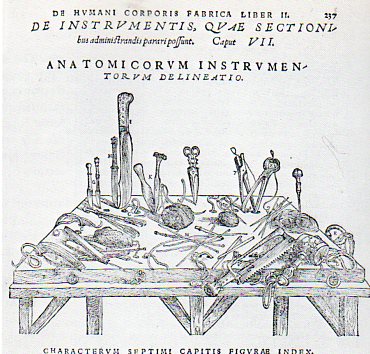
    they necessarily clean. [Image of from Vesalius’  De humani corporus fabrica . 1543, (“On the Fabric of the Human Body”/”On the Construction of the Human Body”).  I prefer “fabric” because of Vesalius’ superb re-discovery of muscle…]  Urgent cleanliness in the surgical amphitheater wouldn’t come along until Sir Joseph Lister in the mid-19th century; so working as a surgeon in a bad hospital with rudimentary tools in bad working conditions and little light could not for a happy existence make.
    Ennui--surgial tools421

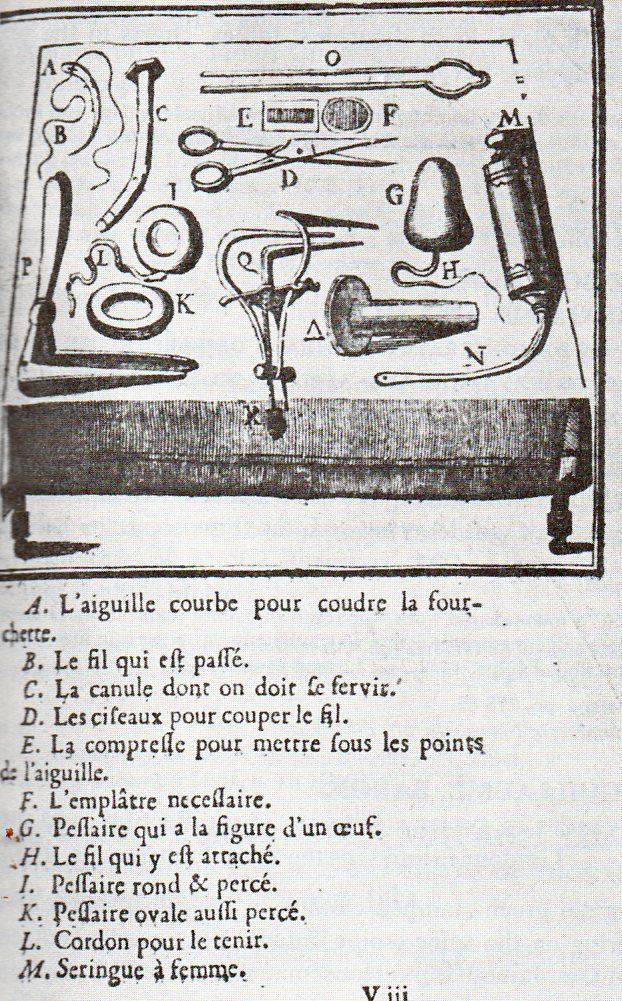
    Vesalius [The differences between the two engravings above seem to our modern eye to be quite minute; but for the 160 or so years between the two publication dates, the advancements were considerable, given the time.  This second image is a display of midwifery tools and instruments, which I guess wouldn’t make anyone today feel very comfortable–surviving childbirth for the woman was still a substantial issue, though less so than it had been in the first half of the 16th century. Image: Pierre Dionis, Traite Generale des Accouchements...Paris, 1718.]

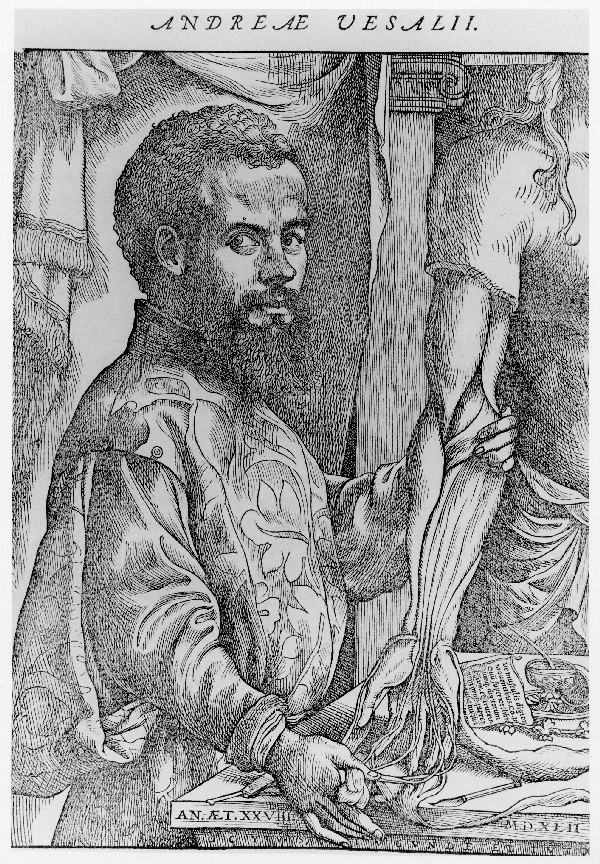
    And yet imping his way through all of this is Vesalius1, who managed to accomplish accumulate mounds and piles of good data, organize and interpret it and then have the whole thing illustrated (with 200 of some of the greatest anatomical images ever made) and published all before he was 29 years old.  Perhaps he wasn’t as susceptible to be provoked or drawn into ennui as most professionals of the time, being such a genius and coming from such a royal medical lineage2 as he. Or perhaps he was able to avoid the ennui that came with the brains and the genes.  Ennui didn’t seem a part of this physician’s makeup, even though he was deeply in debt and a man slightly out of place. Maybe he didn’t have time to develop ennui, as he was an extraordinarily busy man who was dead at 50. 

    So, judging by the looks of things on the surgeon’s table, and imagining the stuff that needed fixing and the objects to fix it with, perhaps the physician was led down a path of slowly not being able to do anything…at….all.  Ground to a nub, a stop, a chin-in-hand moment.  Or not.                           
    ______________
    Notes:

    1. Vesalius’ revolutionary treatise on anatomy–which stressed anatomy in relation to physiology–was a clear break with the Galenic tradition, and was one of the first of the modern works on the subject. His book was published the same year as Copernicus’ masterpiece. 

    2. Vesalius’ great-grandfather, grandfather and father were professors of medicine, the last two being the Royal Physician and apothecary to Emperor Maximillian


  • A History of Blank, Empty & Missing Things: Lost Astonishment of Astonishing Things, Part I–the Phonograph

    JF Ptak Science Books   Post 1100   [One in a series on the History of Blank and Missing Things]

    Most everything that was once revolutionary, or new, or innovative, comes to the point of being not so to most people, where the thing of marvel and wonder just becomes the thing of interest and then the thing and then, well, sort of no-thing.  The great object becomes a simple bridge to something else, whether it is to communicate massive amounts of information instantly or overcoming distance quickly or storing food for long periods of time or shaving nutmeg onto a dinner plate. 

    Astonishment phonograph248
    Astonishment wears quickly.  For example, the long line of vanished astonishment in communications shows how thin wonder becomes over the course of time, as communication is facilitated by a postal delivery system to a ground semaphore to an electric telegraph to the telephone to wireless radio to airmail to television to DARPAnet to email to texting to twitter.  The beginning of instantaneous, person-to-person communication is really only 134 years old (with Bell’s 1876 invention), and now we’re sitting in the middle of the possibility of the most fabulously instantaneous communication bog in the history of humanity, and its brilliant astonishment level has been worn to a dull copper tone. (I don’t necessarily mean “fabulous” in a good context, because all of this also presents the greatest assault on concentrated thought that has ever been known, but that’s another story.) Things just get taken for granted.  (This observation isn’t restricted to techno stuff–just ask any old person.)

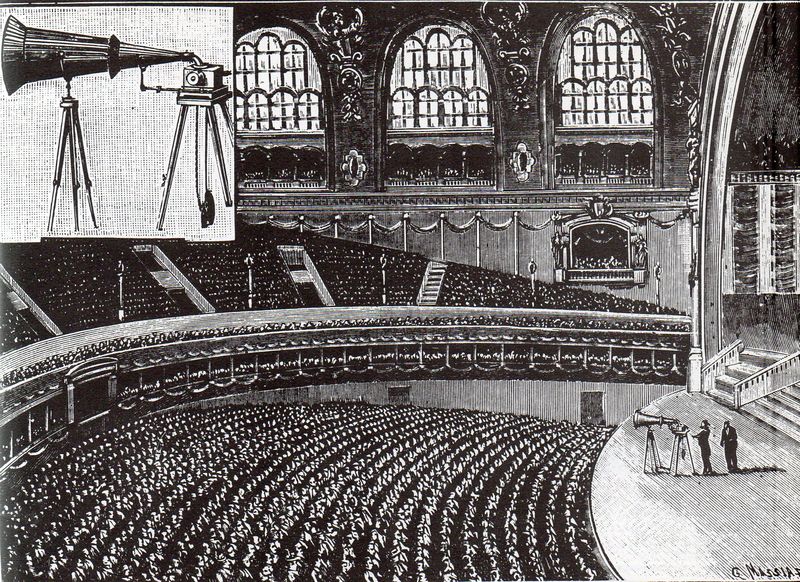
    This is an excellent image to remind us of the wonder and fascination of invention–especially for the things that we take for granted, the essentials of modern life.  This image from 1897 shows a very large audience gathered in the great Trocadero in Paris to listen to a demonstration of a phonograph.  Now the phonograph had already been reliably around since Edison’s introduction of his successful machine the year after the invention of the telephone in 1877 (though variations of the instrument had been around since the late 1850’s, though that is another story), so the general public was already well-familiar with the concept of captured sound replayed–then why such a big crowd in 1897? 

    I think the reason for the full house was partially for the fact that it was a home-town event for a national French figure–the machine was being demonstrated by Henri Jules Lioret, an inventor who for about two decades had been tinkering with improvement to the machine.  What the Trocadero crowd was listening to was the Lioretograph No. 3, a large, weight-driven phonograph with a big bellow–a machine powerful enough to be heard in a big hall, which was another point of fascination for the attraction of such a large crowd.  A  third possibility may have been with Lioret himself–perhaps the event was free, perhaps the inventor went out to fill the Trocadero via whatever means possible so that an engraving of the event would appear in newspapers and journals everywhere so that he could sell more machines.  

    The reason I mos enjoy and wish for though is that the people were simply fascinated with the bright new big machine, filling the famous musical hall with a big sound and doing it without an orchestra, or without one playing player for that matter. 

    It is also about the wonder of storing and replaying sound. 

    Loss of astonishment isn’t necessarily a complacency–perhaps it is just more of a forgetting, a loss of the stuff that has come before.  Maybe it is a function of time, or distance, between newness and necessity.

    If you can grow to feel the astonishment felt by this Trocadero audience for the phonograph, or for the astonishment in anything fantastic-if-old, then you get to see the components of today’s necessary stuff and see that it has a history and a full geology of an idea.  To me, being open to astonishment like this makes you susceptible to wonder, and from wonder comes curiosity, and from curiosity comes everything else worth thinking about. 

    Notes 1:

    Edison celebrates his phonograph in the North American Review
    (May 1878) and
    then lists what he saw as the readymade faits
    acomplis
    of the invention, the first of which was
    weirdly/spectacularly
    worded:  “1. The captivity of all manner
    of sound-waves heretofore designated as fugitive, and their permanent
    retention.”  Do you hear a soundtrack
    with that description?  I did.  He proceeded
    with less fanfare: “2. Their
    reproduction with all their original characteristics at will, without
    the
    presence or consent of the original source, and after the lapse of any
    period
    of time. 3. The transmission of such captive sounds through the ordinary
    channels of
    commercial intercourse and trade in material form, for purposes of
    communication
    or as merchantable goods. 4. Indefinite multiplication and preservation
    of
    such sounds, without regard to the existence or non-existence of the
    original source. 5. The
    captivation of sounds, with or without the knowledge or consent of the
    source
    of their origin.”


  • History of Sharing Music Without Musicians–Beginnings

    JF Ptak Science Books   Post 1098   [Part of a series on the History of Blank, Missing and Empty Things.]

    Music shared235

    This first image struck me as a sort of prototype for the shared-music experience that is common to youtube and a plethera of other online sites, showing  a humble beginning of sharing for a revolutionary idea and experience.  The idea of recording and playing back sound1, the idea of being able to save sound and listen to it later, was an astonishing realization and invention.  (There will be more on this in a post later today.)  And it struck me that being able to enjoy music without the necessity of having the musicians there to play it, live, uniquely, is a phenomenon that is recent in the history of listening to things, being less than 134 years old. 

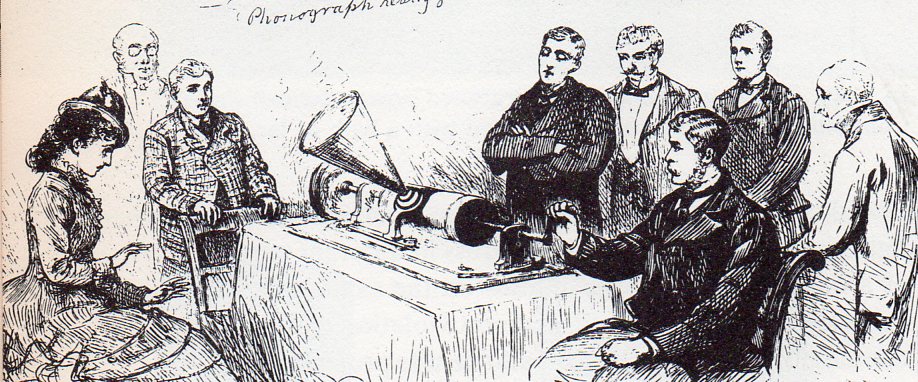
    This is one of the earliest images of that shared experience:  the Edison phonograph, being played in company, ca. 1878. 

    Music shared 2236
      The first image comes a little later, but I like it so because of the
    headsets–it resonates the separate/shared experience a little better.

    Notes:

    1.  The earliest “phonograph” was one which successfully recorded sound but could not play the sound back.  Or at least until recently, when these 150-year-old recordings were played back for the first time. This was the work of Edouard-Leon Scott de Martinville, (1817-1879), a French bookseller (!) who patented his phomautograph in 1857.

    These recordings can be heard HERE.


  • Wings Taking over Prayers: Human Flight in 1714

    JF Ptak Science Books  Post 1090

    Valentini216

    The esteemed Michael Bernhard Valentini (1657 – 1729), professor of  medicine and of physics at Giessen, Germany and natural history collector, produced one of the century’s   most important works on the state of museums and natural history collections.  Actually, his Museum Museorum1 was much  more than that, its three volumes presenting more descriptions and illustrations of all manner of scientific things than just about anything else of the pre-encyclopedist 17th century. There are many “firsts” to be found in this work, including numerous first-time description of fossils, tropical plants, American botanical specimens, techno items, shells, and on and on, not to mention sections on monsters, dragons and mythical creatures. 

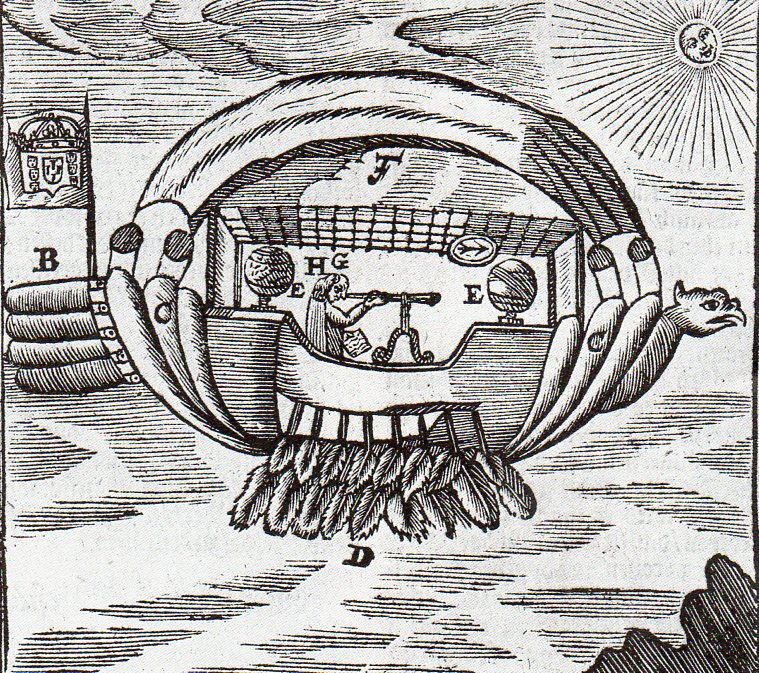
    One image that caught my attention appears in volume two, and seems to me to be a flying machine, though I can’t recover how it is being kept aloft, or what is providing its power.  The pilot is keeping a sharp eye on things with a  telescope, and is reckoning position with a compass2 and two globes.  The canopy of the aircraft seems to be just that, some sort of cloth held in place by pulleys and ropes, though I don;’t know what is providing lift, if anything.  Perhaps the whole thing finds its lift and propulsion with the many feathers on the craft’s keel.  I’m not sure.  But I can say that I don’t recall any other earlier image of a pilot using a telescope and compass.   

    Valentini also assembled an enormous natural history collection of his own, and in addition to his spectacular collection of the state of scientific and technical knowledge at the begininng of the 18th century, he also included in his book a  list of 100+ museums/collections of natural history objects–an extraordinary document for the time and unfortunately one that can’t be reproduced here.


  • The History of Rartity: Helium, Nutmeg, Breadfruit and Pepper

    JF Ptak Science Books   Post 1089

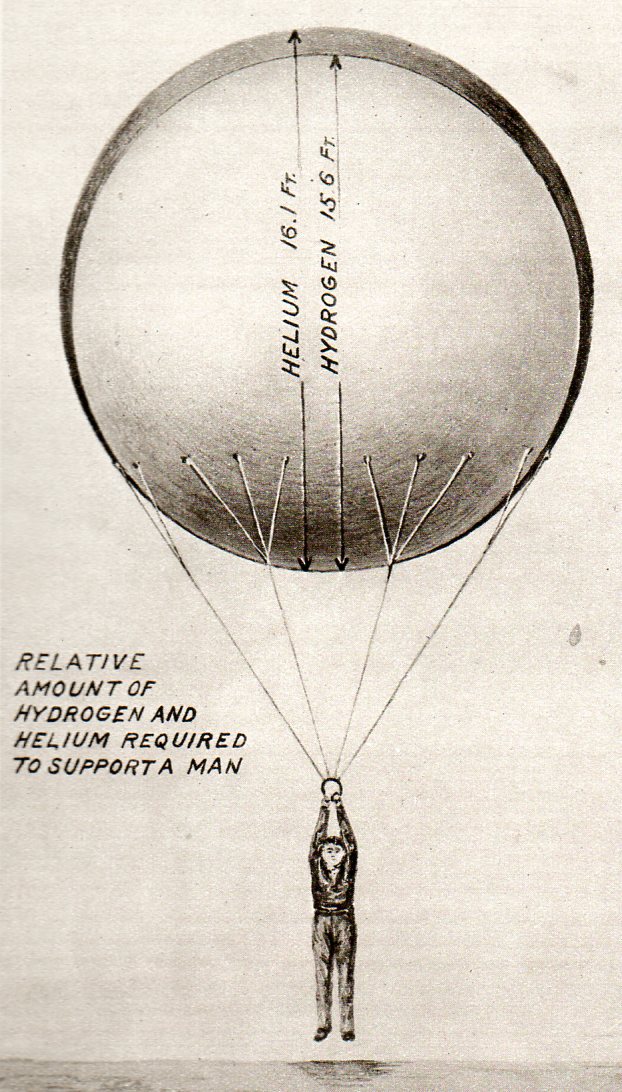
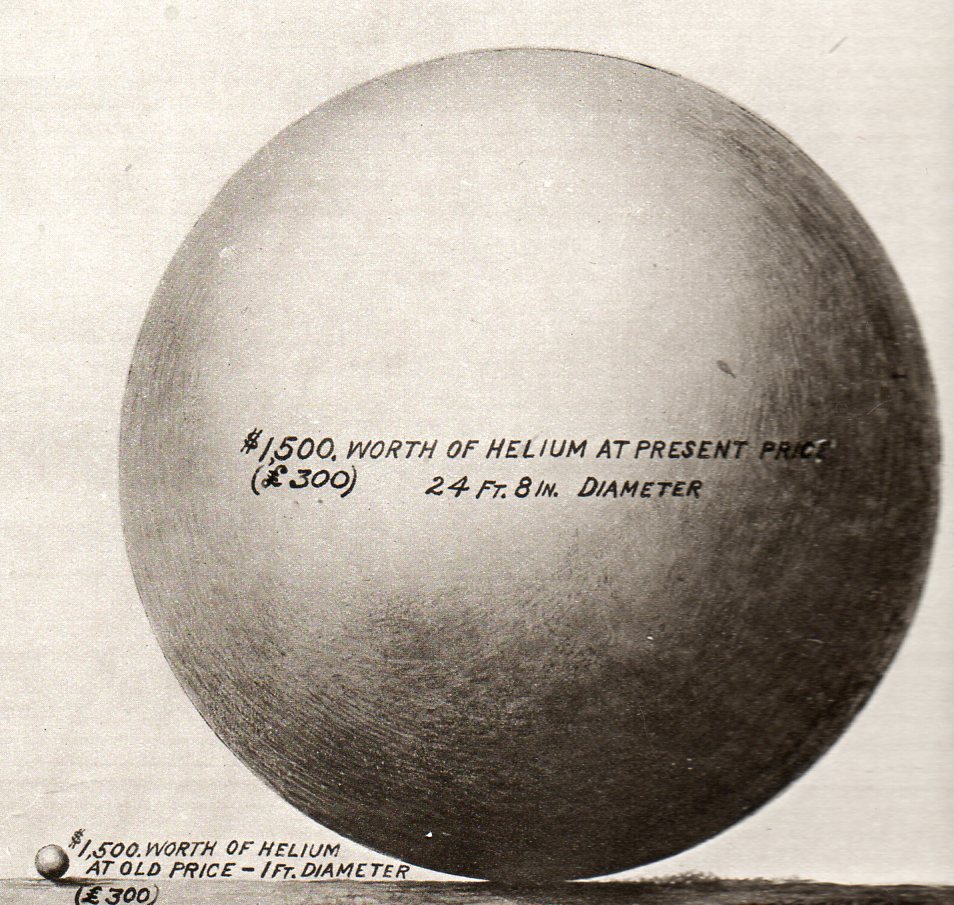
    Display info helium balloon212I guess we don’t think much of the rarity of some things.  Pepper and other spices were at one point quite rare, and the source of invention and exploration, and war.  Nutmeg, for example, a sought-after spice originating from the Banda Island group of Indonesia, once figured in a trade between Holland and England (the Treaty of Breda in 1667) that landed the Dutch the island of Run and control of the nutmeg trade, while the Brits got Manhattan.

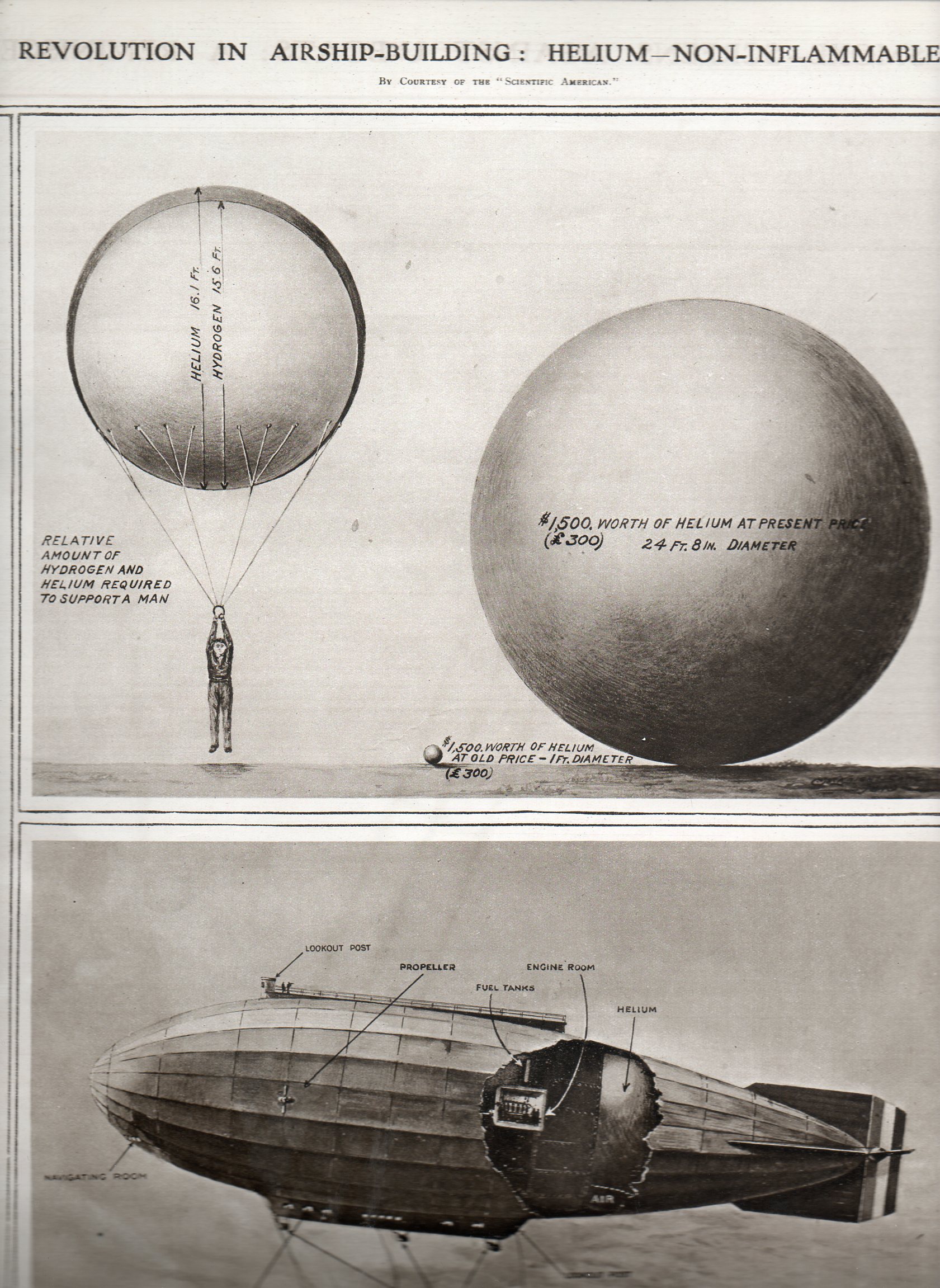
     Another great example is helium. When these images were produced for The Illustrated London News of 15 March 1919, rigid airships were filled with hydrogen, an explosive, not-happy gas that was the fuel of all manner of aerostatic accidents, everywhere.  Helium was still quite rare at this point, a year after the end of WWI and only 54 years after it was first observed1, and replacing hydrogen with helium was still yet a dream–basically because there wasn’t any, yet, to supply a dirigible2.

    Display info helium balloon man213

    The first helium-filled airship was still two years away at this point–the U.S. Navy’s great C-7, which made its maiden flight on 1 December 1921.  When the USS Shenandoah flew in 1923, it flew with most of the world’s entire supply of the noble gas helium. Its difficult today to think of pepper, nutmeg, sugar, helium and so on in terms of fabulousness and rarity, but it was so.  Remember, when Capt Bligh was jettisoned from the HMS Bounty, the ship’s precious cargo was also thrown overboard.  And the great treasure that sparked the Tahitian adventure that sparked the mutiny?  Breadfruit. 

    Display info helium balloon comparison214

    Notes
    1.  Observed for the first time by astronomer and early astrophysicist Pierre Janssen, in the spectrum of    the chromosphere of the sun, in 1868; separated for the first time on Earth in1895 by the British chemist Sir William Ramsay.   

    2.  By the way, “dirigible” is from the French, “diriger” (or “to direct “), meaning steerable, pilotable.  This differentiates the dirigible from the balloon, which was not by and large steerable. 

    Display info helium balloon dirigible215


  • Overstated Understatement: on the Future of Television

    JF Ptak Science Books Post 1024
    1--may 10 philo det good
    [I’ve written a number of posts on understatement here on this blog; two dozen or so will pop up when you put “understatement” in the google site search at left.]*

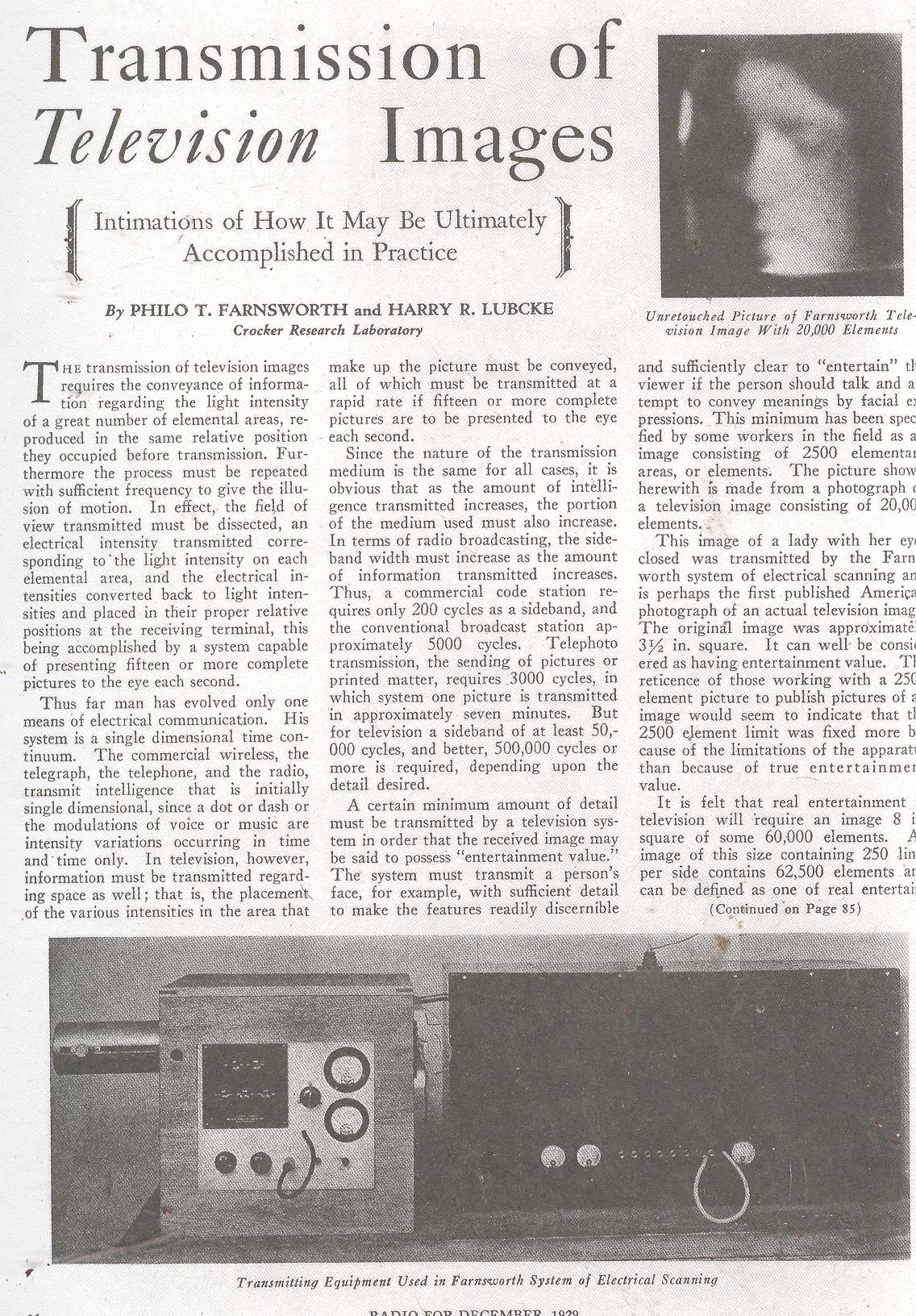
    Philo T. Farnsworth (1906-1971) may have had the best name among the earliest inventors of electronic1 television, but he didn’t necessarily have the best invention, this in spite of the fact that it is he who is remembered and counted as the technical inventor of the medium.  But that’s the way it goes, sometimes; sometimes it goes that way.  Farnsworth2 also had the better back-story: he was a teenager, brilliant of course, working out in the comparative middle-of-nowhere with little bits of money here and there from local investors.  On the other side of the coin was Vladimir Zworykin3 (1888-1982) who invented a cathode ray tube system for transmitting and receiving televised images, and who had the enormous financial support of Westinghouse (and then, later,  RCA).  Farnsworth was first off the boat, but Zworykin is the one whose work became the industry standard.         

    But the understatement is what attracts me here, and it occurs in the December 1929 issue of Radio magazine in which he reports on his successful first demonstration of his device to the general public.  I can’t tell if he was being very deliberate in his understatement or if was simply a staccato expression by a very young engineer with not-great writing abilities–I think that it was the later, really, as the statement is sandwiched in an odd, non-congruent section of its paragraph.

    1--may 10 philo

    In the article, Farnsworth also publishes the first (?) photograph of the first televised image, and states:

    “This image of a lady with her eyes closed was transmitted by the Farnsworth system of electrical scanning and is perhaps the first published American photograph of an actual television  image. The original image was approximately 3 ½ in. square. It can well be considered as having entertainment value. The reticence of those working with a 2500 element limit was fixed more because of the limitations of the apparatus than because of true entertainment value.”

    I do think that Farnsworth was in a hurry to get to the end of the article.  Later on he did try to capitalize in a major way on his invention and its distribution, but things didn’t work out so well. 
    Notes:
    * Some other great understatements in the history of science and technology include:

    -the Wright  brothers’ telegram to their father on the successful flight at Kitty Hawk, telling him to “inform Press” [sic], and misspelling Orville (“Orvelle”)

    –the announcement of the invention of the telephone, giving Mr. Bell a scant 200-word mention in the London-based journal Nature.

    –the alpha and omega element of the severe understatement of George Gamow on discovering the background radiation of the Big Bang.

    –and the atomic bomb/nuclear Armageddon bit from the National Emergency Planning Council:  ( “Because of recent changes in the technology and potential tempo of war and because of the base power of force is in being (including equipment and supplies), there is general recognition that any future war in which the United States is engaged, especially if it is an unlimited nuclear war, may be decided without significant additional military demands upon the nation’s industrial economy.” Hmm. He continues: “That is not to say, however, that the post-attack economy would not face enormous logistical support problems.” There is no human element of this equation. “The logistic requirements of survival and recovery would present very heavy demands.”)

    1. Early on there were mechanical approaches to the invention of television.                                             

    2. He was the inventor of the first functional all-electronic  image pickup device (the so-called “image dissector”) and also provided the first television system.  He was also the first to display his functioning systerm to the general public. He also started to work on replacing the mechanical-option television with electronics in 1921 at the age of 14.

    3. Zworykin’s first patent for his idea,”Television Systems”, was filed on December 29, 1923.


  • Jobs of the Archaeo-Future: Airport Steerer (Bel Geddes’ Floating Airport)

    JF Ptak Science Books LLC  Post 950 

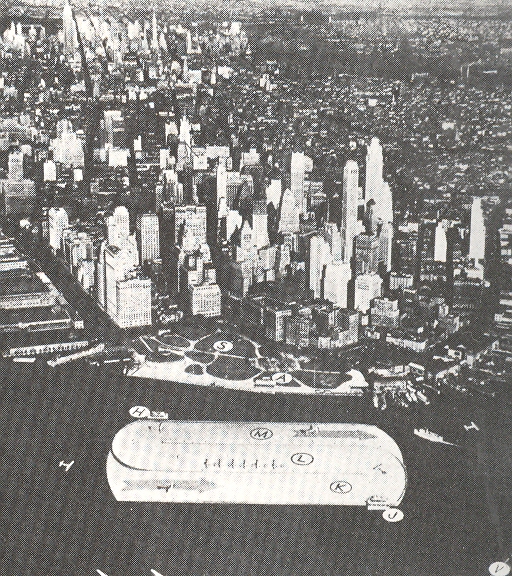
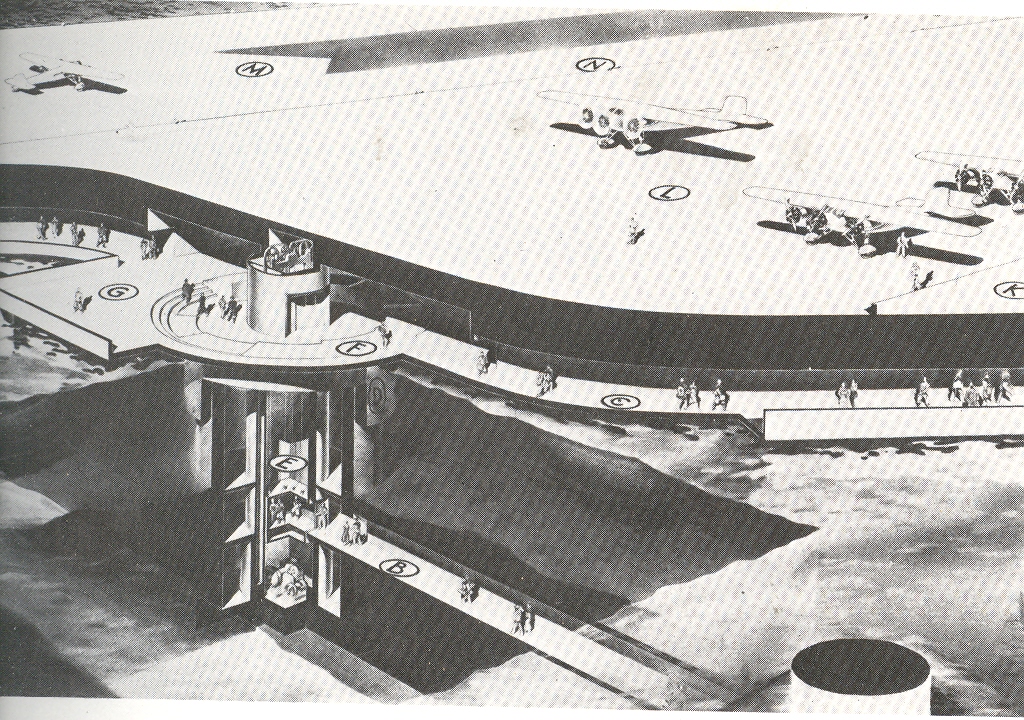
    1--bel geddes airport 2 

    Norman Bel Geddes (1893-1958) made fast, bulbously sleek and varyingly aerodynamic objects and ideas, and was a  vastly successful designer of things ranging from sets for the NY Metropolitan Opera House to telephones to cars to locomotives to the housing for the Mark I computer.  Ideas were his metier, and there seemed no lack of them–good, mostly; bad, sometimes. 

    Bud bad ideas can be beautiful, and elegant, if only for a very short period of time in which they might have actually functioned for the good.  One of these blisterers was his floating airport for the NYC harbor.  Passengers would access the airport via a 800-foot automatic walkway tunnel, and then up to various shuttles and such on the levels below the flight deck. This beast floated on columns floating on mobile caissons just above the harbor bottom, enabling the whole to be turned into or away from the wind, making for easy approaches and departures for the planes. But it is the pilot of the airport that seems most interesting to me, steering the giant propellers that lay under the corners of the structure, pushing the airport into/away from the wind. 

    This may well be the largest mobile steerable structure moving along the shortest courseway conceived as a possibly-buildable project of the twentieth century. 

    Associated posts on great and unbuildable architecture:

    Gigantic
    and Unbuildable Architecture: Philip Johnson and the Walled “Third City“

    Gigantic
    and Unbuildable Buildings: Leroy Buffington, 1889

    Fantastic
    and Unbuildable Architecture #6: the Pyramids of Gizeh in
    Detroit
    (
    Michigan),
    1908

    Gigantic
    and Unbuildable Architecture: Bucky Fuller’s Midtown Manhattan Dome, 1968

    1--bel geddes airport