A Daily History of Holes, Dots, Lines, Science, History, Math, Physics, Art, the Unintentional Absurd, Architecture, Maps, Data Visualization, Blank and Missing Things, and so on. |1.6 million words, 7500 images, 4.9 million hits| Press & appearances in The Times, Le Figaro, Mensa, The Economist, The Guardian, Discovery News, Slate, Le Monde, Sci American Blogs, Le Pont, and many other places… 5000+ total posts since 2008.

Category: History of Goodbye

  • Churchill’s Bunker and the Baker Street Irregulars, June 1940

    JF Ptak Science Books  (Image Post)

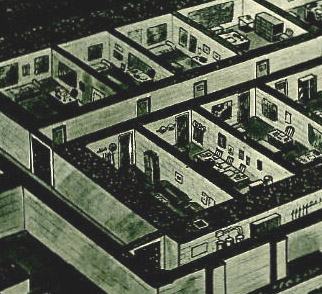
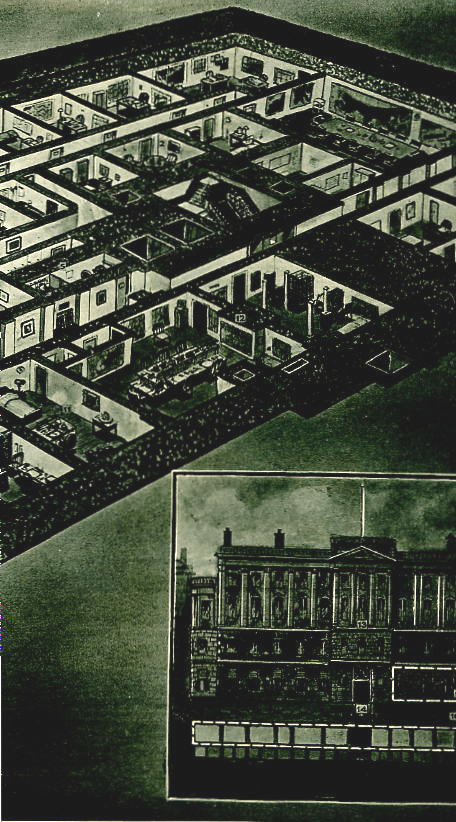
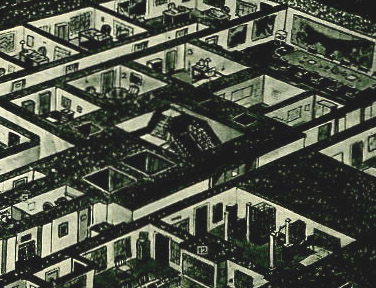
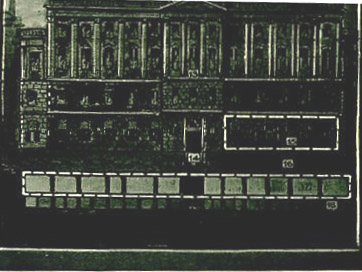
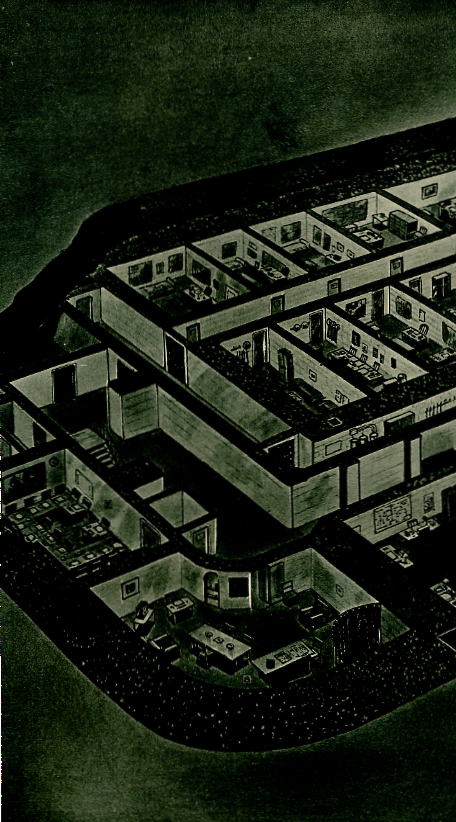
    I had intended to write a full post on this schematic of Churchill’s war-time bunker–about a possible future that never came to be–but it has escaped me, though, the I just couldn’t let go of the date–(June 14) now late–for the formation of the second part of the title of this short post.  (I guess it will become an entry later on in a life-in-the-ground series.) But I thought at least to publish the images of where–the war was fought–and especially, where the Battle of Britain was waged in the middle and later months of 1940–rather than about the other underground war (or warriors) were getting ready to fight an entirely different sort of war.  I’m referring to the Auxilliers, the “Scallywags”, fighters in the league of “ungentlemanly warfare”, the 6,000 or so guerrilla fighters who were being readied to fight the Nazis for the Battle of Britain on British soil by a means other than direct military engagement.  Major Colin McVean Gubbins was in charge of this operation (the Special Operations Executive), and he sought people “who knew the forests, the woods, the mines, the
    old dosed shafts, the hills, the moors, the glens–people who know their
    local stuff”, people who wouldn’t be found, in order to produce a devastating and terminal underground fighting force. Interestingly the headquarters for the SOE was moved by September 1940 to 64 Baker Street, thus giving the folks there the nickname of the “Baker Street Irregulars”.

    I should point out that the SOE was very active in different theatres for  the vast part of the war–I’m just concentrating now on what could’ve been their operations in the U.K.

    These were the fighters who led calm lives during the day who would hen turn into fighters by night who would do absolutely anything to fight the Nazi invading force.  But that’s another story (and ably told by John Warwicker in Churchill’s Underground Army). I’ve bumped into other stories of what the British were planning to do in the face of Nazi invasion and occupation–there was of course stockpiling of materiel and intelligence in removed locations, digging bunkers, readying boobytraps, and so on,  but also aggressive scorched earth plans that involved flooding, sinking part of the Navy, destroying munitions, and so forth: desperate things, heroic measures, to fight to the last. And I absolutely believe that Brits would’ve done every bit of that, fought to the very last possible end and effort, every person doing what was expected of them. 
    File1109 

    File1109 det 2

    File1110 

    File1110 det

     File1112


  • One-Page Letter Establishing the U.S. Chemical Weapons Stance, 1917

    JF Ptak Science Books LLC    Post 981


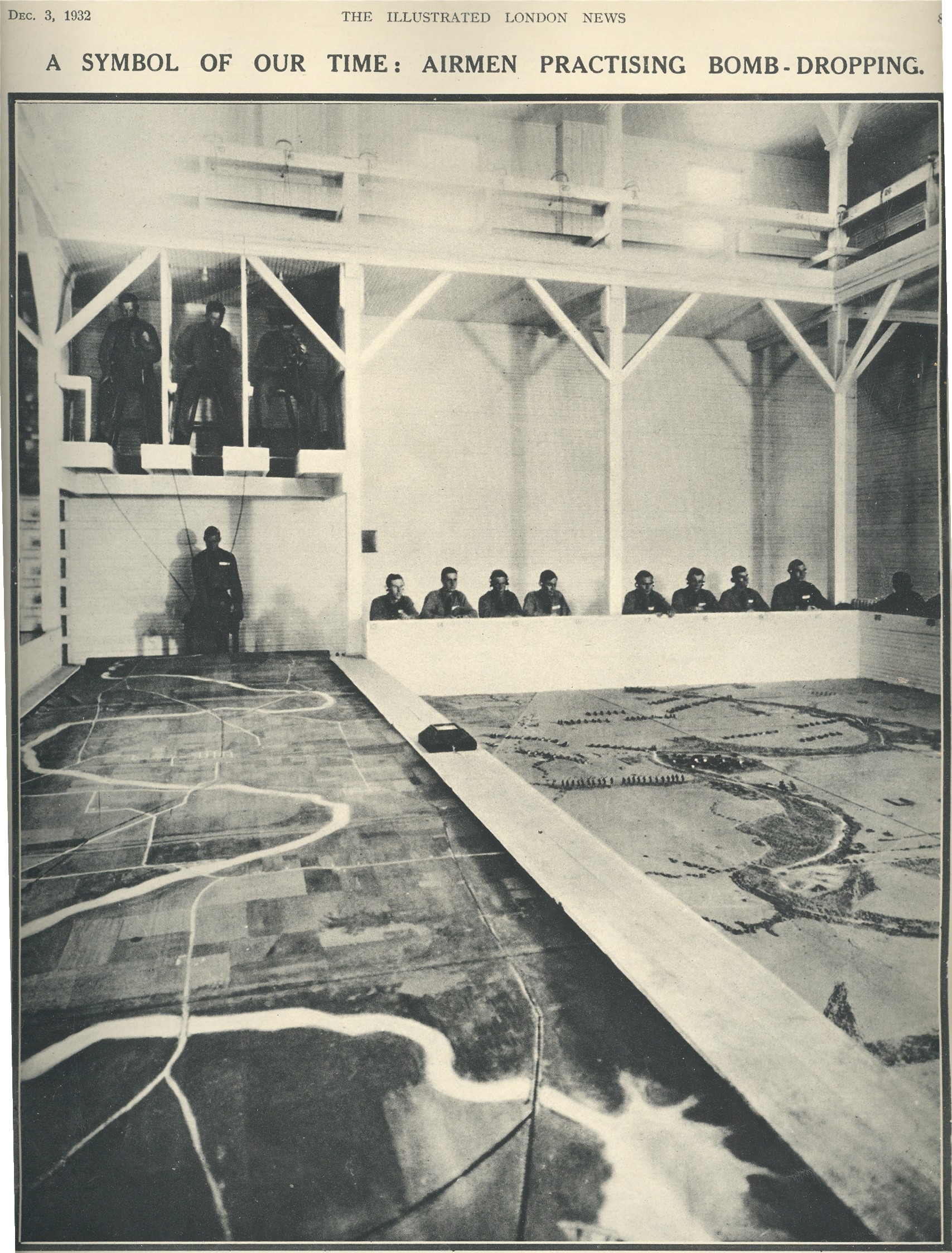
    On 21 December 1917, thee years into the beginning of World War I and eight months after America entered the war, Willis R. Whitney composed this one-page letter composing the American response to the use of poison gas in warfare.  Whitney was head of one the great research laboratories in America—run by General Electric, the GE Lab—and was one of the leaders of the U.S. Navy‘s Naval Review Board (along with Thomas Edison and Hudson Maxim, among others), and wrote to Josephus Daniels, who was at the time the U.S. Secretary of the Navy.  [Image below clickable. The item is also available for purchase via our blog bookstore.]

    Mar 21 gas warfare

    Whitney was a chemist, a former instructor at MIT, and a Ph.D. under Ostwald, a brilliant, “bearish” intellect in many fields, an innovator, and a leader, a tactician.  He summarized the state of affairs, and communicated quickly and with clarity and without hesitation what he thought must be done, and how America should respond to the German chemical threat. 

    The Germans had first used chemical weapons (shells containing xylyl bromide) against Russian troops in Bolimow, Poland.  It was the first foray into a section of the war that caused more than one million casualties and 85,000 deaths.  It would be another three months for the first full-scale use of a chemical weapon—in the form of chlorine gas—in the Second Battle of Ypres.  But the time Whitney sent his letter, chemical warfare had been a deeply-established weapon.

    Whitney recommends that the U.S. begin production; that several plants be established to produce the chemicals, and to get on the matter immediately, suggesting a man to head the work.  As it turns out the work didn’t begin in earnest for a number of months later, the first large quantities becoming available just after the signing of the Armistice.

    {I should note that I purchased this letter–rather, Whitney’s carbon copy of the letter–many years ago from the estate of  a Navy historian.  I am pretty sure that it has never been published before.]


  • Bombing and the End of the World: the Physics of 1932 And All That

    JF Ptak Science Books 

    1932 in my book turns out to be one of the most collectively epochal years in the history of science.  Certainly others stand out for individual achievements, like 1905 (Einstein’s four papers over two volume of the Annalen), 1687 (Principia), but there are other yeas with fabulous achievements by numerous people.

    Mar 7 airmen det


    1543 is one.  That year witnessed the published of Copernicus’ De revolutionibus and Andreas Vesalius’ De humani corporis fabrica, two giant achievements for the outer and inner worlds, one challenging the structure of the universe and the other the Galenic tradition of physiology and anatomy. (To a lesser extent is Peter Ramus’ Animadversions on Aristotle which was a very sustained and elegant attack on the ancient-precept Aristotle an physics.)

    1859 saw the publication of On the Origin of Species…JC Maxwell’s work on the kinetic theory of gases, Riemann’s hypothesis, and the spectacular invention of the spectroscope of Kirchhoff and Bunsen (that turned much of the invisible universe visible).

    Mar 7 airmen det 2


    1939 (nuclear fission, chain reaction, neutron stars, magnetic moments, penicillin (advancement), Vit K, FM) and 1948 (nuclear structure, QED, transistor, Big Bang) also come quickly to mind.

    1932, though is really quite something, seeing a sweeping array of discoveries in the large and small.  Carl Anderson identified the positron while James Chadwick discovered the neutron; also, the Joliot-Curies’ made their monumental discoveries in radiation.1 Iwanenko described the neutron as a constituent f the nucleus, while Heisenberg described the nucleus as composed of protons and neutrons.  Knoll and Ruska built the electron microscope, allowing a vision of the interior parts of the interiors of the smallest things, offering images almost as spectacularly new as Hooke’s two centuries earlier.  Looking up and out, in the same year, Lev Landau postulated the existence of neutron stars while Karl Jansky invented radio astronomy. There was also the perfection of the “Polaroid” process by Ed Land, and the isolation of ascorbic acid (Vit C, by  Charles Glen King, and the beginning of a long war between him and Szent-Gyorgyi on priority of discovery).  (In the non-sciences, there was the addition of Franklin Roosevelt and Adolf Hitler to their national agendas. It was also a banner year for literature: Death in the Afternoon, Ernest Hemingway; Light in August, William Faulkner; 1919, John Dos Passos; The Thin Man, Dashiell Hammett; Tobacco Road, Erskine Caldwell; Young Lonigan, James Farrell; Little House in the Big Woods, Laura Ingalls Wilder; and Brave New World, by Aldous Huxley…)

    Mar 7 airmen 


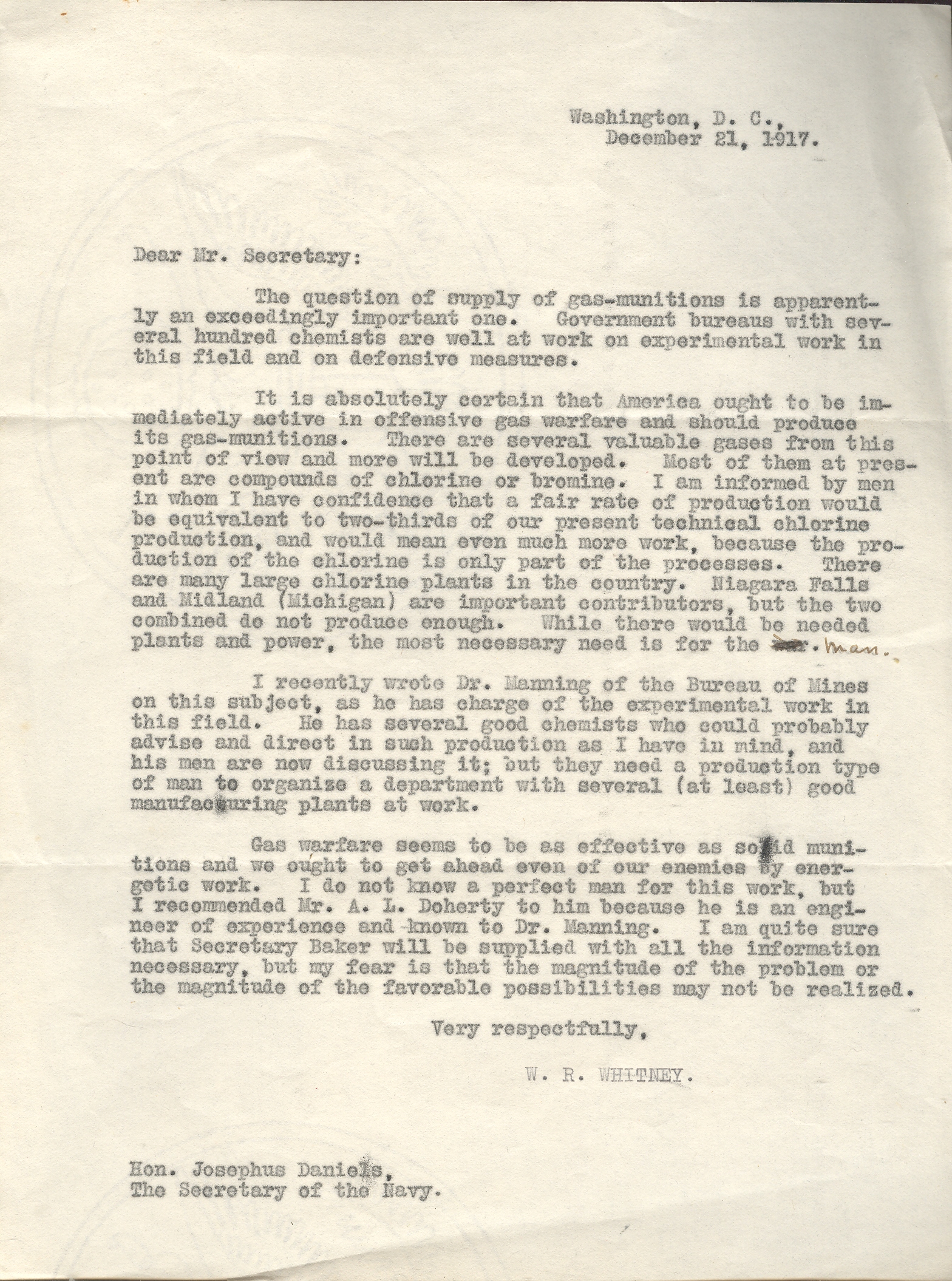
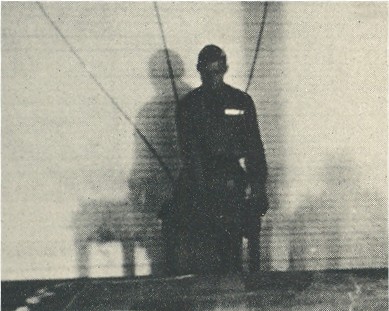
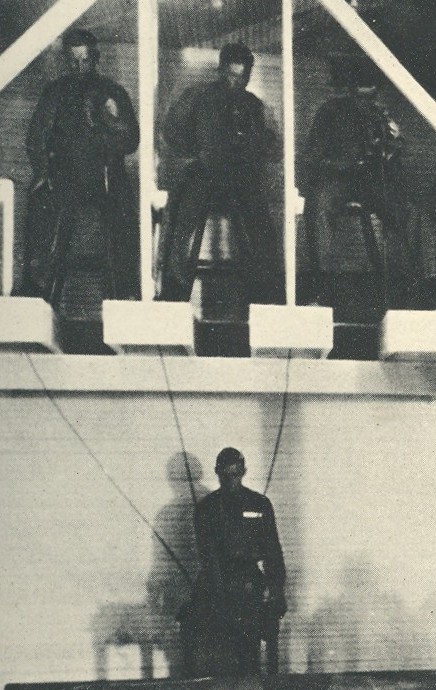
    The thread of thinking about all of this came to mind looking at this image of a bombing instruction room for aviation in England in 1932.  The image is also a great one; the aviator at far left looks like a marionette; the three men above responding to his piloting maneuvers as he concentrates on the endless panoramas of landforms that advances before him on a horizontal diorama.  It is a fabulous analog flight simulator constructed at a time of great change in aviation

    Wonder stories

    1932 is also the year of the publication of Carl W. Spohr’s classic future-vision/speculative fiction apocalyptic-atom bomb end-of-the-world two-parter (so many hyphens!) that appeared in Wonder Stories.2 The story begins with a relatively simple series of catastrophic bombings that lead to a sort of détente, a kind of mutually assured destruction, which is then upset when the combatants discover and construct the atomic bomb.   MAD breaks down, and the ensuing massive exchanges result in a  devastated world.   Pretty prescient stuff, all-in-all, even so far as the policy goes—especially so when you wrap this sci-fi story around the elements of 1932—Chadwick, Anderson, Joliot-Curie—that made all of this stuff possible just 13 years later.

    Notes

    1 The Joliot-Curie discovery was called “one of the most important discoveries of the century… the consequences of the discovery of artificial radioactivity are immense” from Segrè, From X-rays to Quarks, 198-199).  

    2.  Part one appeared in the March issue, which also carried stories like“Red April, 1965” by Frank K. Kelly; “The Eternal World” by Clark Ashton Smith; “Waves of Compulsion” by Raymond Gallun; “Mutiny on Mercury” by Clifford D. Simak; “The Time Stream” by John Taine (Eric Temple Bell), and others.  Pretty good bumper crop of sci-fi writers in itself.


  • Things They Took To War, 1915

    JF Ptak Science Books Post 923

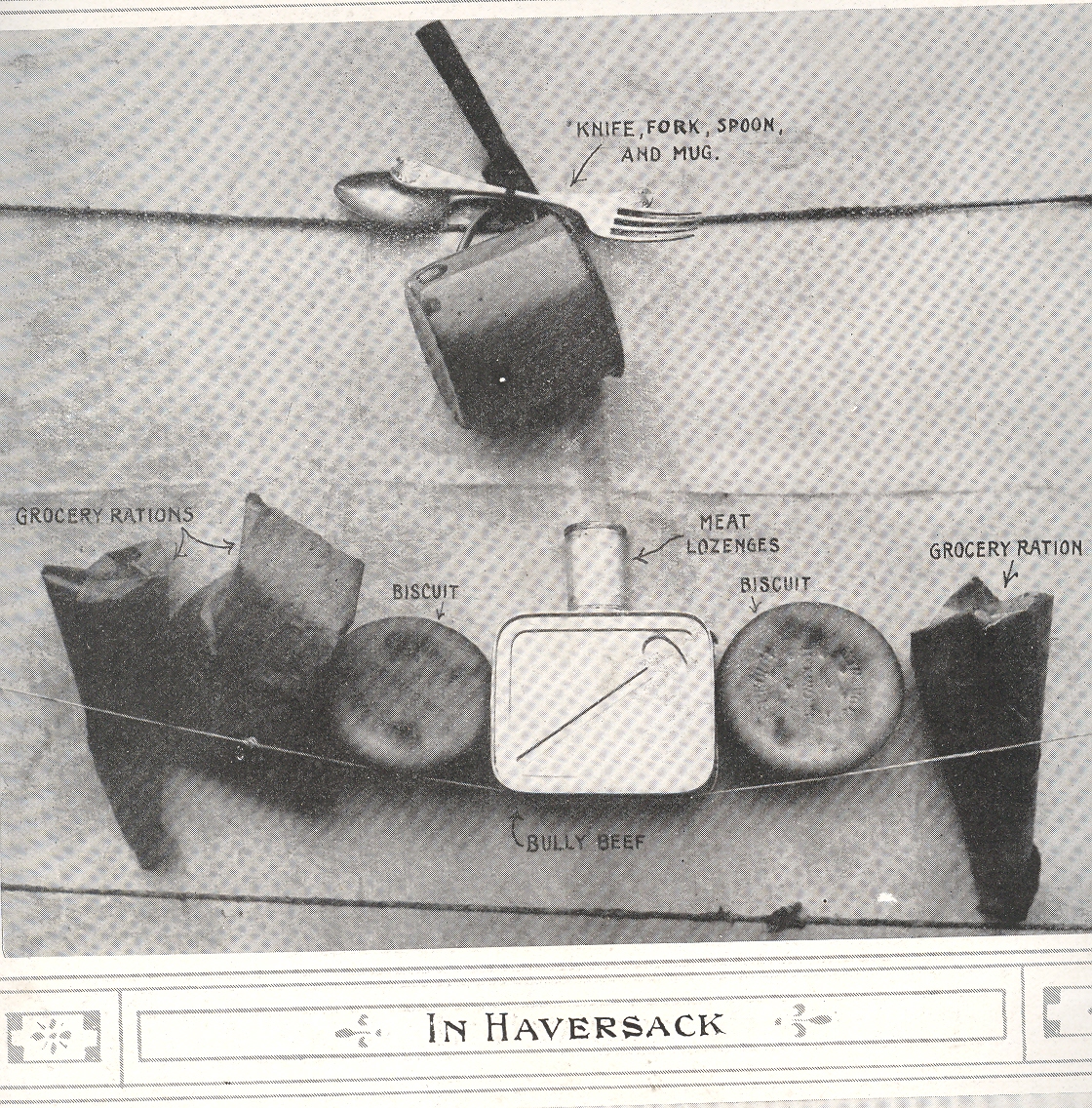
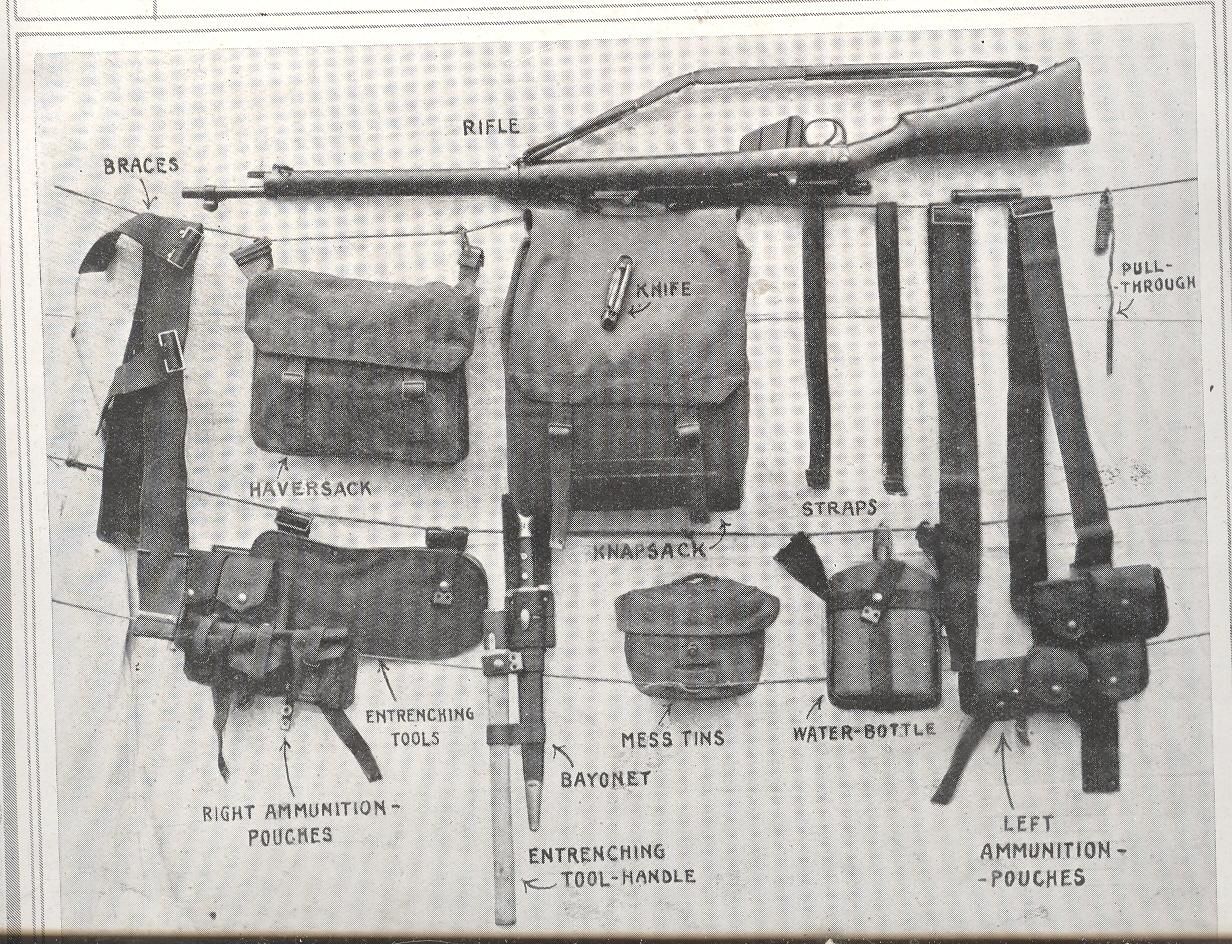
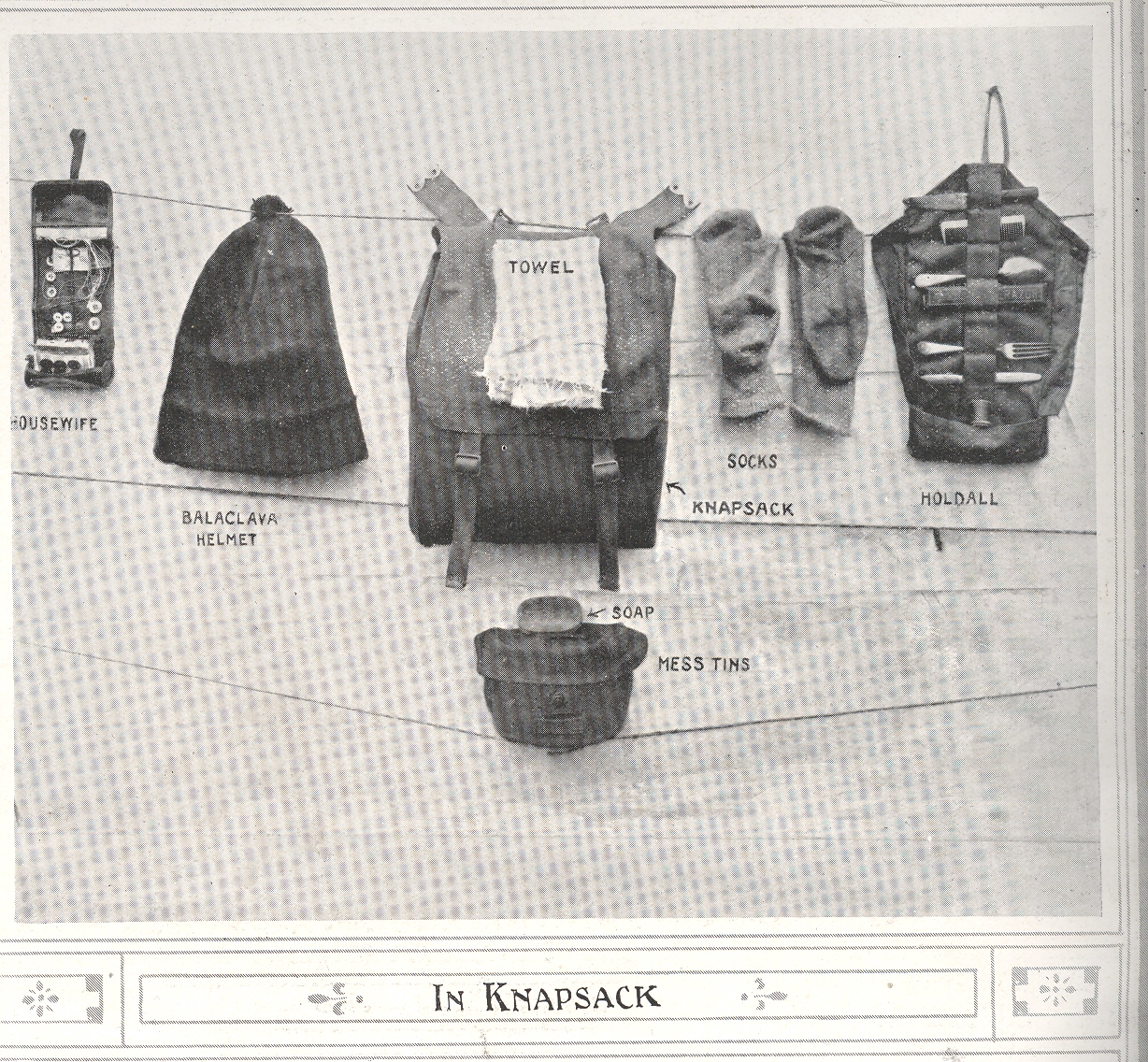
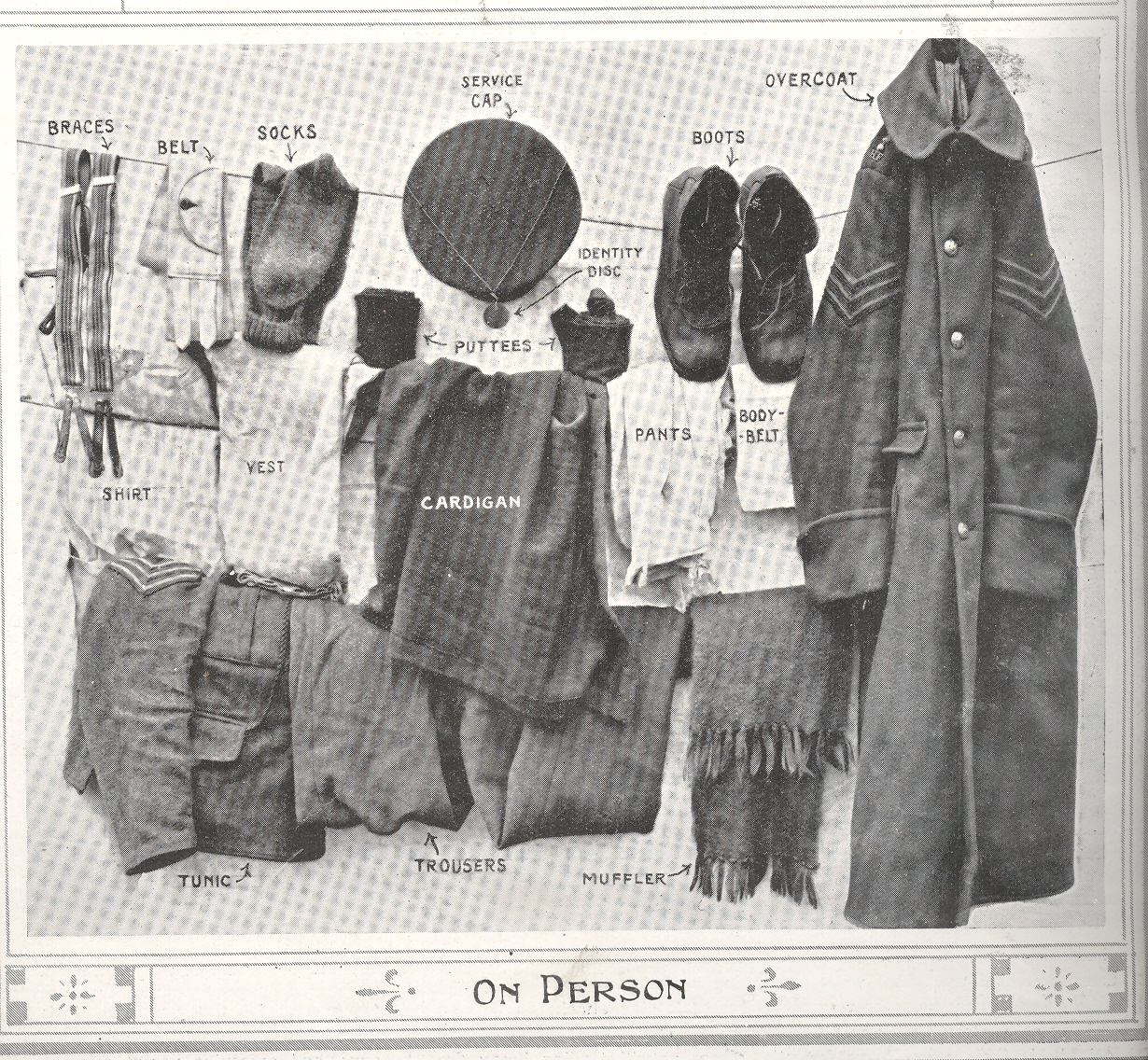
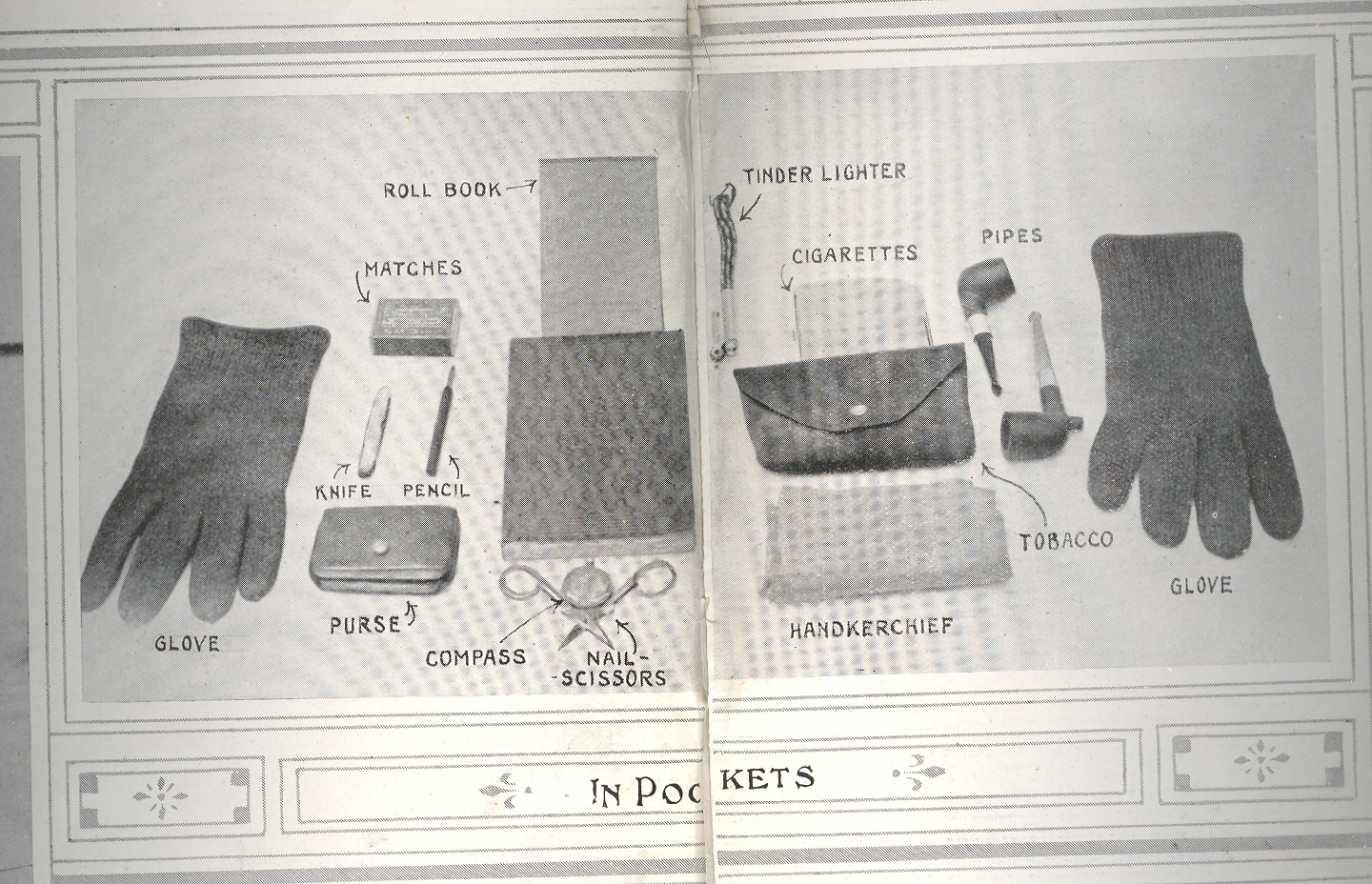
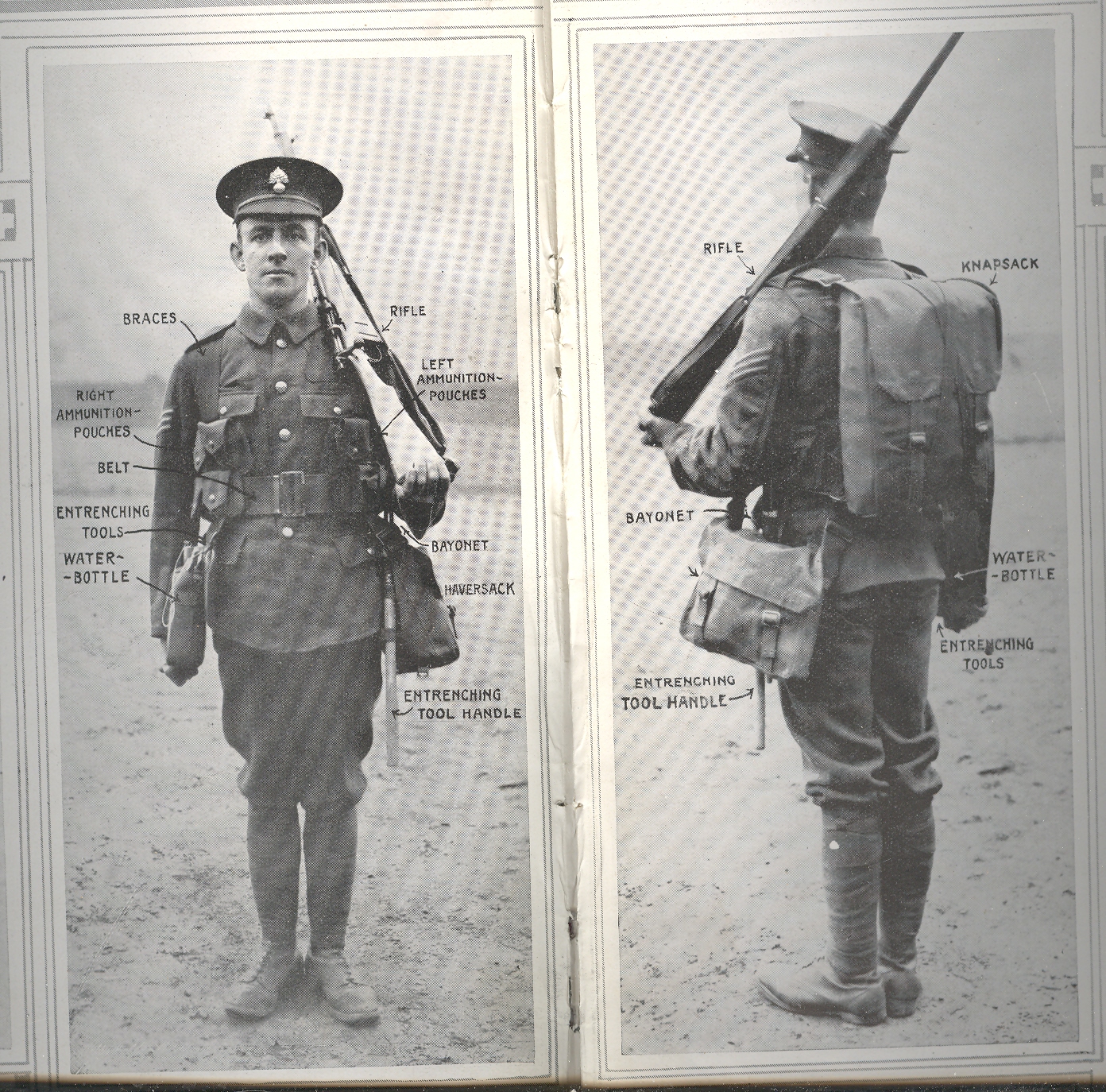
    The 27 Feb 1915 issue of The Illustrated London News is remarkable.  Yesterday’s post was generated by an image appearing in it of sappers mining under a battlefield to create an underground attack on the enemy’s trench lines.  A few pages into the issue shows a series of pictures describing the regulation issue for an enlisted man headed into combat—simple, scary, and heartrending. And of course a true measure of the courage and fortitude of these millions of men who marched to the Front with all what today looks to be  not-adequate material.  It is hard for me to imagine going off to conquer your enemy and your own fear with these sorts of supplies, marching along with all of these slight bits jangling and clanging to each of my steps.

    [All of the images are expandable.]

    Blog jan 30 infantry top left

    The images themselves are, I think, unintentionally spectacular for their design and arrangement, not the least of which is the fact that all of the materiel is suspended from rope or wire. 

    Blog jan 30 infantry btm left

    There is no way for me to know what of this material was instantly discarded (if any), or what was thrown into ditches because they didn’t make sense or were too heavy or cumbersome or got in the way.  Or what of these supplies were actually carried into battle.  Given the nature of the fighting, perhaps all of it was carried in and out. 

    Blog jan 30 infantry right top

    Basically though the pictures just make me uneasy, nervous; so many things look so slight and needy.  The canteen looks tiny; there’s only two pair of socks (!?) but two pipes; the “grocery ration” looks inadequate; the ammunition pouches look stingy. But the “housewife” looks useful, and its always good to have scissors, and a handkerchief.  I’m not so sure about the purse.

    Blog jan 30 infantry right btm

    It just seems to me an amazing display of the stuff that the British soldier was given to haul into the future with him. 

    Blog jan 30 infantry center top 

    Blog jan 30 infantry center btm


  • Bad Places to Be Dept., #1:Fighting Underground in Sub-Trench Warfare, 1915

    JF Ptak Science Books  Post 922

    “Johnny, get your gun, get your gun, get your gun.

    Take it on the run, on the run, on the run.
    Hear them calling you and me,
    Every Son of Liberty.
    Hurry right away, no delay, go today.
    Make your Daddy glad to have had such a lad.
    Tell your sweetheart not to pine,
    To be proud her boy’s in line.”
    –Opening of George M. Cohan’s “Over There”

    Blog jan 29 trench bot right det

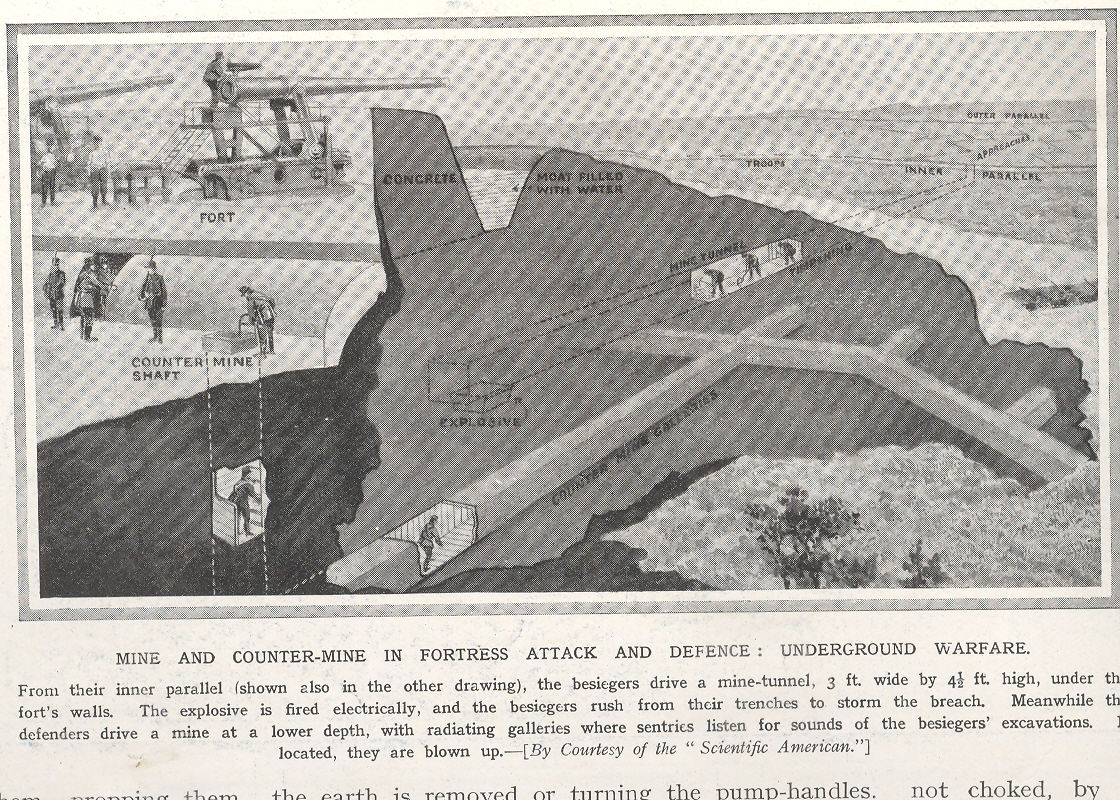
    It is difficult to think of soldiers fighting one another across hedgerows or trenches, hiding behind earth, creating a death-vacuum on the land in between–but worse yet would be fighting in these scenarios underground. 

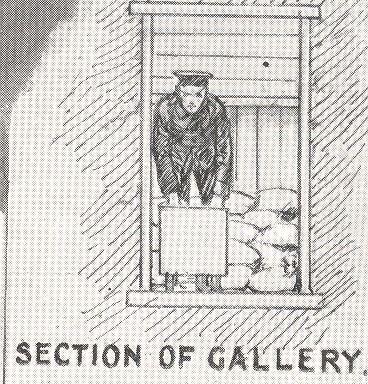
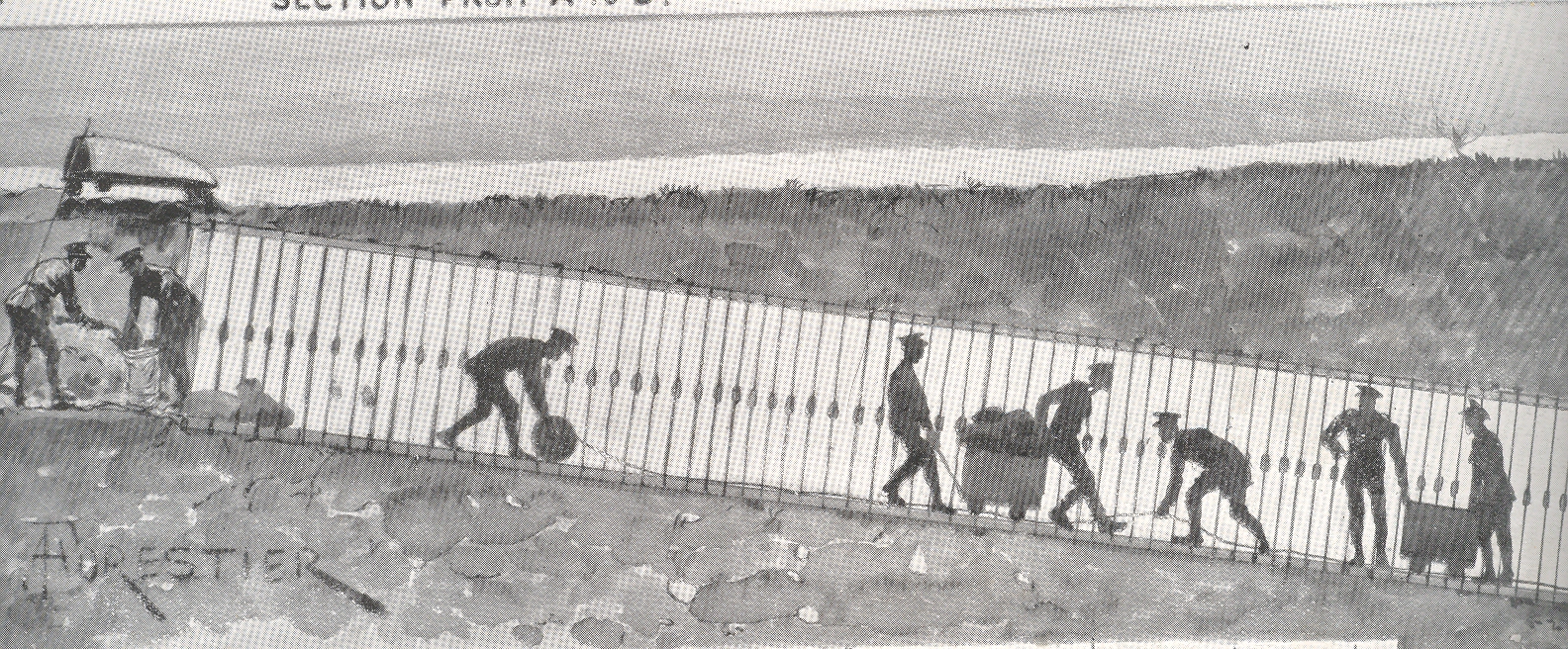
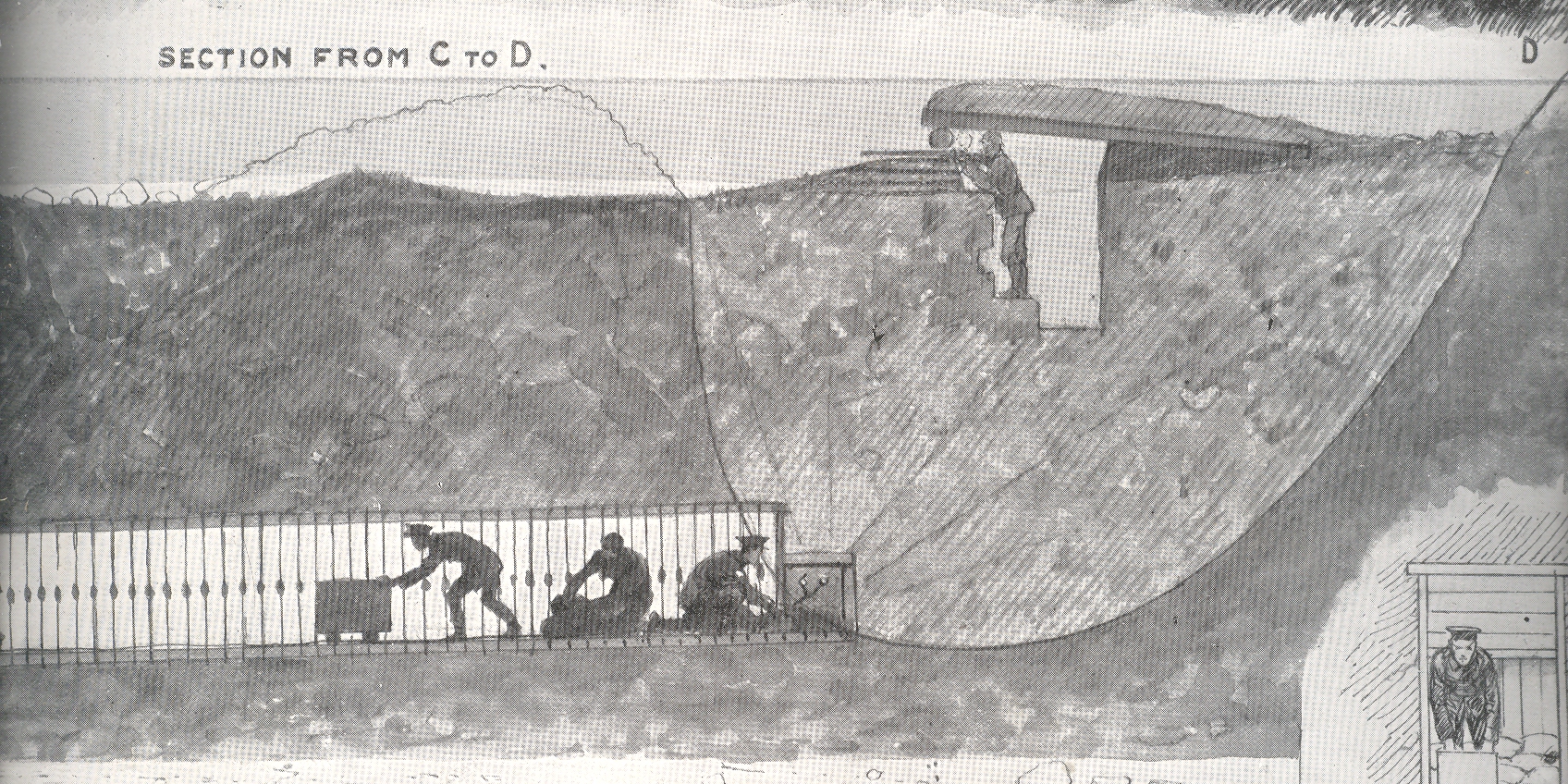
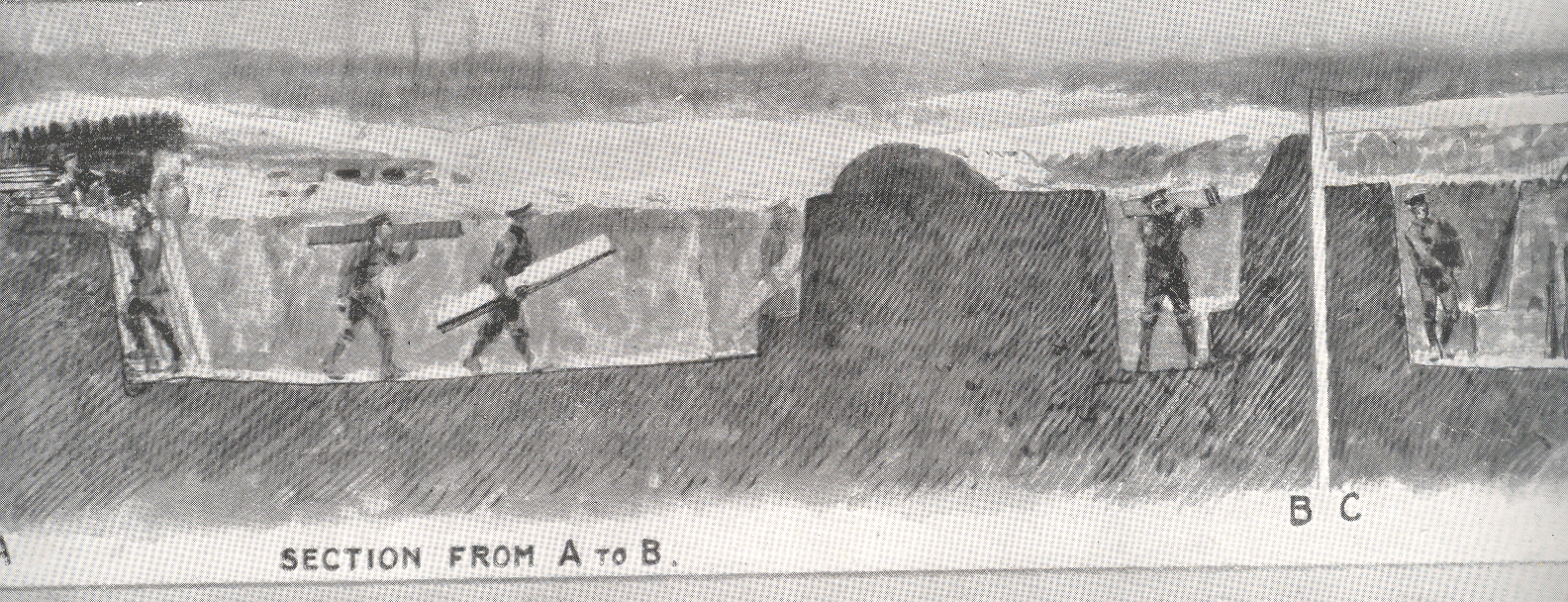
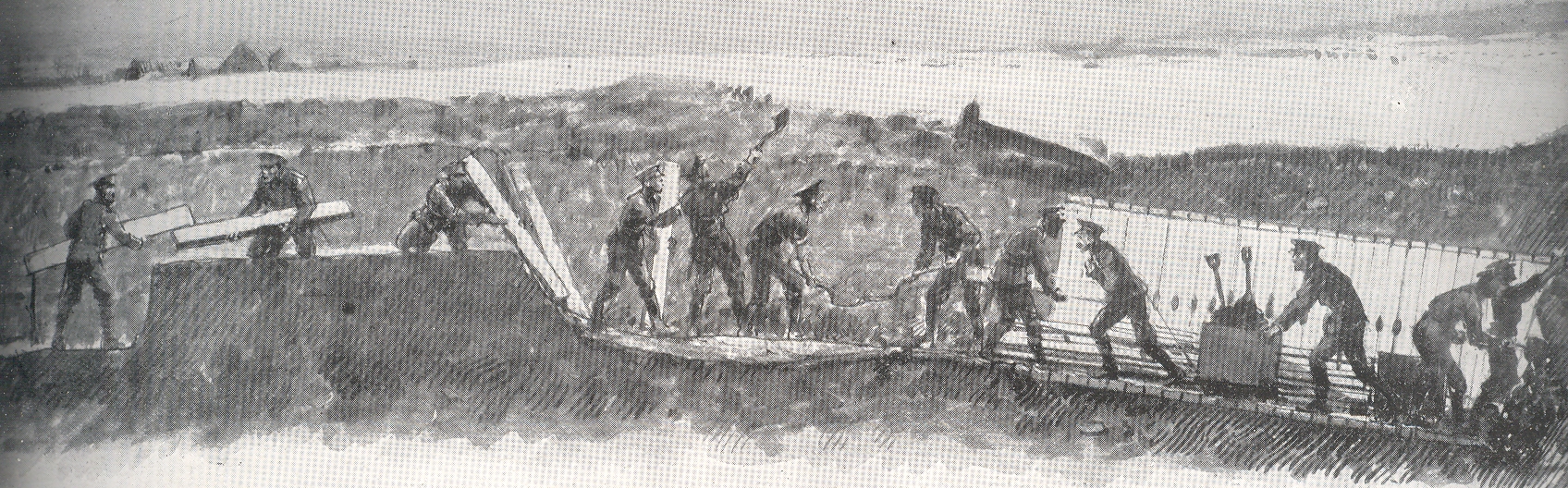
    Finding this large double-page illustration in The Illustrated London News1gave me a physical reaction like the one I get when thinking about the discarded  Dalton Trumbo’s2  anti-war novel, Johnny Got His Gun.  The novel’s main character (Joe Bonham) is virtually encased in his own mind, having lost his arms, legs and face in an explosion on a WWI battlefield—the story is told from his bedridden perspective; dark, bandaged, alone, his mind and brain functioning, and with little means of communication or control over his body. .Among other obvious things, it makes me feel a peculiar stuffy coldness.  [The two sets of four images following should be viewed as two-parts of one long image, the bottom part being on the right.]

    Blog jan 29 trench botm left


    Blog jan 29 trench bot right

    And so too when I look at these soldiers tunneling under a dead battlefield, working their way slowly—a foot an hour—towards the enemy trenches, desperately trying to blow a hole in an immovable object resistant to infantry and artillery.  The soldiers—sappers—were sent in to do a job that could no longer be accomplished above the ground.

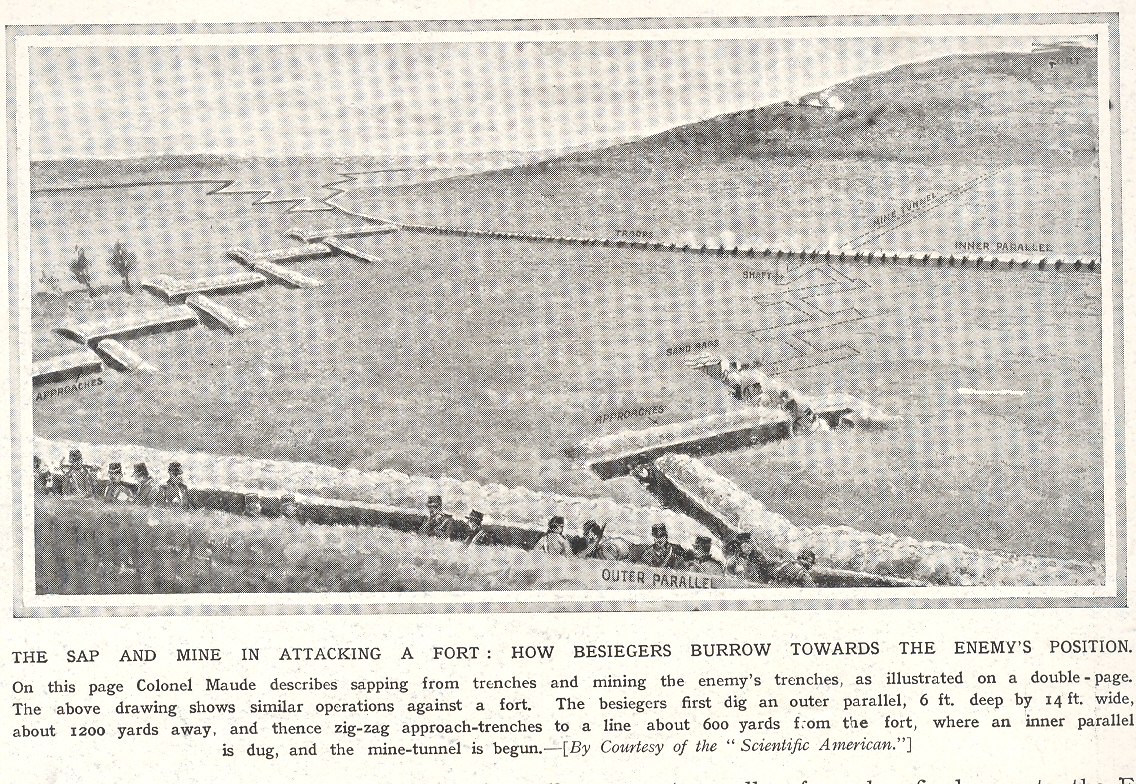
    This sort of warfare is extremely old, though the name is not, being about 150 years old. These soldiers were forward combat engineers, and had training across a number of different areas—they were responsible for many technical chores, like building (and blowing up) bridges, laying/clearing minefields, general demolition, defense construction, and, of course, fighting.  It could be a tremendously difficult job, unimaginable.

    Blog jan 29 trench mid left 1


    Blog jan 29 trench mid right


    The “sapp” part of “sapper” comes from the French “sappe”, which refers to the other main part of their job during WWI, which was digging advancing trenches, a zigzag construction of a long horizontal half-hole which allowed an infantry force to slowly advance towards an enemy’s entrenched position. Another part was to tunnel under the enemy’s lines, and then blow them to smithereeens so that a successful attack could be launched into the weakened position.


    Here’s what I think about when I think about these men doing this job:  that two teams, British and German, start to tunnel towards each other’s lines, and somehow, in the middle of the battlefield, somehow manage to dig directly towards one another, their tunnels literally colliding.  Hand-to-hand combat through the opening connecting the two sapper tunnels, then gunfire.  Alerted, the artillery from each side zero-in on what is suspected to be the opening end of the tunnels, pummel them, destroying the access.  So now, both sets in what is now virtually one tunnel, are fighting in the dark.  Even though the topside is only two feet away, any hole would open into the killing zone, making it impossible to escape that way.  It would be a bad place to be.

    Blog jan 29 trench overview sap top Blog jan 29 trench overview sap bot

    Notes

    1. The issue is 27 Feb 1915.  The illustration is entitled “They Sent us in front with a Fuse an’ a Mine’, Sapping and Mining Under the Enemy’s Trenches”. The first half of the title is from Kipling’s “Sappers”: They send us in front with a fuse an’ a mine , To blow up the gates that are rushed by the Line…

    2. Trumbo has an interesting history, to put it mildly. An old Communist, he once gave up his old associates to the FBI at the start of WWII–an act he later thought of as being stupid and wrong.  It also had the opposite effect for him–he thought he was being patriotic, but the FBI was more interested in him than his information.  He would get eaten up by McCarthyist operatives and denied HUAC any information on any of the famous “Hollywood Ten”.  He got a year in jail and was blacklisted, booted out of LA. He came back–mostly under someone else’s name (see the link above for his screenwriting credits, which are substantial)–and acknowledged shortly before he died.


  • Time’s Bad Hair Day: 1540

    JF Ptak Science Books Post 863

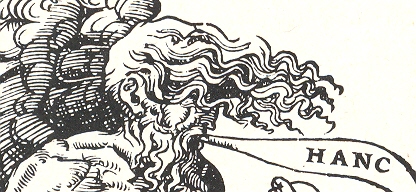
    Blog 12 4 time hair detail


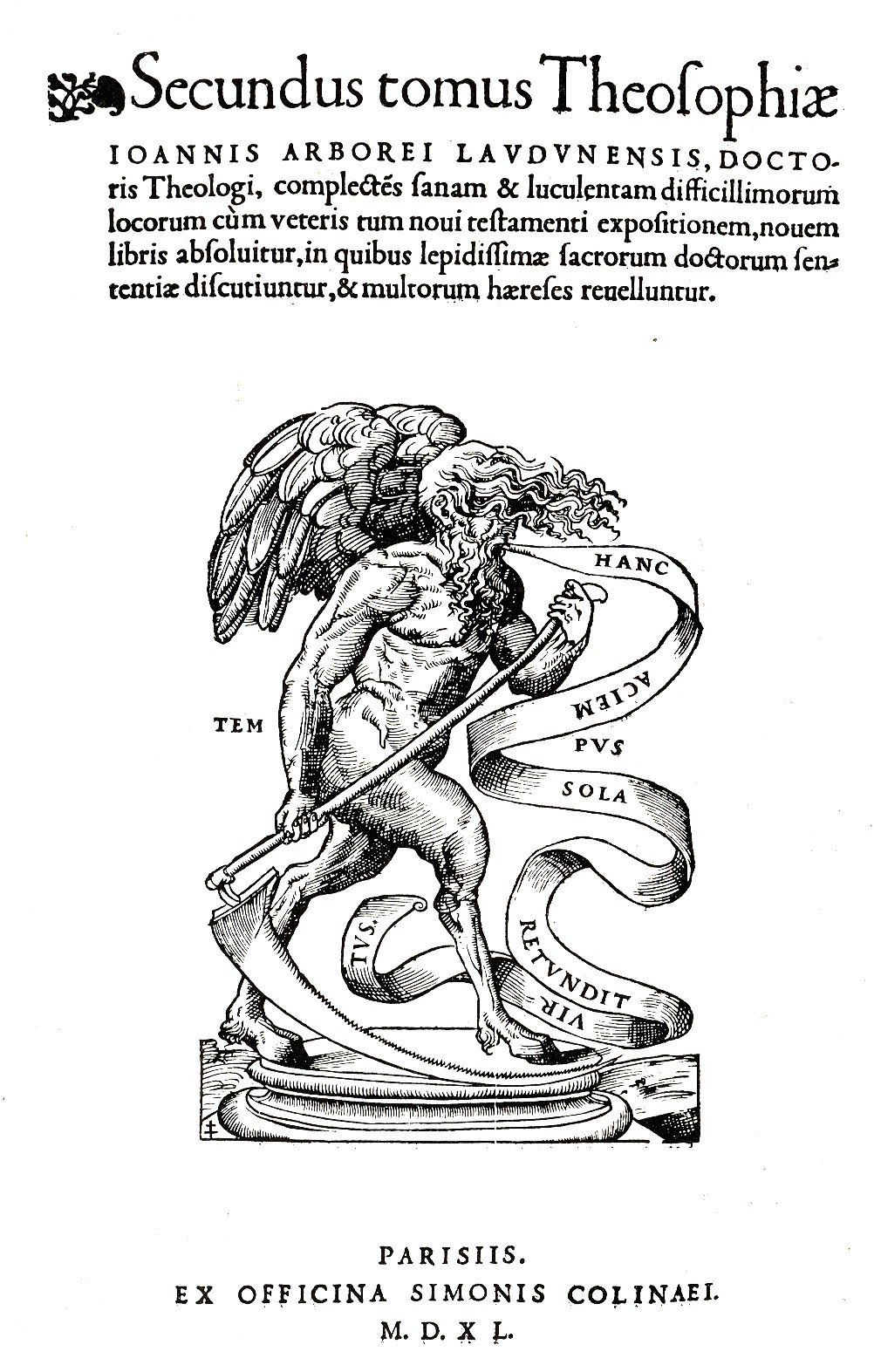
     This image proves that even Time itself can have a bad hair day, from time to time.  The woodcut image appears as the printer’s mark (of Simonem Colineum, or Simon de Colines) in the second volume of Johann Arboreus’ Theosophia, complectens difficillorum…, which was printed in Paris in 1540. 

    Blog 12 4 time hair

    Time isn’t very pretty here, and is made to seem a little Satanic, what with cloven hooves and the legs of some animal, strong torso and swift wings—the hair hiding the eye(s) completes a picture of damnable doom, and of whatever end we’re coming to.  Except for the righteous, though not quite: the word balloon describing Time’s spoken admonition is “Hanc Aciem Sola Retundit Virtus”, which means “only good deeds dulls the blade”.  That doesn’t necessarily mean “stops” the blade, which is bothersome.  I think that if someone were coming for me I’d like the blade as sharp as could be…

    ·Posted by :

    ·in:

    — —

  • Anatomical Reminders of Passing Time

    JF Ptak Science Books LLC  Post 860 

    + dec 2 skull hole  

    I have been
    paying attention recently to anatomical figures studying other anatomical
    figures (a post soon to come).  But in
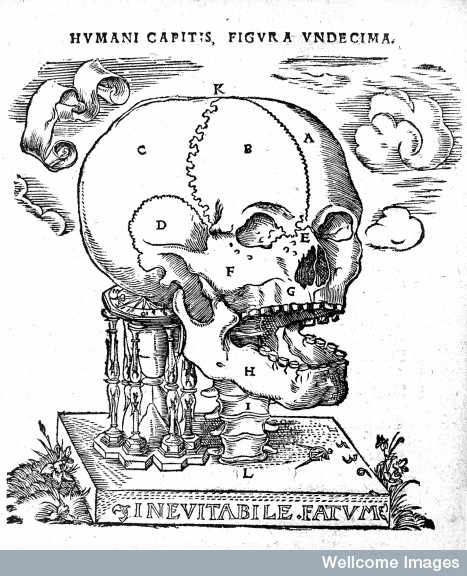
    the midst of this came this great woodcut reminding us all of our impending and
    ever-looming end of days, and found in Johann Dryander’s (1500–1560) fabulous pre-Vesalian
    anatomy (or pre-1543)
    Anatomiae, hoc est, corporis humani dissectionis pars prior…(published in Marburg by Eucharius Cervicornus in 1537).  One of the reasons for the book’s great importance
    was that it was about the first anatomy to focus and specialize on one part of
    the body, and it was also one of the first few where the anatomist worked on
    his own dissections. 

    You’d
    think that seeing anatomies and dissected bits of body would quickly remind the
    reader of the grave, but this was not quite enough for Dryander’s artist, who
    though to add the depleted hourglass to prop up the gap-mouthed skull—just in
    case you weren’t already paying attention to obvious symbolism. 

    Note:  image from the Wellcome Institute website which also has many other images from the book, including successive images of the dissection of the head. 

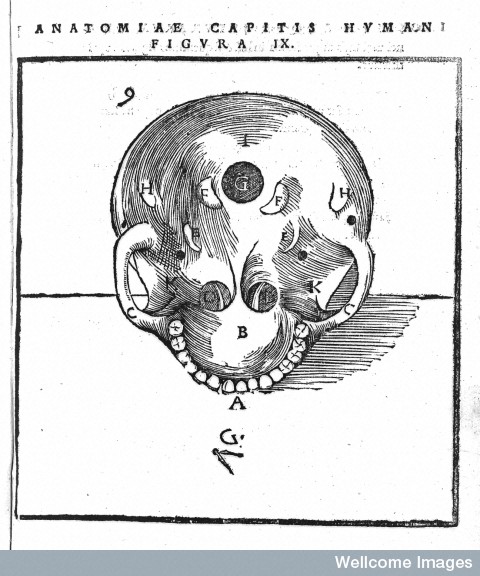
    Oh, here’s another, just an unusual perspective of the skull, seen from the bottom up.

    + dec 2 skull bottom


  • Objects from the Last Full Measure, 1944

    JF Ptak Science Books LLC  Post 852

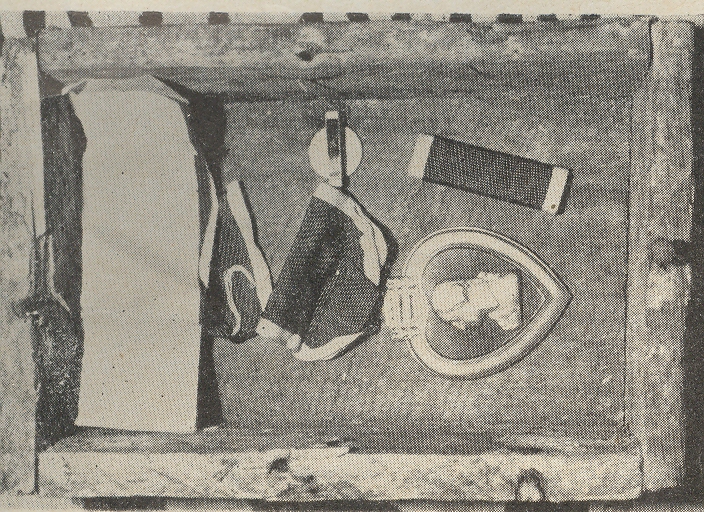
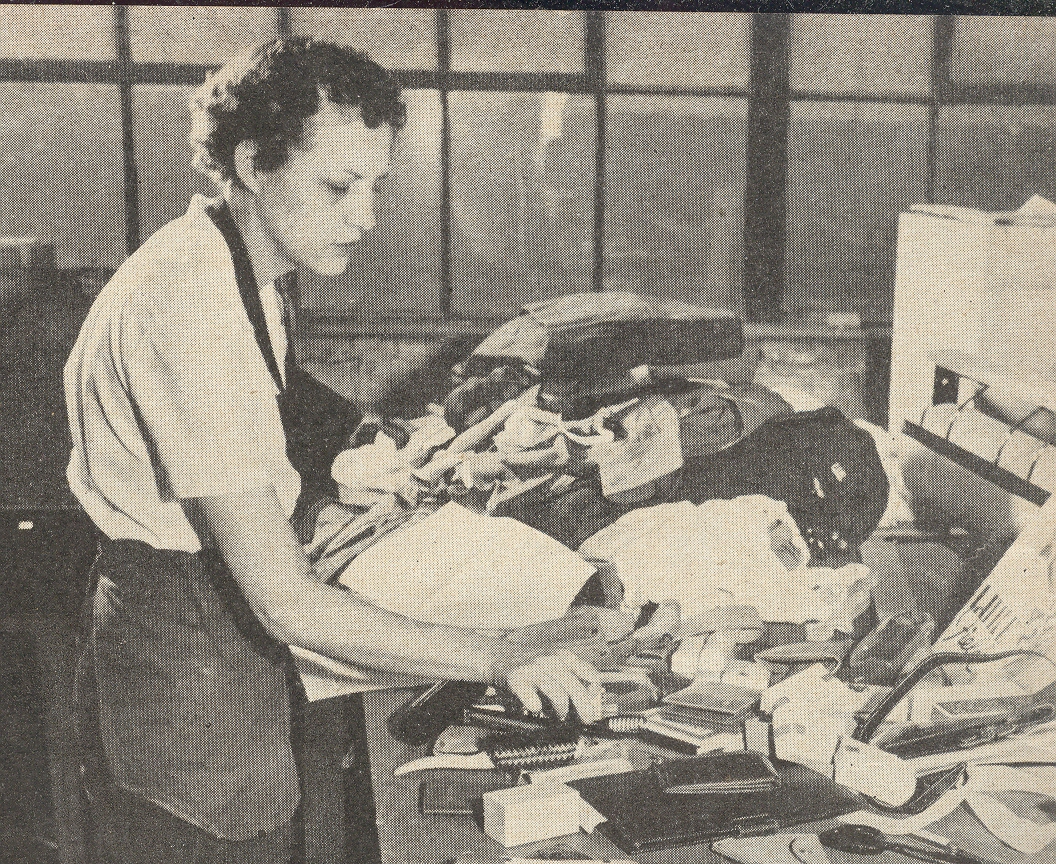
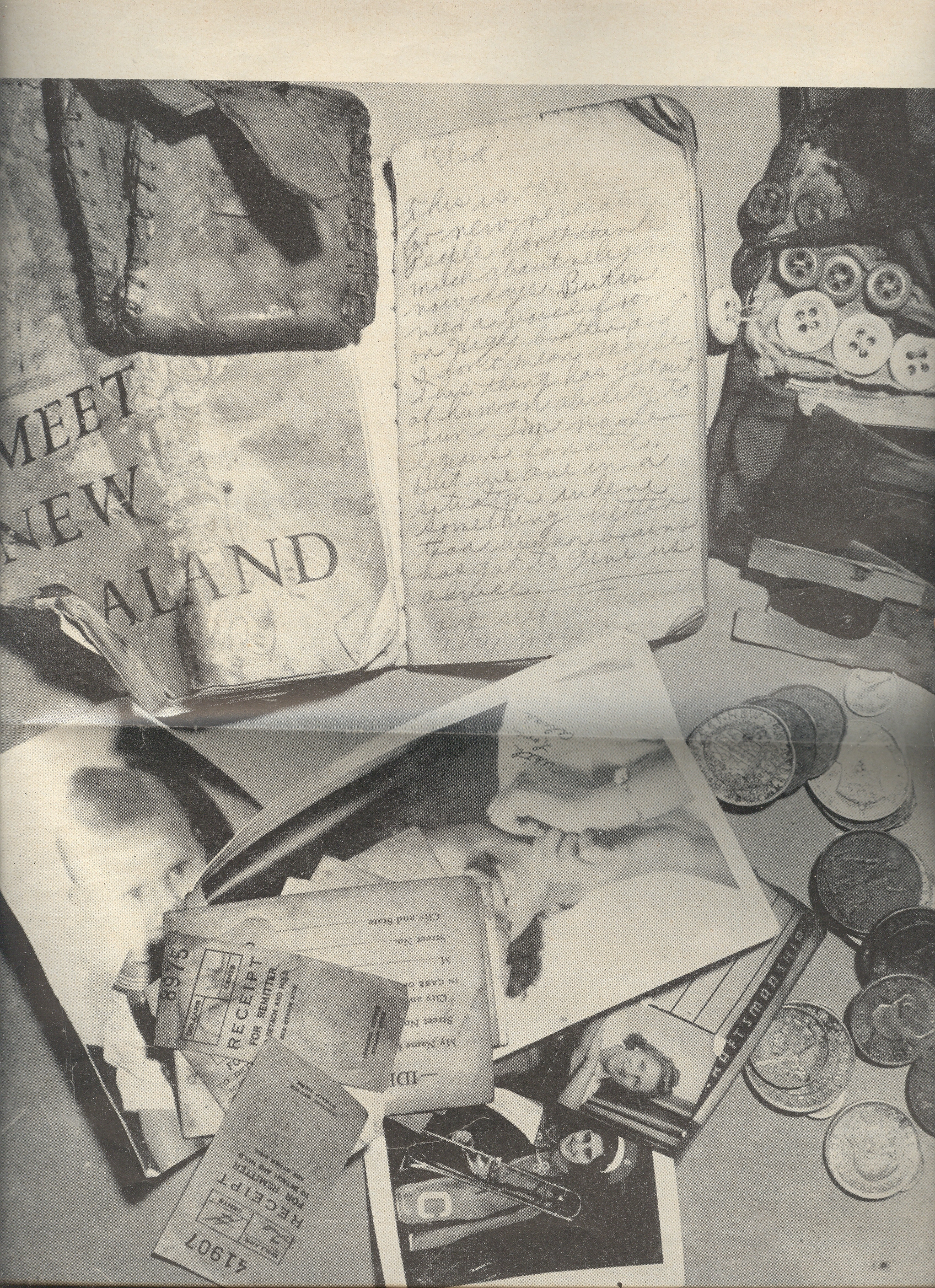
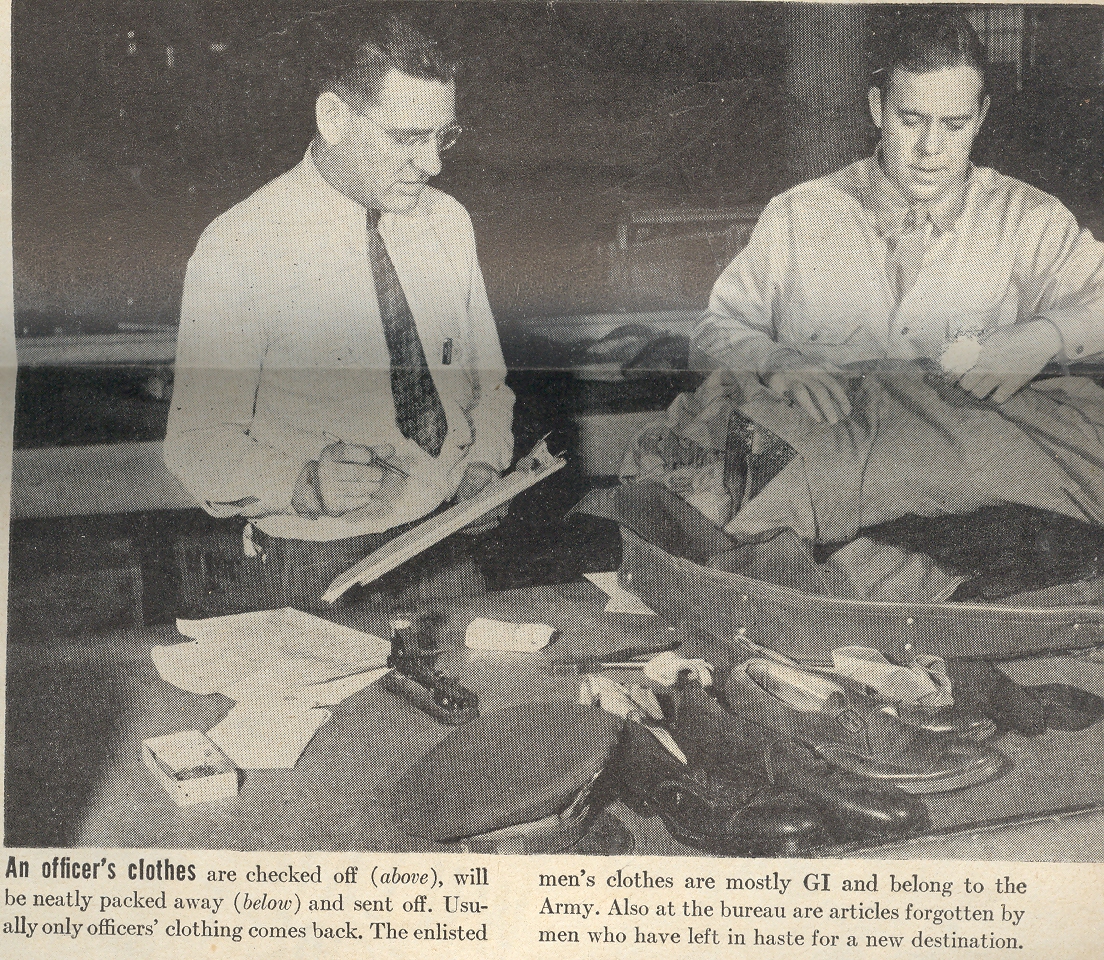
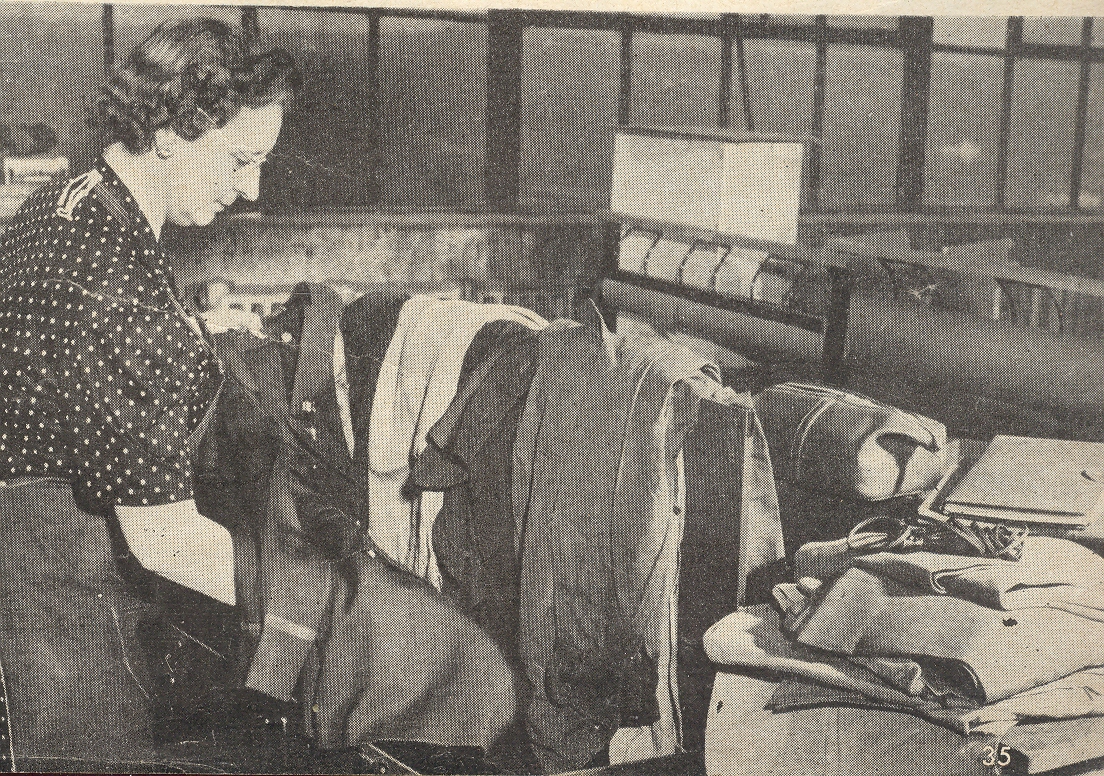
    ++ Nov 25n purple The material documented in this 17 April 1944 LIFE magazine article are the effects
    of dead soldiers.  It was surprising to
    see this sort of coverage, given the place and the time: I do not think that we
    will see photographs like this for our currents wars.  The title of this short photo essay—the
    shockingly stunted and bald “Dead Men’s Things”—should certainly have been
    something else with more dignity than a movie title for a schlock Hollywood
    B-production of the ‘50’s.The article is weirdly disjointed and heavy handed
    considering the great and respectful duty at hand. ++ Nov 25n lady I’m not saying that the writer didn’t
    understand the enormity of the situation, as the article puts it quite
    well:  “To the people who go there, it
    seems a more sacred place than a cemetery and the ordinary things it handles
    seem the best kind of memorials to men who will never return…”  The clumsy manner in which the whole deal is
    presented was probably a series of unfortunate errors by a time-pressed
    editor. 

     ++ Nov 25n dead men big

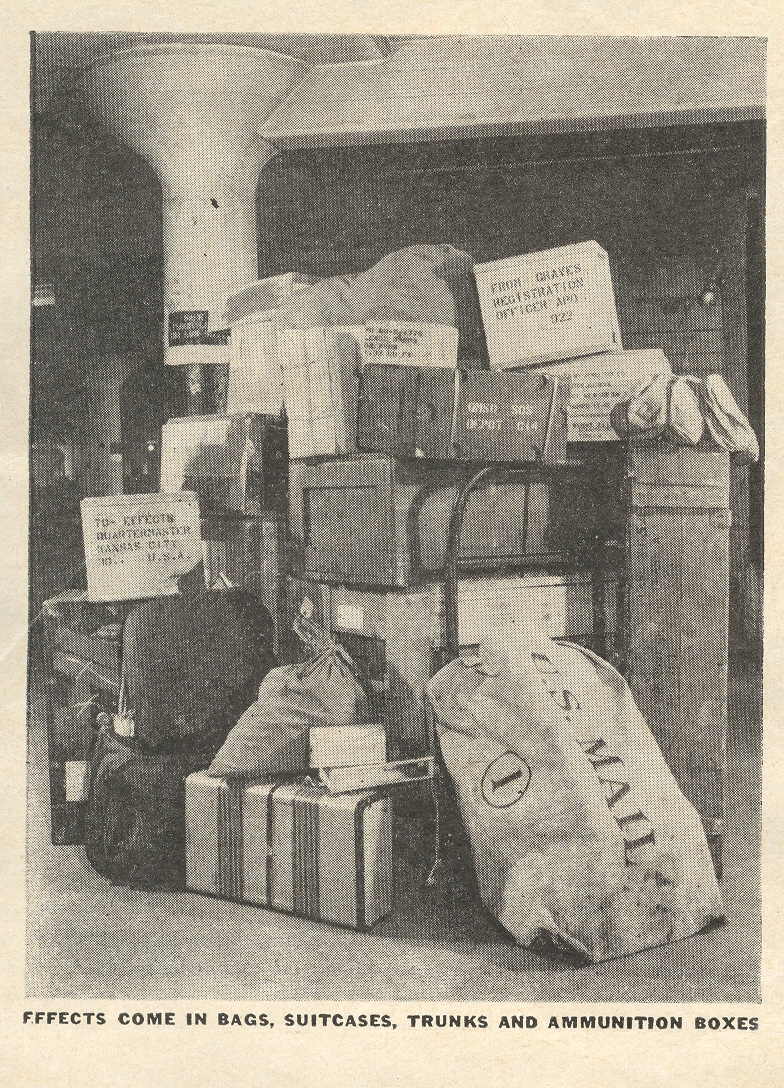
    The story of the belongings of the killed servicemen goes
    like this: the effects were collected by the quartermaster corps in a small village
    in France, stored in 11
    buildings and 150,000 square feet of storage, and then sent to the Army Effects
    Bureau1 in Kansas City, Missouri. 
    From there the material was further sorted and checked and
    double-checked, and checked again, and then sent on to the next of kin. 

     ++ Nov 25n 2 guys

    It sounds like an overwhelming job, helping in the attempt
    to deliver the high honor of restoring the last objects carried by a dead son
    into battle to his parents.  The thing I
    can’t get out of my mind is the continuous rising tide of bags and boxes coming
    in from Europe, all intimate reminders of
    great loss.

    ++ Nov 25n 2nd lady  

    1.  “The job of the Commanding Officer, who is
    the Effects Quartermaster (Continent), is to receive and safeguard thousands
    of’ packages of irreplaceable
    personal property until they can be returned to the owner or forwarded to the
    Army Effects Bureau at Kansas City for disposition. Q-290 serves as a holding
    and reconsignment depot in transmitting the property of casualties from the
    unit in the field back to the owner, or in forwarding property of deceased to
    the U. S.”

    ++ Nov 25n luggage

    “When a soldier becomes a casualty (either
    deceased, hospitalized, captured, interned, or missing), his unit commander
    collects all personal property, inventories it, removes government property,
    and forwards all the personal items to Q-290, marked with the owner’s
    identification and status. If the owner is deceased, the property is documented
    and forwarded immediately to Army Effects Bureau, Kansas City, for transmission to the next of
    kin. If the owner is hospitalized, the property is placed in storage
    indefinitely, subject to disposition instructions from the owner. If the owner
    is missing, captured, or interned, the property is stored so that he may claim
    it upon return to duty.”– From documentation on the website of the Army Quartermaster
    Museum
    .


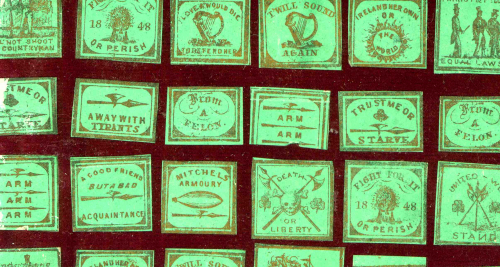
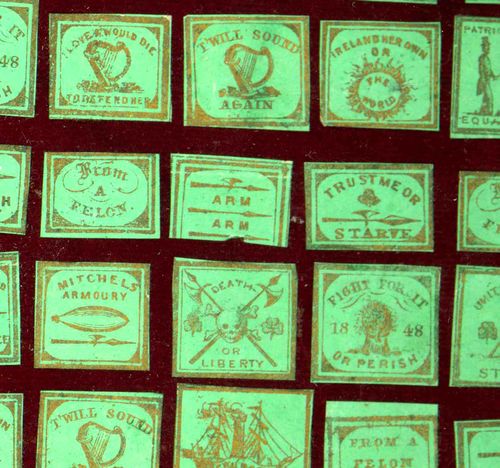
  • Curious, Secretive, Sacred Irish Independence Political Icons (?)

    JF Ptak Science Books  Post 821  Blog Bookstore


    “Malone. … My father died of starvation in Ireland in the black ’47. Maybe you heard of it?
    Violet. The Famine!
    Malone (with smouldering passion) No, the Starvation. When a country is full of food, and exporting it, there can be no famine. Me father was starved dead; and I was starved out to America in me mother’s arms. English rule drove me and mine out of Ireland . …” —George Bernard Shaw, Man and Superman (1903)


    0--blog---Nov 28 irish137


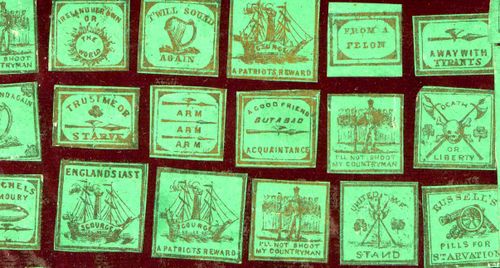
    “The Almighty indeed sent the potato blight but the English created the famine…a million and half men, women and children were carefully, prudently and peacefully slain by the English government. They died of hunger in the midst of abundance which their own hands created.”—John Mitchel (1815-1875), Irish Nationalist (and listed as a “martyr” in one of these badges/stamps)

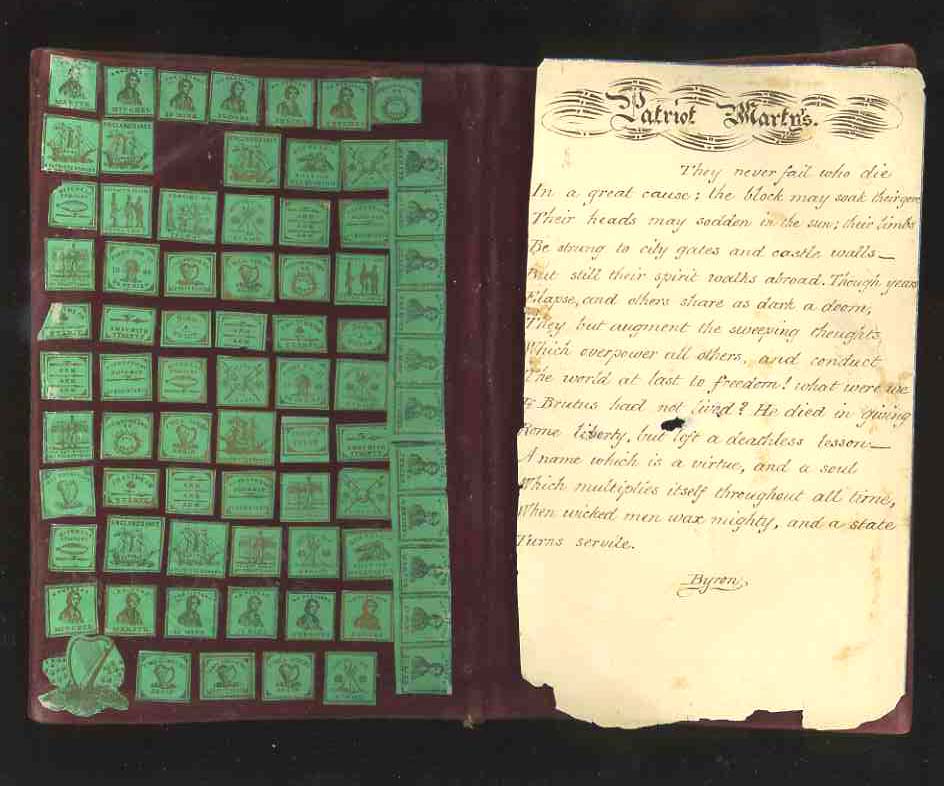
    I’m sorry to say that I do not know the origin of these diminutive, powerful emblems, and that what follows is all guess-work. They are only about a half-inch square or so, but they hold very powerful meanings in their messages.  I imagine that they were political messages to be worn, or posted in the mail, or used in subversive ways–because their messages were enormously subversive, taking on the occupying power of Great Britain at a time of supreme and enforced deprivation, an occupied people fighting against a spectacularly-better equipped foe.  The messages related to the Great Famine of 1847-1849, when the potato crops failed for three consecutive seasons , initiating a chain of events that caused the deaths of perhaps two million people, or 20% of the entire population of Ireland.  People didn’t starve so much as they did die of associative diseases related to the process of starving to death, al of which it seems could have been addressed by some sort of effort by the British government.  It does seem to me as though the people of Ireland were left to flounder and drown.  The stories of the extreme deprivation are horrible:  starving dogs digging up the bodies of the recently unguarded dead, rats attacking the dying for food, and so on.  Terrible, miserable stories coming from what is probably the worst of period of starvation in European history.  the scene has been duplicated numerous times in this century killing hundreds of millions of people:: in Soviet Stalin’s filthy anti-human pogroms, under the equally filthy Maoist adventures in production and nationalist strength in China, in Biafra, in Darfur, and on and on in our frailly stupid political existence here on Earth.

    The small badges have always seemed somewhat sacred to me; there’s just such a feeling of hope and inspiration and overwhelming empathy in them.  
     

    0--blog---Nov 28 irish 144


    0--blog---Nov 28 irish 145

    0--blog---Nov 28 irish138

    0--blog---Nov 28 irish 143


  • A History of Goodbye, Part I: “Goodbye” in Book Titles

    JF Ptak Science Books LLC  Post 707  Blog Bookstore 

    Nil sapientiae odiosius acumine nimio

    (“Nothing
    is more hateful to wisdom than excessive cleverness”), said by Poe in his “The
    Purloined Letter” to be from Seneca1.

    ===blog august 5==mirrour

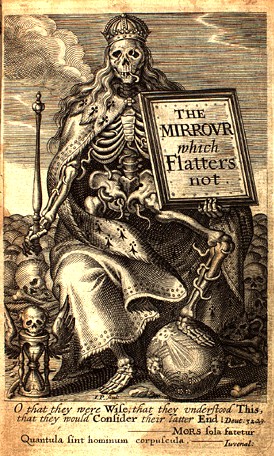
    Several posts ago I made reference to Jean Puget de la
    Serre’s wonderfully semi-vicious book The Mirrour Which Flatters Not (1639).   Serre was hardly an oasis of negativity in
    the early Enlightenment, writing as he was on matters epically moral—I must
    admit that I was attracted to the title of this condemning and biting book, and
    frontispiece illustration, which features a royal skeleton wormily seated  in a field of skulls holding the mirror that awaits us all. But as it turns out—ironically, too, perhaps—in
    the long parting salvo that seems to have been the crux of his book’s biscuit,
    Serre’s translator, Thomas Cary, is one of the earliest English writers to use
    the word “goodbye”.  Why this was done, I
    haven’t the foggiest notion—I do know that writers claim that this is a
    contraction of the parting salutation of “god be with you”, but that’s all I know on the subject. 

    But it did cause me to think about the word “goodbye” and the whole concept of parting from something, or someone, and of change, and adventure , of something happening, flux, introducing or diminishing chaos.  If it is anything at all, the idea of “goodbye” will probably not lead to boredom; ennui is a definite some-percentage possibility,  but it is a direct promise of change for good or for ill or for nil.

    And the best place I thought to start of looking at Goodbye is at the beginning,  in the titles of books, where “Goodbye” or “Good-bye” makes infrequent appearances. 

    There are titles that say
    Goodbye
    to people:  Mr. Chips,
    Columbus, Picasso, Sister Disco, Mickey Mouse, Judge Lynch, Descartes. And Goodbye… to places: Berlin, Europe, Los Angeles, New York, Venice, Earth.

    They are of varying qualities.  This is definitely judging a book by its
    title, but I think I’d rather read Death
    in Venice
    more so than Goodbye to
    Venice
    , which sounds like it might be a Weekly Reader version of 
    Mr. Mann’s big/little write. 

    And of course Goodbye…
    to things, not too many of which sound very appealing:  Hangovers, Weight, Love, Sanity, Health,
    Life.  These are the books invisibly clamoring for
    space and life at the 25-cent table at the library sale as they wait their turn to say “hello” to recycling.

    Then there are the Goodbye…
    titles that are Not Terribly Categorizable:  Goodbye Girl, Say Goodbye, and of course Never Say Goodbye, and the lovely Goodbye Blue Monday (the rest of the
    title of Vonnegut’s Breakfast of
    Champions…
    ).  The Long Goodbye has always sounded languid and steamy and
    the-ice-is-all-melted-y to me.  Hello Goodbye just can’t seem to make up
    its mind. So far as I can tell there are no books simply entitled Goodbye, nor has anything ever been on
    bookseller shelves called Get Out,
    though there is a book called Go Away. Hello Goodbye either can’t make up its mind or is welcoming Goodbye, which may or may not be a broken logical circuit.

    The playing field gets very wide for book titles (and
    everything else) when “goodbye” gets more expanded, less demanding, more diplomatic,
    like, say , with Farewell My Lovely.

    But that’s another story. 
    And so for this bit on the History of Goodbye, I use Mr. Graves, and say
    Goodbye to All That. 

    Footnote

    1. Evidently, it is not.  By the
    way, for all of the great amusement and entertainment taken from this great and
    wise short story, Poe received a payment of $12 in 1845.

    ·Posted by :

    ·in: