A Daily History of Holes, Dots, Lines, Science, History, Math, Physics, Art, the Unintentional Absurd, Architecture, Maps, Data Visualization, Blank and Missing Things, and so on. |1.6 million words, 7500 images, 4.9 million hits| Press & appearances in The Times, Le Figaro, Mensa, The Economist, The Guardian, Discovery News, Slate, Le Monde, Sci American Blogs, Le Pont, and many other places… 5000+ total posts since 2008.

Category: Anticipation, History of

  • Map of Newsboy Work Violators, 1915–Child Labor & Child Scavengers

    JF Ptak Science Books   Post 1330 [Part of a developing series in the History of Normalcy]

    “There is work that profits children, and there is work that brings profit only to employers. The object of employing children is not to train them, but to get high profits from their work.” — Lewis Hine, 1908


    As rudimentary as the title of this pamphlet seems, it isn’t really quite so, not really completely in the column of not having child laborers and exploiting children.  There is a degree of exploitation allowable–yes it was a different time–and the map that I’ve plucked from this work shows the extent of rough-edging of the law that was tolerated.  The authors weren’t so much concerned that there were 2500 newsboys in Boston-proper hawking newspapers morning/noon/night, but rather that they found over a third of them weren’t wearing their Newsboy Selling Badge when confronted.  And it wasn’t that they were under-aged–just that they were badgeless. 
    Child scavengers362

    On the other hand, the Massachusetts Child Labor Law Committee cited unidentified “critics” (and I don’t doubt that there were many) saying that “children don’t work enough nowadays, and that child labor laws have left nothing for children to do, especially in the cty where there are no chores”. (This work is available for purchase from our blog bookstore.)

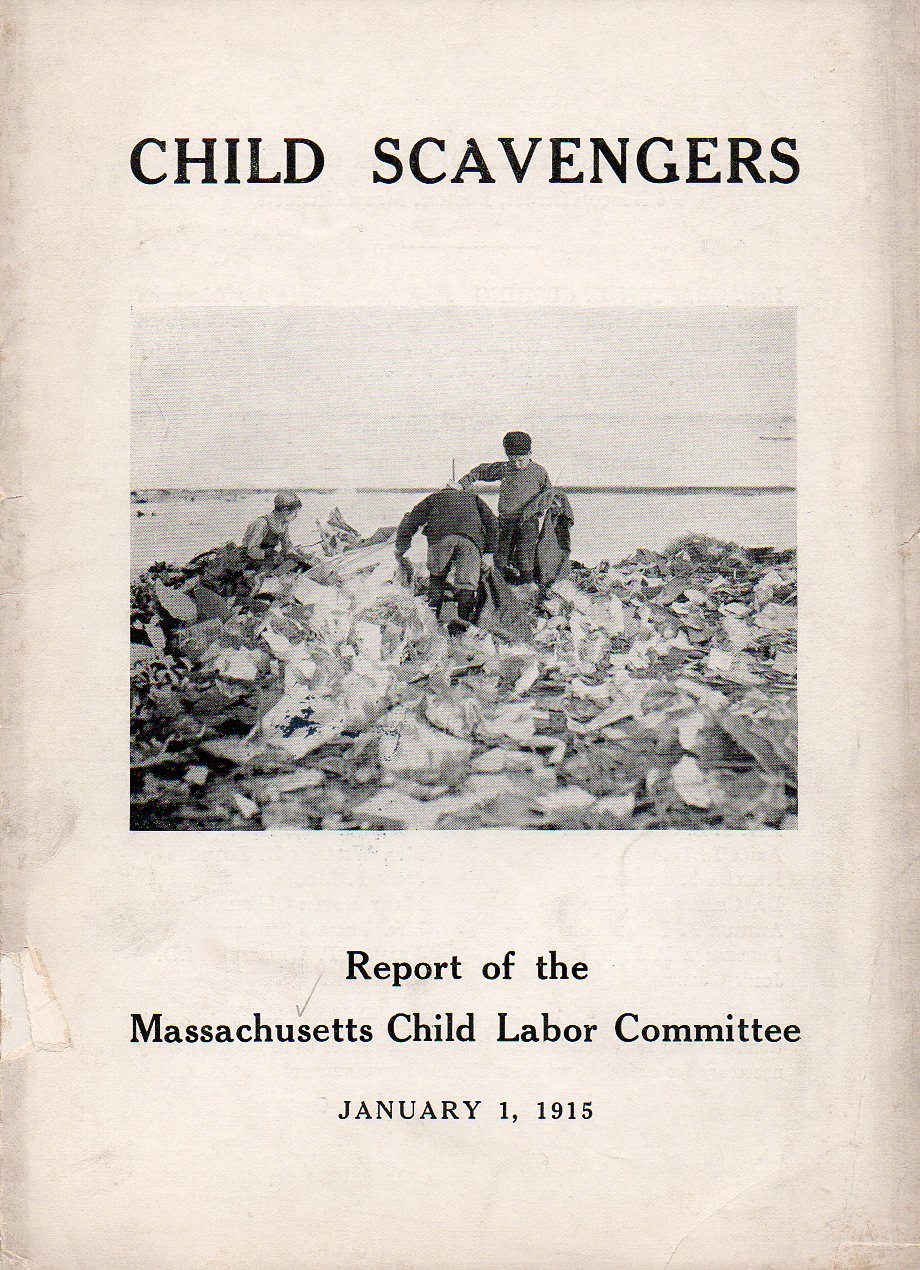
    And they did do a study of child scavengers, reporting that in “one dump in a Massachusetts city fifty-five children from five to fourteen years old were moving slowly over an acre of rubbish…” The authors report (unfortunately without reference) that in one Boston school distict of 2,128 children that 125 of them “do this work”, and that 500 children in Boston “are so engaged”.  This didn’t include the children who “gathered refuse” from martketsm freight yards, and ash barrells”  or who were sent out collected odd bits of dropped wood and coal. 

    Child scavengers map363

    But the fact of the matter is that these folks were just knocking at the big door of child labor reform, a big piece of which would come into being in the next year (1916) with the Keating-Owens Act, which began the strict reulation of child labor, defining what the terms “labor” and “child” were. (The act restricted minig occupations to children 16 and over, and for 14 years of age for the manufacturing industries; no night work was any longer permitted, and the work day was limited to eight hours.  This was the reform, so one can imagine what the labor was like before this legislation.) In 1890 there were something like 1.5 million children in the workforce, a figure which was raised to 2 million by 1910, and which was nearly halved (because of awareness and federal oversight) by 1920.

    Lewis Hine (1874-1940)–who gives us the quote to lead this short post–was a school teacher and sociologist  who was extremely aware of the plight of the children around him–well, children, and immigrants, and laborers; people without voices, or representation, poor working people.  He was a pioneering photographer whose images of these classes of people were revoltuionary, a tremendously important documentarian of a societal symptom that was pretty much misdiagnosed, or at least was chosen as something to not be seen.  That was hard to do when you had actual photographs of the grim situaiton. 

    Trodd-lewis-hine-01

    This could’ve been my grandmother. At about this same time. 

    File:AddieCard05282vLewisHine.jpg

    Hine also made some of the most  iconic labor images in American history, a vastly underappreciated heroic figure duirng his lifetime.


  • Brevity and Complexity–Radio Programming, 1940

    JF Ptak Science Books   Post 1320

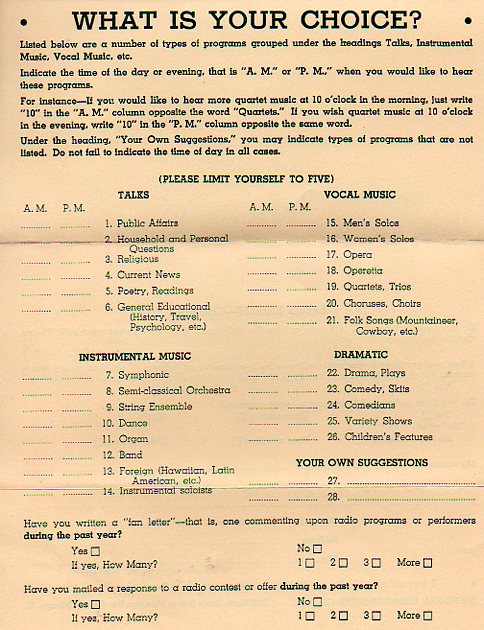
    Radio Ballot c cvr323   I think that if a grown-up kid in 1940 was offered the chance to have a working-man’s Super Power,to be suddenly endowed with a non-heroic Super Something, a popular choice could have been to possess  radio repair vision (RRV).  Or that’s what it seems like.  The popularity of radio was so fantastic that ownership of radio sets doubled in the United States from 1931 to 1938, when houses with radios rose from 40% to 80%. Radio was everything.  There were many contributory factors to this phenomenal increase in popularity, not the least of which was the Great Depression–once you got your radio the listening was basically free except for the power that it cost to run the radio.  Recorded disks on the other hand suffered tremendously, with sales falling from $75 million in 1929 to 23 million in 1938 (with a low point of $5 million in 1933), and that would be due to the Depression and the the popularity of free stuff on the wireless, as well as other things.

    Radio Ballot a321

    People maintained their radios, kept them in good order, tinkered with them, cleaned the tubes, replaced the tubes, kept things going.  Those early units were pretty hearty, overall, but there was a certain percentage of folks who couldn’t do the basics for themselves, and so would bring in their radio repair man.  He was an important fixture in a community–not quite like the milk man or the ice man, who would be seen everywhere every day, but popular enough.  TO be able to fix radios with supervision and kept millions of people connected would’ve been a big deal, especially if you thought about it with the mind of a ten year old.

    Radio Ballot b322

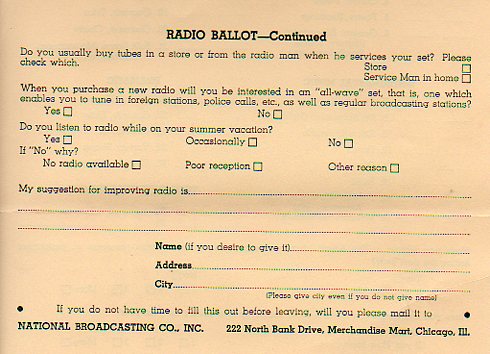
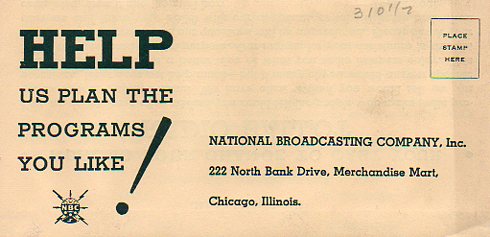
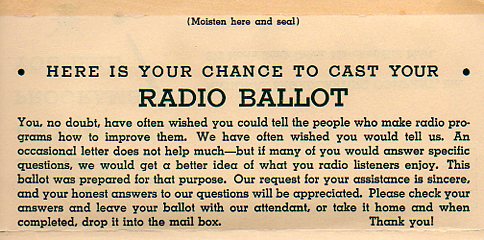
    I’m just trying to establish the popularity of radio with this aside to get at the main point of this post–how radio executives at NBC tried to access the common knowledge base of what people wanted to hear on the radio, and when.  And one aspect of that was seen on this single piece of paper: [The original is available for purchase at our blog bookstore.]

    The National Broadcasting Company sent out self-adhesive mailers to people to probe their listening needs.  This would seem prehistoric by today’s standards of estimating what television/video watching people were like and what they would want to see, and perhaps to pay for.  But in 1940*–or perhaps a little earlier–this was one method of making this determination, with a gentle survey about what the listener wanted to hear, and when.   And they were expected to pay for the privilege, as well, as these self-,mailers weren’t pre-stamped. 

    On the questionnaire of listed types of programs we find 26 examples, including six for “talk radio”, sixteen for music (eight for  instrumental and seven for vocal!), and then only five for the dramatic stuff (comedy shows, drama, variety shows, and even one for children. (An historian of radio programming would probably know instantly the age of this flyer given the number of slots slated for the drama shows, I’m sure.) The division  of the music is also interesting, particularly for me since “string ensemble”  is one of the 26 overall programming selections, though I doubt that they were talking about the late quartets of Beethoven–I think they might have been referring to sweeping, thousand-string “beautiful” music.  Also the division of “opera” and “operetta” is unusual.
    Radio Ballot d324

    The “brevity” part of listen surveys is certainly attained here–the complexity part will come a little later.  Radio surveys became very sophisticated in the mid-1950’s when radio’s existence was threatened by television, which completely dominated the market for talent and advertising dollars and listeners by the late’50’s. 

    Notes

    There’s no direct mention of FM radio, which came into some restricted use by 1938-1940 and which is not mentioned explicitly here.  Perhaps this means that this was issued before FM–or perhaps it is later, as I said, and simply just not mentioned.


  • The Big Lie Department: Japan and its Version of Chinese “Aggression”, 1937

    JF Ptak Science Books  Post 1319

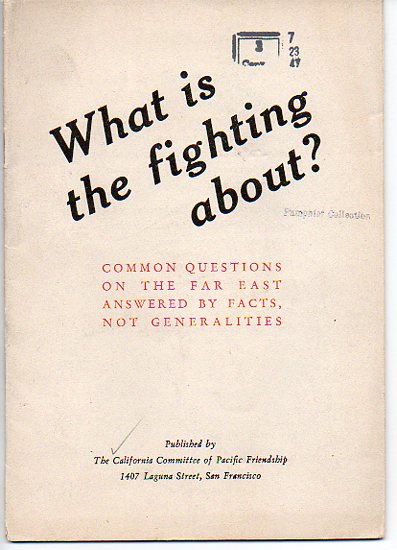
    This little  pamphlet is a great example of The Big Lie–propaganda so vast and so vicious and so far from the truth that people tend to believe it because, well, because no one would or could tell lies so Gargantuan and Pantagruelian and expect to get away with it. They were statements so spectacular and seemingly untrue that their very reverse weight gave them weight enough to necessitate “truth”.  Mostly on this blog the Big Lies I’ve dealt with came out of Germany–these had to do with the International Jewish Conspiracy, the plot of Poland to attack Germany, the resettlement that was going to be provided for French workers who came to the Nazi’s side to do technical work for the Wehrmacht, and so on. 

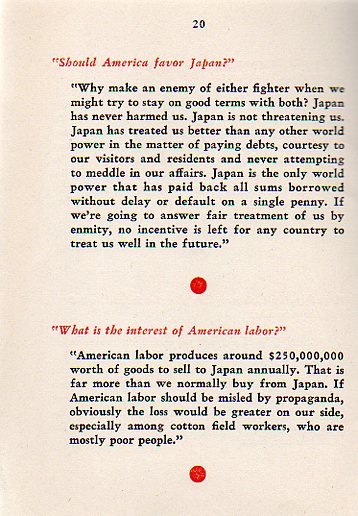
    Big Lie--Japan319 In this case it is Japan’s turn at The Big Lie to make its case to justify its already long and very bloody attack and occupation of China.  In short, what the publishers–the California Committee of Pacific Friendship (located at 1407 Laguna Street in San Francisco, the site of which today is ironically occupied by the Chinese Consulate)–tell their American audience is: that the Japanese are not aggressive; that China was planning to attack Japan to help unify their own country; that Japan needed to occupy Manchuria to protect Japanese citizens; that at the same time Japan was invited into China and was not going to leave because no one else does; and that is it is in the best interest of the U.S. to continue its valuable trade with Japan in order to protect the  poor people who pick cotton that goes into essential American-Japanese trade.  Virtually everything in this report is nothing.   Thats what makes it a Big Lie. [This pamphlet is available at our blog bookstore.]

    Part of the issue of invading China’ was to prevent Chinese aggression towards Japanese citizens, which was “a politically attractive campaign” and a cause of :China’s backwardness”. 

    There is no mention of Japan’s invasion of Manchuria in September 1931 following the Mukden Incident, an earlier version of a Gulf of Tonkin incident, a manufactured bit of terrorism by the Japanese military perpetuated against itself to give the Empire a reason to attack China. .  Manchuria was subdued by 1932 and  renamed Manchuko, and then used by the Japanese for its fantastic assembly of raw materials.

    In the same vein it was alleged in this pamphlet that it was China which bombed itself at Shanghai (Songhu), not the Japanese, starting what would be months of fighting in one of the largest and bloodiest battles of the 1937-1945 war.  It doesn’t make much sense for this top be the case, as the  National Revolutionary Army of the  Republic of China was vastly over matched by the  Imperial Japanese Army of the Empire of Japan.  (The Chinese enjoyed a 2:1 advantage in troop strength, but totally overwhelmed by Japanese tank and aircraft numbers and tech superiority.)  This pamphlet was published in November 1937, so the end of this battle–the first really of that would be twenty-two or so major engagements of the war–was still months away.  No doubt that an updated version of this pamphlet printed in 1938 would note the 70,000 Japanese soldiers killed without mentioning their own belligerent status or the 200k Chinese killed during the same time.     

    Big Lie--Japan text320
       

    The Japanese wouldn’t have to bother with this sort of propaganda after 7 December 1941.  It would’ve been hard to explain it all, especially the 17,000,000 Chinese civilians being killed in the process. And the 3 million Chinese soldiers1. Quite a long and twisting road from protecting Japanese citizens in Manchuria in 1931.

    Notes       

    1. Nationalist Chinese military forces included 1,320,000 killed in action, plus 1,797,000 wounded, with another  120,000 MIA. The Communist Chinese forces included another : 500,000 total casualties. Japanese forces include about 396,000 KIA plus another 430,000 MIA and WIA. Another estimate from the Japanese side gives the figures for Japan’s losses at ( 1937–1941) 185,647 KIA. 496,000 wounded, and 430,000 incapacitated; plus for the  1941–1945 period,  another 202,958 dead.   Nationalist Chinese estimates for Japan’s losses for 1937-1945 were 1.77 million KIA and 1.9 million WIA


  • 1905, Poincare, Relativity and All That.

    JF Ptak Science Books   1310

    Poincare I really don’t want to make a post here on the pre-history of the special relativity theory (SR)—I really just want to post the English translation of a paper that came late in the career of the polymathic Henri Poincare (1854-1911) and in the same year as Einstein’s epochal paper (1905). It appeared in the quirky/odd and cellularly-strange journal called The Monist in January 1905, and is remarkable for its brevity (only 24 pages), accessibility (plainly and simply written, and without a single footnote) and vastly sweeping ideas.  It is so nearly powerful that there are many who claim that Poincare preceded Einstein’s relativity paper in it–they are a strict minority, and I ,ust say that I’m not one of them. (Poincare would republish this paper in a more technical form in 1906 as  “Sur la dynamique de l’electron”, published in the Comptes Rendus volume 140–both can be found in the 1905 entry in Lecat’s Bibliographie de la Relativite # 2269, the second paper of which can be found in a fine translation here by an old friend of our store, Scott Walter.  ( I should also say that you may buy the rare original offprint of this paper at our blog bookstore, here.)
    I’ve made two word clouds of the 1920 EInstein relativity book posed against the Poincare 1905 paper, here.

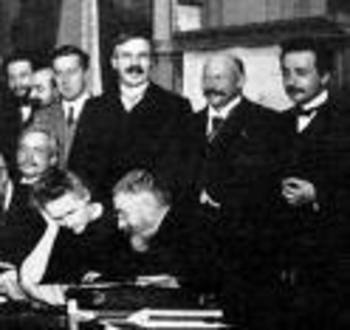
    (This photo shows Poincare seated next to Mme Curie at the first Solvay Conference in 1911.)   

    It has been resident here on the computer for a long time and thought to publish it here.  This is not by any means the only effort by Poincare in this area—in addition to technical papers Poincare had earlier published his “Science and Hypothesis” in 1902 which included some basic philosophical investigations on the relativity of space and time, the questioning of the existence of the aether, and some other pertinent SR-related topics—again, addressed to an advanced general audience. 
    There were of course many others who made important contributions to to development of SR:  Joseph Larmor, Wilhelm Wien, Heinrich Hertz, HA Lorentz, W. Voigt, Michelson Morely, Walter Kaufman, Max Abraham, GF FitzGerlad, Herman Minkowski, and many others.  (A nice place to start on the history of this topic is  The Genesis of General Relativity Vol. 3: Theories of Gravitation in the Twilight of Classical Physics; Part I (Boston Studies in the Philosophy of Science 250), 253-271, Springer, 2007.

    Although a strong case can be made for Poincare being one of the last of a breed that “knew everything”(like Arnold Sommerfeld, Herman von Helmholtz, JC Maxwell, Goethe, and so on) he really didn’t get to SR before Einstein, in my opinion.  At the very least it was Einstein who correctly reinterpreted Lorentzian electrodynamics and finally did away with the ether, not Poincare.

    Also see a fine physics blog dealing with Poincare here.

    And so the paper:

    THE PRINCIPLES OF MATHEMATICAL PHYSICS.
    by Henri Poincare

    Reprinted from The Monist, volume 15, Number 1, 1905.

    WHAT is the actual state of mathematical physics? What are the problems it is led to set itself? What is its future? Is its orientation on the point of modifying itself ? Will the aim and the methods of this science appear in ten years to our immediate successors in the same light as to ourselves; or, on the contrary, are we about to witness a profound transformation? Such are the questions we are forced to raise in entering today upon our investigation.

    If it is easy to propound them, to answer is difficult.

    ·Posted by :

    ·in:


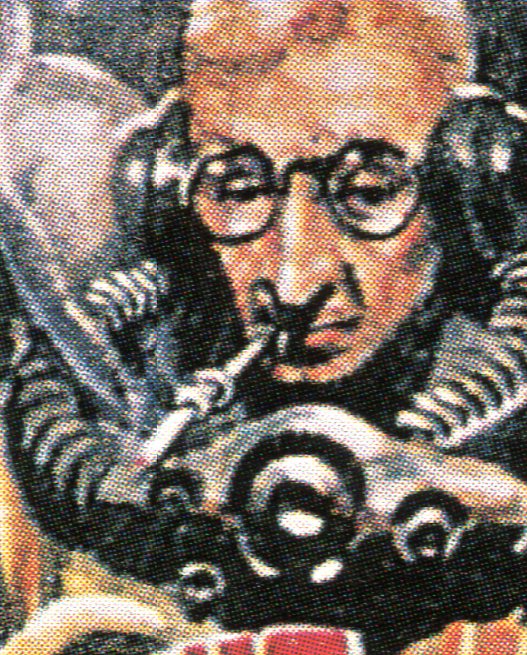
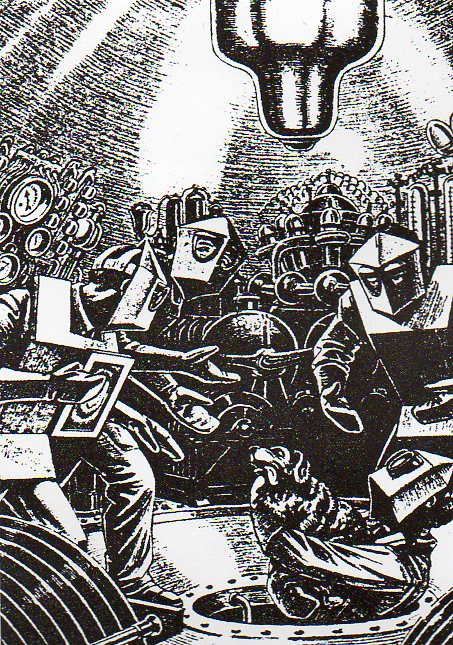
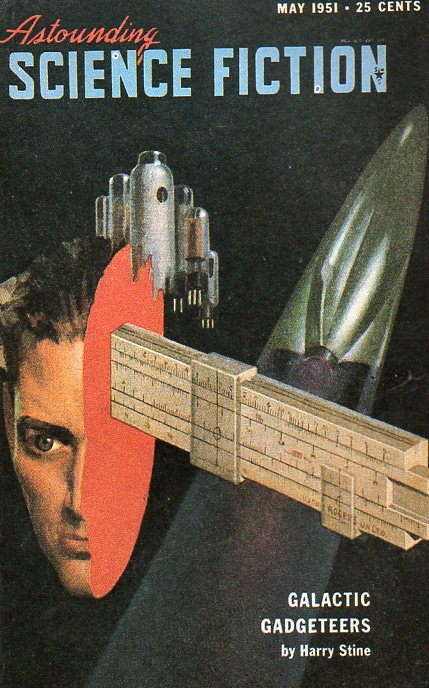
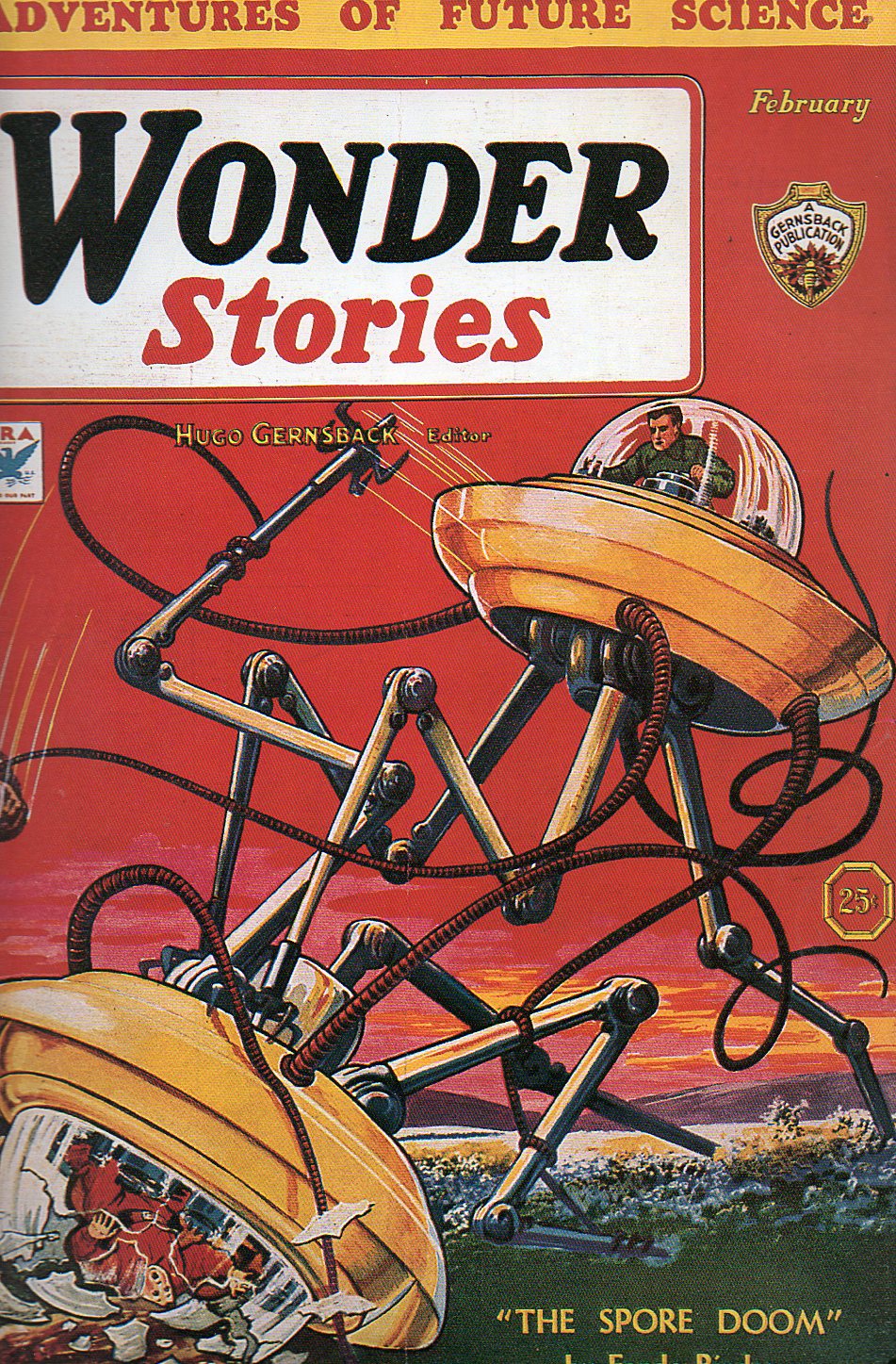
  • Steampunk Anatomy–Cancer Holes, Nut and Bolts, Oil, Outer Space Belly Shirts and Heavy Things of the Future

    JF Ptak Science Books  Post 1269

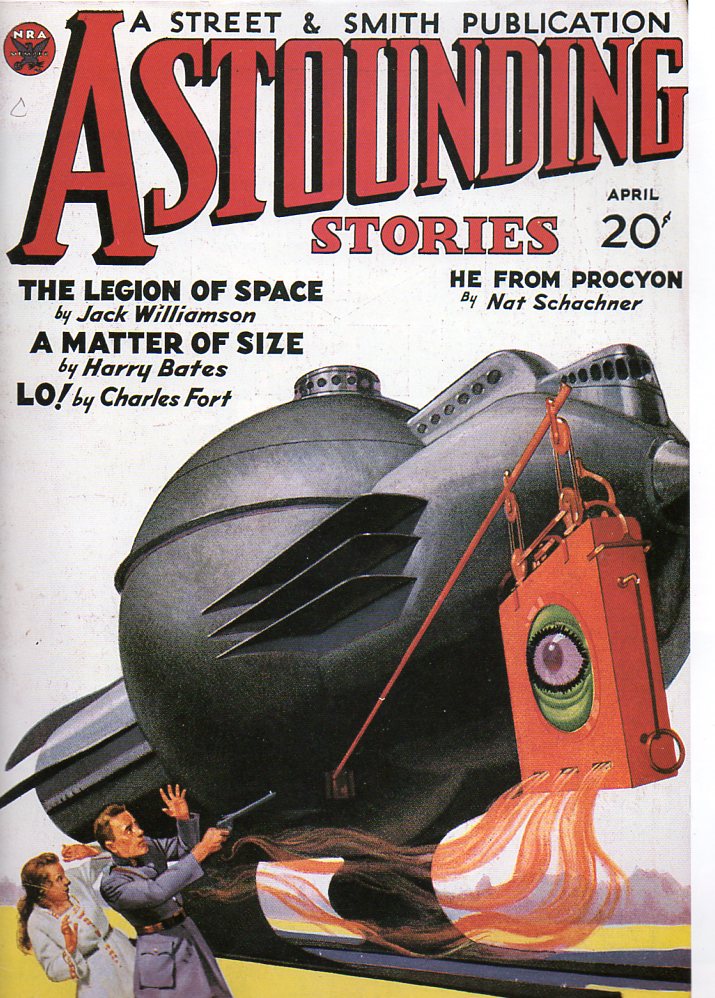
    What is it about science and the future and how the scifiction of the past (pre-1950’s) almost never could encapsulate the superior scientific innovation and discovery of its near future?  It is marvelous and wickedly magnificent to look at some cover art and illustration for the pulp and not-so-pulpy science ficton, images that not only have a certain look and feel, but also a smell, a particular bookstore/basement pulp-paper-not-exposed-in-forty-years smell.

    Steampunk Eye–that enormous ship, governed by a long, long pole with a small box witn an eye in it, being raised and lowered on pulleys:

    Steampunk a077

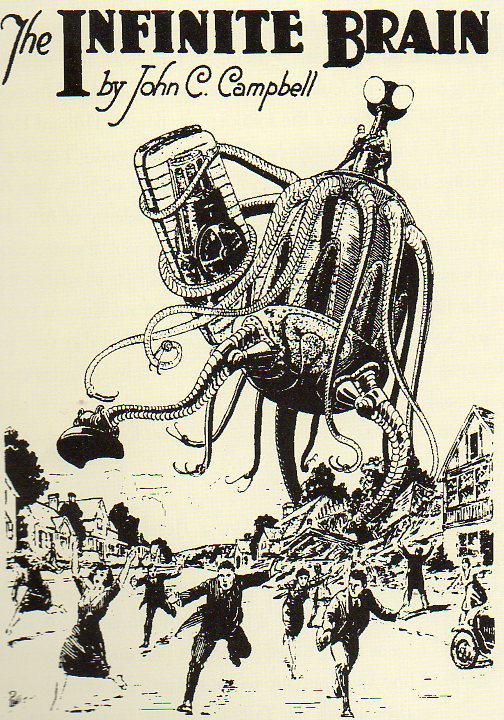
    The Steampunk Gigantic Enormous Stupendous Infinite Brain (also notice that folks are fleeing, running for their lives, witt heir arms thrown high into the air, running like SpongeBob SquarePants–its hard to run like that):

    Steampunk brain084

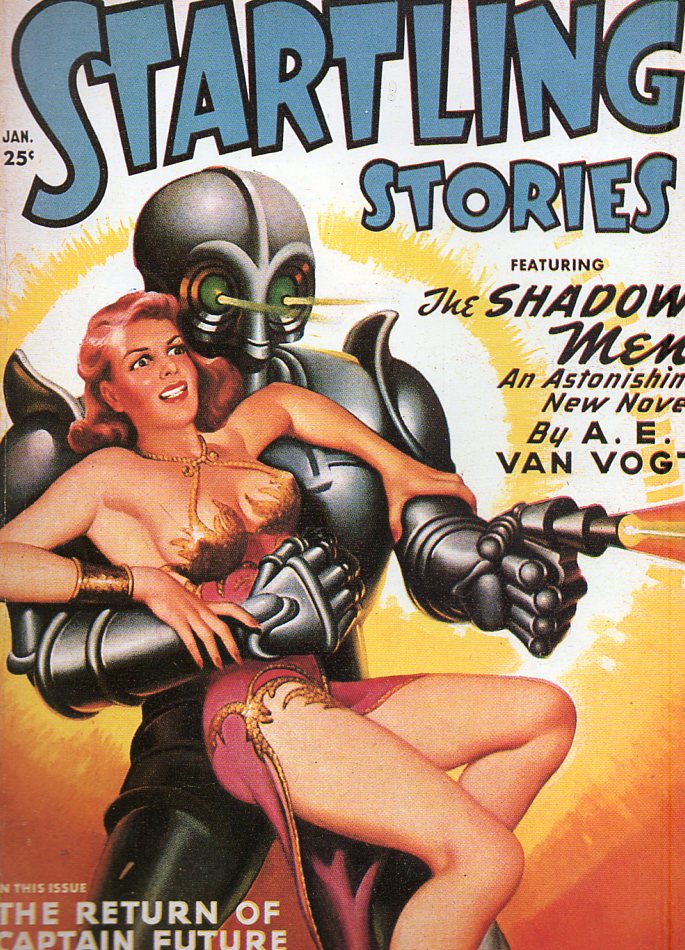
    Steampunk Lust:

    Steampunk lust085

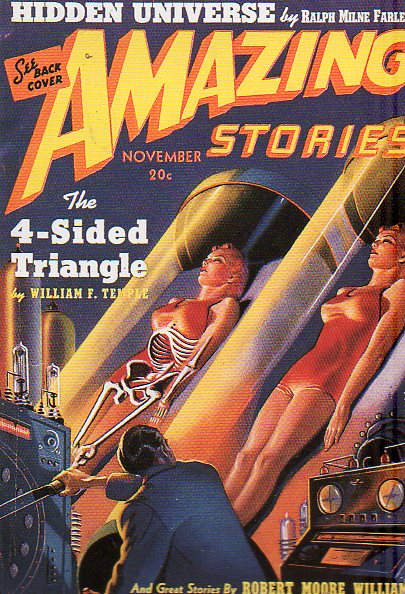
    Steampunk Addiction & Cancer Hole:

    Steampunk cancer hole088

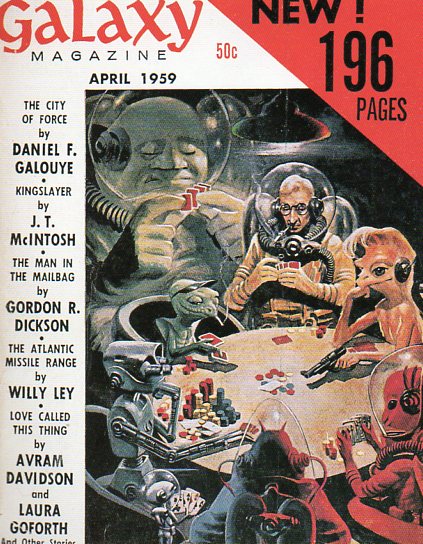
    And the Philip -Morris contribution for smoking in alien space:

    Steampunk cancer hole089
    Steampunk Humano-Robot Replicant:

    Steampunk human robot081

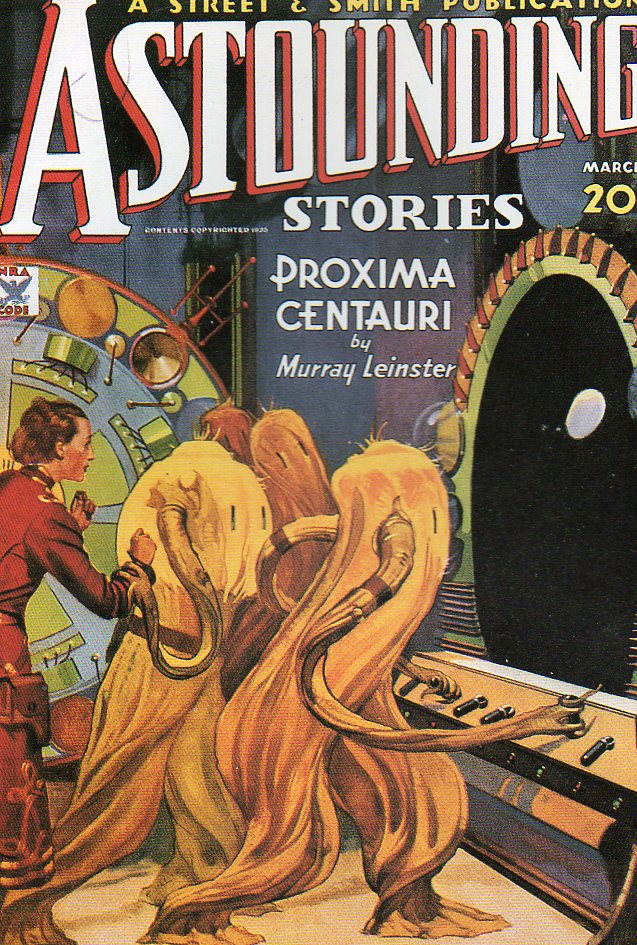
    Steampunk Thinking (the slide rule really didn’t give out until around 1970):

    Steampunk calculating086 Steampunk Legs:

    Steampunk legs083

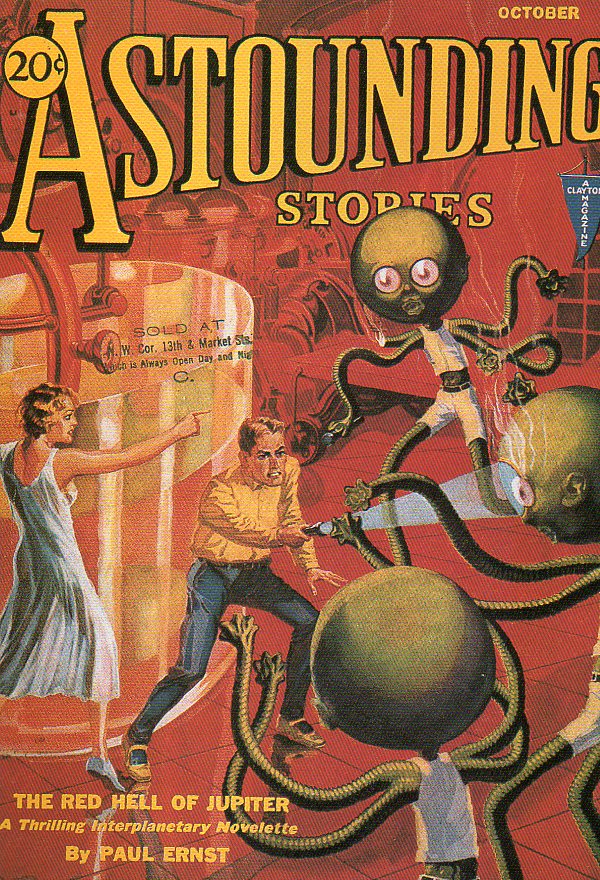
    Steampunk Abs:  humans are surrounded by arm-waving large-headed belly-shirted aliens, the man using a flashlight for defense )burning the alien eye even though they’re all in bright light) while the woman points really hard:

    Steampunk abs090
    Steampunk Hair–and with all of that vast technology and futurismo, there are still unruly locks here and their:

    Steampunk hair082
    Electro/Steampunk Body Replicator

    Steampunk body replicator087


  • Verticals and Lead-Spewing Gargoyles: Spires, Rifles, Bayonettes. Reims, November 27, 1918.

    JF Ptak Science Books  Post 1267

    Verticals and Anticipation after Four Grueling Years

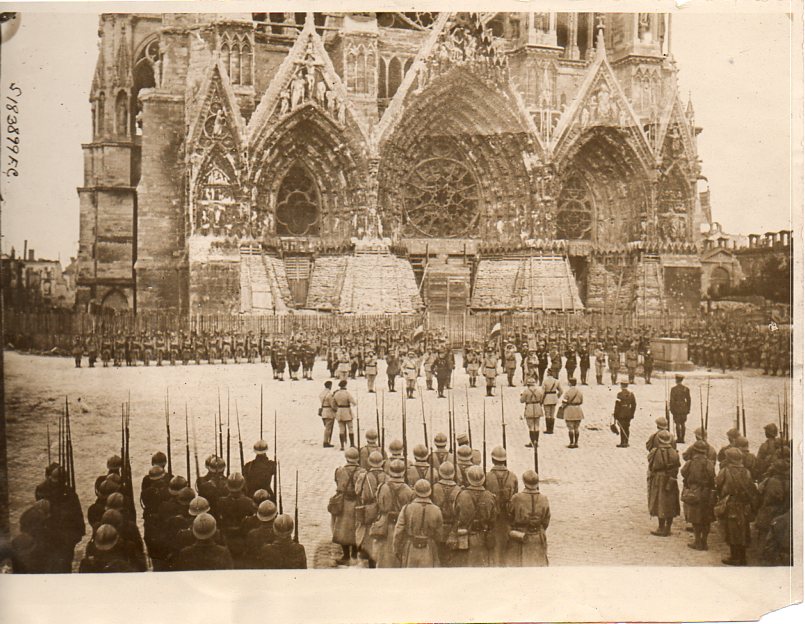
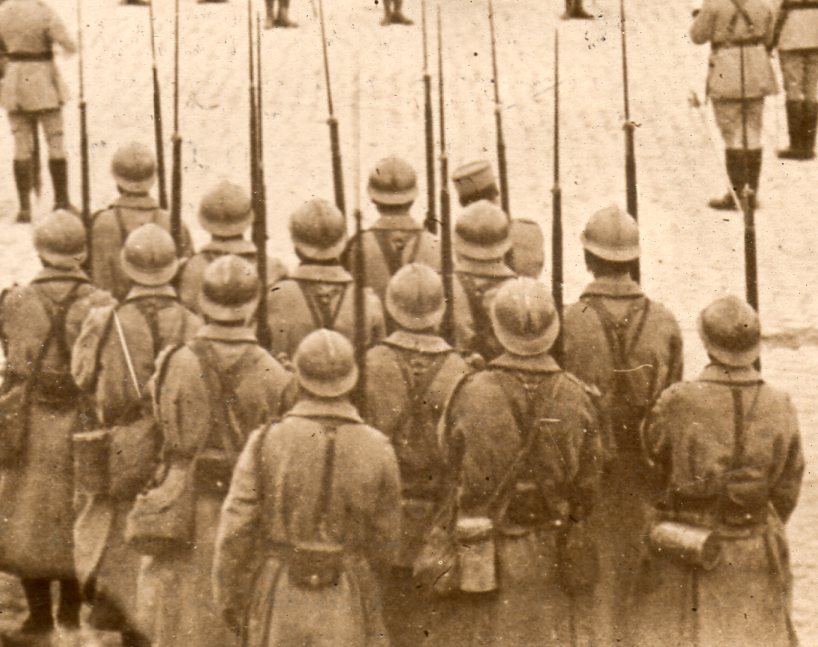
    In developing a history of vertical lines I thought that I would look at single vertical lines, but having just stumbled across this in our WWI News Photo Service archive, I just could not resist.  There is of course plenty of vertical arrangement here–just orders of magnitude more than what I was setting out to find.  So it goes.

    WWI photograph--spires071

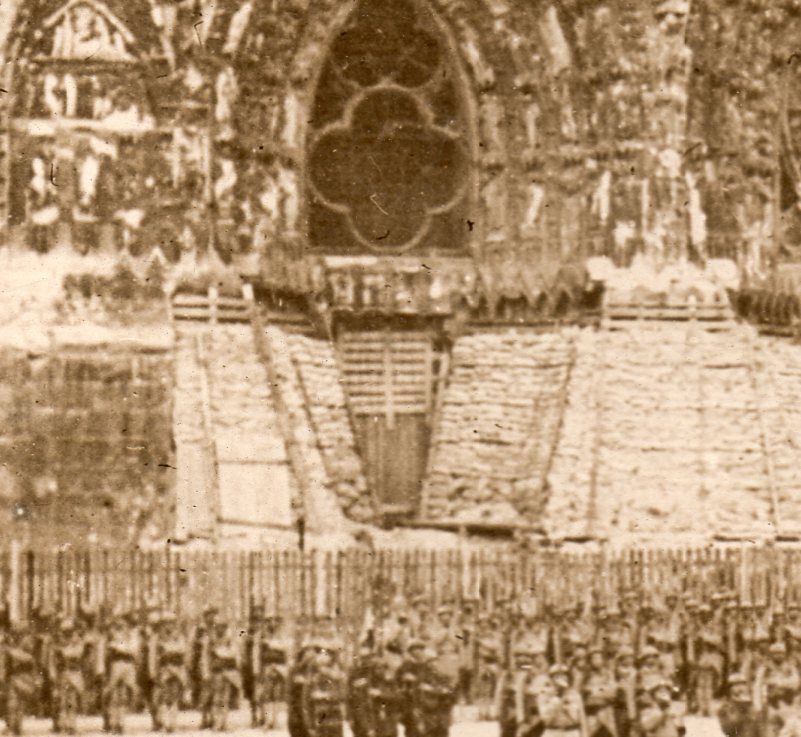
    (The image is available from our blog bookstore, here.) And the detail:

    WWI photograph--spires det072
     And another:

    WWI photograph--spires det073

    I find this a soaring image, in its own odd way–this is a celebration scene, after,all, a decoration exercise, a military display of French forces that liberated the town of Reims, all taking place in front of the battered cathedral. Notre-Dame de Reims was the place of the coronation of French kings, and was a spectacular 13th century structure built on top of other buildings stretching back the site’s inhabitation to at least the 5th century.  

    But German artillery shelling caught the cathedral right at the beginning of the war and very nearly wrecked it.  The building was badly damaged by fire, a fire caused by the Germans, which spread along the scaffolding on the building which fed the wooden supports and superstructures, the flames finding its way throughout the building.  The fire was hot enough to melt the lead in the roof, which poured down as molten rain and out of the mouth-spouts of the building’s gargoyles. 

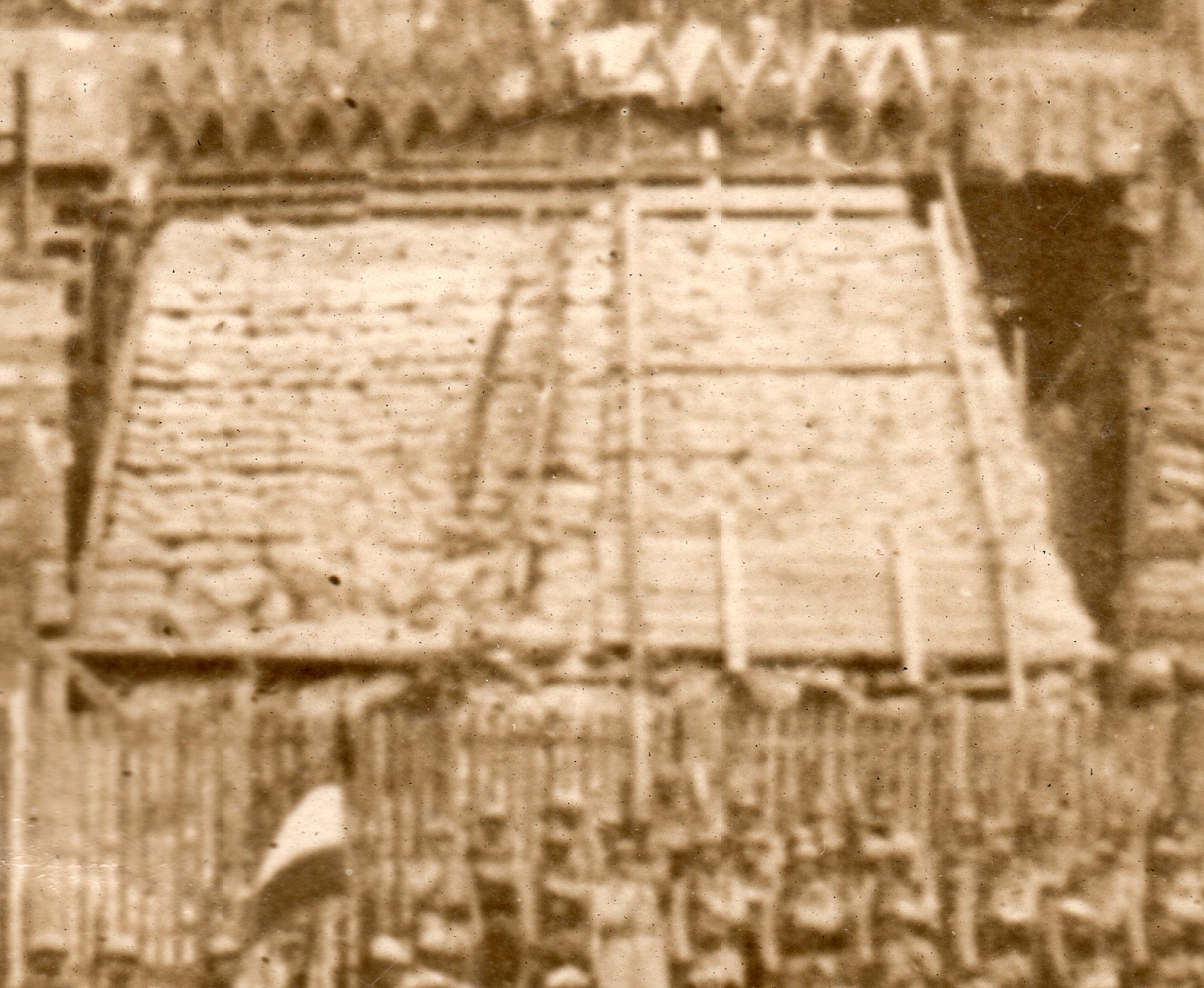
    As I brought out the further figures against the base of the cathedral one can clearly see the enormous stands of sandbags, the piles stacked up twenty feet or so behind the makeshift wooden fence.  IT was some sort of protection for the building, but not muc. 

    WWI photograph--spires det074

    This was yet another battle for the city, this one taking place 1550 years or so after the first, the Alemanni defending against the Romans; and then 104 years after the next major encounter, this between Napoleon and a Russian/Prussian force.  The liberating battle (the Battle of Reims, or the Second Battle of the Marne) took place 15 July 1918 to 6 August 1918, and it was a major failure for the German army, and spelled the collapse of the Spring Offensive, opening the door to the end of the war.  There were more than 135,000 Allies killed or wounded in this campaign (including 95,000 french troops), plus another 130,000 German troops.

    The process of victory in front of the wounded church seems exhausting and exhilarating, bu tnot without a good sense of anticipation.


  • The Discovery of America(ns), 1933: a Vast Understatement of the Condition of Native Americans.

    JF Ptak Science Books  Post 1256

    Nothing makes “discovery” itself than re-discovery, with the important element being “forgetting”.  Some important thnigs in the history of science have been “forgotten”, or not remembered, actually, little reported–like Mendel’s work on genetics and the re-discovery of penicillin.  And the flying shuttle.  And so on.

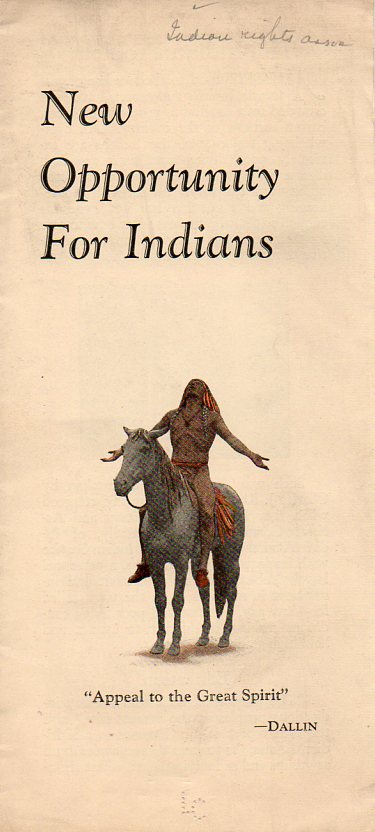
    Indian oppty011 This small pamphlet, New Opportunity for Indians (1933), may look like a solidified reverse misprint: “opportunity” rather than its plural, and singular “Indians” for its plural, and identifies what may be one of the most forgotten things in American history.  (The pamphlet is available at our blog bookstore.)

    The fact of the matter is that Native Americans had been basically forgotten during the last forty years or so, squandered away onto removed reservations with little support or money or time or effort. 

    In 1926 the Bookings Institution authorized a study of the condition of American Indians, with Lewis Meriam and his team responding with their report The Problem of Indian Administration in 1928.  It was the first statistical and analytical survey of its kind in eighty years (though the special volume of the 1890 census Indians Taxed and Indians Not Taxed comes close, though without a particular analytical thread) and was a general indictment of the government’s treatment of the Indian.

    We find most of the following in just the first dozen pages or so:
     –“the health of the Indians compared with that of the general population is bad.”(page 3) and that tuberculosis and trachoma were widespread, and infant mortality high.A major contribution was poor health facilities and the lack of Indian language understanding by the health care providers.
    –“The hospitals, sanatoria, and sanatorium schools maintained by the Service, despite a few exceptions, must generally be characterized as lacking in personnel, equipment, management, and design.”(page 9) And that “the government, through numerous on- and off-reservation health –“the most important single item affecting health is probably the food supply.”
    –“The income of the typical Indian family is low and the earned income extremely low.” (Page  4.)
    –“In justice to the Indians it should be said that many of them are living on lands from which a trained and experienced white man could scarcely wrest a reasonable living.” (Page 5. )
    –“The economic basis of the primitive culture of the Indians has been largely destroyed by the encroachment of white civilization.” (Page 6.)
    –Little attempt has been made to formulate a broad constructive program for the service as a whole, extending over a long term of years, and having for its goal the general improvement of economic conditions.” (Page 5)
    –“The survey staff finds itself obligated to say frankly and unequivocally that the provisions for the care of the Indian children in boarding schools are grossly inadequate.”(Page 11)

    And on and on.
           
    Perhaps the most important outcome of the Meriam report was the abandonment of the Dawes Act of 1887, which basically broke up tribal connections and lands, segregating individual families ad incorporating them as yet another American farming family.  Franklin Roosevelt’s Indian reorganization Act (1934) ended this practice and allowed for the organization of tribal government and incoporation of land trusts.

    But the fact that the Indians had been discovered, and discovered to have been rendered into such poor conditions, and that there was a general consensus to alleviate those conditions and provide better and more uniform health care and food (especially food) and education and tribal independence, it did not mean that getting the money for doing such things would be accomplished.

    In this slim pamphlet the outlines for helping Indians are described and failures acknowledged, though generally the planning was scant and rudimentary.  The pamphlet did identify “the first essentials tr a satisfactory home life are adequate food supply, proper clothing, and a comfortable shelter”. I think stopping at the “food supply” part would’ve been enough. 

    There was certainly an increase in money spent on health care, but the increase wasn’t much to speak of, not really.  The pamphlet states that “Indian Health Appropriations” topped out in 1911 at $40,000–or about $6/person/year.  The 1933 total was $3.2 million, but that still doesn’t spread out very thickly over 295,000 people. 

    In any event the pamphlet was not without hope, but that hope seemed to be all it had so far as implementing its new ideas for improvements and services.  In a small slug of a mention, “Crippled Services” it is noted that appropriations for the new years would be down $4 million dollars.  Unfortunately there is no figure of overall appropriations, so the figure doesn’t mean that much.  It did mean though to the author(s) of this pamphlet that even if there was no money there was hope.  Unfortunately “hope” doesn’t buy food.

    This pamphlet ends with a severe understatement: “the Indian problem is by no means solved either in education, health, making a living or providing a good home, much remains to be worked out”.  Indeed. 
                               
    The full Meriam report can be found here.


  • The Lost Memories of Things in the Way of the Horizon–Ugly Roads, 1922

    JF Ptak Science Books   Post 1303

    “There’s nothing so perfect as imperfection.”–Somebody.

    “The great unconquerables in the geography of human thoughts and ideas are the bad ones.”–Nobody.

    Bad ideas don’t so much go away as they get recycled. They can be replaced by good ideas or bad, but the ”original” bad ideas seem to linger on and on.  They are perhaps the indomitable inheritance of society, real and imagined.   

    Bad human-produced landscapes are an outgrowth of bad ideas, calamities large and small that come and go, the old replaced by something new that is good or bad or indifferent. With the landscape, the original landscape itself–apart from the idea that brought it about–is generally lost forever once it has been replaced.  There is no Bad Idea Spirit that brings it back whole again, unlike the generic Bad Idea, which can live on and on, unencumbered by history, like a Greek play or some deeper mythology.

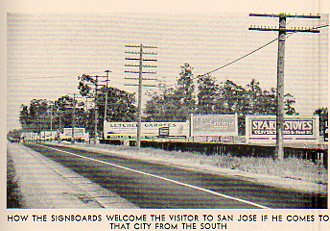
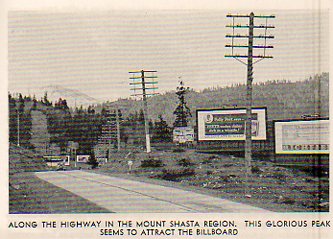
    Roadside billboards 273 Theoretically society is supposed to learn from recognized bad ideas, so as to not repeat them etc., which is one reason why we keep track of them, in the vain hope that someday someone somewhere in the history of our future will kill particular bad ideas off one by one. 

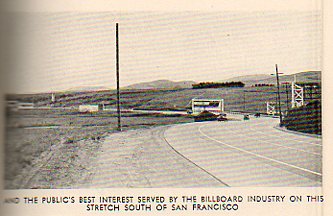
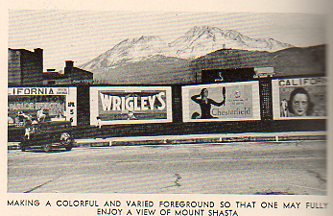
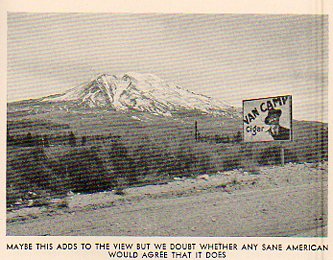
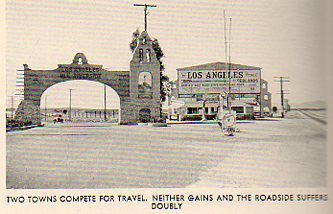
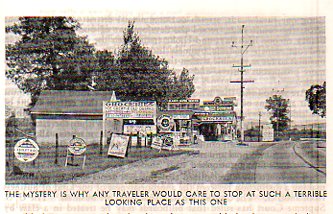
    Roadside billboards 274 In the meantime we can dwell on what we have, though with the removed bad idea landscape, it is more difficult.  That’s why it is important every now and then to familiarize ourselves with them when the opportunity arises, which is just what happened with this innocuous-sounding pamphlet, The Roadsides of California, a Survey1 (1922, and available for purchase at our blog bookstore)  Its not like it’s Pandora’s box–we can open this one and just a few, limited baddies come out, and fall limply to the floor.  But what we see is interesting, a slice of our memory of the horizon–a part of our “progress” that we’ve tried to excise–and what we can see now are the removed and forgotten things. 
    Roadside billboards 275 Roadside billboards 276

    Roadside billboards 278
    Roadside billboards 280 Roadside billboards 281 Notes

    1. This is actually an interesting pamphlet, an early attempt at removing the quickly generated ugliness that was cluttering new roads for the explosion of automobile travelers.  As quickly as cars were made in the new decade of the automobile, billboards and roadside attractions followed.  This pamphlet identified this phenomenon as a problem.


  • An Unexpected “Discovery” in Correspondence to Santa, 1871

    JF Ptak Science Books

    Blogsanta121 I do love Santa. 

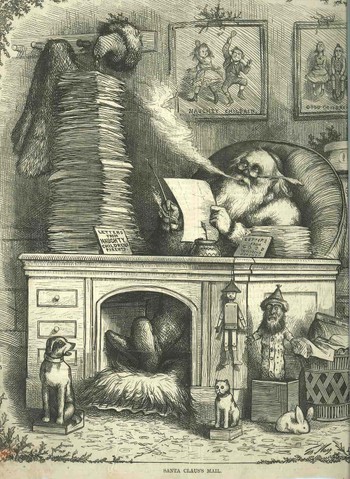
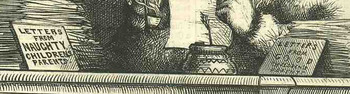
    And I know a little about him; but when I looked closely at this wood engraving of the man hard at work something struck me as very unusual to my Santa experience.

    The image is from 31 December 1871–coming after Christmas for some reason–and it is one of the very earliest depictions of the most universally recognized form of Santa. It was created (his image that is,  of course) by the incredibly prolific and almost-entirely socially responsible (except for Catholics and the Irish) Thomas Nast.  Nast created this standard, iconic image of Santa–plus the Republican elephant, the Democratic donkey, the Tammany tiger, and many more iconic public images. 

    In fairly famous and often used images I had never noticed that the letters that Santa is reading are being taken from the piles on his desk–but the letters are not written by children, but rather were sent by the parents.

    Is this end-of-the-year grading? Were the “naughty” children being ratted out by their parents?  Does Santa really need to be told all of this?  And who on earth really is deserving of a lump of coal, anyway?  I’m guessing though that this was simply a warning cartoon to children, saying to them that they’d better well be good or a letter will be going out from Mom and Dad to Santa in the afternoon mail

    This might make more make more sense if the cartoon wasn’t published five days after Christmas but appeared before the holiday. Perhaps it is perfectly placed–tis would’ve been the first issue of the weekly magazine after the holiday, so reminding children to be good after a Christmas in which they might not have received what they wanted may have been caused by their behavior.  And since part of Nast’s social power came from depicting events that were of interest to the working class and the poor and making them intelligible to the illiterate, where the cartoon/caricature could speak without words and make themselves understood, it might’ve been the case where parents would show the image of Santa to the kids and then tell them about the letter part to try and codify a different behavior in the new-coming-Christmas season. 

    Blogsanta121detail

    These questions aside, the lesson yet again for me is to look very closely when looking at complex images like this—especially when you think that you already know what you’re looking at…


  • Yes, Franklin, There IS a Santa Claus. The Franklin D. Roosevelt/Santa Claus Connection

    JF Ptak Science Books   Post 1302
      Santa claus FDR title270
    FDR may well have been among our greatest presidents–but a reader, well, he was not.  Doesn’t matter, not really. (Harry Hopkins, long an adviser to Roosevelt and who held numerous high-level positions in the Roosevelt administration, once said that he never saw FDR with a book, let alone reading one.)

    There is a presidential library for him, of course, but that doesn’t prove that the Great Man read very much.  Maybe he just didn’t need to for the job. (That has been proved true in recent times though with a different outcome at the end of the presidency.)

    Santa claus FDR sig272
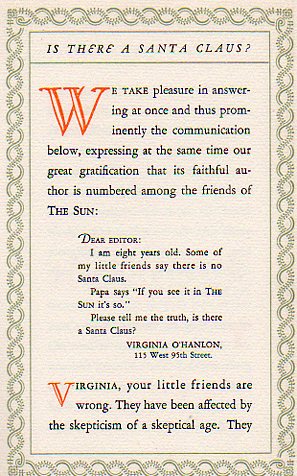
    And frankly I don’t care if Roosevelt read anything more than L’Il Abner.  But I do know for a fact that he did come into contact with a great piece of American social history in this famous story of a  girl named Virginia O’Hanlon (1889-1971) who wrote to the editor of the New York Evening Sun in 1897, asking “Is There a Santa Claus?” (Her father prompted her to write, stating that if one saw a positive response in the pages of The Sun, then it absolutely must be so.)

    Santa claus FDR 1st pg271 And of course there is a Santa Claus, and so wrote the editor. (See here for the full text of the response, and also about the man who wrote it–a nice story of a man who rose to the occasion after the assignment got batted around a bit.)

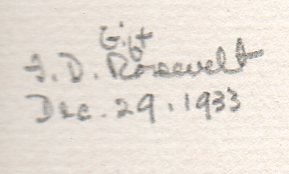
    The telling of the story in the book that I have here, an almost-fancy and semi-sumptuous little affair, was once owned by FDR.  It was no doubt sent to the new president from the publisher in December 1933.  Satisfied with the story and needing no further help with his own belief on the matter, Roosevelt sent his copy on to the good folks at the Library of Congress, and after six decades there, came to me. 

    For what is it worth, I think that FDR knew there was a Santa, and that was that.