A Daily History of Holes, Dots, Lines, Science, History, Math, Physics, Art, the Unintentional Absurd, Architecture, Maps, Data Visualization, Blank and Missing Things, and so on. |1.6 million words, 7500 images, 4.9 million hits| Press & appearances in The Times, Le Figaro, Mensa, The Economist, The Guardian, Discovery News, Slate, Le Monde, Sci American Blogs, Le Pont, and many other places… 5000+ total posts since 2008.

Category: Anticipation, History of

  • The Industrial Revolution and Inventing Luxury for the Working Poor

    JF Ptak Science Books

    One of the things that I’ve not thought of before was the invention of luxury for the working poor.

    The first comfortable chair, the first luxurious chair,. ever bought by a member of the working, laboring class was purchased in the United States on July 23, 1852 at 11.11 in the morning.

    Or perhaps not.

    But what did happen around this time was that a commodity that was over and above the absolute necessity–say for an upholstered chair with springs–did become available en masse to the vast majority of working/poor Americans.  Or at least that’s what I’m thinking.  The Industrial Revolution, now 80 years old or so, began to rub up against objects that we’re formerly only available through extended labor and craftsman but were now becoming widely accessible and for cheap because of mechanized production. 

    So, for example, the stuffed comfy chair which had been the nearly exclusive domain of the middle- and wealthy classes were now patented inventions that were mass produced, their cost coming down because of the ease of production and the vast new demand.  The industrialization of luxury found its true invention in mid-century Americas and was subject to enormous variation and tremendously expanded development–so much so that in just the next few decades there would be massively distributed catalogs containing almost nothing but eminently affordable necessaries and new luxuries.  By the 1880s the mail order catalog was becoming commonplace, as was the ability for the poorer classes to purchase formerly unaffordable objects–luxury for the masses had been discovered, and an enormous consuming class had been invented.


  • Nazi Capes and Collaborators, 1944

    JF Ptak Science Books LLC  Post 1019

    For the next little bit I am going to try to have one word or phrase per post be unique to a  Google search–today’s is “Nazi Capes”. (Yesterday was “Atomurbia”, created over coffee.)  Frankly I’m a little surprised that it doesn’t come up–thank goodness for small favors of not having stores selling Nazi capes or some porn site featuring nazi-caped “dancers”,  and so on. 

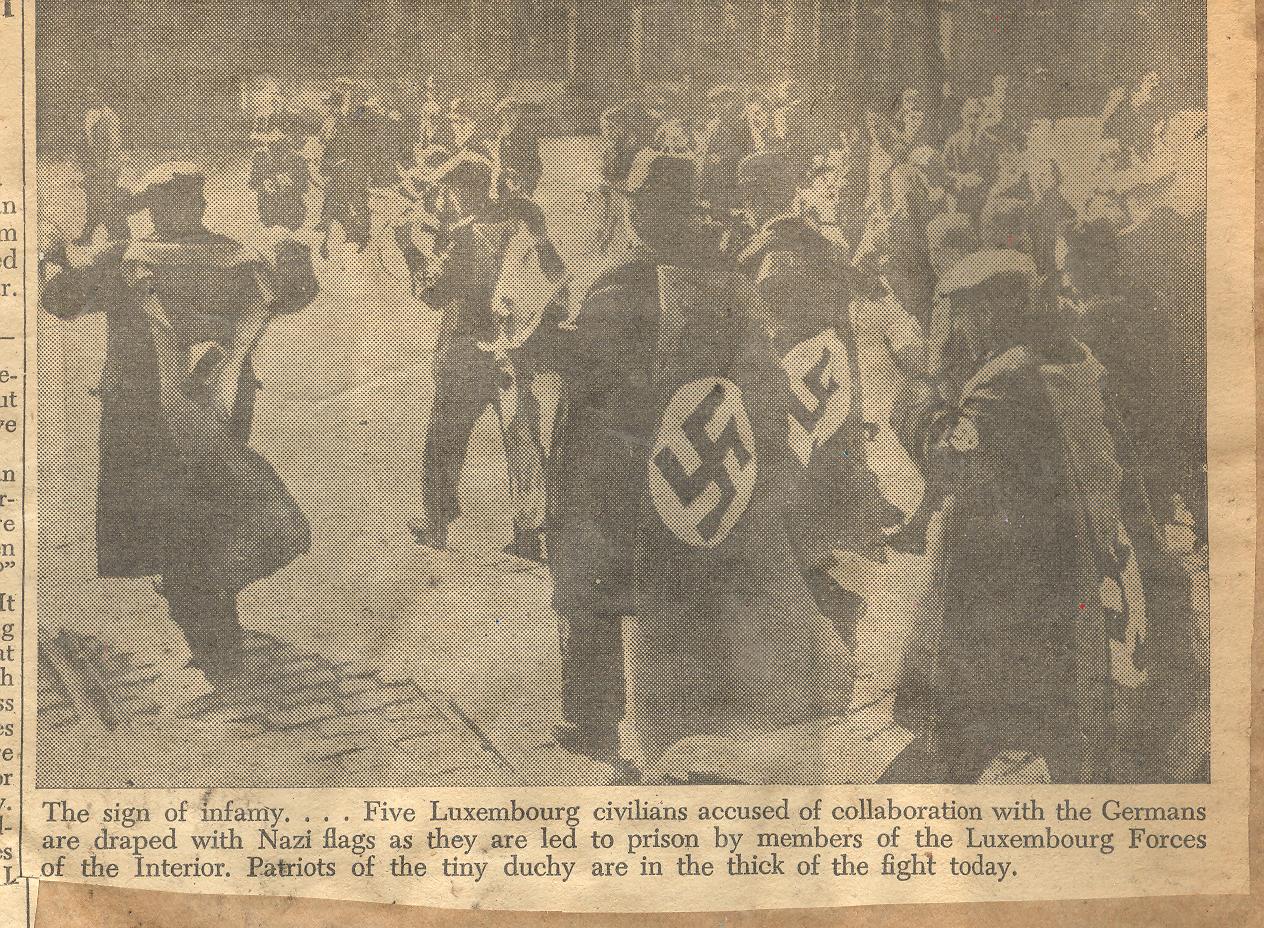
    The Allied  advanced towards Berlin in 1944/45 liberated Nazi-occupied towns and cities and countries.  The populations of course reacted immediately to those among them who facilitated the Nazi control of their communities.  The collaborators were traitors, and were treated accordingly.

    1--May 4 nazi cape
    Fernand de Brinon, Marshall Petain, Karl Linnas, William Joyce (Lord
    Haw=Haw), Ezra Pound, 
    the Ustaise (a Croatian fascist anti-Yugoslavian movement doubly doomed
    post-war) are a sample of some of the major names in the history of Nazi sympathizers/collaborators who would be judged and adjudicated.  There were many
    others who survived this legal (and extra-legal) process–like Charles
    Lindbergh and Henry Ford and Errol Flynn and (the IOC’s) Avery
    Brundage–without much damage to themselves. (To be a little more
    accurate, Charles Lindbergh was an America Firster with fascist
    sympathies and unquiet anti-Semitic opinions–he did renounce his
    admirations for Nazi Germany once America had been attacked on 7
    December 1941. Country first in times of war for Lindbergh, though his
    sympathies remained relatively intact for the 750 days of WWII being
    fought in Europe without the United States.)    There is also a large
    population of Nazis (like Wernher von Braun, whose rockets killed
    thousands on the ground in England and thousands more of the slaves who
    worked for him at “home”) whose expertise was deemed necessary to
    national security and who were settled in the U.S. to help form the new
    fight against the Soviet Union.  But that’s another story entirely.  

    There were many thousands of collaborators at society’s entry-level who
    were dealt with locally–some were brought into the justice system,
    though many didn’t make it quite that far.  In many cases, people well
    known to have added and assisted the Nazis in their occupation were
    immediately found and dealt with upon liberation.

    This photo-from the archives of the PM Magazine reporter and European
    bureau chief Alexander Uhl, shows the arrest of Luxembourgian
    collaborators, each made to wear a Nazi flag like a cape, the swastika
    no doubt searing its way into the backs of each of these people.  I
    don’t know where they were being marched to or whether that march lasted
    very long. Perhaps it ended in a field at the end of the street;
    perhaps not.  In any event, they were on their way to justice, whether
    or not justice found them in a courtroom or a ditch is lost to history.
    (The vast majority of collaborators arrested and brought into the
    justice system in Luxembourg were sentenced to prison terms–of the 2000
    arrested, nine were executed.) In any event I’ve never seen a picture
    like this before, and am passing it along.

    1--May 4 nazi cape det

    ·Posted by :

    ·in:

    —

  • History of Anticipation #2: Nothing. Moses and the Rock.

    JF Ptak Science Books

    During the Exodus Moses and the Israelites were often  in deep, mortal danger—perhaps none more
    dangerous as when they ran out of water. 
    Moses’ leadership (and safety) came under question (Exodus 17:4), with
    Moses crying out to the Creator that he needed help, and that his people were
    about ready to stone him.  The answer
    came quickly, with Moses directed to strike a rock with his staff, the
    resulting action bringing water/a stream from the rock (Exodus 17:5-6). 

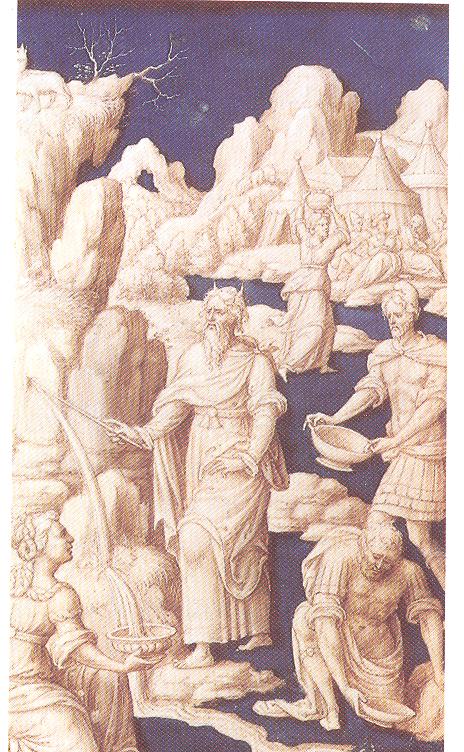
     April 18 moses

    And that’s what is going on here in this little scene from a
    15th century (unfortunately unspecified) French Bible. The rare use
    of almost all white set against a blue background gives the whole a
    marble-like, lifeless effect—which seems to mirror the sense of nothingness in
    the Israelites reactions to the great miracle. 
    Their prayers were answered, but their anticipation of fulfillment and the
    act itself goes emotionally unregistered.

    Moses also looks removed, gently touching the rock with a
    rod which s very lightly controlled by a mostly-open hand—his bearing is one of
    great lightness. 

    This scene is often repeated and represented throughout the
    history of art, though usually with more (or actually, “some”) emotional
    quality.  When the scene is depicted with
    little emotion it seems usually to be a small piece of art, a touchstone,
    showing just the head of Moses/the rock/the staff, a bit of simple visual
    shorthand to remind eh viewer of the story (as in the work by Giotto in 1305).  Generally though the scene is shown in high
    drama, as with the work of Joachim Anthonisz Wtewael (1664), Abraham Blaemaert
    (1596), Nicolas Poussin (1649), and many others. Sometimes in some very early
    work the woodcutters show Moses wielding his staff over his head, getting ready
    it seems to crack the rock open. Bu not here, not in this image—the emotion of
    the scene has been literally whitewashed away…it is beautiful, but it is a cold
    beauty of nothing.

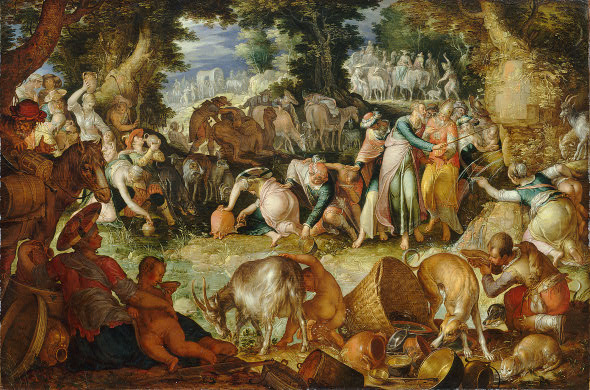
    (Wtewael, below).

    April 18 moses wtewael


  • The Stillness of High-Victorian Action (Blank & Empty Things Series #55)

    JF Ptak Science Books LLC  Post 770
    Follow Me on Pinterest

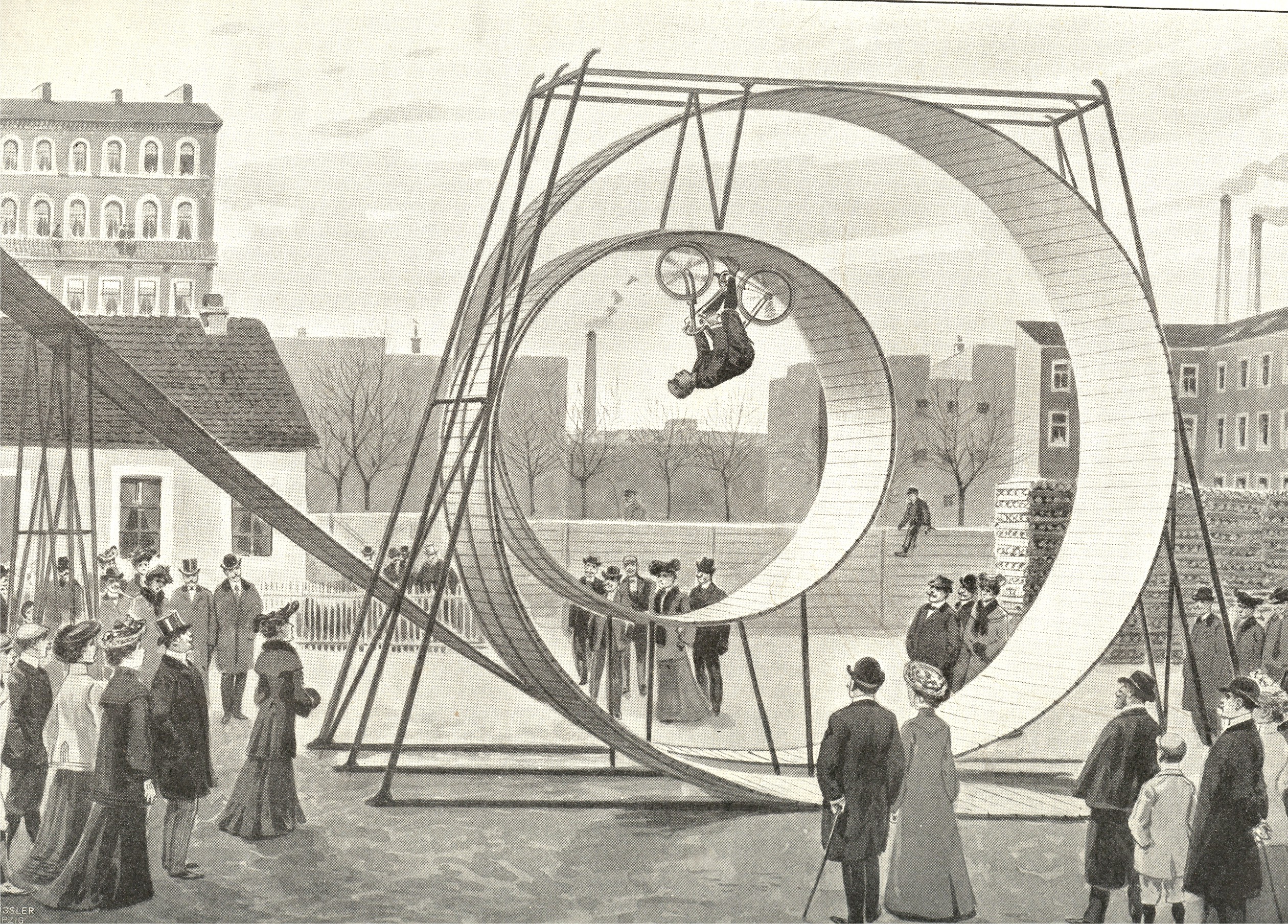
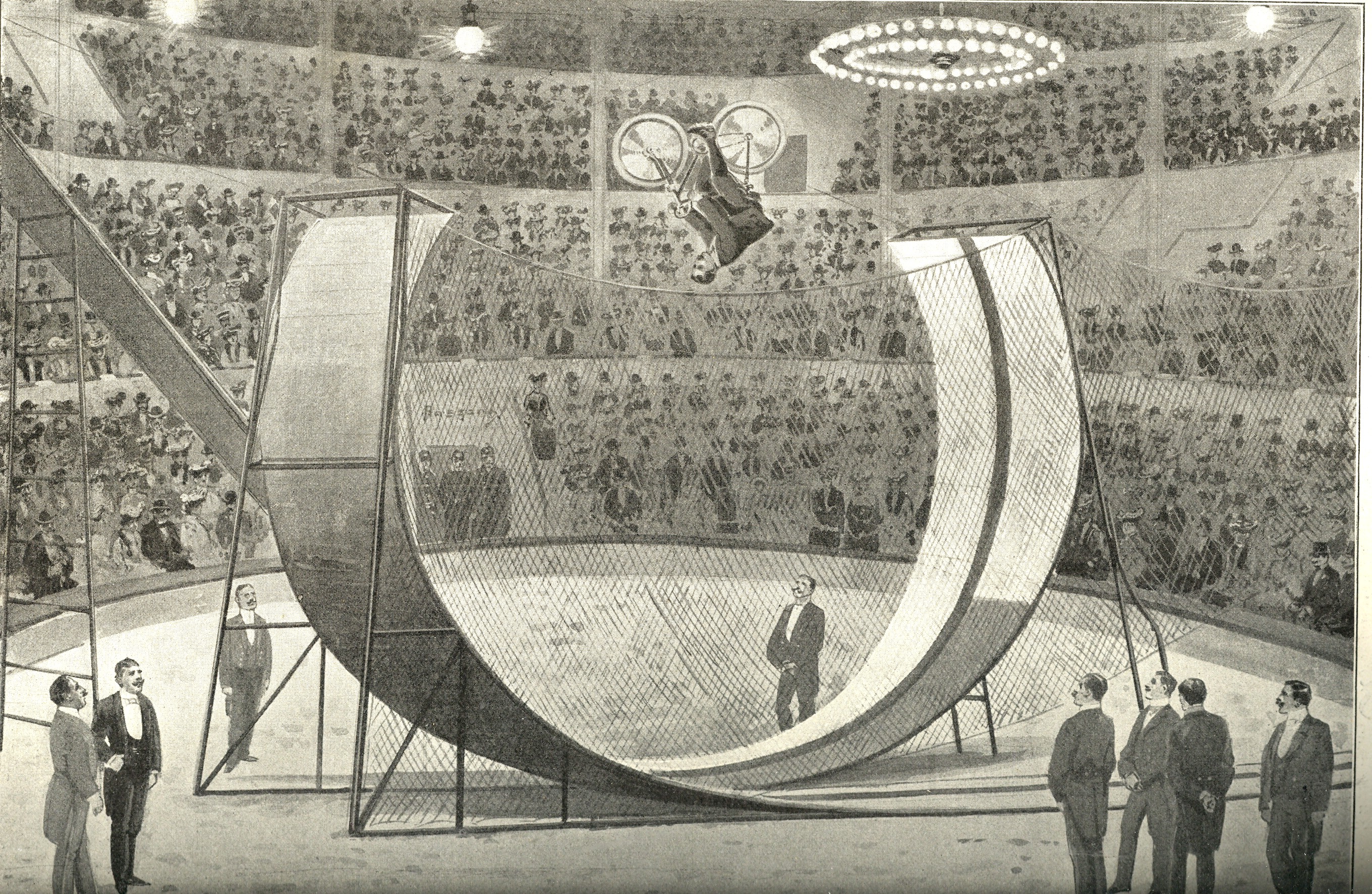
    ++00++ 9.25 bike acrobaticsIt seems to me that even when the Victorians1 were busy doing
    something, nothing seemed to be happening–true too for me with this later period in Germany, under the command and control, for good and for ill, of Kaiser Wilhelm, German Emperor and King of Prussia from 1888 to the end of the Great War.  There’s a certain something
    to illustration at this time, creating wooden
    humans manikins, watching other wooden figures doing something at elevated speeds that
    made them seem motionless.  I’m not sure what it is–perhaps propriety,
    perhaps the need to be visibly invisible, the sine qua non of behaving
    correctly. 

    I’m not sure what sort of special, invisible addition needs to be
    applied to Victorian/Wilhelmian Nothingness to add up to Something. There’s a
    certain unexplained emptiness, motionlessness, nothingness to illustration in this period, and I’m always at a loss to save good examples of it–though today I have two good examples, found in the 7 April and 28 January 1904 issues of the Illustrirte Zeitung (Leipzig).  For all of the excitement and action and crowds given in these daredevil bicycle demonstrations there seems to be not a breathe being breathed, or perhaps it was breathe breathed slowly.  In any event, the situations seemed suspended in action and belief. Ironically this was also the age when the concept of “speed” was at the beginning of being completely re-written with the introduction of the car, airplane, internal combustion engine, widespread electrical networks, motion pictures, and so on–but none of this mattered in images like these, outstanding as they are for being scenes of action presented in a mosaic of stillness and quiet.

    1. Yes, the Queen expired in January 1901, but the influence didn’t necessarily die with her.

    ++00++ 9.25 bike acrobatics2


  • Bags, and Lots of Them: U.S. Navy Inspection, San Diego, 1935

    JF Ptak Science Books   Post 414

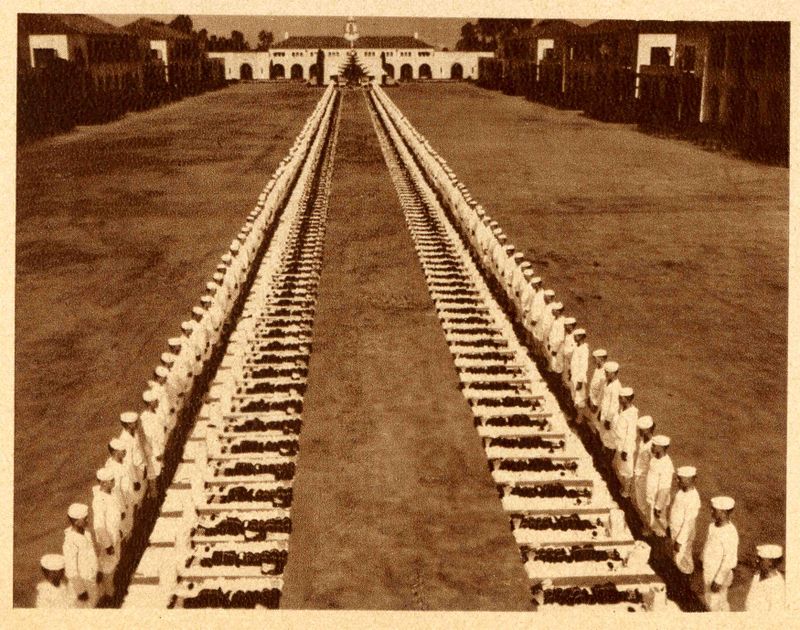
    0--ebay---dec 4 bag inspewction178

    This wonderful image is found in California and the Navy, a souvenir of America’s Exposition in San Diego for 1935.  I liked the long lines of white and the displayed sea bags.  As it turns out there are only about 200 sailors in this picture, the near horizon then being about, say, 1800 feet in the distance.  The bags, I must say, are lined up remarkably straight.

    The U.S. Naval Base in San Diego–the largest in the country nowadays–would be exceptionally busy in just eight short years from the time of this picture.  By the end of the war, in addition to all of the servicing of the American naval needs, this naval base serviced something on the order of 5,000 ships.  The story of the San Diego Naval Base during WWII was nothing short of remarkable


    ·Posted by :

    ·in:

    —

  • Cashing out Corpses: the Value of (Human) Dead as Fertilizer, 1874

    JF Ptak Science Books Post 303

    “Nature’s object remains unstated” for us humans, writes Sir Henry Thompson (1820-1904, polymathic professor of clinical surgery, University College, London)  in the March 1874 issue of Appleton’s Popular Science Monthly, or at least so in life.   In his article “Disposal of the Dead”, Sir Henry finds at least an answer in death for Nature’s purpose for people:  fertilizer.  After birth, the process of decay is constant, until we all find ourselves broken down to our chemical and mineral elements in an nearly endless series of breakdown, failure and shortages until our cells decide to stop working.   (Folks who wish for an eternal life should be careful:  Tithonus, a mortal Trojan in love with Eros suffered from her wish to Zeus–the goddess of the dawn asked for Tithonius to be immortal just as she, but did not ask for him to stay the same age, which is very problematic.  Just like in the story of the Struldbruggs, Jonathan Swift’s Gulliver found a people who were immortal but who also aged as time went by–they became more rickety and feeble and disabled and so on, right up to the point where they couldn’t even read anymore because their fingers were too brittle for page-turning and their minds so weak that they forgot the beginning of a sentence before they came to its end, which means I guess they didn’t need to turn pages anymore, because the same page was fresh to them, tirelessly and endlessly.  Gulliver says that “no tyrant could invent a death into which I would not run with pleasure from such a life”. Amen. )

    Full text via wikisource:  https://en.wikisource.org/wiki/Popular_Science_Monthly/Volume_4/March_1874/Disposal_of_the_Dead

    We do not have the problems of Tithonius and the Strudbruggs. decaying daily in our sprint to the Finish line (preferable to the “End”, as “Finish” implies that something has actually been done). 

    Dr. Thompson works out his inexorable logic of the most effective way of disposing of the dead with some noirsh dead-pan humor.  He has a number of gems like “what is best to be done with the dead is then mainly a question for the living” sprinkled throughout this pretty mordant paper.  What it all boils down to for Thompson is some rock-solid reasoning: humans have something to give back to the earth once they die in the forms of chemicals and nutrients. But this gift  he says is needlessly strangled by our funerary practices  (or at least Western funeral practices):  embalming the dead  and offsetting their decomposition and then enclosing them in wood and metal six feet down in the ground defeats the whole sense of fulfillment in death.  Nothing could be worse (a “useless pollutant”).  Not only that, the economic waste is a staggering fraud, Thompson computing that a million pounds are lost every year to the practice in London alone. 

    There are ways of doing this better, he argues, the result of “this question of vital economy to the country” would be like burying a million pounds a year “into the bosom of Mother Earth, who could give it back in huge returns at compound interest for the deposit”. He figures that it takes but a few hours of high heat in a furnace to reduce dead people into something “useful” that can be gathered in the furnace’s cauldron and distributed where needed.   150 pounds of wood (or about a pound per deadweight) would do the job of gaining the fertilizer, which would be not only far cheaper than burial (costing less than a pound sterling) but would reduce the cost of importing fertilizer from other countries.

    He writes:  “the necessary complement of this ceaseless waste of commodity most precious to organic life, and which must be replaced, or the population could not exist, is the purchase by this country of that =same material from other countries less populous than our own, and which can, therefore, at present spare it.”  (I’m pretty sure he’s talking about non-human fertilizer.  I think.)

    Thompson continues his argument that cremation is actually much more agreeable process than the current attempts at salvaging dignity in the dead.  The principle complaint against cremation (in a practice of the veneration of the dead that was thousands of years old) was, he says, “sentiment”.  But he says that this same sentiment has nothing to urge in seen kindnesses in the present practices, and says that he would take a look at what that “pleasant process” actually looked like.  “So far as I dare!  For could I paint, in its true colors, the ghastly picture of what happens to mortal remains of the dearest we have lost, the page would be too deeply stained for publication”.  The beauty of death (“she lay beautiful in death”) so squeezed of life by flower Victorian poets lasts, oh, not so long.  Thompson doesn’t pursue in writing what he couldn’t do with paint, only to say that the process and the result “of Nature so ruthlessly and rapidly blight(ing) her own handiwork in furtherance of her own grand purpose” was revolting, and if that part was acknowledged, the sentimental grievances against his own proposal should slip away.
    This was all well and good, and an excellent argument, but it was hardly a topic for table talk in London at nearly the height of the Empire, nor is it today.  People simply weren’t ready for burning up poor old Auntie Em  and sprinkling her in the garden, 10 inches down.  I do admire his argument and presentation, though.  His general arguments though were much toned down from this, and as the organizer and first president of the Cremation Society of Great Britain he sought the use of cremation for economy and hygiene more so than anything else.  It was still a hard go.

    Note: 

    A short outline of Western writing on cremation, from the History of the Cremation Society of Great Brtain website:

    “The first re-emergence of interest in cremation in modern times was in 1658 in an essay Hydriotaphia: Urn Burial, by Sir Thomas Browne, a physician from Norwich, but it was in 1664 in a book entitled Philosophical Discourses of the Virtuosi of France that it was first advocated as an alternative to burial. During the next two centuries numerous other discussions on this question took place but the grand revival of the subject really occurred in 1869 when it was presented to the Medical International Congress of Florence by Professors Coletti and Castiglioni “in the name of public health and civilization”. 1872 saw more papers advocating cremation, the most important being that of Dr. Polli, as it contained results of the first experimental researches. The following year Professor Gorini of Lodi and Professor Brunetti of Padua also published reports or practical work they had conducted. A model of Professor Brunetti’s cremating apparatus, together with the resulting ashes, was exhibited at the Vienna Exposition in 1873 and attracted great attention, including that of Sir Henry Thompson, Bart., F.R.C.S., Surgeon to Queen Victoria, who returned home to become the first and chief promoter of cremation in England.”