A Daily History of Holes, Dots, Lines, Science, History, Math, Physics, Art, the Unintentional Absurd, Architecture, Maps, Data Visualization, Blank and Missing Things, and so on. |1.6 million words, 7500 images, 4.9 million hits| Press & appearances in The Times, Le Figaro, Mensa, The Economist, The Guardian, Discovery News, Slate, Le Monde, Sci American Blogs, Le Pont, and many other places… 5000+ total posts since 2008.

Category: Anticipation, History of

  • Present at the Creation–“Physics Today”, 1948

    JF Ptak Science Books   Post 1579

    One of the real pleasures of being a bookseller is the discovery of the unexpected source–in this case it was a small group of papers that at one time belonged to David Katcher, who–among many other things–was the first editor of the American Institute of Physics’ magazine, Physics Today.  It was started in 1948 to help bridge the gap between good science writ bad and hard science writ even worse for the world of the general reader. These are a few of the fragments from the editor’s desk, as Katcher was organizing his thoughts about what the magazine would be about, who would write for it, and how the ideas would be presented. 

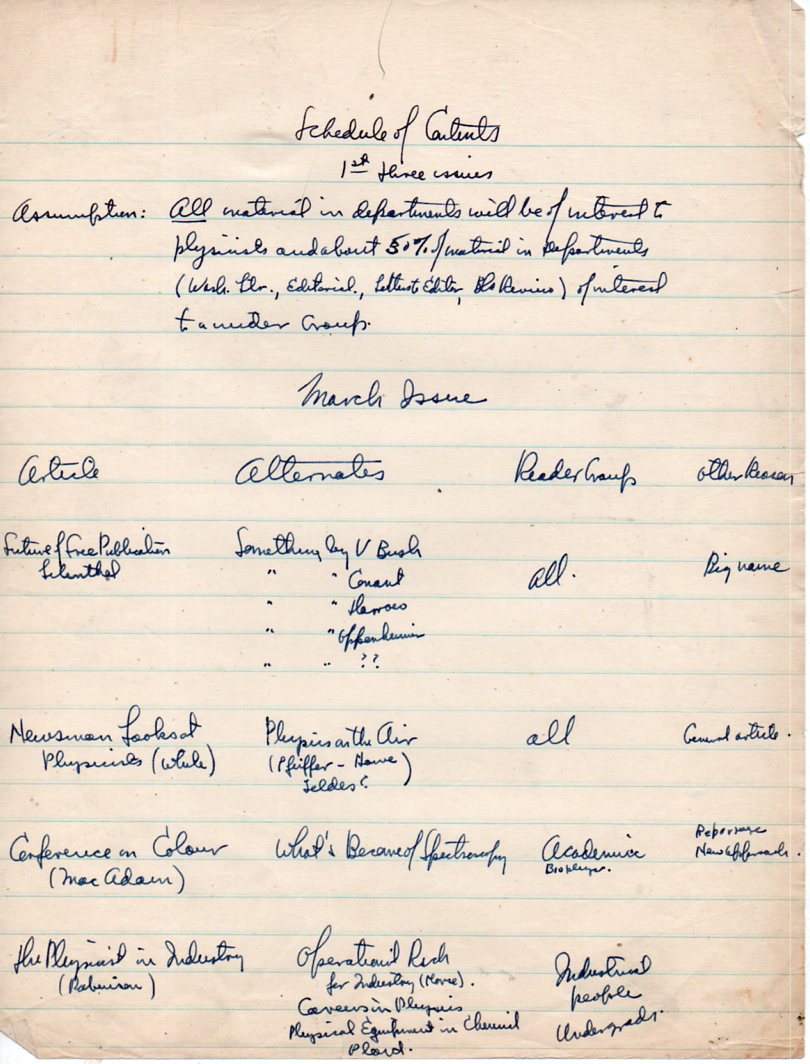
    For example, this worksheet for the first issues of the magazine outlined articles by some of the heaviest names in physics, with “something” by Bush, Conant, Oppenheimer; as well as who would be the target audience (“all”);  and who the contributors would be (‘big name”).  Quite a different world and pace, then, and one in which a forceful man like Katcher could do a lot in, and quickly. 

    Physics today646
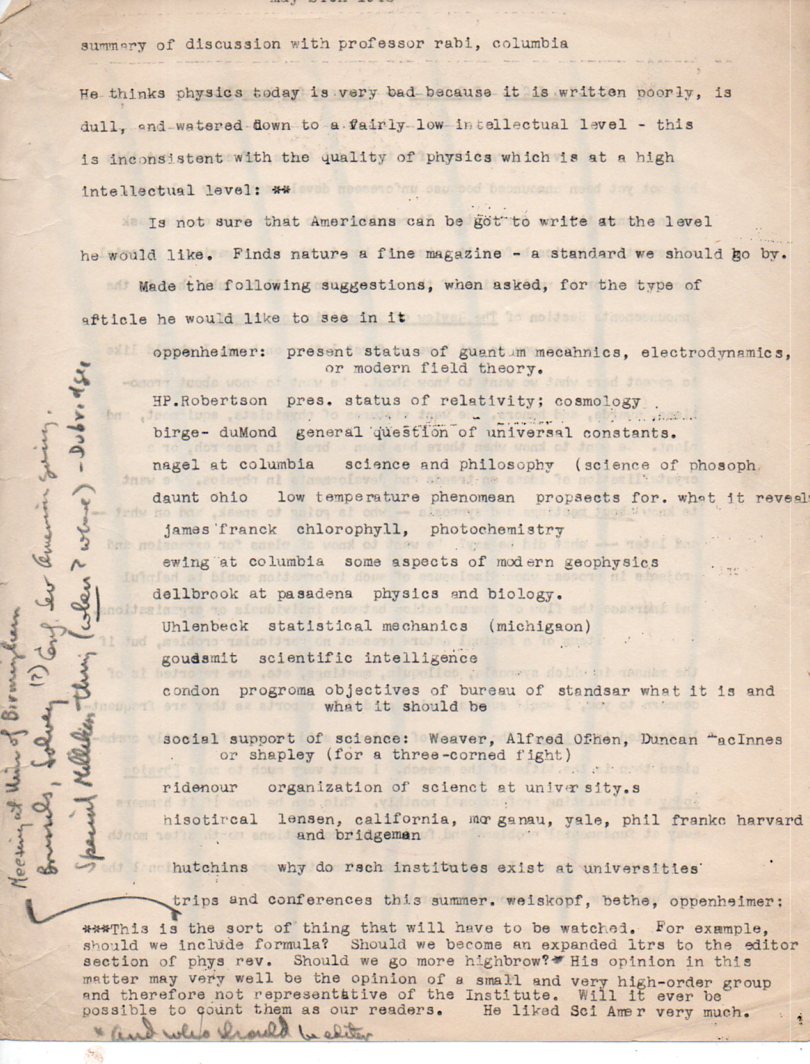
    Then there’s this interesting page of notes of a conversation between Katcher and the great I.I. Rabi, who offered some suggestions and insights about what might appear in the new magazine:

    Physics today649 And this, Katcher’s very clear statement on editorial policy (for 28 July 1948):

    ·Posted by :

    ·in:

    —

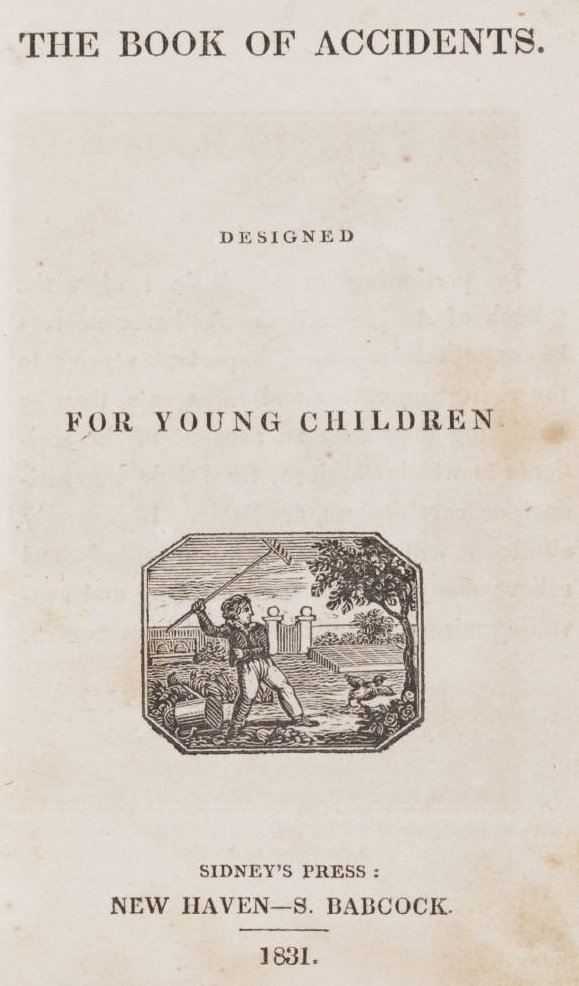
  • The Book of Accidents Designed for Young Children, 1831.

    JF Ptak Science Books   Quick Post

    Accidents
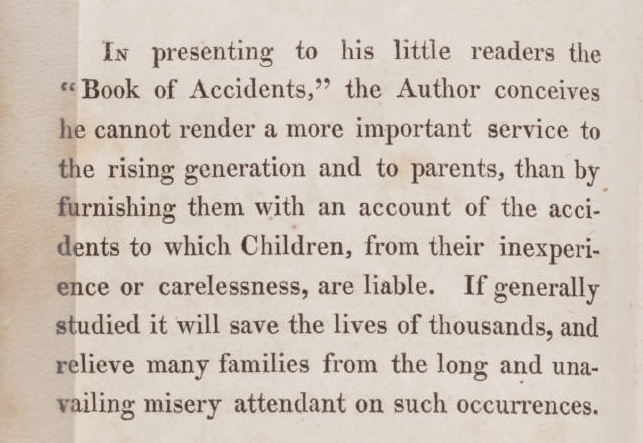
    The very Gorey-ish title of this book–seemingly designed to manufacture accidents for children–is actually a children’s advocate book. Its a small book, a chapbook, made for small hands, produced on the cheap and meant to be consumed by children and adults alike, warning people of the commonplace dangers that called on children in the 1830’s.  Scalding, being kicked by a horse, falling, being injured while playing with knives and candles and firearms, crossing the street, being tossed by a bull or wild horse, falling out of a coach, drowning, playing and throwing stones, tumbling down stairs and the like made a devastating impact on the lives of children–sometimes ending them, as the author points out.  By pointing out these dangers, and by having them read by (or to) children, the author believed that the lives of thousands of children could be saved.

    [Image sources:  Beinecke Rare Book and Manuscript Library, Yale University.]

    http://brbl-images.library.yale.edu/PATREQIMGX01/size3/D1169/1026953.jpg

    The mission statement:

    Accidents 2

    He was correct, of course; its a legendary problem trying to protect children from the obvious.

    http://brbl-images.library.yale.edu/PATREQIMGX01/size3/D1169/1026954.jpg


  • Prometheus Unbound; or, the Triumph of Science in Olympus (1879)

    JF Ptak Science Books   Post 1571

    The wonderful Punch, or the London Chiarivari strikes again for the year 1879.  The quick-browse is seldom complete, as I’ve witnessed again and again; 1879 revealed several fantastic images that were posed to this blog last week (here, for the Technology Museum of the Future and also here for Thomas Edison’s Anti-Gravity Underwear and Kite Babies), and as it turns out just a few pages away, there existed a larger, two-page illustration that was again on the triumph of science, and which I missed completely, twice.

    The message in this cartoon is the glory of “science”, which was flying very high indeed in the newly-electrified times of 1879.  Dominating the image is Mr. Punch himself, holding the electrical sun in one hand, illuminating everything.  To his right, Mars and Heracles stand before an enormous cannon, with different reactions; Bacchus sits astride a barrel of coffee of all things with Pan enjoying a short cup of Joe, while in the lower left corner Hades himself is making a photograph of Eros (?), an hourglass slung across his back, finally coming to grips with capturing change.  In the right corner at bottom is a young man who is intent perhaps on reporting on the situation via a handy public telephone–such things didn’t yet exist in 1879, the telephone being just three years old, but the artist thought enough of its future power to add it into this scene of the triumph of science and technology over the panoply of gods and demigods.

    On the right ide of the image the gods make no further advance against science and technology.  Ares-as-workingman is puzzled by the giant Nasmyth hammer, with the Cyclops in the background a little more concerned, disbelieving what their eye told them.  Poseidon is shuttled away in the lower left, accompanied by what looks to be a weeping mermaid., hustled to the exit by a torpedo, a diver in a deep sea suit, and what I think is a special life-preserving inflatable suit.  In the middle of the image we see two women dressed in legal and academic garb, looking determined before a finicky Hermes; and above them, lording over it all, is a very dissatisfied Zeus, and a headache-y Hera.

    Since the image is entitled “Prometheus Unbound, or Science in Olympus”, I guess that Zeus must be reacting to electricity as the unbound Prometheus, a modern version of a kind power given to humankind via electricity.  It is this new Prometheus that is the undoing of the god’s retreat.

    Overall, this is a very plain Victorian view in the trust of science and technology to lead in all things, even the very basis of much of European mythology.   [I hope that I haven’t abused the mythology too much.]


  • Edison’s Anti-Gravity Underwear Kite Babies, 1879

    JF Ptak Science Books    Post 1562  [Part of a series on the History of the Future]

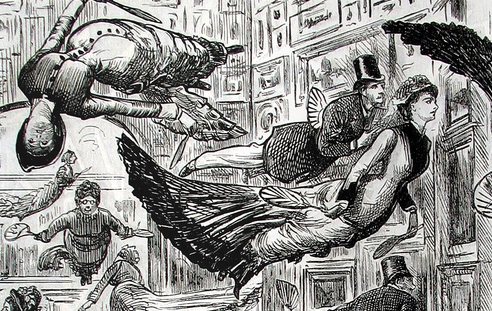
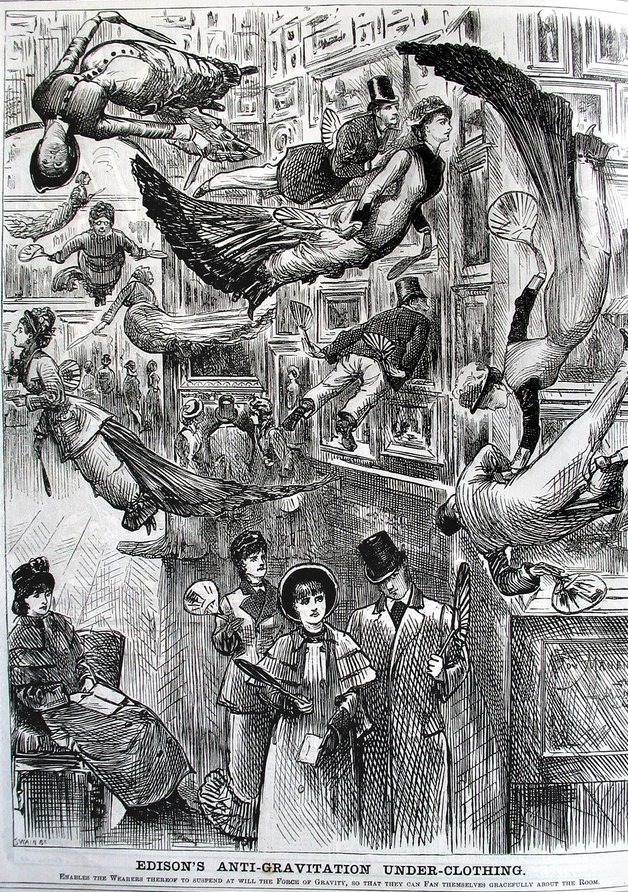
    There was a time in the late 19th century when it was seen that Thomas Edison could do just about anything–so much so that the Brits in The London Punch gave him tongue-in-cheek credit for inventing (flying, so to speak), anti-gravity underwear. 
    Edison anti gravity 3
    The funny thing about this though is that the best thing that people could do with this new invention would be to go to a super-sized art gallery to look at paintings close to the ceiling. 

     Edison anti gravity b

    This would no doubt have been distracting to the people without this delightful new underwear, who had to solemnly sit earthbound and try to enjoy their experience while people now not only walked by, but floated through their site lines as well. Perhaps they were wondering why these well-dressed flying people were doing so, indoors.

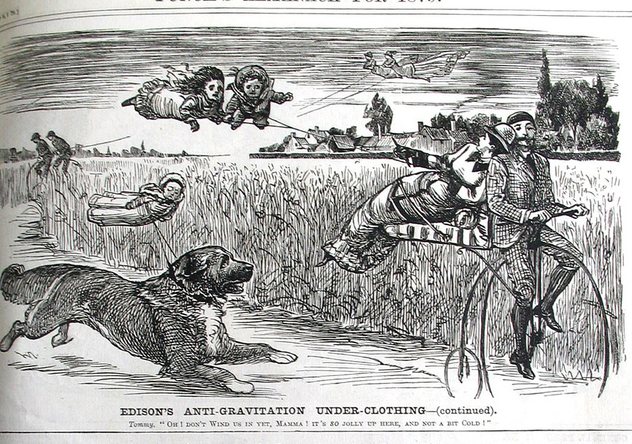
    Of course you could have made baby kites as well, shoving the little buggers into their anti-grav onesies, tether them to your bike, and give them a ride through the not-brambly countryside.  I would hope that the dog in the image below didn’t get distracted by anything whatsoever–but if that did happen, it would be easy to locate the dog.  All you had to do was follow the flying baby. 

    Edison anti gravity 1

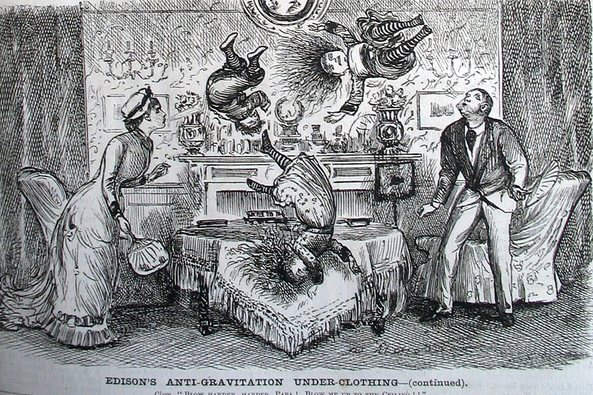
    Why did all of this have to be underwear?  Why not, say, outer clothing? Or a carriage?  Or ship?  Or etc.?

    Edison anti gravity 2
    Perhaps it was easy to make fun of an invention that seemed highly dubious but, somehow, still within the realm of possibility.  After all, Edison was beginning a phenomenal run of creativity–by 1879, when these images appeared, Edison, who was just 32, had already invented the electric light bulb and the phonograph, not to mention dozens of patents for things like the automatic telegraph, the voice engine, the speaking telephone, and an electrical tangle of other useful and revolutionary things (not the least of which were certain essential improvements in the telephone that made the Bell instrument more commercially practicable on a mass scale).  Edison was seen as being capable of virtually anything–later in life, he was the subject of an early science fiction work by Serviss  called Edison’s Conquest of Mars, and much later on, in 1920, a bored joke of his on a naive reporter became international news when the rest of the world thought that he might have invented a telephone to the dead.  But early on in his career, at the beginnings of the great heights of fame, he was seen as being capable of just about anything. 

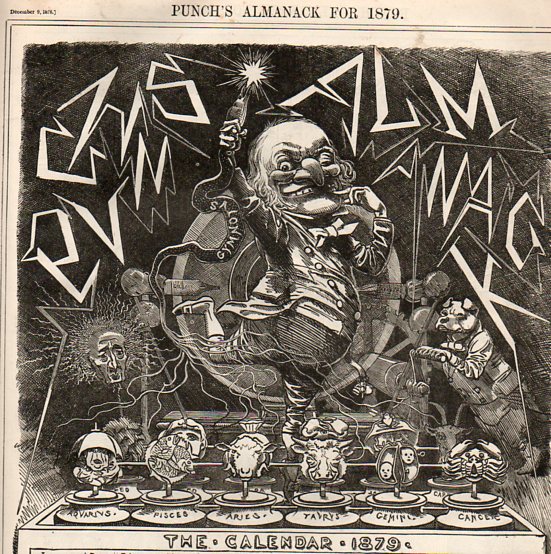
    Certainly they, the editors, the representatives of the thinking society, felt the electric mode of change in the air.  Punch greeted their readers to their almanac with this super-charged image:

    Edison electric620
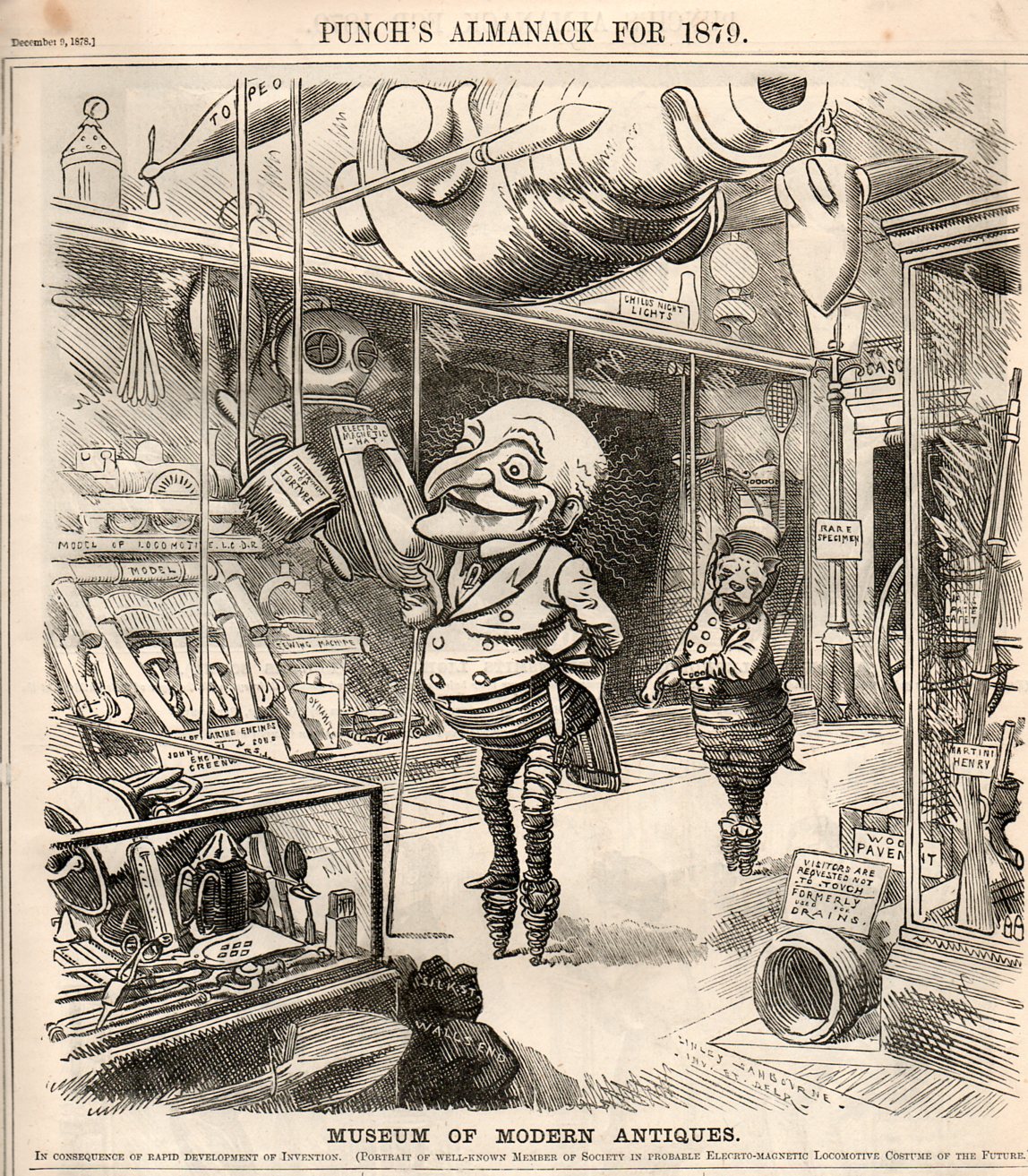
    And noted, several pages later in the almanac, that their modern conveniences might soon find themselves as quaint antiquarians, housed in a museum, being visited by Mr. Punch and his dog touring the place, transported by some sort of electromagentic sumpin’:

    Edison electric621
    But for now, in 1879, the London Punch was content to spring on joke on Edison underwear.

    Notes:

    List of Edison’s patents, here.


  • History of Headaches–Athena and Snakes

    JF Ptak Science Books  Post 1561

      Luchinus 2

    Athena–the Greek goddess of wisdom, and of civilization and of course warfare, and of strength and strategy, and of justice and craft and clever thought–was the first daughter of Zeus, whose mother was Metis, a Titan and equal of her father.  The story of her birth has been told in many different ways, but the basic element of it was that Zeus had laid with Metis, yada yada yada, and then feared that their offspring might be his equal, or greater, and so to quench his appetite for his consort, Zeus ate Metis (on the advice of Uranus and Ge), swallowing her, whole.  But as these things go, Zeus hadn’t planned that Metis was already pregnant, and that being the case, gave birth to Athena inside of Zeus.  Zeus knew nothing of this–being busy–except that after a while he developed a headache so intense that other gods came to his rescue and forced open his head to release the pain–and from his forehead came his daughter, Athena, already clad for war and armed with gifts from her mother. 

    John Milton evidently employed this (or similar) image of springing-from-the-forehead for his own incantation of sin coming from the forehead of Satan, in his Paradise Lost.  Satan (renamed from Lucifer) has been sent to Hell after his attempted terrorism in Heaven, and while there his daughter, Sin, springs from his head.  He of course falls in rapturous lust with her and they produce a baby, Death, which eventually devours Sin.  Oh Happy Days!

    There seems to be some fair amount of spring-from-the-forehead-of business in the history of story telling:  Saraswati (another goddess of wisdom) springs from Brahma’s forehead, Thoth comes from Seth’s forehead in Egyptian mythology, and a parallel Athena/Zeus story appears in Roman mythology with Palla and Jupiter. 

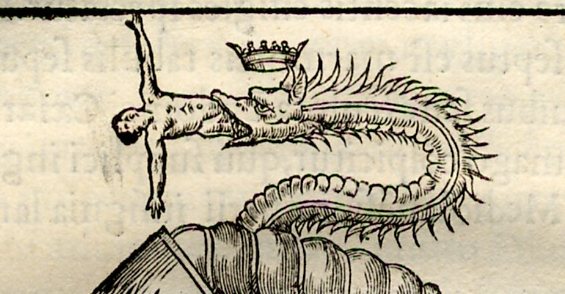
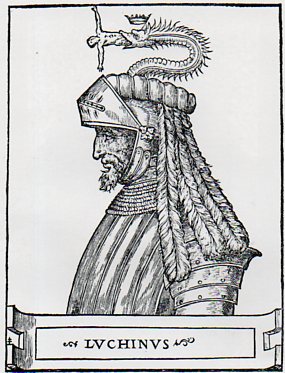
    This seems a long way to get to this headdress of Luchinus (or Luchino I Visconti, who shared in the rule of Milan from 1339 to 1349, found in Paolo Giovino’s Abbrege de l’Histoire des Vicomtes et Ducz de Milan, publihed in Paris in 1553), which was either real or not, but the image of the consumed man springing from the crowned head of the ruler was too much to pass up.  I am assuming that the man is going into the snake/dragon, rather than the other way around.

    Headaches616

    Notes:

    On Athena and Zeus–

    Hesiod, Theogony 886 ff :
    “Zeus, as king of the gods, took as his first wife Metis, and she knew more than all the gods or mortal people. But when she was about to be delivered of the goddess, gray-eyed Athene, then Zeus, deceiving her perception by treachery and by slippery speeches, put her away inside his own belly. This was by the advices of Gaia (Earth)


  • A Note on the Pledge of Allegiance: Exluding “Equality” and including “God”.

    JF Ptak Science Books  Quick Post

    The Pledge of Allegiance was written by Francis Bellamy (1855-1931) in 1892 for the 400th anniversary of the arrival of Christopher Columbus to the Western Hemisphere.  The Christian Socialist Baptist Minister Bellamy started the pledge out as a simple confirmation, and at one time considered the inclusion of the word “equality” in the message, but backed away after he saw potential difficulties with the word, what with the social and legal exclusions of women and Black people getting in the way of the concept. 


  • The History of Blank, Empty and Missing Things–the Voice of Beethoven

    JF Ptak Science Books   Post 1540   (Part of a long series on The History of Blank, Empty and Missing Things.)

    So, in the history of very creative people saying things, I wonder if Ludwig van Beethoven said the most of the least interesting things? I’m referring to his correspondence and other written works, and not his music of course—and given the music nothing else really matters. But given the amount of surviving letters and conversation books, and of course his staggering genius (which makes him one of the most important men of the century) it is kind of remarkable that there isn’t more attractive, inventive, interesting content in his communications—which at the very least makes reading the stuff somewhat disappointing, and, at the very most, pretty much the same.

    Beethovenconversation2

    When Beethoven (who died at age 57 on 26 March 1827, a year younger in death than Dickens and five years old than Shakespeare—a remarkable thing to consider how much these people accomplished in a very short period of time) began his experience in being deaf he resorted to using largish, quarto-sized blank chap books for his visitors to write their questions and answers to him. These books, Konversationshefte, the Conversation Books, were precisely that—they recorded the conversations with Beethoven over a number of years. Unfortunately, they reveal some very basic, daily, non-sequitur sorts of stuff, and contain almost nothing of what Beethoven actually said.

    Sometimes—according to scholars—it is possible to intuit what Beethoven sort of said by looking at series of questions and answers from his guests. But by and large the notebooks offer few clues to what the voice of Beethoven was actually saying. This is particularly grueling given the extent of the notebooks—136 of these books remain, covering the periods from about 1819 to 1827. (Actually, at Beethoven’s death there were more than 400 of the things, but his biographer, Anton Schindler, the man who inherited much from Beethoven including the notebooks, managed to purposely destroy at least 160 of the books. Evidently he found them impolitic, among other things, and tried to protect Beethoven’s reputation by making the evidences of the supposed impertinences disappear.)

    The conversations cover all manner of small, daily bits of life, including numerous one-sided conversations with/to the Maestro on how to take his enemas. (It is extraordinary that such evidence remains in the face of how much other –and probably more interesting—material didn’t.

    The letters of Beethoven, too, as voluminous as they are, are a terror to read, mainly because—at least to a general reader—there’s so little of interest in them. I have no doubt that for scholars they are vast repositories for things like Lost Punctuation and the sort, but the letters as intellectual documents, as things that give and insight into the mind of Beethoven, or what he thought about his work, or the works of contemporaries, and so on, well, the content just doesn’t seem to be there. (There are some occasional bright spots, like his continued reference to how extraordinary Handel was and that he, the great Beethoven, still learns from the man, even on his deathbed, but there’s really very little like this, relative to the great weight of the sheer number of words in the letters.)

    A number of writers have quoted W.H. Auden saying that there was only one memorable sentence in the whole of the Beethoven correspondence.  I can’t yet find what this was to Auden–my first guess is that it is in the “Immortal Beloved” writing, where we do get a big, deep cut into Beethoven’s mind.

    The letters do reveal all sorts of other things, most of which makes me sad, particularly when the sick room of Beethoven is described in not-pretty terms as an outreach and indicator of his possible poverty, and how much the ill Beethoven had to worry about securing a little money to pull him through his illness and into the next half-year or so of life if he survived  himself. 

    Even making my way though the Thayer biography of Beethoven and looking for his voice is a chore. I tried to content myself constructing found poetry in the questions of the visitors to Beethoven in the notebooks, but that was fairly well a failure.

    It is in these cases that the authentic voice of Beethoven  seems to be almost entirely missing–a blank, empty and missing sound from the man who made some of the most beautiful music ever created.

    The other end of this part of blank, empty and missing things history, and sound, and Beethoven, would obviously be his deafness, or perhaps his depression (in the 1815-1820 period, when he was plagued by, well, something).  For years Beethoven heard very little; and then for years after that, he heard almost nothing at all.  But he was sensitive to vibration, so he was able to experience music, though in a different sense form what we think of as auditory.  Missing music–though I wouldn’t call it “Empty” or “blank.”


  • The History of Lines, an Introduction: Barbed Wire, Telegraphs, Treaties and Railroad Rails

    JF Ptak Science Books   Post 1539
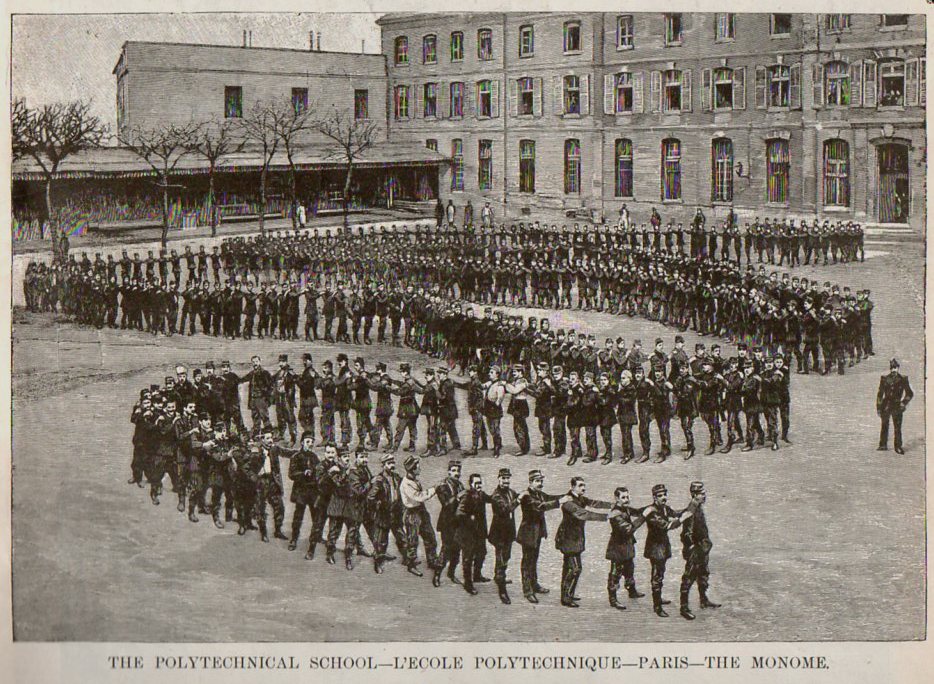
    LINES--POLYTECHNIQUE566
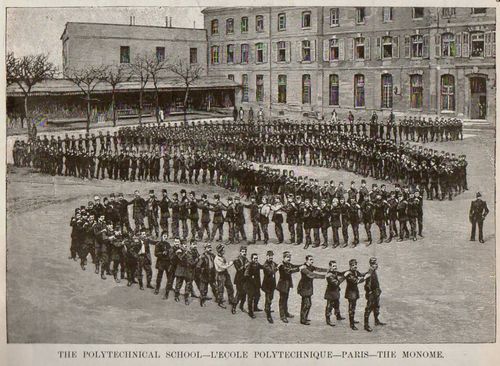
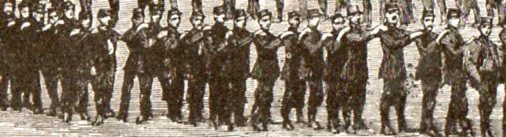
    I’m about to start a series on this blog on a great constituent part of the concerns here of two other series: the History of Lines.  This new bit will sit along next to the History of Dots and the History of Holes, and will begin to mention just some of those things that will bridge the gap among the three categories. 
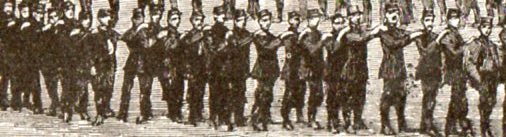
    LINES--POLYTECHNIQUE DET567

    A lot of that–the History of Lines business–has to do with the interpretation of things on paper:  heart rate, “brain waves”, the motion of a bumble bee, navigation, and of course, words.  (The great Kickapoo tracker Famous Shoes  in Larry McMurtry’s Streets of Laredo, one of the Lonesome Dove tetralogy, found that the one thing he couldn’t track in this world were the marks on the pages of a book.)

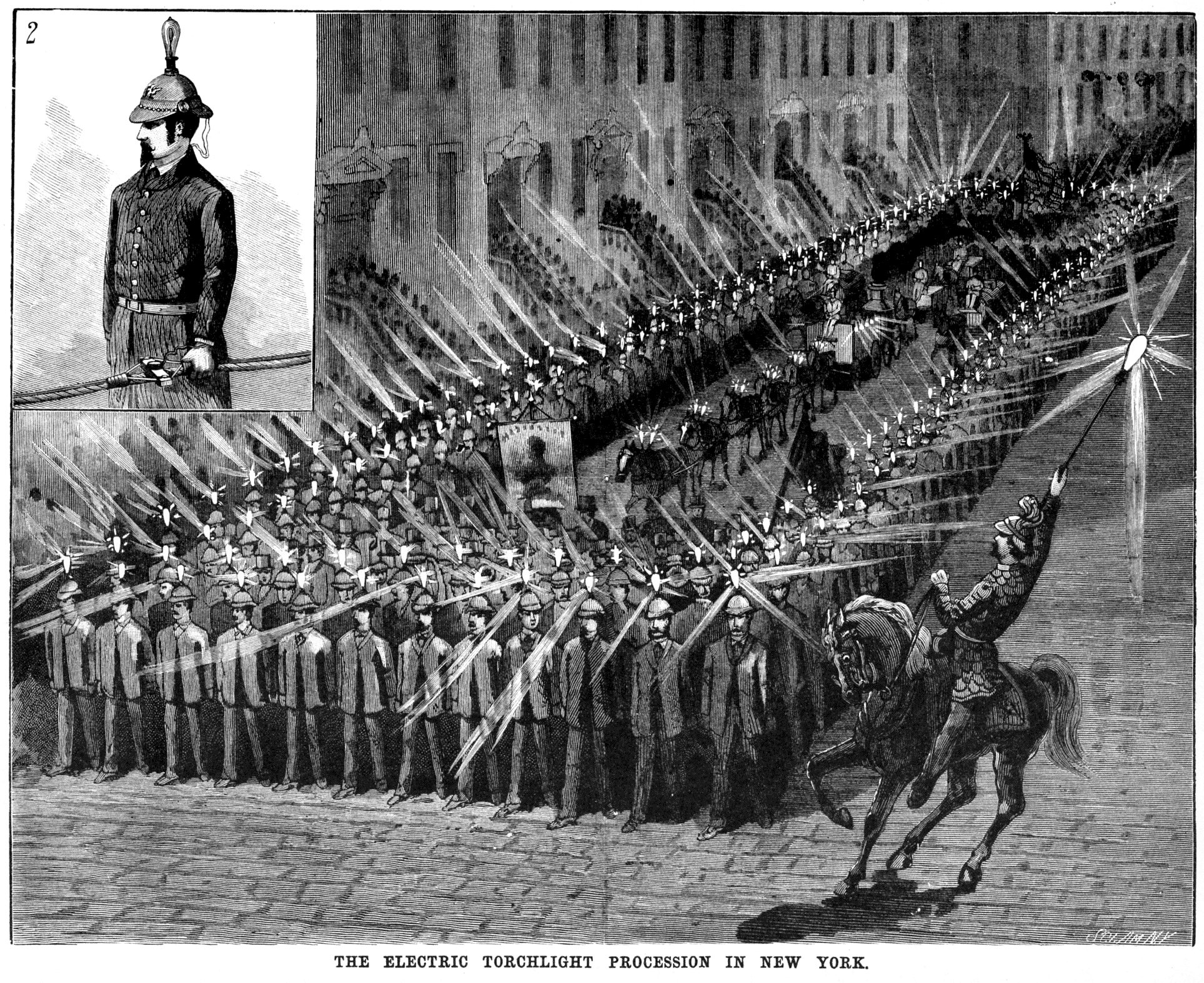
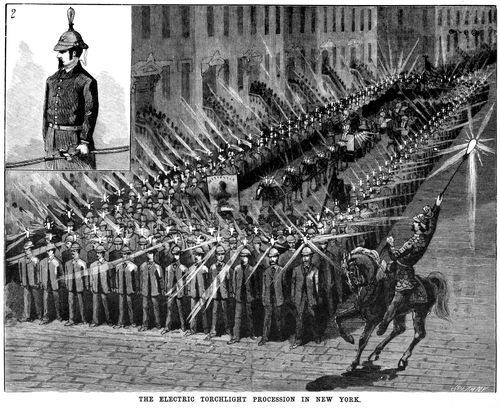
    The business of lines is like that of dots and circles, together describing much of the physical world.  For “lines” alone there’s just so much, an  entire encyclopedia waiting to be written. There are unique lines, such as we see below from The Scientific American for 28 March 1885, in a line of workers for the Edison Electric Company holding an (electric) torchlight parade, the men attached by electrical wires that were in turn attached to the electric light bulbs on their helmets.
    LINES-eLECTRIC TORCH568 There are lines of succession, code and graphs; Battle Lines, the Maginot Line; fishing lines, units of poetry, lines of a play; there’s waiting on lines, breaking the line, party lines; lines of fortifications, the lines on which music is written, and the foundations of geometry, and much more. 

     There were lines that occupied only a minute percentage of the landscape in which they were found, but were among its major controlling influences–such was the case in controlling the American West, except that one of the greatest of these lines, once completed and seemingly impenetrable, was briefly destroyed by its builders. 
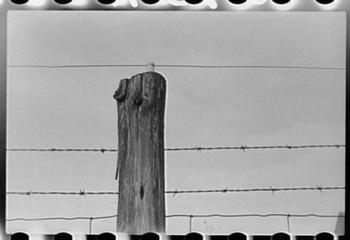
    Barbed_wire The story of the West getting filled up in the 1870s is a story of lines—railroad track, telegraph wires, barbed wire fences, and words on a page; big changes from disparate but related areas in technology and legislation, but when you looked at them from a distance and in the proper perspective, they all looked exactly  the same.

    The greatest of these lines may have been the invention of barbed wire in 1873, with Joseph Glidden, Jacob Haish and Isaac Elwood all managing to independently come upon the idea at about the same time.  What barbed wire brought to the West was control and settlement.  Prior to barbed wire there was open range grazing of cattle and extensive cattle drives, mainly because there was no fencing. There were also few farms due to this sort of grazing—the only thing a farm was here was in the way, and there was no recourse for the farmer to protect his
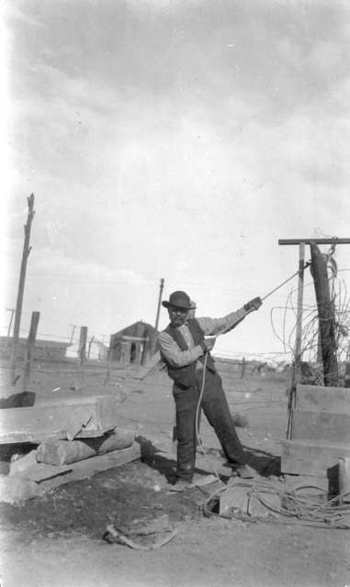
    Blogludlowlands from a grazing herd.  There was no fencing because there were no materials for the fence.  Fencing was made almost entirely with lumber and stone, and on the treeless plains and the vast non-New England tracts of land, it was simply an impossible task.  The introduction of barbed wire changed all of this very quickly, with thousands of miles of new fencing strung in the 1870’s alone.  Fencing meant control, restriction of the use of land, of access to water, and to a way of life.  It also meant that the farmer was now free to make a claim at a way of life on the plains, beginning a torrent of settlement and farms.

    Another big line element of settlement were the texts (lines-on-paper)  of three major acts of legislation which, over a period of just sixteen years, were responsible for moving more people than just about anything else in American history. The first of these was the Homestead Act of 1862. This was a revolutionary concept, legislated in 1358 words, effectively turning over 270 million acres, or about 8 percent of the country, of public lands to private citizens (“actual settlers of the public domain”).  A claim could be made for a farm of 160 acres, for free, provided a structure was built on the land and it was maintained for five years.  One could buy the parcel outright for $1.25 an acre as well.   Next was the Desert Land Act of 1877 which opened drier lands, selling 640 acres at $1.25 an acre with three years to pay, so long as the land was irrigated by the end of the three years.  Land that was deemed “unfit for farming” was sold to those who might want to “timber and stone” (logging and mining) upon the land with the third major piece of legislation, the Timber and Land Act of 1878. The act was used by speculators who were able to get great expanses declared “unfit for farming” allowing them to increase their land holdings at minimal expense.  The Homestead Act alone accounted for the creation of almost 400,000 farms in the West by 1890.  Farms meant parceling out land, “settling” it, having people on it, waiting when they weren’t working. 
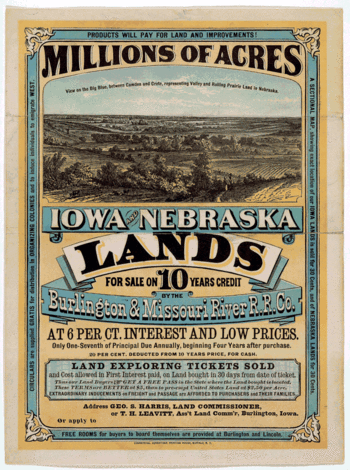
    Blogpeopling_upmillions_acres

    Settlement was dramatically increased by the written and published promises and speculations of mineral wealth—not necessarily just by the introduction of miners, but by securing the lands from and removing its Indian owners.  The Custer expedition into the Black Hills in 1873, for example, reported some hope for finding gold in the sacred mountains of the Sioux. Thousands of miners responded to possibility of wealth, and Custer was again dispatched to secure safety for them in the restricted lands.  This in turn lead to more settlers and coincidentally to the debacle of the Little Big Horn, which was the beginning of the end of the Siouian control over vast amounts of land.  From prospectors to protection to conflict, ultimately making land more available for more people. 

    The spread of the railroads was also an enormous settlement factor, with the number of miles of track being laid in Texas and the Great Plains doubling in just 5 years.  Not only could you get West more easily, and quickly, and with less pain and suffering, but you could also be much more easily re-supplied.
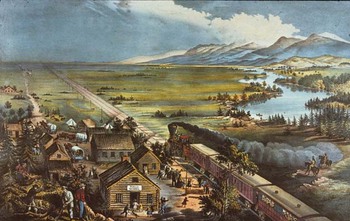
    Blogwestward_the_course_2


    Telegraph wires tripled, making it easier to control events:  and this means from being able to respond to Indian attacks more quickly to ordering boxes of nails, or beer, or shipments of newly-invented canned food. 

    One of the greatest and most infamous of these lines-controlling-the-West concept were the pieces of legislation and agreements and other legal and binding documents, between the U.S. government and every Indian tribe in the U.S. Promises were made to the Indians and of course not one of these treaties were ever actually realized.  It was these written lines that even the greatest of Indian intentions could not penetrate, and that in the end, after everything was said and done and written, after hundreds of treaties, not one was ever followed. 

    And at the end of tying the first metal ribbon across the country, the meeting of the Central Pacific and the Union Pacific railroads at Promontory Point (Utah) in 1869, after the locomotives  Jupiter and No. 119 touched cowcatchers, after the driving of the golden spike, after the completion of the massive effort to complete the railroad line, some men of the 21 U.S. Infantry (and others) hammered away at the rail to chip away some souvenir pieces of the occasion.  So, the moment the great undertaking was finished, it was put out of commission, possibly by a coronet player from the regimental band, or whomever.  Of course the line was only very briefly pu tout of service, and the damaged rails quickly replaced, but the folks celebrating the completion of the uniting of the rail line were the only ones who were really able to also prevent its completion. 

    Of course in the end all of the lines applied and enabling  the closing of the West were personified by smaller and more precise lines:  maps.

    NOTES

    The full text of the “Millions of Acres” (seen above) broadside is as follows:

  • “China, Glass, Auction & Negro Sales”: Photography of the Sherman Atlanta Campaign, 1864.

    JF Ptak Science Books     Post 1535

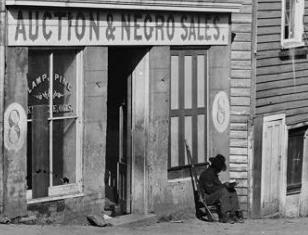
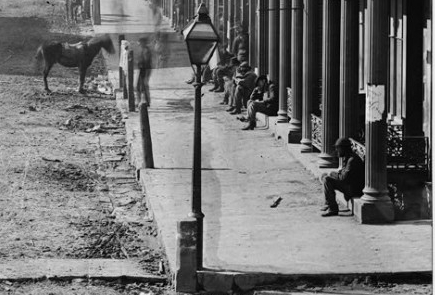
    Atlanta, Georgia.  Whitehall Street:  ” China, Glass, Auction & Negro Sales.” 1864. Photo by George N. Gardner.

    The first name people associate with photography and the American Civil War is Matthew Brady.  Brady did of course come up with the idea for photographically documenting the conflict and made images of his own, but the truth of the matter is that he had a lot of help making his record–other great names from the early period of American photography were employed by him, sent out into the field to record what they saw.  Alexander Gardner, Timothy Sullivan, James Gardner, William Pywell and eighteen others recorded the great events in addition to Brady, though for the most part it was Brady’s name on the finished work.

    One of these men was George Gardner (1819-1902), who at one point owned his own studio in Oswego, New York in 1847, working for himself until he joined the Brady force in 1861.  He left Brady in 1863, but he didn’t leave the war, becoming an official photographer for the United States Army, Chief Engineer’s Office and joining General William T. Sherman and the  Military Department of the Mississippi in 1864, at which point he documented Sherman’s Atlanta Campaign.  (One of the results of this effort was his 61-photograph work, Photographic Views of Sherman’s Campaign (1), published in a sumptuous leather bind in 1866, a big, heavy work with original albumen photographs.)  The images below, however, were not published in this work–all 61 images can be view here, at the collections of the Hargrett Library at the University of Georgia.

    Detail of the first image, above–the three other businesses that I can identify are tobacconists of one form or another.  It looks like a Union private is sitting quietly (reading?)  in front of the auction house, his rifle leaning against the wall.  There were a lot of people going into this place, if grime on the doorway is a testament to a legacy of busy-ness. 

    I wonder if you were coming here as a slave, without the ability to read or distinguish any sort of written character, I wonder what you would think of those two enormous “8” characters painted on the side of the building.  That symbol is an old one for infinity, continuing–I wonder how many cultures would have used that line as its own?

    Barnard negro sales detail

    Atlanta, Georgia, 1864.

    The only reason that the private in the photograph above is captured so clearly is that he was probably reading, which means he was sitting still for the minute or so that it would take to make the exposure.  That’s what gives this image above its qualities of clarity and ghostliness–there are as many suggestions of people as there are imaged folks in this photo.  What we see plainly are the men sitting on the business stoops–look more closely and you’ll see many more moving along the sidewalk, the briefest bits of them being captured by the long exposure. (There is just a hint of someone leaning against the gas light fixture in the foreground.)

    Barnard atlanta street ghosts--detail

    Nashville, Tennessee.  1864


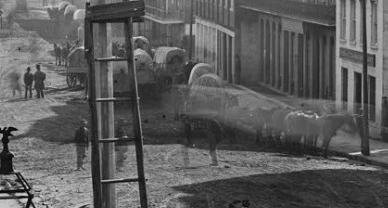
    Atlanta, Georgia.  View on Marietta Street, 1864.

     Detail:

    Barnard atlanta ladder detail

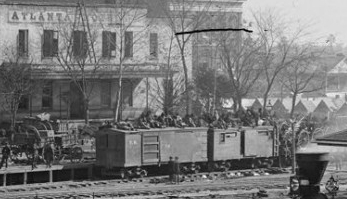
    Atlanta, Georgia.  1864. “Soldiers on boxcars at the depot.”  There was no date that I could find offhand on this image, so I don’t know if the soldiers were coming, or going, or already there and just trying to catch a breeze on top of the cars. It had to be after the end of the campaign, after Atlanta’s mayor James Calhoun surrendered the city following  the entry of Henry Slocum’s XX Corps on 2 September 1864, and sufficiently after that for the men to climb on top of the boxcar and not get fried by a scorching Georgia late summer sun.  They certainly weren’t busy pulling up the rails like they did in so many other locations in the city and vicinity, ensuring a de-mobilization of what had to this point been a primary center for Confederate munitions supply and manufacture. 

     Detail:

    Barnard atlanta boxcars detail
     

    Notes:

    1.  The full title of the book is Photographic Views of Sherman’s Campaign, Embracing Scenes of the Occupation of Nashville, the Great Battles around Chattanooga and Lookout Mountain, the Campaign of Atlanta, March to the Sea, and the Great Raid through the Carolinas.


  • Invasion Routes to the U.S.,1940

    JF Ptak Science Books  Post 1532

    This is a supplement to some earlier posts on this blog relating to the possibilities of the invasion of America:  Mapping the Invasion of America, 1942 (which is the most-viewed post from this blog, with over 500k readers), The Invasion of America, 1935,  and The Invasion of America, 1942, Part II to name a few examples.

    INVASION us  INVASION ROUTES

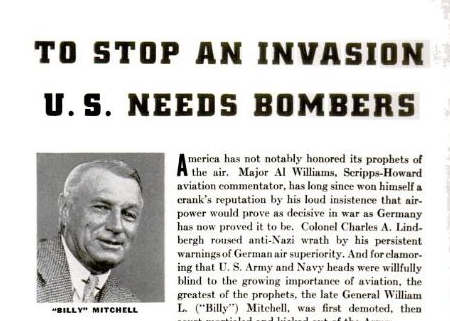
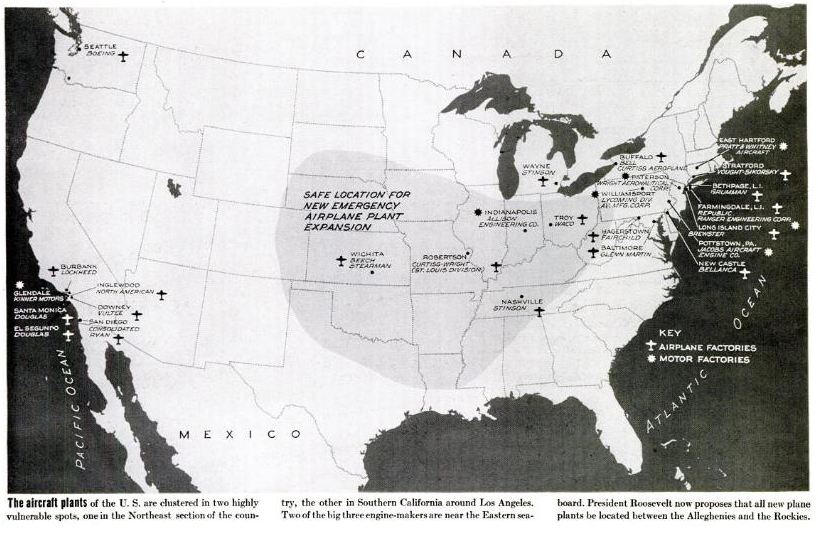
    In the 27 May 1940 issue of Life magazine appeared an article on Franklin Roosevelt’s call to American action in constructing an entirely new air force.   For years the air corps arm of the American military lingered in a kind of low-numbers unresolved limbo–but by May of 1940, it became painfully obvious that something drastic must be done.  By this point the European War was about eight months old, and the possibility of Nazi victory looked very real.  After all, the Blitzkrieg had been very successfully employed in Poland, and in May was used in the invasions of Finland, Norway, Denmark, Belgium, the Netherlands and Luxembourg. And France, of course.  By late May, 1940, France was already pretty much done, the Parisian capital falling weeks later on 23 June, with the country capitulating ten days later.  May also saw the collapse of the British and French armies along France’s northern coastline.  (The rescue of the 350,000 troops on the beach and in the harbor of Dunkerque had not yet taken place (but would within the next few days). It was bad stuff.)  In the light of the Nazi victories and the imminent fall of France, it was also time for people to start thinking about the invasion of England.

    Invasion-US

    Roosevelt and his adviser knew that America was headed into conflict, and knew that the country needed to get onto a war-time production basis. One way to begin preparations was for FDR to call for the increased production of the newest and one of the most important aspects of modern warfare, the airplane.  And not only an “increase” in production did the President call for, but a mountainous bump, an order of magnitude more in manufacturing of military planes. Earlier in 1938 the call for a 5,000-plane-a-year air force was shot down as being unrealistic–and perhaps so, even though the Nazis were just at the beginning of their outward thrust.  So in May, 1940, Roosevelt stepped up and asked for 50,000 aircraft. 

    No doubt the war in Europe gave everyone great pause, or scared them silly.  Two years before the number of 5,000 planes produced per year was seen as ridiculous–now the business of producing 50,000 a year seemed feasible–incredible, even, but the means of production were present, and so was the raw material and manpower.  It was seen that of the 84 aircraft production plants then functioning only 23 were producing military planes, so there could be a modernization of existing plants as well as the construction of new aviation installations. The production totals for the year 1939-1940–1,247 aircraft, including 477 produced for the U.S. Army and Navy, 311 for Great Britain, and 459 for France–represented only a small percentage of what the existing factories could actually produce. (And it turned out of course to be just the case, as we can see from the production numbers in the “notes” section, below.)

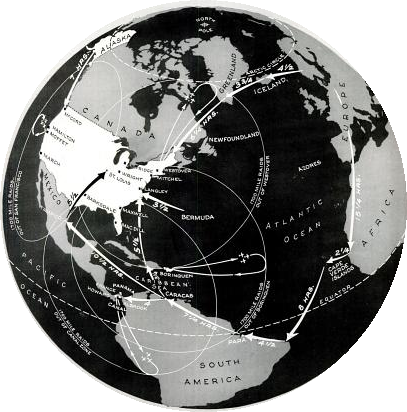
    There was also a certain amount of scare factor involved with waking up the American public to the needs for getting involved in the European conflict in the year-and-a-half before Pearl Harbor–that the Nazis wouldn’t stop in Great Britain, and that “invaders” could and would attack the United States. The need for increasing American war production was not only to supply the allied forces in Europe for stopping Hitler, but also would keep the Nazis away from the United States.  (Summarizing the points discussed by the President and other government officials, the map of the invasion of America looked something like the global view we see above.)  So if Roosevelt couldn’t stir the hearts and minds of the American public for keeping Europe aloft in American-built planes, then keeping the Nazis off Main Street might work. 

    What the map shows are the lines of attack for the un-named Nazi invaders–their aircraft making their way slowly across the Atlantic via Iceland-Greenland–Newfoundland, and across Europe -Africa-Cape Verde-Brazil-Paraguay-then across the Caribbean and right into Wilmington, North Carolina; and then of course all of the way across the Soviet Union to Alaska and then into Washington state.  The plan was that these advanced forces would come in, establish an airfield, grow , and then move closer to the U.S., stopping to construct bases all along the way.  The response, oddly enough, was for us to build “bombers” so that the airbases could be blown up.  That would also extend the effective range of air coverage from the United States to deal with the very-slowly-approaching enemy.  The circles on the map show the effective round-trip range of loaded American bombers and the territory that they could cover.  In general the map, in its own way, portrayed the United States as approachable to foreign invasion.  Some of this reasoning is a little inscrutable, but Washington was playing a game that needed to be won. 

    Invasion us 2
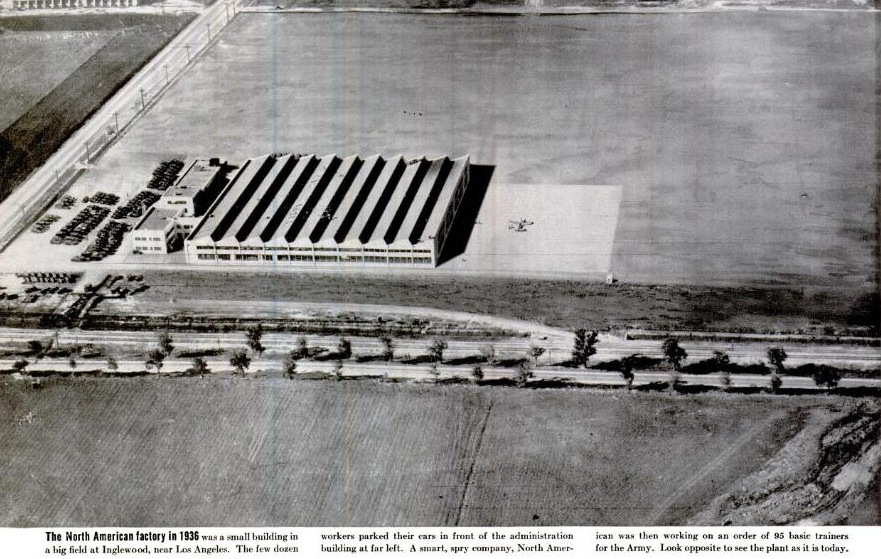
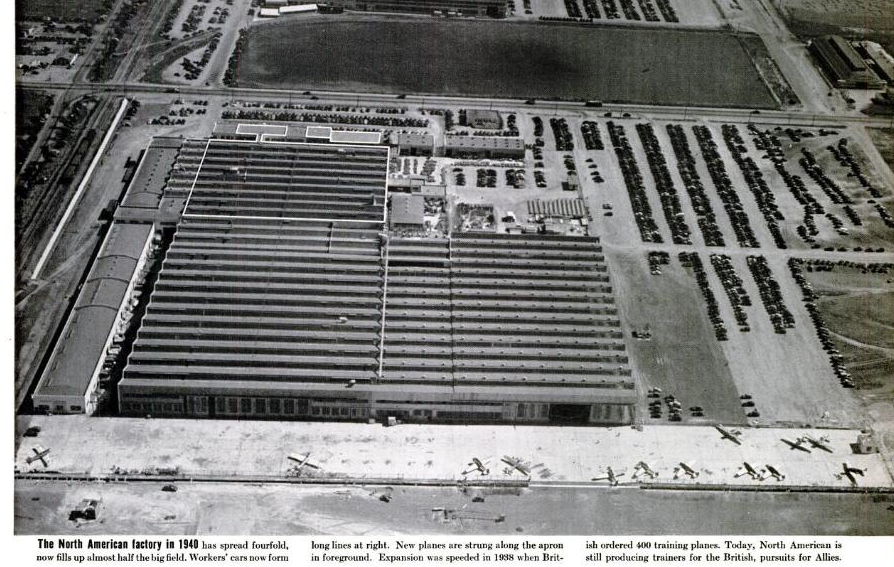
    These interesting before and after pictures of a ramped-up aircraft production industry were to supply some proof that the job could be done, and that this factory could very well be a template that the dozens of others could follow:

    [Aircraft production facility, “before”]

    Invasion US factory before [Aircraft production facility, “after”]

    Invasion US  factory after

    Notes

    Production numbers for U.S. aircraft manufacturing, 1940-1945:

    Type of airplane Total 1940¹ 1941 1942 1943 1944 1945²
    Grand total 295,959 3,611 18,466 46,907 84,853 96,270 45,852
    Combat airplanes 200,443 1,771 8,395 24,669 53,183 74,564 37,861
    Very heavy bombers 3,740 – – 4 91 1,147 2,498
    Heavy bombers 31,685 46 282 2,513 9,574 15,057 4,213
    Medium bombers 21,461 52 762 4,040 7,256 6,732 2,619
    Light bombers 39,986 453 2,617 5,954 11,848 12,376 6,738
    Fighters 99,465 1,157 4,036 10,721 23,621 38,848 21,082
    Reconnaissance 4,106 63 698 1,437 793 404 711
    Support airplanes 95,516 1,840 10,071 22,238 31,670 21,706 7,991
    Transports 23,900 164 525 1,887 6,913 9,925 4,486
    Trainers 58,085 1,676 9,294 17,237 20,950 7,936

    1,352