A Daily History of Holes, Dots, Lines, Science, History, Math, Physics, Art, the Unintentional Absurd, Architecture, Maps, Data Visualization, Blank and Missing Things, and so on. |1.6 million words, 7500 images, 4.9 million hits| Press & appearances in The Times, Le Figaro, Mensa, The Economist, The Guardian, Discovery News, Slate, Le Monde, Sci American Blogs, Le Pont, and many other places… 5000+ total posts since 2008.

Category: Anticipation, History of

  • Shooting Dodos, Square Holes/Round Bits, the non-Future of Movies, and the Race Where Everyone Wins

    JF Science Books   Post 1519

    In a world where everyone wins and no one loses, why can’t we cut a square hole with a round bit.  Or vice versa? Well, we can of course, its all just a matter of perspective.  The image (below) that started this thought thread down the rabbit hole is of a member of Great Britain’s ruling class, Sir William Houghton, appeared in Punch magazine in 1890 as an illustration in a debate over hunting rights for hares and other small critters, in what seems to have been an attempt to further control the access of the wide working class to certain freedoms.  To be honest I  haven’t looked at this debate, and I’m not sure why the liberal Sir William is shooting Dodos as rabbits, but the image–independent of what it was intended to represent–seems to be the inside-out, or the reverse-inside-out of what had been the situation with the bird. It would look “wrong” even if you didn’t know the history of the flightless and basically defenseless creature being hunted to extinction, standing in the place of the rabbit. It has an oddness to it, like a very high-pitched tone that floats above a piece of music, a slightly pungent odor coming from a nicely-executed painting. Perhaps it is the  the sense of expectation being thrown off just a bit with something like the unexpected-expected. 

    And then of course there’s the rabbit hole connection.  And Alice.  And the Dodo.
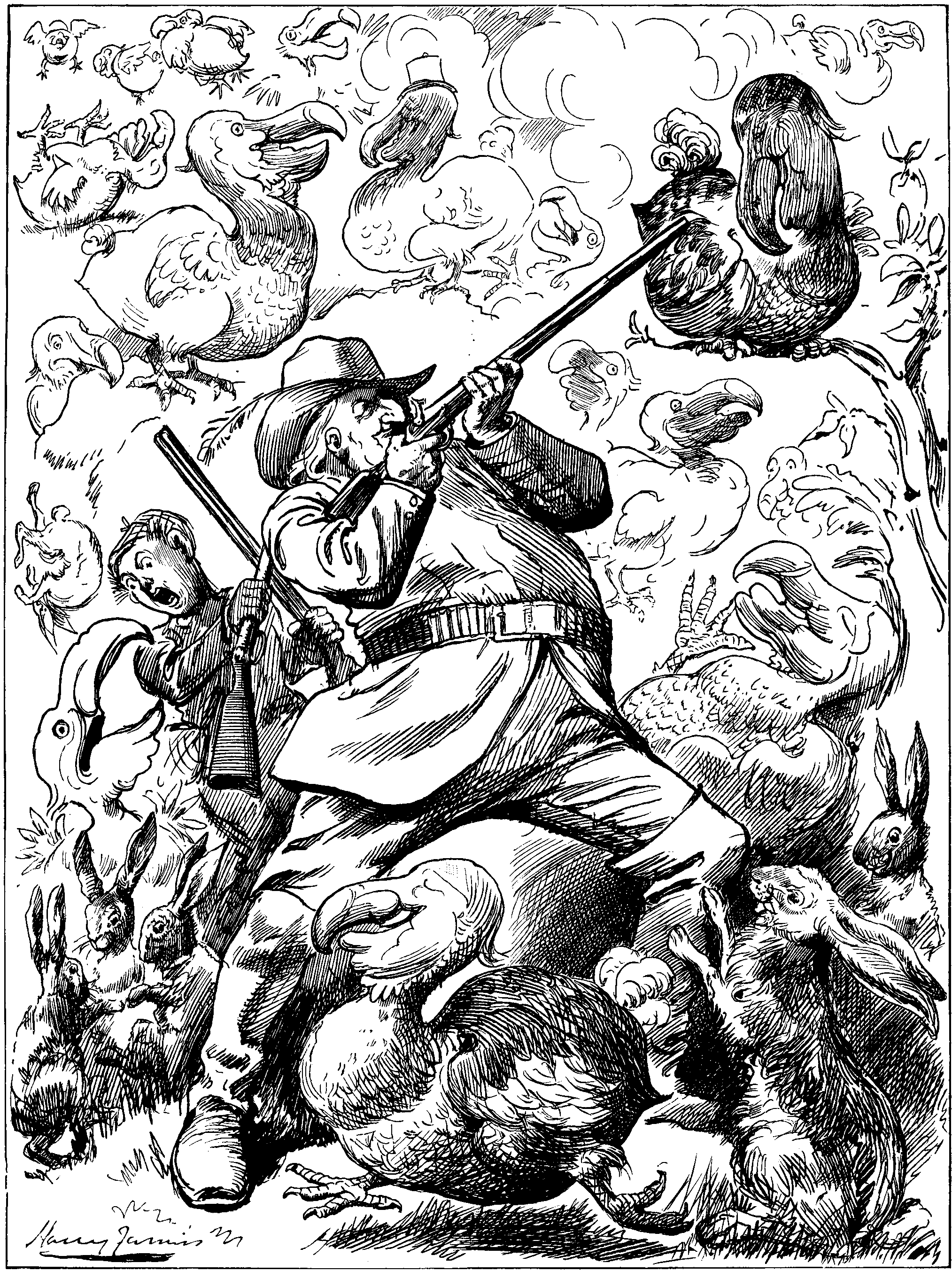

    From Report of Debate on Hares Preservation Bill, June 26.—”They (the other Members of Parliament) could not go out and kill 300 Dodos,”—but evidently he (Sir W.V. HARCOURT) could, and here he is—caught in the act…  [He reminds me of a peeing stallion–one of the most majestic poses a horse can strike]

    Lewis Carroll’s Alice gets right down to business in her adventures in Wonderland, right from chapter one (“Down the Rabbit Hole”), only a few hundred words into the story1–down she goes.  In one very memorable scene (in a book composed of memorable scenes) Alice meets a Dodo bird (which scholars say is a play on the stuttering Carroll’s real name, Dodgson, or Do-do-ogson), and <things happen> after which the Dodo suggests a “Caucus Race”, being a play on the legislative process in which the Dodo-shooting Sir William participated above. 

    File:De Alice's Abenteuer im Wunderland Carroll pic 10.jpgThe deal with the Caucus Race was that there was no set course, necessarily, for any one racer–everyone would run their own course as they chose; so in a self-defined course with no competitors and no rules, racing a race that the race liked, it would be hard to lose. Carroll writes:

    “First it marked out a race-course, in a sort of circle, (`the exact shape doesn’t matter,’ it said,) and then all the party were placed along the course, here and there. There was no `One, two, three, and away,’ but they began running when they liked, and left off when they liked, so that it was not easy to know when the race was over. However, when they had been running half an hour or so, and were quite dry again, the Dodo suddenly called out `The race is over!’ and they all crowded round it, panting, and asking, `But who has won?’

    “This question the Dodo could not answer without a great deal of thought, and it sat for a long time with one finger pressed upon its forehead (the position in which you usually see Shakespeare, in the pictures of him), while the rest waited in silence. At last the Dodo said, `EVERYBODY has won, and all must have prizes.”

    The rabbit hole was made by the cylindrically-gifted rabbit, though in Carroll’s world the rabbit could’ve been a square, a cube or cube2-something.  Or of course the rabbit could’ve made a square hole, or square-squared hole, which probably would’ve been more to Carroll’s taste, approaching a very early thought on square2.  But people in the three-dimensional world had been working on making square holes with round bits, though coming  a bit after Carroll’s time, as in this example:

    The device at the bottom of the drill was made to follow and then restrict its cutting motion to that of a square, the device (considerably less wide than the diameter of the bit) cutting and scraping the round hole into a square.  Which in its own way reminds me of a motion picture depicted on a polygon, in a movie theatre for example, which began in a somewhat different way, filmed on a circular surface, or at least in one aspect of it. Auguste and Louis Lumiere began the new mass-medium, illustrated here from their Nouvel Appareil Photographique Panoramique Reversible le Photorama (which was printed in Lyon in 1895/6)
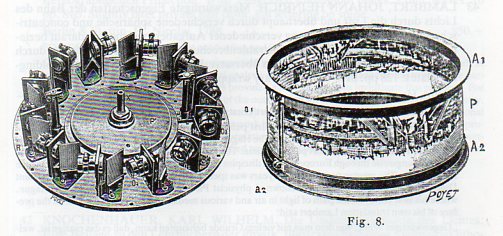
    Lumiere544

    The Lumieres claim for “first” as cinematographers is better understood in terms of the motion pictures being a new mass medium.  Whereas other inventors and experimenters were earlier–like chronophotography devices constructed by  Eadweard Muybridge, Étienne-Jules Marey and Ottomar Anschütz, which all produced forms of moving pictures in the decade prior to the Lumieres, but were decidedly not for public consumption.  The work of these men, as with that of Thomas Edison’s Kinetoscope (1891), was intended for scientific and academic consumption; or with the case for Edison, at least, for the amusement of the wealthy classes, as well as for educating the children of the rich. There were certainly others who worked in this area in the 1890’s, but none really fashioned an interest to their invention for the use of one-and-all as did the Lumieres.

    Which gets us back to our square rabbit hole.  Soon after the Lumiere’s introduced their fabulous new invention, they decided that there was no future whatsoever in the motion picture as a new medium, and abandoned it.  They undoubtedly felt a little bit like the square peg in the round hole of the needs of art, and moved on. 

    ___________

    Notes:

    1. “There was nothing so very remarkable in that; nor did Alice think it so very much out of the way to hear the Rabbit say to itself, `Oh dear! Oh dear! I shall be late!’ (when she thought it over afterwards, it occurred to her that she ought to have wondered at this, but at the time it all seemed quite natural); but when the Rabbit actually took a watch out of its waistcoat- pocket, and looked at it, and then hurried on, Alice started to her feet, for it flashed across her mind that she had never before seen a rabbit with either a waistcoat-pocket, or a watch to take out of it, and burning with curiosity, she ran across the field after it, and fortunately was just in time to see it pop down a large rabbit-hole under the hedge.”–Alice’s Adventures in Wonderland, Lewis Carroll.

    It is highly probable that no artist who ever depicted a Dodo actually saw one. 


  • The 47 Sins of Isaac Newton, as Recorded by Himself

    JF Ptak Science Books     Post 1498

    “Nabed Efyhik
    Wfnzo Cpmfke’”–Issac Newton, ca. 1660

    So begins this extraordinary work known as the Fitzwilliam Manuscript1:  Isaac Newton’s name, plus for words on two lines, which the Newton scholars suspect to be a key to a cipher.  It was purchased at a Sotheby auction by Maggs Brothers in 1936 for £180, and within the month found itself in the Fitzwilliam Museum.  What makes it fantastic–aside from having some mathematical/physical work by Sir Isaac in its 5,000 or so words–is the almost impossible inclusion of a list of what Newton could remember of the sins that he had committed.  He finds 47 transgressions within his memory.

    It seems to me that listing the sins of people is nearly as old as writing, since the  absolutely overwhelming aspect of that practice is describing sin in general or, of course, the sin of others.  Or the judicial end, the sins of people have been listed and judged many millions of times for billions (or whatever) of offenses.  And certainly the listing or provocation or announcement of sin has been endless fodder for entertainment in the forms of story telling, theatre, novels, and so on.  Then, too, there’s all of the religious indictment and beseeching for proclaiming sins for atonement. On the individual level for a living human, a famous person, it is extremely uncommon to find a highly personal listing like this, even whispered as they were into a notebook, Sir Isaac I am sure thinking as though this was almost as good as writing the sins in dust.  I wonder how he would feel, seeing people discussing them, like this? 

    This transcribed list comes from the fantastic Newton Project,2 site.

    Newton (1642-1727) writing in about 1662 (and about 20 years old), and who was at Cambridge for a few years already, just prior to what was perhaps his most astonishing period of creativity, (and with the time of the Plague, just a few years in the future):

    “Before Whitsunday 1662. 

    “[Note:  Whitsunday,  the Sunday of the feast of Whitsun (or “White Sunday”) or Pentecost int he Christian liturgical year, celebrated/observed seven weeks past Easter, the celebration too of summer, and the descent of the Holy Spirit on Christ’s disciples (Acts of the Apostles chap 2.) ALSO Newton at this point is 20 years old.]

    Vsing the word (God) openly
    Eating an apple at Thy house
    Making a feather while on Thy day
    Denying that I made it.
    Making a mousetrap on Thy day
    Contriving of the chimes on Thy day
    Squirting water on Thy day
    Making pies on Sunday night
    Swimming in a kimnel on Thy day
    Putting a pin in Iohn Keys hat on Thy day to pick him.
    Carelessly hearing and committing many sermons
    Refusing to go to the close at my mothers command.
    Threatning my father and mother Smith to burne them and the house over them
    Wishing death and hoping it to some
    Striking many
    Having uncleane thoughts words and actions and dreamese.
    Stealing cherry cobs from Eduard Storer
    Denying that I did so
    Denying a crossbow to my mother and grandmother though I knew of it
    Setting my heart on money learning pleasure more than Thee
    A relapse
    A relapse
    A breaking again of my covenant renued in the Lords Supper.
    Punching my sister
    Robbing my mothers box of plums and sugar
    Calling Dorothy Rose a jade
    Glutiny in my sickness.
    Peevishness with my mother.
    With my sister.
    Falling out with the servants
    Divers commissions of alle my duties
    Idle discourse on Thy day and at other times
    Not turning nearer to Thee for my affections
    Not living according to my belief
    Not loving Thee for Thy self.
    Not loving Thee for Thy goodness to us
    Not desiring Thy ordinances
    Not long {longing} for Thee in {illeg}
    Fearing man above Thee
    Vsing unlawful means to bring us out of distresses
    Caring for worldly things more than God
    Not craving a blessing from God on our honest endeavors.
    Missing chapel.
    Beating Arthur Storer.
    Peevishness at Master Clarks for a piece of bread and butter.
    Striving to cheat with a brass halfe crowne.
    Twisting a cord on Sunday morning
    Reading the history of the Christian champions on Sunday

    Since Whitsunday 1662

    Glutony
    Glutony
    Vsing Wilfords towel to spare my own
    Negligence at the chapel.
    Sermons at Saint Marys (4)
    Lying about a louse
    Denying my chamberfellow of the knowledge of him that took him for a  sot.
    Neglecting  to pray 3
    Helping Pettit to make his water watch at 12 of the clock on Saturday night

    Notes:

    1. From the website of the Newton Project (described following): “Miscellaneous notebook containing Newton’s accounts for 1665-9, a series of increasingly complicated mathematical problems, and a highly revealing personal confession. At Whitsun 1662, Newton compiled a list of all the 47 sins he could remember having committed in his life, from stealing cherries to “threatning my [step]father and mother … to burne them and the house over them”. The accounts section charts the beginning of his study of alchemy in 1669, with purchases of books, materials and a furnace to equip the makeshift laboratory he set up in the grounds of Trinity College.”

    2. The Newton Project is the work of  Professor Rob Iliffe  (Director, AHRC Newton Papers Project) and Scott Mandelbrote (Fellow & Perne librarian, Peterhouse, Cambridge). 


  • Really, Really Big Plans: Filling in the East River and Parts of NYC Bay, 1911-1916

    JF Ptak Science Books   Post 1470

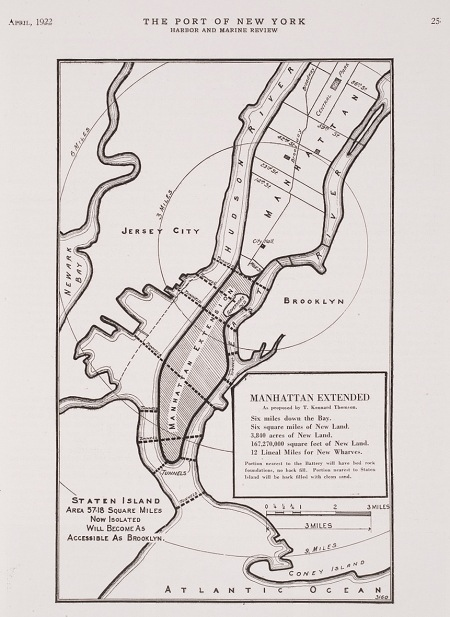
    Last week I wrote a post on  Herman Soergel’s  plan for extending the landmass of the countries around the Mediterranean Sea by damming the straits of Gibraltar, lowering the sea and irrigating the Sahara–an original, interesting but not very good idea, filled with briney cultivation and racial politics. In the past on this blog I’ve written about other city plans–and in particular, for New York City–that have involved floating Manhattan into the harbor, or filling up large chunks of the Narrows, or floating the city on an enormous anti-gravity platform, and so on. Some of those plans were real, some science fiction, and some were plainly beyond both.  The plan presented above is another monster, but at least this one could work, if not for the doing of it, and the expense. And the will.

    NYC Really Big
    But the bottom line, according to the engineer doing the thinking on this project, Kennard Thomson, would supposedly net the city a cool billion dollars after everything was said and done, and that would be 1916 dollars–that was equal to about 5% of the American GDP (!) in 1916, which would be about $400 billion in terms of 2010 GDP.  I’m not sure how Thomson came up with this very big/very round number, though it must have been done for effect–I can just imagine him standing before a smokey room filled with civil engineers talking about his massive plan for enlarging NYC and throwing out the billion-dollar figure, watching the cigars glow red in exhaled disbelief.

    Thomson did know what he was talking about–he was a busy (and “leading” according to the NYT) Manhattan civil engineer of stature, working on the Canal Barge and being the principal engineer for the Municipal and Singer buildings, for example–and his project seems to be well within the scope of possibility.  Their sensical aspects however are, well, questionable. 

    Here’s the story–around 1911, while examining proposals to repair and extend New York’s wharves, Thomson came upon the idea–a magnificent, fabulous idea–of adding new wharves by adding new lands to the city.  In short, the overall plan was to fill in the East River (!!) and reclaim the new land for city living,  dam Hell Gate,  construct a New East River (from Flushing to Jamaica Bay),  extend the tip of Manhattan Island from the Battery to within a quarter-mile of Staten Island (!), create a new 40-square-mile island between Sandy Hook and Staten Island, extend the Jersey shoreline, add two new Manhattan-sized appendages to the east shore of Staten Island, and more.  All of this would be connected by various new bridges and roads and tunnels, as well as a 6-track elevated railway that would circumnavigate the city.  The purpose of all of this would be to add 100 miles of new docks, an enormous amount (“50 square miles of reclaimed land”) of new land and the capacity for NYC to house 20+ million people, all of which would be worth a billion dollars. 

    Thomson really meant “really” in the title for the proposal. There have been reclamation projects undertaken in New York Bay since then of course, and I think that virtually all of what Thomson talked about could be done.  I think it would be a very interesting project for a class of some sort to undertake an estimation of what such a thing would cost today (and I would guess to duplicate the idea in real terms now would take up a sizable chunk of the GDP).  Maybe all of this will make sense at some more future point. 

  • Remaking Chicago, 1945–a Map of the Future

    JF Ptak Science Books   Post 1435

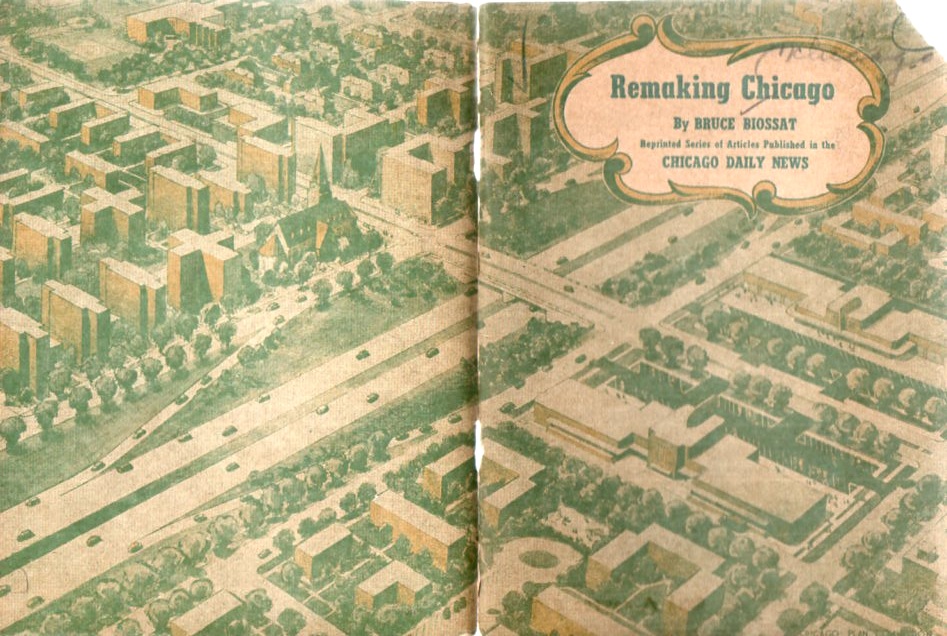
    Earlier today a post appeared here on re-envisioning the “one city” megalopolis of San Diego–Los Angeles–San Francisco by hoisting 2-acre neighborhoods into the sky to support some 5 million people or so.  Bruce Biossat, a writer for the Chicago Daily News, also had an ambitious plan for the city of Chicago, though in the face of putting thousands of acres of neighborhoods (with years) into massive highrises, Mr. Boissat’s plan–while massive–is not nearly so as the L.A. scheme.

    Chicago devel367

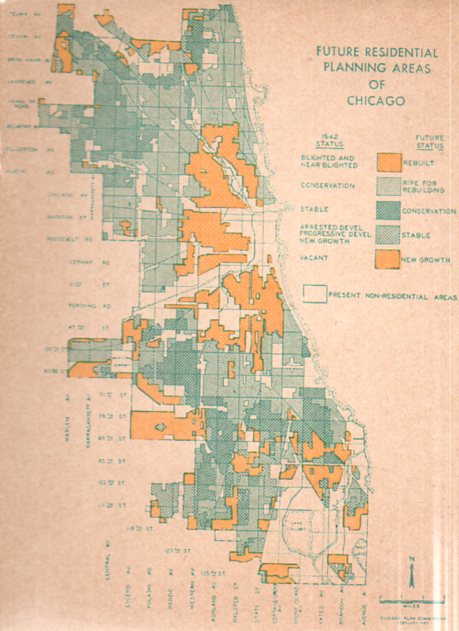
    For reasons I cannot determine, this small pamphlet1 (available at our blog bookstore) seems to be nowhere–no mention on the web, nothing in city planning databases, nothing in WorldCat (an actually nothing at all in this massive database about Mr. Biossat).  It was a massive undertaking, part of a project of the Chicago Plan Commission, and sought to relieve “blighted” areas from the city by replacing them with new housing and neighborhood design. This was part of a larger construction scheme nationwide:

        “The goal most mentioned as the desired postwar level of home construction is 1,000,000 units a year.  Both major labor organizations call for higher objectives, with the A.F.L. demanding 1,500,000 and the C.I.O urging 1,750,000 annually.”

    That is a lot of building, and I have no doubt that the ALF/CIO would’ve been behind a spending/earning opportunity like this 100%.  I’m not sure where all of this money was coming from, though I guess there would’ve been enough workers to handle the job.

    Chicago devel366

    In any event, the plan was massive, as we can see in the map above–perhaps the designers/developers felt the end of the war coming, the return of millions of soldiers, and an opportunity to make some major changes in the development of the future of Chicago. 


  • The Almost-Tomorrow Department: Radio-Vision, 1928.

    JF Ptak Science Books  Post 1415

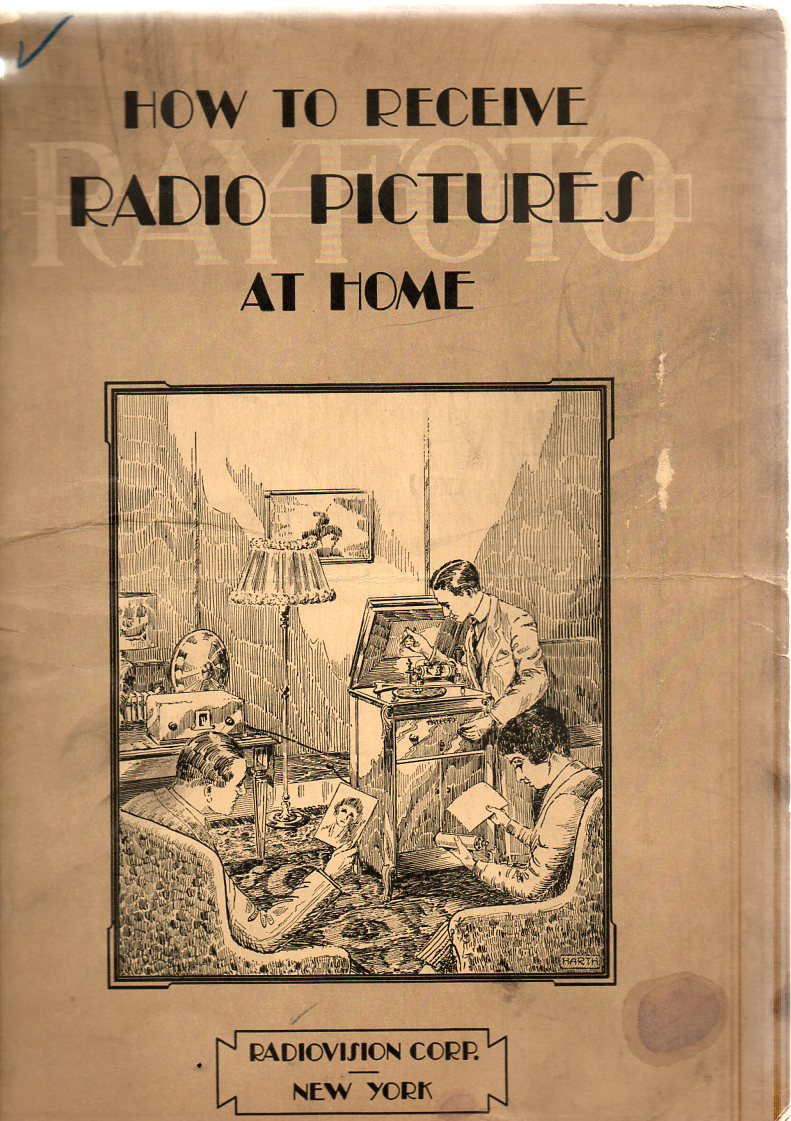
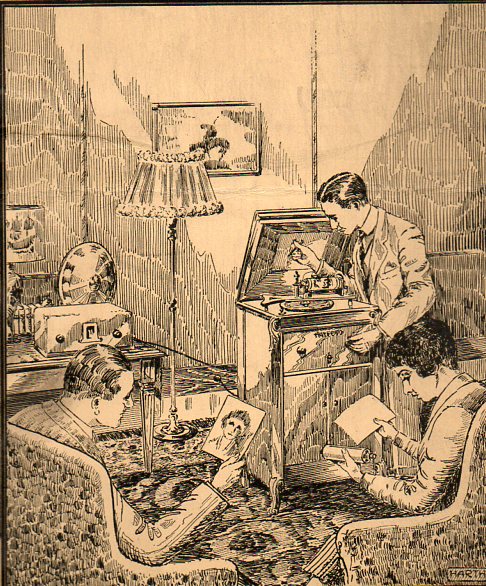
    Radio vision258 Tomorrow seemed to be almost there to readers of this pamphlet, what with the idea of looking at pictures relating to the radio broadcast you were listening to looming before a slightly disbelieving mind.  The fact of the matter though is that this breakthrough by Mr. Austin G. Cooley1–basically attaching what we would know today as a fax machine to a radio cabinet which would receive and print images relating to the show being heard–was rubbing up mightily against the real wave of the future, the television. (The original is available here at our blog bookstore.)

    Mr. Cooley’s invention of the Rayfoto just didn’t quite fit the demands that would soon be established and met by television.  The idea of practical television goes back a fair way2, at least to Arthur Korn in the late 1890’s, which much work being done on both broadcast television and facsimile transmissions.  But tv was definitely a high scent in the air when Cooley published his Rayfoto pamphlet in 1928–as a matter of fact, this was the same year in which the first television license was granted (to Charles Jenkins, W3XK).  And just two years later the BBC would begin regular television broadcasts, while also in 1930 Mr. Jenkins initiated another television-first, the t.v.commercial. 

    Radio vision259

    “No greater thrill awaits the radio experimenter than receiving his first picture through the ether…Not many months will pass before picture broadcasts will be a part of every radio broadcast”–A. Cooley, 1928

    So the time was definitely note ripe for Cooley’s idea as an image supplement to radio, though it did have other possible applications–like the “fax” delivering newspapers to your home–though they are not listed in the pamphlet. 

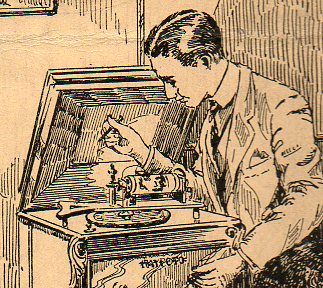
    What we see here the drum of the apparatus (we don’t see the three-tray developer/fixer wet set-up inside the apparatus), one of the listeners retrieving an  incoming vision-image, something that evidently took quite some time, depending on the image and the ways in which the developing trays have been set.  Dark images might’ve taken the entire length of a 15-minute broadcast to transmit and print; other, simpler efforts took less time.

    Radio vision260
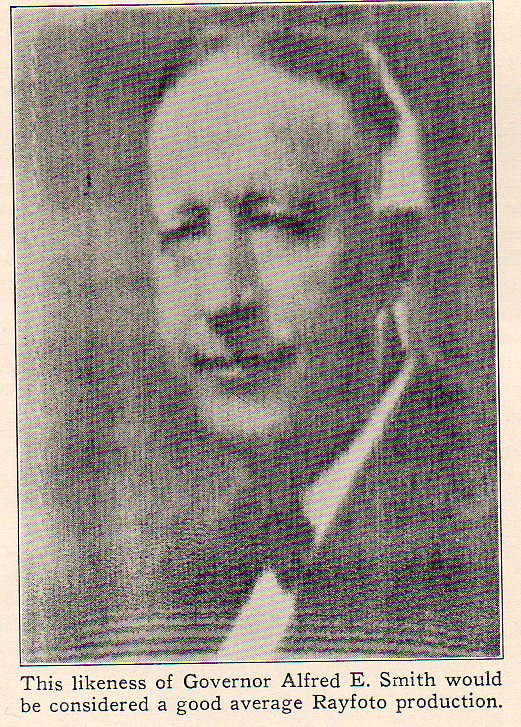
    Here’s an example of a successful, medium-quality image that one could expect using Cooley’s Rayfoto system:

    Radio vision261
    It doesn’t look like much now, and maybe it wouldn’t’ve looked like much to people familiar with the new television.  But even a grainy, static image accompanying a voice performance is a fabulous thing when compared with never having seen anything like it before, never having had such an experience, if even only as a novelty.

    _______

    Notes:

    1. Cooley,  Austin G.  How to Receive Radio Pictures at Home.  New York:  Radiovision Corp,  1928.  1st edition.  26pp, 2 folding blueprints  4to.   This unusual publication describes the construction and use of an apparatus which would receive broadcast (facsimile) images that would be used to illustrate radio transmissions/shows.  The idea (in this form of illustrating radio shows) at this date would be reduced to almost-nothingness once television entered the picture in the next year or so.  Still, it was an elegant idea to illustrate the spoken word.

    This system was offered by Austin G. Cooley (1900-1993), inventor of the Rayfoto system, “the first authentic radio picture apparatus”. This was a very early attempt at mass entertainment via a mechanical medium that proved ineffective by 1929/1931 against the advances of television. (The radiovision method was something like a facsimile device, offering a static image every now and again, and was completely outclassed by the moving image).

    2. Followed by Paul Nipkow’s rotating discs in the earliest part of the 20th c, then by Vladimir Zworkin’s iconoscope (1923), Charles Jenkins and John Baird’s television of 1924, and then of course by Philo Farnsworth’s 1928 image dissector.


  • A Peep into the History of the Future of Roads in Texas, 1938

    JF Ptak Science Books   Post 1396

    The planners, designers, structural engineers and city planners in Texas felt the hot breath of the future on their necks in the summer of 1938, working their way to publish this futuristic emblemata book on the controlled motion of automobiles.  The Depression was coming to an end, access to money was loosening, automobiles were becoming cheaper and gasoline supplies were plentiful (even though during the crisis car sales fell though gas consumption increased), GDP was up by 1/3 from 1932, employment figures had gone up 25% since 1931, and of course there were projects of road-building got consider to put folks to work.  These figures were also a little problematic for Texas, given the huge percentages of farmers who were out of work (nationwide) and the preponderance of farming in the state of Texas. 

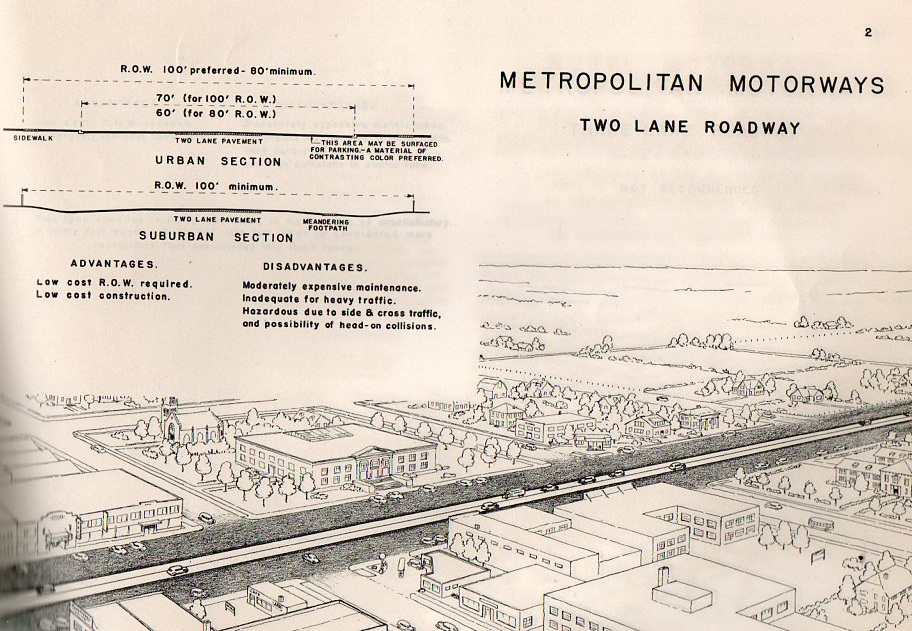
    But Jac L. Gubbels1, who copyrighted this work for the State Highway Department of Texas (Landscape Division) saw a prettier picture for the state in the near future, and what it had in it mainly were automobiles.  The highways proposed by Gubbels were remarkably wide given the number of lanes, particularly so for those roads that went through small towns. 

    Exas roads199 Notes

    1.  (From the Texas Centennial Archives:  “The harmonious integration of construction features and the natural environment was a popular trend during the Depression era. Called the "rustic style," this natural yet designed "rustic" landscaping of the early Texas roadside park system was largely planned by Jac L. Gubbels, landscape architect with the Texas Highway Department from 1933 to late 1930s. One of the first landscape engineers to be hired by a state highway department, Gubbels influenced the direction roadside parks were to take regarding landscaping, layout and style. His guidance set standards for construction elements and landscape design."

    8 other designs here:


  • History of Anticipation–a Note on Not Discovering Deep Sky In England (pre-Galileo)

    JF Ptak Science Books  Post 1365

    “‘Tis all in pieces, all cohaerennce gone”–John Donne1

    I wonder why it was that the telescope didn’t get trained at the sky in Great Britain.  Its one of those “things/non-events” when everything is in place for something very big to happen, when the pieces are there and sorted, when the theory has been thought out, when the practical applied work has been done–and then, a turn-away is made, a drifting occurs, and the big thing doesn’t happen.  A deep reluctance sets in–and since it is the anniversary of Darwin’s (and Lincoln’s) birthday, it seems natural to include Darwin in a history of anticipation category, since it took him so very long to come to enough of a comfort level to actually publish his Big Idea, and that seems to have been done on the intersession of an editor and thought leader (Huxley) and the fact that someone else was going to beat him to publication (Wallace).

    But what I’m talking about here is John Dee’s work with “perspective glasses”–the telescope–in the 1560’s and 1570’s and the idea of which he writes about in his Description of Caelestiall Orbes, thirty full years before Galileo’s epochal Sidereus Nuncius of 1611.

    The promise of the telescope is also seen in the work of Dee’s pupil Thomas Digges (half of the Digges’ brother scientific team, the other brother being Leonard), who writes of it in his Alae sue Scalae MAthematicae, 1573; and again in the Treatise on the A treatise on the properties and qualities of glasses for optical purposes, according to the making, polishing, and grinding of them by WIlliam Bourne (see here) where among other things claims to have uised his instrument to see things seven miles away (beautifully put so “not only discovered things farre off, read letters, numbered pieces of money…but also seven myles of declared what hath been  doon at that instante in private places”, meaning that he was able to discern print at some distant and to also see what would have been private things from an unthinkably distant distance)2. 

    And as Marjorie Nicholson  observes in Science and Imagination (Cornell, 1956), this point is again made by yet another Englishman, Thomas Hariot, who is best remembered today for his beautiful and early work on the American southeastern coast, published in 1691 (A Briefe and True Report of the New Found Land of Virginia), in which he describes his own telescope, “a perspectiue glasse whereby was shewed manie strange sightes”. 3

    It seems though that among all of this accomplishment that the telescope–as had been the early case with Galileo, and who had also overcome the instrument’s horizontal hold–was used laterally, more an instrument for navigation and the field commanders of armies.  Why it was not pointed to the sky, I do not know, but it does seem as though Donne’s words were waiting more for Galileo than for anyone else. 

    Notes:

    1.  This is from Donne’s AN ANATOMY OF THE WORLD, Wherein,by occasion of the untimely death of Mistress Elizabeth Drury, the frailty and the decay of this whole world is represented THE FIRST ANNIVERSARY:
    “And freely men confess that this world’s spent,
    When in the planets and the firmament
    They seek so many new; they see that this
    Is crumbled out again to his atomies.
    ‘Tis all in pieces, all coherence gone,
    All just supply, and all relation…

    2. Bourne did come very close, but his work was to stay in manuscript and not published, even though he was a known scientific quantity in his day (and found in the  Philosophical Magazine, 1839):

    3. A Briefe and True Report of the New Found Land of Virginia : of the Commodities and of the Nature and Manners of the Naturall Inhabitants : Discouered bÿ the English Colonÿ There Seated by Sir Richard Greinuile Knight In the ÿeere 1585 : Which Remained Vnder the Gouerenment of Twelue Monethes, At the Speciall Charge and Direction of the Honourable Sir Walter Raleigh Knight Lord Warden of the Stanneries Who therein Hath Beene Fauoured and Authorised bÿ Her Maiestie and Her Letters Patents / This Fore Booke Is Made in English by Thomas Hariot seruant to the Aboue-Named Sir Walter, a Member of the Colonÿ, and There Imploÿed in Discouering ; CVM GRATIA ET PRIVILEGIO CÆS. MATIS SPECIALIi. Francoforti ad Moenvm, Typis Loannis Wecheli, Svmtibvs Vero Theodori de Bry anno CIC IC XC. Venales Reperivntvr in Officina Sigismvndi Feirabendiii

    he entire text, with the tremendous John WHite illustrations, is located here.

    On page 27 we see:
    “Most thinges they sawe with vs, as Mathematicall instruments, sea compasses, the vertue of the loadstone in drawing yron, a perspectiue glasse whereby was shewed manie strange sightes, burning glasses, wildefire woorkes, gunnes, bookes, writing and reading, spring clocks that seeme to goe of themselues, and manie other thinges that wee had, were so straunge vnto them, and so farre exceeded their capacities to comprehend the reason and meanes how they should be made and done, that they thought they were rather the works of gods then of men, or at the leastwise they had bin giuen and taught vs of the gods. Which made manie of them to haue such opinion of vs, as that if they knew not the trueth of god and religion already, it was rather to be had from vs, whom God so specially loued then from a people that were so simple, as they found themselues to be in comparison of vs. Whereupon greater credite was giuen vnto that we spake of concerning such matters.”


  • Antique pre-Dada Ingredients of the Anatomy of the Senses

    JF Ptak Science Books  Post 1362

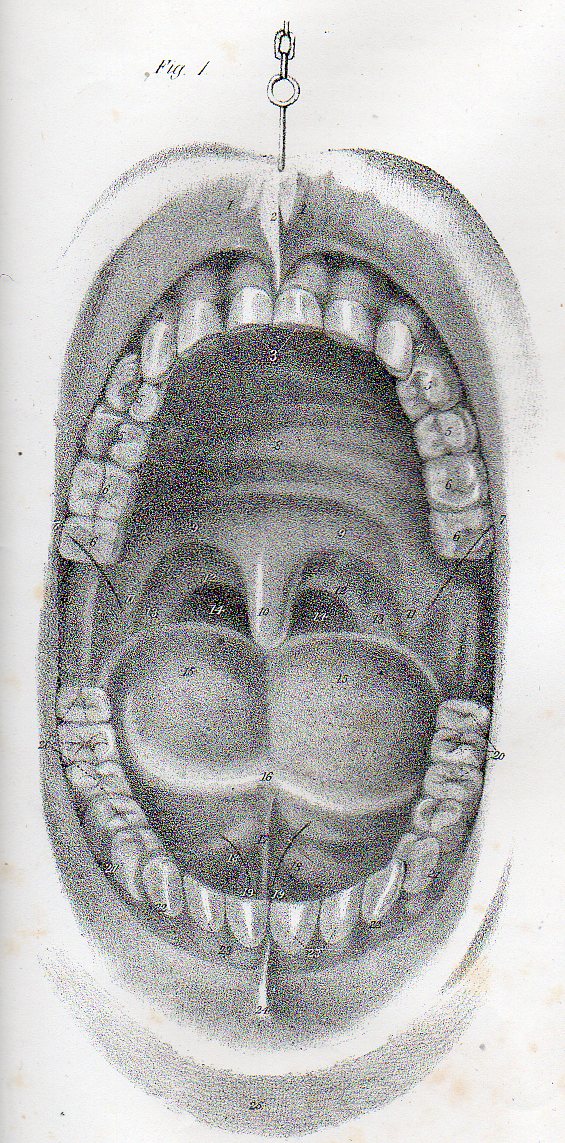
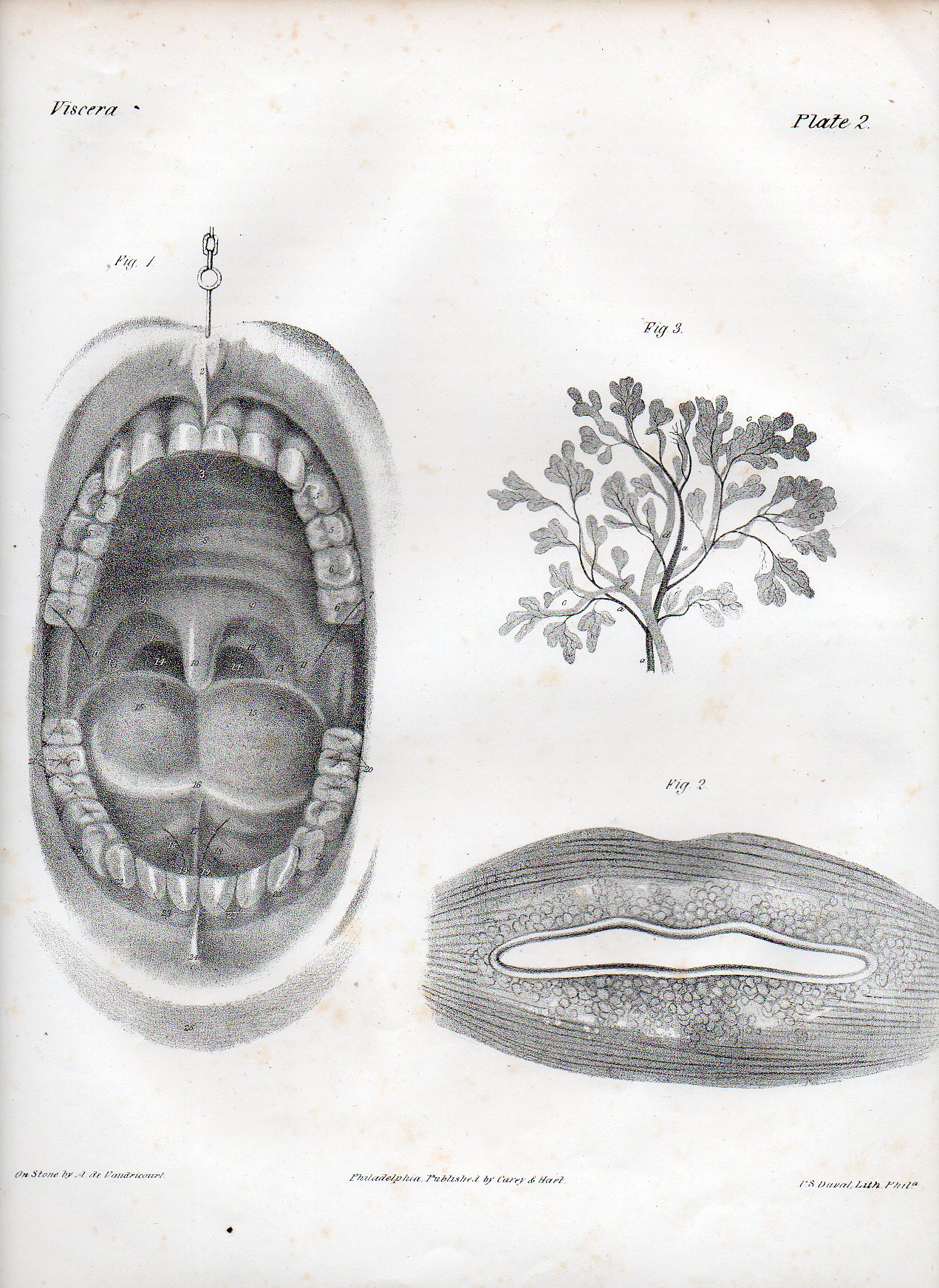
    Dadaist senses mouth det503

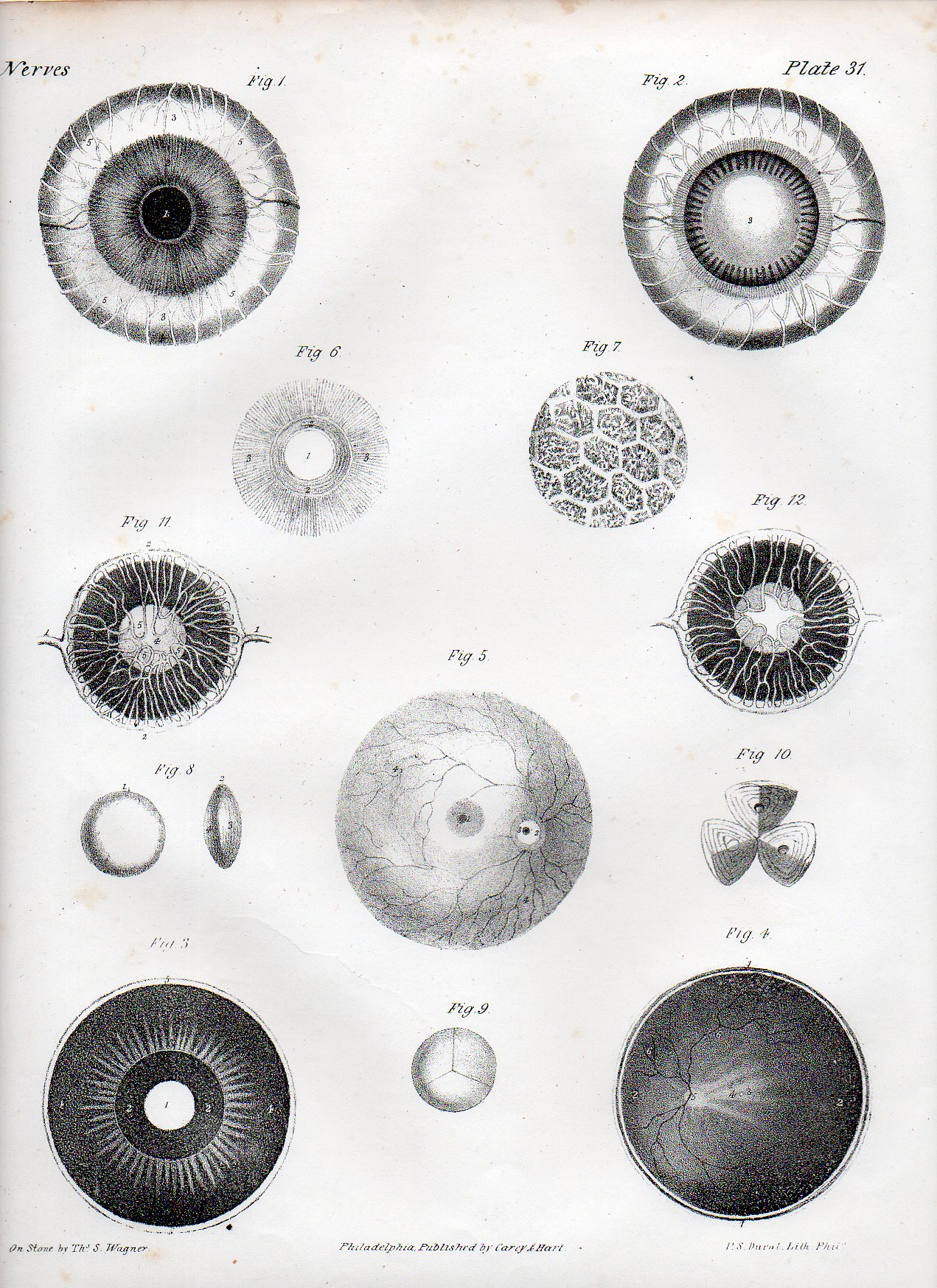
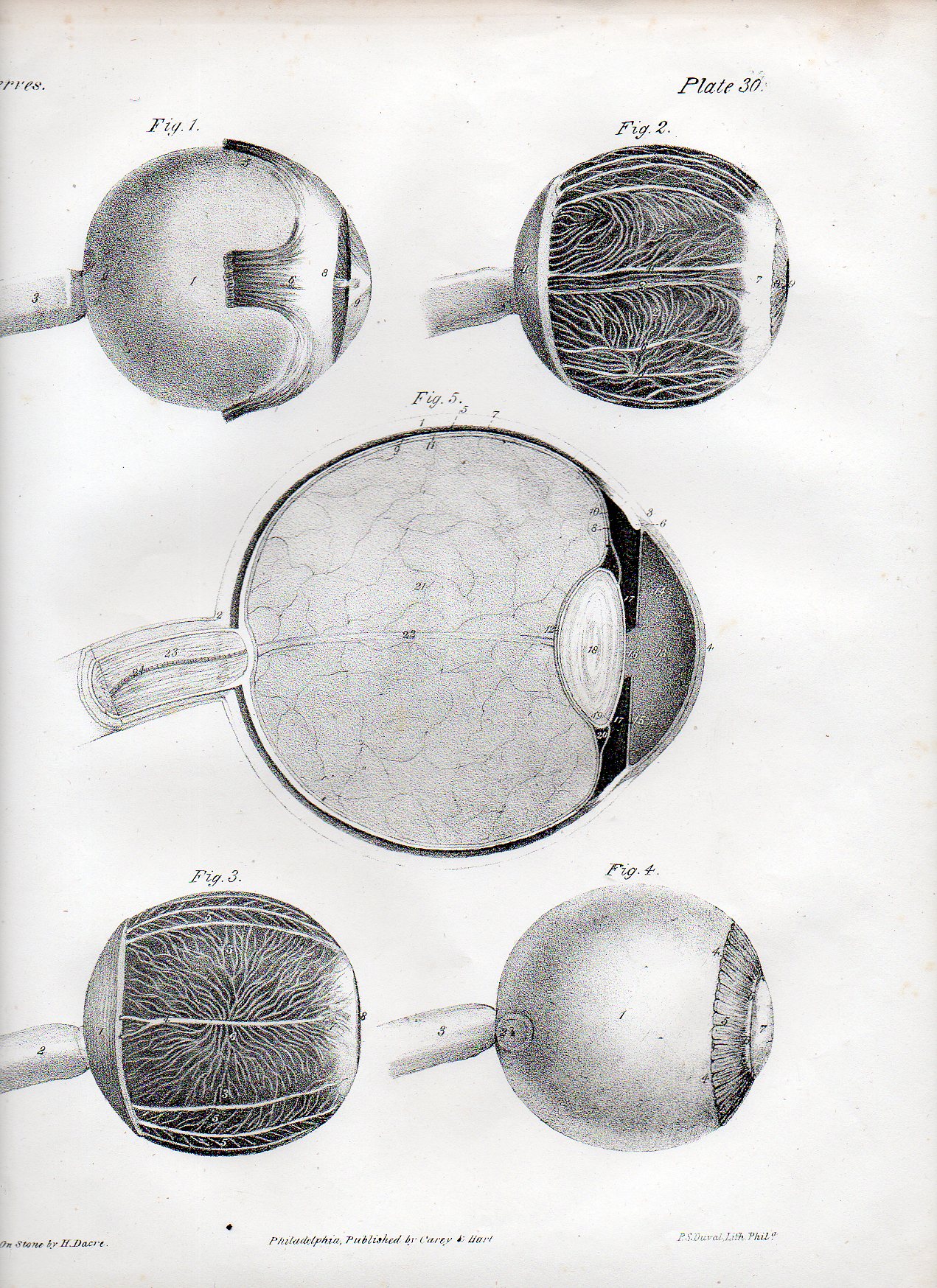
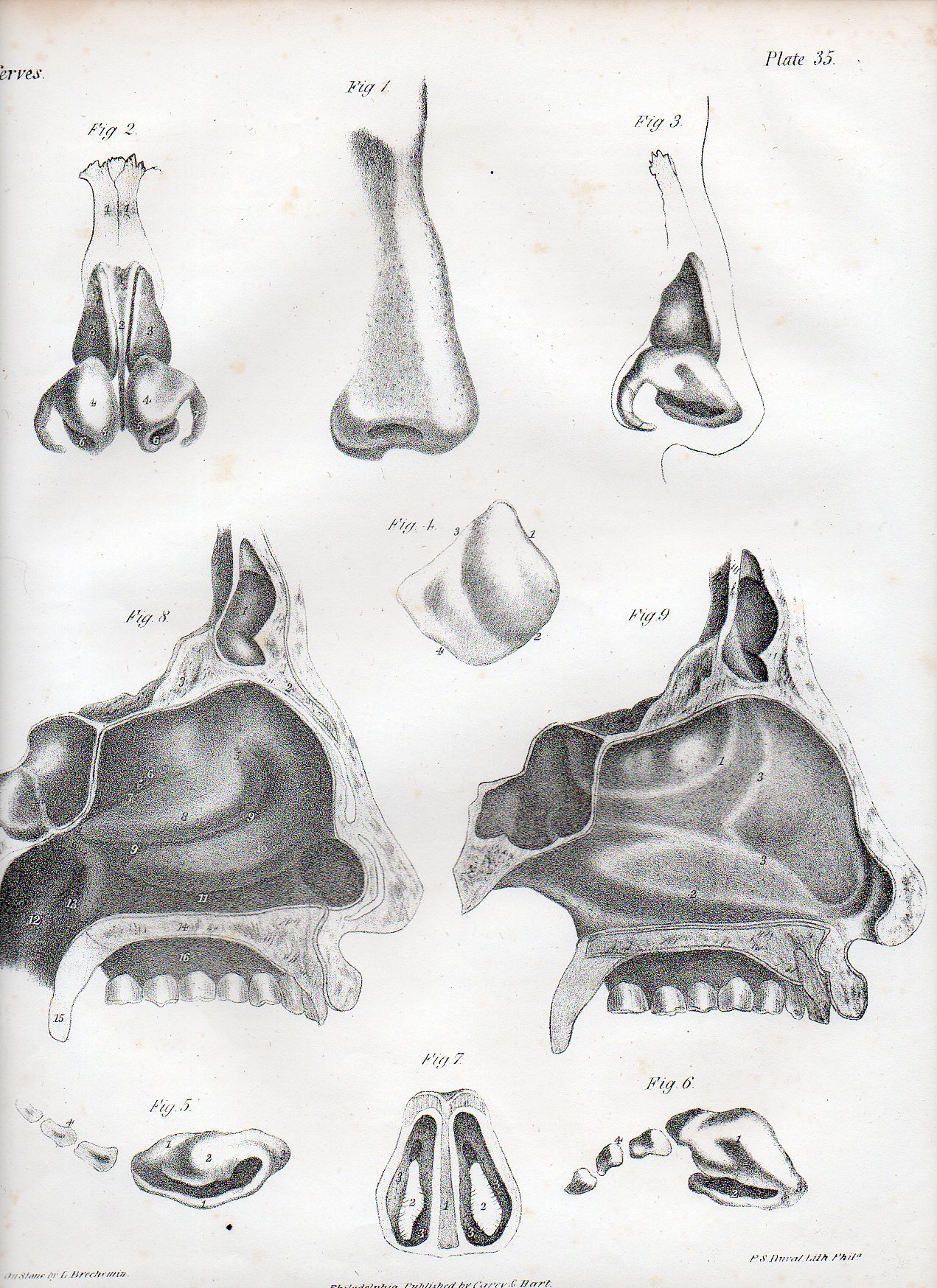
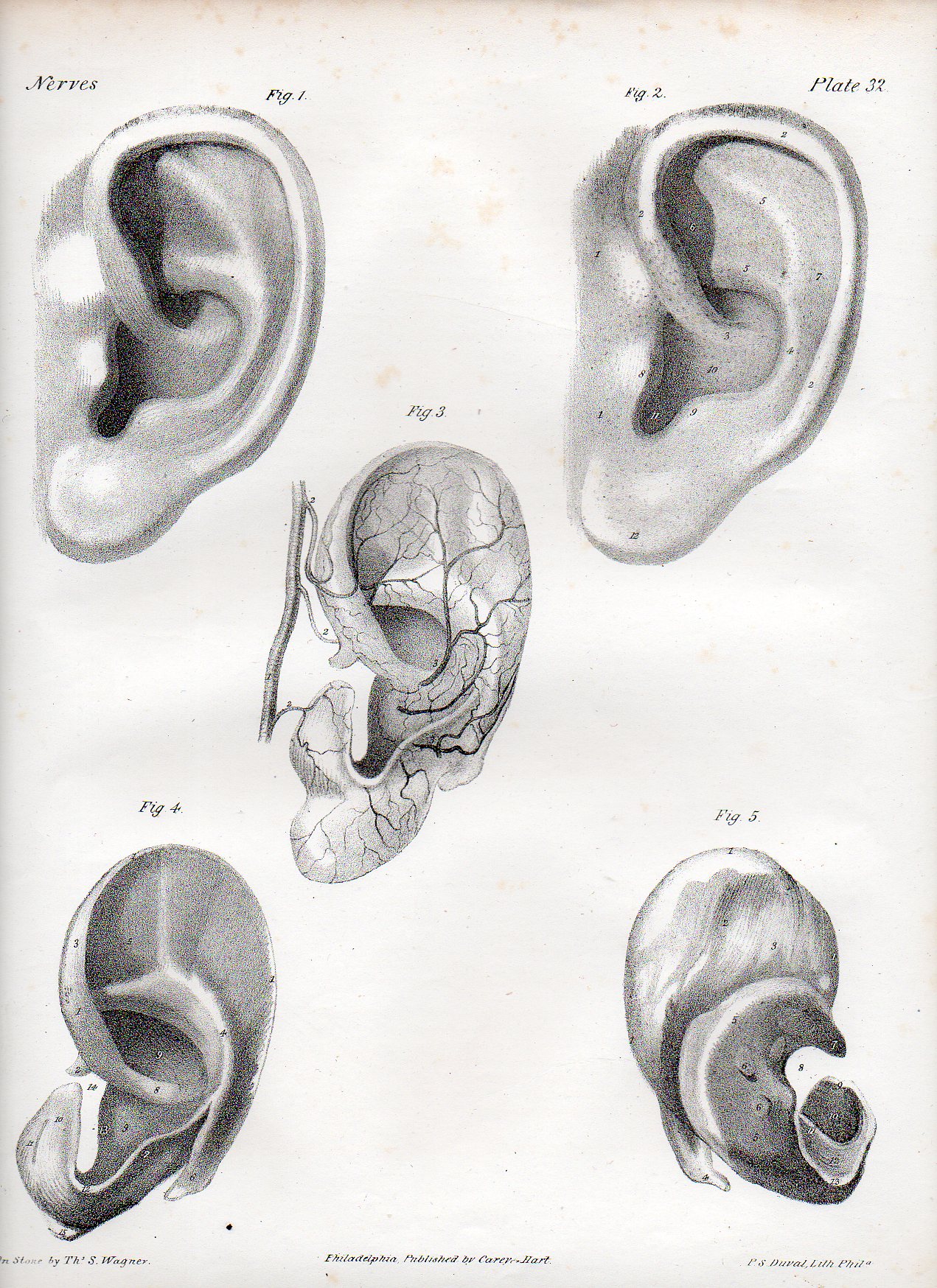
    Some of the strangest, occasionally least-of-their-time scientific illustration seems to come in the area of anatomical illustration–for me, anyway.  When taken out of context, some medical illustration looks positively modern, or post modern, as we can see with the following examples [all o fwhich are available from our blog bookstore].

    The first image is a detail from a series of images by the Irish-born Quain brothers:  Jones Quain (1796-1865),  an anatomist and professor of Anatomy and Physiology at the University of London; and Richard Quain (1800-1887), professor of anatomy in 1832 at the University of London, then surgeon at North London Hospital, and president of the Royal College of Surgeons. The illustrations are from a later and smaller printing of their beautiful 1844 work The Anatomy of the Arteries of the Human Body, with its Applications to Pathology and Operative Surgery, in Lithographic Drawings with Practical Commentaries.  Taken out of context, removed 80 years or so, taken to Germany, and they might be bits and pieces (or entire works for that matter) of a Dadaist exhibition in Berlin in 1925. 

    The full image of the image above is from:

    TASTE

    Dadaist senses mouth502

    SIGHT

    Dadaist senses eye 2507

    Dadaist senses eye506

    And this beautiful detail:

    Dadaist senses eye 4509

    Dadaist senses eye 3508

    SOUND

    Dadaist senses ear505


    TOUCH

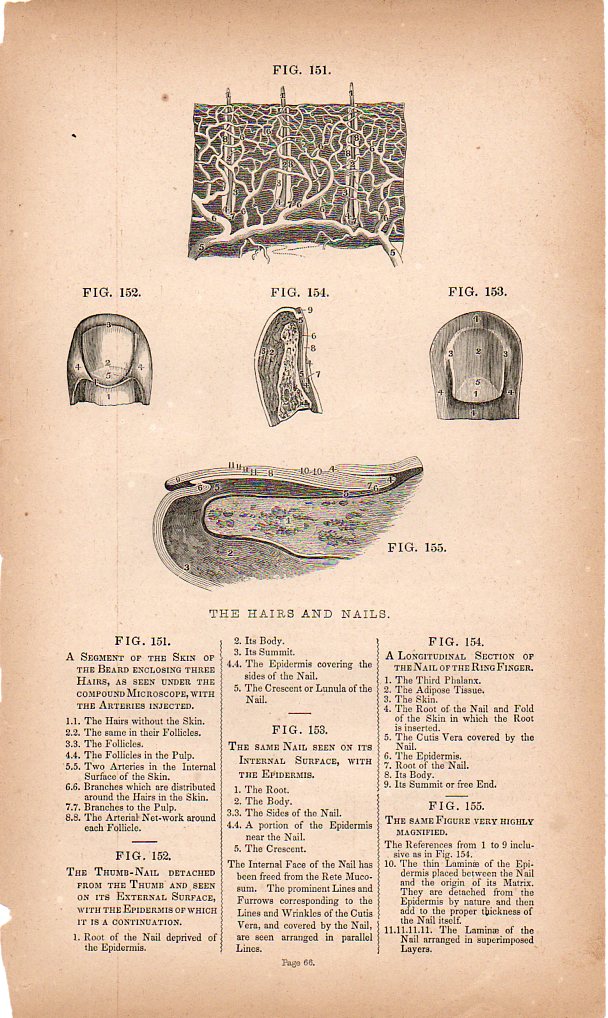
    This remarkable cross-section of the fingertip.

    Dadaist senses touch det501

    Which is a detail from:

    Dadaist senses touch500

    SMELL

    Dadaist senses nose504

    HEARING

    Dadaist senses ear505


  • Found in Stone: (1) Alphabet and (2) Geometrical Forms, 1664

    JF Ptak Science Books  Post 1353

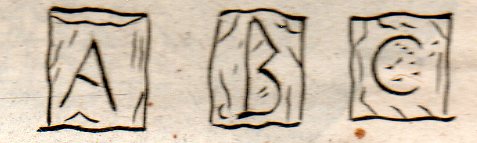
    Kircher--alpha bet477

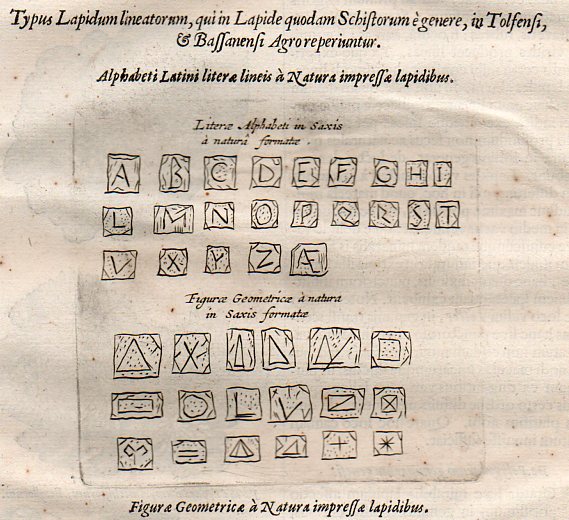
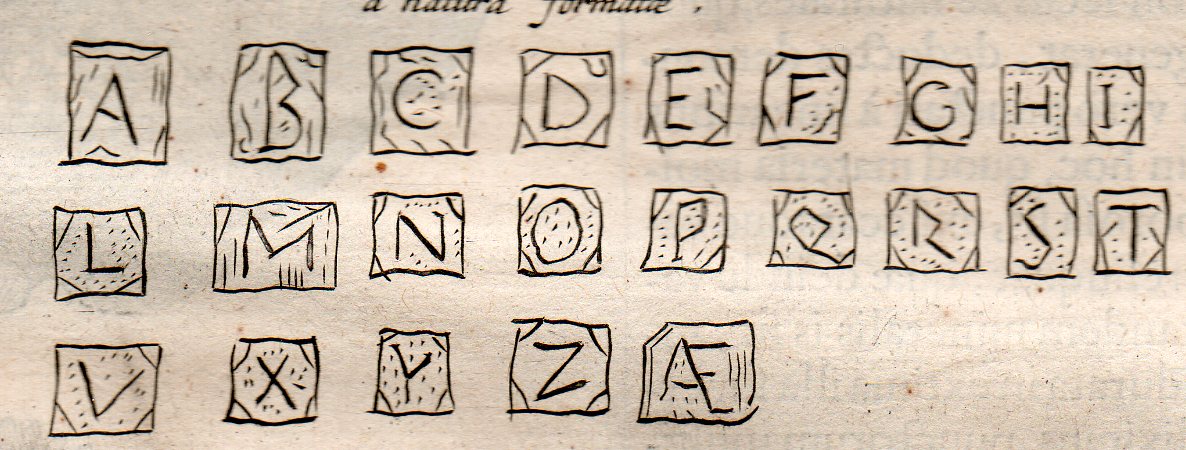
    I wrote about Athanasius Kircher’s Mundus Subterreaneus (1664) a few days ago (in “Birds With Stone Wings”, here and elsewhere), particularly staying within the first section of the eight book of Mundus, De Lapidibus, in which he investigated stones, gems, fossils and then “found figures” in agates. 

    Kircher--alpha bet476

    Kircher did not believe that finding these symbols in stone were a direct consequence of any supreme anything, recognizing that they were formed and collected by chance. He did formulate some interesting and early and sometimes-correct observations on the evolution of languages, but was entirely constrained by the authentic history as presented in the early books of the Bible.  While recognizing that languages of a certain region are or could be relational, and that the Romance languages were a corruption of Latin and that there was a  Semitic and Graeco-Latin connection, they were all necessarily descendants of Hebrew, which was the language given by the creator to man, mystical symbols handed down from Heaven to Adam.  And so it goes–I guess that you can only take so far as imposed limits like that allow.  Horizon Aeternitatis.

    [The original image is available for purchase from our blog bookstore, here.]

    And in detail:

    Kircher--alpha bet479

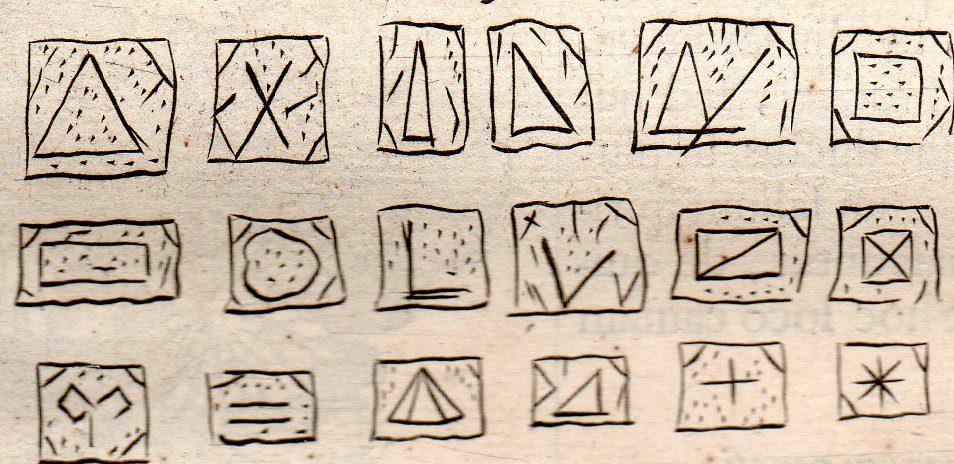
    And then of course the stone-found geometrical figures:

    Kircher--alpha bet478

      These engravings of the originals in Kircher’s cabinets of curiosities did take some sharp-eyed sleuthing and gathering. 


  • Oddly Adjectival Opposites: Color “Plumpness” and Color-in-Black-and-White, 1941

    JF Ptak Science Books  Post 1351 (revisiting the post from 2012 with a few additions).


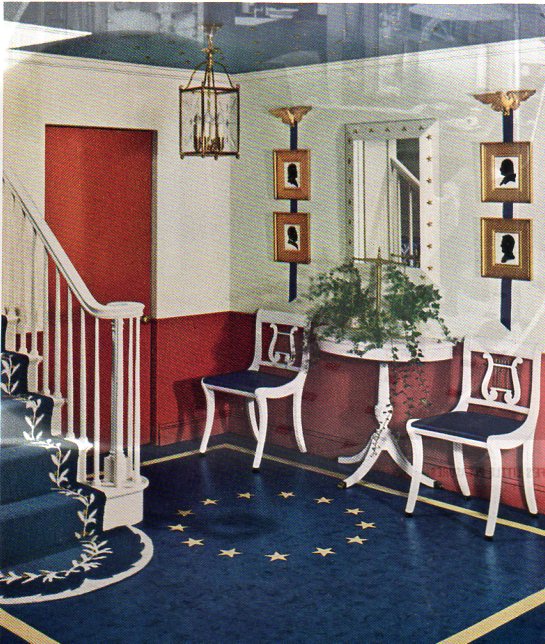
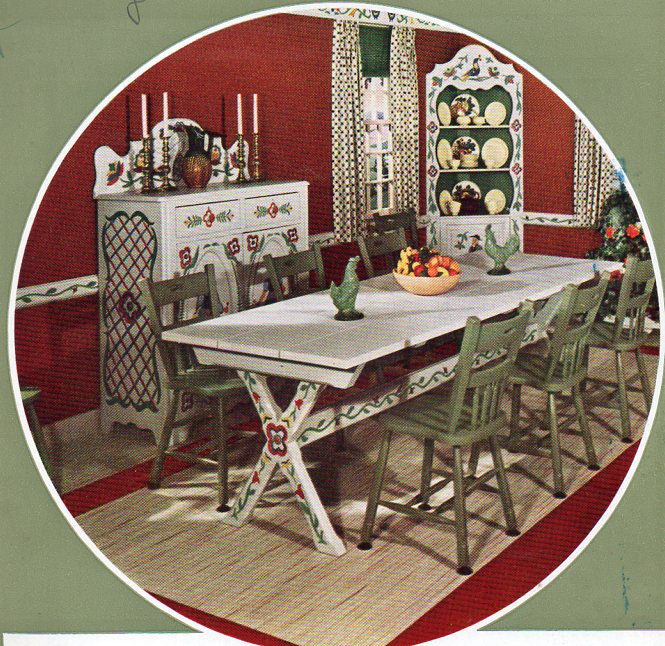
    Color kitchen457


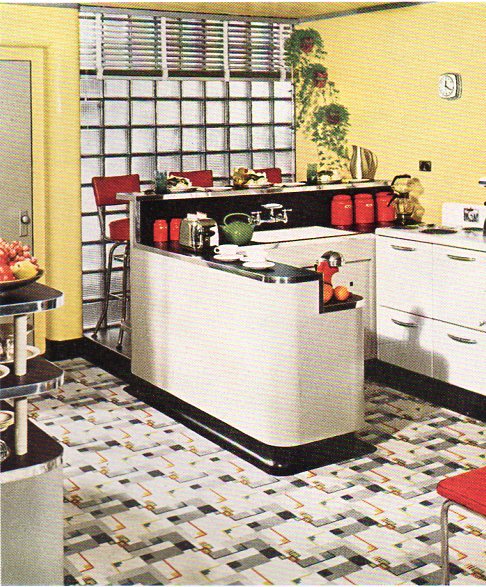
    Anticipated but unexpected color expectations sometimes don’t quite make it through the ordinary vocabulary of color names and descriptors.  Such was the case for me when looking through this Armstrong Linoleum Catalog from 1941–the brightness and color range was remarkable, and, even if the color in the magazine existed only in the complicated color separation technical efforts on its pages, it still stays remarkable for the colors that they may or may not have represented. 

    • The catalogs from which these images are sampled are all available for sale at the blog’s bookstore, here. 

    The colors seem “pluump” (yes, with two “u’s”) to me, like a big man in a little man suit, suggesting a too-ripeness, the colors too much in themselves.

    Color kitchen458 Color kitchen459 Color kitchen460

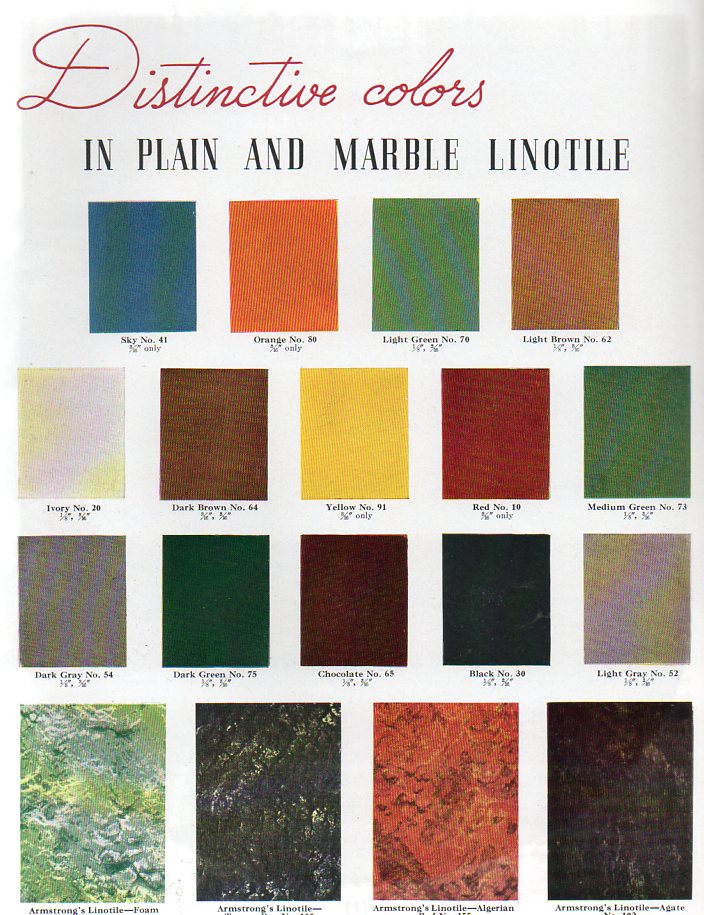
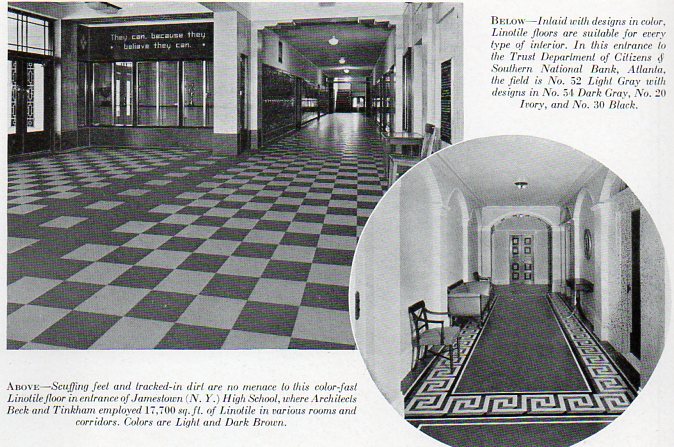
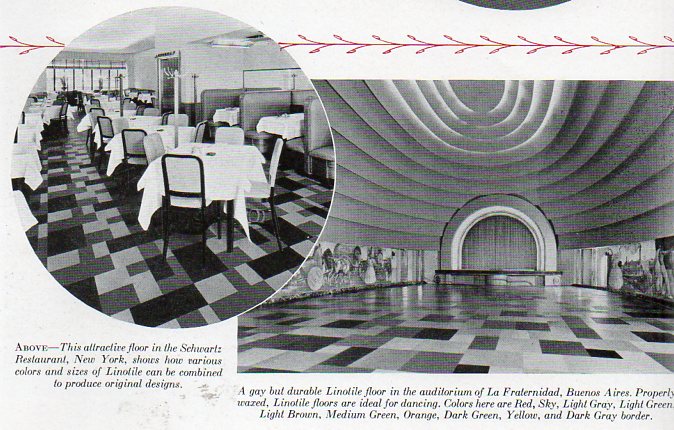
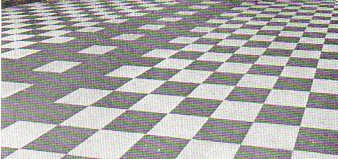
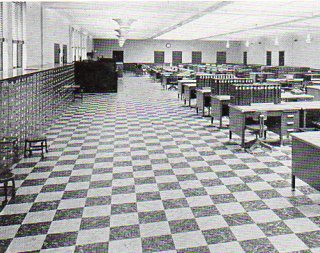
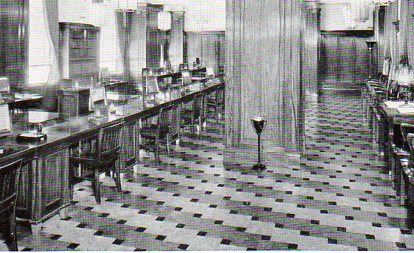
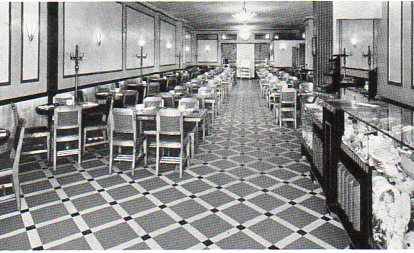
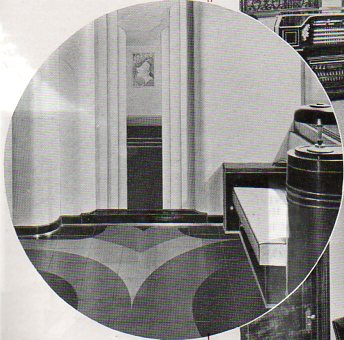
    Color in black and white470 Then, on the other end of anticipation is the Armstrong Distinctive Interior Finishes and the Individuality in Handlaid Floors of Armstrong’s Linotile catalogs of 1935 and 1937 (respectively).  They offer the hope for color but don’t illustrate it, giving their reader a color palette of the possibilities for decoration, but then providing black and white photographs for the imagination.  (I’ve seen other examples of color theory done in black and white–they are not common.)

    Part of the many opportunities for Glorious Color are here at left; examples of their use (in Glorious B+W) are below, illustrating an imagination that was still in black and white in 1935.

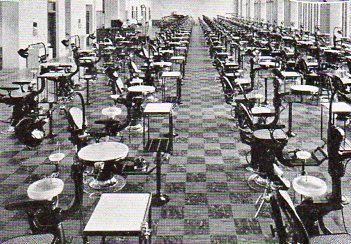
    [The last illustration is interesting in itself, being a fading-into-the-horizon image of a lab at a dental school.]

    Color in black and white462

    Color in black and white463
    Color in black and white464

    Color in black and white465
    Color in black and white466

    Color in black and white467

    Color in black and white468
    Color in black and white469

    ·Posted by :

    ·in: