A Daily History of Holes, Dots, Lines, Science, History, Math, Physics, Art, the Unintentional Absurd, Architecture, Maps, Data Visualization, Blank and Missing Things, and so on. |1.6 million words, 7500 images, 4.9 million hits| Press & appearances in The Times, Le Figaro, Mensa, The Economist, The Guardian, Discovery News, Slate, Le Monde, Sci American Blogs, Le Pont, and many other places… 5000+ total posts since 2008.

Category: Absurdist, Unintentional

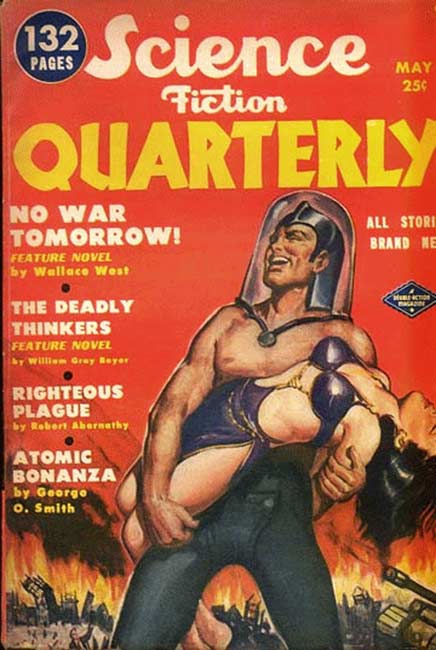
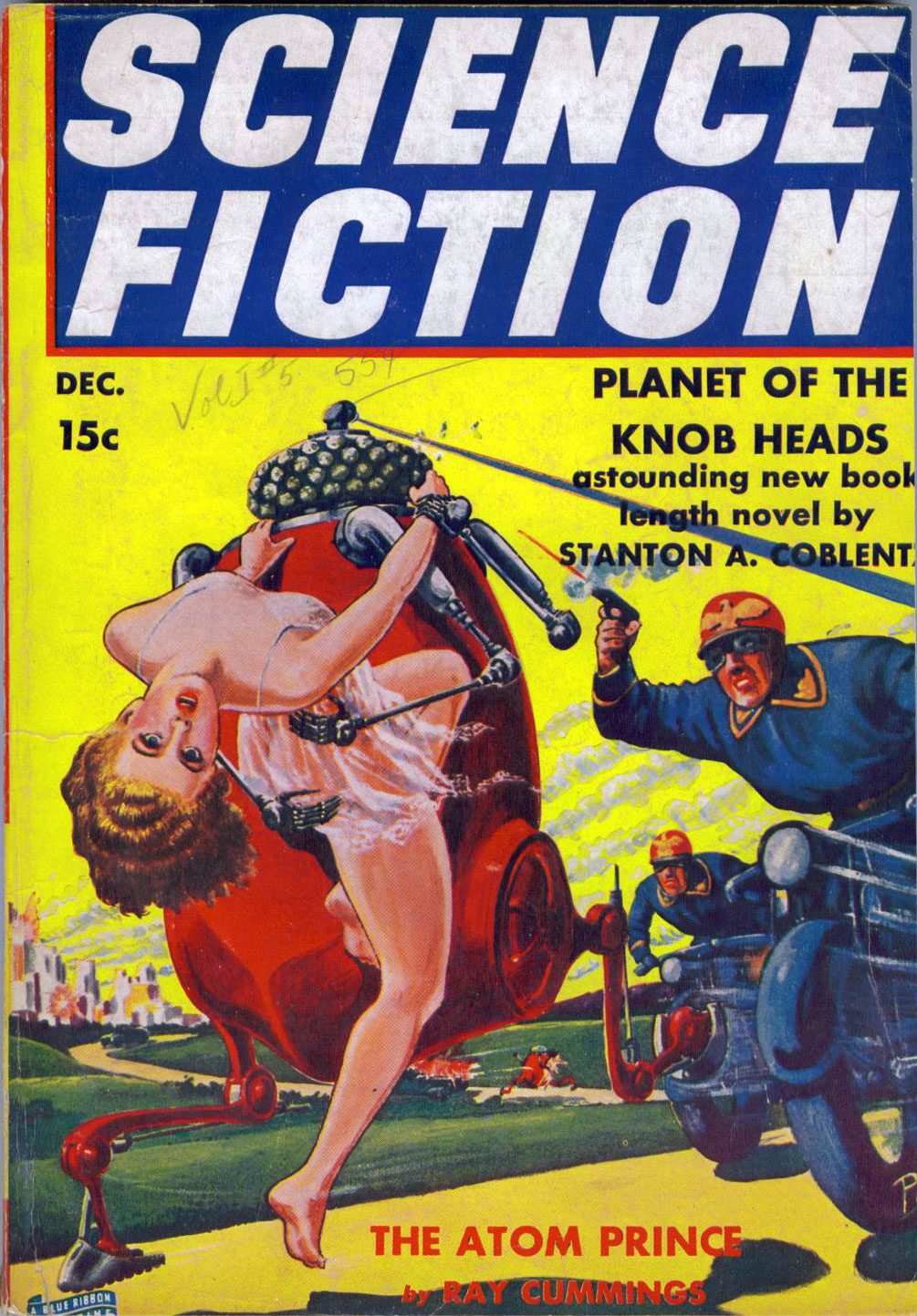
  • The Savage Distress of Women in Science (Fiction); Pulp Covers, 1930-1960

    JF Ptak Science Books   Post 1566

    According to most of these big, spongy pulp magazines, women were made to be rescued, and rescued not only from Enormous Situations, but also from unnameable, unknowable Enormous Things.  I guess they were slightly soft-porny, or at least the cover art was, attracting young readers by promises of  an “easily read” with excitement and voluptuous women in need of saving.  It was yet another turn on the fateful screwing of the tale of the damsel in distress, seen and heard countless times in art and story.  Only in these sci fi mags the damsel showed a lot more skin–it is extraordinary how cleavage attracted so much alien danger/romps.

    http://farm3.static.flickr.com/2671/3835444058_13c02d1279.jpg

    http://3.bp.blogspot.com/-JuUxvfWOlns/Tfx9MIjUoZI/AAAAAAAAKNs/D1M99vnx25M/s1600/sci%2Bfi%2Bcover.jpg


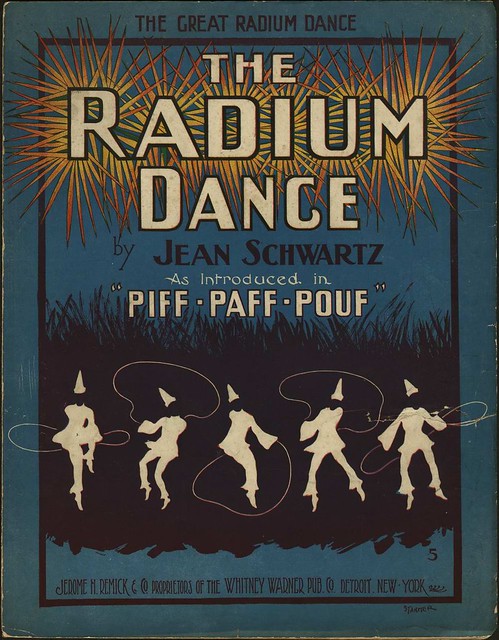
  • The Radium Dance, 1898 and 1904

    JF Ptak Science Books   Post 1595

    photo
    Jean Schwartz (b. 1878) , composed this number for his (with the collaboration of William Jerome) Broadway (hit!) musical comedy Piff! Paff! Poof!  in 1904,  which sounded like this.
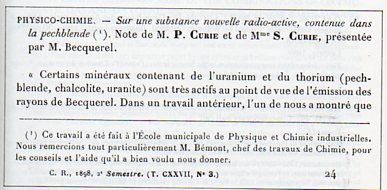
    But the real story–that we’ll deal with later–occurs a few years earlier, in 1898, with a married couple of scientists who made an epochal discovery:
    Curie712
    What was easier for folks to understand was the application of the discovery, just six years after the Curie effort–though it did take a little longer to take hold in the public creative imagination than, say, the discovery of the X-ray, which entered the public mind almost instantly following its discovery in 1895. 

    72dpi JPEG image of: The radium dance; Piff-paff-pouf

    [Source:  Duke University]

    [Source]

    Perhaps the real Radium Dance occurred for the first time by the people who found the thing, radium, back there in 1898–Marie Sklodowska Curie and Pierre Curie.  They were a happily married couple, beginning their joined life in 1895, vacationing on wedding present money on bikes through the French countryside.  They were soon back to their primary love in physics and chemistry, and inspired by the work of Henri Becquerel, began their assault on radioactivity in the next year.  After several years of effort and laboriously extracting a gram of  pure radium (by 1902) from a ton of pitchblende, they published their efforts in the volume of the great French scientific journal, Comptes rendus…Academie des Sciences (volume 127, in three short articles), announcing their discovery of polonium (after Marie’s country of origin) and radium. 

    The really big Radium Dance would occur the year before the Broadway hit, in 1903, when the Curies and Henri Becquerel were awarded the Nobel Prize in physics1. 

    Notes:

    1. The Nobel Prize in Physics 1903 was divided, one half awarded to Antoine Henri Becquerel “in recognition of the extraordinary services he has rendered by his discovery of spontaneous radioactivity”,the other half jointly to Pierre Curie and Marie Curie, née Sklodowska “in recognition of the extraordinary services they have rendered by their joint researches on the radiation phenomena discovered by Professor Henri Becquerel”.


  • Filling Holes Up: the Reverse, “Two-Sided” Holes of Marcel Duchamp.

    JF Ptak Science Books  Post 1592  [Part of the History of Holes series.]

    “Let each man proclaim: there is a great negative work of destruction to be accomplished”–Tristan Tzara

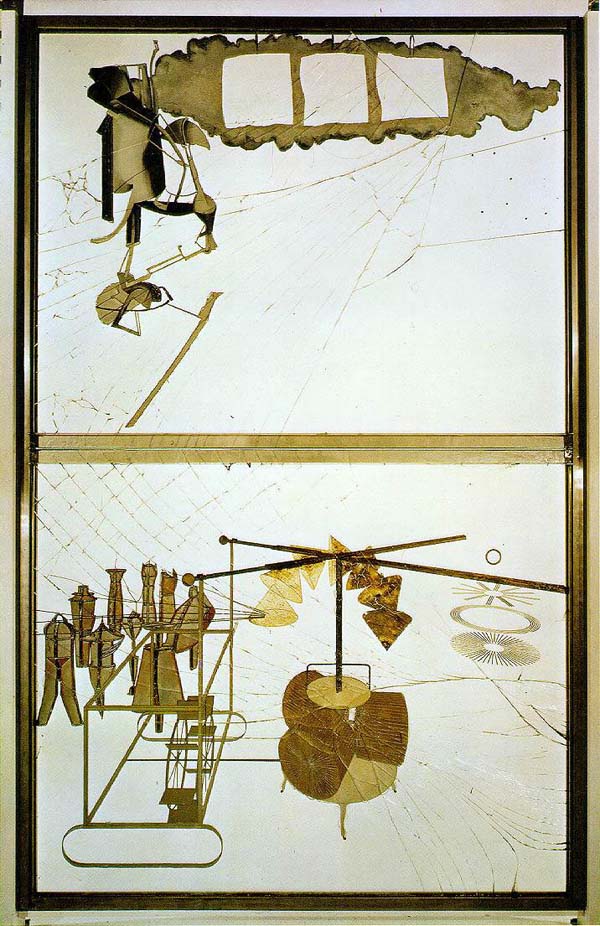
    Duchamp Bride Stripped Bare by Her Bachelors, Even1915-23 detail
    I guess that “up” would be a redundancy in this post’s title, since we can’t really fill a hole going down, filling from the top of the cavity to its base, the reverse of digging a hole.  Or perhaps not if the task was given to M. Duchamp.

    But in this longish, developing thread on the history of holes it occurred to me that I hadn’t included anything on filling/stopping holes,the realization coming to me while browsing the lovely and very inclusive paper ephemera site of SHeaff-Ephemera.com

    RossellCorksTC

    [The original site for the above three images:  sheaff-ephemera.com; other images in Notes, below.]

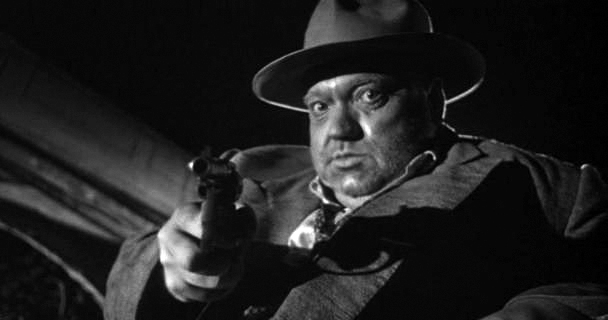
    Touch-of-evil-quinlan1 There have been a number of posts here about existing holes, but none thus far about making them (except for a few posts on aerial bombing) or filling them up–so far, the series has been in a hole-stasis.  There really should be a section on making high-speed hole-making (with bullets, like our friend Hank Quinlan, with Uncle Orson in the role in the magnificent Touch of Evil), and another on long, longitudinal and laboriously slow hole-making (with say foundation/caisson work in constructing the Brooklyn Bridge).

    But for right now I’d like to address the crafty M. Duchamp as a hole-filler, a  man who created a two-sided literal and figurative hole-making and hole-filling event, and what may be the first of its kind in the history of art.  Figuratively, Duchamp’s approach to art in the nineteen-‘teens was seen by many as a process to “destroy” art itself:  finding things like a bicycle wheel and implanting it on a stool and calling it art was seen by his friends as an event and not as art per se, but as a perversion.  Even Duchamp’s own group at the epochal 1916 international art show rejected his first “Readymade”2 (not yet then called so) as not art, leading Duchamp to abandon even them. (This had also happened three years earlier with his “Nude Descending”.)

    I don’t think that Marcel Duchamp was trying to “destroy” art, though I do believe that he was trying to force a conversation in which he had no interest in participating–a written conversation in which there was no real end or beginning, and so no middle, on top of which the punctuation would be removed and re-applied by chance. 

    Even the idea of a “hole” could be viewed differently in such circumstances–like the one that appears in his “The Bride Stripped Bare By Her Bachelors, Even” in the top part of the bottom (“Bachelor” panel, the detail of which appears at the head of this post, and the full version below).  Perhaps we should be talking about constructing something around a space, the remaining bit once encircled becomes a “hole”:  a reverse hole?  That would be similar to both constructing and filing the hole, almost at the same time; Duchamp included this hole in this artwork, and then covered it on both sides with glass, the self-described “lazy” Duchamp finishing it after many years of labor, a work he said to be “unanalyzable by logic”. 3

    It seems a little like making empty space inside a vacuum.

    http://4.bp.blogspot.com/_5fO6S8XT1sk/TMra2qt5_1I/AAAAAAAAANs/hI9G_RFH0mU/s1600/Duchamp+Bride+Stripped+Bare+by+Her+Bachelors,+Even1915-23.jpg

     [“The Bride Stripped Bare By Her Bachelors, Even (The Large Glass)” by Marcel Duchamp, is installed at the Philadelphia Museum of Art.]

    Notes:

    RossellCorks(back)

    [The original site for the above three images:  sheaff-ephemera.com.)

    2.  “The Bicycle Wheel is my first Readymade, so much so that at first it wasn’t even called a Readymade. It still had little to do with the idea of the Readymade. Rather it had more to do with the idea of chance. In a way, it was simply letting things go by themselves and having a sort of created atmosphere in a studio, an apartment where you live. Probably, to help your ideas come out of your head. To set the wheel turning was very soothing, very comforting, a sort of opening of avenues on other things than material life of every day. I liked the idea of having a bicycle wheel in my studio. I enjoyed looking at it, just as I enjoyed looking at the flames dancing in a fireplace. It was like having a fireplace in my studio, the movement of the wheel reminded me of the movement of flames”
    -and-
    “Please note that I didn’t want to make a work of art out of [Bicycle Wheel]. The word ‘Readymade’ did not appear until 1915, when I went to the United States. It was an interesting word, but when I put a bicycle wheel on a stool, the fork down, there was no idea of a ‘readymade,’ or anything else. It was just a distraction. I didn’t have any special reason to do it, or any intention of showing it, or describing anything. No nothing like that…”

    –http://www.toutfait.com/unmaking_the_museum/Bicycle%20Wheel.html
    3.  Calvin Tomkins, Duchamp, a Biography, p. 6.

  • Man is But a Worm–Darwin and Redon, 1881-1883

    JF Ptak Science Books   Post 1589

    http://cdn2-b.examiner.com/sites/default/files/styles/image_full_width/hash/b2/77/b277d4d3e88c41151d8a3c709696c8c8.jpg

    In the last tow years of his life Charles Darwin enjoyed some critical and popular success  with the publication of his The formation of vegetable mold, through the action of worms,  which was published by the steadfast John Murray in London in October of 1881.  It sold at a better clip even than On the Origin of Species, which had sold very well 22 years earlier.  By the time the cartoon (above) appeared in print by the relatively mid-brow Punch magazine (by Linley Sambourne, 6 December 1881) Darwin’s book sold about 7,000 copies, which for the time would make it a pretty good seller.

    Darwin only had a few months left to live at the time of the Punch publication (12 February 1809 – 19 April 1882), and I’m not too sure about what the old man would’ve felt in seeing it.  Actually, the Old Man wasn’t all that old, but at 73 and with a belly full of worms or whatever and a lifelong list of complaints real and imagined, Darwin was older than jis years.  After everything had been said and doen, and the tons of complaints heaped upon him from all quarters, I suspect that the cartoon would mean nothing to him.

    {Just for the record, we follow the evolution of worm-to-man in a trip one and a quarter times around the clock, starting with a big old (flat?)worm at bottom left, which develops counter-clockwised into a chimp-worm, then into a monkey-thing, then into a sort of comic-relief Darwin-ape-man, winding its course into Charles Darwin himself.  Not flattering to the man or the idea.]

    It would on the other hand be a curious thing to imagine Darwin meeting for a chat with the expansive evocateur Odilon Redon, who created some of the earliest (non-confrontational editorial) art based on Darwin’s Origin.  Redon (April 20, 1840 – July 6, 1916) published eight lithographs based on Darwin’s work in  Les Origine (Paris,  Lemercier and Cie), and they were unlike anything that I’ve ever seen regarding evolution–as a matter of fact (perhaps), Redon’s artwork in general was unlike most anything else that existed.  (Redon acknowledged this, of course, saying  “My drawings inspire, and are not to be defined. They place us, as does music, in the ambiguous realm of the undetermined.”)

    http://www.19thcenturypost.com/The%20Misshapen%20Polyp%20Floated%20on%20the%20Shores,%20a%20Sort%20of%20Smiling%20and%20Hideous%20Cyclops,%20Plate%203%20from%20Les%20Origines,%201883,%20by%20Odilon%20Redon,%20Museum%20of%20Fine%20Arts,%20Boston.jpg

     “The Misshapen Polp Floated on the Shores, a Sort of Smiling and Hideous Cyclops”, plate 3, 1883.

    But I don’t see that much being said between the two men, across a small table having tea–though I don’t have any hesitation saying that Redon would’ve had a lot of questions for Darwin.  My feeling is that Darwin wouldn’t have that many coming back. 


  • Buck Rogers and the Failure of Imagery in WWIII, 1946

    JF Ptak Science Books   Quick Post  [Part of the series on Atomic Weapons]

    Atomic war buck rogers683
    Atomic war buck rogers685
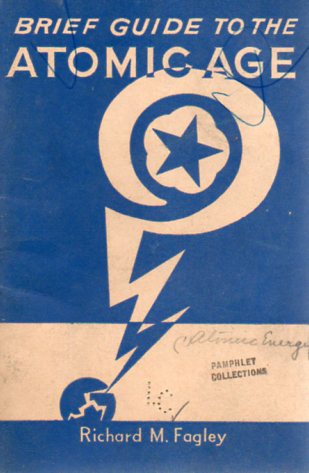
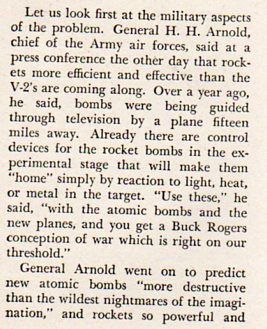
    Richard Fagley took a sleepy, 4th grade side step through the coming decade or so in the future of atomic weaponry.  The thign is, he got a bunch of it right.  But where he missed a bunch of it, where he underestimated the power of atom weapons, was that they would provide the future us with a “Buck Rogers” style of war.

    Now of course in 1946 the Soviets hadn’t developed a Bomb, but anyone who knew anything knew that it would be just a matter of time before they did.  Smart estimates were coming in at a decade or more–few people were prepared for the Soviet announcement in 1949 that they had achieved that goal

    Fagley missed the impact of atomic warfare of the future not on his own accord–he was quoting someone who knew far more and knew better–General Hap Arnold, the Commanding General of the U.S. Air Force.  But as it turns out, Arnold really didn’t have the vocabulary or this discussion, and couldn’t really estimate the “effectiveness” of the use of 

    Atomic war buck rogers684

    the new weapons. 

    So far as I know, Buck Rogers didn’t have weapons like atomic bombs; the war of the future, even though Fagley says that there wouldn’t be many survivors, would be far worse than they could imagine it to be–perhaps because that amount of destruction was still unimaginable. Buck Rogers just didn’t have the vocabulary for such enormous power and mass destruction, unless he had a planet-eater or something that I don’t know about.  In any event, words to describe the coming possibility of vast annihilation just didn’t seem to be at hand in 1946–the words and ideas, and the weapons, would soon (in the Ulam-Teller hydrogen bomb, 1951) be at hand, though. 

    Buck Rogers Will Wake Up In A 3D Future image


  • History of Normalcy and the Fluidity of “-isms”, 1867

    JF Ptak Science Books   Post 1578

    My wife, Patti Digh, and I have long talked about the history of normalcy—a history of what looks to be “normal”, or standard, or acceptable at one time that became not so over the course of time.  Buying and selling human beings, women and their children being property of her spouse, and Chinese immigrants not having (any) legal rights, are three good candidates (among thousands) for this history in the fluid mechanics of socially-accepted thought and practice.  It is an interesting proposition to think about—what things around you, or better yet, what thing you think or say or do, that look good and acceptable today might look embarrassing and unacceptable thirty years hence. What is today’s ridiculed or reviled _______ may be tomorrow’s standard practice.

    This small slug of a story (below) appeared in the 23 March 1867 issue of Punch, or the London Charivari, and takes all manner of French legal reasoning to trial. It is a good example of the changeability of the porous borders of rank belief, centered in this case on Catholicism–and it might as well have been virtually any other -ism that you can think of.   Evidently the editor, manager and even the printer of Libre pensee were hauled into court,subjected to prosecution, tried and convicted of what seemed like hate literature.  In a series of articles appearing in several issues of the journal in February and March 1867 the author launched particularly sharp criticisms at some religions, including Catholicism, which he described it as  “a rotten trunk, a receptacle of death whose fatal emanations spread all around desolation and solitude”.

    But that’s not why the editor and manager were thrown into jail for a few months, not really–the judge in the case took issue with the magazine bringing the issue to light and exposing the shortcomings of Catholicism–which he believed were many–and which could be believed by many (“if not all”) people who read the article.  It was also found that the rant against Catholicism was not without merit (“too much of it could be apparently proved”), and that it would receive little rescue in a refutation that was not conceivable (“Let us not, therefore, contemptuously leave it to meet with a refutation which it will not receive.”).  The complaint was that the editor and manager allowed the thing to be printed, a thing which could in the eyes of the court lead to unrest–jailed for printing what the judge considered a incendiary truth even though it was bound in deceit and defamation.

    The judge wrote:

    “It is not obvious. It is not manifest. There is too much verisimilitude in that description of Catholicism. There are too many people who are likely to believe a good deal of it, if not all. The truth, moreover, is that, if any argument about it were permitted, too much of it could be apparently proved. Let us not, therefore, contemptuously leave it to meet with a refutation which it will not receive. Our wisest plan is to silence its promulgators. Accordingly we will sentence the manager and editor of the Libre Pensee to fine and imprisonment.” This is logic.

    I think what Punch was responding to was “stupidism”:  “Here, in England, Papists and Protestants are free to abuse each other’s respective isms as much as they please, so long as they refrain from libeling one another or any one else. John Bull cannot see who is wronged by the abuse of an ism. Of course that blindness is owing to his want of logic.”

    There was no mention of what happened to the author, unless the author was the editor. 


  • The Vast VD Landscape of “Procurable” Women: the Big WWII Poster Post on Veneral Diseases

    JF Ptak Science Books  Quick Post

    http://1.bp.blogspot.com/_Xq1_QVuOUV4/S_LGzpQOxBI/AAAAAAAAQlI/AAD8hijEhBk/s1600/1a4.jpg

    [All images from John Brown’s Public Diplomacy Press and Review Blog, here.]

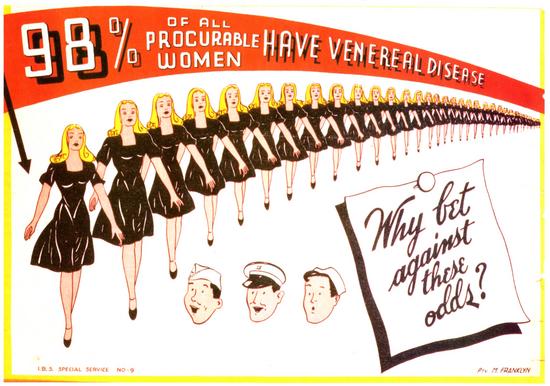
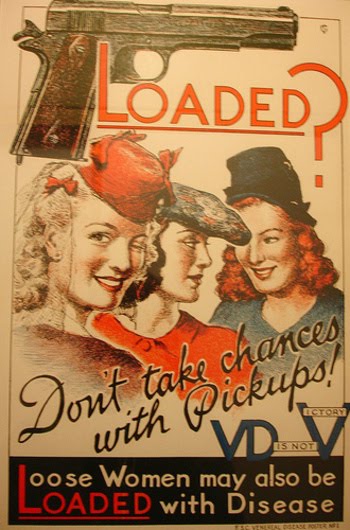
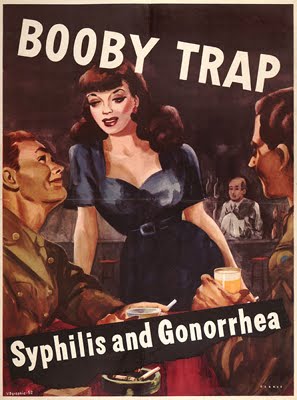
    Almost all of these posters were printed by the U.S. government as a preventative measure to help eradicate the costs of venereal diseases to the American armed forces.  They look a little outre and goofy and unbelievable in their way, but their message was very clear.  The effects of venereal disease too is a very clear one to military forces, because as important as it is to feed and clothe your troops, it is equally important to keep them healthy, for since the beginning of keeping armies there are always episodes of armed forces being decimated by disease, some percentage of them being sexually transmitted. 

    So I understand that the powers that be were trying to limit the lovelust interests of a (conquering) military force by scaring them,but sometimes the message came with a price, as with the lead poster on this post, which basically shrank the individuality of women down to the nexus, eliminating their individuality and robotizing them into VD-carrying sex toys.   .

    The percentage enough would carry this message, but a detailed view of the poster shows how it enunciates the mechanization of the female love receptacle:

    VD Poster det

    I don’t disagree with the underlying purpose of these posters, or even most of their sentiments–except of course for the lobotomized-disease-carrier-women parts.

    http://1.bp.blogspot.com/_Xq1_QVuOUV4/S_LHeo_CJQI/AAAAAAAAQlg/YU8fmOgsSxA/s1600/1a10.jpg

    http://4.bp.blogspot.com/_Xq1_QVuOUV4/S_LJt4wc0kI/AAAAAAAAQmg/ObWc9HCcJq8/s1600/1a22.jpg


    http://1.bp.blogspot.com/_Xq1_QVuOUV4/S_LI0YVjLQI/AAAAAAAAQmI/SQkMpPp6Wu8/s1600/1a18.jpg


  • Heavenly Chinese Space Program Posters

    JF Ptak Science Books  Quick Post

    I don’t know quite what it is about these poster for the Chinese space program, but they are magnificently bad, or simply beyond what I can consider “good” color sense and design.  Perhaps they are all just “something else”. 

    The source for the images:  Chinese posters.net.

    Little guests in the Moon Palace, early 1970s

    Roaming outer space in an airship, 1962


  • A Note on Tricycles in the History of Nothing

    JF Ptak Science Books   Post 1576

    Lbikes--tryke645
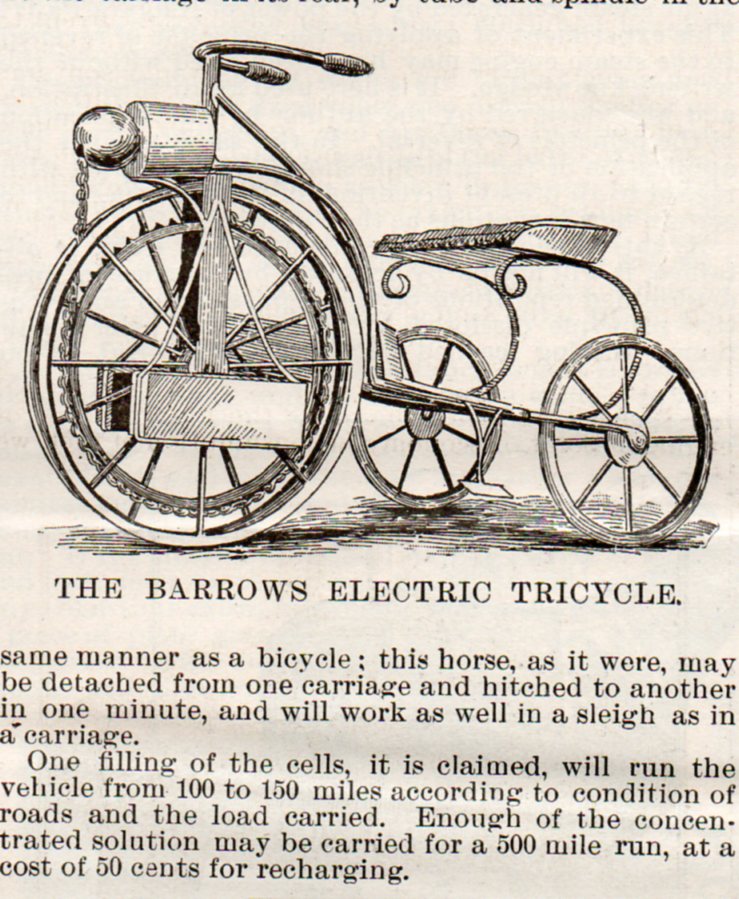
    This image–from the Scientific American Supplement for 25 September 1895–triggered an immediate reaction, though not for the electrification of what looks like a child’s toy. Charles H. Barrows of Willimantic, Connecticut patented this bike, which turns out to be a considerable object–it has a two hp engine which is powered by a hundred-pound battery that is “stored in the two cabinets” (measuring 24x8x8) on either side of the hub, making the wheel I guess somewhere around 34-36″ in diameter. After everything was said and done, the trike was a big, heavy, thing, in spite of a fairly spartan design in the rest of the bike.

    What the woodcut remind me of was William Eggleston’s quiet, odd, iconic and enigmatic portrait of a tricycle, which  I think launched a new photographic experience for the suburbs–a kind of Robert Frank for people doing “okay”.

    Tricycle

    Eggleston’s work, including this s image above (Untitled, Tricycle and Memphis, 1970), was a subject at a MoMA show in 1976, William Eggleston’s Guide.  It was received with long glances down long noses–seen as a banal exercise in the portrayal of everyday stuff in everyday settings, critics saw the semi-nothingness in the photos as simple all-nothingness, with one critic asking “a guide to what?”  But the Eggleston show was far more than that, showing the bits–in color–of American cultural life in middle class seclusion, a splendor of small Americana. 

    Bill Owens, working at about the same time as Eggleston, also shared his vision on the restricted glory of the suburbs in his Suburbia, spreading his discoveries of new-found cultural diversity.

    http://adventurepatches.files.wordpress.com/2010/05/suburbia-boy-with-gun.jpg

    The critics saw basically nothing in these works when they were first shown, though they had a lot more going on for them than the electrified tricycle, which was far too big and heavy to have done any good for anyone (though the design of the sprocket/wheel was pretty interesting).  The only nothingness that are in the photos of Eggleston and Ownes was the nothing that the critics chose to see.  Sometimes new, different ways of looking at things as in the cases of these two photogrpaher makes it seem as though it is a newness of nothing, but only for a short time, until everybody else showed up. 


  • Disinventing Left, Part II–Eliminating Left Pages

    JF Ptak Science Books   Post 1572

    If (and only if, (iff)) eliminating left turns in auto traffic is a good idea, perhaps getting rid of the left-sided newspaper page is a good idea, too.  (?)

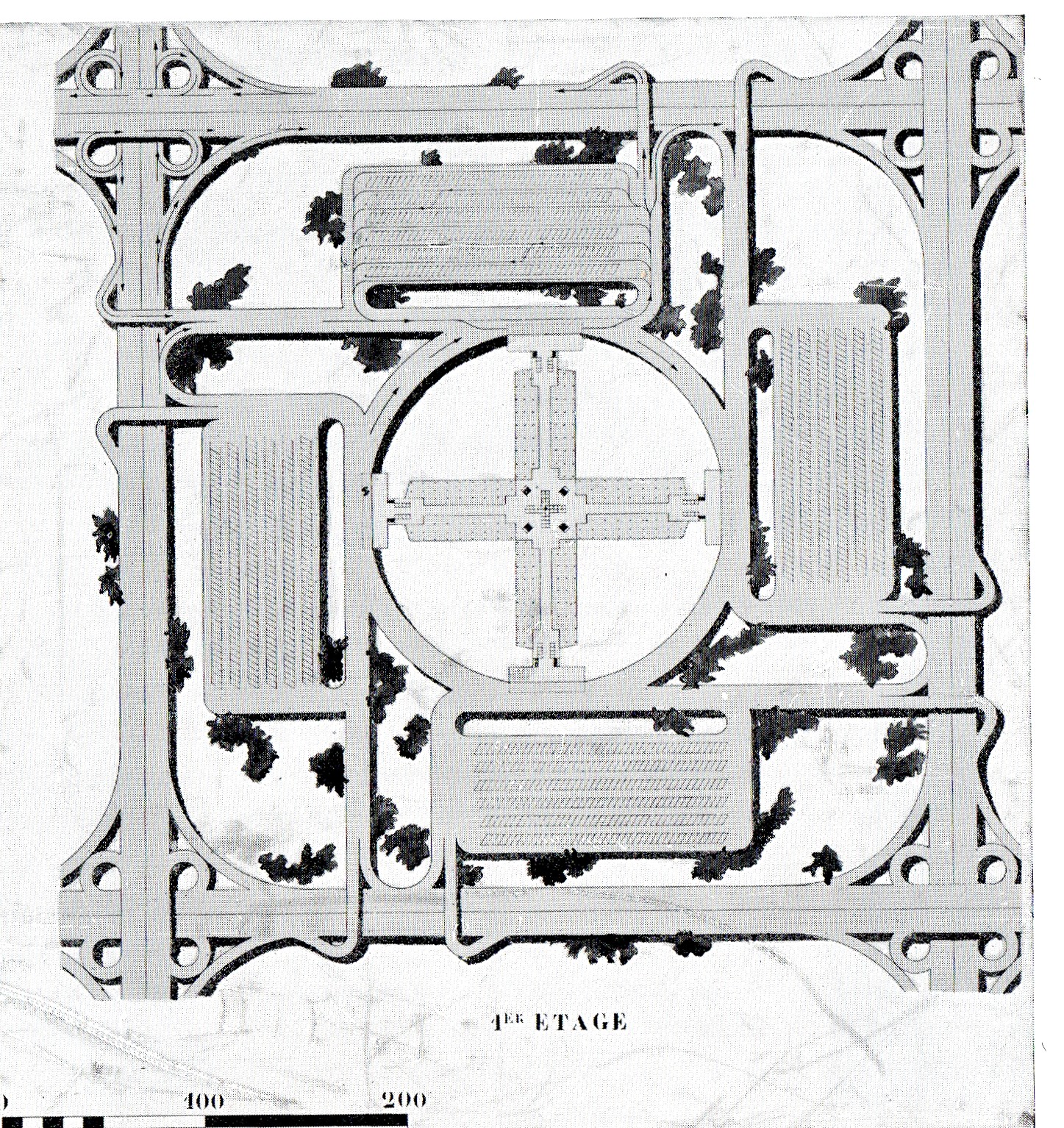
    A post appeared earlier in this blog on dis-inventing the left-hand traffic turn, which for better or for worse was laid at the feet of Le Corbusier, who imagined a new network of inner-city traffic turns as follows:
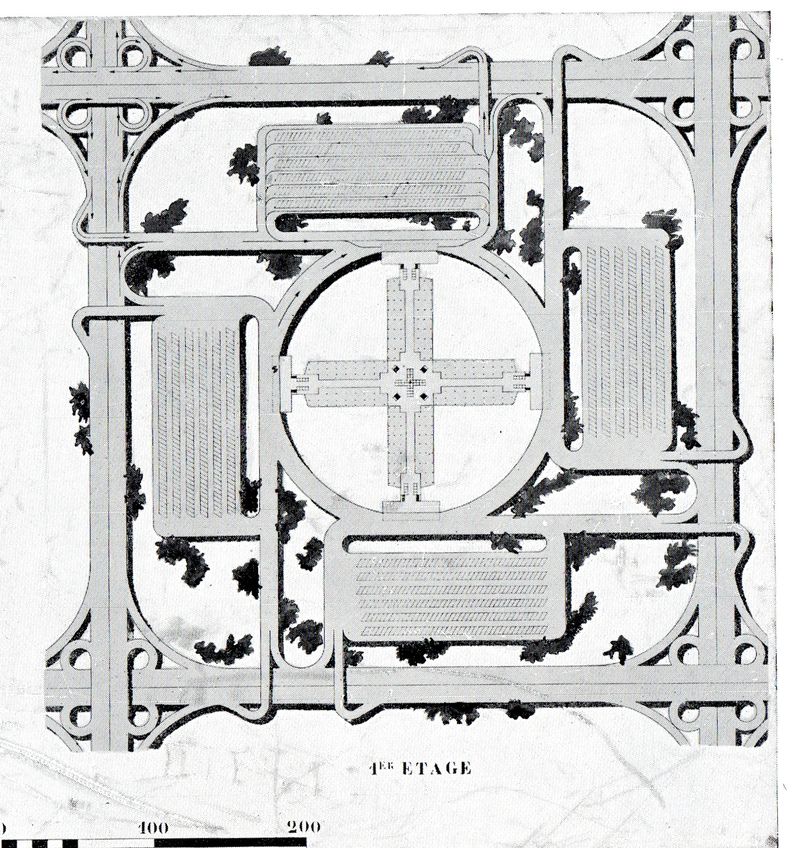
    Right hand turn 2006

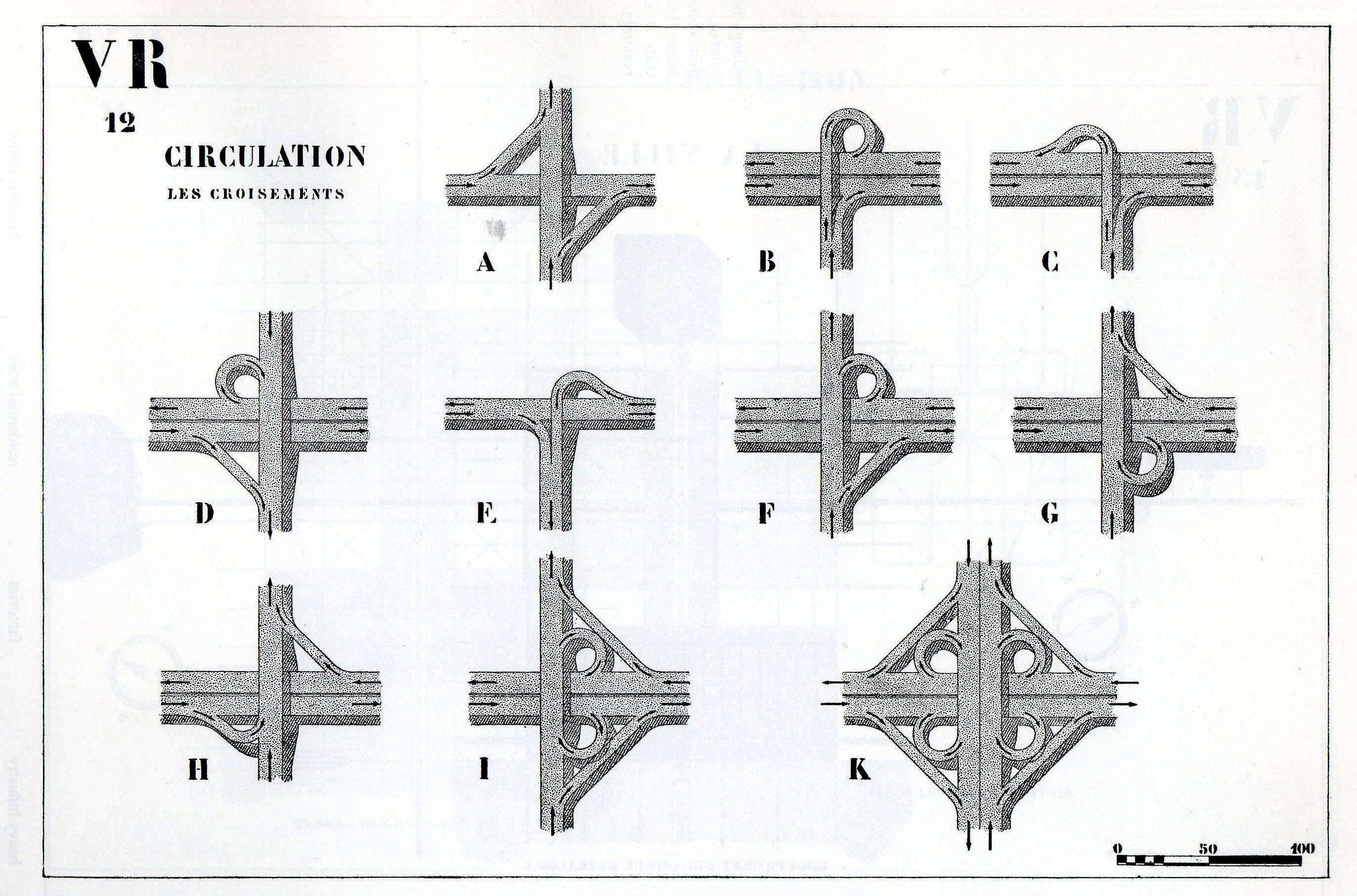
     which appeared in his Radiant City (edition of 1930).   He beautifully includes the following crib sheet for the incremental development of right-turns-only in cities, which I think can stand on its own as the template for x-number of short stories:
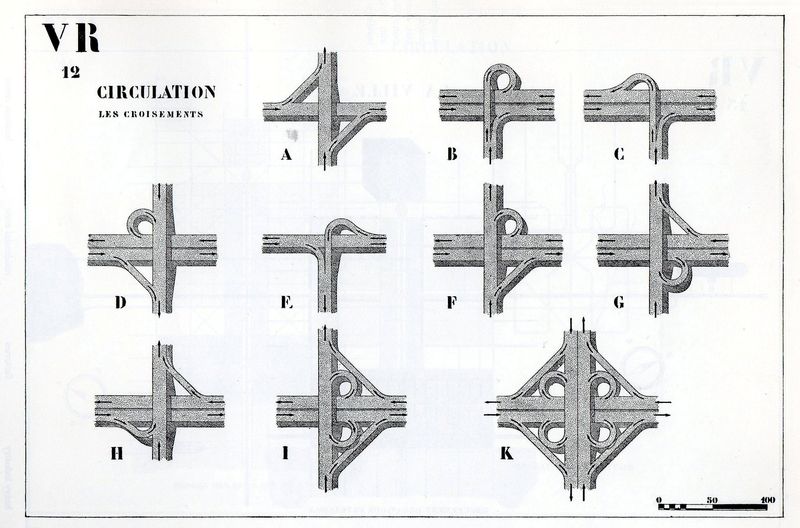
    Right hand turn 10

    This is nestled into one of many plans, though Le Corbu’s recipe for mega-sameness seems desperate to me–this one called for a massive complex of 220-meter-tall structures nested in 400-meter squares, going on and on. 

    But I think at its base that eliminating left hand turns for cars in cities seems like a good idea–making the left turn a series of three rights seems at it base to make traffic flow smoother, and since enormous amounts of time and energy and  everything else comes as a result of volatility in traffic flow, and since a lot of that volatility comes as a result of the formation of lines behind cars that are crossing traffic for a turn, then getting rid of the cause of volatility seems the logical response.  Unless of course it causes volatility elsewhere.

    In 1905–one of the greatest years for ideas in the history of ideas, ever, though the following is not one of them–George Ebenezer Morrison proposed to eliminate a source of unease and volatility in publishing advertising revenue by destroying the idea of the left-hand page of text.  He made the case that the value of advertising space on the left-hand side of newspapers and magazines and such was far less than the ads that appeared on the right-side pages–this because, he said, people tend to hold what they are reading with the right-side centered in front of them, leaving the poor left-side abandoned on, well, on the left.  So, with attention centered on the right, ad space was at a premium. 

    Mr. Morrison’s solution–his idea, for which he was granted a patent in the U.K. 1905/105291–was to print the left-hand pages upside down, so that once the right-side was read, the reader would turn the newspaper etc. upside down to read the second half, and thus the left-side page would be entirely eliminated. So, all things being equal, everything would now be right-sided.

    I am not sure if–like finding new traffic problems in multiple right-hand turns–eliminating the left page doesn’t create the same issue with the left side of the all-right-hand page reading material.

    I am sure that Facebook and Kindle and etc.–having already gotten rid of the pages in toto–are now at work in eliminating the left side of our monitors. 

    And whatever it is going on right now, the same thing seems to be going on, it politics. 

    Notes:

    1.  I’d share the patent image, but it is just a rectangle divided into eighths.