A Daily History of Holes, Dots, Lines, Science, History, Math, Physics, Art, the Unintentional Absurd, Architecture, Maps, Data Visualization, Blank and Missing Things, and so on. |1.6 million words, 7500 images, 4.9 million hits| Press & appearances in The Times, Le Figaro, Mensa, The Economist, The Guardian, Discovery News, Slate, Le Monde, Sci American Blogs, Le Pont, and many other places… 5000+ total posts since 2008.

Category: Absurdist, Unintentional

  • Found Images: Carrying Baby Coffins at London Stone?

    JF Ptak Science Books Post 286

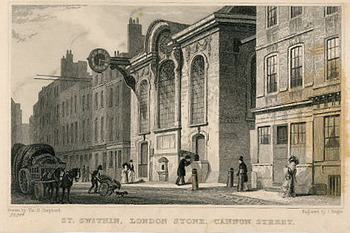
      This image has always been a little troubling to me, and one that I’ve never figured out.  Unfortunately I cannot now find the original to get a better, deeper scan of the curious object being carried by the oldish man in the center of the picture. This is another in a series of generic topographic prints of famous churches/buildings/streets and so on, decorated with figures some of whom are just going about their daily days as well as others who are quirkily adventurous–but those quirky actions are most often buried in the smallness of their representation. sometimes almost to small to see, especially considering that they are just there for scale.

    File0760saved

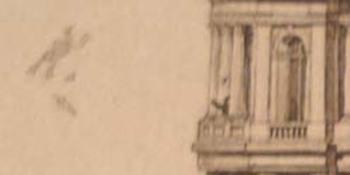
    File0760saved_detailLooking at this image of St. Swithin’s* and the London Stone, even a quick, noncommittal  look at the people filling up the foreground reveals this most unusual character with an uncommon box, right there at stage-center.

    I make this out to be a child’s coffin, largely because I want it to be for the sake of the print and also because there aren’t many other easy, logical choices.  I remember it looking even more so in the original under 20X magnification, with the figure carrying it buckling slightly from more than just the weight of the box he was bearing.  What else could be in there?  A big set of engineer’s scales?  A precision pantograph?  Legs?  I don’t know–its kind of too big and bulky to be a carrier for everyday work material, as tools filing the box would make it too hard to hoist to the shoulder. The figure seems sad somehow rather than burden, and the question, again, as in the other posts dealing with this subject matter, is why the artist bothered with some a complicated figure to simply people-up the street at St. Swithin.  Did the artist  or engraver just suffer the loss of a child and is displaying their grief, or is it a reminder of the dance of grim death just outside the doors of the church door?  Or is it just some guy carrying a heavy box filled with table scraps? 

    * The famous “London Stone”, a solid block of oolite such as used by the Romans in their buildings, is set in a large stone case,     protected by an iron grille, and let into the wall on Cannon Street. It originally stood on the south side of the street opposite St Swithin’s Church until it was moved and set  into the wall of the church itself (in 1798). According to Camden, it was a Milliarium or  Milestone from which the British high roads radiated, and from which the distance on them was reckoned, similar to the one in the forum at Rome (16th Street in Washington D.C., once upon a time named Meridian Strete, was also supposed to perform this chore.  Meridian Hill Park, now renamed Malcolm X  Park, is about all that is left of that idea. And it seems like a good notion lost  now that the rest of the world isn’t setting their timepieces to an imaginary line running right through a big desk in an oval office at 1600 Pennsylvania Ave.)


  • God’s Atomic Bomb: the Divine, the Infinite, and its “Gift” of the Bomb, 1946

    JF Ptak Science Books  Post 234

    Blogsept_2_atomic_bomb_god481

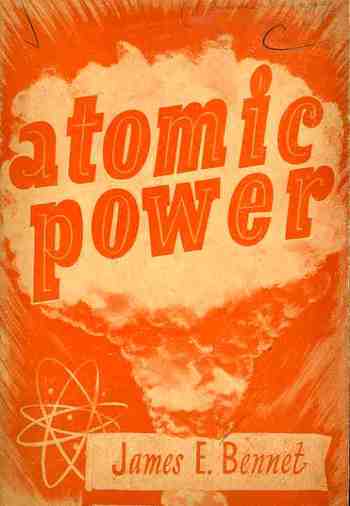
    I’d like to say that this was a class-of-its-own sort of work, but as it  goes this is hardly the case.  If I cared a little I guess I could establish a collecting sub-category in the nuclear fission–atomic–nuclear weapon collection for the popular belief that god ordained and transmitted the atomic bomb.  There are at least five other pamphlets like this floating around in the store, and I am certain that there must’ve been dozens of other grabby little publications like this proclaiming Almighty Influence in the creation of the atomic bomb.  I can understand the reasoning behind the power grab:  the bomb ended the war a week after its second use, sparing the lives, perhaps, of a million soldiers (American and Japanese) and years of societal/infrastructure rehabilitation by eliminating the need of an American invasion of the Empire.  So the denominator was simply the “saved (American) lives” part. 

    Blogsept_2_atomic_bomb_god_2482

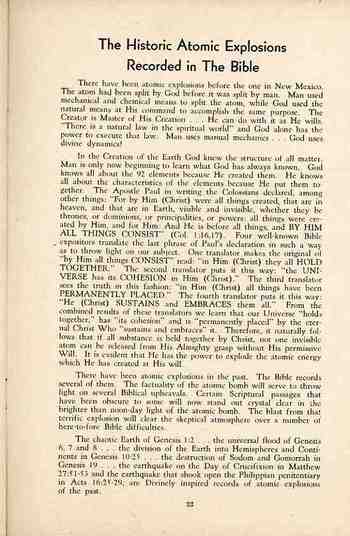
    Again, I can understand how this felt in 1945/6, but I still feel that getting the suspected creator of the universe involved in the making and use of the bomb was ill-advised.  The author of the first pamphlet reached back into history and credited god with simple solutions to complex situations:  employing the more modern political technique of controlling language in the Tower of Babel case (wher he also said that since Babel was only 105 years after the flood that Noah was still alive, and that certainly Noah “would’ve voted ‘No’” for the building of the tower); and using “Johnny Snowflake” to stop the “non-satanic” Napoleon from reaching “Britain’s doorstep (and obviousy not the Soviet Reds).  Bennet also  credits god with giving “Dr. Currie” (sic) the genius to “split atoms” in 1896. 

    The second pamphlet uses the atomic weapon a little more figuratively.  The author, Mel Morris, published this in 1945, which means he must’ve worked a little feverishly to pump up his bible prophesy and history to include the new atomic weapon to replace whatever else he had been using as a prophecy for end of times.  (As it turns out, “God’s Atomic Bomb” was more tempest and disaster in the bible, and not (whew!) the bomb itself.  Though as we’ve learned from scientologists and the sort-of creative mind of Ron Hubbard, a civilization came to the earth thousands of years ago and pummeled it with “atomic bombs” and other nastiness, polluting humans for milennia to come.  But that’s another story–suffice to say that Morris found many dozens of examples of “God’s Atomic Bomb” being used in the deep biblical past, and that the use of the real atomic bomb in 1945 was pre-ordained, and not without its figurative historical counterparts.  I’m not sure why any of this was necessary outside of proving to some small minority that these preachers could at least be contemporary and topical. 

    Blogsept_2_atomic_bomb_god_2txt483


  • Punctuation and its Elimination: Spongebobian Sentence-Enhancers and a Pickle for the Knowing Ones (1847)

    JF Ptak Science Books  Post 191 (expanded)

    I’ve made several posts about Blank and Missing People which seem to me—having had long exposure to images over the last 30 years—to be quite unusual in the history of popular-published prints.  This may actually be a simple corollary to a wider category of Blank Things, or Missing Things.  Like Dark Matter.  Or white, open, blank spaces on early, honest, maps. (And this may be part of another larger story on The  Spaces in Between, (a concept in German known as Zwischenraum), but that’s another story, identifying where the missing stuff might actually “be”. 

    Right now though I’d like to address blank spaces in literature.  It is surprising to me that in Google searches that “blank books” and “blank literature” and “books without words” (once you remove all of the hits for new diaries and new artists’ notepads and such) direct you to graphic novels.  This category hardly strikes me as being “blank” as the art and action more than accommodate the absence of written words.  (And by the way the graphic novel seems to be a fairly new invention—perhaps the work of Frans Masereel and Rockwell Kent in producing sequential, worldess books were among the first of their genre when they were published in the mid-1920’s?)

    Blank literature doesn’t mean hollow literature.  In one skinny example James Fenimore Cooper’s writings may be a little translucent and a little empty, but they aren’t blank. (Twain ripped Cooper on this point, cursing Cooper for using a bagful of woodsy woodsmen tricks to drive his story when he should’ve been writing, and not waiting for them to fill up the spaces of his missing narrative: “in his little box of stage properties he kept six or eight cunning devices, tricks, artifices for his savages and woodsmen to deceive and circumvent each other with, and he was never so happy as when he was working these innocent things and seeing them go…(another) favorite stage property that he pulled out of his box pretty frequently was his broken twig.  He prized his broken twig above all the rest of hi effects, and worked it hardest…”

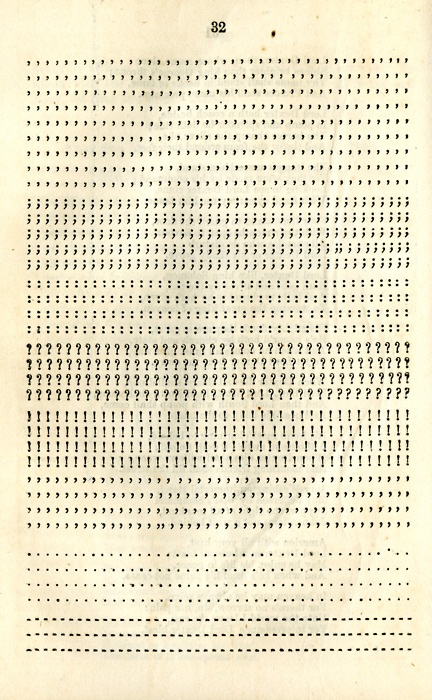
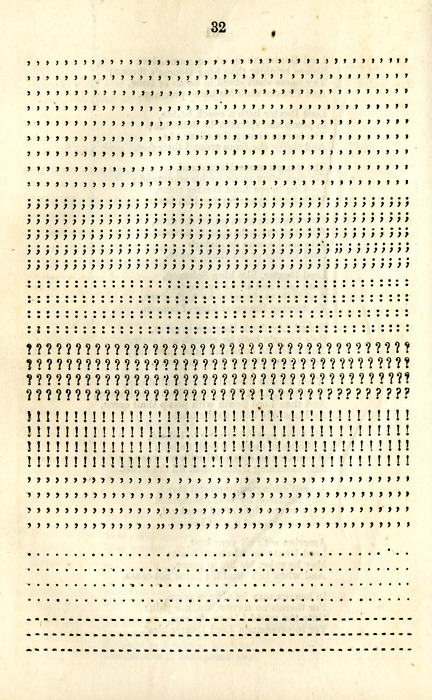
    An excruciatingly direct example of the worldess book  is a remarkable, hoaxing or perhaps just simply demented set (!) of books by Timothy Dexter (Newburyport, Massachusetts).   Dexter wrote a semi-incompressible work called A Pickle for the Knowing Ones, which followed his own logic, sentence structure, vocabulary and spelling. It was also printed and published without punctuation.  In one sentence. (A sample is found below in the continued reading section.)  I think that it is interesting in that someone did it and that it exists and that it was printed in 1802, but aside from that I find little comfort or twisty inspiration from it.  His second edition of that work though is much more interesting, not so much in that it continued ((?), I use that word loosely) the shredded intellectual threads laid out in the first edition; it also contains one page of what I think of as a blank book:  the missing punctuation marks from the first edition.   

    Well, not ALL of the missing punctuation, but enough, in the mind of Dexter, to silence some of the complaints of the more faint-hearted readers of his one-sentence, non-punctuated, made-up vocabulary of the first edition.  He at least provides the punctuation–separately–in case a weak reader needed some: 
    Pickle for knowing ones

    [Image from a good treatment of Dexter at http://northofboston.org/north-of-boston-historical-figures-a-pickle-for-your-thoughts/]

    He writes “Fourder mister printer the Nowing ones complane of my book the fust edition had no stops I put A nuf here and that may peper and solt as they please.”

    That’s much in the spirit of Spongebob Squarepants and Patrick Star when they “discovered” the use of swear words and curses, which they figured had no meaning except as a sort of comfrot food to be sprinkled in conversation for flavoring–“sentence enhancers” they called them, without knowing (of course!) that their sounds were more than simple garnishes and intellectual punctuation.  

    As follows (please consult http://www.lordtimothydexter.com/the_holl_pickle.htm for a full transcription of the Dexter work–the author of the site also transcribes the Dexterian-speak into plain English, which was no doubt a labor of love): 


    ,,,,,,,,,,,,,,,, ,,,,,,,,,,,,,,,,, ,,,,,,,,,,,,,,,,, ,,,,,,,,,,,,,,,,,,, ,,,,,,,,,,,,,,,,,

    ,,,,,,,,,,,,,,,, ,,,,,,,,,,,,,,,,, ,,,,,,,,,,,,,,,,, ,,,,,,,,,,,,,,,,,,, ,,,,,,,,,,,,,,,,,

    ……………. ……………. …………….. ………………. ……………..

    ,,,,,,,,,,,,,,,, ,,,,,,,,,,,,,,,,, ,,,,,,,,,,,,,,,,, ,,,,,,,,,,,,,,,,,,, ,,,,,,,,,,,,,,,,,

    . . . . . . . . . . . . . . . . . . . . . . . . . . . . . . . . . . . . . . . . . . . . . . . . . . . . . . . . . . . .

    . . . . . . . . . . . . . . . . . . . . . . . . . . . . . . . . . . . . . . . . . . . . . . . . . . . . . . . . . . . .

    …………………………! ! ! ! ! ! ! ! ! ! ! ! ! ! ! !………………………..

    …………………………….. ! ! ! ! ! ! ! ! ! ! ! …………………………..

    …………………………………. ! ! ! ! ! ! ……………………………….

    ………………………………………!……………………………………..

    . . . . . . . . . . . . . . . . . . . . . . . . . . . . . . . . . . . . . . . . . . . . . . . . . . . . . . . . . . . .

    , , , , , , , , , , , , , , , , , , , , , , , , , , , , , , , , , , , , , , , , , , , , , , , , , , , , , , , , , , , ,

    ……………????????????????????????……………

    And on page 32 more of the “missing” punctuation is provided:

    ,,,,,,,,,,,,,,,,,,,,,,,,,,,,,,,,,,,,,, ,,,,,,,,,,,,,,,,,,,,,,,,,,,,,,,,,,,,,, ,,,,,,,,,,,,,,,,,,,,,,,,,,,,,,,,,,,,,, ,,,,,,,,,,,,,,,,,,,,,,,,,,,,,,,,,,,,,, ,,,,,,,,,,,,,,,,,,,,,,,,,,,,,,,,,,,,,, ,,,,,,,,,,,,,,,,,,,,,,,,,,,,,,,,,,,,,, ,,,,,,,,,,,,,,,,,,,,,,,,,,,,,,,,,,,,,, ,,,,,,,,,,,,,,,,,,,,,,,,,,,,,,,,,,,,,, ,,,,,,,,,,,,,,,,,,,,,,,,,,,,,,,,,,,,,, ;;;;;;;;;;;;;;;;;;;;;;;;;;;;;;;;;;;;;; ;;;;;;;;;;;;;;;;;;;;;;;;;;;;;;;;;;;;;; ;;;;;;;;;;;;;;;;;;;;;;;;;;;;;;;;;;;;;; ;;;;;;;;;;;;;;;;;;;;;;;;;;;;;;;;;;;;;; ;;;;;;;;;;;;;;;;;;;;;;;;;;;;;;;;;;;;;; :::::::::::::::::::::::::::::::::::::: :::::::::::::::::::::::::::::::::::::: :::::::::::::::::::::::::::::::::::::: :::::::::::::::::::::::::::::::::::::: ?????????????????????????????????????? ?????????????????????????????????????? ?????????????????????????????????????? ??????????????????????!??????????????? !!!!!!!!!!!!!!!!!!!!!!!!!!!!!!!!!!!!!! !!!!!!!!!!!!!!!!!!!!!!!!!!!!!!!!!!!!!! !!!!!!!!!!!!!!!!!!!!!!!!!!!!!!!!!!!!!! !!!!!!!!!!!!!!!!!!!!!!!!!!!!!!!!!!!!!! ””””””””””””””””””” ””””””””””””””””””” ””””””””””””””””””” ””””””””””””””””””” ……………………………….. ……………………………….. ……………………………….. ……………………………….. ————————————– ————————————– ————————————–


    It is a brilliantly empty book, all of the characterization present and waiting for the last bit that would make this a book:  the words.

    The depths or shallownesses of Dexter’s private insight is a mystery to me, if that mystery extended beyond an elaborate and peculiar (and deep) sense of humor.  The man was a successful if not very odd businessman, after all, so he did have some sort of regulating principle in his life–its just that this sort of dark, removed humor is so incredibly pre-modern that I’ve gotten stuck thinking about Dexter being a little deranged rather than be prescient. 

  • Food Packaging, Plastics and the New Desire: the du Pont Company, WWII.

    JF Ptak Science Books LLC Post 159
    Blogcandy282

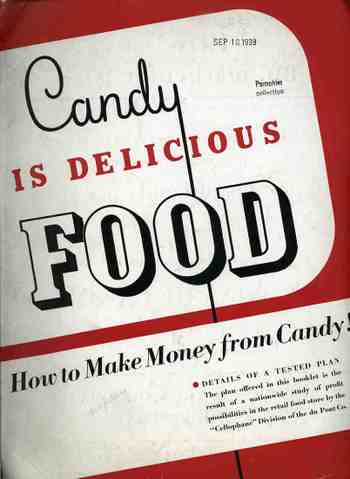
    I was initially drawn to this small collection of pamphlets because of the very provocative assertion that candy is food (but is food candy?) which, I guess, it is, technically speaking.  (Maybe we should determine what food is on a sliding scale of what we would take to a deserted island somewhere and have to depend on those foods for survival.  I don’t think that I’d have a trunk full of Mounds bars with me.  Evidently if you had to choose one food product (and one product only) to survive on for a year it looks like the best thing to select is dry dog food.)

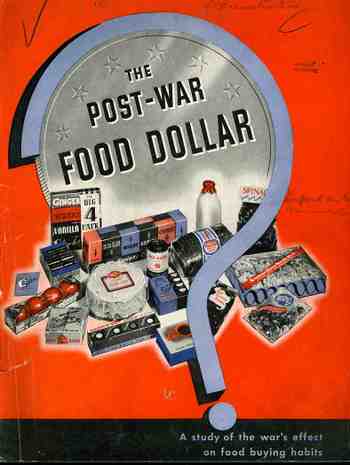
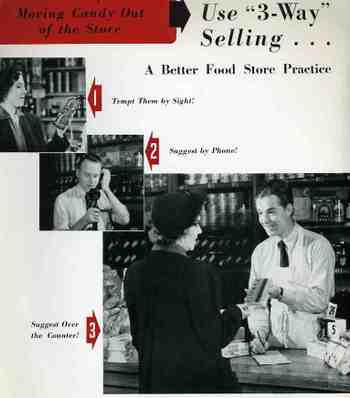
    The Candy is Delicious Food pamphlet was published in 1939 with the intent of instructing the grocer how to better sell candyFood—expressing the ease, storage and profit margin.  Curiously, the thing was published in September  1939, a few months into the war—I wonder if the publisher (saved for naming below to more effect) was prescient in determining the coming problems with food, and that candy would certainly not have those issues during a global conflict? 

    The Post-War Food Dollar was also the product of the same publisher.  Published in 1943, this pamphlet exhorted the grocer to prepare for the coming peace, explaining where the new dollars might be spent once the war (and the supply and ration problems) was won.  Blogcandy_post_war287

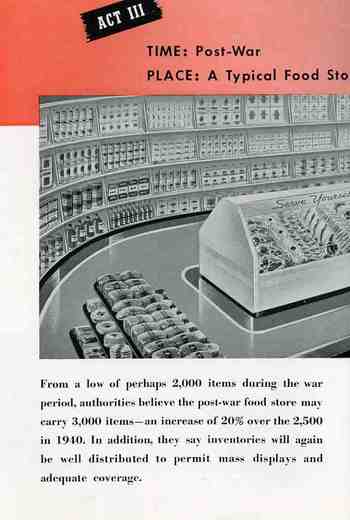
    As it turns out these pamphlets were mostly about display and merchandising, and finding the goods that looked best on the shelves—and evidently that which looked best was that which the product could be seen.  And the way that the product could be seen was with the use of the “new”packaging filament, cellophane, produced in the United States (almost exclusively) by du Pont (E.I. du Pont de Nempours & Co. with  their chemist William Hale Charch figuring out how to make cellophane moisture –proof, which led to very large-scale good packaging using the product.)   Another very big bit which turns up unmentioned but illustrated in this pamhlet is seen in this The Future is Now! scene of a modern supermarket–the “SERVE YOURSELF” butcher/meat section, which was a new idea in the early 1940’s, and one that was not at all common in the consuming world.  This idea wasn’t as big a deal as the invention of mass produced sliced bread (or, as Squidward Tentacles encountered in one episode of SpongeBob, “Bread in a Can–the best Thing Since Sliced Bread”), but it was a very important de3velopm,ent in marketing–and also another gargantuanly consumptive venue for the sale of the packaging element, cellophane.

    It was DuPont who published this series of pamphlets for the sole purpose of marketing foods and ideas to grocers that were almost entirely dependent upon cellophane, and DuPont manufactured 75% of all cellophane made in the U.S.  So, to me, it seems as thought all of this business about Food being Candy and the Post-War food spending dollar was really just about selling cellophane—the food was incidental, which is why the cellophane-encased candy was called “food” to begin with.  (It was Whitman Candies who first used cellophane in the U.S. , in  1912, to package their goods for retail.)
    Blogcandy_post_war285_2
    As an aside it is interesting to note that du Pont was brought to court in 1947 over their alleged monopolization of cellophane manufacturing in the United States.  Thus was the U. S. v. DUPONT (THE CELLOPHANE CASE)  filed December 13, 1947, which “charged Du Pont with monopolizing, attempting to monopolize and conspiracy to monopolize interstate commerce in cellophane and cellulosic caps and bands in violation of Section 2 of the Sherman Act”.   DuPont successfully defended themselves in this case.

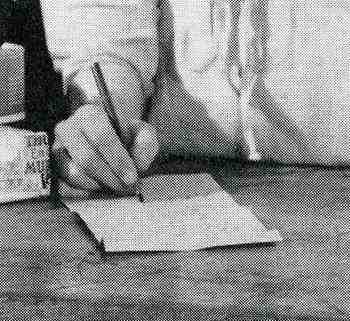
    The other, minor, thing here that really caught my attention was on page 10 of the Candy is Delicious Food pamphlet—an innocent picture of the grocer tallying up the customer’s purchases, sure enough, but if you look at the detail you can see the grocer writing it all down on the bag that he’d use bag up the purchases.  I have a dim memory of seeing this done in the across-the-street-from-the-A&P Mom & Pop grocery sawdust-strewn store (on Main Street, of course) in Great Barrington, Massachusetts, when I was a kid in the early 1960’s.  I
     
    don’t recall this being done after that, what with real cash registers and then, much later on, with more sophisticated inventory control hardware.  I’m sure that I recall this being done in hardware shops (almost all gone), and my Mother recalls this more recently—in the 1970’s—in butcher shops, but I think this recording practice was pretty much extinct by the mid  1960’s.  I know that this means nothing, but the picture of this guy writing on the bag was so sharp in my memory that I needed to record the emotion.
      Blogcandy_bag283Blogcandy_bag284


  • Visionary Architecture and a Falling Man Prank–E. Hebrard’s Tower of Progress, 1913.

    JF Ptak Science Books   Post 118 (expanded)

    Dsc00013

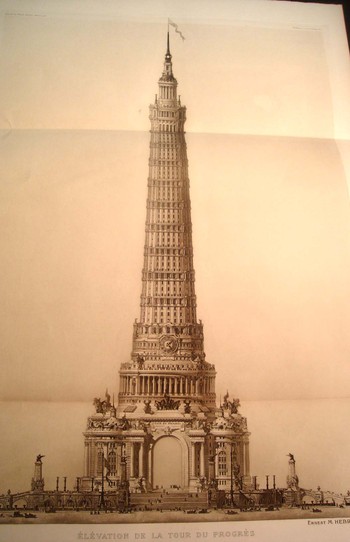
    This image has two things going for it, one obvious, the other not (and just about hidden, until you see it, then you can’t help not seeing it all of the time).  It comes from an unusual, somewhat pretty/bizarre visionary work privately printed in Paris in 1913.  The lead author, Hendrik Christian Andersen, along with Ernest M. Hebrard (and his brother, Jean Hebrard, who we saw in an earlier post), collaborated on a project (ungainly) called Creation of a World Centre of Communication1, a deeply complex, very detailed, and just plain weird offering for building a sprawling extraterritorial city dedicated to “oneness”.  The drawings and plans were lush and lovely, with a lot of thought in their execution but actually very little into how everything might actually be pulled together into some sort of working whole. 

    Dsc00012

    And so it goes.  I imagine that if the beautiful Etienne Boullee thought in terms of cities rather than in single structures, he might’ve produced just the same sort of gorgeous, unconnected thing.  After all, just because you draw a plan with a lot of buildings almost touching each other doesn’t necessarily mean you’ve drawn a visionary city. 

    This is one of 22 large images (in real life this print, a heliogravure, measures about 28 inches tall) showing different structures from an art center to a fountain of life.  This is the “Tower of Progress”—I don’t know what sort of progress as there’s really nothing to go by, except for the big 100’-tall clock, so at the very least it is a celebration of the progression of time, which needs no monument outside of the trillions and trillions of trillions (or centillions, or 10303?) of bones it has distributed around the planet over the millennia. But for Hebrard it formed the locus of the  “a fountain of overflowing knowledge to be fed by the whole world of human endeavour in art, science, religion, commerce, industry, and law; and in turn to diffuse throughout the whole of humanity as though it were one grand, divine body conceived by God, the vital requirements which would renew its strength, protect its rights, and enable it to attain greater heights through a concentration of world effort.” Whew.

    I figure that the tower was to be about 1,500 feet tall (scaling it by the 2mm tall figures scampering around in the image)—a giant tower perched on top of a rotunda placed on top of a table-like something, looking terrifically fake, but lustrous.

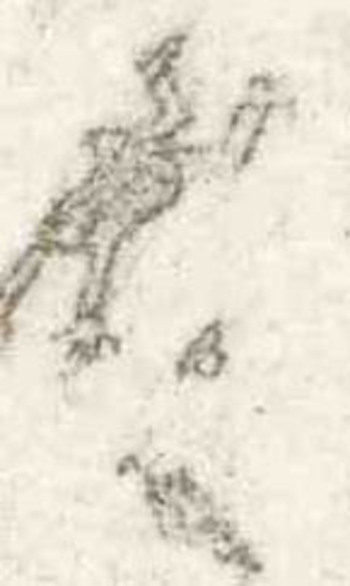
    The prize though in this portrayal of the “Tower of Progress” is a little smudge-like thing to the middle-left of the tower.  Under magnification, we see that it is a man, with a bowler and an umbrella, hurtling down, falling from somewhere way on high in the tower.  It is of course a very unexpected feature of this visionary architectural rendering, a hidden joke (perhaps?).  These sorts of additions—the work of a disgruntled/drunk/humorous engraver—pop up from time to time in the history of printing.  Perhaps the most famous intentional example of this graffiti is found in the earliest copies of the first edition of Twain’s Adventures of Tom Sawyer, where a male character is featured with

    a very large, very lumpy, very noticeable, erection; a proof reader spotted the embarrassment, and the plate was reworked to rid the character of the Natural Function.  I’d guess offhand that this was the case with the Hebrard heliogravure, even though there is a second figure in the tower pointing at the figure hurtling past, implying a little more thought in making this a more cohesive joke.   

    Notes:  An interesting review of this work appeared in Town Planning Review for 1914, here. 

    Falling_man_super_detail


  • Art Made of Fat: Boneless Sculpture in a Boney World

    JF Ptak Science Books   Post 100    [See also my latest post on fat:  Fat Redux, 1920’s Fat  Quack Cures].


    Luminousfatcvr111

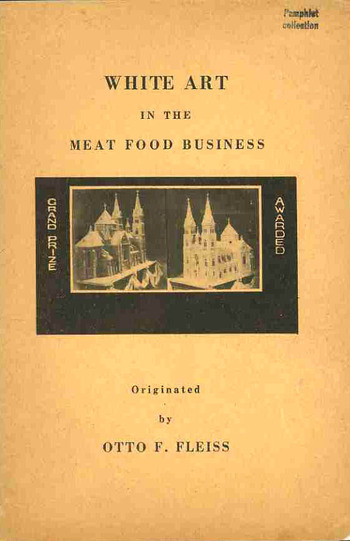
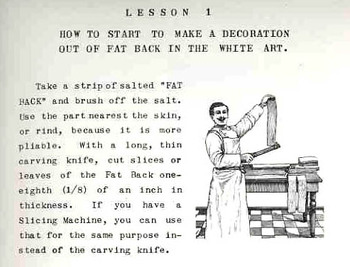
    In the world of found-book-objects, few I think are as deeply removed and as deeply obscure as the work by Otto F. Fleiss, a butcher and sculptor in fat. And lard.  The pamphlet’s title is a throw-back to an earlier day of titling, when the title page was pretty much fully overtaken by the title, though as a common practice it say its heyday 300+ years ago. Fleiss’ 50-word title: White Art in the Meat Food Business.  A Practical Handbook for Butcher, Pork Stores, Restaurants, Hotels and Delicatessens on How to Make Lasting and Transferable White Art Decorations out of Bacon Fat Back for Window Displays, Ornaments on Meat Food Cold Buffets and for Exhibits and Advertising Purposes.  Enrich yourself with Personal Knowledge. 

    Luminousfatman_top

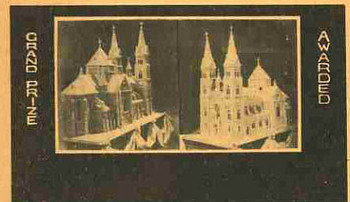
    If the title of this book could itself be described in terms of food, I think that I’d have to call it a (warm) Slim Jim Egg Frosty with a crust of French fries, baked.  Or something like that.  If the exhaustive, exhausting title didn’t stop you in your tracks, though, the slim pamphlet holds some indelible, indigestible, eyebrow-burning, flat-out remarkable images. Working your way through this pamphlet is as much fun as stringing together dirty diapers:  you can enjoy instructions on how to make a vase of roses out of strips of fat, or produce the reverse (?!) portrait of Santa Claus in slabs of fat, or marvel at the photos of Mr. Fleiss’ “first prize” (?) 200-pound fat sculpture of a cathedral done entirely in slips and chunks and strips of fat.

    Luminousfatcvr_detail This simply must be the most sublime work ever produced on Fat Art.
    And, in the annals of art, I should think that Black Velvet Sparkly Liberace paintings may have moved up a level from the most secret depths of the inferno to make way for Fat Art–or, dare I say it, “FART”.


    A Note on the Origin of this Pamphlet:

    The Fleiss work comes from a singular collection that we purchased of the Library of Congress some years ago.  It was called, simply, “The Pamphlet Collection”, and included 90,000 or so pamphlets stored in 2,355 blue document boxes.  They were all categorized and alphabetized, but not according to any truly discernible methodology.  Their greatest common denominator was that the great majority of them simply did not exist.

    By “they did not exist” I mean that they were not catalogued in the massive (70 million item)  database and librarian’s tool WorldCat/FirstSearch which lists books in libraries world wide.   And they continually do not show up in the mass bookseller databases, or in Google/Yahoo searches, and so on.

    The pamphlets in the collection also weren’t added, in large part, to the Library of Congress collection, nor were they ever circulated.  They were just kept in their blue boxes, waiting to a-moulder away.  But they didn’t, and here they are, and will be, making appearances over the next number of years.

    There will also be many other images from much more public and published sources that have simply slipped away from us here in our present—unexpected bits of revelatory history wrapped in a simple image that speak volumes from the dim, deep forgotten.

    Additional Images:

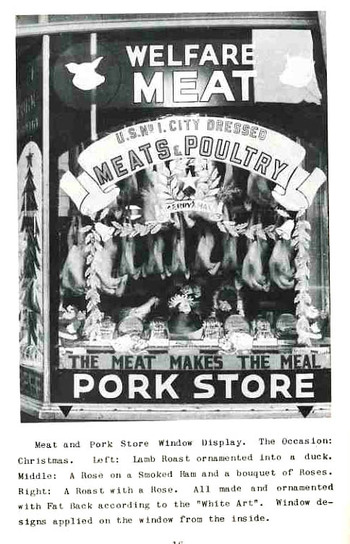
    Perhaps the most incredible of the photographs in this unleafy work by Fleiss is of that below, of the Welfare Meat Pork Store.  The legend describes “lamb roast ornamented into a duck”, meaning that all of the duck-like things hanging there in the window were actually made of lamb roast covered in pork fat.  (One doesn’t get to write that ever day.) Then we see a “roast with a rose” (and as we saw in the text the roses in the ornamentation were made out of fat), as well as a “rose on a smoked ham and a bouquet of roses”.  Again, virtually everything in the wind of this store was constructed of fat.Luminousfatlamb115


    Mr. Fleiss also did Christmas ornamentation.
    In fat.