A Daily History of Holes, Dots, Lines, Science, History, Math, Physics, Art, the Unintentional Absurd, Architecture, Maps, Data Visualization, Blank and Missing Things, and so on. |1.6 million words, 7500 images, 4.9 million hits| Press & appearances in The Times, Le Figaro, Mensa, The Economist, The Guardian, Discovery News, Slate, Le Monde, Sci American Blogs, Le Pont, and many other places… 5000+ total posts since 2008.

Category: Absurdist, Unintentional

  • Odd Collections: 500,000 Wishbones

    JF Ptak Science Books Post 928 (from 2010, Expanded!)

    “One must go into oneself armed to the teeth”–M. Teste, Paul Valery

    “Do what you love. Know your own bone; gnaw at it, bury it, unearth it, and gnaw it still.” –H.D. Thoreau

    Sometimes odd images just need to be surfaced for the pure sake of it.  Such is the case with this glorious photo by Greg Villet1 of Delphine Binger in LIFE magazine for  24 May, 1954 .   Ms. Binger (“a Manhattan spinster”) actually collected the wishbones with a business utility in mind, fashioning them into objets d’os.  (LIFE unfairly classified Ms. Binger in this way. In other accounts I have read of her she is described as a funny, fun-loving person, and Pete Hamil/Meyer Berger describe her as “generous”, “bubbling” and “caring” in their 1954 Meyer Berger’s New York.)
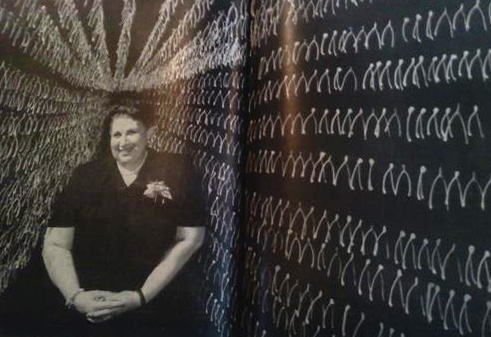
     Turkey bone 1

    She purchased the wishbones for nothing, added a few bits of half-penny decorations, perfume, a pin, and SO! a piece of jewelry is born.  She evidently was able to sell her creations for $2.10 apiece, which in 1954 translates into 25 2009 dollars; so I guess if she sold some here and there she would be able to supplement her income.  Of course there’s the issue of overkill on the bones:  she seems to have probably two (or more) orders of magnitude more than she “needs”, so there may have been something else going on there.
      But then again, at the point where you collect 500k of anything you will have become expert enough to have any mostly-invisible nuance convey a large field of interest to your keen appreciation–the bigger something gets, the smaller it gets, in parts. 

    Turkey bone det

    An old friend of mine–we’ll call him Mr. Tulipfields, a brilliant mathematician/physicist/compsci guy with a deep appreciation for music–started buying classical cds when cds were a relatively new phenomenon.  Rare recorded material was being placed back into “print” at such a rate that he couldn’t really afford the appropriate sound system to actually listen to all of his new purchases.  He hurried into buying many of the cds because he thought that they would drop out-of-print again, and that he needed to act quickly.  I thought that the cds would stay available basically forever—as it turned out he was right (as usual) and I was wrong (ditto). And so Mr. T amassed an enormous collection of music—in the dozens of thousands—many of which are now impossible to find. 

    In some ways my friend didn’t need the cd player—he already knew the music, could play it in his head.  Somehow he was keeping all of this music on course in forming this fabulous collection  And once he had explained his reasoning behind the whole effort, it all made perfect sense, and you’d wonder why he didn’t have 100,000 more choice cds.

    Turkey bone det 2

    On the other hand I’m not sure why Ms. Binger2 needed her extra 497,500 bones—you’d expect there to be not very much difference from bone-to-bone, but there very well may be. A centimeter here and there may make all the world of difference and interest to the practiced eye, particularly if the bones are from many species of animals. Once a collection of almost anything gets to be that big, someone somewhere is going to be interested in preserving it.  

    And that’s what Ms. Binger did.

    • See also this note in Popular Science from the Popular Mechanix site (“Wishbones Made Her Dreams Come True”). 

    Notes:

    1.  I don’t know much about Greg Villet.  He took a lot of preparations for this photo, stringing 5,000 wishbones on black string on a black backdrop–that is considerable dedication to the idea of an image.  I also know that he did some very significant documentary photography with Rosa Parks and the Montgomery strikes of 1955/6, which tells you maybe all you need to know about the man.  

    2.  I can’t help but wonder what happened to all of those bones on Ms. Binger’s passing? (She died in 1961, and I can’t find anything about the disposition of the collection.  It sounds like the vast majority of the bones were kept with relatives and not in her two-bedroom apartment at 145 W. 96th St in NYC.  


  • The Stench of Creativity: Dante, SpongeBob & Unintentionally Bizarre Titles

    JF Ptak Science Books LLC  Post 927 [Part of the Fantastic Titles series]

    Blog feb 3 patrick Squidward:
    What’s that horrible smell?! [sees steam coming out of SpongeBob’s window]
    Is Patrick thinking again?

    Patrick: [sticking
    his head out of the window]
    I’m making art!

    Squidward:
    Patrick, it smells like something crawled into your brain and died!

    Patrick:
    That’s the creative process at work!

    Like St. Paul warned by
    Archangel Michael, and Dante by Virgil, the visions of the Hell they were
    touring was also stinky, though the robes they held to the noses did not
    prevent them from experiencing the very lofty stench of sin.  Perhaps it was something like the
    crawled-in-and-died stench made by the beautiful Patrick starfish from SpongeBob
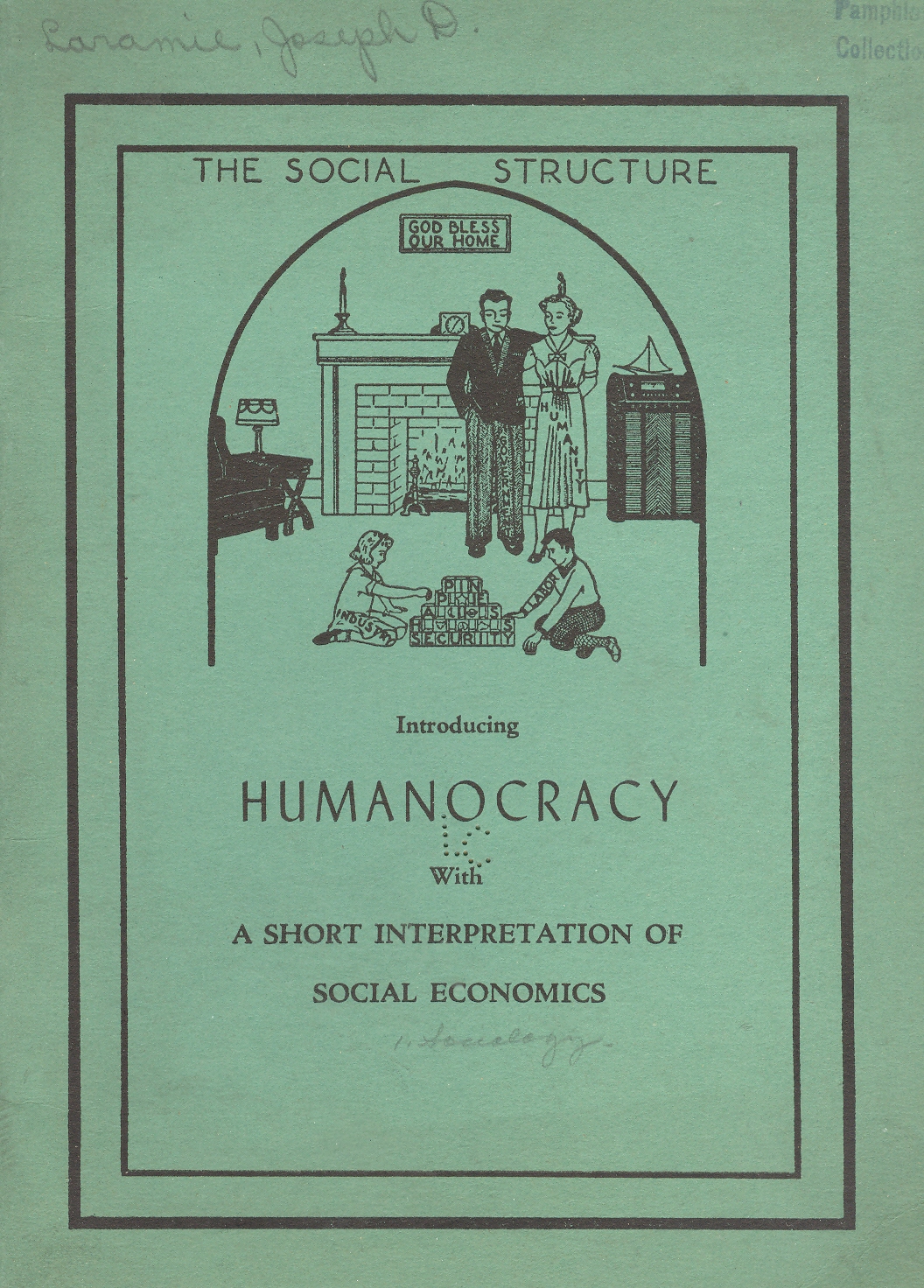
    Squarepants, his brain’s intellectual exuda Blog feb 3 humanocracy detforming a pretty but stench-ridden
    experience.

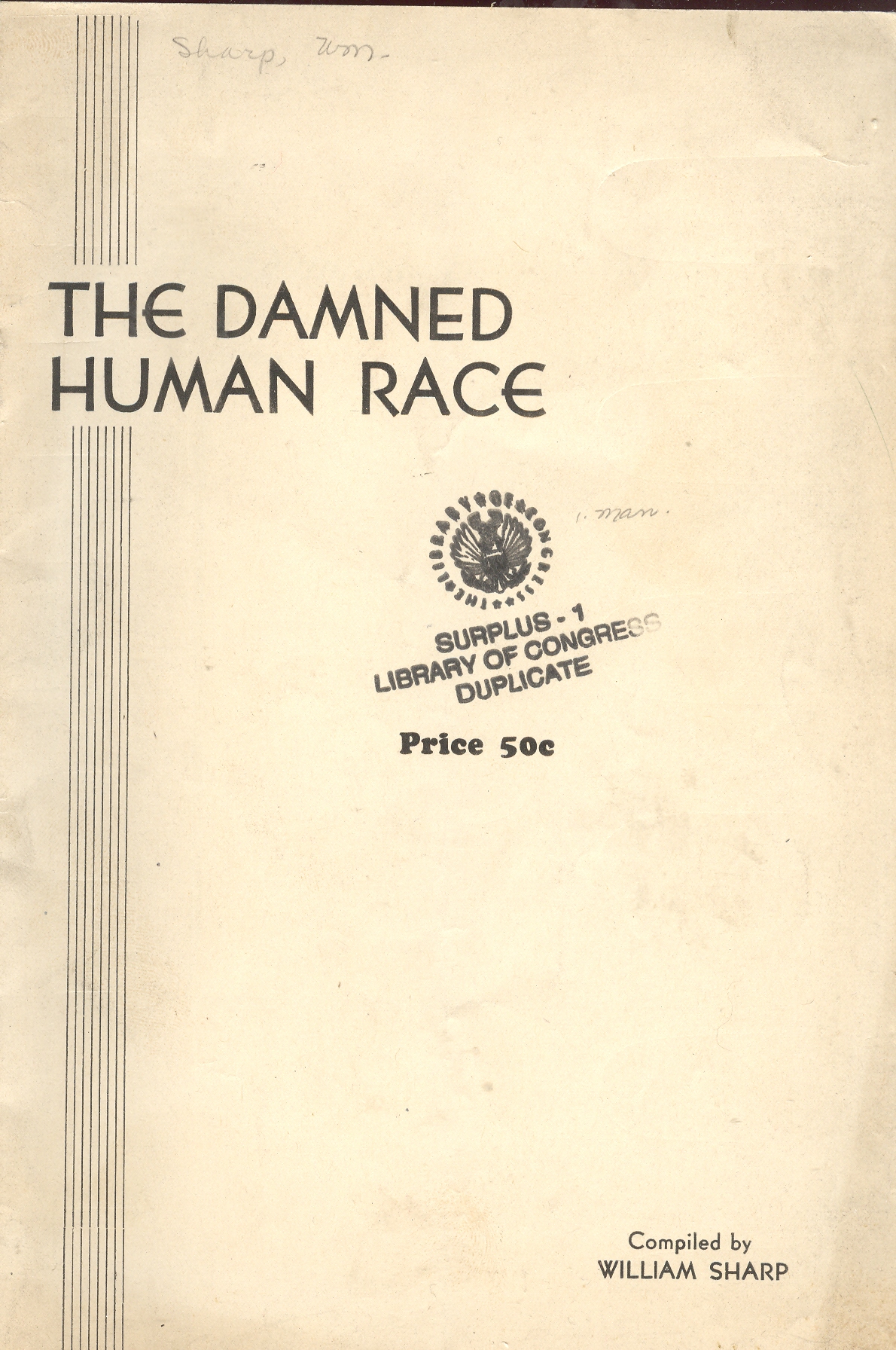
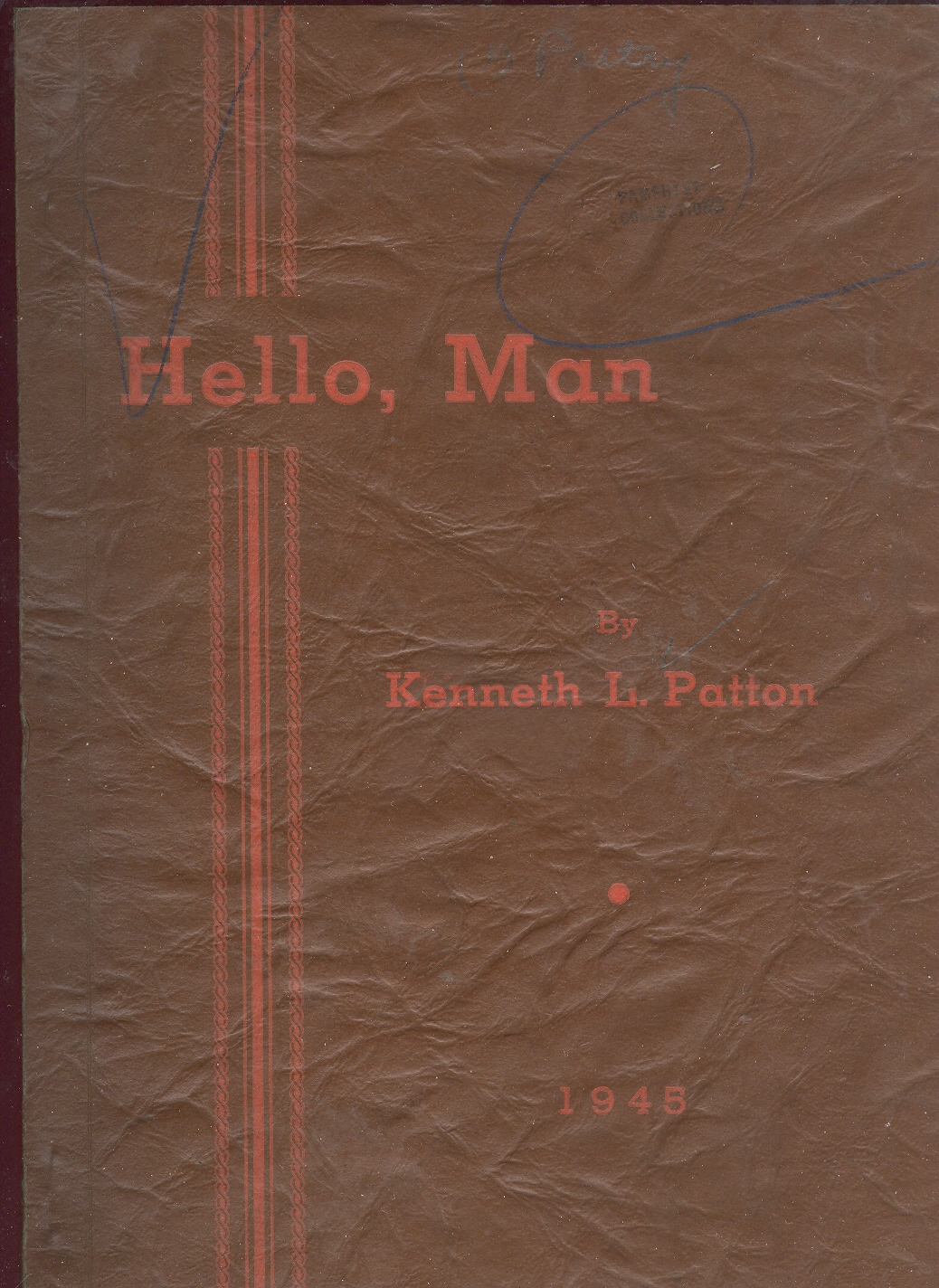
    And so to with experiencing the found, unintentional absurd–or
    the naïve surreal—in printed material like some of the examples below.  Their title pages can be experienced as art
    in a way, at least today, so far removed from their original meaning and
    context that the words float like disembodied arks of meaning looking for
    whatever piece of land/meaning that they bump into.  Sometimes their titles are the bizarre-ity,
    masking a mundane, pedestrian contents; much of the time the title and contents
    emanate the stench of lost meaning through and through. 

      “… ‘Why us thy mind’, he said,
    ‘so far away, unlike its usual self,
     What are thy wits about, where have they fled?’
     —Virgil yelling at Dante for asking a dumb question outside the City of Dis,. Inferno, XI, 76-78

    Blog feb 3 humanocracy 

    Blog feb 3 damned human 

    Blog feb 3 hello man


  • A Short Look at Fifths and Fives: Joltin’ Joe, Legal Sausage and the Structure of Mathematics

    JF Ptak Science Books LLC  Post 925 

    I’m going to take a drive through five
    fifths—all of which don’t come close to making a whole—to get to my ultimate
    destination, a ribbon of numbers circling the earth.

    In
    American lDimaggioaw, “taking the fifth (Amendment)” allows you the prohibition of
    incriminating yourself, giving the supposed ability to look innocent whole not
    saying anything about anything for fear of legal repercussions, though this
    sausagey implosion from guilt seldom looks pretty. 

    There’s
    the fifth column (as in Hemingway’s play by this name), the
    not-fourth-but-fifth force, the musical perfect fifth of highest consonance,
    the Keplerian nestling of the five Platonic solids,  Beethoven’s Fifth, a fifth of (good) scotch,
    the fifth cardinal direction (the center), the five books of the Torah, the
    five pillars of Islam, the worst categorization of hurricanes and tornadoes, living
    in the fifth Mayan world, the fifth Fibonacci number, and on and on.

    And
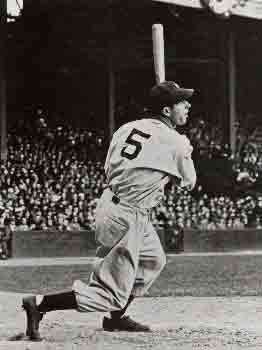
    aside from being the number that Joe DiMaggio wore on his pinstripes, it is
    also the number of the  Euclidean postulate that called to all those who were
    interested in the possibilities of the postulate not being so—that there exists
    as perfect a non-Euclidean system as there is for the Euclidean.  The fact of the matter is that this calls
    into question the foundation, the very basis, of mathematics.  Or used to.

    Blog feb 1

    All
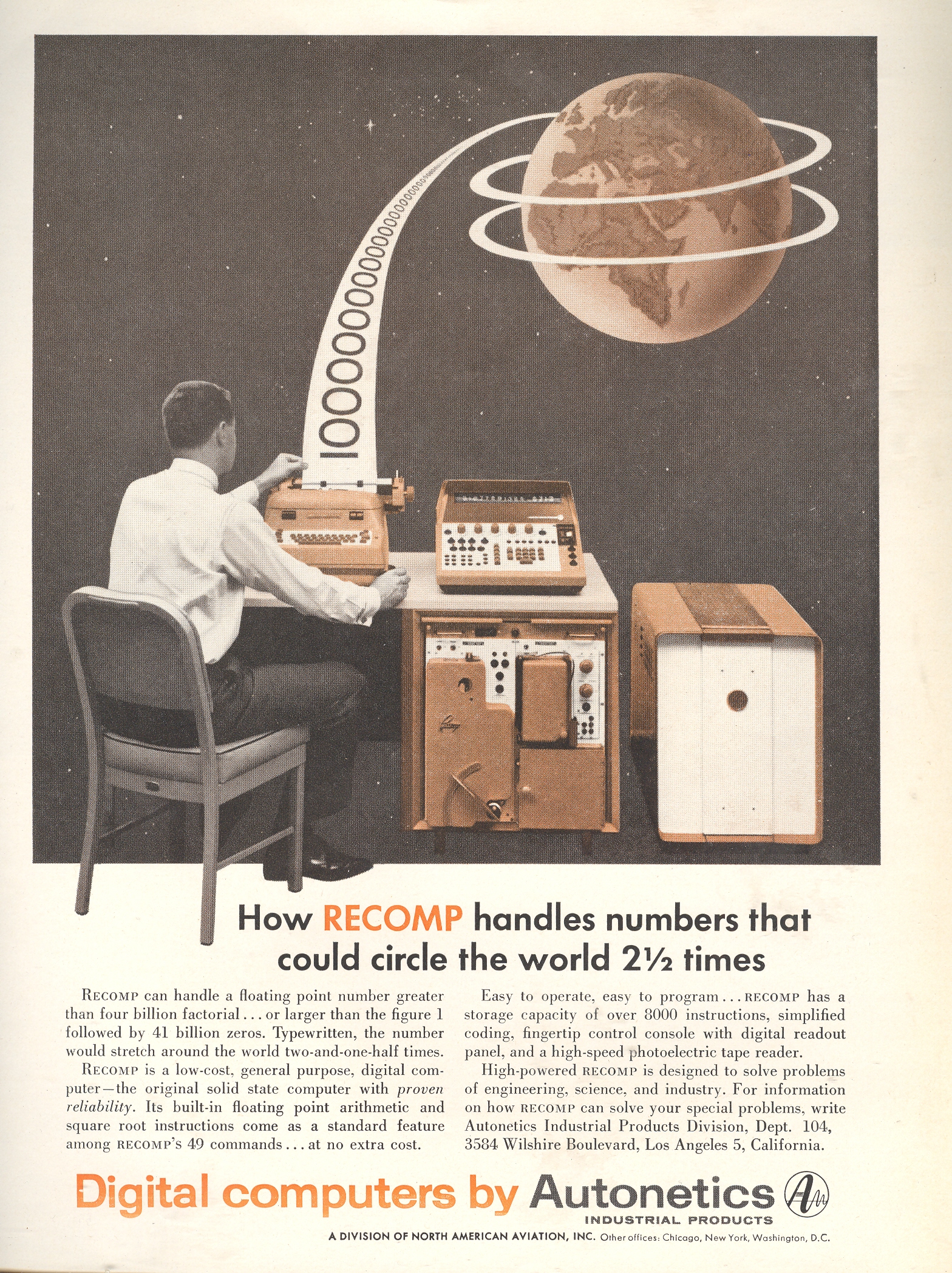
    of this was brought into mind by this 1957 ad for the RECOMP computer produced
    by Autonetics.  The image of a sheet of
    numbers circling the earth1, the product of digital computation, suggested
    structure, mathematical imperative and solidification of numbers.  But the point of this was the bottom line:
    what was the point, and for that matter, what was the point?  They were hardly physical things floating in
    space, but ideas (except of course in the worlds of Flatland). 

    Euclidean
    structure was the infallible, rigid, predictive, explanatory structure and the
    most accurate descriptor of physical space. 
    This had certainly been the case for fifteen hundred years or so, or at
    least until the struggling fifth postulate of Euclid’s Elements became really, well,
    unwieldy.  More to the point, the axiom,
    the parallel postulate axiom, wasn’t as self-evident as the first four, and
    wasn’t provable from the other nine of the first ten axioms.  And so came the unbelievable question, what
    if the fifth postulate wasn’t true?  What
    if there were other geometries—non-Euclidean geometries—that were as provable
    as that of the Master?  The possibility
    of relegating the understanding of nature and the physical surroundings to
    something other than the existing geometry was simply, positively,
    extraordinary. 

    The
    origins for this movement away from Euclid started with Girolamo Saccheri (his
    book published in 1733 but not “discovered” for its non-Euclidean importance
    for another 150 years) Georg Kluegel (1763), Johann Lambert (Theorie der
    Parallellinien,
    1766) and Adrien-Marie
    Legendre (1752-1833, who was sort of in a similar boat with Saccheri in that
    his work wasn’t actually published until after that of the next two
    mathematicians); and coming to a point of real invention in the work of Nikolai Lobachevsky (1792-1856) and Janos Bolyai3 (1802-1860). (It would be
    incorrect to credit these last two men [plus Gauss] with the creation of
    non-Euclidean geometry given the longish and complex history of its
    development.)

    This
    work brought into question the way in which the world was seen, and the very
    foundation of recording visualized space. 
    This is all much messier than had been planned (so to speak) by almost all
    previous mathematicians, questioning the very foundations of mathematics.  The orderliness of the earth-circling numbers
    doesn’t seem to be quite as they were, but as Henri Poincare stated, the “new”
    system isn’t anything better or worse, just different,  a new and more convenient way of looking at
    things4.

    Notes

    1. To be honest about it, the
      foundations of math bit didn’t suggest itself right away.  The first thing I thought when looking
      at what this paper trail was supposed to represent—a string of numbers 41
      billion zeroes long—didn’t look right. 
      Given the size of the numbers coming out of the “printer” there
      would need to be five times as many rings around the earth.  But when you read the text the numbers
      are supposed to be “hand written”. 
      Therefore if you assume the numbers to be less than an inch high
      and with no spaces in between, then this 2.5 times around the earth works
      out to be accurate to the number of inches in the circumference. 
    2. Still earlier work is found
      in the work of  Omar
      Khayyam
      ‘s Discussion of Difficulties in Euclid, John
      Wallis
      and Nasir
      al-Din al-Tusi
      … among others.
    3. Bolyai’s work—published as an
      appendix to his father’s work on the foundations of geometry—was privately
      reviewed by the great and impossibly smart Carl Gauss, who gave it a backhanded
      series of compliments while at the same time saying “I thought so…”  Which was true, evidently, as it looks
      as though he was working on the problem beginning in 1799.
    4. “If geometry were an
      experimental science, it would not be an exact science. it would be
      subject to continual revision … the geometrical axioms are therefore
      neither synthetic a priori intuitions nor experimental facts. They are
      conventions. Our choice among all possible conventions is guided by
      experimental facts; but it remains free, and is only limited by the
      necessity of avoiding every contradiction, and thus it is that postulates
      may remain rigorously true even when the experimental laws which have determined
      their adoption are only approximate. In other words the axioms of geometry
      (I do not speak of those of arithmetic) are only definitions in disguise.
      What then are we to think of the question: Is Euclidean geometry true? It
      has no meaning. We might as well ask if the metric system is true and if
      the old weights and measures are false; if Cartesian coordinates are true
      and polar coordinates are false. One geometry cannot be more true than
      another; it can only be more convenient.” –from:  M J Greenberg, Euclidean
      and non-Euclidean geometries: Development and history.
      (1980).

  • Bulbous & Bubbly Design: Bloated Efforts on Land and in the Sky

    JF Ptak Science Books  Post 951

    Airliner 4

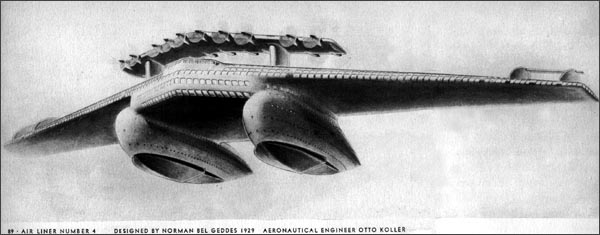
    Sometimes things are designed that are so bulbous and so inflated and so terribly hyper-packed that they are just destined never to be built beyond the imagination.  Among the largest of these things meant for the air was designed by a particularly  streamlined designer, Norman Bel Geddes, who basically owned the concept of aerodynamic function at all levels of design in the 1930’s.

    But Bel Geddes’ apoetically-named aircraft, Airliner 4, is an entirely different issue.  It may possibly be the largest, slowest, lowest, fattest and most lumbering plane ever designed. (And by this I mean that it stood a chance of some sort of actually being built and flown, as opposed to the monsters with wing-topped tennis courts and such.)

    This  530′-long 1.2 million pound beast took an hour to climb to its max ceiling of 10,000 feet where it would cruise along at an astonishing 100 mph.  It would wind its way lovingly across the country, slicing off its travel hours like frozen bologna, 30 hours from coast-to-coast, slowly, methodically, so as not to disturb its 600 passengers in their sleeping rooms.  But I’m not sure how much sleep would get slept, what with 20 (!) 1900 hp engines screaming overhead. 

    2--bulbous building 2


    The passengers who didn’t sleep could do a lot besides sit and be serviced by the aircraft’s crew of 155–they might actually need guides to get them through the oddness of the plane’s 9 decks, 3 kitchens, 2 dining rooms, solarium, 100-couple dance floor, gym, barbershop and medical offices (with waiting room).  Plus much, much more.  (I like a plane with a doctor’s office waiting room; perhaps the real genius would’ve been to come up with the smaller, more interior, extra waiting room to which one graduates before seeing The Doctor.) 

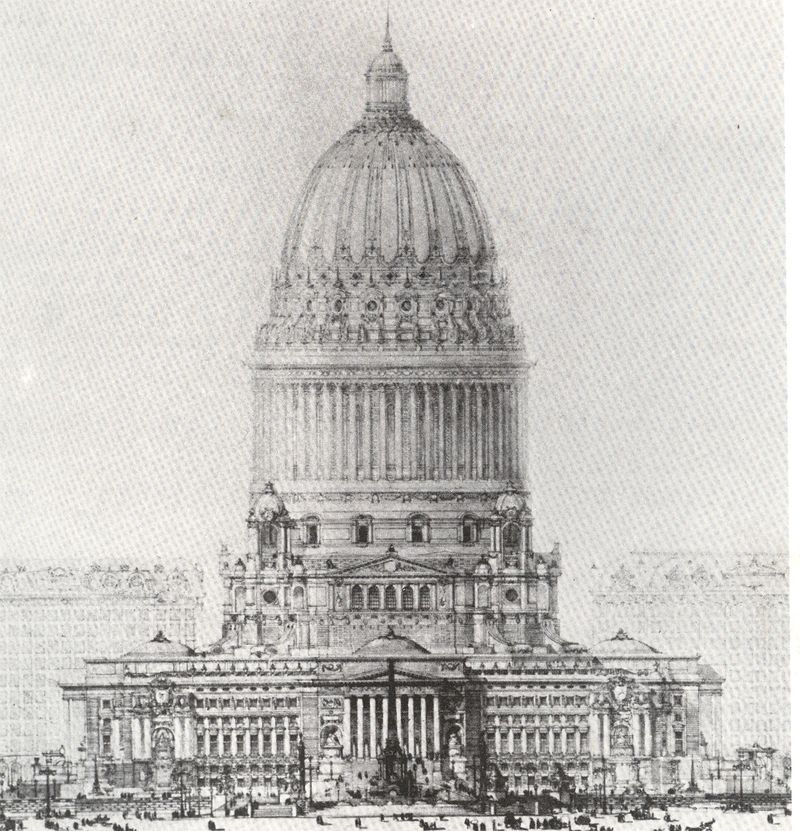
    Getting closer to the ground is the plan for the Chicago Civic Center (1909) by the usually accomplished Daniel H. Burnham. This beast looks more like a stubby nuclear- pulse intergalactic Mothership than anything that anyone would have wanted to build on the ground—at least in space it would be out of sight. 

    2--bulbous building


    In a struggling prose reminiscent of Lewis Sullivan Burnham writes1: “The Civic Center will be dependent for its effectiveness in the character if the architecture displayed in the buildings themselves…” which I think is self-referential, stating that the architecture’s effectiveness is dependent upon the architecture. If this is the case, the enormity of the Civic Center doesn’t save it from itself. 

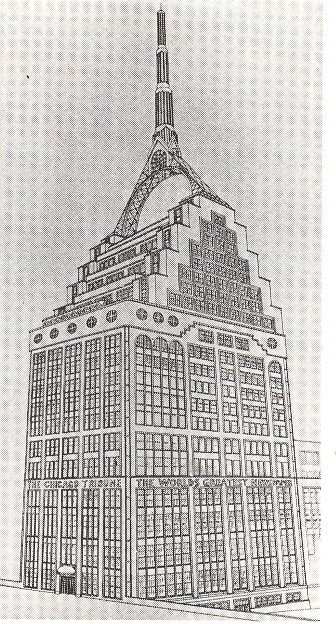
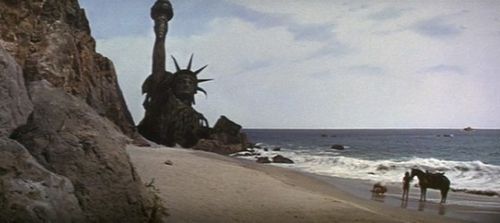
    Staying in Chicago we find another proposal, this for the ChicagoTribuneTower competition of 1922—many of the works submitted seem to my eye big and wide and ugly, but perhaps none more so than that offered by Ludwig Koloch.  This may well have been a nice design for the top third or so of a building, but not for three thirds–and actually, this may be four-thirds.  It reminds me of something rising from the sands at a beach in the future, the remnants of destroyed civilizations.  Without the apes.

     Notes:

    1. Daniel Burnham and Edward Bennett, Plan of Chicago, 1909. 
    2. Planet-of-the-apes-statue-of-liberty

  • Jobs of the Archaeo-Future: Airport Steerer (Bel Geddes’ Floating Airport)

    JF Ptak Science Books LLC  Post 950 

    1--bel geddes airport 2 

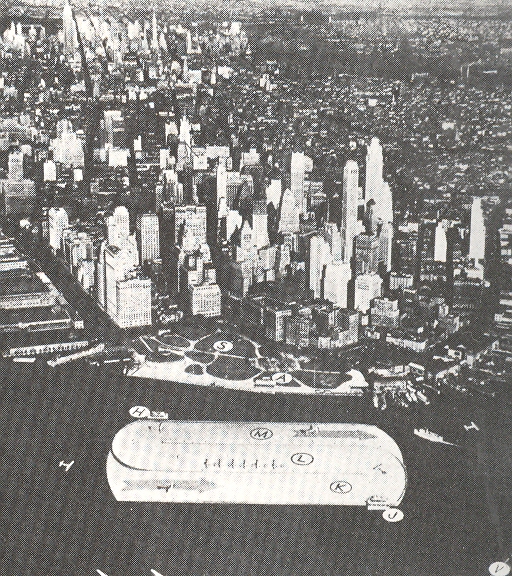
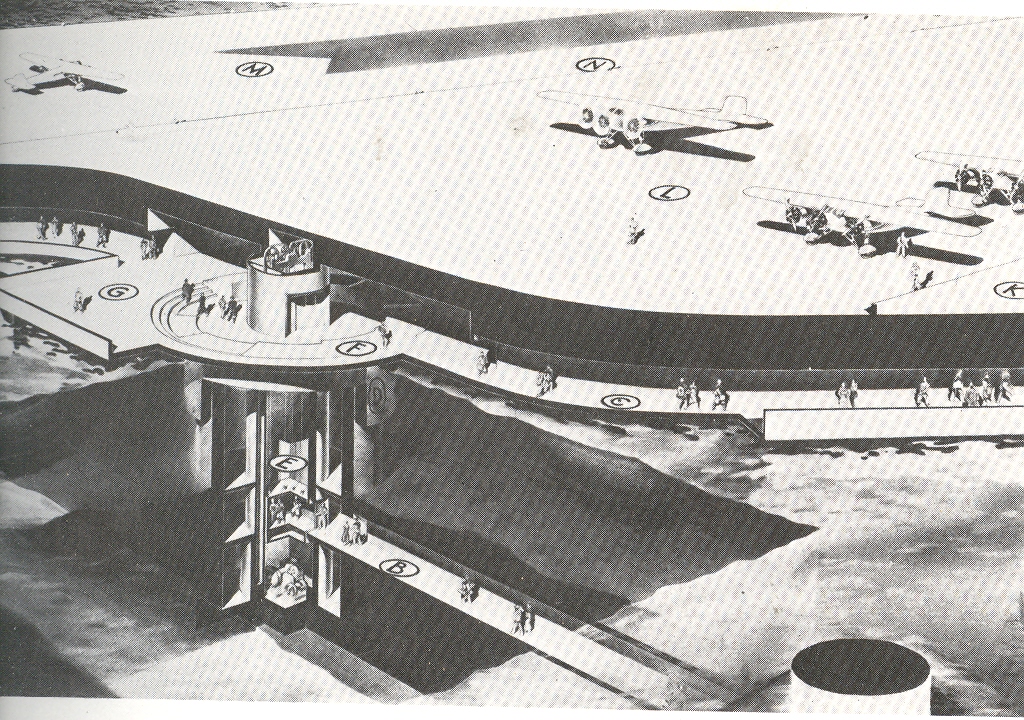
    Norman Bel Geddes (1893-1958) made fast, bulbously sleek and varyingly aerodynamic objects and ideas, and was a  vastly successful designer of things ranging from sets for the NY Metropolitan Opera House to telephones to cars to locomotives to the housing for the Mark I computer.  Ideas were his metier, and there seemed no lack of them–good, mostly; bad, sometimes. 

    Bud bad ideas can be beautiful, and elegant, if only for a very short period of time in which they might have actually functioned for the good.  One of these blisterers was his floating airport for the NYC harbor.  Passengers would access the airport via a 800-foot automatic walkway tunnel, and then up to various shuttles and such on the levels below the flight deck. This beast floated on columns floating on mobile caissons just above the harbor bottom, enabling the whole to be turned into or away from the wind, making for easy approaches and departures for the planes. But it is the pilot of the airport that seems most interesting to me, steering the giant propellers that lay under the corners of the structure, pushing the airport into/away from the wind. 

    This may well be the largest mobile steerable structure moving along the shortest courseway conceived as a possibly-buildable project of the twentieth century. 

    Associated posts on great and unbuildable architecture:

    Gigantic
    and Unbuildable Architecture: Philip Johnson and the Walled “Third City“

    Gigantic
    and Unbuildable Buildings: Leroy Buffington, 1889

    Fantastic
    and Unbuildable Architecture #6: the Pyramids of Gizeh in
    Detroit
    (
    Michigan),
    1908

    Gigantic
    and Unbuildable Architecture: Bucky Fuller’s Midtown Manhattan Dome, 1968

    1--bel geddes airport


  • The Care and Feeding of Missile Systems–1950’s Ads

    JF Ptak Science Books LLC  Post 948

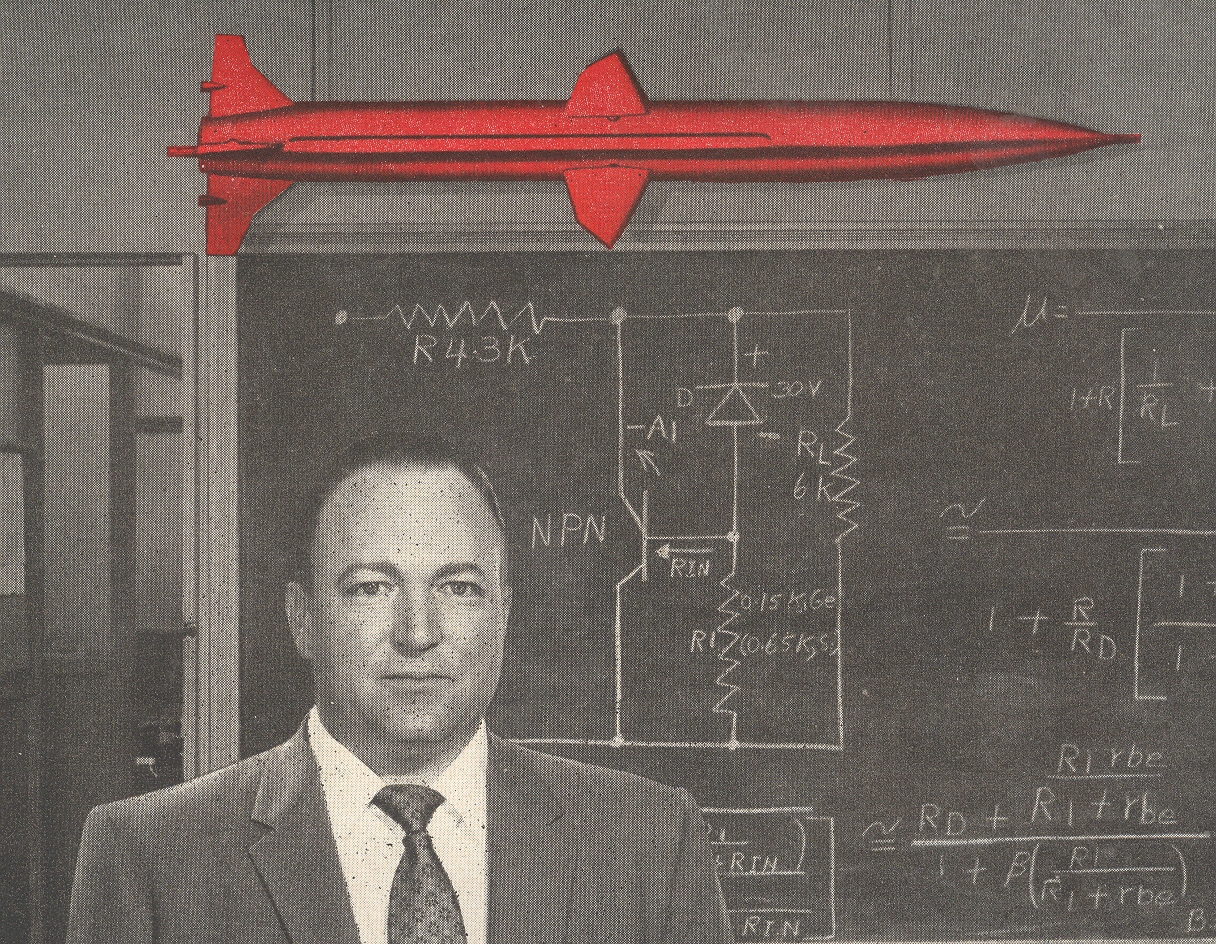
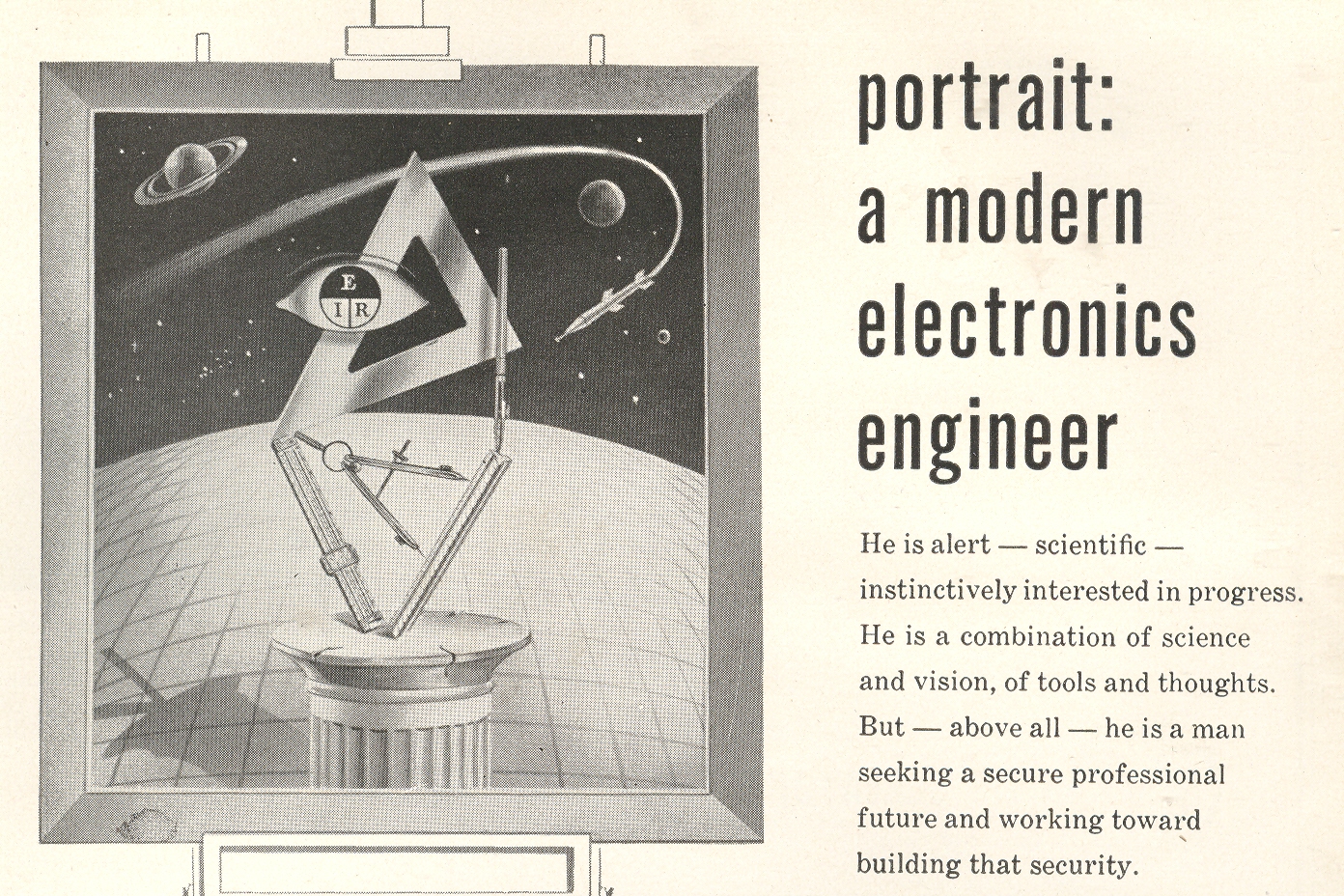
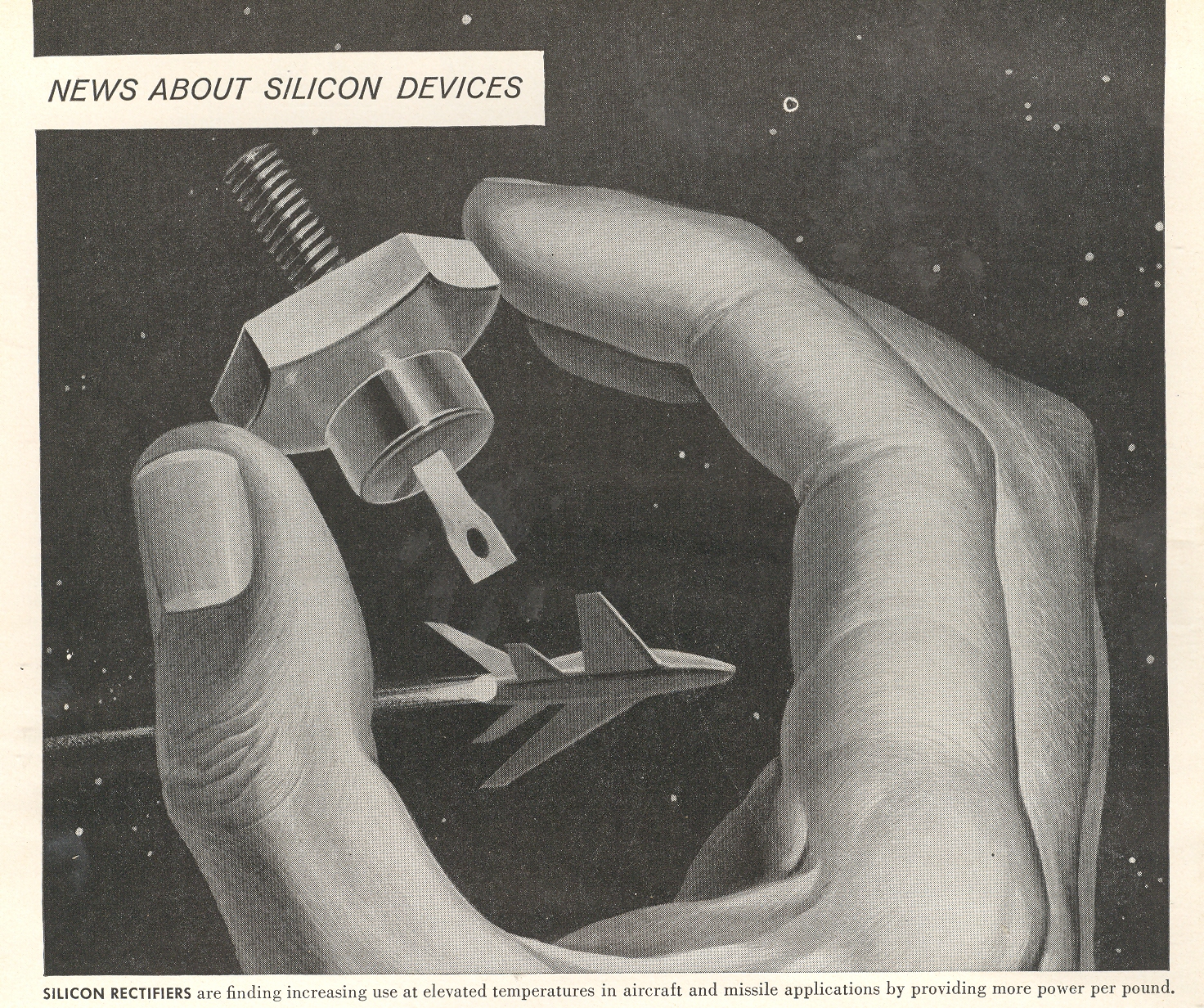
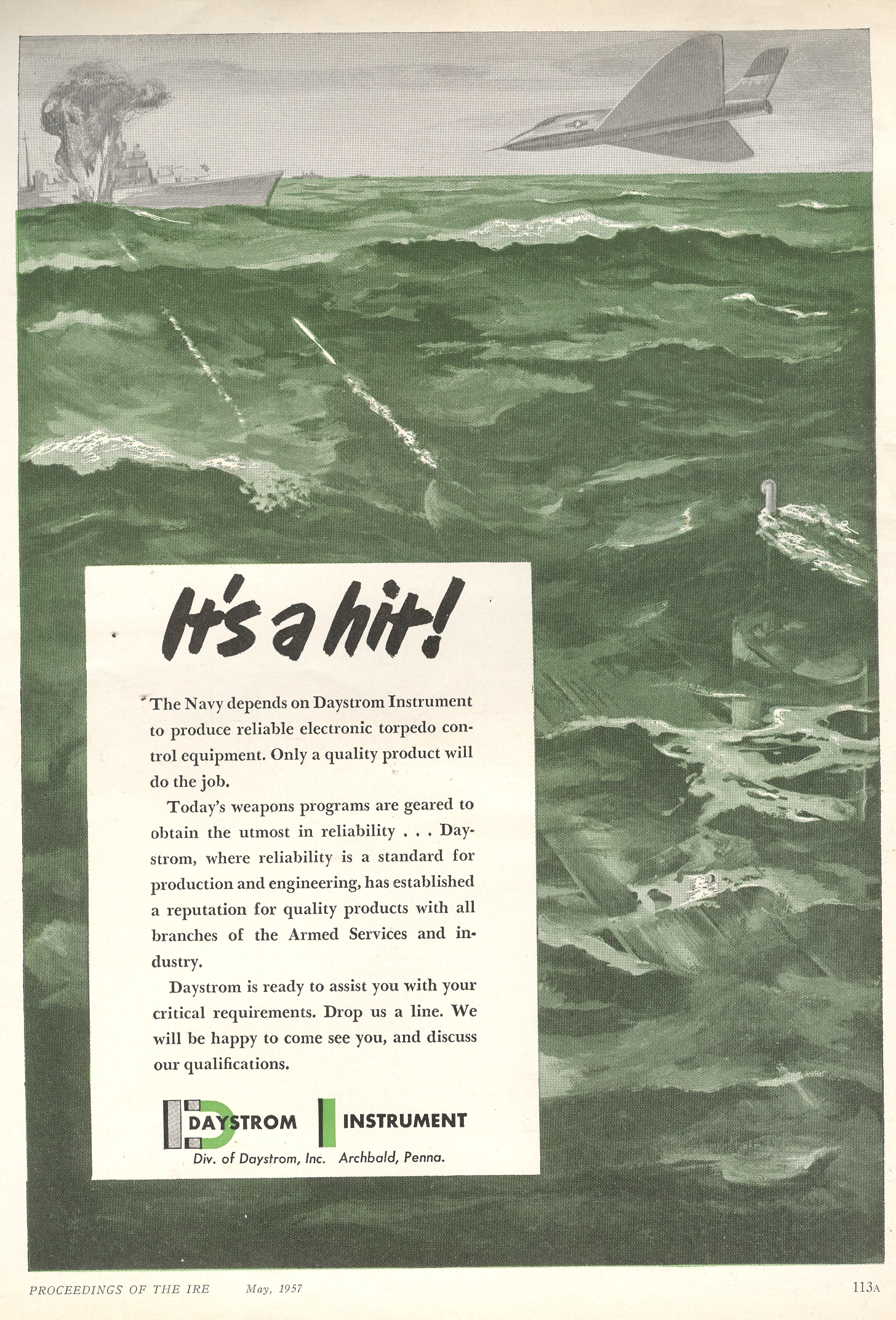
    The following illustrations are all taken gloriously out of context from ads appearing in the Proceedings of the Institute of Radio Engineers, published in 1957-1958. 

    1--feeding missile

    1--red missile
    1--one man in three

    1--portrait
     

    1--fence

    1--fbig hand

    1--missile its a hit

    1--weapon system respons 

    1--big red


  • Boullee, Lequeu and Ledoux: Reposts of Two Musical Slideshows

    JF Ptak Science Books LLC  &   Blog Bookstore

    (1) The Fantastic Self-Portraits of the Visionary Architect, Jean-Francois Lequeu

    I guess it is easy to want to call M. Lequeu (1757-1825 (?)) an outsider, though
    he was hardly that.

    He was an exceptional talent who was exceptionally well-trained (and who won
    the highest awards offered by his school), and started out in a staid and
    brilliant way, a successful draftsman in his own right, and student of
    Scoufflot, helping to design ancient-inspiration buildings for the super
    rich. He was at the pinnacle of the drafting trade, though not so on the
    designing end.  Along came the Revolution
    and away went his architectural career—he wound up a surveyor and a
    cartographer until his retirement in 1815, after which he enters social and
    historical oblivion, until he finally dies in total obscurity ten years later
    (or so, the date is unclear).  His post-revolutionary vision was as
    phenomenal as his success in selling his ideas were dismal.  Well, this is
    really a cheap shot—his imagination was shockingly large, enormous, his designs
    fantastic and beautiful, and completely unexpected, and they seemed to grow
    larger/loftier and more interesting as time wore away at him. But he was far in
    front of the curve so far as popular (public) opinion was concerned.  Even among the other visionaries of the time
    (like Ledoux and Boullee) it was Lequeu who staked out the furthest reaches of
    architecture, and also with great depth and virtuosity.

    I think that as Lequeu was cleaved away, cell by cell falling through the
    floorboards of his single rented room, he reached further into time and deeper
    into space than almost any architect of that hundred-year period.   I
    also think that he was very well aware of his genius being seen as pure
    eccentricity—his half-dozen or so self portraits are among the most reaching
    that I’ve seen (in the pre-modern era). 

    If Lequeu’s visions existed at all in the world of French architecture it
    was in the Deep Underground—a place that he may have founded.  He was certainly, at the very least, its
    geologist.

    His
    self portraits are striking, but perhaps not so much more so than those
    by Rembrandt–he was certainly exploring modes of expression (Raphael’s
    series of engravings on the emotion of the human face is a good example
    of this study)–Lequeu though seems to always manage to suggest that he
    is an observed inmate somewhere.  There is a great undercurrent of
    “otherness” and great remove to them–something that makes places the
    self portraits into a different–empty, lonely–class.

    (2) Etienne Boullee, Images with Music

    I’ve been collecting images by some of  the great, visionary
    architects of 18th century France:  Etienne Boullee (1728-1799),
    Claude-Nicolas Ledoux (1736-1806) and the semi-impossible Jean-Jacques
    Lequeu (1737-1825).  It was a tough time for these architects to see
    far into the future at the time of the Revolution, as people who were
    even less deserving than these men lost their heads.  In any event I’ve
    compiled a short three minute video exhibiting some of their works,
    using the music of Wim Mertens for Peter Greenaway’s love poem to M.
    Boullee called The Belly of an Architect. 
    I couldn’t but help using this music in this context, sorry to say–it
    just goes perfectly with these images.  (Also, I’ve written about M.
    Ledoux here.)


  • “The First Thing is to Find Some Men” How to Get a Boy-Date, 1941

    JF Ptak Science Books LLC  Post 914

    [Continuing the posts “What Makes Human Robot Girls, 1941” and The Missing Pieces of Women, Pope Joan and the Proper Girl]

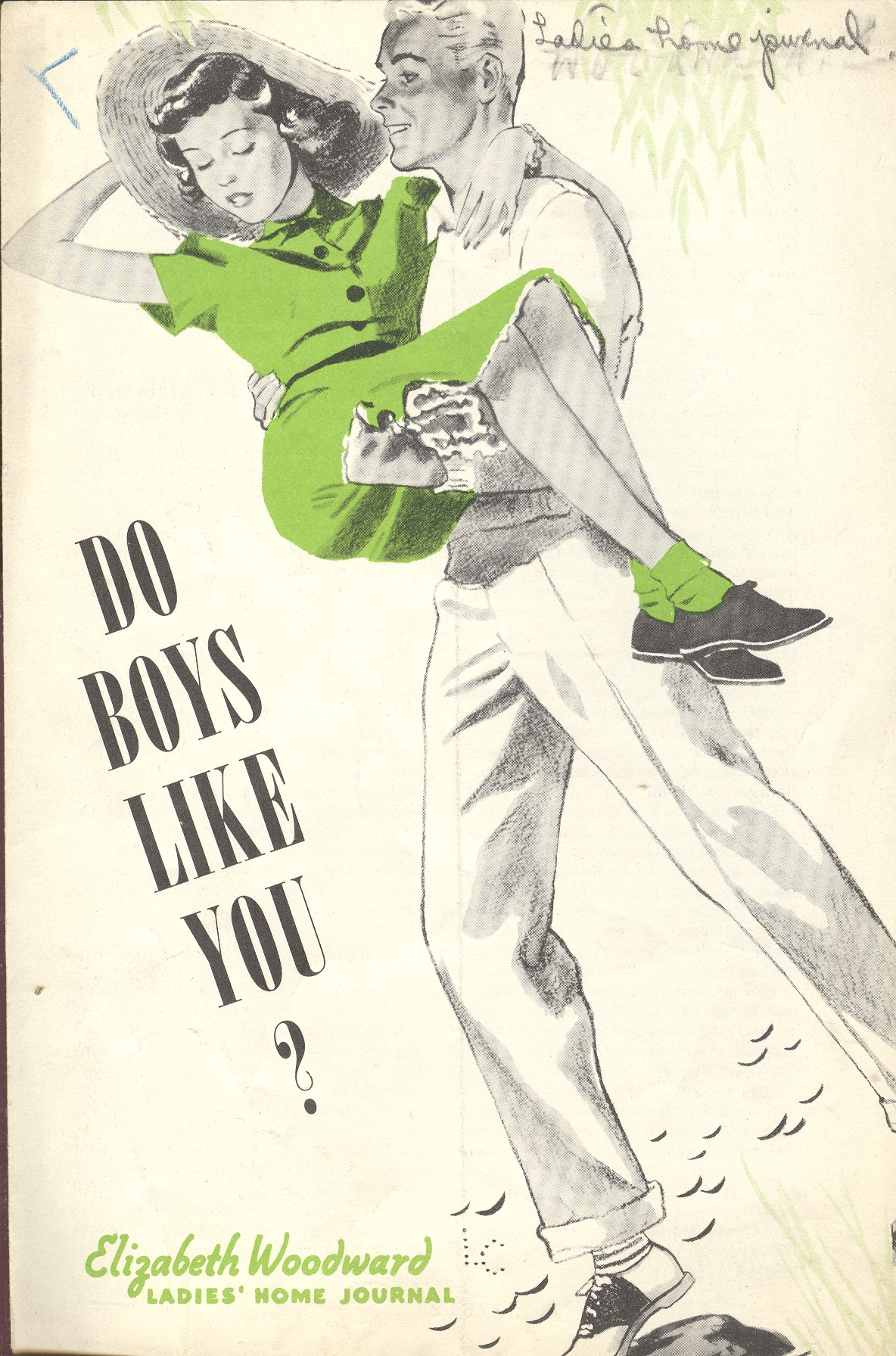
    Do Boys Like You? is
    the name-of-the-game for girls, evidently (“set out to make yourself worthy of a boy’s
    affection.  Just one boy—any boy…”),
    brought to you as a part of a long, continuing series by Elizabeth Woodward in
    the Ladies’ Home Journal in the early
    1940’s. Blog jan 20 boys like you

    This installment is about getting a boy for a date, and how to make
    oneself getable and datable and boy-friendly, all while maintaining the
    thinnest veneer of self-acknowledgment (“be adaptable as a chameleon”) as possible while staying true to “yourself”.  It is a cocktail of overall old-lady sense
    and deep ruffled bows writ by the hand of gender entrapment and not-so-subtle
    subjugation. Let’s get to it with some of the more archaeologically-interesting
    statements of this social-norms-establishing pamphlet:

    Paragraph: (Intro):

    “Do boys like you, or don’t they? Its as easy as that!  Either you have dates and go places with lots
    of boys, or they don’t pay any attention to you at all.”

    Paragraph: “A Female World”

    “…the first thing is to find some men.” (Which is odd
    because “men” is used only one other time beyond this reference—its all boys
    and nothing but boys.)

    “Short of throwing yourself on their (boys’) mercy, see if
    you can’t wrangle an introduction out of the girls who do know boys…”

    “Your parents could invite their friends over for dinner and
    ask them to bring along their son. And you do a good job on him!” (I’m not sure
    what that “job” is.)

    “They (boys) can’t find you if you’re packed away in a mob
    of females.”

    Paragraph: “A Rank Outsider” (on being the new girl in a
    community):

    “The girls have things under control and they don’t want any
    interference from you.”

    “You might know more than they do, and you just might talk
    down your pug nose at them.”

    “…you’d better get accustomed to traveling alone…”

    “Give them every chance to find out that you aren’t high
    hat, that you like the same things they do, that you aren’t out to sniggle
    their men away…”

    “When they (the girls) accept you, the boys will too…”

    Paragraph: “an Old Story”

    “(Boys) are so used to looking at you that they think of you
    as furniture.You’ve got to be new!”

    “If you’re fat and pudgy, make yourself lean, sleek and
    smart.”

    Paragraph “Take it Easy”

    “…its going to take practice to make boys like you. Take it
    easy. Set out to make yourself worthy of a boy’s affection.  Just one boy—any boy…”

    Paragraph “A Few Gentle Hints” (Seems that we’ve gone way beyond this by now.)

    “Don’t run around with girls who are dud.”

    “Don’t go in pairs with a girl who is overwhelmingly popular…Better
    pick a girl who will give you an even break.”

    “Don’t languish for some local ‘hero’ who is sought after by
    all the girls in town.  He may be
    good-but he’s far out of reach…”

    “Don’t pick on a lad who has never had a date with a girl.”

    “Don’t be careless or sloppy when you’re talking with boys…”

    “Don’t expect (or even hope) that every boy you meet will
    ask you for a date.”

    And (not quite) lastly, but should’ve been:

    “Don’t go around thinking about boys constantly.”

    But lastly thus:

    “Act as though you are having fun. Be alive, gay and enthusiastic. Be interested in what’s going on. Be sweet, tactful, and adaptable as a chameleon. Have definite likes and dislikes, but don’t be so rigid
    that you are stubborn, opinionated and difficult to get long with. Be carefree,
    casual, easy, willing to play and fun to play with. And don’t be shy about
    liking the boys.

    THEN THE BOYS WILL LIKE YOU! [Emphasis in the original.]

    My poor mother would’ve been reading this…

    (Thanks to Jeff Donlan for pointing out that the chap on the
    cover carrying the girl away has joined the fabric of her skirt to (1)  hold
    onto and steady her and (2) make sure her skirt doesn’t fly up and out and is not actually touching her thigh…)


  • Missing Pieces of Women: Pope Joan & the Proper Popular Girl of “The Ladies’ Home Journal”

    JF Ptak Science Books LLC  Post 910Pope joan weltknronik

    Listening
    to these dreadful stories this morning on NPR about the Vatican’s relations
    with the Roman Jewish community and the abortive WWII papacy of Pope Pius XII—the
    papacy of blank and missing compassion—I thought about the missing Papacy of
    Pope Joan.  Whether or not she existed is
    a question of debate; whether she was a pope or not is perhaps even less
    debatable.  What seems not impossible
    though is the ability of a large institution like the Catholic Church to make
    the entire issue of unwanted history or legacy to go away. 

    The
    historicity of this papacy is long and shows the murkiness of the earliest
    writers on Joan. She was supposed to have served as pope between Leo IV and
    Benedict III around the year 850.  The
    fuller versions of her history turn up in the 14th century, although
    the earliest mentions of a female bishop of Rome go back to the 9th
    century—Joan remains unnamed though until the 13th century when
    Martin of Opava’s Chronicon Pontificum et Imperatorum1(referring to
    Joan as “John Anglicus” or “John of Mainz”) does so for the first time.

    Joan apocJoan
    escapes the Middle Ages with a little flair, but doesn’t do so well in the
    Renaissance.  As a Missing Piece in the
    history of the Papacy she turns up not-so-well represented:  for example, she is seen here looking good
    but turning up bad overall as the Whore of Babylon2.  She was treated as a disgrace, and impostor,
    someone who demeaned the Catholic institution by her sex and deception, though
    god knows that the history of the papacy is filled with horror stories3 that
    far exceed the reach of mere deception.

    So
    I was thinking about the piecing-together of the Pope Joan jigsaw and
    remembered an actual “womanly” jigsaw that could actually be pieced
    together.  This bit came together as a
    result of a post I did here just two days ago (What Goes Into Making Human Robot Girls, 1941), and was one of a series of
    intolerably heavy eight-page pamphlets cementing the structure of female social
    intercourse at the hands of the magazine The
    Ladies’ Home Journal
    . 

    Blog jan 13 Puzzle cvr

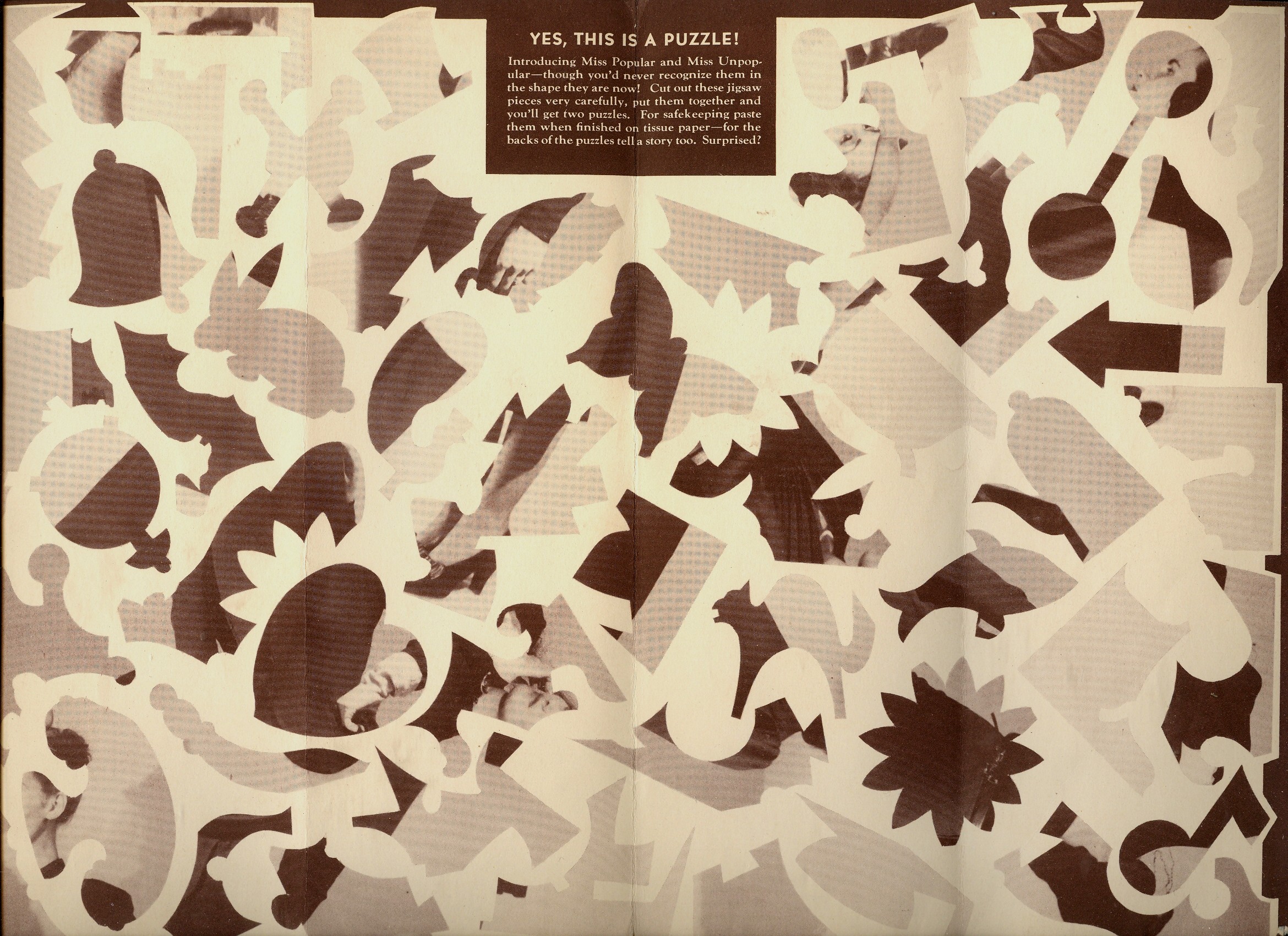
    One of these
    publications—hardly a pamphlet per se, just a folded 11×8 inch sheet of heavy
    stock—came without a title, presenting itself as a puzzle. The puzzle pieces
    are parts of two women, “Miss Popular” and “Miss Unpopular”: the reader was to
    take the publication, cut out the pieces, and reassemble them into hidden role
    models, with phrases describing each on the back of each puzzle piece, all done
    without the slightest possible understanding of metaphor or irony.

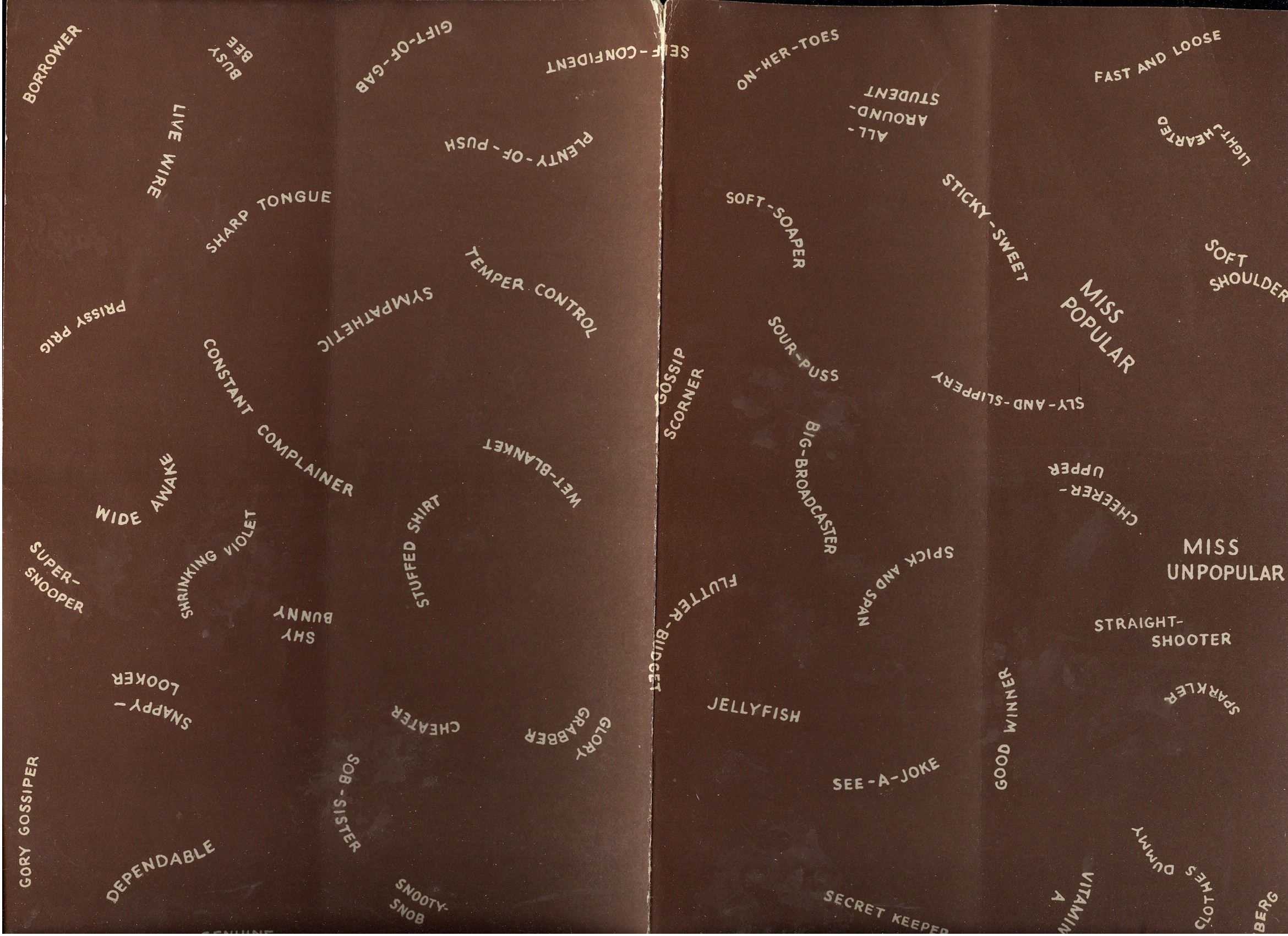
    Miss
    Popular phrases/descriptors
    : live wire, plenty of push, wide awake, snappy
    looker, dependable, genuine, secret keeper, on-her-toes, spick and span, light
    hearted, all-around-student, straight-shooter, gossip scorner, sympathetic,
    cheerer-upper, sparkler.

    Blog jan 13 Puzzle pzl

    Miss
    Unpopular’s phrases/descriptors
    : glory grabber, sour puss, cheater, sob-sister,
    snooty-snob, wet-blanket, borrower, prissy prig, sharp tongue, gory gossiper,
    clothes dummy, iceberg, sly and slippery, jellyfish, sticky-sweet, soft soaper
    (?) and of course fast and loose.

    And
    so girls—or young women—picking up this publication in 1941 were expected to
    cut this thing up and piece together the proper (paper) role model using the
    reinforcing traits of meager acceptance printed on the back of the puzzle
    piece. And poor Pope Joan, whether she was real or not, whether she was
    imagined or sunk purposefully away into the Pandora’s sisters’ boxes of forced
    forgetfulness—it really doesn’t matter—is just another woman or part of woman’s
    puzzle whose blank or missing piece has been extruded, forced into a form more
    friendly to a world less friendly to women. 

    Notes

    1.According
    to the Chronicon:  “John Anglicus,
    born at Mainz,
    was Pope for two years, seven months and four days, and died in Rome, after which there
    was a vacancy in
    the Papacy
    of one month…” [See continued reading section below for more]

    2.
    Babylon was the
    representation of the seat of evil on the Earth.  From the “Book of Revelation” (17:3–4):
    “And I saw a woman sitting on a scarlet beast, full of names of blasphemy
    with seven heads and ten horns. The woman was garbed in purple and scarlet, and
    gilded with gold, gems, and pearls, and bearing a golden goblet in her hand
    full of abominations and filthiness of her fornication.”

    3.
    Borgia and the Medicis not being the least of the story: see E.R. Chamberlin’s The Bad Popes, (1969)


  • Found Absurdist Art: 1950’s Mommy Rockets, Flannel Moon Suits & Underwater Firefighters

    JF Ptak Science Books LLC  Post 907

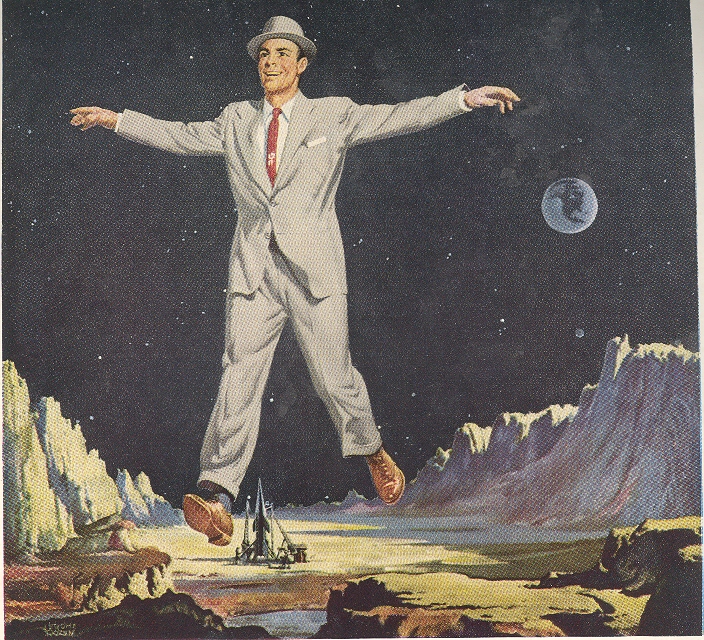
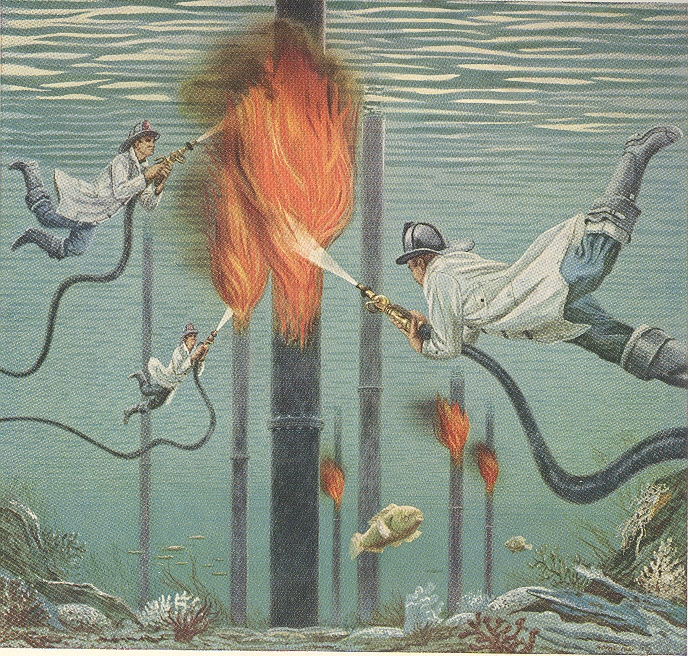
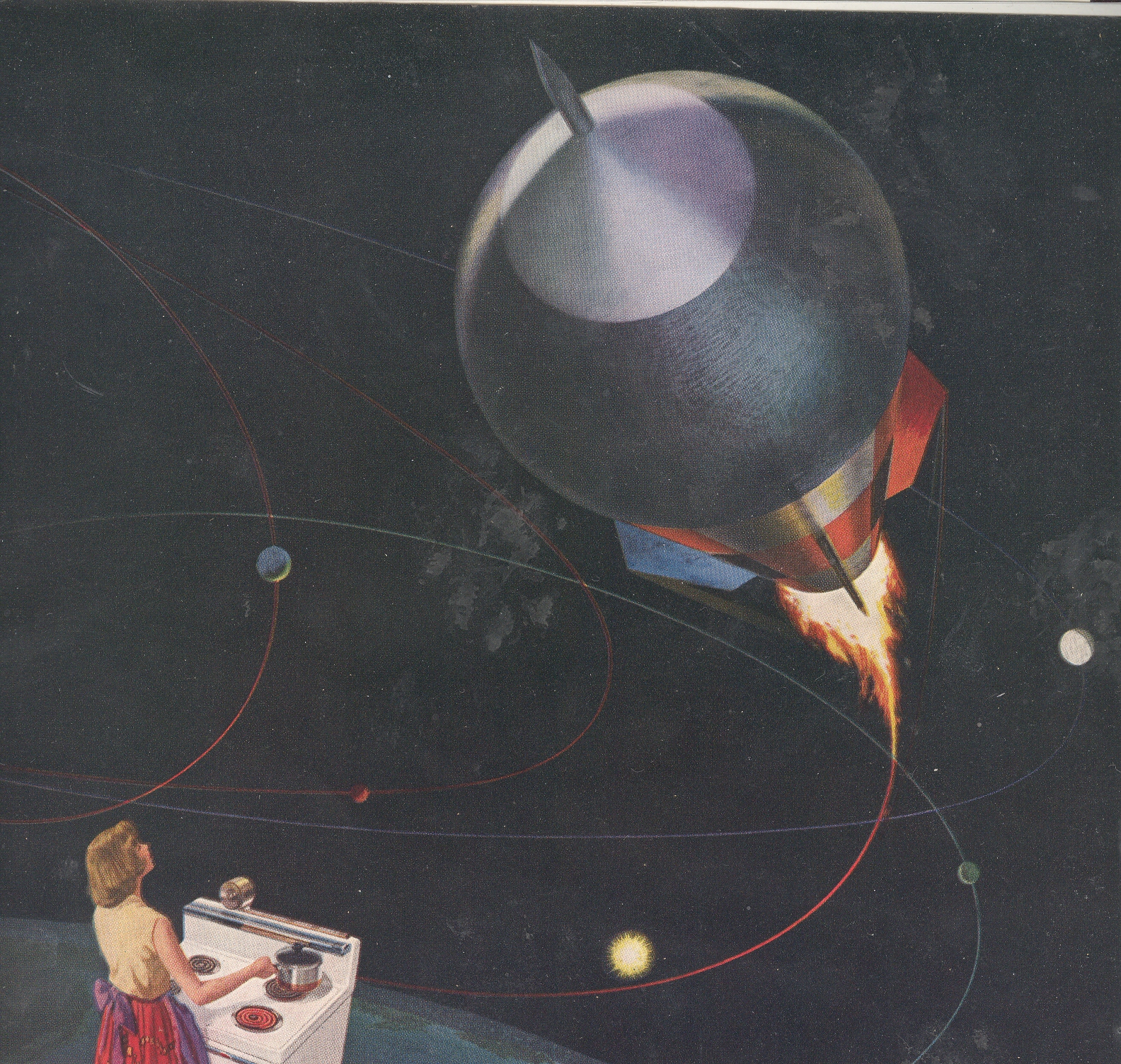
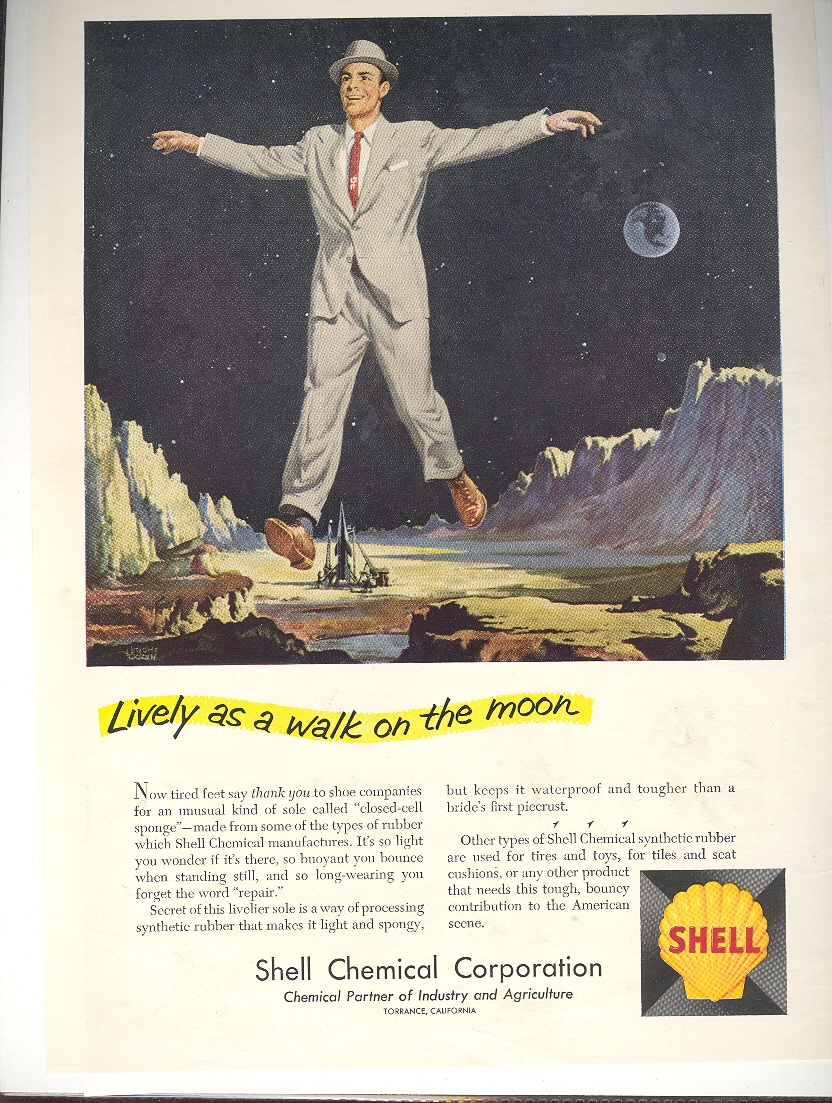
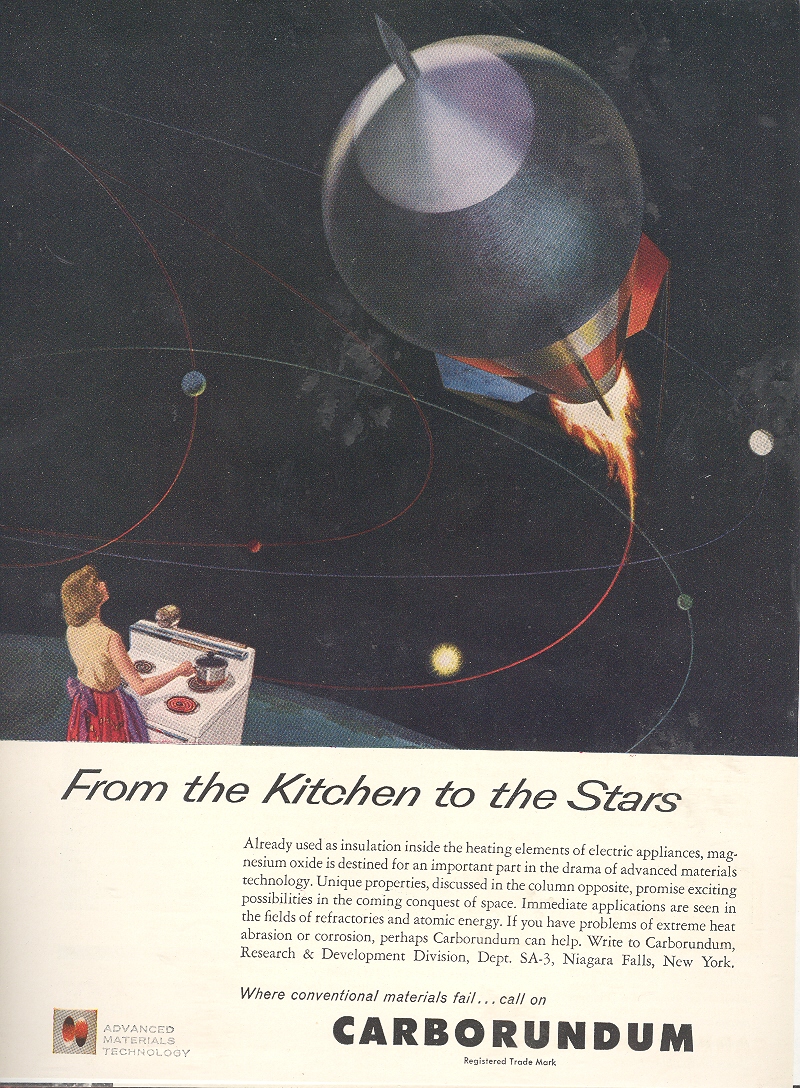
    I like Found Art categories:  Found Absurdist, Found Surrealist, Found Cubist. This is a vision of art or design produced for something specifically not absurd or surreal or cubist, but once removed from their intended environment and definers, become the thing that was beyond their specified reach.  The following examples are all from the mid-1950’s, their sources reprinted below:

    Blog jan 13 Found absurd man moon 

    And this Spongebob-like existence under water, where you can have beaches and surf and fire and etc. at the bottom of the sea:

    Blog jan 13 Found absurd underwater 

    And of course the mom at the modern electric range feeling the birth of some sort of deep outer space astronautical space travel outer  space rocket (though with no visible viewing windows which leads me to believe that perhaps no Outer Space Astronauts were on board):

    Blog jan 13 Found absurd kitchen moon 

    The image sources:

    Blog jan 13 Found absurd man moon 001 Blog jan 13 Found absurd underwater 001 

    Blog jan 13 Found absurd kitchen moon 001