A Daily History of Holes, Dots, Lines, Science, History, Math, Physics, Art, the Unintentional Absurd, Architecture, Maps, Data Visualization, Blank and Missing Things, and so on. |1.6 million words, 7500 images, 4.9 million hits| Press & appearances in The Times, Le Figaro, Mensa, The Economist, The Guardian, Discovery News, Slate, Le Monde, Sci American Blogs, Le Pont, and many other places… 5000+ total posts since 2008.

Author: JF Ptak

  • Ueber-Spectacular Understatement Dept.: the Happy Post-Apocalyptic America and the “Awakwardness” of Holocaust, 1962

    JF Ptak Science Books LLC  Post 829  Blog Bookstore

    Self- and purposefully-deceptive belief in spectacular
    and unsupportable scenarios espoused by governmental leaders which affect the
    lives of hundreds of millions of people deserve their own Dante-esque categorization:  and that’s one that I haven’t come up with
    yet.  
    This post is one of a continuing thread on the history of atomic weapons.

    I wonder how it was that we humans didn’t blow ourselves
    into melty dissolving bits during the Cold War. 
    Somehow all of those thousands of megatons of disastrously radioactive
    explosives that were completely and reliably deliverable didn’t get
    launched—not even by accident, not even during all of those hot itchy-finger
    DEFCON 2
    situations.  Did MAD (Mutually Assured Destruction )
    actually work?  Did the attempt at making
    a winnable nuclear confrontation keep people from actually trying to do
    so?  Did the overwhelming and insane
    buildup of weaponry actually have so much enormous and foul intellectual weight
    that no one could actually make the decision to use the weapons for fear of
    snuffing out all human life? 


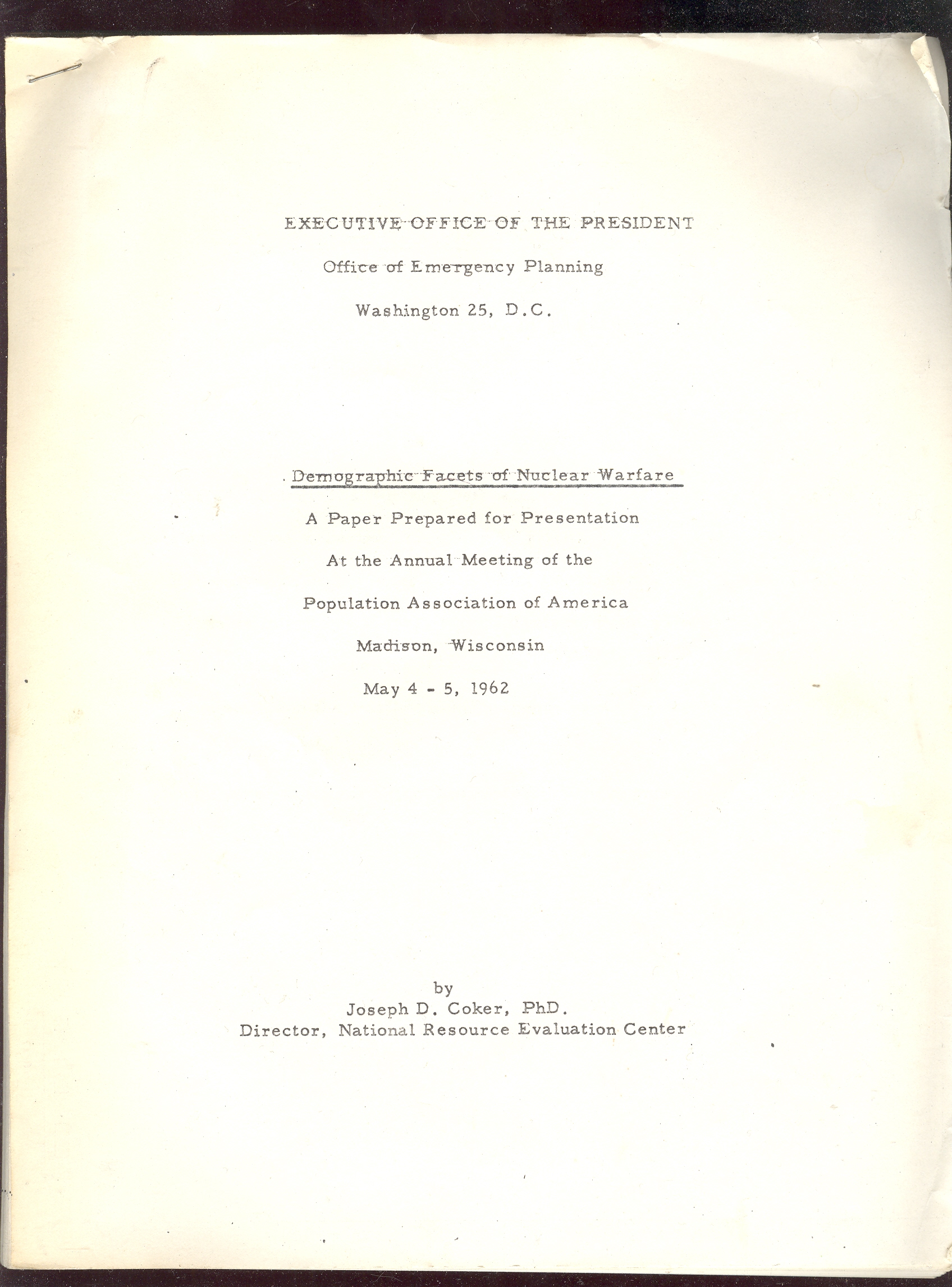
    Here’s an embarrassingly shining case in point:  Dr. Joseph D. Coker’s paper to the Population
    Association of America representing the thinking of the Office of Emergency
    Planning and the Executive Branch in general, which freely discussed the survivability
    of the United States
    following even a post-massive nuclear exchange. Dr.
    Coker was the director of the National
    Resource Evaluation
    Center, which tried mightily to figure
    out how/where /what/how the essential ‘stuff” of America could be saved/stored/allocated
    after the end of the world.  Actually,
    Dr. Coker said that the big attack wouldn’t be the end of the world, so we needed
    to plan for surviving.
    ++ blog nov 11 coker tp

     A few cases in point, some of which, I must warn you, are
    breathtaking and Strangelovian in their myopia: 

    Since Dr. Coker was addressing the Population Studies people, he
    related much of what he had to say (regarding national resources) to the
    American people.  He found that millions
    of people could be saved if they built a blast shelter (not a fallout shelter)
    that was covered with mounds of heavy material and outfitted for an extended
    stay of two to 22 days.  The unfortunate
    part of this scenario, Coker says, is that these shelters work best when 10
    miles or more away from a detonation zone. 
    And since these zones were all over the country targeted by thousands of
    warheads, very few people (especially in cities) would be outside the 10-mile
    ring, which made the blast shelter basically useless. 


    Coker notes that if an attack of 1000 megatons
    [a limited exchange] was aimed exclusively at U.S.air bases, “total fatalities
    will approximate 10% of the U.S.
    population”.  If this attack was aimed at
    population centers rather than the air bases, it would kill 40% of the
    population. A 5,000 megaton attack on air bases would produce 50% overall
    fatalities in the U.S.;
    if that amount was centered on large populations, the number would jump to 80%
    of the population.  10,000 megatons would
    yield 75% and 95%, respectively.  “A
    50,000 megaton attack would kill almost all U.S. citizens under either
    targeting assumption”.  These figures
    didn’t include radiation deaths.

    A big variable here not controlled for was the distribution
    of population at the time of attack.  The
    numbers that were used were compiled by the census and counted folks who would
    be at home.  So, the numbers above worked
    if and only if the Soviets attacked after dinner when everyone was at home for
    the night.  Since it would make sense to
    attack when people were at work at their industry or job or whatever during the
    day—thus maximizing the effect of the bomb—the casualties would actually be higher.

    And what does that mean? 
    Dr. Coker relates this gem (on page 21): “The post-attack labor force
    available thirty days after the attack probably will represent a significantly
    lower fraction of the population than does the preattack labor force….” And
    this: “A nuclear attack can be expected to alter the occupational composition
    of the labor force.” 

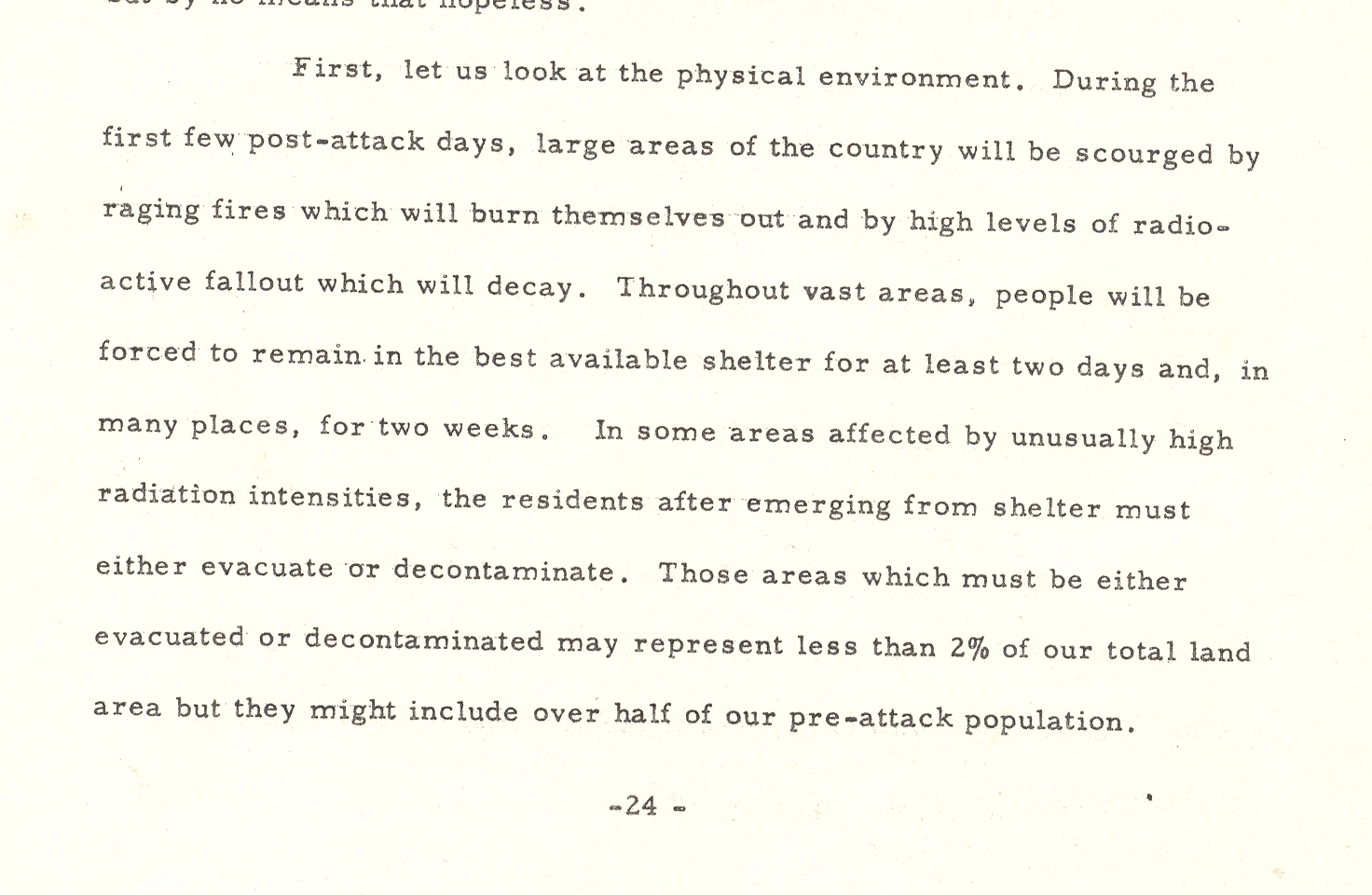
    This sort of thinking overtakes the factual aspects of
    massive attack, with Coker stating on page 24 “I wish to say  emphatically that it [post-attack America] will
    not be anything like that depicted in Neville Shute’s On the Beach.  It will be bad enough, but not that
    hopeless.”
    ++ blog nov 11 coker pg 24


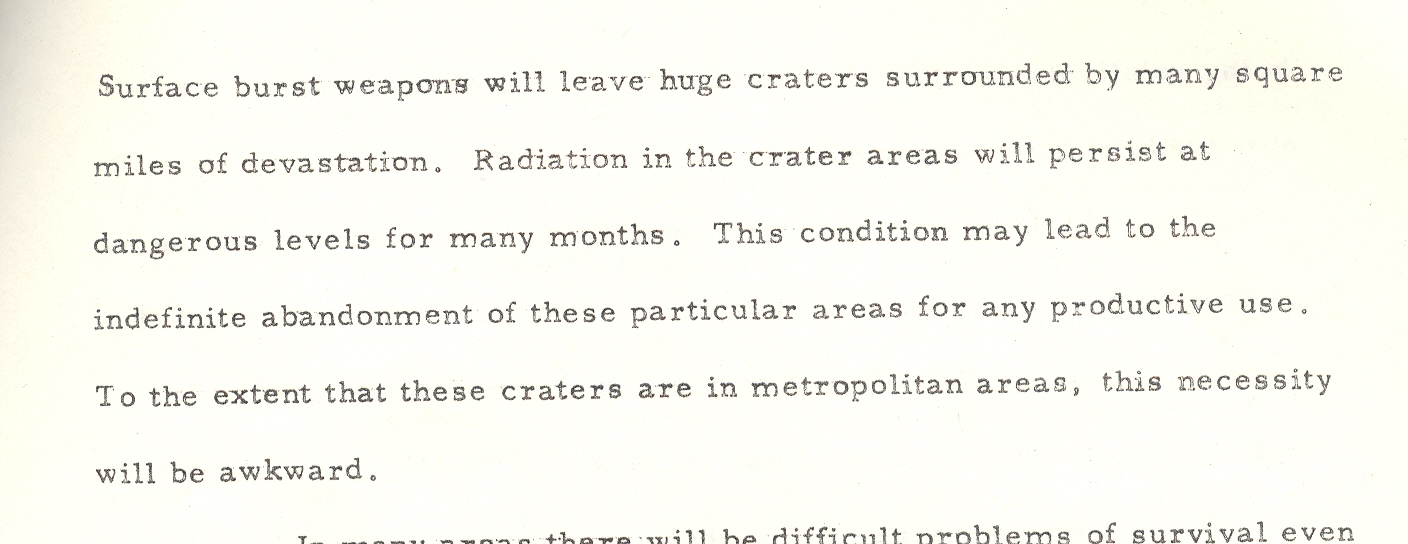
    And this absolutely incredible/horrendous and perhaps worst-use-ever
    of the word “awkward”:
     

     ++ blog nov 11 coker pg 25

    For the love of King Neptune’s Pants:  Awkward? 
    How in the name of _______ could someone in such a high position and
    authority relate massive attacks on every major American population center
    which would cover the area in fire and thousands of gigantic highly radioactive
    craters in which a city used to exist be called “awkward”?  How great a sin was this, to influence
    opinion on holocaust via pathetic and unreasonable means?

    And then this, on the survivability of our governmental and
    economic institutions:

    “The post attack institutional environment will depend on
    the continuity, resourcefulness and general effectiveness of our leadership and
    the survival and resilience of pre-attack institutions…”

    Hm?  The post-attack
    institutions will depend on themselves?

    This of course is followed by a major plug for Dr. Coker’s own
    work, because the preparations undertaken by the NREC will directly affect the
    survivability of post-attack America.  So don’t stop the funding.  “The more complete and realistic our
    preattack [sic] planning and preparations have been and the more effectively
    the government is at all levels in inspiring and retaining the confidence and
    support of the population, the less drastic institutional changes will
    be.”  So it is the mealy aspect of
    inspiration that will direct the survivability of whatever it is that makes America
    so. 

    I should point out that Coker’s use of “post attack” and
    “pre attack” appear as two words, one word and a hyphenated word, depending on
    nothing. This is only a forty-page document.

    Another nugget on the post-Armageddon future on the
    distribution of wealth, mostly hinging on blast shelters:  “Per capita wealth in material terms may or
    may not be reduced by attack.”  There
    will be a relatively proportional number of 
    people who emerge from the smoking holes to staff surviving industry,
    and so per capita wealth will stay about
    the same.
       If, on the other hand,
    people build more blast shelters, then the proportion of surviving workers to
    factories will increase, and “the surviving plant capacity will be spread more
    thinly among them”. It is left unstated, but what that means is that more successful implementation of blast
    shelters would mean a reduction in per capita wealth
    . Dr. Coker also
    forgets what he said earlier that the blast shelters really didn’t work unless
    they were more than ten miles from a target. 
    Considering that the industrial workers would be living close to, um,
    industry, they will no doubt be (in 1962) in a ten-mile radius to where the
    blast would be.  Then of course there
    would probably be more than one bomb, so the blast area would be more than a
    ten-mile circle, and so on and so forth.


    In the following paragraph, Dr. Coker somehow draws all
    manner of feel-good high-probables around him, encasing himself like a sandman
    in a thin layer of improbability, to come to the following conclusion:

    “…few of the analysts who have studied carefully these
    post-attack [sic] survival and recovery problems take any stock in the
    oft-repeated theory that the survivors will envy the dead.  On the contrary, after a very rough year or
    two, the surviving population, if it so
    chooses
    , can begin to enjoy the advantages of a social structure and a
    physical environment not so very different from those which prevailed before the
    attack
    .” [Emphasis mine.]

    This is an astonishing work of incredible deceit, and may be
    the worst quote of the lot.  But it is so
    difficult to choose between unacceptable bits of thinking like this, raking out the horrible from the terrible.

    Here’s another deceit that was absolutely better understood in 1962
    than the writer acknowledges:  “The
    long-term effects of radiation are subject to much less understanding and
    certainty than are the short term effects. 
    There is some evidence that increased radiation exposure results in
    reduced life expectancy and increased evidence of leukemia and various
    degenerative diseases…”  And this:  “Genetic effects are more
    controversial.”  Than what?! And this: “Studies
    of the Hiroshima and Nagasaki experience are said thus far
    to be inconclusive.”  Honestly this was
    very well understood in 1962, and statements like these were enormously
    irresponsible if the data were actually misunderstood and criminal if they weren’t.

    There are many more examples—I’d say actually that the
    entire paper was at the level of Apocalypse Fairy Tale—but I’d like to
    close with just one more, this one using another fanciful version of the
    possible post-nuclear future and another highly insulting euphemism.  On transportation:  “We hope in the near future to develop a
    family of network and transportation models to estimate capabilities to move
    surpluses into deficit areas in
    order to cover deficits during each time period and to support the use of more
    ambitious resource management techniques focussed [sic] on recovery problems.”  Aside from bad sentence structure and
    misspellings I could hardly imagine sitting through a presentation where a
    person thought this stolen undercooked tripe. 
    What we have arrived at here at the end of the paper is references to
    smoke-in-a-hole cities being “deficit areas”, and the successful removal of
    human consideration from the conversation—strange as Dr. Coker was addressing the
    Annual Meeting of the Population Association of America.  (I’d love to know what the association
    members thought of the talk afterwards.)

    And so what can we draw from the experience of knowing
    thinking like this?  Is it as sterile as
    it might seem, so distant from our experience? 
    The scenarios have changed, as have the leaders and delivery systems,
    but the insatiable stupidities have evolved and morphed  into our own time.  Its easy to raise our eyebrows now on the
    whole MAD approach and the writings of people like Dr. Coker.  The truth of the matter is that we have
    plenty of this sort of thinking going on right now, big head-waggers that will
    loom in our futures with the attached questions of “how could this have happened?”.  WMD is one of the many examples of this, a
    Big Lie that was repeated for years and which ultimately cost the lives of many
    thousands of people and a great perpetuator of the culture of fear.  President Bush
    drove that one into the ground and so far as I know still employs it when
    necessary, threatening listeners with fear of those three letters like they
    were a practice hand grenade.  (I recall
    that a far-right radio personality  filled with afterbirth
    blood and urine eyes said that he would resign his show “in a year” if WMD were not found in
    Iraq; that was five years ago, and of course he is still there, bloated and
    ponderous and mostly violently wrong as ever.) 
    The Savings and Loan debacle.  The
    deathly ambitious practices leading to our recent depression. 
    The billion malnourished and desperate children in the world.  And so on. The point is that there is no
    paucity of thinking displayed by Dr. Coker in the past, and there is definitely
    no lack of it right at this very moment.  The
    problem is seeing it for what it is in the present and to not have to wait for the future to get to the truth of the matter.

    [And how can I end this discussion without a bit more of Stanley Kubrick’s magnificent Dr. Strangelove.., who pointed out these absurdities better than,perhaps, anyone?]


    Ah, don’t fret! The ending is just below (and just when you are about to laugh (“Mein Fuhrer, I can WALK” the other and last shoe drops.).
  • Found 17th Century Dadaist Art

    JF Ptak Science Books LLC  Post 827  Blog Bookstore

    ++ blog nov 9 scarlattini 001

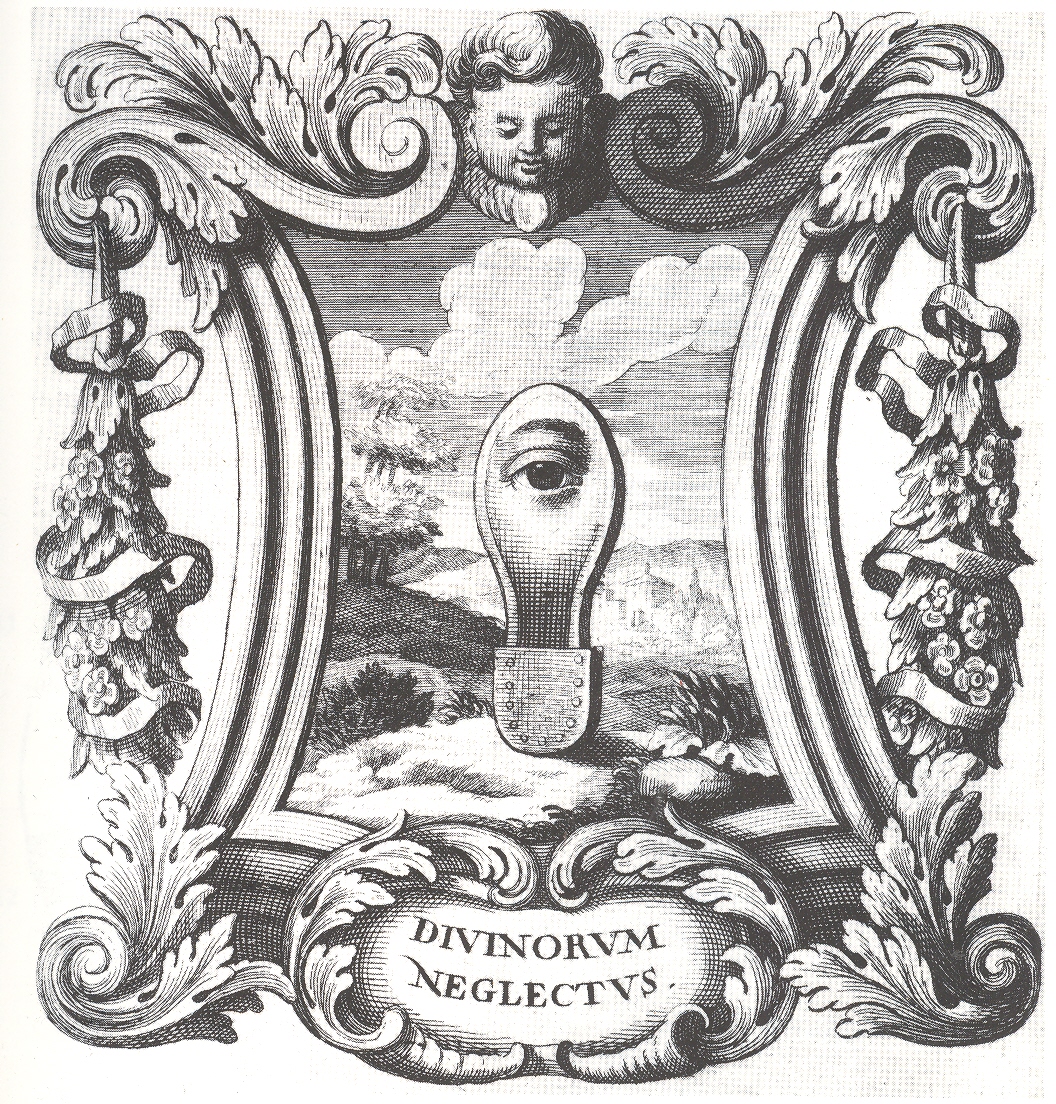
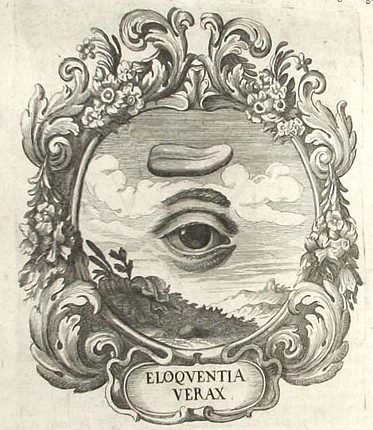
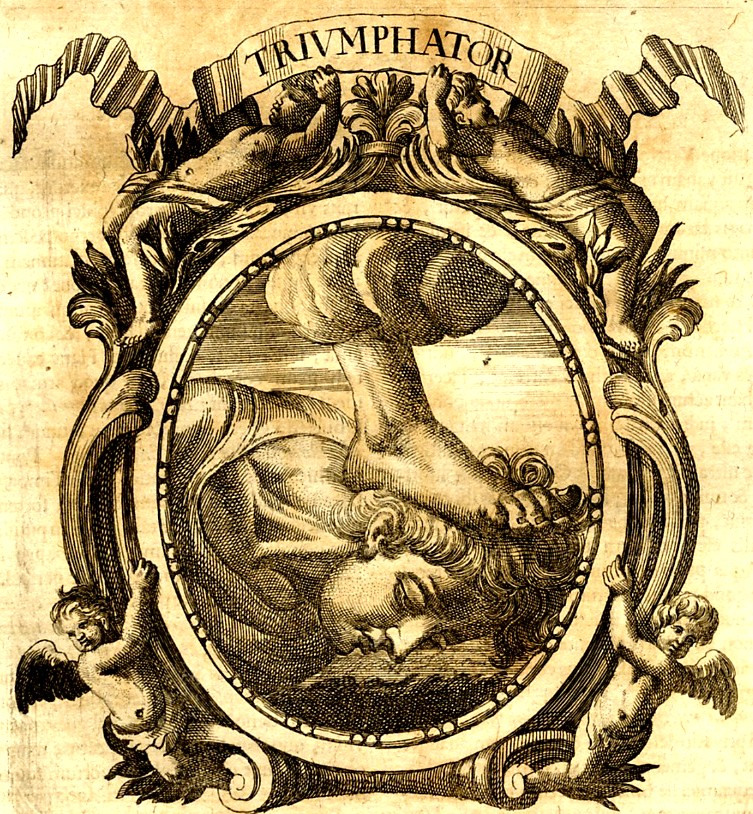
    I found these iconographic images by Ottavio Scarlattini1 (1623-1699)
    simply irresistible–and even though I really don’t quite understand them (at
    least in their correct and original sense and intention), lost to me as they
    are to a more classical education and deeper understanding of Baroque
    symbolism, I can imagine plenty of re-iconographized (?!) meanings.  Not having a more specialized knowledge to
    understand their published intentions perhaps allowed them to have a  strangely modernistic pull on me, making many
    of these Scarlattini designs seem more Dadaist than a 17th century work
    displaying visual characterizations of morality tales wrapped around human
    anatomy. .  If  you changed the vocabulary to interpret this
    artwork—or just simply removed its intention– it changes its era, and moves
    very cleanly into the genre of the surreal. 
    It feels to me that this sort of transformation is not at all common,
    especially when you move the centuries and the genres so crisply and
    elegantly. 

    Doesn’t the “Divinorum Neglectus” suggest something that could’ve
    been produced by  more-antiquarian versions of Raoul Haussmann or Hannah Hoech or Paul
    Delvaux?  It does me.  If you made this a three-dimensional piece it
    could feel like Ernst or Duchamp, its emblematic/hieroglyphic nature
    transforming before your eyes.    (I wonder if Duchamp or Dufuy were influenced
    by the iconographists from this period?)

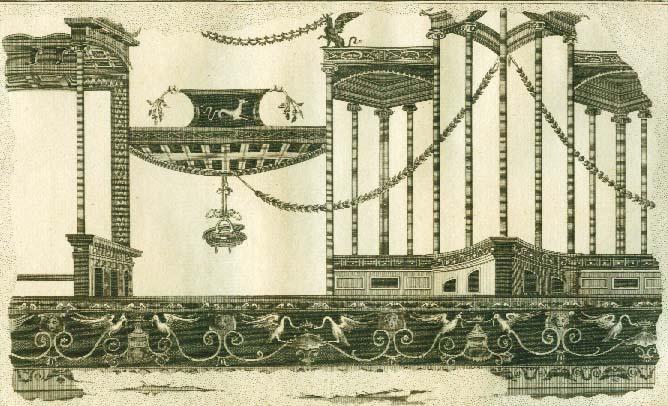
    This transference game works nicely with other emblem books, and even with some of the large and spare frescoes from Herculaneum when rendered in black and white as engravings…and also for some of the Framenti of Piranesi, but not too many other places in Western art.  Yes?

    ++ blog nov 9 scarlattini

     ++ blog nov 9 triumph

    An engraving of a fresco from Herculaneum (printed ca. 1760):

    Herculaneum Architektur5-jpg

    Notes:
    1. SCARLATTINI, Ottavio  HOMO ET EJUS PARTES, FIGURATUS ET SYMBOLICUS,
    ANATÓMICUS, RATIONALIS, MORALIS, MYSTICUS, POLITICUS, ET LEGALIS, COLLECTUS ET
    EXPLICATUS CUM FIGURIS, SYMBOLIS, ANATOMIIS. opera et studio R. D. Octavii
    Scarlatini,. nunc primum ex italico idiomate latinitati datum a R. D. Matthia
    Honcamp, (.). II volúmenes en un tomo. L. Heckenauer grabador, and printed in
    1695.


    Scarlattini produced one of the great masterworks of
    emblematic knowledge while at the same time writing on human anatomy and
    physiology. 

    The entire book located here http://www.uni-mannheim.de/mateo/camenaref/scarlattini.html

    ·Posted by :

    ·in:

    — — —

  • The Scarcity of Divine Interactions in the History of Human Epidemics: Valley of Mexico

    JF Ptak Science Books LLC  Post 827  Blog Bookstore

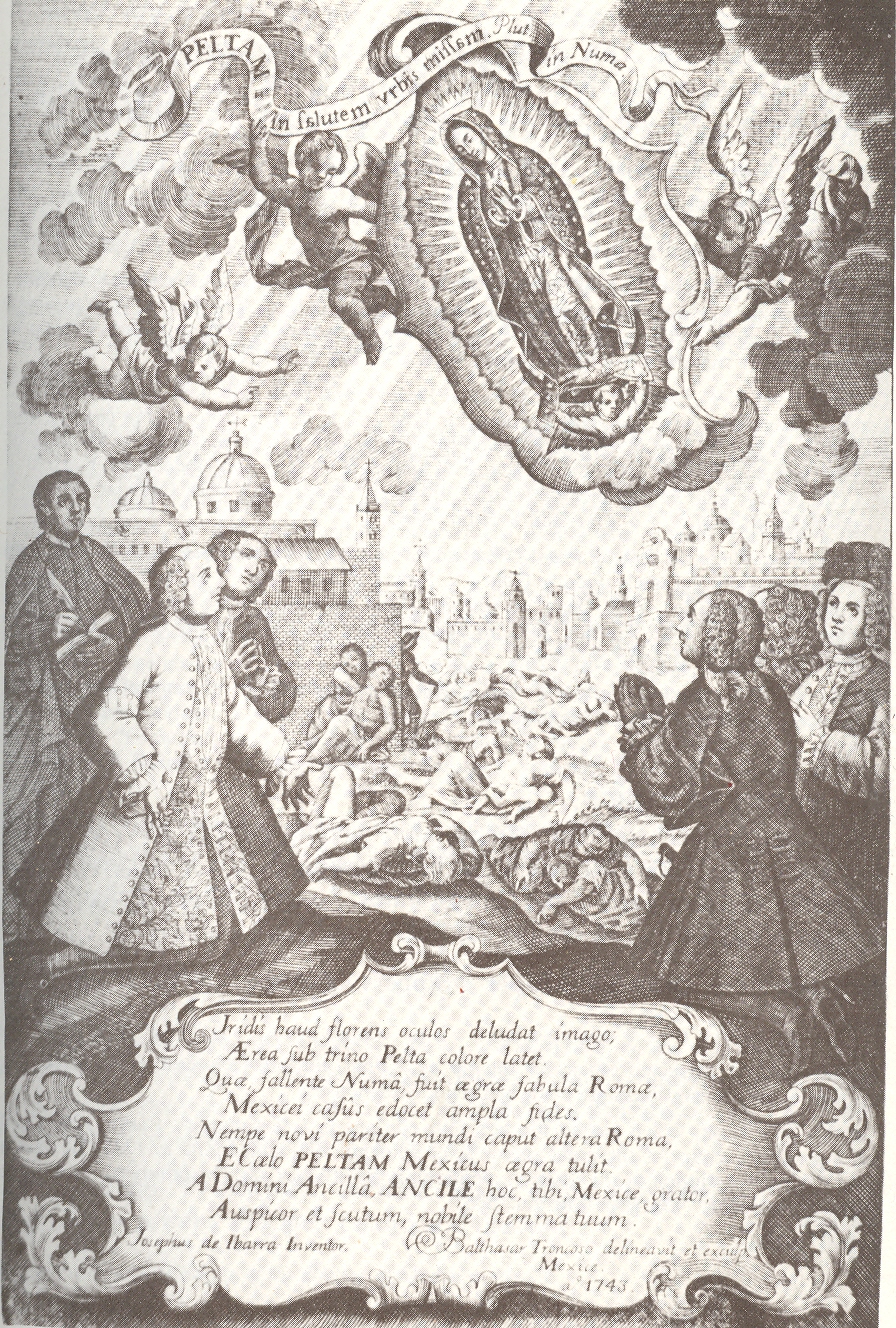
    Images of
    sacred interventions stopping the spread of disease is puzzling, as in this
    powerful and disturbing vision of Our Lady of Guadalupe appearing above the
    city of Mexico
    in 17371.  Mexico City was in the second year of a
    devastating cholera epidemic where 40,000 had perished in that city alone.

    ++ blog nov 9 guadalupe I wonder why Heavenly intercession didn’t
    come earlier?  Of course the people of
    the Valley of Central Mexico could’ve used some
    heaven-sent strong-armed virtuosity many times over the centuries.  In Mexico
    City
    during the Cockuliztli epidemic of 1576 the
    population of the non-Spanish (Native) population fell 50% in just a few
    years.  Over the period of 1545-1548 70%
    of the population of the city nearly died of hemorrhagic fever.  This epidemic was followed by many other
    (major) epidemics (1576-78, 1629-1631, 1736-1741, 1761, and so on) involving
    whooping cough, measles, typhus, smallpox , influenza, cholera, and of course
    famine. Cholera—like this epidemic in Mexico City—according
    to Rodolfo Acuna-Soto’s study2 seems to have been the least of the epidemic
    worries in the Valley
    of Mexico
    over the last
    500 years.  According to Robert McCaa’s
    study of population studies3, 11 authoritative studies on the decline in
    population in Mexico from 1519-1598 show an average and disasterous decrease of
    about 50%4.

    So with the
    dozens of epidemics, the invasion of Europeans, and natural and unnatural
    famines, I would have expected to see more demonstrations of charity from above
    rather than this one skimpy display in the second year of a lower-echelon
    epidemic. 

    1. From Caberra y Quintero Escudo de Armas de Mexico…, printed in Mexico in 1746.  There is much else of interest in this book–which is probably the best and most famous of the local histories of the city–besides the image that I fixated on. 

    2.
    [Rodolfo
    Âcuna-Soto.]
     Forum on Microbial Threats//Global Climate Change and Extreme Weather
    Events
    December 5, 2007
    “The use of Historical data sets in
    Understanding Ecosystems Responses
    to Climate Change and the Importance
    of
    Long-term Monitoring
    Programs…” 

    3. McCaa’s study HERE

    4. Table of colonial disaster 


  • Another Major Wrinkle in God’s Perfect Plan: Lots of Dots

    JF Ptak Science Books LLC  Post 826  Blog Bookstore

    ++ blog nov 8 dits

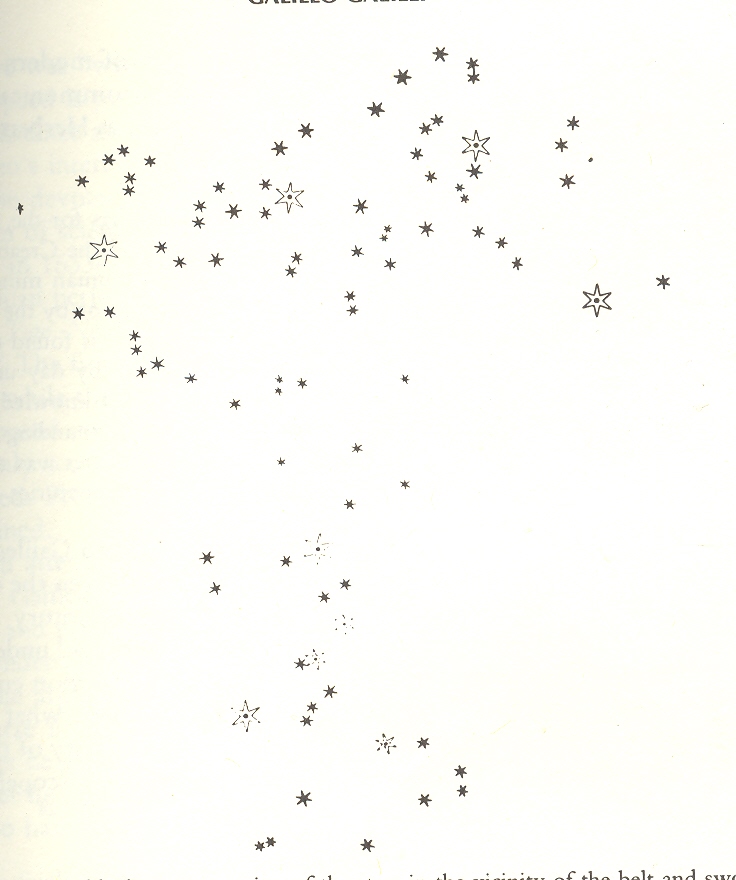
    This installment of the continuing thread on the  history of dots questions the sublime machinery of the primum mobile in the work of Galileo, particularly in his The Siderreal Messenger (Sidereus nuncius) of 1610.   The reception of this extraordinary work was deep and profound, and the images of the “dots” were of extraordinary importance.

    The perfection
    of the Creator’s plan was being shown to be not-so-perfect in the late Renaissance, a major chink
    showing up in the work of the dead Copernicus in 1543, which showed that the
    Earth was not the center of the great cosmological eye.  In the same year the body was also shown to
    be not so much built in god’s image with its bitter working revealed in one of
    the greatest anatomy books ever written,
    Vesalius’ revolutionary  De Humani Corporis Fabrica . 

    Problematic bits
    started showing up regularly wrapped in scientific proof:  the existence of a vacuum, thought to be
    impossible given the perfection of creation, was shown to exist in 
    Otto von Guericke’s  Experiemnta nova (ut vocantur) Magdeburgica de
    vacuo spatio
    (Amsterdam,
    1672).


     The
    stupendous idea of additions to the night sky, which had been thought to be
    immutable and unchanging, came into being with Tycho Brahe’s 1572 discovery of
    a new star (Nova) in Cassiopeia and added to in 1602 by Kepler’s announcement
    of another new star—both events showing that the night sky was not complete and
    that it was actually changing.

    When you
    consider Galileo and his use of the newly-invented telescope it is usually a little
    far down on the list of accomplishments that his explosion of the night sky is
    considered.  In addition to everything he
    did (
    applying mathematics to the study of physics, understanding
    the physics of motion, developing the telescope and the microscope and other
    precision physical instruments and so on) Galileo pointed the
    not-yet-astronomically-used telescope to the sky and expanded the size of the
    universe by a factor of ten.  It was so
    utterly astonishing an idea I can hardly think how the not-prepared mind of
    1610 would’ve reacted to the idea. 
    Certainly it was not a happy acknowledgment coming from the Holy
    Father, though a simple defense could’ve been that this miracle was divinely
    revealed ,and that it was there all of the time but just unknown to humans, and
    so not threatening the orthodoxy of Christian belief.  But that wasn’t the case, and Galileo would
    soon enough be in trouble with the church and its inquisition in short order.

    The dots in this image are the dots of never-before-seen stars, part of an
    unobserved sky that was revealed only under magnification.  The size and scope of the new bigness of the
    universe was staggering, and of course opened the question immediately to the
    possibilities of yet a larger universe revealed under yet more
    magnification.  I don’t know the answer to
    this, and I wonder where Galileo might have publicly mused about how big the
    universe might actually be, and if he ever dreamed about the possibilities of
    telescopes that were 15 feet across rather than just two inches, and what those
    beasts might reveal.

    *I’ve looked at the use of the telescope in the hands of
    Galileo before HERE
    (The Telescope
    in Galileo’s Hands: the Expansion of the Universe, 1610).


  • Gathering Information, 17th Century

    JF Ptak Science Books LLC  Post 825  Blog Bookstore

    This image from
    Michael Lesy’s  wonderful Real Life, Louisville in the Twenties–a collection
    of interesting and naïve found photographs—has taken a life of its own.  It is probably a photo of a hosiery
    department (?) for a large clothing store taken during the great halcyon days
    of advanced hosiery as this is a very serious collection and display with what
    looks like waaay too many clerks to service god knows how many clients all
    buying hosiery at the same time.  Hosiery
    or not, whatever skinny thing it was in those flat boxes looks  as though whatever variety or size was needed
    by whatever verity or sized customer could be accessed in a minute or less,
    sending the customer on their way so that the next one buying unit could be
    serviced and dispensed, and so on into the night. 

    ++ blog nov 7 hosiery

    But I prefer to
    think of the stuff in the boxes as letters, or words, or just plain old
    data:  sat for instance instead of this
    place being a clothing store it was a department store for writing, and this
    was the Poetry Section, selling words by the order, one word at a time.  Or perhaps the boxes held images.  Or entire ideas—just not entire, finished
    works. 

    And why
    wouldn’t data and ideas have been stored and sold like this rather than hosiery
    or handkerchiefs?

    ++ blog Nov 6 Anonymous

    This got me thinking a little about the
    storage and dispensing of information in antiquarian times, about how some of
    the writers of great and high-erudite works were actually able to accomplish
    their efforts. Deep into the early and future-vision-primitive history of
    online digital exploration, it is difficult to imagine producing works of
    sustained viability using combinations of only (private) libraries,  memory palaces1, correspondence and notes.  Today the internet accounts for less than 1%
    of the time of advanced scholarship in all of 
    human history, but it has probably accounted for significant
    contributions to half of all the academic stuff that has ever been written–and
    we’re all probably terribly spoiled by the instant access to info in our
    datacentric existence.  

    My own digital addiction in mind, I marvel at
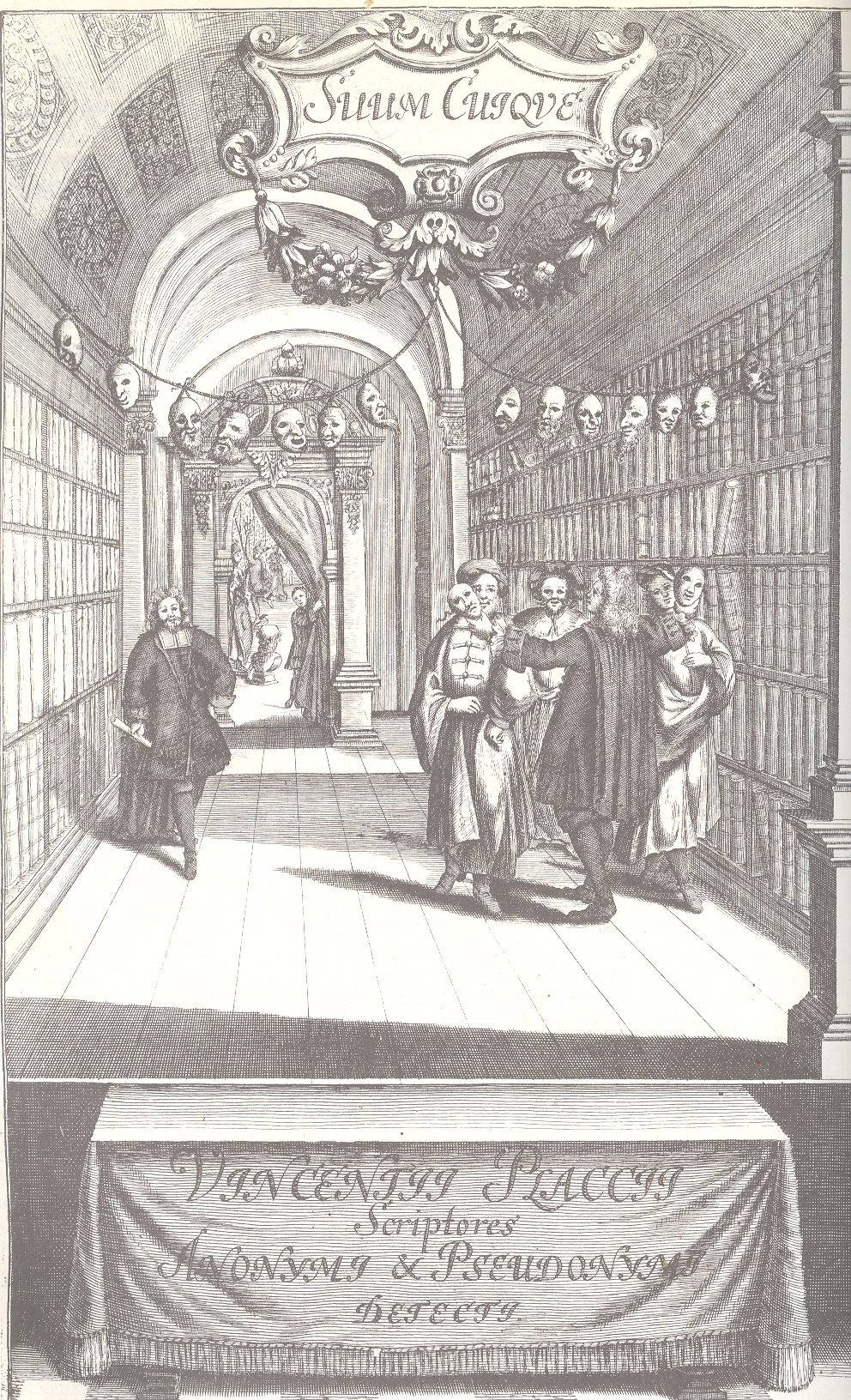
    the accomplishments of people like Vincent Placcius (1642-1699), a vastly
    learned guy who sorted out 2,777 anonymous publications in 1500 pa
    ges, somehow,
    three hundred years ago.  He wrote a
    monumental bibliographical work 


     (Theatrum Anonymorum et Pseudonynorum2) with superb references, and did so with what
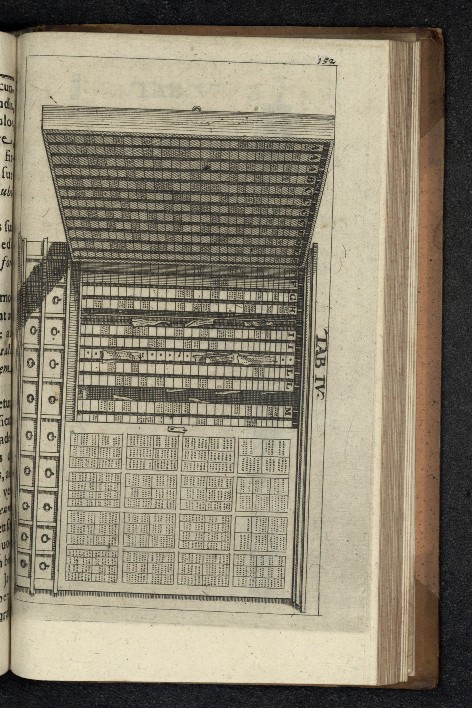
    we would today deem relatively nothing.  Placcius
    did have some sort chest-like devices with rods and pins and god knows what
    that functioned in a way I don’t understand as a note-keeping/comparing
    device.  I’ve included images of the
    device (below) in the hope that someone out there might recognize and explain
    it.  In any event, this superb piece of
    scholarship—the first of its kind—had to have taken a lifetime of reading and understanding
    and investigation to reveal.  The
    frontispiece to the book shows the author in 
    a library unmasking two anonymous authors, the masks of other conquests
    linked above him on a chord. 

    ++ blog nov 7 cometarium ++ blog Nov 6 Placcius chest

    Another example in the how-did-they-do-it
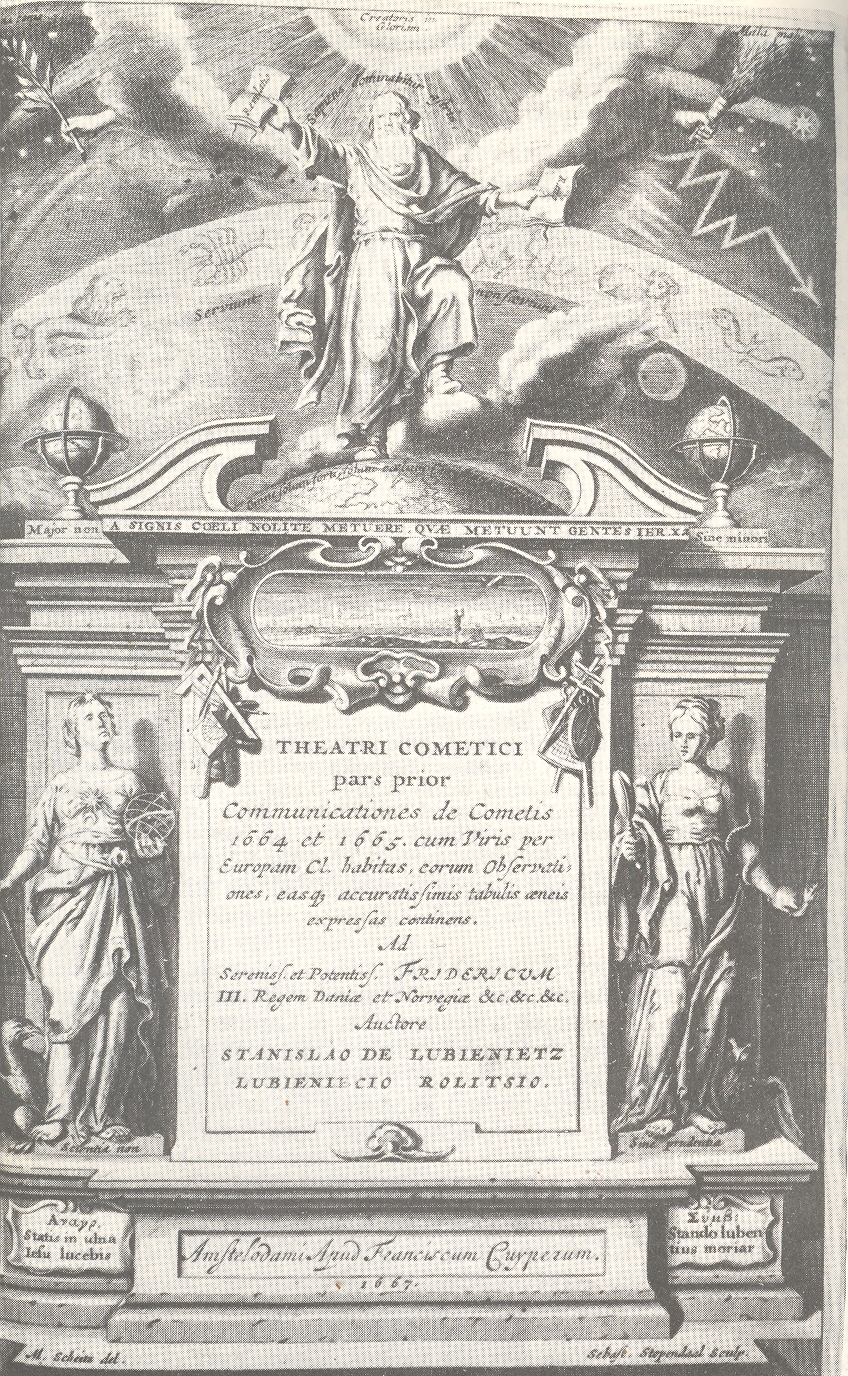
    category is Stanislaus Lubienitzky’s (1623-1675) Theatrum Cometicum…(1667), a powerhouse of data on all things
    cometary.  Lubienitzky recorded all
    manners of observations and reports of all comets ever recorded in extant
    chronicle or published work. Ever.  It is
    a vast and learned work of incredible determination.

    NOTES:

    1. See Frances
    Yates for the great standard on memory devices,
    The
    Art of Memory
    (1966).  And as
    long as we’re at it, her Giordano Bruno and the
    Hermetic Tradition
    (1964) and The Rosicrucian Enlightenment
    (1971) are also terrific works on a very high order. 

    2.  Theatrum Anonymorum et Pseudonynorum2, Ex Symbolis & Collatione
    Virorum Per Europam Doctissimorum Ad Celeberrrimorum, Post Syntagma Dudum
    Editum, Summa Beati Auctoris Cura Reclusum…
    1708


  • People Out of Place: Mailrooms and Traffic Islands, Military, 1918

    JF Ptak Science Books LLC Post 824  Blog Bookstore

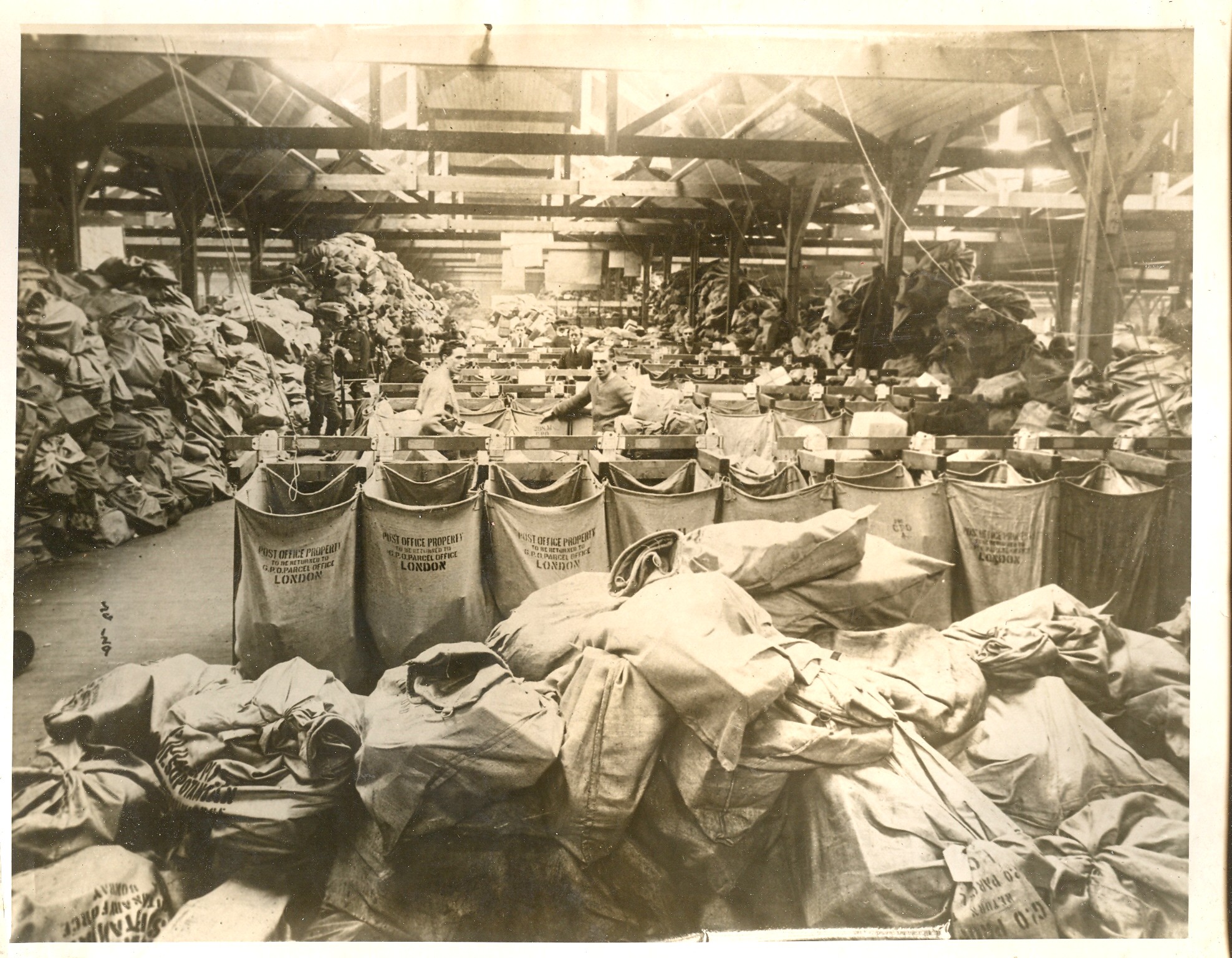
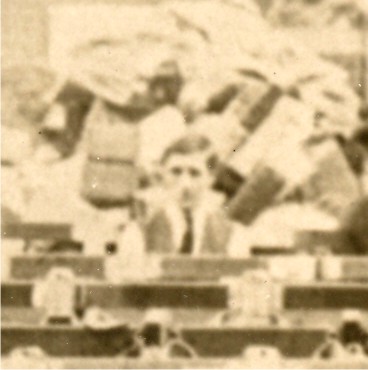
    This is the U.S. Army mail depot at Regents Park, London, braced for and under siege by  Christmastime mail in 1917. It strikes me that there are not a million items in this photo–at this time in the war there were something like 35 million people in the services for all countries dedicated to the war effort, which is approximately half the number that served in total.  If these letters in this picture were bodies, I reckon that there would be five more rooms like this necessary to tell the visual picture of the war dead and wounded.  This aside, I initially focused on the guy in the rear with the white shirt and tie, standing there pretty much overwhelmed by the task of moving all of that stuff…and perhaps with the idea that much of the mound would wind up being undeliverable because the recipient was killed.  I wonder if that mail was returned, or not?

    WWI photo Xmas mail 


    WWI photo Xmas mail detail

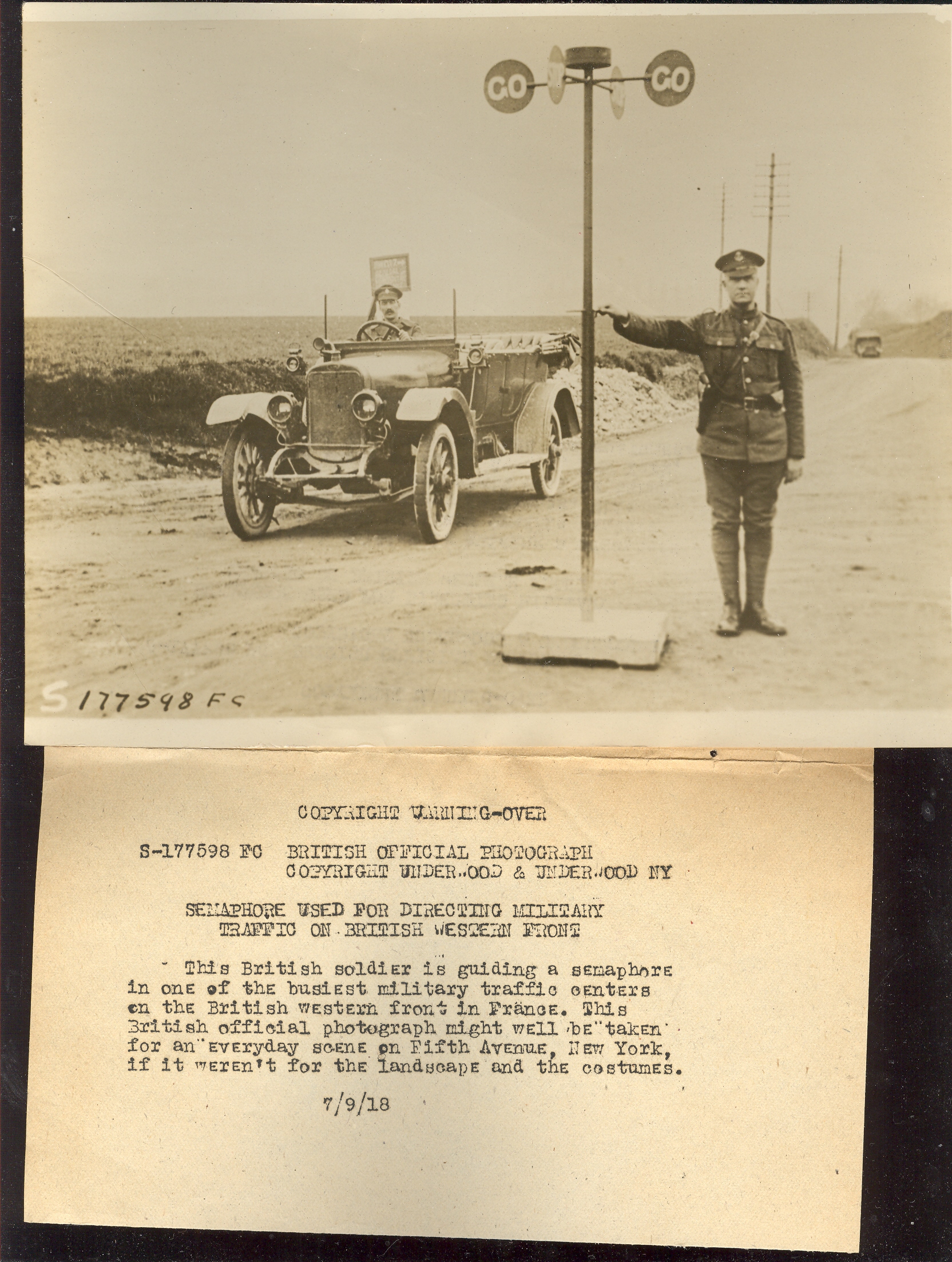
    On the other end of the spectrum is this bizarrely-titled photo of a
    British soldier “guiding” a traffic signal device…the description
    says that this is the busiest intersection in all of British-occupied
    France.  Maybe so, but not at this particular time.  Perhaps the
    photographer should’ve waited a bit to get a different sort of picture
    to make his point, rather than settle for this lonely (if not
    beautifully arranged) situation.

    WWI photo traffic


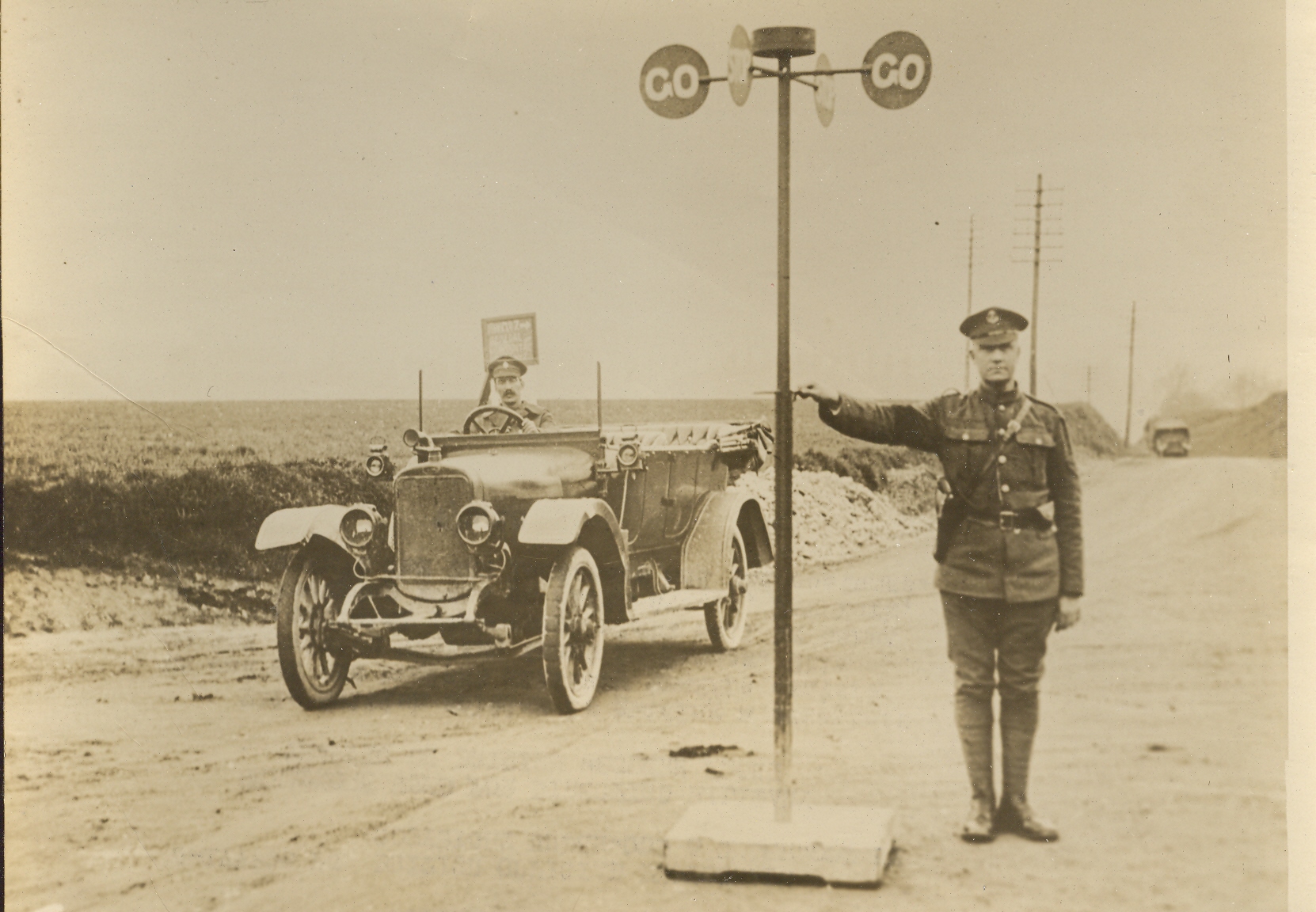
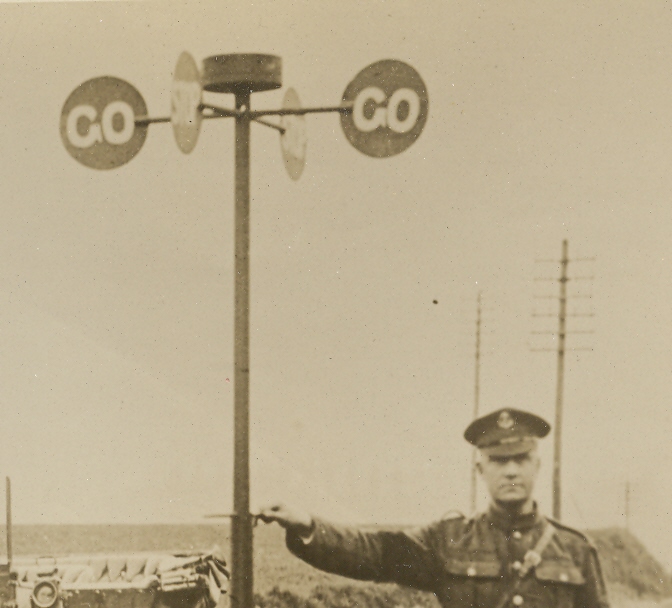
    Here’s the image without the accompanying text, which was supplied for the end-user of the photo by the news service photography supplier. 

    WWI photo traffic detail 

    WWI photo traffic detail 001

    ·Posted by :

    ·in:

    — —

  • “Lesser Light Rules the Night…”—an Early Picture of Multiple Universes?

    JF Ptak Science Books LLC  Post 823  Blog Bookstore

    Blank and Empty Things #56

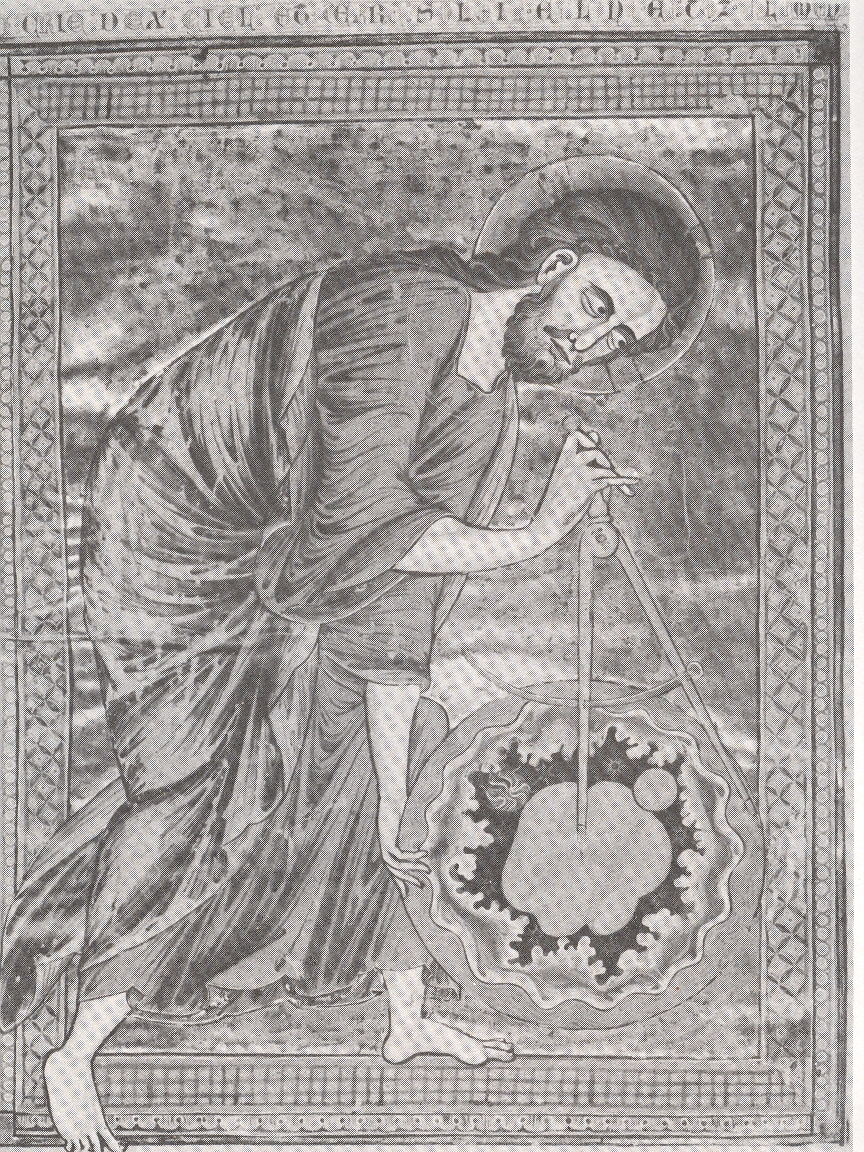
    This sort-of
    famous image, found in a French Bible
    Mortalisee
    made in Reims in the 13th century,

    Creator measuring

    displays The
    Creator measuring its creation, a sphere of the universe containing all of the
    stuff of creation, and including the Earth (pictured at upper right).  At least that is what I think this is—Creator
    stepping into the frame (its right foot outside the drawn border of the image),
    holding everything that it has made, and holding it all in the midst of another
    environment of some sort.  What that
    place might actually be, I don’t know. 
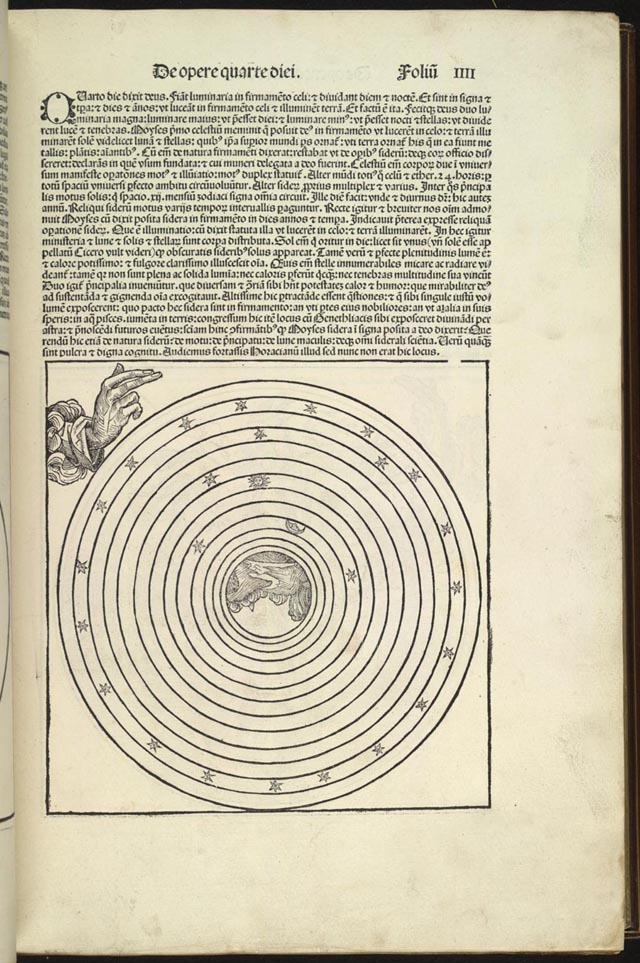
    Is that the space in-between the light created on the fourth day
    (pictured below from Schedel’s so-called Nuremberg Chronicle of 1493), the space
    that wasn’t the greater light to rule the day and the lesser light to rule the
    night?  In this spirit it was the stars
    that were supposed to separate these two lights, but the stars themselves in
    many of the concentric circle cosmologies weren’t part of the Heavenly sphere
    itself, which is what the Reim’s illustrations seems to say.  I suppose that it is all simply displayed
    somewhere in the OT, but from where I sit right now, this looks like a
    painfully early Western image of multiple universes. 

    Creator 4th day The other thing is:  what is the Creator looking at?  It is definitely very focused and wide-eyed, and is lasered on something about half of the diameter of the universe to the right, just on the other side of the dividers. Is this the biggest of the Blank and Empty Things that can be imagined? 


  • Curious, Secretive, Sacred Irish Independence Political Icons (?)

    JF Ptak Science Books  Post 821  Blog Bookstore


    “Malone. … My father died of starvation in Ireland in the black ’47. Maybe you heard of it?
    Violet. The Famine!
    Malone (with smouldering passion) No, the Starvation. When a country is full of food, and exporting it, there can be no famine. Me father was starved dead; and I was starved out to America in me mother’s arms. English rule drove me and mine out of Ireland . …” —George Bernard Shaw, Man and Superman (1903)


    0--blog---Nov 28 irish137


    “The Almighty indeed sent the potato blight but the English created the famine…a million and half men, women and children were carefully, prudently and peacefully slain by the English government. They died of hunger in the midst of abundance which their own hands created.”—John Mitchel (1815-1875), Irish Nationalist (and listed as a “martyr” in one of these badges/stamps)

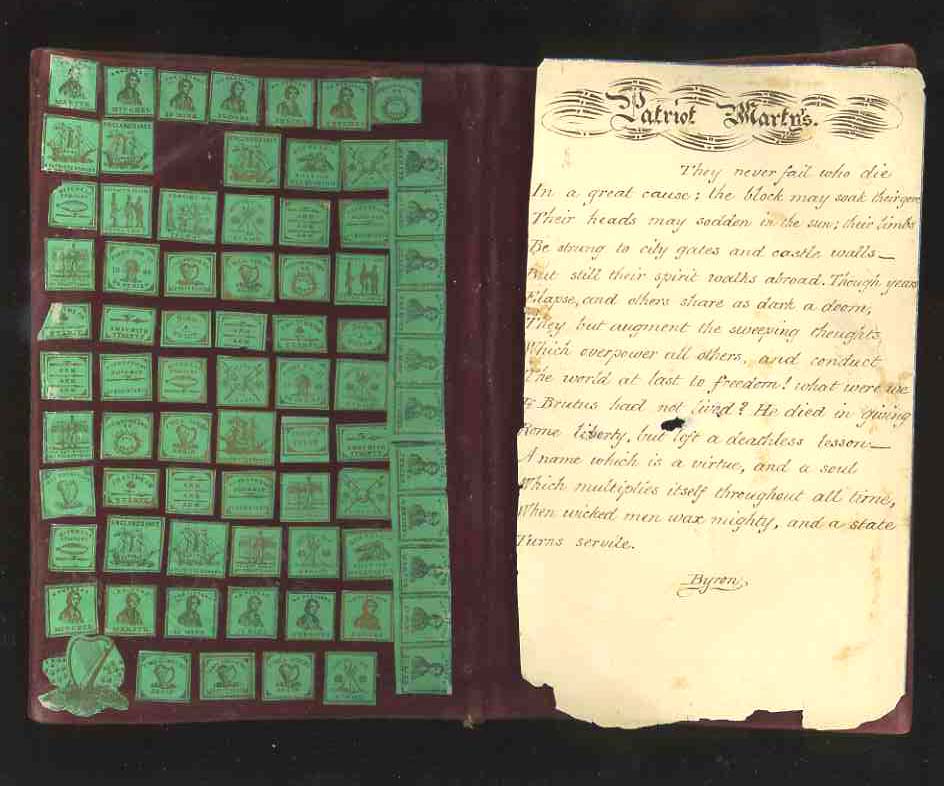
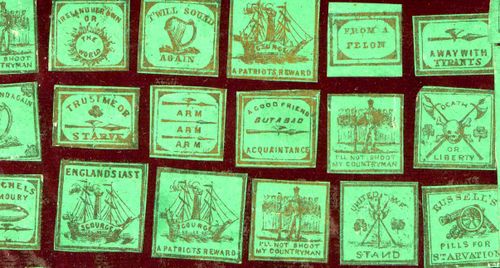
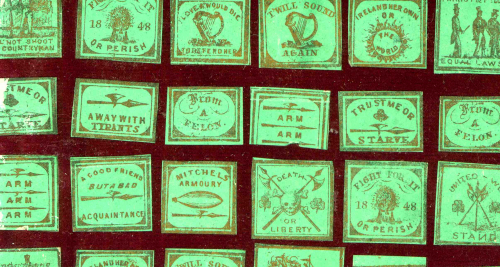
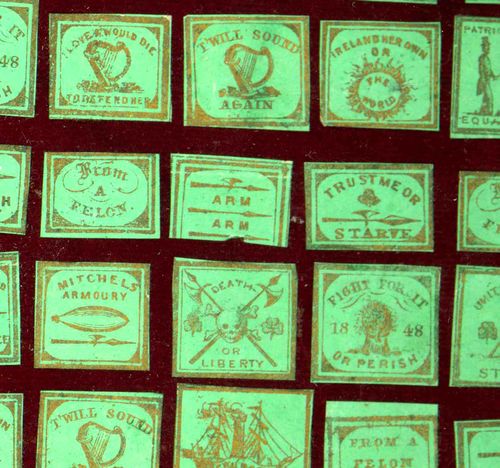
    I’m sorry to say that I do not know the origin of these diminutive, powerful emblems, and that what follows is all guess-work. They are only about a half-inch square or so, but they hold very powerful meanings in their messages.  I imagine that they were political messages to be worn, or posted in the mail, or used in subversive ways–because their messages were enormously subversive, taking on the occupying power of Great Britain at a time of supreme and enforced deprivation, an occupied people fighting against a spectacularly-better equipped foe.  The messages related to the Great Famine of 1847-1849, when the potato crops failed for three consecutive seasons , initiating a chain of events that caused the deaths of perhaps two million people, or 20% of the entire population of Ireland.  People didn’t starve so much as they did die of associative diseases related to the process of starving to death, al of which it seems could have been addressed by some sort of effort by the British government.  It does seem to me as though the people of Ireland were left to flounder and drown.  The stories of the extreme deprivation are horrible:  starving dogs digging up the bodies of the recently unguarded dead, rats attacking the dying for food, and so on.  Terrible, miserable stories coming from what is probably the worst of period of starvation in European history.  the scene has been duplicated numerous times in this century killing hundreds of millions of people:: in Soviet Stalin’s filthy anti-human pogroms, under the equally filthy Maoist adventures in production and nationalist strength in China, in Biafra, in Darfur, and on and on in our frailly stupid political existence here on Earth.

    The small badges have always seemed somewhat sacred to me; there’s just such a feeling of hope and inspiration and overwhelming empathy in them.  


    0--blog---Nov 28 irish 144


    0--blog---Nov 28 irish 145

    0--blog---Nov 28 irish138

    0--blog---Nov 28 irish 143


  • Visual Display of Quantitative Data: Solomon Islands Battle Results

    JF Ptak Science Books LLC  Post 820 Blog Bookstore

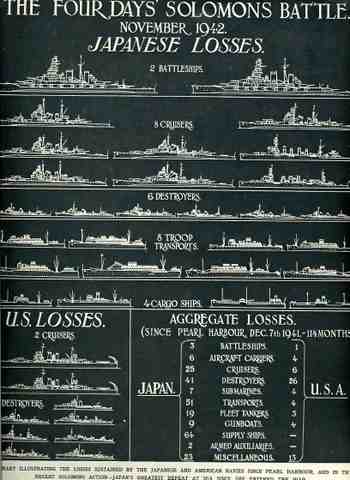
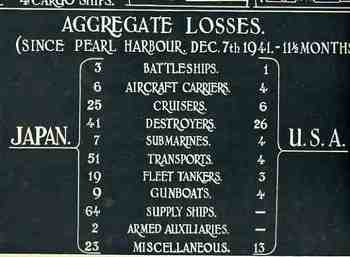
    I’m always ready to see different and interesting methods of displaying quantitative data, and this work–published in LIFE magazine in 1942–certainly fits that category.  That the ship losses are printed in reverse–white on black–is unusual in itself, but the design is just particularly good, fitting a lot of data on a single sheet of paper.  The image dramatically displays some very good (and very welcomed) news for the American public as the campaign for the Pacific dug in.  This was a major Allied victory in November 1942, and one of the pieces of the end for a campaign that stretched itself out over three years. 

    –Solomon Island WWII battle chronology found HERE.

    –General history of the Solomons campaigns HEREBlog1sept_16_solomon_battle567.                                                                                                           

    Detail of the above:

    Blog1sept_16_solomon_battle_det568


  • Beautiful Title Pages 7: Gorgeous Design for Childen by Christoph Weigel, 1726

    JF Ptak Science Books LLC  Post 819  Blog Bookstore

    “O Babees yonge, my Book only is made for youre lernynge” says what well may be the first book made in the West for children, written in the 14th century.  It was made for the eyes of noble blood, of course, and was basically a contribution towards how the children should act and behave, rather than teaching them anything outside of their immediate interactions with each other or their parents.  Books of manner and behavior was the dominant—if perhaps the only(?)—category of books for children until the late 16th century.

    John Locke, in his Thoughts on Education (1691), suggests that “when a child begins to read, some easy, pleasant book, like Aesop’s Fables or Reynard the Fox, with pictures if possible, should be put into his hands”. He adds, “What other books there are in English of the kind above-mentioned, fit to engage the liking of children, and tempt them to read, I do not know, but am apt to think, that children, being generally delivered over to the method of schools, where the fear of the rod is to enforce, and not any pleasure of the employment to invite them to learn, this sort of useful books, amongst the number of silly ones that are of all sorts, yet have had the fate to be neglected; and nothing that I know has been considered of this kind out of the ordinary road of the hornbook, primer, Psalter, Testament, and Bible.” (This quote from C.M. Watkins article in The Atlantic Monthly, 1880.)

    Preview

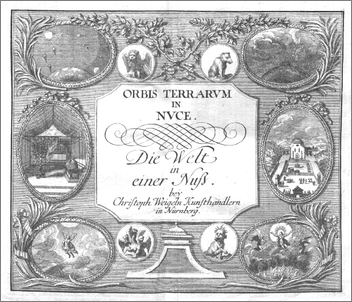
    Perhaps the most beautiful of early books for children is found behind this deeply designed title page, brought to us by Christoph Weigel (German, 1654-1726), the author, illustrator and engraver of Die Welt in einer Nuss oder die Historien vom Aufgang der Welt…1 published in Nurnberg in 1726.  The book was a tall, thin production, with 16 pages of text and 43 engraved plates, much like this one, emblazoned with emblematic studies and dedicated to a particular point in the historical continuum.  And it was intended, believe it or not, for children—the title can be basically translated as “The World in a Nutshell” and was absolutely intended for kids, compressing all of the human story into 16 terse pages and a whole bunch of gorgeous illustration. This image shows the second millennium after the birth of Christ, illustrated with seven engravings (secula septem).

    Notes:

    1. Weigel, Christoph: Die Welt in einer Nuß oder Die Historien vom Anfang Der Welt samt deren Zeit-Rechnung bis auff unsere Zeit auf eine besondere und ganz leichte Art kurz zusammen zufassen oder ausgebreitet in einem Augenblick auf einer einigen Tafel zu wiederhohlen, fürgeschrieben und fürgebildet. [Nürnberg]: 1726

    A short timeline of Early Children’s Literature:

    Orbis Pictus (1658) by John Amos Comenius: perhaps the first book of stories written for children to be illustrated. 

    Charles Perrault, the inventor, perhaps of the new genre of the fairy tale,  wrote (in the 1660’s-1690’s) tales that include Le Petit Chaperon Rouge (Little Red Riding Hood), La Belle au bois dormant (Sleeping Beauty), Le Maître chat ou le Chat botté (Puss in Boots), Cendrillon ou la petite pantoufle de vair (Cinderella), La Barbe bleue (Bluebeard), Le Petit Poucet (Hop o’ My Thumb), Les Fées (Diamonds and Toads), La Marquise de Salusses ou la Patience de Griselidis (Patient Griselda), Les Souhaits ridicules (The Ridiculous Wishes), Peau d’Âne (Donkeyskin) and Riquet à la houppe (Ricky of the Tuft).  Some of the stories were simple, some not; some were hard, some not.  Reading the originals (or close to them) and reading them fully leaves them outside my taste, especially for kids.

    A Token for Children. Being An Exact Account of the Conversion, Holy and Exemplary Lives, and Joyful Deaths of several Young Children (1672) by James Janeway. One of the first books specifically written for children and which shaped much eighteenth- and early nineteenth-century writing for kids–as you can tell, not a happy go.  Its a wonder we’re all not dead.

    The Pilgrim’s Progress from This World to That Which Is to Come by John Bunyan (1678):  Christian allegory serving as a model for many more such works to come.

    A Little Pretty Pocket-Book (1744) by John Newbery: avery early book of really nothing but fun and a few promos.

    The Governess; Or, Little Female Academy (1749) by Sarah Fielding: Often described as the first novel for children

    Lessons for Children (1778-9) by Anna Laetitia Barbauld.  A best-selling book series made for little and grubby hands, easy to hold, wide margins and easy to read and adaptable to different age groups. 

    The Brothers Grimm (German: Die Brüder Grimm also Gebrüder Grimm), Jacob (1785–1863) and Wilhelm Karl (1786–1859). Myths and stories told without holding back on what might cause years’ worth of nightmares. Very tough going by today’s standards. Very.

    Hans Christian Andersen (1805–1875) fairy tale-ist,  “The Snow Queen”, “The Little Mermaid”, “The Emperor’s New Clothes” and “The Ugly Duckling”; storie smore suited for a kinder and more comfortable bedtime once th elights go out.

    ·Posted by :

    ·in: