A Daily History of Holes, Dots, Lines, Science, History, Math, Physics, Art, the Unintentional Absurd, Architecture, Maps, Data Visualization, Blank and Missing Things, and so on. |1.6 million words, 7500 images, 4.9 million hits| Press & appearances in The Times, Le Figaro, Mensa, The Economist, The Guardian, Discovery News, Slate, Le Monde, Sci American Blogs, Le Pont, and many other places… 5000+ total posts since 2008.

Author: JF Ptak

  • Barbed Wire, Trench Warfare, and the Next Lethal Step: Electric WIres

    JF Ptak Science Books  Post 1555   [Part of the History of Lines series]

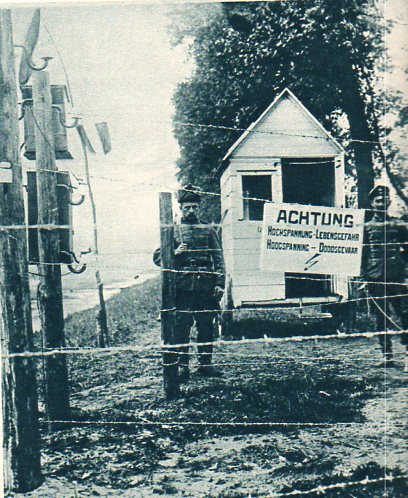
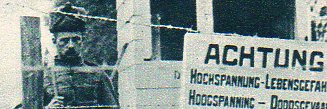
    Barbed wire was one of the most successful and horrifying defensive weapons of World War I.  In 1915 it was made more effective yet by adding high-voltage electricity to the emplacements.  In general the electrical barbed wire fence was employed as only a tiny fraction of all wire fences during the war–as the non-electrified fence was already extremely effective, very cheap to produce and very easily installed–but the possibility of finding an electrified wire somewhere along the lengthy rat’s nests of mile sand miles of this thing must’ve had some sort of weight in most soldiers’ minds. 

    The following image (and details) from The Illustrated London News for 9 October 1915:

    WWI--e---electric fenc dete extra647

    WWI--e---electric fenc dete646

    WWI--e---electric fence645

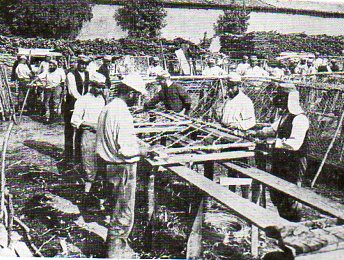
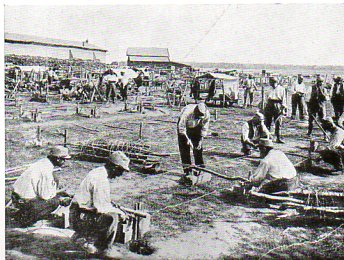
    And the places where the barbed wire was made and packaged, again from The Illustrated London News for 16 October 1915.

    WWI--e--barbed wire making648

    It looks as though the wire was stretched across 3.5 foot poles, with the barbed wire added diagonally, and then rolled up in long sections for easy transport and deployment.

    WWI--e--barbed wire making649

    ·Posted by :

    ·in:

    — — —

  • Virtuosic Apocalypticism: Maps and Charts of Nuclear Exchange, 1964

    JF Ptak Science Books LLC  Post 1555  {Part of a long series on atomic and nuclear weapons].

    Today is the 66th anniversary of the first detonation of an atomic weapon at Alamogordo, New Mexico, July 16, 1945.

    March 3--cvr

    “…our choice of path may be delayed too long… “  Dante, Divine Comedy, Inferno, Canto XII, line XIII, 2nd level of Hell (envy).

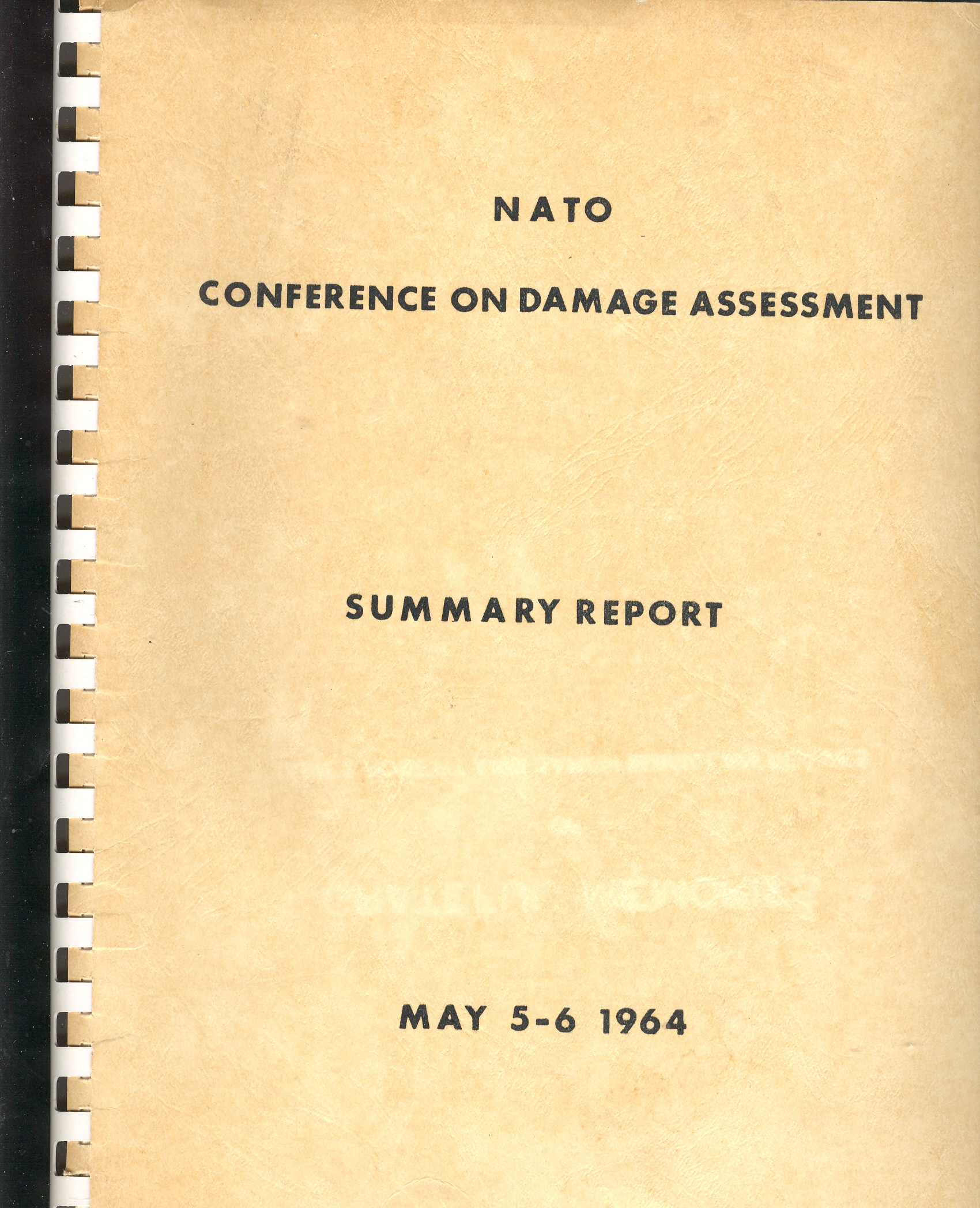
    The NATO Conference on Damage Assessment Summary Report (May 5-6, 1964) was not one written for its outcome, necessarily, but the means of getting there. The outcomes were highly differentiated levels of sameness, a strategic tour of Dante’s creation cataloging the layers of deep destruction like those of his funneling pit. [This book is available through our blog bookstore, here.]

    Professionally  the paper dealt with several different ways of computing nuclear exchange scenarios (given names of understated inelegance like Jumbo, Brisk, Frisky, Dart and Dusk) with lots of smokily mirrored hocus pocus, the necessary ingredient of the philosophical technology of Mutually Assured Destruction. MAD.  Somehow it all worked out without any exchange ever happening. (The principal contributor here was James Coker, chief of the National resource Evaluation Center, Office of Emergency Planning, Executive off of the President.)

    March 3--20 mt blast “Which utterly with sadness had confused me,  New torments I behold, and new tormented Around me, whichsoever way I move,  And whichsoever way I turn, and gaze.”  Dante, Divine Comedy, Inferno, Canto VI, third circle, gluttony.


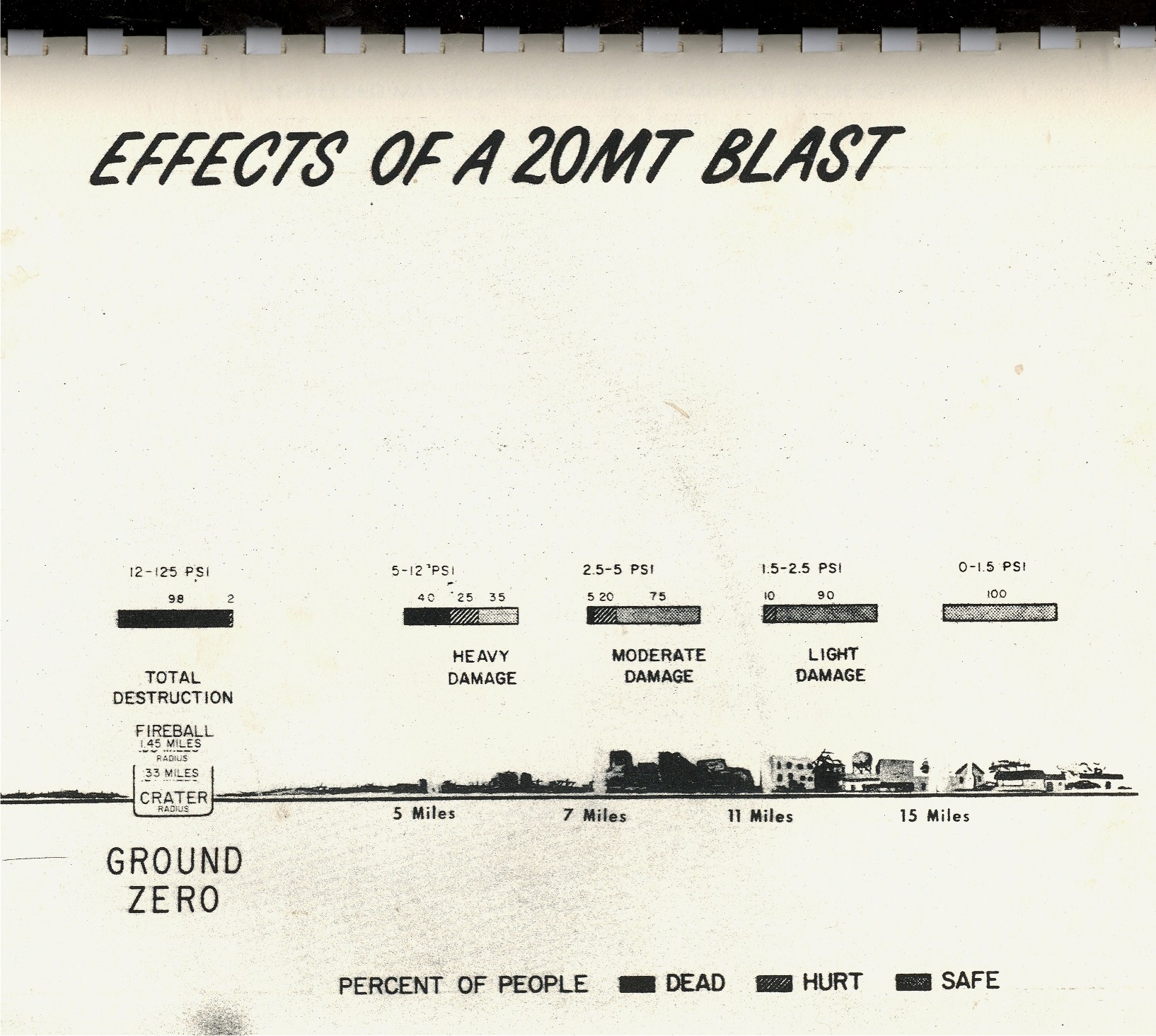
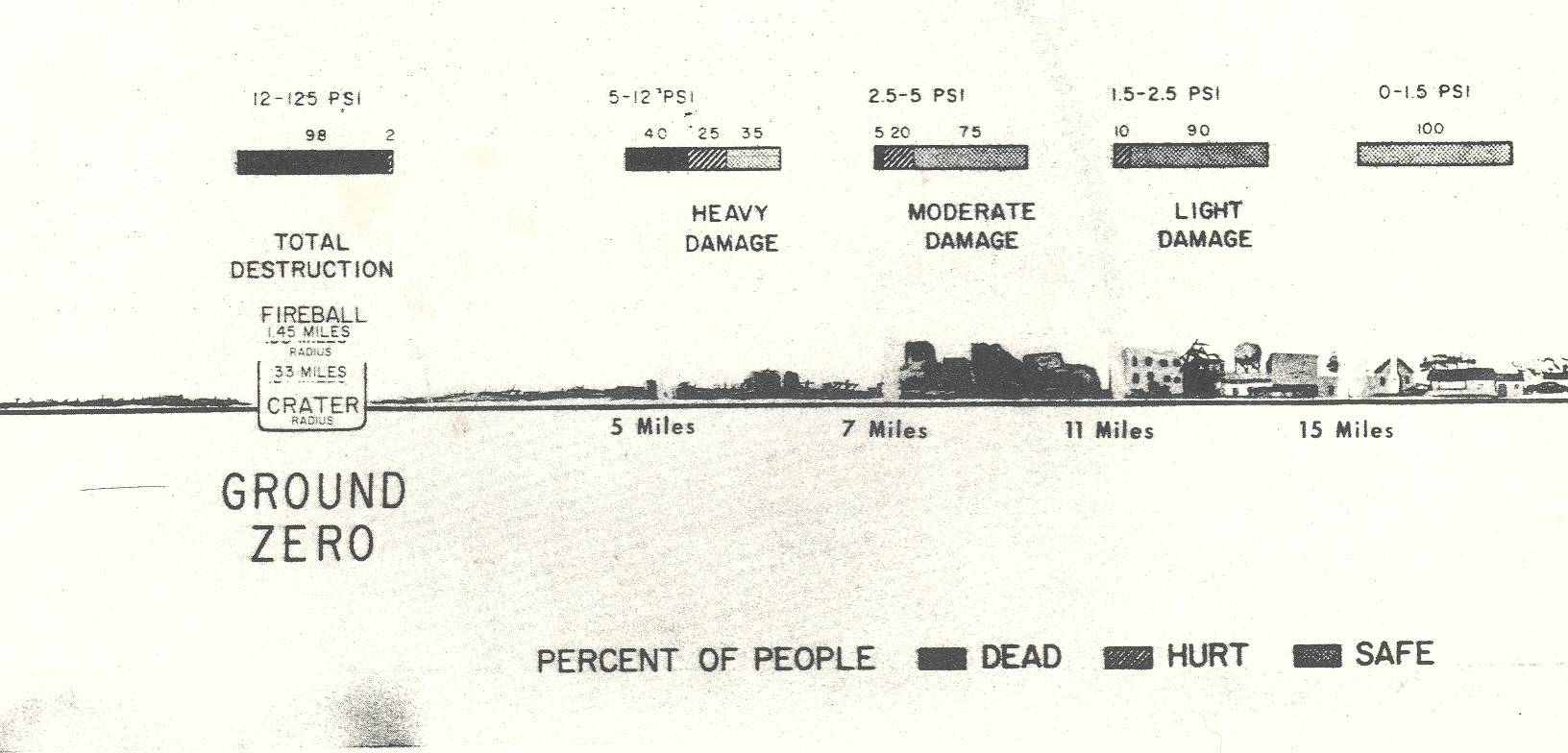
    The first image shows the effects of a 20 megaton nuclear blast detonated in in a city, presenting an incredible picture of absolute destruction, reaching out from ground zero for more than 11 miles.    


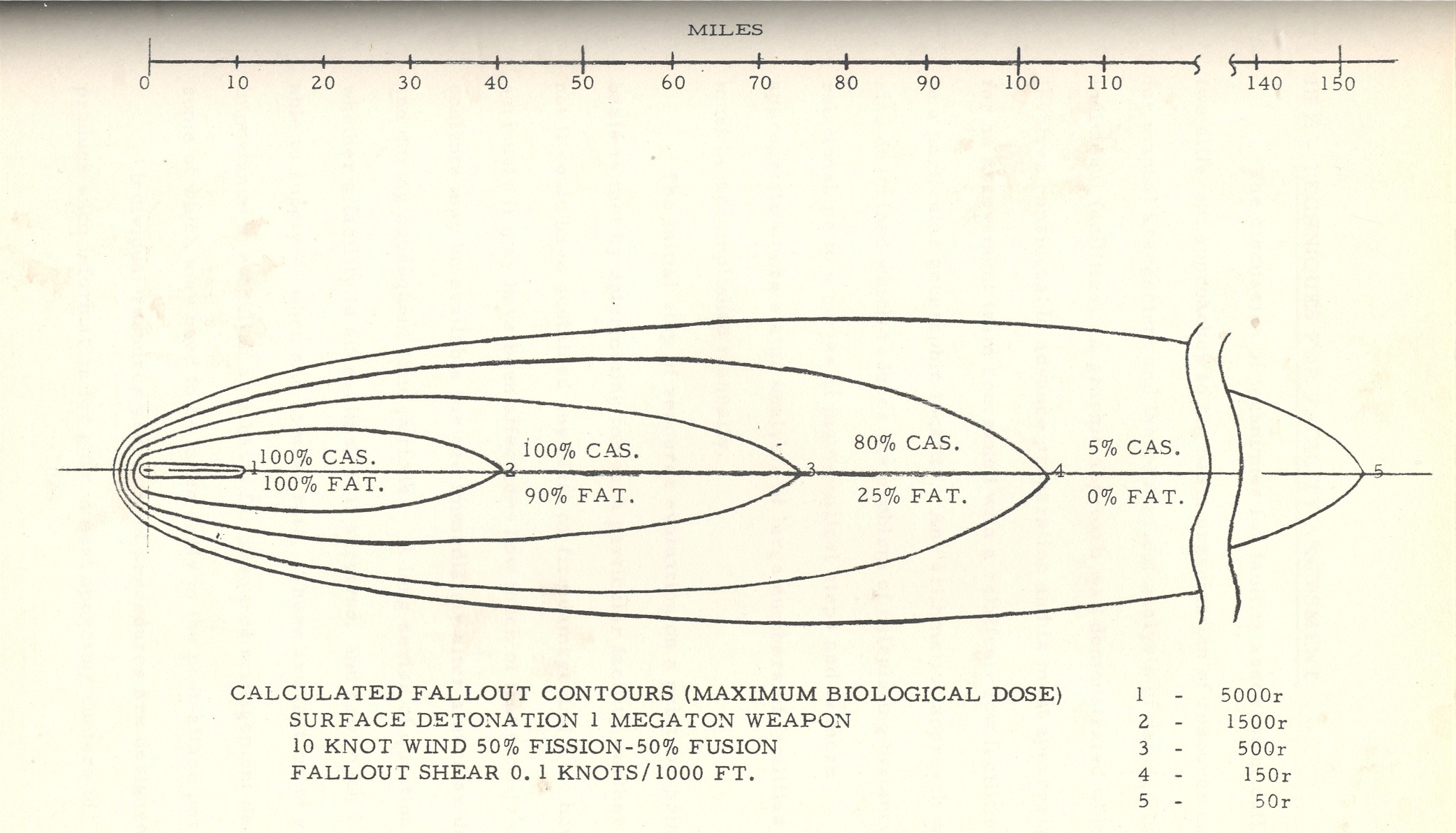
    This doesn’t begin to measure the overall damage inflicted by radiation, which is deeply, extraordinarily, severe.  This again is the effect of one weapon, the 100%  fatality rate eventually reaching out 12 miles; 90% reaching over 40 miles.  General casualties extend to 80% up to 70 miles from ground zero. 

    March 3--20 mt det blast
    March 3--spear

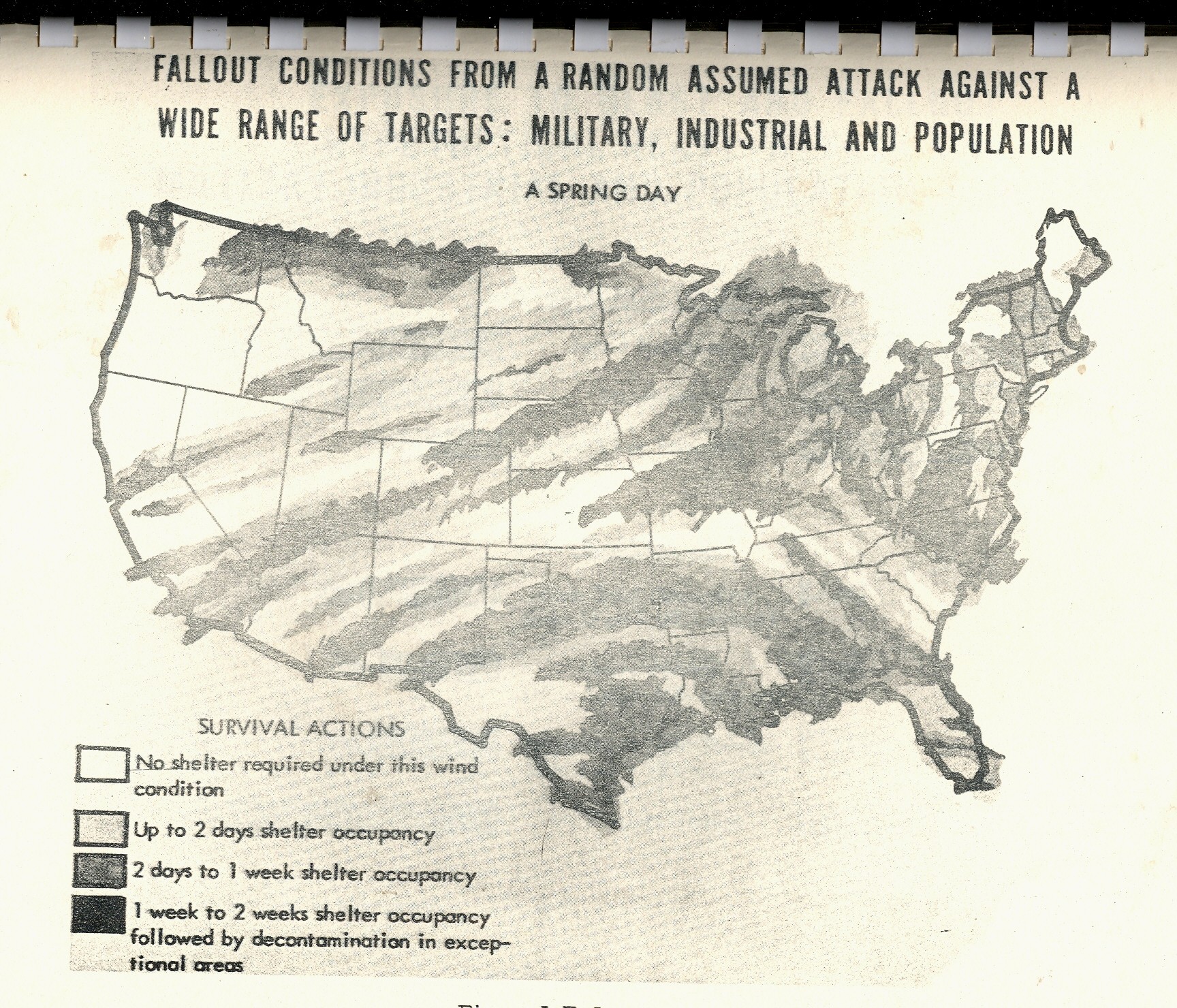
    The emergency planning end of the paper comes in at about this point.The fallout map of the U.S. shows a possible situation of an unspecified (though wide-ranging) attack (on a “spring day”) and its effects on the population as it is housed in various shelters and bunkers, suggesting the amount of time needed to “survive” the attack by staying inside the fail safe habitation.

    March 3--spring day

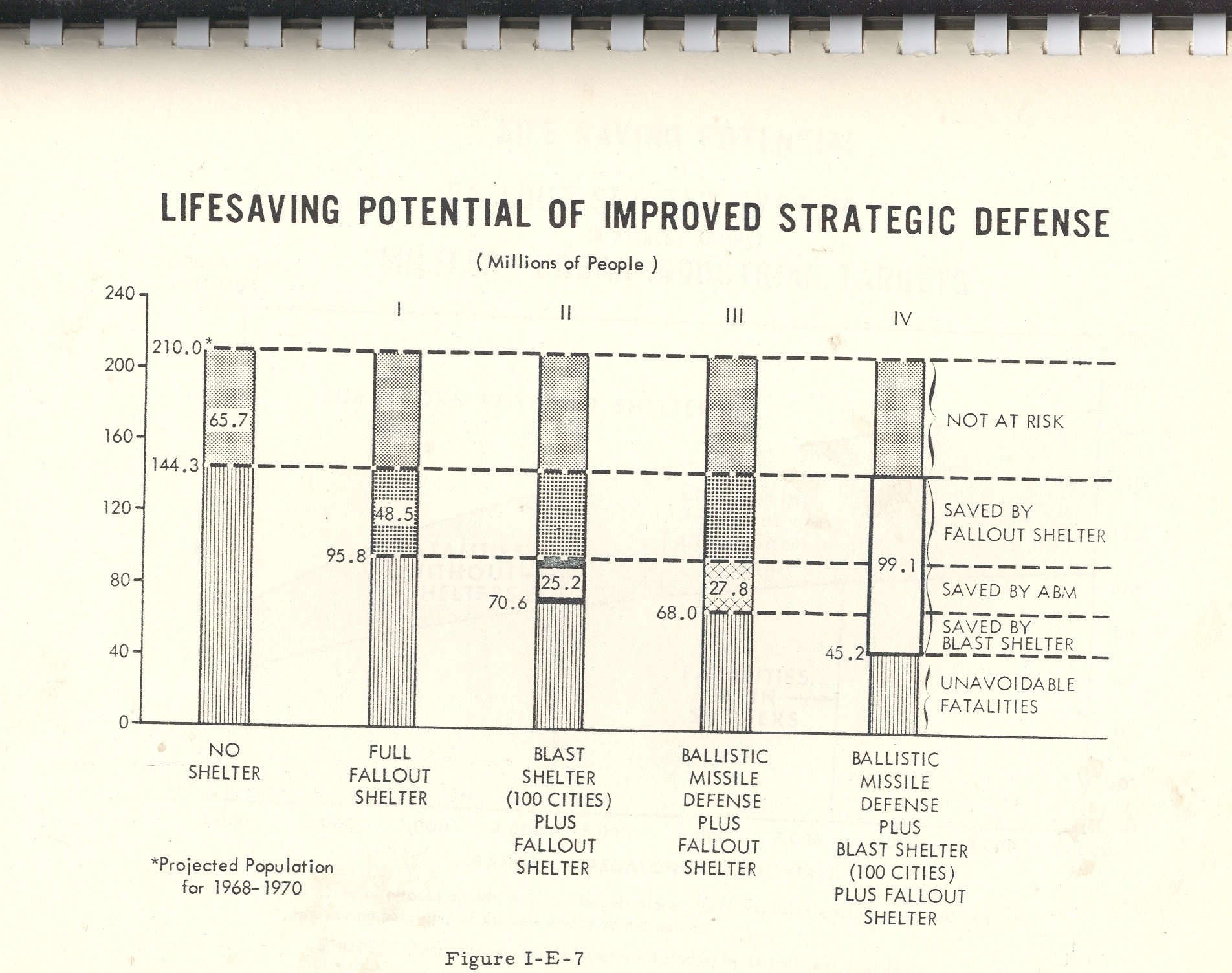
    The following chart, “Lifesaving Potential of Improved Strategic Defense” (in millions of people) shows the effect of the installation of the shelters and bunkers.  In this scenario, in  a massive strike, the fatality rate in the U.S. of an unprotected population was 65%, or 144 million.  On the other end of the extreme was “ballistic missile defense plus blast shelters plus fallout shelters”, or a massively- protected population of fictional expanse shows that in spite of all precautions 45.2 million people would die (as “unavoidable fatalities”). 

    March 3--life saving potential

    “These have no longer any hope of death;  And this blind life of theirs is so debased,    They envious are of every other fate.” Canto III, Vestibule of Hell, the Opportunists.
    This document is nothing if not a death sentence had the massive strike ever been launched.  In the dozens of such reports that I’ve seen, there hasn’t been one with the Really Big One with thousands of euphemistically-named “exchanges”, which I assume would make all  of these others pale by comparison.


  • Taxes Trump Death in the Post Nuclear Attack World, 1964

    JF Ptak Science Books   Post 1553

    Atomic bomb taxes detail583

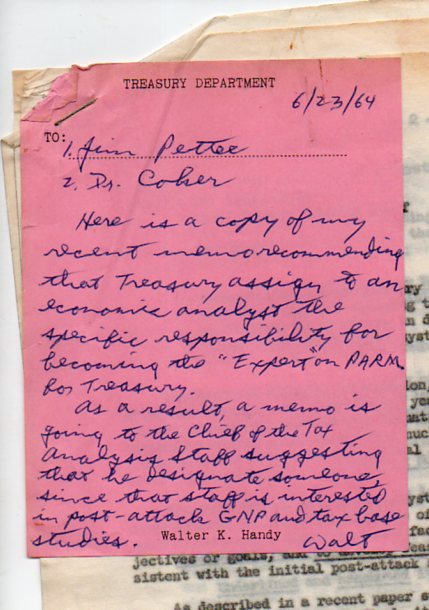
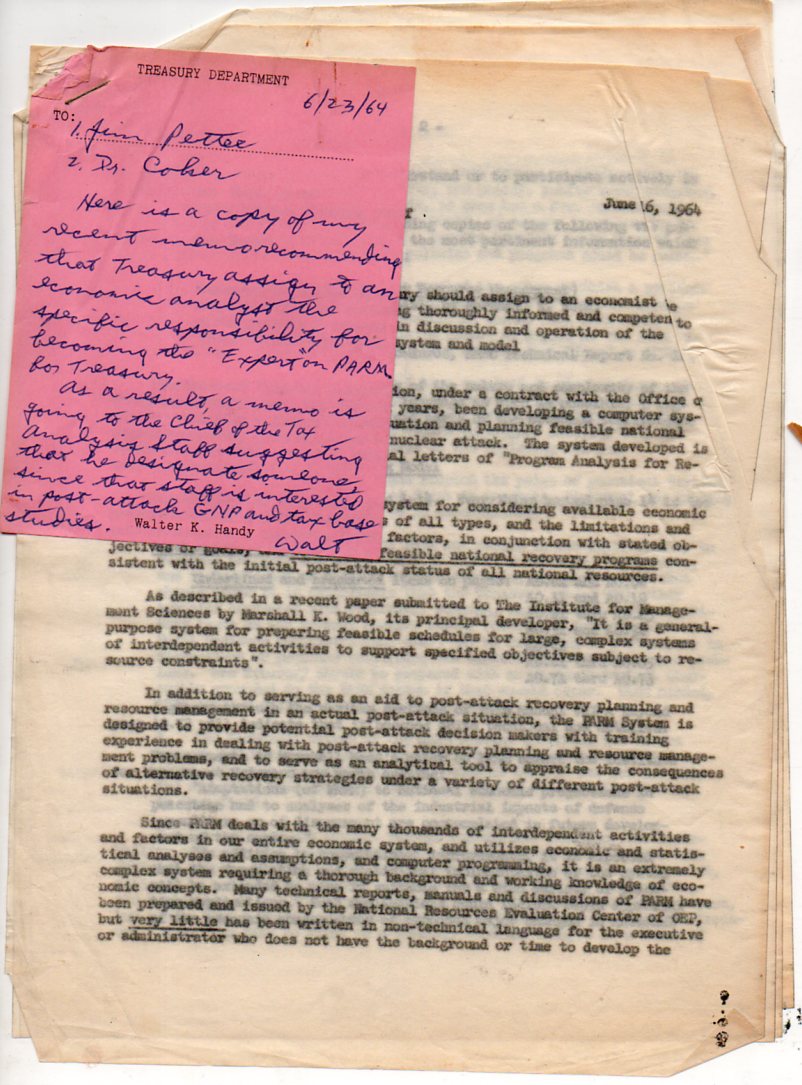
    There are a number of posts on this blog relating to the post-nuclear-attack world, and they seem to cover all aspects of what to expect of society and government after devastating nuclear weapons exchanges.  The posts are part of  a long series (75+ posts) on the history of atomic and nuclear weapons,  but also extend to Armageddon and fat thinking about survivability.   A good example of the unusual aspects of covering all uncovered angles is  Ueber-Spectacular Understatement Dept.: the Happy Post-Apocalyptic America and the “Awkwardness” of Holocaust, 1962 ,  as well as this one on job description and personnel issues post-attack.  But what I’m edging for tonight is the taxman and the business of funding government and the military post-attack, which appeared in a very structured 1967 piece here.  The issue of establishing and collecting taxes in the post nuclear weapons exchange world has come to life again, finding as I did an obscure reference to the nasty business in an attached note to a more formidable folder of other post-attack bureaucratic minutiae. 

    Its a simple thing, really–this is what struck me so heavily about it.  Just a short note about moving mid-level people around for becoming expert in this and that simulation and so on, a little hand-written note, from 1964.  But it suggests that a person from the “Tax Analysis Staff” of the post-attack studies world be the designated expertee, since “that staff is interested in post-attack GNP and tax base studies”. 

    There’s just so much expectation and projection in that last line that I’m not quite sure that it exists. In the real world. 

    Atomic bomb taxes582
    I guess the simple explanation is that after the (radioactive) dust settles following the massive exchange, that people will pick themselves up, brush themselves off, and start all over again (as the song goes).  And somewhere in that killer dust and devastated death a magnificent thing lurks–a GNP.   And inside that GNP its guts–money and taxes–have survived the annihilation of almost everybody.  Which perhaps disproves that old adage, and that in the end, the only thing you really can depend on is, well, taxes, because the dead go away, and the taxes remain. 


  • What Was the Strategic Cost of the V-1 and V-2 to the Nazis?

    JF Ptak Science Books   Post 1551

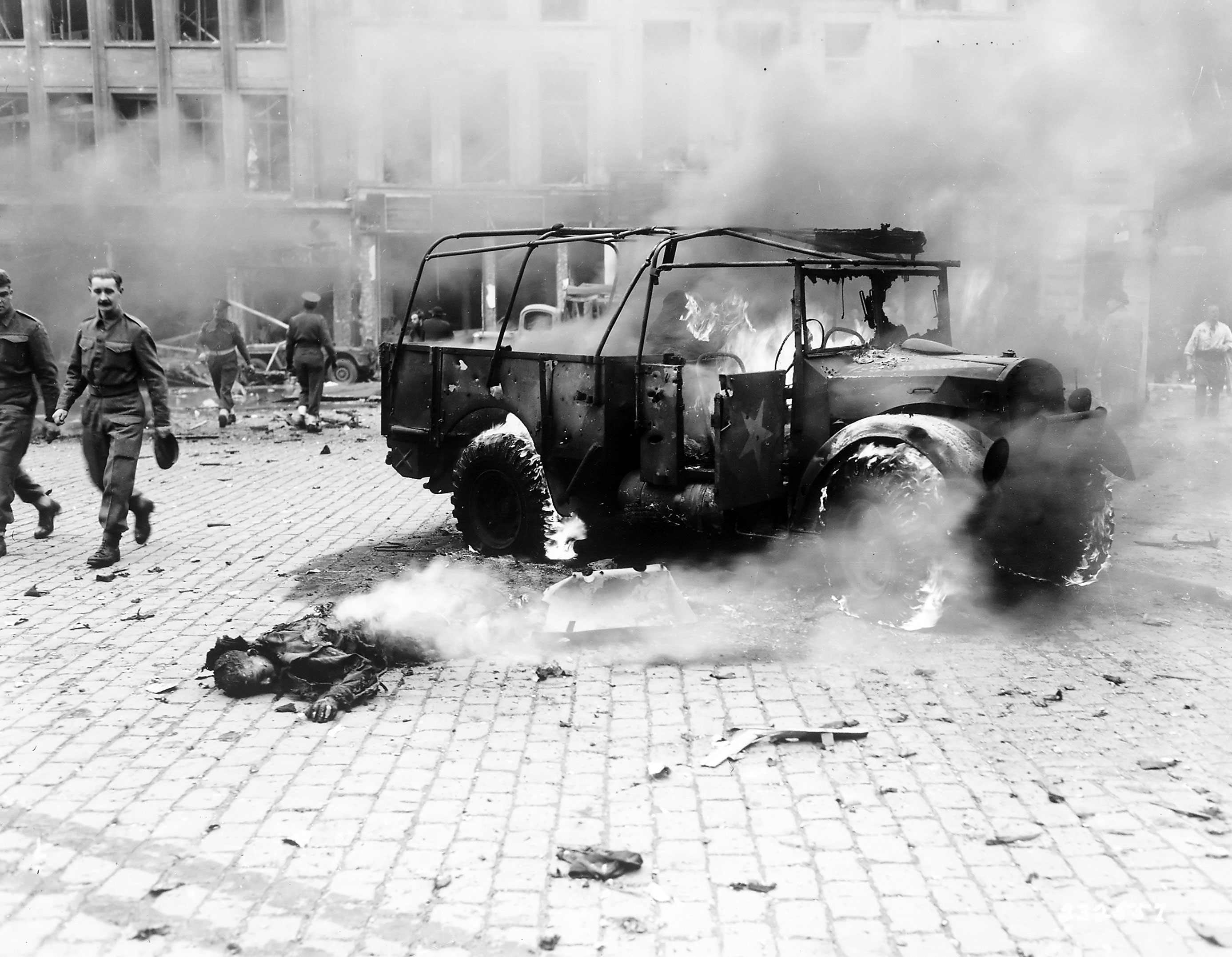
    One of the defensive weapons in the Allies’ arsenal during WWII may have been the V-1 and V-2.  This sounds horrible to say, and I don’t mean this application intentionally, of course–but the production of the V-1 and V-2 was something that could have caused the Nazis the equivalent production of something like thousands (dozens of thousands?) of fighter aircraft–a part of the Luftwaffe that he Allies didn’t need to shoot down because they were never built.  As horrible as it sounds, the V-1 and V-2 may have been the far greater thing to choose from in the production of multiple evils.

    The Vengeance Weapon was a great-ish achievement of the Nazi regime, intended to strike enough fear and destruction in London and other cities and to render them a shambles, an effort that was thought would bring the Brits to their knees.  What happened, though, was this:  that in all of the raids and bombings at the hands of the V-weapons, much of the attack was lost to going off-course, unable to find their gigantic target.  Over time, the V-1 and V-2  terror weapons did kill 9,000 people  or so in the U.K. in their  raids from 1944 and 1945, wounding 25,000  and destroying 20,000+ houses. Over 11,000 of the V-weapons were fired by the Nazis:  more than 9,100 V-1s were fired at Britain (with 2,500+ hitting London), while 1,115 V-2s were launched.   They were terrible weapons, and they killed many people–overwhelmingly a civilian population–but they performed nowhere near their strategic intentions. 


    These totals for the entire campaigns of the V-1 and V-2 rockets  are less than those of a single large raid by Bomber Command, sometimes less than one mission, on one night.  The massive expense involved in producing the V-1 and V-2 weapons could well have been used to fabricate 5 or 10 or perhaps 25 thousand fighter planes.  Fighter planes that could have been used in the war on offensive and defensive procedures. That’s 25,000 fighter aircraft that never flew for the Luftwaffe, never terrorized anyone, never flew in defense of German cities, never had to be shot down. (Assuming of course that the Germans would have had the fuel to power them.)

    They were terrible weapons–the V-1, in particular, made a very dirty, nasty sound, that was a terrifying experience to hear.  When the sound of the engine stopped, the bomb fell.  Long, throaty, deathly gurgle,then silence, then explosion.  The V-2s came in mostly silently, a masked death, but in so doing also somewhat mollified a significant psychological terror weapon.

    Perhaps I am way off base with this, but the V-weapons seem to me to have cost the Nazis far more than they gained.  Of course if they had been able to produce an order of magnitude–or more–of the weapon and delivered it more effectively, then perhaps it becomes a different story.  It would have been a different story too if the Germans had had any reliable intelligence on the effectiveness of the weapos so that they could have adjusted their flight, and if Ultra had not existed, and so on down that ridiculous rabbit hole of speculation.  But my own idea remains that the V-weapons were not as horrific as other things could have been had those resources been allocated differently. 


  • A Note on the Decision to Use the Bomb: 17 July–6 August, 1945

    JF Ptak Science Books   Post 1550

    July 17, 1945 (Trinity +1 or Hiroshima -20), the day after the Trinity test of the first atomic weapon in the Alamogordo Desert of New Mexico, was the first day in which very concerted, very real discussions ensued about what to do with the bomb and where to us it.  Actually the discussions were mostly on the “where” than on the “whether”.  (As it turns out part of a minor segment of the “whether” part was Leo Szilard’s petition to President Truman not to use the bomb and which was signed by 155 Manhattan Project scientists, and which had reached its final version on this day.)

    The truth of the matter was that it was a very complex issue, an easily misunderstood tapestry of circumstance and consequence. The major issue of course was that the Japanese would not surrender, and that there would be “fanatical resistance” once the invasion of the Japanese islands had begun.    The battle of Okinawa had just been fought—it was a horrible confrontation taking 12,5000 American lives and more than 100,000 Japanese , demonstrating that even in impossible circumstances that the Japanese simply would not surrender (unconditionally).   This is just one instance—there are many others, not the least of which was t he recent firebombing of Tokyo, taking 150,000 lives.  Air strikes in general seemed to not make a difference in the will of Japan to fight—as was demonstrated again and again in the British and American bombing of Germany—as was further demonstrated in General Curtis LeMay’s and General Hap Arnold’s  60-city attack in the May-August span.  The thought was that if there was an invasion that it could well cost the U.S. 100,000+1 casualties and would be completely devastating to Japan.

    One issue concerned the Soviet Union breaking their neutrality by invading Manchuria (scheduled for 16 August according to American intelligence reports)  and entering the war against the Japanese, creating a northern front and an impossible position for the Japanese.  Another issue regarded the Soviets brokering a truce—revealed on 12 July to the American administration through intercepted communications between Moscow and Tokyo—between the U.S. and Japan.  In both circumstances the issue of the unconditional truce that was demanded by the Americans could well have been made impossible and bartered out.

    Over the next few days the Potsdam Conference would come to an end, and the Japanese would reject the orders of surrender two days after that.  On 21 July the approval to use the bomb was made by Truman and sent along to Secretary of War Henry Stimson on the 24th.  One day later the only written order to use the bomb would be sent by acting chief of staff of the Joint Chiefs Thomas Handy to General Carl Spaatz, Commander of the US Army Strategic Air Force.  Targets were selected (with General Groves clinging to his desire to bomb Kyoto, a spectacularly bad choice, which I believe was also the choice of John von Neumann).  Nagasaki was not yet on the list but would be in a few days.  By the end of July Hiroshima is chosen as the first target—one reason being that there were no American POW camps located in the city (as was the case with the other two pre-Nagasaki selections).

    Returning to the “whether” part—it is perhaps surprising to see the list of people who had great reservations about using the bomb (at all).  Dwight Eisenhower was one of them, and he wrote about his distaste for using the bomb against Japan in his book Mandate for Change:

    “…in [July] 1945… Secretary of War Stimson, visiting my headquarters in Germany, informed me that our government was preparing to drop an atomic bomb on Japan. I was one of those who felt that there were a number of cogent reasons to question the wisdom of such an act. …the Secretary, upon giving me the news of the successful bomb test in New Mexico, and of the plan for using it, asked for my reaction, apparently expecting a vigorous assent.

    “During his recitation of the relevant facts, I had been conscious of a feeling of depression and so I voiced to him my grave misgivings, first on the basis of my belief that Japan was already defeated and that dropping the bomb was completely unnecessary, and secondly because I thought that our country should avoid shocking world opinion by the use of a weapon whose employment was, I thought, no longer mandatory as a measure to save American lives. It was my belief that Japan was, at that very moment, seeking some way to surrender with a minimum loss of ‘face’. The Secretary was deeply perturbed by my attitude…”   – Dwight Eisenhower, Mandate For Change, pg. 380

    Eisenhower also had no stomach for the United States to be the first country to use “that thing”.

    Another was Admiral William Leahy  (Chief of Staff to Presidents Franklin Roosevelt and Harry Truman), who weighed in strongly with the following: 

    “It is my opinion that the use of this barbarous weapon at Hiroshima and Nagasaki was of no material assistance in our war against Japan. The Japanese were already defeated and ready to surrender because of the effective sea blockade and the successful bombing with conventional weapons.” –William Leahy, I Was There, pg. 441.

    The list is quite long, and includes people like General MacArthur, John J. McCloy (assistant Secretary of War), Joe Grew (Under Secretary of State), Paul Nitze, Lewis Strauss, Albert Einstein, and more.  General Spaatz, who received the one written order to use the bomb, wrote later “If we were to go ahead with the plans for a conventional invasion with ground and naval forces, I believe the Japanese thought that they could inflict very heavy casualties on us and possibly as a result get better surrender terms. On the other hand if they knew or were told that no invasion would take place [and] that bombing would continue until the surrender, why I think the surrender would have taken place just about the same time.”

    Its very difficult really to get the full flavor of this issue in a thousand words or so, and impossible to try and recreate the atmosphere of those few weeks; it is also impossible to imagine the cast relief of the many millions of people who woke up on 7 August to the news of the destruction of Hiroshima. 

    And of course the Japanese still didn’t surrender until after the use of the second bomb on 9 August against Nagasaki.  And so on. They were 20 very full days.

    Notes

    1. Estimating American casualties for the invasion of Japan was a very trickly business–I’ve seen the numbers range from 50,000 to almost a million.  For the Japanese the story would have been far worse, and could have led to the utter devastation of the country. 

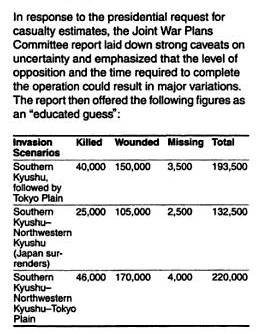
    The War Department was very busy trying to figure out the American casualties for the final invasion of Japan.  In one famous paper, Memorandum for the Chief of Staff: Amplifying Details on Planners’ Paper for Presentation to the President. (17/18  June 1945). prepared by General Hull, estimates for American casualties invading Kyushu (on the way to the mainland) were based somewhat on the very recent experiences at Okinawa. Kyushu was the site of an enormous Japanese military build-up in a final preparation for the defense of the homeland—there were more than six times the number of soldiers here than at Okinawa, totaling some 550,000.  By August 8, today, the American casualties at Okinawa were about 49,000.  There would still be a very long and bloody war to wage had not the Empire of Japan finally surrendered four days after the use of the second atomic weapon at Nagasaki.  Estimates are as follows (this taken from Douglas MacEachin, The Final Months of the War with Japan: US  Signal Detection, Invasion Planning and the Atomic Bomb Decision, CIA, 1999):
    https://historyofideasblog.com/a/6a00d83542d51e69e20120a52fbd06970c-pi

    **for further quotes on those having reservations about using the bomb see Doug Long’s very useful site Quotes gathered from Doug Long’s site.
    ·Posted by :

    ·in:


  • A Child’s Reader on Being a Migrant Farmer, 1940

    JF Ptak Science Books  Post 1549

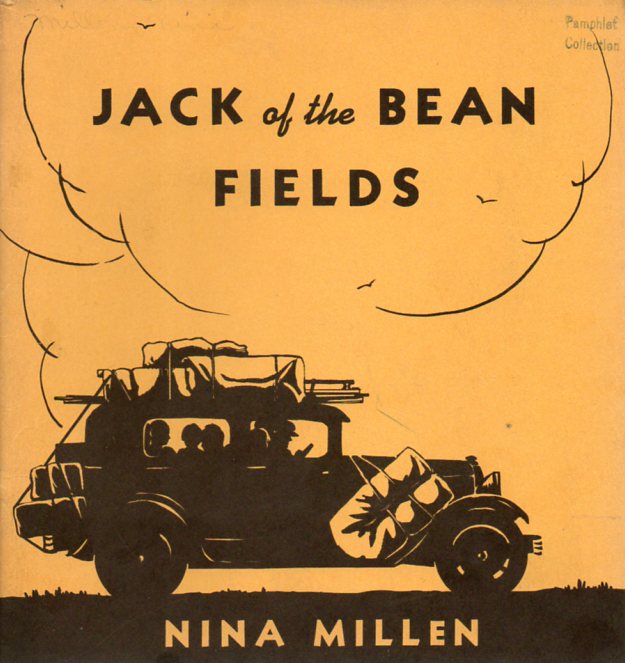
    I hardly expected the story that I found in this little square pamphlet, particularly since I had selected it because of its cover art.

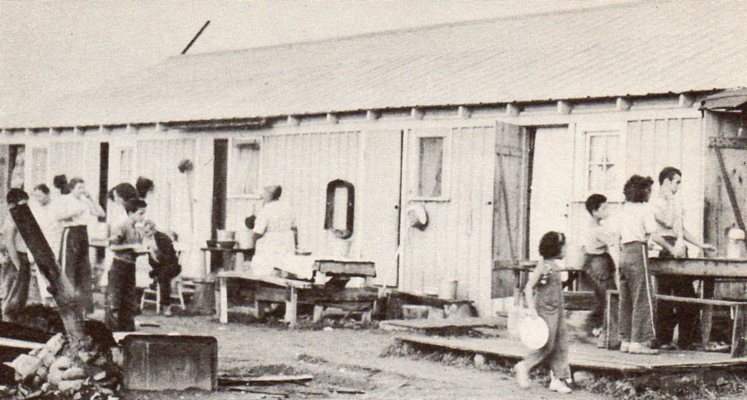
    Jack of the Bean Fields–written by Nina Millen and published by the Friendship Press of New York–turns out to be a photo-essay on one seasonal adventure of a boy named Jack Marco and his migrant vegetable-picking family.  The story starts with the family in a bad way, heading out on the road in a broken car filled with Jack’s mother, father, grandmother and three siblings, out to find a camp where they could find jobs picking early beans. 

    Depression579 As the family fixes the car, Jack heads out to play in the fields, where he finds a book.  We find that–at age 8 or thereabouts–Jack hasn’t been taught to read and hasn’t been to school in years, and the family doesn’t own a single book. The family gets underway, finds a camp, and moves into an empty unit in a series of shanties. They clean the place up, and Jack lays his book on a shelf.  “Now we are settled again” announces Ma.  Wincing.


    Depression580

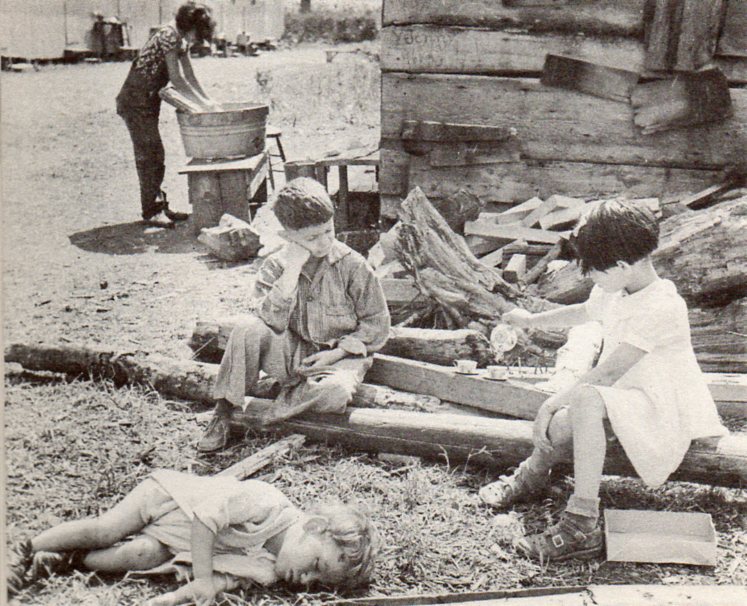
    In a story that could have been a very maudlin or saccharin affair, it was surprisingly matter-of-fact, eventually telling how community and church groups appeared through the intercession of a camp nurse to help the migrant families, clothe the children, and send them to school. 

    Depression581

    The war was underway, the Depression was on its way out, the economy was beginning to bounce–but then, as today, there were migrant farmers–they just weren’t being displaced by Dust Bowl factors anymore.  But, basically, it was a good story for kids, focused mainly on appreciating what we have and our small gifts, such as family–and the ability to read. 


  • Child Straigtener & Other Edwardian Cyborg Bits: Patent Reports

    JF Ptak Science Books   Post 1549

    (The following images are taken from the U.K. Intellectual Property Office Espacenet patent search page, here. The quotations following the illustrations for the patents are from that page.)

    Close Straightening Encounters for Children of the Reading Kind

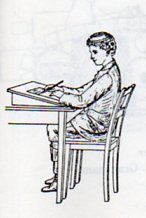
    Here’s an interesting implement that no doubt brought secondary thoughts about reading to any child made to wear this thing–the unhappy child is at left, and the skull-cap, at right.

     
    Yborg578

    First page clipping of GB 190421618 (A)

    Abstract of  GB 190421618  (A)

    “Lorenz, H.. For indicating when wearer deviates from an upright position; caps.-A cap I is made in the form of an inverted bottomless saucer with holes 3 in the side for lightness and ventilation. It is intended to be worn by school children to prevent stooping, inasmuch as it only remains on the head so long as the wearer remains in an erect posture…”


    Hand Guard for Cutting Things


    First page clipping of GB 190402703 (A)

    Francis John Crell: GB190402703 (a) “A Hand Guard for use in Cutting Bread and for Other Like Purposes”.  I’m not sure how this works as a glove-protective unit  given the spaces in-between the springy fingers–mostly it seemed to increase the cutter’s grip rather than protect them for accidental cutting.


     Walking and Running Anti-Deformation Appliance

    Patent Brit walking running machine

    Abstract of  GB 190414477  (A)

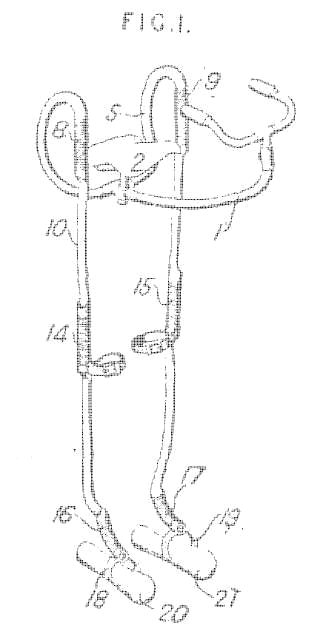
    “Skorzewski, Comte V. Walking and running, appliances for aiding.-A n appliance for aiding walking and running is adapted to store up, and to give up at the required moment, the energy resulting from the alteration in height of the centre of gravity of the body. The user sits on a saddle 2 adjustably attached to a tube 1 provided with handle – bars. The tube 1 branches into two tubes 5, which are connected by joints 8, 9, 14, 15, 16, 17 to other tubes of narrower crosssection, conforming in shape to the legs of the wearer, who is strapped to the appliance. The joints 16, 17 are connected by means of stirrups 18, 19 to soles 20, 21, or to straps by means of which soles may be attached to the appliance. The tubes are filled with compressed air through a suitable cock or valve. The joints are preferably formed of armoured rubber tubes, coated or not with para rubber.”


  • Women with Guns–a “First” in Women/Pistols/Advertising?

    JF Ptak Science Books   Post 1548  [Abdullah Cigarettes Revisited]

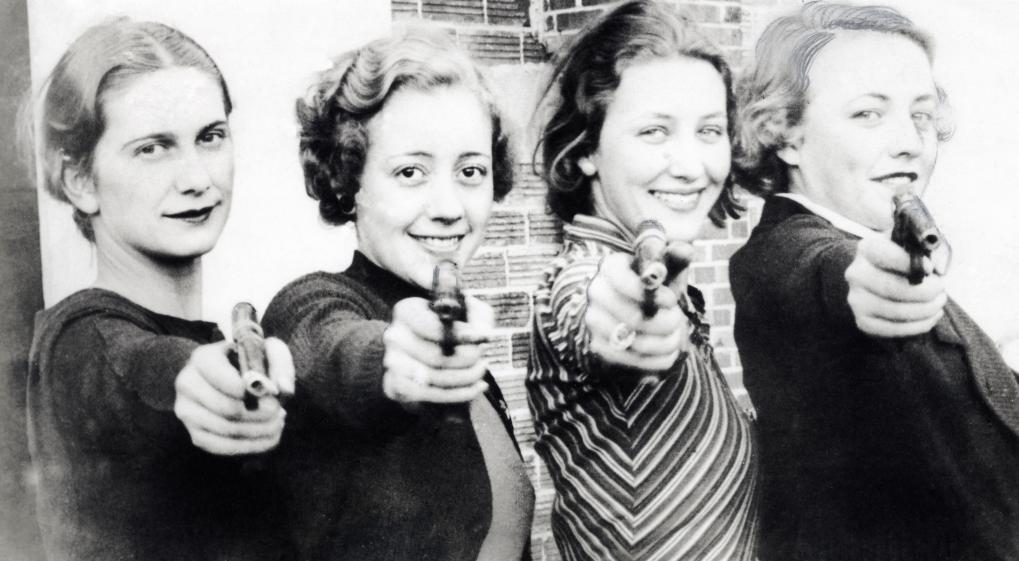
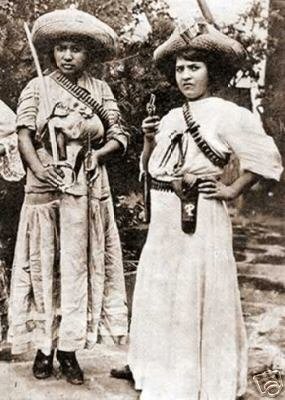
      Women with pistols

     
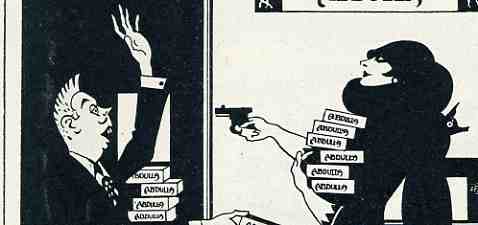
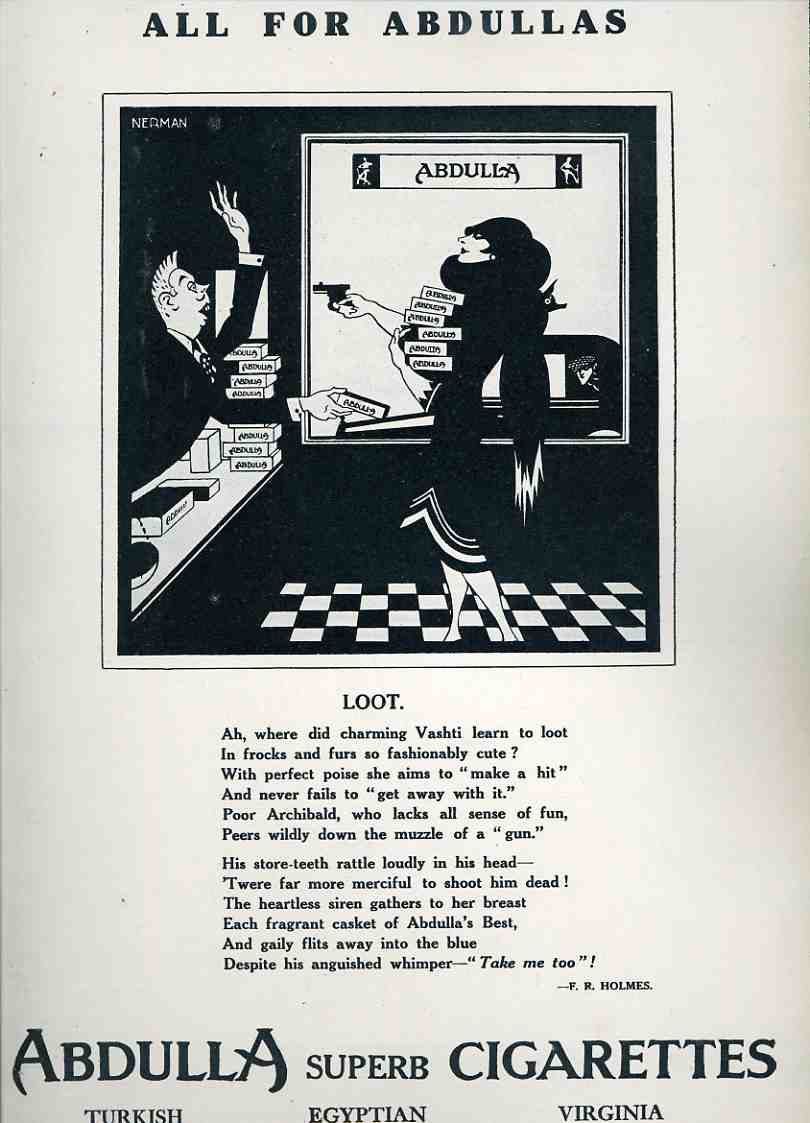
    Here’s a not-usual question:  when was the first image printed of a woman pointing a gun in the commission of a felony who was NOT an American Western leather-slapping, bronc-ridin’, Buffalo gal?  I have a funny feeling that it wasn’t until relatively recently, 20th century, or thereabouts.  I thought about this when I saw this ad in the Illustrated London News for 21 August 1926, calling for women to rush out and buy the ciggy that was worth stealing–Abdulla (“Superb”) cigarettes.

    0 blog feb 26630


    The doggerel of the poet-izer F.R. Holmes that decorates this page (and who recognizes that the clerk named Archibald who was handing over the cigarettes was chattering through “store-teeth”, which is kind of nice) did absently grind out a factual bit when he referred to the packaging of the Abdulla cigarettes as “Caskets”. Of course he had something else in mind in line with his time, but he did mistakenly have a peep into the future when he labeled the box of coffin0 blog feb 26629 nails so, though not so “fragrant” as he was thinking.  (I also like the masked male accomplice peeping into the scene from the safety of the getaway car.)

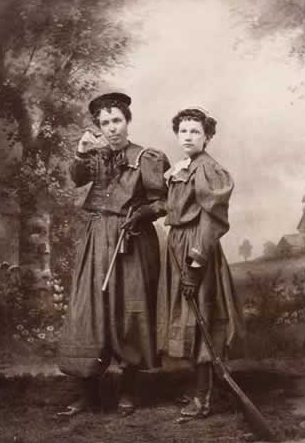
    Offhand, though, I cannot bring up an earlier image of a non-cowgirl-performing woman pointing a gun at someone to achieve a criminal end–especially not in an advertisement. 

    It is interesting considering this ad as a statement of sorts of women in the marketplace purchasing stuff that had previously been considered male terrain.  Woman had been he target of cigarette manufacturers in some small ways in the late 1880’s and early 1890’s, but it seems not until after the War and then after the Vote was there a full-on effort to sort women into some consuming fields that they had been excluded from previously.  Unfortunately, in this case, the advertisers recognized that they were missing perhaps half of their possible market, and that new market was pursued and resulted in tens of millions of cancer-related deaths. 

    Well!  Now that I’ve finished this short post, it just came to mind that a good alternative and much earlier source might be images of she-pirates, though it might still be a stretch to find one of those women with their sword at someone’s neck…

    Women and guns

    ·Posted by :

    ·in:

    — —

  • Fear of Numbers, Part 7 and Seven Sevenths: Octophobia.

    JF Ptak Science Books   Quick Post   [Part of the Unintentional Absurdist series.]

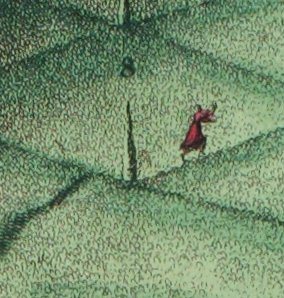
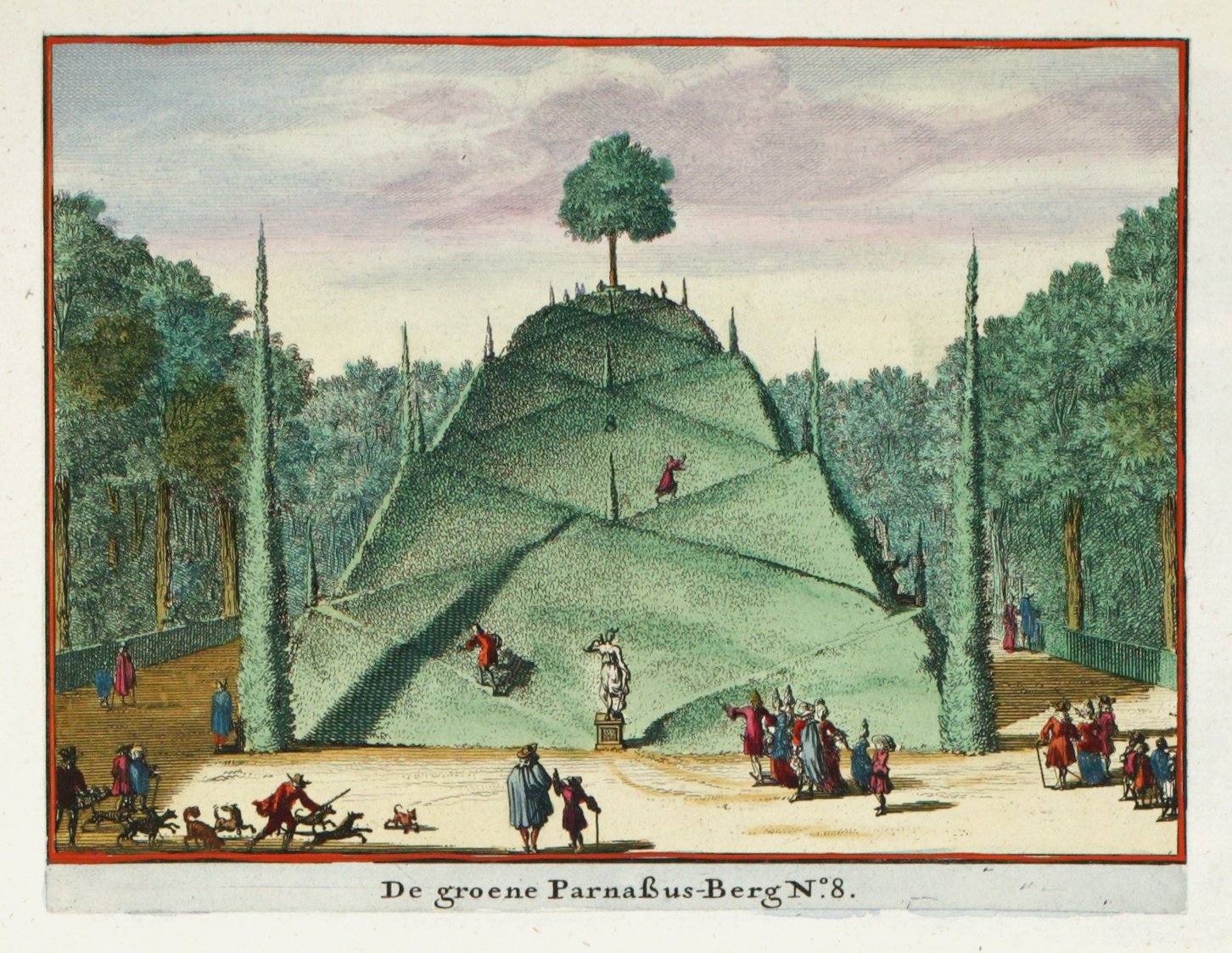
    Lines Large Mount Parnassus detailThis illustration comes from the beautiful Bibliodyessy site (follow link for the full description of the artwork), where the curator unearthed this series of 32 hand-colored engravings of the gardens of the great emblematicist, Jacob Cats.  I wonder why this fellow had such a strong reaction to whatever it was he was seeing.  I guess he was just looking at the shrub, but the vicinity of the eight, and its potential peril (!) for what it might represent (from eight-of-something-bad to the sign for an inverted infinity) , made this a little too good to resist.  [This is the first in a series of “found” images displaying unusual reactions to unintentioned floating numbers.]

    And the full image from which this detail was removed, a garden Mount Parnasus. 

    Lines Large Mount Parnassus 

    ·Posted by :

    ·in:


  • History of Lines: Complicated Simplicity and Marconi’s Lines of Communications

    JF Ptak Science Books  Post 1547   [Part of the History of Lines series.]

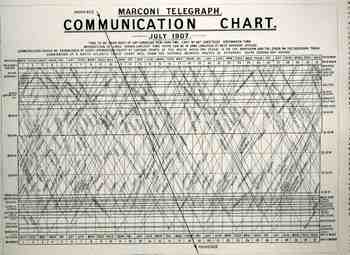
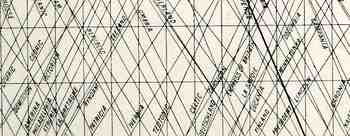
    This is an illustration of the approximate times and places that ships at sea could expect to be able to communication with each other by the relatively new invention of wireless telegraphy. (We’re talking about Marconi here and just very briefly; this is not the place for the discussion of what he did or didn’t “borrow” from his predecessors and contemporaries such as Heinrich Hertz, Oliver Lodge and Nikolai Tesla.  He at the very least however owed all of them at least an enormous helping of gratitude, and probably more.  Then there’s Marconi’s very conservative technical continuation in the field which is confusing and interesting.  And finally but not the least of all of the stuff about Marconi is his comfort and support of the Fascist regime in Italy, where Marconi became a member in 1923, escalating in his fame through the party ranks to have none other than Benito Mussolini serve as the best man in his second wedding.  But as I said that’s all for another day.) It appeared in The Illustrated London News for 7 September 1907,surrounded by an article on Obelia in the “Science Jottings” section of the magazine.  This chart isn’t
    1blog_oct_13marconi_at_sea816

    quite as complicated as it seems, really: all you need to do is follow one line from the top to the bottom.  Simply put, each diagonal line represents a specific ship (all of which are named) and their positions as they make their ways across the North Atlantic ocean; each intersection represents the time and place that two ships can communicate via wireless with one another.  So, for example, the Empress of Britain will on its six-day voyage be able to communicate at least 26 times with other ships for news and information.

    What this seems to me to be is the supplemental efforts of the ocean-going ships

    1blog_oct_13marconi_at_sea817

    to the newly established trans-Atlantic radio-telegraphic company and installation opened by Marconi in October 1907.  Even though the first transatlantic communication is celebrated as having taken place in 1901, the performance, even in 1907, was still spotty.

    Again, I’m just after this for the image