A Daily History of Holes, Dots, Lines, Science, History, Math, Physics, Art, the Unintentional Absurd, Architecture, Maps, Data Visualization, Blank and Missing Things, and so on. |1.6 million words, 7500 images, 4.9 million hits| Press & appearances in The Times, Le Figaro, Mensa, The Economist, The Guardian, Discovery News, Slate, Le Monde, Sci American Blogs, Le Pont, and many other places… 5000+ total posts since 2008.

Author: JF Ptak

  • Edison’s Anti-Gravity Underwear Kite Babies, 1879

    JF Ptak Science Books    Post 1562  [Part of a series on the History of the Future]

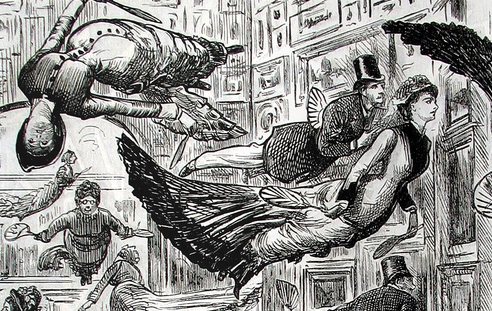
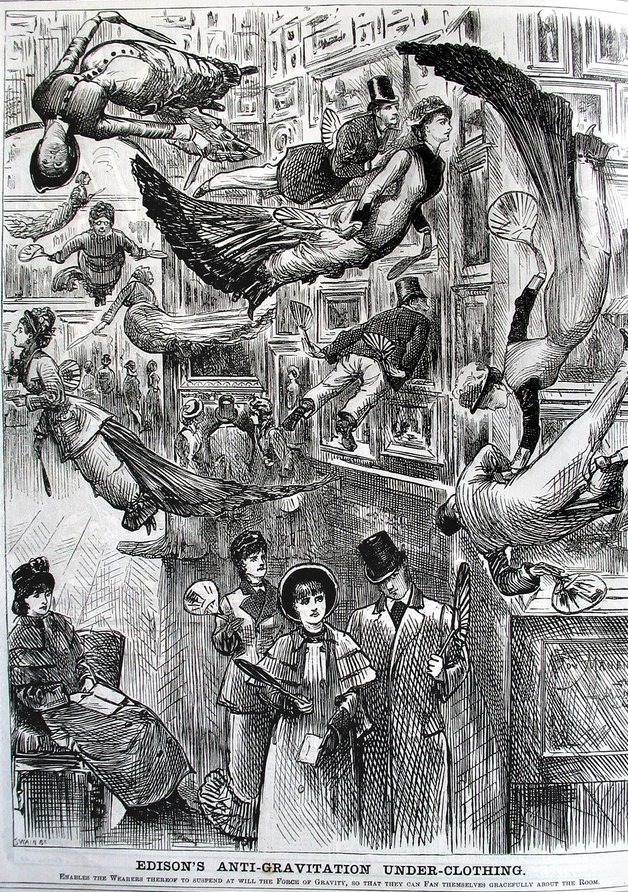
    There was a time in the late 19th century when it was seen that Thomas Edison could do just about anything–so much so that the Brits in The London Punch gave him tongue-in-cheek credit for inventing (flying, so to speak), anti-gravity underwear. 
    Edison anti gravity 3
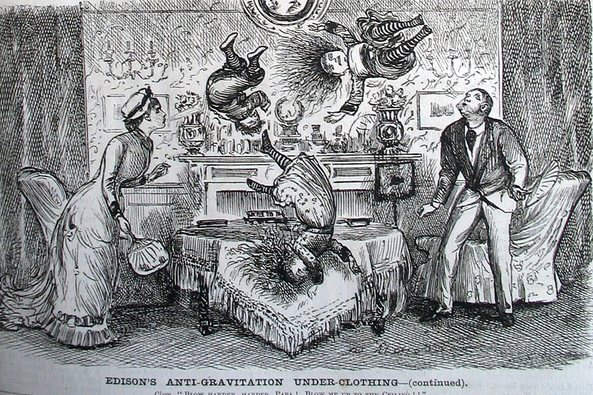
    The funny thing about this though is that the best thing that people could do with this new invention would be to go to a super-sized art gallery to look at paintings close to the ceiling. 
     Edison anti gravity b

    This would no doubt have been distracting to the people without this delightful new underwear, who had to solemnly sit earthbound and try to enjoy their experience while people now not only walked by, but floated through their site lines as well. Perhaps they were wondering why these well-dressed flying people were doing so, indoors.

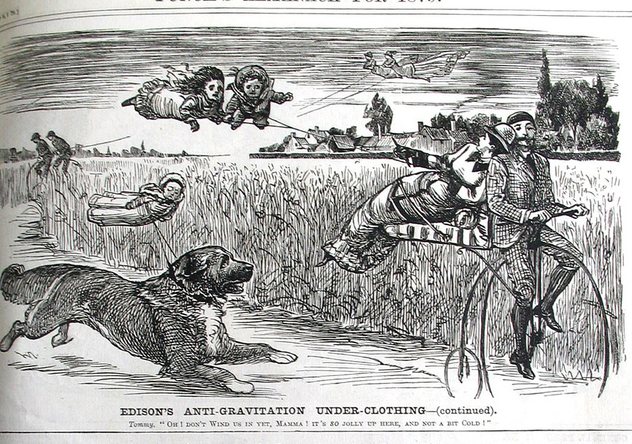
    Of course you could have made baby kites as well, shoving the little buggers into their anti-grav onesies, tether them to your bike, and give them a ride through the not-brambly countryside.  I would hope that the dog in the image below didn’t get distracted by anything whatsoever–but if that did happen, it would be easy to locate the dog.  All you had to do was follow the flying baby. 
    Edison anti gravity 1

    Why did all of this have to be underwear?  Why not, say, outer clothing? Or a carriage?  Or ship?  Or etc.?
    Edison anti gravity 2
    Perhaps it was easy to make fun of an invention that seemed highly dubious but, somehow, still within the realm of possibility.  After all, Edison was beginning a phenomenal run of creativity–by 1879, when these images appeared, Edison, who was just 32, had already invented the electric light bulb and the phonograph, not to mention dozens of patents for things like the automatic telegraph, the voice engine, the speaking telephone, and an electrical tangle of other useful and revolutionary things (not the least of which were certain essential improvements in the telephone that made the Bell instrument more commercially practicable on a mass scale).  Edison was seen as being capable of virtually anything–later in life, he was the subject of an early science fiction work by Serviss  called Edison’s Conquest of Mars, and much later on, in 1920, a bored joke of his on a naive reporter became international news when the rest of the world thought that he might have invented a telephone to the dead.  But early on in his career, at the beginnings of the great heights of fame, he was seen as being capable of just about anything. 

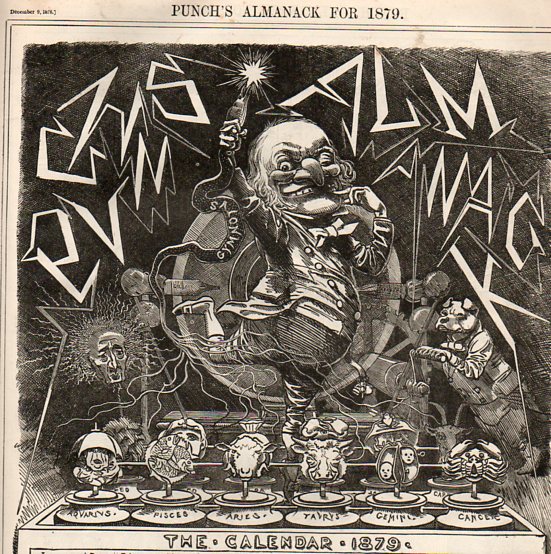
    Certainly they, the editors, the representatives of the thinking society, felt the electric mode of change in the air.  Punch greeted their readers to their almanac with this super-charged image:
    Edison electric620
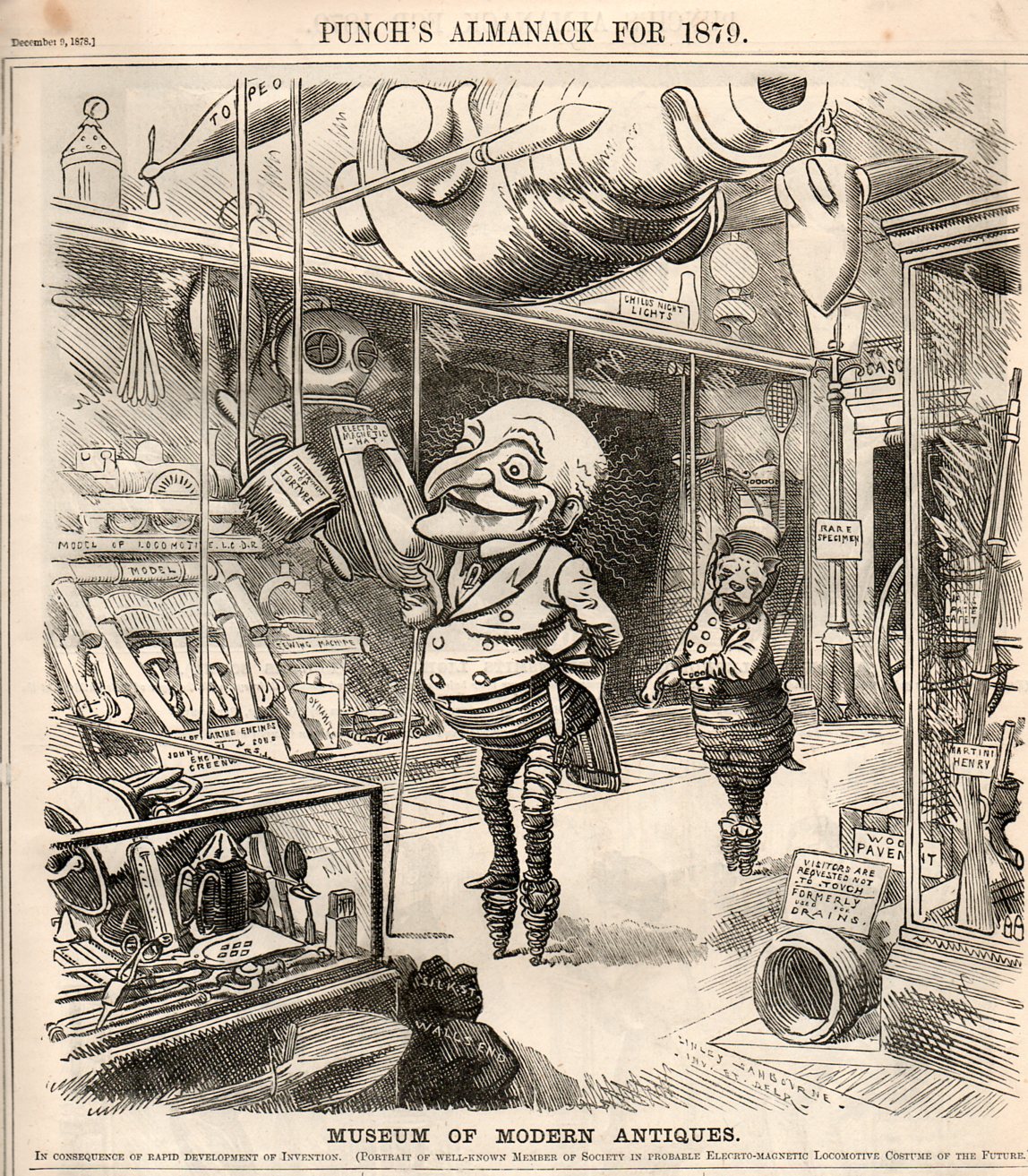
    And noted, several pages later in the almanac, that their modern conveniences might soon find themselves as quaint antiquarians, housed in a museum, being visited by Mr. Punch and his dog touring the place, transported by some sort of electromagentic sumpin’:
    Edison electric621
    But for now, in 1879, the London Punch was content to spring on joke on Edison underwear.

    Notes:

    List of Edison’s patents, here.

  • German Design–Communist Election Material, 1932

    JF Ptak Science Books  Post 1561

    German design618

    There have been some fits and starts in dedicating an effort to posting some examples of German book illustration from the period between-the-wars.  There have been just a few thus far on this blog, though my intention is to place a hundred of the interesting bits in the collection here–most of these are pamphlets, and the vast majority do not make an appearance in the WorldCat database, which means that they are not catalogued/located in any library collection anywhere in the world.  Of course some folks say that pamphlets are a somewhat different category from books, and so don’t get catalogued as frequently, and therefore may actually exist in some number in these libraries–but if the library doesn’t know whether they have a particular title or not basically means that the book or pamphlet just isn’t there.  In the majority of circumstances, “we don’t know if we have it” = “its not here”, which pretty much means that for official purposes, the thing doesn’t exist.

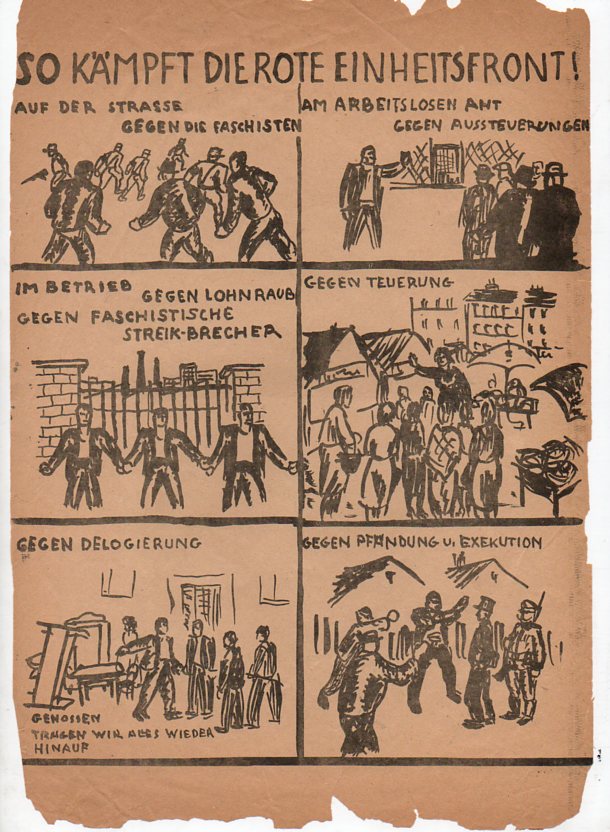
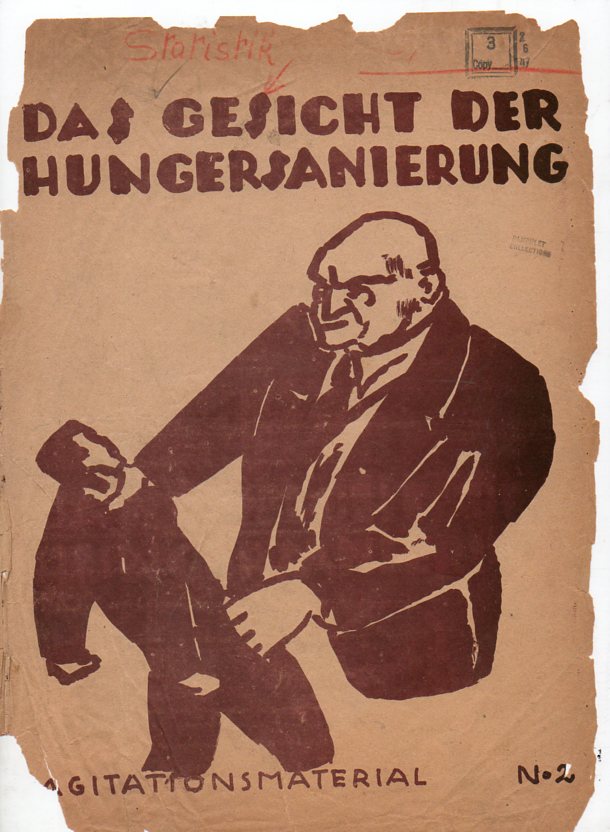
    And so to today’s installment:  Das Gesicht der Hungersanierung, Agitationsmaterial No.2, which seems to me to be a statistical handbook for a member of Germany’s Communist Party (KPD, the Kommunist Partei Deutschland), a very short primer on the status of the general working-poor laborer, inflation and unemployment –and how whoever published this pamphlet could help its redaer. 

    German design619

    The pamphlet does have a distinctive Communist Party taste to it, and certainly the title of one of the full-page illustrations seems to identify itself as such:  “So Kampft die Rote EInheitsfront!”.  Given the leaning of the rhetoric, and the assault on the controllers of industry, and its dislike for Fascists, it leads me to believe that this is KPD (though I hasten to add that I am hardly any sort of expert on Germany politics of the early 1930’s). 

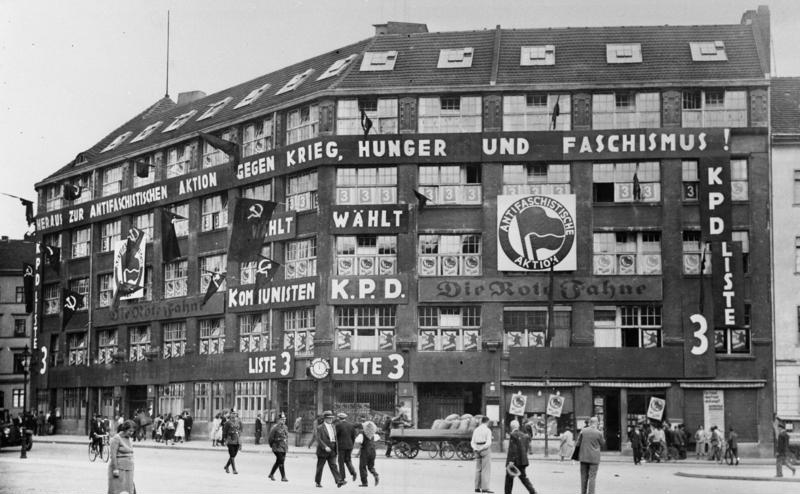
    There is some fair amount of the content of this pamphlet that appears on the facade of the KPD headquarters, painted right on the bricks of the Berlin building, as it stood in 1932.  THe party would have a very short life after that–Hitler and the Nazis would arrest the leaders of the party right there in that building in January, 1933, once Hitler had consolidated his power. On gaining the Chancellorship, Hitler took care to eliminate the KPD as much

    File:Bundesarchiv B 145 Bild-P046279, Berlin, Liebknecht-Haus am Bülowplatz.jpg

    as possible, imprisoning thousands of Party members in concentration camps as early as that same year, 1933. 

    The Communist Party did after all control some amount of the Parliament, finishing so (see tables below) in the 1932 elections; but the big loser of course was Hindenburg, and the rest of the world.

    This short, oversized pamphlet was no doubt constructed hurredly, emphasizing the control of the owners of the means of production over the worker, displayed on the cover by the giant “boss” with one hand around the worker’s neck and the other in his pocket, bolstered on the interior few pages with statistics.  But there was little, really, to say about the Nazis themselves, which makes me think that this was printed before that final vote in July. 

    ·Posted by :

    ·in:


  • History of Headaches–Athena and Snakes

    JF Ptak Science Books  Post 1561

      Luchinus 2

    Athena–the Greek goddess of wisdom, and of civilization and of course warfare, and of strength and strategy, and of justice and craft and clever thought–was the first daughter of Zeus, whose mother was Metis, a Titan and equal of her father.  The story of her birth has been told in many different ways, but the basic element of it was that Zeus had laid with Metis, yada yada yada, and then feared that their offspring might be his equal, or greater, and so to quench his appetite for his consort, Zeus ate Metis (on the advice of Uranus and Ge), swallowing her, whole.  But as these things go, Zeus hadn’t planned that Metis was already pregnant, and that being the case, gave birth to Athena inside of Zeus.  Zeus knew nothing of this–being busy–except that after a while he developed a headache so intense that other gods came to his rescue and forced open his head to release the pain–and from his forehead came his daughter, Athena, already clad for war and armed with gifts from her mother. 

    John Milton evidently employed this (or similar) image of springing-from-the-forehead for his own incantation of sin coming from the forehead of Satan, in his Paradise Lost.  Satan (renamed from Lucifer) has been sent to Hell after his attempted terrorism in Heaven, and while there his daughter, Sin, springs from his head.  He of course falls in rapturous lust with her and they produce a baby, Death, which eventually devours Sin.  Oh Happy Days!

    There seems to be some fair amount of spring-from-the-forehead-of business in the history of story telling:  Saraswati (another goddess of wisdom) springs from Brahma’s forehead, Thoth comes from Seth’s forehead in Egyptian mythology, and a parallel Athena/Zeus story appears in Roman mythology with Palla and Jupiter. 

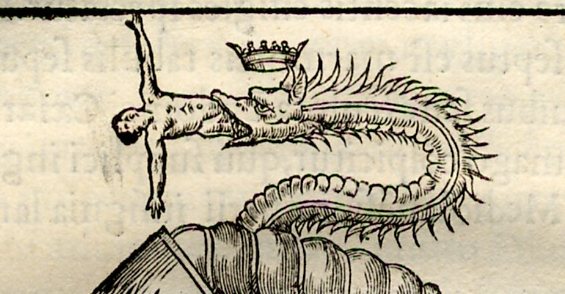
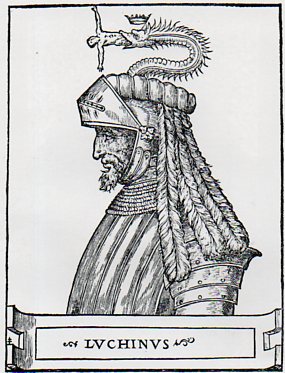
    This seems a long way to get to this headdress of Luchinus (or Luchino I Visconti, who shared in the rule of Milan from 1339 to 1349, found in Paolo Giovino’s Abbrege de l’Histoire des Vicomtes et Ducz de Milan, publihed in Paris in 1553), which was either real or not, but the image of the consumed man springing from the crowned head of the ruler was too much to pass up.  I am assuming that the man is going into the snake/dragon, rather than the other way around.

    Headaches616

    Notes:

    On Athena and Zeus–

    Hesiod, Theogony 886 ff :
    “Zeus, as king of the gods, took as his first wife Metis, and she knew more than all the gods or mortal people. But when she was about to be delivered of the goddess, gray-eyed Athene, then Zeus, deceiving her perception by treachery and by slippery speeches, put her away inside his own belly. This was by the advices of Gaia (Earth)


  • Receipt for a Hanging and the Executioner’s Business Card, 1891

    JF Ptak Science Books   Post 1560
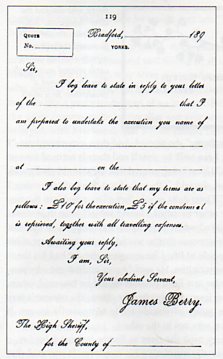
    Executioner card603
    I find a deep, semi-literary dreaminess in the imagination left open by the blankness of empty receipts, questionnaires, incomplete reports and untransmitted half-bits of undone documents.  The missing qualities of these objects can be an open invitation to insight, sometimes allowing their reader to see more in the incompleteness than had the object been completed.  (There are a number of posts in this blog about these qualities, one of which is “Empty Memory, Telephone Number Warsaw 20080, Nazi Occupied Poland, 1941″, with many of them appearing in the series A History of Blank, Empty and Missing Things.)

    And so with this receipt for monies due to England’s executioner, James Berry, found on page 78 of Howard Engel’s very straightforward and intriguing work on execution in England, Lord High Executioner.  James Berry served in this capacity, working for the state from 1883 to 1891, all through his thirties (31-39), hanging 130-odd criminals.  It turns out that he was the third executioner in a row who had something to do with shoes–the preceding two executioners, William Calcraft and William Marwood, were both cobblers; Berry on the other hand was a shoe salesperson, whose replacement in 1891 was a “hairdresser”. 

    Calcraft was a man ill-suited for his job and was replaced by Marwood, who was–he was a deeper thinker when it came to executing people, and applied that too his craft.  So too with Berry, who seemed to have the proper treatment of the condemned first in mind, which meant to have them suffer as little as possible during the execution.  To that end he calculated the most efficient ways of noose construction and placement and the heights at which a person could be dropped to (hopefully) ensure an instant death. 

    He was a particular man, and intended for their to be as little left to chance in his job as could possibly be.  As a matter of fact, to make an assignment function as smoothly as possible, Berry had printed a bill of services so that there would be no question as to what was being paid for with his services and for what.  I can understand that the man needed as little confrontation in this job as possible.

    Executioner615
    The man was a professional who sought to make his job make as much sense as possible, given the circumstances.  While he was executioner, Berry felt as though to note execute someone for capital crimes was an affront to the Bible, which he felt demanded this blood retribution.  Afterwards, after his career, he was less sure of this belief, ultimately becoming a true-enough evangelist who stood firmly against capital punishment. 

    Advert For 'My Experiences As An Executioner' By James Berry.
    Over the years, Berry–who died at age 61 in 1913–seemed to have fewer shadows in his life the further removed he was from his work.  Soon after leaving the employment of the Home Secretary, Berry sold off most of his momentos.   His parlor evidently was a gallery of his work, decorated (perhaps that is not the right word, I am sure of it) with photographs, locks of hair, pieces of clothing and rope and so on of the people he put to death.  He claimed to be more restful with those physical memories removed, and so far as I can recall, he never did recant his actions as executioner for England. 

  • Mitigating and Matriculating Apocalyptic Nuclear Exchanges, 1959

    JF Ptak Science Books  Post 1559

    [This is part of a series of posts on planning for the post-apocalyptic nuclear war world.  Others include Virtuosic Apocalypticism:  Maps anbd Charts of Nuclear Exchange, 1964,  Taxes Trump Death in the Post-Nuclear-Attack World, 1964, and others which are linked to those two posts.]

    There is nothing quite like reading turgid handbooks filled with impossible hope for recovery from un-recoverable situations.  Of course, there are few situations that might actually occur in which recovery (to anything like the “life” that existed before the event) would be impossible:  enormous meteorites making impact with the Earth would certainly be one, and there is little else besides this, really, outside of an enormous nuclear war.  And it is exactly this, this second scenario, that the U.S. Government planned for to great lengths for decades on end–it was expected to be investigated, of course, because there was little else that could be done short of doing away with nuclear weapons, which was/is an action that would not be a serious consideration. 

    Planning for post-Armageddon was a solid, white-collar job that kept thousands of people employed for 30+ years.  The idea behind the smiling mask was simple–that in an “exchange” (an uncommonly milky euphemism for launching nuclear weapons between enemies) there would be winners and losers, and in spite of tens of thousands of megatons of nuclear weapons being detonated, there would be enough infrastructure that would survive to be able to declare one of the smoke-filled-holes a winner in the conflict. 

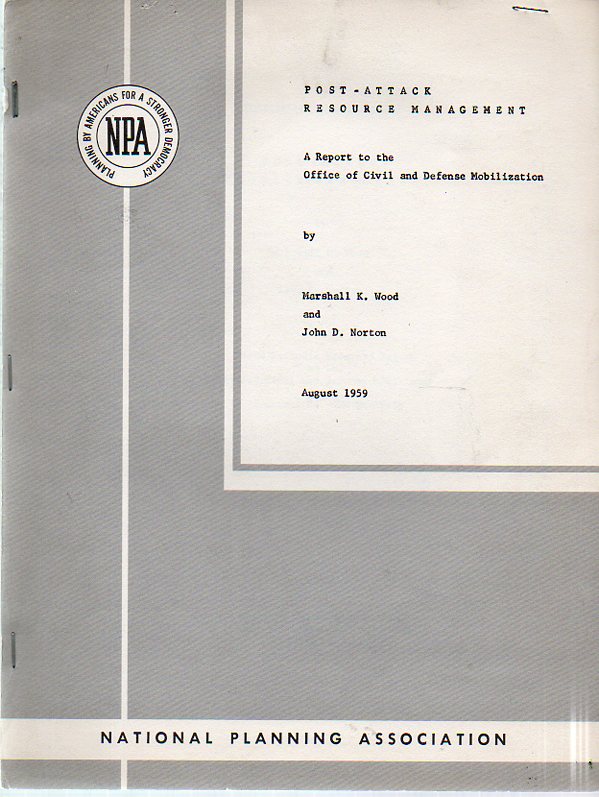
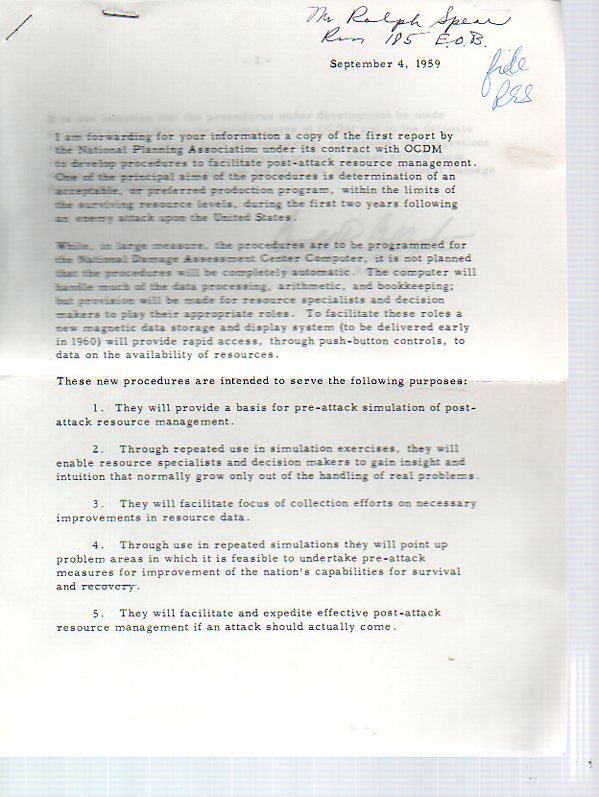
    ATOMIC BOMB POST-ATTOMIC PLANNING613 That is certainly the optimistic outlook of a preliminary report issued by Marshall K. Wood and John D. Martin, who issued this working paper on the state of a computer program that was being constructed to assist post-attack planners in re-establishing the broken remains of the country.  Post-Attack Resource Management (PARM) was being compiled for the National Damage Assessment Center, under the National Planning Association, under the Office of Emergency Planning, in the Executive Office of the President,  to be run on the UNIVAC Scientific and the Sperry Rand ERA 1103A computers, and made to assess national economic and military recovery of the U.S. post-nuke-war.  This of course is a gargantuan, staggering task, given the number of changing variables, but someone had to give it a try.

    Just collecting the existing data on x-number of ATOMIC BOMB POST-ATTOMIC PLANNING614 eco-industrial-military-medical-human variables that make to country run is a daunting thing; try to imagine that as you added the Factors of Change in a nuclear war, trying to determine how thousands of explosions over the breadth of the country would affect the national infrastructure if these thousands of bombs were exploded in place A1-A1xN over periods of time T1-TX.  It would be a phenomenal task to try and determine what results there would be on the country following thousands of different attack models.  And then, after everything was said and done, there just wouldn’t be very much left. 

    Maybe the thing worked.  Maybe by planning for a survivable outcome to an unsurvivable situation enticed the actors to wait and prepare their weaponry to such a point where they would be the one certain to survive a nuclear war.  In this way the build-up would continue forever, as no one party could achieve any sort of dominance in a first strike capacity to be able to wipe out their adversary’s war-making capability before they had a chance to employ it.  Perhaps in some weird, sick way this sort of planning for post-war activity kept the war from ever occurring by virtue of no one actor being able to achieve a superiority.  Or perhaps not. 


  • Baby Marriage, Nicot-ine and the Production of Death, 1869-1880

    JF Ptak Science Books   Post 1557

    “The use of tobacco is growing greatly and conquers men with a certain secret pleasure, so that those who have once become accustomed thereto can later hardy be restrained therefrom.”–Sir Francis Bacon (1561-1626)

    In a way the abuse and use of tobacco and the deaths of, what–a billion?–people from diseases caused by it is partially due to the forced/.arranged marriage of two babies. It was Jean Nicot de Villemain who introduced tobacco to France  and thus to most of Europe when he arranged for the plant to be sent home from Brazil tn 1560  while serving as the French ambassador to Portugal.  He was there to negotiate this baby marriage–between six-year-old Princess Marguerite de Valois to five-year-old King Sebastian of Portugal, and so while there took advantage of his new experience with the plant, one variety of which was named after him, and for which the alkaloid (nicotine) is named.  The job of introducing the ethnogen to the rest of the world would fall to someone, and in this case that someone was Nicot, baby-marry-er:  of course this was a royal job and the marriage assured bloodlines more than any sort of lust, a creation of dynasty and ensuring treaties and power consolidation, but it did expose Nicot to the plant in Portugal, and the rest is a nasty history.

    The addictive qualities of tobacco has been recognized for as long as people have been writing about it, going back hundreds of years, deep into the 16th century, almost from the same time of its introduction into England and Europe. 

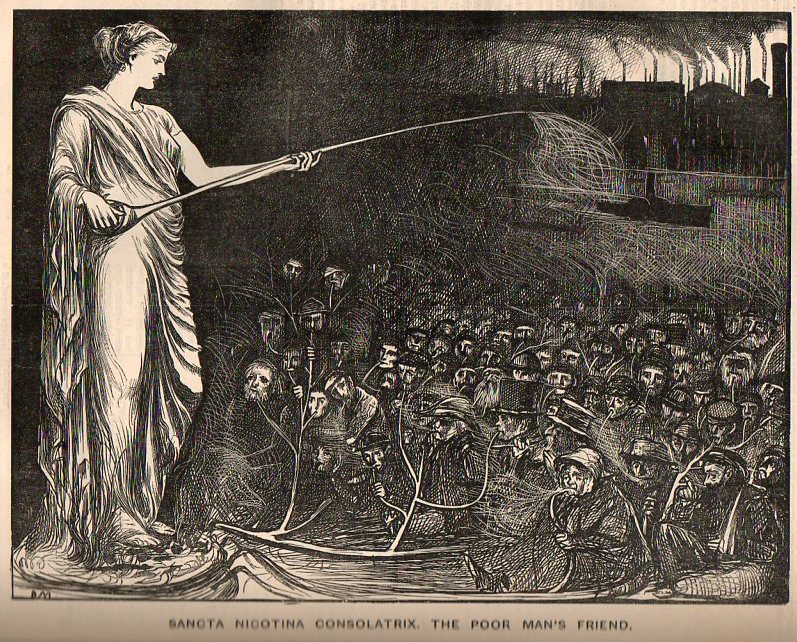
    These images of the horrific nature of the addiction to tobacco appeared in the January1869 issue of the London Punch magazine and are particularly biting–there are few images like them in those years for this journal, so far as my experience can relate. 

    This one is labeled “Old Nick-Otin, stealing “away their brains”

    And this, appearing in next week’s issue: 

    Nicotine598

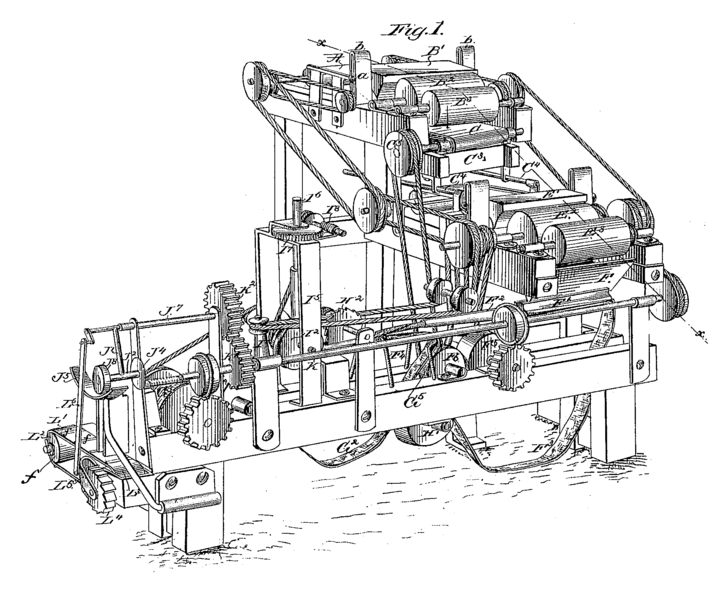
    So the editors of Punch decided to send a strong and distasteful message to their readers on the dangers of tobacco to the high class and the low.  But this was still in the day that tobacco was a luxury to the working classes and the poor, before the introduction of the mass-produced cigarette.  Real death and destruction took place after the ingenious invention of James Albert Bonsack (born just months after this issue of Punch), who patented an automatic cigarette-rolling-making machine from his home in Roanoke in 1880.  What the machine did was this:  it increased the output of the hand-rolled cig from four cigarettes an hour to about 200 a minute.  Getting rid of the human element in cigarette production was a crucial fix in the history of advancing death, and allowed for inexpensive distribution of the lethal addictive habit across all sections of society.    As with Nicot, someone would have developed this machine, and in this case it was Bonsack, who collected a $75,000 prize fr being the first to automate this process for high-speed production.  It was a remarkable machine, really–unfortunately for all the only thing that it did was make cigarettes.

      Cigarette machine

    The Bonsack invention and its progeny sanitized and economized  cigarette production to the point where–in relatively short order–the cigarette was available to anyone, and in the coming decades became a simple part of the landscape, blending into the human environment.

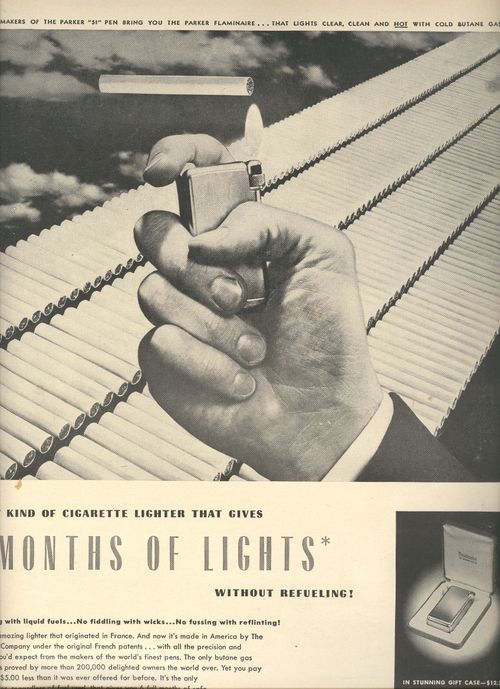
    This is a simple ad for a butane-based lighter (appearing in LIFE magazine for 18 December 1950), lighting the way down Cigarette Road of the Bonsack/Nicot/etc. future.  Actually, it was more a highway than a road, and a superhighway at that. There were few rules on that road to perdition, and government-sponsored warnings about tobacco health issues was still more than a decade away. 

    Cigarettes

    It seems to me that there are about 300 cigarettes in this ad, and that looks like a lot—point of fact though is that in 1950, the average American (of 18+ years) smoked about 3,522 cigarettes a year, which means about 10 cigarettes a day for everyone in the country.  Not 10 per smoker; 10 for everyone in the entire country, smoker or not, who was over 18 years of age.

    The average smoker in 1950 smoked about 2.5 packs a day, or 50 cigarettes or so—that’s equal to this line of cigarettes being smoked every six days. 

    There were few rules on the Cigarette Highway–and, basically, no brakes.


  • Uncomfortable Recognitions, 1932 and 1933

    JF Ptak Science Books

    Grazing through a couple of weekly issues of the documentarian’s dream, The Illustrated London News, for April 1932, I stumbled upon a few images that really set me back.  The one below is one of them, but we’ll get to that in a moment. 

    Blog--air hitler detail 3

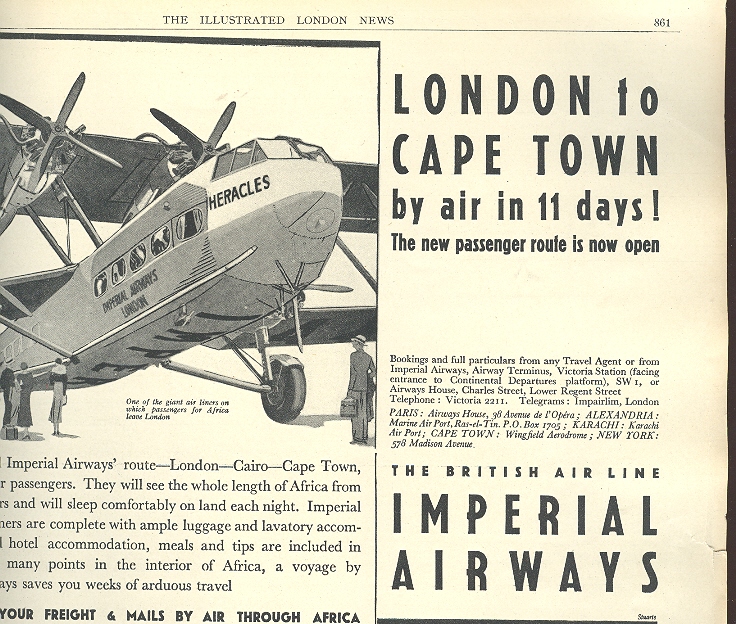
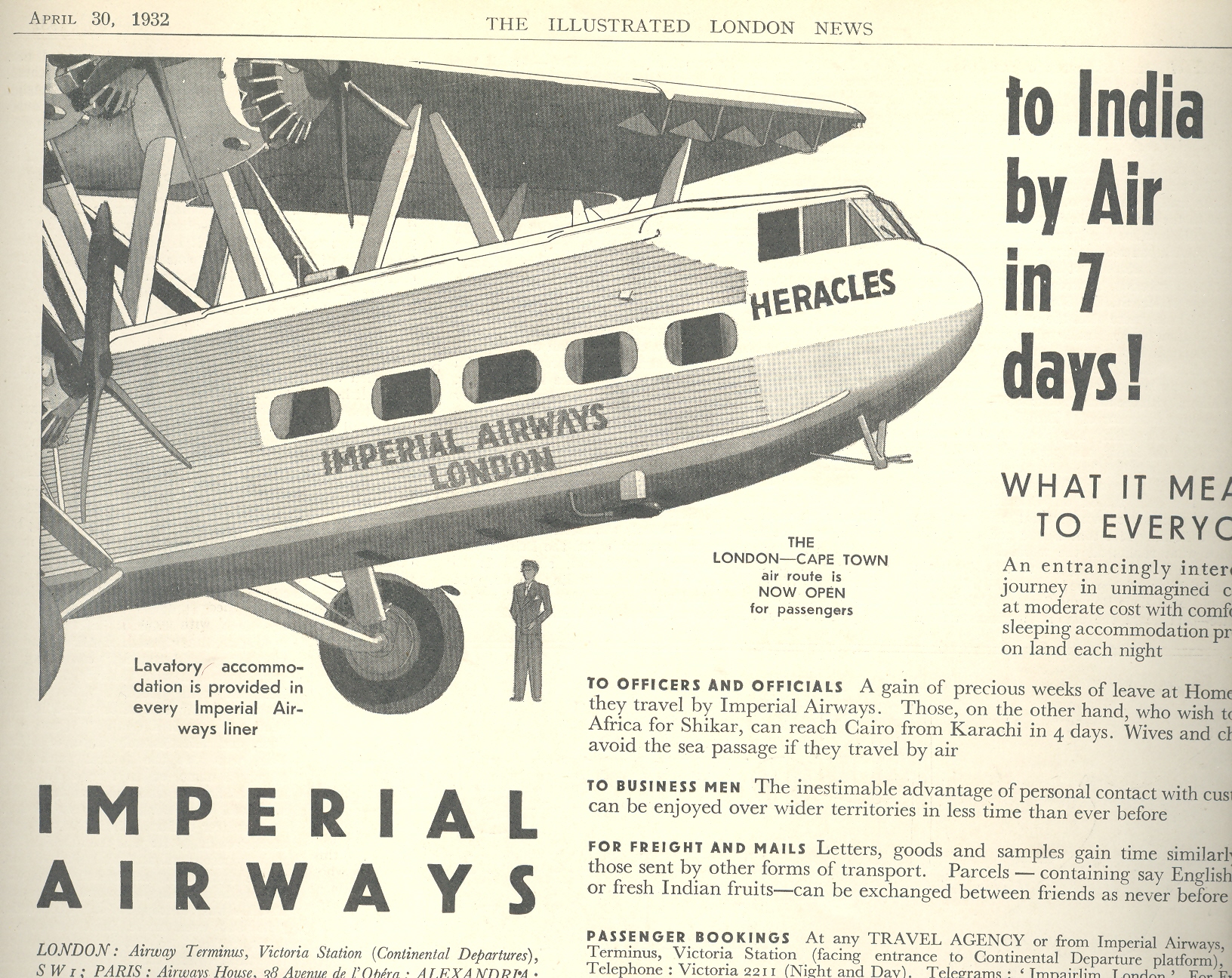
    Blog--air cape town What stopped me first was this advertisement for air travel from London to Cape Town, taking  somewhat less than two weeks.  Even though I know something about the history of aviation, I was still shocked to see the 11-day schedule.  I knew better, I expected it, but still, to see this remarkable statement in print snapped me to attention. Same too for air travel to India–7 full days of travel.  This is the same year that my father was born, so it isn’t as though these times are a hundred years old.  Perhaps this is the shock of recognition.


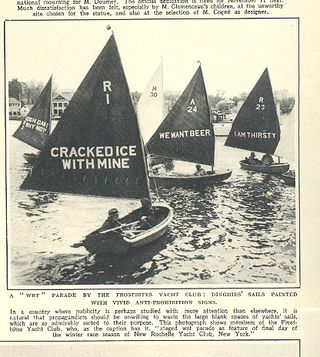
    Blog--air indiaA few pages later came this lighthearted image depicting a convoy of the New Rochelle (NY) Yacht Club, “the Thirsty Crew”, protesting in their small sailboats against Prohibition, and suggesting that they could go for some number of stiff ones–“propagandists unwilling to waste their large blank spaces…”.

    Blog--air drinking


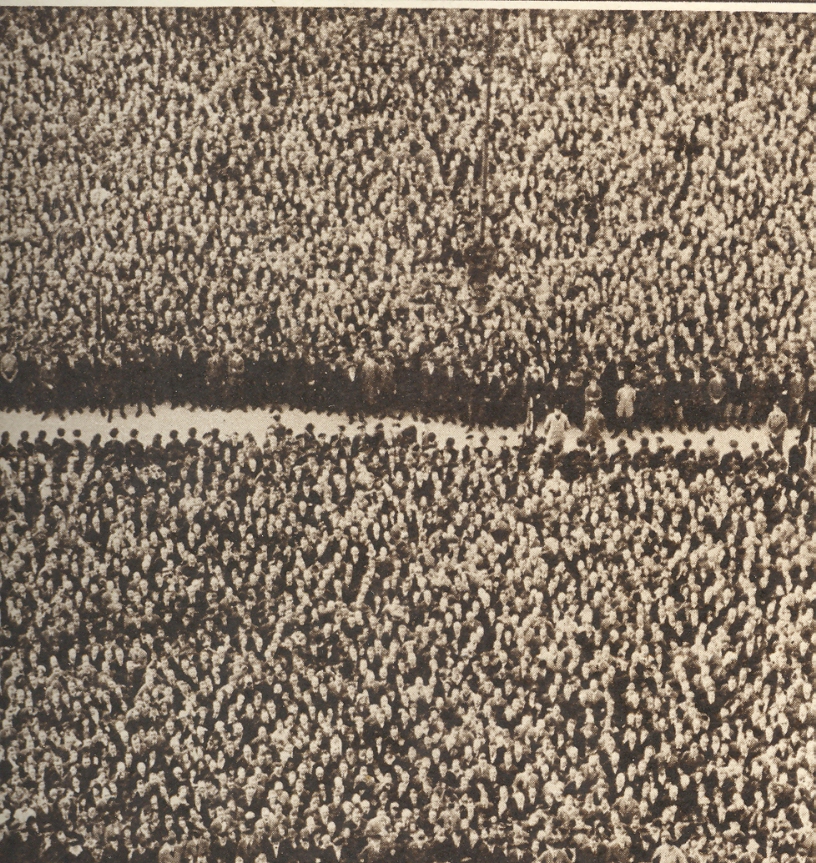
    I flipped through another few dozen pages, enjoying the ads, the small stories, the domestic intrigues, the human follies and triumphs.  Then came the issue for 9 April, 1932, and the lightheartedness was drained by the reality that was to come.  The first picture in this series is a small detail from a larger crowd gathered in Berlin’s Lustgarten (“Pleasure Garden”), on 4 April, listening to several speeches by a candidate for the Germany presidency, Adolf Hitler.  The election–and the very beginning of the end for 60 million people–was a week away.

    In February, 1933, more than 200,000 people massed there to protest the new Nazi leadership.  Hitler was defeated by von Hndenburg in the second round of the election on that April 10th (Hitler receiving 36% of the vote to von Hindeburg’s 51%), but he was appointed Chancellor in January 1933, which was really the beginning of the totality of Nazi power.  Soon afterwards, political demonstrations like that were banned, overtaken by Nazi spectaculars, with Hitler addressing more than a million people there at a time. By the end of the war, much like the rest of Berlin, the Lustgarten–whose grass had been replaced by pavement by Hitler for parades–was a bombed-out skeleton.

    Blog--air hitler detail


  • Strange Things in the Sky Dept.: Mountains and Allegories of Time

    JF Ptak Science Books  Post 1554

    In the history of mountains seldom have they raised themselves so magnificently as that seen in Jacopo da Valenza’s St. Jerome in the Wilderness. Painted in about 1509, da Valenza (who flourished from 1478-1509) depicts the 4th century Saint–a Doctor of the Catholic Church,  proponent of asceticism, scholar, philosopher, historian and translator of the Bible–sitting calmly and reading a book balanced on the top of  a rock pile, sitting in a deep state, with a metaphorical depiction of time and biography looming impossibly and invisibly behind him in the form of a mountain.

    I believe that the scene that wind their way around the mountains are those from St. Jerome’s life, displayed for all but not to him, shown as a chronological memory in simultaneous display. 

    The imagery of the mountain displays as much history and imagination as required by the viewer.  It has a distinct Tower of Babel quality to it, though here the mountain very decidedly has no upper limit, no summit, the mountain disappearing into the north end of the painting, and actually seems to be getting larger and more dense as it ascends. 

    Jerome is serene, larger matters on his mind than a simple history of one life. 

    The saint is frequently shown in very stark surroundings, and occasionally appears in more formal and lush biblio-related scenes–as the man did, after all, serve his Pope in very advanced capacities in Rome for a number of years.  But this I think is how we picture Jerome in a generalized way–except for the extraordinary mountain. 


  • Massively-Wheeled Unicycle, 1897

    JF Ptak Science Books  Quick Post

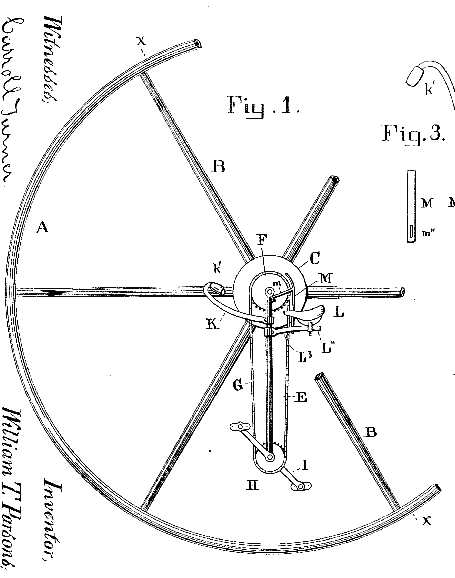
    I found this patent for a rather extraordinary bicycle–a unicycle, actually, and a massively-wheeled one, at that. Looks to me as though the wheel of the unicycle might be eight feet tall, with the rider seated at just below the center of the wheel. Its utility as a utility is a little suspect…


    And the detail:

    Patents unicycle detail

    ·Posted by :

    ·in:


  • The History of Blank, Empty and Missing Things–German POWs, 1918

    JF Ptak Science Books  Post 1556

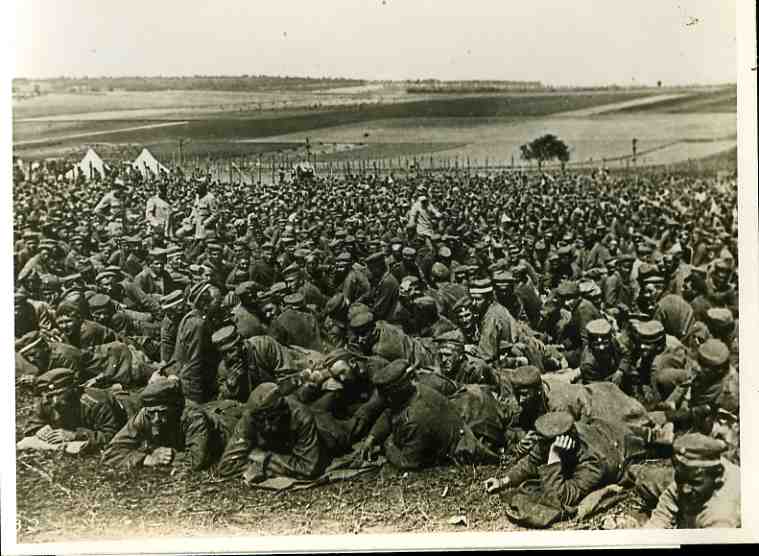
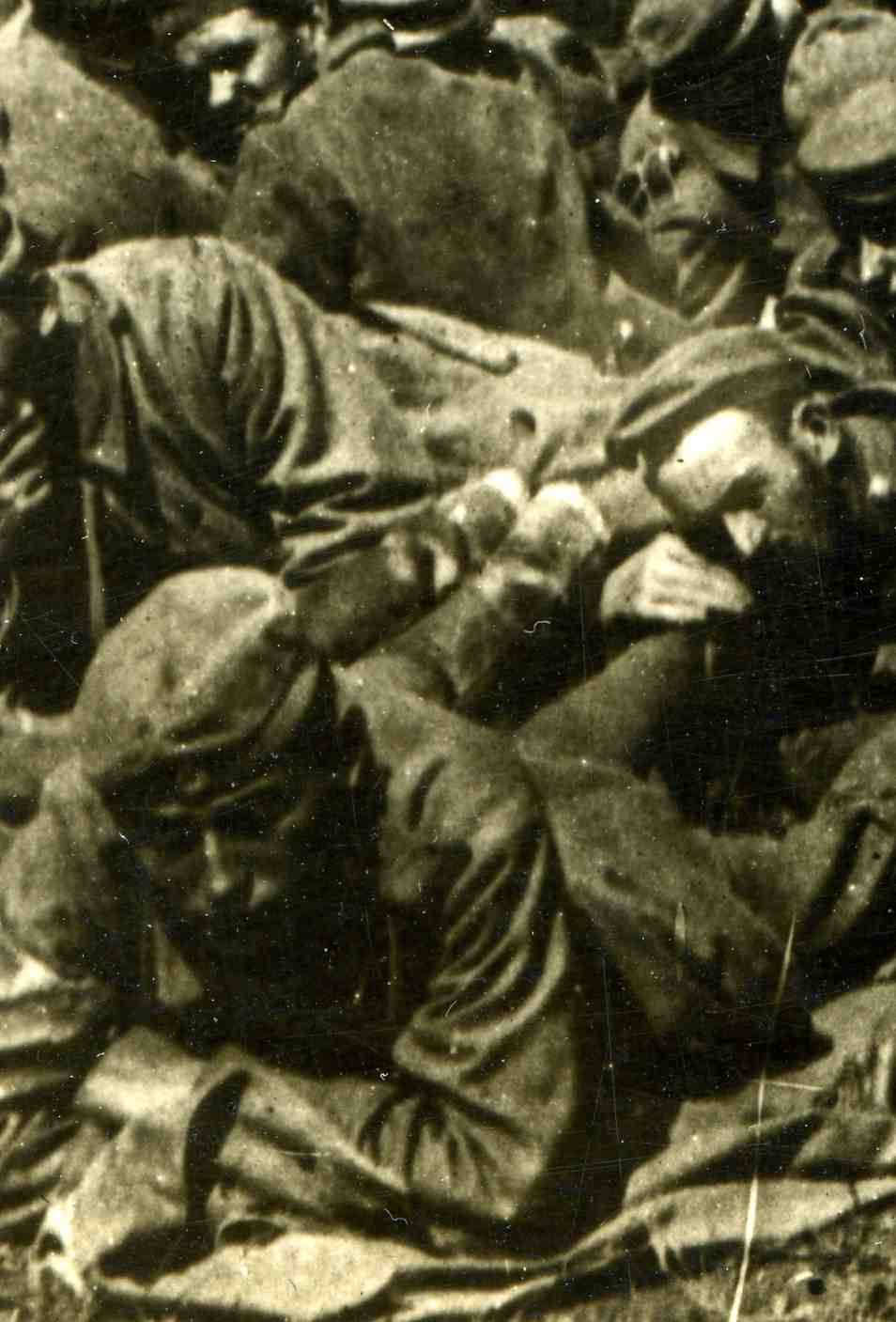
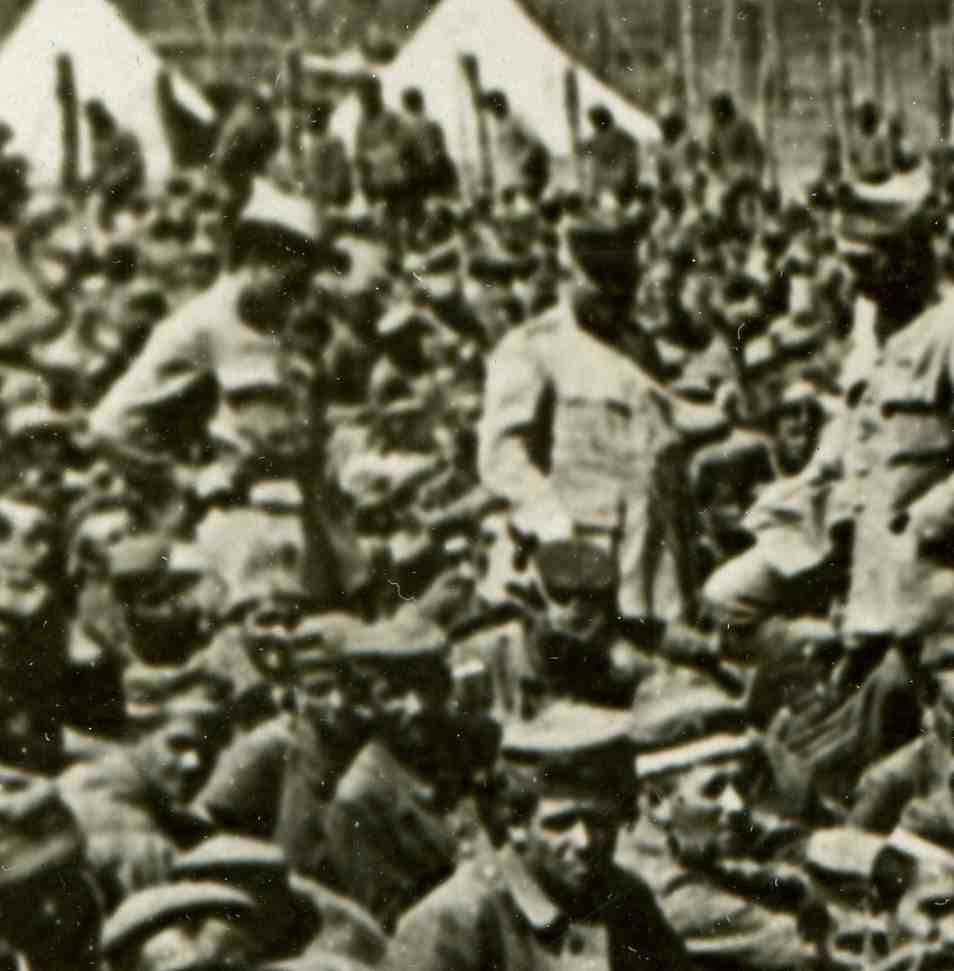
    In continuing series of posts on Blank and Empty Things is this image on fading, disappearing German prisoners of war.  The French had been pounding them in western France in the summer of 1918, and Germans were surrendering and being captured by the thousands.  This news service photograph shows one of the assembly camps with about 10,000 POWs–I made a heavy scan of the group of soldiers in the distance and was  a little taken aback to see that the men had lost their human forms,  looking like bacteria, fading into their future.  

    000-ebay--Nov 8 pows018

    000-ebay--Nov 8 pows017

    The full image is impressive, and shows just a small fraction of the men taken prisoner during 1918; and it shows even a lesser percentage of those killed.

     
    This detail of the foreground shows the familiarity necessitated by the men being pressed so closely together–there was little free ground
    000-ebay--Nov 8 pows019.

    Also, I thought that the French soldiers in the midst of the prisoner might’ve been feeding them, but it seems as though they were just walking in their midst.


    000-ebay--Nov 8 pows022