JF Ptak Science Books Quick Post
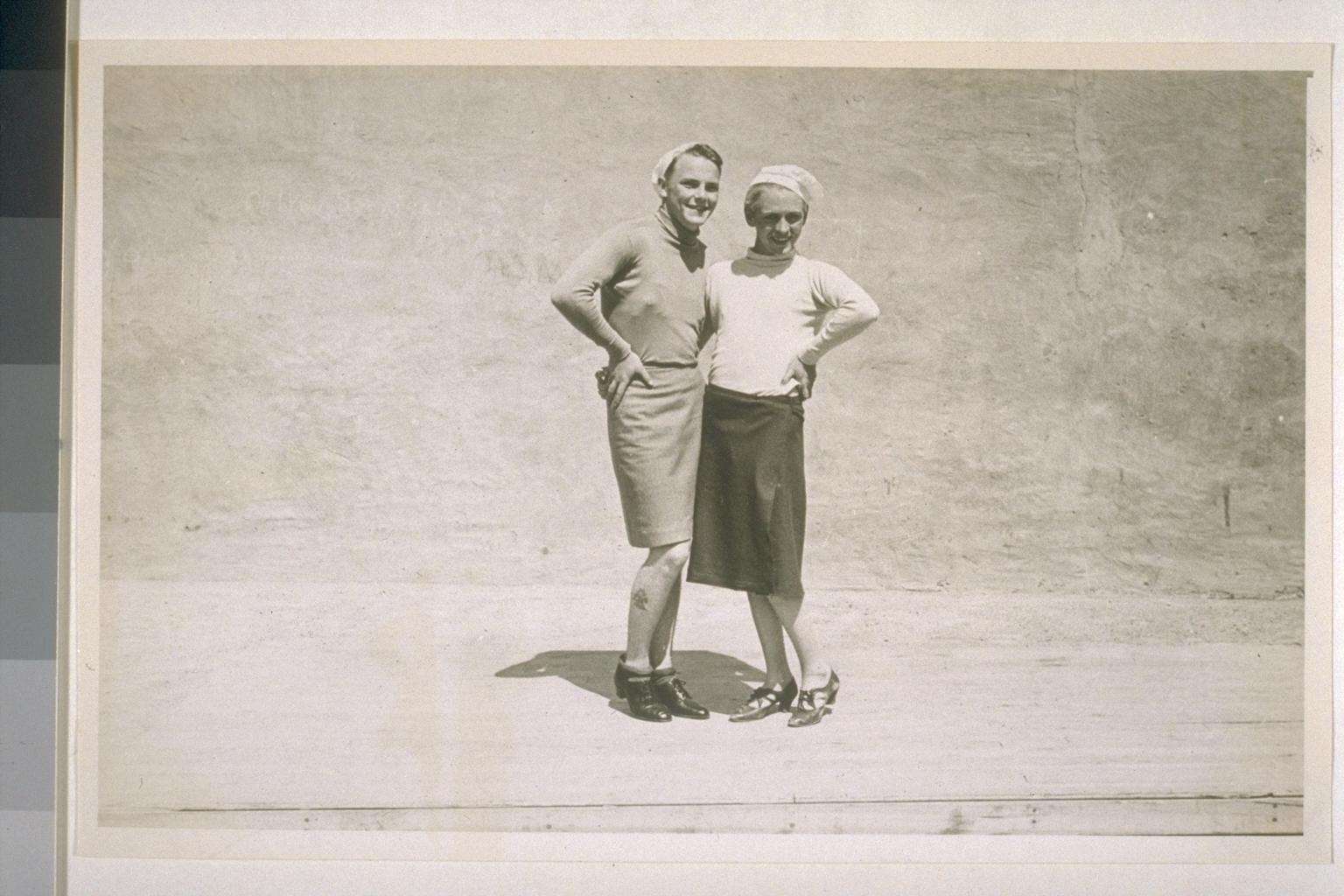
Another series sculpted out of the collection of San Quentin Prison photographs at the Bancroft Library, University of California, Berkeley–all are ca, 1925-1935.
A Daily History of Holes, Dots, Lines, Science, History, Math, Physics, Art, the Unintentional Absurd, Architecture, Maps, Data Visualization, Blank and Missing Things, and so on. |1.6 million words, 7500 images, 4.9 million hits| Press & appearances in The Times, Le Figaro, Mensa, The Economist, The Guardian, Discovery News, Slate, Le Monde, Sci American Blogs, Le Pont, and many other places… 5000+ total posts since 2008.
Contact johnfptak at gmail dot com
JF Ptak Science Books Quick Post
Another series sculpted out of the collection of San Quentin Prison photographs at the Bancroft Library, University of California, Berkeley–all are ca, 1925-1935.
JF Ptak Science Books Quick Post
From the collections of University of California, Berkeley, the Bancroft Library: “Views of San Quentin Prison and Events, ca. 1925-1935”.
All images are expandable.
JF Ptak Science Books Post 1535
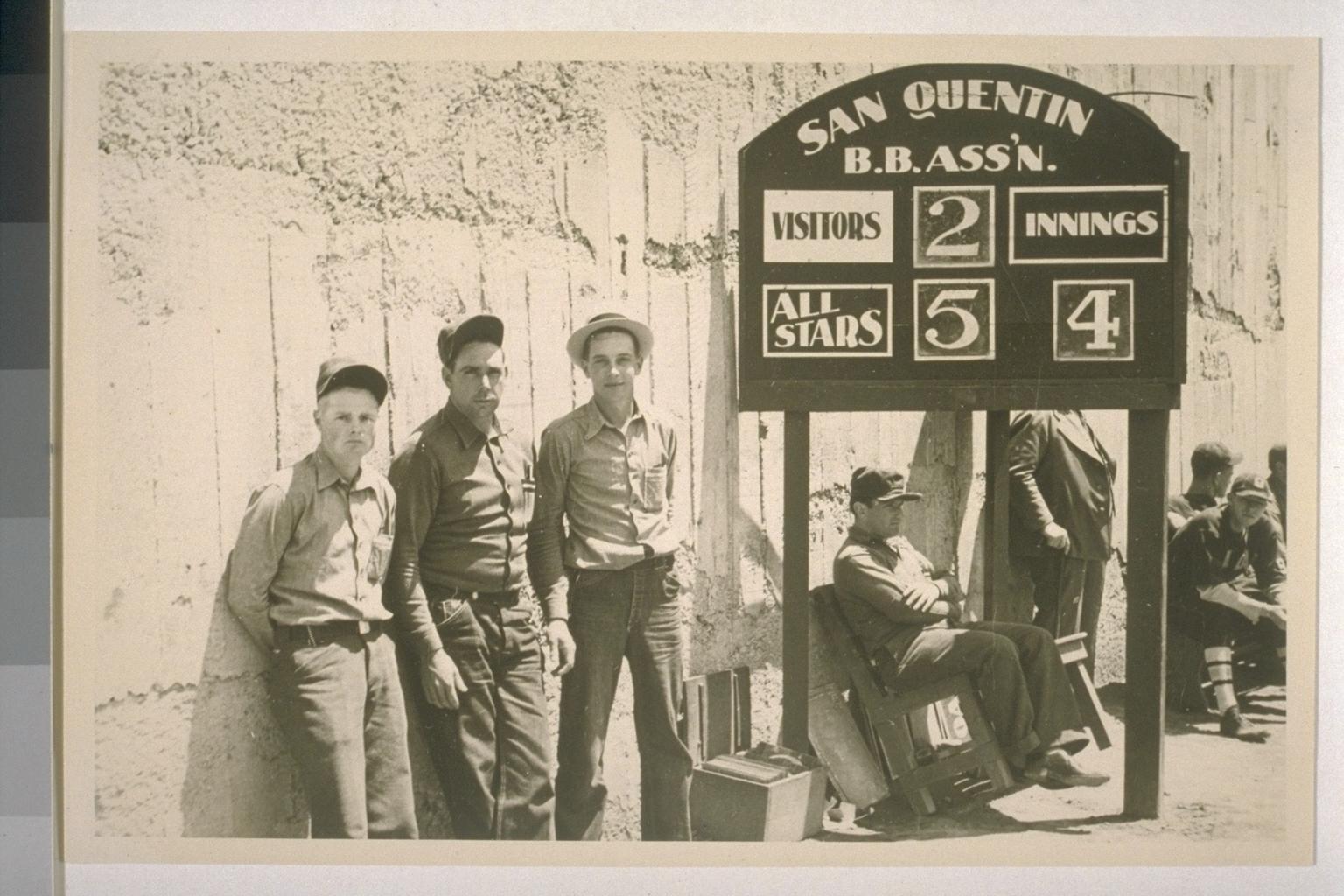
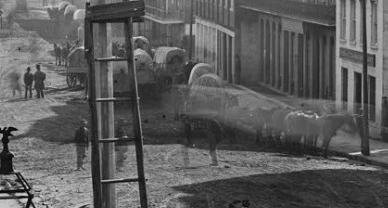
Atlanta, Georgia. Whitehall Street: ” China, Glass, Auction & Negro Sales.” 1864. Photo by George N. Gardner.

The first name people associate with photography and the American Civil War is Matthew Brady. Brady did of course come up with the idea for photographically documenting the conflict and made images of his own, but the truth of the matter is that he had a lot of help making his record–other great names from the early period of American photography were employed by him, sent out into the field to record what they saw. Alexander Gardner, Timothy Sullivan, James Gardner, William Pywell and eighteen others recorded the great events in addition to Brady, though for the most part it was Brady’s name on the finished work.
One of these men was George Gardner (1819-1902), who at one point owned his own studio in Oswego, New York in 1847, working for himself until he joined the Brady force in 1861. He left Brady in 1863, but he didn’t leave the war, becoming an official photographer for the United States Army, Chief Engineer’s Office and joining General William T. Sherman and the Military Department of the Mississippi in 1864, at which point he documented Sherman’s Atlanta Campaign. (One of the results of this effort was his 61-photograph work, Photographic Views of Sherman’s Campaign (1), published in a sumptuous leather bind in 1866, a big, heavy work with original albumen photographs.) The images below, however, were not published in this work–all 61 images can be view here, at the collections of the Hargrett Library at the University of Georgia.
Detail of the first image, above–the three other businesses that I can identify are tobacconists of one form or another. It looks like a Union private is sitting quietly (reading?) in front of the auction house, his rifle leaning against the wall. There were a lot of people going into this place, if grime on the doorway is a testament to a legacy of busy-ness.
I wonder if you were coming here as a slave, without the ability to read or distinguish any sort of written character, I wonder what you would think of those two enormous “8” characters painted on the side of the building. That symbol is an old one for infinity, continuing–I wonder how many cultures would have used that line as its own?
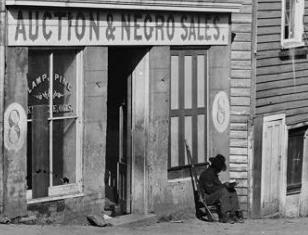
Atlanta, Georgia, 1864.

The only reason that the private in the photograph above is captured so clearly is that he was probably reading, which means he was sitting still for the minute or so that it would take to make the exposure. That’s what gives this image above its qualities of clarity and ghostliness–there are as many suggestions of people as there are imaged folks in this photo. What we see plainly are the men sitting on the business stoops–look more closely and you’ll see many more moving along the sidewalk, the briefest bits of them being captured by the long exposure. (There is just a hint of someone leaning against the gas light fixture in the foreground.)
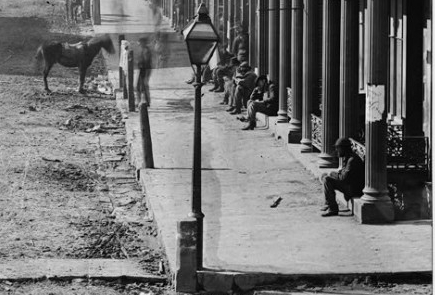
Nashville, Tennessee. 1864

Atlanta, Georgia. View on Marietta Street, 1864.

Detail:
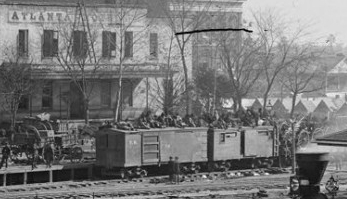
Atlanta, Georgia. 1864. “Soldiers on boxcars at the depot.” There was no date that I could find offhand on this image, so I don’t know if the soldiers were coming, or going, or already there and just trying to catch a breeze on top of the cars. It had to be after the end of the campaign, after Atlanta’s mayor James Calhoun surrendered the city following the entry of Henry Slocum’s XX Corps on 2 September 1864, and sufficiently after that for the men to climb on top of the boxcar and not get fried by a scorching Georgia late summer sun. They certainly weren’t busy pulling up the rails like they did in so many other locations in the city and vicinity, ensuring a de-mobilization of what had to this point been a primary center for Confederate munitions supply and manufacture.

Detail:
Notes:
1. The full title of the book is Photographic Views of Sherman’s Campaign, Embracing Scenes of the Occupation of Nashville, the Great Battles around Chattanooga and Lookout Mountain, the Campaign of Atlanta, March to the Sea, and the Great Raid through the Carolinas.
JF Ptak Science Books Quick Post
(I should point out an earlier post on this blog on radium suppositories and toothpaste, here.)
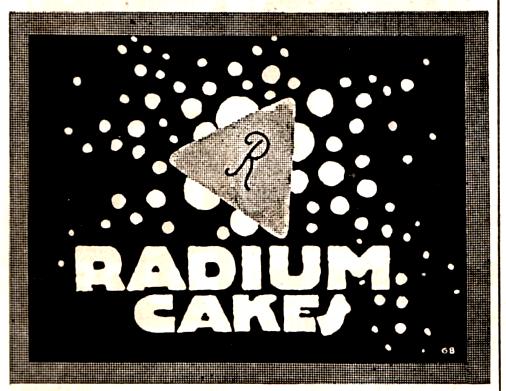
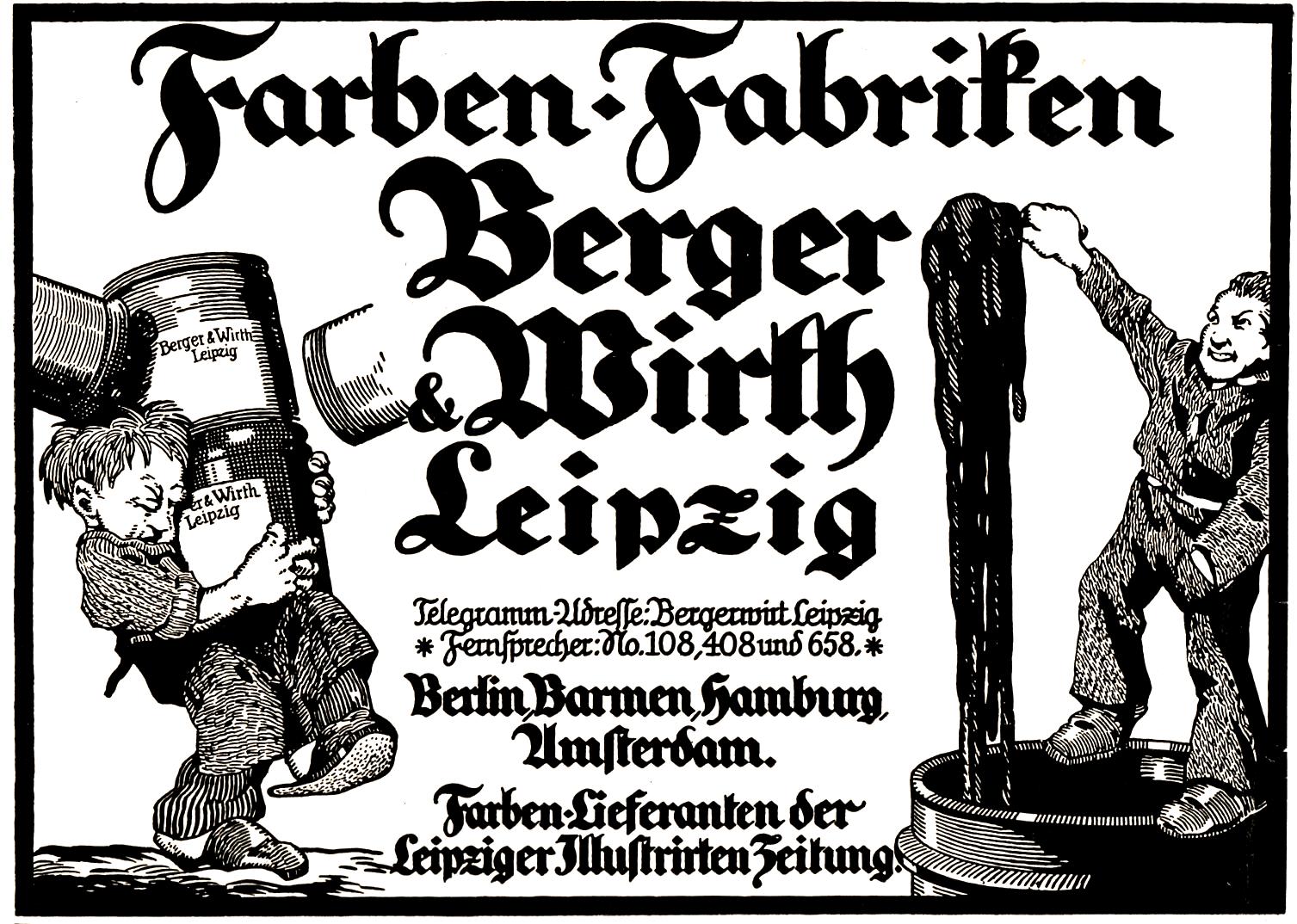
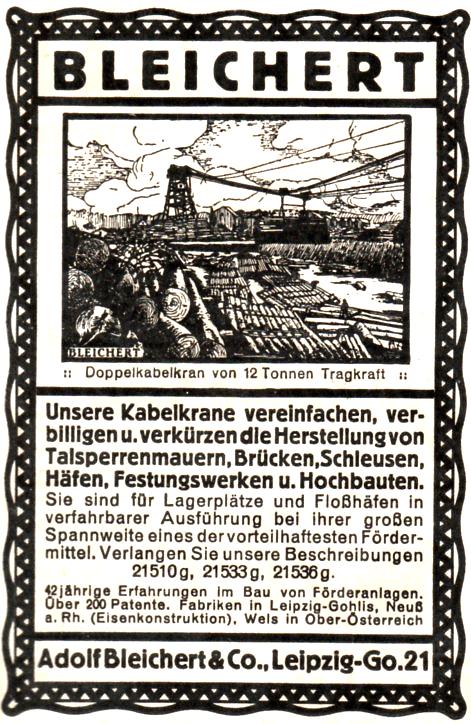
These images come from one page of advertisements for issue 3991 of the Illustrirte Zeitung (Leipzig), for 1920. The page itself is about 15×10 inches, and is covered with a dozen or so ads, most of them pretty small. There’s a lot of design going on in those small places, and a lot of it seems pretty “heavy” to me–that in spite of their size, they have a certain weight to them. Perhaps its the big thick lines, or the very free use of deep black, or the obese typeface. I’m not sure. But I like them.
The ad above is for the mystery product “Radium Cakes” that seems to be a quack something-or-other produced by Radium-Cakes-Werke of Berlin, and was recommended for hte sick and convalescent, and highly approved by doctors, pharmacists and chemists. I don’t have any idea if there was radium being ingested or not–and this 22 years after Mme. Curie discovered it. The colors seem right, though…
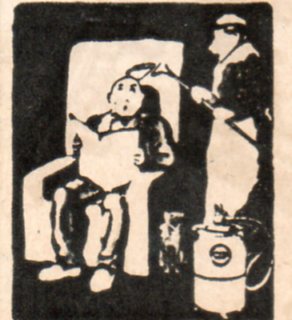
Ich bin Rafiert!

An interesting and tiny (less than one inch tall in the original) illustration for an electrical vacuum “Waku”, sold from Chenmitz.

JF Ptak Science Books Quick Post
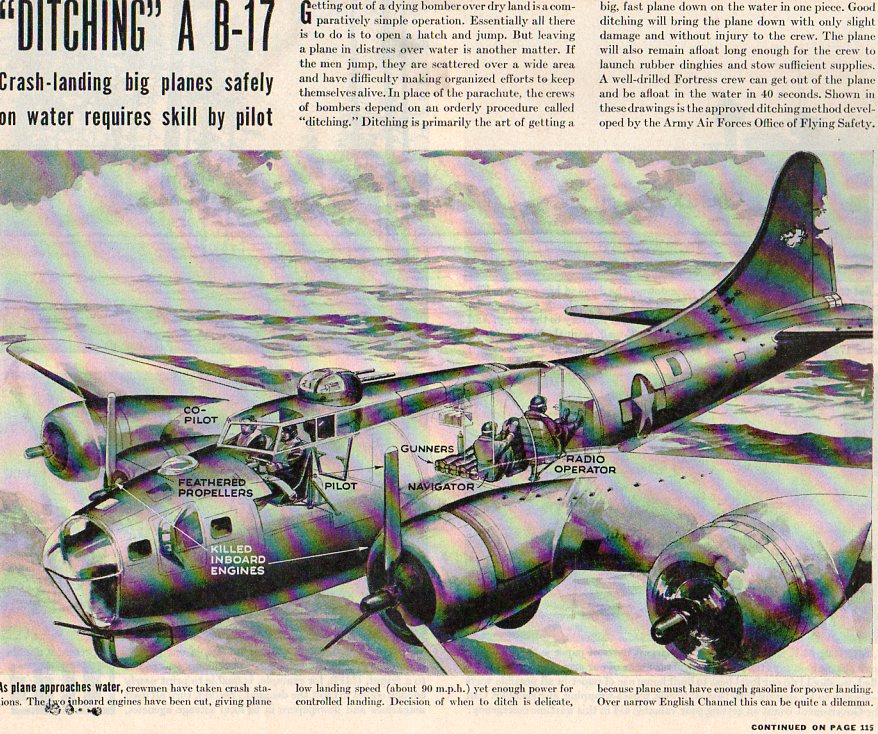
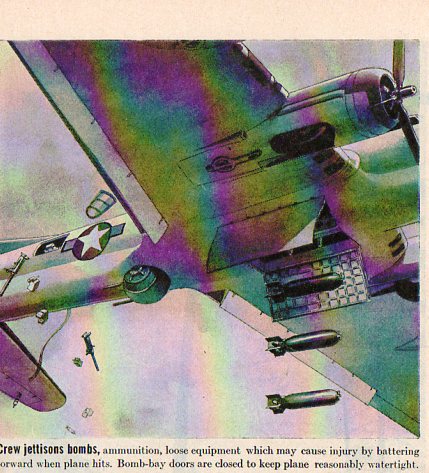
This interesting article appeared in Life magazine on 1 May 1944 and addressed something I’ve not though about before with the magnificent Boeing B-17.
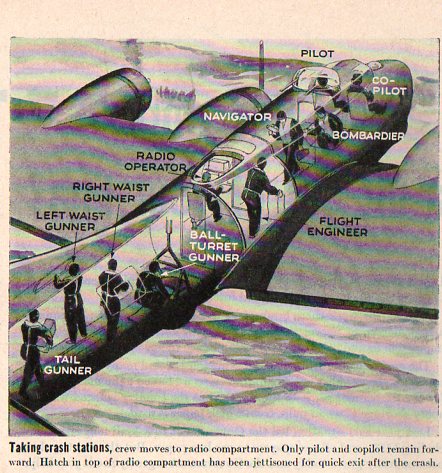

JF Ptak Science Books Post 1534
The business of bombing people and places from airplanes/aeroplanes was fresh in the history of invention when this advertisement appeared in The Illustrated London News on 18 May 1912.
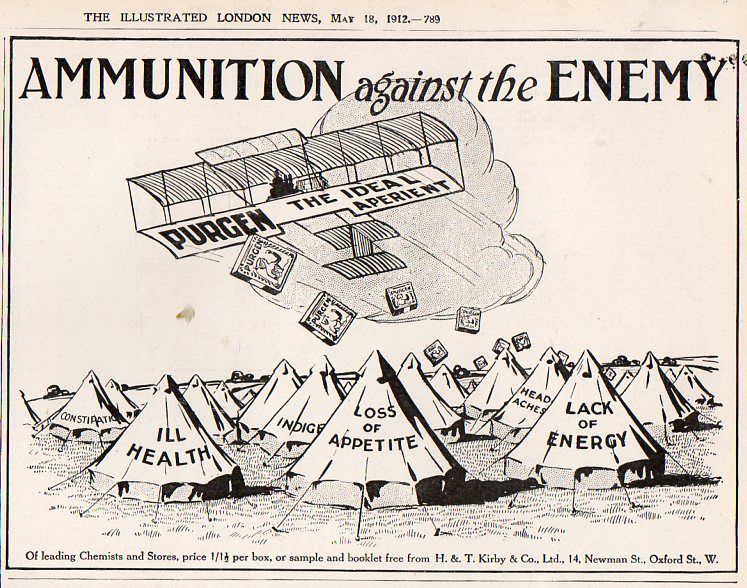
Superweapons have been used against cities for quite some time in the new world of speculative fiction, and there had been real-life aerial bombings from hot-air balloons, but the first time that a bomb was dropped from a heavier-than-air airplane on anything happened just months earlier, on 1 November 1911, when Lt. Giulio Cavotti dropped a hand grenade from his Etrich Taube on the oasis of Tagiura, in North Africa during the Italo-Turkish War. He dropped four parcels of hand grenades on the not-necessarily-military population at the oasis, injuring no one. The attack was one of attempted vengeance, a payback by the Italians against the Arabs of Tripoli, in general, for having joined forces with the Turks to fight against them.
This air attack was fresh on the heels of a devastating slaughter of the Arabs at Tripoli on 25 October 1911–the Tripoli War would not come to an end until October of 1912. A complaint was lodged that the Italians had broken international law, as bombing from balloons had been outlawed by the Hague Conference of 1899–but the Italians argued that the spirit of the agreement did not apply to bombing from airplanes because airplanes were not balloons. The issue of the legitimacy of bombing from airplanes and then for bombing civilian populations would be a debated issue if not recognized as a restricted practice for decades to come. As the cogs and wheels of the international court ground out its miniscule progress, people got blown up. The people-blown-up part trumped international law almost every time.
In the meantime came this image of an airplane dropping boxes of Purgen, “the Ideal Aperient” on military-style tents of “Ill Health”, “Loss of Appetite”, Lack of Energy”, and so on, all within the possibility of cure by this Purgen product.
So, among the very first advertisements using the idea of aerial bombing as its own delivery system, was this one for Purgen. A laxative.
·Posted by :
·in:
JF Ptak Science Books Post 1532
This is a supplement to some earlier posts on this blog relating to the possibilities of the invasion of America: Mapping the Invasion of America, 1942 (which is the most-viewed post from this blog, with over 500k readers), The Invasion of America, 1935, and The Invasion of America, 1942, Part II to name a few examples.
In the 27 May 1940 issue of Life magazine appeared an article on Franklin Roosevelt’s call to American action in constructing an entirely new air force. For years the air corps arm of the American military lingered in a kind of low-numbers unresolved limbo–but by May of 1940, it became painfully obvious that something drastic must be done. By this point the European War was about eight months old, and the possibility of Nazi victory looked very real. After all, the Blitzkrieg had been very successfully employed in Poland, and in May was used in the invasions of Finland, Norway, Denmark, Belgium, the Netherlands and Luxembourg. And France, of course. By late May, 1940, France was already pretty much done, the Parisian capital falling weeks later on 23 June, with the country capitulating ten days later. May also saw the collapse of the British and French armies along France’s northern coastline. (The rescue of the 350,000 troops on the beach and in the harbor of Dunkerque had not yet taken place (but would within the next few days). It was bad stuff.) In the light of the Nazi victories and the imminent fall of France, it was also time for people to start thinking about the invasion of England.
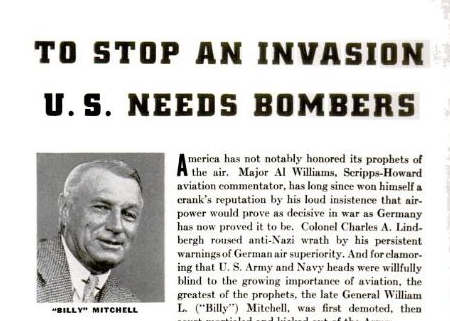
Roosevelt and his adviser knew that America was headed into conflict, and knew that the country needed to get onto a war-time production basis. One way to begin preparations was for FDR to call for the increased production of the newest and one of the most important aspects of modern warfare, the airplane. And not only an “increase” in production did the President call for, but a mountainous bump, an order of magnitude more in manufacturing of military planes. Earlier in 1938 the call for a 5,000-plane-a-year air force was shot down as being unrealistic–and perhaps so, even though the Nazis were just at the beginning of their outward thrust. So in May, 1940, Roosevelt stepped up and asked for 50,000 aircraft.
No doubt the war in Europe gave everyone great pause, or scared them silly. Two years before the number of 5,000 planes produced per year was seen as ridiculous–now the business of producing 50,000 a year seemed feasible–incredible, even, but the means of production were present, and so was the raw material and manpower. It was seen that of the 84 aircraft production plants then functioning only 23 were producing military planes, so there could be a modernization of existing plants as well as the construction of new aviation installations. The production totals for the year 1939-1940–1,247 aircraft, including 477 produced for the U.S. Army and Navy, 311 for Great Britain, and 459 for France–represented only a small percentage of what the existing factories could actually produce. (And it turned out of course to be just the case, as we can see from the production numbers in the “notes” section, below.)
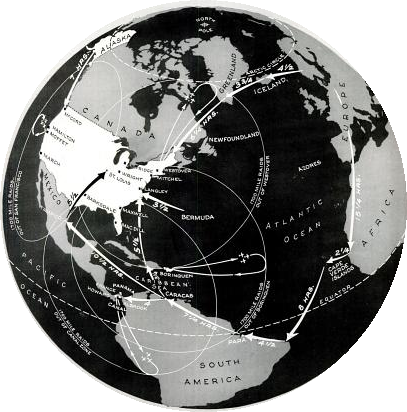
There was also a certain amount of scare factor involved with waking up the American public to the needs for getting involved in the European conflict in the year-and-a-half before Pearl Harbor–that the Nazis wouldn’t stop in Great Britain, and that “invaders” could and would attack the United States. The need for increasing American war production was not only to supply the allied forces in Europe for stopping Hitler, but also would keep the Nazis away from the United States. (Summarizing the points discussed by the President and other government officials, the map of the invasion of America looked something like the global view we see above.) So if Roosevelt couldn’t stir the hearts and minds of the American public for keeping Europe aloft in American-built planes, then keeping the Nazis off Main Street might work.
What the map shows are the lines of attack for the un-named Nazi invaders–their aircraft making their way slowly across the Atlantic via Iceland-Greenland–Newfoundland, and across Europe -Africa-Cape Verde-Brazil-Paraguay-then across the Caribbean and right into Wilmington, North Carolina; and then of course all of the way across the Soviet Union to Alaska and then into Washington state. The plan was that these advanced forces would come in, establish an airfield, grow , and then move closer to the U.S., stopping to construct bases all along the way. The response, oddly enough, was for us to build “bombers” so that the airbases could be blown up. That would also extend the effective range of air coverage from the United States to deal with the very-slowly-approaching enemy. The circles on the map show the effective round-trip range of loaded American bombers and the territory that they could cover. In general the map, in its own way, portrayed the United States as approachable to foreign invasion. Some of this reasoning is a little inscrutable, but Washington was playing a game that needed to be won.
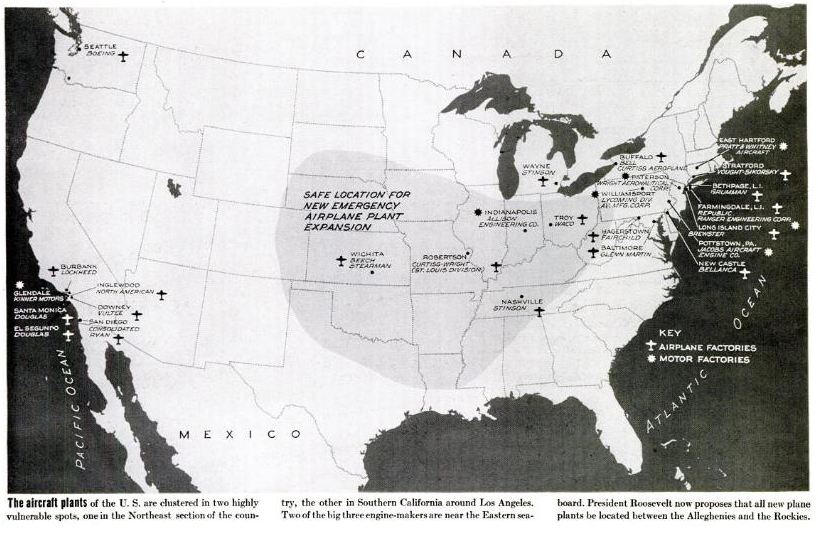
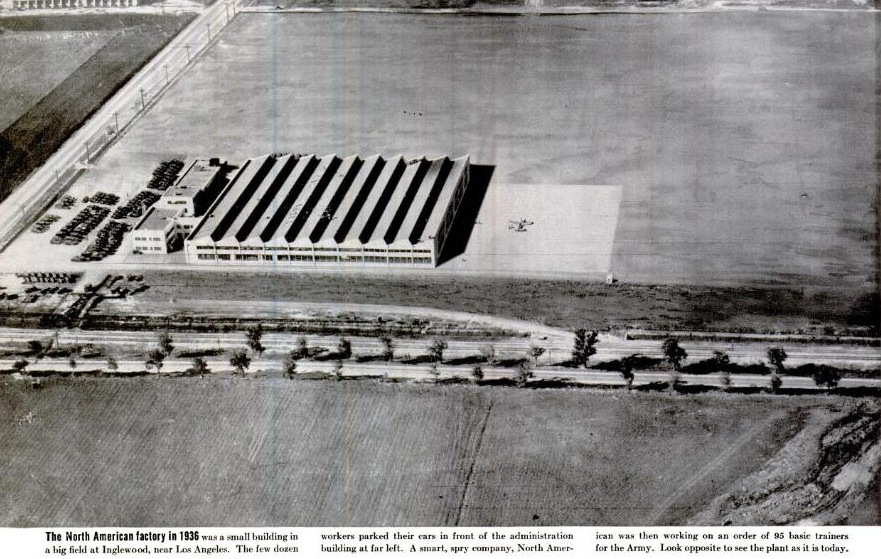
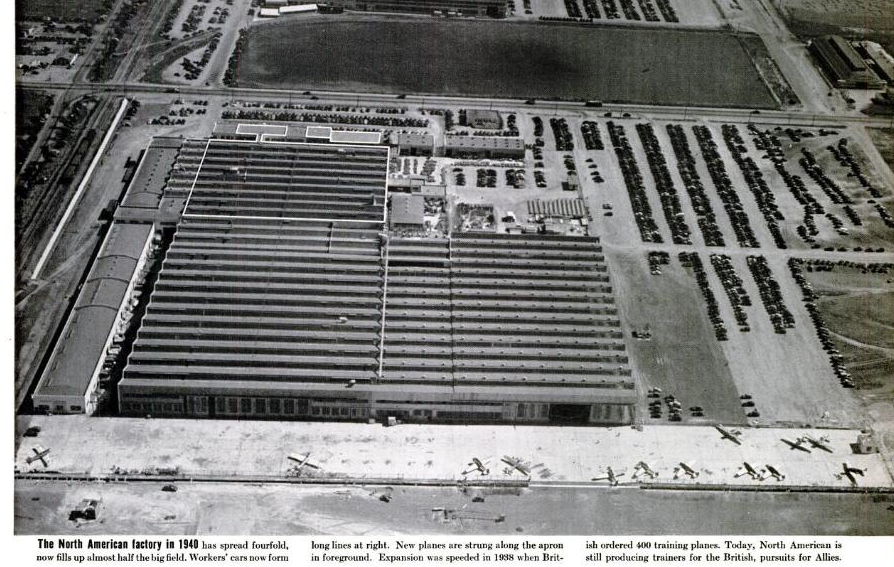
These interesting before and after pictures of a ramped-up aircraft production industry were to supply some proof that the job could be done, and that this factory could very well be a template that the dozens of others could follow:
[Aircraft production facility, “before”]
 [Aircraft production facility, “after”]
Notes
Production numbers for U.S. aircraft manufacturing, 1940-1945:
| Type of airplane | Total | 1940¹ | 1941 | 1942 | 1943 | 1944 | 1945² |
| Grand total | 295,959 | 3,611 | 18,466 | 46,907 | 84,853 | 96,270 | 45,852 |
| Combat airplanes | 200,443 | 1,771 | 8,395 | 24,669 | 53,183 | 74,564 | 37,861 |
| Very heavy bombers | 3,740 | – | – | 4 | 91 | 1,147 | 2,498 |
| Heavy bombers | 31,685 | 46 | 282 | 2,513 | 9,574 | 15,057 | 4,213 |
| Medium bombers | 21,461 | 52 | 762 | 4,040 | 7,256 | 6,732 | 2,619 |
| Light bombers | 39,986 | 453 | 2,617 | 5,954 | 11,848 | 12,376 | 6,738 |
| Fighters | 99,465 | 1,157 | 4,036 | 10,721 | 23,621 | 38,848 | 21,082 |
| Reconnaissance | 4,106 | 63 | 698 | 1,437 | 793 | 404 | 711 |
| Support airplanes | 95,516 | 1,840 | 10,071 | 22,238 | 31,670 | 21,706 | 7,991 |
| Transports | 23,900 | 164 | 525 | 1,887 | 6,913 | 9,925 | 4,486 |
| Trainers | 58,085 | 1,676 | 9,294 | 17,237 | 20,950 | 7,936 |
1,352 |
·Posted by :
·in:
JF Ptak Science Books Quick Post
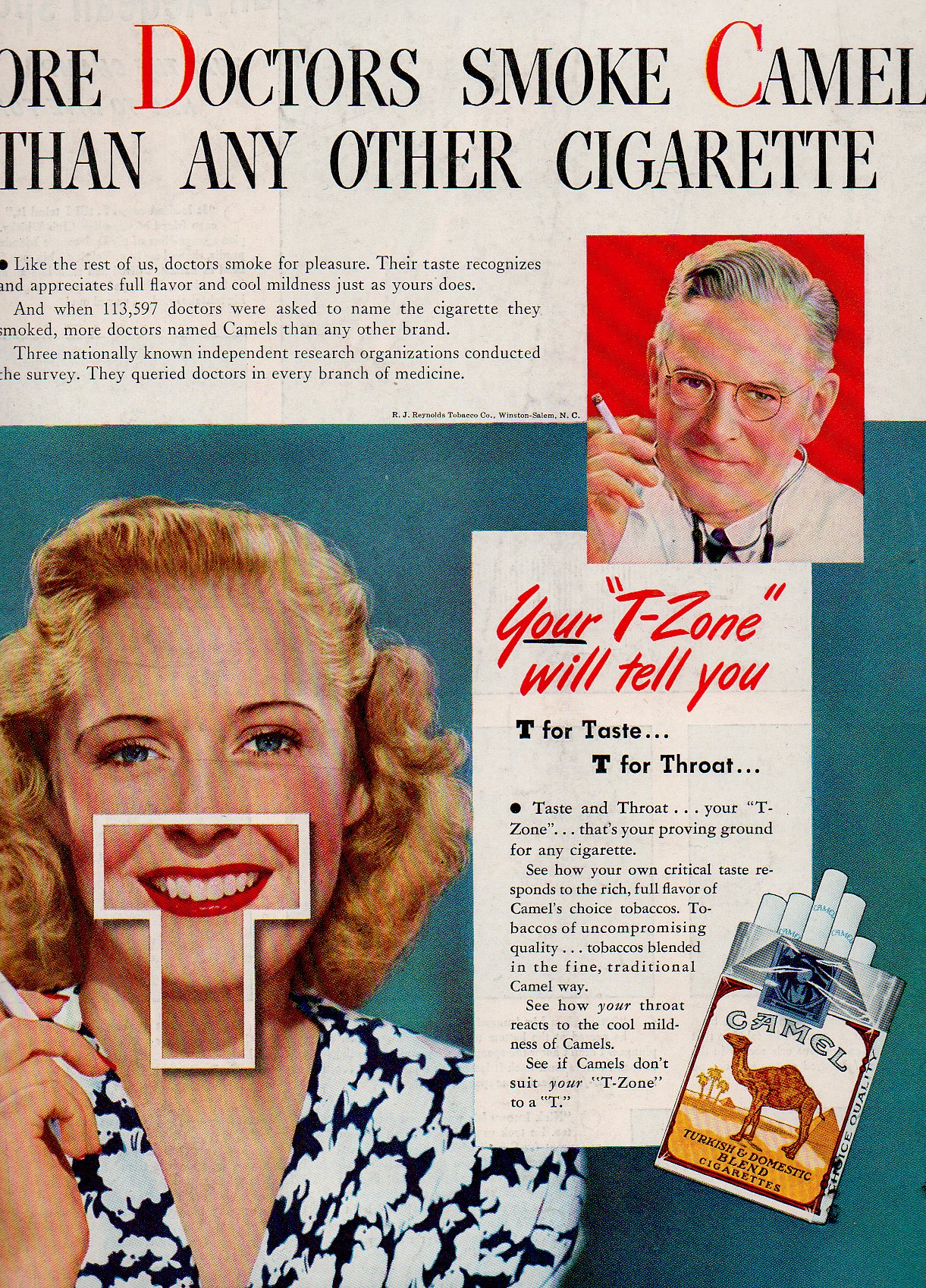
Part of the luxury of doing what I do is that I can down to the basement and pull out a giant bound volume of Life magazine from a long wall’s worth of Life magazines and browse/graze away–a much easier thing to do with the volume in hand than it is to do online at the Life site. (Let me tell you that there is simply no comparison, and that you retain far more leafing through the volumes than scrolling down the monitor–try it out at the library next time.) For this particular volume–part of 1942–there was a growing realization that there was an awful lot of the color red being used in the advertisements, as though it had just been “discovered”. And there was a lot of it being used to sell candy, cigarettes and, of course, meat.
This ad for Camel cigs is one with a minimal amount of red, though the use of it seems judicious and expansive to the major points of the message. Odd that the idea of “taste” appears almost as a secondary item of attention, and that the thrust of the copy is that lots of doctors happen to smoke Camel, without mentioning why. Well, the ad implies smoothness of smoke to the throat and the “T” section, for taste and easy impact on the throat, but the overwhelming message to me seems to be the smoking doctors giving an Rx to the cigarette.
On the other end of the attack to the human body was the notion that candy=food, an interesting way of moving a heart-busting luxury product, all wrapped in red outlining a white heart, evoking Valentine’s Day and love, though this was love for candy itself, as the ad appeared in June.

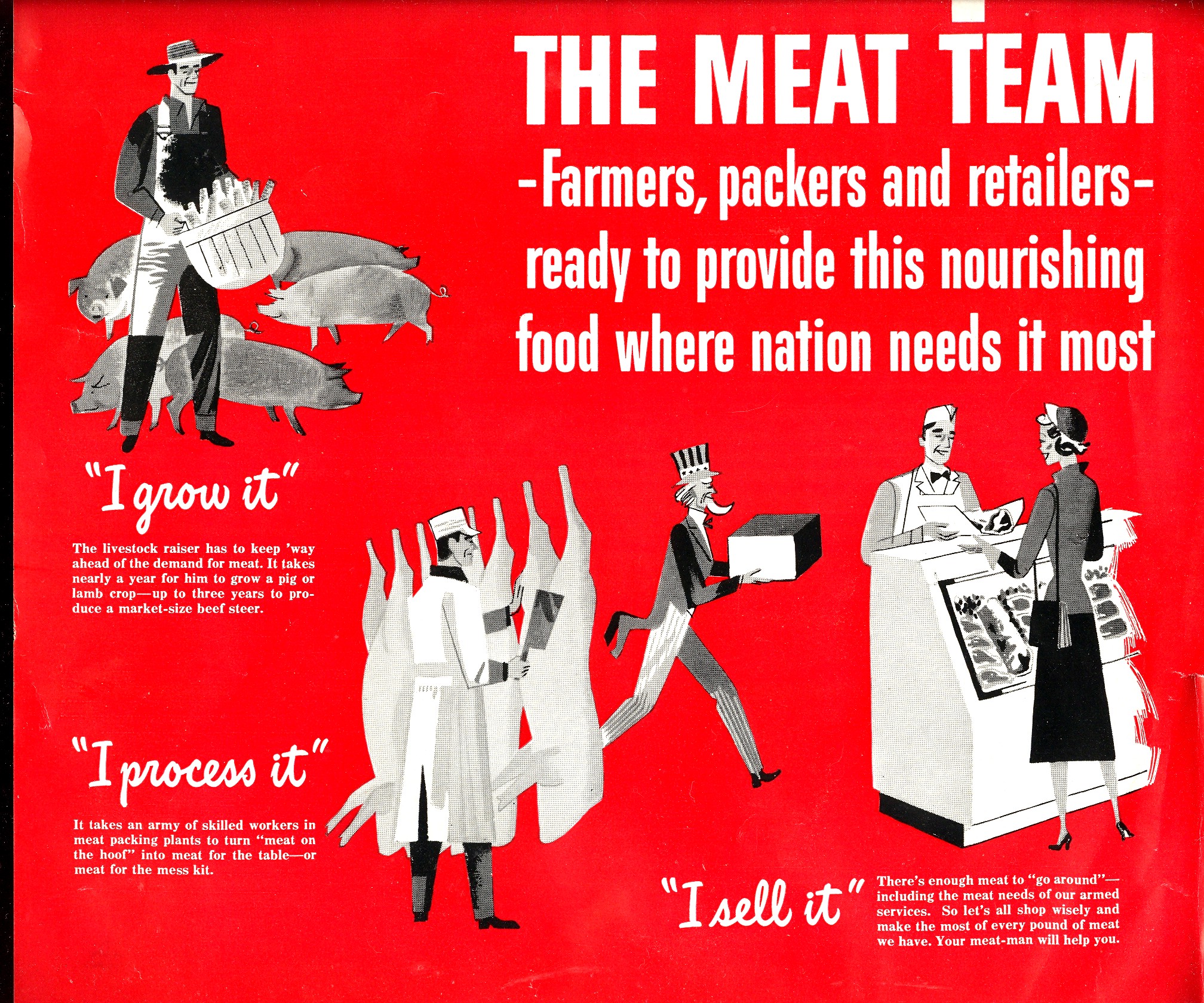
The Meat Team–not a particular type pf meat; just meat, a red advertisement putting the “eat” in “meat”. Red was also used for SPAM, which is a very democratic type of meat byproduct.
Another boost to candy as a food.

I’m probably all wrong on this, but that was the sense-impression I got from leafing through six inches of Life magazine for 1942.
JF Ptak Science Books Quick Post
Samuel Clemens (1835-1910), who became Mark Twain in 1863 and then mostly stayed that way, had a great mind and was a superb writer and story teller–he wasn’t necessarily a great inventor, however. In the ear;y sea of his great achievements, in 1871–just after the publication of his first real best-seller, Innocents Abroad, 1869)–Clemens applied for and was granted a patent for a bra clasp. I don’t know if it is the bra clasp, or not, but for whatever reason Clemens pursued this interest all the way to the end.
In the year after the publication of Roughing It, and three years before the publication of The Adventures of Tom Sawyer, Clemens patented–essentially–a blank book. It was a special book/holder for the very-popular practice of scrap booking, and it seems rather ironic that someone who filled up so many books with words would get a patent for the sale of books that didn’t have any. Curious.
JF Ptak Science Books Post 1530
I was about to start a new series of posts on the History of Lines , something left out of this blog, oddly, given the different posts on the History of Dots and the History of Holes (and the History of Blank and Empty Things). A lot of that–the History of Lines business–has to do with the interpretation of things on paper: heart rate, “brain waves”, the motion of a bumble bee, navigation, and of course, words. (The great Kickapoo tracker Famous Shoes in Larry McMurtry’s Streets of Laredo, one of the Lonesome Dove tetralogy, found that the one thing he couldn’t track in this world were the marks on the pages of a book.)
But I was distracted by the idea of seeing something in a different context, of associating something with a sense experience far beyond its origin, and so the History of Lines will wait just a little–something just a little beyond seeing some electrical function of the brain inscribed as a long line on a skinny piece of paper. What I found was this–the invention of Mr. E. Hardy, whose “Formenephone” detected the presence of combustible fire-damp or any other gas in mines, and which would then emit sounds on the accompanying (small) organ pipe. The apparatus would actually vibrate more rapidly as the gas content of the air increased. At the time (the notice of the invention appearing in the Scientific American Supplement #945 for 10 February 1894) the only other means of detecting these gases was by the change of the glow of a candle.
Perhaps this is in a way like the application of musical notes to the numbers pi or tau, though actually useful.
I’ll return to the History of Lines tomorrow.
Notes:
Formene, or marsh gas, is a “hydrocarbon which produces chloroform when the hydrogen in it is replaced with chlorine, loses hydrogen and yields anthracene”.
·Posted by :
·in: