A Daily History of Holes, Dots, Lines, Science, History, Math, Physics, Art, the Unintentional Absurd, Architecture, Maps, Data Visualization, Blank and Missing Things, and so on. |1.6 million words, 7500 images, 4.9 million hits| Press & appearances in The Times, Le Figaro, Mensa, The Economist, The Guardian, Discovery News, Slate, Le Monde, Sci American Blogs, Le Pont, and many othr places… 5000+ total posts since 2008.

Category: Title Page Art, Beautiful

  • Seeing Vision: Examples of Light and Sight, Personified

    JF Ptak Science Books LLC  Post 976


    (On seeing the morning’s rising sun): “Looks like light to
    me.” SpongeBob SquarePants


    “All the fifty years of conscious brooding have brought me
    no closer to answer the question, ‘What are light quanta?’ Of course today
    every rascal thinks he knows the answer, but he is deluding himself.”  A. Einstein

    “Are not gross bodies and light convertible into one
    another, and may not bodies receive much of their activity from the particles
    of light which enter into their composition?” I. Newton, Opticks,
    1704, Query 30.

    Mar 12 #51

    Depicting the capacity of sight and nature of light has been
    both an easy and a knotty problem in the history of science. Over the
    successive theories on the basis of light the artistic presentation of the
    phenomenon has been generalized (generally) in a very simple way:  by straight lines.  There’s certainly nothing wrong with that,
    the lines are just parenthetic place-holders suggesting direction, not actual
    descriptors of what light “looks” like.

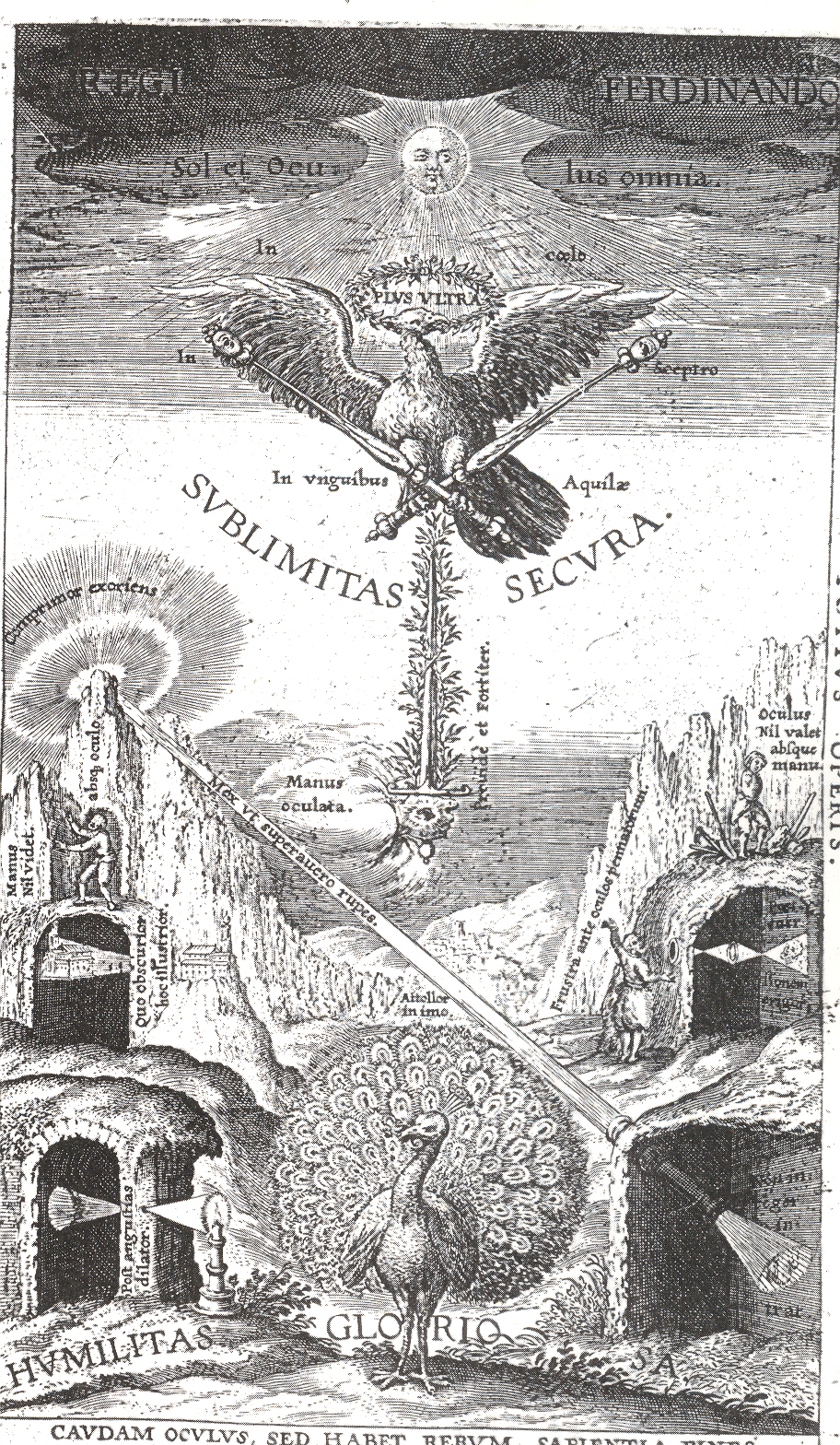
    There are literally hundreds if not thousands of images printed 1550-1850 to call upon to make this point, and I’ve selected but a few.  The first belongs to Jesuit astronomer Christoph Scheiner and which appeared in his  Oculusm hoc est: fundamentum opticum...,printed in Innsbruck in 1619. His work is an out-and-out landmark in the history of optics,  physiological optics and ophthahlmometry, and provided a springboard for two generations following him, not the least of whom was Rene Descartes. The illustration above is the book’s frontispiece, and features four camera obscuras demonstrating four principles of the eye, the middle ground of which is a beam of light 

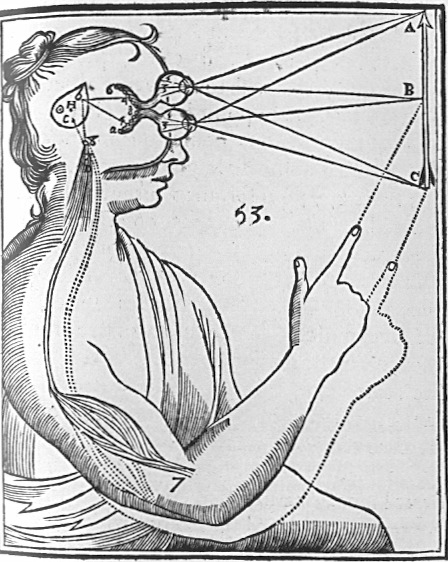
    Rene Descartes depicted the interpretation (in his  Principles of Philosophy of 1644) of light and its physiological reaction in the brain as follows:
    Cartesian_Vision

    the lines of sight depicting binocular vision, observed (and compressed) by the eye’s “particles” and processed by the pineal gland which in turn manipulate the “fluids” in the control of nerves and muscles. 

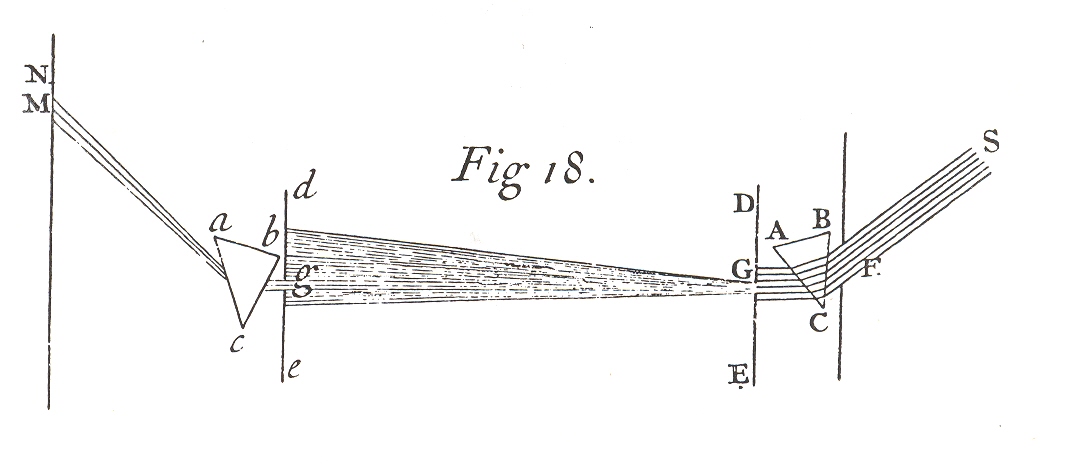
    Another example of even greater fame than the iconic image by Descartes is that of the diagram showing the connection between color and its reflective index by Isaac Newton, appearing in his Opticae of 1706.
    Mar 12 newton 

    Another fine example comes from Zacharias Traber’s (1611-1679) beautifully illustrated classic of optics (and physiological optics) , Nervus Opticus sive Tractatus Theoricus..., published in Vienna in 1690.  Traber is a great collector and synthesizer of the work done during and before his time, using the work of Descartes, Kepler, Schott, Kircher, Scheiner and Aguilon (for example), and then further implementing their ideas especially in the areas of color theory  and light refraction.  The image certainly reflects Jesuit Traber’s religious training, depicting the holy source of light (originating with the almighty force) which directs it to the sun; the light then is left to the inquisitive and playful hands of cherubs who reflect and magnify it, as well as use it to start a fire (from the condensing lens) and observe it through a telescope. The main cherub empties a sack containing a number of different optical tools, no doubt for the playful brethern beneath. 
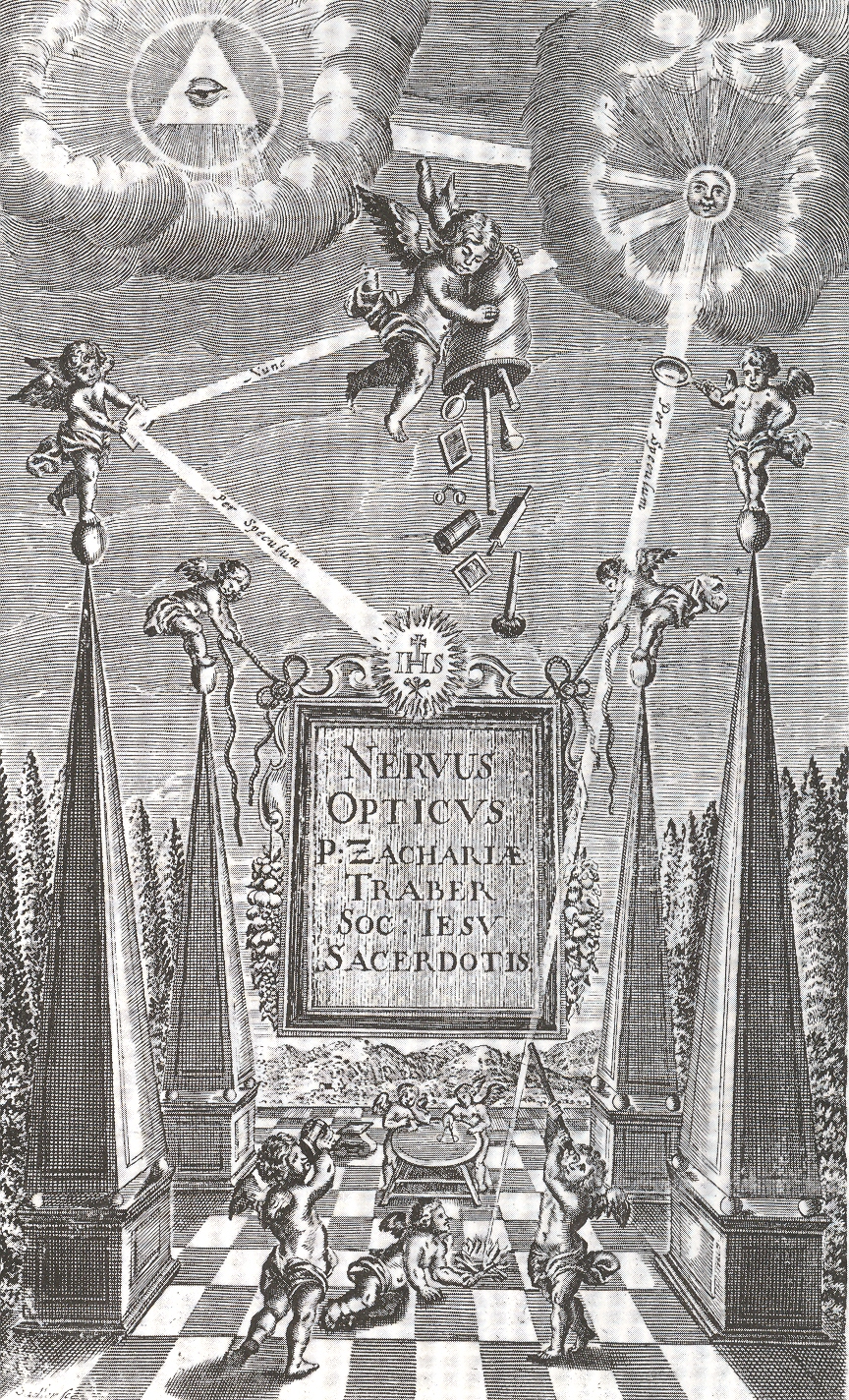
    Mar 12 trauber 

    And then of course there is the great, unstoppable, polymathic and sometimes incorrect Jesuit Athanasius Kircher.  This image appears in his masterwork Ars Magna lucis et umbrae, printed in Amsterdam in 1671, which deals with light and shadow, optical illusions, color, refraction, projection and distortion, sundials, mirrors, as well as astronomical subjects. Most of these subjects are clearly seen in the engraved frontispiece to the work (below), the source of all of the “rays” of light coming from the godhead, relayed through a telescope, reflected from a mirror, and gathered in a camera obscura. 
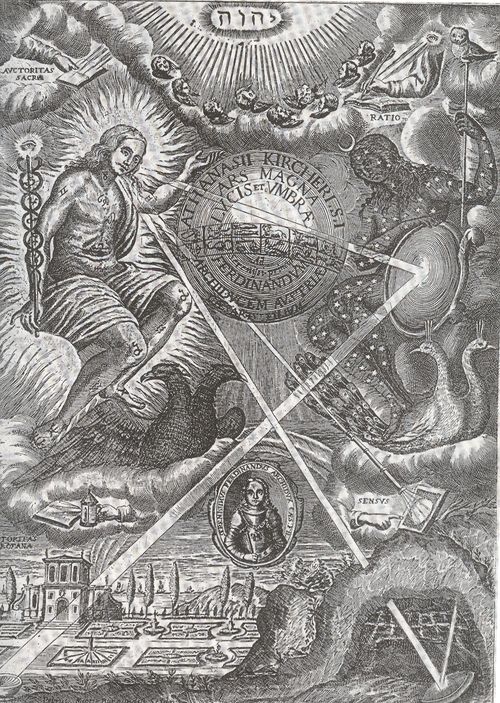
    Mar 12 kirch 

    Other interesting images from the Kircher include this spotlight.
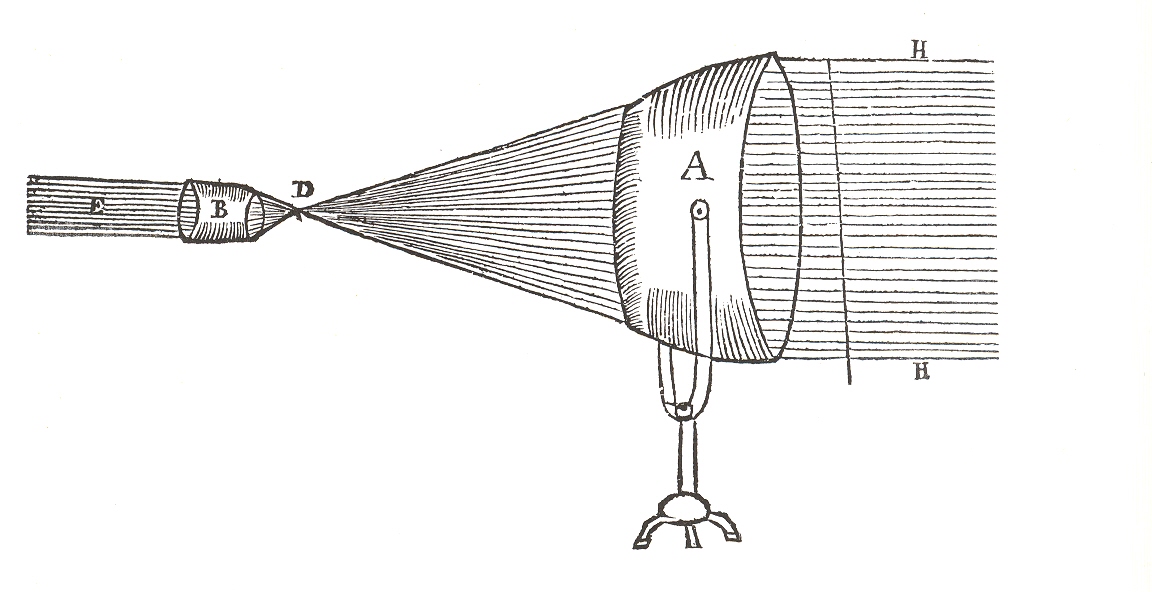
    Mar 12 krirch detail long

    Mar 12 krirch black detail


  • Magnificent Titles, Ranters and Hell Breaking Loose (England, 1650)

    JF Ptak Science Books LLC  Post 946

    Ranters,
    Diggers, Manifestarians, Puritans, Muggletonians, Shakers, Quakers, Levellers, Seekers…terrific names all for religious or religioesque movements, most now
    gone, though it seems that of the most-gone the Ranters are probably the
    most-goned gone–which must’ve been a function of their unstated aims of not
    having a particular course of action.  As
    an anti-movement their movement was tautologically doomed, as they flourished
    for only a decade or so, sandwiched into the very full mid-17th
    century. 

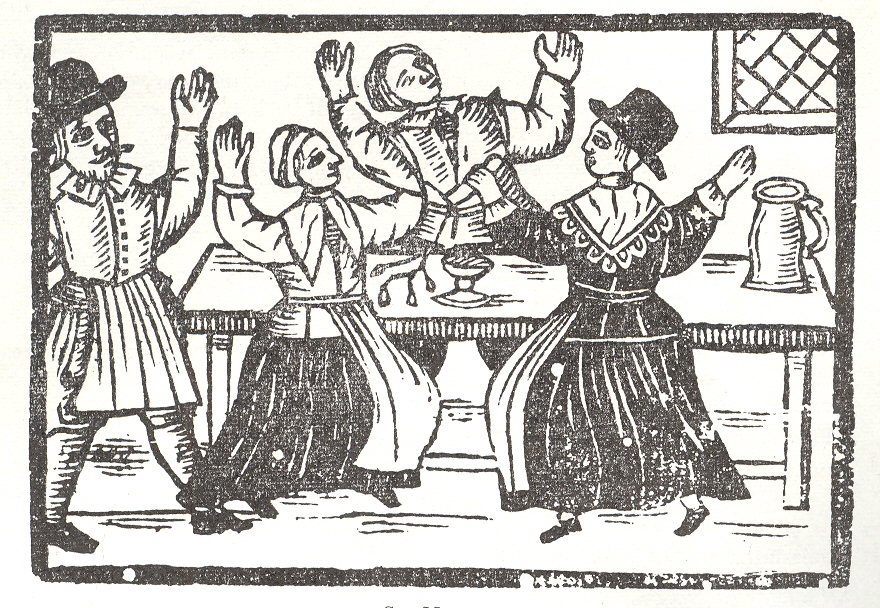
    1--ranter
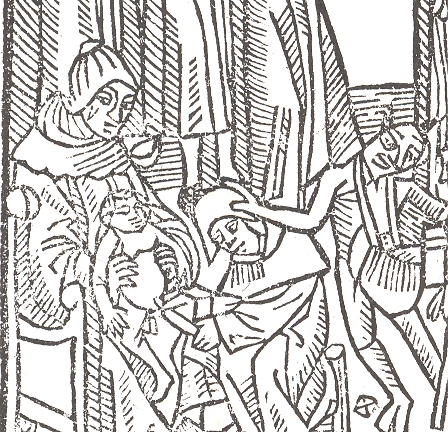
    {The image above is an illustration from the book, Hell Broke Loose... below. It also is a pretty tame version of other images that show more nudity/drinking/sexual activities.]

    Ranters
    were an English Free Spirited heretical group of wide interpretation of social
    and moral value. Their questioning of the potency of the man’s fall doctrine
    steamed together with a quasi-semi-millenialism evidently led to an
    alehouse-based loosening of socially governed restraints. According to the many People magazine-like pamphlets and soft
    porn reporting, their activities made for sugary eating by the bawdy-eyed ha’penny
    people buying gossip in cheaply printed formats.   Free of Sin and Law, the Ranter celebrations
    were soaked in alcohol and nudity, which are ripe pluckings for any non-serious journalist, then or now.

    Judging from the list of publications (listed below in the “Continued Reading” section) there must’ve been a very immediate lusty interest in the Ranters’ lustily interesting ways.  I’ve written this post for the simple interest in one particular, extraordinary title: [with apologies for the underlining, but I cannot convince the Typepad gods to remove it.]

    Hell broke loose: or, the notorious design of the wicked Ranters, discovered on Sunday last at Black-Fryers Being a true relation of the strange proceedings of Mr. Vaughan, and his wicked proselytes; and their entring of Black-Fryers church in sermon time, like so many spirits from hell, with four damnable papers in the hands, containing such horrible, audacious, and abominable songs, the like not to be parallel’d in former ages. With the manner how this onsolent Ranter traced the streets from Black-Fryers to Saint Paul’s Church-yard, in his Holland shirt, without doublet or breeches, a treble cap, like the Pope’s miter, with silk fring, and white shooes, and stockings. With their damnable plots, and conspiracies against the ministers of the gospel: their examination before the right honourable the Lord Mayor of London; the sad and woful speeched, made by the ringleader of the Ranters, concerning the city magistrates, and golden chains: and the committing of them to Bridewell till the next sessions. 1650

    See?  That’s just fabulous, and represents a Title Page Extravaganza that seems to be a 17th century feature–including as much as humanly possible on a title-page.  As does this book, with all manner of detail in the title, not the least of which is the description of a man running around with no pants but with a Pope’s mitre and white shoes and socks.

    The 17th century “Hell Broke Loose” extended-title (but non-Ranter) category has a number of other entries in it, too, for published books, including the following lovilies:

    Hell broke-loose; upon Doctor
    S–ch–ve–l’s sermons
    or, Don Quevedo’s vision, of an infernal cabal of Whiggish papists and
    popish Whigs in Utopia; upon a mock-tryal of the doctor. Translated from the
    original; by Jack the Spaniard.
      1713

    Hell broke loose, or, An answer to the late bloody
    and rebellious declaration of the phanatiques, entituled A door of hope,
    &c.
    wherein their horrible conspiracy against our gracious soveraign, and the
    city of London, in their late rebellion is discovered : together with a brief
    view of our lives, manners and malice of those desperate and unparallel’d
    traytors
    . 1661

     Hell broke loose : or an history of the Quakers both old and
    new. Setting forth many of their opinions and practices, published to antidote
    Christians against formality in religion and apostasie
    1660

    Some of the other big-title Ranter titles from this time include the following:

    The Ranters creed being a true copie of the examinations of a blasphemous
    sort of people, commonly called ranters, whose names are herein particularised,
    together with the name of their pretended God almighty, and their false prophet
    : taken before Thomas Hubbert Esquire … with a declaration of their fantastic
    gestures and deportments as they were coming before him, and in his presence :
    and now committed to the New Prison at Clarkenwell.
    ,
    1651

    The great mistery of the great whore unfolded, and antichrists kingdom
    revealed unto destruction in answer to many false doctrines and principles
    which Babylons merchants have traded with, being held forth by the professed
    ministers, and teachers, and professors in England, Ireland, and Scotland,
    taken under their owne hands, and from their owne mouths, sent forth by them
    from time to time, against the despised people of the Lord called Quakers, who
    are of the seed of that woman, who hath been long fled into wildernes … in
    this answer to the multitude of doctrines held forth by the many false sects,
    which have lost the key of knowledge, and been on foot since the apostles
    dayes, called Anabaptists, Independents, Presbyters, Ranters, and many others,
    who out of their own mouths have manifested themselves not to be of a true
    descent from the true Christian Churches : but it’s discovered that they have
    been all made drunk with the wine of fornication received from the whore which
    hath sitten upon the beast, after whom the world hath wondred /
     
    1661

    The Ranters reasons resolved to nothing. Or, the fustification instead of
    the justification of
    the Mad Crew Being, a serious answer returned to one who in his letter desired
    an unlawfull and wicked book to be sent unto him, call’d the Justification of
    the Mad Crew. Instead of vvhich, the author of this letter sent him the Act of
    Parliament made against the Ranters; and did also both justifie their way, and
    ingratefully asperse some, who in Christian love would have reduced them to the
    life and truth of Christianity. Wherein the people called by themselves god and
    by some others, the Gods of Godmanchester, may, as in a glasse, behold, that
    they are a deluded and defiled people, if not incarnate Devils.
     

    1651


  • How FDR Made Women (1) Nervous and thus (2) Older. An Appeal to Vote Republican, 1936

    JF Ptak Science Books LLC  Post 921

    Blog jan 28 protext women

    {This continues “The Coming Sex War of 1919“)

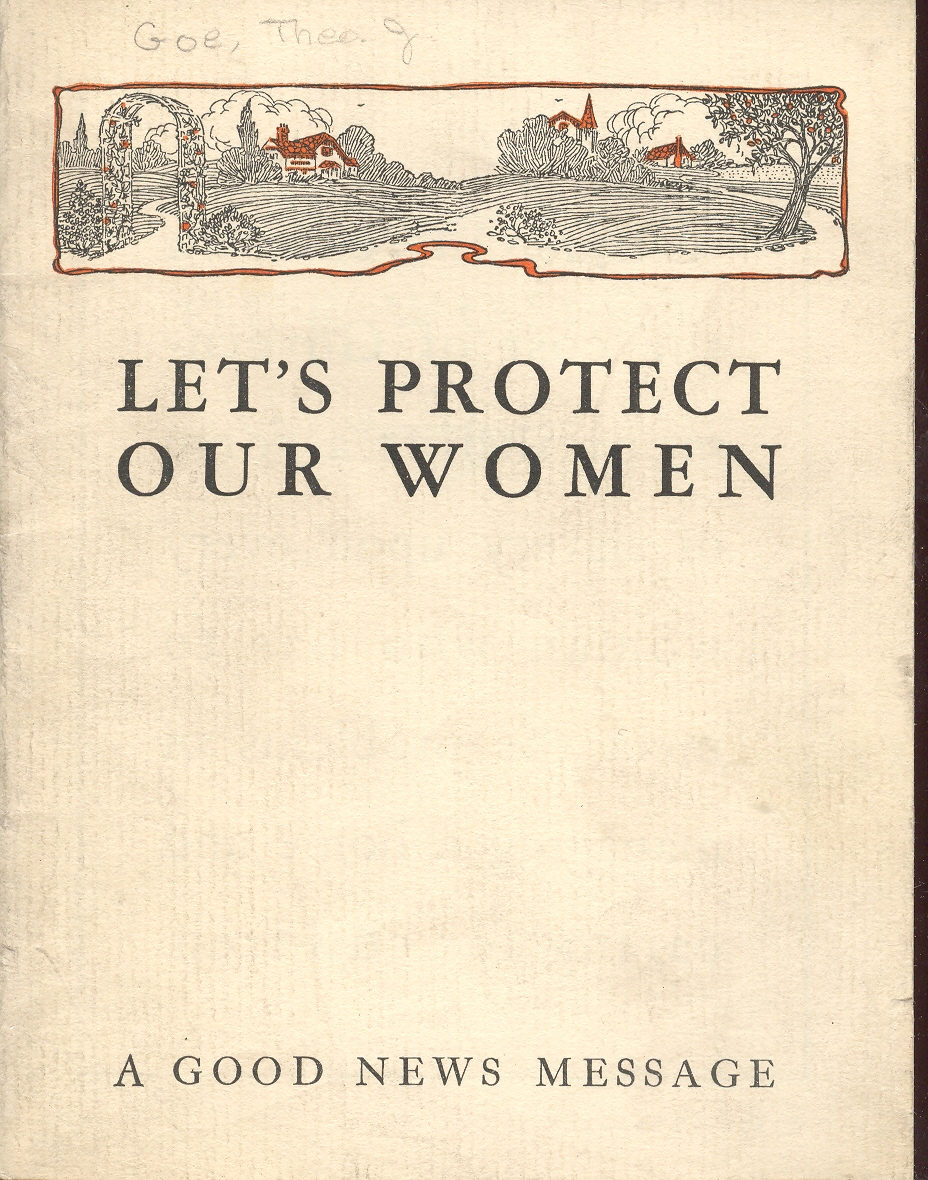
    Theodore J. Goe, the author of “Let’s Protect our Women”, must
    have been a synesthete, with the ability to smell the future.  My copy of this pamphlet used to be the
    Copyright Deposit copy, and is dated January 18, 1936, and what Mr. Goe was
    smelling were the winds of the November presidential election; and since he was
    a Republican—or at least an anti-Rooseveltian—what he smelled was outrageous
    defeat for his cause. 

    And so he wrote this elegantly-produced little oddness,
    trying to dip into the wellspring of the enfranchised female vote (just sixteen
    years old at this point), trying with fatherly will to scoop women out of the
    harmful ways of Roosevelt’s policies.

    The “protection” that women needed was for uncertainty which
    led to nervousness and which attacked their youth to send them into a slavery. The
    thinking here went sort of like this:  women were being attacked by FDR, who was “cruelly
    prolonging the depression” by not helping people with jobs, thus depriving their men of a fair wage which is what made
    women happy; without the “happiness” of a husband with a good job, “life
    becomes more serious than it should be”; this fights against “national
    influence which tends to rob [women] of their youth”, making women older
    sooner. And it was this premature aging that the women are to vote against in
    1936.

    Mr. Goe may well have been a crank, but to him and his
    readers this thinking might’ve made some sort of contemporary sense, after a
    fashion.  He did forget that women made
    up more than 30% of the workforce at this point, and had more sources of
    happiness and youth than a man with a decently-paying job, plus having a life
    and opinion outside of serving home/hearth/husband, but no matter. (This, by the way, is where Mr. Goe thought American women lived:)

    Blog jan 28 protext women det Women didn’t rush to aid FDR’s competition in the ’36 race,
    when Roosevelt redefined “landslide” by crushing
    his Republican challenger, Kansan Alf Landon. 
    There wasn’t any election like it since the two-party system became nationalized
    80 years earlier, Landon loosing to Roosevelt by
    an electoral balance of 523-8. Landon swept Vermont
    and Maine,
    with FDR taking everything else.  (No one
    would quite clear the plate like this ‘till Reagan turned Walter Mondale
    inside-out in 1984, 525-13.)

    Landon was a decent man who had an interesting
    post-political career—even so, it’s a good thing that he lost.


  • The Hidden Beauties of Barrels, Pig Bristles and Forgotten Escalators

    JF Ptak Science Books LLC   Post 776    Blog Bookstore

    I wonder what is was like to be a traveling salesman hauling
    around hundred-pound barrels of pig bristles?

    + simplicity paintbrush

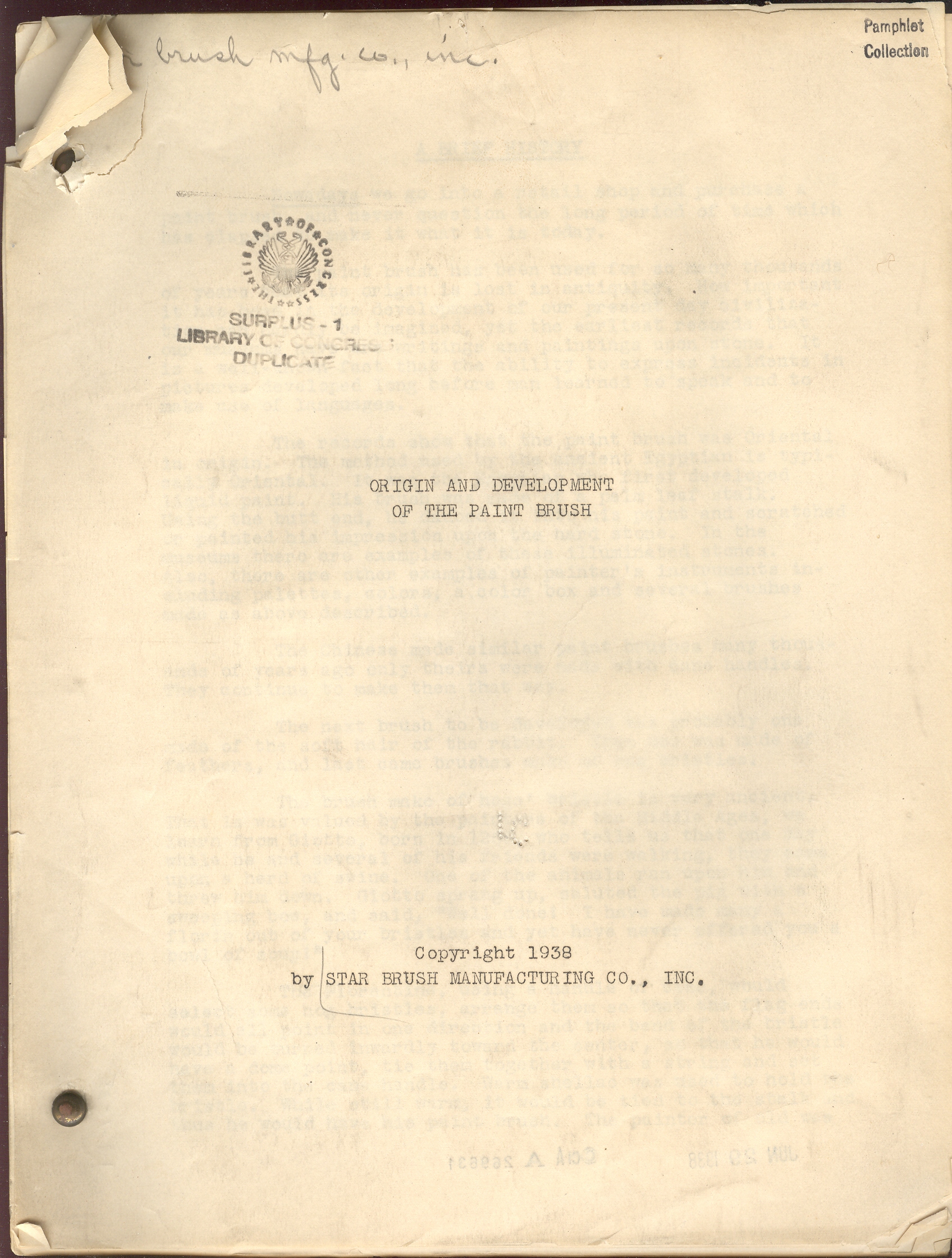
    We don’t really find out the answer to that question in Origin and Development of the Paint Brush (1938),
    but that remarkable, far from the maddening crowd question does present itself in
    the text.  And that is why I love
    pamphlets like these.

    Spending my professional life with the book, and being a
    reader, I’ve come into contact with and have been exposed to a good, solid, Big  Number of books, a Big Book of Big Numbers of
    books.  And so when the unusual creeps in
    or is stumbled upon, they shine like little novas in my book-sky.  And the ones that shine with their own
    special light are the titles come in three favorite flavors:  the Sublime Mundane, Outsider Logic, and
    Fantastic
    (and Impossible).  Today’s
    selection are from the first category, and exhibit titles and texts that look
    like non-luminous and uni-dimensional but turn out to be anything but mundane.

    + simplicity escalators

    Earlier in this blog I’ve written on pamphlets entitled Flagpole Painting, School Safety Pioneers, Fortunes to be Made with Frogs, Where are the Dead?, How to Repair a Zipper, Mud’s Romantic Story, Soap in Everyday Life, The Fine Art of Squeezing, Salt Salesman’s Manual, Know Your Groceries, The Book of Envelope Facts (and others),
    and they’ve all shown a terrific inner quality that is completely hidden by
    their so-sleepy and yet strangely-compelling titles.  Like the paint brush history pamphlet.  Here are a few other new examples:

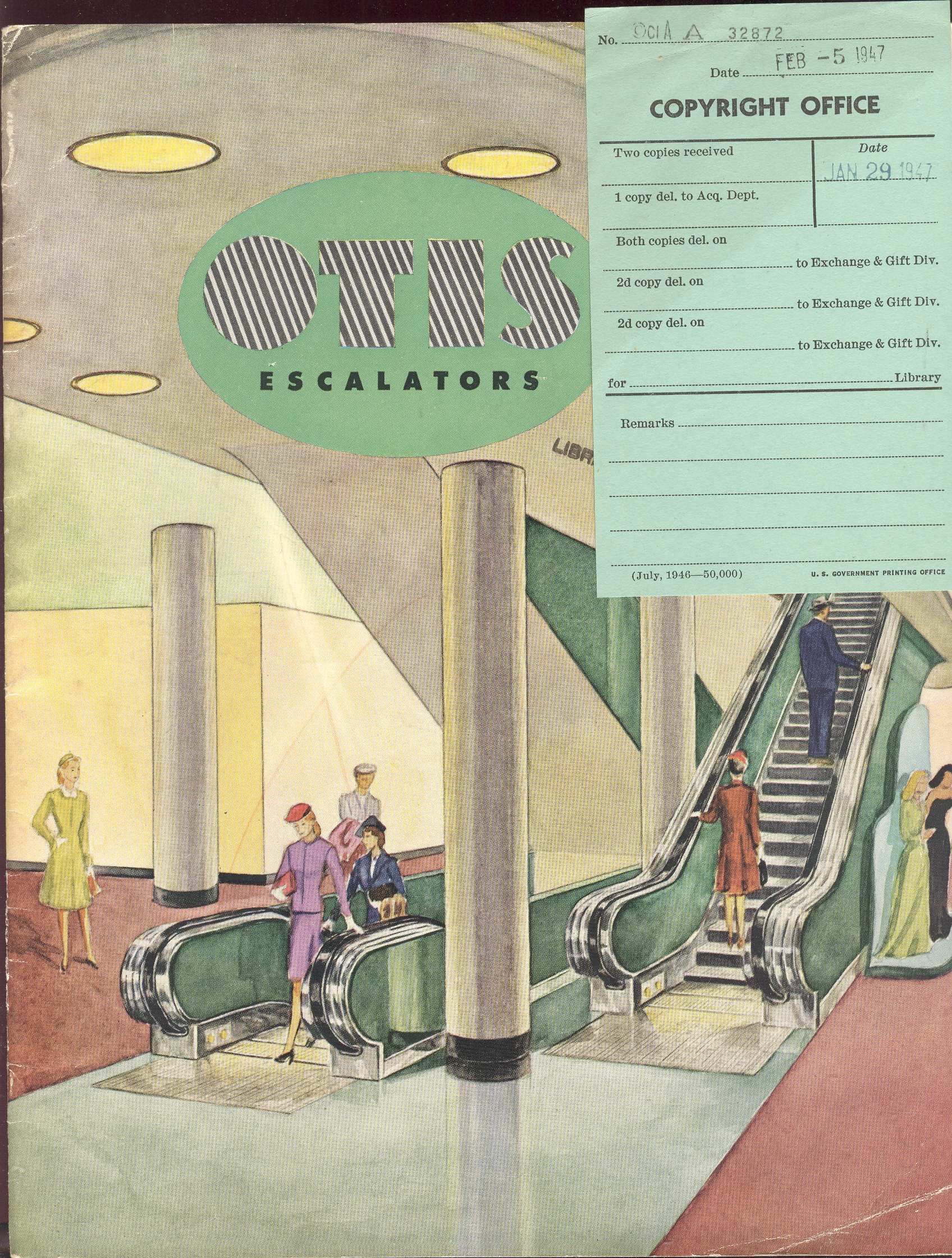
    The Otis Elevator
    pamphlet (1947) is efficiently designed beneath its semi-bizarre cover,
    floating in odd typeface, completely lifeless design, mannequin humans, and
    washed-out pastels.  The Chinese coloring
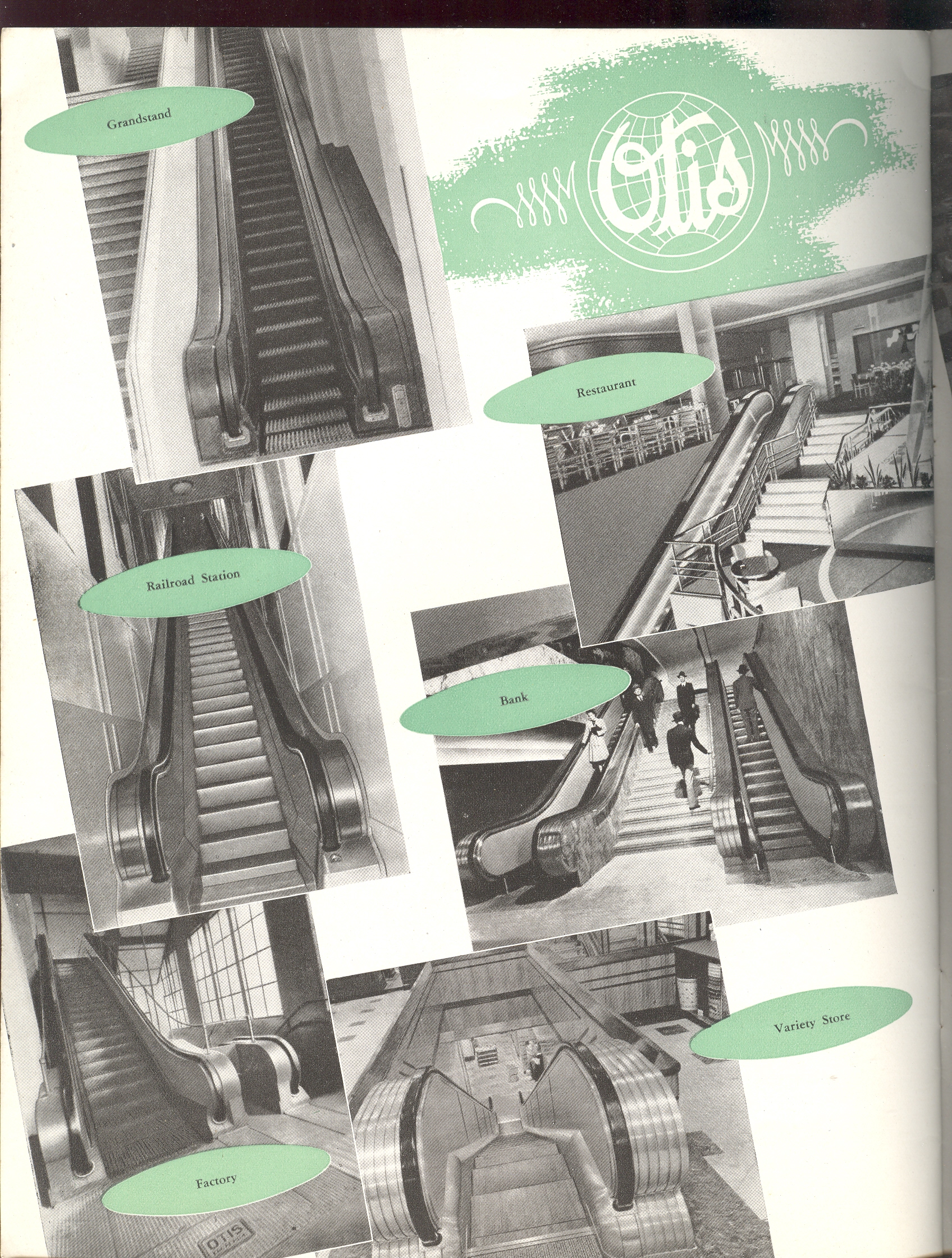
    book style of its covers hides a superior content, complete with schematics and
    beautifully supplied with photos of elevators long-since removed from sight and
    memory.  + simplicity escalators back 002


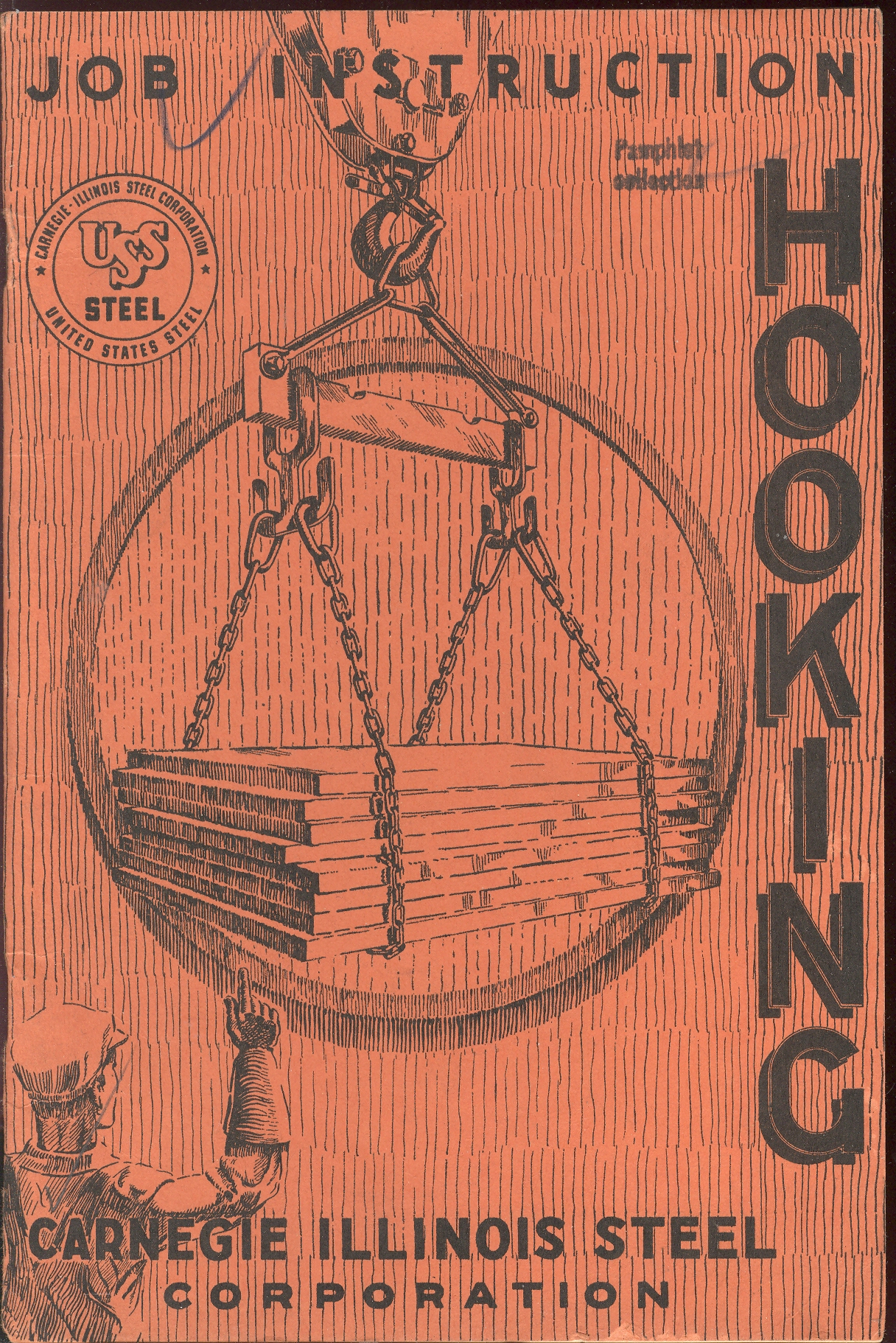
    The Hooking pamphlet is not about its obvious contemporary
    counterpart, but is a luminous, luxurious introduction and stylizer to the
    science of hooking large objects to cranes via giant hooks and chains, and especially
    about how to keep yourself from being 
    crushed by tons of steel not hooked properly. 

    + simplicity hooking

    The Mystery of Filters
    charm is wholly in its title and cover design, its text describing nothing
    but camera filters.  It is still a cool
    cover, nonetheless.

    + simplicity filters

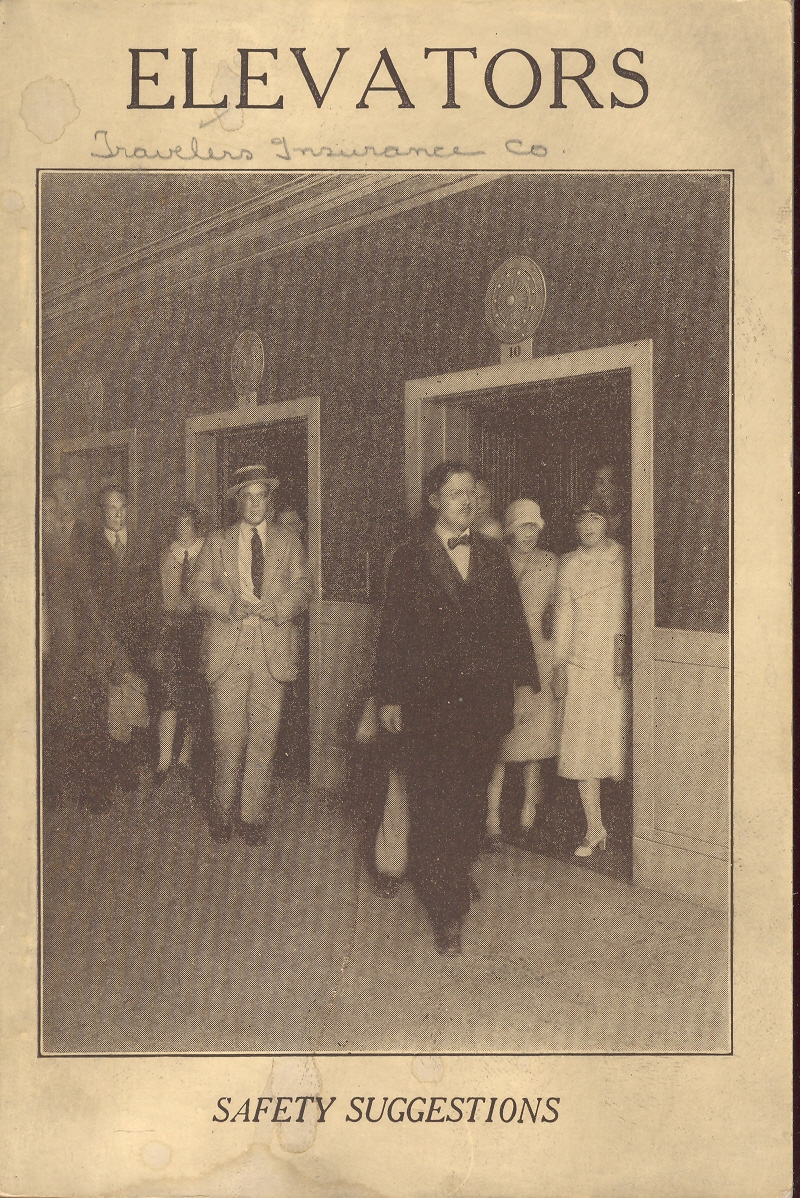
    Elevators,
    published by Travelers’ Insurance Company, tried to protect themselves a little
    further by ensuring safe practices of elevator operation, mostly in industrial
    settings.  This was published in 1926 and
    was already in its seventh printing from its inception in 1913 when the
    elevator was just in its second decade of popular, relatively widespread usage.
    The haven’t-given-this-cover-design-a-moment’s-thought hides a thorough (and
    bland) treatment of elevator safety; too bad, the cover photosnap-art promises
    something more.  Its not there, except
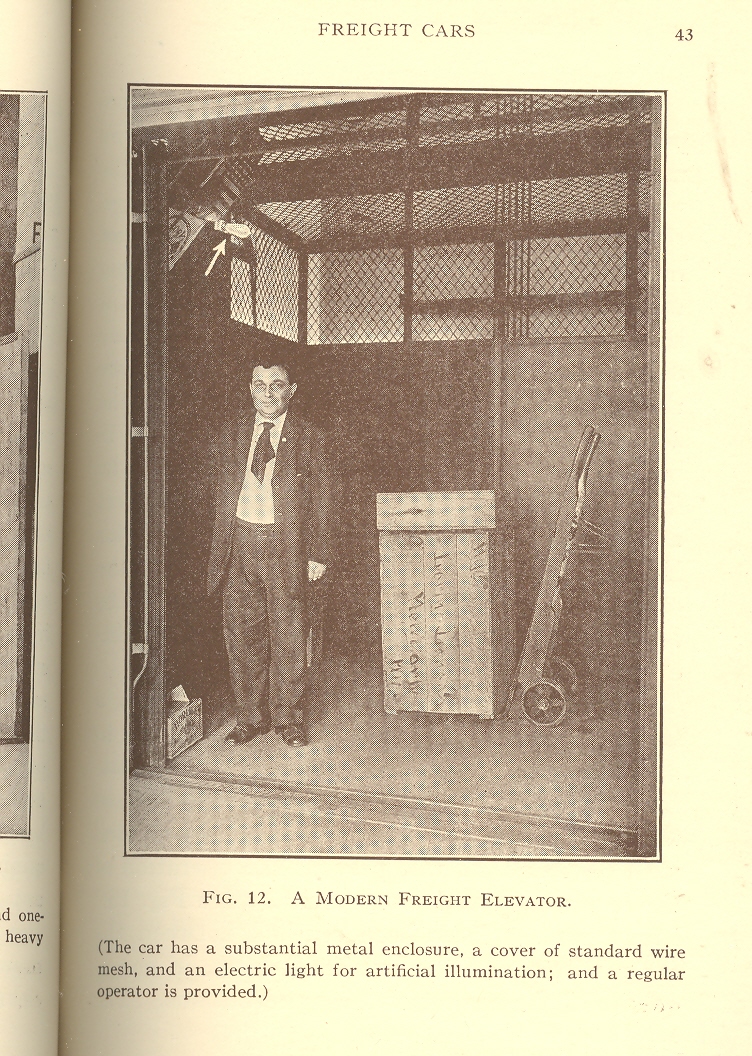
    for this beautiful photo of an industrial elevator op with a tie.

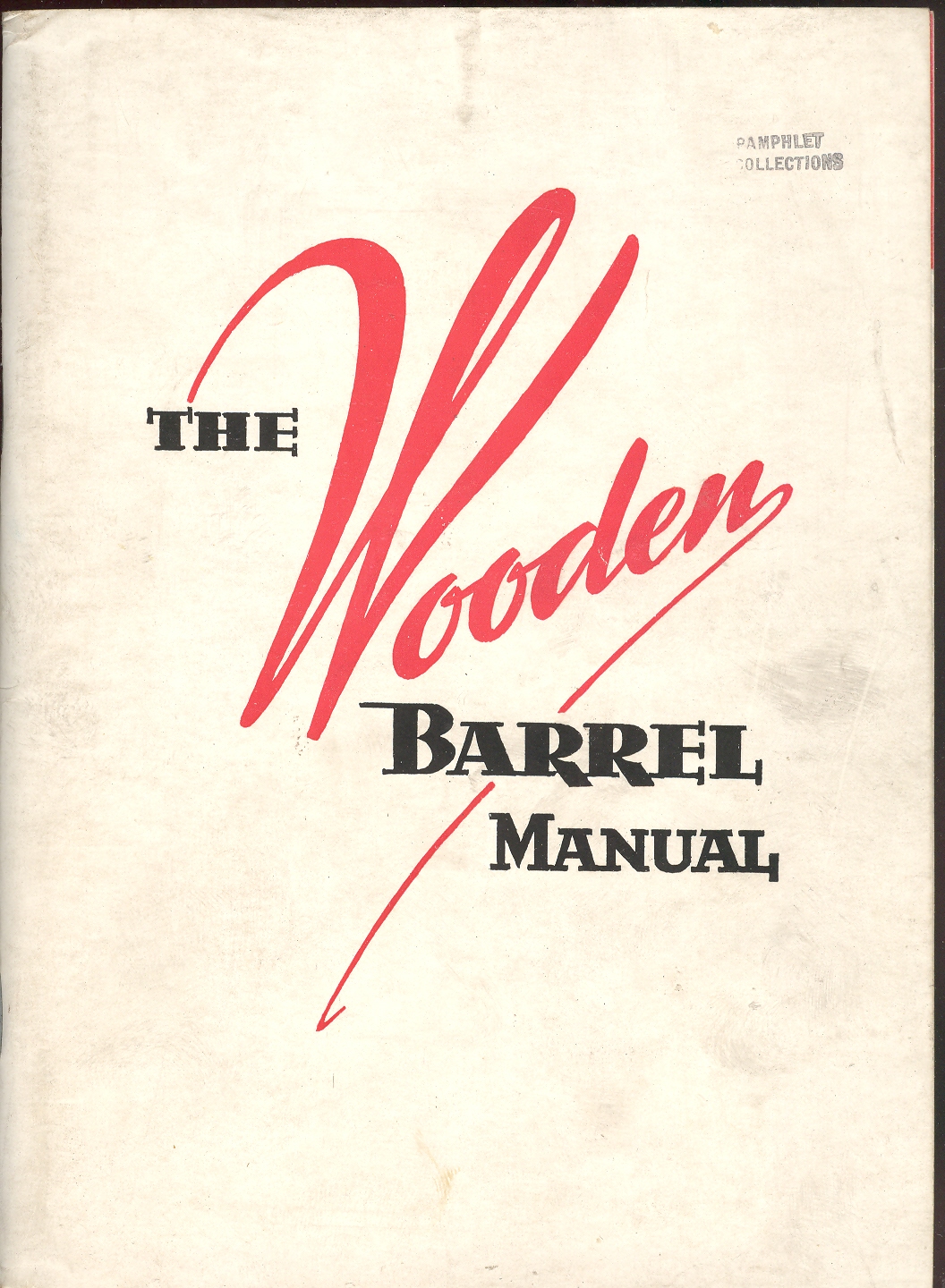
    + simplicity elevatorsAnd coming back to wood barrels that are not necessarily
    filled with pig (or wild boar) bristles but with something else less advanced
    comes this manual on making wood barrels. 
    Everything is there, everything you’d need to make a barrel (and a good
    one at that), and I admire this sort of fantastic dedication to what is
    essentially (to our modern mind) mundane—except that it is as dry
    as well-cured barrel wood.  But I admire
    it still,  as I do the Elevator pamphlet,
    because, well, they’re done right. + simplicity elevators interior tie

    + simplicity wooden barrels


  • History of Vacations; The Great Depression and Cowboy Chaps, 1934

    JF Ptak Science Books  Post 754  Blog Bookstore

    The Depression didn’t stop professional theorists from working
    on the issue of what people should do with what was seen as the impending
    explosion of leisure time.  Arthur Pack (The
    Challenge of Leisure
    , 1934) for example wondered about the impact of free-ish
    time and the implementation of “constructive leisure”. Walter Lippmann worried
    about the impact of “commercialized pleasures” rather than those that were
    creative and involving an idea.  Still,
    in 1934, the ideas of leisure and pleasure as institutions were a distant,
    deeply fuzzy notion to most Americans.

    ++00++ 9.14 flaming arrow

     In 1935 the Depression in the U.S.(which started with the
    October Crash of 1929) had bottomed out, the worst of it all behind us (except
    for the recession of 1937).  Industrial
    production was coming back (it had fallen about 45% by 1932), home building was
    making a rebound (coming around from an 80% drop in 1932 and after 274,000
    people had been evicted in 1933), the bank failures had stabilized (having
    reached about a 40% failure rate in 1933), and the unemployment rate had “fallen”
    to 20% (following a 3% rate in 1929 and a 25% high in 1934).  In 1932 the corporate profit rate had dropped
    90% as had the value of the stock market, industrial production was off by about
    half, immigration had fallen to one-tenth of its 1929 figures, and over two
    million people were roaming around the country, forced from farms or homes,
    seeking destiny in trucks loaded with all of their possessions, walking, or
    riding the rails. 

    But that doesn’t mean that the other segments of the
    American economy, those happy and personally unaffected in the Depression,
    couldn’t remain so:  there was money and
    money to be spent, and spent well in the dwindling power of the mid 1930’s
    dollar, the purchasing power of the wealthy growing as the economy declined. 

    ++00++ 9.14 flaming arrow 001

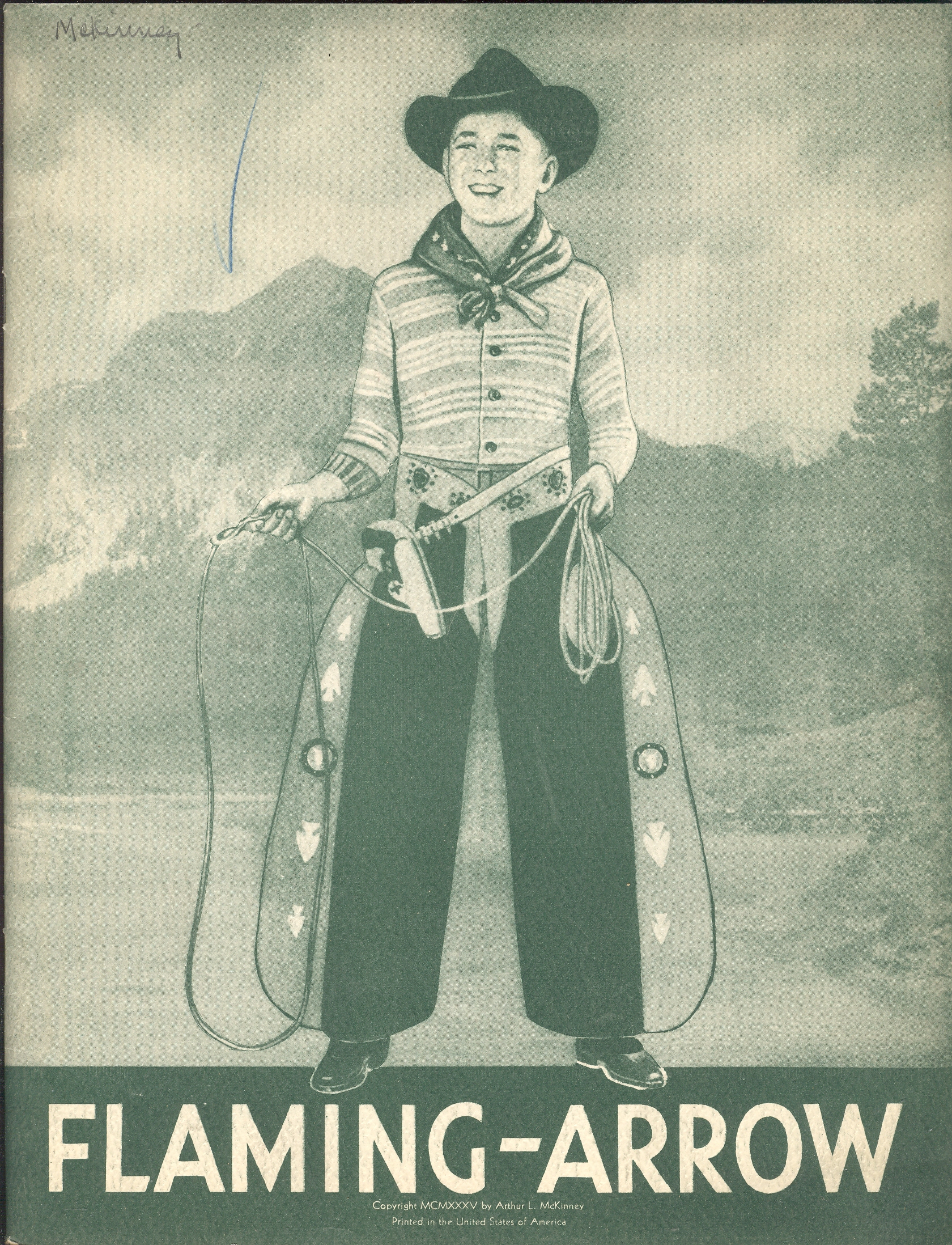
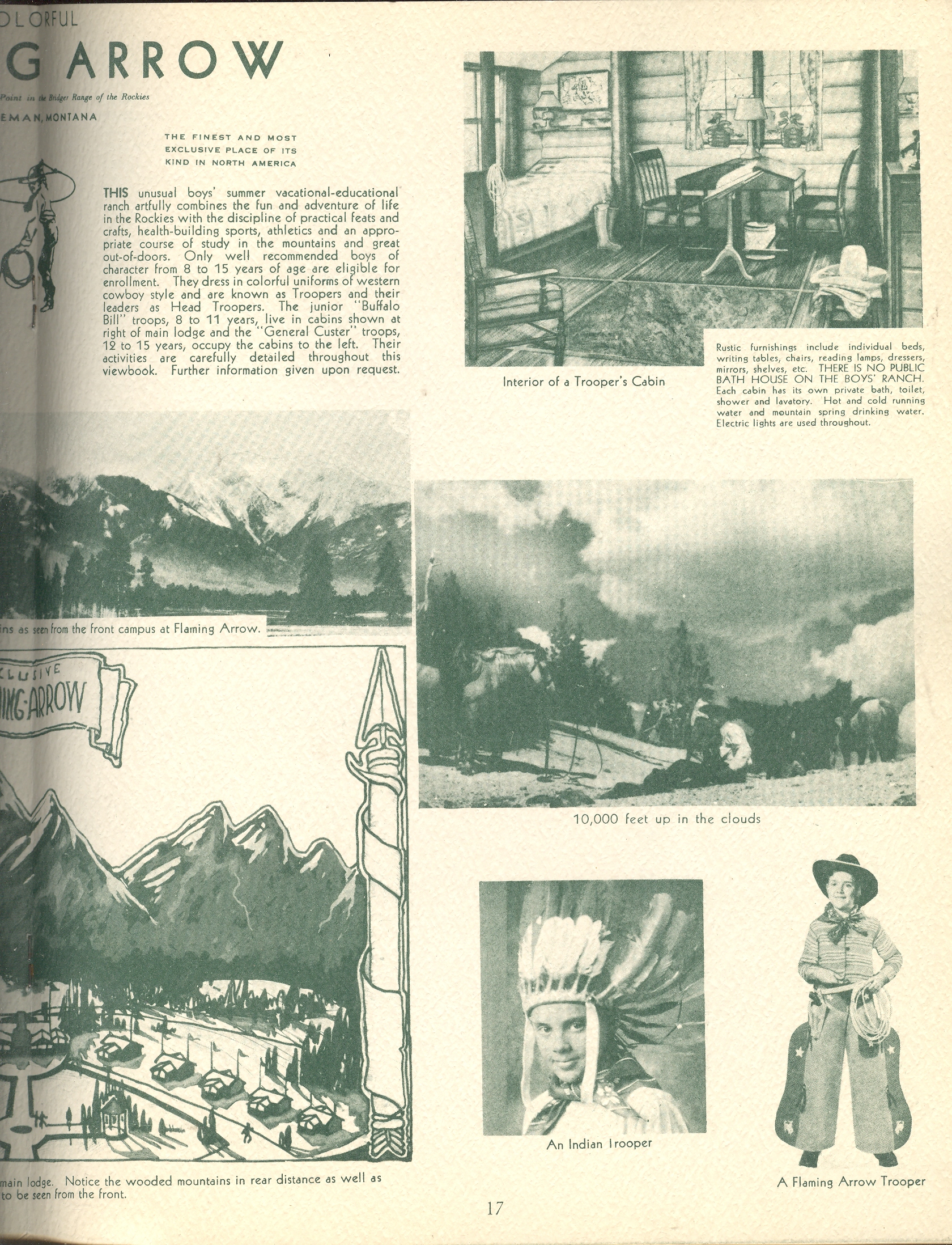
    Which brings us to this pamphlet for Flaming-Arrow dude
    ranch and the kids outfitted in the high, big-chaps fashion of thin-lipped,
    vocabularily-challenged cowboy stars of the 30’s matinee.  But by Neptune’s
    soggy trousers, the kid on the front cover just looks so wrong—historical placement
    and societal understanding aside.  Kids were
    sent to Flaming-Arrow (“for the discriminating family”) near Bozeman to spend the
    summer in a “semi-military” fashion, comforted in fine cabins with first-class appointments,
    all for about $395 for eight weeks.  That
    figure would have been out of reach for a great majority of Americans (the average
    income at this point for a family having fallen to about $1500 a year), costing
    about a quarter of all family yearly money.

    I’m not so sure why this cover is so disturbing to me—maybe it
    is just something so simple as the war between the enjoyed leisure time of people
    with money and the enforced unpleasant leisure time of the unemployed and unmonied.
     

    ·Posted by :

    ·in:


  • Odd Things on Title Pages Department: Circumcision, 1507

    JF Ptak Science Books LLC  Post 722  Blog Bookstore

    When Johannes Pfefferkorn (1469-1523) was released from prison he rushed himself into a conversion to Christianity (having come from a Jewish family in Nuremberg) and published a notorious diatribe against his former people.  Speculum Adhhortationis Iudaice ad Christum, which was published in 1507, savaged the Jews, calling for immediate

    ===blog==aug 22=pfefferkorn

    conversion to the recognition of Christ as savior, giving up all banking concerns, and throwing out the Talmud.  It packed a lot of sneering speculation into a mere twenty pages, and was one a of a number of anti-Jewish pamphlets (also including his en ihr Ostern halten (1508); Judenbeicht (1508); and Judenfeind (1509)) in which Pfefferkorn unleashed horrible prescriptions.  He came to believe that the best way to deal with the Jews was to kill them, convert them, expel them, or enslave them; that was about it.  He waged a successful campaign against the Jewish intellectual life by convincing the Emperor to allow the confiscation of all Jewish books (except for the Old Testament), embarking on an extended tour of Germany to do so.  At the bottom of it all, he thought that the best way to deal with theological issues that opposed his own was to crush the believers and steal their books. 

    ===blog==aug 22=pfefferkorn 001

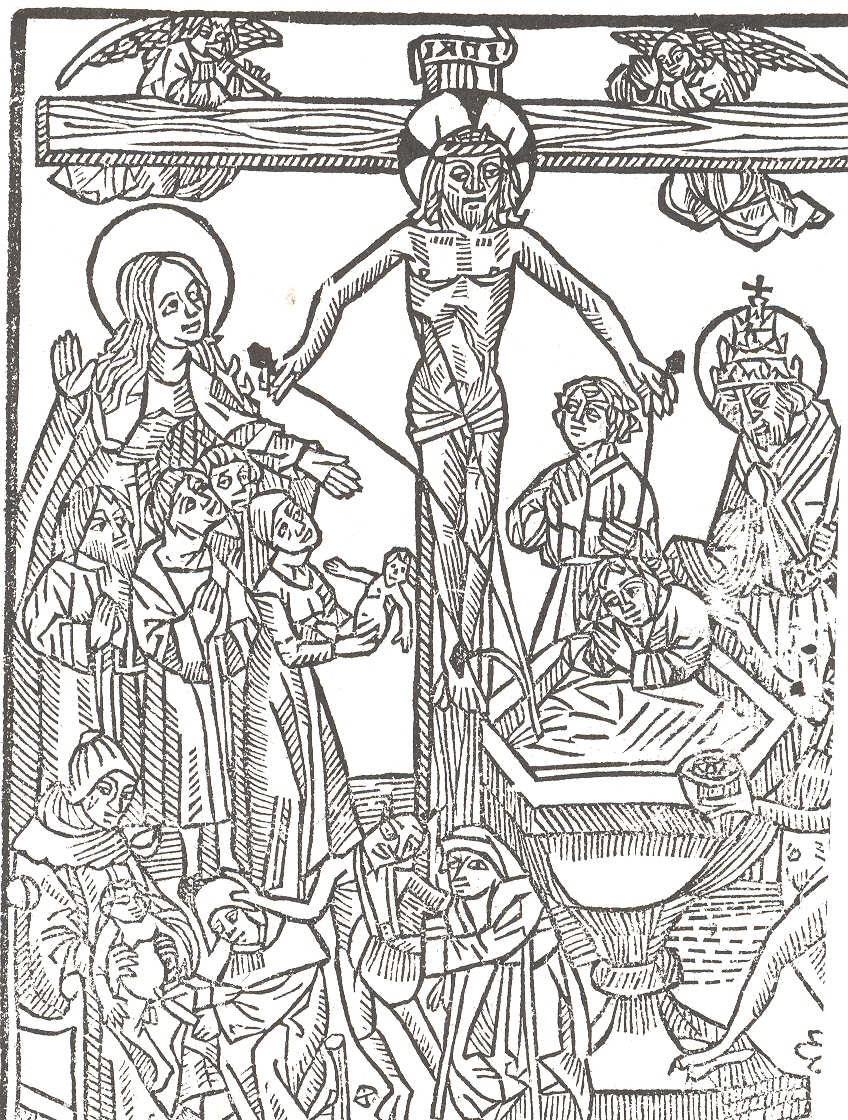
    Of interest to me here though is the remarkable woodcut on the title page.  On a very wide crucifix we see the blood of the bleeding wounded Christ pouring itself into a baptism font, with eight (or so) praying people waiting to avail themselves of it, including the onlooking attention of the Virgin Mary and a Pope (Peter?).  In the foreground is a dismal portrayal of a group of Jews, showing them small, gnarled, without benefit of vision and legs.  At the extreme bottom left is the circumcision, he only time I can remember seeing such a thing on a title page.  It was an awful visual propagandistic  juxtaposition, a fitting illustration for an awful pamphlet.


  • On Learned Ignorance: George Hartgill’s Astronomical Tables

    JF Ptak Science Books  Post 620    Blog Bookstore

    According to negative theology, ‘there is not found in God anything other
    than infinity.’  (Cusa, De Docta Ignorantia, vol. I, § 26)

    “With respect to the intellectus, reason (ratio) is at the horizon…but with respect to the
    sense, reason is at the zenith, things that are within time and things that are beyond time
    coincide in reason.”(Cusa, De DoctaIgnorantia, vol. III, ch. 6, § 216


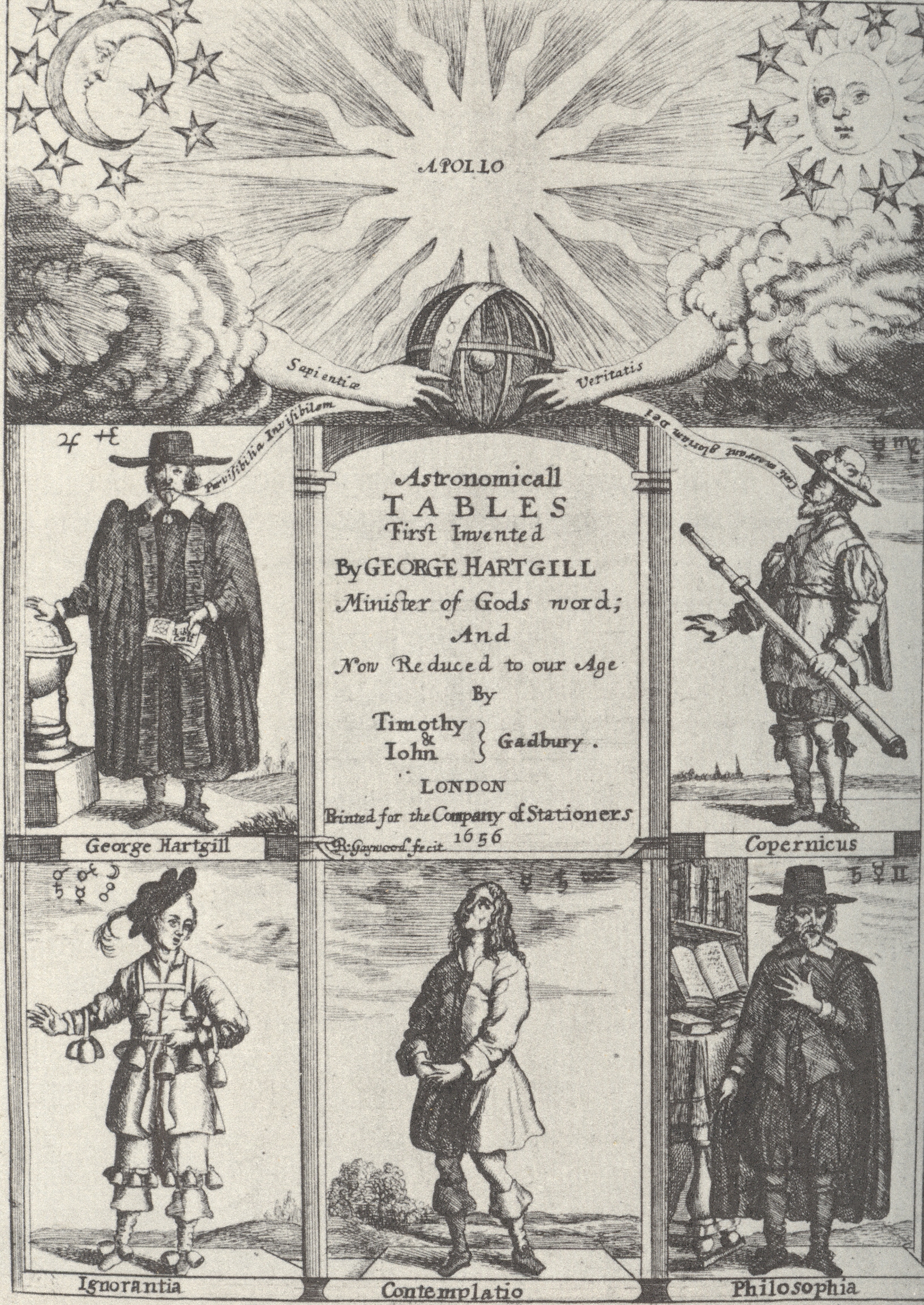
    Blog--May 20-hartgill In my imaginary Encyclopedia of Interesting Title Pages, the Astronomical Tables shewing the Declinations….* by  George Hartgill** is very much middle fare,  very interesting but not overly so (I say sniffily), but very much worthy of attention.  The initial bit that caught my attention was small and sort of trifling: it seemed that the writer possessed  the temerity to place his own portrait on the title page across from that of Copernicus.  As it turns out, the selection was obvious and logical, though I wouldn’t know that until I pieced together the symbolisms of the page.  Aside from that, there was a fair amount of action on the title page, and for all of that it retained a certain spareness, a lightness in spite of itself.

    The title page is an elegant call to synthesis of science, philosophy and religion in the understanding of astronomy. To start: at the top-center is the burning sun, “Apollo”, the great and perhaps most important of all the Olympians, the god of sun and light (among other things).  The arms of the heavens (signified by the arms reaching out from the Moon and Sun) embracing a globe of the earth within an armillary sphere. The arms carry the legends of “spientiae” (“wisdom”) and “veritatis  (“truth’).  Surrounding the title proper are five figures, the upper two being Hartgill and Copernicus.  The word balloon coming from Hartgill’s mouth says “per vidibilia invisibilem” or “ the visible and the  inivisible”, and touches the hand of wisdom; Copernicus’ balloon I can only partially read, but it seems to end “gloria dei” (to the glory of god), and ends under the arm of truth.  In turn these two figures rest on three others:  Ignorantia, Contemplatio and Philosophia. 

    Ignorantia here is depicted by an entertainer decked out in bells.  He isn’t necessarily “ignorant” per se: the “ignorance” comes in multiple forms: one is of the intelligent and educated person knowing the things that weren’t yet known; another in terms of a belligerent ignorance, insisting on the known and the comfortable in the face of compelling new evidence stating otherwise; and also of simple ignorance of not knowing and not caring.  Contemplatio and Philosophia pretty much speak for themselves.  The three of them seems to support the advanced “ignorance” of Hartgill and the mathematical/philosophical Copernicus, all of which are illuminated by the wisdom and truth of the source of all light.  Its simply a wonderful, well-designed title page.

    *Astronomical tables shewing the declinations, right ascentions, and aspects of three hundred sixty five of the most principall fixed stars and the number of them in their constellations after Aratus : as also the true oblique ascentions and descentions of all the said stars upon the cusps of every of the twelve houses of heaven according to their latitude….1656.

    **Granger’s Biographical History of England (1824), says of Hartgill: (he was)…”chaplain to the Marquis of Winchester, was a painful preacher, a reverend divine, and a most excellent mathematician, as appears by his ” Astronomical Tables;” which, according to the judgment of the best astronomers, could not have cost him Jess than seven years’ labour, considering the perfection of the work.”


  • The Dot and the Sphere—the Depiction of Multiple Dimensions

    JF Ptak Scinece Books LLC  Post 591       Blog Bookstore

    The
    History of Dots, Part 10
    .

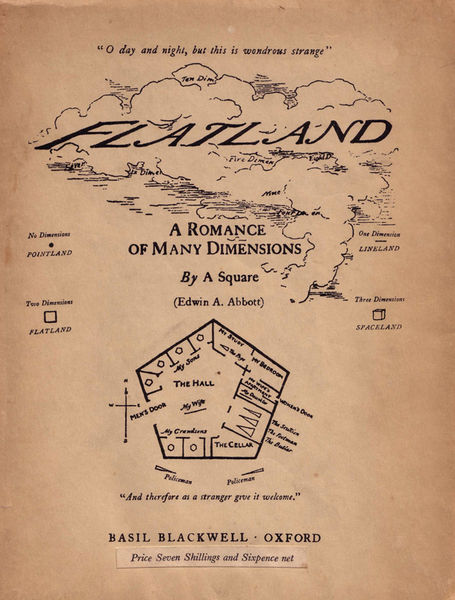
    Edwin
    Abbott’s slender Flatland is perhaps one of the best books ever written on
    perception and dimensions, a beautifully insightful book that was quick and
    sharp, and in spite of all that was also a best-seller.  Written in 1884 when Abbott was 46 (Abbott
    would live another 46 years and enjoy the book’s popular reception), it introduces
    the reader to a two dimensional world with a social structure in which the more
    sides of your object equals power and esteem. 
    Thus the lowest class would be a triangle (three sides) while the
    highest (priestly) class would be mega-polygons whose shape would approach a
    circle.  Abbott’s magistry comes in
    explaining to the three-dimensional reader what it was like to be in a
    two-dimensional world.Flatland_cover

    And
    to this world one day came an epochal event.

    It
    was a dot.  The dot was a magnificent new
    thing to the 2-D world, and what happened was this—it grew concentrically and
    outwardly, expanding and then contracting in a series of circles, morphing
    until it appeared as an entirely new and revolutionary form rising from the
    plane of Flatland.   It became a sphere.

    The
    sphere was from Spaceland and amazed the population of Flatland (Lineland,
    actually); the story was (and the book’s title page saying it was written by) a
    Square, whose deep interest was immediately enhanced by its great imagination.  It turns out that once every millennium the
    good folks of Spaceland visit Flatland to return one its  inhabitants home to try and introduce them,
    educate them, to the idea of added dimensions. 
    Safely in Spaceland,   the Square was presented with the radical
    newness of the third dimension, it engaged the Sphere about the possibilities
    of yet higher (fourth, fifth and sixth) dimensions.  The Sphere was not altogether please—talk of
    higher dimensions in the3-D world was outlawed just as the discussion of the
    3-D world was in Flatland.  Pissed, the
    Sphere returns the Square home to its land of lines. 

    The
    Square finds it very difficult to be home again. (Did I ever mention here that
    my house is about a thousand feet away from Thomas Wolfe’s grave?) It finds it
    a very tough go to convince anyone of its journey and the existence of another
    dimension.  To complicate things further,
    Abbott has the Square dream a remarkable thing—a visit to Pointland, a totally
    self-involved dimension consisting of one ruler, a Point, which exists across
    all area and things.  Even Square’s
    introduction of an idea or question comes to the Ruler of Pointland as an idea
    from its own head, because nothing and no one else exists.  Fantastic!

    Eventually,
    things go badly for the Square—the edict is described making it illegal for any
    further discussion of the third dimension, with dire consequences on a sliding
    scale according to class./caste/sides, with death the penalty for the
    Triangle.  The Square itself winds up in
    prison, an unhappy being locked “in” a cell and prohibited in its mind. 

    Jouffret

    But
    Abbott is certainly successful in relating the possibilities of
    higher-dimension thought by introducing the view from a higher- to a
    lower-dimension.  Still, it’s a tough
    go. 

    19
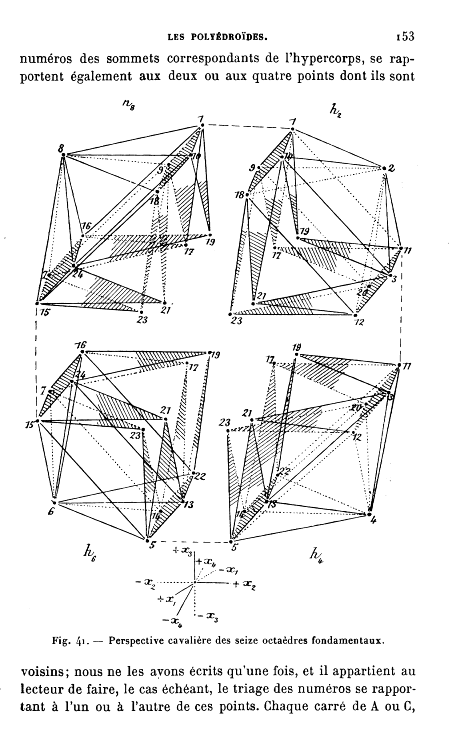
    years later dots came to further assistance to a mathematician and military man
    named Esprit Pascal Jouffret*, who wrote a remarkable and beautiful geometry
    book on picturing the fourth

    dimension. 
    Actually, the book was more an example of how to discus the representation
    of the fourth dimension on a piece of paper, and didn’t’ offer a comprehensive  treatise on the matter.  But the images of depicting space and time
    would look extraordinarily familiar in just a decade in the paintings of the
    Cubists.  For example, the morally-lonely
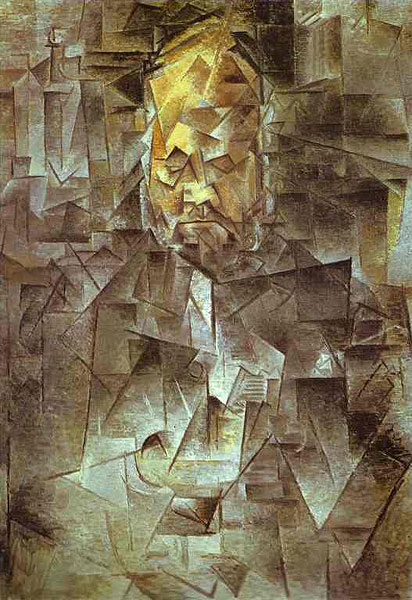
    Picasso’s 1910 portrait of the movement-molding art dealer Ambroise Vollard looks
    very much like many of the images in the Jouffret book.  Marcel Duchamp—for me the true

    Picasso_vollard1910


    hero of early
    modernism—also drew on the work of Jouffret, and made no secrets about the path
    of his intellectual foundation (unlike the squirrely Picasso). 

    And
    so from the lowly dot comes a beauty unsuspected in soliphismy Pointland. 


  • On the Under- , Partial and Full Discoveries of Oxygen

    JF Ptak Science Books LLC  Post 574

    Oxygen
    Our sea of air is composed of atoms, and the atoms are
    mostly nitrogen (78%) and oxygen (21%), and the atoms are of course all around us; though
    as obvious as it is, as present as it is, the most active component of air, oxygen,
    remained under-discovered until relatively late in human history.  Oxygen is present in all major classes of
    structural molecules in living organisms and in all manner of inorganic
    compounds, and is   When it was
    discovered, it really wasn’t; or it wasn’t discovered and recognized until the
    second time around.  But the stuff that
    was whirling around its near discoveries were important in themselves for their
    constituent parts. 

    Johann Joachim Becher (born in 1635 and dead at 47 in 1682)
    got part of the way there, though he didn’t discover oxygen—he discovered the
    thing that oxygen wasn’t: 
    phlogiston.  But the phlogiston
    theory worked a little, but not a lot. 
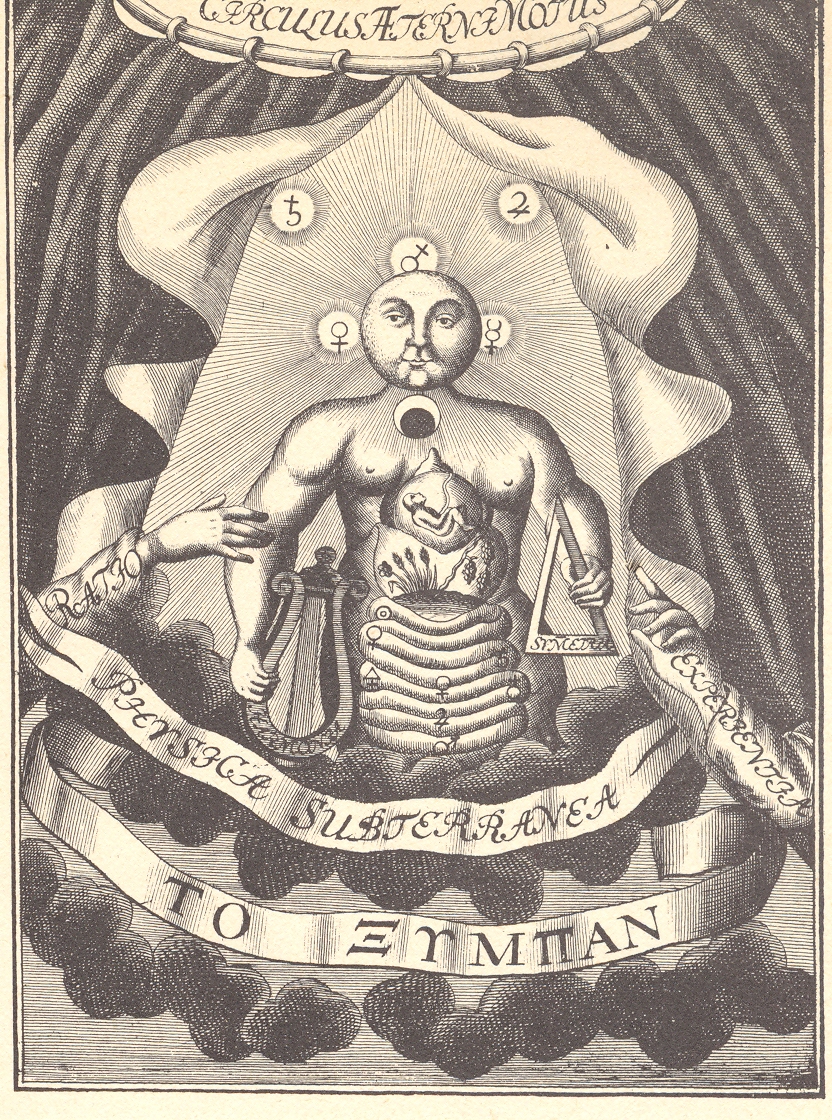
    The theory appeared in his book Physica
    subterranean profundam subterraneorum genesin e principiis bucusque ignotis…
    and
    was published in 1669. (Actually, his Subterranean book was published just a
    few years after our old friend Athanasius Kircher’s masterpiece Mundus Subterreaneus. Just a tired note
    from the small-world category.)  Actually
    what the phlogiston theory “did” was explain the process of fire and
    oxidation—phlogiston was the colorless/odorless/undetectable stuff that was released
    from the combustibles of the four elements of the Greeks when they rusted or
    caught on fire. Once the phlogiston was released, the true nature of the
    material that once held it was then revealed. 
    As James Conant wrote in. The Overthrow of Phlogiston Theory: The
    Chemical Revolution of 1775–1789
    . Cambridge :
    Harvard University Press (1950, page 14):

    “…in general, substances that burned in air were said to be
    rich in phlogiston; the fact that combustion soon ceased in an enclosed space
    was taken as clear-cut evidence that air had the capacity to absorb only a
    definite amount of phlogiston. When air had become completely phlogisticated it
    would no longer serve to support combustion of any material, nor would a metal
    heated in it yield a calx; nor could phlogisticated air support life, for the
    role of air in respiration was to remove the phlogiston from the body.”

    The other thing that happened was that the phlogiston
    released into the air could not on its own support life.  That meant it wasn’t not oxygen, it was the
    opposite of oxygen:  anti-oxygen.  Anti-oxygen is an interesting, very science
    fiction-y topic, a very cool brick for 
    the edifice of contracting imaginary worlds.  But in the world of the late 17th
    century and for another hundred years, it as the material of theory. 

    Becber’s
    Physica was actually not that at all,
    either:  it was a work on chemistry, and
    alchemy, and addressed itself too to the positive possibilities of
    transmutation.  On the other hand, Becher
    was the very first to attempt to construct a theory of chemistry.  As stated by Thompson in his history of
    chemistry:  “(Becher) was the first
    person who can with propriety be said to have attempted to construct a theory
    of chemistry; Boyle, who was responsible for hastening the downfall of
    alchemical and other onions, did not attempt to set out (such a theory)…”

    Joseph
    Priestly on the other hand did actually discover oxygen in 1774—or at the very
    least was the first to get into print about the discovery, establishing priority
    over 
    Carl Wilhelm Scheele who seems to have
    discovered oxygen first in 1773 but was second in print on the matter–but he couldn’t believe
    his own results enough to dislodge phlogiston, and went to his grave an
    unredeemed phlogistonist. ((I admit to being pretty flippant here, as Priestly
    was an enormously talented man, at high rank in part of the great panoply of
    scientists; he was also a great political observer and pamphleteer who paid dearly
     for his morality.)  It took Antoine Lavoisier’s beautiful
    experiment in 1777 that established the work of Priestly and Boyle beyond
    question, killing phlogiston once and for all. 
    As a matter of fact Lavoisier also published his account along with a
    general treatise on chemistry in his
    Traité élémentaire de chemie—a book that looks remarkably fresh for being
    printed in 1789—completely it at age 47, just four years before he was
    guillotined for being seen as an enemy to the people of France.  But that (along with the exceptional Mme.
    Lavoisier, is another story).
     

    _____

    The illustration above is actually from the 1738 edition of Becher.


  • Locating Chaos: Giovanni Della Porta’s Natural Magic and Chaos in the Sky

    JF Ptak Science Books LLC  Post 571

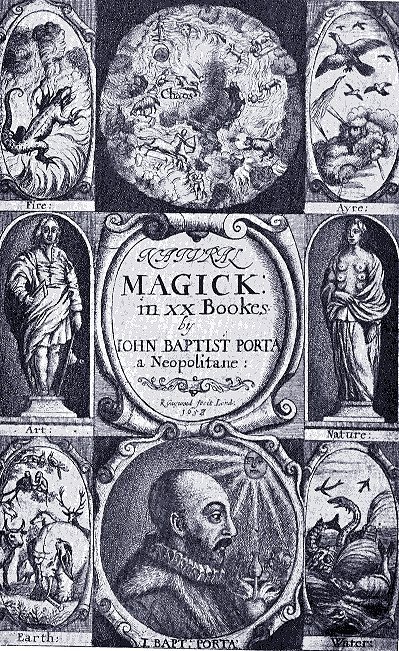
    Porta title page
    Giovani Baptista della Porta was a magus, or a natural
    magician*, who searched nature for similarities that would serve to build a
    broad template of forced  understanding of seeming likenesses, looking for the great connector
    in the exceptional and the unusual, the stuff outside of the formerly
    Aristotlean world.   Natural Magic is his magnum opus, an expansion of  its earlier
    version (Magna naturalis)  published in Latin in 1558, which Porta expanded to twenty sections in 1589. It was an encyclopedic work of vast proportions, a
    gold-mine of information and clever wishfulness, and very accessible due to
    Porta’s  wide inter-personal travel**,
    very wide reading and critical abilities, clear reasoning and deep vision:  the book was hugely successful, going into at
    least twelve Latin, four Italian, seven French, two German, and two English
    editions in the early modern era. Natural
    Magic
    , which first appeared in English in 1658, concerned itself with
    magic, alchemy, optics, geometry, cryptography, magnetism, agriculture, the art
    of memory, munitions, and many other topics, all grouped together and refined,
    distilled, into a cloudy assemblage of natural knowledge—it would end up that the magical
    whole was worth far less than the sum of its parts. 

    But the parts were pretty considerable, and much of the
    information was spot-on for the time, not the least of which was a very capable
    demonstration and explanation of a lensed camera obscura. 

    What I’m interested in right now though is the title page of
    the book.

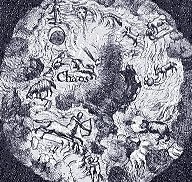
    Porta title page detailIt turns out and as we can see in the top image of the
    title page, Chaos is not some subspace trajectory of cellular automata, or in
    Dr. Brown’s/Einstein’s dancing dust—it is right above us.  This recognition of its regular, localizable structure
    probably does not support parameterization, or anything else for that matter,
    except to say that it is definitely “pretty”. 
    The title page has nine illustrated compartments:  the four corners depict the four elements,
    the two opposing middles show art and nature; the bottom shows the author,
    illuminated by the knowing sun.  The top
    center image is the element showing “chaos”, which I’ve chosen to use a map,
    identifying where exactly chaos might be. 
    I’ve not seen an antiquarian map identifying chaos, though I have seen a
    number showing lots of other non-existent places, like heaven and hell and
    purgatory and Eden and the Kingdom of Prester John, to name a few.  But not chaos.

    Porta sky

    On the other hand there are many different, substantiated, anthropomorphic objects that wind up in the sky in antiquarian images: there haven’t yet been anything spelling out chaos,  though there are many Hebrew names for the g*d incised and cut into plates of wood and metal.   There are all manners of hands-of-the-creator, gearworks for the Primum Mobile, eyes, doves, geometric shapes, blazing fires, blazing iconic people, multiple worlds, flying people, and so on. But no chaos.

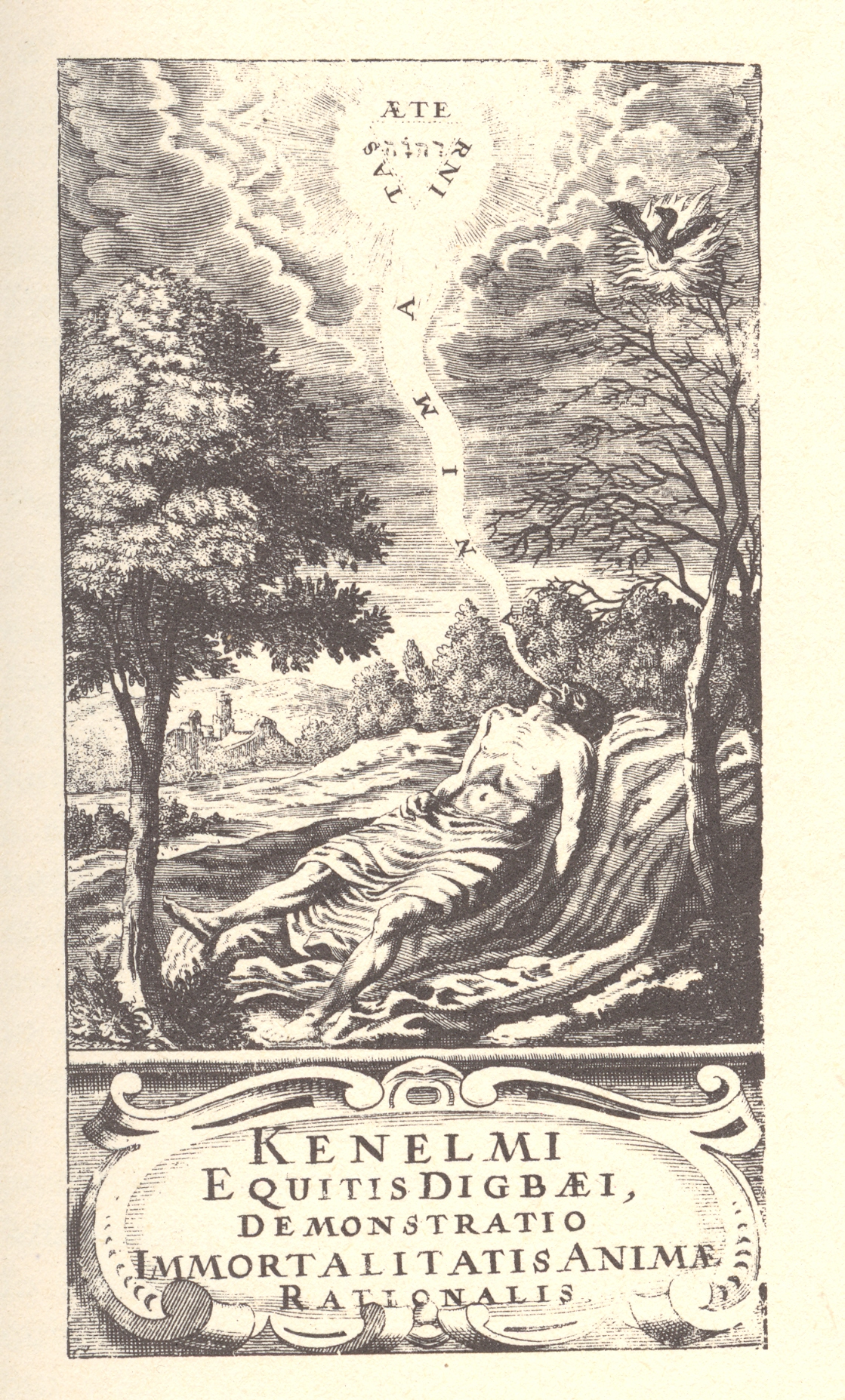
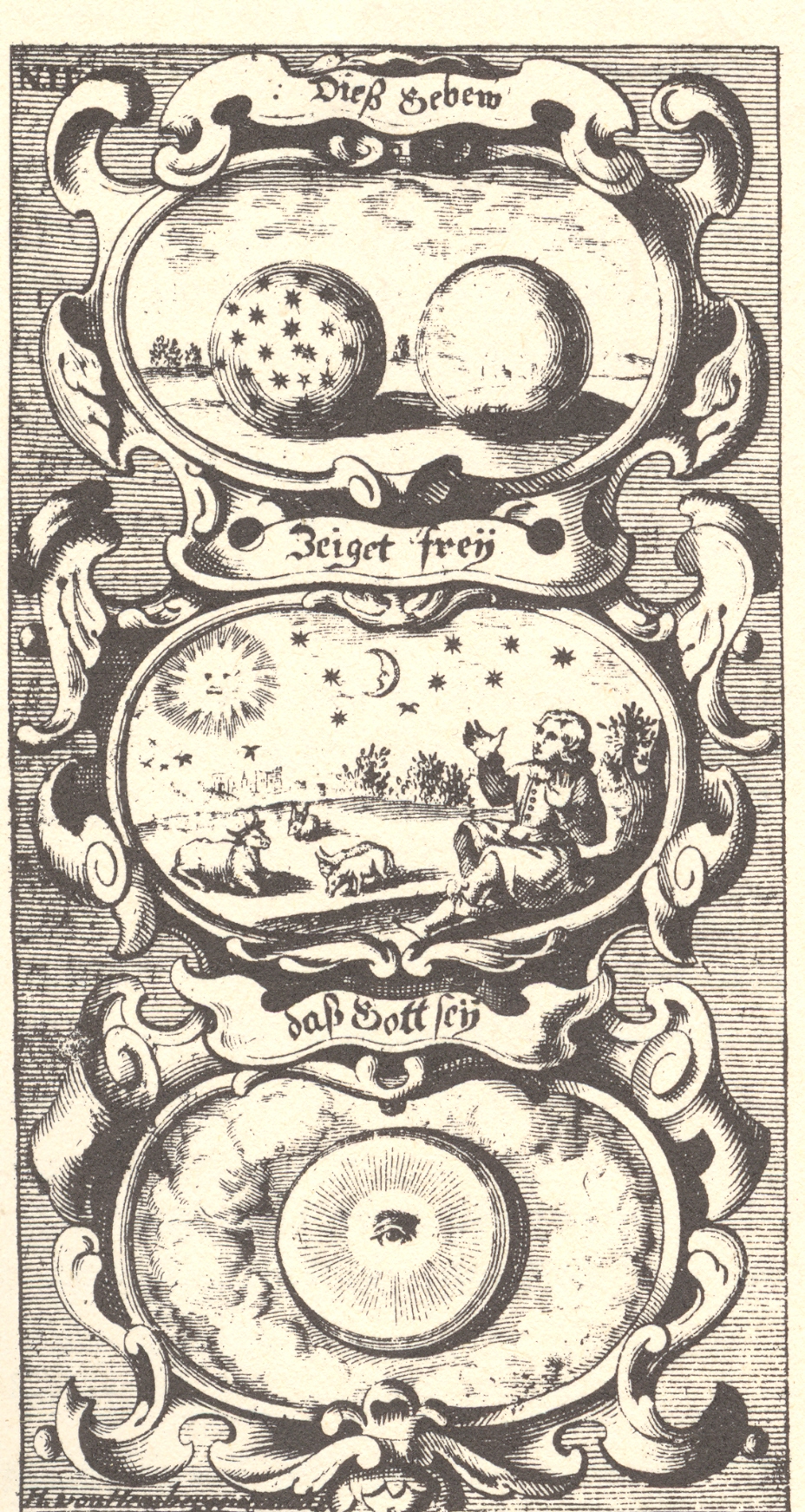
    These are just two examples of the alternative-to-the-sun-in-the-sky category, a wonderful image from Kenelem Digby’s Demonstratio immortabiliitatis animae rationalis, printed in 1664.  The other is a very striking example from J.B.von Helmont’s surviving and prodigal (and prodigiously brilliant) son Franciscus Mercurius’  Das Geheimnuess der Schoepflung.  Printed in 1701, two years after FM’s death (and years after his other brothers succumbed to the Plague), the book was a bit of an amalgamation of the author’s vast and undisciplined interests, which sloshed over into the areas of magic, conjuring, Kaballa and astrology. 
    He had more success editing and translating his father’s works. 

    Porta sky 2
    I admit I’m taking a wide liberty with “chaos”, and that the the first image could simply be the creator stepping in to rid the heavens of chaos, but I liked the idea of chaos being located on a map better.  Mea culpa. 

    * Porta writes in the first chapter, defining the word “magic”:  Magic took her name and original [sic] from

    Persia.
    . . . In the Persian language, a Magician is nothing else but one that expounds
    and studies divine things; and it is the general name of wise-men in that
    country. . . . Magic was begun in Persia by Zoroastres.”

    ** A fair amount of information in this book was derived
    from his own house-bound Academia de
    Secret
    i—a name I now love!—a society of friends and scholars who discussed
    topics ranging from physiognomy to optics to cosmology to conjuring. 

    The Chapters/books of Natural
    Magick
    are shown here below to give an idea of what the book is about:

    The First Book of Natural
    Magick
     “Of the Causes of Wonderful Things.”
     “Wherein are searched out the
    causes of things which produce wonderful effects”

    The Second Book of Natural Magick  “Of the Generation of Animals.”
     “Showing how living creatures of
    diverse kinds, may be mingled and coupled together, that from them, new and yet
    profitable kinds of living creatures may be generated.”

    The Third Book Of Natural Magick  “Of the Production of New Plants.”
     Which delivers certain precepts of
    Husbandry, and shows how to intermingle sundry kinds of Plants and how to
    produce new kinds.

    The Fourth Book Of Natural Magick  “Of Increasing Household-Stuff.”
     Which teaches things belonging to
    house-keeping; How to prepare domestic necessities with a small cost; And how
    to keep them when they are procured.

    The Fifth Book Of Natural Magick  “Of Changing Metals.”  “Which treateth of Alchemy, showing how
    metals may be altered and transformed, one into another”

    The Sixth Book Of Natural
    Magick
     “Of Counterfeiting
    Glorious Stones.
    “

    The Seventh Book Of
    Natural Magick
     “Of the Wonders of
    the Load-Stone.
    “

    The Eighth Book Of Natural
    Magick
     “Of Physical
    Experiments”

    The Ninth Book Of Natural
    Magick
     “Of Beautifiying
    Women.”

    The Tenth Book Of Natural
    Magick
     “Of Distillation.“

    The Eleventh Book Of
    Natural Magick
     “Of Perfuming.
    “

    The Twelveth Book Of
    Natural Magick
    “Of Artificial
    Fires.
    “

    The Thirteenth Book Of
    Natural Magick
    “Of Tempering Steel.
    “

    The Fourteenth Book Of
    Natural Magick
    “Of Cookery.“

    The Fifteenth Book Of Natural Magick “Of Fishing, Fowling, Hunting, etc. ”
    (Complete)

    The Sixteenth Book Of
    Natural Magick
     “Of Invisible Writing.“

    The Seventeenth Book Of
    Natural Magick
    “Of Strange Glasses.“

    The Eighteenth Book Of
    Natural Magick
     “Of Static Experiments.“

    The Nineteenth Book Of
    Natural Magick
     “Of Pneumatic
    Experiments.
    “

    The Twentyth Book Of
    Natural Magick
     “Of the Chaos. “