A Daily History of Holes, Dots, Lines, Science, History, Math, Physics, Art, the Unintentional Absurd, Architecture, Maps, Data Visualization, Blank and Missing Things, and so on. |1.6 million words, 7500 images, 4.9 million hits| Press & appearances in The Times, Le Figaro, Mensa, The Economist, The Guardian, Discovery News, Slate, Le Monde, Sci American Blogs, Le Pont, and many other places… 5000+ total posts since 2008.

Category: Information, Quantitative Display of

  • “Very Young to be Dead”: a Week of Americans Killed in Vietnam, 1969.

    JF Ptak Science Books   Quick Post

    This stark issue of LIFE magazine listed the names, photographs and ages of 242 American soldiers killed in Vietnam in one week in June, 1969.  There were no statistics; this was a picture story of tragedy, an out-of-the-ordinary event for the popular image magaine. I did go through the numbers to get a sense of the ages of those very young-looking faces: of the 242 killed, 23% were teenagers; 73% were 21 and under, and 81% were 22 and under.  As our 9 year old said when she asked me and then got her answer about what I was working with on the calculator, “that’s very young to be dead”.

    http://timelifeblog.files.wordpress.com/2012/03/11815101.jpg

    I went through the issue and tabulated all of the ages of the dead young men. The average age of the soldiers killed during this week was 21.06. 

    Age 18: 17 killed.  Age 19: 40   Age 20: 79  Age 21: 41.  Age 22: 20.  Age 23: 11. Age 24: 7. Age 25: 8. Age 26: 6.  Age 27: 2. After that, from age 28 onwards, there is one dead per each age (28, 30, 31, 33, 35, 36, 37, 40, 45).  These 242 deaths were .004% of all American soldiers killed during the war. 

    I was 13 in 1969 and wanted the war to end in a hurry.

    There was no telling the average age of Vietnamese soldiers North or South, just that there were more of them dead than American soldiers. At one point in time this was the way in which the winning side in Vietnam could be judged by political types in the U.S.–the smaller piles of dead bodies indicated the winning side.  58,800 American soldiers were killed there. According to American sources, between 1 and 2 million Vietnamese soldiers and civilians were killed, North and South; Vietnamese sources say that the figure is closer to 3 million (for a country with a total population of about 38 million, or about 10%).

    By August 1969, the Gallup Poll showed that 68% of Americans thought it was a mistake for the U.S. to be fighting in Vietnam (source here, though some other polls show the figure at 58%). In the year 2000, about 70% thought it was a mistake to send in the troops. I don’t know about that other 30%.

    Read more: http://life.time.com/history/faces-of-the-american-dead-in-vietnam-one-weeks-toll/#ixzz28wjbdOn0


  • Massive 500-Poster Mosaic: the Library of Congress WPA Poster Collection, 1935-1943

    JF Ptak Science Books  Quick Post

    "Haiti" A drama of the black Napoleon by William Du Bois : With the New York cast.

    Here’s another Massive Mosaic display (following up on a Massive 500-Daguerretotype display, here), this one utilizing (linked!) thumbnails from he Library of Congress WPA Poster Collection, located here.

    The WPA was the Works Progress Administration, the largest of the New Deal agencies, and it was designed to give paid jobs to the millions of people who were out of work during the Great Depression. From 1935-1943 the WPA put some 8.5 million people to work in a vast social undertaking, distributing food and clothing, building houses, roads, bridges, parks and making enormous construction improvements to the national infrastructure. There was also an arts art to the project which employed many thousnads of artists, actors and writers in producing dramas, histories, guidebooks and other sorts of artistic projects, including the artwork for the posters advertising other WPA projects.

    “During its 8-year history, the WPA built
    651,087 miles of highways, roads, and streets; and constructed, repaired, or
    improved 124,031 bridges, 125,110 public buildings, 8,192 parks, and 853
    airport landing fields.”–Indiana University’Lily Library, here.

    During its lifetime the WPA spent about $12 billion, which worked out to be something like 4-6% of the GDP, annually.  To put this in some perspective, that would be like taking the entire amount of money spent on the war on terror over the past 11 years and investing it all in caring for the poor and fixing bridges and building roads and so forth…I roundly reckon that figure to be about $8 trillion dollars that would have been spent on domestic issues rather than fighting wars  This is about $80k/per capita, or $320k/family of four, which is somewhere around what the MacArthur folks receive–so basically the war money is the sly equivalent of a Genius Award granted to each and every family.

    Historical GDP numbers, here, from


    digitized item thumbnail

    digitized item thumbnail

    digitized item thumbnail

    digitized item thumbnail

    digitized item thumbnail

    digitized item thumbnail

    digitized item thumbnail

    digitized item thumbnail

    digitized item thumbnail

    digitized item thumbnail

    digitized item thumbnail

    digitized item thumbnail

    digitized item thumbnail

    digitized item thumbnail

    digitized item thumbnail

    digitized item thumbnail

    digitized item thumbnail

    digitized item thumbnail

    digitized item thumbnail

    digitized item thumbnail

    digitized item thumbnail

    digitized item thumbnail

    digitized item thumbnail

    digitized item thumbnail

    digitized item thumbnail

    digitized item thumbnail

    digitized item thumbnail

    digitized item thumbnail

    digitized item thumbnail

    digitized item thumbnail

    digitized item thumbnail

    digitized item thumbnail

    digitized item thumbnail

    digitized item thumbnail

    digitized item thumbnail

    digitized item thumbnail

    digitized item thumbnail

    digitized item thumbnail

    digitized item thumbnail

    digitized item thumbnail

    digitized item thumbnail

    digitized item thumbnail

    digitized item thumbnail

    digitized item thumbnail

    digitized item thumbnail

    digitized item thumbnail

    digitized item thumbnail

    digitized item thumbnail

    digitized item thumbnail

    digitized item thumbnail

    digitized item thumbnail

    digitized item thumbnail

    digitized item thumbnail

    digitized item thumbnail

    digitized item thumbnail

    digitized item thumbnail

    digitized item thumbnail

    digitized item thumbnail

    digitized item thumbnail

    digitized item thumbnail

    digitized item thumbnail

    digitized item thumbnail

    digitized item thumbnail

    digitized item thumbnail

    digitized item thumbnail

    digitized item thumbnail

    digitized item thumbnail

    digitized item thumbnail

    digitized item thumbnail

    digitized item thumbnail

    digitized item thumbnail

    digitized item thumbnail

    digitized item thumbnail

    digitized item thumbnail

    digitized item thumbnail

    digitized item thumbnail

    digitized item thumbnail

    digitized item thumbnail

    digitized item thumbnail

    digitized item thumbnail

    digitized item thumbnail

    digitized item thumbnail

    digitized item thumbnail

    digitized item thumbnail

    digitized item thumbnail

    digitized item thumbnail

    digitized item thumbnail

    digitized item thumbnail

    digitized item thumbnail

    digitized item thumbnail

    digitized item thumbnail

    digitized item thumbnail

    digitized item thumbnail

    digitized item thumbnail

    digitized item thumbnail

    digitized item thumbnail

    digitized item thumbnail

    digitized item thumbnail

    digitized item thumbnail

    digitized item thumbnail

    digitized item thumbnail

    digitized item thumbnail

    digitized item thumbnail

    digitized item thumbnail

    digitized item thumbnail

    digitized item thumbnail

    digitized item thumbnail

    digitized item thumbnail

    digitized item thumbnail

    digitized item thumbnail

    digitized item thumbnail

    digitized item thumbnail

    digitized item thumbnail

    digitized item thumbnail

    digitized item thumbnail

    digitized item thumbnail

    digitized item thumbnail

    digitized item thumbnail

    digitized item thumbnail

    digitized item thumbnail

    digitized item thumbnail

    digitized item thumbnail

    digitized item thumbnail

    digitized item thumbnail

    digitized item thumbnail

    digitized item thumbnail

    digitized item thumbnail

    digitized item thumbnail

    digitized item thumbnail

    digitized item thumbnail

    digitized item thumbnail

    digitized item thumbnail

    digitized item thumbnail

    digitized item thumbnail

    digitized item thumbnail

    digitized item thumbnail

    digitized item thumbnail

    digitized item thumbnail

    digitized item thumbnail

    digitized item thumbnail

    digitized item thumbnail

    digitized item thumbnail

    digitized item thumbnail

    digitized item thumbnail

    digitized item thumbnail

    digitized item thumbnail

    digitized item thumbnail

    digitized item thumbnail

    digitized item thumbnail

    digitized item thumbnail

    digitized item thumbnail

    digitized item thumbnail

    digitized item thumbnail

    digitized item thumbnail

    digitized item thumbnail

    digitized item thumbnail

    digitized item thumbnail

    digitized item thumbnail

    digitized item thumbnail

    digitized item thumbnail

    digitized item thumbnail

    digitized item thumbnail

    digitized item thumbnail

    digitized item thumbnail

    digitized item thumbnail

    digitized item thumbnail

    digitized item thumbnail

    digitized item thumbnail

    digitized item thumbnail

    digitized item thumbnail

    digitized item thumbnail

    digitized item thumbnail

    digitized item thumbnail

    digitized item thumbnail

    digitized item thumbnail

    digitized item thumbnail

    digitized item thumbnail

    digitized item thumbnail

    digitized item thumbnail

    digitized item thumbnail

    digitized item thumbnail

    digitized item thumbnail

    digitized item thumbnail

    digitized item thumbnail

    digitized item thumbnail

    digitized item thumbnail

    digitized item thumbnail

    digitized item thumbnail

    digitized item thumbnail

    digitized item thumbnail

    digitized item thumbnail

    digitized item thumbnail

    digitized item thumbnail

    digitized item thumbnail

    digitized item thumbnail

    digitized item thumbnail

    digitized item thumbnail

    digitized item thumbnail

    digitized item thumbnail

    digitized item thumbnail


    digitized item thumbnail

    digitized item thumbnail

    digitized item thumbnail

    digitized item thumbnail

    digitized item thumbnail

    digitized item thumbnail

    digitized item thumbnail

    digitized item thumbnail

    digitized item thumbnail

    digitized item thumbnail

    digitized item thumbnail

    digitized item thumbnail

    digitized item thumbnail

    digitized item thumbnail

    digitized item thumbnail

    digitized item thumbnail

    digitized item thumbnail

    digitized item thumbnail

    digitized item thumbnail

    digitized item thumbnail

    digitized item thumbnail

    digitized item thumbnail

    digitized item thumbnail

    digitized item thumbnail

    digitized item thumbnail

    digitized item thumbnail

    digitized item thumbnail

    digitized item thumbnail

    digitized item thumbnail

    digitized item thumbnail

    digitized item thumbnail

    digitized item thumbnail

    digitized item thumbnail

    digitized item thumbnail

    digitized item thumbnail

    digitized item thumbnail

    digitized item thumbnail

    digitized item thumbnail

    digitized item thumbnail

    digitized item thumbnail

    digitized item thumbnail

    digitized item thumbnail

    digitized item thumbnail

    digitized item thumbnail

    digitized item thumbnail

    digitized item thumbnail

    digitized item thumbnail

    digitized item thumbnail

    digitized item thumbnail

    digitized item thumbnail

    digitized item thumbnail

    digitized item thumbnail

    digitized item thumbnail

    digitized item thumbnail

    digitized item thumbnail

    digitized item thumbnail

    digitized item thumbnail

    digitized item thumbnail

    digitized item thumbnail

    digitized item thumbnail

    digitized item thumbnail

    digitized item thumbnail

    digitized item thumbnail

    digitized item thumbnail

    digitized item thumbnail

    digitized item thumbnail

    digitized item thumbnail

    digitized item thumbnail

    digitized item thumbnail

    digitized item thumbnail

    digitized item thumbnail

    digitized item thumbnail

    digitized item thumbnail

    digitized item thumbnail

    digitized item thumbnail

    digitized item thumbnail

    digitized item thumbnail

    digitized item thumbnail

    digitized item thumbnail

    digitized item thumbnail

    digitized item thumbnail

    digitized item thumbnail

    digitized item thumbnail

    digitized item thumbnail

    digitized item thumbnail

    digitized item thumbnail

    digitized item thumbnail

    digitized item thumbnail

    digitized item thumbnail

    digitized item thumbnail

    digitized item thumbnail

    digitized item thumbnail

    digitized item thumbnail

    digitized item thumbnail

    digitized item thumbnail

    digitized item thumbnail

    digitized item thumbnail

    digitized item thumbnail

    digitized item thumbnail

    digitized item thumbnail

    digitized item thumbnail

    digitized item thumbnail

    digitized item thumbnail

    digitized item thumbnail

    digitized item thumbnail

    digitized item thumbnail

    digitized item thumbnail

    digitized item thumbnail

    digitized item thumbnail

    digitized item thumbnail

    digitized item thumbnail

    digitized item thumbnail

    digitized item thumbnail

    digitized item thumbnail

    digitized item thumbnail

    digitized item thumbnail

    digitized item thumbnail

    digitized item thumbnail

    digitized item thumbnail

    digitized item thumbnail

    digitized item thumbnail

    digitized item thumbnail

    digitized item thumbnail

    digitized item thumbnail

    digitized item thumbnail

    digitized item thumbnail

    digitized item thumbnail

    digitized item thumbnail

    digitized item thumbnail

    digitized item thumbnail

    digitized item thumbnail

    digitized item thumbnail

    digitized item thumbnail

    digitized item thumbnail

    digitized item thumbnail

    digitized item thumbnail

    digitized item thumbnail

    digitized item thumbnail

    digitized item thumbnail

    digitized item thumbnail

    digitized item thumbnail

    digitized item thumbnail

    digitized item thumbnail

    digitized item thumbnail

    digitized item thumbnail

    digitized item thumbnail

    digitized item thumbnail

    digitized item thumbnail

    digitized item thumbnail

    digitized item thumbnail

    digitized item thumbnail

    digitized item thumbnail

    digitized item thumbnail

    digitized item thumbnail

    digitized item thumbnail

    digitized item thumbnail

    digitized item thumbnail

    digitized item thumbnail

    digitized item thumbnail

    digitized item thumbnail

    digitized item thumbnail

    digitized item thumbnail

    digitized item thumbnail

    digitized item thumbnail

    digitized item thumbnail

    digitized item thumbnail

    digitized item thumbnail

    digitized item thumbnail

    digitized item thumbnail

    digitized item thumbnail

    digitized item thumbnail

    digitized item thumbnail

    digitized item thumbnail

    digitized item thumbnail

    digitized item thumbnail

    digitized item thumbnail

    digitized item thumbnail

    digitized item thumbnail

    digitized item thumbnail

    digitized item thumbnail

    digitized item thumbnail

    digitized item thumbnail

    digitized item thumbnail

    digitized item thumbnail

    digitized item thumbnail

    digitized item thumbnail

    digitized item thumbnail

    digitized item thumbnail

    digitized item thumbnail

    digitized item thumbnail

    digitized item thumbnail

    digitized item thumbnail

    digitized item thumbnail

    digitized item thumbnail

    digitized item thumbnail

    digitized item thumbnail

    digitized item thumbnail

    digitized item thumbnail

    digitized item thumbnail

    digitized item thumbnail

    digitized item thumbnail

    digitized item thumbnail

    digitized item thumbnail

    digitized item thumbnail

    digitized item thumbnail

    digitized item thumbnail

    digitized item thumbnail

    digitized item thumbnail

    digitized item thumbnail

    digitized item thumbnail

    digitized item thumbnail

    digitized item thumbnail

    digitized item thumbnail

    digitized item thumbnail

    digitized item thumbnail

    digitized item thumbnail

    digitized item thumbnail

    digitized item thumbnail

    digitized item thumbnail

    digitized item thumbnail

    digitized item thumbnail

    digitized item thumbnail

    digitized item thumbnail

    digitized item thumbnail

    digitized item thumbnail

    digitized item thumbnail

    digitized item thumbnail

    digitized item thumbnail

    digitized item thumbnail

    digitized item thumbnail

    digitized item thumbnail

    digitized item thumbnail

    digitized item thumbnail

    digitized item thumbnail

    digitized item thumbnail

    digitized item thumbnail

    digitized item thumbnail

    digitized item thumbnail

    digitized item thumbnail

    digitized item thumbnail

    digitized item thumbnail

    digitized item thumbnail

    digitized item thumbnail

    digitized item thumbnail

    digitized item thumbnail

    digitized item thumbnail

    digitized item thumbnail

    digitized item thumbnail

    digitized item thumbnail

    digitized item thumbnail

    digitized item thumbnail

    digitized item thumbnail

    digitized item thumbnail

    digitized item thumbnail

    digitized item thumbnail

    digitized item thumbnail

    digitized item thumbnail

    digitized item thumbnail

    digitized item thumbnail

    digitized item thumbnail

    digitized item thumbnail

    digitized item thumbnail

    digitized item thumbnail

    digitized item thumbnail

    digitized item thumbnail

    digitized item thumbnail

    digitized item thumbnail

    digitized item thumbnail

    digitized item thumbnail

    digitized item thumbnail

    digitized item thumbnail

    digitized item thumbnail

    digitized item thumbnail

    digitized item thumbnail

    digitized item thumbnail

    digitized item thumbnail

    digitized item thumbnail

    digitized item thumbnail

    digitized item thumbnail

    digitized item thumbnail

    digitized item thumbnail

    digitized item thumbnail

    digitized item thumbnail

    digitized item thumbnail

    digitized item thumbnail

    digitized item thumbnail

    digitized item thumbnail

    digitized item thumbnail

    digitized item thumbnail

    digitized item thumbnail

    digitized item thumbnail

    digitized item thumbnail

    digitized item thumbnail

    digitized item thumbnail

    digitized item thumbnail

    digitized item thumbnail

    digitized item thumbnail

    digitized item thumbnail

    digitized item thumbnail

    digitized item thumbnail

    digitized item thumbnail

    digitized item thumbnail

    digitized item thumbnail

    digitized item thumbnail

    digitized item thumbnail

    digitized item thumbnail

    digitized item thumbnail

    digitized item thumbnail

    digitized item thumbnail

    digitized item thumbnail

    digitized item thumbnail

    digitized item thumbnail

    digitized item thumbnail

    digitized item thumbnail

    digitized item thumbnail

    digitized item thumbnail

    digitized item thumbnail

    digitized item thumbnail

    digitized item thumbnail

    digitized item thumbnail

    digitized item thumbnail

    digitized item thumbnail

    digitized item thumbnail

    digitized item thumbnail

    digitized item thumbnail

    digitized item thumbnail

    digitized item thumbnail

    digitized item thumbnail

    digitized item thumbnail

    digitized item thumbnail

    digitized item thumbnail

    digitized item thumbnail

    digitized item thumbnail

    digitized item thumbnail

    digitized item thumbnail

    digitized item thumbnail

    digitized item thumbnail

    digitized item thumbnail

    digitized item thumbnail

    digitized item thumbnail

    digitized item thumbnail

    digitized item thumbnail

    digitized item thumbnail

    digitized item thumbnail

    digitized item thumbnail

    digitized item thumbnail

    digitized item thumbnail

    digitized item thumbnail

    digitized item thumbnail

    digitized item thumbnail

    digitized item thumbnail

    digitized item thumbnail

    digitized item thumbnail

    digitized item thumbnail

    digitized item thumbnail

    digitized item thumbnail

    digitized item thumbnail

    digitized item thumbnail

    digitized item thumbnail

    digitized item thumbnail

    digitized item thumbnail

    digitized item thumbnail

    digitized item thumbnail

    digitized item thumbnail

    digitized item thumbnail

    digitized item thumbnail

    digitized item thumbnail

    digitized item thumbnail

    digitized item thumbnail

    digitized item thumbnail

    digitized item thumbnail

    digitized item thumbnail

    digitized item thumbnail

    digitized item thumbnail

    digitized item thumbnail

    digitized item thumbnail

    digitized item thumbnail

    digitized item thumbnail

    digitized item thumbnail

    digitized item thumbnail

    digitized item thumbnail

    digitized item thumbnail

    digitized item thumbnail

    digitized item thumbnail

    digitized item thumbnail

    digitized item thumbnail

    digitized item thumbnail

    digitized item thumbnail

    digitized item thumbnail

    digitized item thumbnail

    digitized item thumbnail

    digitized item thumbnail

    digitized item thumbnail

    digitized item thumbnail

    digitized item thumbnail

    digitized item thumbnail

    digitized item thumbnail

    digitized item thumbnail

    digitized item thumbnail

    digitized item thumbnail

    digitized item thumbnail

    digitized item thumbnail

    digitized item thumbnail

    digitized item thumbnail

    digitized item thumbnail

    digitized item thumbnail

    digitized item thumbnail

    digitized item thumbnail

    digitized item thumbnail

    digitized item thumbnail

    digitized item thumbnail

    digitized item thumbnail

    digitized item thumbnail

    digitized item thumbnail

    digitized item thumbnail

    digitized item thumbnail

    digitized item thumbnail

    digitized item thumbnail

    digitized item thumbnail

    digitized item thumbnail

    digitized item thumbnail

    digitized item thumbnail

    digitized item thumbnail

    digitized item thumbnail

    digitized item thumbnail

    digitized item thumbnail

    digitized item thumbnail

    digitized item thumbnail

    digitized item thumbnail

    digitized item thumbnail

    digitized item thumbnail

    digitized item thumbnail

    digitized item thumbnail

    digitized item thumbnail

    digitized item thumbnail

    digitized item thumbnail

    digitized item thumbnail

    digitized item thumbnail

    digitized item thumbnail

    digitized item thumbnail

    digitized item thumbnail

    digitized item thumbnail

    digitized item thumbnail

    digitized item thumbnail

    digitized item thumbnail

    digitized item thumbnail

    digitized item thumbnail

    digitized item thumbnail

    digitized item thumbnail

    digitized item thumbnail

    digitized item thumbnail

    digitized item thumbnail

    digitized item thumbnail

    digitized item thumbnail

    digitized item thumbnail

    digitized item thumbnail

    digitized item thumbnail

    digitized item thumbnail

    digitized item thumbnail

    digitized item thumbnail

    digitized item thumbnail

    digitized item thumbnail

    digitized item thumbnail

    digitized item thumbnail

    digitized item thumbnail

    digitized item thumbnail

    digitized item thumbnail

    digitized item thumbnail

    digitized item thumbnail

    digitized item thumbnail

    digitized item thumbnail

    digitized item thumbnail

    digitized item thumbnail

    digitized item thumbnail

    digitized item thumbnail

    digitized item thumbnail

    digitized item thumbnail

    digitized item thumbnail

    digitized item thumbnail

    digitized item thumbnail

    digitized item thumbnail

    digitized item thumbnail

    digitized item thumbnail

    digitized item thumbnail

    digitized item thumbnail

    digitized item thumbnail

    digitized item thumbnail

    digitized item thumbnail

    digitized item thumbnail

    digitized item thumbnail

    digitized item thumbnail

    digitized item thumbnail

    digitized item thumbnail

    digitized item thumbnail

    digitized item thumbnail

    digitized item thumbnail

    digitized item thumbnail

    digitized item thumbnail

    digitized item thumbnail

    digitized item thumbnail

    digitized item thumbnail

    digitized item thumbnail

    digitized item thumbnail

    digitized item thumbnail

    digitized item thumbnail

    digitized item thumbnail

    digitized item thumbnail

    digitized item thumbnail

    digitized item thumbnail

    digitized item thumbnail

    digitized item thumbnail

    digitized item thumbnail

    digitized item thumbnail

    digitized item thumbnail

    digitized item thumbnail

    digitized item thumbnail

    digitized item thumbnail

    digitized item thumbnail

    digitized item thumbnail

    digitized item thumbnail

    digitized item thumbnail

    digitized item thumbnail

    digitized item thumbnail

    digitized item thumbnail

    digitized item thumbnail

    digitized item thumbnail

    digitized item thumbnail

    digitized item thumbnail

    digitized item thumbnail

    digitized item thumbnail

    digitized item thumbnail

    digitized item thumbnail

    digitized item thumbnail

    digitized item thumbnail

    digitized item thumbnail

    digitized item thumbnail

    digitized item thumbnail

    digitized item thumbnail

    digitized item thumbnail

    digitized item thumbnail

    digitized item thumbnail

    digitized item thumbnail

    digitized item thumbnail

    digitized item thumbnail

    digitized item thumbnail

    digitized item thumbnail

    digitized item thumbnail

    digitized item thumbnail

    digitized item thumbnail

    digitized item thumbnail

    digitized item thumbnail

    digitized item thumbnail

    digitized item thumbnail

    digitized item thumbnail

    digitized item thumbnail

    digitized item thumbnail

    digitized item thumbnail

    digitized item thumbnail

    digitized item thumbnail

    digitized item thumbnail

    digitized item thumbnail

    digitized item thumbnail

    digitized item thumbnail

    digitized item thumbnail

    digitized item thumbnail

    digitized item thumbnail

    digitized item thumbnail

    digitized item thumbnail

    digitized item thumbnail

    digitized item thumbnail

    digitized item thumbnail

    digitized item thumbnail

    digitized item thumbnail

    digitized item thumbnail

    digitized item thumbnail

    digitized item thumbnail

    digitized item thumbnail

    digitized item thumbnail

    digitized item thumbnail

    digitized item thumbnail

    digitized item thumbnail

    digitized item thumbnail

    digitized item thumbnail

    digitized item thumbnail

    digitized item thumbnail

    digitized item thumbnail

    digitized item thumbnail

    digitized item thumbnail

    digitized item thumbnail

    digitized item thumbnail

    digitized item thumbnail

    digitized item thumbnail

    digitized item thumbnail

    digitized item thumbnail

    digitized item thumbnail

    digitized item thumbnail

    digitized item thumbnail

    digitized item thumbnail

    digitized item thumbnail

    digitized item thumbnail

    digitized item thumbnail

    digitized item thumbnail

    digitized item thumbnail

    digitized item thumbnail

    digitized item thumbnail

    digitized item thumbnail

    digitized item thumbnail

    digitized item thumbnail

    digitized item thumbnail

    digitized item thumbnail

    digitized item thumbnail

    digitized item thumbnail

    digitized item thumbnail

    digitized item thumbnail

    digitized item thumbnail

    digitized item thumbnail

    digitized item thumbnail

    digitized item thumbnail

    digitized item thumbnail

    digitized item thumbnail

    digitized item thumbnail

    digitized item thumbnail

    digitized item thumbnail

    digitized item thumbnail

    digitized item thumbnail

    digitized item thumbnail

    digitized item thumbnail

    digitized item thumbnail

    digitized item thumbnail

    digitized item thumbnail

    digitized item thumbnail

    digitized item thumbnail

    digitized item thumbnail

    digitized item thumbnail

    digitized item thumbnail

    digitized item thumbnail

    digitized item thumbnail

    digitized item thumbnail

    digitized item thumbnail

    digitized item thumbnail

    digitized item thumbnail

    digitized item thumbnail

    digitized item thumbnail

    digitized item thumbnail

    digitized item thumbnail

    digitized item thumbnail

    digitized item thumbnail

    digitized item thumbnail

    digitized item thumbnail

    digitized item thumbnail

    digitized item thumbnail

    digitized item thumbnail

    digitized item thumbnail

    digitized item thumbnail

    digitized item thumbnail

    digitized item thumbnail

    digitized item thumbnail

    digitized item thumbnail

    digitized item thumbnail

    digitized item thumbnail

    digitized item thumbnail

    digitized item thumbnail

    digitized item thumbnail

    digitized item thumbnail

    digitized item thumbnail

    digitized item thumbnail

    digitized item thumbnail

    digitized item thumbnail

    digitized item thumbnail

    digitized item thumbnail

    digitized item thumbnail

    digitized item thumbnail

    digitized item thumbnail

    digitized item thumbnail

    digitized item thumbnail

    digitized item thumbnail

    digitized item thumbnail

    digitized item thumbnail

    digitized item thumbnail

    digitized item thumbnail

    digitized item thumbnail

    digitized item thumbnail

    digitized item thumbnail

    digitized item thumbnail

    digitized item thumbnail

    digitized item thumbnail

    digitized item thumbnail

    digitized item thumbnail

    digitized item thumbnail

    digitized item thumbnail

    digitized item thumbnail

    digitized item thumbnail

    digitized item thumbnail

    digitized item thumbnail

    digitized item thumbnail

    digitized item thumbnail

    digitized item thumbnail

    digitized item thumbnail

    digitized item thumbnail

    digitized item thumbnail

  • Porta’s Visions, Big & Small: On “Magic”, Chaos and Not Inventing the Telescope

    JF Ptak Sciene Books   Post 1906
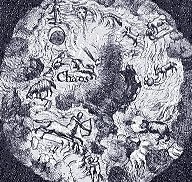
    https://historyofideasblog.com/a/6a00d83542d51e69e201156ecdf55e970c-pi

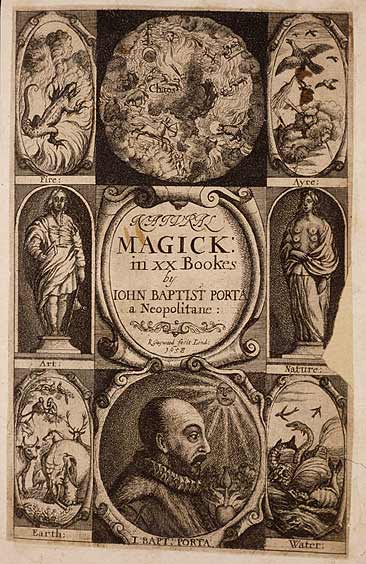
    [Detail from the title page of Natural Magic, below.]

    Giovani Baptista della Porta was a magus, or a natural (science)
    “magician”, who searched nature for similarities that would serve to build a
    broad template of forced  understanding of seeming likenesses, looking for the great connector
    in the exceptional and the unusual, the stuff outside of the formerly
    Aristotlean world.   Natural Magic is his magnum opus, an expansion of  its earlier
    version (Magna naturalis)  published in Latin in 1558, which Porta expanded to twenty sections in 1589. The 1589 edition was a maturing of the 1558 edition, toning down the philosophical/religio-mystic basis for the ordering of the natural environment with an approach more suitable to observation and experimentation. It was an encyclopedic work of vast proportions, a
    gold-mine of information and clever wishfulness, and very accessible due to
    Porta’s  wide inter-personal travel,
    very wide reading and critical abilities, clear reasoning and deep vision:  the book was hugely successful, going into at
    least twelve Latin, four Italian, seven French, two German, and two English
    editions in the early modern era. Natural
    Magic
    , which first appeared in English in 1658, concerned itself with
    magic, alchemy, optics, geometry, cryptography, magnetism, agriculture, the art
    of memory, munitions, and many other topics, all grouped together and refined,
    distilled, into a cloudy assemblage of natural knowledge—it would end up that the magical
    whole was worth far less than the sum of its parts. 
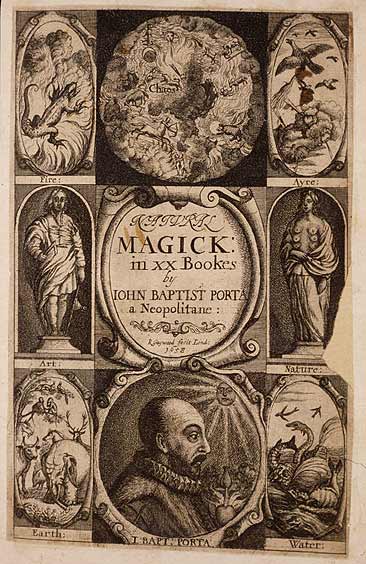
    Porta magic english
    But the parts were pretty considerable, and much of the
    information was spot-on for the time, not the least of which was a very capable
    demonstration and explanation of a lensed camera obscura. 

    What I’m interested in right now though is the title page of
    the book (pictured above).

    It turns out and as we can see in the top image of the
    title page, Chaos is not some subspace trajectory of cellular automata, or in
    Dr. Brown’s/Einstein’s dancing dust—it is right above us.  This recognition of its regular, localizable structure
    probably does not support parameterization, or anything else for that matter,
    except to say that it is definitely “pretty”. 
    The title page has nine illustrated compartments:  the four corners depict the four elements,
    the two opposing middles show art and nature; the bottom shows the author,
    illuminated by the knowing sun.  The top
    center image is the element showing “chaos”, which I’ve chosen to use a map,
    identifying where exactly chaos might be. 
    I’ve not seen an antiquarian map identifying chaos, though I have seen a
    number showing lots of other non-existent places, like heaven and hell and
    purgatory and Eden and the Kingdom of Prester John, to name a few.  But not chaos.

    It is very interesting to note that while in the process of looking at nature, and observing connections real and imagined, and creating ways of organizing and storing information in the brain, Porta conceived of a telescope, and this several decades in advance of Galileo. (The idea of the telescope stretches pretty far back, though.  The idea seems ancient, though the scientific thought on the matter really weren’t present until the 13th century with the work of Roger Bacon and Robert Grosseteste, and then with Nicolsa of Cusa (in 1451) doing experimental work on the properties of lenses, and then on to John Dee and Thomas Digges in 1570/1.  Porta seemed right about there, just ont he edge of the invention of an instrument which would have allowed him to see farther and deeper than anyone else before him, but he didn’t follow through.  He mentions in the 1589 edition of Magiae:

        “With a Concave lens you shall see small things afar off very clearly. With a Convex lens, things nearer to be greater, but more obscurely. If you know how to fit them both together, you shall see both things afar off, and things near hand, both greater…”  (Porta would expand this section of the 1589 book (section XVII) into a complete and separate work in 1593,  De refractione optices.)

    I do not know what happened to this idea, or why it didn’t flourish in Porta’s hand like it would in those of Galileo less than three decades latter.

    Porta was a very  nimble and penetrating man–his Magia naturalis was a dissecting tool for the complexities that he saw around him, and his later works were in some ways continuations on this theme.  The first two books following Magiae were concerned with private visions of Very Large Things:  the first, De furtivis literarum notis (published in 1563) was one of the earliest works on cryptology.   This looking-deeper book was followed three years later in 1566 by a book on how these thoughts could be organized in the mind.  Given the spirit of the times and the difficulty of actually recording what it was you saw, Porta wrote  Arte del ricordare, which addressed the very idea of memory and then the more applicable bits of mnemonic devices.  He looked for more hidden messages in his next work–on the physiology of hands–but it didn’t see the light of publishing day until after Porta died.

    Working in the areas of pharmacology, hydraulics, military engineering, physiology, and physics, among many other areas, Porta published De aeris transmutanionbus (1609) on meteorology; De distillatione (1610), on chemistry; Coelestis Physiogranonia (1603), on a sort of “writing in the sky” and both a blast and support of astrology; and De humana physiognomonia libri IIII (1586), which was a work physiognomy and discerning function from structure. There were other books, not to mention at least 17 dramatic works.  Porta was basically unstoppable.

    All of this takes me back to the question of wondering about his inability (?) to see the possibilities of the telescope. In all of his books on deterministic vision, and of seeing things deeply–whether it was in the sky, or in chemical experiments, or in seeing the structure of a plant incised with its function in nature, or in the complexities of memory, and so on–it is a mystery to me how he could have left the development of the telescope along. 


  • Bus-Punk, 1934

    JF Ptak Science Books     Quick Post   [Also see an earlier post here on Air-Punk & Underwater 19th Century Cyborgs]

    Bus776

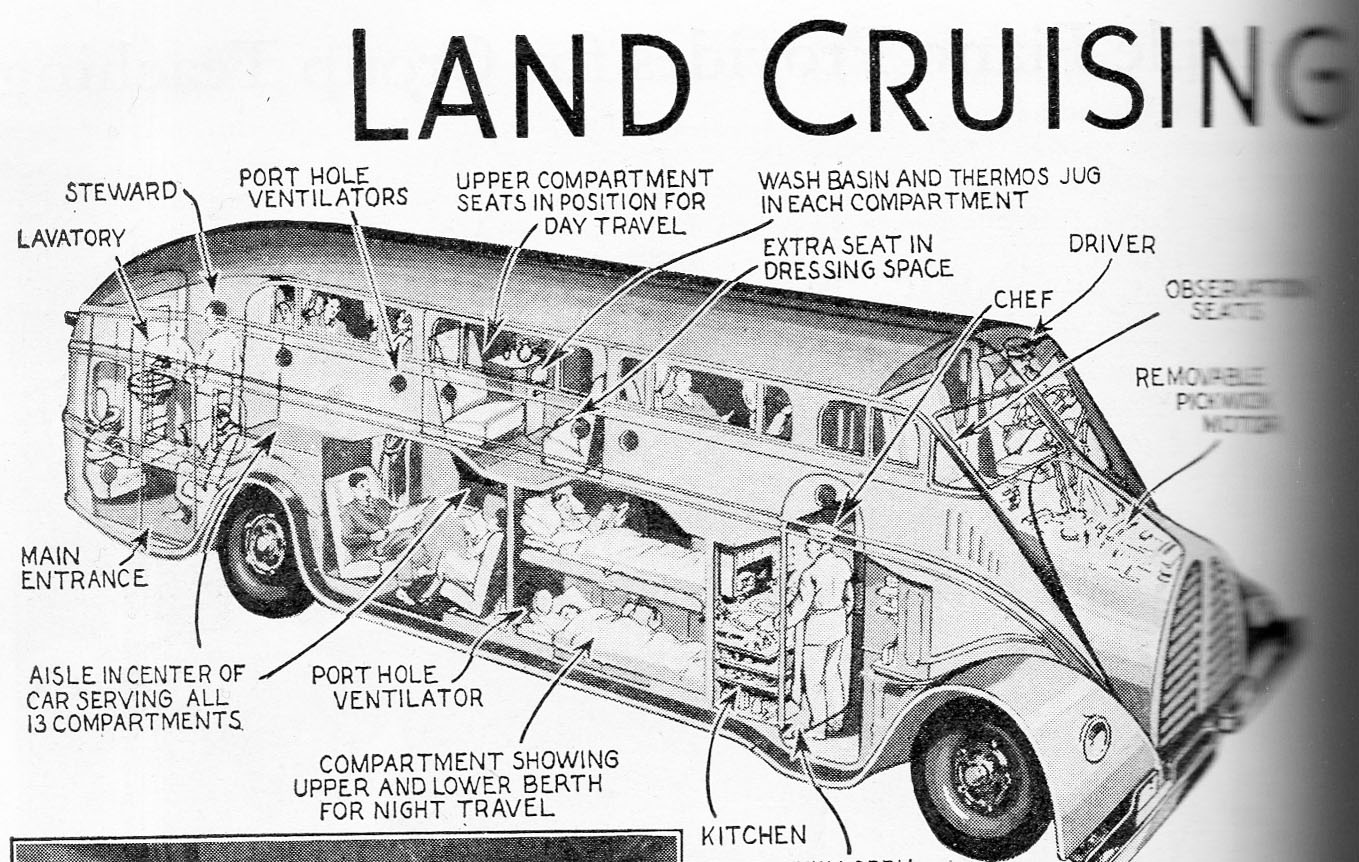
    This land-whale of a vehicle, a bus design for “Land Crusing De Luxe”, is left mostly to our imagination so far as specs and stats go.  It looks as though it would accommodate perhaps 14 people on a long haul.  There were two levels of living space as well as room for two (or four?) in sleeping quarters…perhaps a more luxurious class was seated downstairs.  In any event there were three attendants on the bus for its not-many passengers, including a chef, a seward and a driver. (Elsewhere in the article the driver is referred to as a “pilot”.)  

    I’m sure this would have been a beautiful thing–I picture is red on black, with an ultra-shine.  I’m also sur ethat it would have been a delsight.

    Source: Popular Mechanics, August, 1934.


  • Mark Rothko, 1870: Unidentified Pre-Modern Found-Modernist Art

    JF Ptak Science Books   Post 1895

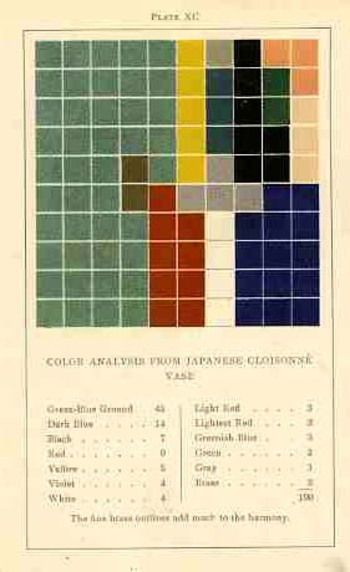
    This blog has long hosted a series of posts on “accidental” or “unintended” works of pre-modern modernist art found in displays of information and statistics in the sciences and mathematics, and even occasionally in art and design.  One such work–a 1904 triumph of accidental art issuing from an usunal work on color theory–belongs to an aesthetician named Emily Vanderpoel.  It is extraordinary in a narrower sense, and that extraordinary might not actually be positive for its original intent–the extra-intent of the book, what has come out of it for me, was something that was unintentionally accomplished by the author.  The images that she used to illustrate her color theory ideas–the basis of which are not really omprehensible to me–turn out to be artwork in themselves, a found art, the artistry of the images taking over the original intention for the arrangement of their color. She had introduced (though to no one, not really) a concept of beautifully arranged spatial color, artwork without a subject that could be recognized as any sort of natural object–non-representational art, finding publication several years before what is seen as the first inentional attempt at that genre, by Vassily Kandinsky in 1911. (Images below.) And when one strolls through the history of scientific illustration it becomes easier and easier to find such things, fabulous precursors to non-represnetational art, and Dadism, and Cubism and Surrealism. 

    Blogcolorvander_2poel_063These elements seem to be most populous in the illustrated sections of early encyclopediae, and dictionaries, and even encyclopedic dictionaries, where a number of different elements are displayed on the same page, different and generally unrelated images on the same engraved sheet, references for articles found in different parts of the book. 

    Here is a good example of that, with unintentional Surrealist images found in the image refernce pages of Horace Benedict de Saussure’s Voyages dans les Alpes….(published in Neuchatel in 1803):
    Unintentional surreal766
    [There are a number of other examples that I’ve written about on this blog:  here, for example, in “On the Paper Sculpting of Nothing”.]

    And then there are examples like Vanderpoel, where the entire image from one sheet is the pre-modernist image in question–to my experience this is the more uncommon occurrence. 

    Which brings us to today’s installment:  the infographic displays found in  Francis Walker’s  Statistical atlas of the United States based on the results of the ninth census 1870 with contributions from many eminent men of science and several departments of the government, which is the atlas of data to accompany the 9th Census of the United States, published in 1874.  This is a beautiful work, and a pioneering challenge.  Walker was one of the earliest to produce a statistical atlas, and was perhaps the earliest to display this huge and broad amount of data in so many different ways–it must have seemed a semi-miracle to see the information displayed so, like going froma  black & white television to color, or color to infared, and so on.  It may well have represented anentirely new way of looking at data.

     The first image (above) in this post is from the illustration showing proportions of the white/non-white population, and the following image shows a detail of that, offset against Mark Rothko’s 1959 Black on Maroon.

    Francis Walker’s statistical mapping, above, 1873; Mark Rotko,

    1959, below:  


     mark-rothko-black-on-maroon-1959

    [Black on Maroon (1959) by Mark Rothko, part of the Seagram mural series, via Tate Modern.]

    The first and third images are details from this full-page illustration:

    It is easy to see the similarities between the data display and the Rothko, though it would really not be within anyone’s power to identify the Walker diagrams as “art” in the modern sense for another five decades.  But it certainly seemed there, ready to be of influence and service, though I’m not aware offhand of artists being influence by these images as they were with, say etienne Marey’s photographs. I’m not sure that these statistics images ever came into the service of art in the beginning of the modern era.  And maybe that’s the biggest question here. 

    Sources:

    1. Guide to National Atlases: here.
    2. The Walker atlas for the 1870 census from the LC site: here.
    3. And an improvement on the Library of Congress presentation, by HandsomeAtlas (Brooklyn Brainery): here.


  • Ancient Myths Modern: the Other Statue of Liberty, ca. 1911.

    JF Ptak Science Books     Post 1887

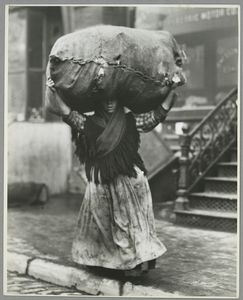
    In working on an alphabet of the occupations of children in 1910/1920 America based on the photographs of the immortal Lewis Hine (and found via looking at other materials on the excellent Retronaut website), I came across this extraordinary image:

    A tenement gleaner, New York C... Digital ID: 416509. New York Public Library

    The detail seems to show lip rings on what I think is a very young woman.  She is very slender (you can see very thin wrists), and is wearing a number of layers of clothes, not the least of which is a long white apron on top of which sit Civil-War-like shawls,  She is stepping into the street, caught mid-stride. It looks as though it is frosty, the sidewalk and steps seem to have a thin veneer of ice  It is cold. And she is carrying an ungainly, heavy burden, which might weigh half of her own weight. And she is young.  And she has no gloves.

    Where did she go?

    Hine--tenement gleaner detail

    It also that Hine–in his notes onthe back of the photograph– identifies her with kindness and grace as a “tenement gleaner”.  (In my notes I was less kind and called her a “ragpicker” I’m a little ashamed to say. Mr. Hine taught me a lesson.) Gleaner.

    Hine documented things that were part of everyday life that made cities like New York what they were, much of which went unnoticed, or scuttled by intentional indifference. People like this made the city run–then as now–and Hine was one of the early photographers in the United States who “discovered” these people and made their standing a cause of his life. 

    Like many other pioneers/artists/social observers, Hine (1874-1940) didn’t fare so well in his later life. After four decades of huge service in photography, people became disinterested in his past/present/future work, and Hine lost his resources. And his house. And then, in a few years, his life.  His personal collection of negatives and prints were given by a relative to the New York Photo League, but they were displaced when the League was dismantled in 1951.  Unsettled, they were offered out to places like the Museum of Modern Art, which rejected the collection. Ultiamtely, fortunately,  the George Eastman House in Rochester, New York, accepted the collection and saved it from the unknown.

    This image easily could have been Atlas, but Libertas seemed better.

    Source:  New York Public Library Digital Collection. “Photographs concerning labor, housing and social conditions in the United States. / L. W. Hine. ” 


  • Black Sky and Morning Arrows

    JF Ptak Science Books  Quick Post

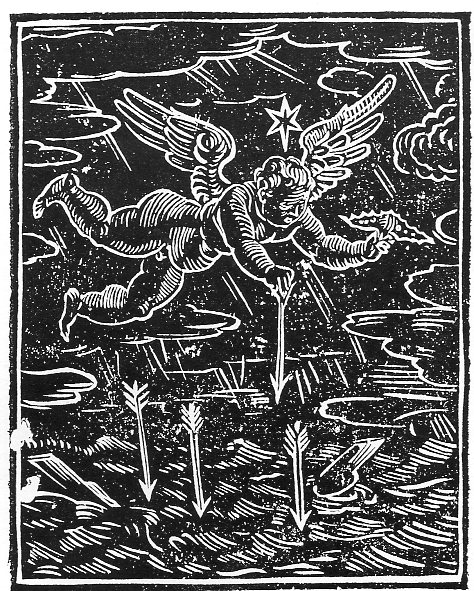
    Ripa757

    I’ve just written a short post on the beautiful key to iconography by Cesare Ripa, Iconologia overa descrittione d’imagini delle virtu, viti, sffetti, passioni humane, corpi celesti, Mondo e sue parti…, which was published in Padua in 1611.  The version I used was an 18th-century English translation with new illustrations–now though the translation was very appreciated, the images were not so.  As I pointed out, they do serve the purpose of illustrating the specifics in iconography, the images were not that pleasing.  I wanted to include here an example from the original, and in particular the imagery of “Dawn”.

    It is a gorgeous thing, a very striking, very strong woodcut showing the messenger of the new day coming, attacking the night with arrows of dawn. 

    I enjoy he earlier, more robust images for this iconology, even though there are many variants to choose from–there were more than 40 editions of this work since its first non-illustrated edition in 1593–but given it all I much prefer the early 17th century flavor. 


  • A Few Examples of Renaissance Icons in Science Emblemata

    JF Ptak Science Books   Post 1885


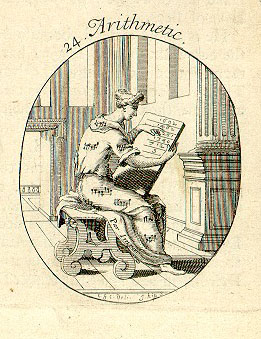
    Iconographia arithmetica image

    These images come from a later (and English edition) of Cesare Ripa’s essential keybook to Renaissance iconogrpahy, the Iconologica overa descittione d’imagini delle virtu, viti, affetti, passioni humane…first published in the early 1590’s with Ripa’s artwork.  I don’t much like the English version of his work, nor do I care that much for the artwork (inferior in most ways to the great craftsman-like feel of the Renaissance images), though it does serve the purpose of place-holding the symbolism and explaining the elements of the icons.

    I’ve chosen a few emblems for the sciences to illustrate this important work of deduction and explanation, as it would be an aid to anyone interested in the art of the Renaissance–and that would be an interest at virtually any level.

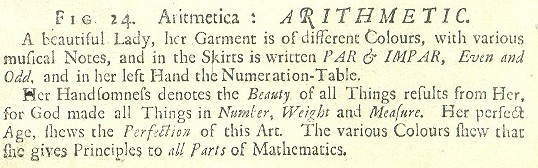
    I chose “Arithmetic” as my first example because of the lovely parallels found in the folds of Arithmetic’s dress–musical notation, underneath which we see the faint “Pars Impars” (even and odd) to help settle the old scores of symmetry.  The connection between music and mathematics is thousnads of years old, and though I might’ve used “mathematics” rather than its oldest branch (of “arithmetic”) to show the ancinet connection between music and numbers, it should be remembered that not every aspect of arithmeic is standard, and that there is a good and strong relation between music and “higher arithmetic” (number theory).  In general I just like the emblzoned connection here between the two, showing a temporal sequencing representation, a placing of music in relation to number right out there in time-and-space,an adept of the mental image of music. There is no doubt that when a viewer was finsihed with this image that there is a lasting property of the mathematical properties of sound and teh harmony of number.  Its not exactly “music of the spheres”, but it does work. 

    • Iconographia arithmetic

      Good transliterated description are to be found on the Alchemy Website, here; the English-language version cane be found here.


  • A Partial Alphabet of Thai Onomatopoeia–Words for Usually-Unusual Noises

    JF Ptak Science Books   Post 1882 

     [‘Joom’]–Sound of a pebble being thrown in a pond

    [“Seet’]–Sound of someone eating something very spicy

    I’m not sure that the idea of phonoaesthetics comes into play with the concept of onomotopeia–perhaps they’re mutually exclusive. Or inclusive?  Does cacophony fight euphony in lists of words that are composed to sound like the thing they represent? Or perhaps it is a given quality of this state that some of these words must sound cacophonus–“zok”, “thak”, or even “ptak” (which I saw in an issue of Sgt. Rock in the mid ’60’s as the sound bullets make when they strike a wooden dock)–simply because of what they represent, and must be so. 

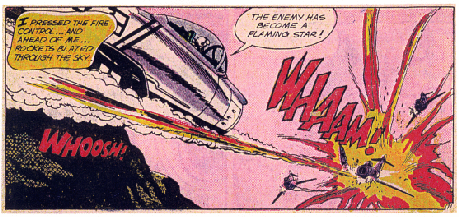
    Then of course there’s the issue of onomatopoeia that look like or presented like the sound they are describing. For example, the word “Whaam” that appeared in comic book and which was famously derived as art by Roy Lichtenstein.  File:Roy Lichtenstein Whamm Original and Lichtenstein Derivative.gif

    When researching this I came upon cross-cultural examples of onomatopoeia–big an diwde and beautiufl and very far-ranging. It is a rich literature, and the examples are varied and deep. TO display an example I chose a list of  of Thai onomatopoeia, all of which have been collected by the author of  Weird Vibrations, who collected  these many fine examples one-by-one and for whose work in this and other areas I deeply enjoy and appreciate. I include them below in an odd alphabet of oddness–all that I’ve done here is separate them into a handy assembly, but let’s make sure that all of the credit of collection and transliteration belongs entirely to Weird Vibrations.

    For example:  “[Seet]  Sound of someone eating something very spicy” is a curious word, mainly because I’m not sure what this might  like unless “seet” is a quick ontake of breath.  “Joom” is a lovely word, and it really does sound like a pebble striking a pond surface.  Here are the others:

    Thai Onomatopoeia (alphabetized to the English-language action rather than the Thai transliteration).  Try sounding them out–many sound like their sounds, which might give a little credence to Mr. John Locke’s theory of knowledge (or not).

    A

    [Gra It Gra Eeuan]  To delay action through words

    B

     [Guy] Sound of someone bragging

    [Krok Kraak]  Sound of fluid bubbling in the stomach

    C

    [Gra Jaawng Angaae]  Sound of children crying annoyingly

    [Khaak]  Sound of coughing something up


  • Beautiful Technical Illustration & a Snapshot of Hard Work in 1800

    JF Ptak Science Books   Post 1878 

    There is, buried deep within this engraving, a small but penetrating snapshot of working life in very early 19th century England.  Very working life.  We’ll get to that in a moment, after introductions are made to the brilliant composer of these images.

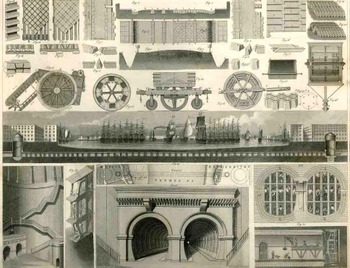
    Blogtunnel_full239 J.G. Heck wrote and compiled a fascinating and complex work entitled The Iconographic Encyclopedia of Science, Literature and Art, and was published in America for the first time in 1851 following Spencer Baird’s translation from its original German.
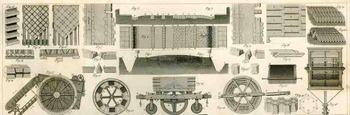

    The key to his work is the amount of data displayed on each of the 500 engraved plates illustrating this work and the way in which it is arranged.  The design and layout of the 30,000 items on these 500 plates was a work of genius, and for my money it is easily the best-presented complex means of the display of data and objects that was published in the 19th century.   

    Take for example this illustration in the technology section (a subdivision of the applied arts which is a sub division of the plastic arts) and, continuing in this complicated scheme, was Plate 1 from Section X Number A1 with a description found in the text on a dozen pages in Section 2 of Volume 2 on section pages 134-150 and overall page numbers 835-851 (!).  The plate contains 35 figures, very finely executed and rendered (many of the other of the 500 plates have 100 or more figures), and is in general related to the construction of roads and tunnels (and further, part of the “communications” section).
    Blogtunnel_top240

    This of course would be a perfect Hypertext candidate.

    The illustration itself contains an enormous amount of information.  The row along the top third or so is dedicated to street construction and paving stone, showing stones in plan and profile, as well as a cross section and ground plan of a “typical” street (including sidewalks).  It is interesting to note the detail of the cross section and the stonework that is placed beneath the horse and wagon section of the street.  There are some other beauties here as well–details of wooden paving blocks, the plan for a Laves of Hanover road, different ways of cutting stone blocks—but we won’t deal with those right now, except to point out that there are several renderings of street cleaners and road rollers (of Shettenmann and another of Schaefer) used to border the street section from the tunnel section. 

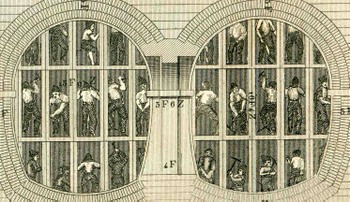
    Blogtunnel_middle241 The middle section of the engraving is of course a cross section of the Thames tunnel of the beautifully-named Isambard Kingdom Brunel (begun in 1825 and completed 1843, the tunnel 35 feet wide (11 m), 20 feet (6 m) high and 1,300 feet (396 m) long, running between Wapping and Rotherhithe at a depth of 75 feet (23 m)).  The representation here is only one inch high and ten inches long but is loaded with just fabulous detail, no the least of which are the (less than) 1mm tall workmen that can still be seen in the tunnel.
    Blogtunnelbig_detailig247  
    The enlarged detail shows a section of the tunnel being built according to Brunel’s new specifications:  a larger, shielded tunnel being constructed around the interior construction of 12 individual tunnels (each about tall enough to allow a (short) man to stand erect. 

    It is unneccessary to say how difficult this work must have been. Cramped, dirty, dark, stale-aired, and dangerous, this was the very definition of a compromised working environment.

    In short, the engraving is a superb example of *correct* design of great artistic  ability, all accomplished while displayed heaps and gobs of interconnected, complex information.