A Daily History of Holes, Dots, Lines, Science, History, Math, Physics, Art, the Unintentional Absurd, Architecture, Maps, Data Visualization, Blank and Missing Things, and so on. |1.6 million words, 7500 images, 4.9 million hits| Press & appearances in The Times, Le Figaro, Mensa, The Economist, The Guardian, Discovery News, Slate, Le Monde, Sci American Blogs, Le Pont, and many other places… 5000+ total posts since 2008.

Category: Information, Quantitative Display of

  • Blank, Empty and Missing Things: a “Missing” Renaissance Masterpiece

    JF Ptak Science Books   Post 1874  [One in a series on the History of Blank, Empty and Missing Things.]

    The remarkable engravings below are even more so when you consider that they were published more than two hundred years afer the death of their originator.  Bartolomeo Eustachi (1500/1524-1574) was one of the founding member of a very small school of modern anatomy (another being Vesalius) who undertook very careful dissections in his study of the body, finishing (in 1552) a work of paramount importance just nine years after the publication of Vesalius’ revolutionary work–it was a work that would remain unpublished for 162 years.  The threat and fear of excommunication and other reprisals at the hands of the Catholic Church prevented its publication, the full work not seeing the light of day until 1714.  It would be published several times more in the 18th century, a great tribute to an anatomist whose work was still being studied more than 200 years after its completion.

    One of the great missing books then belongs to Eustachi, his Romanae archetypae tabulae anatomicae novis…(with the examples of images below being published in Rome in 1783) belongs to a very small class of technical/medical  books published long after they should have been and which still were found to be of great and substantial use. He was an absolutely superb anatomist, using dyes and injections for visually troublesome areas, as well as early versions of “microscopes” to observe miniscule bits.  He was a fine student of his physician father, well-versed in classical education, and by 1549 he was the professor of anatomy at the Archiginnasiodella Sapienza, where he was also able to avail himself of a number of cadavers for dissection.   

    He worked on his anatomy for several years, readying 47 plates for publication.  It would come to pass that only eight of them were published during his lifetime–those on the kidney and teeth, published as De Renum structura (the first work dedicated to that organ), and De dentibus (for the teeth), respectively. 

    The engravings–rather, the incised plates of the engravings–went missing after Eustachi’s death, and stayed so until (as noted above) 1714.  According to faqs.org , Eustachi’s work was still prized 160+ years later for their elegance and beauty and detail because:

    “… they provided some of the best descriptions of the base of the brain, the  sympathetic nervous system (the nerves that control the constriction of  blood vessels, among other things), the vascular system, and the structure of  the larynx.”
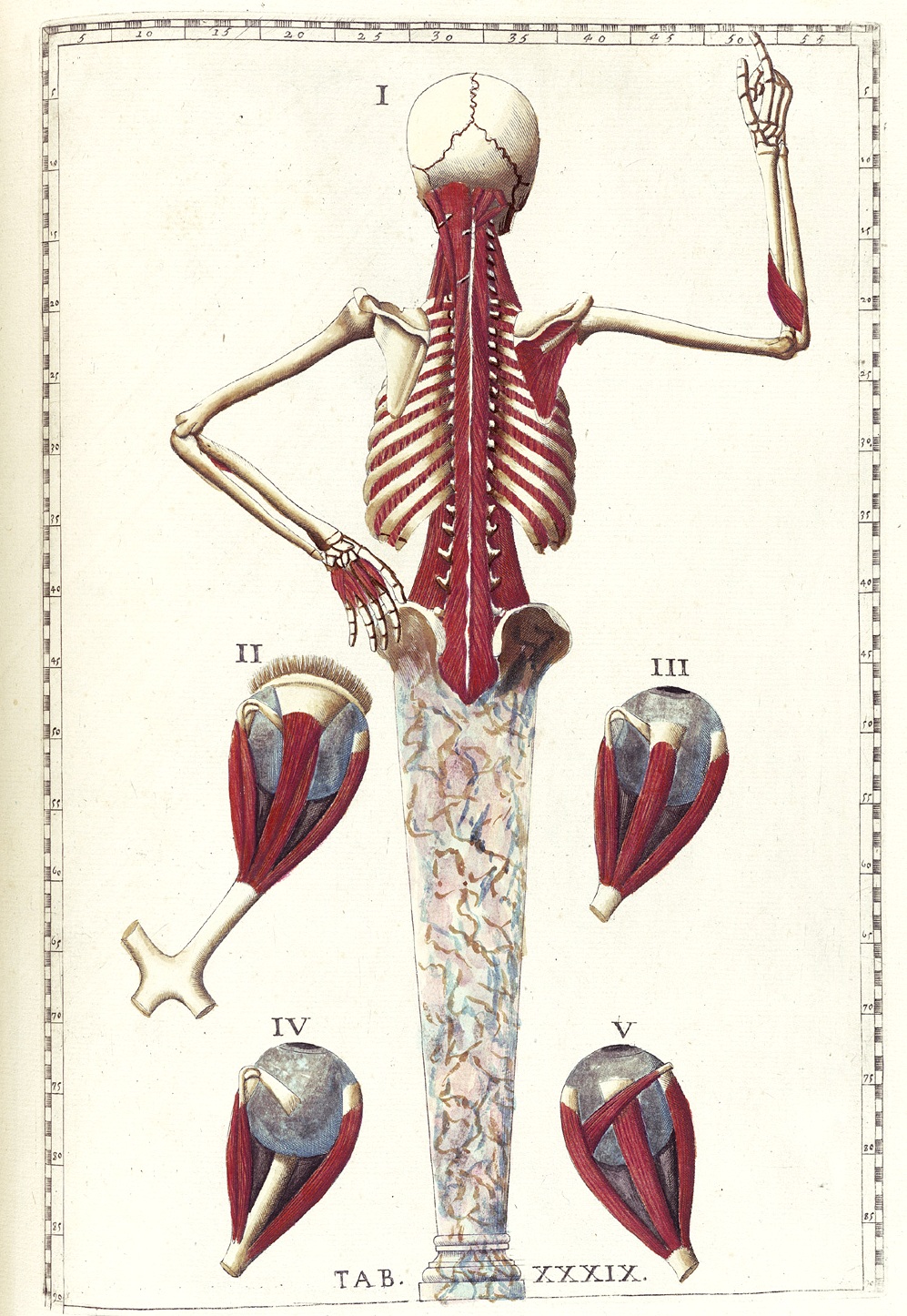
    Eustachi_t39 
    [More images below]
    among many other reasons.

    I can’t help but wonder what the result of the publication of this book would have affected if it had been available in 1552.  It stands to reason that if it was still being used in 1789, and still useful and respect and “current”, then it would lead me to believe that it would have had a major impact 227 years earlier.

    (Source: Bartholomeo Eustachi: Tabulae anatomicae. (Rome, 1783), . Historical Anatomies on the Web. US National Library of Medicine.)
  • Daily Dose of Dr. Odd: a Lovely Bit of Slightly Mysterious Design

    JF Ptak Science Books  Quick Post

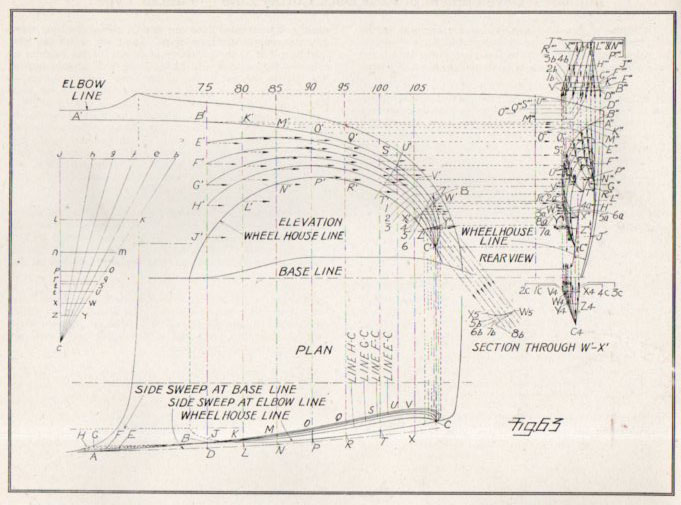
    Care to have a guess on the derivation of these designs? Well, I guess the indicators give this away, but had “elevation wheel house cover” not been printed in the it might have been harder to figure out what this simple and lovely thing is. 

    Design auto528


  • Ancient “Spacecraft”: the Flavor of Moving Very Heavy Things a Long Time Ago

    JF Ptak Science Books    Post 1872

    Obelisk624
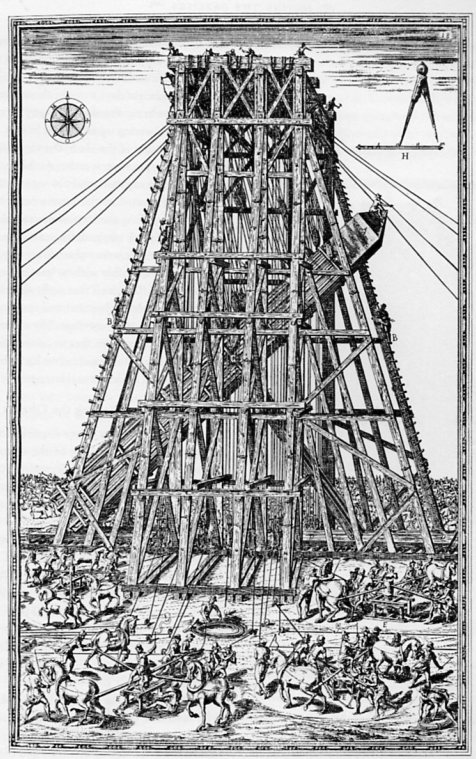
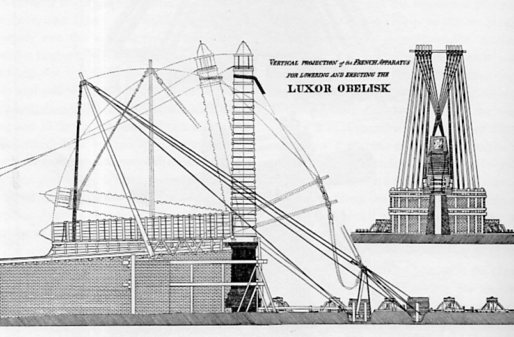
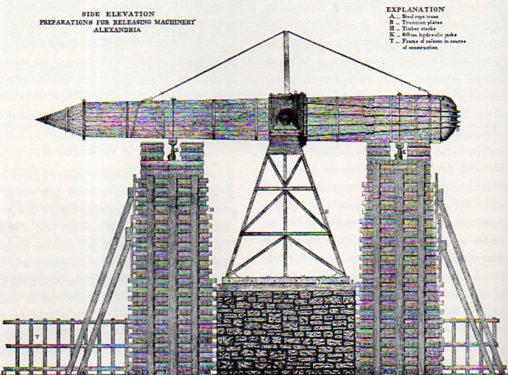
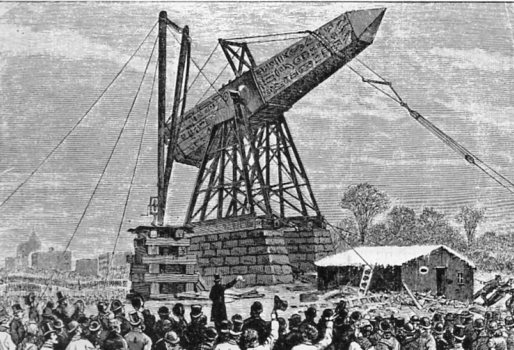
    This of course is not a story of ancient spacecraft, but it is about Very Large Things being manipulated in space in the days of steam and pre-steam engineering. It is hard to escape the “rocketship” interpretation, as some of the images, sculpted slightly out of context and cleansed of any identifying text and viewed with a squint, look as though they might be large booster rockets being readied for flight. They are of course images of some great and famous pieces of engineering–moving massive obelisks, and moving them in the 19th century and before.  And in the case of the Romans, and the original Egyptians, moving them way before our last millennium, moving 200- and 900-ton objects without benefit of very much at all. 

    Obelisk625
    Two of the great examples are the pair of obelisks that the Romans moved from Heliopolis to Alexandria, where they stood for another 2000 years.  Over time there was only one standing, and that one wasn’t doing so well by the end of the 19th century.  The fallen obelsik was taken to London in 1877; the other, the standing obelisk, was given to the United States by the Khedive of Egypt two years later, in 1879.  The man in charge of this second operation was Lt. Commander Henry H. Gorringe, U.S.N., who had the very tricky job of lowering the monolith, bracing it for transport by sea, fitting it out for a ship, and then transporting it to Central Park and raising it again.  He was able to accomplish this feat with the “fragile” 100-ton object in just a year.

    This next image is more classical and probably iconic, at least in the history of science world, and is found in the superb book by Domenico Fontana, Della Transportatione dell’Obelisco Vaticano (published in Rome in 1590 and again in 1604):

    Obelisk627

    Obelisk626They really do have a certain modern taste for interplanetary access, at least to me.  That aside, it is interesting to consider what this vastly heavy movement must’ve looked like to people long ago, when big machines with enormous powertrains (like this 1,200 ton capacity 300′-tall mobile crane)could be hauled into service to do their end in manipulating highly problematic and very heavy things in space.  To think of moving these very heavy objects with steam (or less) was a daunting task, and to see these images showing the progression of movement of these things must have been enormosuly satisfying.


  • The Ultimate Earthly Holes & the Geocosm of Fr. Kircher

    JF Ptak Science Books   Poat 1871 [Part of a series on The History of Holes.]

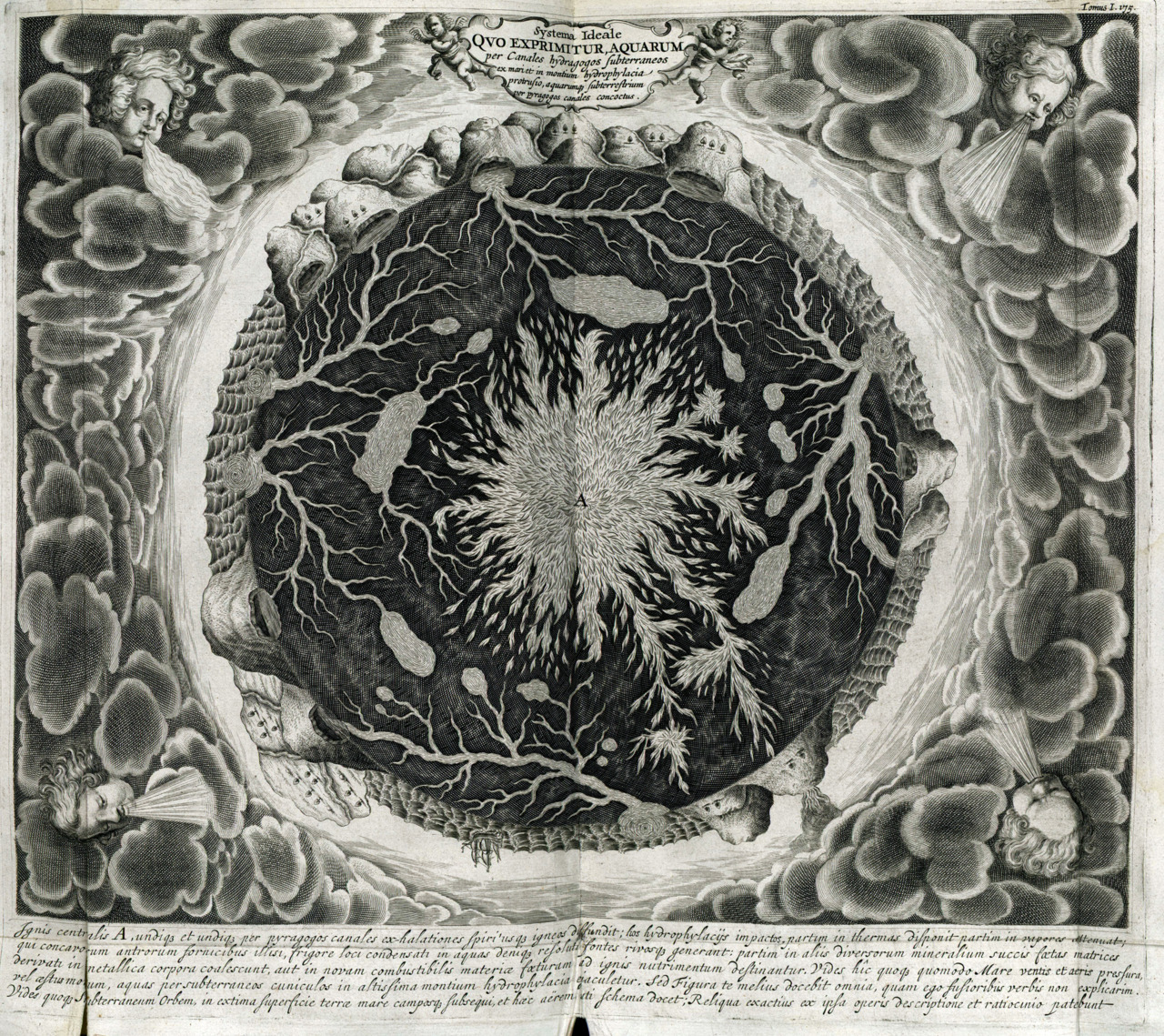
    “Water, Fire; Fire, Water; mutually, as it were, cherish one another; and by a certain unanimous consent, conspire to the Conservation of the Geocosm, or Terrestrial World.”–A. Kircher, Mundus Subterraneus, 1665 (quoting a source on the University of Oklahoma library blog, here.)

    Kircher hole_edited-1[Detail from the image below.]

    The great Athanasius Kircher (1602-1680)  pride of the Jesuits (and a member of the Collegio Romano, where he also was curator of the natural history collection there) and very forward thinker, was a prolific writer of vast ideas, thought about teh origins and circulation of water (among many other things) in his semi-encyclopedic Mundus Subterraneus (1665).  The Mundus–one of Kircher’s forty books–was one of the most beautiful books produced in the 17th century, and was chock-filled with ingenuity and insight and good thinking that went everywhere, though some of that “everywhere” went nowhere. In any event the man reached very high in an absolutely varied way, writing in the fields of language, optics, astronomy, geology, chemistry, math, magnetism, music, zoology and so on through the alphabet of wonder.

    Kircher hole
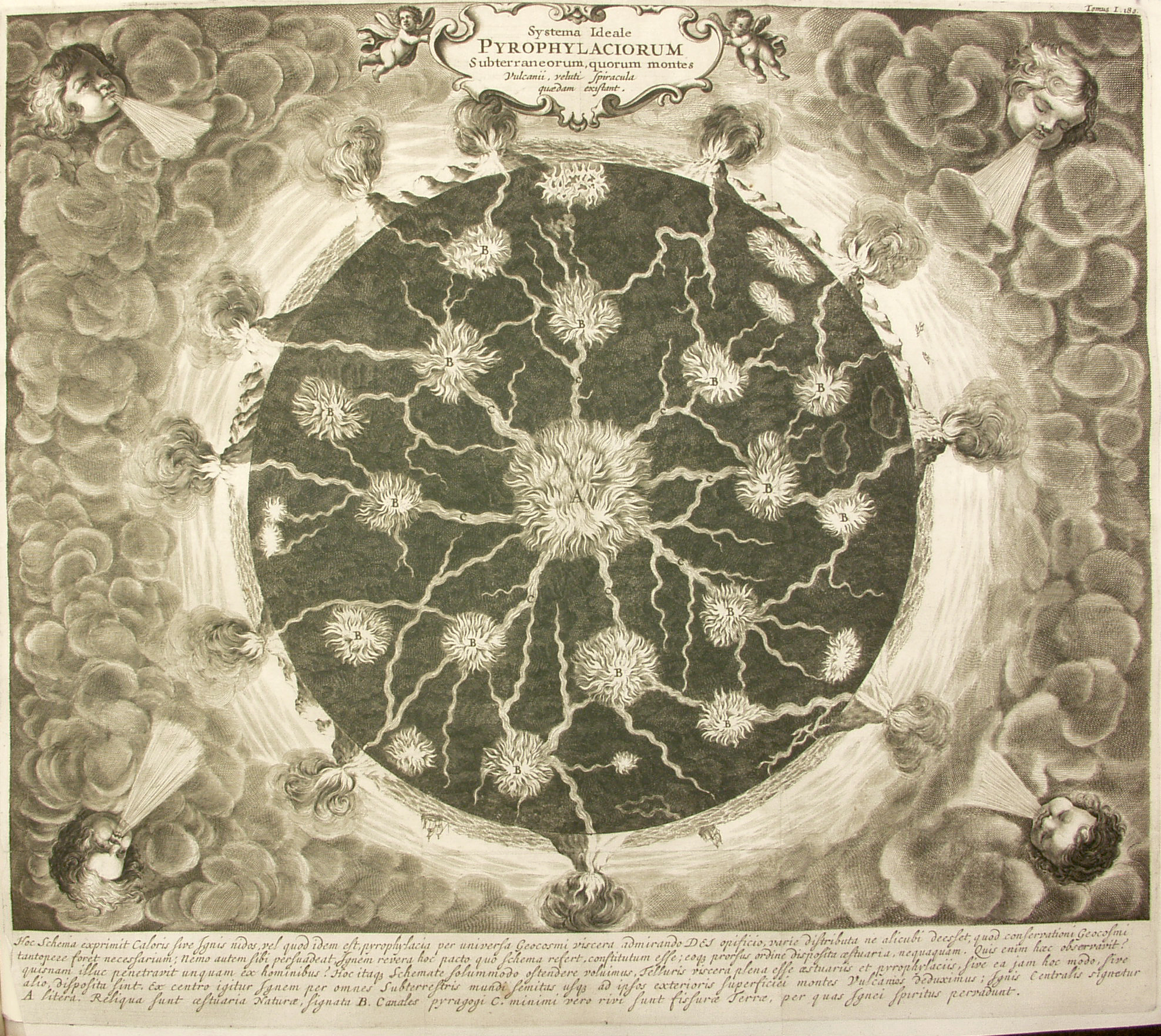
    In this case, Kircher worked on the problem of water–where it came from, where it went, and how the process unfolded, which was part of an overall theory of the physical construction of the Earth.  Kircher’s idea–which relative to other theories of the time was pretty scientific–was that the Earth was a solid mass save for interludes of caves and pockets of water and fire.  The fire (‘pyrophylacia”) represented the origins of earthquakes and volcanoes, and was complemented by a system of underground lakes and rivers (“hydrophylacia”) which was the basis for the movement of all water

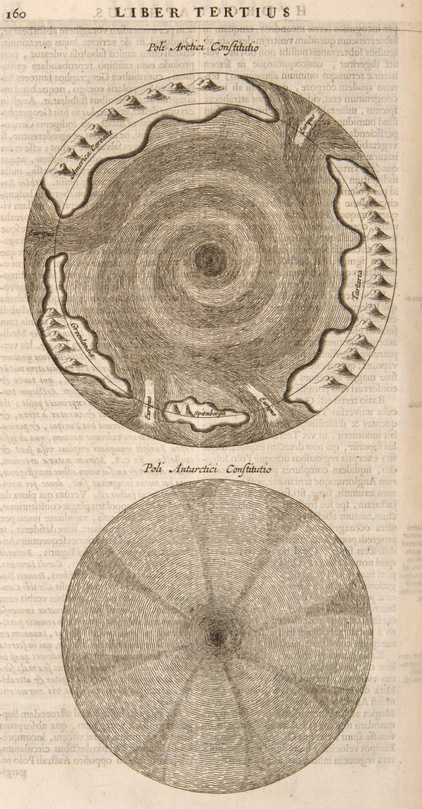
    The “holes” part of this post comes in right now, as we see in the engraving that depicts polar portal for water to descend into, great holes (like Spongebob Squarepant’s encounter with the main drain of the oceans) that allowed the water to continue its endless migration.  Water would rise and fall in accordance with the tides, which would act as the power source for raising water to mountainous heights, where it would start its life again, flowing down via creeks and streams into lakes and rivers and then to the ocean where it would ultimately make its way to some severe maelstrom, and down into the Earth to come back up again.  And I think that the primum mobile for this action was the wind produced by the interaction of the fire and water. 

    I’m unsure thus far about the placement of this primal hole. 

    Next:  Descartes Firehole. 

    Below: images of the fire- and water-based subterranean worlds of necessity to Kircher’s geocosm.

    Fire:

    Kirhcer pyro
    Water:

    Kircher water


  • Artistic Comparative Display of Quantitative Data–Winning the Battle of the Atlantic by Flying Over It

    JF Ptak Science Books   Quick Post    

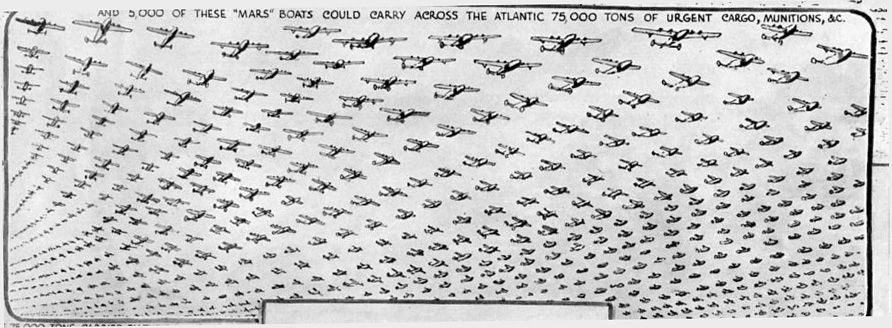
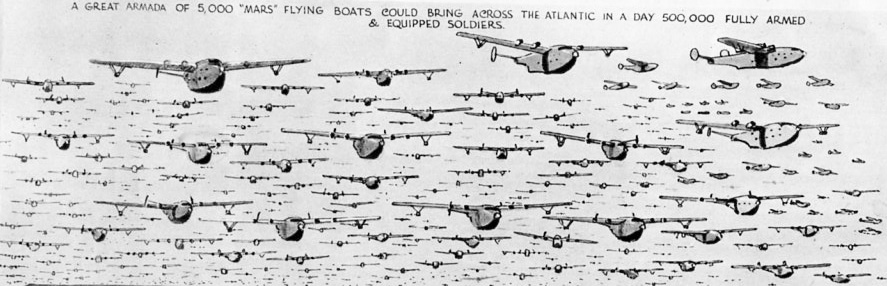
    I simply love infographics like this—especially big skies filled with airplanes.  I’ve written about other similar descriptions of sky-filled aircraft here.

    Brit troop carriers729
    In October 1942 the war was shifting to the way of the Allies–the United States had come into the fight ten months earlier, Operation Barbarossa (begun in June 1941) was at this time being recognized as a complete failure (though the operation would continue on for two more years, costing 5 million German army lives, 20 million Soviet civilian lives, and 9 million Soviet army lives and more when all was said and done), and American military production was very well underway and unbeatable, and so on. The Battle of the Atlantic however was still very much underway, with action returned their, again, during the summer and autumn of 1942. 

    Brit troop carriers728
    One way of defeating the U-Boot was to not sail the Atlantic much at all, and flying troops and supplies above it.  As we can see in this compelling graphic from The Illustrated London News of 17 October 1942, the editors of that magazine made a case for the Mars flying boat.  It was a theoretical case, as the 5,000 Mars planes depicted in the graphic never materialized–actually, it seems as though only seven were made. 

    But the case looked very compelling.


  • A Masterwork of Graphic Display of Data: a History of U.S. State Populations, 1870

    JF Ptak Science Books  Post 1864

    Rank_states_1900 Though the U.S census has been completed decennially ever since 1790, the first census atlas wasn’t published until 1870. The issue wasn’t desire, of course—it was the time that it took for calculation, analysis and design that prevented them from having been published before this date. It was still a monumental task of producing an entire atlas of visual displays of quantitative data.
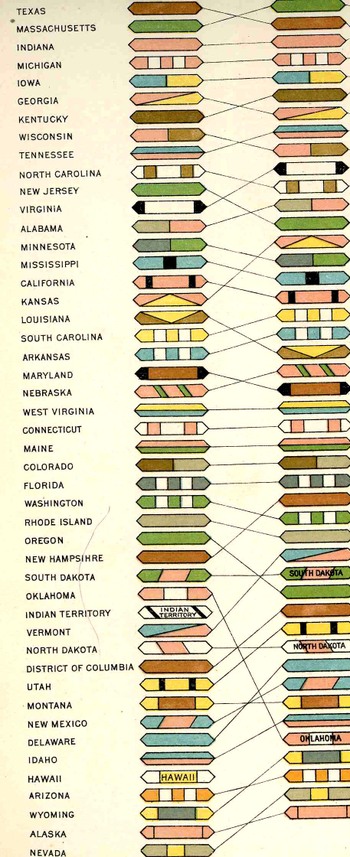
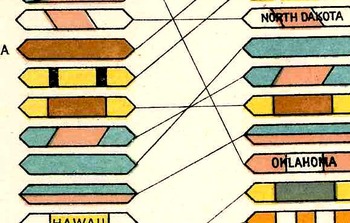
     The first atlas (produced under the direction of Francis Walker, who was the chief of the 1870 census) was printed in 1872, and was smaller, shorter and less graphically involved the later atlases, but it was the first, and it did present information in a way seldom seen before in the United States.  The first truly spectacular census atlas was produced twenty years later in 1890—it is elephant folio in size, and just a physically huge undertaking, and beautifully printed via chromolithography. It set the foundation for the two subsequent atlses of 1900 and 1920

    Blogaugust_24_statesd_detail442_2

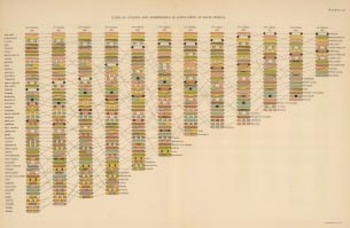
     The folding plate Rank of states and territories in population at each census (prepared under the supervision of Henry Gannett, Geographer of the Twelfth Census, printed at the Census Office in 1903 by Julius Bien & Co., N.Y.) from the 1900 census is nearly identical to the 1890 version, only it is about 1/4 of the size.  This graphic representation is remarkable because it displays and tracks a total of 348 data points (over time and ranking) using only eight colors.  (This atlas has been in my house a long time, and I’ve known about this plates forever, but I honestly never counted the colors–it is a surprise, really, to see that it was just eight colors being used in what seems like a dazzlingly different assembly of color.) The key was employing different shapes within the 6-sided polygon, making for the whole mass of objects and lines to be much more simply followed. Using more color rather than distinctive shapes-within-shapes would’ve made for a wall of color that would’ve been far less intuitively trackable.  This is just simply a fantastic achievement of data display–even if it takes a little while to train your eyes to become familiar with the geomertic shapes and sizes, it becomes quite easy to use.

    (Just for the record, the states in the United States at the beginning of each census over the first twelve censuses are:  1790, 14 states; 1800, 16; 1810, 17; 1820, 23; 1830, 24; 1840, 26; 1850, 31; 1860, 33; 1870, 37; 1880, 38; 1890, 44; 1900, 45.)

    For a complete display of the  1900 atlas, see HERE. 


    Blogaugust_24_statesd_detail_fine_d


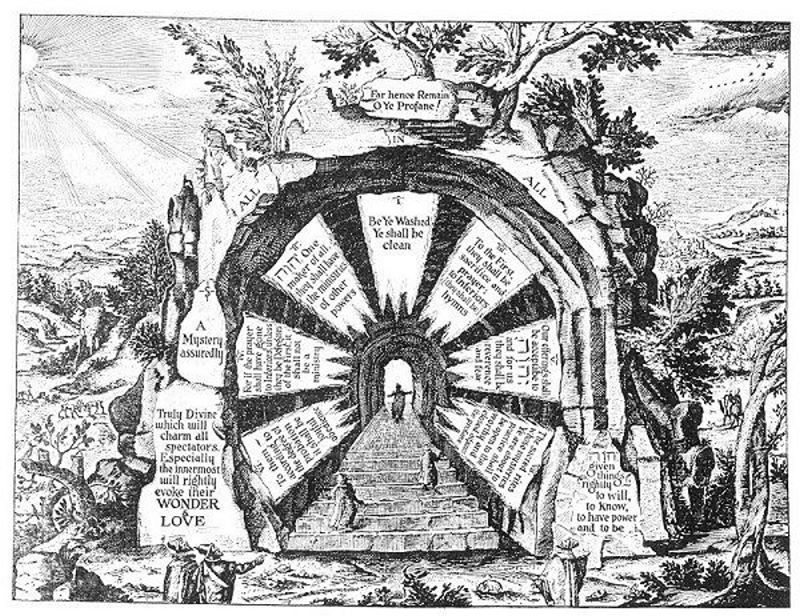
  • The Beautiful Inscrutable: Khunrath’s Fabulous Alchemical Exploratorium, ca. 1600

    JF Ptak Science Books  Post 1846   Part of the Series on the Artistic Display of Information

    I followed a link to the lovely website Res Obscura and found this great image from the work of Heinrich Khunrath, Ampitheatrum Sapientiae Aeternae (Hamburg, 1595, or in English  “The Amphitheater of Eternal Knowledge”).  Khunrath (1560-1605) packed about as much perplexing, confusing, inscrutable and beautiful displays of not-verifiable alternative information into his very full 45 years as just about anyone. He was a  Paracelsian, John Dee-ophile, hermeticist/alchemist seeker of “eternal wisdom” via medico-magical-interpretative Christianity, a deeply physico-chemical-spiritual experimentorium, and the meaning of his work (outside of where it fits int he history of science) really pretty much escapes me–except that the illustrations are beautiful. Res Obscura has a lot to say about the interpretation of the images, as do the other links below. I have really nothing to add, as I really dont’ know enough to say what is being represented in these very complex displays. 

    One thing that does seem obvious to me: the meanings and interpretation of this work is extremely fluid.

    [Image is greatly clickable]

    http://1.bp.blogspot.com/-R1UEoMw5nTM/Tx1DNSxW4GI/AAAAAAAAA44/gbeH-3zD6Js/s1600/hermtxt1750.jpg

    [Source: http://resobscura.blogspot.com/]

    Transcription of the text surrounding the Hermaphodite (that someone refers to as the Hermaphrospehere, is available here from the Special Collections Department at the University of Wisconsin.

    And other very complex symbolist allegorical somethings:
    ..

    which is an English version of the Latin of Amhitheatrum Sapientae Aeternae (from 1606) and available here along with other in-English goodness.


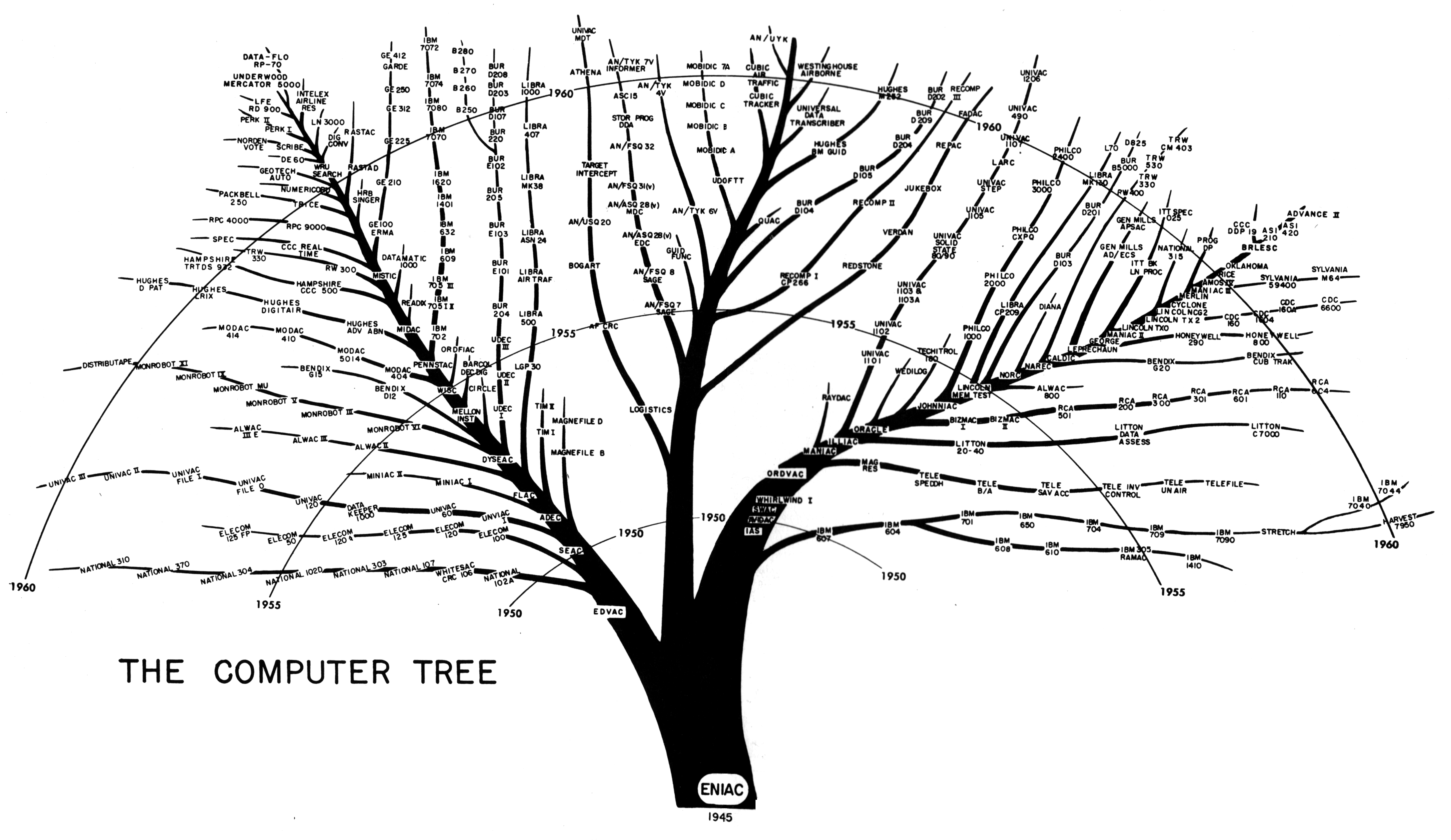
  • The Family Tree of Computer Development, Part II

    JF Ptak Science Books  Quick Post

    I’ve found a supplement to an earlier computer tree that I published on this blog (here) as a part of a chronological list of (nearly every) computer manufactured from 1943 to 1990.  The new one is interesting and has its differences from its predecessor, and divides its generations of computers in terms of logic technology. It is found in a 1960 NSF pamphlet called “The Family Tree of Computer Design”, a Brief Summary of Computer Development, and I found its reference in a good book by I.B. Cohen, Howard Aiken, Portrait of a Computer Pioneer, published by MIT and available here.

    [Image source: Microsoft.]

    The earlier “Computer Tree”, from Electronic Computers Within the Ordnance Corps , by Karl Kempf. “U.S. Army Diagram”, the source of this information coming from the U.S. Army, here.

    This image is expandable.

    Computer tree

    More detailed images of the computer tree are found below:


  • Daily Dose of Dr. Odd: Blackboard Technology, 1850-1900

    JF Ptak Science Books  Quick Post

    Einstein chalkboard
    What is there not to like in a blackboard?  Doing work on a blackboard is a definite commitment, thinking done out-loud, brain squeezings that you had to stand next to and own, creativity done on the fly with plenty of room for annotations.  And so how would you accommodate an expansion of the display of thought or instruction in the 19th century?  There were evidently plenty of ways around just having a big piece of slate on a  wall, as these U.S. Patent Office application/grant drawings will show. 


  • 36 Great Anatomies, 1390-1899: Great Image Base from the NLM

    JF Ptak Science Books   Post 1835

    This table is pulled directly from the National Library of Medicine pages for anatomies on the web–all I did was place the records in a table so that they could be listed chronologically.  The references in the first left-hand column are clickable and will take you directly to the images of the work at the NLM site.  This is just a sampling of anatomies, though it may prove to be highly useful for folks in the science and the arts.  Enjoy. 

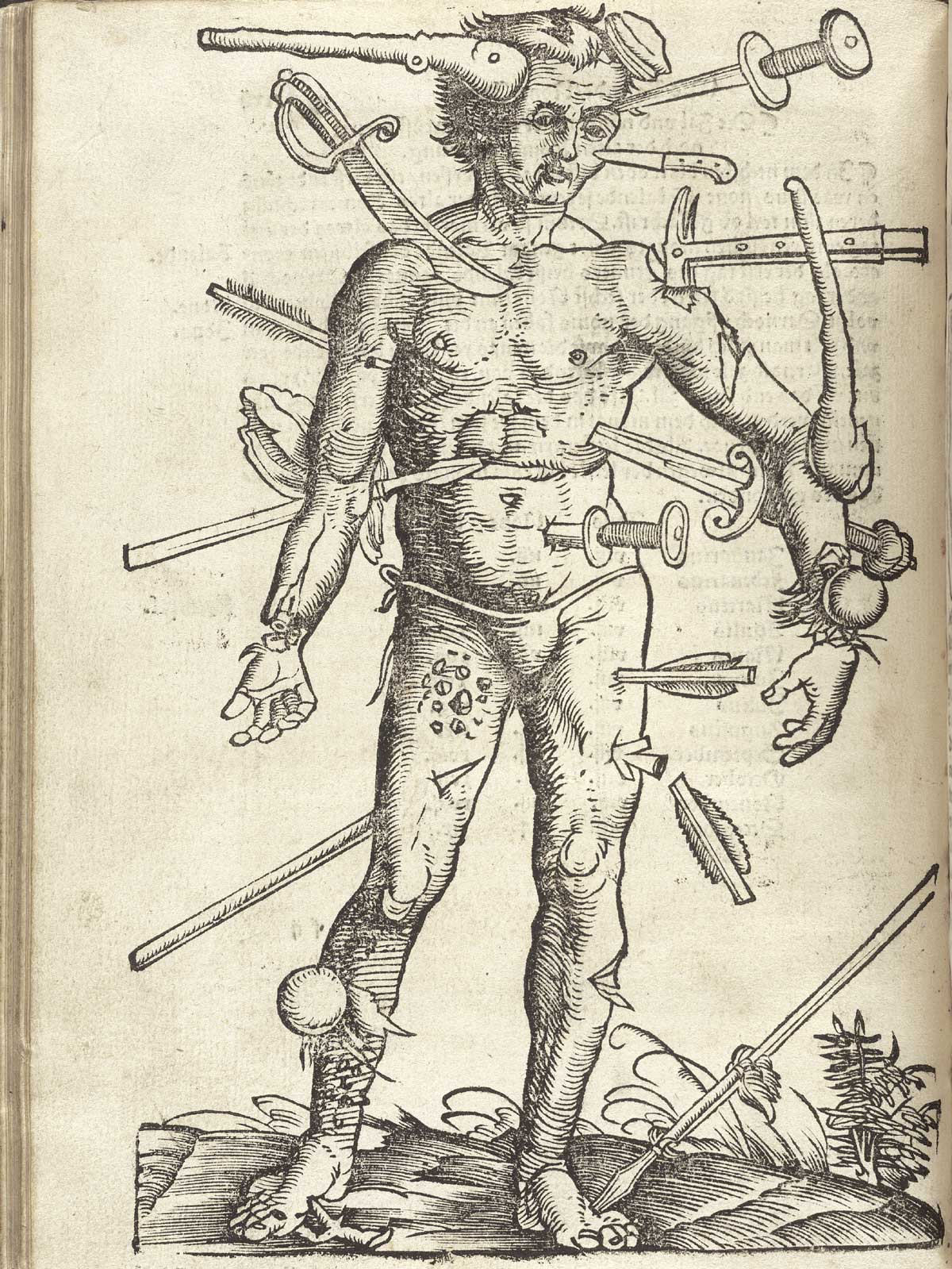
    Medical gersdorff_p21v[Image: Hans Gersdorff, Feldtbůch der Wundartzney : newlich getruckt und gebessert, published in 1528.]

    Chronological list.