A Daily History of Holes, Dots, Lines, Science, History, Math, Physics, Art, the Unintentional Absurd, Architecture, Maps, Data Visualization, Blank and Missing Things, and so on. |1.6 million words, 7500 images, 4.9 million hits| Press & appearances in The Times, Le Figaro, Mensa, The Economist, The Guardian, Discovery News, Slate, Le Monde, Sci American Blogs, Le Pont, and many other places… 5000+ total posts since 2008.

Category: Information, Quantitative Display of

  • A Note on Venn and his Diagrams

    JF Ptak Science Books   Post 1952
    Follow Me on Pinterest 

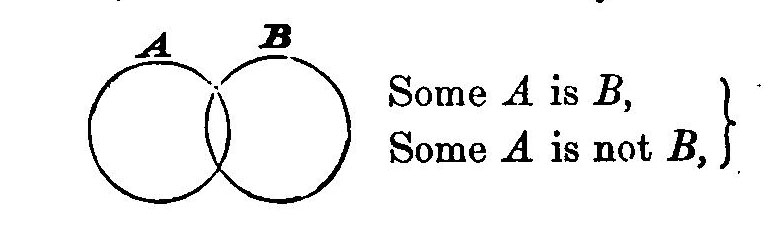
    It seems so unlikely that the Venn diagrams took so long to appear, that it hadn’t been Aristotle’s Diagrams, or Cartesian Diagrams; rather, these elegant creations–about a different way to represent propositions by diagrams– belong to Mr. Venn’s invention in 1880. Mostly. It was in that year that these famous more fully-developed diagrams first appeared in a paper entitled “On the Diagrammatic and Mechanical Representation of Propositions and Reasonings“ in the Philosophical Magazine and Journal of Science.  They seem so beautiful, and so simple, and so powerful, and so elegant. So necessary.  And so why-did-they-take-so-long-to-appear, so obvious.  In a way, they are in that category of The Great Obvious Invention, in a similar vein to Mr. Luke Howard first classifying the names of clouds  in 1803.  Sometimes things are not obvious until they are.  


    Venn diagram
    [Source: Internet Archives, John Venn, Symbolic Logic, 1881, full text.]

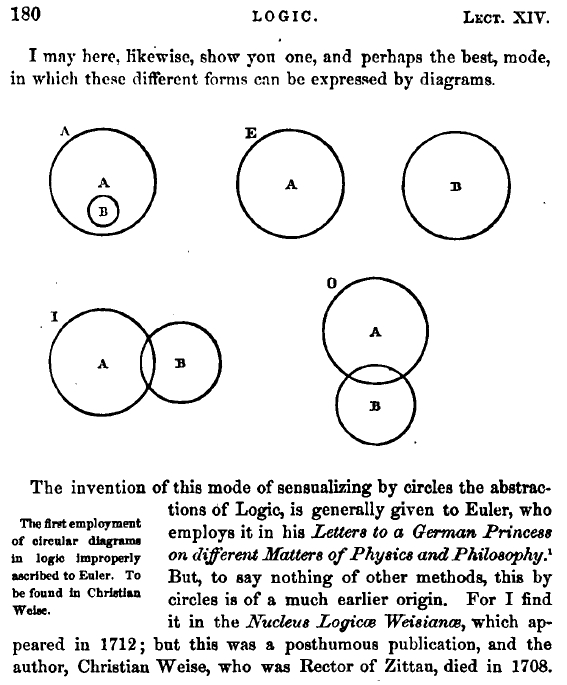
    Well, almost.  The diagrams did mostly make an appearance earlier–though not in the Venn form–in the work of Christian Weise (d. 1708) and then in that of Leonhard Euler (1707-1783), that according to the great William Rowan Hamilton, explained in his work Metaphysics and Logic (1858-1860). But the final form seems to be that of Venn.  

    Hamilton’s work appears so:

    Euler diagram


    They also appeared in the Proceedings of the Cambridge Philosophical Society,
    volume 4, 1880, in his article “On the employment of geometrical
    diagrams for the sensible representation of logical propositions” (here) in which he discusses the history of the diagrams, including the Hamiton history.  Venn also includes this beautiful logic template of Bolzano:

    I found a wonderful book review of Venn’s book Symbolic Logic that appeared the following year, appearing in the journal Nature on 14 July 1881, and reviewed by the inimitable W. Stanley Jevons (which is reproduced below).


  • A Stunningly Detailed Bird’s-Eye View of NYC, 1879

    JF Ptak Science Books  Quick Post 

    Follow Me on Pinterest


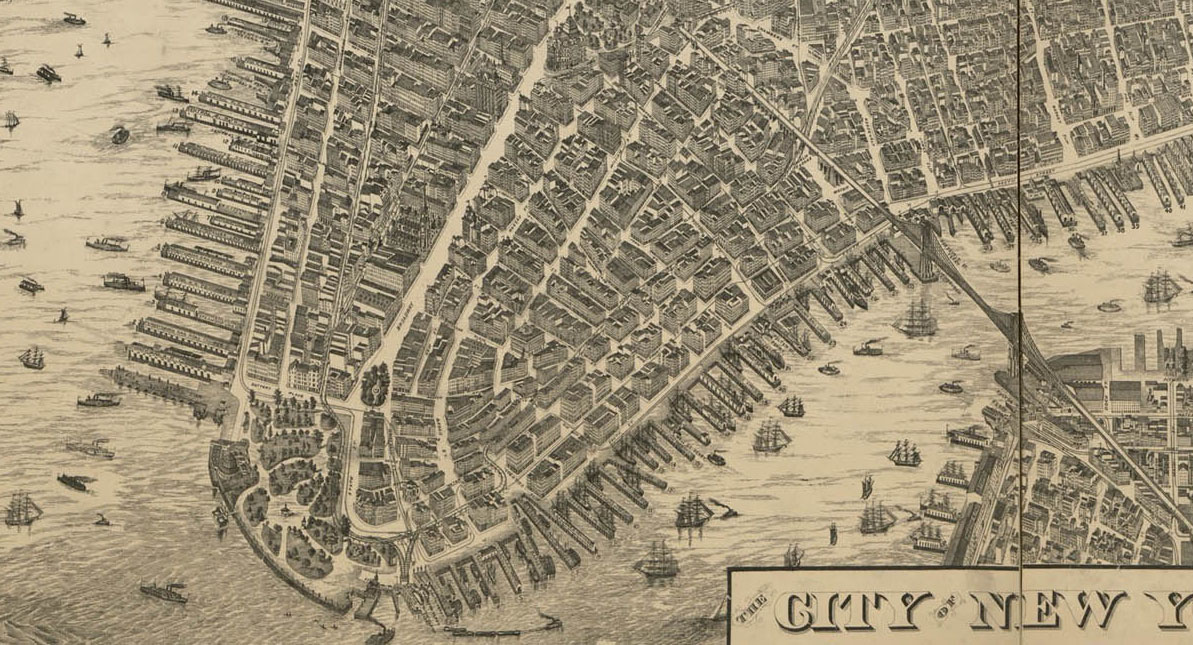
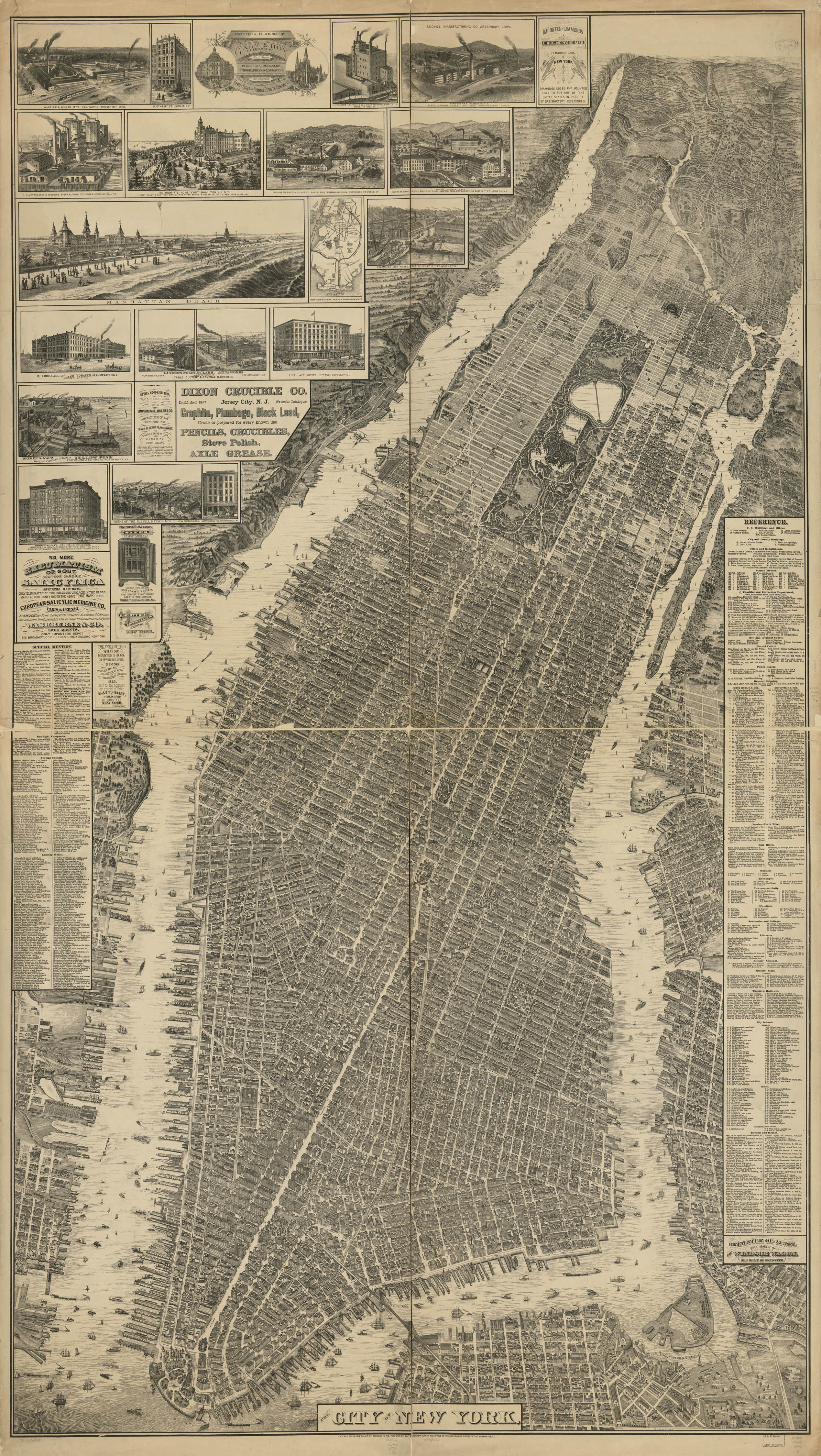
    This remarkable map, a bird’s-eye perspective view of New York City, was created by Will L. Taylor  (“chief draftsman”), and published by Galt & Hoy of New York in 1879.  There is a great attempt at representing (all?) buildings in accurate detail, though the Library of Congress notes that the map is not necessarily drawn to scale. The very issue of what seems to be an attempt to show the footprints and perhaps even the elevations of all structures in the city is incredible.  I know from experience with a 1910 bird’s-eye view of my own small city (Asheville, with a population of about 18,000 in that year) that our houses was drawn in and was shockingly accurate–I imagine with a large enough team of draftspeople that this project might well be possible for NYC. 

    Nyc mega map brooklyn bridge[Source:  the Library of Congress. The original is quite large (188 x 107 cm) and printed on four sheets, and is just superb.]

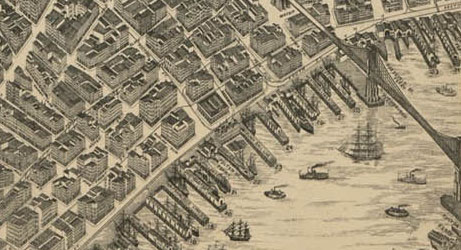
    And a bit more of a detail:

    Nyc mega map brooklyn bridge big
    The full map, below, clicakable and downloadable as a 2.5 meg file–its a very lovely thing.

    Nyc mega map


  • How Much Did Athanasius Kircher’s IQ Weigh? The Polymathic Genius Alphabet

    JF Ptak Science Books   Quick PostKircher

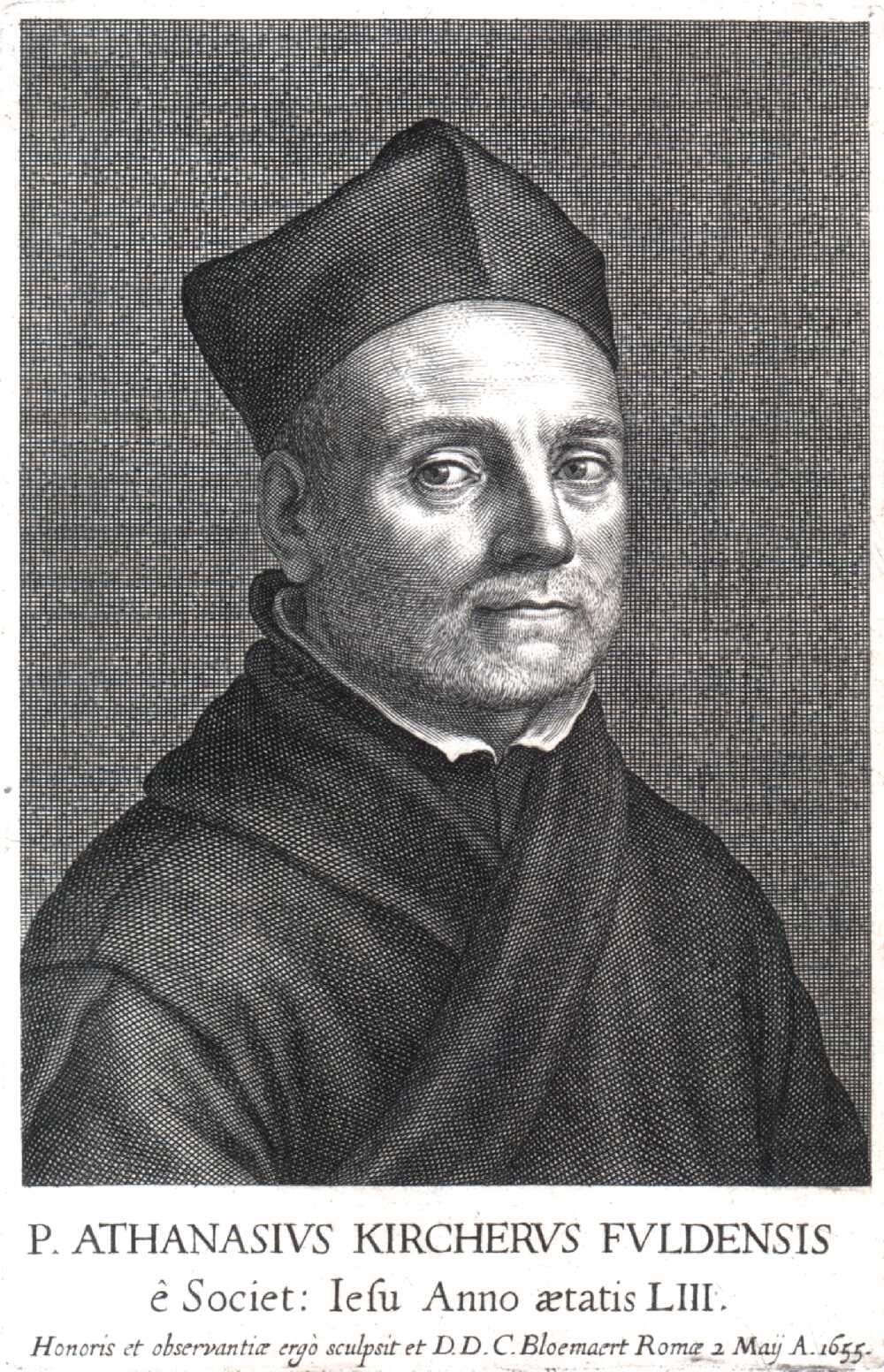
    It has been said elsewhere along the aethery intertubes in discussions of the intellectual value of the great and problematic Jesuit scientist/experimentalist/visionary/encyclopedist Athanasius Kircher that he may be the greatest polymath who has ever lived.  He certainly was a genius, and worked across a wide and occasionally invisible spectrum, inventing/describing/discovering/fabricating. The great semi-mystifying polymath  Kircher (1602-1680) lived
    for a long time and filled his life with ideas and words,  producing
    dozens of books during his time on Earth, some of which were never
    published even though written, some manuscripts lost forever. His was a
    massive output of extraordinary breadth, most of which was original to
    him, and a lot of which was original to others and not credited, as was
    often the case with some scholarship at this time in history.   He
    wasted little time what I can see, writing on a spectacular range of
    subjects, enlightening people, confusing people, generating great
    theories and some bad ideas

    He was often correct, and occasionally toweringly smart–but certainly not all of the time, and probably not enough of the time to earn him such high-altitude praise.

    But even with the great and lofty things he has accomplished, I am pretty certain that he would not make the first rank in the alphabet of great polymaths–not only are there other polymaths in general who are more, um, polymathical, there are also more “K” polymaths who would push him out of his alpha-order.

    Here’s one example of an alphabet of great polymaths:  Aristotle/Agricola, Boyle/Bartholin/Babbage, Carnot/Chandrasekhar, Descartes/Davy, Euler, Faraday, Gauss/Gilbert, Helmholtz/Huygens/Herschel, Jevons, Kepler/Klein, Leonardo/Lavoisier, Maxwell/Malppighi, Newton, Poincare/Priestly/Pasteur, Quetelet, Sommerfeld, Thomson, von Neumann/Vesalius, Young, Zeno. 

    Well.  There’s certainly a lot of room for debate on this quick list–perhaps it would be more interesting to assign chess pieces to these same names; and if this was so, I would have Fr. Kircher be a pawn.

    And so:  are there more dots on Kircher or squares behind him? 

    Kircher squares


  • The Origin of Shadows and Directions of Vanishing Points

    JF Ptak Science Books  Quick Post

    Dubreuil origins of shadows det 1_edited-1

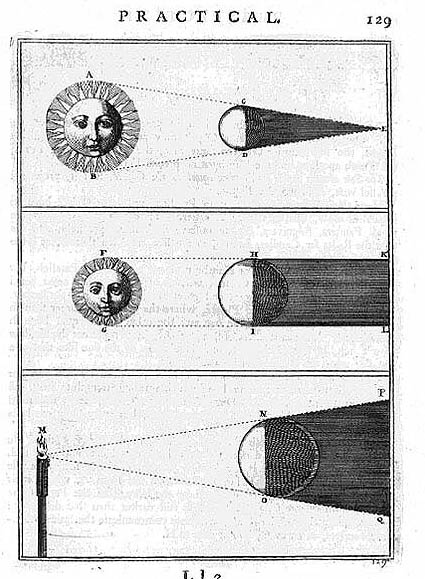
     Shadows must come from somewhere, and it is that “somewhere” that this beautifully-titled chapter addresses.

    Dubreuil origins of shadows det 1

    In another unusually-titled piece, we find a “shadow-maker” embedded within  patented “cloud creator”, as so

    this taken from the 25 May 1892 patent granted to Steele MacKaye, though his apparatus was only for generating special effects for the theatre.  Still, the title of the patent was pretty catchy, as was the “shadow-maker” part, which is evidently the only time that phrase is used in U.S. patents through 1900. 


  • The Most Beautiful Perspective Drawings of the Baroque?

    JF Ptak Science Books  Quick Post

    Follow Me on Pinterest

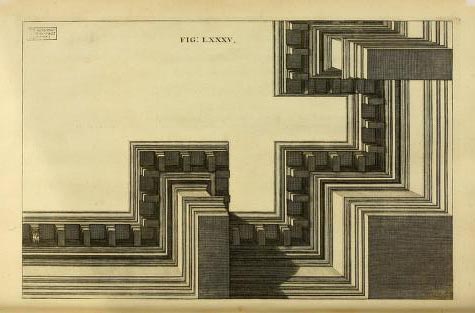
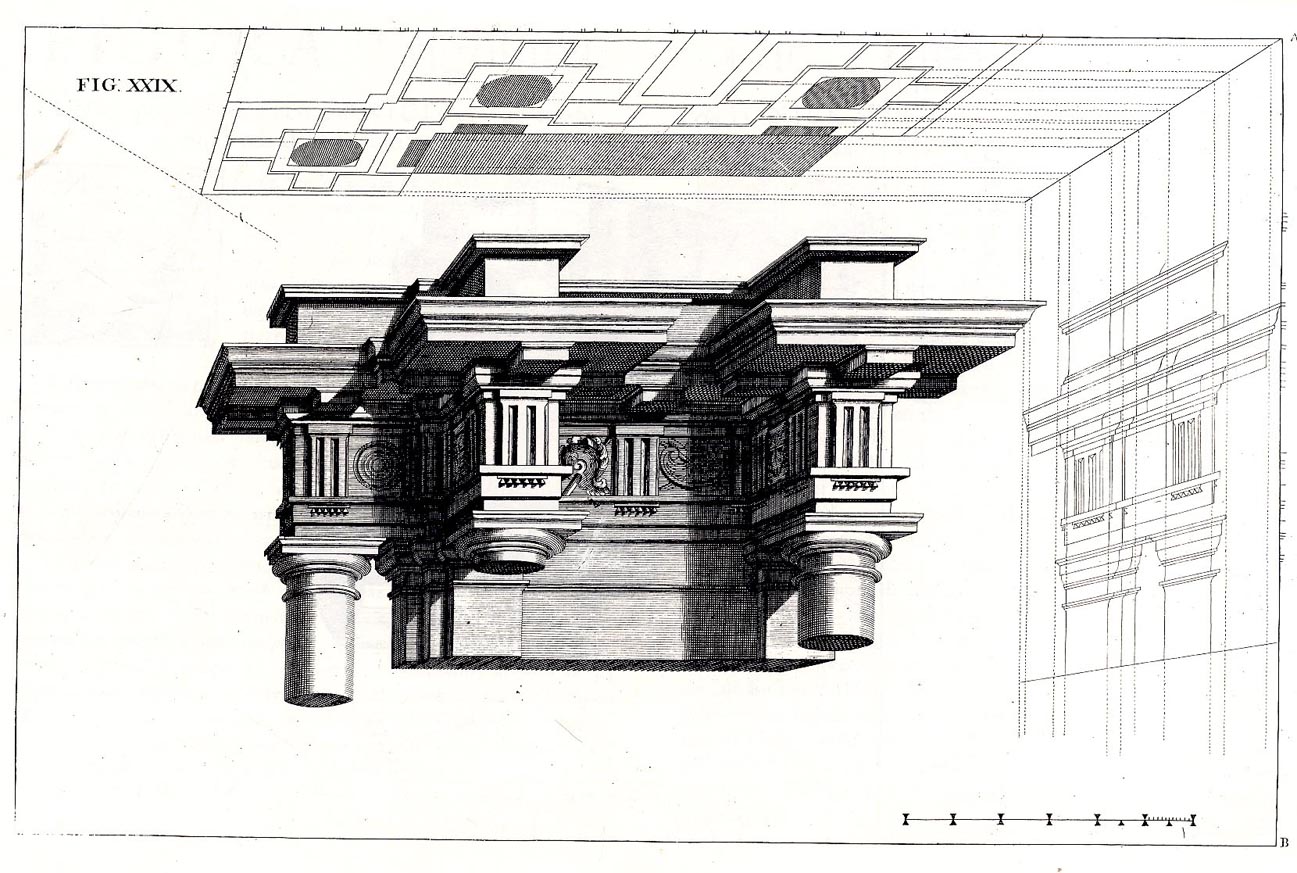
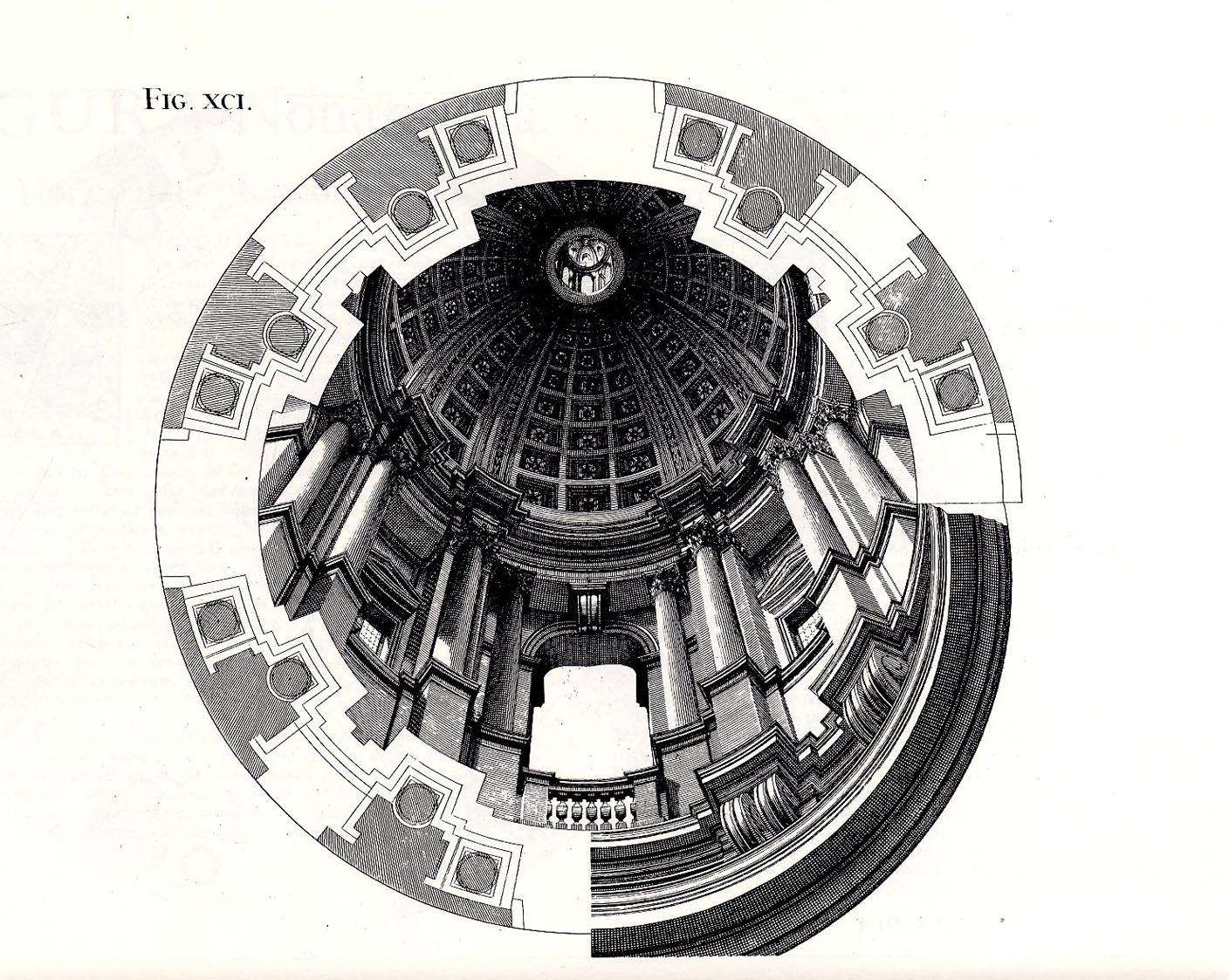
     The fantastic Jesuit Andrea Pozzo published results of his researches on perspective in his Perspectiva pictorum et architectoru (1693),
    explaining how he was able to compellingly, unbelievably  represent
    three-dimensional images on two-dimensional spaces, this image showing
    plan and projection and profile, effectively giving you a
    three-dimensional cross section of the architectural element…and having them seemingly float in space. His work is just absolutely gorgeous. 

    Pozzo 7


    Pozo
    Pozo 2


  • Cartographic Evidence of Hell in Texas, 1888

    JF Ptak Science Books    Post 1941  
    Follow Me on Pinterest 

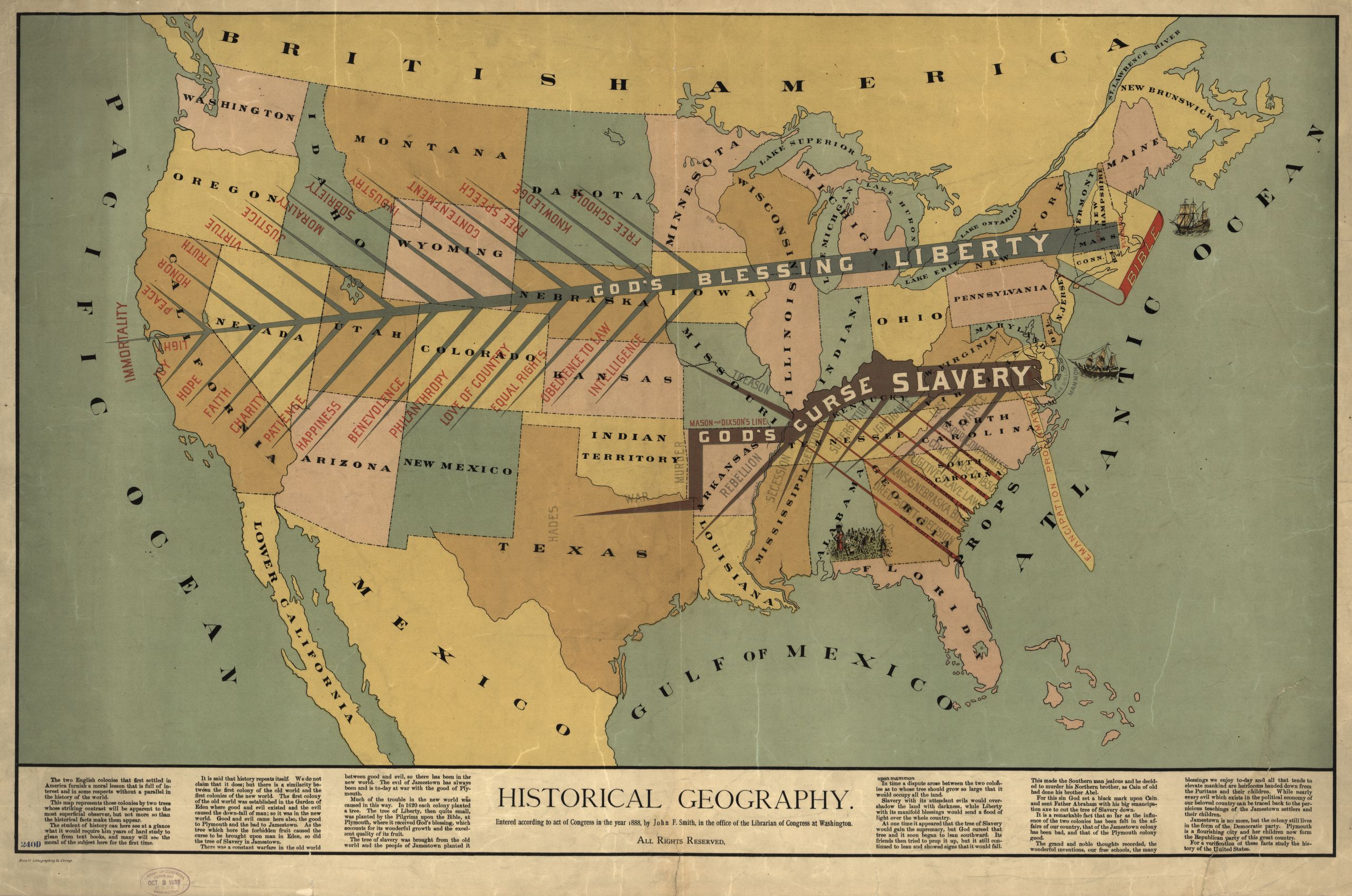
    Slave map 1888 texas
    Just yesterday in this blog I made an entry on a very striking, viciously anti-slavery Moral Map of the U.S. It is very red and was printed in 1854, just barely before the great troubles really started to begin in 1856, and it stands on its own as a fine representation of a map-with-a-message.  The map below by John F. Smith (Historical Geography) was printed in 1888, and although it was made after slavery it still carried a very strong message–perhaps not as graphic as the 1854 map, but certainly as vehement, and perhaps more-so, with a very heavy dosage of Reconstructionist retribution laced in its text. There is a sense of channels of warm blood flowing through canali of stone altars, a mass on the chest to Huitzliopochtli.  It has its own sense of deep danger.

    Slave map 1888
    [Source:  the Library of Congress.  The map is very expandable.]

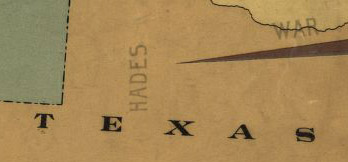
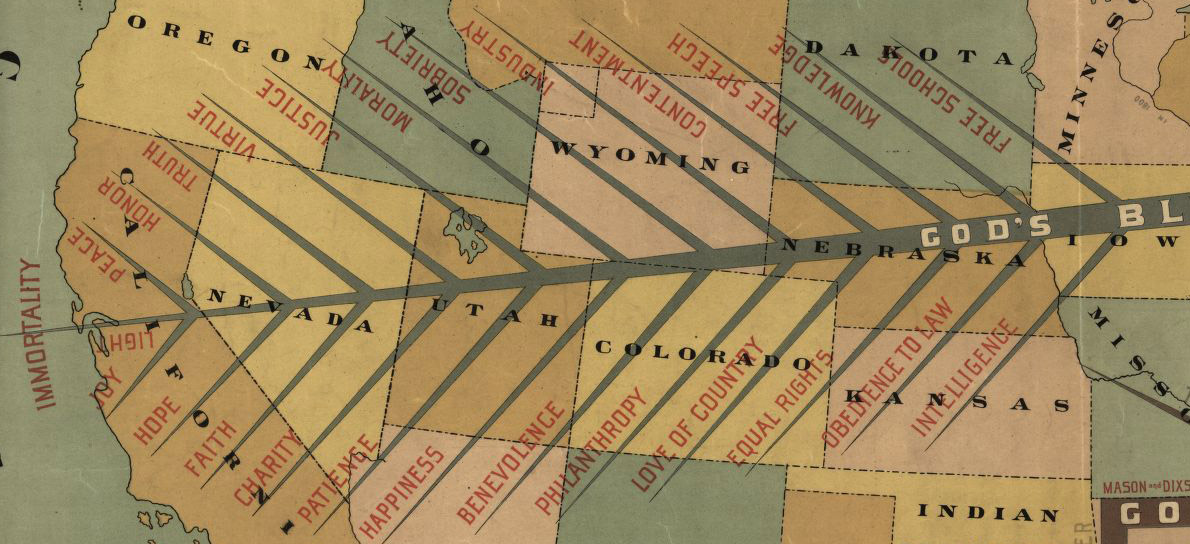
    The map is divided North and South by two lightning-like trees, “God’s Blessing, Liberty” and “God’s Curse, Slavery.”  The limbs of the tree of Liberty read “Light, Joy, Hope, Faith, Charity, Patience, Benevolence, Philanthropy, Love of Country, Equal Rights, Obedience to Law, Peace, Honor, Truth, Virtue, Sobriety, Industry, Contentment, Free Speech, Knowledge, Free School.”

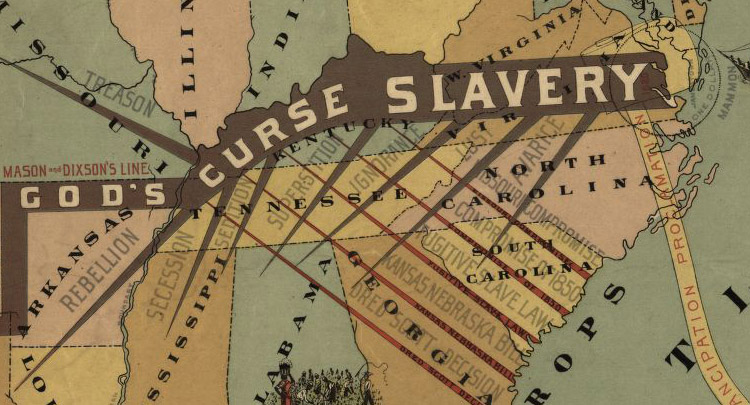
    The limbs of the dark, crooked tree of slavery read: “Murder, War, Rebellion, Treason, Secession, Sedition, Superstition, Ignorance, Avarice, Lust” and of course “Hades”. these are hosted on the spikes of the Missouri Compromise, the Compromise of 1850, Fugitive Slave Laws, Kansas-Nebraska Act, Dred Scott.”

    “Hades” might not be that far off, at least for the heat/difficulty index, as this one seems to be located right about at the eastern boundary of the Llano Estacado, which in centuries past was a very highly difficult place to navigate. 

    Slave map 1888--detail 2

    Slave map 1888 det 3


  • What the Eye of God Sees: Gassendi’s Vision, 1658

    JF Ptak Science Books   Post 1938
    Follow Me on Pinterest


    Gasseni eye of god det_edited-1
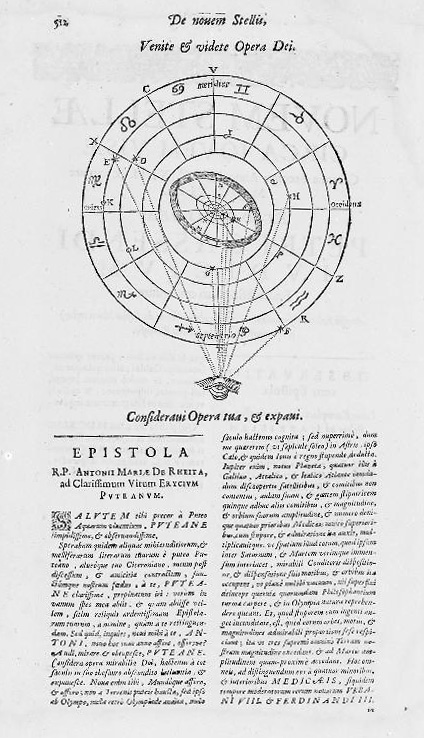
    Pierre Gassendi (1592-1655) published this God’s-eye-view of creation a few years after his death in the fourth volume (Astronomica) of his six-volume Opera Omina.  His friends and supporters of course saw to the publication of this mathematician/philosopher/logician’s work1 back there in 1658, so Gassendi–a very prominent thinker from a long-line of thinkers nearly on the verge of great discovery here and there and certainly a witness to it–made his greatest adventure in publishing only in death. 

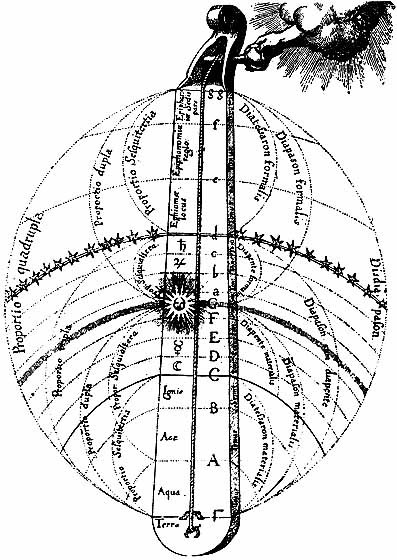
    Imaging a physical god is a tricky business in the history of the printed book. Bits of the creator of the universe turn up in book illustrations over hundreds of years, though I am not sure when the very first picture of a part of god appears.  The hand of the creator (generally seen as the Primum Mobile) is not terribly uncommon in images of a scientific nature in the 17th and 18th centuries, and is perhaps best exemplified by Robert Fludd’s famous Monochord:

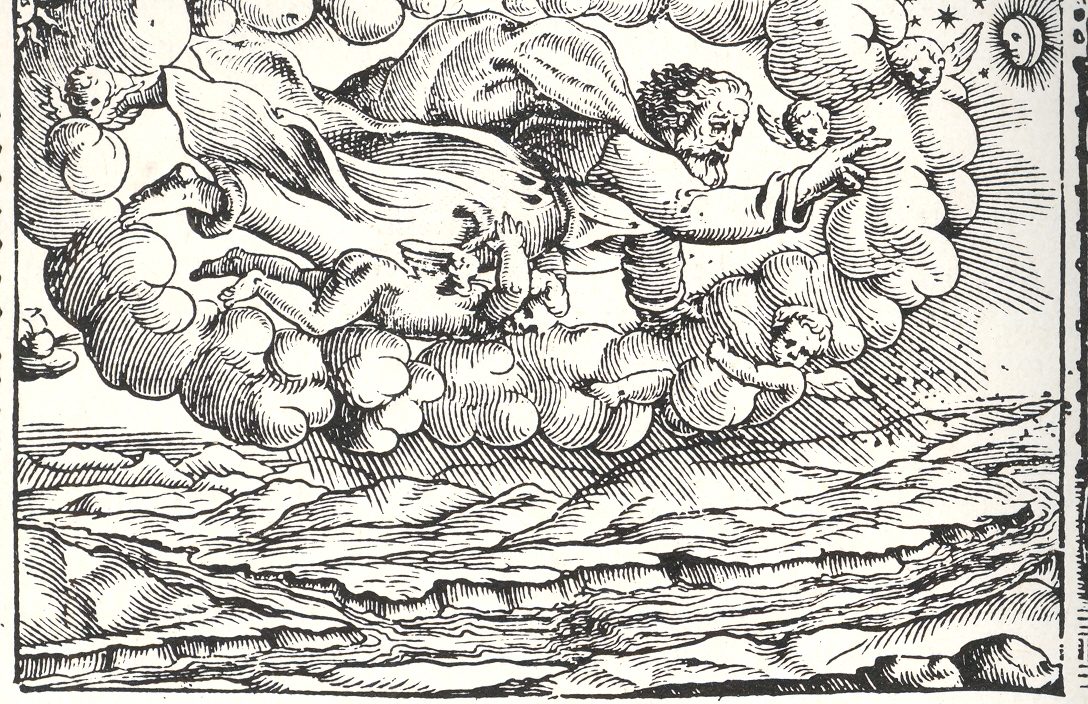
    Robert fludd celestialOf course there are many instance of the full-bodied god being seen through a break in the clouds, though in all the instances of this that I have seen the tantalizing peak into whatever region it is that this god exists is left entirely blank, a small white space. As so:

    God in the sky

    (Title page is for the narrative poem Le Metamorfosi, Ovid’s  Metamorphoses,
    translated into Italian by Gioseppe Horologgi, and published in Venice in 1563. See an earlier post on this blog, A History of Blank and Empty Things: God in a Hole in the Sky, here.)

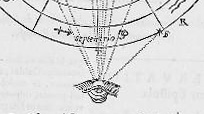
     The eye of god is also not very uncommon, and is represented by an eye and also in a sacred triangle.  Less common though are images like Gassendi’s, which in a way, in an odd and almost offhand way, give the reader a sense of what it is that god might be seeing in  agodly-lineof-sight  Perhaps this is incorrect–but in judging his image with others in my experience it seems to me that the representation is a little more “personalized” here than just about anywhere else.

    Gasseni eye of god

    Notes:


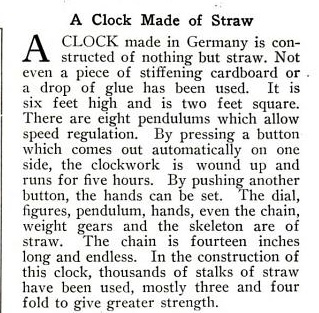
  • Daily Dose from Dr. Odd: Clock Made Entirely of Straw, 1916

    JF Ptak Science Books   Daily Dose of Dr. Odd 

    Follow Me on Pinterest 

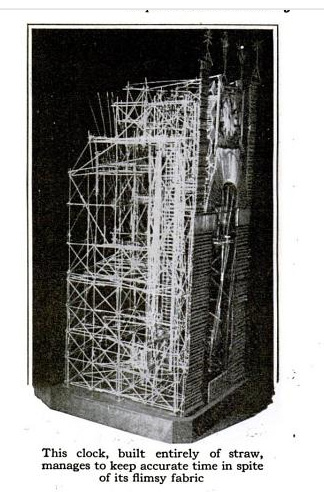
    Extraordinary! 

    Clock of straw[Source: Popular Science, 1916, here.]
    Clock straw text


  • The History of Dots: Dots in the Harmonious Motion of Battle, 1647

    JF Ptak Science Books  Quick Post    Part of a series on The History of Dots

    Follow Me on Pinterest 

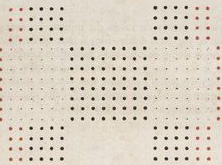
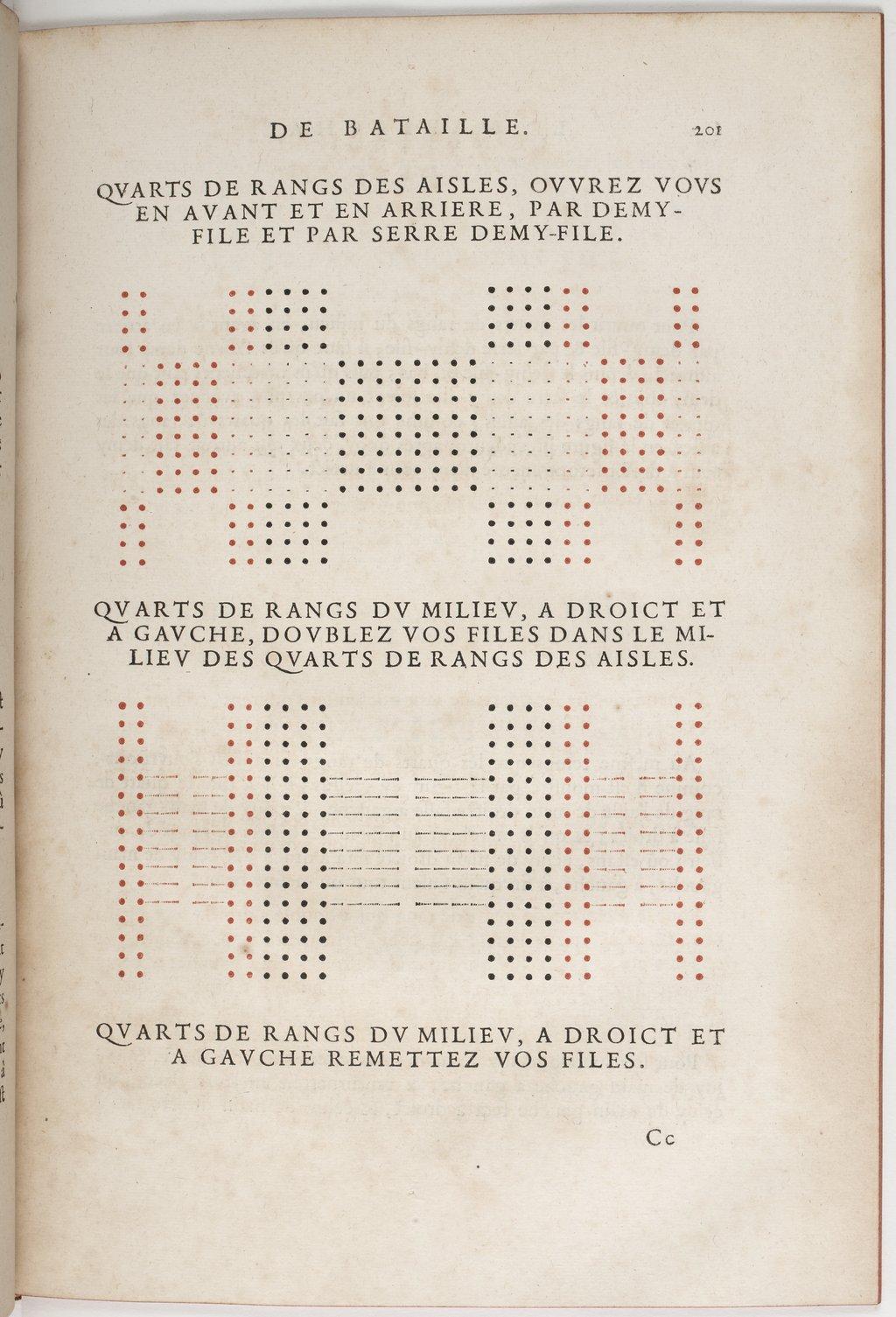
    Colbert de  Lostelneau’s (French Marshall and Commander of the French Royal Guards)  Le
    mareschal de bataille..
    .1and printed by Estienne Mignon
    in Paris inthe year 1647, is one of the earliest books to be printed in
    colros. This rare book, which was a superior cummulative work on
    tactics and strategy and military thought (and which in parts leaned
    very heavily on earlier and sometimes unattributed books), employed the
    new venue of color printing to highlight its musketeers/pikemen/cavalry
    symbols in three shapes and in three colors for easier understanding of
    the movement of three different aspects of an army.  It is said that in
    this way the military theory was made more adaptable and practicable.

    In the history of dots, though, these color-printed varieties are significant as being among the first of their kind.

    Color dots detail
    And the full image (both of which are located at  Gallica–website for the Bibliotheque Nationale de France, here):

    Color printing dots lostelneau


  • Trees as Symbols in Displays of Information

    JF Ptak Science Books  Expanding an earlier post  
    Follow Me on Pinterest

     I’m fond of images of trees, but
    mostly if they are forensic or employed to display relationships between ideas
    or data.  One of my favorites for the
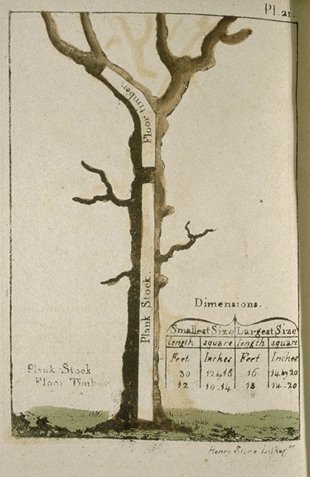
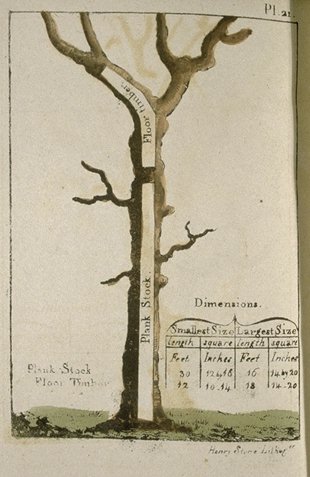
    former is this great image from Peter Guillet’s 
    Timber Merchant’s Guide. Also, a Table, Whereby, at One View, May Be
    Seen the Solid and Superficial Measure of Any Square or Unequal Hewed Logs or
    Plank…1
    (printed
    in Baltimore by
    J. Longrove in 1823). 
    Tree--timber guillet


    Guillet was basically
    a tree dissector, a harvester of wood for the construction of naval ships.  His book shows how to make the best—the most
    efficient—use of various varieties of trees, displaying how to employ different
    sections of trees for different parts of a ship. The book must’ve been an
    indispensable handbook down at the mill.  
    At the every least, it certainly introduced a novel way of looking at
    trees.  
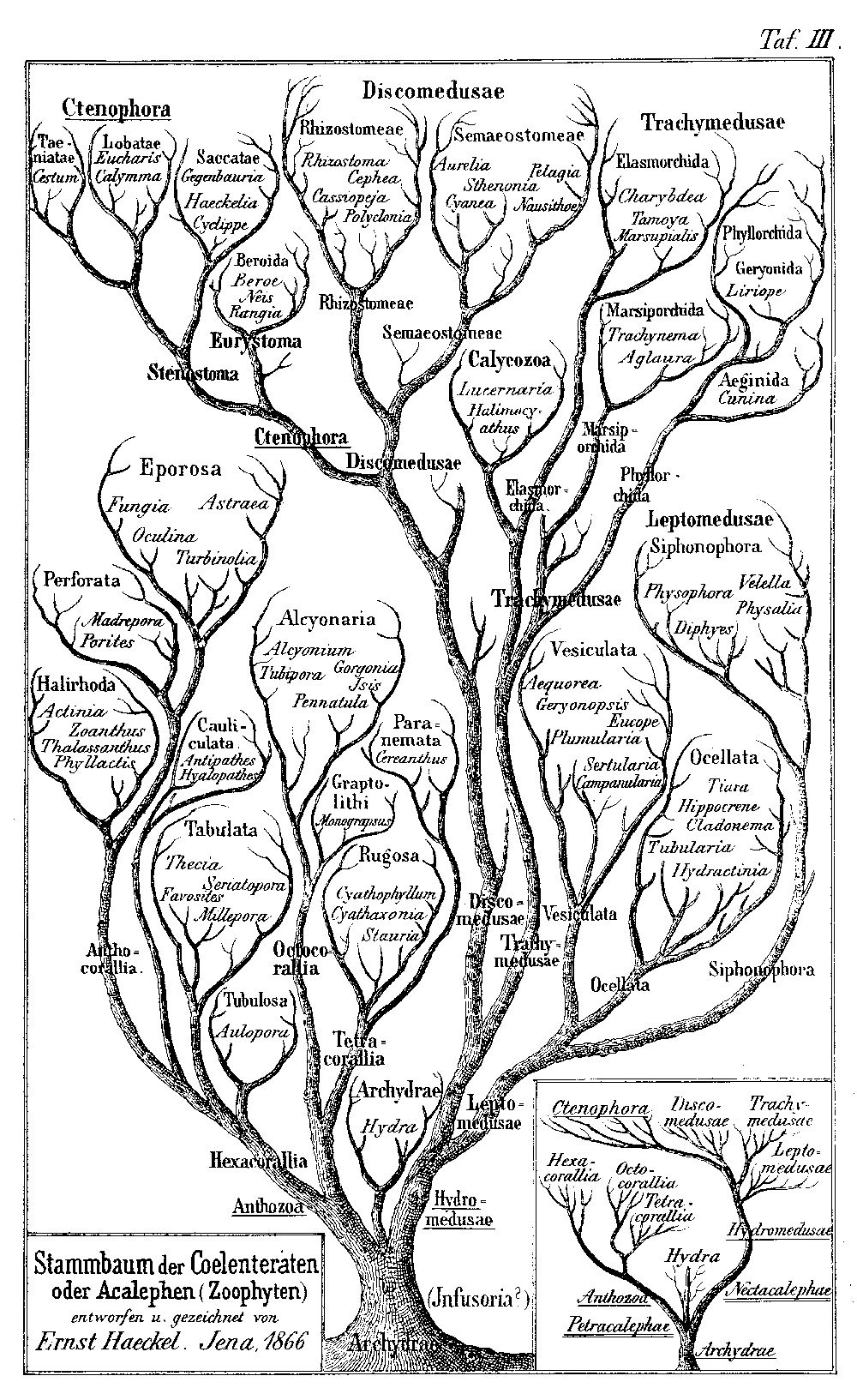
    Tree-haeckel  


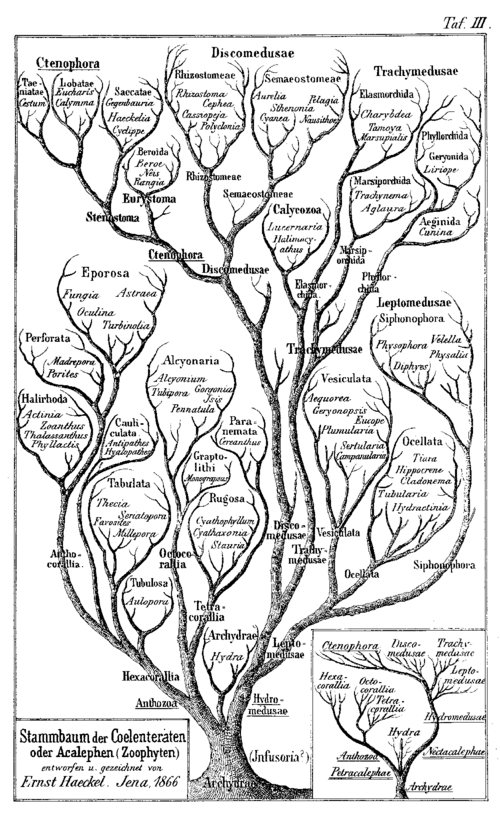
    This tree2 was a figure drawn by biologist and eminent
    Darwinian Ernst Haeckel3 (1834-1919), the branch spaces relating to intervals
    which were unrepresented in the fossil record. The image was perhaps the most
    popularly successful part of his two-volume double-wristbender—it was a
    difficult book, not well written or presented, with Charles Darwin himself finding
    it “impossible to read”.
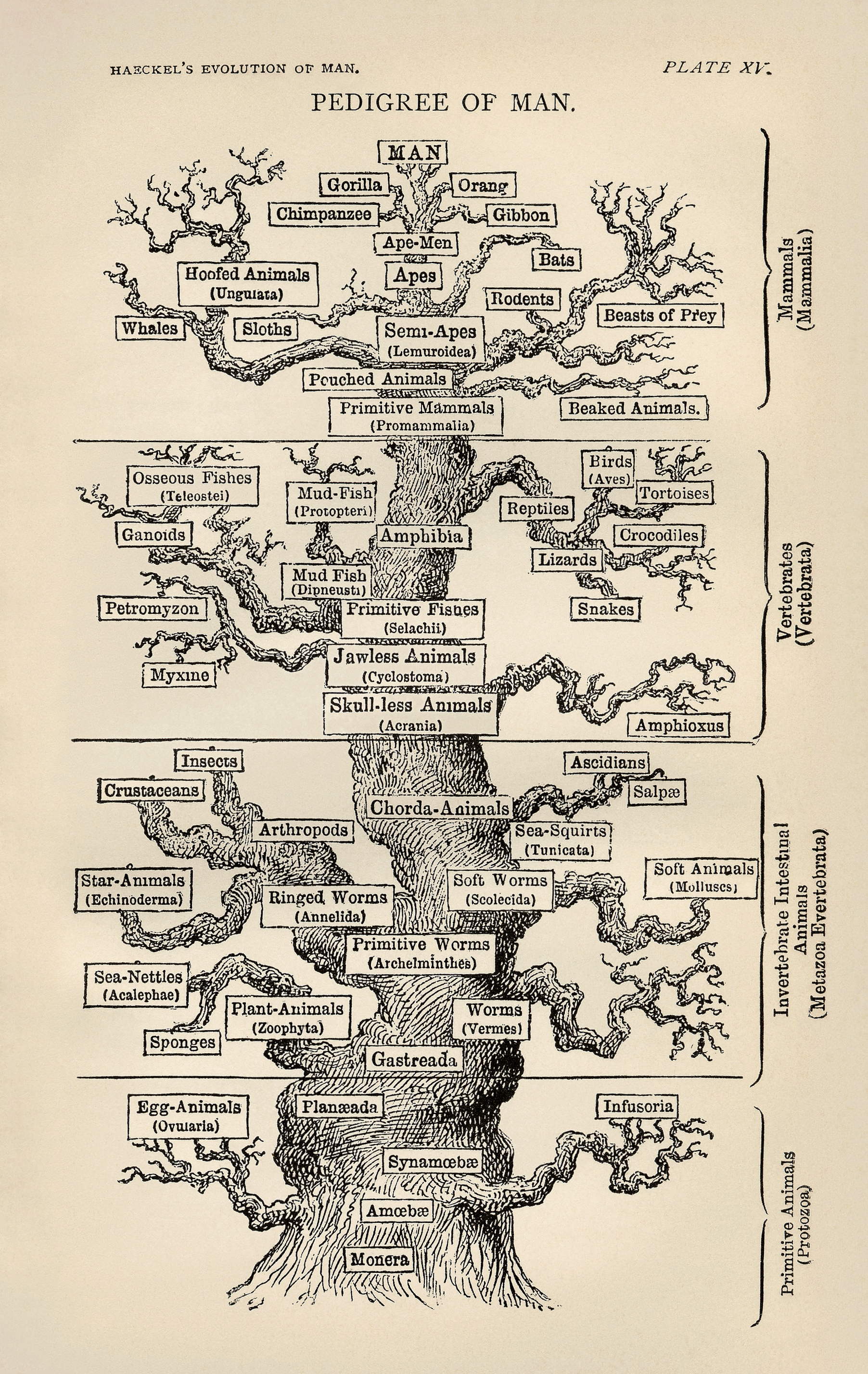
    Tree_of_life_by_Haeckel  

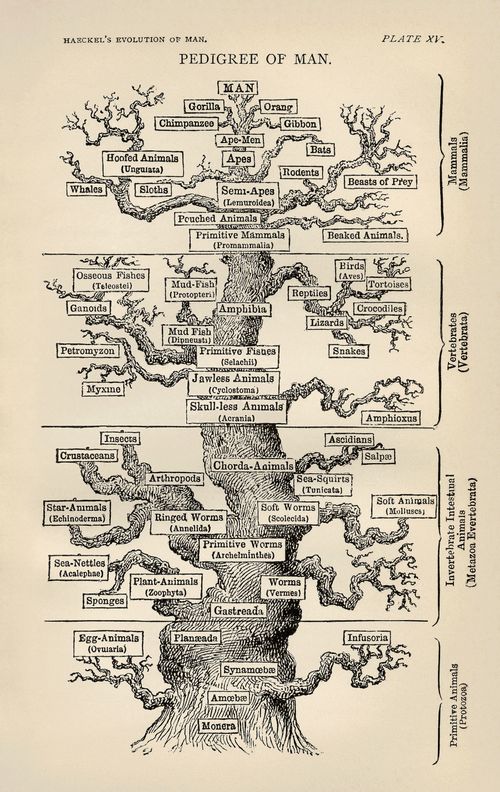
    The second tree, offered by Haeckel in his The
    Evolution of Man
    (1879): shows the general evolutionary progress of
    living things culminating in man, the hopeful and suspected end (or height, or
    crowning achievement) of the process of evolution.  Which is a little odd, come to think of it,
    to have there be nothing above man, not even a space for unimaginable improvement,
    not even a single unused branch to express the possibility of supra-human
    development. 

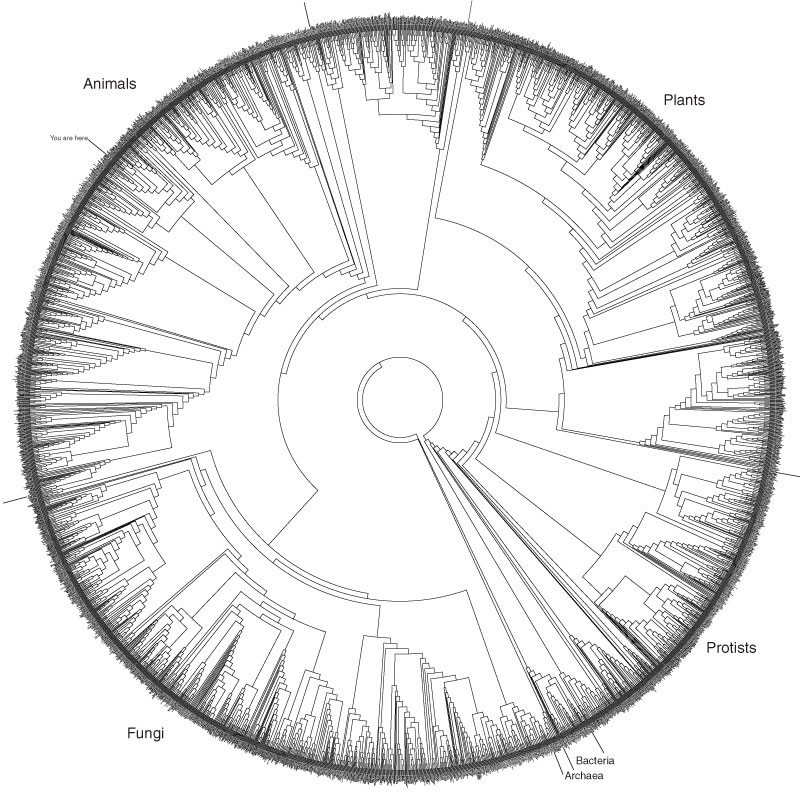
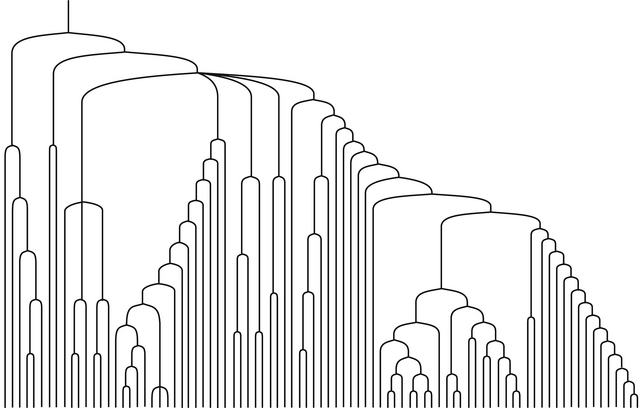
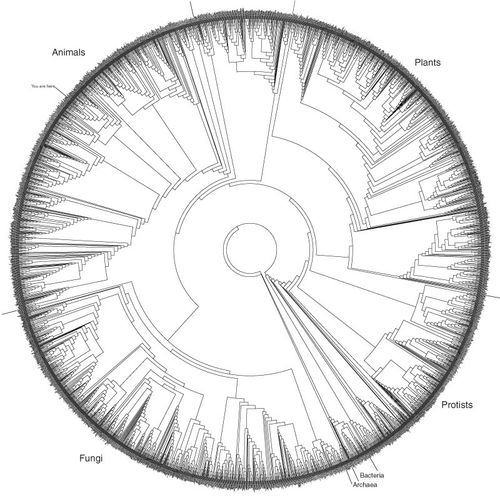
    By far the most complex of the tree of life series is the
    tree ring of life, an exploding and explodably adaptable image generated by the
    Life Website which begins at the beginning, with “life” itself.4
    Tree ring of life

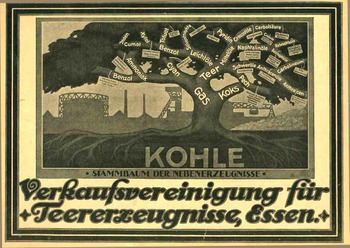
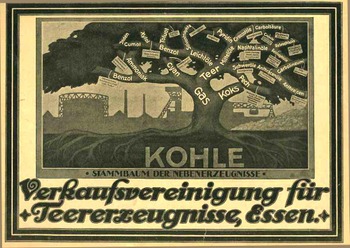
    The coal tree of life is a particularly confusing image. Even though this is a simple classification scheme, and a
    very-well designed graphic at that, the use of the tree describing the genealogy
    of coal by-products just seems, well, wrong. The use of the tree in defining a visual phylogenic interrelatedness of
    living things appears pretty much for the first time in the first edition of the
    Origin of Species in 1859, and it is the only diagram that
    appears in the
    book. (And by this I mean the use of the tree-scheme for scientific
    purposes:  the tree of life of course has been used for many, many
    centuries, the philosophical design woven into the fabrics and incised
    into the stone of many cultures.  It sort of appears in print in
    classification usage at least by the wily and polymathic Athansius
    Kircher, who used it to display the elements in a Kabbalistic Tree of
    Life some 350 years ago.)
    Tree coal
    The Verkaufsvereinigung fuer
    Teererzeugnisse (of Essen) used this idea in
    1922, publishing the ad for their company in the Illusrtriete Zeitung (Leipzig). The great tree spring from a bed of coal (“kohle”)
    exhibiting the “stammbaum der nebenerzeugnisse” (roughly the “pedigree of our
    product”), with the trunk being gas, branching out into tar, coke and cyan and
    so on.  Even though it’s the lifeblood of
    the continuing industrial revolution, and even though we’re hundreds of years into
    a deep need with the products, the use of the tree just seems antithetical to it
    all on all levels of recognition, especially now.

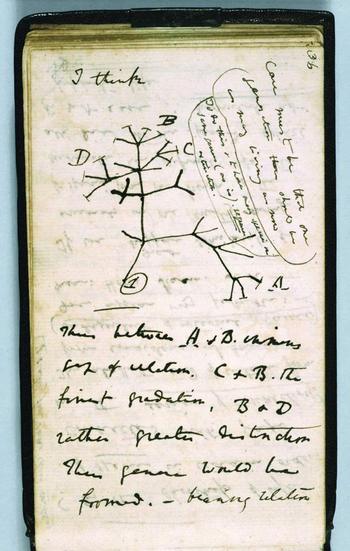
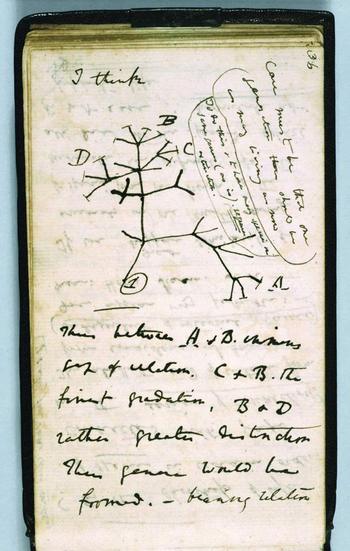
    Then of course there’s the Darwin tree, an incredible diagram from his notebooks, prefaced with the extraordinary understatement, “I think”. 

    There will be more of these tree to come, shortly, including a tree of dermatological disease and some Kabbalisitc trees of life, but they’ll have to wait for right now.
    Darwin_first_tree_2

    Notes:

    1. The full title, as follows: Timber Merchants’ Guide. Also, a table,
    whereby, at one view, may be seen the solid and superficial measure of any
    square or unequal hewed logs or plank, from one to forty-seven inches. Also,
    plates representing the figures of the principal pieces of timber, used in
    building a seventy-four gun ship of the line, in standing trees
    .

    Tree ring oflife explana

    Also, Guillet had some interesting ideas on the conservative use of forest
    lands (from Franklin Hough’s Report upon Forestry, a government document
    printed in 1876):

    “Individuals wishing to make
    the most of their woodlands will find it very profitable to cut their timber by
    sections, sparing to  very acre ten or twelve of the most promising size white
    oaks or pines, whichsoever the soil will produce best; range the order of their
    lands so as to cut a section every year. For example, say a man has 200 acres of
    woodland divided into sections of 10 acres each, then, by cutting one section
    every year, he would have young timber twenty years old, which makes excellent
    firewood, and I should say that in common lands wood of twenty years’ growth
    would yield 15 or 20 cords of firewood per acre, besides fencing-timbor
    sufficient to always keep in good repair an inclosure of 200 acres. Then the 10
    or 12 trees growing in reserve will, at the end of 80 or 100 years, furnish
    timber fit to make shipping or staves. Where land has become useless from long
    cultivation, a little trouble only is necessary to make it productive and
    profitable to the owner. By inclosing it for a few years and encouraging the
    growth of the most promising younj* trees, which will generally spring np
    spontaneously, all the advantages above described will be derived from it,
    which is certainly the best way that worn-out or sterile land can be disposed
    of. Such a course recommended to and adopted by individuals wonld not only be
    to their own private gain, but also of great public utility.“

    2. “Monophyletischer
    Stambaum der Organismen” from ‘Generelle Morphologie der Organismen’ (1866).

    3. Wiki biography
    of Haeckel
    http://en.wikipedia.org/wiki/Ernst_Haeckel

    4. Explanation of the second diagram, as follows from Discover Life: “Phylogeny
    is the organizing principle of modern biological taxonomy, and a guiding
    principle of modern phylogeny is monophyly: a monophyletic group is considered
    to be one that contains an ancestral lineage and all of its descendants. Any
    such a group can be extracted from a phylogenetic tree with a single cut. The
    tree shown here provides a guide to the relationships among the major groups of
    the extant (living) organisms in the Tree of Life as we have presented them
    throughout this book. We do include three groups that are not believed to be
    monophyletic; these are designated with quotation marks.”   See also HERE for a different view of this diagram.