A Daily History of Holes, Dots, Lines, Science, History, Math, Physics, Art, the Unintentional Absurd, Architecture, Maps, Data Visualization, Blank and Missing Things, and so on. |1.6 million words, 7500 images, 4.9 million hits| Press & appearances in The Times, Le Figaro, Mensa, The Economist, The Guardian, Discovery News, Slate, Le Monde, Sci American Blogs, Le Pont, and many other places… 5000+ total posts since 2008.

Category: Iconography

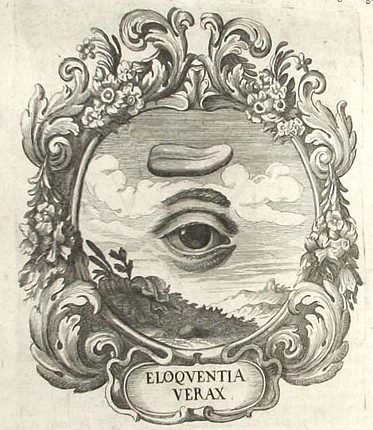
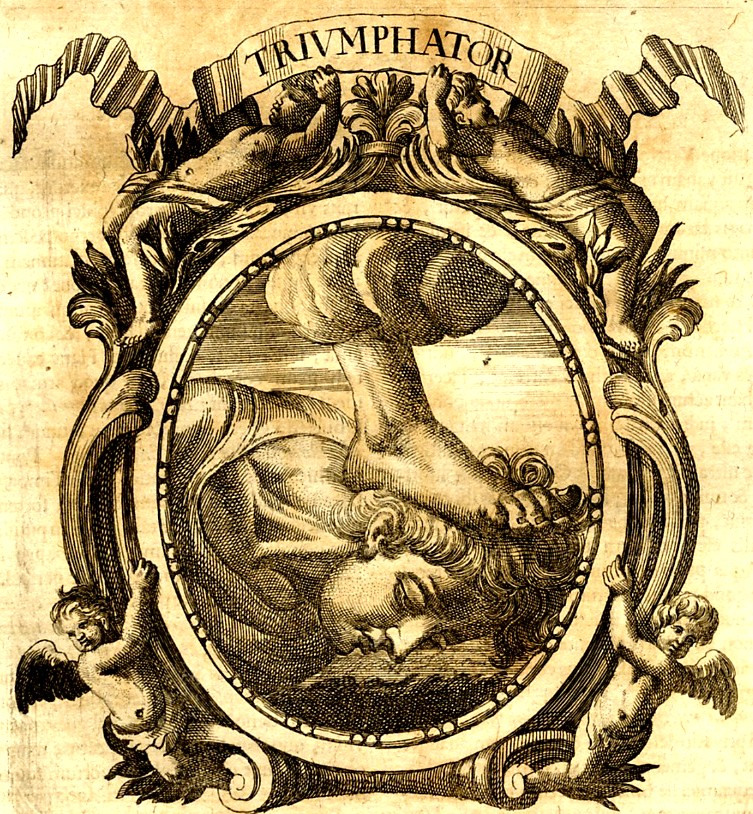
  • Foot of God, Pt 2: Continuing Thread on Odd Things in the Sky

    JF Ptak Science Books LLC  Post 853  Blog Bookstore

    ++ Nov 26 foot god

    I am going to indecently
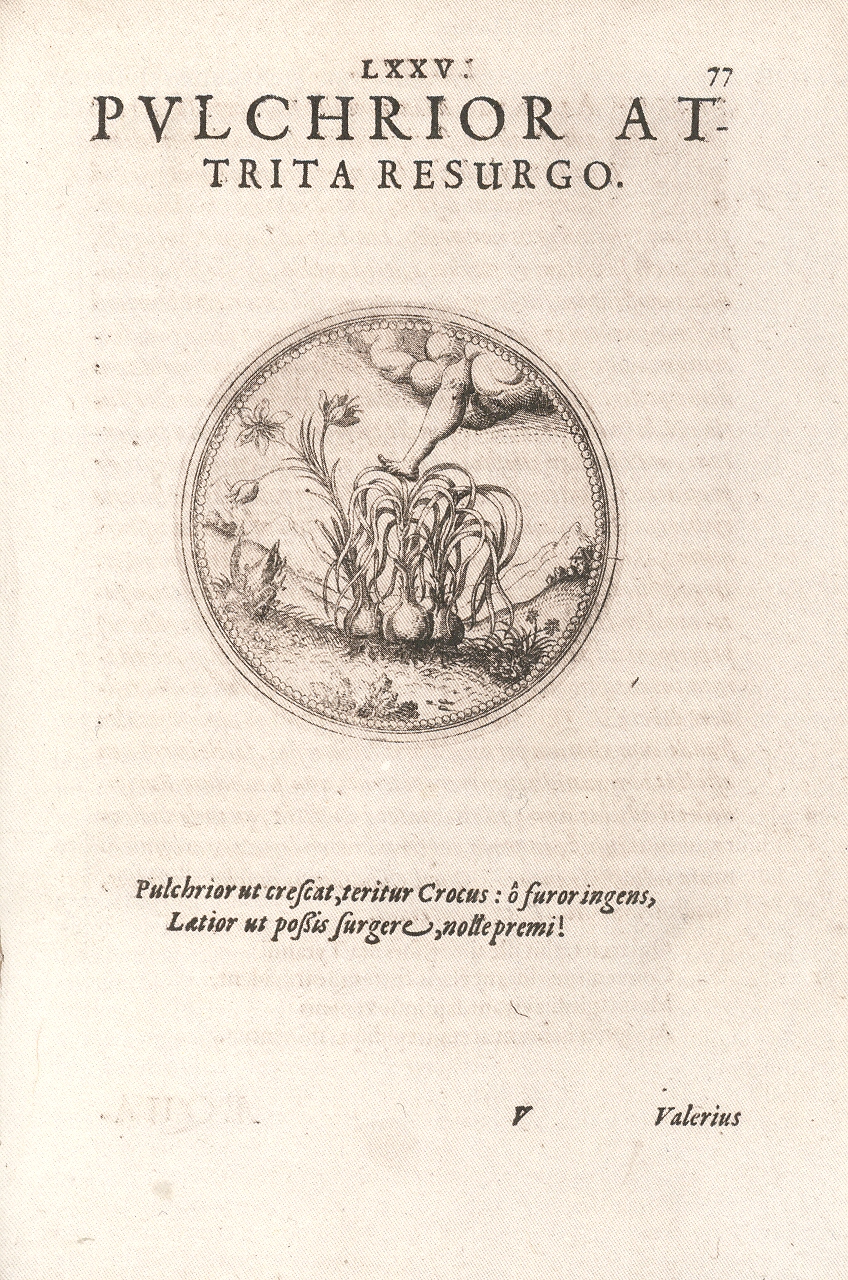
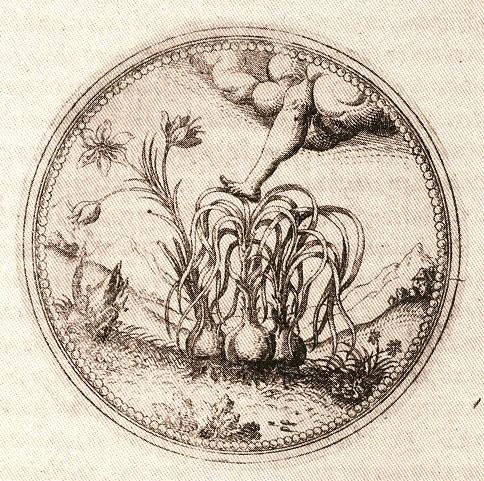
    add to my “foot of god” series with this metal engraving from the accomplished
    Joachim Camerarius1’ Symbolorum et
    Emblematum…
    (published in four volumes at Nuremberg from 1590 to 1605).  There is so much to offer from these books, I
    freely admit, but I’m afraid that I’m stopped at this foot-from-the-sky
    image. 

    ++ Nov 26 foot god

    The engravings, executed
    by Hans Sibmacher, were among the first executed in metal, and the book itself
    was the first of its kind to present botanical emblems. (The other three
    volumes contained emblems for animals of land-sea-air.) They are splendid and
    concise, and filled with soft detail. 
    And still I’m left with the foot. 

    The legend is mostly a
    mystery and doesn’t help me with the foot—it says something about beauty and
    growth and madness and reward—and the saffron crocus.    This plant has been a commodity for
    thousands of years, used for therapeutics and dyeing and spice.  It takes quite a lot of these plants to
    produce a gram of powder—about 150. 60,000 plants are necessary to produce a
    pound of saffron, which is getting to be quite pricey.  Given this, saffron was very often imitated
    and counterfeited—a crime taken quite seriously in many places, and perhaps
    none more so in Bavaria where (in 1444) a conviction meant death.

    ++ Nov 26 eyes in sky

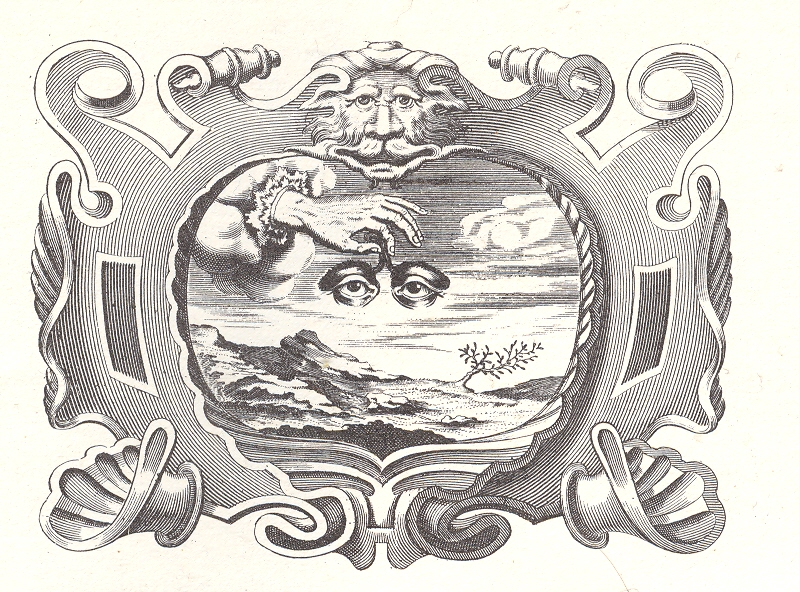
    And as long as we’re
    talking about odd antiquarian images the sky, I’d like to point out the work by
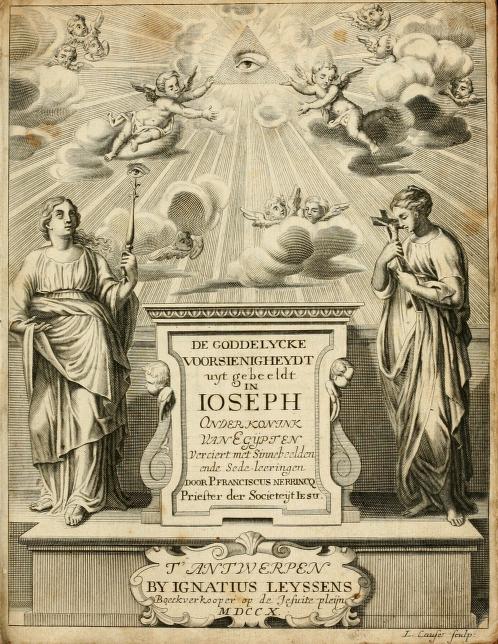
    the Jesuit Franciscus Nerrincq
    (1638-1712), De goddelycke voorsienigheydt2, in which there
    are several odd eyes that burn their way through the atmosphere.   Eyes/eye of the creator occur frequently in
    religious presentations and emblems, but not so very often as hands holding a
    pair of eyes.  I know all of this is very
    heavy stuff in the history of Christian iconography and the progression of
    emblemata, but I’d rather deal with the images out of context here and have
    them stand on their own without interpretation. 
    ++ Nov 26 eye title page

    NOTES

    1.From the Encyclopedia Britannica, 11th
    edition, volume 5:  JOACHIM CAMERARIUS
    (1534-1598), German botanist and physician, son of the
    classical scholar of the same name, was born at Nuremberg on the 6th of November 1534. After finishing his studies in Germany he visited Italy, where he graduated as doctor of medicine. On his return he was invited to reside
    at the courts of several princes, but preferred to settle in his native town of Nuremberg, where he had a botanical garden and formed extensive collections. He
    wrote a Hortus Medicus (1588) and several other works. He died at Nuremberg on the i 1th of
    October 1598.

     2.  De goddelycke voorsienigheydt uytgebeeldt in Joseph
    onder-coninck van Egypten : verciert met sinne-beelden ende sede-leeringen
    .  The entire book can be seen here.

    The University
    of Utrecht
    emblem
    collection
    is extensive and easy to navigate—there is drop-down box for
    available titles, and once selected, the book comes up with biblio info on the
    right and a drop-down of thumbnails for the entire book at left.  It is a joy to navigate. 


  • Found 17th Century Dadaist Art

    JF Ptak Science Books LLC  Post 827  Blog Bookstore

    ++ blog nov 9 scarlattini 001

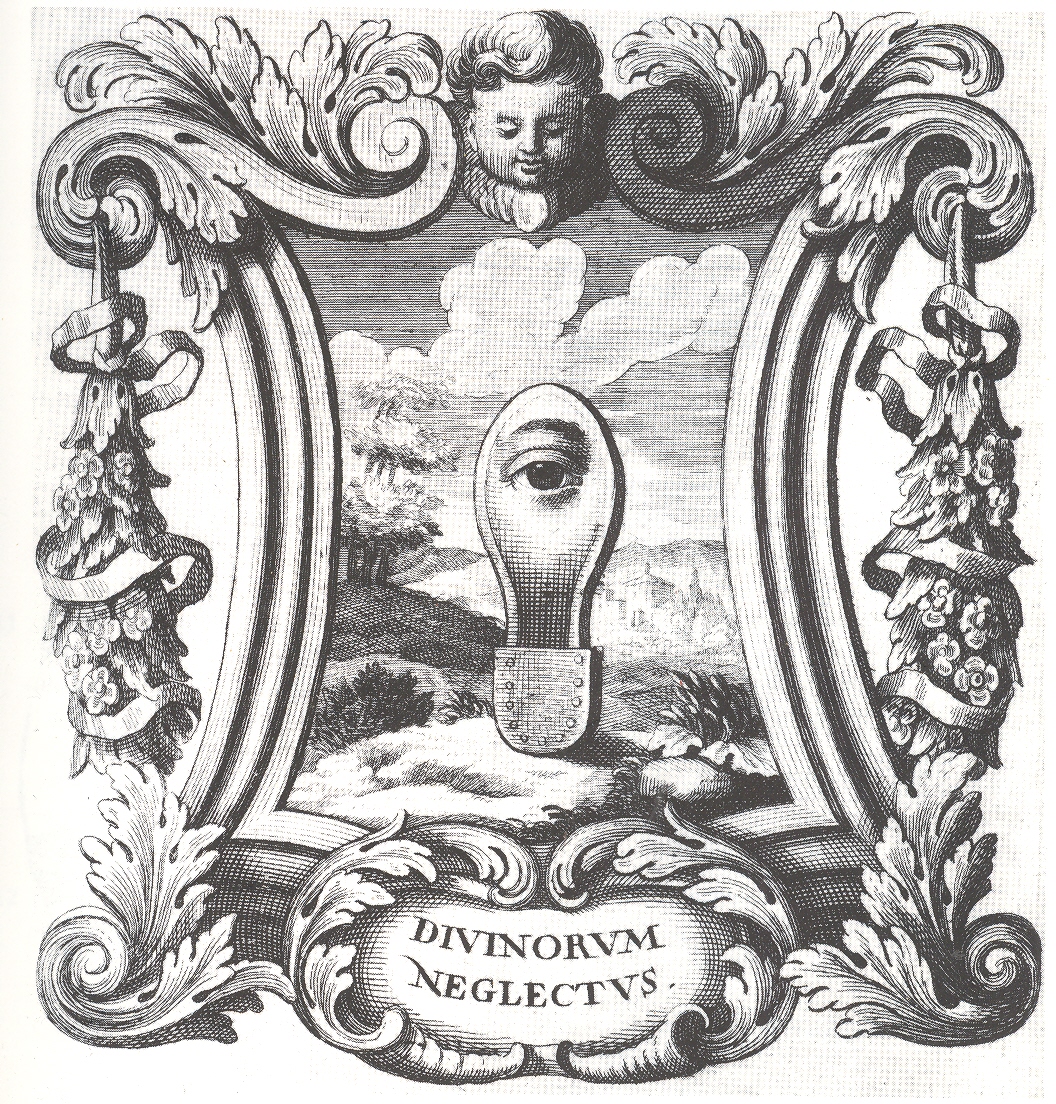
    I found these iconographic images by Ottavio Scarlattini1 (1623-1699)
    simply irresistible–and even though I really don’t quite understand them (at
    least in their correct and original sense and intention), lost to me as they
    are to a more classical education and deeper understanding of Baroque
    symbolism, I can imagine plenty of re-iconographized (?!) meanings.  Not having a more specialized knowledge to
    understand their published intentions perhaps allowed them to have a  strangely modernistic pull on me, making many
    of these Scarlattini designs seem more Dadaist than a 17th century work
    displaying visual characterizations of morality tales wrapped around human
    anatomy. .  If  you changed the vocabulary to interpret this
    artwork—or just simply removed its intention– it changes its era, and moves
    very cleanly into the genre of the surreal. 
    It feels to me that this sort of transformation is not at all common,
    especially when you move the centuries and the genres so crisply and
    elegantly. 

    Doesn’t the “Divinorum Neglectus” suggest something that could’ve
    been produced by  more-antiquarian versions of Raoul Haussmann or Hannah Hoech or Paul
    Delvaux?  It does me.  If you made this a three-dimensional piece it
    could feel like Ernst or Duchamp, its emblematic/hieroglyphic nature
    transforming before your eyes.    (I wonder if Duchamp or Dufuy were influenced
    by the iconographists from this period?)

    This transference game works nicely with other emblem books, and even with some of the large and spare frescoes from Herculaneum when rendered in black and white as engravings…and also for some of the Framenti of Piranesi, but not too many other places in Western art.  Yes?

    ++ blog nov 9 scarlattini

     ++ blog nov 9 triumph

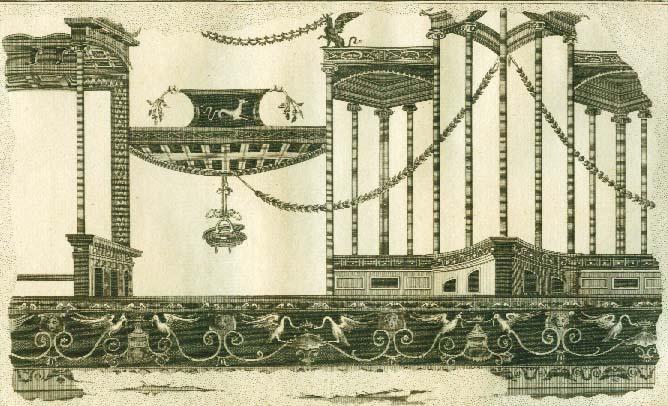
    An engraving of a fresco from Herculaneum (printed ca. 1760):

    Herculaneum Architektur5-jpg

    Notes:
    1. SCARLATTINI, Ottavio  HOMO ET EJUS PARTES, FIGURATUS ET SYMBOLICUS,
    ANATÓMICUS, RATIONALIS, MORALIS, MYSTICUS, POLITICUS, ET LEGALIS, COLLECTUS ET
    EXPLICATUS CUM FIGURIS, SYMBOLIS, ANATOMIIS. opera et studio R. D. Octavii
    Scarlatini,. nunc primum ex italico idiomate latinitati datum a R. D. Matthia
    Honcamp, (.). II volúmenes en un tomo. L. Heckenauer grabador, and printed in
    1695.


    Scarlattini produced one of the great masterworks of
    emblematic knowledge while at the same time writing on human anatomy and
    physiology. 

    The entire book located here http://www.uni-mannheim.de/mateo/camenaref/scarlattini.html

    ·Posted by :

    ·in:

    — — —

  • The Scarcity of Divine Interactions in the History of Human Epidemics: Valley of Mexico

    JF Ptak Science Books LLC  Post 827  Blog Bookstore

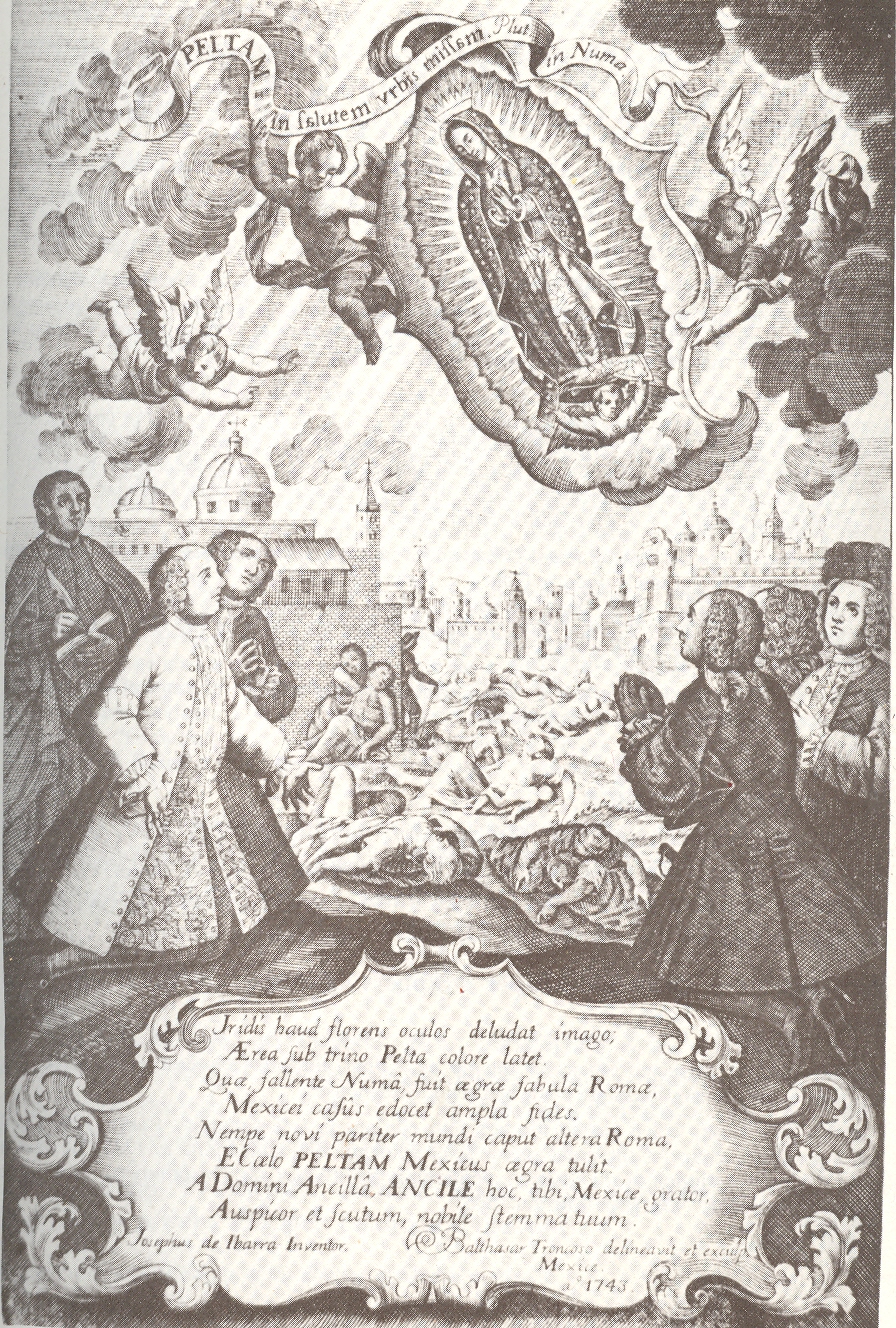
    Images of
    sacred interventions stopping the spread of disease is puzzling, as in this
    powerful and disturbing vision of Our Lady of Guadalupe appearing above the
    city of Mexico
    in 17371.  Mexico City was in the second year of a
    devastating cholera epidemic where 40,000 had perished in that city alone.

    ++ blog nov 9 guadalupe I wonder why Heavenly intercession didn’t
    come earlier?  Of course the people of
    the Valley of Central Mexico could’ve used some
    heaven-sent strong-armed virtuosity many times over the centuries.  In Mexico
    City
    during the Cockuliztli epidemic of 1576 the
    population of the non-Spanish (Native) population fell 50% in just a few
    years.  Over the period of 1545-1548 70%
    of the population of the city nearly died of hemorrhagic fever.  This epidemic was followed by many other
    (major) epidemics (1576-78, 1629-1631, 1736-1741, 1761, and so on) involving
    whooping cough, measles, typhus, smallpox , influenza, cholera, and of course
    famine. Cholera—like this epidemic in Mexico City—according
    to Rodolfo Acuna-Soto’s study2 seems to have been the least of the epidemic
    worries in the Valley
    of Mexico
    over the last
    500 years.  According to Robert McCaa’s
    study of population studies3, 11 authoritative studies on the decline in
    population in Mexico from 1519-1598 show an average and disasterous decrease of
    about 50%4.

    So with the
    dozens of epidemics, the invasion of Europeans, and natural and unnatural
    famines, I would have expected to see more demonstrations of charity from above
    rather than this one skimpy display in the second year of a lower-echelon
    epidemic. 

    1. From Caberra y Quintero Escudo de Armas de Mexico…, printed in Mexico in 1746.  There is much else of interest in this book–which is probably the best and most famous of the local histories of the city–besides the image that I fixated on. 

    2.
    [Rodolfo
    Âcuna-Soto.]
     Forum on Microbial Threats//Global Climate Change and Extreme Weather
    Events
    December 5, 2007
    “The use of Historical data sets in
    Understanding Ecosystems Responses
    to Climate Change and the Importance
    of
    Long-term Monitoring
    Programs…” 

    3. McCaa’s study HERE

    4. Table of colonial disaster 


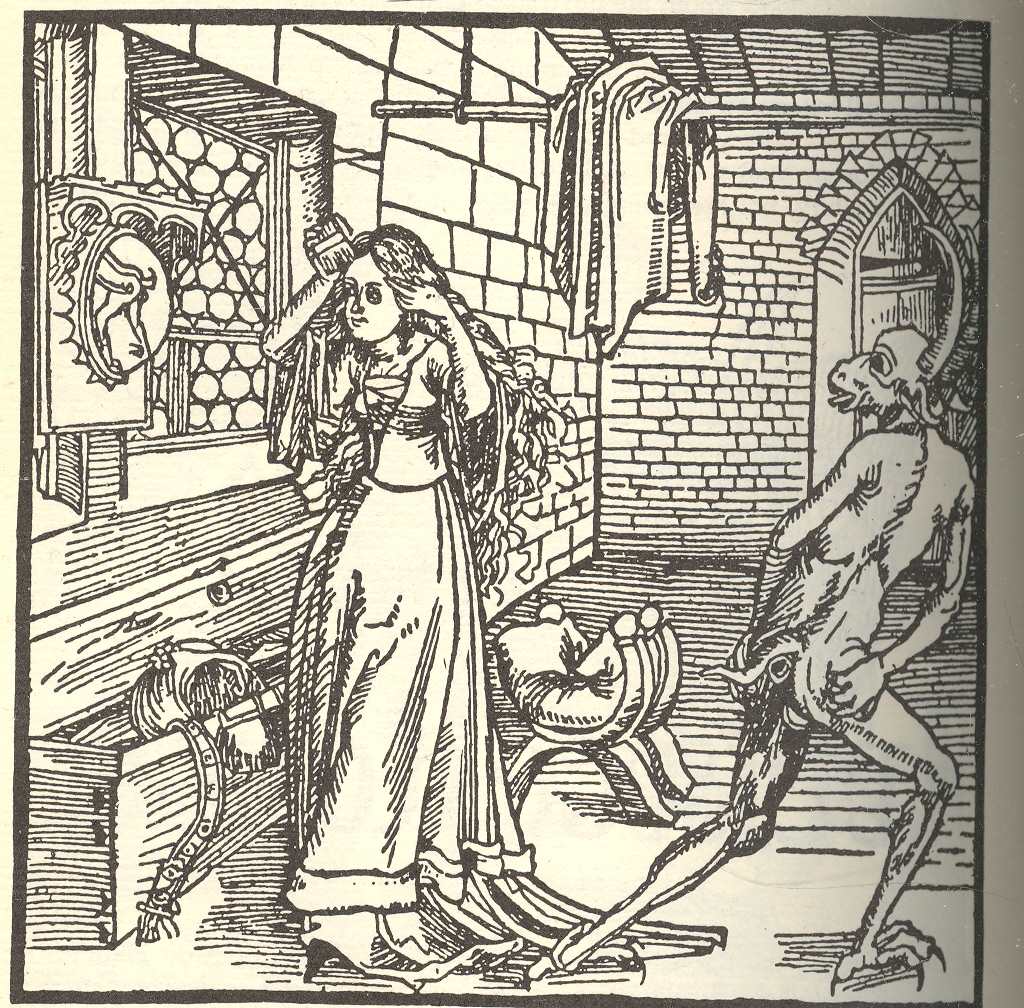
  • The Devil in the Mirror, ca. 1560

    JF Ptak Science Books LLC  Post 817  Blog Bookstore

    There’s plenty of interesting images in the Renaissance and Baroque
    featuring images caught as reflection in a mirror, none more famous I guess
    than Van Eyck’s marriage scene (which I’ve written about several times in this blog, most recently in “Original Reflections: unique experiences with mirrors, Van Eyck and Brunellesci, here).  What is unusual here is that we
    see the Devil in the mirror (actually the devil’s hindquarters), which to my
    experience is very uncommon. Also I thought the phraselet “the Devil in the
    Mirror/Mirrour” was well used and worn, but, as it turns out, it is hardly so,
    though there’s a near-alphabet of things that the devil could be in. 

    Blog 11 01 devil mirror For example, when looking through FirstSearch/WorldCat (a massive catalogue
    of books in libraries world wide and a cataloguing librarian’s best friend) for
    the things that a devil might be in, as in the phrase “the devil in the ____”
    we find the devil in a belfry, book (a Dalton Trumbo novel!), bush, candle, cheese,
    classroom, cross, dark, details, drain, desert, deep blue sun, flesh, fog,
    gateway, hills, junior league, kitchen, Middle Ages, milk, modern world,
    mountain, New World, shape of a woman. 
    The devil in the mirror turns out only to be so in a song. 

    None of this amounts to a hill of 
    ____  (beans, cocoa, molasses,
    moolah, fritos), but I found it unusual that the phrase and the whole
    devil-in-a-mirror idea to be so scarce. 
    Unless he can’t be seen in a mirror….No wait, that’s a vampire

    I know I’m wasting this image with this trivial pursuit when a decent writer would be looking at Satan over the ages, or its virtual non-appearance in the Bible, or the different names of the devil or its infernal helpers, and its other unholy images, or the history of Hell itself., or of the history of guilt, or fear (see Jeff Donlan’s lovely appraisal of Daniel Gardner’s The Science of Fear, which doesn’t really have anything to do with the devil but is a great idea) or temptation, or general unacknowledged dark worry.  I just stuck to the picture. 

    This naturally leads to looking at some antiquarian
    book titles involving devils and the nonsense and hokum that they got into.  Here’s a few lovely examples of titles-as-long-as-opening-paragraphs;
    it seems that the less old they are the less detailed they become.  But I’m probably wrong about that, too. 

    The displaying of supposed witchcraft : wherein is
    affirmed that there are many sorts of deceivers and impostors, and divers
    persons under a passive delusion of melancholy and fancy but that there is a
    corporeal league made betwixt the devil and the witch, or that he sucks on the
    witches body, has carnal copulation, or that witches are turned into cats,
    dogs, raise tempests or the like, is utterly denied and disproved ; Wherein
    also is handled, the existence of angels and spirits, the truth of apparitions,
    the nature of astral and sydereal spirits, the force of charms, and philters;
    with other abstruse matters
    /
     
    Author: Webster, John,
    1610-1682.

    War with the
    devil, or, The young mans conflict with the powers of darkness in a dialogue :
    discovering the corruption and vanity of youth, the horrible nature of sin, and
    deplorable condition of fallen man : also a definition, power, and rule of
    conscience, and the nature of true conversion : to which is added an appendix
    containing a dialogue between an old apostate and a young professor, worthy the
    perusal of all, but chiefly intended for the instruction of the younger sort
    /
     
    Author: Keach, Benjamin,
    1640-1704.

    A Whip for the Devil, or, The Roman conjuror
    discovering the intolerable folly, prophaneness and superstition of the papists
    in endeavouring to cast the Devil out of the bodies of men and women by him
    possest …
    /
     1683

    I find these title strangely satisfying, much like the dime library westerns of the late 19th century with their tow-parter extendo-titles:  Valerie of the Blazing Sands; or, Colonel Ingraham and the Satisfied Sod Buster, a Tale of Woe and Heroism and such.  


  • A History of Dots: the Black Sun of Das Planeten Buch, 1541

    JF Ptak Science Books LLC  Post 694  Blog  Bookstore

    History of Dots, Part 15

    Soft on the Heals ==Blog July 21=dotsof
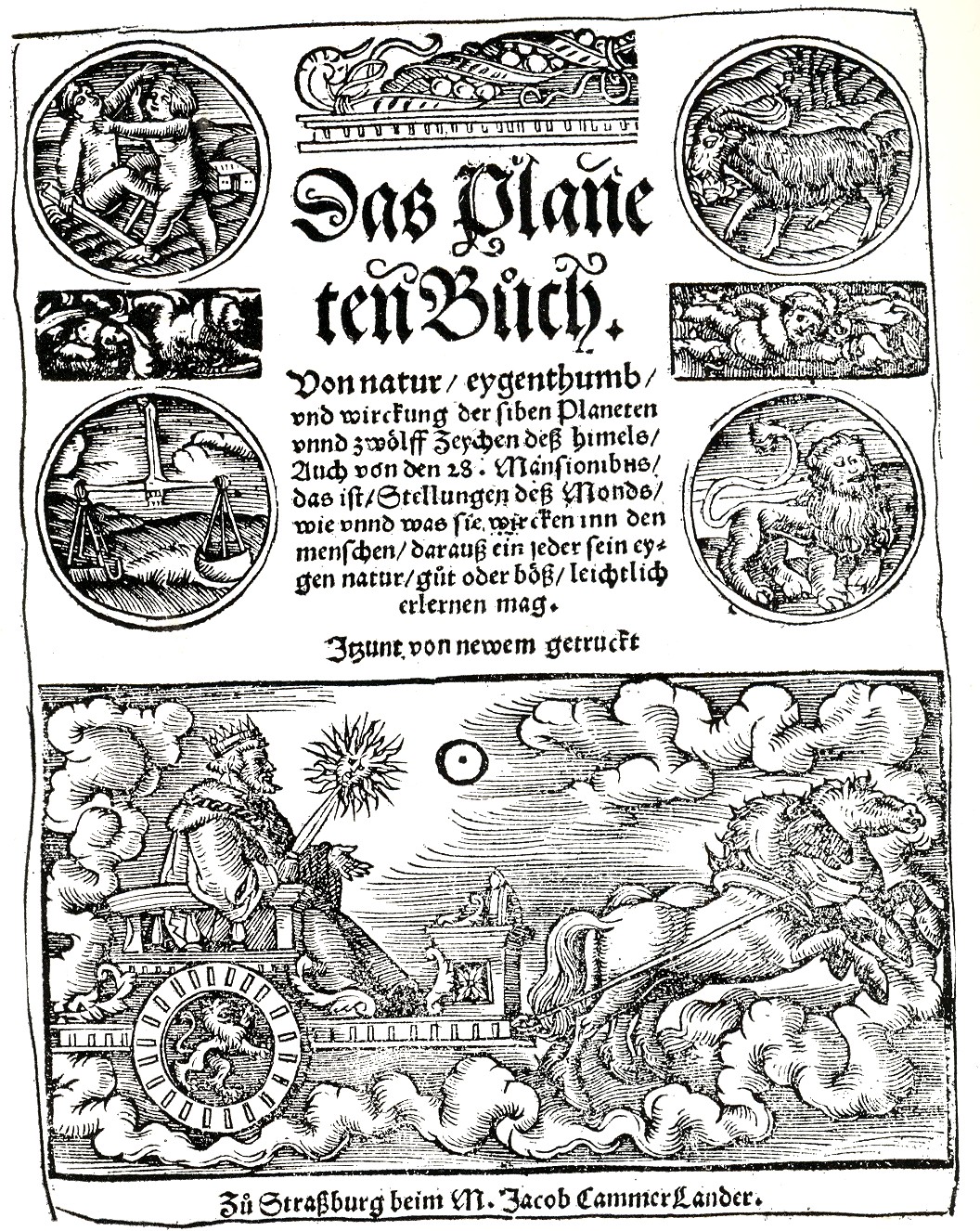
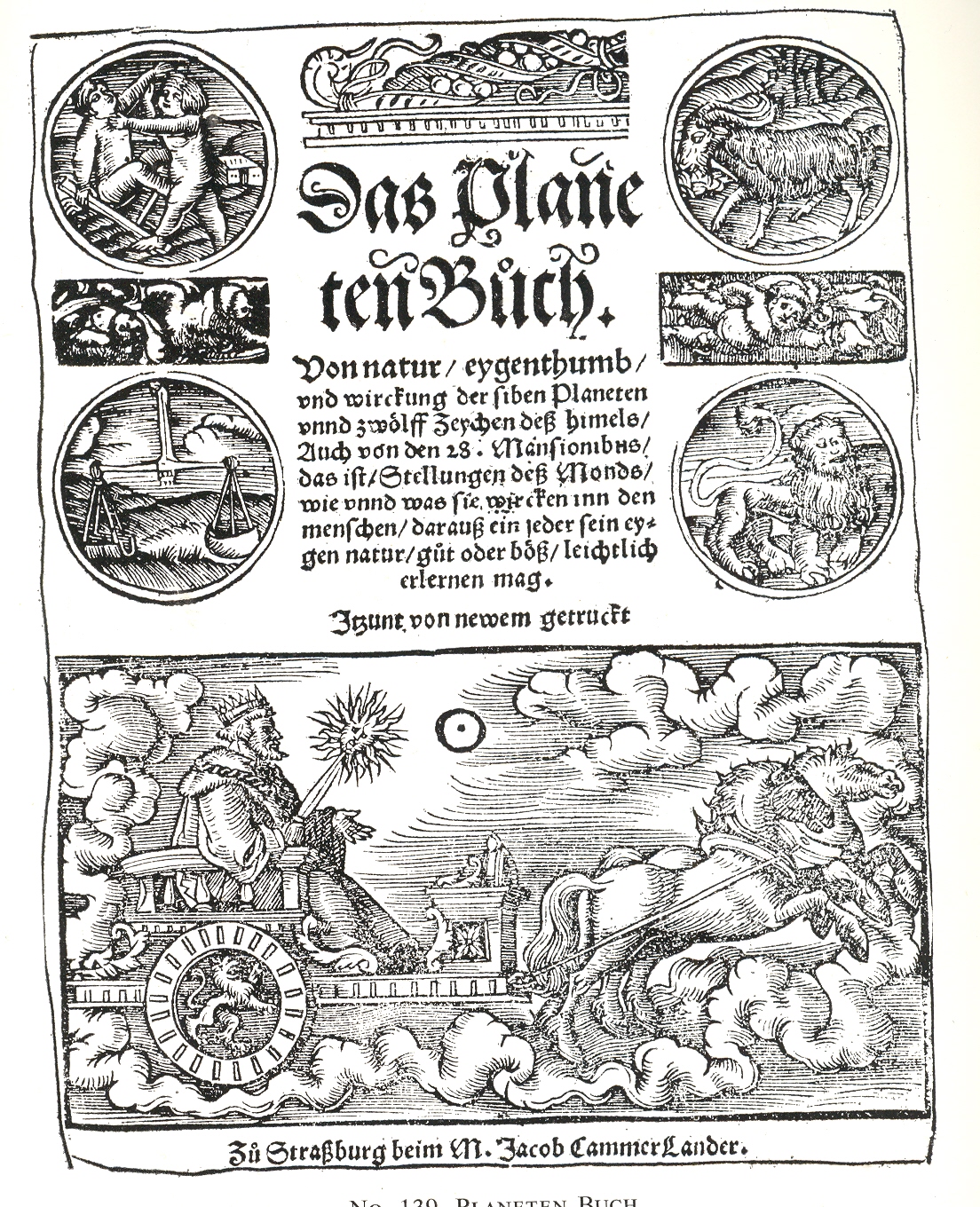
    the 1898 Planetary Visits post (earlier today) is this 1541 Books of the Planets (Das Planeten Buch.
    Von Natur, ey
    genthumb, und wirckung der siben Planeten…), which was published
    in Strassburg by Jacob Cammerkander..  It
    is a collection of medieval German accumulated astro-data and posie, cobbled
    together by an anonymous author, and strung together for the masses—it was
    evidently very popular, eager fingers pulling the many editions to pieces (and such), so that very few now exist. 

    The dot that I have in mind here is the standard astronomical depiction of the sun, and it appears brilliantly-n-black in the bottom panel close-by the image of Saturn racing across the sky. 


  • Strange Things in the Sky Department: the Alchemical Cosmology, 1618

    JF Ptak Science Books LLC  Post 594       Blog Bookstore

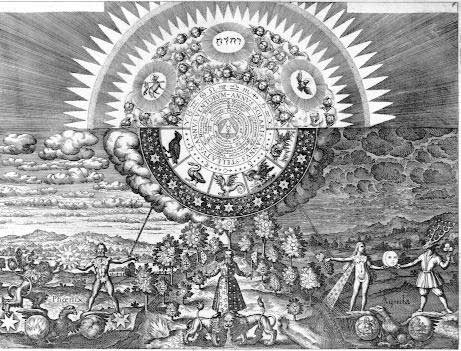
    Well.  There’s a simple ton of complexity going on in this difficult, famous print by the
    great Mathias Merian—its like a moving puzzle to me, complicated by the
    virtually changing size of its pieces.  There’s
    just too much in it that I don’t understand, too much archaeo-religico-alchemical
    bubbly going on for me to make much deep sense of it all.  I do like that it is all coming from the sky,
    though, which is why I’ve selected it for this continuing series

    BLOG--THINGS IN THE SKY--MYLIOUS  

    The engraving, Tabula Smaradina (“Emerald Tablet”) is
    Merian’s interpretation of the alchemical cosmology, a  schemata and representation of the order of
    things.  It appears (first) in Johann
    Daniel Mylius Tractatus III Seu Basilica Philosophica… (1618) and makes
    subsequent appearances in other works by the author, as well as in Lukas Jennis’
    Musaeum Hermeticum (1625, see below). 

    Basically, the Emerald Tablet shows the opening of a
    complex heaven and the delivering of the philosopher’s stone to the earth.  It is a magnificent effort and no doubt has a
    great power to alchemists, and I can understand only a bit and a piece here and
    there.  For example, in the bottom right,
    we see a couple of people holding a((n) eclipsed?) Moon, standing on the wings
    of an eagle which protects a double hemispheric representation of the
    constellations.  The figure on the right
    is a naked woman, who may well represent Luna:  her right breast is a star, and from her
    armpit is a streaming torrent of stars which comes close into contact with
    shrubs labeled with the astrological signs of the planets.  The cluster of grapes in her right hand and
    the stream that she is straddling must indicate a generation, or a birth, or
    rebirth, or time, or the universe.  Luna
    is connected via something to the heaven-element which in turn is connected on
    the left sign of the print to a man holding a sun, who I guess must be Sol.  Heaven and Earth, Brother Sun and Sister
    Moon, and so on.  From here it all gets
    away from me, no that it isn’t gone already. 
     

    ·Posted by :

    ·in:

    — —

  • Locating Chaos: Giovanni Della Porta’s Natural Magic and Chaos in the Sky

    JF Ptak Science Books LLC  Post 571
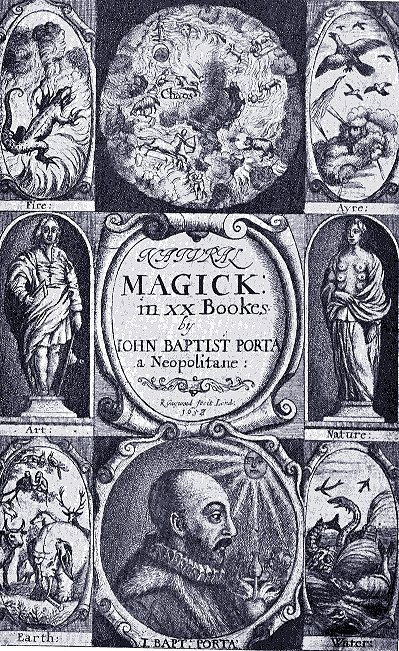
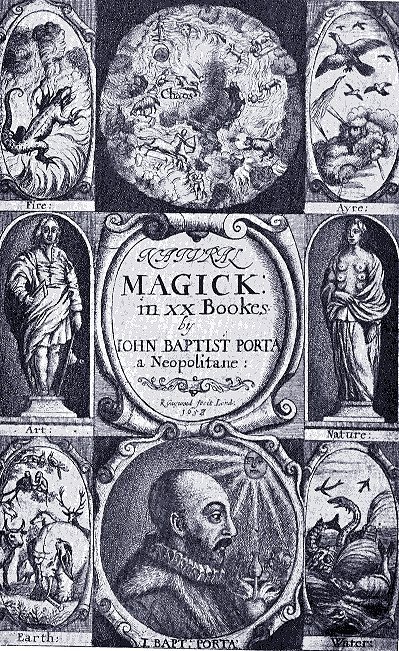
    Porta title page
    Giovani Baptista della Porta was a magus, or a natural
    magician*, who searched nature for similarities that would serve to build a
    broad template of forced  understanding of seeming likenesses, looking for the great connector
    in the exceptional and the unusual, the stuff outside of the formerly
    Aristotlean world.   Natural Magic is his magnum opus, an expansion of  its earlier
    version (Magna naturalis)  published in Latin in 1558, which Porta expanded to twenty sections in 1589. It was an encyclopedic work of vast proportions, a
    gold-mine of information and clever wishfulness, and very accessible due to
    Porta’s  wide inter-personal travel**,
    very wide reading and critical abilities, clear reasoning and deep vision:  the book was hugely successful, going into at
    least twelve Latin, four Italian, seven French, two German, and two English
    editions in the early modern era. Natural
    Magic
    , which first appeared in English in 1658, concerned itself with
    magic, alchemy, optics, geometry, cryptography, magnetism, agriculture, the art
    of memory, munitions, and many other topics, all grouped together and refined,
    distilled, into a cloudy assemblage of natural knowledge—it would end up that the magical
    whole was worth far less than the sum of its parts. 

    But the parts were pretty considerable, and much of the
    information was spot-on for the time, not the least of which was a very capable
    demonstration and explanation of a lensed camera obscura. 

    What I’m interested in right now though is the title page of
    the book.
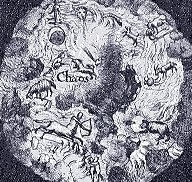
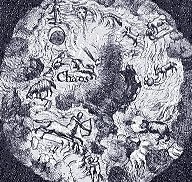
    Porta title page detailIt turns out and as we can see in the top image of the
    title page, Chaos is not some subspace trajectory of cellular automata, or in
    Dr. Brown’s/Einstein’s dancing dust—it is right above us.  This recognition of its regular, localizable structure
    probably does not support parameterization, or anything else for that matter,
    except to say that it is definitely “pretty”. 
    The title page has nine illustrated compartments:  the four corners depict the four elements,
    the two opposing middles show art and nature; the bottom shows the author,
    illuminated by the knowing sun.  The top
    center image is the element showing “chaos”, which I’ve chosen to use a map,
    identifying where exactly chaos might be. 
    I’ve not seen an antiquarian map identifying chaos, though I have seen a
    number showing lots of other non-existent places, like heaven and hell and
    purgatory and Eden and the Kingdom of Prester John, to name a few.  But not chaos.
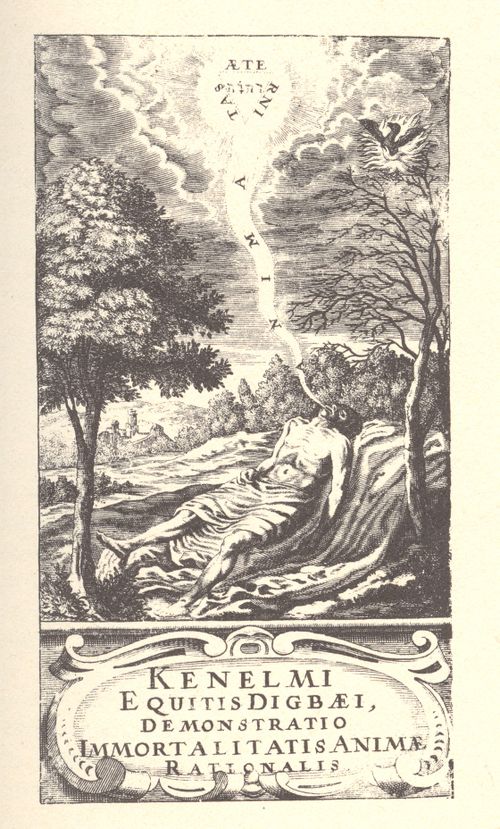
    Porta sky

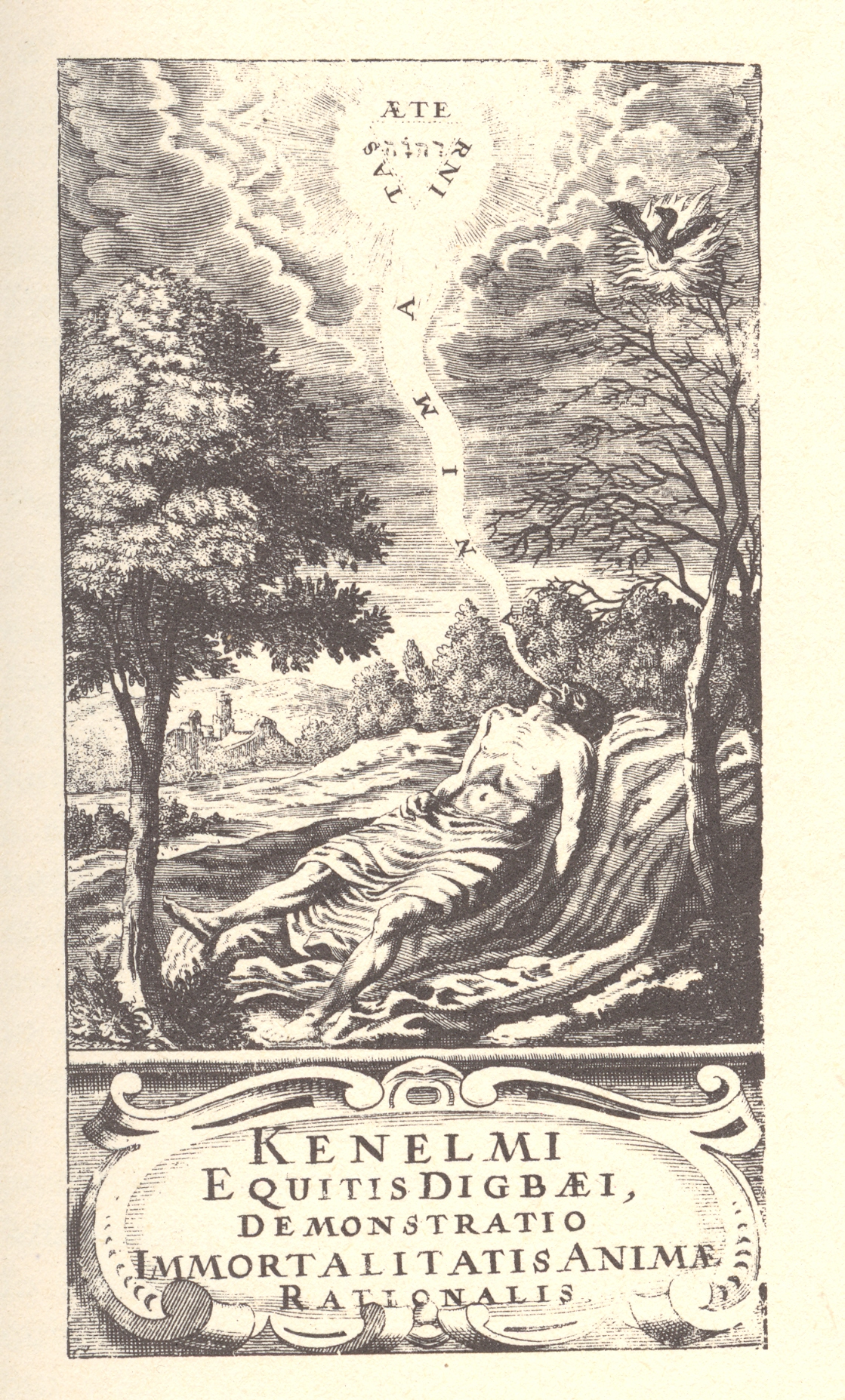
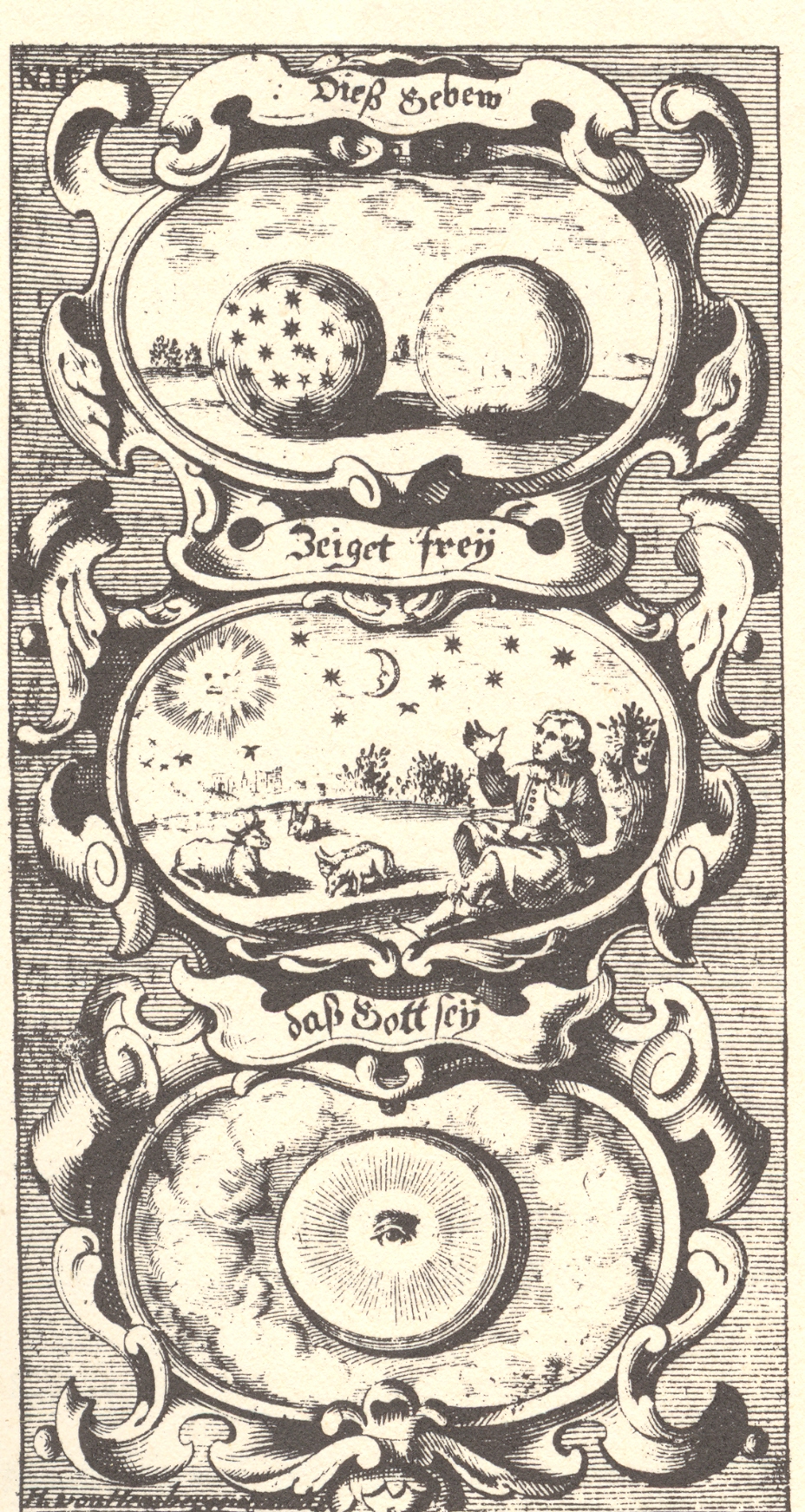
    On the other hand there are many different, substantiated, anthropomorphic objects that wind up in the sky in antiquarian images: there haven’t yet been anything spelling out chaos,  though there are many Hebrew names for the g*d incised and cut into plates of wood and metal.   There are all manners of hands-of-the-creator, gearworks for the Primum Mobile, eyes, doves, geometric shapes, blazing fires, blazing iconic people, multiple worlds, flying people, and so on. But no chaos.

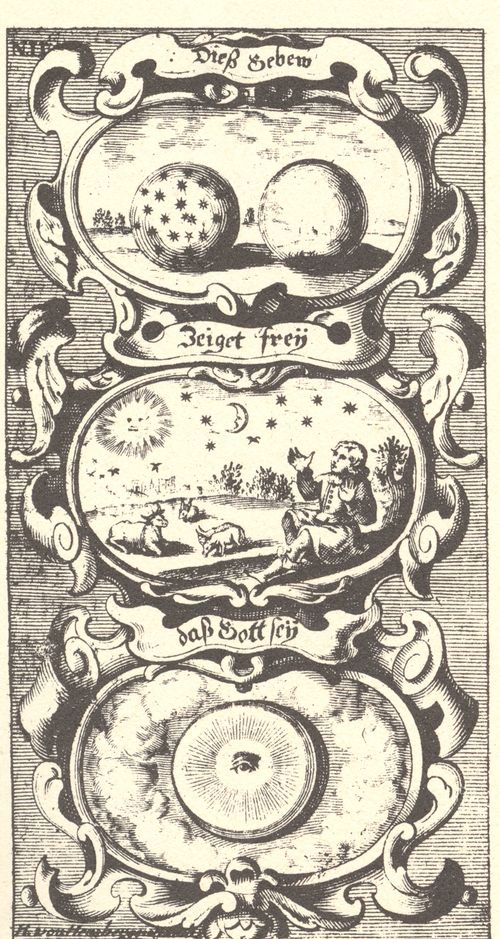
    These are just two examples of the alternative-to-the-sun-in-the-sky category, a wonderful image from Kenelem Digby’s Demonstratio immortabiliitatis animae rationalis, printed in 1664.  The other is a very striking example from J.B.von Helmont’s surviving and prodigal (and prodigiously brilliant) son Franciscus Mercurius’  Das Geheimnuess der Schoepflung.  Printed in 1701, two years after FM’s death (and years after his other brothers succumbed to the Plague), the book was a bit of an amalgamation of the author’s vast and undisciplined interests, which sloshed over into the areas of magic, conjuring, Kaballa and astrology. 
    He had more success editing and translating his father’s works. 
    Porta sky 2
    I admit I’m taking a wide liberty with “chaos”, and that the the first image could simply be the creator stepping in to rid the heavens of chaos, but I liked the idea of chaos being located on a map better.  Mea culpa. 

    * Porta writes in the first chapter, defining the word “magic”:  Magic took her name and original [sic] from

    Persia.
    . . . In the Persian language, a Magician is nothing else but one that expounds
    and studies divine things; and it is the general name of wise-men in that
    country. . . . Magic was begun in Persia by Zoroastres.”

    ** A fair amount of information in this book was derived
    from his own house-bound Academia de
    Secret
    i—a name I now love!—a society of friends and scholars who discussed
    topics ranging from physiognomy to optics to cosmology to conjuring. 

    The Chapters/books of Natural
    Magick
    are shown here below to give an idea of what the book is about:

    The First Book of Natural
    Magick
     “Of the Causes of Wonderful Things.”
     “Wherein are searched out the
    causes of things which produce wonderful effects”

    The Second Book of Natural Magick  “Of the Generation of Animals.”
     “Showing how living creatures of
    diverse kinds, may be mingled and coupled together, that from them, new and yet
    profitable kinds of living creatures may be generated.”

    The Third Book Of Natural Magick  “Of the Production of New Plants.”
     Which delivers certain precepts of
    Husbandry, and shows how to intermingle sundry kinds of Plants and how to
    produce new kinds.

    The Fourth Book Of Natural Magick  “Of Increasing Household-Stuff.”
     Which teaches things belonging to
    house-keeping; How to prepare domestic necessities with a small cost; And how
    to keep them when they are procured.

    The Fifth Book Of Natural Magick  “Of Changing Metals.”  “Which treateth of Alchemy, showing how
    metals may be altered and transformed, one into another”

    The Sixth Book Of Natural
    Magick
     “Of Counterfeiting
    Glorious Stones.
    “

    The Seventh Book Of
    Natural Magick
     “Of the Wonders of
    the Load-Stone.
    “

    The Eighth Book Of Natural
    Magick
     “Of Physical
    Experiments”

    The Ninth Book Of Natural
    Magick
     “Of Beautifiying
    Women.”

    The Tenth Book Of Natural
    Magick
     “Of Distillation.“

    The Eleventh Book Of
    Natural Magick
     “Of Perfuming.
    “

    The Twelveth Book Of
    Natural Magick
    “Of Artificial
    Fires.
    “

    The Thirteenth Book Of
    Natural Magick
    “Of Tempering Steel.
    “

    The Fourteenth Book Of
    Natural Magick
    “Of Cookery.“

    The Fifteenth Book Of Natural Magick “Of Fishing, Fowling, Hunting, etc. ”
    (Complete)

    The Sixteenth Book Of
    Natural Magick
     “Of Invisible Writing.“

    The Seventeenth Book Of
    Natural Magick
    “Of Strange Glasses.“

    The Eighteenth Book Of
    Natural Magick
     “Of Static Experiments.“

    The Nineteenth Book Of
    Natural Magick
     “Of Pneumatic
    Experiments.
    “

    The Twentyth Book Of
    Natural Magick
     “Of the Chaos. “

  • Blank and Missing Things 33: (Disembodied) Hands of Creativity

    JF Ptak Science Books LLC  Post 532

    0 abay feb 23scheiner623

    [Last year’s post for this day: The Wrong Stuff, Righted–the Attack on Darwin’s Descent, 1871]

    I wish that I had kept track of all of the images of “holy/phenomenal” disembodied body parts sprouting from nothingness or from pure creator-of-the-universe light that I have seen populating antique prints over the years.  Much more popular in displaying the indisputable are the images of the Primum Mobile,  the Hebrew word for Y_w_h, the smiling countenance of the creator itself, or doves arising from a shining star or sun–far less seen are the images featuring seemingly floating disembodied body parts.  Had I kept track of all of these magnificent things in the sky or air I’d really be able to compare them; but I haven’t, so I just need to rely on a generalized memory of what seems to me to be uncommonly seen images, and then wax away like a groaning and saggy Moon. 

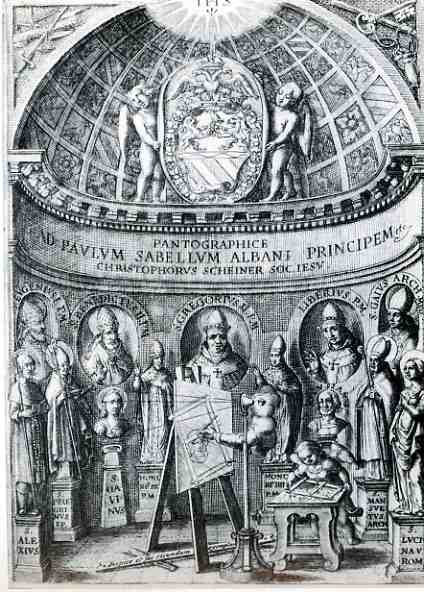
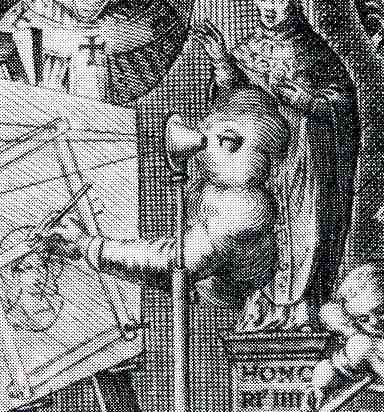
    The image to the left is the decorated title page of the great Christoph Scheiner’s (1573-1650) Pantographice sev ars Delineandi  res Quasilbet per Parallelogrammum Lineare..., published in Rome in 1630.  The book was about one of the most-employed inventions

    0 abay feb 23scheiner624

    of the 17th century,  Scheiner’s very own pantograph, which was/is a very versatile tool used to project an object from one scale to a greater one, and used by grateful sculptors and architects and mapmakers and astronomers and engineers for hundreds of years. What we see in detail in the engraving (right) is the disembodied squinty-eyed-cloud-arm of creativity, using the pantograph, and copying a painting (in a chapel?)  But is this the soul of creativity, really, since the arm-eye is using a device to copy something?  I’m not saying that there is no art involved in this practice, because if that was the case then I could use this device with positive results–but I can’t, and so there must be artistic merit involved.  Perhaps this curious image celebrates the art in the copied elements and not the use of the pantograph.  

    0 blog march 3 kircher635

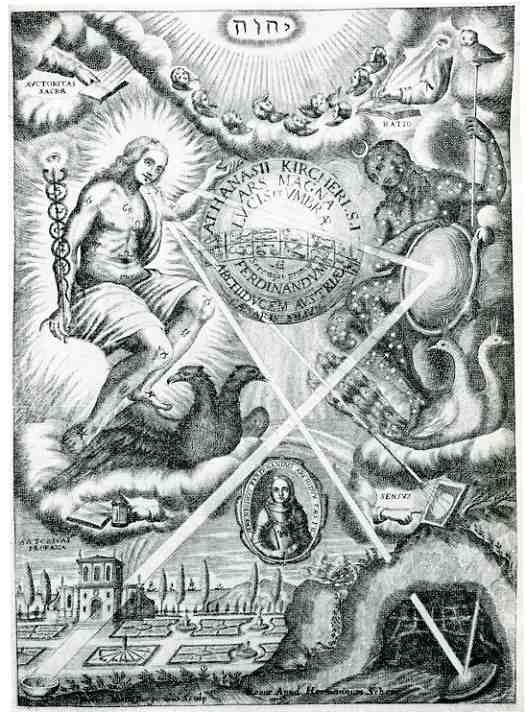
    Another interesting example of disembodied genius occurs in the
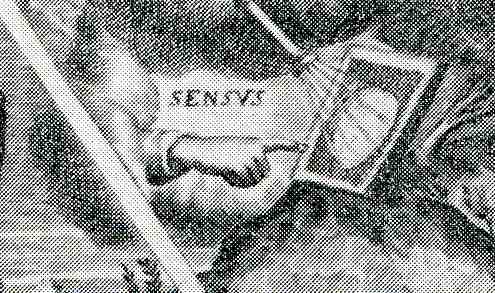
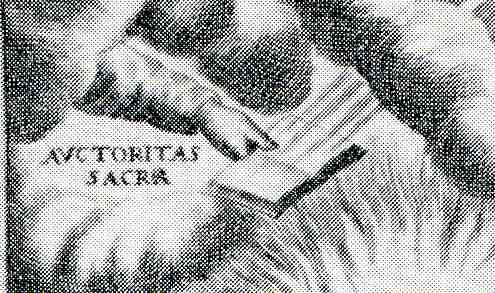
    title page (at left) of the transubstantiated and sometimes-impossible Athanasius Kircher’s encyclopedic Ars magna lucis et unbrae in decem libros digesta, published in Rome in 1646.  Of his very many works, this is perhaps one of the most important, and includes the first descriptions of (his discovery/invention?) of the magic lantern, of luminesence, and of the camera obscura.  (Among much else are Kircher’s drawings of his microscopic investigations, which were very major contributions, and which predate the works  of Hooke and Leeuwenhoeck.)  This complex and iconographically-layered title page engraving contains (almost offhandedly) three disembodied hands, the first of which displays camera obscura image.  Given everything else that is going on in the image, the holy hands are the those demanding the least amount of interpretative skill. 

    0 blog march 3 kircher detail636


    0 blog march 3 kircher detail637


  • Institutionalized Racism and the Sale of Toys and Music and Frivolities

    JF Ptak Science Books LLC Post 479

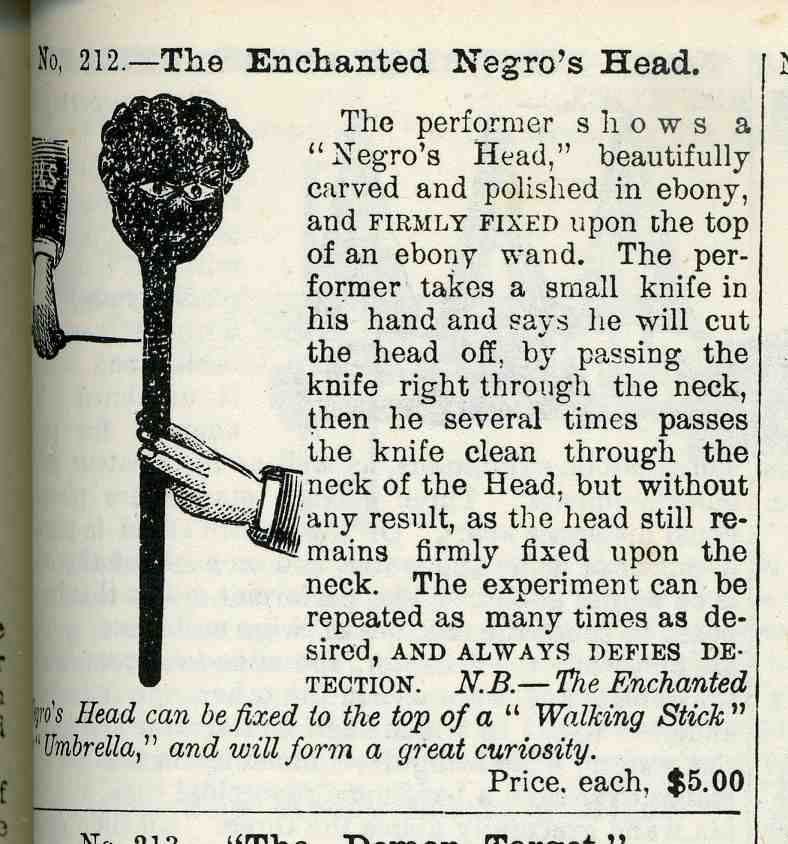
    0 blog jan 21 negro393

    Leafing my way through a reprint of the Peck & Snyder Out & Indoor Sports and Pastimes Catalog for 1888, looking for baseball equipment and giant bagatelles, I found this stunning advertisement.  I knew of the tragic and long history of this form of “entertainment”, as does everyone, but I must say I never considered the costume end of it.  And here it was.

    The minstrel show, or minstrelsy, appeared as an American invention in the 1830’s–much more so by the early 1840’s.  It depicted  blacks in only the worst possible ways, as shiftless, lazy, buffoonish, stupid, flawed in almost every way, an idiotic race with a musical advantage, relayed in predictable units, accompanied by a developing genre of American music.  The ad here is for the accoutrement of the performers, layers of red rouge and carbon to build on white faces one of the lowest forms of racial archetypes that this country has produced. 

    0 blog jan 21 negro394
    The astonishing thing is that it is just a simple ad in the middle of
    the page of the middle of a catalog for entertainment and sports
    bits–nothing special at all, nothing remarkable to distinguish this
    gaping hole of morality from the games and exercise equipment that
    surrounds it.  And that’s the deep horror of stuff like this, this sort
    of stereotyping that was so lethal and filled with hate, and not making
    a ripple in the awareness of anyone’s sense of correctness: the
    creation of this racial image was so complete that even its most base
    element could appear as an insignificant trifle in a sporting catalog. 

    Even more extraordinary is this ad that appears just a few dozen pages
    later.  “The Enchanted Negro’s Head” was a prop in a magic trick that
    involved drawing a knife across the neck of the black head. “The
    performer takes a small knife and says he will cut the head off”–I can
    imagine the sort of conversation between performer and audience before
    his action is undertaken, getting the audience ready to kill the “Negro
    Head”.  It would not have been pretty.  And that’s not all–once you were done with the “trick” part of cutting off the head, it “(could) be fixed to the top of a walking stick or umbrella….(to) form a great curiosity”.

    These characterizations appeared in uncountable forms in virtually every aspect of social life in this country, finding its insidious way even into something as seemingly innocent as a magic trick. It is the very vast smallness of this racism that make it so terrifically convincing and lethal. Looking at something like this makes me feel the enormous weight of the all that went into the attempted assassination of this race. 

    **My friend Joy Holland–chief of the Brooklyn Room at the Brooklyn Public Library at the Grand Army Plaza in the heart of Brooklyn USA–recently started a wonderful history blog at the library called Brooklynology.  A recent post there talks about a minstrel-related find in their ephemera collection–it is quite interesting; take a look. 


  • Peasant Utopias and Dreamlands: Medieval Hopes to Big Rock Candy Mountain

    JF Ptak Science Books LLC  476

    800px-Pieter_Bruegel_the_Elder_-_The_Land_of_Cockaigne

    The concept of terrestrial, not-Heaven-bound, un-restricted
    non-religious happiness for working folks not viewed as an abomination by
    Christian churches is a relatively new idea.  
    Fun for the rabbleous masses, stuff happening to the far west of the
    east-entrenched Eden*
    (as in the Steinbeck novel), was generally a no-go so far as institutions such
    as the Catholic church was concerned. 
    Medieval geography of imaginary places where happiness dwells included
    the Land of Cockaigne and the Isle of the Blest, places that represented both wish fulfillment and resentment at the
    strictures of asceticism and dearth.

     The peasantry existed in a state of semi-amicable slavery
    under the  thought- and emotional-control
    of the aristocracy and the church, living in fear of their immortal souls
    dancing in the ring of fire for thinking heathenous thoughts, or persecuted by
    the legal entity for being too immodest. 
    “Fun” was a very expensive commodity, and was seen by The Church as
    being too expensive and rare to share. 
    Fun represented a departure from the routine, an affront to the
    teachings of scripture, a lessening of the control enjoyed by all ruling
    classes.  And so Medieval legends such as
    the Land of Cockaigne, with its promises of unbridled eating and gluttony and
    sexual liberty and disobedience was a direct charge against the established
    distribution of power and wealth, and could not be tolerated.  Fun was kept for someone else.

    0 blog jan 20 thomas more390

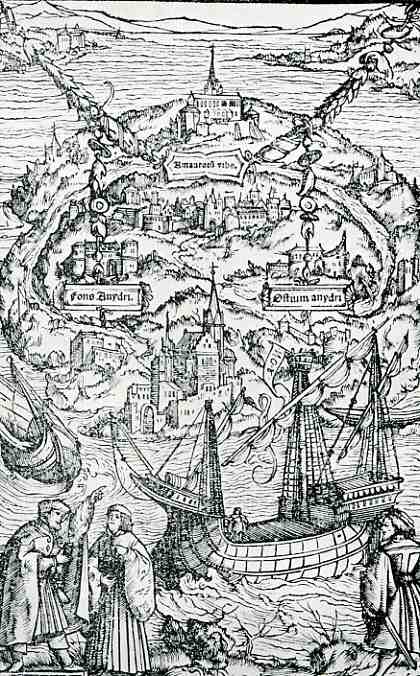
    Cockaigne—of Middle French derivation, pays de cocaign,”Land
    of Plenty”—
    was an imaginary
    location and a dream, somewhere that was a total relief to the long grind of
    the peasant life.  It was a place “where
    the
    houses were made of barley sugar and cakes, the streets were paved with pastry,
    and the shops supplied goods for nothing” according to Specimens of Early
    English Poets
    (1790), whose author, George Ellis, reprinted a 13th
    century French poem.  In the Land of
    Cockaigne “roasted pigs wander about with knives in their backs to make carving
    easy, where grilled geese fly directly into one’s mouth, where cooked fish jump
    out of the water and land at one’s feet…The weather is always mild, the wine
    flows freely, sex is readily available, and all people enjoy eternal youth…”
    according to Herman Pleij’s Dreaming of Cockaigne (2001).  Another source determines that  “you must eat your way through a mountain of
    porridge to reach the land of Cockaigne

    …where the
    fences are made of sausages, the geese lie ready-grilled on the plates…” 

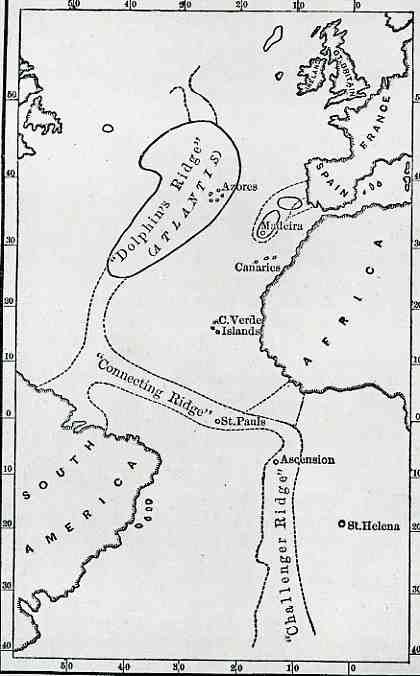
    Atlantis and El Dorado might’ve been fancy sounding places
    to a lot of poor people, but Cockaigne must’ve sounded better by leaps and
    bounds—no piles of gold, no great extravagances, just rewards of plenty to eat
    and drink, and sleep, and some sex.  All
    of these promises existed so far beyond the pale of the Church that even
    thinking about a crust’s-worth of such anti-biblical carnage would send you
    straight to hell.  Which sounds
    terrifically strange to me now because the actions here, in Cockaigne, are
    largely passive (though of course hedonistic), and aren’t vengeful, hurtful,
    spiteful.  It is mainly, well, lazy, full
    of sleep-inducing foods. Bittersweet dreams like this formed for themselves a
    basis of pure hate within the church, mainly because it was taken as a threat
    to the core fundamentals of religions at the time.  It should be said that many of the tellings
    of this legend do have their fair share of anti-clerical runs, nun-hunting and
    monk bashings.  Oopsie!

    The Land of  Cockaigne is
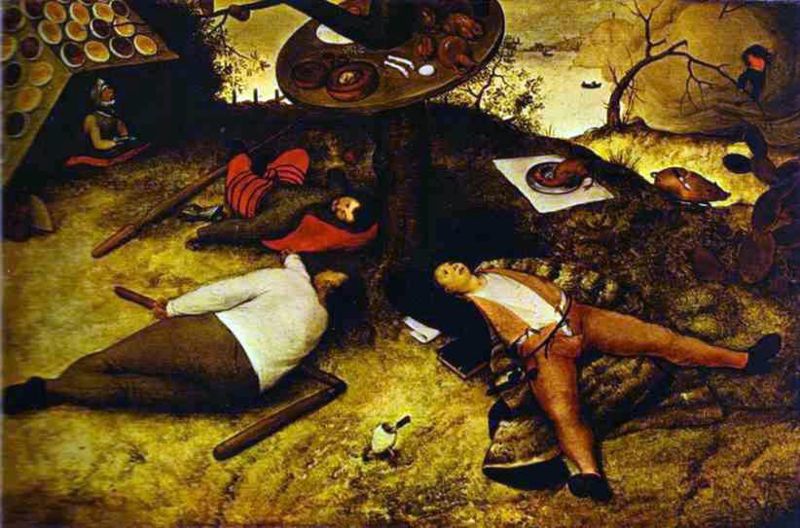
    beautifully painted in 1567 by the peasant-dominated mind of Pieter Brueghel the Elder or Bruegel (c.1525 – September 9,
    1569) the
    fabulous  Netherlandish
    Renaissance
    painter.  (In many ways he discovered the common/peasant
    in much the same way as Dickens discovered the working poor of London; of course Brueghel made his discovery
    300 years earlier.  He was also in his
    way a Dickensian for detail:  many of his
    paintings are terrific mélanges of children’s games and folk tales, often
    accurately identifying hundreds of objects of interest in a single work)  He incorporates many of these legends in the
    painting, in addition showing stewed geese flying into open mouths and a
    house-roof made of meat pies.

    The promise of eatable houses and lazy meals and sleeping
    all day to produce evermore profits are many times bounded by rivers of red and
    wine wines, of milk, and of honey. 

    0 blog jan 20 atlantis389

    These are concepts that have existed for hundreds of years
    in different sorts of peasant paradises, not the least of which is the 20th
    century’s contribution of “Big Rock Candy Mountain”, a song composed by Harry
    McClintock (1882-1957). In many ways this song contains the most simple, most
    heartbreaking of the simple wishes of the American hobo of the Great Depression
    era.  The 26 (or so) wants are spectacular
    in their smallnesses and simpleness (see below for full lyrics of the song):

    (1) a land that’s fair and bright (2) handouts grow on
    bushes (3)sleep out every night
    (4) boxcars are all empty  (5) the sun
    shines every day (6) cigarette trees (7) lemonade springs  (8) bluebird sings (9) all the cops have
    wooden legs (10) bulldogs all have rubber teeth (11) hens lay soft boiled eggs (12)
    farmer’s trees are full of fruit (13) barns are full of hay (14) ain’t no snow (15)
    rain don’t fall  (16) the wind don’t blow
    (17) never change your socks (18)little streams of alcohol come a-trickling
    down the rocks (19) brakemen have to tip their hats  (20) railroad bulls are blind (21) lake of
    stew and of whiskey  (22) jails are made
    of tin (you can walk right out again as soon as you are in) (23) no short
    handled shovels,  (24) no axes saws or
    picks (25) you sleep all day (26) they hung the jerk that invented work.

    These wishes are gathered together as follows:

    Food: Cigarettes, lemonade, soft boiled eggs, fruit trees,
    streams of alcohol, land of stew and whiskey

    Geography:  land fair
    and bright, sleep out every night, sunshine, bluebirds, no snow, no rain, no
    wind.

    Social:  handouts grow on bushes, cops have
    wooden legs, bulldogs have rubber teeth, (railroad) brakemen (who would
    normally throw hobos from the trains) have to tip their hats to the hobos;
    railroad bulls (the railroad cops who would be um pro-active and brutal in
    getting rid of the ‘hobo problem” from the trains);  revolving door jails are made of tin; no axes, saws or picks; and finally, no short-handled
    shovels. 

    Personal:  sleeping all day, sleeping out at night, and not changing your socks.  (Not even a whiff of carnal anything.)

    And of course the hanging of the man who invented the whole
    concept of work.

    I think that in all of these simple dreams, the “short-handled
    shovels” one is the most tremendous, and most heart-breaking.  The short-handled shovel is a backbreaker,
    made for working in stubborn, small holes or tight places.  If you needed to use a shovel on something,
    you’d want to use a long-handled one.  Keep
    in mind that the song didn’t call for no shovels—just a decent one that you
    could work with humanely. 

    The song is beautiful and stands for a wide majority of
    thought in the U.S.
    in the troubled 1930’s.  It is also in
    many ways related to the classic peasant utopias and dreamlands—perhaps it is
    just like Cockaigne, just removed 500 years.